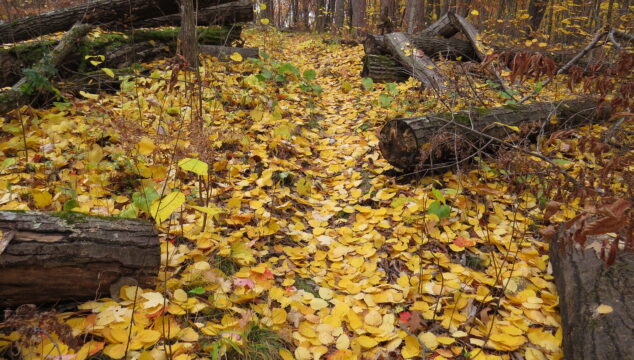
Come walk with me in the peak Autumn beauty of the Northwoods. To say that I love this time of year is an understatement. Most everyone can appreciate the colorful falling leaves---it reveals the 'true self' of a tree when its leaves are no longer producing chlorophyll. Their true colors are revealed, and there is something simple … [Read More...]
Shades of Blue
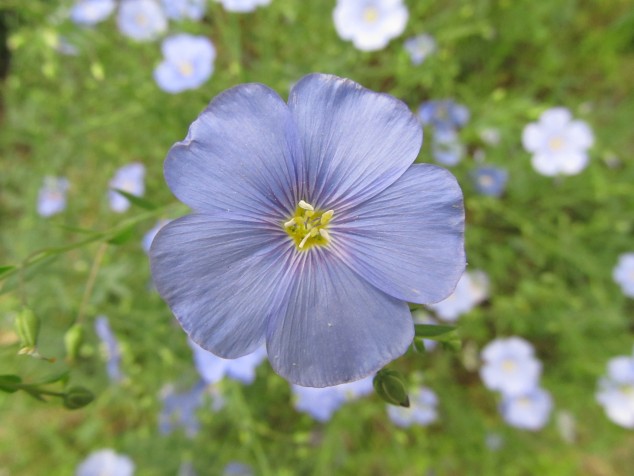
It’s a blooming time of year! Chris says I should write about something other than flowers, but I say you can never have too many flowers. (I guess Kanye and I have something in common.) They are all so unique and lovely though, and the intent of this blog is to share the Beauty of Nature. The other thing I love is the color blue–and I would also say you can never have too much blue. This statement is reflected in my closet, much to the chagrin of my daughters. So blue flowers are extra special for me. It is said that a true blue flower is hard to find in nature–that most are shades of purple or lavender. According to Wikipedia, the blue flower is a symbol for inspiration, desire, love, hope, and the beauty of things. No wonder I like them–and no wonder they are hard to find.
Cultivated varieties have expanded the selection of blue flowers, and my tour of our garden blues include some of those. I would have to say that my favorite blue flower is Perennial Blue Flax–Linum perenne. It was introduced to the US from Eurasia. A comparable native flax is Linum lewisii, named after Meriwether Lewis after he discovered and documented it on his travels. Perennial Blue Flax blooms early and for a number of weeks–each flower lasts only a day before the petals fall, creating a carpet of blue ‘snow’ around the plants. It reminds me of the fields of flax that were grown in eastern South Dakota–acres and acres of blue flowering plants that ripened to a rich brown with round-headed seed pods and shiny, dark brown seeds. The straw was harvested for producing the fibers to make linen, the seeds to produce flaxseed or linseed oil. This multi-purpose plant is a beautiful ornamental flower for the garden.
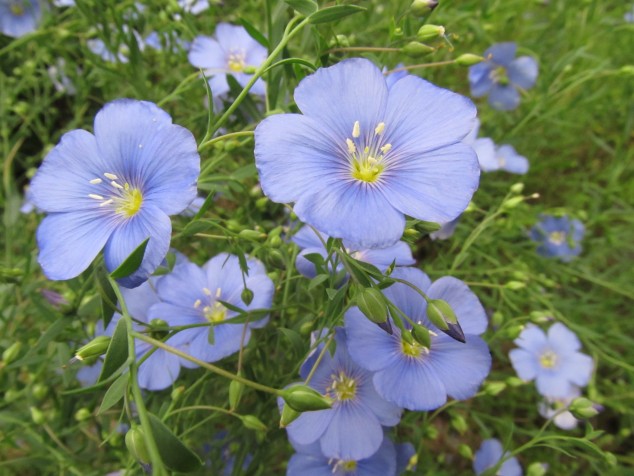
Perennial Blue Flax
One of the earliest blue-blooming flowers in our garden is Lungwort (Pulmonaria species). It’s a shade lover and has interesting spotted leaves.
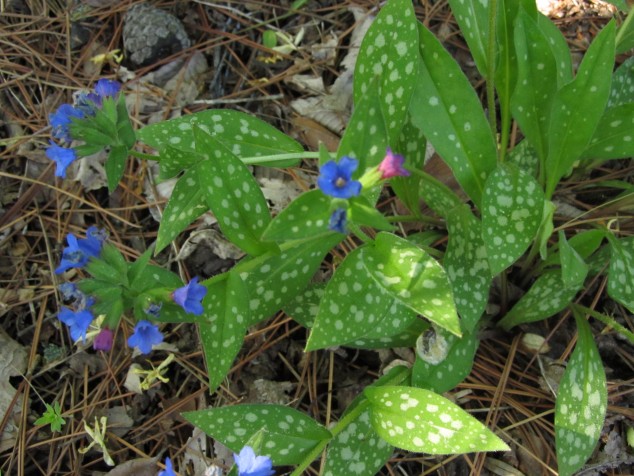
Lungwort
Jacob’s Ladder (Polemonium species) is another early blooming shade perennial. This variegated plant produces light blue/lavender flowers.
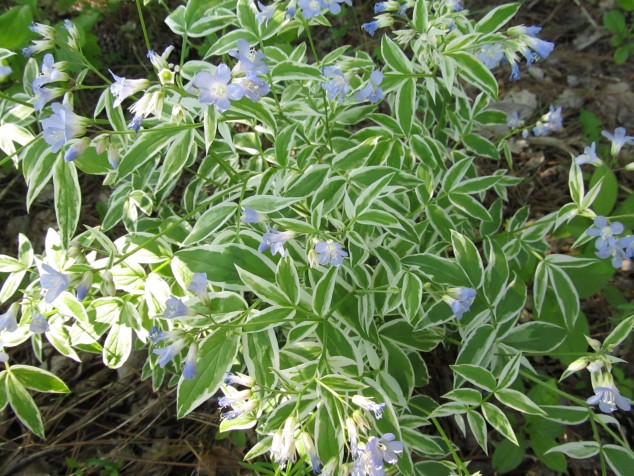
Variegated Jacob’s Ladder
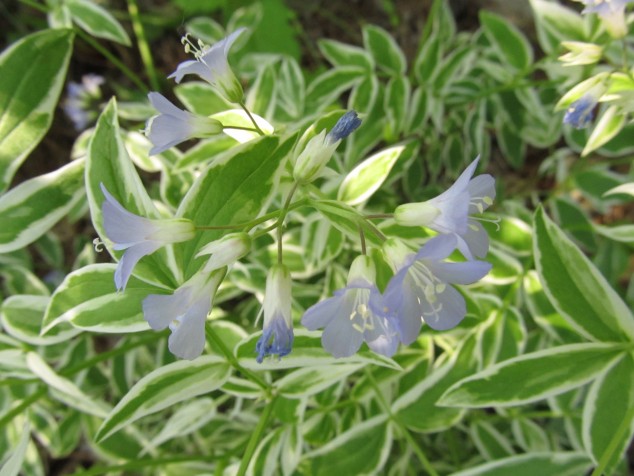
Variegated Jacob’s Ladder
Ajuga or bugleweed is an attractive, colorful groundcover that does best in partial or light shade. But it is very adaptable, so tolerates full sun and full shade. The blue flowers are a sidenote to the foliage but very desirable to the bumblebees.
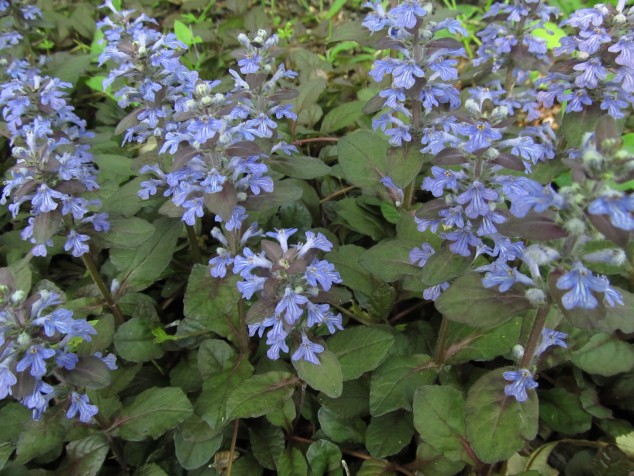
Ajuga
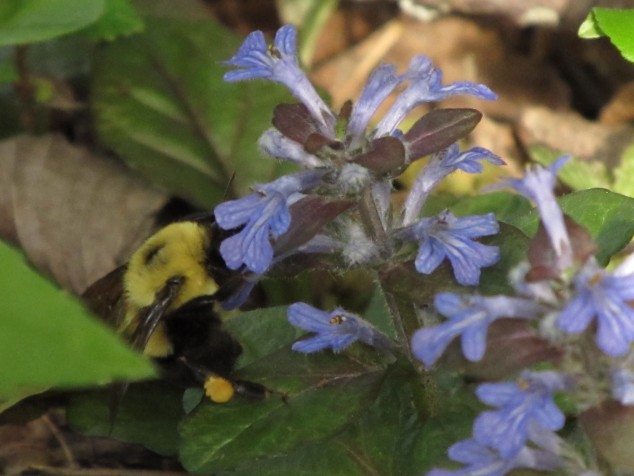
Ajuga
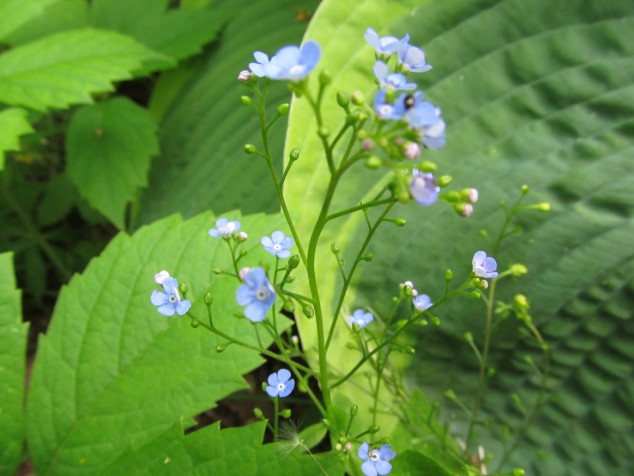
Brunnera or Bugloss is another shade-loving perennial. It has large heart-shaped leaves and tiny, delicate sprays of blue flowers.
Brunnera
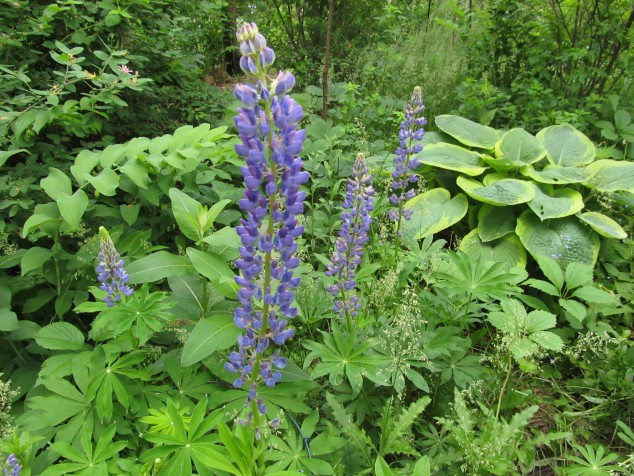
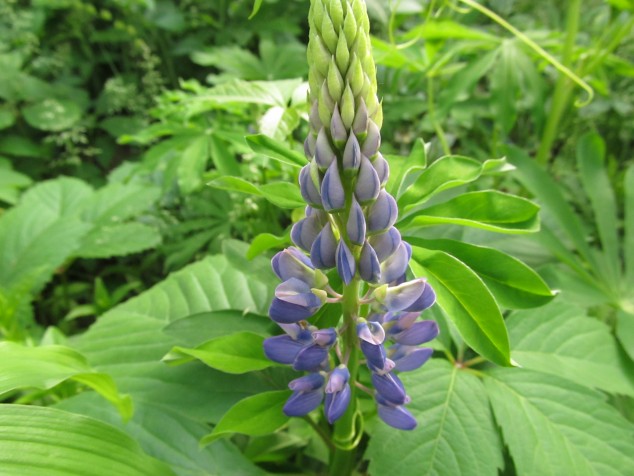
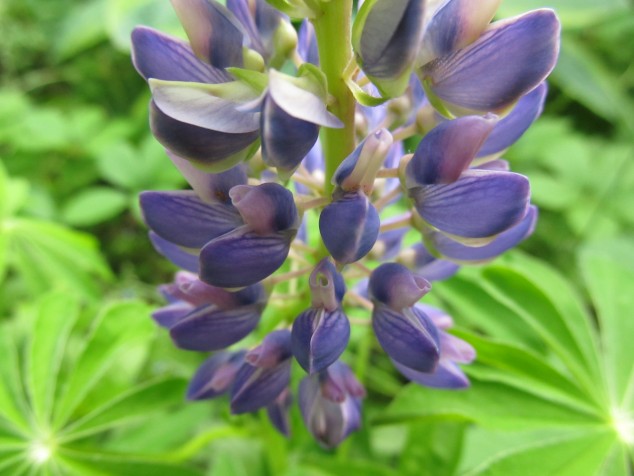
Lupines have showy spikes of color–the best known is probably the native blue species. Many hybrids can be found in most any color. Texas bluebonnet, the State flower of Texas, is a type of Lupine. This member of the pea family has palm-like foliage.
Lupines
Lupine
Lupine flower
Perennial Salvia, a sage that loves sunlight, is a long-blooming, hardy plant that will re-bloom after the first flowering is cut back. The purple-blue spike flowers look great with coreopsis, yellow iris, and yellow daylilies.

Perennial Blue Salvia
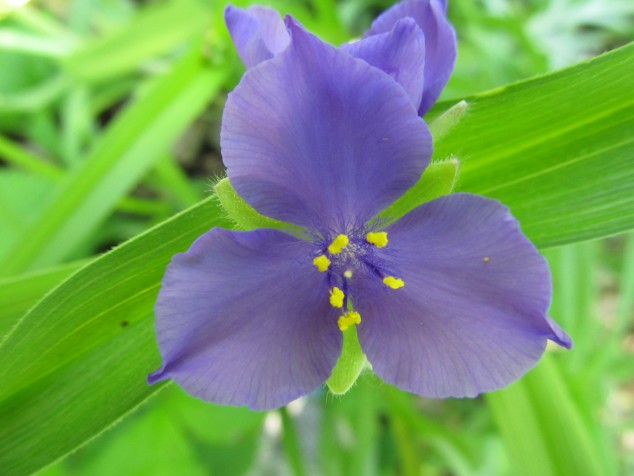
I have mentioned Spiderwort in my post about The Woods–how it has populated itself after we removed the buckthorn. It has grassy-looking leaves and flowers that only last a day before dropping off.
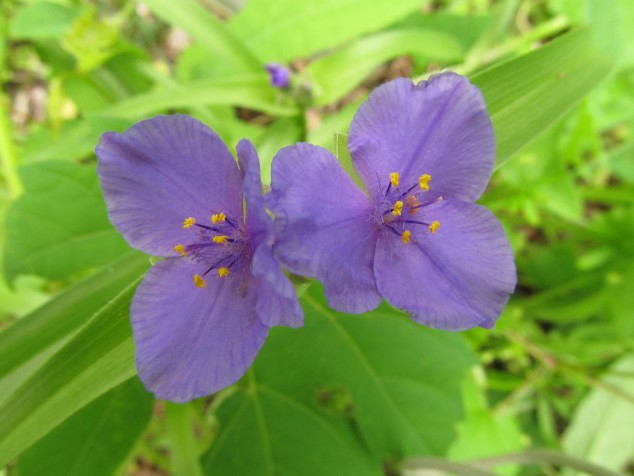
Spiderwort
Mountain bluet (Centaurea montana) is a perennial cornflower that is drought tolerant and likes full sun or partial shade. It has spidery flowers and lance-shaped leaves.
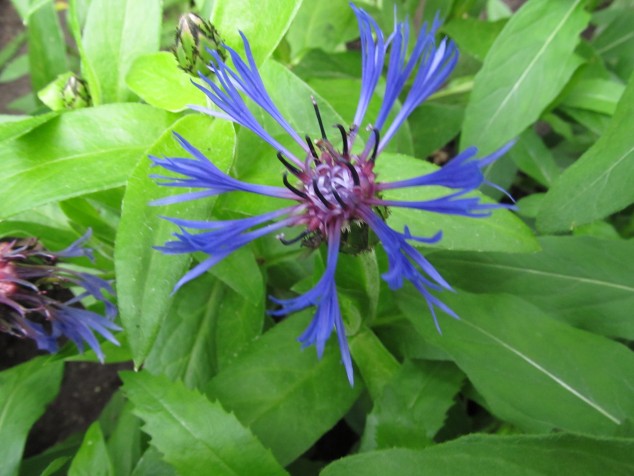
Mountain bluet
Amsonia or Bluestar is a compact, understated perennial with true blue clusters of tiny flowers. The foliage turns a bright yellow in fall.
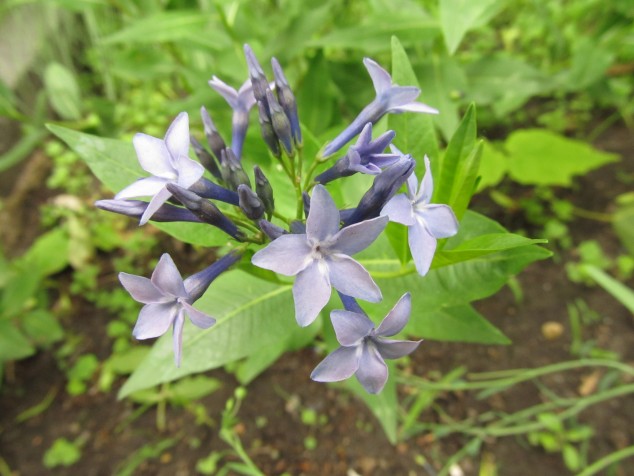
Amsonia or Bluestar
We all get the blues at times in our lives–even cowgirls get the blues sometimes. (I have more in common with Emmylou.) We can sing the blues, feel bad for a while, figure out why, then move on to the next thing. These blue flowers should inspire you towards love, beauty, and hope.
The Woods
A ‘wall of green’ was how my husband described our woods when we first moved to our Central Minnesota home six years ago. We could see the tops of impressive oak trees and spindly cedars, but the first 10-20 feet was a thick, impenetrable wall of green vegetation. It was armed with thorns that easily scratched our arms to bleeding if we tried to push through the denseness. The wall had blue-black berries in the fall that stained anything they touched.
I don’t think we found out until the next summer that our ‘wall of green’ was buckthorn–and from then on, it became a bad word in our household–a word said with scorn. And it became my husband’s new hobby. Common and glossy buckthorn are on the Minnesota DNR’s list of restricted noxious plants–it’s illegal to import, sell or transport it in Minnesota. And we had a whole woods full of it.
This shrub or small tree was imported from Europe in the mid-1800s and used as a fast-growing hedge until the 1930s when it was found to be so invasive. It’s an understory tree that takes over the floor of the woods. It has a relatively shallow root system that creates a mat that doesn’t allow native understory plants to grow–buckthorn hogs the sunlight, the nutrients, and the moisture. It’s also a prolific seeder and is spread around by birds eating the berries and excreting the seeds. Our woods had the old, mature oaks and cedars, a few hardy honeysuckles, and the buckthorn. The ground beneath them was eerie-looking and barren of other vegetation.
So Chris began the war on buckthorn. He purchased a handy-dandy buckthorn puller for the ones with 2″ or smaller diameter trunks. The larger ones were sawn down with a bow saw or chain saw, and the stumps or staubs, as Chris calls them, were painted with full strength Round-up. The tangly, pokey branches had to be hauled off to a composter–pick-up load after pick-up load. We are five years in, and the battles still rage. The seedlings have to be pulled for a number of years after cutting the mature buckthorn. They grow fast and thick. We still have large patches that we haven’t tackled yet–and that says nothing of all that is on neighboring properties.
But there have been many victories. We have removed close to 80% of the mature buckthorn in our woods. We can see the dark, shapely trunks and branches of the Oak trees. Oak seedlings are popping up all over. Ferns are spreading their airy fronds along the understory. Solomon’s seal is populating great sweeps with their nodding flowers.
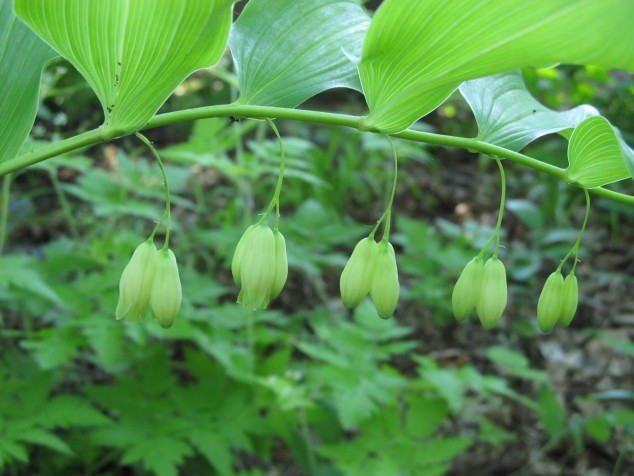
Gooseberry shrubs are growing. Spiderwort is a bright blue star shining in the green.
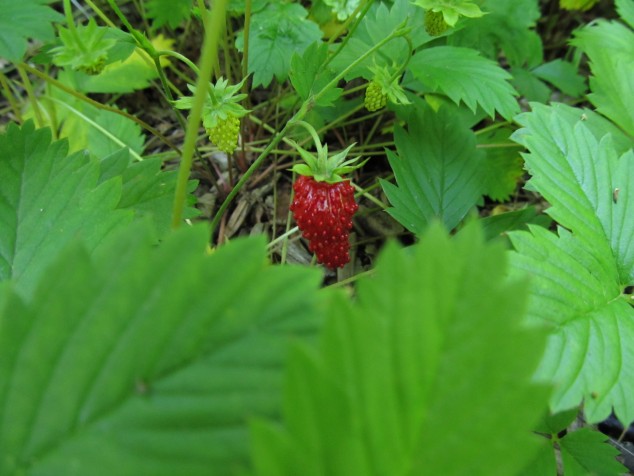
Wild strawberries carpet the ground, producing their tiny red fruit.
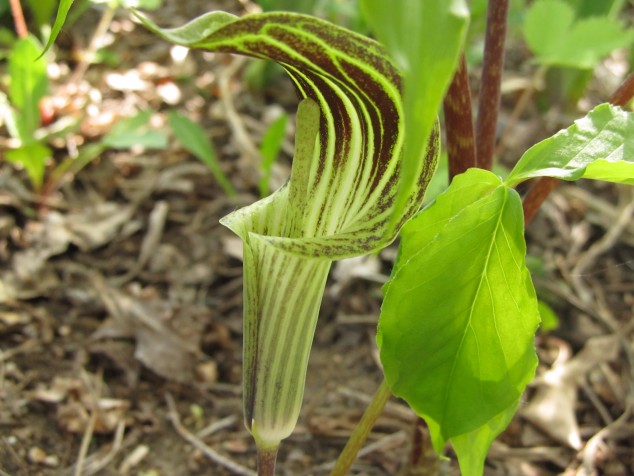
The greatest woodland treasure that has returned is the Jack in the Pulpit. As we cleared the buckthorn back, one appeared close to the yard under a honeysuckle shrub.
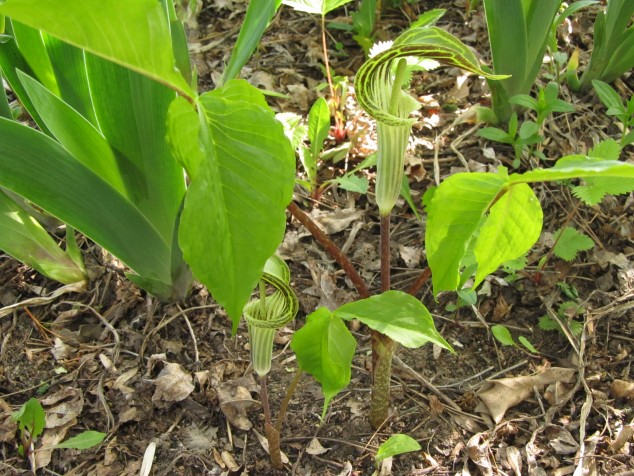
Last year, in a newly cleared area, a huge Jack in the Pulpit sprang up. It was like it had been waiting a long time to come back to the woods after being suffocated under the roots of the buckthorn–and it came back strong and robust! With hard work we cleared the buckthorn, and with hard work we continue to improve the woods by pulling the buckthorn seedlings and other undesirables that sprout up each year. The woods are coming alive again, and it is beautiful and inspiring!
We may all have a ‘buckthorn’ in our lives–something that looks good or works well to begin with, but slowly invades our life and starts choking out the good stuff of who we really are. It may be a way of thinking we developed in our childhood that no longer serves us well or an addiction that is running our life. We need to recognize what it is and work hard to tear down the wall, so the treasures of our life and soul can grow and flourish.
A Rainy Day
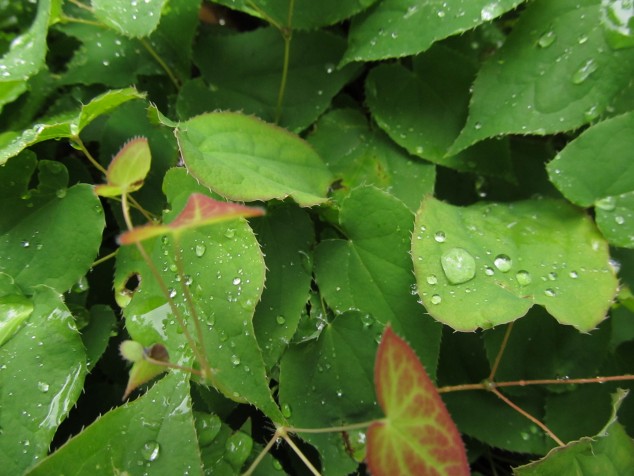 It’s a rainy day–with more in the forecast for the next six days. The river below our perch on the hill is already over its banks from downpours the last few weeks. Everything is growing and going kind of wild–including the mosquitoes! We haven’t tackled much of the weeding in our woodland gardens yet (mostly due to the mosquitoes), so the undesirables are making some headway. Yet I am amazed at how things have grown!
The hostas and ferns are larger than I have ever seen them.

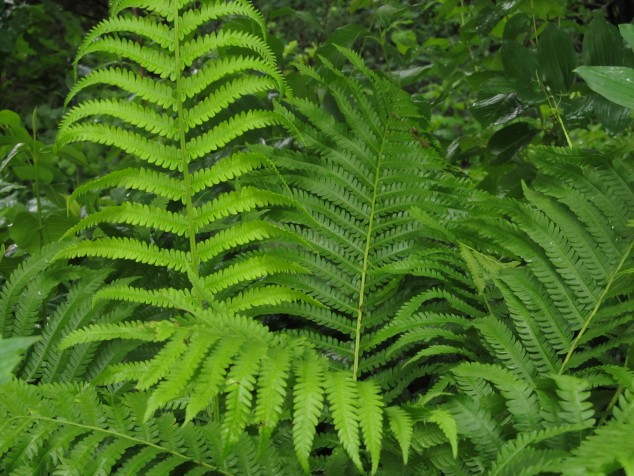
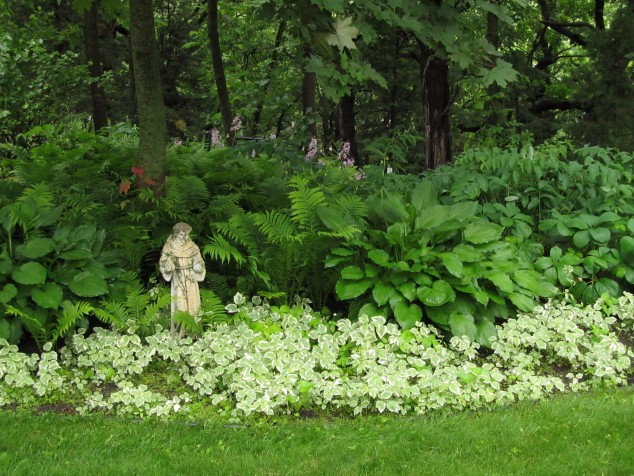 The wild ginger is robust compared to other years.
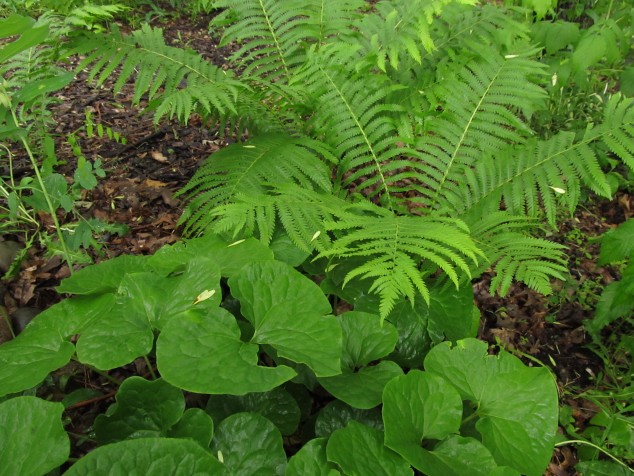 The Solomon’s seal is waist-high and so plentiful that the deer seem to be leaving other things alone and just munching on it. So that’s a good thing!
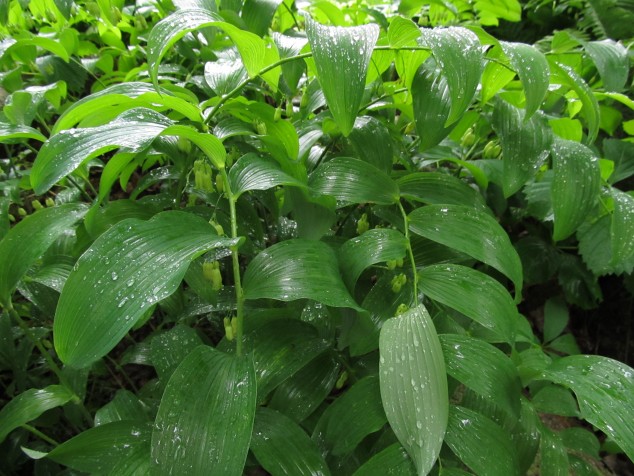
The effects of the drought of 2012 are still on our minds, so this abundance of rain and growth are welcome. If things get a little out of hand–like the weeds and mosquitoes, then so be it!
New Growth
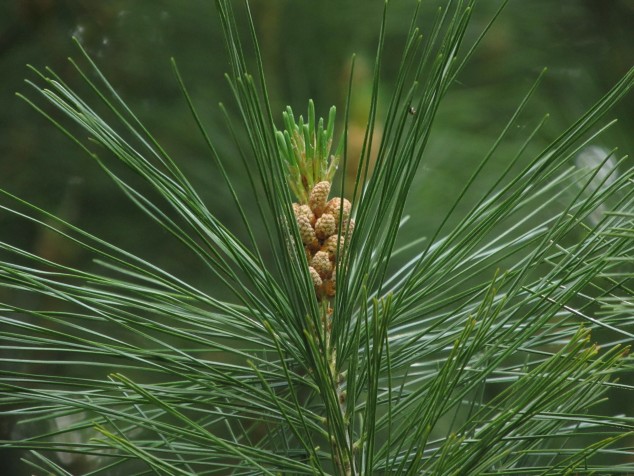 Deciduous trees are the attention-getters in spring, summer and fall. We know it is finally Spring when the new leaves have fully developed on the branches that have been bare all winter long. It is a dramatic change! The evergreens’ spring growth is no less amazing, however.
New growth blankets the young spruce and fir trees, covering the ‘old’ with a bright new coat. The growth is soft and tender and hardens off as summer progresses.
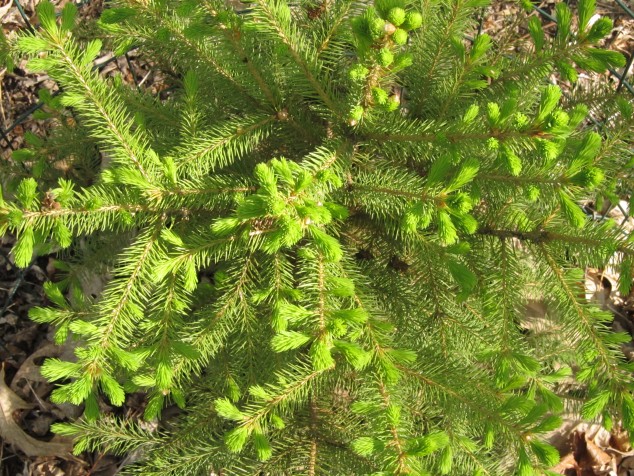
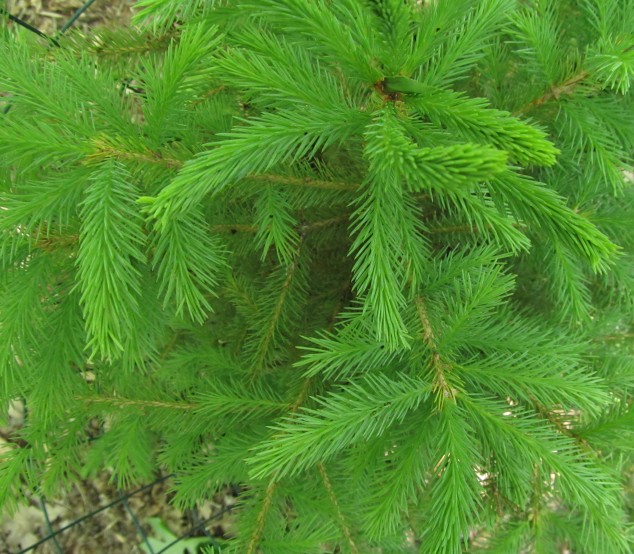
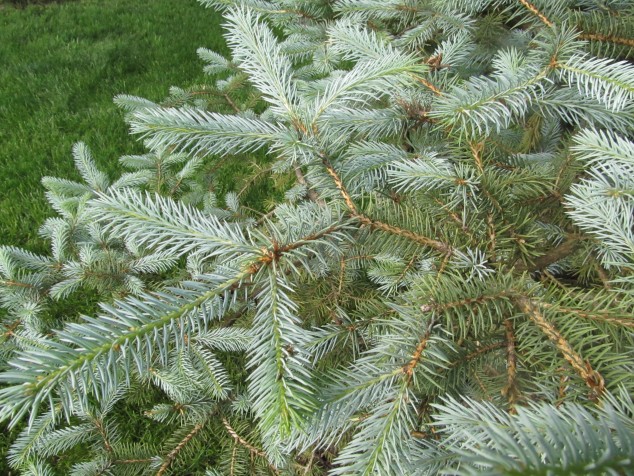 The new growth on pines, spruces, and firs is called candles–a new flexible stem and developing bundles of needles. The upright ‘candle’ look is epitomized on the pines as the new growth emerges upward from the old needles.
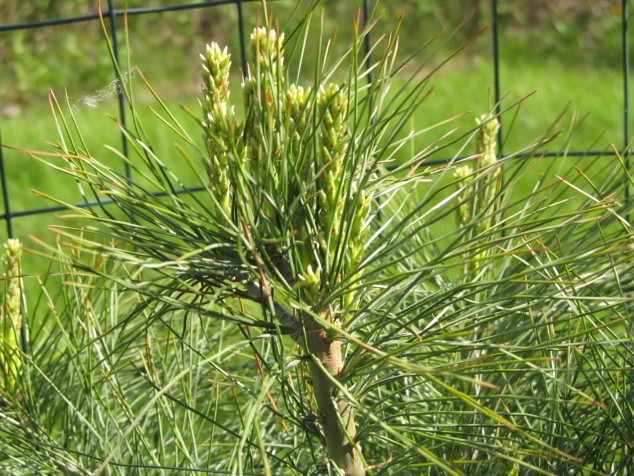
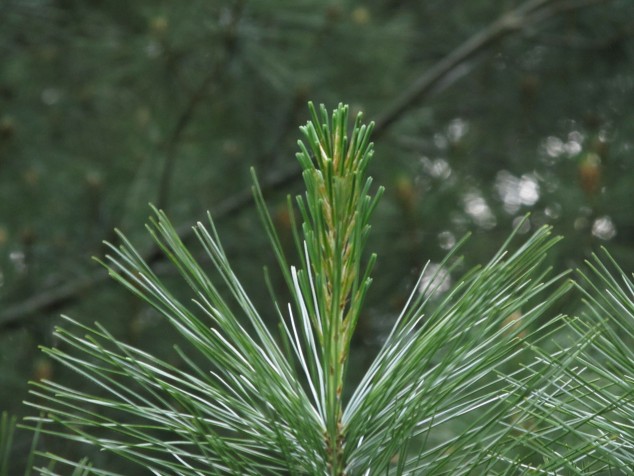 The young evergreens throw out their candles and grow with abandon, maturing a little more with each year’s growth. Sometimes it seems to go exceedingly slow as only inches are added with a whole 365 days of life. But the growth really encompasses more than the new candle of needles. After the new growth matures and hardens off in the summer, it will develop terminal buds that remain dormant until next year’s spring flush of growth. The trunk and branches will increase in size with another ring of growing cells. And the root system will continue to grow deeper and longer to provide nutrients to the developing tree. We see the candle growth, yet much of the important growth goes undetected.
And when the tree matures, cones develop that house the seeds and pollen. Some cones mature and release seeds the same year as formed; others, like the white pine, release seeds the second summer.
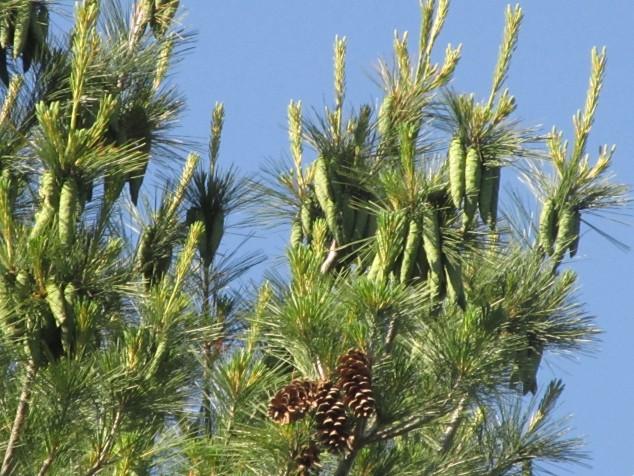
The young of a species grow their fresh new coats every year, becoming taller and more mature. Their work is growing! The older ones become more productive to the world around them, along with their new growth. And finally, the old, mature individuals work to populate a new generation, to provide a respite for others, and to make the living community a good place to dwell–and still, they send up new shoots of growth!
New growth looks good on all of us–what is your candle?
The Dragonfly, the Fox, and Me
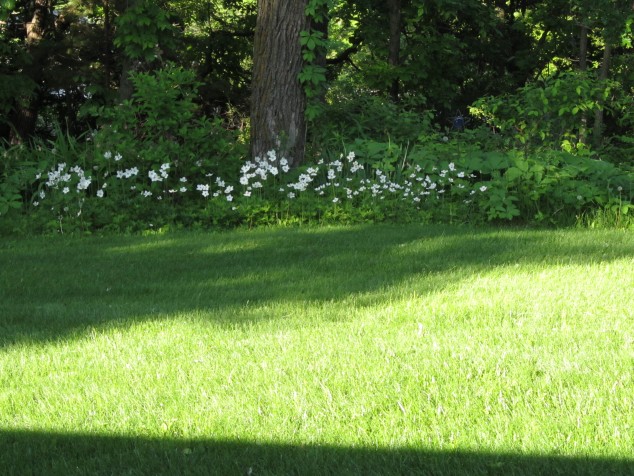
Yesterday morning I opened the living room door which faces the back of our house. It was a sunny and warm morning with only a slight breeze–one of those mornings when you breathe in deeply and proclaim Life is Good. Part of the yard was in the shade with cool, dewy grass, but the sun shone hot on the area in front of the door. I could see the mosquitoes rising up from the grass in the sun in their daily commute to the cooler, more protected woods. All of a sudden a dragonfly swooped by and ate the mosquito I was watching! Then I witnessed the aerial breakfast maneuvers of a number of dragonflies. The mosquitoes would rise from the grass, the dragonflies would dive down and hover underneath them for an instant, then gracefully and easily eat them. I foolishly thought I might be able to get a picture of them, but they were far too fast. This was one of those times when my attention was all that was needed. Three or four of the dragonflies patrolled the area I was watching, and it was evident that it was a stealthy attack–I never saw them miss. Soon I was wondering how many mosquitoes one dragonfly could eat!
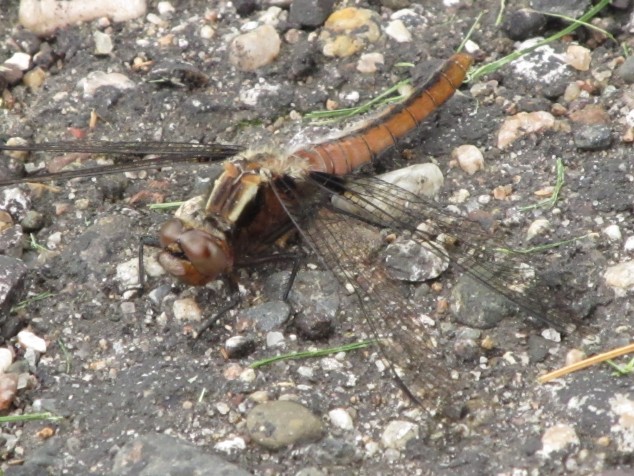
Later in the day when I walked out the driveway to get the mail, a dragonfly landed right in front of me. As I got closer, he flew just a few feet ahead of me and landed again. He really didn’t want to move from his resting place, and I thought he must be feeling the Thanksgiving Day effects of his gluttonous meal! I was able to go back to the house and get the camera while he rested on his camouflaged napping place.
A few weeks ago, another moment happened that I was unable to capture on camera. I was sitting in the living room enjoying a cup of tea and looking out our picture window. It was not yet dusk. In the same place that I watched the dragonfly hunt, I saw a fox trotting across the lawn, not five yards from where I was sitting. She was red with black legs and a black stripe down her back and bushy tail. Her coat was shiny and in prime condition, most likely from the black oil sunflower seeds she had feasted on in early spring under the bird feeders. She had probably already given birth to her pups and was out on a hunt. She trotted slowly, but steadily. She was on a mission. We had seen her various times before–crossing the road from her path in the woods, eating the birdseed at night, and in early morning mouse hunts. The seconds I watched her trot across the yard were slowed down. She was so beautiful. Her world and my world merged for a moment. I could have so easily missed that moment.
Why are we witnesses to such moments? With both the dragonflies and the fox, I felt privileged to see them and experience the short time with them. It made me realize the huge, complex world outside of ourselves that goes on around us, most often without our knowledge. The mama fox has a story all her own, yet not unlike ours, of making a den for her young pups and spending time and effort to feed and care for them. There are two components of being a witness–one is to be an observer or eyewitness, to be present at an event. The other is to attest or substantiate that something occurred. To be present and attentive in such moments takes away the past and the future, and time “takes care of itself.” We are drawn into a serendipitous place that is fulfilling and whole in and of itself. But as witnesses, when the event is over, we are called on to confirm or authenticate what just happened. In essence, we need to do a little evaluation. Why are we witnesses to such moments? Because they feed our souls, they make us realize the bigger picture, they help us put things in perspective, and I, for one, can attest to the wonder and glory of God.
Changes
 A week and two days ago we left home for a graduation, visiting family and friends, and a wedding. The lawn was freshly mown, and the leaves were not yet fully open on the oaks and maples. The lilacs were showing their clustered flower buds, and the crabapple was expectant with dark cherry red globes of folded flower petals.
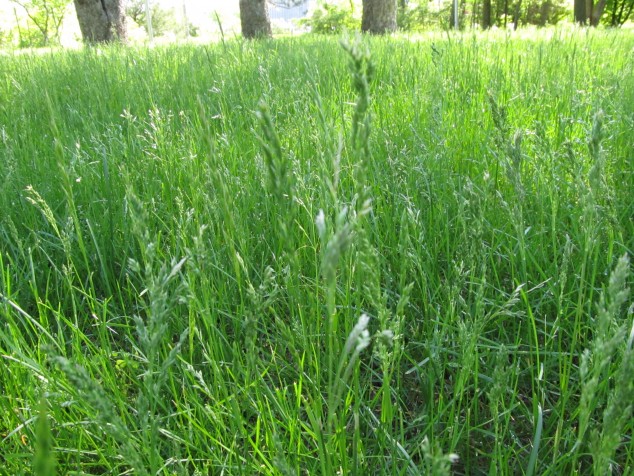
When we drove into the driveway yesterday, it looked like we had been gone a month! All the trees were fully leaved out, throwing great patches of shade onto the prairie-looking grass yard that had gone to seed.
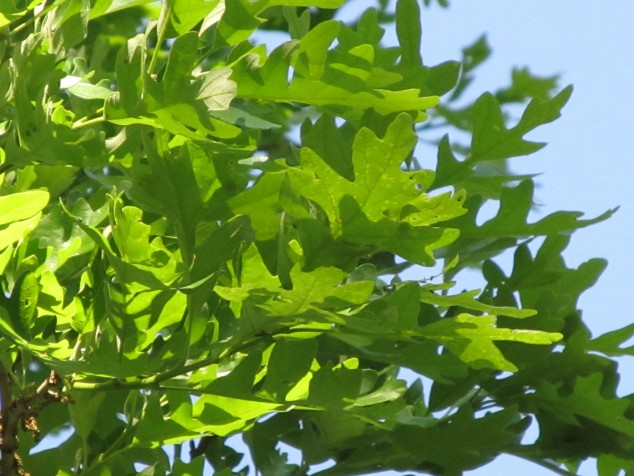
 The honeysuckle shrubs were covered with fragrant flowers–some white and yellow, some light pink, and others a pretty darker pink.
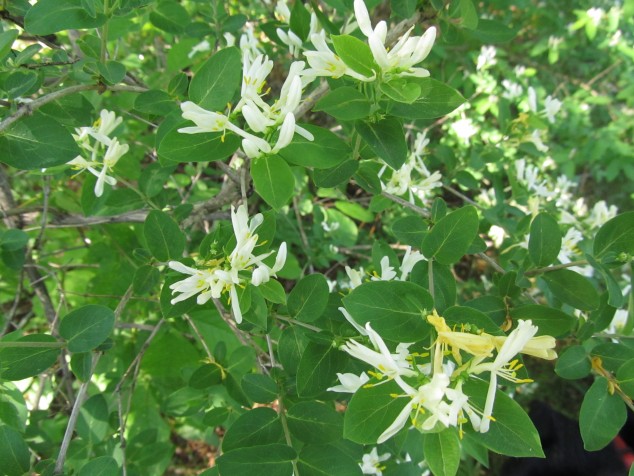
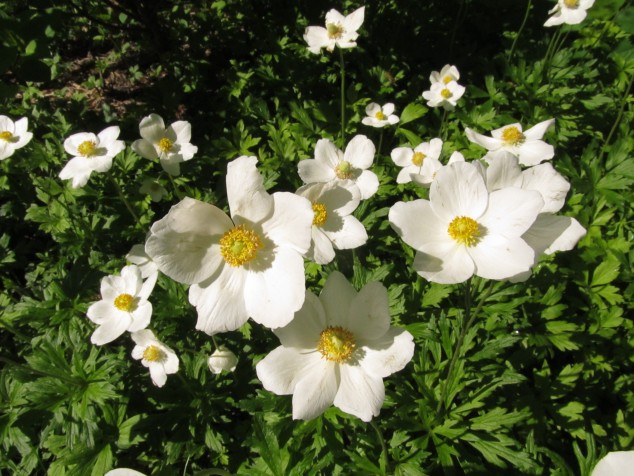
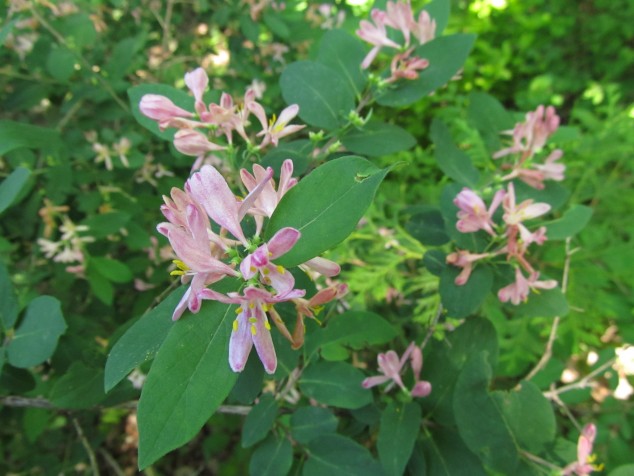 A patch of anemones under the oak tree was bright and beautiful.
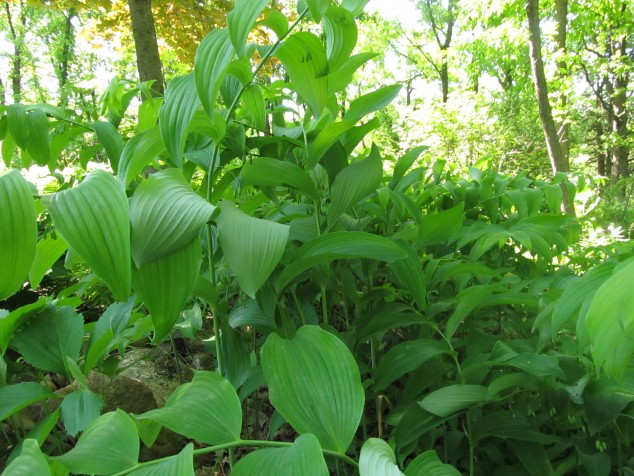
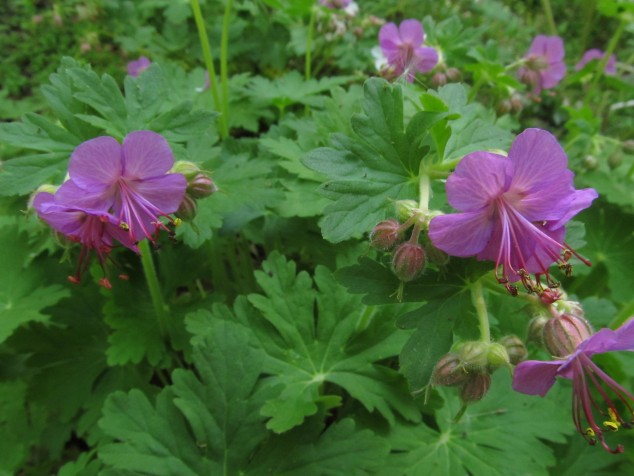
 Walking through the woods, the Solomon’s seal was thigh-high along the path, and the Hardy geranium, in contrast to its name, looked frail and delicate.
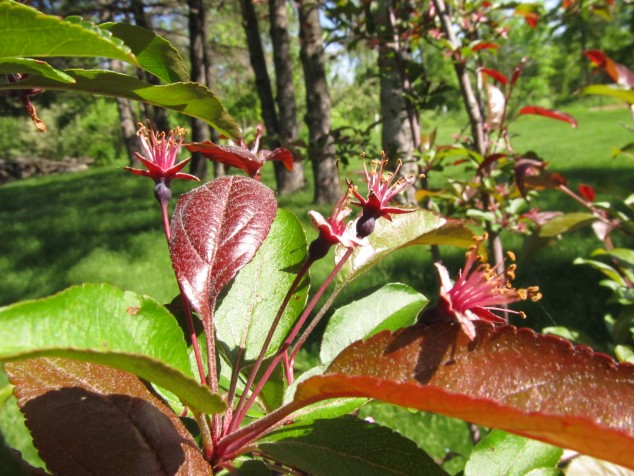
 The lilacs were spent and turning brown, and I was disappointed that I had missed the opportunity to bring a vase full of fragrant blooms into the house to perfume the indoor air. I had also missed the Prairiefire crabapple in its full blooming glory, but found the tiny fruits starting to form at the base of the flower.
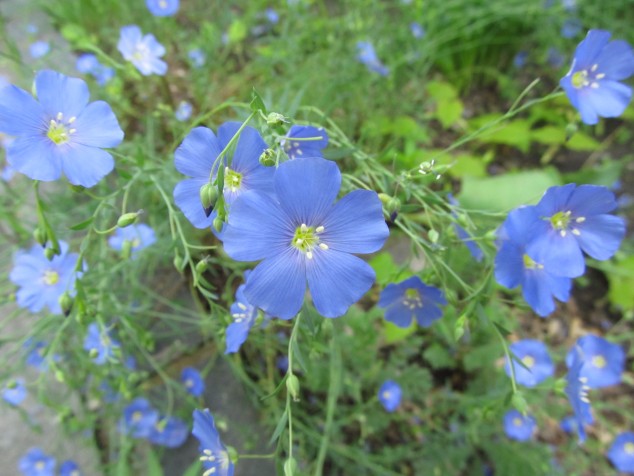
 I was happy to see the brilliant flowers of perennial blue flax in full bloom, reminding me of the acres and acres of flax that used to be grown in eastern South Dakota.
If Spring came but once in a century, instead of once a year, or burst forth with the sound of an earthquake, and not in silence, what wonder and expectation there would be in all hearts to behold the miraculous change! –Henry Wadsworth Longfellow
We had traveled back to two places where we used to live–six and fifteen years ago, respectively. I was struck by the contrast of things that hadn’t changed at all and things that were completely different and unrecognizable. Some things that I expected to change, hadn’t, and other things that I expected–or wanted–to stay the same, had changed drastically. It is humbling and a little haunting to realize that we often have so little control over change. Nature’s changes, whether as fast as last week’s spring transformations or the slower evolution of one season to another or the still slower changes in landscape and climate, impact us in ways we scarcely know. And we, in turn, influence people and things around us, including Nature. May we all be more conscious of the miracles of Nature and of ourselves and of the ways we impact one another and the Earth.
Transition Time
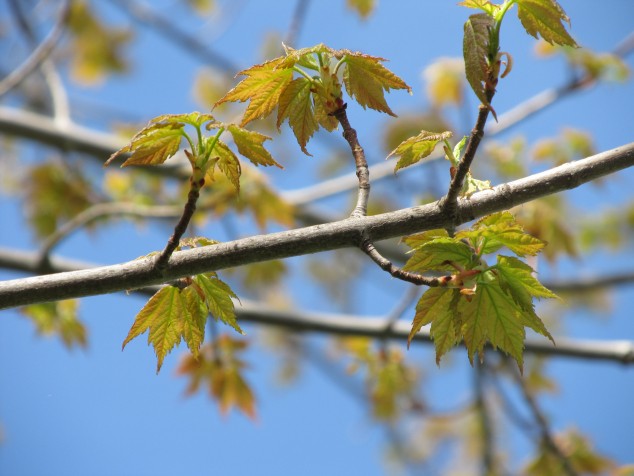 Three weeks ago I was searching for a flower of any sort and was happily content with seeing the swelling buds on the trees. Amazing how things can change in three weeks! Spring is at a full gallop now! So many things are changing–the abundant honeysuckle are fully leaved out and will soon show their sweet yellow and pink blossoms, the maple tree has small amber leaves that are starting to throw shade on the green, green grass, and the daffodils are in full lemony bloom.
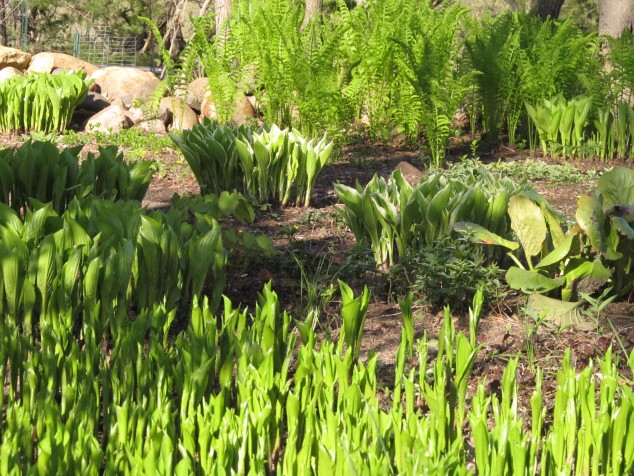 The ferns, hostas, and lilies of the valley are unrolling to their summer form in shades of green that are so welcome after the white of winter and the brown of early spring.
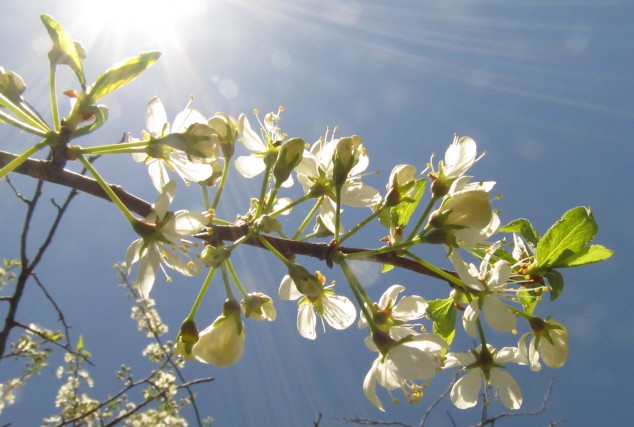 The wild plum is in all its sweet-smelling, white-petaled glory but has yet to develop its full leaves.
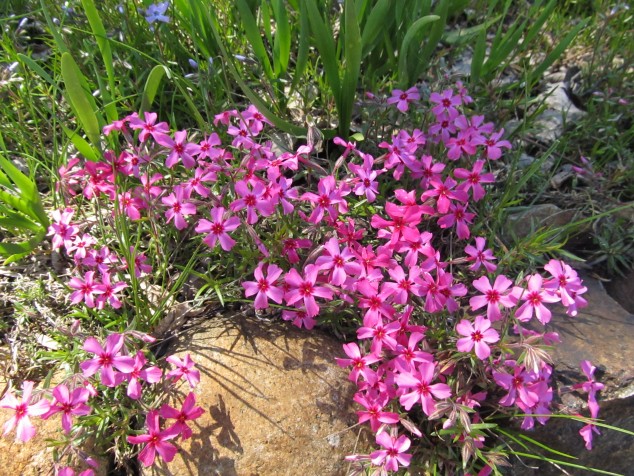 The creeping phlox is brilliant in its short-lived adornment at the mailbox.
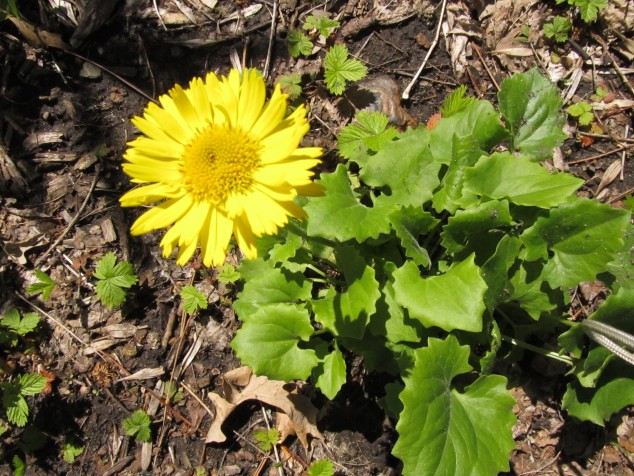 The leopard’s bane shines with its large daisy-like flower.
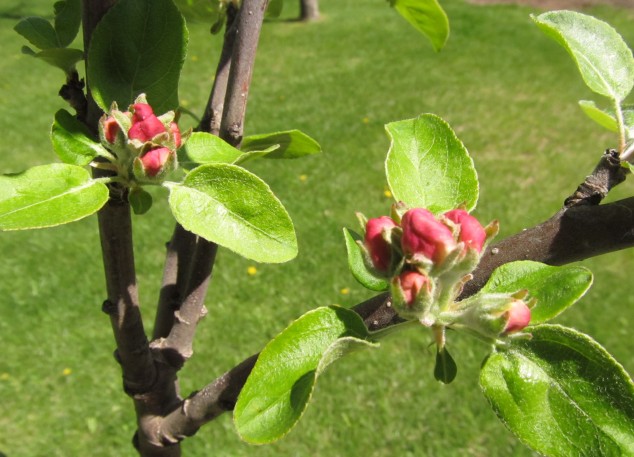 The apple tree blossoms hold the potential of fall’s crisp, juicy crop in their rosebud clusters.
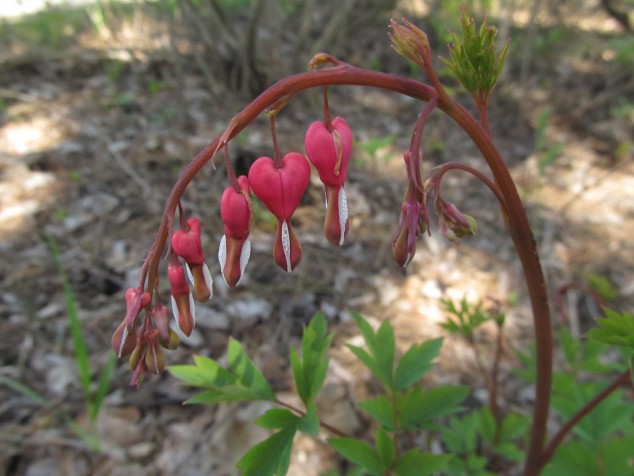 The bleeding heart is opening its distinctive flowers in the shade of the pine trees.
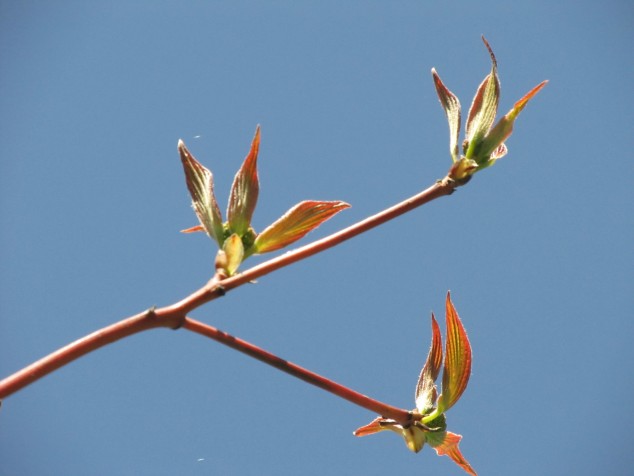 And the candle flame leaves of the pagoda dogwood light up the sky–not fully leaved out, yet far from the dormant state of so many months. It is a time of change.
The transition time marks the month of May. Schools are out or coming to an end for the year. Parents are moving kids out of dorm rooms when it seems like they just moved them in. Summer vacation or summer jobs begin. Graduations denote the end of high school days or college life with excitement and apprehension for the future and what it holds. New jobs transition college students to adult life. Weddings transition couples to married life. Endings, beginnings, change, new growth. Apprehension, curiosity, excitement, beauty. Enjoy the energy and promise of the May transformation!
The Luck of the Buckeye
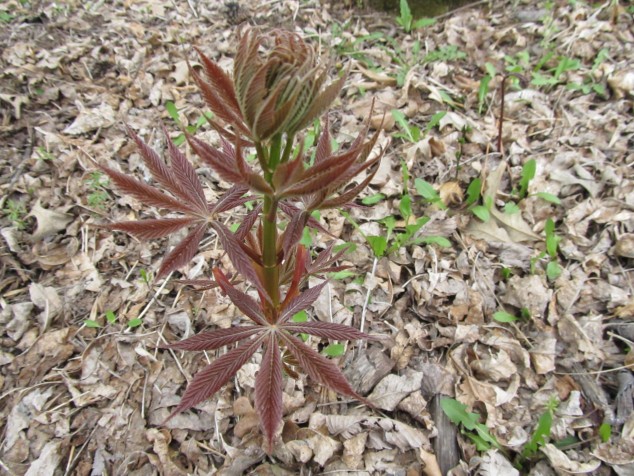
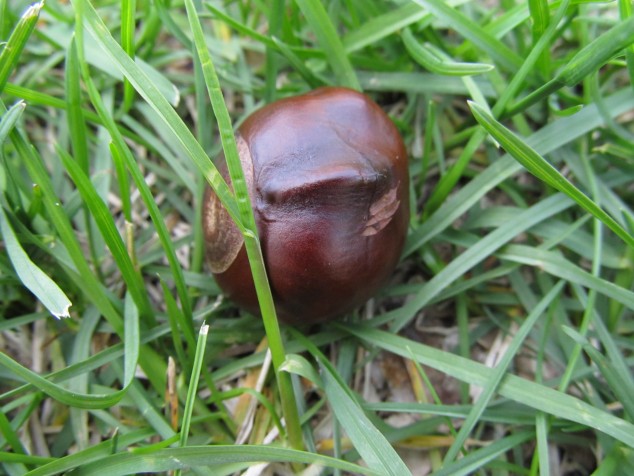 This deep brown, nut-like seed is from a Buckeye tree. The shiny brown color and lighter tan circle on the seed gives it the appearance of a deer’s eye, thus the name of the tree. We have quite a few seedlings growing on our property, thanks to the squirrels who gather the nuts from a mature tree two blocks up the street. You can see the teeth marks from the little critter on the nut above. Similar to a Horse Chestnut, these nuts are supposed to bring good luck to those who carry them.
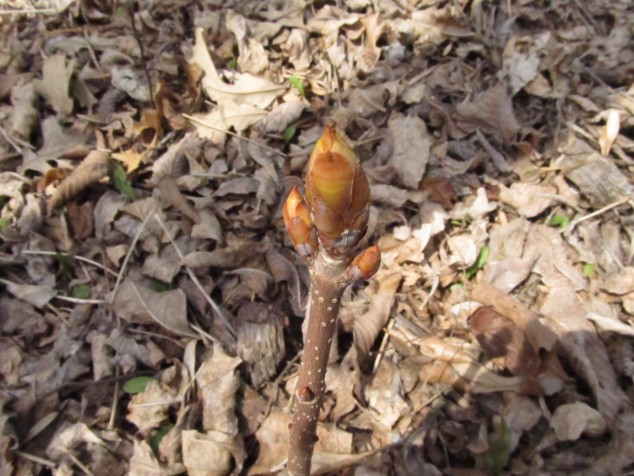 The buds of the young Buckeye are large compared to other tree buds, which gives us an inkling of what’s to come.
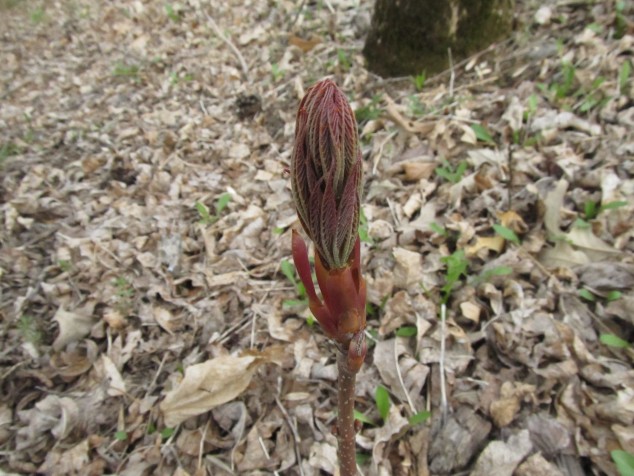
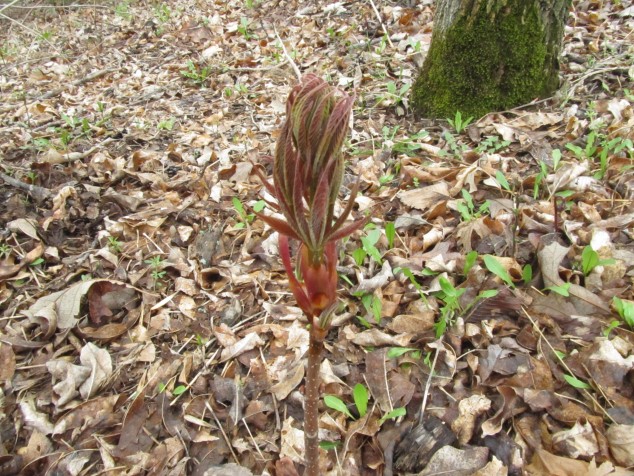
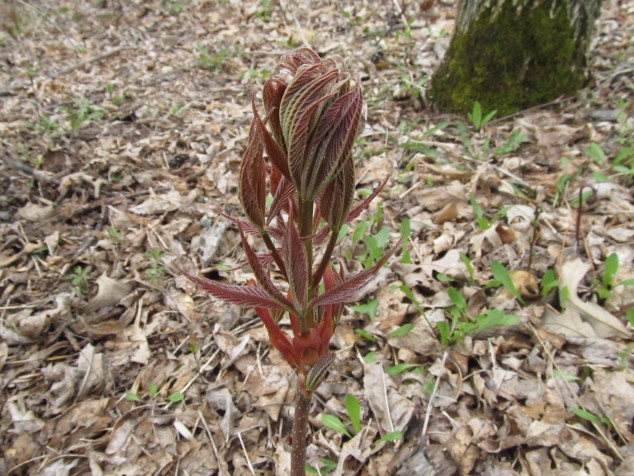
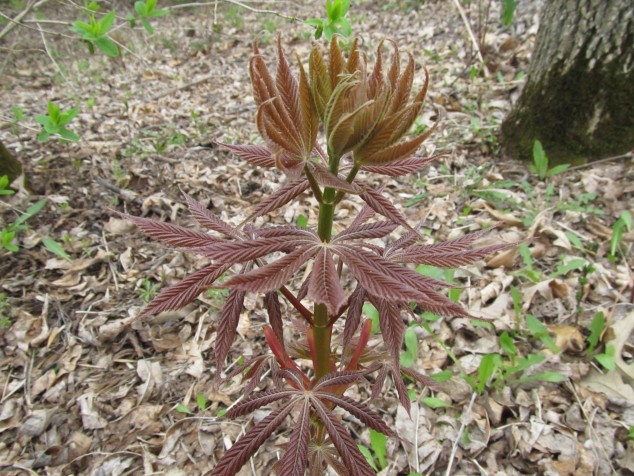
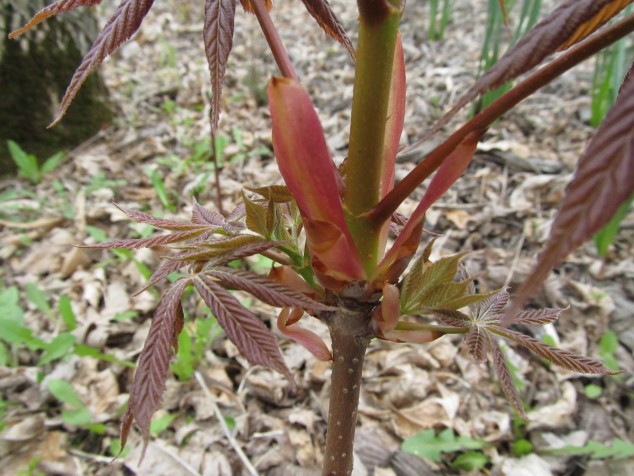 The bud cover now looks so small compared to what it contained.
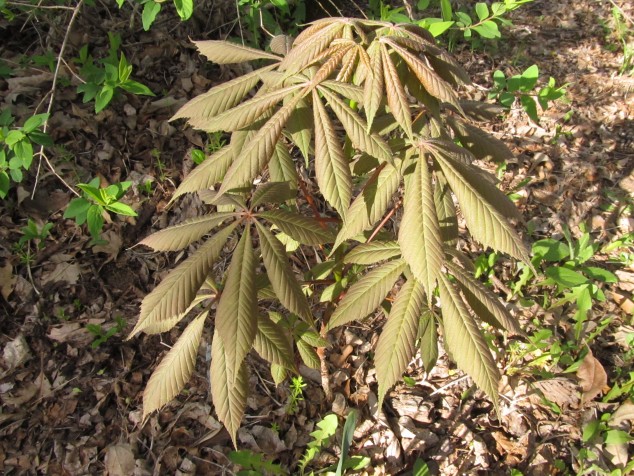 Nearly a month has passed since I took a picture of the bud. The leaves are beginning to turn green and look more mature.
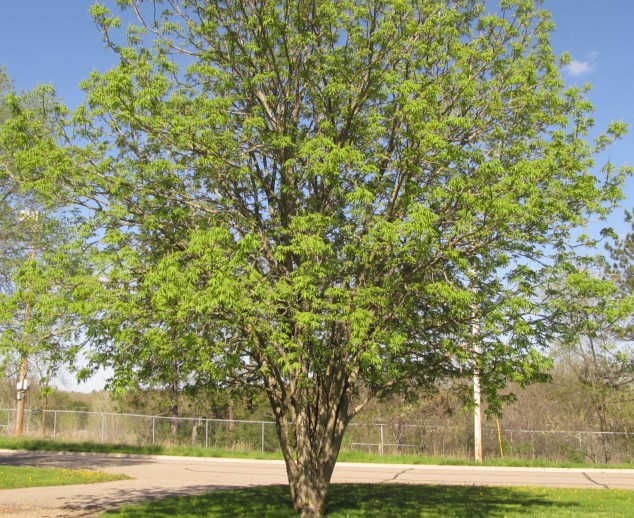 And this is the tree up the street that the nut probably came from and that will soon be blooming in showy clusters of flowers. It takes decades for a tree to reach its full potential–from shiny brown seed to flowering, nut-producing mature tree. Amazingly though, in only one month’s time, we can witness the large-budded seedling double in size and produce an array of beautiful compound leaves. It is one of the reasons I believe in miracles!
Love and the Heart-leaved Bergenia
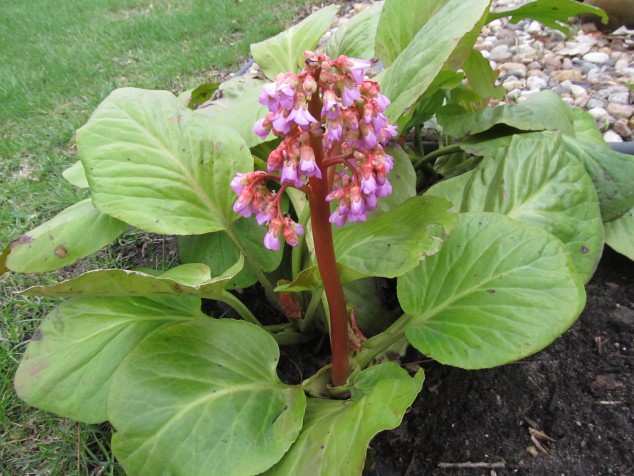
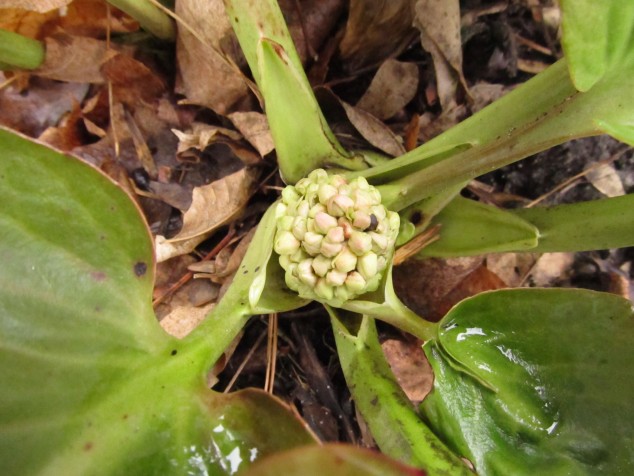
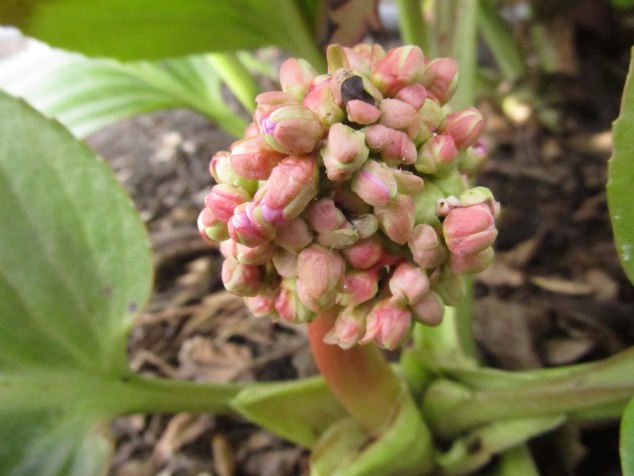
There is something to be said about making it through the winter in Minnesota with green leaves intact. This perennial is rather shocking in its large-leaved greenness when the beds are cleared of their winter coverage of snow and leaves. Many things about Bergenia are surprising–starting with its common name of Pigsqueak, which was taken from the noise produced when two leaves are rubbed together. It also has a large-stalked, showy flower that is our second perennial to bloom in early spring after the demure Pasque flower. The heart-leaved Bergenia has large, leathery leaves and propagates by rhizomes that slowly form clumps. They are relatively pest-free, though the vine weevil will eat the edges of the foliage giving it a notched look as seen in the third picture below. It is happy in most soils in part to full shade and has a beautiful fall color of reddish-bronze. The passage from bud to fully open flower took about two weeks this year with cool temps and cloudy, rainy days.
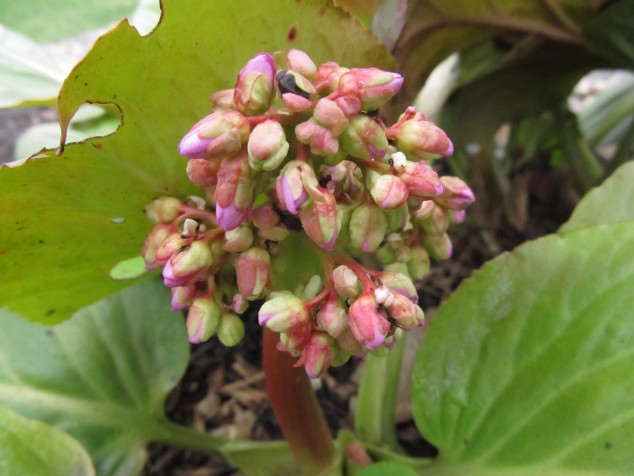
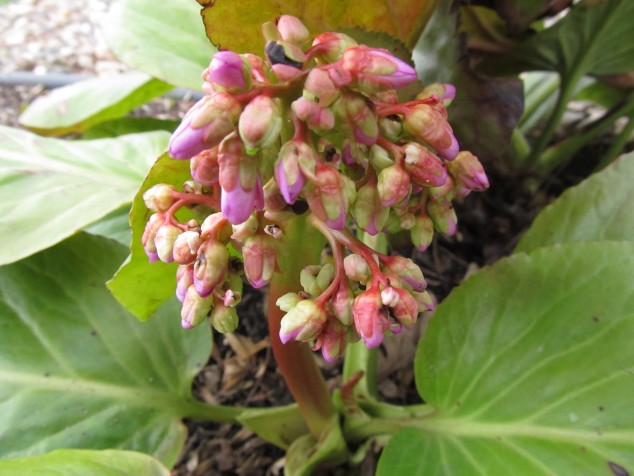
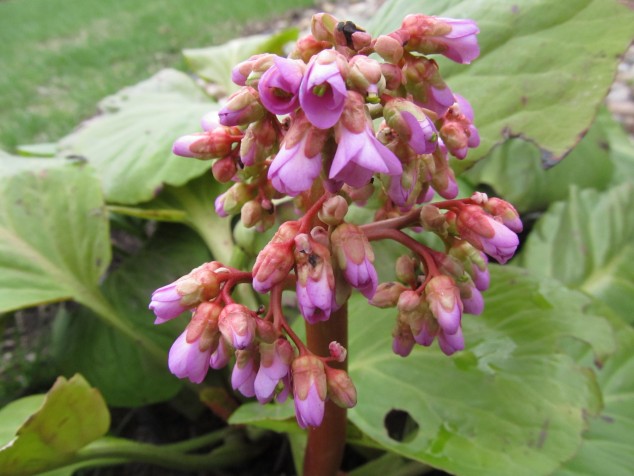
There is also something to be said about making it through thirty-two years of marriage with love and respect intact! We have weathered the surprises, the drought spells, the wrinkle-inducing stretches, and the just-get-me-through-the-next-day moments. We have also been incredibly happy with three amazing children, family and friends, animals to make our days, and the goodness and treasure of growing things together. Happy Anniversary to my Partner in Life!
Perennial People
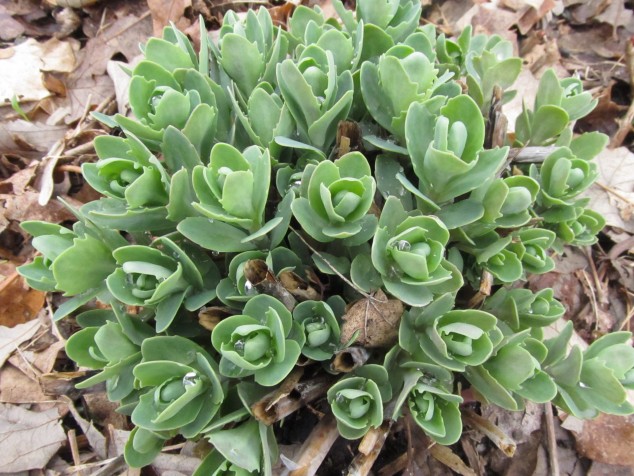
Sedum
One of my favorite things to do at this time of year is walk around the yard and through our path in the woods to see what’s up–literally! The perennials are popping up all over the place! I love to see them peeking, pushing, poking, unrolling, unfolding, unfurling. Each one is unique in color and form. These cold-hardy plants made it through another winter of below zero temperatures and feet of snow. Occasionally we have one that doesn’t make it–it could have been too cold, too dry, or too wet for it. We take a moment for sadness at its demise but hold onto gladness that we tried. But mostly, it is an amazing process of re-birth as we remove the ‘dead’ leaves and stems from last year’s growth to make way for the new. Gone are the hail-pocked leaves of last year, the slug or bug-eaten greenery, the sun-scorched, dog-trampled, drought-wilted, or wind-whipped foliage. They begin again. The new, tender leaves and stems are bright with their color and pristine in constitution. Let me take you on a tour.
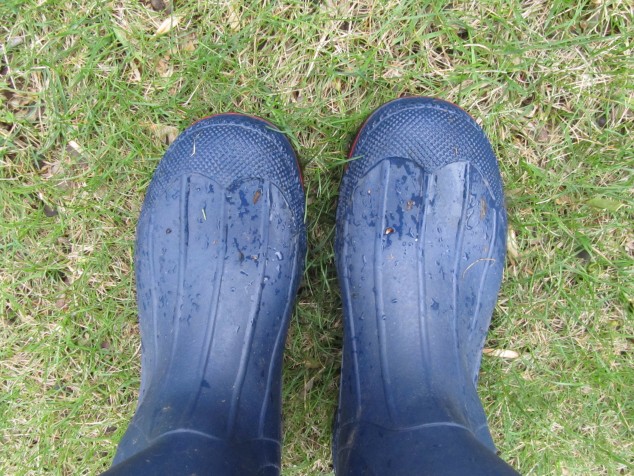
It rained last night!
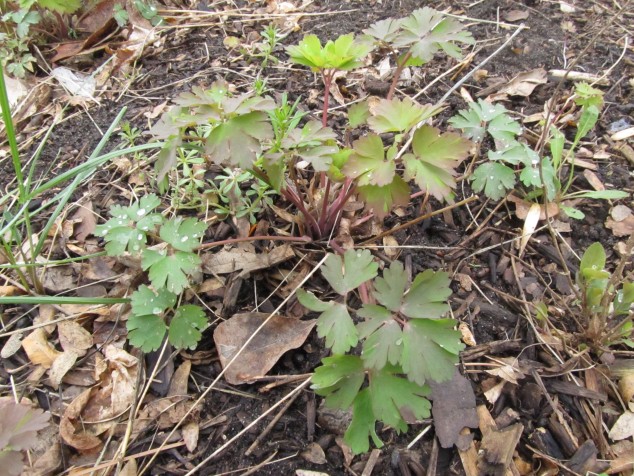
Columbine
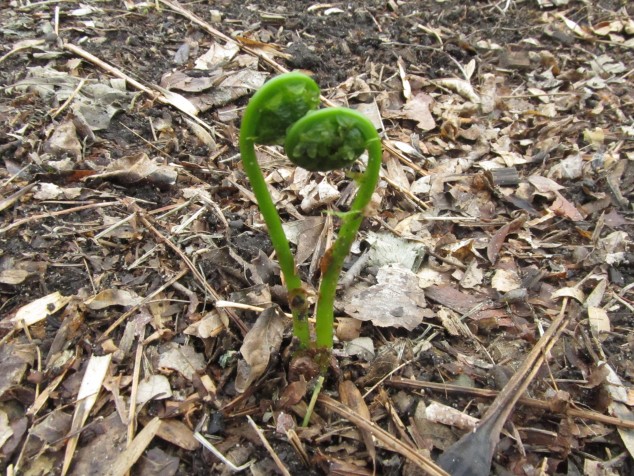
Fern
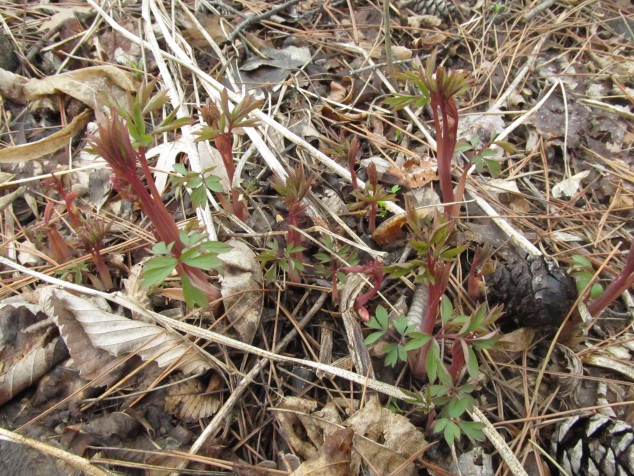
Bleeding Heart
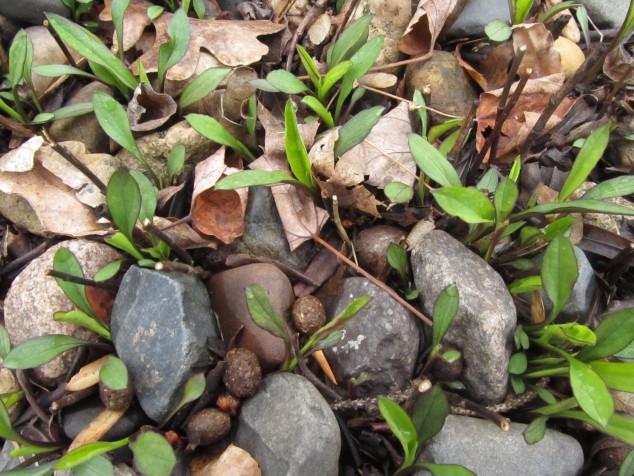
Asters–with evidence of who ate them in the Fall
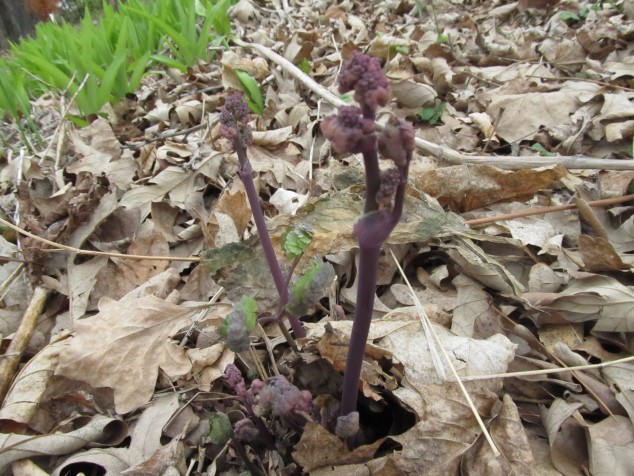
Meadow Rue with Daylilies in the background
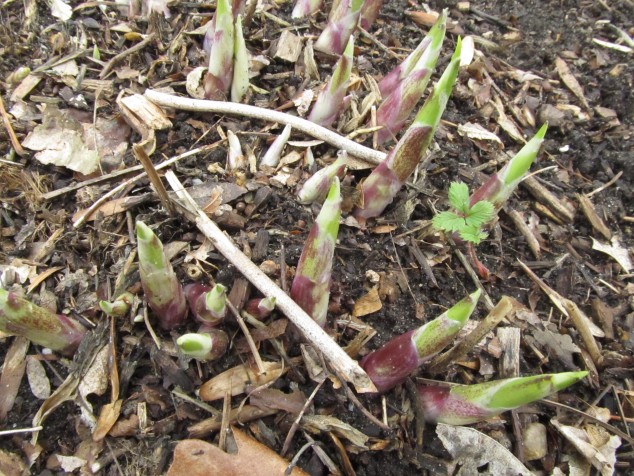
Hostas just coming up
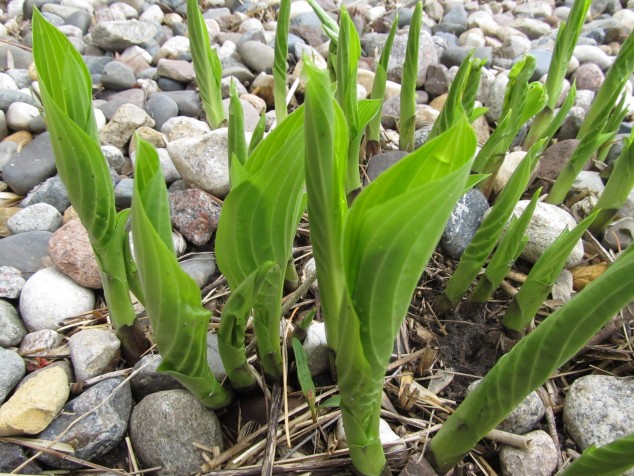
Hostas unrolling
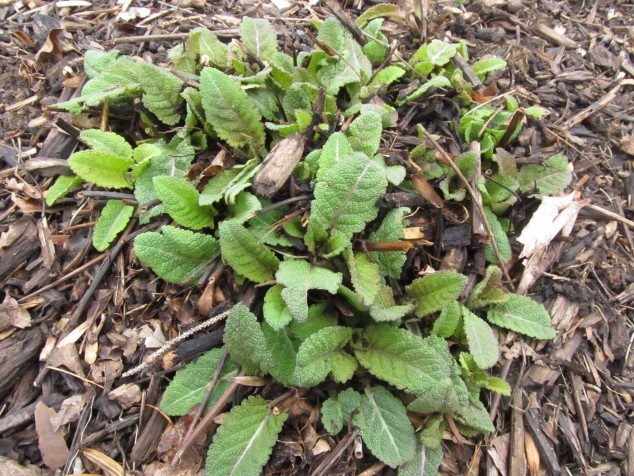
Blue Salvia
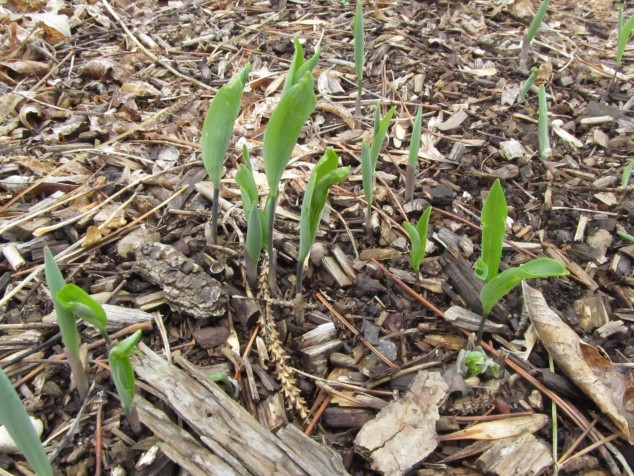
Solomon’s Seal
This feeling of newness and excitement reminds me of starting a new school year or calendar year. Whatever happened in the last year is behind us now. We take stock, heal our wounds, make plans or resolutions, change up a few things, and go onto the new: new classes, new teachers, new things to learn and do. We begin again. And though we carry our scars, we are perennial people. We are bright with hope and pristine in spirit once again.