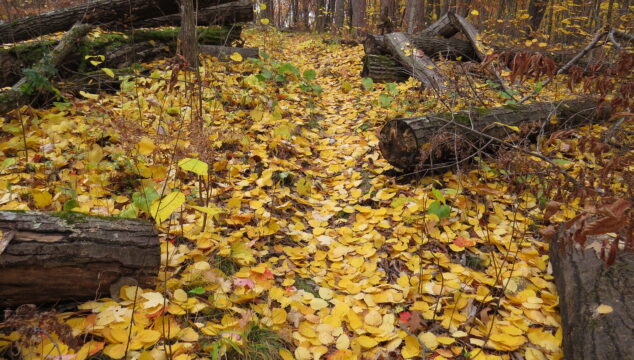
Come walk with me in the peak Autumn beauty of the Northwoods. To say that I love this time of year is an understatement. Most everyone can appreciate the colorful falling leaves---it reveals the 'true self' of a tree when its leaves are no longer producing chlorophyll. Their true colors are revealed, and there is something simple … [Read More...]
Crocuses–A Triad of Faith, Hope, and Love
Our first year of marriage was wonderful! We had had a long distance romance for two years–weekly phone calls at best, lots of letter writing, six to eight visits a year–so we were happy to be together! We rented a huge, old civil war-era house on a little acreage in Missouri, had a large garden and our two horses, and made some special friends. In year two or three of our marriage, I remember looking back on our first year and realizing, in hindsight, how difficult it had been! It had been a struggle to figure out who I was as a person, who he was as a person, and who we were as a couple.
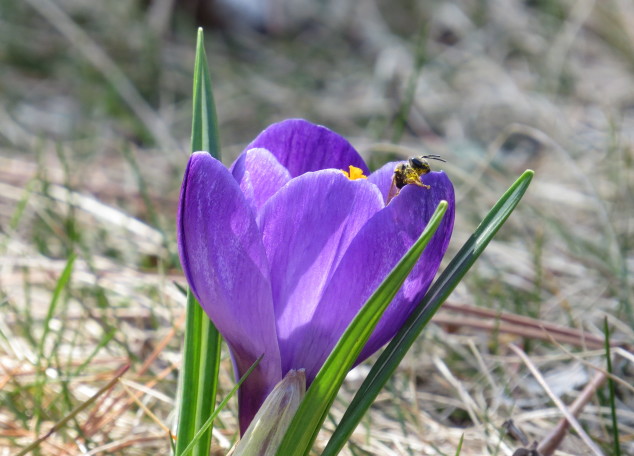
There were many wonderful things that have happened in the last six months–especially the wedding of our daughter in October. We have had visits with family and friends and have skated through a mild winter weather-wise. But looking back on this late fall and winter, I realize that it has also been one of those difficult times. So when I walked out the driveway this morning and saw the crocuses blooming, I nearly wept for joy. They are so beautiful and colorful after a dull, lifeless, difficult season.
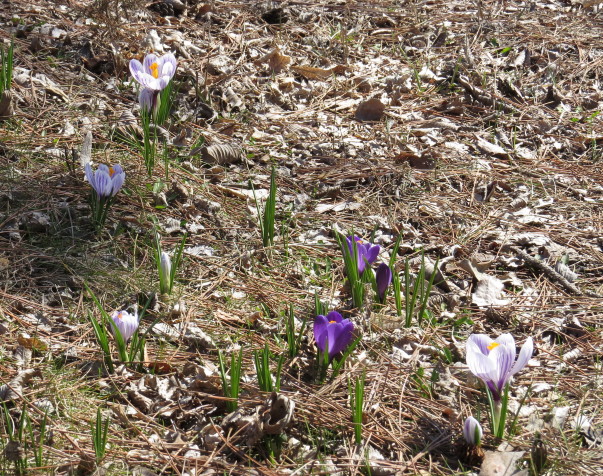
Somebody must have been equally delighted with the delicate crocuses, as this one had been munched on already.
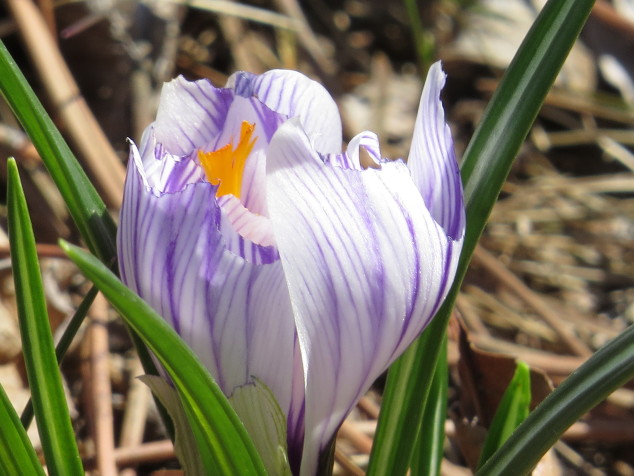
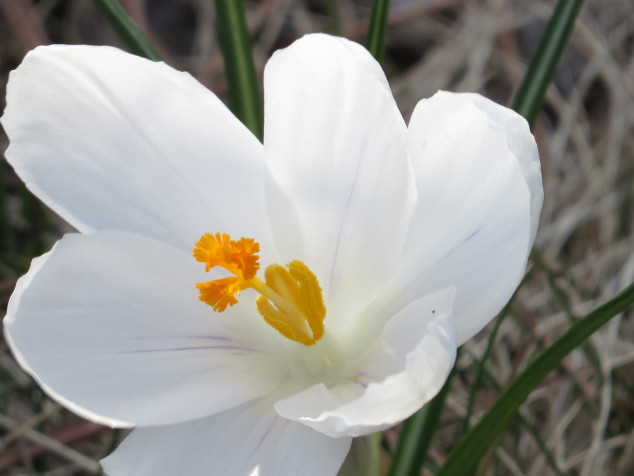
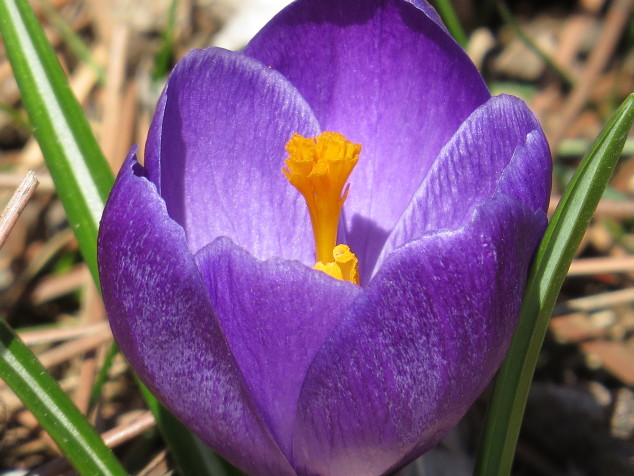
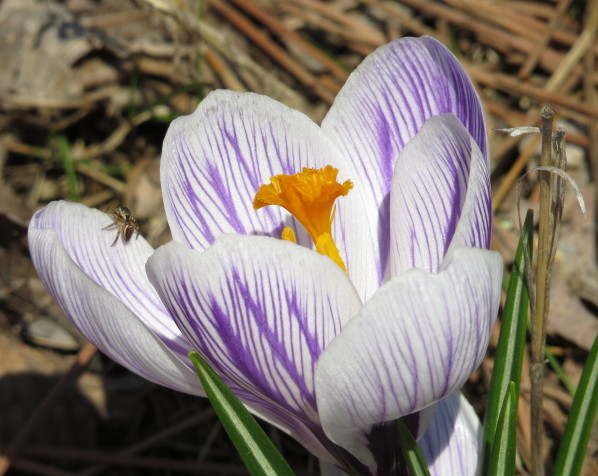
Crocuses are the first flower to bloom in the spring, often when snow is still on the ground. They are a symbol of the awakening of Nature, an uplifting sign of hope. They are also associated with the first Valentine’s Day when Valentinus, a third century Roman physician and devout Christian priest, gave a note wrapped with a yellow crocus containing the healing herb saffron to a blind patient of his. He had been jailed and sentenced to death because of his Christianity. Legend has it that her sight was restored upon receiving the flower and note signed ‘from your Valentine’ on February 14, 270 AD. A symbol of faith, hope, and love–the triad that helps us discover our true selves, guides couples through the struggles of life, walks with people when they bury a loved one, and soothes the pain of lost children and friends. I weep for Joy and send you Love.
Our Instagratification World
Take a photograph and instantly share it with your friends or the world. Give your opinion on politics, sports, or entertainment in the moment that it’s happening. Send a video that is ‘erased’ after the viewer sees it. Deposit or transfer money and pay bills with a few clicks on your phone. Look up anything you want to know. Welcome to the Instagratification world of smart phones. Instant gratification isn’t the reason for or result of smart phone technology–it has been part of the human psyche for eons. As infants and young children we want food, sleep, attention, toys, etc., and we want them now. Learning to delay gratification is a trait in human development that takes maturity, practice, willpower, patience, and the ability to see future consequences.
The calendar declared Spring was here over two weeks ago. With daylight savings time and longer days, evenings are light until nearly 8:00! Last weekend we had a day with temperatures in the 60’s! But since then, highs have been in the upper 30’s and low 40’s with below freezing nights and scatters of snow. Ice was on the birdbath we put out for the bluebirds. The weather man was talking wind chills. With the exception of some green grass, it doesn’t look much like Spring.
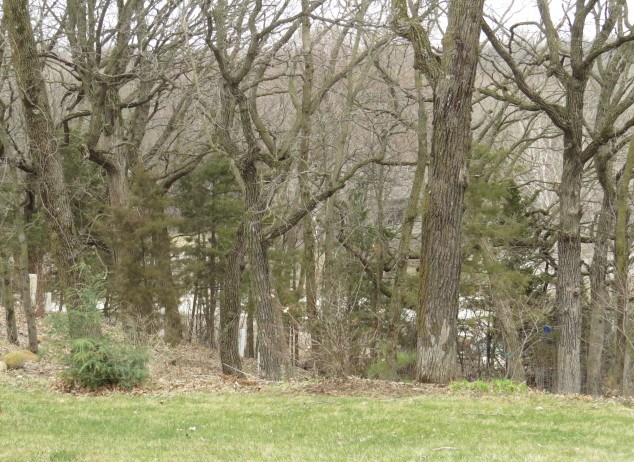
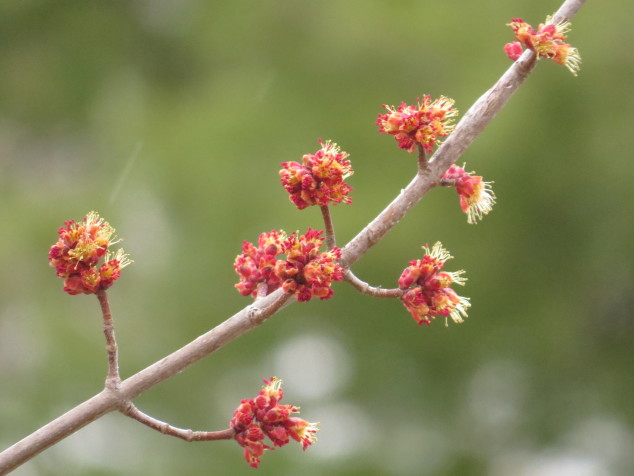
With hat and gloves warming me, I went out in search of the subtle signs of Spring. The maple tree right outside our window that had been forming flower buds for weeks, finally popped into bloom!
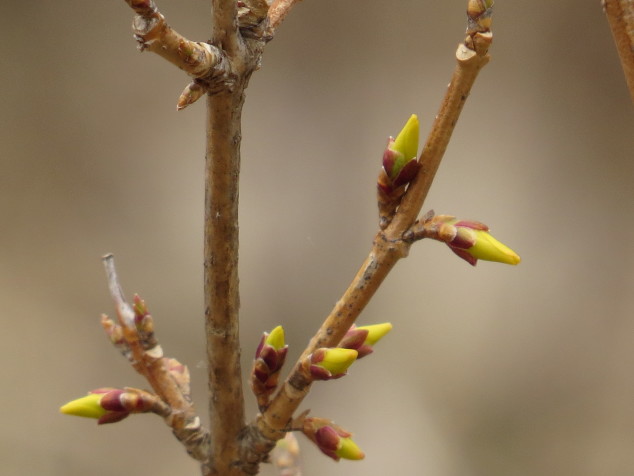
Our tiny forsythia bush, nearly lost in the long grass from last year, has bright yellow flower buds.
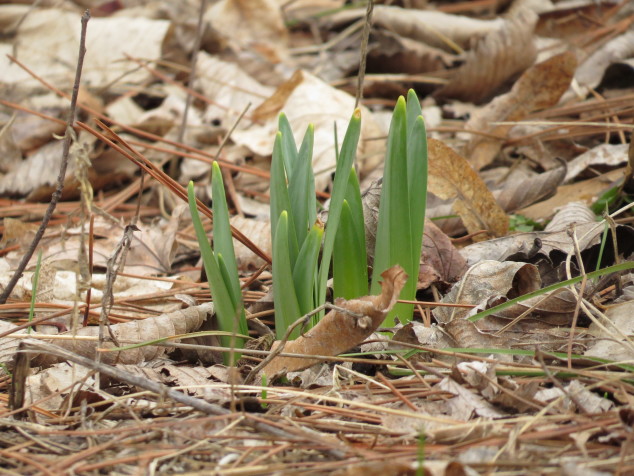
Daffodil and crocus leaves are pushing their way up out of the cold, brown ground. The yellowed, frozen tips of the daffodils are their crown of courage.
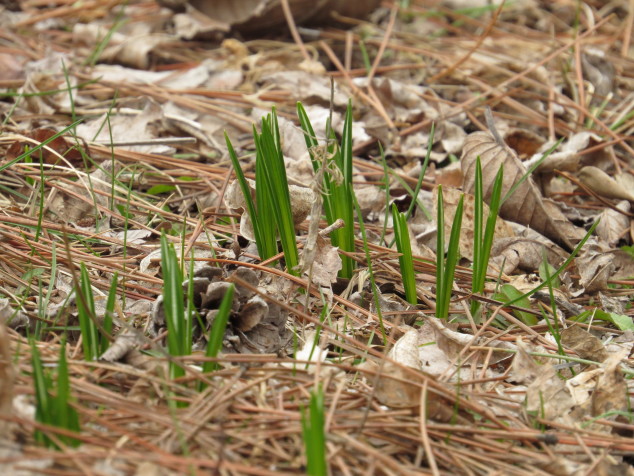
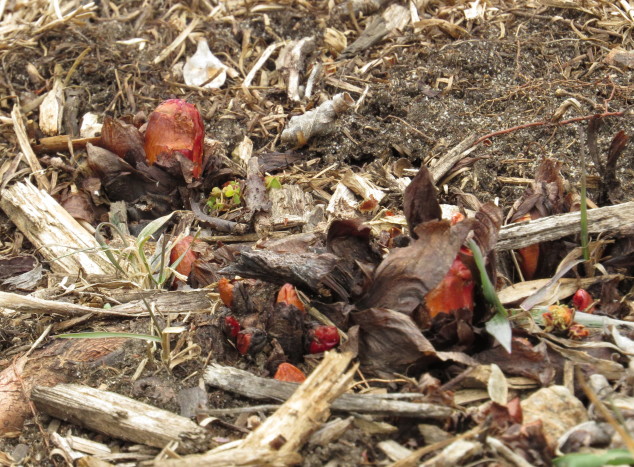
Rounded, red rhubarb buds emerge from the papery brown skins that hide them for the winter.
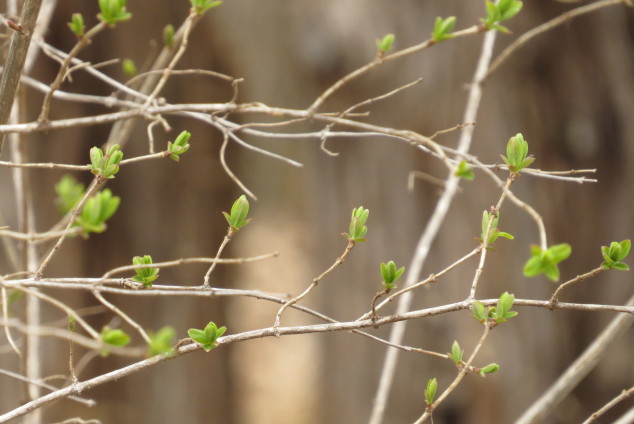
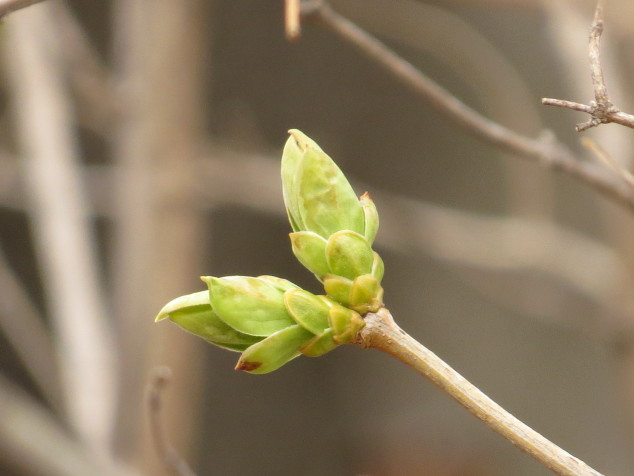
Honeysuckle and lilac shrubs will be the first to open their green leaves.
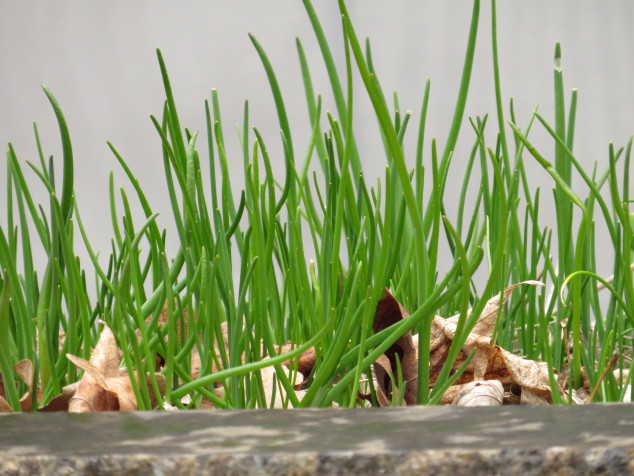
The hardy chives are growing fast, defiant to the snow flurries in their heralding of Spring.
Rosettes of sedum buds begin their growing season early and will grow and mature all spring and summer until they finally bloom in fall.
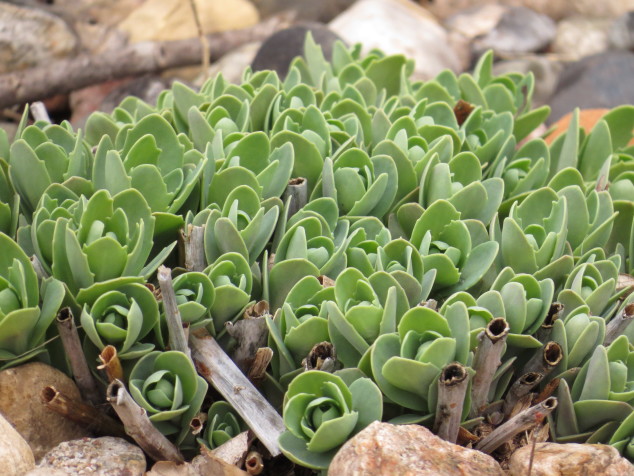
Mother Nature is not in the business of Instagratification! Even though we want warm weather, flowering trees and shrubs, bright blooming bulbs of tulips, hyacinths, and daffodils–and we want them now, we must slow down and respect Nature’s time. She teaches us patience and that it’s not all about us. Richard Louv, author of ‘Last Child in the Woods’ and new book ‘Vitamin N’ says, “The more high-tech we become, the more nature we need.” We need to observe the subtleties of Nature in order to develop the skills for detailed work. We also need to look at the ‘big picture’ of us on this Earth in order to envision how we want the future generations to live. We need to appreciate the early and the late bloomers for their contributions. Nature teaches us there is Life beyond technology, and that our health and well-being are enhanced by our encounters with her. Let Nature be your crown of courage and feel the Instagratitude!
Gleanings from March–Spring Comes Gently
In a usual year, March is snowy and blustery, and most people wish away the remains of the piled up snow and freezing weather in the hope of Spring. But this March was different–we started the month with snowless ground and accumulated only an inch or two during a couple of flurried days. In between, we had above freezing temperatures with a record high of 58 degrees in the second week of the month–too warm! So this year, Spring comes gently and early to Central Minnesota.
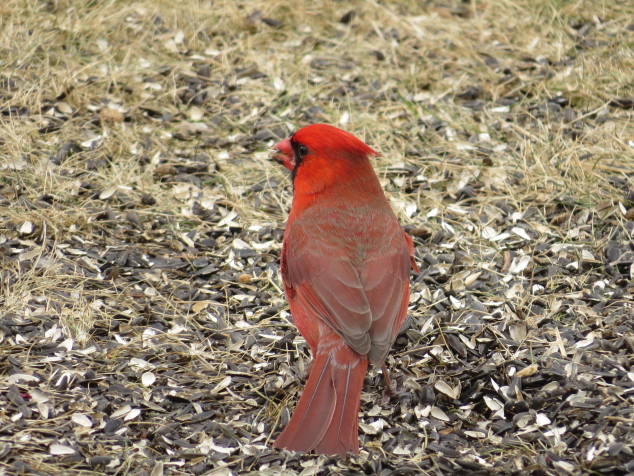
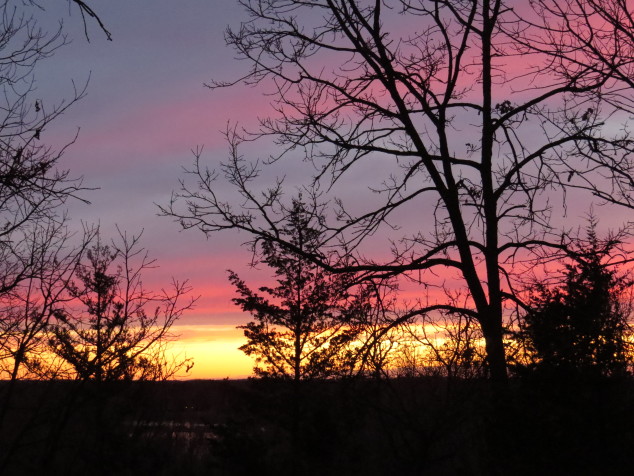
The setting sun is shifting to the northwest, but we still had some spectacular evening skies outside our living room window this month.
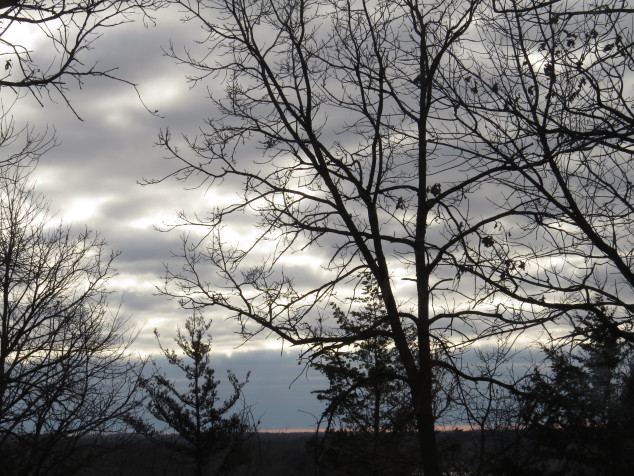
On Easter morning, we awoke to a beautiful covering of snow with frigid blue-gray skies.
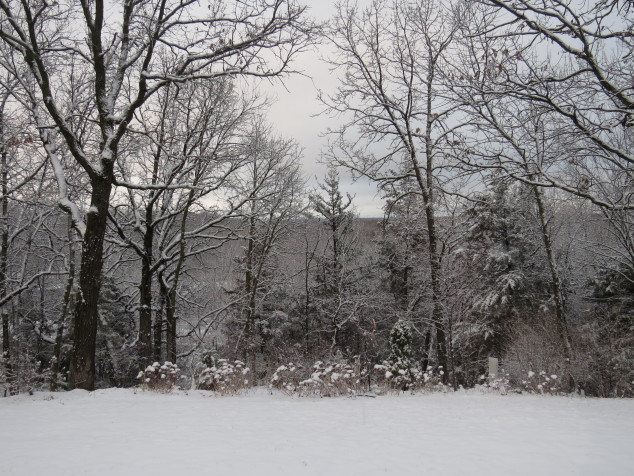
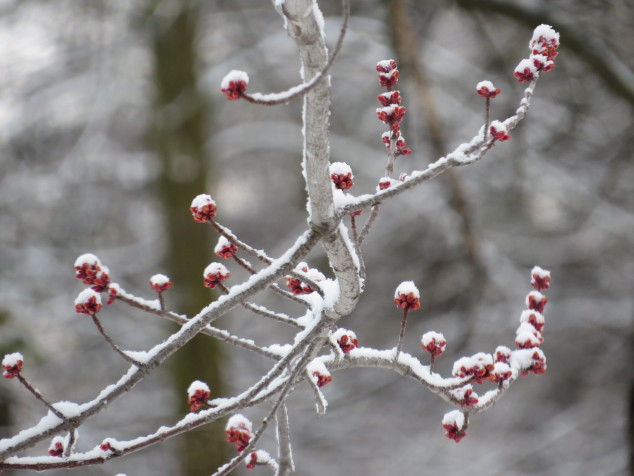
By afternoon the snow had melted, and Chris, my Mom and I hiked around the nearby County Park to check on the eagle nests.
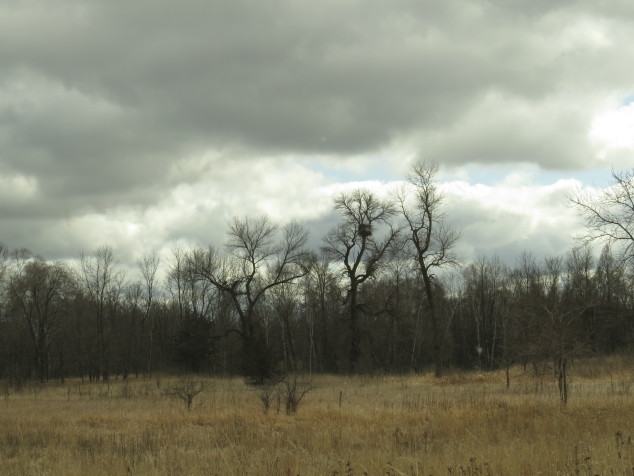
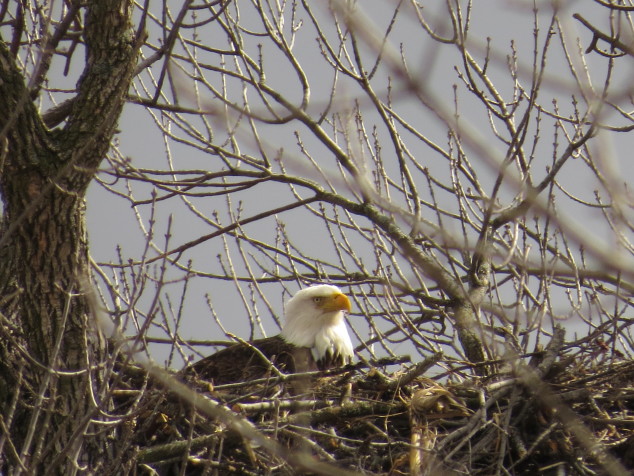
One of the pair in each nest was laying on eggs–content and calm before the storm of activity that comes with the hatching of the hungry eaglets.
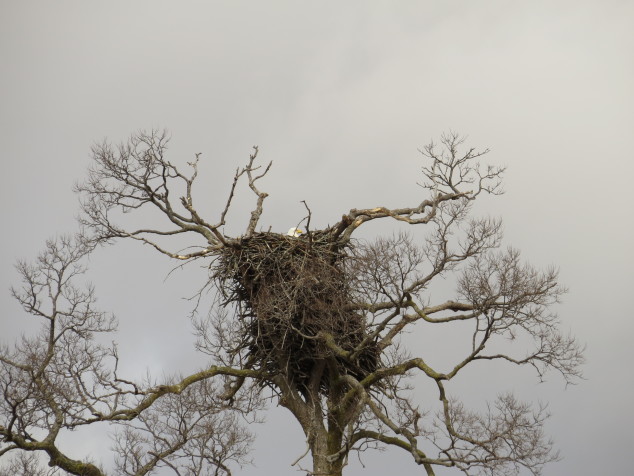
The trail around the eagle’s nest was winter bland until we saw bright red-twigged dogwood stems and fuzzy white flowers of pussy willows.
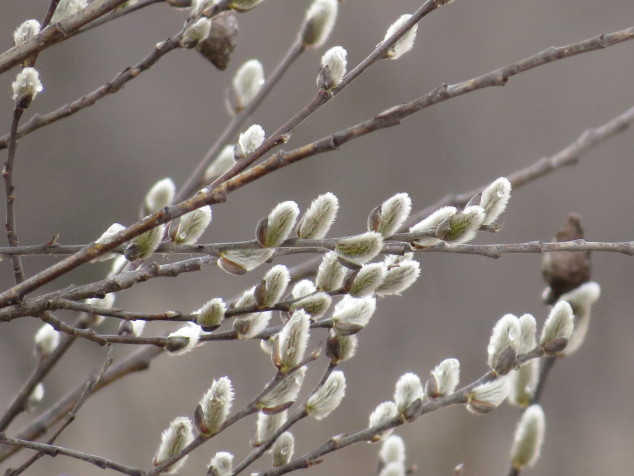
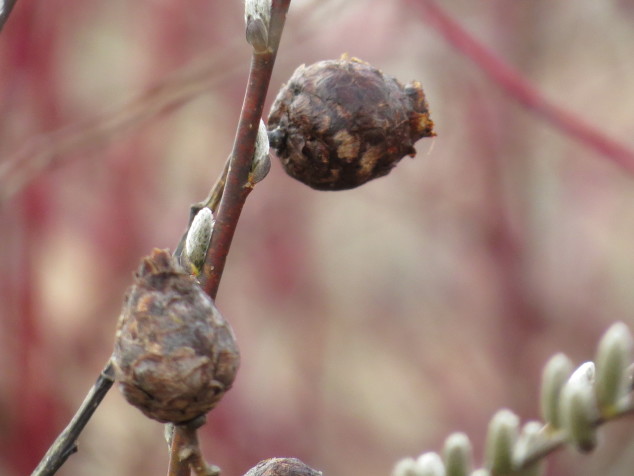
Along with the flowers of the large shrub-small tree pussy willow, there were numerous pine cone-looking objects at the end of branches. Willow Pine Cone Galls are formed when tiny fly-like gnats, called midge, lay their eggs in the swelling terminal buds. The larva secretes a substance that accelerates the growth of the would-be leaves into a mass of flattened scales that look like a pine cone. The larva produces its own anti-freeze, much like the Goldenrod Ball Gall larva, in order to survive the winter. The adult emerges from the gall in Spring.
Two days after Easter, I saw the first pair of returning bluebirds–such a lovely sign of Spring!
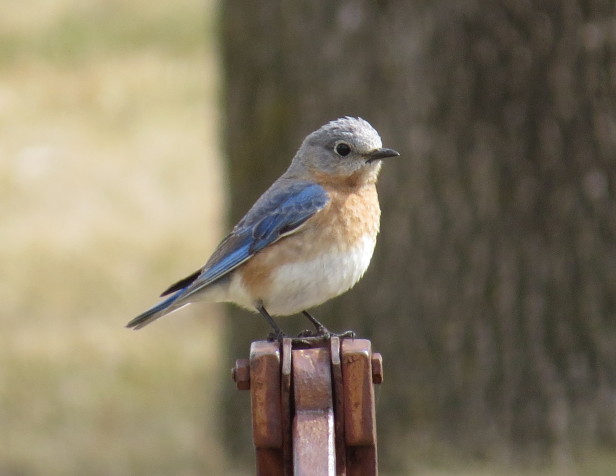
March is always a month of contrasts moving into Spring, and this year seemed to be all the more so. Record warmth and snowy mornings, winter bland and bright colors, nondescript skies and spectacular sunsets. And yet Spring makes its way regardless–Nature’s constant, gentle revival. My life this month seemed to mirror March–wonderful visits from family and difficult news, days of strength and days of weakness, calm gratitude and stormy unrest. And Life gently moves us forward–to learn from the galls, to see hope in new life, to appreciate a beautiful day and the flash of blue wings as Spring comes gently.
Monday marked the second anniversary of North Star Nature, and I wish to extend my gratitude and thanks to those of you who read and share my blog! A particular thank you for the thoughts, prayers, and comments after the death of my Dad–I very much appreciate your kindness.
Do You Believe in Miracles?
“Do you believe in MIRACLES?” was the cover and headline for the Sunday Parade magazine last weekend. It was the story of a Texas girl who had amazingly survived a 30-foot fall into a hollow cottonwood tree. Her head-first fall and subsequent hours inside the tree resulted in just some minor bumps and bruises and possible concussion. If that wasn’t amazing and relieving enough, her Mom noticed in the following days and weeks that her daughter’s serious digestive disorders, diagnosed four years earlier, had seemed to disappear! A Pew Research Center study found that 8 in 10 Americans believe in miracles, even more than half who are unaffiliated with any particular faith. Author Marianne Williamson and teacher of A Course in Miracles says, “People know there’s more going on in this life than just what the physical eyes can see.”
And yet, miracles are in front of our eyes wherever we look, if we really take the time to see.
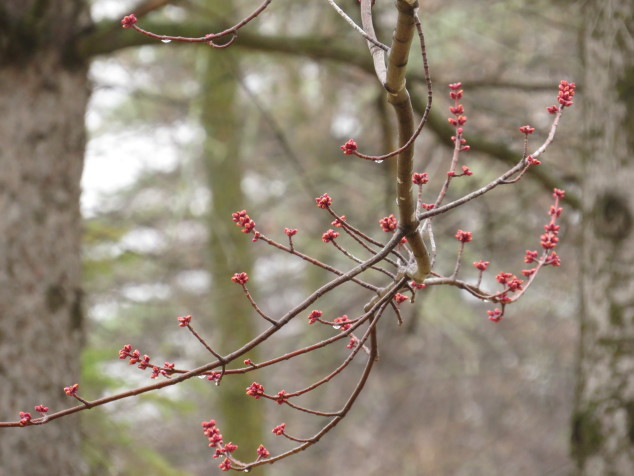
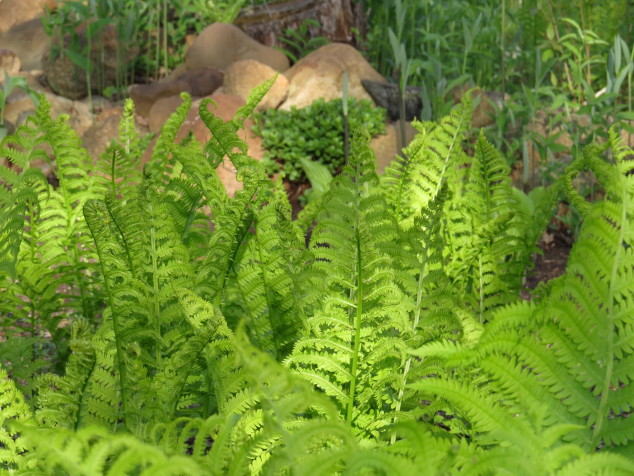
We are afforded this miracle every Spring as we leave the dormancy of Winter. In less than two months’ time, our fern garden will go from this…
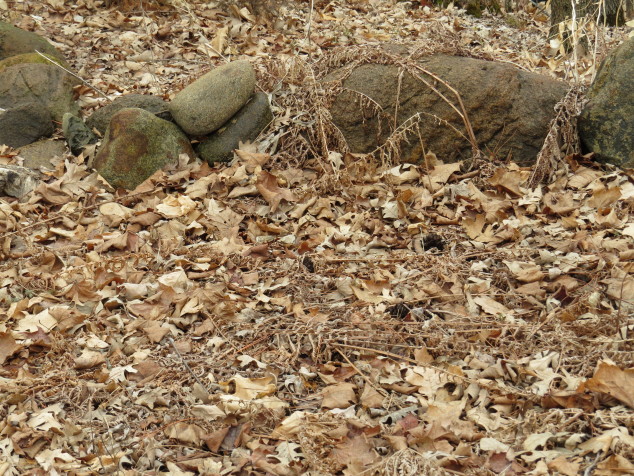
to this….
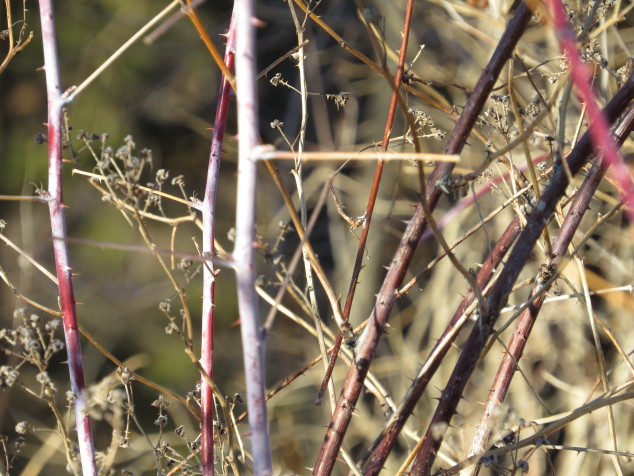
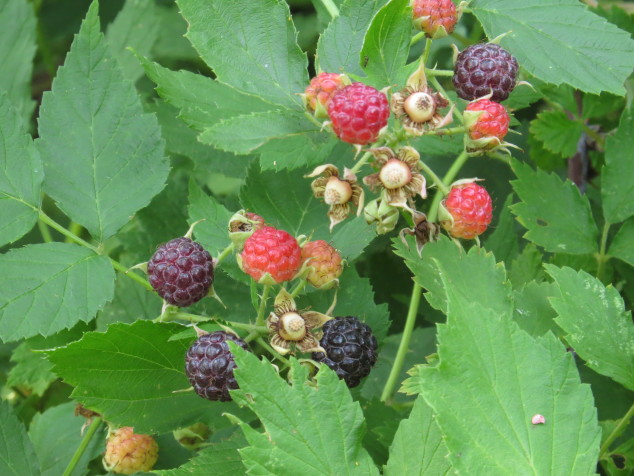
Purple raspberry canes will be producing raspberries in four months…
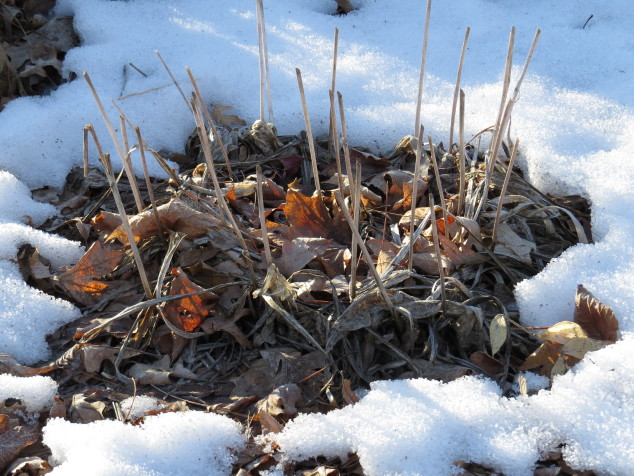
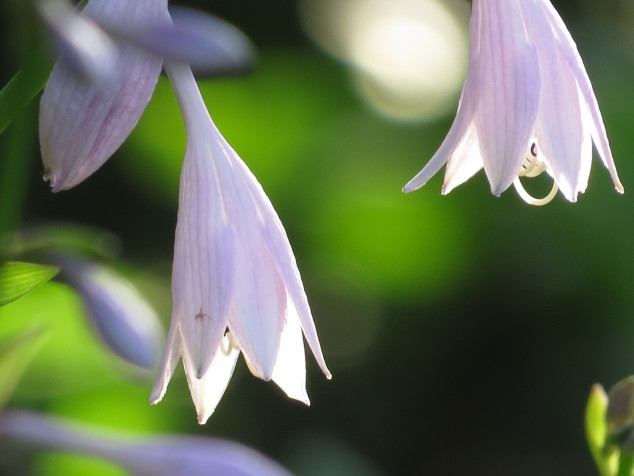
Hosta stalks in the snow will transform to huge green plants that flower at the peak of summer.
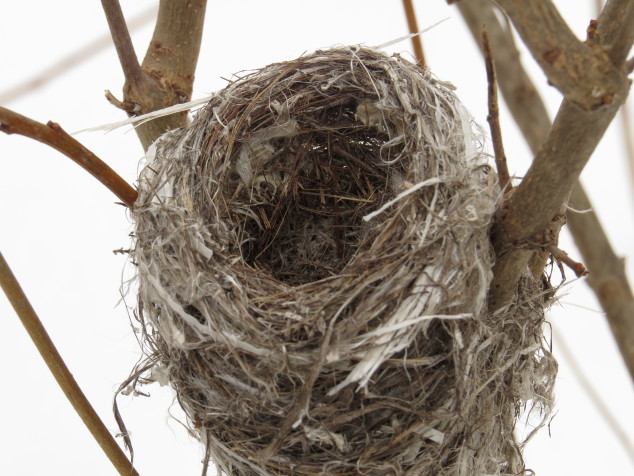
An empty nest may be re-used or re-built for a family of yellow warblers by the middle of summer…
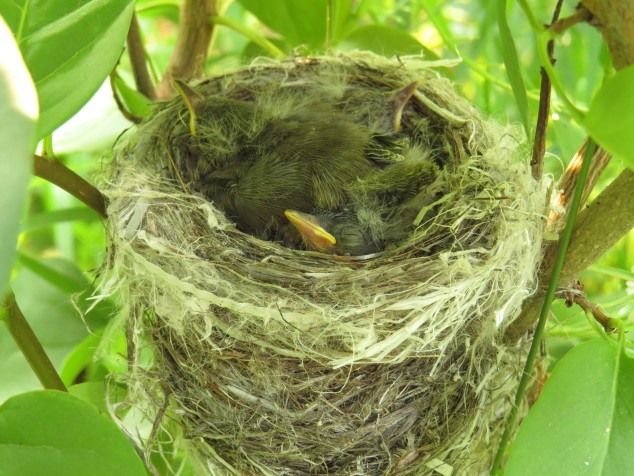
And all of this and so much more occurs without intervention of any kind!
Miracles do not, in fact, break the laws of Nature. —C. S. Lewis
Spring is a miracle! It is easy to see. Every aspect of Nature–in all seasons–is a miraculous occurrence. And in this busy, technical, seemingly money- and people-controlled world, Nature just does its own thing. It doesn’t need our help, or permission, or belief. The Texas Mom responds to naysayers who don’t believe her story, “I don’t feel like I have anything to prove. The proof is right there. We lived it.” So the question “Do you believe in miracles?” is rather a moot point. Miracles happen.
“Do you believe in Miracles?” in the March 13, 2016 Parade magazine by Katy Koontz
The Shimmering Line of Light
Have you ever walked a path that you walk every day and felt the lightest touch of something on your face? And even if you bring your hand up to brush it away, it seems like nothing is there? Tiny filaments of webs are spun from tree branch to tree branch–a suspended bridge connecting home and food sources for some little spider.
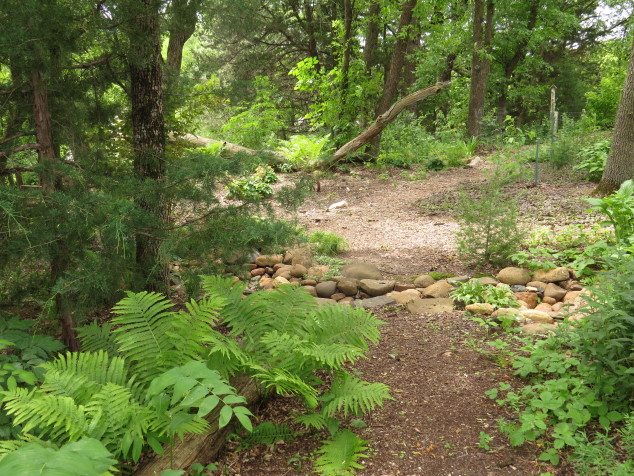
One bright morning at breakfast I was looking out the window and noticed a shimmering line of light by the front yard trees.
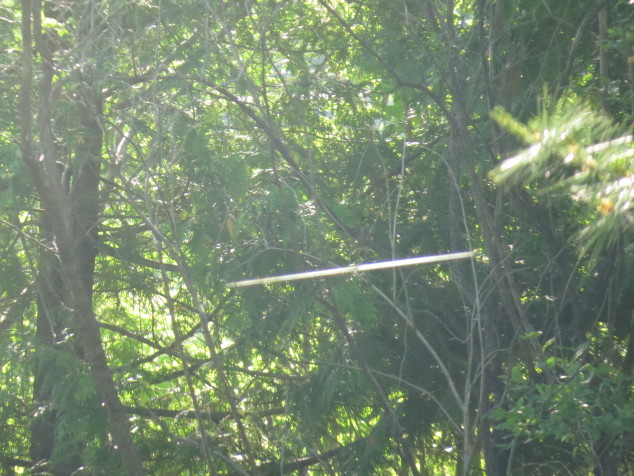 The light moved in the breeze and sometimes disappeared.
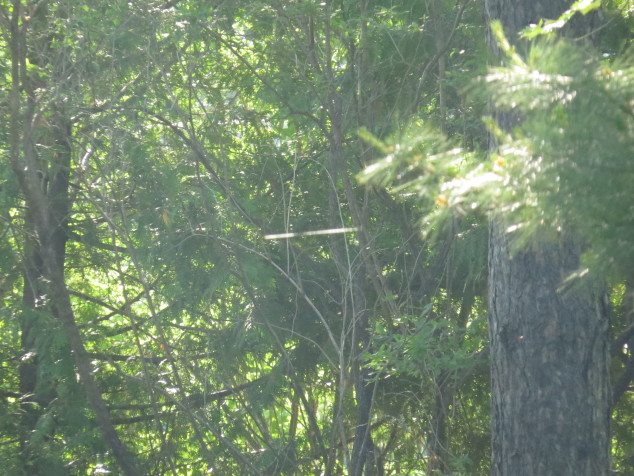 The sunlight was reflecting off a strand of dew-kissed web–a happy combination of water, filament, light, and wind. The sunlight danced along the spider’s road, moving one way, then the other…
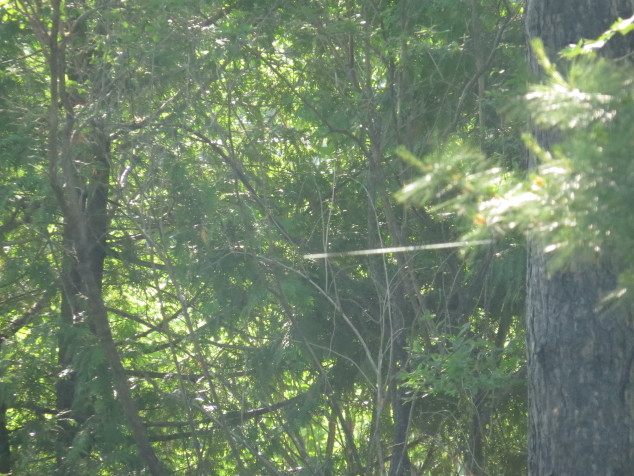
until the sun moved higher in the sky, and I could no longer see the reflection. But the web was still there.
What if we are all connected by some unseen web? We feel light touches of this attachment when we pick up the phone to call someone and they were just thinking of doing the same. Do we brush it off as coincidence? We see the connection illuminated by the shiny glare of tragedy that brings people together to rescue, support, and fight for one another. We sense the shimmer of connection when meeting the eyes of a stranger and some spark ignites a smile. We hear that association when one person’s story sounds strangely familiar to ours, and our heart knows the ache they feel.
Perhaps the shimmering line of light that dances between us is God’s Love. It connects us in ways that are unseen for the most part–until a happy combination illuminates the bond. How fleeting is that illumination! Our positions change, outside forces exert pressure on the connection, and at times it feels torn and broken. Harsh words and strained silence tear at the bridge that was once a lifeline of Home and Sustenance.
The persistent spider rebuilds the web–even as we walk the path each day. Some things are worth it. As we toil, we must remember that the shimmering line of light is always there, whether we see it or not.
The Prairie, the Ash Tree, and the Anthill
In late April when we drove to Rockville County Park to check on the eagles, we discovered the restored prairie had been burned. Annual burning of the prairie promotes growth and dominance of grasses while discouraging growth of woody shrubs and some trees, especially Eastern Red Cedar. Fire clears away the previous year’s plant debris, allowing sunlight to warm the ash-blackened soil. The roots and rhizomes (where new shoots are formed) of the grasses and other prairie plants are below the ground and not affected by the fire. New growth takes place shortly after the burn, and soon the black prairie is green once again.
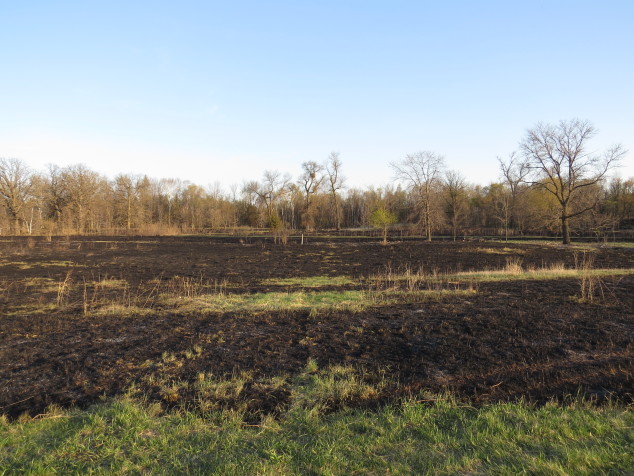
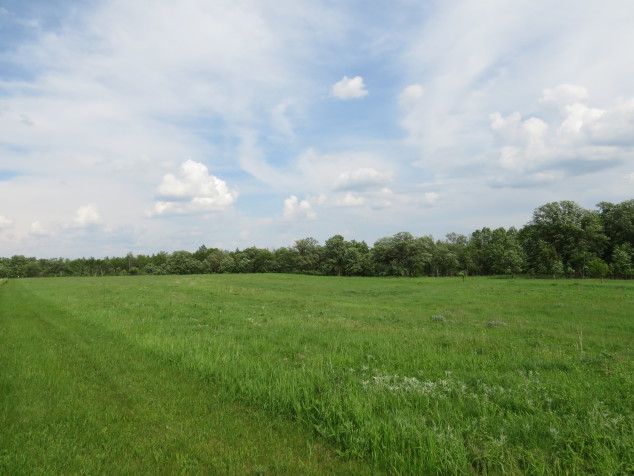
Forty days after the burn, the ‘sea of grass’ was growing, and a number of early season wildflowers were blooming.
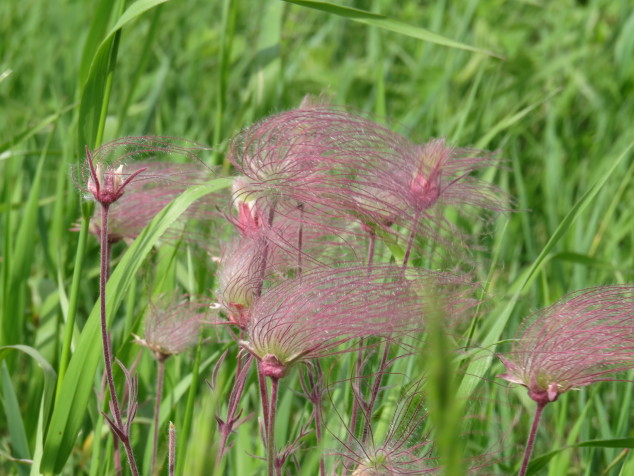
Wispy, rose-colored seedheads of Prairie Smoke drifted in the breeze.
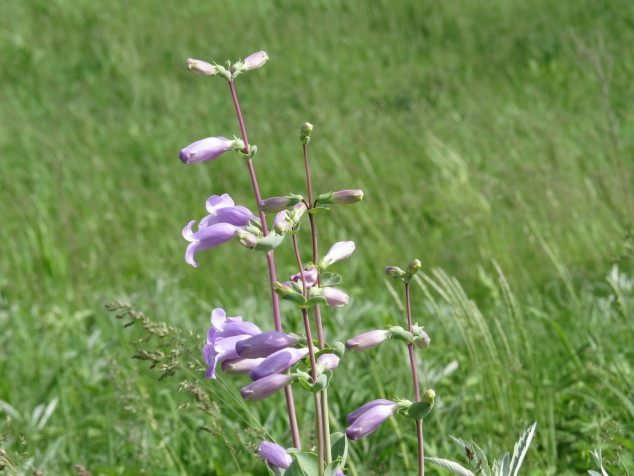
Lavender flowers on purplish-pink stems of Large Beardtongue or Shell-leaf Penstemon stood like royalty among the common grasses.
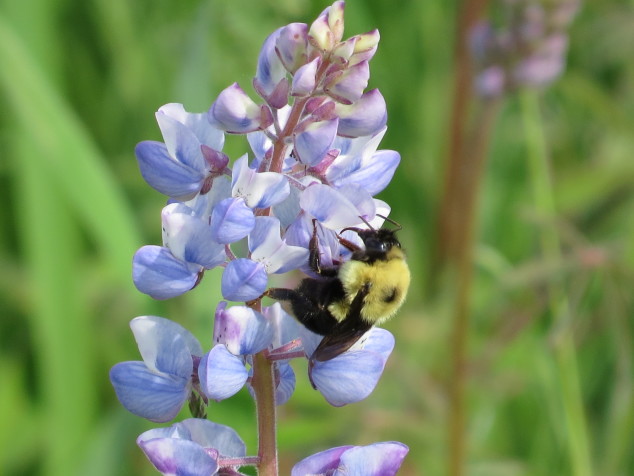
Wild Lupine is the only host plant for the Karner Blue butterfly caterpillar. Loss of prairie habitat has put the Karner Blue on the endangered species list. While I don’t know if there are Karner Blues around here, this bumblebee is enjoying the sweet Lupine nectar.
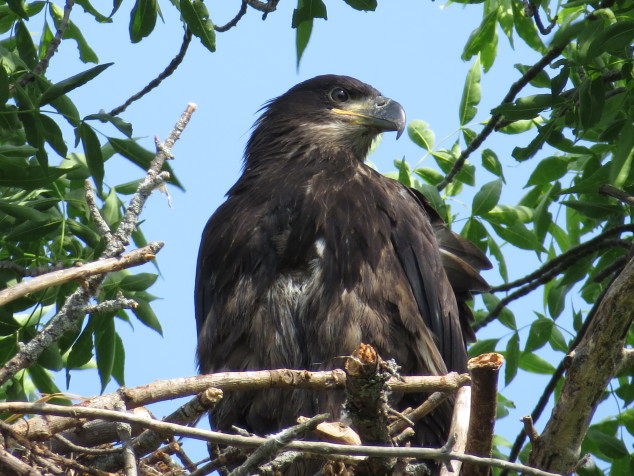
The large ash tree that houses the eagle’s nest was fully leaved out, making it more difficult to spot the nest. Luckily, there was a ‘hole’ in the foliage that allowed me to see the young eagles–and allowed them to keep an eye on me and everything else. The last time we were at the nest, the parents were there with the two eaglets, so I was surprised when I looked through the camera lens and saw three young ones!
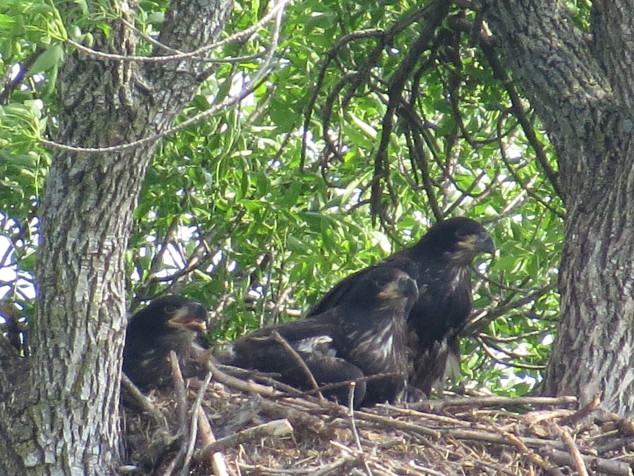
As we walked closer to the nest, one eaglet hid behind the other. Perhaps his shyness was the reason we didn’t see him the last time we visited the nest.
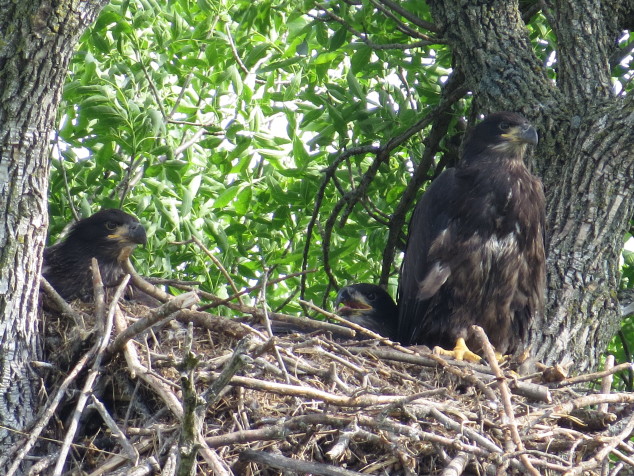
One eagle, perhaps appointed by the parents to be in charge while they hunted for their large family or maybe a self-appointed firstborn, stood guard of the nest. He perched on the edge of the nest, a sentry for his siblings, as they relaxed behind him.
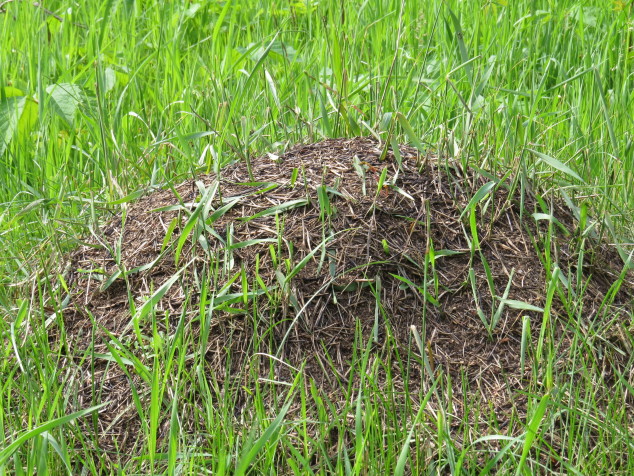
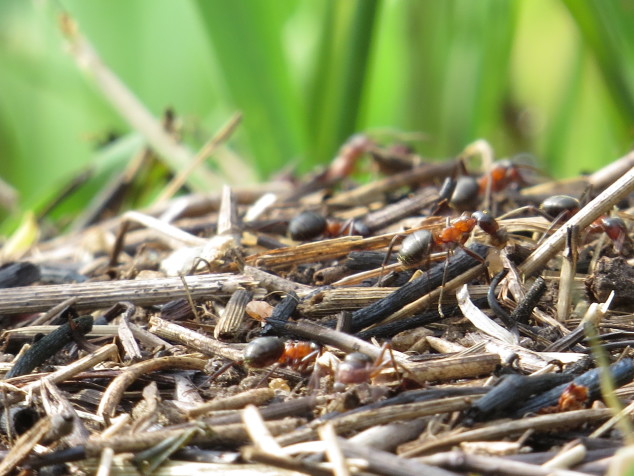
We left the eagle’s nest, walked along the trail, and found a huge anthill of Thatching ants! Their home is made up of plant material from the area–in the close-up picture you can see how some of the ‘thatch’ is black from the burned plants. Each colony of these social animals is headed by a queen ant or queens who lays thousands of eggs. The worker ants are wingless, non-reproducing females who forage for food, care for the offspring, work on the nest, and protect the community. The male ants basically mate and die. Each colony may have up to 40,000 ants, depending on the size and age of the nest.
These ants are beneficial insects. They eat nectar, seeds, fungus, and insect pests. They also scavenge on larger dead animals and are important soil builders. They do bite, so don’t get too close! The eggs and larvae of Thatching ants are a favorite food of bears who will rip apart the nest to get to the tasty morsels.
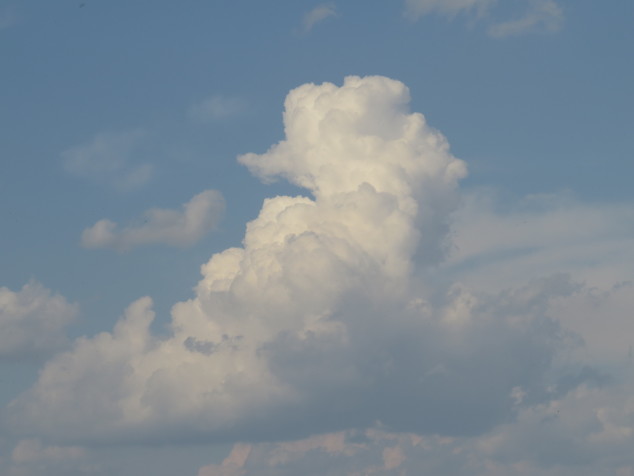
Thunderheads were building as we walked the prairie and oak savanna trail back to the car. It had been a perfect way to spend a couple hours of my birthday!
The prairie, the ash tree, and the anthill–all homes to the particular flora and fauna we saw, but also to so many more. The ‘Web of Life’ is illustrated in great beauty on this relatively small tract of land. While the fire on the prairie was a controlled burn and not one started by lightning, it demonstrates Nature’s capacity for regeneration and renewal. The anthill of Thatching ants shows how a community of workers takes care of one another and their home. The young eagles who have yet to fledge from the nest know their parents are working hard to provide for them and have begun to show their own personalities and traits. The Wild Lupine is growing and ready to provide a home for the Karner Blue if it passes this way.
What kind of homes and communities are we providing? Where do each one of us fit in the ‘Web of Life?’ How are we sustaining and extending the Beauty and Wisdom of Nature to all the living creations around us?
Gleanings from May 2015
Our back door is almost like a door to Nowhere. To be fair, it does have a sturdy cement stoop and a granite-covered sidewalk that leads twelve feet to the left to the screened-in porch door. But you can’t get to the garage or driveway or shed without walking through grass and around corners. It is a thick wooden door with ten panels, two of which are carved on the outside. One carving is a vine design, and the other is a dogwood-looking flower and leaves. I’m sure it is the original door of this sixty-year-old house, and it shows the weathering of time and sun. It faces WSW, and when I open the door, light floods into the rather dark corner of our living room through a full-glass storm door. The door that leads to Nowhere is really a doorway to Nature’s incredible, changeable Beauty. In Winter, I can see the River, silhouettes of old oak trees, and glorious sunsets. In Spring, I can see my square of prairie garden, my raised herb garden outside the porch door, the shallow clay birdbath on a stump, hostas, ferns, oaks, cedars, viburnums, and other extraordinary plants that make up the woods and yard outside our door.
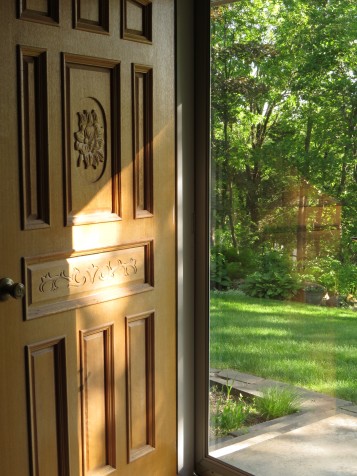
The month of May is the doorway to Summer. School is coming to a close, changing the landscape of family life for the next three months–or in our case, for the rest of our lives, as our youngest graduated from college. The external landscape changes drastically in the weeks of May, from tiny buds and leftovers of winter to the deep, rich lushness of Summer. By the end of May, we are looking at the possibilities, plans, and potentials of Summer!
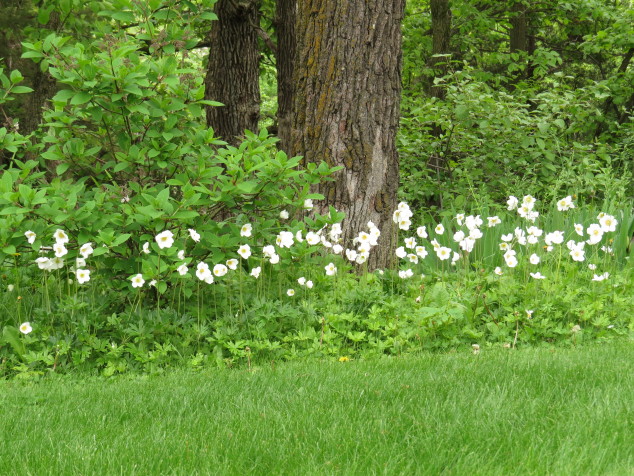
One of the delights right outside our back door has been the bright anemones or wind flowers. This perennial herb and popular wedding flower symbolizes anticipation and unfaded love.
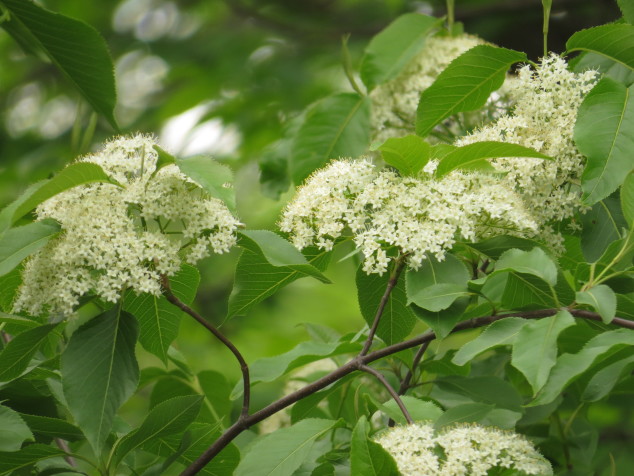
Close to the anemones is the pretty Nannyberry Viburnum with its clusters of white flowers.
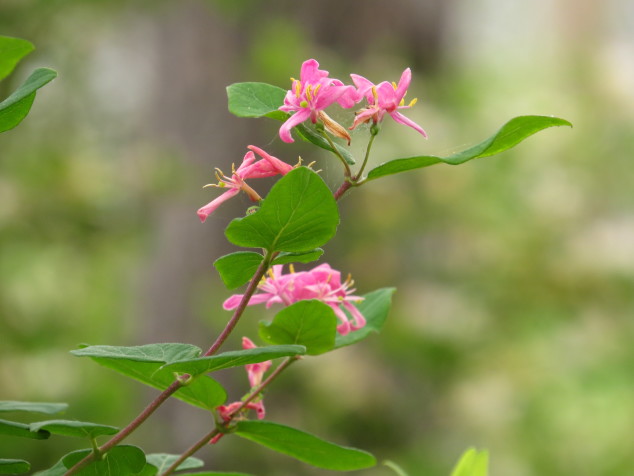
Honeysuckle shrubs of every size and shape are scattered throughout the woods. White, pink, and dark pink blossoms cover the shrubs in a coat of color.
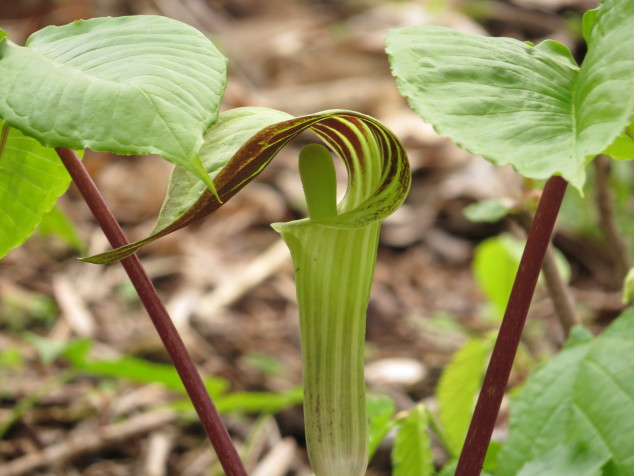
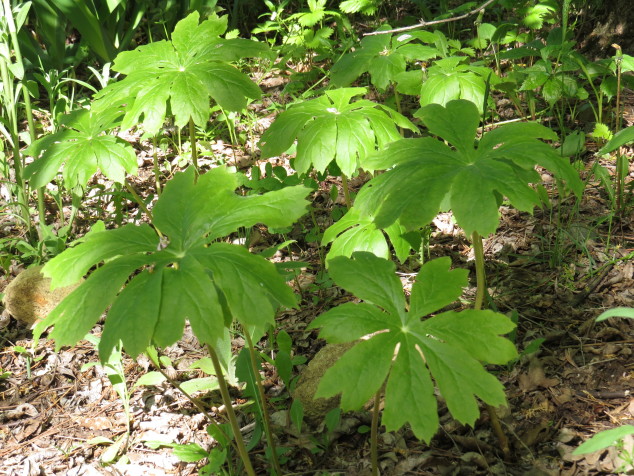
Jack-in-the-Pulpits are hidden treasures in the woods–hard to find, but ever so lovely and unique. Umbrella shaped Mayapples shade insects scuttling through leaf litter underneath them.
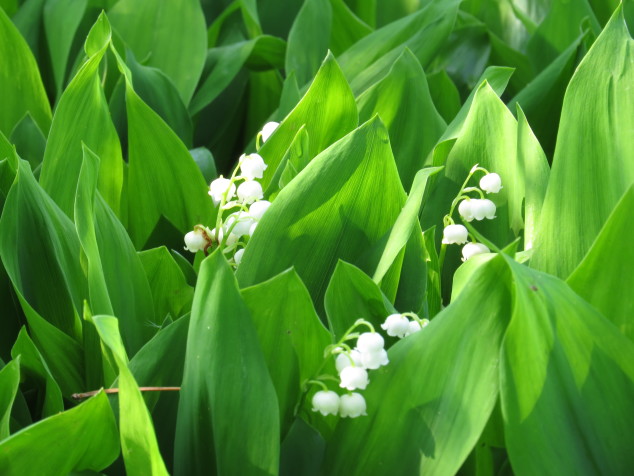
Fragrant Lily of the Valley flowers peek out from among the crowd of green leaves. Their stems of pure white bells make the most beautiful tiny bouquet to bring inside.
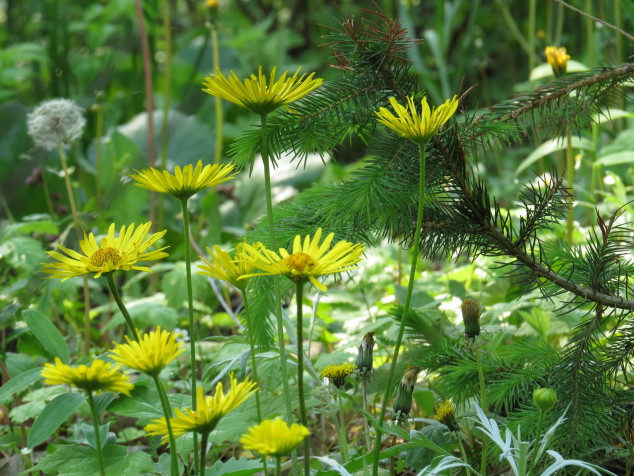
Leopard’s Bane and Dandelion roar into bloom with sunshine yellow in this month of May.
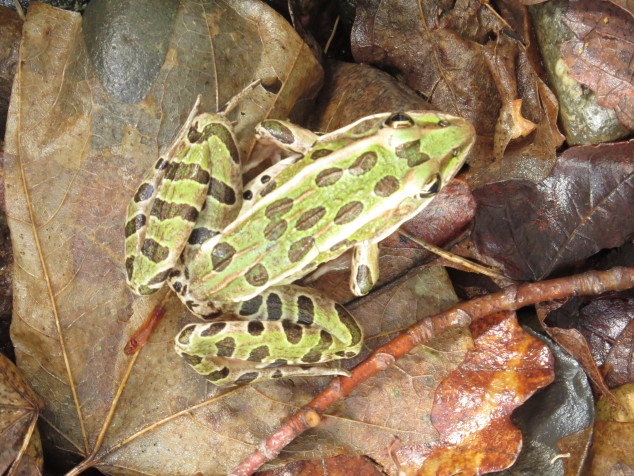
Along with May flowers that have adorned our yard, we have also had creature visitors. The first heavy rain of the month chased Leopard frogs into our deep egress window well.
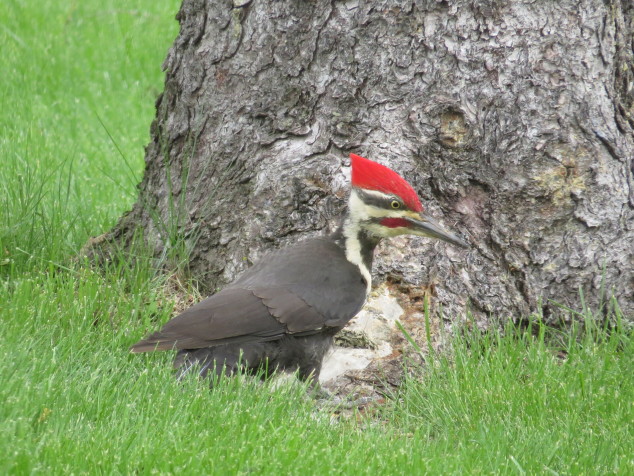
A Pileated Woodpecker checked out each one of the mature spruce trees in our front yard. Their food of preference is carpenter ants.
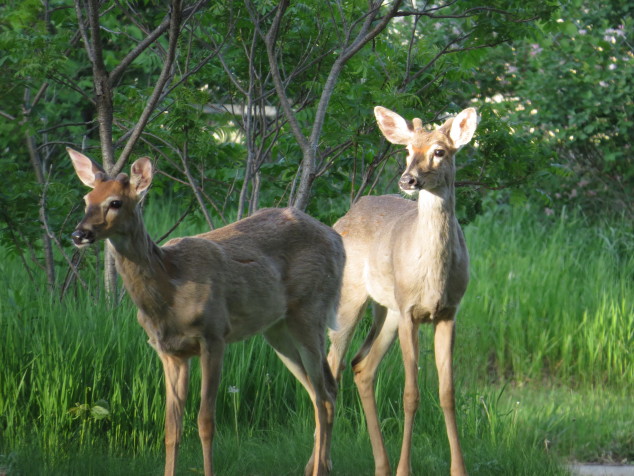
These two young bucks, probably last year’s fawns who were very familiar with our yard, walked up the driveway one evening. They watched our Black Lab dog wander around the outside of the house oblivious to the visitors we sent her out to chase away! (Interesting fact: Their antlers grow up to 1/2 inch each day from April to September!)
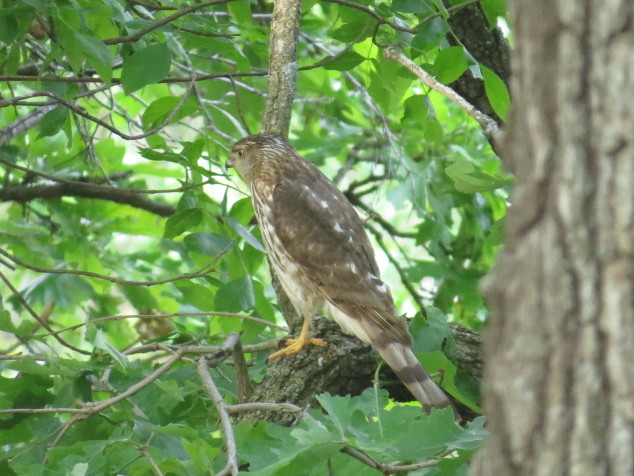
A Cooper’s Hawk is back in the neighborhood, darting through the tree branches, perching, watching, and flying again. He was likely the hunter of the pigeon carcass I found.
May holds promise for a new season, a new chapter in Life, and renewed hope and adventure.
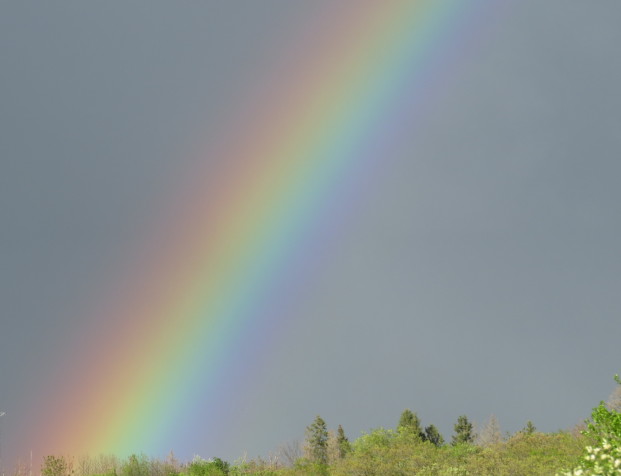
The month of May prepares us for Summer. It is a time to celebrate the end of school–for the year or for life–with parties and graduations. It is a time to celebrate anniversaries of unfaded love. It’s a time of anticipation for the warmth and fun of the Summer months that always go by too quickly. May is the doorway to a productive growing season of garden goodies and farm-raised crops and animals. As we open our doors to Somewhere–a place where the light illuminates the dark, where we find our niche among the crowd, where we carve our initials in our Tree of Life, and where we find our hidden treasures–let us step out in Beauty, Courage, and Love.
The Unfolding
The last few weeks I have traded my camera and computer for a nail-puller, hammer, and drill. Our screened-in porch is in desperate need of a make-over. The chipmunks have chewed holes in the screens, and the decades of rain have rotted the sills, cross beams, and lower siding. Between the uncooperative weather (rain and cold) and the longer-than-expected time to dismantle the old, the project will be taking much longer than expected. Isn’t that the way it always goes?! Lead project manager was my Mom who is a very competent carpenter. She traveled from South Dakota to celebrate her grandson’s graduation from college and to help me for six days.
May in Minnesota is the Unfolding time. It begins with buds of every style, size, and color–the environment is expectant with the lushness of what is to come. It is exciting and humbling all at the same time. It never fails to amaze me that huge compound leaves and spikes of flowers can begin their transformation from such tiny buds! And the wonder of ferns, hostas, and other perennials emerging from the previously snow-covered ground is so Life affirming!
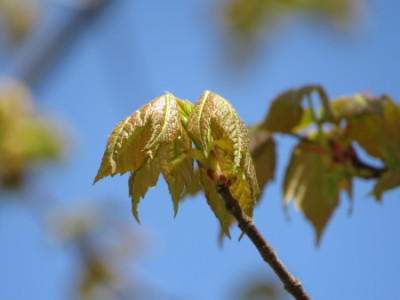
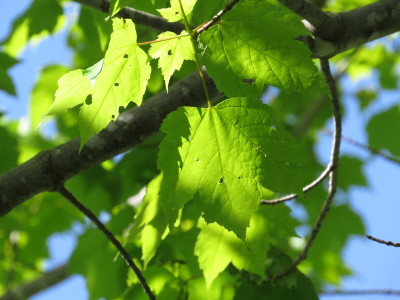
Maple leaves emerge like wet-winged butterflies, wrinkled and folded. As they mature, they change from a light bronze color to the solid, oxygen-producing green of the chlorophyll packed cells.
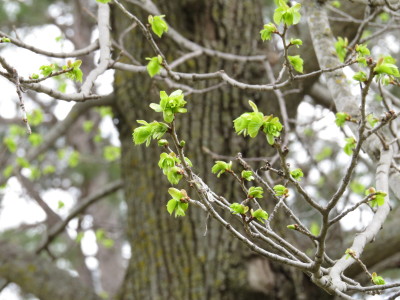
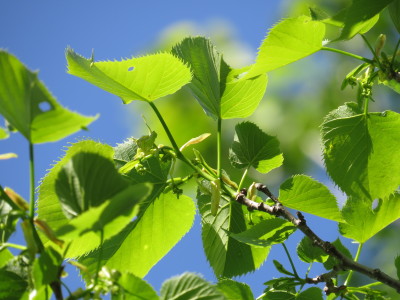
Linden tree leaf buds look like tiny bouquets of flowers on gray stems until they unfold to the serrated, heart-shaped leaves.
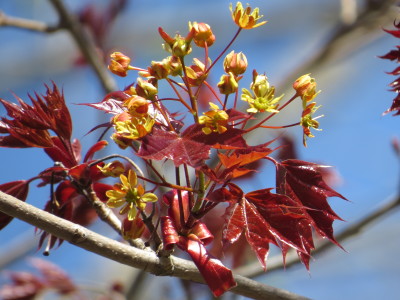
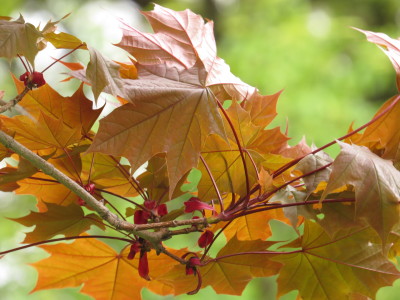
The Unfolding of the shiny red leaves and flower clusters of the Norway Maple is spectacular! As the leaves mature, the red color fades into green.
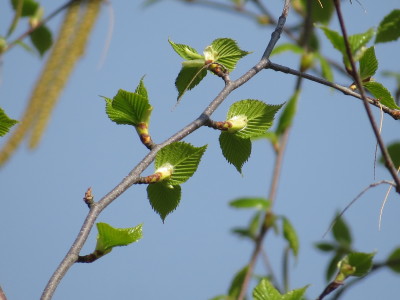
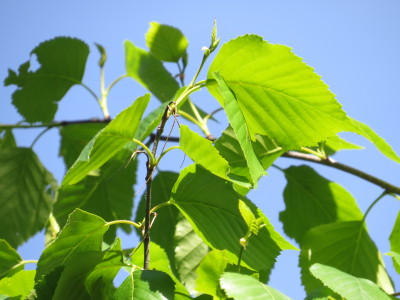
Striated Birch buds look like tiny boutonnieres along the flexible branches. The fully developed leaves are glossy green against the white of the birch bark.
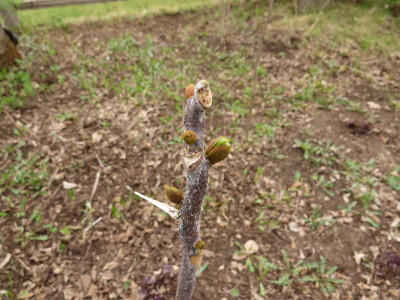
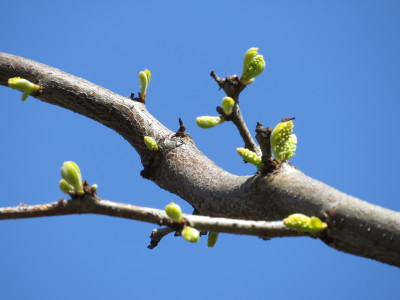
The stick trunk of a young Kentucky Coffeetree undergoes an amazing transformation as the rounded buds unfold into long clusters of compound leaves.
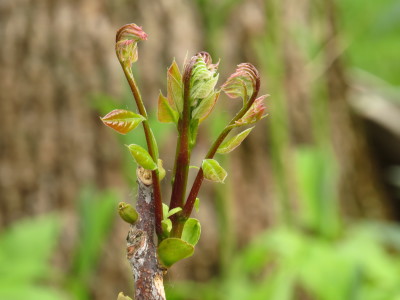
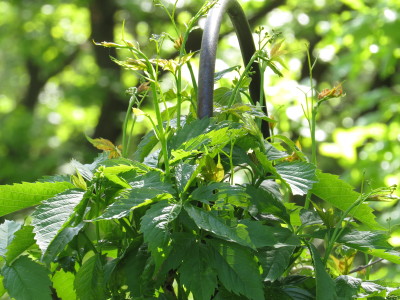
Elongated, twisted buds of Virginia creeper vines open to five-fingered, dark green leaves that grow along the ground or climb up trees and other objects.
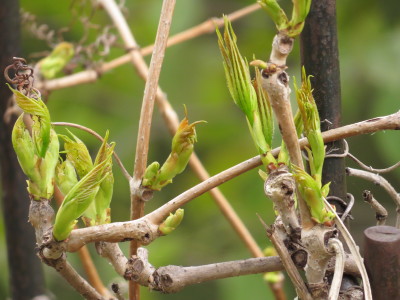
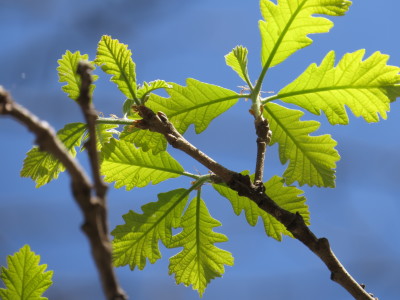
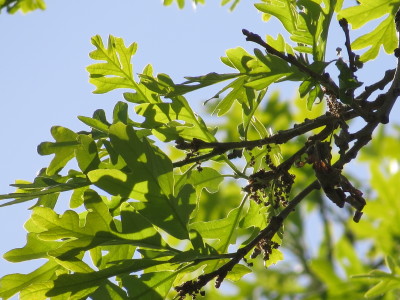
Oak leaves are one of the last to emerge from their buds. The young leaves are pale green and tender, yet develop into strong, deeply lobed leaves of rich green.
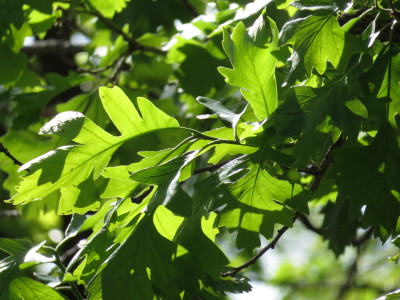
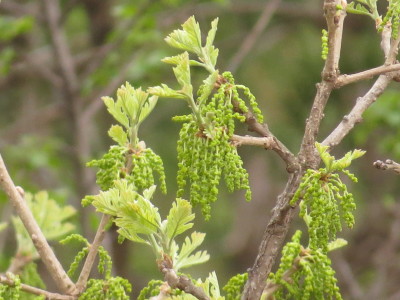
Many of the oaks bloomed prolifically this year with green pompoms hanging from the branches. The leaves on the blooming trees were even smaller and more pale than the other emerging leaves. As the flowers dried and fruit production began (there should be abundant acorns this year), the leaves continued to develop more slowly as the trees’ energy went to flower and fruit production.
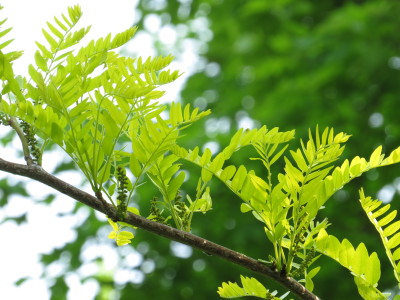
Locust trees are late bloomers, distinct in their yellow-green foliage.
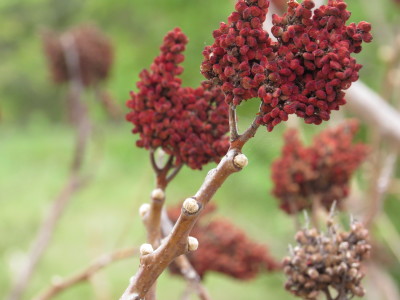
 The old seedheads of sumac are soon engulfed in the vibrant spring finery as the new unfolds around the old.
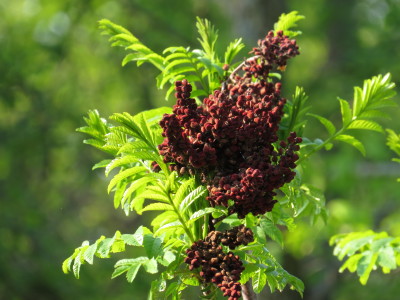
In three weeks’ time the Unfolding is dramatic!
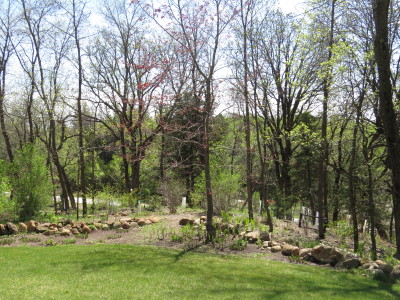
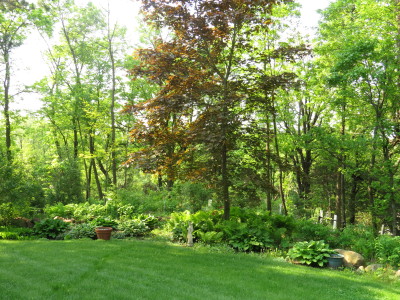
In twenty years’ time this Unfolding is no less dramatic, but much more heart-stirring. How can our youngest child be graduated from college?!


Life is unfolding around us, and we greet each day with expectation of what is to come. Often we only stop to reflect when we reach a major milestone or when faced with a life-changing event, and then we wonder how the time could slip by so quickly. Did we savor enough minutes along the way? Did we make the moments count for ourselves and the loved ones around us? It is humbling, exciting, and a little sad as our ten years of being parents to college students comes to an end. We need to let go of the reins–and I am reluctant to do so. The years and decades of my energy going to our flowers and fruit has slowed my development in certain ways but has enriched and transformed my life in so many others. Each one of us–my Mom, Chris and I, the girls, and Aaron–steps into another day that unfolds before us. We learn, mature, transform, respect the old, cherish the gifts, and make way for the new.
For the Beauty of the Earth
The day before Mother’s Day was sunny, warm, and breezy–a beautiful Spring day! The lush green grass got its first mowing, a sure sign that Winter was behind us. The leaves were still emerging from buds in various phases, some like butterflies fresh out of a cocoon, small and crinkled. The brilliant pink flowers of the Prairie Fire crabapple tree were beginning to unfold.
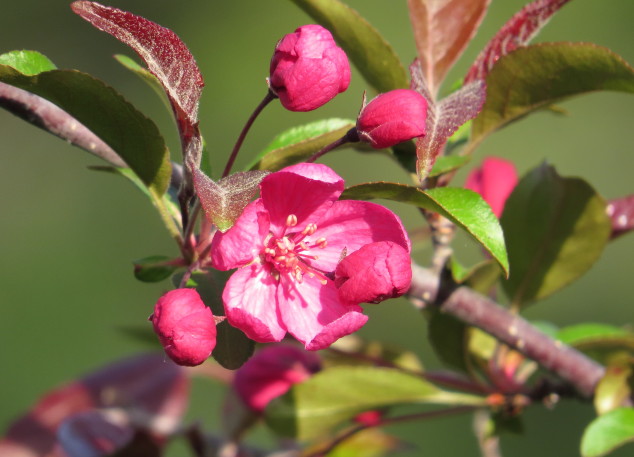
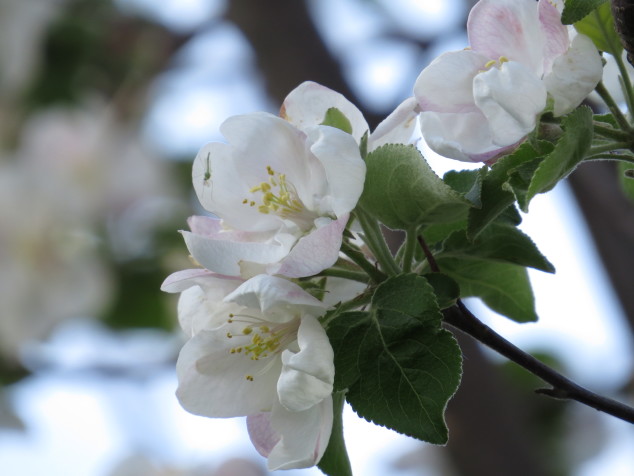
The apple tree blossoms were in their full glory with some petals floating to the ground making a tablecloth of white around the tree.
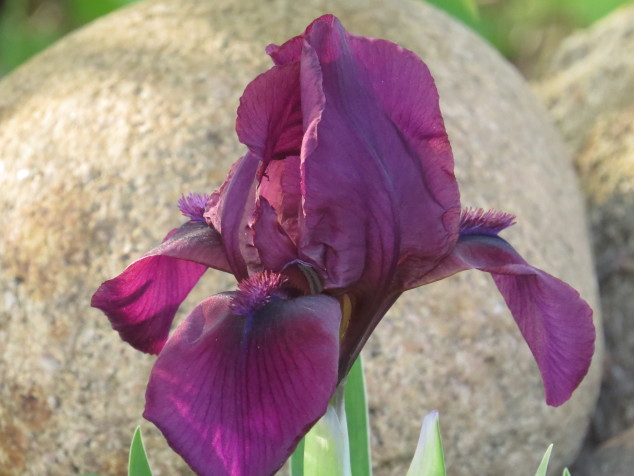
A few small irises shimmered purple in the afternoon sun. Isn’t it amazing that such an intricately structured and delicate flower can be encased in such a slender bud?
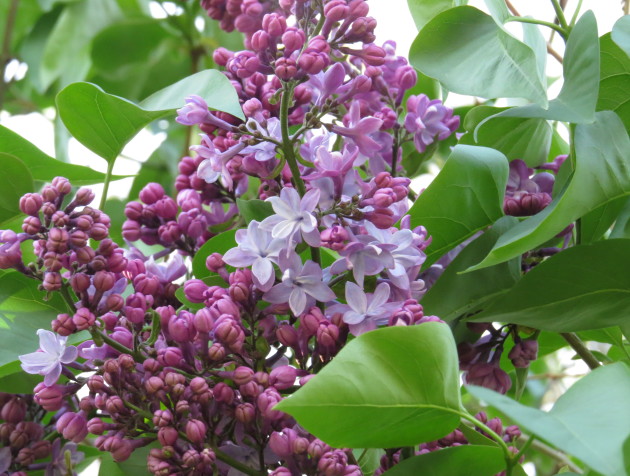
I love the smell of lilacs! That sweet fragrance, like the smell of a new-born baby, is short-lived, yet invokes such memories and warm feelings.
Virginia Bluebells bloomed in the shade garden, their pink buds maturing into the bell-shaped blue flower.
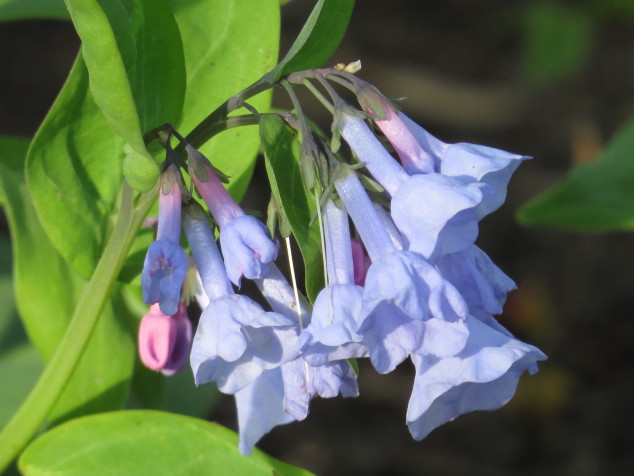
Flowers for Mother’s Day! What a beautiful gift to all of us from Mother Nature!
The next day–Mother’s Day and Graduation Day for Aaron–was cloudy, rainy, windy, and very chilly. It was a stark reminder that our expectations and hopes for a beautiful day are not in our control. But the Baccalaureate Mass, the friendly, noisy lunch, and the Commencement ceremony were meaningful, bittersweet, and ever so lovely. It was an emotional day for many reasons–endings, beginnings, deep truths, changes, things we cannot control, happiness, and tinges of sorrow. In the midst of the day, I felt a bit powerless–like Life was moving on–and I wondered where I fit in the whole picture as the last of our children graduated into the real world.
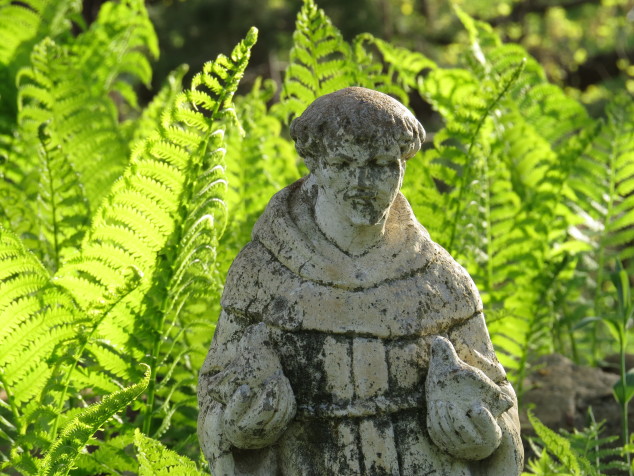
The day before, along with the flowers, I photographed our statue of Saint Francis surrounded by sun-drenched ferns. Saint Francis, patron saint of animals and ecology, believed “that nature itself was the mirror of God.” In emotion and powerlessness, perhaps all we can do is pray in gratitude for the beauty of the earth and for peace in our souls.
The Prayer of Saint Francis of Assisi
Lord, make me an instrument of Thy peace;
Where there is hatred, let me sow love;
Where there is injury, pardon;
Where there is discord, union;
Where there is doubt, faith;
Where there is despair, hope;
Where there is darkness, light;
And where there is sadness, joy.
O Divine Master,
Grant that I may not so much seek
To be consoled, as to console;
To be understood, as to understand;
To be loved as to love.
For it is in giving that we receive;
It is in pardoning that we are pardoned;
And it is in dying that we are born to eternal life. Amen.
The Crow, the Feather, and Us
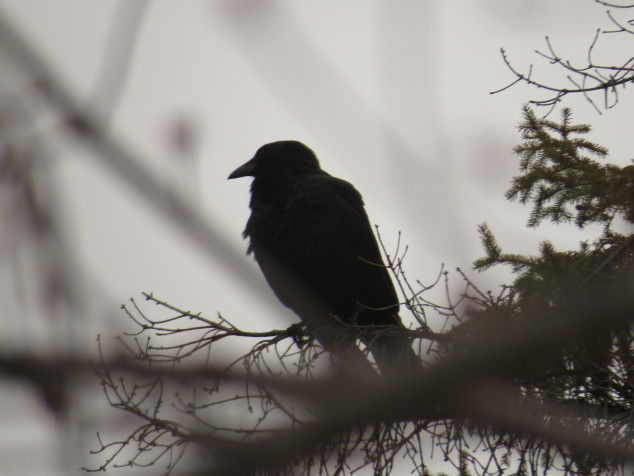
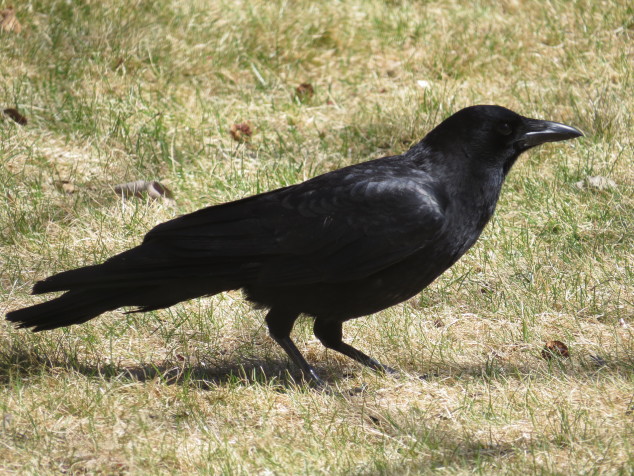
How do we look at crows? How do they make us feel? Often they are feared as symbols of death or signs of bad luck or evil. They are large all-black birds with loud, raucous voices. Crows are intelligent problem solvers who can make and use tools and recognize facial features. They are very social birds who mate for life, stay in family groups that consist of a breeding pair and offspring from the past two years who all cooperate in raising the young, and often join very large groups called a murder of crows. Some Native American tribes view crows as good luck, as wise advisers, and spirits of wisdom.
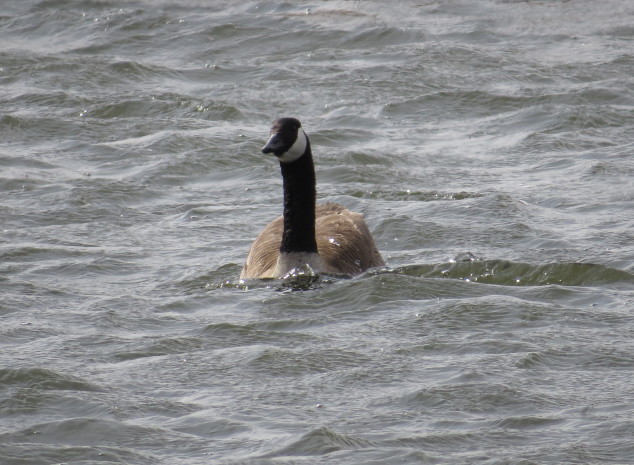
What is the purpose of a downy feather?
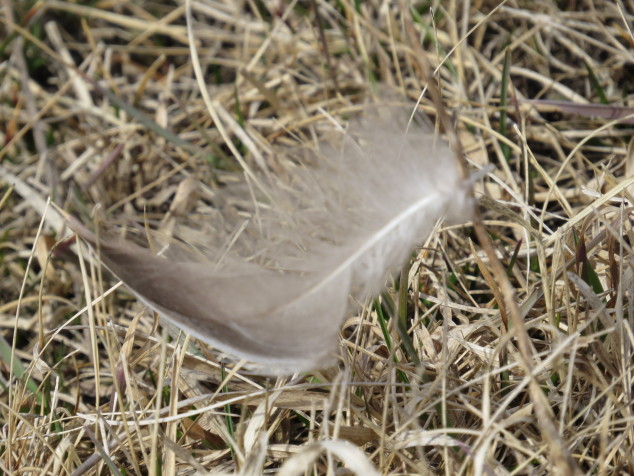
Is it to protect the goose from water and cold as it swims in the lake?
Or is it to keep a nest of eggs warm? Or as a soft place to lay our heads at night? Is its purpose to keep us warm in a jacket or sleeping bag?
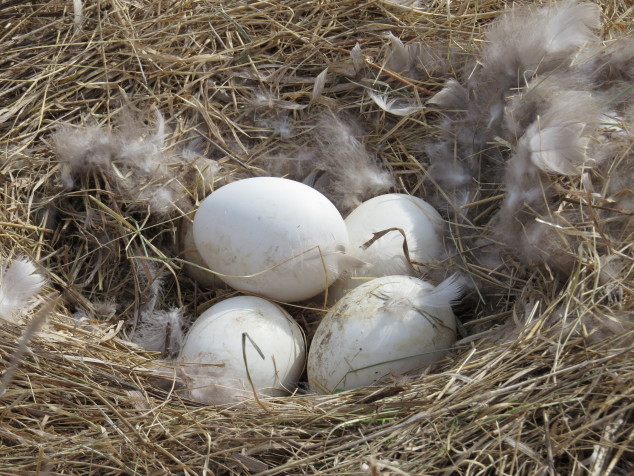
We often view the world–people, natural resources, society–only through our own lenses. We see through our ‘own-colored’ glasses, if you will. Are crows evil or wise? Are they scavengers or intelligent family birds? Do feathers function to keep us warm or do they belong only to the goose and her nest? Who owns the water or the oil or the minerals of the Earth?
It’s extremely hard not to see the people and things around us as an extension of our own selves, values, wishes, hopes, and wants, especially when it’s personal. Our human development takes us through that egocentric phase as we learn about ourselves, others, and our environment. But too often we stay stuck in that phase of wanting the world to act as our agent, and it becomes detrimental in the big picture. So how do we combat that urge? How do we progress beyond the ego? How do we live our lives authentically yet have genuine respect for others who live differently or think differently? How do we coexist and respect Mother Earth and her resources–not only for our own purposes, but for the good of all for seven generations into the future? I think we have to view the crow in its Crowness–in its myriad characteristics that range from ‘good’ to ‘bad’. We have to look at people, things, and situations in the same unbiased way. And the hardest of all to accomplish, is to look at ourselves in that way. Perhaps when we stop judging ourselves so harshly, we will see the Crow for who he is, see the Feather for what it is, see Others for who they are, and see Ourselves for who we really are–in all our glory.
- « Previous Page
- 1
- …
- 8
- 9
- 10
- 11
- 12
- 13
- Next Page »