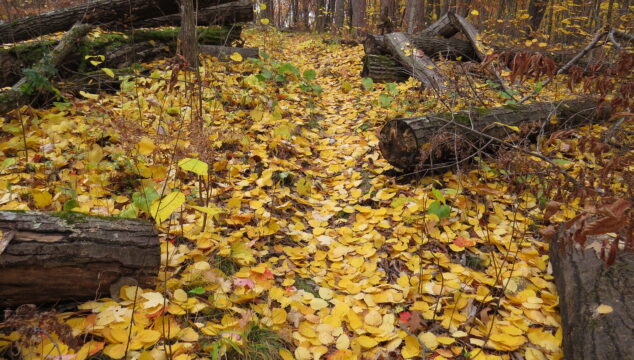
Come walk with me in the peak Autumn beauty of the Northwoods. To say that I love this time of year is an understatement. Most everyone can appreciate the colorful falling leaves---it reveals the 'true self' of a tree when its leaves are no longer producing chlorophyll. Their true colors are revealed, and there is something simple … [Read More...]
Happy Thanksgiving!
Our task must be to free ourselves by widening our circle of compassion to embrace all living creatures and the whole of nature and its beauty. –Albert Einstein
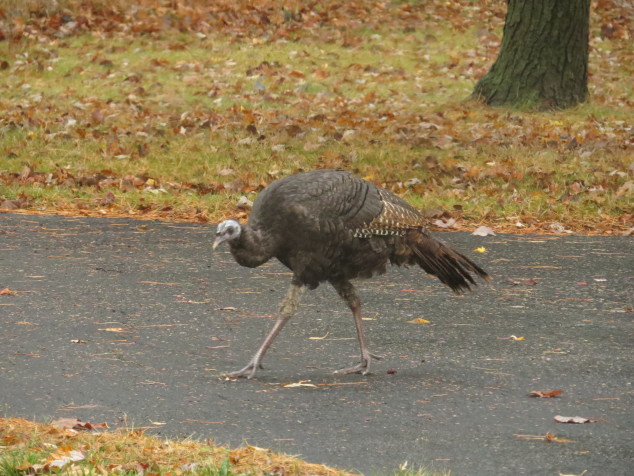
Happy Thanksgiving to all the followers of North Star Nature! I appreciate your readership and support! Check out North Star Nature’s Facebook page. Have a wonderful weekend–hope you can get out and enjoy Nature!
Welcome to the Season of Preparation
Moving a household of five people after nine or twelve years in one spot takes some preparation. Even more so if one does not easily get rid of things from the past–“But I love this picture she did when she was four–remember how early she held a pencil just right?” or “This showcased her musical talent–she played it so easily when she was little” or ” These plastic snakes were his favorite things when he was three–we should keep them for grandkids.” So, we did this twice in our lives–and we still have the picture, the instrument, and the snakes. I was fairly good at the preparation–I loved the neat stacks of boxes that accumulated against the wall as the closets and cupboards emptied, and I even felt a swift satisfaction with the large give-away and throw-away piles. But as moving day was in sight, I would hit a wall. Like a stubborn horse who will not move forward, I would find myself sitting back on my haunches and stiffening my neck–all of a sudden, I didn’t want this to happen! My mental preparation hadn’t kept up with my physical preparation.
Of the four seasons, Fall is the season for preparation. Spring brings many changes as it tumbles into Summer, but it seems joyful and effortless. Autumn slowly, methodically prepares us for Winter. And with that preparation comes paradox. Harvest of apples, pumpkins, potatoes, carrots, beets, and squash showers us with abundance and food for the coming months while drying and dying vines and grasshopper-eaten leaves wither and eventually freeze.
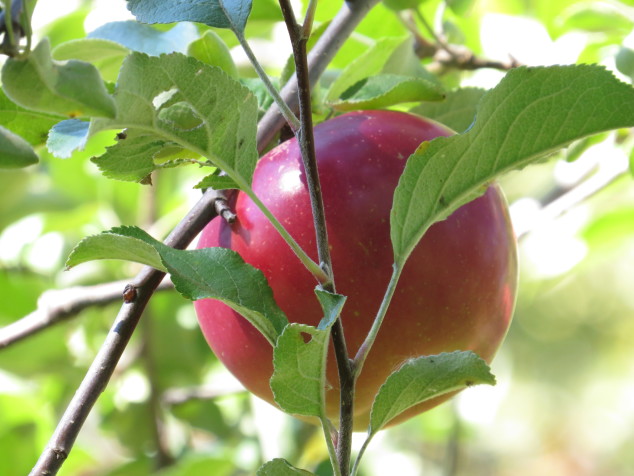 Brilliant beautiful leaves inspire us and make us breathe deeply of the clear, crisp air–before they fall from the trees leaving bare branches and emptiness.
Animals prepare their nests, bodies, and food piles for Winter, and some become food for us.
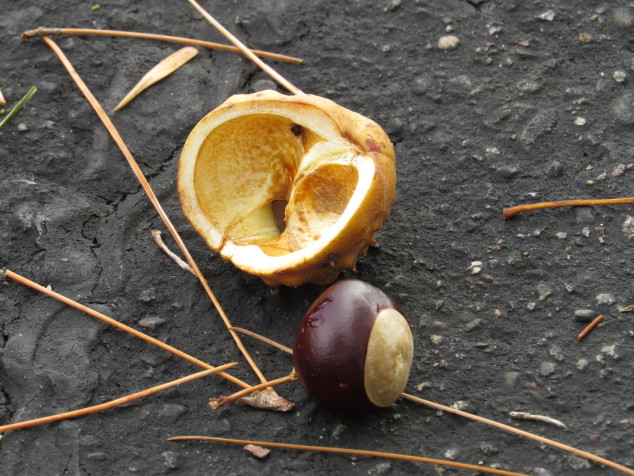
Three months of waxing and waning, harvest and loss, work and rest, brilliance and decay.
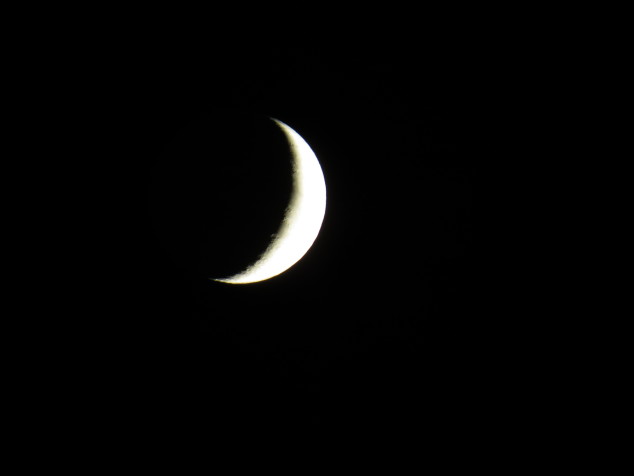
Preparation–a proceeding, measure, or provision by which one prepares for something. Mother Nature prepares us, the animals, and the plants for Winter and all that comes with that in the North of North America. A proceeding, step by step, into the lenten season of dormancy.
My balking when the moves became inevitable illustrates my sudden realization of the losses I was about to incur–the loss of good friendships and family get-togethers, the loss of our home, jam-packed with memories of the kids growing up, the loss of every bit of work we did to make our place better than it was when we got there. My quarter-moon readiness illuminated the boxes and empty rooms, yet the darkened part, the side not seen, was not prepared and was struggling against what was to come. We work hard to prepare ourselves for certain things in our lives…and yet, sometimes, we just don’t get it all done. As my husband reminds me quite often, ‘You can only get ready for so long–pretty soon you have to leave.’ And we did leave–with loaded U-Hauls and vehicles stuffed to the brim, with tears and anticipation, with sadness and joy. The preparation carries us forward to what lies next. The time comes for us to lay our heartaches down (with all due respect to Emmylou), and we walk into the next Season of our Life.
Gleanings from October
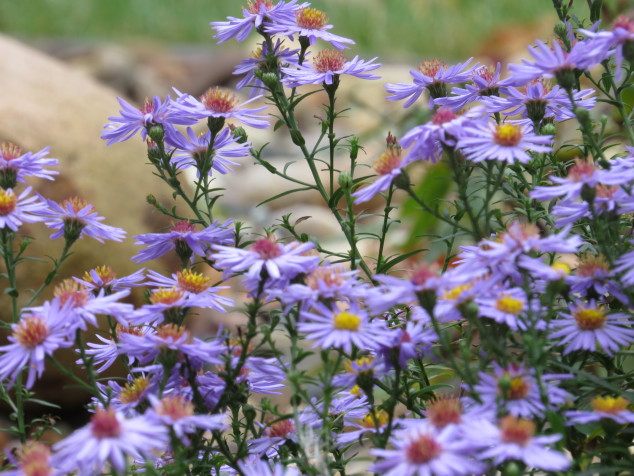
October is the month we get serious about winter. Though it starts off relatively green and warm, it ends with killing frosts and leafless trees. We had a glorious blast of color throughout the month, however; it was one of the best years in memory! Asters and mums dominated the floral landscape of this transition month.
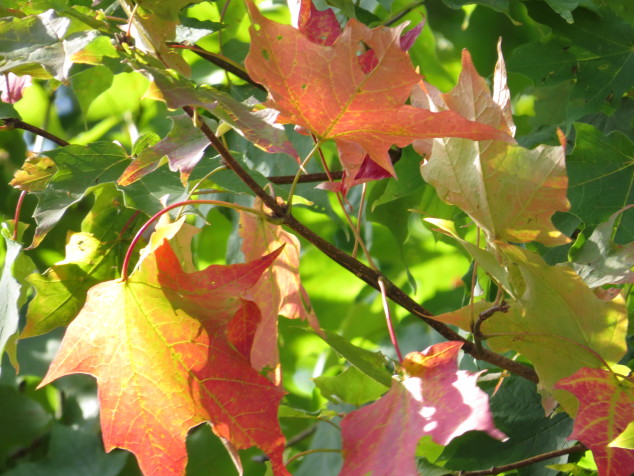
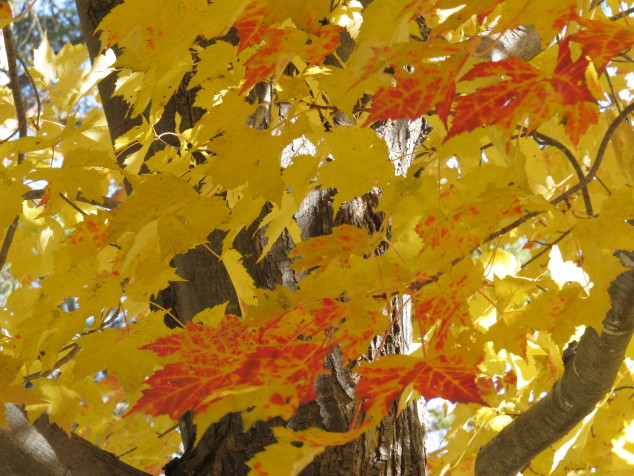
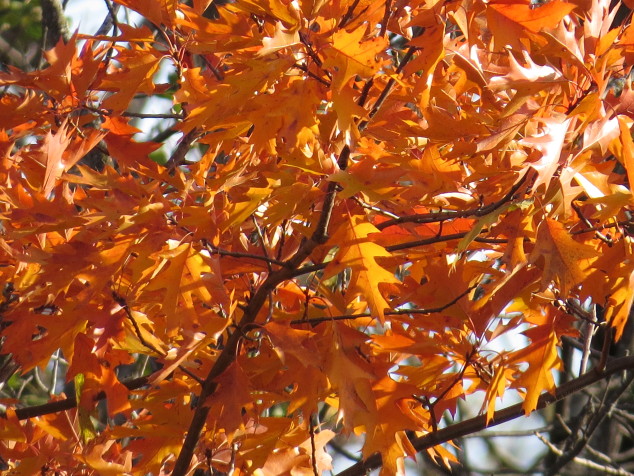
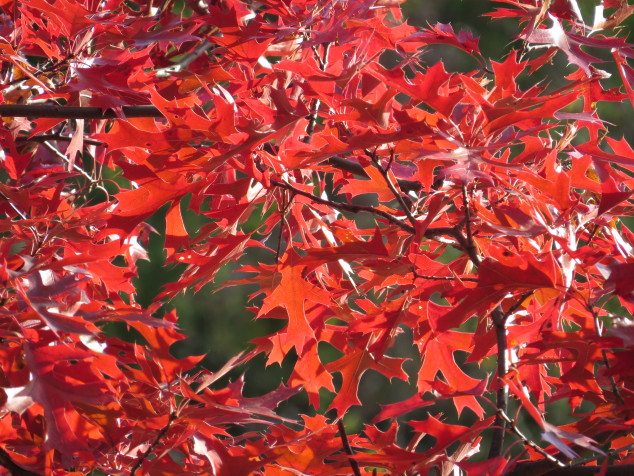
But the crown of glory goes to the deciduous trees as they stopped production of chlorophyll and let their colors shine through. The maples and oaks were spectacular this year with just the right combination of moisture, temperature, and wind to allow for a splendid show.
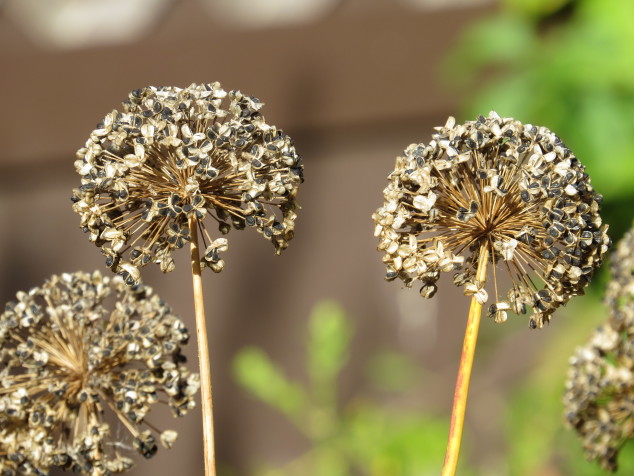
Seed production and dispersal is ongoing in its quiet and less showy manner. The lollipop balls of purple allium dry and rattle in the wind, and the tiny, black seeds dislodge and fall to the ground.
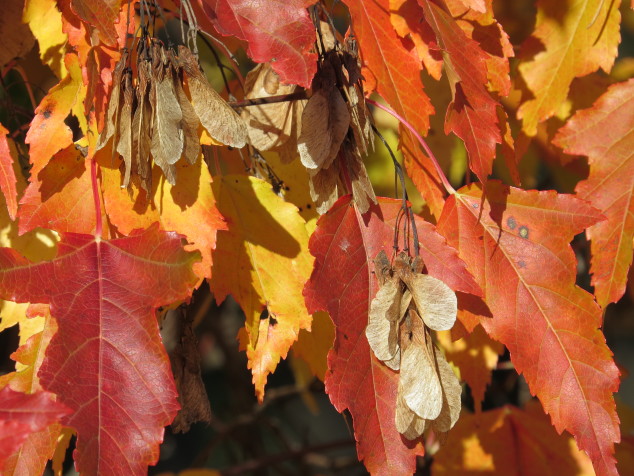
The winged seeds of the Amur maple hang clustered together among the fiery leaves and remain for a while longer after the leaves fall.
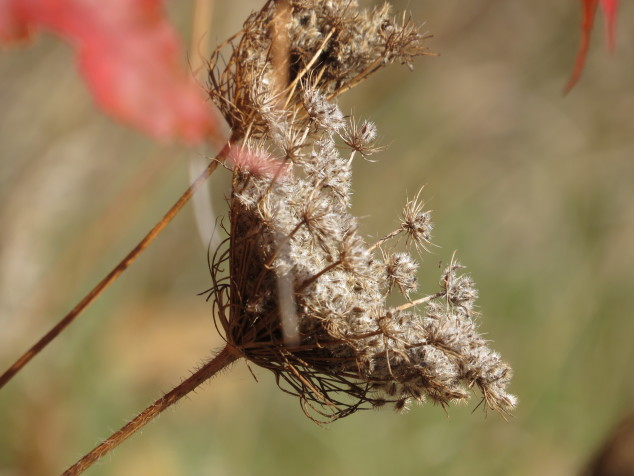
The white, delicate Queen Anne’s Lace flower closes as it dries and each seed is encased in a stickery covering, ready to hitch a ride on the fur of a passing animal.
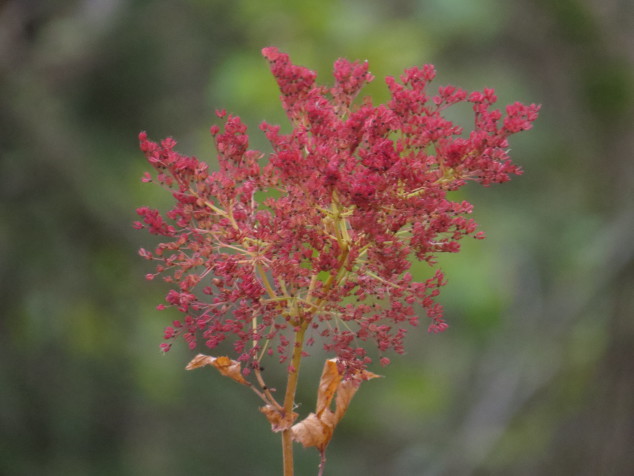
The seedhead of Queen of the Prairie turns a rosy red before drying and flaking off the paper-thin seedpods.
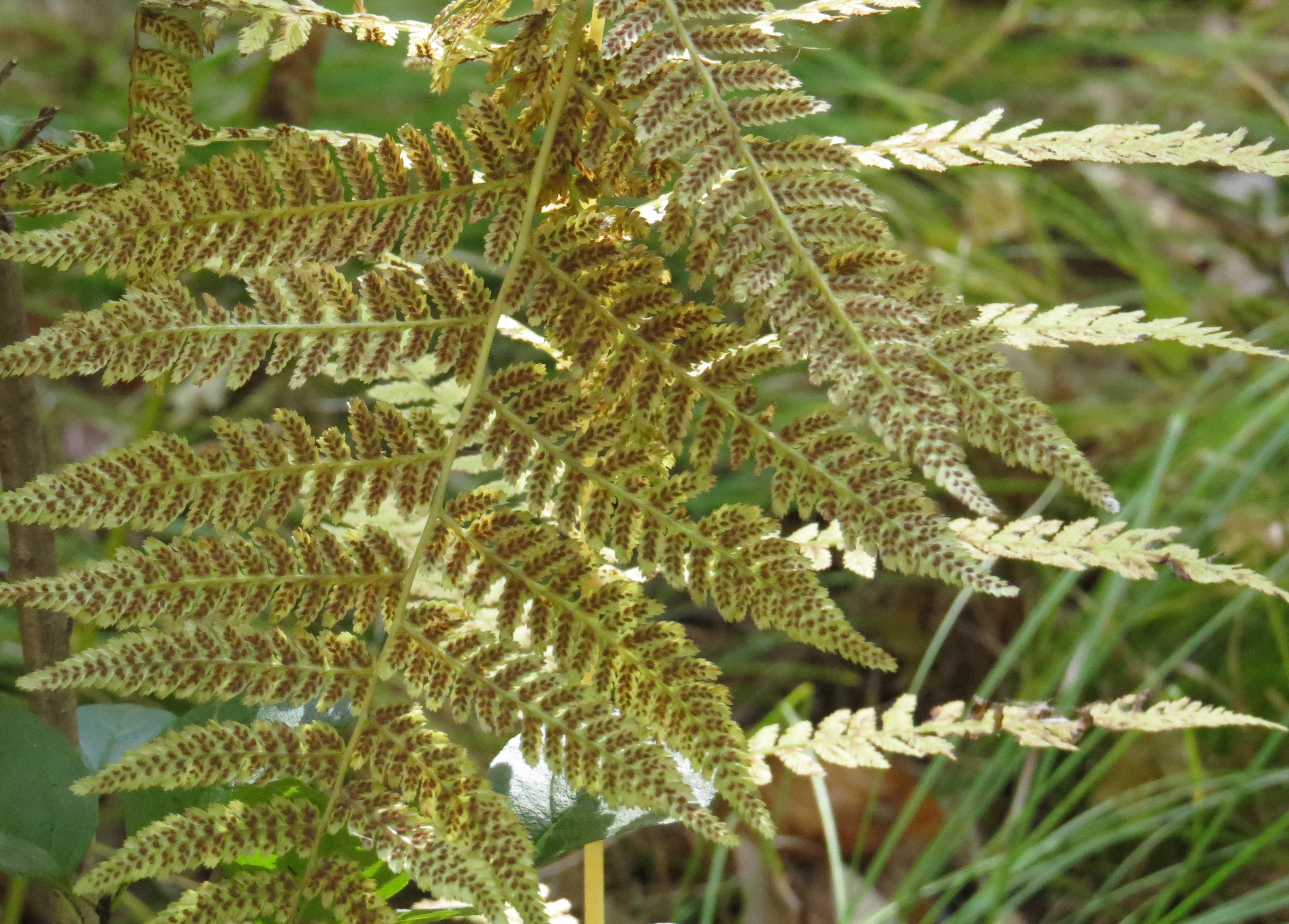
The reproductive process of the fern starts with the production of spores instead of seeds. Dotted casings full of spores can be seen on the underside of the leaf.
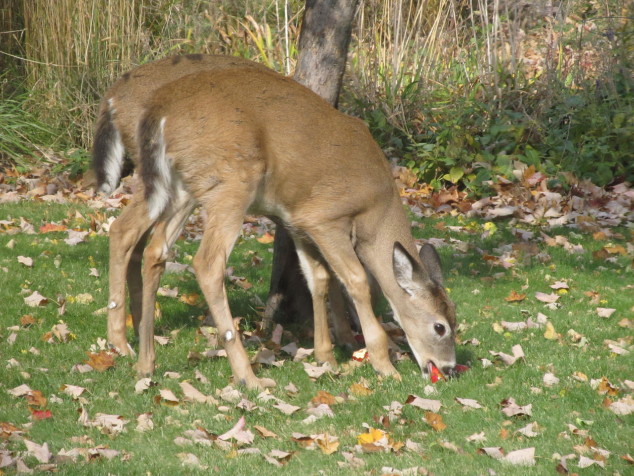
The animals also prepare for winter. This pair of spring fawns, now without their mother, filled their bellies with apples that had fallen from the tree.
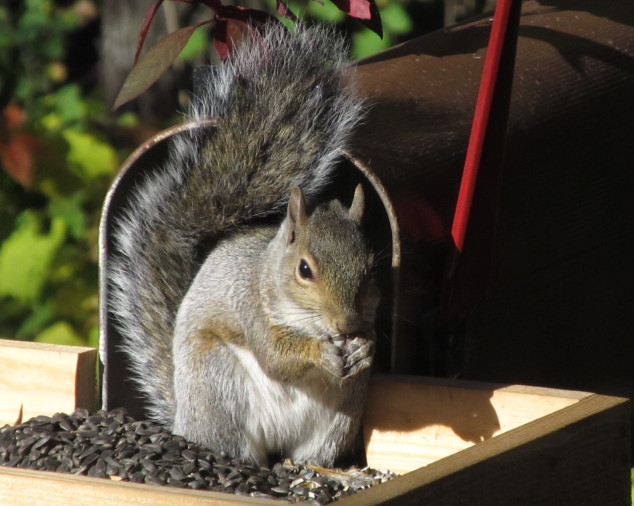
For the squirrels, it was a bad acorn year, so they are happy to try out the new bird feeder.
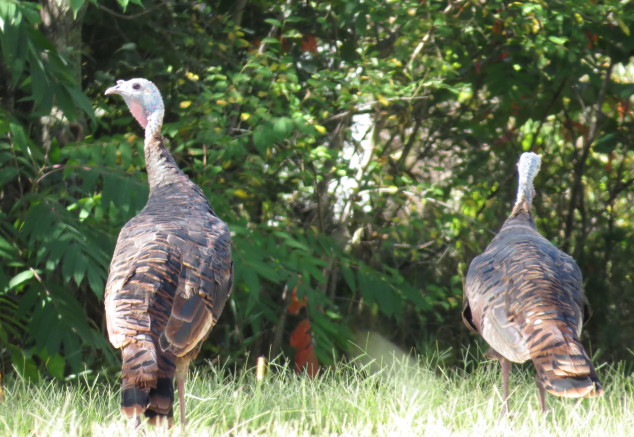
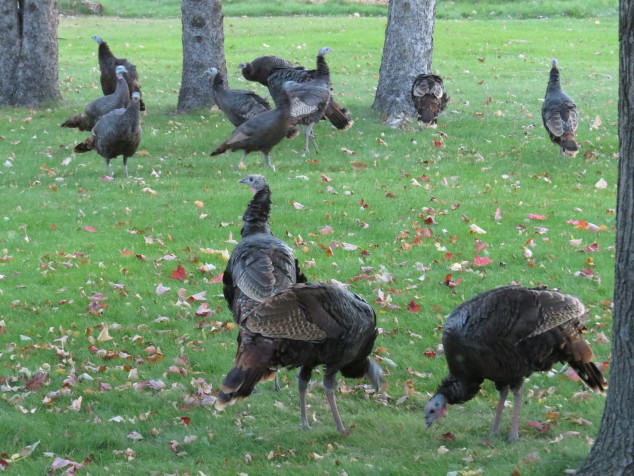
The turkeys also discovered the birdseed that had fallen from a feeder in the front yard.
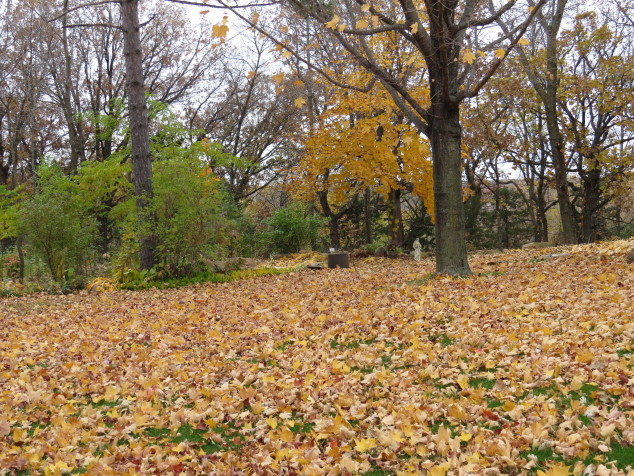
October means leaf raking, tree watering, and perennial pruning. The potatoes and carrots are dug, the apples are picked and the apple butter made. Bird houses are put away and the feeders are hung up. Small evergreens are wrapped in burlap. Tree guards are put on small trunks. Clay pots of spent annuals are cleaned out and put in the shed. Pots of oak seedlings are covered with straw. There’s still more to be done.
The reason we do so much work each October is two-fold. First off, you don’t mess with Old Man Winter in Central Minnesota. There are no guarantees that the extreme temperatures and drying winds won’t kill the trees and perennials that we have planted, so we help the best way we can. Ironically, the snow cover is beneficial for the plants, but makes life harder for the wild animals to find food. They need to be prepared by storing fat and having a sheltered place to live. Secondly, much of what we do is because of stewardship. We appreciate and love the natural world and believe it is our responsibility to care for our small piece of it. So as Nature has given us a spectacular show of Fall color, as the seeds for next year’s plants have been dispersed, and as the animals prepare for their cold, harsh season, we work hard to protect, prepare, and care for the creation around us. After all, it’s what we all do for the things in life we love.
Gleanings from September
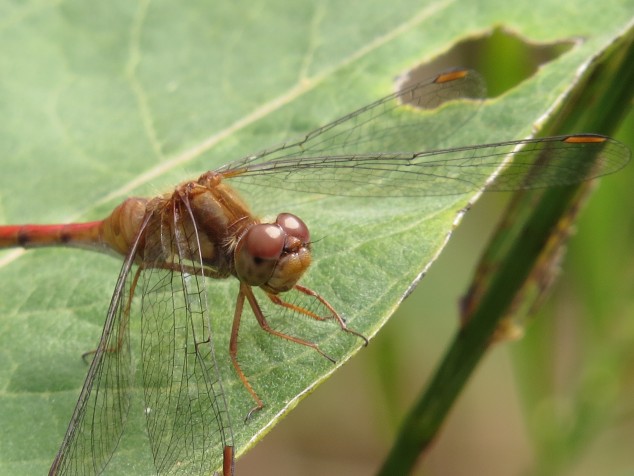
September has flown by it seems. These are the last weeks of summer and the introduction to fall. There is the scare of frost that pushes one to fling bed sheets over potted annuals and tender basil and tomato plants because we cannot bear to see their darkened, wilted leaves just yet. Later, we resign ourselves to its inevitability–but that is an October state of mind. We want to hang on to the warmth and jubilant growth and production of summer–even as we see the reverse process going on right before our eyes–the cooling, turning, falling, and wilting.
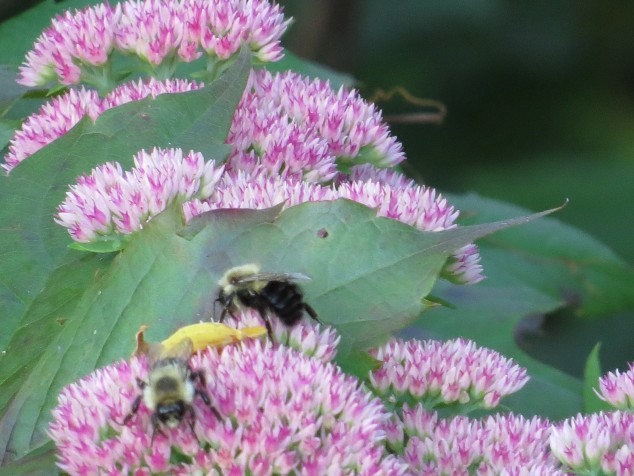
Bees still feed on sedum flowers, though not with the busy energy of playing children. They are placid and slow in the coolness.
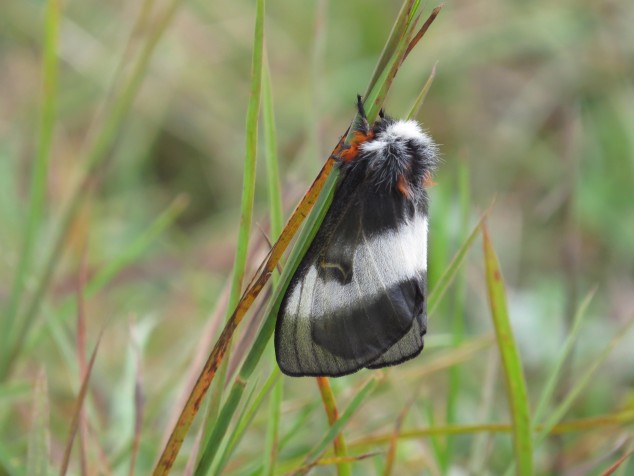
A Buck moth–so named because it emerges during the rutting season of whitetail bucks–clings to the prairie grass at St. John’s Arboretum. It looks as if it wears a warm fur coat to get it through its short, egg-laying Autumn life.
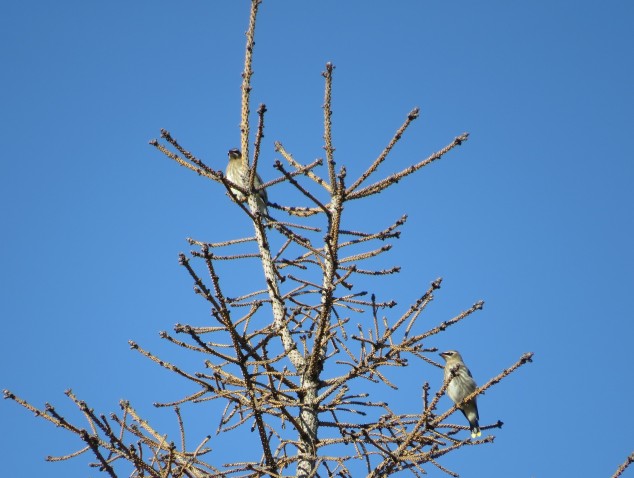
One afternoon as I walked out our driveway, I looked up at the top of a dead spruce tree. Birds perched like Christmas ornaments on its branches. Most of them flew away before I got a good look at them with the camera, but I discovered they were Cedar waxwings.
 Another visitor to the dead spruce was a Northern flicker, stout of body and bill with the red nape of its Woodpecker family. It’s one of the only woodpeckers to feed on the ground and to migrate from its northern areas.
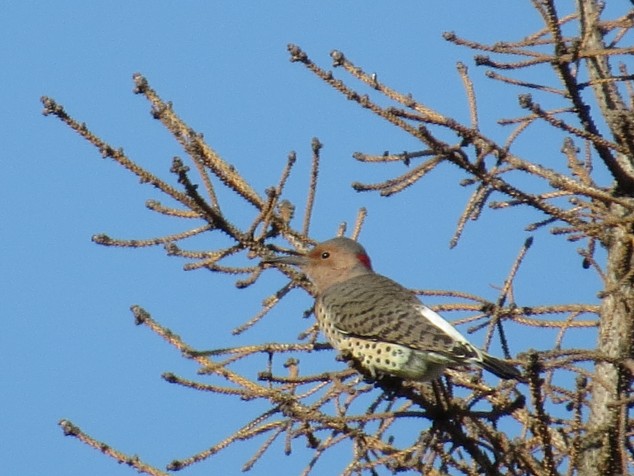
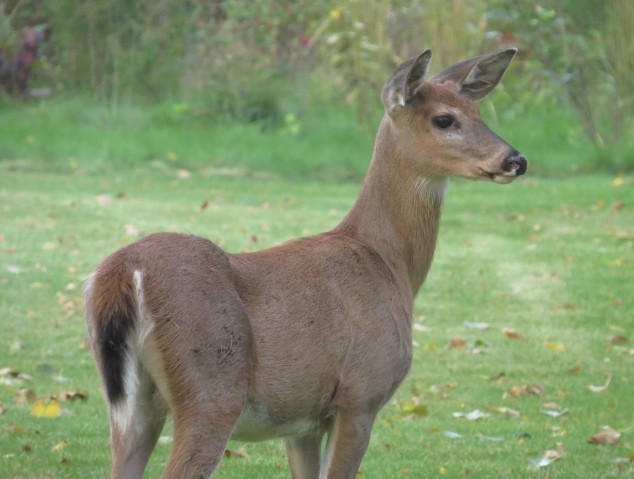
In September we saw some of our frequent yard visitors mature into young adulthood. The small, spotted, twin fawns now looked muscular with thick coats, and I had a feeling of sadness to think of them in the sight of a gun instead of my camera.
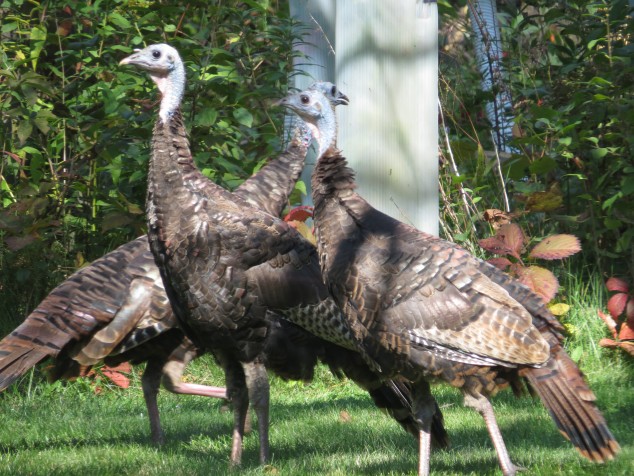
The young turkeys, once scurrying balls of feathers, were indistinguishable from the adult females who wrangled them around all summer. Their feathers shone in the sunlight with the diverse markings and rich copper, brown, and bronze colors of the adult bird.
I carried out an amphibian rescue from the deep egress window well on the northeast side of our house after our Black lab would run to it and peer over the edge at the critters who had inadvertently fallen into the abyss. Three Tiger salamanders, two Leopard frogs and a Partridge in a…..no, I mean a chubby, bumpy, brown toad.
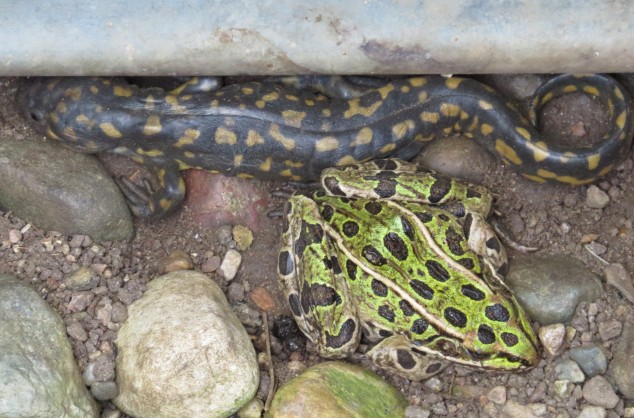
(This one is so shimmery and pretty!)
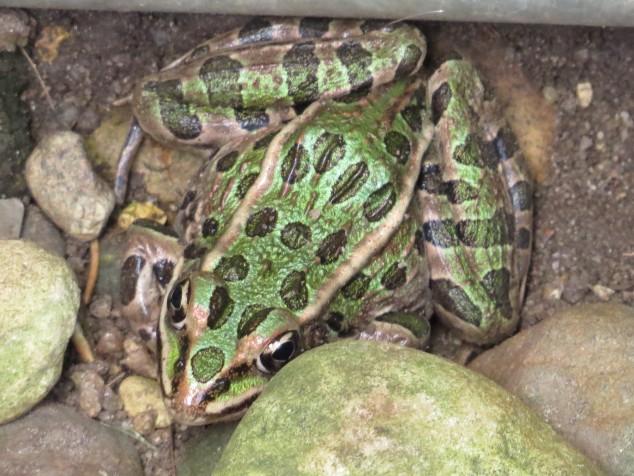
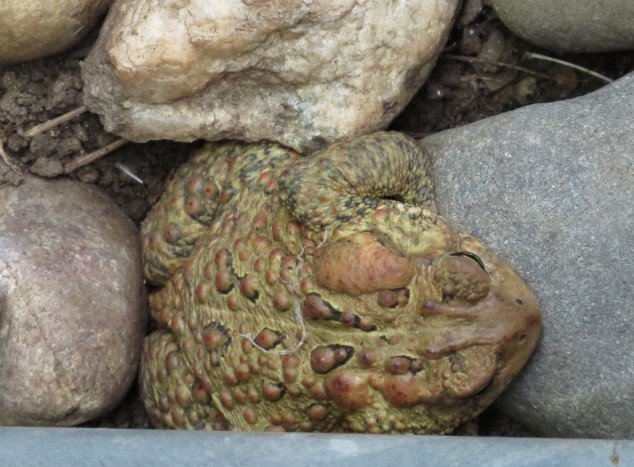
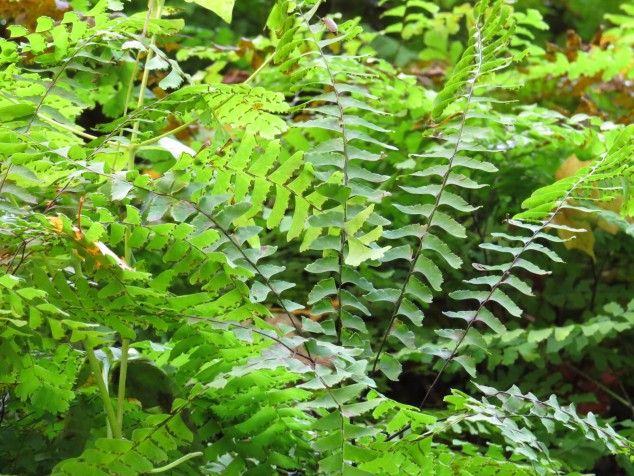
And finally, I wanted to show you my favorite fern–Northern Maidenhair–with a whorl of lighter green fronds floating on dark, wiry stems. They grow along the shady narrow road that climbs the bluff from the bank of the Mississippi River at Cassville, Wisconsin to the cemetery where Chris’ folks are buried. That’s the first place I remember seeing them. These grew where the woods and the wetlands merged at St. John’s Arboretum. My attempt to establish them at our place has met with disappointment, as our hilltop sandy soil drained away the moisture they require. But I’m not giving up yet–Chris has a project going that may be the solution to my problem….
It is human nature to not want to let go of the things in life we love or that give us pleasure. Summer is a pleasurable time in Minnesota, a time we do not take for granted. It is short and sweet, and we want to hold on to that sweetness. But the night temperatures fall into the thirties, the colorful, fallen leaves cover the green grass, the produce from the garden is mostly all harvested, and the denial of what’s coming is getting pried away by reality. We get out our warmer clothes that have been put aside, not even put away, and we start to make our mental list of things that need to be done before winter. We rescue what we can, and with loving appreciation we let go and give the other up to God. We move on to our October state of mind.
Happy 1st Day of Fall
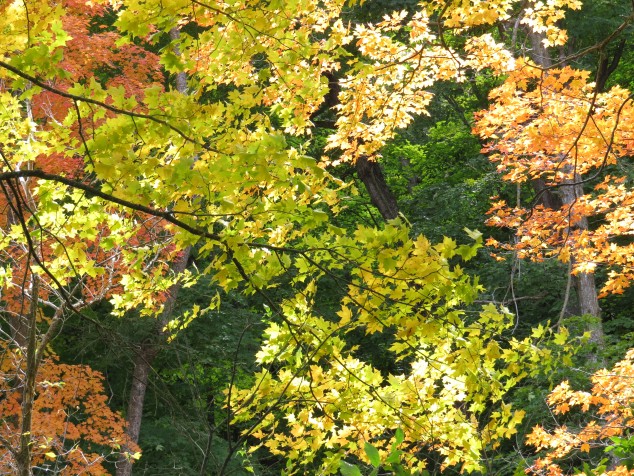
Happy 1st day of Fall to all of you! It is a beautiful autumn day–clear blue sky, bright sunshine, cool temperature, and a tapestry of orange, red, yellow and green leaves. It is the season for picking apples, making apple butter, drinking apple cider, choosing pumpkins, carving jack-o-lanterns, raking leaves, and running through a corn maze. It is harvest time for the farmers, closing time for the cabins and camps that have housed a summer of delightful fun, and hunting time for those who carry a bow or gun for sport or to put food on the table.
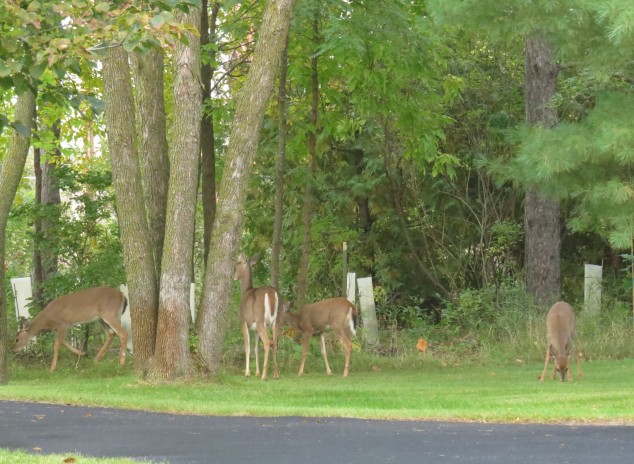
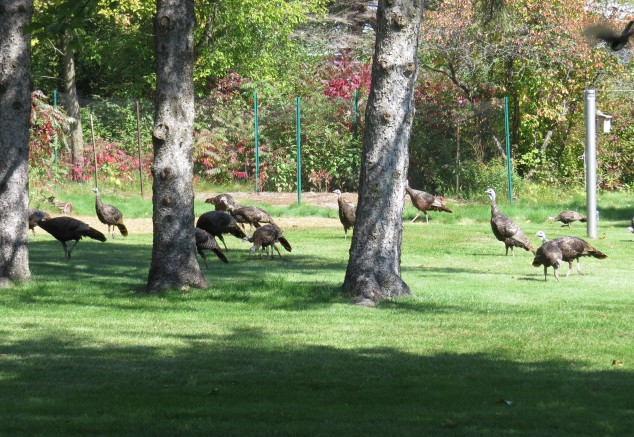
Over the weekend, our yard was a wildlife paradise of sorts, as the deer grazed through the delectable offerings one evening and the posse of almost fully grown turkeys swept through the yard at midday with flapping wings and watchful eyes.
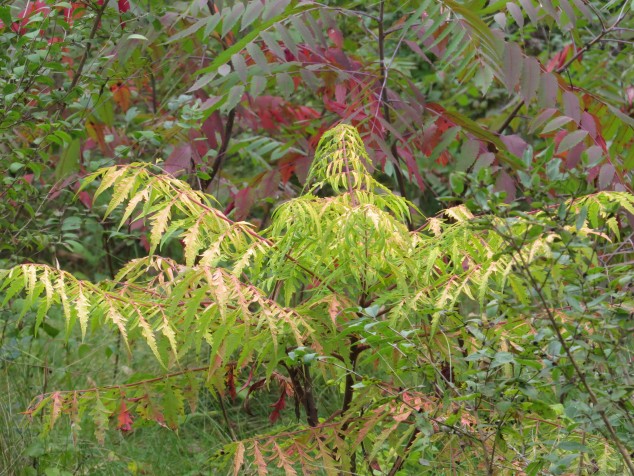
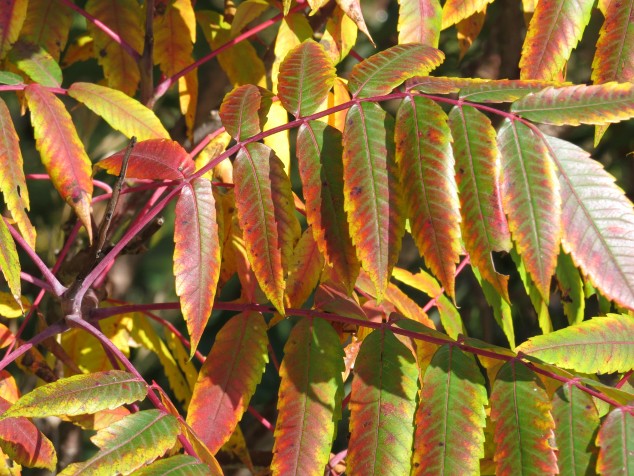
The sumac is in all its glory–the understory to yellow-leaved ash and poplars.
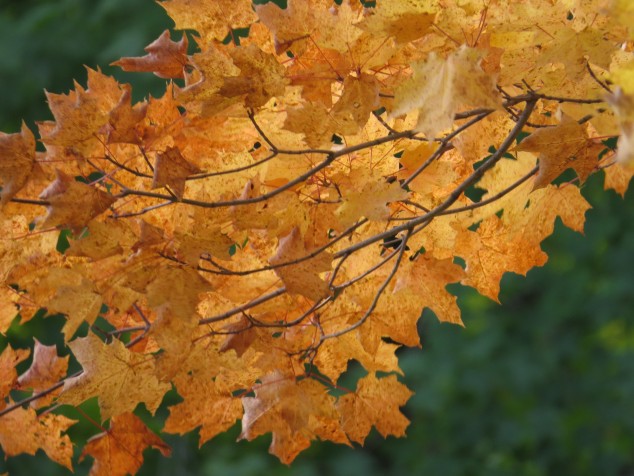
We met up with Aaron at St. John’s Arboretum yesterday for a spectacular walk through the woods. The maple leaves glowed against the dark trunks and branches on trees so lofty it took my breath away.
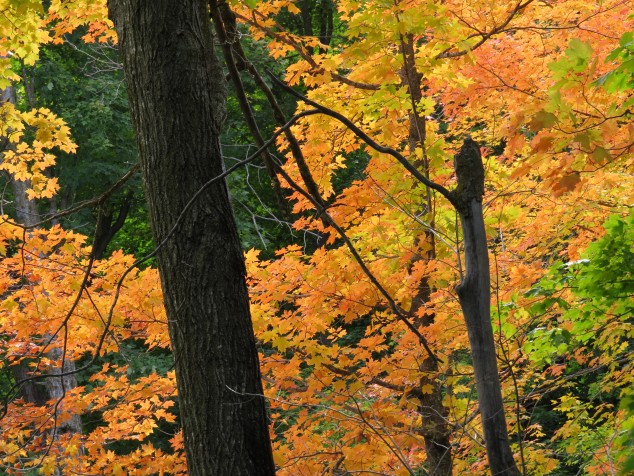
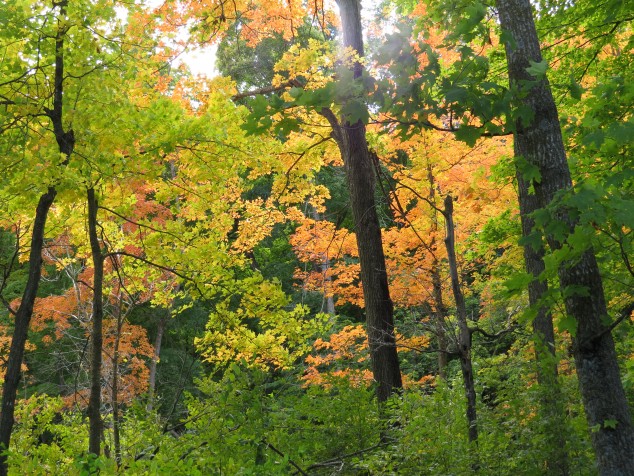
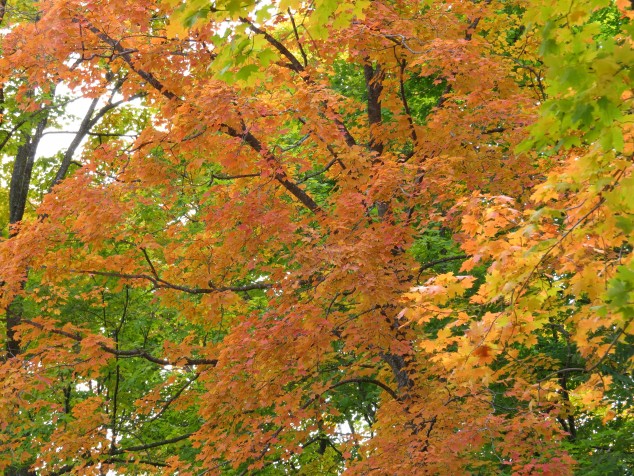
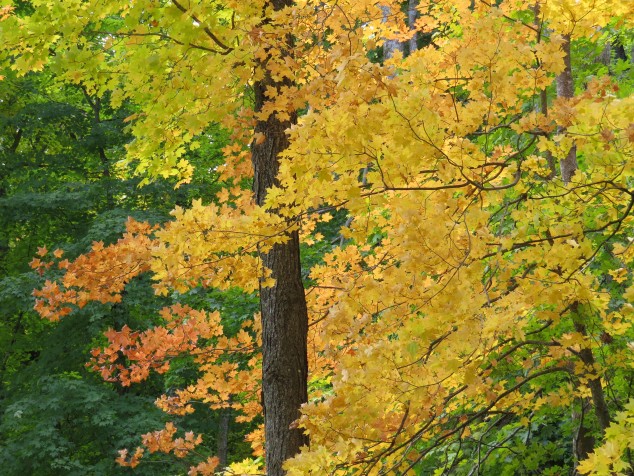
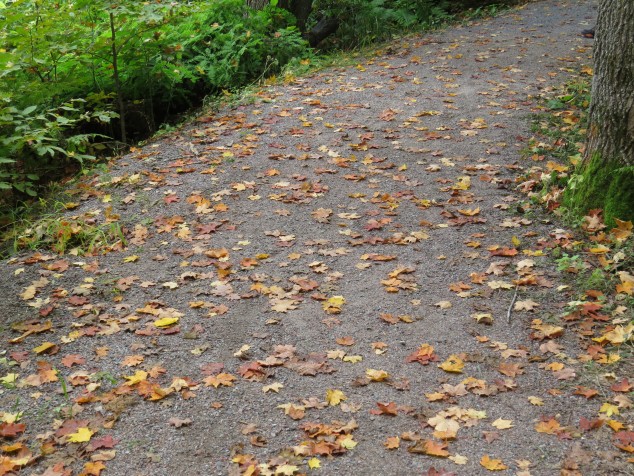
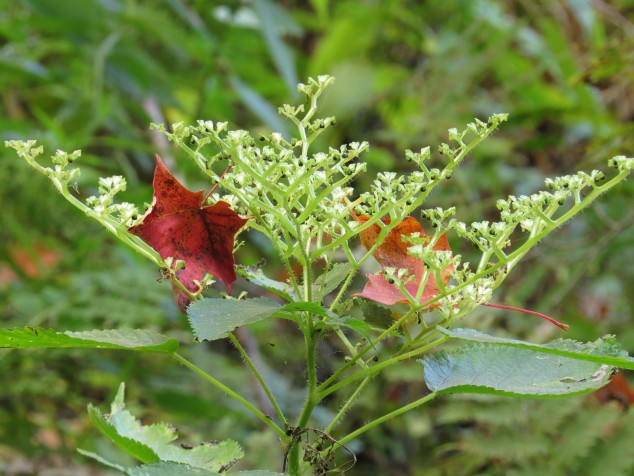
Fallen leaves lined the path through the woods and decorated the ferns and wood nettles with bright spots of color.
Fall is the between season. Most of us do not want to see the end of summer as we wonder how it could have slipped away so quickly. And we regret that things we wanted to do were left undone. Some of us are beginning the dread of winter–few in Minnesota complain that winter isn’t long enough! But in between those wishes to go back to the warmth and the not wanting to go forward to the bitter cold is this cool spot in the timeline. We may end the season of Fall in a blanket of snow, but the beginning is spectacular, and we have many weeks before us of warm days, cool nights, great color, and autumn treasures. Enjoy!
A Good Day to Fly
Early Tuesday morning I heard a soft thump on our open window. Even before getting out of bed to look, I knew a bird had flown into the reflective glass. It happens often. Sometimes it is the demise of the little creature; other times they can shake off the shock and fly on. A tiny fledgling wren was crumpled in the river rock by the sedum. He had just left the nest in the wren house that was hanging from a maple branch about fifteen feet from our bedroom window. In a few minutes, he scurried under the hosta plant for cover–on his own in the big world. The morning mayhem had already begun with the parent wrens working hard to feed their hungry brood–a noisy time! Except this morning was different–it was a good day to fly!
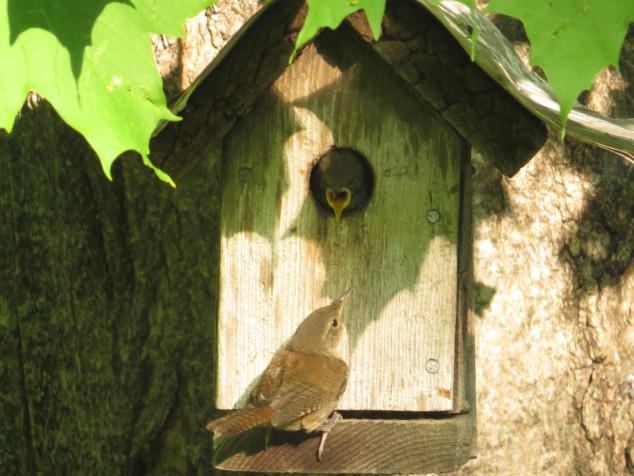
So instead of bringing food for the clamorous, hungry babies, the mama and papa wren flew to the house ‘talking’ encouragement to their young ones, then flying away again.
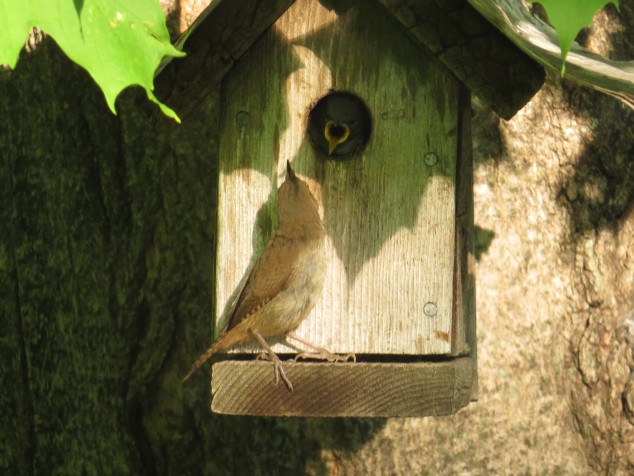
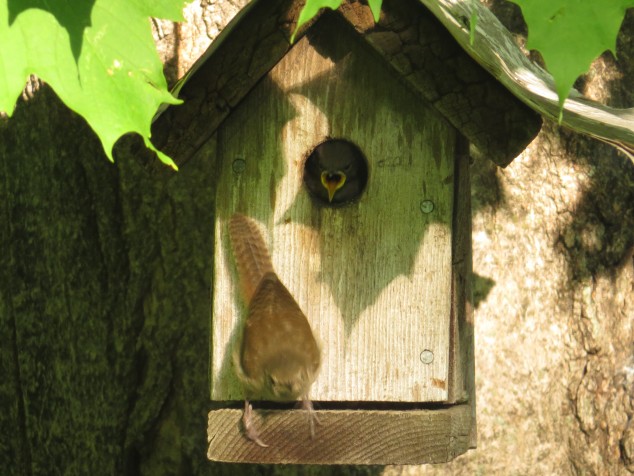
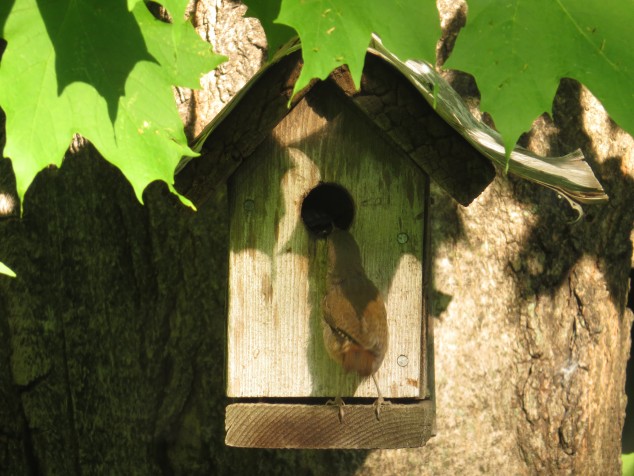
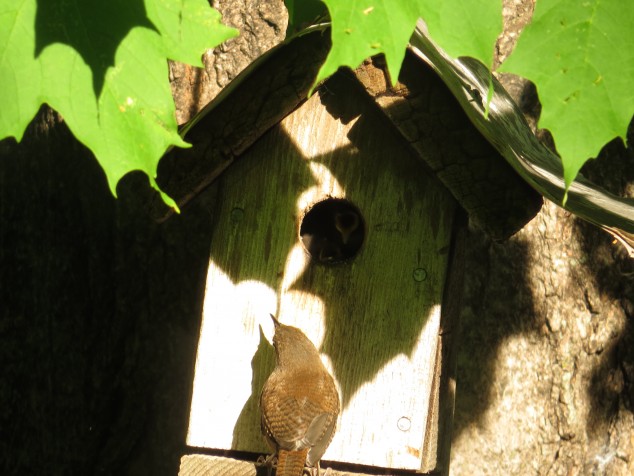
Mama wren would fly to the house, then to the roof, then to branches above the house, all the while chattering to her young ones. The baby at the opening was making just as much noise–constantly wondering why he wasn’t getting fed as usual.
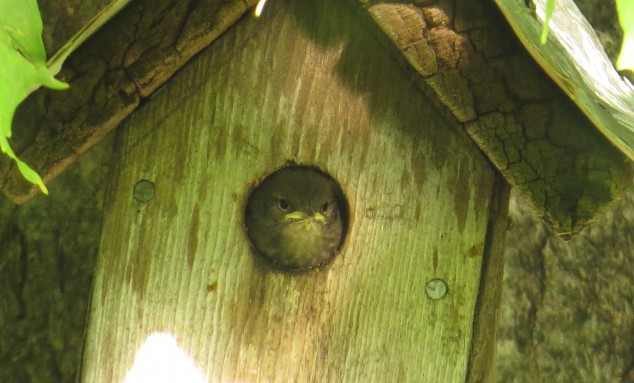
After more than two hours of this flying-day frenzy, I saw the mama bring food to the baby. Some food and rest were in store after all that hard work. They would try again another time.
At noon that day, I heard our black lab burst from inside the house onto the screened-in porch with an urgent bark–the kind that means something is out there! I looked out the back window and saw turkeys flying and running from the loud, startling threat. One adult sentry of the posse of turkeys calmly surveyed the scene, then walked into the woods, while the others looked down from their secure perches in the oak trees.
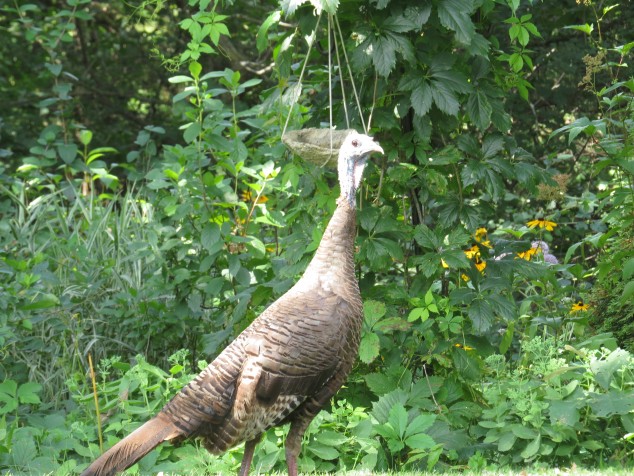
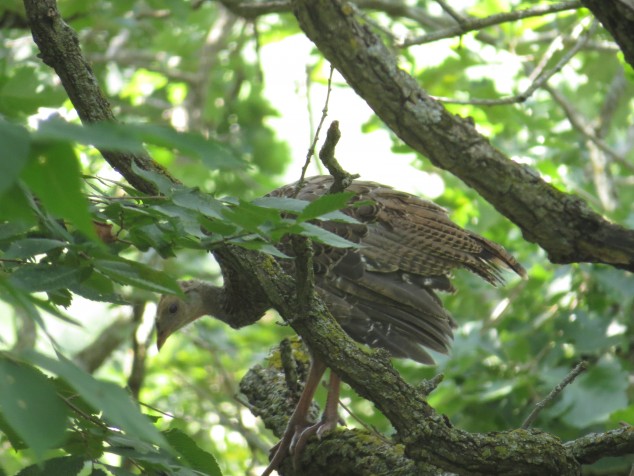
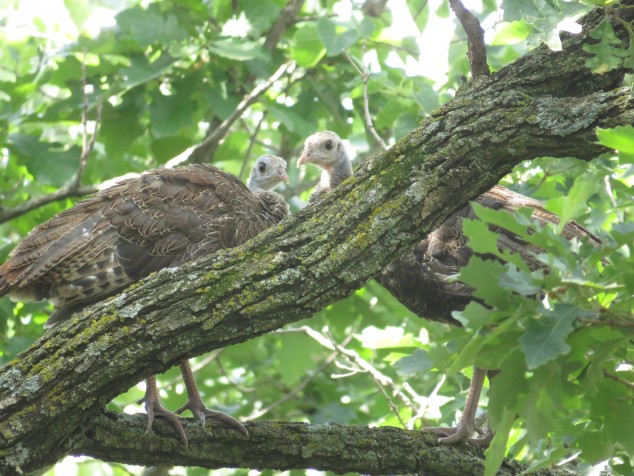 With the dog safely contained in the house and no longer barking, the turkeys cautiously left their perches, floating down to the ground like tiny brown parachutes.
Baby flyer training for the wrens began again early the next morning. The chatter was loud and nonstop. The fledgling was much more determined due to hunger or instinct or increased confidence. Though it took many tries and much prompting from mama wren, baby number two soon took the leap!
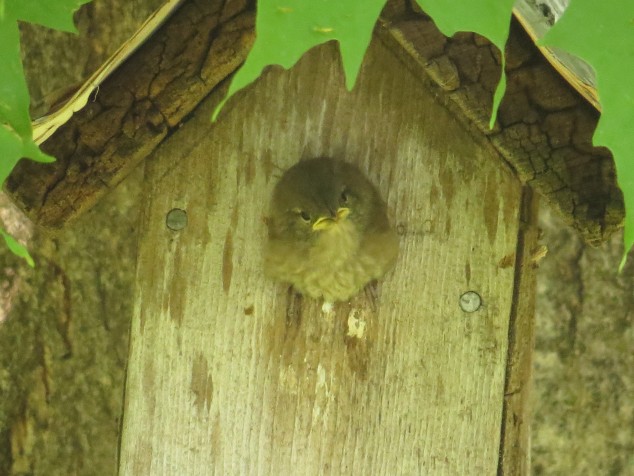
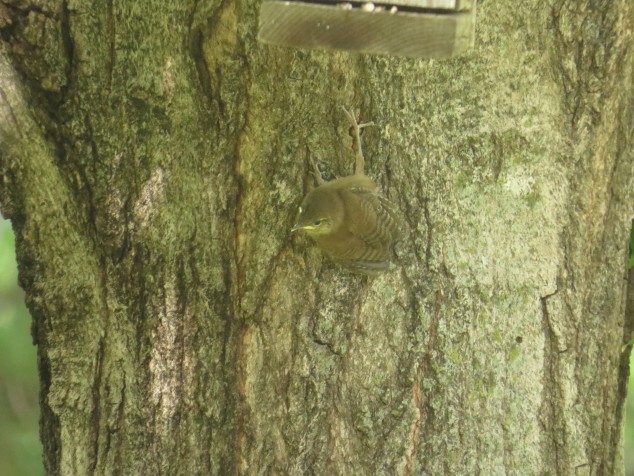
Next flyer on deck!
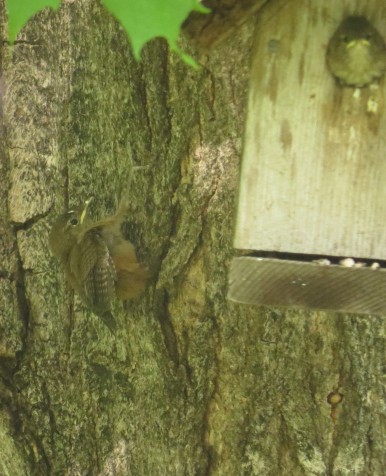
This time mama wren brought some enticement but flew away without feeding it to the baby.
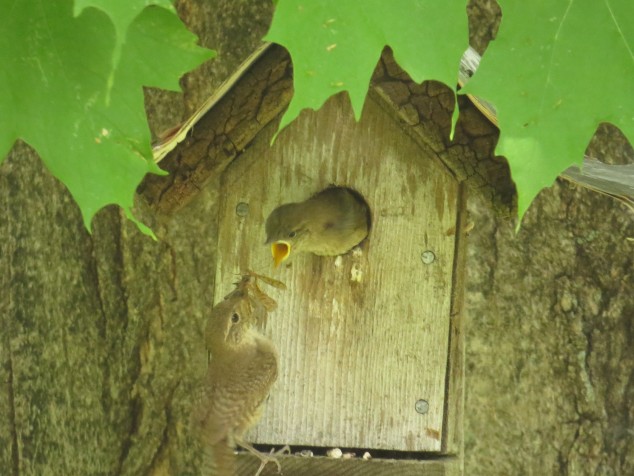
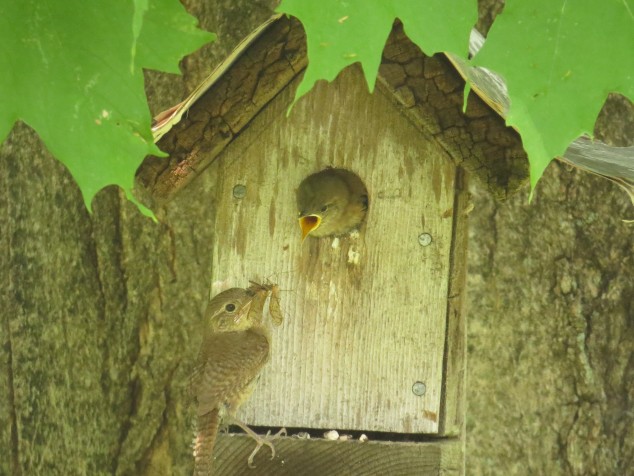
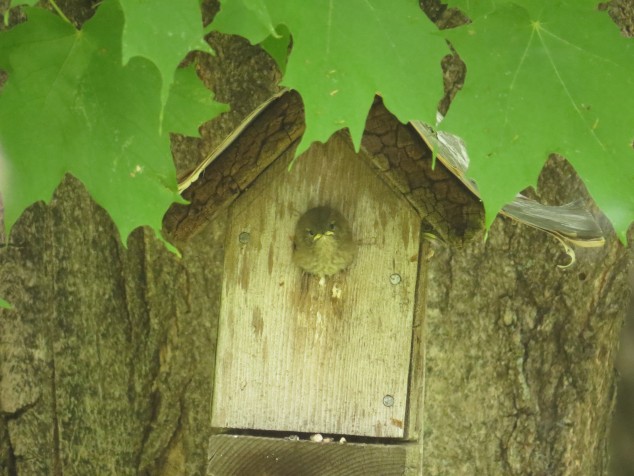
‘Dang! I guess I’ll have to get out of here to get that tasty morsel of food.’

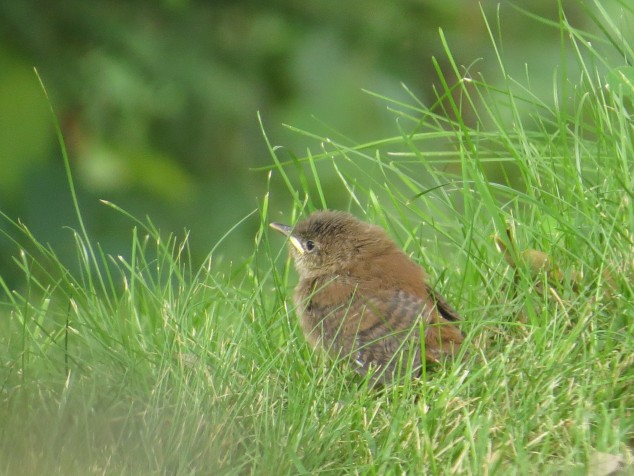
Baby wren number four followed suit and cautiously dropped to the ‘porch’ of the house.
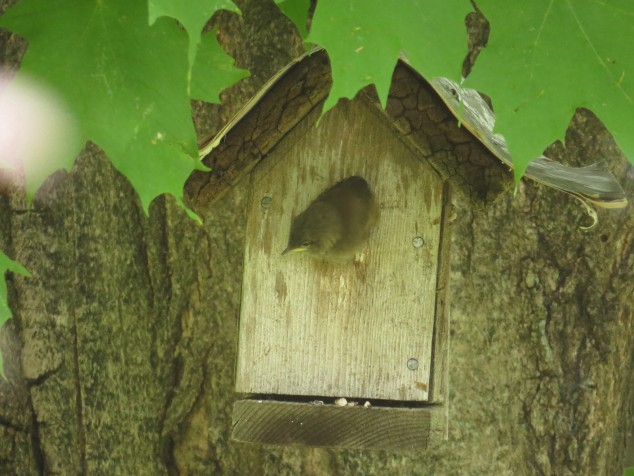
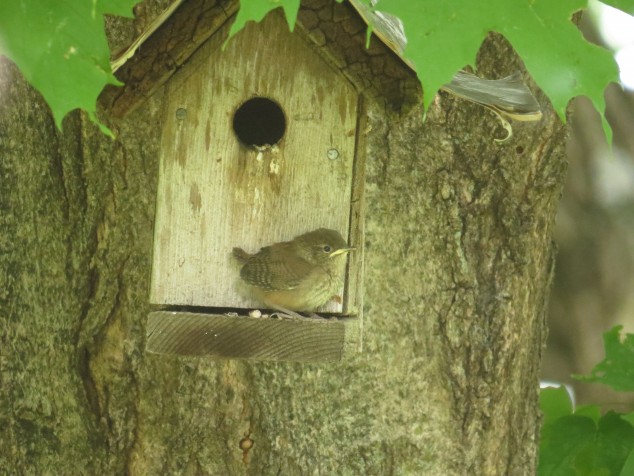
‘Your turn. If I can do it, you can do it, too!’
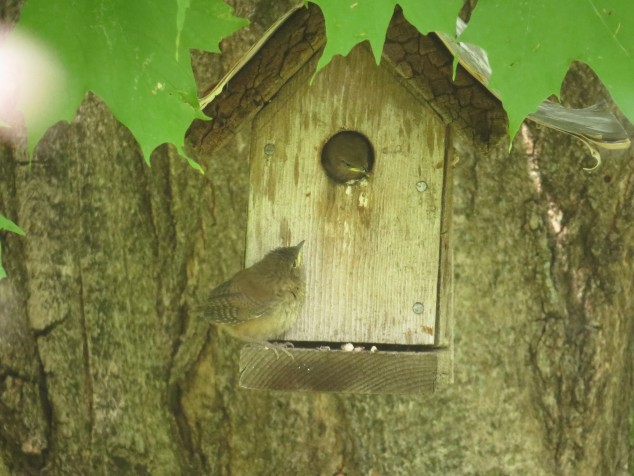
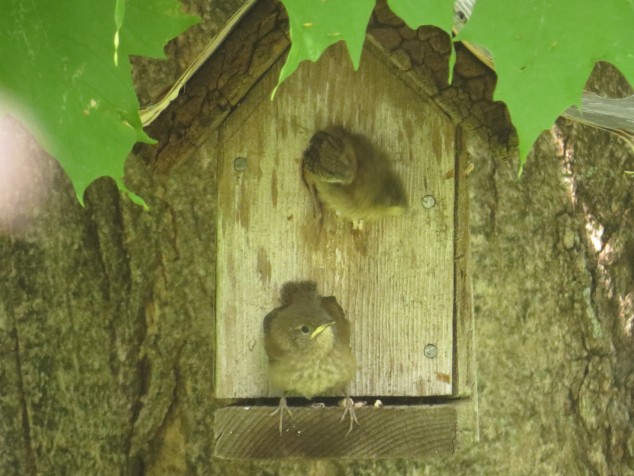
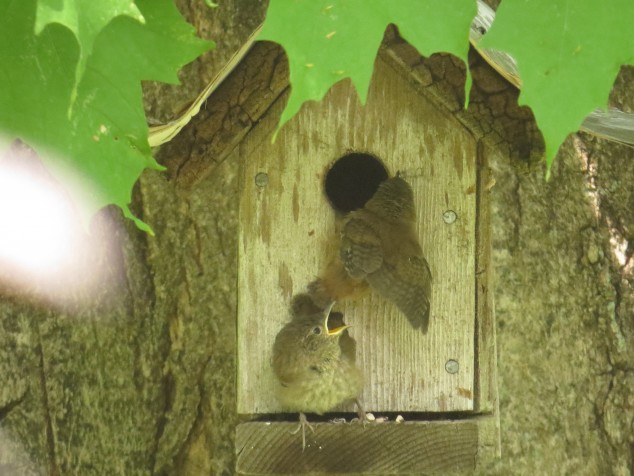
‘Where’d she go?’
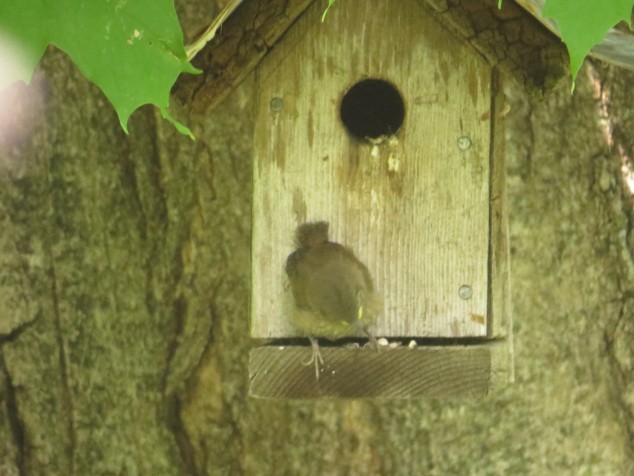
And finally, mama wren flew to the branch above the house, and the last baby followed her into the maple canopy.
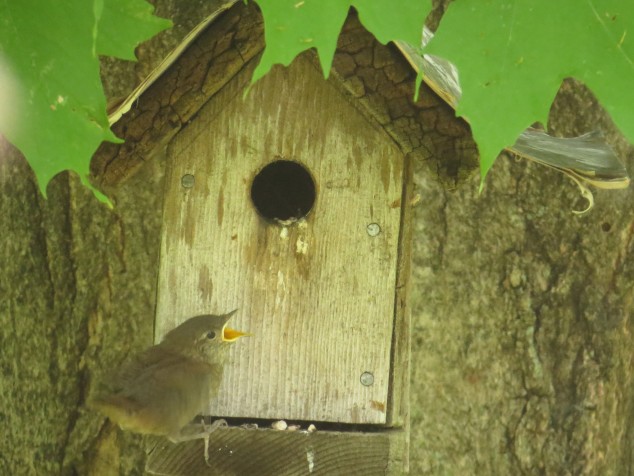
Empty nest. Empty house. Quiet.
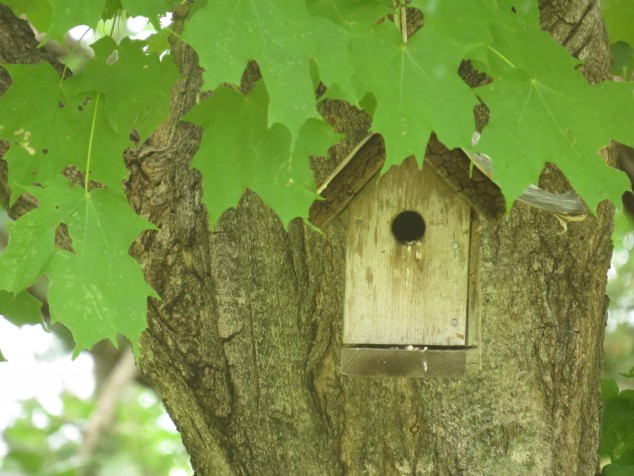
Sometimes with all the best intentions and timing and encouragement, we try new things but don’t succeed. We rest and re-group and try again. Sometimes, like the turkeys, we are forced to fly. Scary things happen, and we fly to save our lives. Hunger for a better life, frustration with the status quo, enticements that feed our body and soul, encouragement from others who have gone before us, and the positive peer pressure that makes us take the leap combine with our innate cycle of change and development to make it a good day to fly.
A Posse of Turkeys
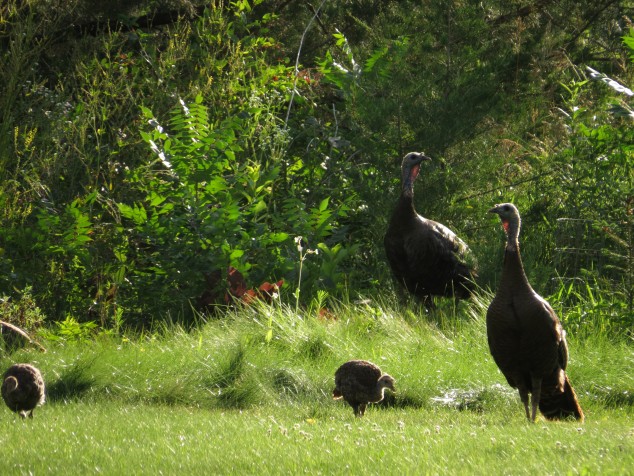
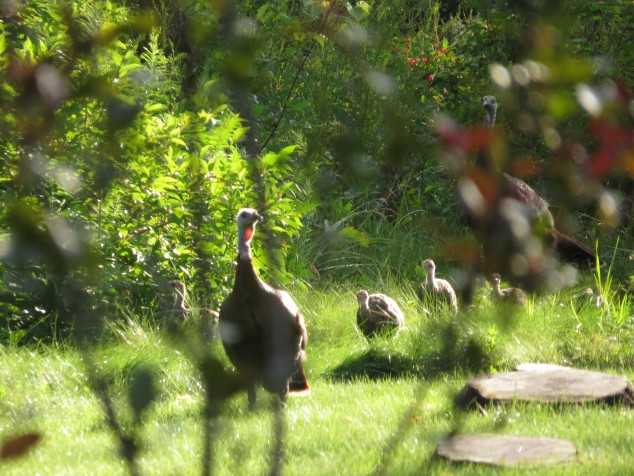
One bright morning while eating breakfast, I heard a car honk, so turned to look out the window. A posse of turkeys was walking up the driveway into our yard. Three adult females were herding countless young juveniles through the grass to a path by the blueberry patch that led into the cedar and oak woods. Turkeys have excellent day vision–three times better than that of humans–so I’m sure they saw me move to the window with the camera.
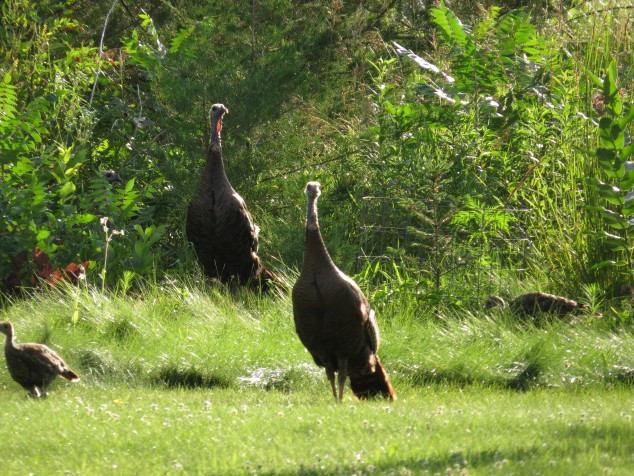
These mother/child groups of turkeys are known by many names–flock, raffle, gang, crop, and posse to name a few. After spring mating and laying a clutch of 10-12 eggs in a shallow dirt depression nest, they incubate the eggs for 28 days. The poults hatch and leave the nest within 24 hours, ready to travel with the posse and forage for food.
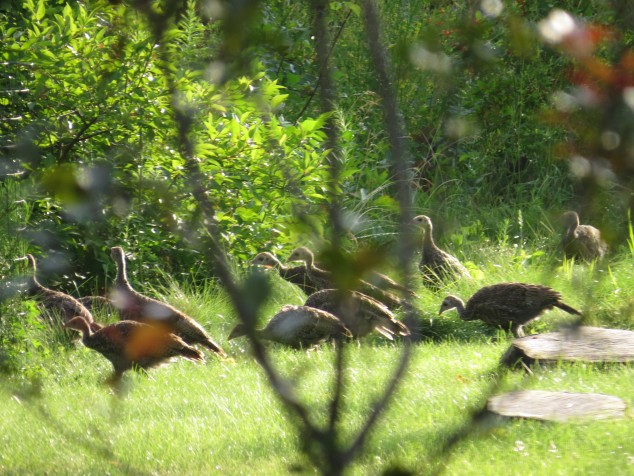
The young juveniles–male jakes and female jennies–eat grasses, seeds, nuts, insects, and fruit. Adults also eat small salamanders and snakes.
In the early 1930’s the wild turkey population was on the verge of extinction, but thanks to conservation efforts the range and numbers of turkeys are greater than ever.
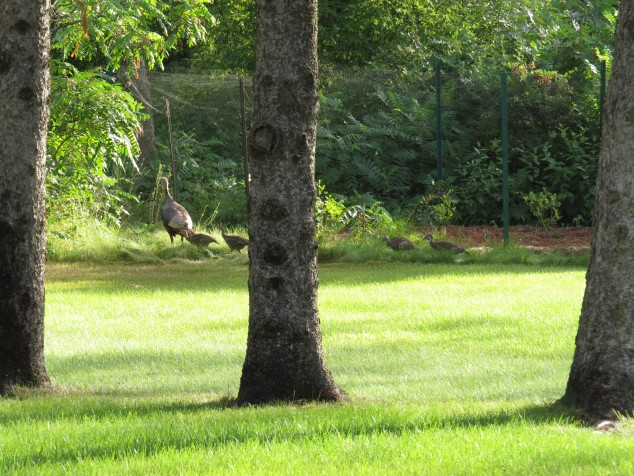
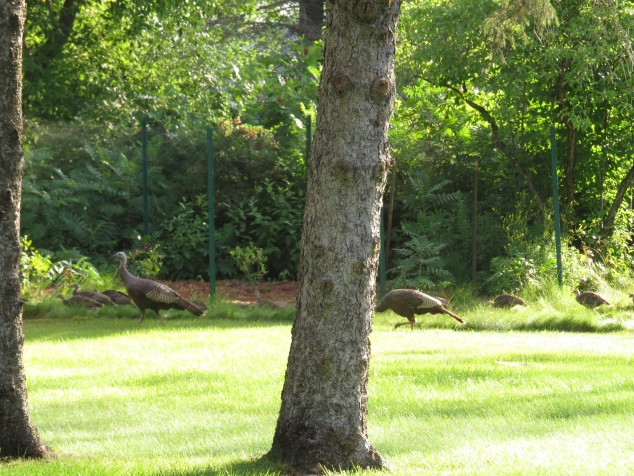
Turkeys can run up to 25 mph and can fly for short distances up to 55 mph. They roost in trees at night.
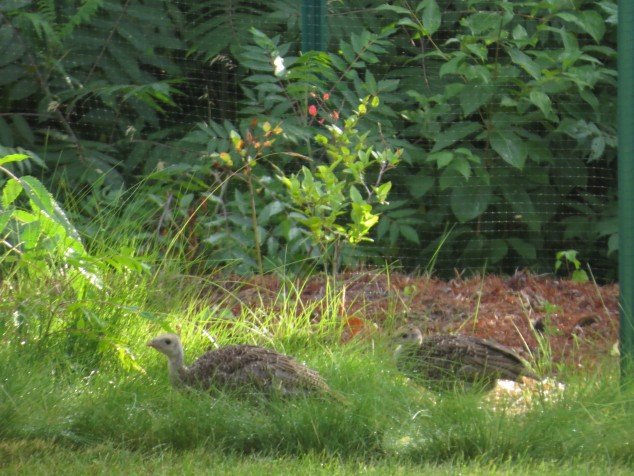
An adult tom or hen has between 5,000 and 6,000 feathers, many with an iridescent copper, gold, and bronze coloring. Both sexes have a wattle under the chin and have a bare head that can turn red, white or blue with excitement or emotion. Males have long spurs on their legs and a stiff beard growing from the chest.
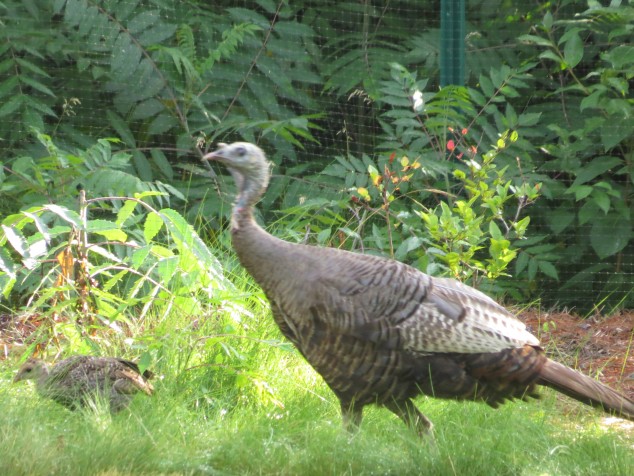
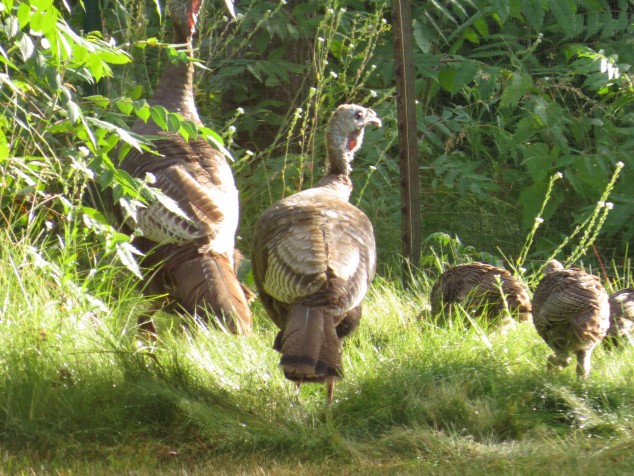
They walked into the woods, pecking at food as they went, with the females ever vigilant to protect their offspring. Benjamin Franklin wrote that the wild turkey was a ‘much more respectable bird’ than the bald eagle when discussing the choice for the National Bird. I feel privileged to have witnessed the families of both species in the last month. Both are beautiful and impressive with unique characteristics and a dedication to parenting. I’m glad this posse showed up at our home!