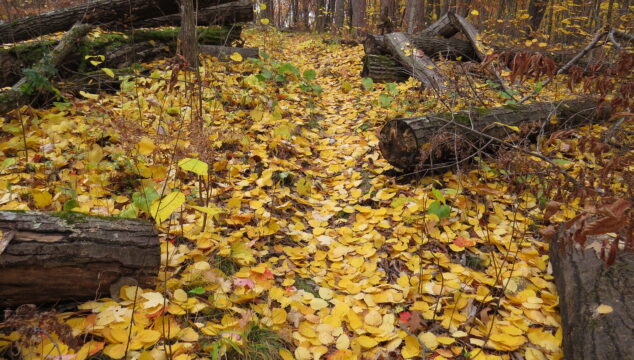
Come walk with me in the peak Autumn beauty of the Northwoods. To say that I love this time of year is an understatement. Most everyone can appreciate the colorful falling leaves---it reveals the 'true self' of a tree when its leaves are no longer producing chlorophyll. Their true colors are revealed, and there is something simple … [Read More...]
Flirting with Winter and Warriors
I wanted to embody the archetype of the Warrior. In June, I attended a retreat/workshop hosted by friends of mine and created and facilitated by Dr. Chelsea Wakefield. By examining feminine archetypes, we were learning to live a life of self-awareness, peace, and connection. I was very familiar with the Mother archetype but didn’t think I was warrior-like in any way. All weekend, I yearned to become more of a Warrior. My idea of what it meant to be a Warrior was formed by the cultural/masculine idea—bold, strong, invincible, forceful—which was the opposite of how I felt.
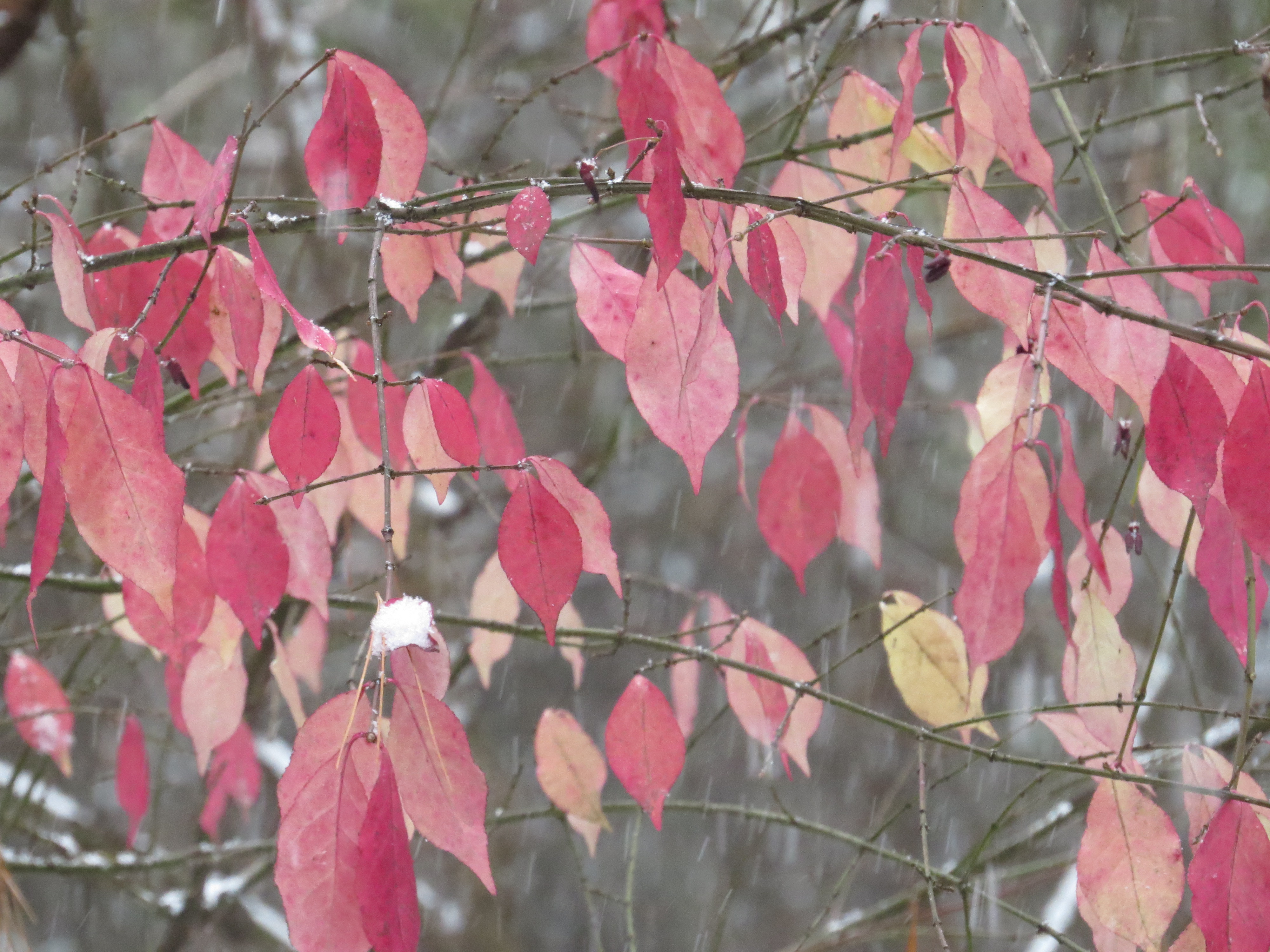
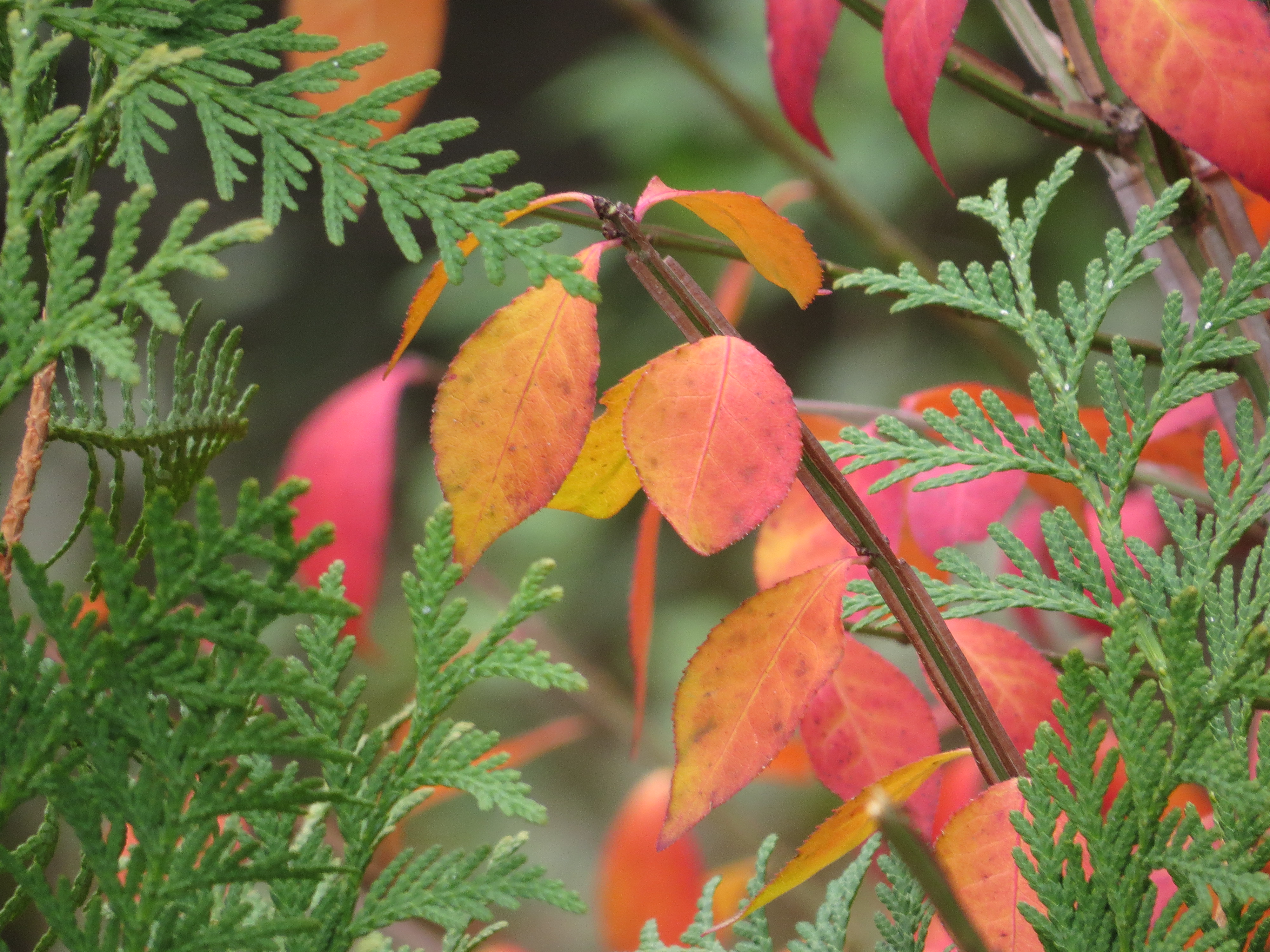
I had passed by the small tree hundreds of times without recognizing it. It was camouflaged in the woods with other deciduous and evergreen trees. But as everyone else lost their leaves, the brilliance of the little tree caught my attention, and I excitedly examined its branches to confirm my notion. “It is a Wahoo!” I exclaimed to Chris. Eastern Wahoos are captivating trees to me—they are small, unique, ethereal, beautiful, and tough. Dakota Indians gave them the name Wahoo which literally means ‘arrow wood.’ The ‘warrior spirit’ of Euonymus atropurpureus was believed to keep enemies out when planted around encampments.
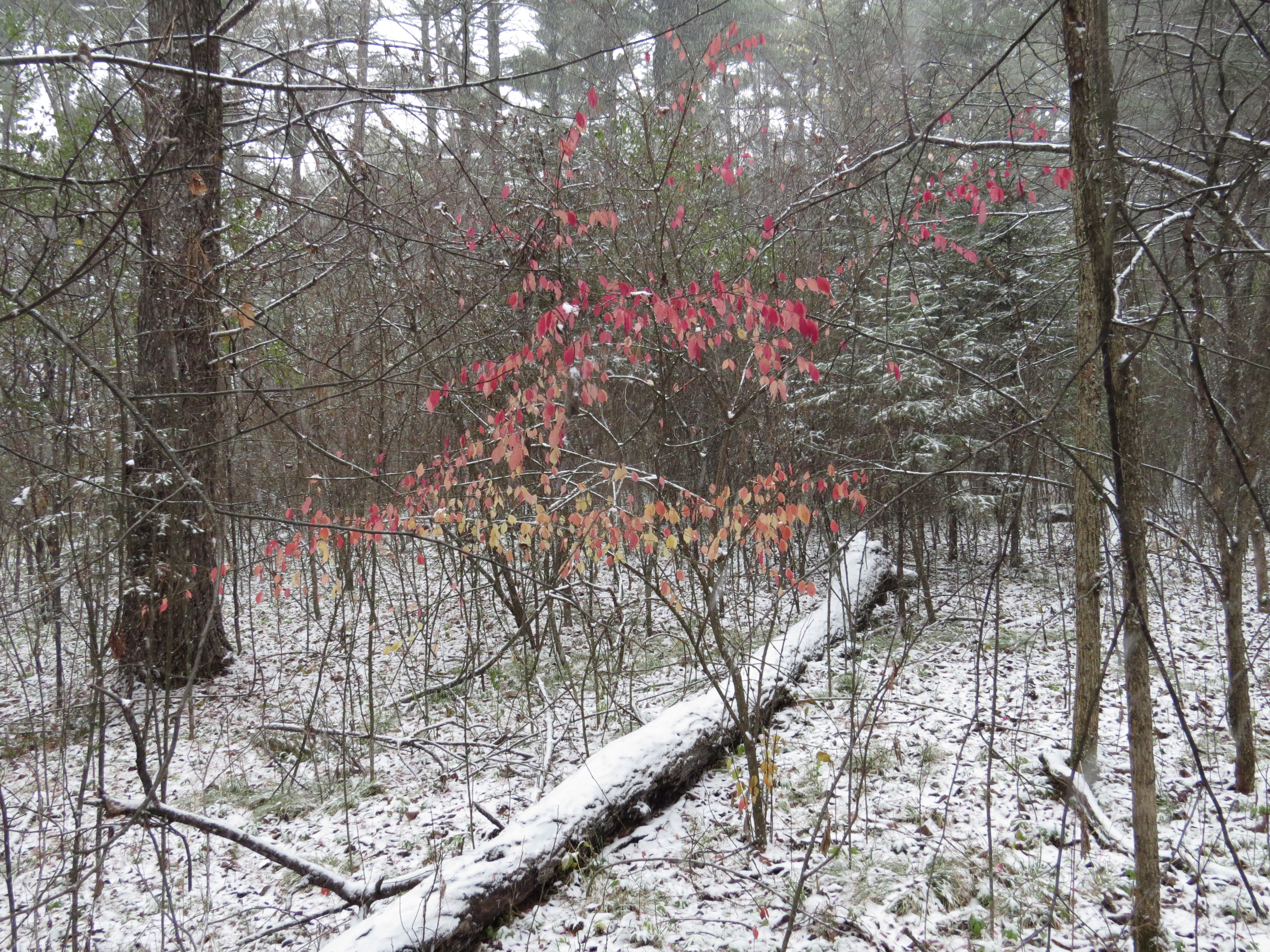
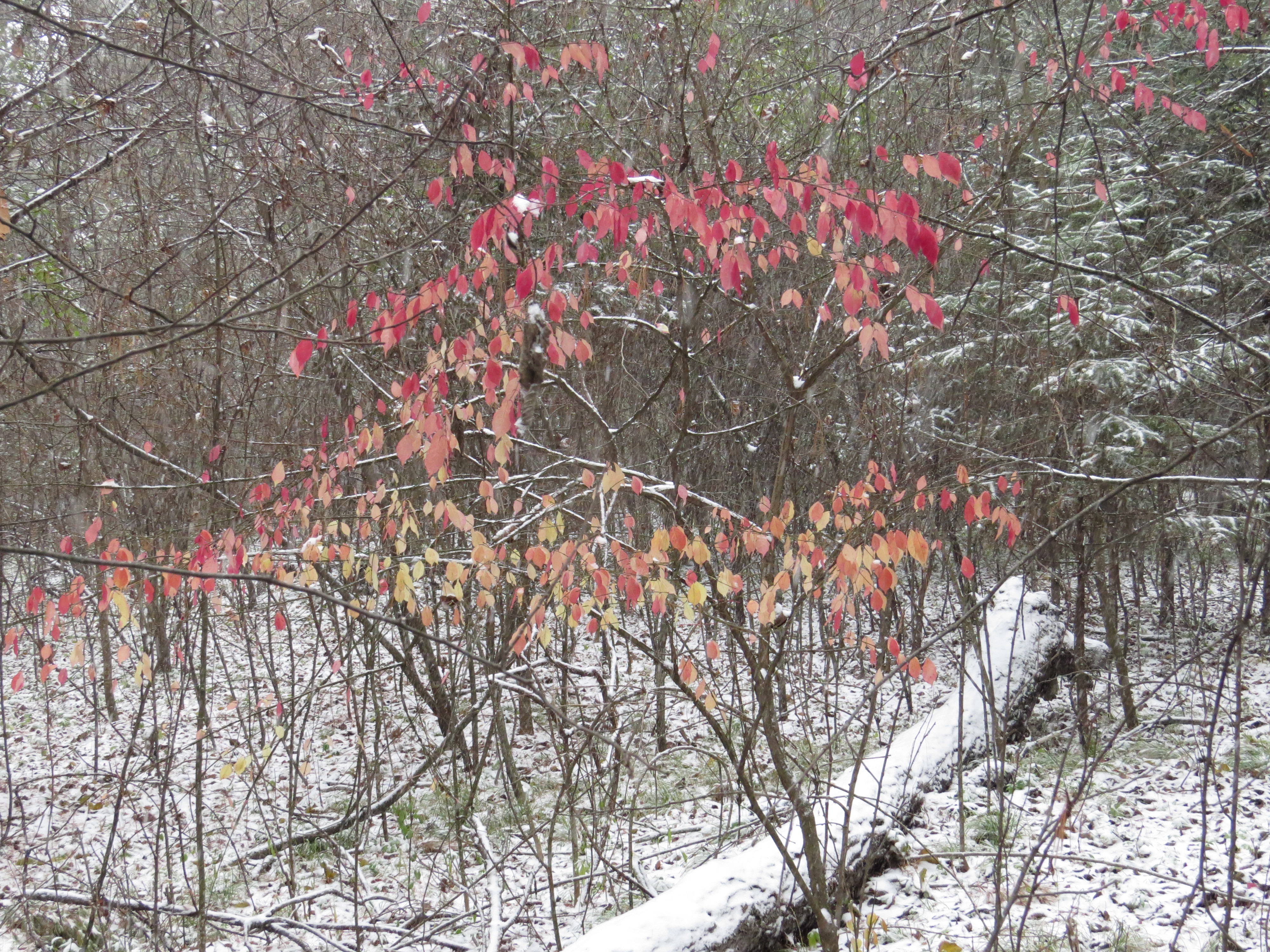
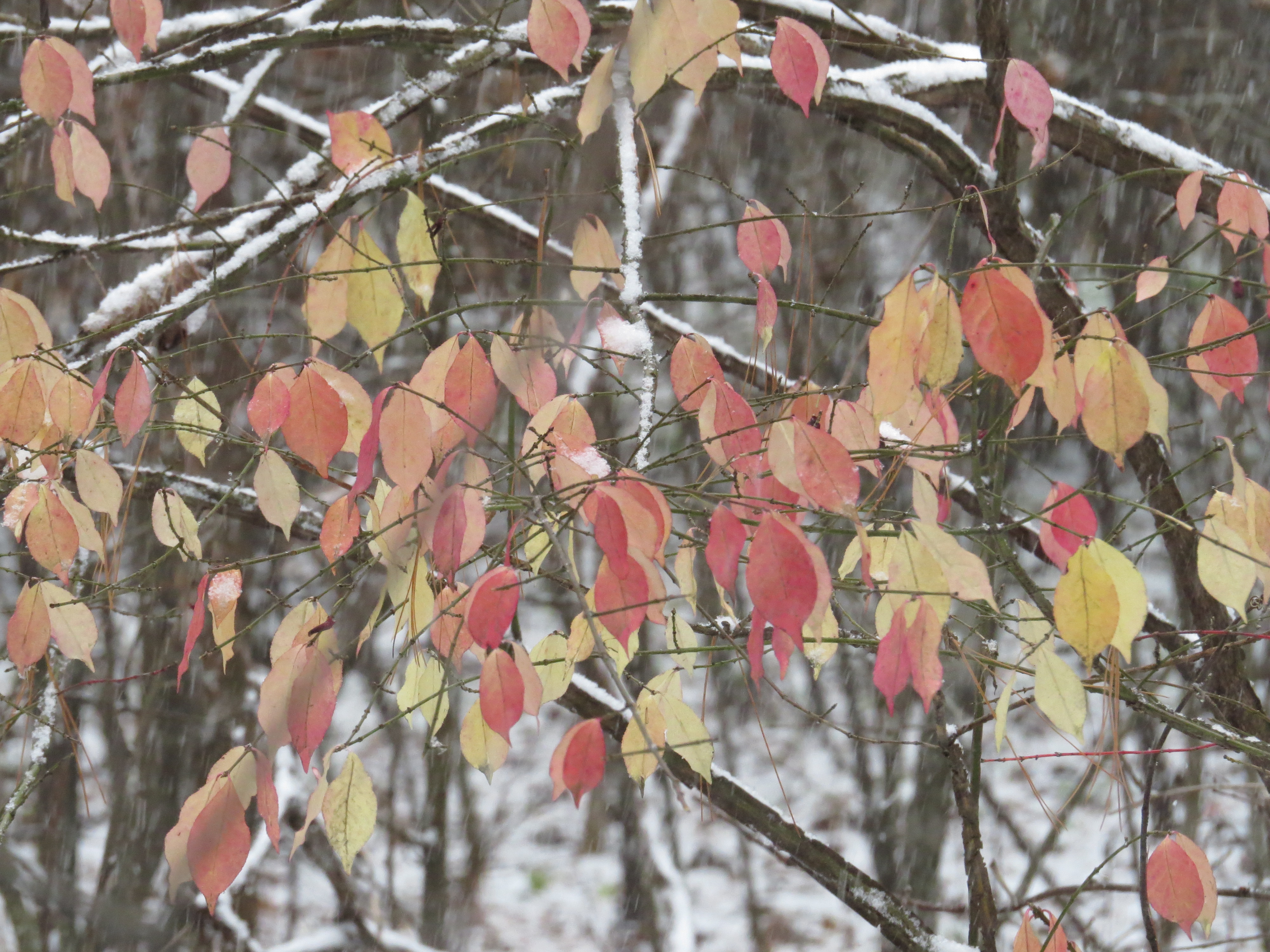
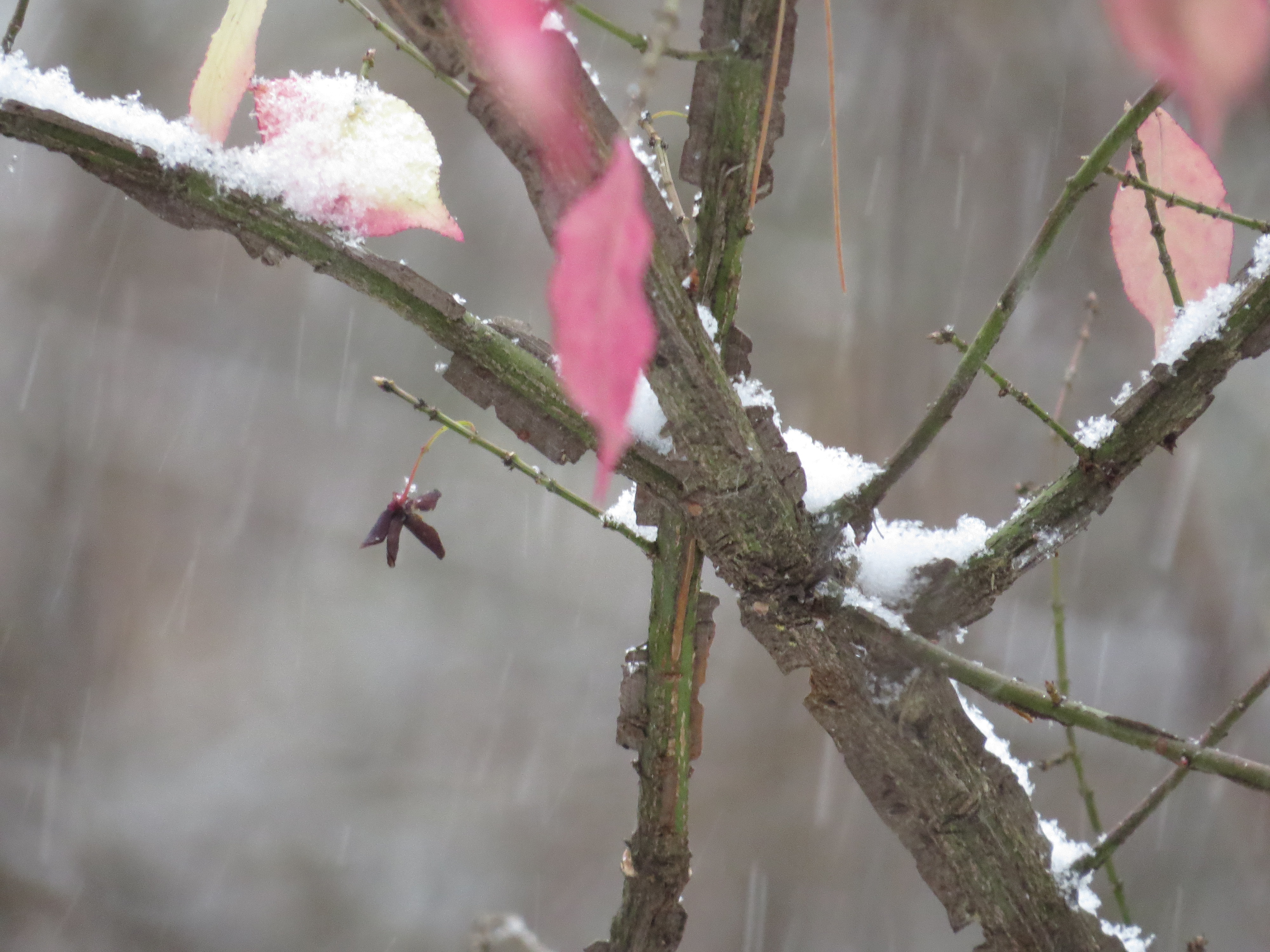
The corky, winged branches identify the Wahoo as belonging to the Genus Euonymus, the same Genus as the invasive shrub species ‘alatus’ commonly called Burning Bush.
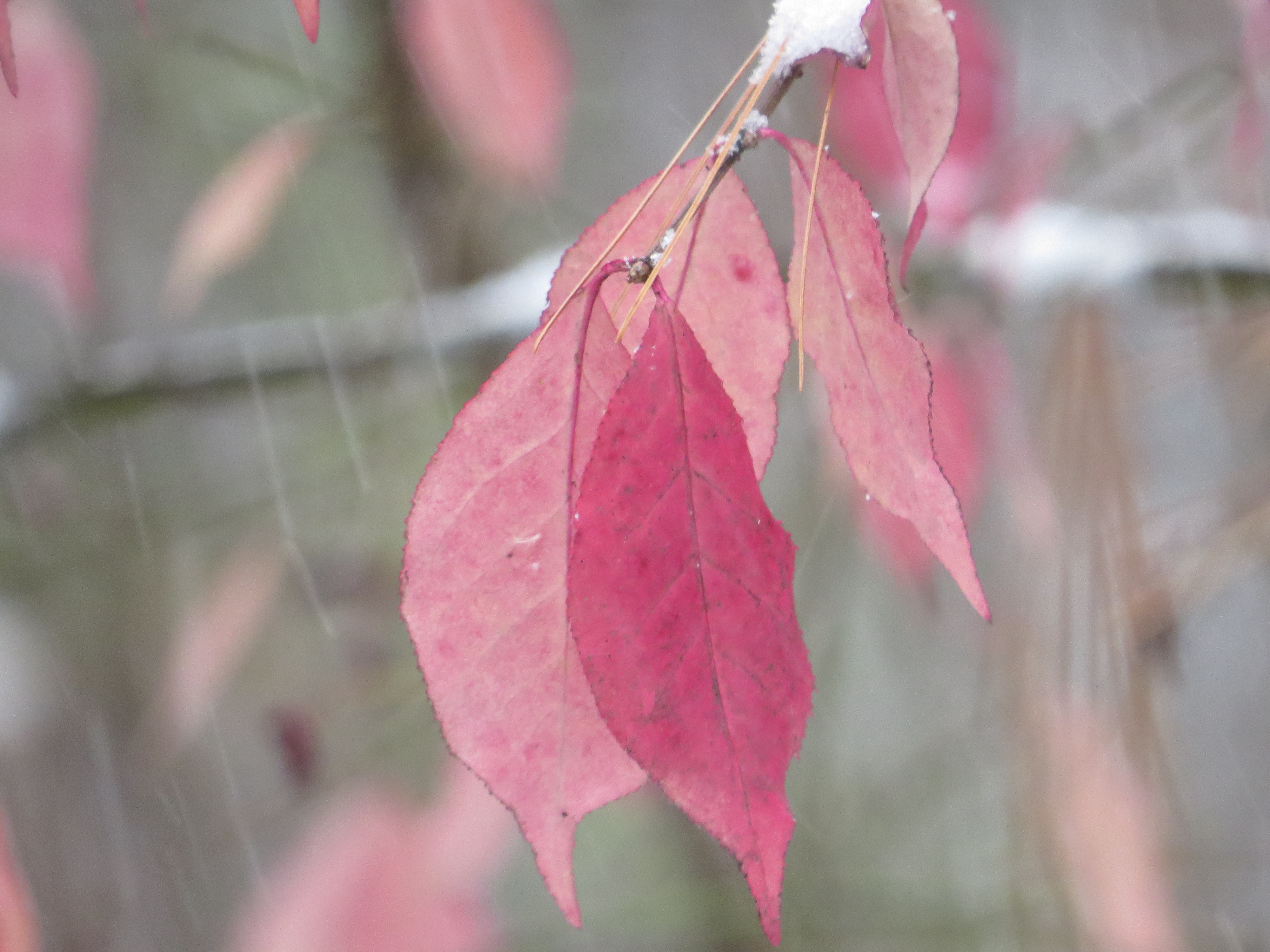
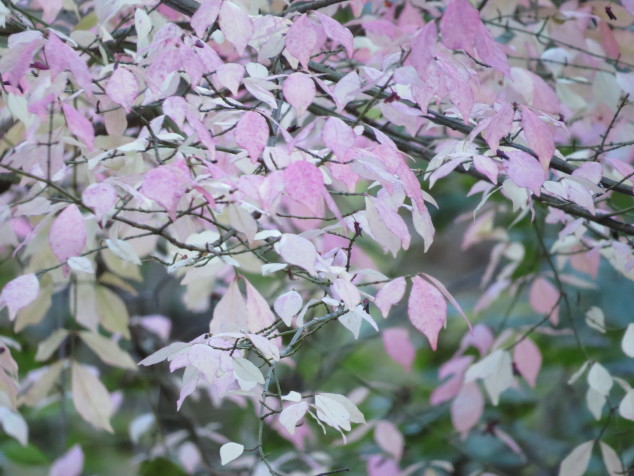
Chris has been growing Wahoo seedlings for a number of years now. Their Fall color is spectacular along with the showy, heart-shaped seedpods that burst open to display red seeds. The leaves fade to yellowish-pinkish-white.
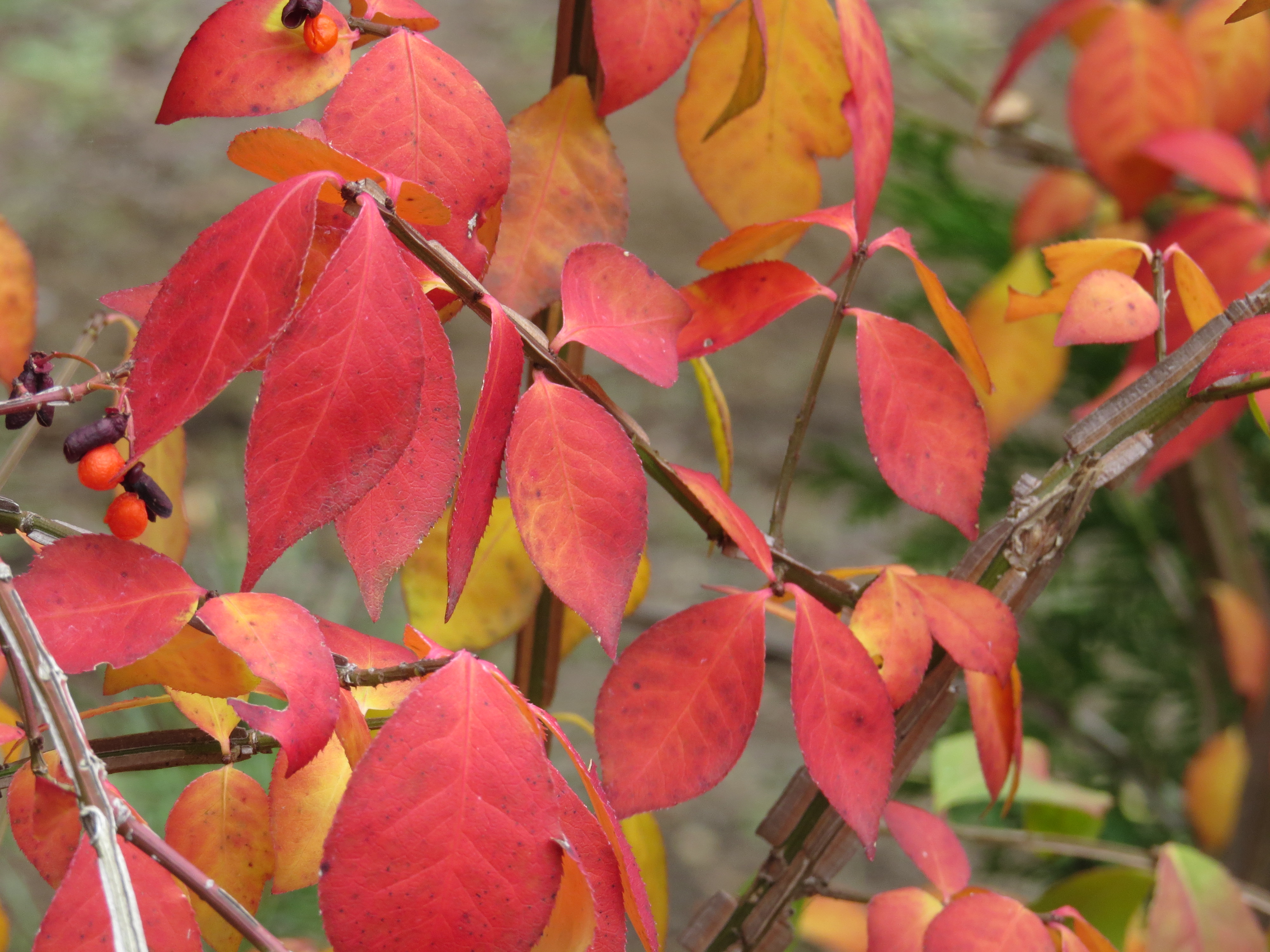
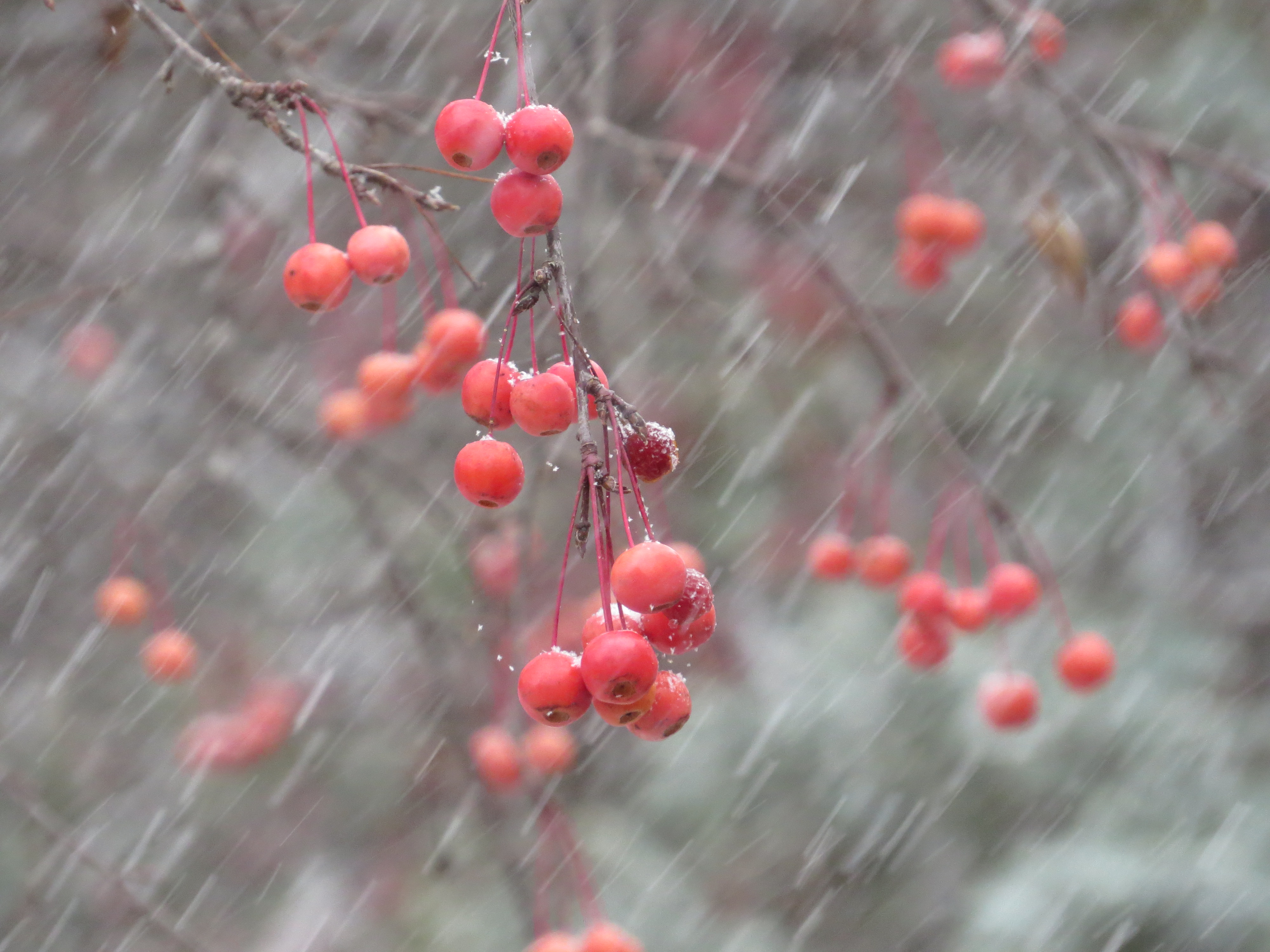
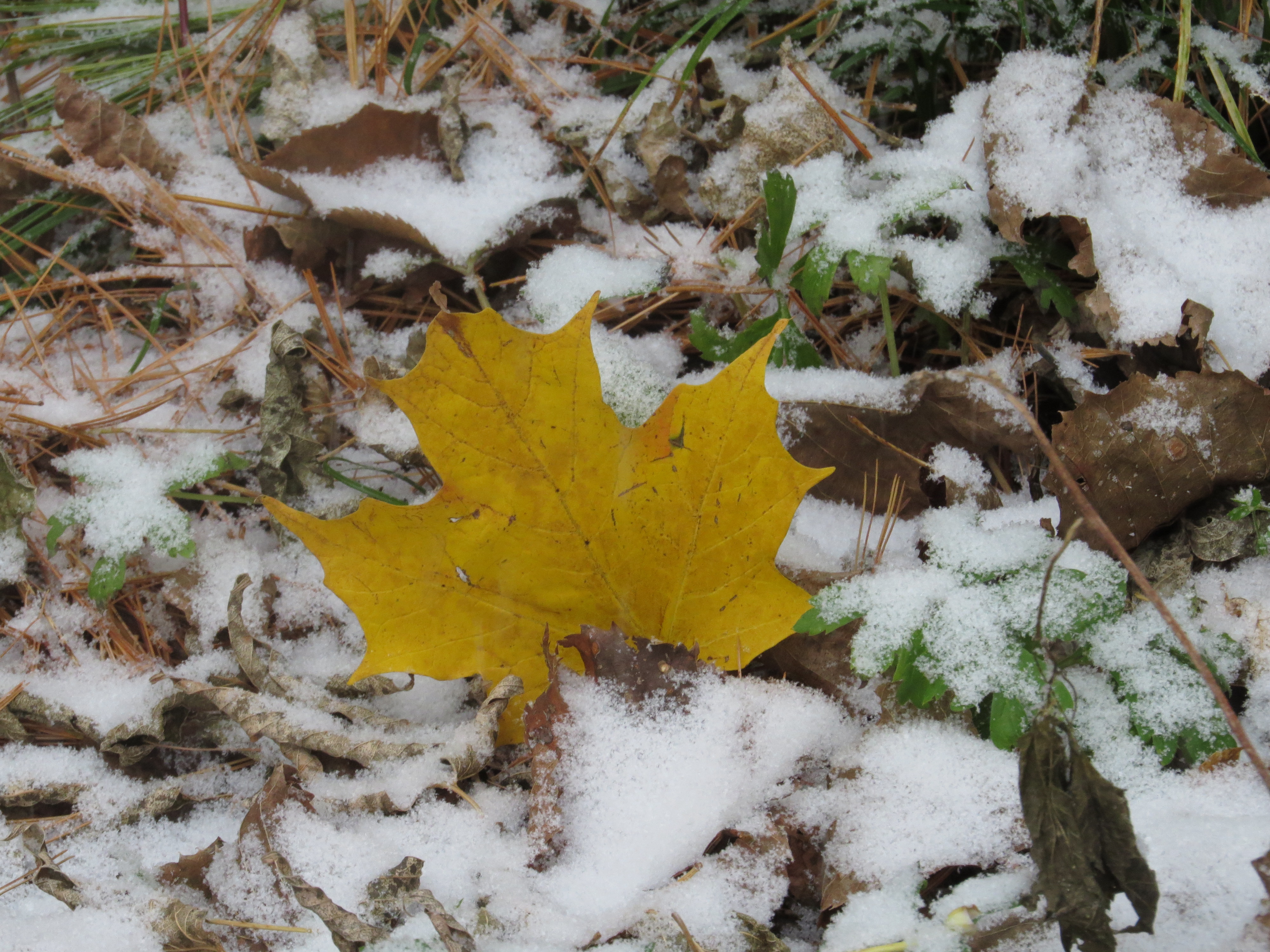
On my Fall-flirting-with-Winter walk, Crabapples hung from the bare branches gathering snow, and a yellow Maple leaf tried to remain sunny.
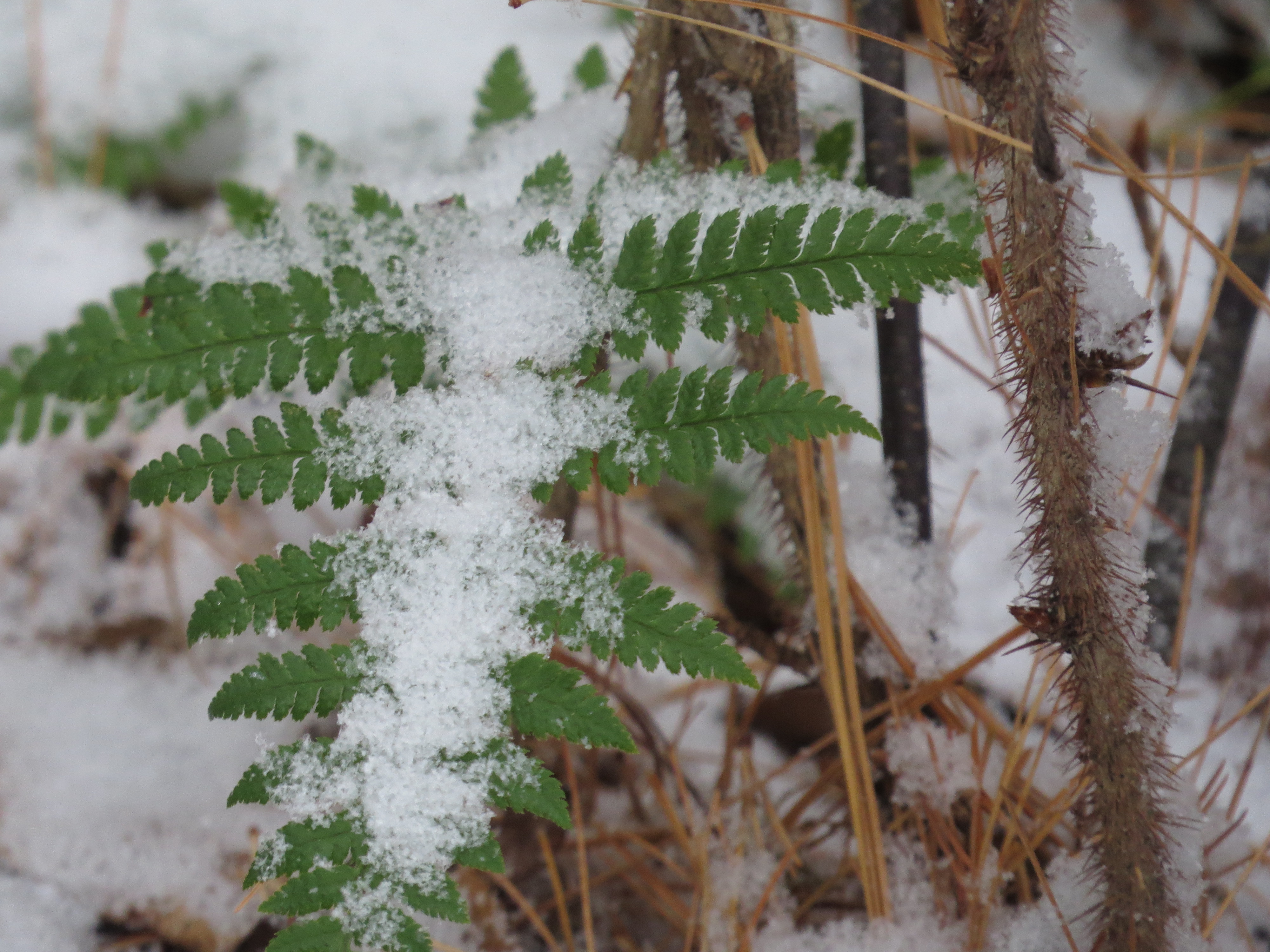
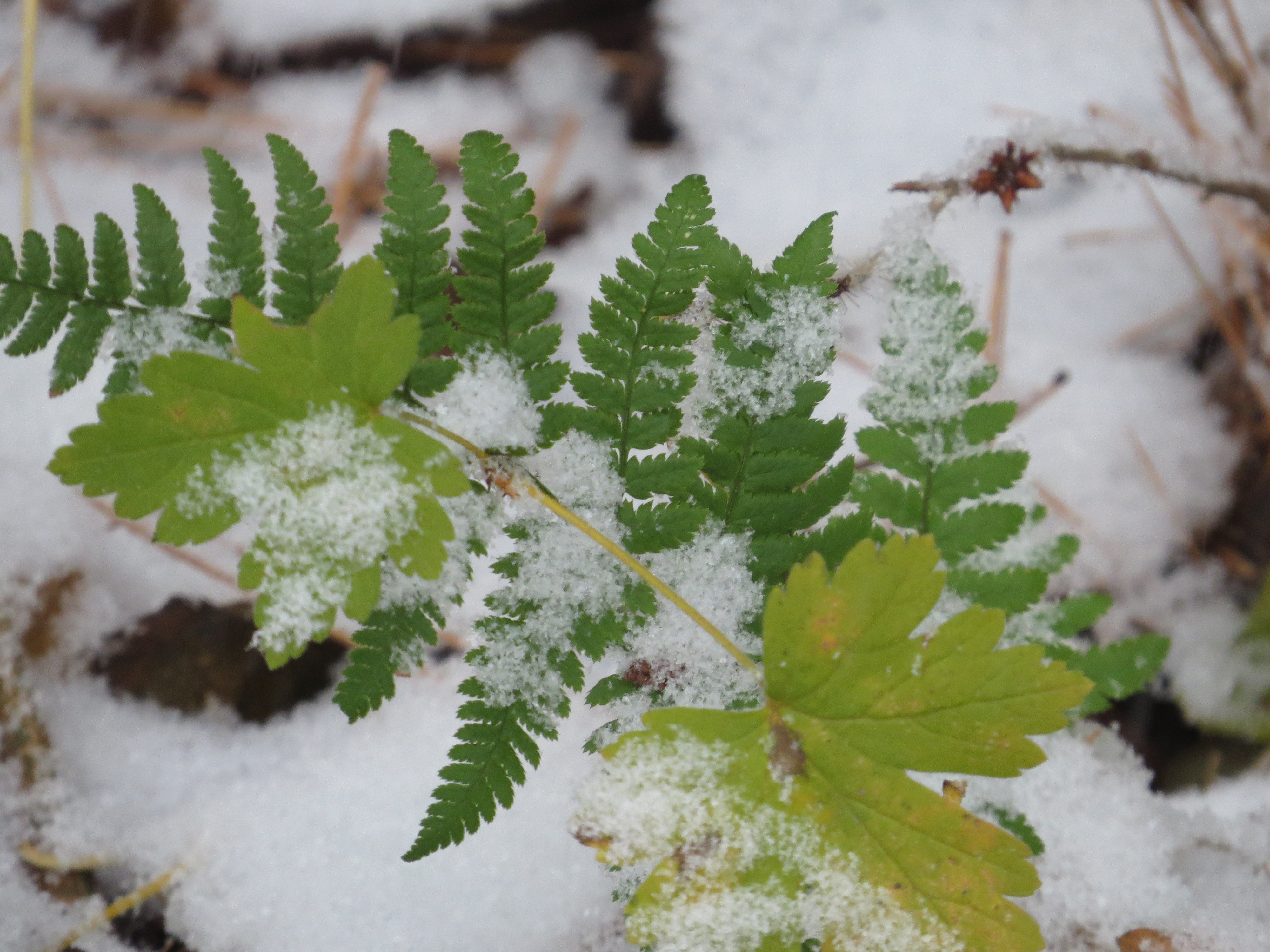
A green-as-Summer Fern leaf and the prickly stems and lime green leaves of a Gooseberry shrub wore their snow coats with courage.
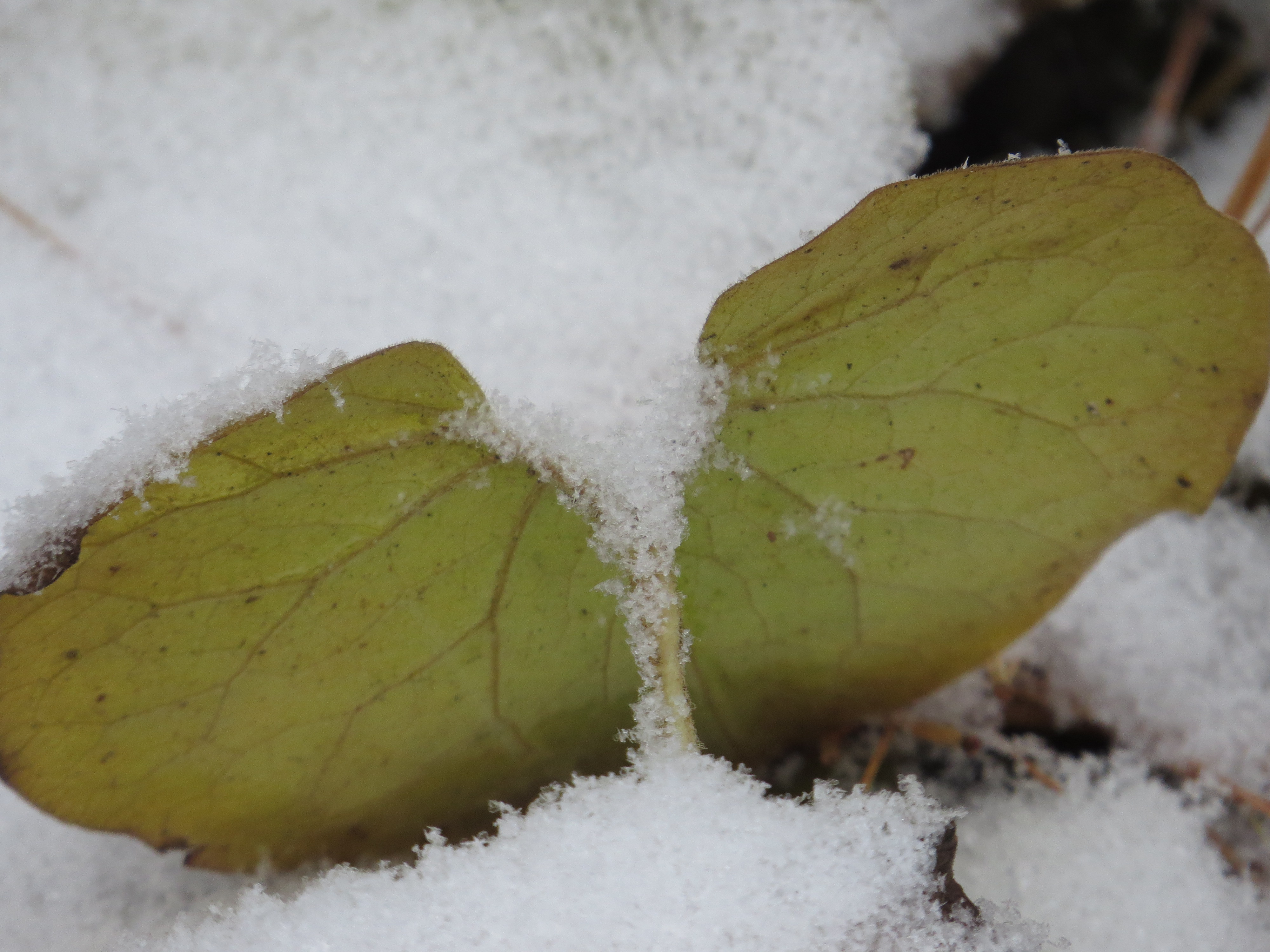
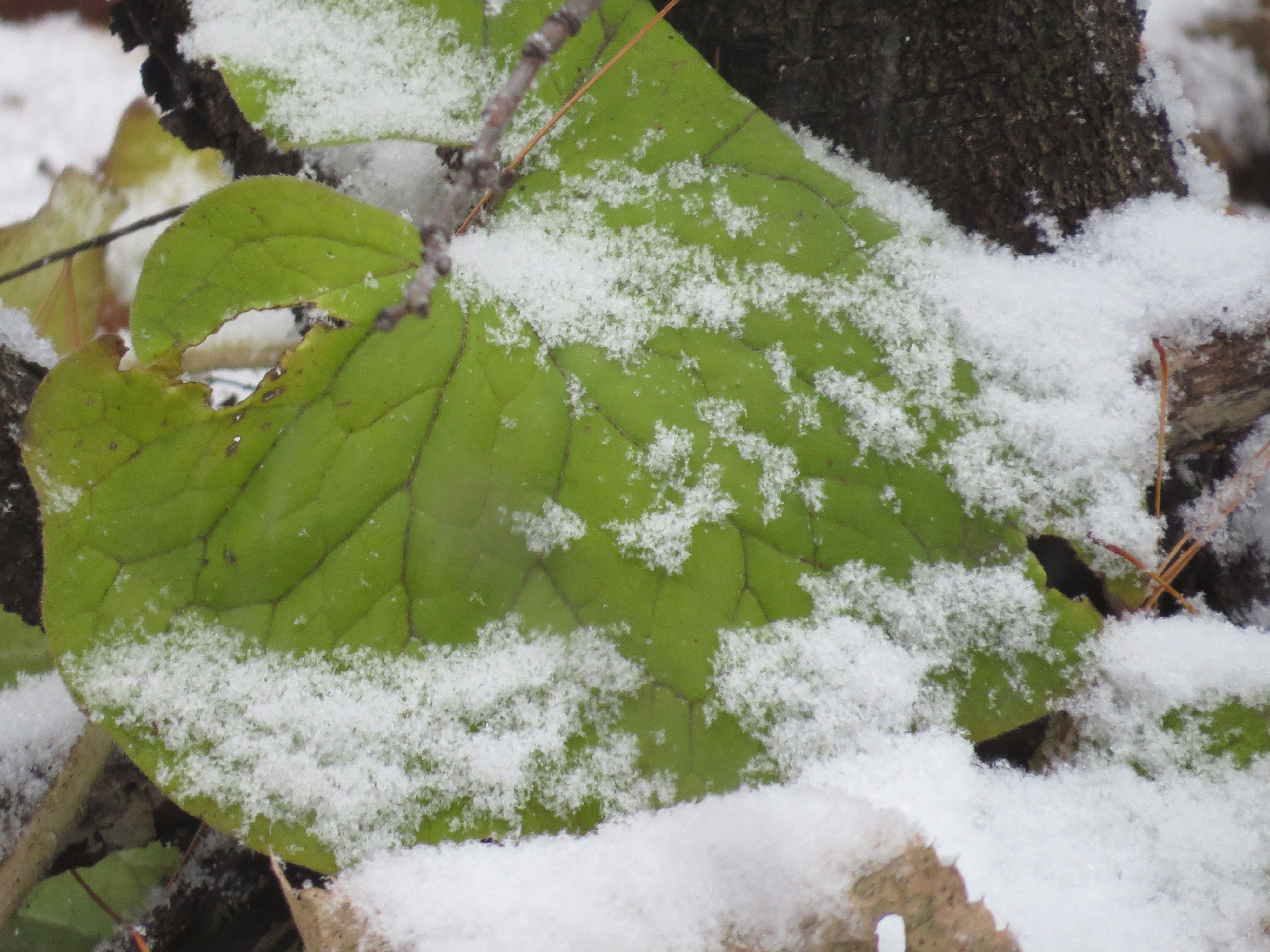
Wild Ginger leaves, one of the first to show in early Spring, had laid down to hug the Earth in late Fall. Then snow blanketed them.
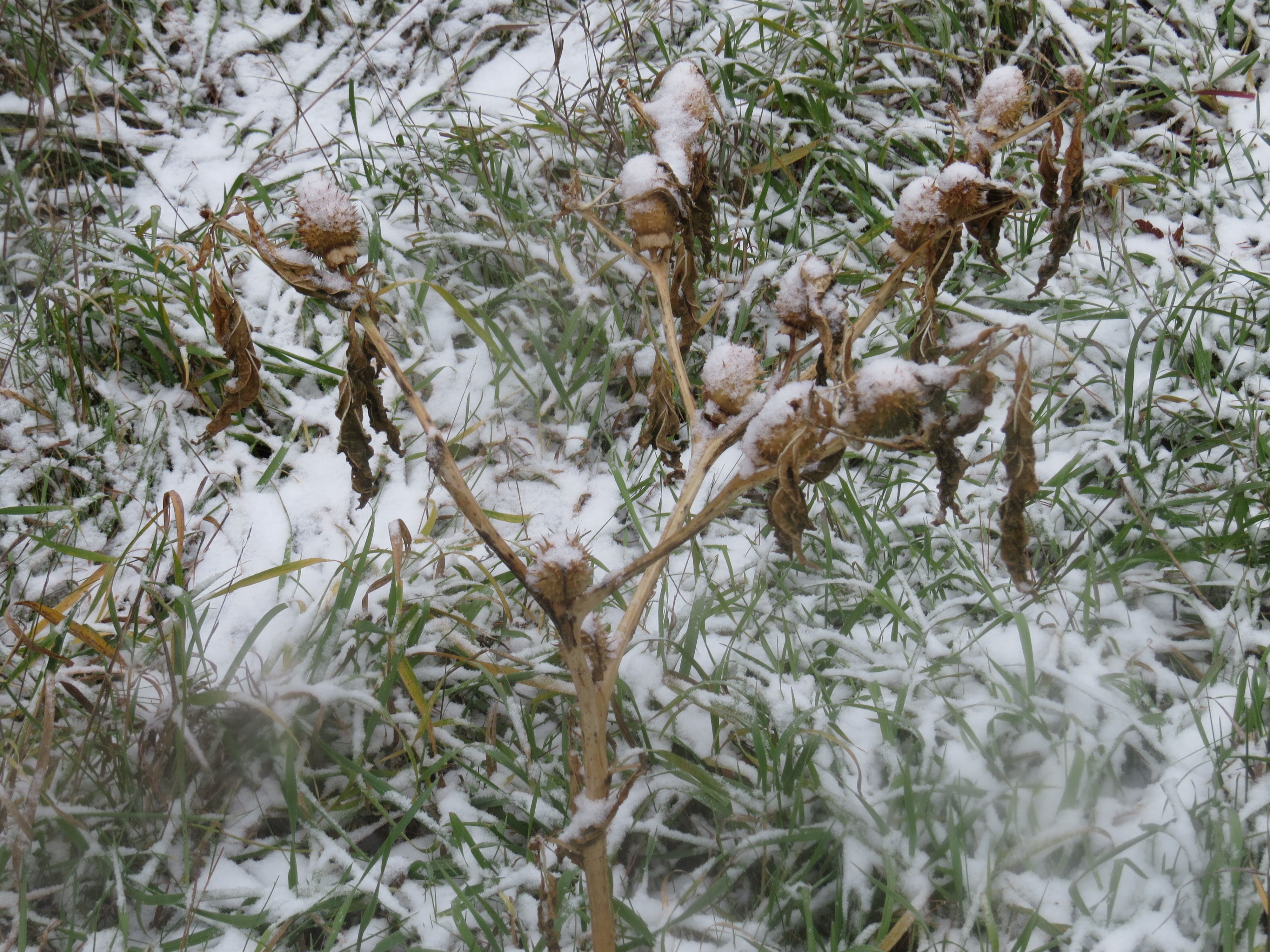
On our walks, Chris and I had been eyeing a Jimsonweed plant growing in the ditch, wondering where it came from, thinking we should ‘get rid of it.’ It is an unusual plant with pretty, trumpet-shaped flowers and burr-like seedpods. It is a member of the Nightshade family, has been used to treat various ailments in traditional medicine, and the plant is highly poisonous. Good and bad all in one.
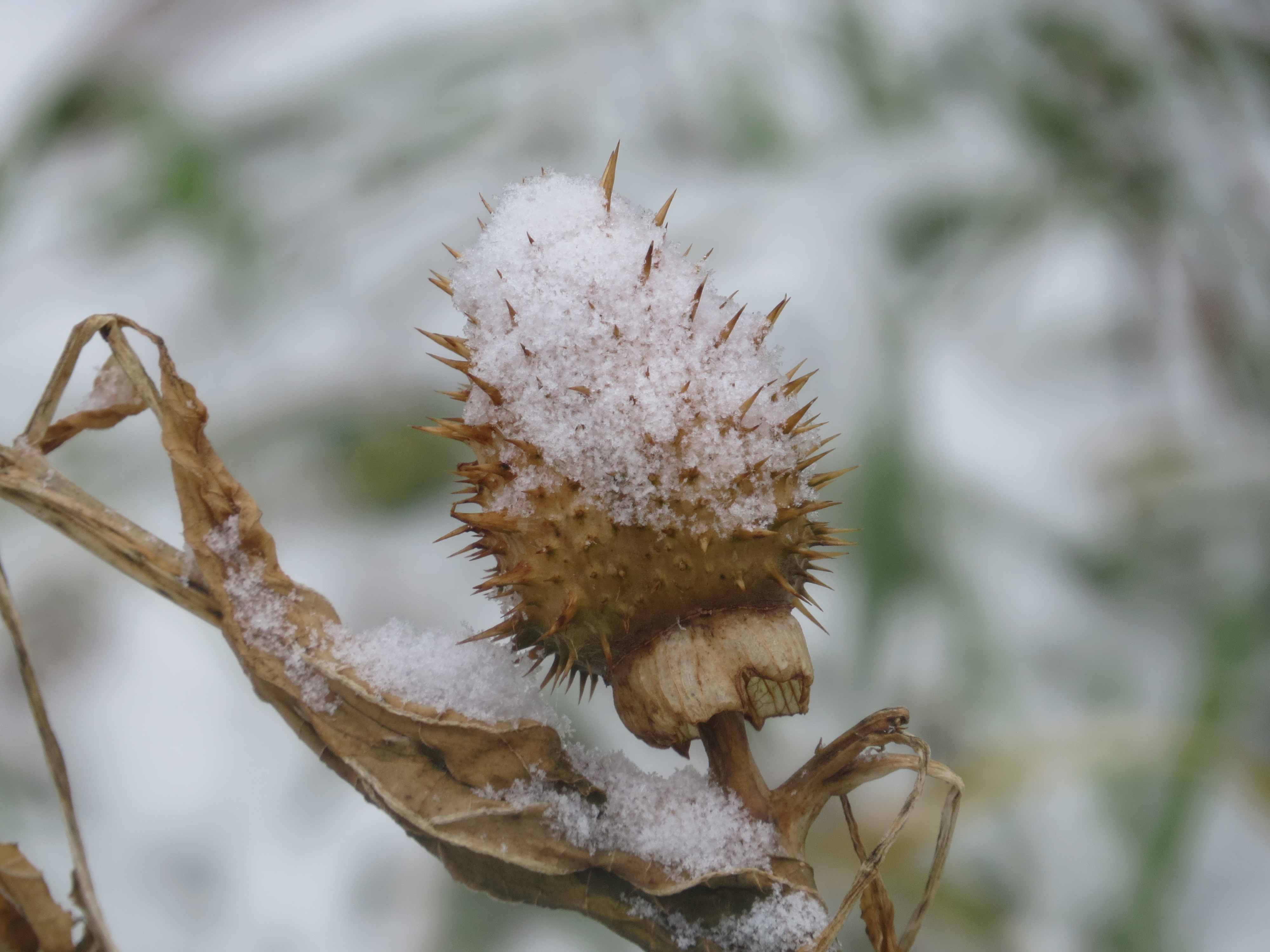
How many times have we walked past the ‘warrior spirit’ without recognizing it? How many times have we gotten the meaning of what it means to be a Warrior wrong? The beautiful Wahoo was a literal boundary and defender of Native encampments. Do not underestimate the power of the ‘warrior spirit.’ My idea of a Warrior was modified after the retreat weekend. At the closing, I had come to realize that I was much more of a Warrior than I realized! As a child, I had navigated a family tragedy before there were grief counselors; I had birthed and raised three children (which takes a good dose of Warrior along with the nurturing Mother); I had been a graduate student (as a mother of three) in departments that were predominantly male; and I have walked the woods all my life, then learned to make a website and write a blog. I am bold and strong in my own way! Each of us has the Warrior in us, but there is danger when it is wielded without wisdom and training. It is good and bad all in one. Useful and poisonous. That is true of all the archetypes, and therein lies our work. The most important work is recognizing what is happening within ourselves. We need to have courage, and we need to learn when to lay down our weapons. Another common name for the ‘warrior spirit’ Wahoo tree is ‘hearts bursting with love.’ That’s a good way to be a Warrior.
Great-Grandaddy Cottonwood Tree
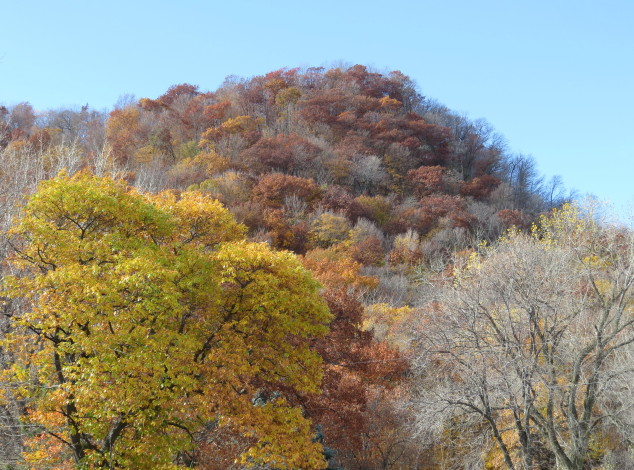
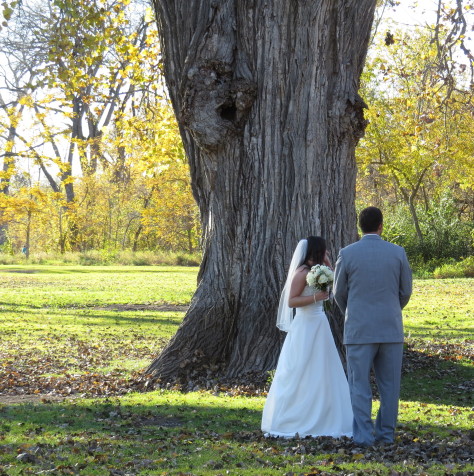
We traveled down the Great River Road from Red Wing to La Crosse, with the Mississippi on our left and the river bluffs on our right. Most of the leaves were gone from the trees, though the rusty-brown oaks still warmed the bluffs with their color. The sky was clear and blue, and the day was uncharacteristically warm for October 25th. We were on our way to a wedding–an outdoor wedding in a park beside the Great River. And the wedding was held beneath the grandeur of this great-grandaddy cottonwood tree.
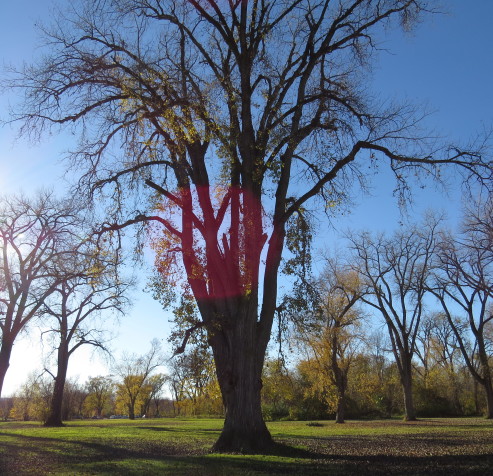
The huge old tree, with only a few of its heart-shaped leaves still glowing in the sun, was a gorgeous altar. According to The Meaning of Trees: Botany-History-Healing-Lore by Fred Hageneder, the cottonwood represents honesty, humility, and self-sacrifice. The Sioux Indians used a young cottonwood for the Sun Dance, and Kablaya, the one who first taught his people the Sun Dance, spoke to the tree, “…you, O rustling cottonwood have been chosen in a sacred manner…for you will bring that which is good to all beings and all things.” A fitting place to start a life together.
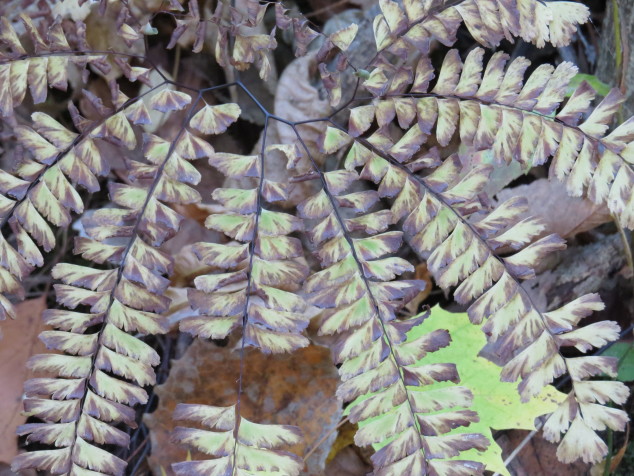
The morning after the wedding, in equally beautiful weather, we drove up Bliss Road to Grandad Bluff. As we slowly ascended the 600-foot high bluff, we saw patches of my favorite Maidenhair ferns glowing whitish-gray in their fall color.
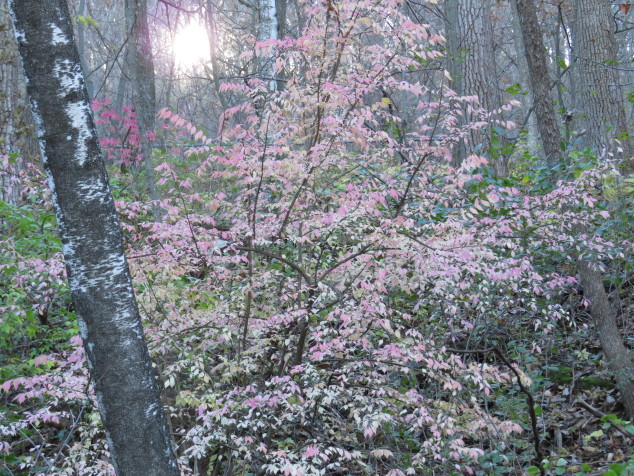
And then we saw an ethereal pinkish-white tree decorating the landscape, looking like Christmas or Easter or a Wedding Day against the ordinary gray and green of the autumn woods.
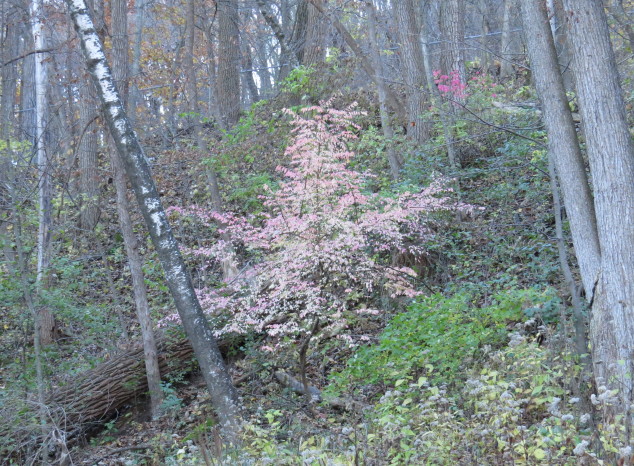
We saw only two of the small trees on our drive, and Chris excitedly identified them as Eastern Wahoo or Indian Arrow Wood. (Euonymus atropurpurea) These large shrubs or small trees are native to the eastern half of the United States and prefer light shade and moist soil. The young twigs have a square shape that is typical of the Euonymus genus. The mature stem or trunk is reddish-gray with vertical splits. Wahoo has small, dark pink flowers in spring that form bright pink seed pods that hang down in small bunches. The seed pod opens to reveal a red-covered seed. The seed pods are often still on the tree after the leaves drop, but I did not see any on either of the trees.
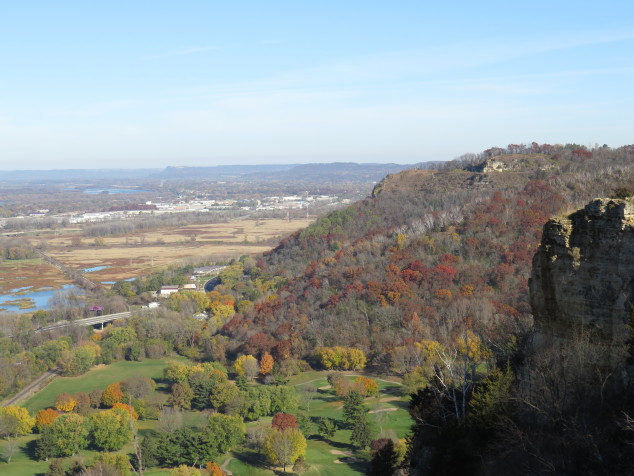
At the top of Grandad Bluff, we looked over the city of La Crosse to the Mississippi River Valley that included the three states of Wisconsin, Minnesota, and Iowa. It was a breath-taking view!

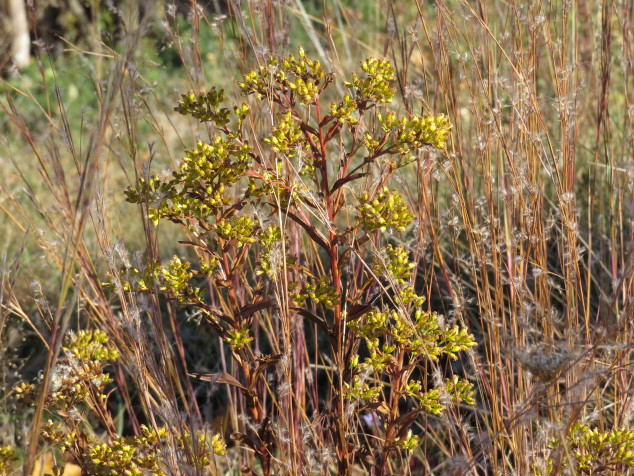
The area at the top of the bluff had been renovated a few years ago and included a beautifully restored prairie. Asters and yarrow still bloomed among the bluestem.
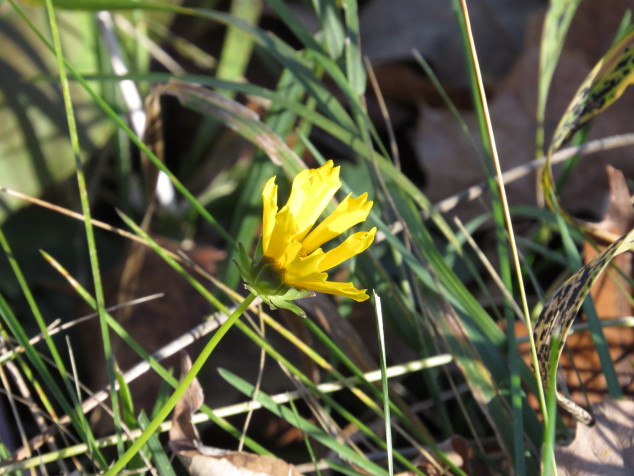
A couple sunshiny yellow prairie coreopsis flowers caught my attention.
And then I saw a plant that looked like a feather stuck in the ground! We had no idea what it was!
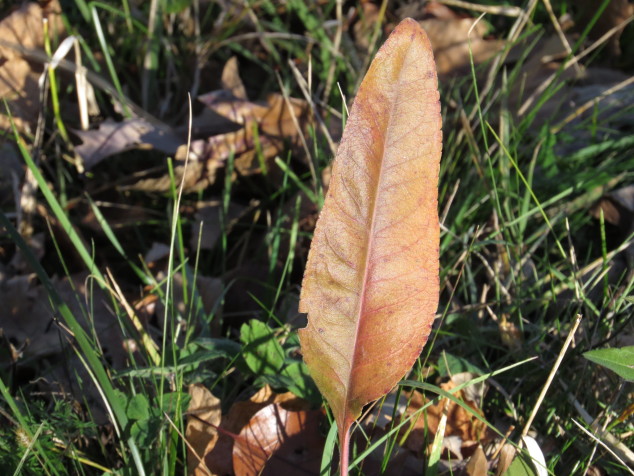
We didn’t see any flowers or seed heads coming from the unidentified plant, but the leaves were tough and sandpaper rough. They lit up in the morning sun.
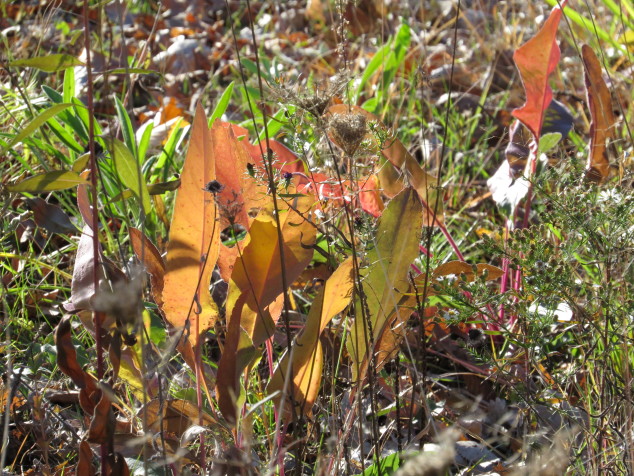
I have tried to find the name of this beautiful plant, but without a flower to help identify it, I didn’t have any luck. So the feather-leaved prairie plant remains a mystery.
We followed the Great Mississippi River to the Great-grandaddy Cottonwood tree to witness the beginning of a new life together under that ancient tree. Adam and Ashley will need the honesty, humility, and self-sacrifice the wise tree imparts to them as they navigate their married life. May they have the excitement of rare and beautiful finds among the ordinary, like the Wahoo tree. May they have breath-taking views as they climb the hills together. May they find and accept and honor the Mysteries of Life. And may the Sun shine upon them with all that is good.