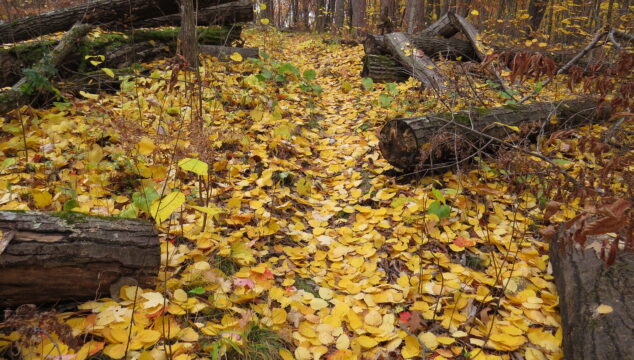
Come walk with me in the peak Autumn beauty of the Northwoods. To say that I love this time of year is an understatement. Most everyone can appreciate the colorful falling leaves---it reveals the 'true self' of a tree when its leaves are no longer producing chlorophyll. Their true colors are revealed, and there is something simple … [Read More...]
Chasing Winter
I was getting a little impatient. Was it because of the left-over drought? Was it climate change? Roll of the dice? We had had so very little snow along with warm temps up to December. It was out of the ordinary. So we went chasing Winter. We booked a camper cabin up north at Bear Head Lake State Park west of Ely for the following weekend. I had watched the weather radar sweeping across the ‘arrowhead,’ so I figured they had snow on the ground. The Ely forecast for the weekend changed every day—some snow, no snow, a foot of snow?!
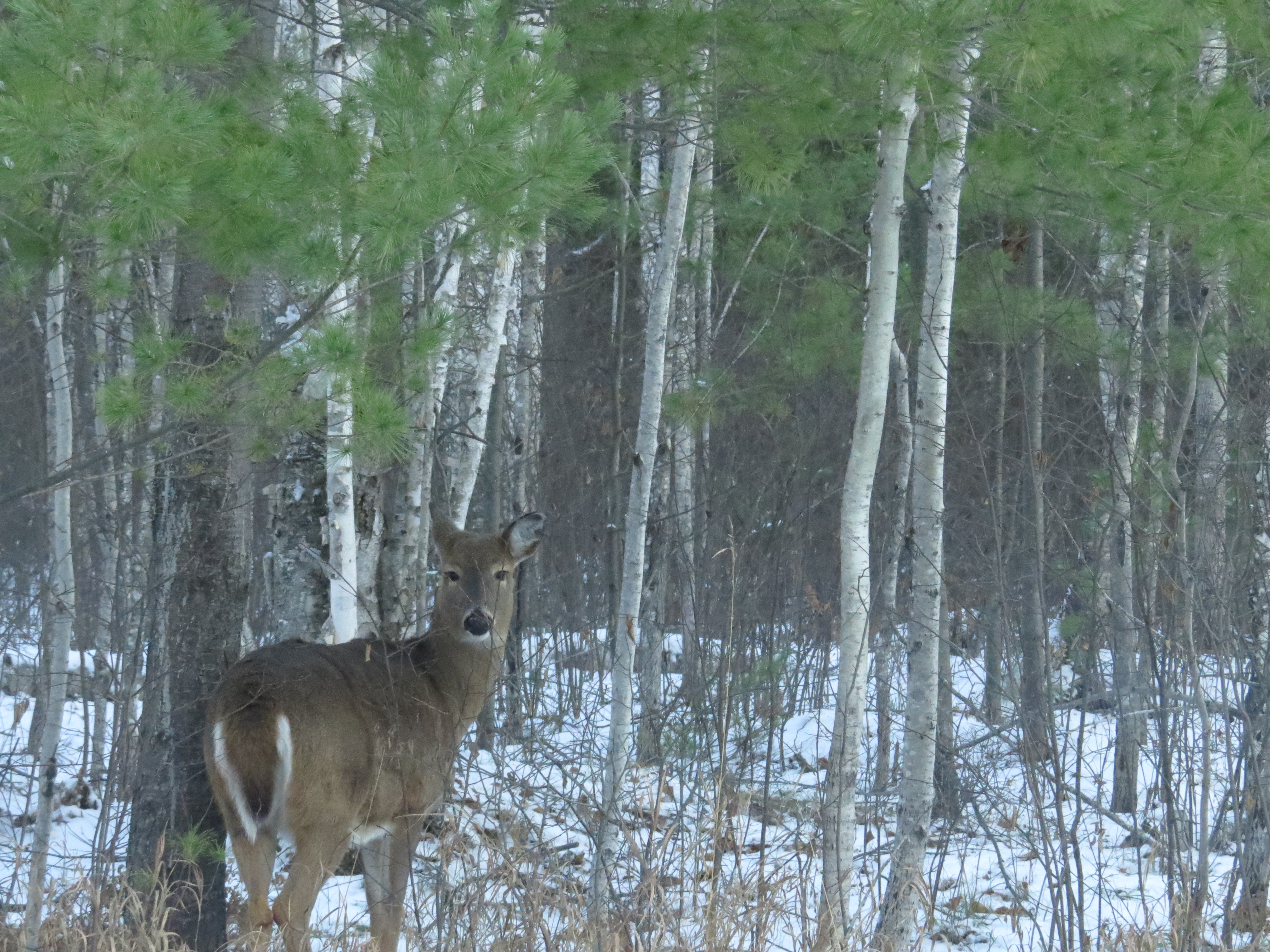
On our departure day, we awoke to a dusting of snow with fog hanging low to the ground. With temperatures heading north of freezing for the day here at home, we headed north in search of Winter. Bear Head Lake State Park encompasses over four thousand acres, and only a small portion of that is available by road or even trail. As we drove farther into the park, the road became snow-covered, and deer sauntered by us.

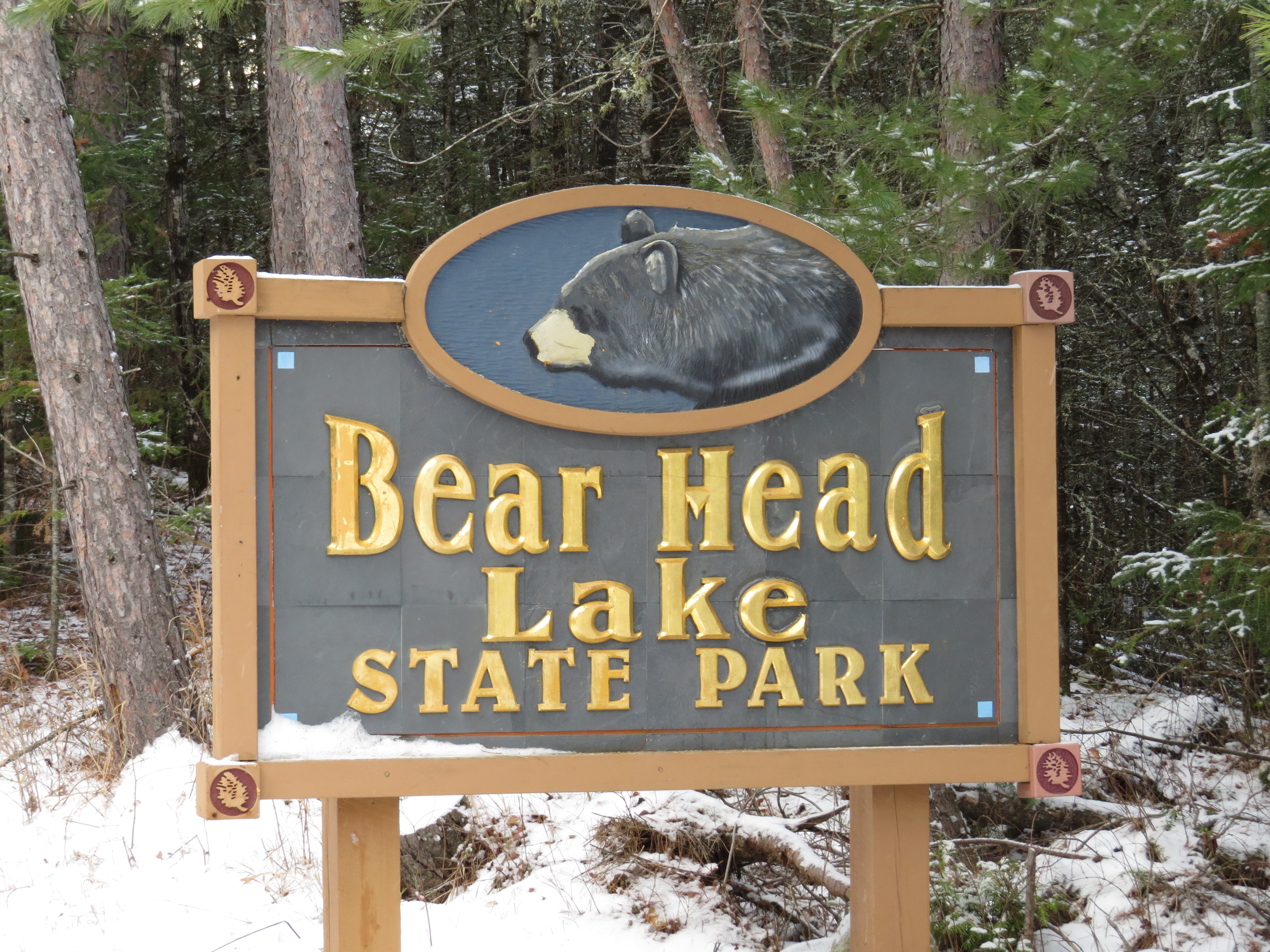
There was an envelope taped to the door of the Park Office with ‘Welcome, Brakes’ written on the front of it and a key and ‘list of rules’ tucked inside it. The ranger drove by as we were looking at the map, and she warned us of the snow forecast for Sunday, saying she would refund our second night if we wanted to leave before the storm….
We unpacked our things in the cozy little log cabin named White Pine, then walked the short distance (thank goodness) to the outhouse. It was 2:30 in the afternoon, but the sun was so low in the sky that the shadows stretched out like it was sundown. It is the time of year in the north when the sun rises, peaks, and sets in the south, a strange anomaly for our circadian brains. We began our hike in the empty campground and followed Beach Trail to Bear Head Lake.
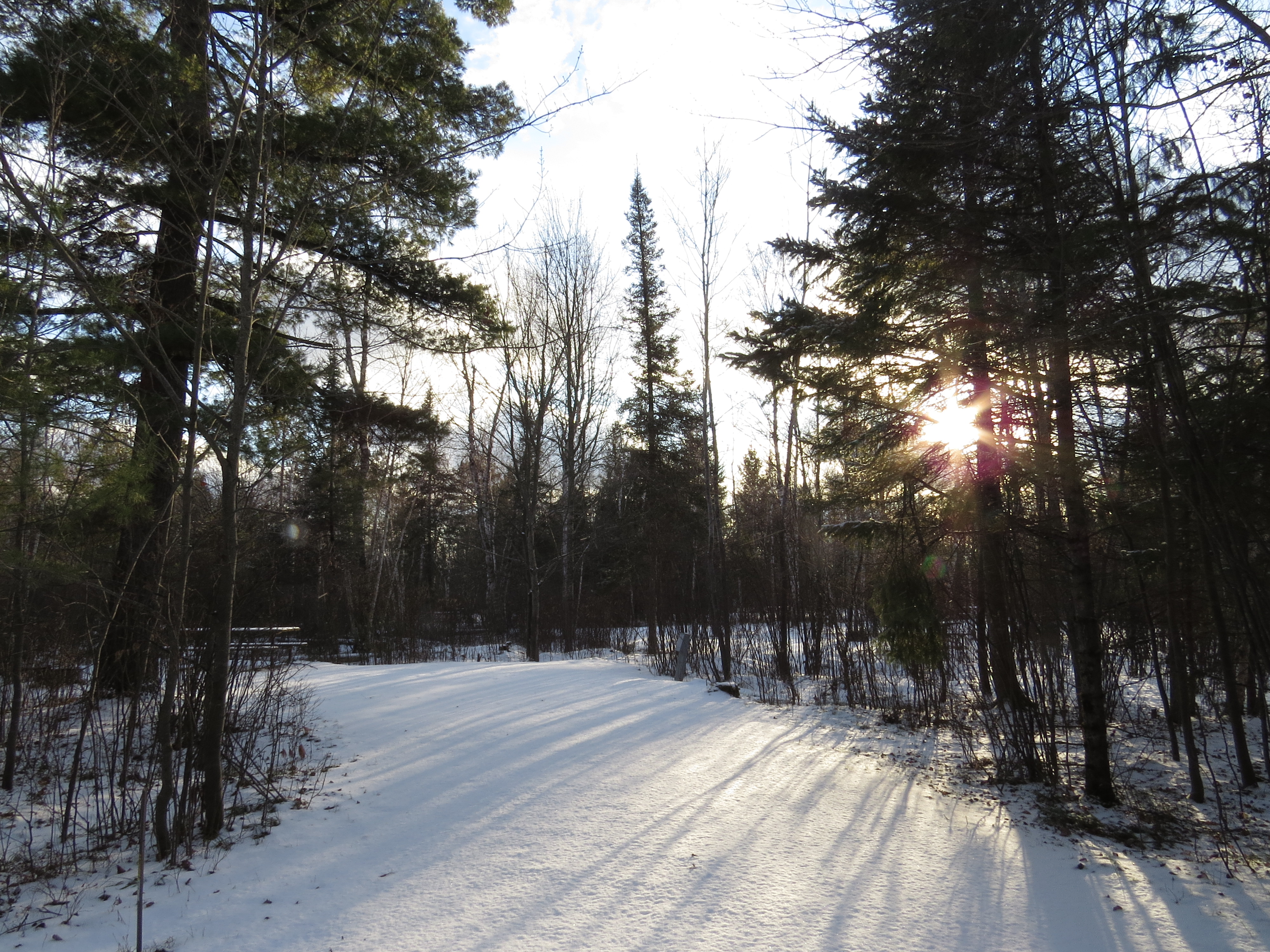
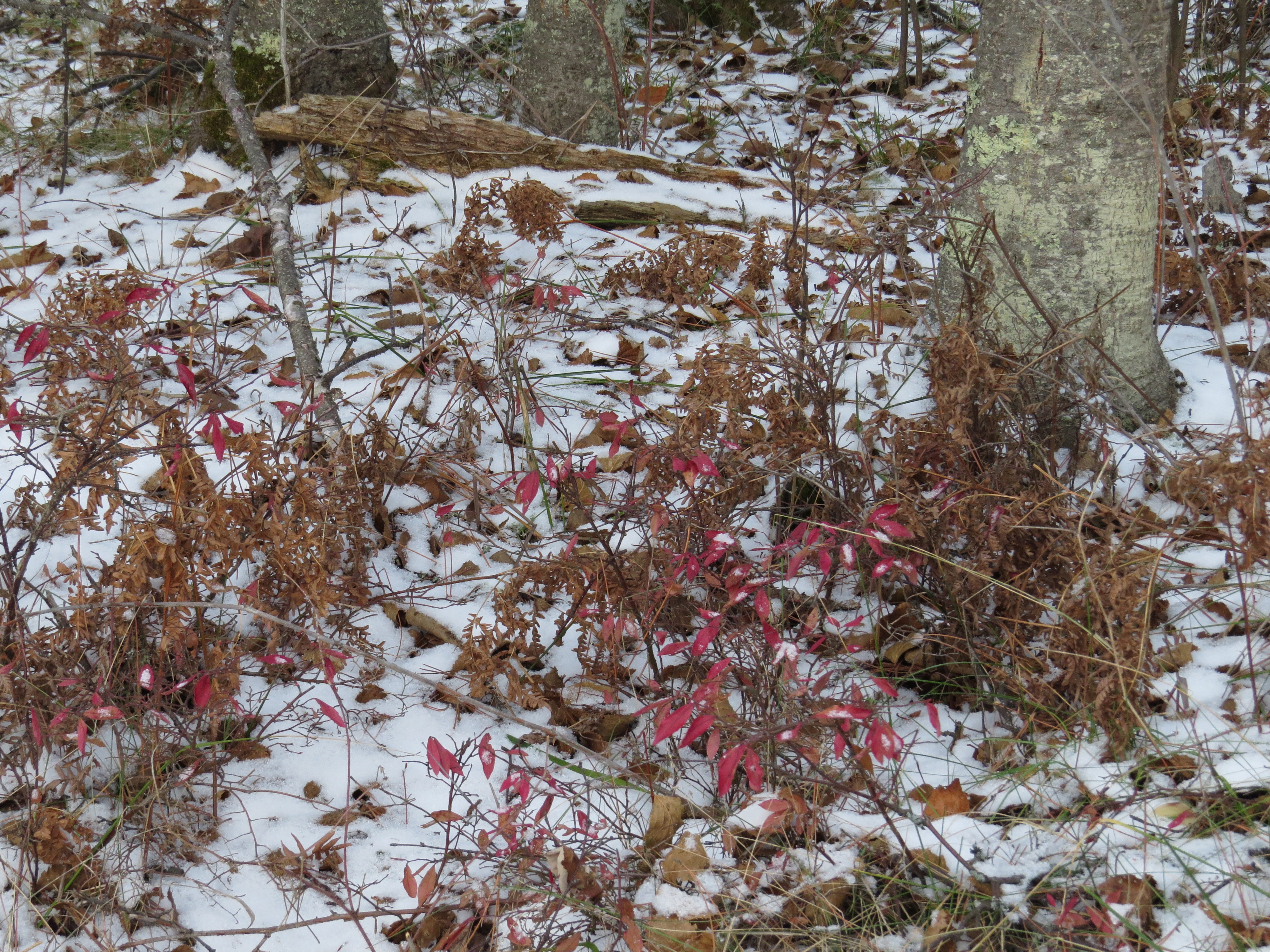
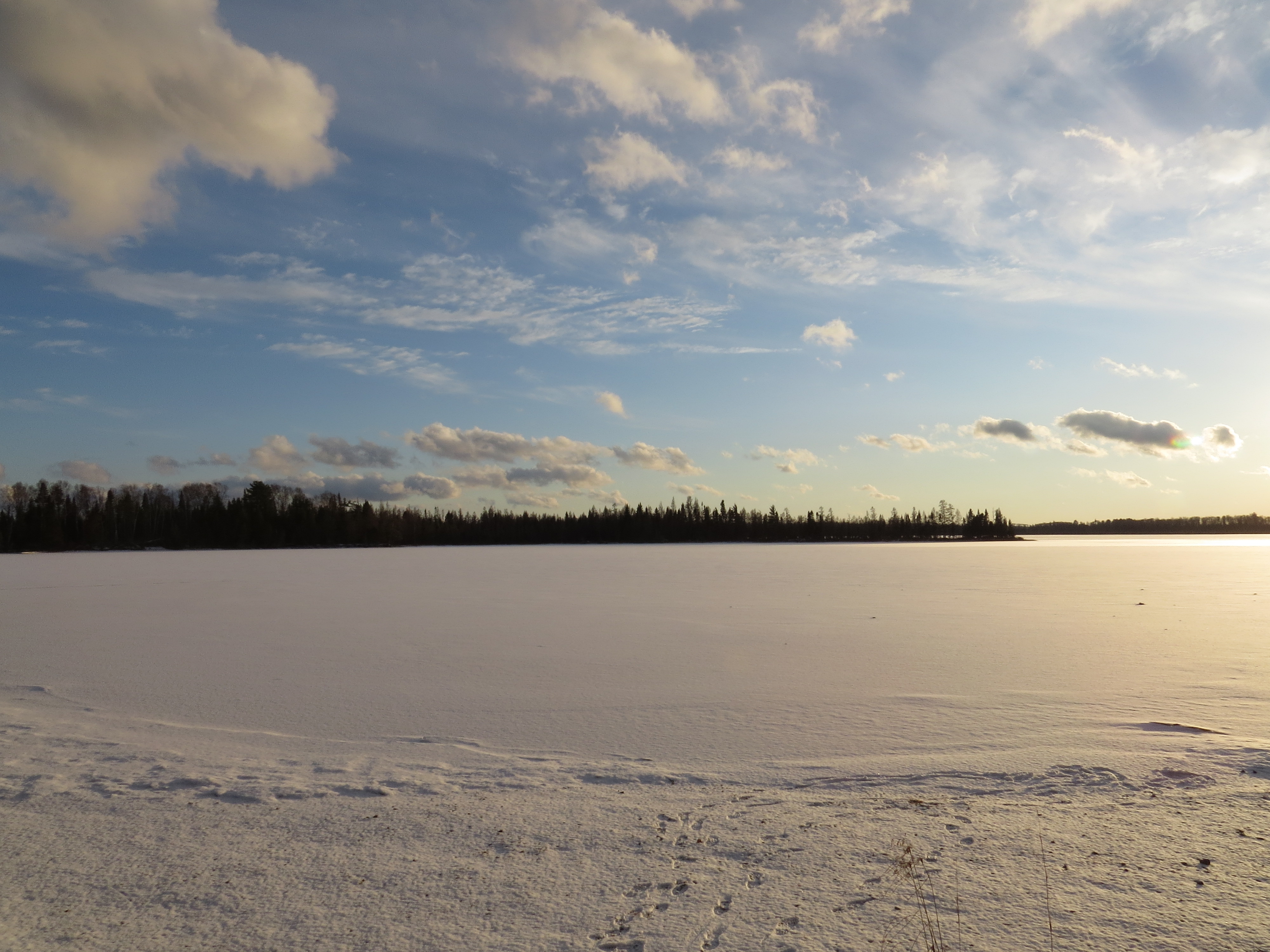
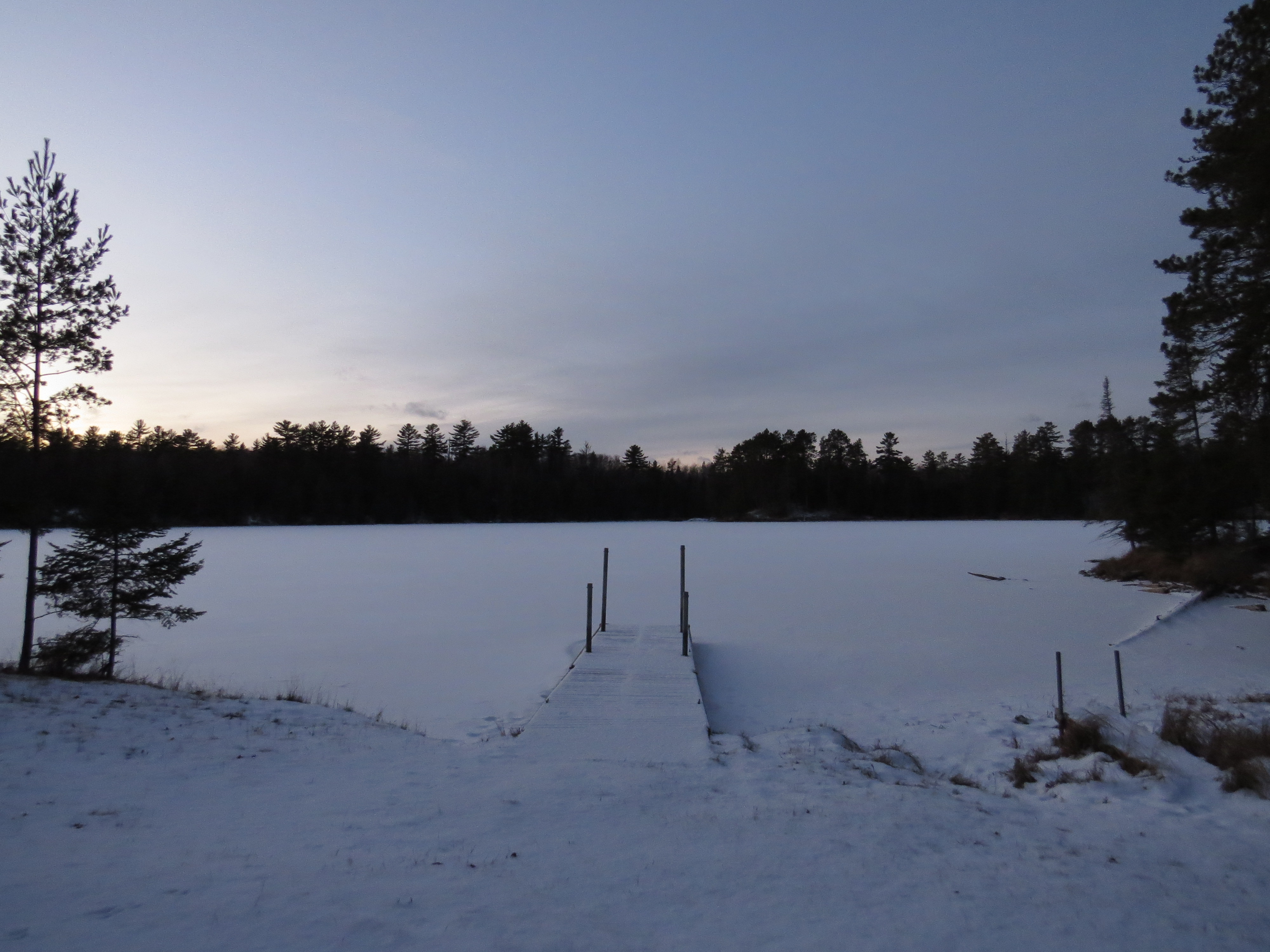
The lake was still low from Summer’s drought; we walked out on the ice for a ways, but with the snow cover, we had no idea how thick the ice was at any given place.
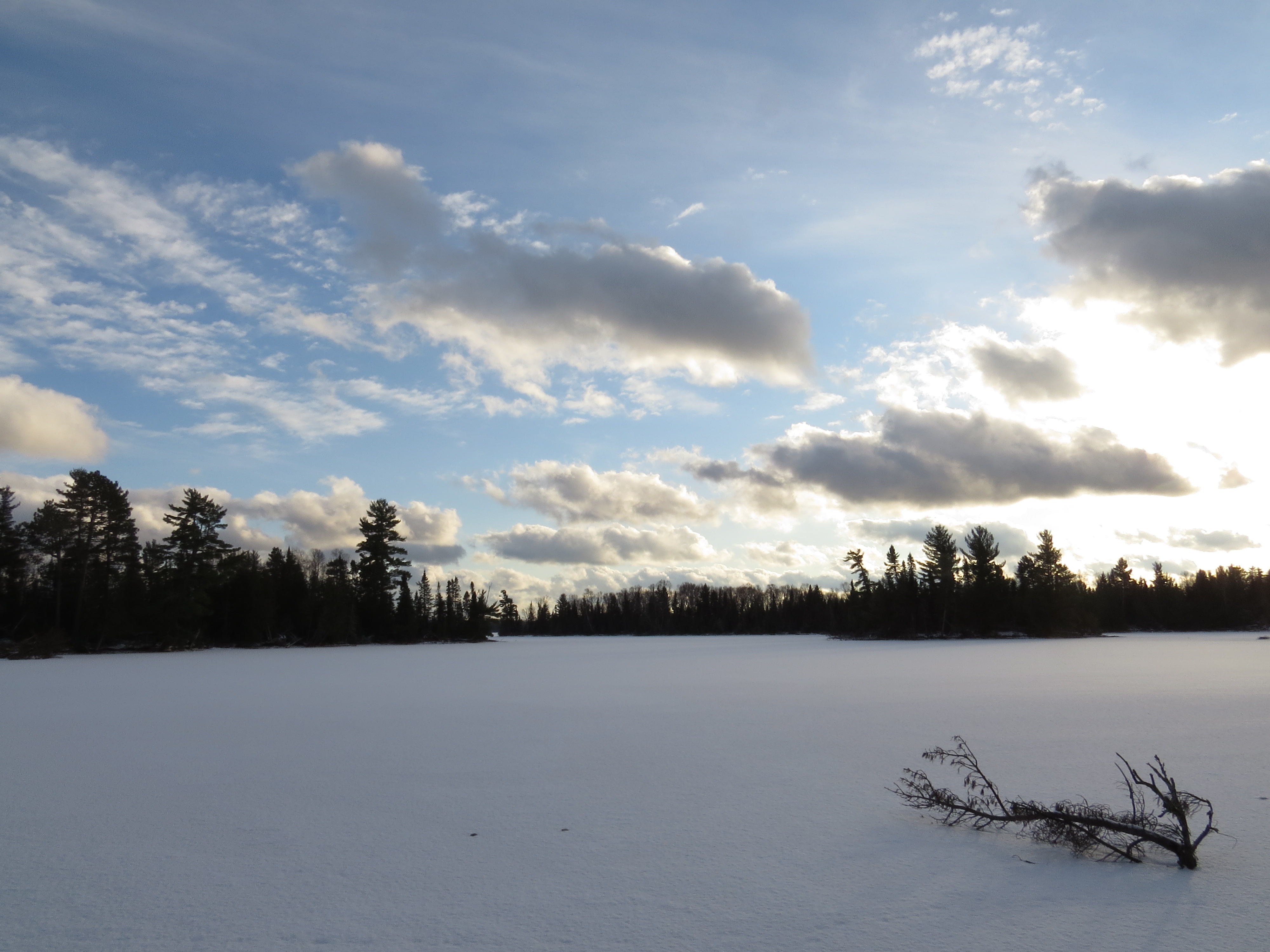
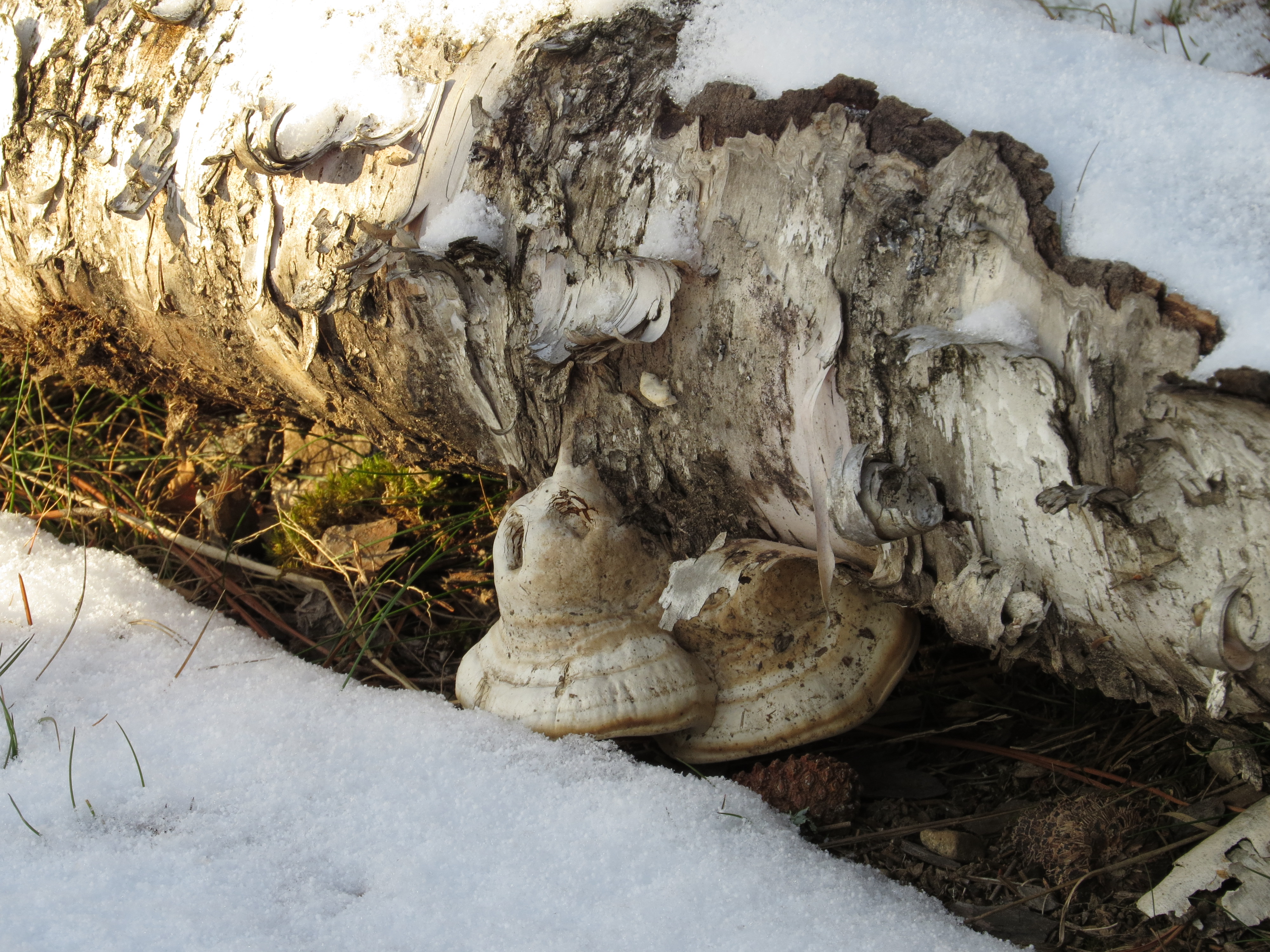
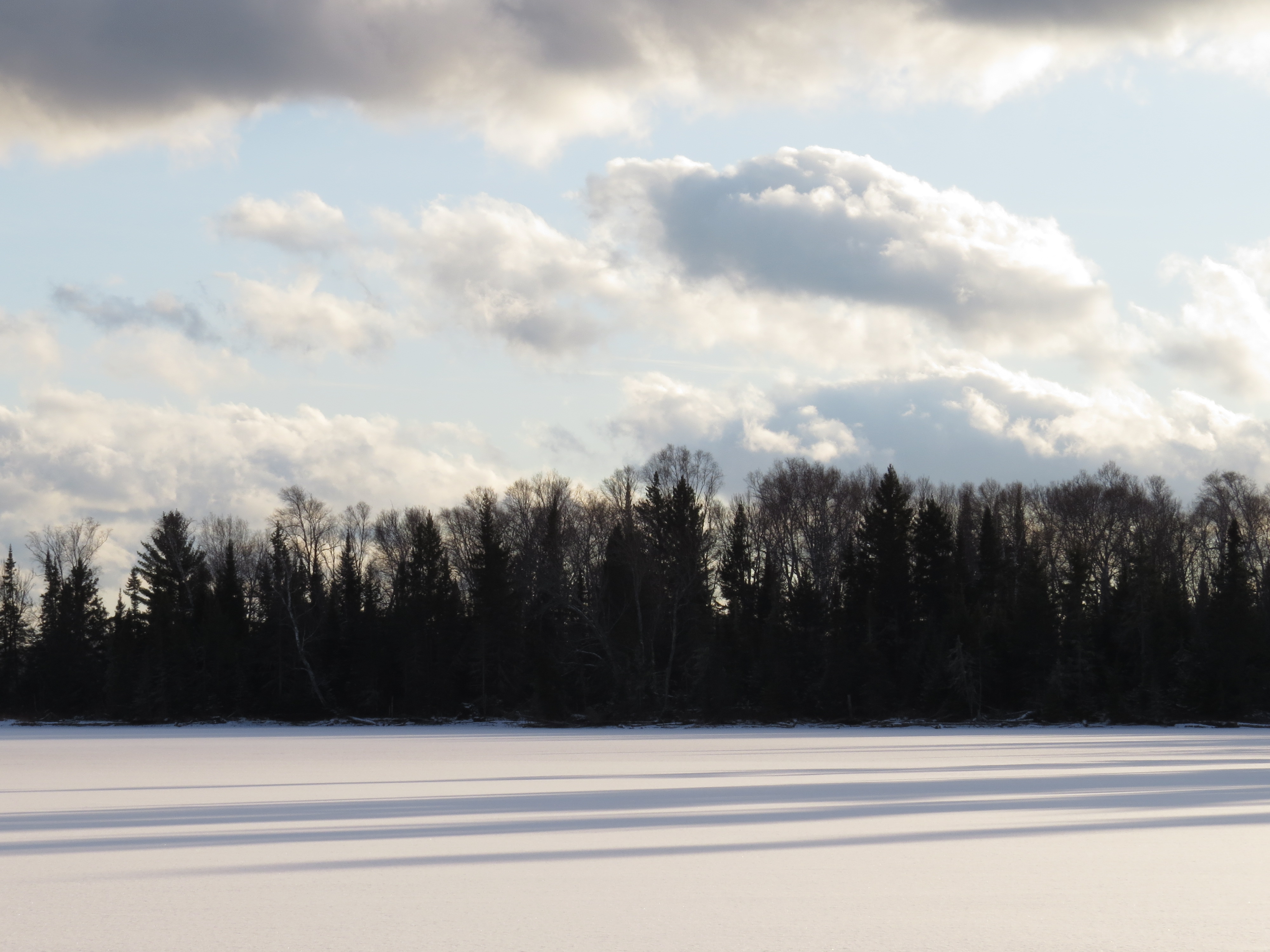
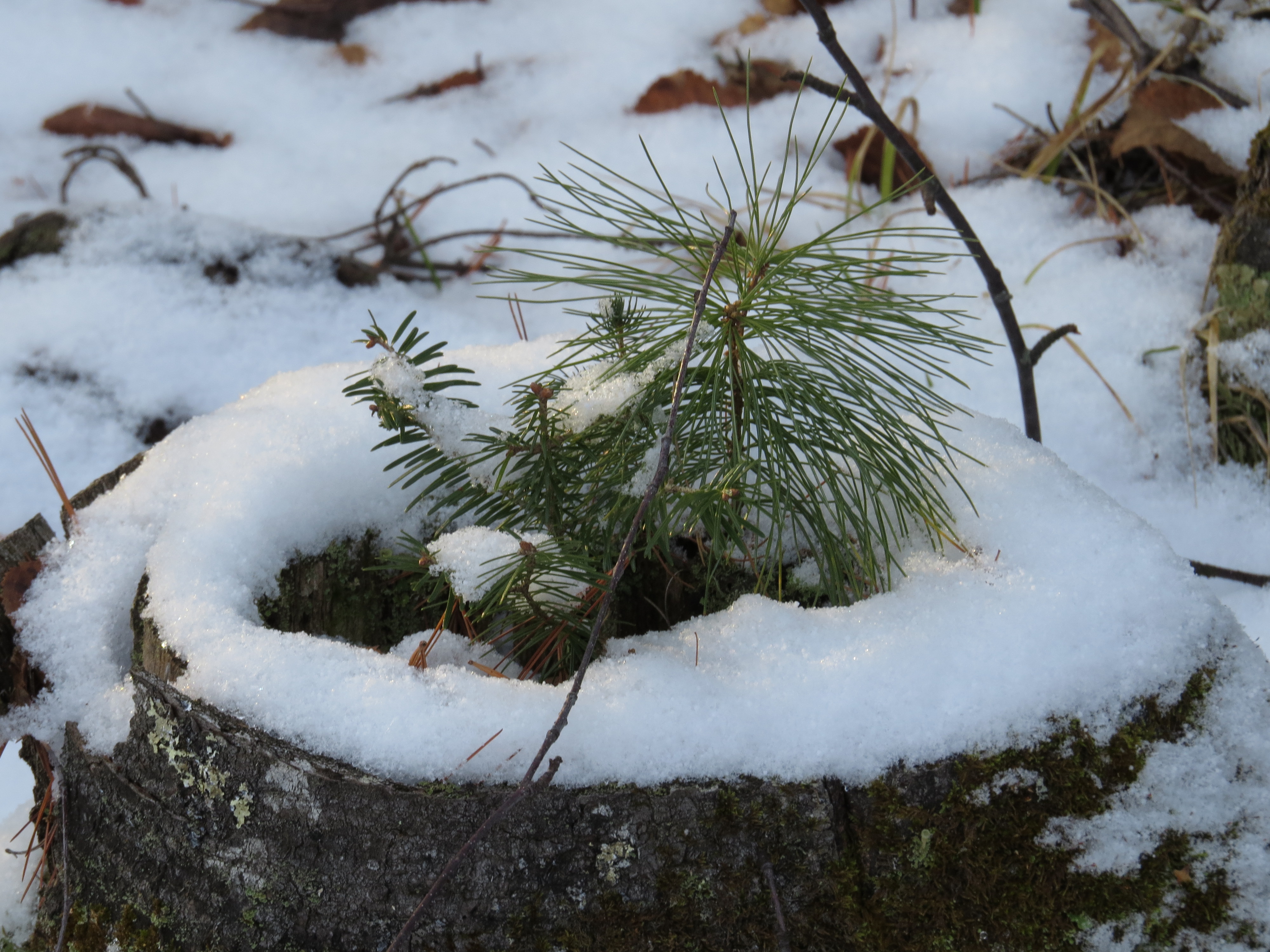
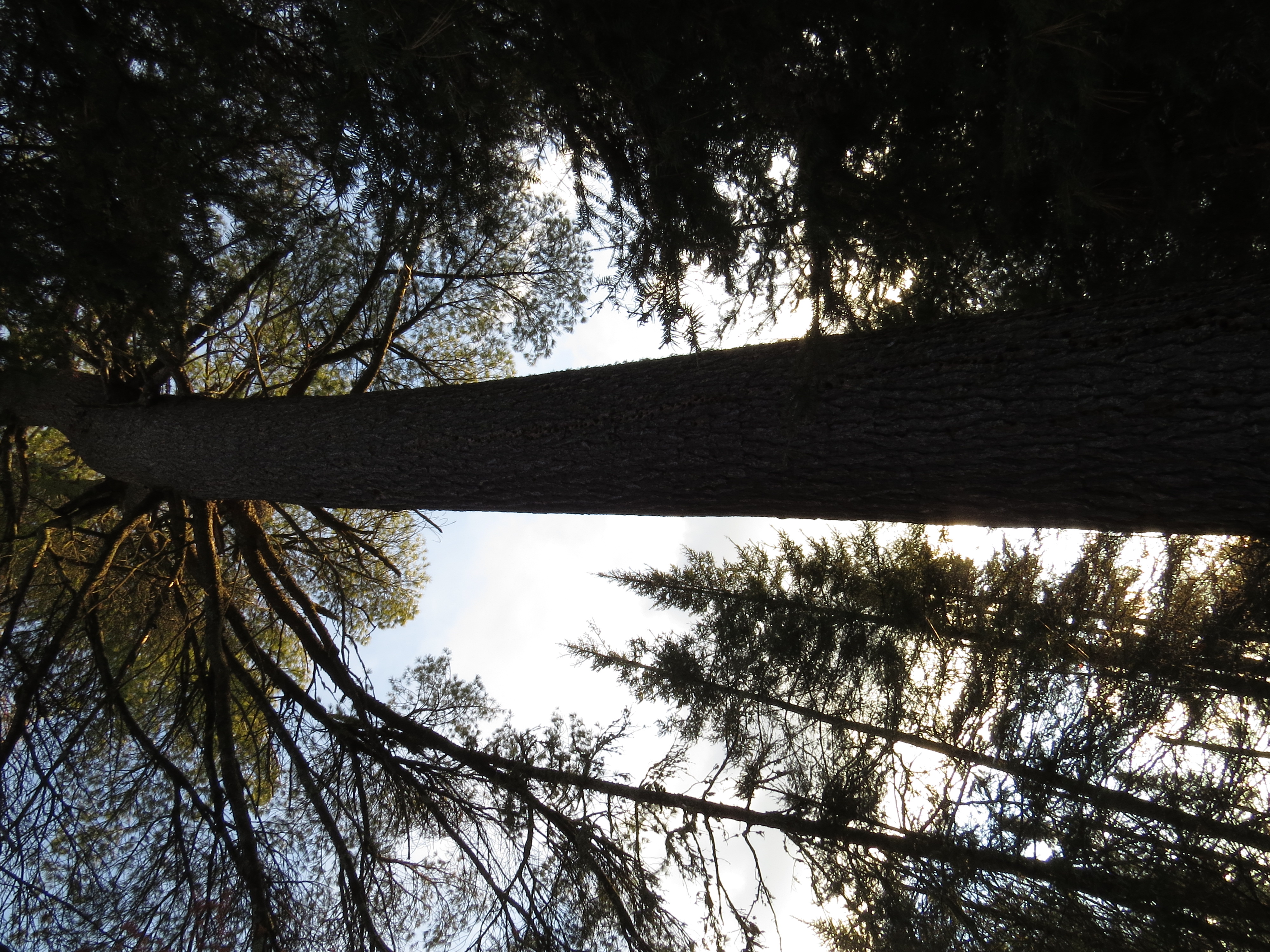
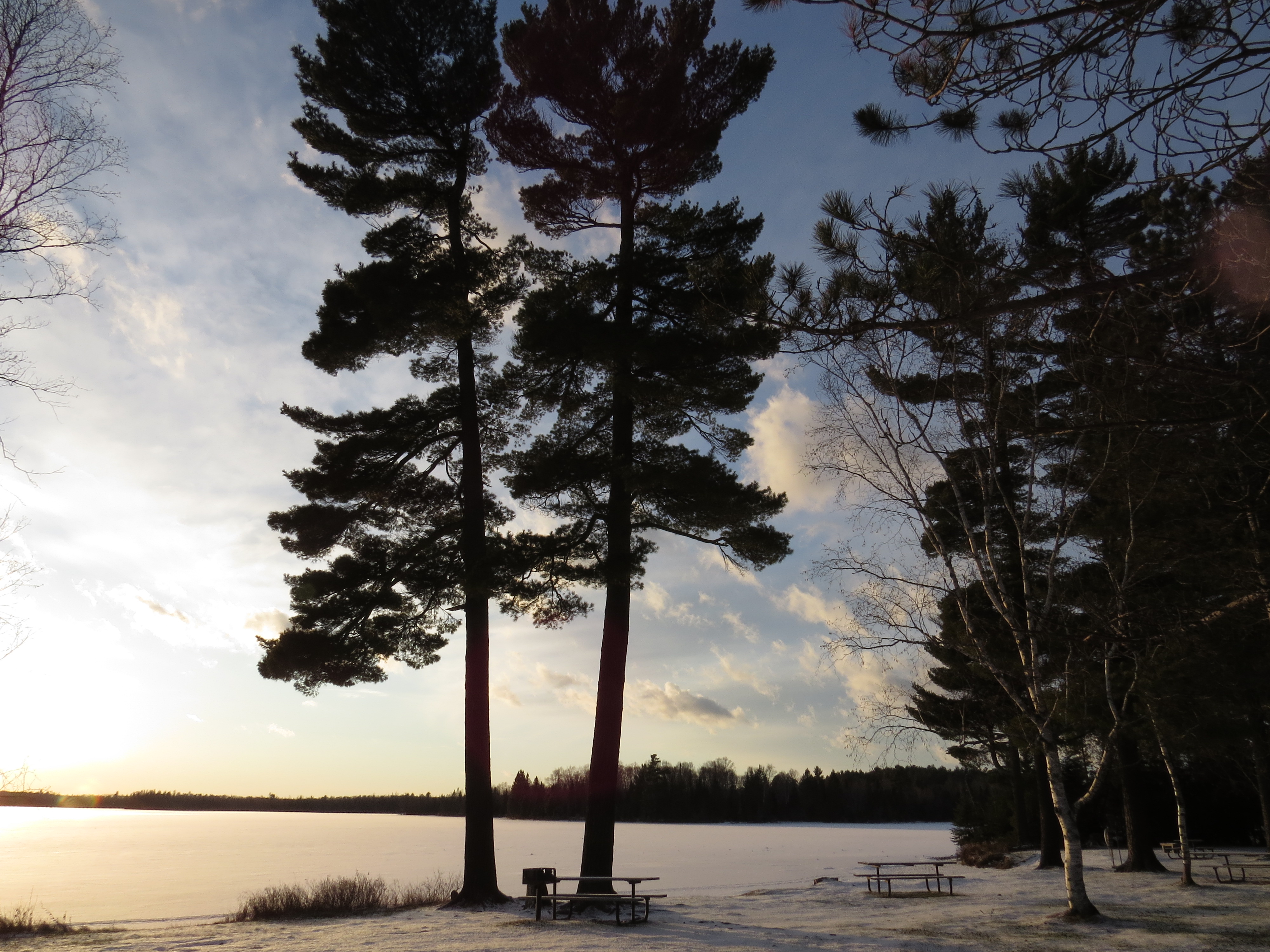
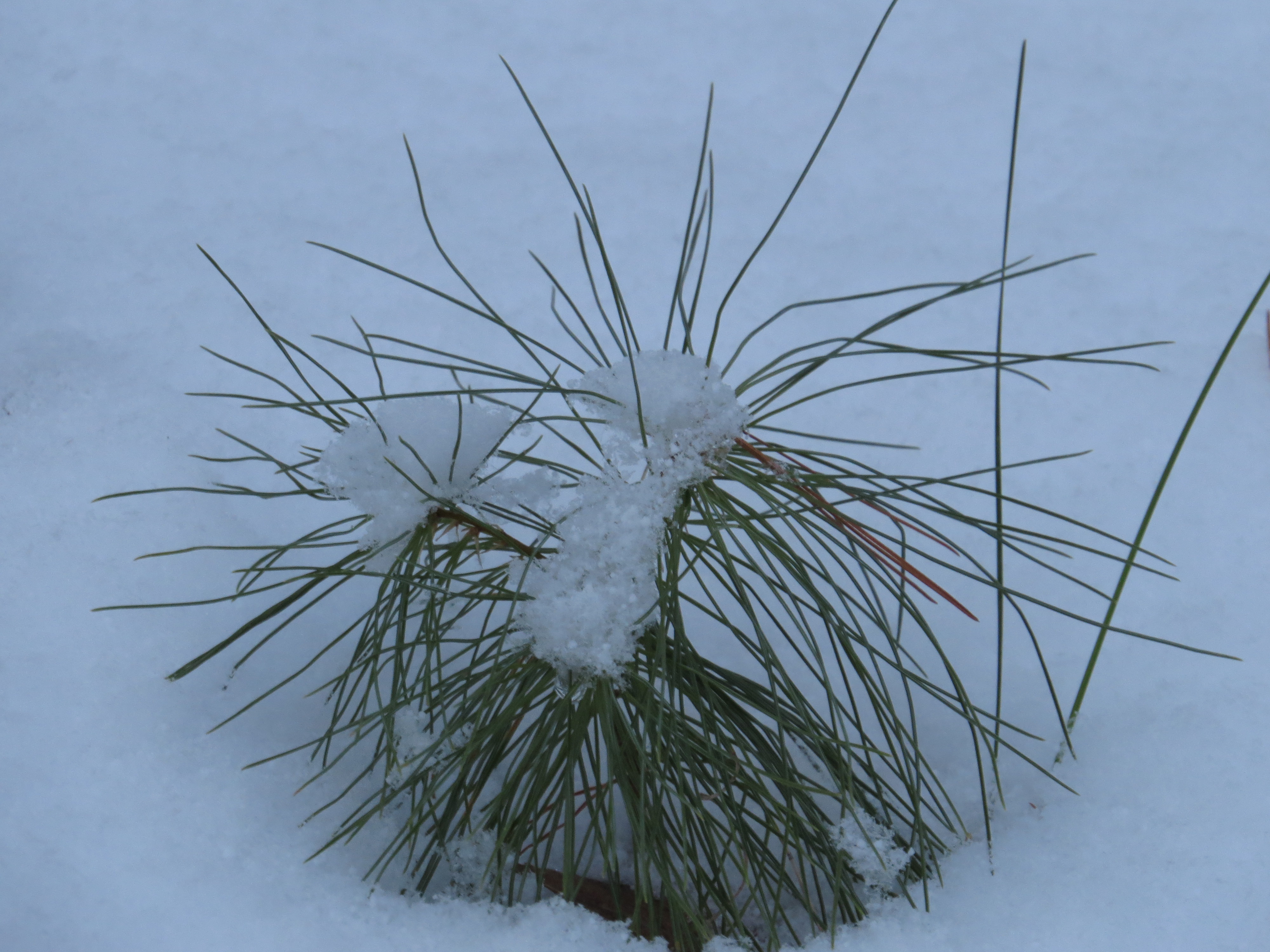
The park boasts an ‘up North, Boundary Waters feel,’ and even though we had not experienced the Boundary Waters in the Winter, the solitude of our December camping amongst the Pines and lakes felt like we were in the wilderness. The old growth Pine trees had been too small for logging in the late 1800s and now stood like giants along the beach and Norberg Lake trail. And just like all the past centuries, young seedlings continued to grow to become future giants for future generations to stand under in amazement.
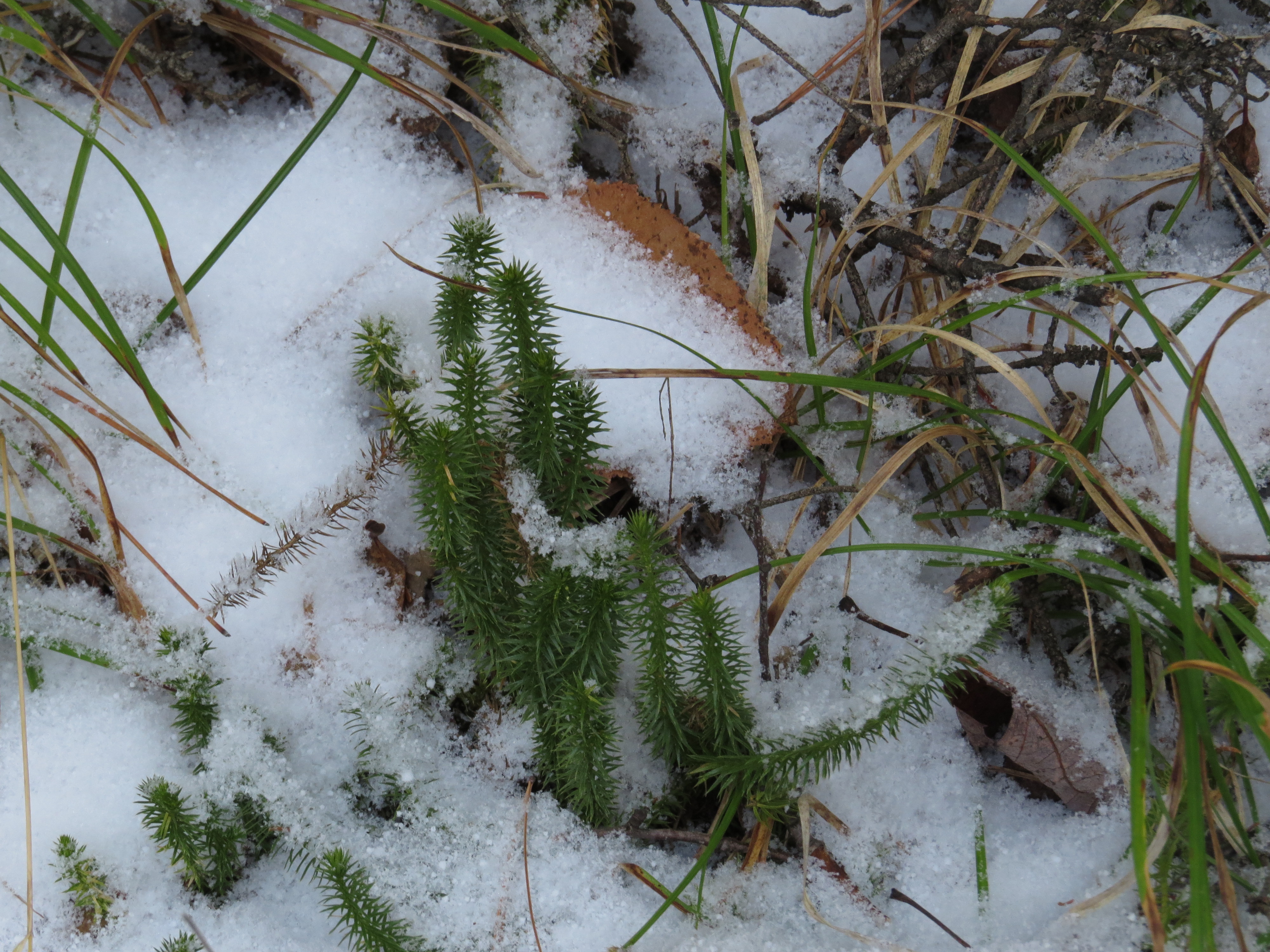
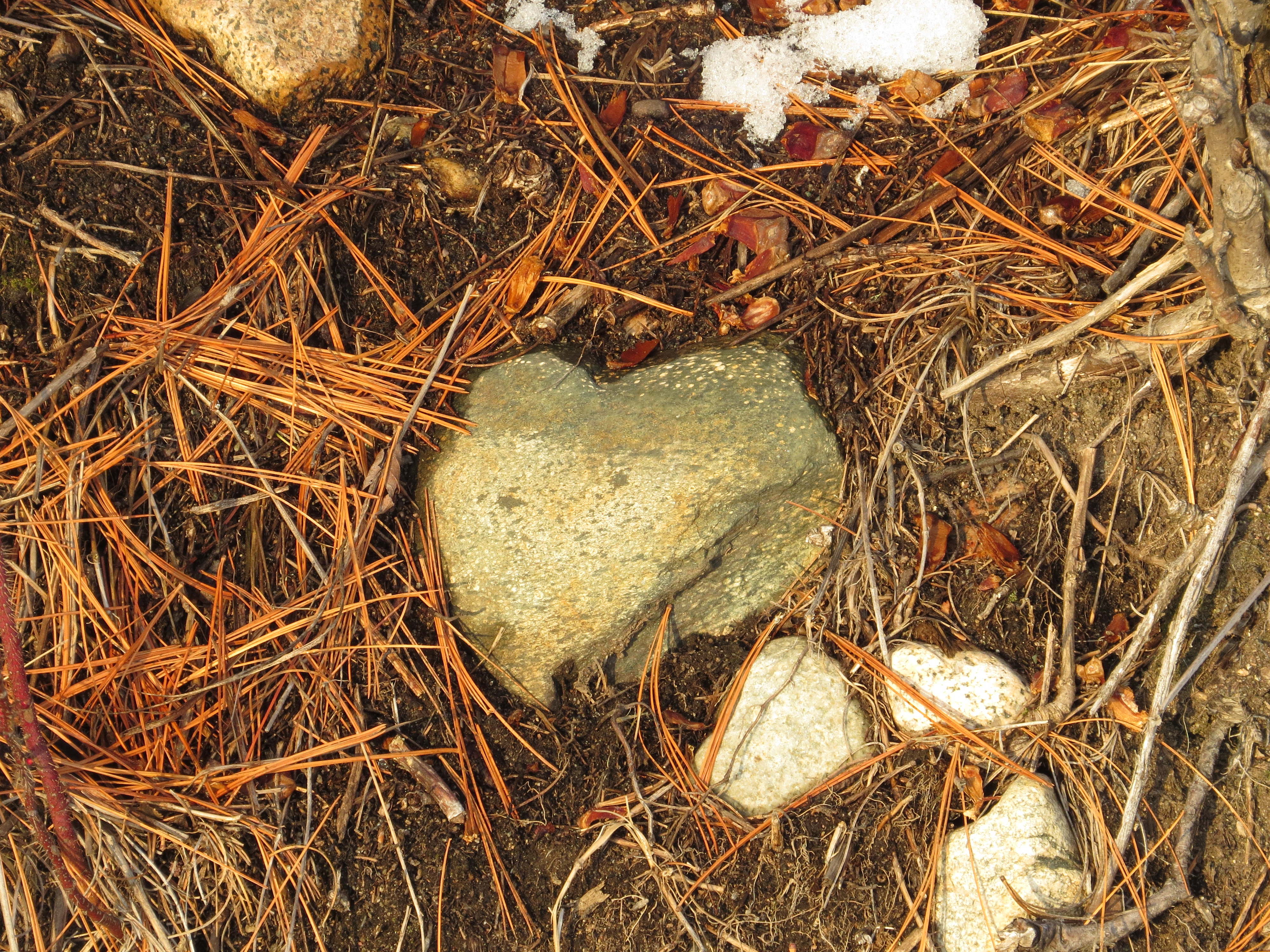
Tiny, tree-like, evergreen Club Mosses of different kinds pushed up through the snow, a testament to the life that flows through Winter.
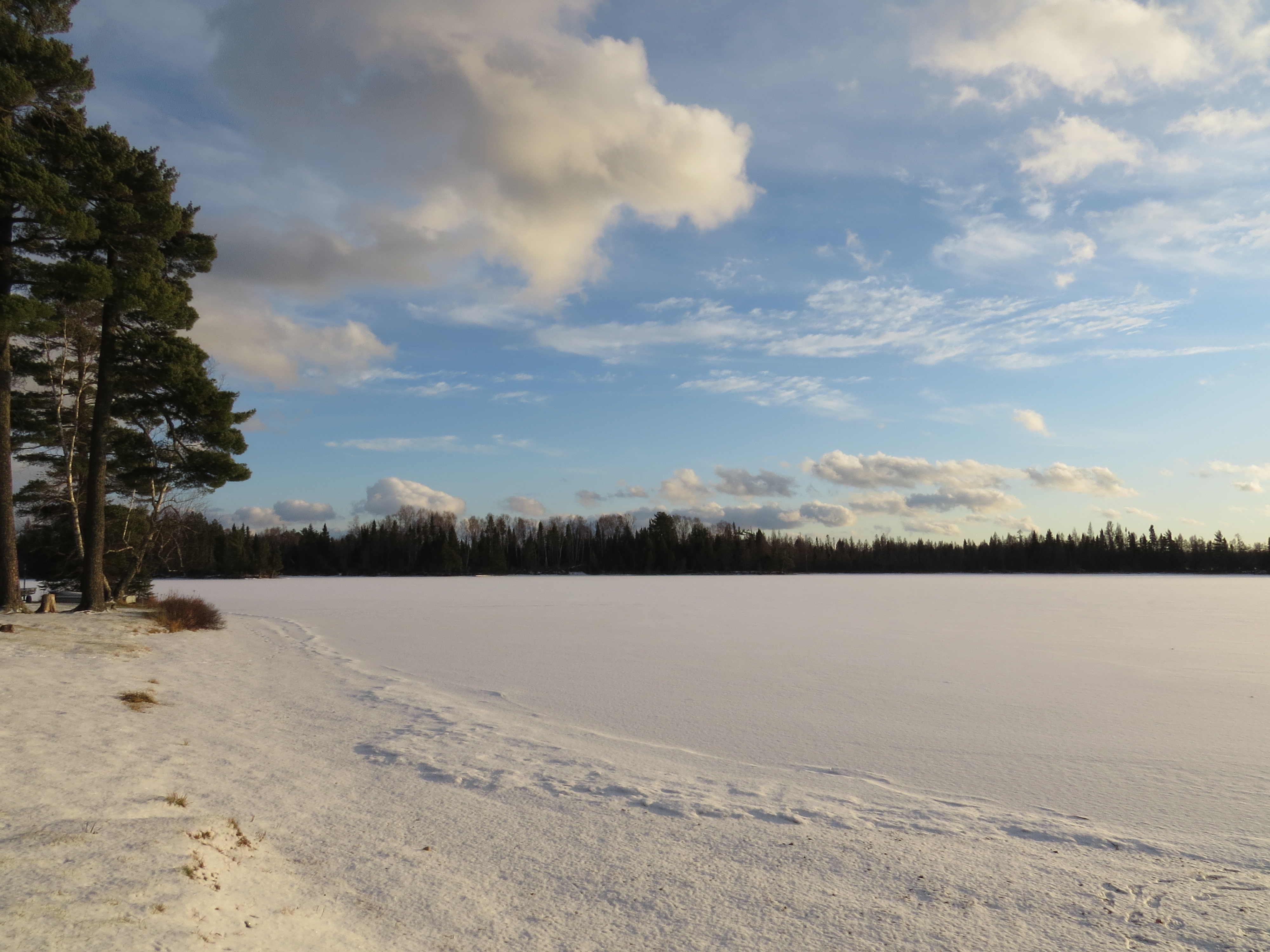
The beach area of the park was spectacular! A small portion of Bear Head Lake was visible, and an invitation to explore ‘beyond the bend’ was compelling. It was a place to love and appreciate, a place that puts our own (small) lives in realistic perspective to the amazing world of Mother Nature.
Nestled in the trees was a beautiful trail center constructed with large open beams. It was warm and available for restrooms and rest. A large wood-burning stove, tables and chairs, puzzles and games, and a small kitchen area invited us to stay for awhile, but we were aware that the sun was low in the sky and we still needed to hike back to our cabin.
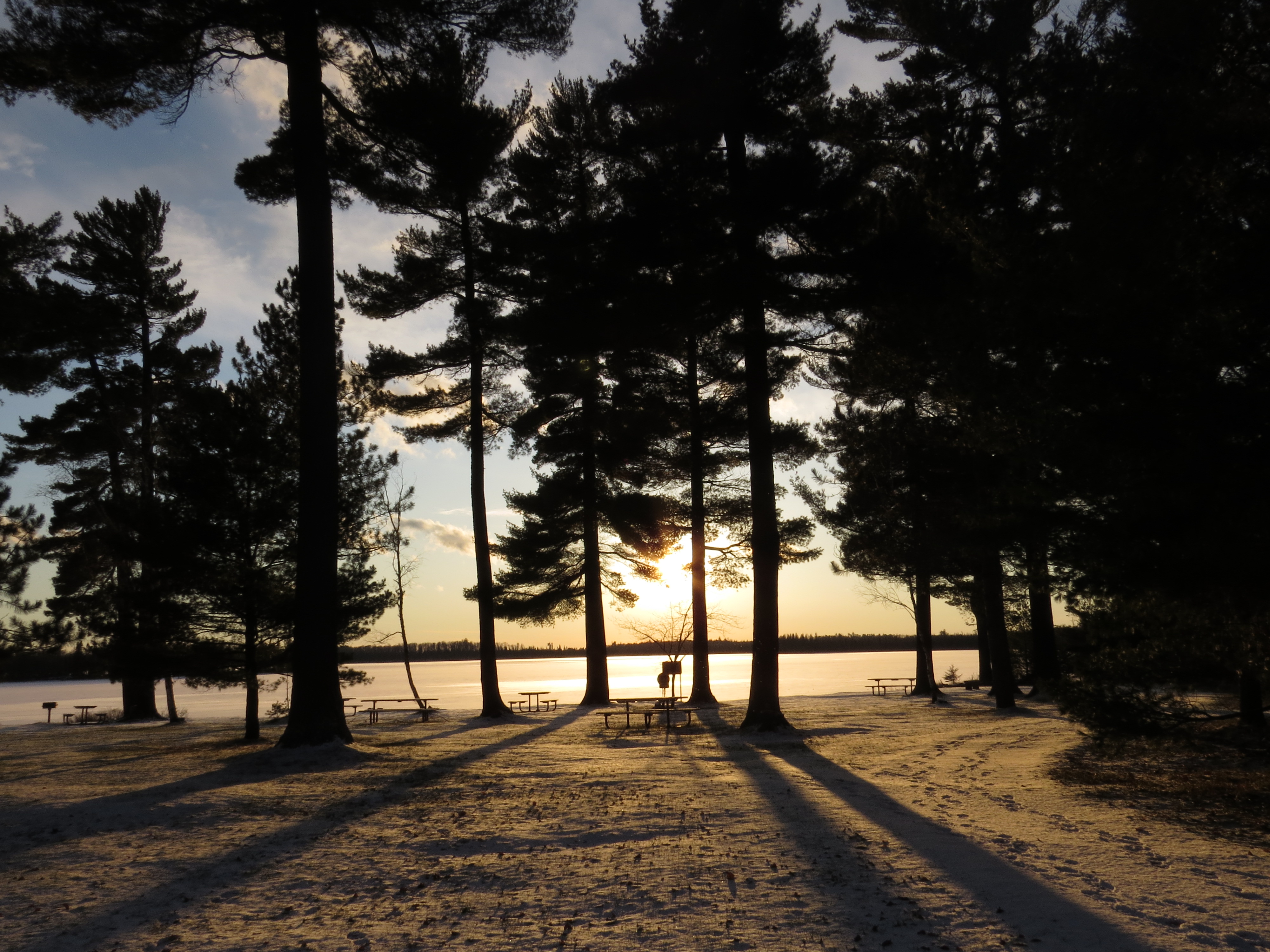
The rest of the hike back was in the twilight of dusk through the giant Pines. It was so peaceful, like we were walking through a different era.
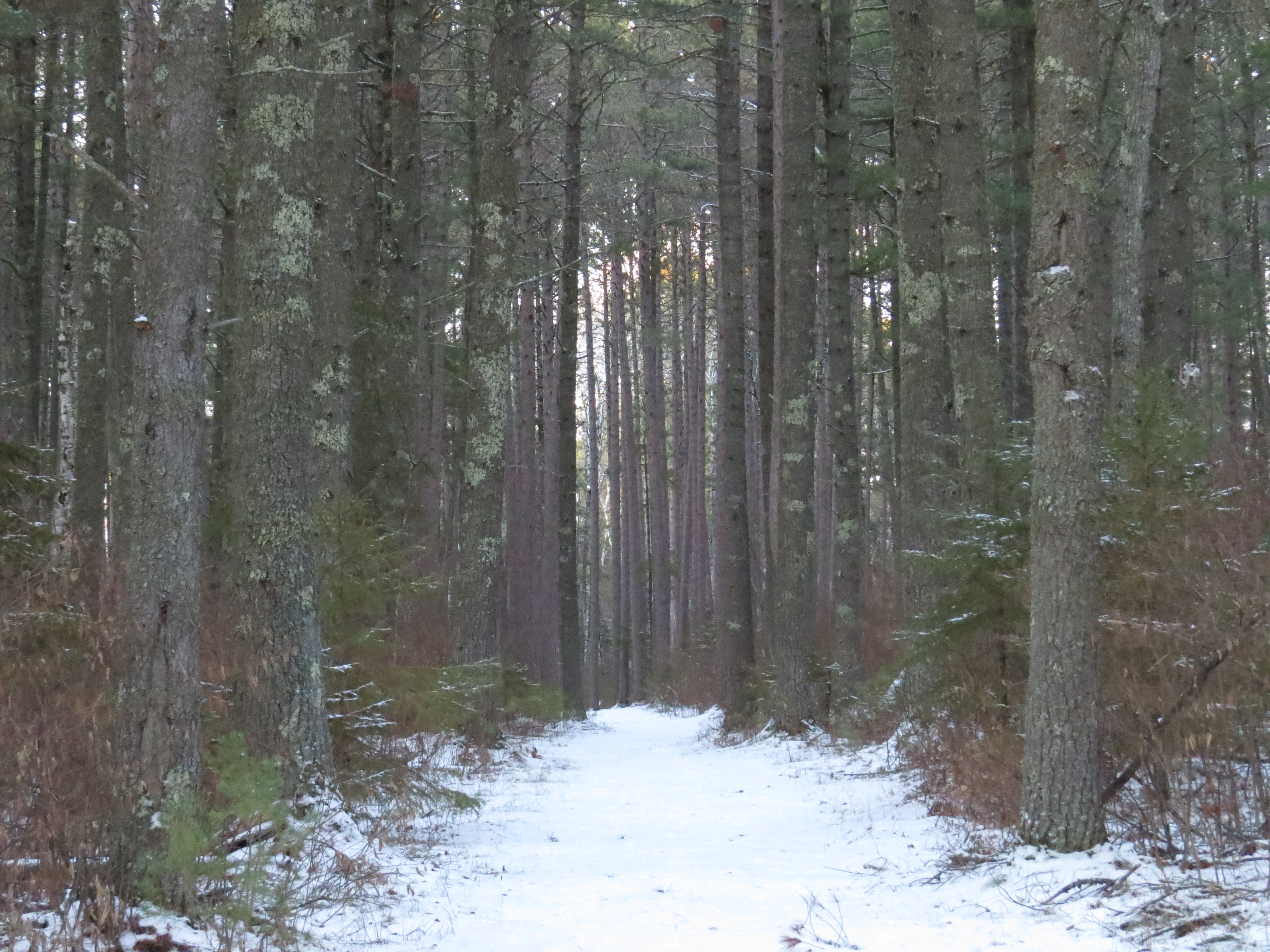
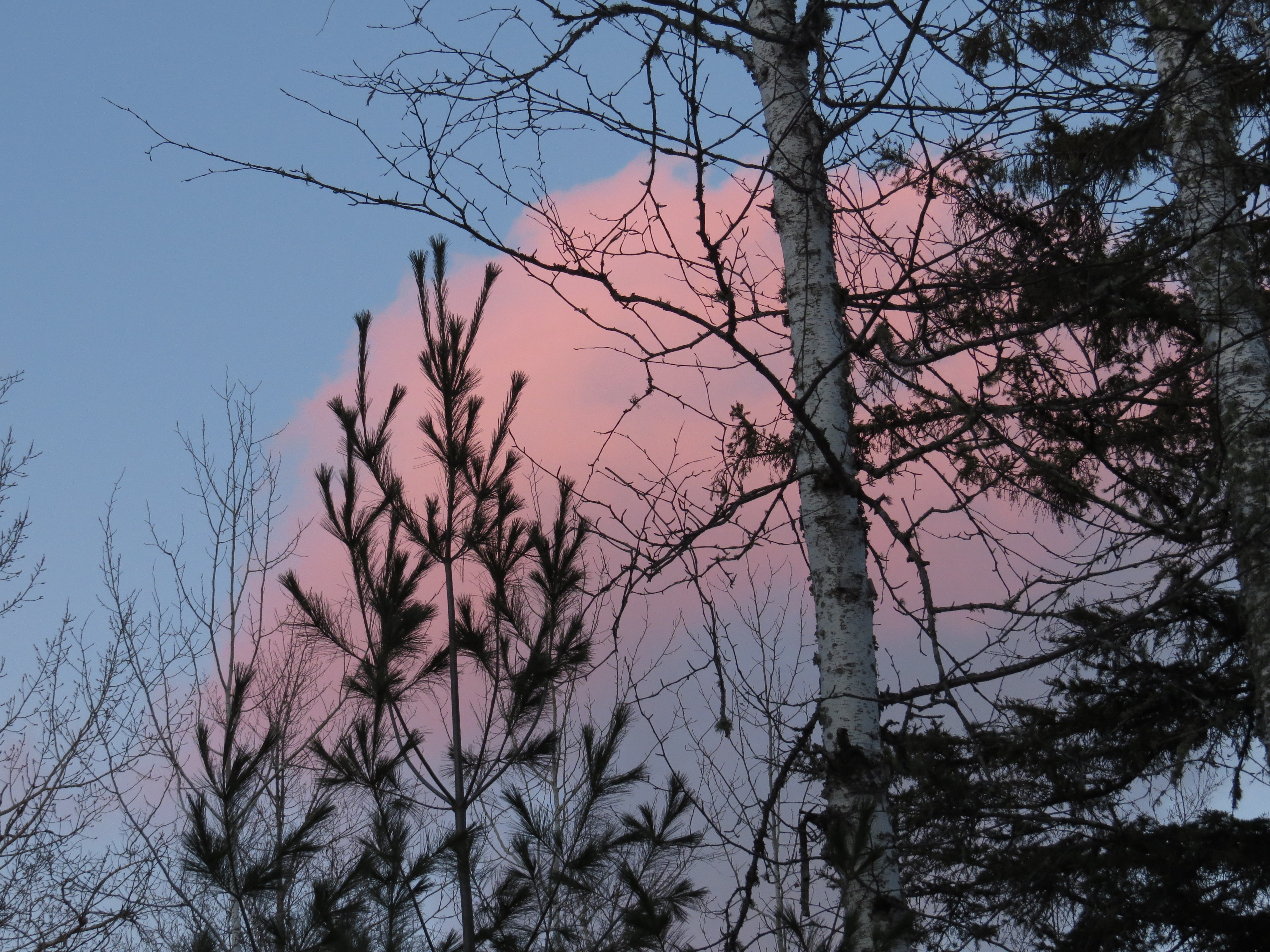
Back at the cabin, Chris brushed the snow from the picnic table to heat up our soup on the Coleman stove. Emily and I walked down a short trail to the North Bay of Bear Head Lake to see the final rays of light over the Pine horizon. Our day of chasing Winter had culminated in the rich gift of a quiet, peaceful, and solitary hike in the wilds of Northern Minnesota.
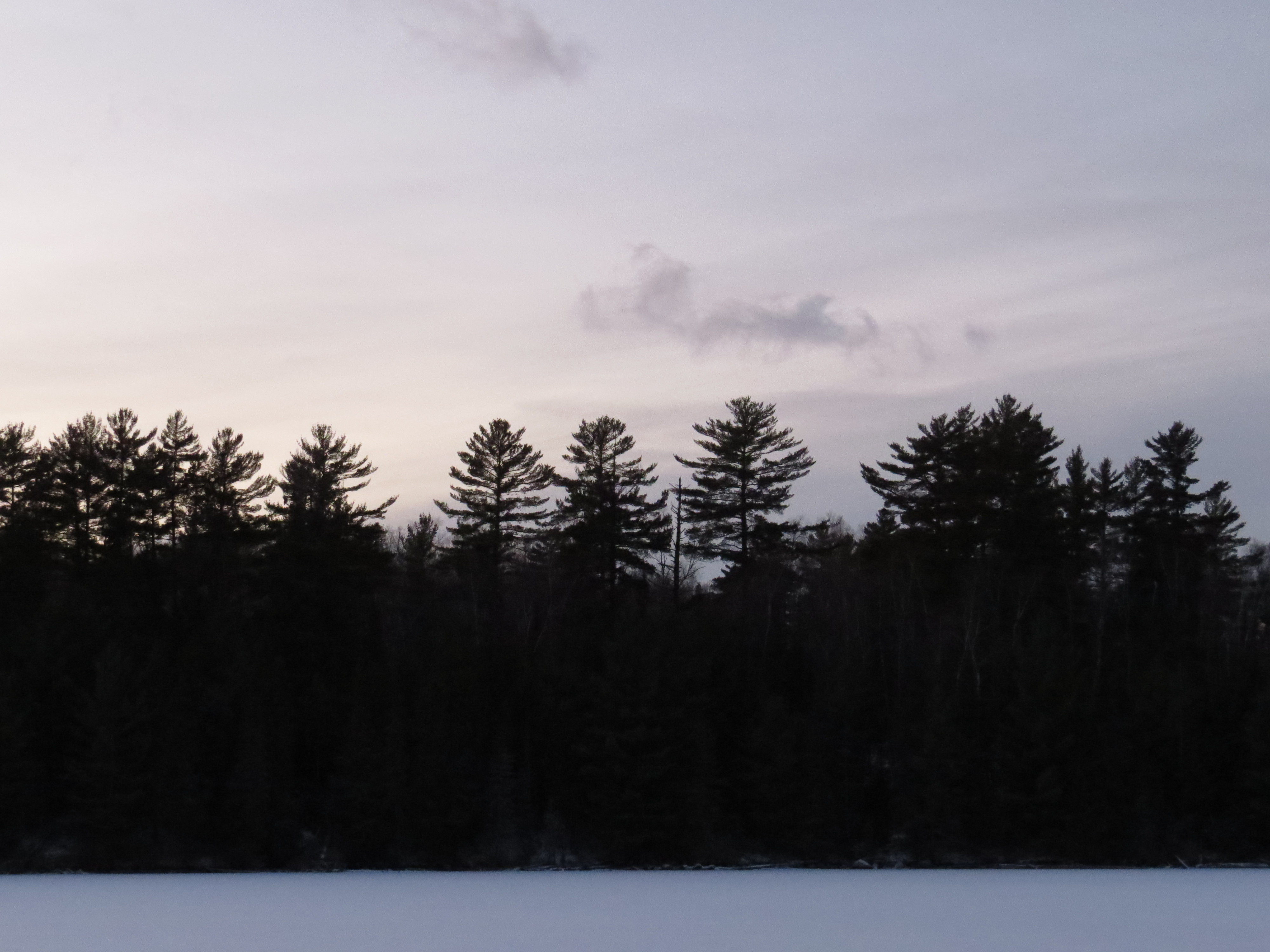
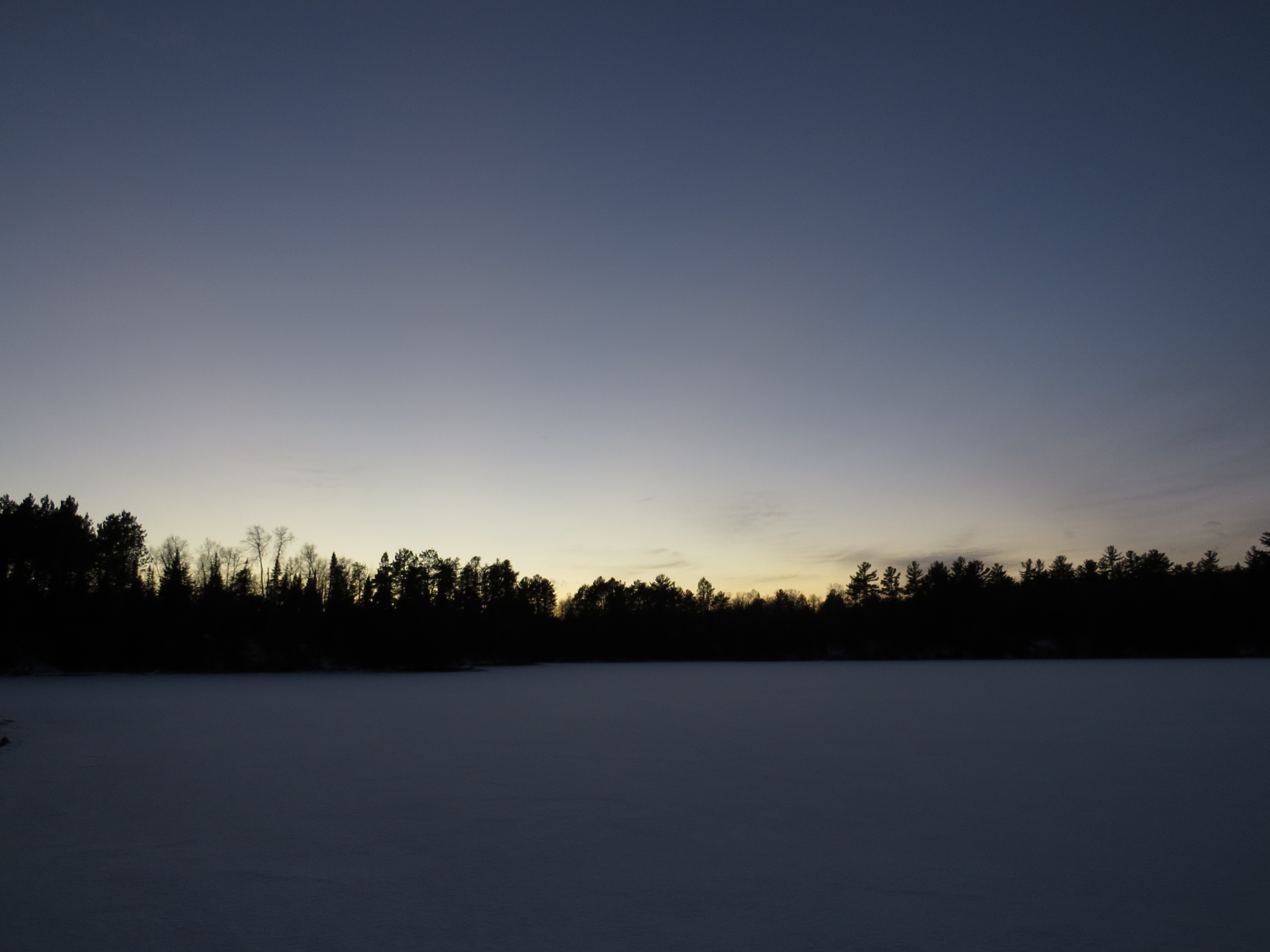
Our first after-dark trek to the outhouse was under a dark sky full of bright stars. In our light-soaked lifestyle, we forget how dark the dark can be and how brilliant the multitude of stars. The temperature was falling into the teens for the night with a stiff breeze. Later Emily and I walked around the campground circles, our headlamps beaming onto the reflective snow. By that time, the stars were gone—clouds had moved in on the stiff breeze, and we were reminded of the storm forecast.
Chasing Winter had brought us to this warm, cozy cabin in the Northwoods. We had only seen the ranger and one other vehicle—the huge park virtually belonged to us and the critters. Why do we ‘chase’ things? Chasing dreams, chasing butterflies or fireflies, chasing boys, chasing rainbows, chasing wealth. What fuels those desires? Chasing implies the process of going after something—it does not in one way or the other indicate whether we attain the desired. So perhaps the pursuit is the raison d’etre—the reason for our existence.
By late morning on Saturday, we had to decide whether to weather the storm—the forecast calling for seven to thirteen inches of snow on Sunday—or to leave early. The tables had turned—Winter was chasing us. We thought of the Winter wonderland that would sparkle outside our cabin door, of when the roads would get plowed, of whether we would have to spend an additional night. We had enough food and water….but in the end, we decided to cut our Northwoods visit short.
In the last week, here at home, it has snowed three times—the ground is delightfully light with snow, the trees decorated and frosted in Winter apparel. Is it Nature’s rhythm—the chaser and the chased? We chase after those things we desire, but perhaps our desires are also pursuing us.
The Question of Up North
I was talking to a wise man recently about a controversial issue that he had been adamantly opposed to for most of his life. He told me about a number of personal experiences as well as those by people close to him that informed that issue. And then he said, “It has re-opened the question for me.” His simple, calm, and humble statement was like a wave of cool, fresh water on the hot division of our country.
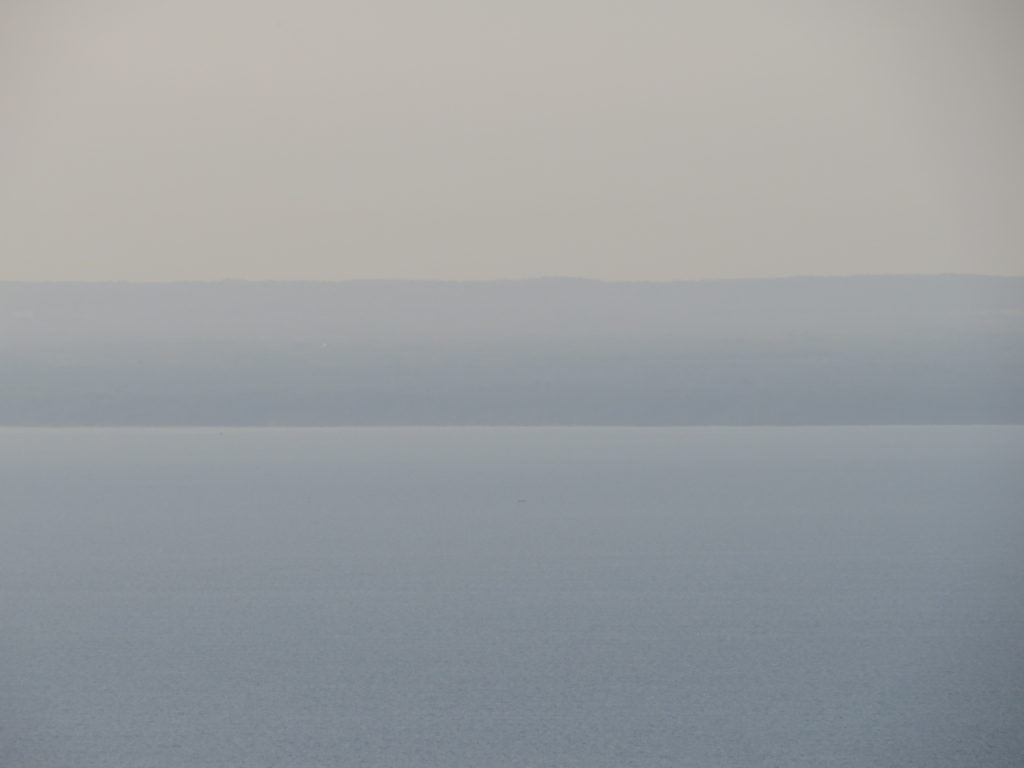
When people in Minnesota talk about ‘up north,’ it can mean anywhere from Alexandria to Brainerd to Bemidji to the North Shore or to Ely and the BWCA. Even the ‘North Shore’ stretches from Duluth to Grand Portage, 145 miles along Lake Superior. Up north can be about deer hunting, skiing, weekends on the lake, hiking the Superior trail, or canoeing in the Boundary Waters. Our trip up north began with Duluth, the shipping port city on the magnificent Lake Superior. We stayed in an Airbnb high on the bluff overlooking the Big Water. In the early morning light and mist, the water, cloud bank, and sky melded together into a monochromatic panorama of simplicity.
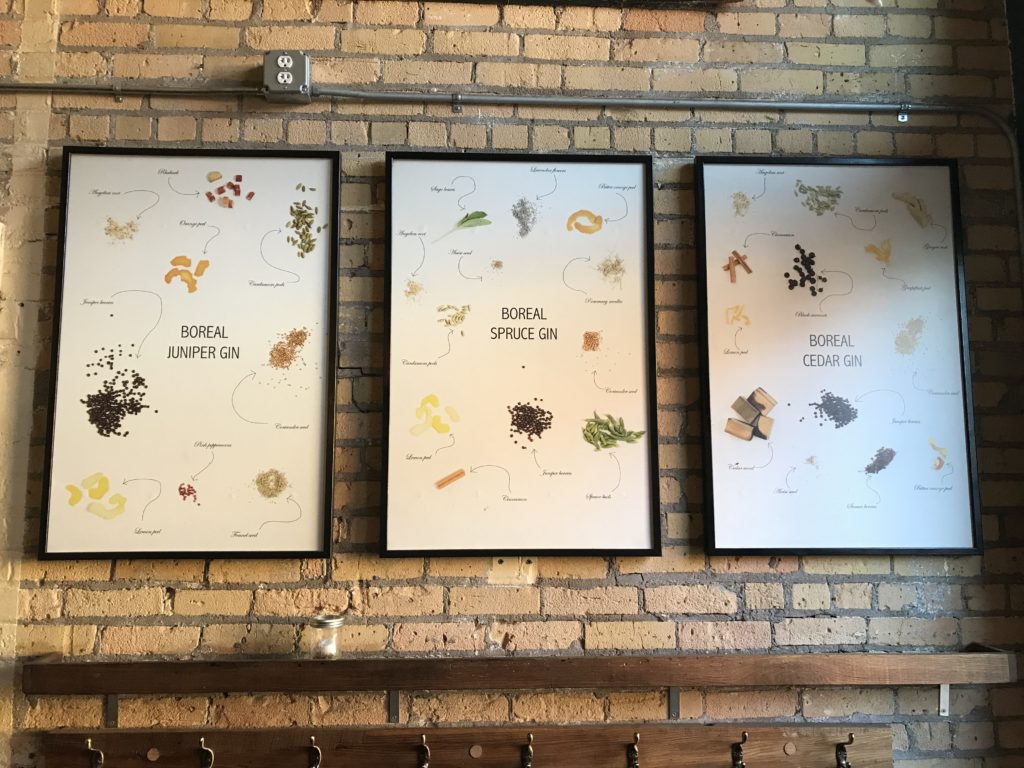
We drank in some Nature while in Duluth—literally! We stopped at Vikre Distillery, makers of gin, vodka, whiskey, and aquavit—a Scandinavian distilled spirit. They use local grains, herbs, rhubarb, and wild botanicals including juniper berries, spruce buds, and staghorn sumac—all distilled with the clear, cold water of Lake Superior.
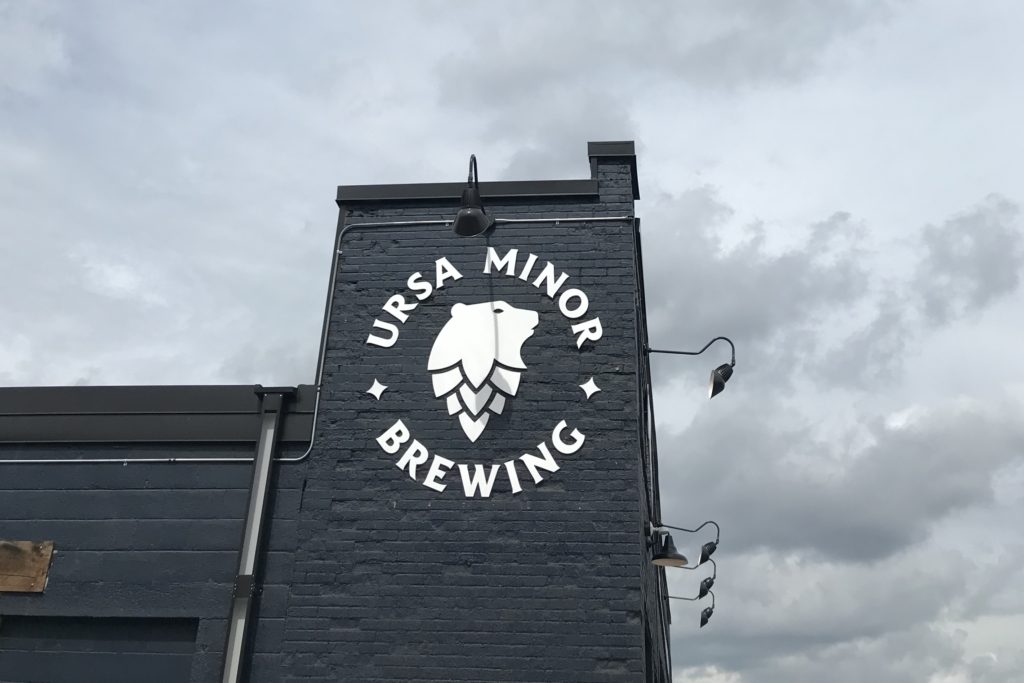
We also visited two Duluth breweries—Bent Paddle and Ursa Minor, both unique experiences made better with the knowledge and energy of the four young people with us who know a thing or two about visiting breweries.
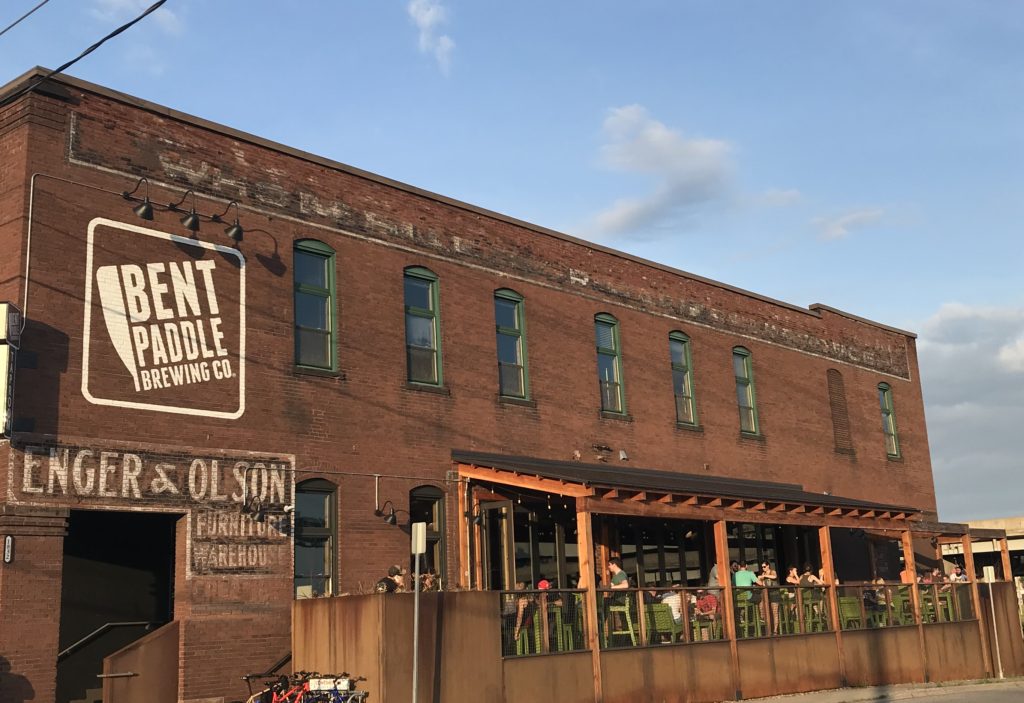
We enjoyed a mouth-watering BBQ meal delivered by a friendly staff person from OMC Smokehouse, located a block away from Bent Paddle. A Celtic band played in a corner of the taproom as we sat on the patio across from them. A trip to the restroom was like trekking through the North Woods—mosaic tile waterfalls tumbled from the bar, a dark hallway ceiling was lit up with tiny lights in constellations from the night sky, and the wallpaper in the women’s restroom featured friendly woodland creatures. Look at those faces!

Ursa Minor is the ‘Little Bear’ constellation in the Northern sky that contains the Little Dipper. The bright star at the end of the handle of the dipper is Polaris—the North Star! We enjoyed wood-fired pizzas made from ingredients that were snipped from the raised-bed garden around the patio. Now, I know I said nothing about the beer, although I do appreciate Ursa Minor’s marketing of ‘comfort beer!’ Beer is something I have never liked or drank—until my adult children and the craft beer industry united with a “taste this one.” Most still made me shudder, until I tried a really dark Oatmeal Stout. My comments included ‘that’s not too bad’ and ‘there’s a lot going on there!’ So I have now claimed the darkest beer (without coffee, that is—another common drink that kind of makes me shudder) as my favorite, and that just makes me laugh!
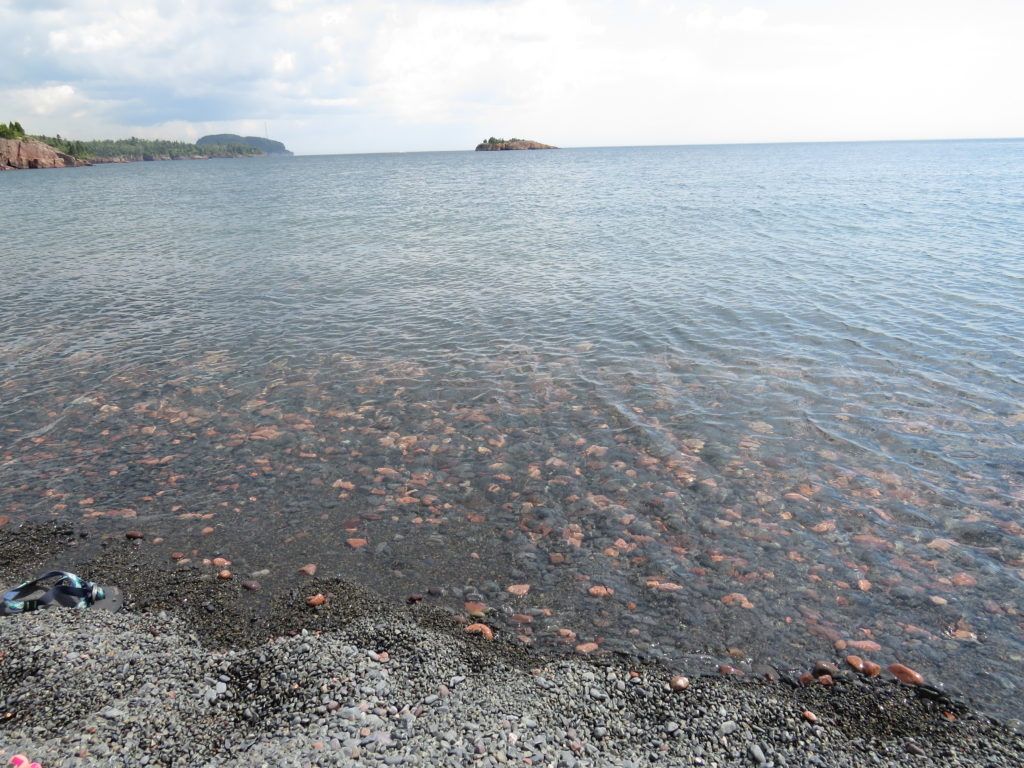
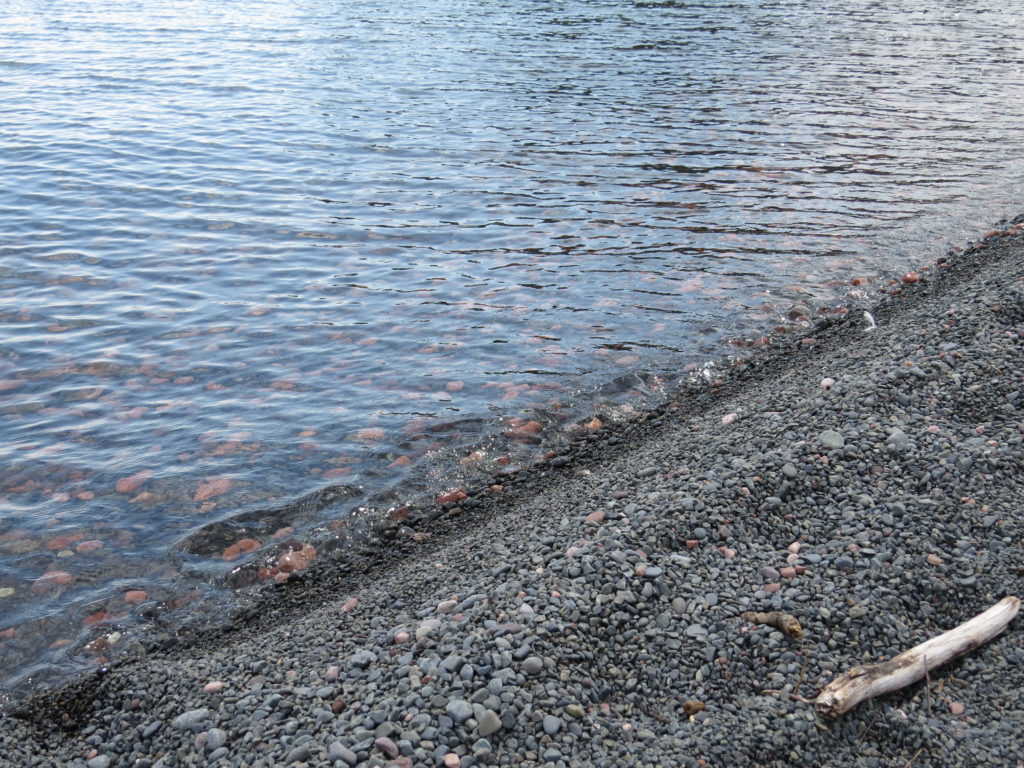
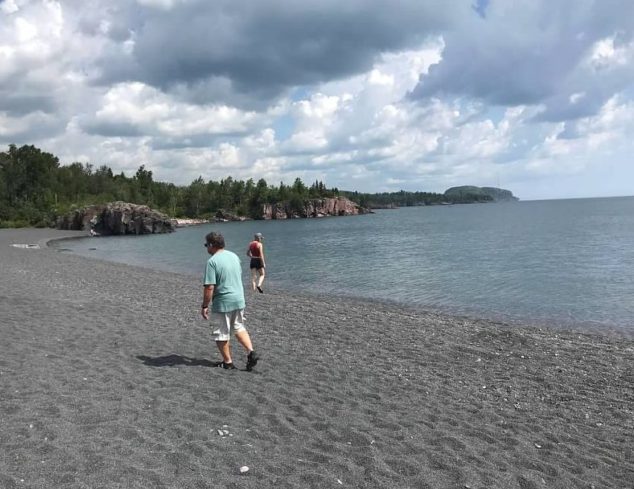
The destination of our short Duluth stay was up the shore of Lake Superior, past Two Harbors and Split Rock Lighthouse to Black Beach. A protected cove surrounded by rock cliffs and North Shore trees has an amazing beach of tiny black pebbles. It is visually stunning, especially since the cliffs are red rocks. How did this happen? There is a mixture of larger red and black rocks in the clear water, but the beach is mostly black. This area used to be privately owned and was a dumping place decades ago for the tailings or waste rock of taconite mining. Taconite is an iron-bearing sedimentary rock that is crushed and ground to get the iron out of it. The iron powder is then rolled with clay into pellets, dried, and baked. The pellets are loaded into huge ore ships that travel the Great Lakes to steel-making towns. During those years, local fishermen complained about the poor water quality because of the mining waste, and they wanted the dumping stopped. A long ‘fight’ ensued between miners and fishermen and their supporters. Eventually the fishermen won, and the dumping stopped around 1980. So the black beach is man-made, the remains of iron ore mining, the previous dumping grounds of waste now made beautiful by decades of wind, water, and ice.
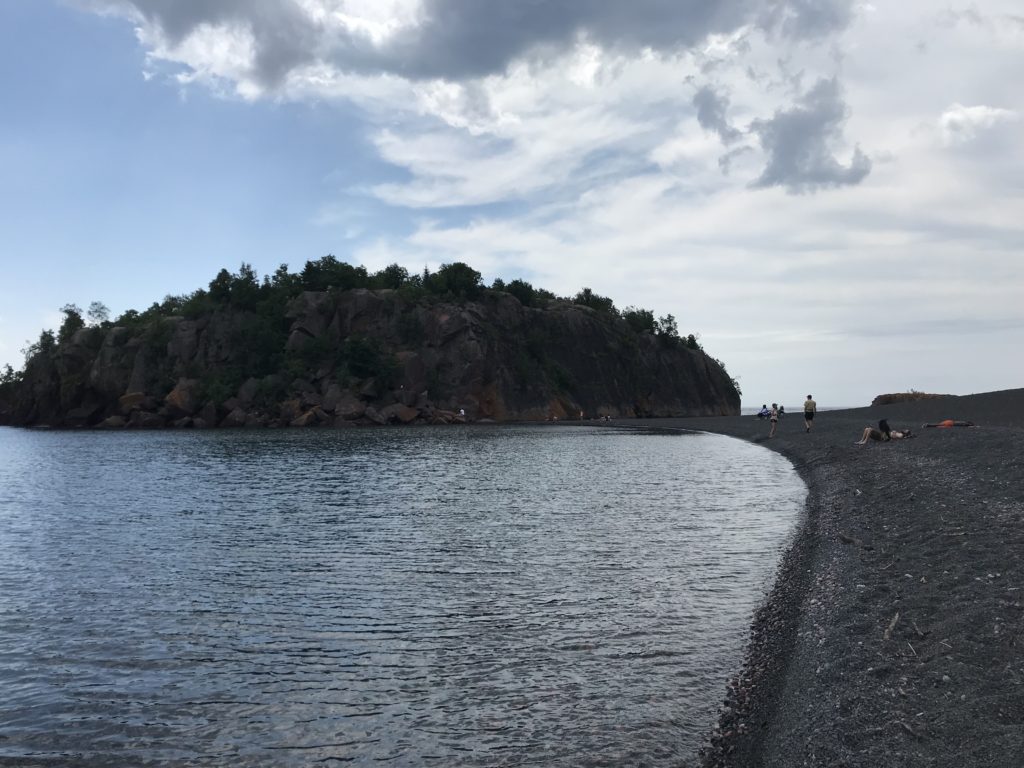
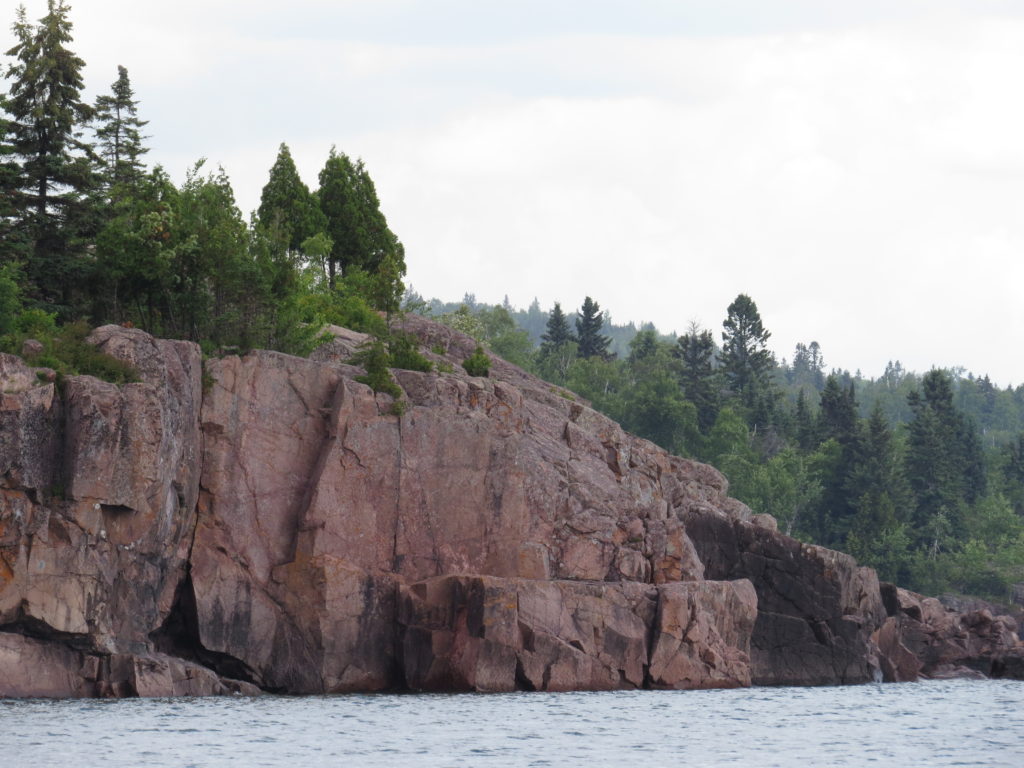
The water was e-x-t-r-e-m-e-l-y cold! Two of us just dipped a foot or a hand in to feel it for ourselves. One walked in for a picture. Two stood knee deep longer than I thought possible, and one brave adventurer plunged his whole body into the frigid Wim Hof experiment. Luckily the sun-warmed black pebbles helped everyone warm up again.
‘Up North’ encompasses a huge territory of lakes, forests, towns, and wild places here in Minnesota. It means different things to different people—the experiences are unique and meaningful to each individual, all while within the comforting clause. Each person defines and holds dear their own ‘up north.’ Lake Superior is the anchor, the expanse, the shining beacon of the North Shore—it is our ‘ocean’ of water. It makes up the body of the spirits and beer we tasted. It epitomizes the power of Nature. Who was the ‘correct’ group when it came to the waters of the Great Lake—the fishermen or the miners? Ideals and lifestyles have been the clashing grounds for eons. So what changes us? My wise friend recounted his personal experiences and those of people he cared deeply for and asked the question, “How do these experiences mesh with my admittedly rigid view of the issue?” It re-opened the question. Is cold water therapy a thing? Dive in and re-open the question. How can anyone drink beer? ‘Try this one’ and re-open the question. Just like the black beach, we can be changed and restored. It’s not about the answer per se; it’s about the question. It’s not about other people; it’s about ourselves. It’s not about correctness; it’s about possibilities. Perhaps the next time we meet on the North Shore I will be drinking coffee—who knows?!