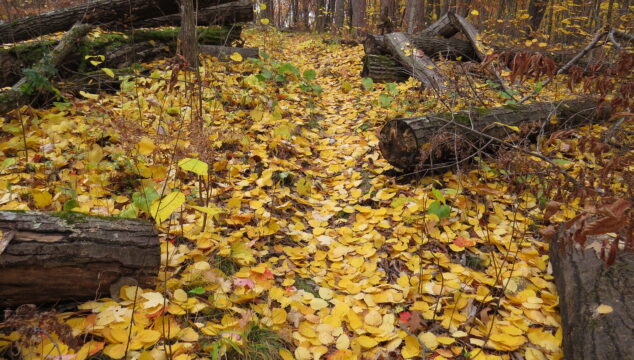
Come walk with me in the peak Autumn beauty of the Northwoods. To say that I love this time of year is an understatement. Most everyone can appreciate the colorful falling leaves---it reveals the 'true self' of a tree when its leaves are no longer producing chlorophyll. Their true colors are revealed, and there is something simple … [Read More...]
The Snow is not Finished With Us Yet
When we are young, we are mostly oblivious to the things we carry or the burdens we bear. Not a child gets through childhood without shouldering the responsibilities or the feelings of someone else. It is so universally prevalent that I have come to accept this anomaly as the norm, even as I balk at the idea that that should be so. But to rail against something that ‘should not be’ when it is actually ‘the way of the world’ is plainly unproductive. My idealism gets covered over by realism.
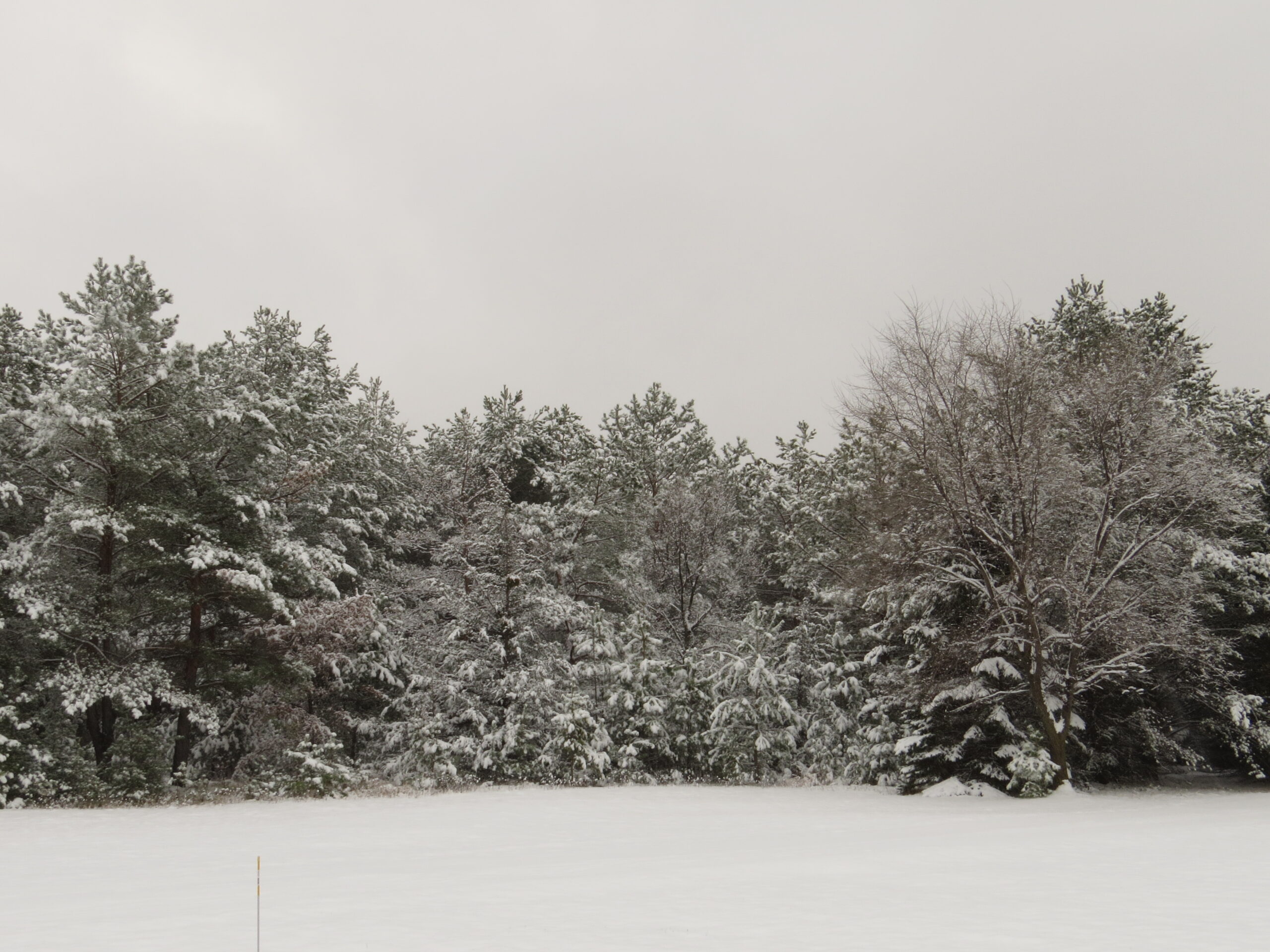
I get a shiver of excitement when I rise in the morning, and as the light slowly wakes the day, I see the brightness of ‘snow light.’ The first substantial snow of the season fell early Monday morning and continued for the next couple of days. It was a slowly accumulating snow, lazy and small-flaked with the stingy, lingering drought. But the moisture–laden snow (thanks to the 30 degree temps) stuck to the trees, transforming the gray November to white. The sky remained cloudy and heavy when I walked the back trail—the snow was not finished with us yet.
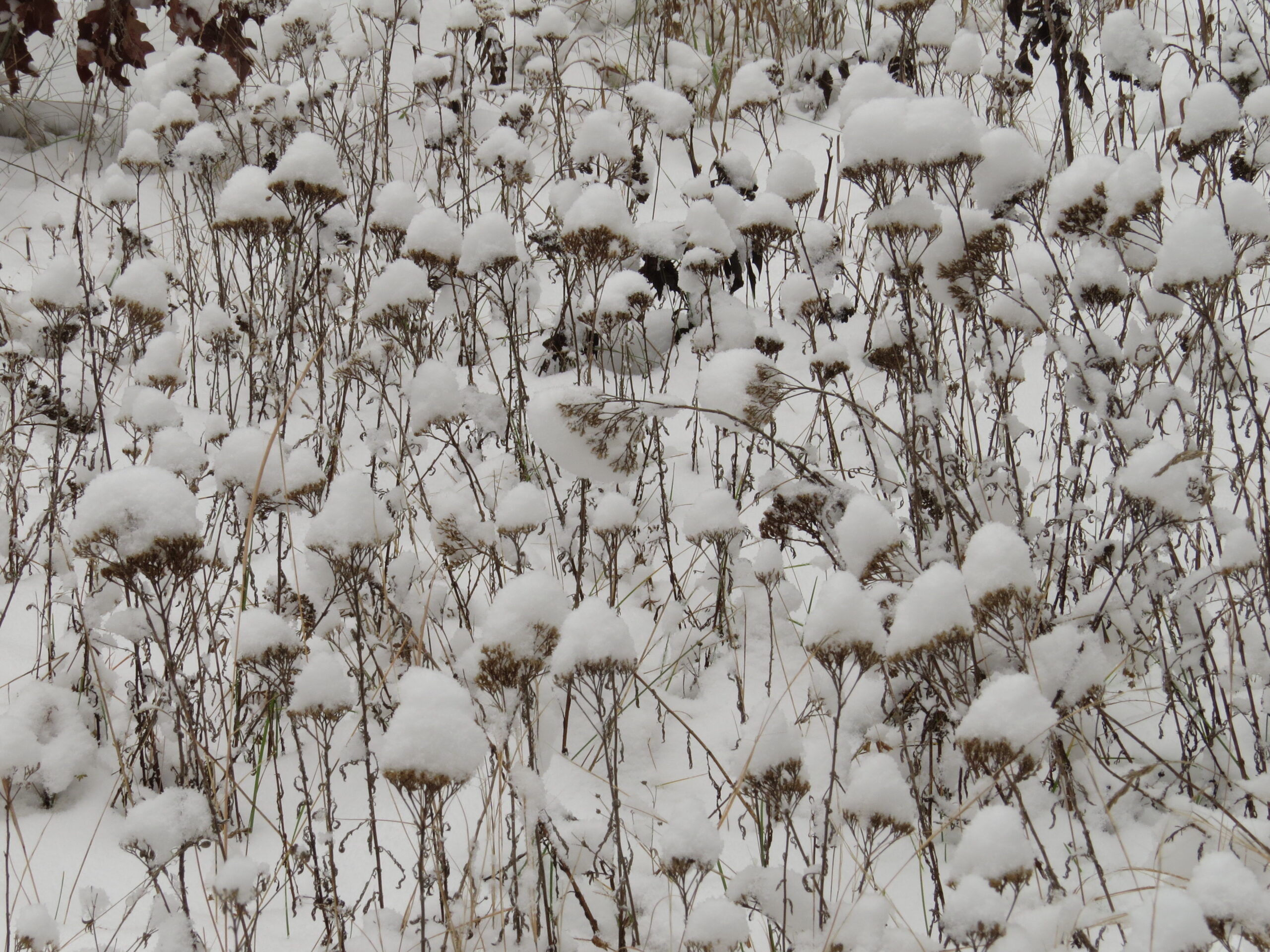
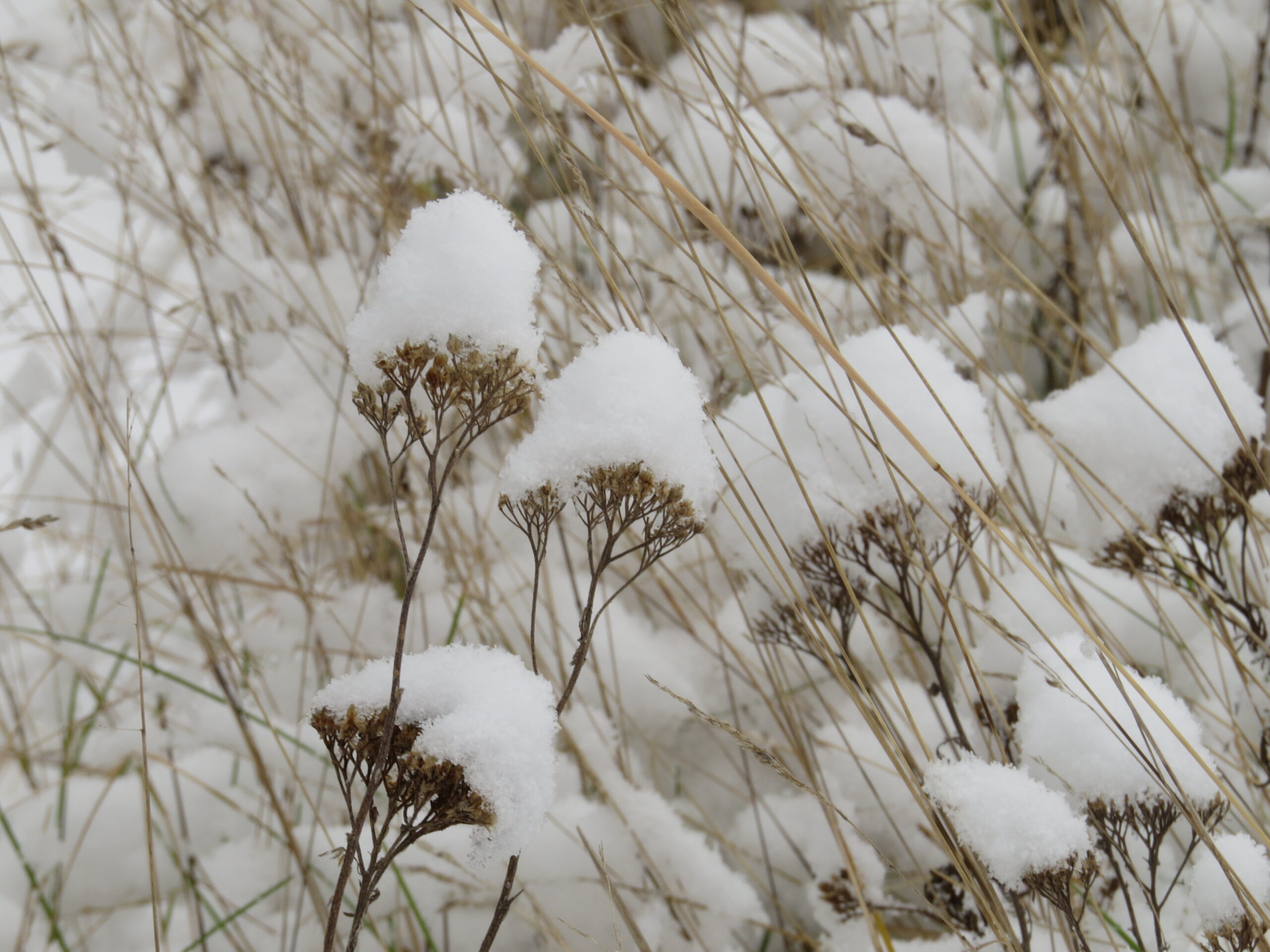
As I walked, I noticed how the different plants ‘wore’ the snow. The stiff seedheads of the Yarrow flowers each had elaborate, conical headwear, like a fluffy ermine hat fit for royals.
The short needles of the Jack Pine trees held little cotton balls of snow and looked like they were wearing puffy coats….
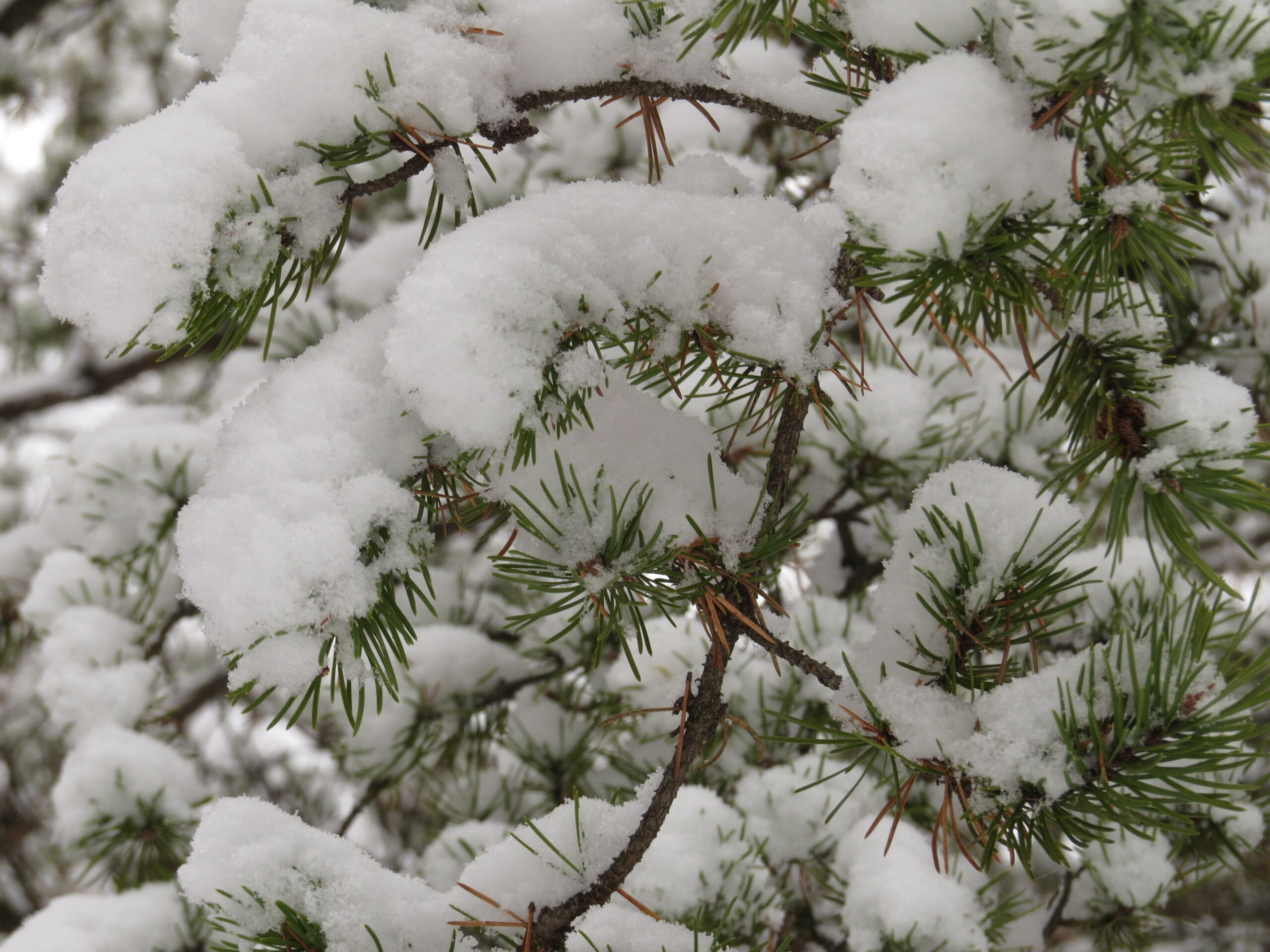
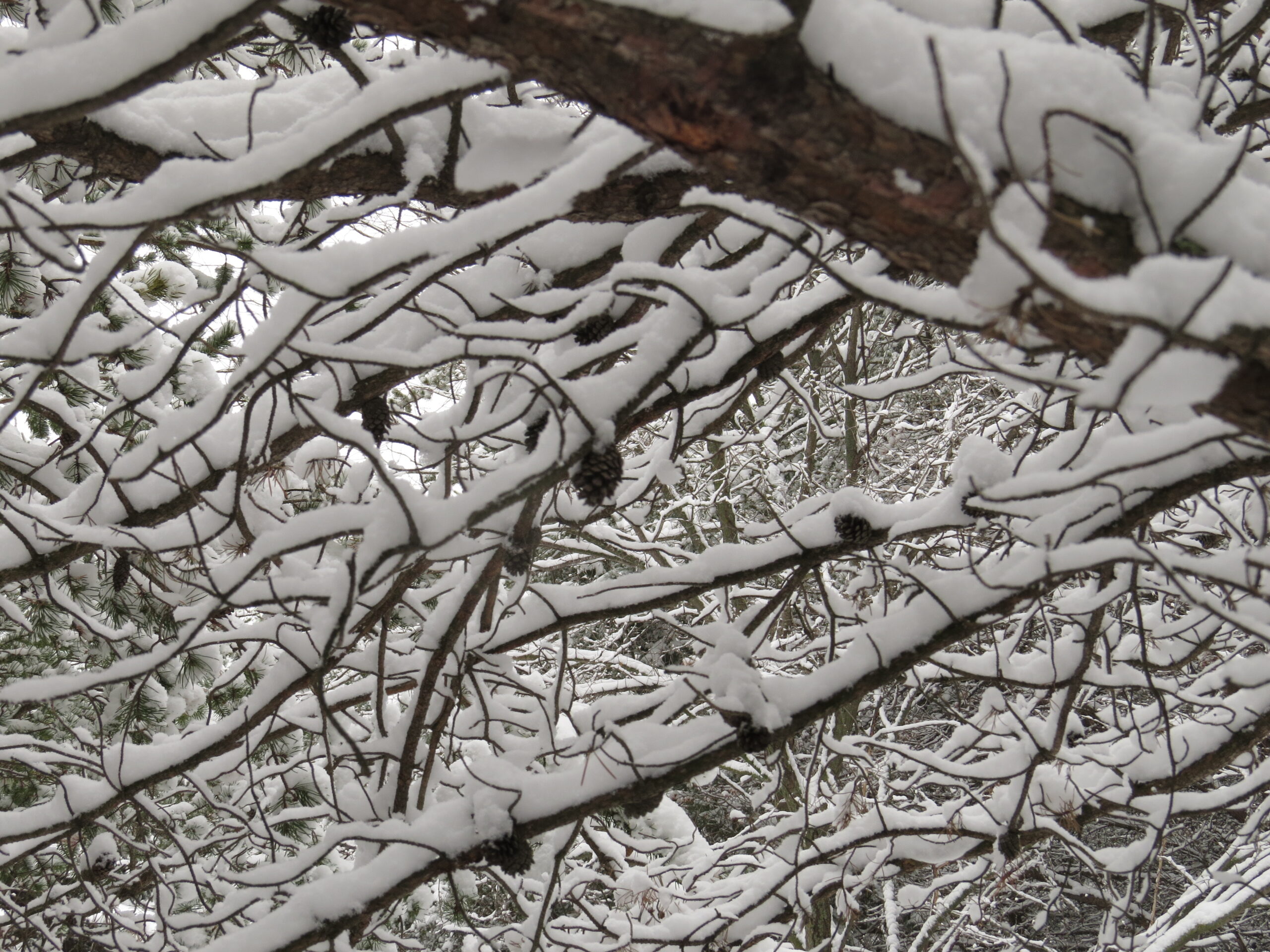
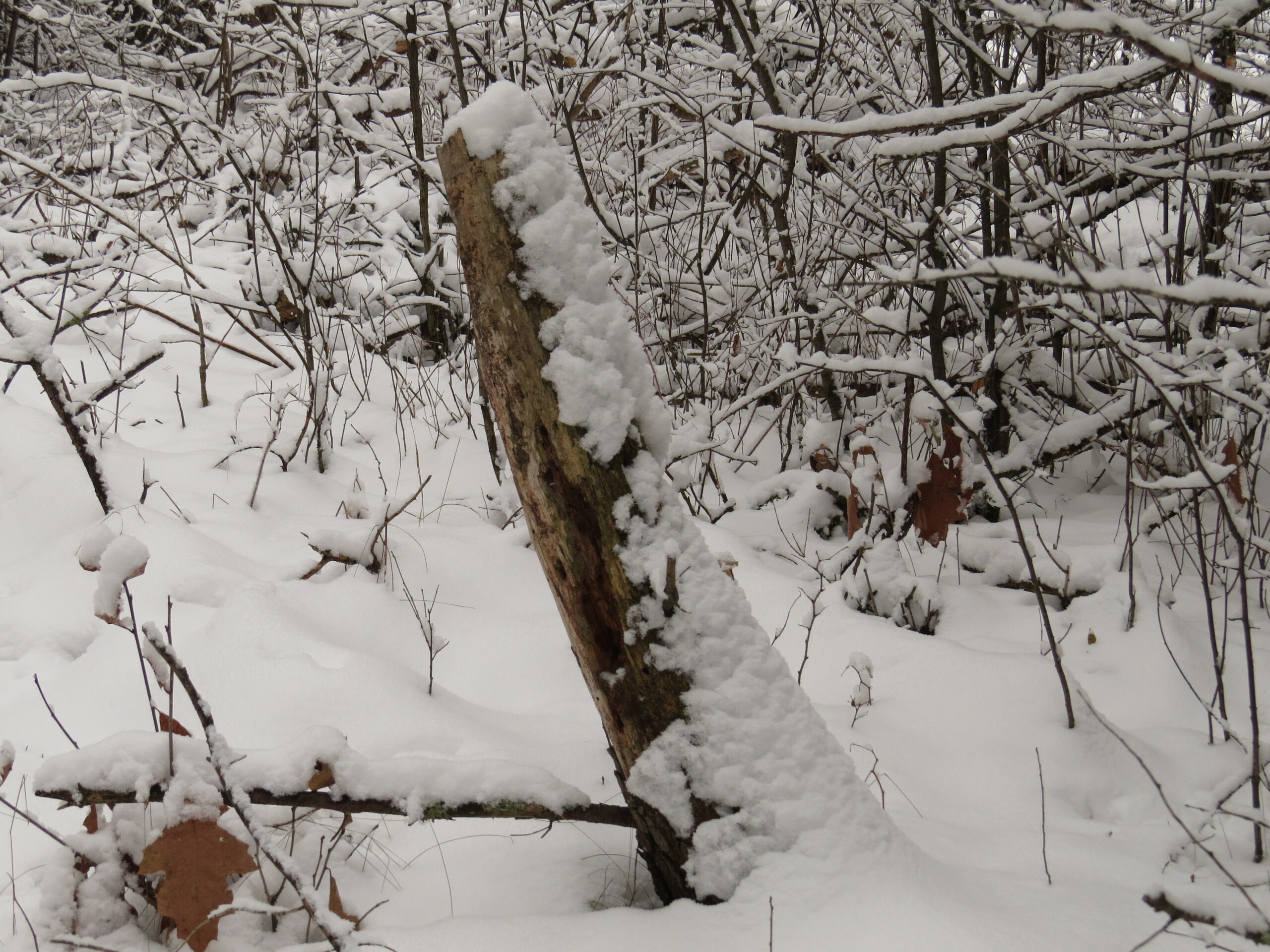
but it was a different story for the tall Jack Pine that had died the year before. Brittle branches and old cones stiffly held the snow in long lines. Some things we carry are cozy and comfortable; others should be held at arm’s length or left to die.
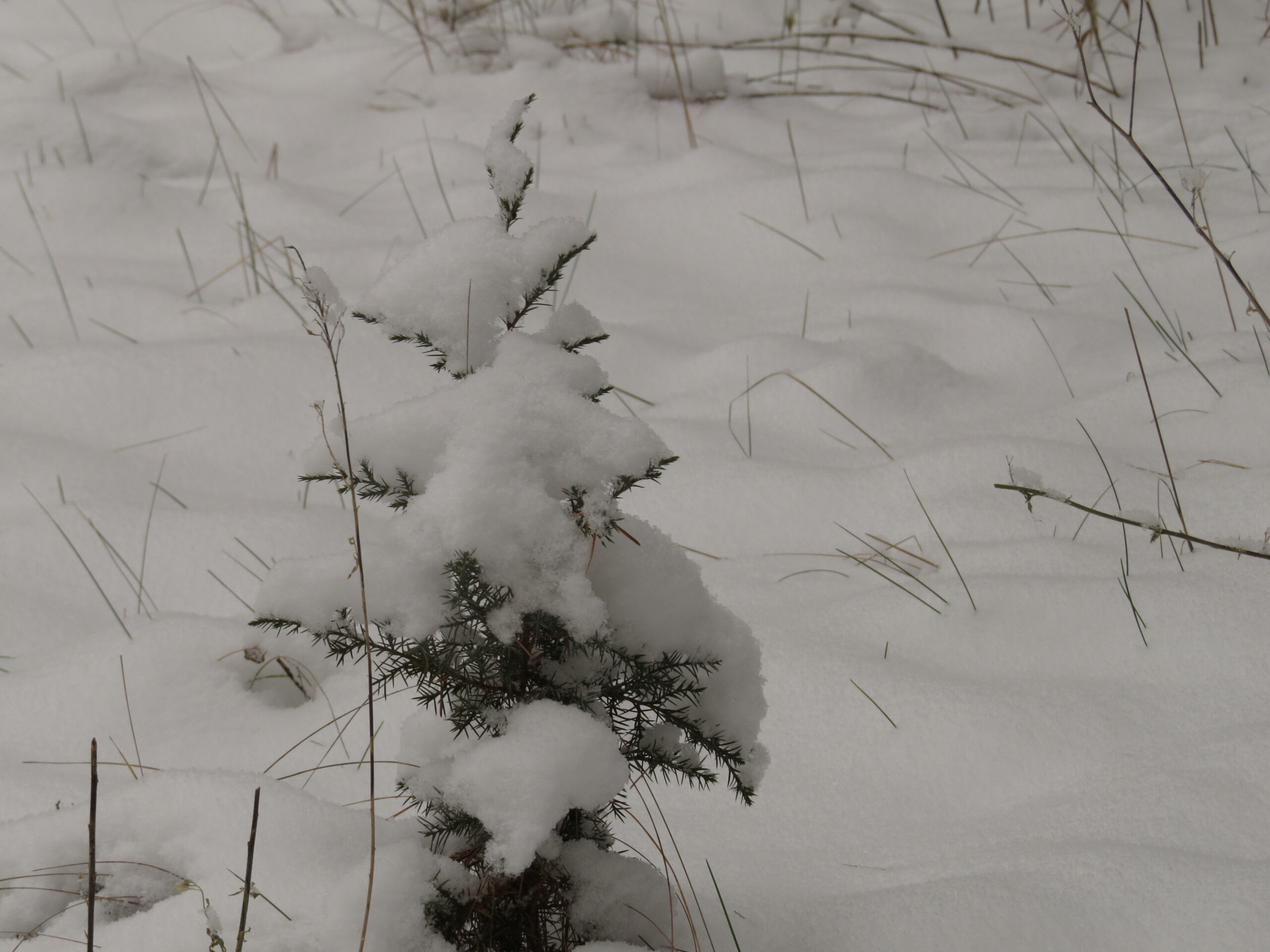
A little Eastern Red Cedar tree almost disappeared under the blanket of snow, for its young, supple branches were able to carry the load.
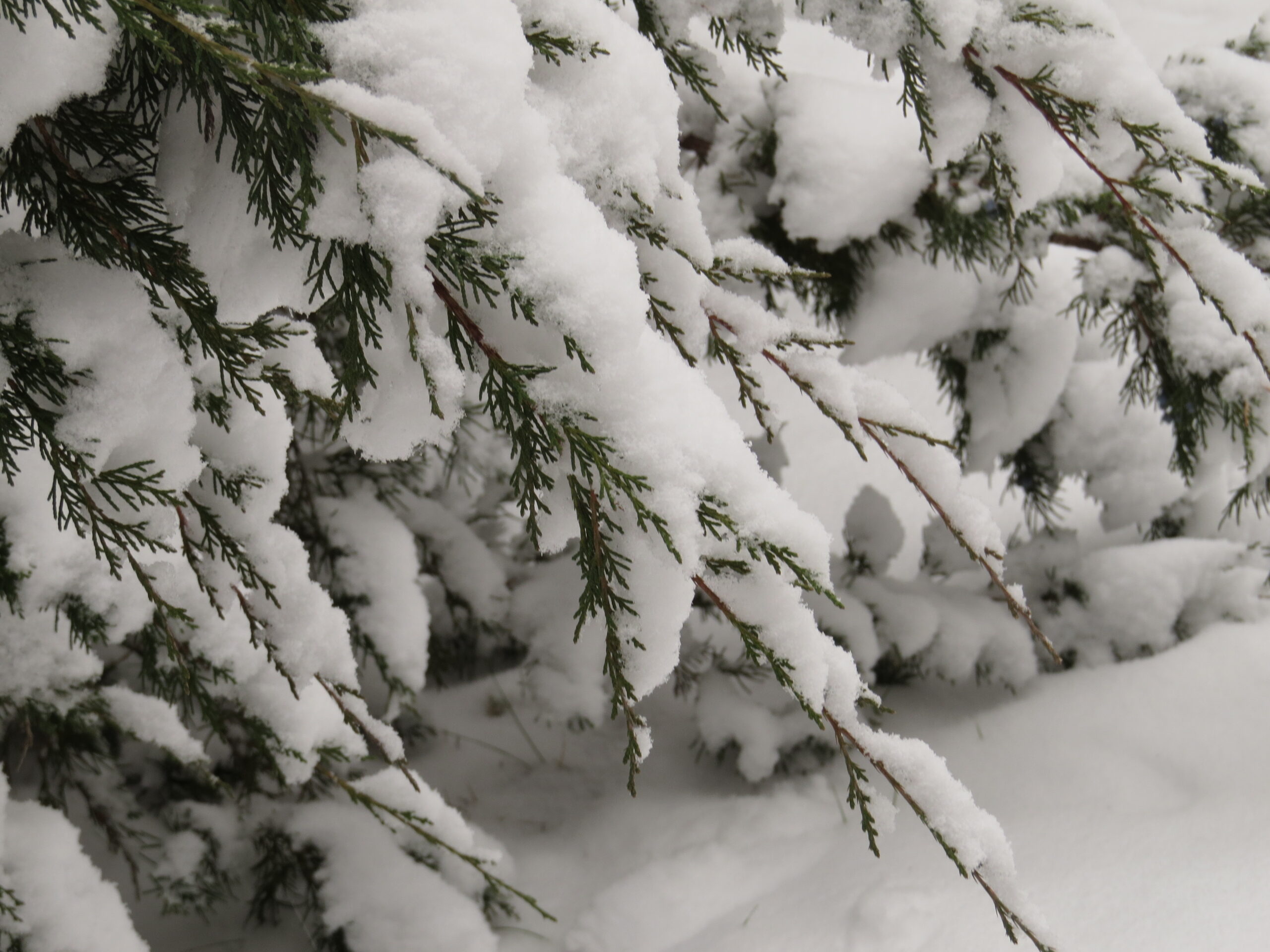
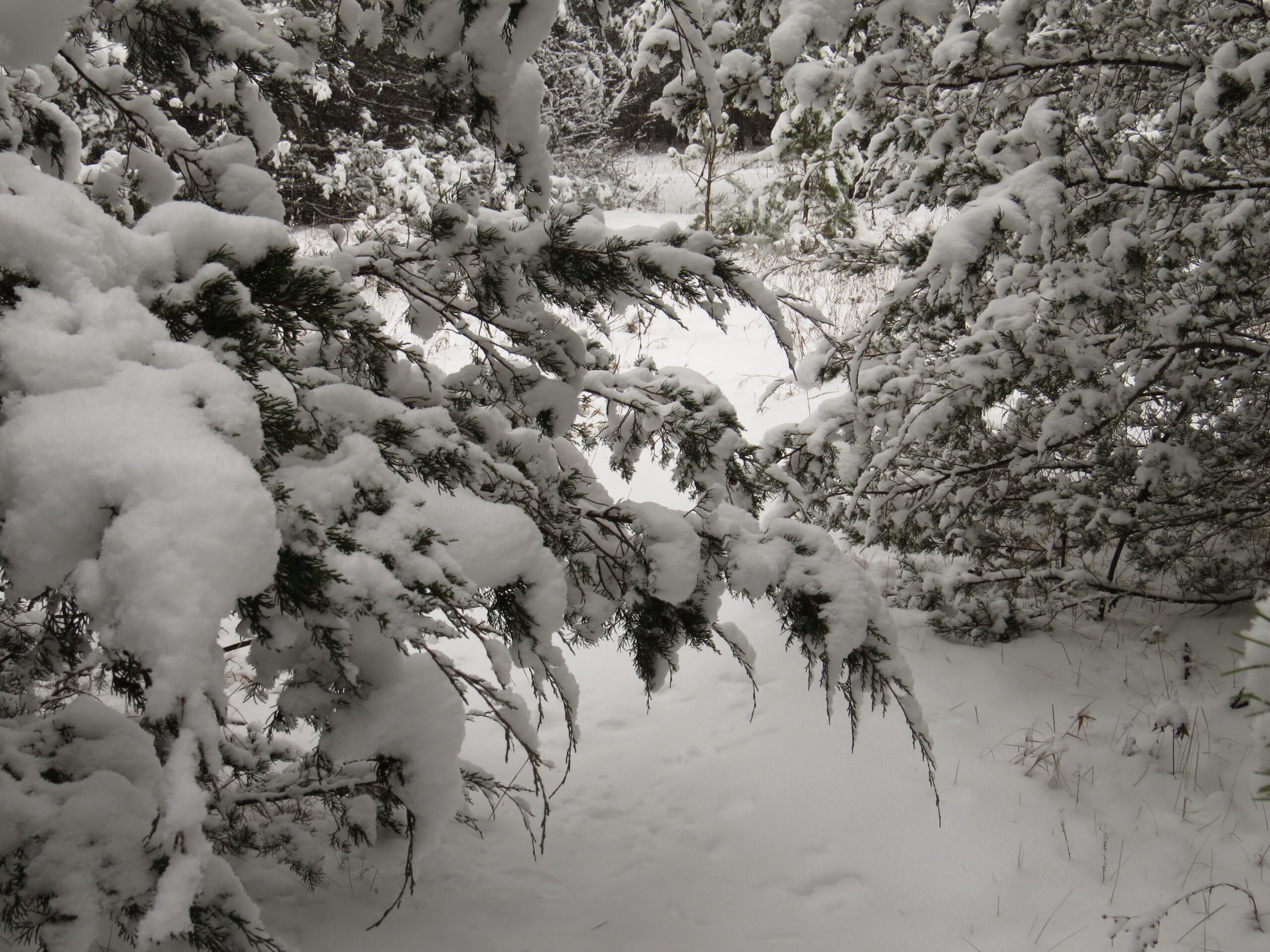
The older Cedars, still sturdy and tough, drooped with the weight of it, but were also able to bear a tremendous load of snow. Some things we carry make us strong.
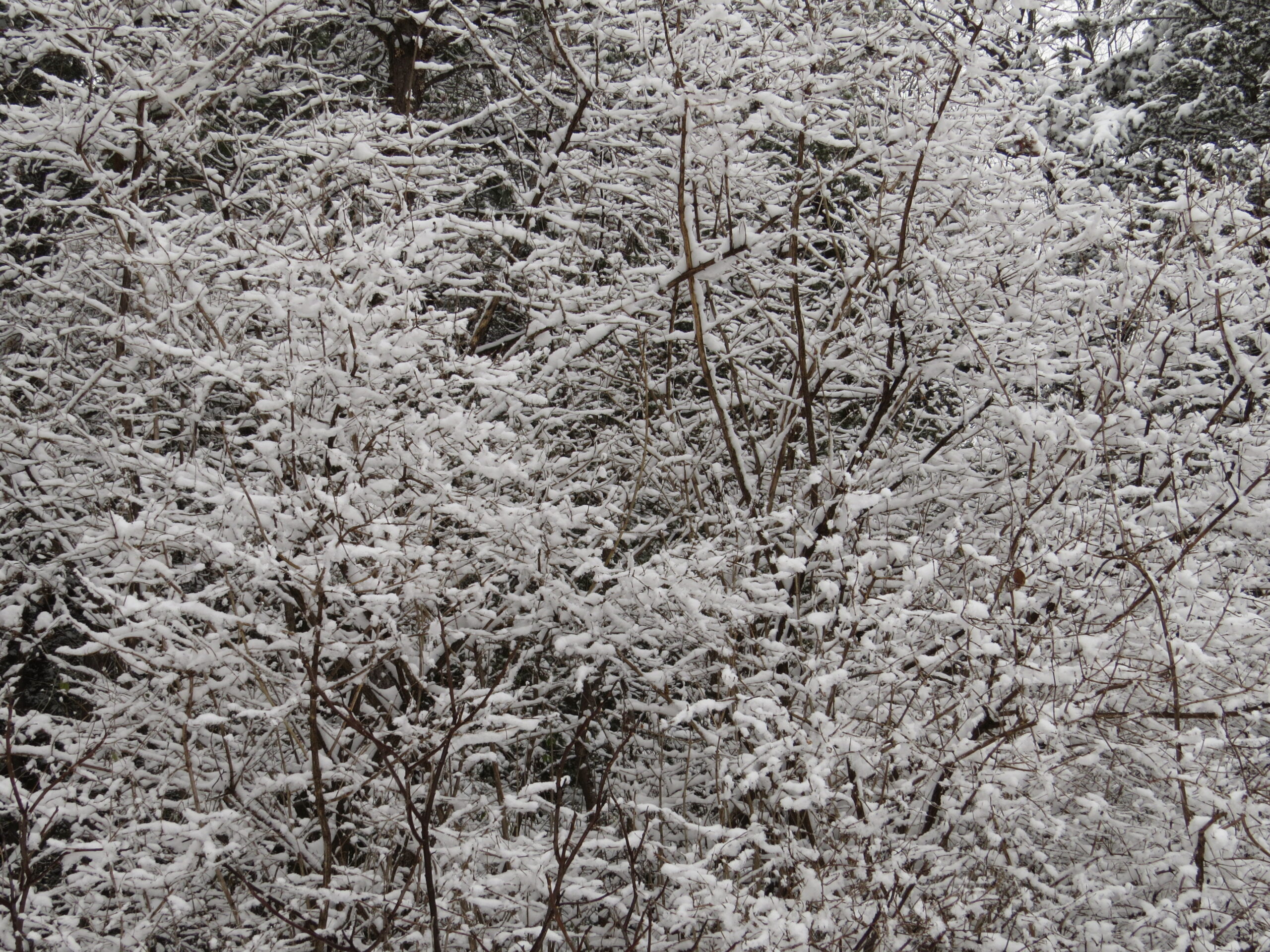
The Honeysuckles were clothed in an intricate maze of lacy white, each delicate branch outlined with snow. More pretty than heavy. Some things we carry help to make us beautiful.
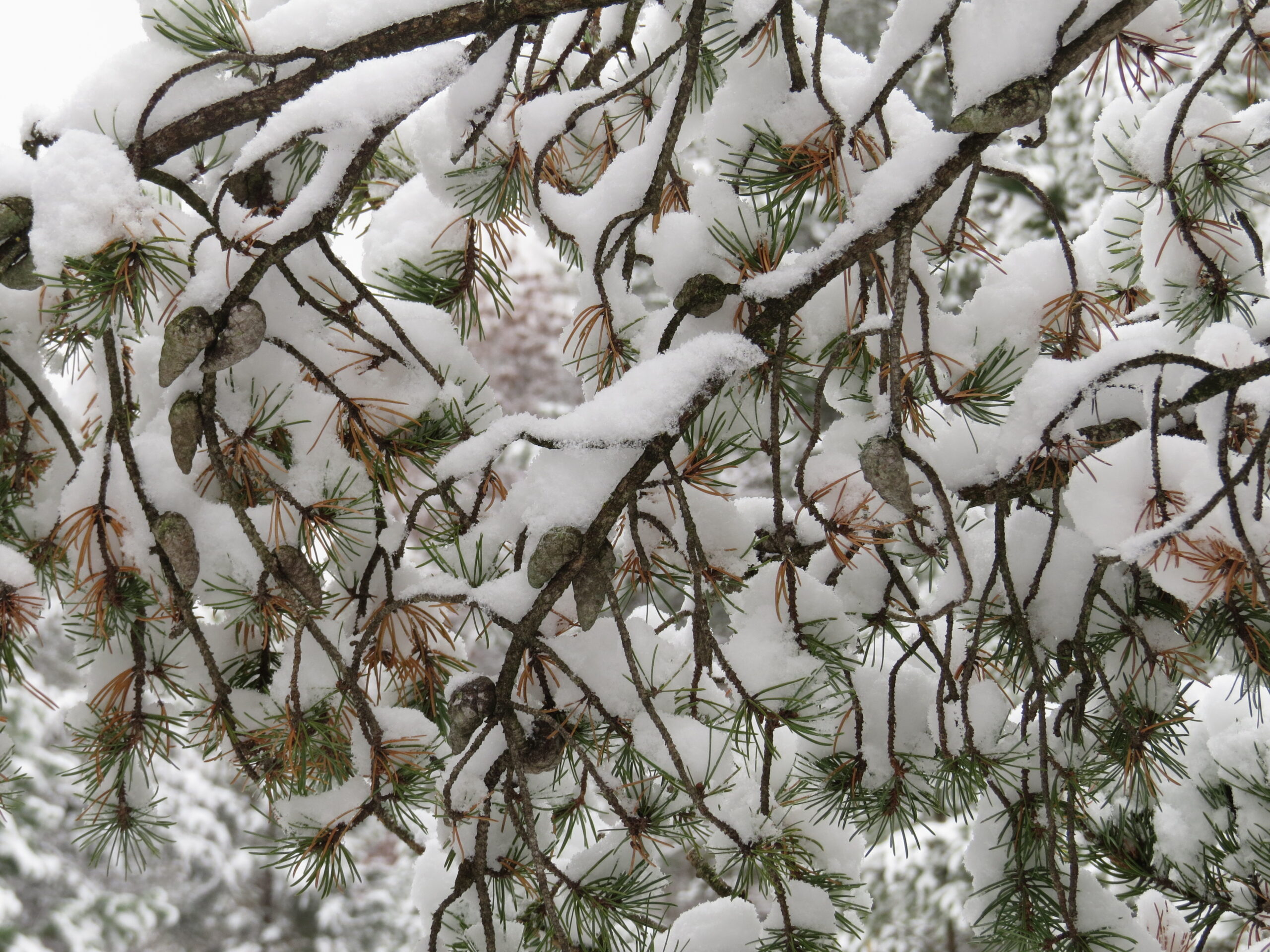
On the trail, a newly-fallen Jack Pine partially blocked the way. Green and brown needles, old cones, new cones, and dying branches held up a canopy of snow. Some things we carry are ambiguous.
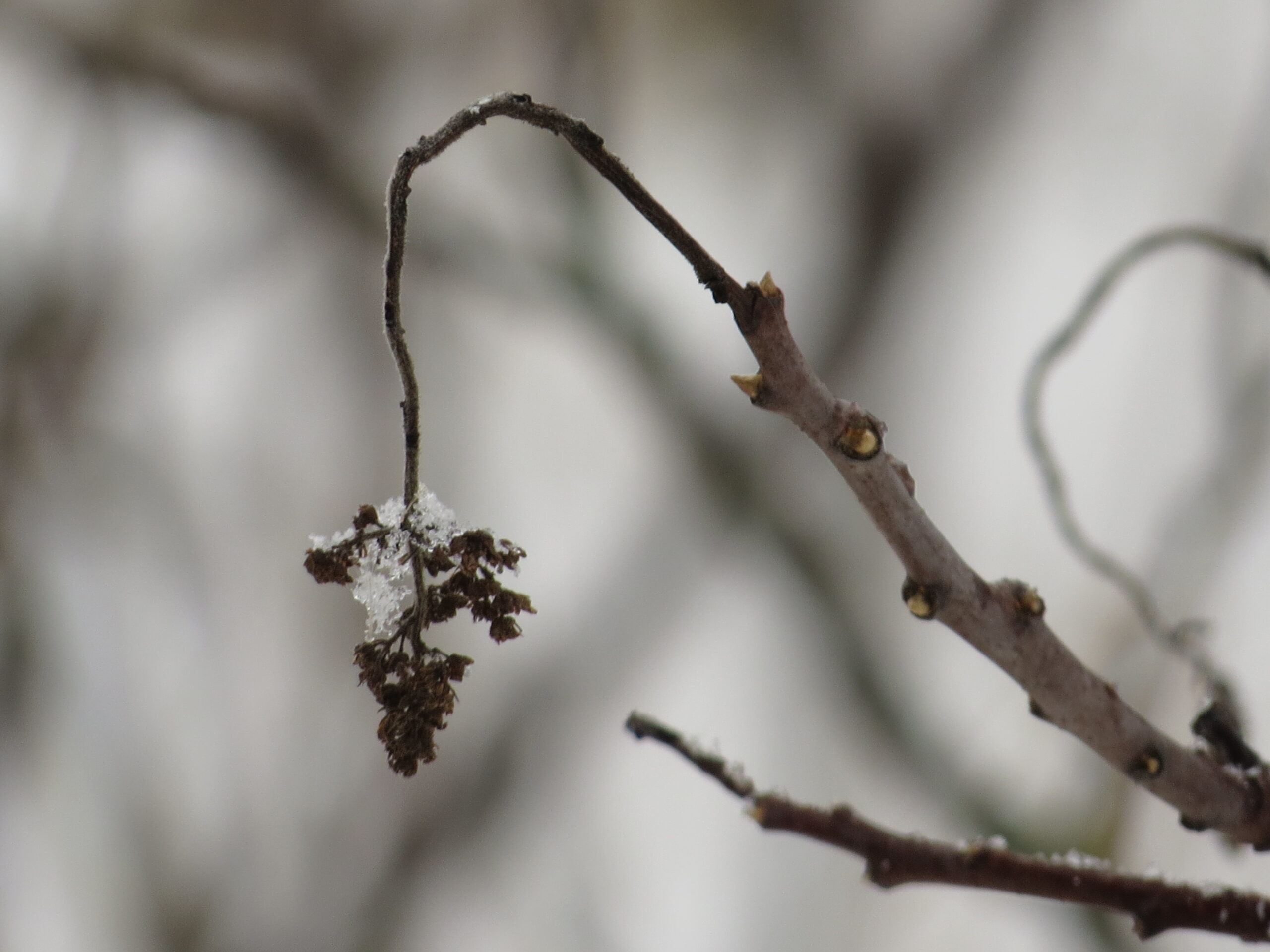
On the other side of the trail, small Sumac trees that had borne their first small flowers and fruits, were bent over from the weight of the seedhead and wore a crystal shawl. Some things we carry were ingrained at a very young age, yet protect us in a delicate way.
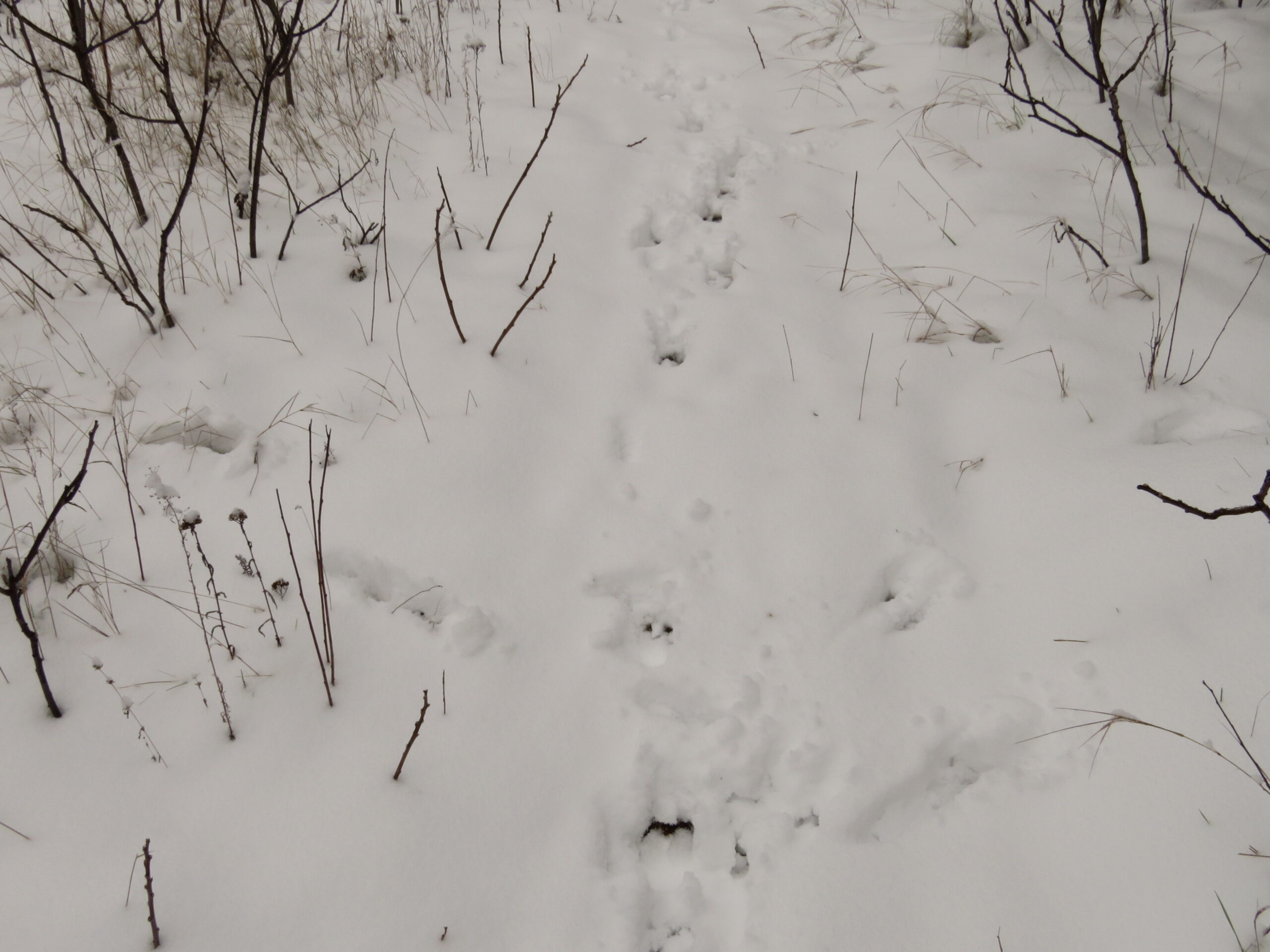
I was not the first creature to walk in the fresh snow—the deer had already made tracks down the trail (and through the yard). Their stealth visits are now recorded in snow, along with…
the wild turkeys…
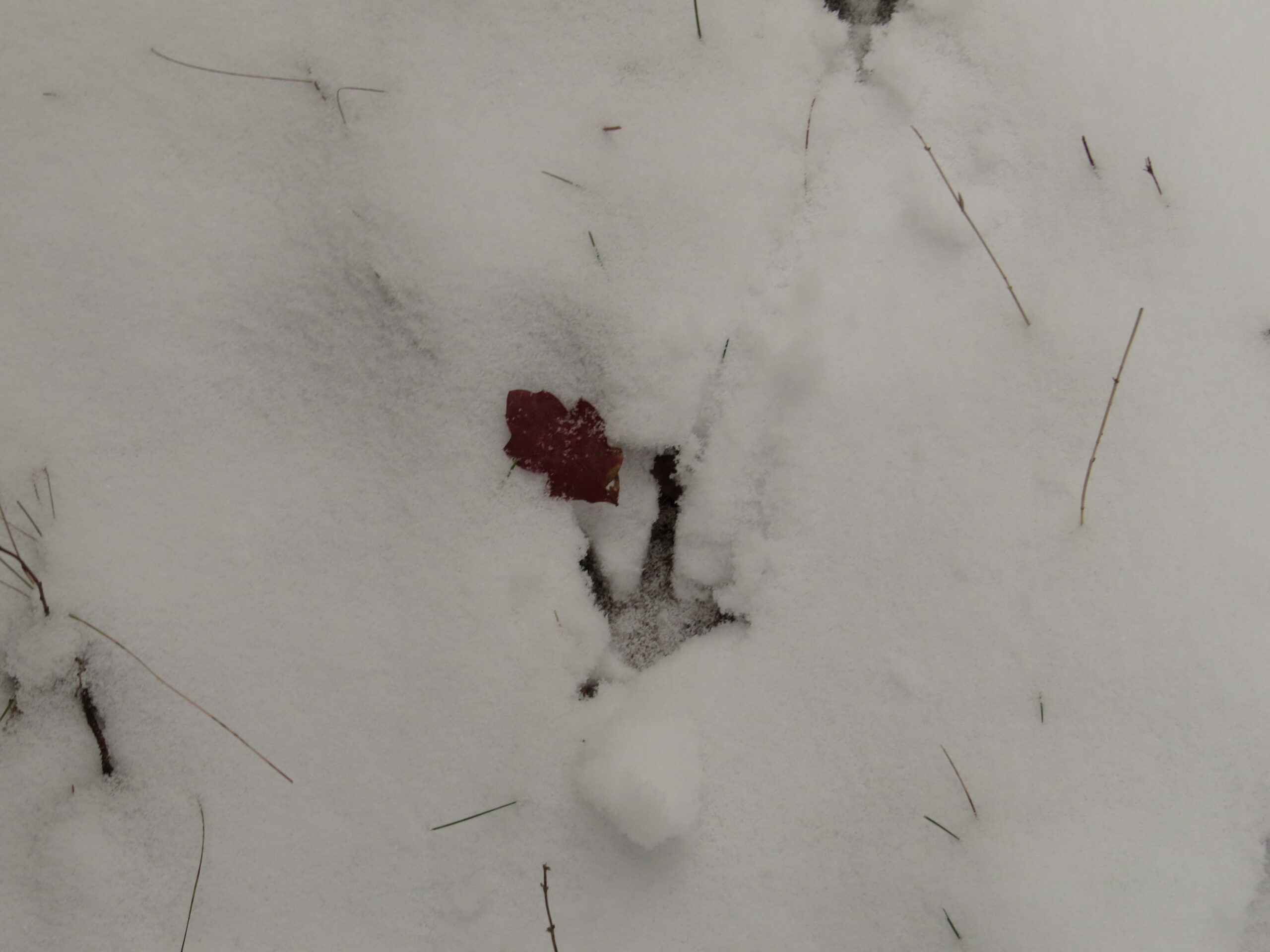
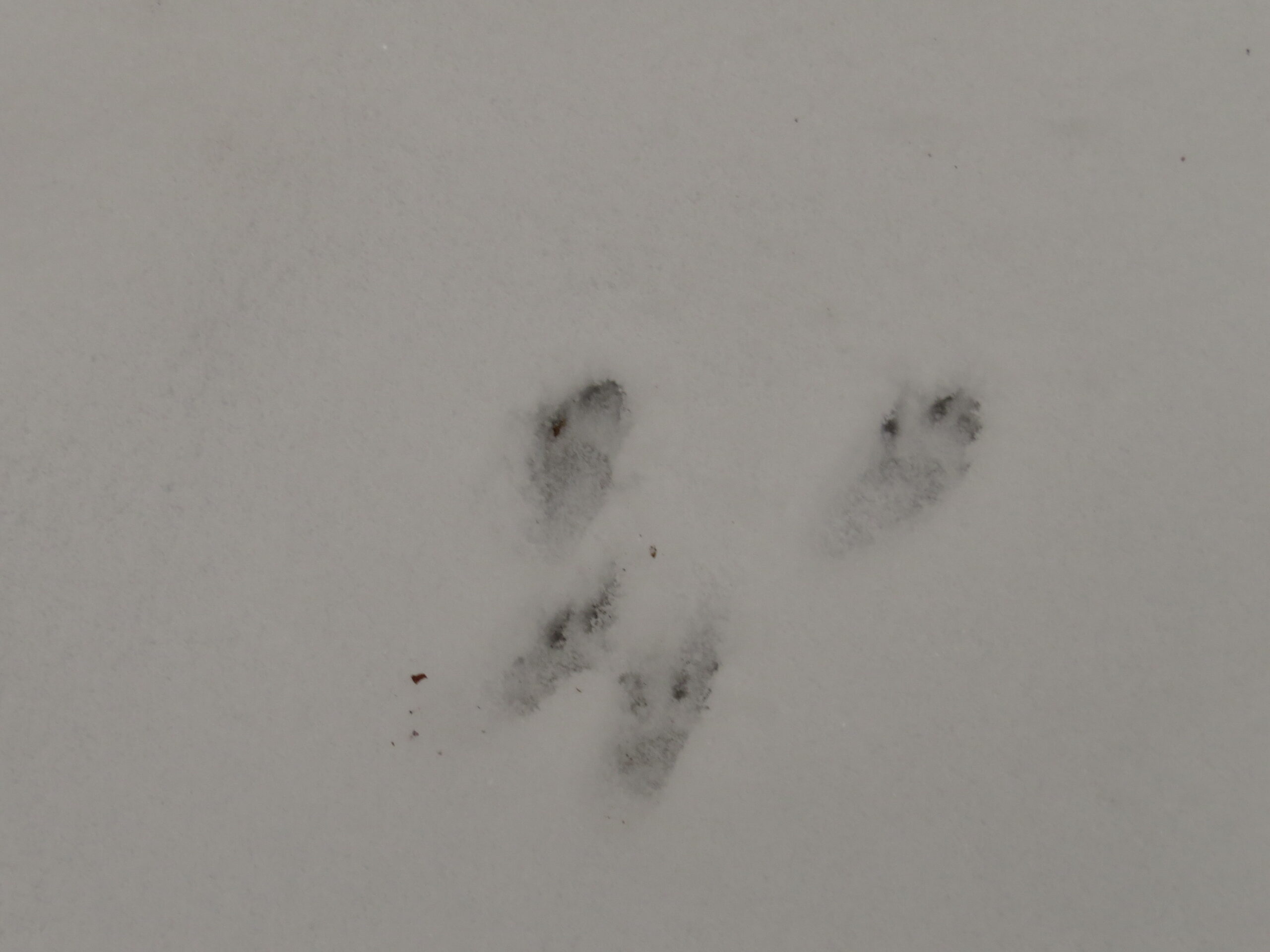
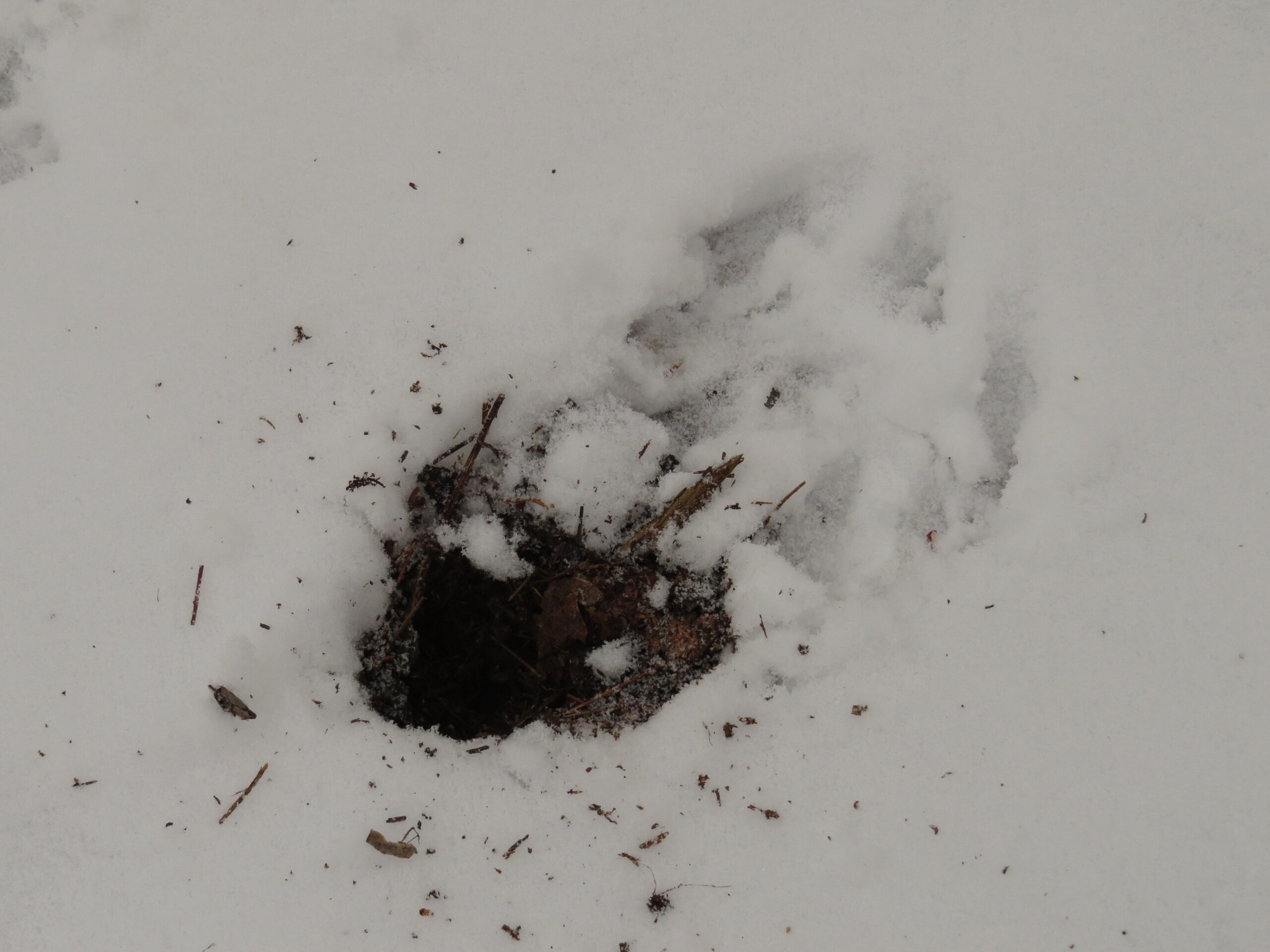
and the squirrels, all of whom dig through the snow and leaf litter to find food. With snow and burdens come accountability.
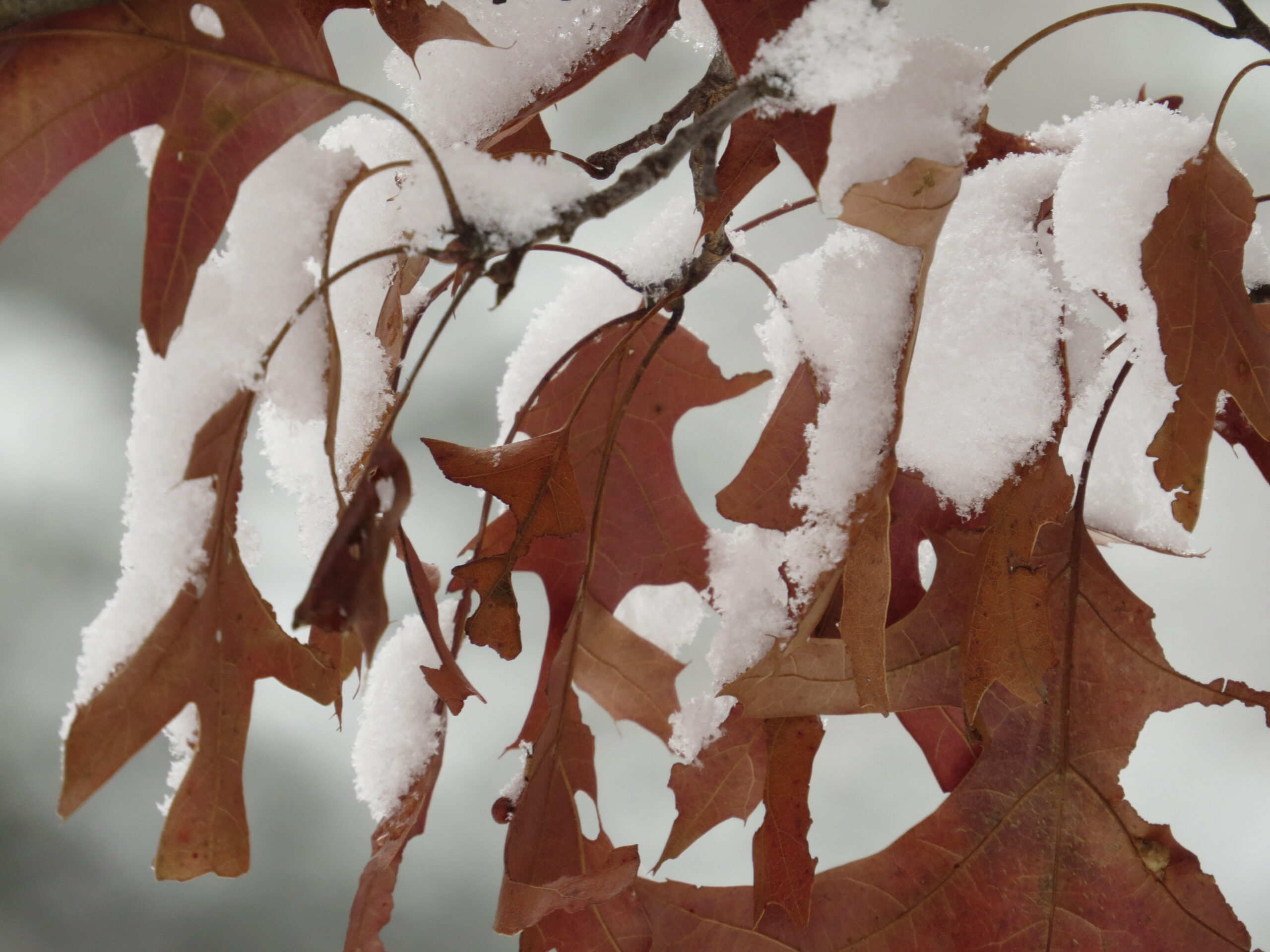
The Red Oak leaves that cling to the branches for most of the Winter are cloaked in the contrasting snow. Some things we carry become the antithesis of who we want to be.
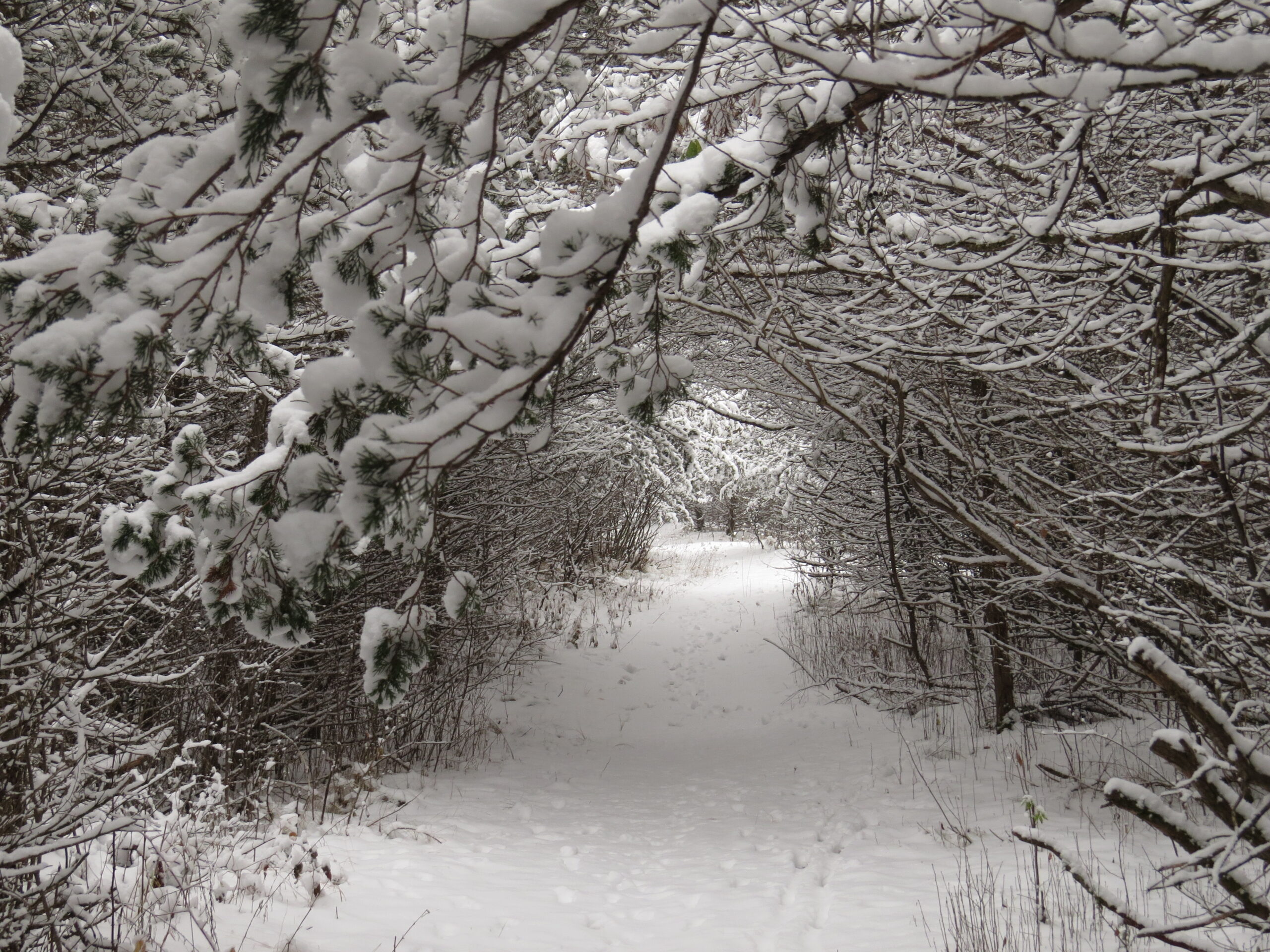
The burden of snow bent the branches over the trail, blocking the way. There was no way of passing without shaking the snow off the trees onto myself. Some things we carry block our pathway of life, covering us in ways that seem insurmountable. Part of the learning journey is figuring out how to shake it off.
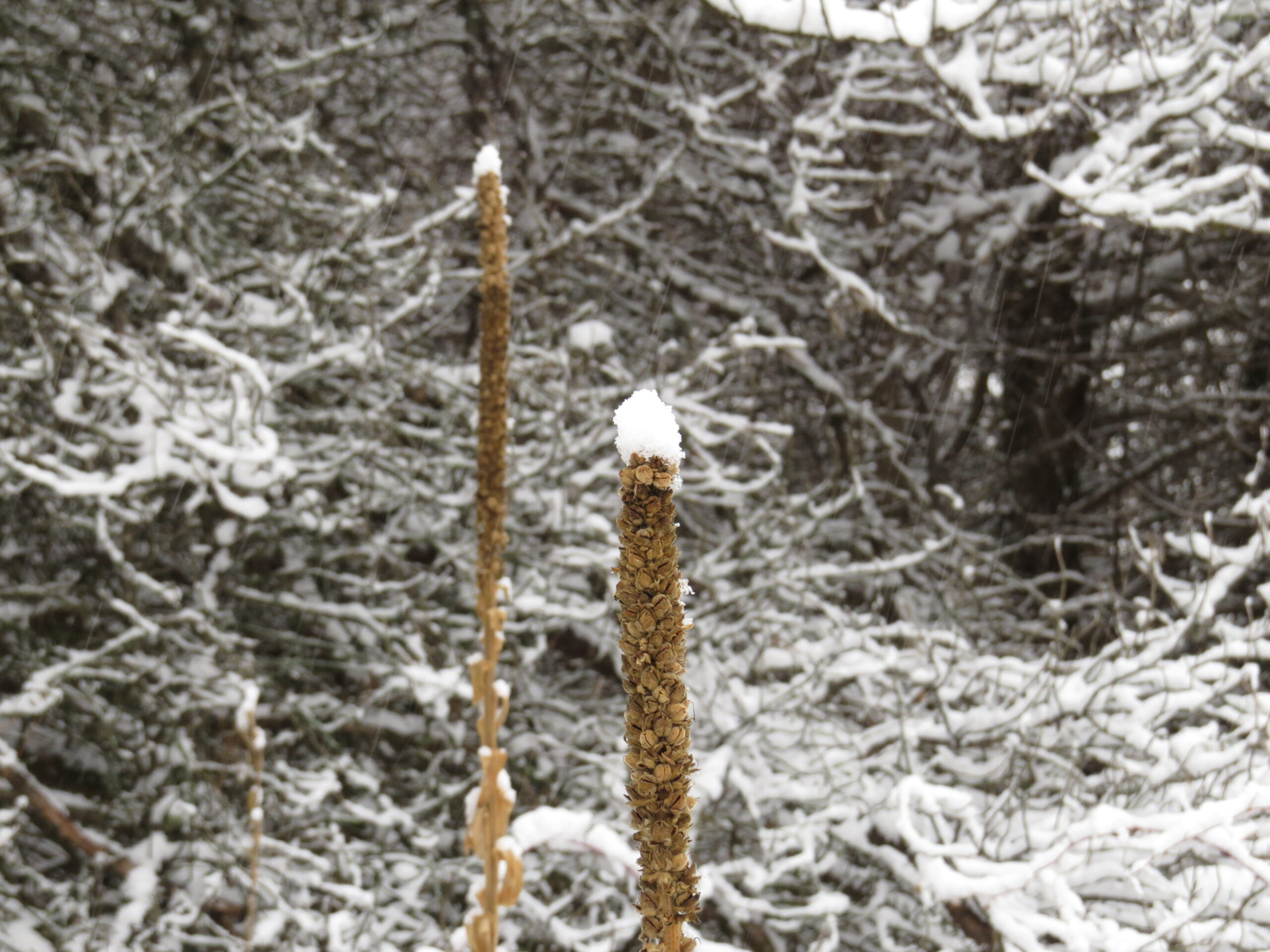
Even the spikey Mullein seedheads sport the snowy attire. Unlikely solutions can present themselves to us when we least expect it.
It was truly a silent Winter wonderland for me and the creatures who had passed through the woods before me.
Each tree, structure, and plant held the snow in its own unique way.
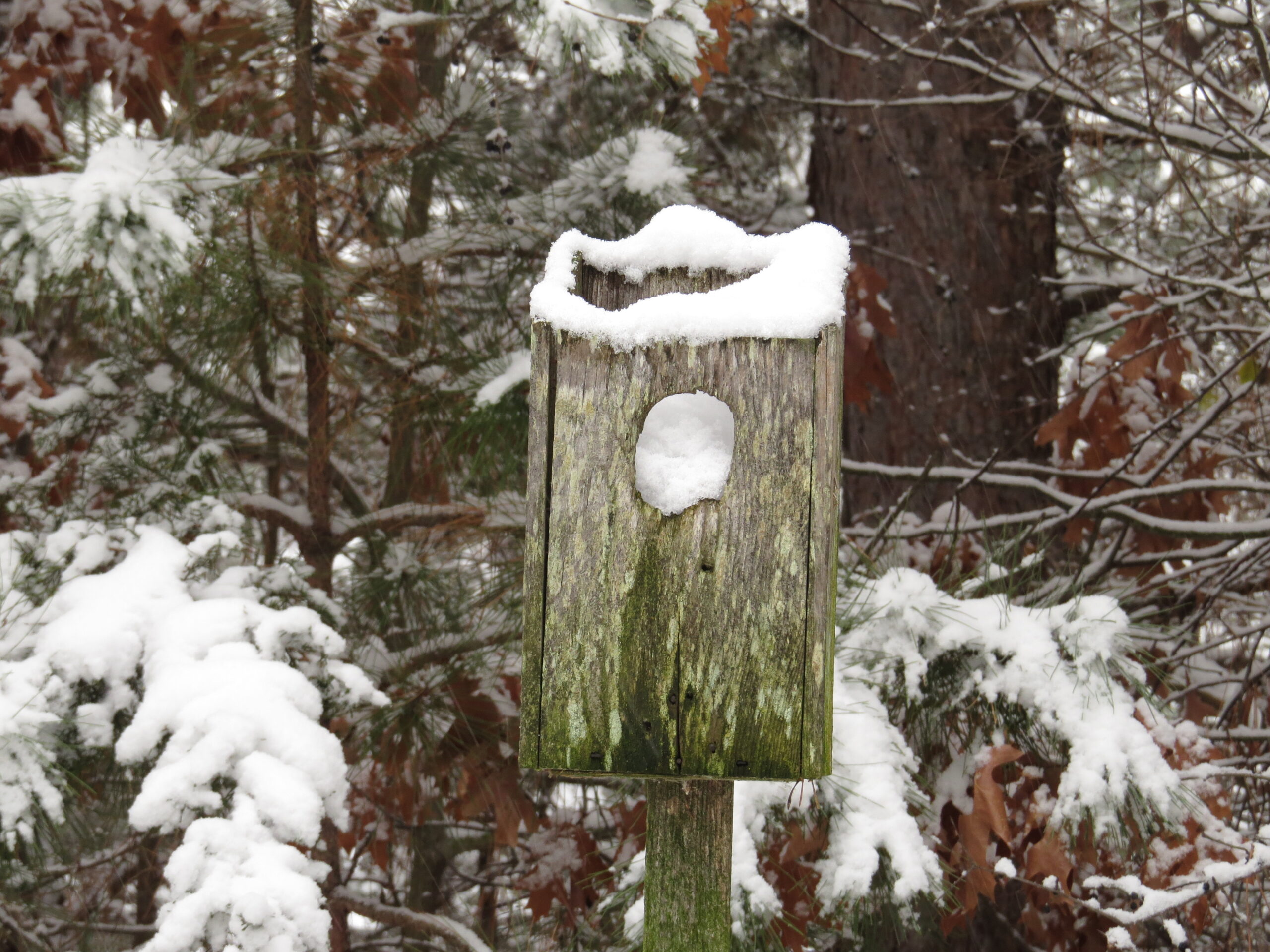
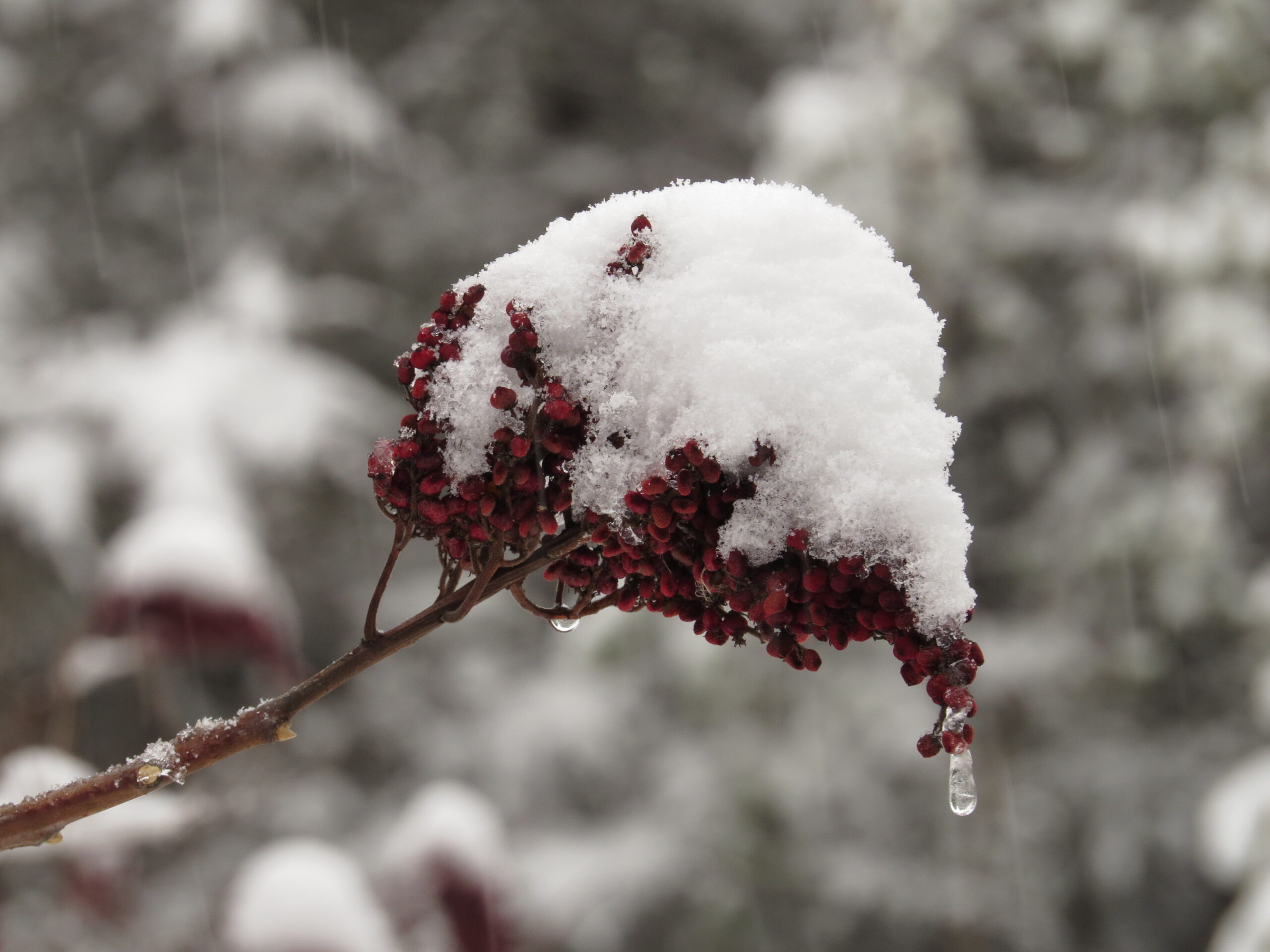
Snow in the North is a way of life. I cannot help but smile when I see snowflakes drifting from the sky. It is still a child-like wonder to me. But there are plenty of distractors, disdainers, railers, and complainers. How do you ‘wear’ the snow? And how is the snow an analogy for the things we carry, the burdens we unwillingly bear? It doesn’t have to be ‘snow in the North’ that ‘shouldn’t be’ according to us—it can be ‘the government,’ ‘the libs,’ ‘MAGAs,’ ‘the church,’ ‘heathens,’ ‘the super wealthy,’ ‘poor people’—all a realistic, present, integral part of ‘the way of the world.’ We all have our own ‘scapegoats’ that bear the burden of our own burdens, knowingly or unknowingly. We want to shake them off onto somebody or something else. It seems easier that way. But the snow shows us our tracks. We are accountable to ourselves for the burdens we find draped across our shoulders and for the journeys we take in life. And that brings me back to my acceptance of the anomalies of life—those ‘out-of-the-normal’ norms. As prevalent as the struggle is for each and every one of us, I now regard it as our work—the spiritual work of our lives. It takes the pressure off of us in a way, while at the same time, our struggle-work becomes our very own—our power is not co-opted or controlled by the other person, the media, the government, the priest, boss, or partner. No need for scapegoats. It’s just me and Thee. We are beautiful and strong, and the snow is not finished with us yet.
The River Becomes a Road
There have been a number of times in my life when things are moving along quite smoothly, when all of sudden I am pulled up short. Stopped in my tracks. Now what? Now what the holy heck do I do?
I have a 1924 photo of my Grandmother dressed in trousers and a wide-brimmed hat standing in front of a large horse-drawn wagon that was loaded with all the family possessions. They were moving from North Dakota back to South Dakota. Imagine packing up your entire household into a wagon pulled by horses or oxen and traveling across the prairie! Many times when I see the Mississippi River, I think about the pioneers who traveled across the country in their covered wagons and were stopped in their tracks by the sight of the Great River. Now what do we do?
************************************************************************
I wrote the words above three weeks ago—and then, I got stopped in my tracks. The administrative side of my website was being all sorts of crazy—not saving my writing, not importing photographs, not sending messages to the web host. Now what the heck do I do?! Since I couldn’t finish my post, I did the only other thing that made sense at the moment—I made cookies! Lol! But the irony was not lost on me. My title ran through my mind again and again—the river becomes the road, the river becomes the road. Just as I was stopped in my tracks, I got a notice that it had been seven years since I had signed up for my website. Seven years. Nearly 400 posts. Was this obstacle trying to tell me something? Was this the end of the road? Was it time to settle on this side of the River and forget the crossing?
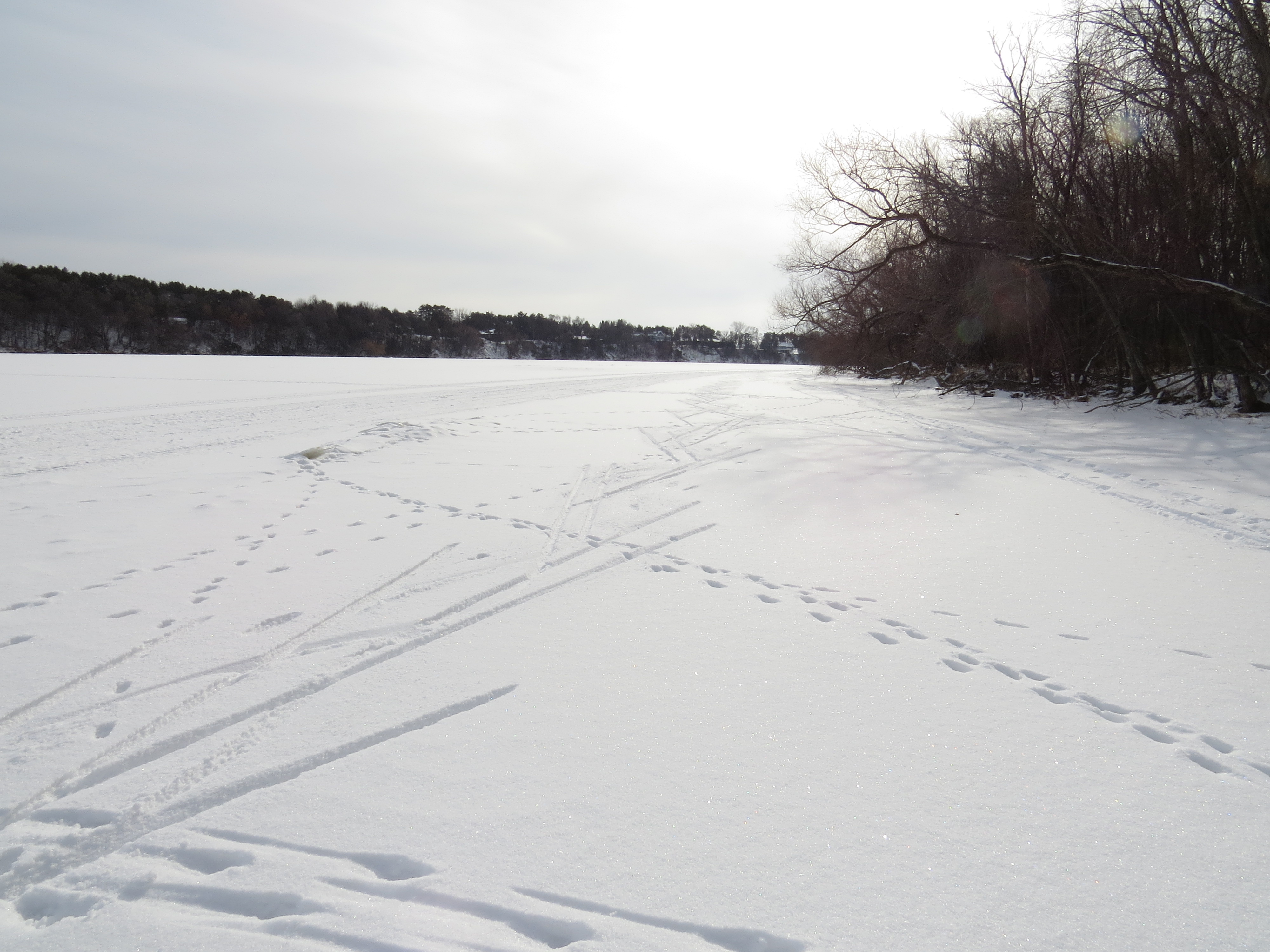
It was the frosty day we hiked at Bend in the River park, looking from the high bluff out over the River ice, that I noticed the tracks crossing the River. The deer and the fox are the first ones to venture across the ice. How do they know when it’s thick enough to hold them? How do they know when it’s safe?
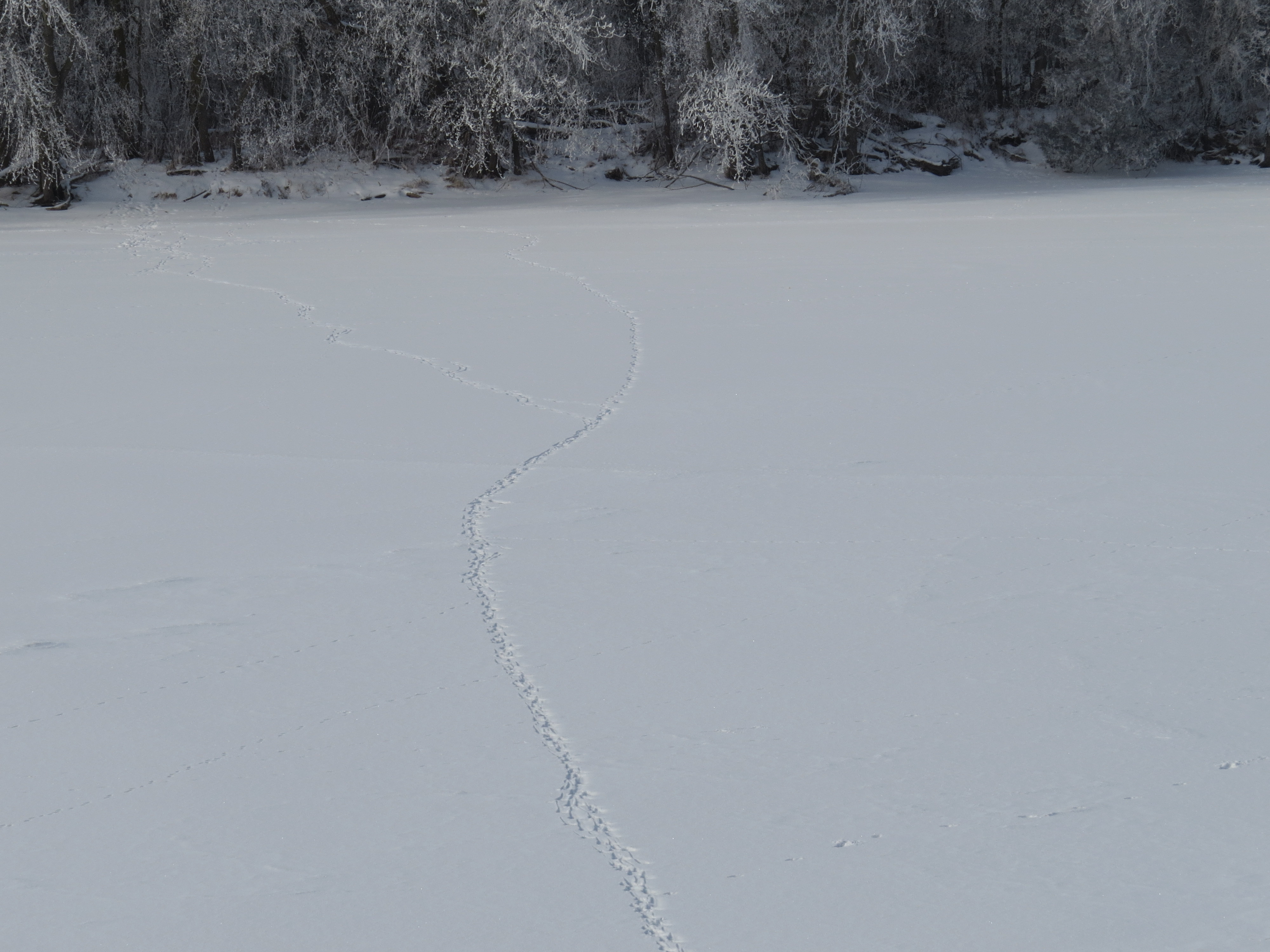
Two days later and with a tip from a neighbor who had drilled through the ice to actually check how thick it was, we decided to snowshoe on the River.
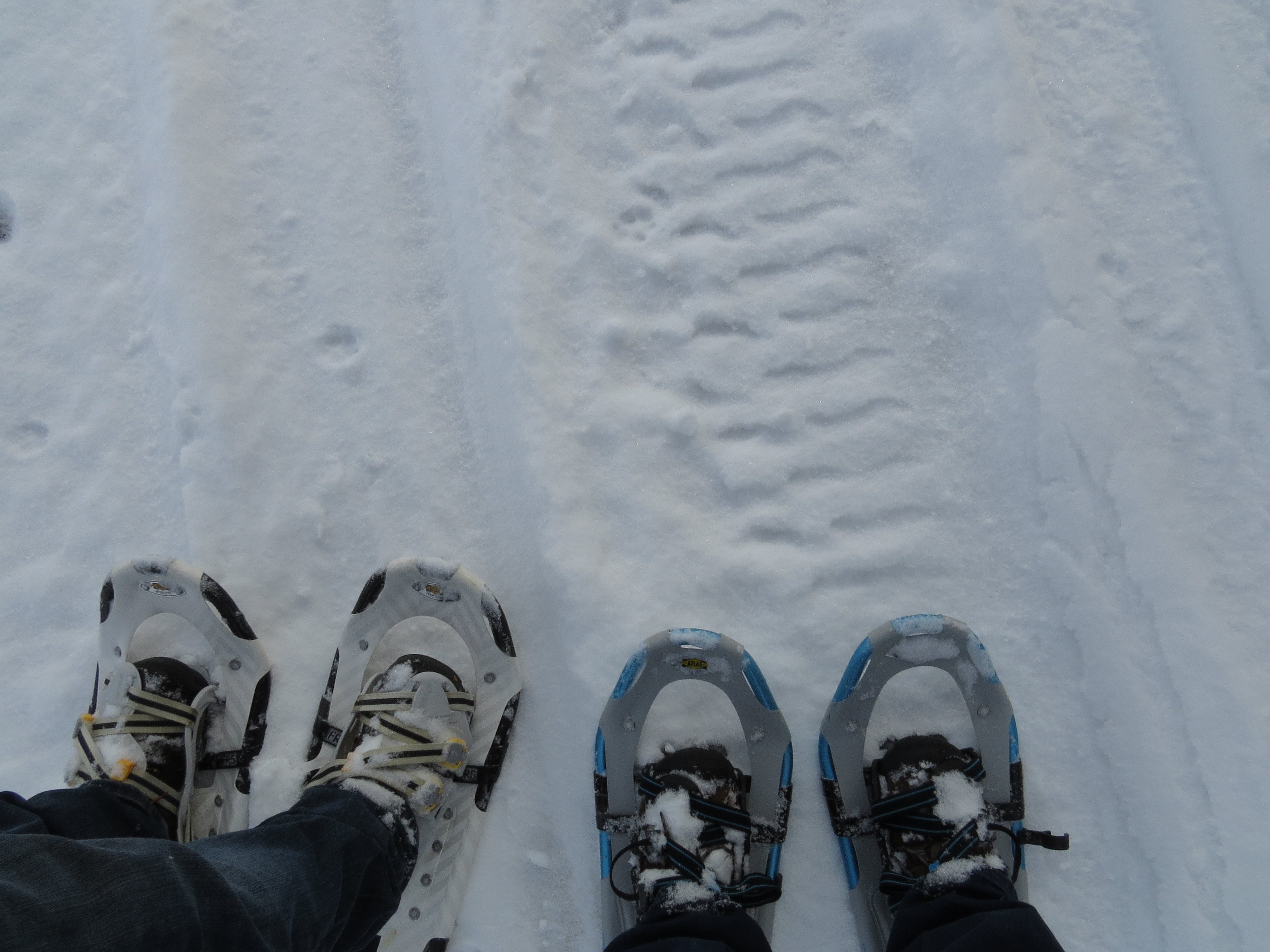
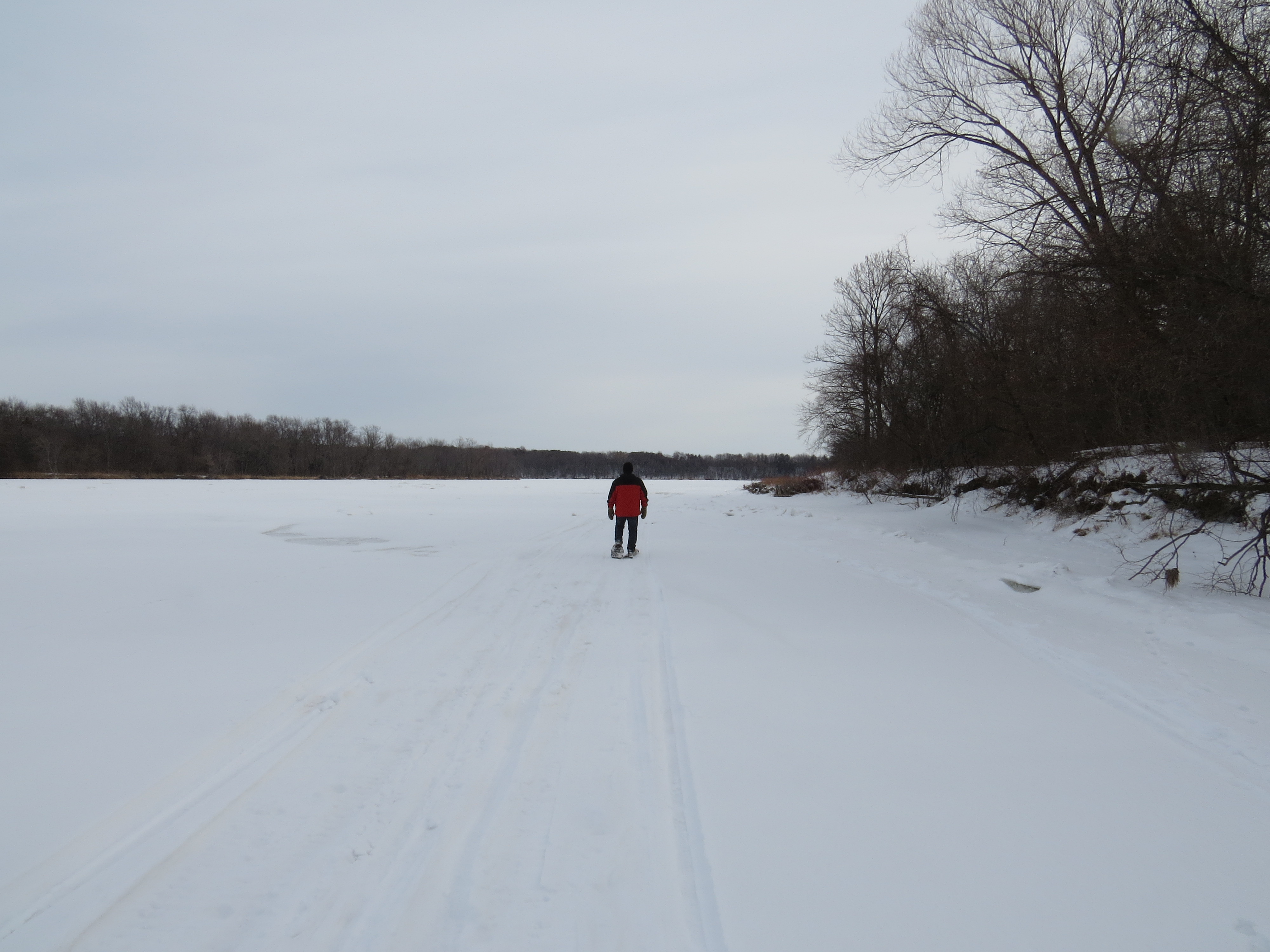
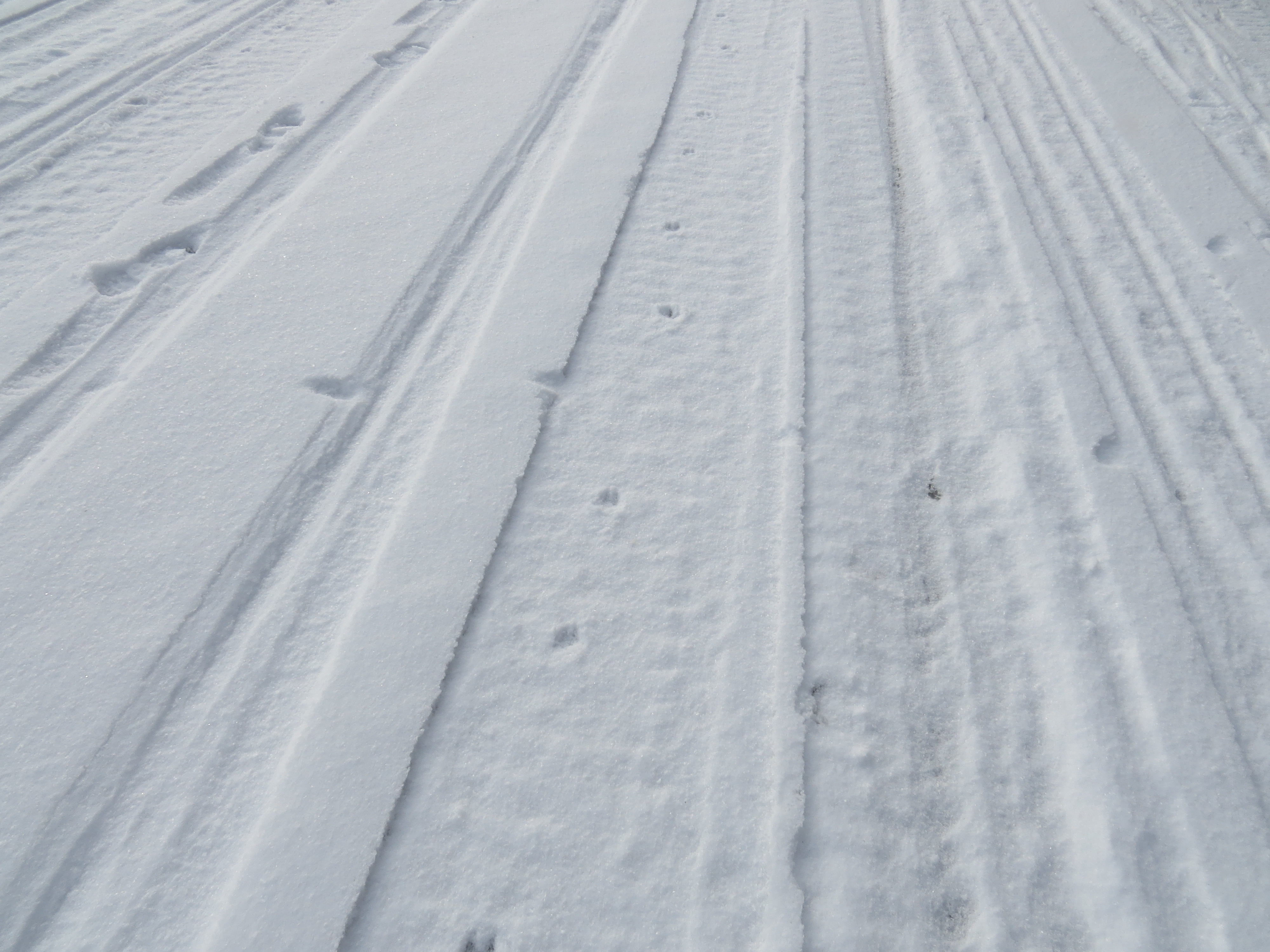
We were not the first humans to do so. Numerous snowmobile tracks ran along the shore, even through some areas that had turned to slush after flirting with the warm side of thirty-two degrees.
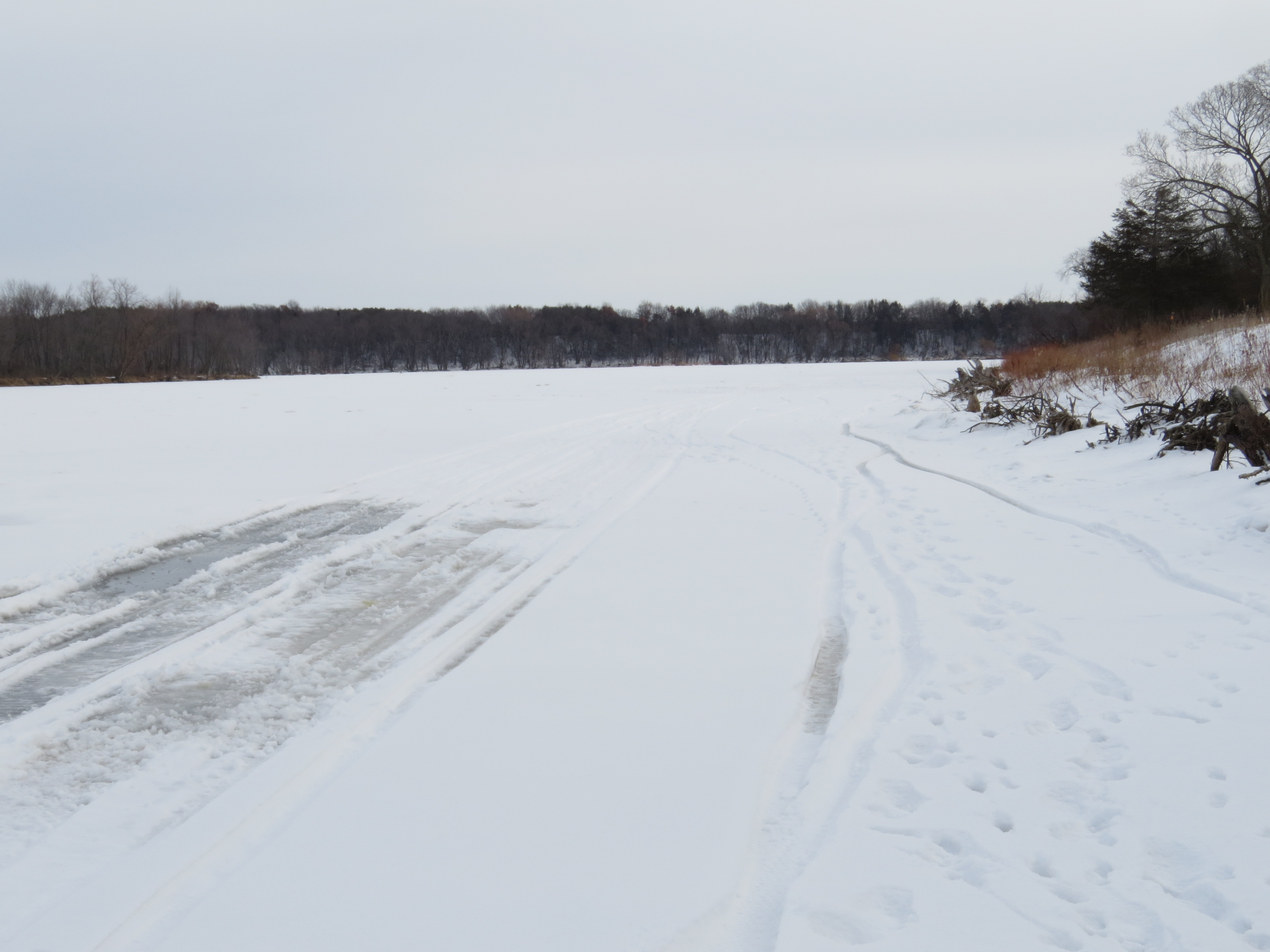
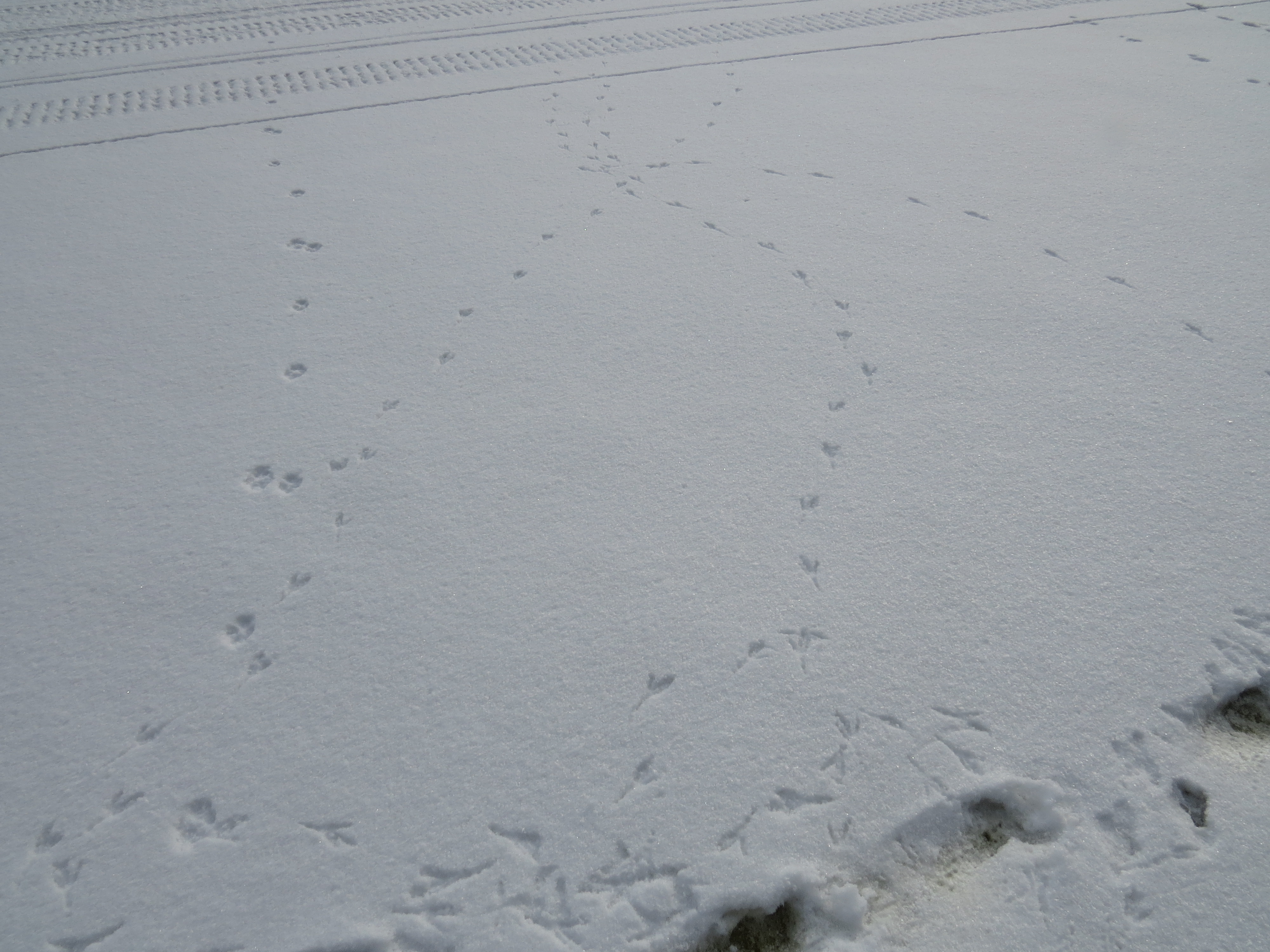
There were fat-tire bike tracks on the River road. Someone had snowshoed before us. Someone had walked with their dog.
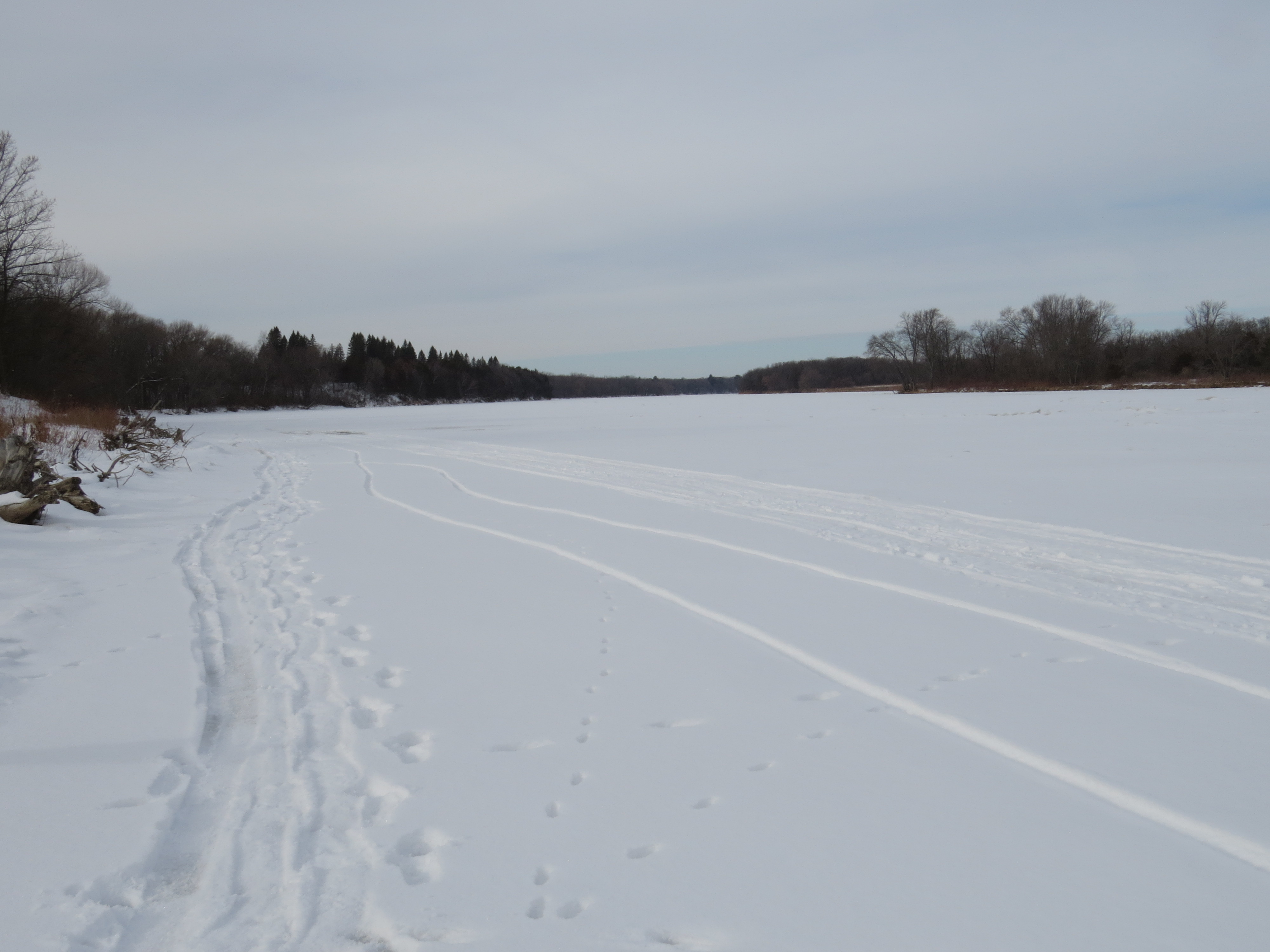
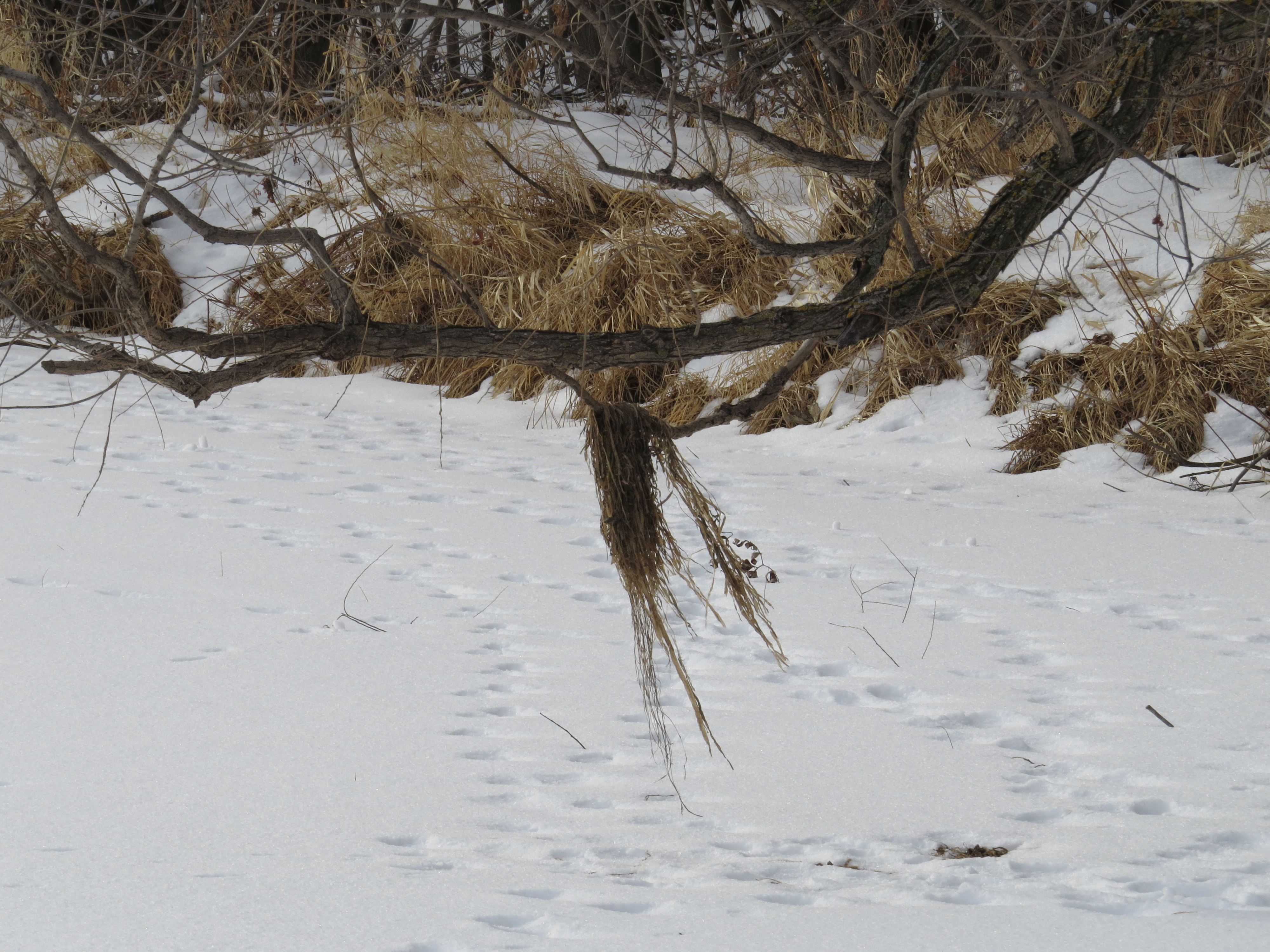
Animal tracks left the three-season safety of the Riverside trail at Mississippi River Regional park to follow the River road or cross to the other side. It was strange to see the river-side of the embankment where the constant flow of the water cuts into the bank leaving eroded soil, exposed roots, and leaning trees. A different perspective. One of more understanding.
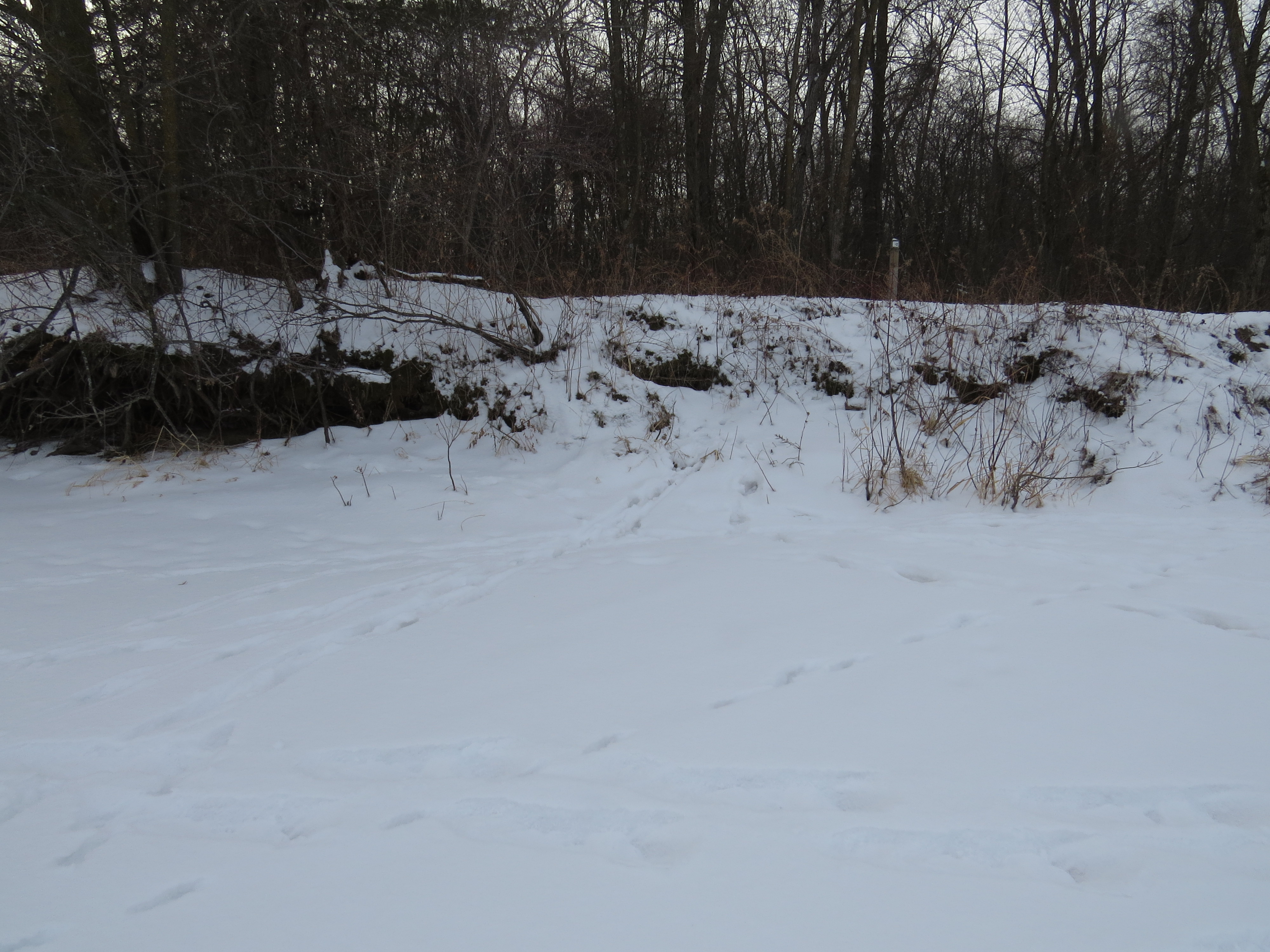
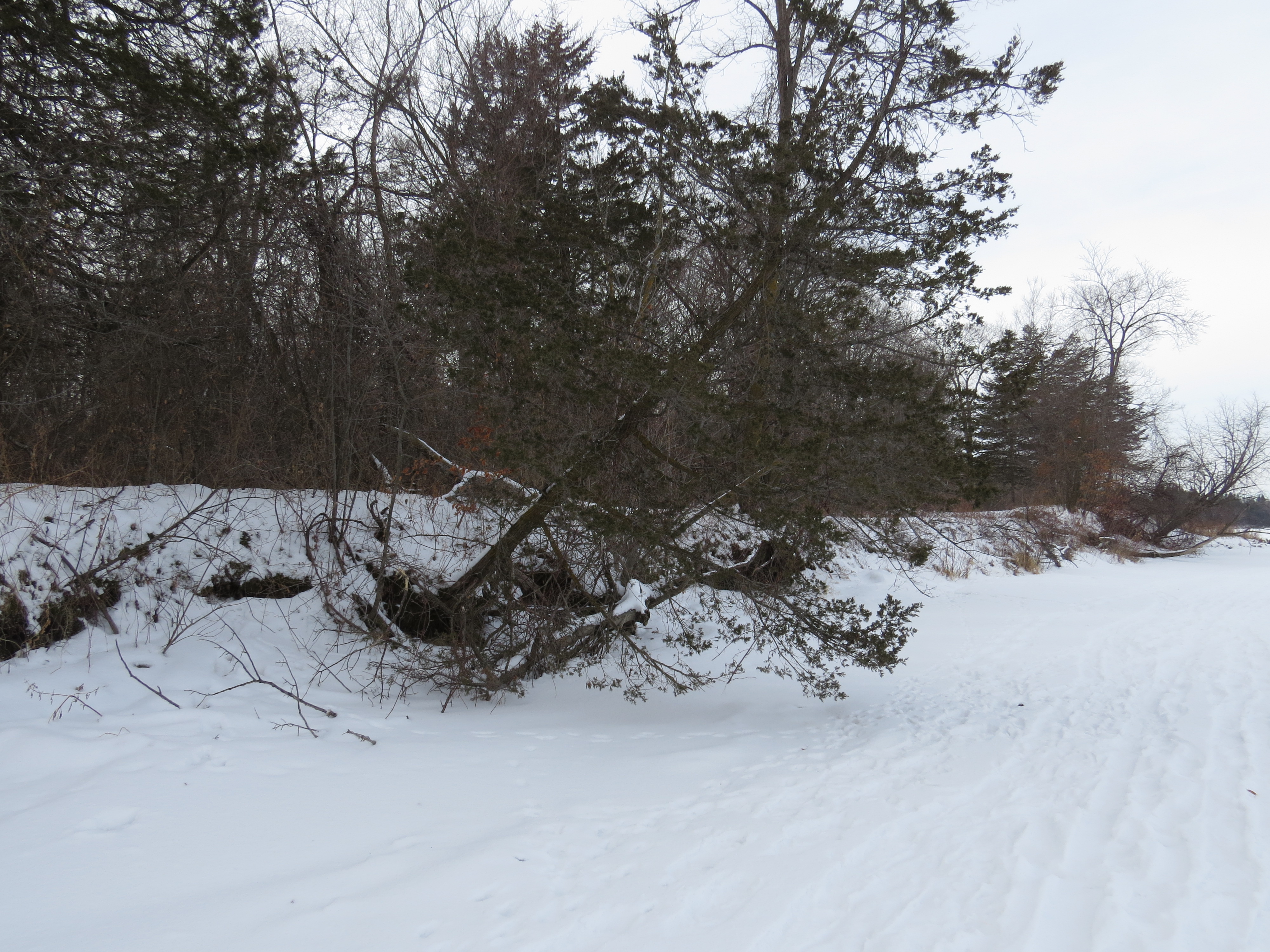
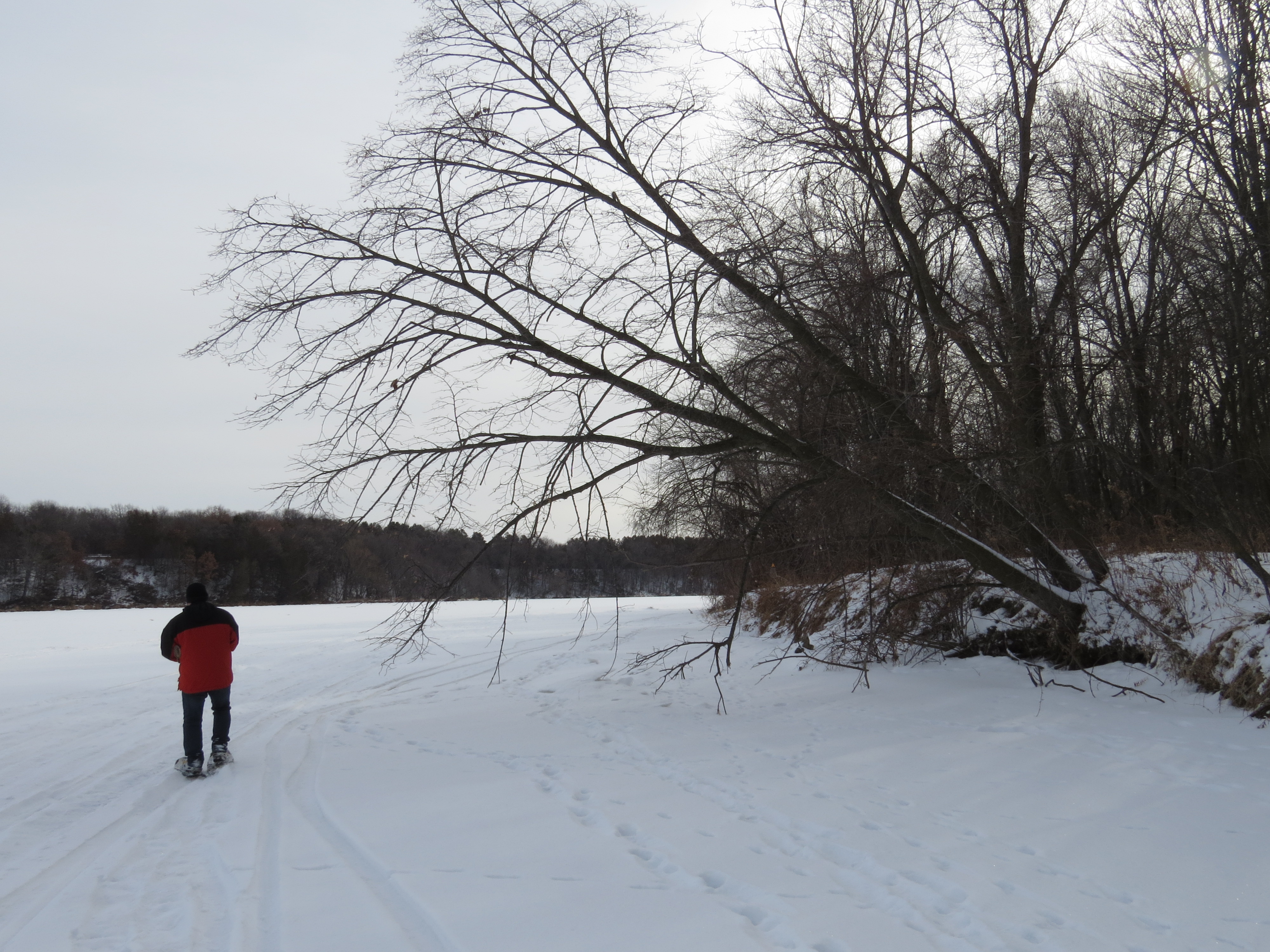
The farther we walked, the more tracks we saw! Cross-country ski tracks joined the motorized, the meandering, and the measured tracks of all the other creatures. It was a busy road of ice and snow.
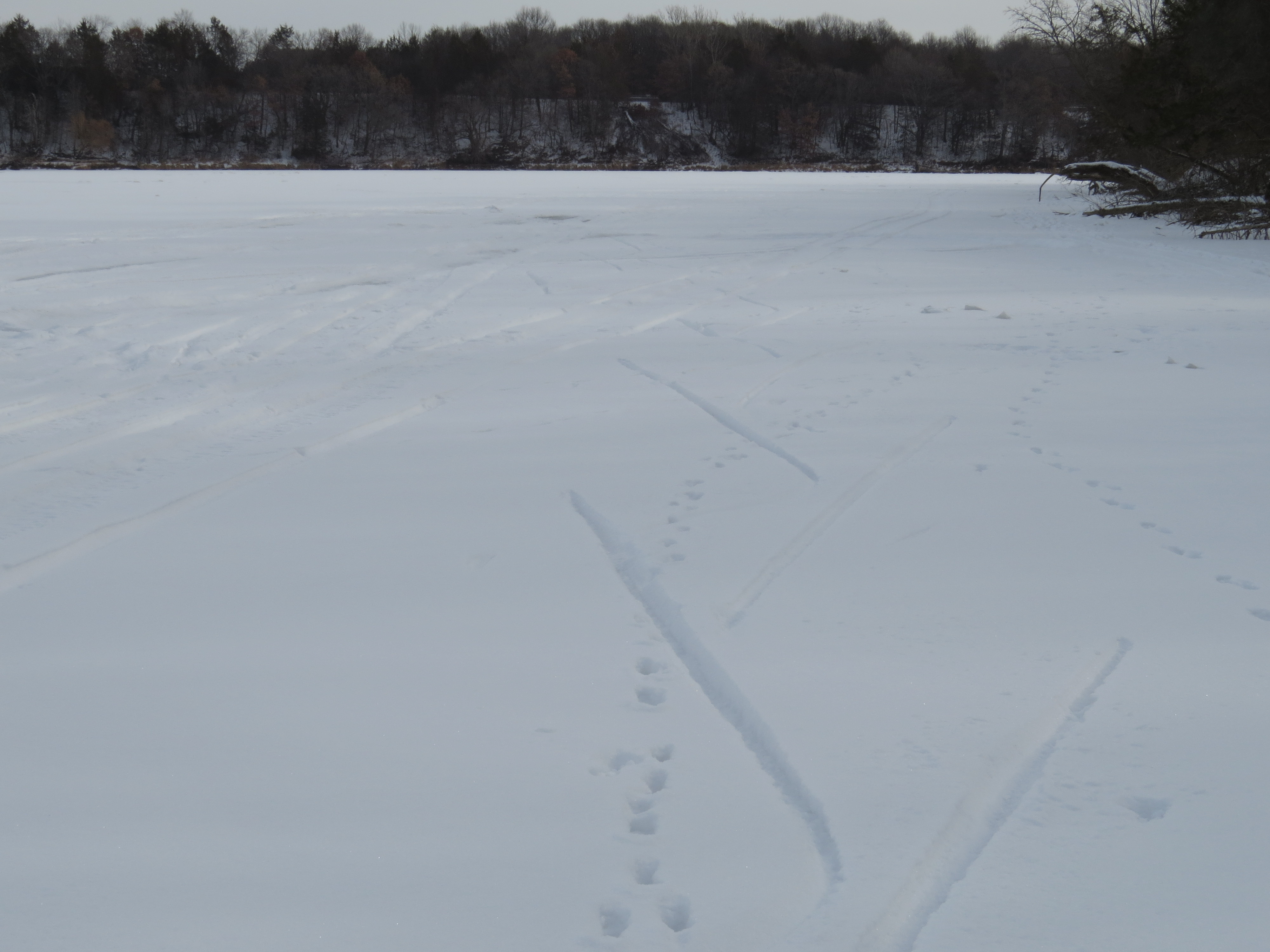
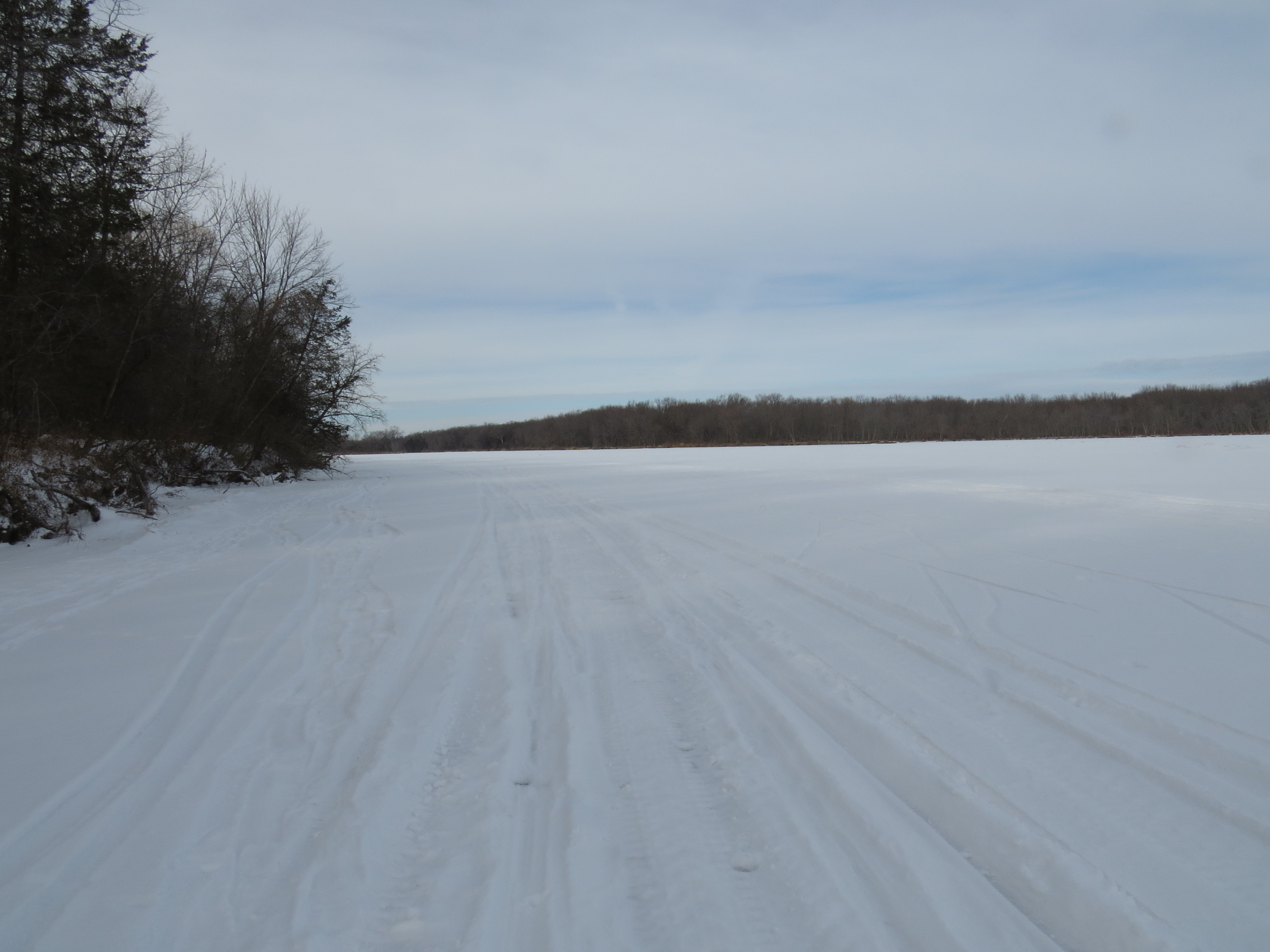
What is the allure of the other side? What entices us to re-group, plan, wait, and work to overcome obstacles when we are pulled up short and stopped in our tracks?
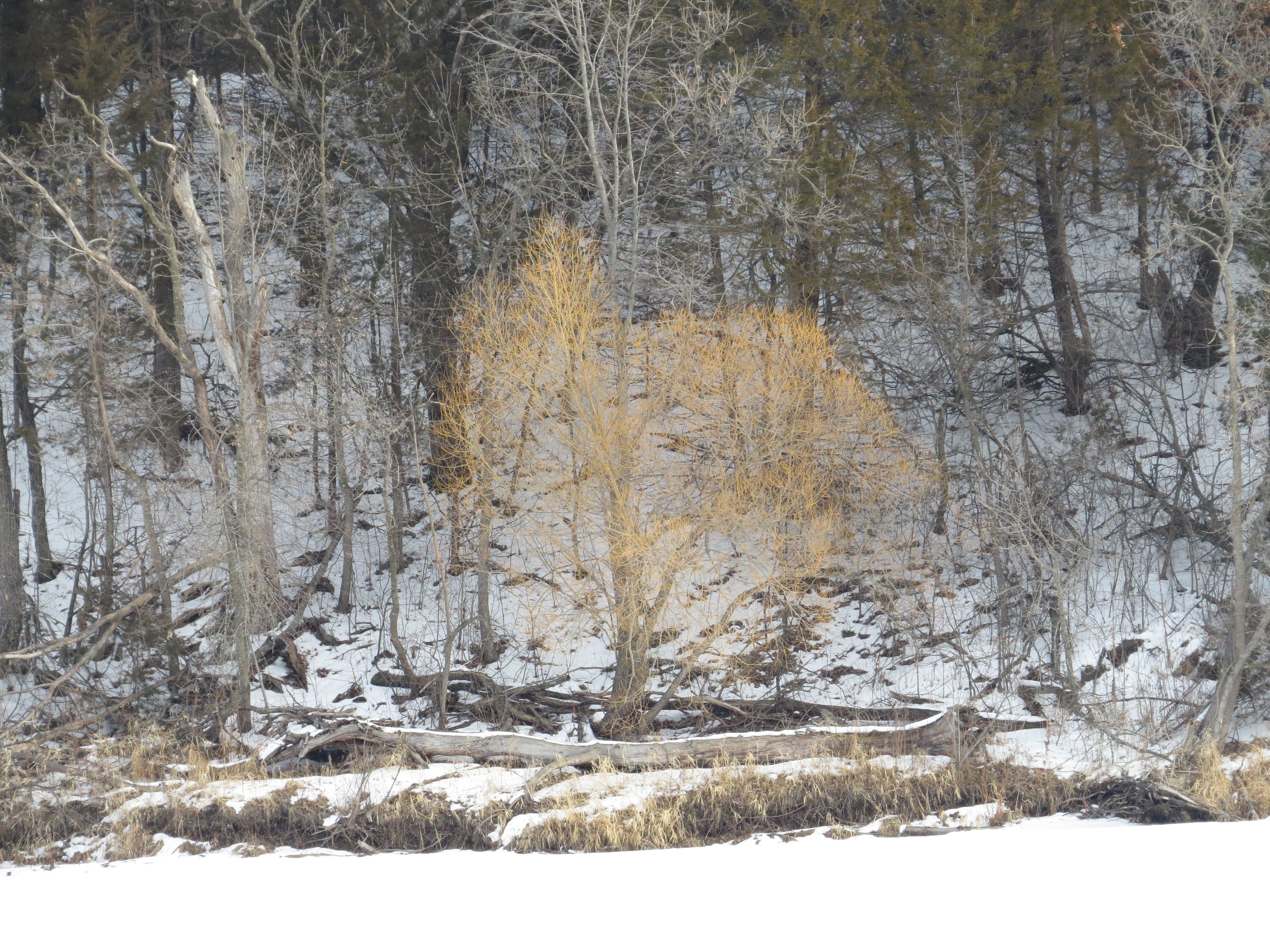
At Crow Wing State Park, forty-five miles up-river, there is a marker commemorating the Red River Oxcart Trail and the place where the fur traders crossed the Mississippi River. Perhaps it wasn’t so deep there, perhaps the River wasn’t quite as wide as it is today, perhaps they carried load after load of rocks to make an underwater road of sorts. At other places along the Mississippi River, before ferries and bridges, the settlers had to unload the wagons, take them apart, and canoe the contents and parts across the river and reassemble and reload on the other side. With obstacles, we are forced to look at things from a different perspective. And yet we ask, “How do we know it’s safe?” And yet we acknowledge, “We want to get to the other side.” Here in the North, the Winter ice can become the road. The obstacle becomes the pathway.
John C. Parish, in 1920, wrote about early traders and pioneers that “Rivers proved to be an unfailing source of trouble.” The rivers of our lives prove to be the same. Just when things are moving along quite smoothly, we are pulled up short. But there is usually a golden tree enticing us onward, despite the obstacles—hope for a better life, a different perspective for understanding, faith that what we do matters. And the very obstacle holds the key to the solution. The river becomes a road. Life is that complicated, and life is that holy.
A Circle of Warmth
I was standing at the front door talking to Emily on the phone when I saw a flash of rusty-red walk through the prairie grass in front of the Cedars. He sat down like the canine that he is as I rushed to end the phone call to get my camera. When I returned to the window, he had snuggled into a little ball in the cozy grass.
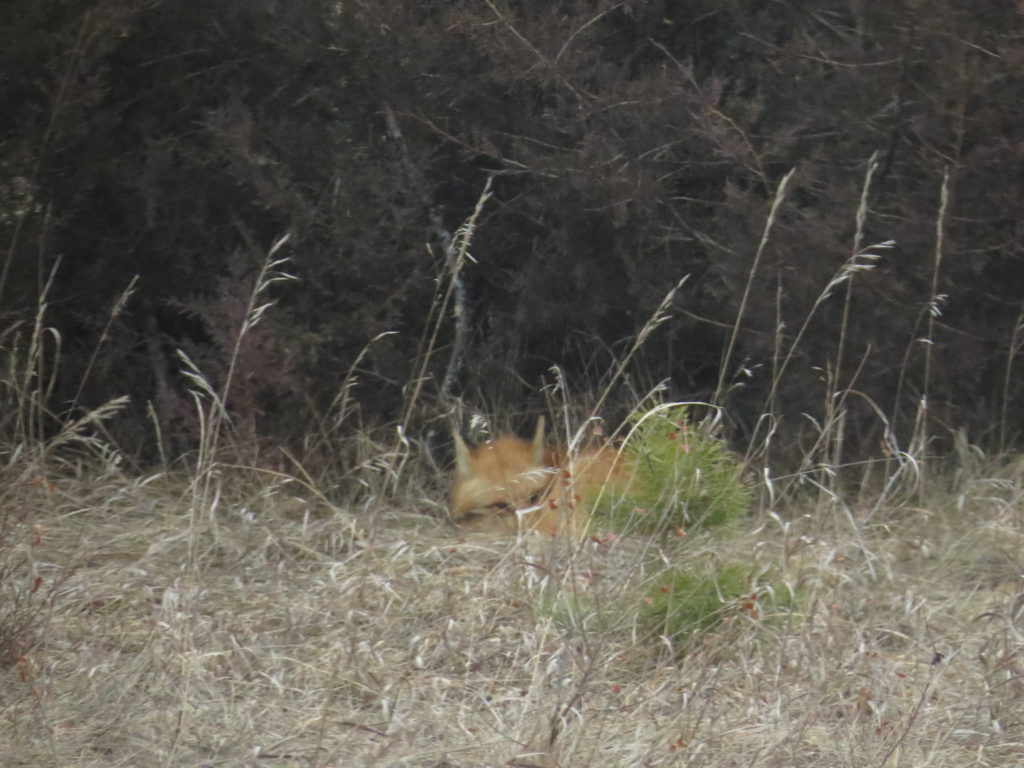
It was a chilly and extremely windy morning, and everything about it foretold the blizzard the weather people were warning us about. There was a deep, damp chill, the kind that creeps into your bones no matter how many layers you pull on. The clouds were gray and low-hanging, pregnant with moisture. The wind blew with a fierceness that reminds us mere mortals that we are not in control of everything like we wish to be.
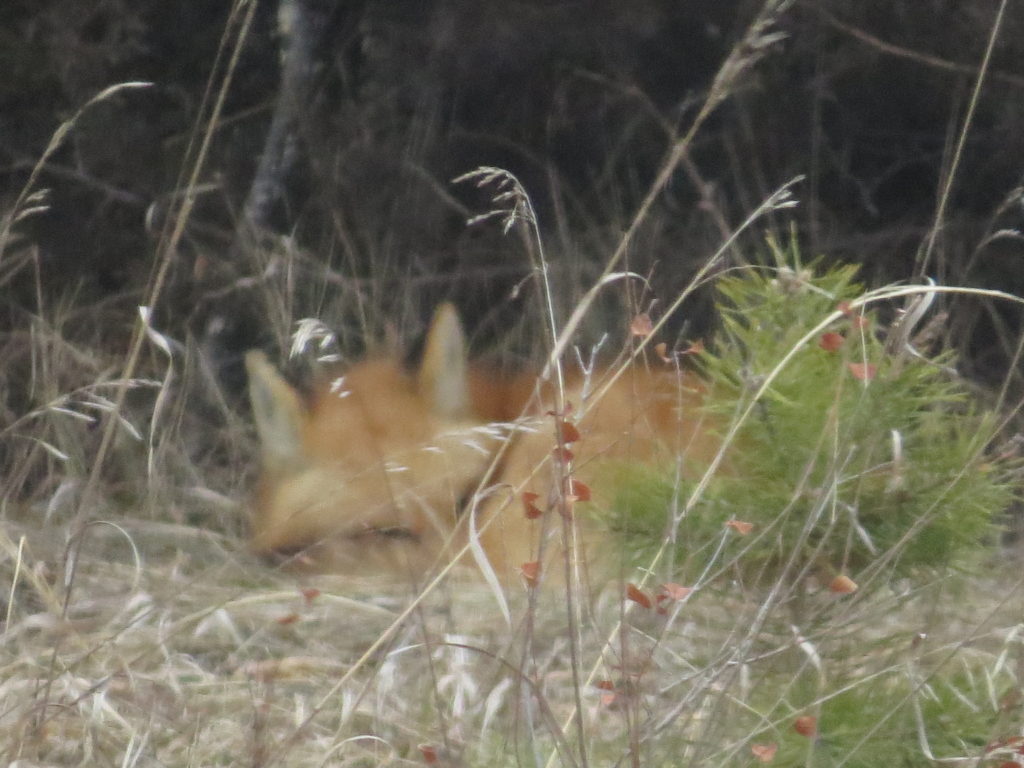
I opened the front door to get a better shot, but the colliding warm and cold air condensed to a fog on the storm door. He opened his eyes to watch me but didn’t move from his circle of warmth.
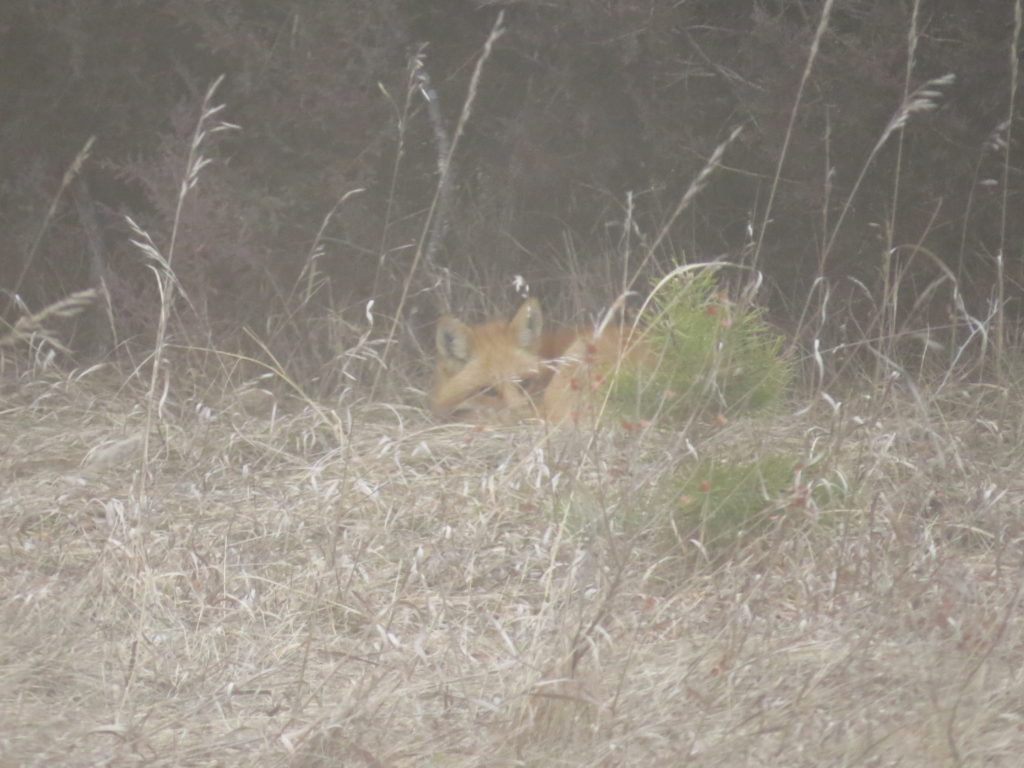
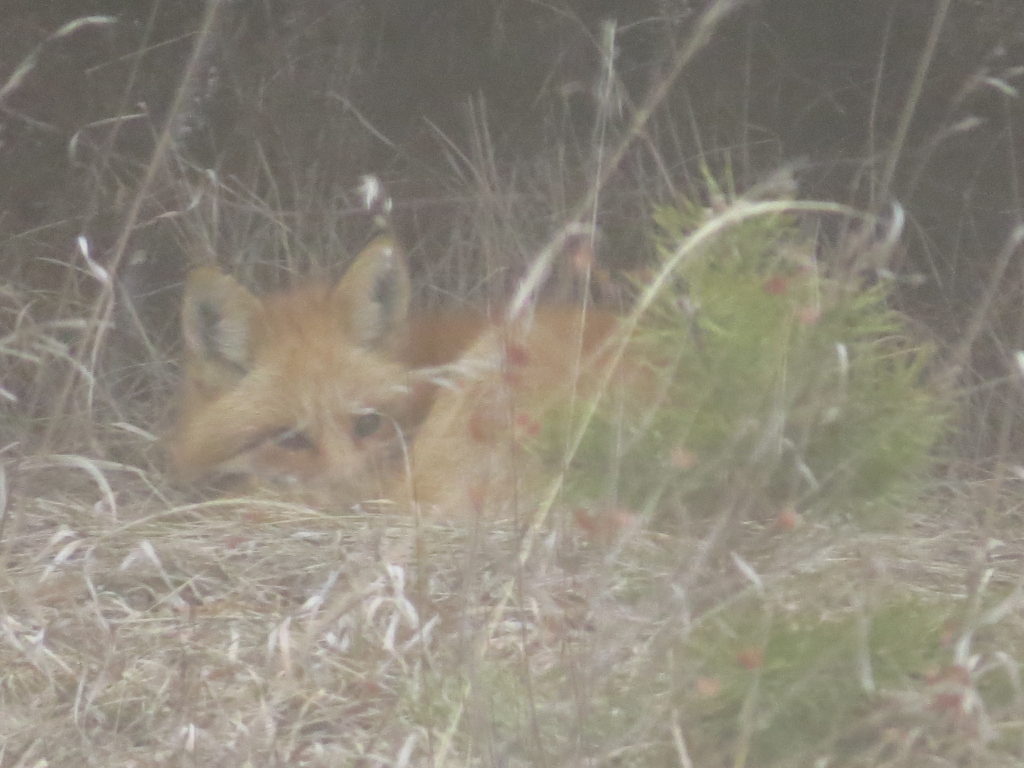
I thought to myself that this was hygge for a fox, for a wild creature that is always ‘in the elements.’ It was a cozy little space out of the howling wind where he could rest. Hygge (hue-guh) is a Danish and Norwegian word for a feeling or moment of coziness. It is an ‘everyday’ thing, not contrived or fanciful, but special nonetheless. My Danish and Norwegian grandmothers could magically create a kitchen table full of baked goods and delectable treats when we would stop by for a visit. It was ‘just a little lunch’ according to them, but it was a special feast to me, a cozy moment in time and memory.
In an attempt to hygge ourselves for the blizzard, Chris and I made a list and went to the store before the snow was supposed to start. I thought for sure our departure would spook the fox into running away, but the small ball of fur stayed curled in the grass. And when we returned, he was still there but had moved a foot or so into more coverage.
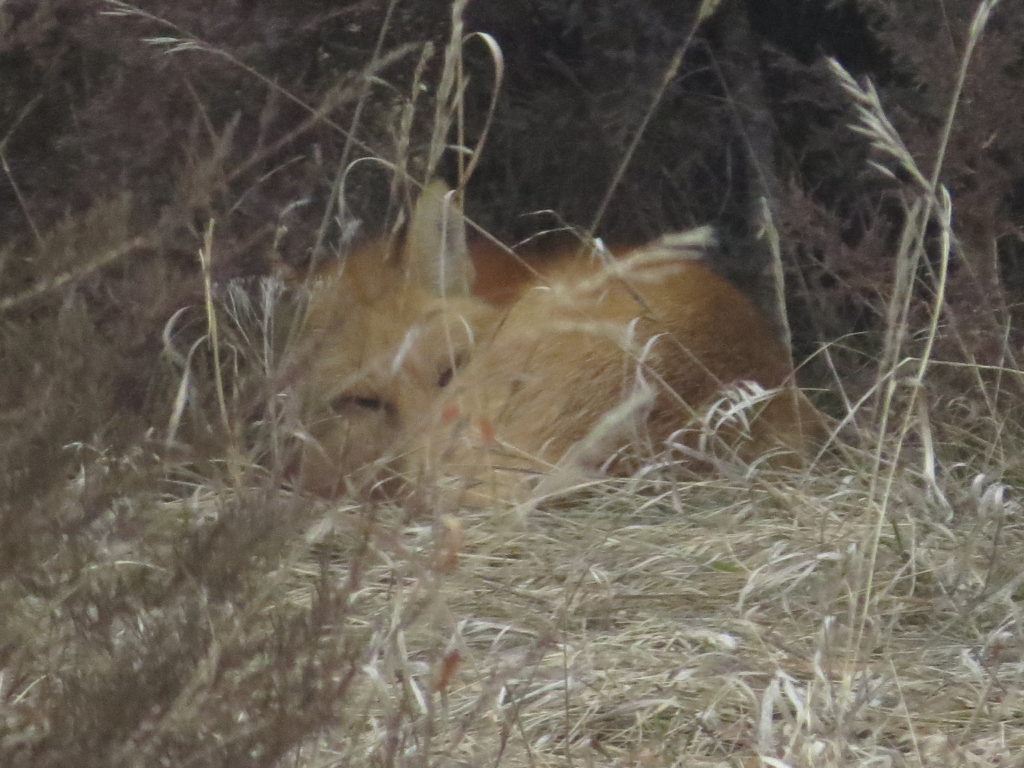
Every once in a while he would look up when he heard a car or the neighbor’s barking dog, but for the most part, it was a time for a Winter’s nap.
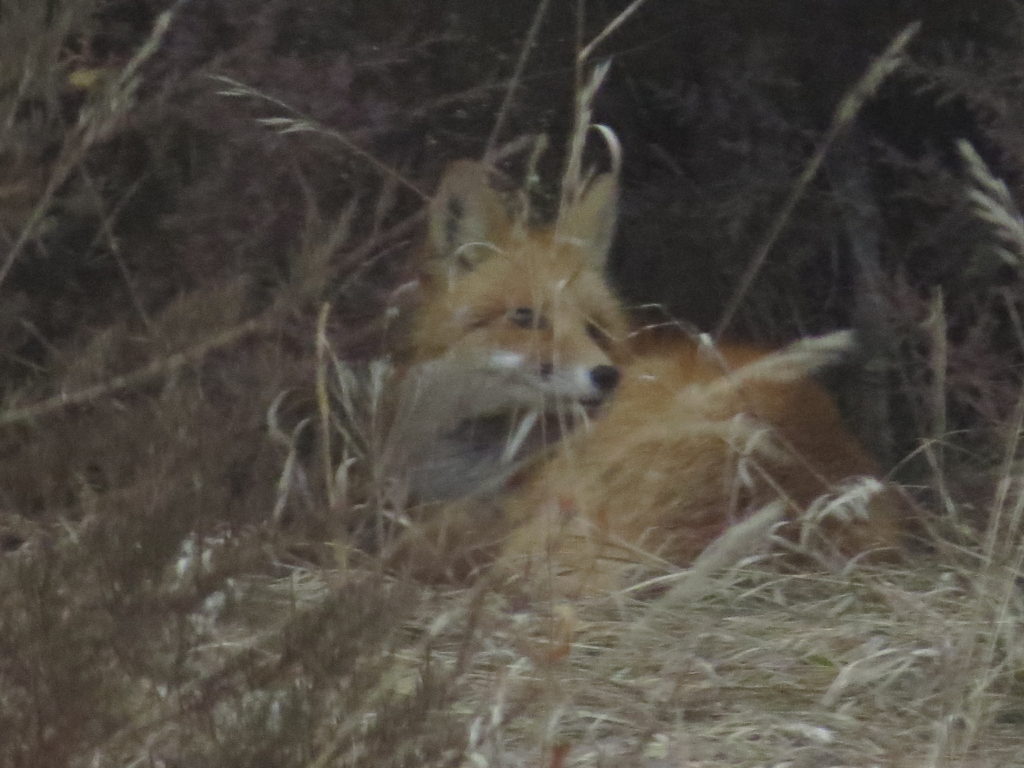
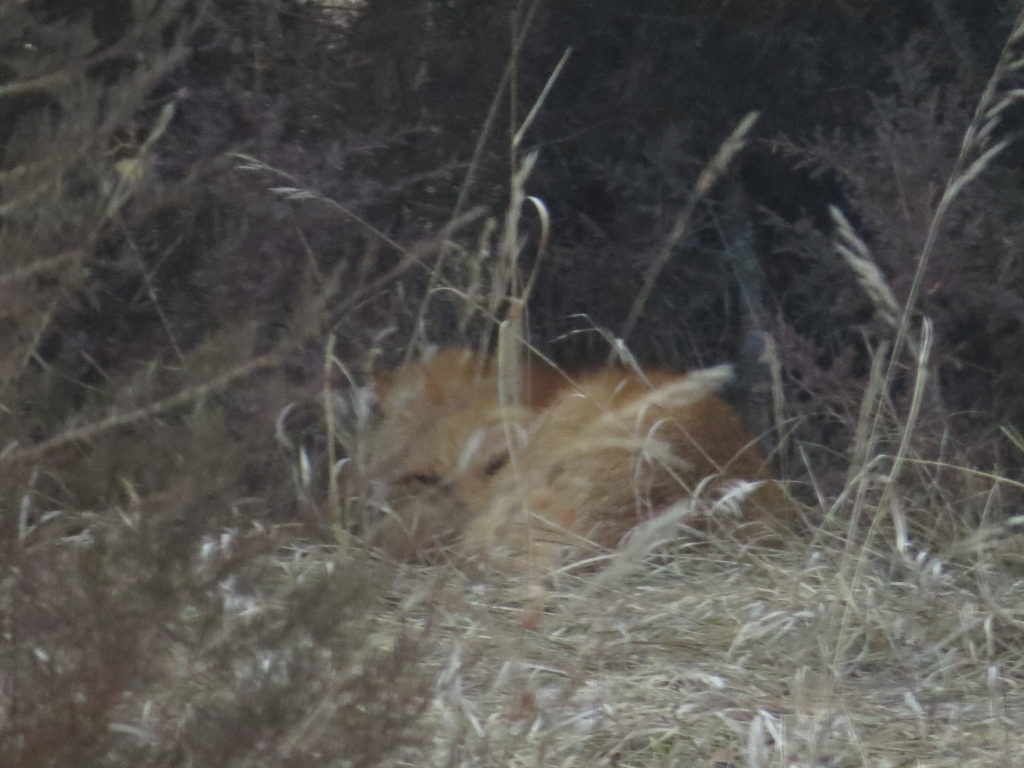
At some point, he turned around, curling in the other direction with his back to the wind and the impending snow.
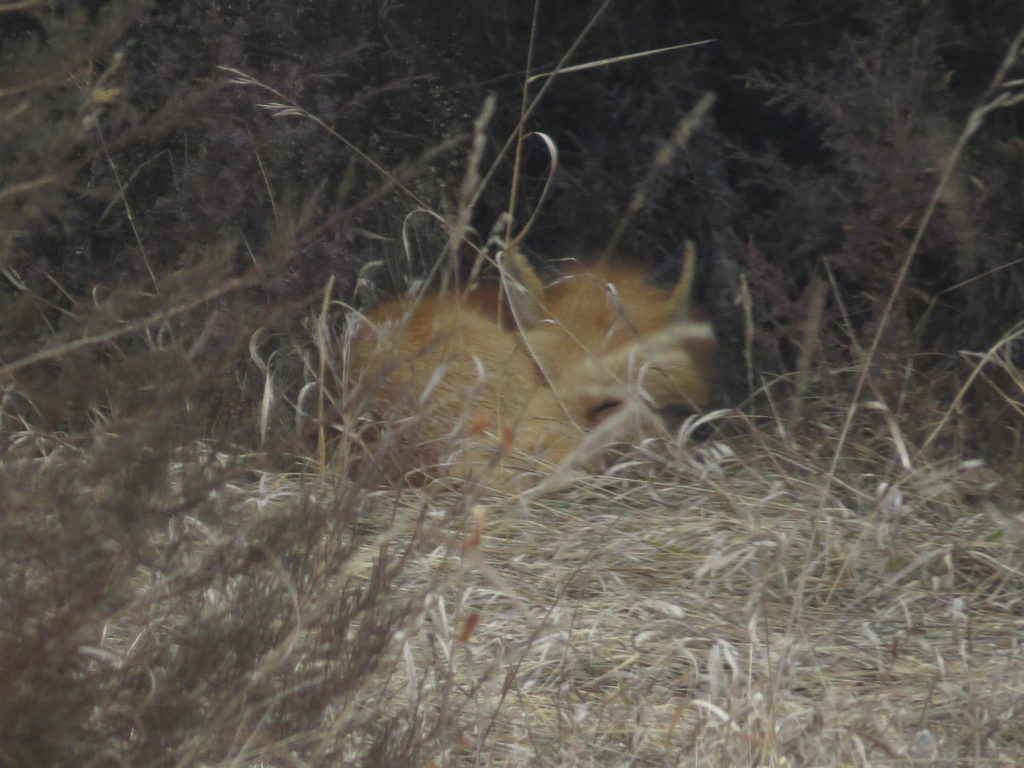
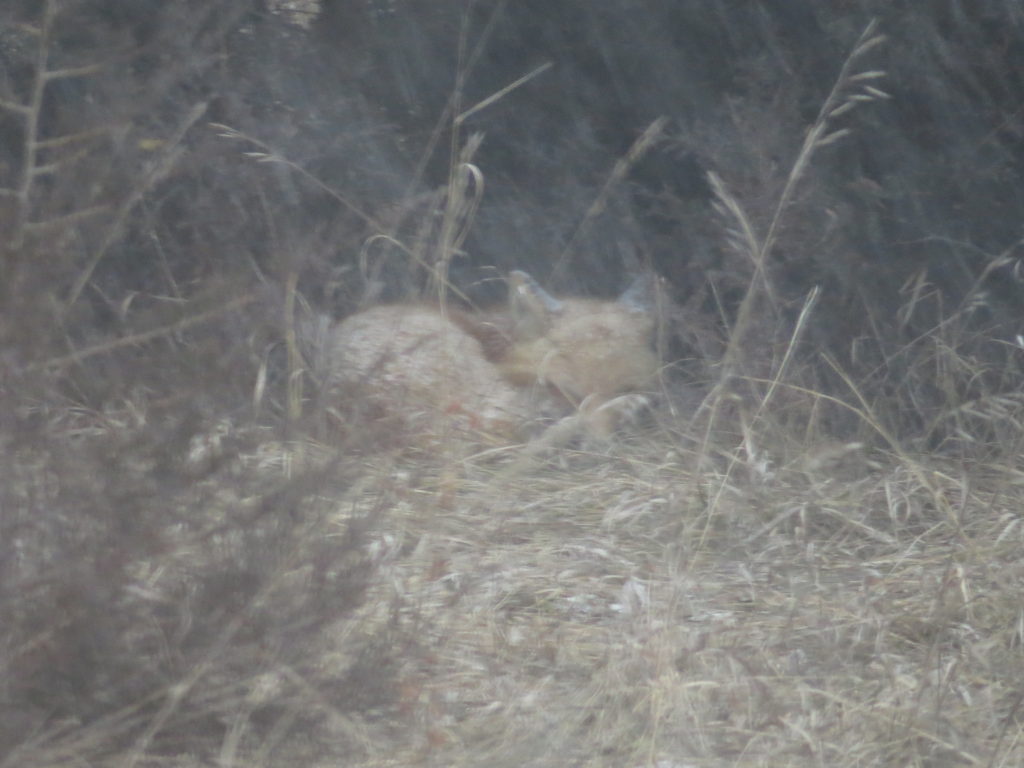
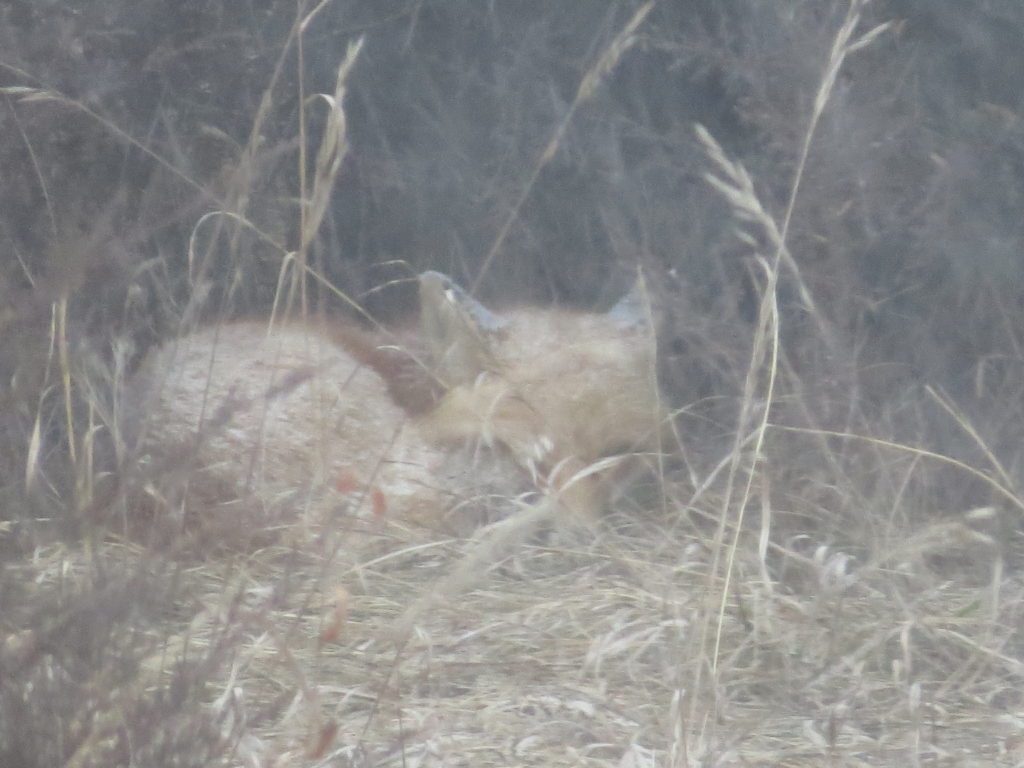
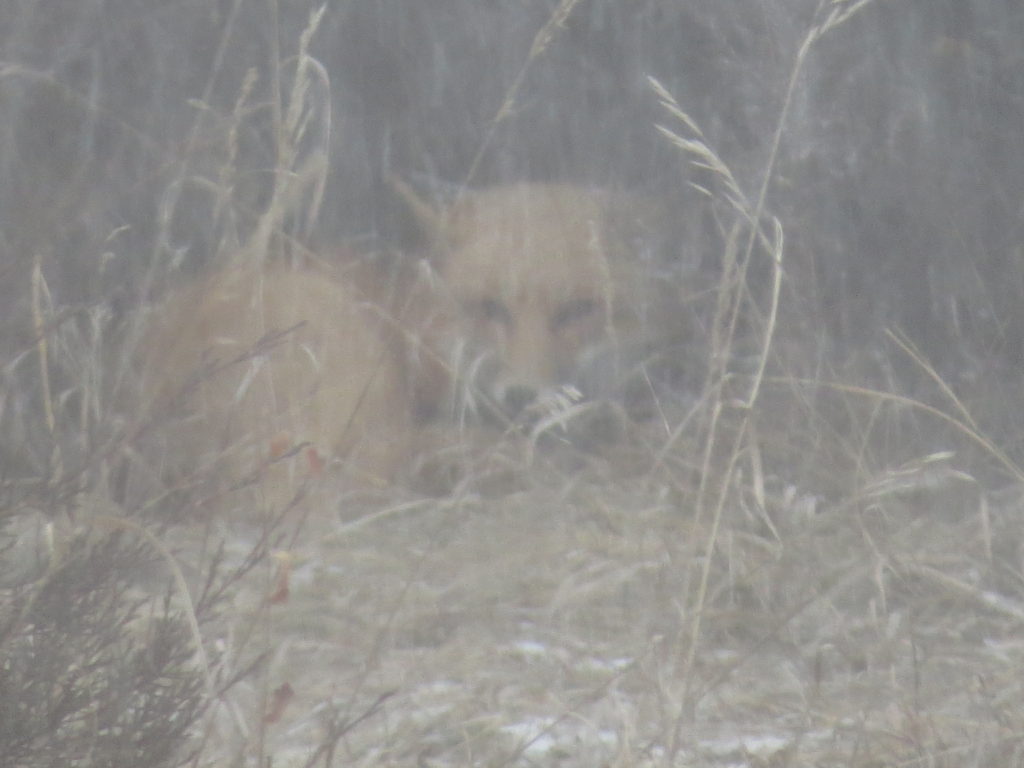
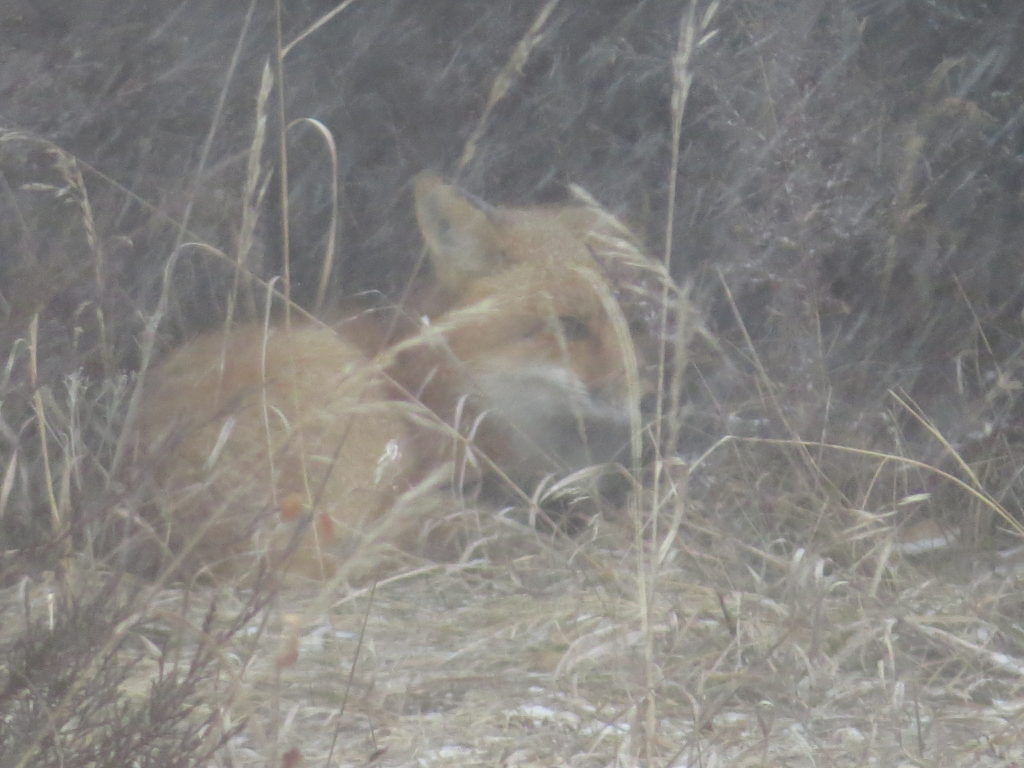
The snow accumulated on his warm fur, then melted, and he licked the moisture off like a cat or dog would after coming in from the wet weather.
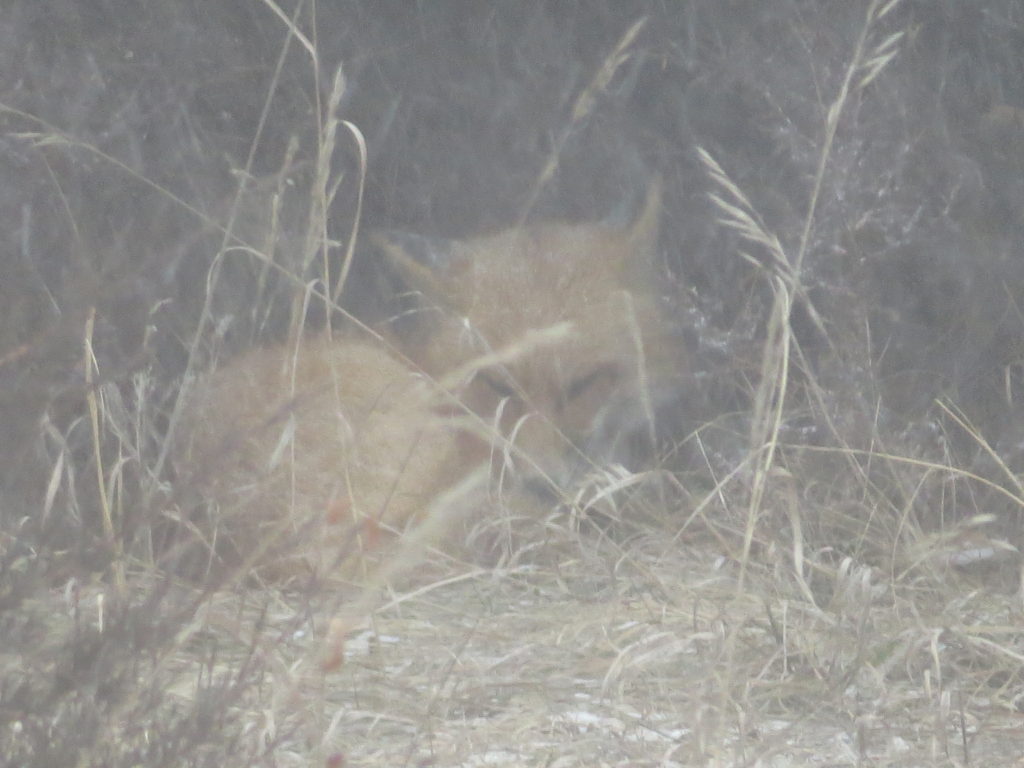
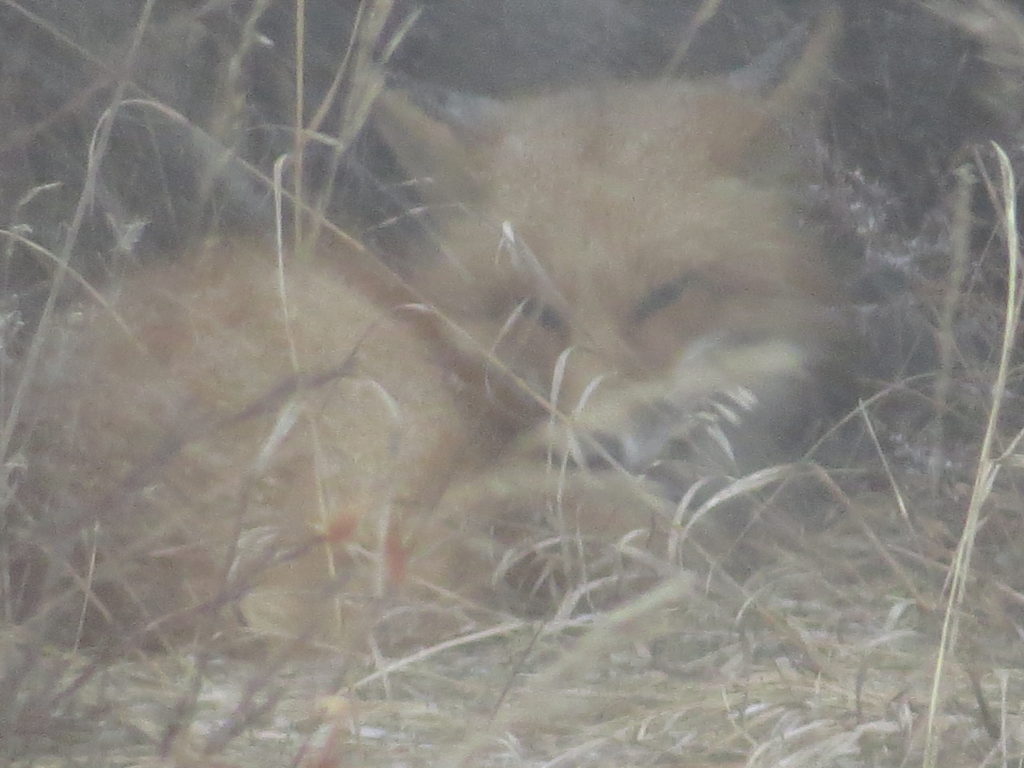
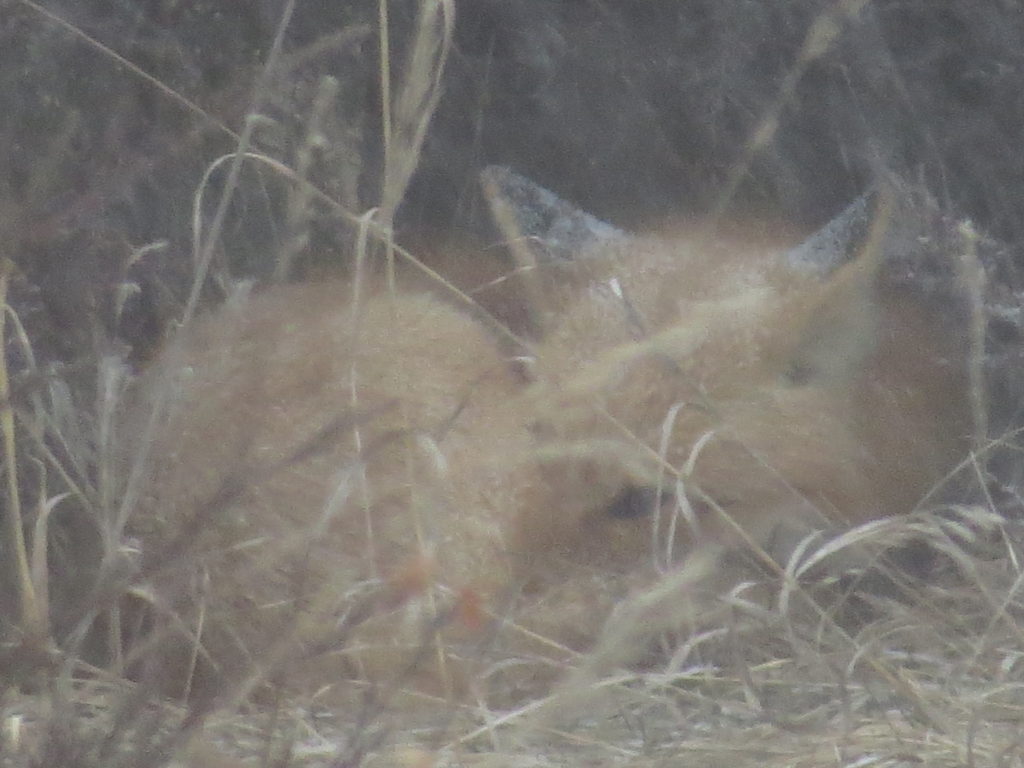
The little fox napped and rested in his cozy spot for over three hours, and just as I happened to see him come to the spot that day, I also happened to see him leave. The rest of the day was snowy and blowy with the temperature dropping into single digits with below zero wind chills. I wondered where he found his next cozy sleeping place.
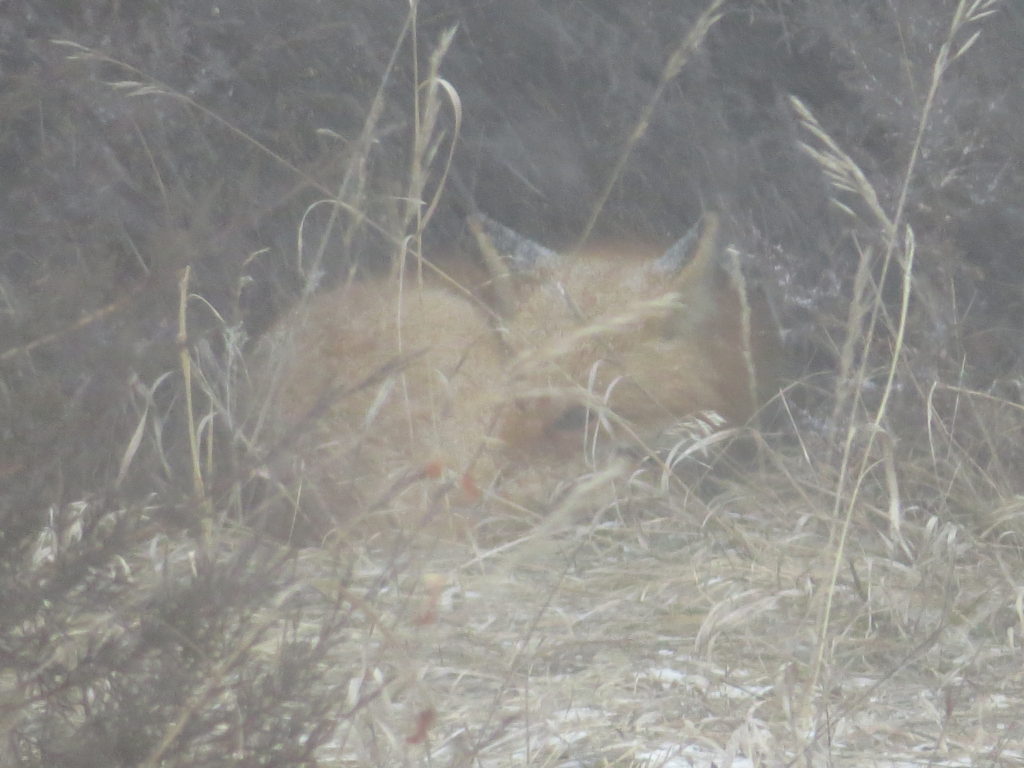
The next morning, Christmas Eve morning, was clear and bright. We didn’t get as much snow as forecasted or as places to our south and east. But I spent a couple hours shoveling the drifts that had blown around the house and up the driveway.
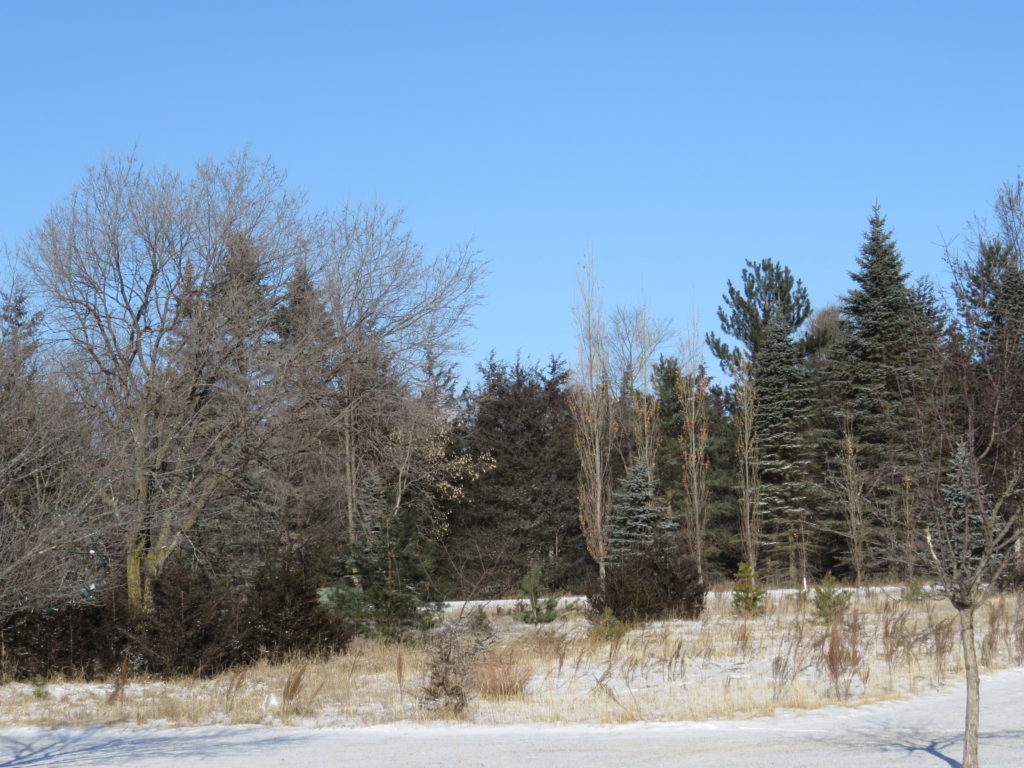
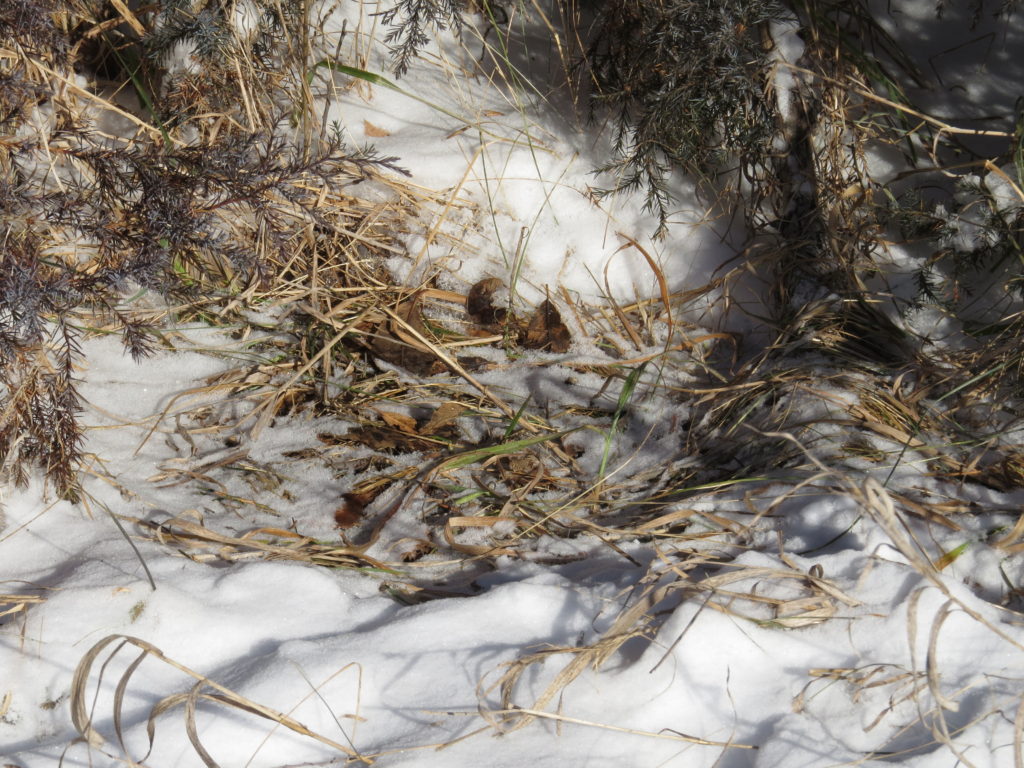
I noticed the fox had returned, walking through the yard…
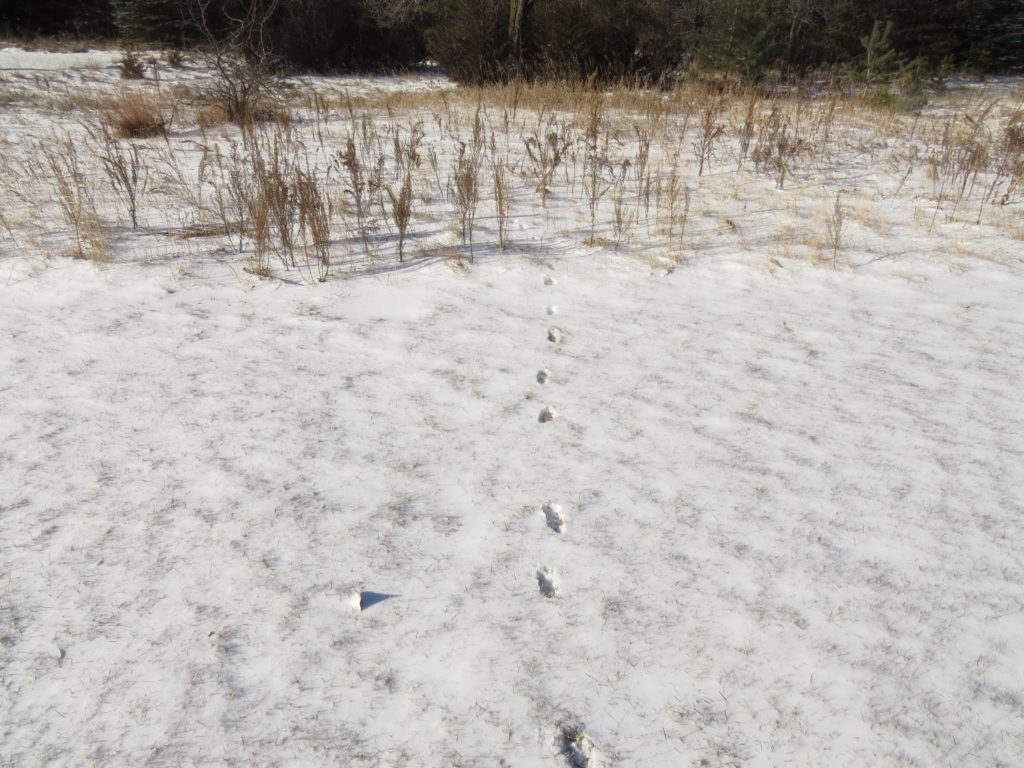
through the prairie grasses…
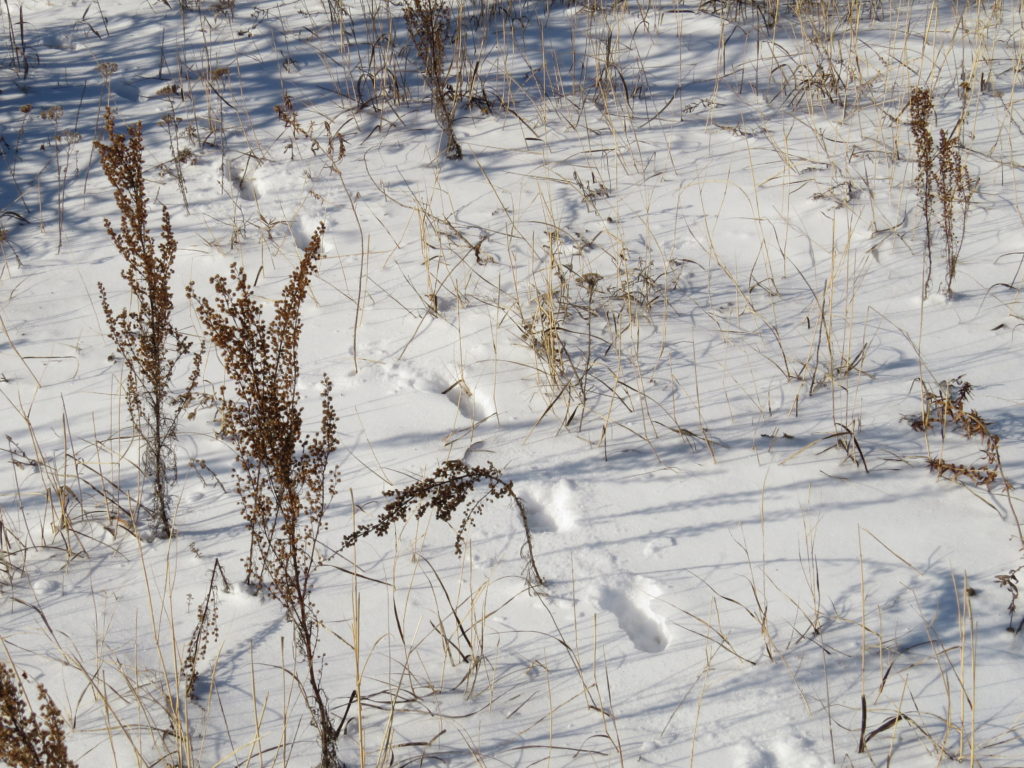
to the place under the Cedar trees and had curled up again for a little nap in the sunshine. Perhaps this time he watched me, a form of everyday, ordinary togetherness, even when we are not aware.

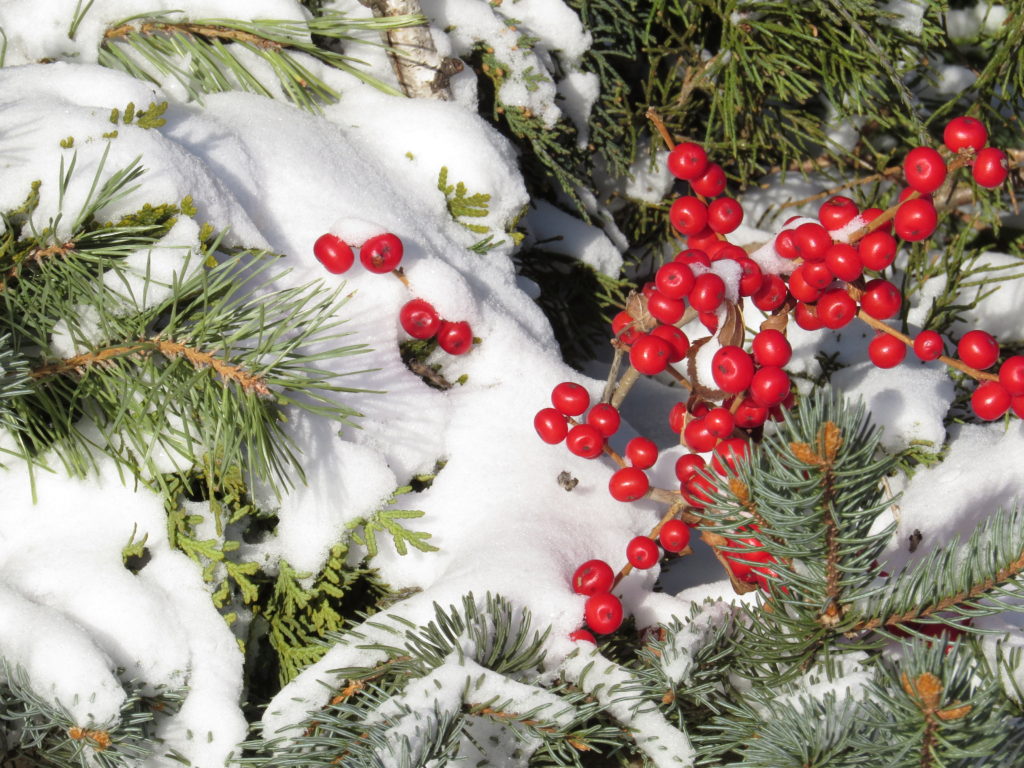
Hygge has a number of possible etymological origins. It may come from the Old Norse word ‘hygga’ which means ‘to comfort,’ which may also be the origin for ‘hugge’—to embrace or hug. It could come from ‘hyggja’ which means ‘to think.’ The Danish meaning of hygge is ‘to give courage, comfort, and joy.’ Like a hug does. Like watching a sleeping fox does. Like a Grandmother’s magical, delectable ‘little lunch’ does. In this special, magical holiday season, may we think of others–goodwill towards men. May we give comfort and joy. May we each have an everyday, ordinary circle of warmth—hygge—everyday, yet special nonetheless.
Tracks and Paths
When I was a young child, we lived on a farm in eastern South Dakota. My Dad milked cows along with raising pigs, sheep, and chickens. After their morning milking, the cows were let out to the pasture to graze their way through the day until the next milking. This daily ritual made its mark in the pasture. A network of cow paths crisscrossed the green grass as these creatures of habit made their grazing rounds. We used to walk to the neighbor’s place through the pasture–and the best way to get there was to follow the cow path. Except for the occasional fresh cow pie to skirt around, it was the path of least resistance.
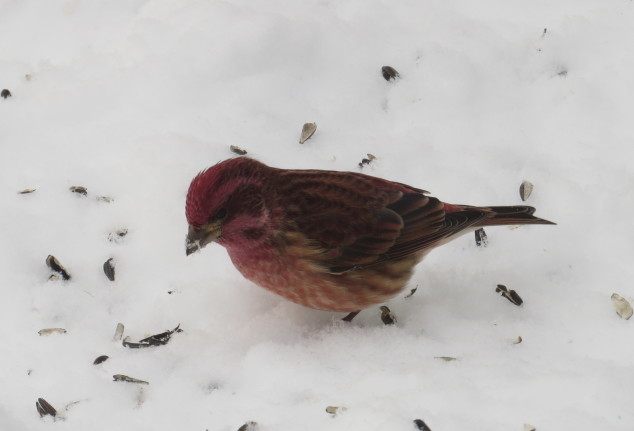
Snow fell the night of Thanksgiving. By morning, the animal activity of the night was evident by the tracks and paths in the fresh snow. Birds visiting the feeders left their marks as they hopped in search of fallen seeds.
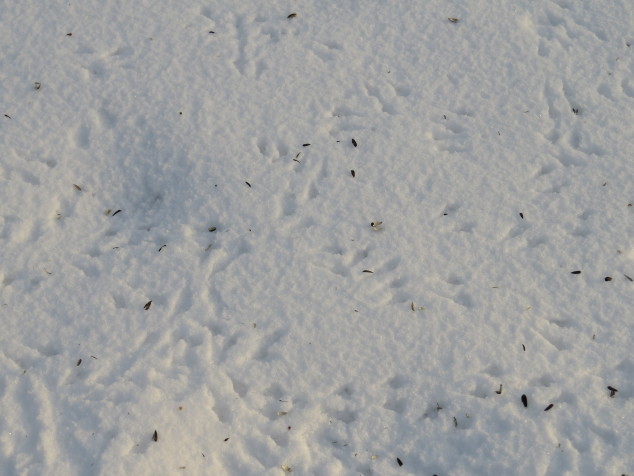
Squirrel tracks were everywhere! We seem to have quite a population this winter.
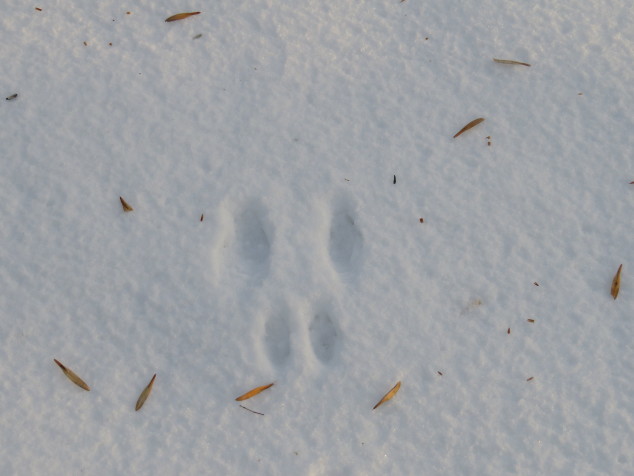
I wonder what made this squirrel take a quick U-turn. Perhaps the appearance of a big black dog?
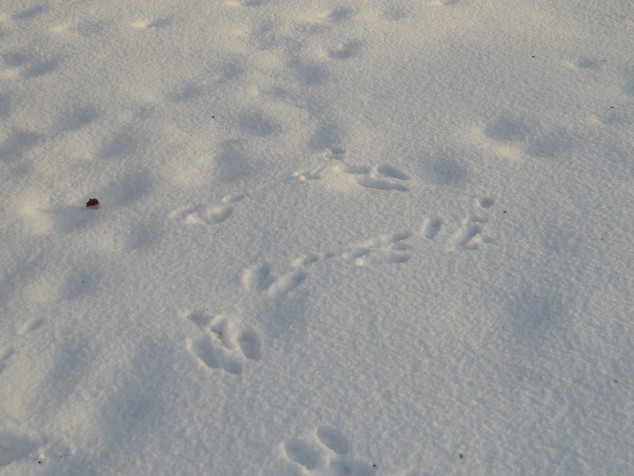
The most popular place for the squirrels is the backyard bird feeder.
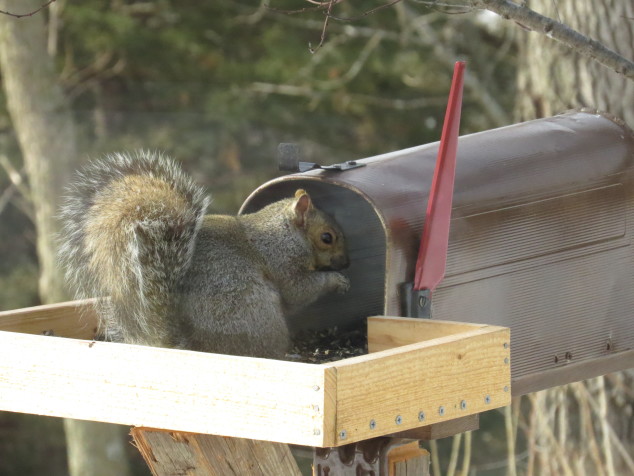
They make their way from the woods to the feeder, and then when alarmed, they run out the back of the mailbox, jump down to the ground, and make a beeline for the maple tree. They have made a squirrel path in the snow!

Another set of tracks that crosses the yard is made by the red fox. She trots with a purpose, going from one end of the yard to the other on her hunting treks.
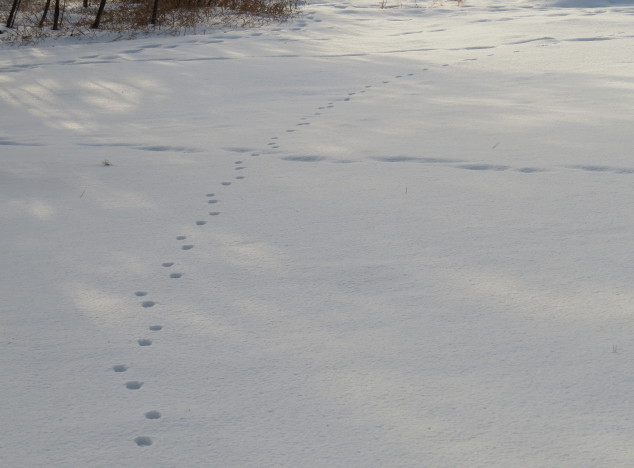 Her paws are much smaller than our Black Lab’s. I put my footprint beside each track to show the size difference.
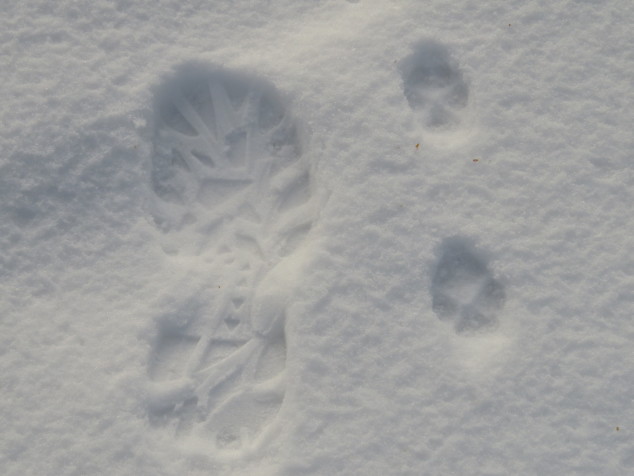
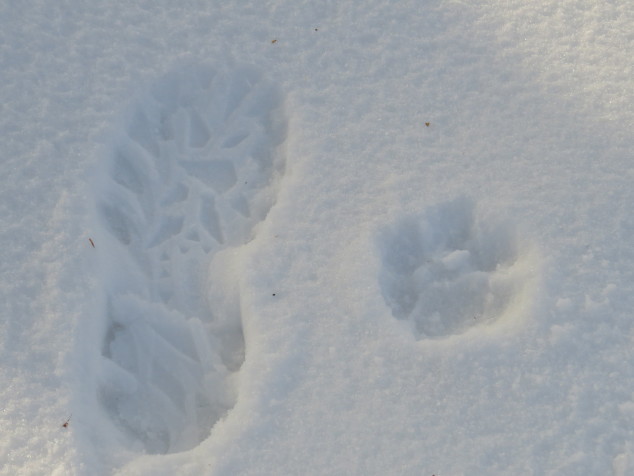
Fresh fallen snow highlights the activity that takes place day and night around our home. It’s a vivid indicator of how we coexist with all the creatures around us.
Tracks and paths–we all make them! From the tiny mice to the squirrels to the Holstein cows to college students across campuses, we are creatures of habit that tend to take the path of least resistance. Sometimes our tracks cannot be seen, and we may wonder where we’ve been, if we’ve been seen, and whether our trekking has even made a difference. Other times, our steps are noticed as we beeline or U-turn our way through life. We may make our own path or follow one that is already well-worn. What path are you on today?