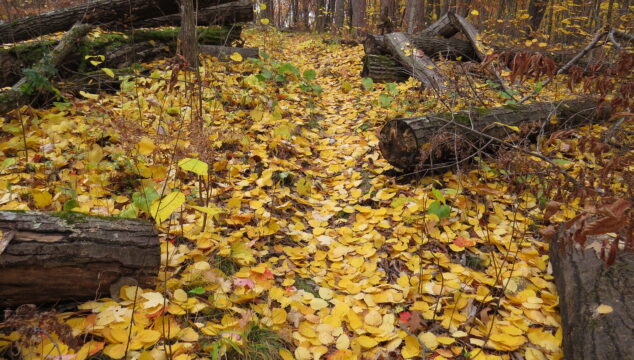
Come walk with me in the peak Autumn beauty of the Northwoods. To say that I love this time of year is an understatement. Most everyone can appreciate the colorful falling leaves---it reveals the 'true self' of a tree when its leaves are no longer producing chlorophyll. Their true colors are revealed, and there is something simple … [Read More...]
Be Like the Wolf Flower
We are a part of Nature. In light of all that is going on in the world around us, my last post from our Christmas Texas trip reminds me just how strong, tough, scrappy, and resilient the creations of Nature are, including us.
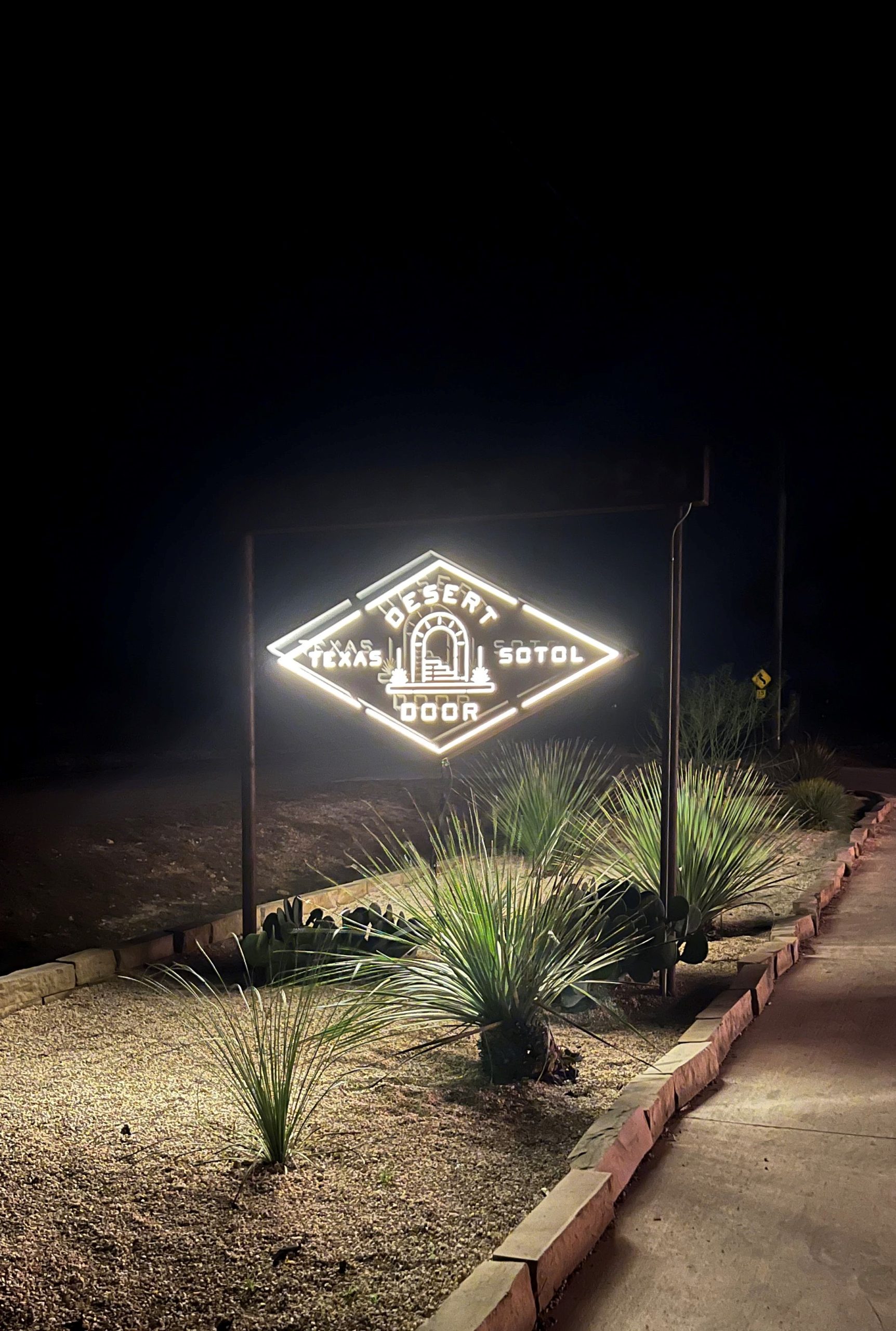
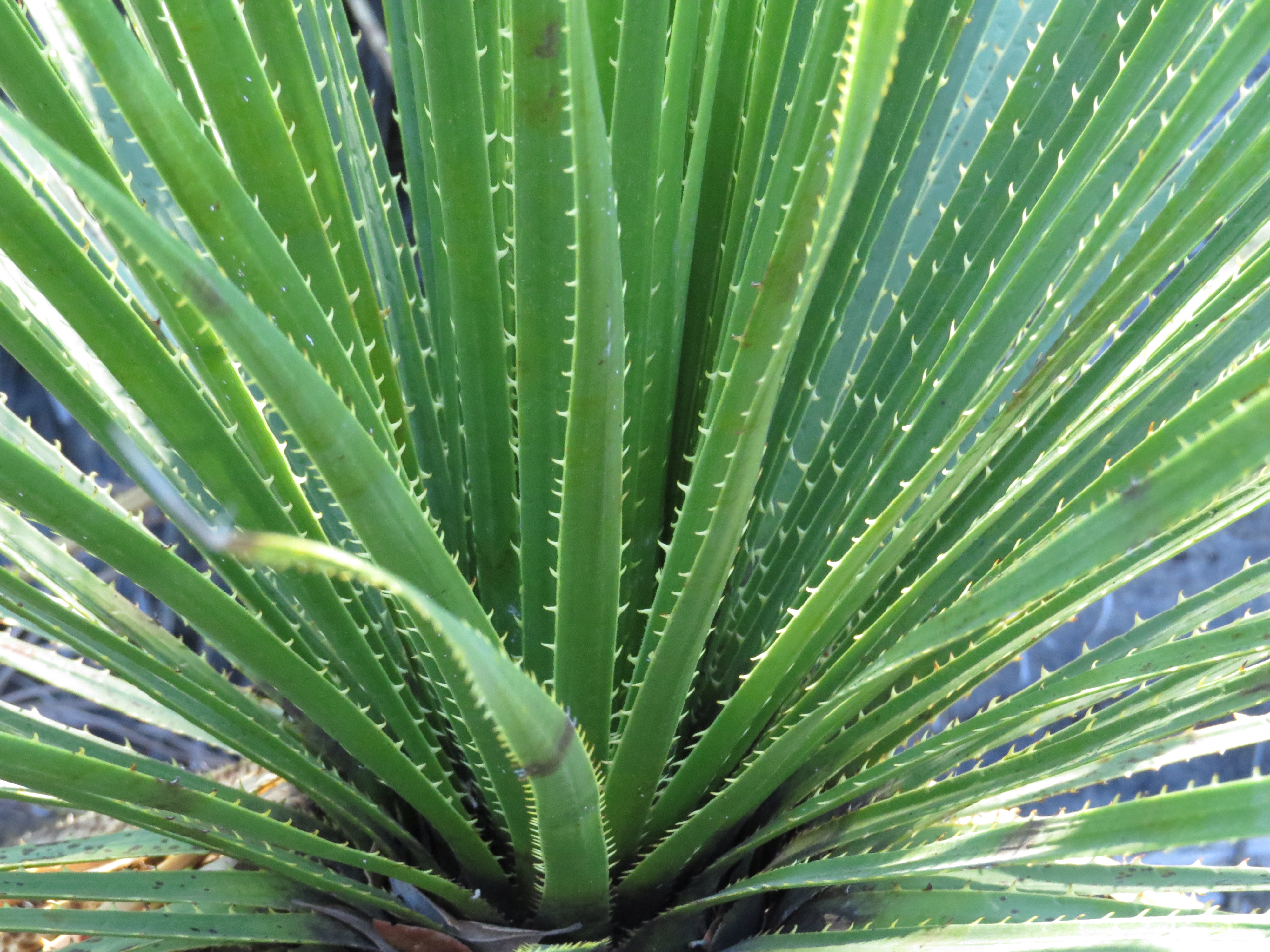
We were introduced to the Texas Sotol plant, used as a drought tolerant landscape plant with its wheel of wondrous spikey green leaves. We saw it in the wild at Pedernales Falls State Park, sitting atop the limestone boulders and sandy soil. But we learned about the history and utility of the plant when we went to Desert Door Texas Sotol distillery on New Year’s Eve in Driftwood, Texas. First off, what an absolutely beautiful place Desert Door is! Stylish southwestern building, captivating landscape and decorating, and beautiful cobalt blue glass bottles holding the premium liquor made from the ‘heart’ of the Sotol plant. Like tequila made from Blue Agaves, the Sotol plant has a pineapple-looking core that stores moisture and carbohydrates. Traditionally, the Sotol hearts were baked in earth ovens for 36-48 hours, and the pulp was formed into patties and dried. It was an important food staple for native peoples. Sotol plants grow by the millions in west Texas and are wild-harvested for Desert Door. They steam cook the Sotol hearts, and the pulp is pressed to release the molasses-like juice. It is fermented with yeast to a Sotol beer, then distilled to make the Sotol liquor.
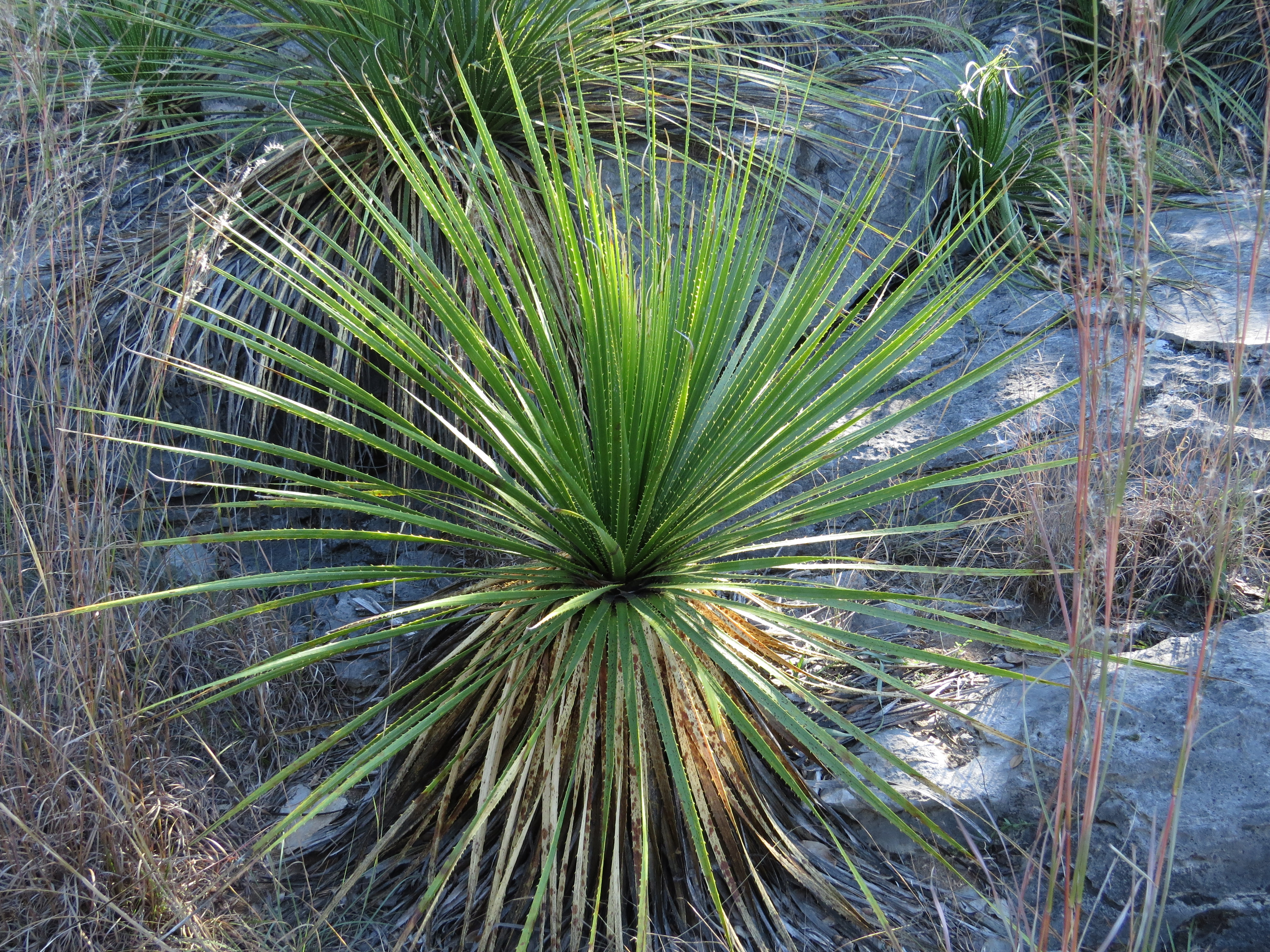
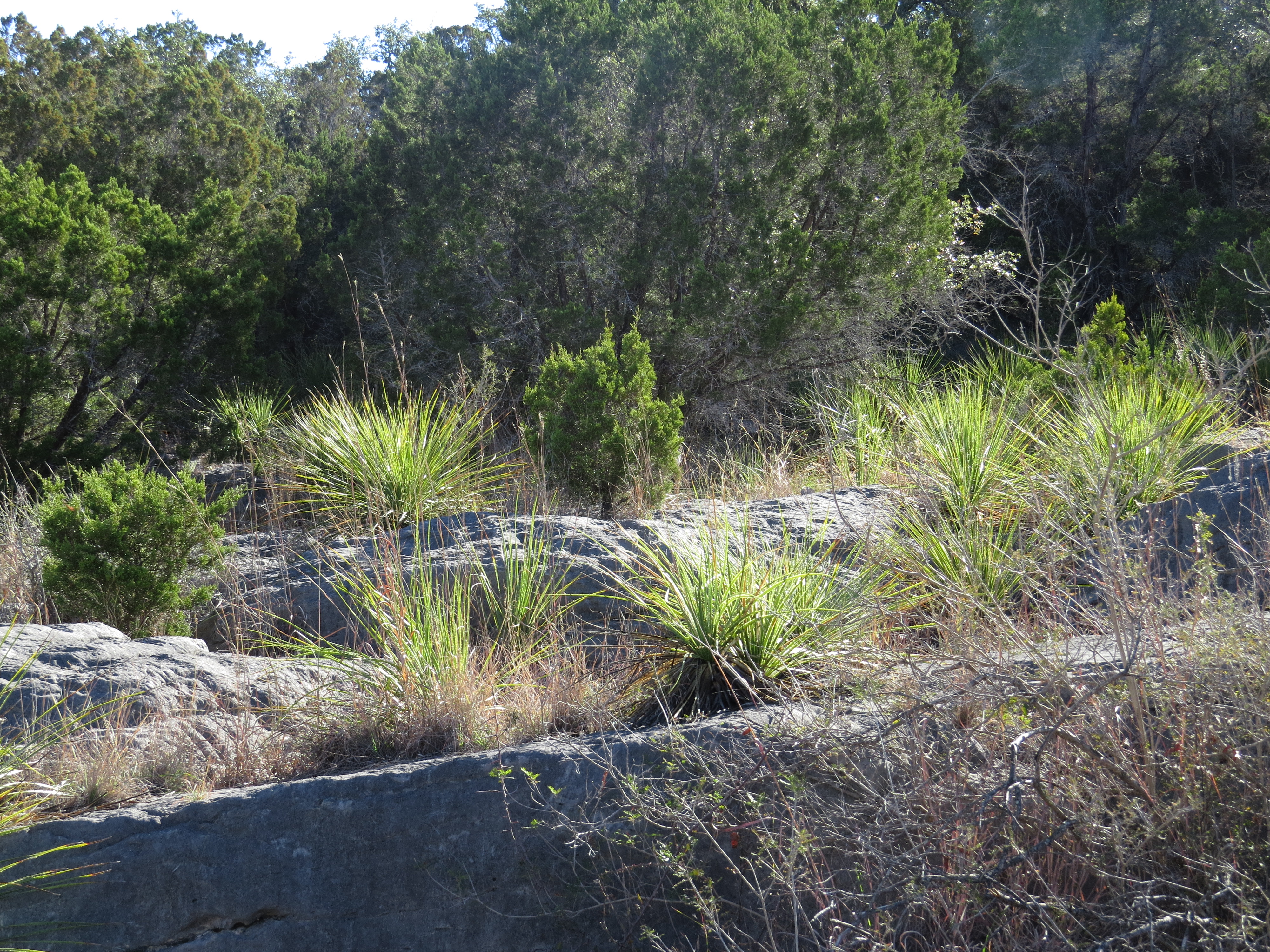
The tough, toothed leaves were also used by native peoples for woven mats, baskets, rope, thatching, and paper. The tall (10′-15′) flower spikes that attract hummingbirds when blooming were used like wood poles for building—a very utilitarian plant!
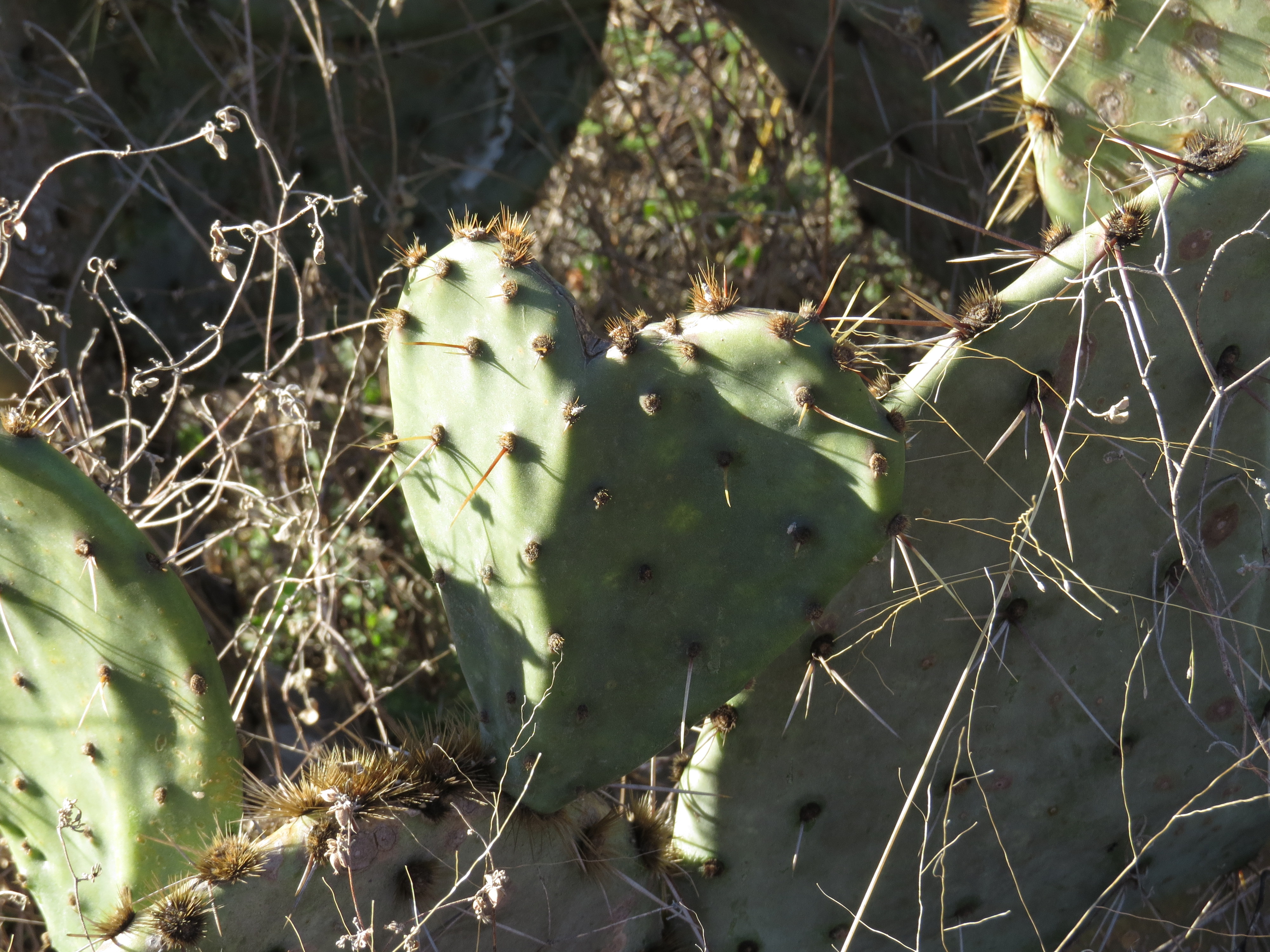
Prickly Pear cactus grows in the harshest hot and dry conditions and was also used as a food source. None of the plants offer an easy meal, however. It takes determined, tough people to extract food and drink from these tough, resilient plants.
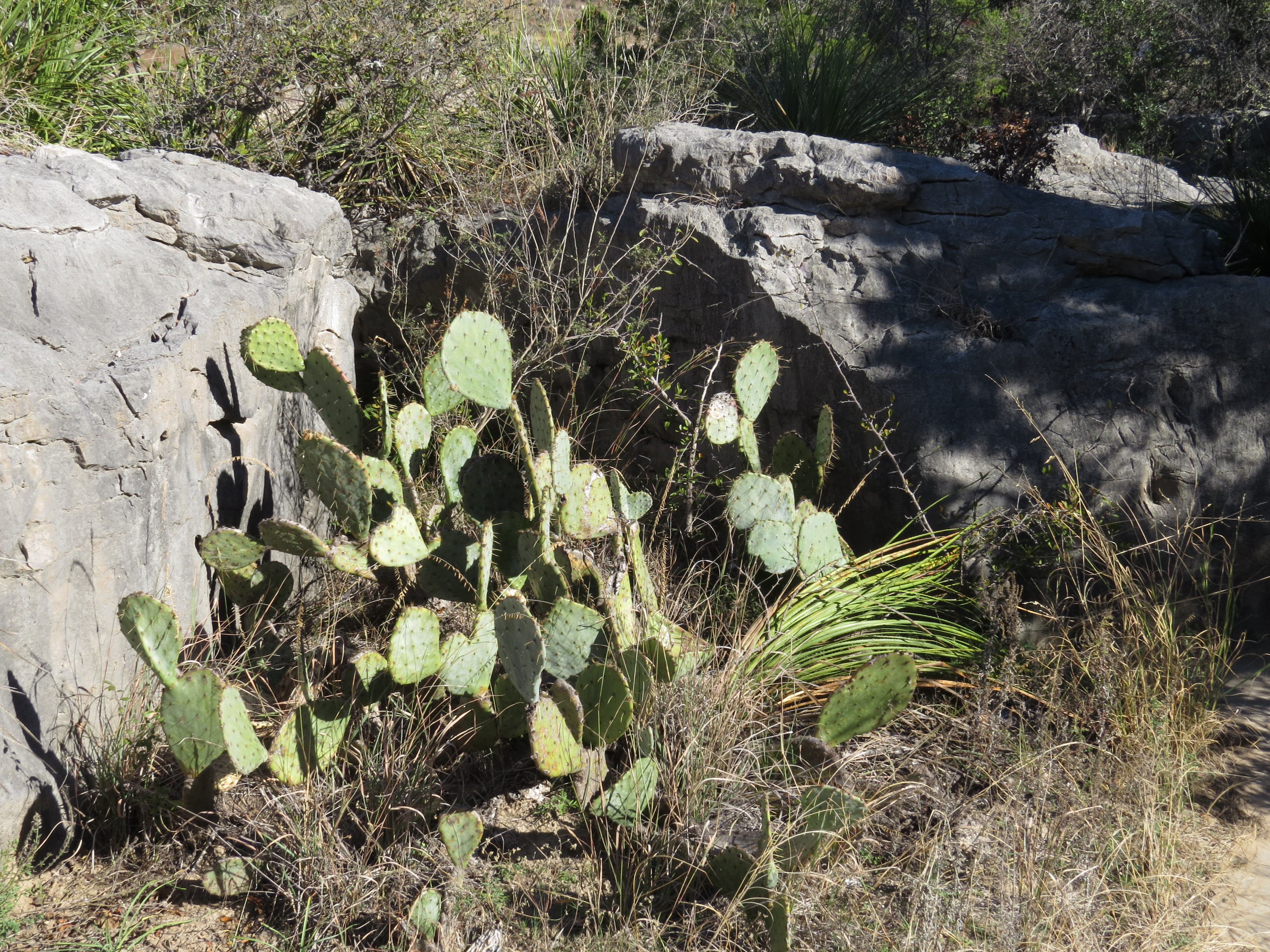
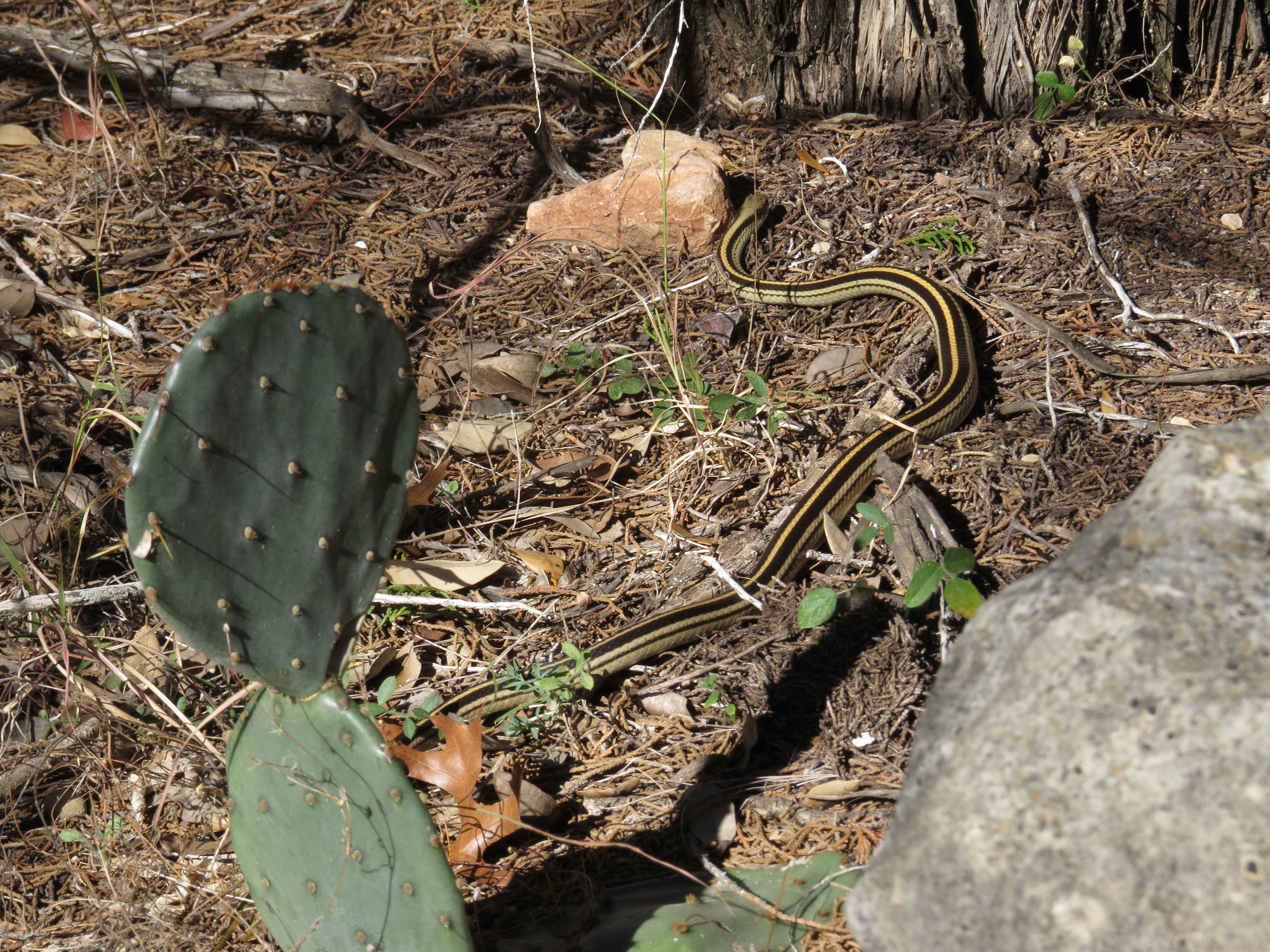
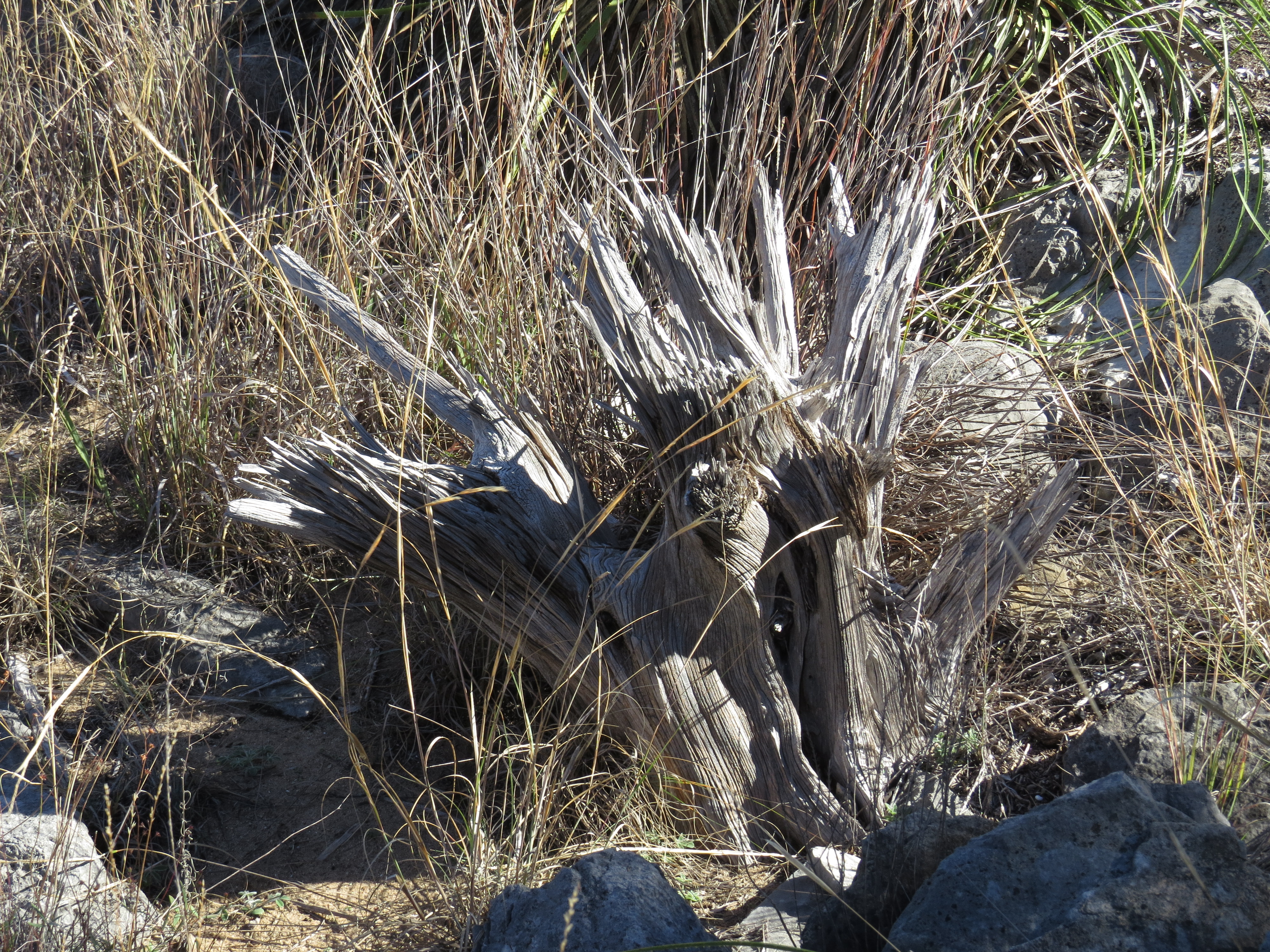
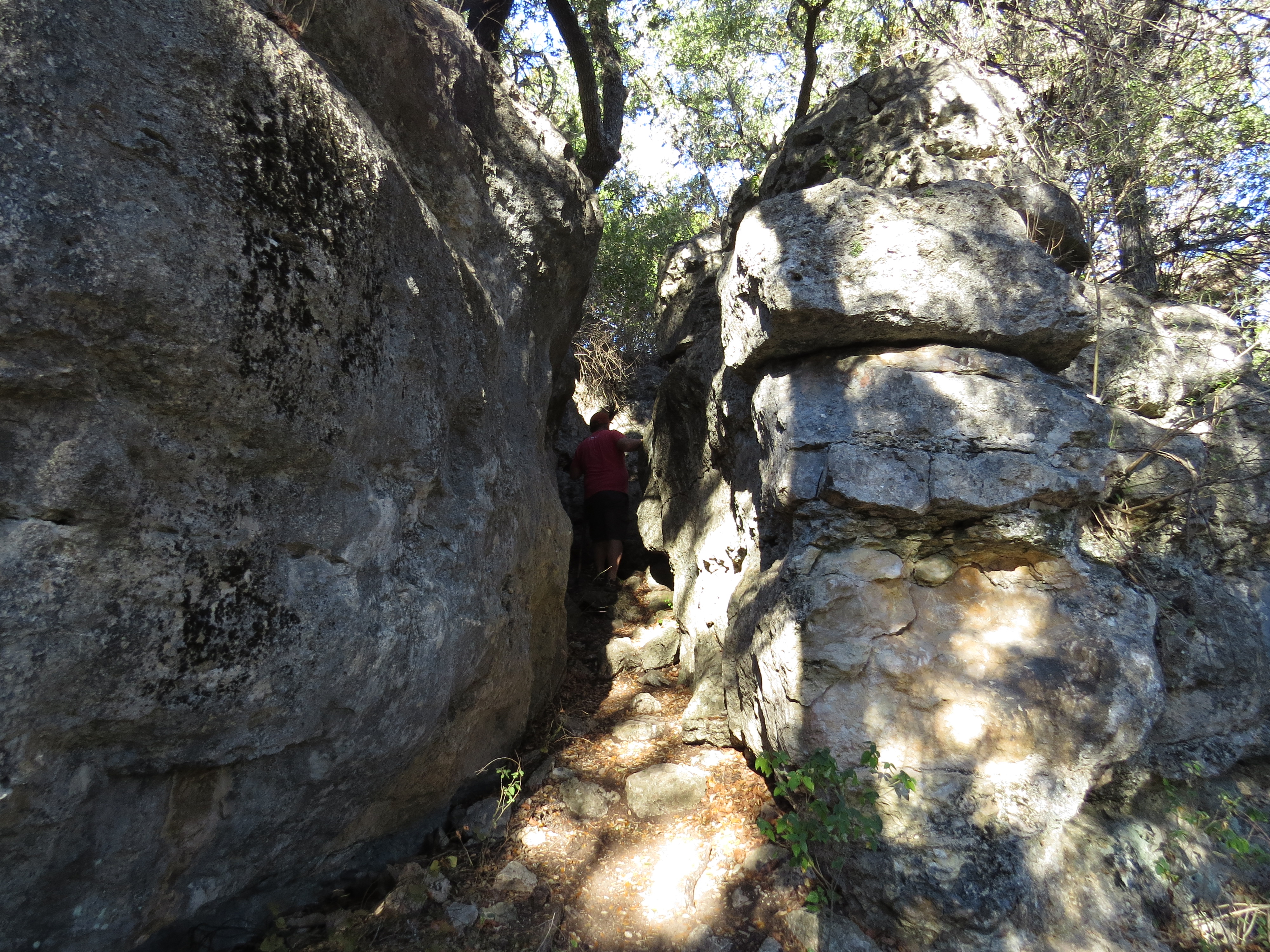
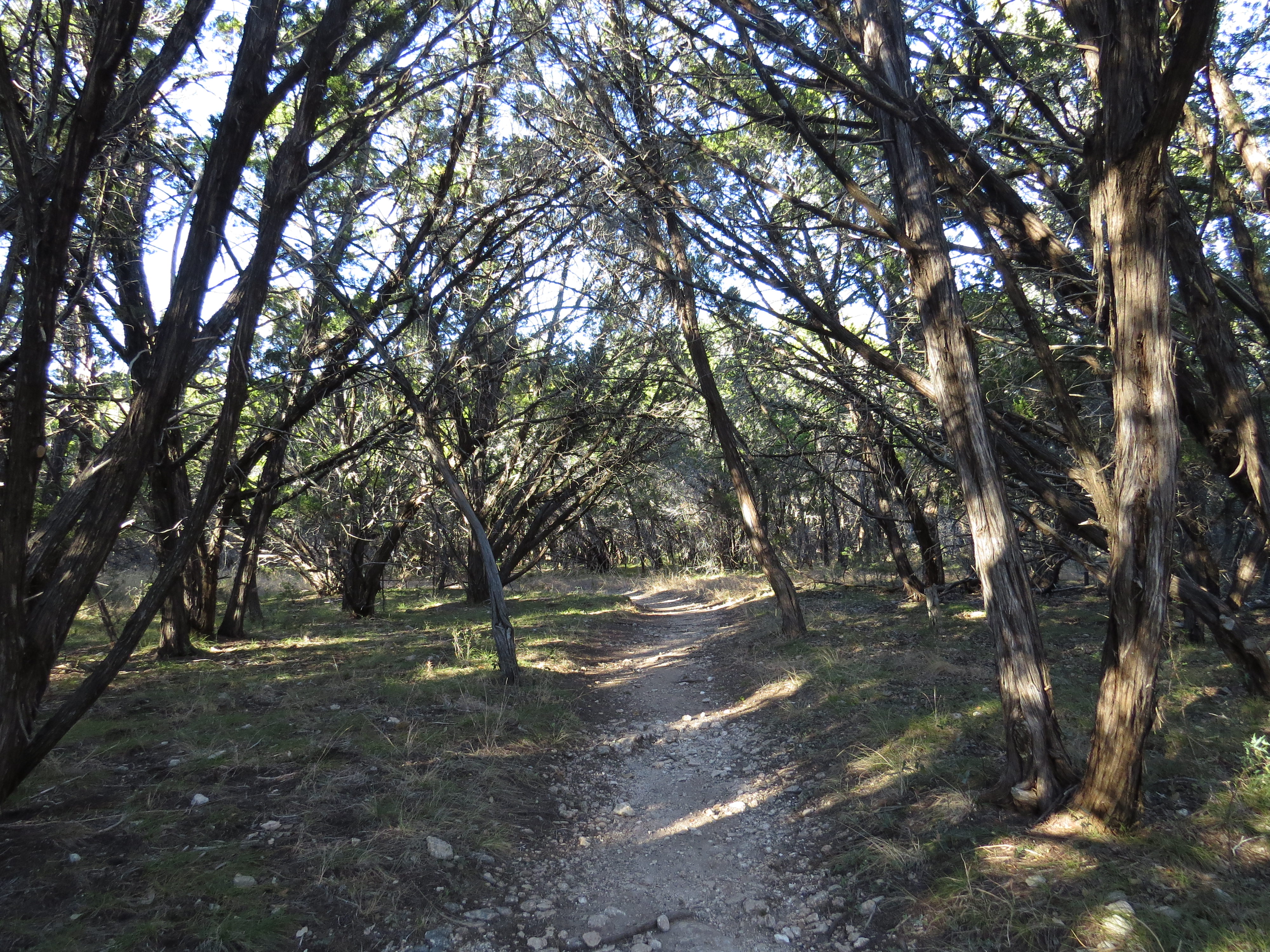
After leaving Pedernales Falls, we drove to another part of the 5200-acre park. Twin Falls nature trail was rugged over limestone cliffs and through Ashe Juniper forests. I wondered how one would ever ride a horse through this country….Luckily the park has cut miles and miles of equestrian trails through the rough terrain.
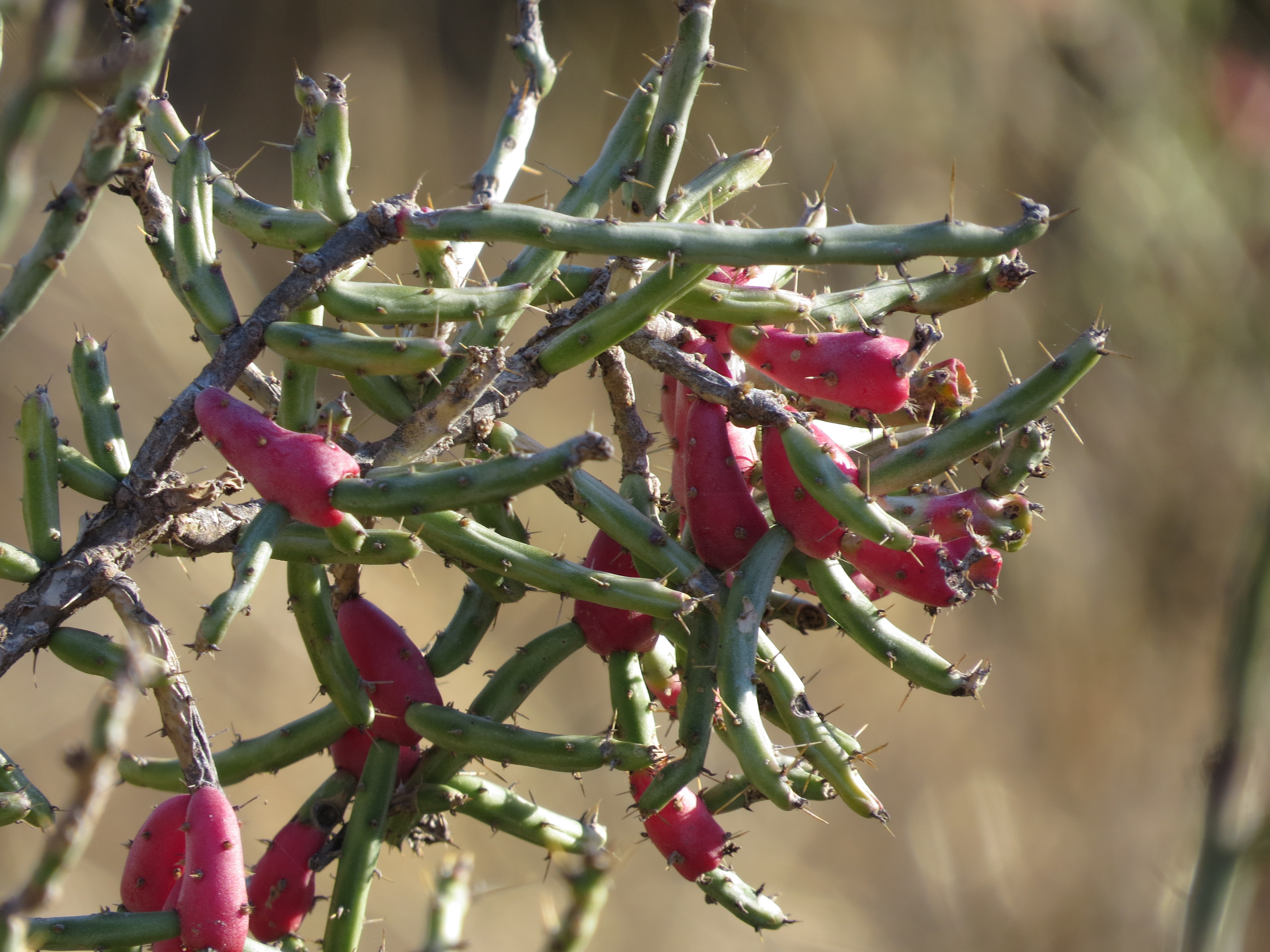
Another thorny, scrappy plant is the Tasajillo or Pencil cactus. The beautiful red fruits and the slender green stems are a visual reminder of Christmas, another one of its common names. It is also known as Jumping cactus, because the brittle stems break away from the plant easily when brushed slightly or even by the wind.
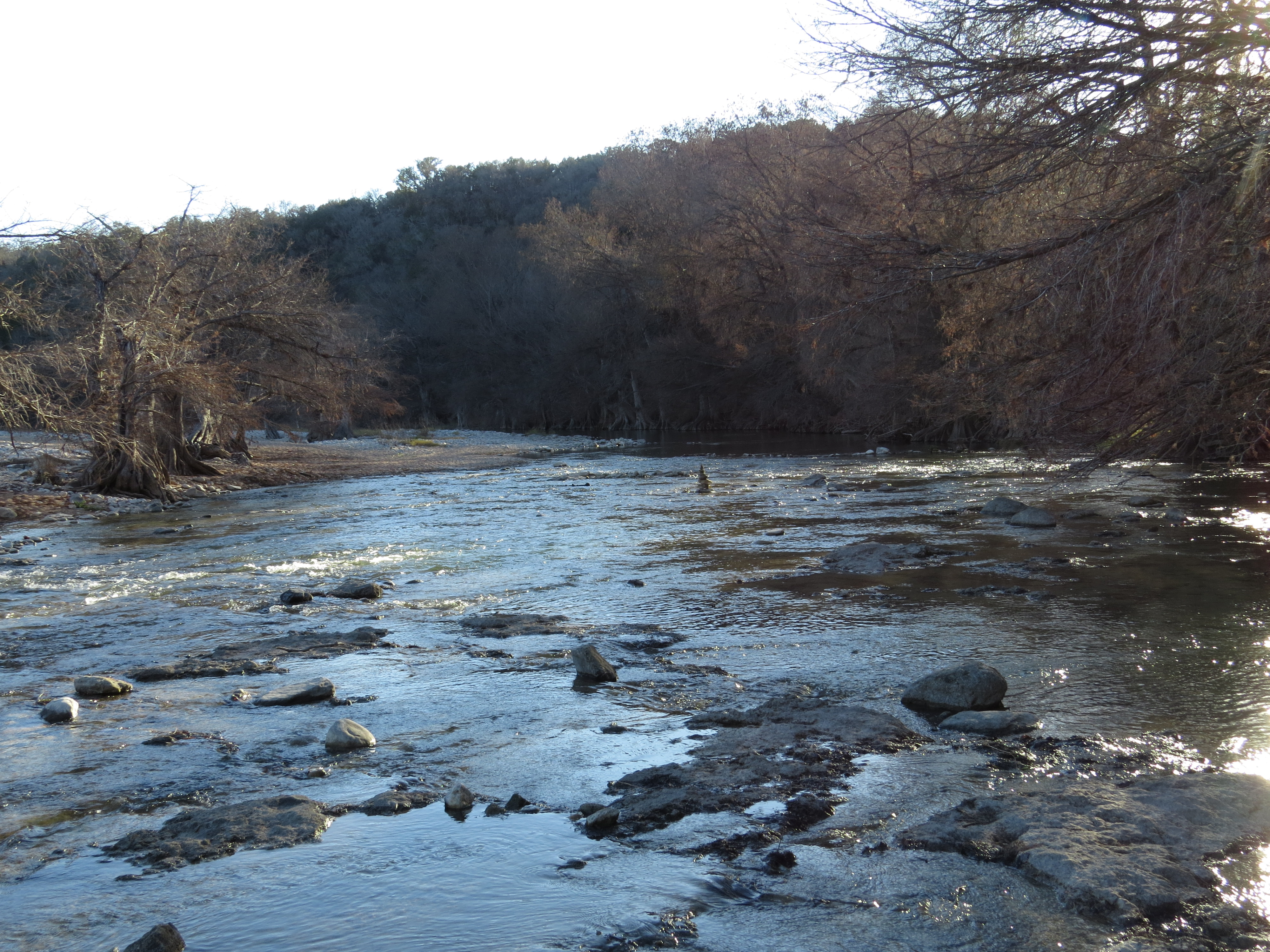
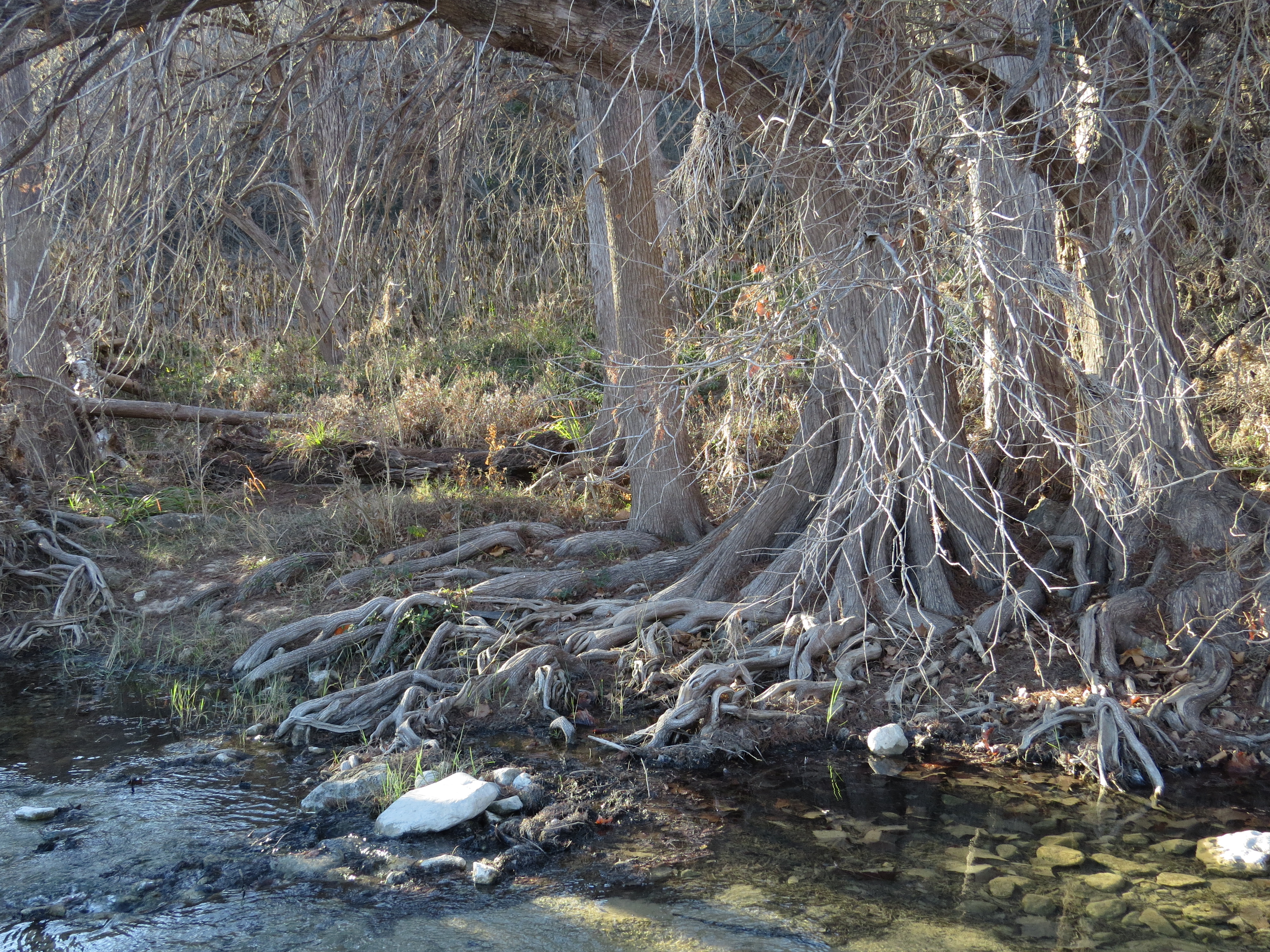
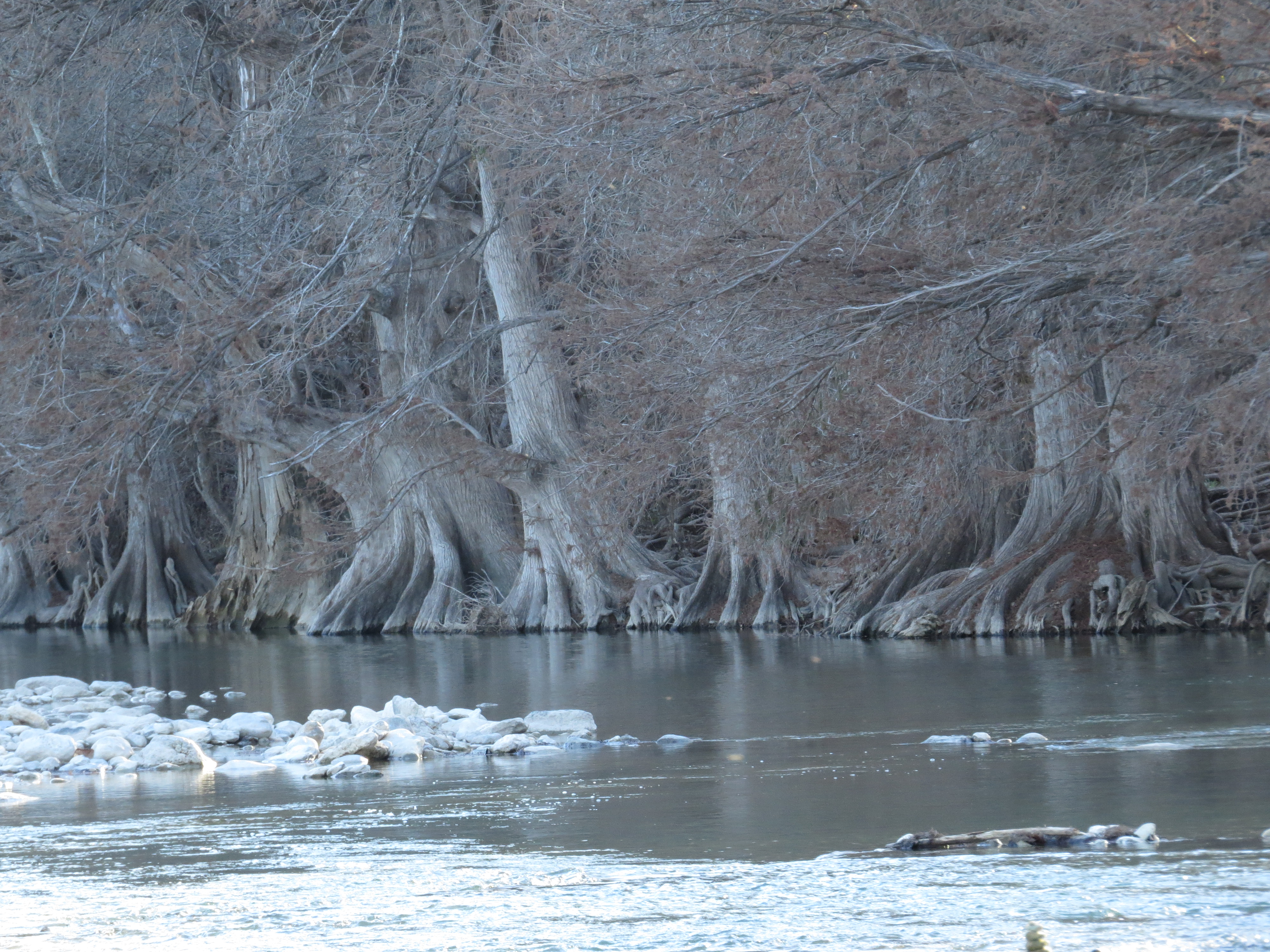
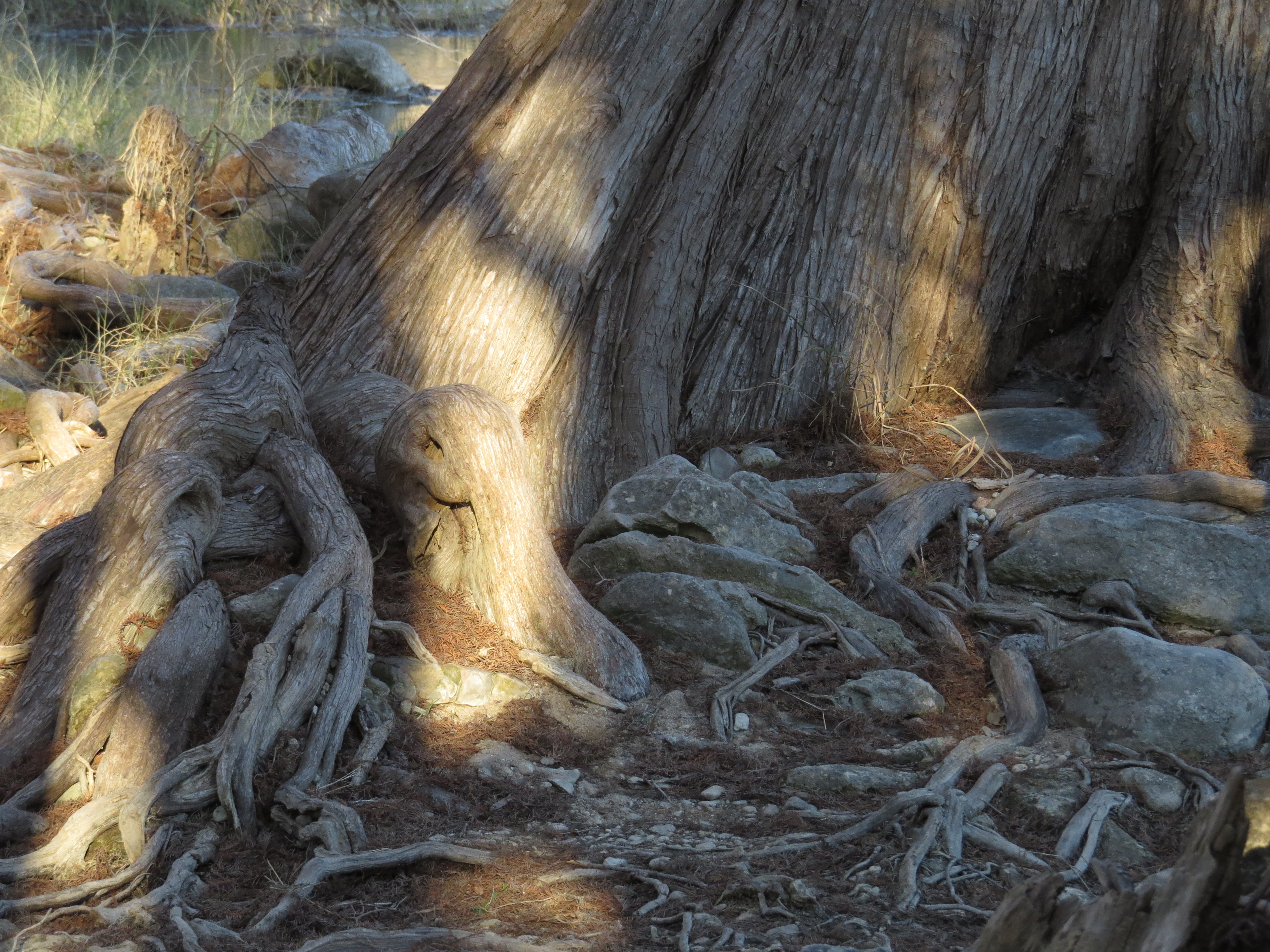
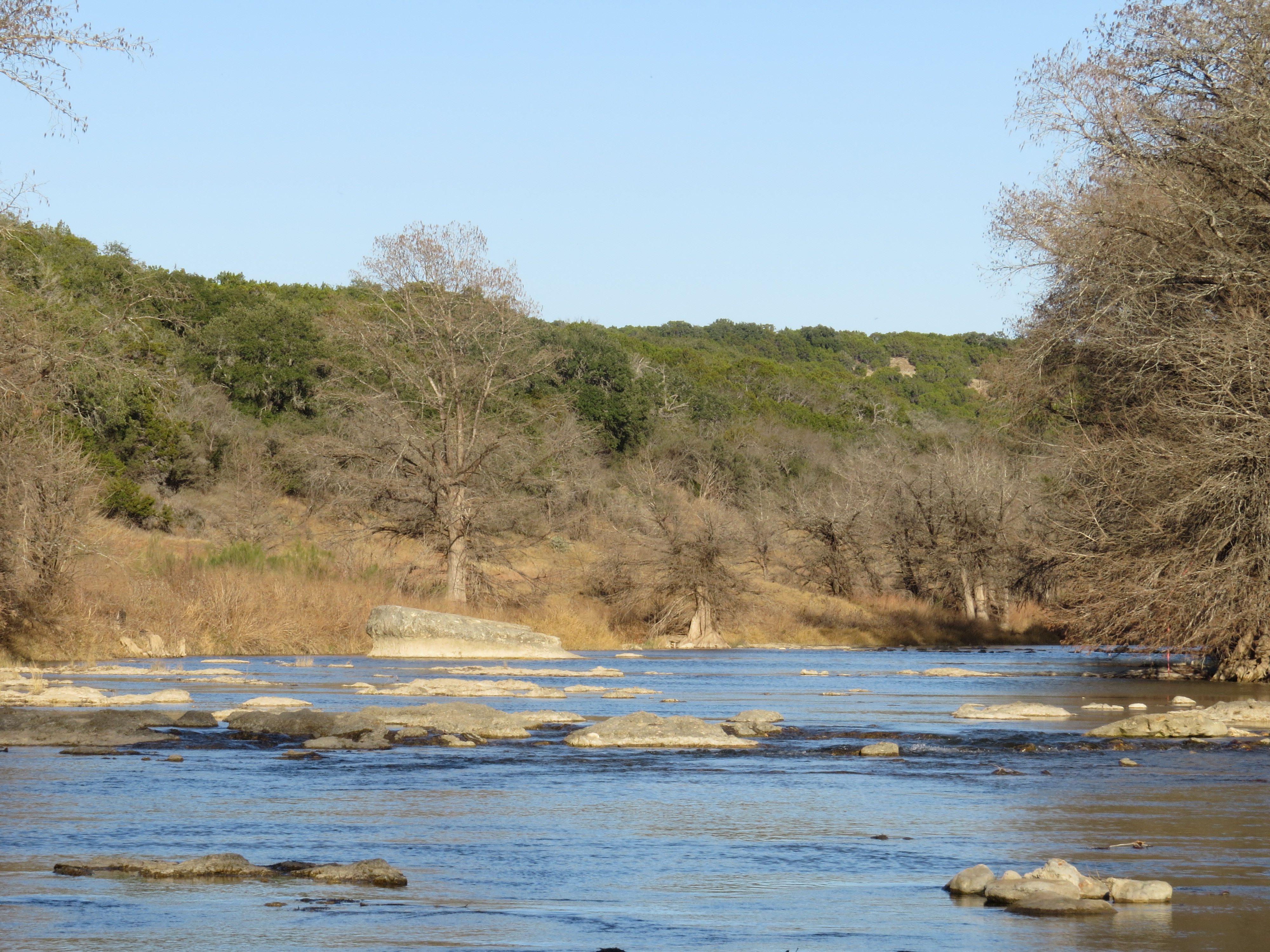
We hiked down to Trammell’s crossing where one would have to get wet feet in order to continue on the hiking trail. Time did not permit further hiking for us, so we explored the river bank lined with Bald Cypress trees. Their roots created a barrier to the rushing water of the Pedernales River when flash flooding occurs—stalwart soldiers in the fight against erosion.
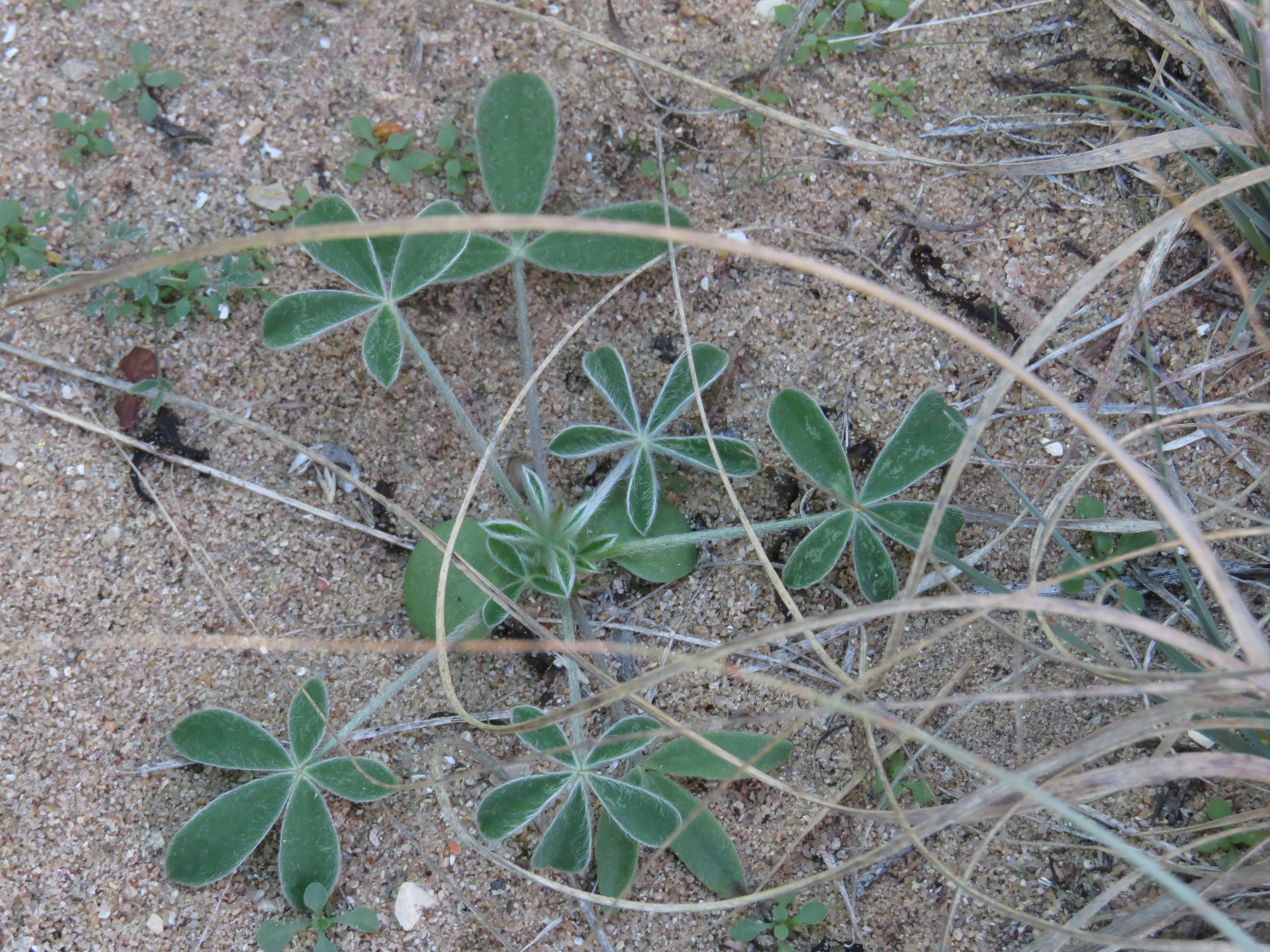
Most every plant and tree in the state park and in this area of Texas are tough, resilient creations. They live in arid soil, in drought conditions, in high heat, and in areas where flash flooding tends to wipe things away. But in the heart of Winter grows a delicate looking plant—the Texas Bluebonnet. It goes from seed to flower to seed in one year. The cool season of winter establishes its roots for the growing / blooming season. The Bluebonnet is the state flower of Texas and symbolizes the bravery and sacrifice of the pioneer women (the flowers resemble the bonnets worn by them). The genus name Lupinus is derived from ‘lupus,’ meaning wolf. So the delicate looking foliage belies the true nature of the hardy wildflower—it is beautiful and tough.
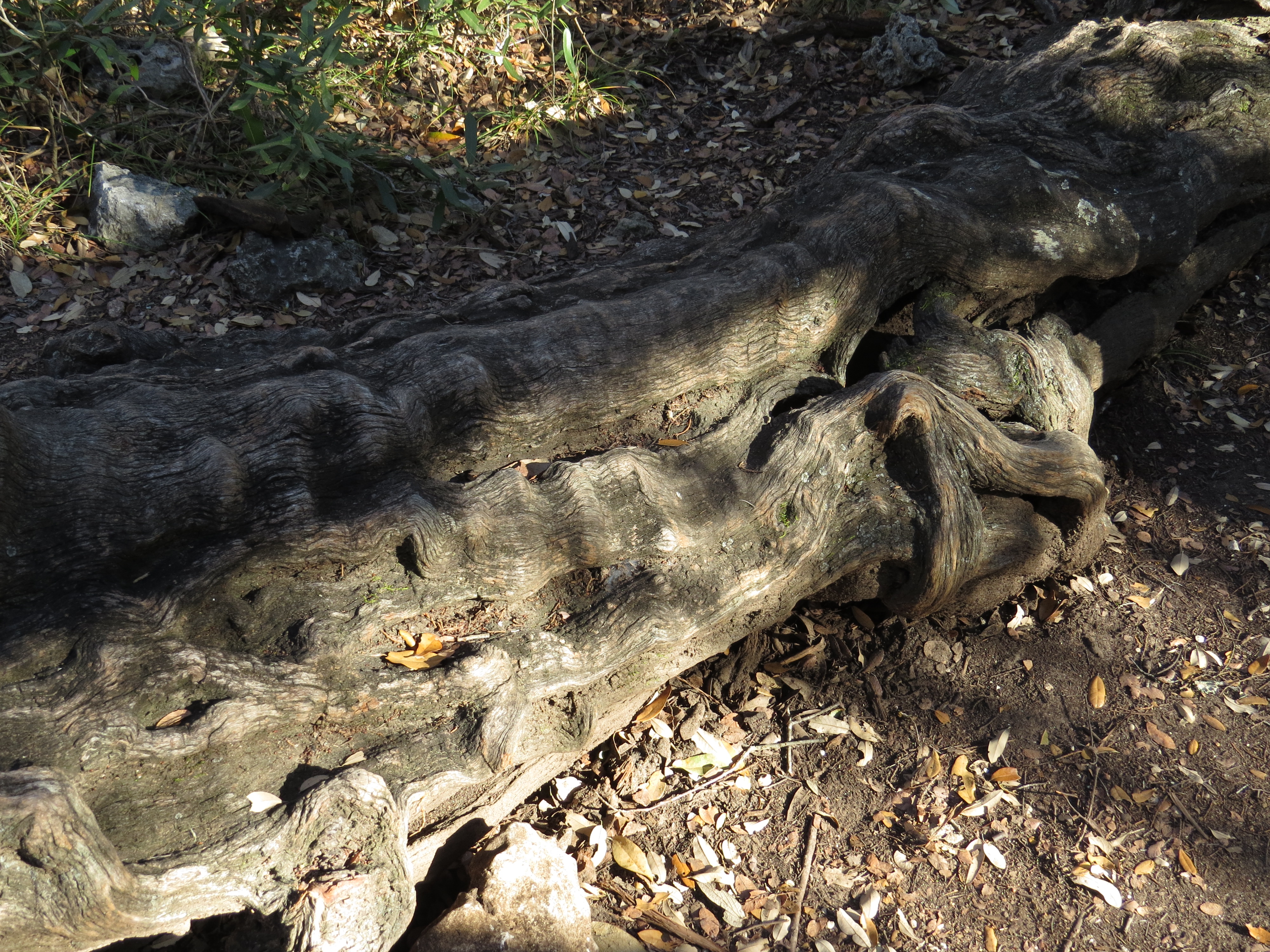
Pedernales Falls State Park is a wild tapestry of tough, resilient Ashe Junipers, cacti, sand, limestone boulders, Sotols, Bald Cypresses, and even Bluebonnets. The environmental conditions are rough and tumble. Each has qualities that enable them to live and thrive in such conditions. The Ukrainian people have shown their tenacity and toughness in the face of Russia’s callous war—the conditions are harsh and cruel and feel untenable. And yet, they fight on for their country and for democracy. The human spirit is strong, tough, and scrappy—whether living from the land like the native people did, whether traveling and homesteading on the land like the pioneers did, or enduring a pandemic and fighting or witnessing a brutal war like the modern world has been doing. We are brave. We are tough. We are resilient. We are a part of Nature.
This Side of Winter
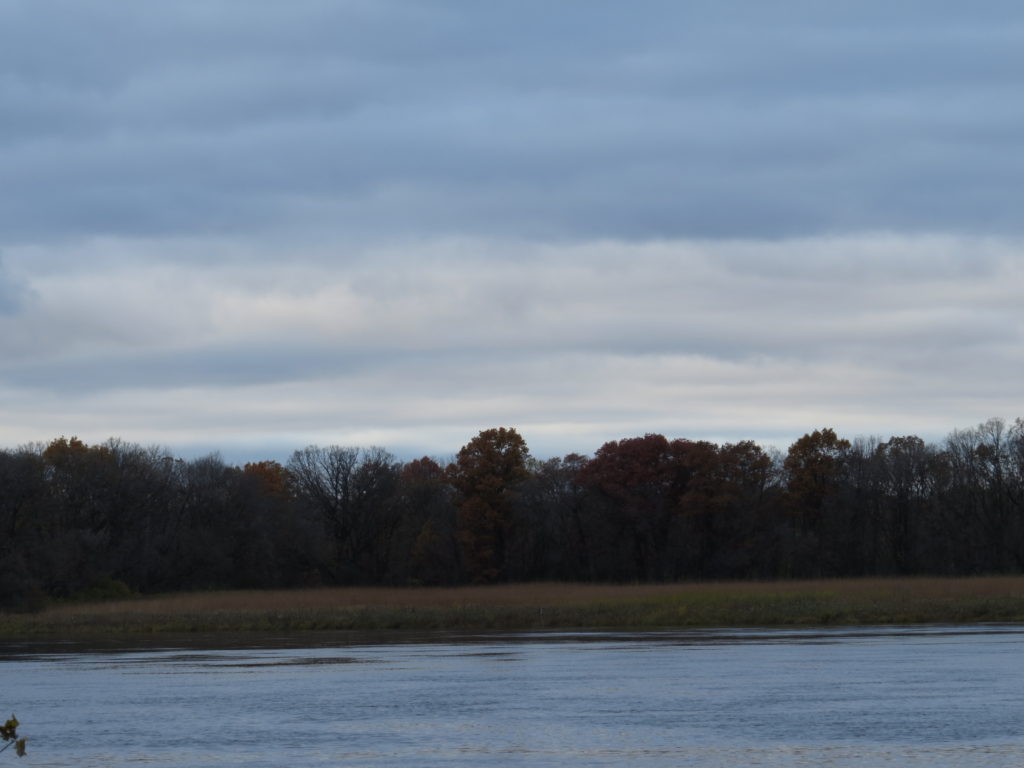
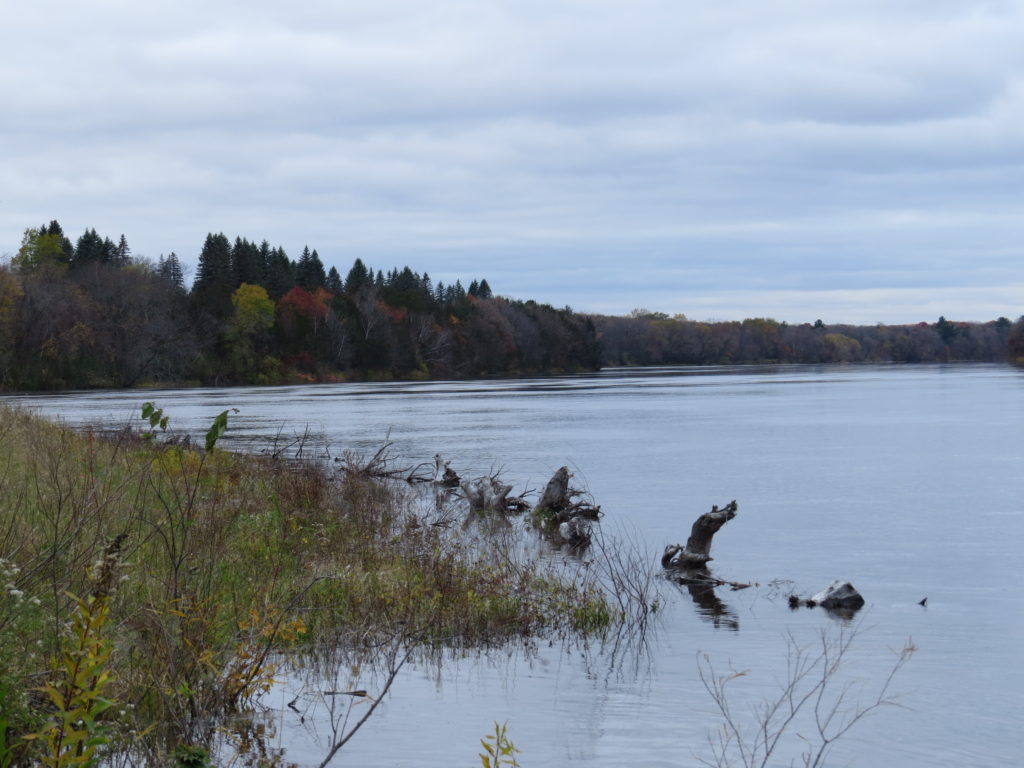
We had been there before—on the other side of Winter—when the wish for Spring was ardent and within our reach. But at that time, the thick cover of snow and warmer, stronger sun had ‘iced’ the trails, and we could not even walk down the steep slopes to the banks of the grand Mississippi River. This time we walked through dry, crispy leaves, down the steep slope, right to the edge of the water. The sky was cloudy, the wind brisk, the temperature hovering around freezing. On this side of Winter, we were filled with more reluctance, almost a resentment that Autumn had not played nice and eased us into the fray of Winter.
A couple of days of strong wind had bared the brilliant golden Maples and Birch trees. Ash and Linden leaves were long gone, but the Oak trees still clenched their rusty orange and red leaves in a last hurrah. The Mississippi River County Park had a bluff full of Oaks, Pines, and Cedars, and at their feet was a chock-full River.
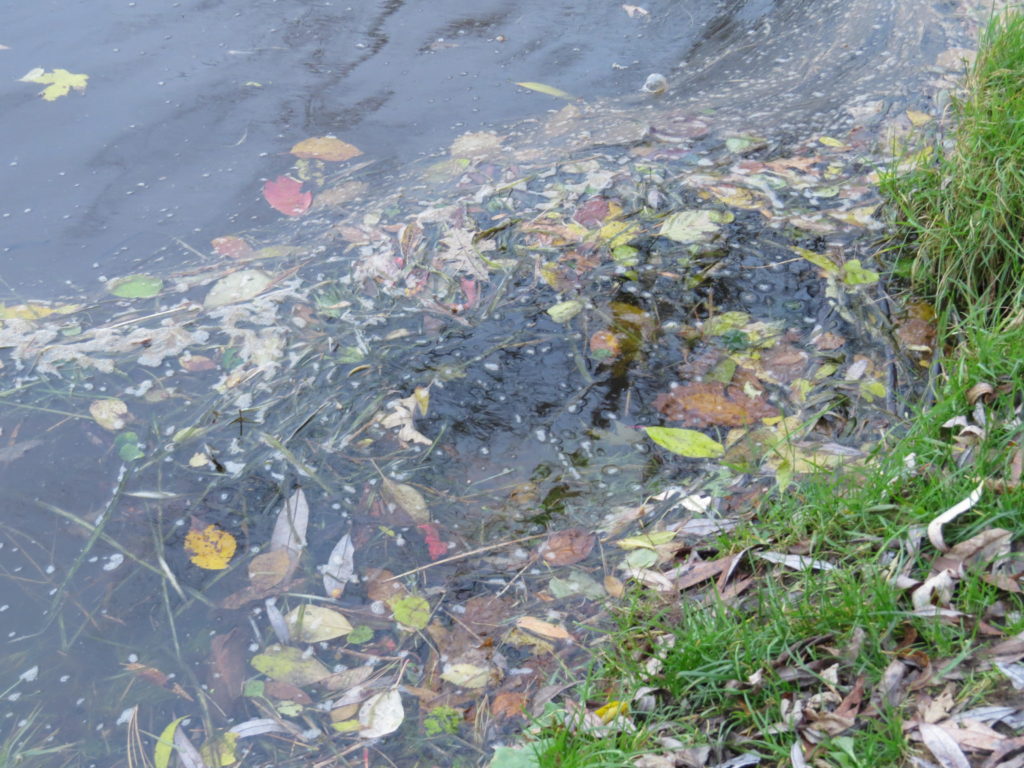
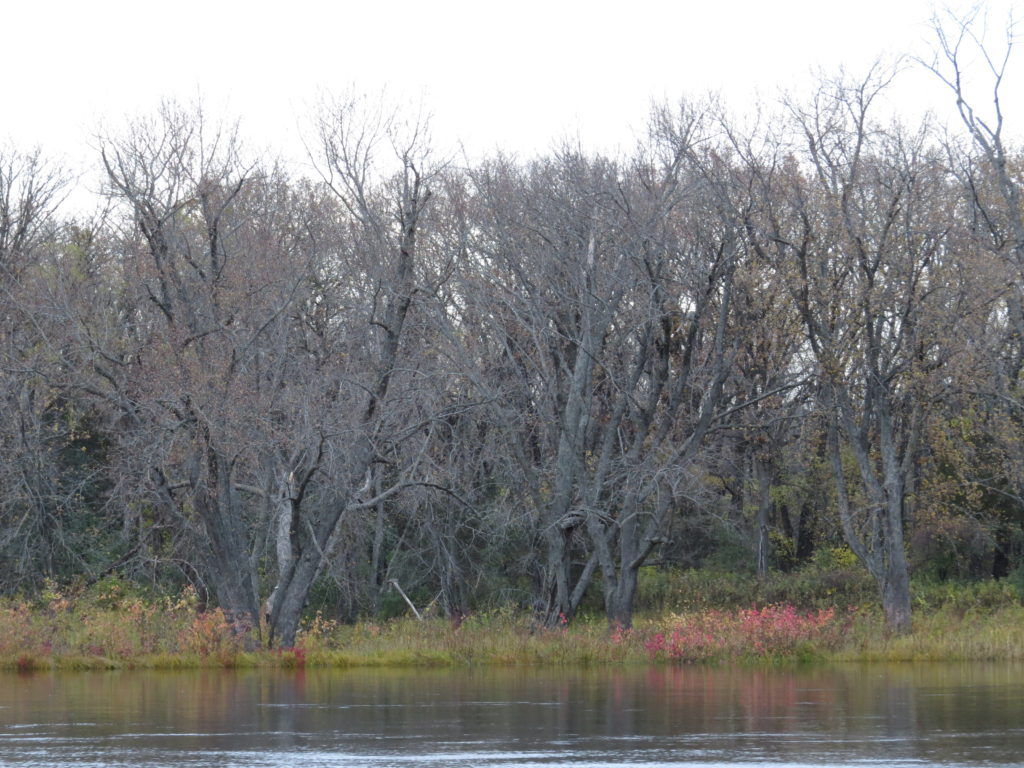
We had the opportunity to be in the neighborhood of the River for a week, so we visited the park three different days. The first day of exploration with the camera had my attention focused outward to what the Park had to offer on that chilly day.
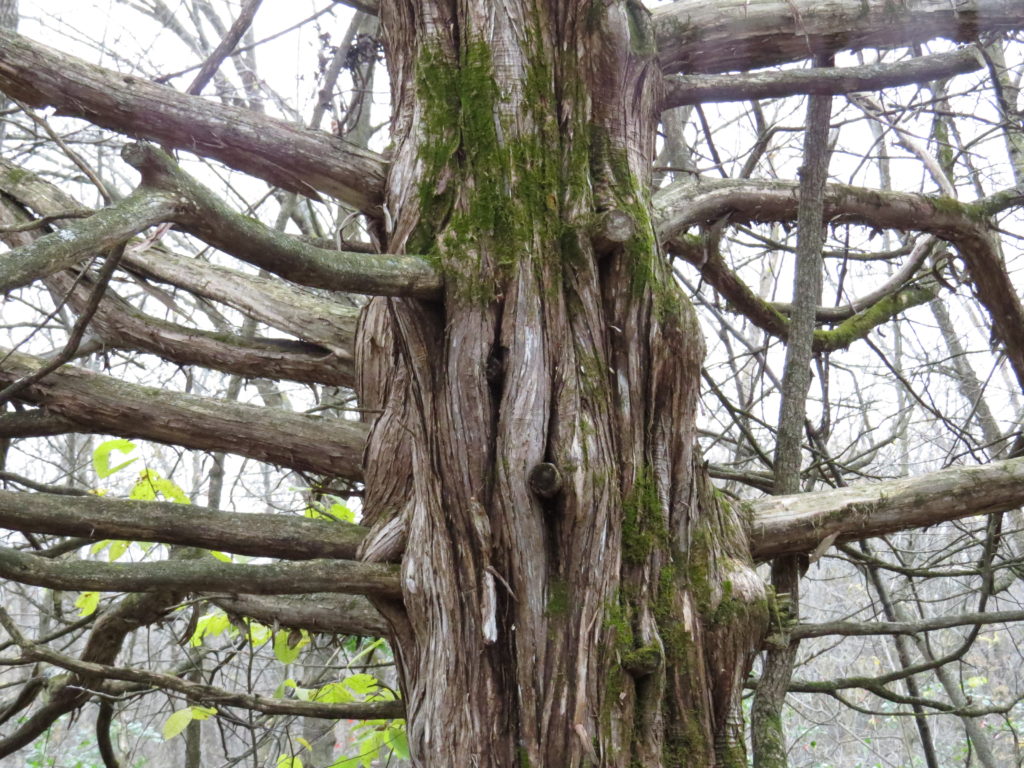
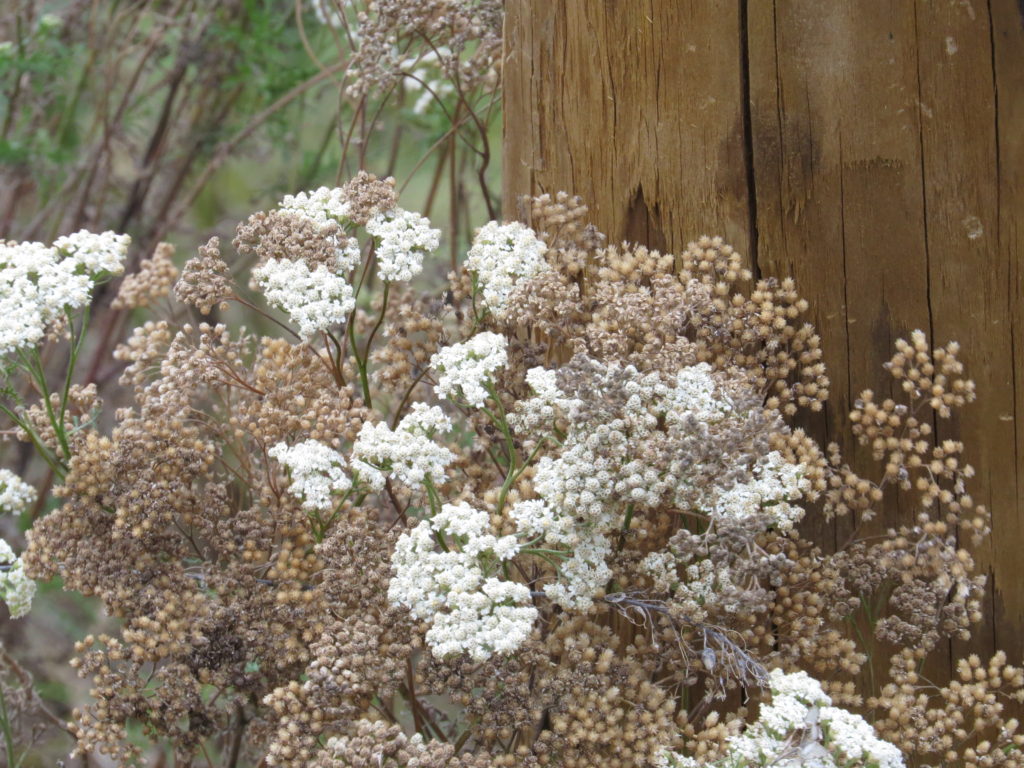
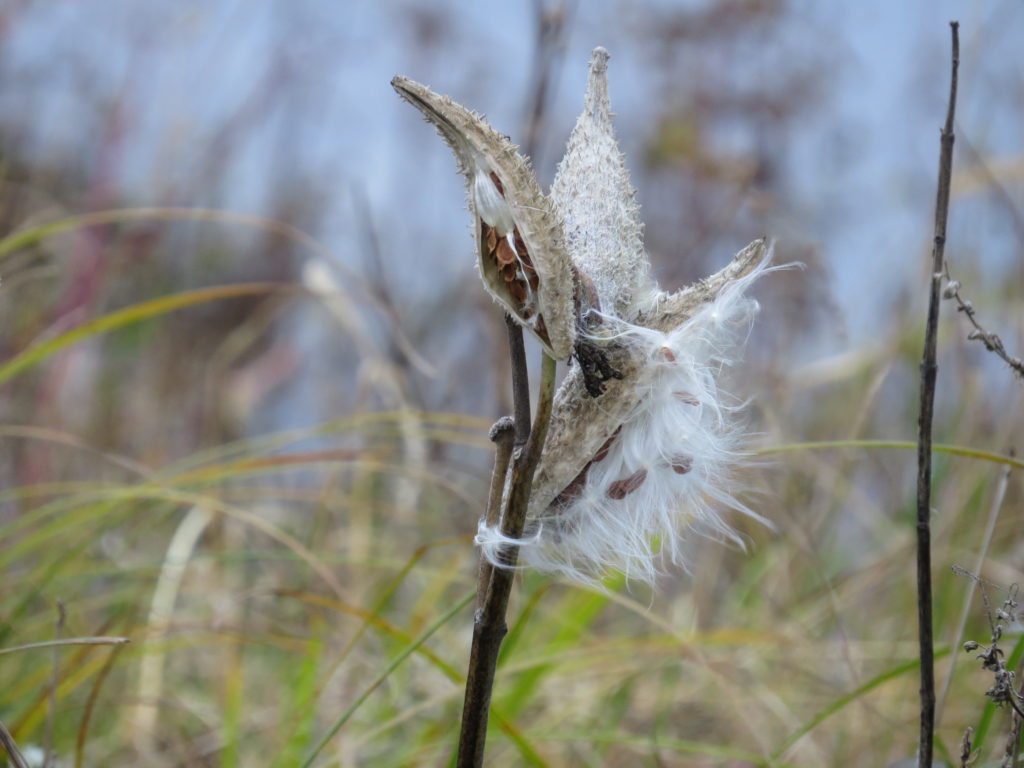
The second day, we explored the bluff trails.
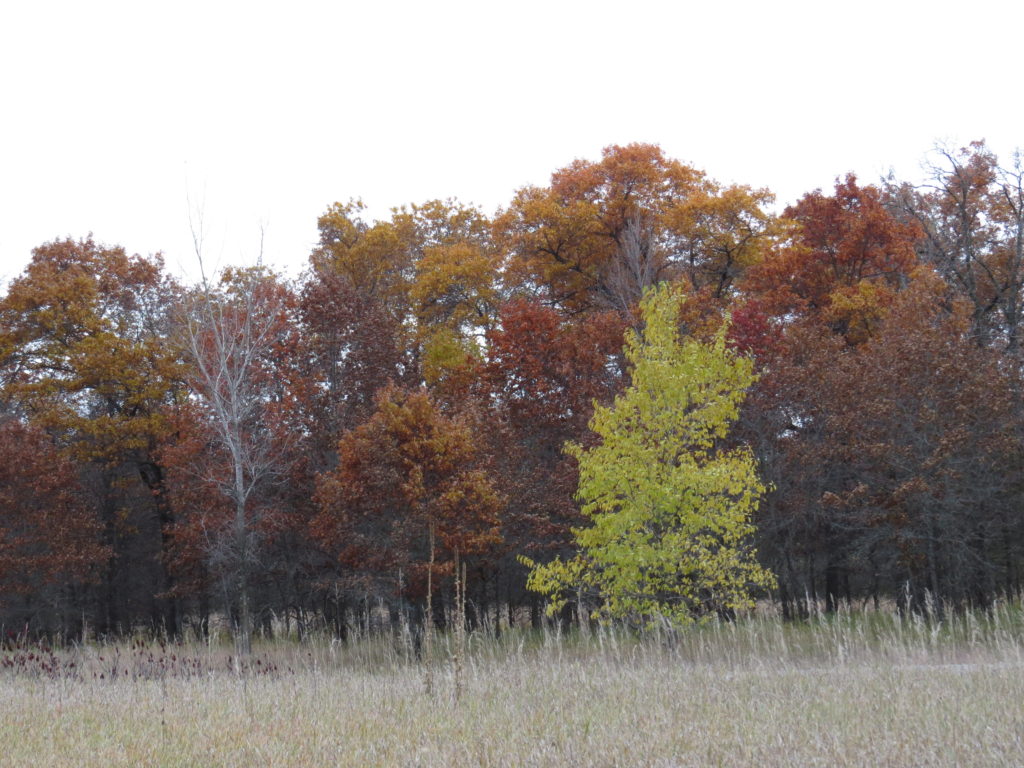
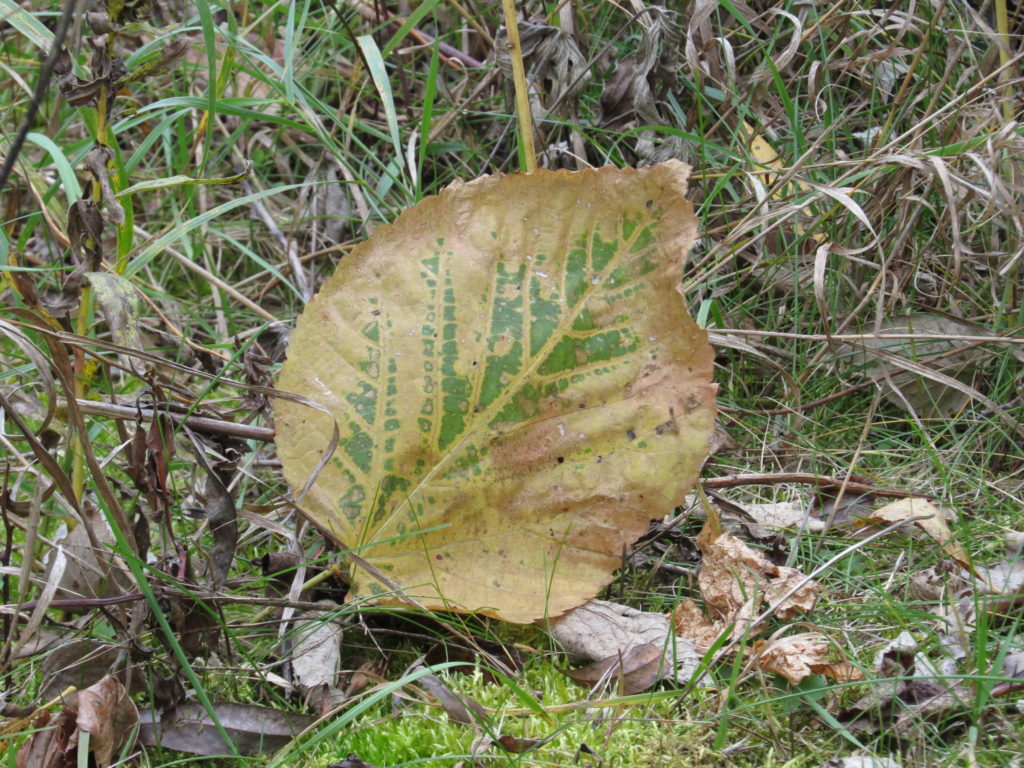
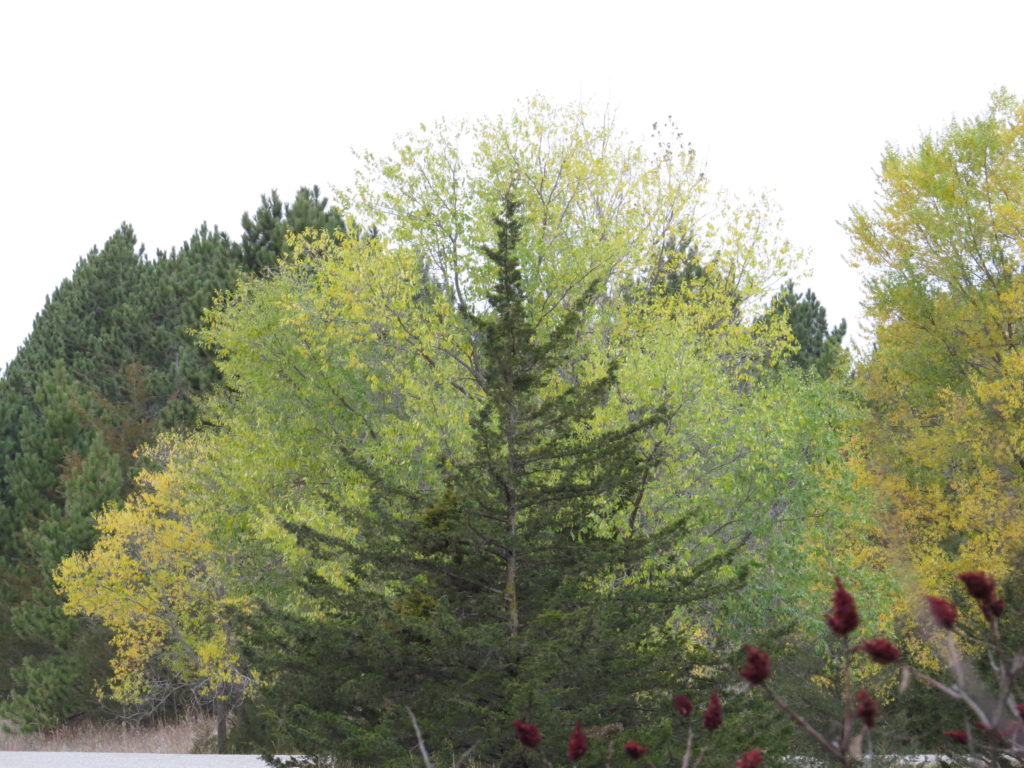
The third day, I had a heated and heavy heart, and I went down to the River without a word to my walking partner, and I barreled through the trails hoping to discharge some of that heaviness. Halfway mindful of the early setting sun, I turned around after getting part-way down a loop trail and studied the map to see which way would get us back to the car. Since the River was so high, large parts of the peninsula and trail were covered with water. We went cross-country through the trees and brush to get around the water-logged spots, and I had a glimpse of pleasure in that endeavor.
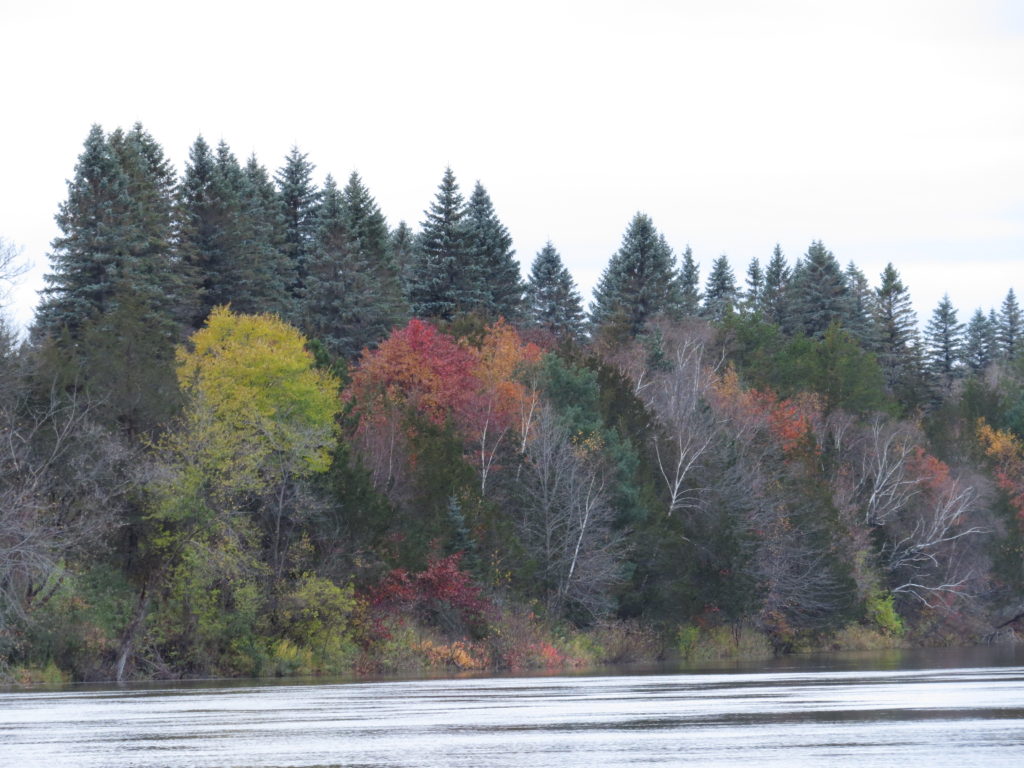
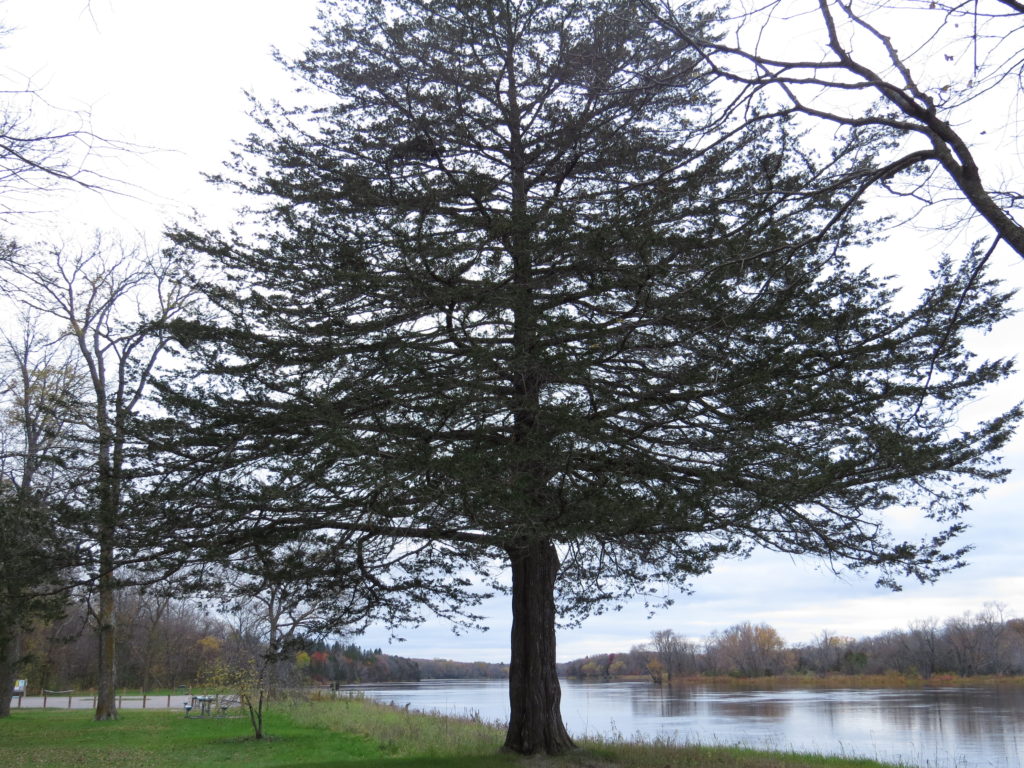
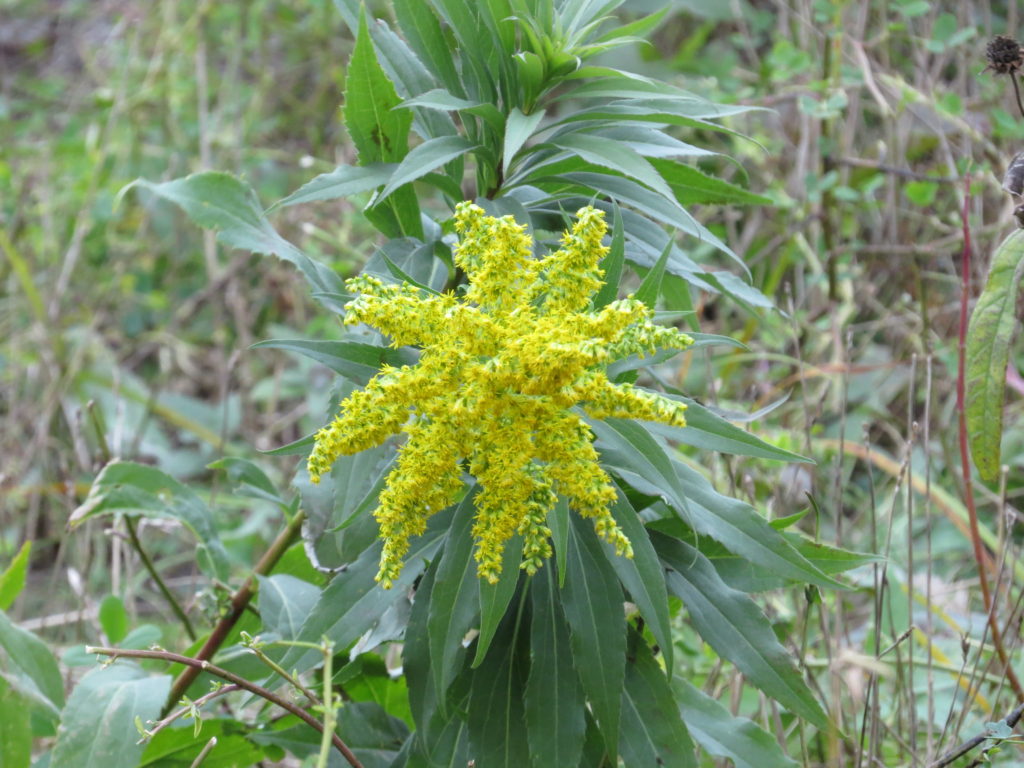
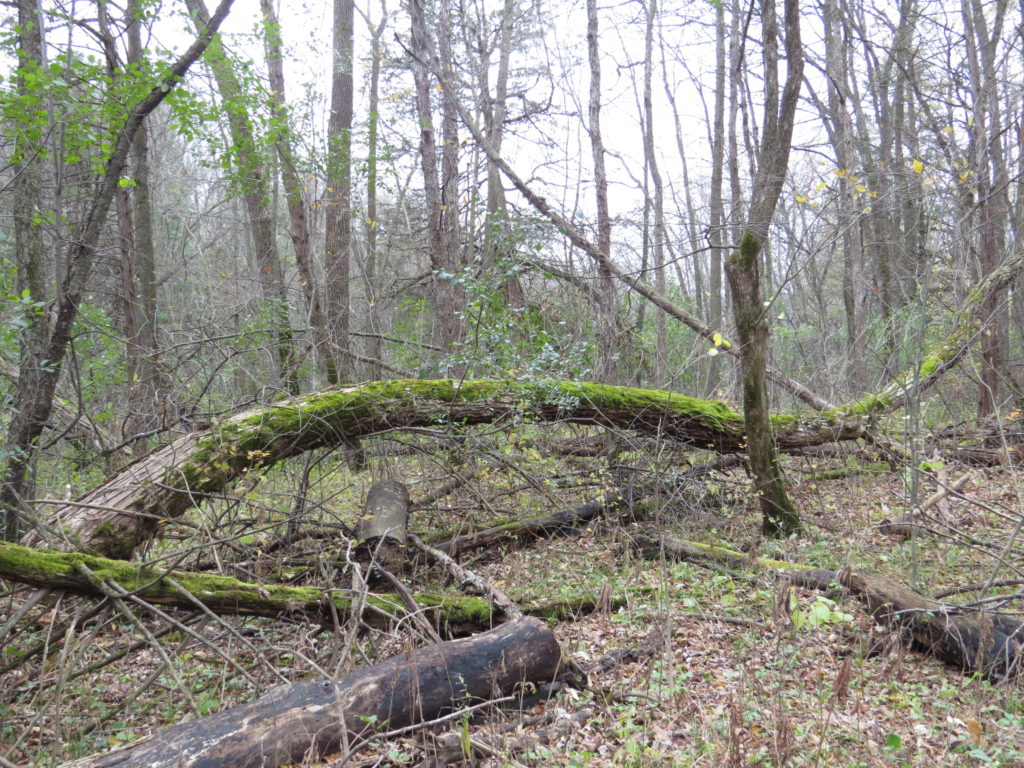
I have to remember that this side of Winter feels different than the other side of Winter, no matter what lay at your feet. One of the gifts of age is knowing you have been there before—‘there’ being a tough time, a difficult experience, or a crushing blow to your heart—and knowing you will get through it to a better place. But this side of Winter is a daunting place—you have to get out the gear, bundle up, put your head down, and use your determination to take the next step and then the next one. The River and Life flows on, learning and wisdom grow like a sturdy Oak, the starry crown guides our actions, even when the trail is obscured and we have to blaze our own trail. And at any given time, on any given day, we can pray, “Good Lord, show me the way.”
*from ‘Down in the River to Pray’, a traditional African-American spiritual