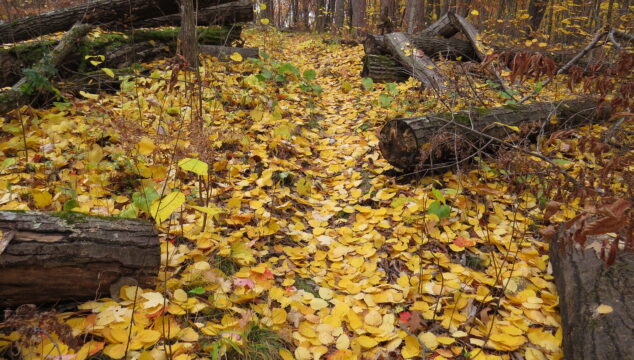
Come walk with me in the peak Autumn beauty of the Northwoods. To say that I love this time of year is an understatement. Most everyone can appreciate the colorful falling leaves---it reveals the 'true self' of a tree when its leaves are no longer producing chlorophyll. Their true colors are revealed, and there is something simple … [Read More...]
Where is Your Winter Dwelling Place?
“For each new morning with its light, For rest and shelter of the night, For health and food, for love and friends, For everything Thy goodness sends.”
This prayer of thanks is attributed to Ralph Waldo Emerson whose family celebrated an extended Thanksgiving with family, friends, feasting, and fun. Shelter and sustenance. Protection and nourishment. Dwelling place and daily bread.
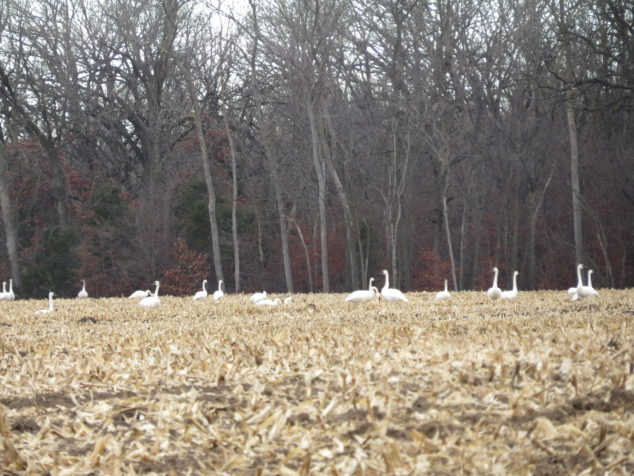
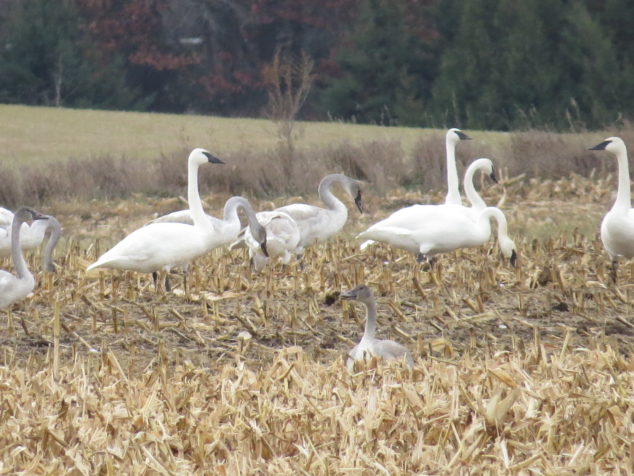
When Winter comes, the importance of shelter and sustenance is magnified, not only for humans but for all creatures. Where are their dwelling places, and how do they get enough food to sustain them during the sometimes harsh conditions of snow-covered land and frigid temperatures? On our Thanksgiving trek to Warner Lake County Park, we passed a corn field with a flock of Trumpeter Swans grazing on left-over corn kernels. Their aquatic home is the Mississippi River, just miles north, where the warmth of a power plant keeps the River free from ice. Some swans and geese stay here for the winter, while most migrate to warmer places in the south. Do you migrate to a warm winter climate or hunker down in the frosty North in your toasty house? Do you have a preferred ‘winter’ food?
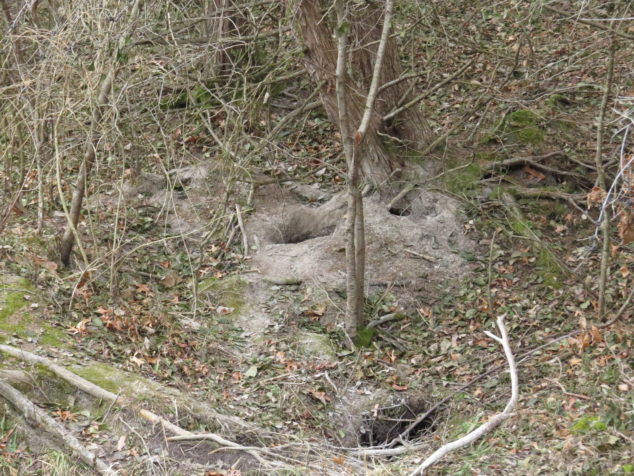
Animal homes come in all forms. We wondered what lived in these holes on the bank of a creek near Warner Lake. The burrowed home among cedar tree roots gave the resident critter quick access to the water. Where is your refuge from the elements? What environment gives you security and happiness?
Pileated Woodpecker holes in trees provide protection and nourishment for these hard-hitting birds as they search for insects and construct (destruct) nest holes. The holes they make in dead trees are often used for shelter by owls, bats, and pine martens. What is the source of your livelihood? How do you stay healthy?
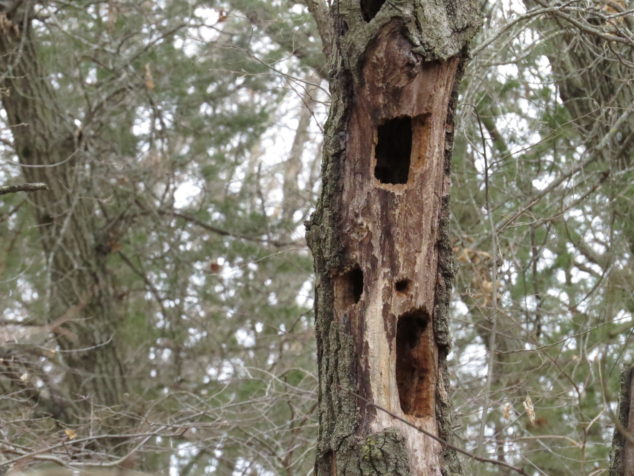
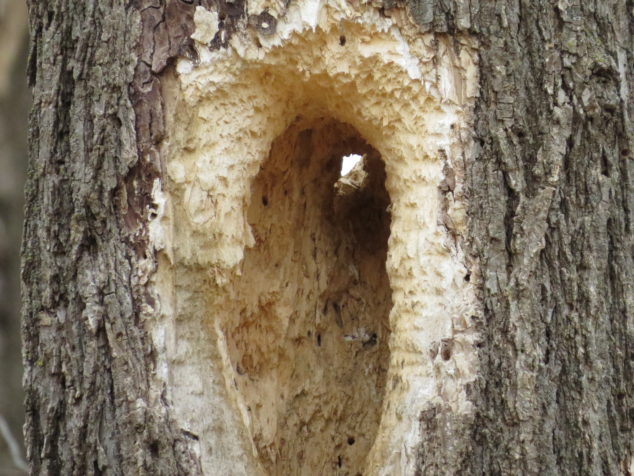
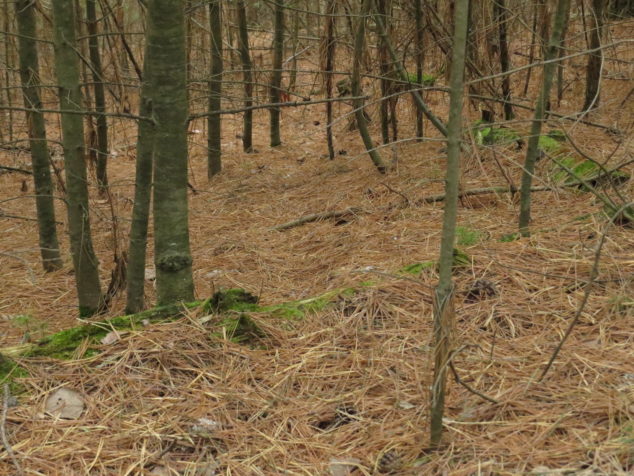
As we walked through the pine forest on our trail, we saw little pathways of trampled-down pine needles diverging through the woods. What paths do you travel in your daily life?
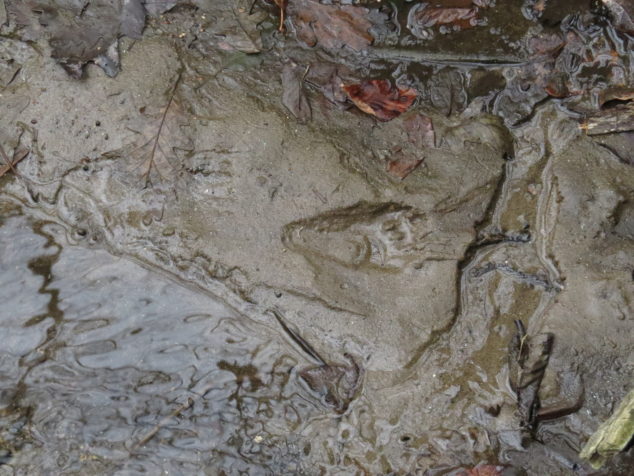
In the sandy mud by the creek, we spotted a Raccoon track. Many of their meals are acquired in the water—crayfish, frogs, and insects. Raccoons store fat through summer and fall and spend much of their winter asleep in a den made in a tree or fallen log. How do you spend your winter? What do you do in this season of rest?
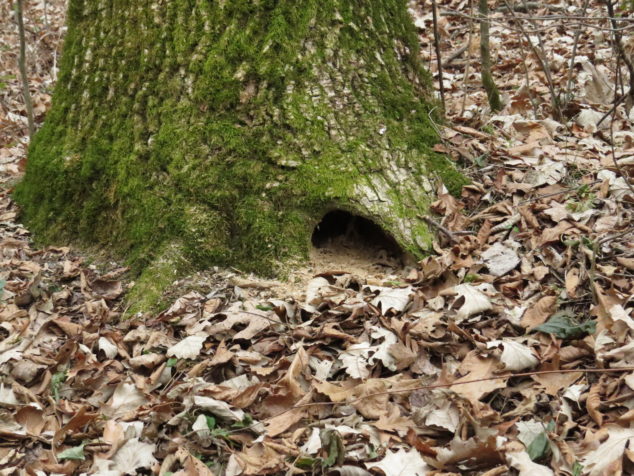
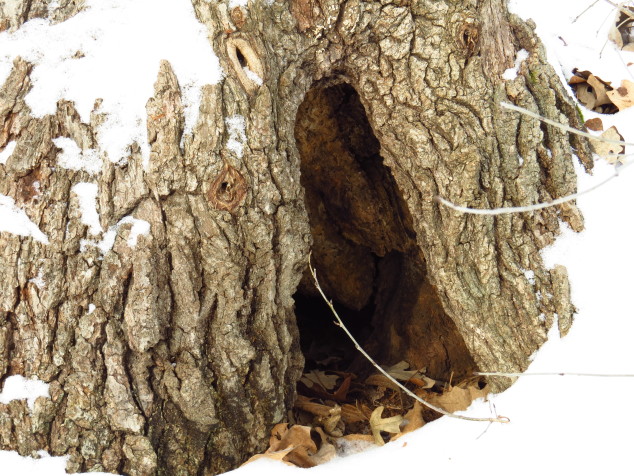
How do animals find their winter dwelling places? This tree probably had a small hole at its base, and some little creature has been working hard to make a home for itself. Sawdust and wood shavings line the floor of the tiny cavern at the foot of the large, moss-covered tree. Where is your dwelling place?
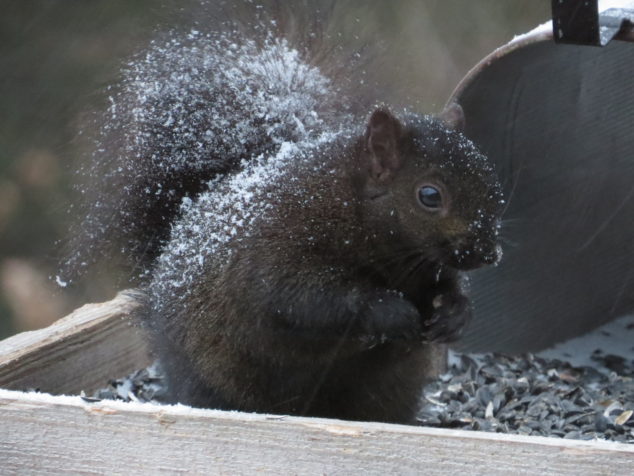
Life and nourishment are a little easier for the birds and squirrels who live close to our home. This Black Squirrel and his friends come for a meal of black-oil sunflower seeds on a near-daily basis. How do you ask for and receive your daily bread?
Our literal dwelling place may change completely in Winter, but most often the home we live in during the Summer is also our Winter home. But there is a change—we are boarded up, bound up, and bundled up. There is a quiet security in the dark evening with the fireplace crackling and throwing out heat, while a pot of soup on the stove sends out delicious smells of onions and herbs. Rest and sleep seem to come easier with the longer night, and the morning light is welcomed and appreciated. Nourishment is extended from food for our bodies to food for our souls. Time for reading, meditation, prayers, and self-care is available if we make the decision and commitment to ourselves. Time with friends is more about being than doing—tell me about your struggles, your joys, your sweet memories, and the dark burdens that may re-surface with the long, dark nights. We can wrap it all up in a bundle of understanding, compassion, and forgiveness. Our dwelling place can be Love.
Our Spaceship Earth on Earth Day
Spaceship Earth is a term popularized in the 1960’s, particularly by architect-inventor-system theorist R. Buckminster Fuller when he wrote the book “Operating Manual for Spaceship Earth.” The inventor of the geodesic dome relates Earth to a spaceship that has finite resources that cannot be resupplied. He spent much of his life researching and developing designs and strategies to help us sustainably exist on Earth.
Another forward thinker Marshall McLuhan, who predicted the World Wide Web almost thirty years before it was invented, is quoted, “There are no passengers on spaceship earth. We are all crew.”
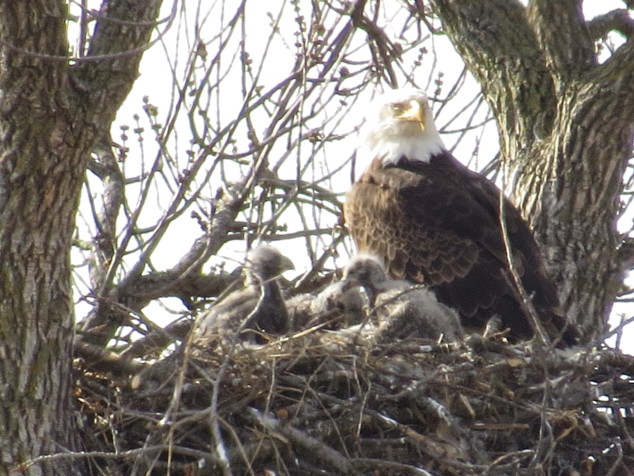
Last Sunday Chris and I checked on the eagle nests–yes, we have babies! One nest has three, fuzzy-feathered eaglets, and the other nest has at least one that I was able to see.
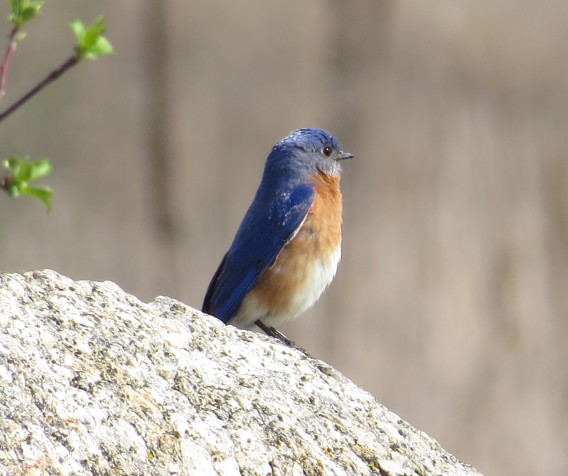
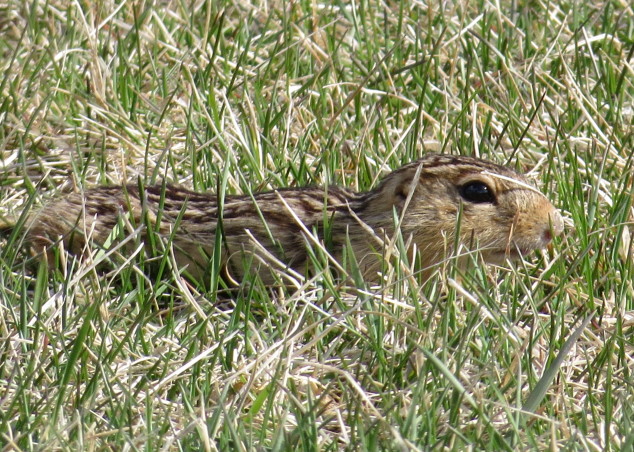
The bluebirds were nesting nearby, and a ground squirrel slunk through the grass trying not to be seen.
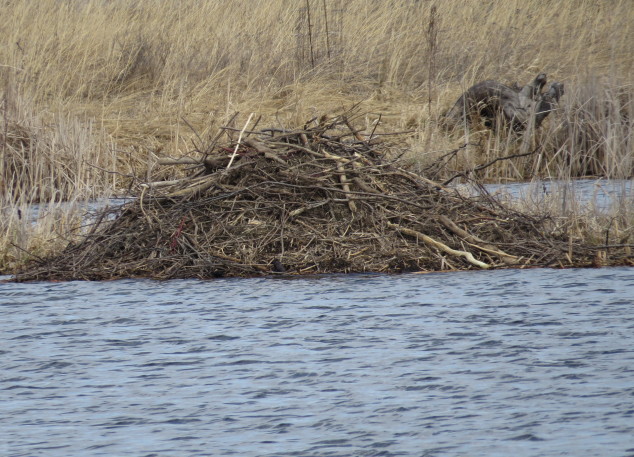
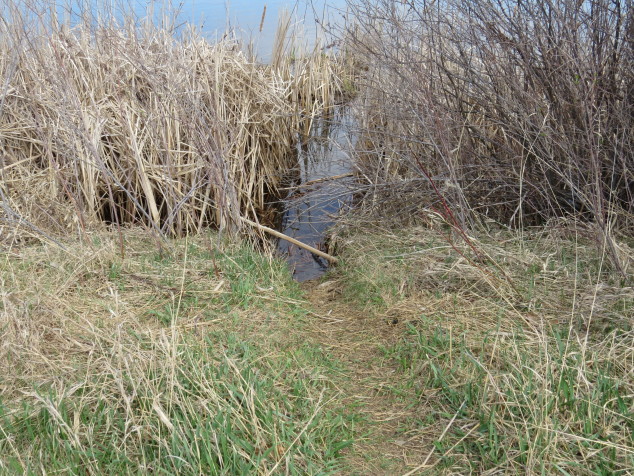
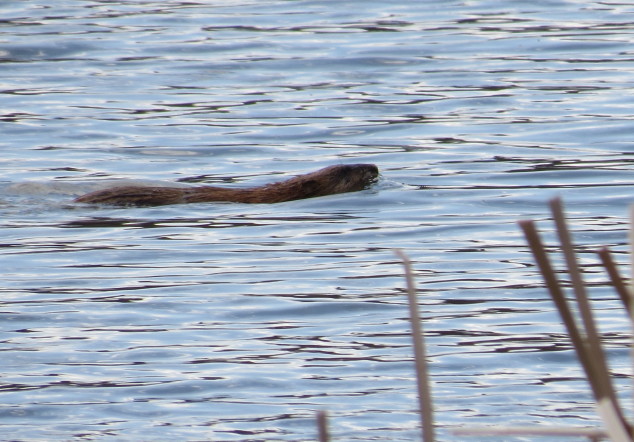
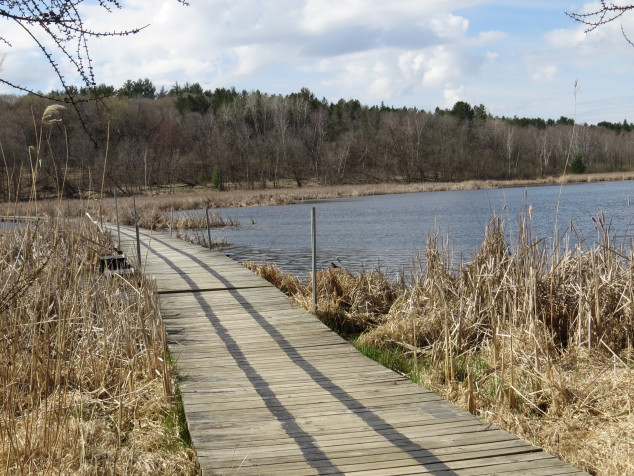
We then drove to St. John’s Arboretum and hiked the Boardwalk Loop through prairie, wetland, maple forest, oak savannah, and conifer forest. In a short 1.5 miles, it was a lesson in ecosystems and a glimpse into the diversity of animal and plant life in a tiny part of spaceship earth. A beaver lodge rose from a blue lake on one side of the road. There was a path through the cattails and up the bank for the beaver to get to the lake on the other side.
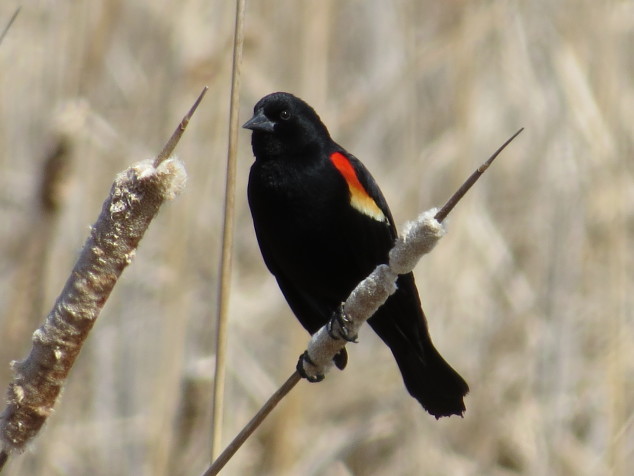
Red-winged blackbirds sang from their perches on cattails.
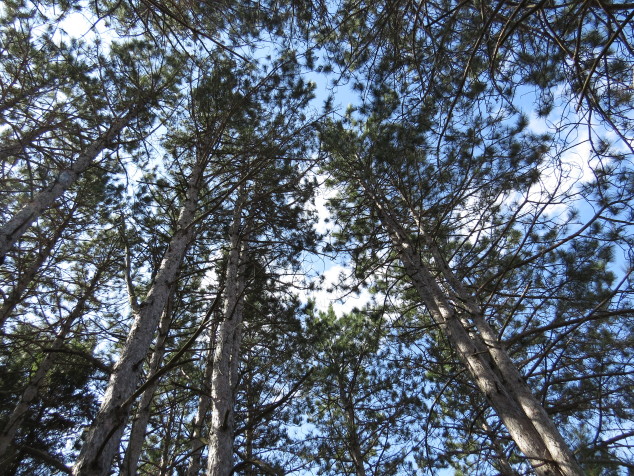
The delicious scent of the pine forest filled our noses with the smell of contentment.
We crossed the boardwalk over the wetland…
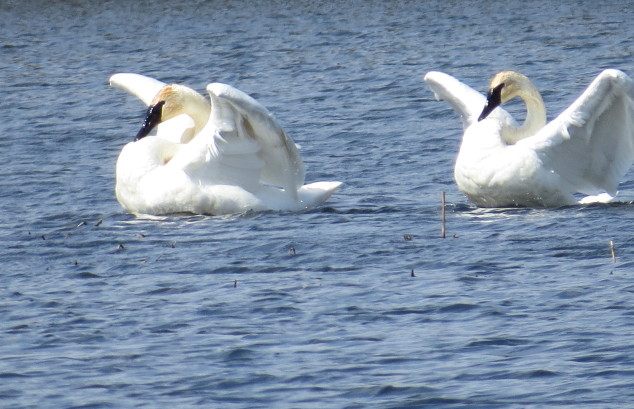
and saw geese, ducks, and a pair of Trumpeter swans.
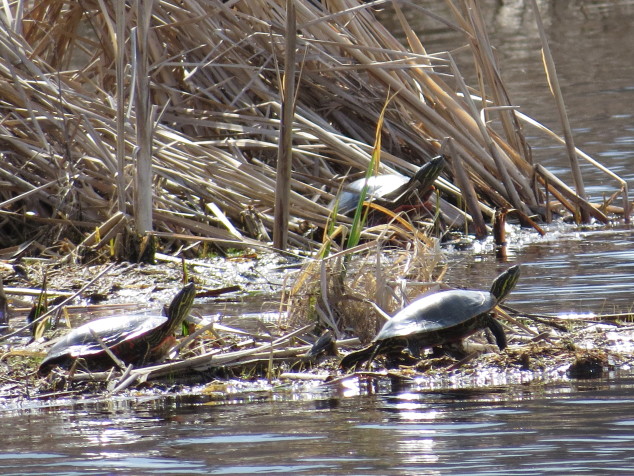
Painted turtles sunned themselves in the warm spring sunshine.
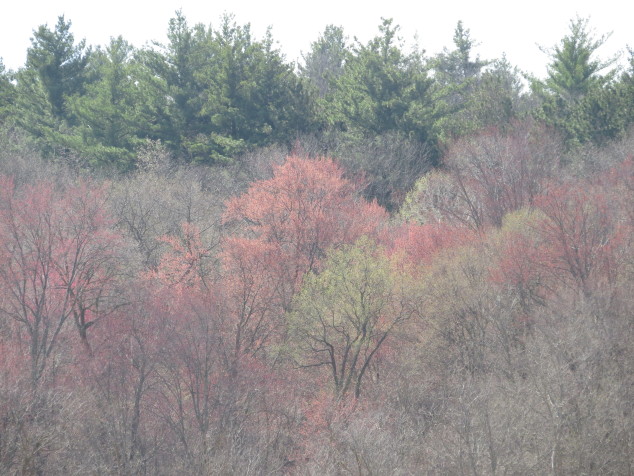
Maple trees with red and lime green blossoms contrasted with the deep green of the pines.
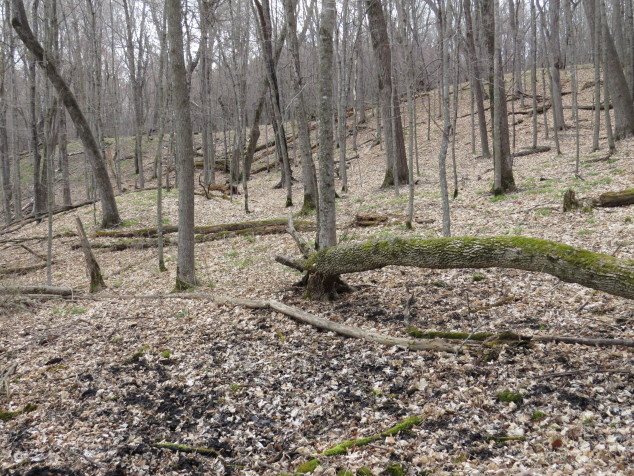
The woodland trail through the tall maples still looked like late winter…
…until we saw the Spring Ephemerals! These early blooming flowers take advantage of the small window of sunshine between snow melt and when the trees have leafed out. They grow, flower, are pollinated, and produce seeds in a short period of time and often go dormant by summer. We found Spring Beauty…
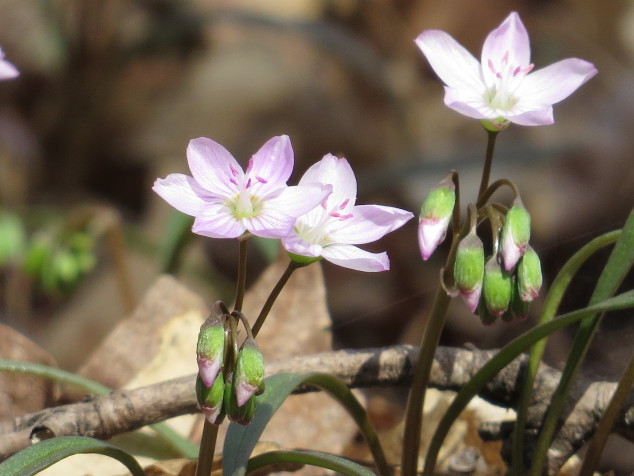
…False Rue Anemone…

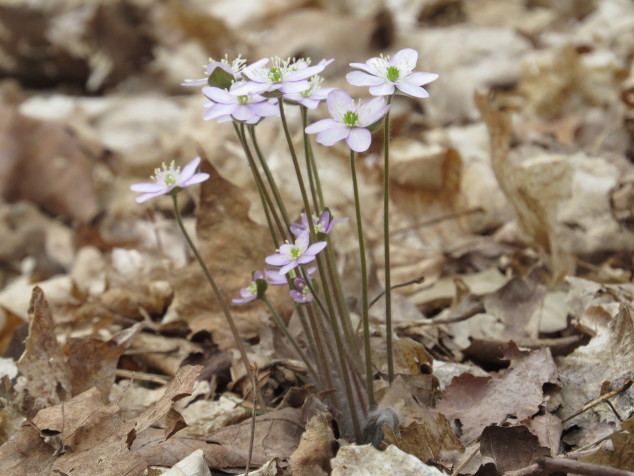
…and Hepatica bursting through the leaf cover.
Two short walks less than ten miles from one another, and we were blessed to see such an array of plant and animal life that was once again coming to life in the Minnesota Spring. In honor of all these amazing creations, I would like to urge everyone to take good care of our Spaceship Earth. We are all crew members with tasks to do and responsibilities to carry out, even if it’s only in our tiny part of this big, blue planet. Happy Earth Day!
Gleanings from January 2015
As any parent will remember, there is a certain age when our children constantly ask questions. They are trying to piece together the world as they experience it. By age four, children have the words to ask the questions that help them learn and make sense of things.
I scrolled through all the pictures I had taken in January and was surprised when questions kept popping into my mind. Usually I get some ideas of what I want to say when I look at them, but never before have the ideas come as questions.
What’s brewing on the horizon?
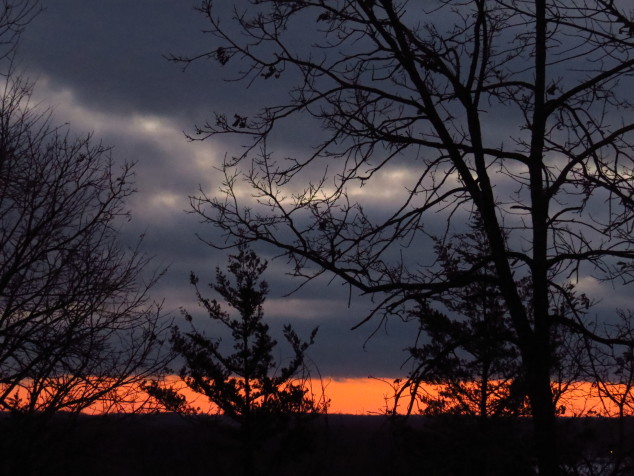
Where are we going?
What are our hidden treasures?
How do we get along with others?
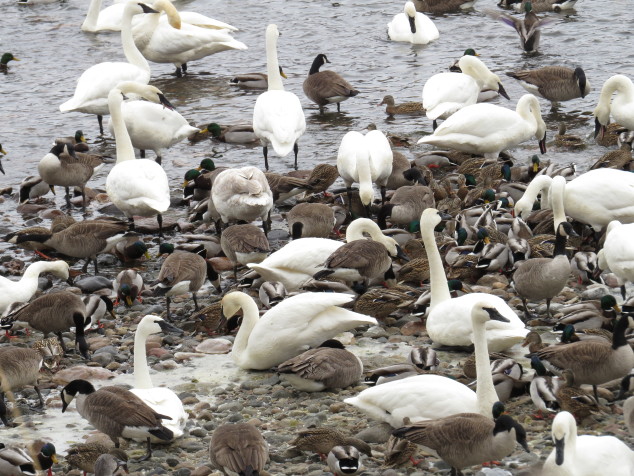
Are we gathering the wisdom of the ages?
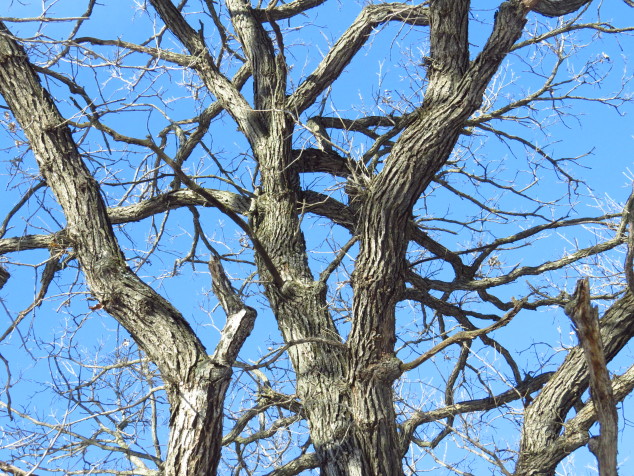 Who’s talking? Who’s listening?
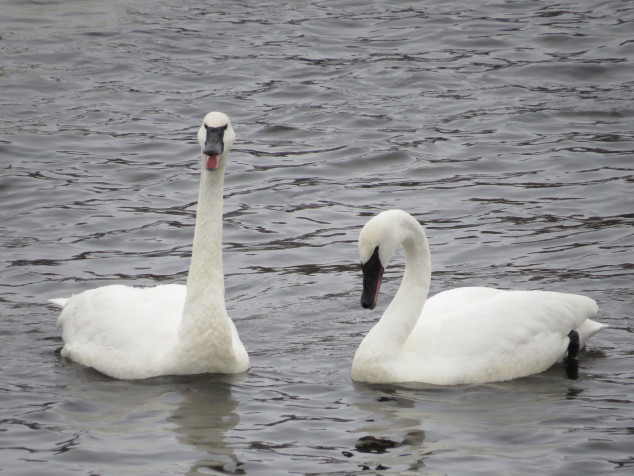
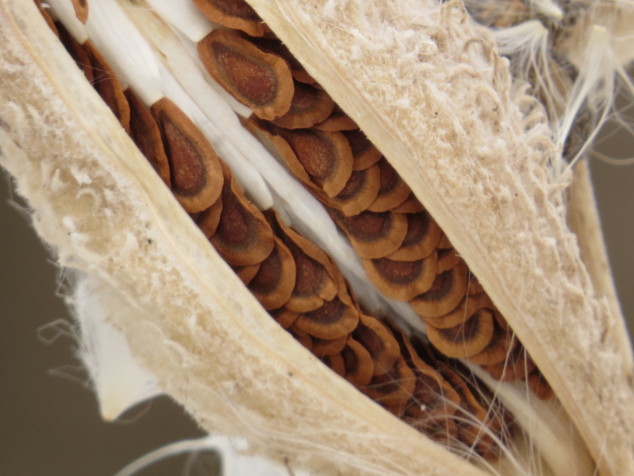
What seeds are we planting for the future?
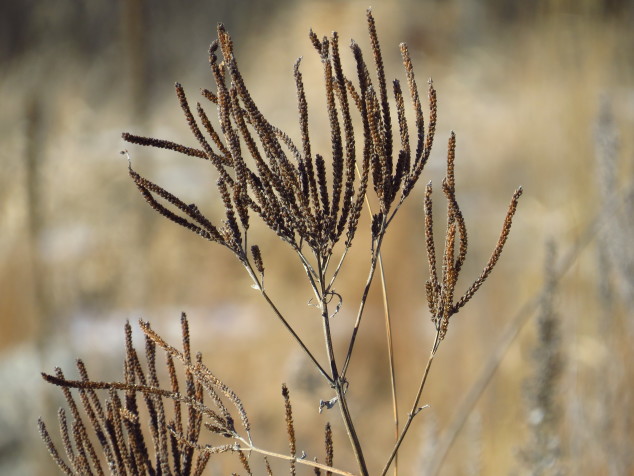
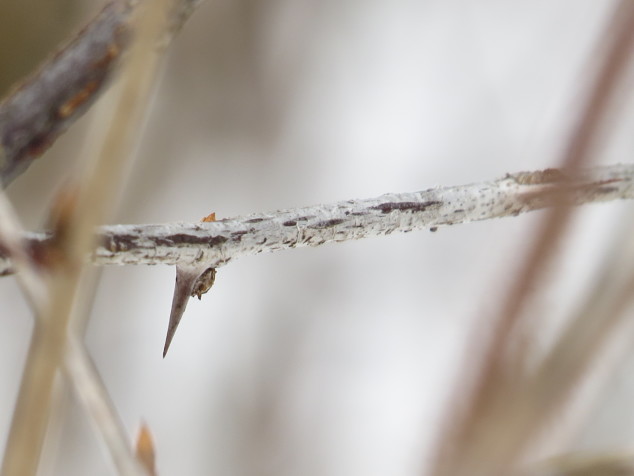
How do we handle Life’s thorns?
What makes us happy and want to dance?
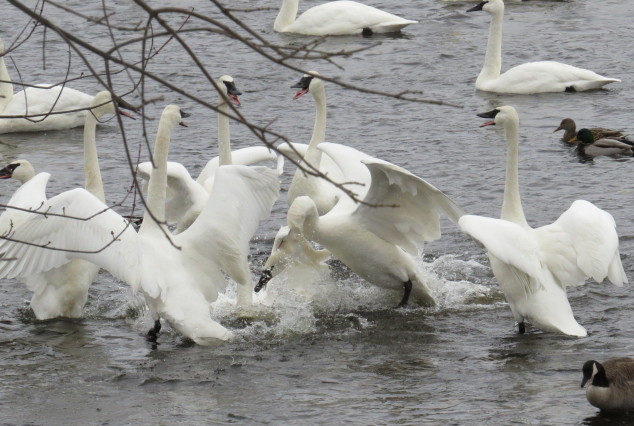
What happens when we fall down?
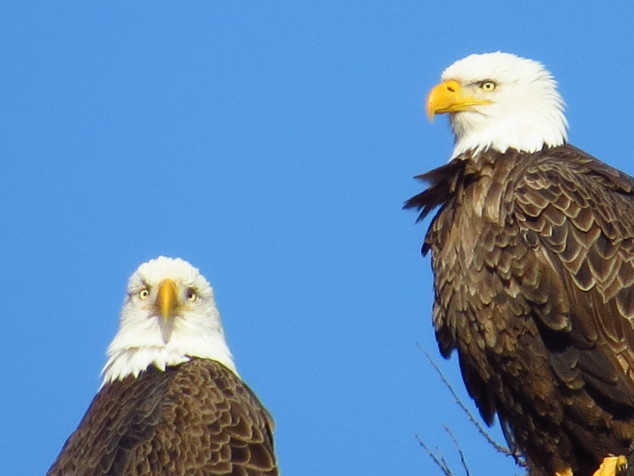
How do we see the world?
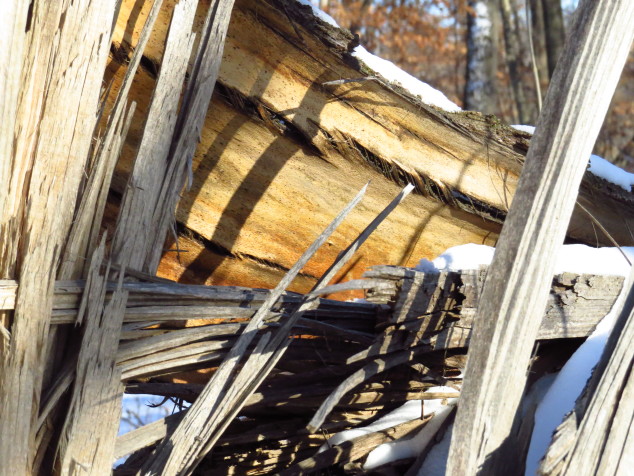
How do we handle abundance?
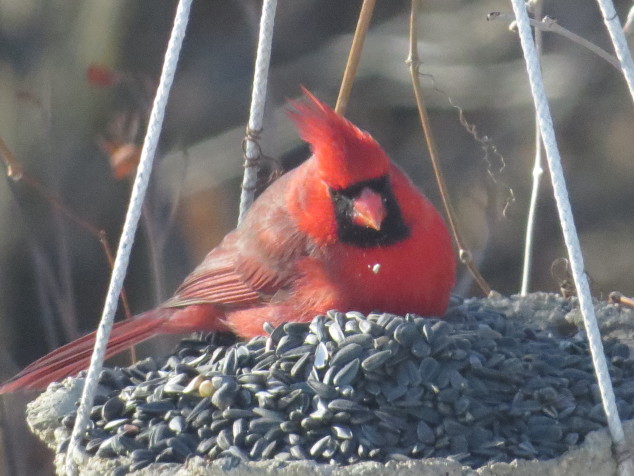
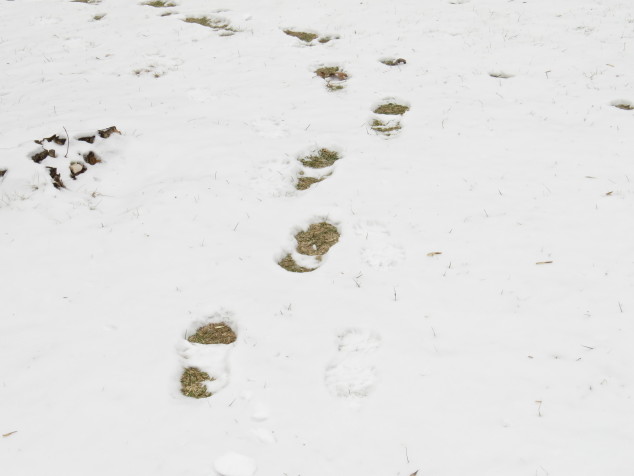
Whose tracks are we following?
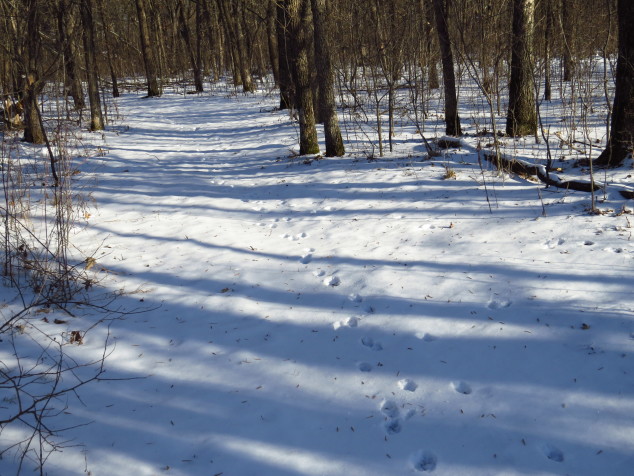
What bad stuff do we need to get rid of?
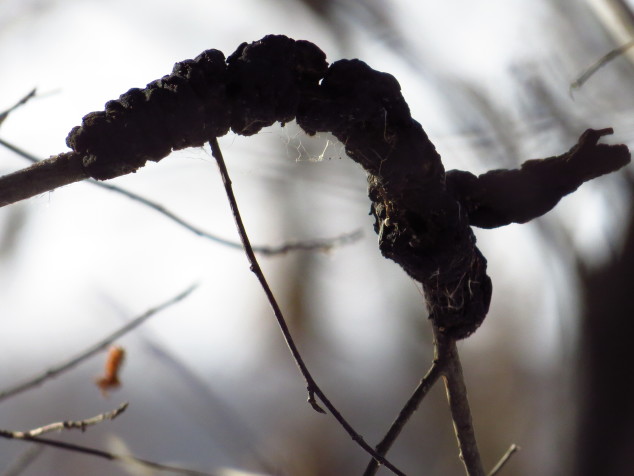
What are we hiding from?
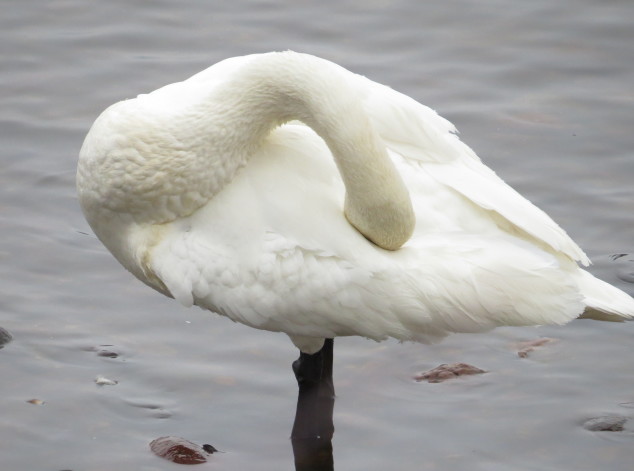
Is anything obscuring our Light?
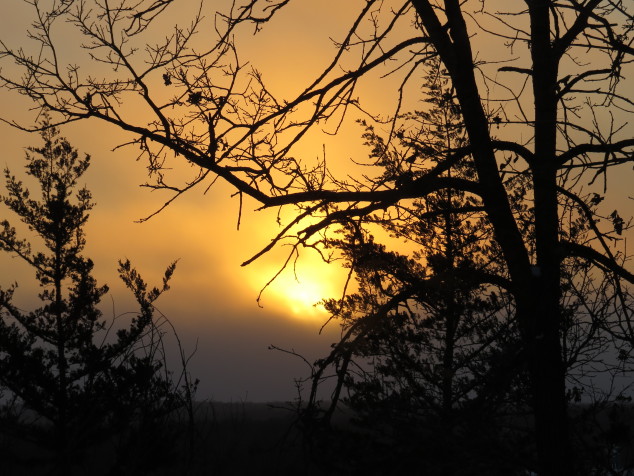
Are we heeding the warning signs?
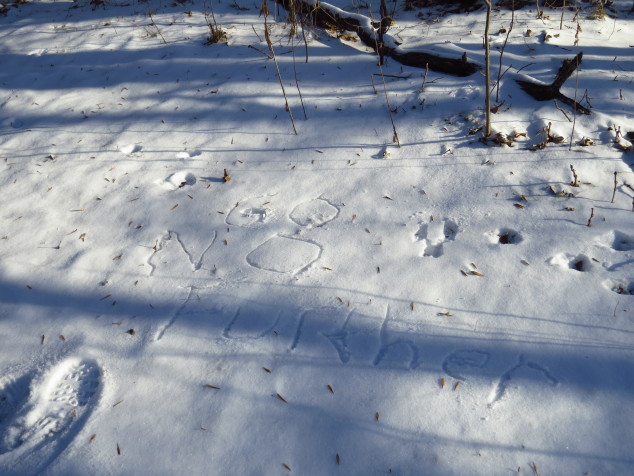
What are the bright spots in our lives?
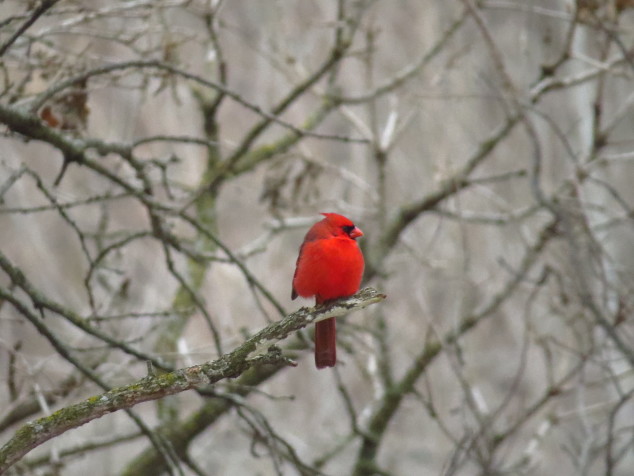
What direction are we flowing? Are we walking on thin ice?
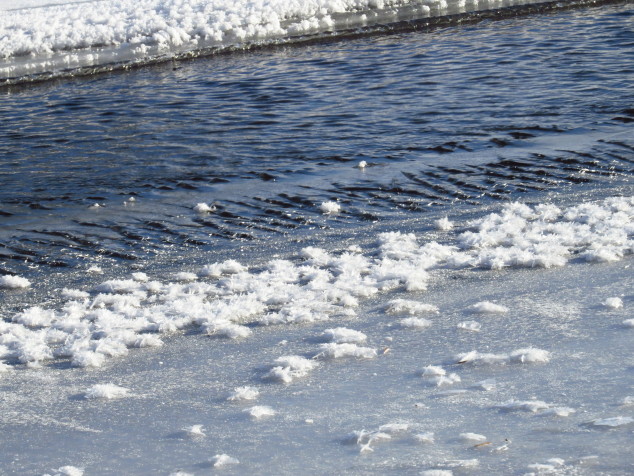
Where is our shelter from Life’s storms?
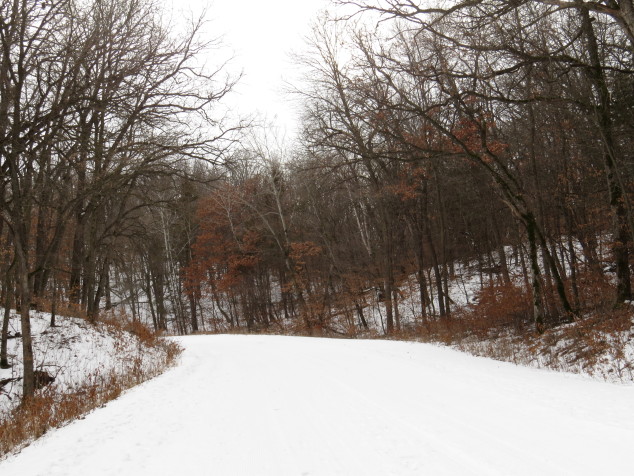
What’s around the bend? How do we want to step into the future?
Why did we stop asking questions? We have accumulated countless Life experiences that have become the picture puzzle of our lives. And many of those pieces were put together with our child’s mind and no longer fit us well. The questions now must be asked and answered by each one of us in order to learn about and make sense of our interior world. These grown-up questions are just as developmentally imperative as our four-year-old questions were in order to integrate the Life of the World Outside us with the Life Within.
Treasures of the Lakes
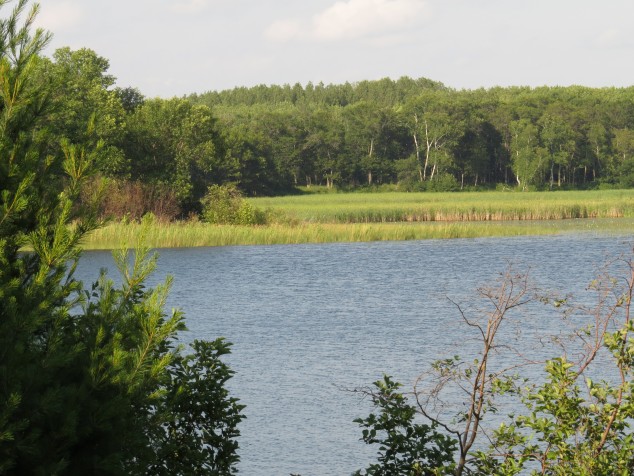
Minnesota is the “Land of 10,000 Lakes,” most of which are in the northern half of the state. Last weekend we visited a camp in the Brainerd Lakes area and explored three of those lakes by boat, bike, and on foot. We boated on Pelican Lake, which encompasses over 8,000 acres with miles of sandy beaches and cabins. As anybody who lives on a lake knows, the water reflects the sky and indicates the weather along with its overhead partner. The sky was cloudy and gray when we boated to Bird Island to entice the seagulls, and the lake water was dark and leaden. But later in the afternoon, the clouds moved out, the sun shone warm, and the lake glimmered blue.
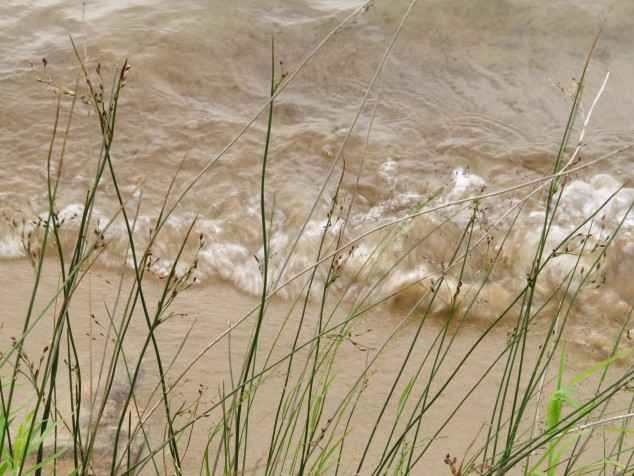
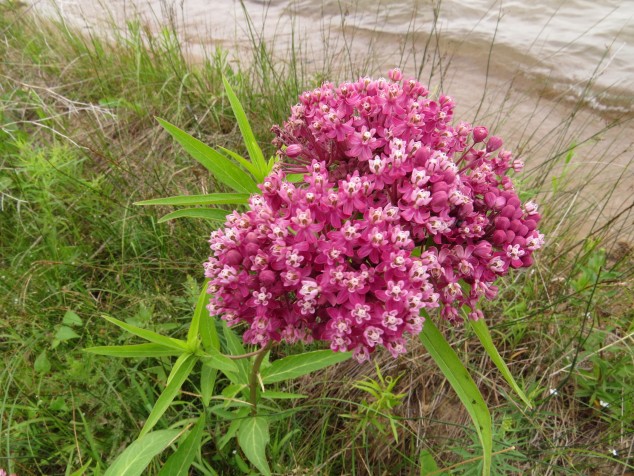
On shore, the lapping waves had pushed up sand, sticks and shells where the sedge grass and dazzling swamp milkweed grew.
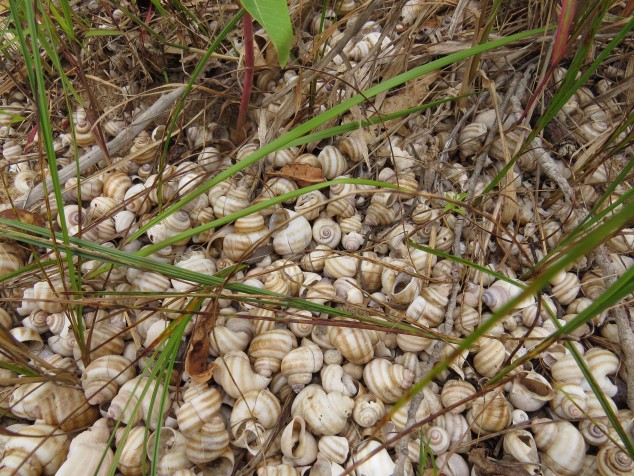
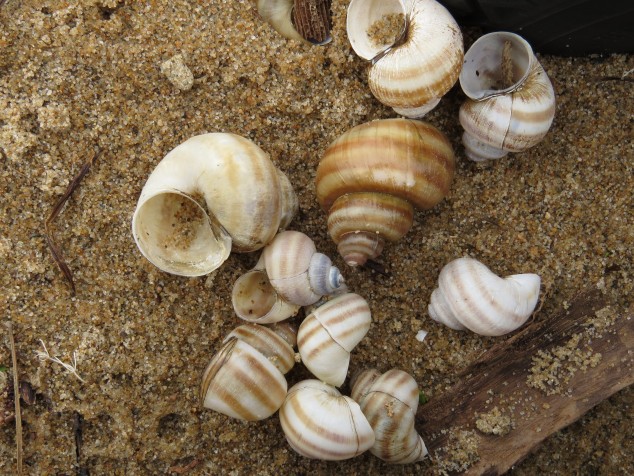
A delighted camper had collected a handful of striped shells, then left them in the sand by the dock as he hurried away to the next activity.
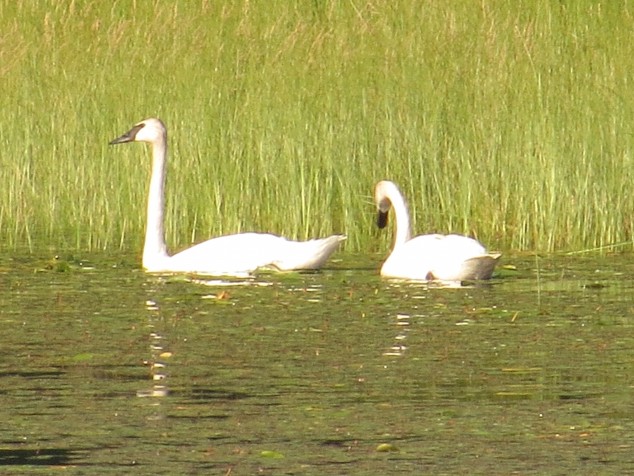
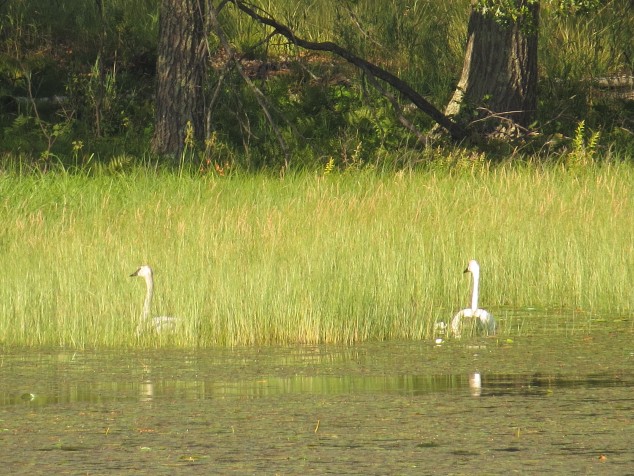
We biked to a nearby lake that was small and uninhabited by humans. From a viewing deck we watched a pair of courtly swans as they glided into the weedy cover across the lake. Their fine white feathers glowed in the sunlight and reflected off the smooth parts of the water.
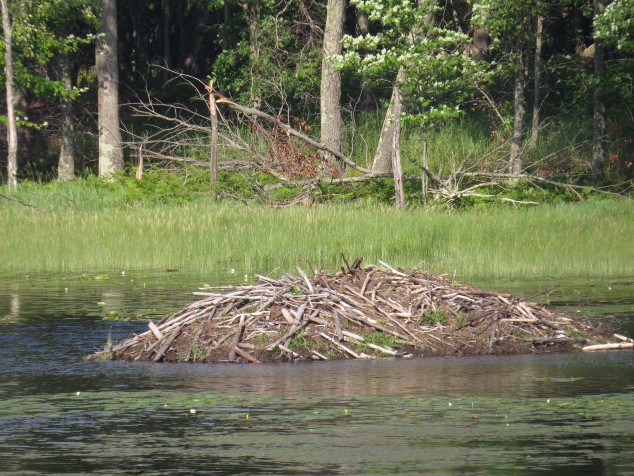
Beaver lodges covered in logs that the master builders had gnawed down seemed to erupt out of the water.
At the third lake we discovered a carpet of lily pads close to the shore in green, yellow, orange and red held up by the steel-blue water.
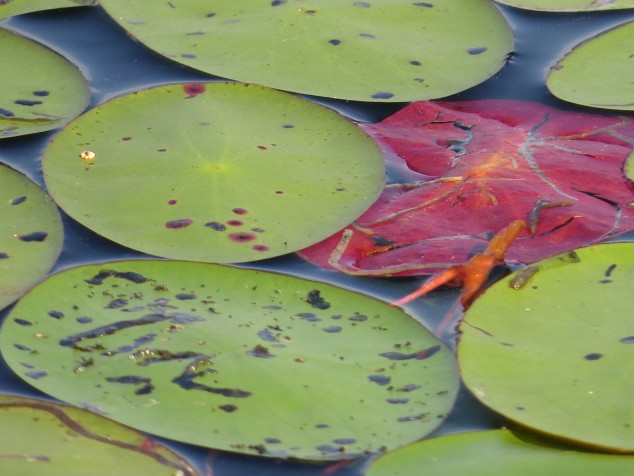
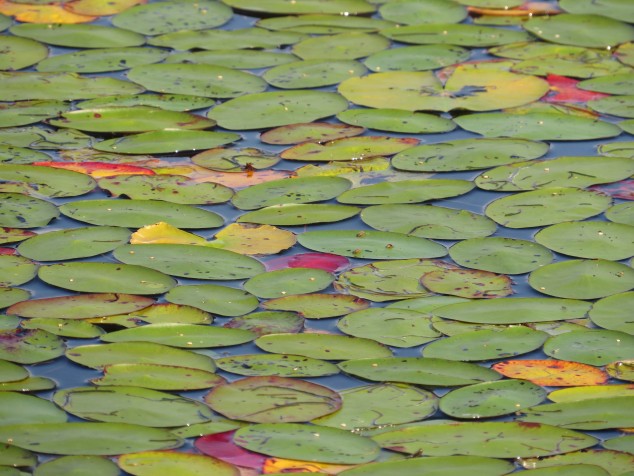
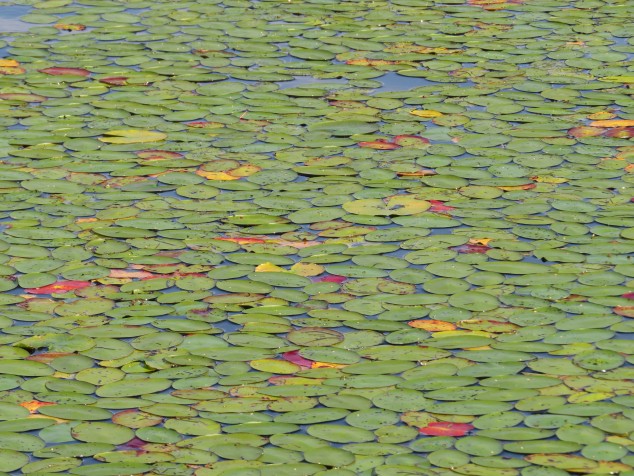
Partners in Beauty–the sky and the lake, the shells and the sand, the graceful swans, the beavers and their logs, the lily pads and the water. In this tiny piece of creation, the beauty is overflowing.