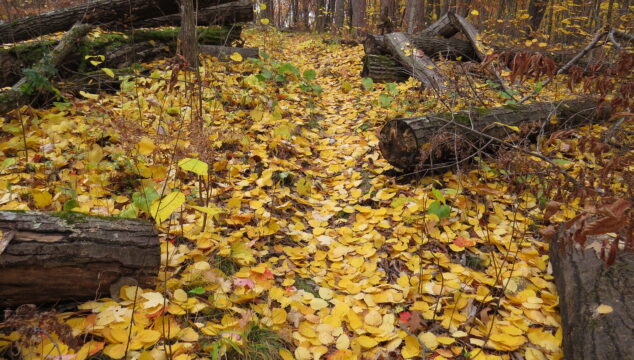
Come walk with me in the peak Autumn beauty of the Northwoods. To say that I love this time of year is an understatement. Most everyone can appreciate the colorful falling leaves---it reveals the 'true self' of a tree when its leaves are no longer producing chlorophyll. Their true colors are revealed, and there is something simple … [Read More...]
The Day the Sun Stands Still
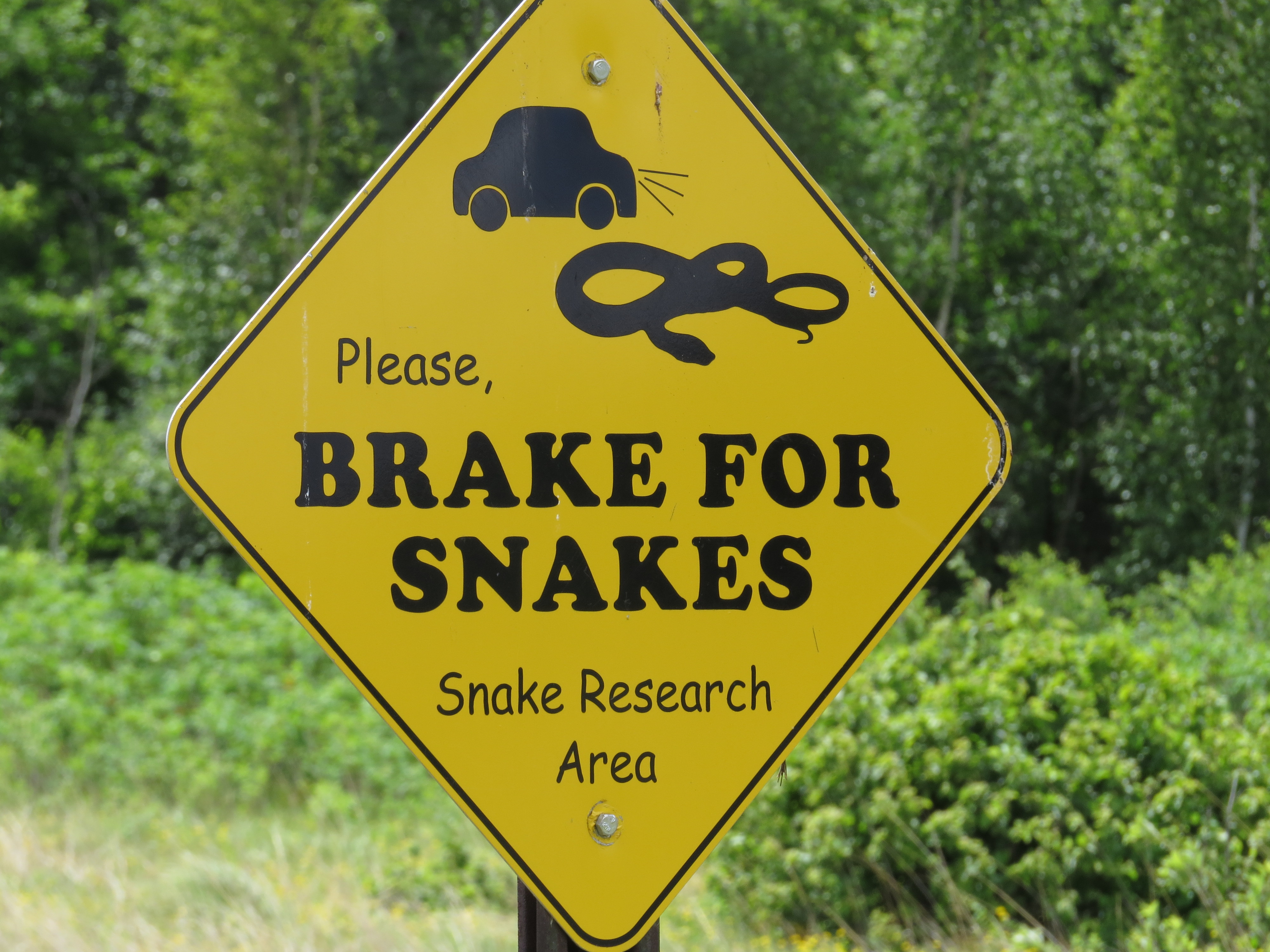
The first thing to greet us as we pulled into Wild River State Park was a most unusual sign! “Please, BRAKE FOR SNAKES.” Nobody would need to tell us to do so—we Brakes are a snake-loving family, especially our son Aaron. You could say, “Brakes for snakes” and be perfectly correct!
Chris and I were going camping on the Summer Solstice for the first time, just the two of us, in over three decades. It was an experiment. Did we remember how to do this? Could we do it? Would we want to do this again? And most importantly, could we sleep?! Since it was a Monday, the campground had plenty of available spots; we checked in, parked in our campsite, and headed out to hike after a brief rain shower.
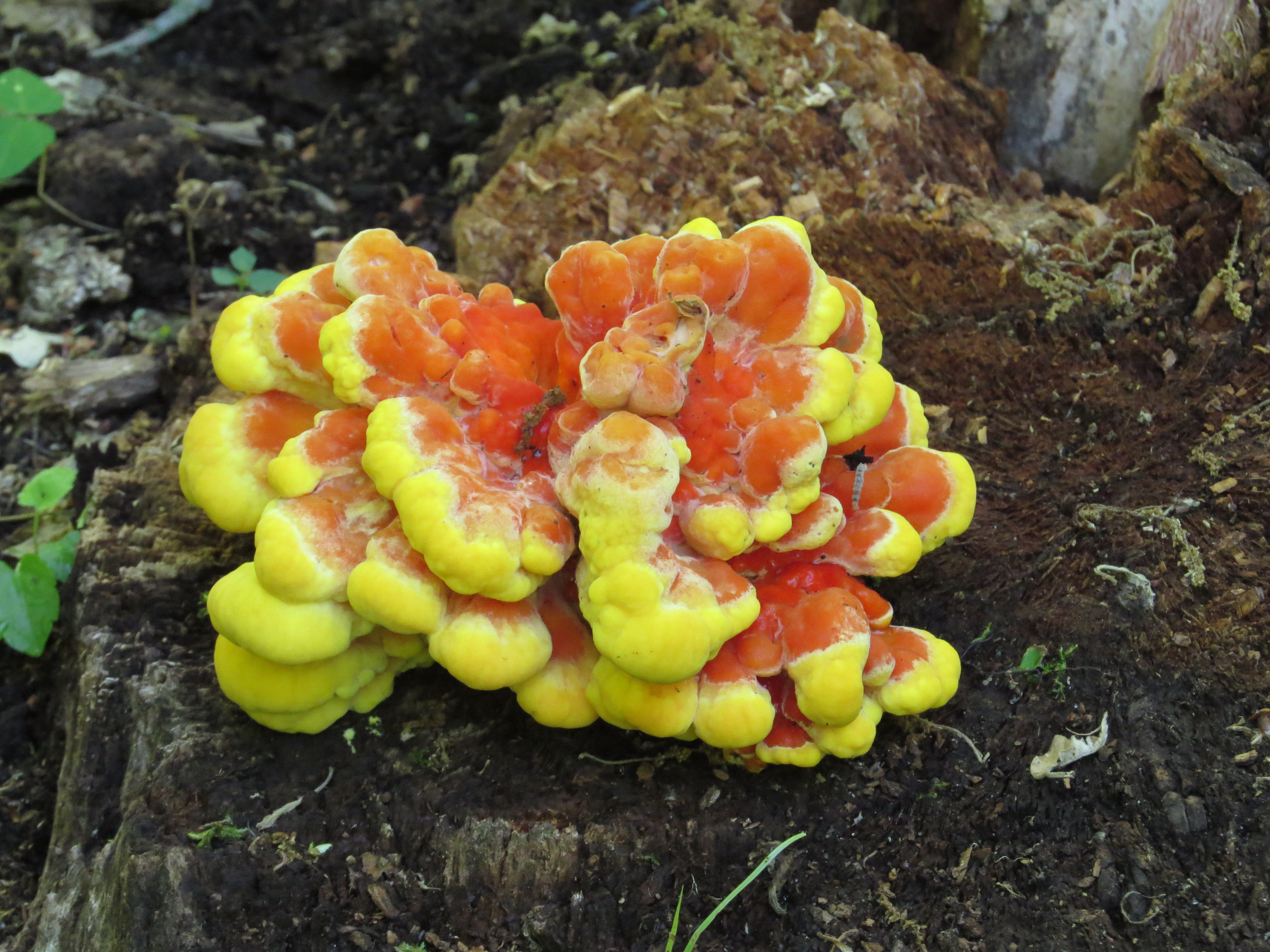
We hiked along the Old Logging Trail, a paved bike/walking trail, to the Visitor Center where we had our picnic lunch, looked out over the trees to catch a glimpse of the wild St. Croix River, and learned how Vice President Walter Mondale had worked tirelessly to protect the natural resources of Minnesota and the United States, including the Wild and Scenic Rivers Act in 1968 that helped preserve this river. We left the paved trail and walked toward the River after discovering a colorful and unique Chicken of the Woods mushroom.
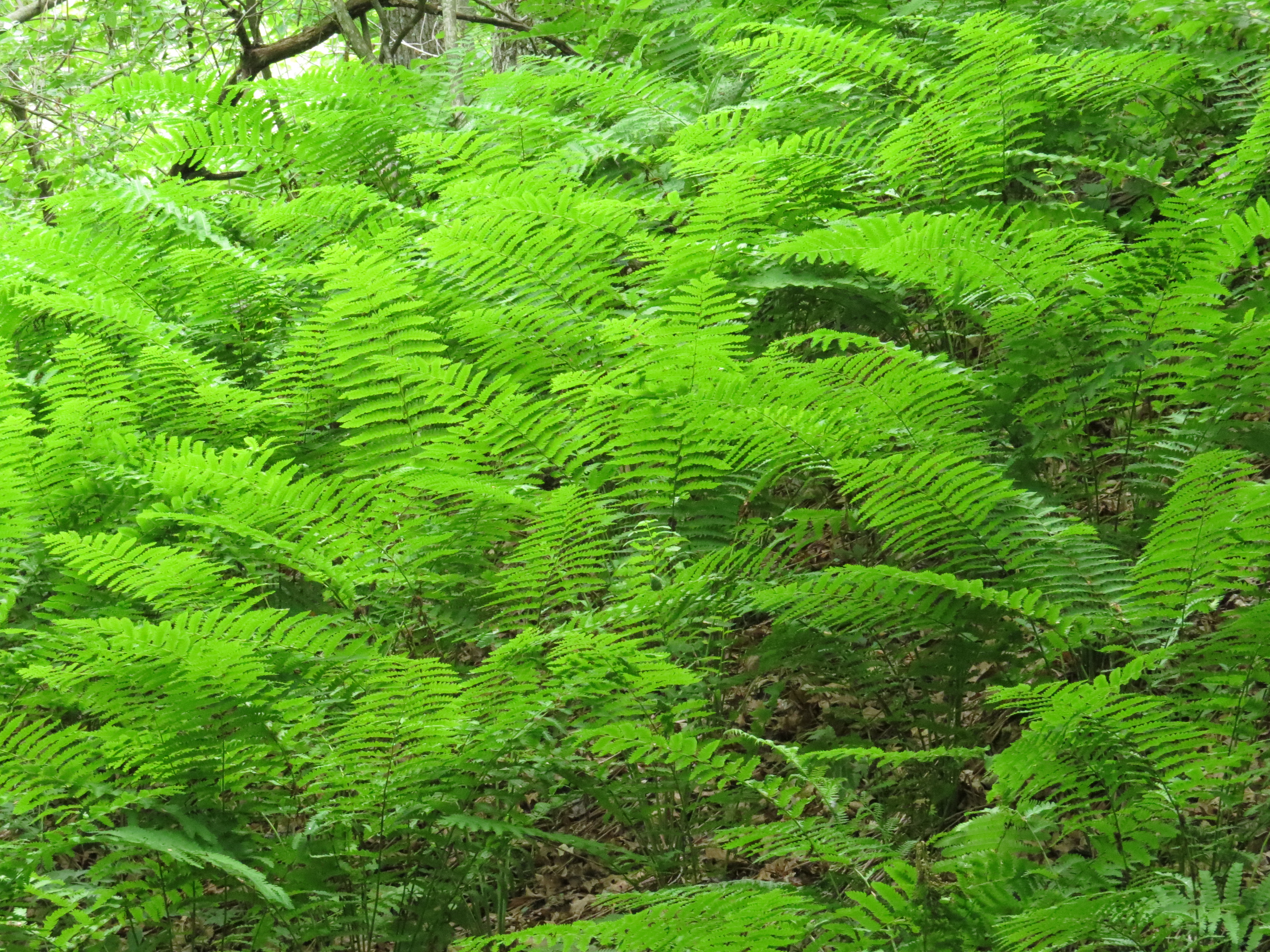
The trail dropped from the ridge through fern-covered hillsides and milkweed patches teeming with butterflies. There is something exquisitely beautiful about the fair pink and green ball of about-to-bloom buds of the Common Milkweed flower.
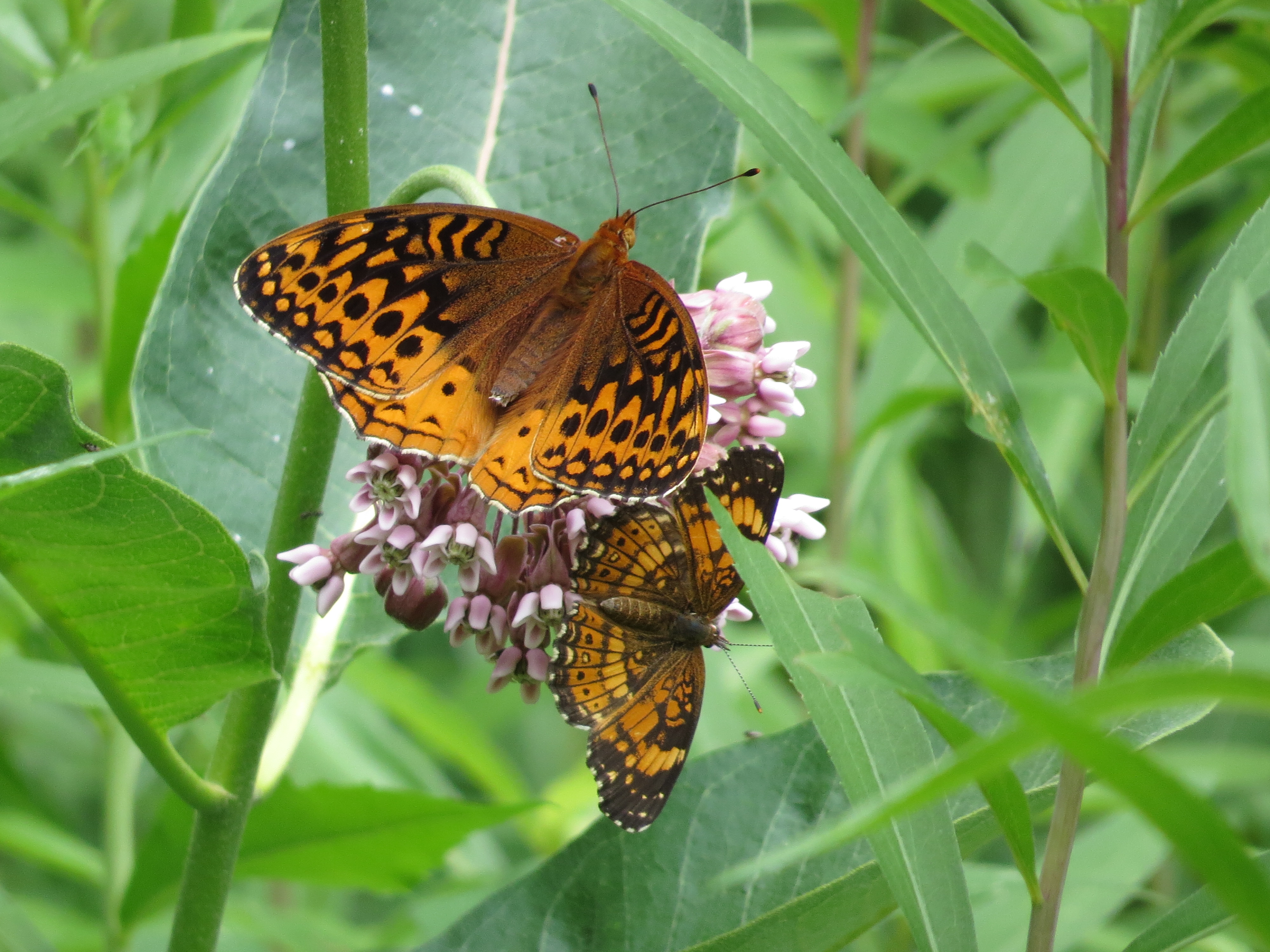
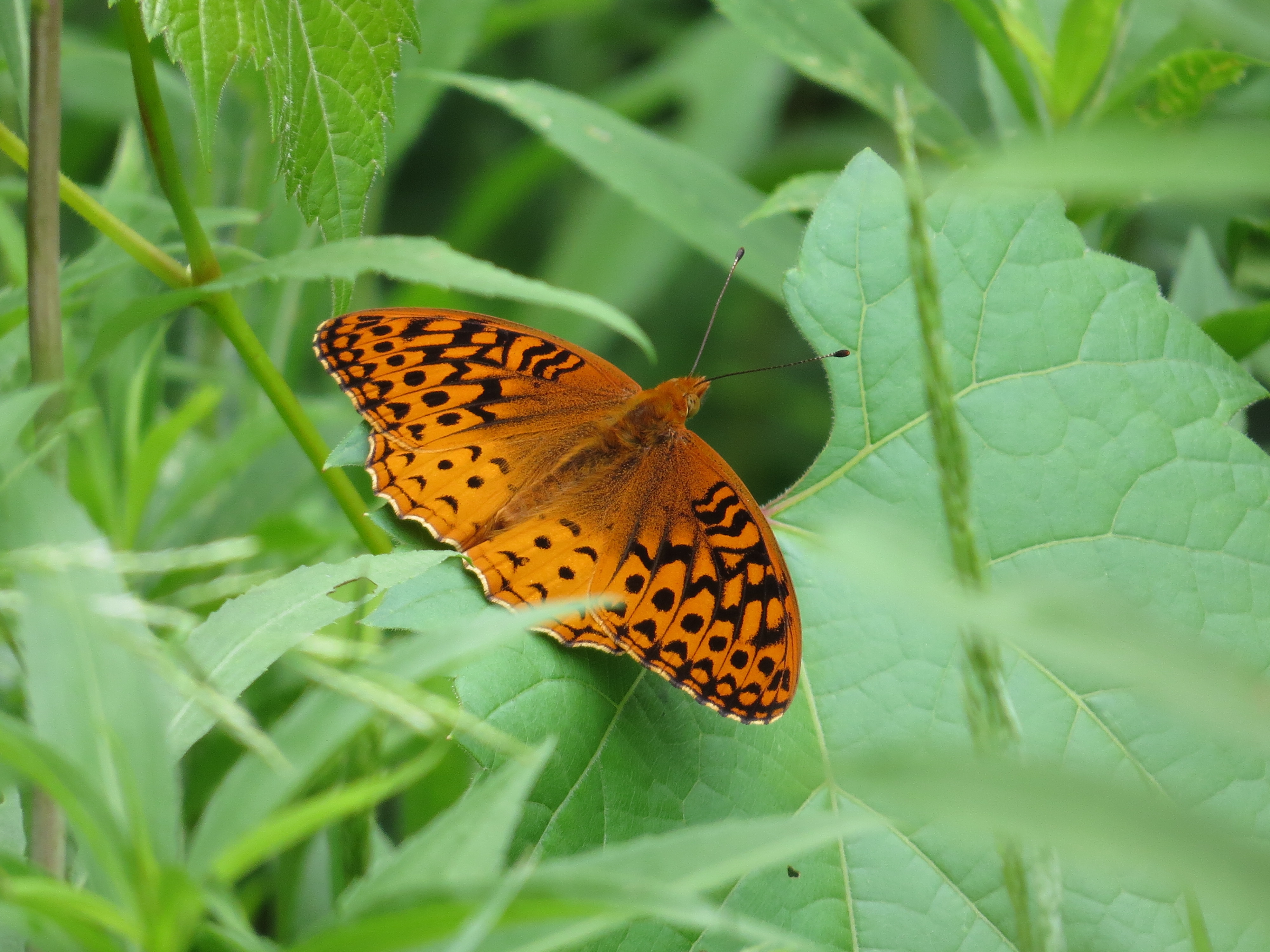
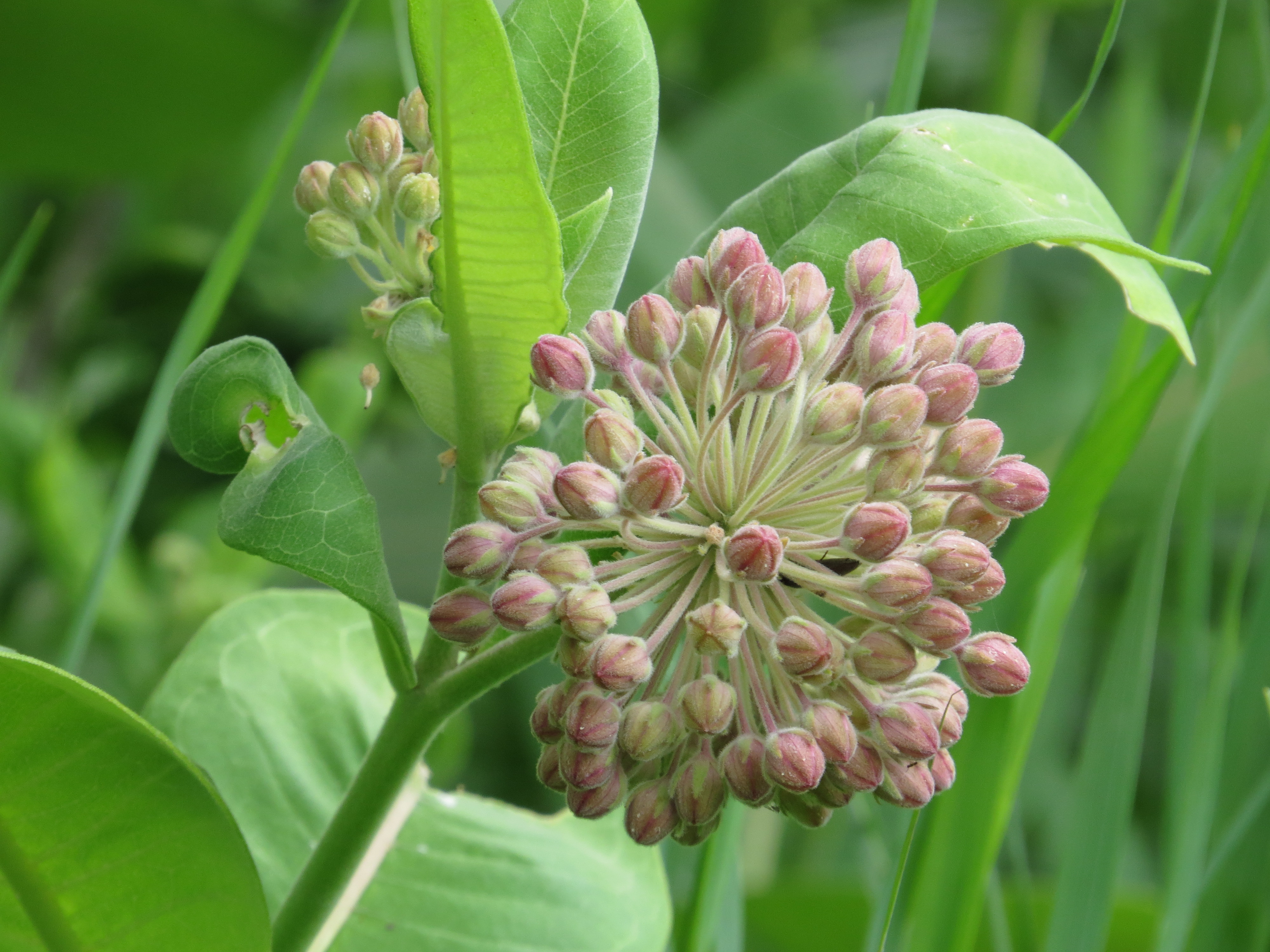
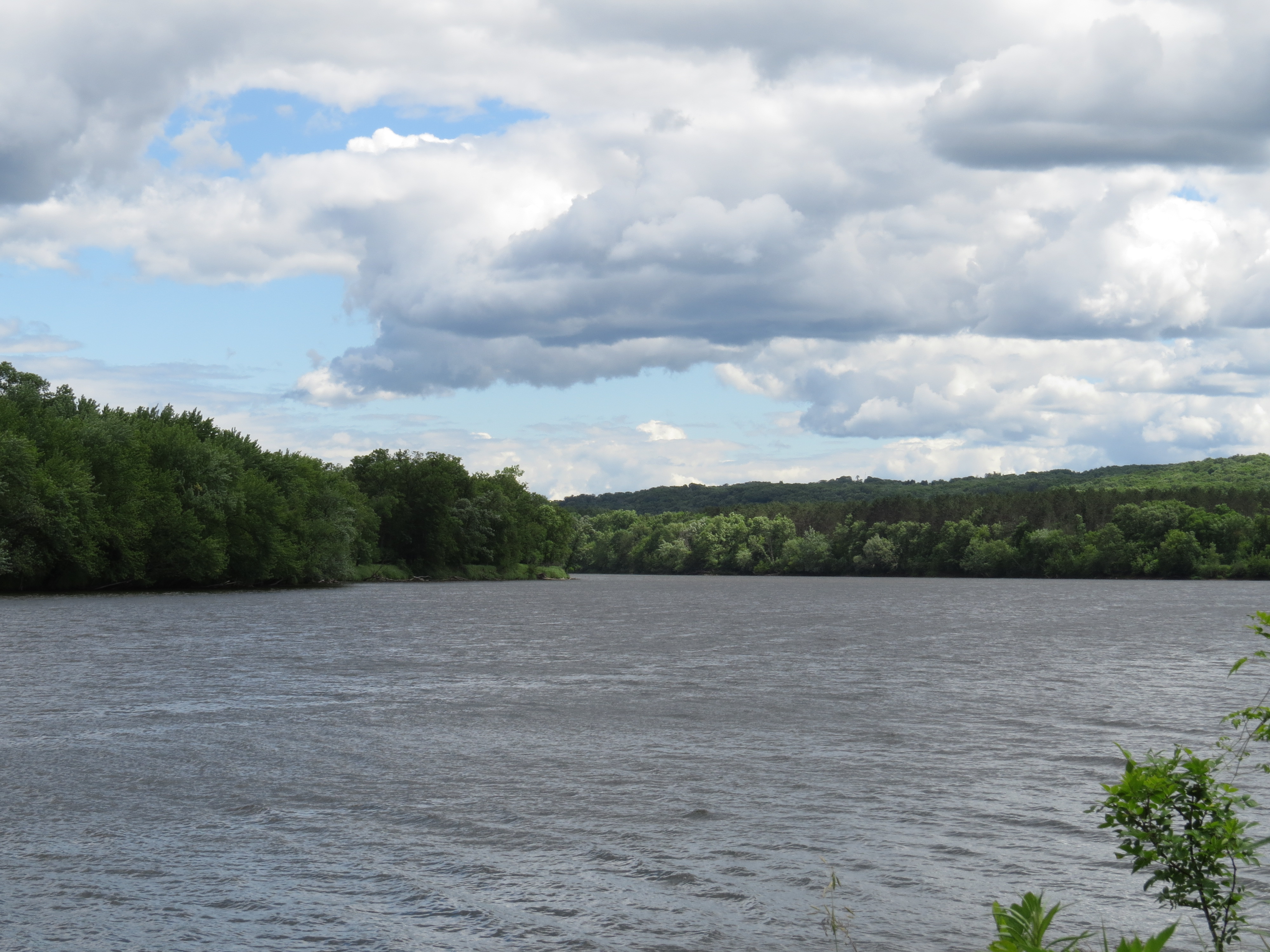
The trail turned and followed the River for over a mile and a half and would bring us back to the campground. The St. Croix River is a large river originating in northwest Wisconsin and creating the boundary for Minnesota and Wisconsin for 130 miles of the River.
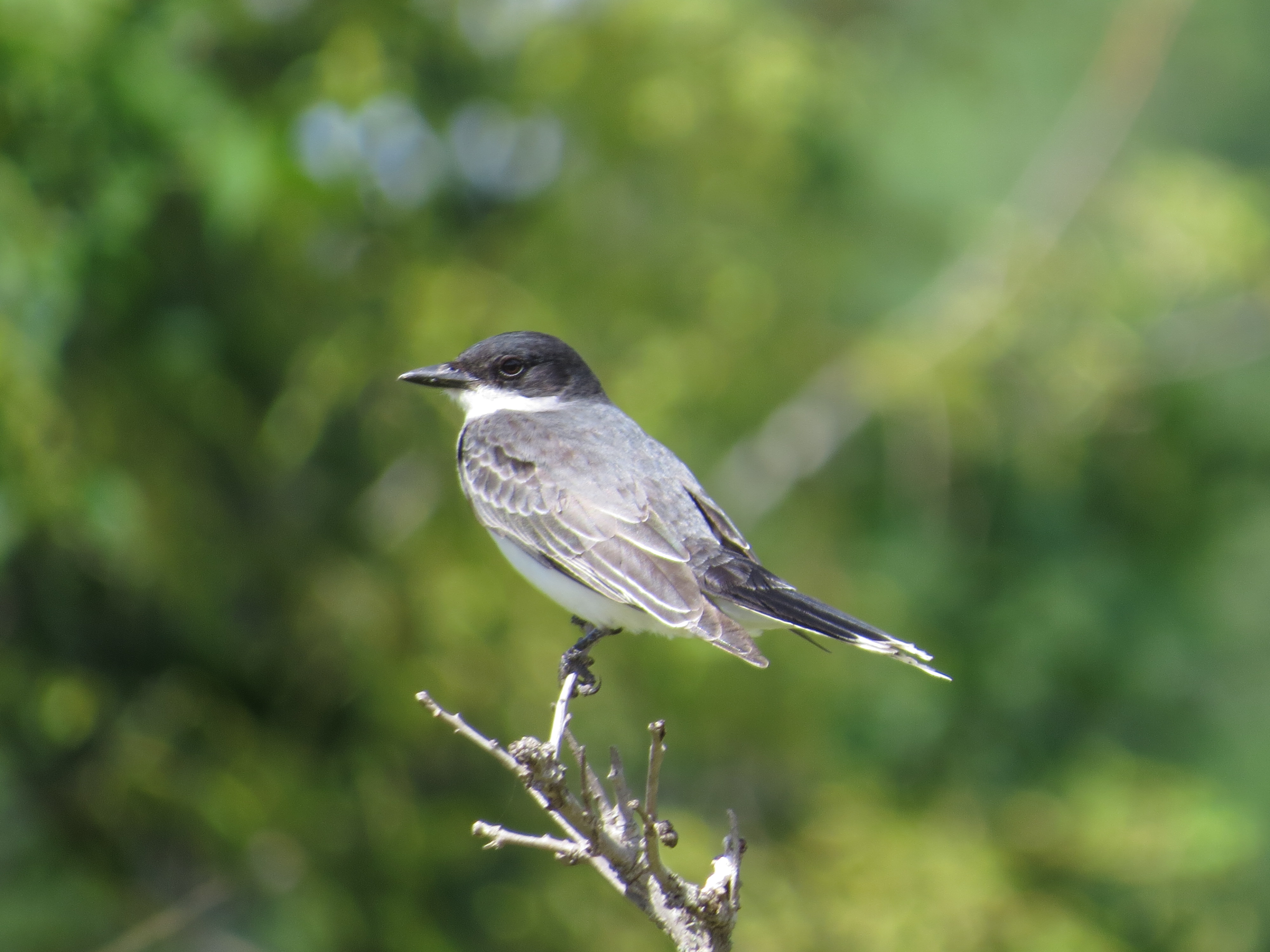
King of this part of the River is an Eastern Kingbird. The genus-species name is Tyrannus tyrannus, an indication of his territorial behavior. He will harass crows, hawks, even Great Blue Herons who ‘intrude’ on his territory.
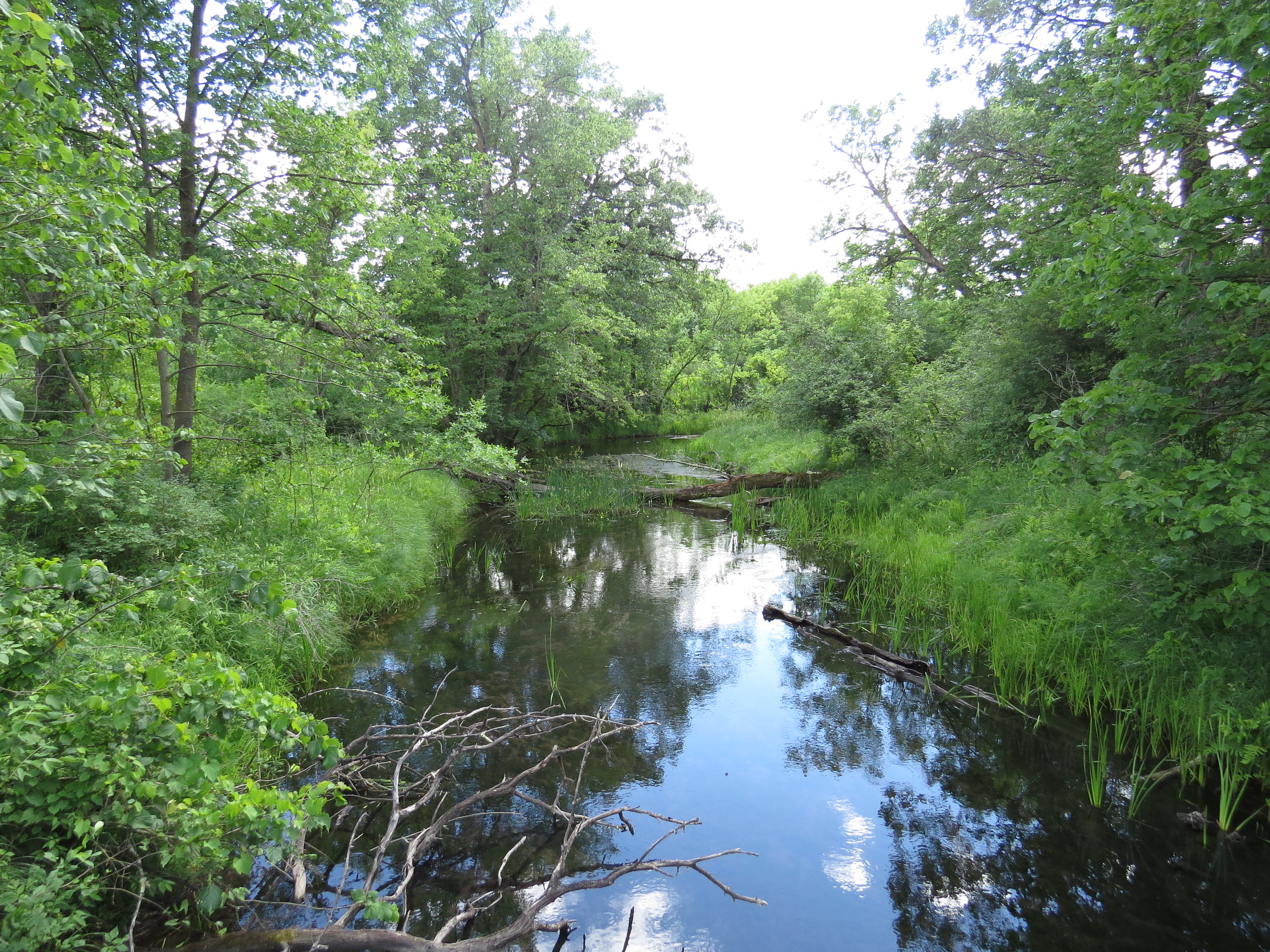
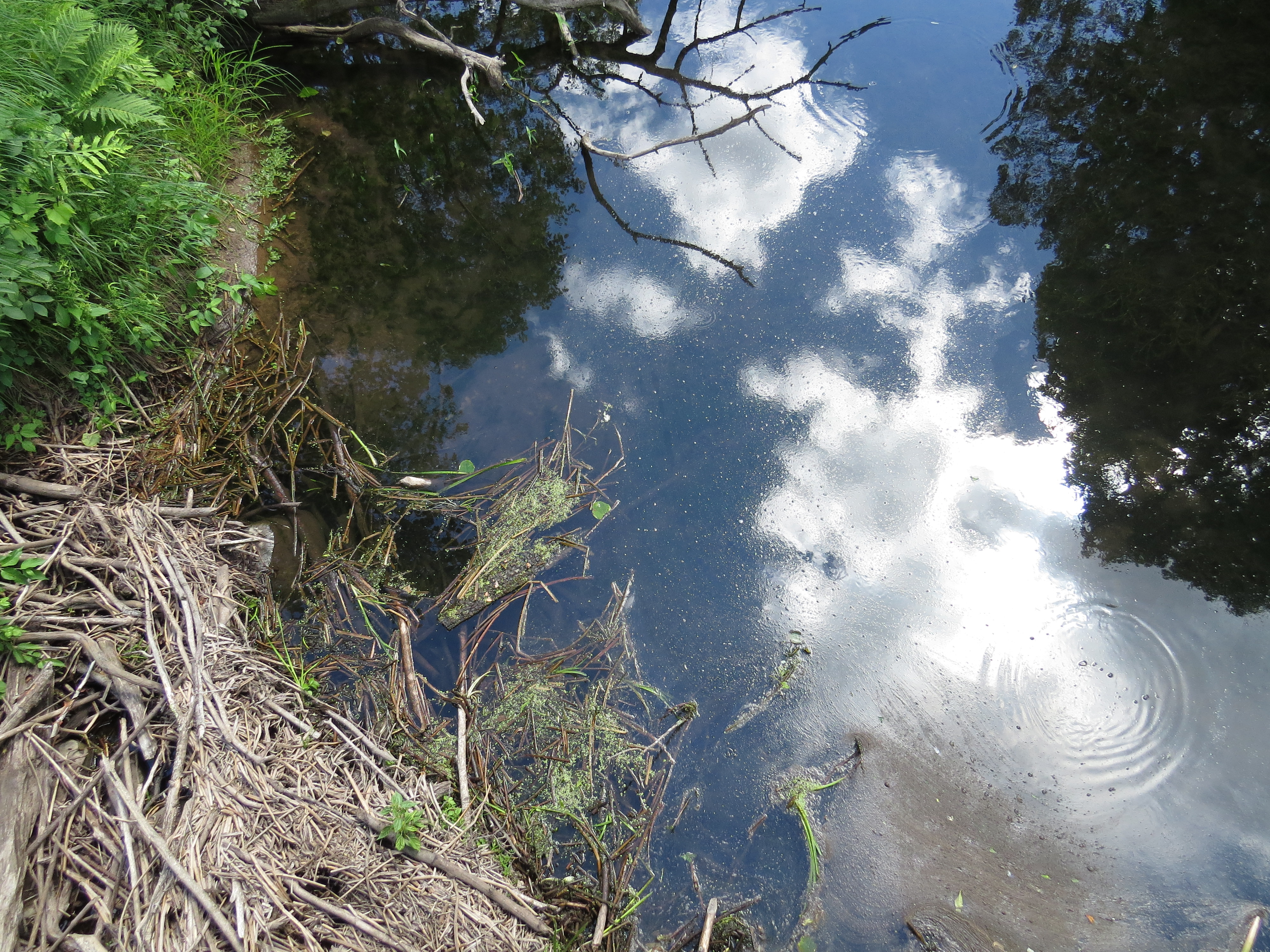
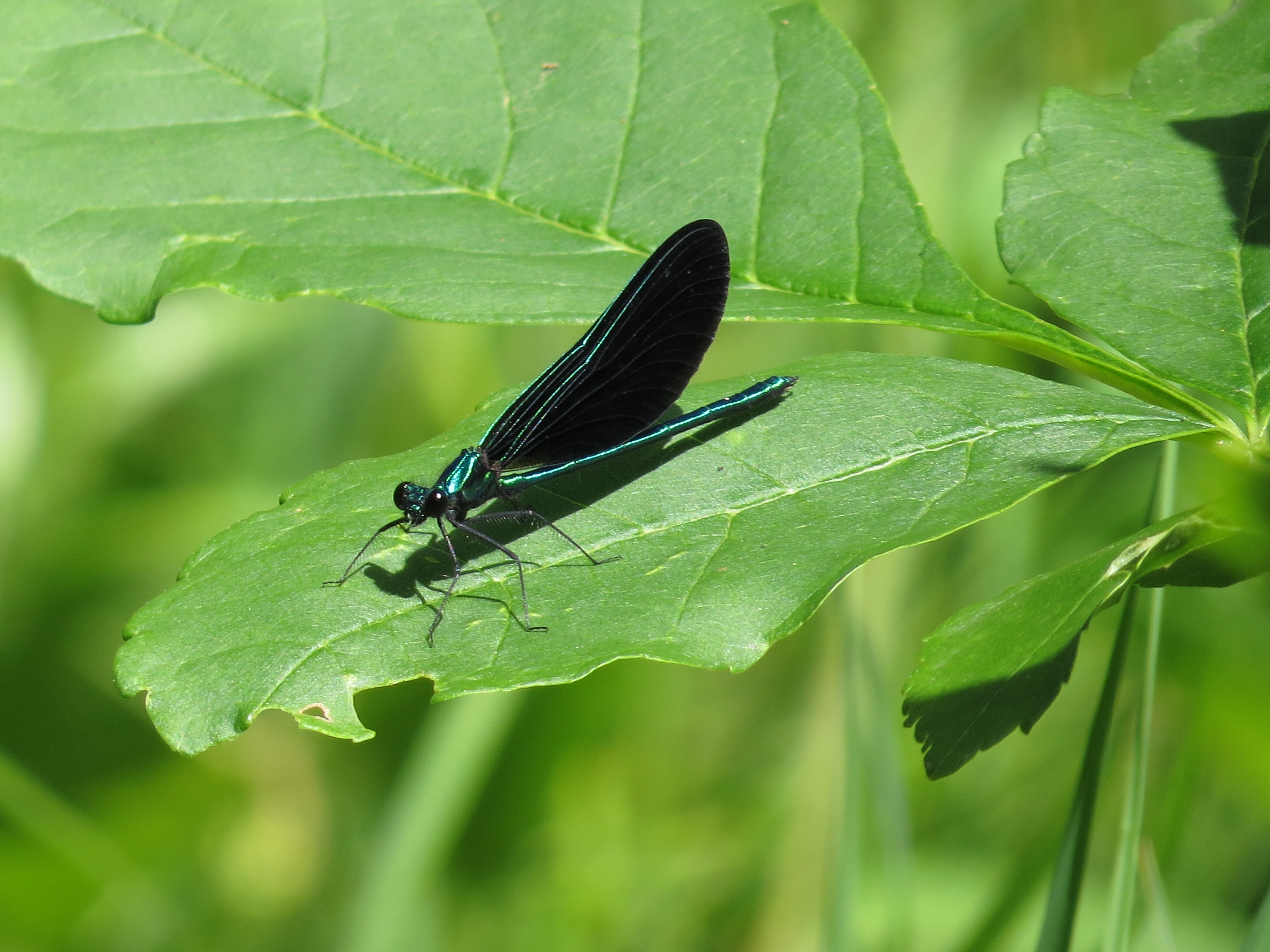
The ‘backwaters’ of the St. Croix were interesting little ecosystems of sometimes stagnant water, beaver activity, damsel and dragonflies, and pretty patches of Forget-me-nots.
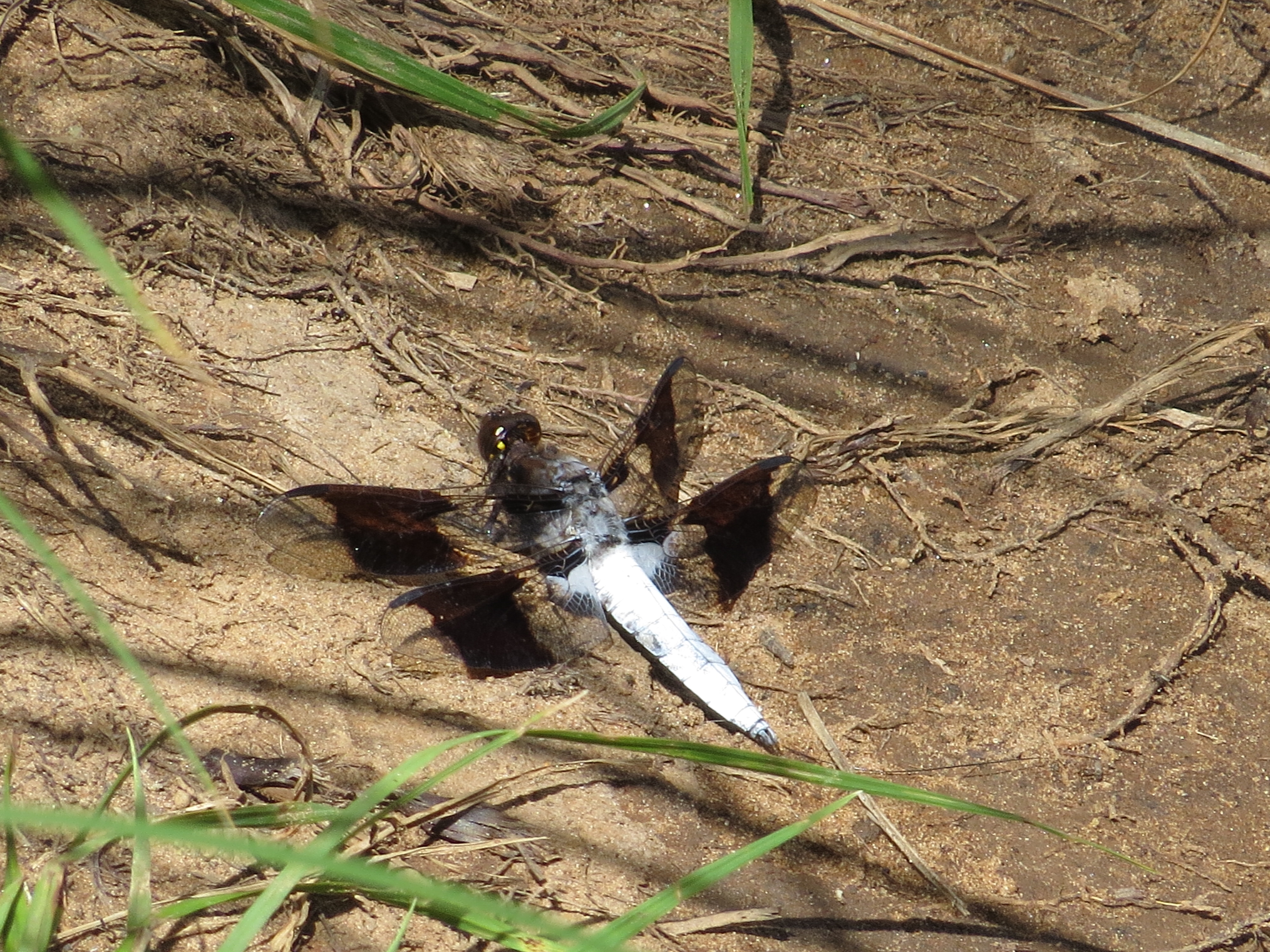
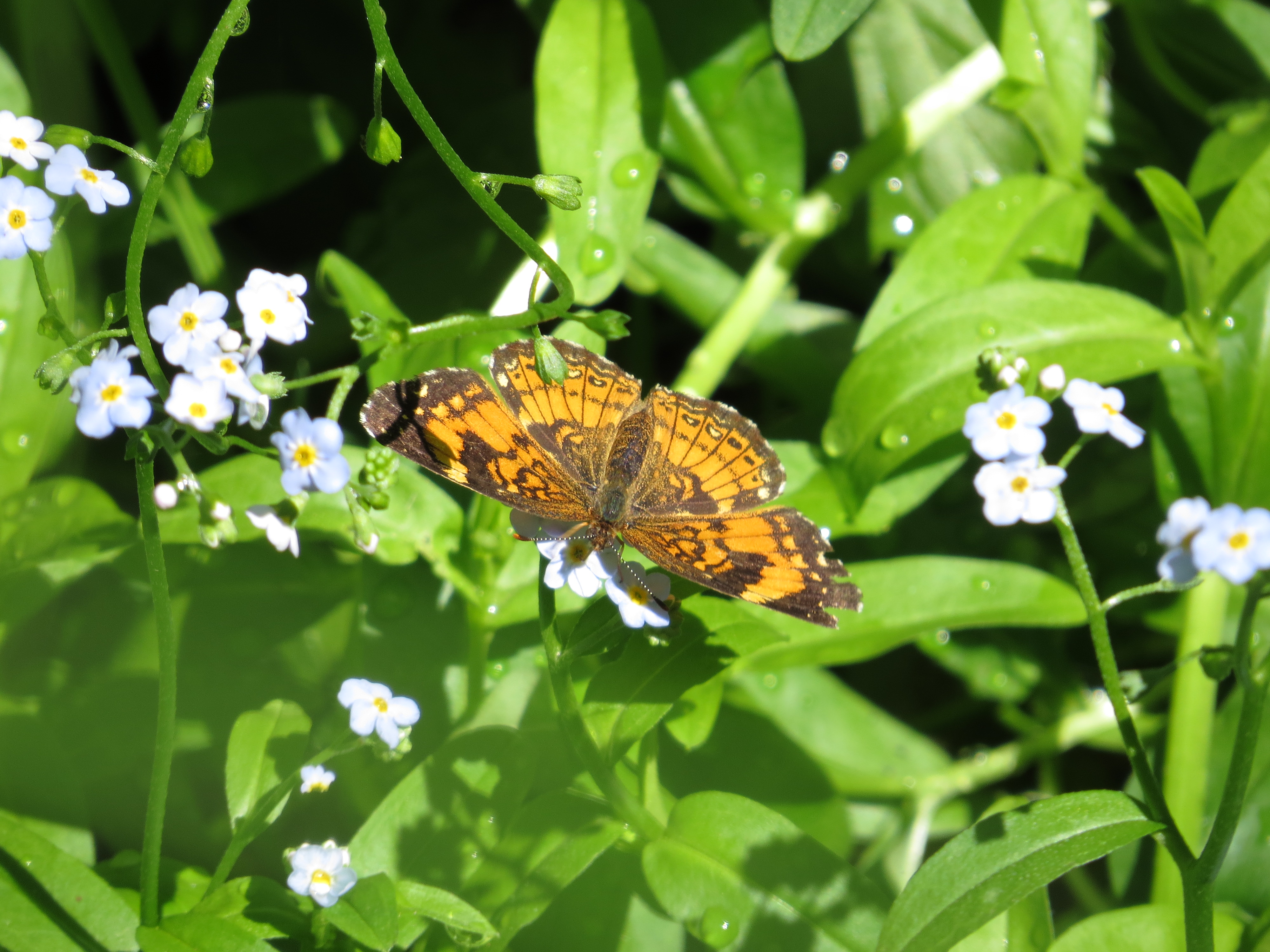
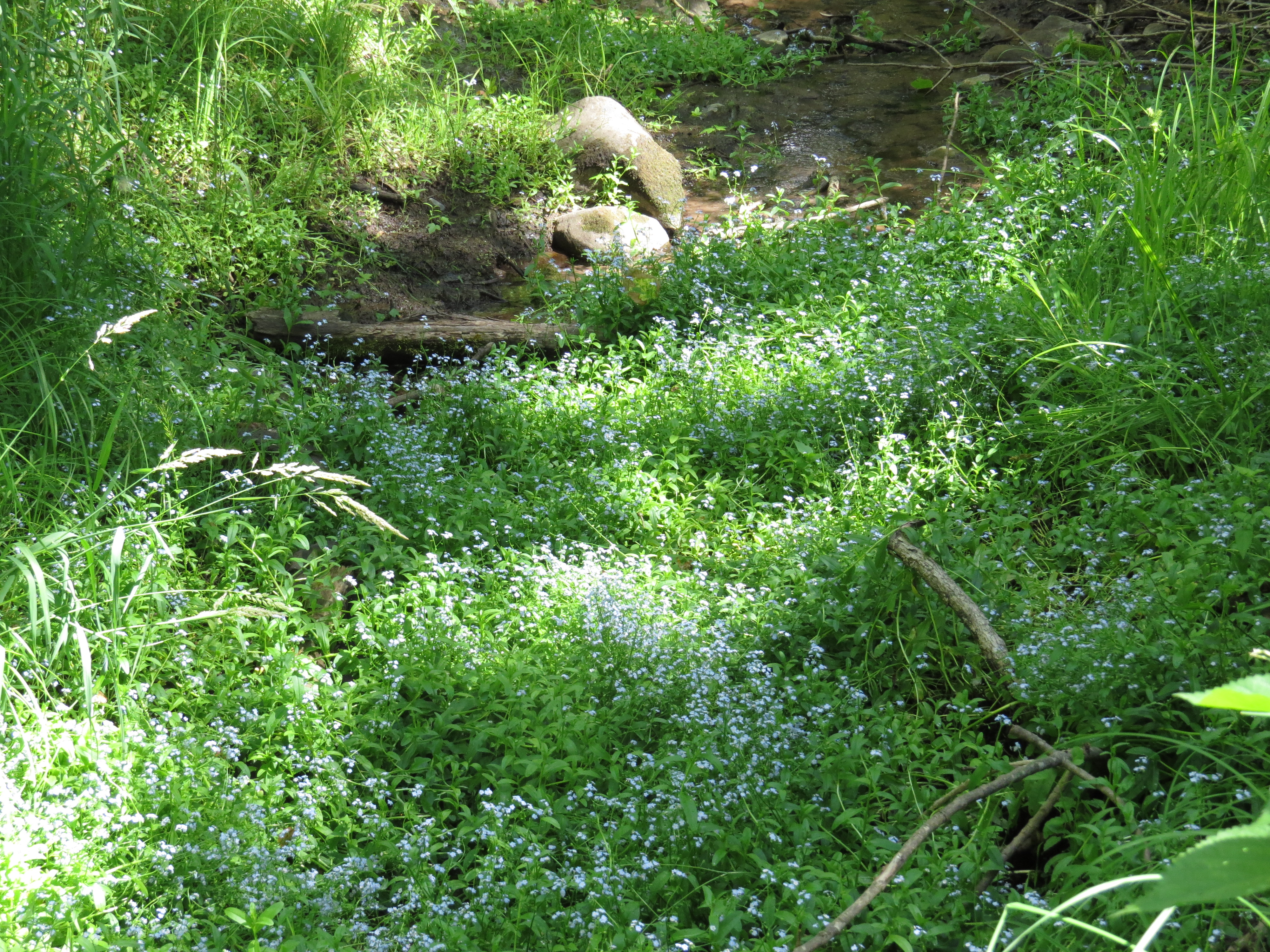
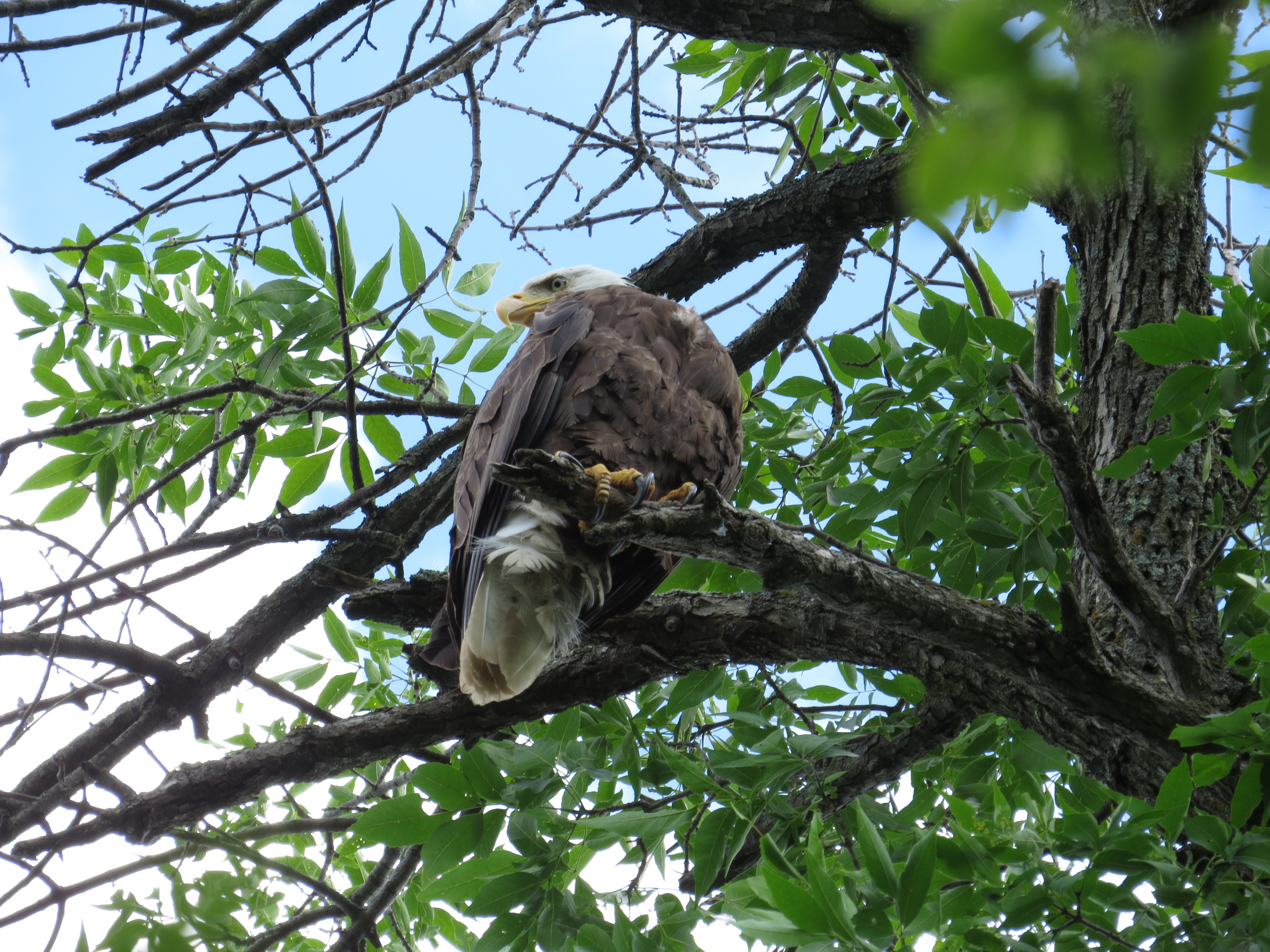
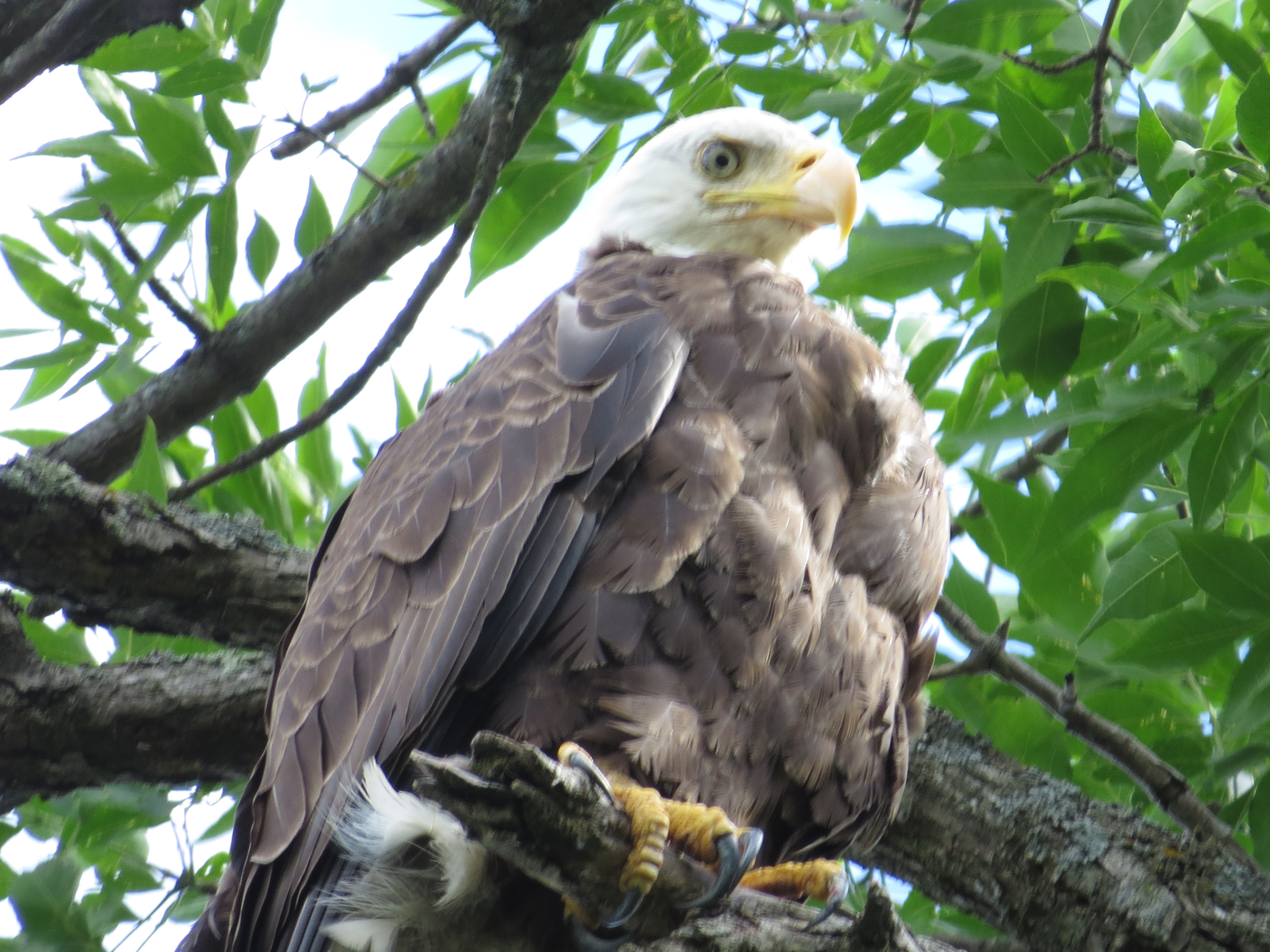
We heard the distinct ‘talking’ of an eagle to its young ones. Looking up, I could barely see the nest, but then discovered who was doing the ‘talking.’ It was an old-looking eagle—pale eyes and rather disheveled feathers—who has seen many more humans than humans who have seen him.
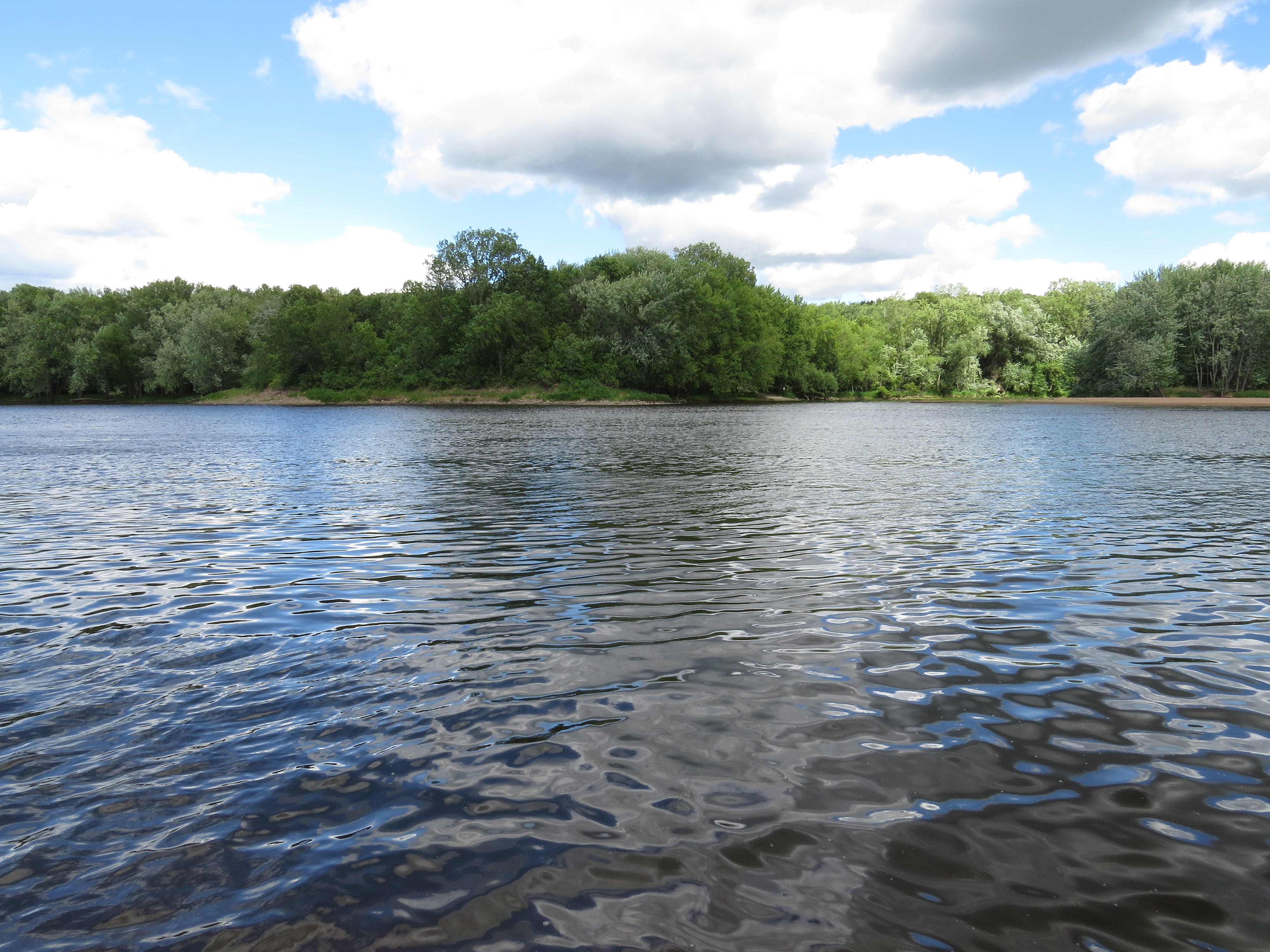
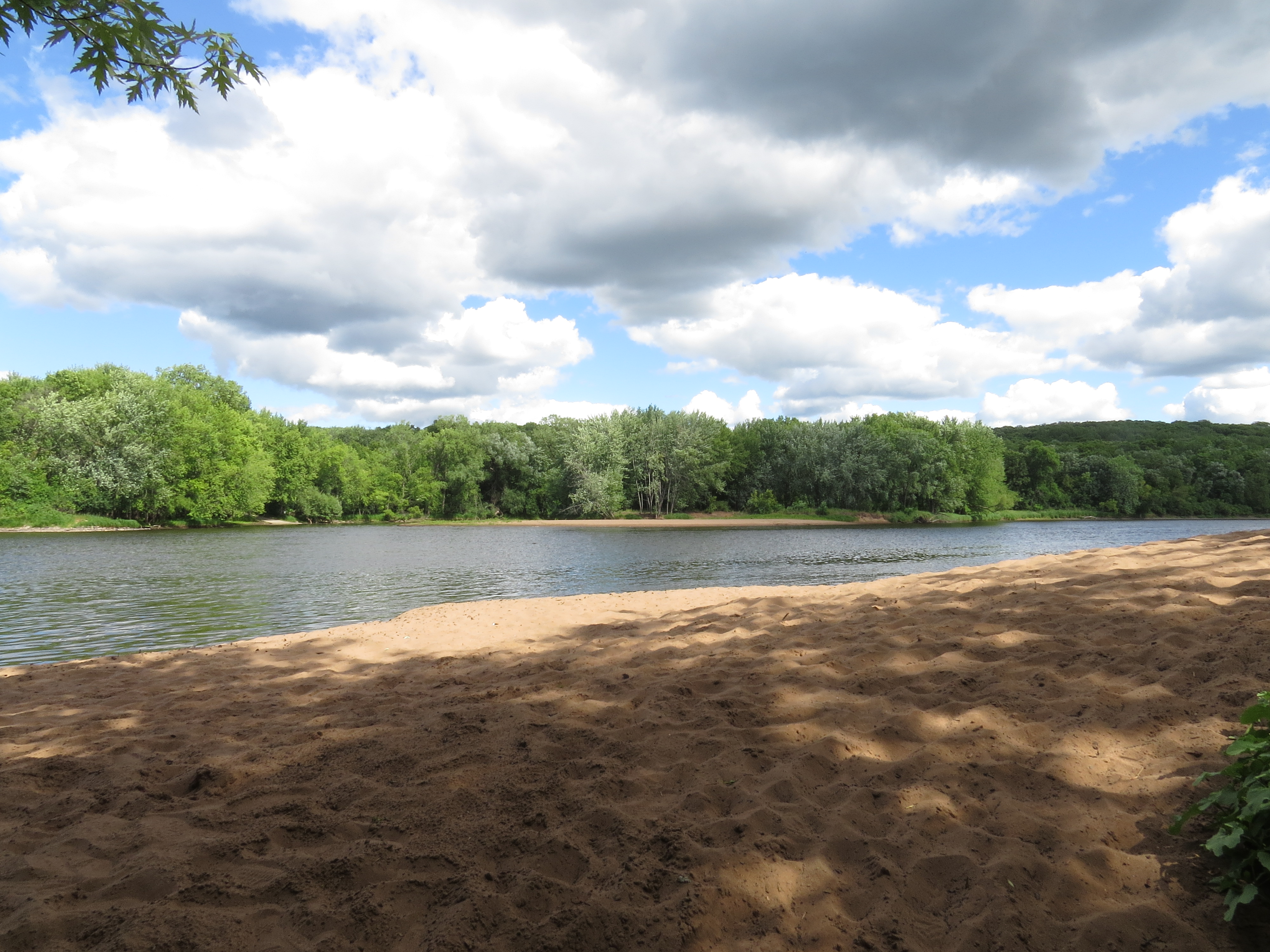
St. Croix River was used as a means of moving logs from the northern forests to the mills during the logging era in the late 1800’s. A pile-driven dam was constructed at this site in 1890, so logs could be let through at an even pace, after they had experienced numerous, humungous log jams that halted production at the mills. The last ‘log drive’ was in 1912, and the dam was removed in 1955.
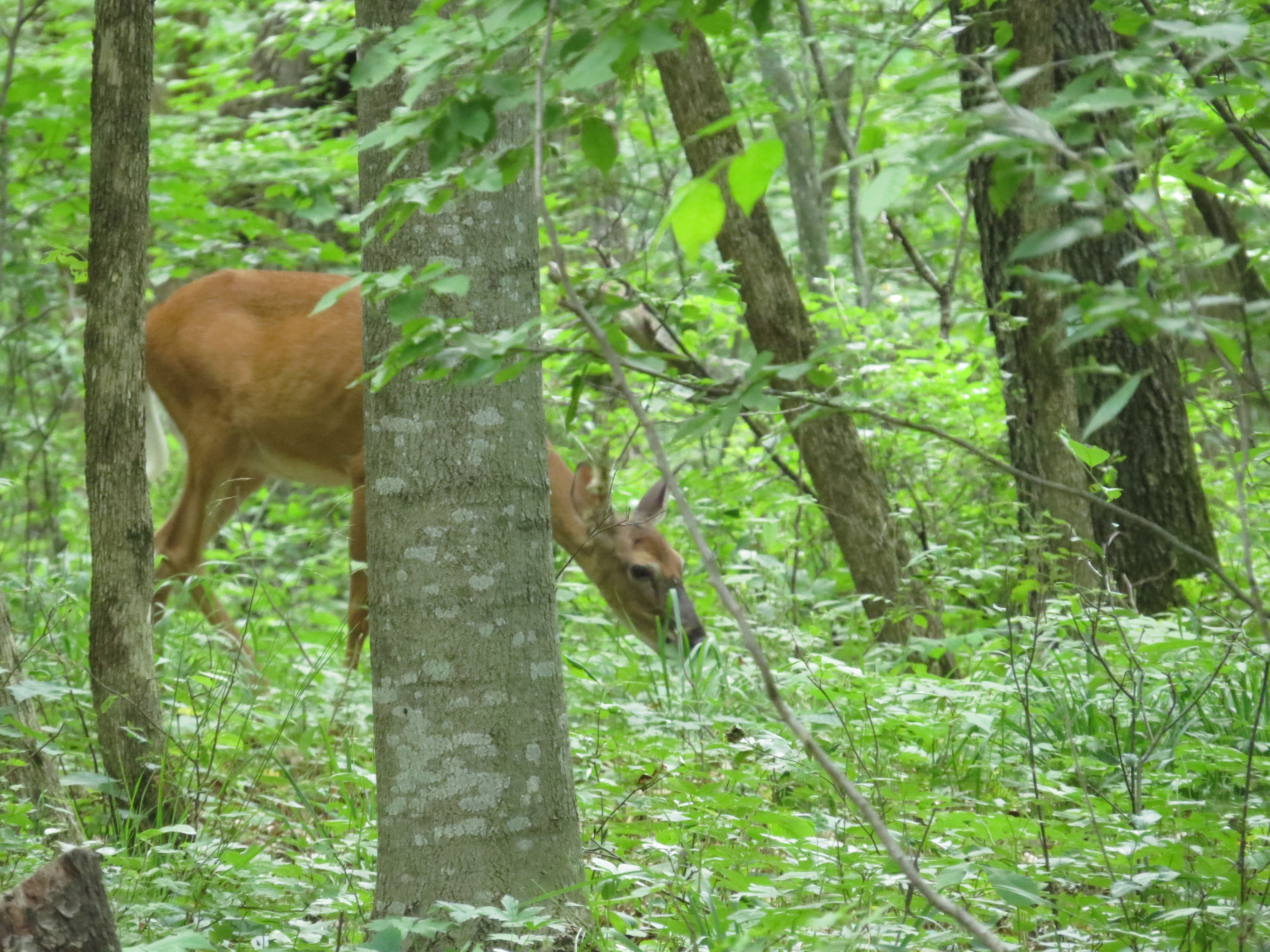
When we returned to the campground, a deer was wandering through the trees between the campsites with no cares about the people wandering through. I practically had to shoo it from the door of the outhouse when I went there…where I was greeted with a sign and warning about other visitors.
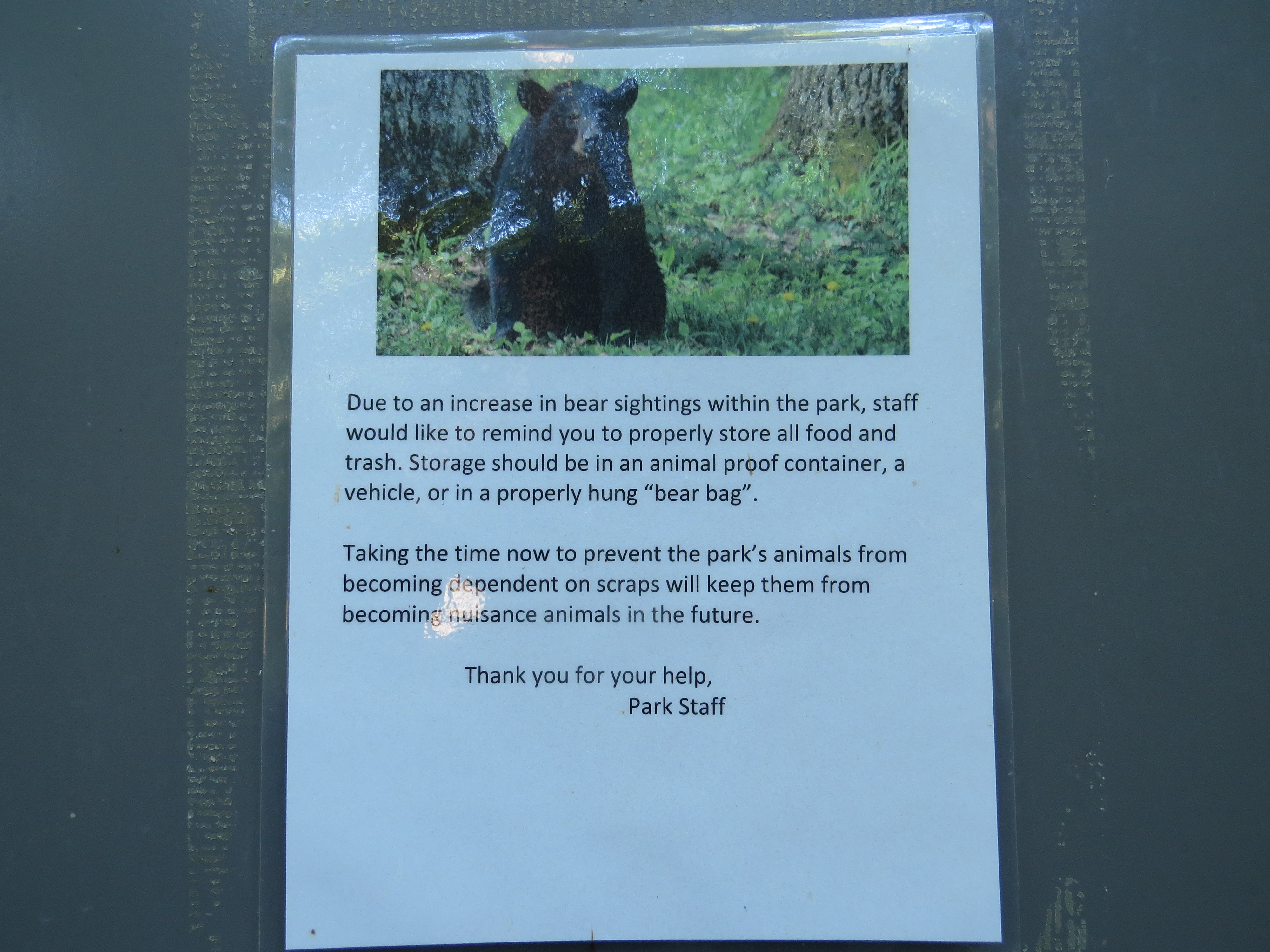
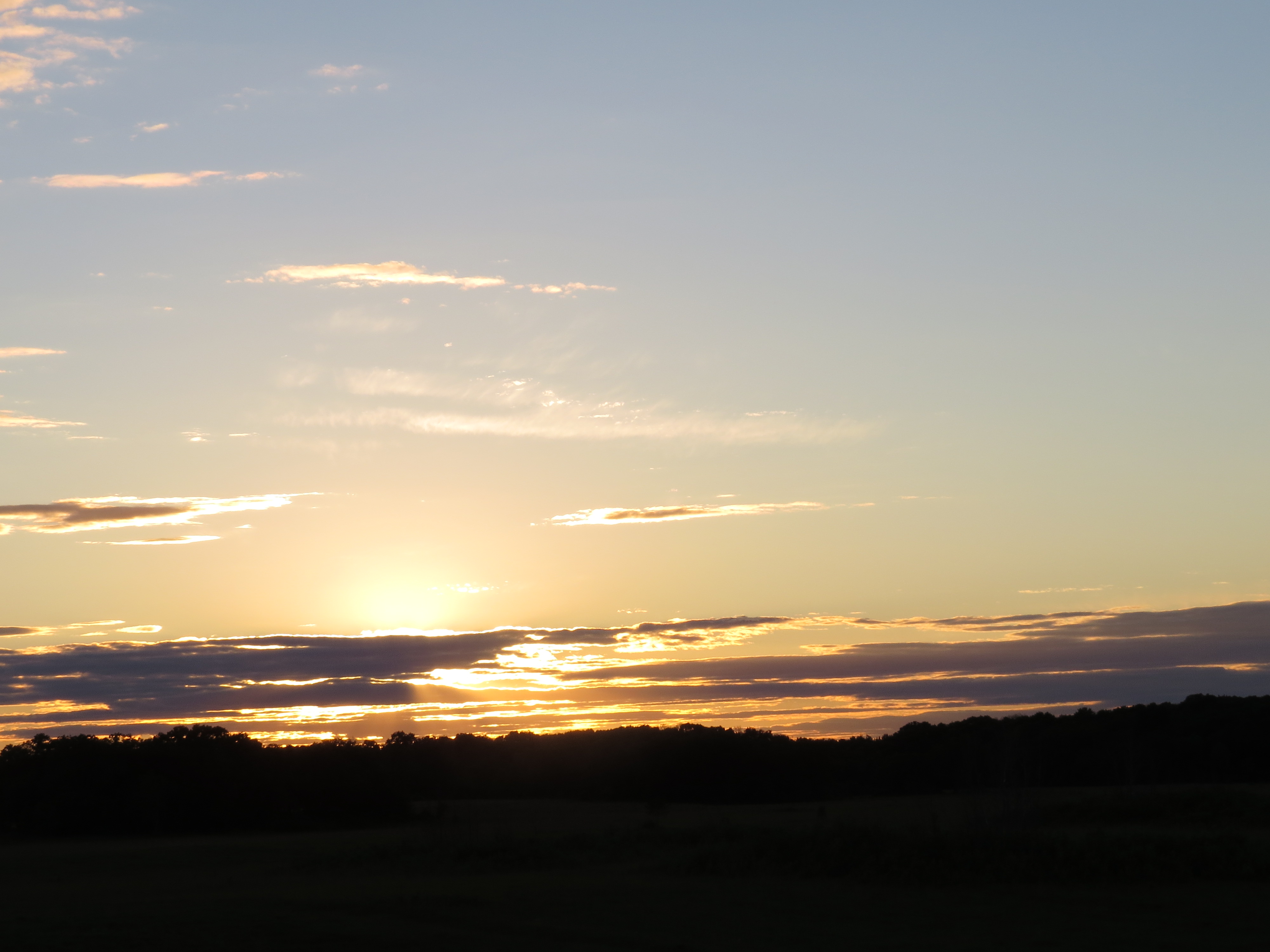
Okay—fair warning. We set up our humble campsite and settled in for the longest day of the year. As the sun disappeared behind the trees around our campsite, I decided that I wanted to get a picture of the sunset on the Summer Solstice. We drove to an observation deck that overlooked the Amador Prairie—after stopping for the deer that were crossing the road.
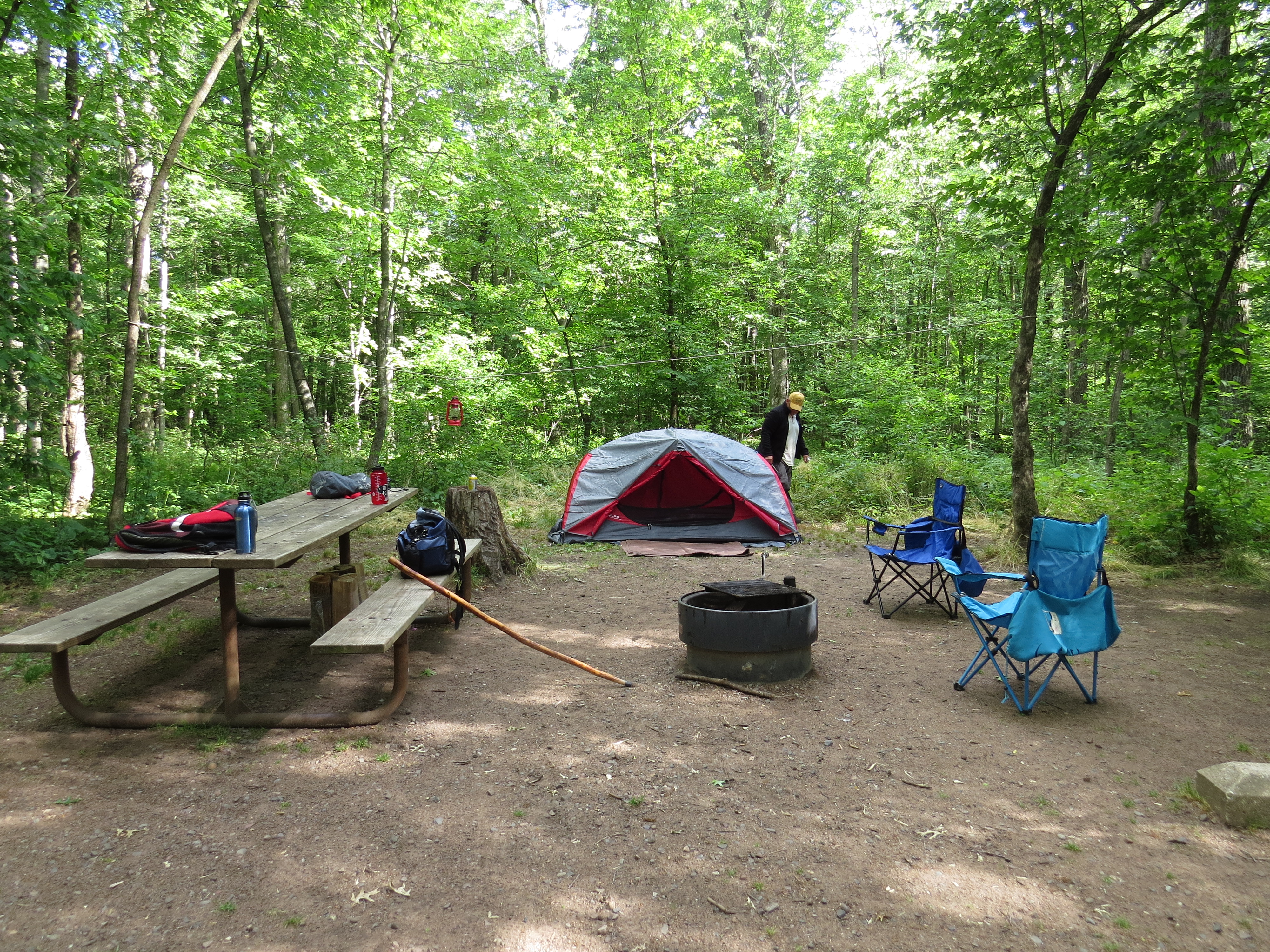
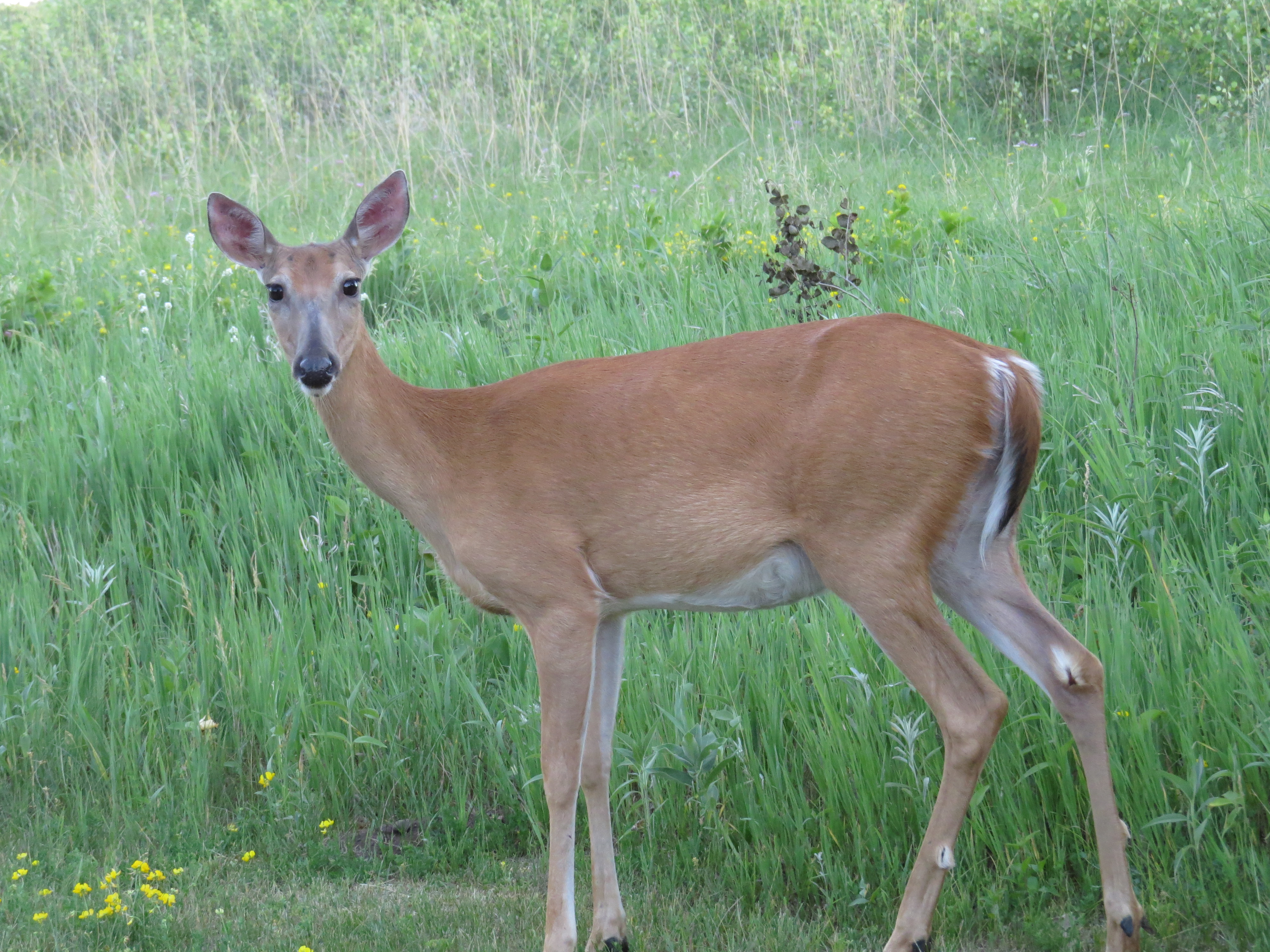
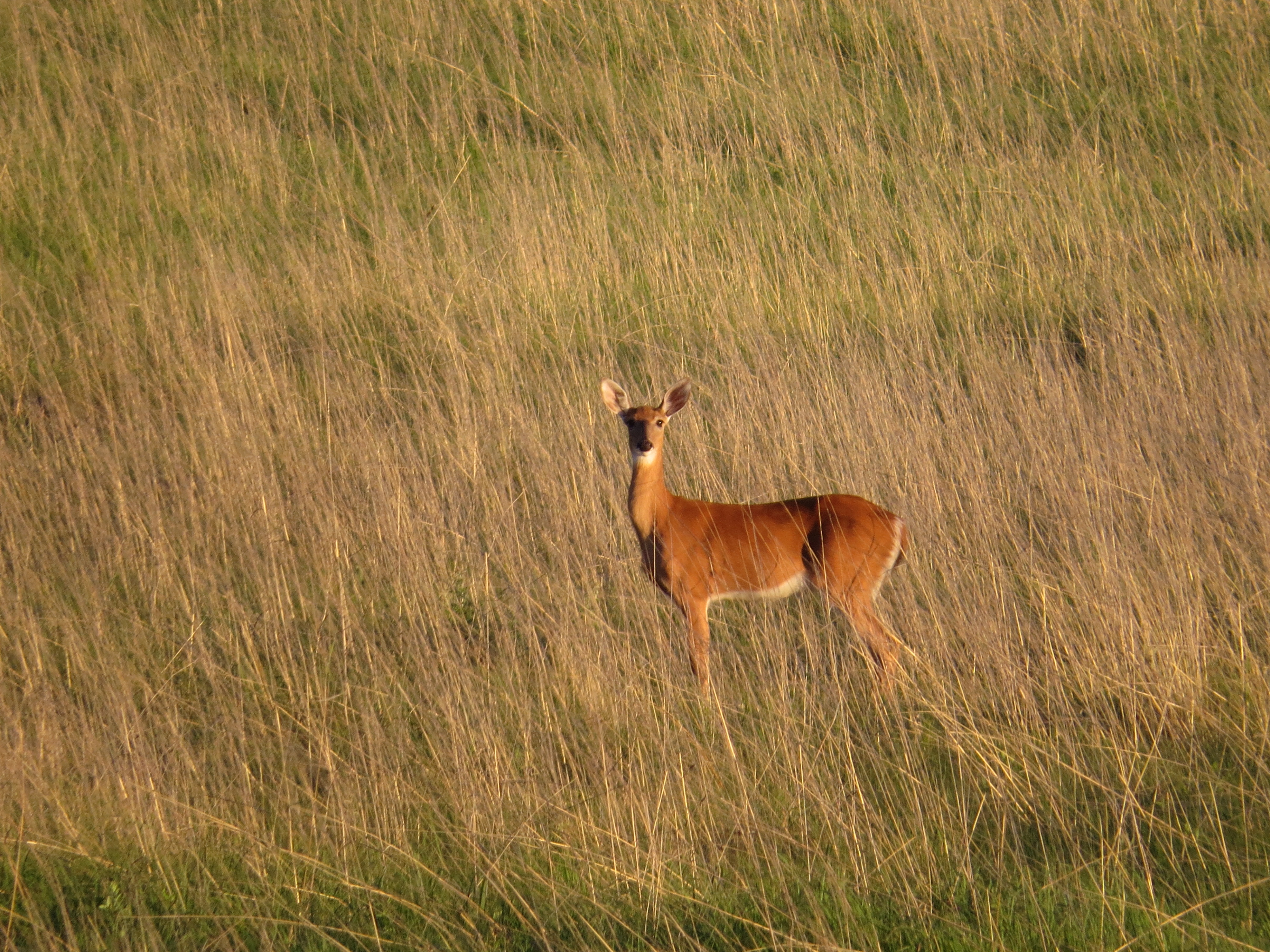
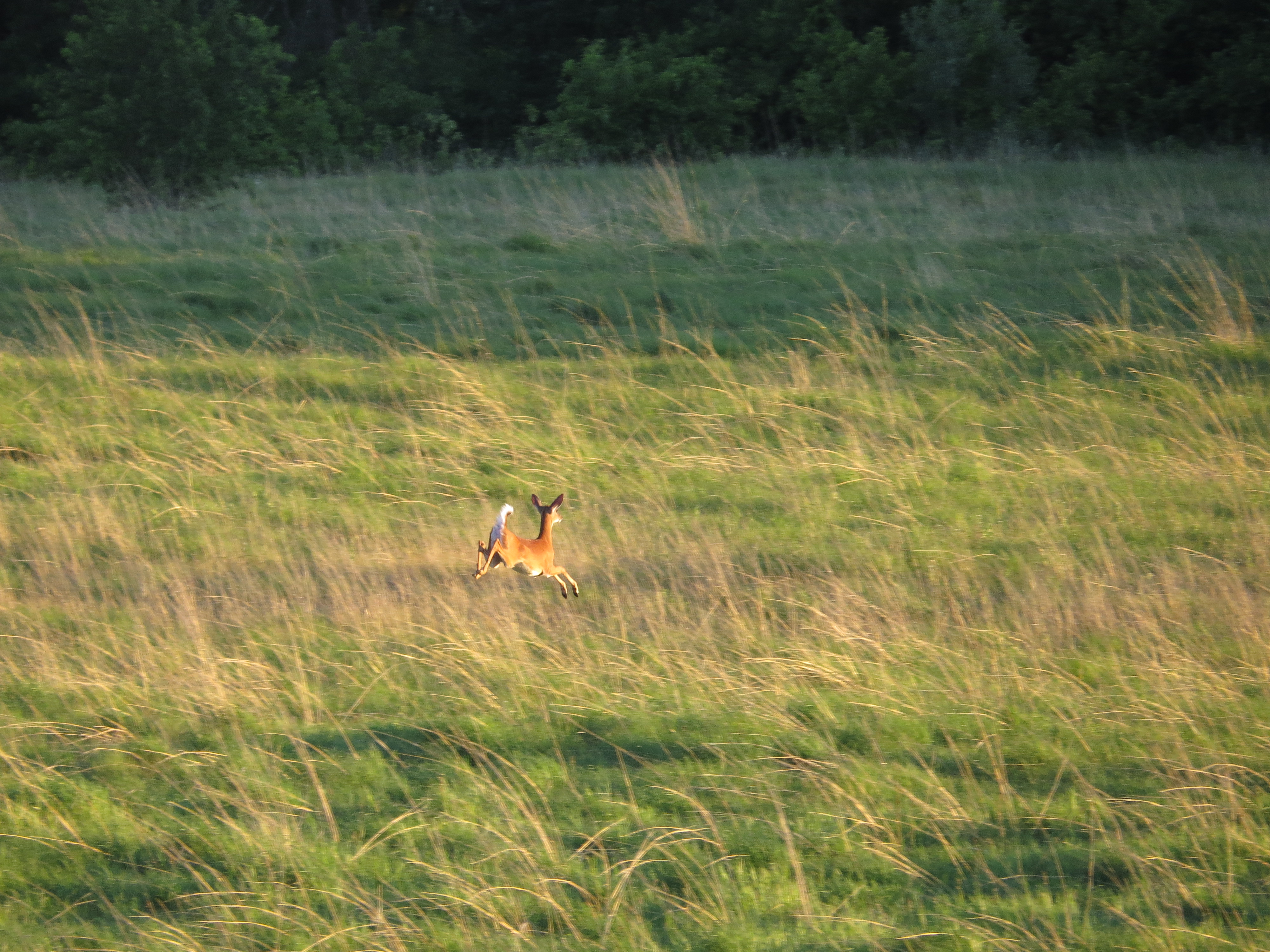
The prairie was full of deer looking this way and that way, running, leaping, and grazing.
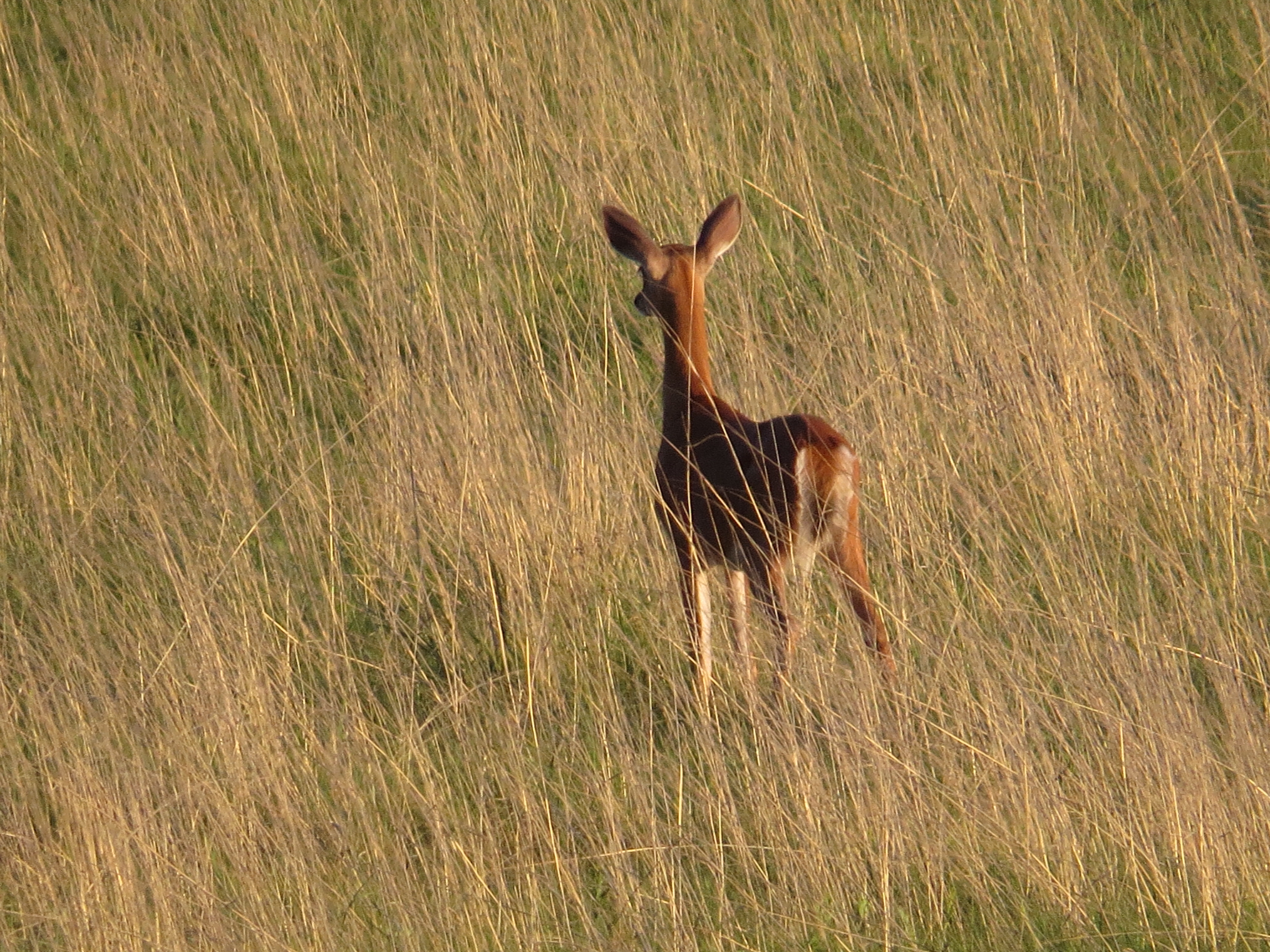
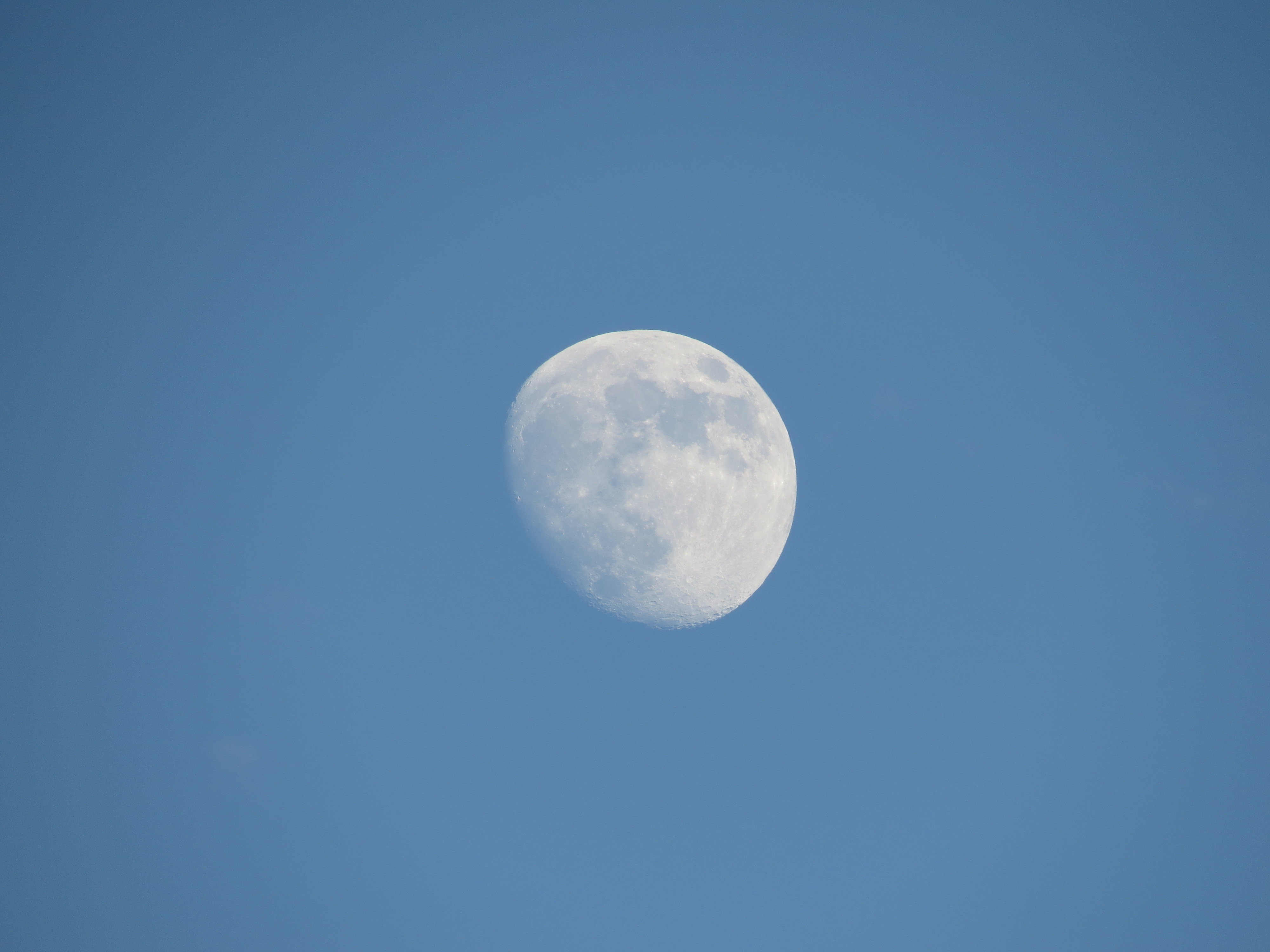
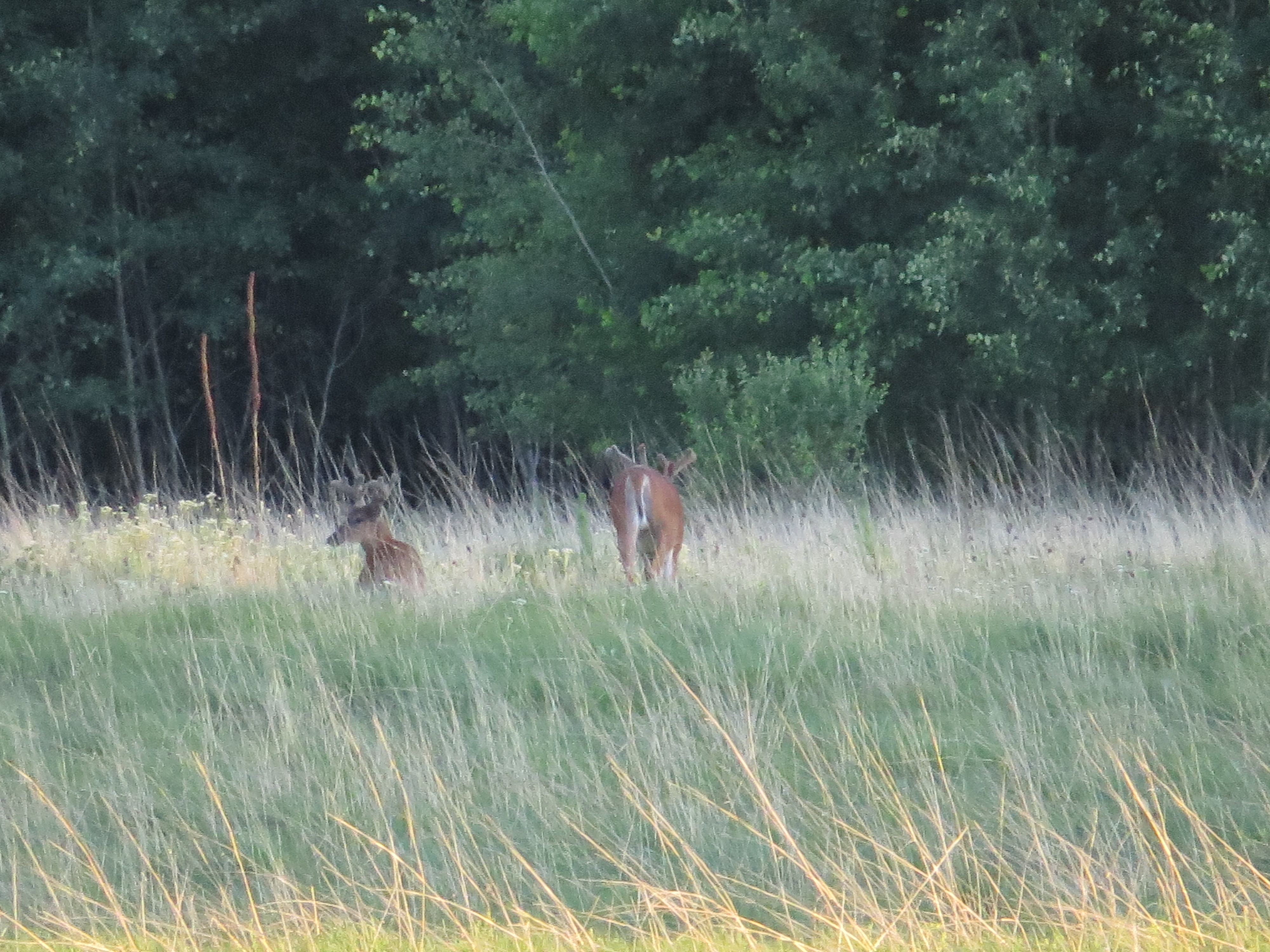
The sun was still shining so brightly on the horizon that I could barely look at it, so I found other things to look at while we waited for the sun to set. The almost full moon was already high in the sky; a couple of bucks with velveted antlers roamed the edge of the woods.
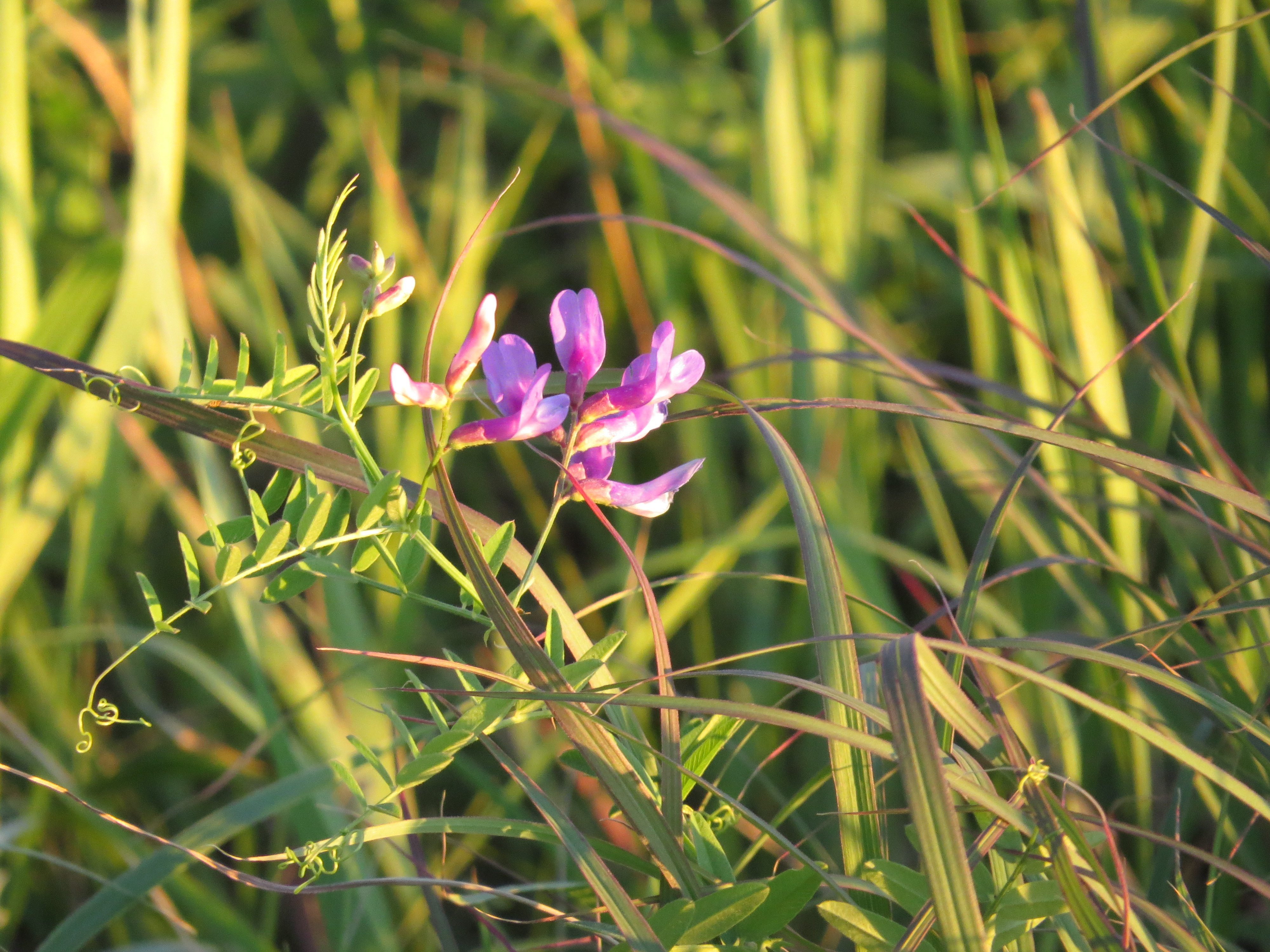
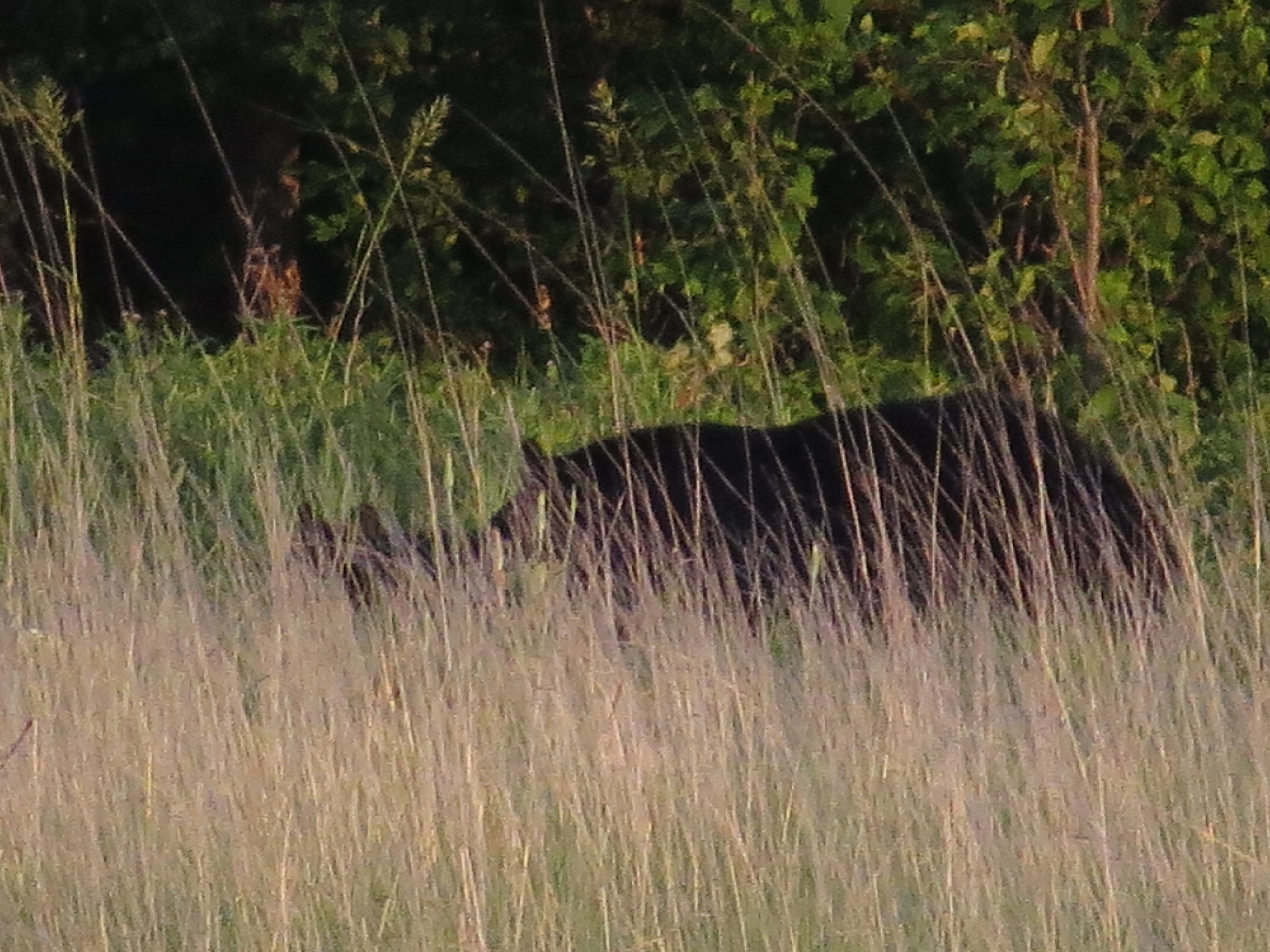
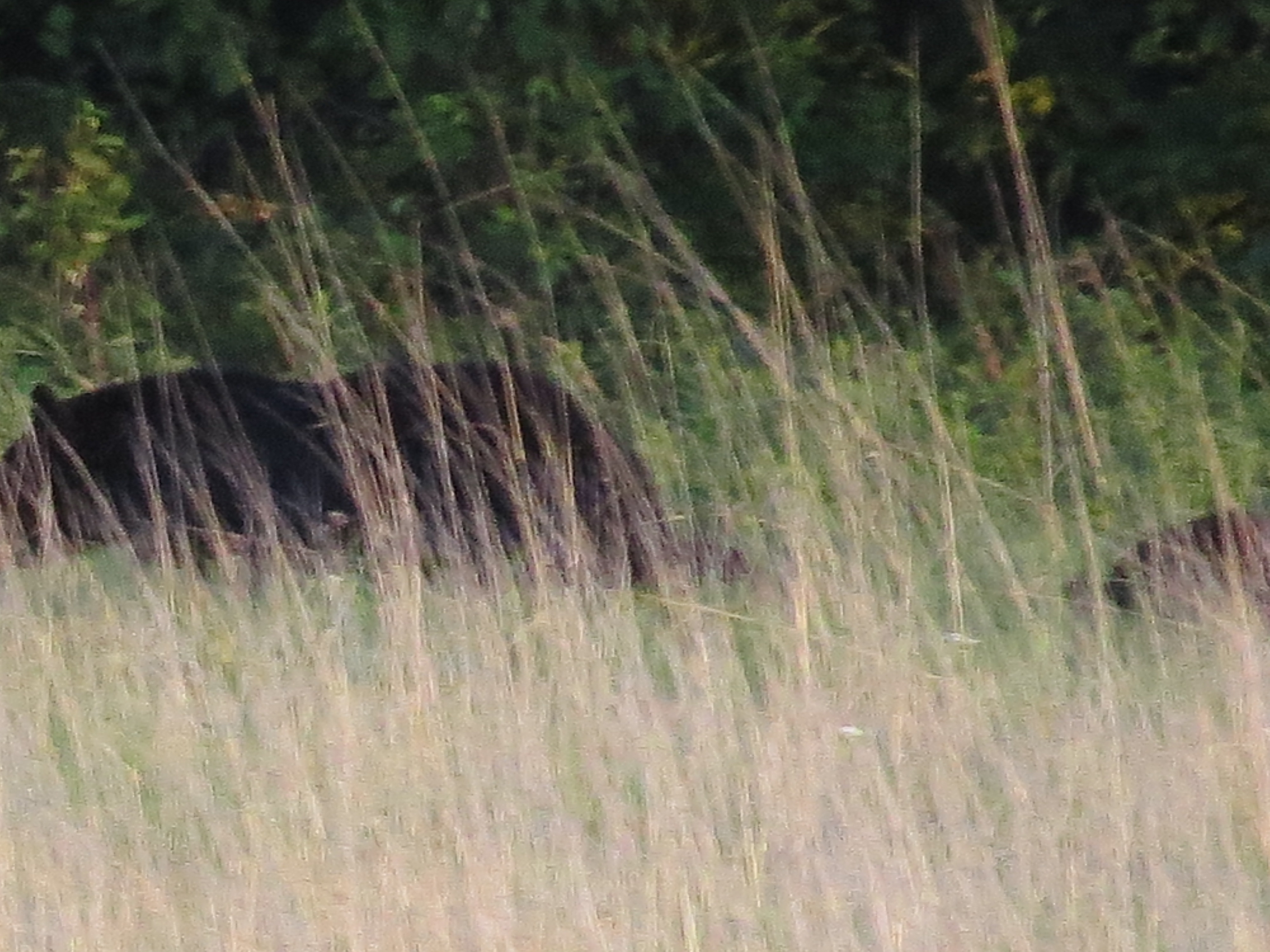
The purple flowers of a tendrilled Vetchling(?) picked up the purple color in the sundrenched spears of Bluestem grass. It takes a long time for the sun to set on the longest day of the year. I was over taking pictures of deer. I lounged against the boards while looking to the west into the bright orb of sun. I joked to Chris, “Where’s that bear when you need him?!” Not two minutes later, as he looked over my shoulder, he very matter-of-factly said, “There’s a bear over there.” What?@! I turned and looked at a very dark, moving object way over by the trees.
Sure enough, there was my bear!
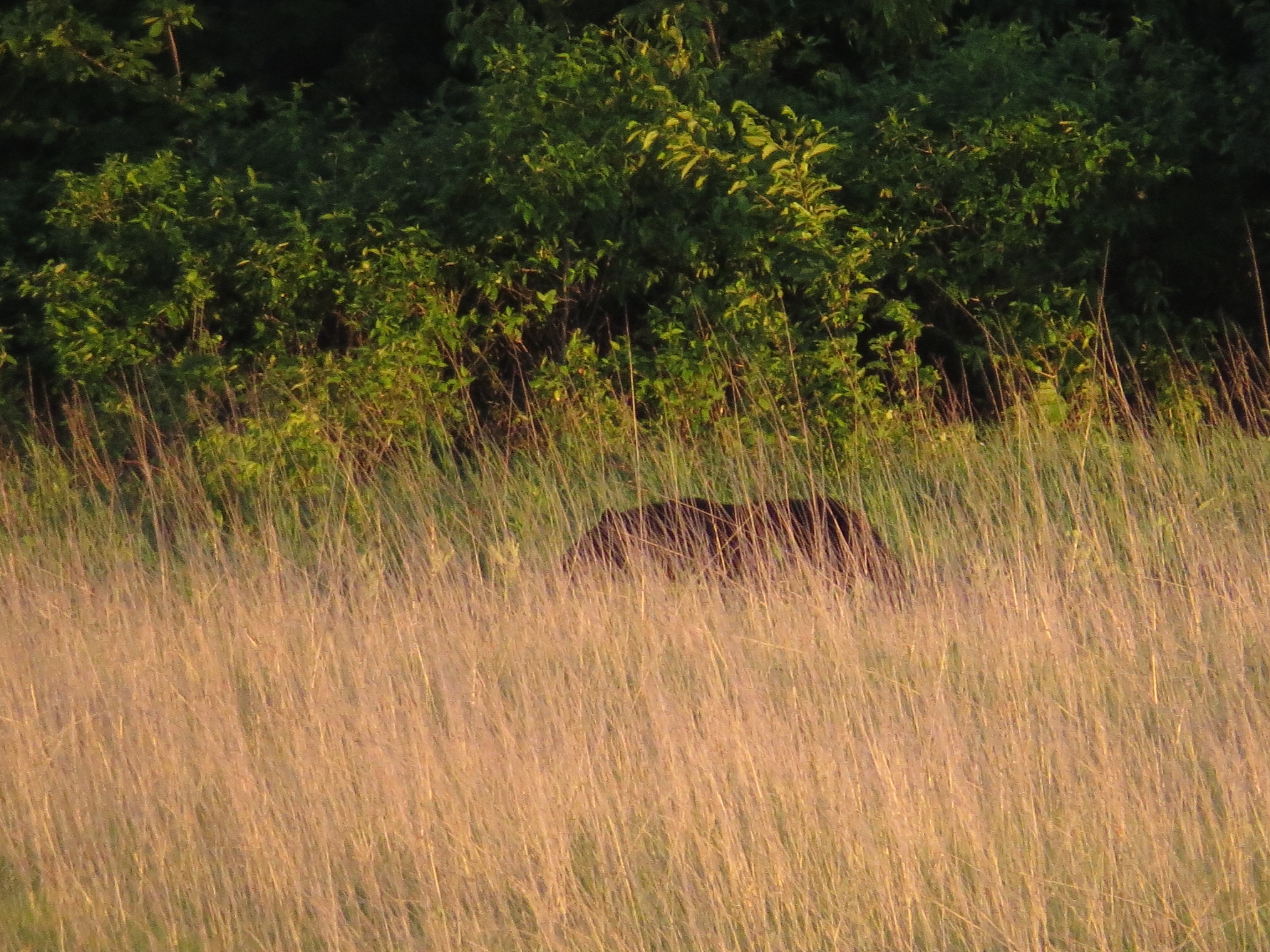
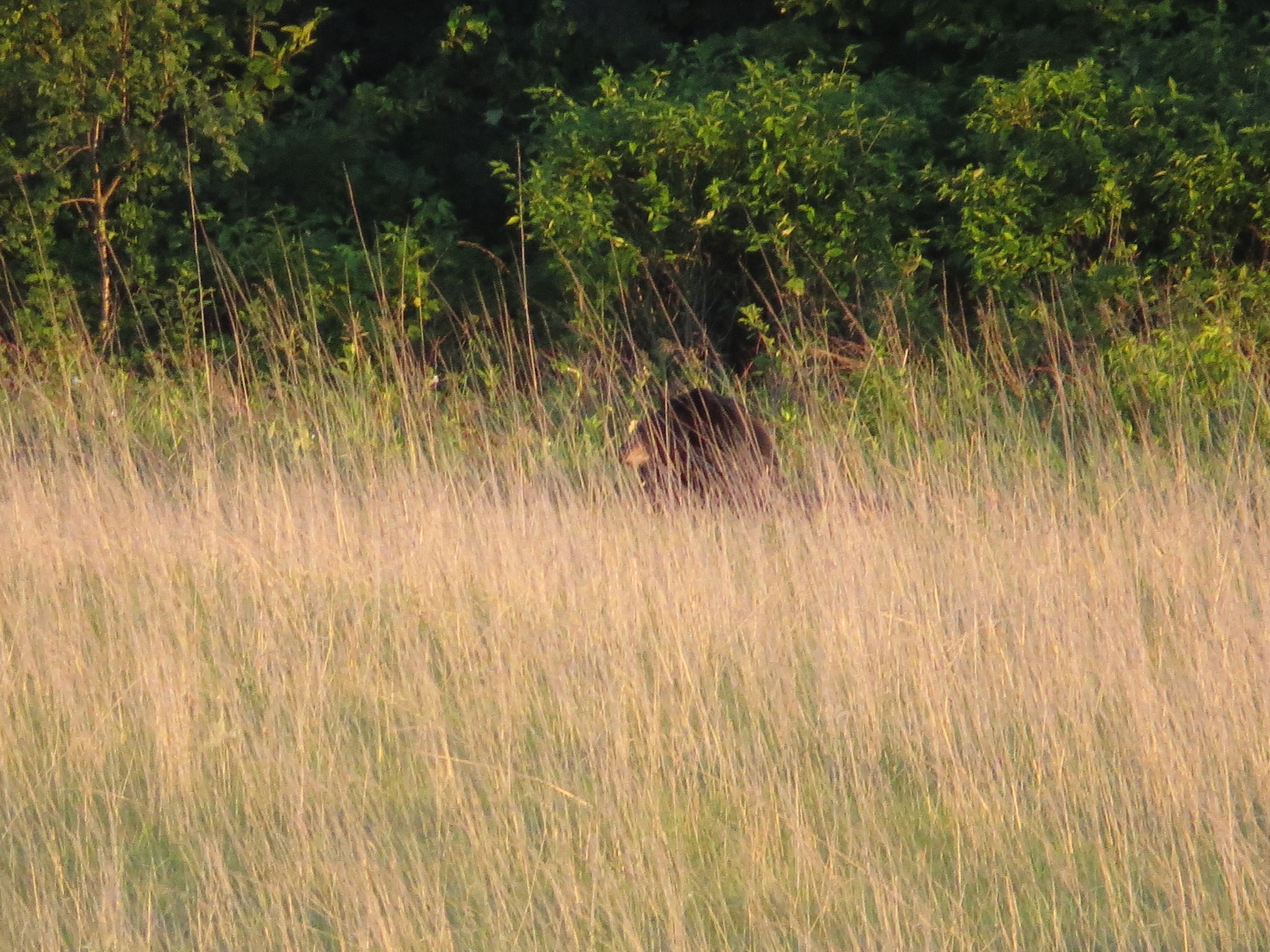
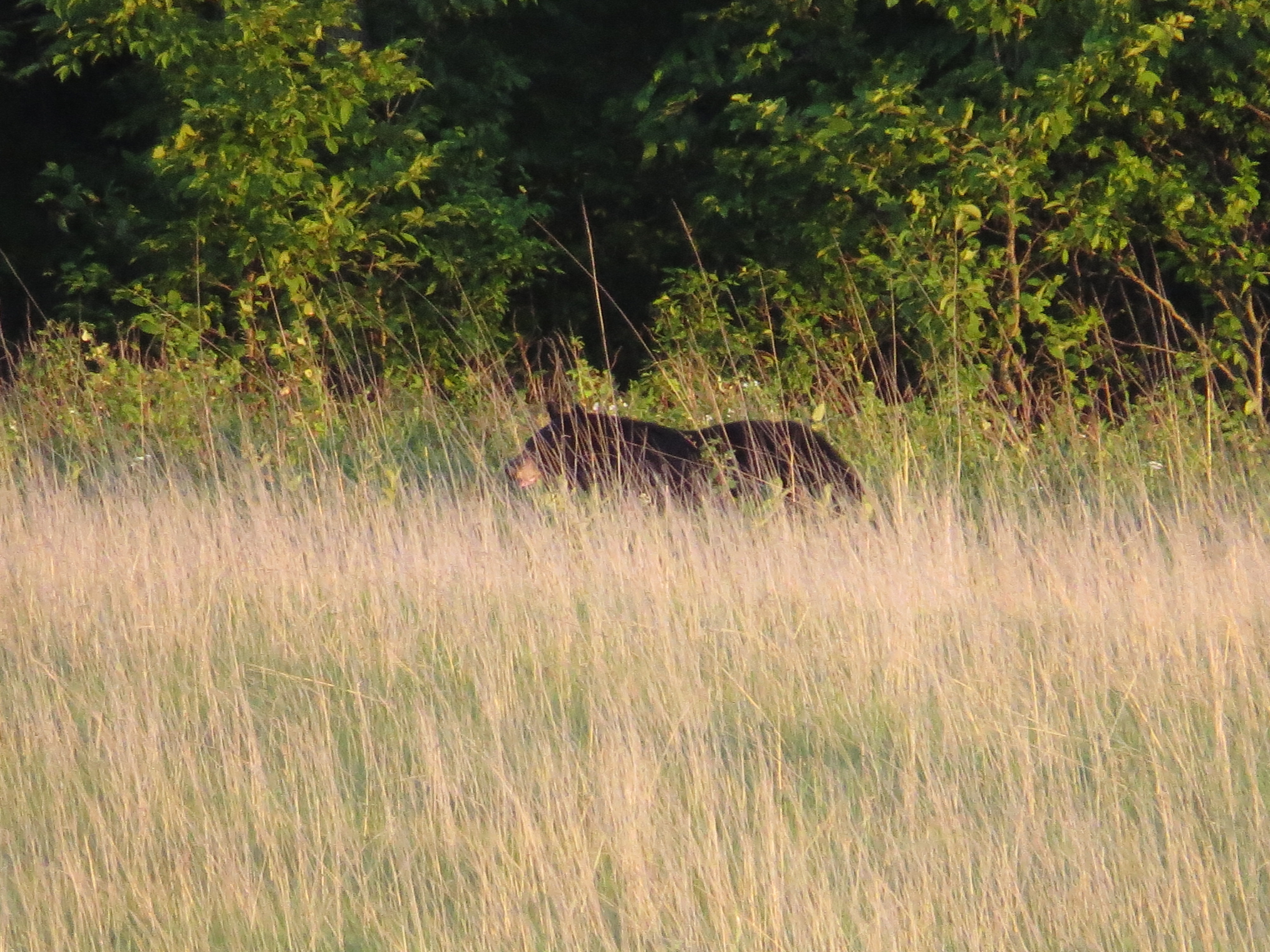
But it wasn’t a ‘he’ and it wasn’t just one. It was a mama bear with two little cubs bounding along with her, mostly hidden in the tall grass.
Solstice is derived from the Latin words sol meaning ‘sun’ and sistere meaning ‘to stand still.’ On this day, the North Pole is tipped directly towards the sun, making it seem like the sun is standing still.
We didn’t see any snakes that day, but we experienced the exquisitely beautiful about-to-bloom season of summer. Or are we more like the Swedes who celebrate the Solstice as midsummer, the height of the warm, sunshiny season? However it falls, the longest day does hold some magic worth noting. The magic of empty-nest experimenting with pre-children pastimes. The magic of flowers and butterflies, birds and dragonflies, wild rivers and sweeping prairies. But most of all, for me that day, the magic of seeing my first bears in the wild—just when I needed them.
The Ancient Way
I’ve known rivers: I’ve known rivers ancient as the world and older than the flow of human blood in human veins. My soul has grown deep like the rivers. –Langston Hughes
The third leg of our exploration of the Saint Croix River at Interstate State Park was confined to a smaller area called the Glacial Potholes, adjacent to the turbulent rapids of the Dalles.
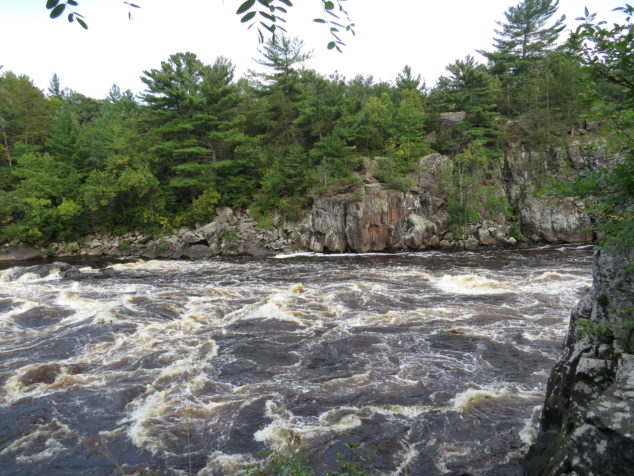
This area is a geologist’s delight—it contains more potholes in a smaller area than any other place in the world. The word pothole reminds most of us of those annoying holes in the road at the end of winter, but these potholes were carved by the ancient Glacial River St. Croix into the even more ancient volcanic basalt rocks of the Dalles. When the Glacial Lake Duluth melted and drained away, tremendous amounts of water flowed down the Glacial River St. Croix cutting through the sandstone rock that had been deposited above the basalt during the shallow sea era. The speed and turbulence of the water and sandstone sediment carved the potholes into the hard, volcanic rock. Whirlpools were created as the water pummeled against large rocks then swirled around behind it, grinding cylindrical holes into the basalt.
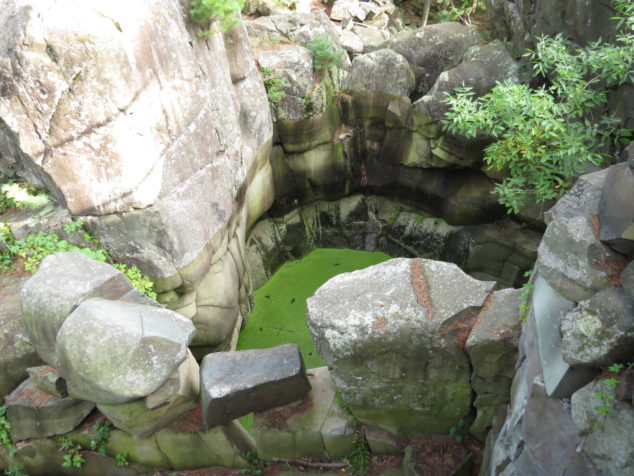
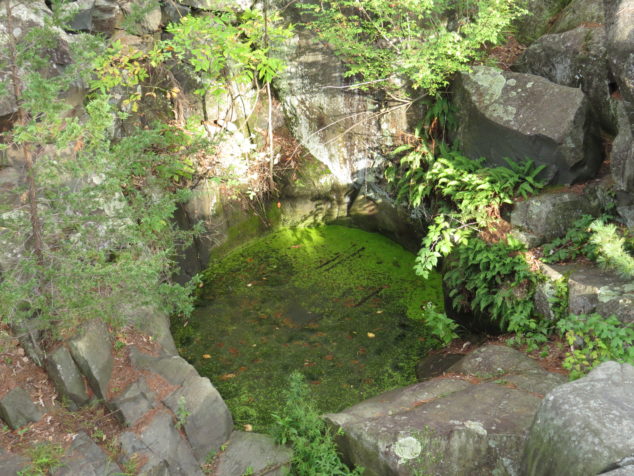
Some of the potholes have been excavated, including one called the Bottomless Pit that is nearly sixty feet deep. Others are assumed to be even deeper. Grindstones of various sizes have been found in the bottom of the pits. Sediment and trash are removed from the potholes at certain times of the year.
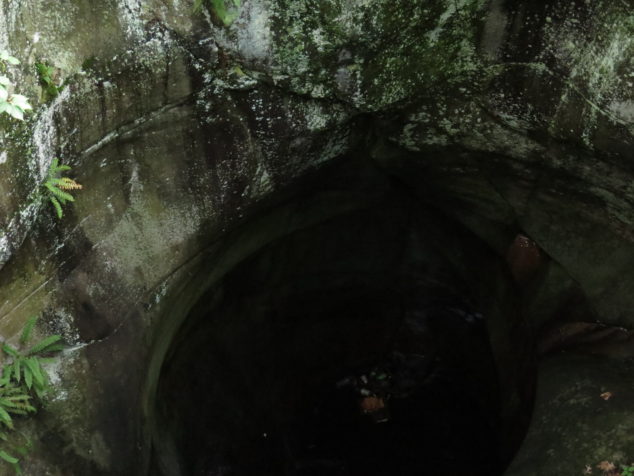
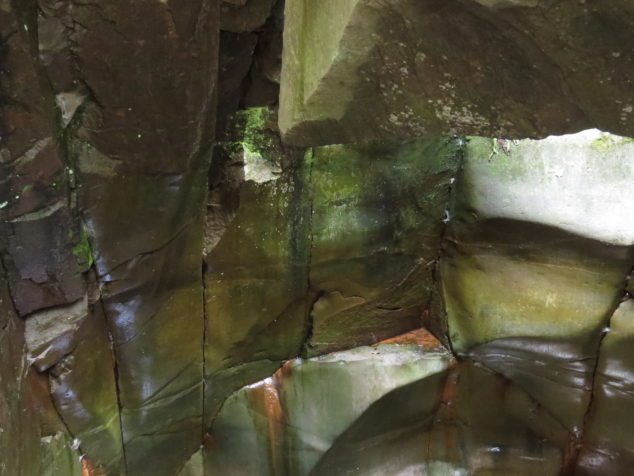
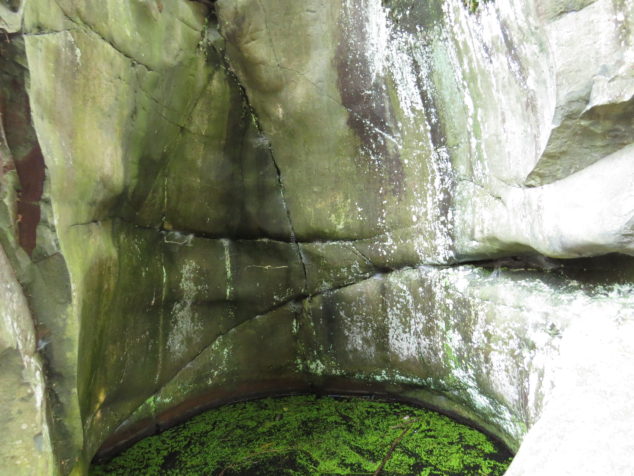
Paths and bridges wove their way through the multi-level pothole area, and people climbed rocks and discovered yet another of the four hundred or so potholes. Baby potholes lined a high rocky area with trees—small bowls in the rock, holding water, pine needles, and duckweed.
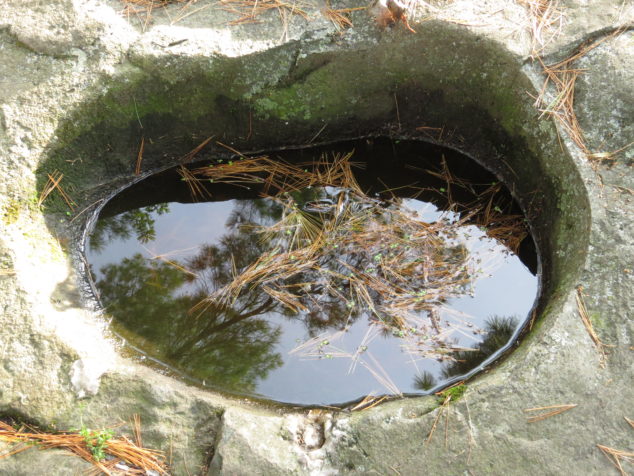
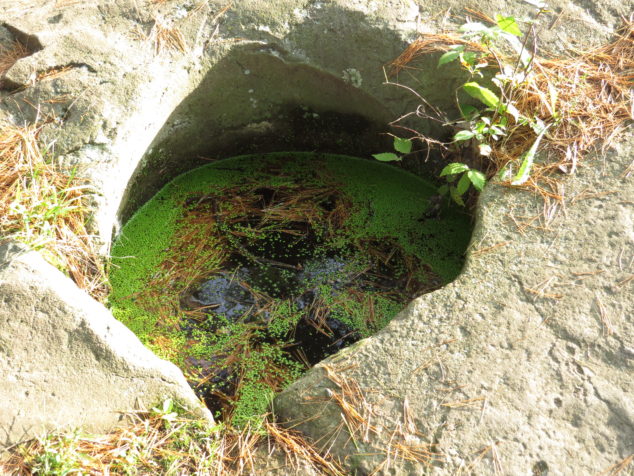
Water and rock—the ancient carver and the medium that it worked on.
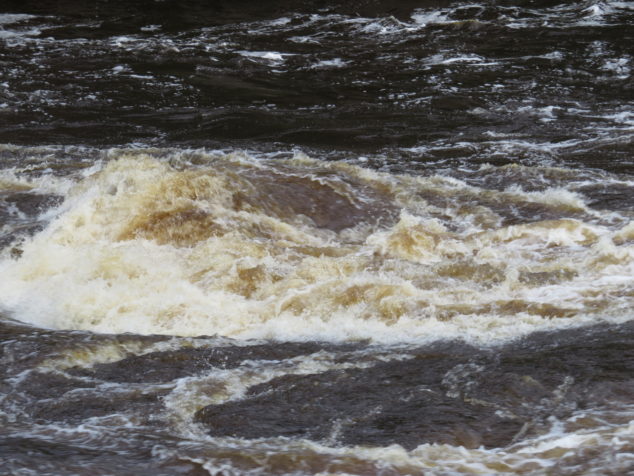
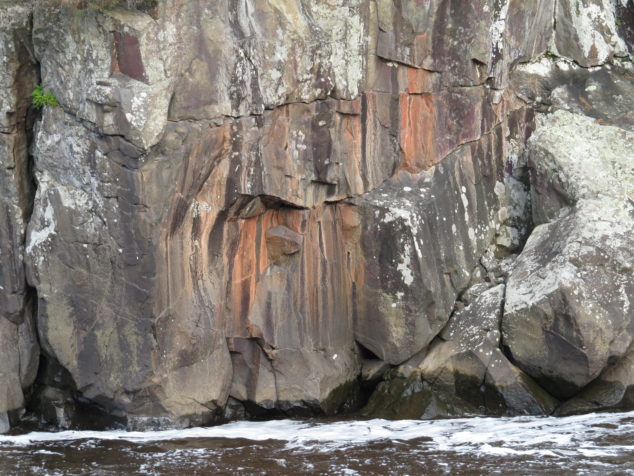
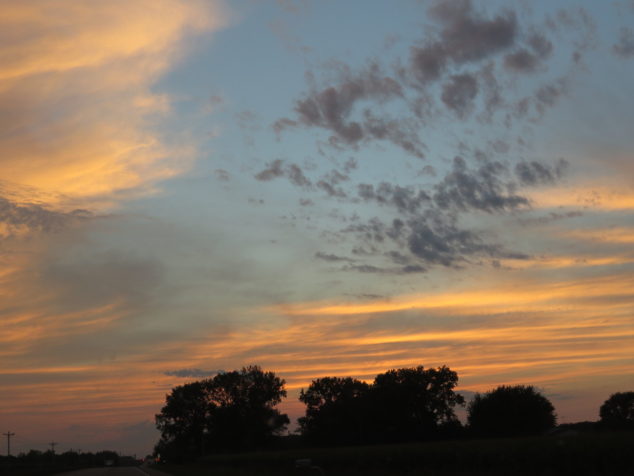
My weary legs called an end to our Saint Croix exploring, and as we drove west towards home, the sky mirrored some of the colors we had seen in the rocks and water of the Dalles region.
It is awe-inspiring to realize the ground we walked on was once an ancient lava flow. It was humbling to realize the land was once covered in an ancient sea. Even the relatively ‘young’ glaciers of ten thousand years ago that melted and carved their way through this area seem ancient in terms of our short lifetimes. Looking at the water and rocks of the Saint Croix River was beautiful in the present time and at face value, but knowing about the geological history deepened the story and beauty of the area. It gave it soul. We each have our own lives in present time and at face value—it can be beautiful or not so great. When we excavate the history of our lives, we begin to know the truth, we have a greater understanding of why things look the way they do in the present, and we get in touch with our souls. There is an unseen, ancient wisdom that flows like a river through our lives—let it expose the beauty.
The River Just Rolls On By
‘Cause the river don’t talk, the river don’t care
Where you’ve been, what you’ve done
Why it is you’re standin’ there.
It just rolls on by, whisperin’ to your soul
It’s gonna be alright, the river just knows.
–Annie Tate, Dave Berg, Sam Tate
I don’t usually listen to Rodney Atkins, but I love what the chorus of his song ‘The River Just Knows‘ says and invokes in me. The singer/storyteller gets up early in the morning to go fishing and sees another guy at his spot on the river, and he wishes he could have the river to himself. He notices the guy has a military haircut and fresh scars on his face, and knows what brought him to the river. The soldier catches a rainbow trout, then releases him back to the river with “I’ll help you get your wind back, ’cause you helped me get mine.”
Our journey to St. Croix State Park a couple of weeks ago centered on the rivers that border and crisscross the large park. Twenty-one miles of the St. Croix River make up the southeastern border, and the last seven miles of the Wild and Scenic Kettle River is on the southwestern side. After leaving the fire tower, we first crossed Bear Creek–one of ten other streams that flow through the park. The stone and log bridge and beaver-chewed trees made a picturesque scene as we drove toward our hiking destination–Two Rivers Trail.
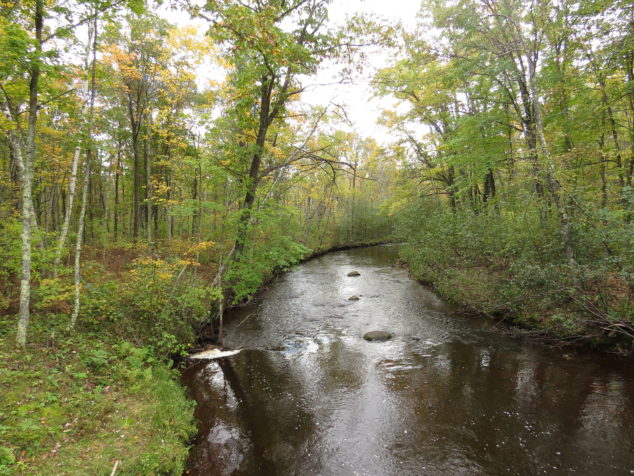
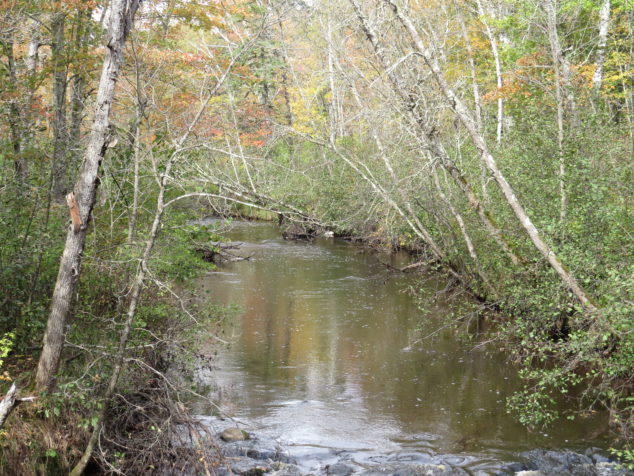
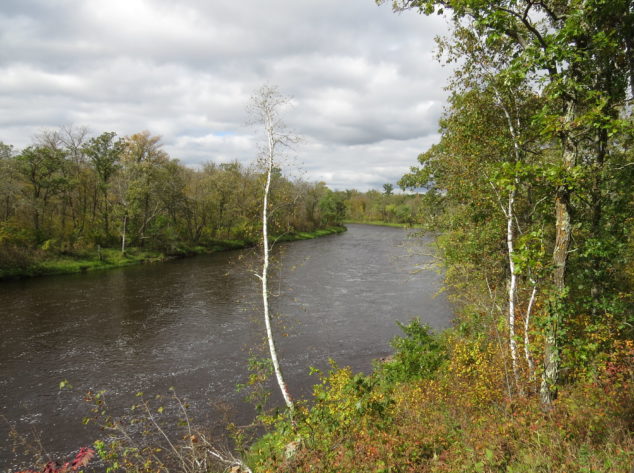
We ate our picnic lunch at Kettle River Overlook. The cloudy sky made the river look gray, and white-capped and burbling rapids brought the river to life.
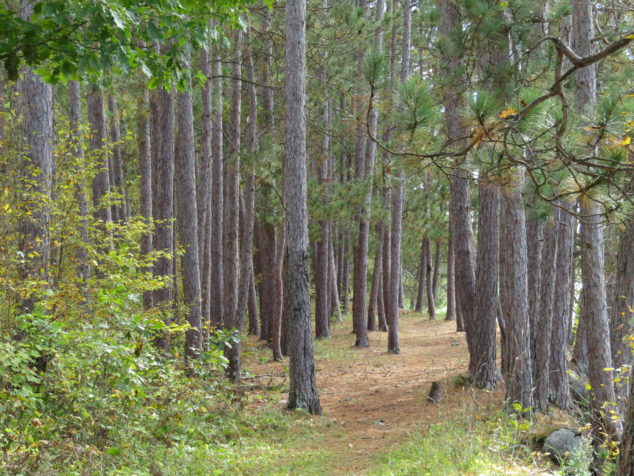
The trail along the Kettle River was often lined with towering white and red pines that dropped their needles to cushion the path and provide the heady fragrance that makes you know you’re in a good place.
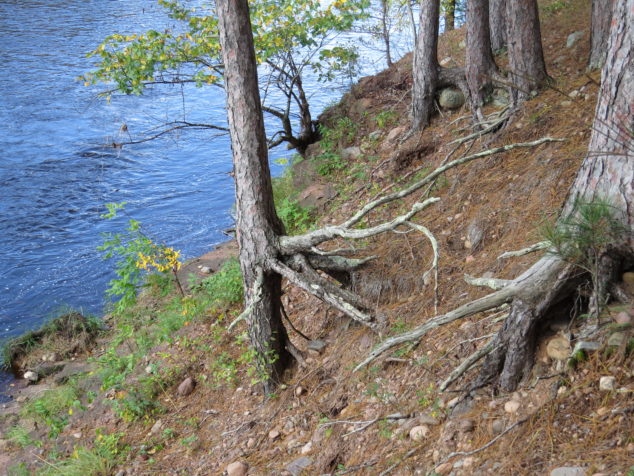
 Along the river bank, where rain and flooding waters had washed away the soil, some of the roots of the pines were exposed but hanging on to keep the trees upright.
As we hiked, the clouds gave way to blue sky, and the river reflected the change. This one spot had swirly foam that created abstract pictures as the river rolled by.
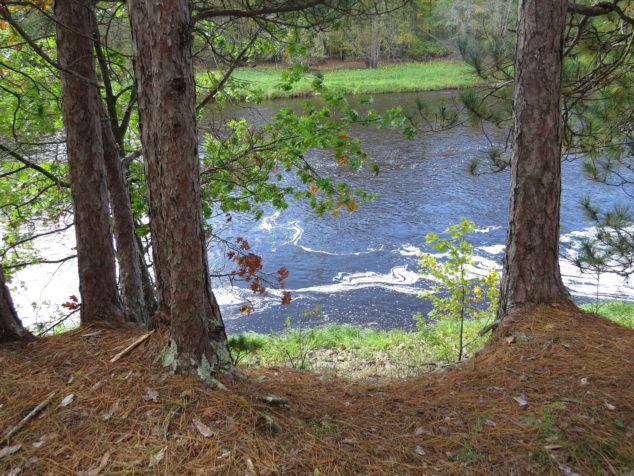
Then we walked to the point where the Kettle River ended…
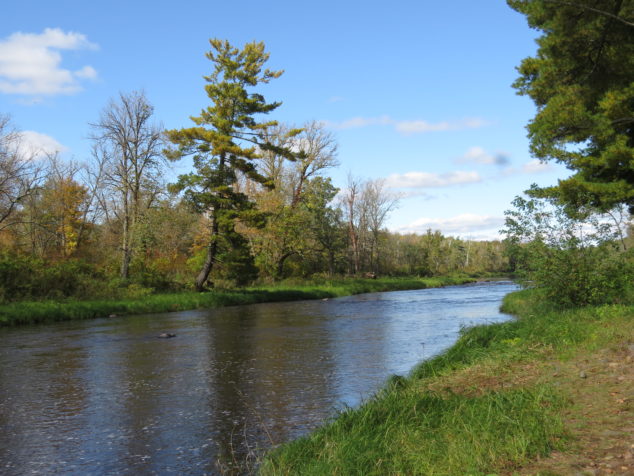
and flowed into the larger St. Croix River. Five Pine sentries stood at the confluence of the two rivers. “Welcome Home.”
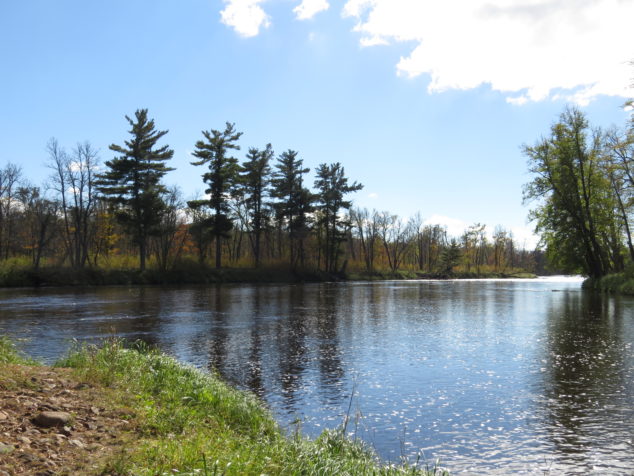
It was easy to see why this river was chosen for a National Scenic Riverway–every glimpse of the river was so beautiful! It stirred a desire to explore it from a canoe.
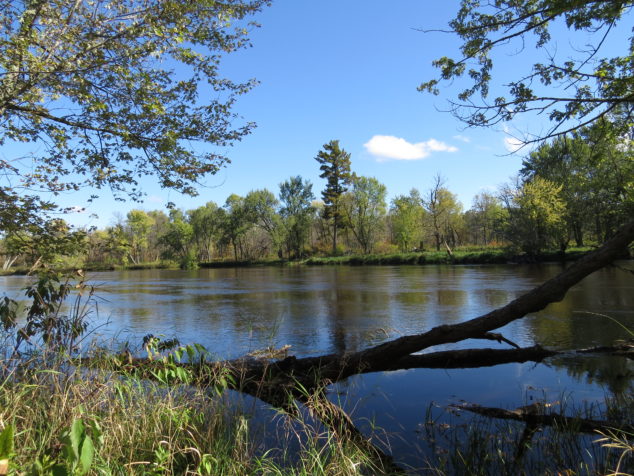
Across the river, in Wisconsin, is Governor Knowles State Forest, with more impressive pines.
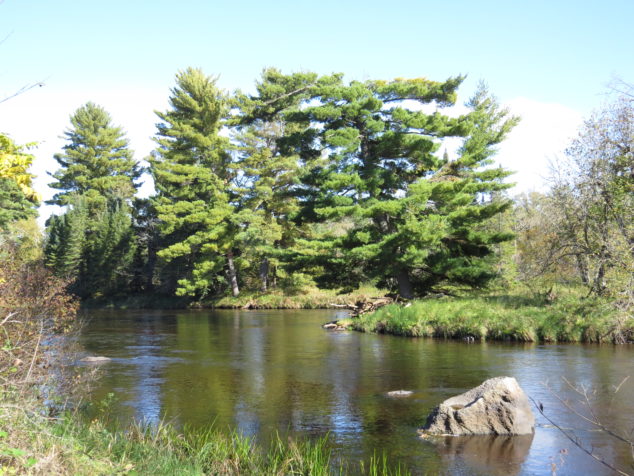
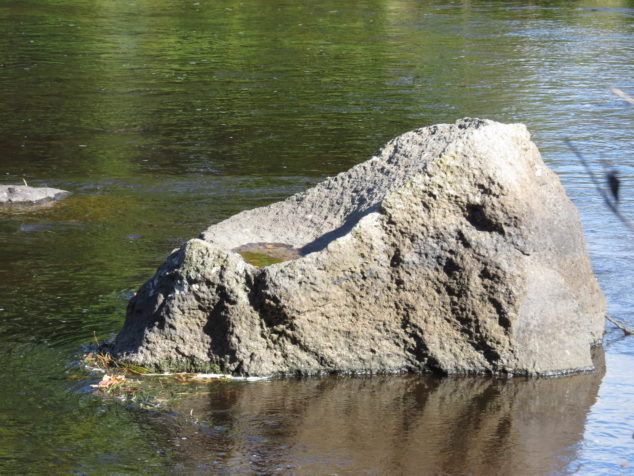
The rock in the river made a natural fount to hold the holy water, blessings for all the travelers who passed by.
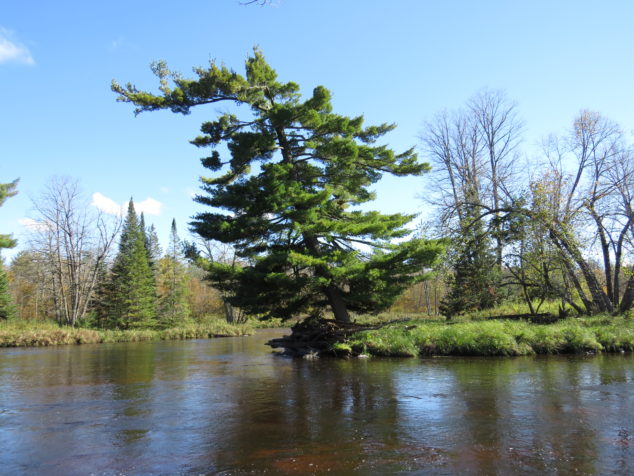
The tipping Pine, on the point of an island, had a pileup of log debris at its feet.
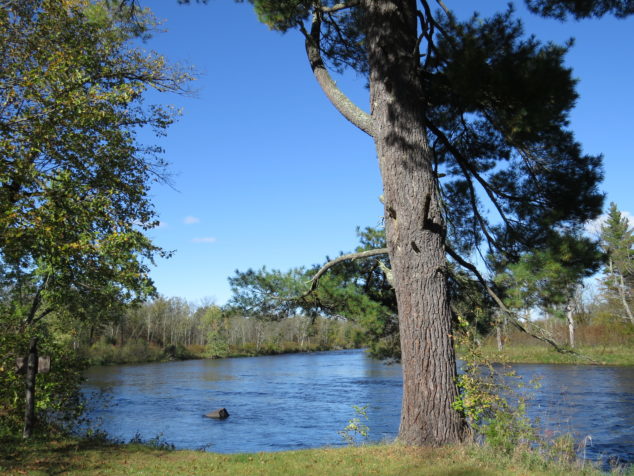
A primitive camping spot for canoeists is at a bend in the river under another giant pine. The hiking trail veered into the forest away from the river at this point—and the river just rolled on by.
I had an inordinate amount of fear growing up. Nature helped to cushion my path and get my wind back every time I felt a pile-up of debris at my feet that threatened to tip me over. It helped me hang on. In the song, the river brought life back to the soldier–and to the storyteller. All of Nature brings Life back to us–even when we don’t realize we’re in need. The holy water, the sanctuary of trees, the steady foundation of rocks, and the breath of wind whispers to our souls, tells us we’re in a good place, and lets us know that everything’s gonna be alright.