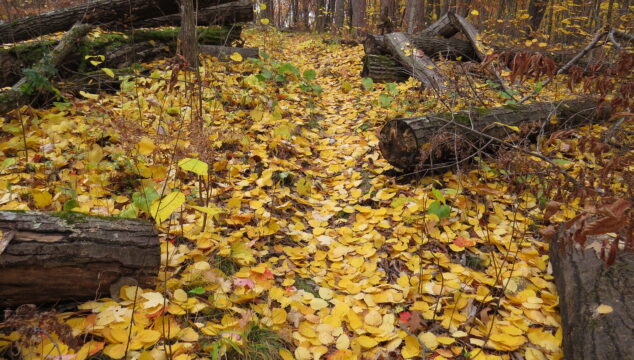
Come walk with me in the peak Autumn beauty of the Northwoods. To say that I love this time of year is an understatement. Most everyone can appreciate the colorful falling leaves---it reveals the 'true self' of a tree when its leaves are no longer producing chlorophyll. Their true colors are revealed, and there is something simple … [Read More...]
Gleanings from December
December is a special month for us. All three of our children were born in December–in two weeks time, we celebrate three birthdays and Christmas! So, many previous Decembers have been busy flurries of activity–cake-baking, special meal-making, decorating, gift-making and wrapping, school concerts, finals, homecomings, parties, and more. But this Christmas was quiet. Our last college student finished finals and flew to Austin to spend Christmas with one of his sisters. We sent our love and best wishes to them–it just wasn’t the same.
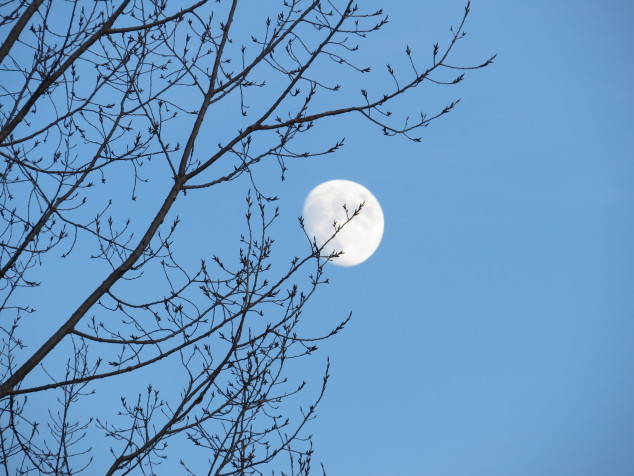
December weather wasn’t the same as usual either. It began cold and clear with a thick blanket of snow covering the ground. Day after day of that first week we were dazzled by incredible sunsets and magnificent moonrises.
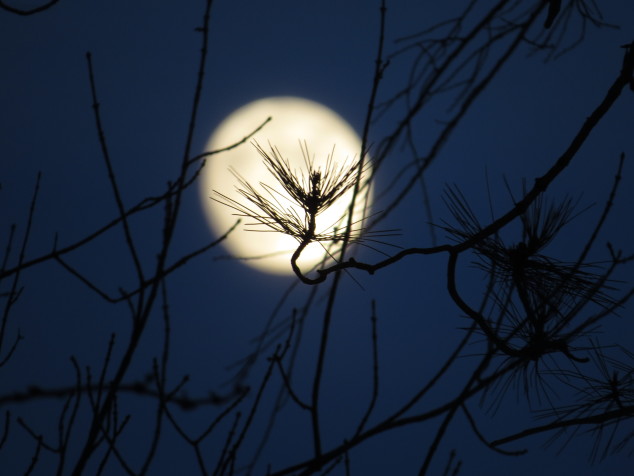
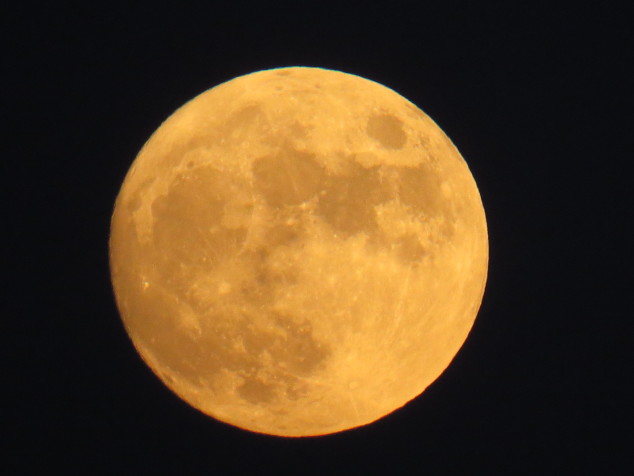
Contrails, from jet airplane exhaust condensing and freezing into ice crystals, crisscrossed the blue sky.

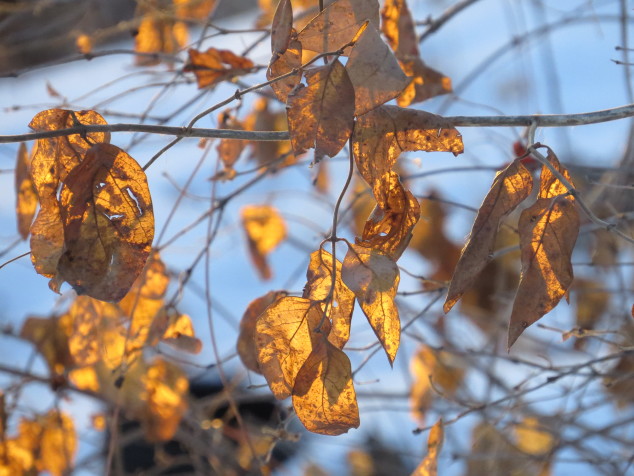
The afternoon sunlight streamed through the leaves still holding onto the honeysuckle, creating a glowing shrub of gold.
That brilliant week faded into cloudy days where temperature and moisture created an inversion, entombing us in fog. At first the fog froze and built a halo of frost on the red, clustered sumac seedheads and the winged seeds of the amur maples.
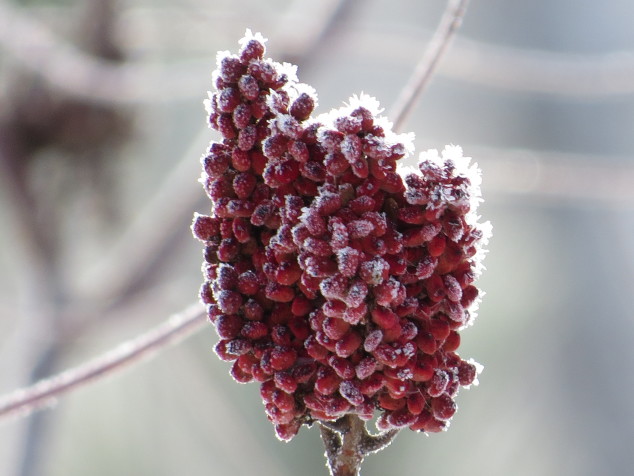
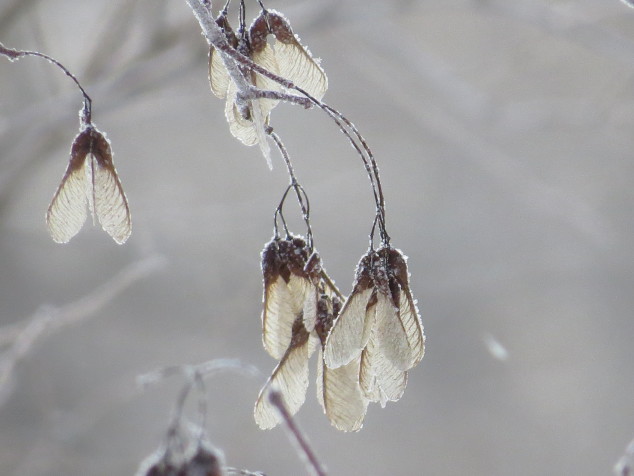
Then the temperatures warmed and began melting the snow. Water droplets adorned the trees.
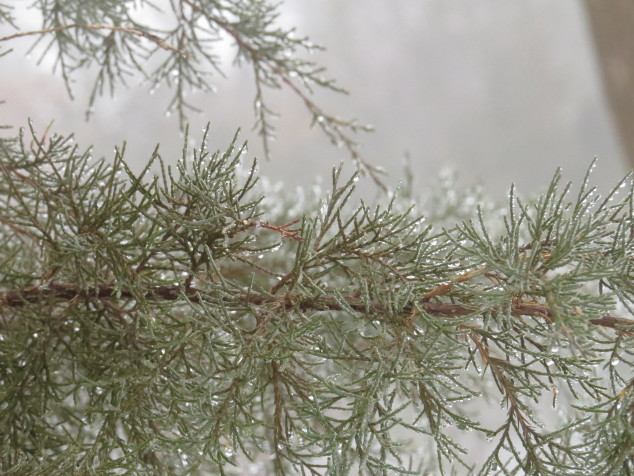
Autumn was uncovered as the snow melted.
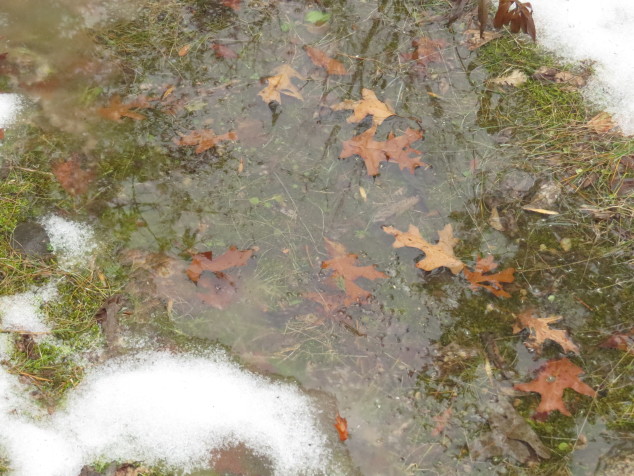
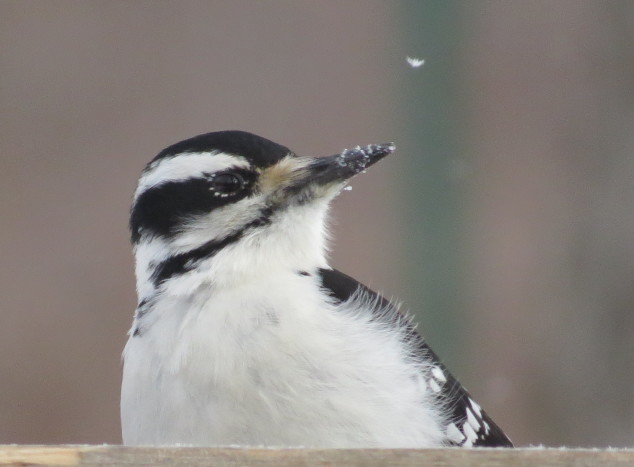
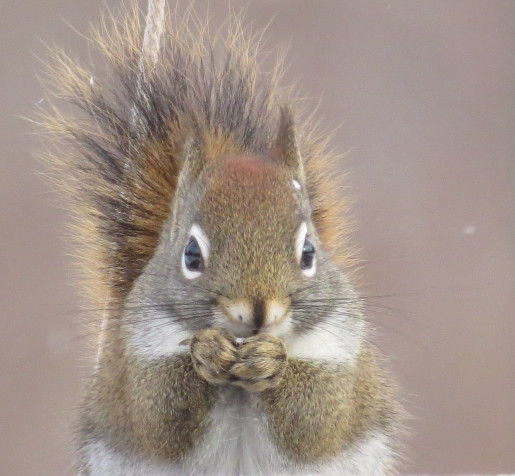
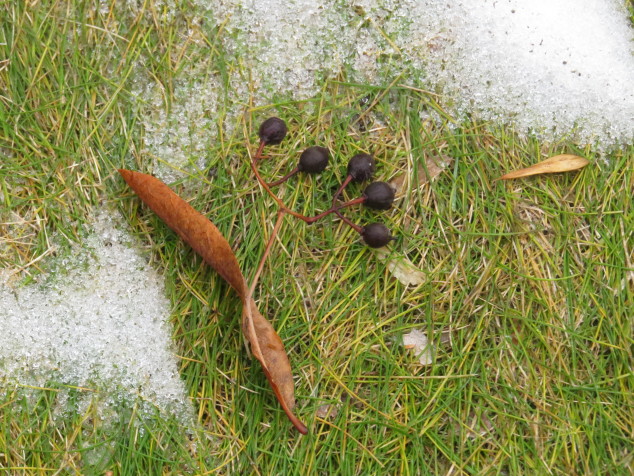 Then as soon as we saw green grass, it snowed again. Critters arrived at the birdfeeder to fuel up on black oil sunflower seeds–a female Hairy woodpecker and a jittery red squirrel.
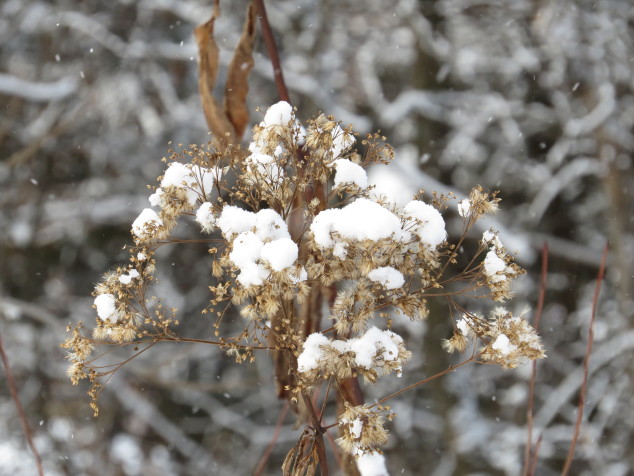
Clouds persisted into the fourth week as we headed toward Christmas. Temperatures once again rose above freezing, melting the white from Christmas….until the evening of Christmas Day when the snow started falling again. The flower heads of lilac and Joe Pye weed caught the snow–a year’s worth of seasons contained in the image.
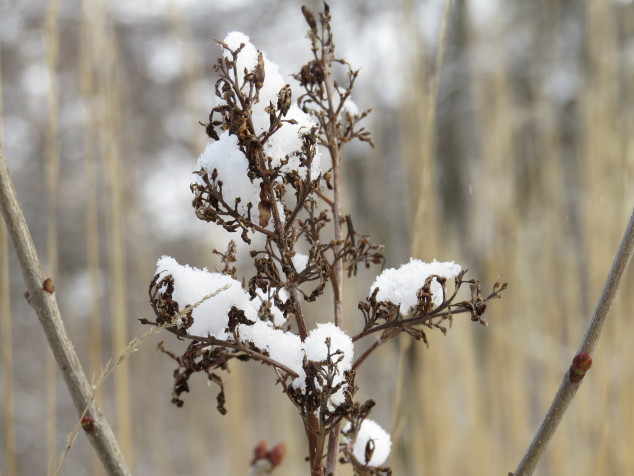
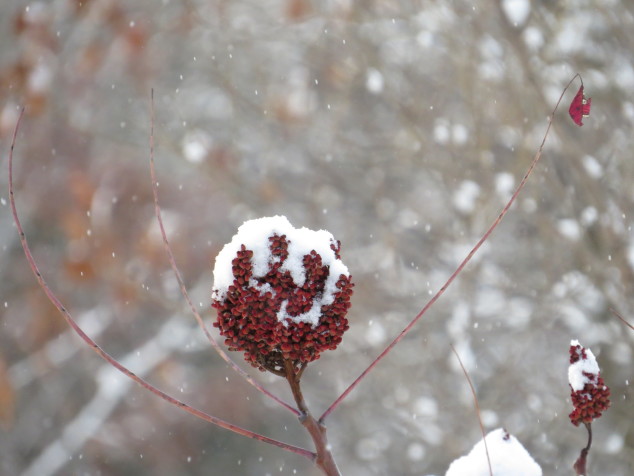
The seedhead of the sumac–the flower of this year and the seeds for the future–was faded and covered in white, holding up its arms to catch the new snow.
We end this month and this year with the turning of seasons and time. The constancy of the sunsets and moonrises keeps us grounded as so many other things change around us. The unexpected may leave us in a fog for longer than we care to be there, but it happens for good reason. Sometimes we need to go back in order to move forward. We need the quiet in order to glean the gold from our past and let the chaff fall away in forgiveness. Take the gold and the haloed moments of your life and let them fill you and sustain you for the journey ahead. Let the trail you leave behind be one of love and goodness. As a year’s worth of seasons shine from your face, lift up your arms to embrace the New Year.
Tracks and Paths
When I was a young child, we lived on a farm in eastern South Dakota. My Dad milked cows along with raising pigs, sheep, and chickens. After their morning milking, the cows were let out to the pasture to graze their way through the day until the next milking. This daily ritual made its mark in the pasture. A network of cow paths crisscrossed the green grass as these creatures of habit made their grazing rounds. We used to walk to the neighbor’s place through the pasture–and the best way to get there was to follow the cow path. Except for the occasional fresh cow pie to skirt around, it was the path of least resistance.
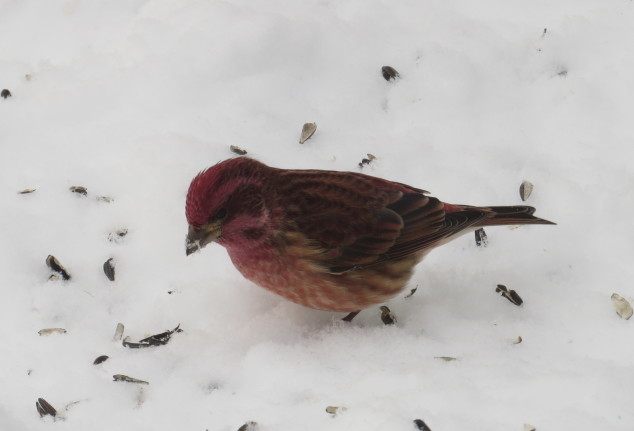
Snow fell the night of Thanksgiving. By morning, the animal activity of the night was evident by the tracks and paths in the fresh snow. Birds visiting the feeders left their marks as they hopped in search of fallen seeds.
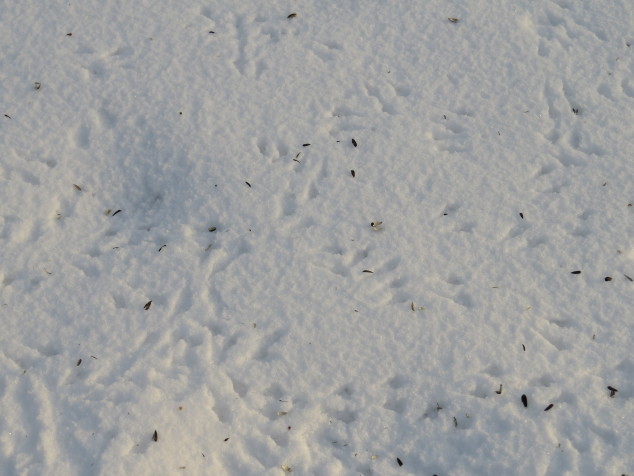
Squirrel tracks were everywhere! We seem to have quite a population this winter.
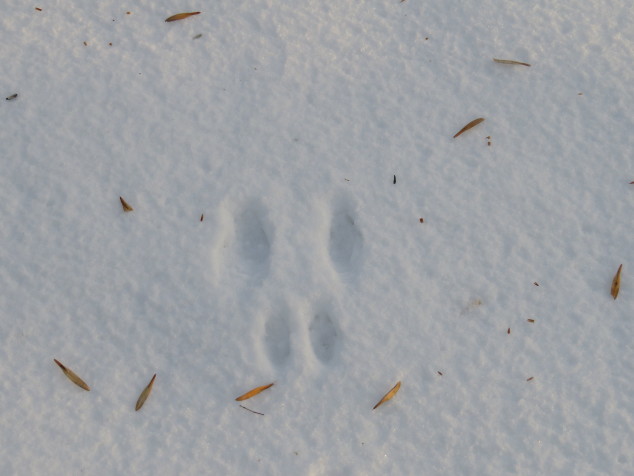
I wonder what made this squirrel take a quick U-turn. Perhaps the appearance of a big black dog?
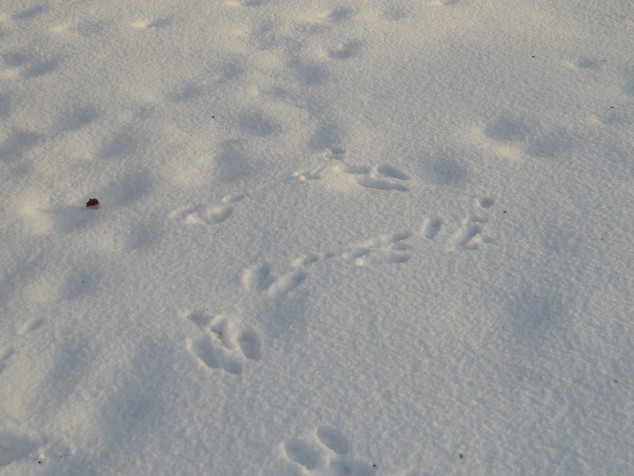
The most popular place for the squirrels is the backyard bird feeder.
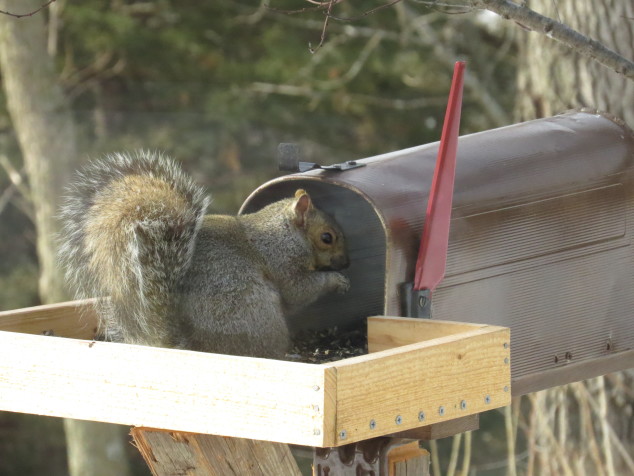
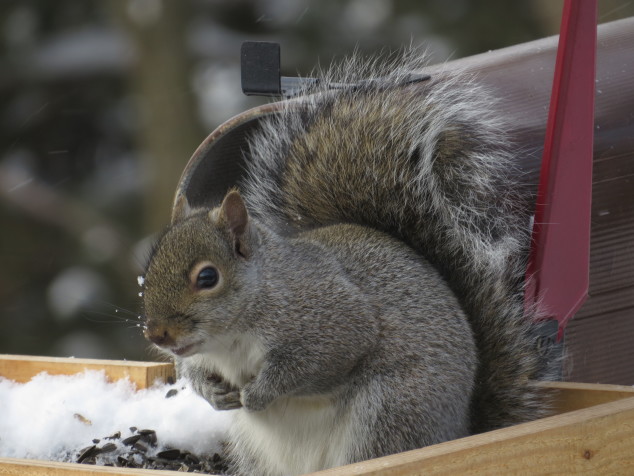
They make their way from the woods to the feeder, and then when alarmed, they run out the back of the mailbox, jump down to the ground, and make a beeline for the maple tree. They have made a squirrel path in the snow!

Another set of tracks that crosses the yard is made by the red fox. She trots with a purpose, going from one end of the yard to the other on her hunting treks.
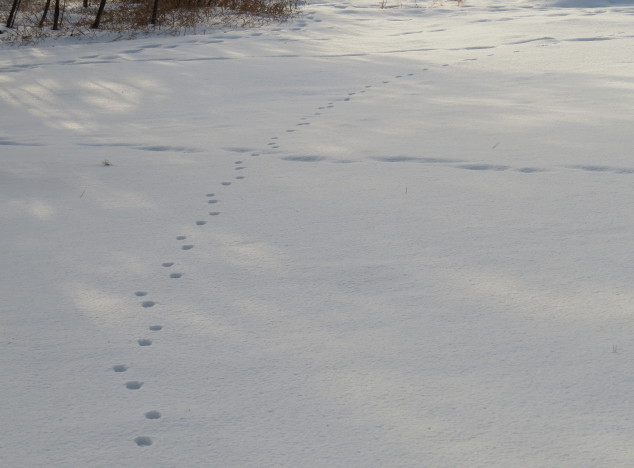 Her paws are much smaller than our Black Lab’s. I put my footprint beside each track to show the size difference.
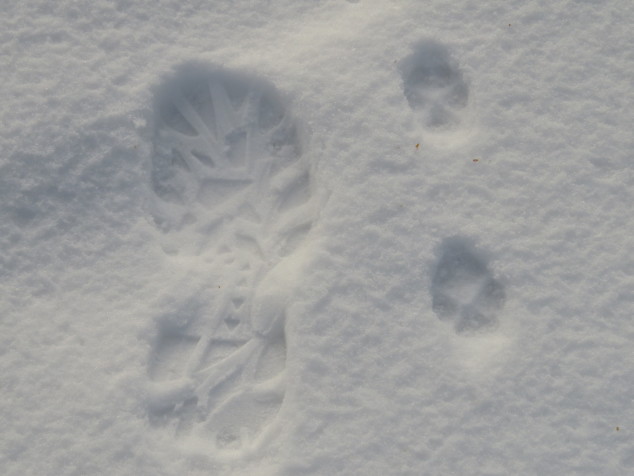
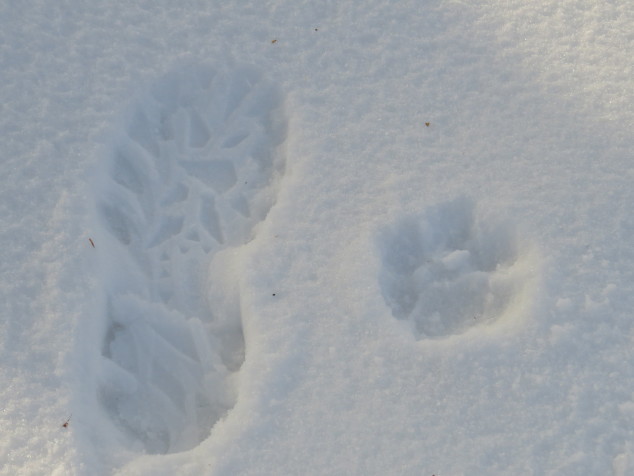
Fresh fallen snow highlights the activity that takes place day and night around our home. It’s a vivid indicator of how we coexist with all the creatures around us.
Tracks and paths–we all make them! From the tiny mice to the squirrels to the Holstein cows to college students across campuses, we are creatures of habit that tend to take the path of least resistance. Sometimes our tracks cannot be seen, and we may wonder where we’ve been, if we’ve been seen, and whether our trekking has even made a difference. Other times, our steps are noticed as we beeline or U-turn our way through life. We may make our own path or follow one that is already well-worn. What path are you on today?
The Community Feeder
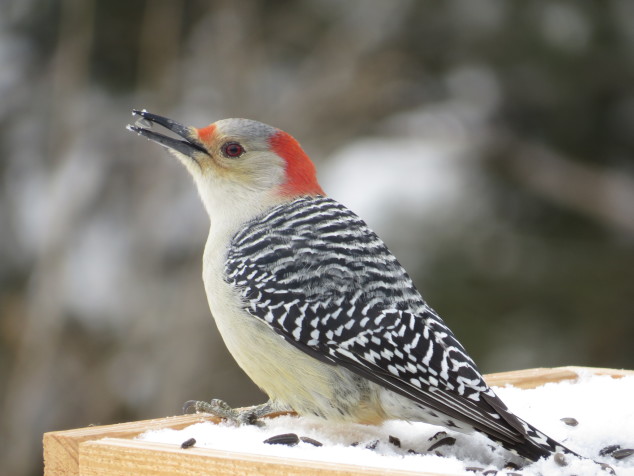
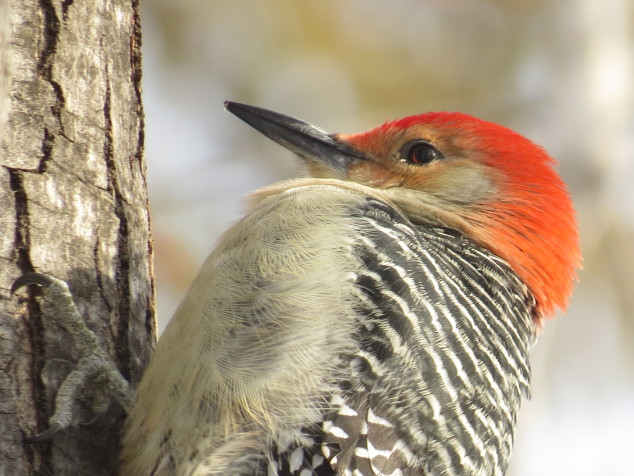
When snow covers the ground, the feeders become the community center for the birds in the area. They have feeding times when activity is high–swooping in, grabbing a seed, flying away. The black-capped chickadees flit to a nearby branch to peck open the seed covering and swallow the seed. The noisy blue jay will pick at his seed in the feeder after scaring all the other birds away. Woodpeckers, like the Red-bellied woodpecker, often carry their food away to store in the cracks and crevices of trees and fence posts for a later time. The ‘Zebraback’, with its barred black and white wings and back, has a creamy buff underside that covers the red patch on the lower abdomen. The female (above) has a red nape and patch at the base of the beak, while the male (below) has a red crown and nape.
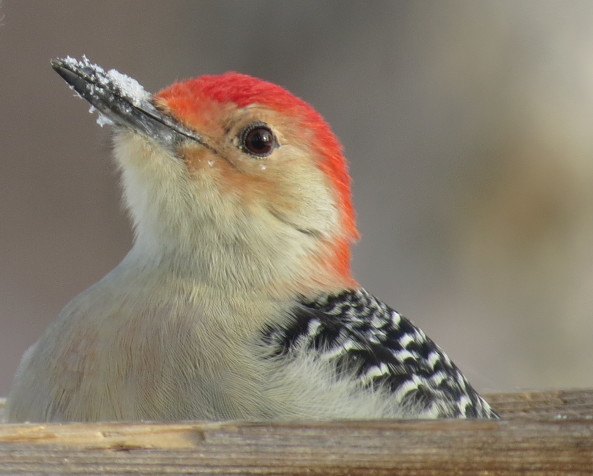
It was a bitterly cold day when the male visited the feeder. His feathers were all fluffed up, and he looked like he was wearing a fur coat!
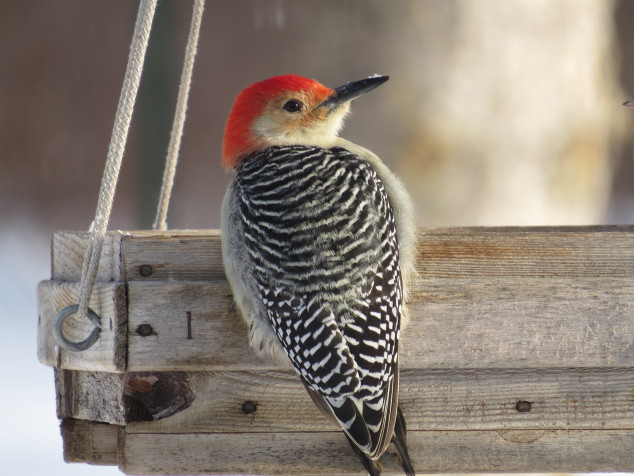
Along with seeds from annuals and perennials, the red-bellied woodpecker also eats wood-boring beetles, grasshoppers, spiders, acorns, pine nuts, and fruit. They have a barbed tongue and sticky saliva that makes it easier to catch their prey.
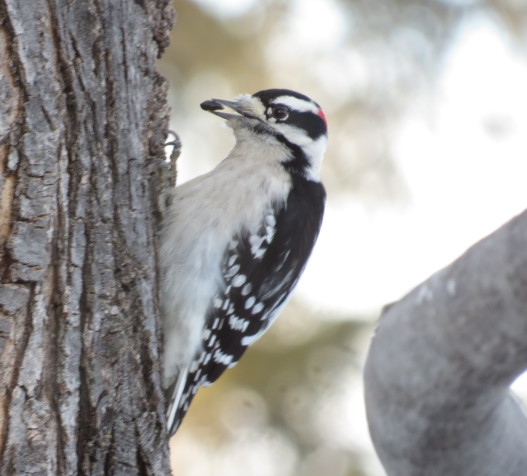
 This small Downy woodpecker is another frequent flier to the community feeder. When he flew to the tree, he may have been storing the seed in the crevice of the bark or may have placed it there to hold as he pecked it open.
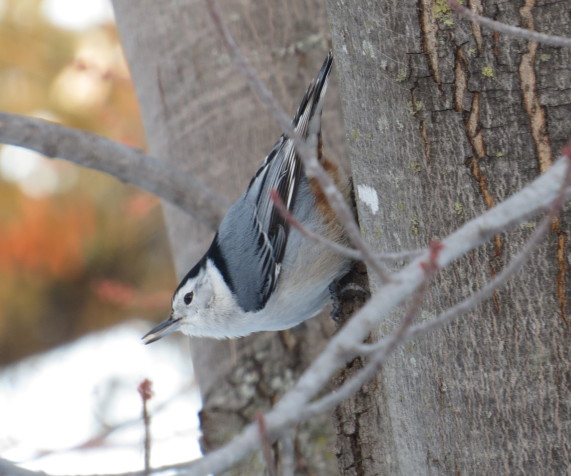
 Another tree-clinging bird is the White-breasted nuthatch. It is often seen creeping headfirst down a tree trunk, enabling it to store food in crevices and to find food that right-side up birds might miss.
But the birds are not the only ones in the community that come to the feeders. The squirrels show off their acrobatic skills by scaling the trees and climbing or jumping to the food source. The new mailbox feeder is becoming the favorite for the little nutkins–it is closer to their oak trees, easier to climb, and has less of a chance that the big black dog will chase them away from it.
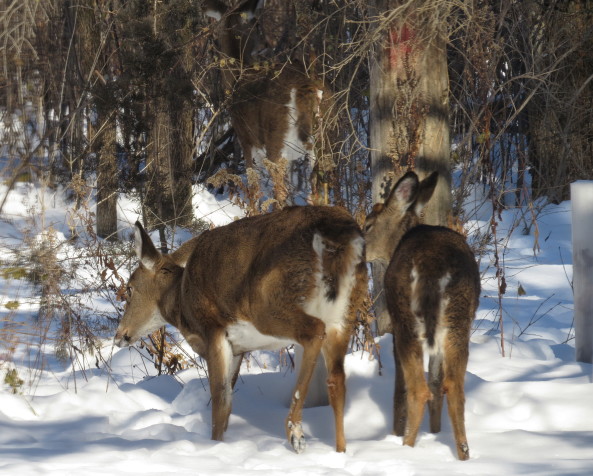
Yesterday morning we had more visitors enjoying some black oil sunflower seeds.
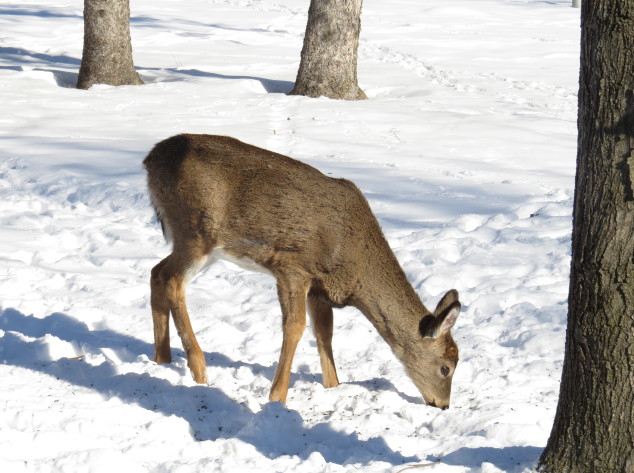
There were four in all, and they watched me through the window and got a little nervous about being so close to the house. Their winter coats gave them rounded haunches, thick necks, and jowly faces.
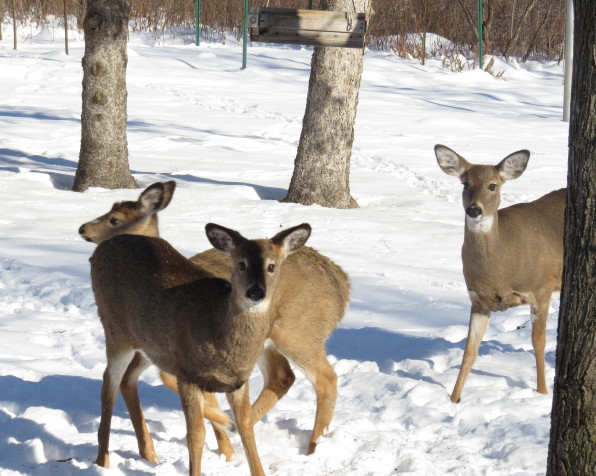
They ate some seeds, then wandered and grazed their way back to the woods
The beautifully feathered birds come to the community feeder in the winter, because it’s all about the food. Each has specialized physiology that enables them to search, find, and eat the food that is best for them. In the snow-covered months of fall and winter, it is hard for the birds and other animals to find sufficient food, so the seed-laden feeders provide an oasis for them. In this week of Thanksgiving and abundant food for most of us, please remember the ones who are having a harder time providing adequate food for their families. Let us all give thanks for our blessings and bless the givers who provide an oasis for those in need.
Oh No, We Have Squirrels!
We have squirrels. Now granted, ‘having’ squirrels is not like ‘having’ mice or ‘having’ fleas–especially since they stay outside, but there are times when I get a little creeped out with their rodent-ness. I can say with certainty that I really like most animals, but I have a very hard time liking rodents. Okay, that’s probably an understatement. We had a little hamster when I was a child, and I would not hold him. He was squishy and bug-eyed and if given the chance, would scurry away to hiding places. It also grossed me out to find tiny, pink, squirming baby mice in our feed barrel when I would feed the horses, but I did manage to scoop them out and give them to the cats. However, when I got to grad school, it took all my courage and fortitude when I found out my first research project would be working with mice. Lots and lots of mice, and I was to be their breeder, caretaker, and ultimately, their dissector. Ugh!
The squirrels, at least, are bigger and have that fluffy tail, and generally, when I see them out any given window at any given time, I don’t shudder! They can also be entertaining–especially in the winter when they raid the bird feeders and perform gymnastics to get to the source of all that sunflower seed goodness. We have twitchy little red squirrels.
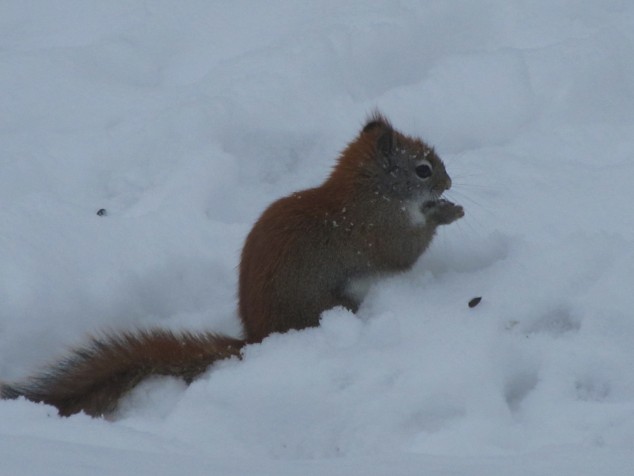
And one furtive, feisty black squirrel who showed up one day this spring and chased all the other squirrels away in order to have lunch.

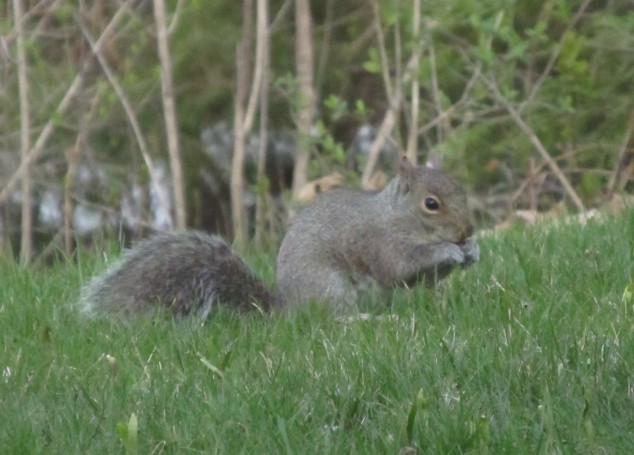
But mostly we have gray squirrels. They run up and down the trees; they eat acorns, gather acorns, bury acorns, and dig up acorns. I tell Chris they are his partners in planting oak trees. They provide winter exercise for our Black Lab who runs out the door like a sprinter when the word ‘Squirrel!’ is paired with a hand on the door knob.
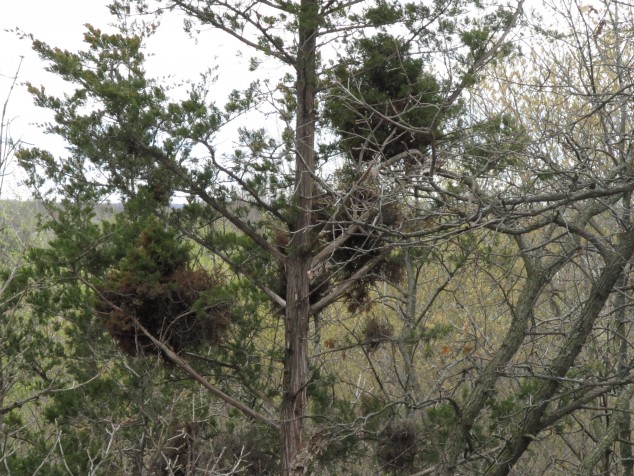
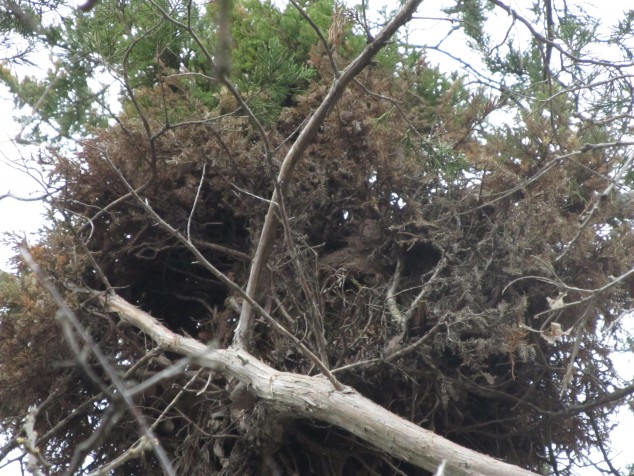
The squirrels also build nests or dens in trees. Each one may have up to three nests in their area, usually for themselves and their babies. The nests are built with sticks and twigs, then lined with leaves, moss, grass and pine needles. They will abandon a nest if it is bothered by predators or infested with fleas or mites. Even squirrels need to deal with ‘having’ fleas. One of our cedar trees has at least three squirrel nests in it. (The darker, dense areas on the tree.)
The squirrels, like the mice I worked with in grad school, are impressive nest builders. They are also impressive mothers. These mammals have newborns that are helpless, hairless, blind and deaf. They care for them in their own relative long time until the young can fend for themselves. In my two years of working with mice, I was able to pick them up by their tails–and only because it made them go sort of comatose by doing so. But I did come away with a new respect for their mothering abilities. These rodent mamas work hard to provide safe shelter, food and sustenance, and loving care for their babies. It’s what all us mamas do.