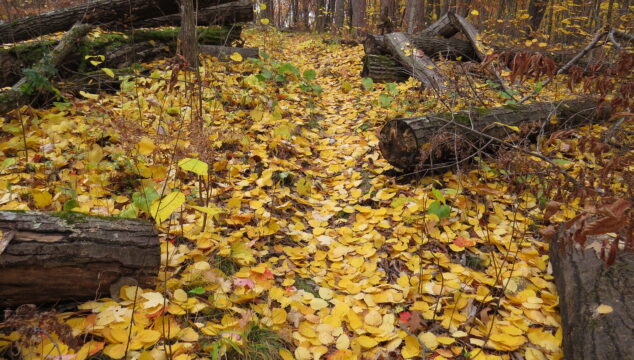
Come walk with me in the peak Autumn beauty of the Northwoods. To say that I love this time of year is an understatement. Most everyone can appreciate the colorful falling leaves---it reveals the 'true self' of a tree when its leaves are no longer producing chlorophyll. Their true colors are revealed, and there is something simple … [Read More...]
Snowed Under
I cannot count the number of times I have felt snowed under in the last months—even while the grass was still green, even when the leaves danced with color. The weather has now caught up with me. Since our big ten inch Thanksgiving weekend snow, it has been piling up—four or five inches here, a couple inches there. It looks and feels (with below zero temps) like the heart of Winter, even though it’s been less than three weeks since we’ve seen the brown ground. We are already snowed under.
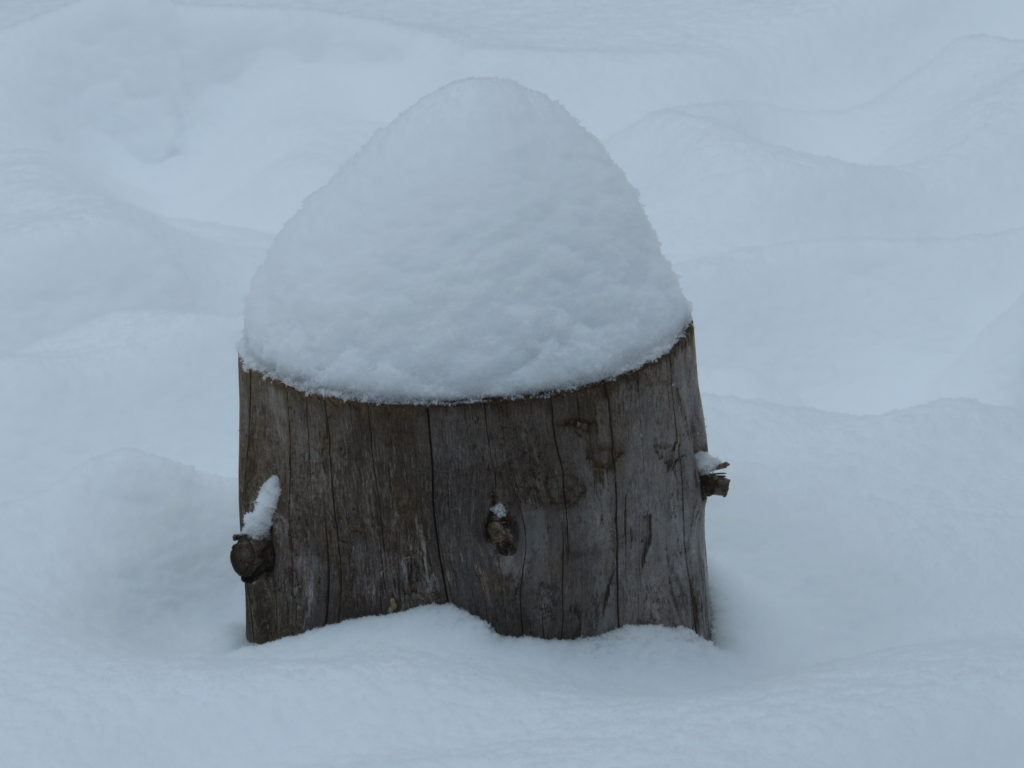
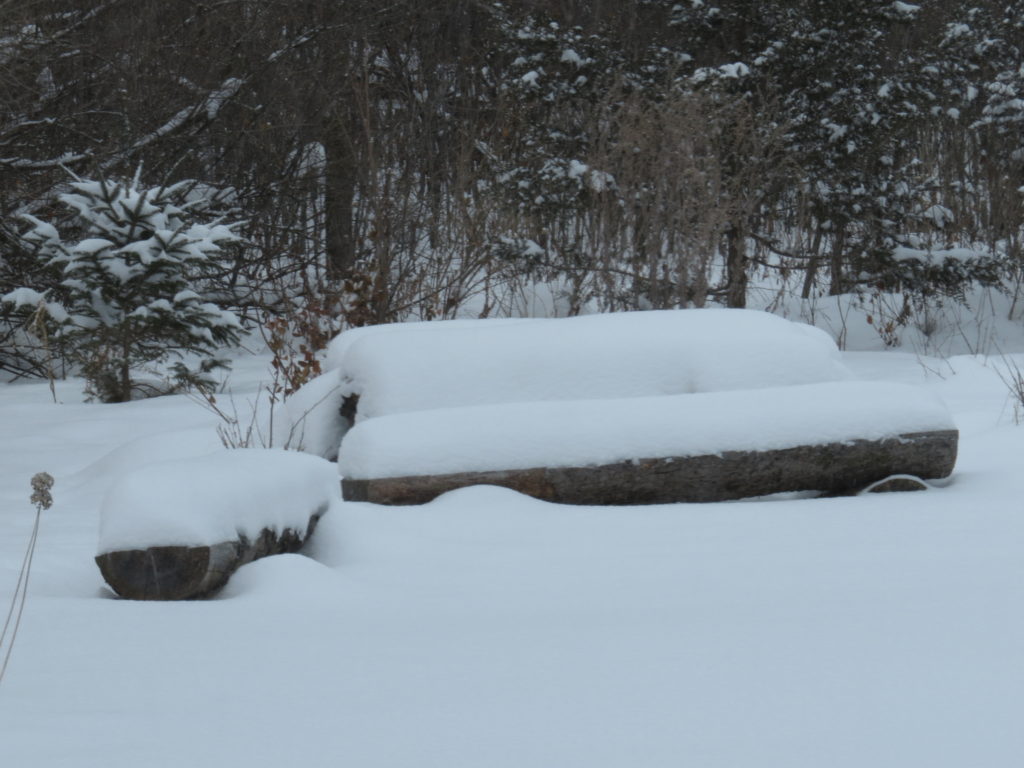
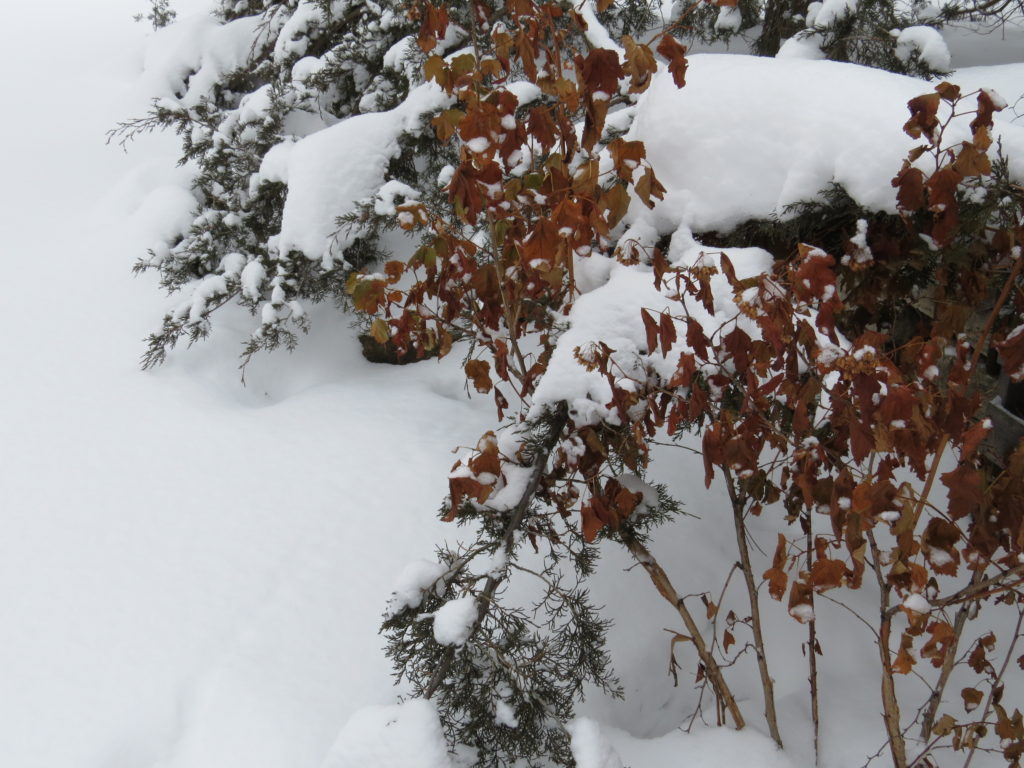
The snow piled up on the branches of an old Cedar tree by the garden, pinning them to the ground. Being snowed under feels heavy.
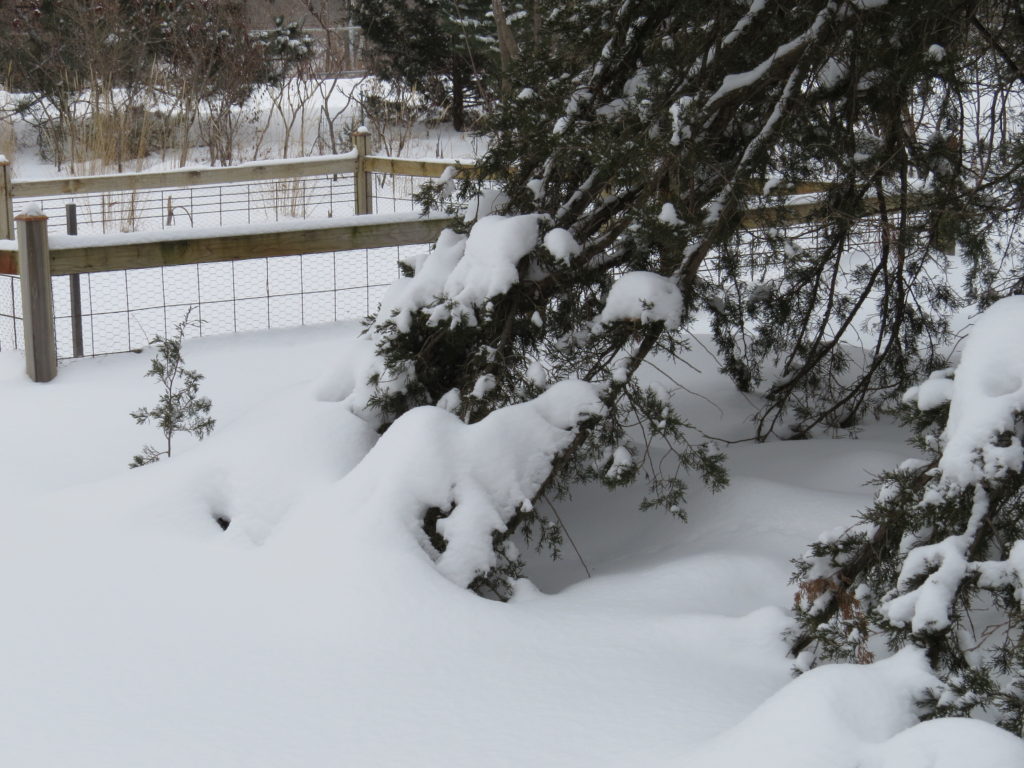
The heaviness can infringe on others nearby; in Summer, the Cedar branches protect the Ninebark from direct sun, but with the heavy snow, the Cedar crashed down onto its slender branches.
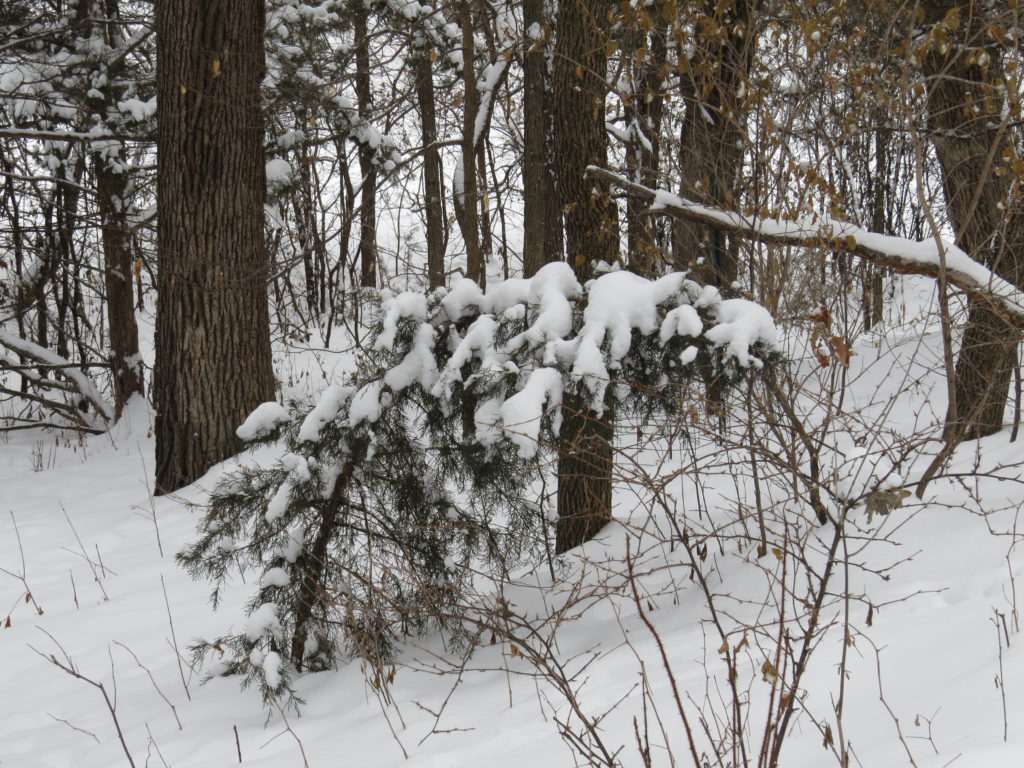
The young Cedar fared no better; its whole structure is bent over with the weight of the snow.
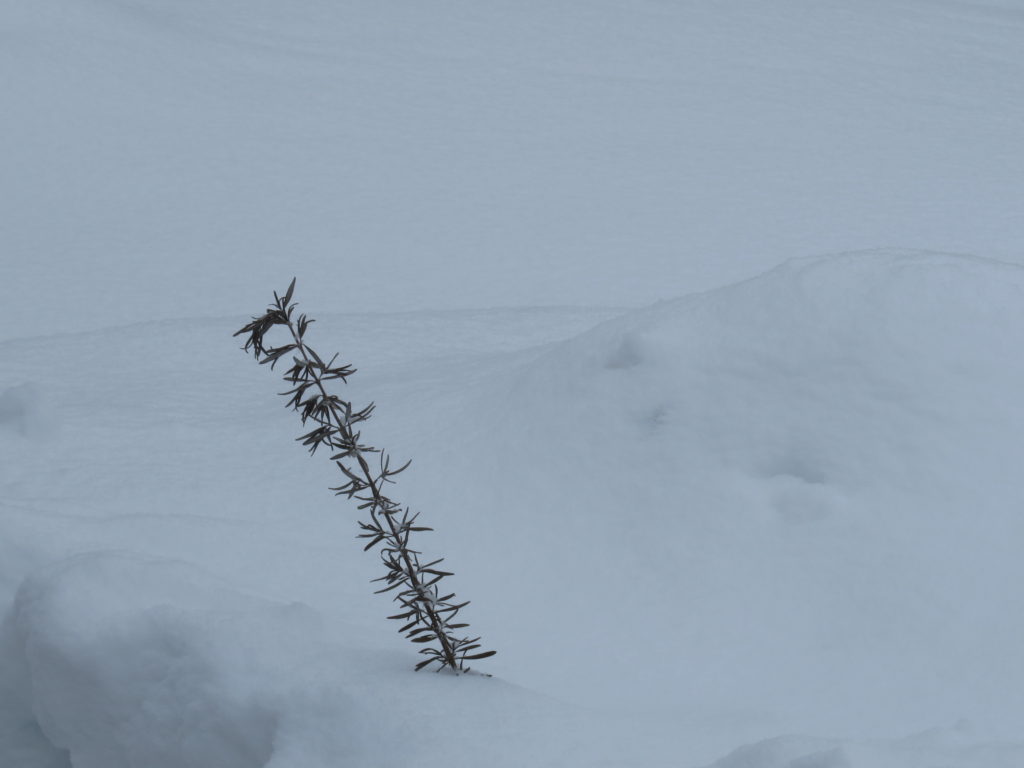
Being snowed under feels lonely. Even though the death of a loved one affects many people, each person has to struggle with the grief in their own heart, in their own time. What’s visible to the eye does not even begin to represent what’s below the surface.
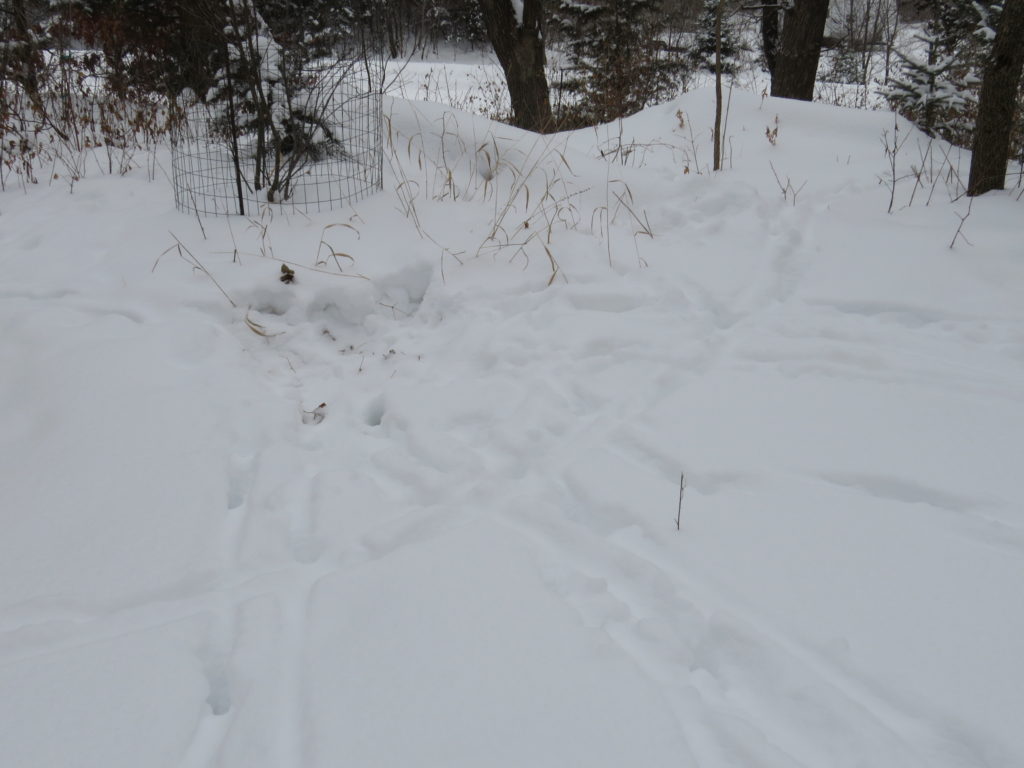
Being snowed under trips a person up—the path ahead is no longer clear, obstacles are hidden, footing is insecure, and it’s easy to stumble and fall.
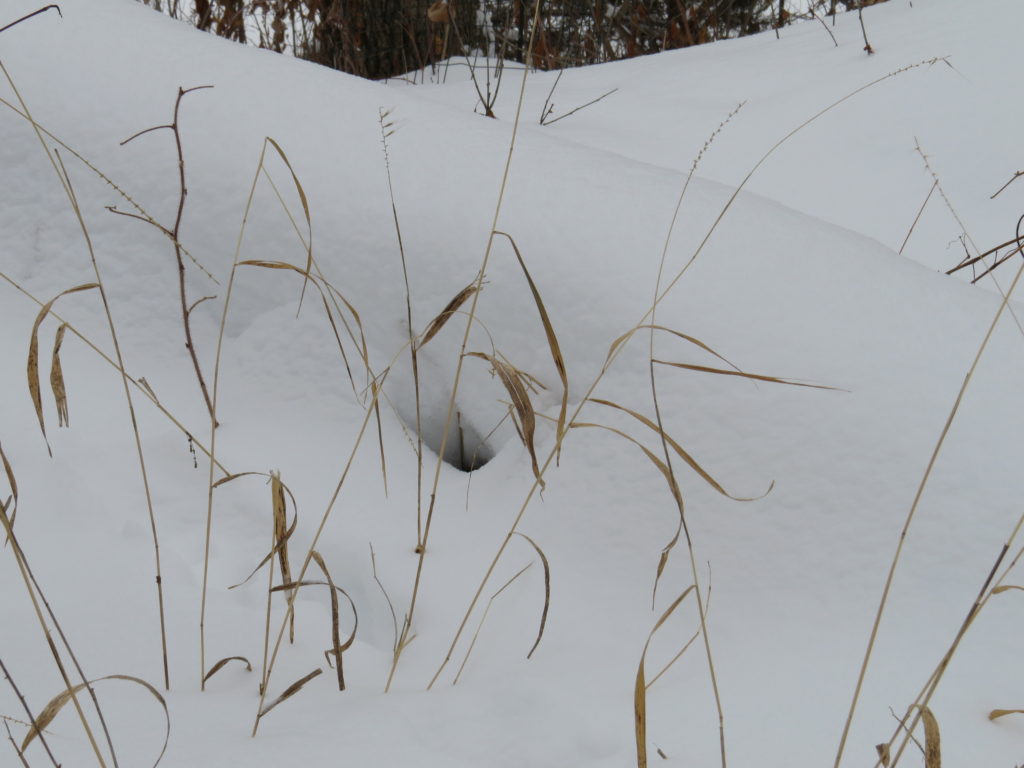
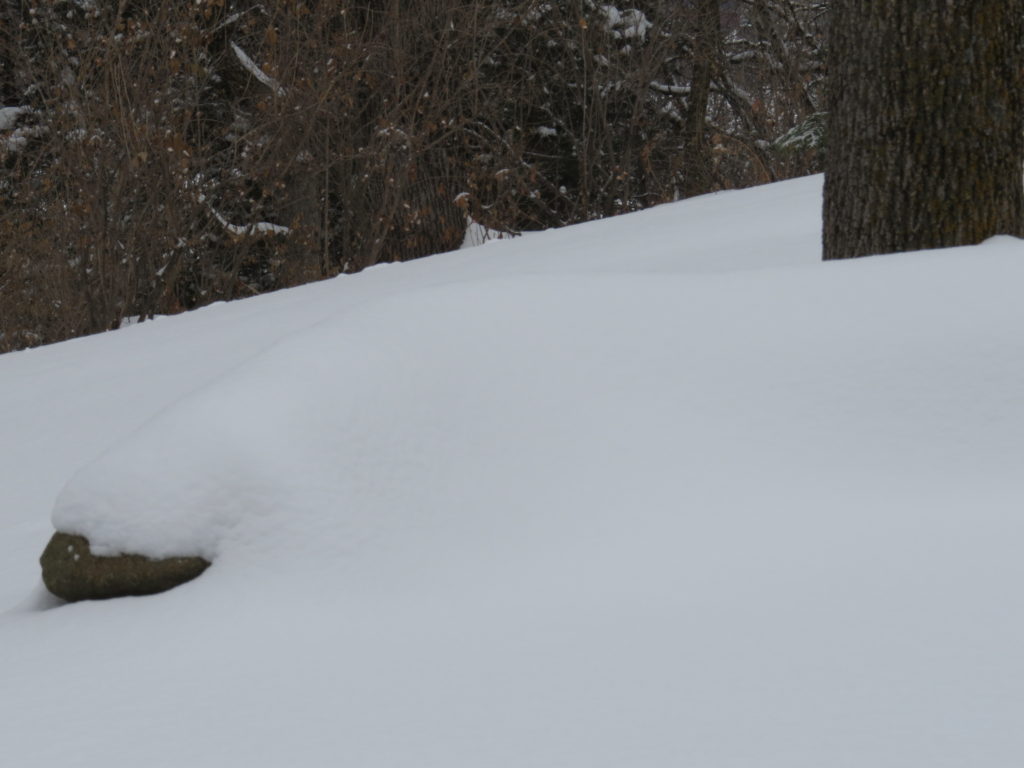

Even the deer, who generally follow the same paths in Summer, seem to be disoriented with the heavy snow cover.
Being snowed under makes things seem blurry, like our previous clear sight has been lost, like we’re not exactly sure what we’re looking at, and even where to set our sights.
Then comes an intervention—it can come from a time of silence, a prayer, a call from a friend, a loving hug, or a walk in the invigorating cold air—and we get a reprieve from the heaviness.
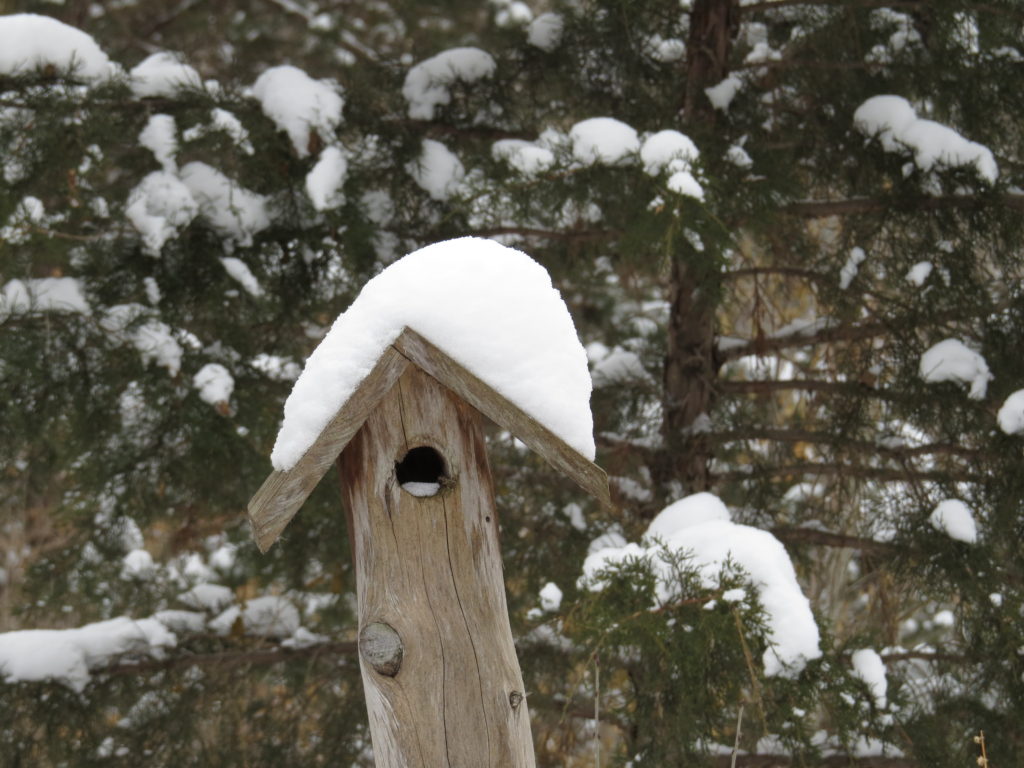
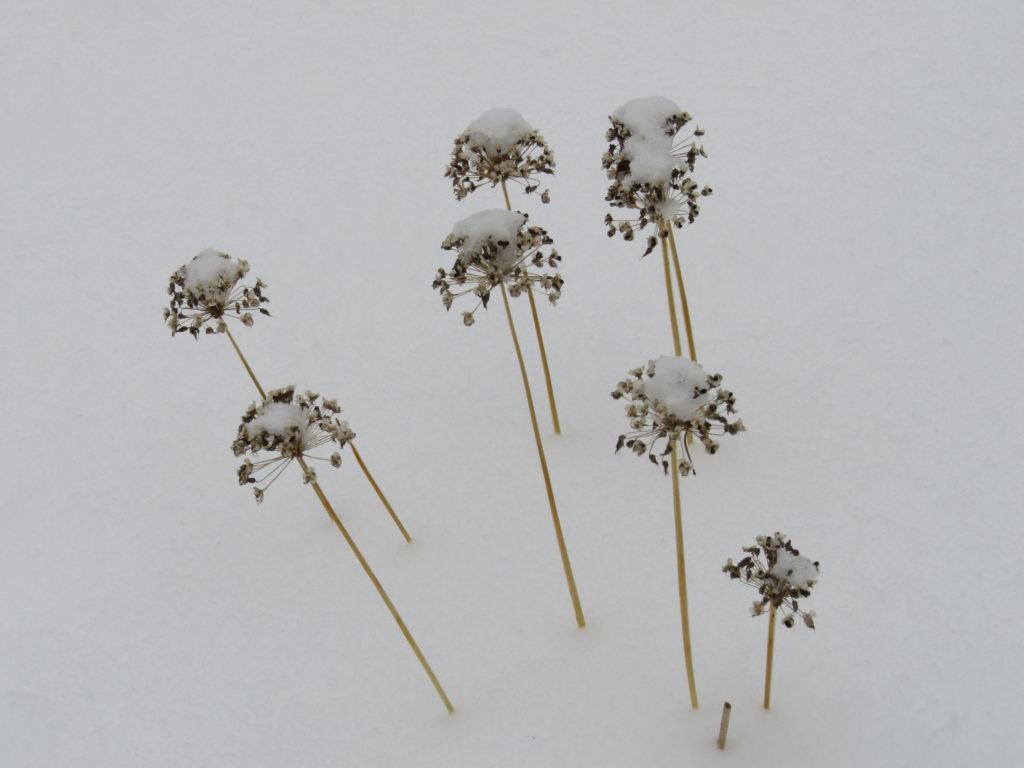
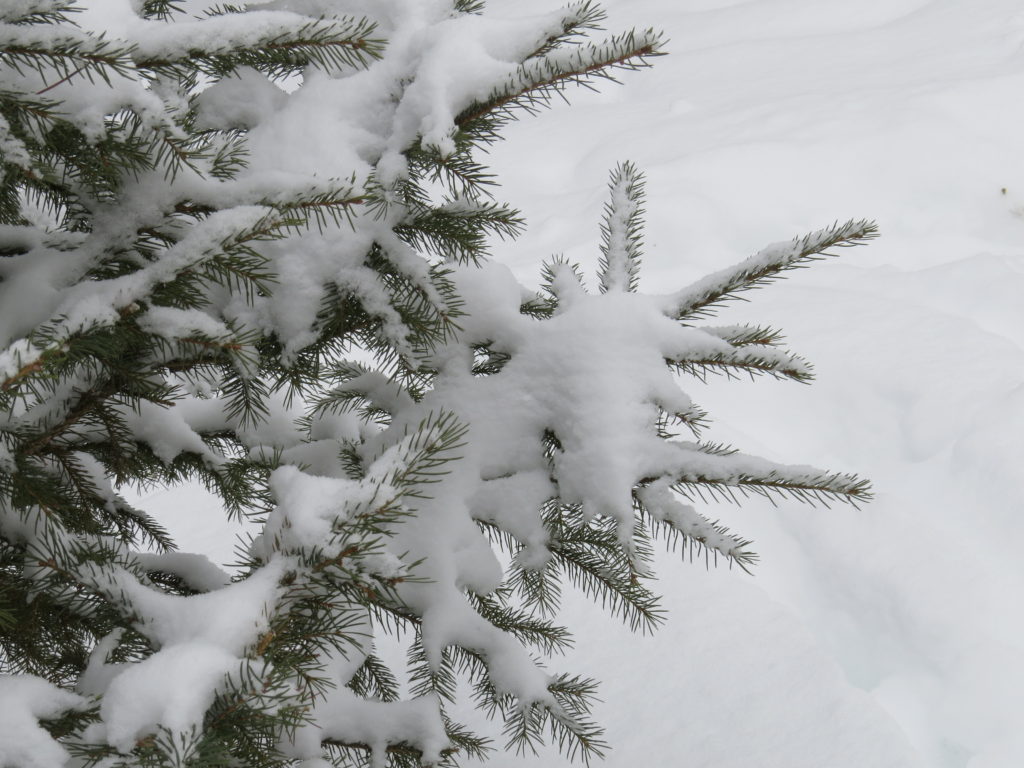
We gather our courage and our strength—even when it doesn’t feel like we have any—and start digging. We are reminded or we remember that we’re good at shoveling, that we’ve done this before, that this too shall pass….
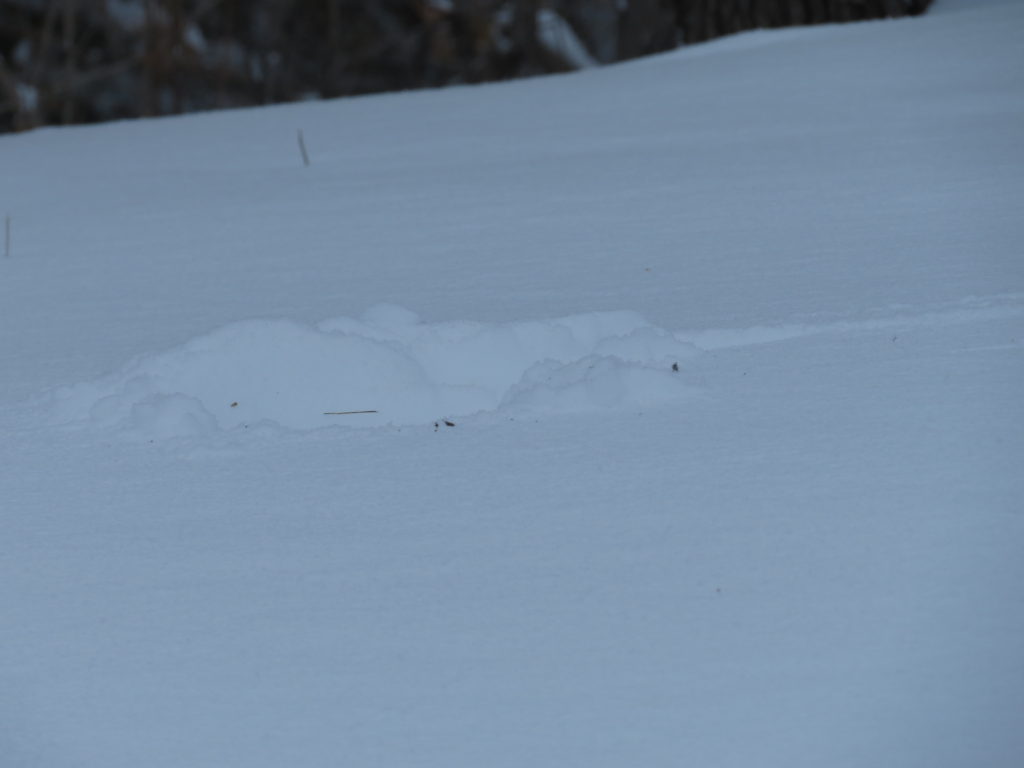
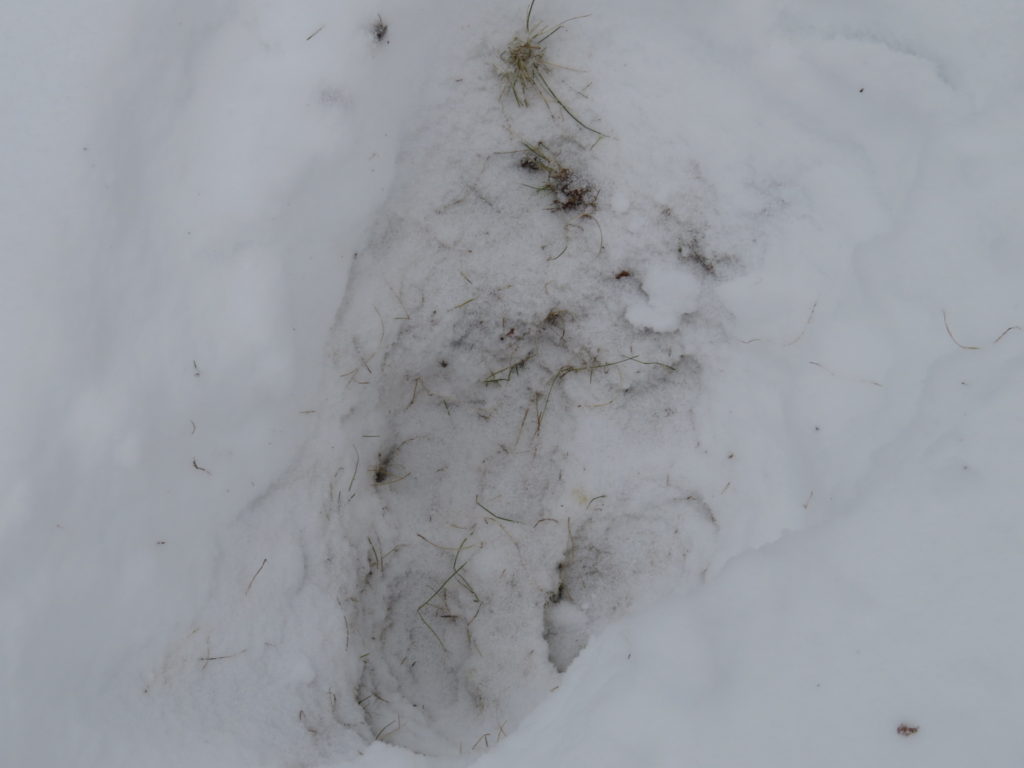
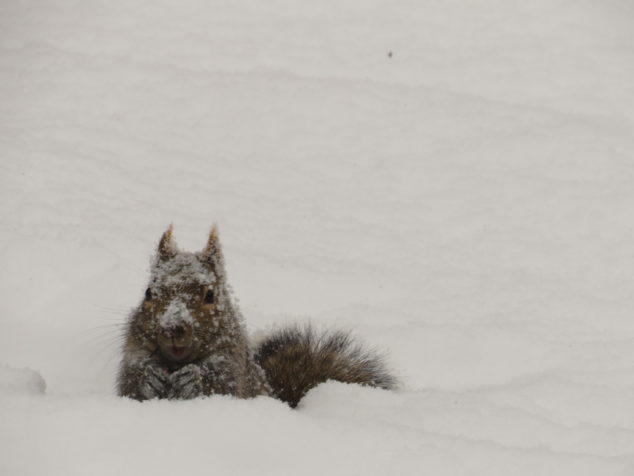
Just like this squirrel who remembered or sensed that he had buried an acorn in that exact spot where he dug through the deep snow and under the brown grass to get to his treasure.
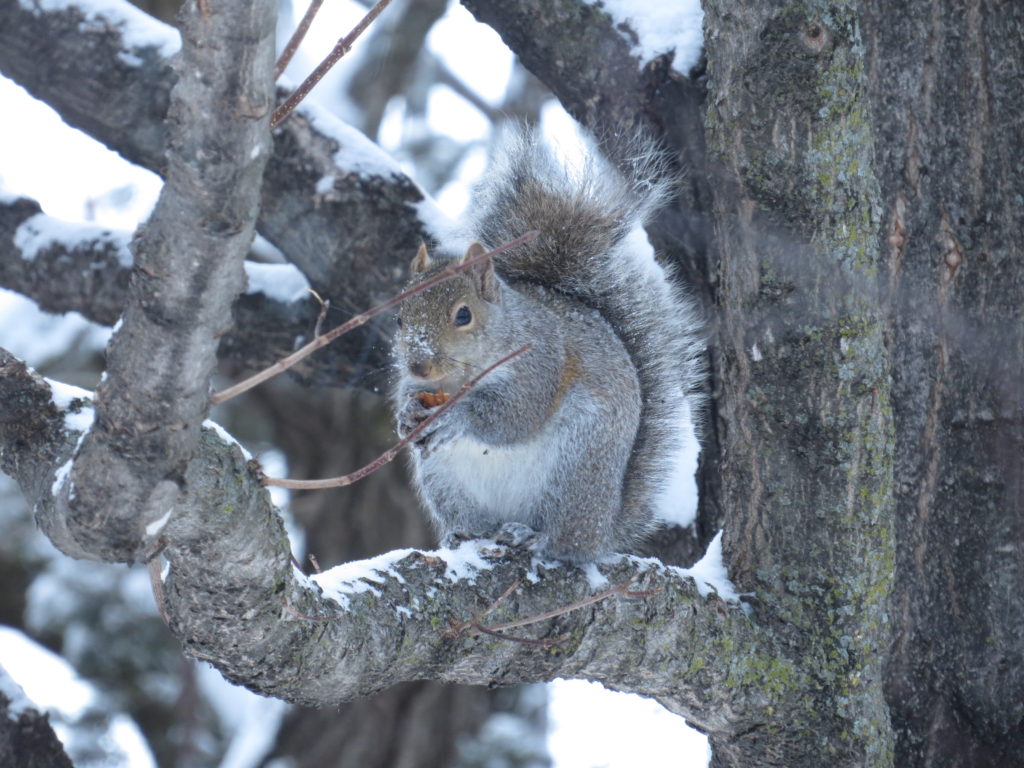
There have been many times in my life when I have felt snowed under—caring for three young children while dealing with Lyme disease, the loss of loved ones and dreams, and the humbling, radical, difficult job of facing myself and my life and coming to terms with it (though a never-ending job.) I am good at shoveling, though. It’s heavy work, no doubt. It’s lonely work, for sure. I stumble and fall all the time. God knows I often do not see or think clearly. But at the heart of the winter of my soul is Love. It intervenes when I need it. It takes away the heaviness. It gives me courage and strength when I feel overwhelmed. It brings people into my life that will listen, lift me up, show me another perspective, and even help me shovel. Love is the treasure.
Fair Warnings and Feeding Frenzies
One semester before returning to graduate school, I worked as a teacher’s aide at our neighborhood elementary school. It was a traditional, old-style, brick schoolhouse with two stories, wide stairways, and big windows. I stayed with one student who needed some extra help with staying on task and controlling his behavior. I was prepared for my work with him and with a whole school of exuberant young children, except for one thing—I wasn’t warned about lunch time! Lunch was held in a big gym that was built to one side of the school—lunch tables were lined up under basketball hoops, and a long line formed around the walls of the gym as we waited to get our lunches. In the winter, heavy coats, hats, and mittens were thrown down in haste along the wall in anticipation of recess. Excited anticipation in young children is not conducive to savoring a nutritious, delicious lunch, and on that first day and every day thereafter, I could not believe how fast the food was gotten, gulped, and trashed as a necessary precursor to what they really wanted—recess!
Mother Nature gives fair warnings. Sometimes she does so in colorful and dramatic ways: sunrises like this mean that some kind of weather event is literally ‘on the horizon.’ The beauty of the colors are not just visual art to be noticed and appreciated; it means something. When I looked at the western horizon, the sky was dark with heavy, snow-filled clouds.
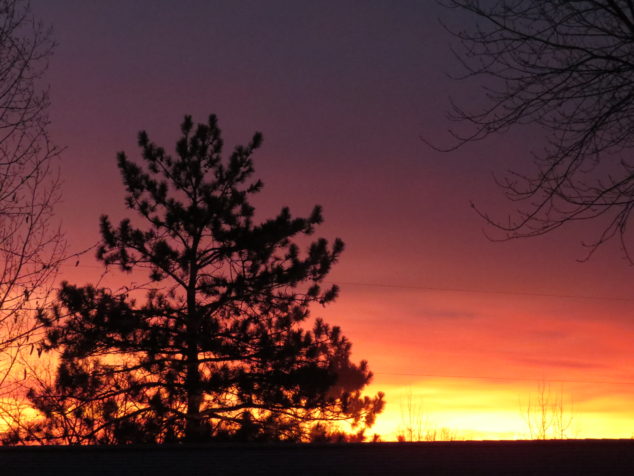
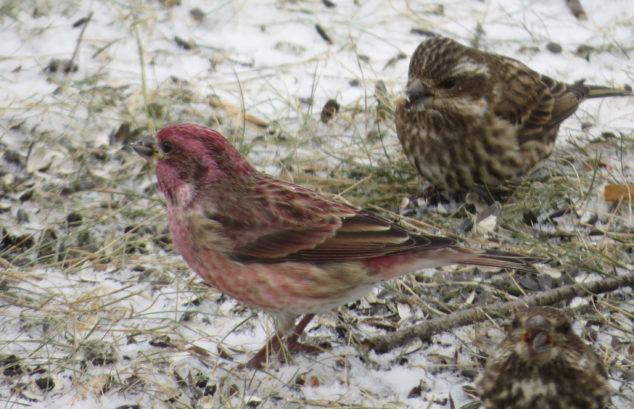
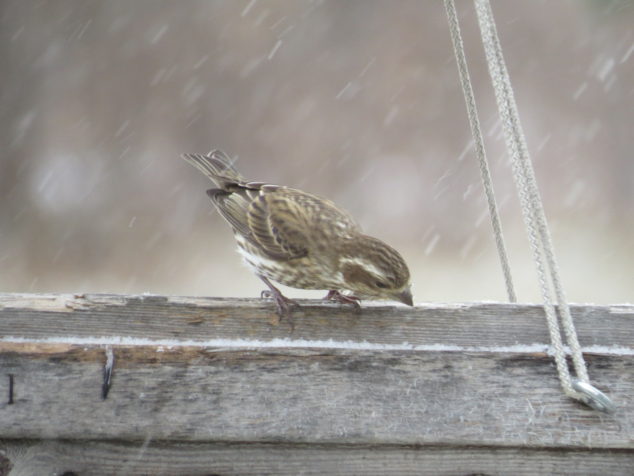
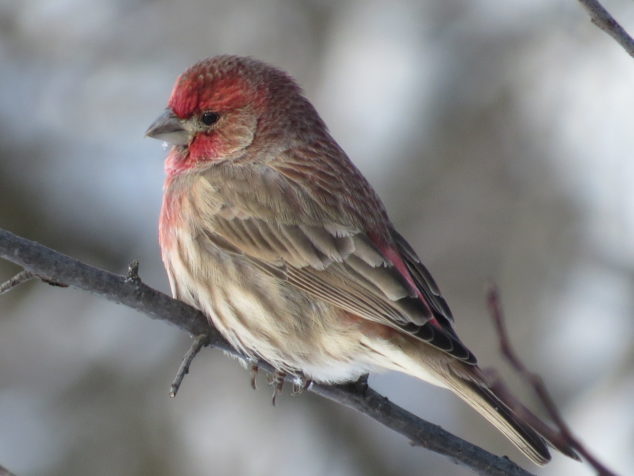
I wasn’t the only one to notice—the birds knew, too. Every morning usually has a ‘feeding time’ for the birds, but before the snow came, there was a feeding frenzy! More birds, more movement, more excitement. Purple Finches flocked to the feeders and to the ground beneath them, gulping down black oil sunflower seeds.
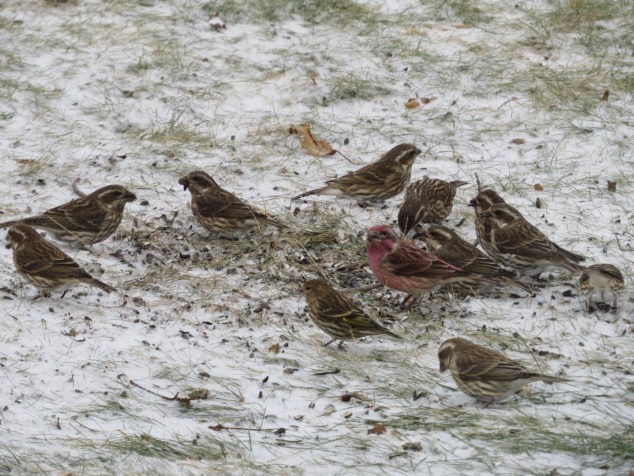
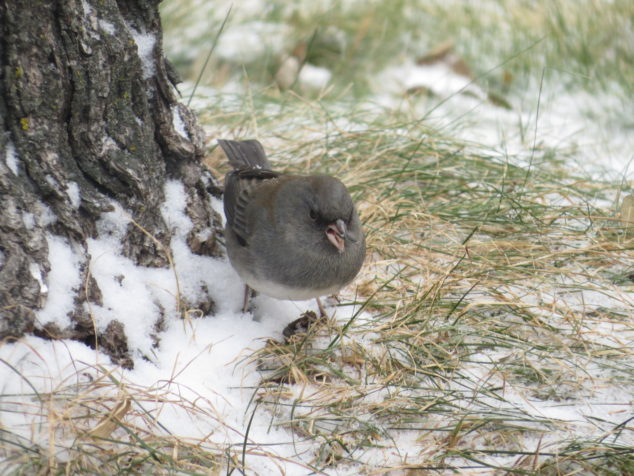
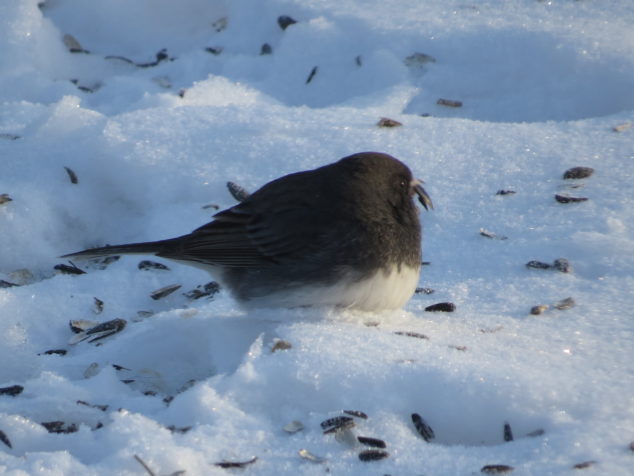
Gray-cloaked Juncos hopped around on the grass and snow, gathering seeds and gathering friends.
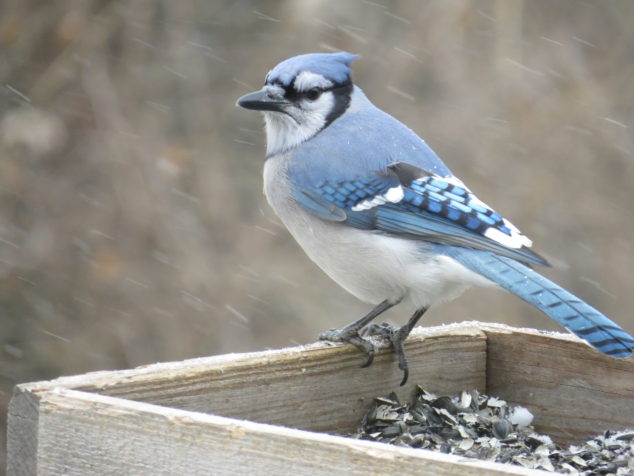
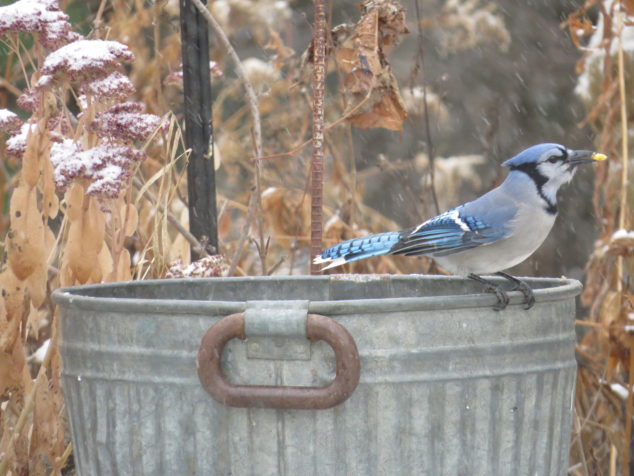
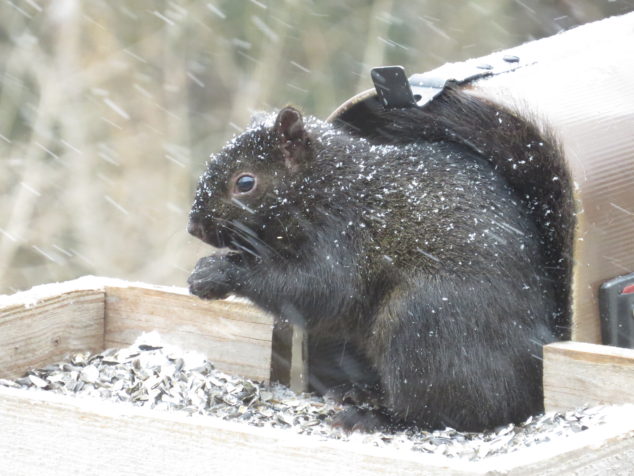
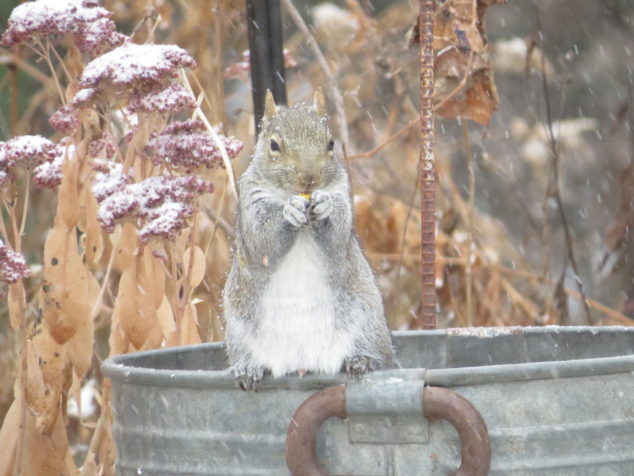
At the back feeder, the beautiful, brassy Blue Jays shoveled through discarded shells in search of intact seeds as the snow began to fall. An old tin tub holds acorns and corn cobs—another cafeteria for the birds and squirrels.
Fair warning in a vibrant sunrise and fair warning in a Black Friday National Climate Assessment that was released and refuted by the White House. Climate scientists anticipate what is going to happen based on science, data, and expertise. The latest report confirmed what climate scientists have been seeing and reporting for decades—the rise in greenhouse gases is hurting the economy, the environment, and public health. Get ready, be prepared, make changes—yet another fair warning—this one intense and wide-reaching. The questions of whether the right models were used, whether scientists were profiting from this, and if this was for political reasons are moot points. All we need to do is look at what Mother Nature is saying—the warnings are consistent and persistent—record rains, flooding, wildfires, droughts, high temperatures, extreme fluctuations, and ice melts. The evidence is right before our eyes. The real question is why aren’t some of us noticing it, seeing it, believing it, anticipating it? Just like any other form of denial: the ‘cost’ of seeing the truth is more painful than the ‘cost’ of believing our own story. How do we not throw away what truly sustains us just to quickly get what we want?
Island Ice Walkers
“In a sense, each of us is an island. In another sense, however, we are all one. For though islands appear separate, and may even be situated at great distances from one another, they are only extrusions of the same planet, Earth.” –J. Donald Walters
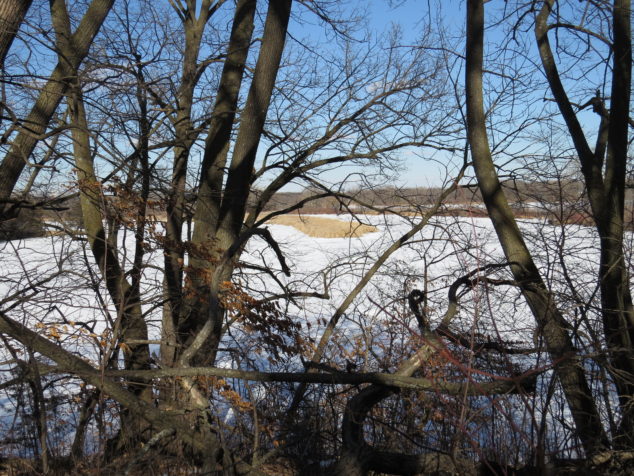
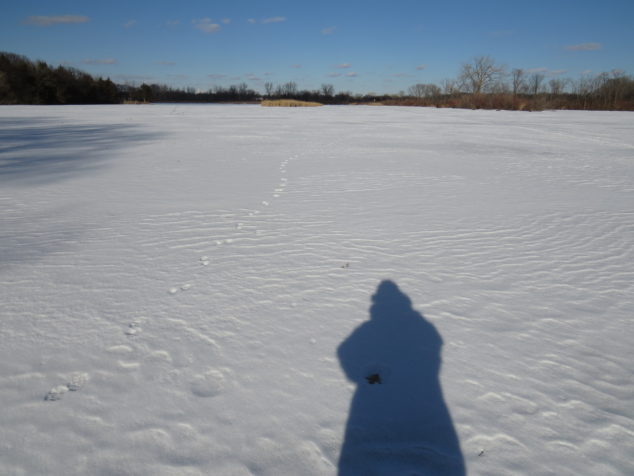
Last weekend, I got away to an island. It was sunny and warm—so warm that the snow was melting! Down the hill from our house is the Sauk River which winds its way through the Horseshoe Chain of Lakes—thirteen connected lakes with convoluted shorelines, jutting peninsulas, and a multitude of islands. We parked at a boat ramp at Horseshoe Lake as a group of ATVs raced around on the ice. Cars and trucks crept through the rushes on an ice road to the little village of fish shacks.
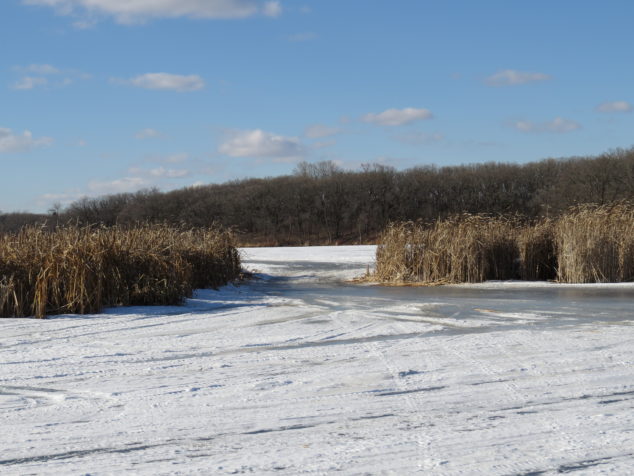
But we were going a different way by a different mode of transportation. We followed the snowmobile tracks to the island.
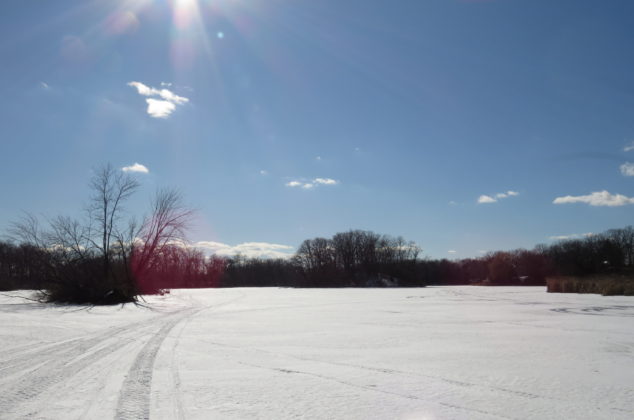
Most of the ice was snow-covered, which made walking easier, but there were places of clear ice where I peered into the depths of it, wondering how thick it was.
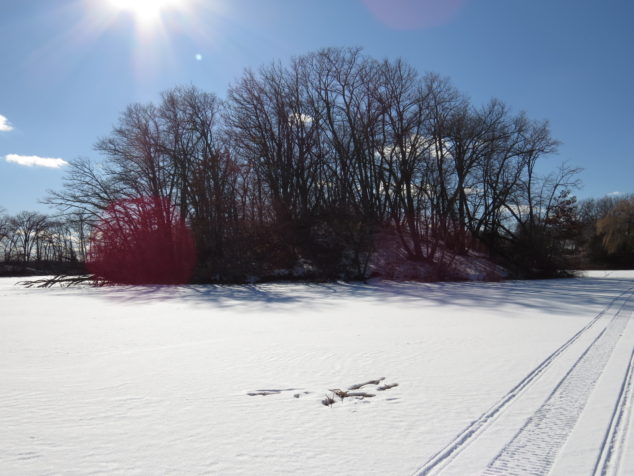
We weren’t the only creatures walking the ice to check out the island.
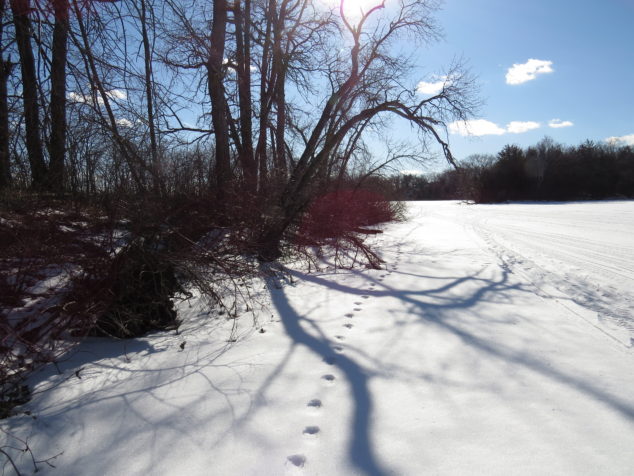
The island was like an incline rising from the water (ice) with the highest point facing the northwest, from which we came.
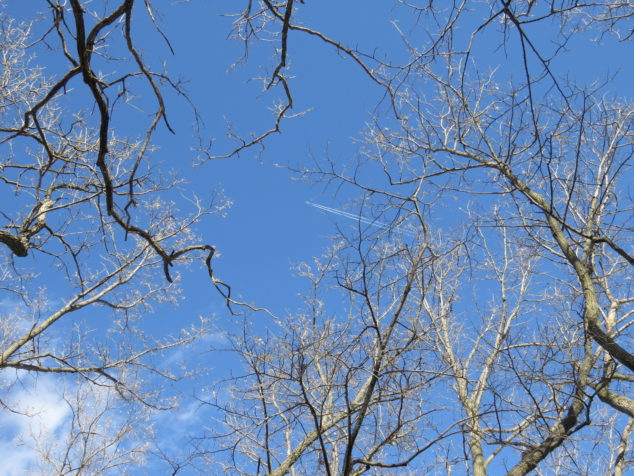
Oak, Basswood, Box Elder and Ironwood trees populated the island, and I was surprised as one of the fluffy-tailed inhabitants ran past me while I was gazing at the jet trail in the azure blue sky.
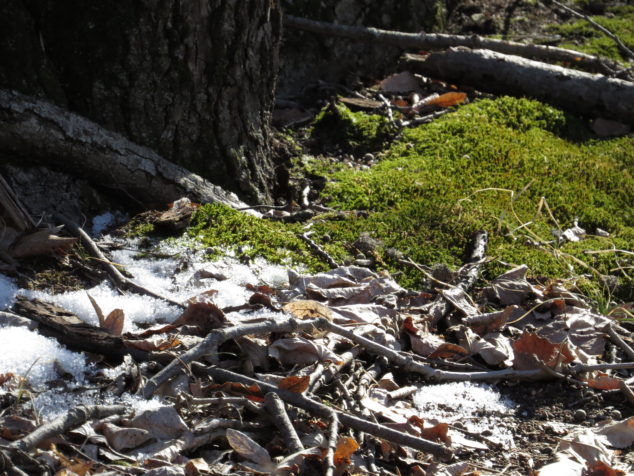
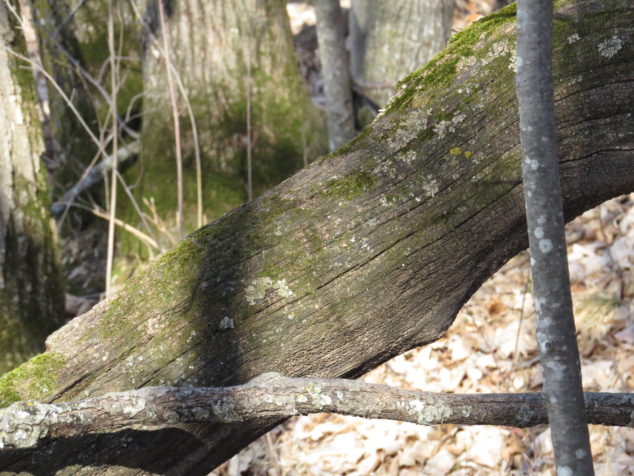
Most of the snow had melted from the island, and it was rather startling to see the vivid green moss at the base of the trees and crawling up the trunks.
Just as vivid was a scattering of Red-twigged Dogwoods along the shore, reaching out to the sunlight.
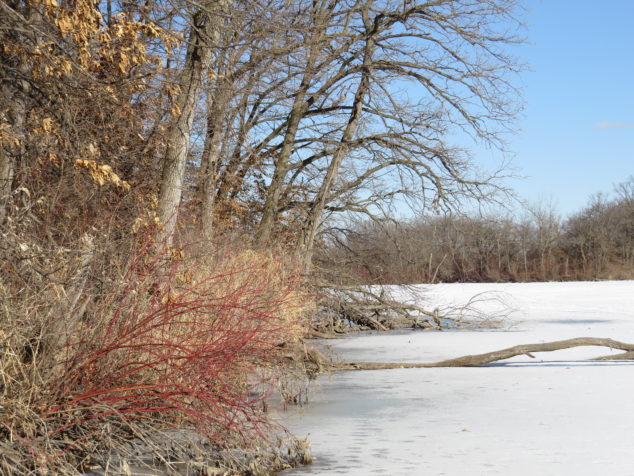
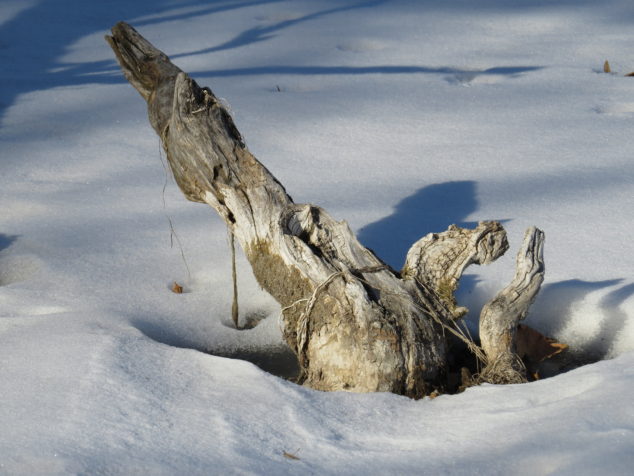
Downed trees had fallen into the water after years of erosion had loosened the roots from their moorings.
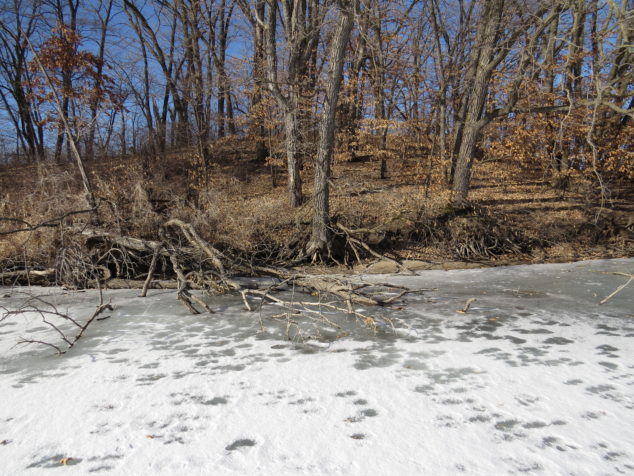
The branches gathered seaweed and algae from high-water summers…
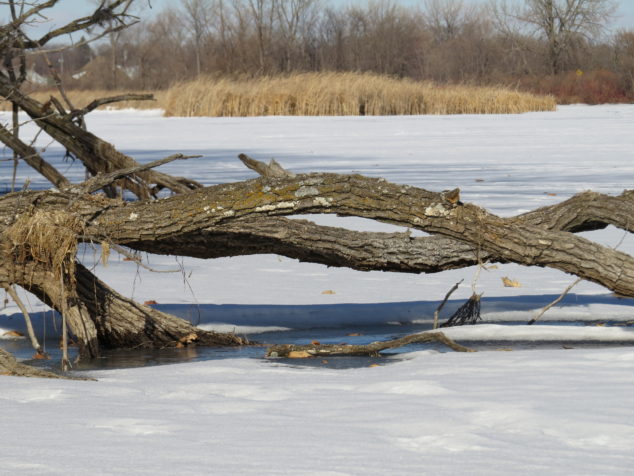
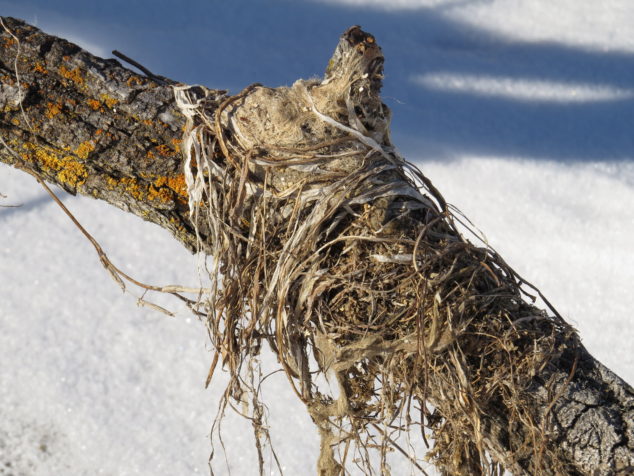
and were polished to sculptural driftwood by summer waves.
We dubbed the island ‘Lone Squirrel Island’ as we walked back over the ice.
Islands are sort of mysterious. They lend themselves to exploration, enticing the boater, the squirrel, and the ice walkers to come see what lies within these shores. I was impressed with the quality of the woodland ecosystem on Lone Squirrel Island—the acorn-bearing Oaks and the beautiful Ironwood trees. It’s not as easy to get to know an island when a watery moat surrounds it as it is when thick ice supports cars, trucks, snowmobiles, or walkers. What if each of us is an island? We appear separate. Some of us are situated at great distances from one another. What is the quality of our ecosystem? Has anything loosened our roots from their secure moorings? Yet, like the underlying Earth of the islands, we are all connected. “Love is the binding force of the Universe. It holds us together. It makes us One.” –J. Donald Walters The thick ice was our bridge to the island. What bridges us together? Listening. Understanding. Empathy. Patience. Kindness. Let’s all be ice walkers. As we peer into the depths of Love, can we even fathom how deep and wide it is?
Where is Your Winter Dwelling Place?
“For each new morning with its light, For rest and shelter of the night, For health and food, for love and friends, For everything Thy goodness sends.”
This prayer of thanks is attributed to Ralph Waldo Emerson whose family celebrated an extended Thanksgiving with family, friends, feasting, and fun. Shelter and sustenance. Protection and nourishment. Dwelling place and daily bread.
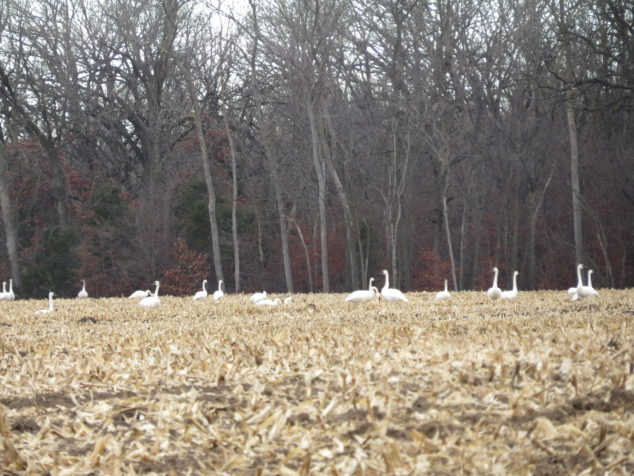
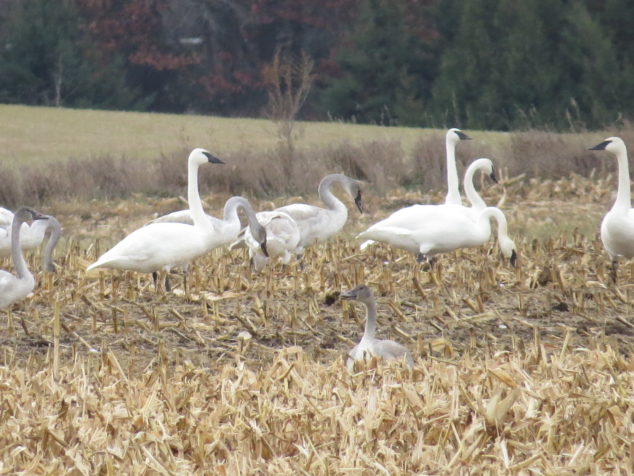
When Winter comes, the importance of shelter and sustenance is magnified, not only for humans but for all creatures. Where are their dwelling places, and how do they get enough food to sustain them during the sometimes harsh conditions of snow-covered land and frigid temperatures? On our Thanksgiving trek to Warner Lake County Park, we passed a corn field with a flock of Trumpeter Swans grazing on left-over corn kernels. Their aquatic home is the Mississippi River, just miles north, where the warmth of a power plant keeps the River free from ice. Some swans and geese stay here for the winter, while most migrate to warmer places in the south. Do you migrate to a warm winter climate or hunker down in the frosty North in your toasty house? Do you have a preferred ‘winter’ food?
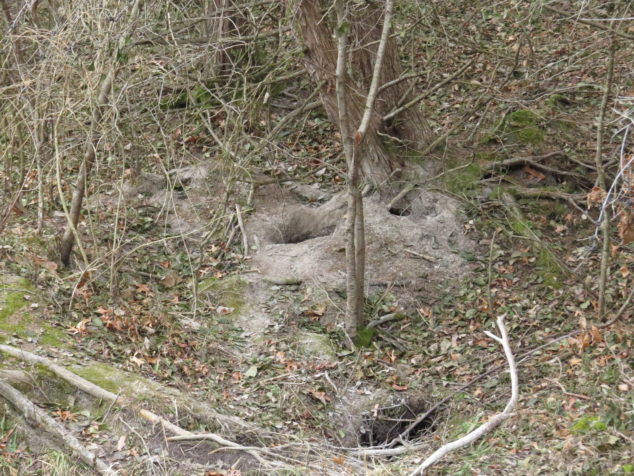
Animal homes come in all forms. We wondered what lived in these holes on the bank of a creek near Warner Lake. The burrowed home among cedar tree roots gave the resident critter quick access to the water. Where is your refuge from the elements? What environment gives you security and happiness?
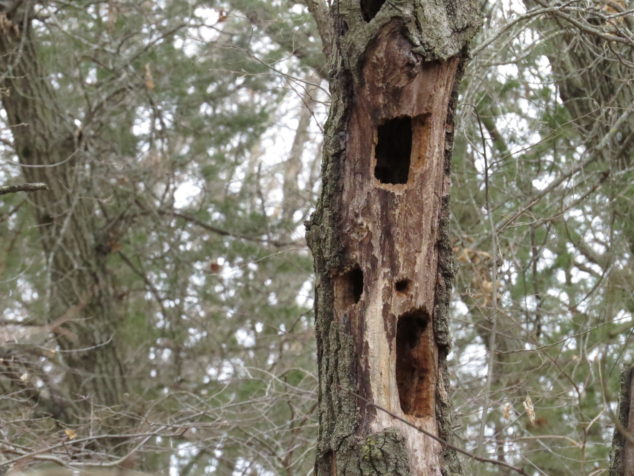
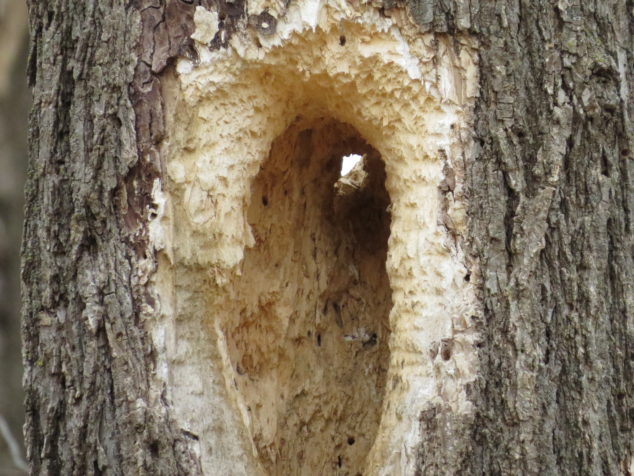
Pileated Woodpecker holes in trees provide protection and nourishment for these hard-hitting birds as they search for insects and construct (destruct) nest holes. The holes they make in dead trees are often used for shelter by owls, bats, and pine martens. What is the source of your livelihood? How do you stay healthy?
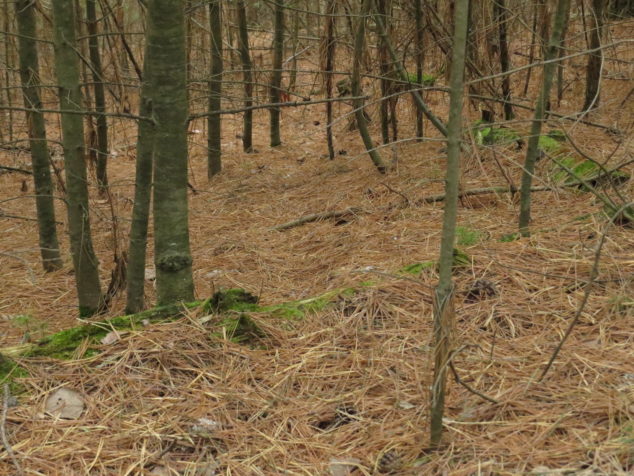
As we walked through the pine forest on our trail, we saw little pathways of trampled-down pine needles diverging through the woods. What paths do you travel in your daily life?
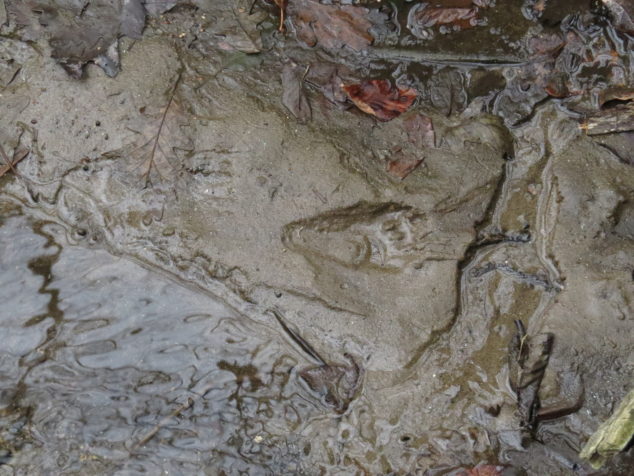
In the sandy mud by the creek, we spotted a Raccoon track. Many of their meals are acquired in the water—crayfish, frogs, and insects. Raccoons store fat through summer and fall and spend much of their winter asleep in a den made in a tree or fallen log. How do you spend your winter? What do you do in this season of rest?
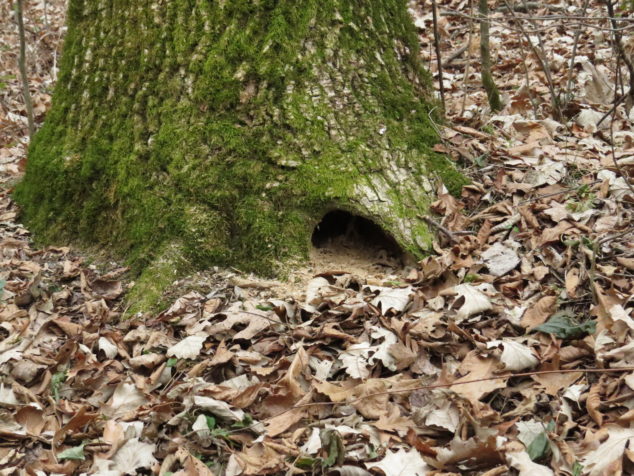
How do animals find their winter dwelling places? This tree probably had a small hole at its base, and some little creature has been working hard to make a home for itself. Sawdust and wood shavings line the floor of the tiny cavern at the foot of the large, moss-covered tree. Where is your dwelling place?
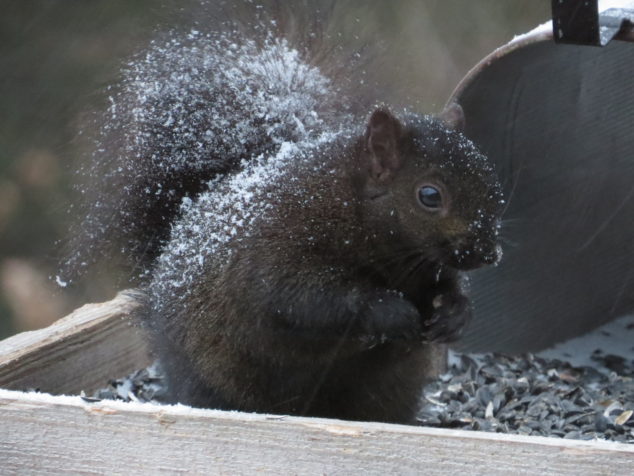
Life and nourishment are a little easier for the birds and squirrels who live close to our home. This Black Squirrel and his friends come for a meal of black-oil sunflower seeds on a near-daily basis. How do you ask for and receive your daily bread?
Our literal dwelling place may change completely in Winter, but most often the home we live in during the Summer is also our Winter home. But there is a change—we are boarded up, bound up, and bundled up. There is a quiet security in the dark evening with the fireplace crackling and throwing out heat, while a pot of soup on the stove sends out delicious smells of onions and herbs. Rest and sleep seem to come easier with the longer night, and the morning light is welcomed and appreciated. Nourishment is extended from food for our bodies to food for our souls. Time for reading, meditation, prayers, and self-care is available if we make the decision and commitment to ourselves. Time with friends is more about being than doing—tell me about your struggles, your joys, your sweet memories, and the dark burdens that may re-surface with the long, dark nights. We can wrap it all up in a bundle of understanding, compassion, and forgiveness. Our dwelling place can be Love.
It’s Kind of a Big Deal
What is a Big Deal in your life right now? I remember when the kids were much younger, birthdays were a Big Deal—even half-birthdays were big! My brother- and sister-in-laws will be celebrating their 50th wedding anniversary this summer—that’s a really Big Deal! Grandchildren are a Big Deal to our friends who have welcomed another generation into their families. A health crisis is an all-consuming, scary Big Deal in one’s life. Graduating from college, starting a new job, getting married, having a baby—all are Big Deals in the lives of the people involved and to concentric circles of loved ones and friends who care for them.
I know that nearly everyone loves Spring, but here in Minnesota, Spring is a pretty Big Deal! We’ve had another fairly ‘easy’ winter in terms of snow and cold, but there is a collective ‘Hallelujah’ being raised up nonetheless, even if it is in a Minnesota nice and stoically quiet way!
The Past
This is the third year in a row that we have been snow free on the Spring Equinox—the two years before that we still had snow up to our knees. So in those terms, we are way ahead of the game. But besides a few green blades of grass (and wild strawberries) and some swollen tree buds, it doesn’t look very much like spring out there yet.
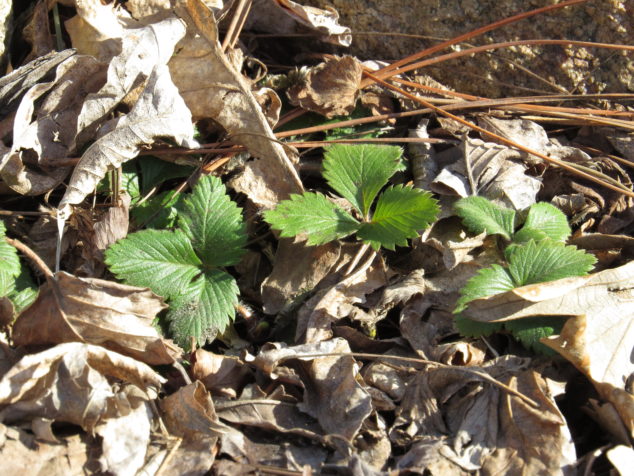
The Present
It doesn’t really matter though—we know it’s coming—the calendar told us so! The thing that makes Spring so sweet is going through the ‘hardship’ or work of winter. Snow shoveling, walking and driving on snow and ice, the daily chore of bundling up in boots, heavy coats, hats, and mittens, keeping the house at a cozy temperature, and daily walks with the frigid north wind are the realities of Winter—neither good nor bad. But Spring, as it unfolds, is a relief from all those things. On Friday, even though I was still bundled against the cold and wind, I saw and heard a choir of Robins flitting joyfully about in the neighbor’s yard! That’s a Big Deal!
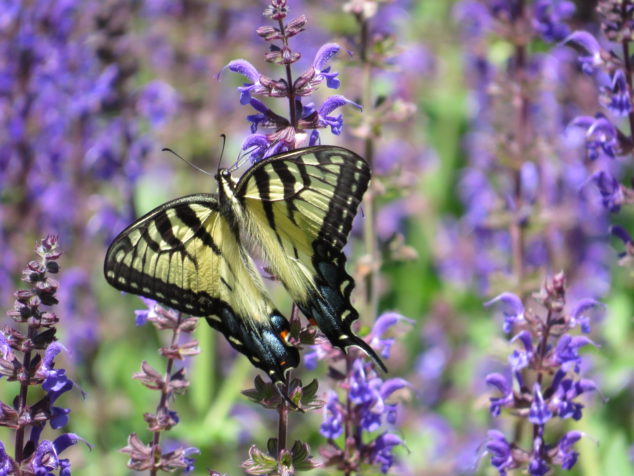
The Future
Big Deals is people’s lives are often milestones of time and effort put into an event that is dear to someone’s heart. Other Big Deals—like birthdays and babies—are celebrations of absolute gifts we are blessed to experience. Yet others are heart-breaking moments that threaten our lives, livelihoods, and purpose. The common denominator seems to be the heart—what we hold dear, what we work hard to preserve, what means the most to us, what gives us joy.
My Big Deal today is celebrating three years of taking photographs and writing messages for my NorthStarNature blog. I have published 206 posts with thousands of photographs in those three years! It has been an experience of the heart : to showcase the incredible beauty of Nature, to share parts of my life story in an attempt to connect us with our world and with one another, to examine how Nature can teach us about Life, and a way for me to contribute in some way to the greater Good. Every time I go out into Nature with the camera, looking for the Beauties and the Gifts, I become just another one of Her creations in that whole Circle of Life. My body is calmed, and my spirit is lifted. Writing this blog has unmuted my voice. It has gotten this shy wallflower out into the dance of the world a bit—the cyber-world, no less! I want to thank you for joining me on this journey—I appreciate you reading and sharing my words and photographs. Blessings and Goodness to you all!
A Great Wind is Blowing
A great wind is blowing, and that gives you either imagination or a headache. –Catherine the Great
March weather, already, has been erratic with record high and below zero temperatures, with balmy sunshine and rain, hail, and snow, and with calm quietness and fierce, unrelenting winds. The crash of warm and cold fronts caused tornadoes that touched down just miles from where we lived in Missouri during the first half of our wedded life. The winds tore the shingles off the roof of First United Methodist Church in Odessa where we used to attend. It seemed like the whole Midwest felt the fury of Mother Nature before it blew off to the East in a devil-may-care huff.
The up and down temperatures had the sap running in the maple trees with sapsicles forming on the frigid days.
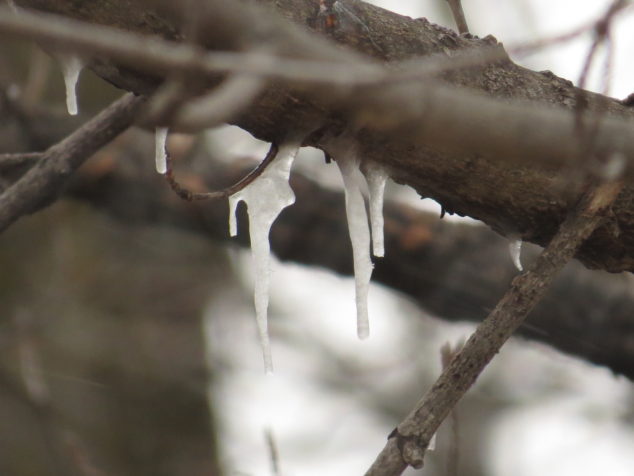
On the warm days, sap dripped from the branches, and a little red squirrel lapped up the sweet goodness as he grasped onto the underside.
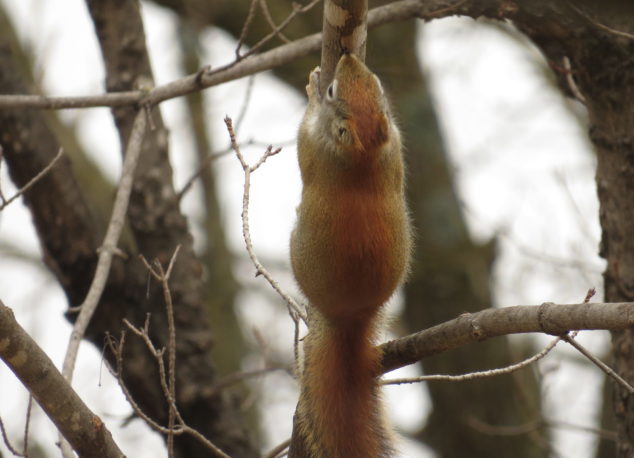
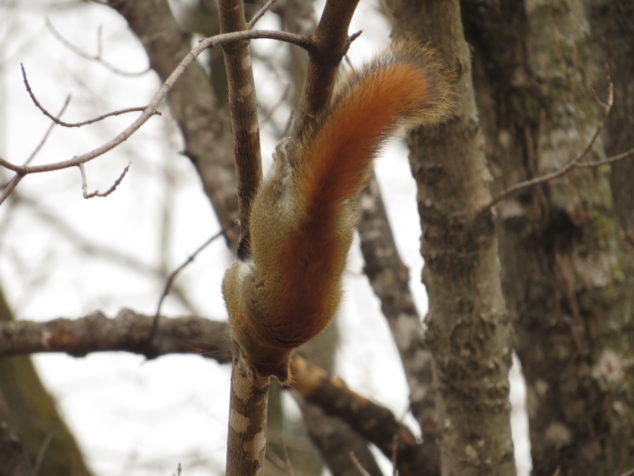
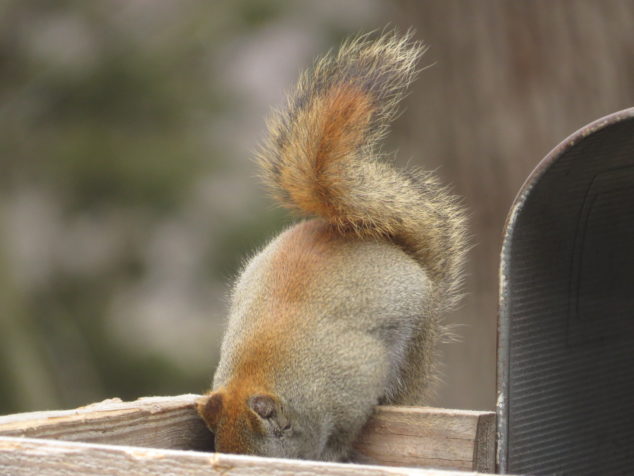
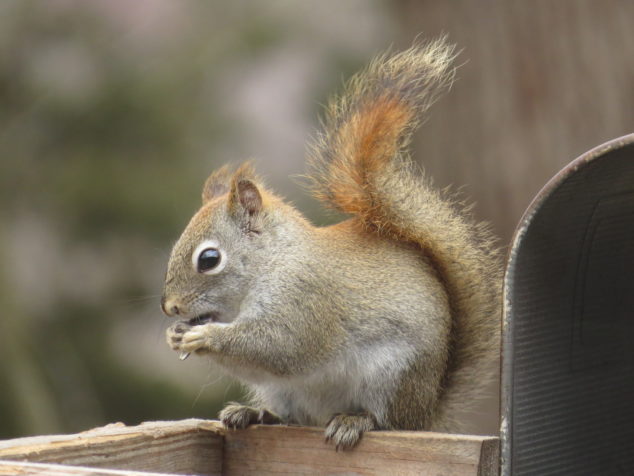
Then he would run over to the bird feeder and chow down on black oil sunflower seeds. I thought he must be the best-fed squirrel in the land.
South winds blew in balmy warm weather last Sunday and Monday with highs near 60 degrees. A storm approached from the west on Monday afternoon bringing rain, hail, and then a quiet calmness.
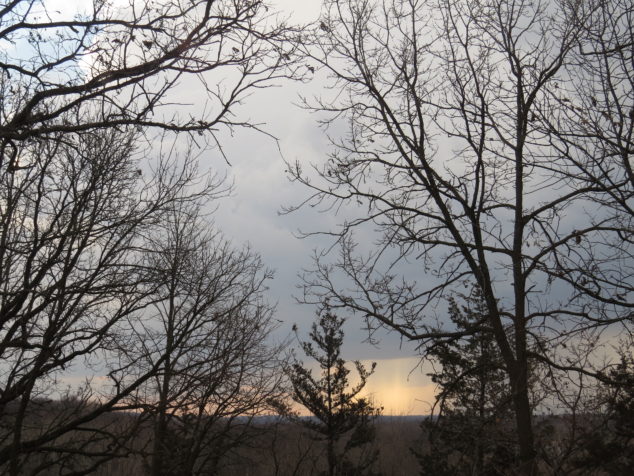
Late that evening we suddenly heard the wind crashing through the trees, this time from the WNW. By morning we had snow.
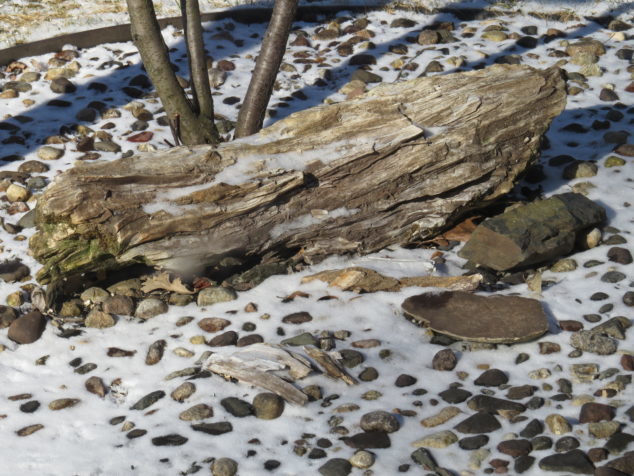
The great wind blew like a madman for two nights and two days. The barometer was close to the lowest I had ever recorded. Tree branches thudded on the roof and tumbled to the ground. It was unnerving in its demeanor and relentlessness—‘an ill wind that blows no good.’ It gave me a headache and frazzled my nerves.
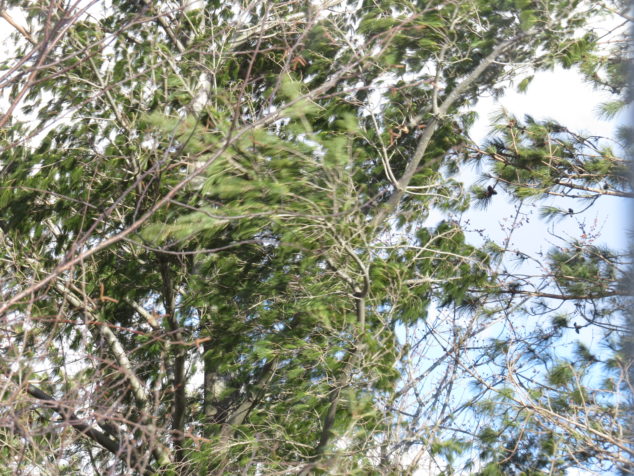
The relentless wind made me feel like other times in my life when I had felt beat up just for existing. Lyme disease made me feel that way. The end years of my graduate school career made me feel that way. I was just trying to do the best that I could, taking punches that had no sense of fair play, and ending up just barely keeping my head above water. Imagination is defined as the ability to face and resolve difficulties. We form mental images, most often without conscious knowing, of our life without the difficulty. We problem-solve, we question, we wrestle with whatever madman is trying to take over our life, and we move in a different direction. We are more resourceful than we know. I think the headache has to come first. Those thudding branches and frazzled nerves prime our imaginations in order for us to see our way to a different, better way. The way to sweet Goodness.
Birds of a Feather
What if all the birds of the world looked and acted alike? How would this homogeneous population serve the earth? The winter birds bring activity, color, and beauty to the very coldest, bleakest part of our northern winters. With temperatures plunging below zero this week, our feeders filled with black oil sunflower seeds have been life-giving to the varied population of feathered and furred creatures.
I read a blog post recently that made me curious about how we perceive homogeneousness. Many are familiar with the term homogeneous from chemistry when substances are in the same phase or from geometry when angles are the same. Homogeneous is defined as ‘essentially alike.’ The writer of the blog post, in the most general definition, lives in a very homogeneous population, yet wrote with disdain about some of the people in his daily life who chose a different path from the writer. I thought, ‘Wow! If this person has disdain for people who are so ‘essentially alike’ him, it’s no wonder there is little tolerance for people who truly are different.’
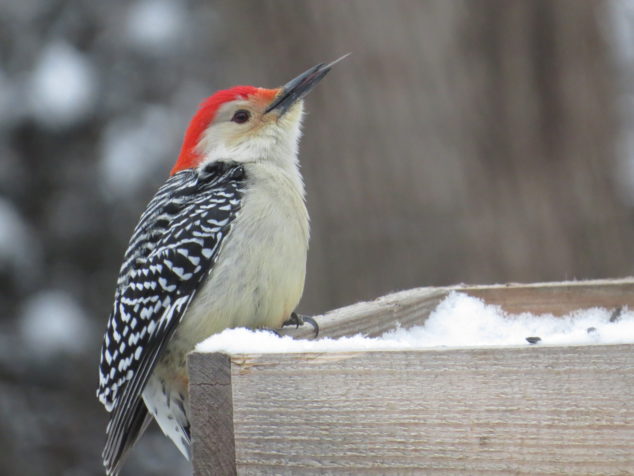
Heterogeneous means ‘different in kind; unlike.’ The different kinds of birds and creatures who come to our bird feeders in the winter showcase the diversity of Nature. The Red-bellied Woodpecker flies to the feeder and scatters all the other birds who are feeding there. His black and white barred feathers and red cap make him one of the showiest birds. His diet of mostly insects is supplemented by the seeds he collects and stores in the bark of trees.
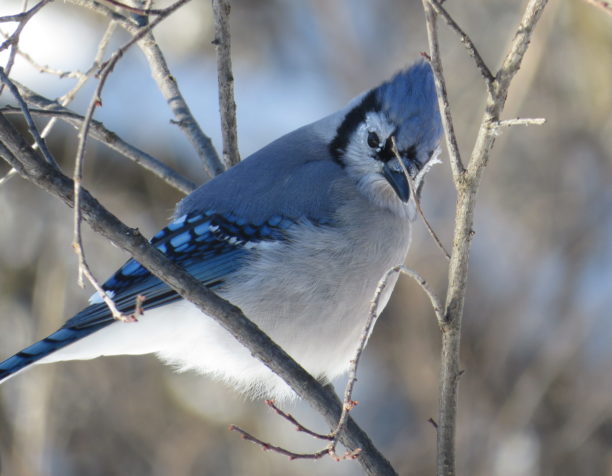
The intelligent Blue Jay is the only bird that will challenge the Red-bellied Woodpecker as the dominant feeder bird. His loud calls and large size intimidate the smaller birds. Blue Jays love acorns and have been shown to cache 3-5,000 acorns in one autumn. It is believed that Blue Jays helped spread the growth of oak trees after the glacial period.
Dark-eyed Juncos are small sparrows, mainly seed eaters who hop instead of walk. They eat off the ground, scratching through leaf litter and snow to find their food. They are snowbirds who retreat north to Canada in spring and summer.
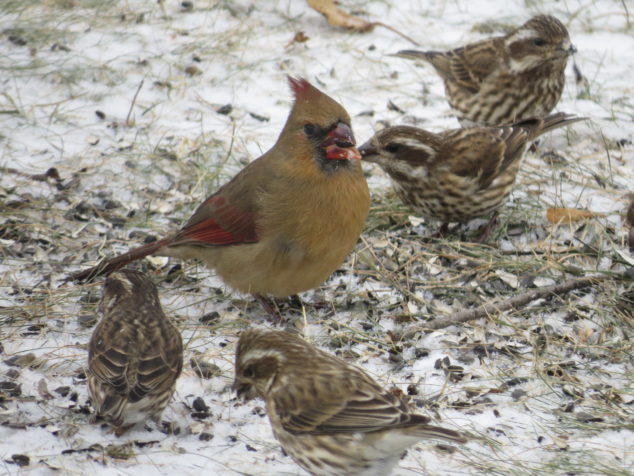
Purple Finches live near coniferous trees, eat berries, fruit, and weed seeds and love black oil sunflower seeds. The males have a rosy colored head, breast and rump patch while the females are mostly brown.
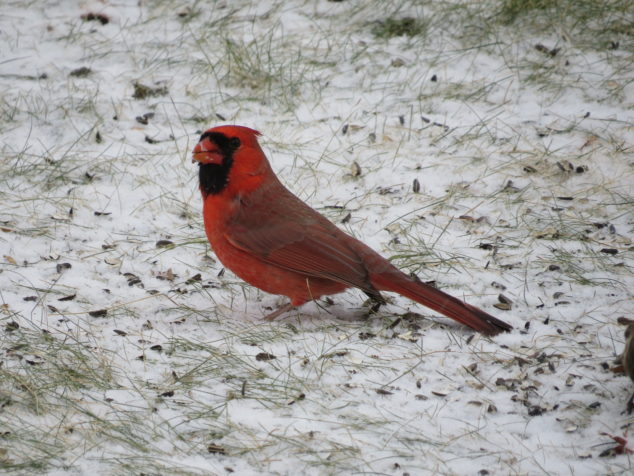
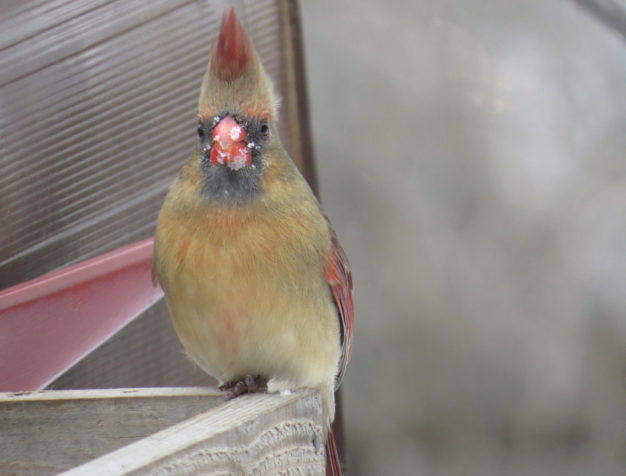
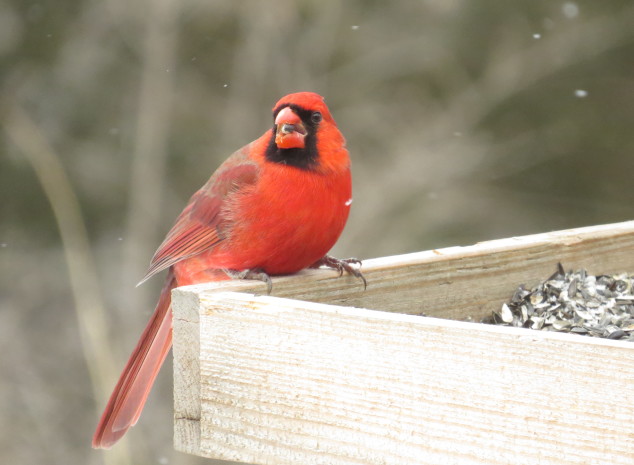
This female Cardinal was having a bad crest day one very windy morning. Usually the crests of Cardinals and Blue Jays are raised as a sign of aggression and down while feeding, but the wind had other plans. Both male and female Cardinals are obsessed with defending their territory and will attack their own reflection in windows, thinking it’s another bird.
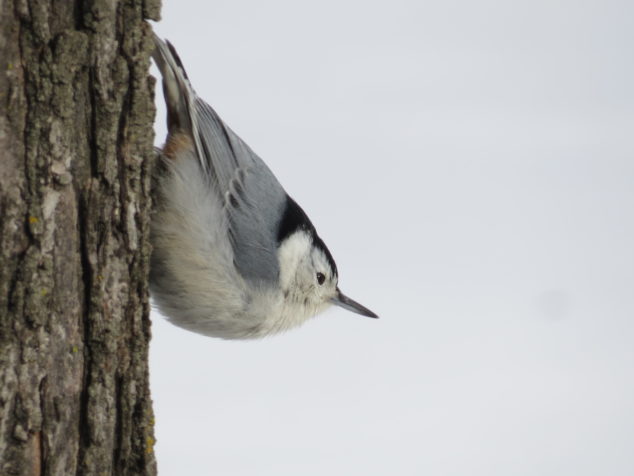
White-breasted Nuthatches eat mainly insects, but got their common name by storing large nuts and seeds in the crevices of tree bark, then whacking them with their bill to ‘hatch’ the seed out of it. They are often seen going sideways and upside down on the trunks of trees.
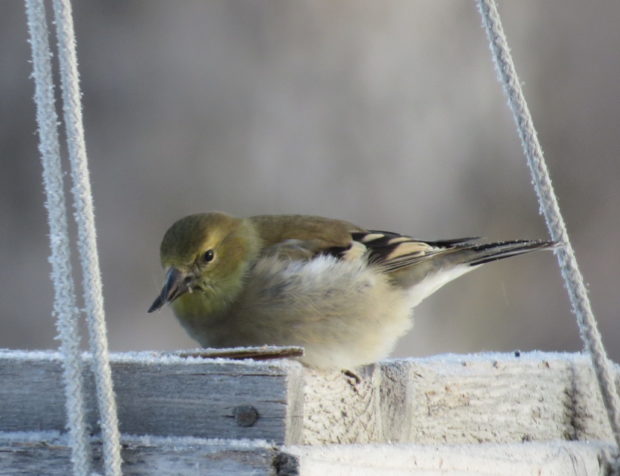
American Goldfinches are the only finch to molt twice a year, giving them a bright yellow feathered coat in the spring and summer and a dull, muted yellow coat in the fall and winter. Goldfinches are the strictest vegetarians and love thistle and aster seeds.
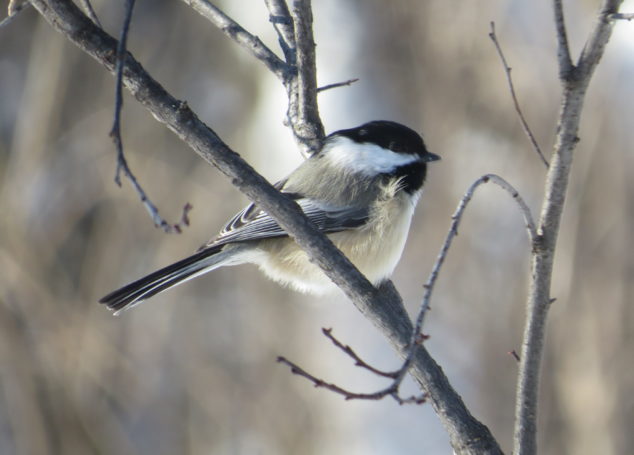
Curious and acrobatic Black-capped Chickadees flit to the feeder, grab a seed, and fly away to a branch to eat it or hide it for later. They can remember thousands of hiding places. Their namesake call of chickadee-dee-dee indicates a higher threat level with the more dee notes on the call.
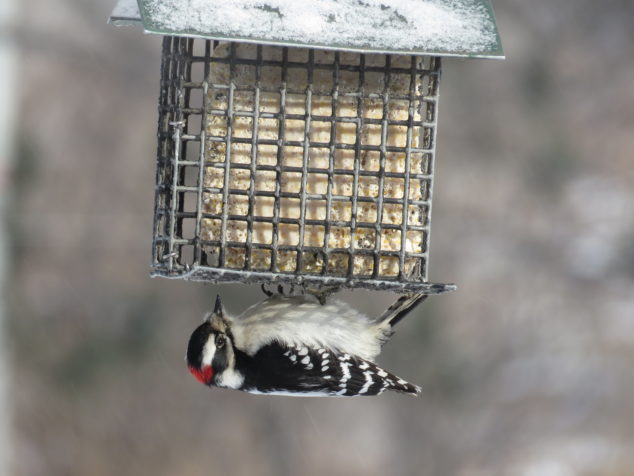
The small Downy Woodpecker eats mainly insects, including many pest insects, but likes the suet cakes in the winter. Only the male has a red patch on the back of his head. Downy Woodpeckers don’t sing songs but drum loudly on wood and metal during courtship for the same purpose.
The birds share the feeders and seeds with the squirrels…
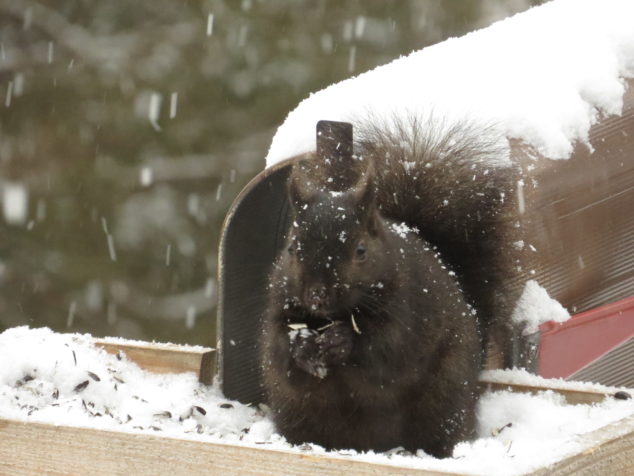
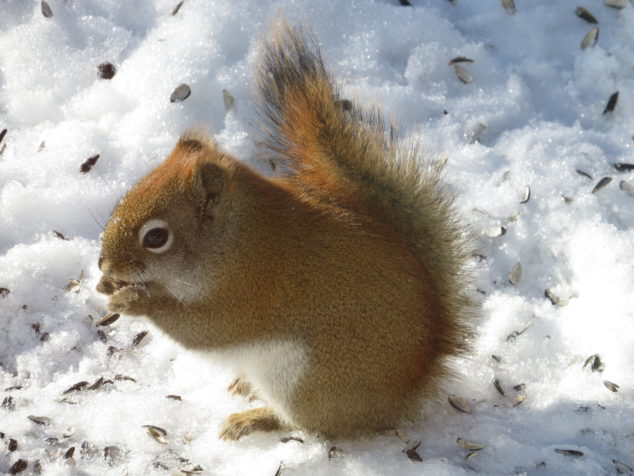
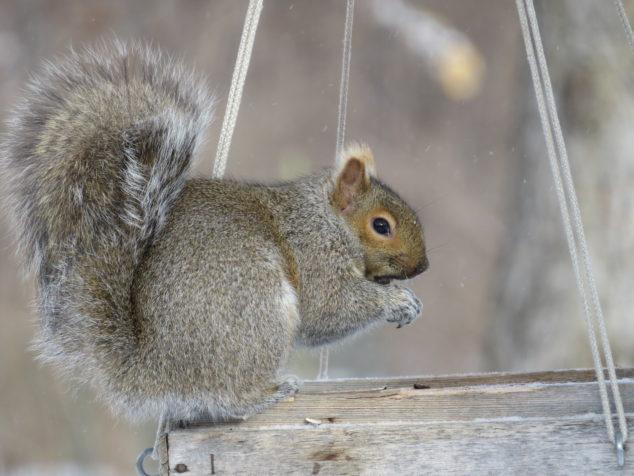
and rabbits, or maybe it is they that share with the birds.
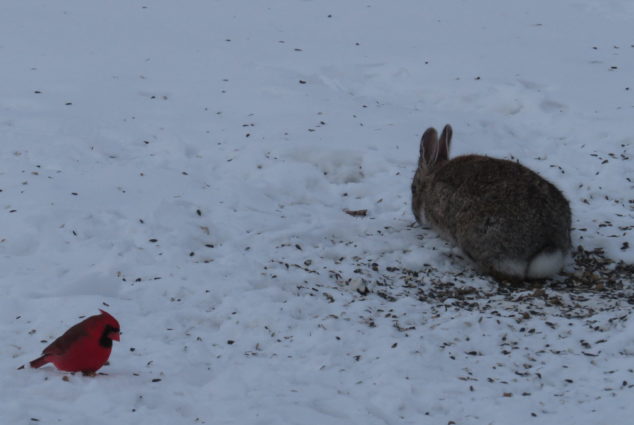
What if all the birds were alike? What if all of us humans were alike? How would these homogeneous populations serve the world? My guess is….not very well. The blog writer scorned others who were in essence very similar to himself, which gave the impression that he wanted all others to act and believe like he did in order for them to be worthy. God created a diverse world of birds, creatures, plants, trees, and humans. All have a place at the table, a role to fulfill, and a job to do in the grand scheme that is not ours, but God’s. Perhaps we need a biannual molt of ideas to show our new colors. Fighting to defend ourselves and our territory is innate and at times, necessary, but too often we end up attacking the reflection of ourselves.
Gleanings from February–It’s All About that Food
What do black oil sunflower seeds and a bag of Ghirardelli 60% Cacao chocolate chips have in common? They are both small, dark, and yummy (to the respective species). Now, I might be stretching it to call chocolate ‘food’, especially in the sustenance sense, but nonetheless, it has been a part of my February and January…and December. Anybody else eat chocolate in a seemingly uncontrollable way when under stress?
What a strange month February has been here in central Minnesota–it hasn’t been about the snow or the extremely cold temperatures this year. In fact, last Saturday was a record-breaking warm day with a high of 56 degrees! Needless to say, most of the snow has melted. But February has been all about that food for the hardy winter animals and birds who harmlessly flock to the feeders and who harmfully chow down on our trees and shrubs. The winter birds are the most beautiful to see as they come daily to the feeders for sustenance, taking a seed or two at a time.
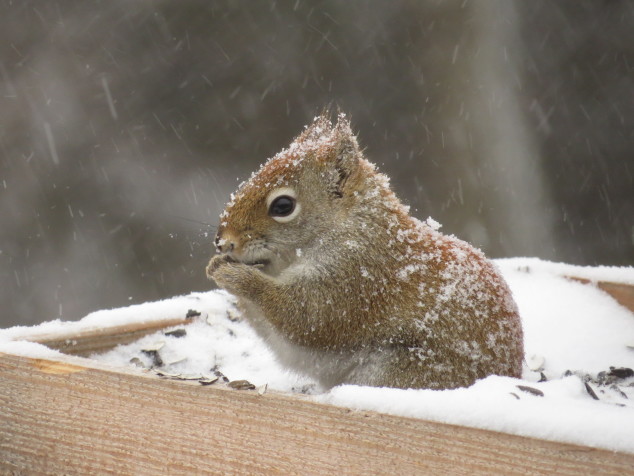
The most amusing visitors to the feeders are the squirrels who take their mealtimes very seriously! This little red squirrel will sometimes eat at the feeder, but other times will fill his cheeks with seeds and high-tail it to his den in order to keep a stash nearby.
There is an abundance of gray squirrels, a few little red squirrels, and two black squirrels–one with a long tail, the other with a shortened ‘Squirrel Nutkin’ tail. These two are feisty and protective of ‘their’ feeders.
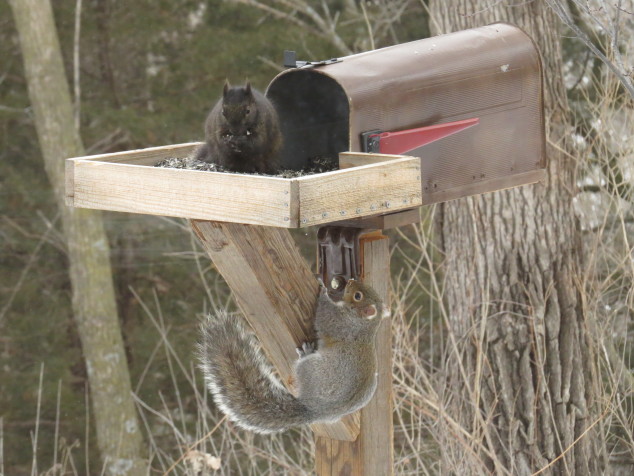
Whereas the birds are prudent with the abundance of a full feeder of black oil sunflower seeds, this guy is a little piggy, scooping up paws full of seeds and chowing down!
Our more nocturnal critters clean up the fallen seeds from the ground after the sun goes down–rabbits and foxes. Evidence of the rabbit’s activities can be seen in the light of day.
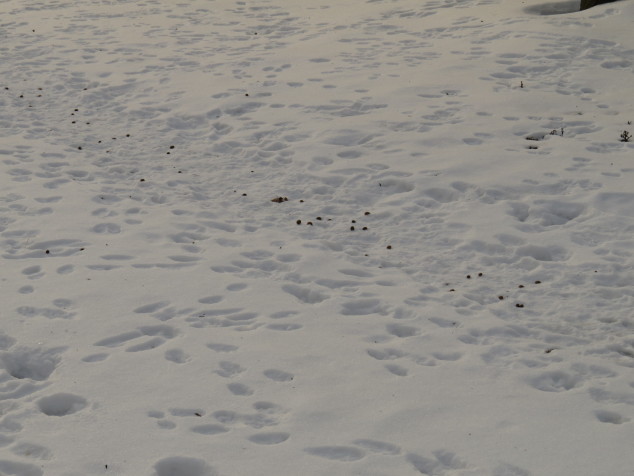
They also cause real damage to young trees and shrubs, as in the case of this young hemlock tree.
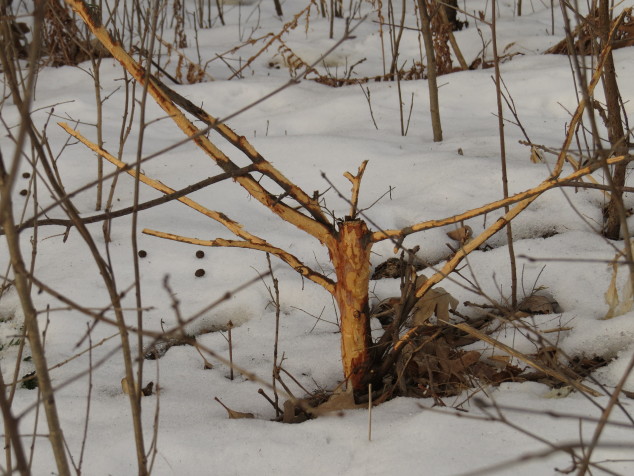
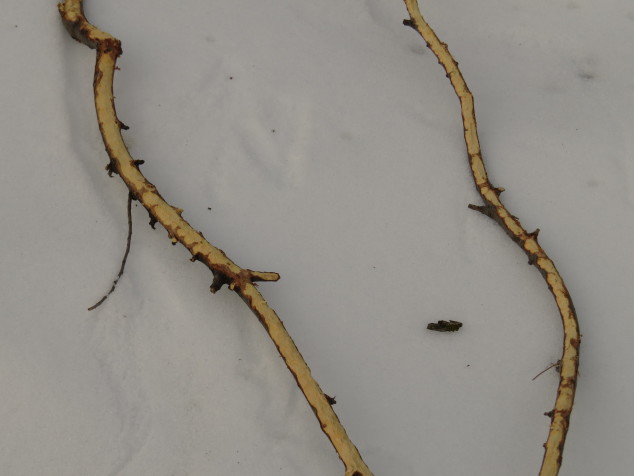
Rabbits or deer stripped the bark from some fallen branches.
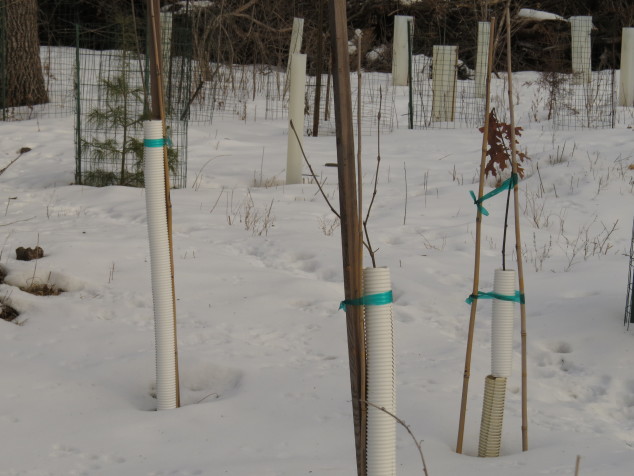
While my horticulturist husband loves planting and growing new trees and shrubs, it is a necessity to protect them from the winter grazers.
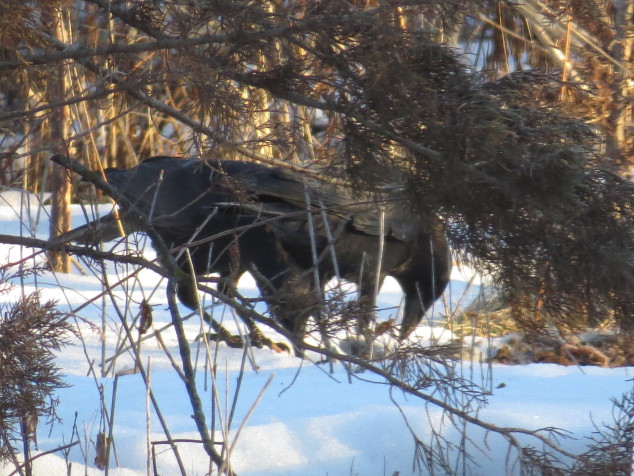
As in most food chains in Nature, the tables get turned, and a rabbit becomes a meal for the scavenger crows.
February is all about that food for the birds and animals in this northern climate. The mild temperatures and minimal snow have made it easier for the critters to find some kind of sustenance for survival this year, but they have still been hard on some of our unprotected plants.
Recovering from a death or grief of any kind can also make for strange months–times of sadness and despair, dreams that try to ‘organize’ the pain, and moments of lightness and laughter when the sun shines through the darkness. Diving into my stash of chocolate may not be the prudent way to ameliorate the pain and confusion of grief, but it may just be a necessary way to protect that part of me that doesn’t want to accept what happened. Until I do. And then, once again, I can eat chocolate like a cardinal instead of like the Squirrel Nutkin squirrel.
Working at Living
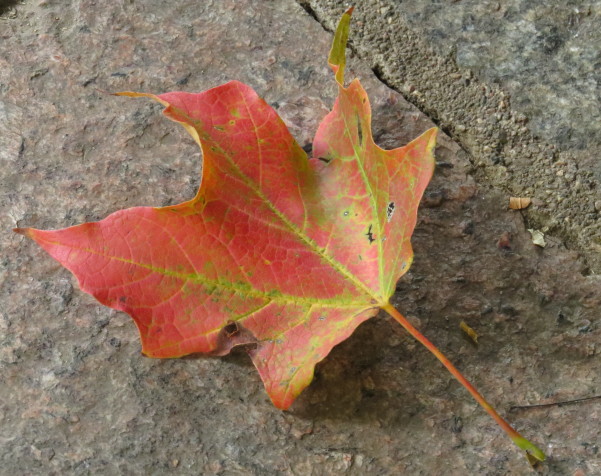
When we stepped into September, we entered the meteorological season of Fall. We are most familiar with the traditional astronomical seasons that change at the equinoxes and solstices based on the position of the Earth in relation to the Sun. Meteorological seasons change every three months and are based on similar temperatures. This different and more natural way of defining seasons began in the early to mid 1900’s, making it easier for the weather scientists to compare data and weather patterns.
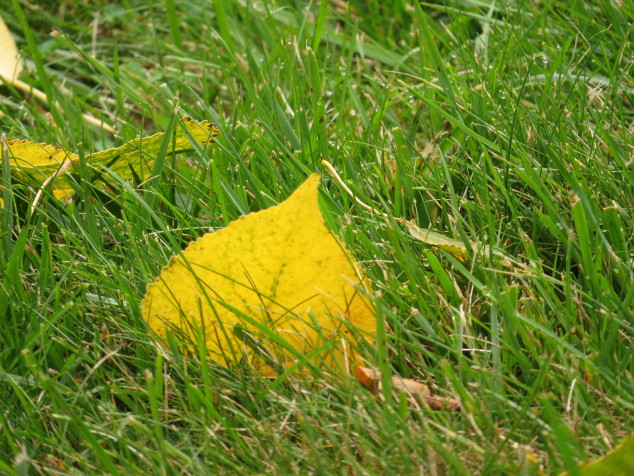
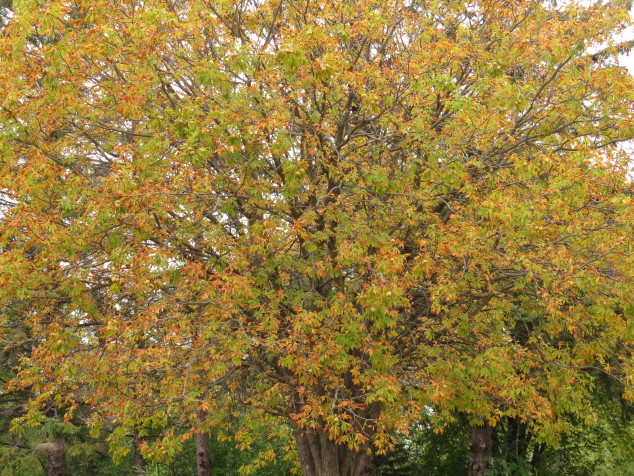
It is beginning to look like Fall in central Minnesota! The poplar and ash leaves are turning yellow and falling to the ground.
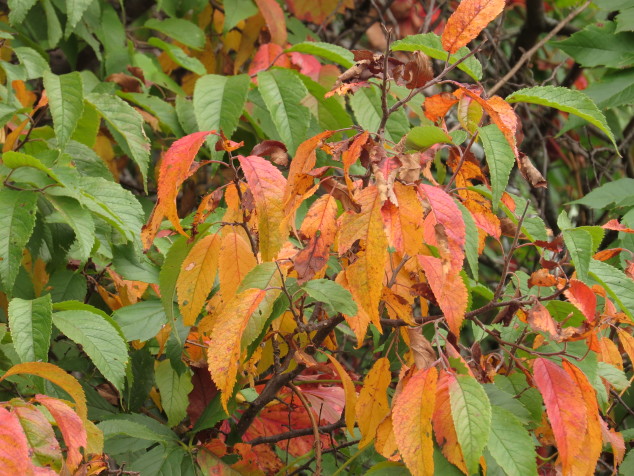
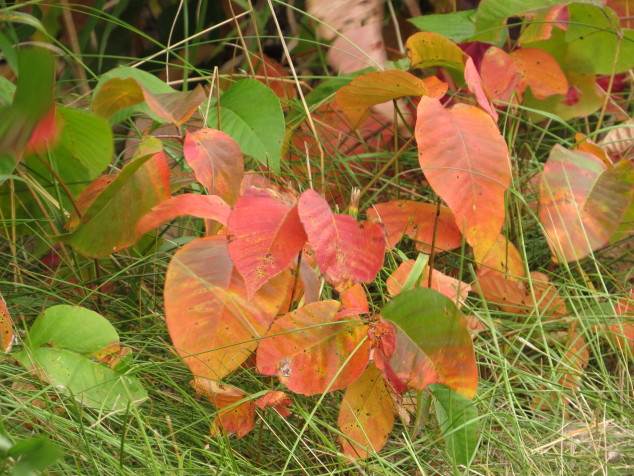
Wild plum trees and creeping poison ivy are displaying beautiful autumnal colors.
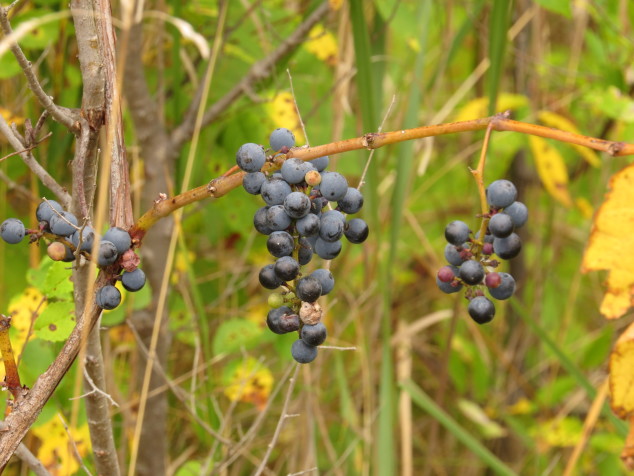
Wild grapes are ready for harvesting–by humans, birds, foxes, turkeys–whoever gets to them first.
Asters and sunflowers are blooming in the ditches…
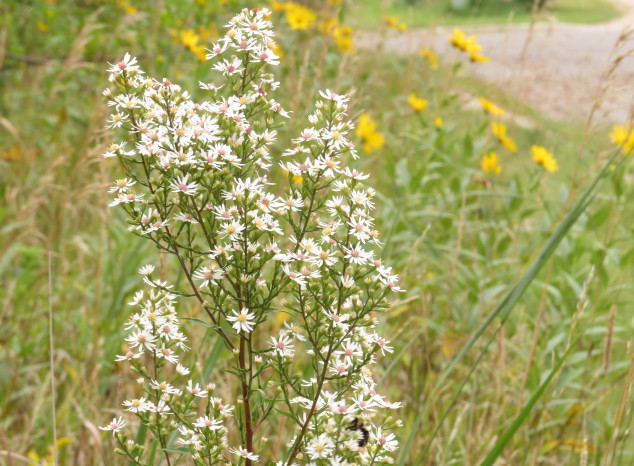
along with abundant goldenrod.
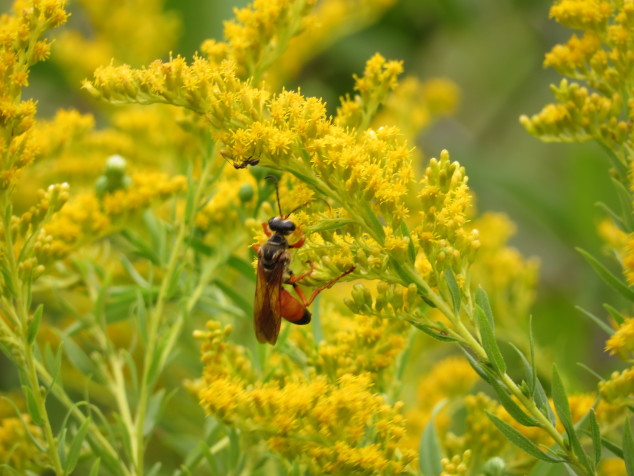
The insects and animals are busy gathering food. The squirrels have been working hard from morning til night, collecting acorns from our woods and buckeyes from the tree up the street. The Buckeye tree is one of the first to change color and lose its leaves.
The squirrels carry the nuts to a place in the yard, dig a little hole, put the nut in, cover it up with dirt, and pat it down with their front paws. How they ever find them again is beyond me–but I do know they don’t find them all, as we see oak and buckeye seedlings growing in places far from the mature trees.
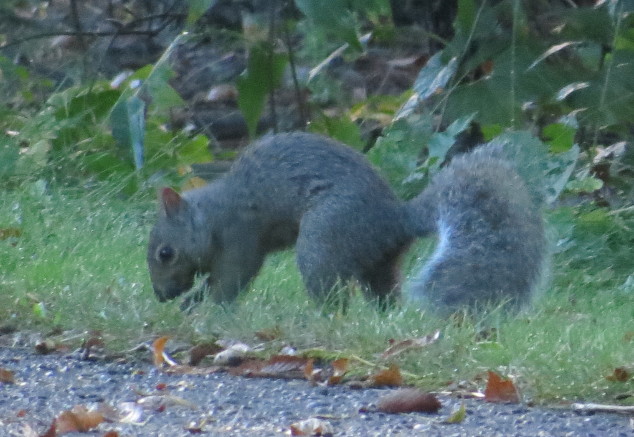
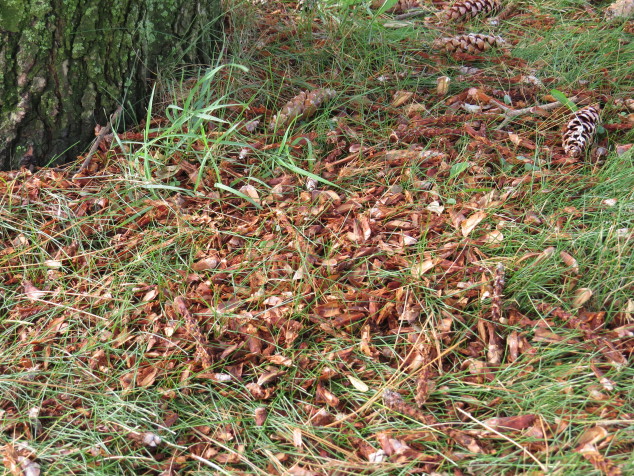
The little red squirrels in particular love the white pine seeds and have labored ceaselessly to clean them from the cones, leaving a pile of debris under the tree.
Some of my work lately has been like the squirrel–I have been gathering produce from the garden and preparing it for later use. There is great purpose and satisfaction in growing, tending, eating, and storing our own food. Traditionally–at least after the industrial revolution, we have equated work with a job. But think about the work of the settlers or the native people before that–their ‘work’ was ‘living!’ And much of that work had to do with the basics–shelter, safety, food, and clothing. Of course, these days, jobs provide the means to those very same basics. I hope on this Labor Day we can look at work in different ways–people who go to jobs, moms and dads who stay home with their children, those toiling just to survive and find a safe place for their families to live, students striving to educate themselves, people who devote time and energy to inner work, those who struggle daily with addictions and illnesses who work hard to live one day at a time, and animals and insects who work at ‘being’ what they are. Blessings to all the workers of the world!
I would like to thank you for reading my posts. I work to bring you images of Nature and words that may inspire, teach, and promote contemplation. Many thanks to those who like, share, and comment–it is the primary way for my posts to reach new people. Nature can teach us about ourselves and make us better people–it’s a great way to work at living a wonderful life.
Gleanings from March 2015
When warmer weather arrives, we tend to forget that the month started with snow!
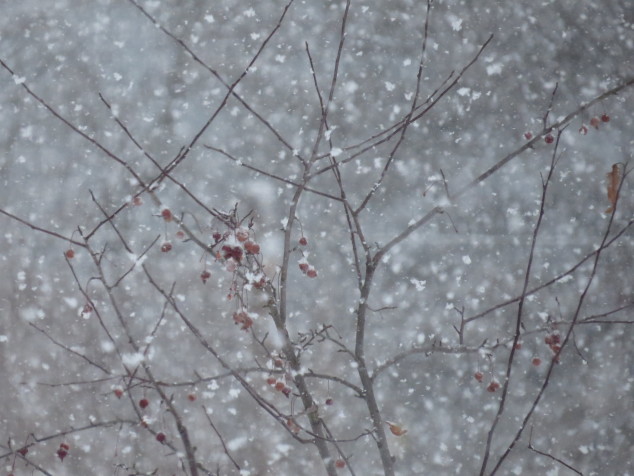
Snow and melting, melting and snow was the mantra for March. The freezing and thawing cycle was also what made March the month for tapping maple trees and drawing sap.
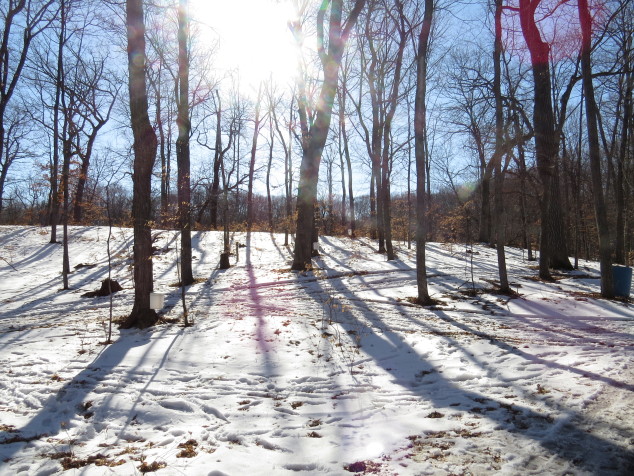
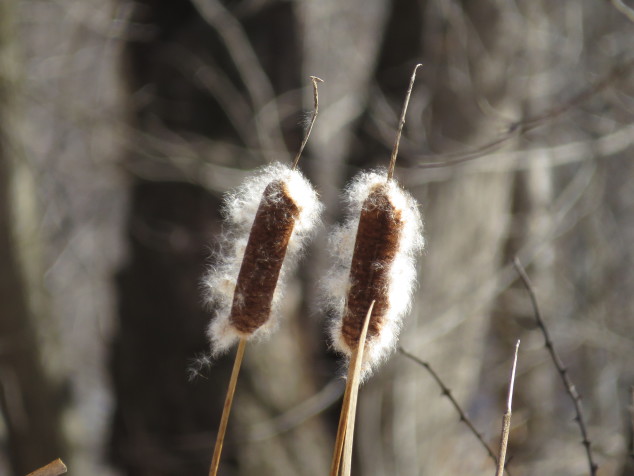
A late-bursting pair of cattails shone in the sunshine in the sugar bush at St. John’s Arboretum.
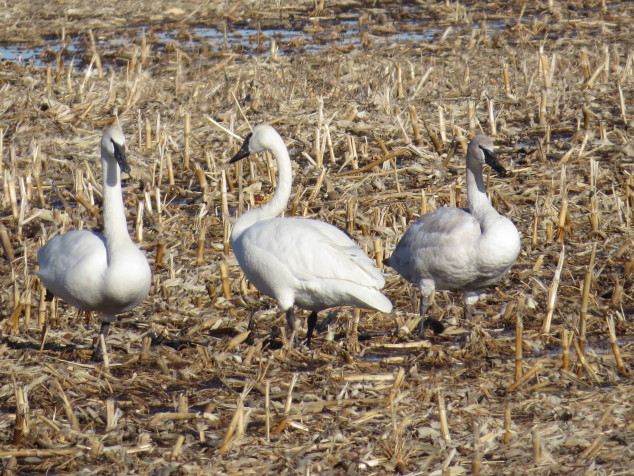
A family of trumpeter swans grazed in a stubble field. One adult swan stood on one leg as the rest of the family moved around her. I’m thinking she must have been injured.
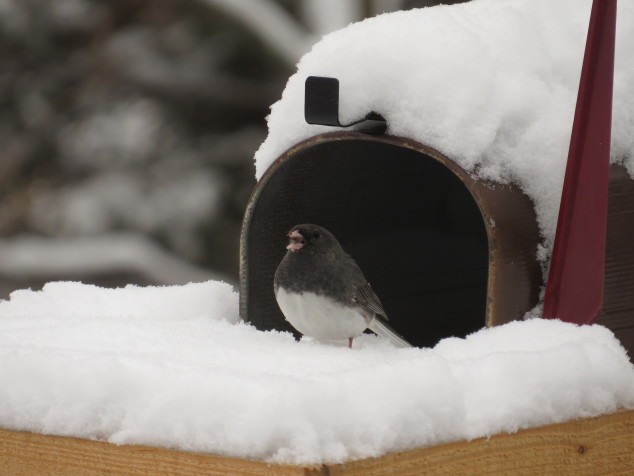
Another snow on the 22nd brought the dark-eyed juncos to the feeders.
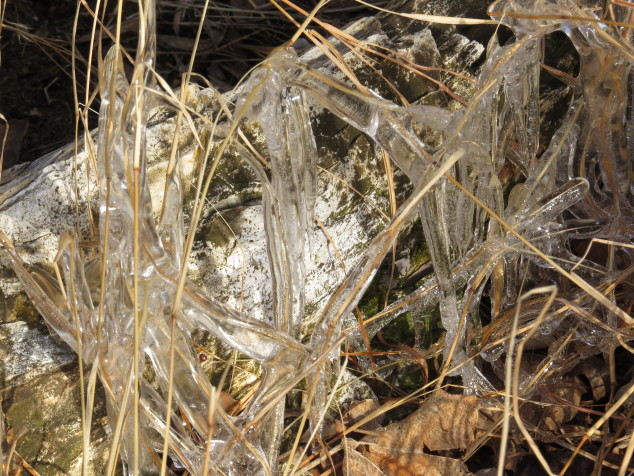
Melting snow dripped from the house, coating the ornamental grass under the roof line with ice.
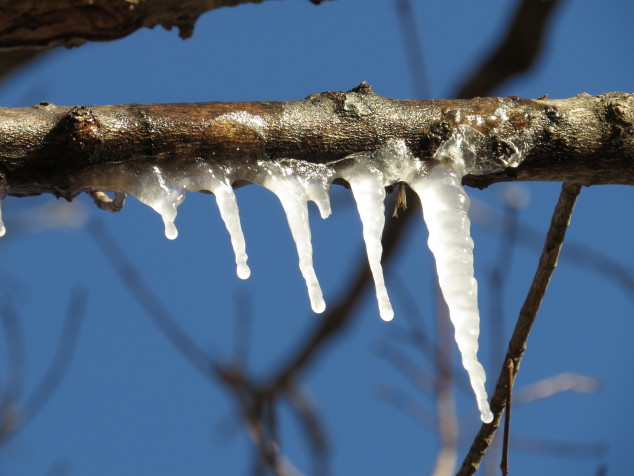
Two freezing days after a warming trend formed sapsicles in the maple tree.
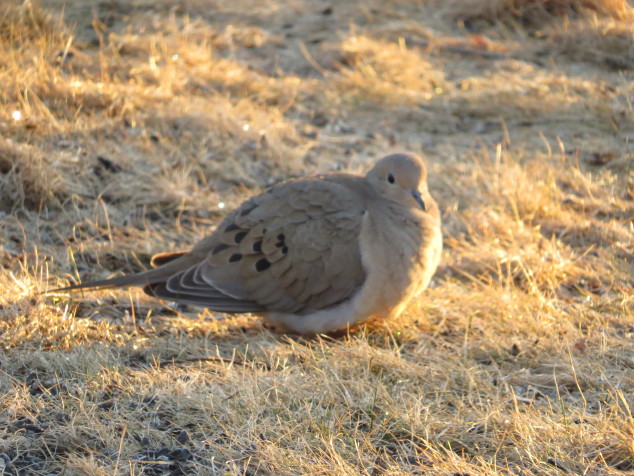
A mourning dove and her mate waddled on the ground under the bird feeder, warming themselves in the morning sun. Their melancholy coos sounded calming and comforting.
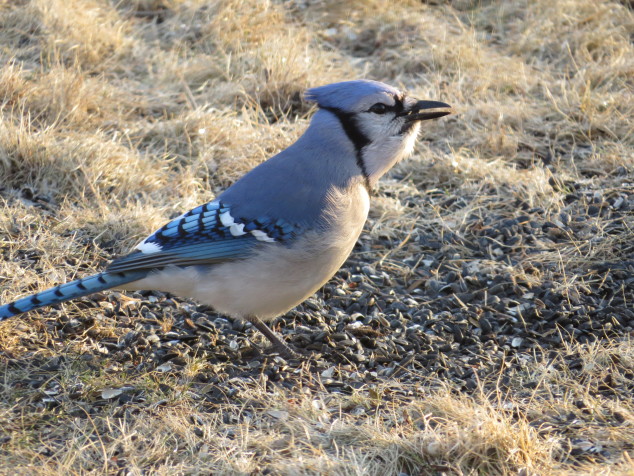
A blue jay was performing the spring mating ritual of feeding his mate. He gathered a seed or two, flew up in the tree where she sat on a branch, and fed her. The cardinals also carry out this chivalrous act in the spring.
This little black squirrel showed up last week. His stubby tail made me wonder what Squirrel Nutkin adventure he had been up to!
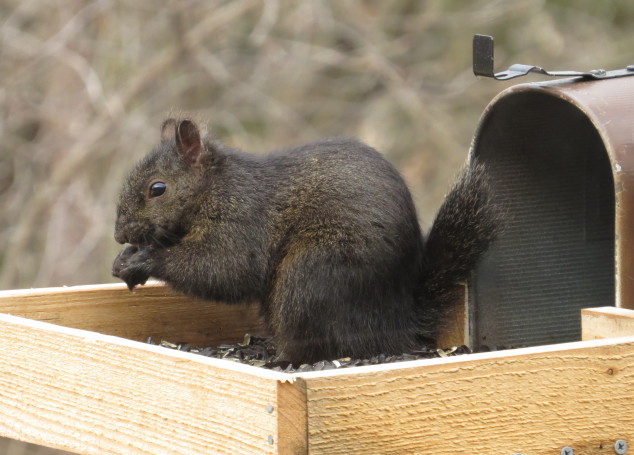
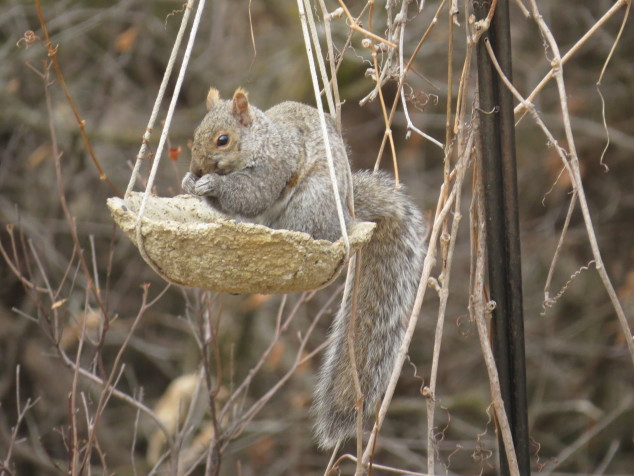
While Stubby was eating at one bird feeder, a gray squirrel was flaunting his long, beautiful tail at the other feeder.
The end of the month was ice-out on the Sauk River down the hill from our house. Spring is here!
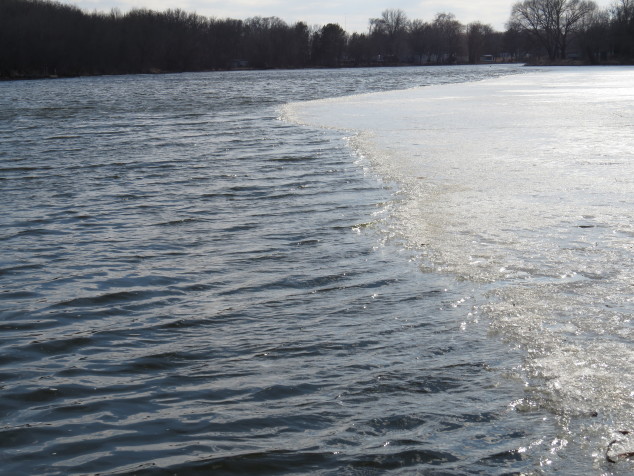
Days of warm weather and wind have probably melted the rest of the ice on the River and made conspicuous holes in the lakes’ ice. I have migrated back to South Dakota for a while to join my mom in helping my sister recover from hip surgery. I miss my mate and our evening meals together, though it’s wonderful to be back on the prairie again. As Spring bursts forth in small, incremental ways, I plan to cherish the time with my family and enjoy the creatures and features of new life.