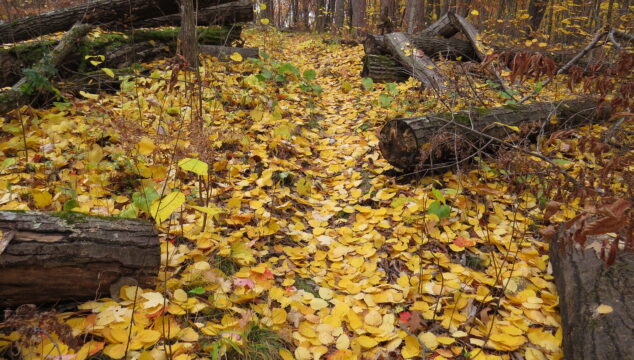
Come walk with me in the peak Autumn beauty of the Northwoods. To say that I love this time of year is an understatement. Most everyone can appreciate the colorful falling leaves---it reveals the 'true self' of a tree when its leaves are no longer producing chlorophyll. Their true colors are revealed, and there is something simple … [Read More...]
The Extraordinary Ordinary
On the first of December, we had six inches of snow–the perfect start to our meteorological Winter!
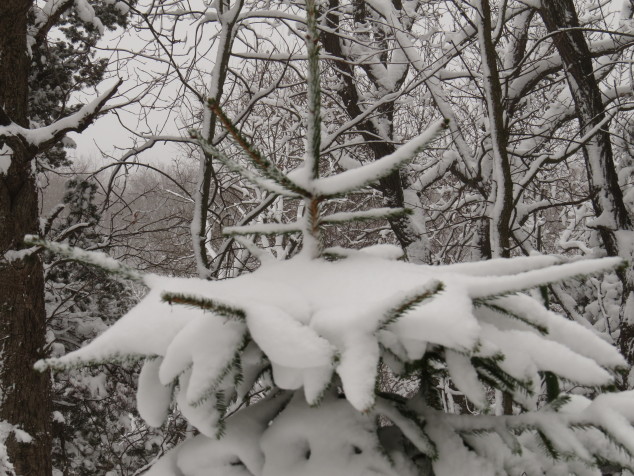
Then forty degree temperatures and rain, not ordinary for Central Minnesota Decembers, wreaked havoc with our snow. This is the first December in nine years of living here that we have lost snow instead of accumulated it. The moisture-laden air from the melting snow transformed my morning walk one day this week. Night temperatures fell below freezing, coating the winter remains of plants with a layer of frost.
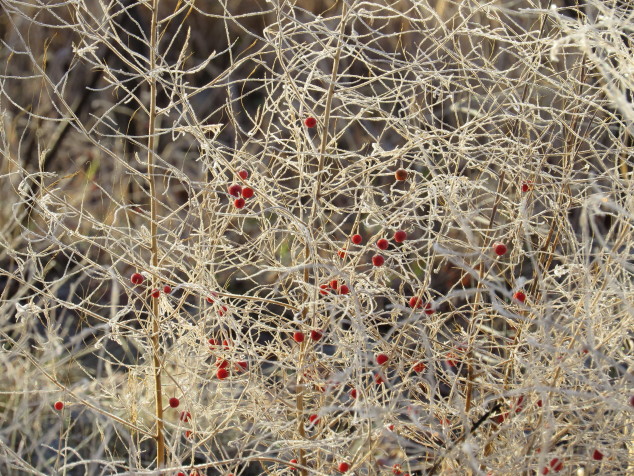
The sun rose above the horizon on the clear-sky day, striking the frost with the power of light, transforming the ordinary into extraordinary, shimmering creations! The asparagus stems lit up.
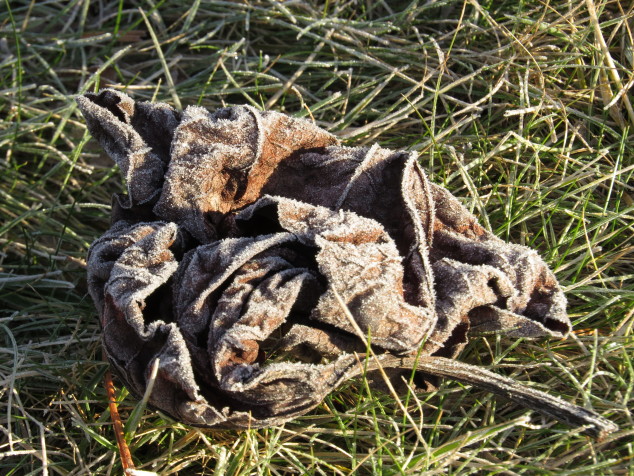
A crumpled Linden leaf glowed in the grass.
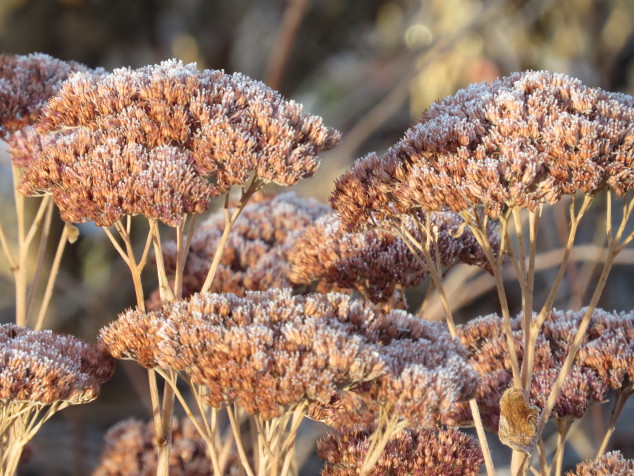
Each rimed stem of lavender and all the other frosted things dazzled like diamonds, but only the snow sparkles showed on the photos.
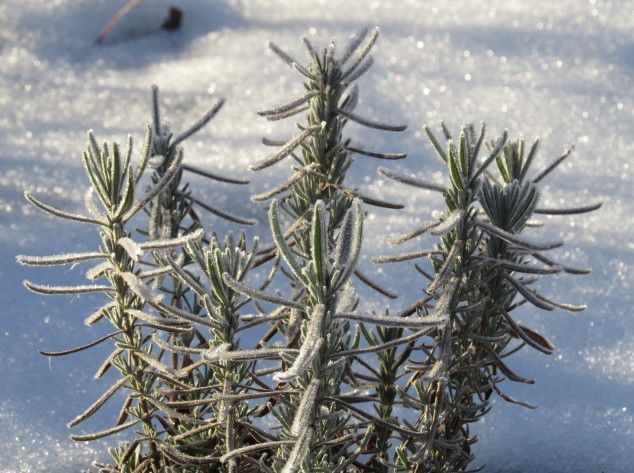
So imagine each little frost crystal glimmering in the sun!
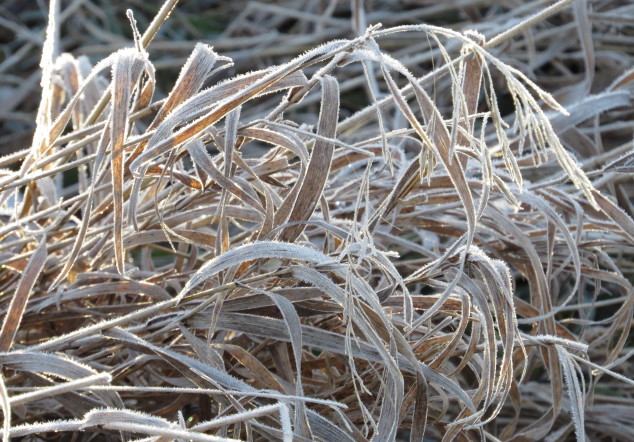
After only a few minutes of direct sunlight, the frost began to melt, and the shimmering landscape returned to the sunny normalcy of a late fall day.
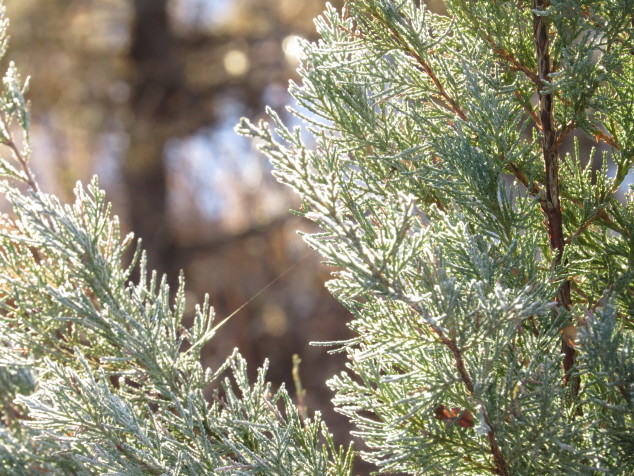
Photographer Annie Leibovitz said, “I wish that all of nature’s magnificence, the emotion of the land, the living energy of place could be photographed.” With my very amateur photography skills, I could not capture the shimmering effervescence of my morning walk, yet the combination of photos, words, and imagination stretches us toward that reality.
And what of us? A photograph of ourselves cannot capture our magnificence, our emotion, or the spirit of us. In fact, most face-to-face meetings only expose the ordinary image of ourselves. And what do we see when we look in the mirror? What stretches us toward the reality of who we are? Perhaps it takes the Water of Life, a cold night, and the Light of the World to shine on us in order to transform our ordinary self into our extraordinary brilliance.
Gleanings from March 2015
When warmer weather arrives, we tend to forget that the month started with snow!
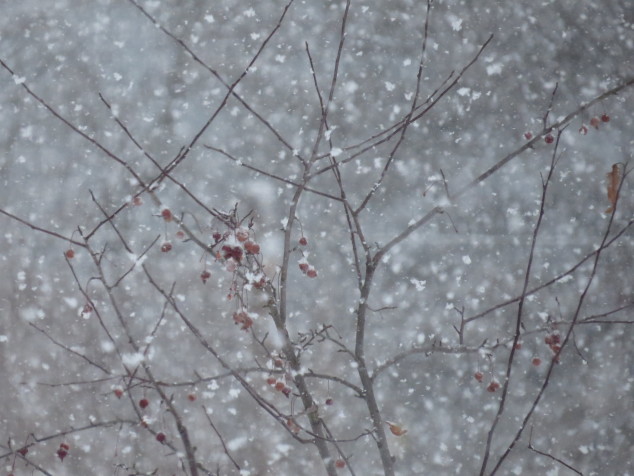
Snow and melting, melting and snow was the mantra for March. The freezing and thawing cycle was also what made March the month for tapping maple trees and drawing sap.
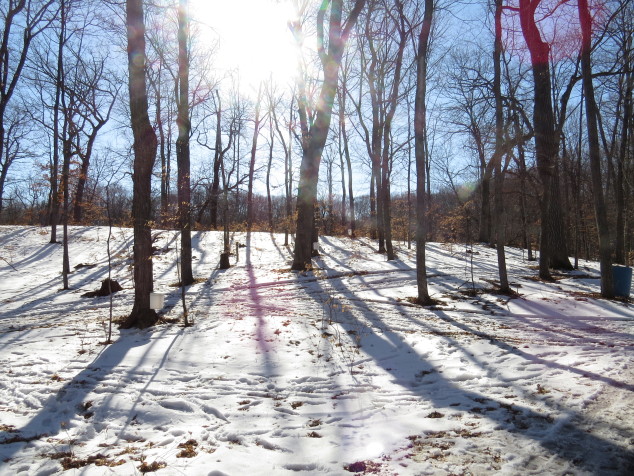
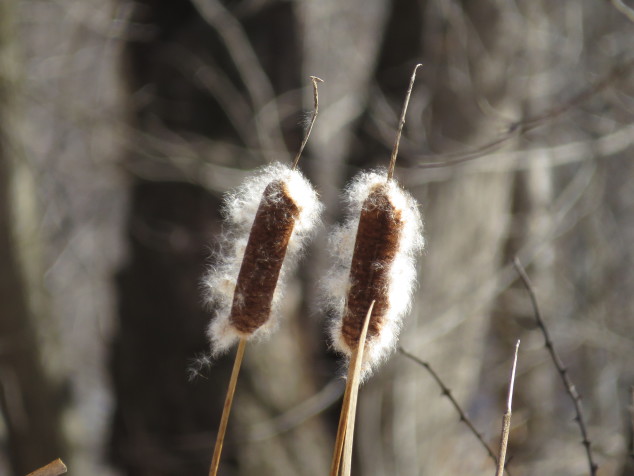
A late-bursting pair of cattails shone in the sunshine in the sugar bush at St. John’s Arboretum.
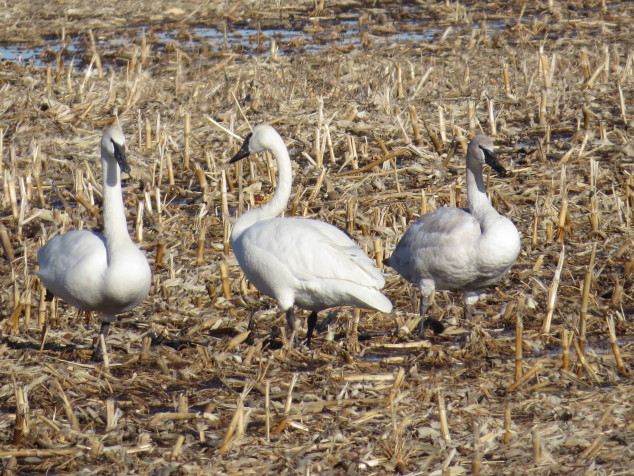
A family of trumpeter swans grazed in a stubble field. One adult swan stood on one leg as the rest of the family moved around her. I’m thinking she must have been injured.
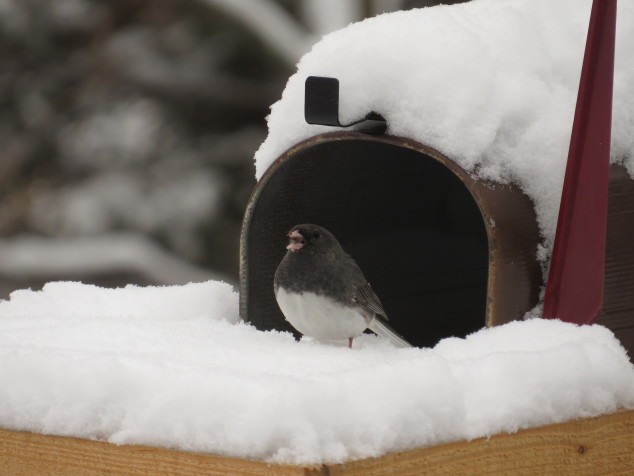
Another snow on the 22nd brought the dark-eyed juncos to the feeders.
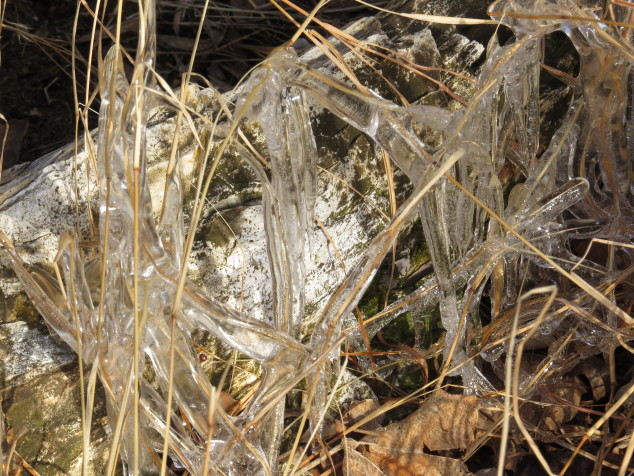
Melting snow dripped from the house, coating the ornamental grass under the roof line with ice.
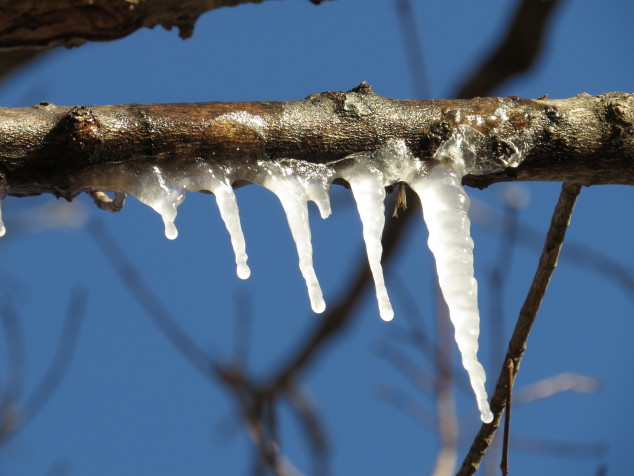
Two freezing days after a warming trend formed sapsicles in the maple tree.
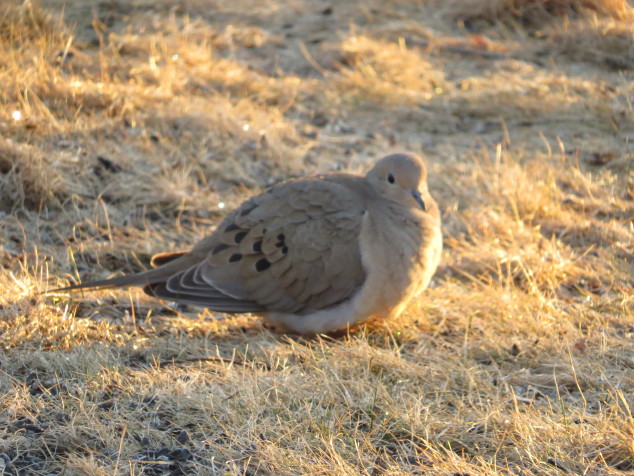
A mourning dove and her mate waddled on the ground under the bird feeder, warming themselves in the morning sun. Their melancholy coos sounded calming and comforting.
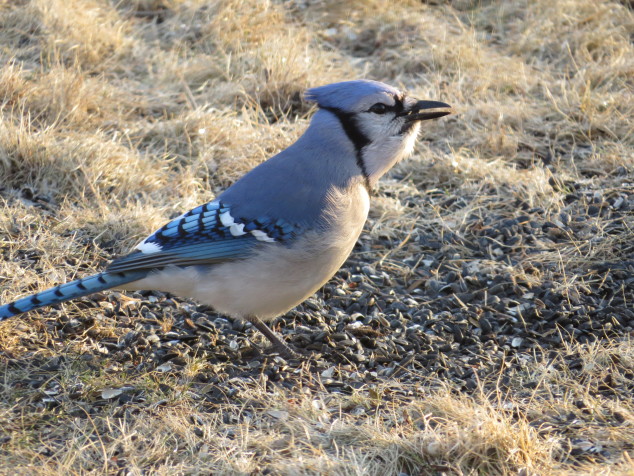
A blue jay was performing the spring mating ritual of feeding his mate. He gathered a seed or two, flew up in the tree where she sat on a branch, and fed her. The cardinals also carry out this chivalrous act in the spring.
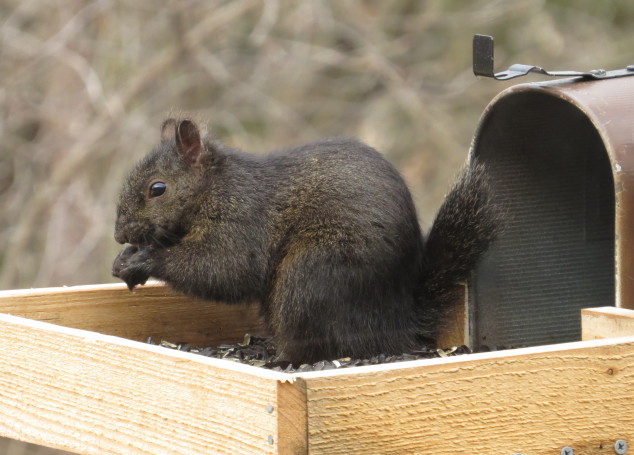
This little black squirrel showed up last week. His stubby tail made me wonder what Squirrel Nutkin adventure he had been up to!
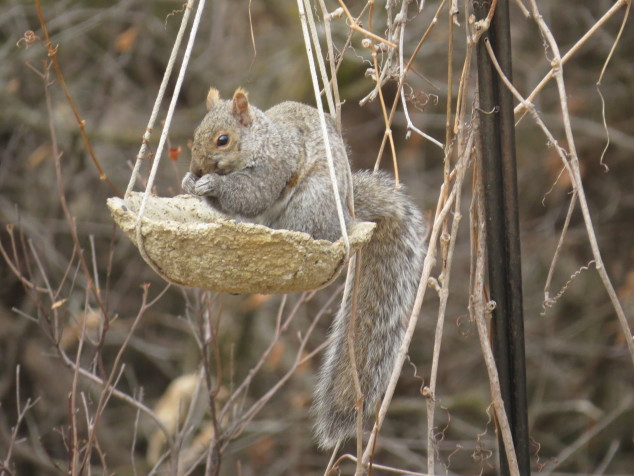
While Stubby was eating at one bird feeder, a gray squirrel was flaunting his long, beautiful tail at the other feeder.
The end of the month was ice-out on the Sauk River down the hill from our house. Spring is here!
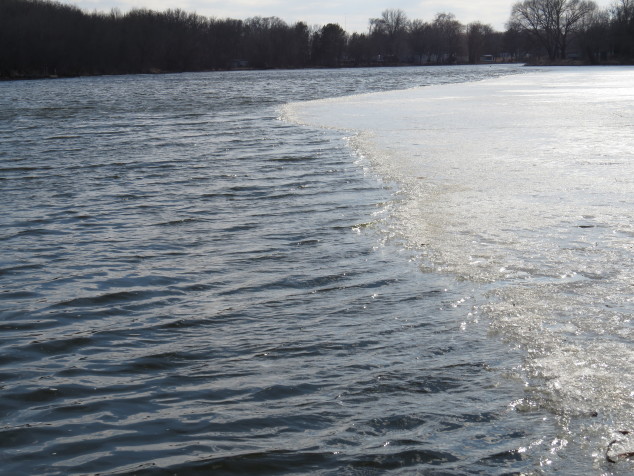
Days of warm weather and wind have probably melted the rest of the ice on the River and made conspicuous holes in the lakes’ ice. I have migrated back to South Dakota for a while to join my mom in helping my sister recover from hip surgery. I miss my mate and our evening meals together, though it’s wonderful to be back on the prairie again. As Spring bursts forth in small, incremental ways, I plan to cherish the time with my family and enjoy the creatures and features of new life.
Gleanings from February 2015
When I started the gleanings posts last June, it was because I had an abundance of photos that didn’t fit into any particular post but still highlighted Nature’s treasures. In the short, cold, wintry month of February, I have slim pickings for gleanings photos!
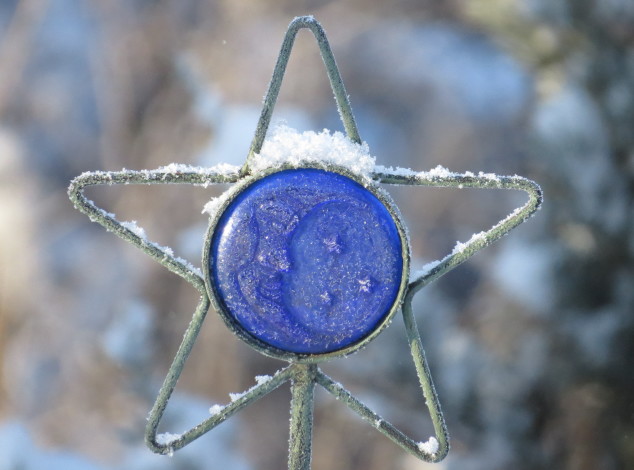 February began with hardly any snow, and while we’ve had a few inches here and there, it has been the least snowy February in quite a while.
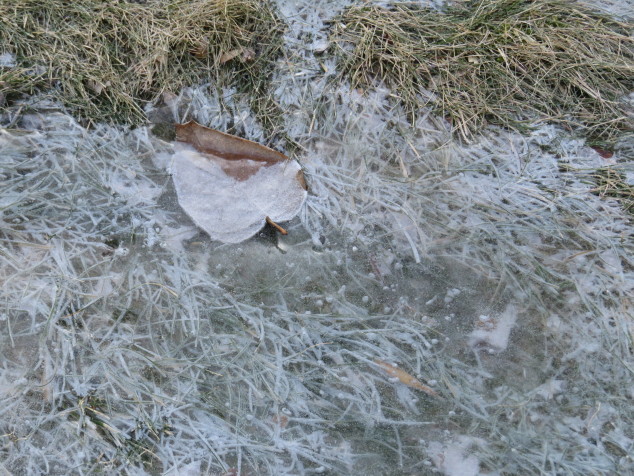
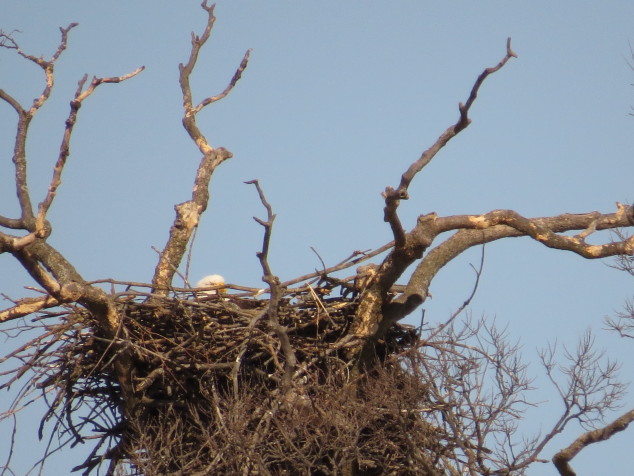
The upside to that is we could get out to do some winter hiking. It was great fun to see the eagles’ return to their nests and the almost daily sightings of them perched over the Sauk River near the bridge in town. Yesterday’s eagle update: it looks like both females are brooding their eggs! Ninety-eight percent of the time one parent, mostly the female, remains on the nest for the thirty-five days of incubation.
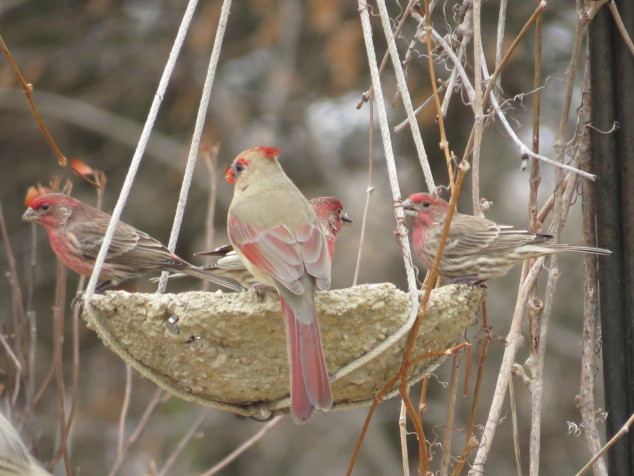
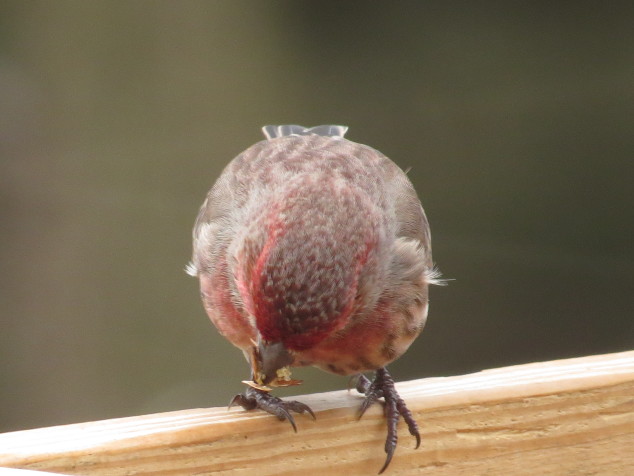
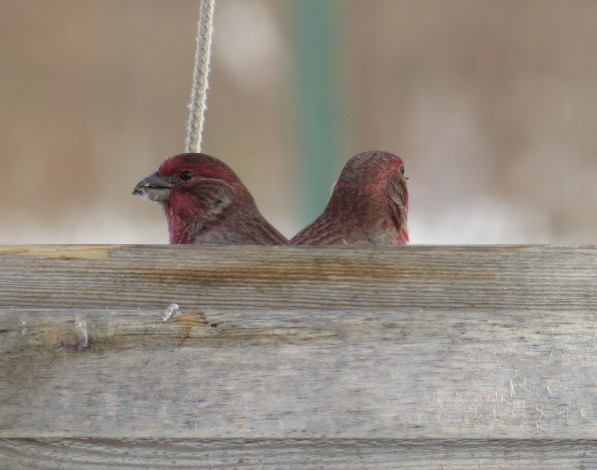
Purple finches usually come to the feeders in a group, like college kids flocking to the commons at suppertime. Unlike some of the other birds, they don’t seem to mind who dines with them.
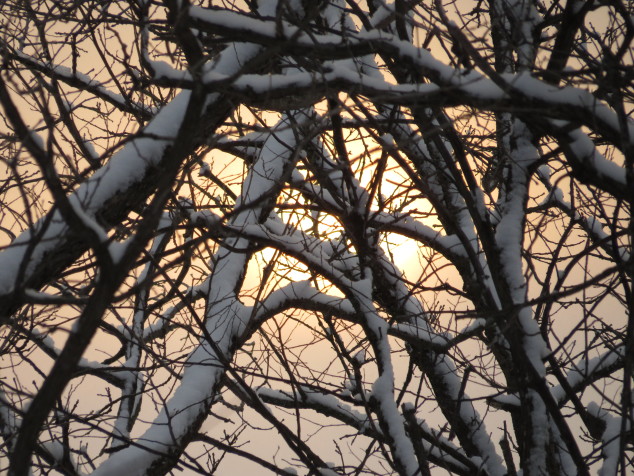
An early February snow clung to the tree branches as the afternoon sun shone through the snow clouds and trees–a cathedral of color and light.
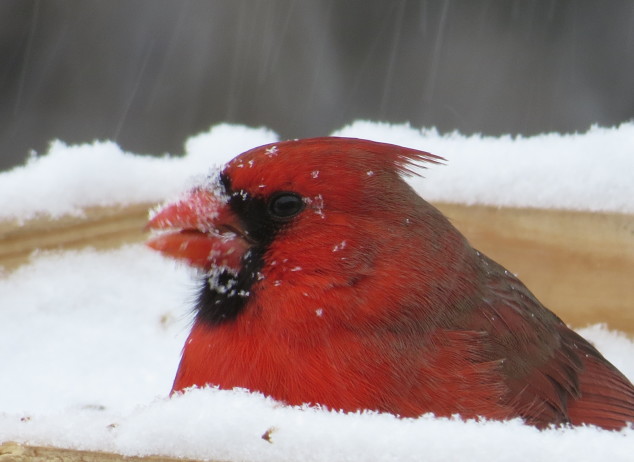
One brave parishioner was out before the snow stopped, wallowing in the glory of Winter.
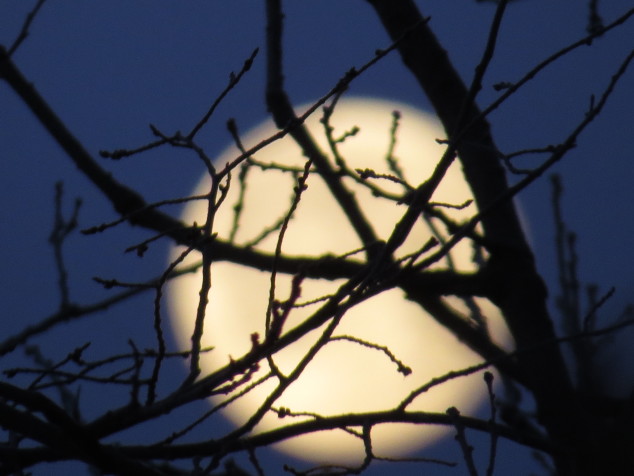
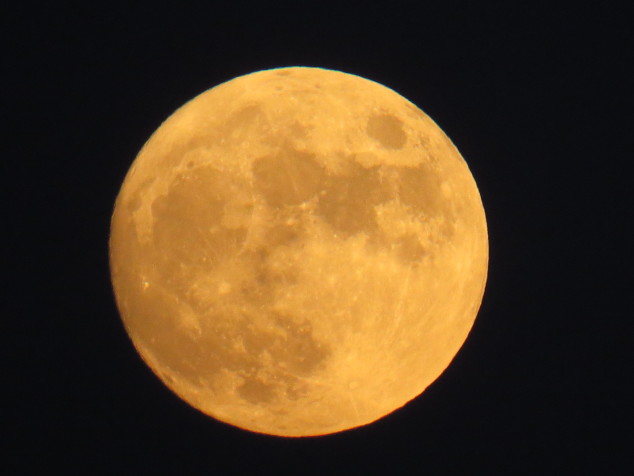
A full moon was setting in the western sky one morning as I rose from my warm, flannel-covered bed. Good morning, Moon!
Clouds and color paint a nightly work of art as the sun says good-bye to another day. Good night, Sun!
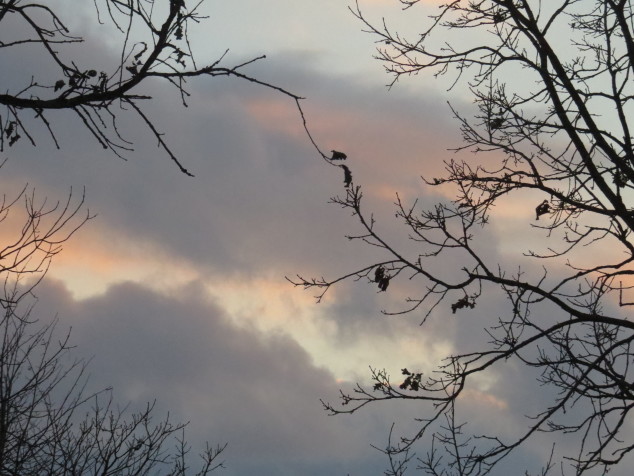
Snow and cold and lack of subjects caused slim pickings for my February photos. It seems like February and the end of winter can get on a person’s last nerve–slim pickings of patience. It’s good to finally see the first day of Spring on the calendar as we turn to March. But oftentimes, there is a shortage of other things in our lives. Some literally have slim pickings of food before their paycheck comes again. Others have a shortage of good will for those around them. Some don’t have much love or friendship to brighten their days. What is lacking is our lives? And how can we help bring abundance to others? Let’s all wallow in the constancy of each day’s sun, the hope of new Spring life, and the glory and beauty of Nature.
Mount Tom
Temperatures slipped above freezing on Saturday, adding to my dismay that we were smack-dab in the middle of winter and experiencing ‘tropic’ air and melting snow. So on a positive spin to my dismay, we decided to go hiking (sans snowshoes) at the nearby Sibley State Park. The ranger recommended the Mount Tom trail, so after parking at the trail center, we were off to conquer Tom.
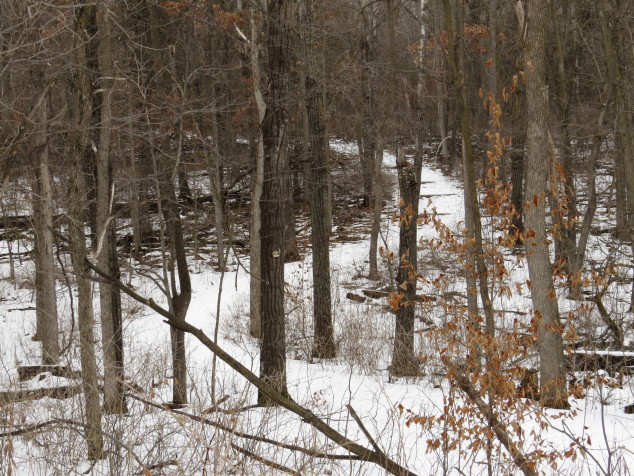
The trail was snow-covered and slick in places, and as I carefully traipsed up the hill, all I could think about was ‘what if I fall on Aaron’s camera?’ So Chris stepped into the woods and fashioned two walking sticks for me which made the traversing so much easier–and faster!
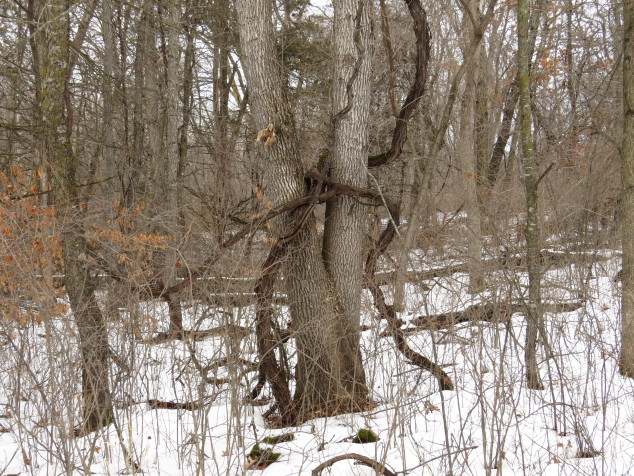
Dark, peeling bark of three huge wild grapevines climbing a tree caught my attention. They twined their way into a sculpture fit for any gallery.
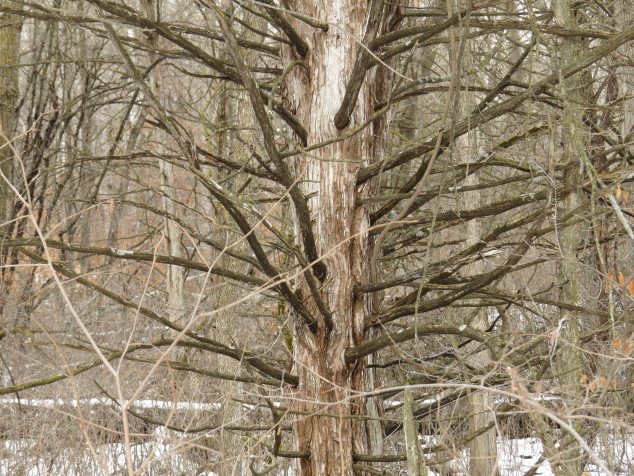
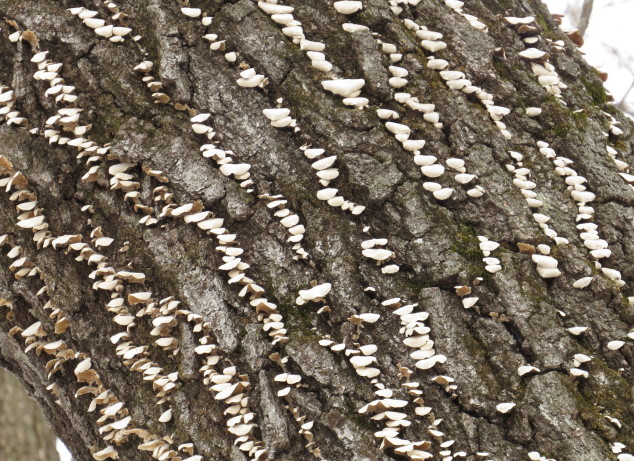
The dead lower branches of a red cedar tree and the bright white fungus lining the grooves of an oak tree added to the gallery of Mount Tom.
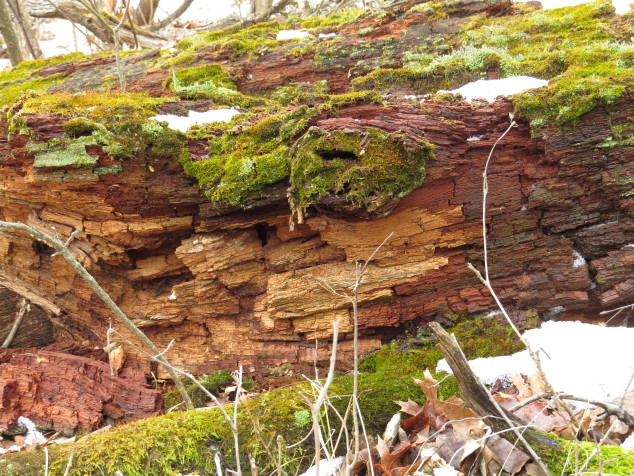
A decaying log displayed a palette of earthy clay and moss colors, almost bright in the white and gray landscape.
The media of choice for the oaks were fungi and moss.
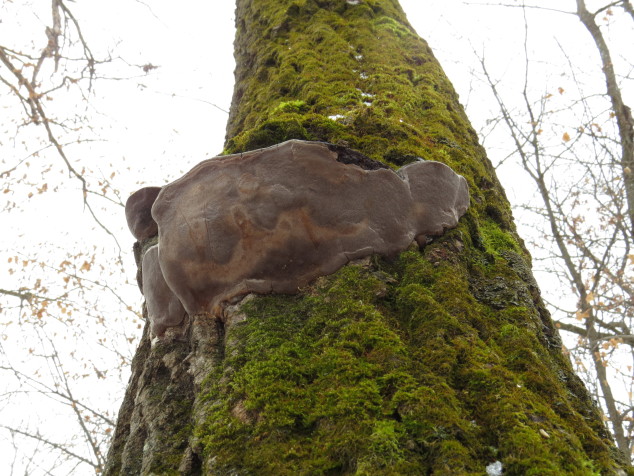
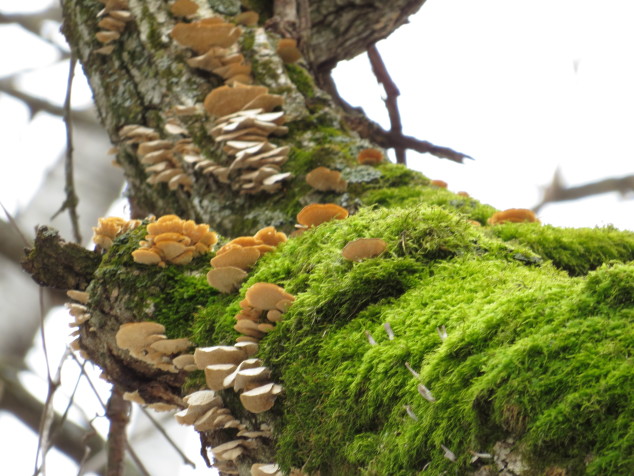
The native Ironwood trees still held on to their rust-colored leaves. This understory tree, also called Hop-hornbeam, is tolerant of shade, slow growing, has hop-like, papery seedpods and tough, hard-to-saw wood.
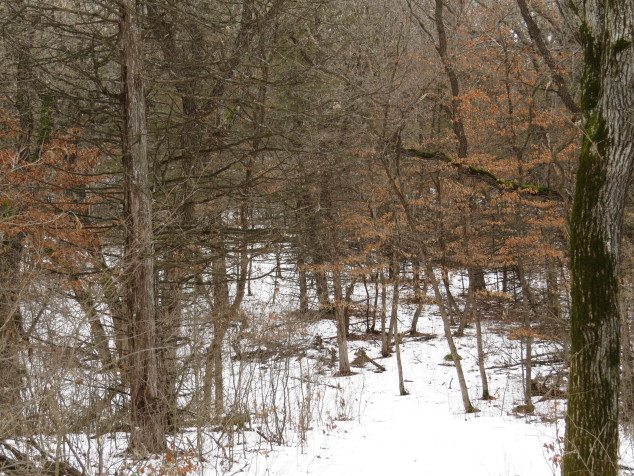
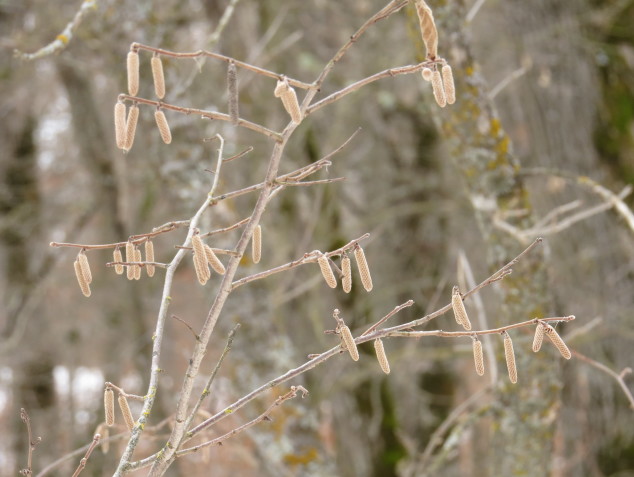
A stand of young ironwood trees displayed their catkin flowers, hinting at the spring to come.
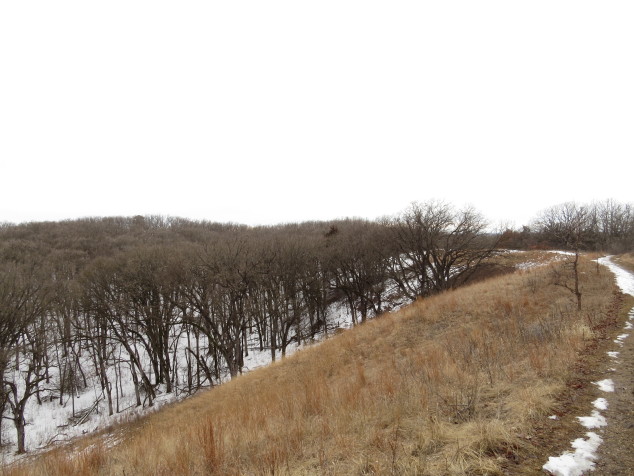
 An hour and a half into our hike, after climbing up and down hills, we began to wonder if we should just turn around. Where is this Mount Tom? And what kind of name was Mount Tom, anyway? This is Minnesota! Our map of hiking and snowmobile trails was confusing, so we didn’t really know if we were on the right track. But I was determined to get to Mount Tom–after all those hills, I knew we had to be close, and I wanted to get a picture! Finally we got to the top of a ridge where the sun had burned away the snow from a patch of prairie grass–this must be Mount Tom!
Down the hill we found a parking lot and outhouse, evidence that we had reached our destination! But then we saw a granite structure with a viewing platform up on the next hill. As we walked towards it, we saw a sign that said ‘Mount Tom!’ Ok. And from the signage we read, “Mount Tom is the highest point in Sibley State Park and one of the highest landmarks in the area. Sibley State Park was established in 1919, in part to protect Mount Tom and the area’s glacially formed hills.”
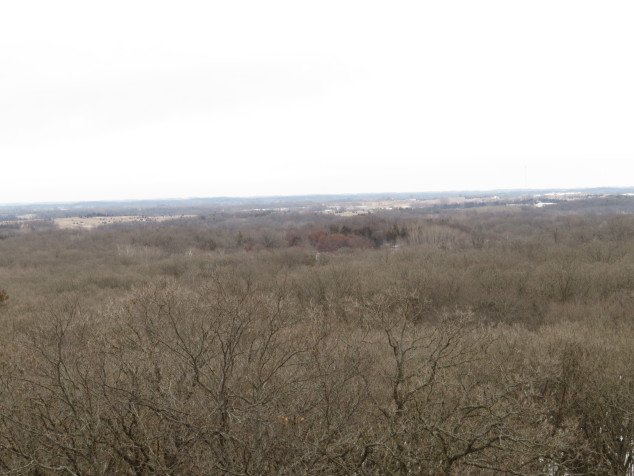
“For centuries people have used Mount Tom for spiritual, inspirational, and recreational purposes.”
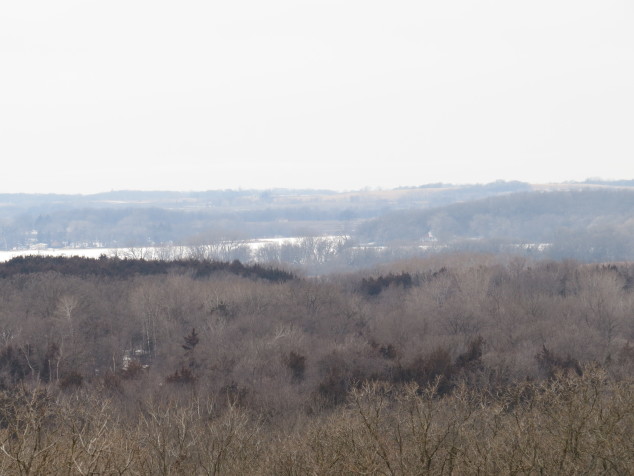
“The origin of the name Mount Tom is unknown.”
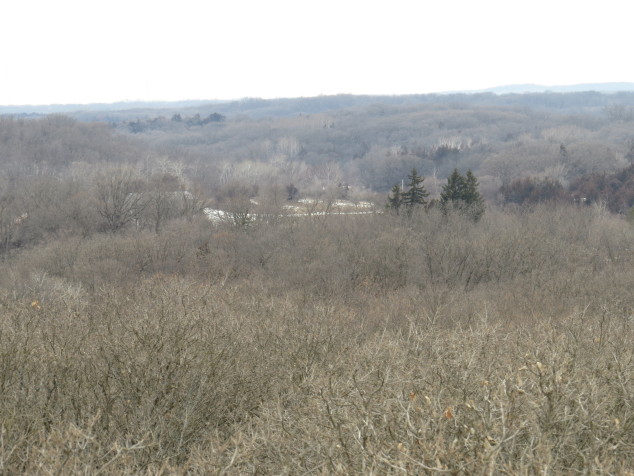
Our quest to find Mount Tom on the trails through the oak, cedar, and ironwood trees and up and down hills was finally realized! And here we were standing on holy ground! How many thousands of people had made this trek before us?
As we journey, oftentimes we don’t know where we are, our self-constructed maps become confusing, and we wonder if we should turn around and go back. But Something keeps us going. We carefully assemble ways to make the going easier, and we enjoy and appreciate the sights and moments before us. And just when we think we’ve reached our destination, there is Something More. And we find ourselves standing on Holy Ground.
I am Yours and You are Mine
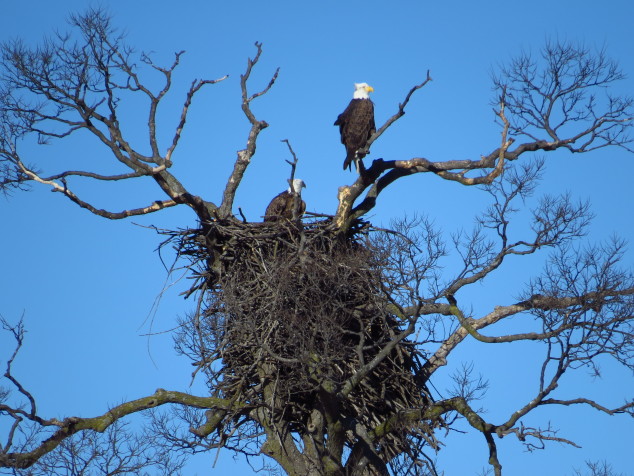
The eagles are back! Or perhaps they never left. Eagles are well equipped to live in the cold, but they migrate for food when lakes and streams are frozen over. Except for the early November snow storm, it has been a mild and open winter. Parts of the Sauk River are flowing, allowing the eagles to fish. But this is the first time we have seen the pair since late summer.
The massive nest makes the leafless Hackberry tree look top-heavy. The eagles first built this nest in 2004. Each year more sticks are added to the nest before mating and egg laying.
Both eagles were in the nest when we arrived at the park, then the female flew out to a branch. They watched us watching them.
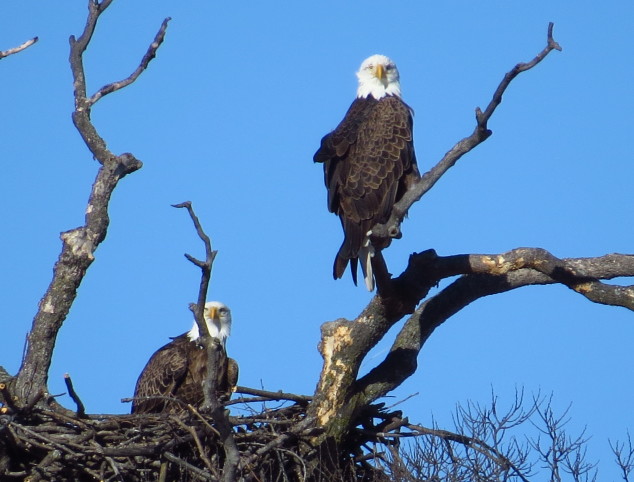
The male calmly walked out of the nest and up a branch.
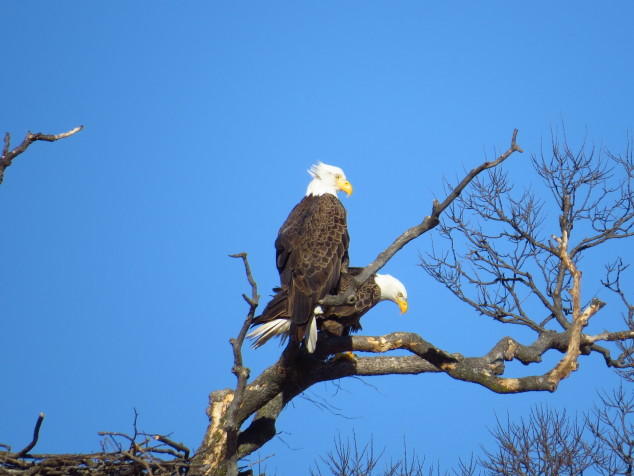
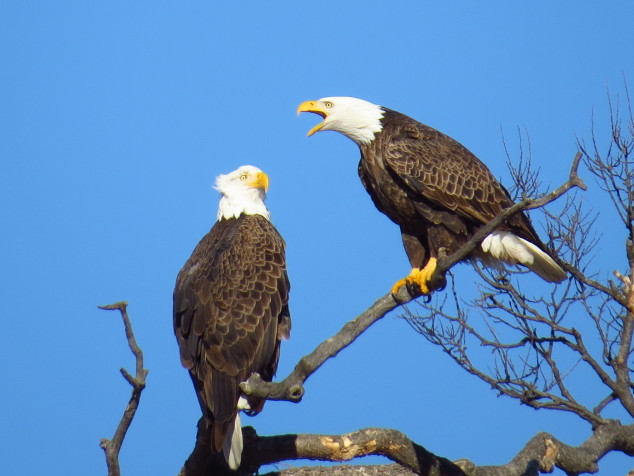
He hopped up on the branch beside his mate and shrieked. The shrill call reinforces the bond between the pair and warns other eagles or predators that this nesting territory of one to two square miles belongs to them.
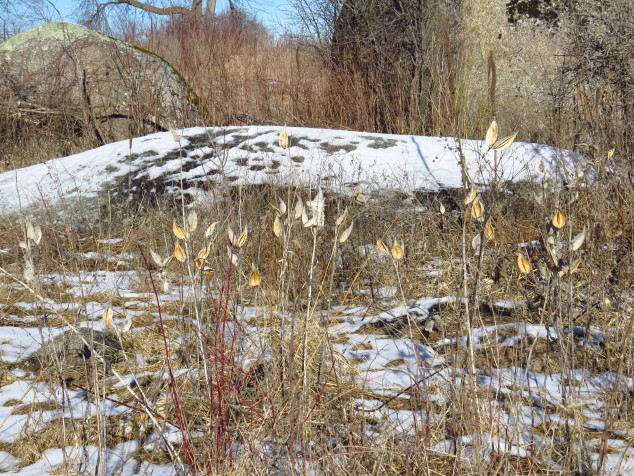
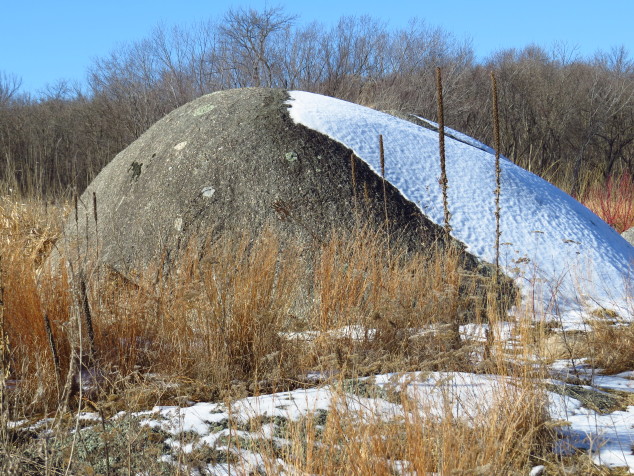
Eagle Park borders the Sauk River and the Rockville County Park and Nature Preserve we visited two weekends ago. The granite boulders, dried seedpods, and coating of snow made a beautiful winterscape.
The bare stems of red-twigged dogwood were the only bright color that punctuated the winter brown and white–besides the azure blue sky.
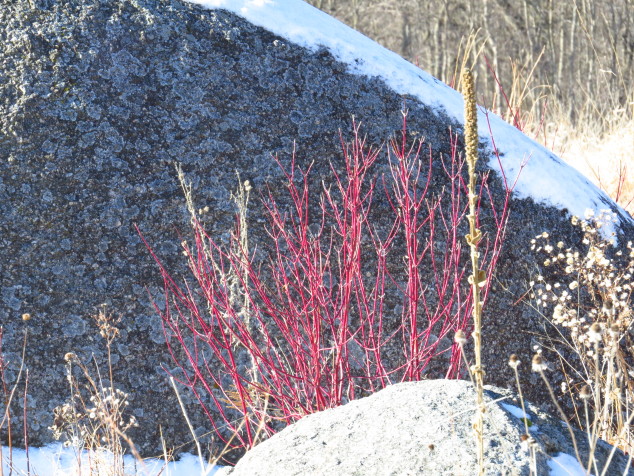
One huge boulder was half covered in snow–a yin and yang of bright snow and dark rock.
The male and female eagles have identical coloring. The female (on the left) is slightly larger in size and has a deeper beak (from top to bottom.) The male has more of a scowl, as the bone over his eye protrudes further out. We saw both of them last summer, but never together.
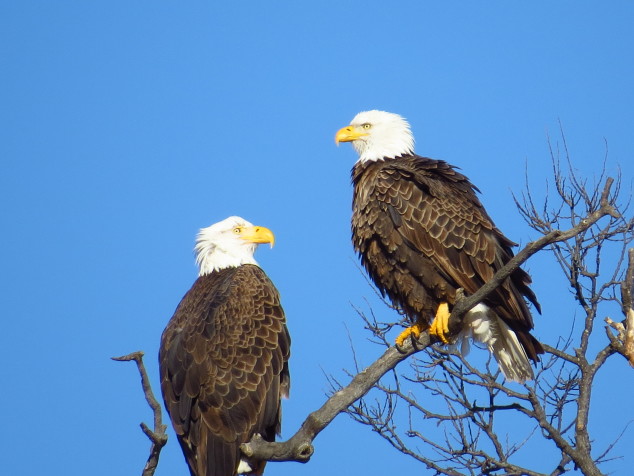
Mated eagles return to the same nest at generally the same time each year to resume courtship, mating, egg laying, and eaglet raising–an anniversary of sorts.
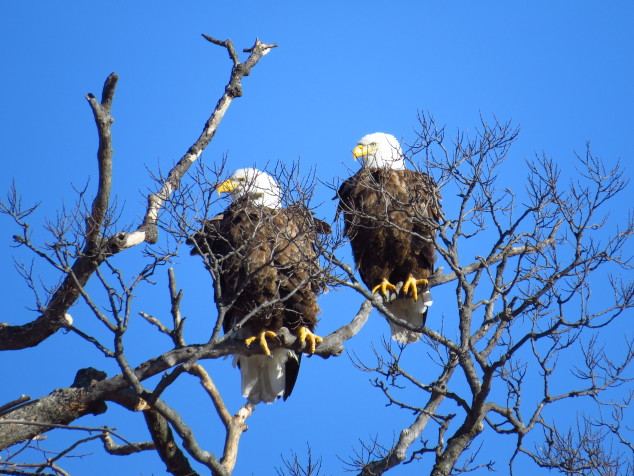
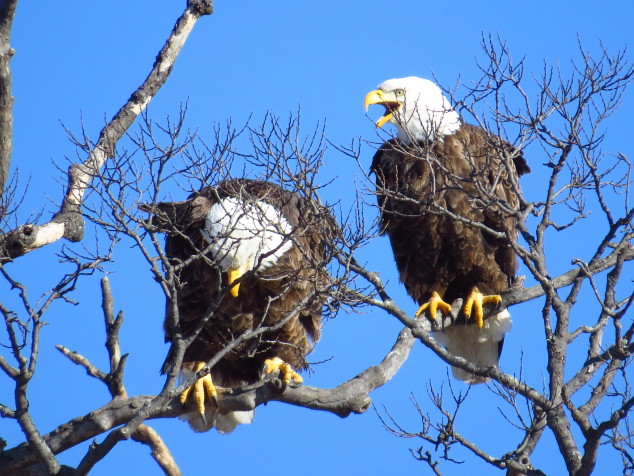
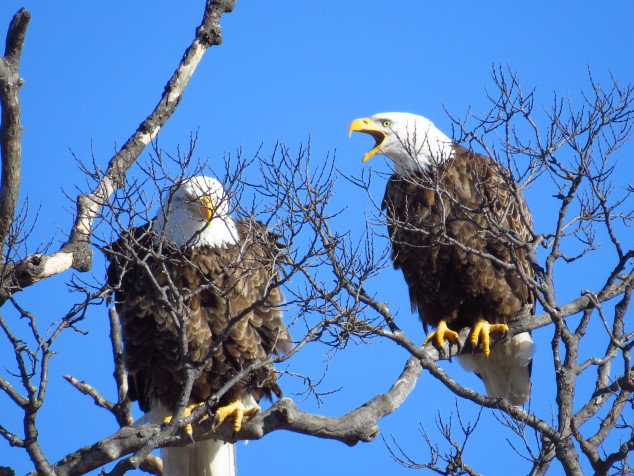
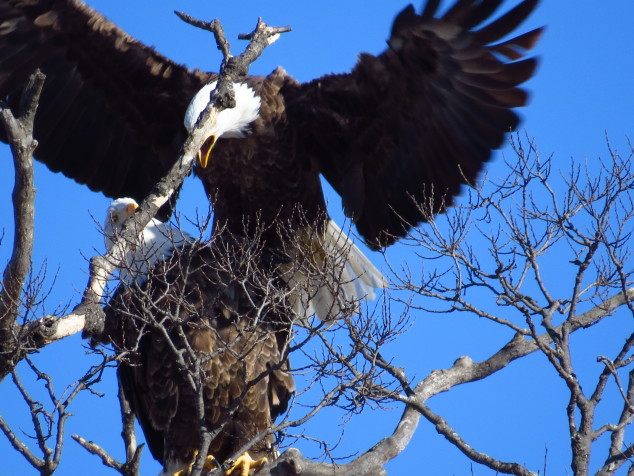
‘I am yours and you are mine.’ Together the eagles will incubate the eggs, defend the nest, hunt for food, feed the young, and raise another brood of eaglets.
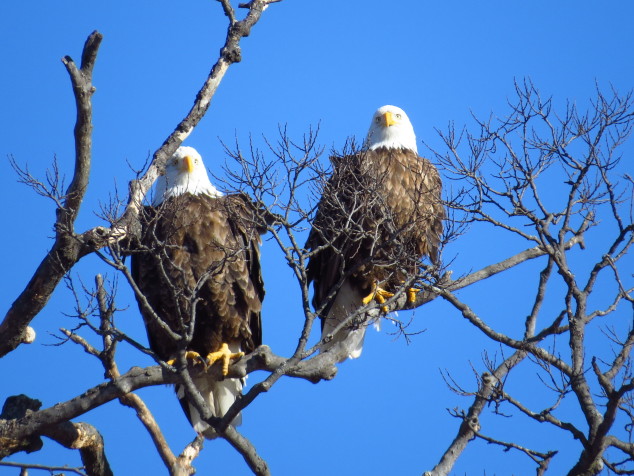
These eagles have been together for many years–the size of their nest proclaims their longevity. They seemed content to watch the Sunday afternoon visitors from their high vantage point. Side by side, they surveyed their rocky estate and the other pair of creatures. And once again they have committed themselves to one another–I am yours and you are mine! Let’s do this one more time! Happy Anniversary, Eagles!
Gleanings from December
December is a special month for us. All three of our children were born in December–in two weeks time, we celebrate three birthdays and Christmas! So, many previous Decembers have been busy flurries of activity–cake-baking, special meal-making, decorating, gift-making and wrapping, school concerts, finals, homecomings, parties, and more. But this Christmas was quiet. Our last college student finished finals and flew to Austin to spend Christmas with one of his sisters. We sent our love and best wishes to them–it just wasn’t the same.
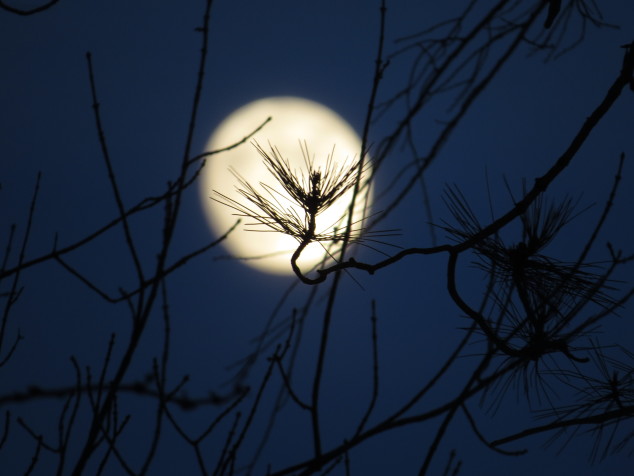
December weather wasn’t the same as usual either. It began cold and clear with a thick blanket of snow covering the ground. Day after day of that first week we were dazzled by incredible sunsets and magnificent moonrises.
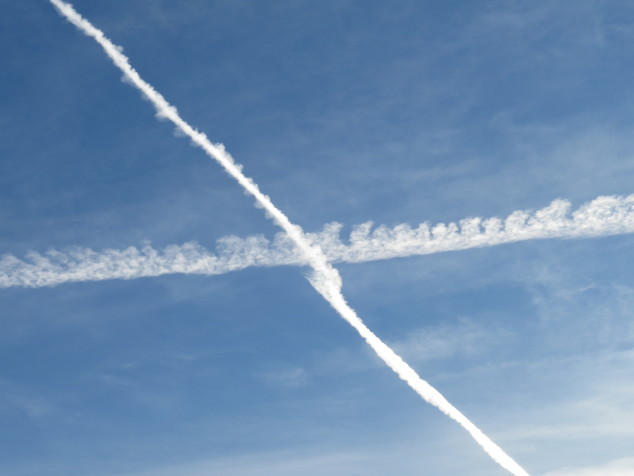
Contrails, from jet airplane exhaust condensing and freezing into ice crystals, crisscrossed the blue sky.
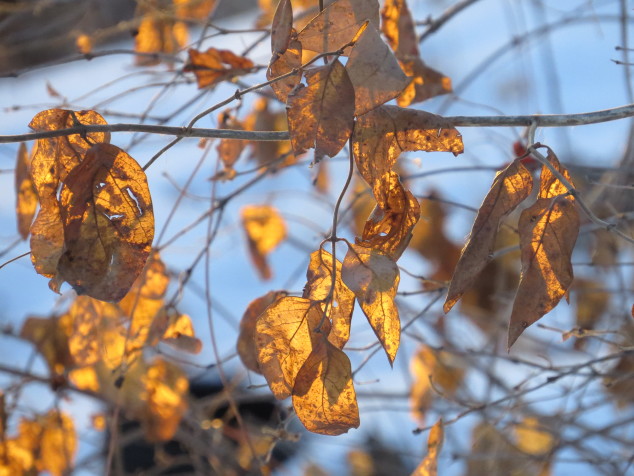
The afternoon sunlight streamed through the leaves still holding onto the honeysuckle, creating a glowing shrub of gold.
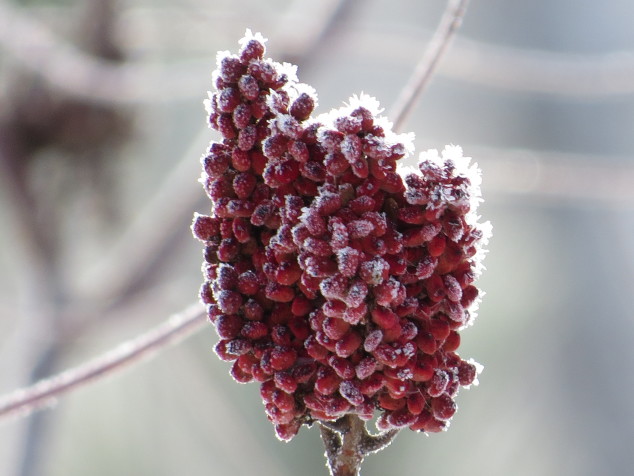
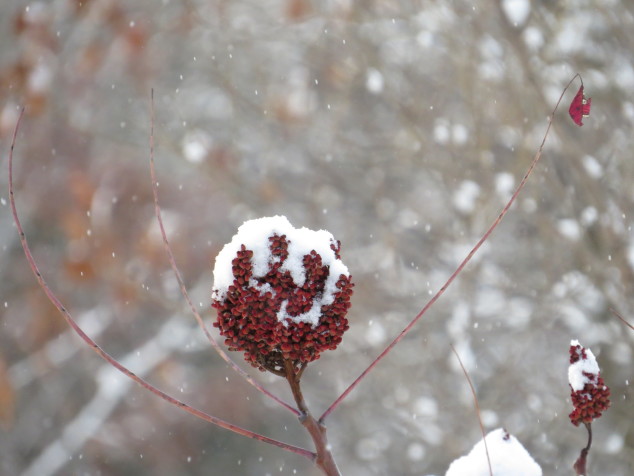
That brilliant week faded into cloudy days where temperature and moisture created an inversion, entombing us in fog. At first the fog froze and built a halo of frost on the red, clustered sumac seedheads and the winged seeds of the amur maples.
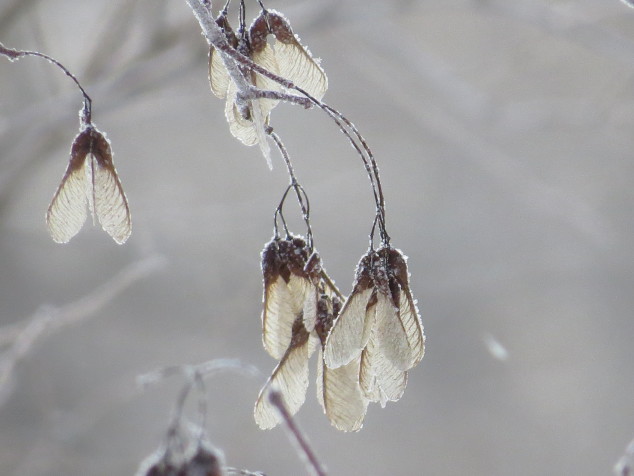
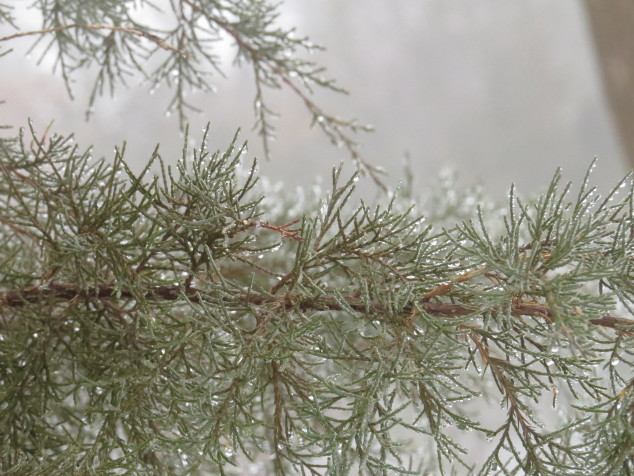
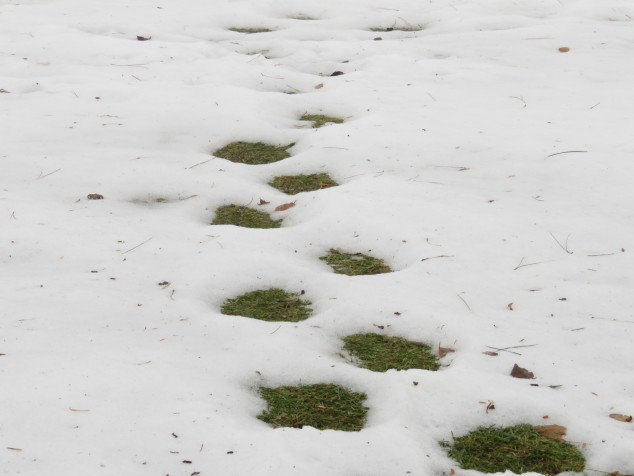
Then the temperatures warmed and began melting the snow. Water droplets adorned the trees.
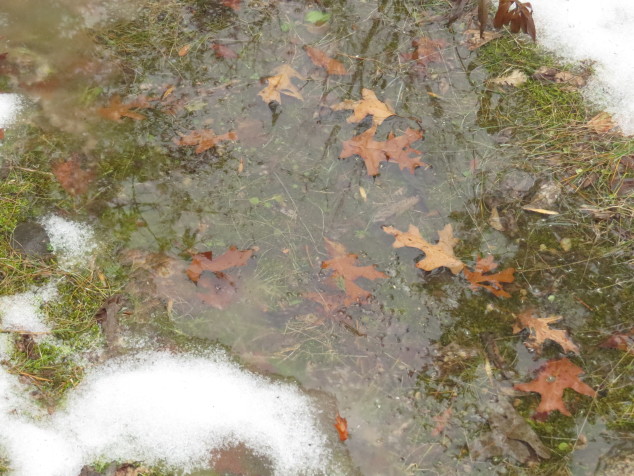
Autumn was uncovered as the snow melted.
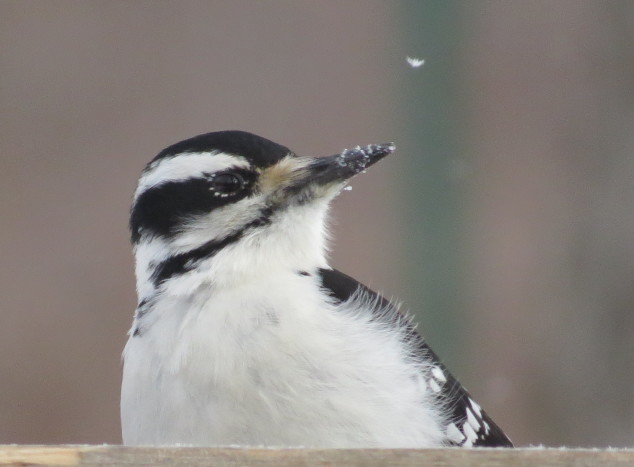
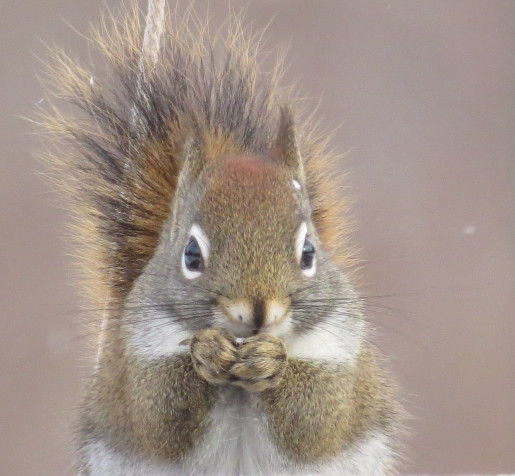
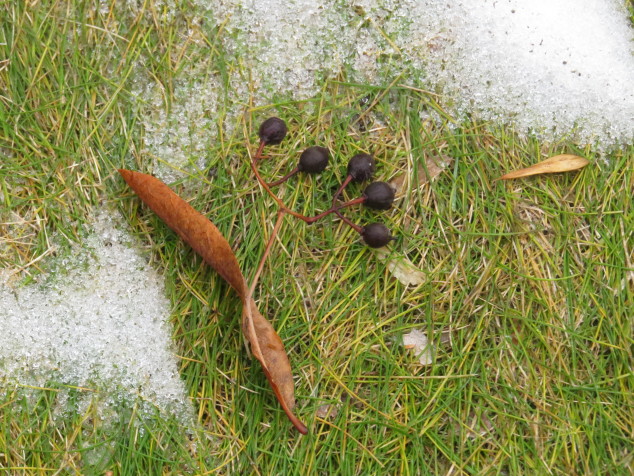 Then as soon as we saw green grass, it snowed again. Critters arrived at the birdfeeder to fuel up on black oil sunflower seeds–a female Hairy woodpecker and a jittery red squirrel.
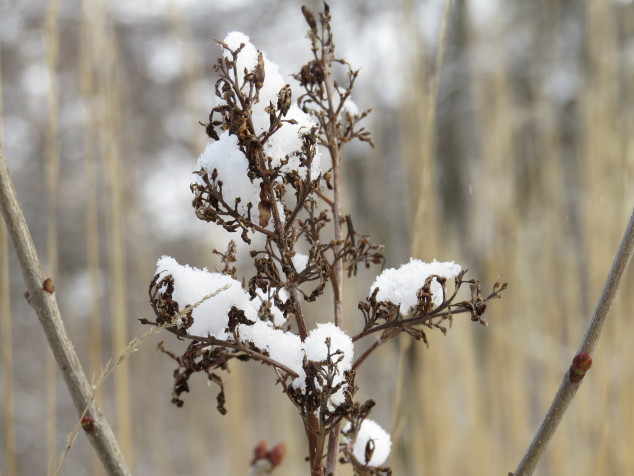
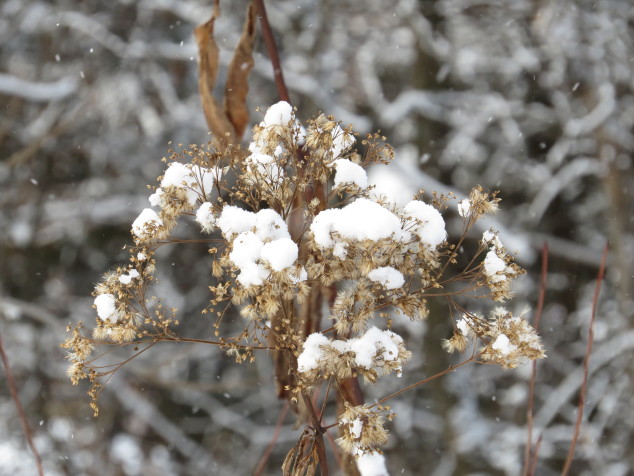
Clouds persisted into the fourth week as we headed toward Christmas. Temperatures once again rose above freezing, melting the white from Christmas….until the evening of Christmas Day when the snow started falling again. The flower heads of lilac and Joe Pye weed caught the snow–a year’s worth of seasons contained in the image.
The seedhead of the sumac–the flower of this year and the seeds for the future–was faded and covered in white, holding up its arms to catch the new snow.
We end this month and this year with the turning of seasons and time. The constancy of the sunsets and moonrises keeps us grounded as so many other things change around us. The unexpected may leave us in a fog for longer than we care to be there, but it happens for good reason. Sometimes we need to go back in order to move forward. We need the quiet in order to glean the gold from our past and let the chaff fall away in forgiveness. Take the gold and the haloed moments of your life and let them fill you and sustain you for the journey ahead. Let the trail you leave behind be one of love and goodness. As a year’s worth of seasons shine from your face, lift up your arms to embrace the New Year.
In the Fog
I vividly remember a time in my life some years ago, when I felt confused and uncertain about what I was doing. The once rock-solid thoughts and ideals that had sustained me for decades fell away in a tattered heap, like a neglected old barn. I couldn’t think straight, I felt isolated from the swirl of people around me, and I couldn’t envision a path that would lead me out of that fog.
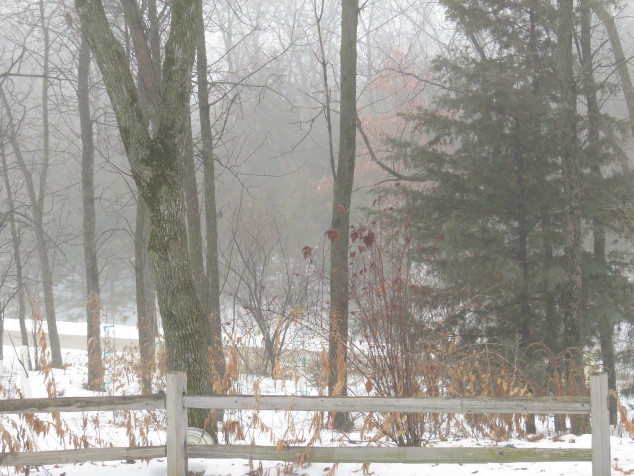
Central Minnesota has been in a fog for the last week. A warm front trapped our cool, snow-covered ground in an inversion. Icy rain fell a week ago Monday, coating sidewalks and roads in a slippery, bumpy film. By Wednesday, fog was forming above the rivers and wrapping the trees in frost. Friday, the temperature slid above freezing and started melting the snow.
The fog became denser as the water vapor was trapped beneath the thick clouds.
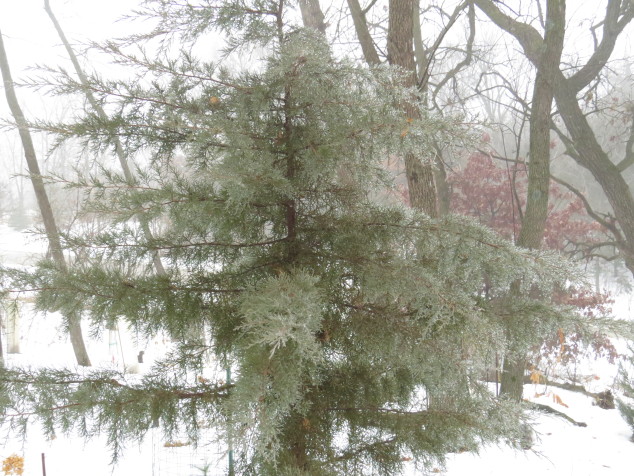
Water droplets formed on everything.
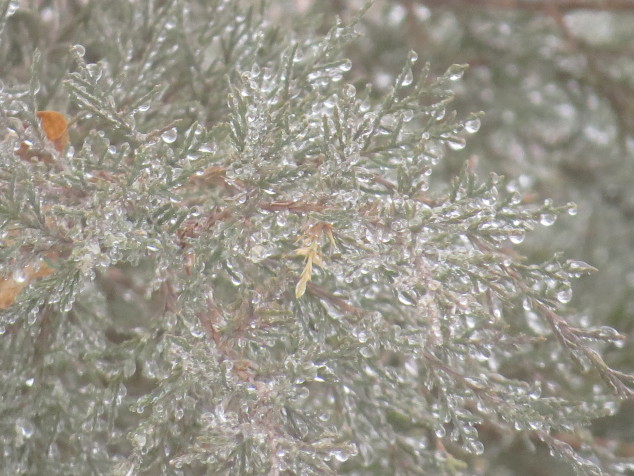
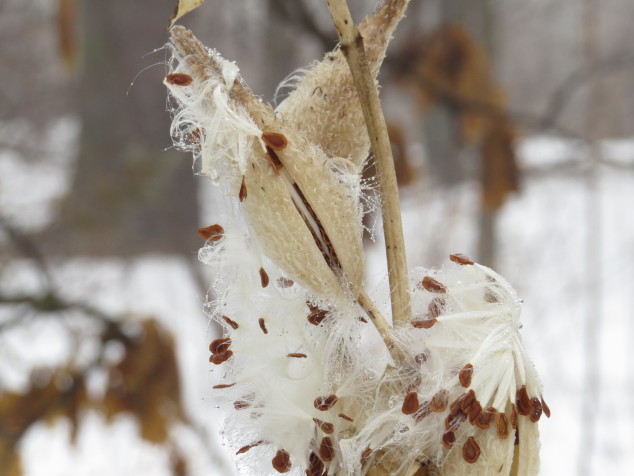

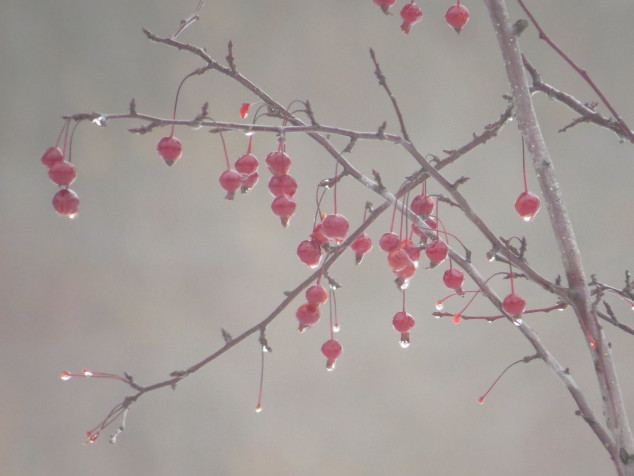
The surprising December thaw was the first in our seven years of living in Minnesota. Our frigid and snowy November seemed to have been inverted with December. The burlapped spruce, prepared for the dry, cold winds of winter, was drenched in fog and moisture. Our carefully planned protection was not needed–at least not yet.
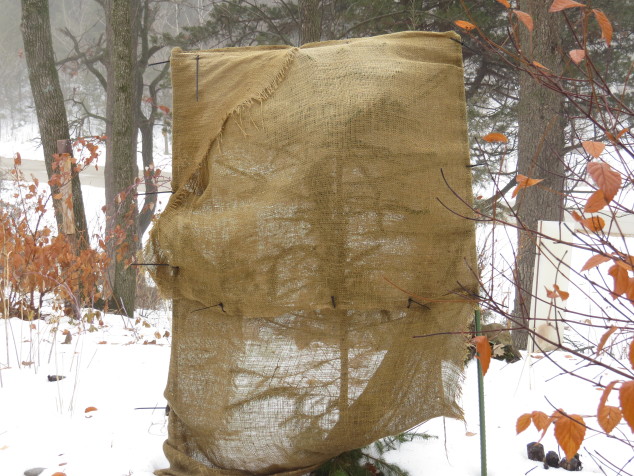
I followed the path from our house to the river overlook.
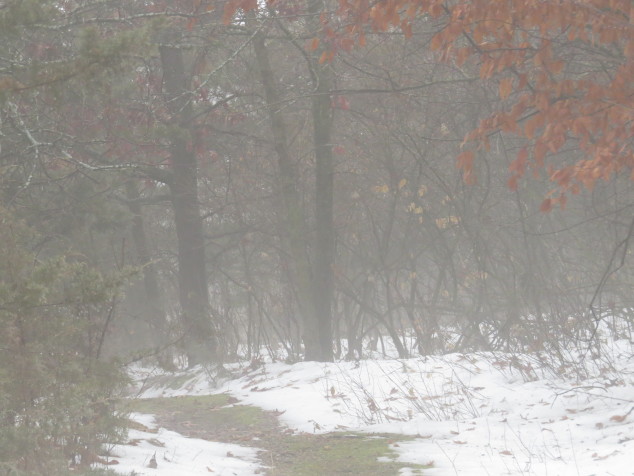 The fog was thick on the top of our hill, but over the river, it was a curtain of wet whiteness. (Here’s what it looks like on a clear day-sixth picture of the post.)
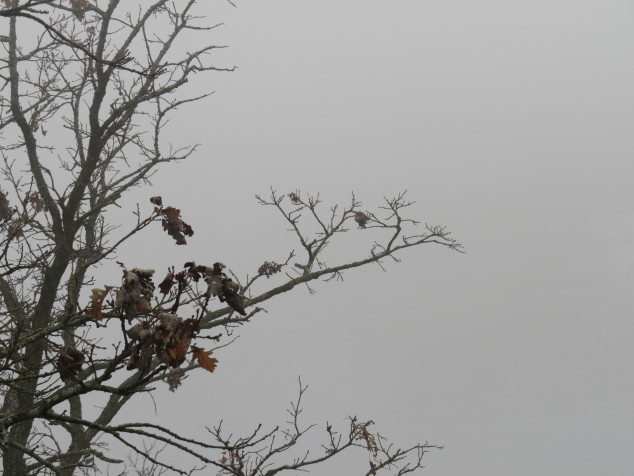
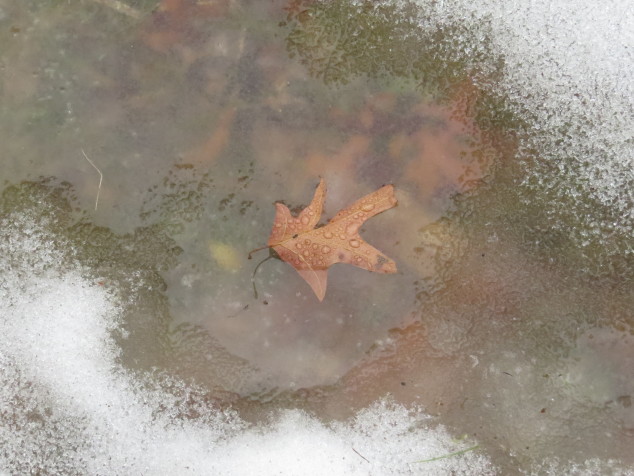
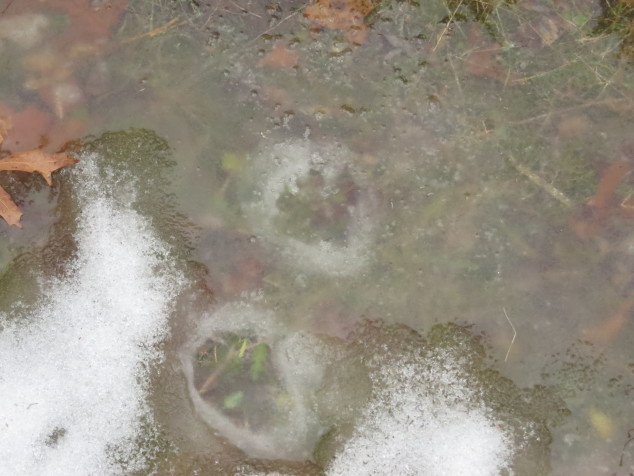
On the way back home, I passed a slushy puddle filled with oak leaves. It was a meeting of fall and winter. The bare trees were represented by their reflection in the melted snow.
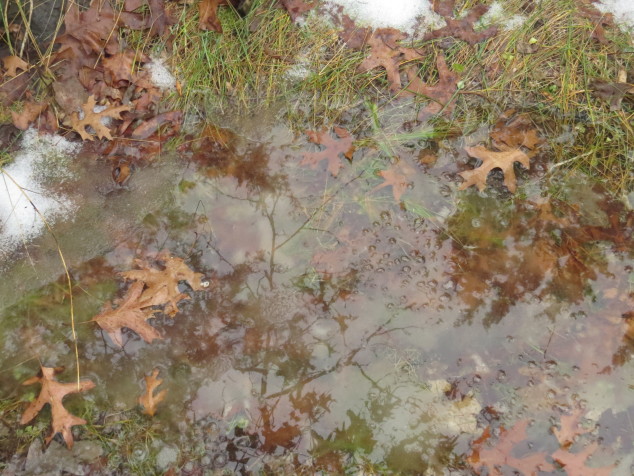
In the same puddle, fox prints were cast in the slushy ice. Proof of her whereabouts. A meeting of human and fox tracks.
I could not see the river–I couldn’t even see the hillside and trees that went down to the river. The fog enveloped them all. It was confusing and surreal. It was like they didn’t exist.
That’s what the fog does in our lives. It slowly crawls over us, fooling us into believing that we know where we’re going. It can be unexpected and unexplained. It can lull us into thinking that what we can’t see doesn’t exist. But even in the thickest fog, the River is there. Even behind the burlap wall of protection, the Spruce is there. Even though I didn’t see the Fox, she was there. Each of us is there. Our path out of the fog happens one step at a time. Slowly we find our way. Then one day, we see our reflection in the place where Past meets Present. And with gladness, we notice that the fog has lifted.
Gleanings from November
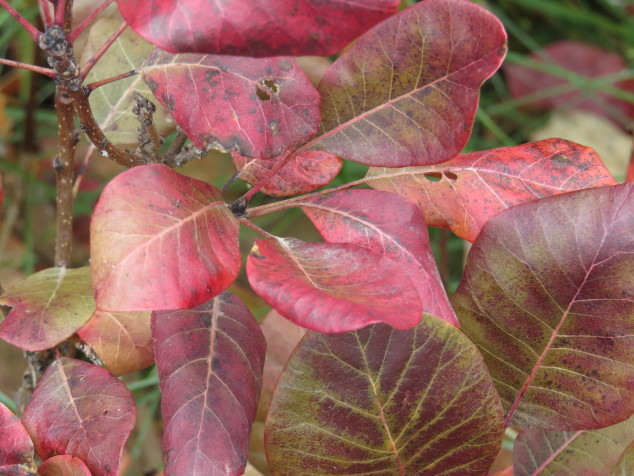
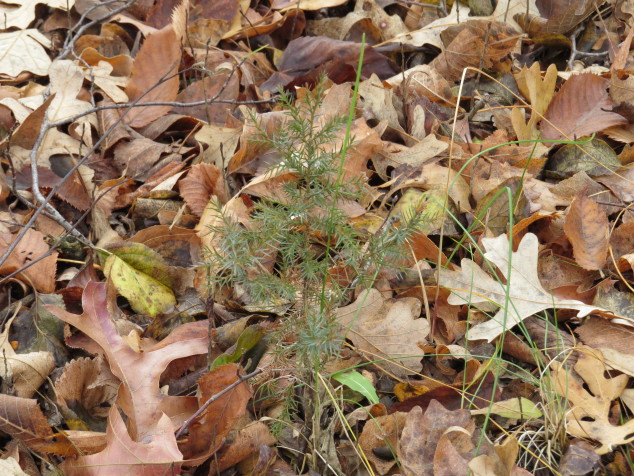
November began in a quiet, easy way. The ritual of ‘getting ready for winter’ was progressing nicely with one eye on the extended forecast and four hands on rakes and shovels. Our slow-growing Purple Smoke tree was changing from its dark purple-red to brilliant scarlet, the last to change and hold its fall foliage. Most leaves were brown and on the ground by then. The oak and elm leaves carpeted the floor of the woods, skirting this tiny cedar tree with mulch and protection.
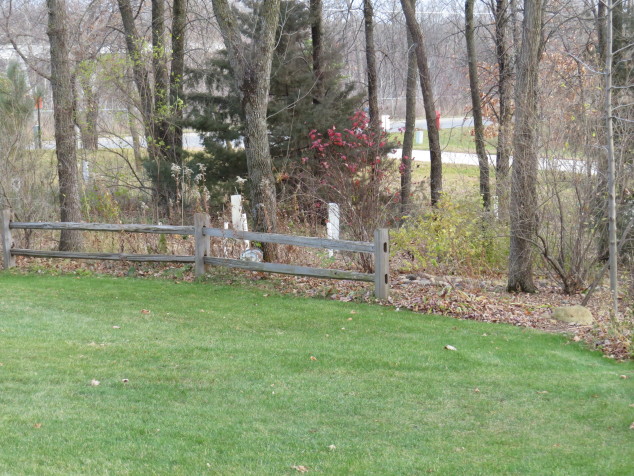
By the second weekend, the green lawn was raked free of leaves, and plastic sheeting covered the screened-in porch. The barometer was falling, and the forecast had changed from an inch of snow to nine inches of snow. In one day’s time, we fell into Winter.
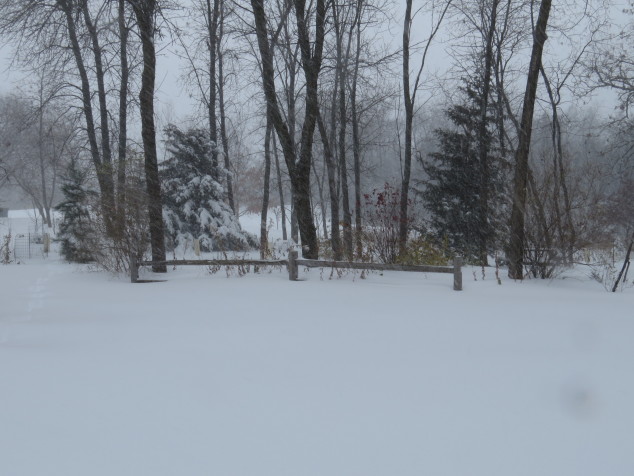
Nine inches quickly turned into fourteen, as schools were closed and travel stalled.
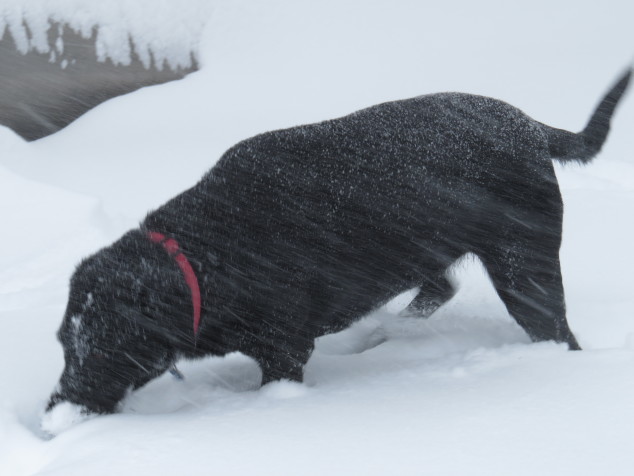 Since the storm, a couple of warm (above freezing) days have melted some of the snow, and a few new inches have been added. Whiteness is the new normal, and snow is just part of the picture.
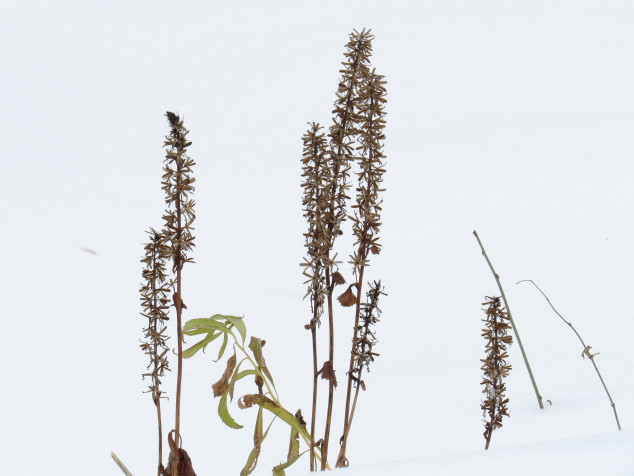
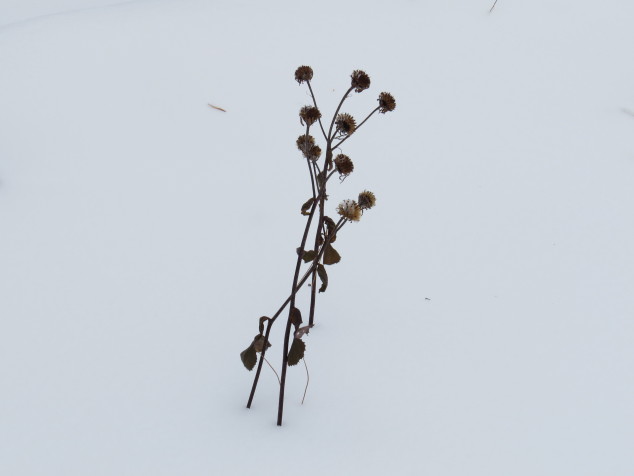
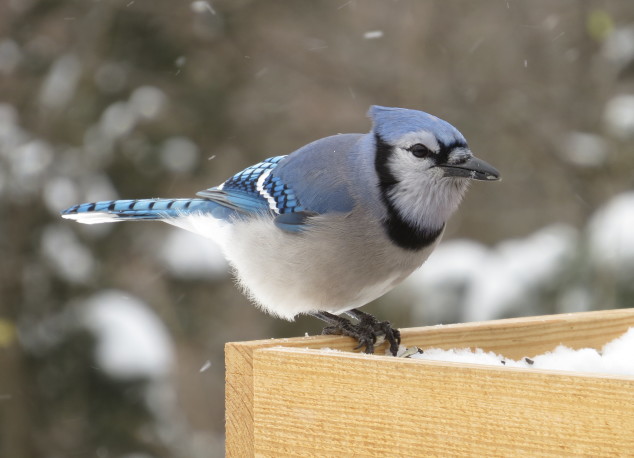
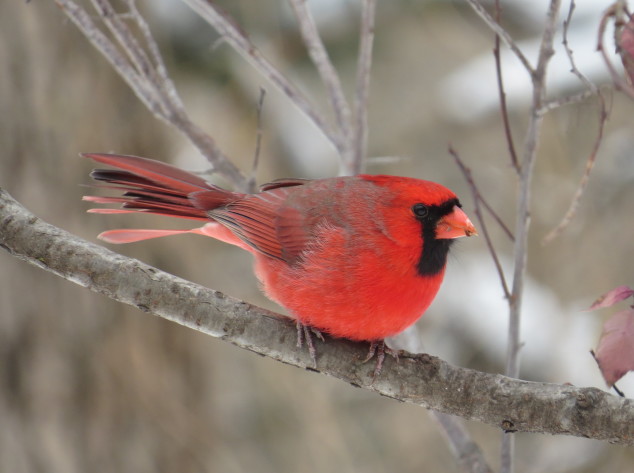
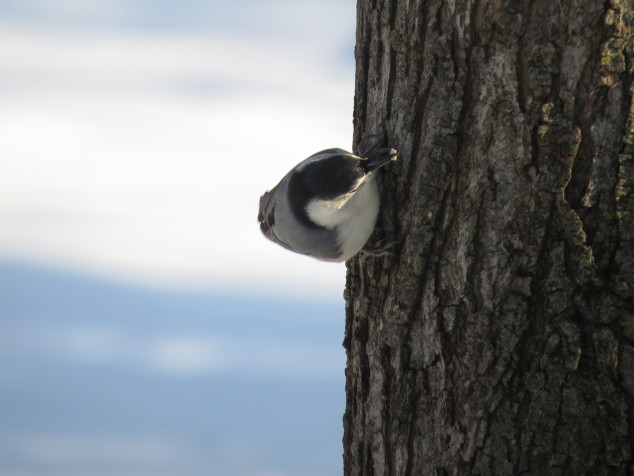
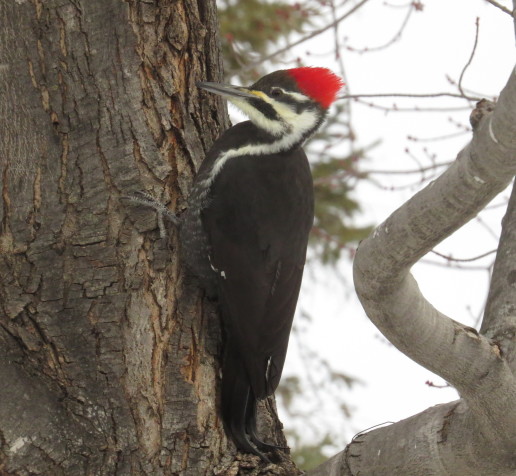
The winter birds are now our showy ‘flowers’–their brilliant colors are beacons of brightness in the white and brown landscape.
November is the month of Thanksgiving. Every day, from morning sunrise to early evening sunset, is a gift to each one of us that contains so much to be thankful for.
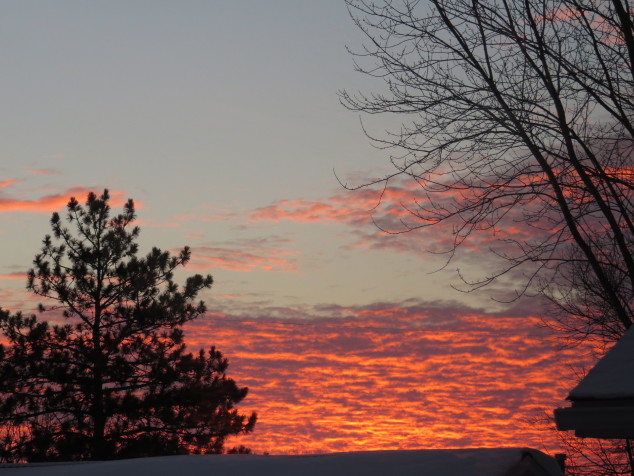
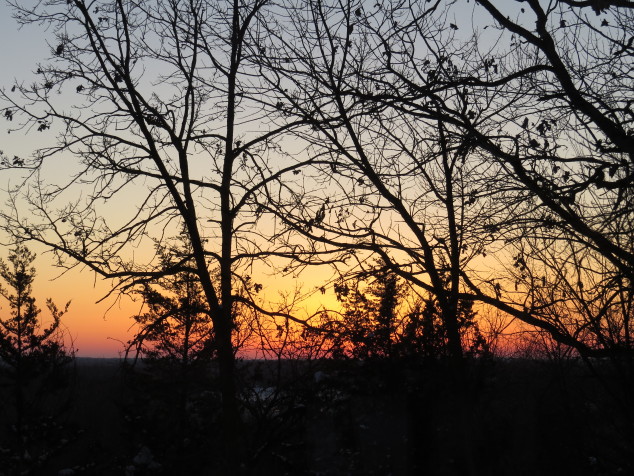
November also begins the season of reflection–when we look back at where we have been and choose the path that will move us where we want to go.
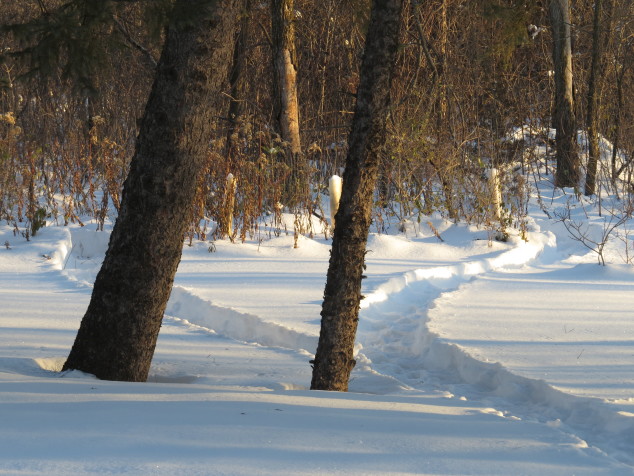
The month of November started as Autumn and abruptly changed to Winter. Changes happen whether or not the calendar agrees, whether we are ready or not, and regardless of whether they ‘should’ occur. All the more reason to be thankful for the very simple and often mundane things in our everyday lives. At the same time, we need to be aware of the beacons of brightness that surround us. What puts a smile on our faces? What amazes us? What makes us feel warm and loved? And finally, if we are having trouble seeing the brightness, we can use this hibernation time to reflect on what is shading our eyes, what wall is built up in front of us, or what erroneous thoughts are stuck in our heads. And then, with courage, we choose a path that will get us to a better place.
At the Feeder
It has been a cold, snowy week and a half of Fall-Winter. It’s hard to still call it Fall when we have over a foot of snow on the ground with high temperatures in the teens and lows in the single digits or below. Winter’s march into our lives has not been contained to the northern states–its icy presence has been felt by most of the country. Perhaps Old Man Winter is teaching us a lesson for our hubris of making the holiday season come early. Christmas decorations before Halloween? Black Friday shopping deals in early November? Forget about Thanksgiving? Then Winter it shall be!
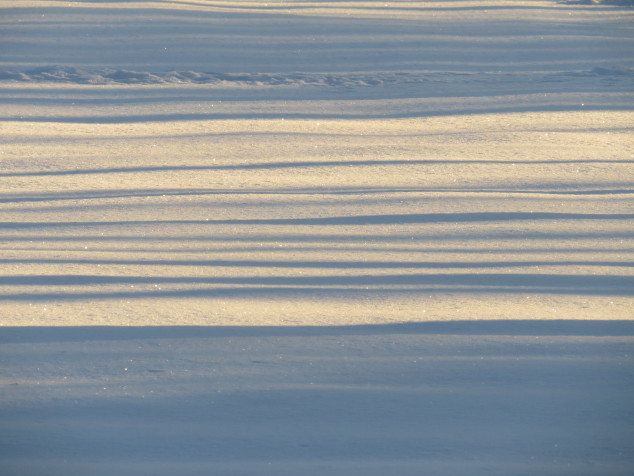
While it seems like the snow has been here for more than ten days, it is only the beginning of our long, hard winter. The icy temperatures wash the world in a cool, blue color. Early morning shadows from the rays of the brave sunlight through the trees, create a dazzling quilt of stripes and sparkles. Blue-white is the new green.
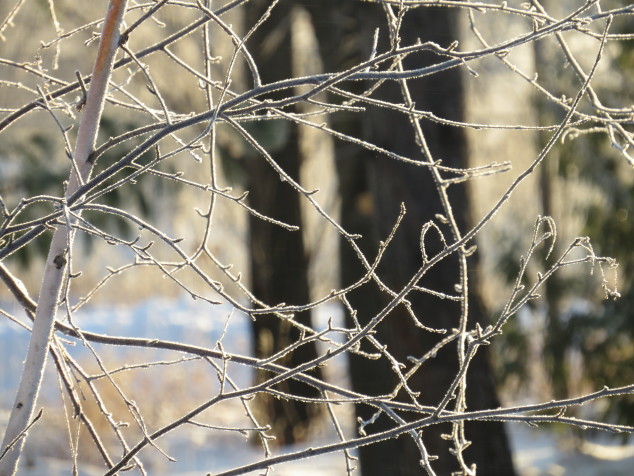
Low pressure and moisture-laden clouds overnight paint the trees with frost. The Artist doesn’t hibernate in Winter.
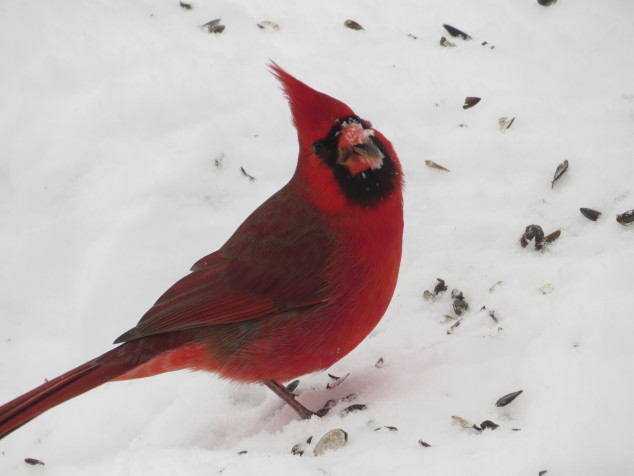
 The stars of the snowy, winter season are the birds. Our three feeders bring them close to the house. They provide great color and entertainment as they zip and dive from tree branch to feeder to snowy ground. The cardinals are seldom seen during the green season but are one of the first to arrive when the feeders are full of black oil sunflower seeds. The male is brilliant with his large crest, black face, and scarlet feathers. He knows he looks good!
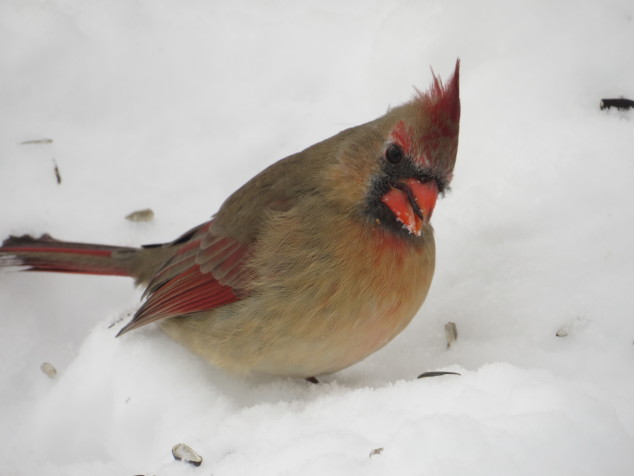
 The female cardinal, as often is the case, has a more subtle, but equally beautiful coloring. They make a handsome pair!
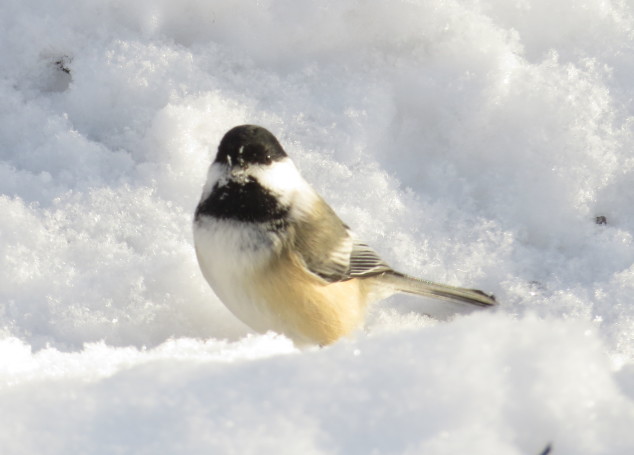
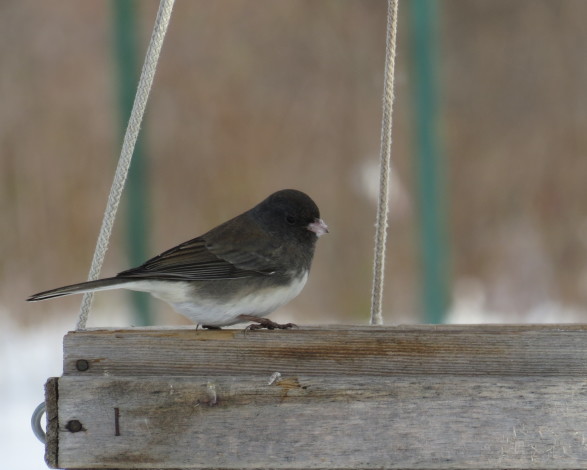
Black-capped chickadees and dark-eyed juncos are two of the most abundant birds to visit the feeders. The black-capped chickadees dart to the feeder, pick up a seed, and quickly fly away. The juncos, with their dark gray topsides and white undersides, spend much of their time on the ground cleaning up the seeds that have fallen. But when the traffic has cleared, they will linger at the source.
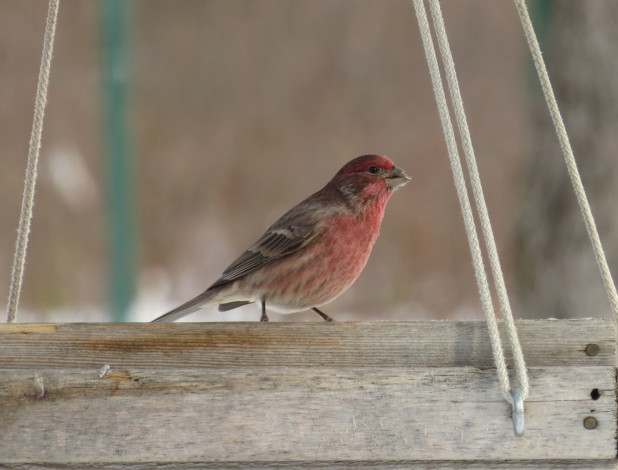
 Purple finches occasionally visit the feeder, looking more rosy-red than purple. They seem to be calm little birds who are not afraid to really get into their food.
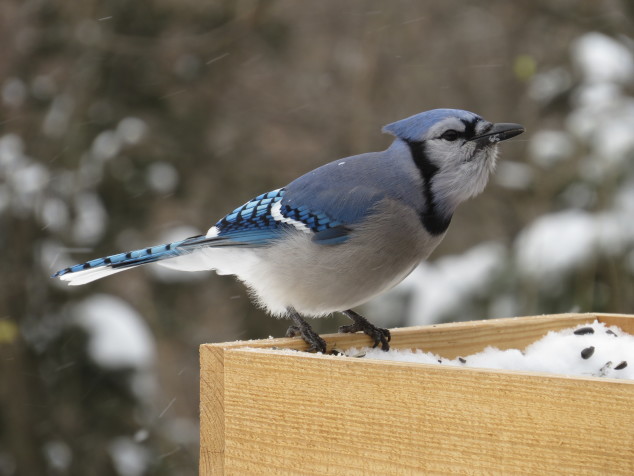
The shrill call of a blue jay demands attention. Actually, almost everything about him demands attention. He’s flashy in his blue suit with crest, black collar and necklace, and white and black spotted wings and tail. The other birds scatter when he swoops to the feeder where he will shovel the snow and seeds around with his large black beak.
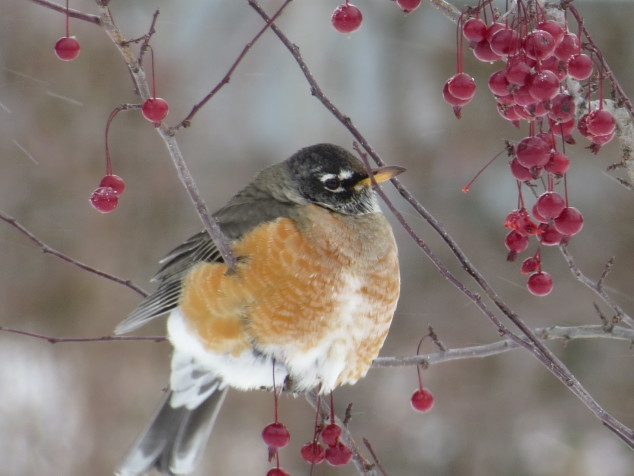
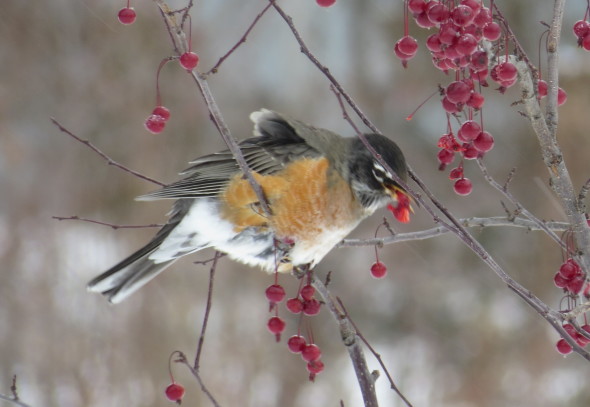
These are a few of the common winter birds in our area, but this morning I caught a glimpse of one who usually makes his way south for the winter. This little puffed-up robin doesn’t look too happy to be in Minnesota in this frigid weather. I wonder if the early snowstorm derailed the migration plan. At least he has some luscious looking crab apples to eat!
The below-freezing temperatures and thick blanket of snow came early this year and are probably here for the duration. Mother Nature humbles us and lets us know that we are not in control. Each season has its drawbacks, challenges, and hardships along with its beauty, gifts, and inspirations. The birds are one of our beautiful gifts. Their unique characteristics and personalities remind us that we’re all in this together at the feeder of Life.
- « Previous Page
- 1
- …
- 4
- 5
- 6