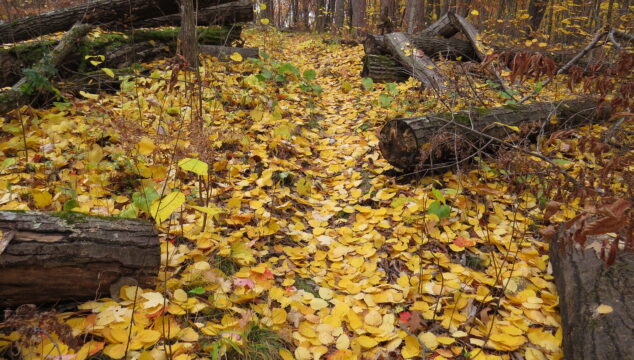
Come walk with me in the peak Autumn beauty of the Northwoods. To say that I love this time of year is an understatement. Most everyone can appreciate the colorful falling leaves---it reveals the 'true self' of a tree when its leaves are no longer producing chlorophyll. Their true colors are revealed, and there is something simple … [Read More...]
On a Quest for the Elusive Pitcher Plant
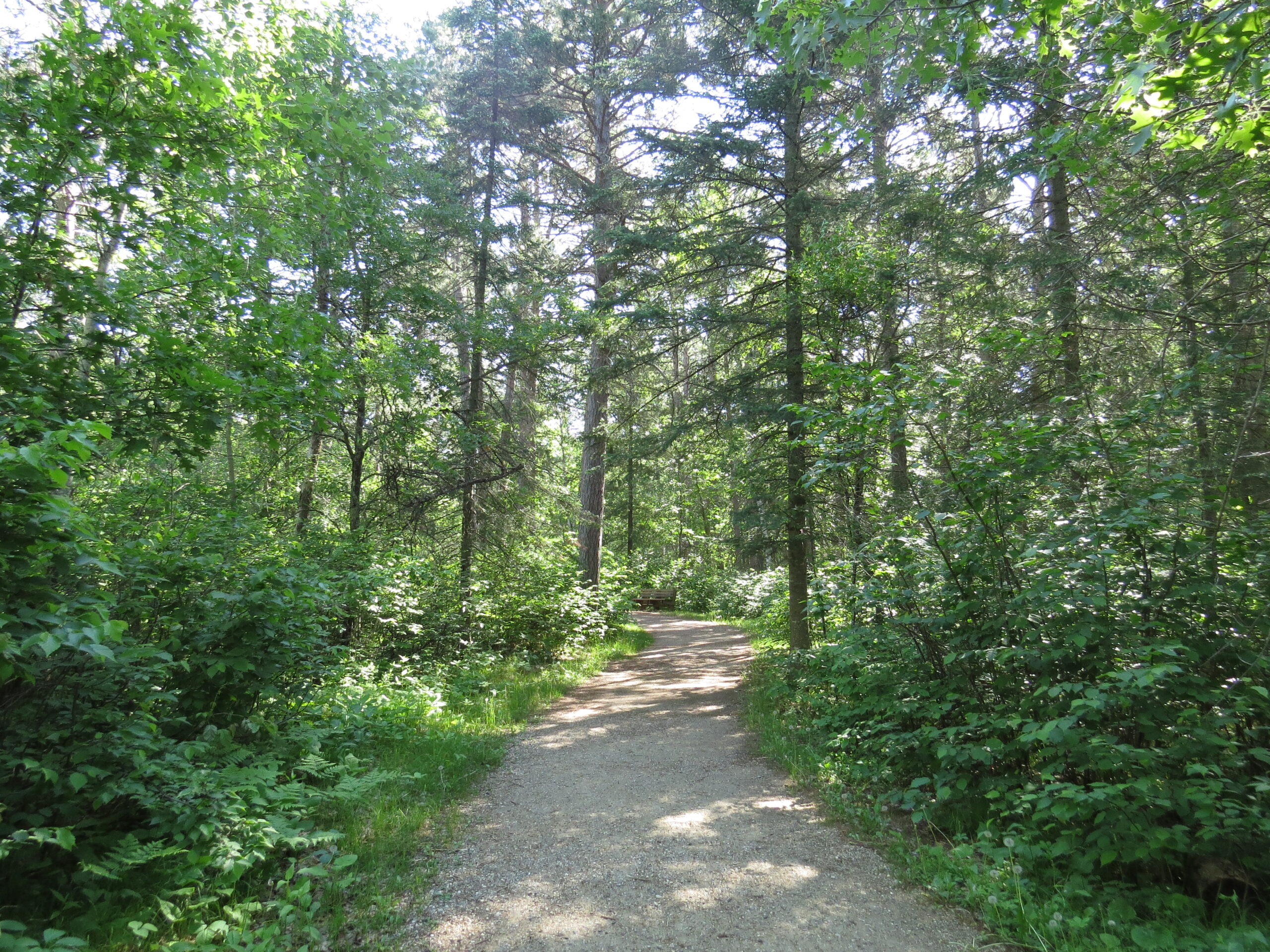
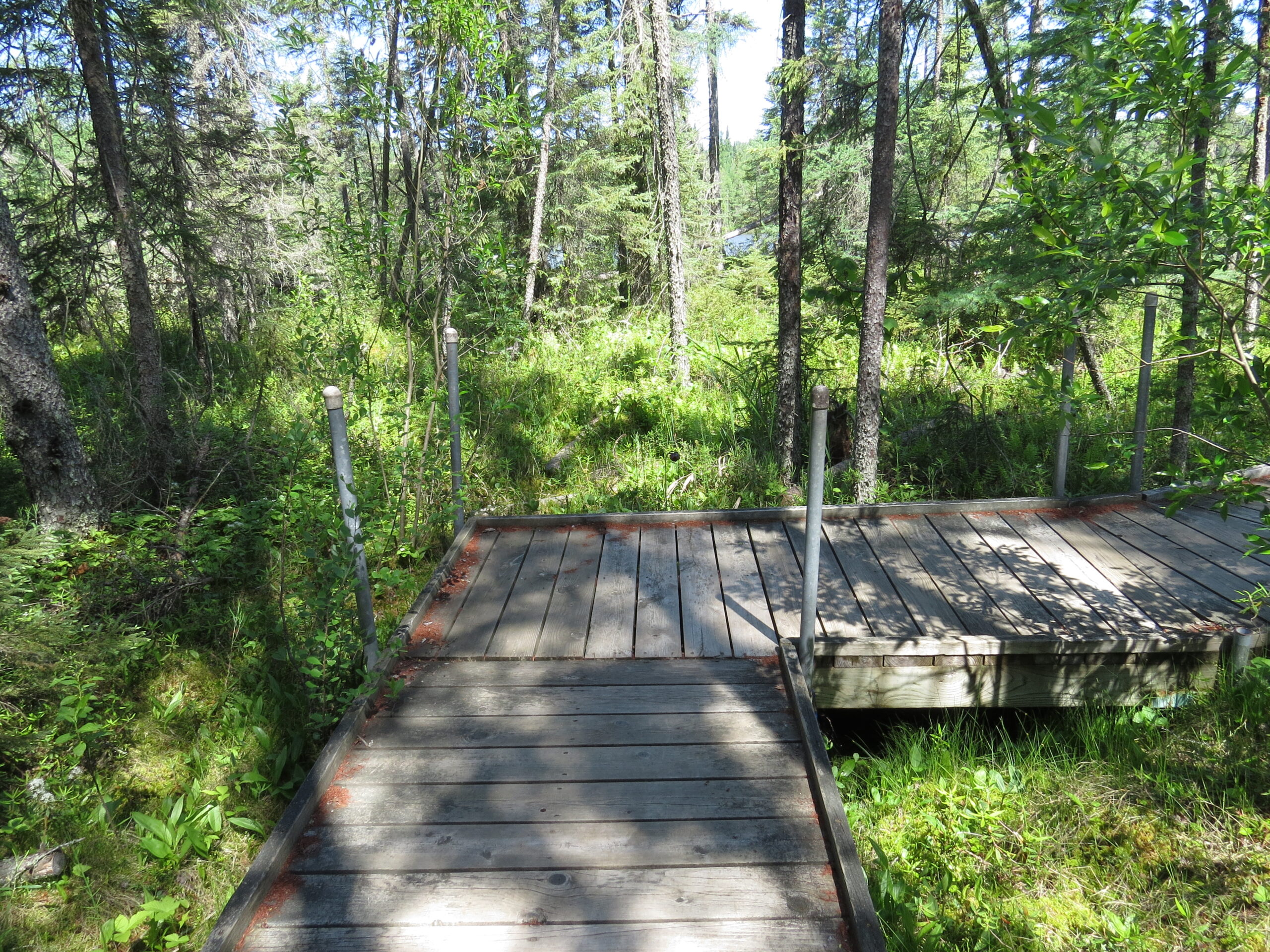
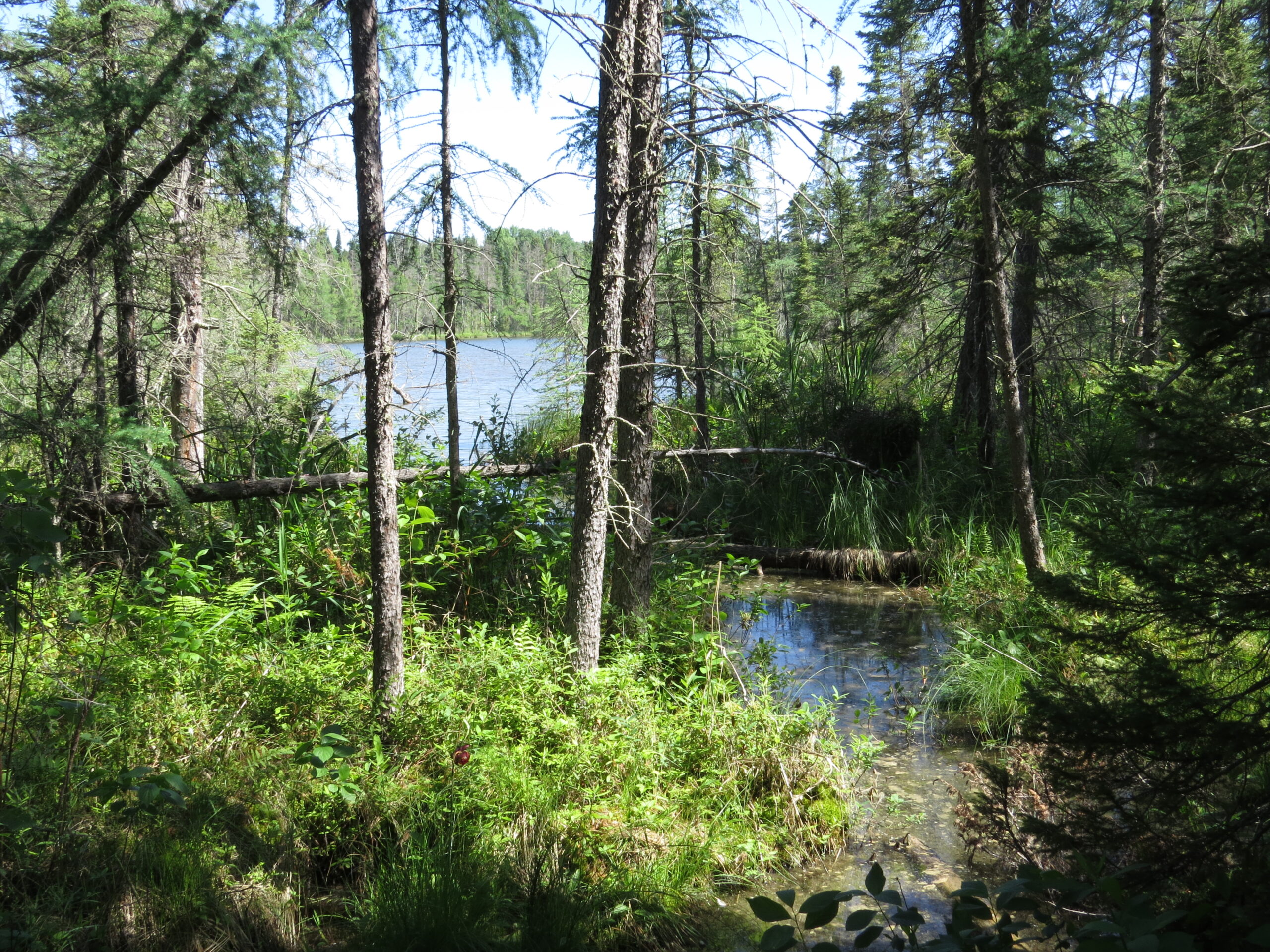
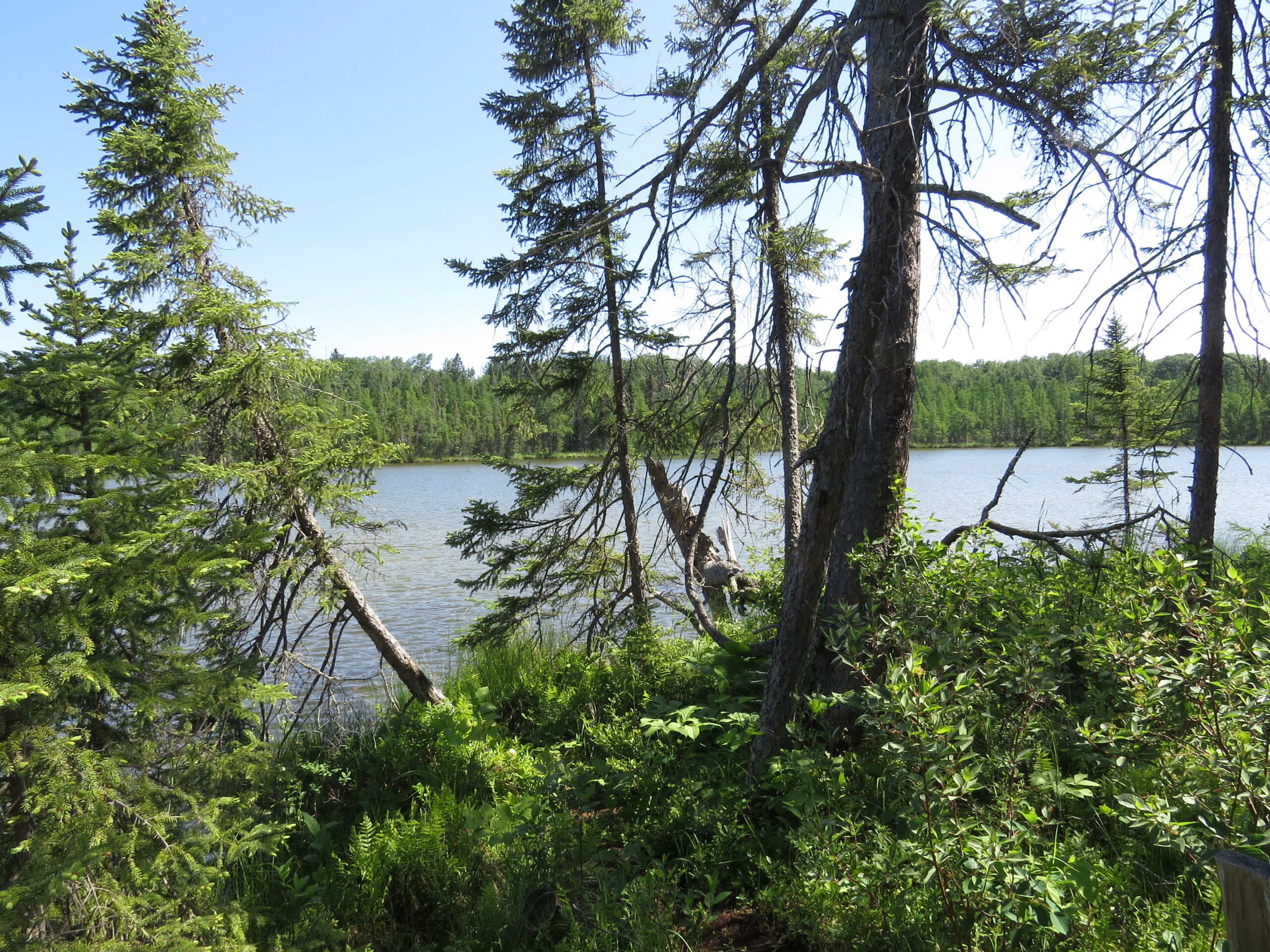
Two years ago for my birthday we hiked at Mille Lacs Kathio State Park where I discovered the intriguing deep red flower of the Purple Pitcher Plant. But it was in the middle of a bog, unreachable, unattainable, elusive. So I was never able to see the actual plant—the ‘pitcher’ part, the insect-eating, carnivorous, cartoonishly-scary part of the plant. So a few days after my birthday, when I knew the Pitcher Plants would be blooming, we got up early in the morning and headed north to Lake Bemidji State Park. The boggy land between and among Lakes Bemidji, Big Bass, Timber, and Big Bog has been protected as a park since 1923. The bogs are a result of water-filled depressions formed by the receding glaciers that over the years has filled with partially decayed plant material or peat. Bogs contain decayed sphagnum peat moss which can hold water like a sponge and is used to enrich garden soil. The bog environment is cold, acidic, and low in oxygen, a rather challenging ecosystem for plants to thrive. So they have adapted by becoming efficient in the use of light, moisture, and nutrients. Many have evergreen leaves to extend the growing season, some have thick, fleshy leaves to store moisture, and many have showy flowers to attract pollinating insects, then produce huge numbers of seeds. We found our way to Bog Walk Trail, prepared for mosquito attacks, and walked through the upland woods to the bog boardwalk.
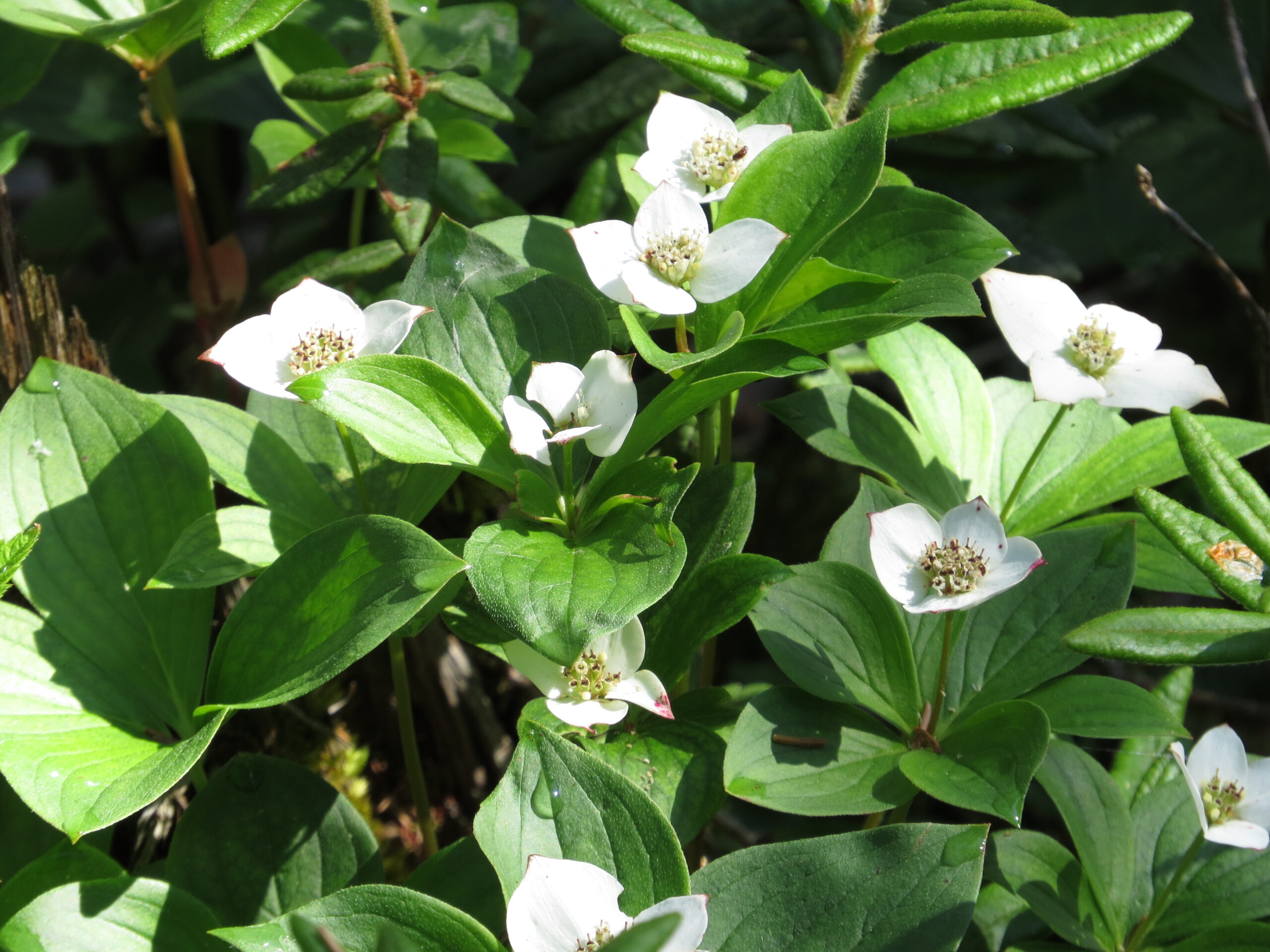
Bunchberry Dogwoods are a low-growing groundcover, a northern Dogwood with the iconic showy white flowers. A cluster of bright red berries forms after flowering.
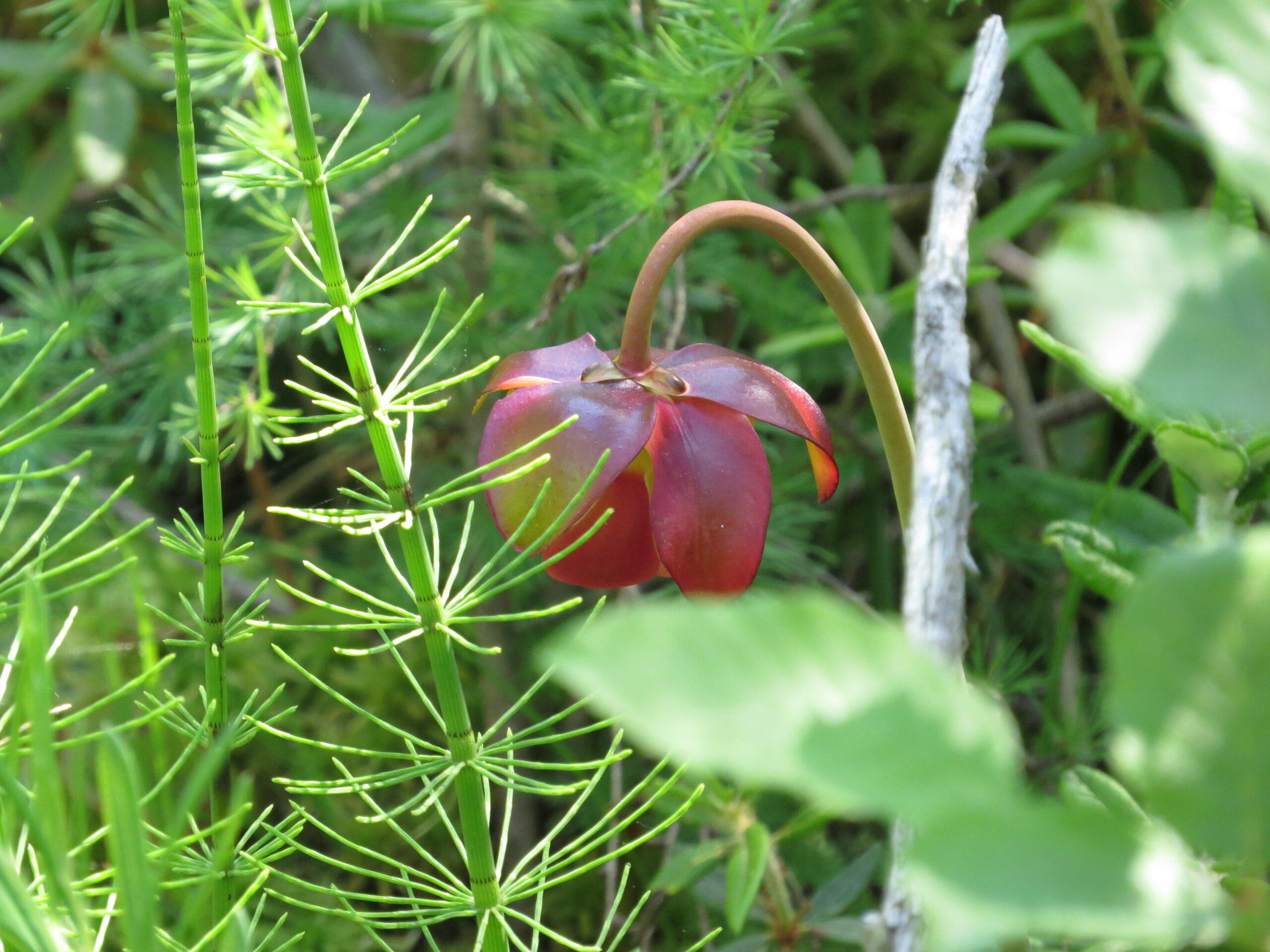
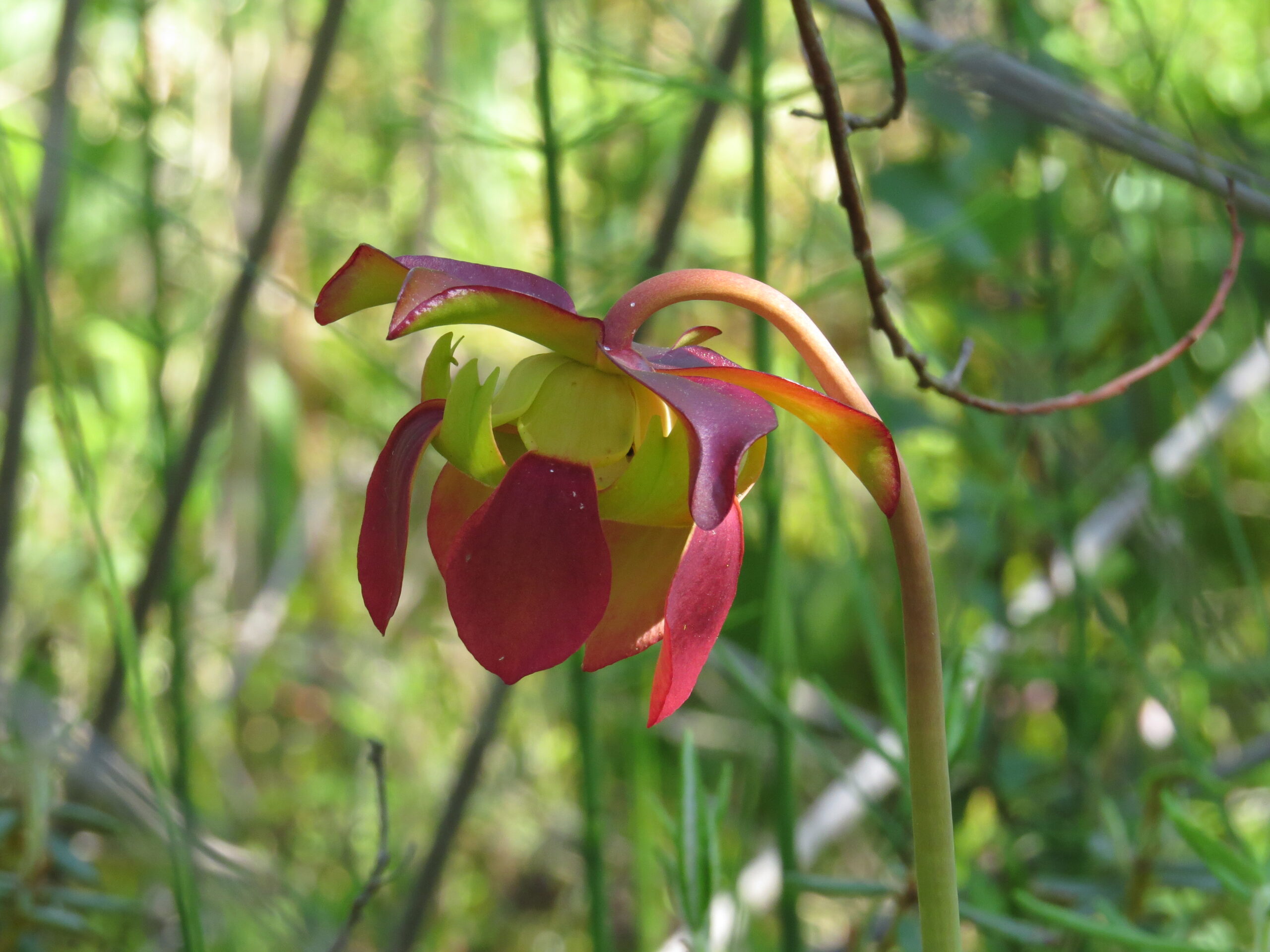
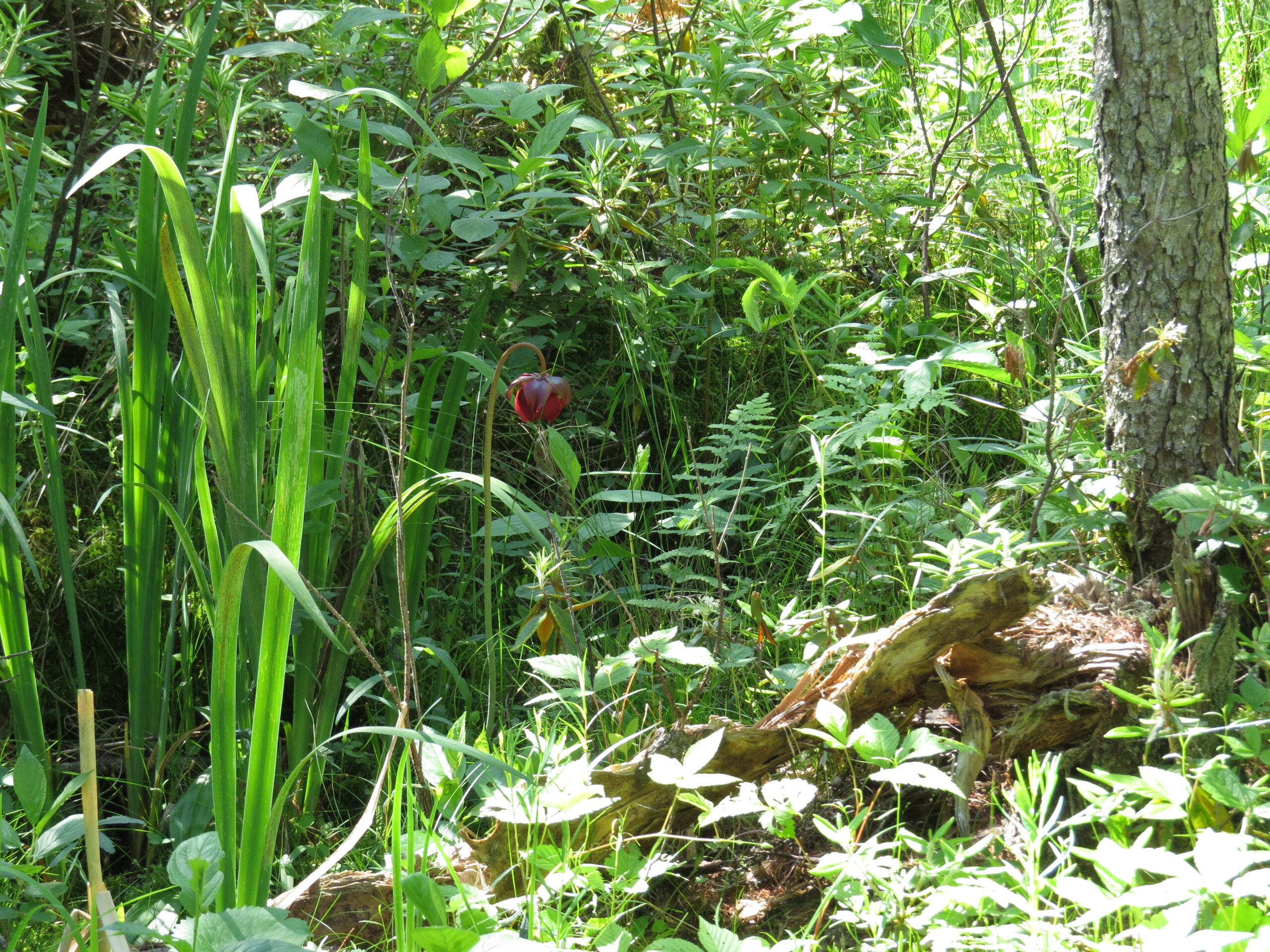
Soon I spotted the elusive Purple Pitcher Plant flower among the Horsetails, its heavy head bent over, its stem buried in the abundant vegetation of the bog! I strained to see the base of the flower, the ‘pitcher,’ but could not see it.
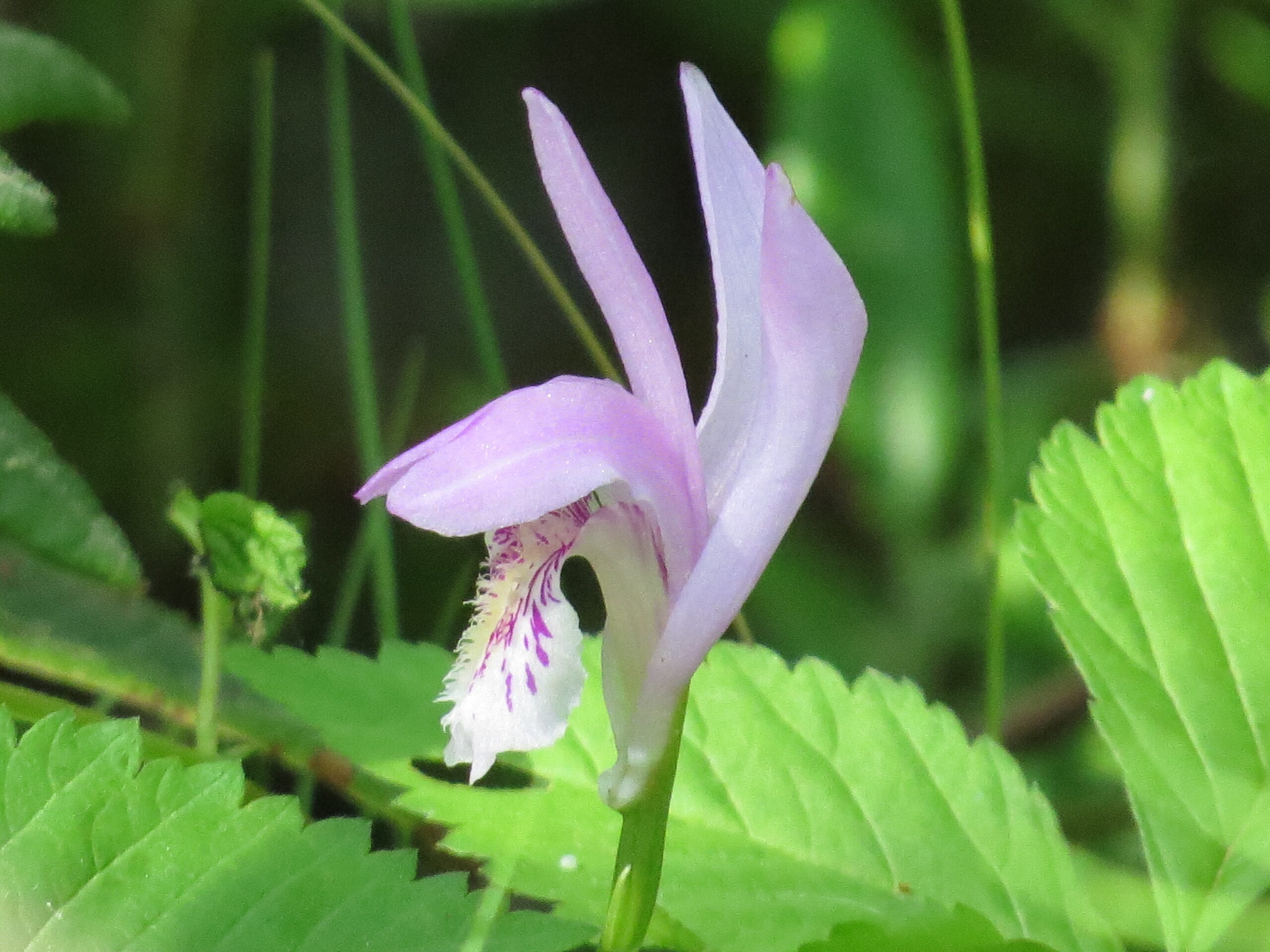
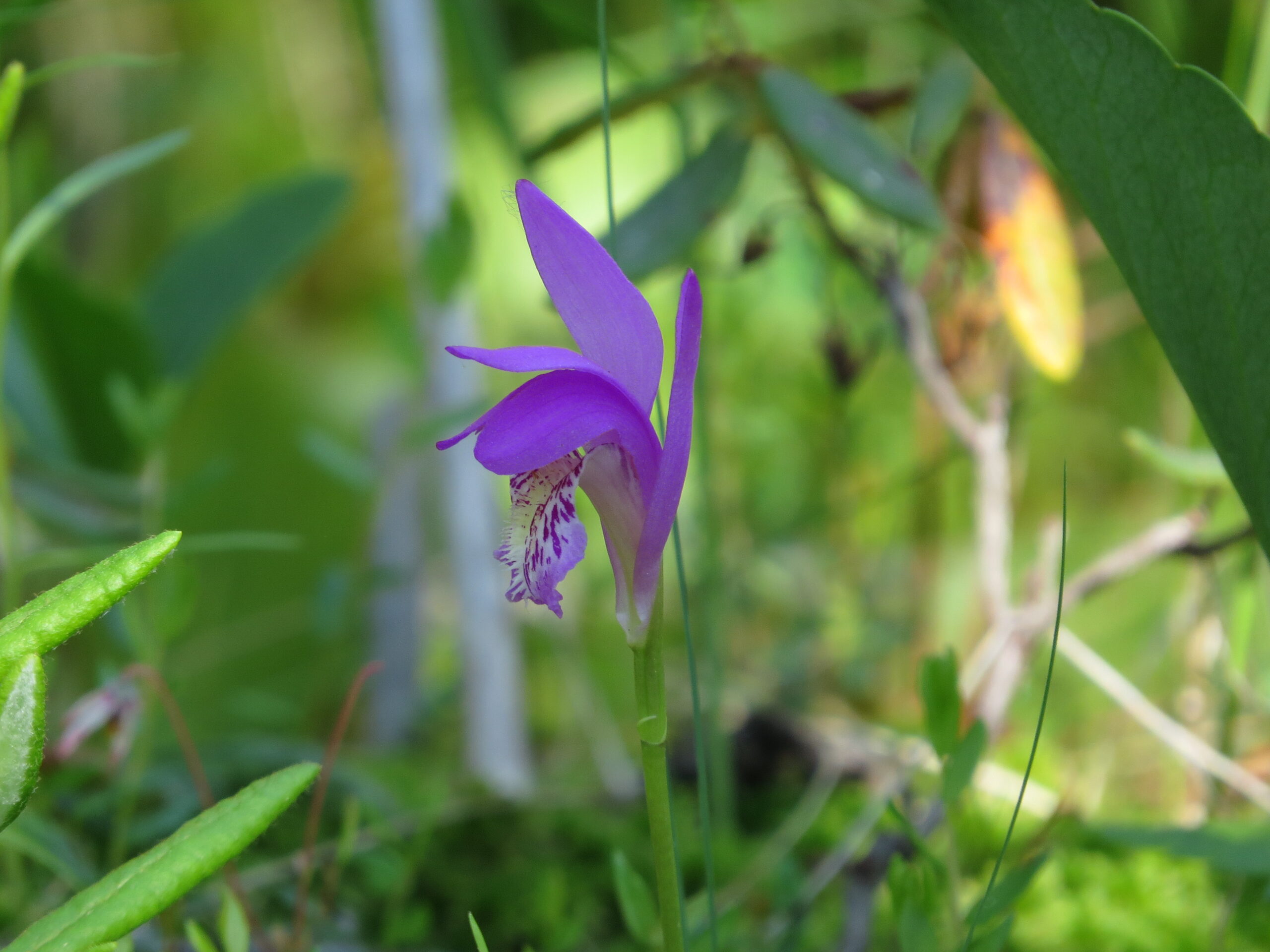
My attention was drawn to a single purple flower on a smooth stem, a Dragon’s Mouth Orchid! This beautiful flower will produce up to a million seeds! That is mind bog-gling!
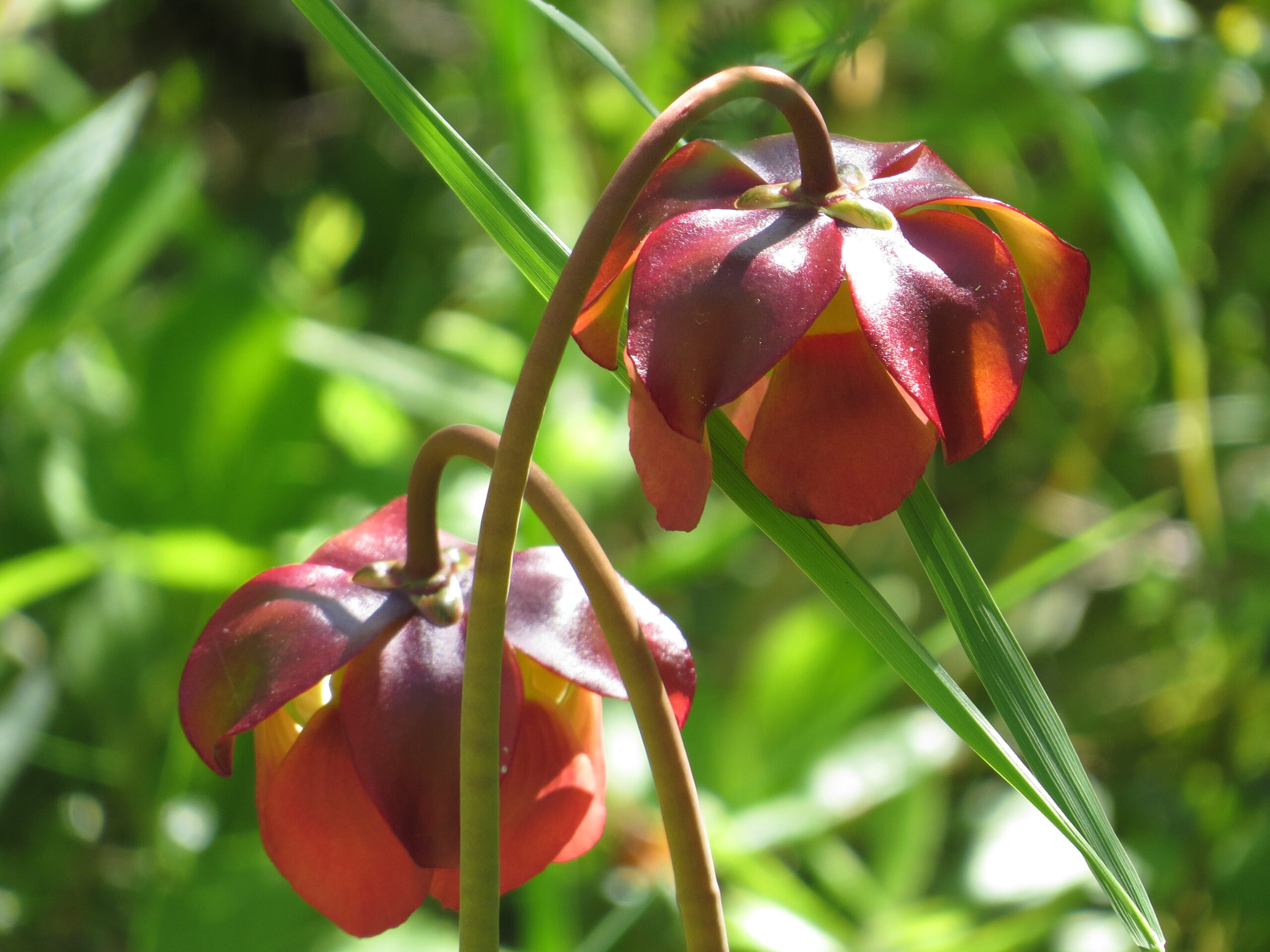
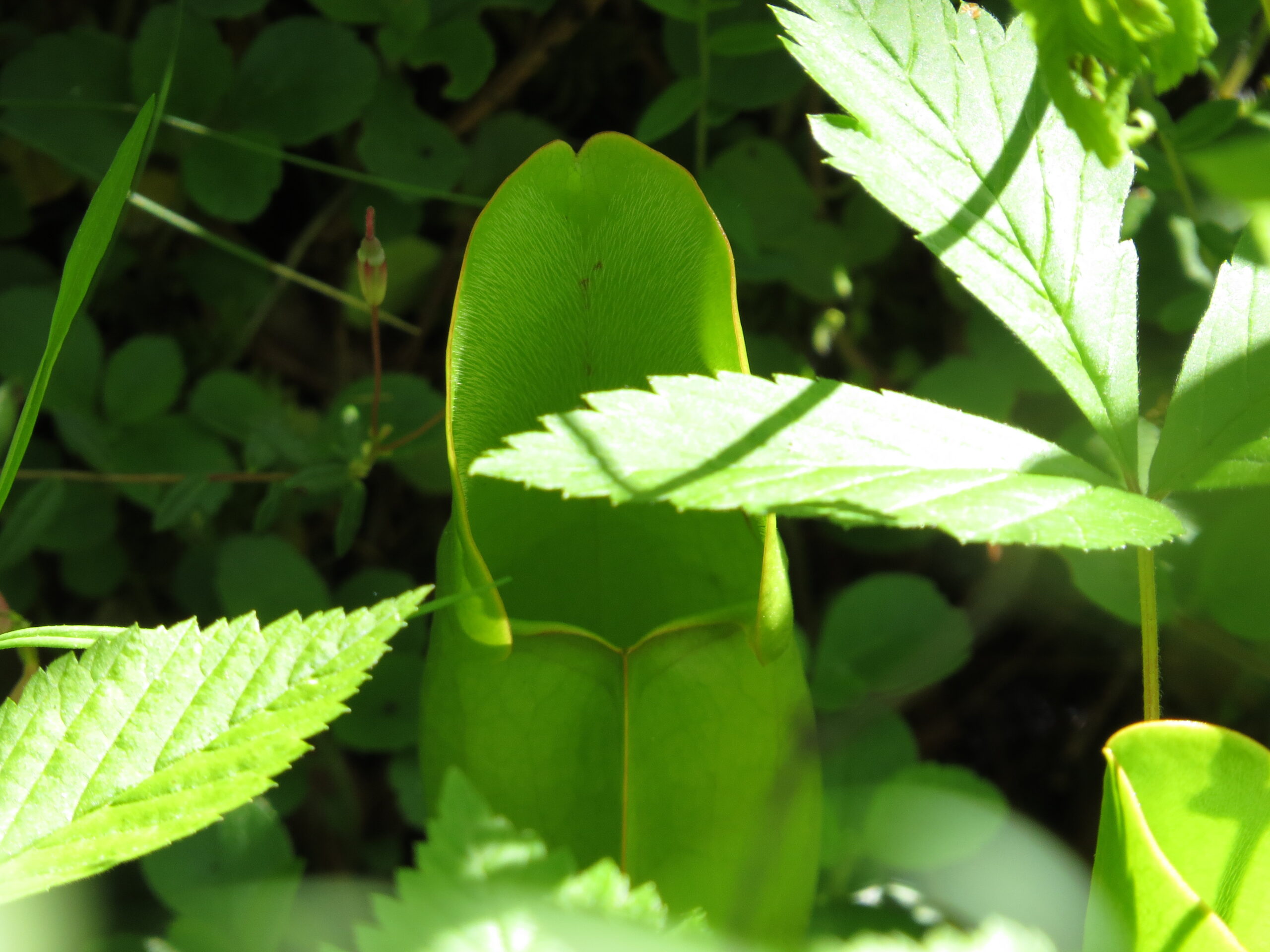
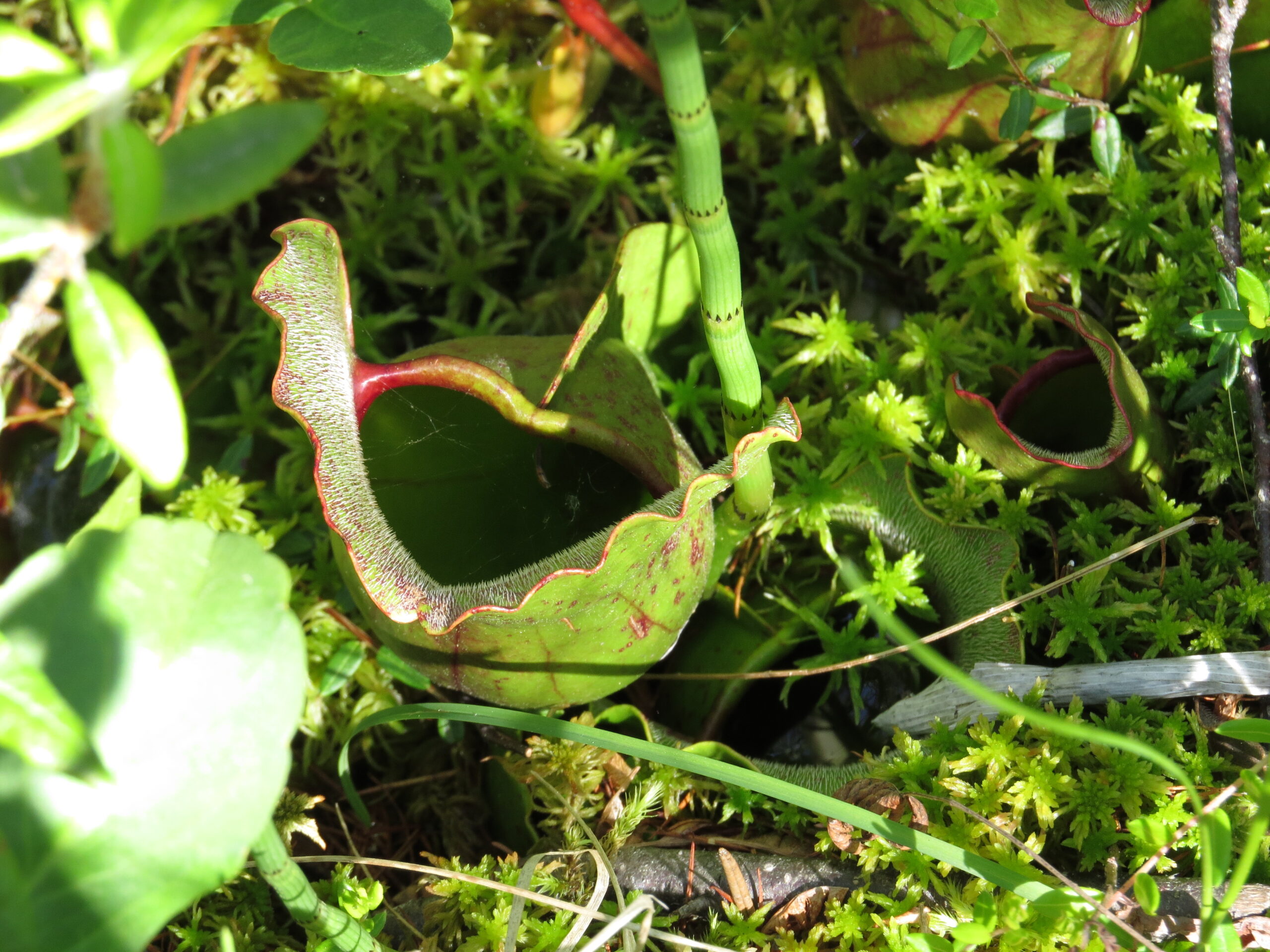
I did not have to walk far before I saw more Pitcher Plant flowers on their sturdy, curving stems, and this time I was just able to find the green-mouthed ‘pitcher’ at their base.
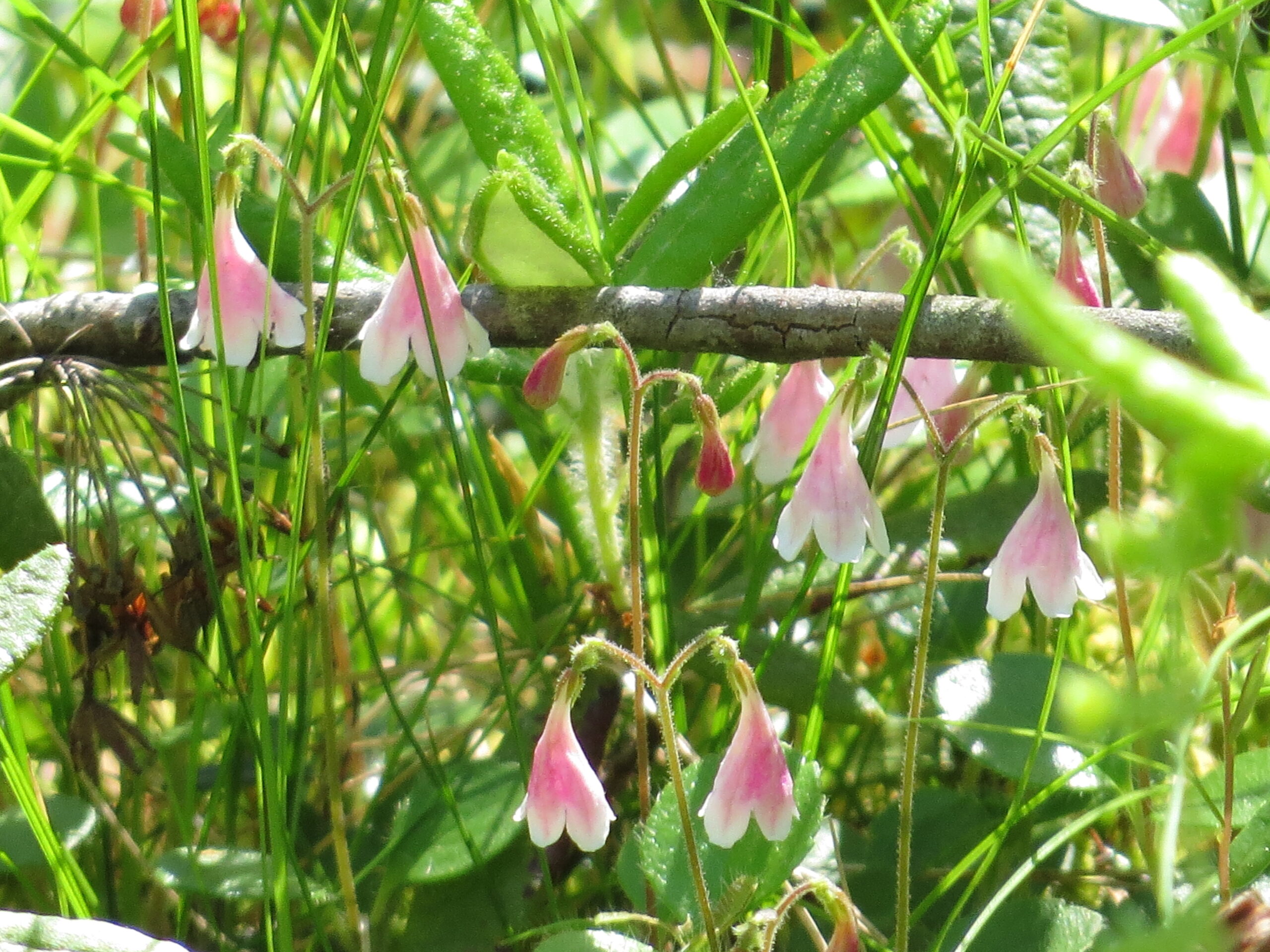
If one was walking the boardwalk even at a stroll, there are many plants and flowers that would be missed. This is a place that compels a person to look closely, to stop and peer into the green wonderland of this soft world. Twinflowers rise from a single stem, then a pair of pink, bell-shaped flowers opens above the creeping evergreen leaves. These tiny flowers (1/3″ to 1/2″) are fragrant for their diminutive size (almond scented), are part of the Honeysuckle family, and have the lovely Latin name of Linnaea borealis!
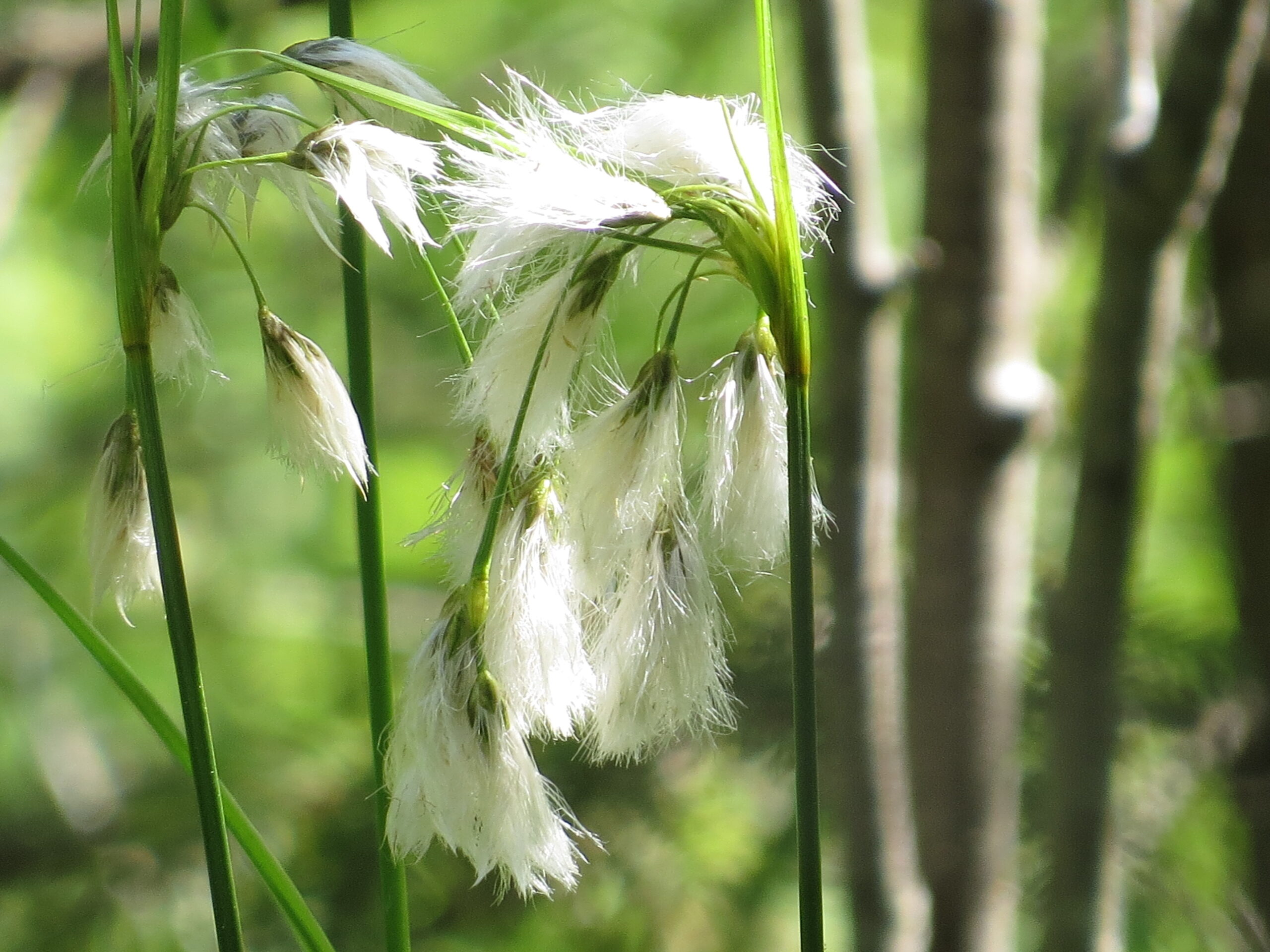
At the Mille Lacs Kathio bog, I was enthralled with the clumps of Tussock Cottongrass. At Lake Bemidji bog, a different species—Slender Cottongrass—grows. It is smaller, droopier, but no less stunning!
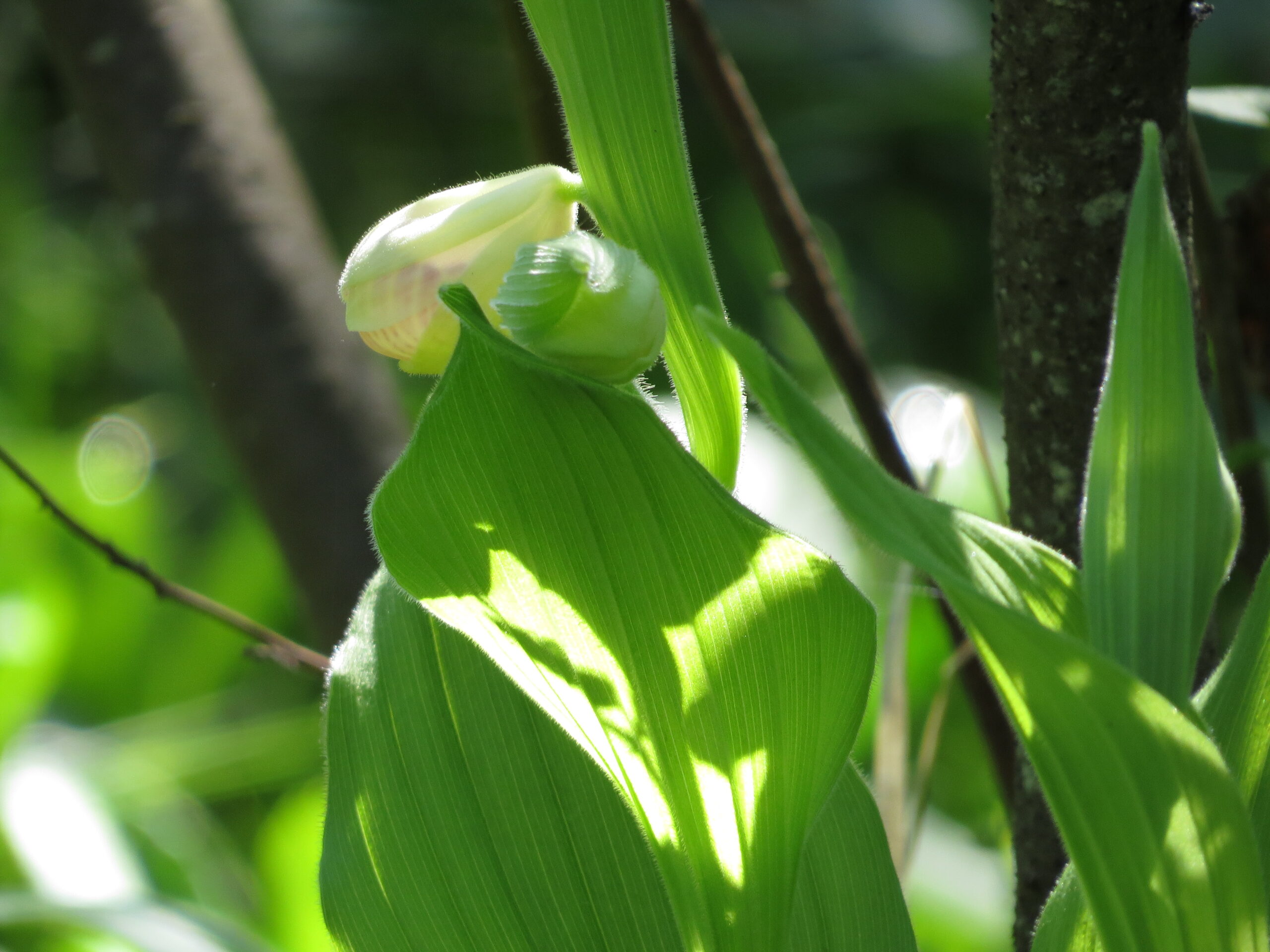
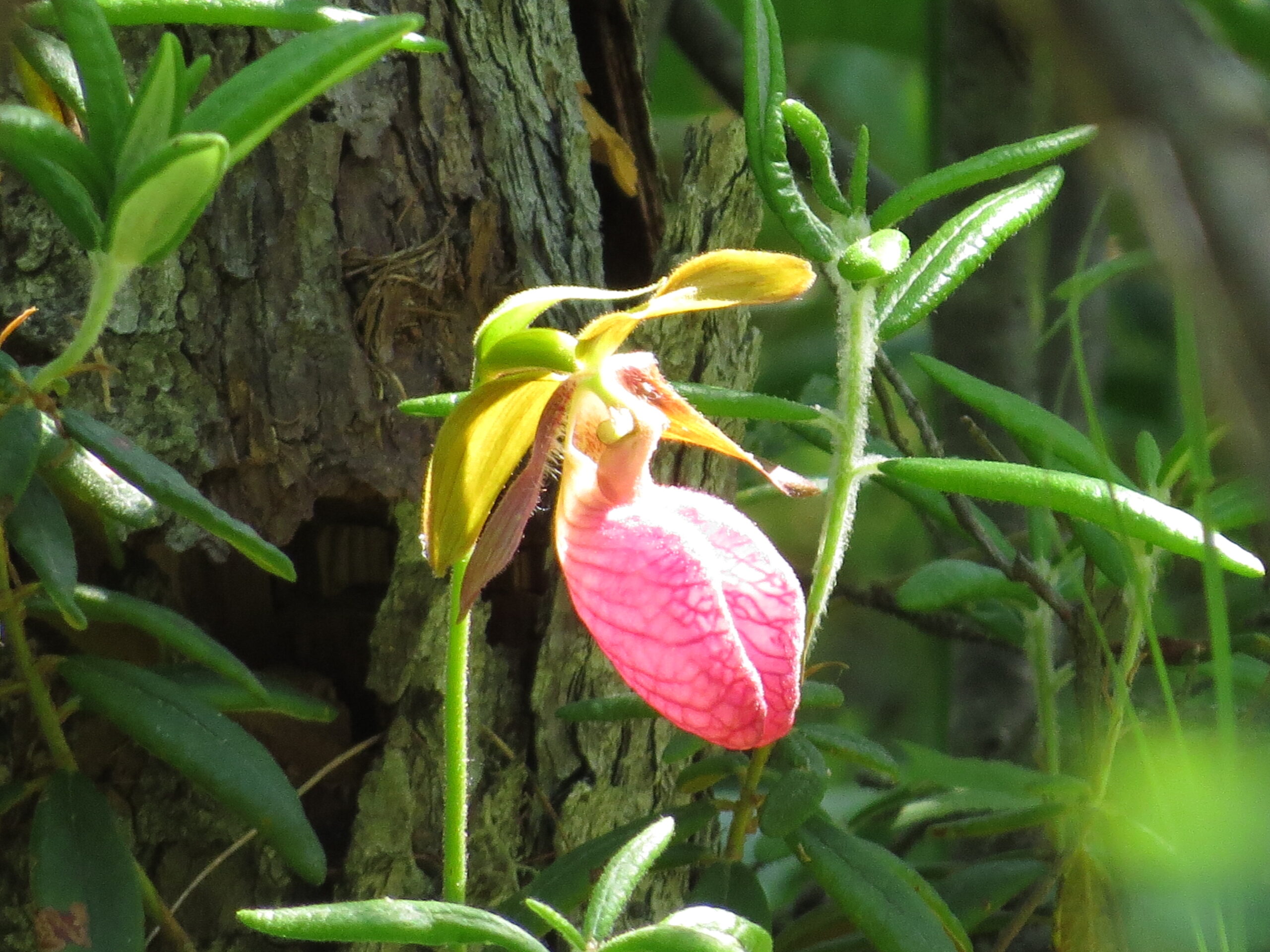
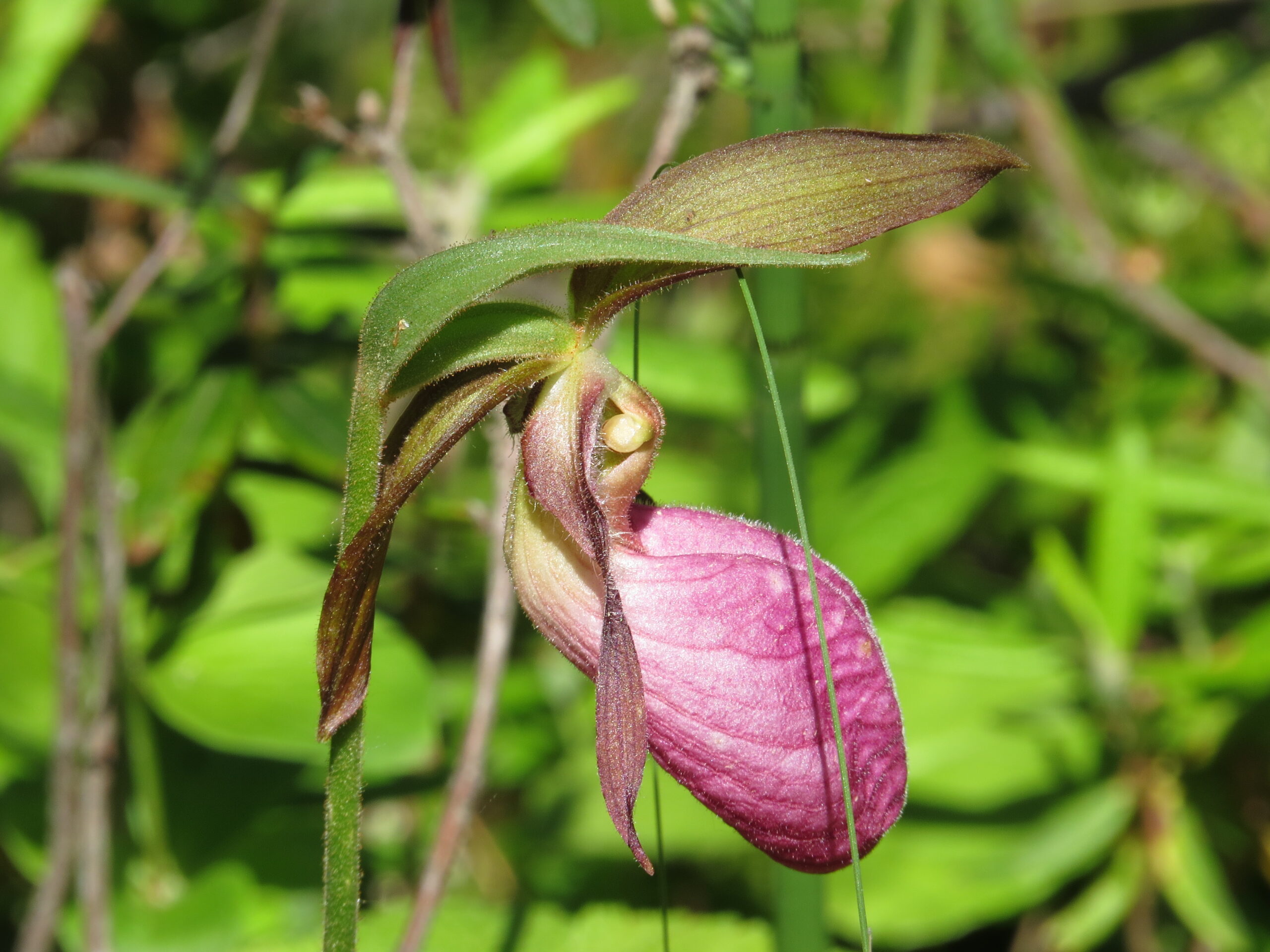
Large-leaved Showy Lady’s Slippers (Minnesota’s State Flower) were in the bud stage, just about to bloom. Another of the Orchid family species, the Stemless Lady’s Slipper or Moccasin Flower, was in full pink bloom.
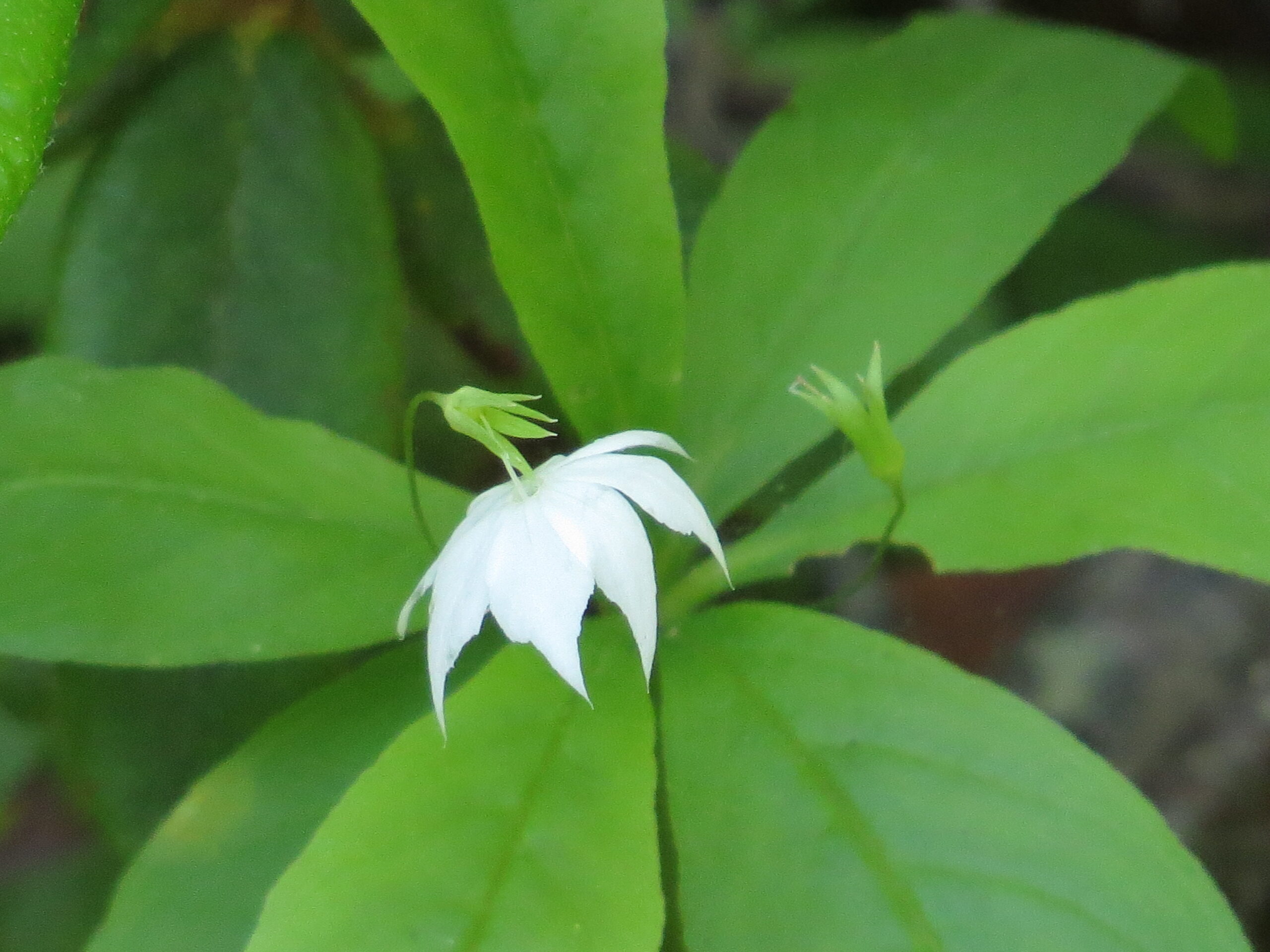
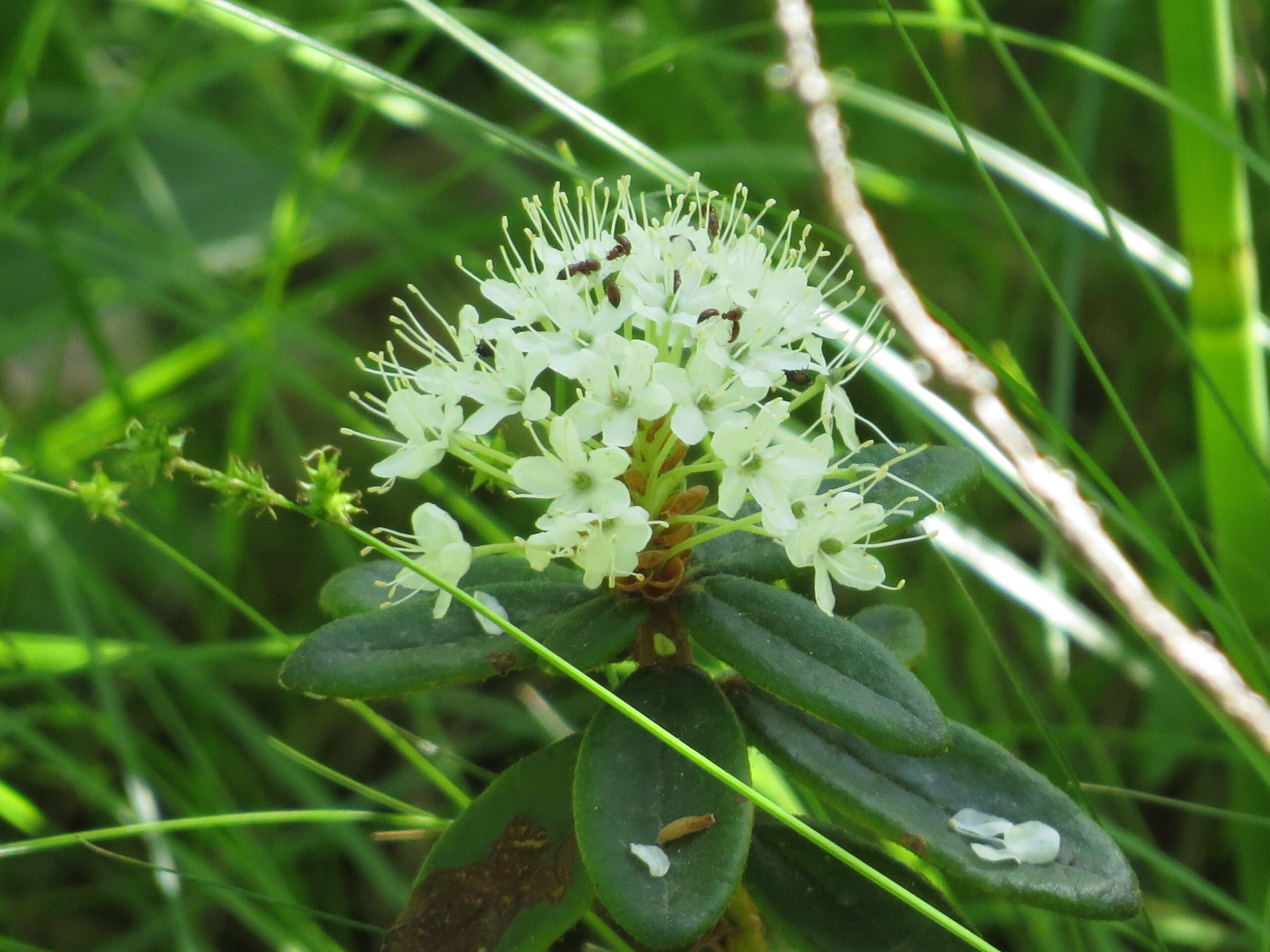
Starflower, a type of Primrose, and Labrador Tea, a type of Heath, were abundant in the bog. Most of the Labrador Teas were past bloom, but we found some in shadier spots that were open and seemingly desirable to some insects. (Speaking of insects, we were amazingly not bothered by mosquitoes!)
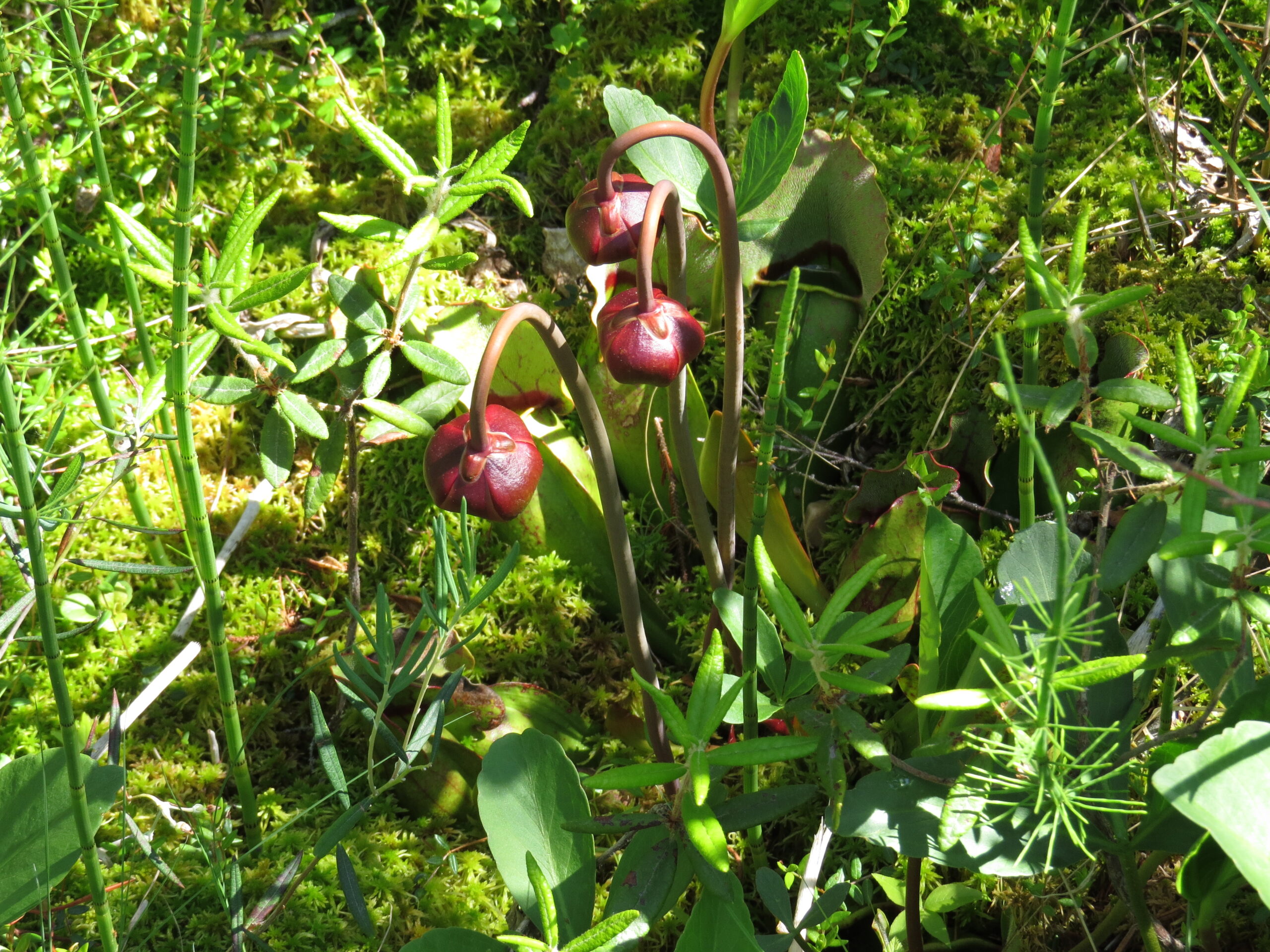
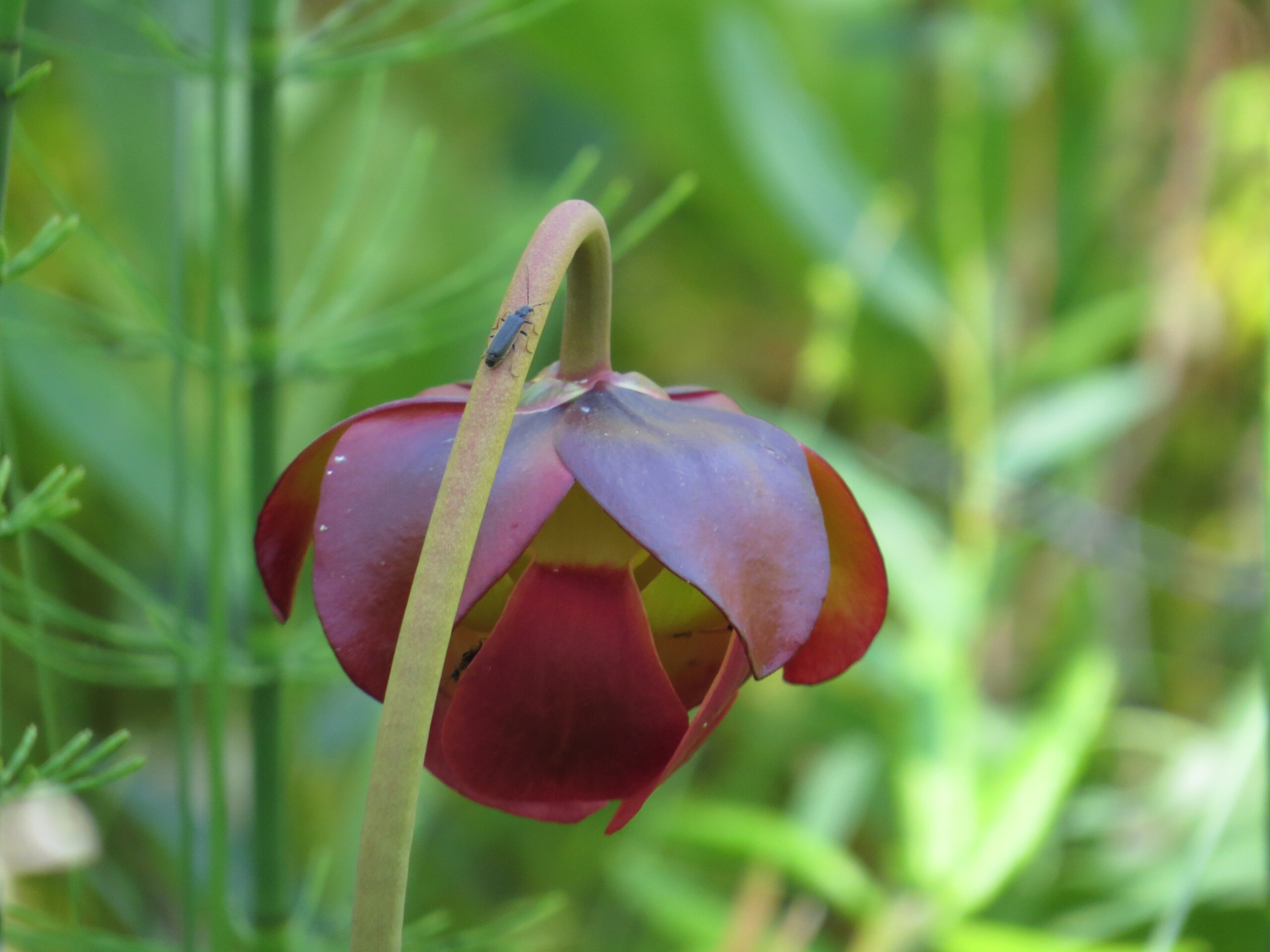
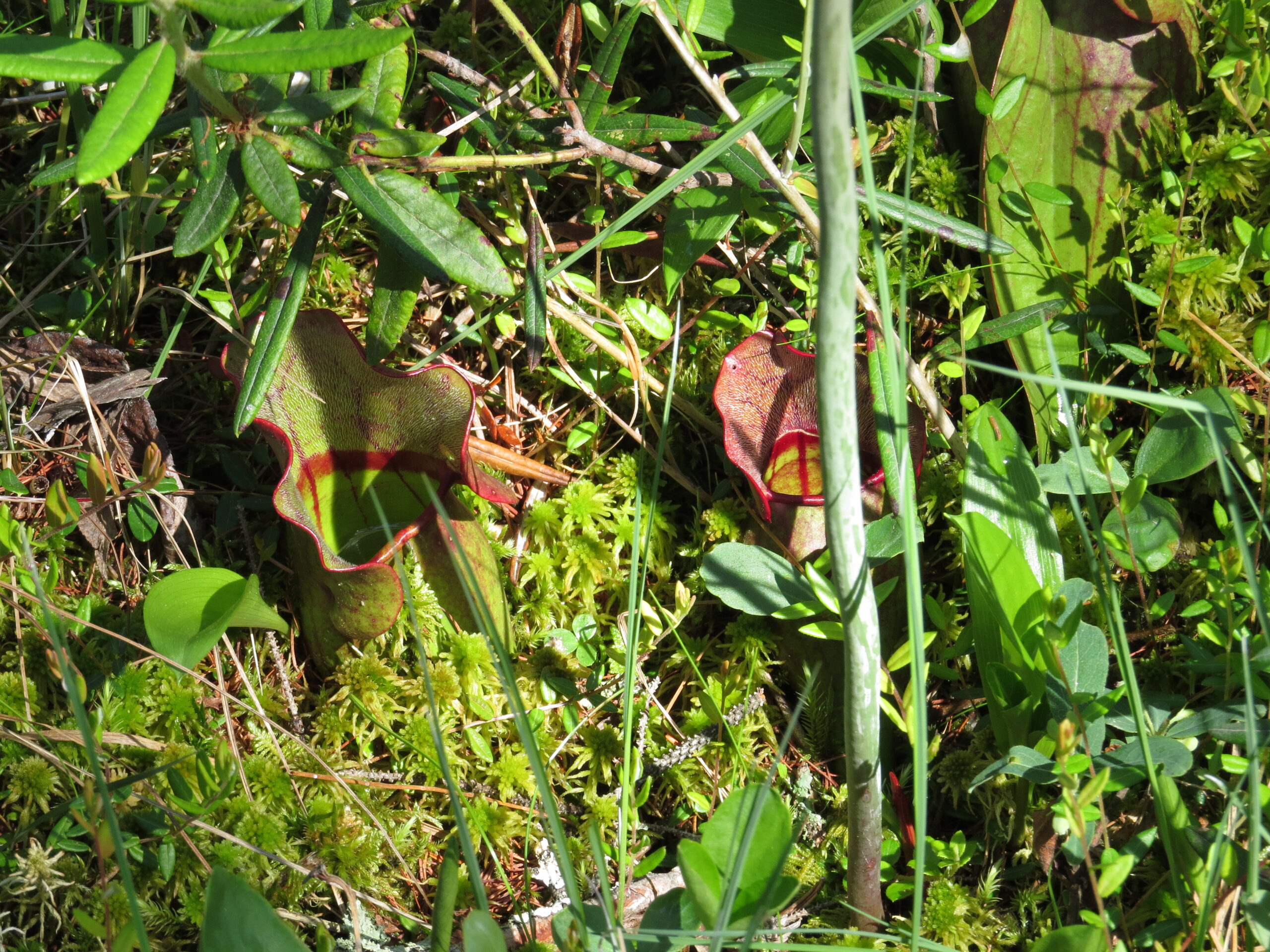
I saw more and more of the nodding Purple Pitcher Plant flowers as we walked the boardwalk trail. Even when they were close to the trail and in relatively open vegetation, the Pitcher Plants were well-camouflaged. The ‘pitcher’ is a very specialized leaf in the shape of a cylinder. It is an engineering marvel with a ‘wing’ structure down the front to strengthen it when it is full of rainwater. The lip is densely covered with stiff downward-angled hairs that help glide the insects into the enzyme-rich rainwater where it drowns and is ‘digested’ so the nutrients can be used by the plant. The red-purple veining and nectar attract the insects to their demise.
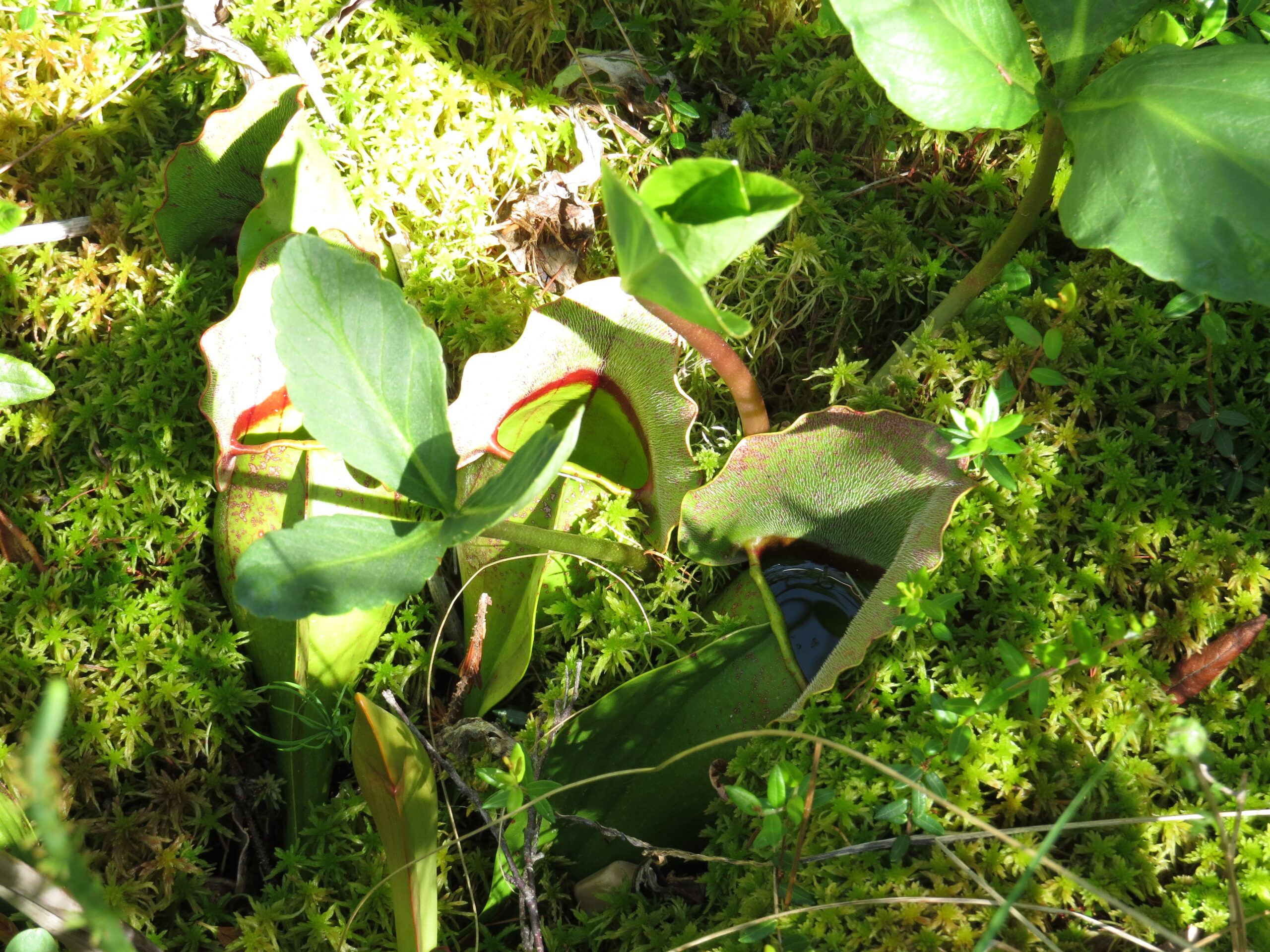
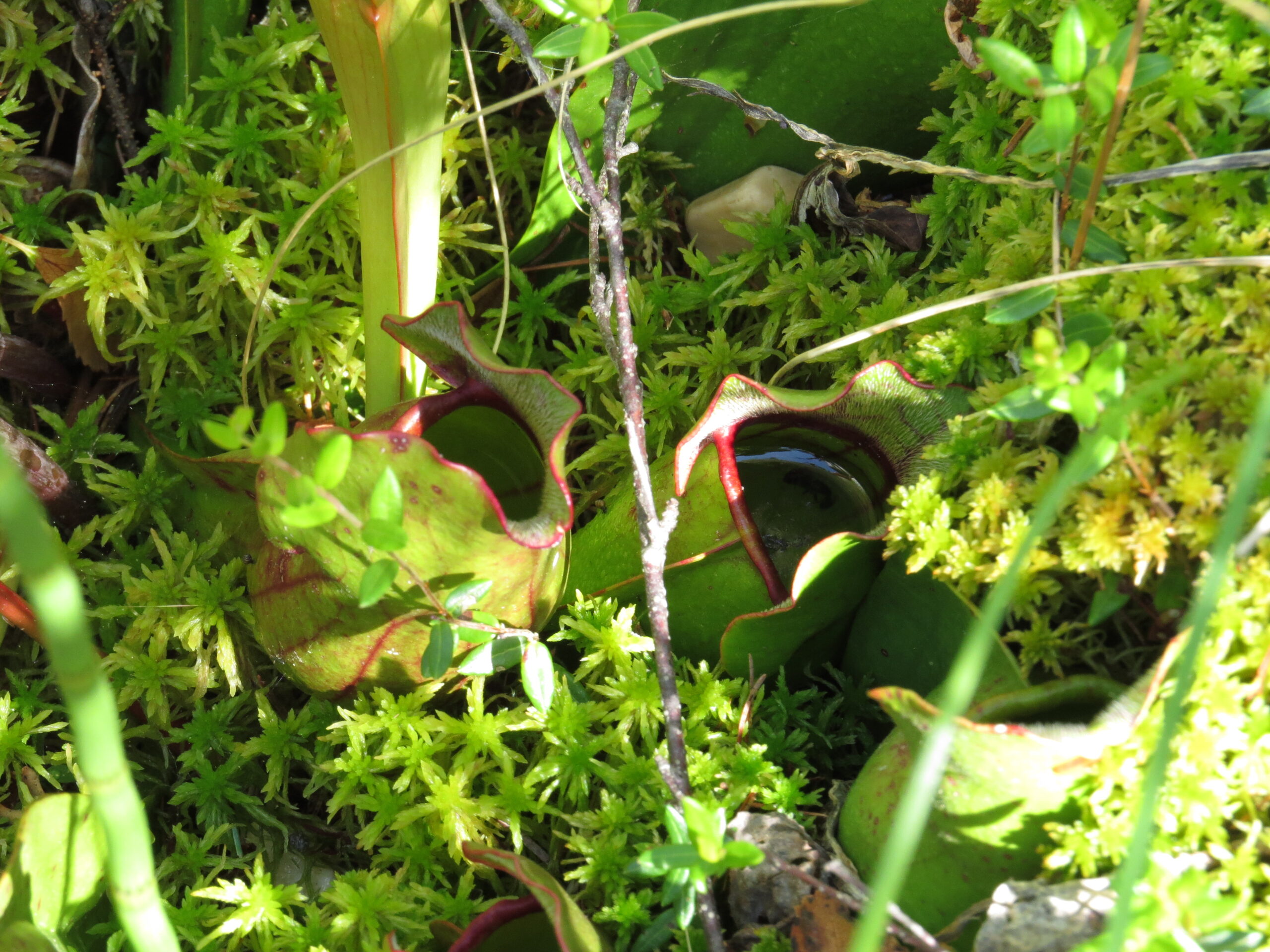
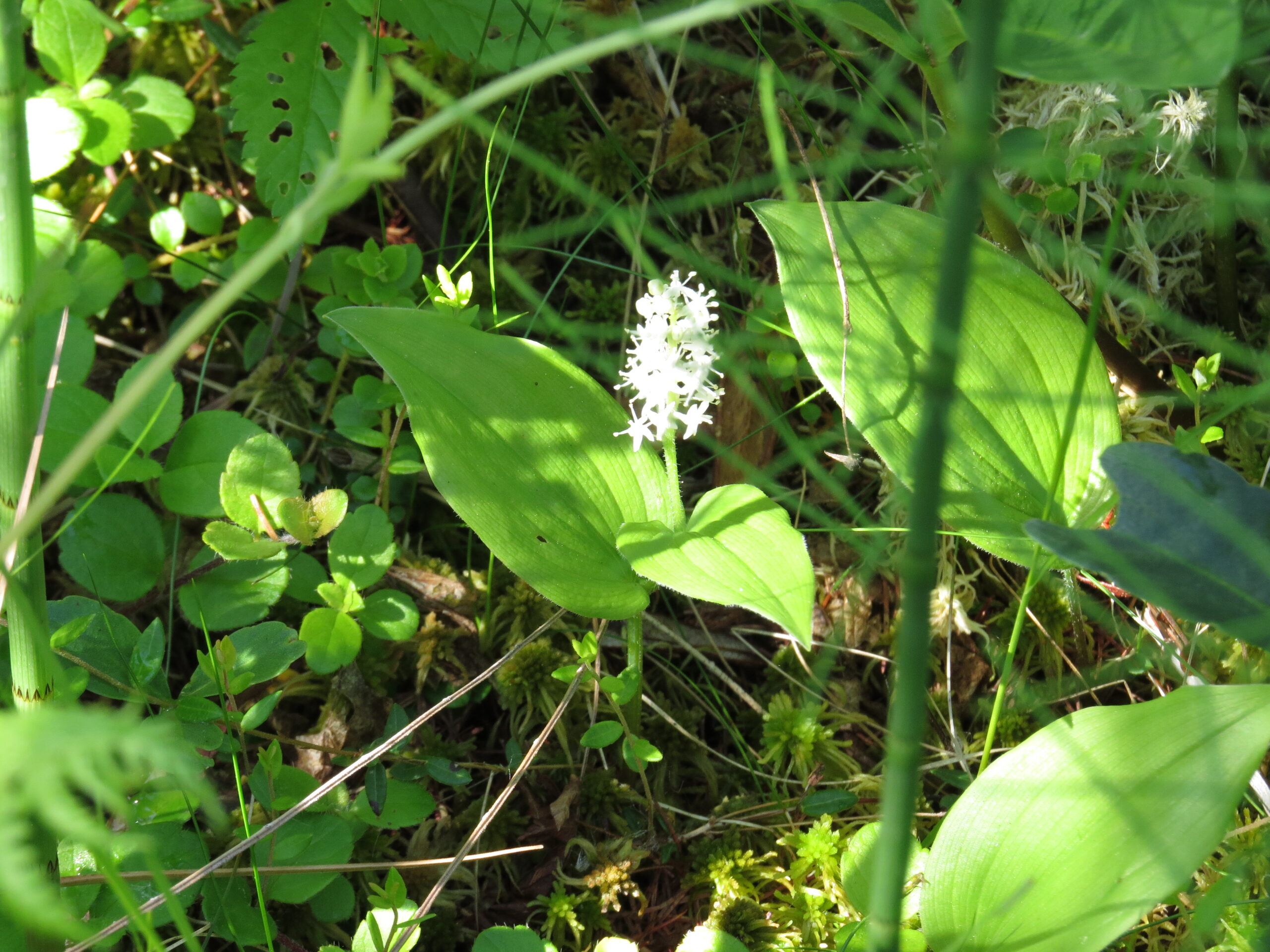
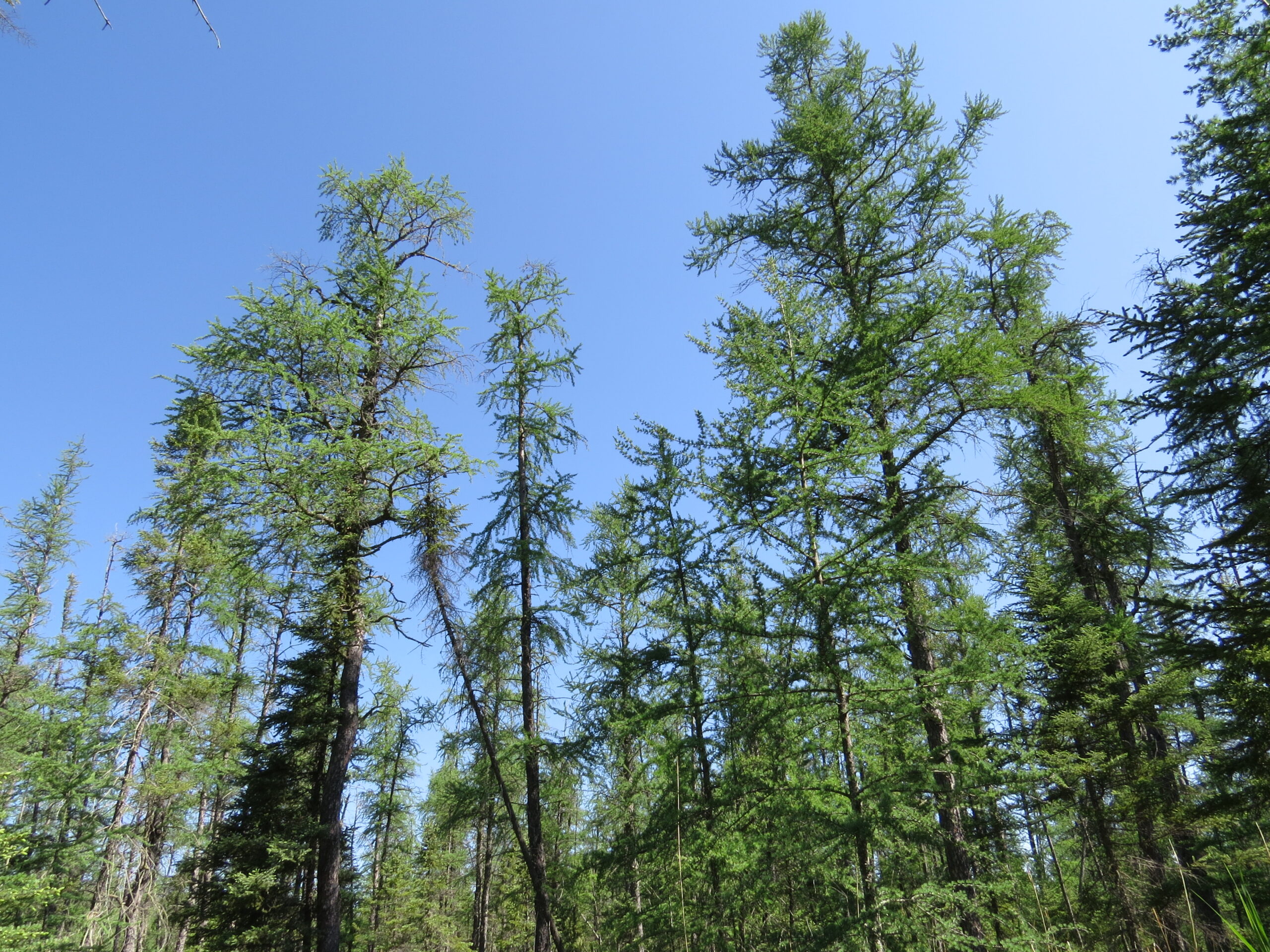
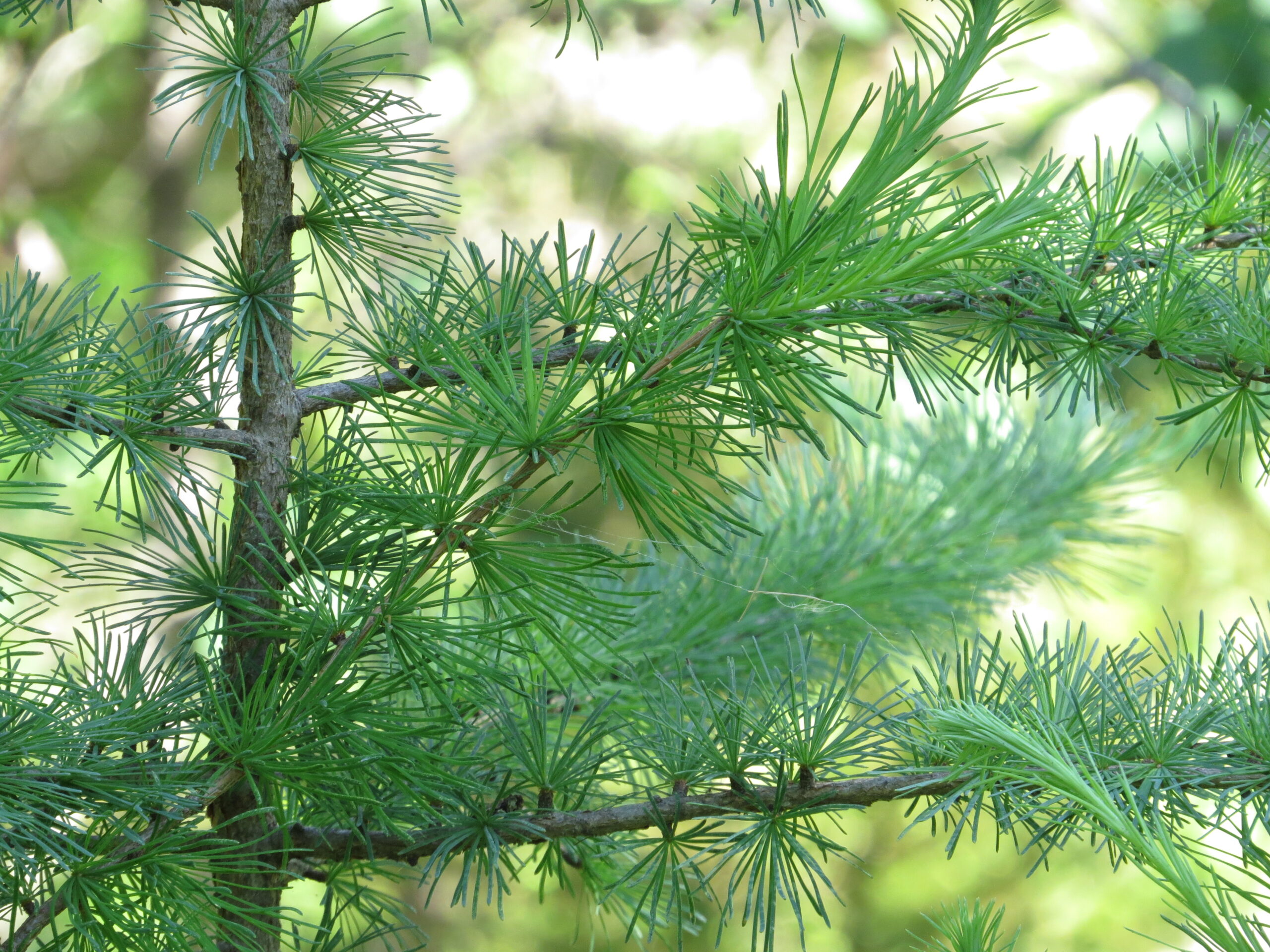
We saw more bright Moccasin Flowers, a few other Dragon’s Mouth Orchids, and some Wild Lily of the Valley. The forest part of the bog was occupied by Tamarack (Larch) and Black Spruce trees who like wet feet and acidic conditions.
The Pitcher Plant flowers are in and of themselves a work of art. Their thick, waxy petals can be in all states of opening—from tight buds to open, expanded umbrellas. After the petals fall the seed capsule remains on the long stem into Fall.
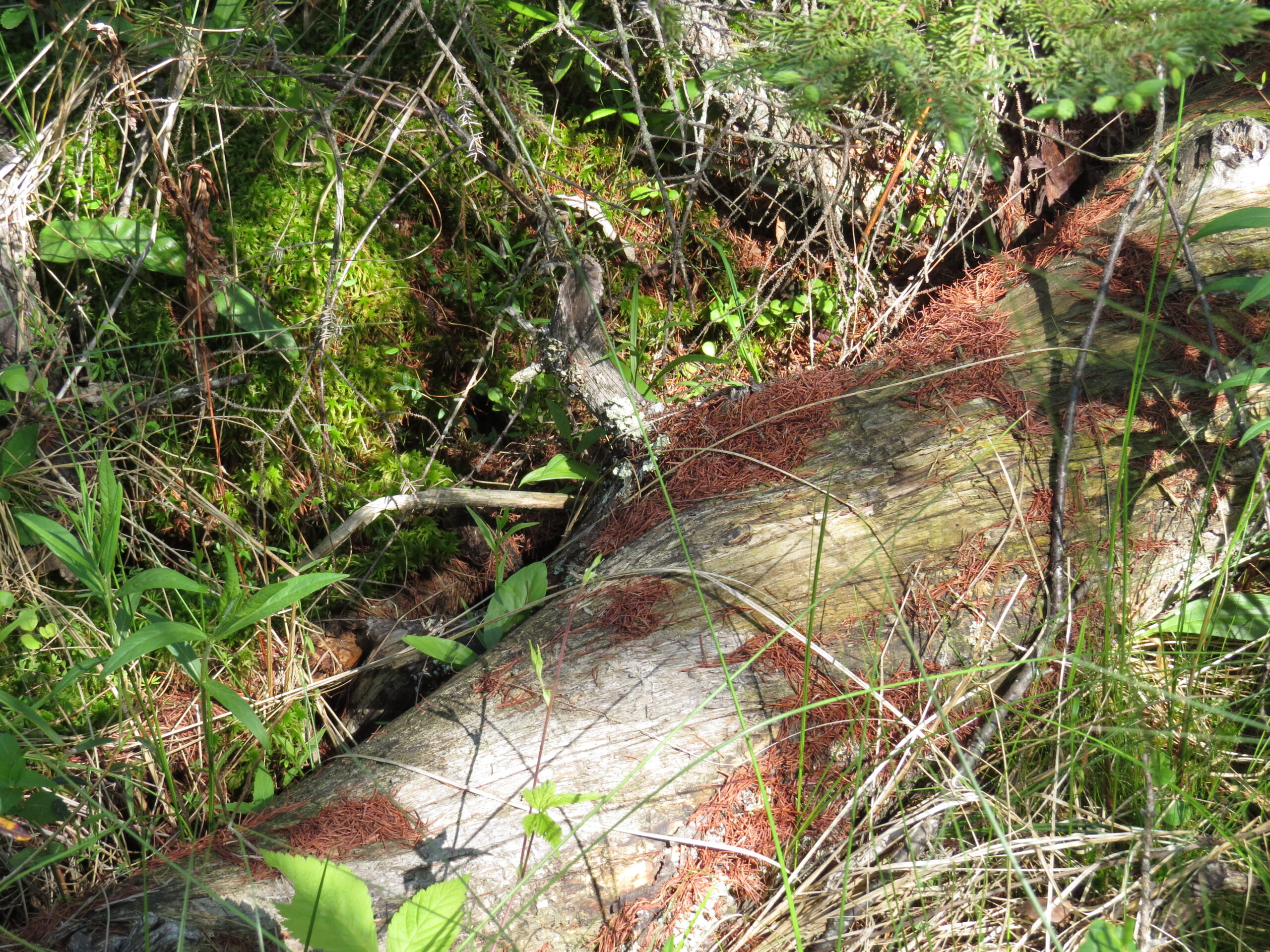
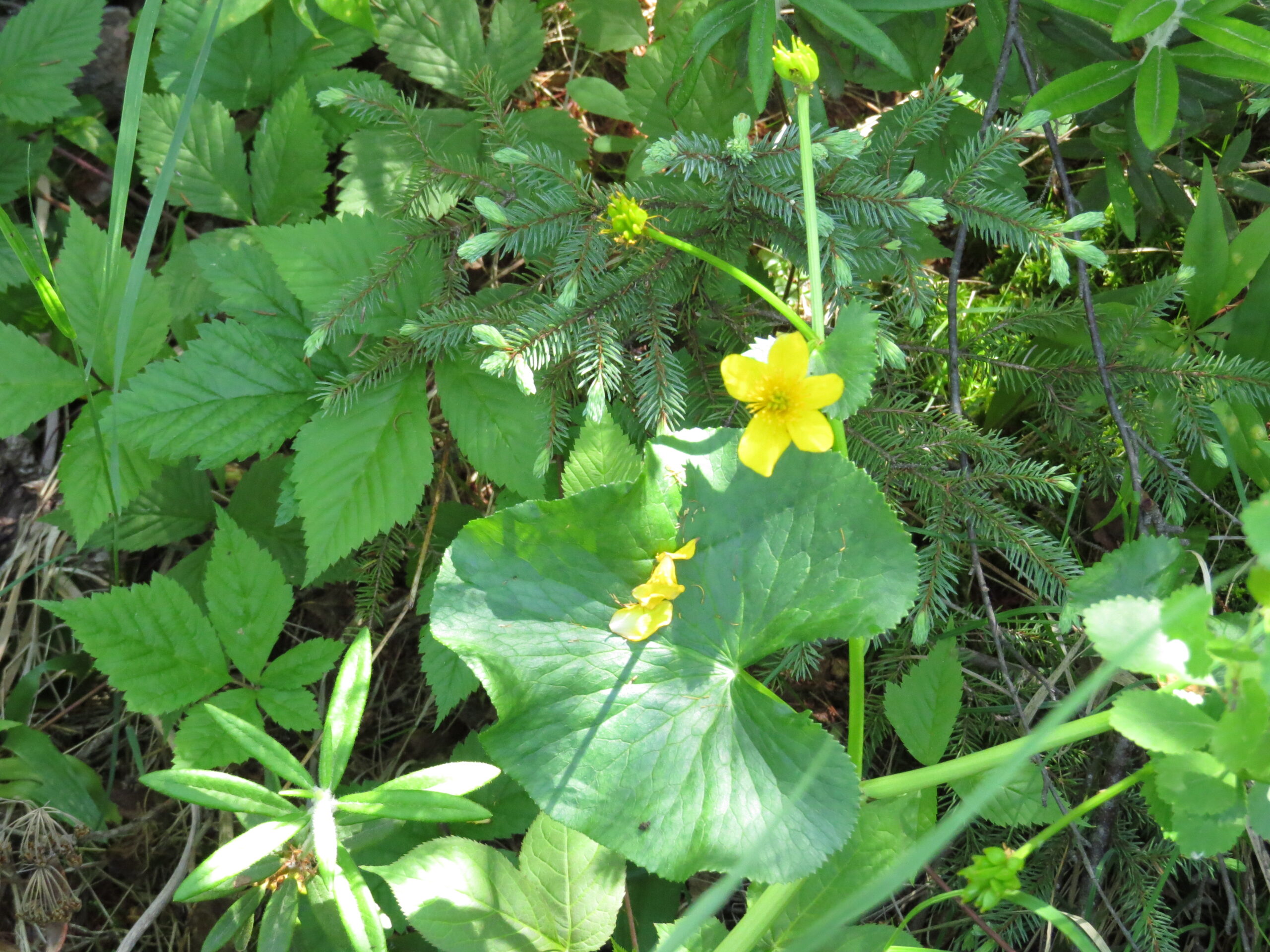
The mossy floor of the bog is suspended above water and is the substrate from which the plants grow. The trees grow horizontal roots to help them stand in the wet conditions. Marsh Marigolds, with their veined round leaves, were at the end of their blooming season; we saw a few of the rich golden flowers.
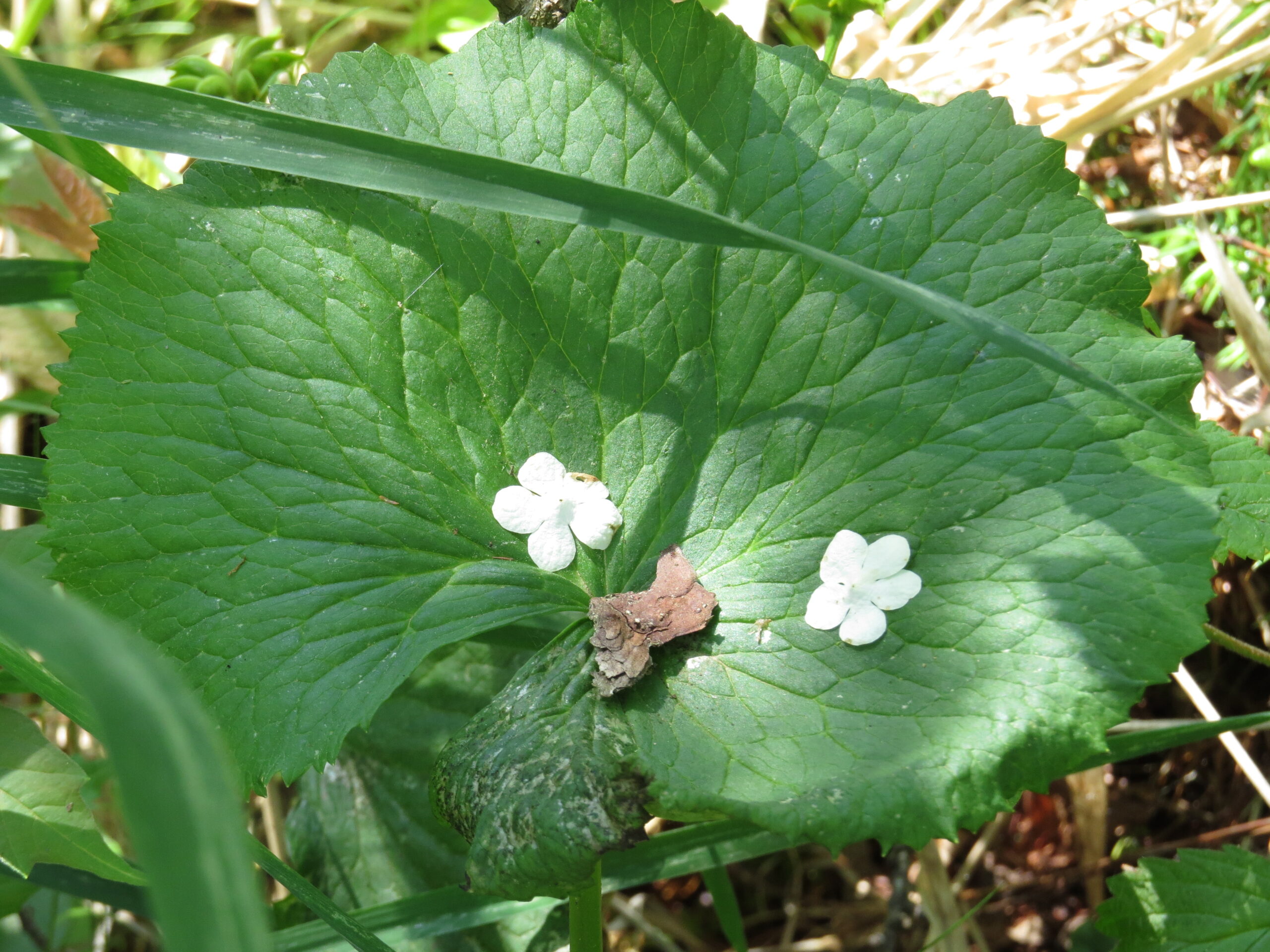
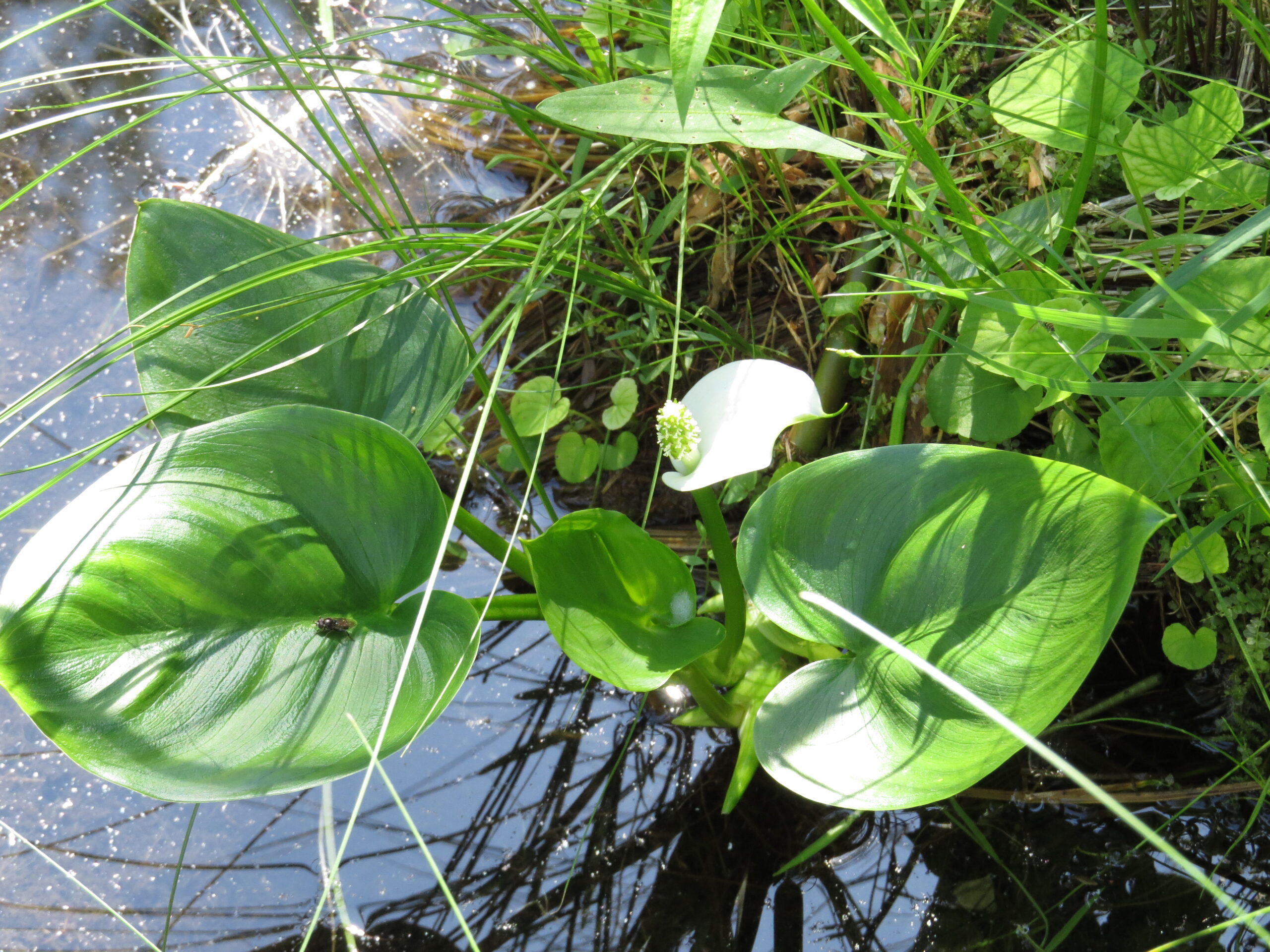
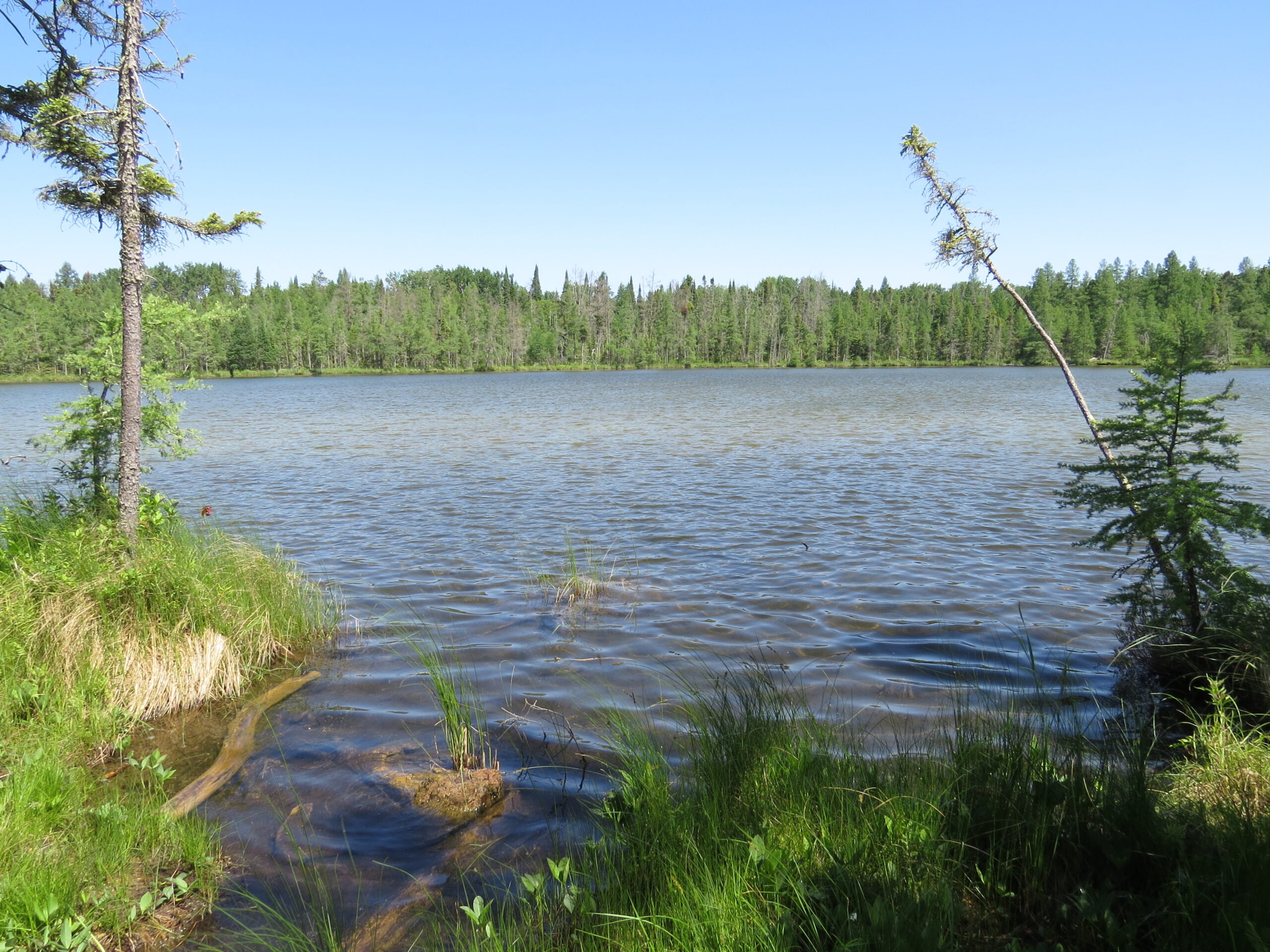
As we got closer to Big Bog Lake, we began to see some cattails growing with the bog plants. Wild Calla Lilies, with their beautiful heart-shaped leaves, grew in the outlet of the lake.
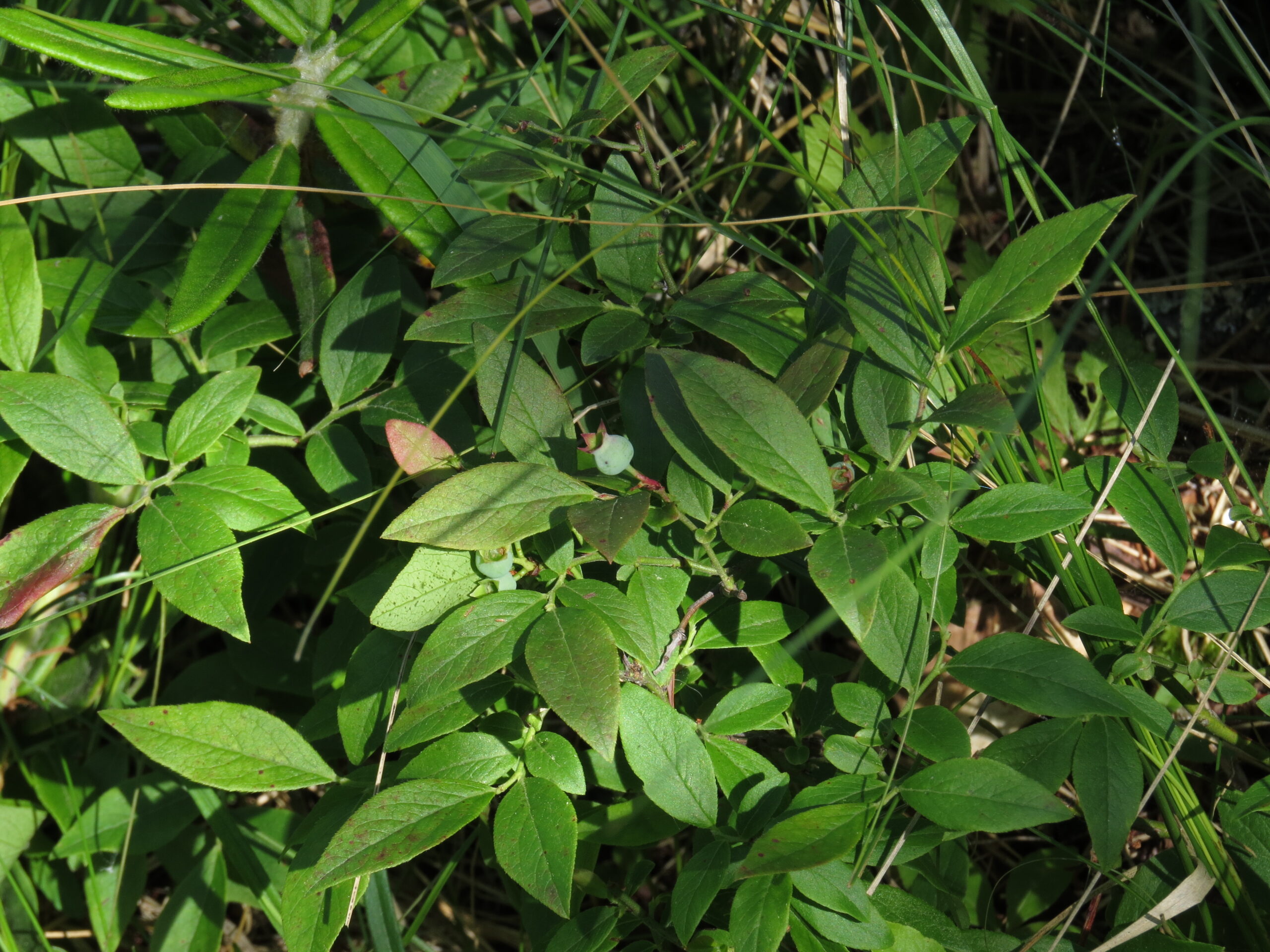
Wild Blueberries were bountiful in the bog and were setting fruit.
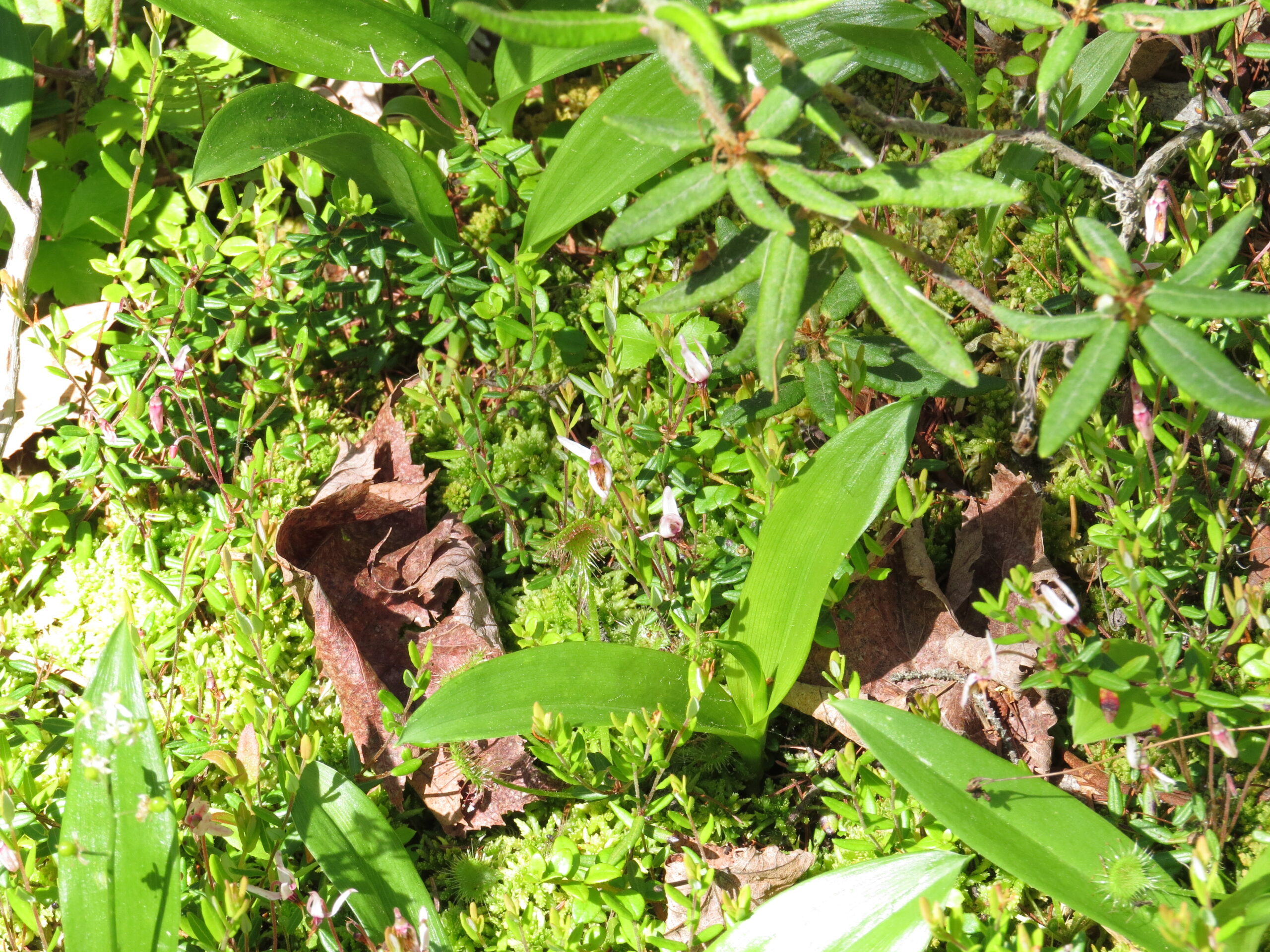
Smaller even than the Twinflowers are the Bog Cranberry flowers (1/4″) with pinkish-white petals that curl back away from the stamens and pistil. They have viney evergreen leaves and produce a small, red fruit. Now look even more closely—at the bottom center of the photo below the small Cranberry flowers is another carnivorous plant of the bog—Round-leaved Sundew. The round, reddish tinged leaves have sticky hairs that trap and enfold insects that are digested for nutrients for the tiny plant.
The bog is a fascinating ecosystem with beautiful and interesting plants. The elusive Purple Pitcher Plants ended up being plentiful in the Bemidji bog! Their pitcher leaves turn more colorful with the sun and the progression of the season. They are a perfect example of evolutionary adaptability that all the plants of the bog display.
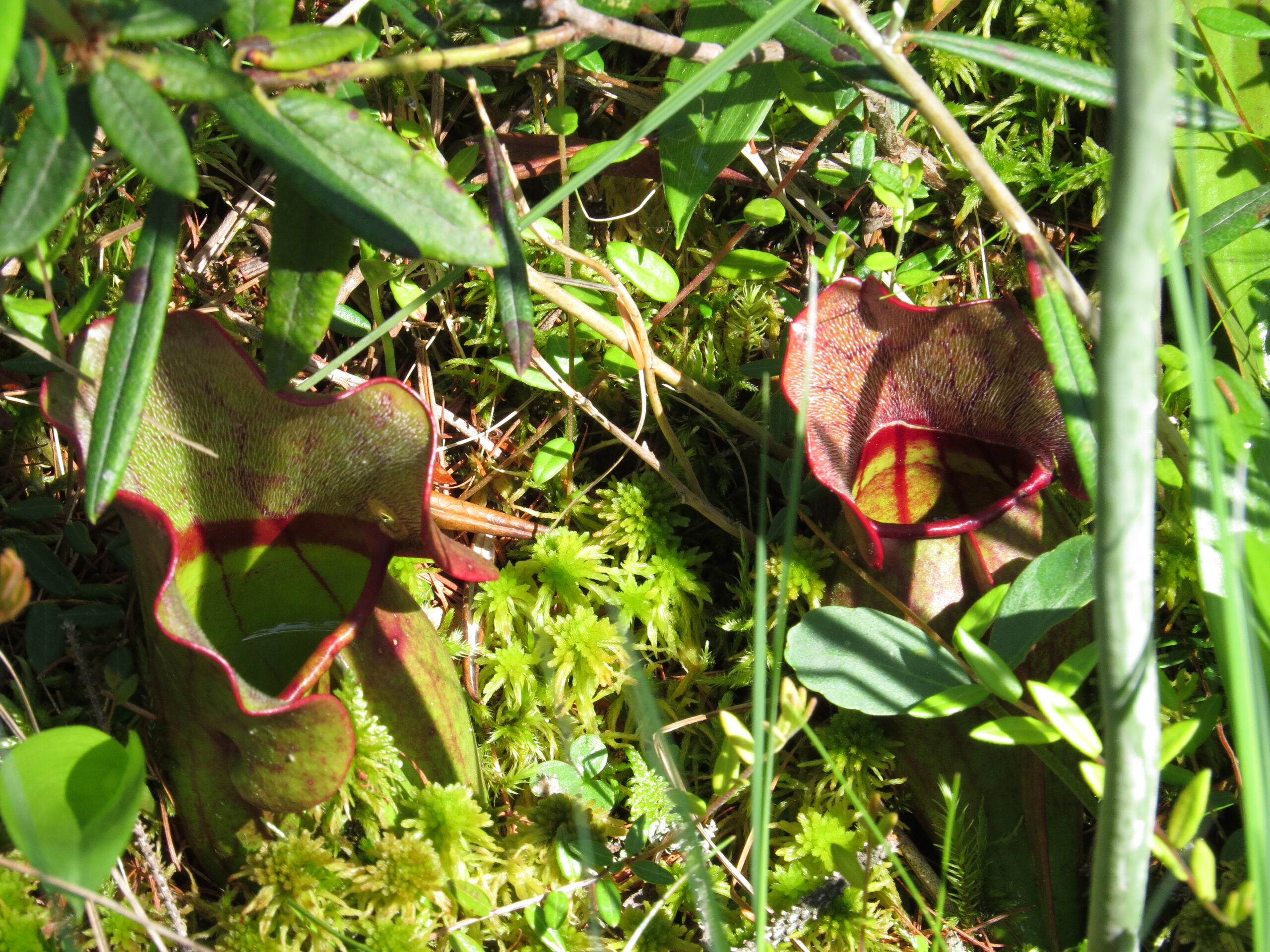
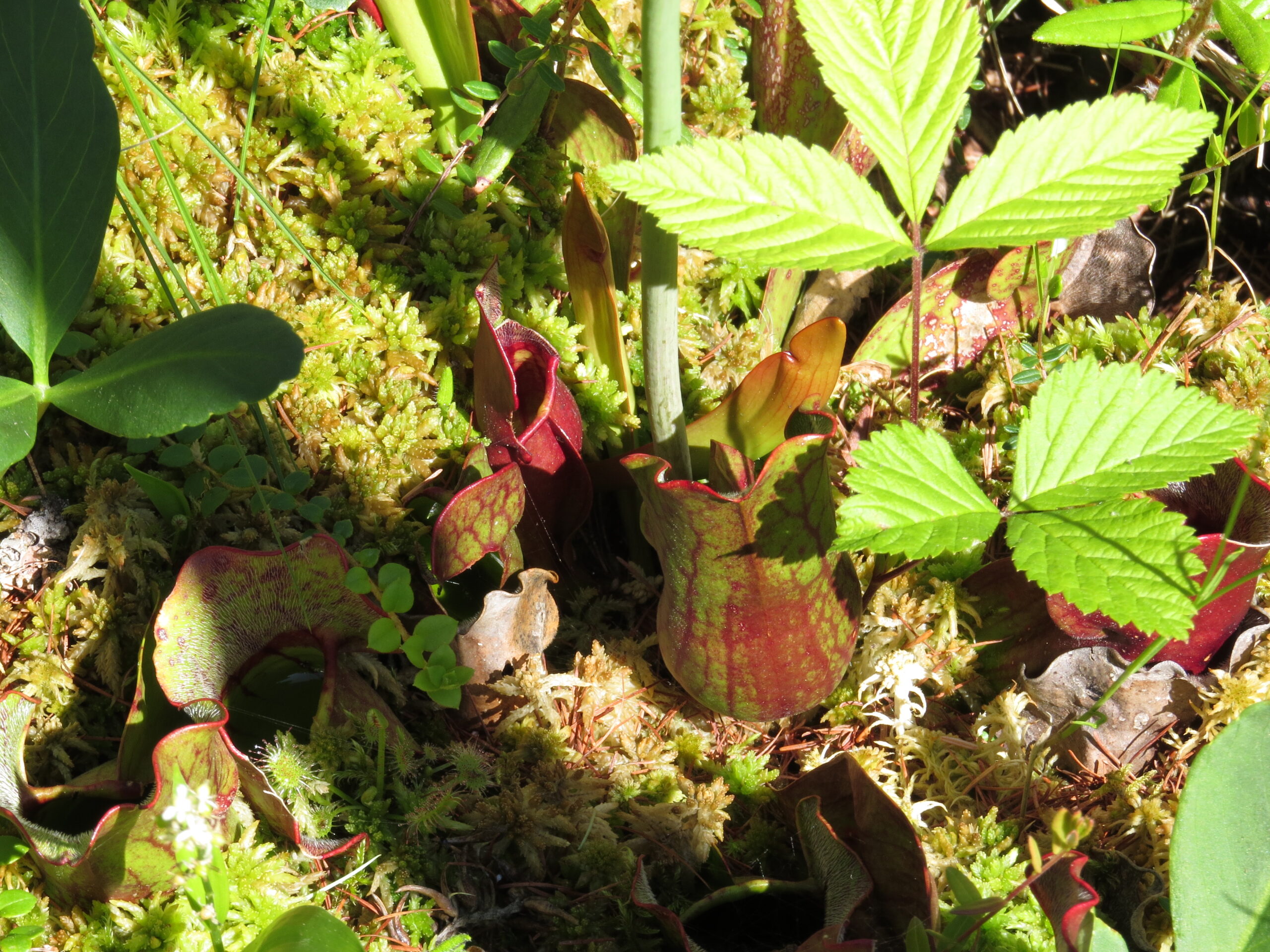
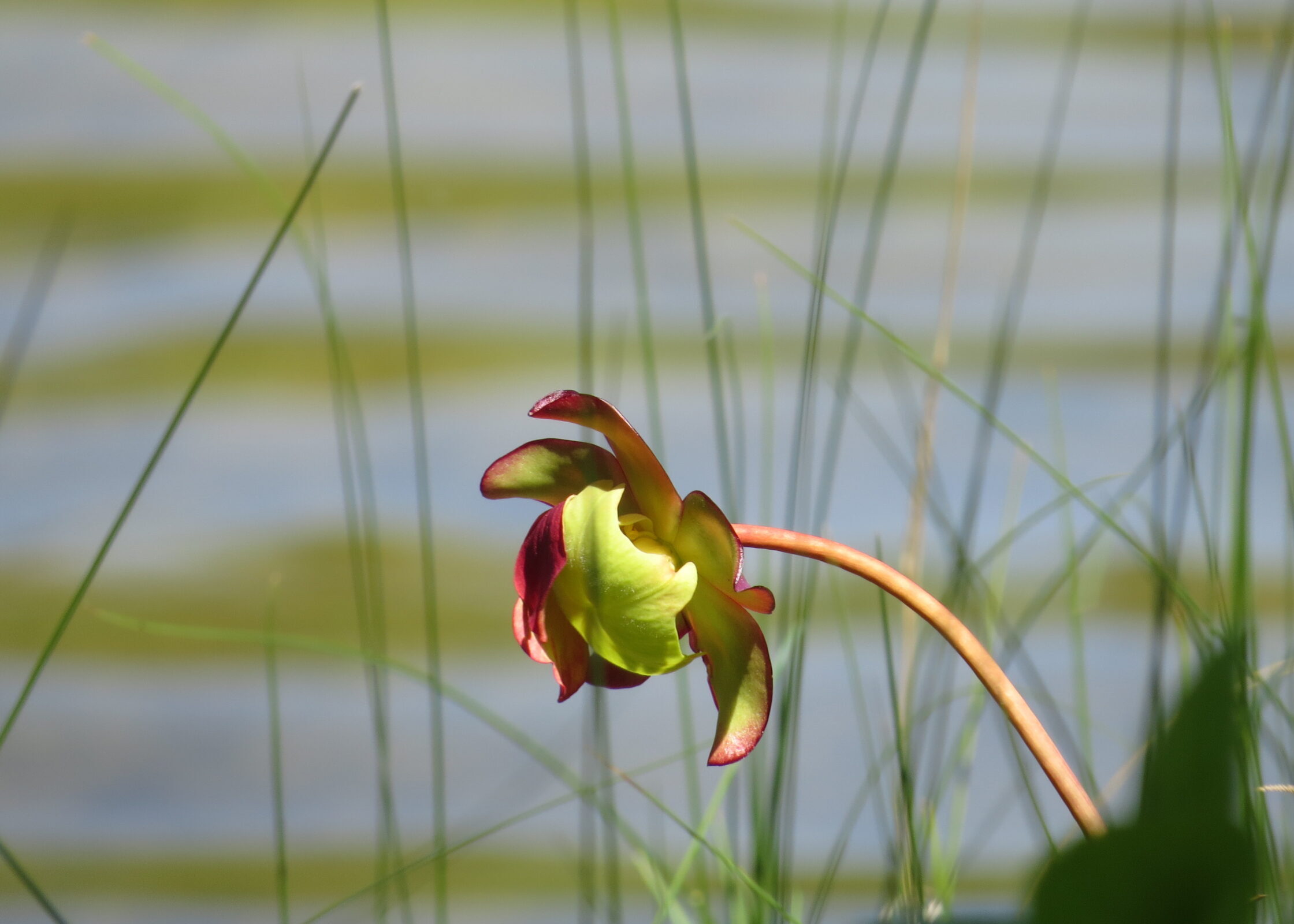
From my first encounter with the alluring Purple Pitcher Plant flower, I became kind of obsessed with them. I had heard of carnivorous plants, but did not realize they were right here in the wilds of Minnesota! And while they were elusive in the bogs I had visited, I was hardly a bog aficionada (well, I do have the enthusiasm and appreciation.) I had the desire to see more and learn more (a quest) and was happy to get up early to go to a place we had never been before. There are many desires in our lives that seem unreachable, unattainable, or elusive. How can we find these hard-to-catch yearnings? Being in the right place at the right time is more than just a cliché—some of our longings absolutely need to be timed correctly and situated in the right place—or the pursuit will be unreachable. It also helps to have the right people who are willing and able to walk beside us, be patient and encouraging, and who possess a kind heart and sense of humor. I’m grateful my bog boardwalking partner is all of that. Most every one of us have a bountiful life teeming with beauty, diversity, and goodness. Stop for a moment or two and peer into the wonderland that is your life on this amazing, great green Earth.
On the Wobegon Trail
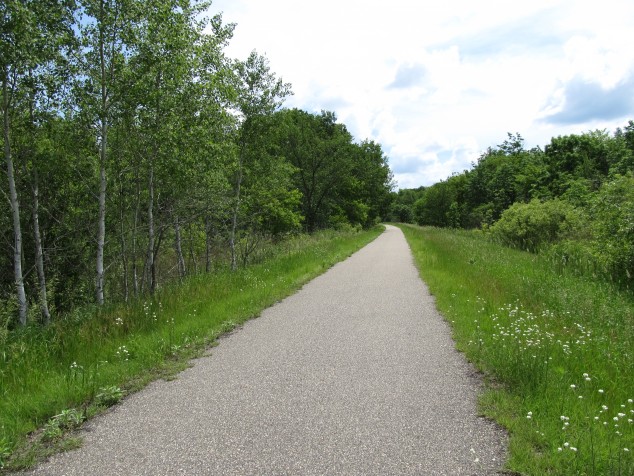
It was a beautiful day for biking–sunny with a light breeze, warm but not too hot or humid. We headed for the Lake Wobegon Regional Bike Trail, not far from our house. It is the Lake Wobegon of Garrison Keillor’s storytelling on A Prairie Home Companion radio show–where “all the women are strong, all the men are good-looking, and all the children are above average.” Even though we’re transplants, I like to think we fit in. Manned with sunscreen, water, homemade granola bars, and the camera, we set off on our journey.
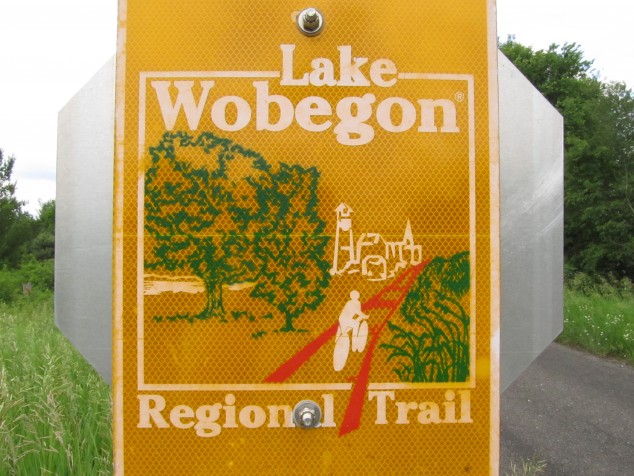
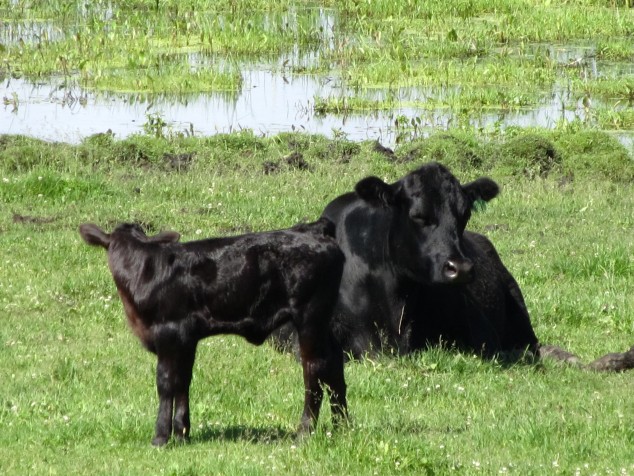
The Wobegon trail is 46 miles from St. Joseph to Osakis on an old railroad line. It winds through areas of prairie, rolling farm land, woods, small towns, and lakes. We saw sheep and cattle, including the little Black Angus calf and his mama. I tried to get him to turn my way, but he was probably looking at frogs or something much more interesting.
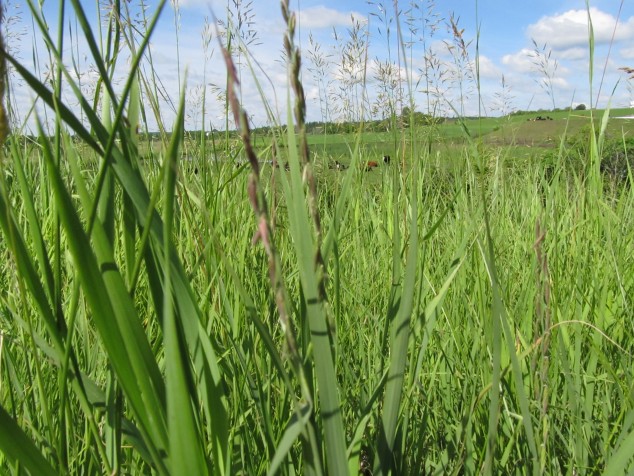
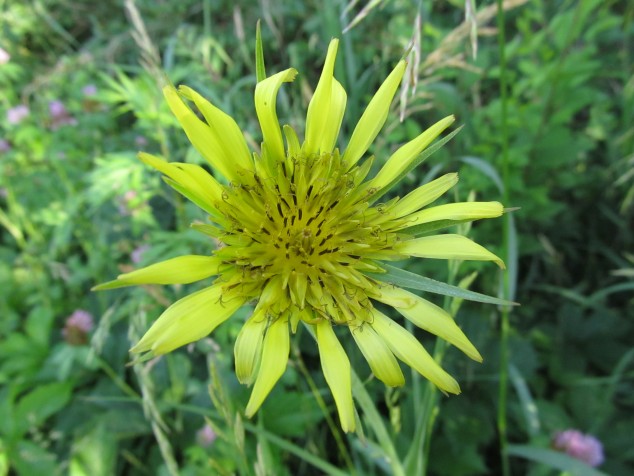
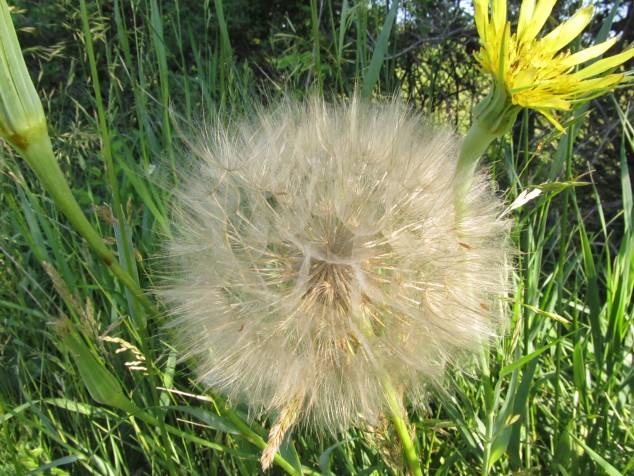
We saw prairie grasses and wildflowers including Wood Anemone, Yarrow, Wild Rose, and Prairie Phlox. Yellow Goatsbeard was abundant along the trail–some in their morning bloom of yellow, others in their dramatic dandelion-like seed heads.
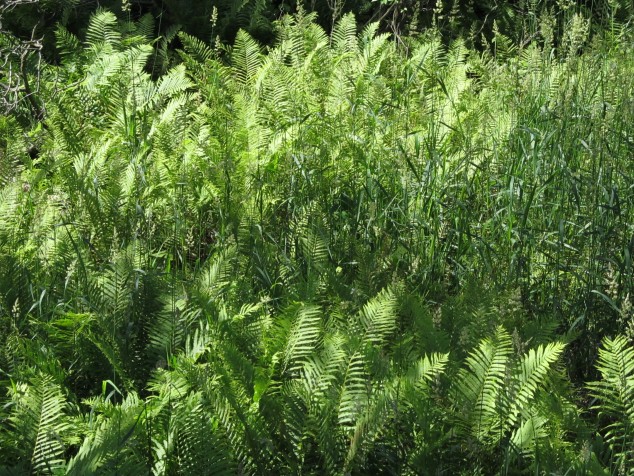
Shimmering stands of ferns carpeted the floor of a wet, wooded area.
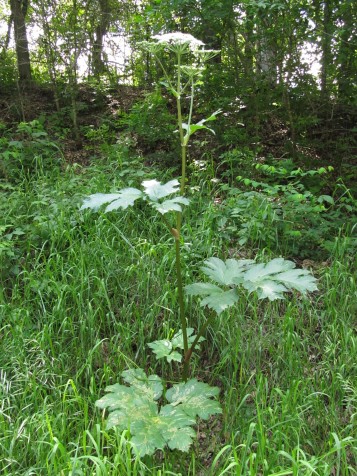
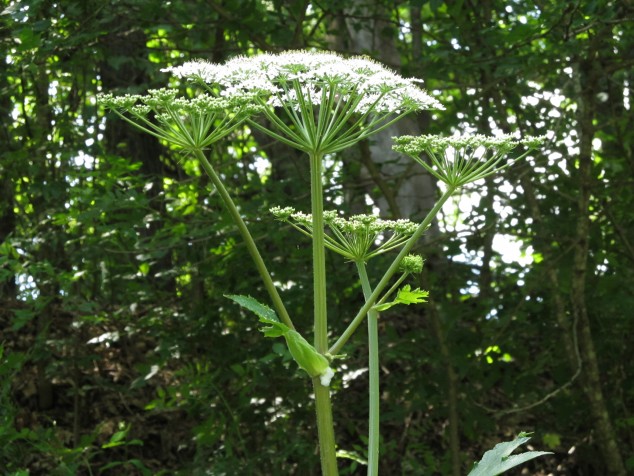
I saw a giant of a plant that stopped me in my tracks! It was six or seven feet tall with a dill-looking flower and huge leaves. I identified it as Cow Parsnip, a member of the Parsley Family.
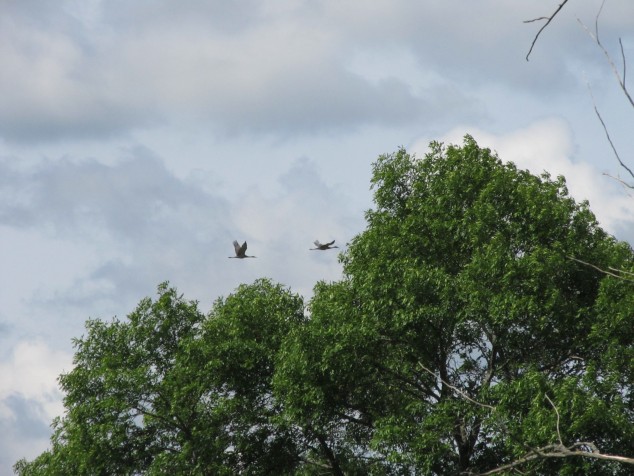
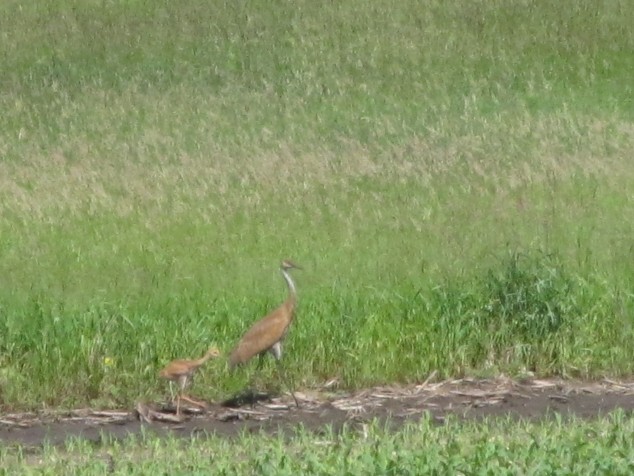
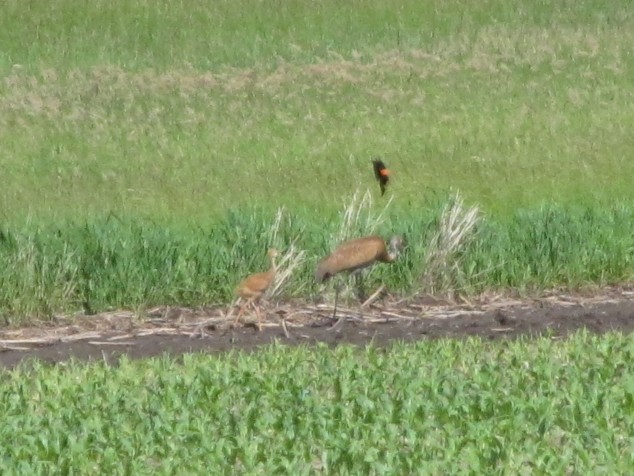
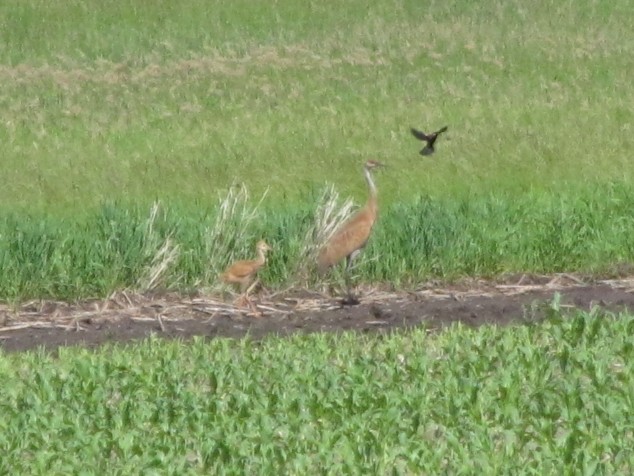
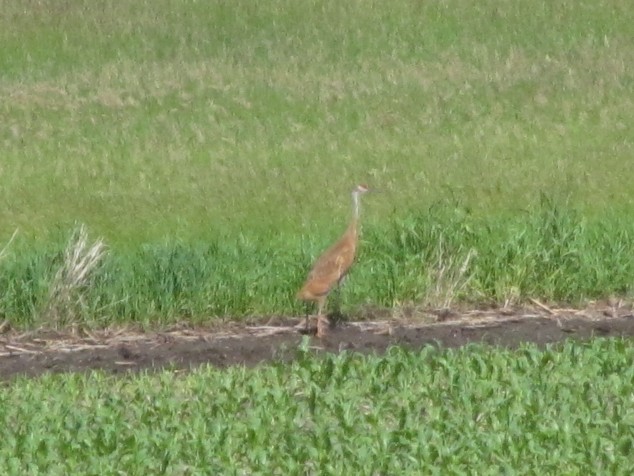
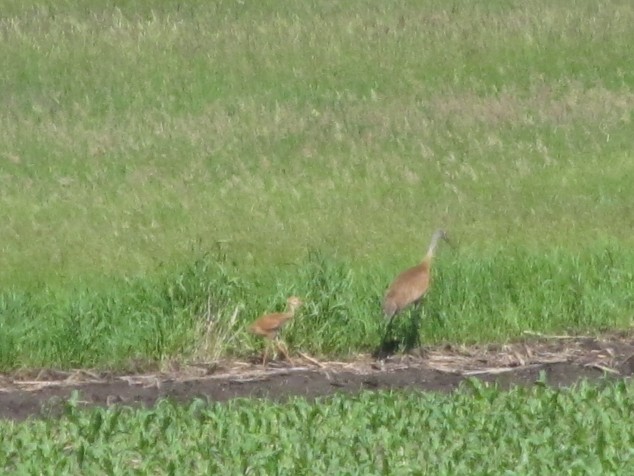
When we got to an open area again, Chris spotted the gray-brown shapes I was hoping we would see. Picking their way through a corn field was a Sandhill Crane and her chick. As I was getting pictures of these two, we heard the rolling, low bugle call of two others as they flew overhead. The mama and her chick walked between the field and a grassy area. All of a sudden they were dive-bombed by a red-winged blackbird. Mama crane ducked her head then waited for her chick to catch up to her as the blackbird flew away. Then they calmly resumed their walk.
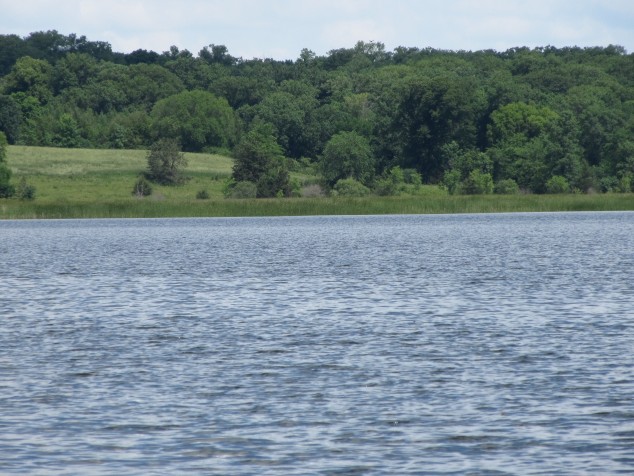
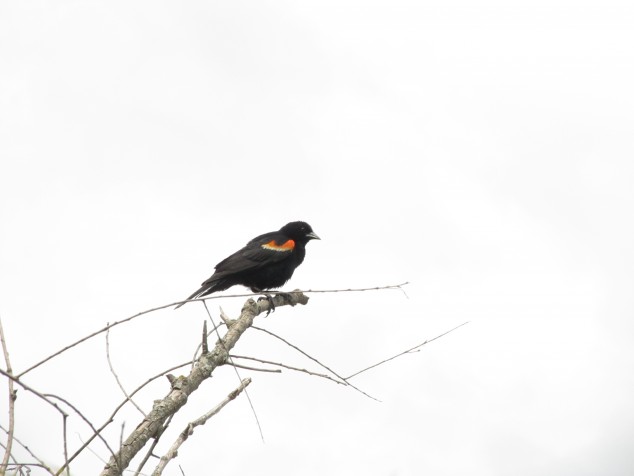
We passed a number of small lakes, streams, and wetlands, then rode between Middle and Lower Spunk lakes. Middle Spunk has a swimming beach and many homes surrounding it. Lower Spunk has a fishing dock, public water access, and more wild area. A red-winged blackbird greeted us from his perch when we walked out on the dock.
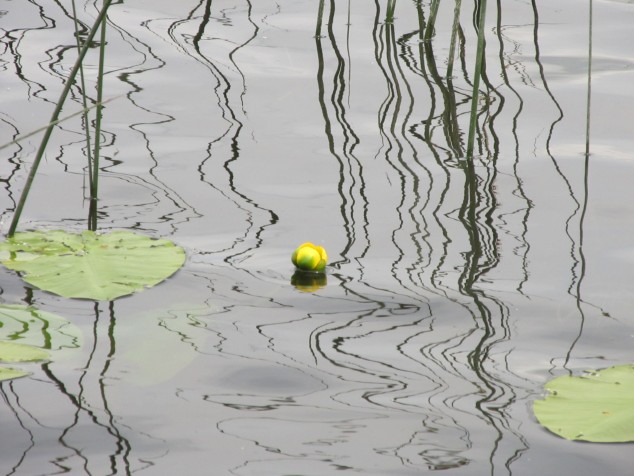
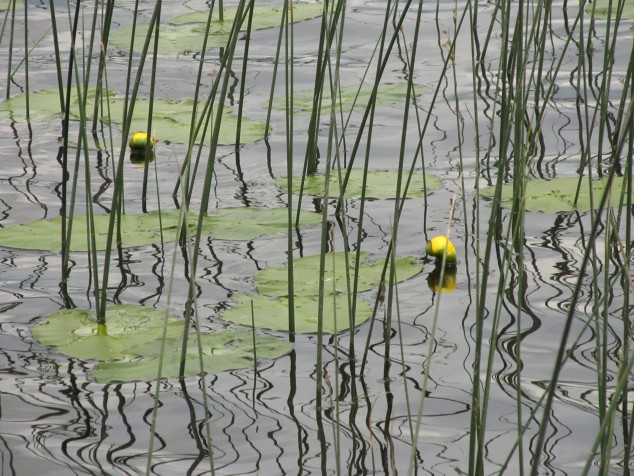
The Yellow Pond Lilies were beginning to bloom from their floating homes. The pencil-thin water weeds that grew around the lilies threw shadows that zigged and zagged darkly on the wavy water, looking like an abstract painting.
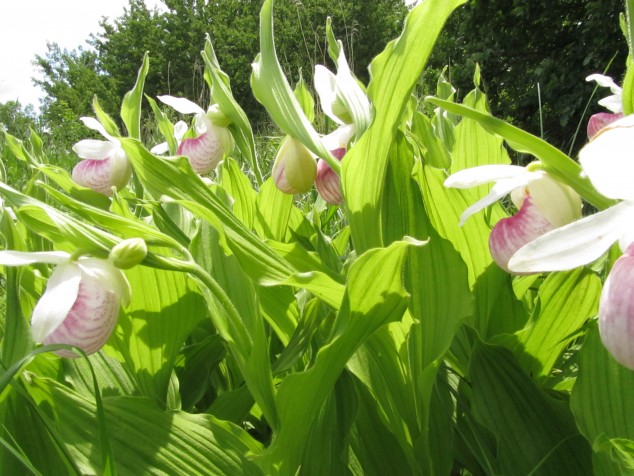
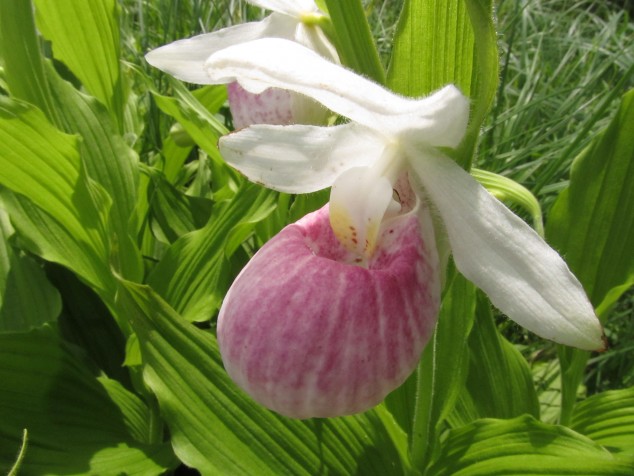
At about mile 12 or 13 of the Wobegon trail, we encountered one of the highlights of the trip–a Showy Lady’s Slipper–the State flower of Minnesota. It is a type of orchid that grows very slowly, taking up to 16 years until first flowering and is very long-lived–50 to 100 years. Lady’s Slippers have been protected in Minnesota since 1925, as they are a rare find.
After seeing the Lady’s Slipper, we turned around to head back. It was afternoon by then, and the sun was warm. The breeze of gliding along the path felt good. I don’t know if it was the weather or the air rushing through my nose, but I noticed so many scents. It was like, when biking you go through the scents, instead of the scent wafting to you. Maybe it smells stronger that way. I noticed the wild rose sweetness, the heady hay smell of alfalfa and sweet clover, the damp coolness of the woods, and a brief acrid smell of skunk. I smelled tobacco when a boy around the age of twelve?! rode by and fresh, clean soap when a tall man glided past us. The lake smelled fishy and weedy like a lake should, and the pasture like cows and manure.
And the sounds seemed amplified and sweet. Many different bird songs serenaded us–the chatter of wrens and the stark call of the pileated woodpecker. At one point I realized how quiet it was except for the birds. Then we rolled by a grove of poplars, and they loudly cheered me onward with their quivering leaf ensemble. (My leg muscles needed a little encouragement by that time.)
So what piqued our senses? Nature herself? Was it my quest to find good nature pictures to share? Or was it the opportunity to be away from the normal daily drone of tv, radio, computers, and phones? Perhaps our senses are bombarded by our man-made surroundings–and it is not what our bodies and souls need. So we can take wisdom from the Sandhill Crane–duck our heads, stop and re-group with our loved ones (and Nature), and calmly walk on.