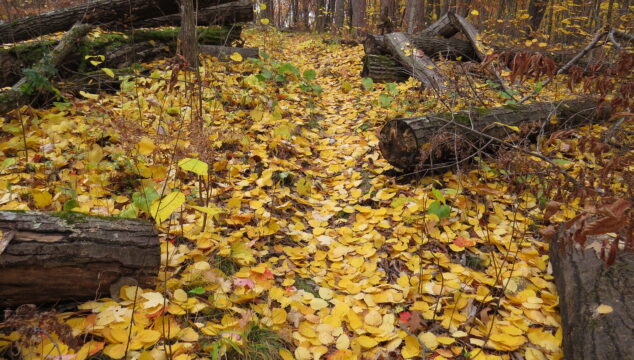
Come walk with me in the peak Autumn beauty of the Northwoods. To say that I love this time of year is an understatement. Most everyone can appreciate the colorful falling leaves---it reveals the 'true self' of a tree when its leaves are no longer producing chlorophyll. Their true colors are revealed, and there is something simple … [Read More...]
What Used to Be
There is always an interplay between change and holding steady. Not only does it play out in the overarching culture of the world but also in smaller community and relationship entities. But the most personal, most impactful, and most difficult interaction between change and holding steady happens inside each one of us. We have a desire for learning, a curiosity of the world around us, and an innate drive for ‘something new’—except when we don’t feel safe. Safety is our default system—our primitive brain takes over when we are threatened by anything—real or imagined. When that happens, curiosity, compassion for others, learning, and openness get shut out from our brain and body until we feel safe again. So what happens when the people around us and the media we consume continuously stoke our fears?
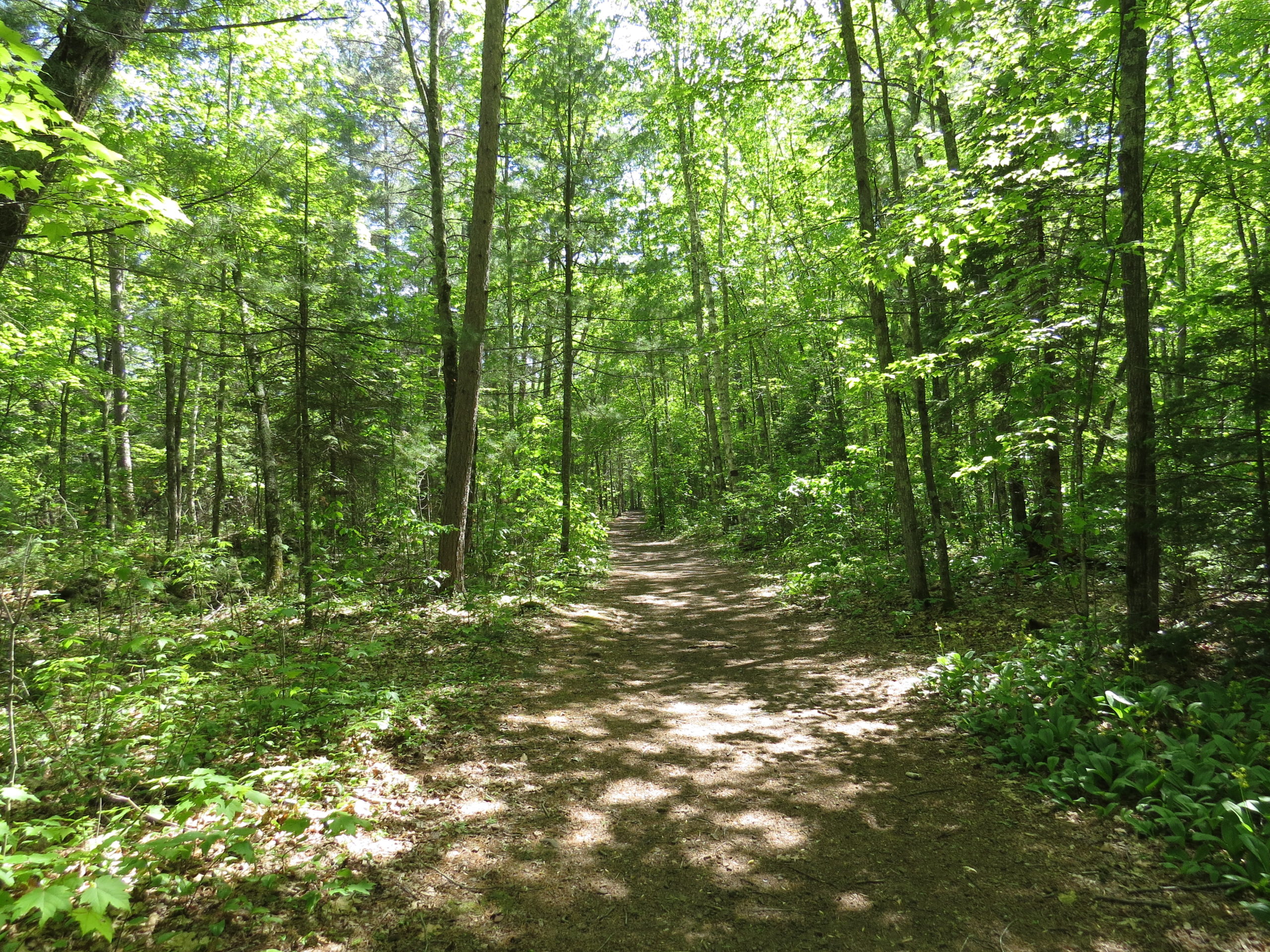
I am already a month behind in my posts—it used to be the beginning of June, and it used to be Spring. On our way home from our Duluth wedding weekend at the beginning of June, we stopped at Banning State Park. We didn’t have a great amount of time, Chris was still on ‘no hiking’ status from his hip surgery, and the mosquitoes were ravenous. But Emily and I braved a one and a half mile hike on the Quarry Loop trail that followed the beautiful Kettle River. The trail used to be a railroad.
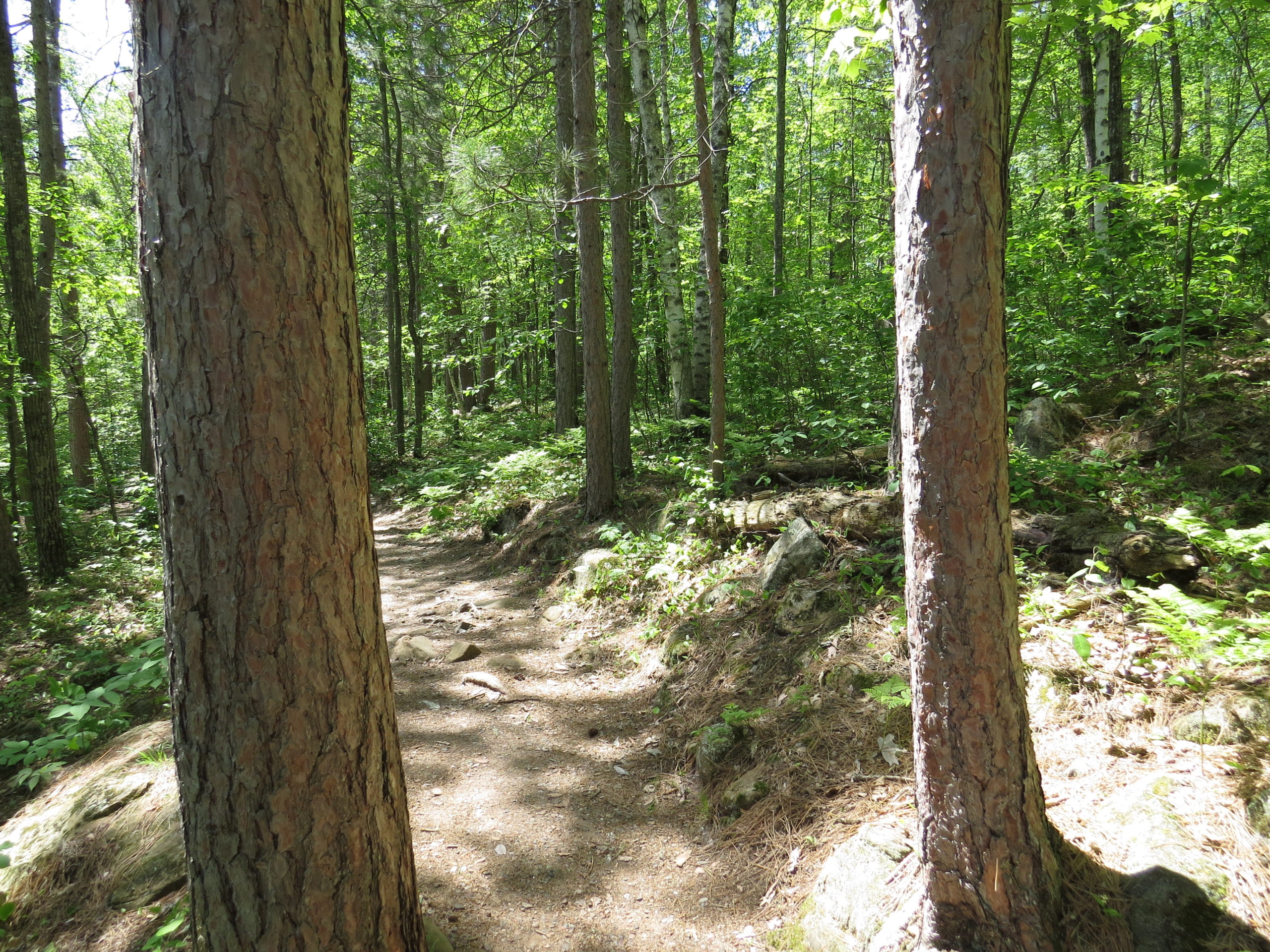
There used to be a forest of towering Red and White Pines in this area that was logged in the mid-1800’s. The Kettle River was used to move logs to the St. Croix River and to mills. In 1892, the Hinkley Sandstone of the area began to be quarried, thus the railroad to haul it away to the Twin Cities and Duluth for building blocks and road pavers. Then the enormous Hinkley fire in 1894 took trees, lives, and losses for the railroad and quarry. What used to be.
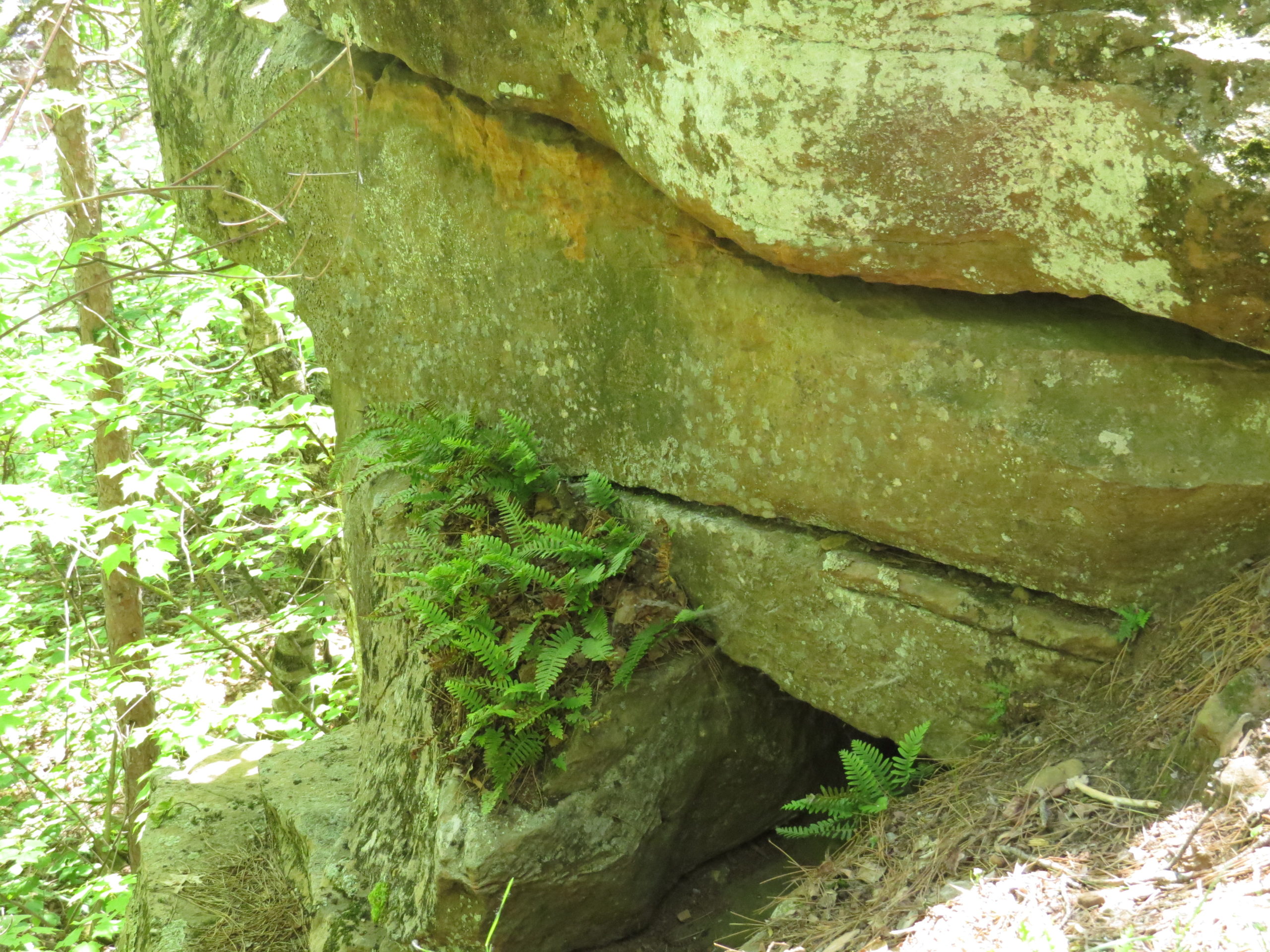
Long before enormous trees and logging, desirable sandstone and quarrying, there used to be a sea here hundreds of millions of years ago. The silica and sand formed the rock that is now called Hinkley Sandstone. There used to be a glacier here tens of thousands of years ago that upon melting created Lake Superior and the Kettle River that formed along a fault line. What used to be.
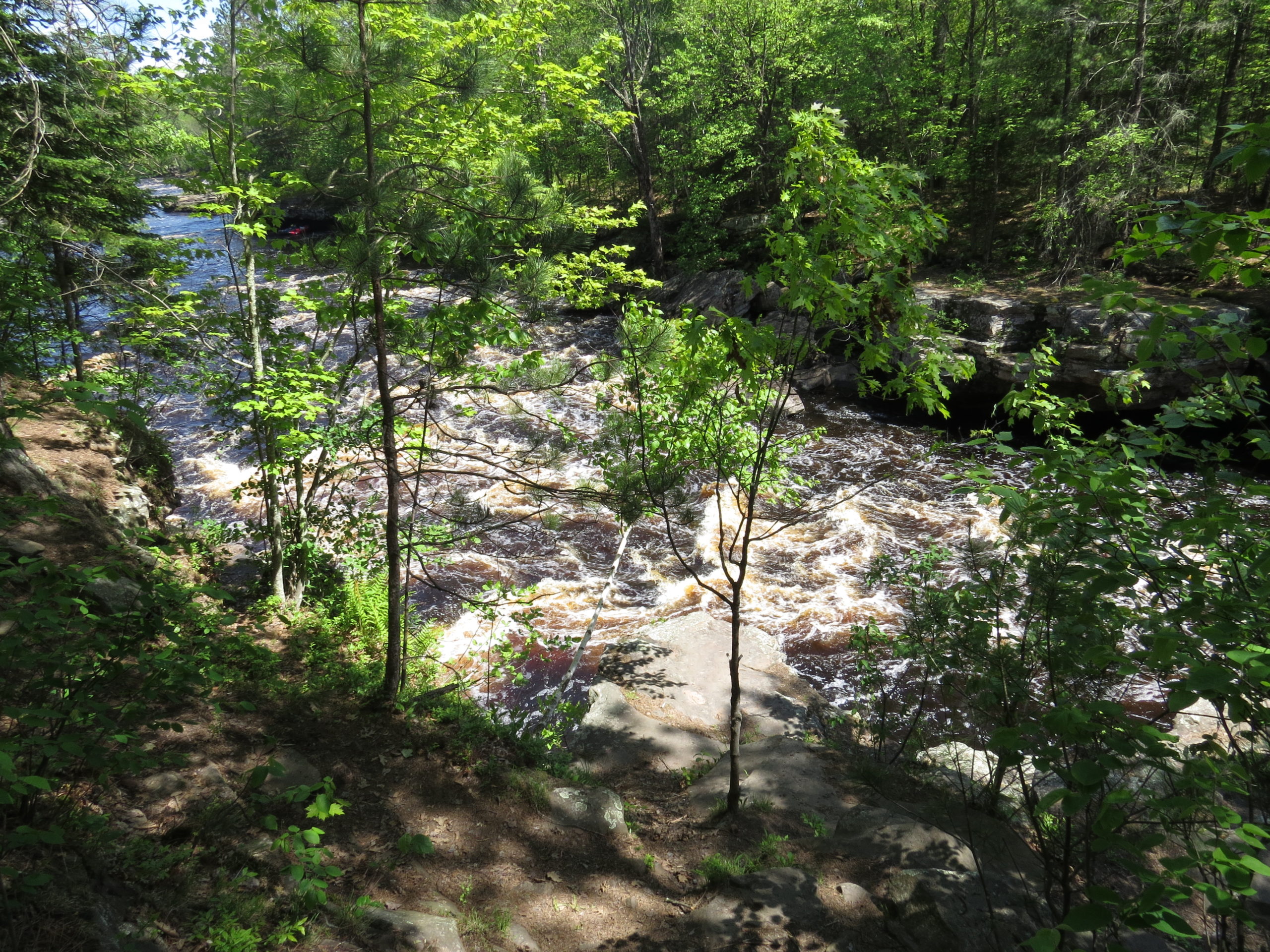
But in the here and now, the Kettle River is a favorite place for experienced whitewater paddlers with Class III-V rapids named Blueberry Slide, Dragon’s Tooth, and Hell’s Gate.
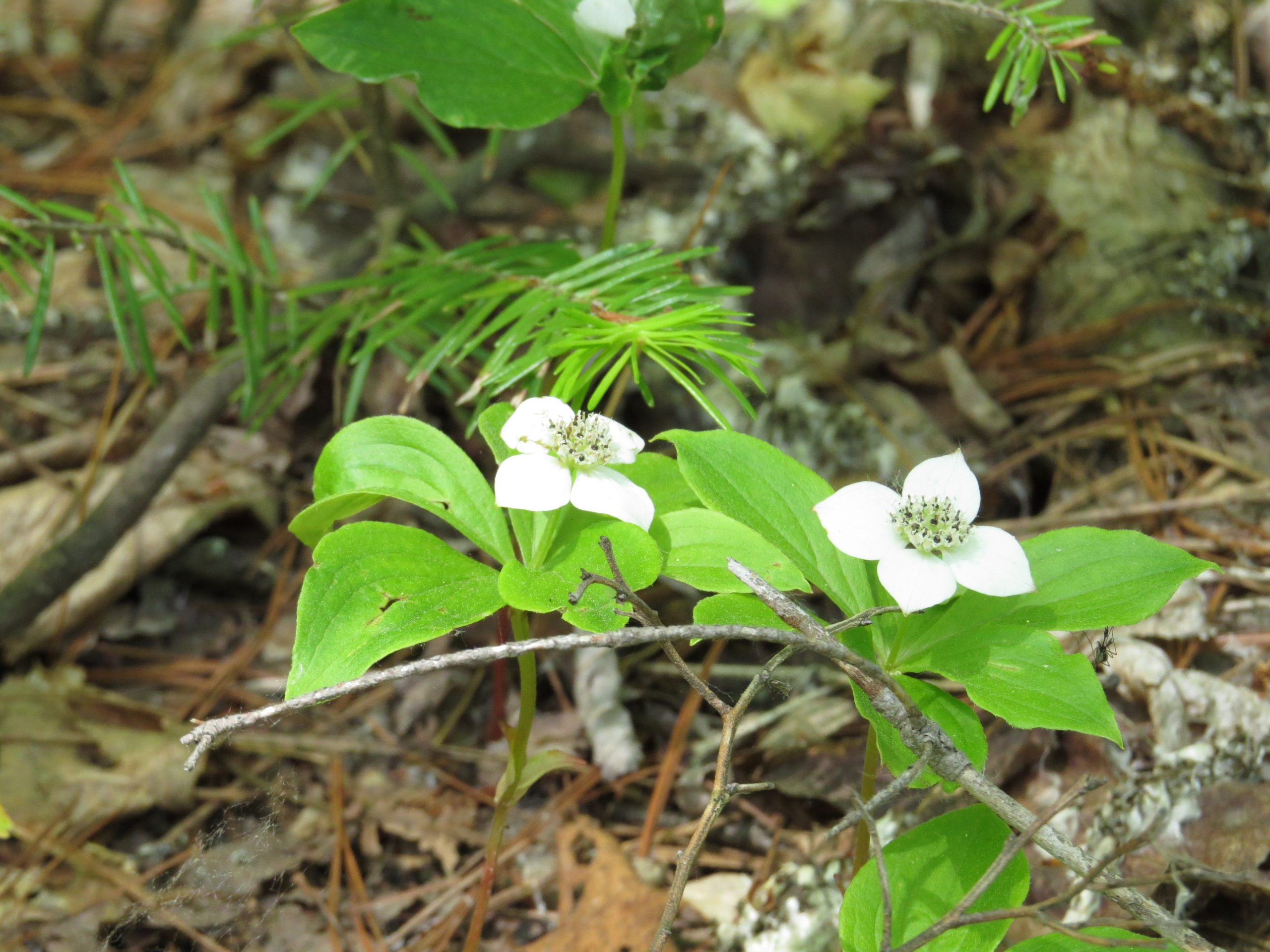
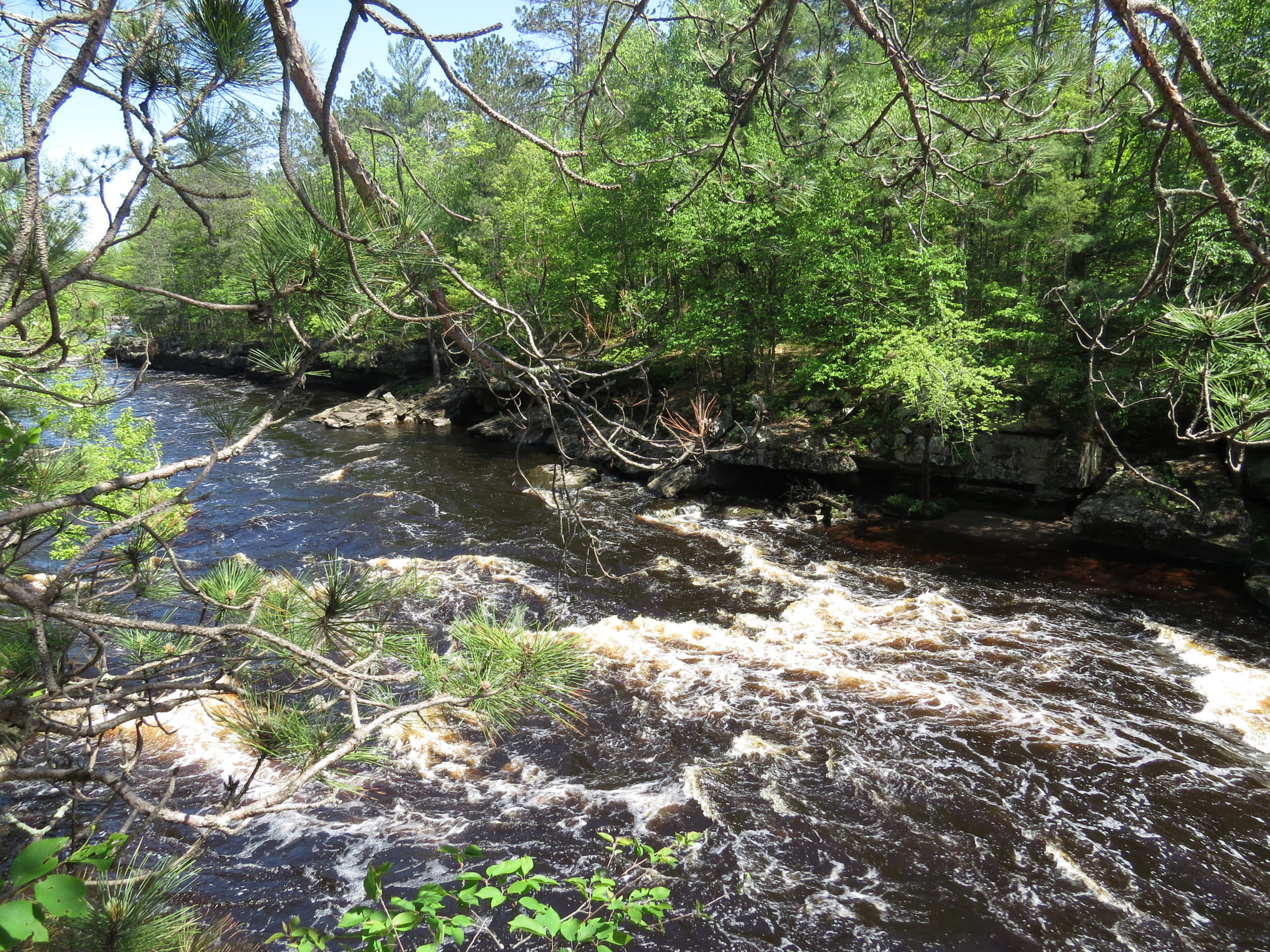
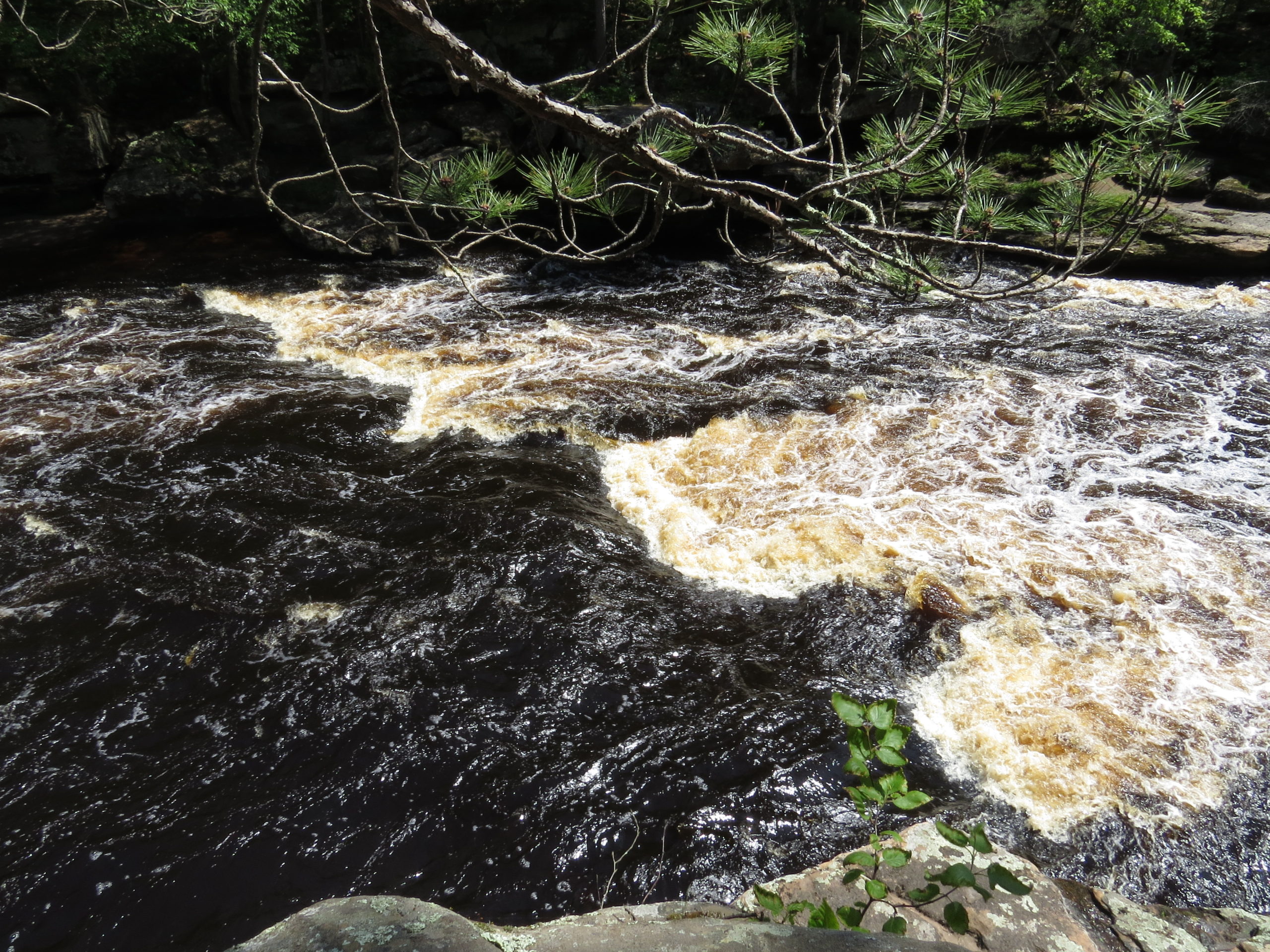
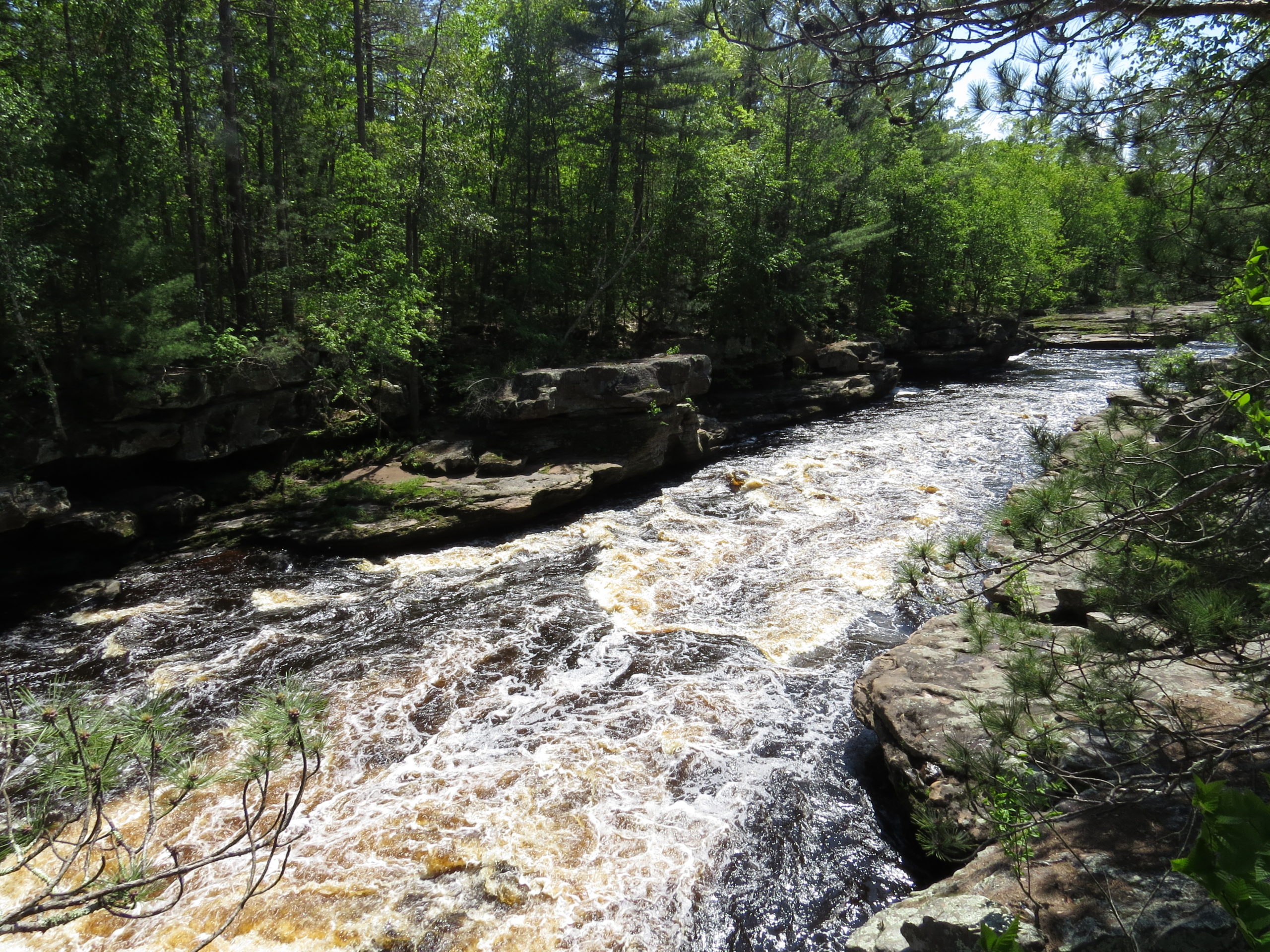
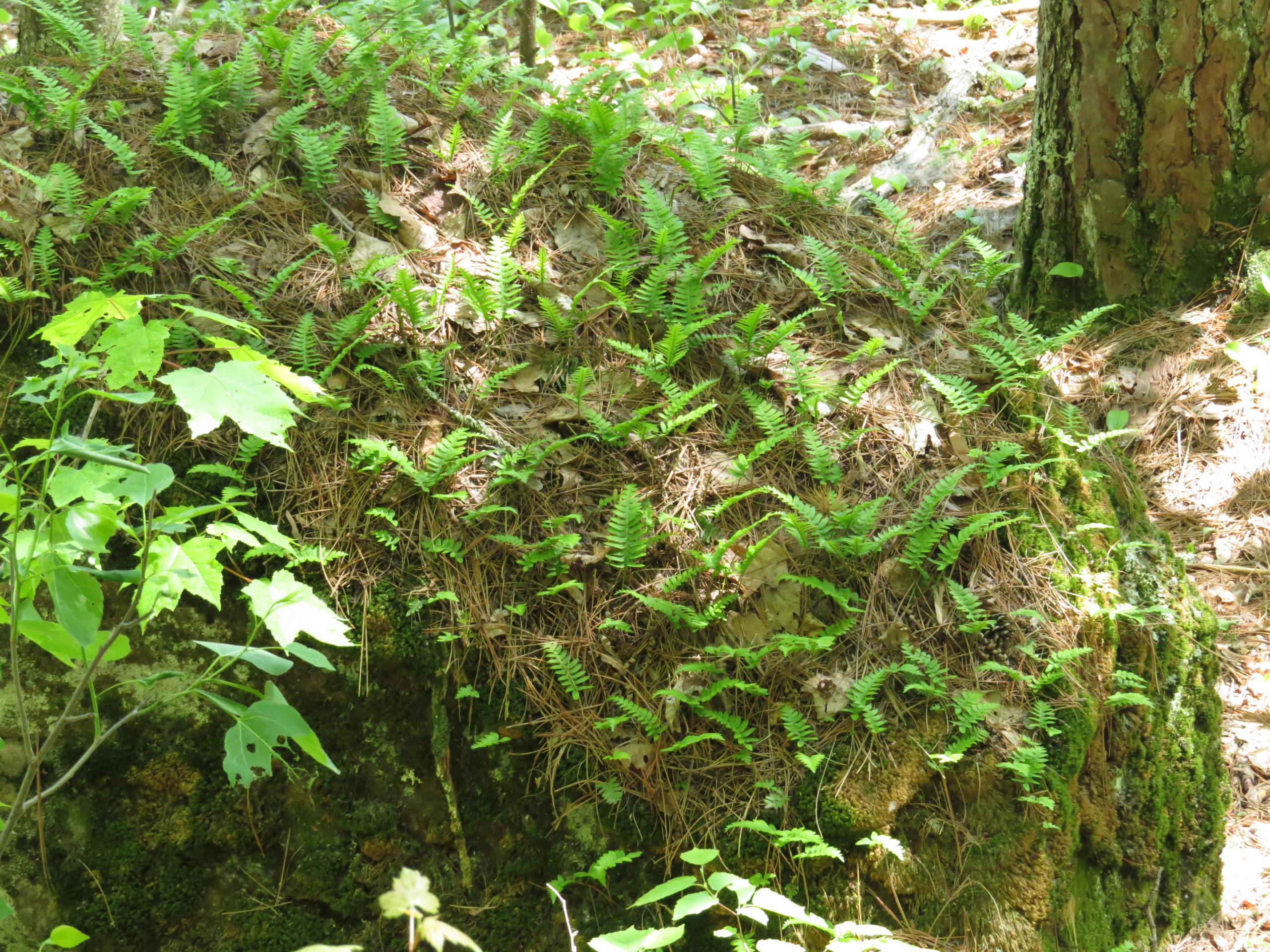
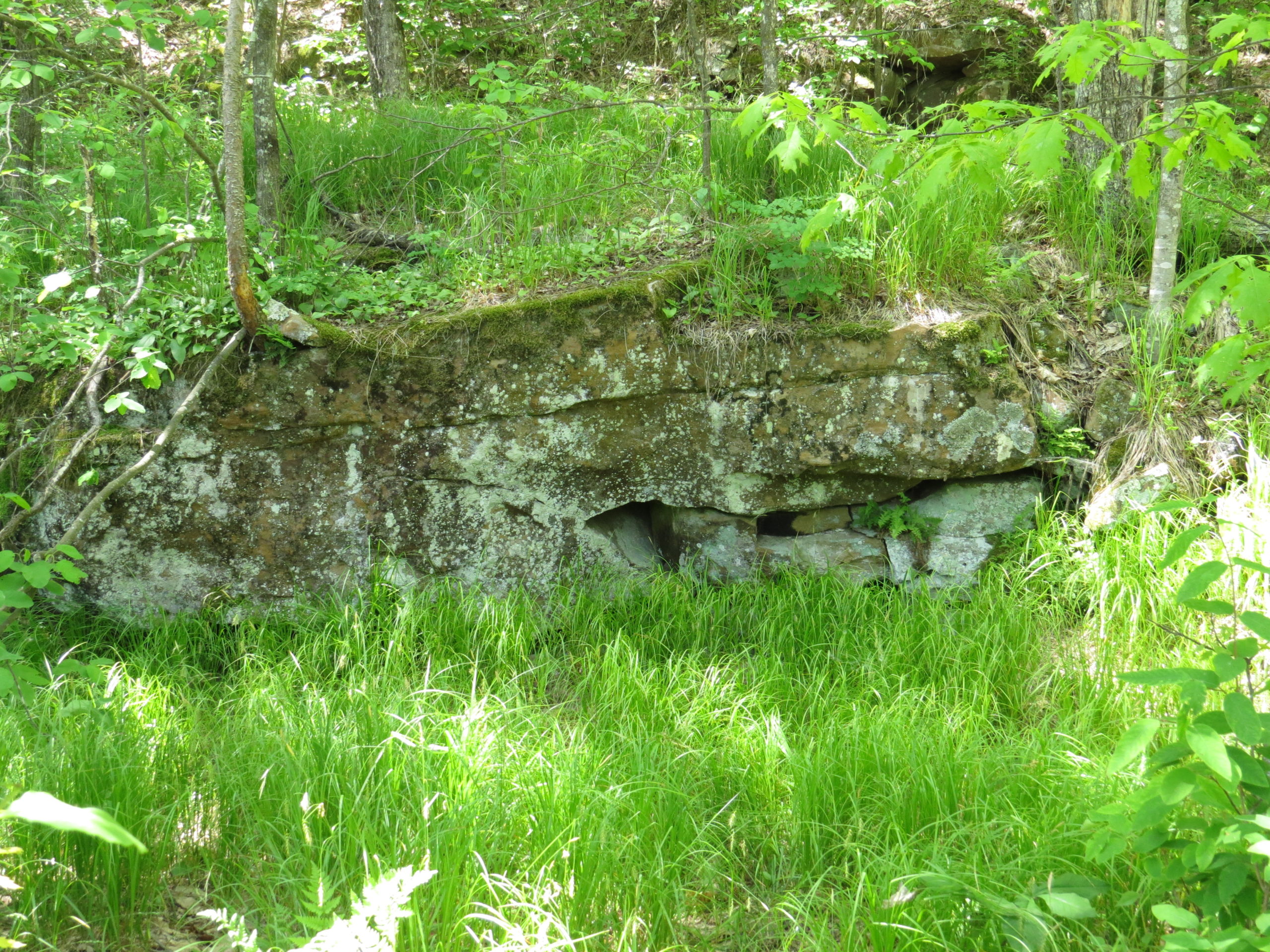
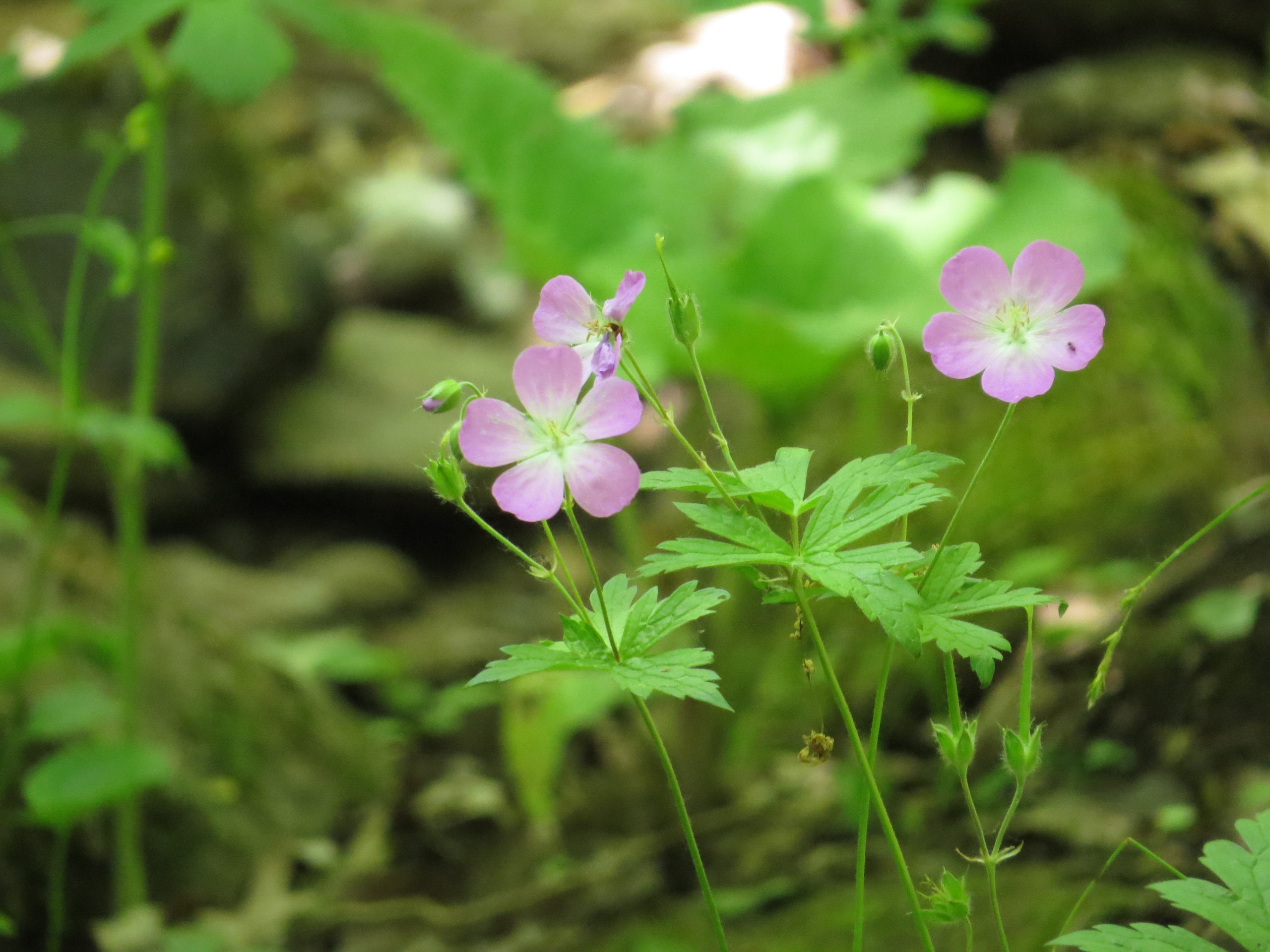
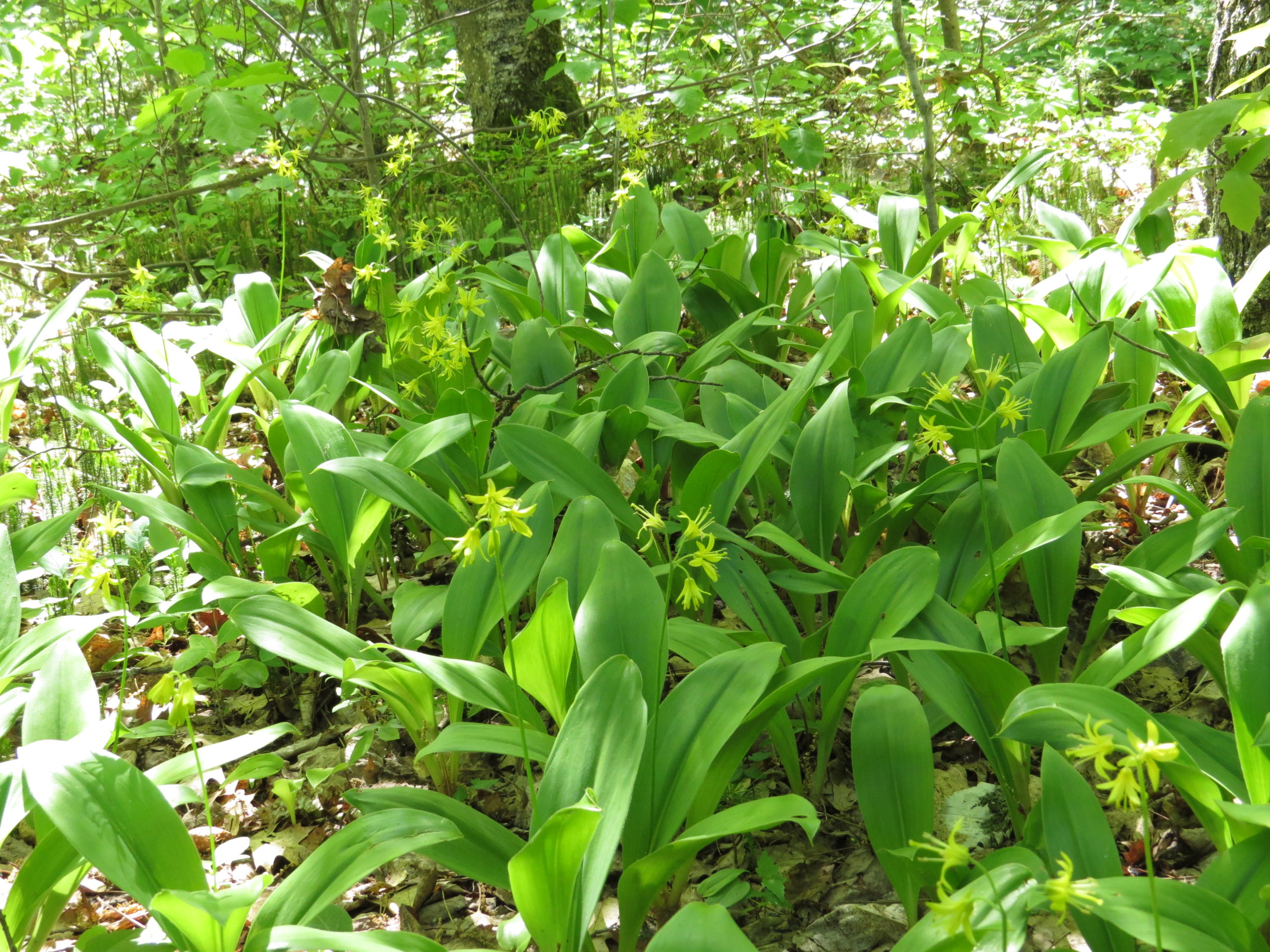
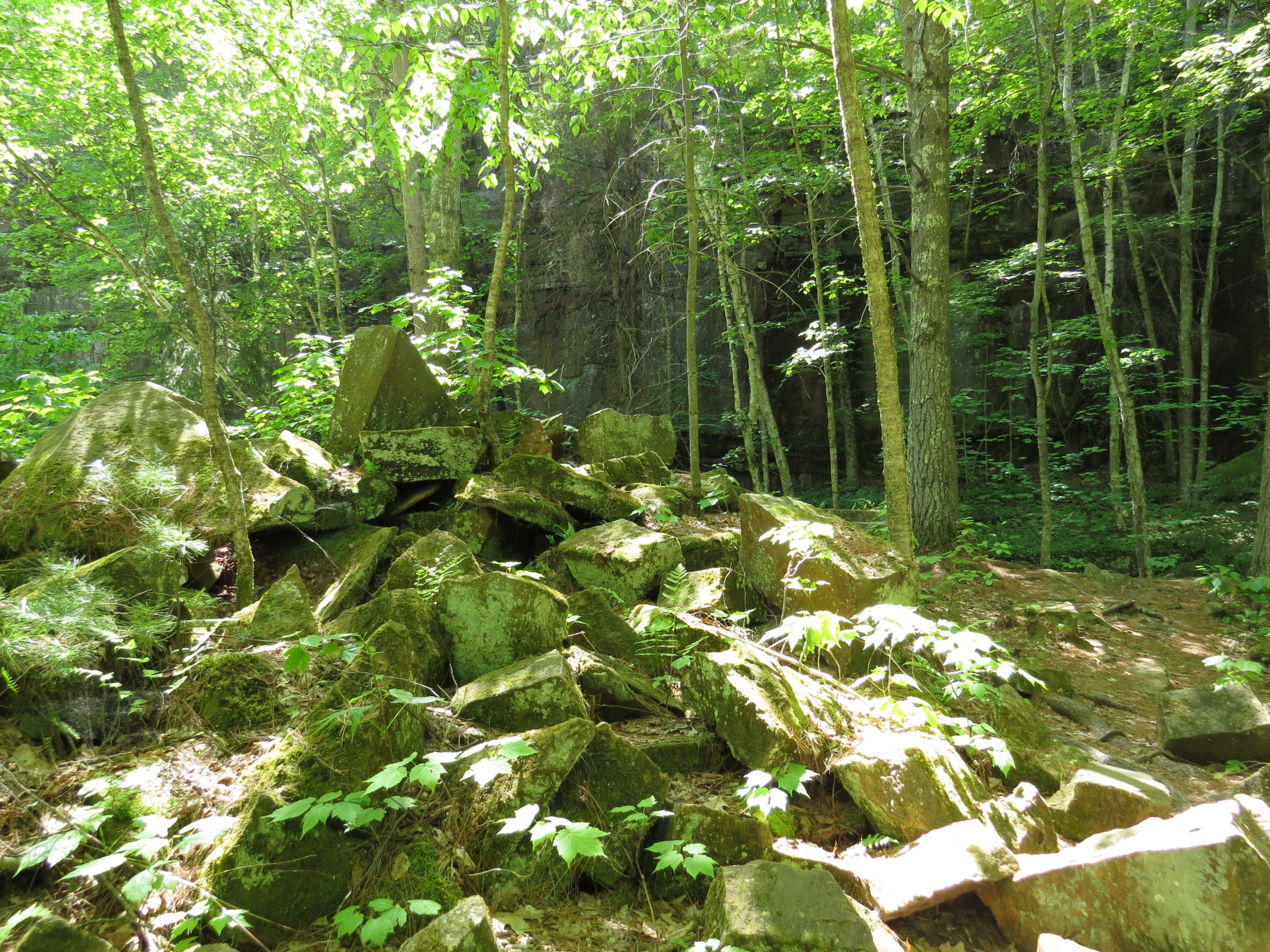
What used to be—the quarry and railroad—is being taken over by Nature. Ferns, trees, grasses, and wildflowers have incorporated into the sandstone boulders and cliffs once again.
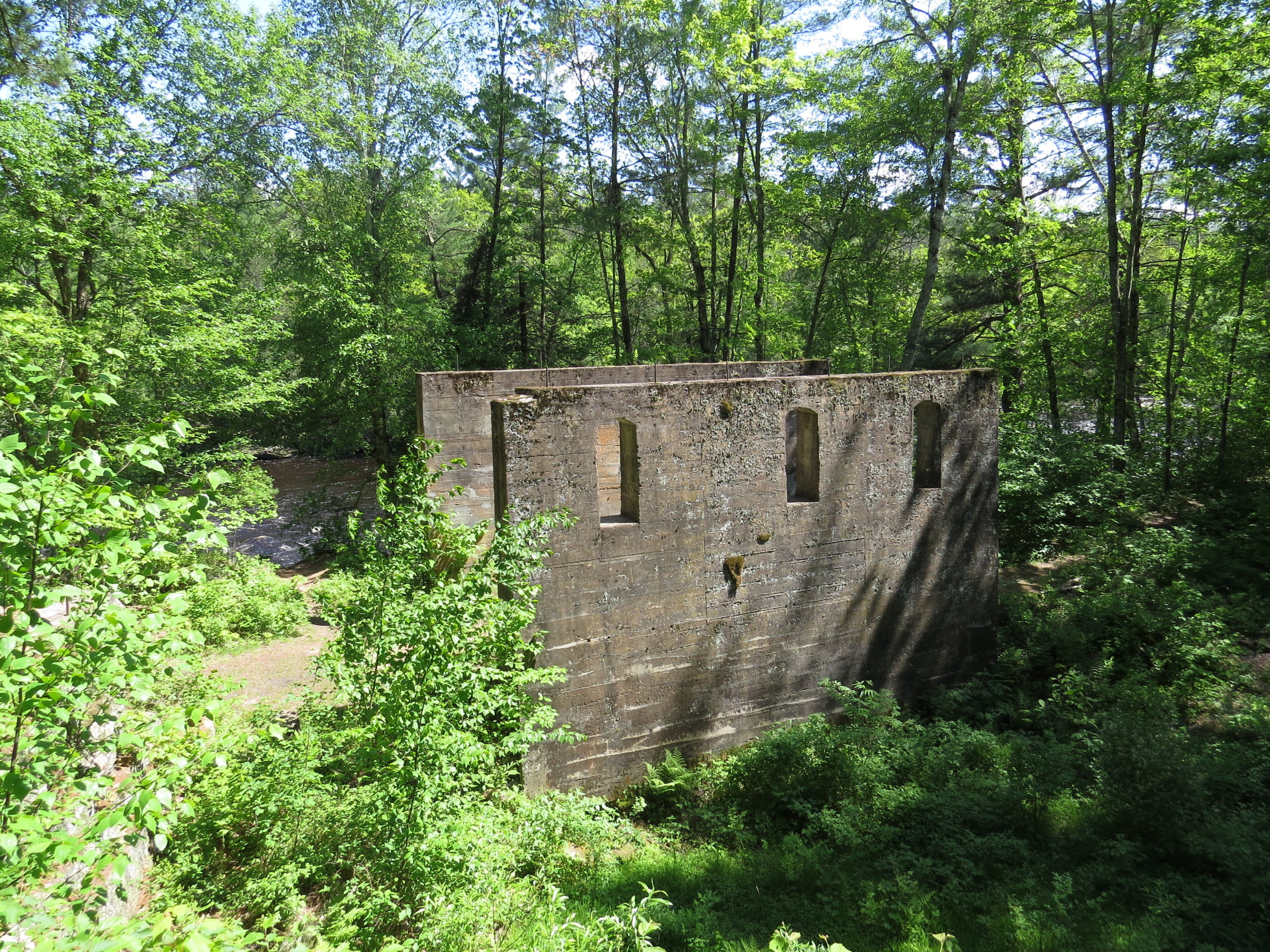
But there are ruins and remains of the Quarry still evident and still standing—the Rock Crusher and the Power House which contained a coal-fired steam generator and interestingly, an artesian well where ‘Sandstone’ water was bottled and sold as a side business to the quarry. What used to be.
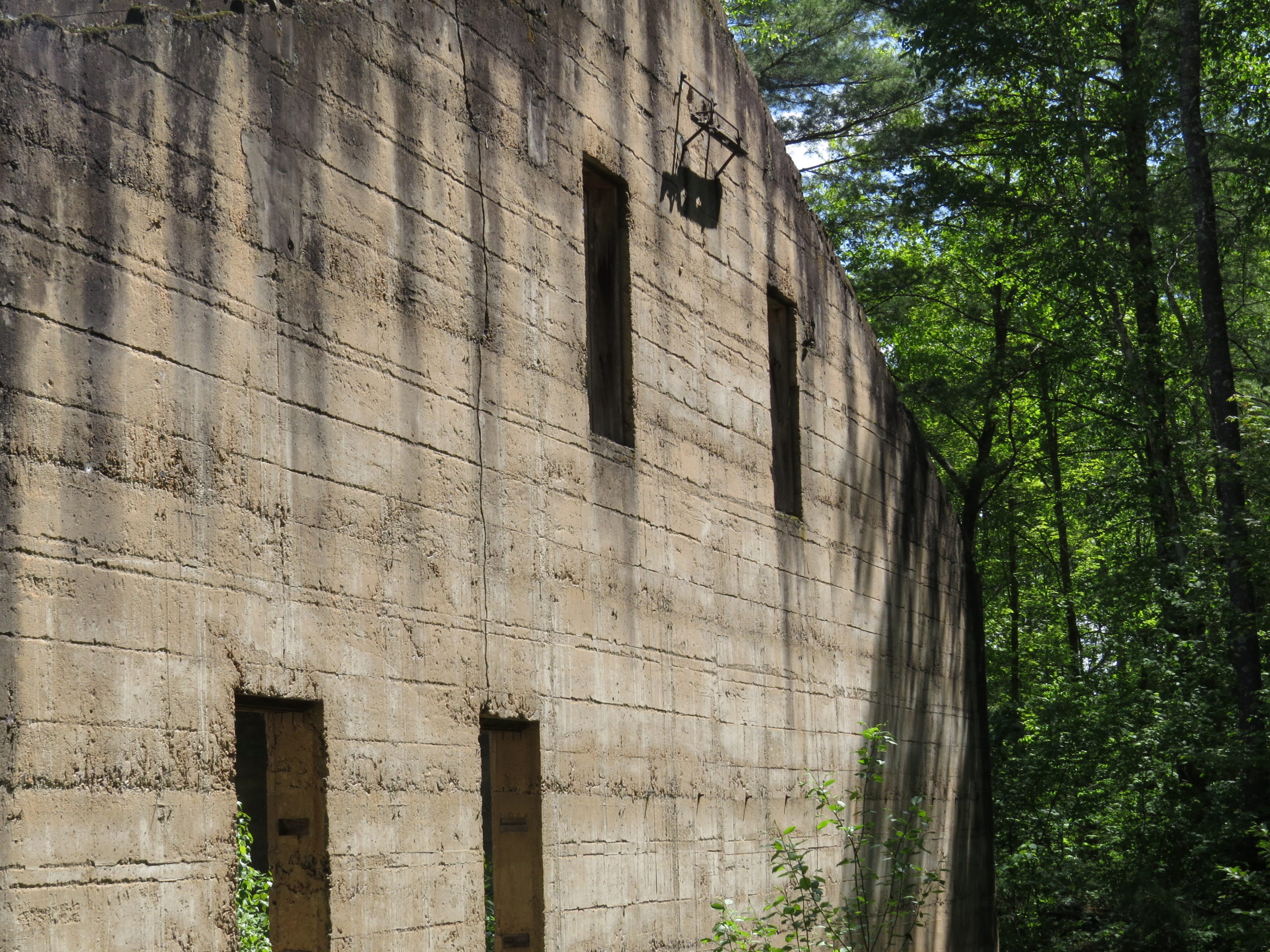
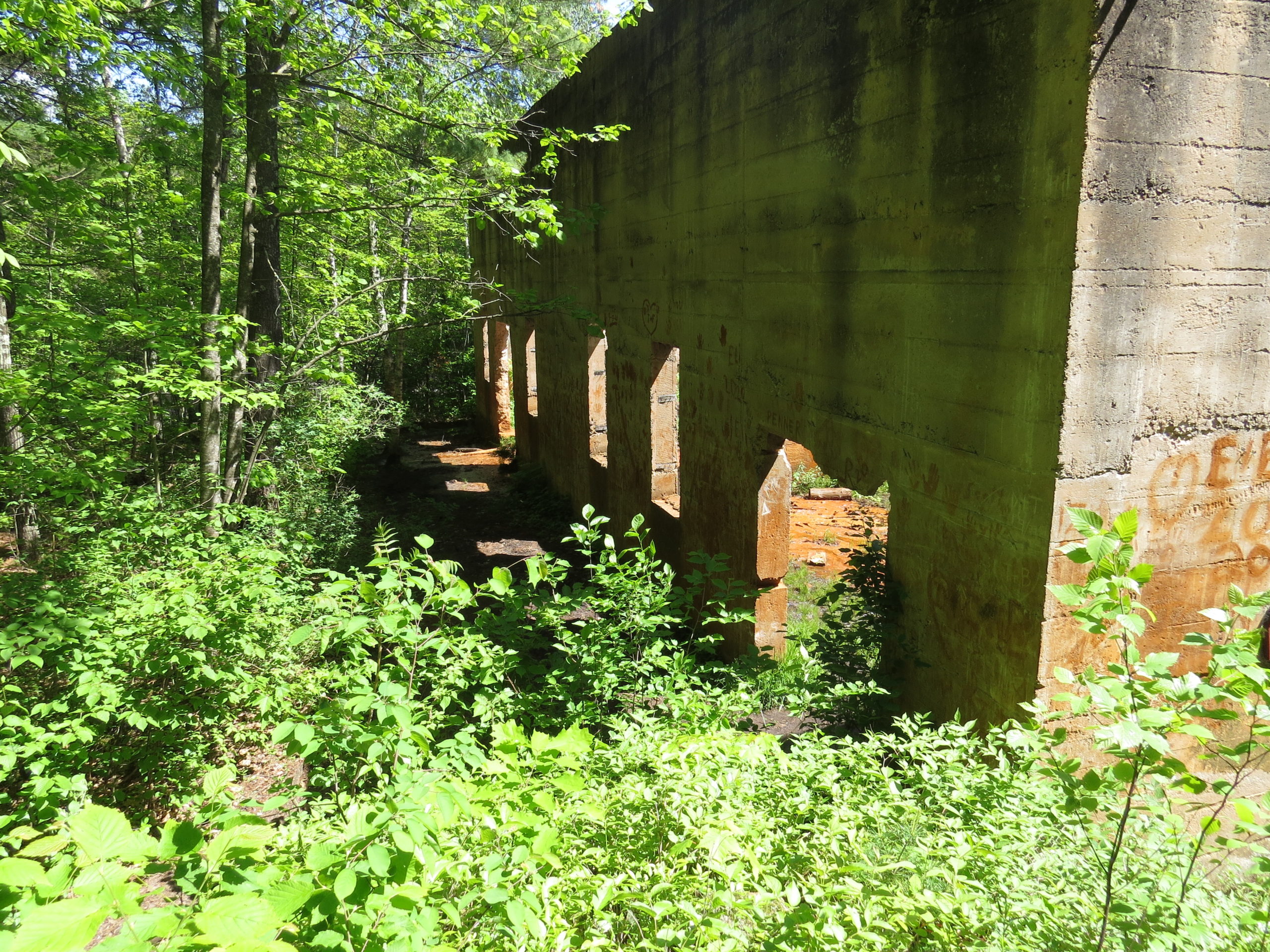
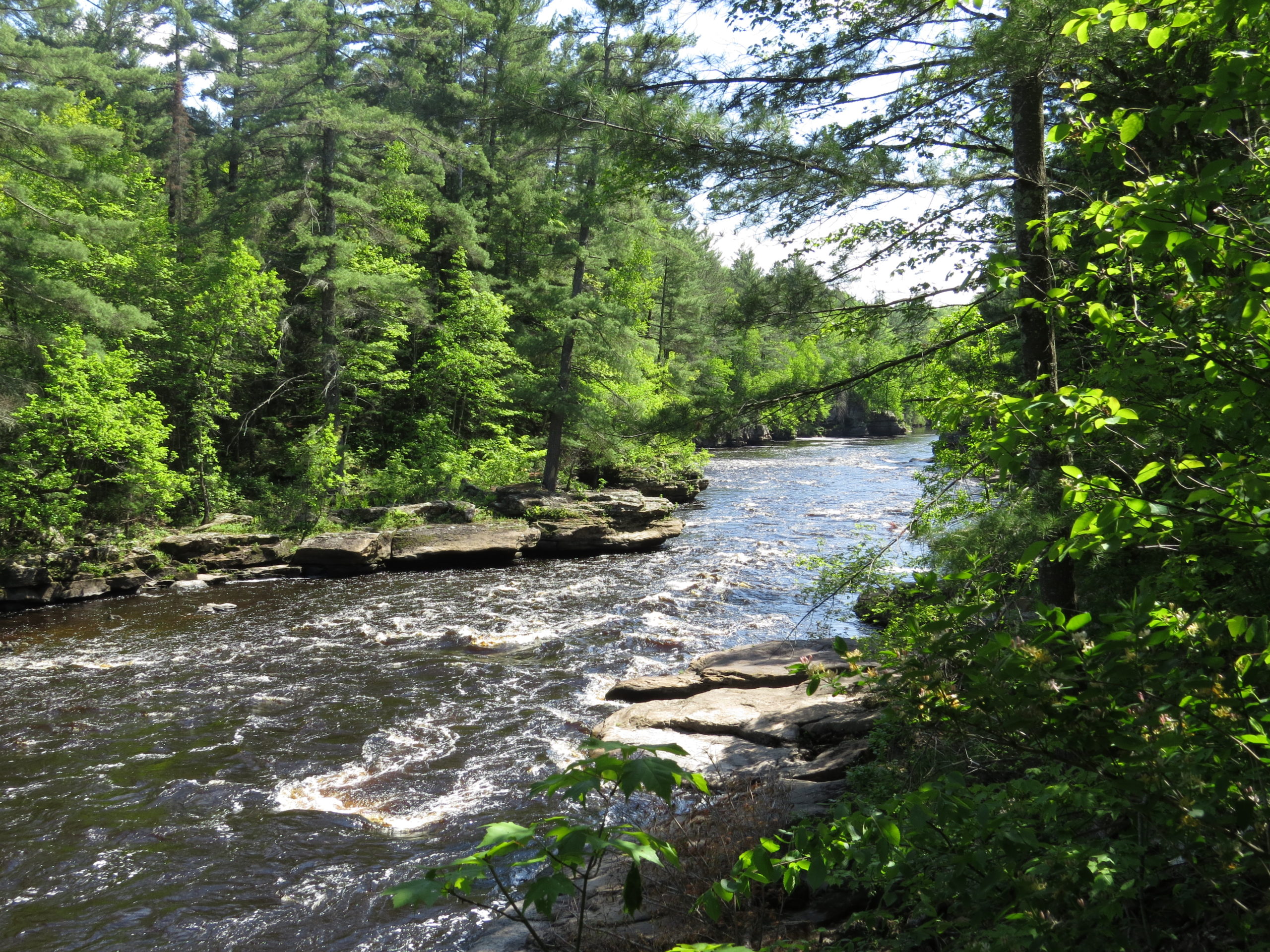
Above the Hell’s Gate rapids on a level area once stood the town of Banning, established in 1896 and abandoned in 1912 when the quarrying boom was over. The town site is no longer visible—Mother Nature has covered up what used to be.
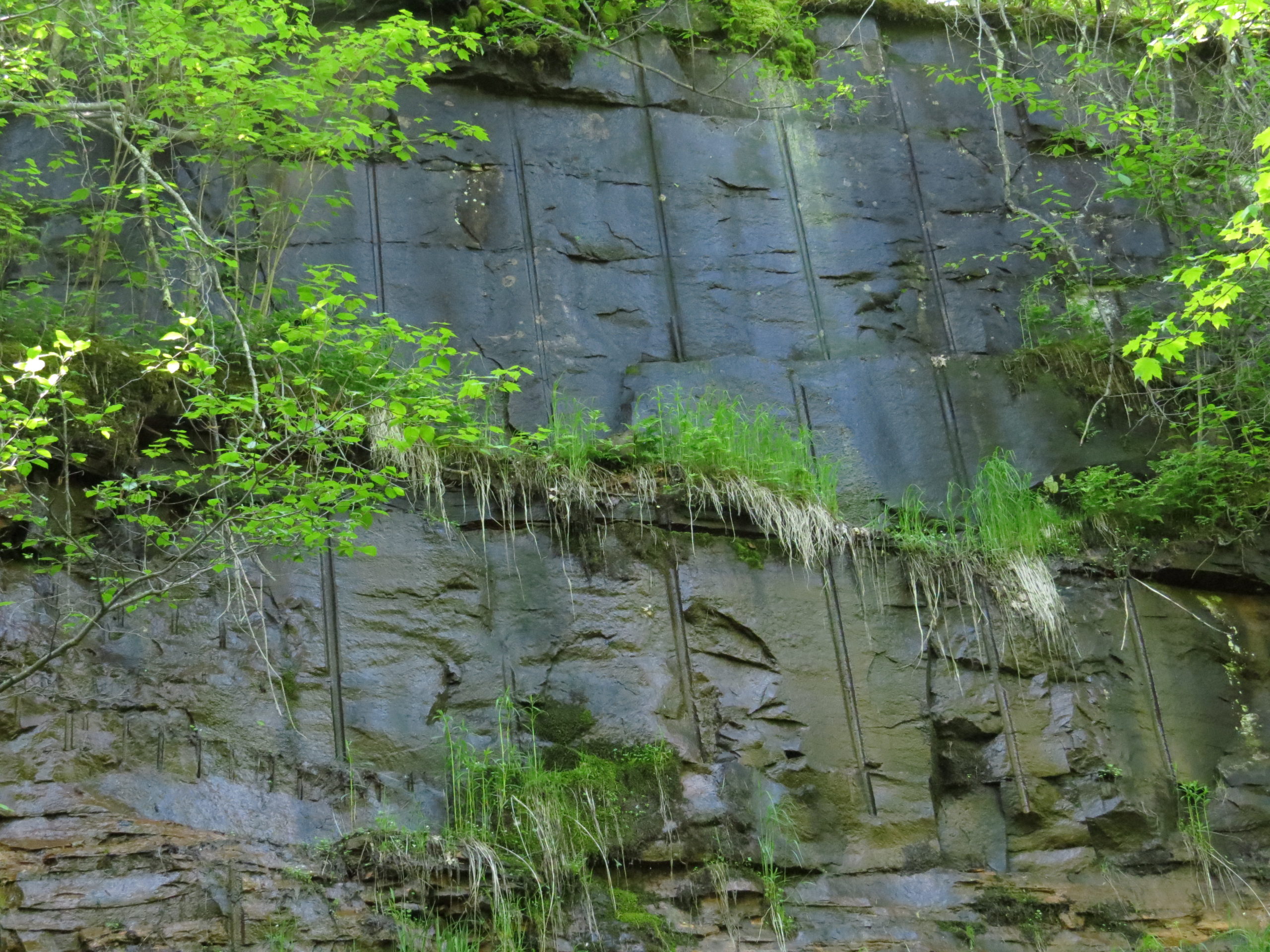
Precisely-spaced drill holes remain on this sandstone wall where black powder and slow-burning fuses would simultaneously blast a section of rock off the cliff.
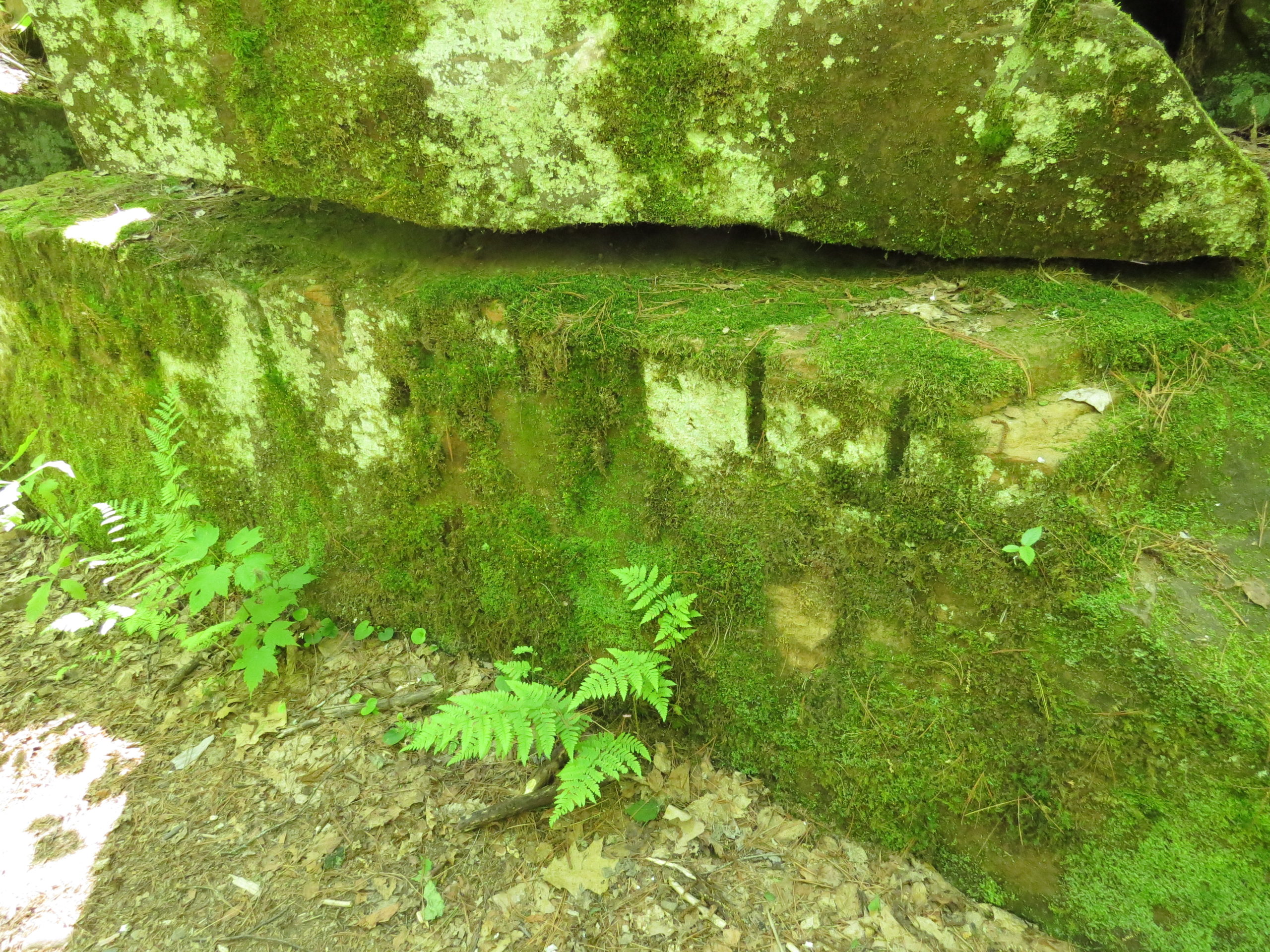
This section of smooth rock wall was not quarried—it is called a ‘horst’ where a section of the earth’s crust is lifted along a fault line.
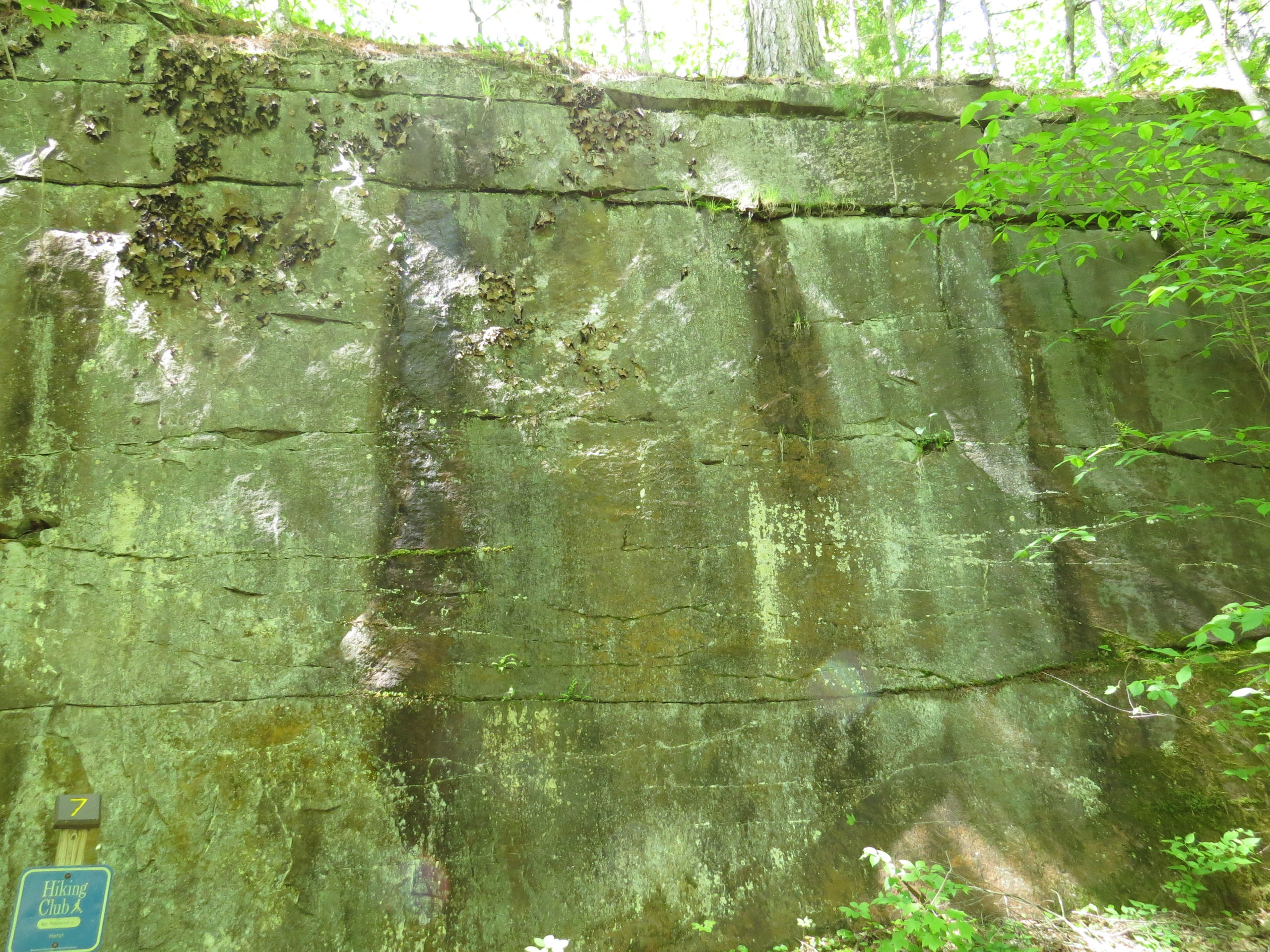
Strange Liverworts, like plastered fallen leaves, grow on the horst, and water drips from the cracks to nourish the plant life that found their unlikely place to grow.
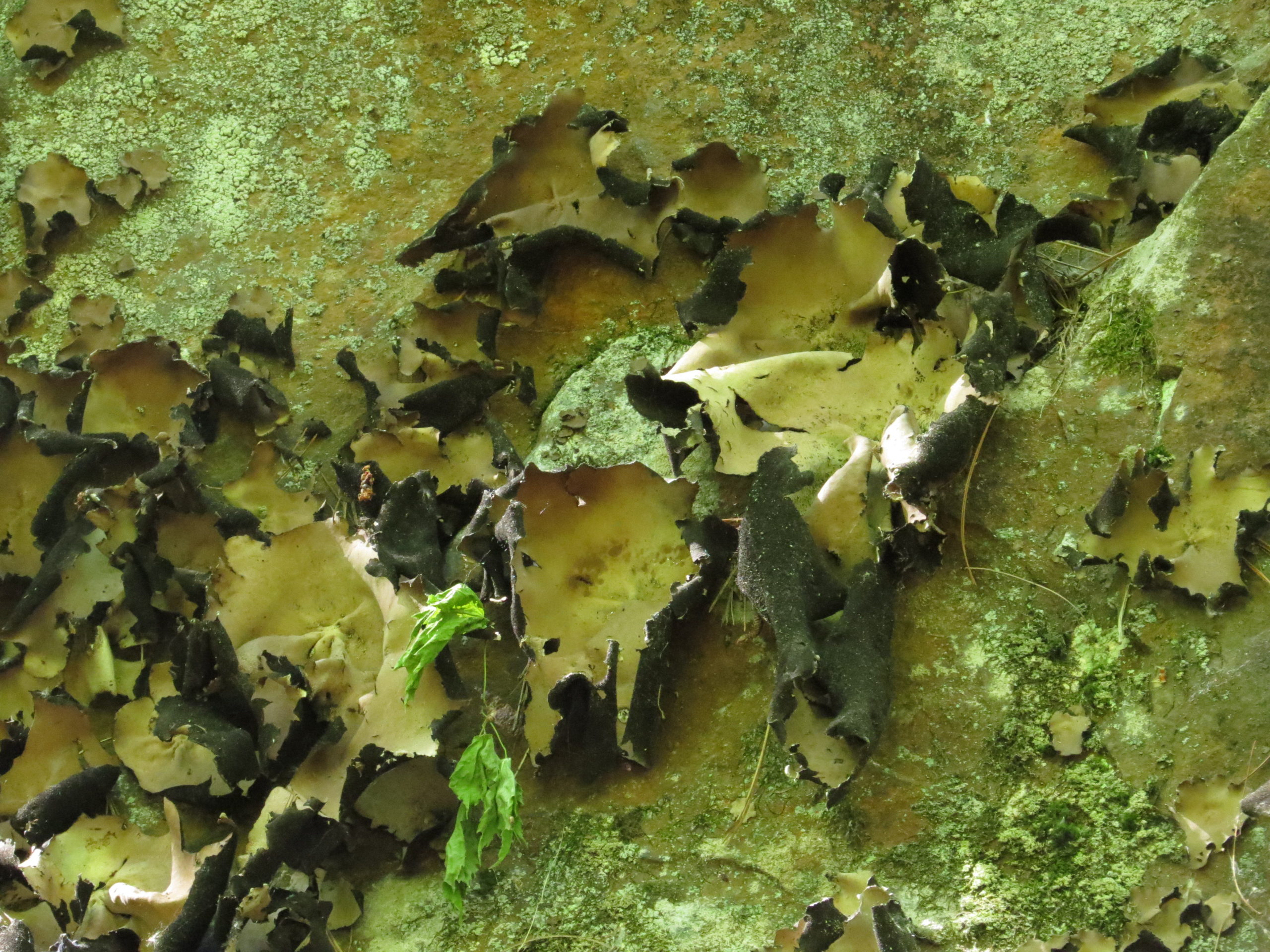
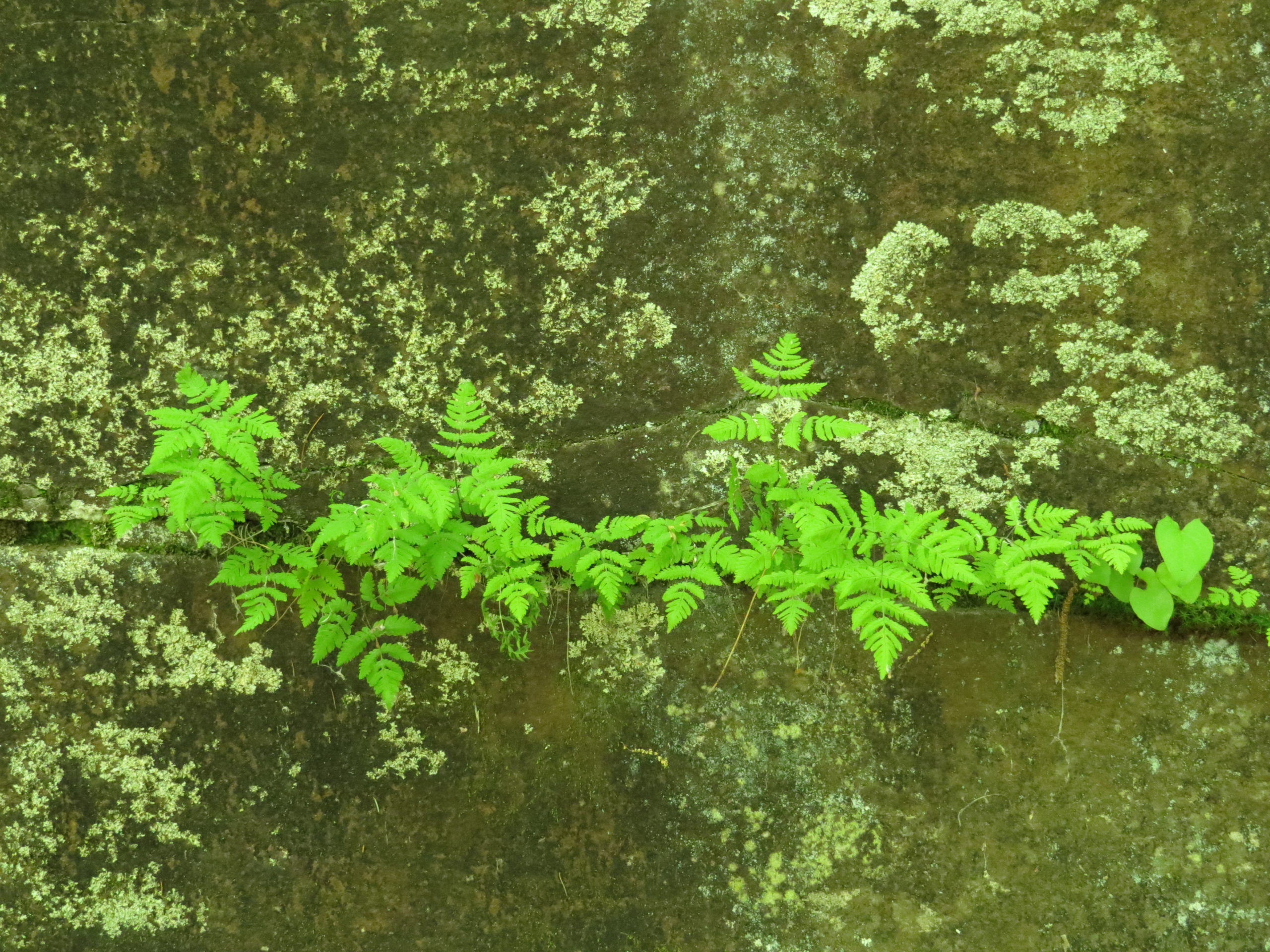
While reading about the history of the Park, I was amazed that railroads, a town, hundreds of quarrymen, and numerous businesses had occupied the trails we were hiking and the forest that had re-grown. There is value in what used to be—many buildings still stand with foundations and walls made from Hinkley Sandstone. There is also value in looking back at what used to be—how it was accomplished, what mistakes were made, what the unacceptable costs were—in order to move forward in a different and better way. Holding steady is a form of safety, as are ‘the law of the land,’ guardrails, rules and norms, order, and peace. They help us get our bearings and feel safe, so we can be in the here and now with those around us. Change and holding steady are not opposable values and actions. Holding steady—safety—is the foundation from which we can be compassionate, be curious, learn and do new things. Do you know what makes you feel steady, open, and peaceful? Do that. Are you aware of who or what brings unfounded fear and stress to your life? Purge them. Fear is being used as a tool to manipulate people for political and financial purposes—one of the oldest tricks in the book. Don’t fall for it. In the ruins and remains of what used to be—in our collective past or our individual past—there is space for peace and renewal and a place to grow.
The Hard Way
It is a rough road that leads to the heights of greatness. –Lucius Annaeus Seneca
After our easy way of exploring the Saint Croix River on a paddlewheel boat, we picnicked beside the River to renew our energy for the afternoon. The paddleboat company, the town of Taylors Falls, and Interstate State Park seem to be intertwined. In fact, we started our hike by walking up one of the hilly side streets after crossing the one, busy main street through town. We passed an old railroad depot that I thought had been moved up there, but then I realized that we were hiking along the abandoned railroad way.
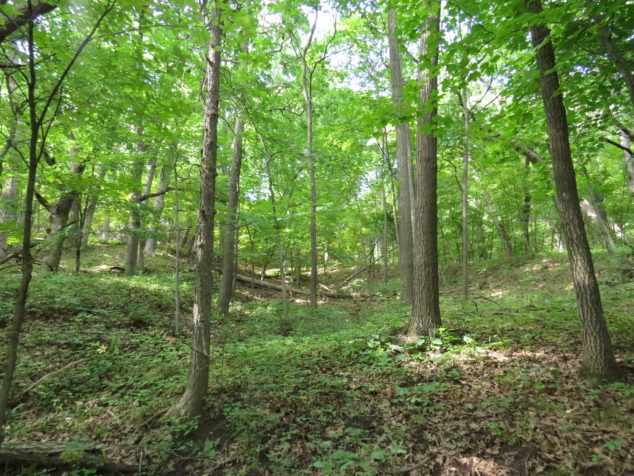
It soon became evident what a marvelous engineering feat it was to build a railroad through these bluffs!
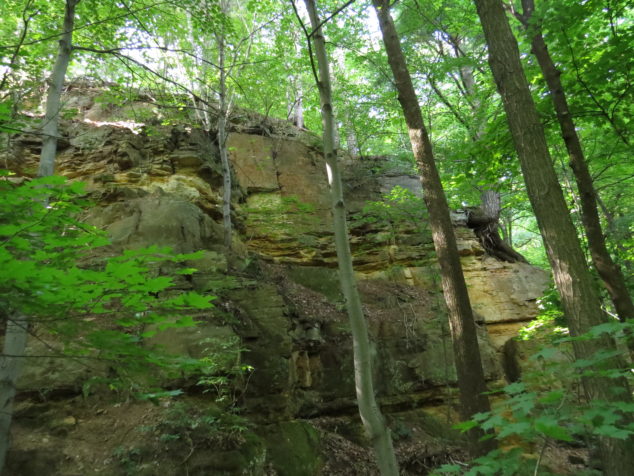
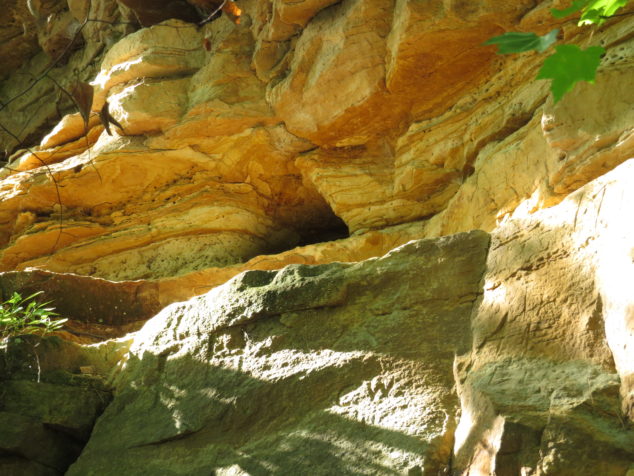
We came to a place in the woods where the old railway had continued over a steep ravine on a bridge long gone except for some concrete pillars that now had colonies of wild ginger strewn at their feet.
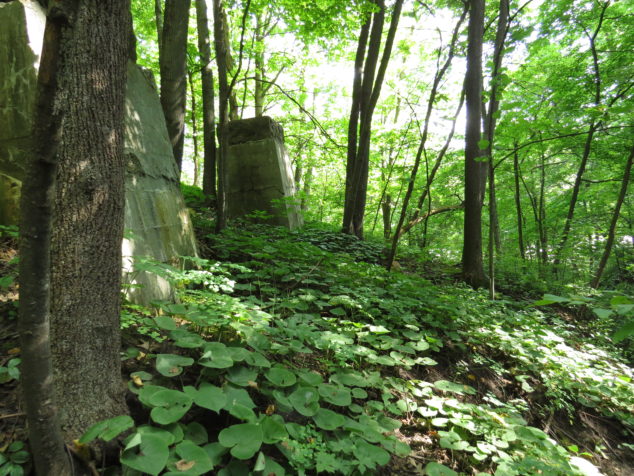
We descended the wooded ravine, and at the bottom, the trail diverged—and we chose the hard way, the scenic way according to our guide Aaron Brake who had hiked here before. And so we followed another ravine and began the winding ascent to the very top of the bluff.
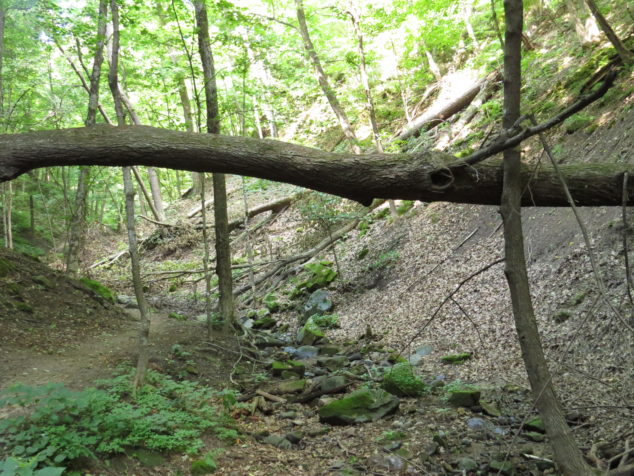
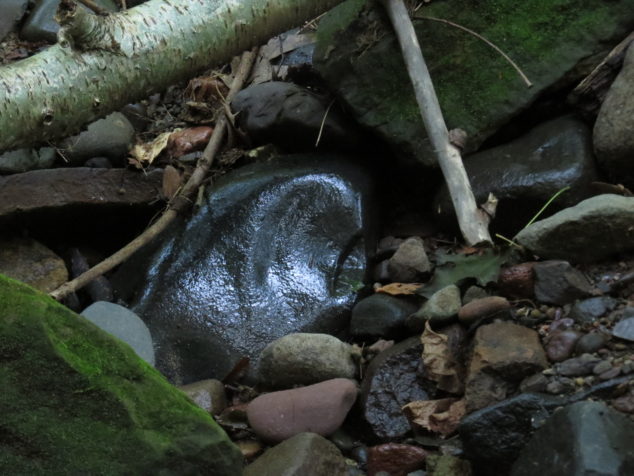
In the creek bed at the bottom of the ravine were shiny, glistening rocks of basalt.
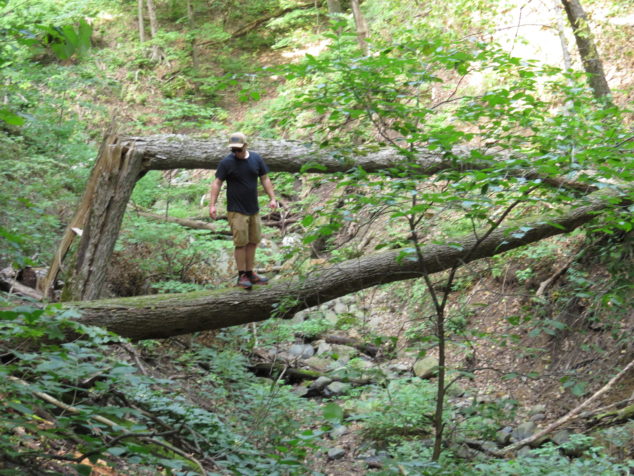
Fallen trees created bridges of varying size and structure.
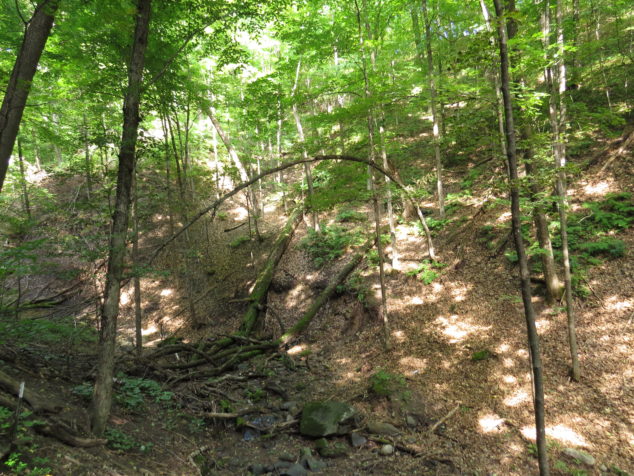
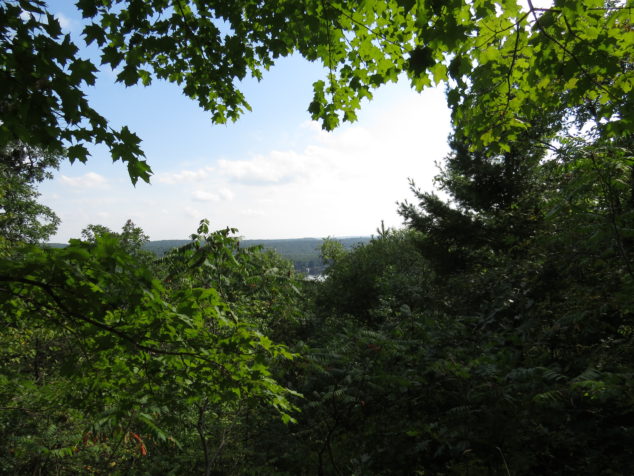
We climbed and climbed and though we were in the shady woods, the warm, humid day and exertion caused me to sweat like crazy. “I never sweat this much,” I exclaimed a number of times, and the only response I got from Emily was, “You need to up your workouts, Mom.” Finally we got to the top of the bluff and saw the River way down below.
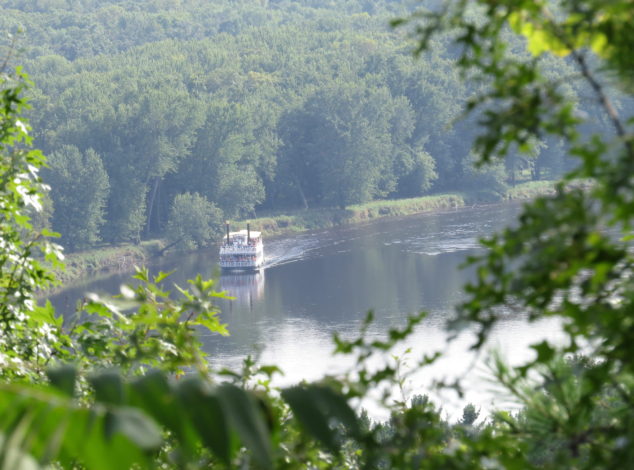
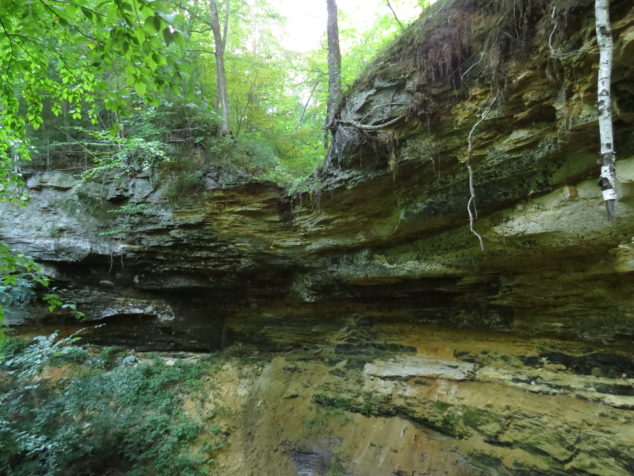
On the trail down we explored more of the sandstone bluffs. One place was called Curtain Falls that now only flows after heavy rains and snow-melt.
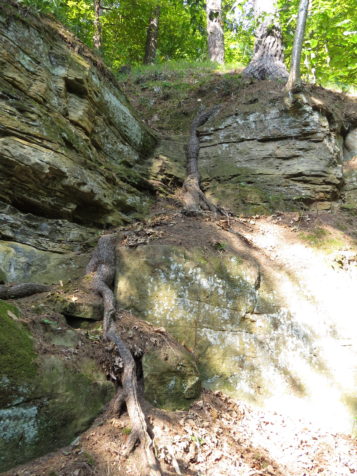
Living on a steep, rocky bluff is a hard way for a tree to survive. I was amazed at the survival strategies we saw from some of the plant life, like this tree root scaling the rocky cliff, clinging to any soil it could find.
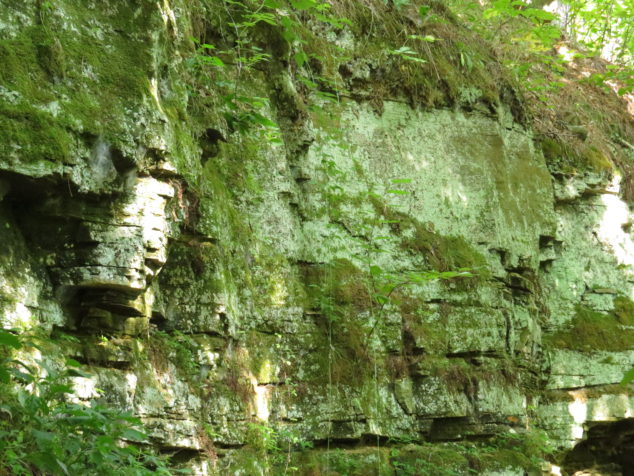
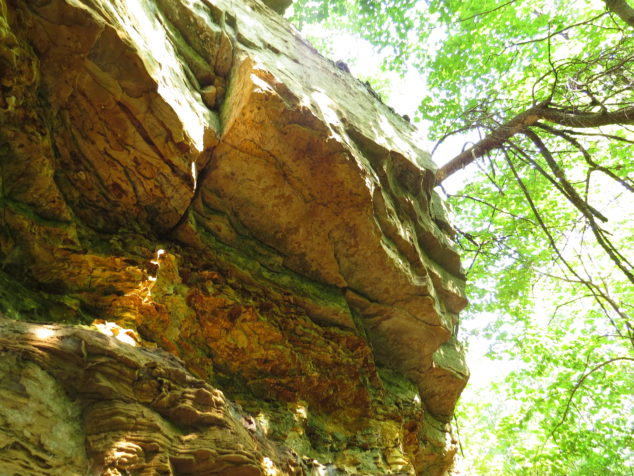
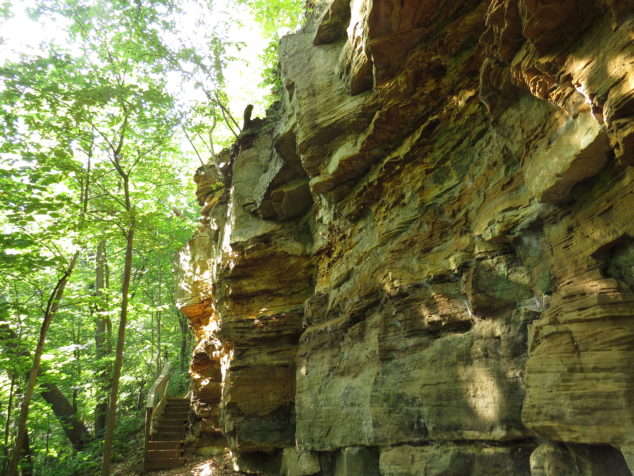
The way down was ‘easier’ than climbing to the top but was in no way easy. There were many places where wooden stairs helped us get down the steep rock faces.
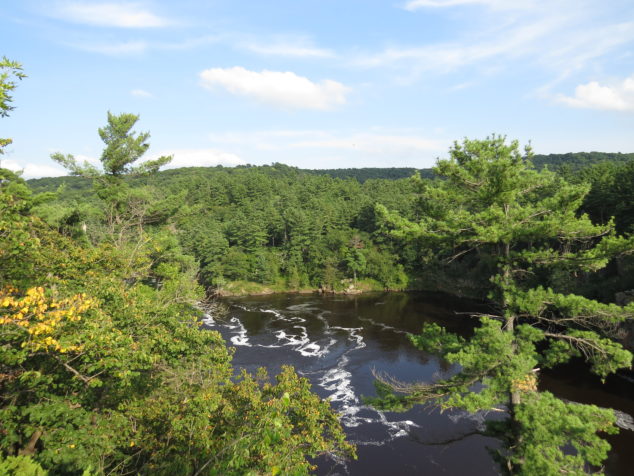
We arrived at the campground of Interstate State Park—the parking lot and camping spots were full on this Labor Day weekend. But our hike wasn’t over yet—the trail continued along the River, through trees and over rocks, back to the entrance of the park where we had boarded the boat earlier in the day. Now we could see the River from the top of the rock cliffs adjacent to the water.
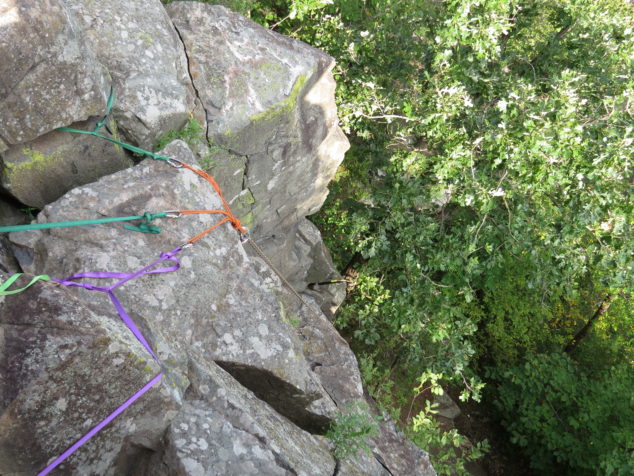
Rock climbers are welcome at the park, and we saw many ropes and climbers. That’s a hard way of getting up and down the cliffs!
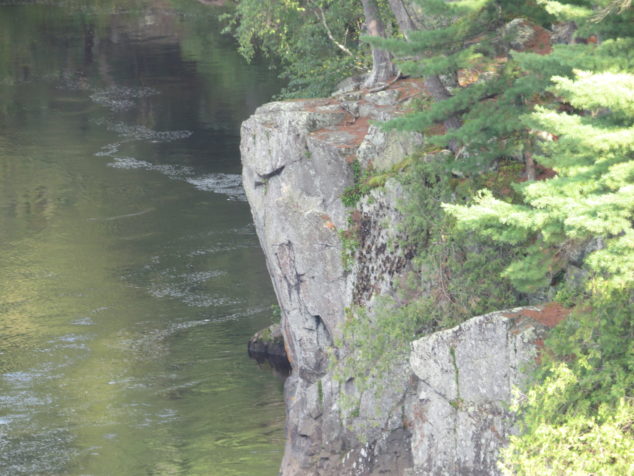
It was beautiful hiking along the rocky cliffs among stately pines, wild blueberries, and various types of ferns. What a different perspective of the Saint Croix River we had from the edges of the huge rocks compared to floating down the middle of the River.
By the time we returned to the entrance of the park, my feet hurt, my legs were sore, and I wanted to sit down for a while. When I polled the young twenty and thirty-year-olds about the difficulty of the hike, they proclaimed it ‘moderate.’ I had the word ‘challenging’ in my mind, but chalked that up to our 30-year age difference and my need to ‘up my workouts.’ I’m glad we took the hard way, the rough road, the scenic way. It really was so beautiful, and it impelled me to exert and sweat and do ‘the work.’ It led us to the heights of that scenic River and the greatness of Nature. There are times in our lives when the hard way is presented to us, when we don’t have a choice, no matter how badly we want an easy option. Marie Curie said, “I was taught that the way of progress was neither swift nor easy.” So what do we do? We anchor our support ropes, take it slow and easy, use the steps and bridges to get us down the steep parts and over the ravines, and we do the work. We make progress, we do what is right, and in our own way, we are led to greatness.
After the easy way and the hard way, we ended our day with the ancient way…to be continued…