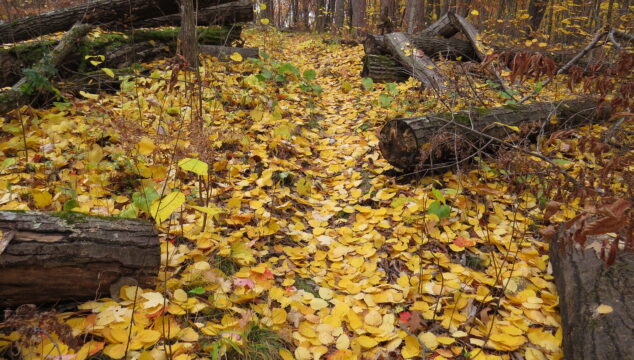
Come walk with me in the peak Autumn beauty of the Northwoods. To say that I love this time of year is an understatement. Most everyone can appreciate the colorful falling leaves---it reveals the 'true self' of a tree when its leaves are no longer producing chlorophyll. Their true colors are revealed, and there is something simple … [Read More...]
Hope and Renewal After the Fire
There have been more than a few times in my life when I felt like I was in a burning house—that feeling of helplessness, of betrayal, of feeling stuck in a room of flames. And even more times when I felt like I was sleepwalking, wandering too close to the fire without even knowing the danger. Perhaps that is life and what we are here to do—“to take what’s lost and broke and make it right.”*
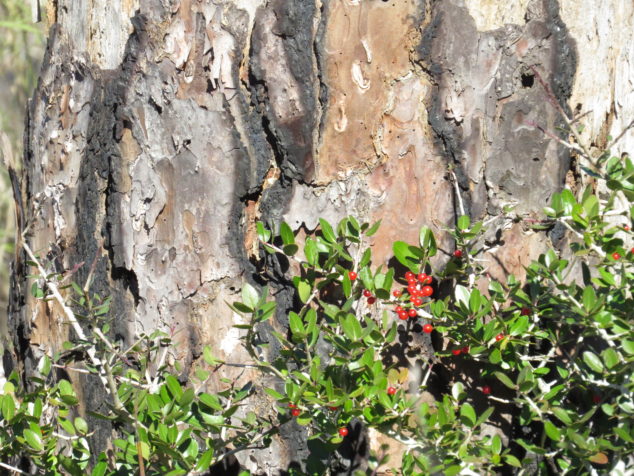
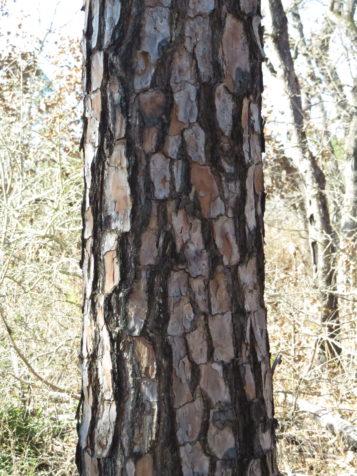
It was shocking to see the devastation from the Bastrop Complex Fire of 2011 at Bastrop State Park in Texas—I can’t imagine what it was like just after the fire. Yet, in the midst of the ruins from the fire were signs of resilience, new growth, and renewal. Cheery red yaupon berries nestled among shiny green leaves contrasted with the burnt black bark of a Loblolly Pine tree.
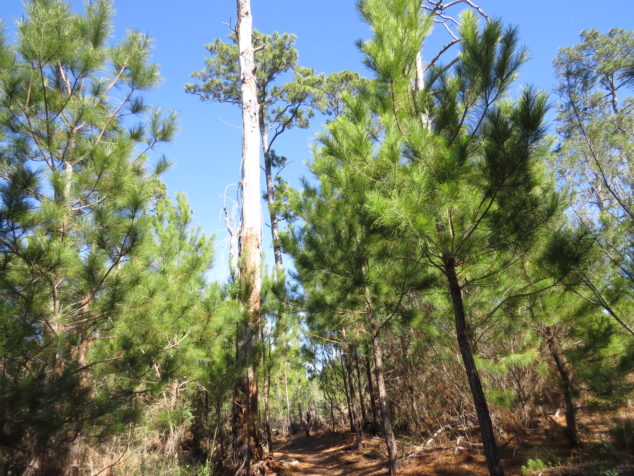
In one fertile area of our hike, the new Pines were swiftly growing under the tall ghost trees that hadn’t survived the fire and one that had. It was already looking ‘forest-like’ in this part of the park.
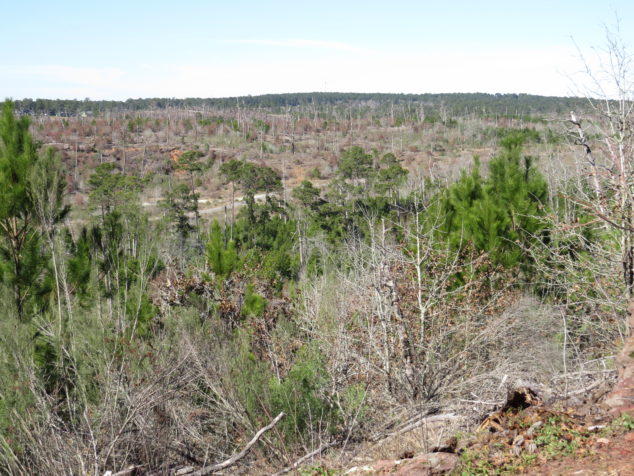
Along with the devastation was the hopeful new growth of Pines and Oaks.
The December day was warm and sunny, perfect for hikers and a little lizard crawling through the fallen leaves.
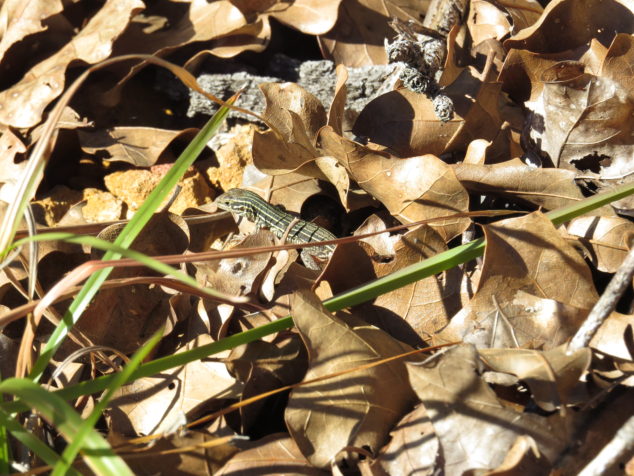
Replanting of the drought-hardy Loblolly Pines began in January 2013. Volunteers and contractors have planted two million pine seedlings since that time and will continue to plant in order to get a “mosaic of tree ages” as the forest re-grows.
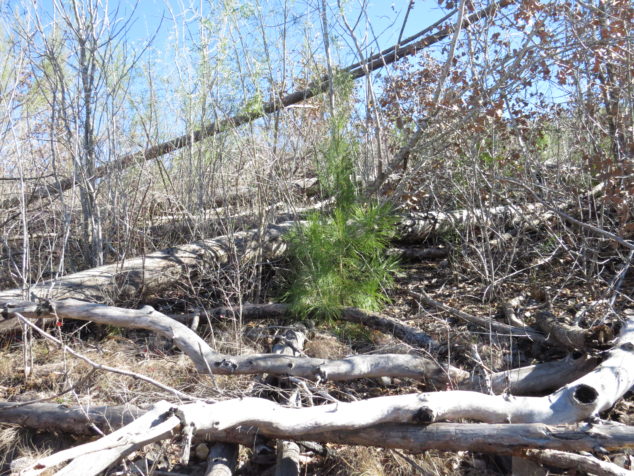
This bright, tight growth of young pines probably originated from the fallen cones (seeds) of these survivors. Often a threatened tree will produce an inordinate number of seeds to compensate for loss or potential loss of mature trees.
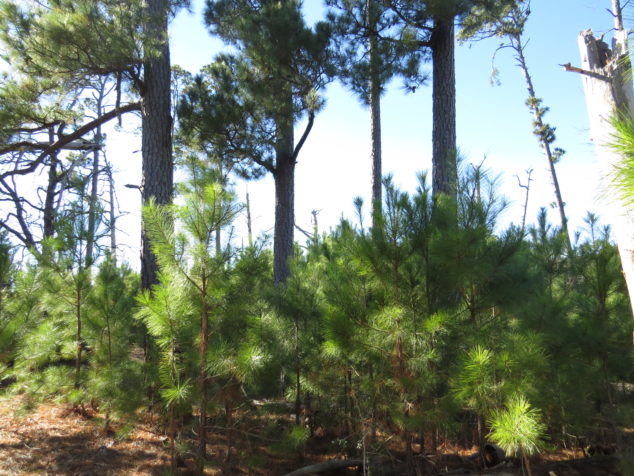
I admired these two survivors and wondered what had saved them from the mighty flames of the wildfire. How were they spared?
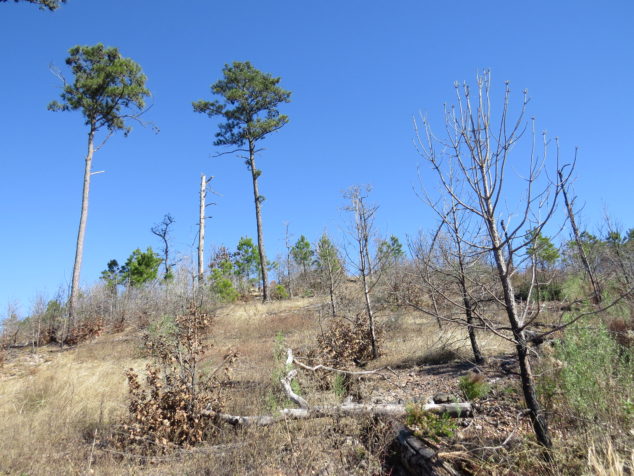
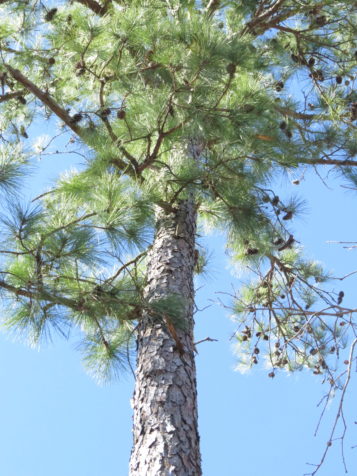
Another tall survivor obviously sustained damage, but had a crown full of healthy needles and seed-laden cones.
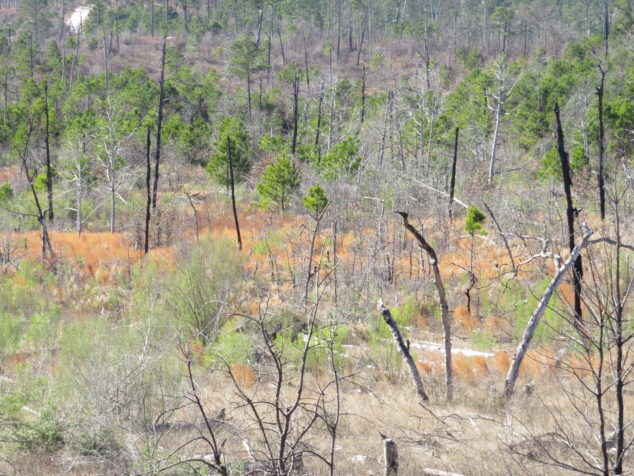
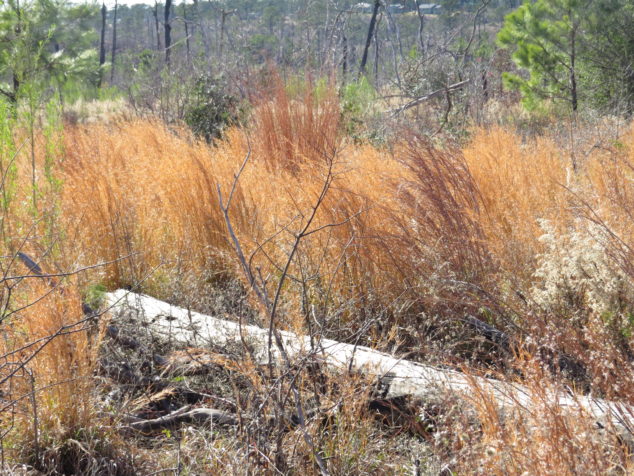
A striking visual in the flooded valley (four years after the wildfire) was the color of the winter grasses. One of the ongoing ways to curb erosion in the park after the fire was the application of a hydromulch—a slurry of straw, water, and native grass seed. Normally these grasses would not grow in the shade of a forest, but they will stabilize the soil while the trees and native understory grow to repopulate the forest.
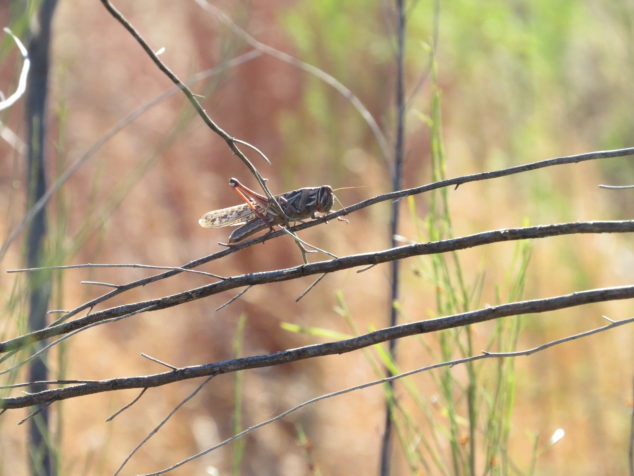
I caught a glimpse of a grasshopper in the grassy valley.
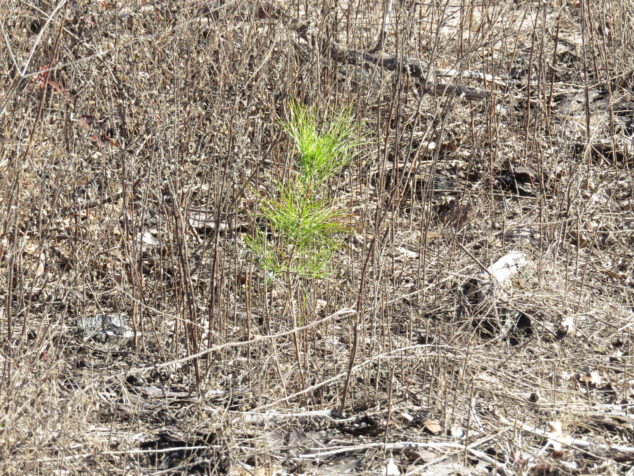
Even after the repeated devastation of fire and flood, pine seedlings were growing in the desolation.
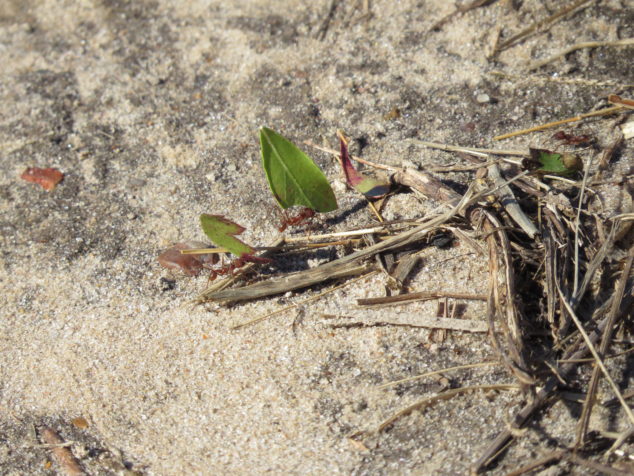
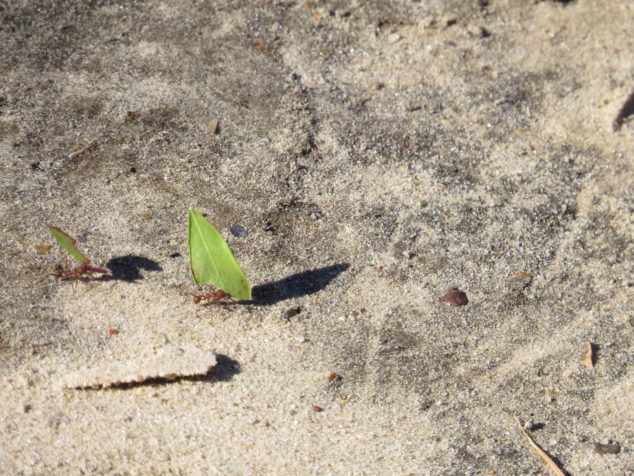
One of the most interesting things we saw on our hike—that could easily have been missed if I wasn’t looking down—was a trail of ants carrying yaupon leaves. The hiking trail was sandy and wide, so the line of green leaves, like sails on little red ships, readily stood out in the afternoon sun. These are Texas Leaf-cutting ants, native to East Texas. They collect plant material to bring back to their colony in order to build a fungi farm. This fungi is their only known source of food. Colonies house up to two million ants, so they can be extremely destructive to pine seedlings, citrus plants, agricultural crops, and landscape ornamentals. They can strip a small to medium tree overnight! The line of ants and leaves was as far as I could see on both sides of the trail.
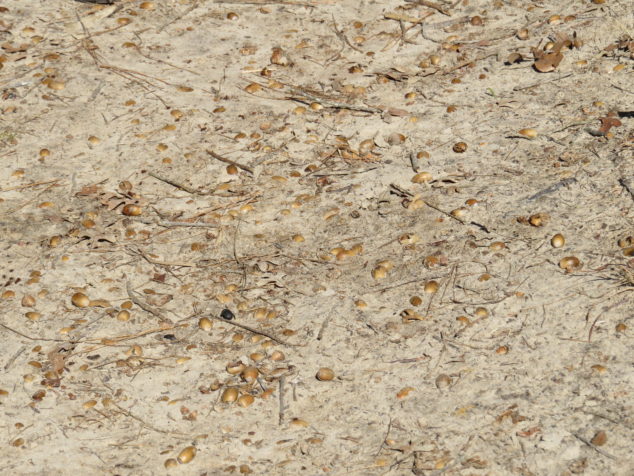
We hiked through an section of the park that was not so intensively damaged by the fire—many scorched trees were still alive. There were more Oak trees in this hillside area, and the path was strewn with acorns—food for the animals being re-established in the park and potential trees for the future.
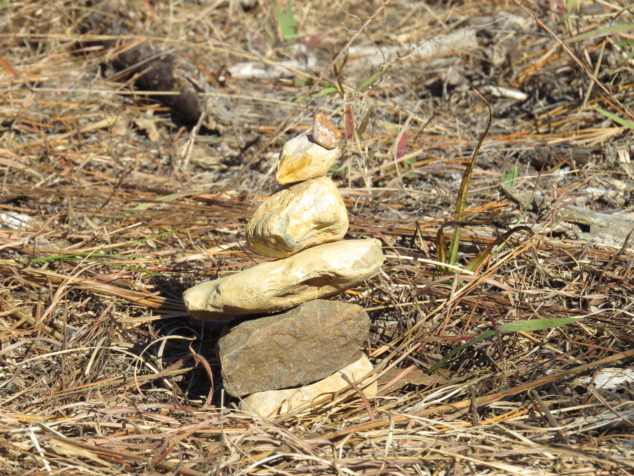
Someone had built a rock cairn along the trail. Many are used for ornamental purposes nowadays, but at one time, they were markers for navigation or memorial purposes. Many remote hiking trails rely on cairns to mark which way the hiker should go, and many indigenous, sacred sites are marked with cairns. Rock balancing art has its place, but many agree that it goes against the principle of Leave No Trace.
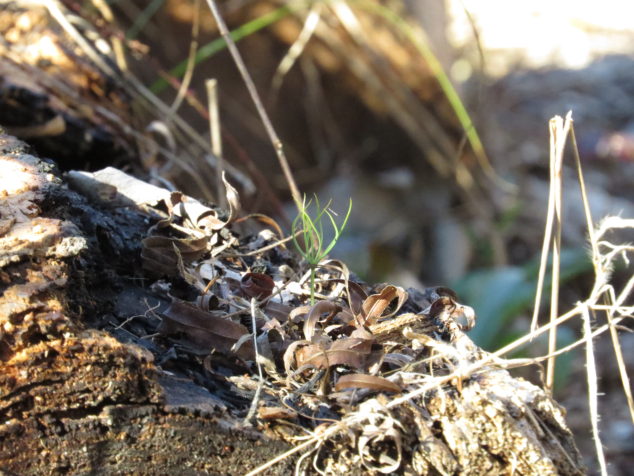
One of the loveliest signs of hope was a teeny tiny pine seedling growing in the debris of a fallen log. Nature is the master of re-birth.
In the burning houses of our lives, how do we take the lost parts, the broken parts, the parts that keep us up at night and make them right? How do we stop walking so close to the dangerous flames, even when it feels like the only thing we know how to do? The aftermath can be devastating. In the midst of the ruins, we are in shock, in disbelief. How in God’s name did this happen? In our disorientation, we may notice the survivors, the ones still standing. The survivors sustained damage, too, but for some reason they are more resilient, and they are the beacons of hope. It is the survivors and the empathetic helpers and the paid professionals who can work together to hold back the erosion of despair and plant the new seeds necessary for renewal. We need a helping hand while we re-group and gather our wits and our strength. We need cairns of caring people to honor what we have been through and show us the way to new growth and new life. Nature (and Nature in us) is the master of re-birth, and we (and Mother Nature) need a helping hand in the aftermath of devastation—that’s how we make it right.
*from ‘Burning House’ by Jeff Bhasker, Tyler Johnson, and Cameron Ochs
Gleanings from November—Seeing Clearly
To see clearly is poetry, prophecy, and religion all in one.
John Ruskin, English art critic 1819-1900
This November was a strange month. Not only was the weather erratic and unprecedented but so was the election and the political climate. (Sigh) All of it is confusing and confounding with smokescreens of battling tweets, false news sites and hacking, entertainment-fantasy-lies versus reality, and those who say to the seers, “See not.”*
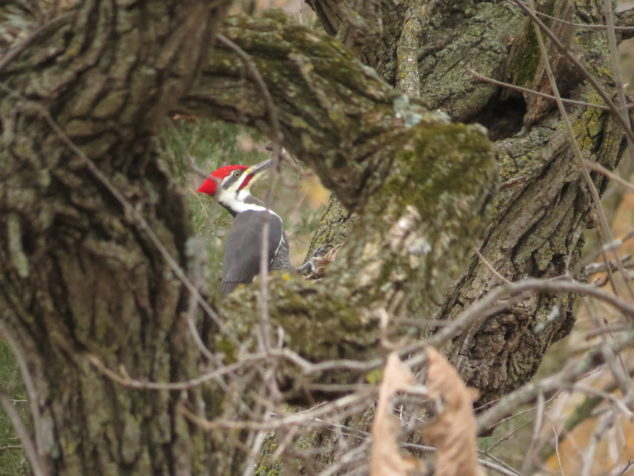
The bright-headed Pileated Woodpecker caught my attention in the gray, exposed landscape of early November. His large body of steely gray feathers could easily have been camouflaged, but the red crest of feathers and stripes of white, red and gray on his head and neck created a bull’s-eye through the circular branches of an old Oak. I’m so intrigued by this huge, shy bird. Most often I hear the distinctive, raucous call before seeing the undulating flight and clumsy landing. His strong, pickaxe bill can send chunks of wood flying as he searches for insects.
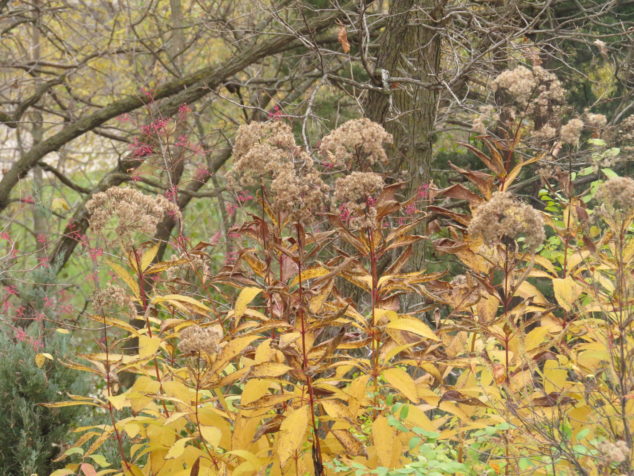
The mild weather of early November gave us glimpses of colored shrubs and perennials that usually would have lost their leaves via a killing frost by that time. Joe Pye Weed still looked beautiful in its autumn glory, surrounded by red fruit stems of Gray Dogwood and graceful branches of Oak trees.
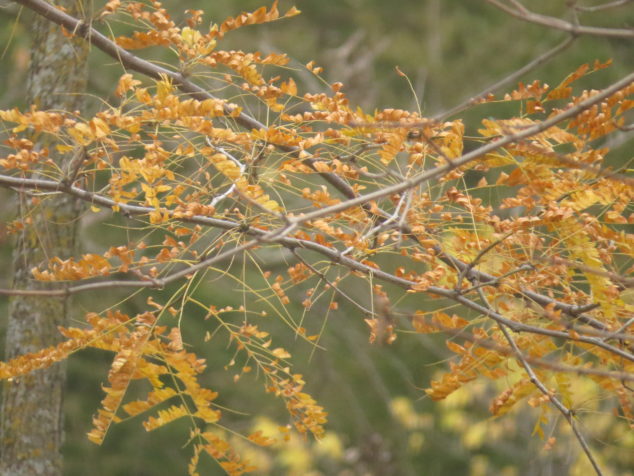
The last of the golden-leaved trees was the Honey Locust, losing leaves from stems, then losing the yellow sprays of leaf stems from branches. A cascade of loss.
November’s super moon caught the attention of the world, something that gave me great pleasure and hope—that a celestial body could be the focus of attention for a week of time. The moon, stars, sun, and earth—all common denominators for each and every one of us on this planet. But the focus can easily be placed on other things, even when looking at our common subjects.
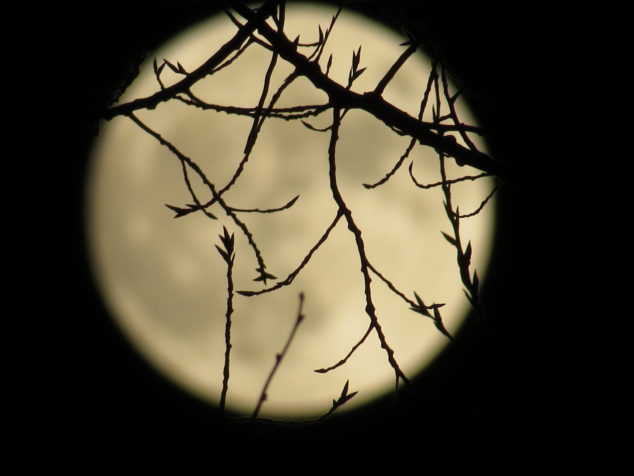
What is the real subject? What is the real issue? What is the truth of the situation?
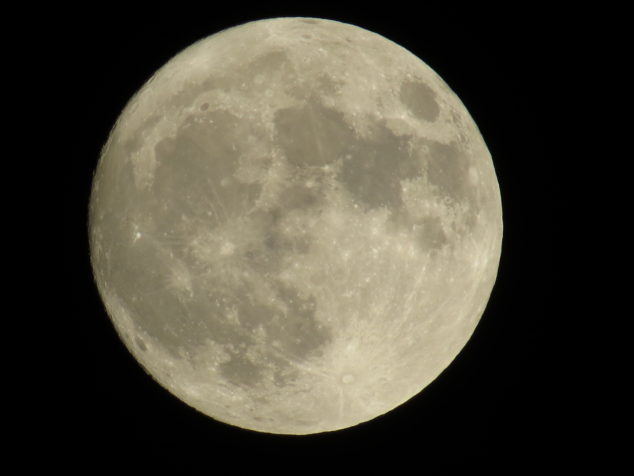
Many things can obscure what we’re looking at, what we need to know. Clouds of illusion, reflections of reflections, and influences of darkness can obstruct our vision and muddy our convictions.
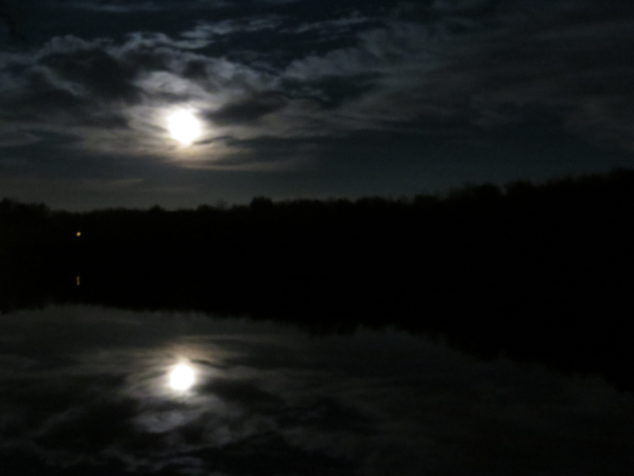
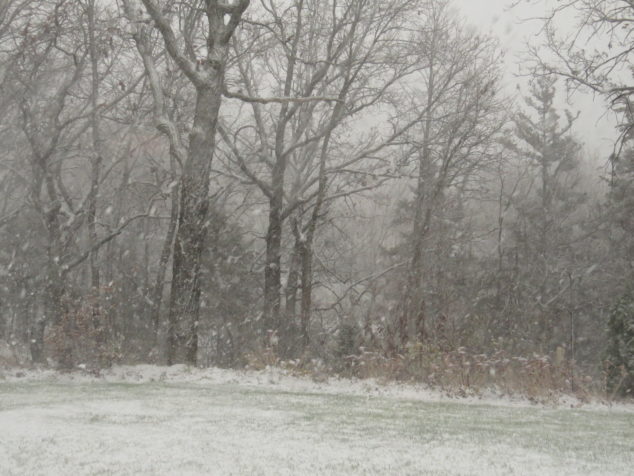
On the 18th, our first snow was a blizzard, closing schools and littering the highways with wrecks. Not seeing and slippery slopes have consequences.
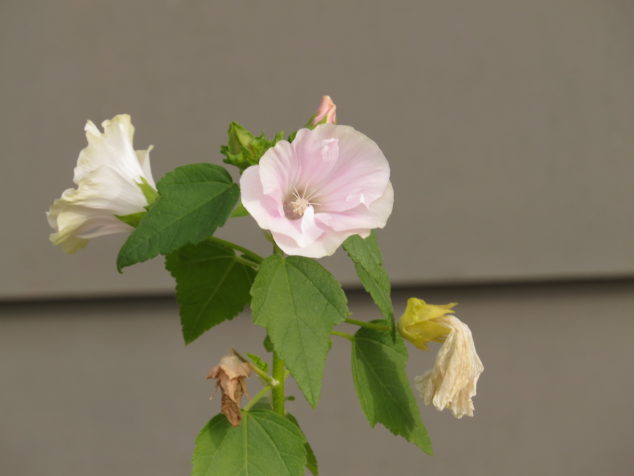
But there was this flower blooming outside our window the day before the storm. One stem of this Hollyhock represented all the stages of our lives: a closed green bud full of potential; an unfolding bud showing rich, young, lively color; a lovely, open blossom in its prime; an older, more experienced, slightly faded bloom; a wilted, wiser, wrinkled version of its former self; and finally, a withered, spent flower that was being ‘cared for’ by the rest of the plant. All of them valuable and worthy to be seen.
“I can see clearly now, the rain is gone. I can see all obstacles in my way. Gone are the dark clouds that had me blind. It’s gonna be a bright (bright), bright (bright) Sun-Shiny day.” (Gamble & Huff) So, where do we begin? We begin right where we are. We begin by seeing and being aware. There is great value in seeing the environment around us, in being aware of the people around us, but most importantly, I believe, in seeing ourselves. What path are we on?
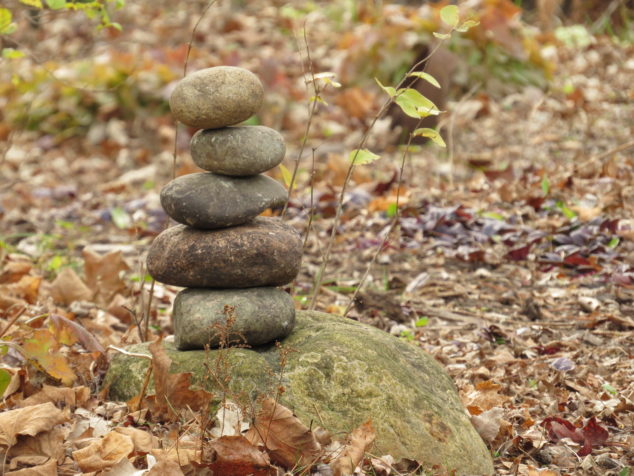
On our paths, we attempt to see our lives clearly. We want the sweet poetry of joy and love. We look forward to a good and meaningful life. We long to be in the presence of the Holy One. In that spirit, with that Spirit, we have the amazing ability to look at our lives, our thoughts, our feelings and have insight—what a gift! Novelist Jonathan Franzen wrote about insight: “And when the event, the big change in your life, is simply an insight—isn’t that a strange thing? That absolutely nothing changes except that you see things differently and you’re less fearful and less anxious and generally stronger as a result: isn’t it amazing that a completely invisible thing in your head can feel realer than anything you’ve experienced before? You see things more clearly and you know that you’re seeing more clearly. And it comes to you that this is what it means to love life, this is all anybody who talks seriously about God is ever talking about. Moments like this.” I say to the seers, “See.”
*Isaiah 30:10