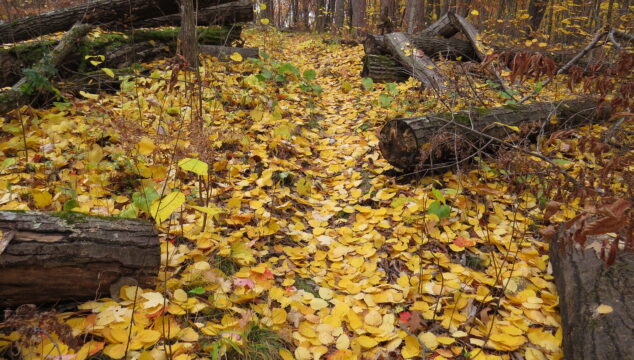
Come walk with me in the peak Autumn beauty of the Northwoods. To say that I love this time of year is an understatement. Most everyone can appreciate the colorful falling leaves---it reveals the 'true self' of a tree when its leaves are no longer producing chlorophyll. Their true colors are revealed, and there is something simple … [Read More...]
Flowing Together Like a Great River
I grew up caring for animals. Always cats and dogs. Sometimes chickens and ducks. Later horses and cattle. I would feed them, make sure they had water, help build their shelters, and take care of their wounds. I hauled hay, cleaned out stalls, helped pull a calf, and doctored pink eye. Taking care of animals teaches responsibility, selflessness (chores come first), and hard work. I loved it, and I loved them.
I’ve been a little obsessed lately about what people care about and how it seems to be skewed in some odd directions. Can you make a list of things you really care about? And how do you know you really care about something? Spend time doing the work of caring? Spend money in support of the cared about thing? Give energy to the entity, relationship, or cause high on the caring list? And then, what is the outcome of your caring? That’s often even harder to identify and articulate. Certainly we gave time, money, and energy to caring for our animals—in return they gave us food, protection, fun, love, livelihood, and lessons, to name a few.
When looking up the definition of ‘care,’ I was surprised that the first meaning of the noun was ‘suffering of mind: grief.’ The second was ‘a disquieted state of mixed uncertainty, apprehension, and responsibility.’ The third was ‘painstaking or watchful attention.’ The verb care was similar. Only later on the list of meanings for both was desire, regard, interest, or fondness mentioned. The first definition actually gets to the crux of care—if what we really care about is ‘taken away,’ suffering of mind is sure to follow.
Two weeks ago we pulled out of our driveway on the Great River Road and hours later drove the Great River Road into tiny Cassville, Wisconsin. We left the Mississippi River at times to expedite our trip, but the force of it was ever present on our minds. We returned to Cassville to bury Chris’ sister’s remains beside her parents and infant brother. The four and a half months since her death had taken the edge off our grief, but our disquieted minds still desired the closure of a burial. The permanence of a burial, along with prayers and blessings for the deceased and for those caring, grieving people left to live, is a sealing of that chapter of life.
After seeing the flooding the Great River unleashed in our area, we were curious to see what was happening in Cassville at the little resort cabin we had reserved that was the favorite of Chris’ folks. The floodwaters had risen to the edge of the cabins but had started to recede by the time we got there.

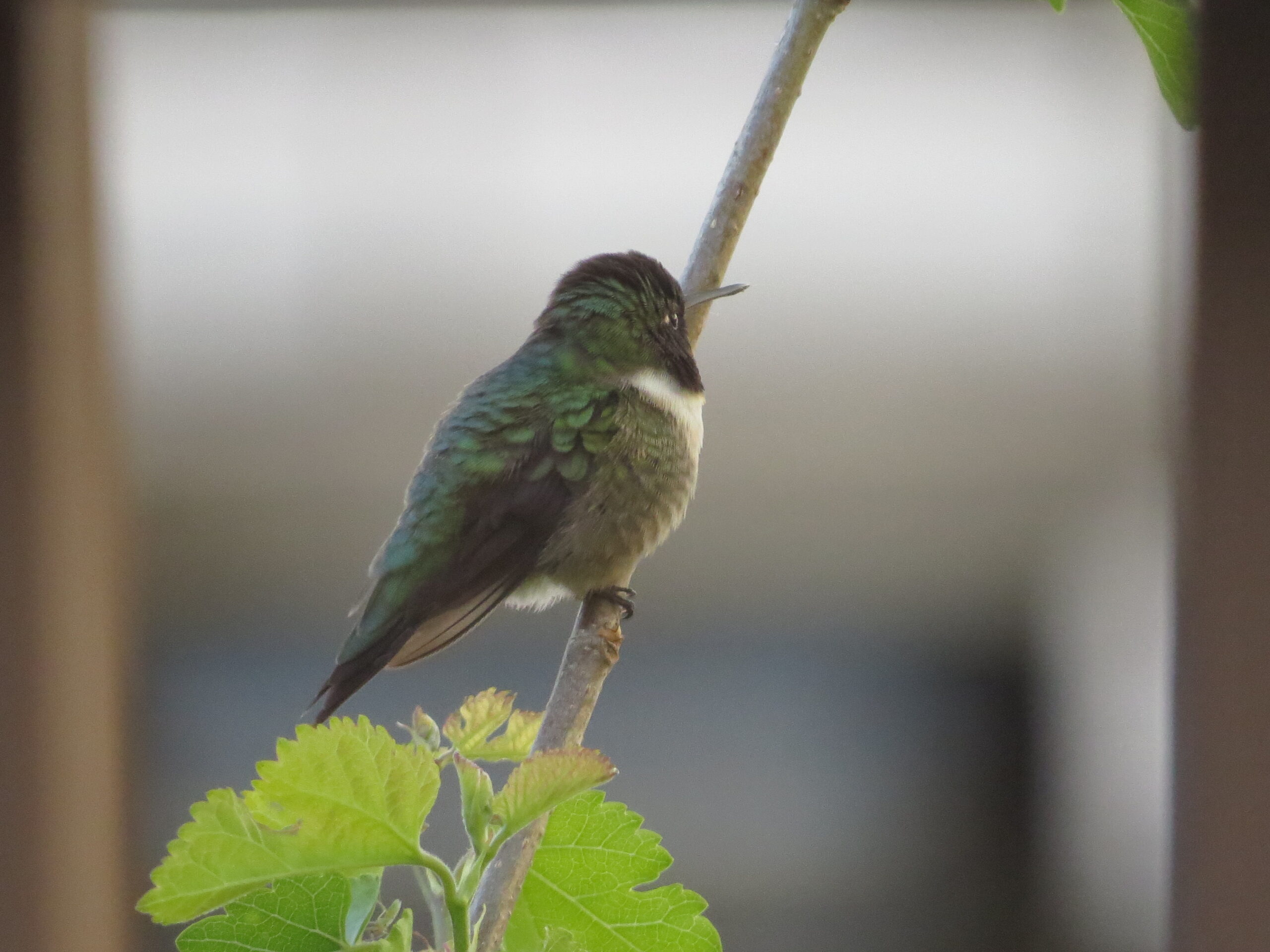
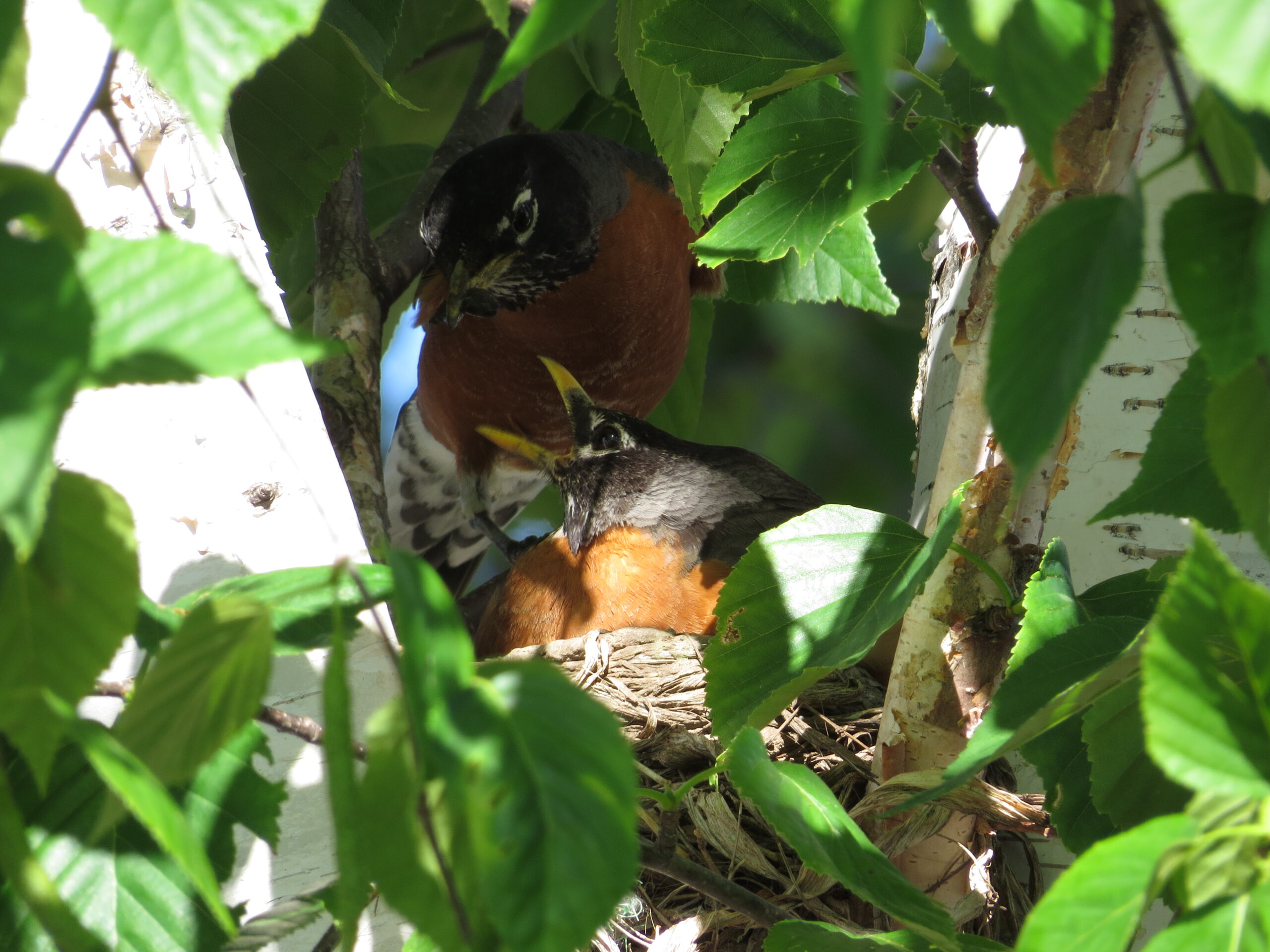
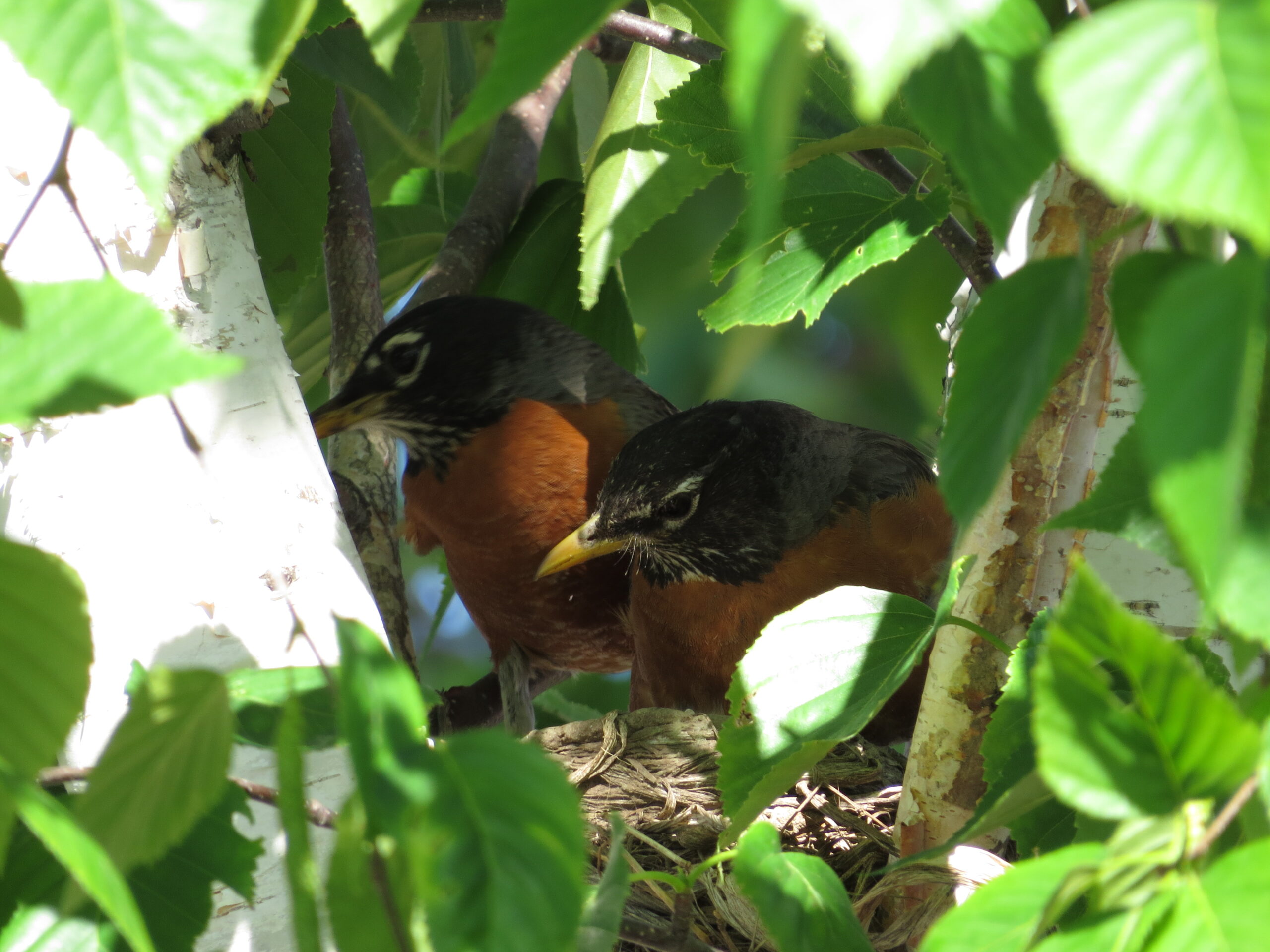
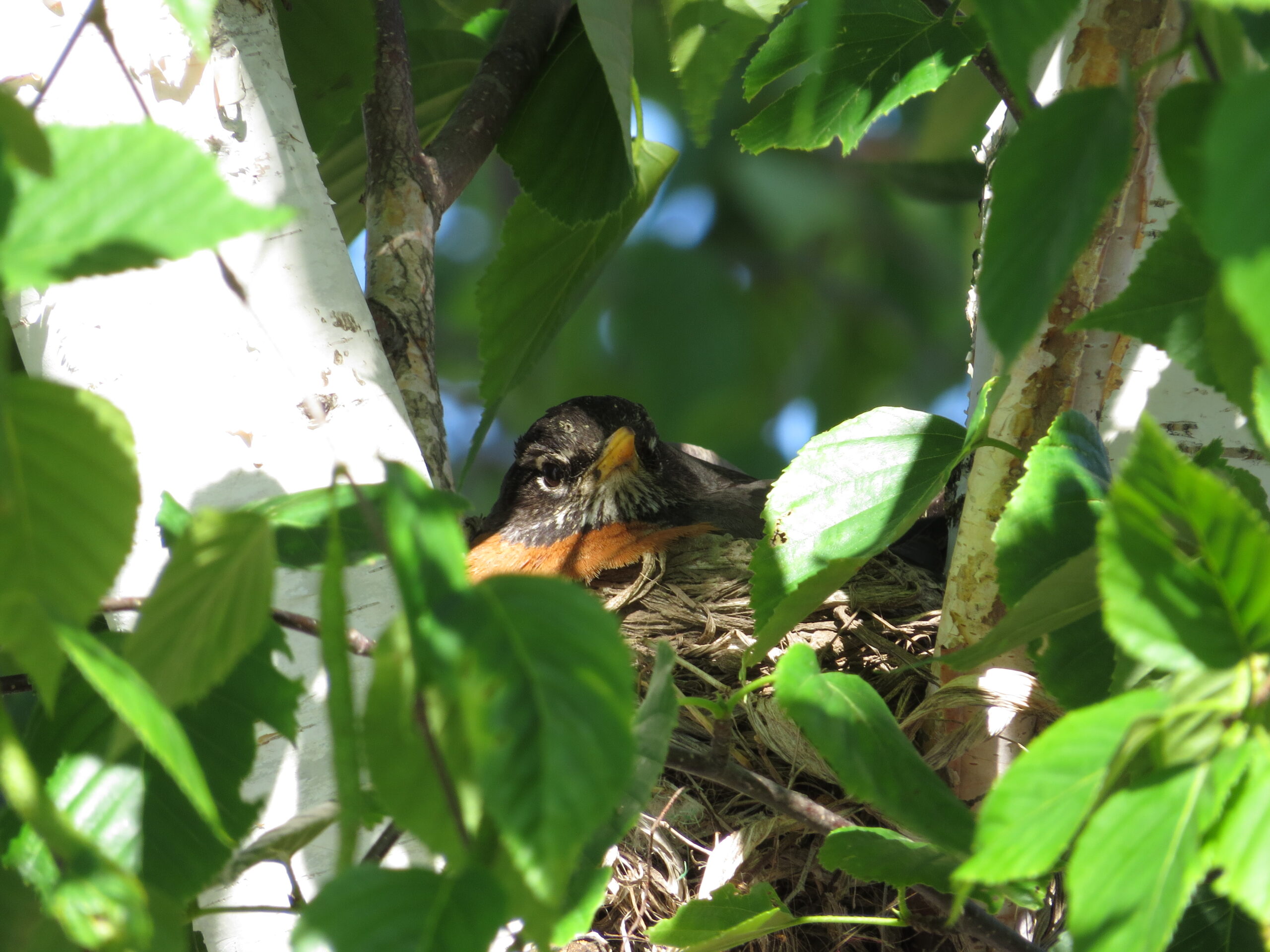
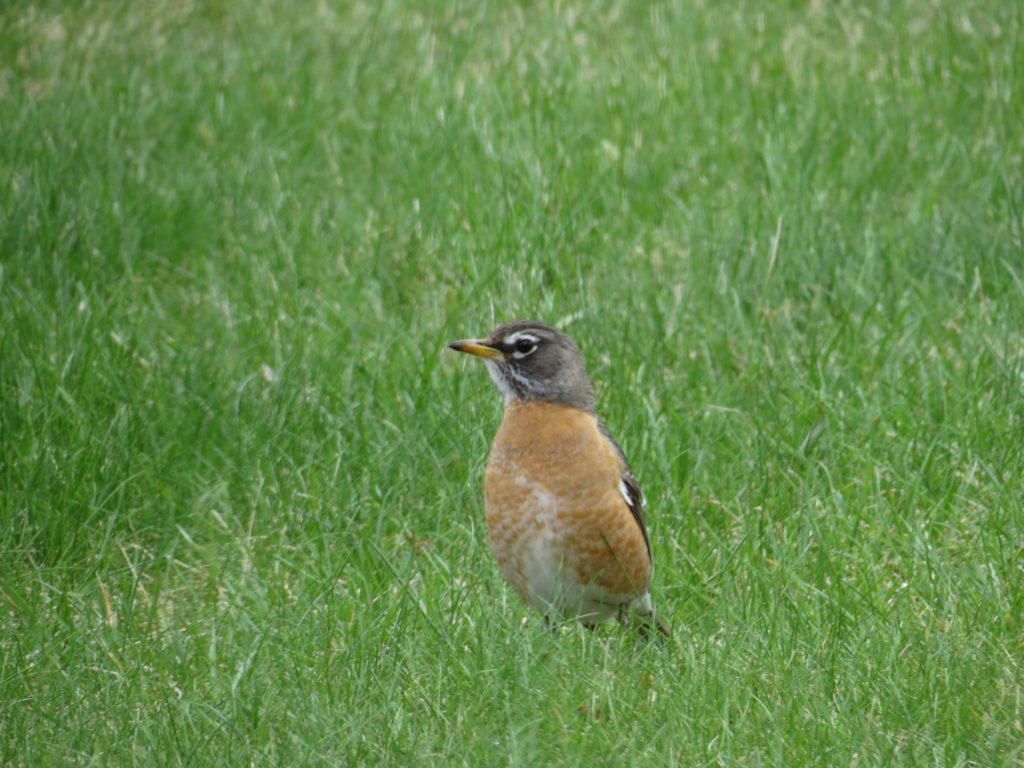
Our first visitor to the deck overlooking the River was a tiny Hummingbird. Soon after, we discovered a pair of Robins had a nest in the Birch tree that provided shade from the western sunlight. The male Robin took great care to bring food to his mate who warmed the eggs in the nest they had built.
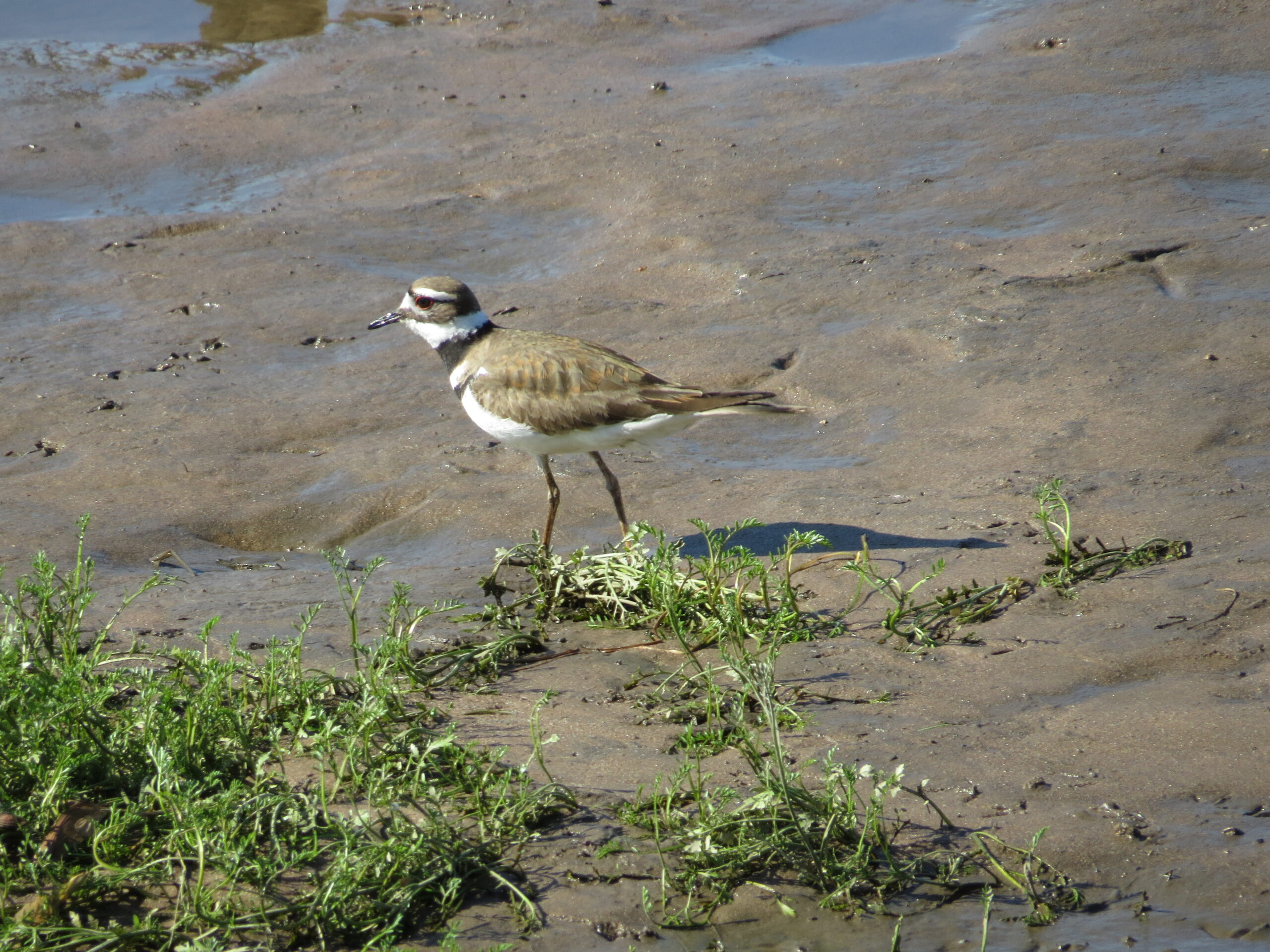
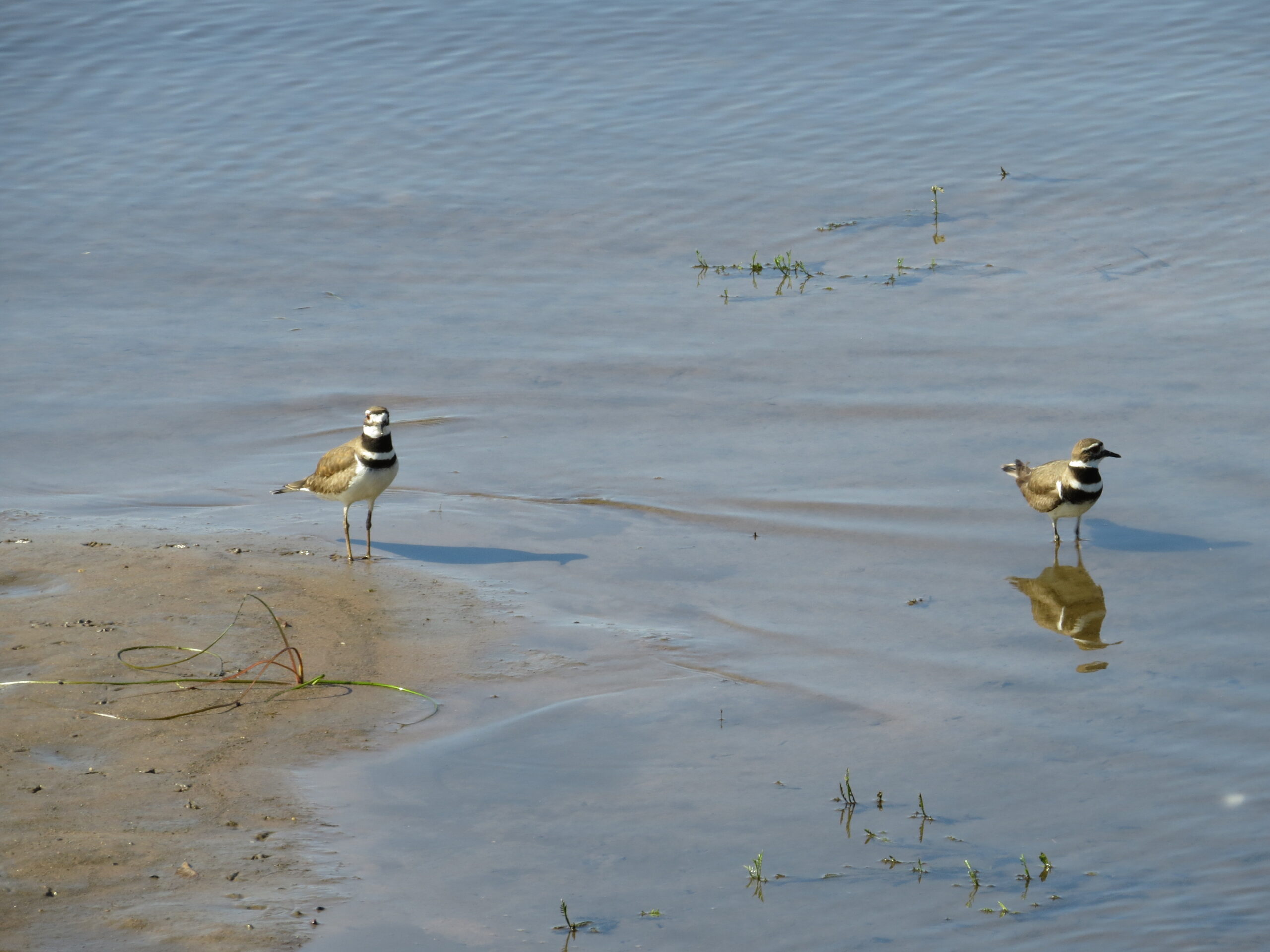
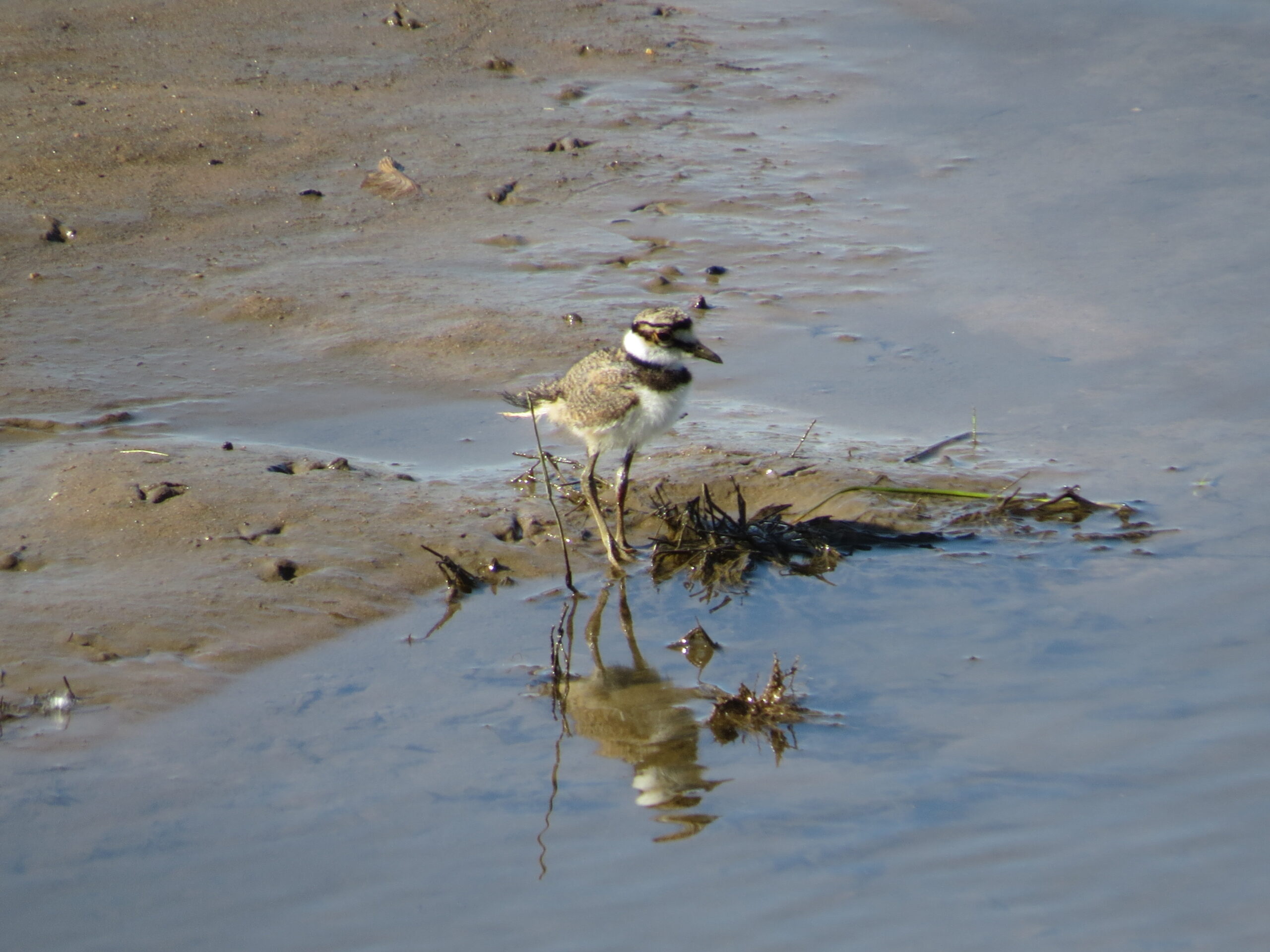
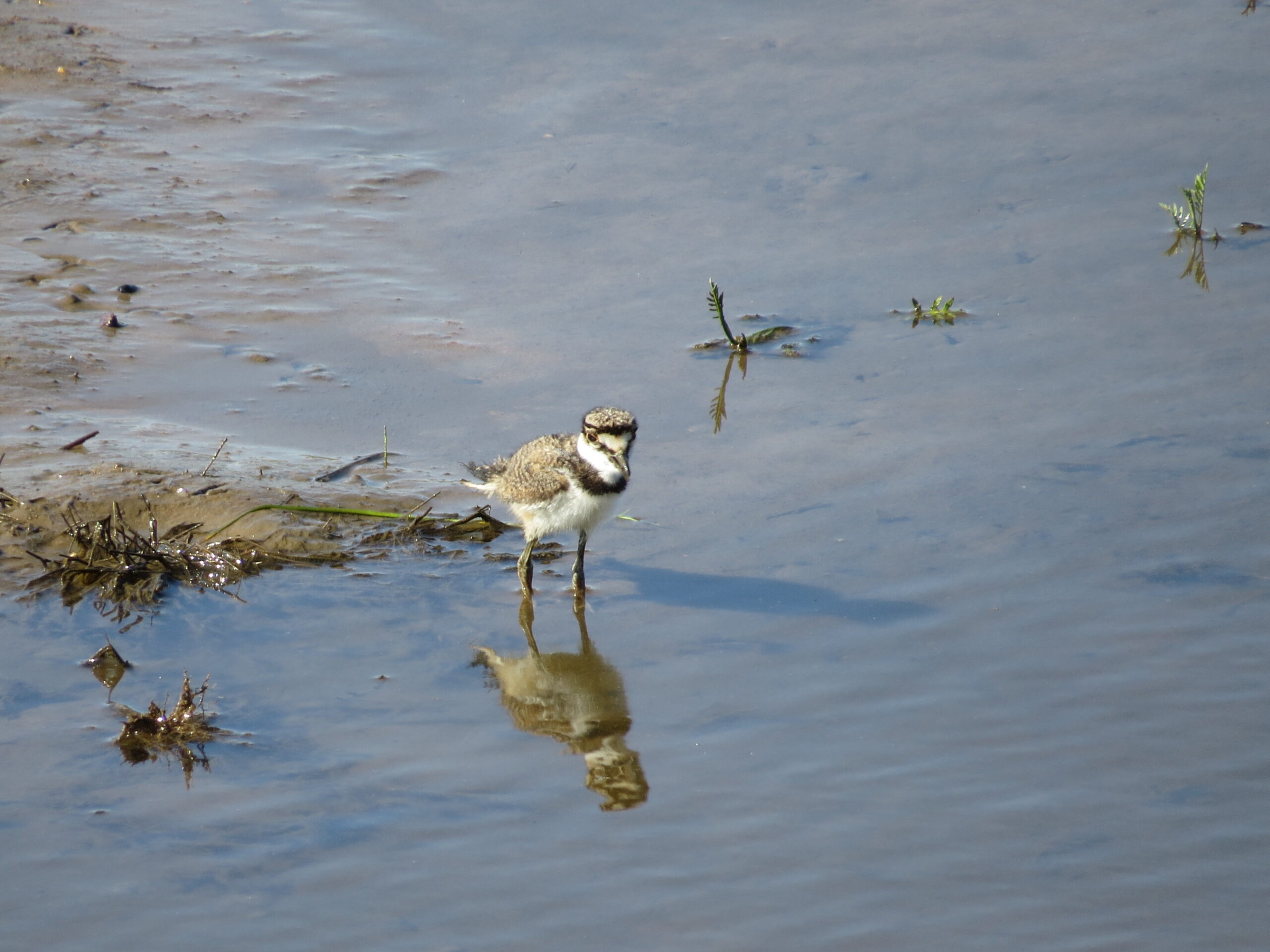
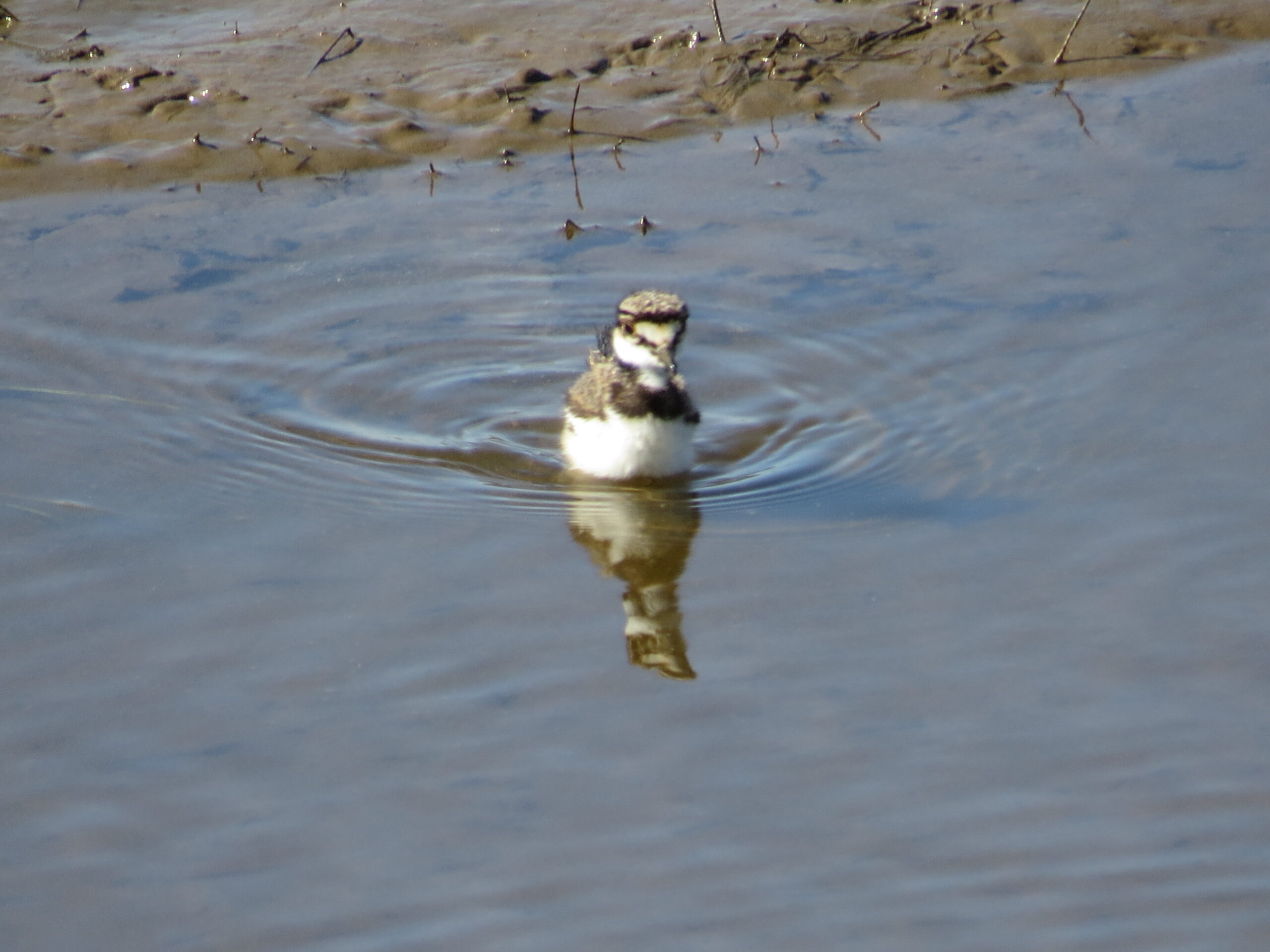
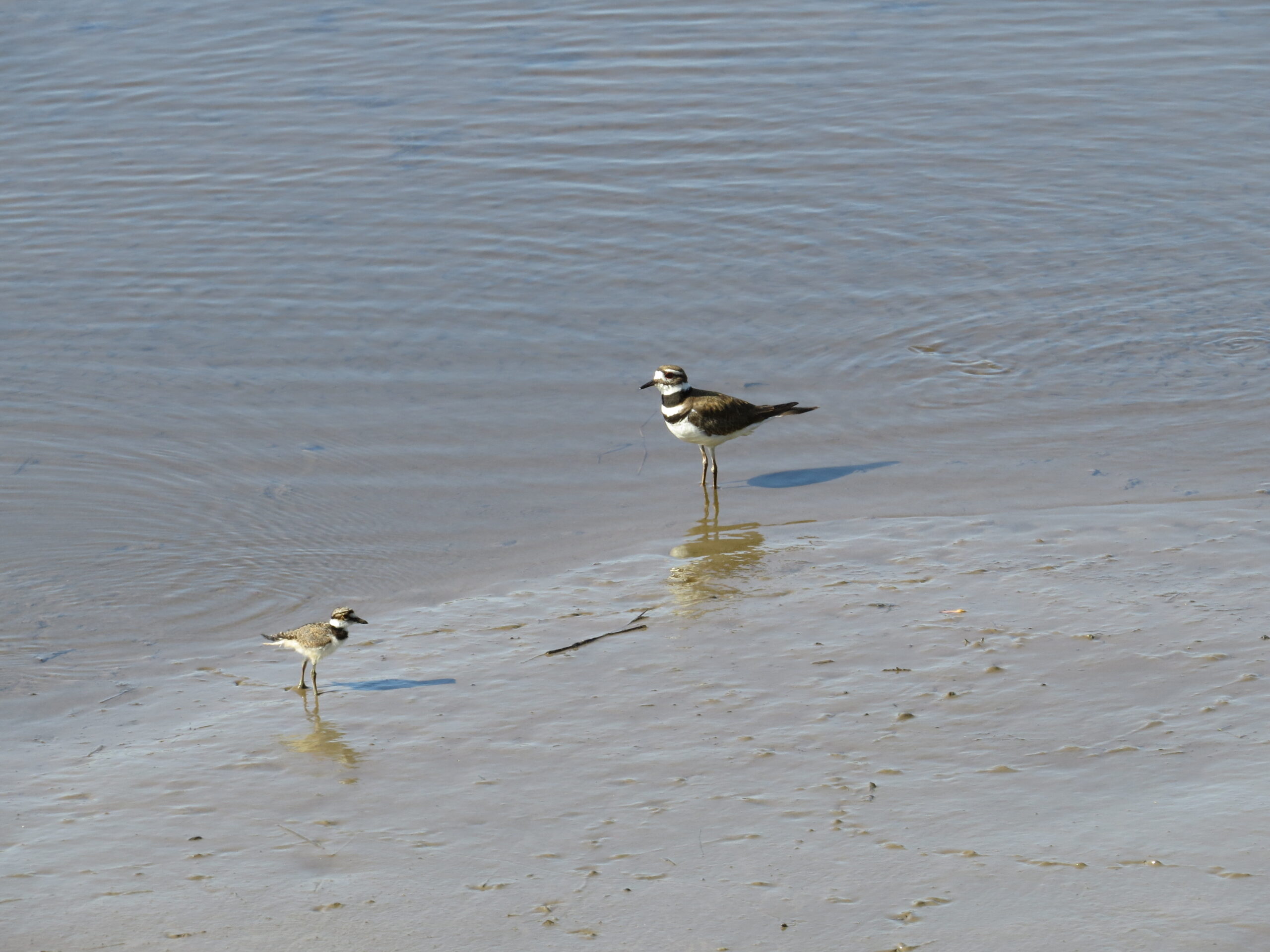
The receding floodwaters and subsequent mud provided a perfect playground for a pair of Killdeer and their fluffy, long-legged offspring. Their halting scurrying, bobbing, and distinct high-pitched chattering made them endearing neighbors.

The people-free, flooded dock was a great place for the Northern Map Turtles to bask in the sun. I didn’t even see the little ones in the bright sunlight when I was taking the photo of the big one. The next day we saw one floating down the River on a log—I think they are glad for this warm Spring weather, too!


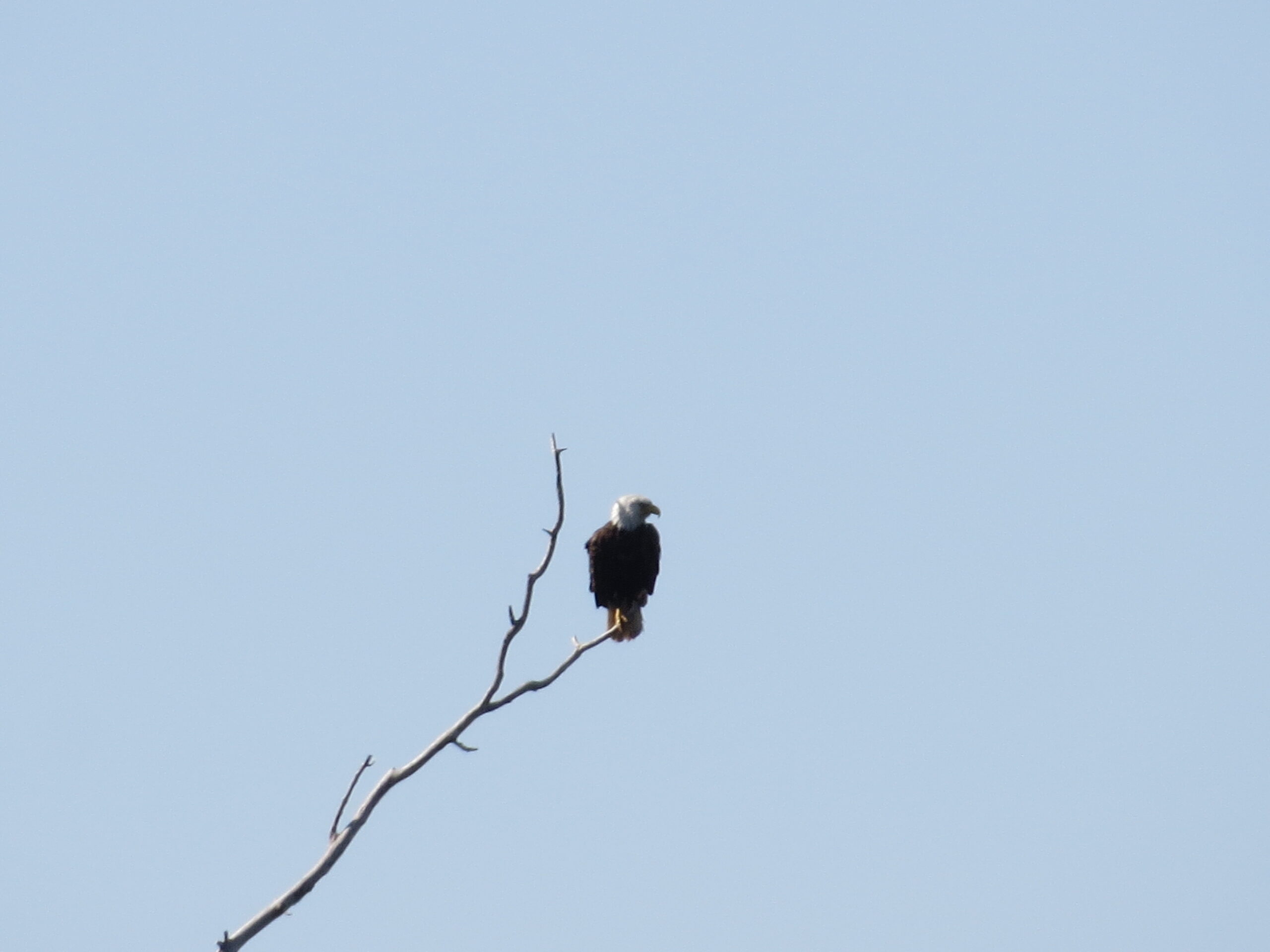
Across the slough on an island was a dead tree that provided the perfect lookout for an ever-watchful Eagle.
It was good to be in Cassville beside the River. The cabin hadn’t changed much since the folks had stayed there, and my mind easily ‘saw’ them standing against the pine-paneled walls or on the deck overlooking the River. These people who we so deeply cared for and loved were home again or still in this River land, in this familiar cabin, and as always, in our hearts. Evening came with softly rippled reflections. The still water seemed ‘alive’ with a humming layer of mosquitoes or other bugs that had the fish jumping. The well-fed fish had little interest in the lures and bait that Chris and Aaron were throwing into the water from the marina dock.





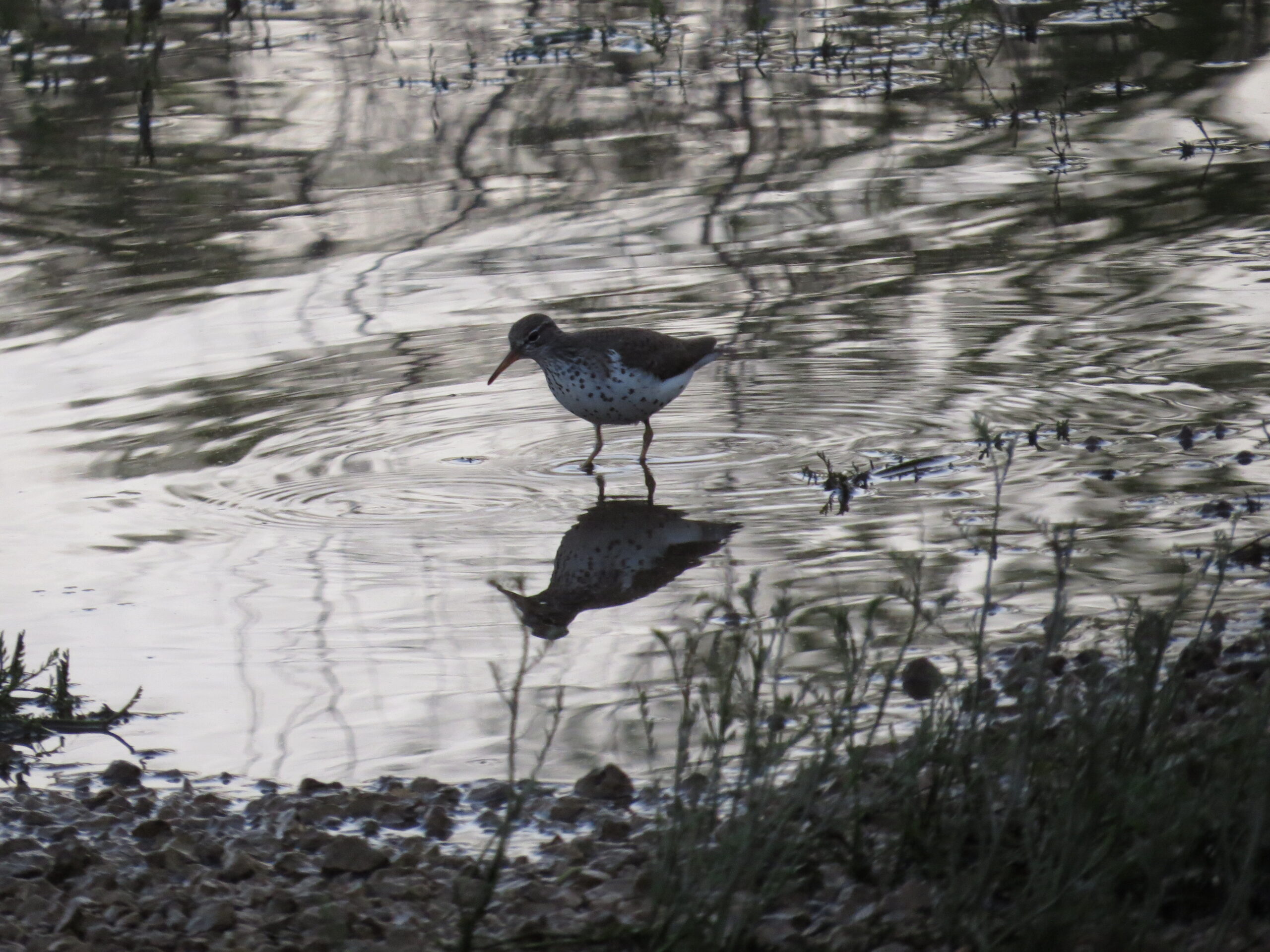
As dusk fell, a Spotted Sandpiper teetered about in the shallow water, and a beaver swam undeterred until Aaron threw his line too close for the rodent’s comfort.


I cared for our animals with diligence and love, and if one of them was injured or died, I suffered their injury or loss. I like the analogy of grief as suffering of mind—it normalizes the pain of loss and gives it a deep container and a long timeline in which to hold it. Time tends to ease a suffering mind in ways that make living a little more doable. I have learned that the next step is to give your suffering mind some watchful attention, some care, some love, so that life becomes more than just doable. If we think about our grief as a palpable display of caring and love, the grieving and the living flow together like a great river. When grief gets dammed up behind a supposedly protective wall, it can easily overwhelm everyday life. It displays as depression, anxiety, lethargy, anger, blame, hate, and violence. Remember, grief is a suffering mind, no matter the cause. I think Mary’s life and death taught me to bind the suffering with joyful living. As a person with Down Syndrome, she needed people to take care of her—there was always uncertainty, apprehension, and responsibility with her care (just as with all children.) And she cared deeply for the people around her, for animals, and for her job—she lived with joy. I can suffer her death and live with a peaceful heart. It takes time, energy, and oftentimes money to really care about someone, a relationship, an entity, or a cause. Caring is the business of lifting up, providing for, giving attention to, and suffering at the loss of the cared-for; it is not a frivolous business. We can all step into the great river of caring and grieving, loving and suffering—it is a force that can change the world.
Promise Shines Through the Gray
There is a stark contrast in my photographs from this post compared to the last one with all the brilliant Fall colors, though nearly a month has passed since I actually took the colorful photos. Gray November comes to us gradually. It is time to see things in a different light—the literal reality of which we have no other choice. Shades of gray and brown dominate the landscape now. We do have a choice as to how we think about the ‘colorless’ palette of late Autumn and Winter.
It is a time to see the bare basics, the silhouettes of trees and shrubs. I appreciate their form, their shape, their strength and flexibility.
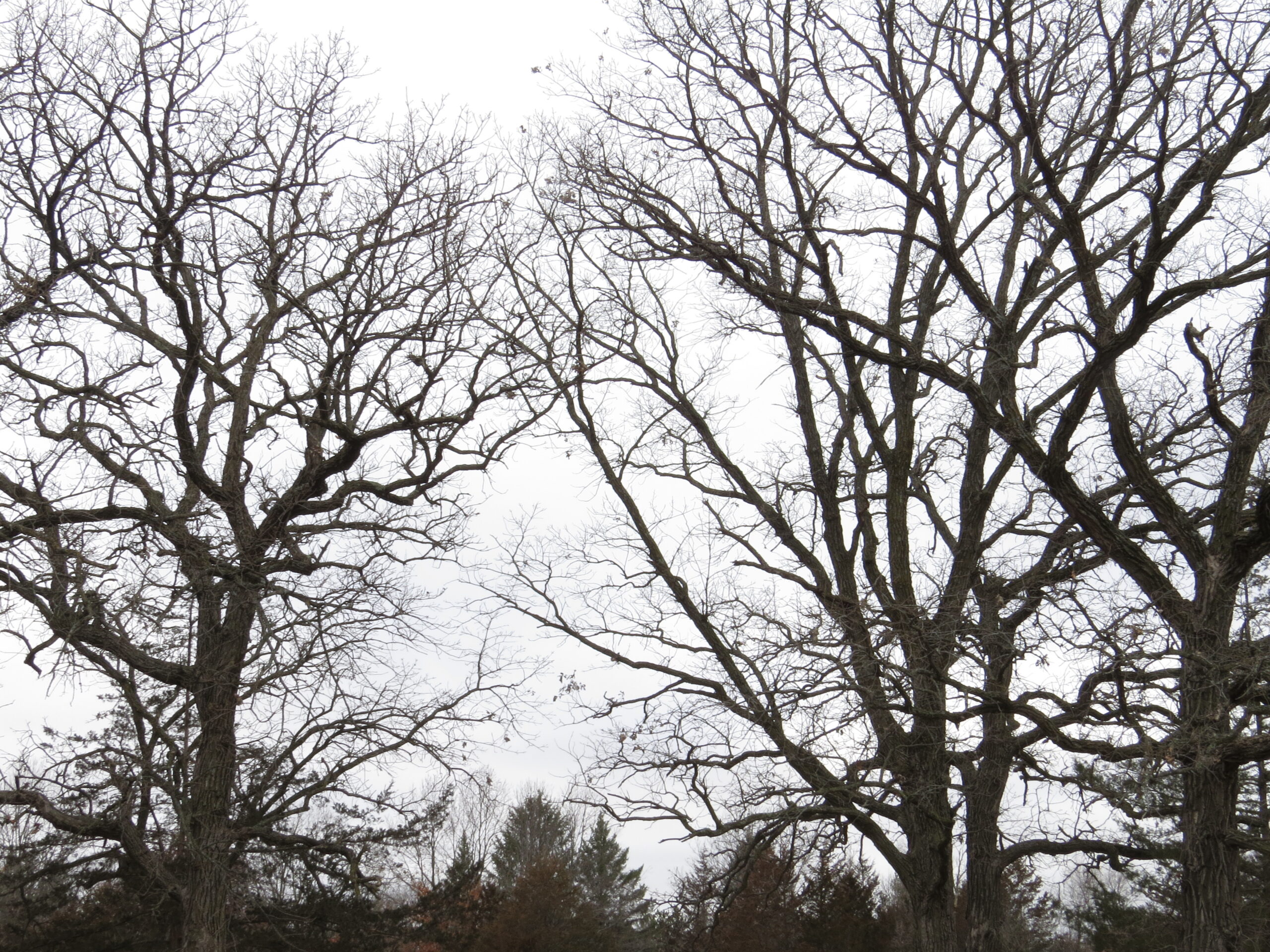
The gray Mississippi reflects the gray sky, surrounded by the gray, bare trees, the gray-green Cedars, and the surprisingly yellowish-brown grass. The day was raw with a northwest wind—eighteen miles per hour of wind chill on the below-freezing day. Enough to make my eyes water as I faced the flowing River.
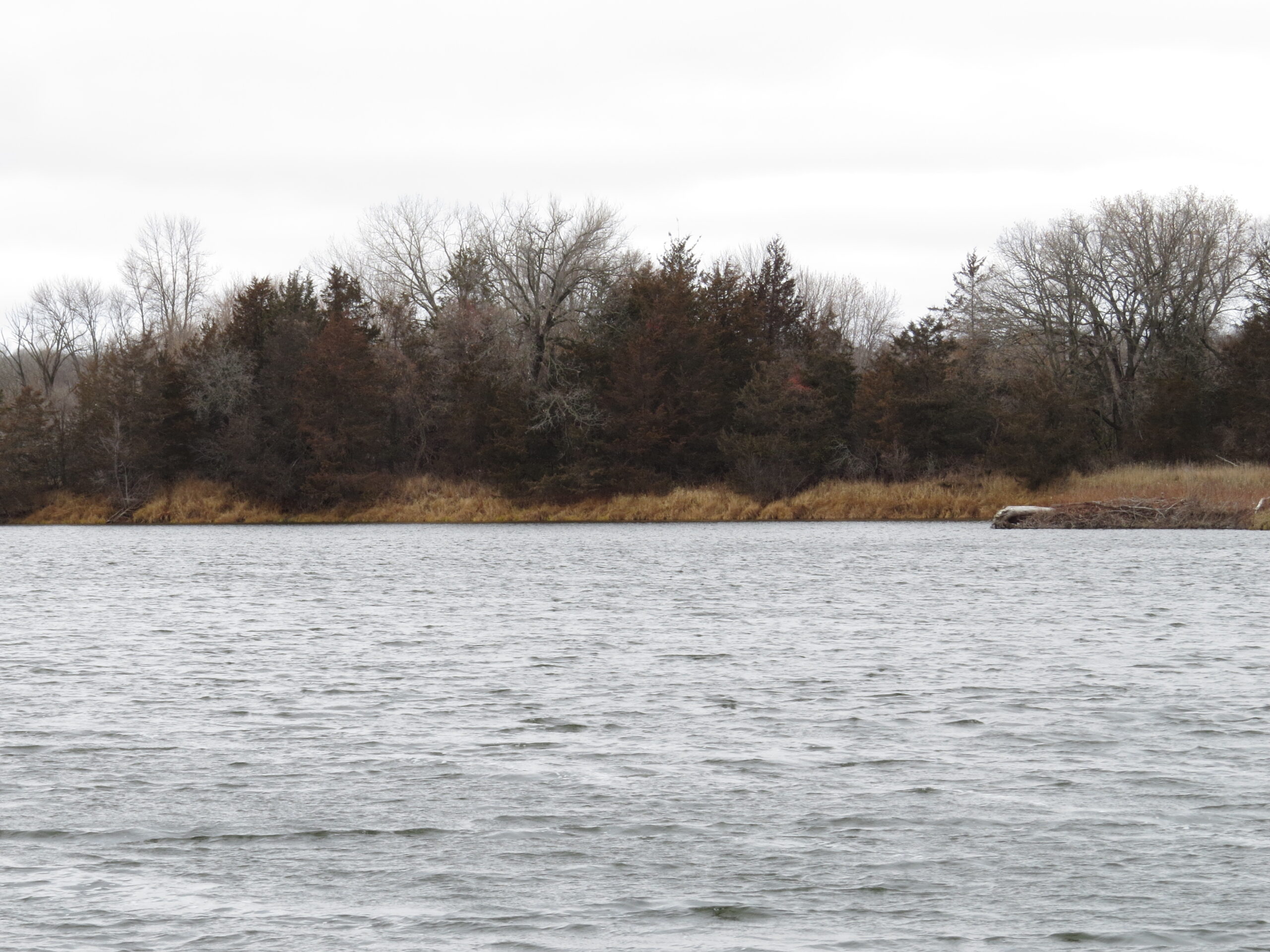
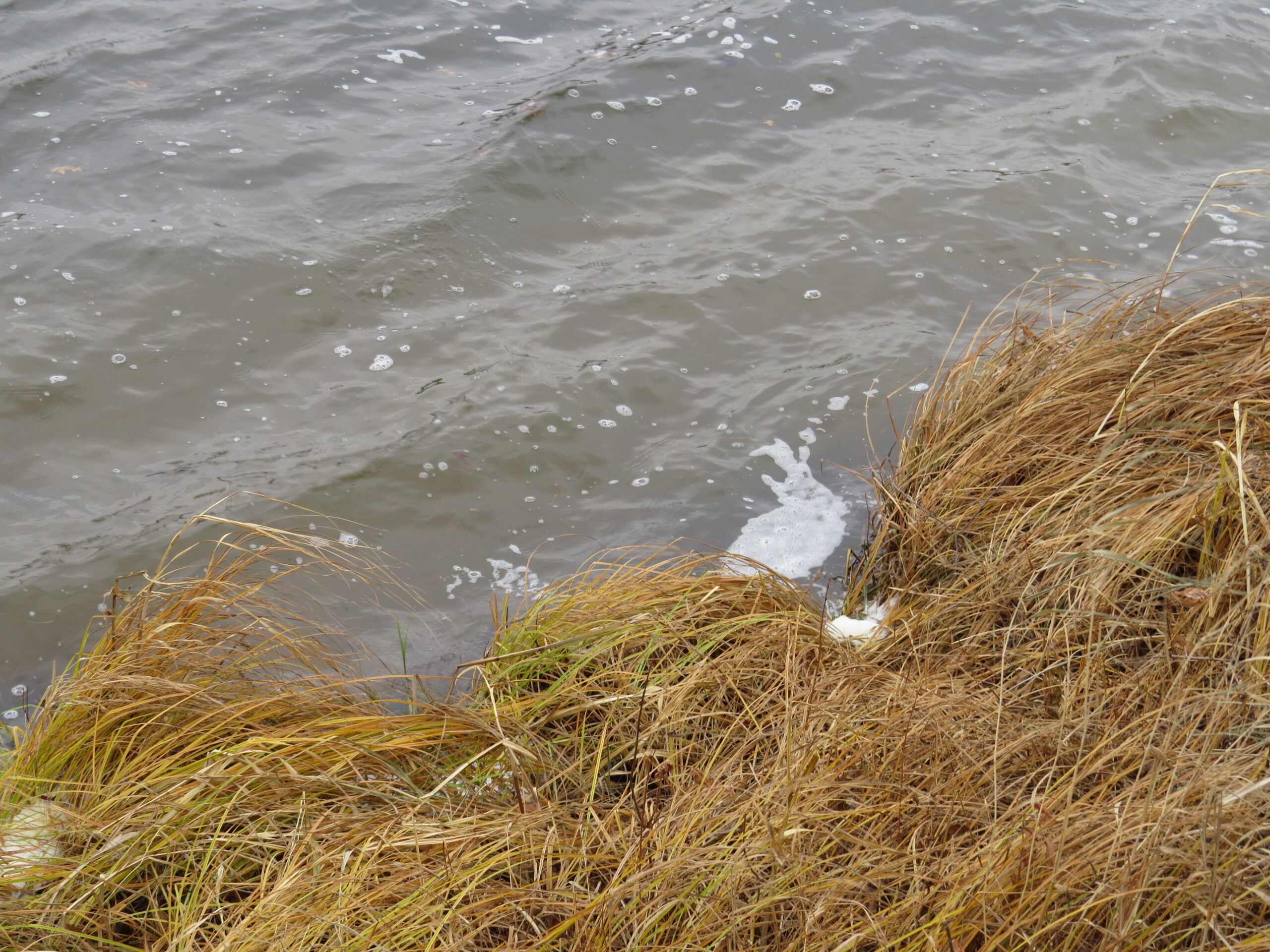
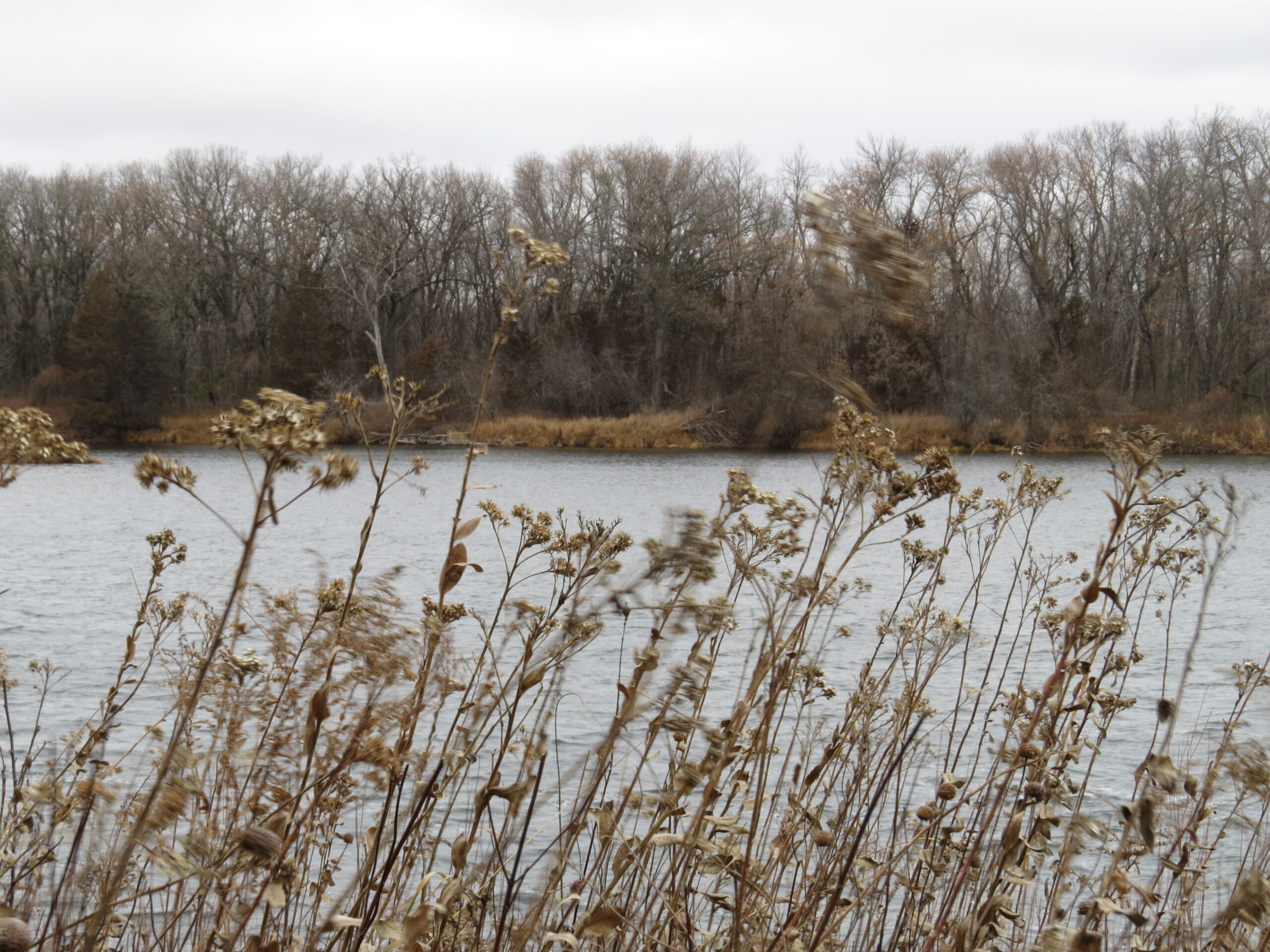
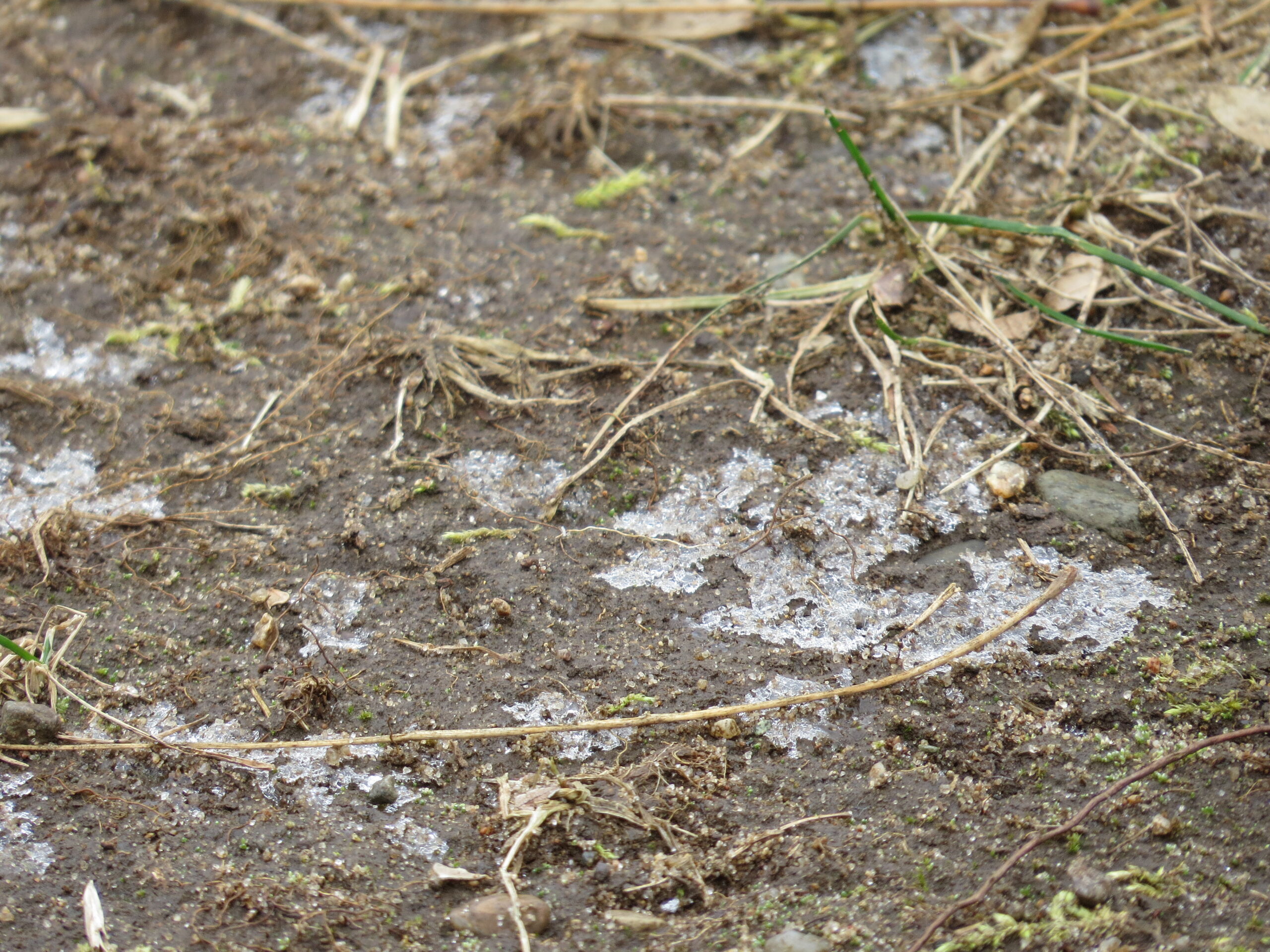
We had had rain, much-needed rain, in the few days prior to my hike, and the ice crystals crunched ever-so-softly under my boots. Tiny beads of snow fell, hardly perceptible to my eyes and skin.
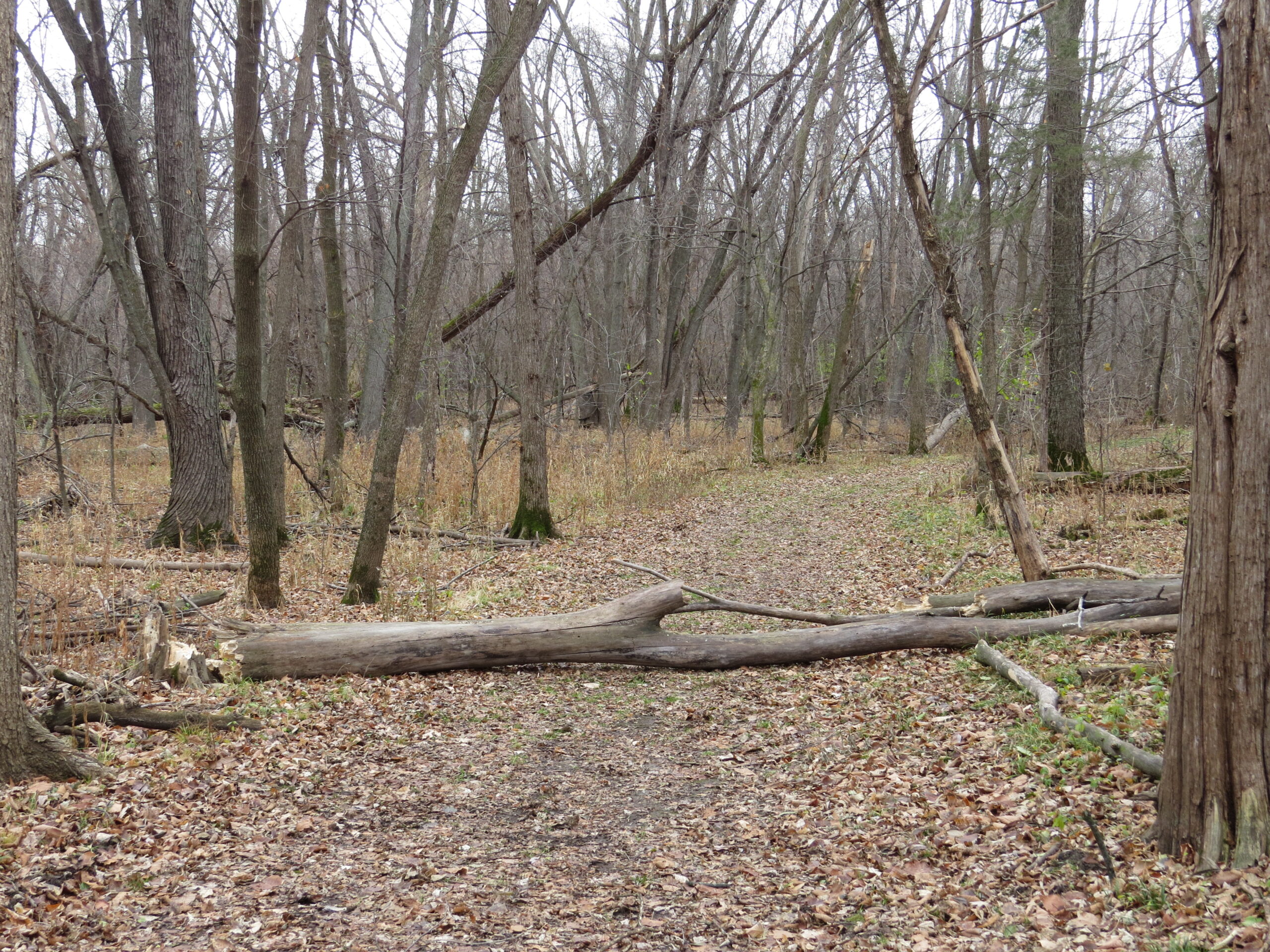
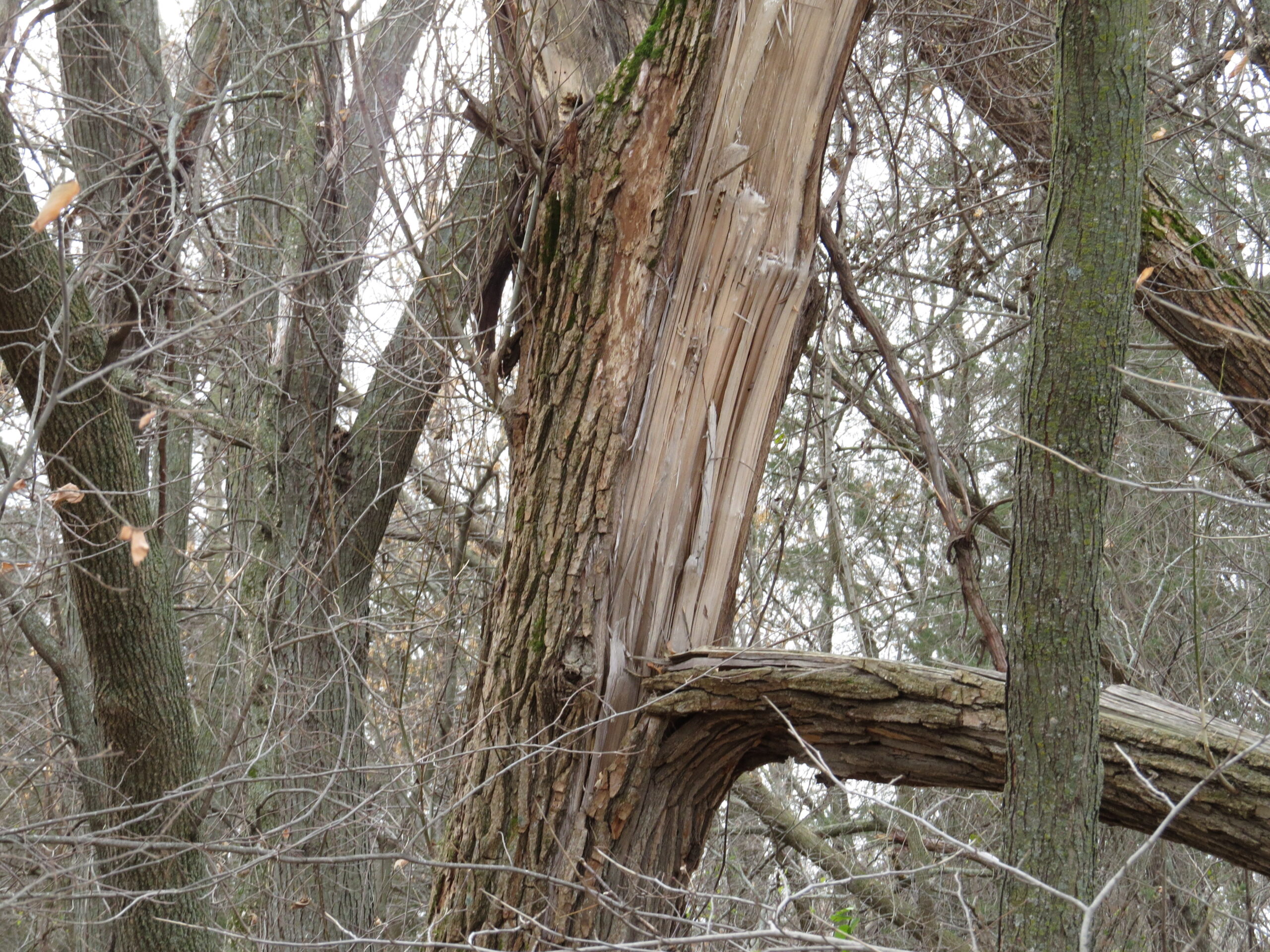
Along with the rain had been strong winds that had toppled dead trees and limbs, making obstacles on the trail and wreckage in the woods. Beware of the gravity-defying widow-makers who have not made their way to the ground!
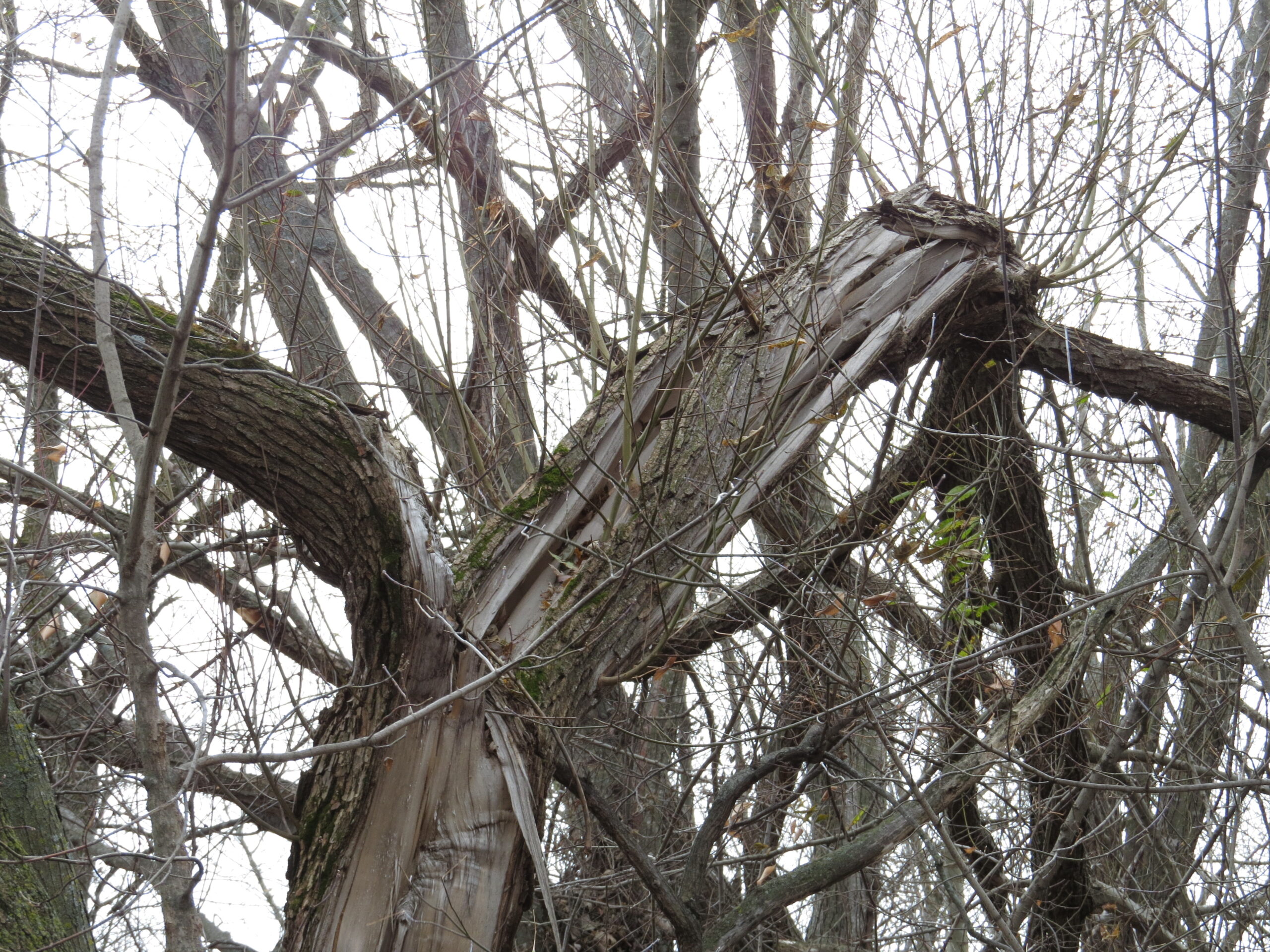
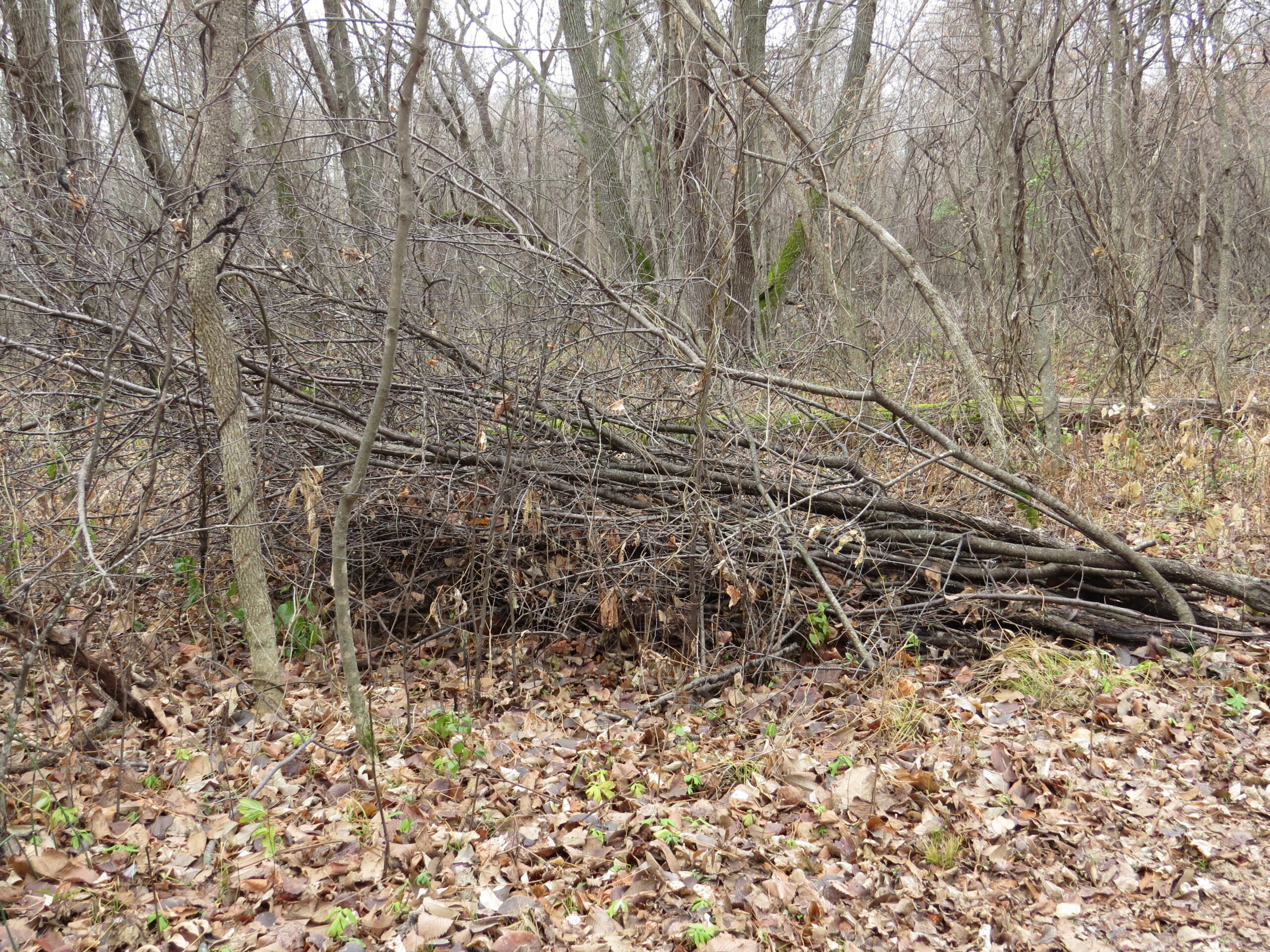
A pile of invasive Buckthorn had been toppled on purpose and piled neatly beside the trail. Good riddance to that which takes over the forest, if allowed, in its hungry quest for dominance.
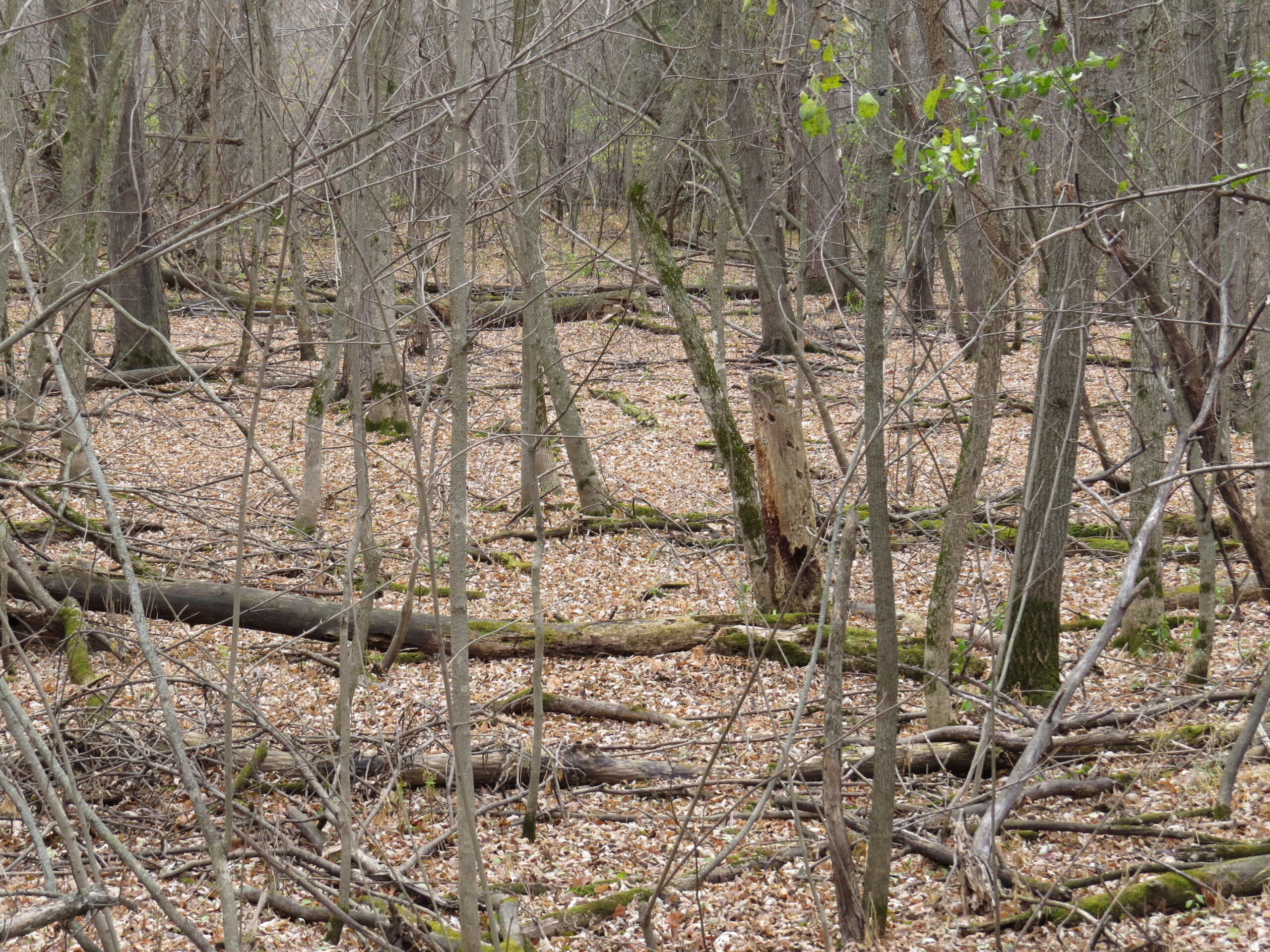
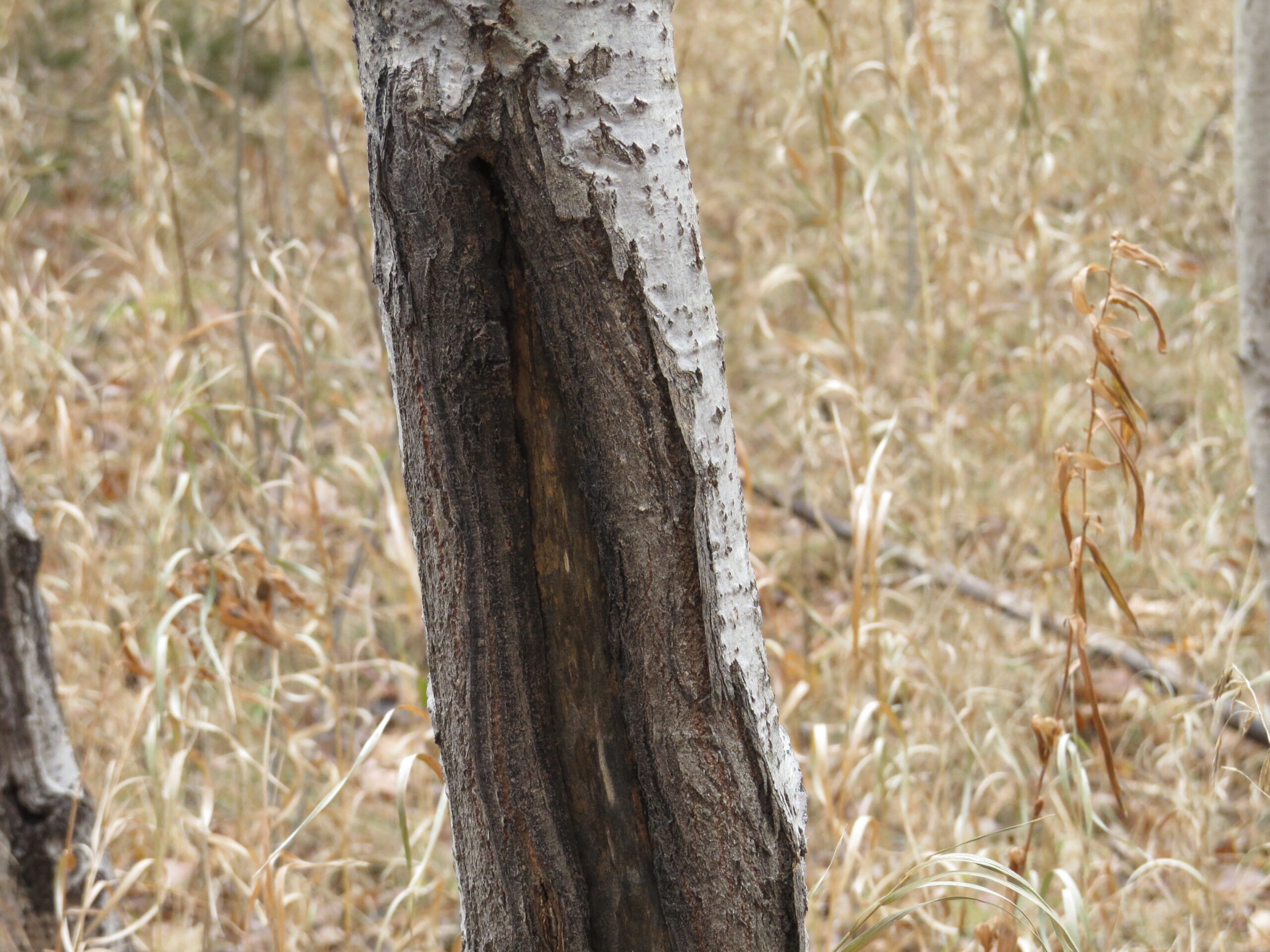
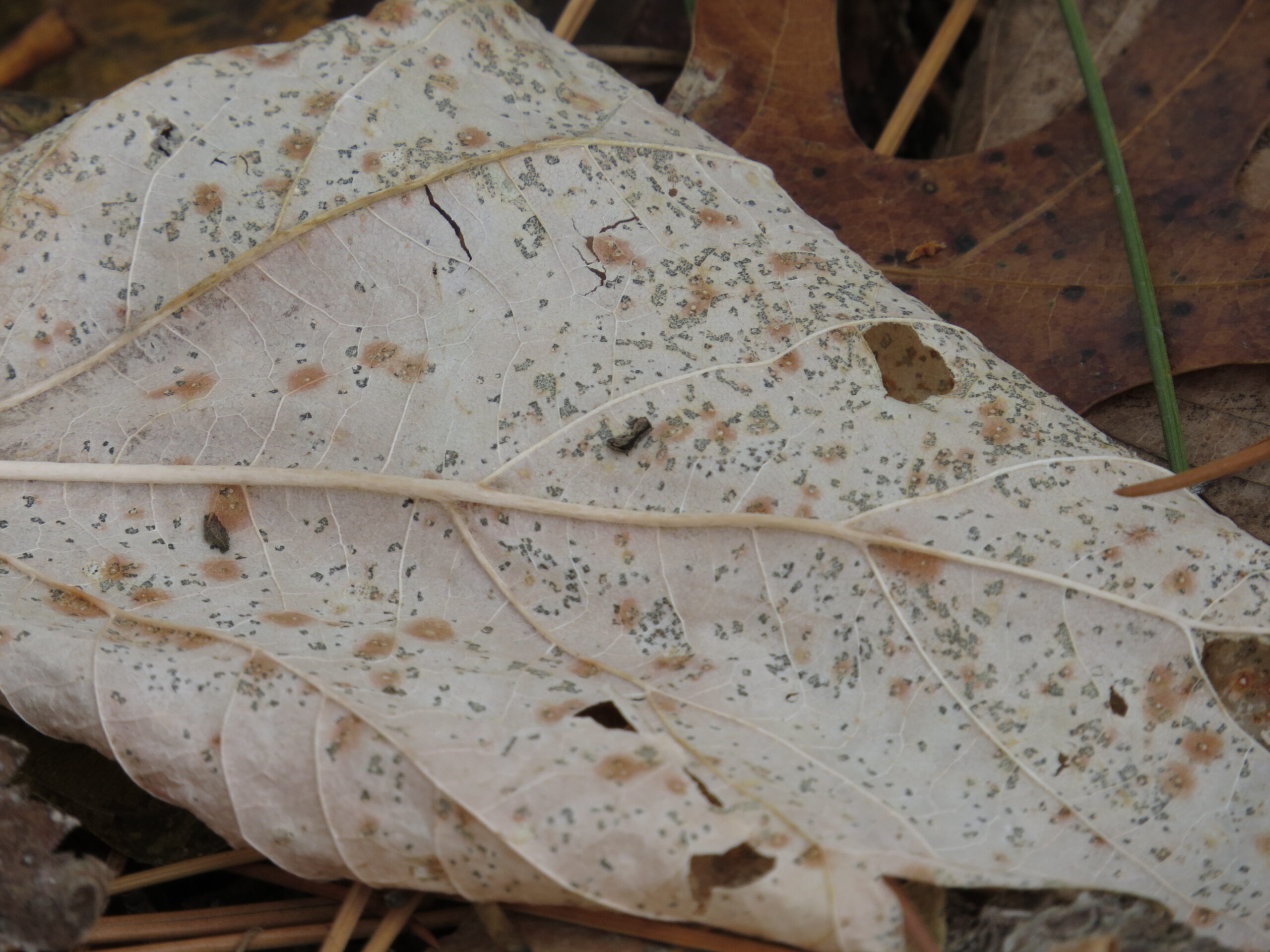
The bare trees allow us to see things that we would not normally notice in the Summer, and though it seems to have an ‘ugly’ look, it really is ‘just different.’ Our judgement clouds the reality.
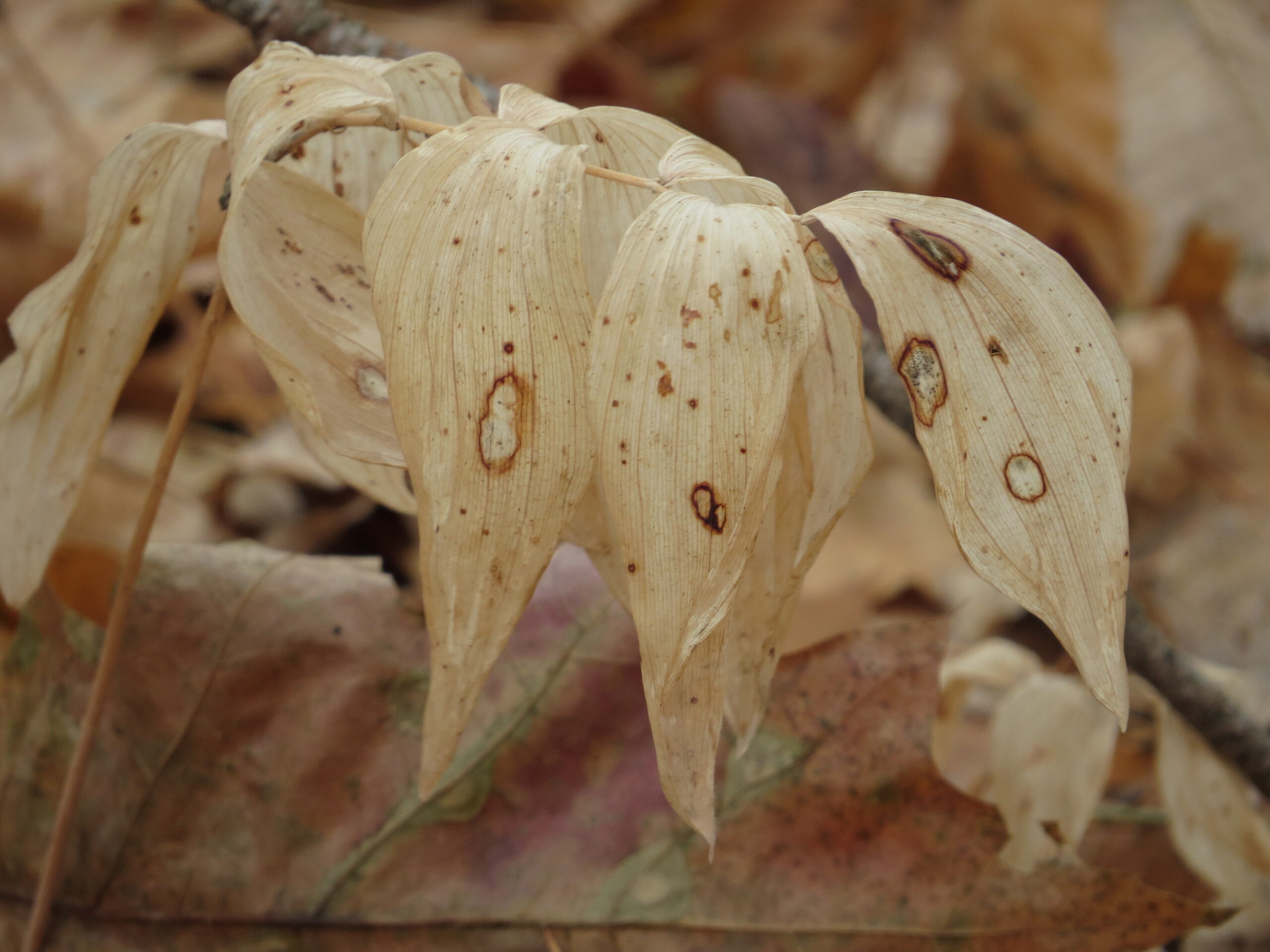
Blemishes, wrinkles, wounds, spots, holes, marks, weathering, and decline are all exquisitely evident in the unveiling Autumn. It is Nature, and it is us—how can you not love it?
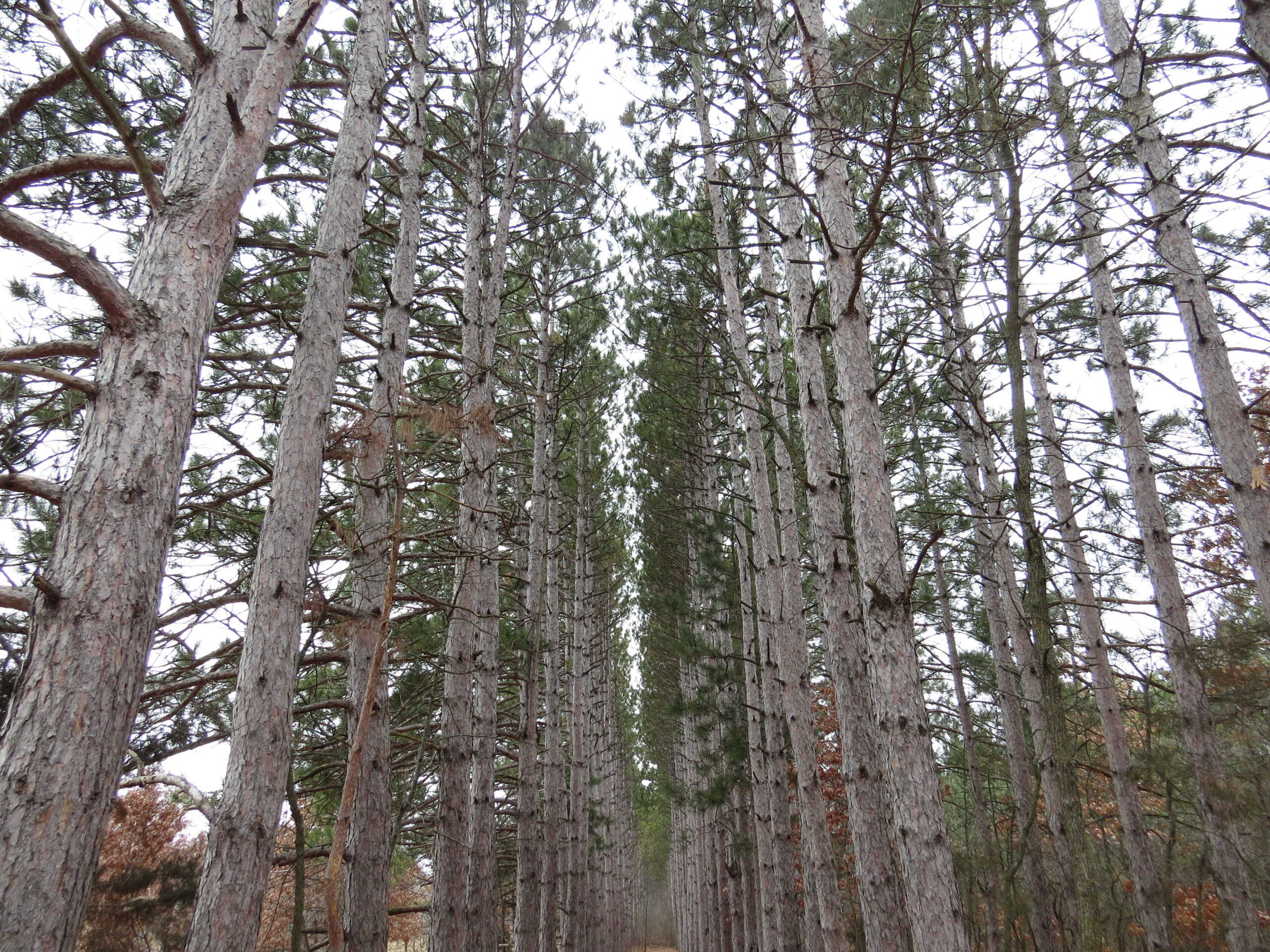
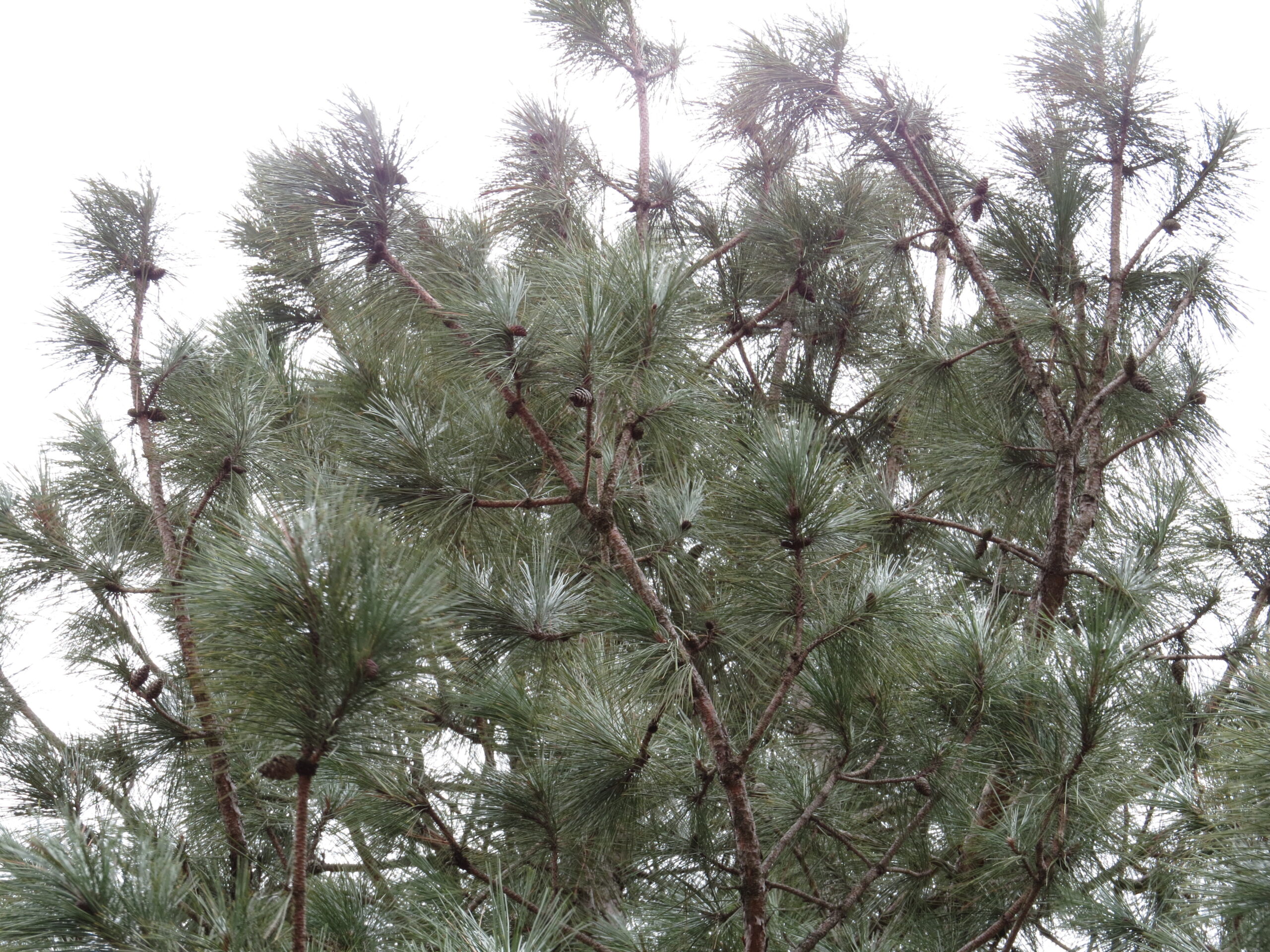
Here in the forested North, we have place-holders for all the others who have lost their leaves—the Evergreens. They are the hope-keepers, the oxygen-makers, the color-bearers. Usually when I hear the wind whisking through the tops of the Pines, it sounds like singing, but on this day, it sounded more muted, less lyrical, more….story telling. The Evergreens, whether the long–needled Pines, the conical Spruces, the wispy Firs, or the sturdy Cedars, tell the Winter story for all the trees and dormant plants. It keeps them all ‘alive.’
And so, the dried Goldenrod flowers become stars of light…

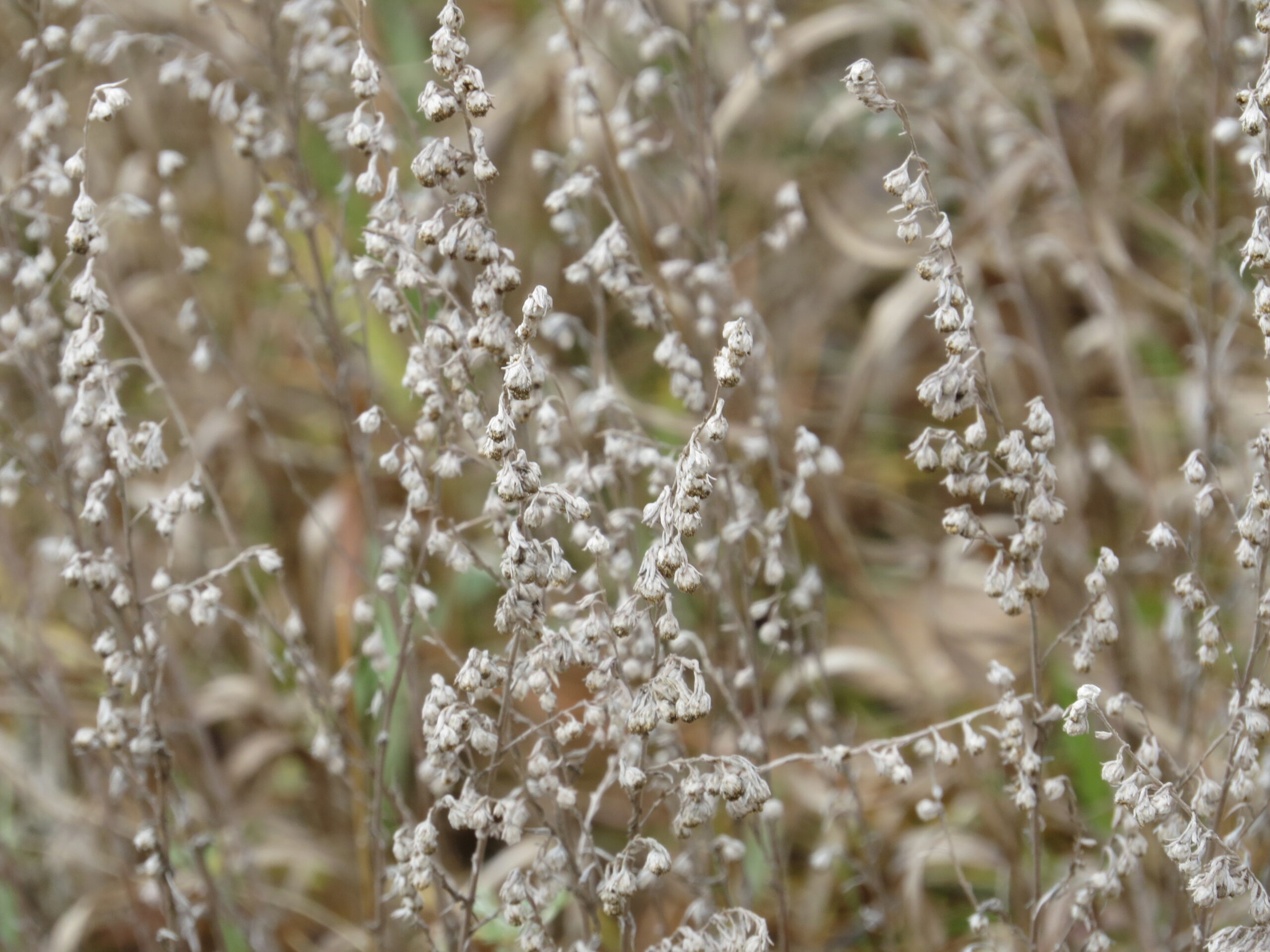
the Artemisia becomes an array of tiny silver bells…
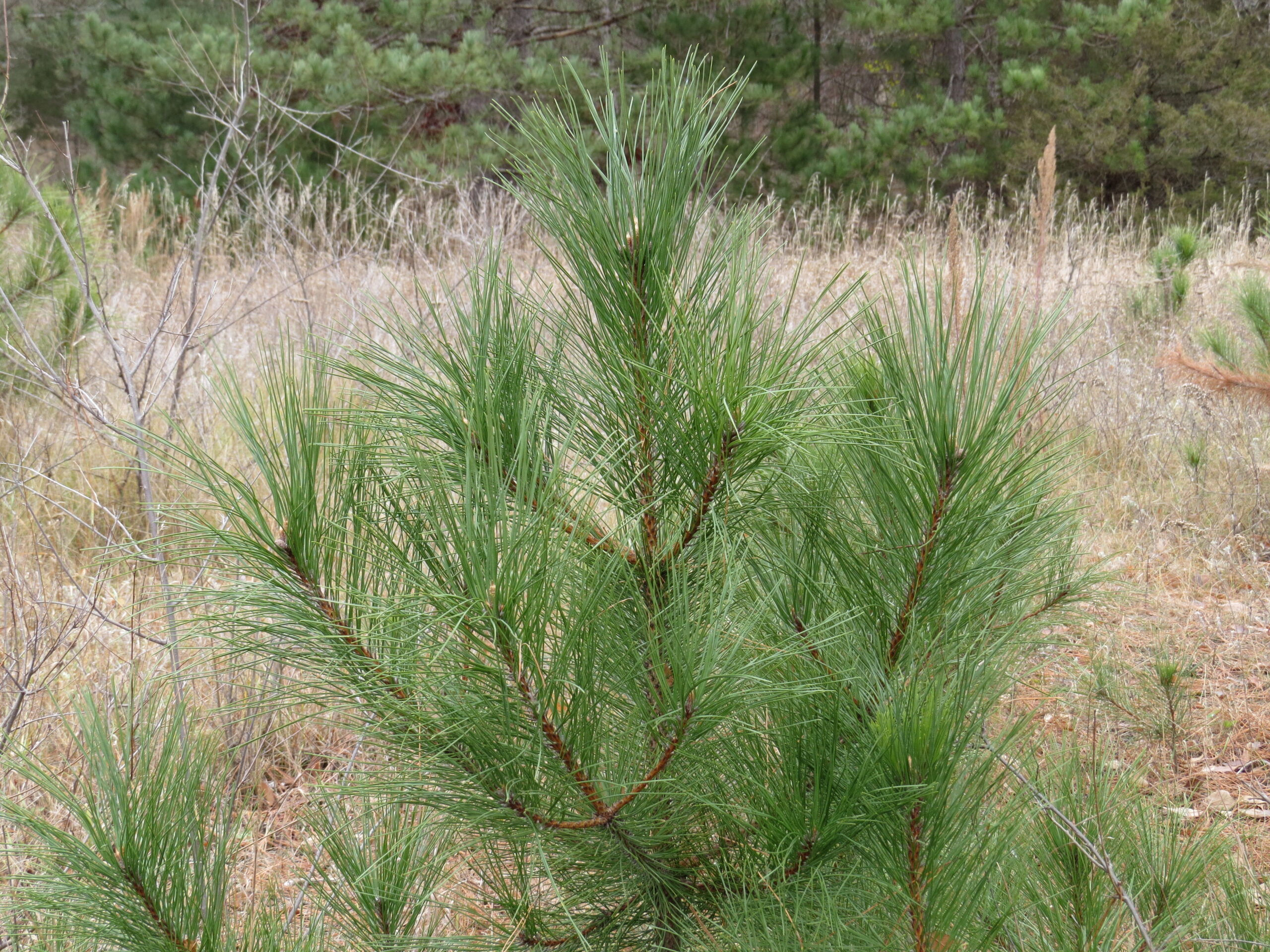
the young Pines embody the everlasting Goodness…
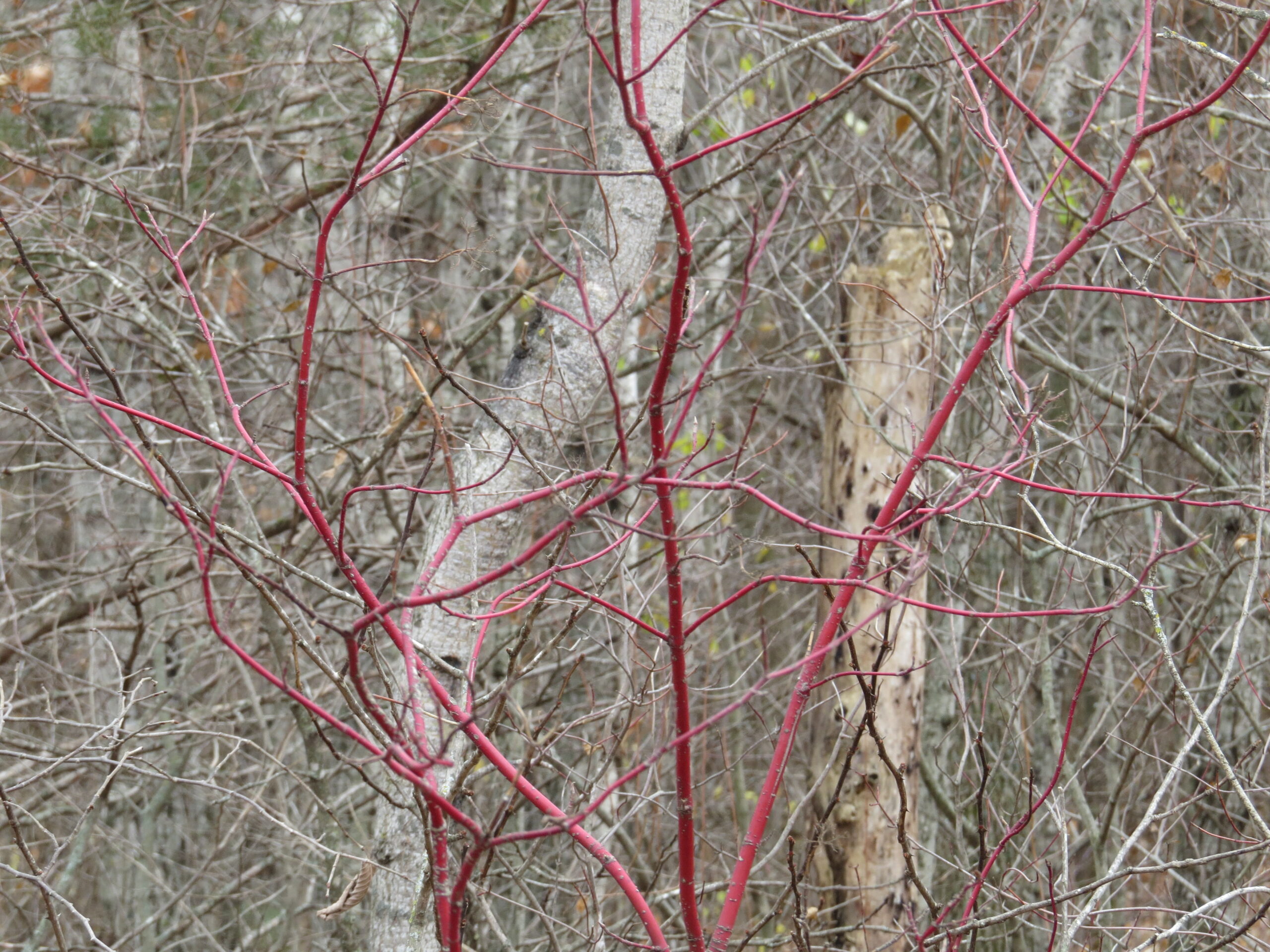
the Red-twigged Dogwoods represent the warm flow of life-sustaining blood…
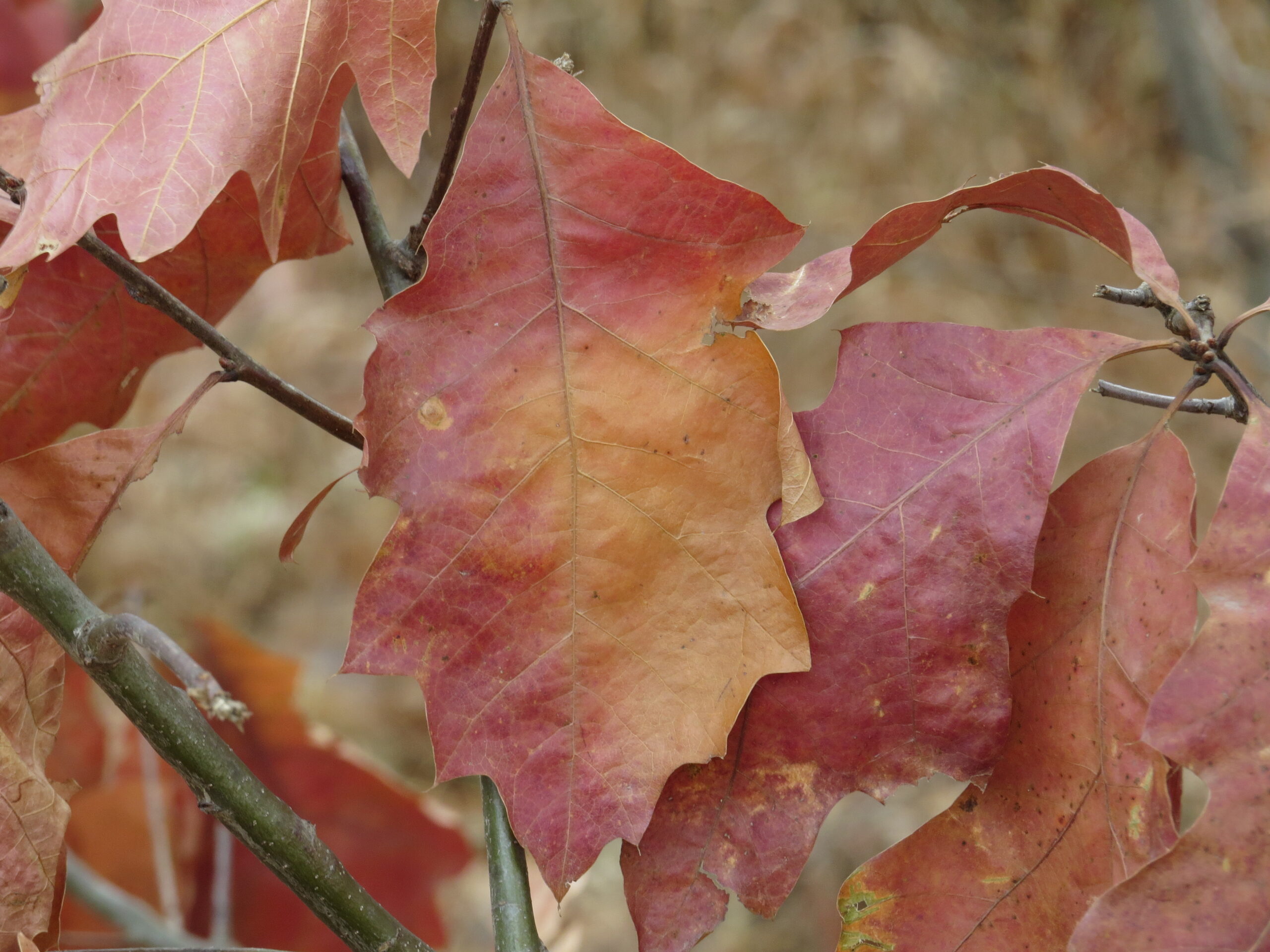
and the clinging red Oak leaves remind us of our resilience.
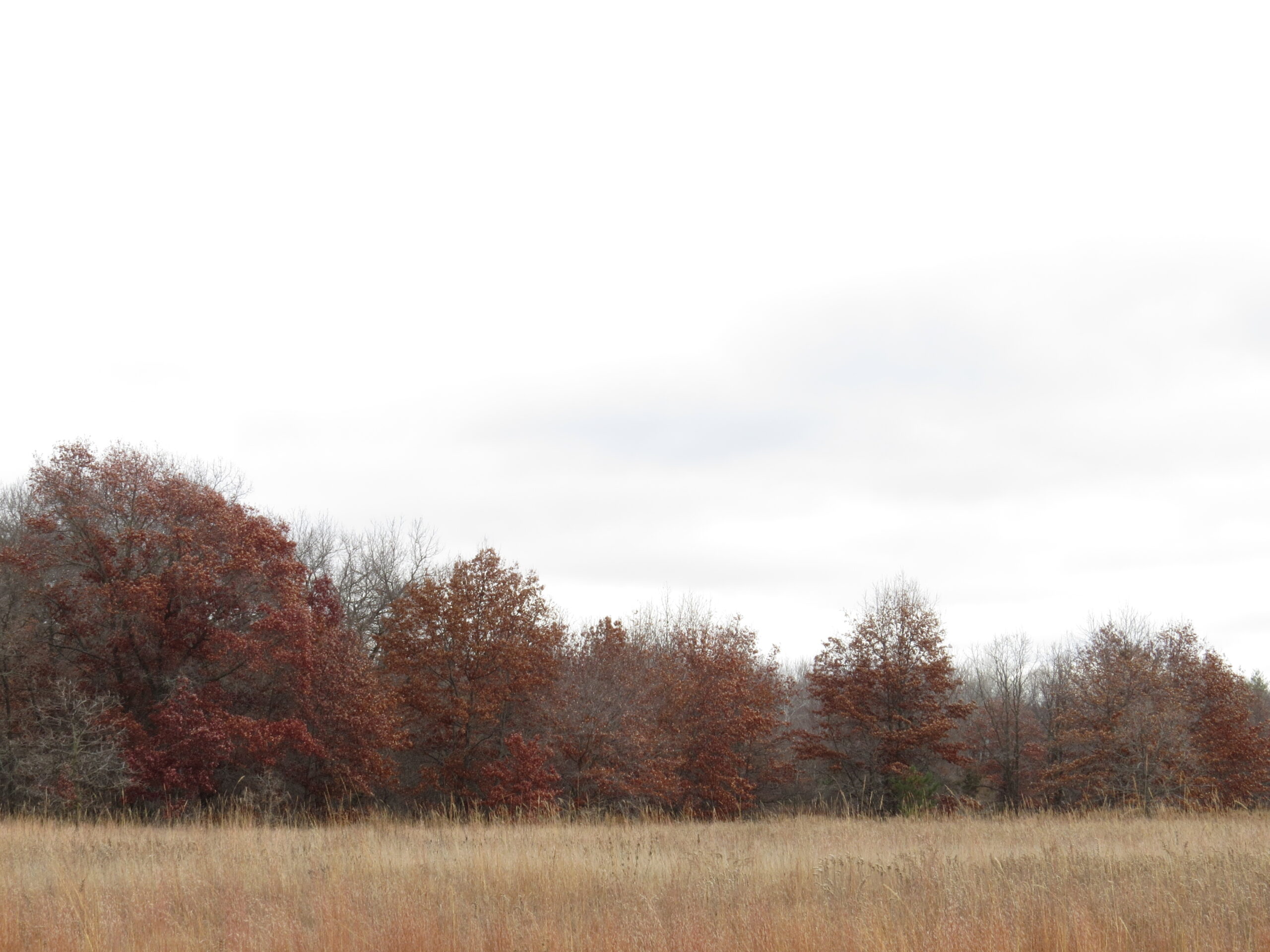
Growth is a given in Nature—the eternal hopefulness of that can sustain us through the cold and gray months. Meditate on the miracle of it.
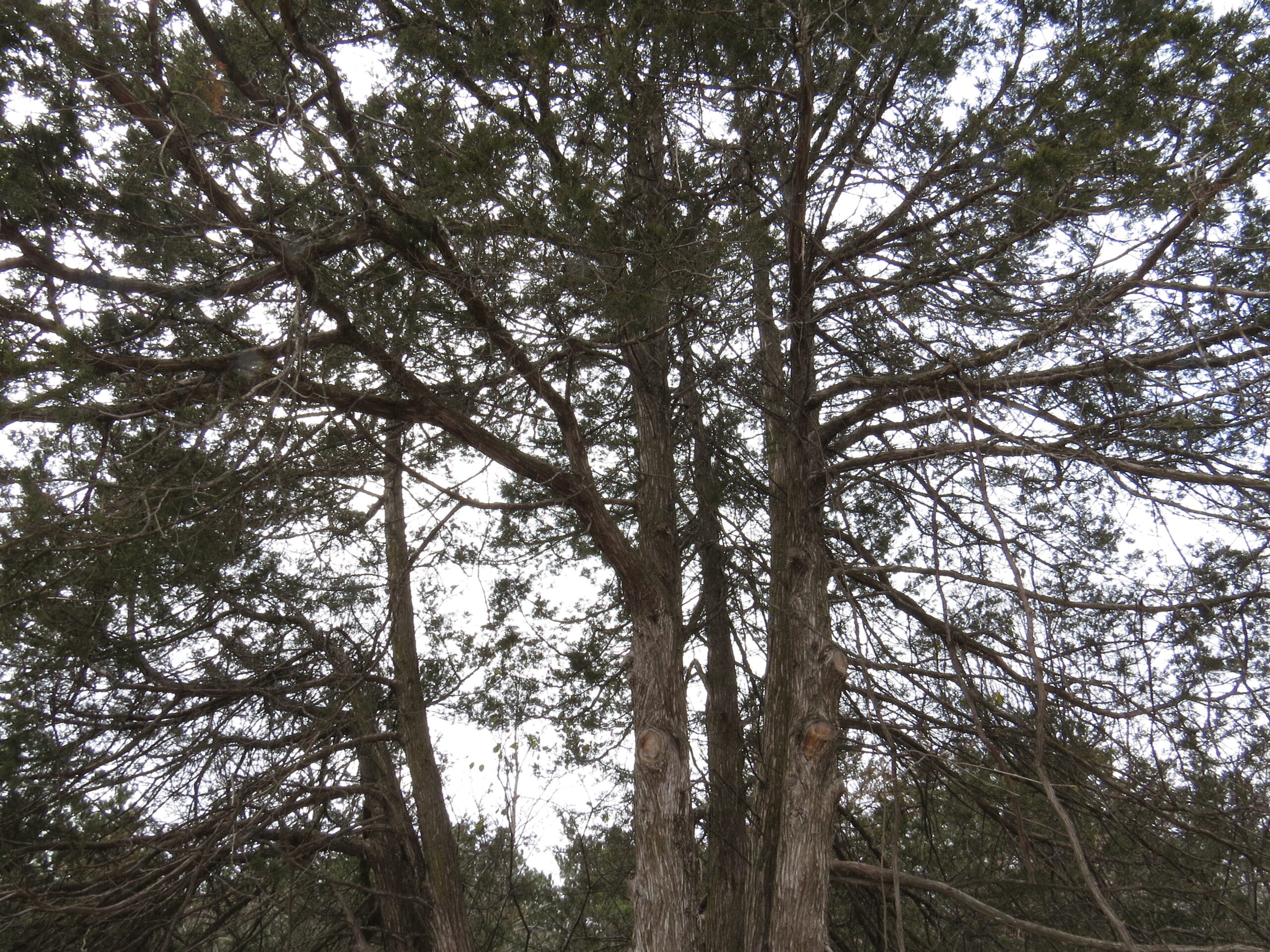
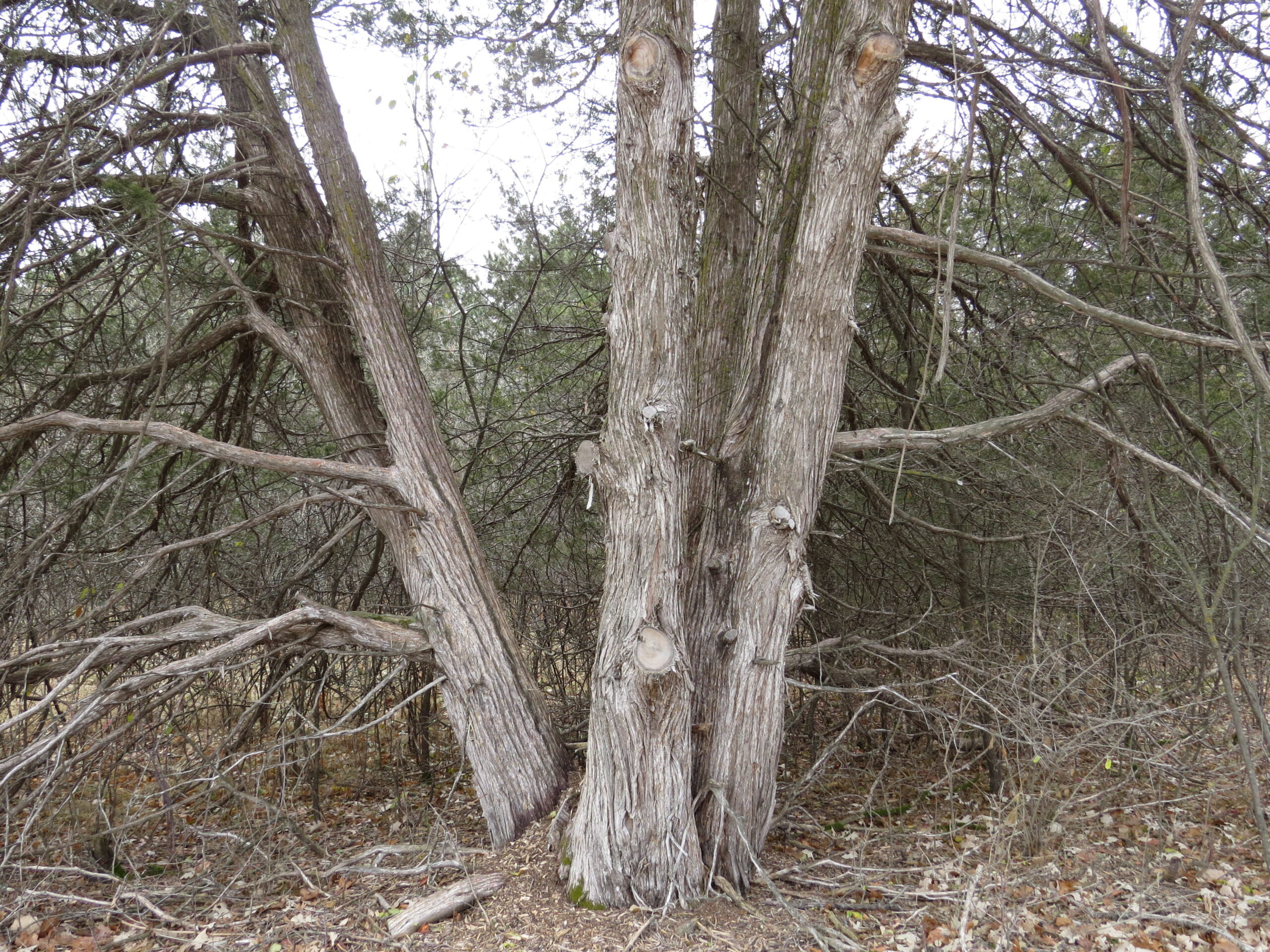
Often with growth comes the shrinking and dying of old branches, childish beliefs, old, outdated coping behaviors, and ignorant information. (To me ‘ignorant’ is uninformed or inexperienced, not a judgement.) Gray November and the cold Winter are perfect times to prune away the old, outdated branches.
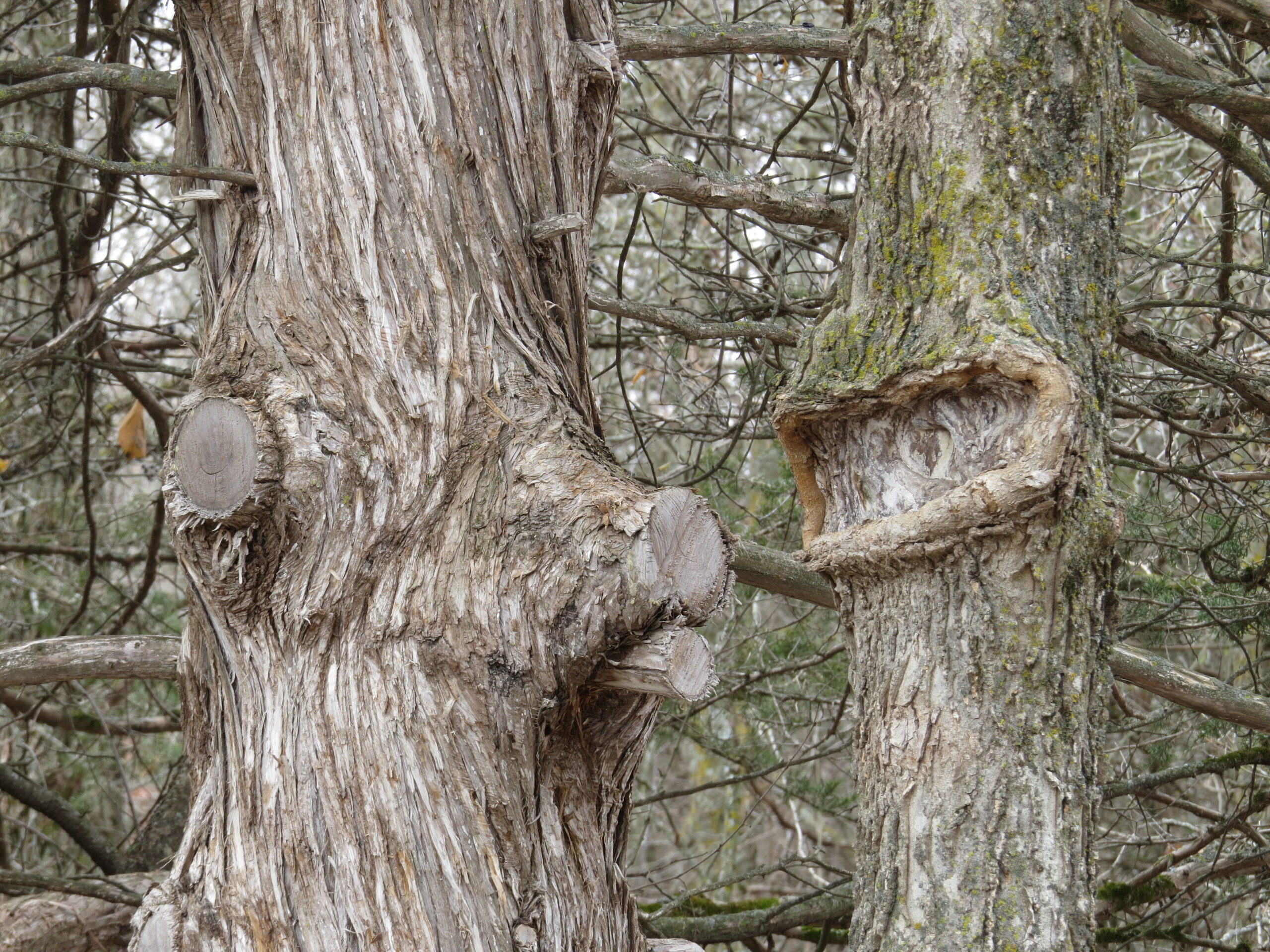
Sometimes our old, tightly-held beliefs and ignorances have grown so large that they have wounded those close to us, often with no intention and knowledge on our part. Pruning allows both to heal and grow.
At the end of my hike, I saw a noisy flock of birds scouring the leaf litter under some trees. Robins and Chickadees and a Northern Flicker hopped around looking for food. The Robins and Flickers will go farther south when snow covers the ground. They are some of the last to go, but I see in them their promise to be the first to return, just as the snow uncovers the ground in Spring.
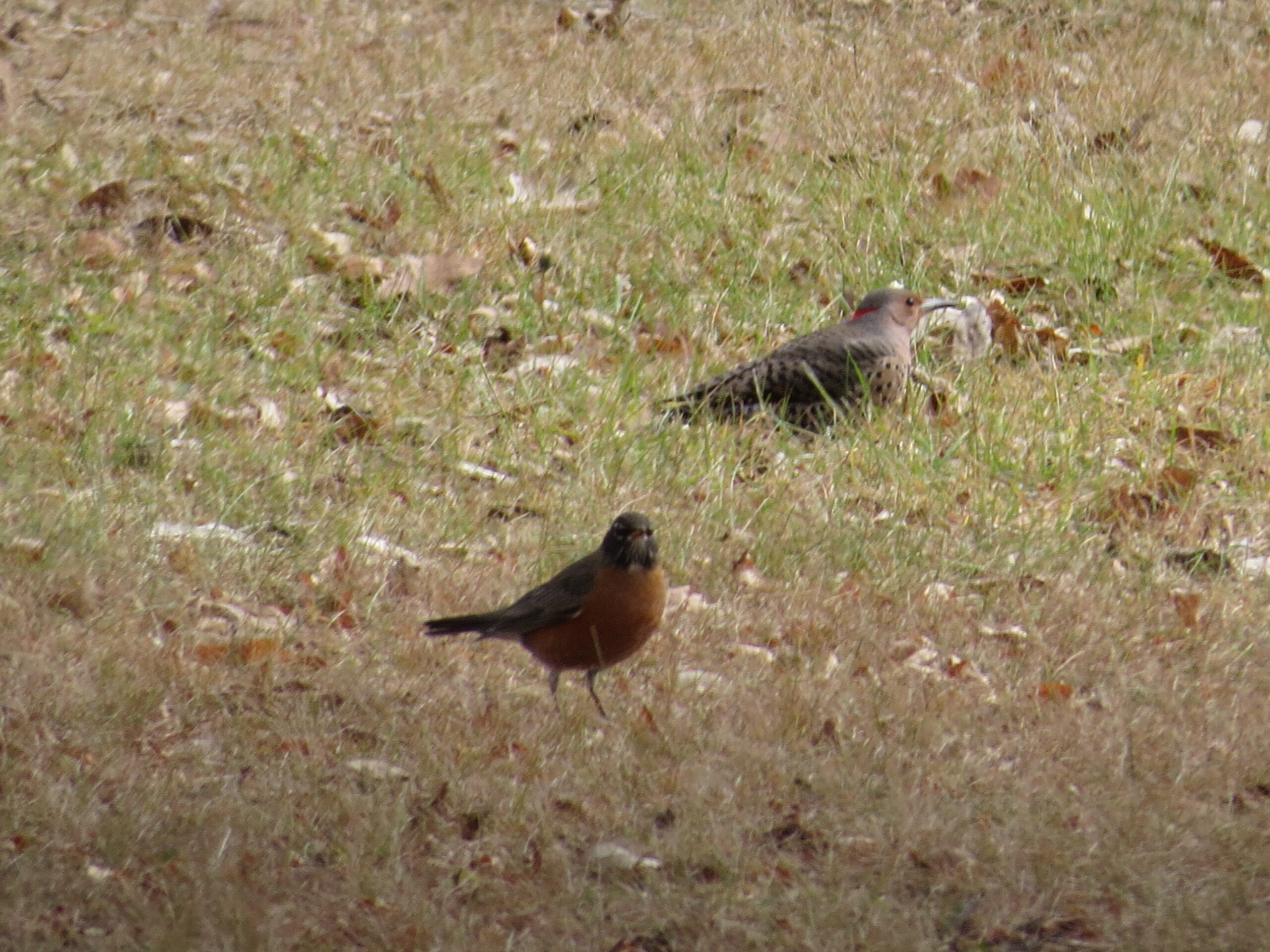
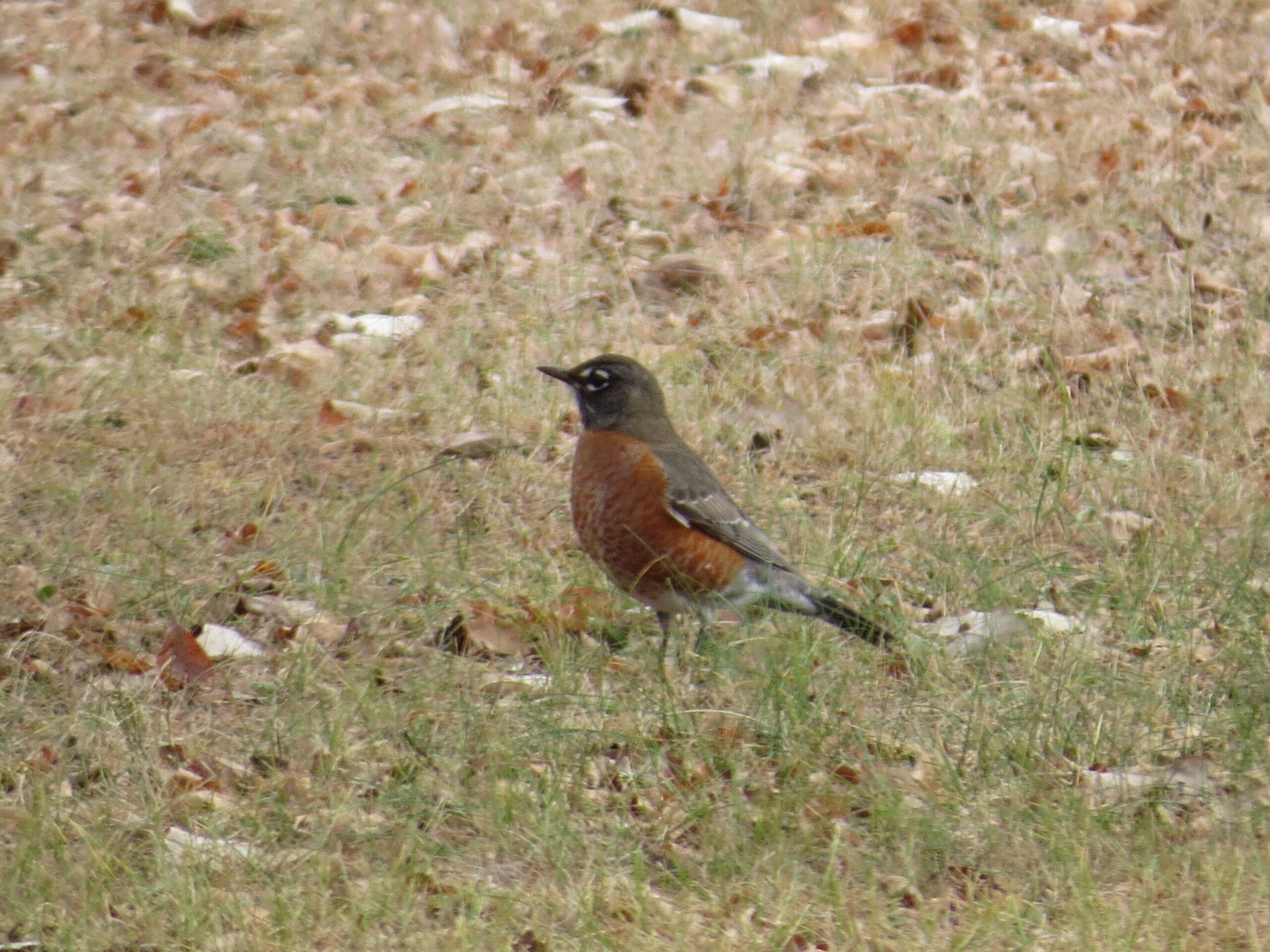
Gray November holds all kinds of Hope. We attended a beautiful wedding last weekend that held the light of young Love and the energy of Happiness and Potential. Do you remember those? At this time of year, we can see more clearly with less obstacles in the way, along with a path around the ones that fall before us. Vision and Breakthroughs. We can look at the reality of our blemishes and human short-comings and call them Authentic. Forgiveness lives on in the cold harshness of Winter. We can identify the invasive species of thoughts, beliefs, and behaviors that need to be toppled, pruned, and removed. Openness and Opportunity. With the un-busy-ness of the dormant time, the stories and glories of Summer and Growth have space and time to be told. And gray November and dark December unfold to Celebration—to giving Thanks, to decorating with stars, silver bells, ever-greenery, and warm red ribbons and bows. We celebrate Goodness and Life Everlasting. Promise shines through the gray.
A Primal Rhythm of Motherhood
Things were going fine. I had done this before. I was patient and attentive. We all knew the routine. Then something changed. Most Moms have experienced that moment. It seems like there is calm before the storm, but in reality the energy is gathering. Something on the inside isn’t right—tension and discomfort are building. The crying begins…and doesn’t stop. Diapers are changed; food is offered. Rocking and walking and bouncing all in one continuous, gentle movement is the motion of motherhood. Sometimes it works, sometimes it doesn’t. This particular time, it didn’t. As her distress continued, my inability to comfort her distressed me. Soon we were both crying. Walking, rocking, bouncing, crying—a primal rhythm of attachment and motherhood.
In our quest for Spring this week, we achieved a landmark—the green blush of new leaves on the stands of Aspen trees down by the River. The Oaks, Maples, and Ashes will soon obscure the Aspens, but for now, they allow us to see through them, past them, to the tender green beginners.
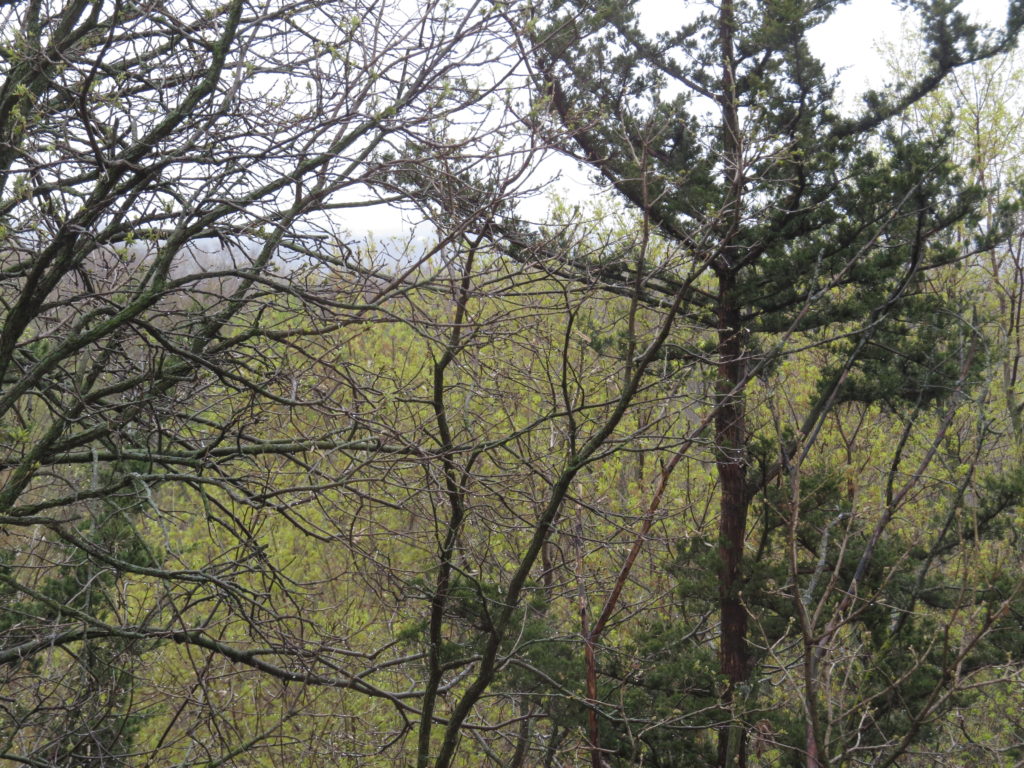
And then the rain came—the nourishment of new growth. It was exactly what we needed, what was expected.
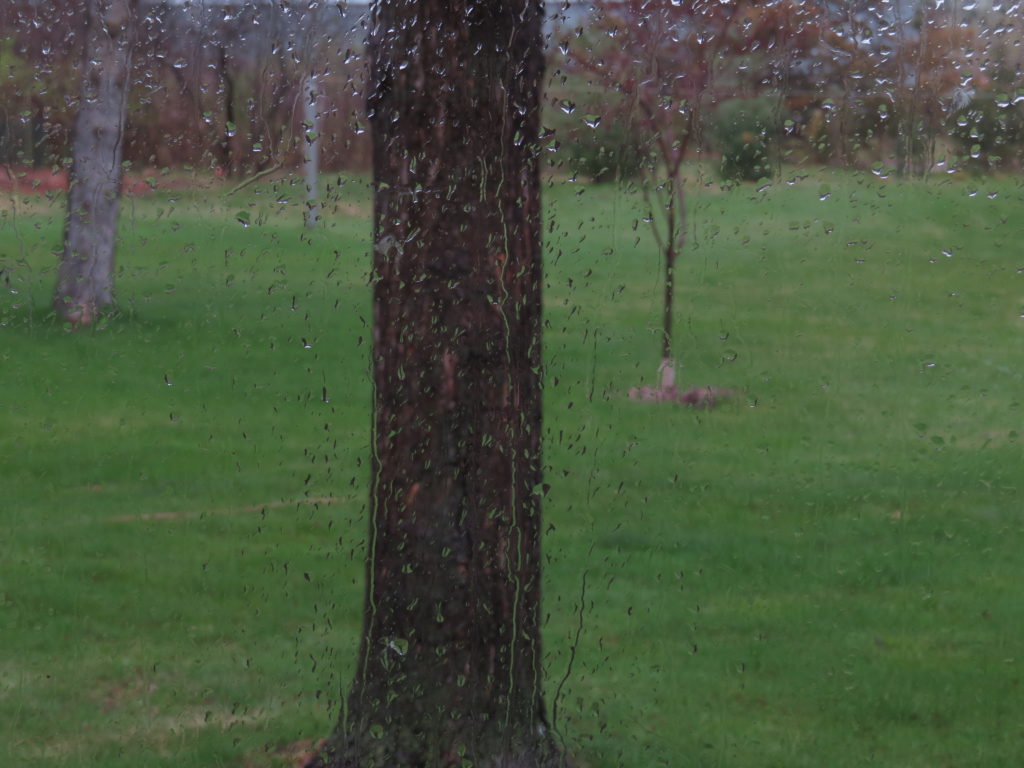
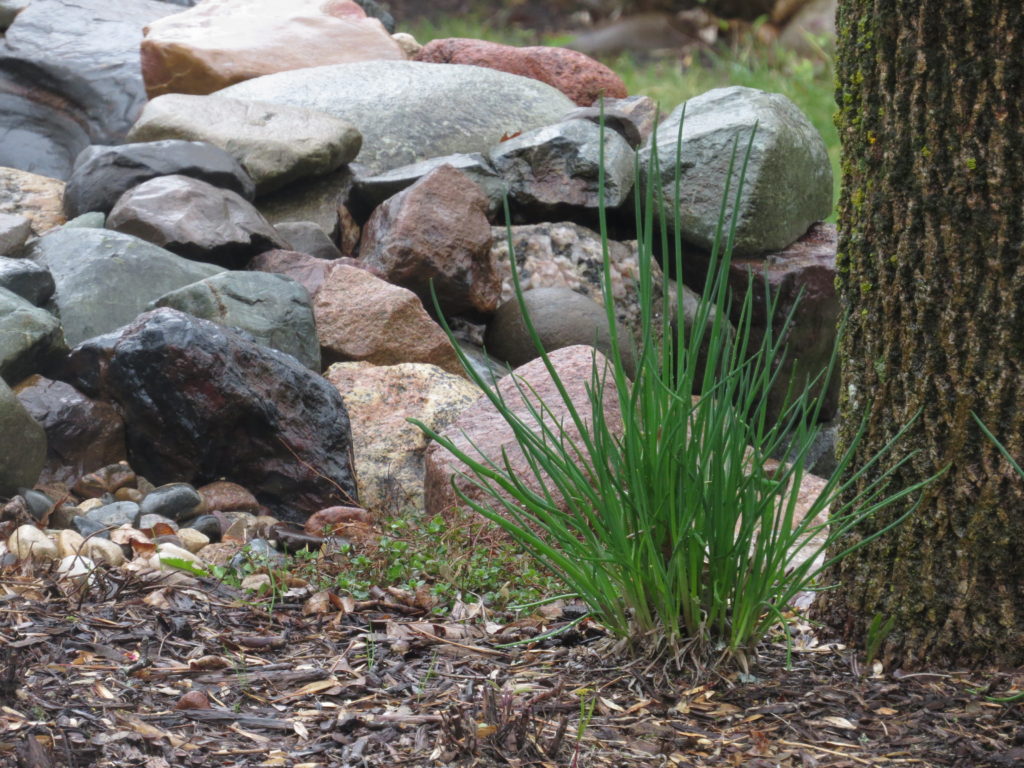
Onion-like Chives shot up out of the ground while Creeping Thyme slowly greened behind them.
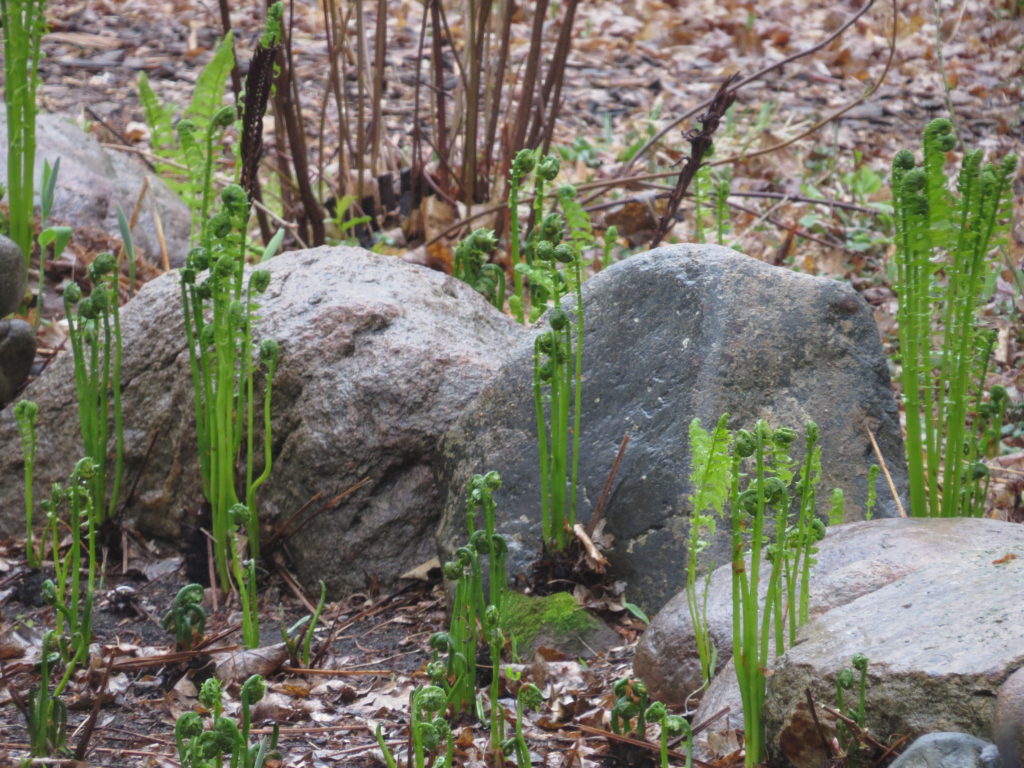
The stems on the Ostrich Ferns s-t-r-e-t-c-h-e-d in spurts of growth, even as the fiddleheads continued to hold their curls.
That afternoon, the rain changed to snow. The wind picked up. What seemed like a calm Spring rain became an energetic throwback to Winter.
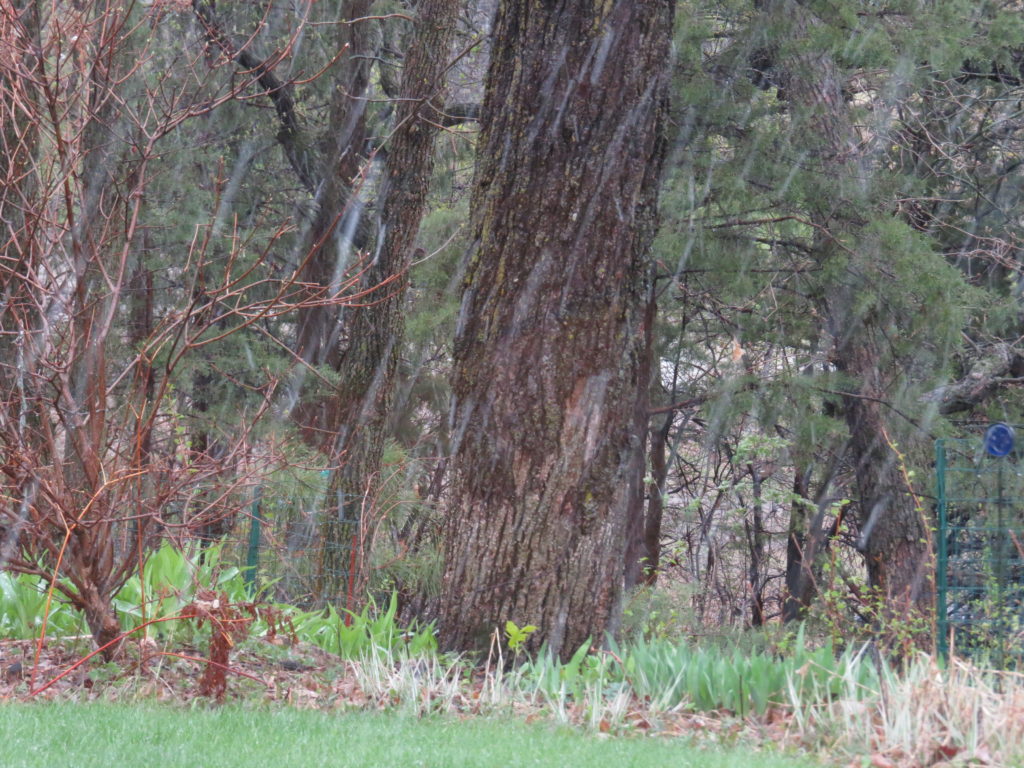
The wind seemed to be coming from all directions—the snow fell in swirls, the Hemlocks twirled. Spring hope was blurred out by the tension and cries of ‘Winter!’
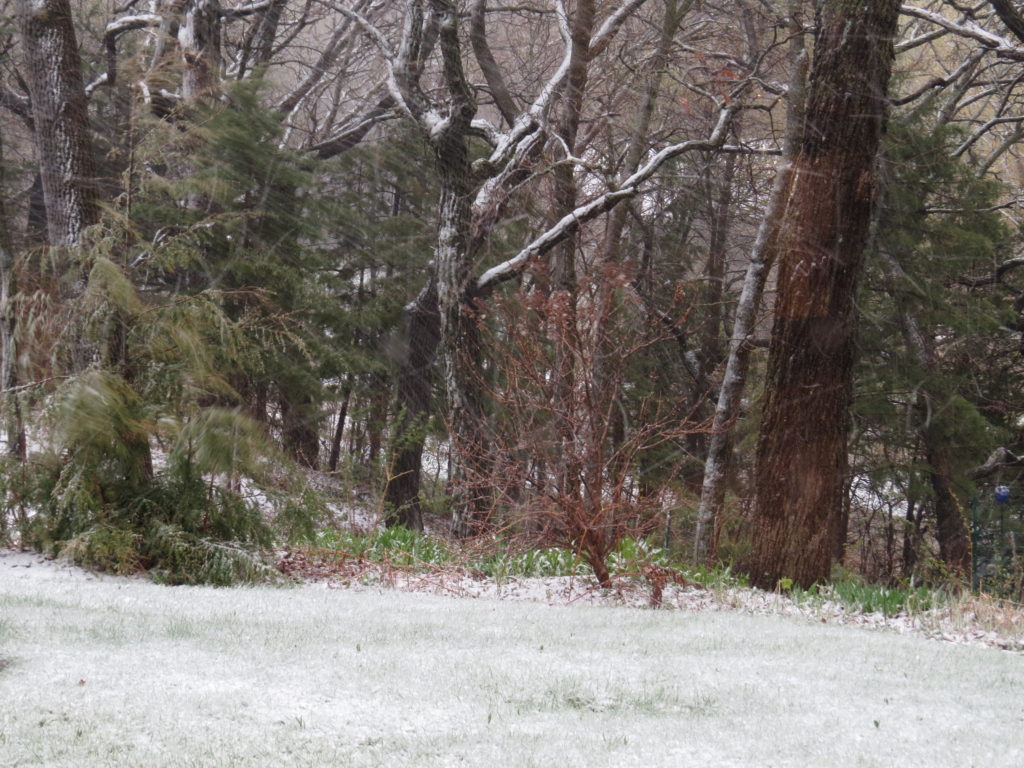
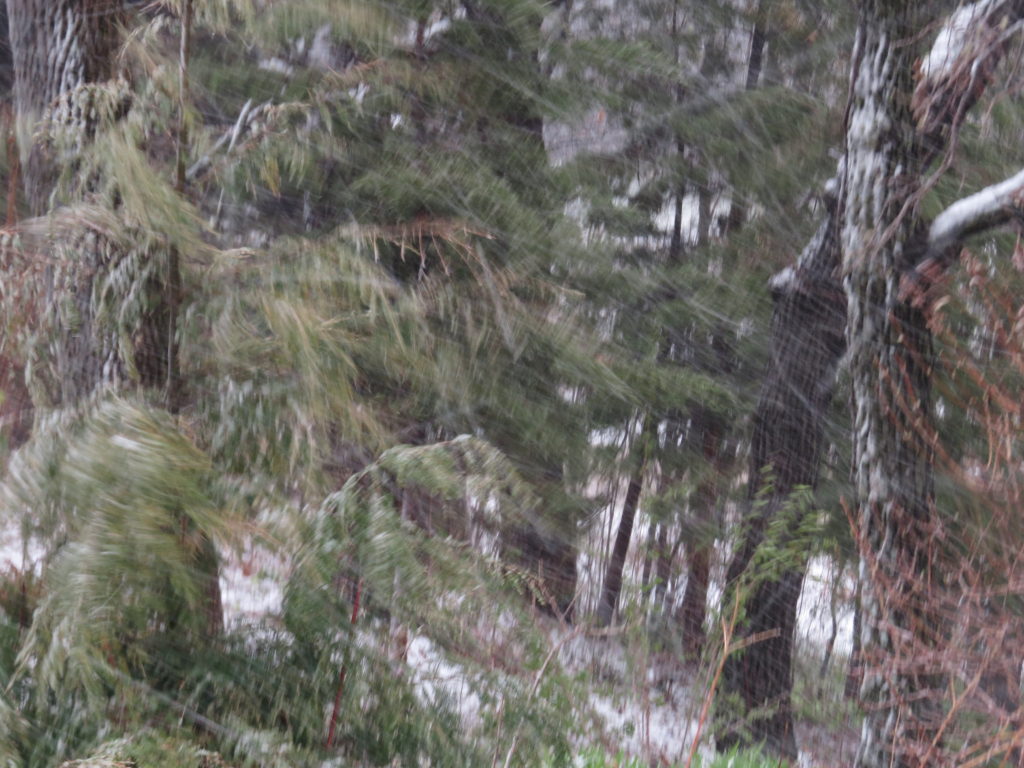
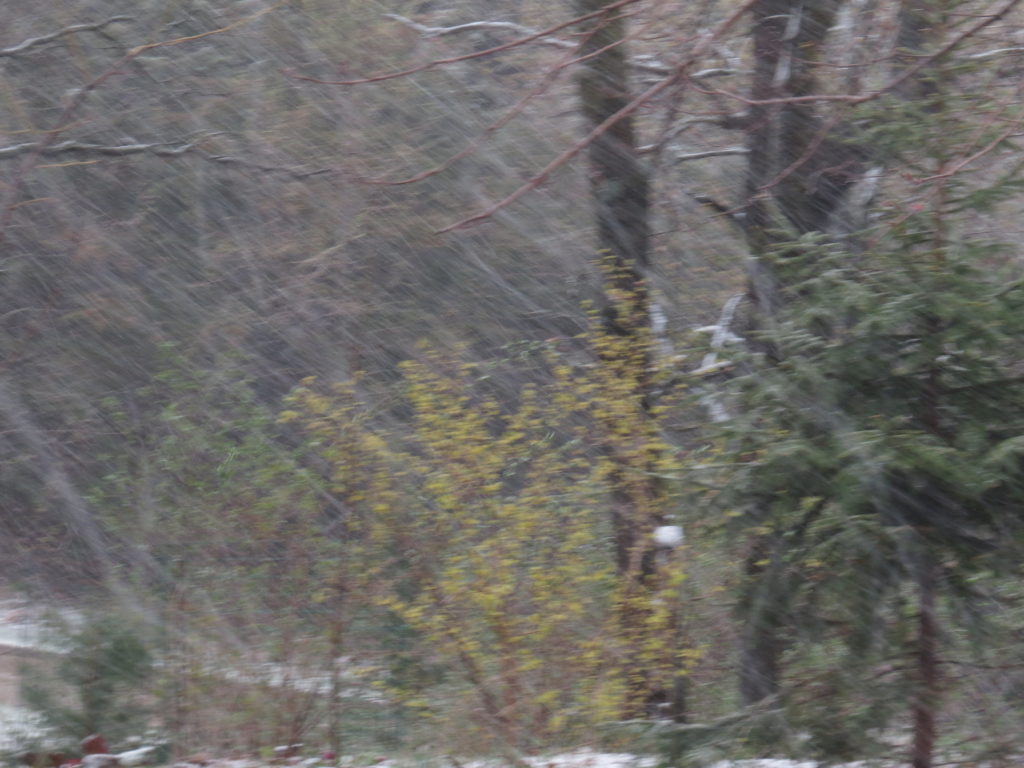
Eventually the wind and snow subsided, but the snow stayed on the ground through the chilly night.
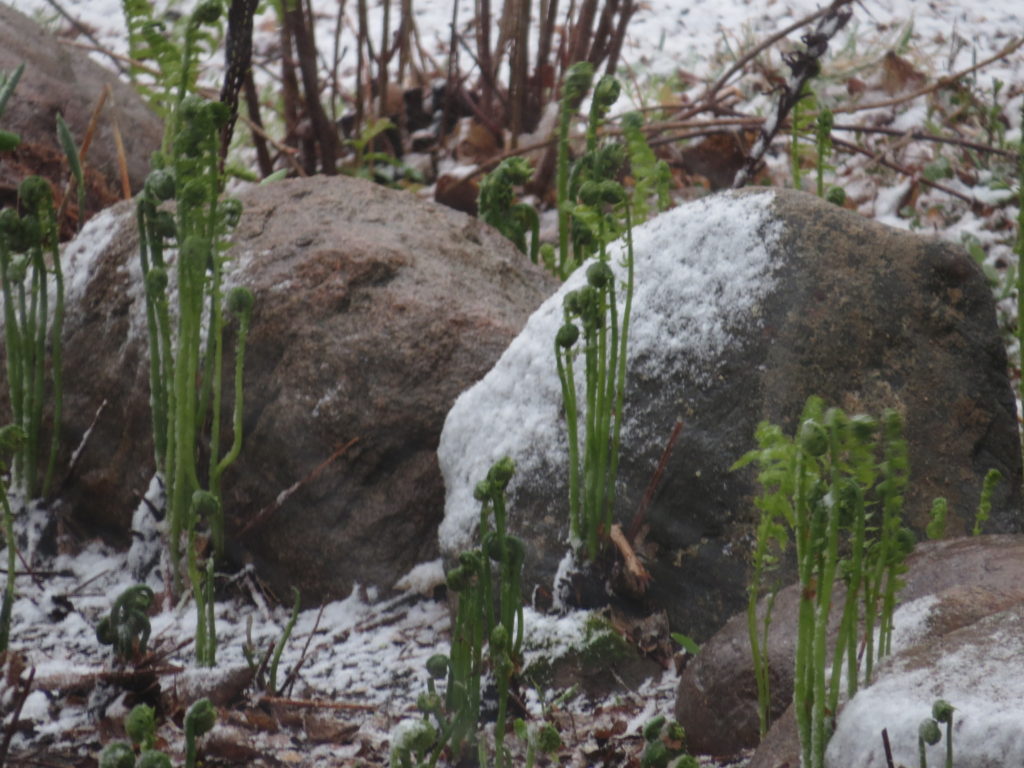
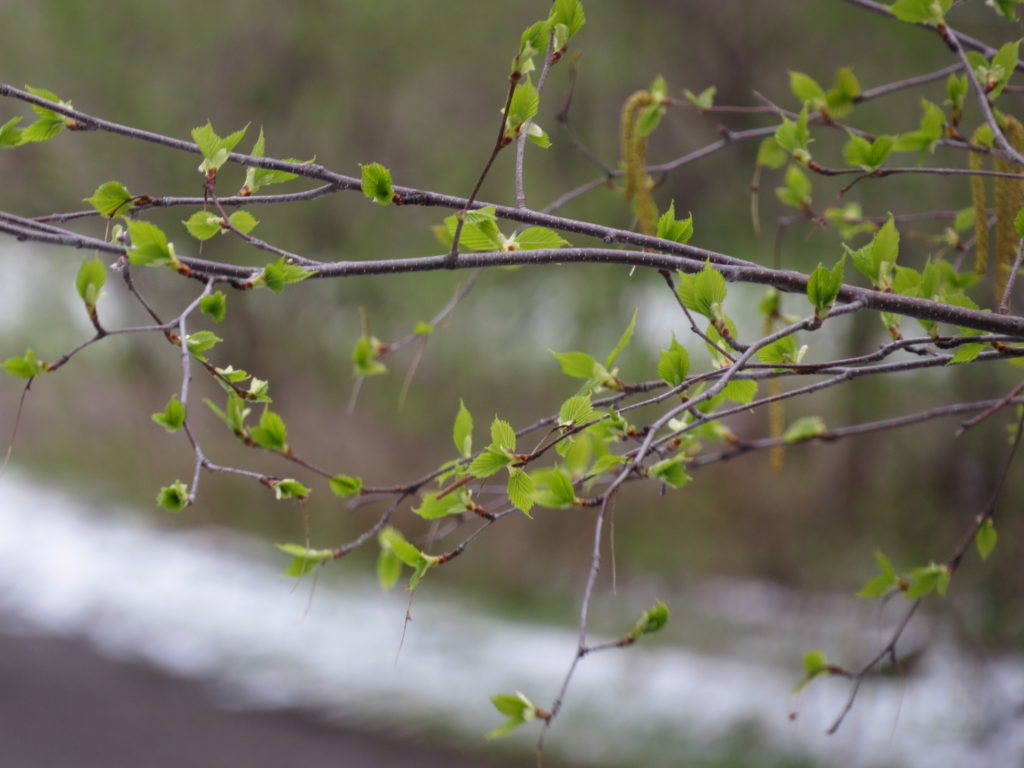

By noon, the snow was gone, the calm of hope and Spring had returned. Did we really have snow just hours before?! Were we distressed just yesterday?
I don’t remember how long my baby and I walked, rocked, bounced, and cried. Time isn’t a thing during such holy moments. As my tears fell and melded with hers, I didn’t know it as a holy moment—that realization only came with the third and last baby. I do know, however, that we did it together. We weathered the storm of distress together. We got through to the calm of rest and hope together. That’s what this love-like-no-other-love means to me. That’s what the holy moments of motherhood are to me.