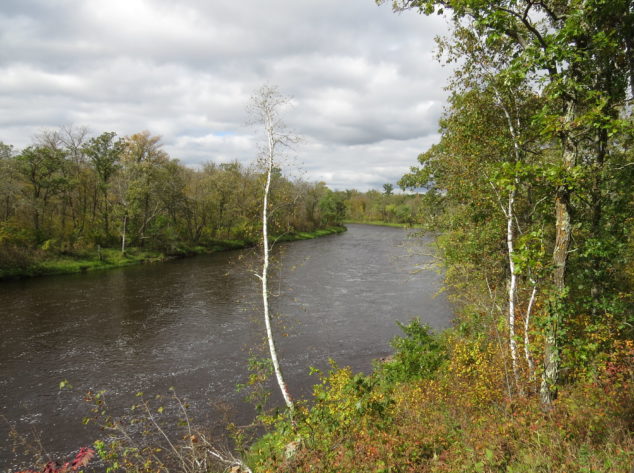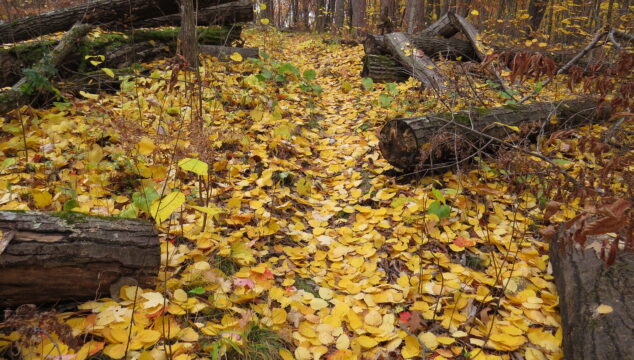
Come walk with me in the peak Autumn beauty of the Northwoods. To say that I love this time of year is an understatement. Most everyone can appreciate the colorful falling leaves---it reveals the 'true self' of a tree when its leaves are no longer producing chlorophyll. Their true colors are revealed, and there is something simple … [Read More...]
Love is the River and the Bridge
One of the satisfying aspects of growing older is looking back at the line of your life and noticing how you have changed. I don’t mean only in physical appearances, though certainly they are the most apparent changes. Gray highlights, added pounds, lines that accentuate the movement of your face over the years. How has your spiritual life changed? Your politics? Your ability to handle your emotions? How has your thinking matured? Your wants and needs? How have the things you deem ‘important’ changed from when you were younger? My guess is, that like me, the path of your life has changed and moved and morphed.
On the high prairies of Buffalo River State Park, one can see a line of trees that runs alongside the winding Buffalo River. Before reaching the river from the prairie, there is a huge drop-off, then a wide flood plain where the trees have grown. Chris and I wondered if they named the river from the fact that buffalo ran or were chased through the prairie grasses off the cliff to their death.
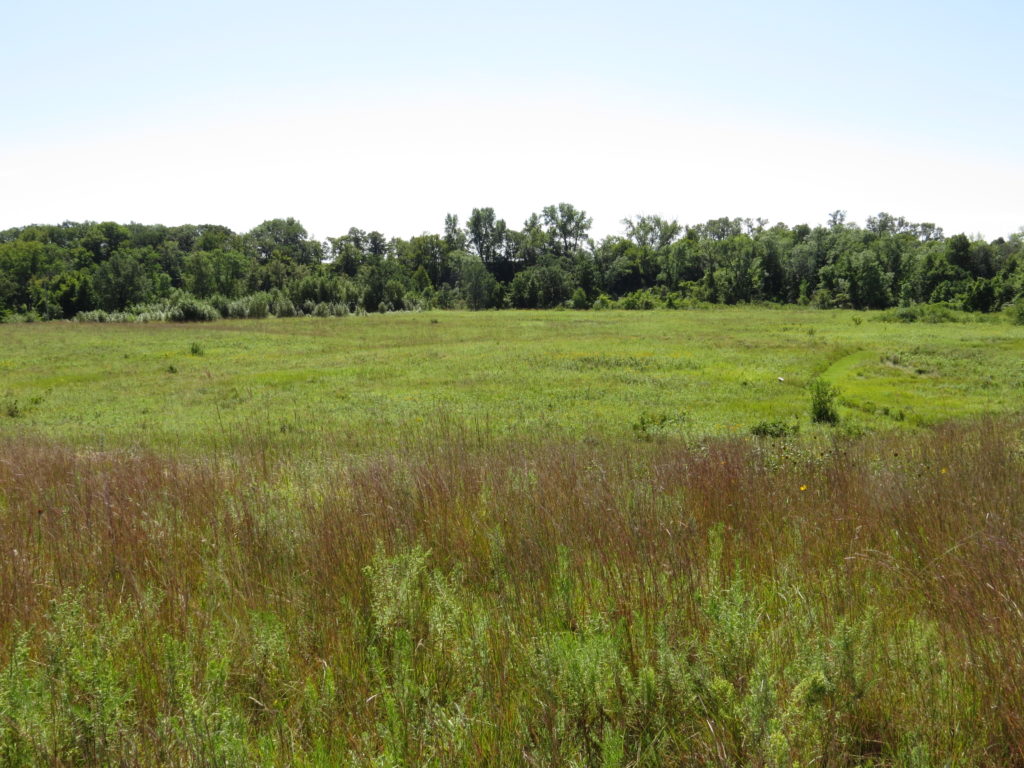
We walked from the prairie down a path by a draw that opened up to the flood plain. Shrubs were changing to fall colors, and Wild Plums were ripening.
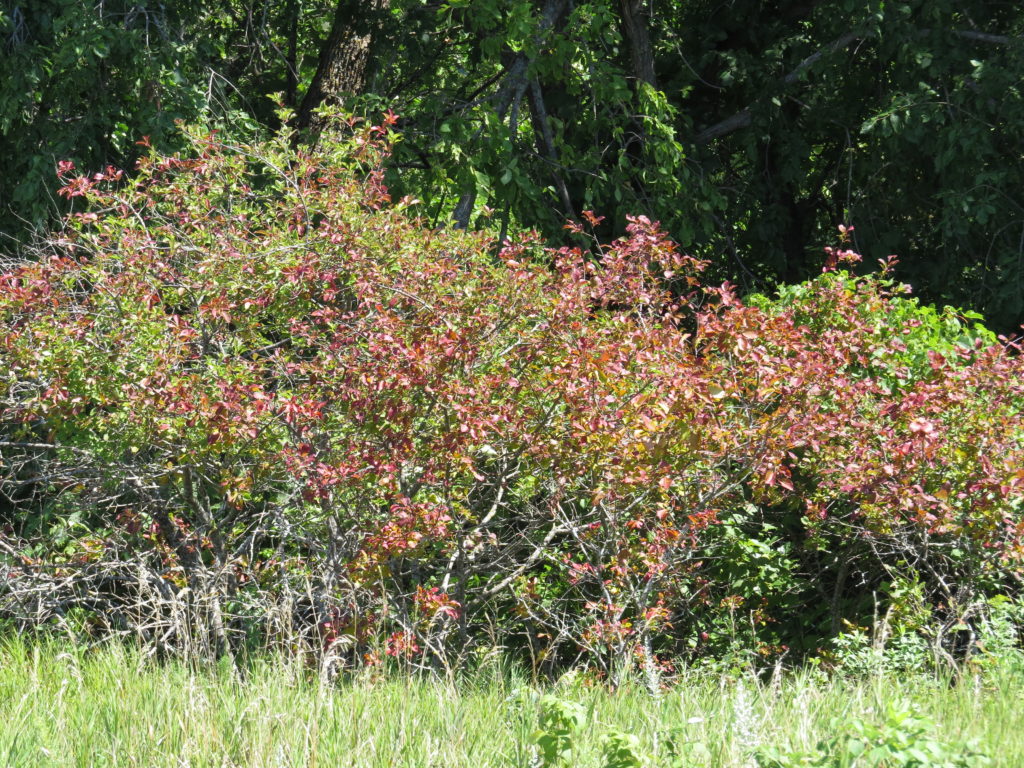
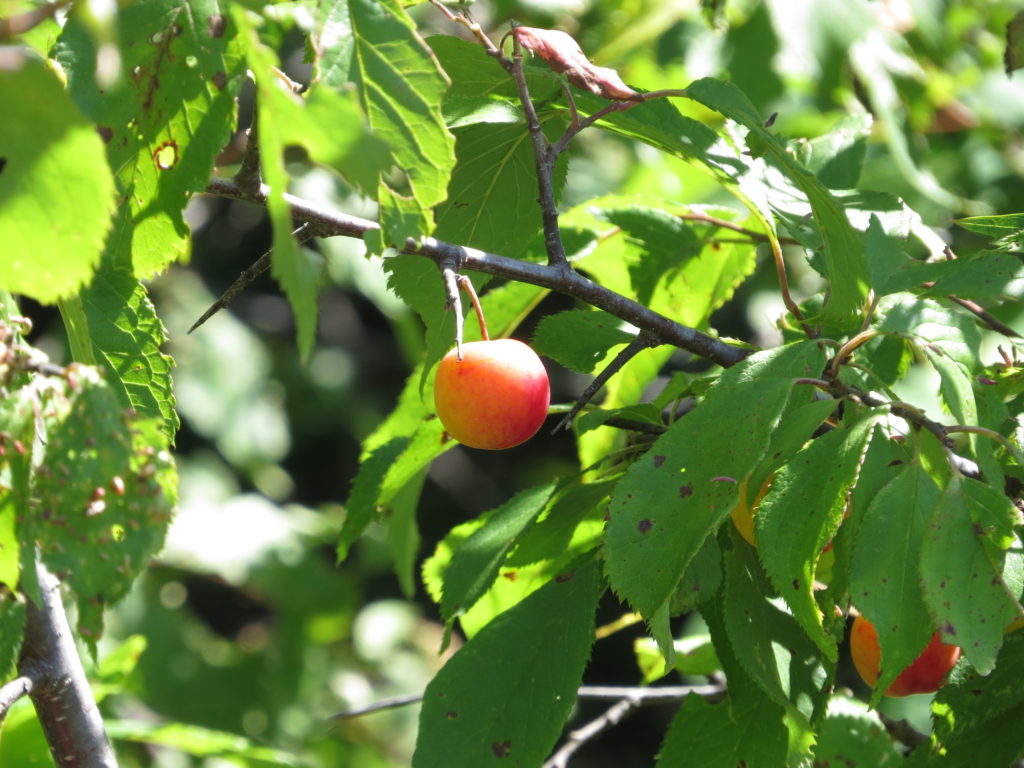
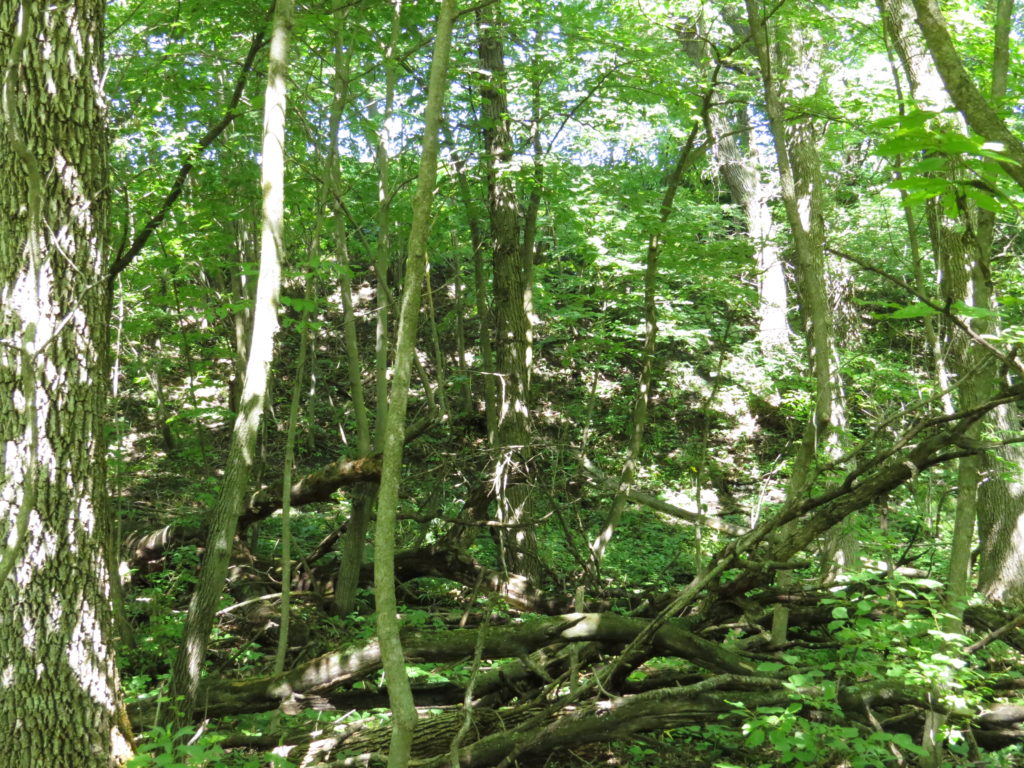
The cliff from prairie to flood plain is called a ‘cutbank,’ a steep bank where a river runs against the side of a hill, undercutting and eroding it. It produces a wide plain of underlying sediments. It also illustrates that over time, the path of the Buffalo River has changed—first cutting away from the north bank, then the south bank (or east and west depending on where the winding river is flowing.) We walked on the floodplain, looking up on the steep cutbank that has been populated by trees.
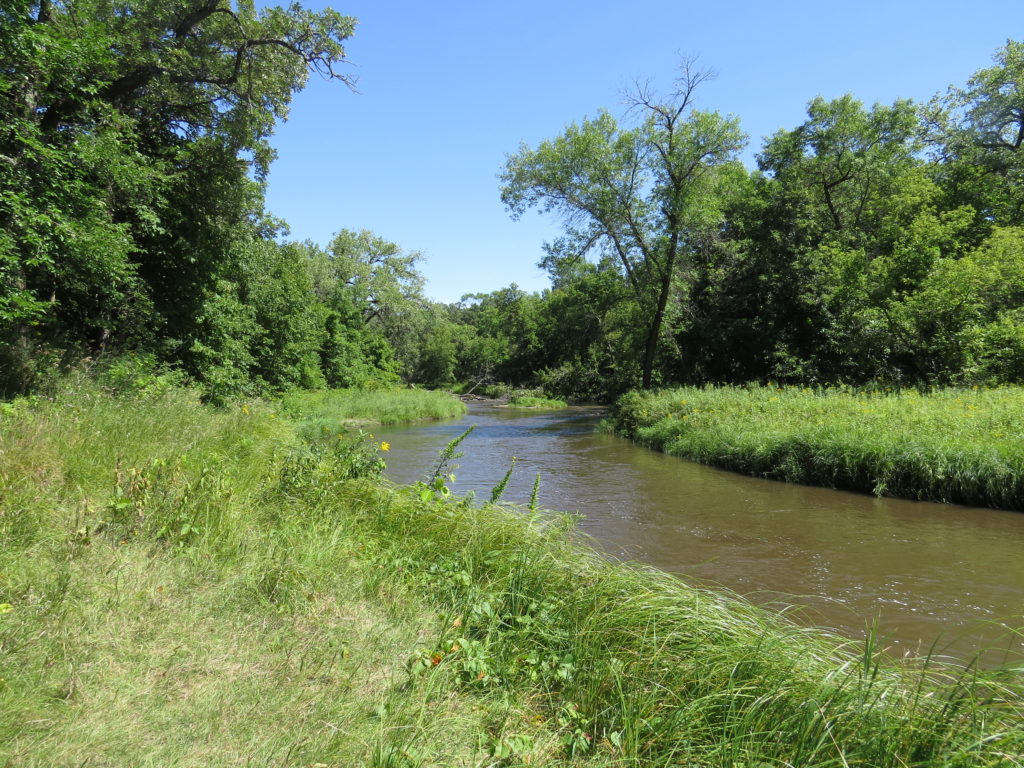
The River was high, swift, and muddy from the strong storms that had pushed through Minnesota and brought tornado warnings and those fabulous mammatus clouds to our doorstep two days before.
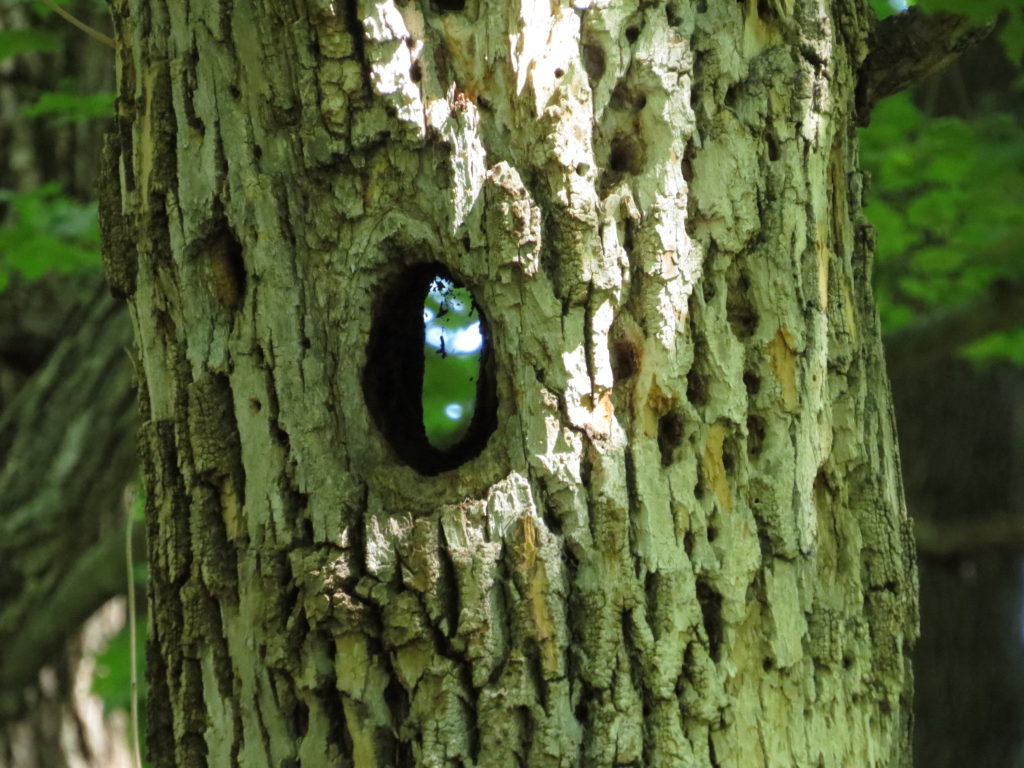
The mosquitoes we were hoping to foil on the prairie found us as we walked along the River through the trees. One particular dead tree was riddled with woodpecker holes—one even went all the way through it. We could see from one side to the other through something that normally would not allow such a thing.
Speaking of one side to the other, eventually we came to a bridge where we could cross the River to explore the uplands of prairie on the other side.
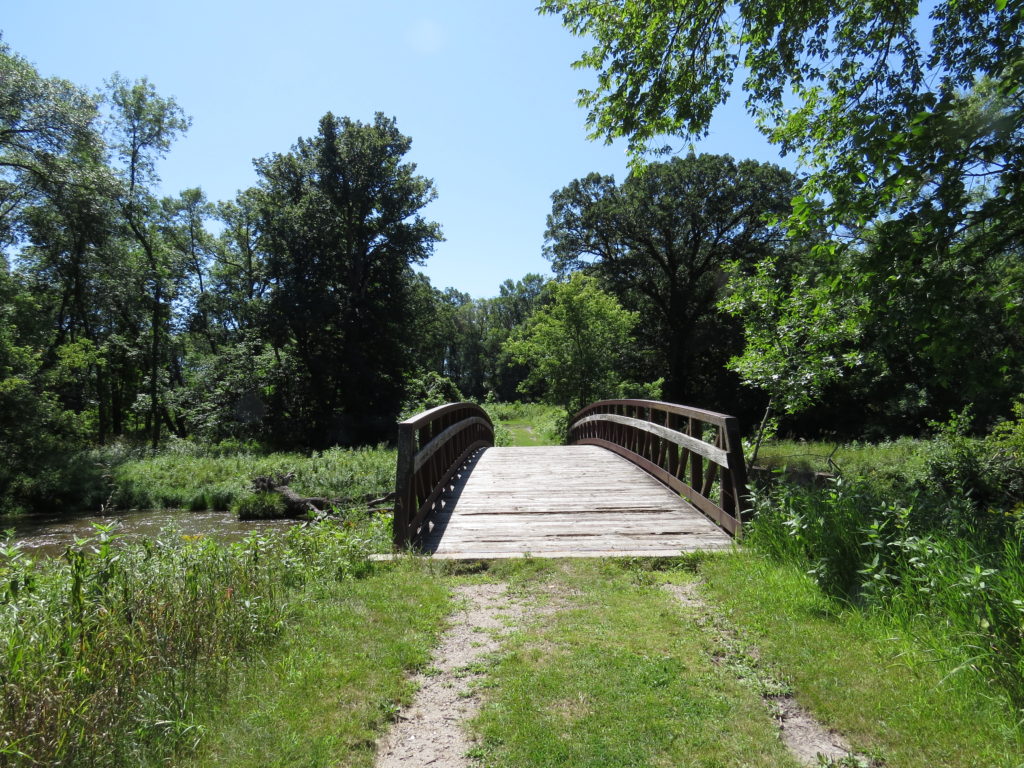
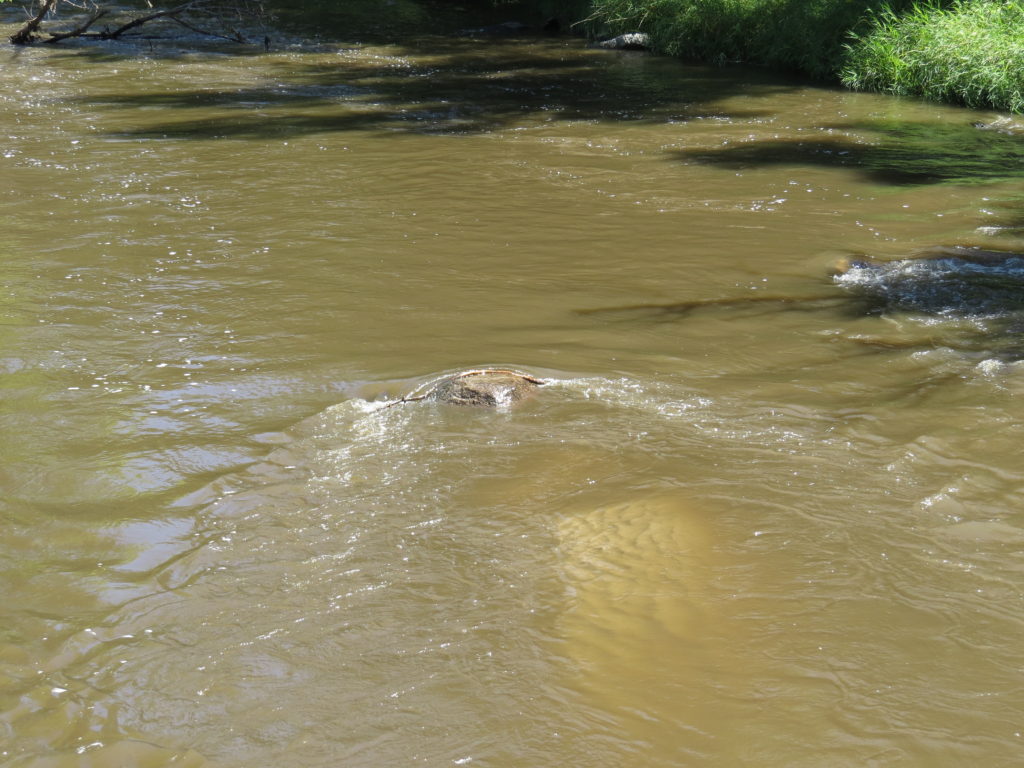
The muddy water flowed around a large rock in the middle of the River, depositing sediment in the wake of it. The resistance caused the build-up.
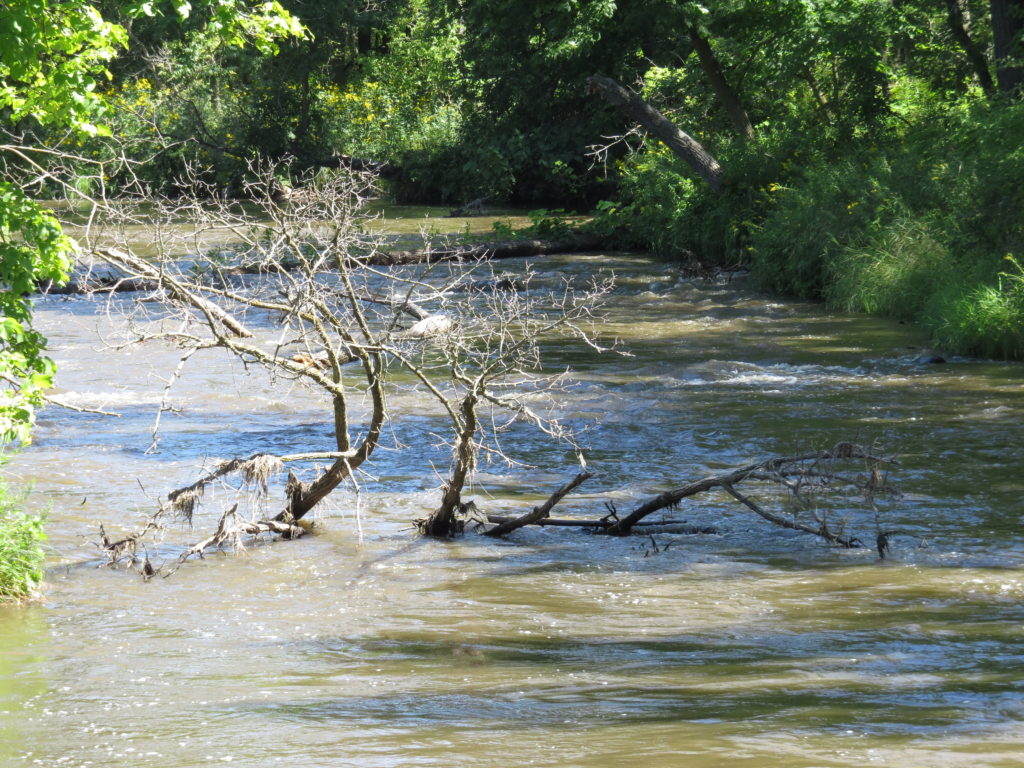
Up river, fallen trees dammed up the flow of the water, piling up debris as the River flowed on.
The prairie resumed on the other side of the River—grasses waving, flowers blooming, butterflies lighting, and seeds dispersing.
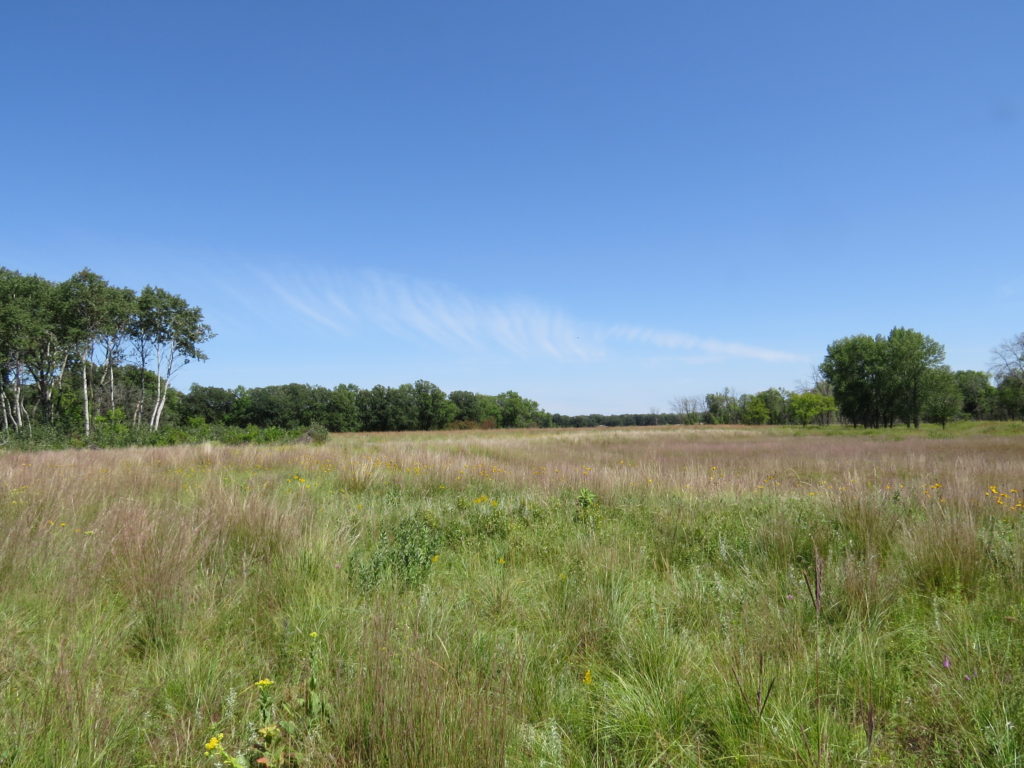
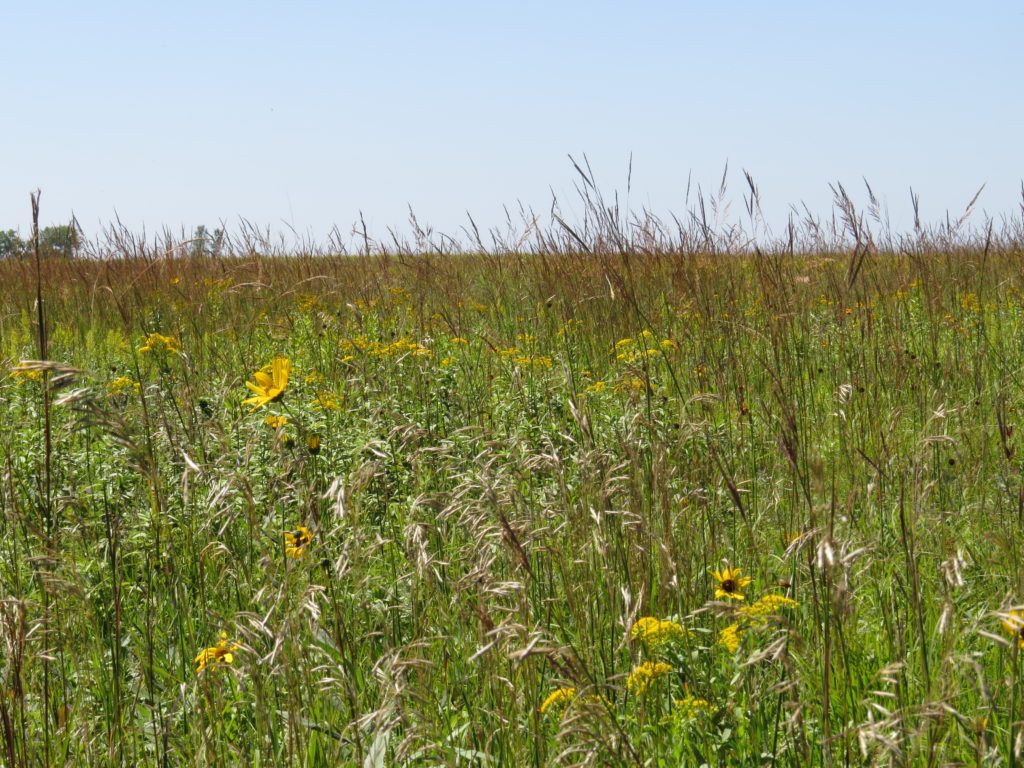
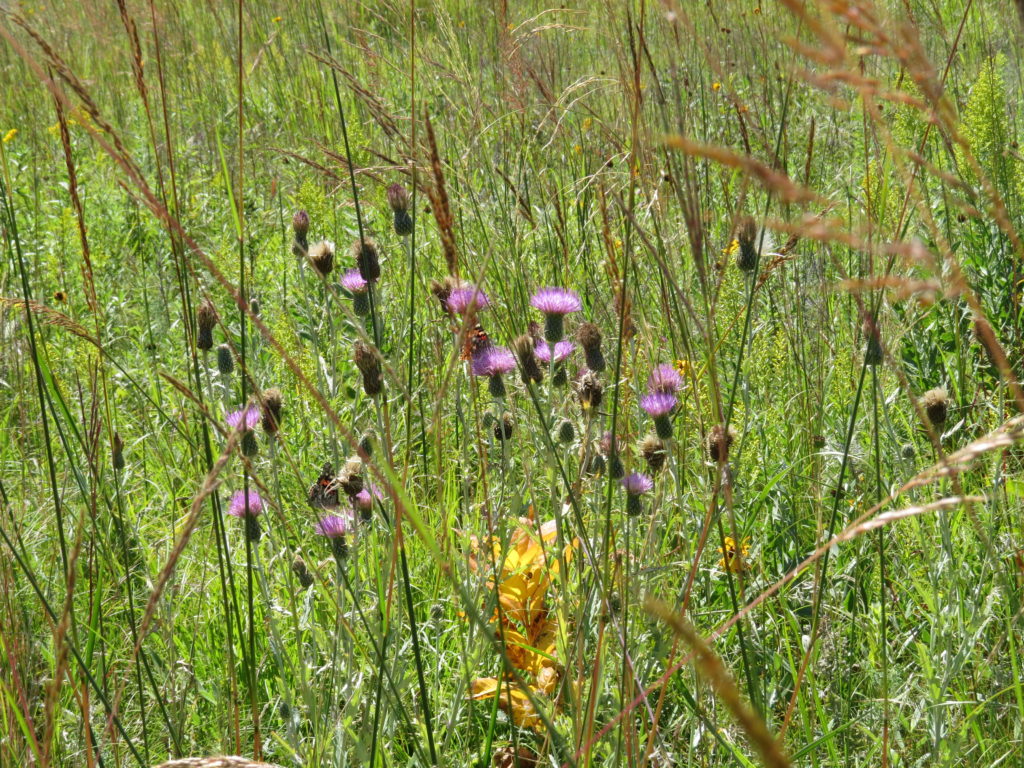

One could not distinguish one side of the prairie from the other—each has a myriad of grasses and colorful flowers. Both have cutbanks, trees, and mosquitoes. Both have butterflies, seeds, and seedlings. The Buffalo River runs through it. And the Buffalo River has moved and changed over time.
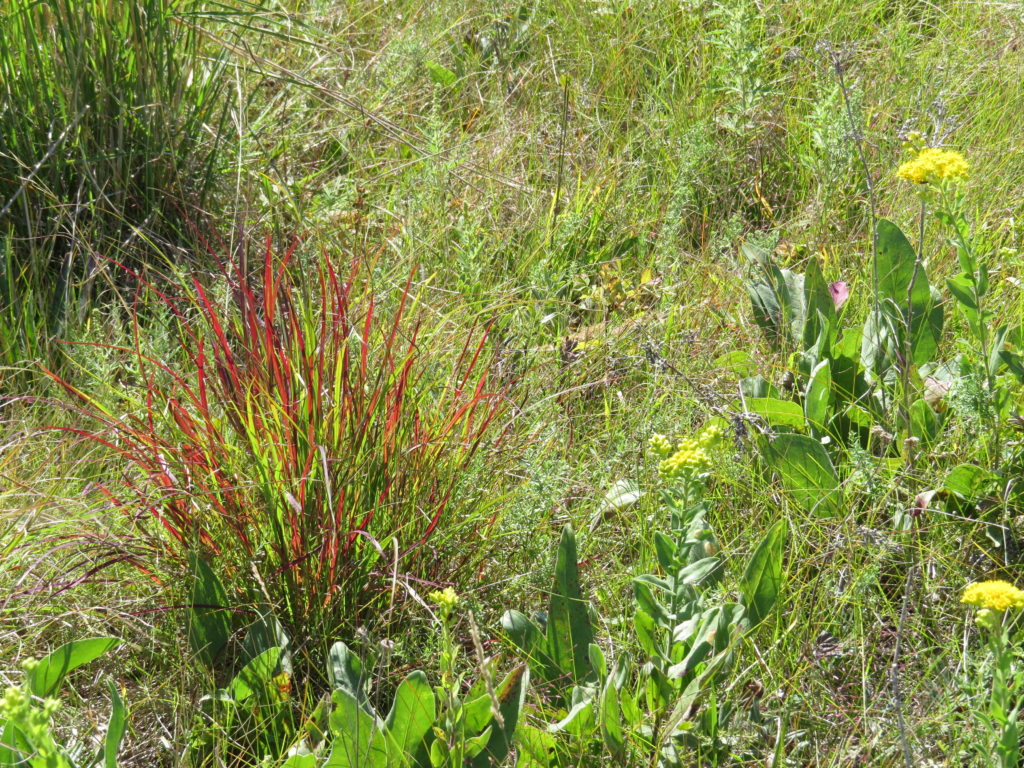
The long view of life changes and evolves. This place used to be a glacier, then a sea, then a prairie with glacier-deposited erratic boulders with a River that runs through it. Even the River has changed course in the relatively near past. We do the same. Civilizations change. Societies change, and each one of us changes in the course of our lives. So how have you changed? And more importantly, what happened to you that led to those changes? Our development from infant to elder includes changes to our physical selves imprinted in our DNA, the expression of which is influenced by our environment. Our personalities and experiences influence our thinking, our emotional responses, and our actions. The River of Life runs through us. What rocks of resistance are impeding the flow? What kind of debris is getting in the way? I think for most of us we want to be better than we once were. That desire is the cornerstone of failure and forgiveness. It is the challenge of our physical, social, political, emotional selves. What allows us to see from one side to the other? What allows us to walk to the other side? What reminds us that we are grasses and colorful flowers with seeds and seedlings that all live together in this world? Love, and I mean that with a capital L, is the river and the bridge. Let it flow through you and allow you to walk to the other side.
Checking Our (River) Bank Statements
One of the greatest lessons children can teach us is to hold two very divergent ideas in our mind and hearts at the same time. It may just be a matter of days after their birth before we are holding the most precious thing we have ever seen at arms length while contemplating the extreme mess of diaper, clothes, and blankets that needs to be cleaned up. Or there is non-stop crying that wears on our sleep-weary ears and nerves from the perfectly beautiful baby we brought home.
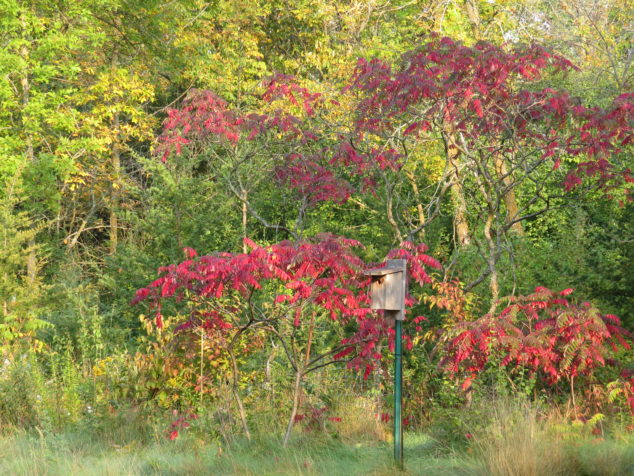
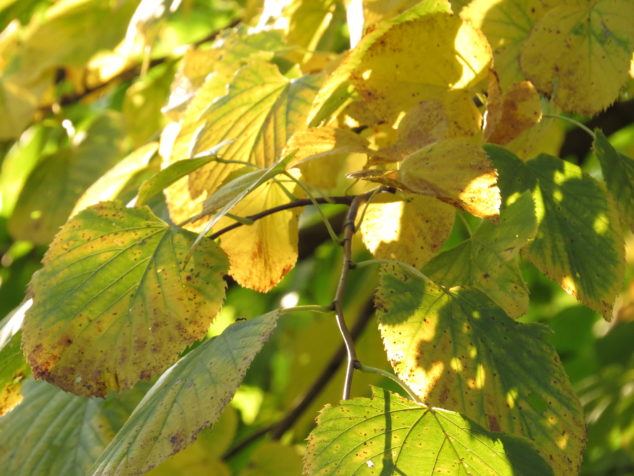
This past week was hot and muggy with uncomfortable nights and air quality alerts that tightened my airways with ozone. Summer’s bad qualities. But it looked like Fall. The Ash trees were mostly all yellow and dropping leaves. The Sumac trees had turned showstopping crimson and scarlet. The Linden trees were quickly turning lemon-colored with a circular blanket of leaves covering the green grass underneath them. So is it Fall or Summer?
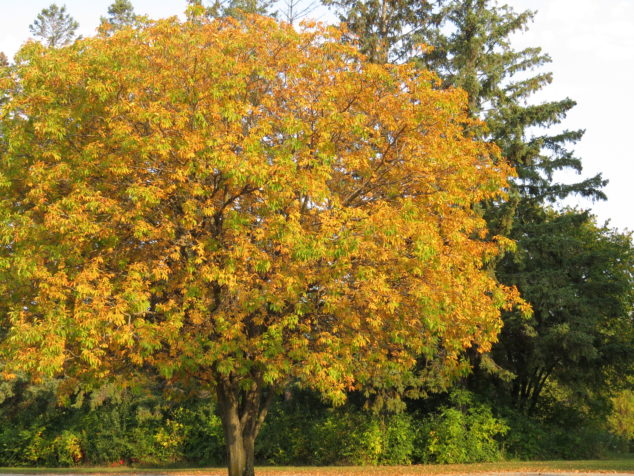
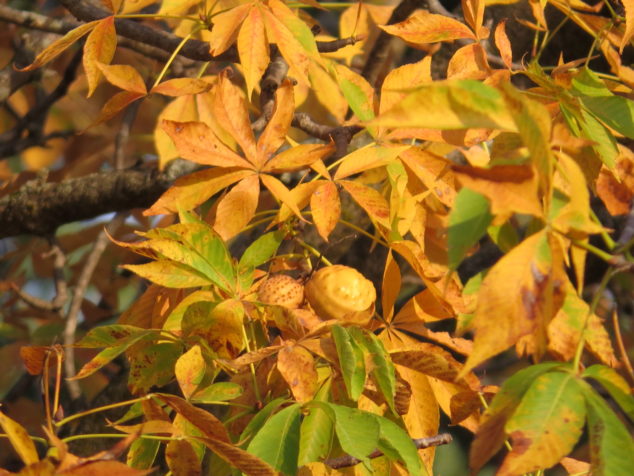
Our neighbor’s Buckeye trees glowed golden with leaves and spiny seed capsules that encase the ‘eyed’ dark brown seed.
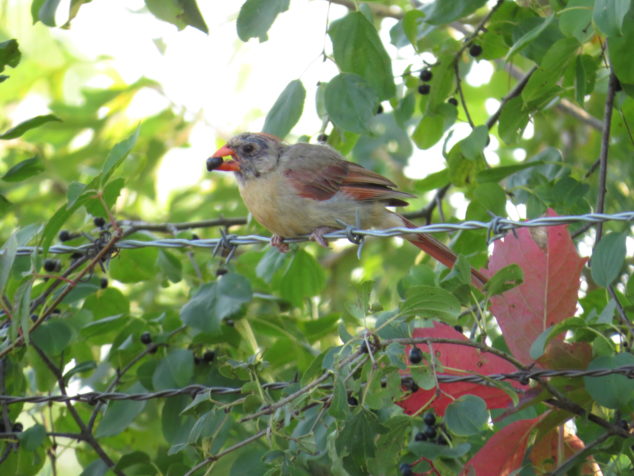
Fall harvesting by the birds has begun. A juvenile Cardinal plucked a seed from a nearby tree—unfortunately it was a seed from the dreadful Buckthorn! Is Buckthorn good for food or a worthless tree?
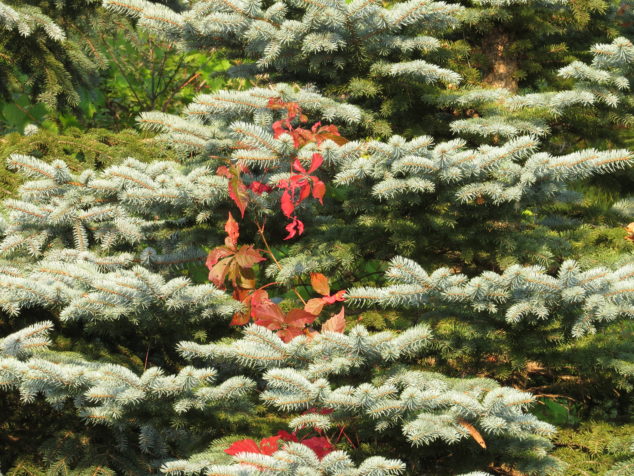
Virginia Creeper vines are turning red, going from camouflage to conspicuous.
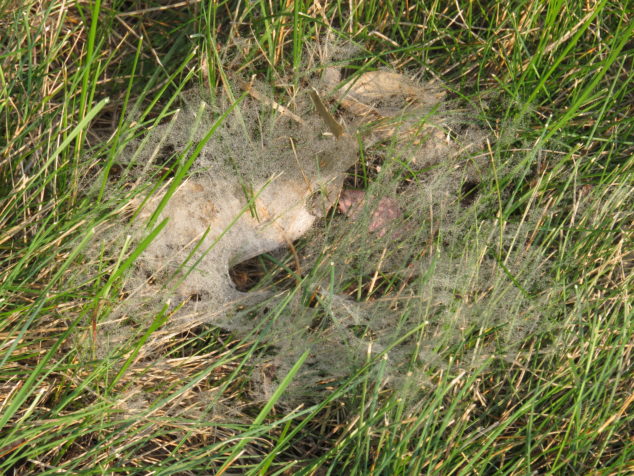
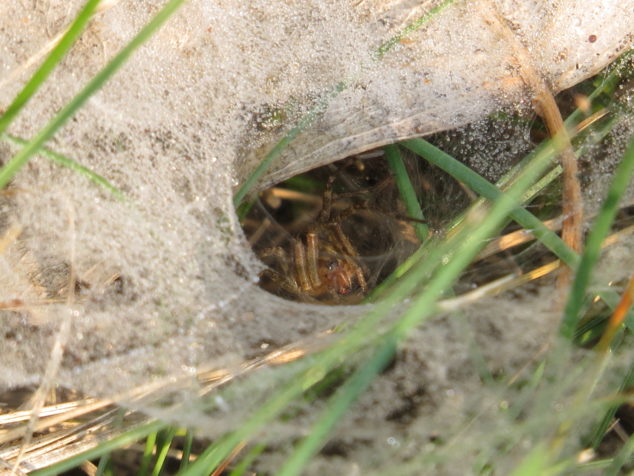
Also conspicuous in the morning dew was a funnel weaver spider’s sheet web. Most likely a grass spider, she hid herself in the entrance of the funnel to wait for a tasty insect to stumble upon her web. Are spiders terrible pests or architectural geniuses?
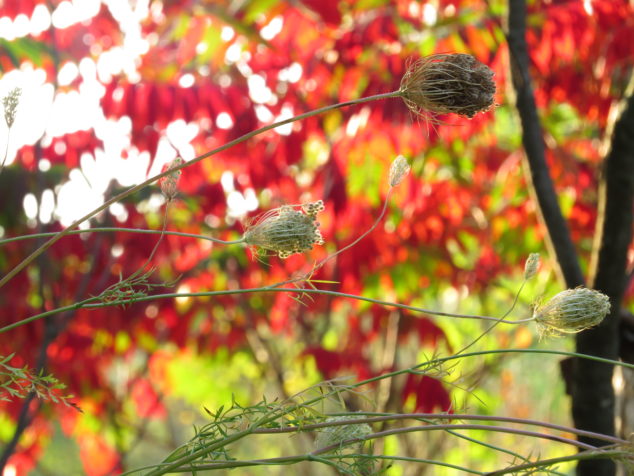
Drying seeds of Queen Anne’s Lace leaned over against the background of fall-colored Sumac.
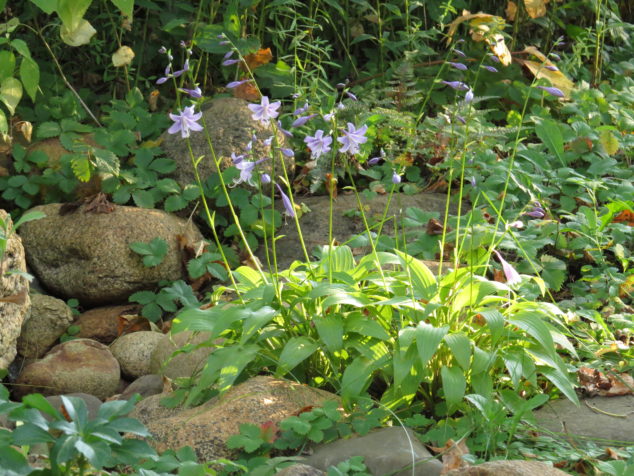
The smallest Hostas are just now blooming, fresh and summer-like…
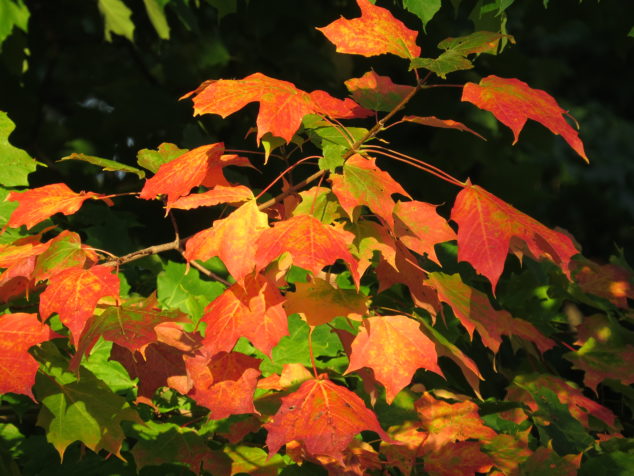
…while the sun-kissed Maple trees are beginning to show their colors.
We are a society based on labeling. The calendar says it is still Summer and will be Fall on Friday; the meteorologists say it was Fall on September 1st. If we had no way of orderly keeping track of days, what would it be called? Perhaps it would not be named at all. Often labeling comes with black and white thinking, with opposite and extreme judgments—good or bad, right or wrong, all or nothing. We run into a web of tangled trouble when we try to determine who has the ‘right’ to decide what is right or wrong. Does the person who is deathly afraid of spiders get to determine a spider’s worth or does an entomologist? Does a person who is trying to eradicate Buckthorn from his property have the right to determine its value or does the person who loves it for a privacy hedge? I believe black and white thinking are like two banks of a river, and the river is the gray area. We can be the sturdy boats with thick ropes and strong oars and sails that navigate the River of Life. At times it is imperative for us to tie up to one of the two banks—for order in a society or for taking care of our personal space. But most of the time we are moving through life on the gray River, and we must hold two very divergent ideas in our thoughts and hearts with compassion. Our child who just made a huge mess is our beloved. The dreadful Buckthorn provides food for the birds. The scary spider or bat eats many destructive insects, and on and on it goes. Many people live on one of the two banks, like I used to—it is familiar and safe there, but Life passes by. We call out with disdain or hope to the people on the River—“We know the answer!” And while the River at times can be dangerous and fast-moving or stagnant and stale, most of the time it is life-giving, refreshing, cleansing, and invigorating. Through rough waters and smooth sailing, may we navigate well, anticipate the rocks and snags, learn what we need to learn, look to both horizons, and enjoy the unexpected treasures around the bend.