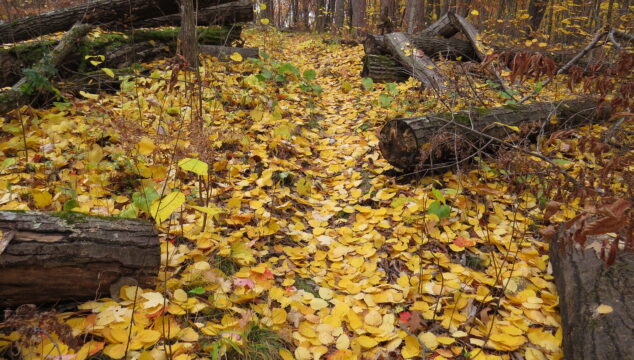
Come walk with me in the peak Autumn beauty of the Northwoods. To say that I love this time of year is an understatement. Most everyone can appreciate the colorful falling leaves---it reveals the 'true self' of a tree when its leaves are no longer producing chlorophyll. Their true colors are revealed, and there is something simple … [Read More...]
Reckoning Our Storytelling
We are all fantastical storytellers. You may remember your own yarns as a child, or more likely, those of children, as fanciful, creative chronicles spilled from their imaginations and mouths. And often, they were a key character in the saga. At some point in development, there is a reckoning between fantasy and reality, often involving those joyous childhood participants in legend—Santa Claus, the Tooth Fairy, and the Easter Bunny. Disillusionment and disappointment. Even anger at the deliverer of such bad news. It is all a part of growing up, a step towards maturity.
Our creative, imaginative brains, in an attempt to make sense of any given situation, continue to make up stories throughout our childhood, adolescence, and adulthood. The stories tend to live and twirl inside our own minds. They gather strength and even ‘evidence’ as the story is imagined again and again and again. “I can’t do math.” “Nobody likes me.” “I’m a freak.” “I’m a bad student.” “She’s a bad teacher.” “People are taking advantage of me.” “Someone is out to get me.” What starts out as an inner insecurity often morphs into an outward blaming of others.
Last Sunday, Chris and I traveled to the Minnesota River Valley at Fort Ridgely State Park. The fort was built in 1853 near the Dakota reservations of Upper and Lower Sioux Agencies on what had been Dakota land for thousands and thousands of years. It was used as an outpost, Civil War training facility, and buffer between the Dakotas and the surge of settler–colonists coming into the area. In the middle of the fort stands a granite monument to honor the soldiers and others who fought and were killed in the bloody Dakota War of 1862. On large brass plates on four sides of the monument, a story of the battle is articulated by some person thirty years after the war. Reading the narrative in this day and age shows a stark bias against the Indians with how the storyteller articulated false motives of young Indians who ‘started’ the war and who were ‘out to kill’ the white settlers and soldiers. The modern signage around the excavated ruins of the fort told a different story. The Indians on the reservations were being starved when food promised them from government treaties was not being delivered. The man in charge told them “to eat grass if they are hungry.” Forced from their homeland onto reservations, then starved by the government is a different reality than the story told on the monument.
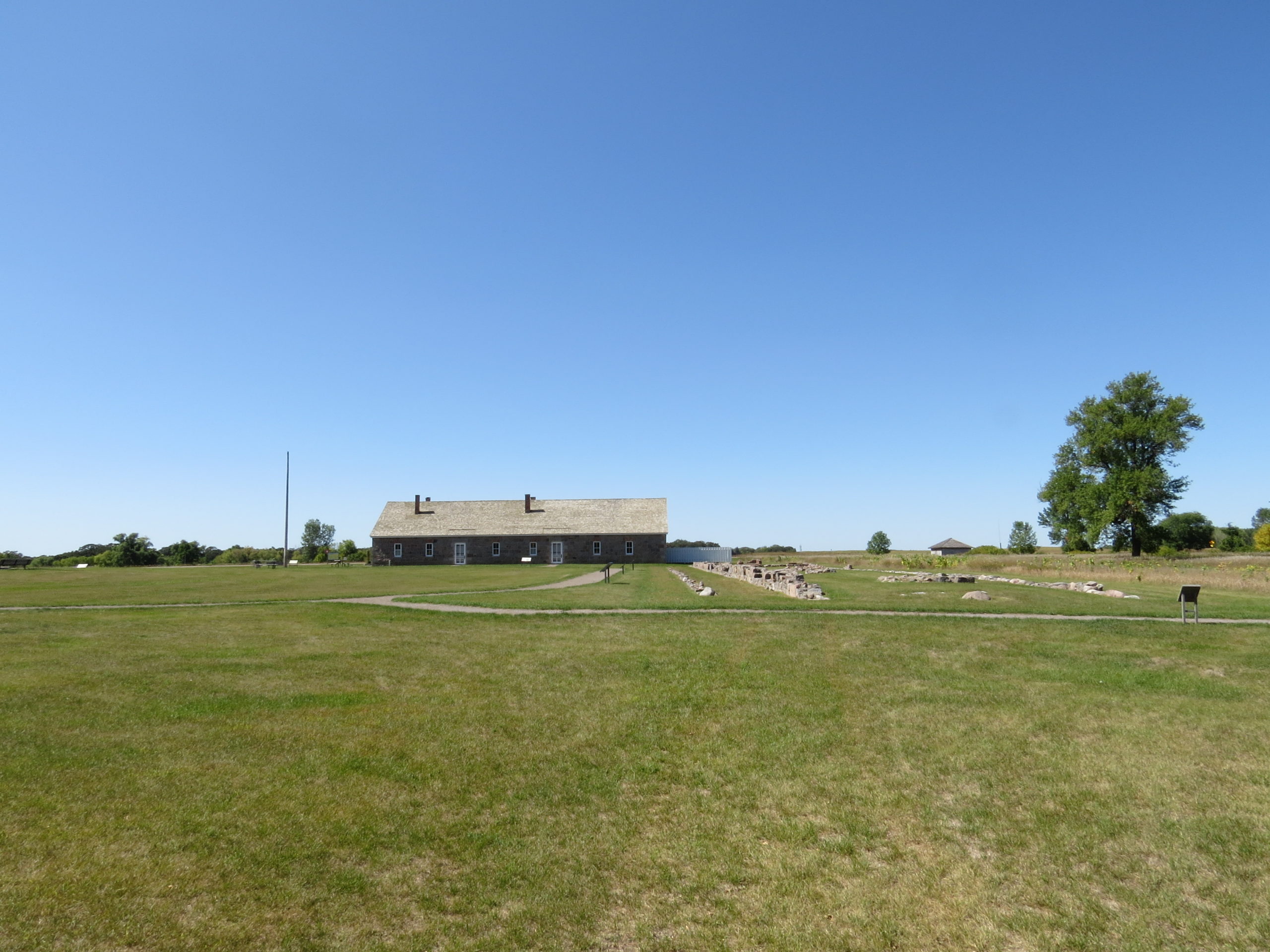
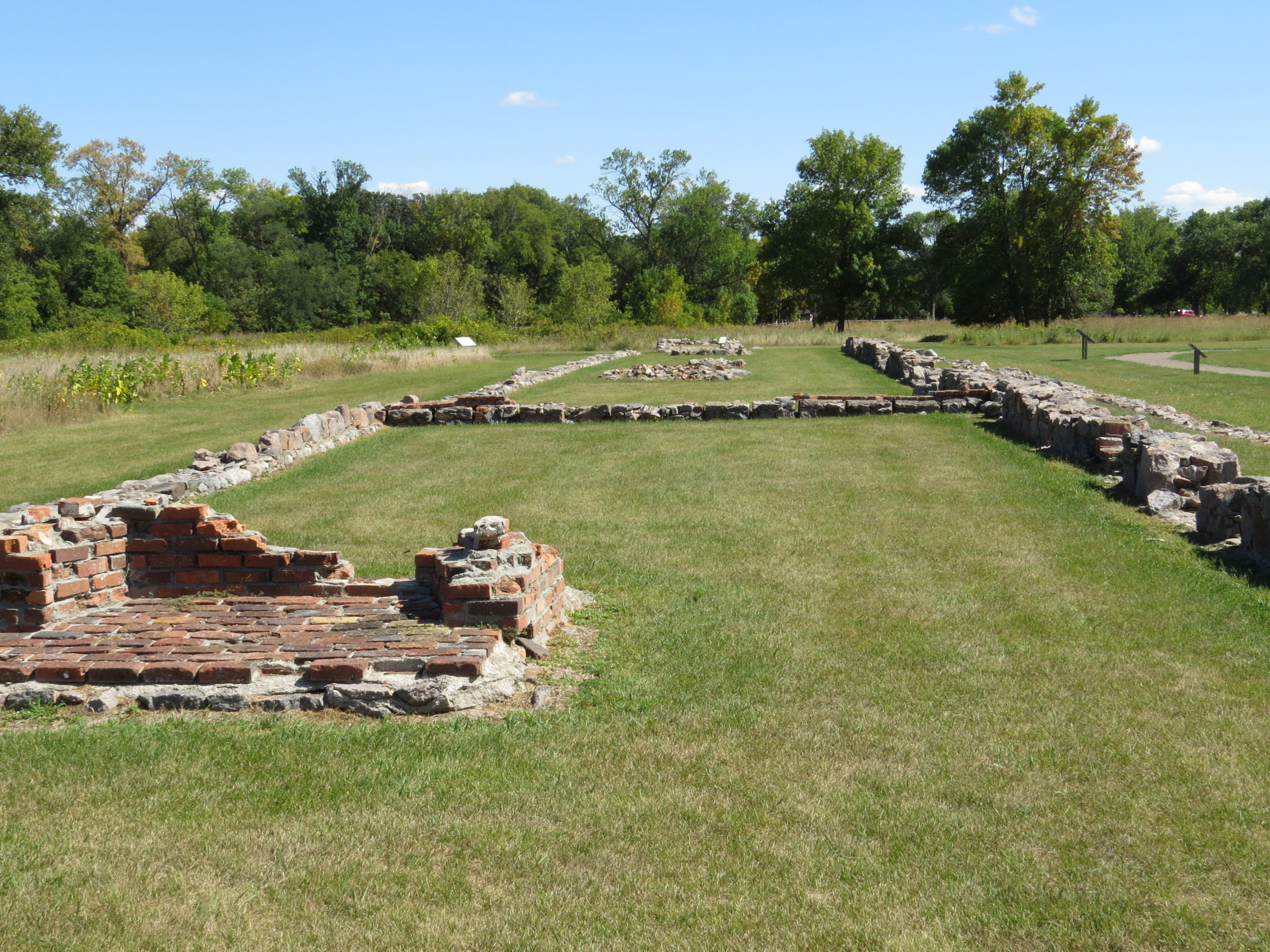
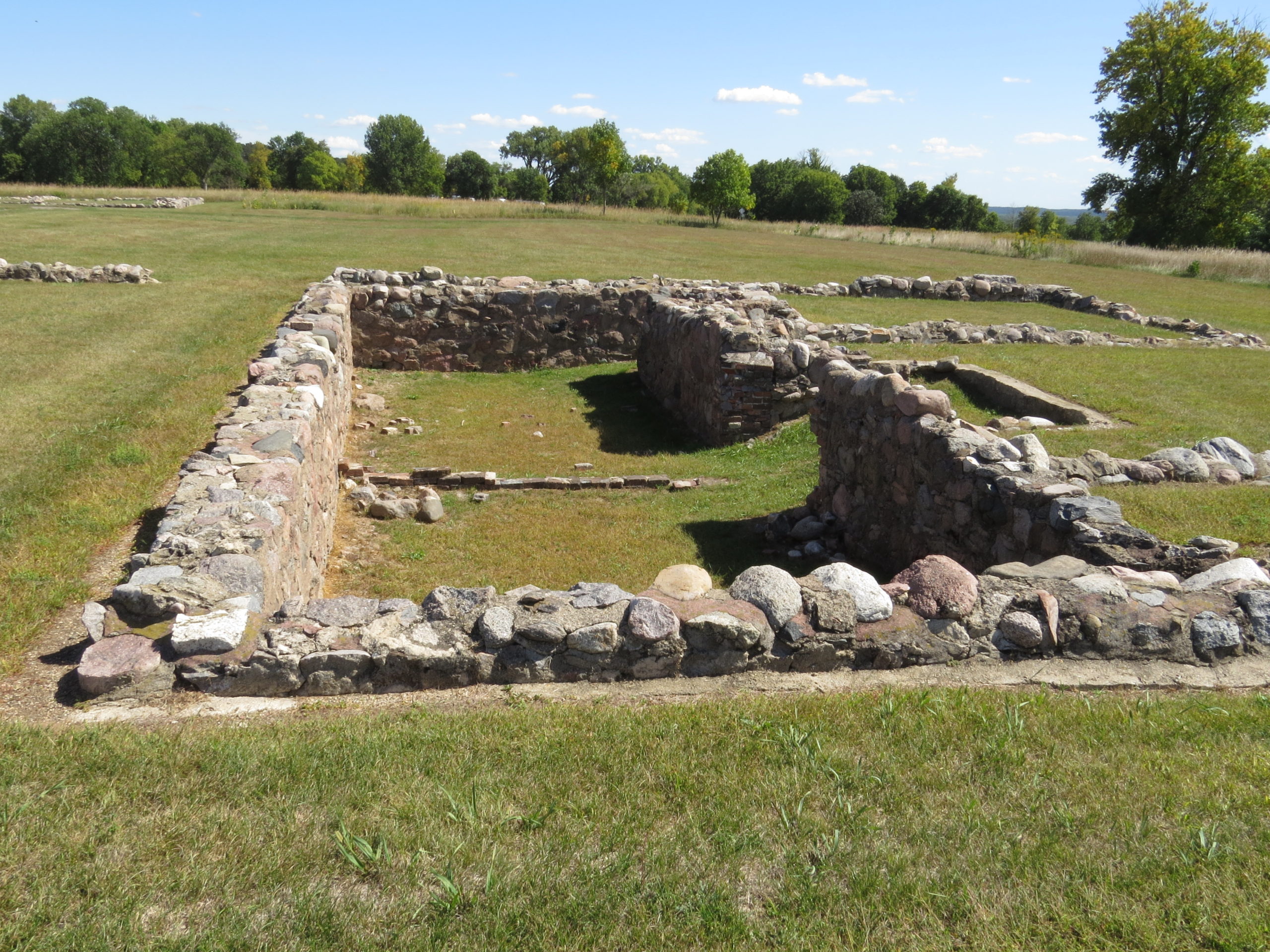
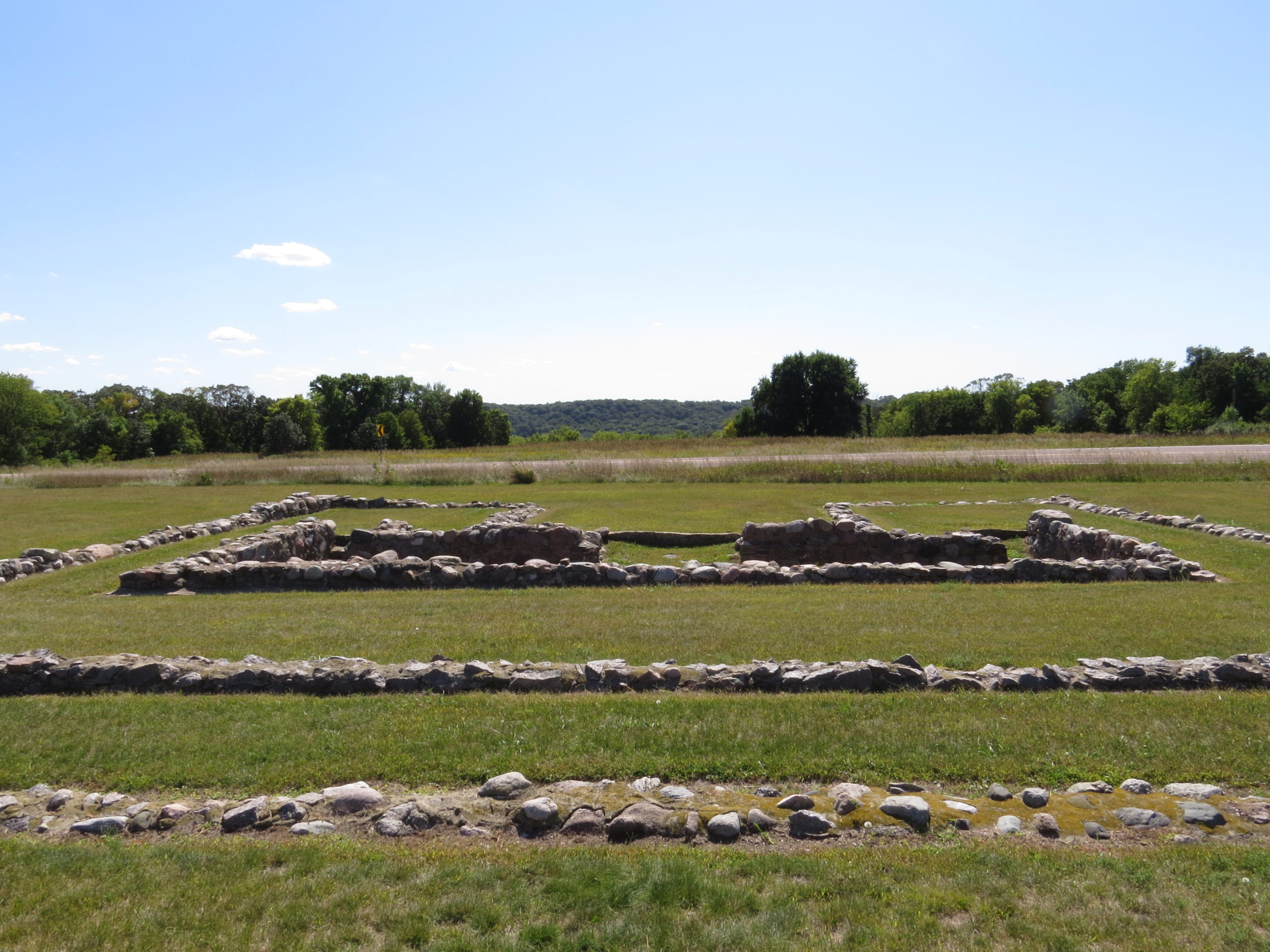
The Minnesota River valley was cut out from glacial till by erosion over thousands of years. The ridge above the River has been returned to prairie.
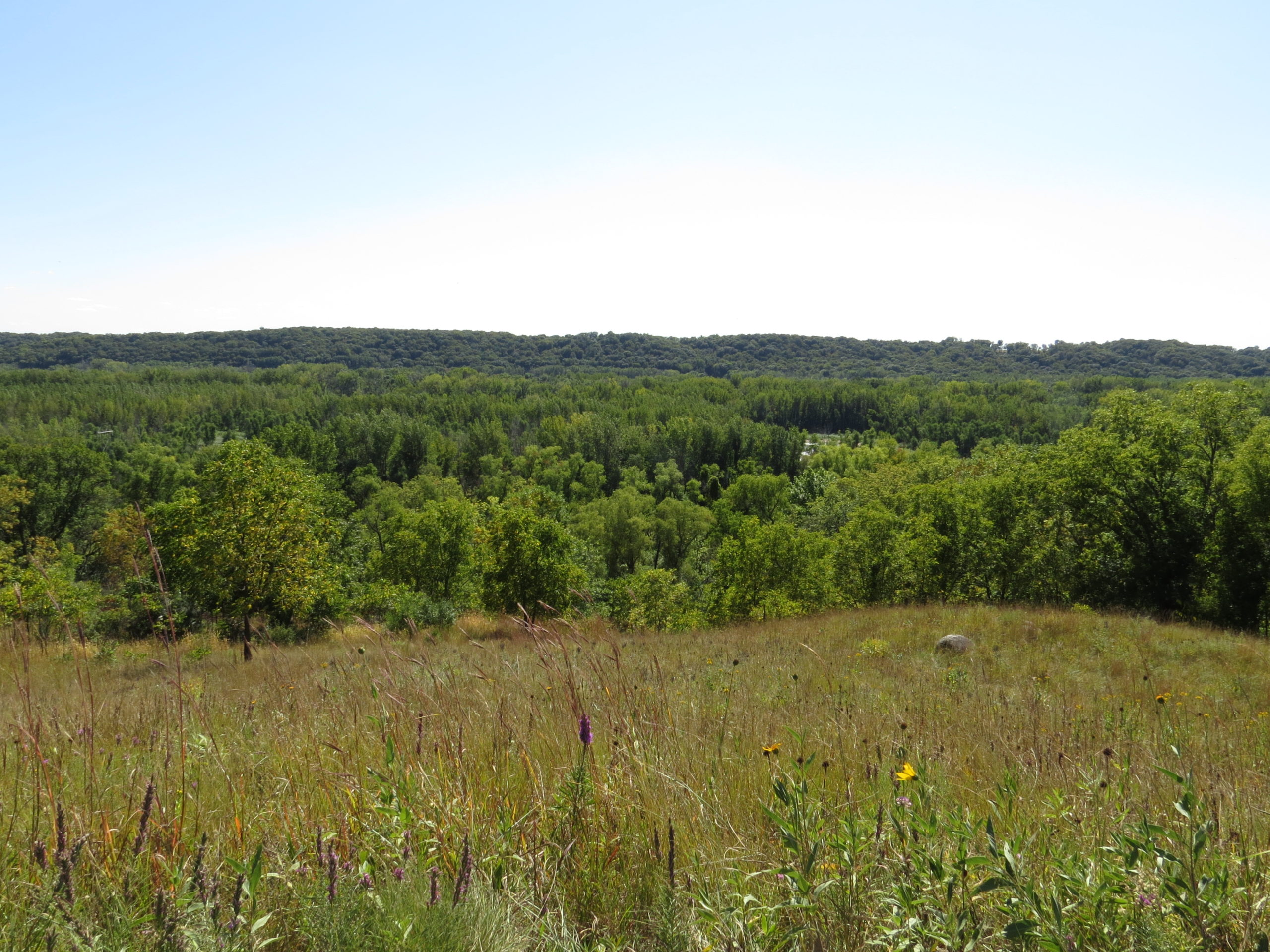
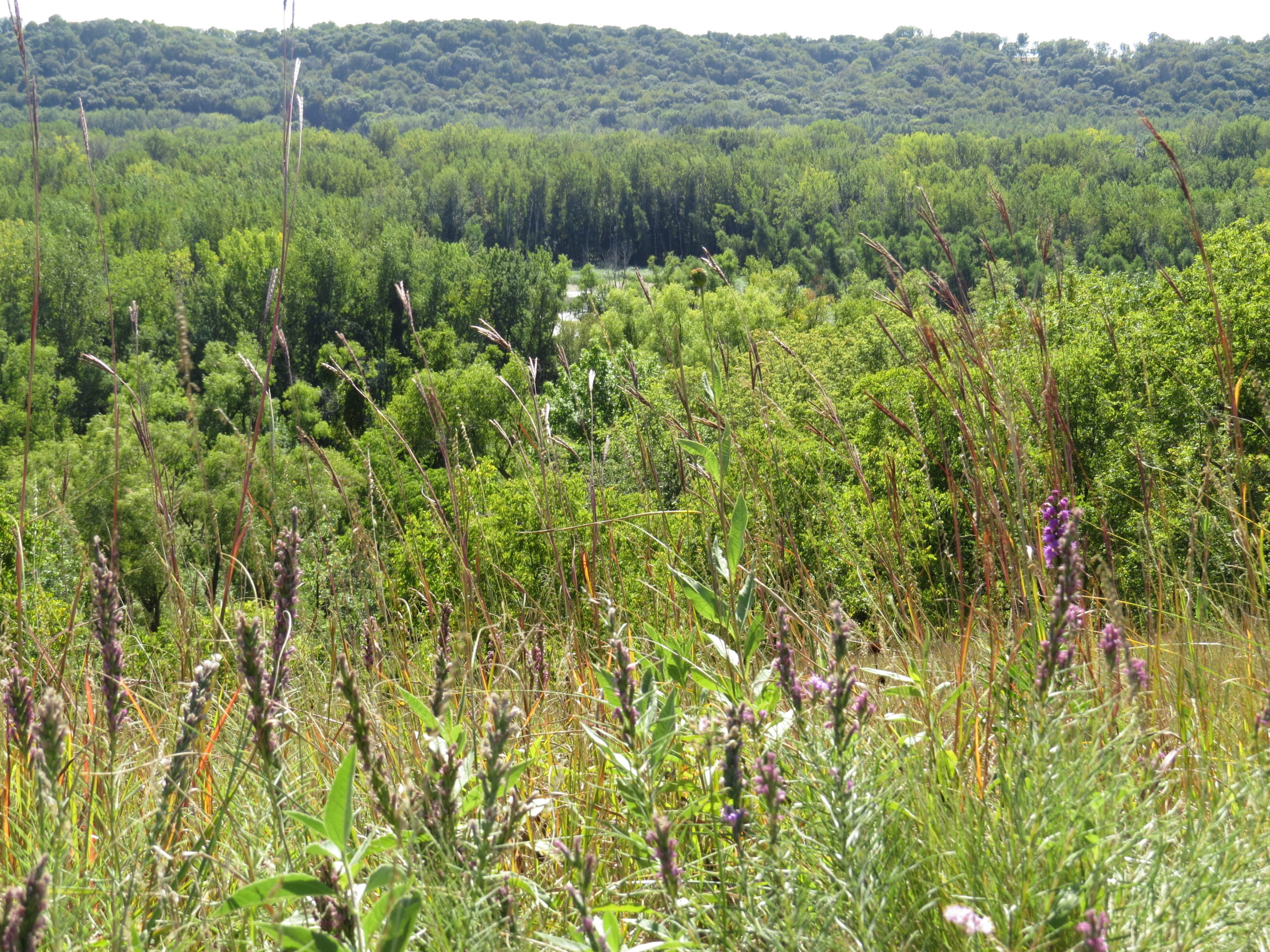
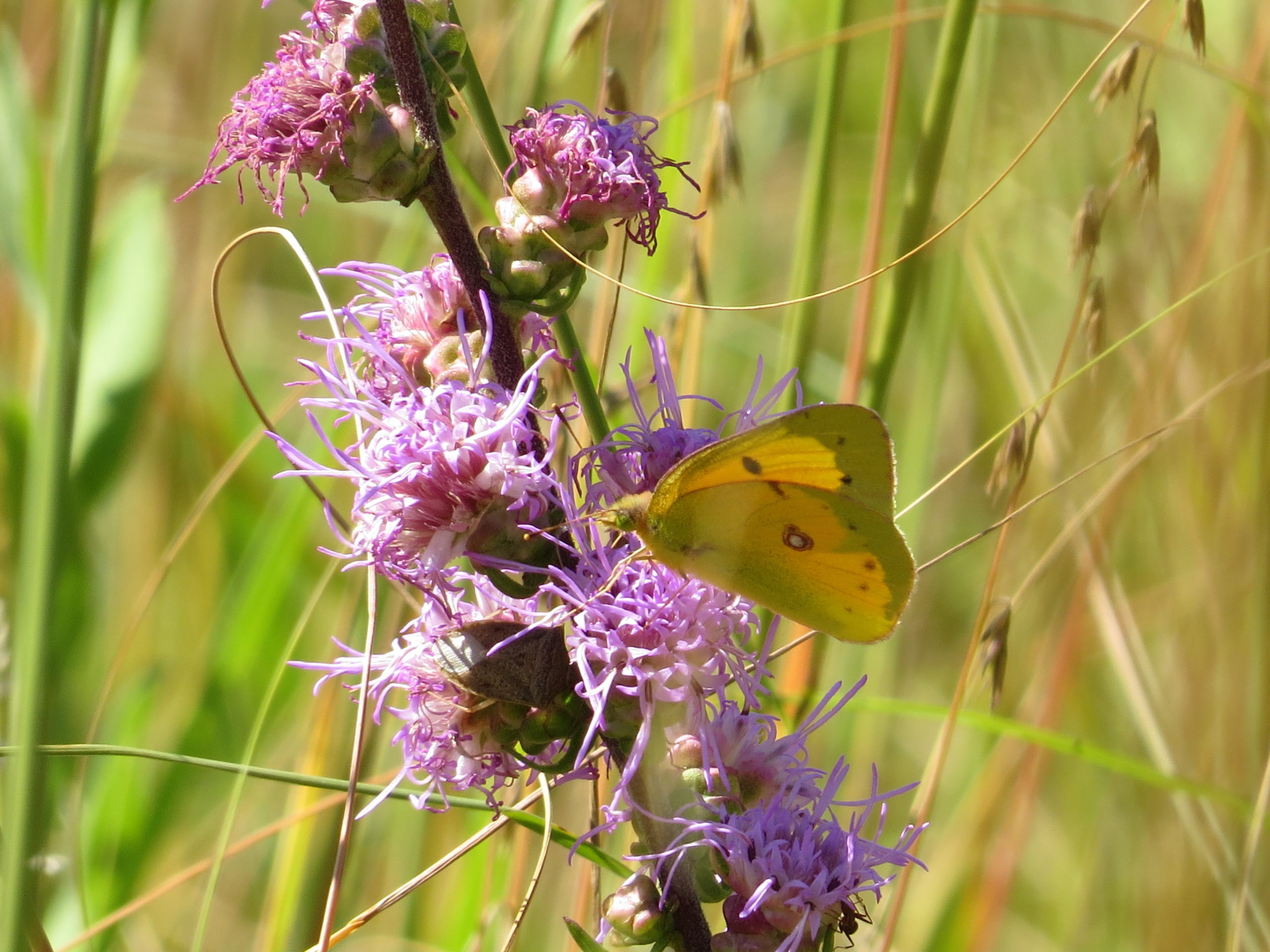
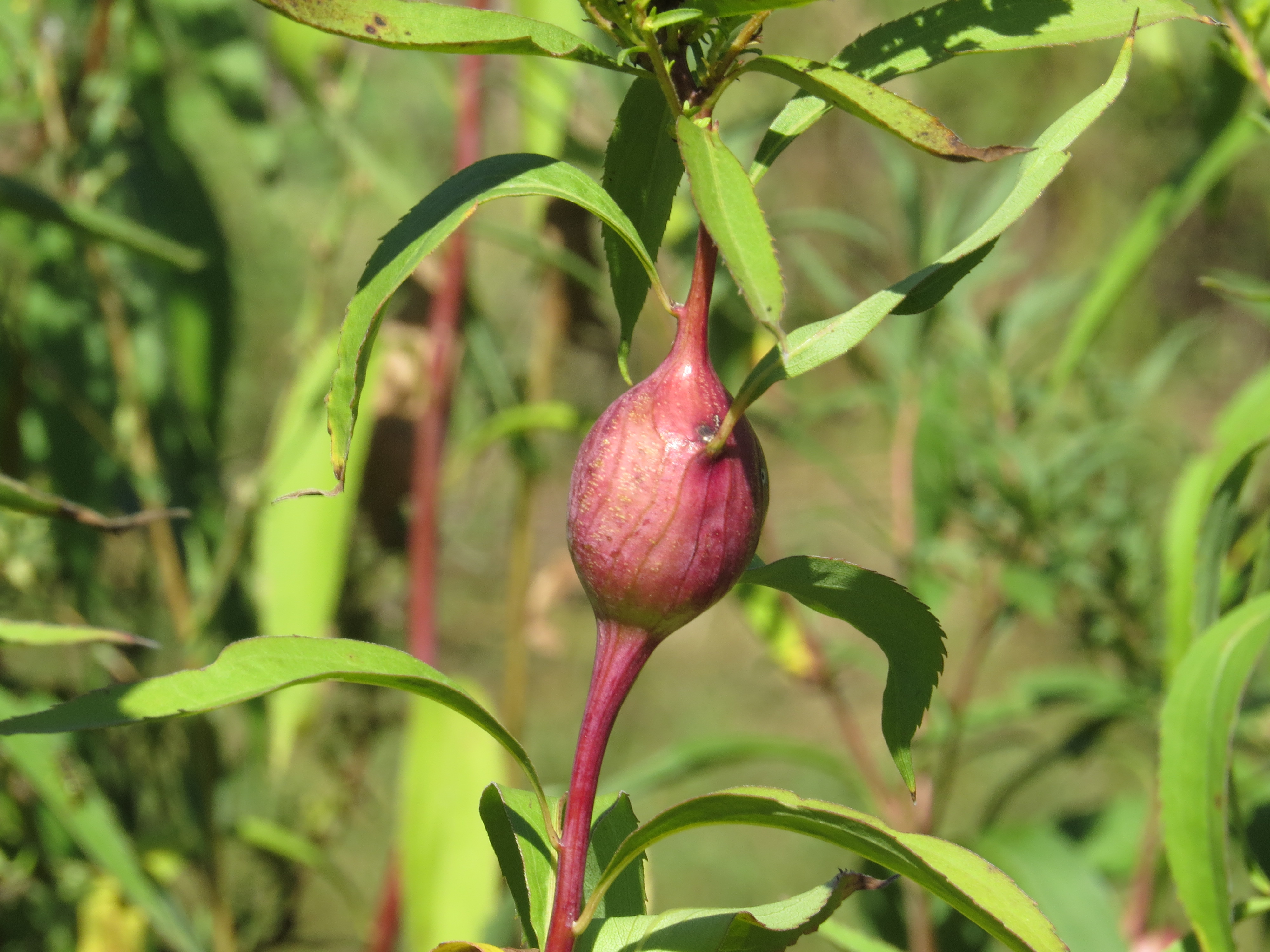
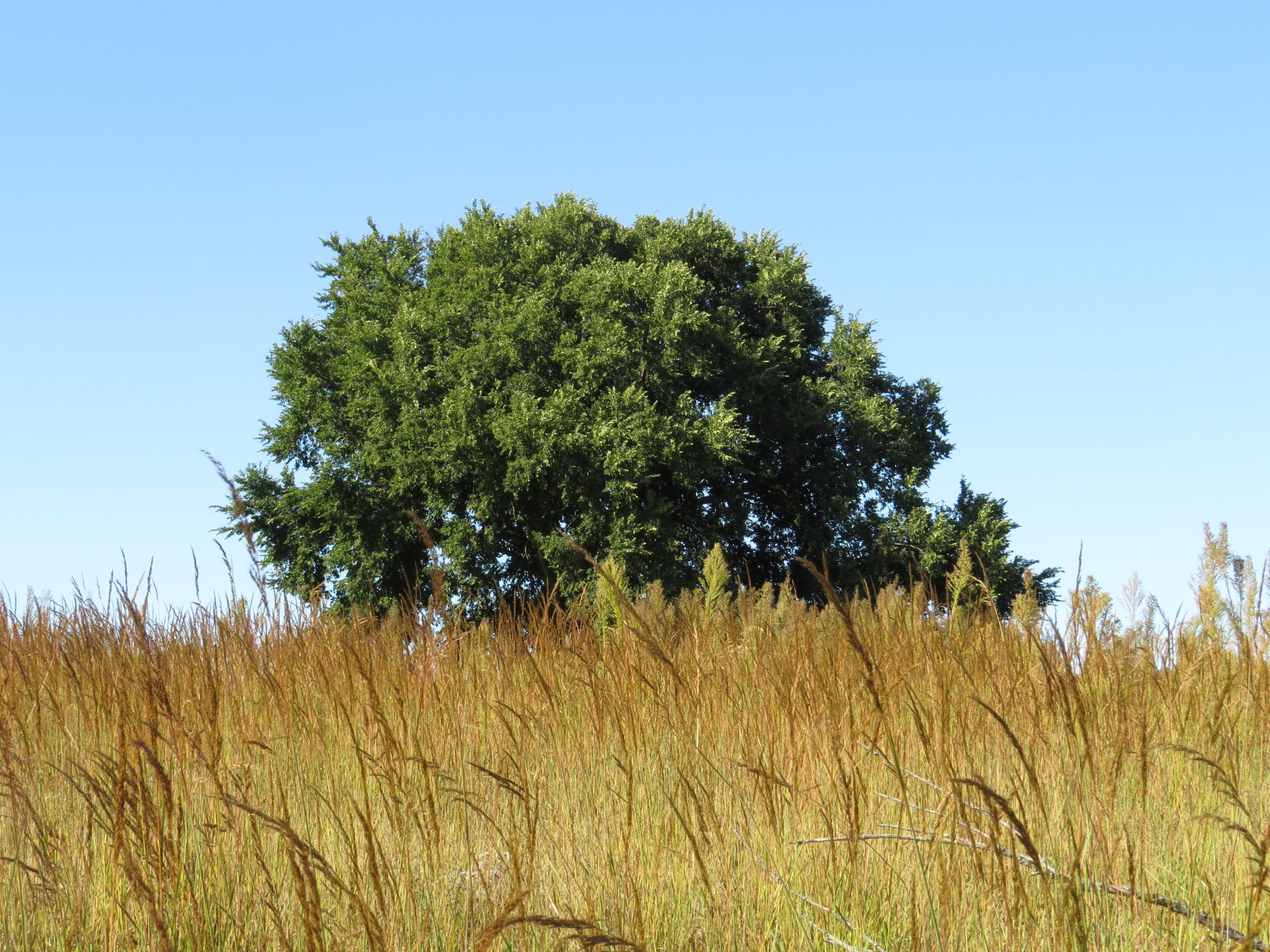
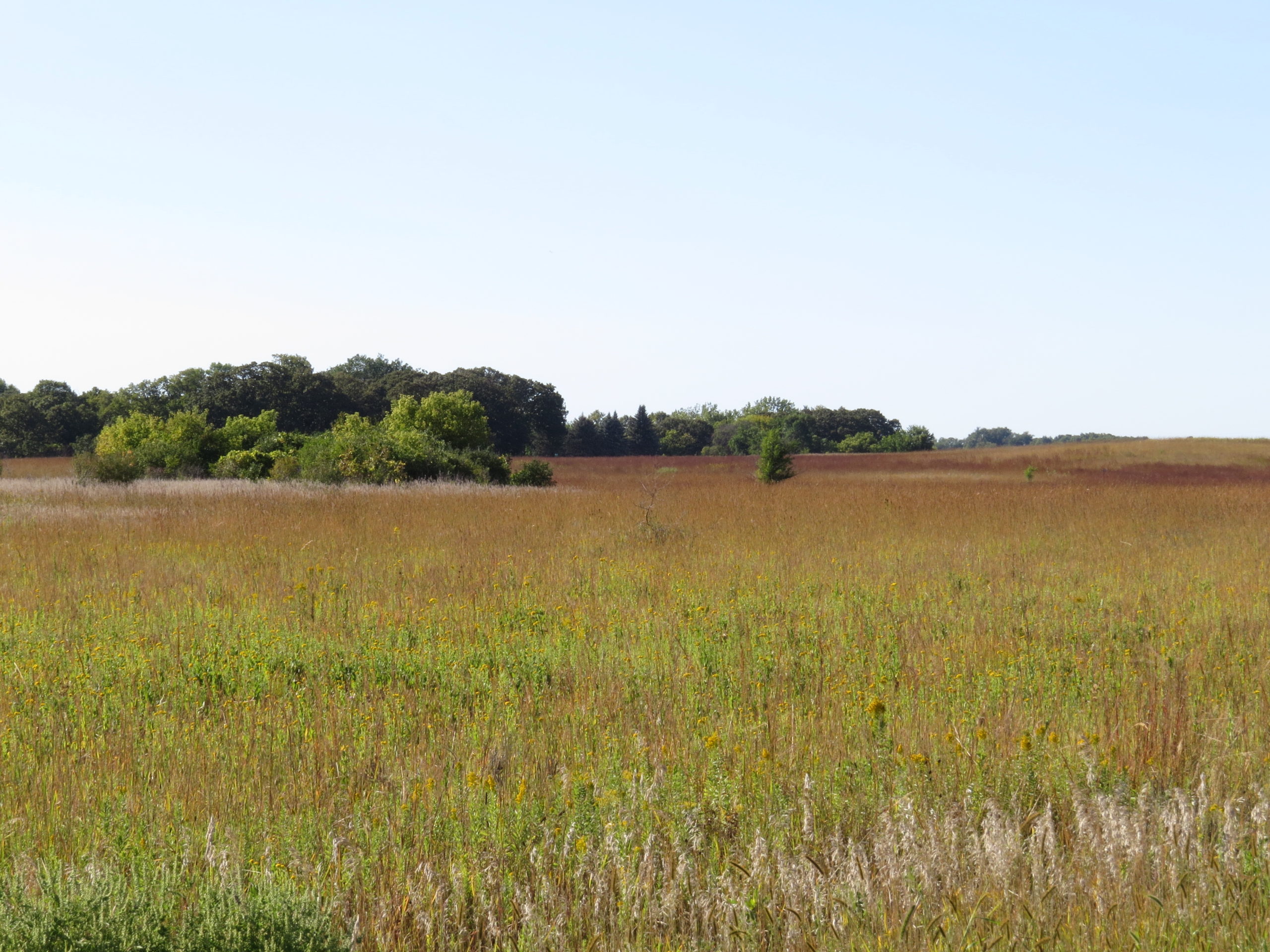
After our fort tour (the museum run by the Minnesota Historical Society was closed), we began our hike behind the CCC-built picnic area. We curved down a hill to the Fairway Trail in a wide strip of prairie that started on top of the ridge and went all the way down to Fort Ridgely Creek. (In 1927, a golf course was built on the park grounds and has since been returned to prairie.) The Ash trees were tipped yellow, Goldenrod and Sunflowers were in their full glory, and crickets chirped an Autumn song.
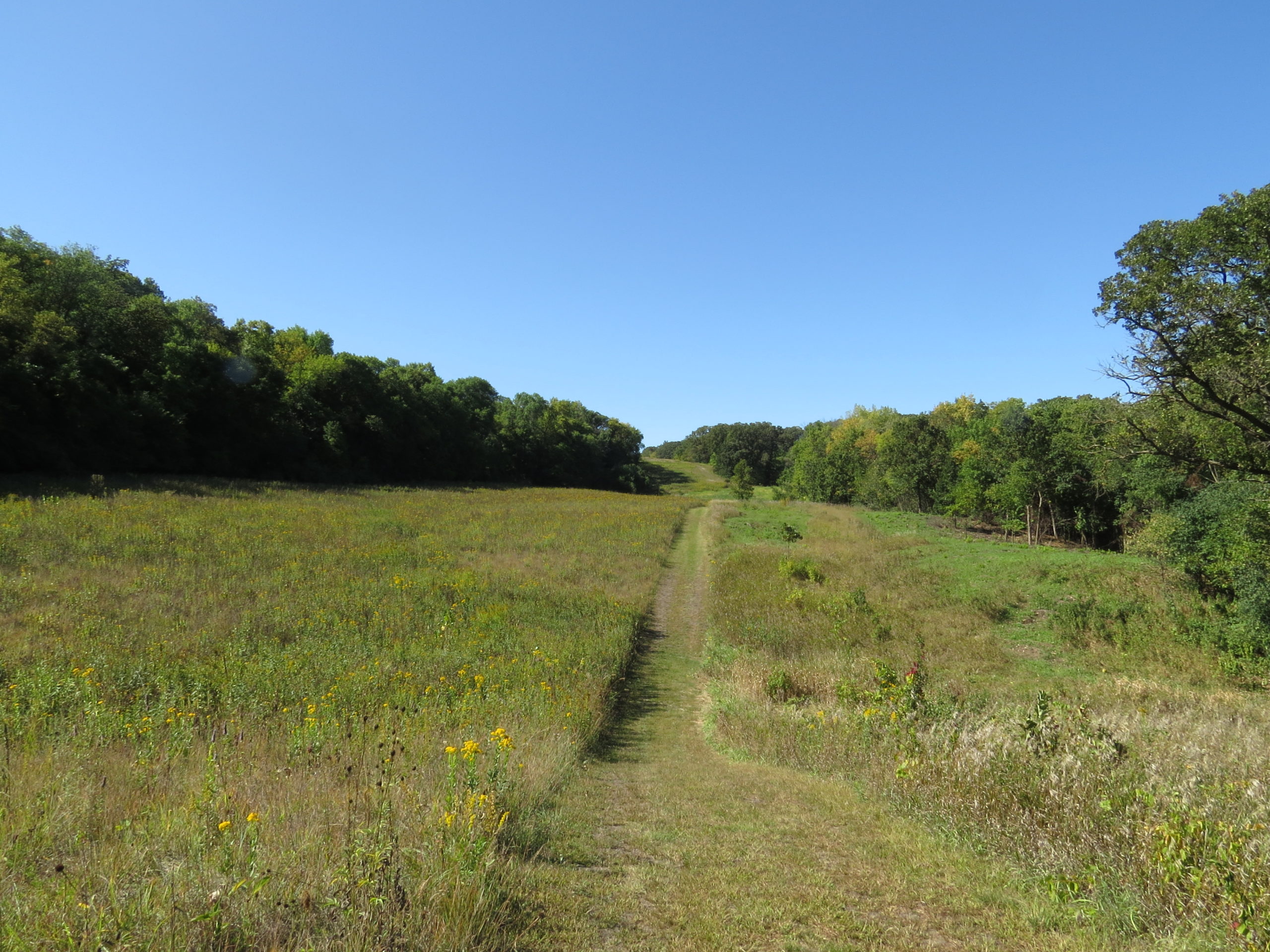
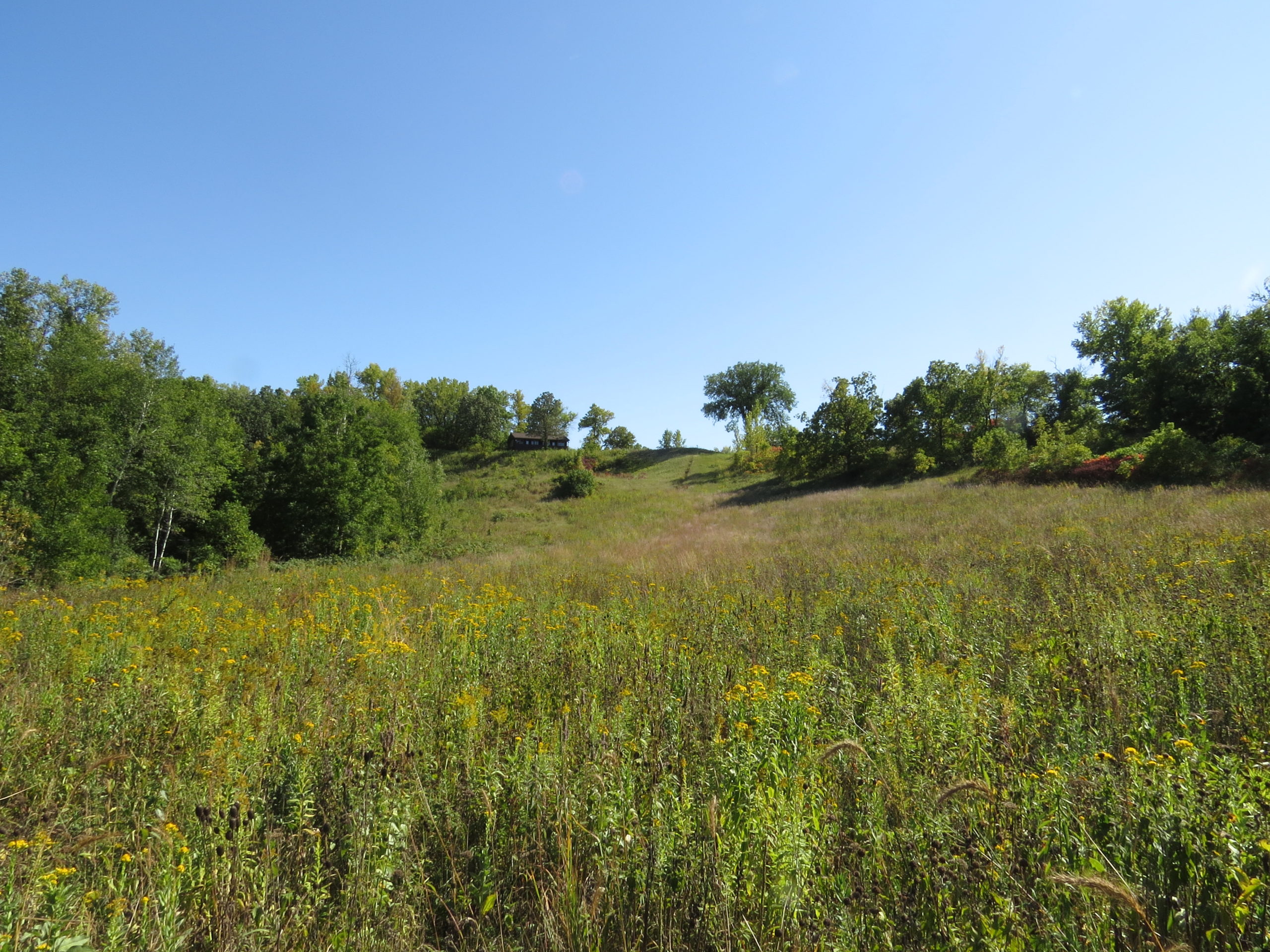
At the top of this hill is a chalet used as a warming house for Winter sledding and snow sports.
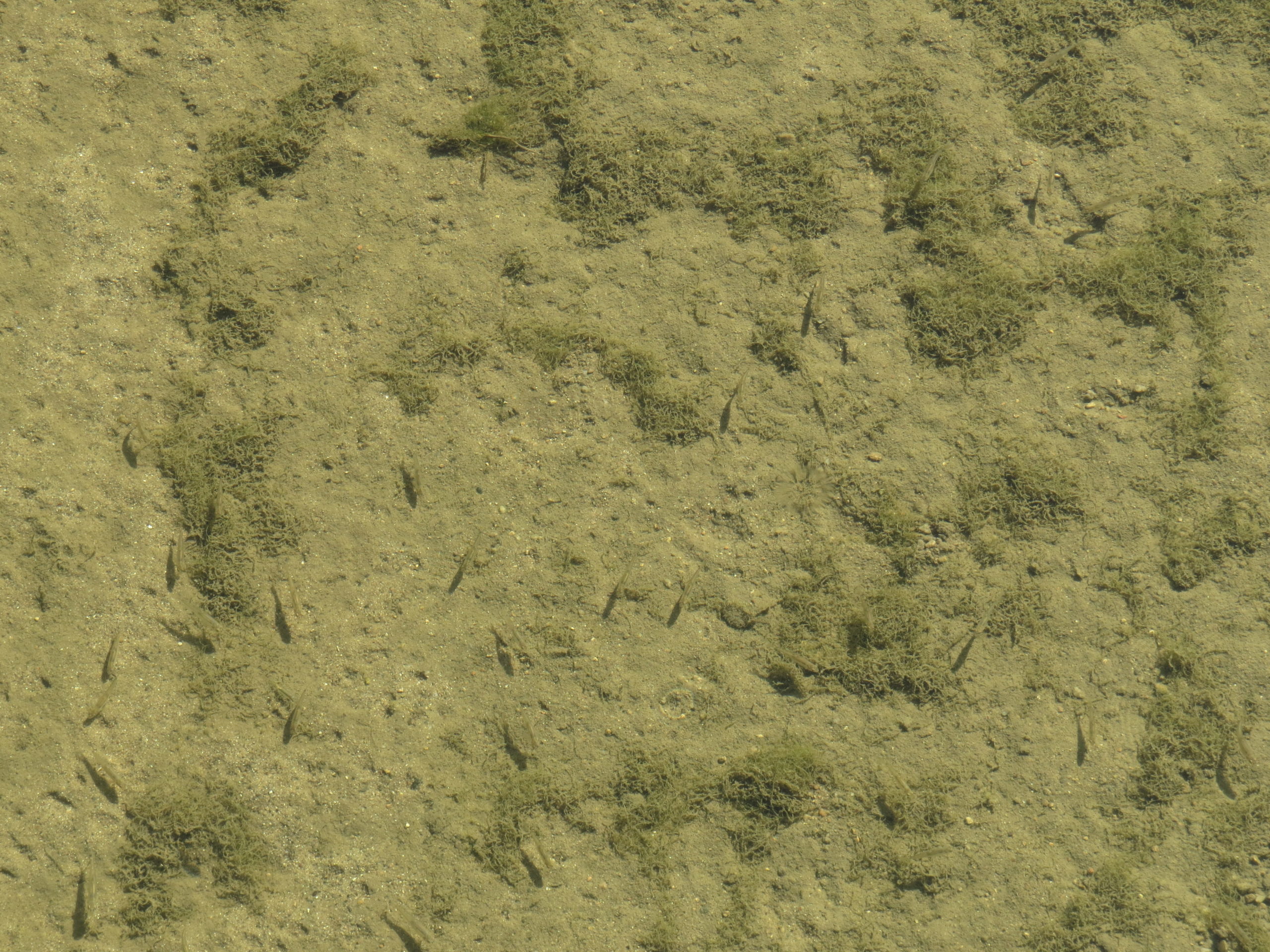
This area of Minnesota has been in drought conditions, and Fort Ridgely Creek and the Minnesota River were very low. We did see minnows swimming in the shallow water of the creek.
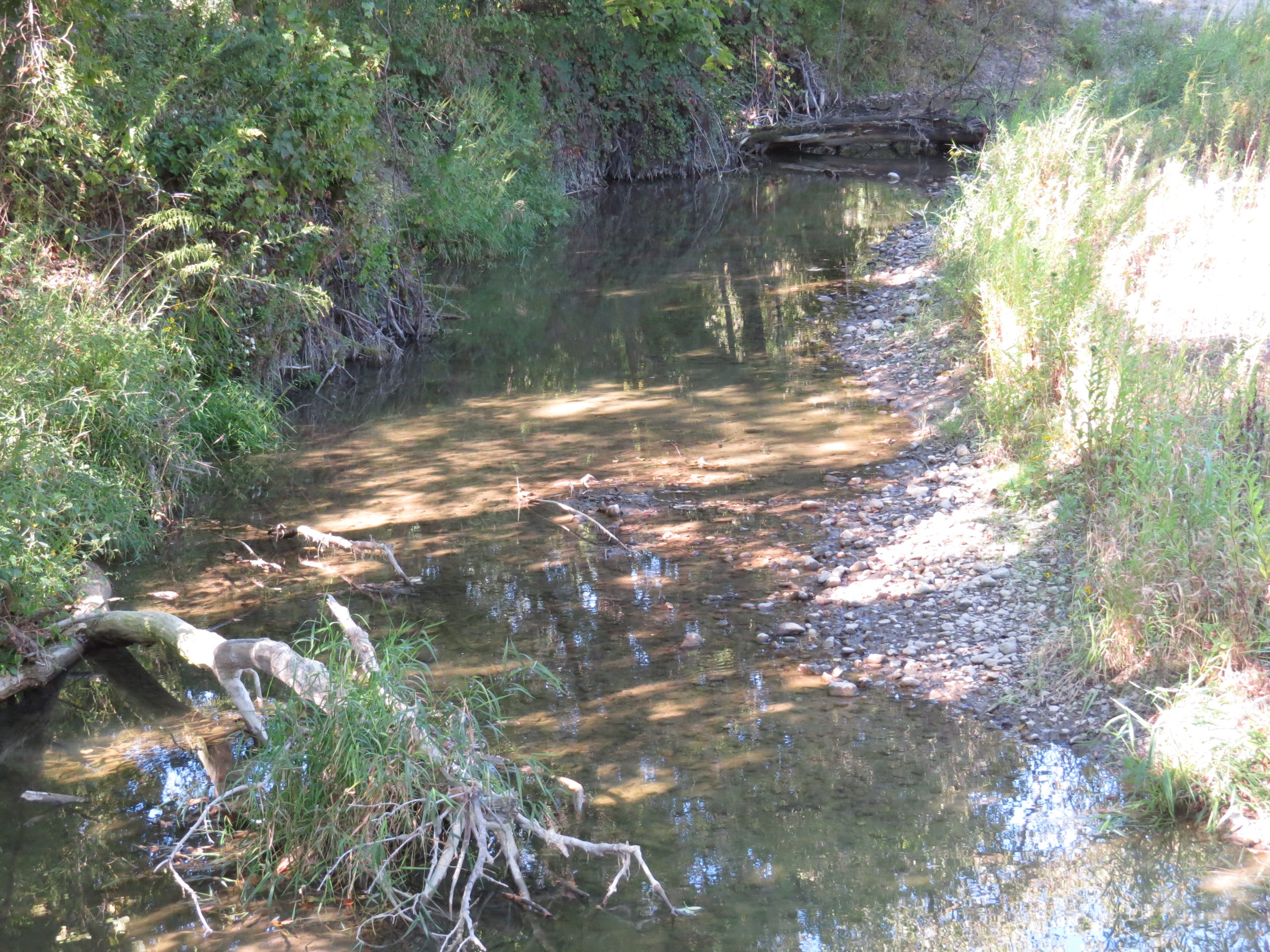
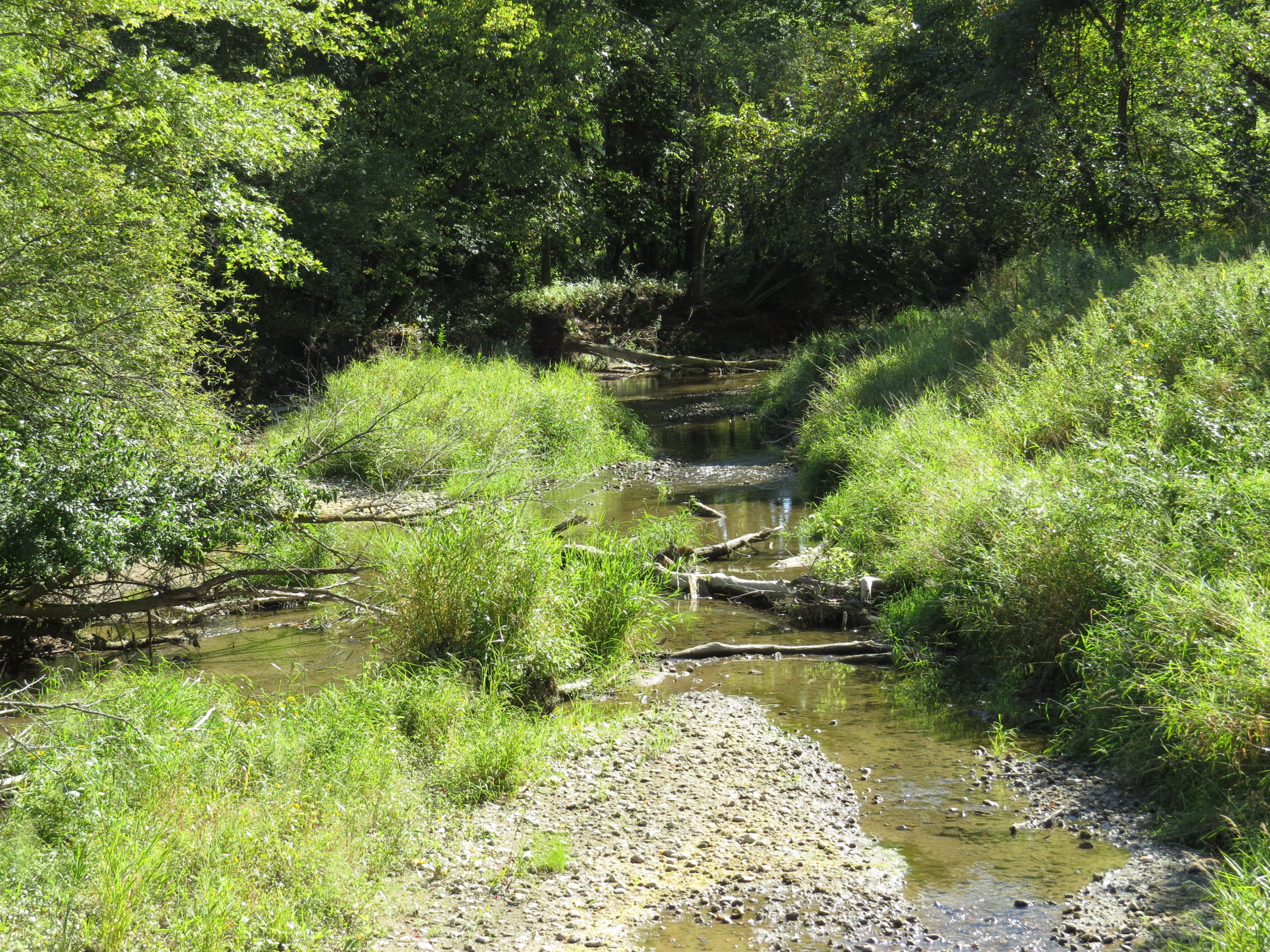
A couple miles north of the main park was a horse camp area in the valley of Fort Ridgely Creek. Huge walls of rock and clay on the east side of the creek created a quiet, protected area.
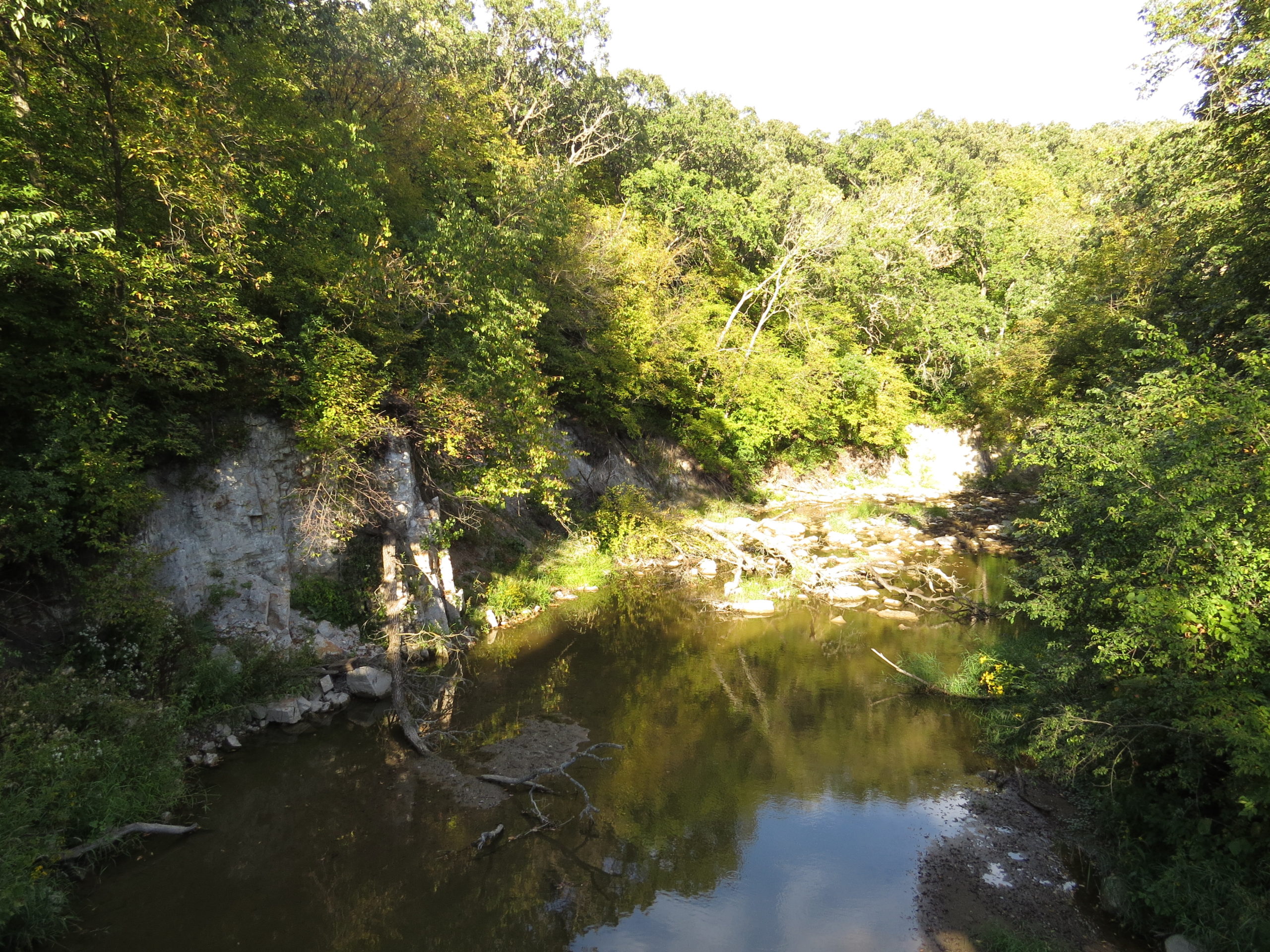
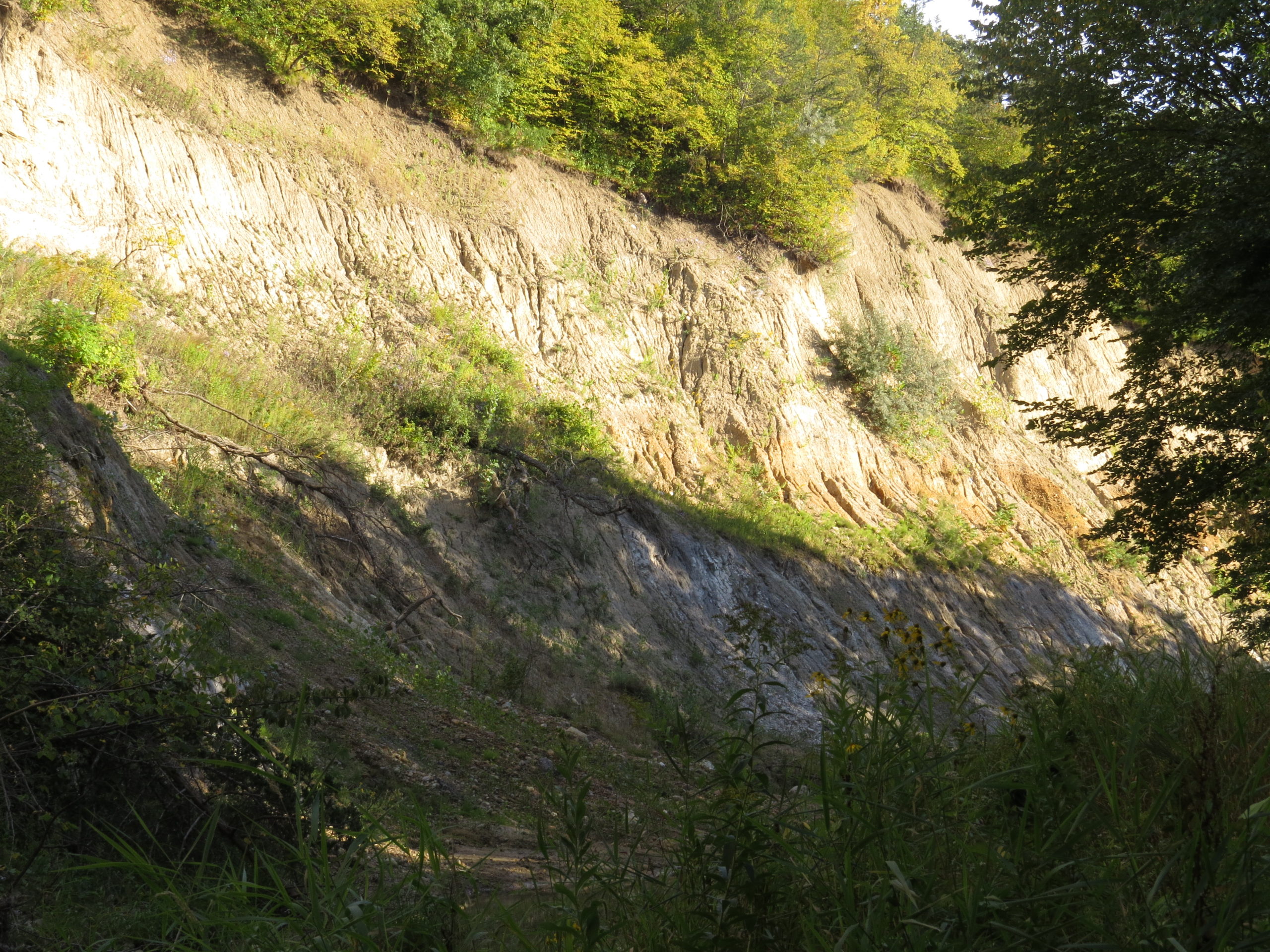
We passed many horseback riders as we hiked, and one proclaimed that it was much easier the way they were doing it than the way we were—but I didn’t know how right he was until we climbed the trail out of the creek bottom to the ridge.
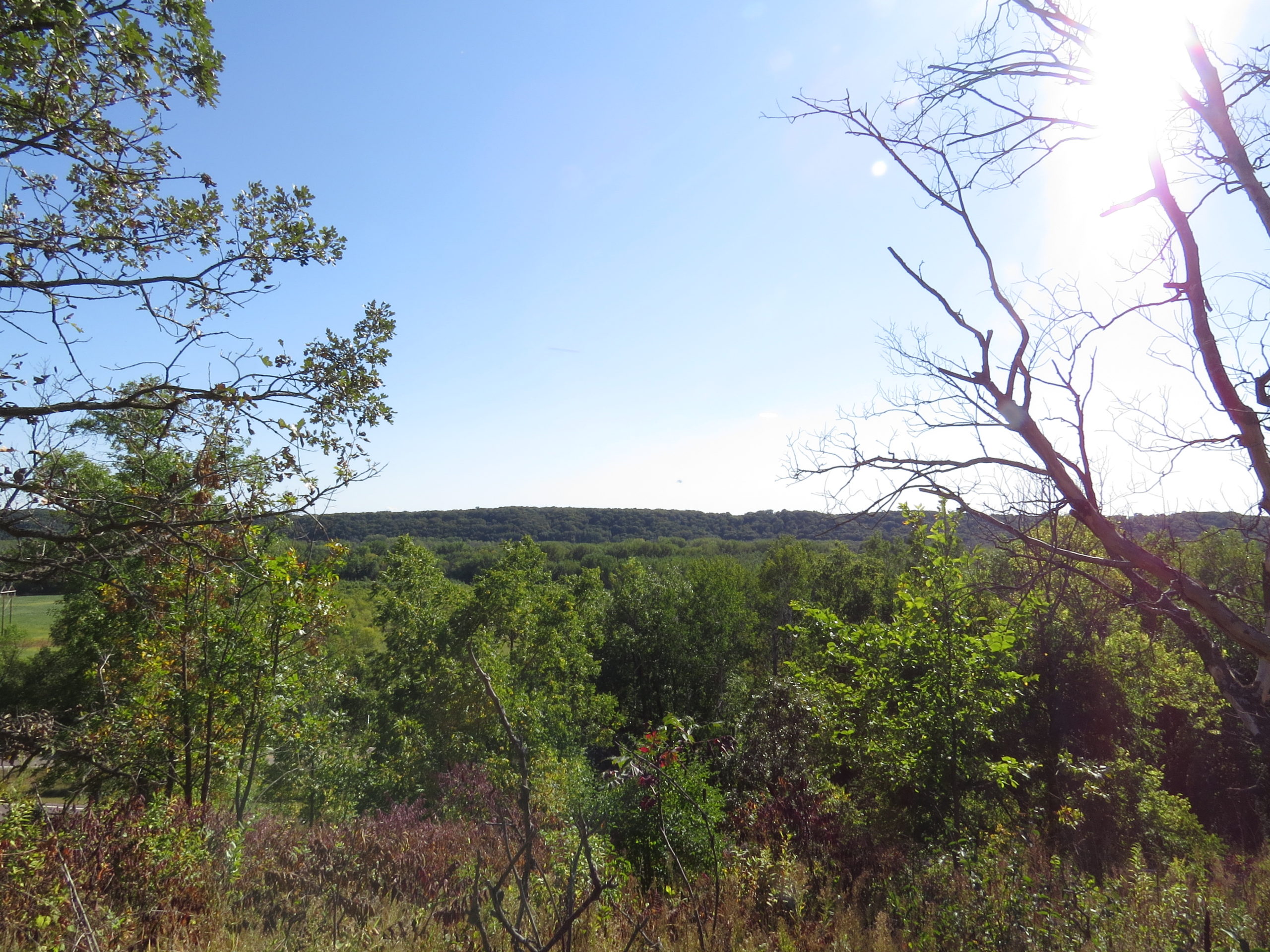
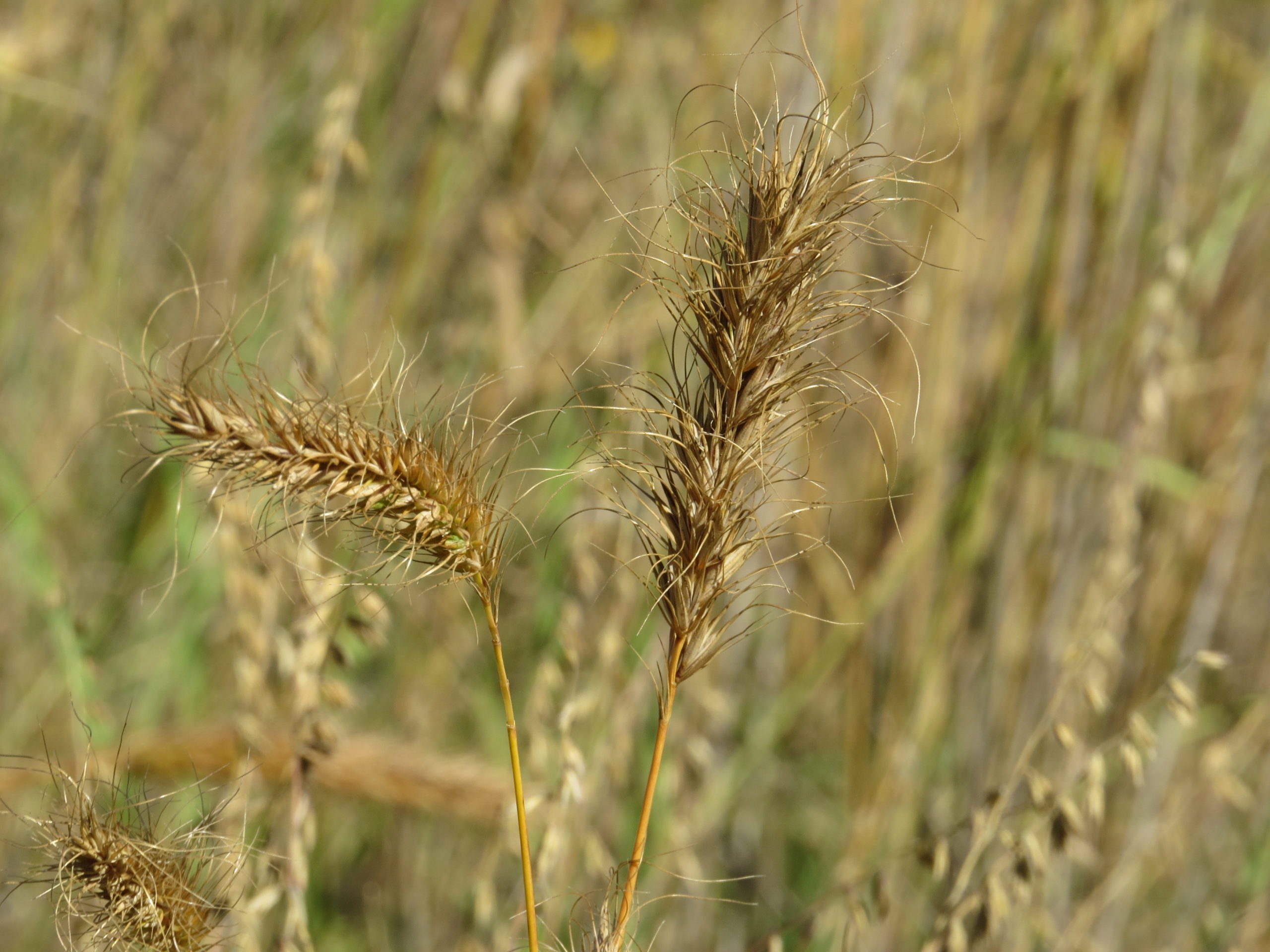
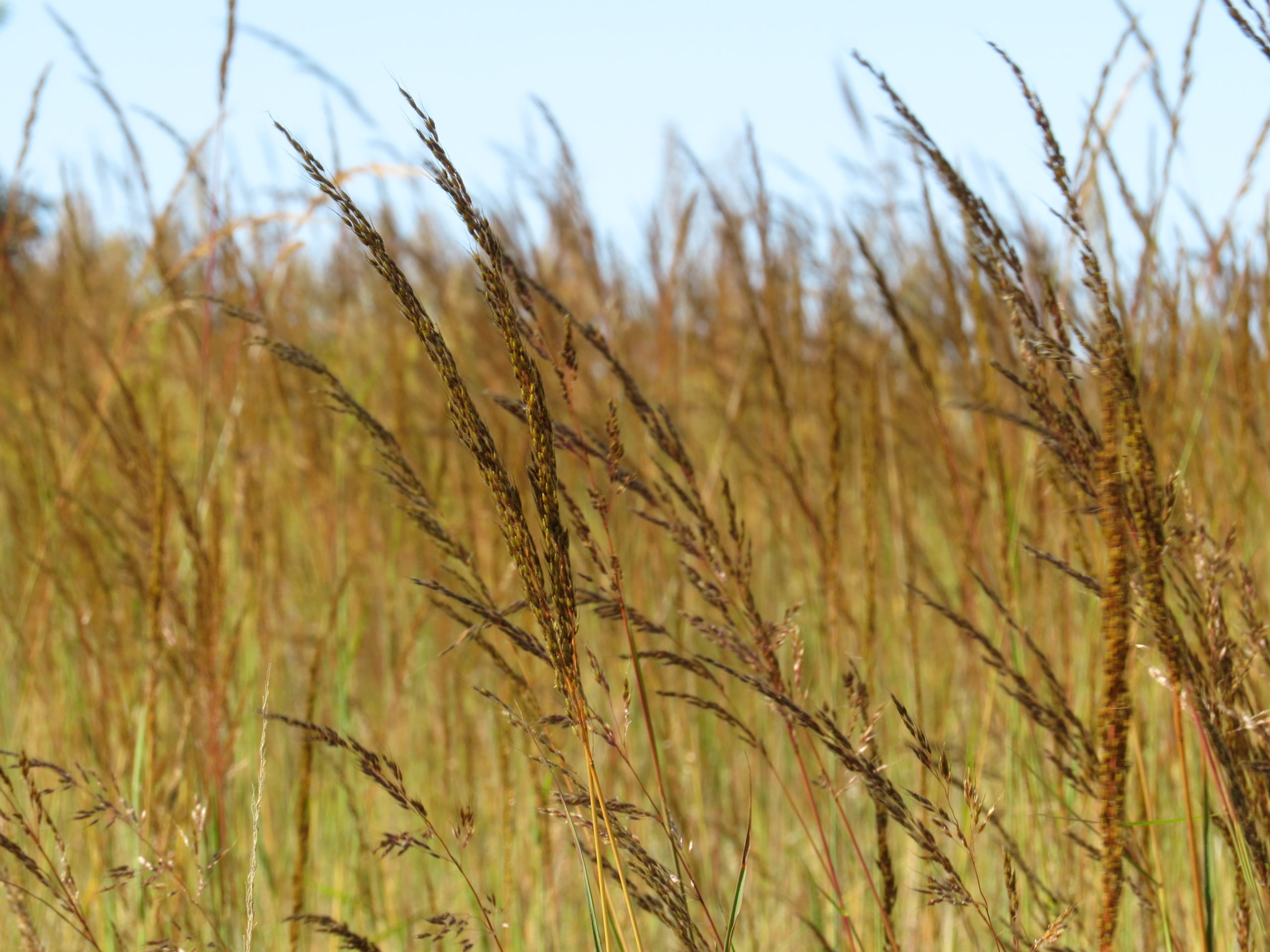
The upper prairie was dominated by Indian Grass, its deep rusty-brown seedheads swayed in the wind and paid homage to the ancestors who had lived and died here.
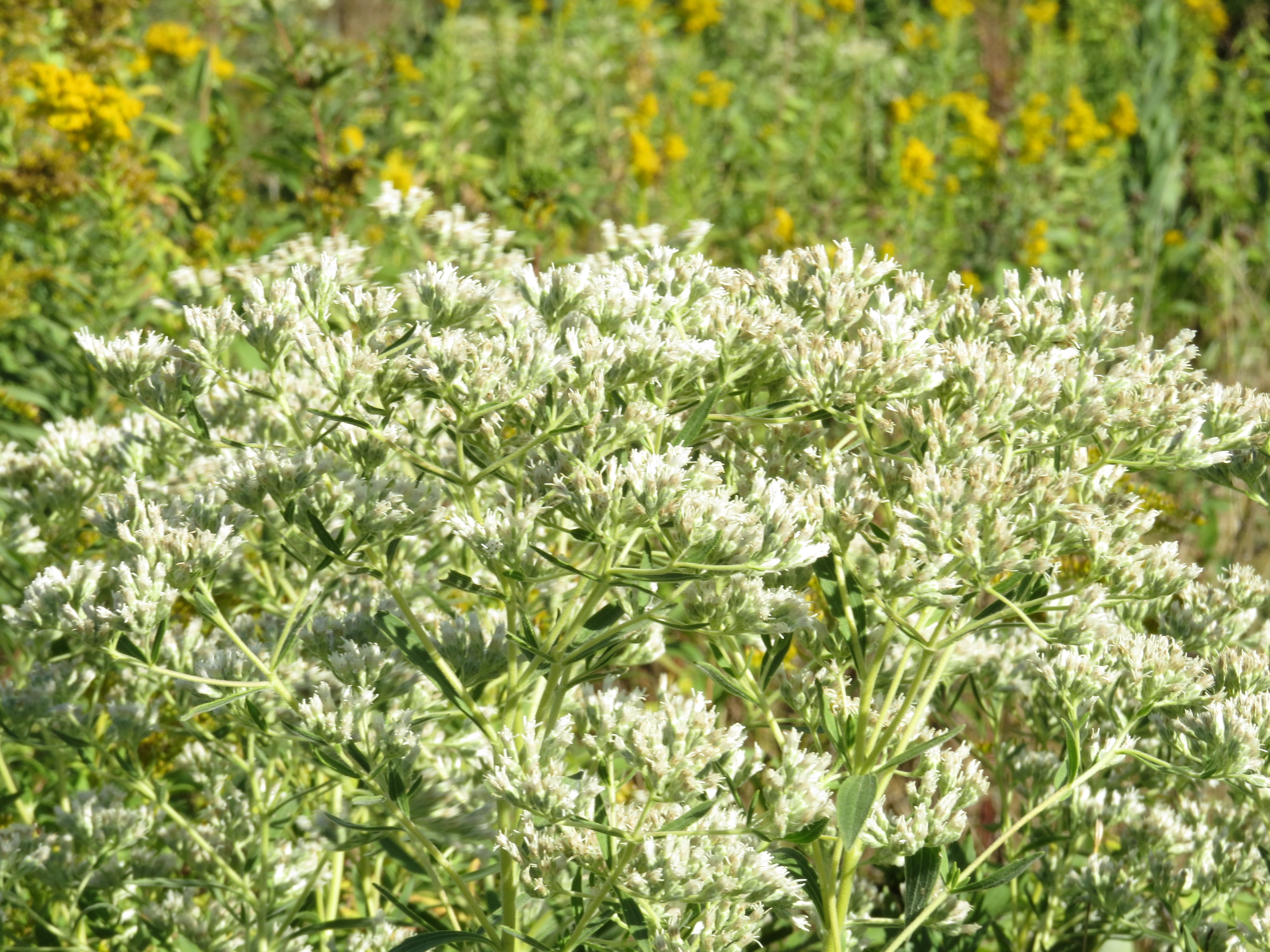
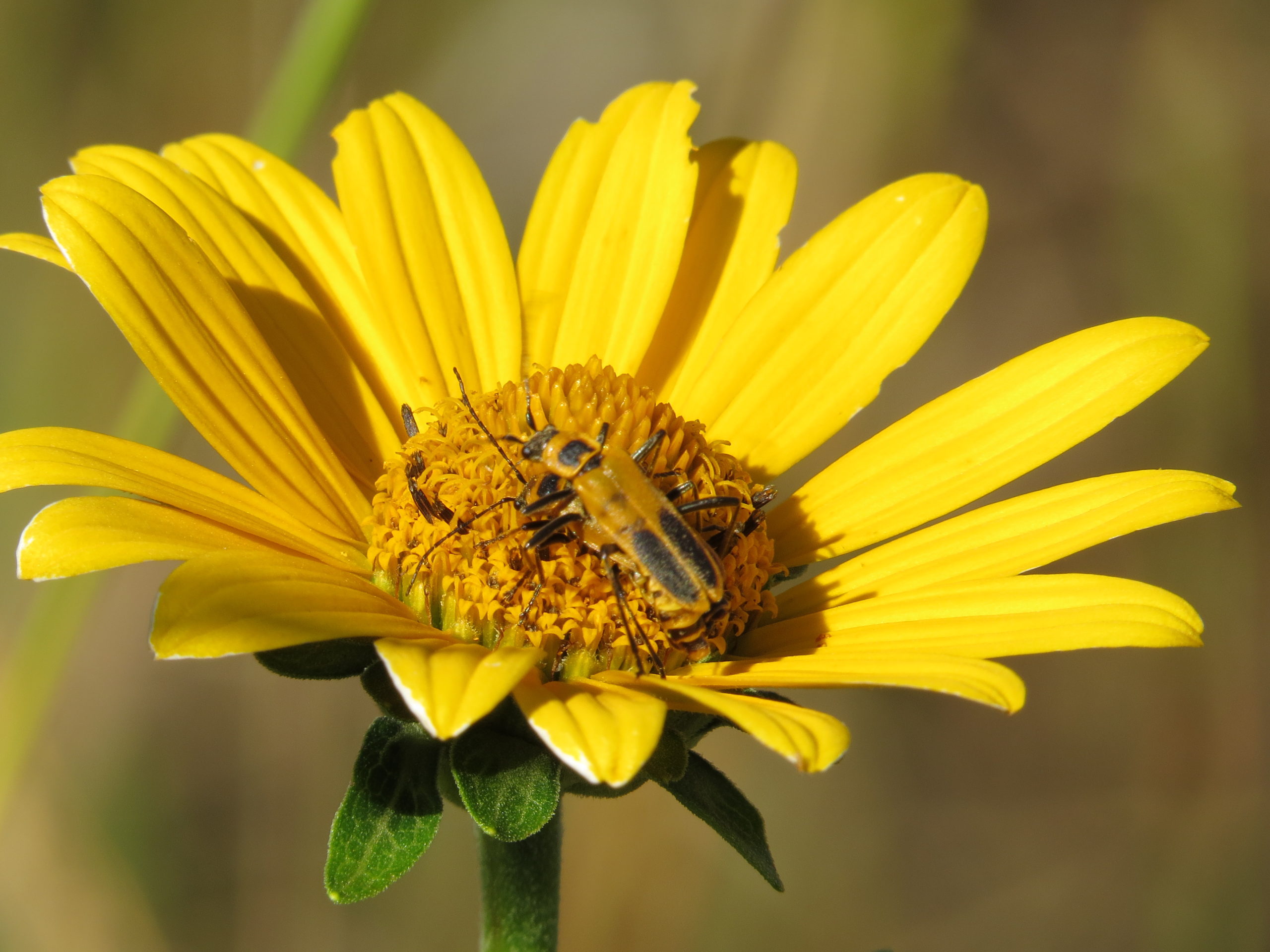
Sunflowers were brilliant, their golden pollen attracting Goldenrod Soldier Beetles, a beneficial insect that doesn’t harm the plants.
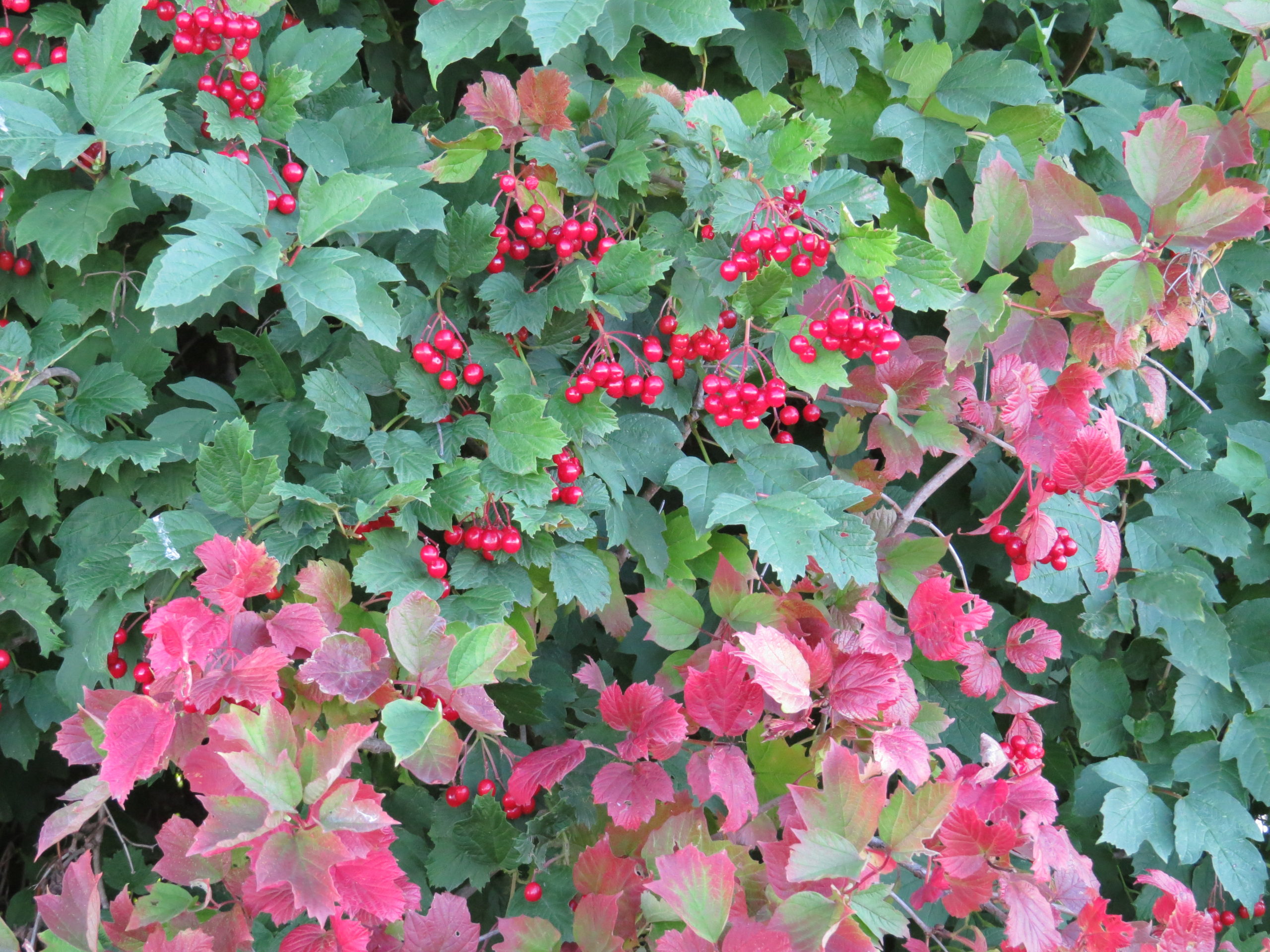
A Cranberrybush Viburnum gave a different vibe from the fall-ish yellow and browns of the prairie.
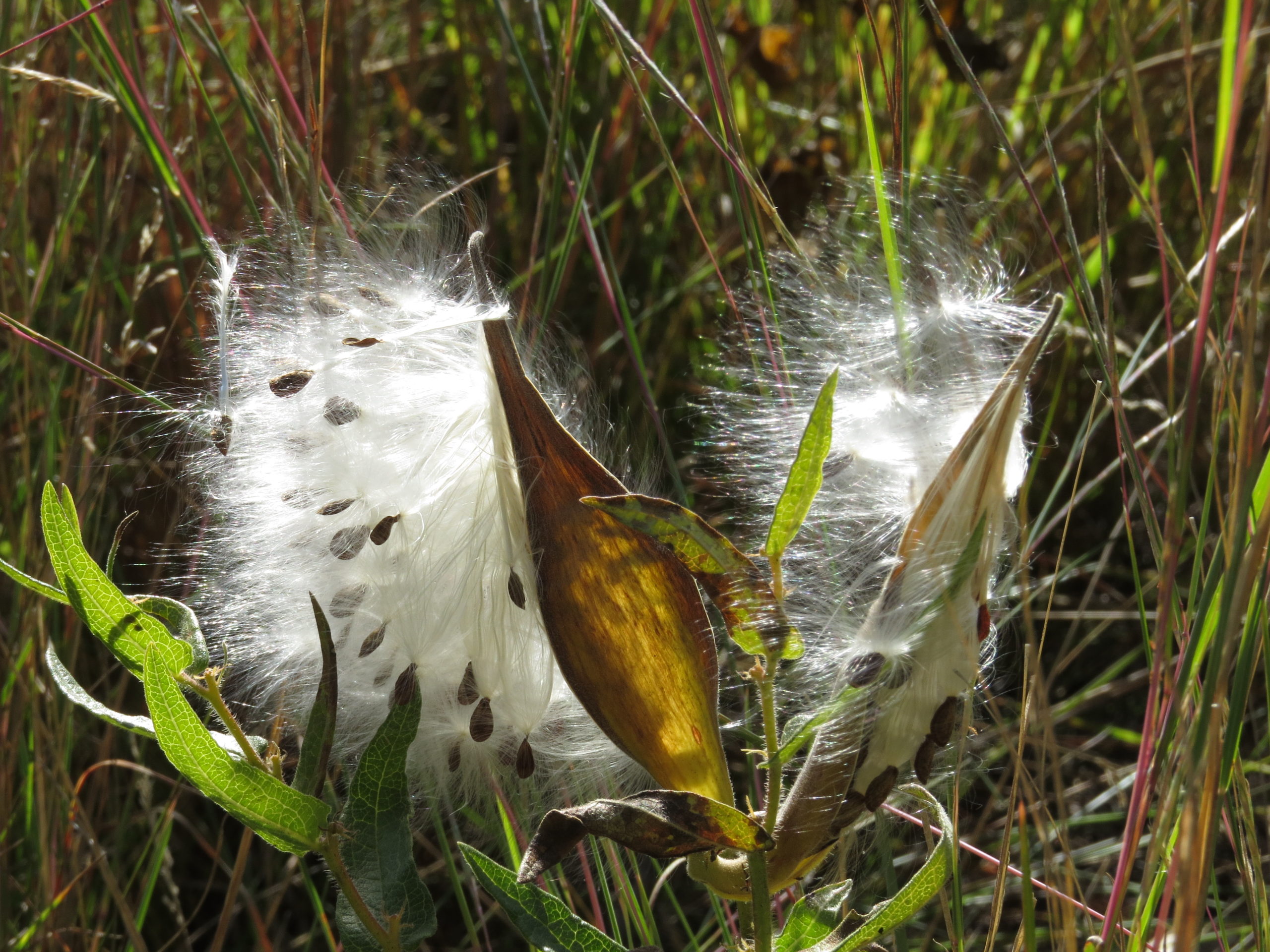
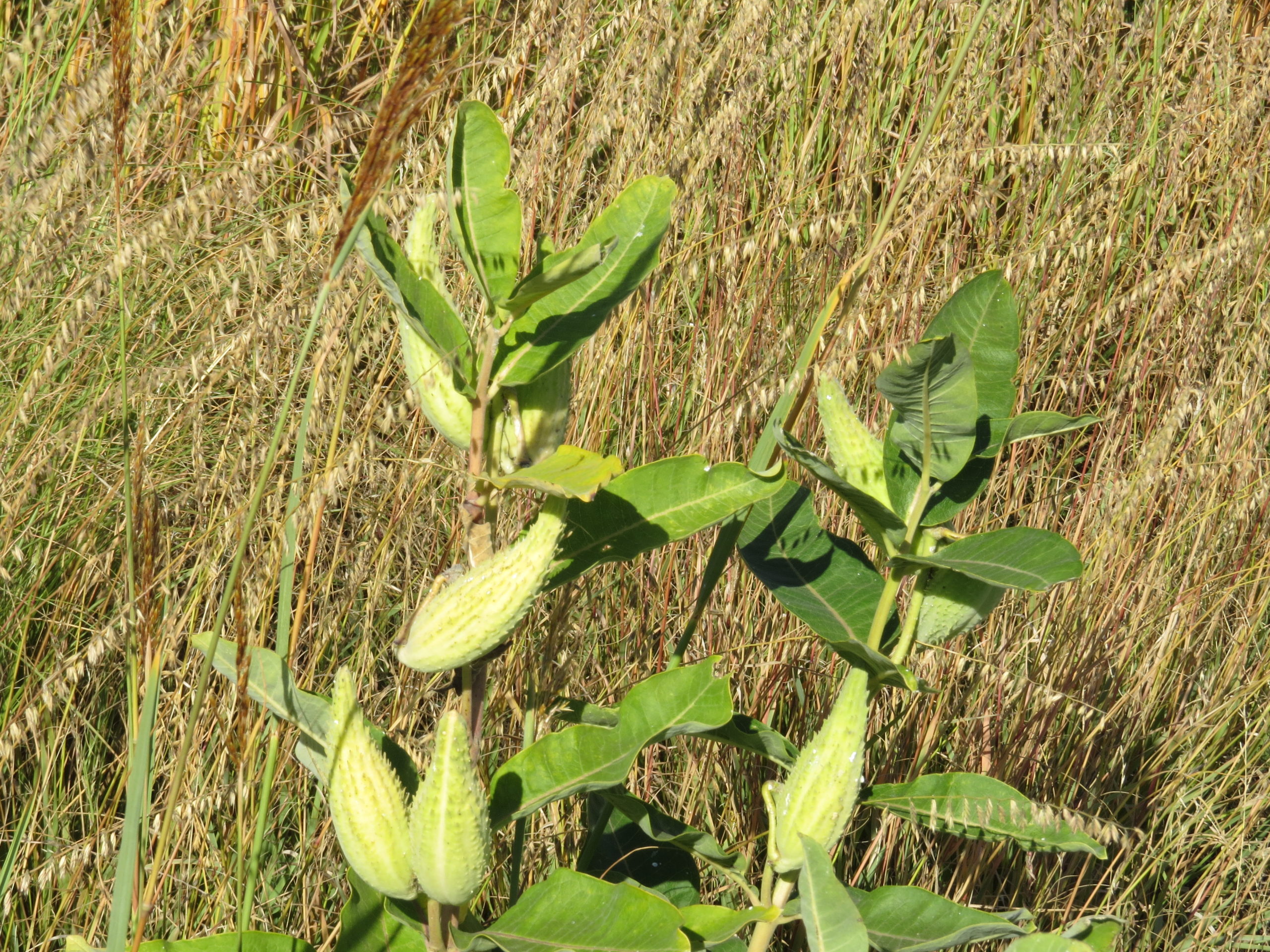
Sideoats Grama Grass and Common Milkweeds with their full pods of seeds, lined the trail in the Indian Grass prairie.
Fort Ridgely closed in 1872, and soon after, settlers unlawfully pillaged the buildings for stone and wood. In 1896, the land was set aside for the US–Dakota War Memorial, and in 1911, with an additional 50 acres, it was designated a state park, the fourth oldest in Minnesota. Now it has 537 acres of history and stories. It is a stark example of how the story changes with time and with who writes it. As I read the story of the US–Dakota War etched into the brass plates on the granite obelisk, I wondered what the Dakota version of the story would be. Our complicated, damning history.
Our stories are often paradoxical—many different versions of the same situation and all of them bearing some, but not all, of the truth. And as I mentioned before, we all have a tendency towards the fantastical, when a story does not correspond with the facts of reality. It really is a human conundrum. We tell ourselves illusory stories in part to have some sort of control over the situation, to put ourselves at the helm when things feel out of control or overwhelming. Perhaps it is ‘practice’ for real life. But too often, we only want our version of the story to be told, fantastical or not. We want our version of other people’s stories to be the truth. I have had many stories live and twirl in my mind in unrealistic fashion, so I know of what I speak. We become entwined with our own story, and the unwinding of it only promises disillusionment, disappointment, grief, and anger. No wonder we are so reluctant to the reckoning. Growing up is not easy, and growing into maturity is even more difficult. How can we be mature and generous with our storytelling? How can we navigate a fair way? How can we pay homage to our own struggles and to the struggles of others? It might take the very thing we started with as children—an open and creative imagination. Can we imagine the homeless person’s story as part of our narrative? Can we include a poor, young mother’s abortion story as part of our own mothering story? Can we envision what a displaced, starving person would do to try to regain health and agency in a repressive culture? We can have our own values and at the same time listen deeply to and walk with a person who is in a situation unlike any we have ever imagined for ourselves. It grows us as a person into a more seasoned version of ourselves. Welcome to the hard-earned, fruit-bearing, browned and aging Autumnal season of Life.
Reckoning
What keeps us from the restorative bliss of sleep? Who are the gatekeepers that decide whether we have restful sleep or fitful stirrings and wide-eyed starings into the dark? My first night in the Boundary Waters was the later. I was tired enough, and no caffeine gatekeeper propped my eyes open. It was not the fear gatekeeper, as I was on solid ground, and I was not afraid of any potential bears bumbling into our campsite. (I have an intimate past with the fear gatekeeper who has kept me awake far too many nights of my life.) Pain is a common gatekeeper—physical pain or emotional pain, it makes no difference—there is no restful sleep for the pained, a relief though it is. I think I was under the influence of the busy-mind gatekeeper—I had so much to think about and process from the unusual, out-of-my-comfort-zone day. Drinking too much water towards the end of the day didn’t help any. Zzzzipping out of the tent and zzzzipping back in seemed to make enough noise to wake all the critters of the forest. It was also too warm, too muggy, and too smokey, so I guess the discomfort gatekeeper was standing guard. The fitful sleep and star-staring was the background to the most difficult day of our trip…and to my most important one.
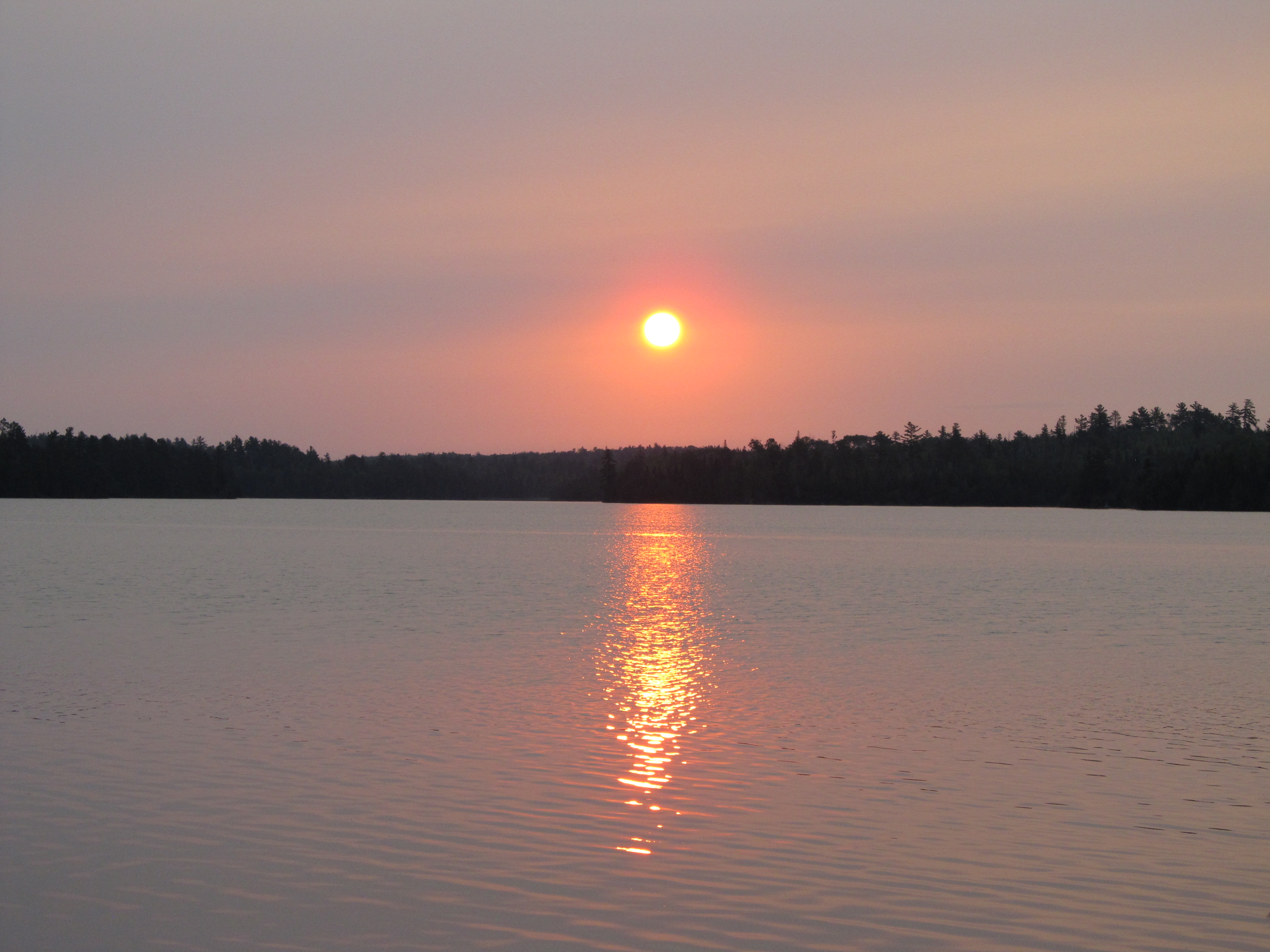
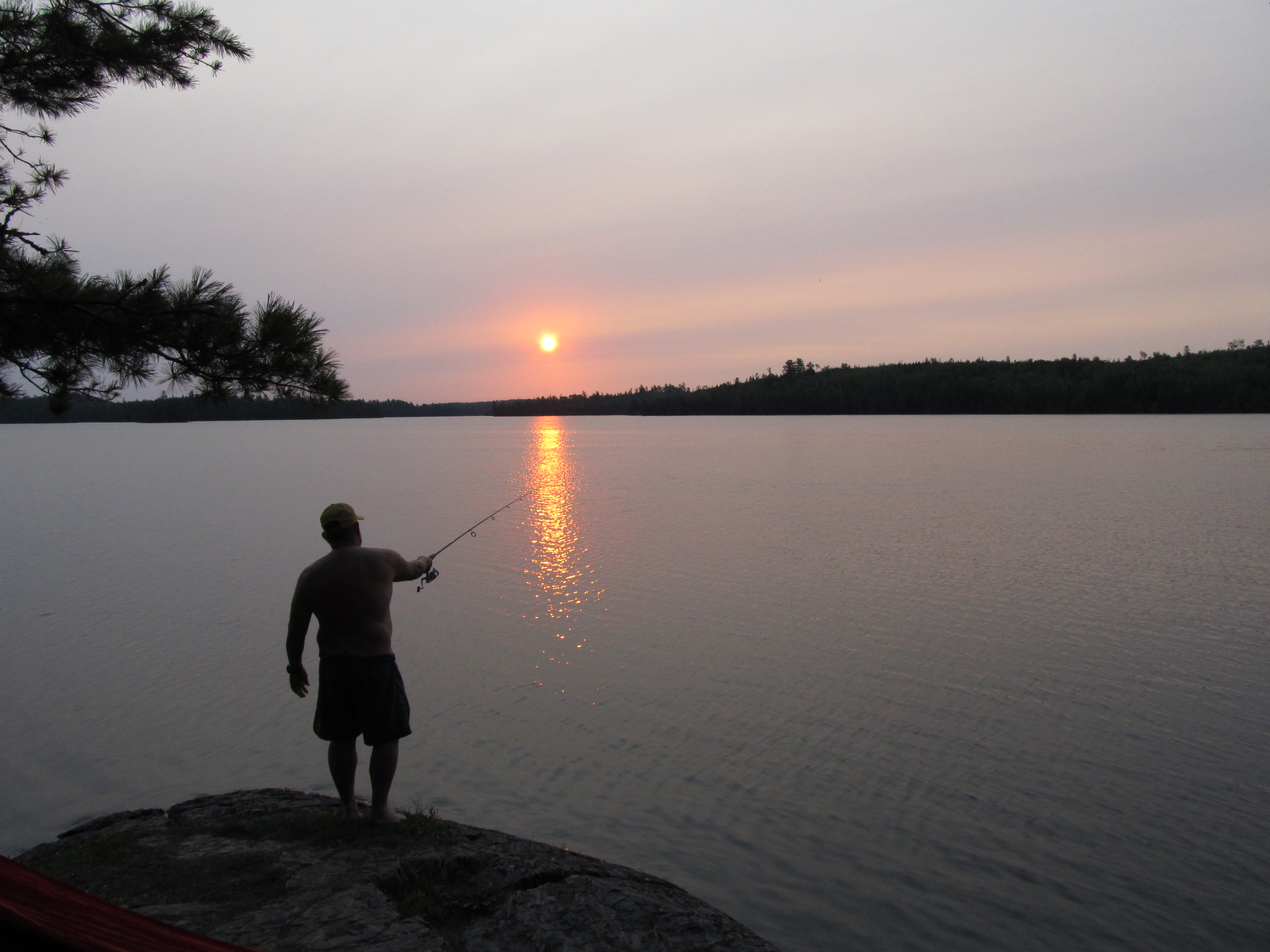
When I opened my eyes and saw the red ball of sun rising over the water, I zzzzipped out of bed and found Chris already throwing in a line. It’s good his day started peaceful.
We had a ‘big’ breakfast—hashbrowns, scrambled eggs (thanks to Egg Beaters) with bacon bits, and hot tea and coffee. Water for coffee, cooking, or washing dishes is dipped from the lake and boiled for a couple minutes.
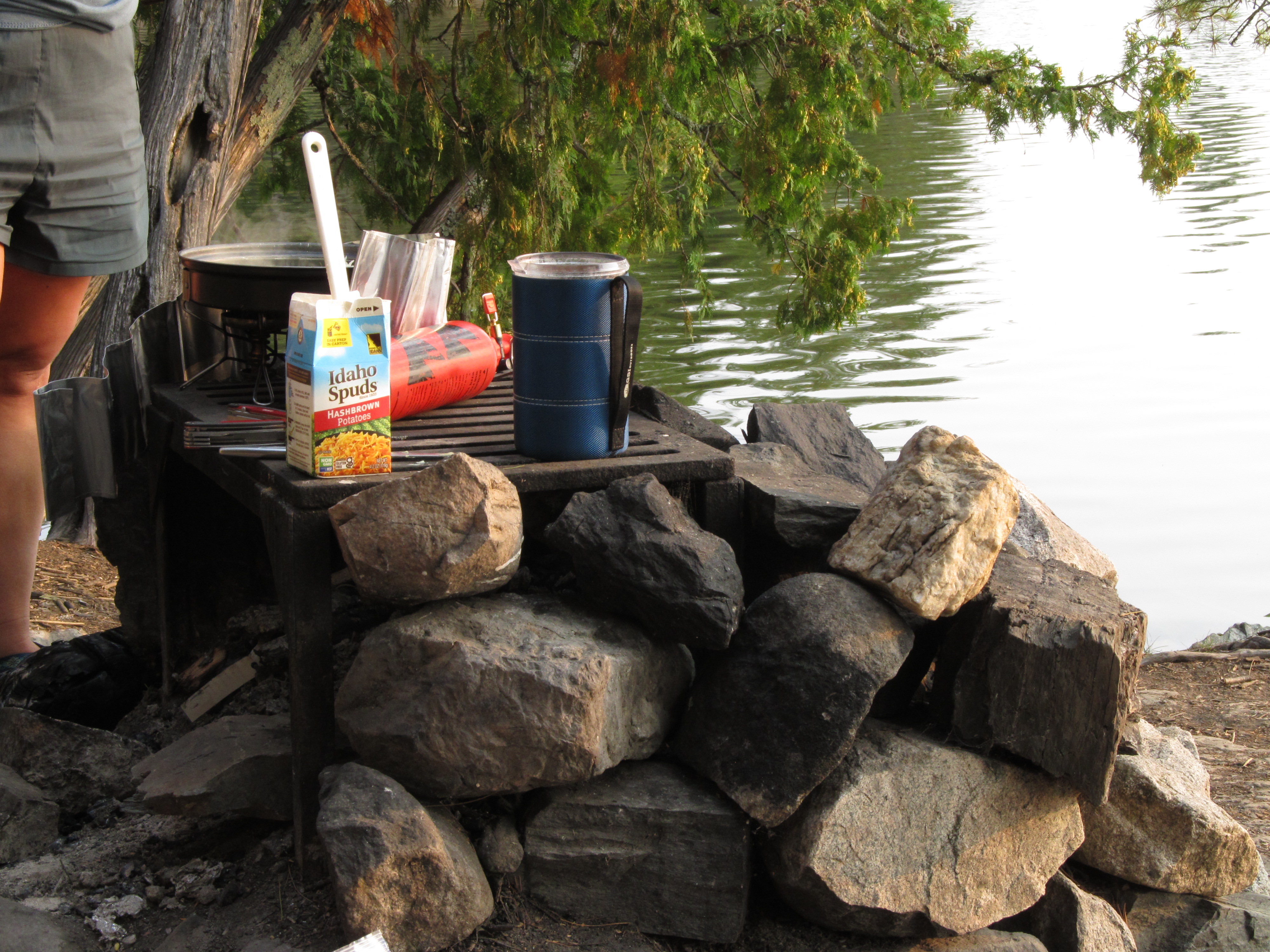
After breakfast, we cleaned up, packed up, and got ready to travel into Knife Lake. We talked about portaging, as we had five portages to get from Birch Lake to Knife Lake. Portages are the ‘hiking’ portion of a BWCA trip, how we get from one lake to another or around a rocky rapids area of a river that connects two lakes. Ideally, you do it all in one trip with everyone carrying something. Something meaning packs, canoes, paddles, and fishing poles. I was excited for my first portages!
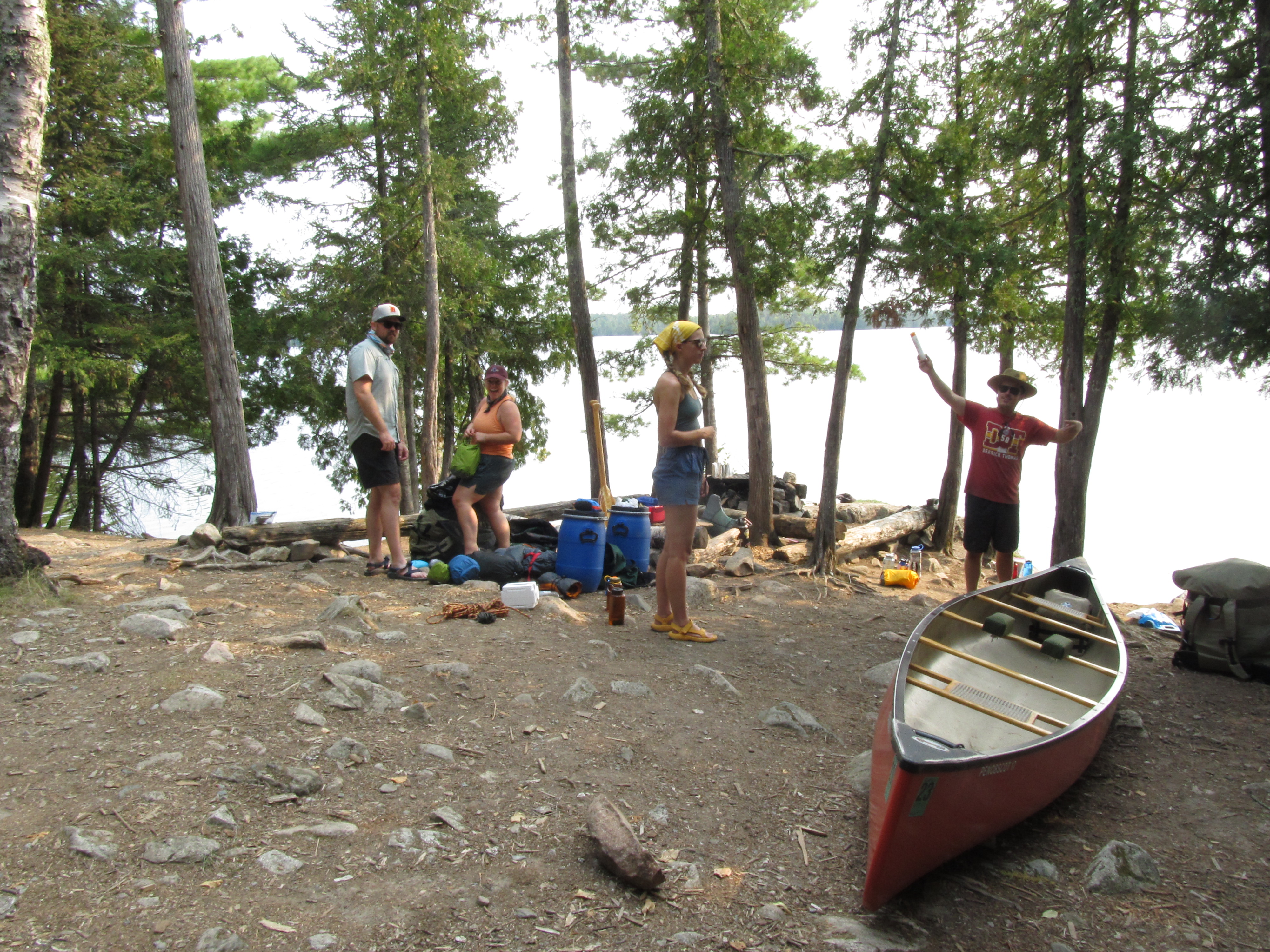
But first, a breakdown…and I don’t mean an analysis of the game of portaging. I mean me, once I was in the canoe again…trying to paddle. It’s like my arms weren’t working right. I felt weak. The kids were already a ways ahead of us. I would put the paddle down, hang my head down, and try to talk myself back to it. It wasn’t working very well—my paddle and head were down for longer than I was moving forward. I started to cry. I was so frustrated with myself. Unfortunately for Chris, I took a bunch of that frustration out on him. As the ‘back’ person in the canoe, he was responsible for steering us, and I was the forward motion ‘power.’ Since I wasn’t bringing the ‘power,’ it felt like we weren’t going anywhere—and if we were, it felt like the wrong direction. I was chippy with him, asking those no-answer questions like, “Why are we going in that direction?” and “Where are you going?” He probably didn’t hear half of them. I don’t remember how long before the kids stopped and waited for us. I felt, once again, like I couldn’t do this. Emily was a little exasperated with me, ” Mom, you can’t keep doing this!” More tears, more frustration with myself. Finally, Aaron told us when campers were having a hard time, everybody would just take a break. Put the paddles down. Sit still. Breathe. So we did that. I don’t know how long…but it worked. I was able to paddle again.
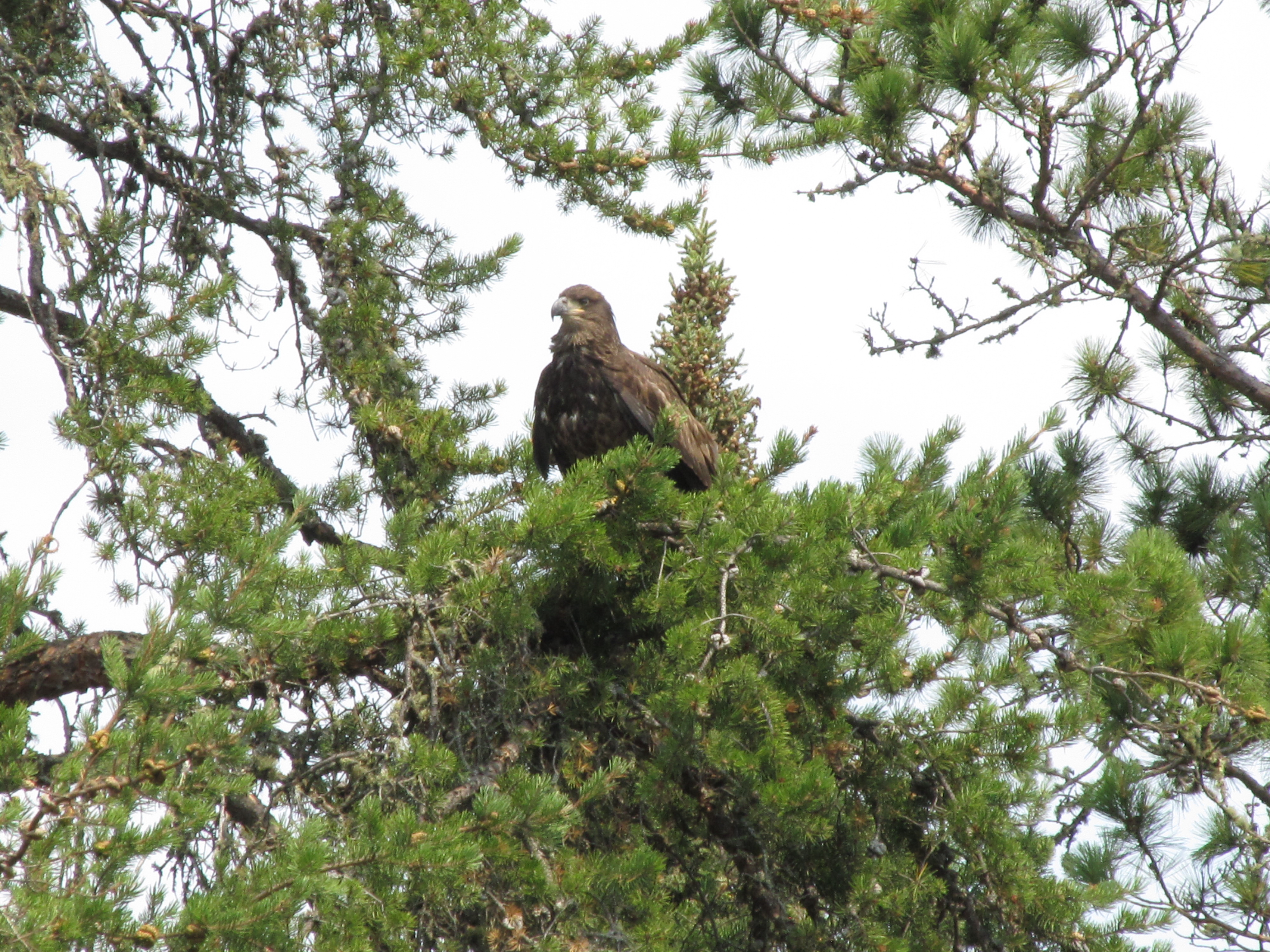
We glided through the long, narrow, beautiful Birch Lake until we got to our first portage—a 40 rod portage. (One rod is equal to 16.5 feet, which is the length of an average canoe.) I heard him before I saw him. He greeted us with some chattering calls. I quickly pulled my camera from my life jacket pocket, thinking he would fly away. But he didn’t. He was the portage gatekeeper. He watched us disembark from the canoes, get the packs and canoes hoisted onto our shoulders, and walk into the woods! I heard him make the same calls when a canoe behind us came to the portage!
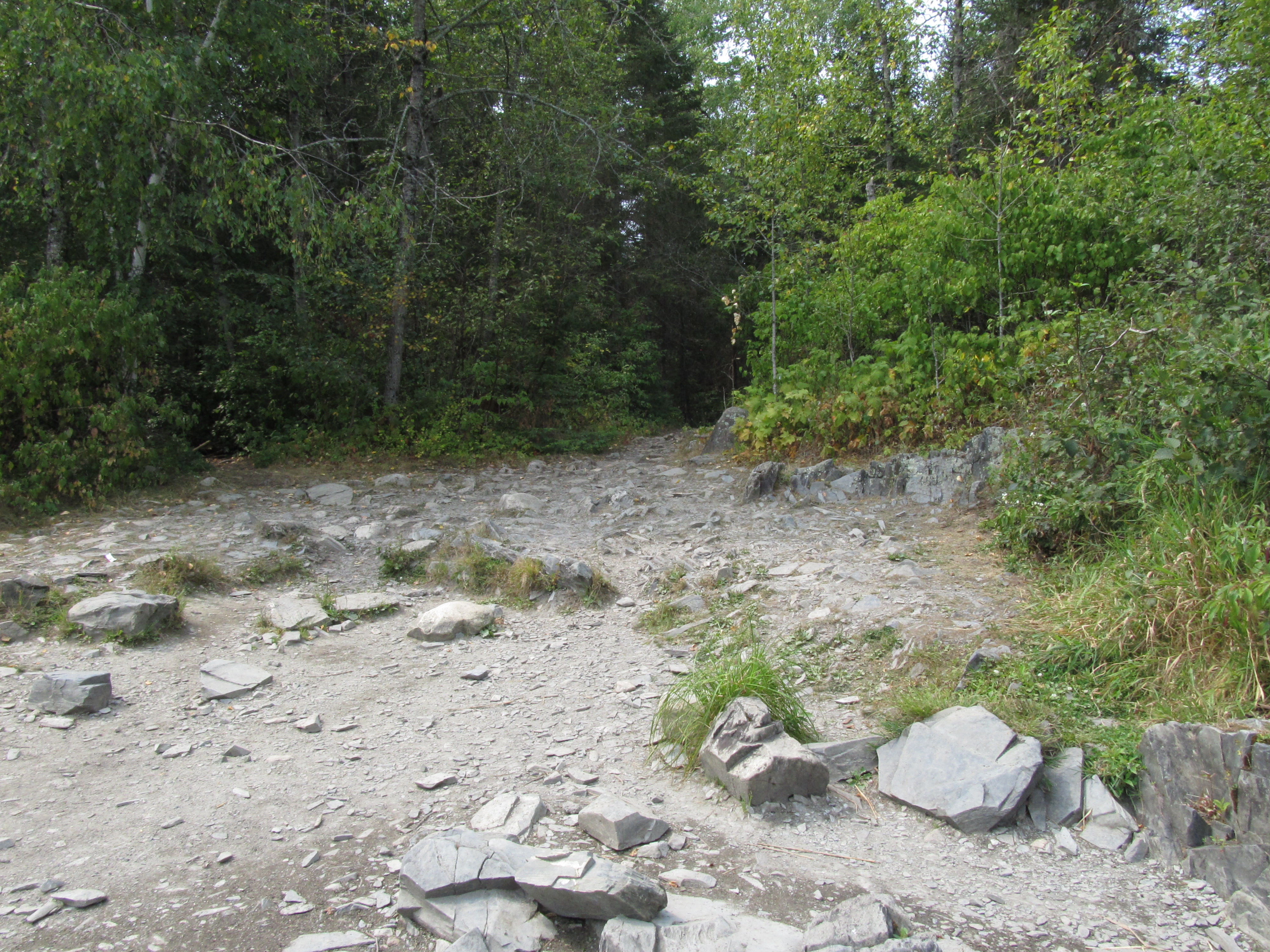
On the other side of the portage, we stopped to celebrate our first one! I now knew I could carry a personal pack, which Aaron estimated to be between thirty-five and forty pounds. But it was the kids who really impressed me—how they easily carried a pack and a canoe!
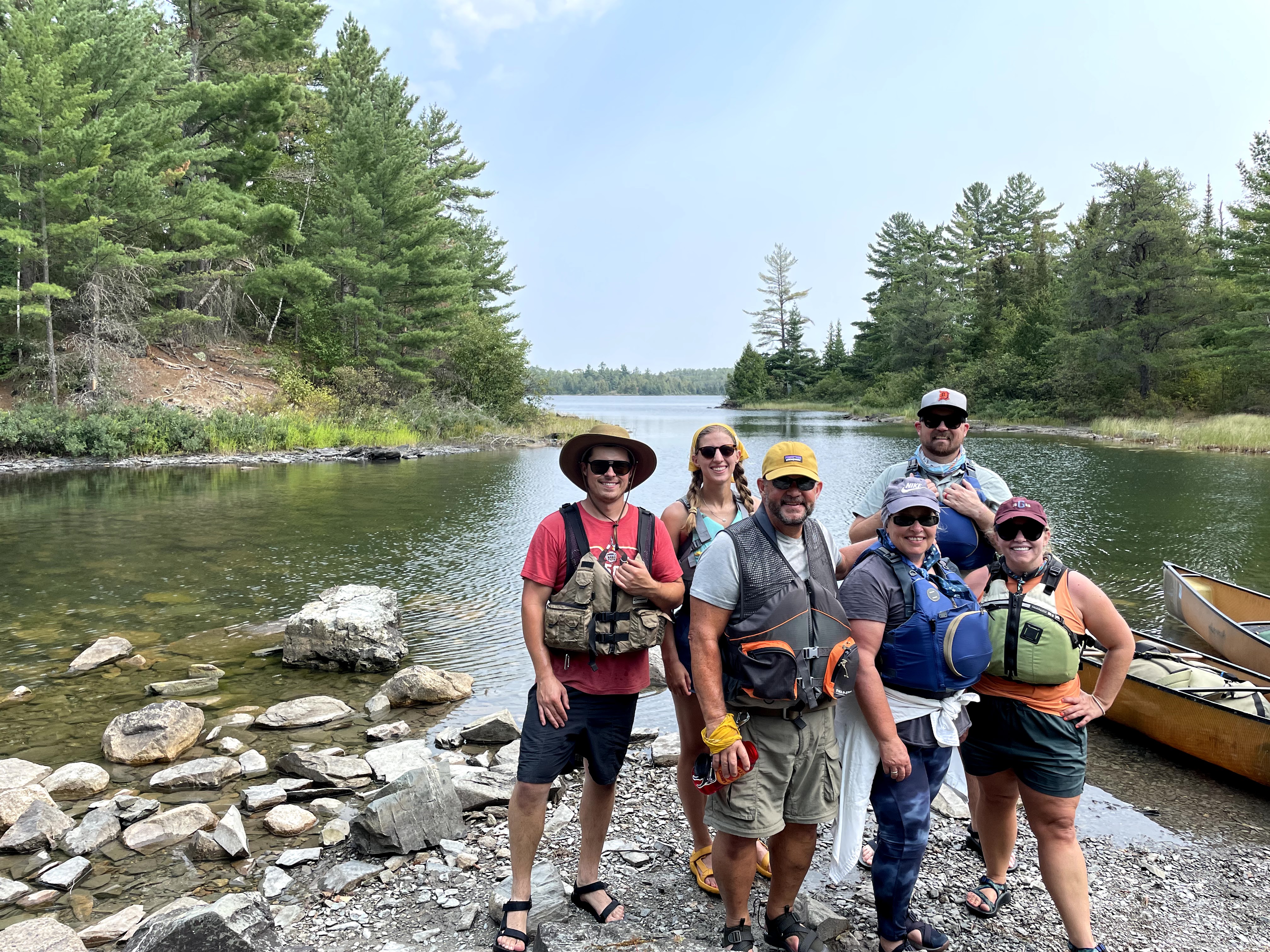
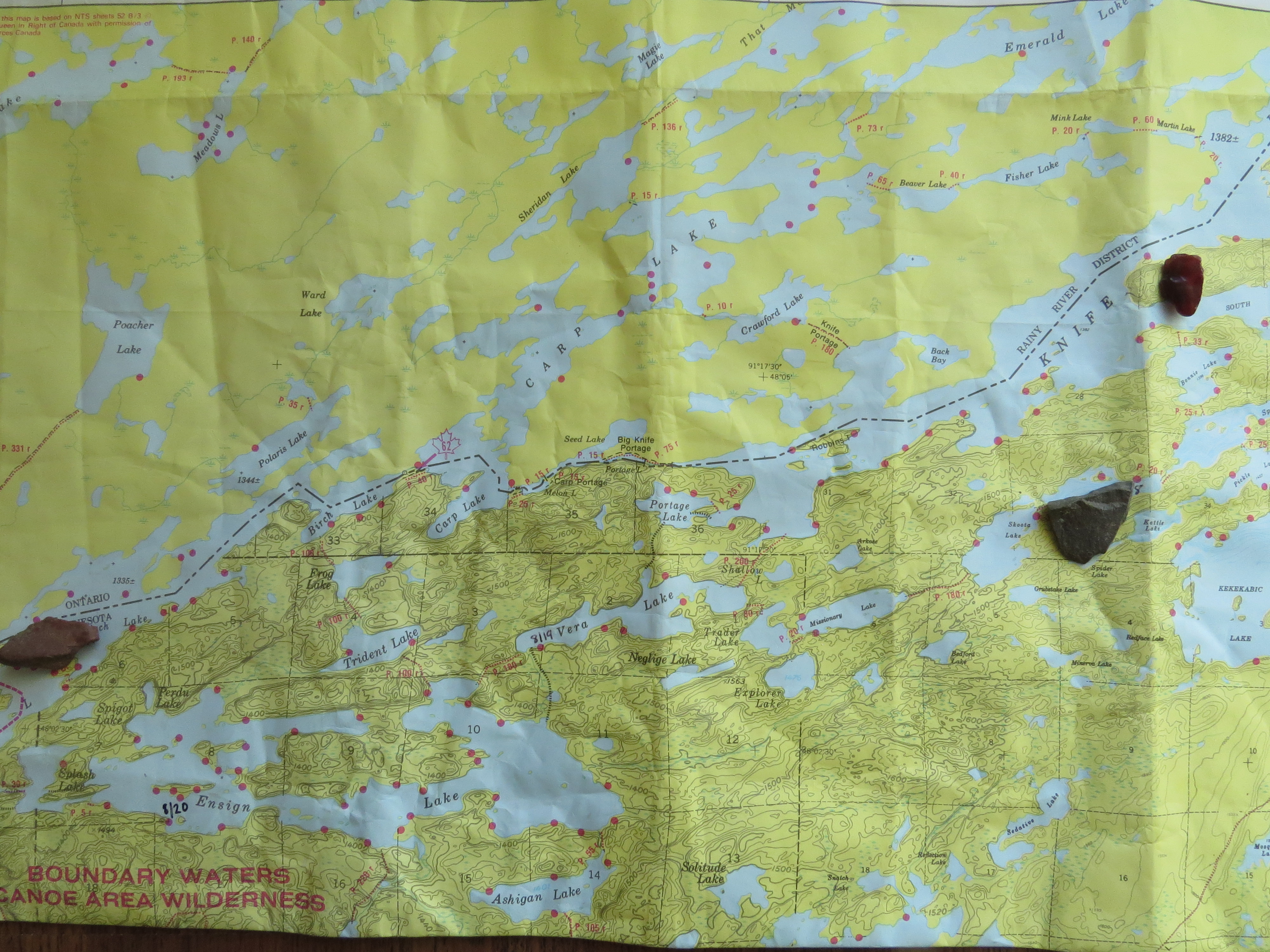
We had portaged around a rocky creek, and I didn’t realize until looking at the map just now that the creek belonged to Canada. We were walking the line and canoeing the line between two countries.
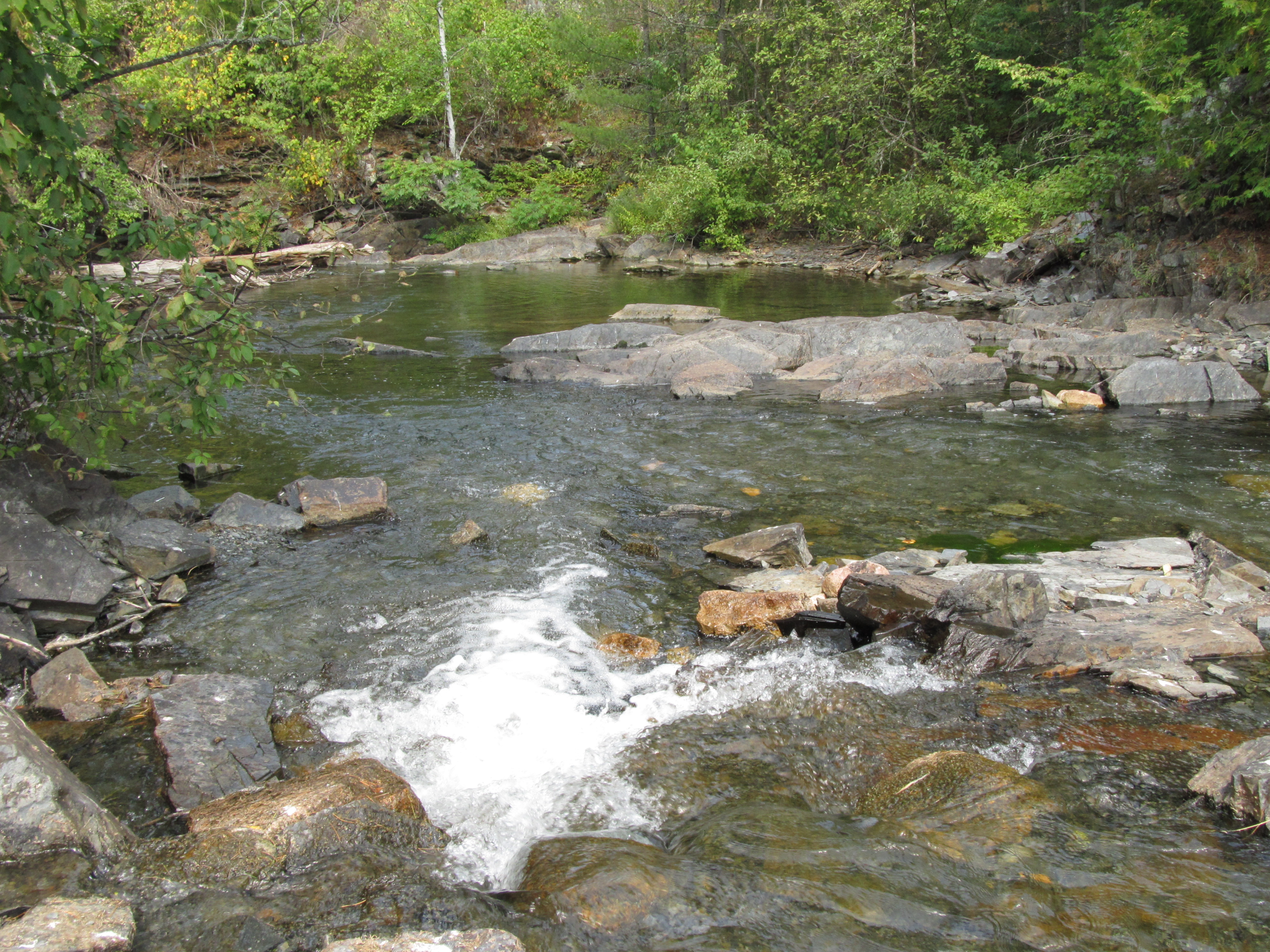
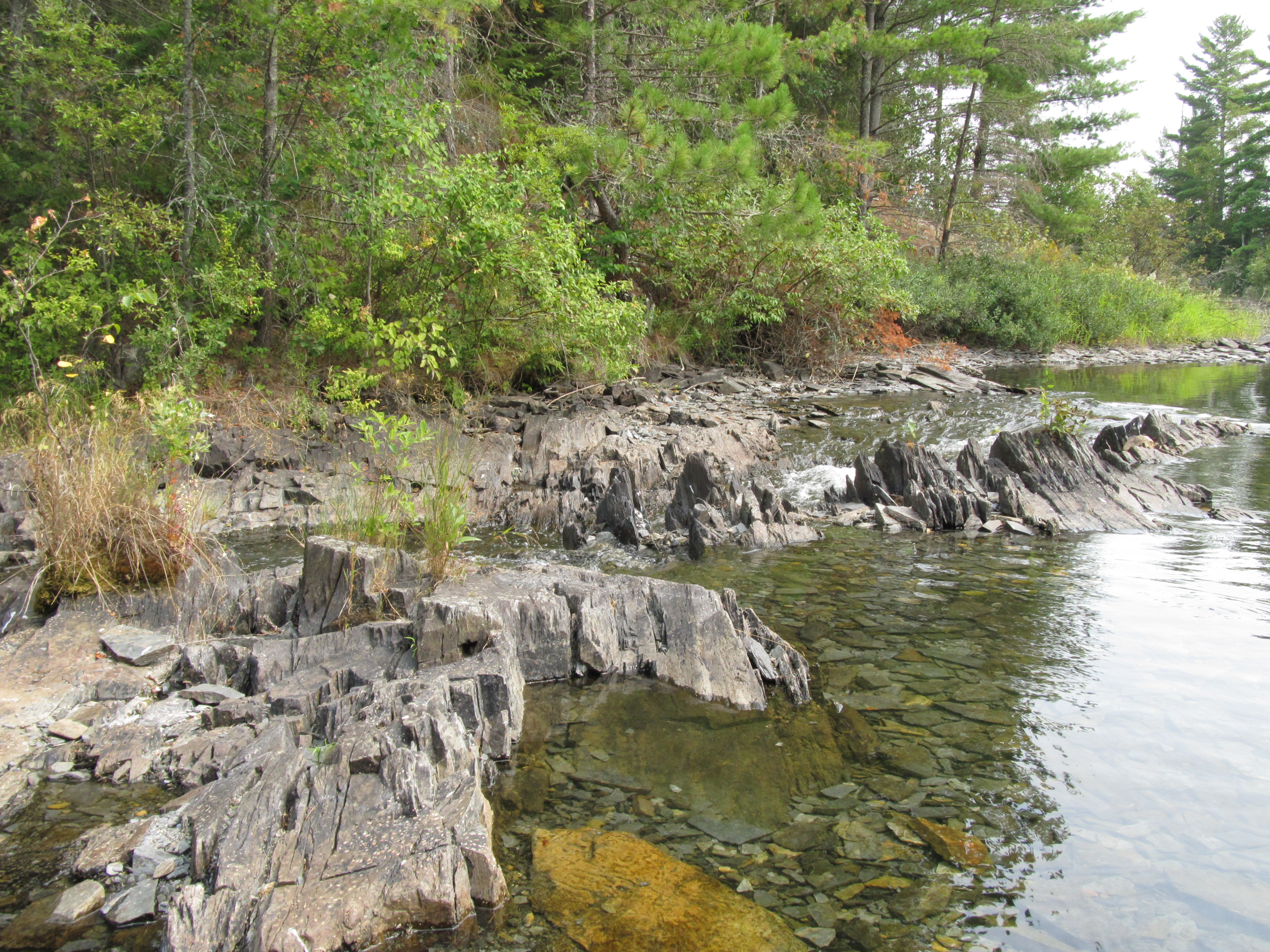
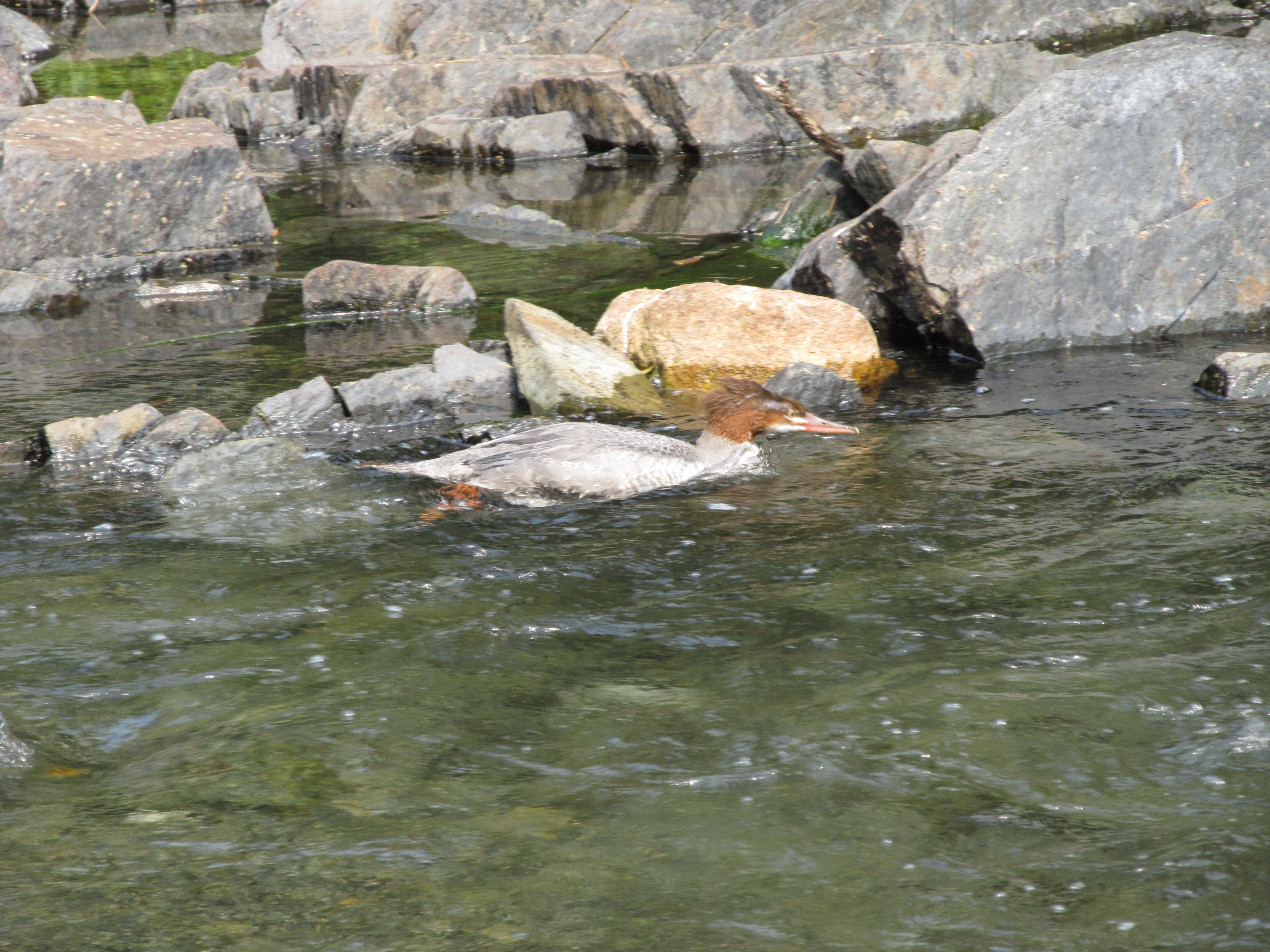
We lunched in Carp Lake. We portaged into Melon Lake, a small, shallow lake with the clearest water—it was like a natural swimming pool. We portaged again and again up the Knife River. Our portages were smooth—everyone knew what they were carrying and who was helping who with lifting packs or clipping water bottles. After our longest portage of the day, 92 rods, we opened up into Knife Lake. The water was ‘bigger’ than we had traveled all day, more open, windier, and wavier. Our first priority was to find a campsite.
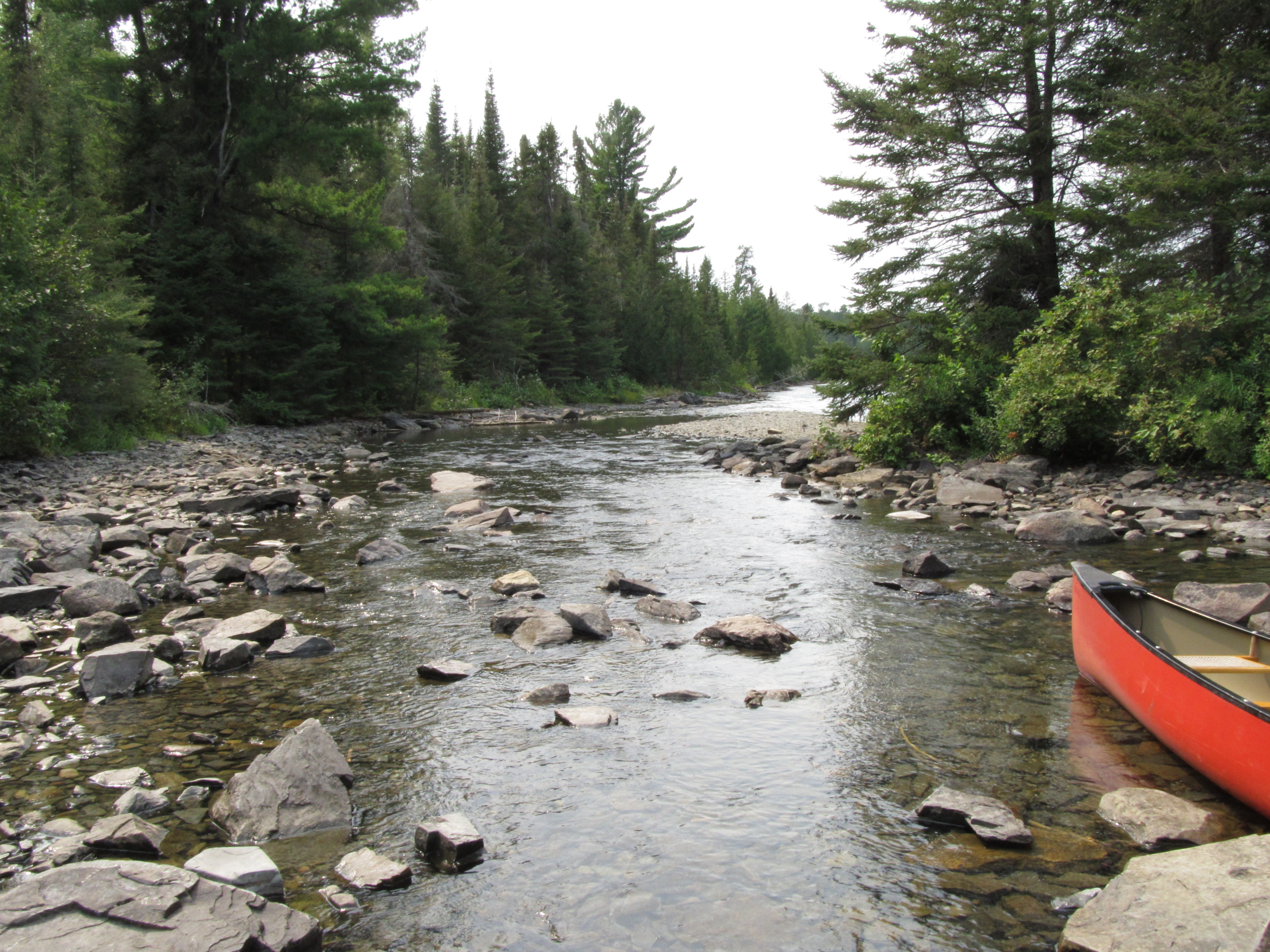
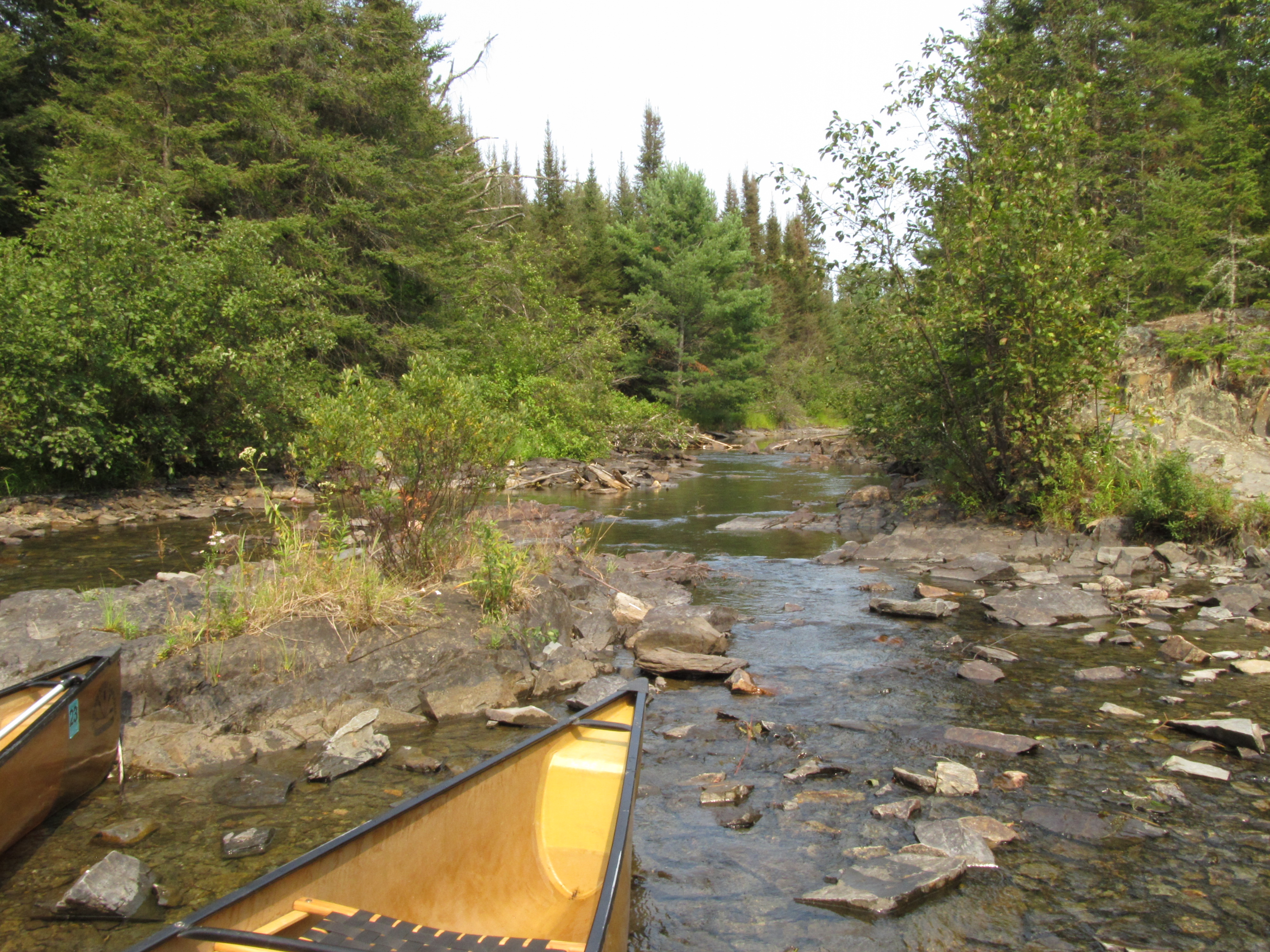
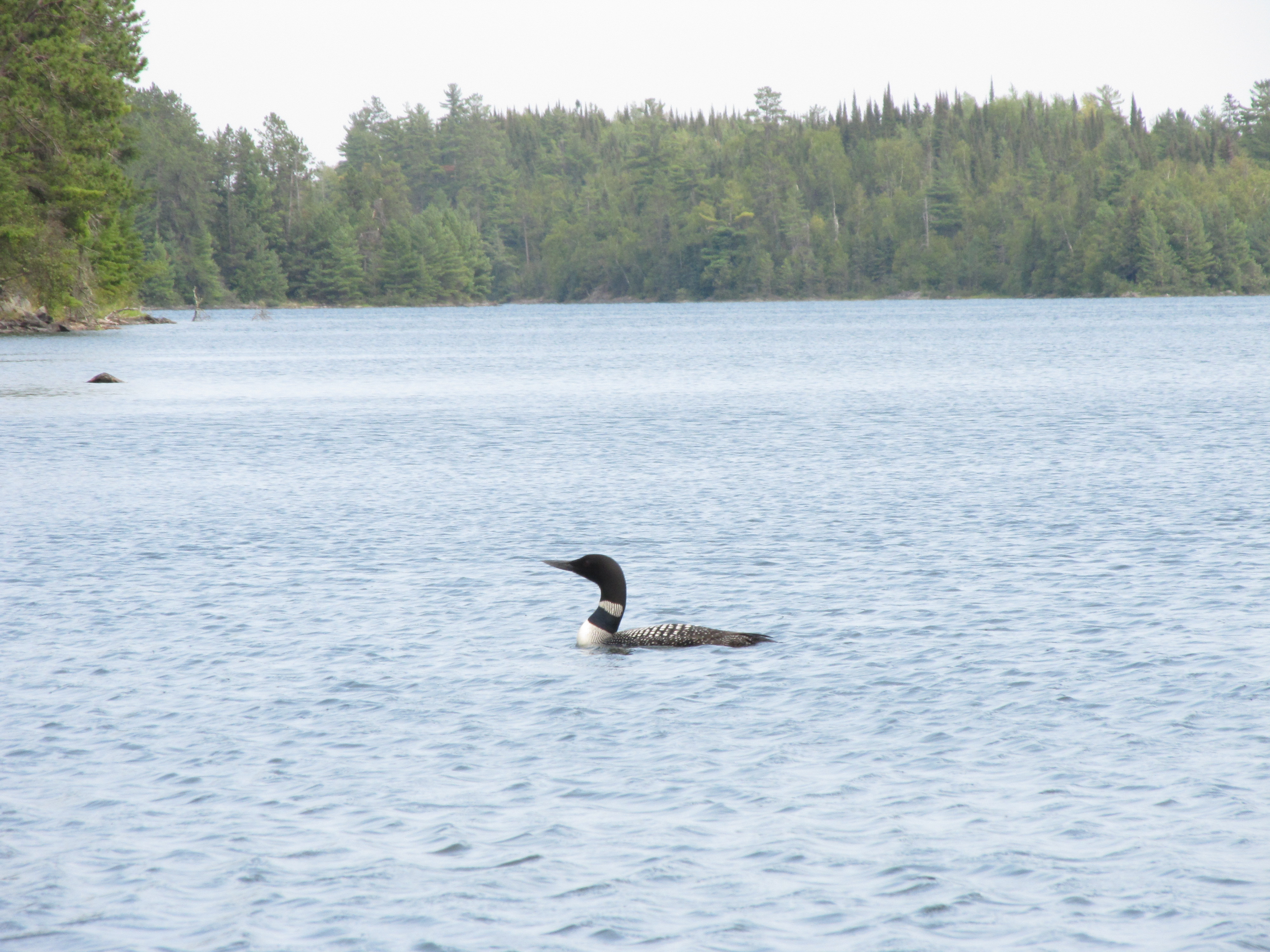
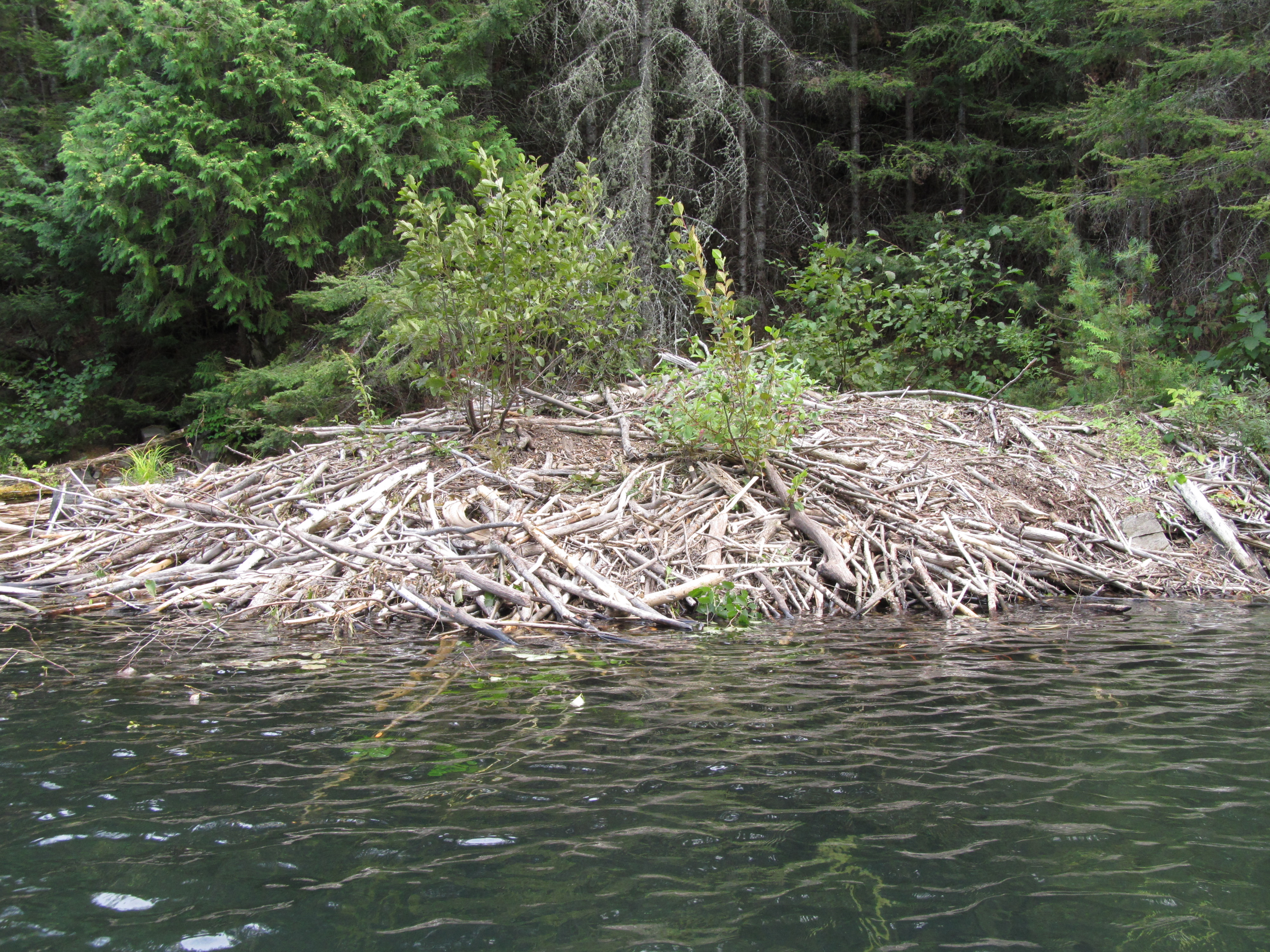
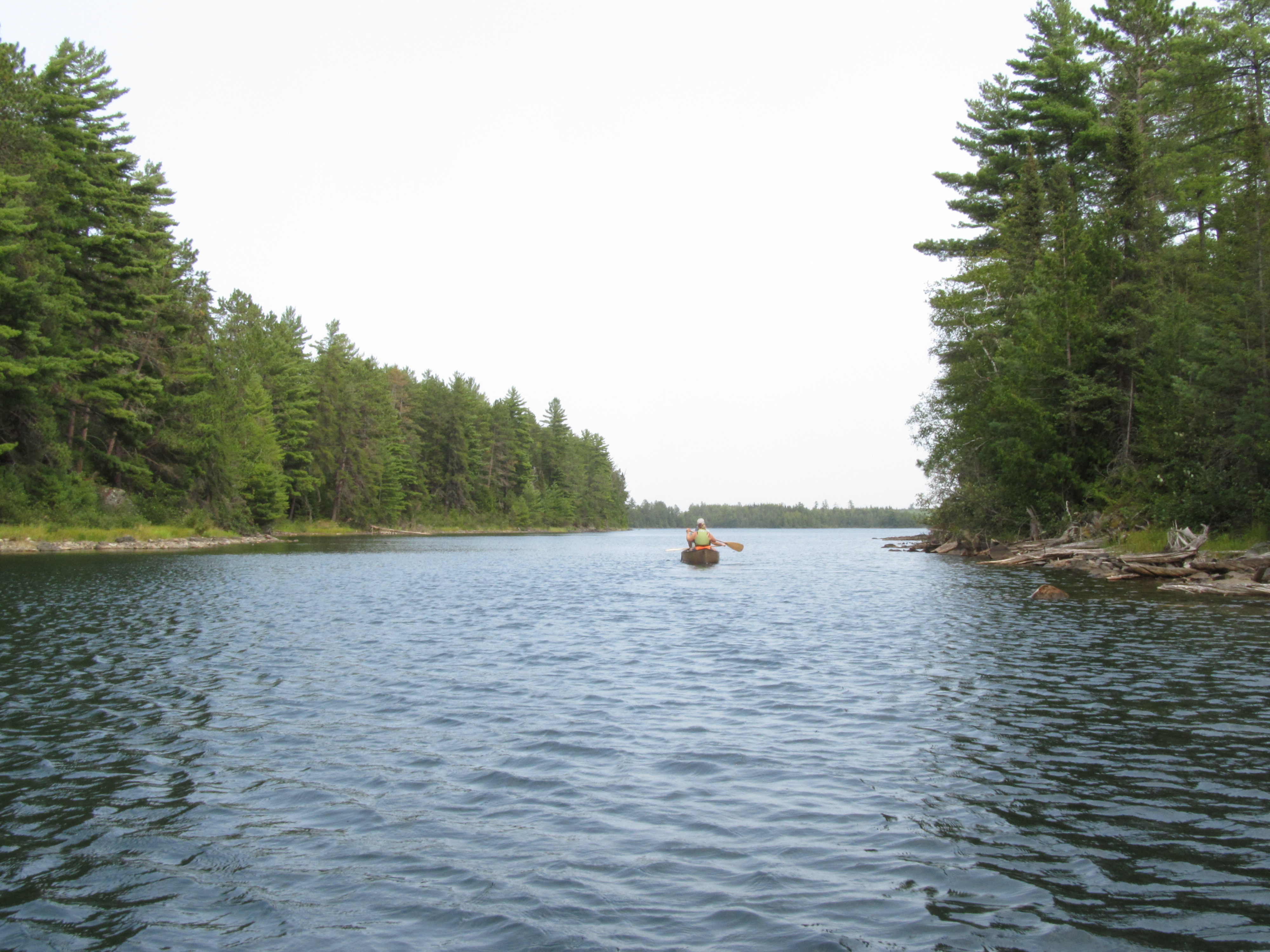
Every campsite, marked with a red dot on the maps, was occupied. What was strange is we had only seen two groups traveling all day. We felt like the lone canoers on Knife. We paddled on. The air got smokier, and the sun got hotter. It was somewhere on Knife Lake where I had a reckoning with the water and waves. The kids were scouting each campsite, so often they were headed in different directions, and Chris and I tried to just move towards them or between them. We didn’t really know where we were going—we were just going and knowing they were not waving us in to a campsite. In the reckoning, I gave in to the waves. In the reckoning, I rode on the deep waters. I was paddling strong and steady, and at times, it felt like we were skimming from wave top to wave top as light as a feather. While some of the others were voicing their discouragement, I finally felt like I could do this!
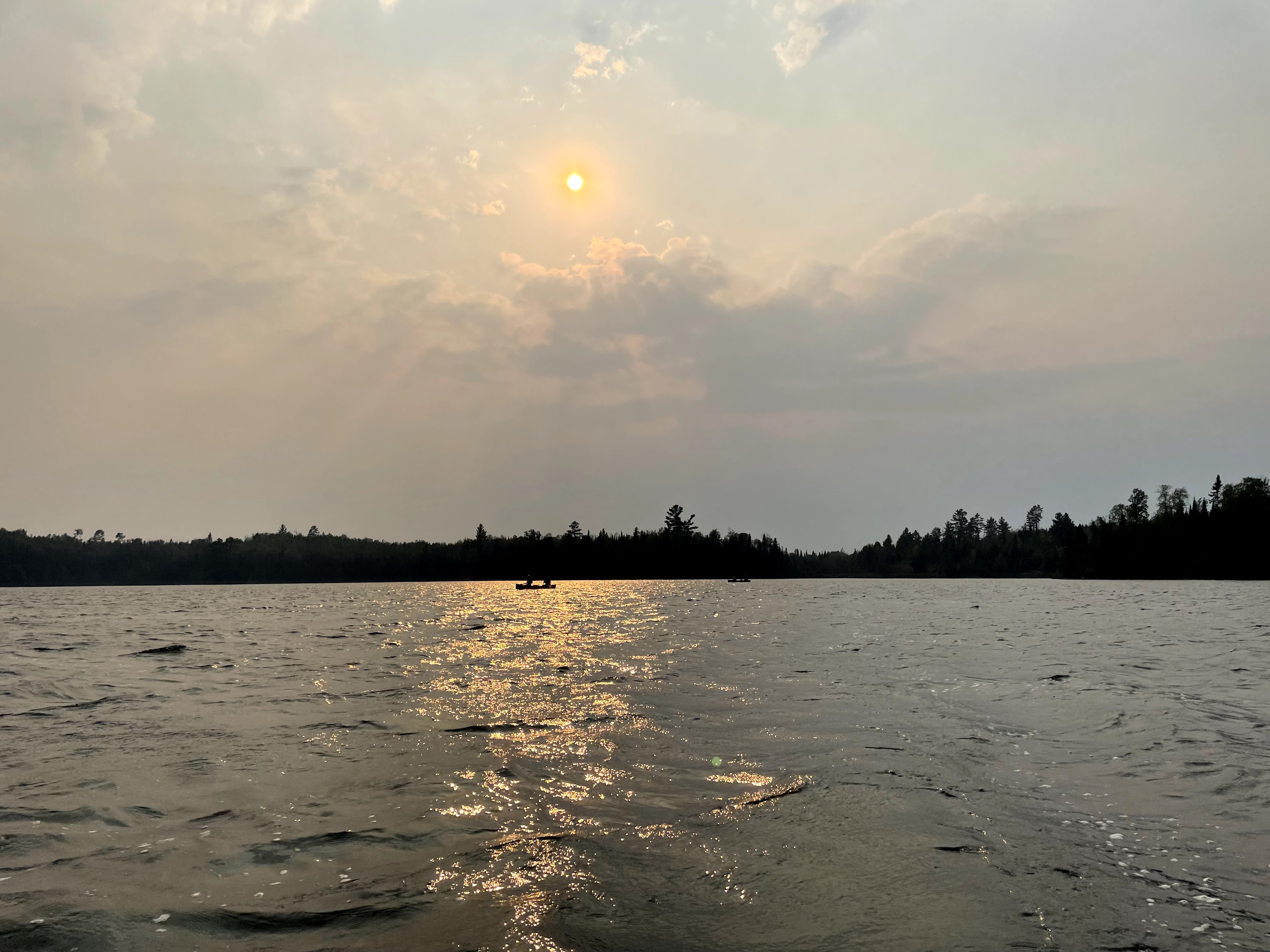
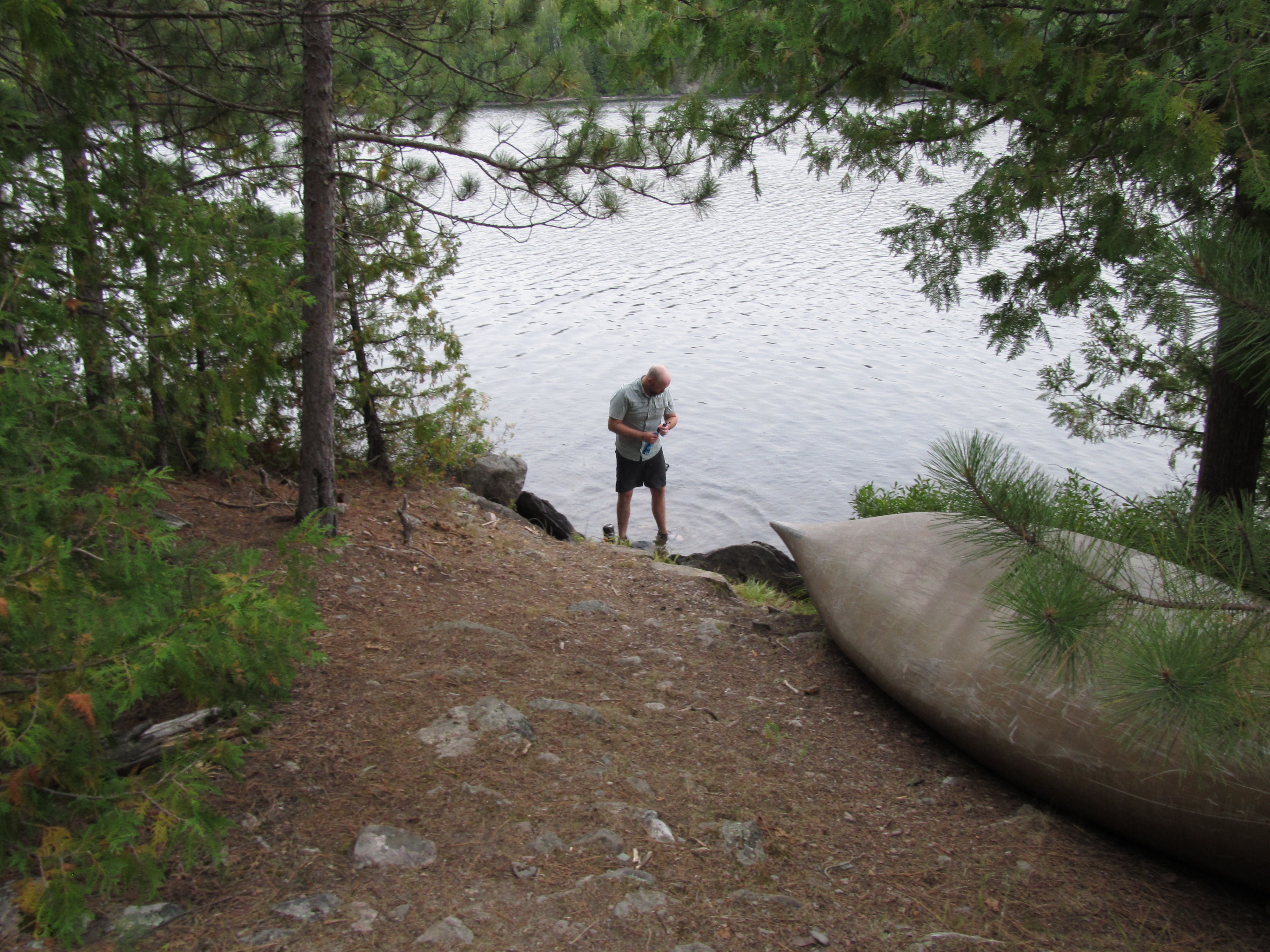
We passed about fifteen campsites before we changed course to portage into some smaller lakes to see if the few campsites on them were open. It also turned the loop on our traveling so we were heading back towards our entry/exit point instead of going farther north and east. The campsites on the first two lakes we portaged into were taken. As the sun got lower in the sky, Aaron was formulating his plan of what to do if no campsites were available by dark (we found out later.) We portaged out of Spoon Lake through a mucky, swampy, muddy portage. The muck was so deep we couldn’t get out of the canoes, but the water was so shallow and littered with logs that we got hung up. Aaron helped ‘lift’ our canoe over the logs from his canoe and by balancing on the slippery logs until we got to solid ground. As we began our eighth portage of the day, we hoped and prayed the next lake would offer us a campsite. We didn’t paddle long before Aaron scoped out a place that barely even looked like a campsite—but it was, and it was unoccupied! We had made it!
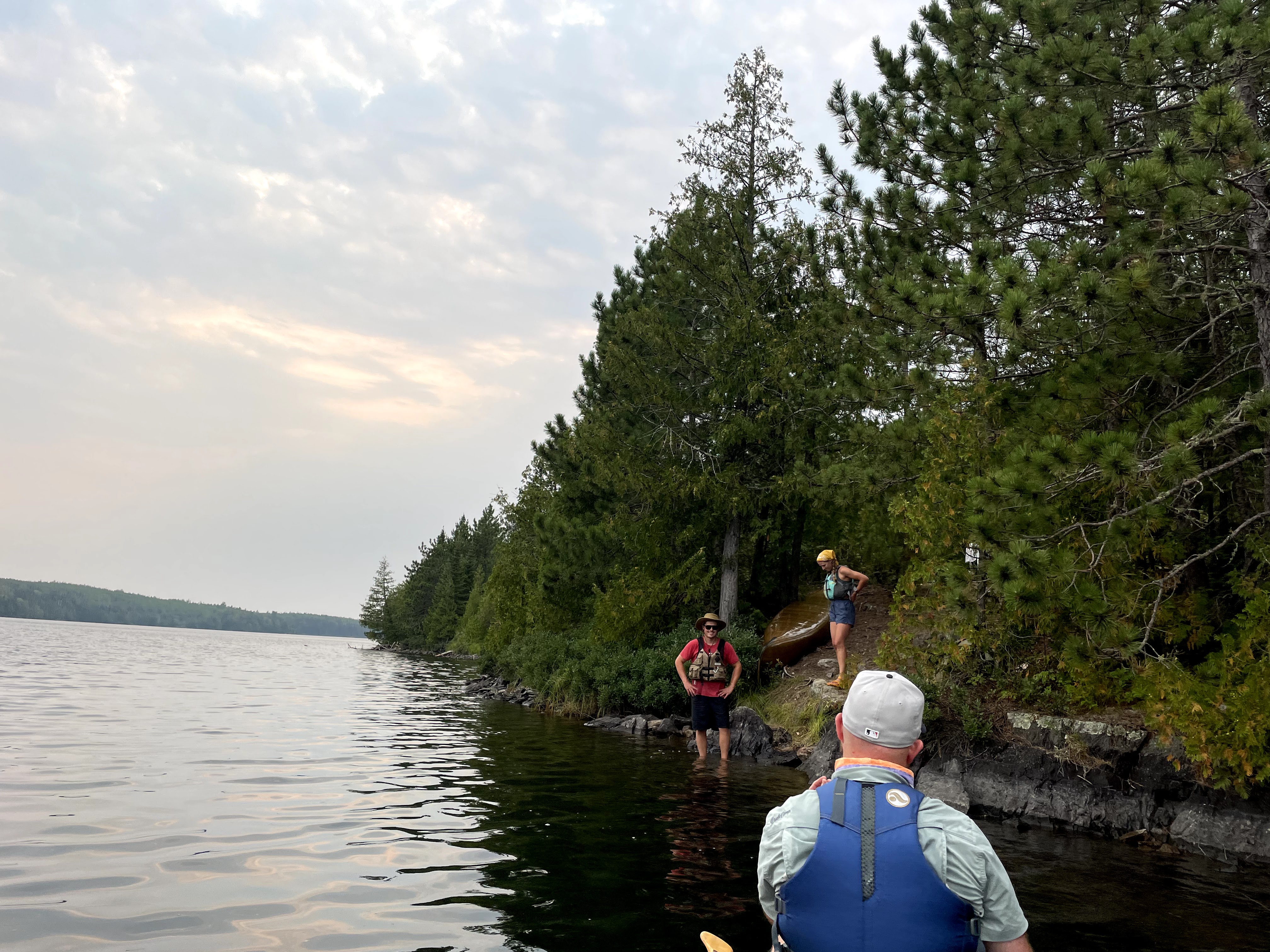
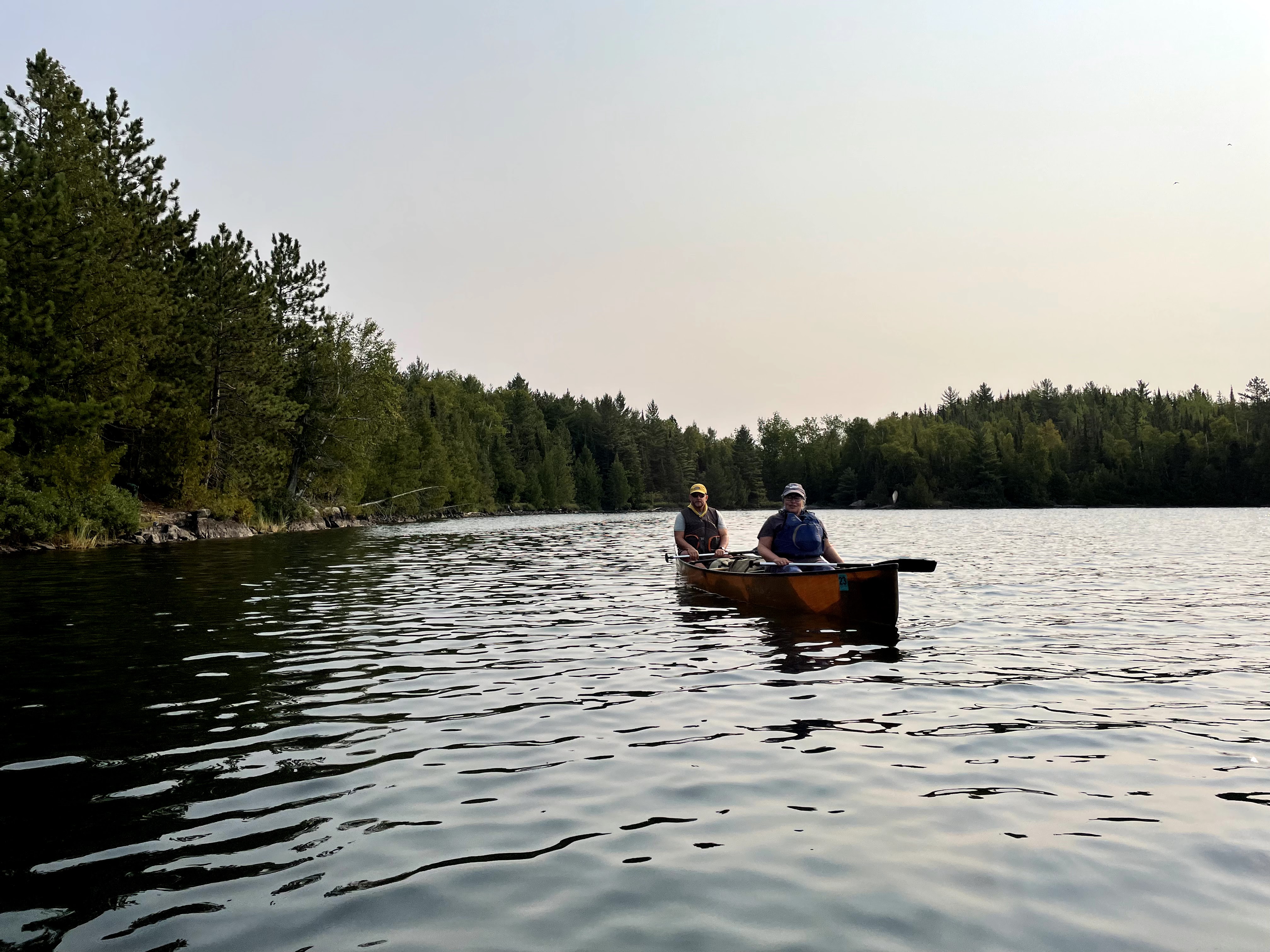
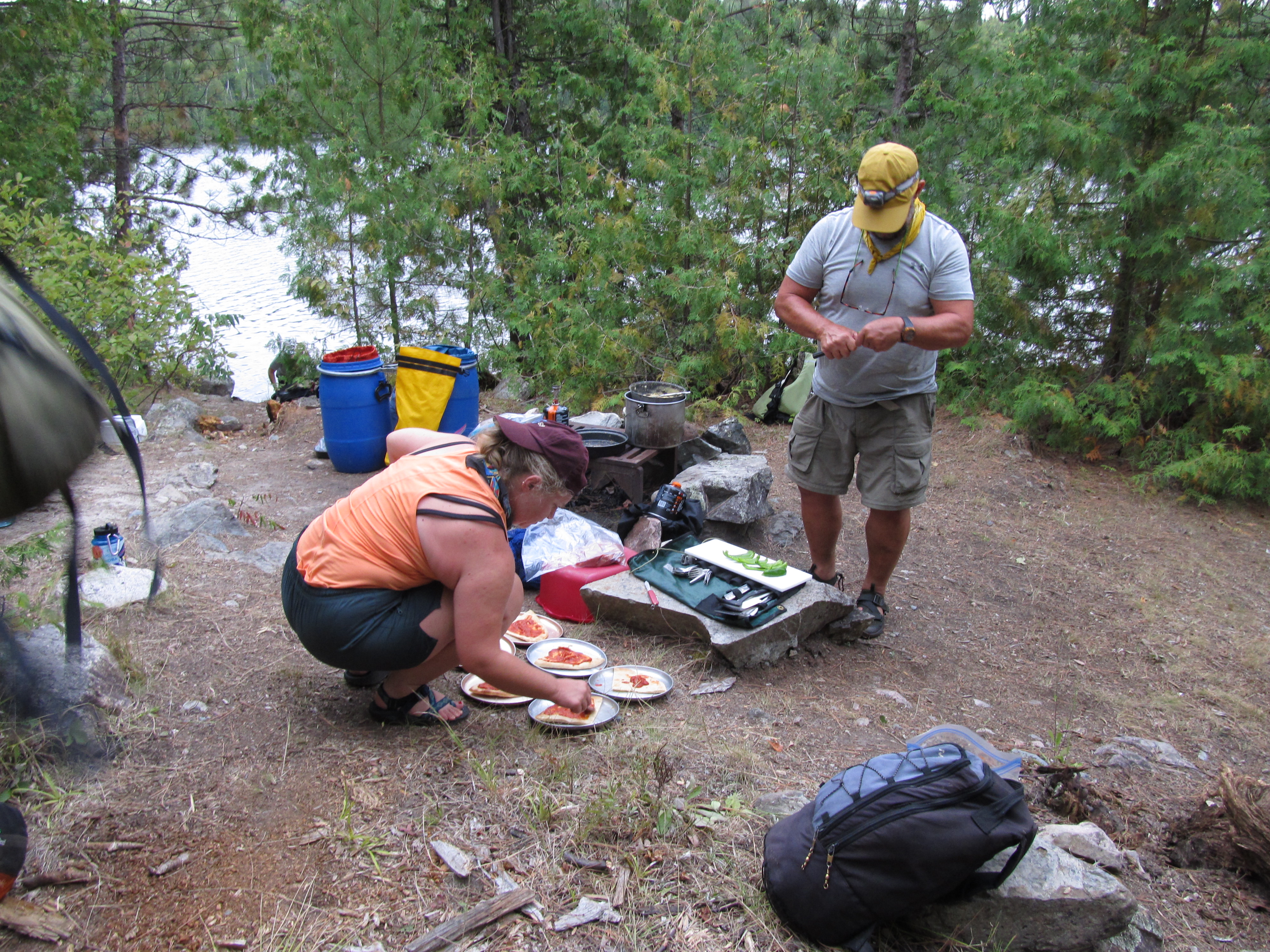
We unloaded, pulled the canoes out of the water, and got down to the business of filtering water and preparing supper. We had pizza! The pre-baked pizza crusts had been quartered in order to fit in the bear barrels. We topped each with pizza sauce, green peppers, onion, pepperoni, and cheese and ‘baked’ them in a frying pan over the backpacking stove. They tasted so good! We cleaned up quickly, set our tents up in the very small, bumpy area around the fire grate, stuck the bear barrels under the canoes for this one night, and soon the mosquitoes chased us into our tents. What a big, big day!
A reckoning is an appraisal or judgement of a situation. It is often used in a financial way of settling accounts. In a spiritual way, it is wrestling with our inner thoughts and emotions about any given thing, usually when our backs are up against the wall or in my case, when in the middle of a lake in a canoe for hours with no campsite in sight. Not only did I have to reckon with my feelings of fear about the deep water and the waves, I also had to reckon with my feelings of inadequacy. That part actually played out over the five days, but I made a huge step forward in my self-confidence. Later, after we were off trail, Emily asked me why I thought I needed to keep up with the ones who were so much younger and more experienced. Hmmm, that’s a good question.
Our quiet timekeeper (who had a watch) told us we had been on the water for eight hours that day. I had no concept it had been that long. We traveled through eight lakes, big and small, and had hiked eight portages. That was the accounting, the summing up, the reckoning of our day #2 in logistic terms.
The reckoning inside myself probably wouldn’t have happened without the challenge of all those eights, and for that reason, I am grateful for the day. I wondered how my sleep deprivation had played into it all—had it opened me up to the reckoning? I know I’m not proud of my snipping at Chris all day long or of how raw and vulnerable I felt in the morning, but it led me to a triumph I didn’t think possible. So respect to the gatekeepers, whoever they are.
This is the second post in a series of five that chronicles my experience of five days in the Boundary Waters Canoe Area (BWCA). It is best to read the whole series from the beginning (Anticipation) in order to understand certain things I refer to in my other posts.
The Girl, the Wreck, and the Reckoning
There was this girl. I can say we were both girls with our youthful faces and my unblemished naivete, even though we had just slipped into chronological adulthood. She was the cutest, sweetest, doll-like person I had ever met—she had dark curls, porcelain skin, and a child-like sing-song laugh. And she lied. It didn’t take long before I realized how much she lied. There is nothing wrong with eschewing a non-virtuous trait like lying. At the time, I could not reckon with the dichotomy of outward appearance and altruistic behaviors and the manipulative, self-serving, incessant lying. So I hated her. I discounted her. I didn’t want to be around her even as she pulled us all in, and we revolved around her world. My gut reaction had lots to do with me, but at the same time, there was something that wasn’t right with how she interacted with the people around her. Leap ahead a decade and a half when I was knee-deep into parenthood and a plethora of self-help books. I came across the concept of what we hate/envy/dislike in another person is what we disown/hide/reject in ourselves. So I looked in the mirror and tried it on. ‘I am a liar.’ I couldn’t get it to fit—at all.
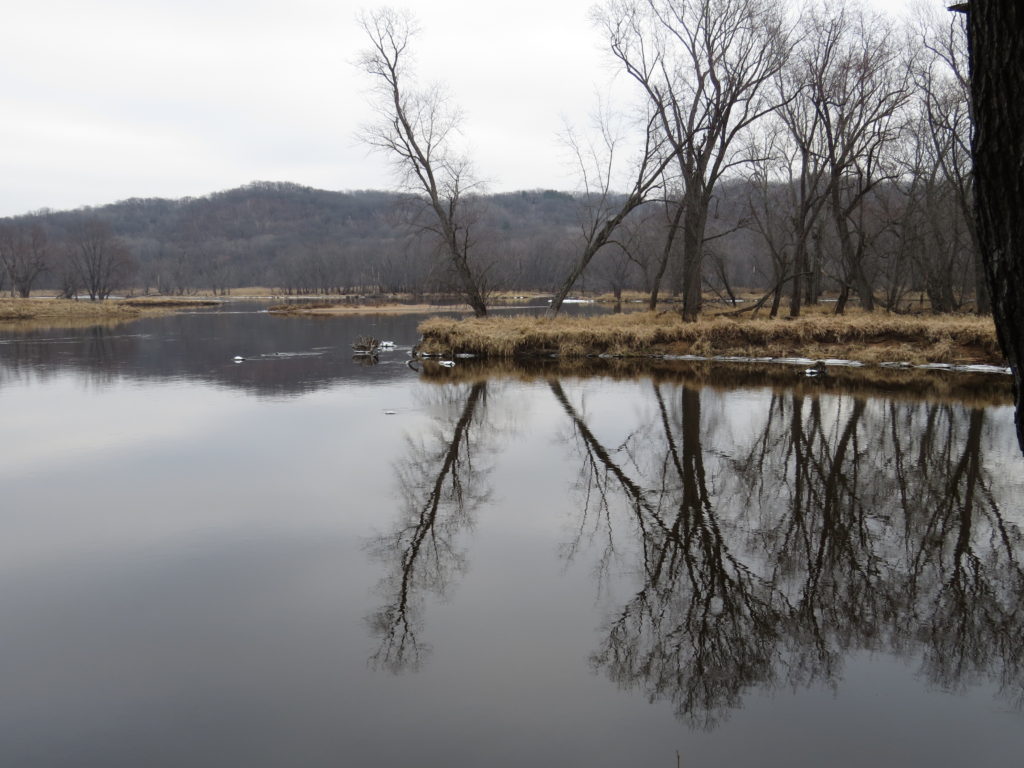
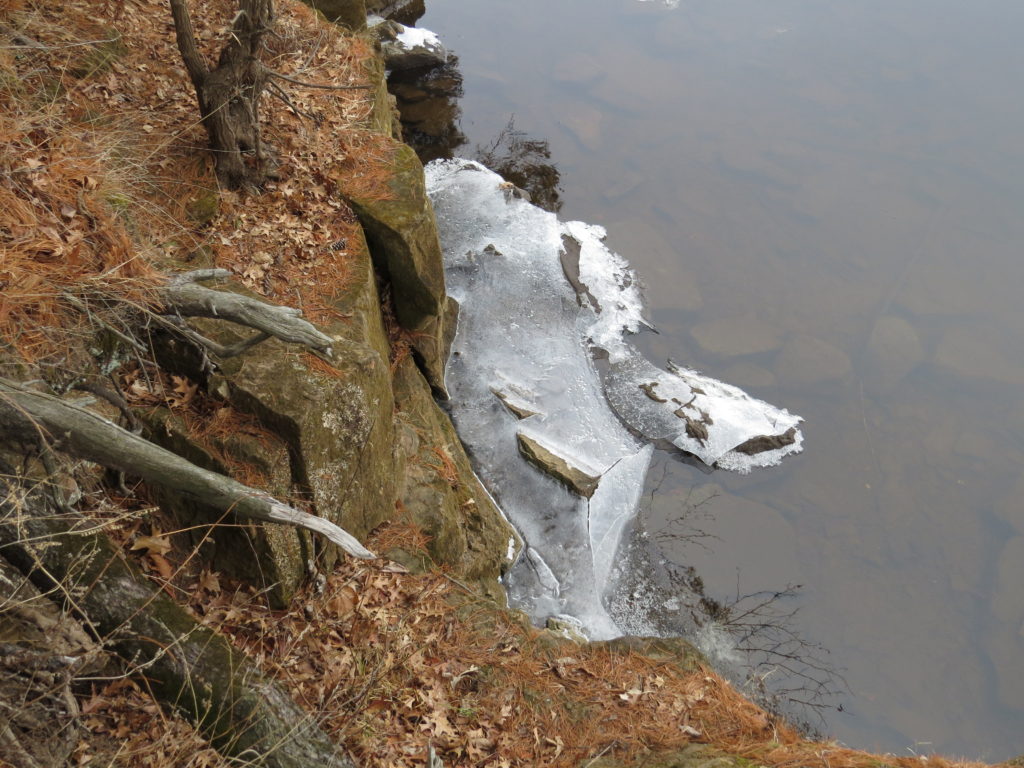
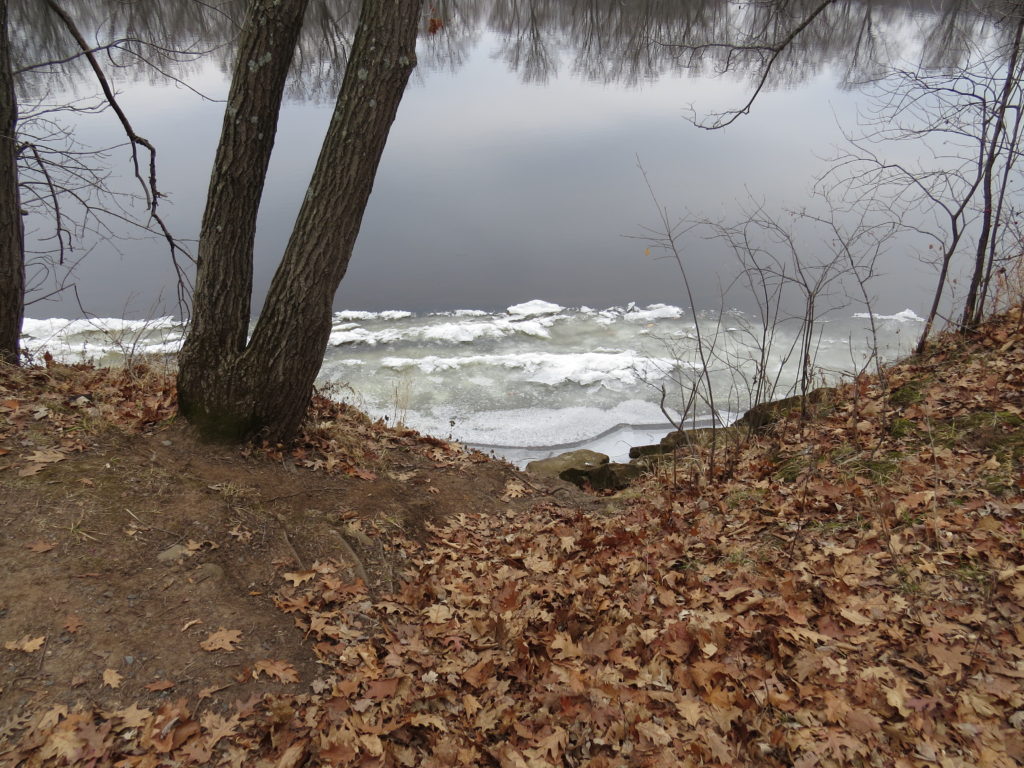
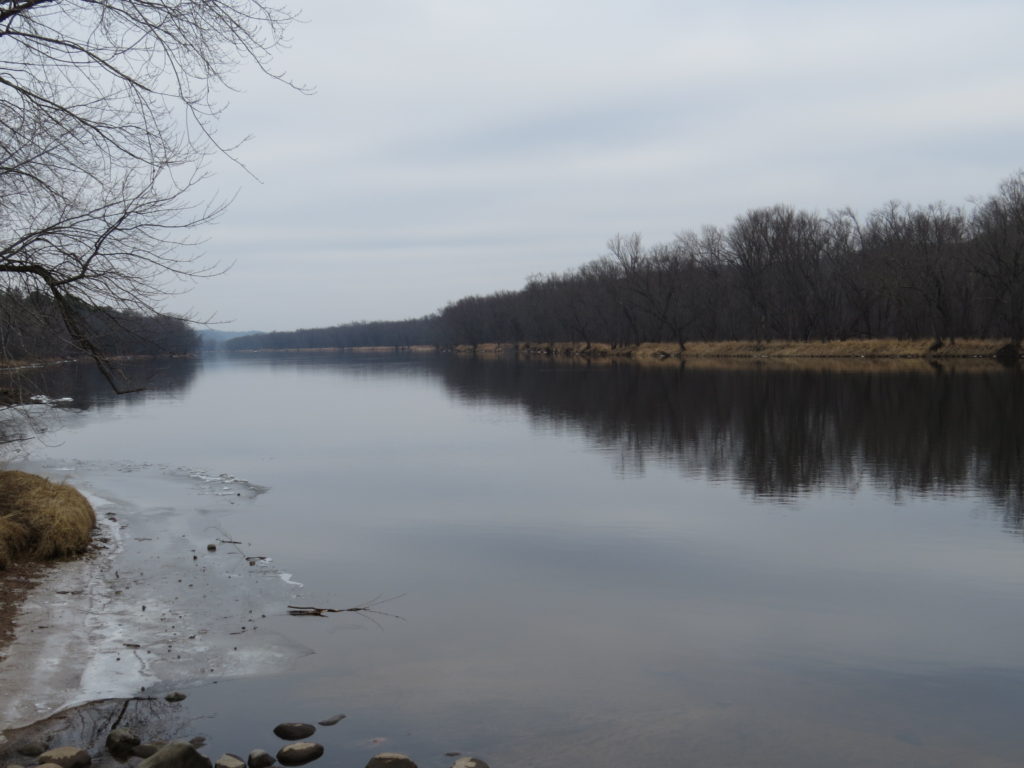
The St. Croix River at William O’Brien State Park was like a mirror—except where there was ice. Reflections of the trees and sky were obscured wherever the ice formed or floated.
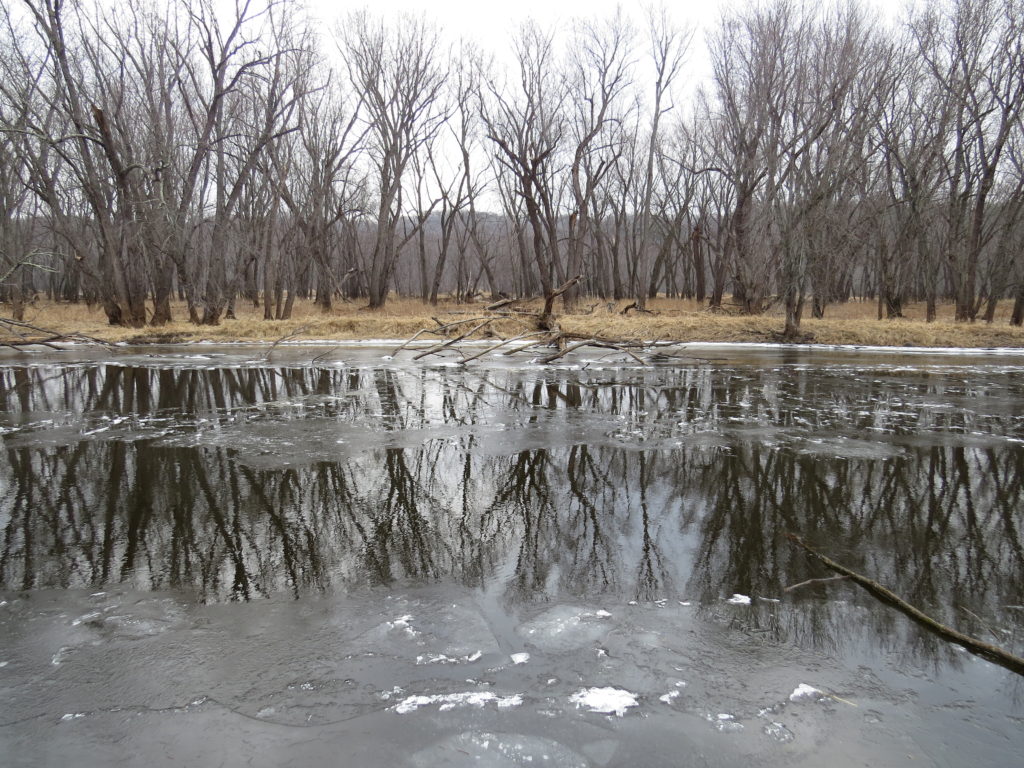
The cloudy sky reflected steel gray on the River mirror. The dark-trunked trees and the gray bluffs could be seen in their twin forms on the water.
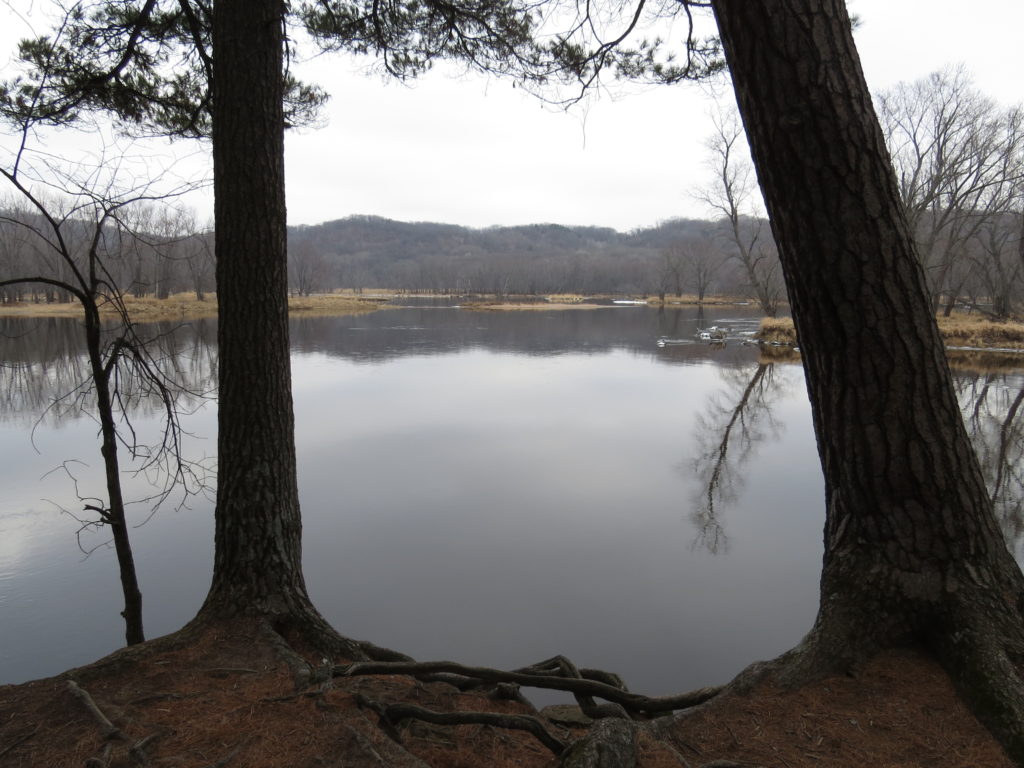
What we see in our reflections and in life depends on how we frame them. Do we look through a narrow lens that blocks out parts we don’t want to see and call it good?
The ice on the River became the focal point even though it clung to the shore and was a small part of the large whole of the River water. It was a distraction really.
It was captivating really.
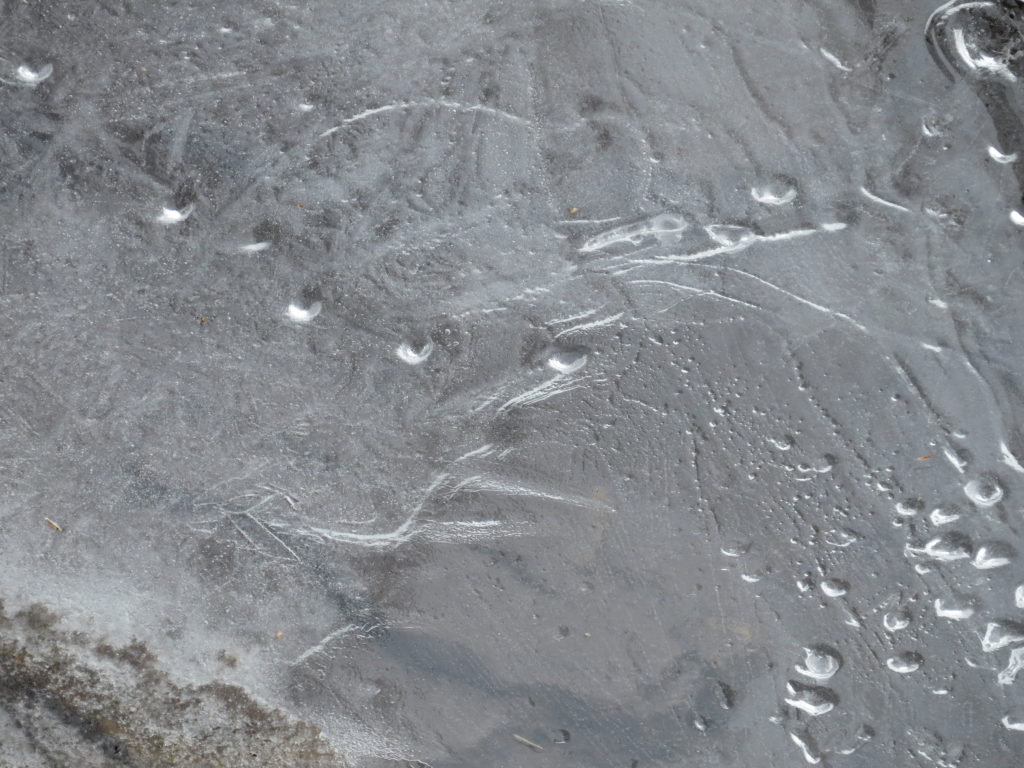
It was interesting really.
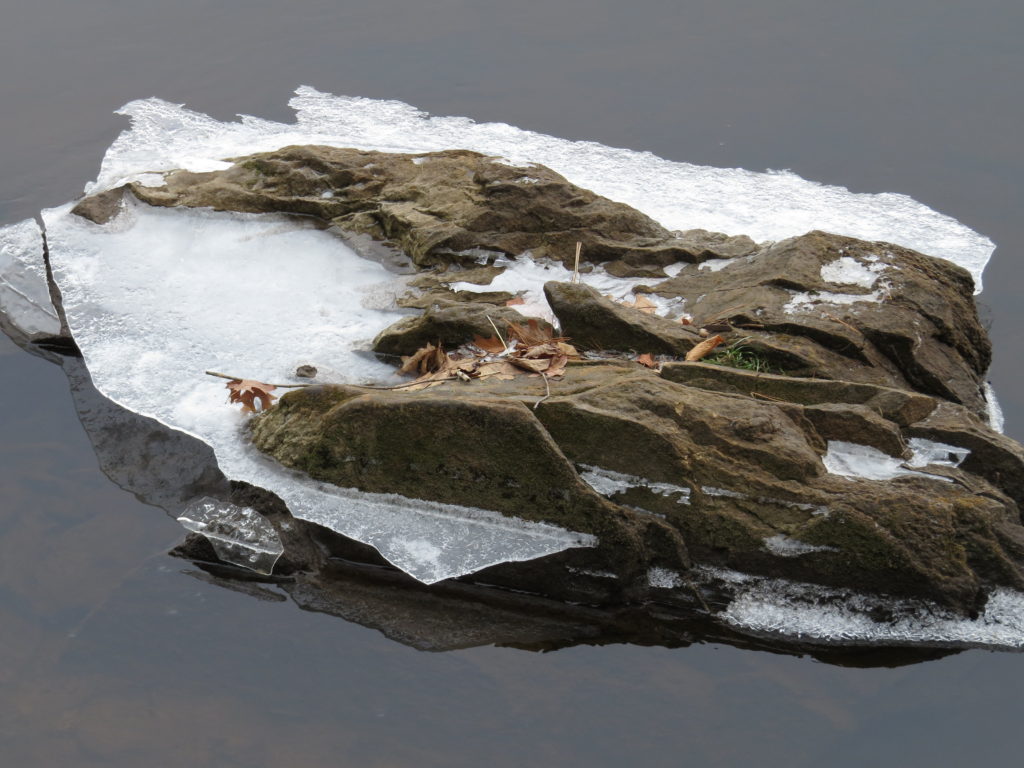
It was intriguing really.
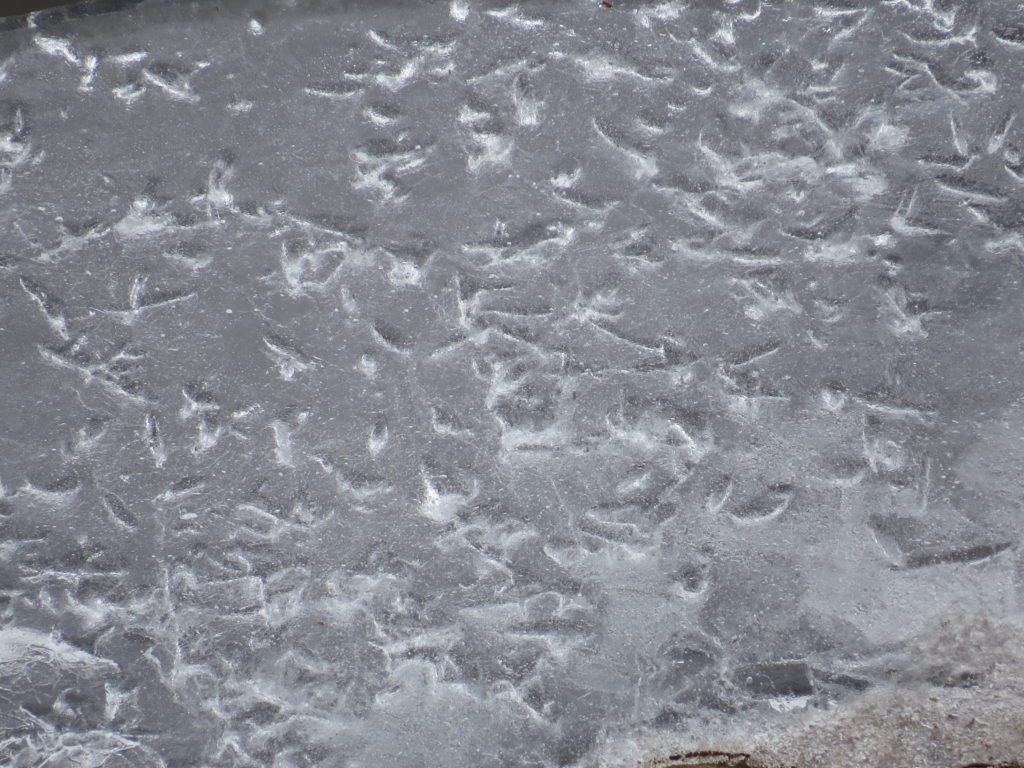
It distracted me from the calm, quietness of the River mirror and its reflections.
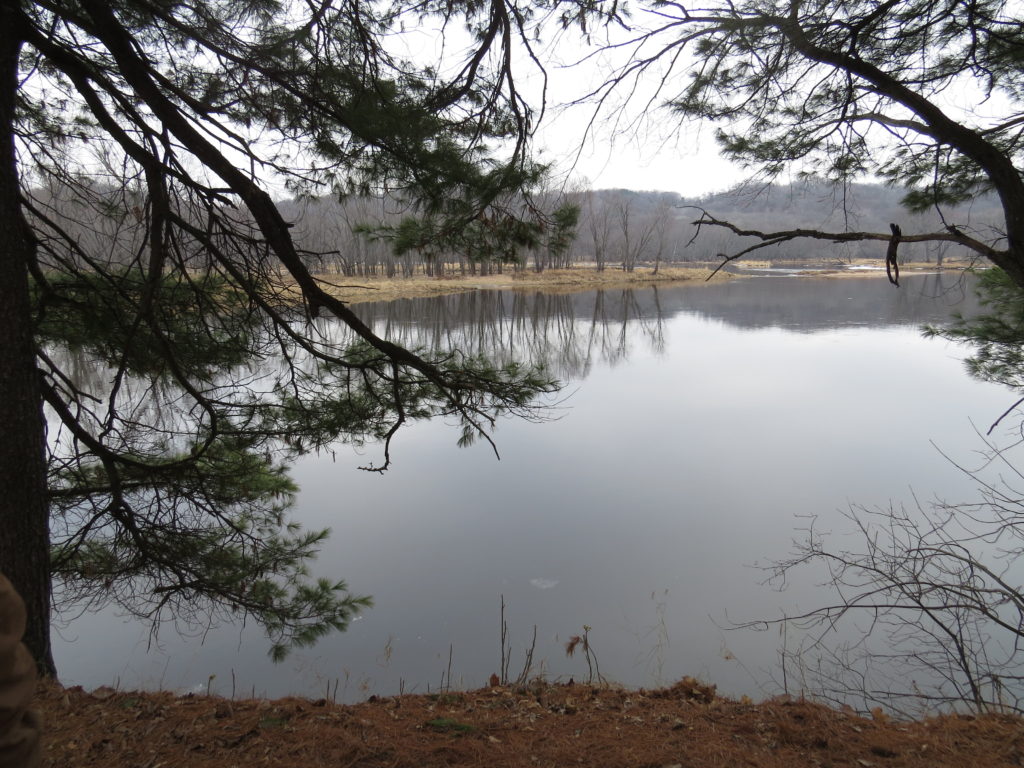
There is destruction with ice and distractions.
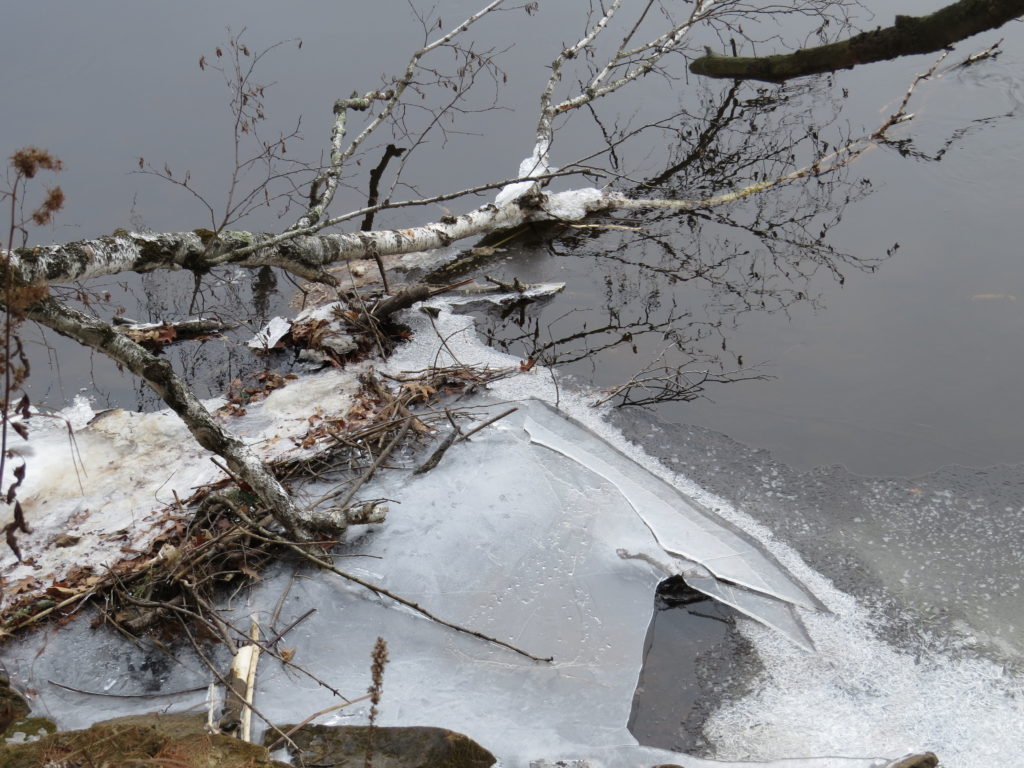
It immobilizes the old, spent parts of ourselves.
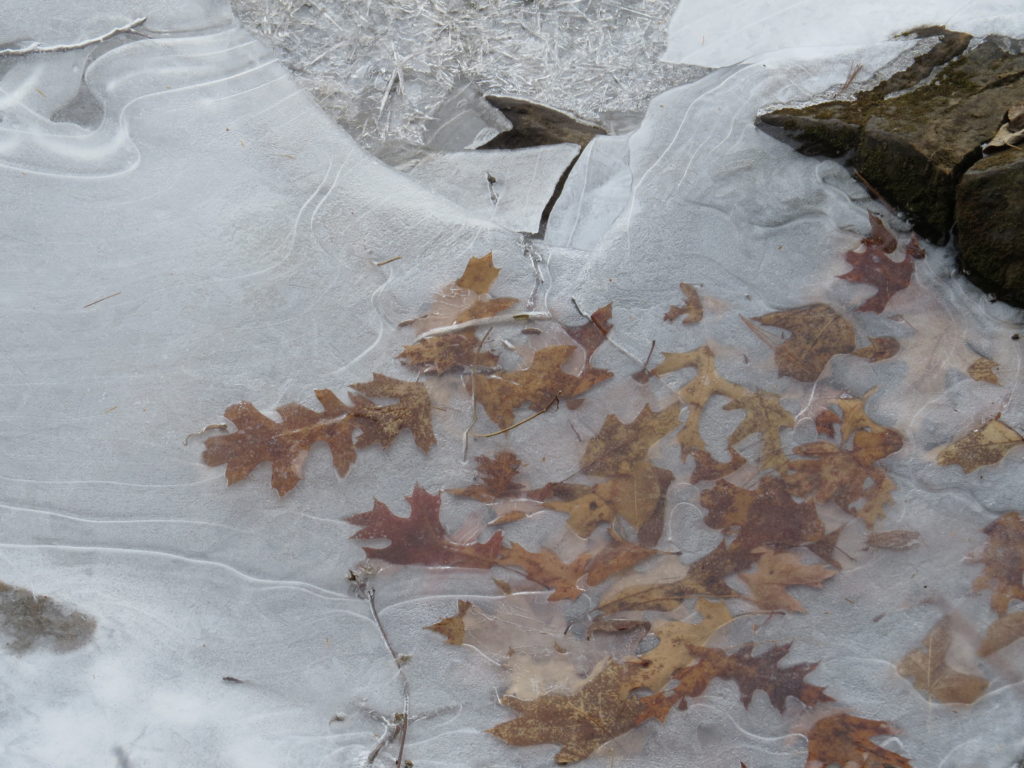
It mesmerizes us with confusion. How could we possibly see clearly through a maze of such entanglements?

It piles up, digs in, and creates a false narrative to the big-picture reality.
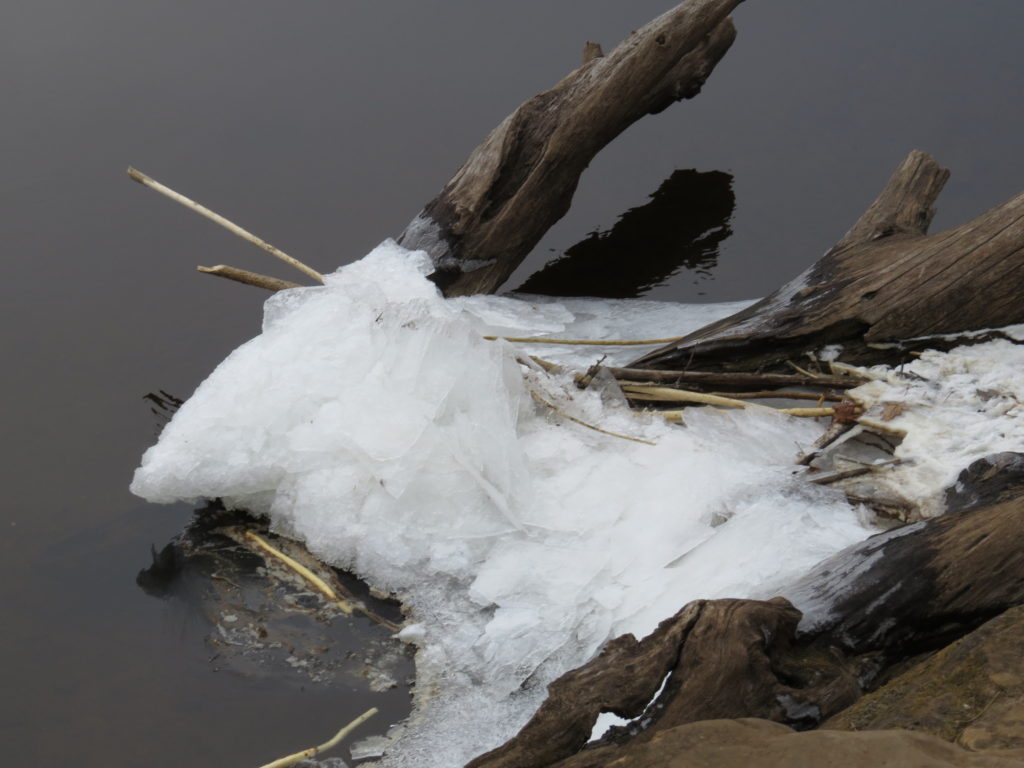
The ice-distractions even get reflected in the calm waters, entwining their way into real life, obfuscating our true north.
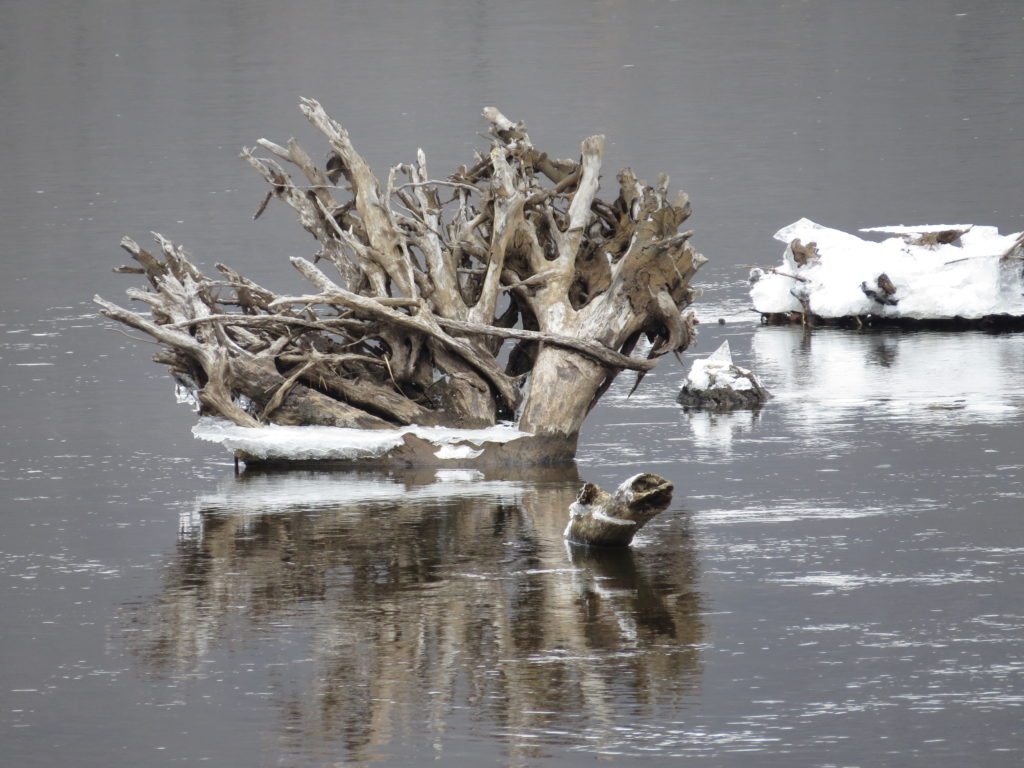
It takes will and determination to look away from the train wreck, to center ourselves in calm and peace, and to reflect on ourselves and our values.
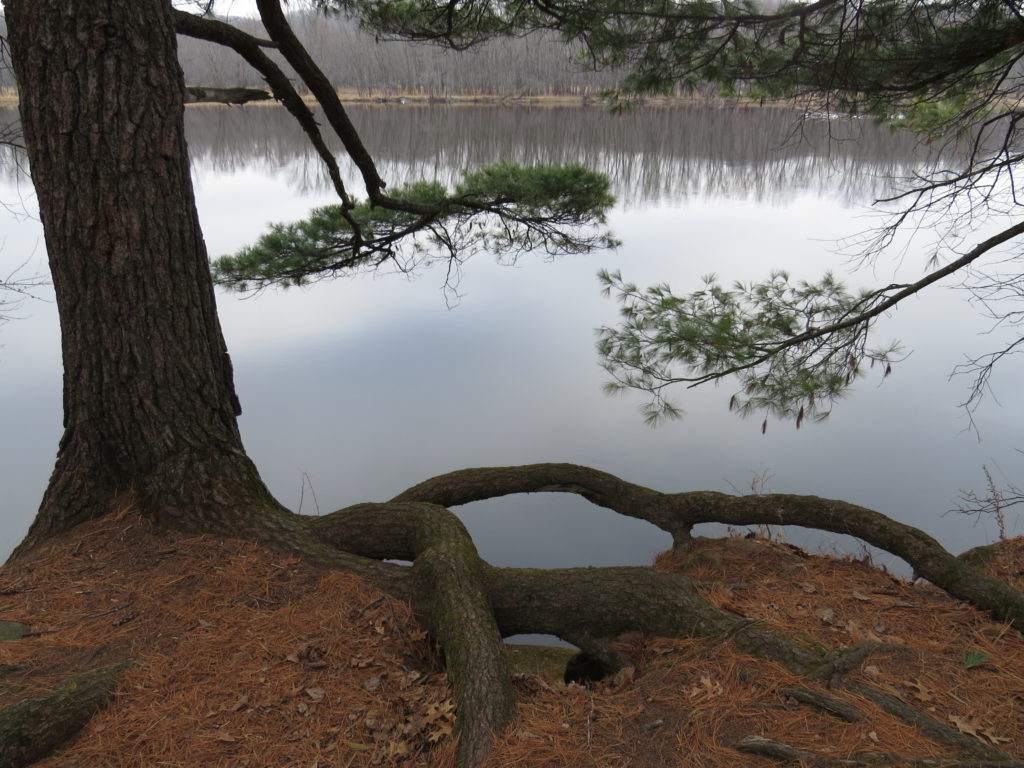
But we really need it all. We need to be able to see the past, the roots of our being, the things that worked and the things that hurt. We need to be able to identify the captivating, mesmerizing distractions that pull us away from the reality of who we really are and what we need to learn. And we need to embrace the mystery of the mirror, of the reflections we see and those we discover in our hearts.
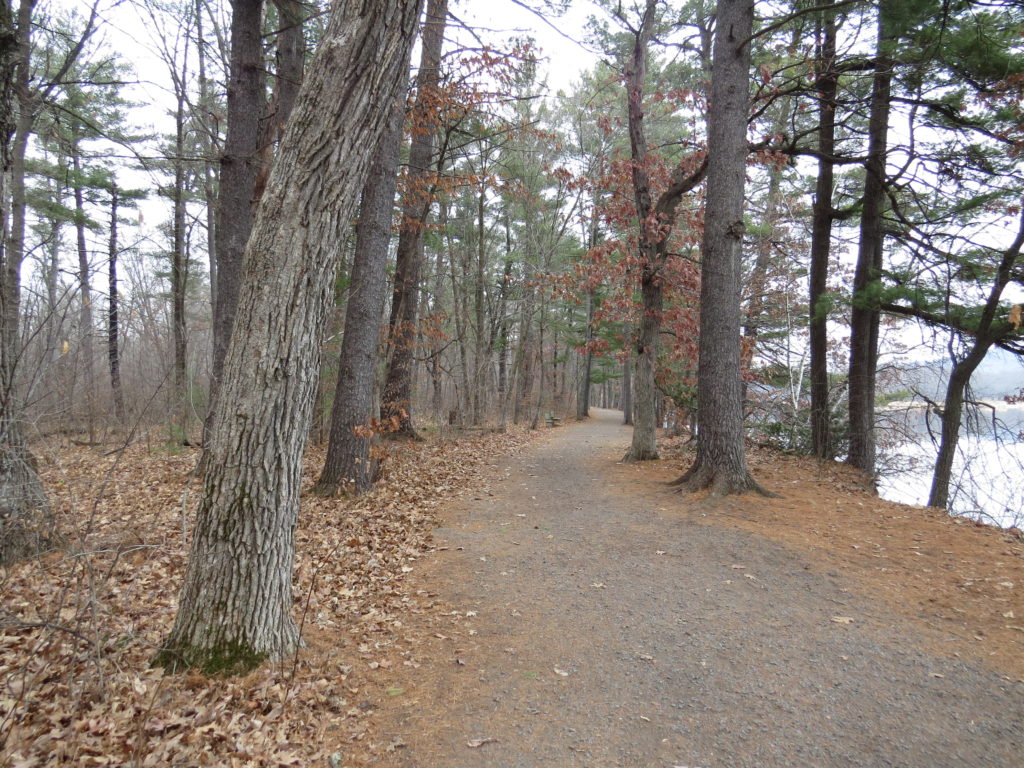
And then we walk on. Our path, our journey is only partially revealed to us at any given time.
We gaze up-river, from whence we came, notice the distractions and the reflections, all the while heading in a new direction, to an uncharted new world.
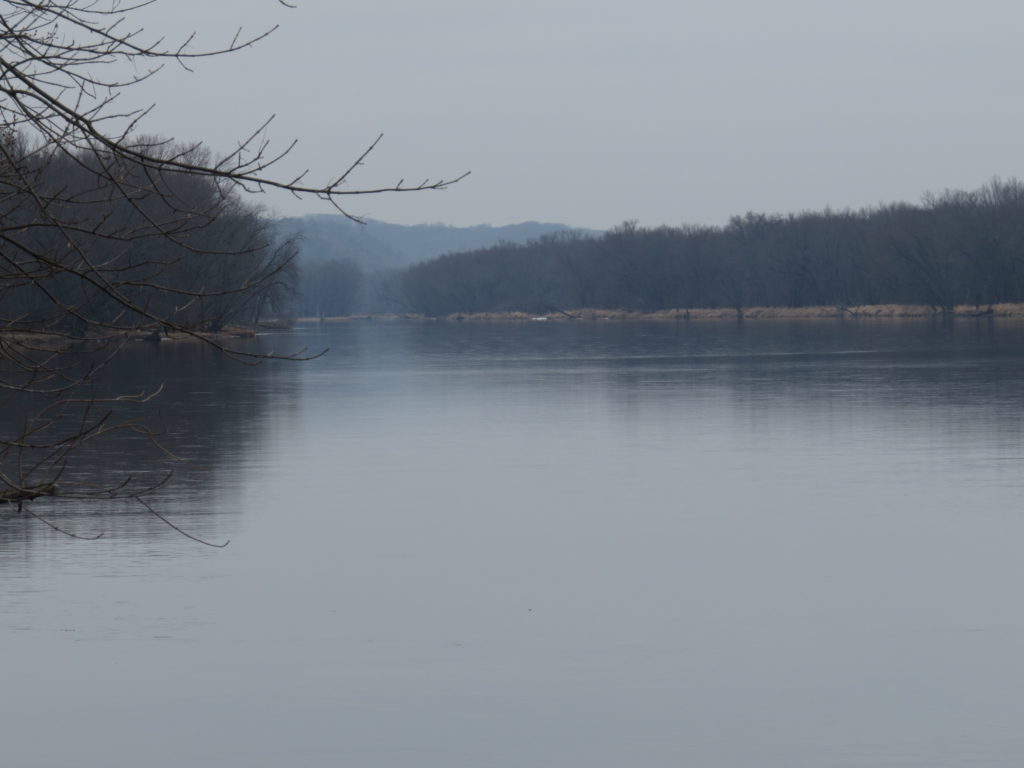
Life is a hazy, lovely mystery that catches us off guard, pulls us in, invites us to reflect, compels us to change, and blesses us with the whole process all over again.
For years after trying on and rejecting the term ‘liar,’ I pondered the concept of disowning what I disliked in others, and I wondered why I had hated her for lying. It took maybe another decade of trying to please people, being nice, avoiding conflict, following the rules, and feeling beat up before my reflection revealed that I really was a liar. I was saying I was fine when I wasn’t. I was saying I didn’t need help when I did. I was saying yes when I wanted to say no. I was a self-inflicting liar. I was hurting myself in order to make others feel comfortable. I had to reckon with my own dichotomy, my own hurts and disappointments, my own distractions and stories that were woven together into the cloak of my being. The heat of my hurt and humble embarrassment melted the obfuscating ice, and the calm water revealed my flawed, striving, righteous self. So I walked on in reckoning, recalibration, and forgiveness to the next lovely mystery of a train wreck that caught me off guard. Dear God, help me walk on.
Know from whence you came. If you know whence you came, there are absolutely no limitations to where you can go. –James Baldwin