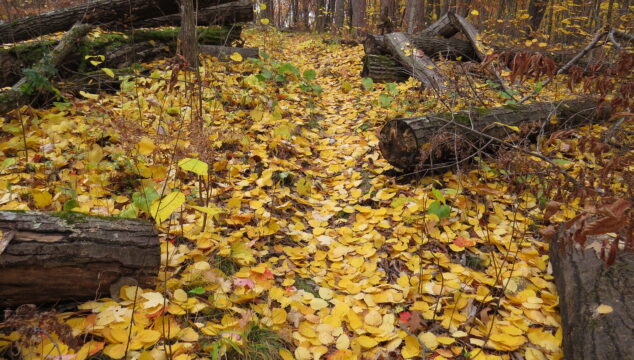
Come walk with me in the peak Autumn beauty of the Northwoods. To say that I love this time of year is an understatement. Most everyone can appreciate the colorful falling leaves---it reveals the 'true self' of a tree when its leaves are no longer producing chlorophyll. Their true colors are revealed, and there is something simple … [Read More...]
Don’t Know Much About Geology
My knowledge of geology is simple and child-like–rocks are pretty and interesting; I like to pick them up and take them home. Most every room in our house has rocks in glass Mason jars or lying around on tables or shelves. Some are from Canada, some from Texas, and some from West River South Dakota. I’m pretty sure there are still some in boxes that remain in waiting for the next geological discovery–“I love this rock! I forgot I had it!”
Chris and I traveled west an hour or so to Glacial Lakes State Park to a geological area commonly known as the Leaf Hills. The hills, valleys, and ridges were formed by the last glaciers more than 10,000 years ago. The park has some of the greatest depth of glacial till–rocks, gravel, and dirt the glacial ice scraped off as it moved southward, then deposited when the ice retreated.
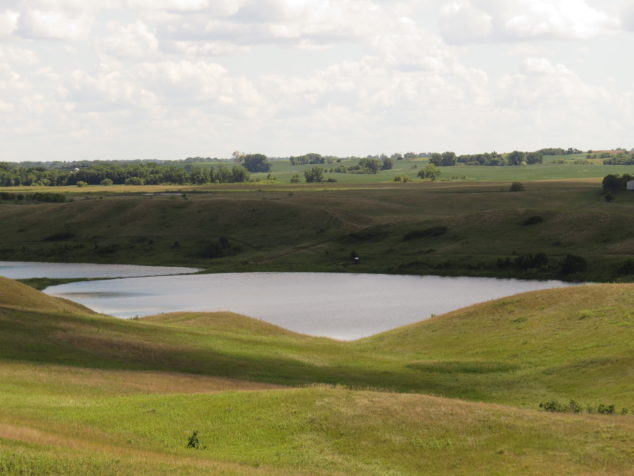
The information provided by the State Park introduced me to geology terms I had never heard before: kames, kettles, eskers, moraines, and erratics. “Kames are conical-shaped hills formed by glacial debris deposited by meltwaters flowing into and down holes in the ice mass. A kettle is a depression (which usually becomes a lake or marsh) that formed when a block of ice melts after being separated from the glacier and covered by glacial debris. An esker is a worm-like ridge that forms beneath a glacier as debris-laden meltwater runs under the ice. When the ice melts, the stream bed, formed by the running meltwater, shows up as a winding ridge. End moraines are areas where the leading or “resting” edge of a glacier “dumped” a load of debris that it carried like a conveyer belt transports material, or where two lobes of advancing ice cross over each other.” And this is my favorite, “An erratic is any boulder carried and deposited by a glacier.” The park contains rocks that have ferrous oxide (iron ore) from northeastern Minnesota and Canada, granite, possibly from the St. Cloud area, and basalt, probably originating from northeast Minnesota. The erratics help trace the movement of the glaciers.
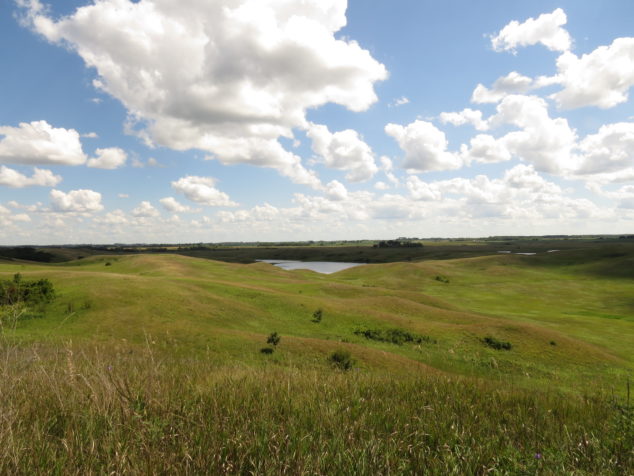
Glacial Lakes State Park is located where the prairie of the west and south meets the hardwood and conifer forests to the east and north. Only about .1 of 1% of the original Minnesota prairie remains, and the park preserves a portion of that native prairie. It has a spring-fed, crystal clear Signalness Lake that is surrounded by oak-covered hills for camping, boating, swimming, and fishing. The park also has a horse camp area and riding trails through the prairie.
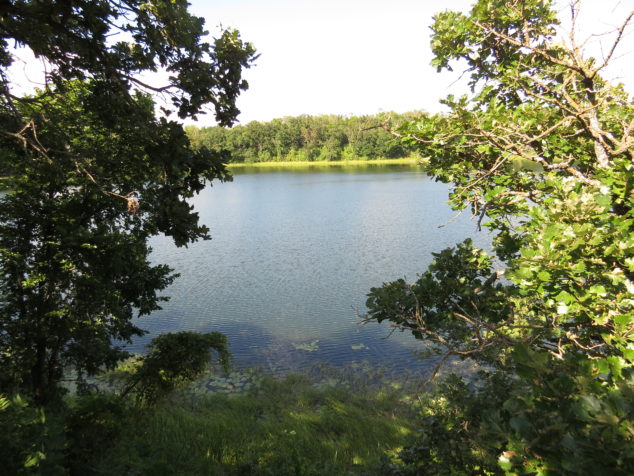
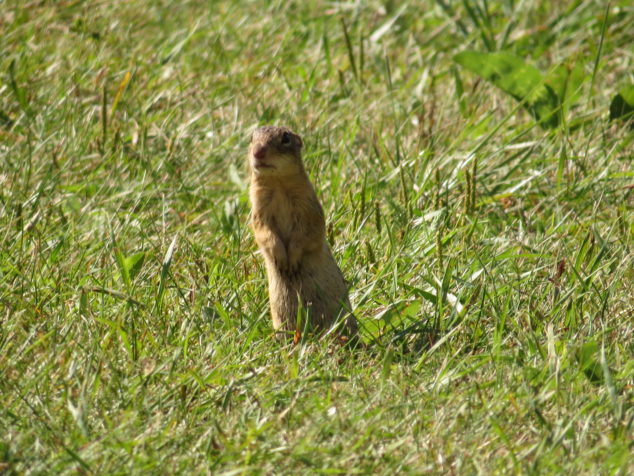
We hiked through mosquito-thick woods and prairie trails to reach the highest point in the park that overlooked the rolling prairie. Our only animal companion was a 13-lined ground squirrel who had a burrow right in the middle of the trail.
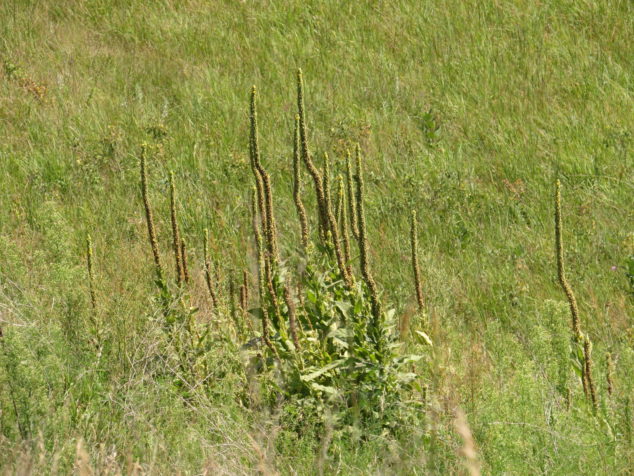
Bent, spiky seedheads of Mullein rose like saguaros of the prairie.
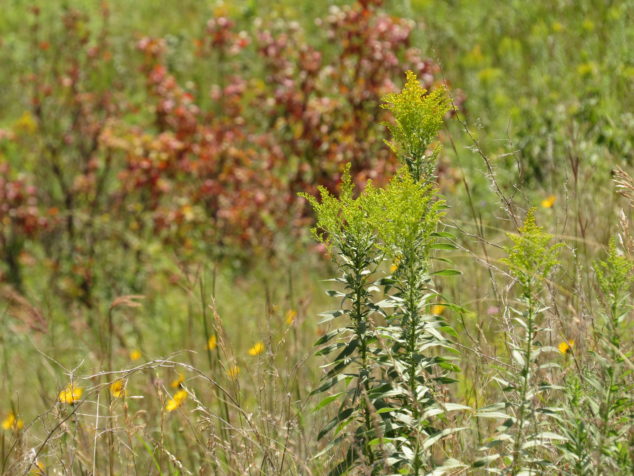
Tall Goldenrod and other late summer wildflowers bloomed on the hillside by the wild plums that were already wearing their fall colors.
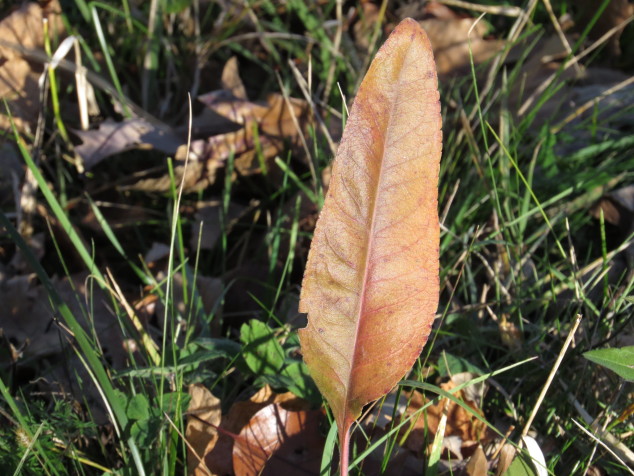
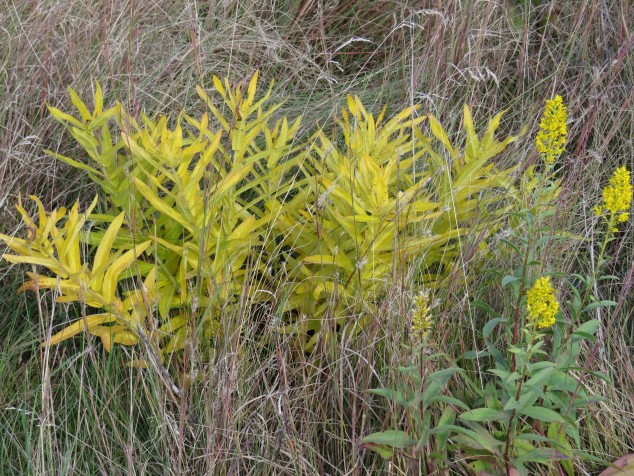
I finally identified the feather-leafed prairie plant I first saw in La Crosse two years ago! (Below is the photo I took then and here’s the link to Great-Grandaddy Cottonwood Tree.)
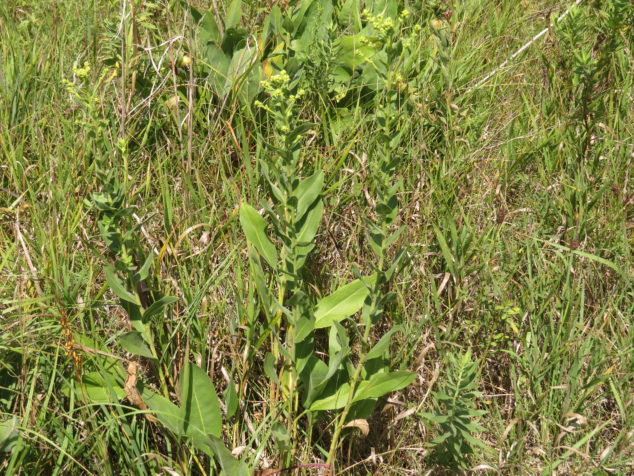
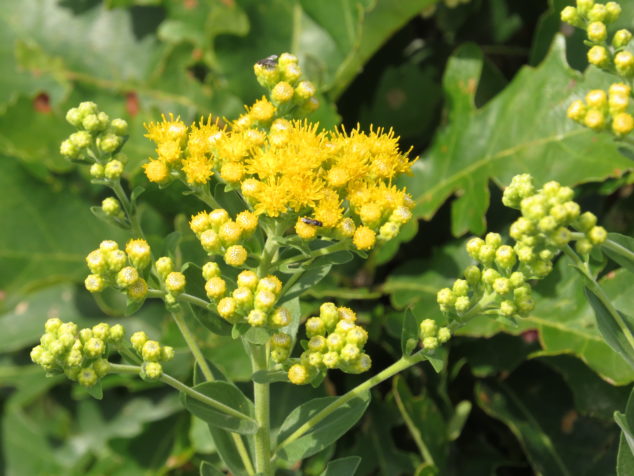
The prairie trail was lined with green leaved versions of the feather-leafed plant that were just beginning to flower. It is called Stiff Goldenrod–tall, rough-leaved, and deep-rooted–one of many Goldenrods blooming at this time of year.
Indiangrass and Big Bluestem bloomed golden-brown and bluish-purple….
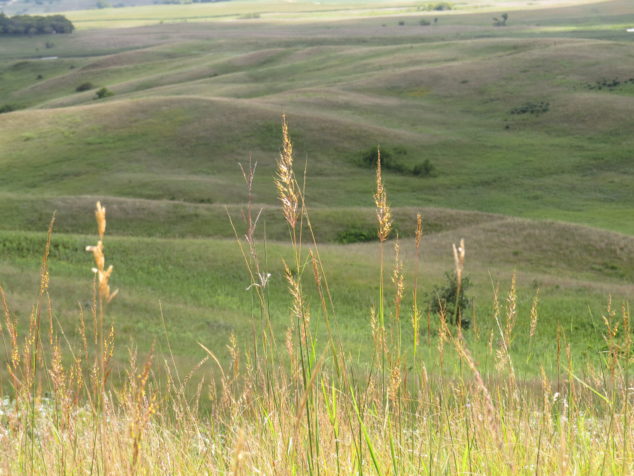
…making a patchwork quilt of colors with the other prairie plants.
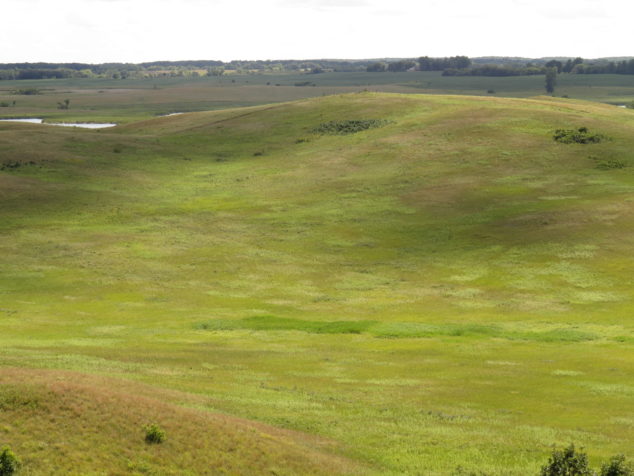
Don’t know much about Geology, but I do know that I love rocks and I love the Prairie. Coming to a place like Glacial Lakes State Park makes one appreciate the enormous history of our beautiful green Earth and realize the teeny-tiny part our lifetimes play in that history. I wish we could all be human erratics–carried and deposited in all areas of our country and world, so that we can trace the movement of the people who stand up for clean water, clean air, and preserved wilderness, forests, and prairie. In so doing, we can make sure that our children’s grandchildren will be able to stand underneath the Great-Grandaddy Cottonwood tree and profess their vows to love and to cherish. What a wonderful world this would be!
Coming Home, Going Home
Thursday we were going home to South Dakota to bury my Dad in the place he wanted to be after dying. After weeks of mourning and making plans, we traveled the snowy roads back to the house I helped Mom and Dad build. The day mirrored my mind–kind of blurry and monochromatic with loss and the grief that holds its hand.
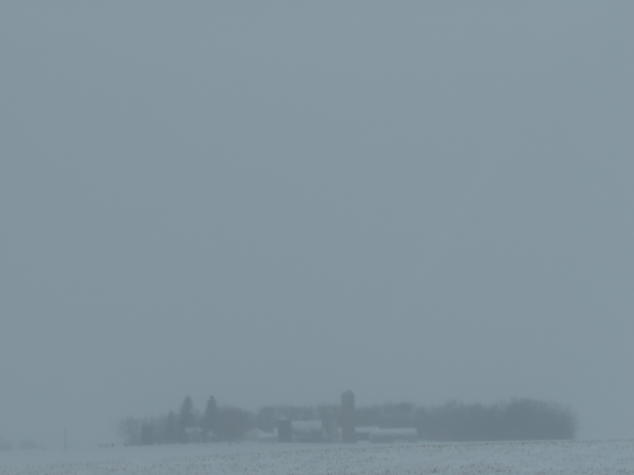
After a warm supper with my Mom, I laid in bed in the same room where I slept until noon on my college weekends, where Chris and I slept as newlyweds before our move to Missouri, where we brought all the things one travels with when three young children are coming home to visit Grandma. Memories of my childhood with Dad flitted through my mind and landed on the building of this house–how I helped put down the puzzle of underlayment, nailed up sheet rock, taped and mudded and sanded and mudded, hammered down the shingles, and stained the siding a red-brown color. Not too long after that, my Dad left and lived in places as far away from South Dakota as one can get–Florida, Texas, California.
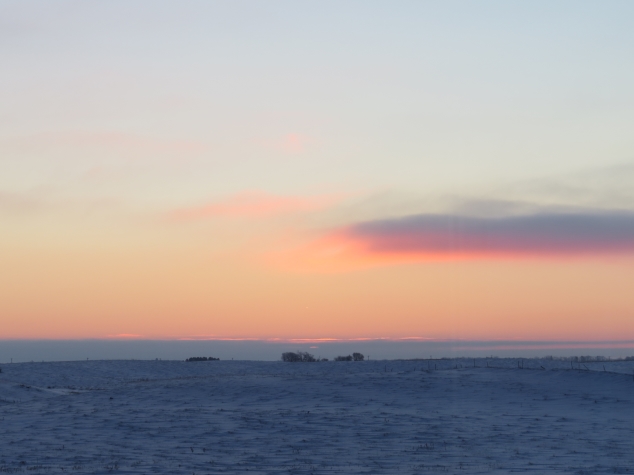
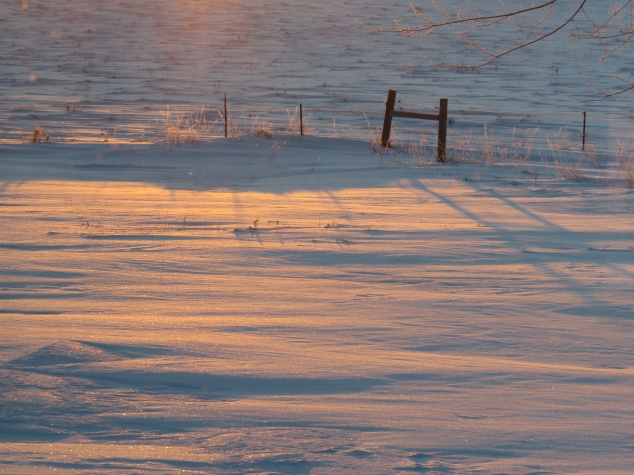
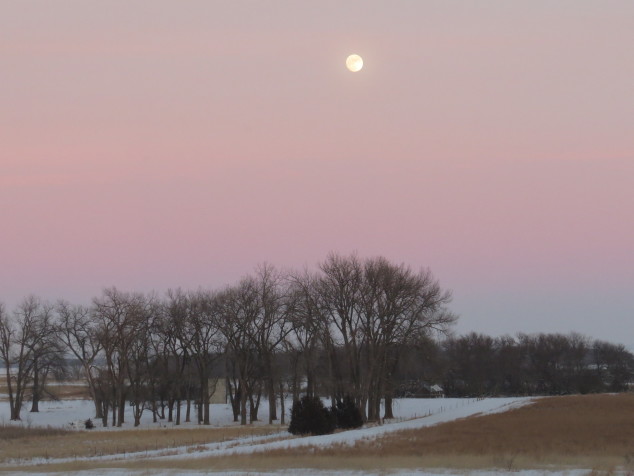
I rose with the sun the next morning as the blue-dawned snow turned pink.
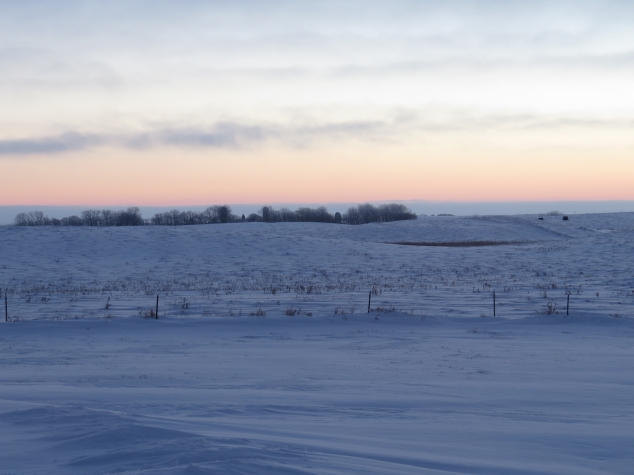
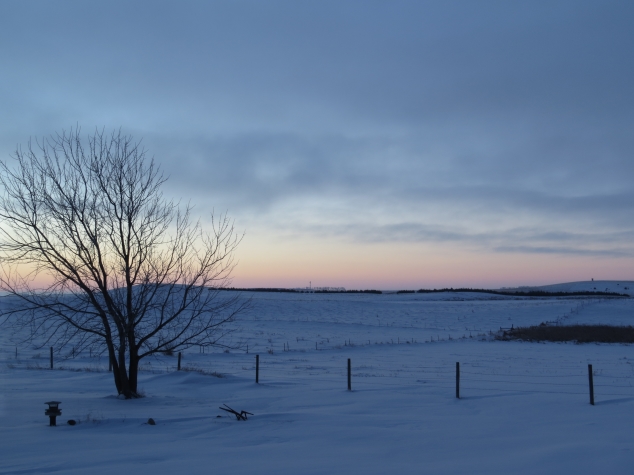
Dad’s ashes had arrived from Oklahoma in a plastic-lined plastic box–the size of which made one wonder how a person’s body could ever fit into it. So I had built him a box. I measured scraps of rough cedar board–pulling out the tape, making the pencil mark, letting the tape slowly zip back into its circle of yellow, squaring up a line, and pulling a handsaw through the line. As I sawed and nailed, I thought about how glad I was and how right it felt that Dad was coming home. I finished the cedar box by nailing a horseshoe on the front of it to honor the farrier, horseman, and father who had taught us so much about horses, building things, and hard work.
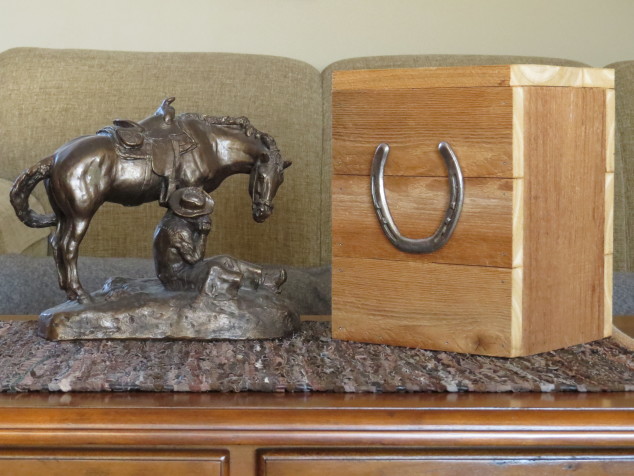
A small gathering of relatives and friends shared memories of Dad in the Fireside room of the Lutheran church. His old cowboy hat sat atop the box, his dusty cowboy boots on the floor below. I thought back to the many times growing up that I had polished his boots and with a tinge of guilt thought I should have polished them one last time. An even smaller group of us progressed to the rural Danish cemetery where Dad’s folks, sisters, and ancestors are buried. The pastor prayed in the cold, windless afternoon and consecrated Dad to this Earth and to Heaven.
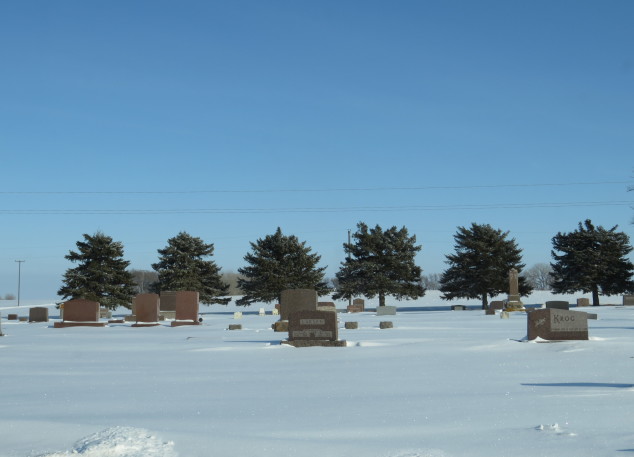
And right beyond the evergreens lining the cemetery along the road is the shelterbelt and old red barn of the homestead where my Dad was born.
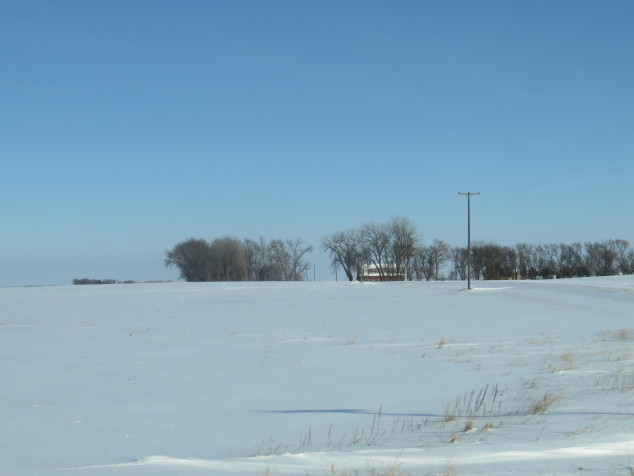
The memorial service continued at my sister Sam’s place as we ate, looked at pictures, told stories, laughed, watched the moon rise and the deer graze, and remembered our lives with Dad.
We lost our Dad for many years after he moved away, and even though we were all adults when that happened, it nonetheless affected our lives in many different ways. For me it was sad that he didn’t really know our kids or they him. He did make sure to say that he loved us and loved them when we talked on the phone, so that’s a gift we can accept with grace. So we build our lives with the gifts he has given us and sand out the rough places that don’t quite fit. There is something sacred in the process of being born, living life, learning lessons, and leaving this earth once again. It is remarkable that Dad has his resting place half a mile from the farmhouse he was born in—a true and joyous coming home for going home.
The Beginning
Her bouquet was made with flowers and grasses gathered from Minnesota, South Dakota, Missouri, and Texas–all parts of her history, her upbringing, her living and learning. Each place held a part of her heart and had shaped her into the loving, accomplished young woman who stood before us all.
We began our trip as the Maple trees shone with dazzling colors. What brilliance from a once-green tree!
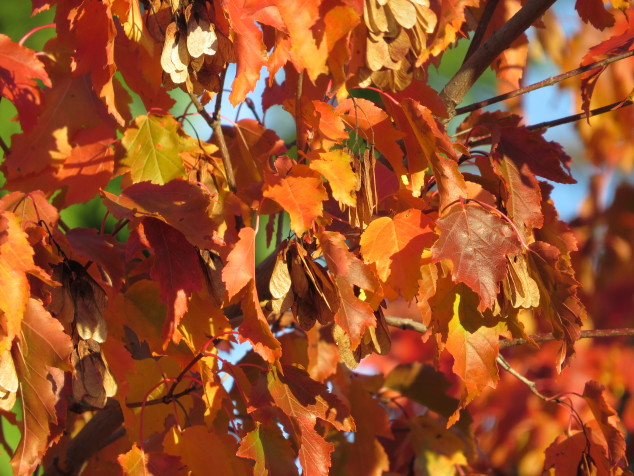
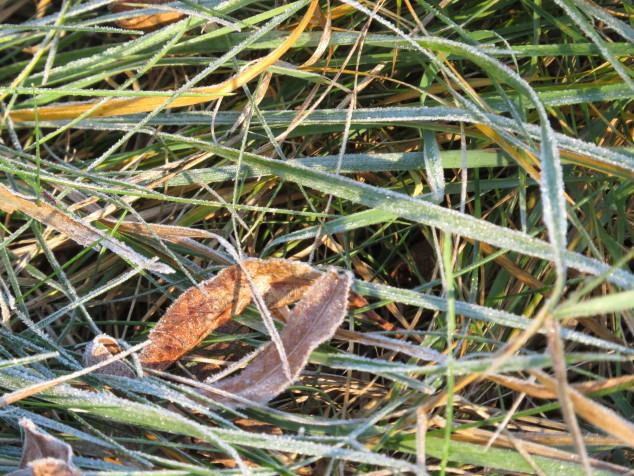
Frost colored the edges of bent-over grass and dry leaves as we left Minnesota in anticipation of the Texas wedding!
Urban living and Wilderness camping were her two Minnesota loves. I used to marvel that she could coexist with either environment with the same confidence and at-homeness. She went from St. Paul college life to living in a tree house or canvas tent or log cabin for the summer. She organized and guided canoe trips and camper trips and served United Methodist Camping. Her maid of honor spent three summers with her at the Boundary Waters camp–kindred spirits of adventure.
We headed southwest to South Dakota to pick up G-Lo. We arrived as the sun was sinking in the western sky and the geese were grazing in the pasture that once supported the white-faced Herefords raised by my grandfather and then my parents. Generations of our Scandinavian relatives worked the land and are buried in the rural cemeteries where the churches no longer stand. Our history runs deep in this land.
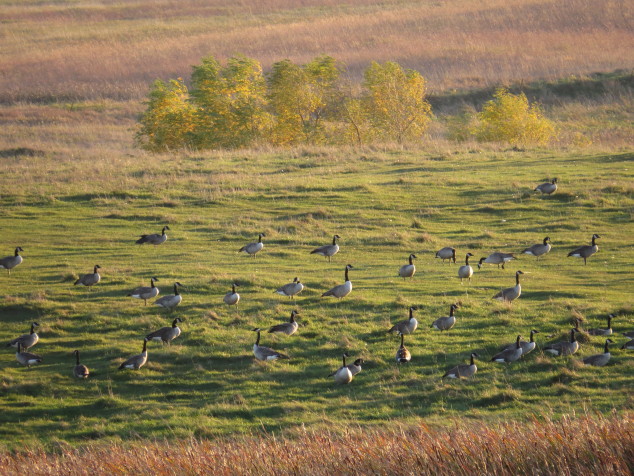
The next morning, in the perpetual new beginning of a new day, we loaded the Buick and headed south.
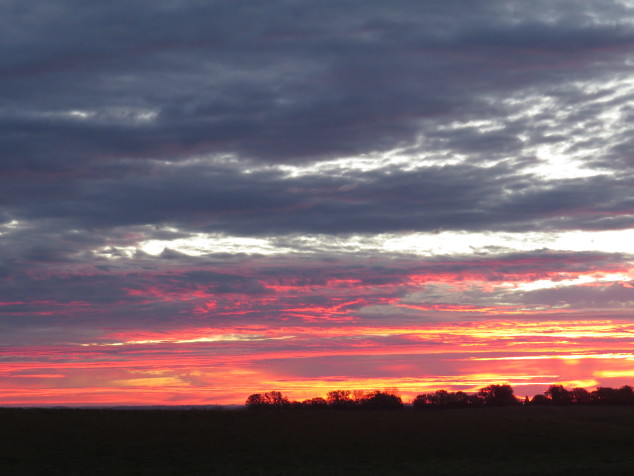
Moving to a new school and state in the middle of Middle School is a daunting task at best, but she handled it with her typical take-charge attitude and organized a ‘Backpack across Brookings’ hiking trek with her new friends. She went on to compete in debate, develop her artistic abilities, serve in Student Council, and volunteer with South Dakota politics. Her three bridesmaids shared her interests, time, and energy–kindred spirits in creativity, service, and determination.
We traveled through Iowa to Missouri. The I-29 drive was familiar from the many times we drove north and south between the Missouri Brakes and the South Dakota Andersens. We followed the River Bluffs that had tiny farm places tucked into the hillsides. The trees showed the beginnings of fall change, and huge Sycamores rose above the others–I had forgotten how magnificent they were!
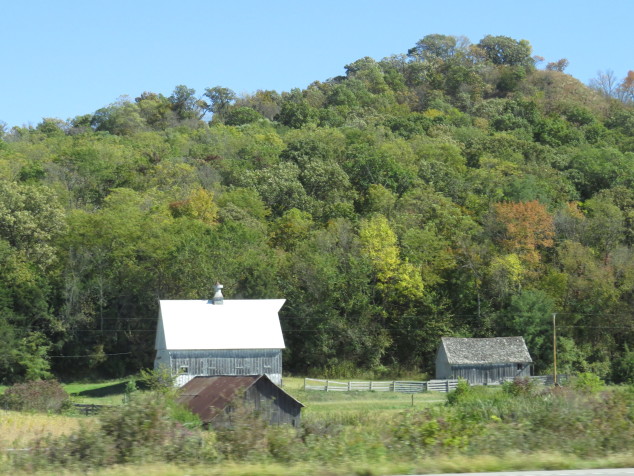
Missouri was her birthplace, her early childhood playground, her creative beginnings, and the place where her Daddy was born and raised. Her Brake relatives surrounded her with love, played backyard games and instilled a love of sports, co-created Christmas plays and shared a thousand laughs. Some of her aunts, uncles, and cousins traveled to Austin to honor her and share her special day, a childhood friend styled her hair, and her best friend from birth was there–kindred spirits in the love of Gram and Gramps, friendship, and all things Chiefs and Royals.
We jogged west into Kansas, zooming past milo fields and oil wells until we came to the vast, beautiful Flint Hills.
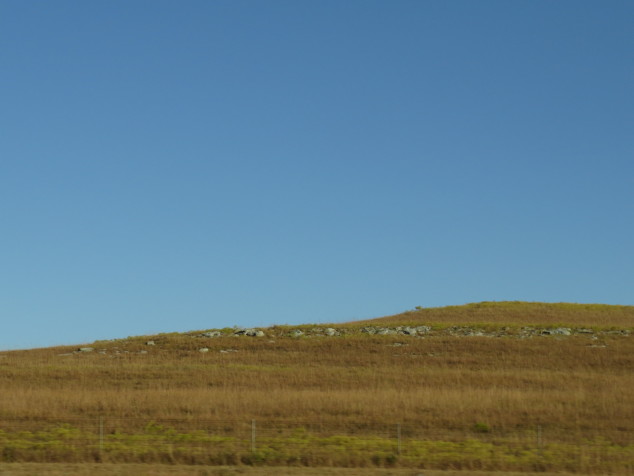
My prairie-girl heart felt at home in the sea of grass dotted with an occasional windmill, herds of Angus, and a coyote sighting. This was cattle country, and it was grand in size and glorious in nature.
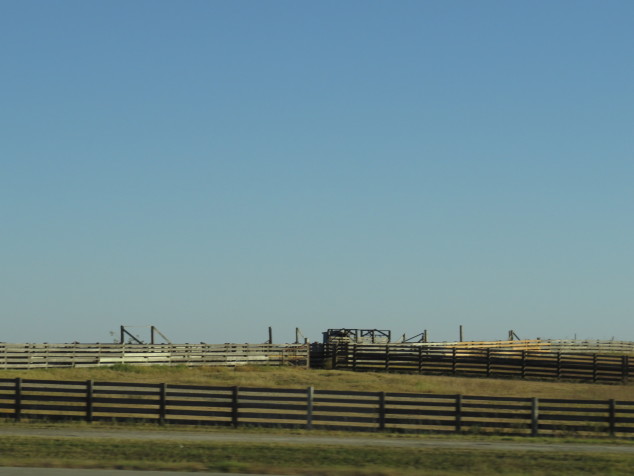
Dusk shrouded the grassland in a rosy-hued cloak as we got another day closer to Texas.
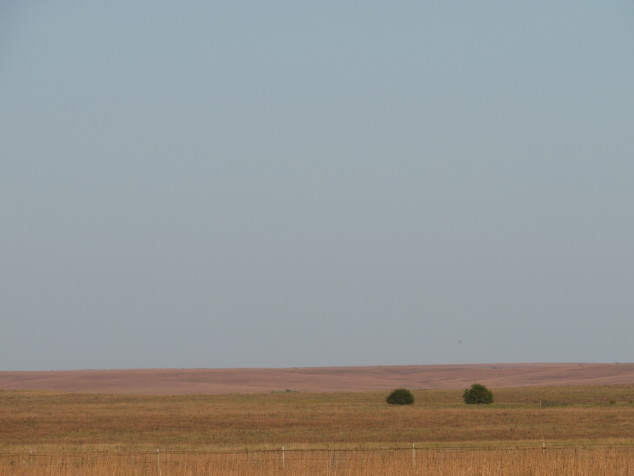
An orange sunrise greeted us as we left Kansas and rolled into Oklahoma.
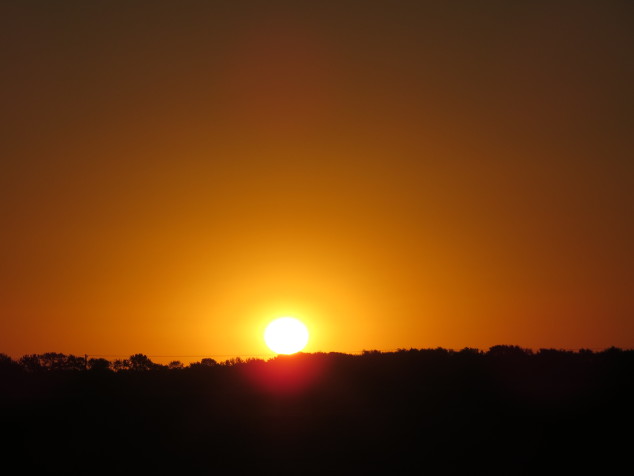
Oklahoma shocked my northern eyes with its red soil, shrubby greenness, and oil wells.
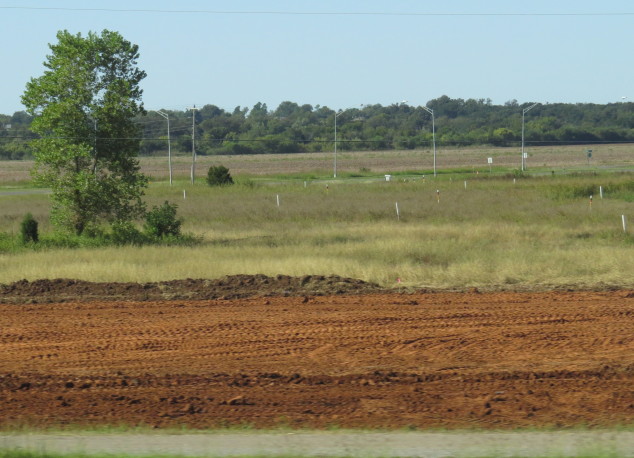
We saw the Arbuckle Mountains, oldest known formations between the Appalachian and Rocky Mountains.
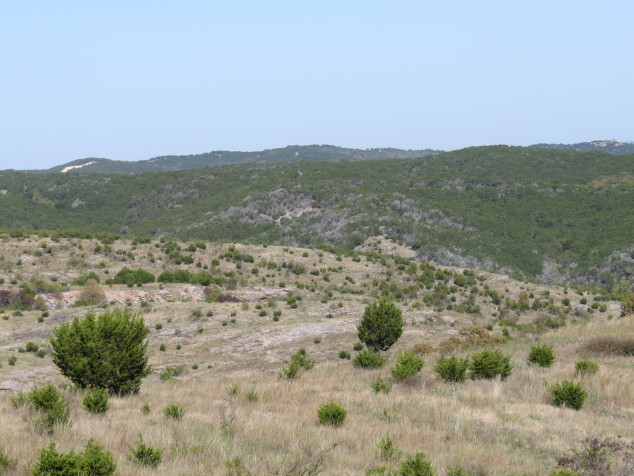
We saw Taylor Swift–okay, three semi trailers of her stuff–on the way from Nebraska to her next concert in Arlington, Texas!

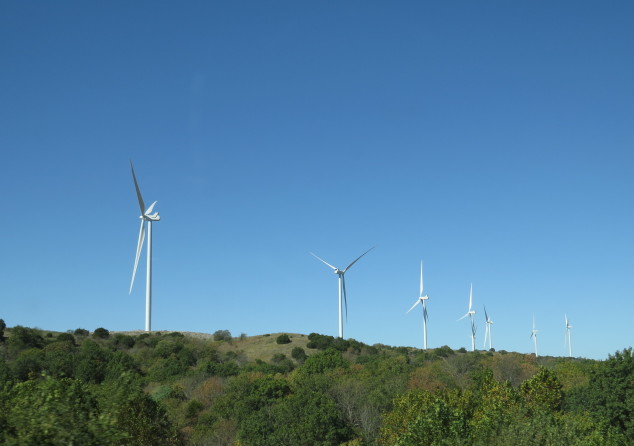
We saw prickly pear cactus, high ridges of windmills, and crossed the Red River into Texas.
Fort Worth and Construction are the only things I remember about Texas until we got close to Austin. I was amazed how many miles and how extensive the construction projects spanned. Never would a northern city undertake such a feat in our short window of unfrozen time.
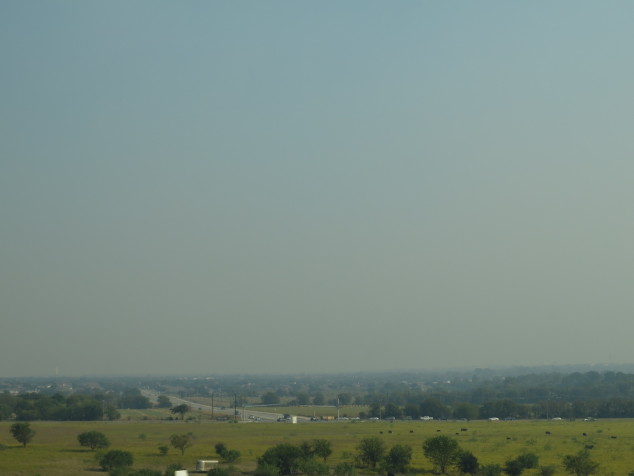
As we made our way to Austin, we were engulfed by 95 degree temperatures and wildfire smoke from the Bastrop County fires, not too far from the wedding venue. Welcome to Austin, Texas!
After college, she traveled to Marble Falls, Texas to work at The Outdoor School, instructing school-age children in outdoor recreation and the natural environment. It was there she cultivated many friendships and where she fell in love with Texas. It was there she met her husband-to-be–kindred spirits in life and love. Surrounded by their families, far-away friends, TOS and Austin friends, they began a new adventure together.
The world looks rosy in those heady, dazzling days of the beginning of a romance when we anticipate seeing and spending time with that special person. When the infatuation falls away, like the shimmering leaves of autumn, the real work begins. We examine our roots, our values, the things that matter to us, and we verbalize our wildest dreams of what we want in life. Then the big questions: Is this the person who will walk with me in love and respect, who will be his own person and allow me to be mine, who will commit to the hard work of partnership, who will hold my hand and guide me out of the woods when scary things happen? Is this love sustainable through a lifetime of choices, the huge commitment to parenthood or not, the really hard things in life that make your insides feel like a blank space of despair? Can this person make me laugh and feel truly loved year after year, forgive my mistakes and limitations, talk it out and shake it off? Do we make a good team, do we serve others, do we embody the things we hold dear? And when we realize that we have constructed a long list of Yeses to those big questions, we can move in bold style down the aisle in front of our people who love us and God who sustains us. No longer do we murmur, I wish you would…, but we profess with conviction I do, I will, and we walk together into the perpetual new beginning of each new day.
Gleanings from June 2015
And what is so rare as a day in June? Then, if ever come perfect days….Whether we look, or whether we listen, We hear life murmur, or see it glisten. James Russell Lowell
The long, light days of June have slipped by, and we really have had some perfect days! The combination late Spring/early Summer brings warm, wonderful weather, incredible plant growth, exquisite flowers, and animals intent on nesting and raising their young. Life murmurs and glistens all around us, subtle yet extravagant, common yet miraculous.
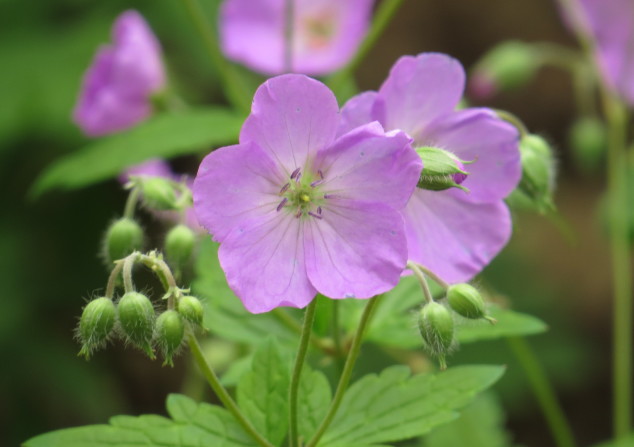
Wild Geranium is a delicate woodland flower that graces the paths through our woods.
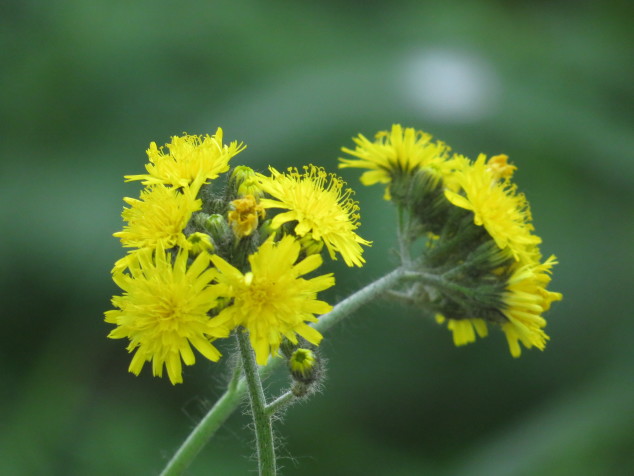
False dandelion grows in our woods, though I have also seen it in full sun along the road ditches. A cluster of small, dandelion-like flowers sways atop a two-foot stalk.
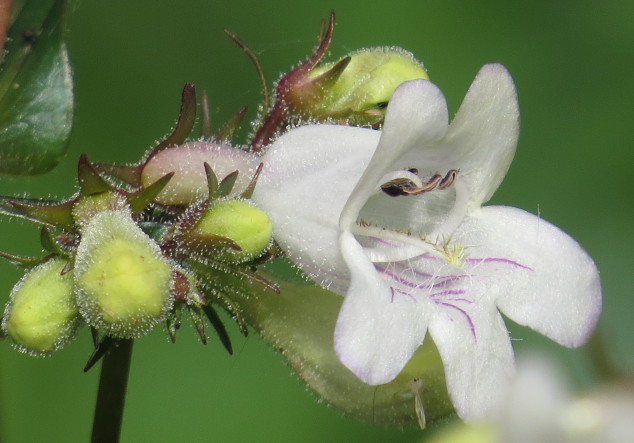
Our sun garden displays the glorious Penstemon digitalis ‘Husker Red’. It has dark maroon foliage and shining white flowers on tall stems. You can see why its common name is Beard tongue; the sterile stamen (one of five stamens) is lined with tufts of small hairs.
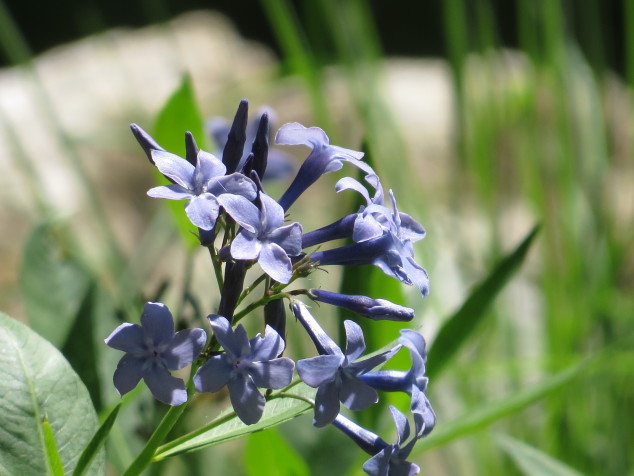
One of my prairie garden flowers–Amsonia or Bluestar–looks perfect in front of the wispy prairie grasses and the Western South Dakota petrified wood.
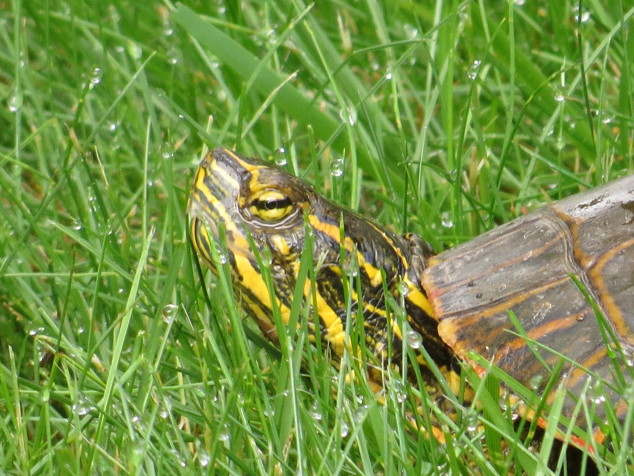
One of the critters that walked through our June yard was a Western Painted Turtle. She quickly ambled through the dewy grass until she saw me–then she stopped as I got pictures of her. She was likely on her way to her nesting place where she digs a hole with her hind feet and deposits her clutch of leathery white eggs. Incubation time is 72-80 days, and since we live so far north, the hatchlings stay in the nest until the following spring!
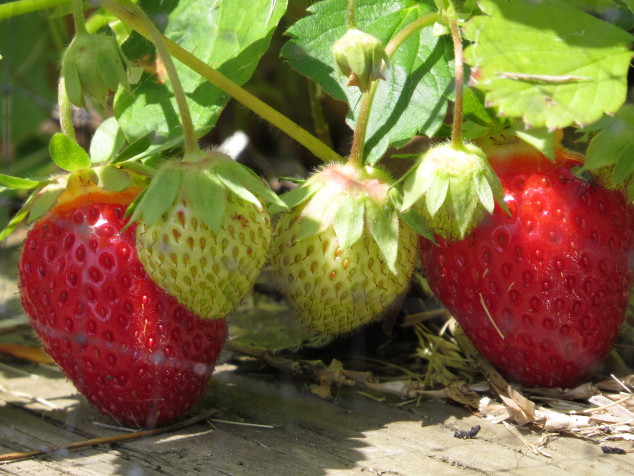
 Tiny wild strawberries and our larger cultivated ones turn a shiny red in ripeness–a sweet treat for whoever finds them first.
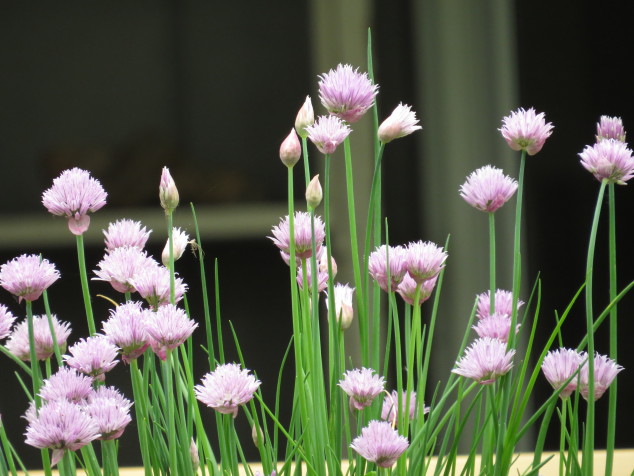
Outside the screened-in porch, the chive blossoms line up like children at the schoolyard.
And speaking of the screened-in porch, my re-do project is on bird delay! A robin thought the unscreened cross beam would be a perfect place for her grass and mud nest. There are three hungry baby birds in the nest in spite of the sawing and hammering going on below. Staining and re-screening will have to wait until the young ones fly from the nest!
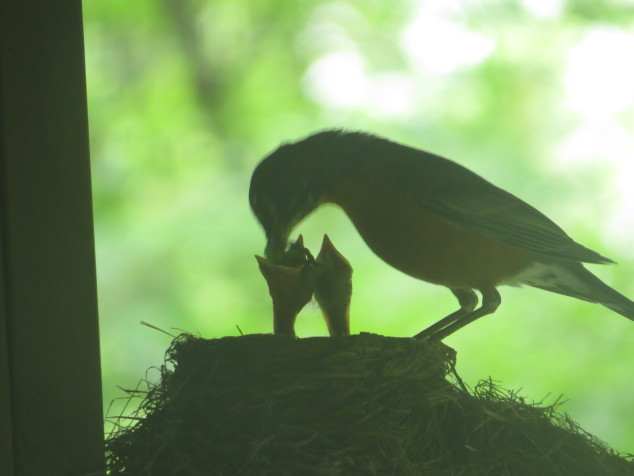
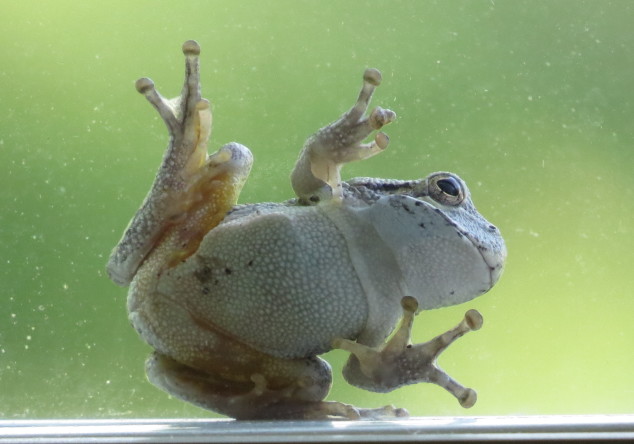
A couple of other creatures seemed to want a glimpse of human life inside the big wooden box with windows. I observe Nature every day–do we ever think about the creatures observing us?
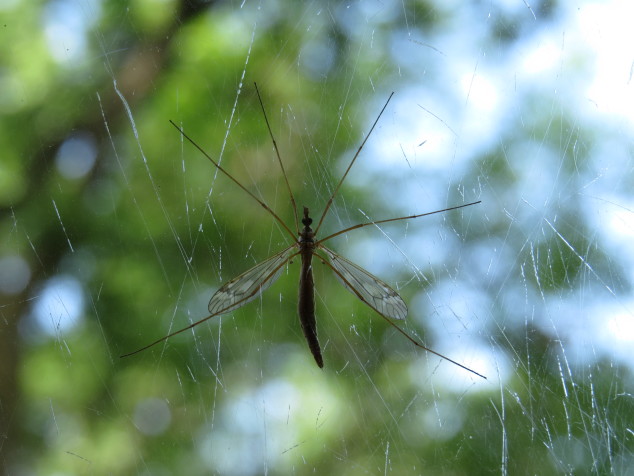
All I can say to the little critters is that I definitely need to wash windows!
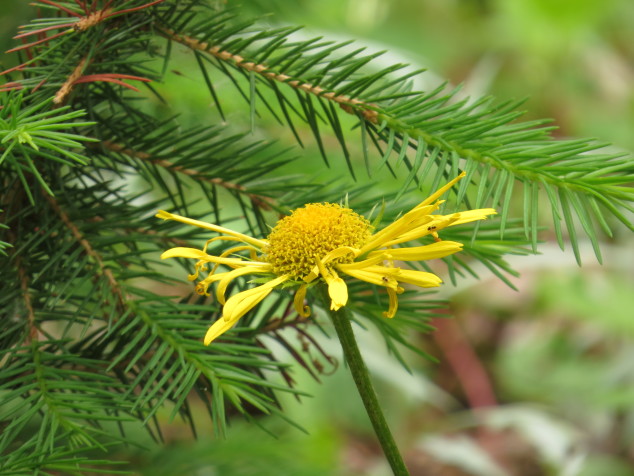
I liked this photo of Leopard’s Bane against the Norway Spruce tree. The flower is spent, on its way to decay with petals drying and falling off and with ants crawling on it. It is up against the supple new, green growth of the spruce tree. A study in contrasts.
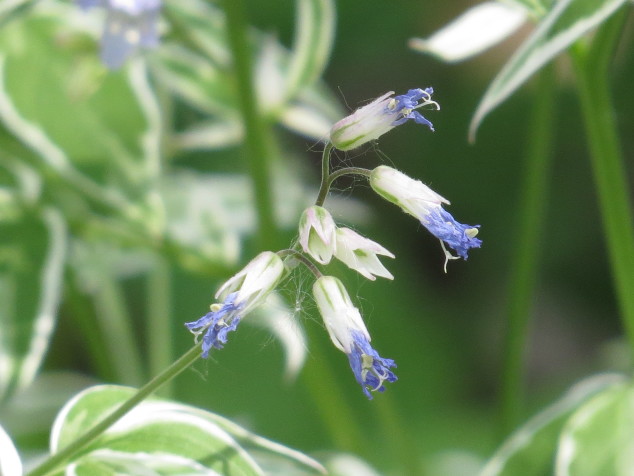
But there is beauty in the ‘spentness’ of flowers, too. Dried blue blossoms of the pretty variegated Jacob’s Ladder reminds us that the bridge between heaven and earth includes the worn out and expended of us who are just a little farther along on our journey.
Perennial Blue Salvia in its ‘spent’ state provides food for a pair of American Goldfinches. It is in its prime time of nourishment for others, though its peak visual beauty is past.
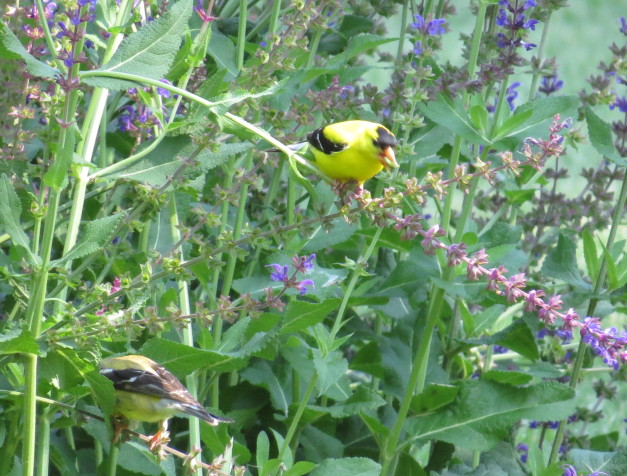
So June encompasses the fresh, invigorated newness of plants, flowers, and creatures and also those in decline. Like all the seasons of Nature and of Life, change is always happening, whether barely discernible or a drastic metamorphosis.
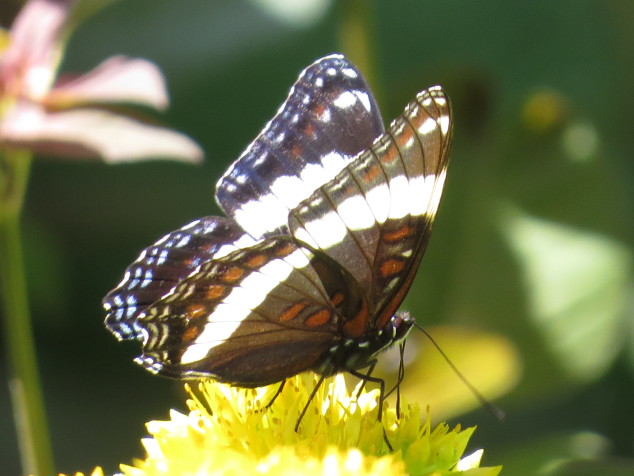
Perhaps the rarity of a perfect day in June is not so rare after all. Perhaps every common day holds miracles waiting to be seen and heard. Where ever we are on our journey, whether ready to fly from the nest, in the perfect place, or in a spent state, we have gifts to offer the world and one another. As the murmur of angels ascending and descending beside us, escorts us on our journey, it is our faces that glisten on each perfect day.
The Prairie, the Ash Tree, and the Anthill
In late April when we drove to Rockville County Park to check on the eagles, we discovered the restored prairie had been burned. Annual burning of the prairie promotes growth and dominance of grasses while discouraging growth of woody shrubs and some trees, especially Eastern Red Cedar. Fire clears away the previous year’s plant debris, allowing sunlight to warm the ash-blackened soil. The roots and rhizomes (where new shoots are formed) of the grasses and other prairie plants are below the ground and not affected by the fire. New growth takes place shortly after the burn, and soon the black prairie is green once again.
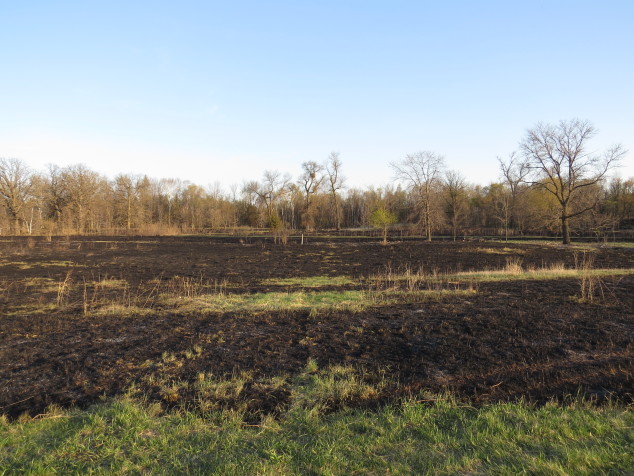
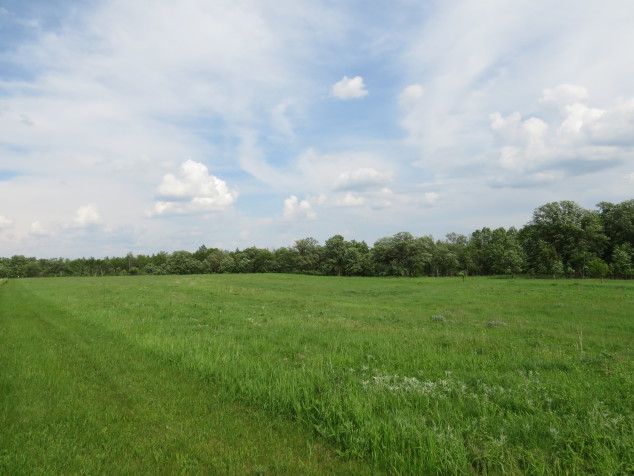
Forty days after the burn, the ‘sea of grass’ was growing, and a number of early season wildflowers were blooming.
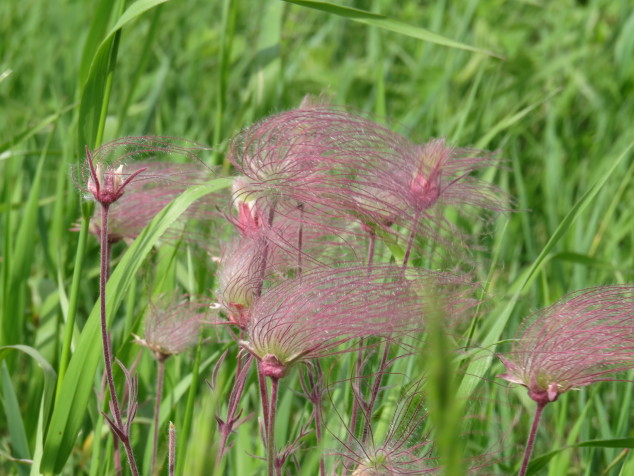
Wispy, rose-colored seedheads of Prairie Smoke drifted in the breeze.
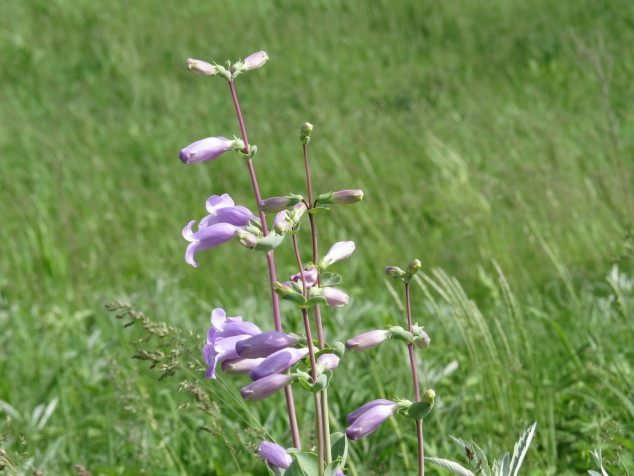
Lavender flowers on purplish-pink stems of Large Beardtongue or Shell-leaf Penstemon stood like royalty among the common grasses.
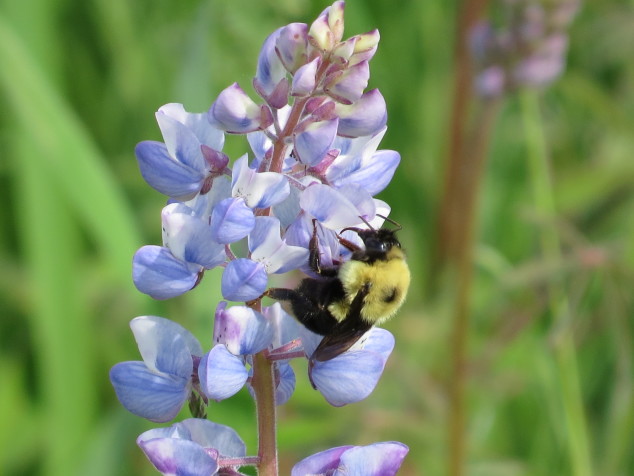
Wild Lupine is the only host plant for the Karner Blue butterfly caterpillar. Loss of prairie habitat has put the Karner Blue on the endangered species list. While I don’t know if there are Karner Blues around here, this bumblebee is enjoying the sweet Lupine nectar.
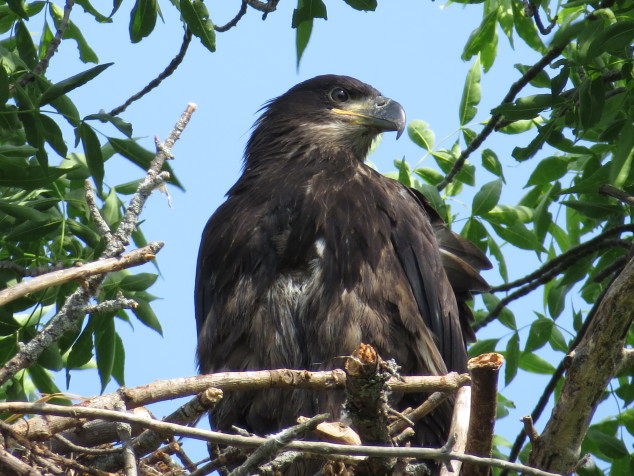
The large ash tree that houses the eagle’s nest was fully leaved out, making it more difficult to spot the nest. Luckily, there was a ‘hole’ in the foliage that allowed me to see the young eagles–and allowed them to keep an eye on me and everything else. The last time we were at the nest, the parents were there with the two eaglets, so I was surprised when I looked through the camera lens and saw three young ones!
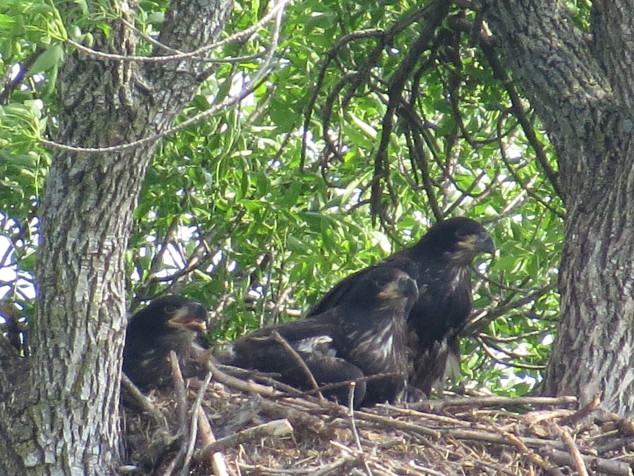
As we walked closer to the nest, one eaglet hid behind the other. Perhaps his shyness was the reason we didn’t see him the last time we visited the nest.
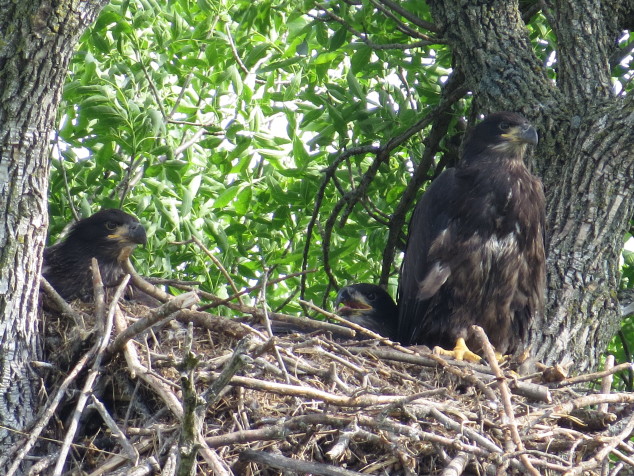
One eagle, perhaps appointed by the parents to be in charge while they hunted for their large family or maybe a self-appointed firstborn, stood guard of the nest. He perched on the edge of the nest, a sentry for his siblings, as they relaxed behind him.
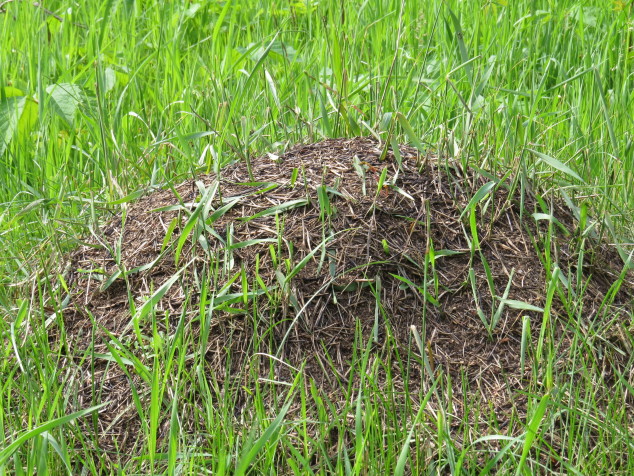
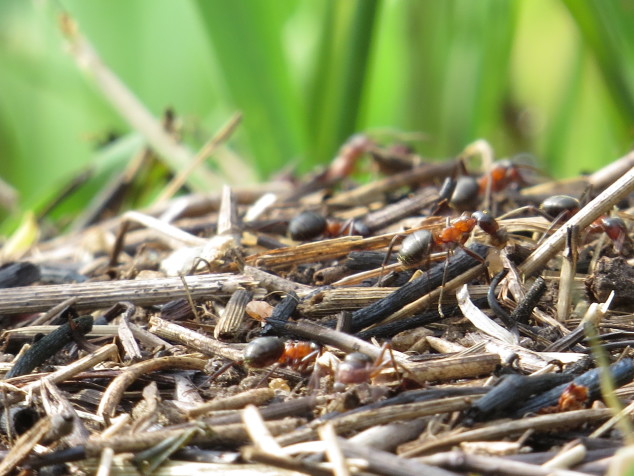
We left the eagle’s nest, walked along the trail, and found a huge anthill of Thatching ants! Their home is made up of plant material from the area–in the close-up picture you can see how some of the ‘thatch’ is black from the burned plants. Each colony of these social animals is headed by a queen ant or queens who lays thousands of eggs. The worker ants are wingless, non-reproducing females who forage for food, care for the offspring, work on the nest, and protect the community. The male ants basically mate and die. Each colony may have up to 40,000 ants, depending on the size and age of the nest.
These ants are beneficial insects. They eat nectar, seeds, fungus, and insect pests. They also scavenge on larger dead animals and are important soil builders. They do bite, so don’t get too close! The eggs and larvae of Thatching ants are a favorite food of bears who will rip apart the nest to get to the tasty morsels.
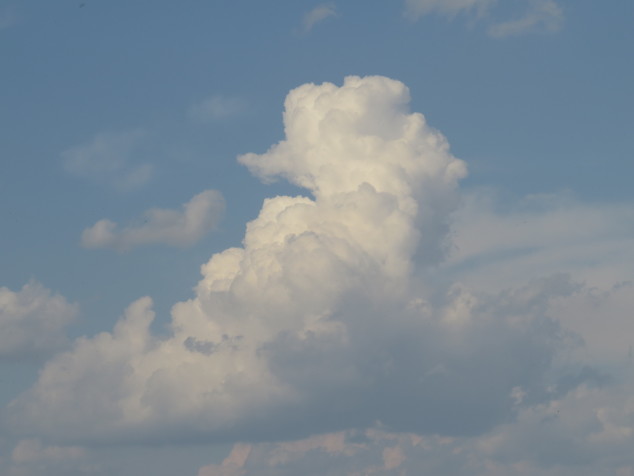
Thunderheads were building as we walked the prairie and oak savanna trail back to the car. It had been a perfect way to spend a couple hours of my birthday!
The prairie, the ash tree, and the anthill–all homes to the particular flora and fauna we saw, but also to so many more. The ‘Web of Life’ is illustrated in great beauty on this relatively small tract of land. While the fire on the prairie was a controlled burn and not one started by lightning, it demonstrates Nature’s capacity for regeneration and renewal. The anthill of Thatching ants shows how a community of workers takes care of one another and their home. The young eagles who have yet to fledge from the nest know their parents are working hard to provide for them and have begun to show their own personalities and traits. The Wild Lupine is growing and ready to provide a home for the Karner Blue if it passes this way.
What kind of homes and communities are we providing? Where do each one of us fit in the ‘Web of Life?’ How are we sustaining and extending the Beauty and Wisdom of Nature to all the living creations around us?
A Place Called Home
There is a place called Home. It’s not a house or a certain building, and you may not even reside there. But something happens to your soul, your spirit, and your body when you return to this Place. When the Place envelops you–you see it, smell it, hear it, and experience it–your blood pressure drops, as my friend Ruth says. You breathe it in with a deep, contented sigh and wonder why you’ve been away for so long. The place called Home for both Ruth and me is the Prairie. We are both Dakotans living in Central Minnesota among the trees and lakes. Don’t get me wrong–I love the trees and lakes and find great pleasure in their beauty and abundance. But when I returned to South Dakota a couple of weeks ago, I felt that place called Home once again.
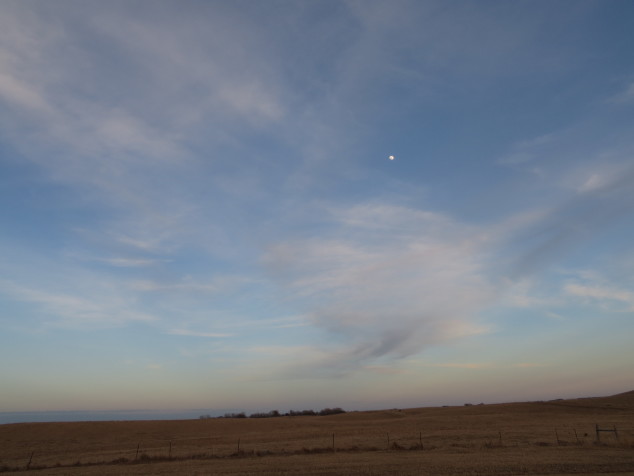
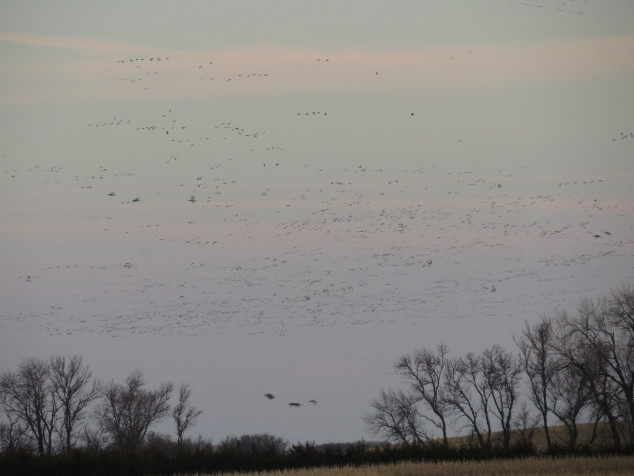
I arrived Home at dusk to the familiar din of tens of thousands of geese circling, then settling down into the slough for the night. The Snow geese were on their way north, happy for a rest stop along the way.
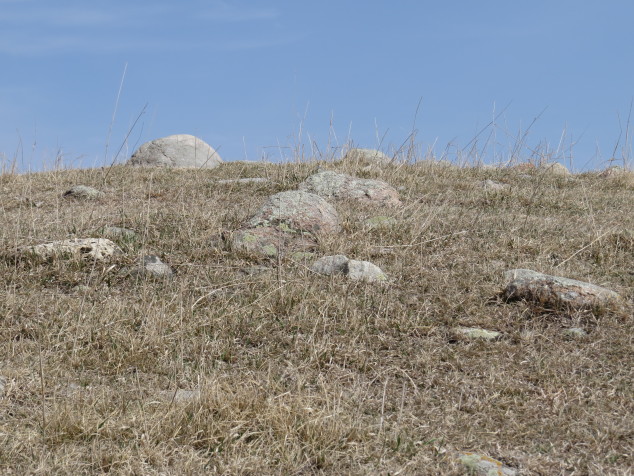
Later that week, I was able to walk the pasture. It was grazed short from the previous fall with hints of green for the new season. The wildflower hill, with its rock landmarks, is misnamed for this time of year–not even the early blooming pasque flower had peeked its head from the sod.
A dried thistle ‘shepherd’s crook’ accented the horizon, waiting for the animals to return to their summer pasture.
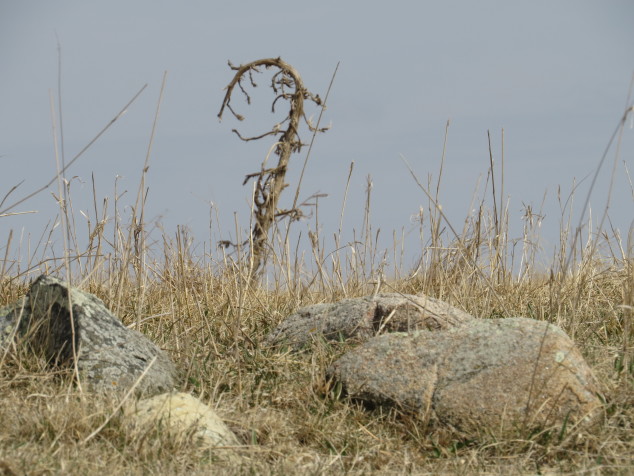
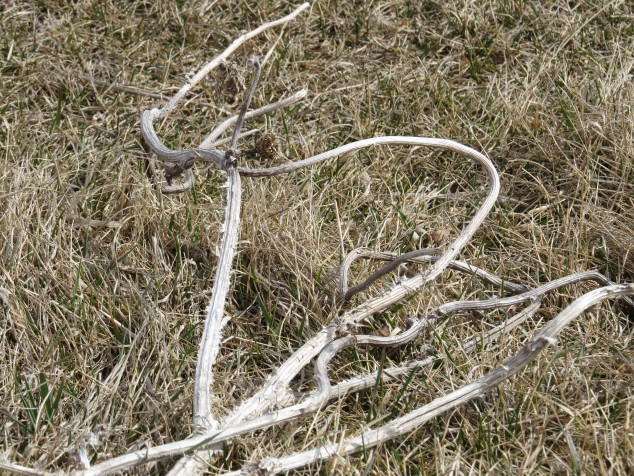
Other thistles lay like bleached bones on the prairie, remnants of time past.
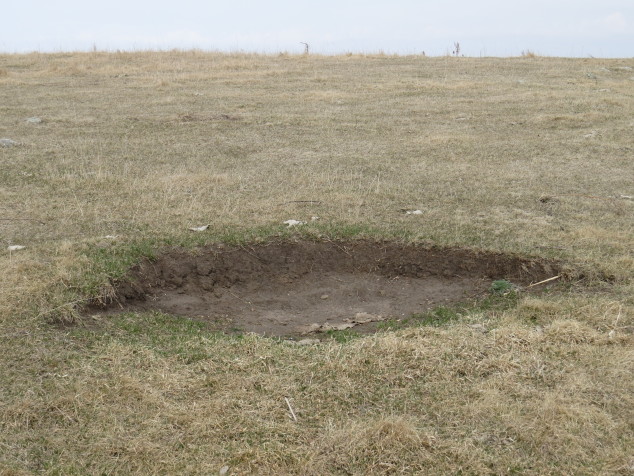
A buffalo wallow, encircled with green grass and dried cow pies, is used by the cattle to rub their heads or to roll in the dust or mud.
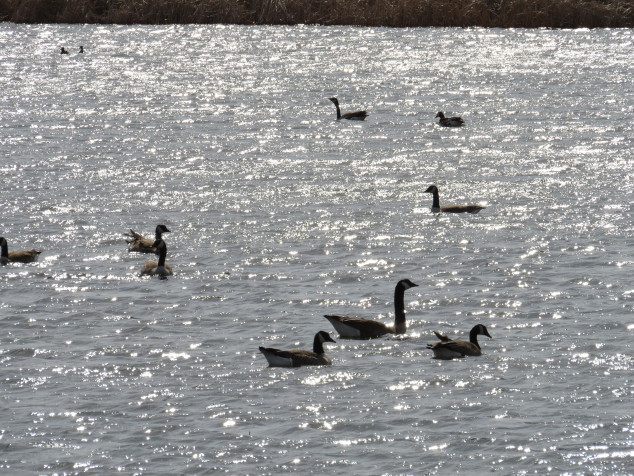
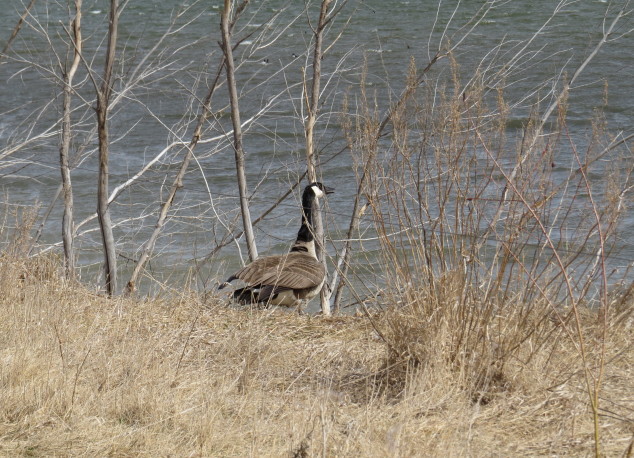
The home geese were in the near slough. These Canadian geese stay all summer, making their nests and raising their young.
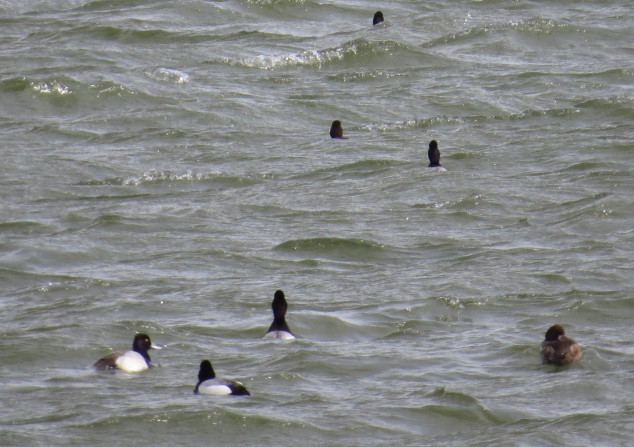
As I walked along the edge of the bigger slough, I saw Greater and Lesser Scaup ducks body surfing the white caps. Like the Snow geese, they were also making a migratory stop on their way to breeding grounds in the far north.
I scared a mama goose from her nest, and with great honking distress, she retreated into the water.
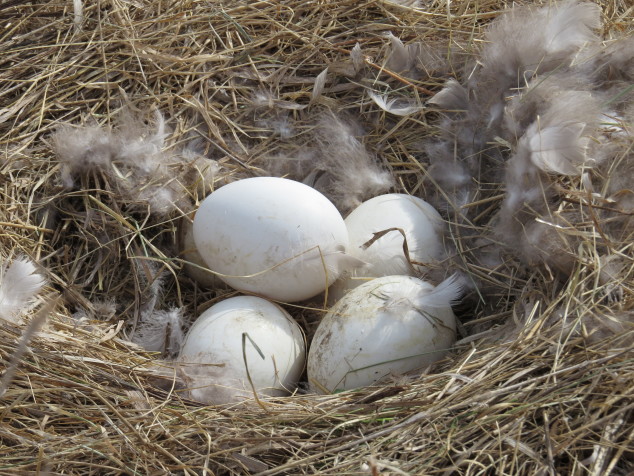
Her nest was perched on the bank above the slough and made of dry grass and down feathers. It contained five large cream-colored eggs.
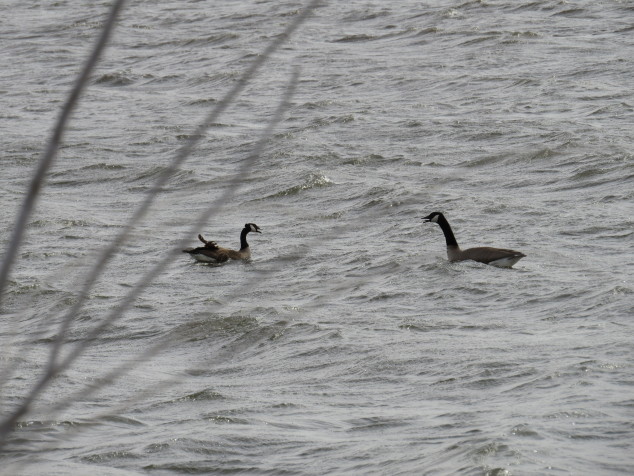
The mama goose continued her distress calls and very soon her mate flew to her side, where he heard the whole story of the intruder on the bank. Their indignant honking continued as I walked away from the nest.
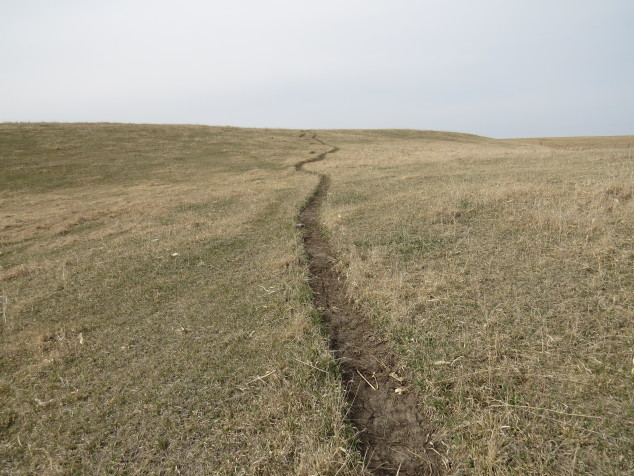
I followed the cow path to the top of the hill.
M-m-m, it was good to be Home.
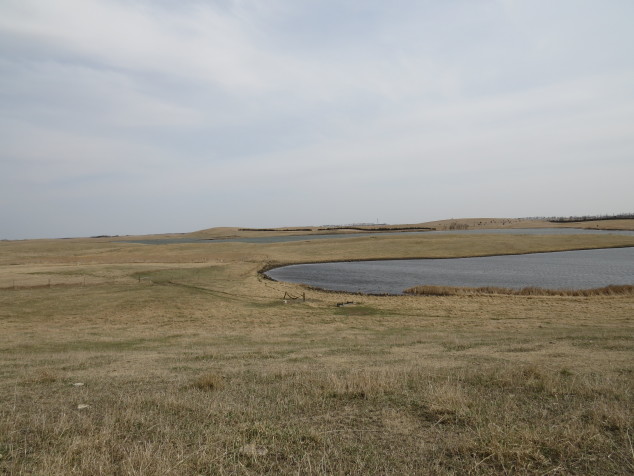
The place called Home, where our spirits soar and our bodies relax, may be our birthplace or a special place that changed the way we feel about Life. It could be the Prairie, the Mountains, the Lake country, the Bayou, or the Great Mississippi River. We leave and find these special places by our own migrations due to schools, jobs, and mates. We make our nests and raise our families in the best way we can, giving our time, energy, and love to the herculean endeavor. At some point, the remnants of the past whisper in our ears, and we ask ourselves if we are on the right path. When the whispers become loud, incessant honks, we finally walk away from the things that no longer work in our lives. And we walk towards ourselves and find that the special place called Home is also inside us. It’s good to be Home!
What You See is What You Get
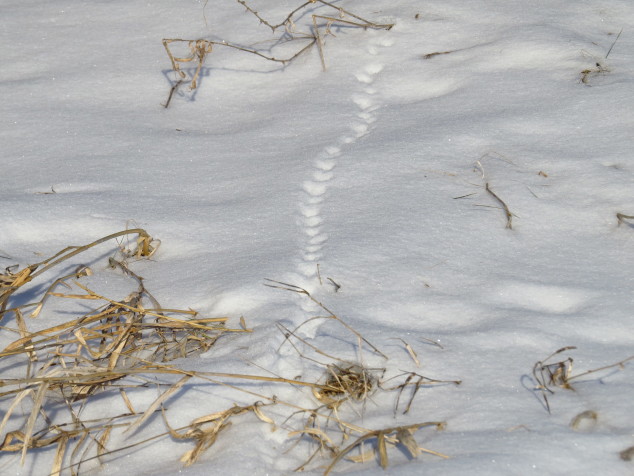
In what bold relief stand out the lives of all walkers of the snow! The snow is a great tell-tale, and blabs as effectually as it obliterates. I go into the woods, and know all that has happened. I cross the fields, and if only a mouse has visited his neighbor, the fact is chronicled. –John Burroughs
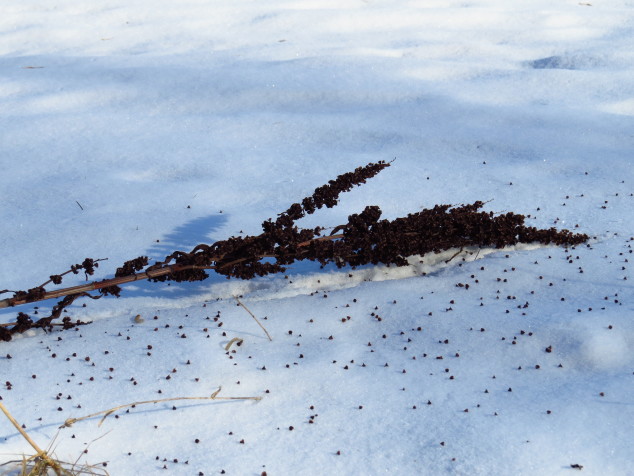
We were walkers of the snow on Saturday. Even though it was only a chilly 11 degrees F, it was a sunny day with no wind. With minimal snow cover, it was a perfect day for a winter hike! We went to Rockville County Park and Nature Preserve which is adjacent to the Sauk River and Eagle Park where we watched the eagles last summer. One of the first things we noticed were the mouse or vole tracks through the snow–not tracks, exactly, but a trail, as their low-to-the-ground body indented the snow. Scattered seeds of a fallen dock will likely entice the rodents to trek this way.
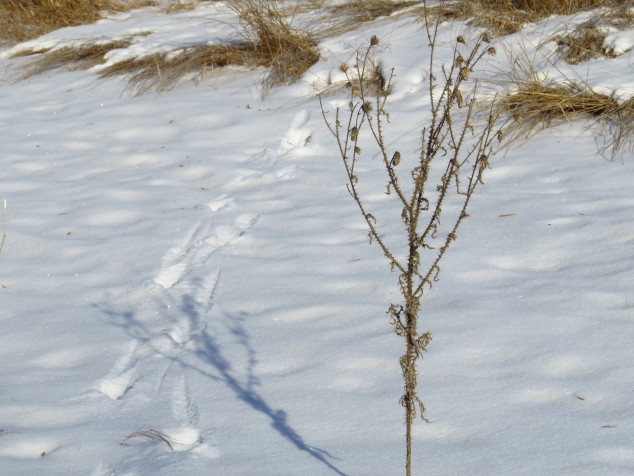
 We saw deer tracks skirting a dried, prickly thistle, then following the trail through the woods.
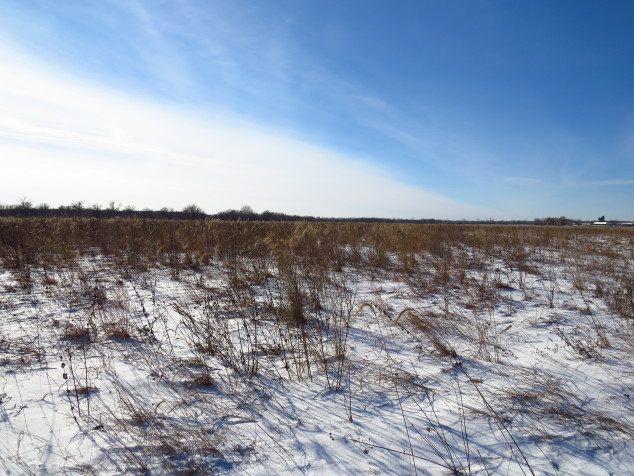
A large area of the park has been planted to re-establish a natural prairie.
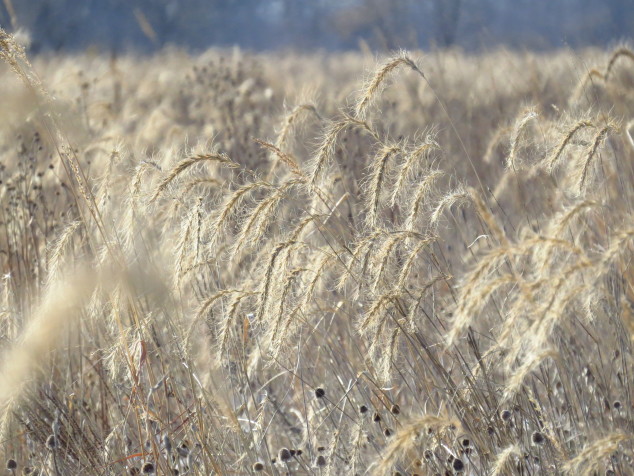
The arched seed heads of Indian grass shone in the bright sunshine and stood tall in the open winter.
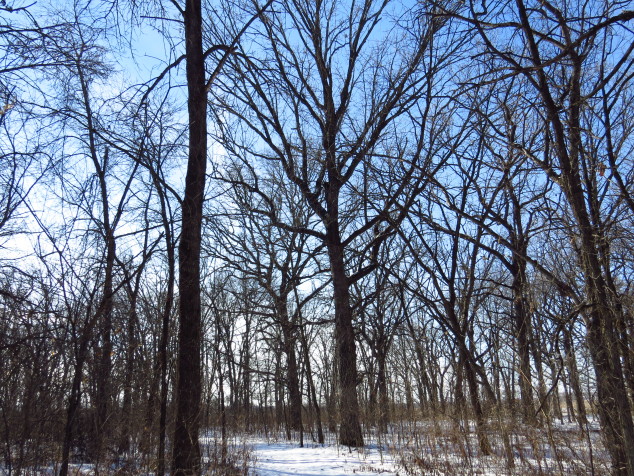
We walked toward the Sauk River through the woods. We saw fox tracks and many fallen trees from a previous summer’s tornado-like storm. The River was frozen from either side of the banks, but the middle was a fast-moving stream.
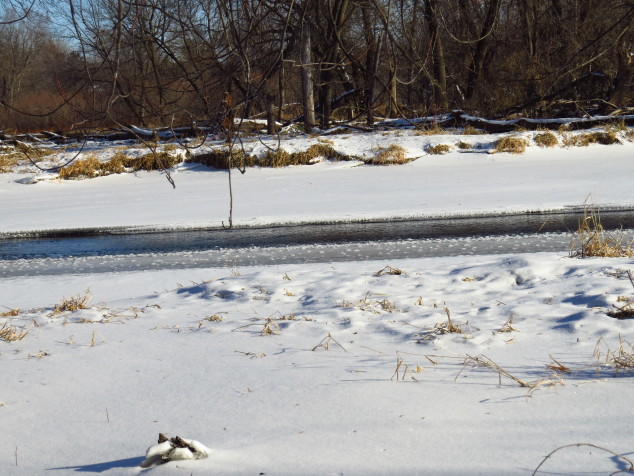
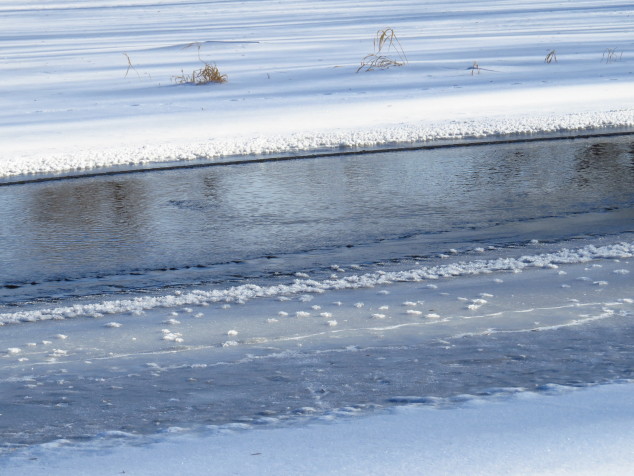
The River had an S-shaped bend and as the narrow channel of open water turned each corner, it flowed swiftly as a Rocky Mountain stream.
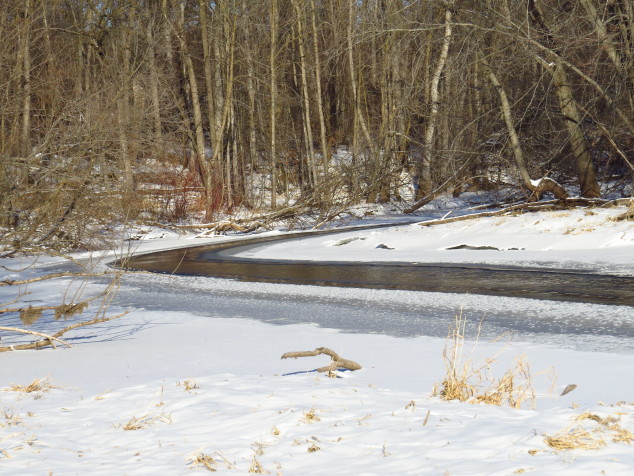
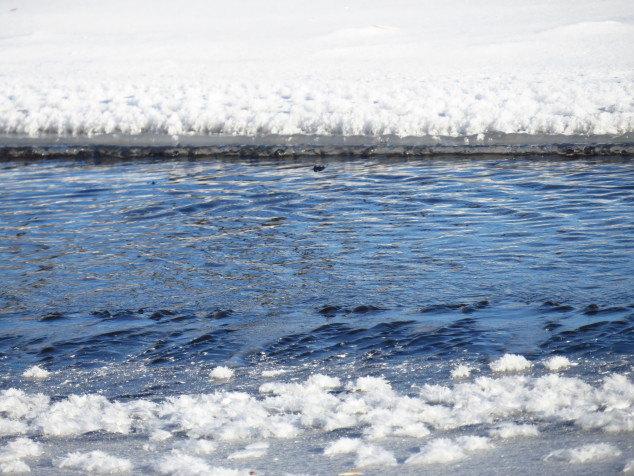
Walking through the leafless woods and along the prairie with only an inch or two of snow covering the ground, we could see everything. We saw the animal tracks, the grasses, the lay of the land–what you see is what you get–until we got to the River. Up river and down river from where we were, the ice covered the entire river. The swiftly flowing current was under the ice, hidden from sight. Just how deep was the ice above the current? I wasn’t going to find out.
In the early Seventies, a group named The Dramatics sang a song ‘What You See is What You Get’ (Whatcha See is Whatcha Get). The phrase was used in the media to assure customers of the quality of products. It was adopted by Flip Wilson for his comedic skits. It is used in the computing world (as the acronym WYSIWYG) to signify that what is displayed on the screen is the way it will be displayed in print. Most of us try to display ourselves as the ‘real thing.’ We want to be genuine and live our lives without hidden agendas. We want to be like the woods and the prairie. But we all have a little bit of frozen river in us. What’s going on inside does not match what it looks like on the outside. The ice is covering something we cannot see–especially in ourselves. How thick is the ice? That may matter when fording a stream in winter, but Life doesn’t care. What does matter is that we work on melting the ice that separates us from ourselves so we can live our lives in bold relief.
The Prairie and the Wetlands
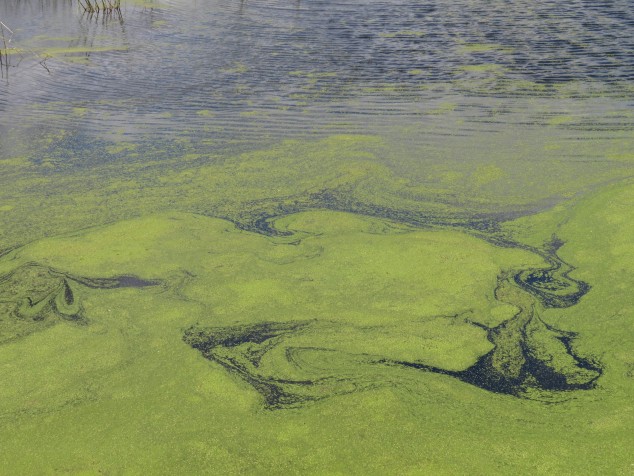
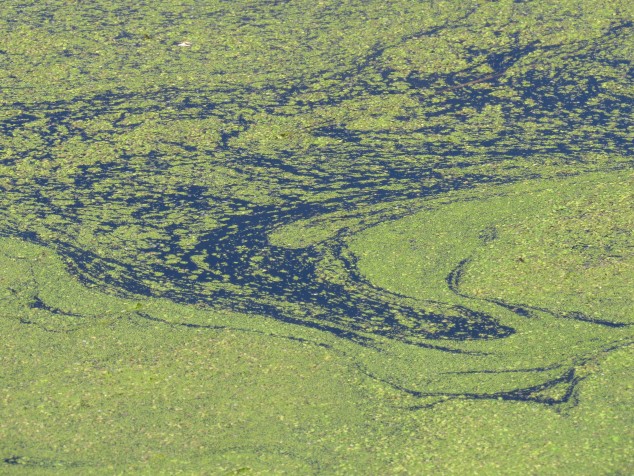
In a single short hike at St. John’s Arboretum, one encounters three distinct environments–the prairie, the wetlands, and the woodlands. My last post showcased the amazing fall colors of the woodland maple trees; this post will share a glimpse of the wetlands and prairie. The trail is called the Boardwalk Loop and has two stretches of floating boardwalks across the wetlands. I like the blues and greens of the Monet-looking artwork of duckweed medium by the artist Wind–probably with the assistance of Waterfowl!
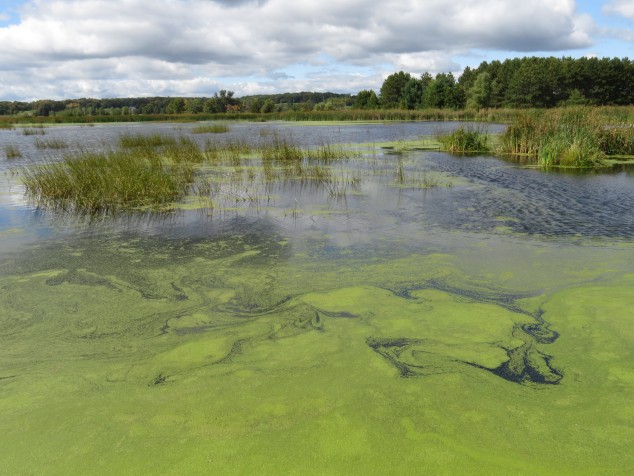
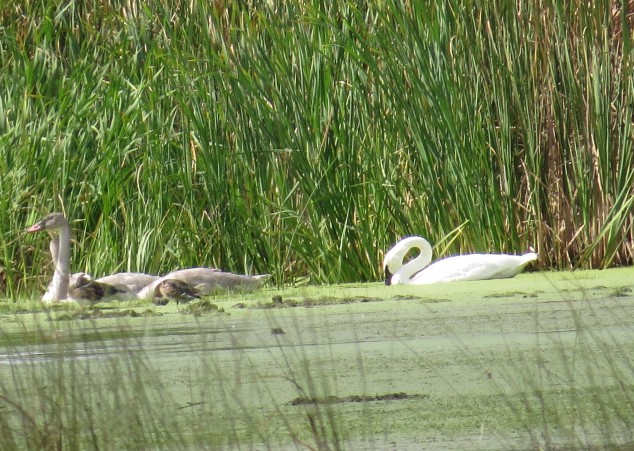
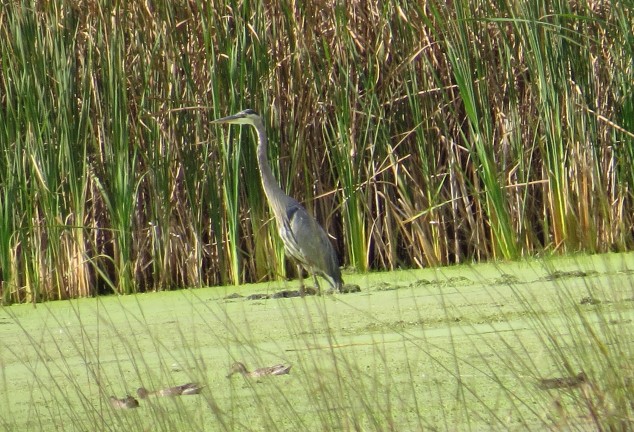
At the far edge of the open water, the bright white of a swan caught my attention. As I was trying to focus in on the swans, I also found a great blue heron standing amid the ducks and the duckweed.
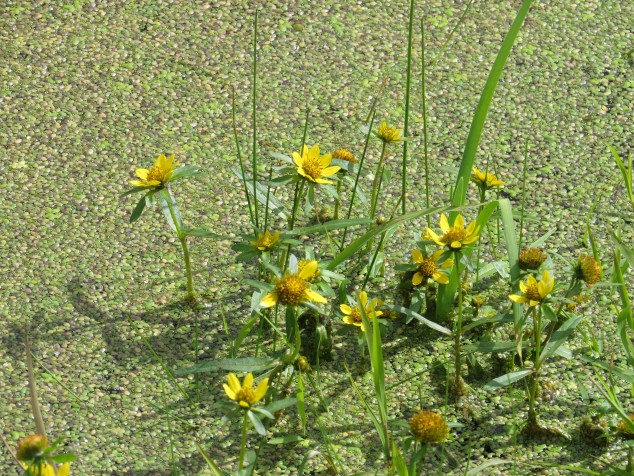
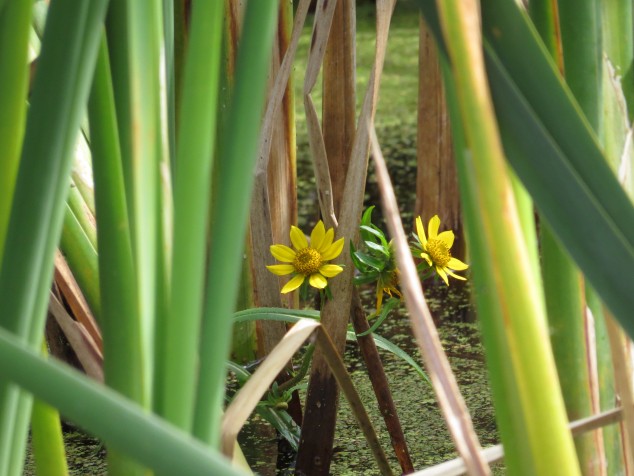
I was unable to identify this sunflower-looking swamp flower growing up through the duckweed and framed by cattails. What a picture of optimism! Sunshine yellow in a sea of green in the fall of the year and the center of attention among the overbearing cattails!
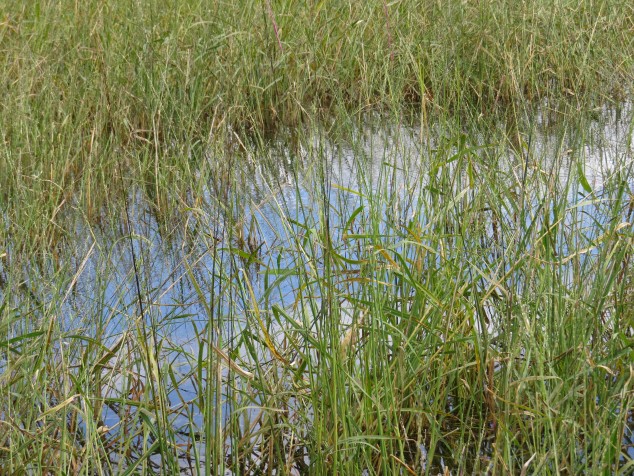
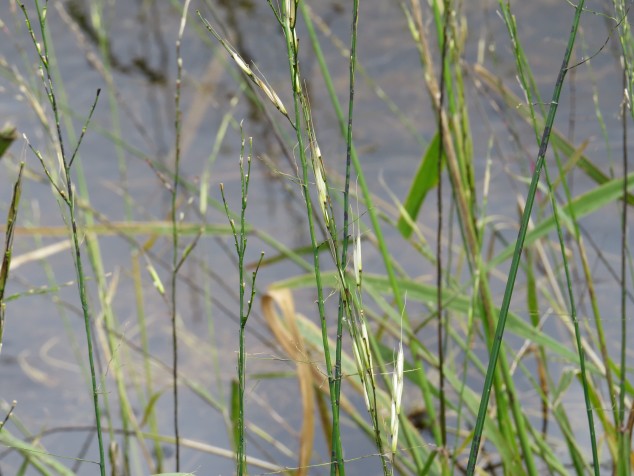
Farther up the boardwalk was a stand of wild rice. Wild rice is a tall aquatic grass that is a valuable food source for waterfowl and red-winged blackbirds, as well as for people. Minnesota is one of the largest producers of cultivated wild rice in the United States. Most of the ripened grains had already fallen or been eaten off the stalks, but the close-up photo shows a stalk with the grains still intact.
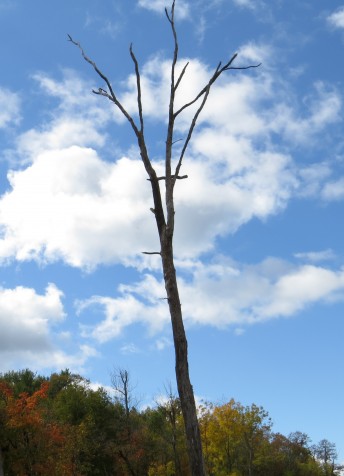
As we hiked from the wetlands to the prairie, this towering tree silhouetted against the blue sky and white clouds was one that succumbed to the wetlands. A number of trees along the border were unable to live with their roots in water.
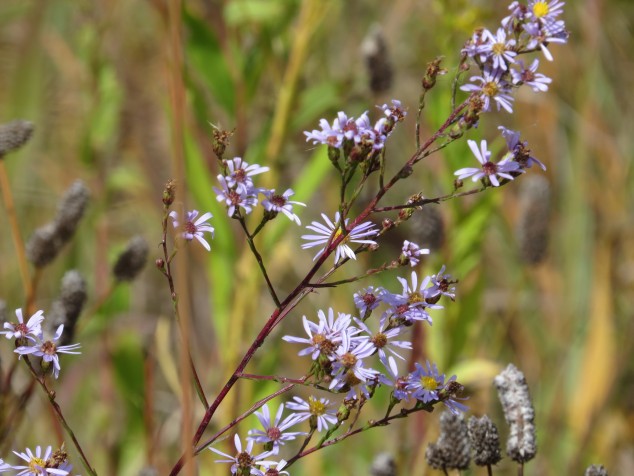
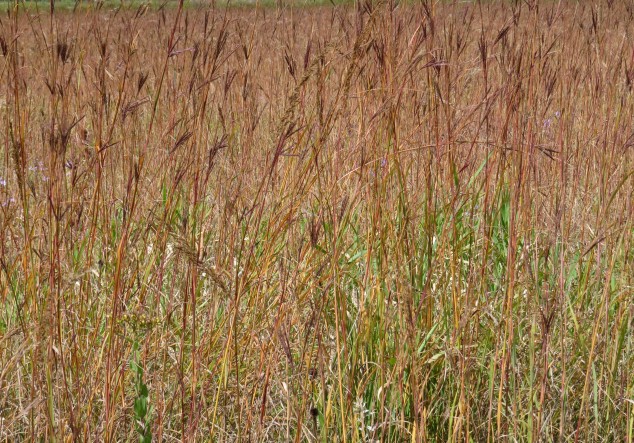
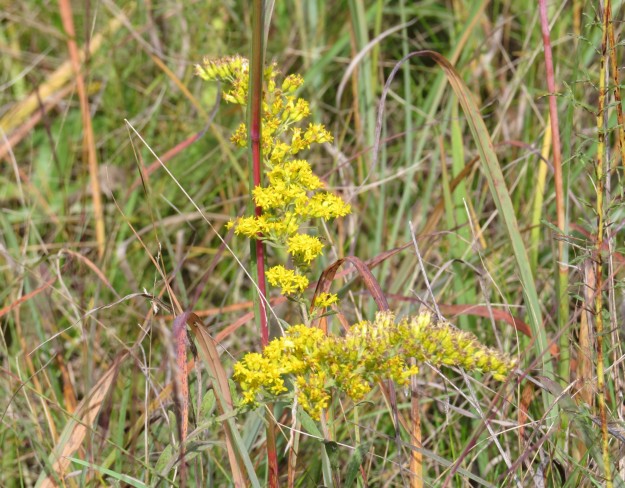
Autumn on the prairie! Asters and goldenrod bloom in bright colors among the stands of prairie grasses. Big bluestem, reaching over five feet tall, makes an impressive show and harkens back to the time when bison roamed the grasslands.
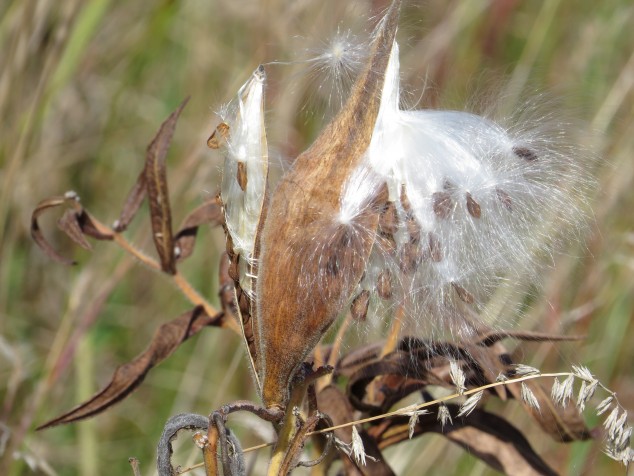
A dried, brown milkweed pod slowly opens to release its fluffy parachuted seeds to the winds. It’s the end of its reproductive cycle in this short Minnesota growing season–or perhaps it’s the beginning….
This tiny showing of Nature’s artwork is part of a priceless collection that we all have available to us to view, appreciate, and wisely and respectfully use. The flora, fauna, food, and beauty that Nature provides in glorious abundance is often taken for granted or dismissed as not important in the economic scheme of things. Every thing has a place and a purpose in this rich cycle of life that connects each living being. Like the tree lost to the wetland and the bison gone from the bluestem prairie, we must make sure that we are not lost to the wrong environment for our circle of life to continue.