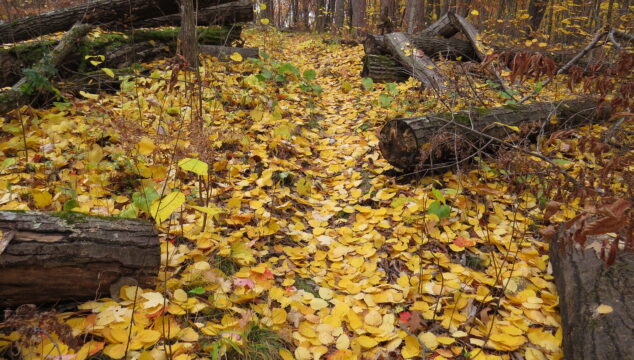
Come walk with me in the peak Autumn beauty of the Northwoods. To say that I love this time of year is an understatement. Most everyone can appreciate the colorful falling leaves---it reveals the 'true self' of a tree when its leaves are no longer producing chlorophyll. Their true colors are revealed, and there is something simple … [Read More...]
Our 20/20 Vision
Anyone who needs glasses knows that a lens or two can make all the difference in the world. With contact lenses, a person can ‘look’ like they have 20/20 vision, even as the tiny lenses float on the cornea in front of each eye’s intrinsic lens. Then there are camera and binocular lenses, microscope and telescope lenses, and lenses in a lighthouse, each performing a specific function in order for us to see more clearly. Anything with a curved surface that is transparent—even a drop of water—can be a lens that focuses light.
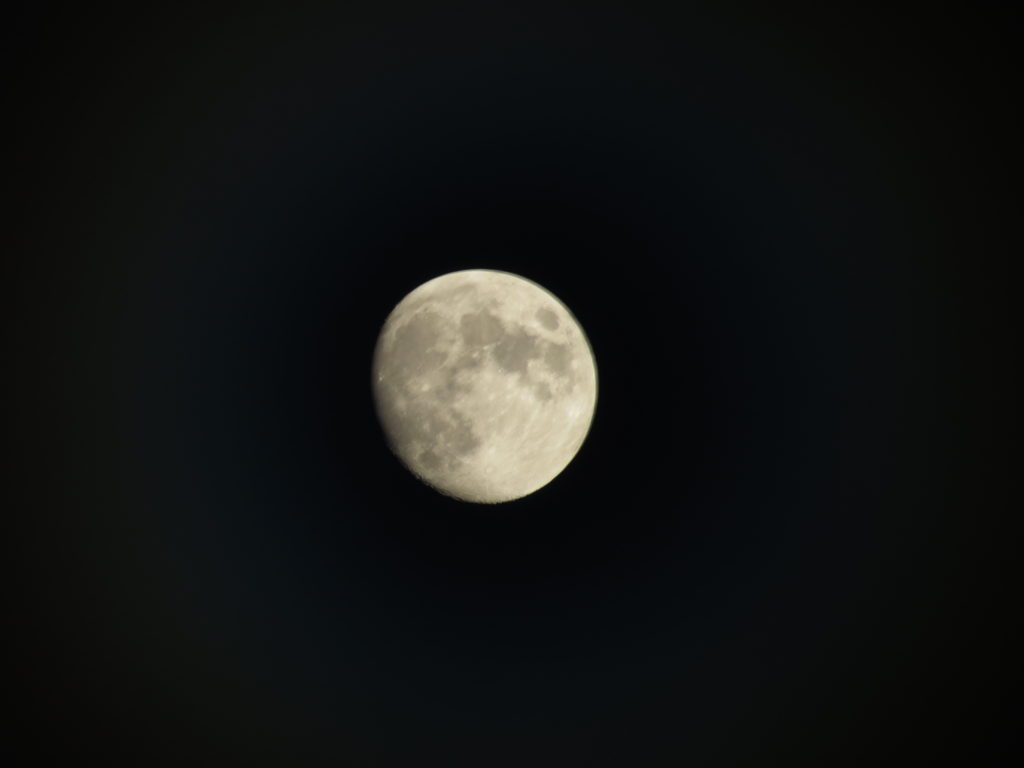
Thursday evening I took my camera from the cooled inside of our house to the warm, humid patio to snap a picture of the nearly-full moon. The muggy, warm air fogged the lenses of my glasses and of the camera. I swiped away the moisture with my shirttail. The moon is intriguing, even in its cyclic sameness—a lunar body close to Earth that reflects the light of the far-away Sun. Even without a change in the camera apparatus, the color of the moon can look different from photo to photo—from a greenish tinge…
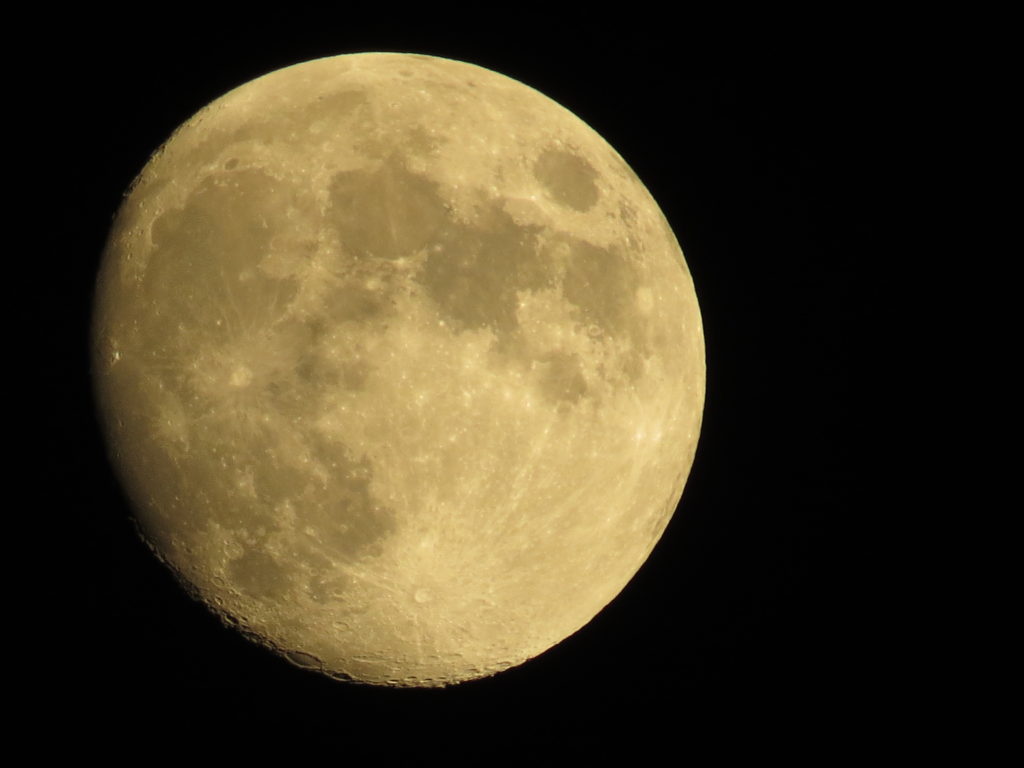
…to a rose tinge…
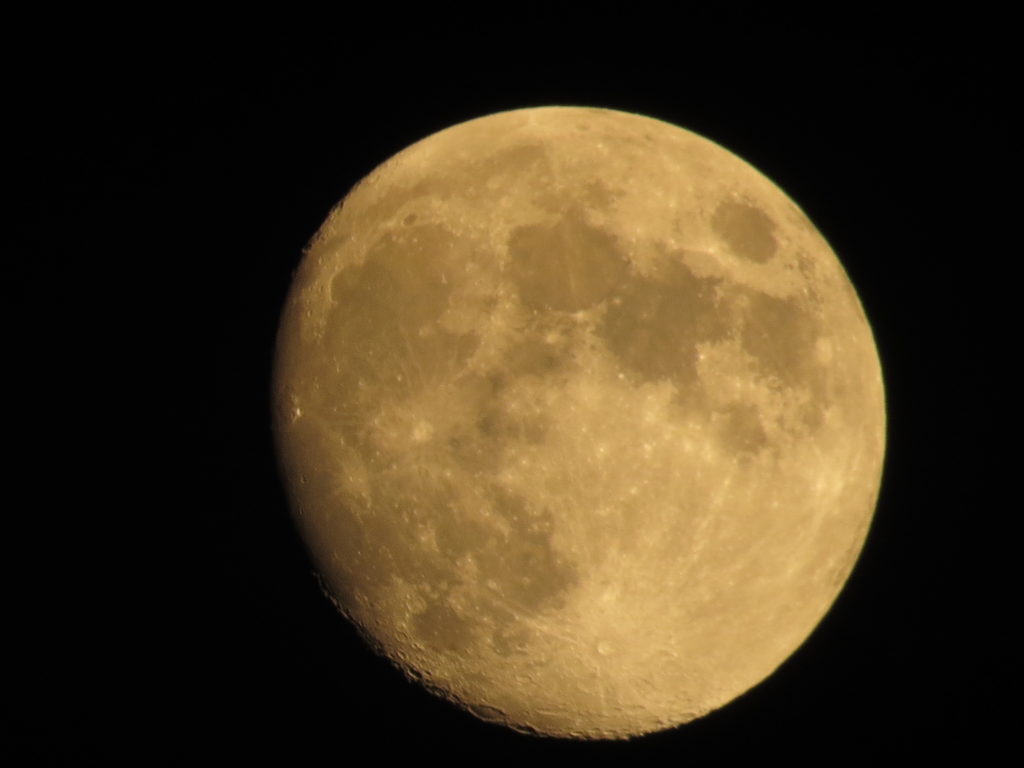
…to gray.
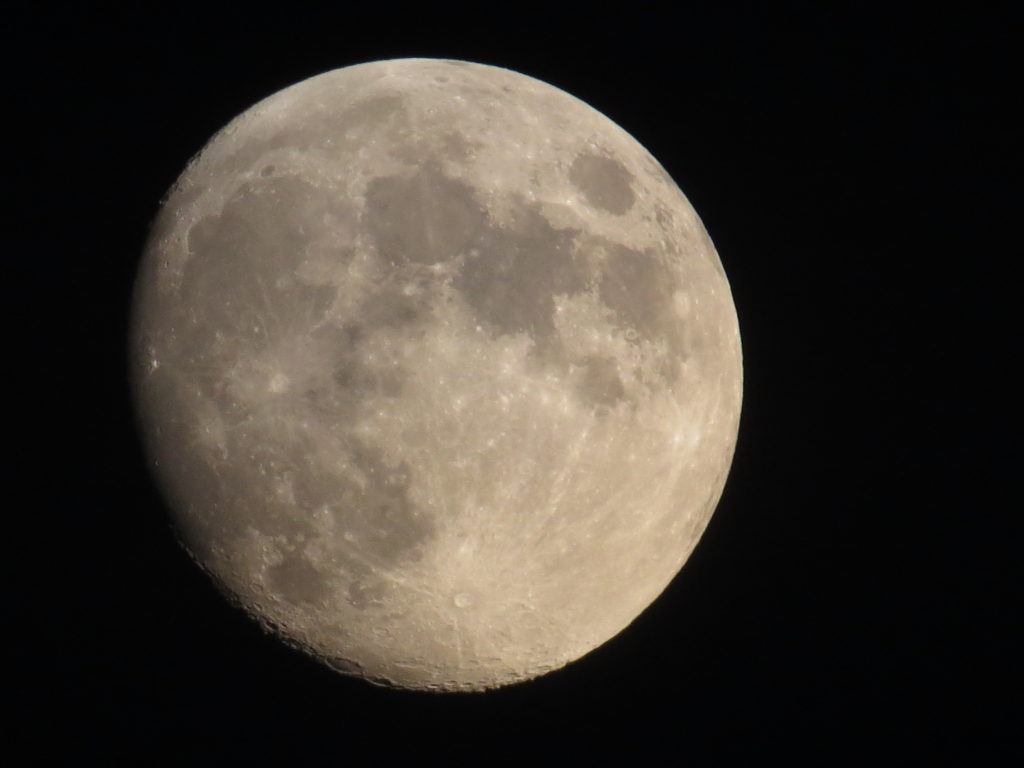
As I zoomed out for another shot, I noticed a faint circle of color around the moon. The colors changed and got brighter.
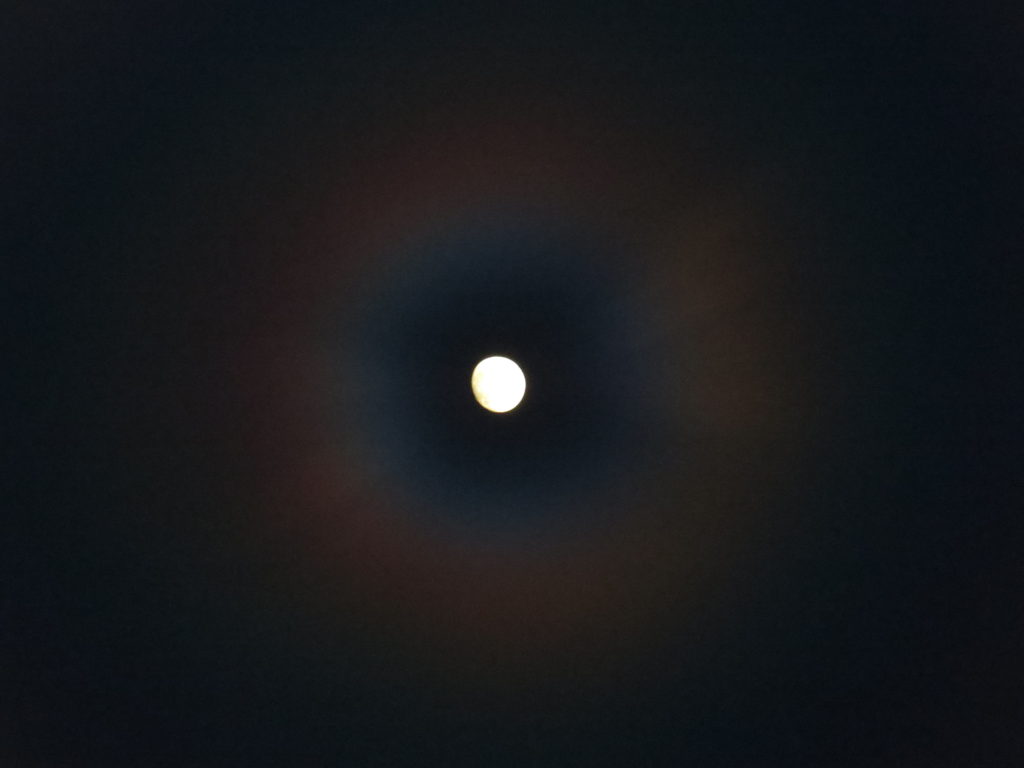
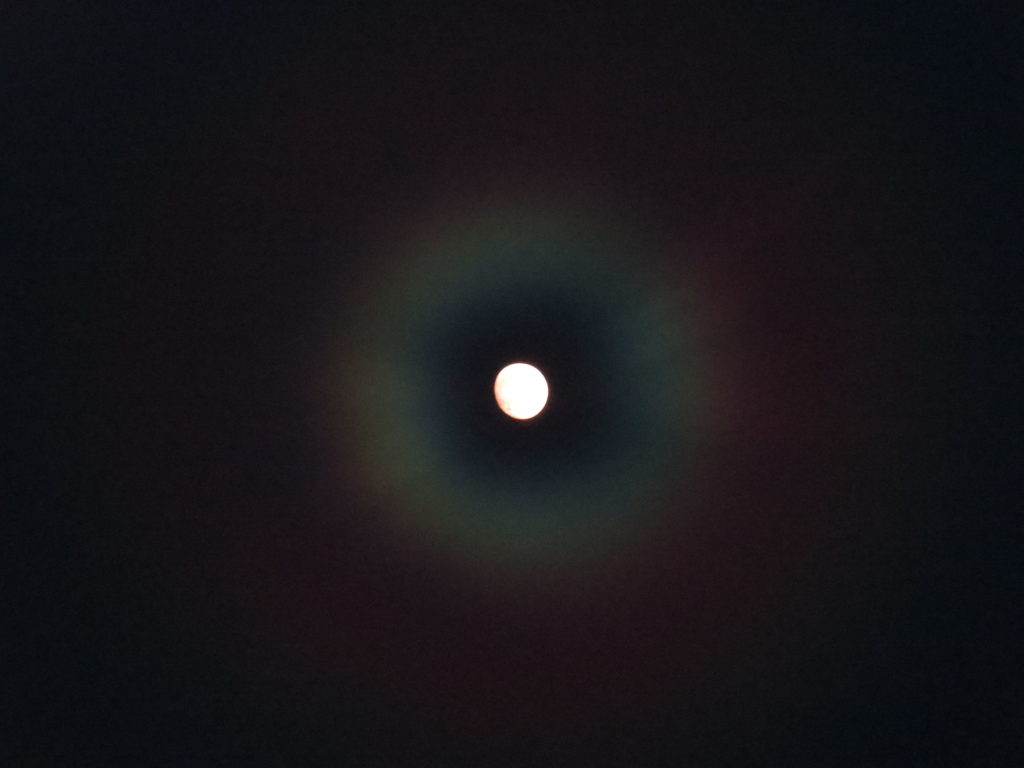
I realized that the rainbow colors around the moon were only seen through the camera lens—the humid air was condensing on the lens once again and fragmenting the moon light into its spectrum of colors!
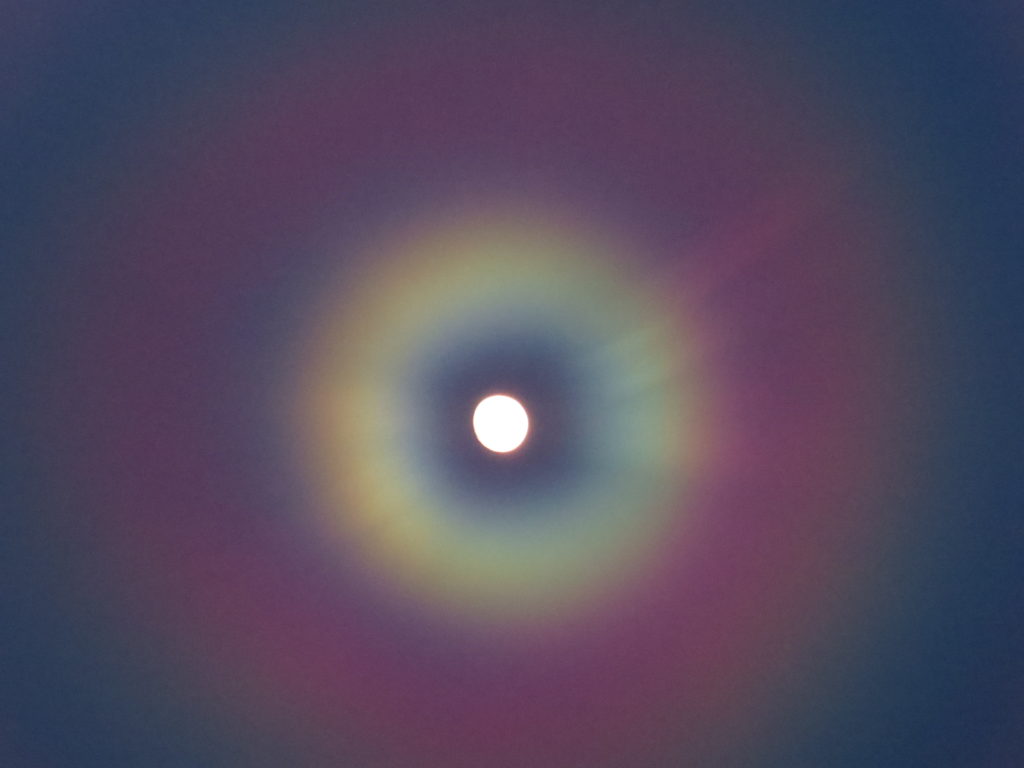
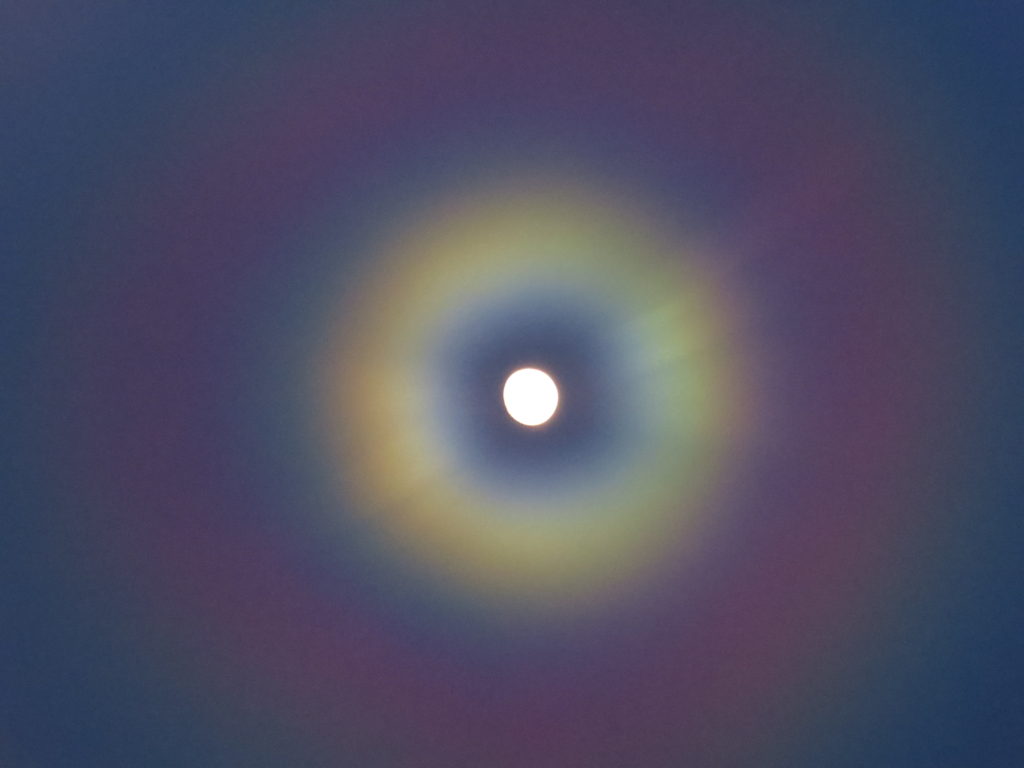
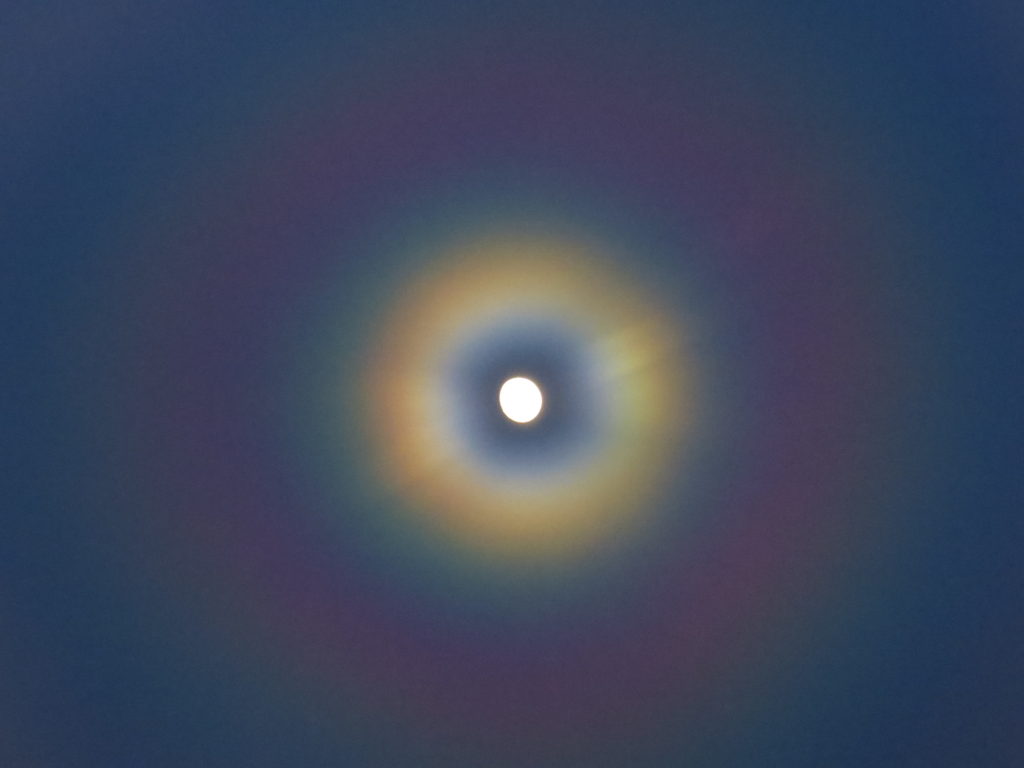
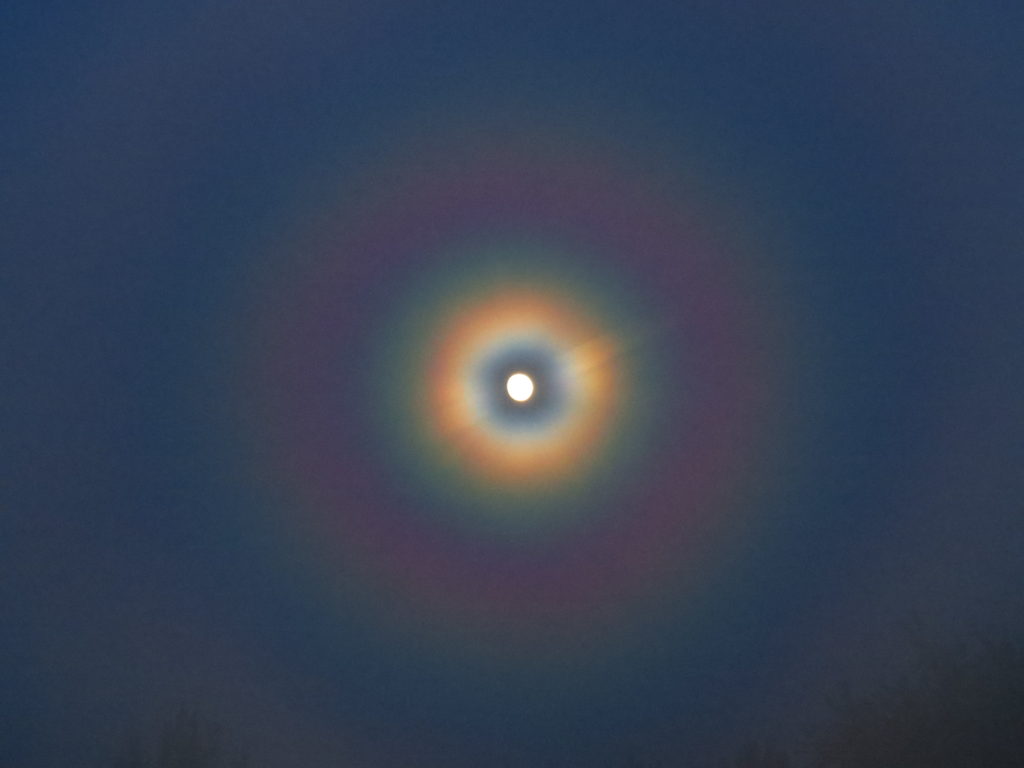
Talk about intriguing! I was mesmerized with the colorful rainbow light around the beautiful nearly-full moon.
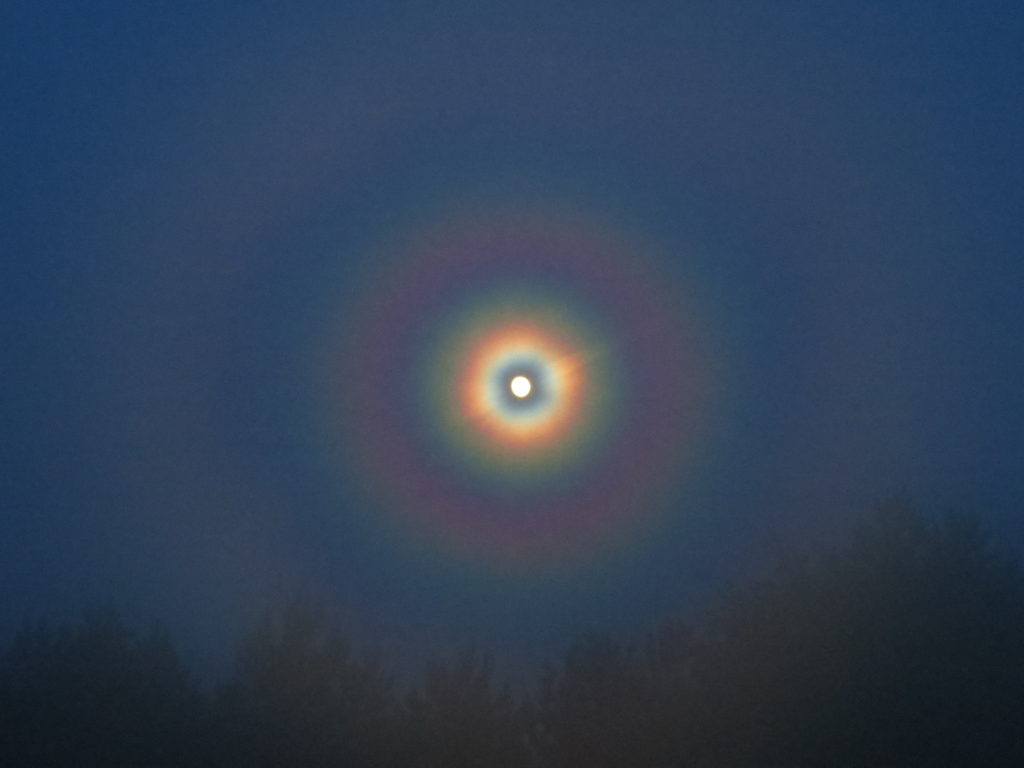
I was so distracted by the concentric circles of color that I ignored the mosquitoes landing on my skin.
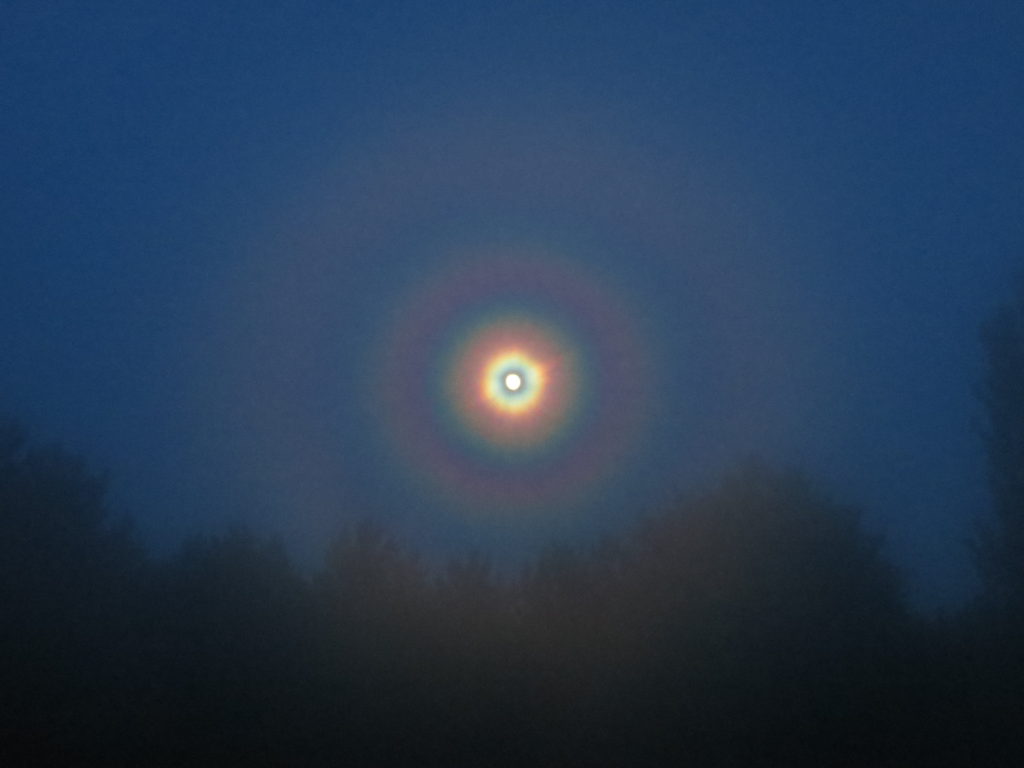
Even though I knew the phenomenon was the result of the hot, humid weather, I believed in the vision of my rainbow moon.
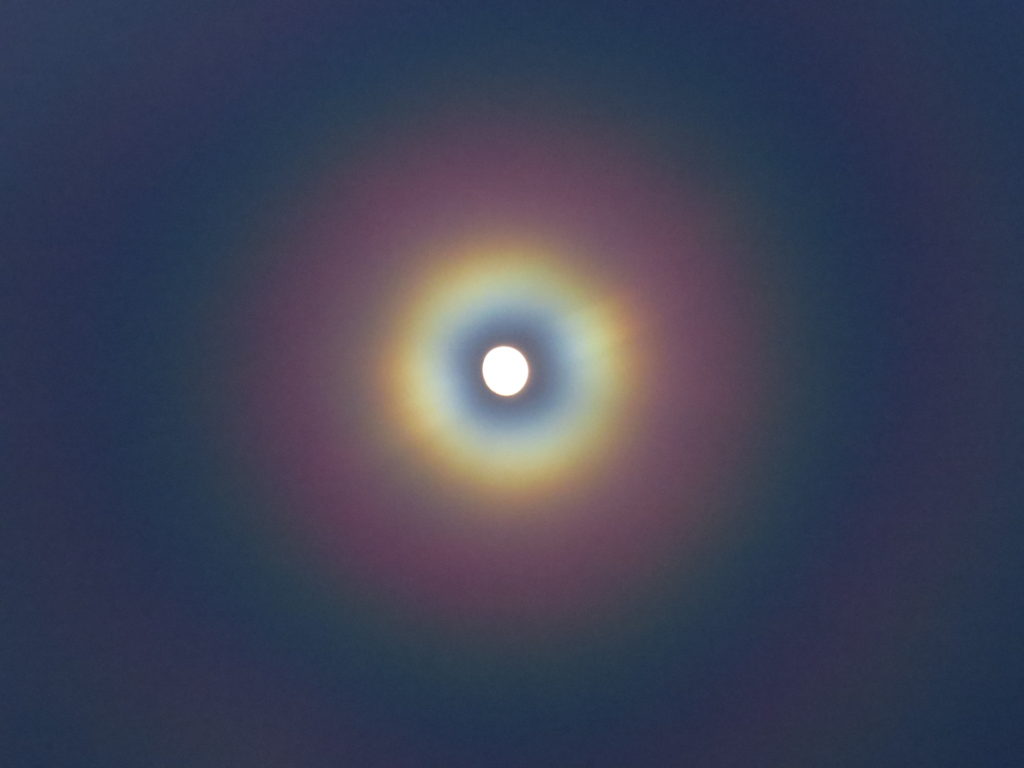
I mean, look at these photographs, look through the camera, how can you not believe?! (The only thing better would be a unicorn flying by.)
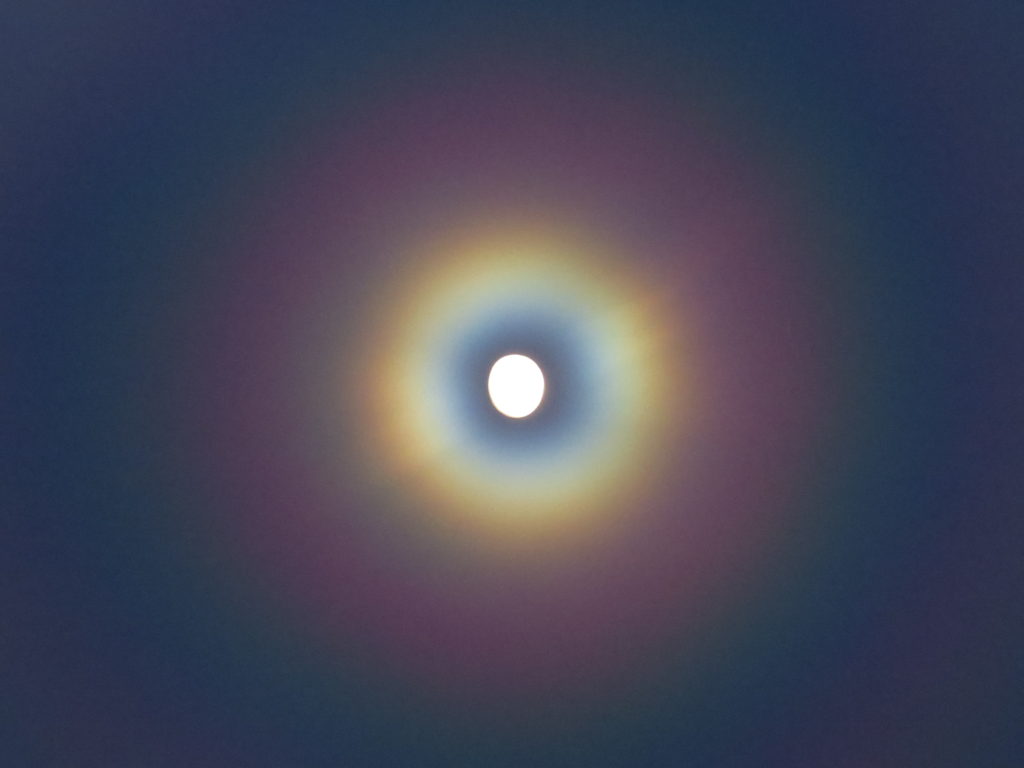
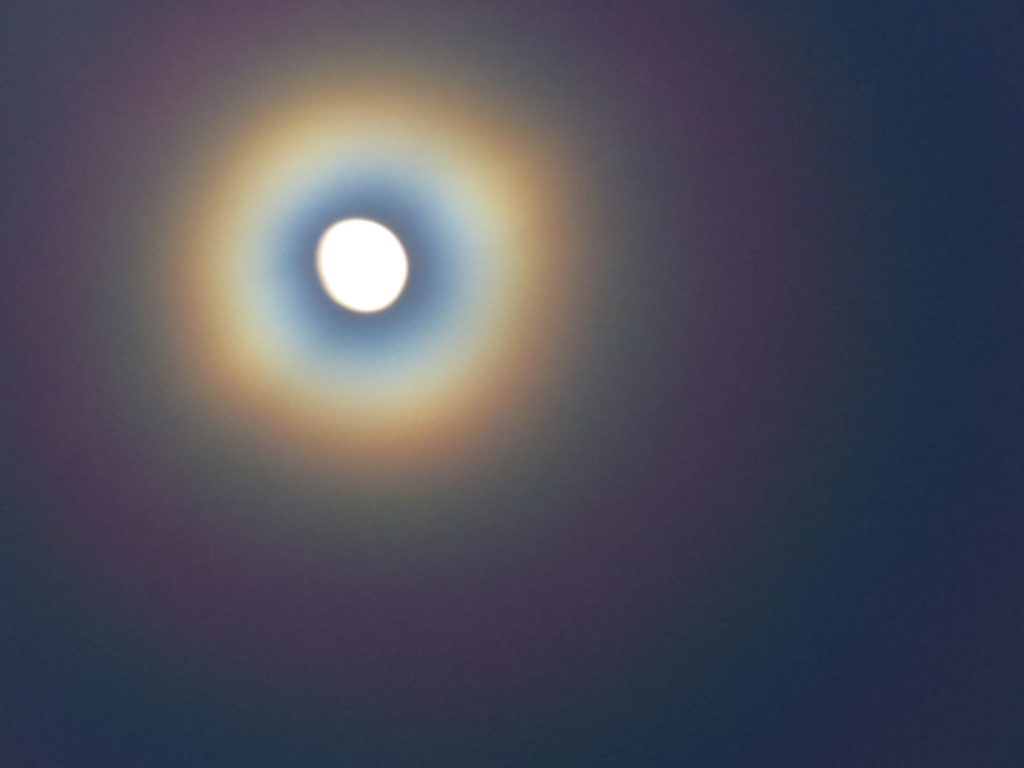
What kind of lens do we look at the world and our lives through? Is something condensing on our lenses when we look at other people? I lived with rose-colored glasses for a good part of my life—it was a coping mechanism I unconsciously employed in an attempt to make me feel safe, to make it look like there were no bad things or bad people in the world. In contrast, there are many people wearing dark-colored glasses who see a certain kind of people as bad, who feel like bad things are happening all around them. Neither vision is the truth, but it is our truth that we see through our lenses. Our fogged up lenses distract us from the very real experiences and happenings of life—whether it’s rainbows, unicorns, monuments, or masks. The energy is fragmented, scattered to peripheral issues that pull us away from the painful reality right in front of us. It is a coping mechanism. We all want to feel safe. Deflect and deny. In truth, the painful reality we are most afraid of is not what is in front of us but what is inside of us.
We all have lenses through which we observe the world. Many are helpful and meaningful to our life’s work, to helping others, and to our relationships. But oftentimes we have a foggy lens—what we see isn’t reality. We need to clear that lens with a clean cotton shirttail. Focus the light on our hearts. Ask yourself, “What do I see in me?” Then the rainbows (as beautiful as they are) and the fear can fall away, and we can see the moon as it is. We can see individual people as they are (just like me in many ways.) We can see harmful situations and a way to make them better. We can want for others what we want for ourselves. It can make all the difference in the world.
Lovable Hermits
Have you ever asked yourself to see a situation from a wider perspective? Easy question to ask, but difficult, so very difficult, to actually do. I’m reading The Book of Joy—Lasting Happiness in a Changing World by His Holiness the Dalai Lama and Archbishop Desmond Tutu with Douglas Abrams. Abrams writes, “The Dalai Lama used the terms wider perspective and larger perspective. They involve stepping back, within our own mind, to look at the bigger picture and to move beyond our limited self-awareness and our limited self-interest. Every situation we confront in life comes from the convergence of many contributing factors….When we confront a challenge, we often react to the situation with fear and anger. The stress can make it hard for us to step back and see other perspectives and other solutions….We (can) see that in the most seemingly limiting circumstance we have choice and freedom, even if that freedom is ultimately the attitude we will take.” Fear and stress, anger and limiting circumstances sound very familiar to all of us, all of a sudden, in this changing world.
I’ve always appreciated a ‘big picture’ approach, but only on the basis of a multitude of information from many small observations and facts (science). The big picture requires us to look beyond what we see (and believe). Our hike at Fritz Loven Park last weekend was an unfolding of that process. The trail circled the bottom of a tree-covered, almost snow-bare hill. Warm, crunchy leaves and bright sunshine belied the deep snow and cold temps of the hours ahead.
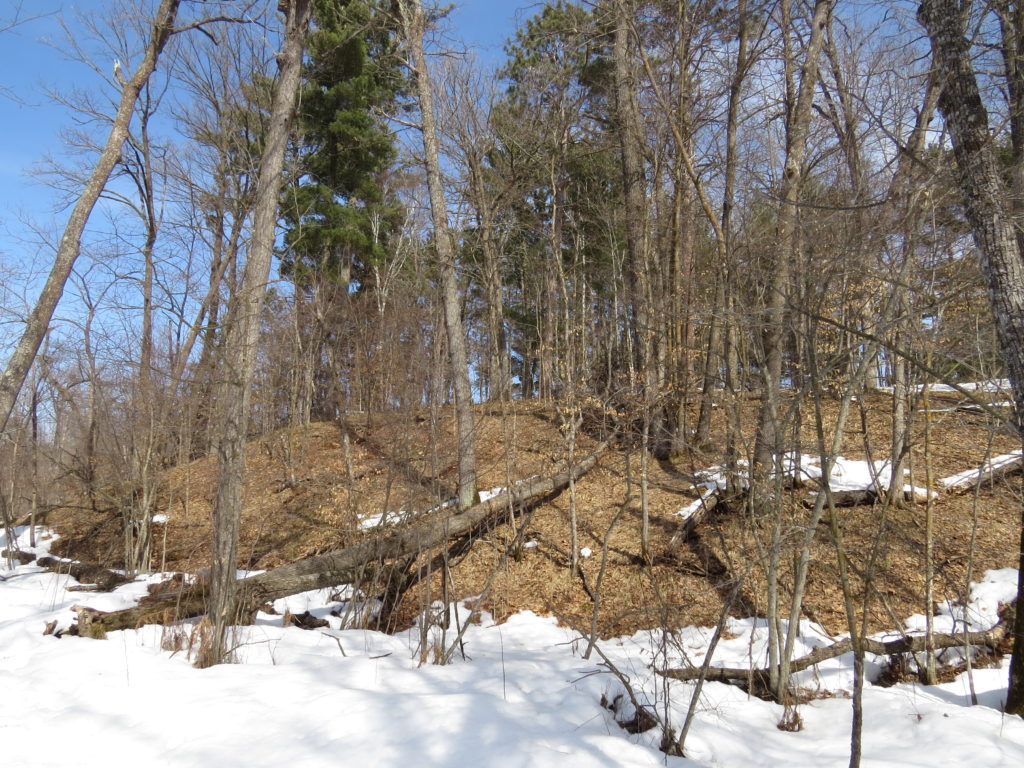
As we walked along the flatlands by the fast-flowing Stoney Brook, I noticed that most of the trees were young compared to a small number of very large ones. I wondered if this area had flooded. One distinct and eye-catching tree was a large Cottonwood, who would thrive having wet feet, so to speak.
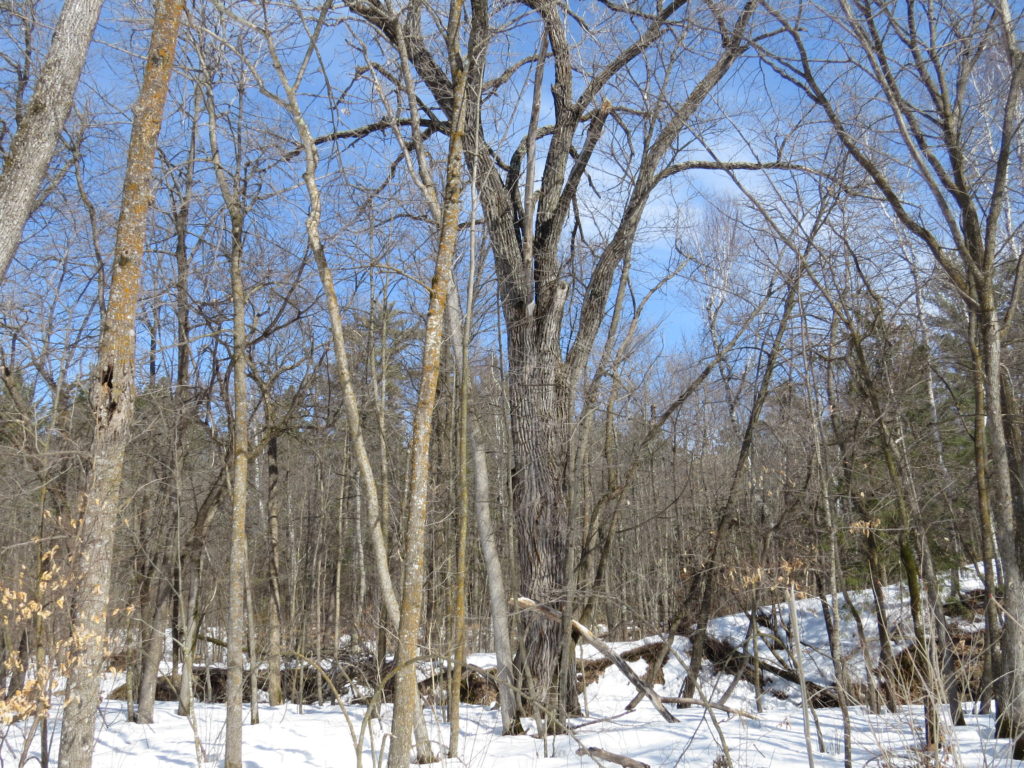
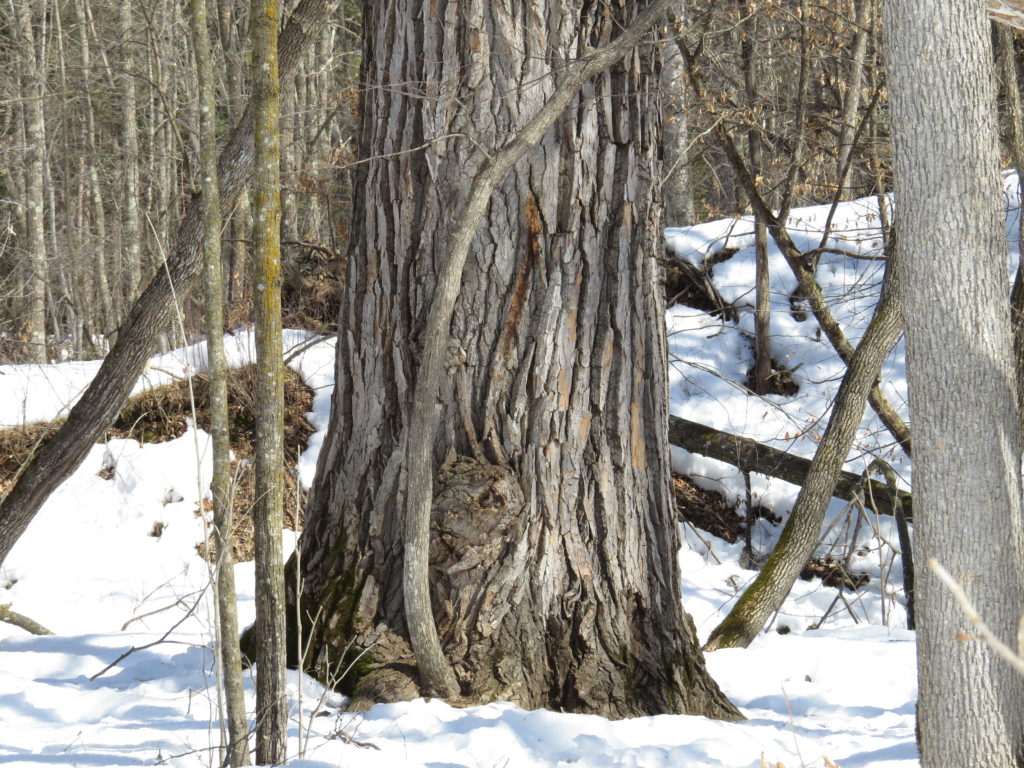
But as we walked up toward a ridge, I then wondered if there had been a fire at one time. Often the tallest, strongest trees can survive a fire that consumes the smaller ones.
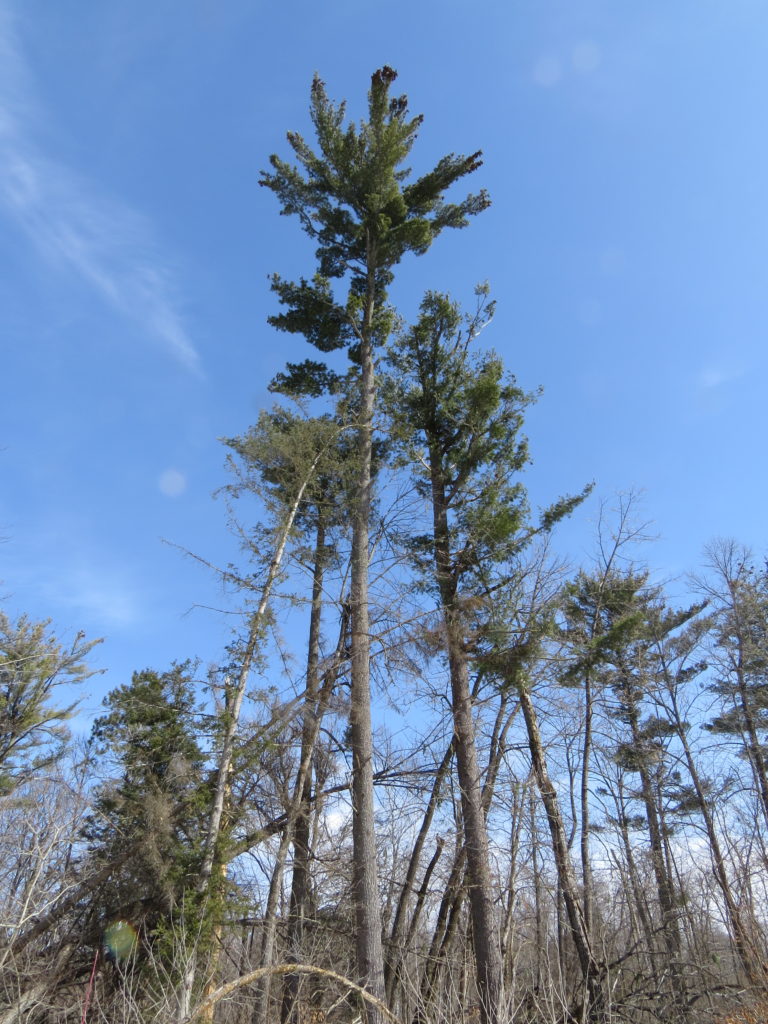
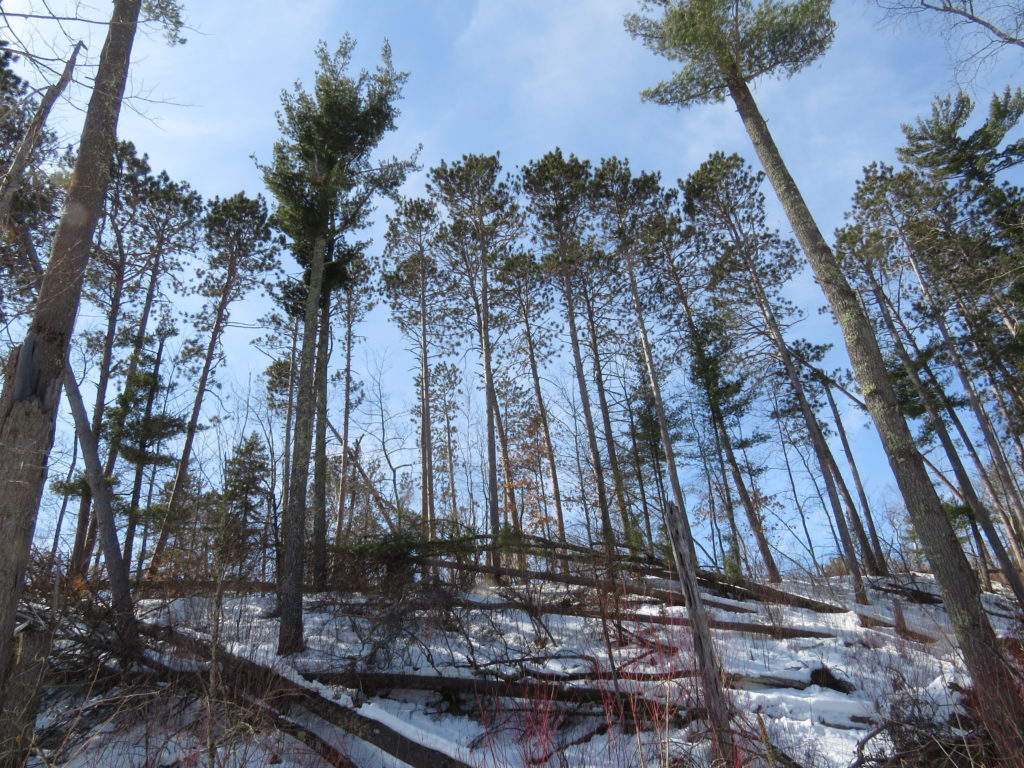
It wasn’t until the trail crossed a wide swath of nothingness (and stumps) that I realized the area had been logged. Logging was the predominant industry in northern Minnesota starting in the late 1800’s. Virgin timber was cut in this area around Gull Lake, and a railroad was built in order to transport logs. And in the summer of 1894, Fred Oscar Loven was born in Minneapolis, Minnesota.
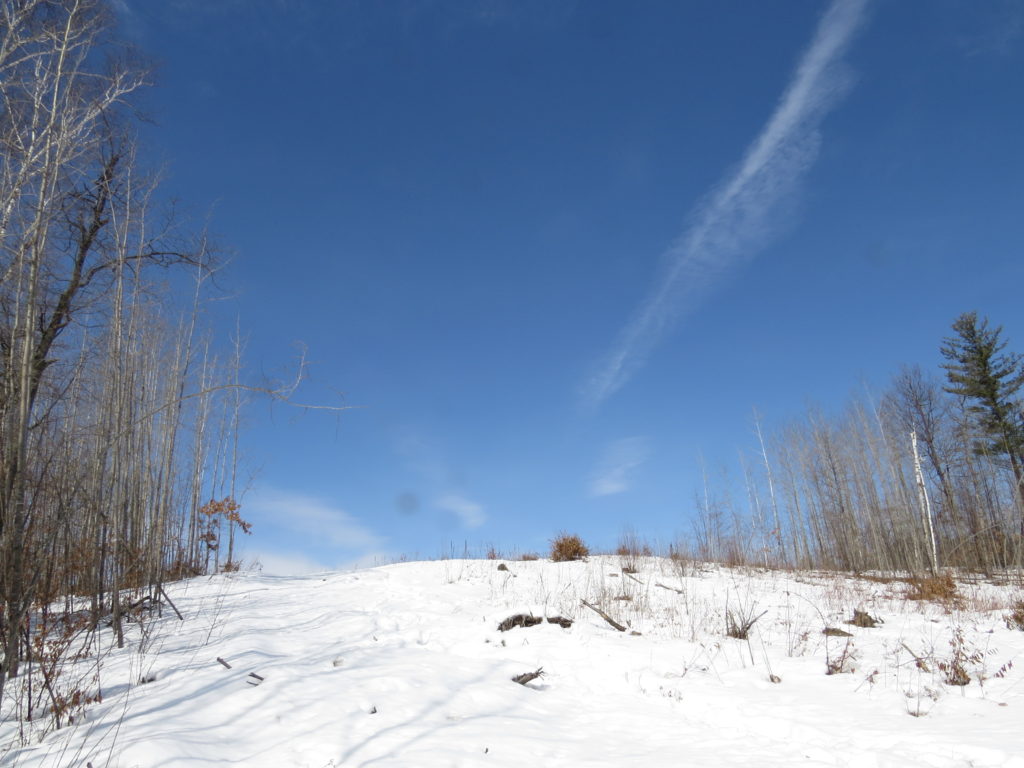
Though tourism is now a major industry in the Northwoods region, logging continues. Large wooded areas will reside beside a clean-cut swath or a shaggy area of young saplings or brush that had previously been logged.
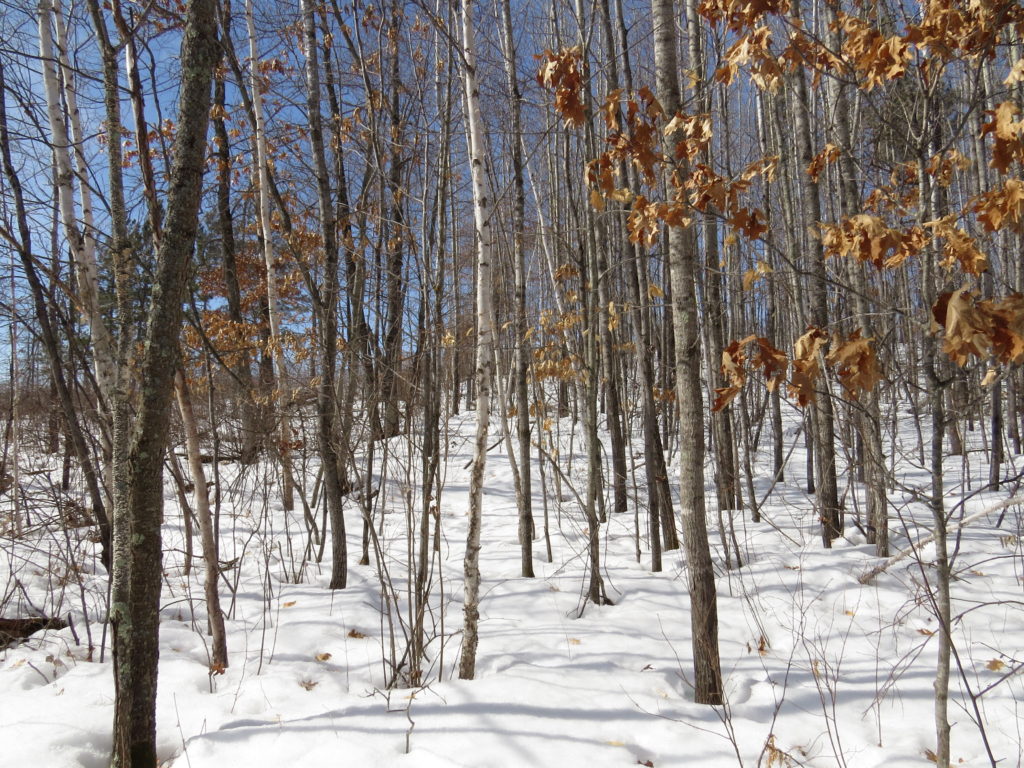
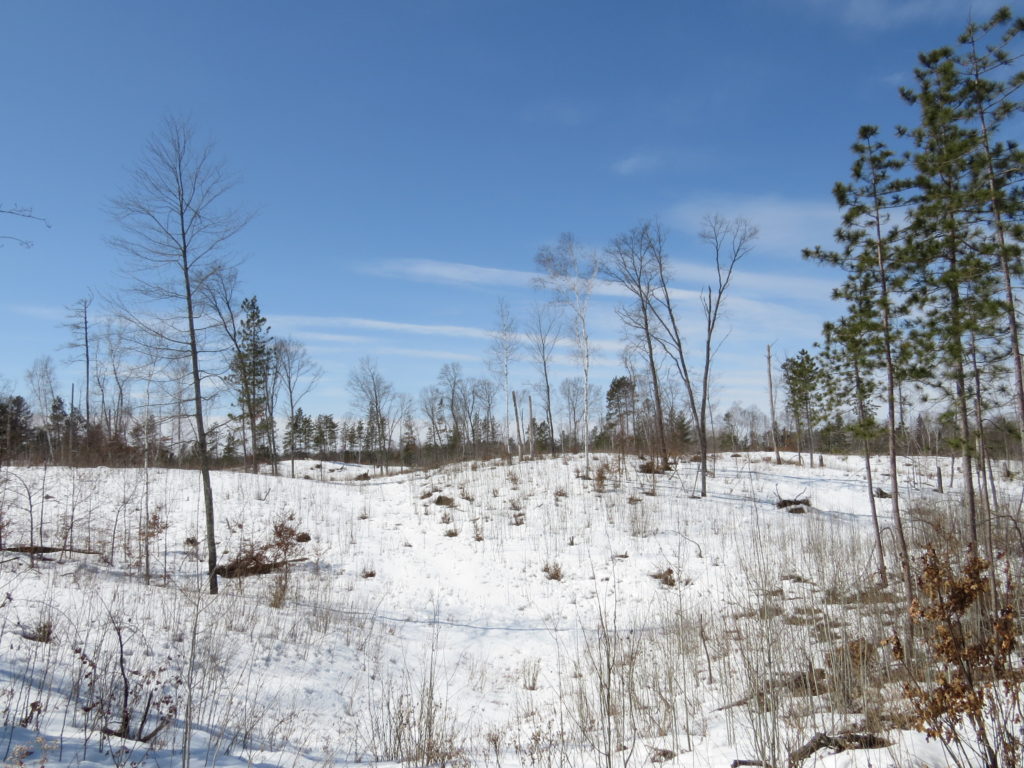
Even through the deep snow, we could see evidence of the destruction of a forest and the life and vibrancy that remained. Dried ferns and wild flowers were visible beacons of the coming Spring when Nature effortlessly performs her miracles of new life.
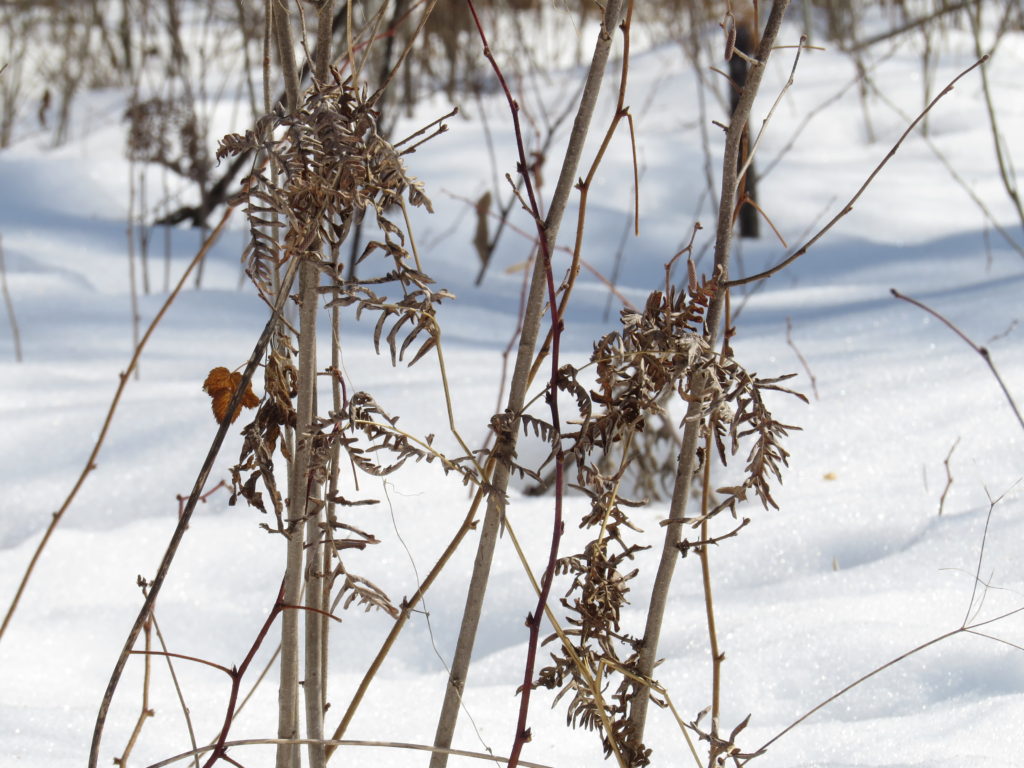
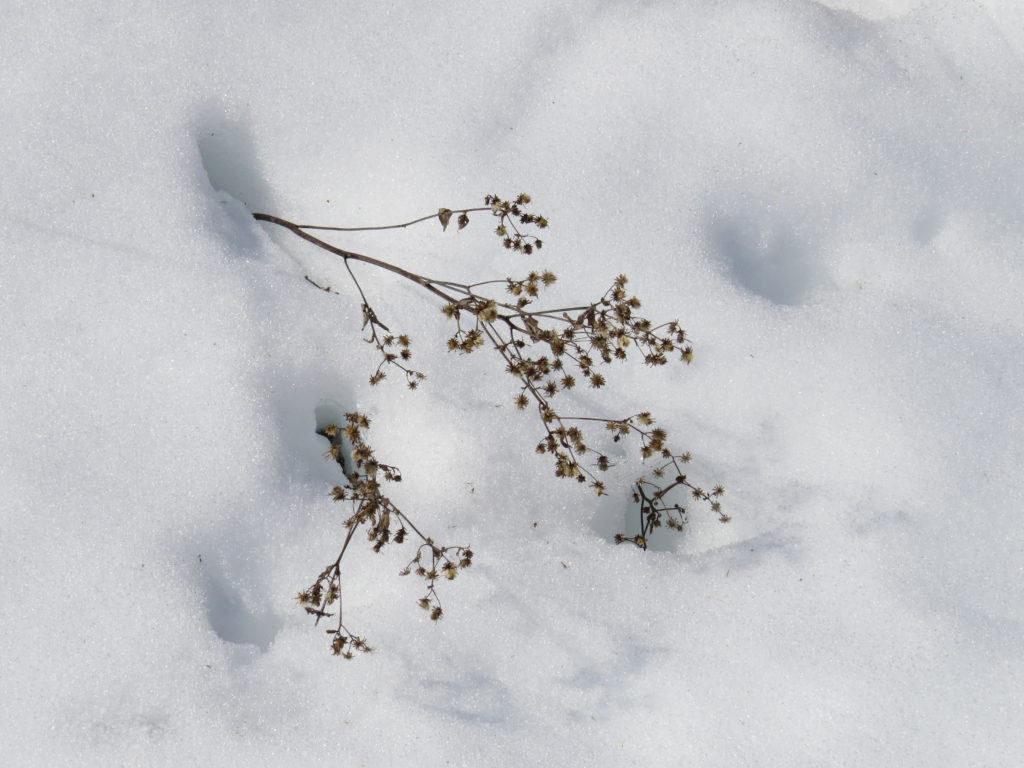
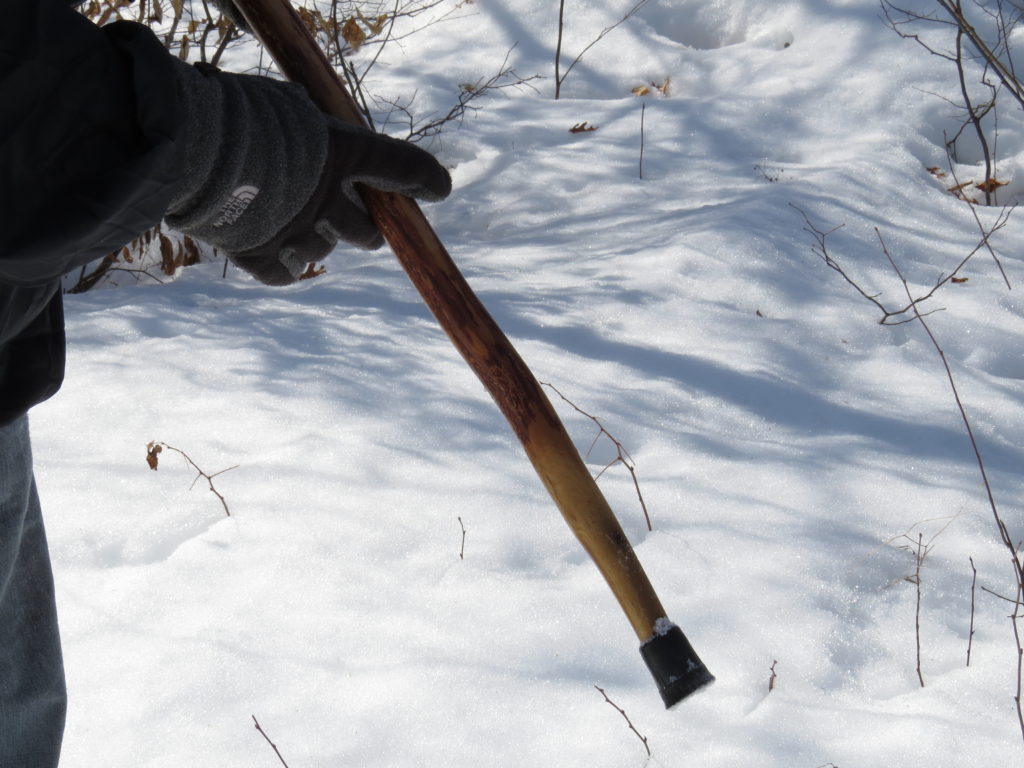
Our trail through the park had been groomed numerous times throughout the winter for cross-country skiing and snowshoeing. It was packed down and relatively easy to walk on—not too rough and not too icy. The snow pack beyond the trail was also hard enough to walk on, and I asked Chris to use his walking stick to measure the depth of the snow.
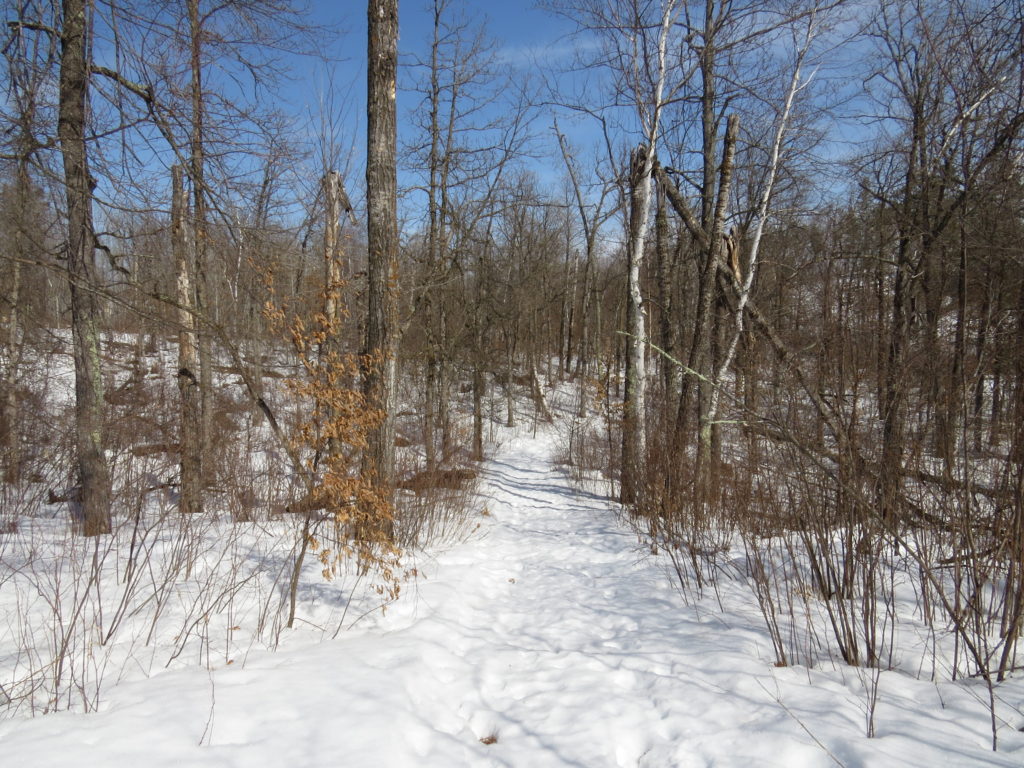
It will be a little while until all of it melts…
The trail of Fritz (Fred) Loven’s life is sparse on details (that I could find), but one mention came up from the Pro Football Reference. He played guard one season with the Minneapolis Red Jackets in 1929 at the age of 35. Pro football before the NFL. We do know that Fritz’s trail three years later led him to 80 acres of land west of Nisswa that was his home for 43 years. He lived in a cabin with no electricity, running water, gas, or telephone. The ‘lovable hermit’ (may we all be lovable hermits during this time) didn’t have a car but traveled by foot, snowshoes, or boat.
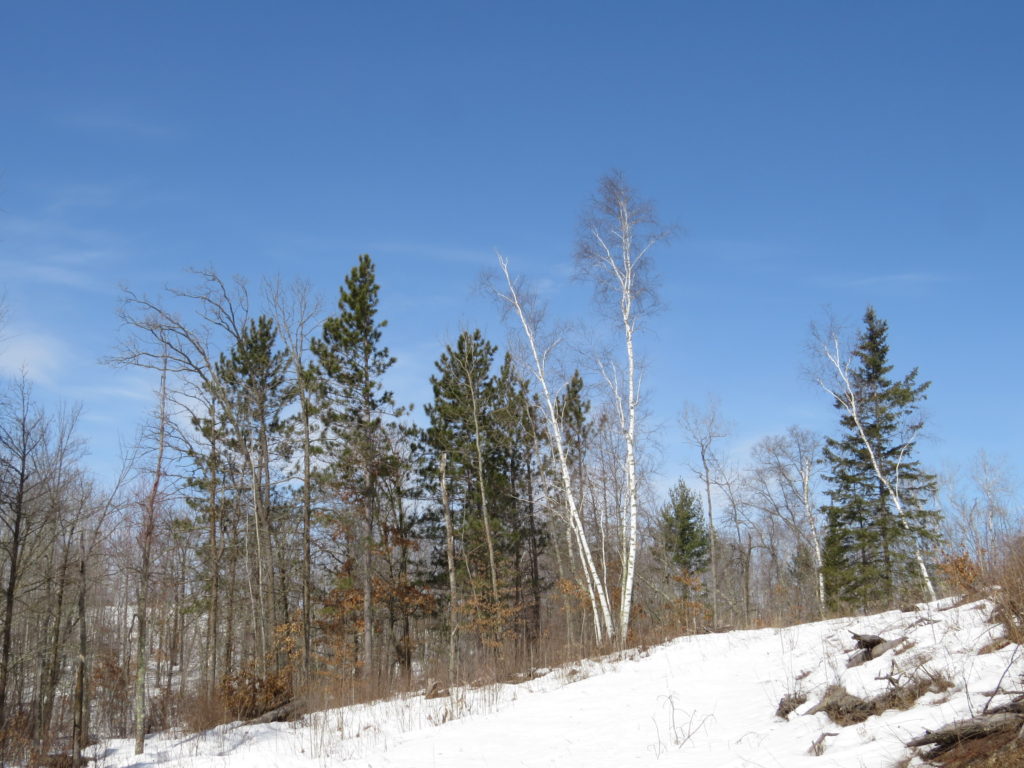
His greatest contribution, in my opinion, besides his wish for his land to become a park, was that he normally planted 400 trees each year! Most people underestimate or take for granted the true value of a tree. Fritz Loven was a bower billionaire—he lived and worked under the shade of the existing trees and eventually, of the ones he planted—and we are the beneficiaries of his generosity and vision.
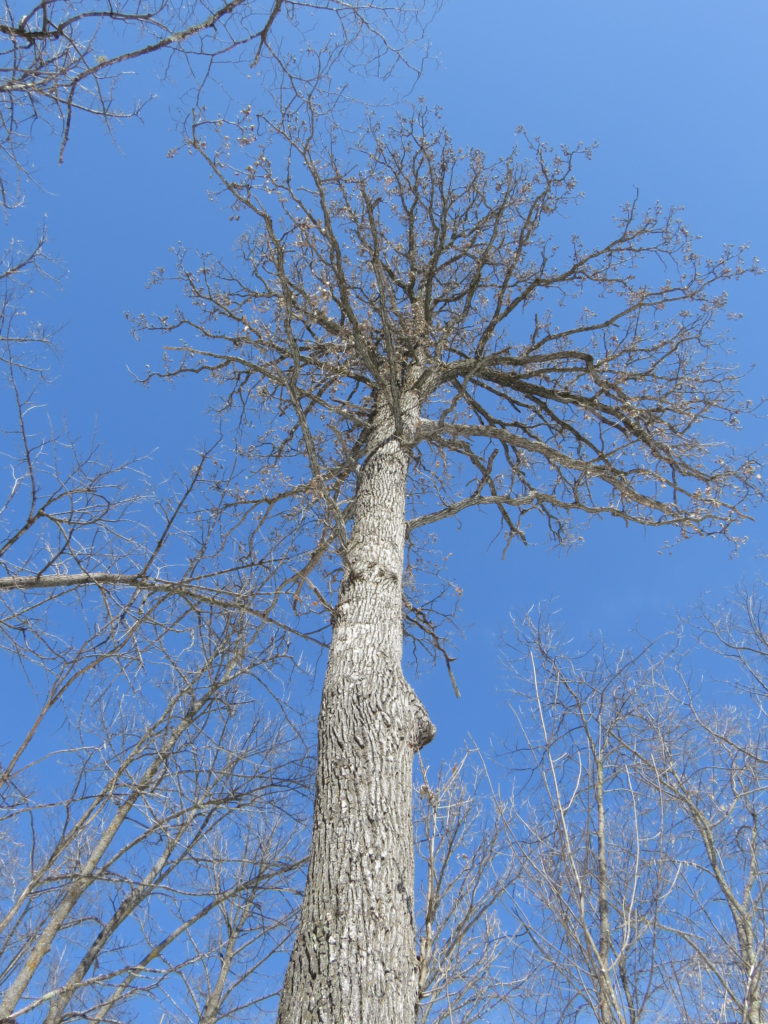
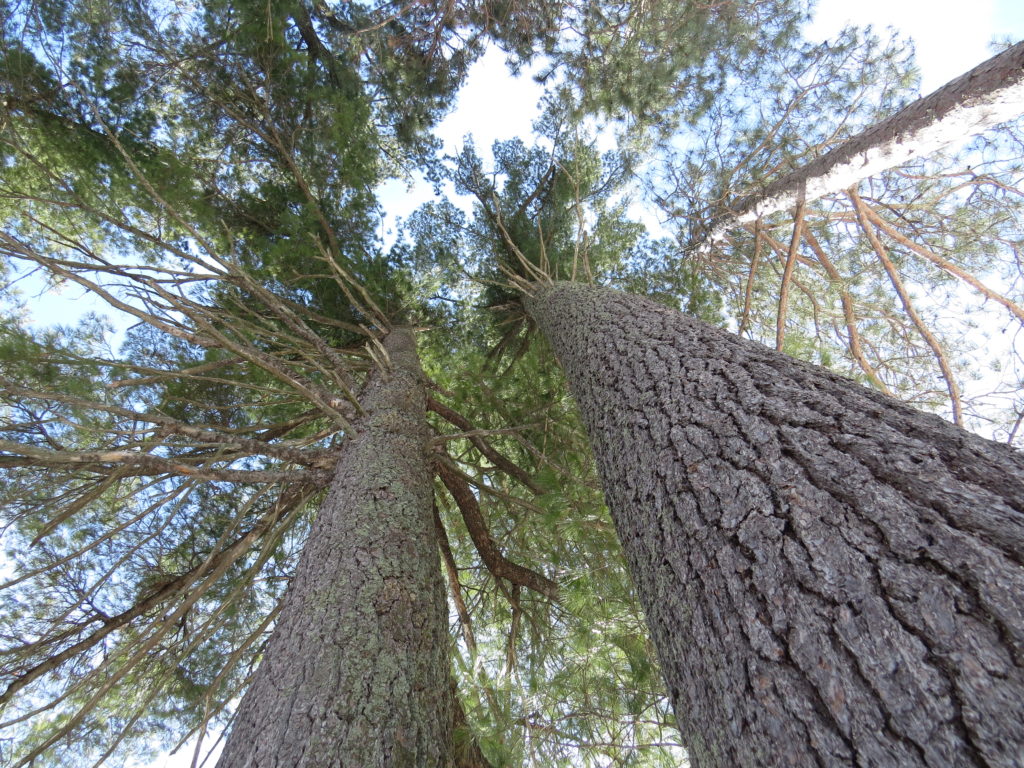
Like most ‘big pictures’ of any given situation, the larger perspective of Fritz Loven and his park is complicated. Signage on our hike told us that we were crossing private property at some points, though we didn’t know exactly where that was. Was the logging on the park land or on private property? Did the city need funding from the logging in order to maintain the park? It was sad to see incredible giant Pines and Oaks beside the clear-cut areas. How many trees that Fritz planted were cut down for timber? Who is replanting? Along with the logging, there was also damage from storms, these extreme weather events that are becoming common-place due to climate change. ‘Every situation we confront in life comes from the convergence of many contributing factors.‘ What are the facts? What are the observations? How do we look beyond what we see at any given moment and more importantly, beyond what we believe?
Fritz Loven was the guardian of the beautiful little trout stream, the keeper of the forest, and protector of the trees. He had faith that the trees would grow, the fish would reproduce, and that his vision and work would be a place for people to enjoy decades and decades after he was gone. With the fear and stress of our present coronavirus situation, how do we step back from our limited self-awareness and our limiting self-interest to see the larger perspective? Within our own minds, how do we tamp down the fear in order to see the factors that converged to get us into this situation and the solutions to get us out? We are the guardians of our own bodies and minds, and collectively, we are the guardians of our earth. Faith is how we look beyond what we see. Openness is how we look beyond what we believe. Love is how we show up for ourselves, one another, and for our sustaining Mother Earth. May we be lovable hermits at this time and have all three.
Intentional Grounding
Do you remember how often you were on the ground when you were a kid? Our babies spent hours on blankets spread out on the grass while I worked in the garden or their older siblings played in the sandbox. There was usually a Black Lab dog named Licorice in the grass or on the blanket near them, taking seriously her self-proclaimed job as baby-sitter. When older, the kids played with kittens, watched the chickens, rolled down hills, caught frogs in the mud of the corral, made forts in the lilac bush, made snow angels and snow forts, and so many other things—all while sitting, crawling, or lying on the ground! When they entered teenage years, their ground time was reduced to sports, laying out in the sun to get a tan, or an occasional picnic on a blanket. All three had summers of their young adult years when they returned to living close to the earth at summer camps and outdoor jobs, when their bodies and spirits felt strong and empowered. And then, what happens to us when we become adults? How often are we in a building, in a car, in air conditioning, in good clothes, in a hurry?
My Mom recently returned from a week-long camping trip to Wyoming. She remarked about how well she slept each night on her cot in a tent—much better than her nights at home in her own bed! I told her about a quote from the Touch the Earth Trail pamphlet from Mille Lacs Kathio State Park that we had visited.
“The Dakota was a true naturist, a lover of nature. He loved the earth and all things of the earth, the attachment growing with age. The old people came literally to love the soil and they sat or reclined on the ground with a feeling of being close to a mothering power. It was good for the skin to touch the Earth and the old people liked to remove their moccasins and walk with bare feet on the sacred earth. The soil was soothing, strengthening, cleansing, and healing. That is why the old Indian still sits upon the earth instead of propping himself up and away from its life-giving forces. For him, to sit or lie upon the ground is to be able to think more deeply and feel more keenly; he can see more clearly into the mysteries of life and come closer in kinship to other lives about him.” —Luther Standing Bear, Lakota leader and author, 1868-1939
Looking back at thousands of years of human history, most humans had almost continuous contact with the Earth each day. This direct contact with the Earth is now called grounding or earthing; (also terms in electrical engineering to ensure safety of equipment and humans.) There have been studies that indicate grounding’s positive effect on blood viscosity, heart rate variability, cortisol levels, inflammation, sleep, and autonomic nervous system balance.
If a person has pets or kids, it’s easy to spend time on the ground with them and get a different perspective of the world.
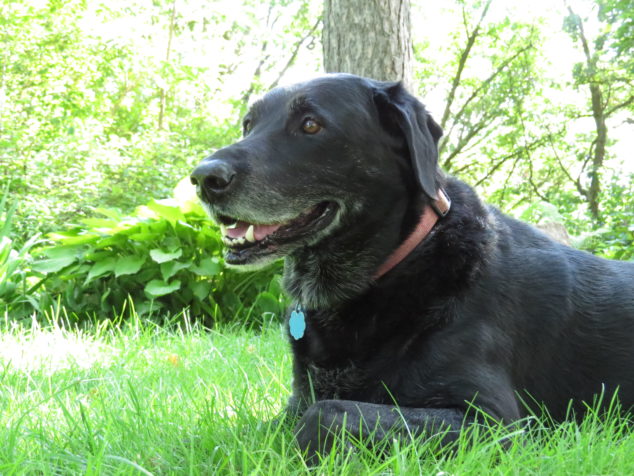
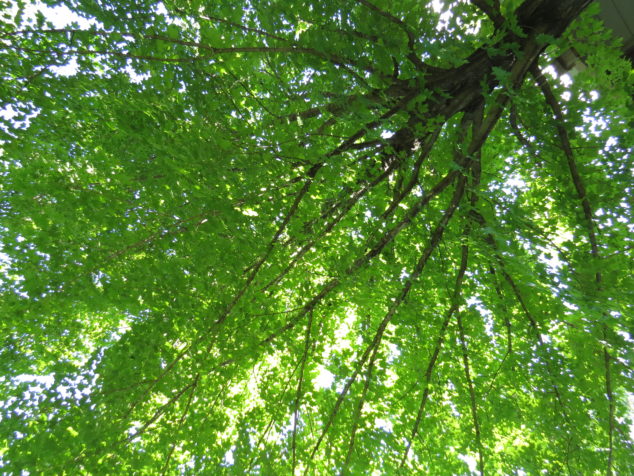
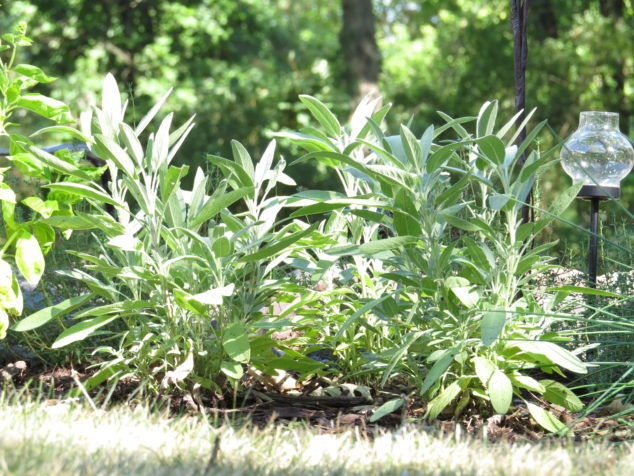
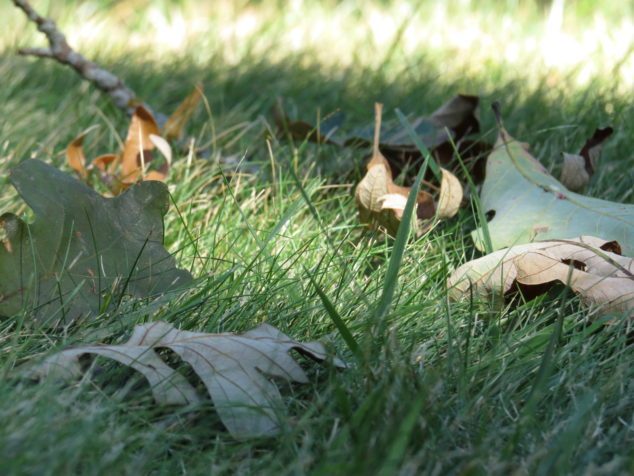
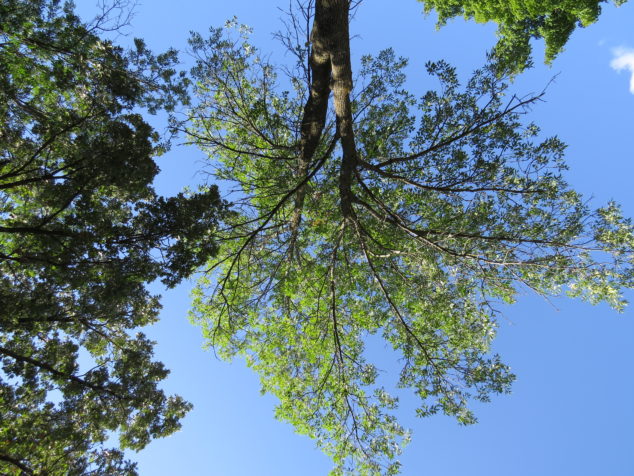
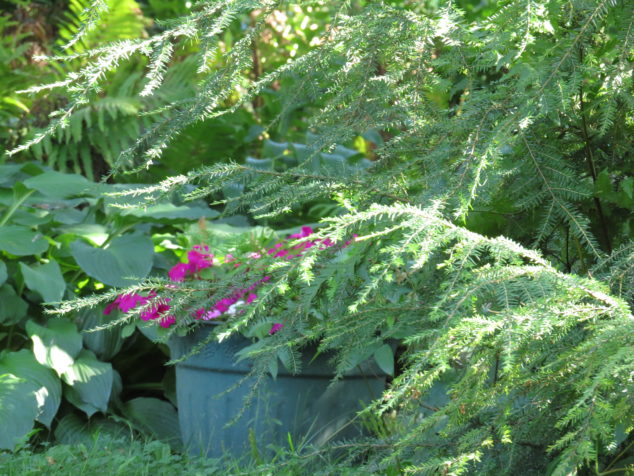
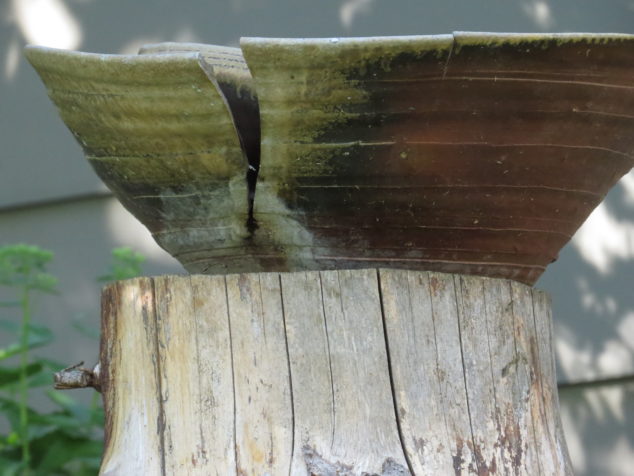
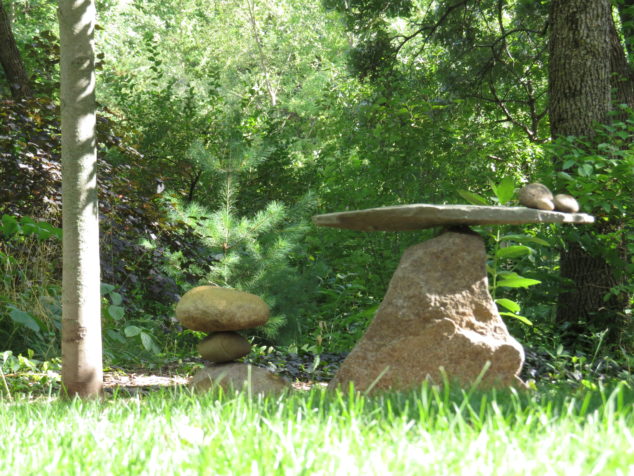

When do you feel grounded? How does one get to that ‘down-to-earth’ feeling? Luther Standing Bear, young kids, animals, well-being researchers, and yoga instructors know that you can literally just drop down to the earth. When I feel tired, achy and beat-up, like the weight of the world is on my shoulders, I like to lie down in the grass on my stomach, usually with a Black Lab dog named Tamba by my side. I am never too much or not enough for Mother Earth. I am just another one of her precious creatures. My body feels supported; I feel the warmth of the sun and the cool of the shade. My heartbeat becomes the heartbeat of the Earth, and with that awareness comes a calming, a grounding, and an appreciation for the life-giving forces inherent in Mother Earth and in each of us.