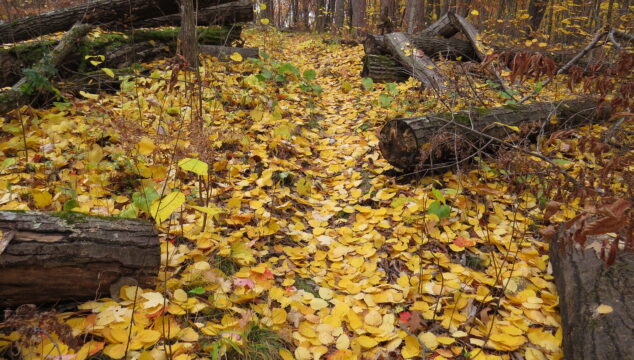
Come walk with me in the peak Autumn beauty of the Northwoods. To say that I love this time of year is an understatement. Most everyone can appreciate the colorful falling leaves---it reveals the 'true self' of a tree when its leaves are no longer producing chlorophyll. Their true colors are revealed, and there is something simple … [Read More...]
Gleanings from July
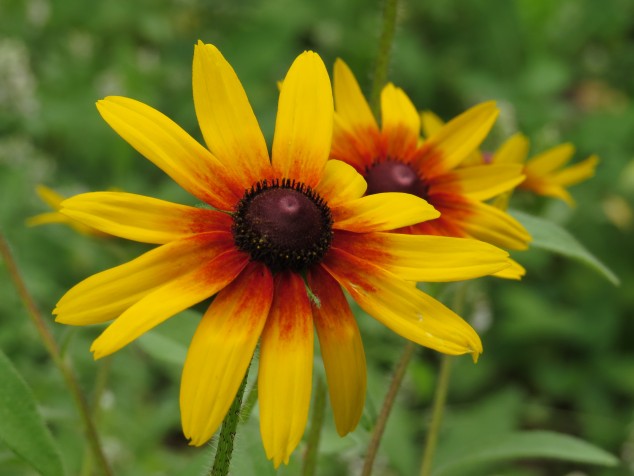
Rudbeckia or Black-eyed Susan
July is Summer in Minnesota. In June, we were still marveling at the fully leafed out trees and growing perennials as we walked the cool mornings in a fleece pullover. And August will already be showing us hints of fall as the sumac begins to turn scarlet. But July is warm and sunny, and the warm-season grasses, flowers, and vegetables grow wondrously, bloom extravagantly, and produce prodigiously.
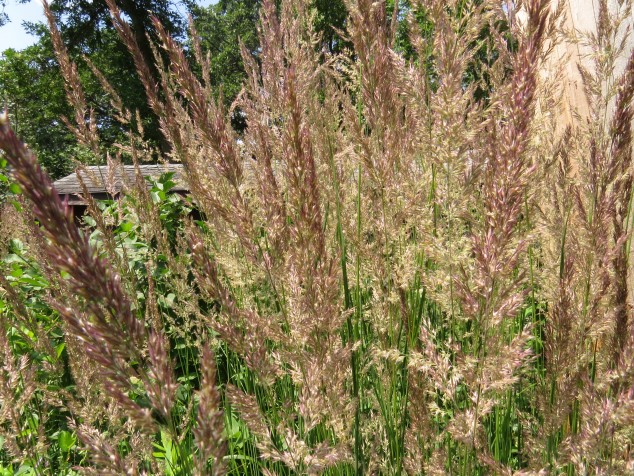
Miscanthus sinensis ‘Morning Light’
It is also Hosta month. You realize just how many hostas you have when they all bloom–or I should say, when you have to cut back all the spent bloom stalks! The bumblebees and hummingbirds love them.
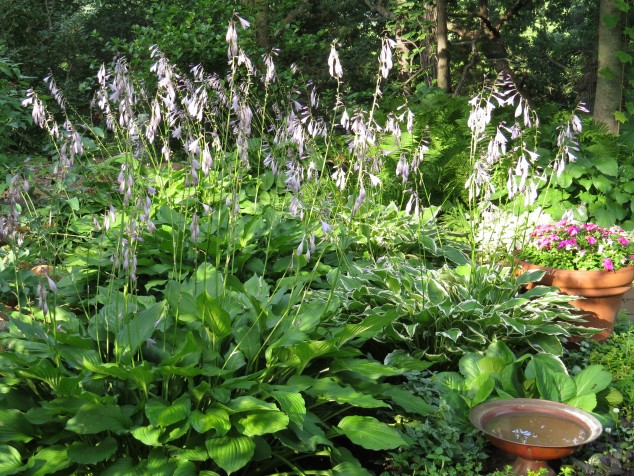
Hostas in bloom
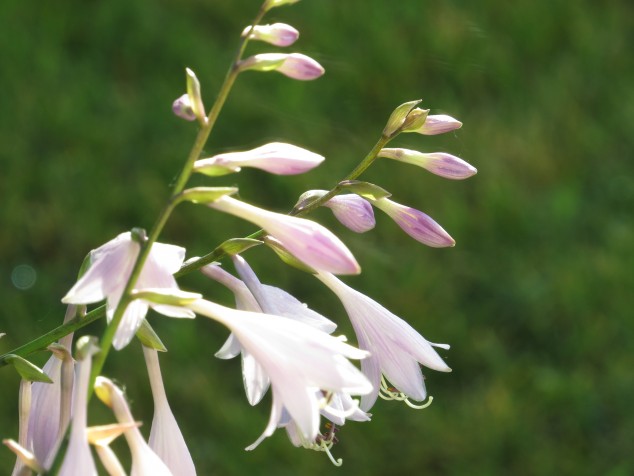
Hosta flowers
July is a great month for bike riding and taking in the lake and trail landscapes. We saw tall, woody Meadowsweet–a native Spiraea, bright Purple Prairie Clover, and spiky Culver’s Root. Grasses were top-heavy with seed heads that swayed as we swooshed by. It smelled sweet and earthy-warm.
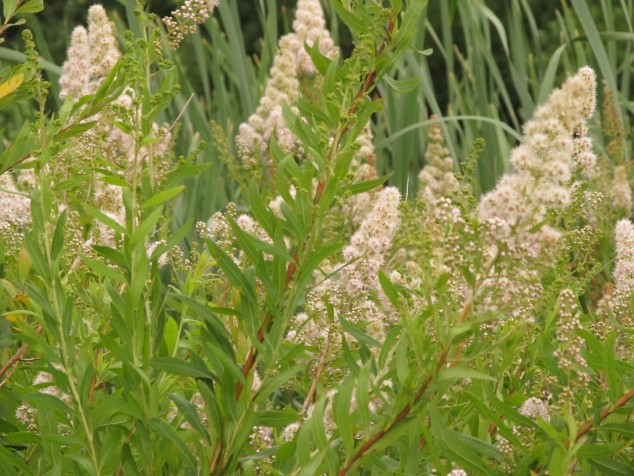
Meadowsweet
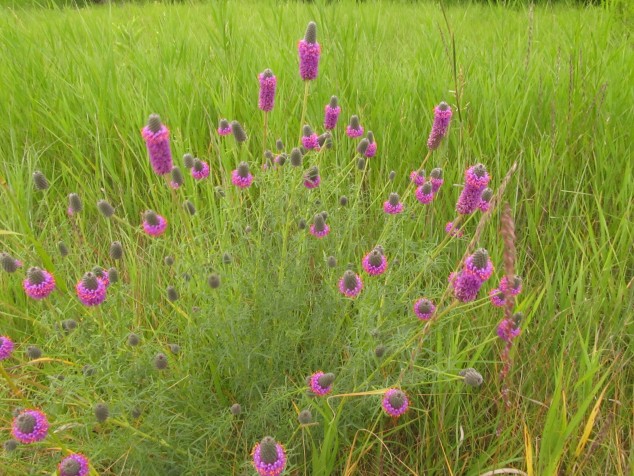
Purple Prairie Clover
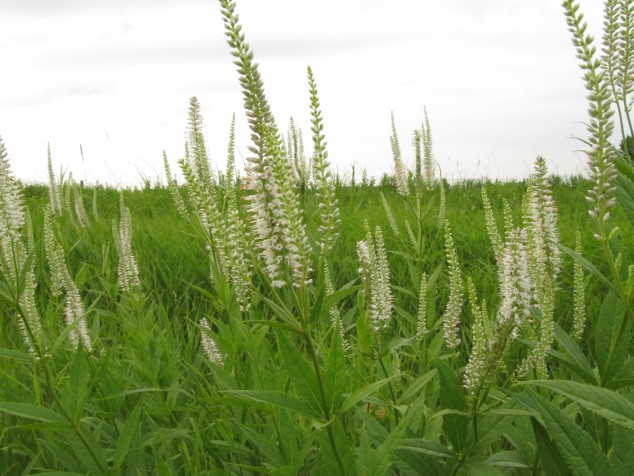
Culver’s Root
This interesting spider web was spun in a small, bare-branched tree. I didn’t stop to examine the center to see the catch or the catcher.
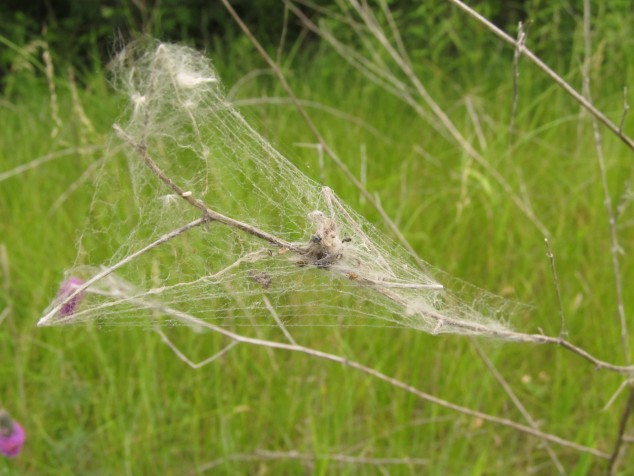
Spider web along the bike trail
At the lake we saw a turtle chowing down on something, while carrying extra cargo on his back.
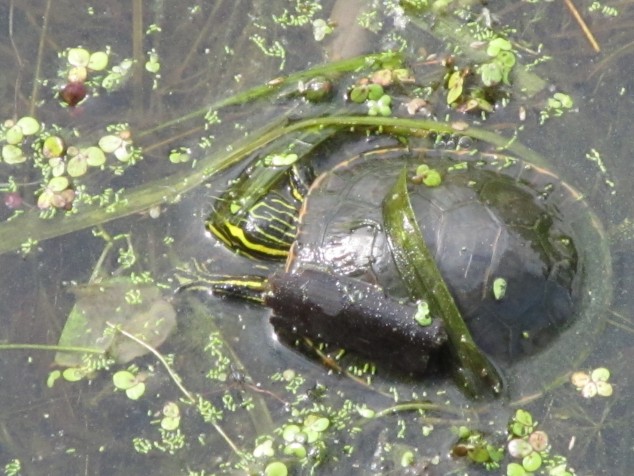
Turtle
This little chipmunk had a sturdy granite home on the lake inlet by a stand of cattails.
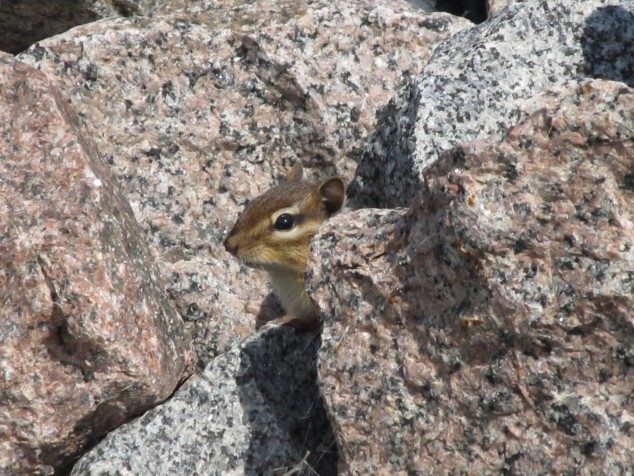
Chipmunk
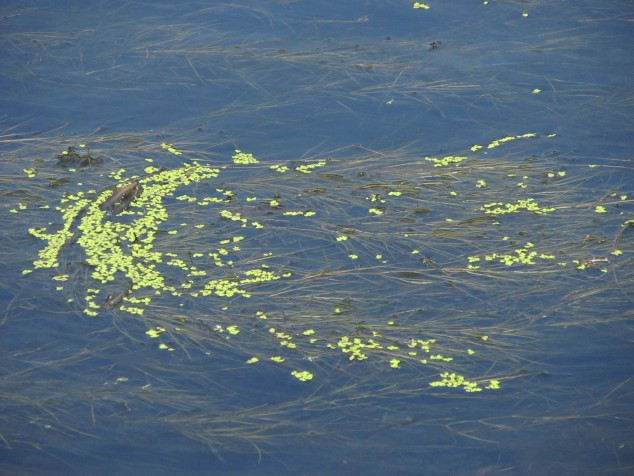
Duckweed on lake inlet
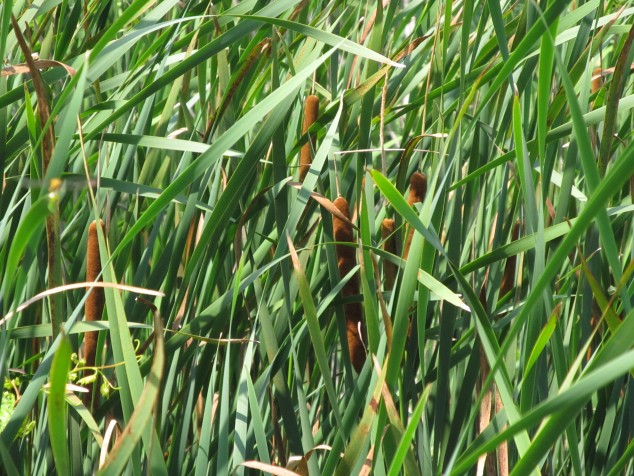
Cattails
Up north at the camp we visited earlier in July, Michaela captured a picture of a young raccoon sitting amidst the poison ivy by a pine tree. Young raccoons stay with their mothers until 13-14 months old, but this little guy has been seen wandering by himself.
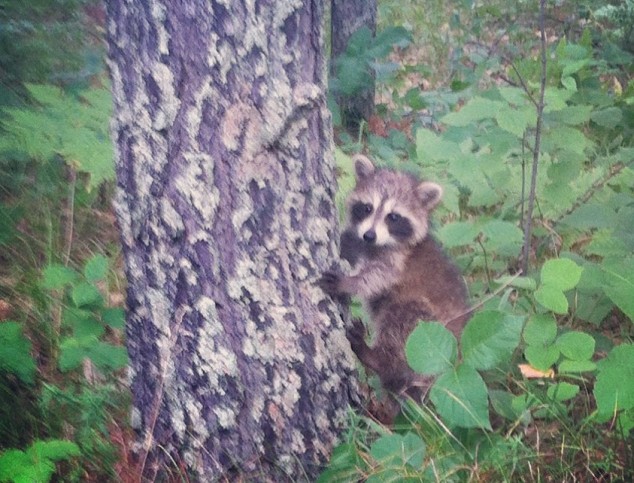
Young raccoon–photo by Michaela Demarais
A glittering spider web adorned the creeping phlox by our mailbox, catching the water droplets from the sprinkler.
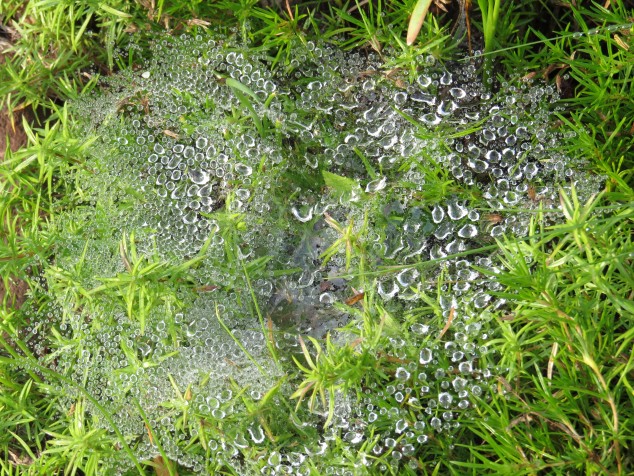
Water drops on a spider web
July is glorious–a month of growth and beauty. It’s a month of going with the flow, enjoying the warmth, and spinning a web for your life that will catch all the goodness the world has to offer. Take it in!
Shades of Blue
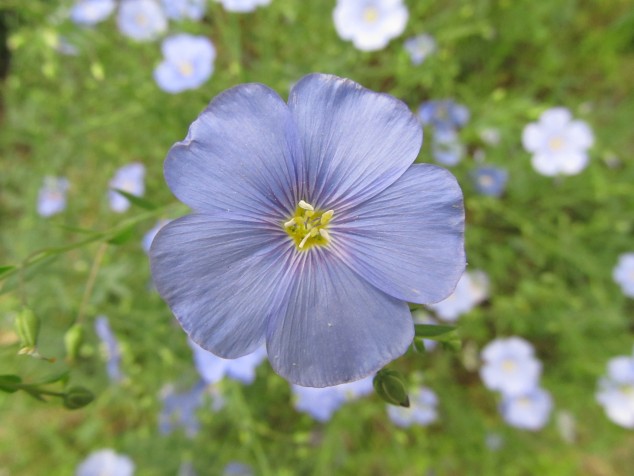
It’s a blooming time of year! Chris says I should write about something other than flowers, but I say you can never have too many flowers. (I guess Kanye and I have something in common.) They are all so unique and lovely though, and the intent of this blog is to share the Beauty of Nature. The other thing I love is the color blue–and I would also say you can never have too much blue. This statement is reflected in my closet, much to the chagrin of my daughters. So blue flowers are extra special for me. It is said that a true blue flower is hard to find in nature–that most are shades of purple or lavender. According to Wikipedia, the blue flower is a symbol for inspiration, desire, love, hope, and the beauty of things. No wonder I like them–and no wonder they are hard to find.
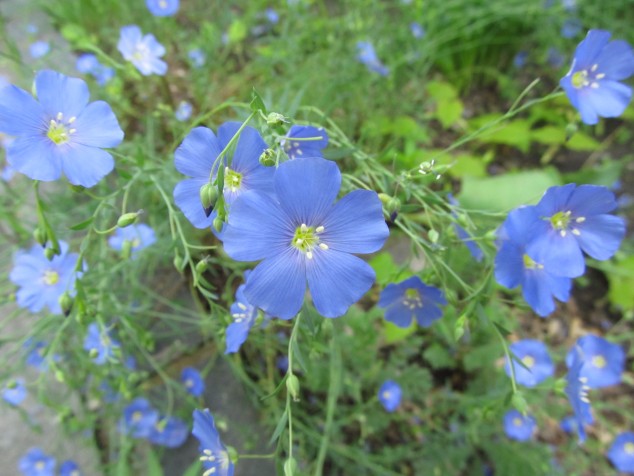
Cultivated varieties have expanded the selection of blue flowers, and my tour of our garden blues include some of those. I would have to say that my favorite blue flower is Perennial Blue Flax–Linum perenne. It was introduced to the US from Eurasia. A comparable native flax is Linum lewisii, named after Meriwether Lewis after he discovered and documented it on his travels. Perennial Blue Flax blooms early and for a number of weeks–each flower lasts only a day before the petals fall, creating a carpet of blue ‘snow’ around the plants. It reminds me of the fields of flax that were grown in eastern South Dakota–acres and acres of blue flowering plants that ripened to a rich brown with round-headed seed pods and shiny, dark brown seeds. The straw was harvested for producing the fibers to make linen, the seeds to produce flaxseed or linseed oil. This multi-purpose plant is a beautiful ornamental flower for the garden.
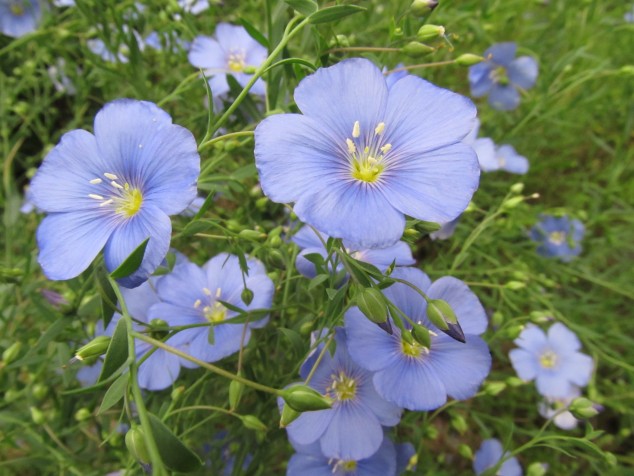
Perennial Blue Flax
One of the earliest blue-blooming flowers in our garden is Lungwort (Pulmonaria species). It’s a shade lover and has interesting spotted leaves.
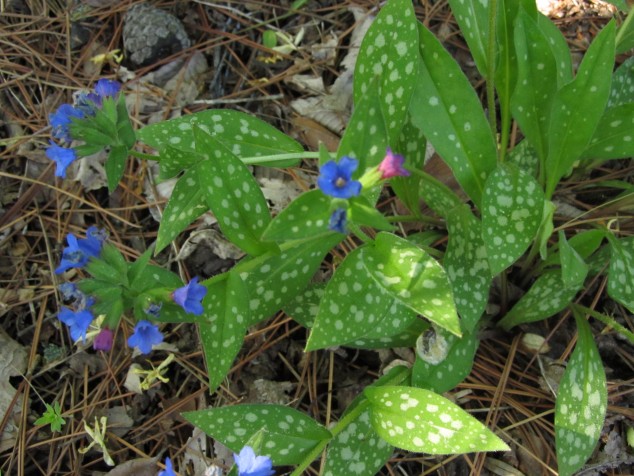
Lungwort
Jacob’s Ladder (Polemonium species) is another early blooming shade perennial. This variegated plant produces light blue/lavender flowers.
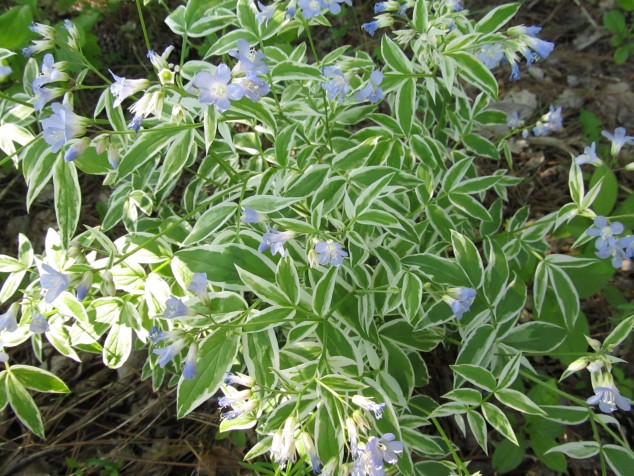
Variegated Jacob’s Ladder
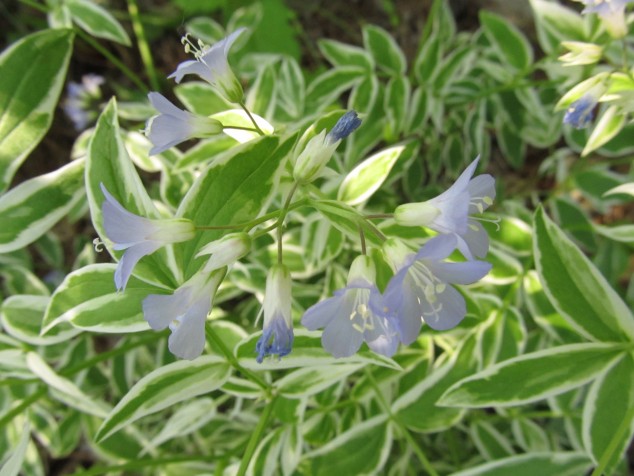
Variegated Jacob’s Ladder
Ajuga or bugleweed is an attractive, colorful groundcover that does best in partial or light shade. But it is very adaptable, so tolerates full sun and full shade. The blue flowers are a sidenote to the foliage but very desirable to the bumblebees.
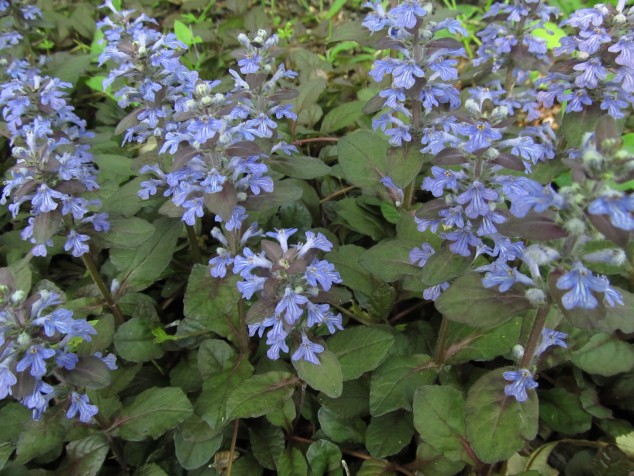
Ajuga
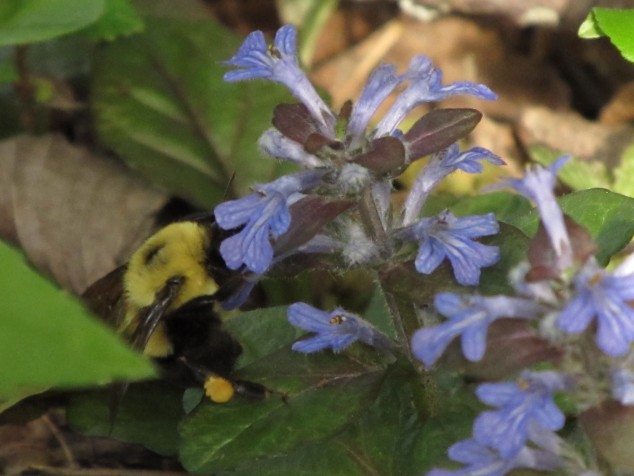
Ajuga
Brunnera or Bugloss is another shade-loving perennial. It has large heart-shaped leaves and tiny, delicate sprays of blue flowers.
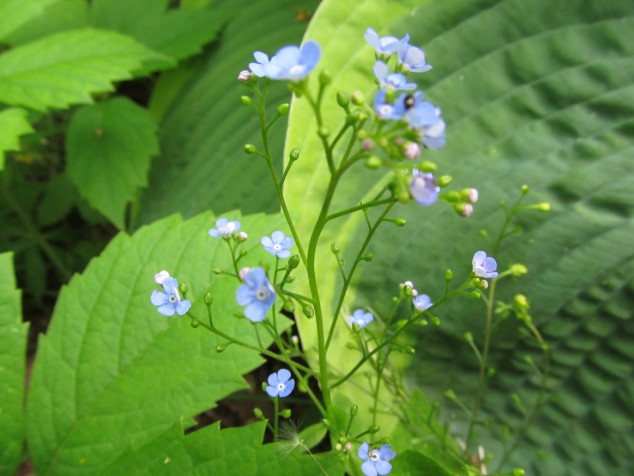
Brunnera
Lupines have showy spikes of color–the best known is probably the native blue species. Many hybrids can be found in most any color. Texas bluebonnet, the State flower of Texas, is a type of Lupine. This member of the pea family has palm-like foliage.
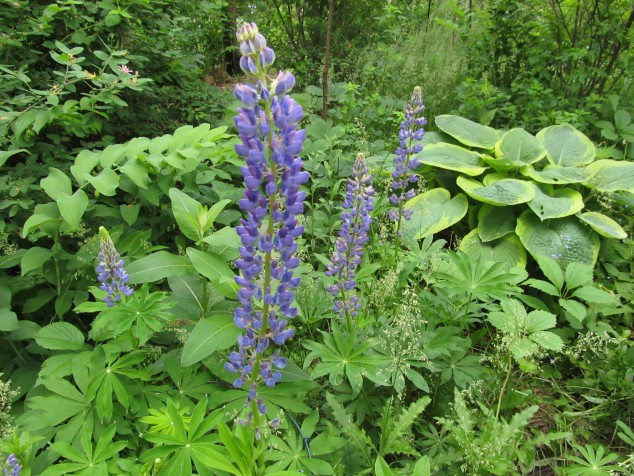
Lupines
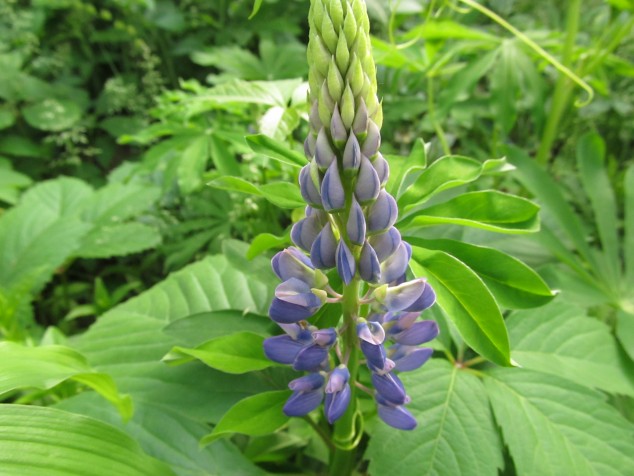
Lupine
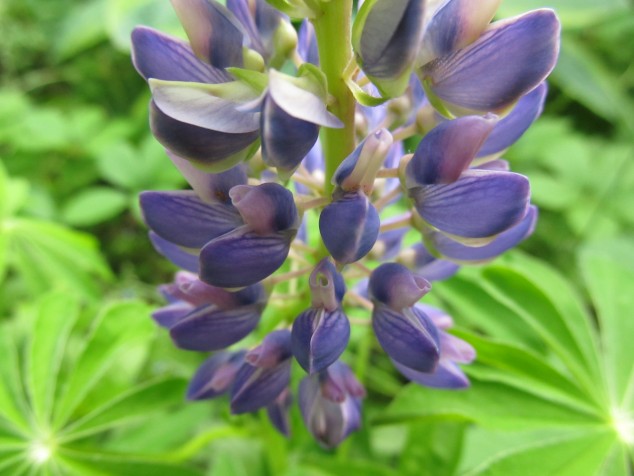
Lupine flower
Perennial Salvia, a sage that loves sunlight, is a long-blooming, hardy plant that will re-bloom after the first flowering is cut back. The purple-blue spike flowers look great with coreopsis, yellow iris, and yellow daylilies.

Perennial Blue Salvia
I have mentioned Spiderwort in my post about The Woods–how it has populated itself after we removed the buckthorn. It has grassy-looking leaves and flowers that only last a day before dropping off.
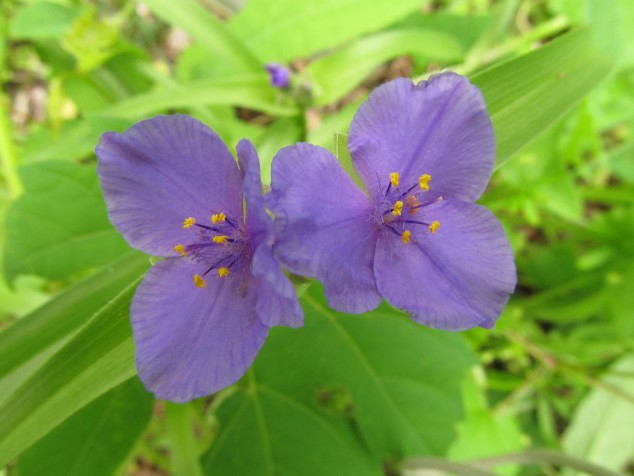
Spiderwort
Mountain bluet (Centaurea montana) is a perennial cornflower that is drought tolerant and likes full sun or partial shade. It has spidery flowers and lance-shaped leaves.
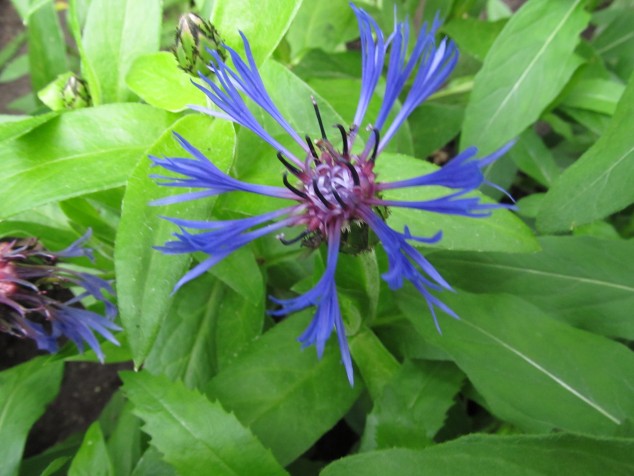
Mountain bluet
Amsonia or Bluestar is a compact, understated perennial with true blue clusters of tiny flowers. The foliage turns a bright yellow in fall.
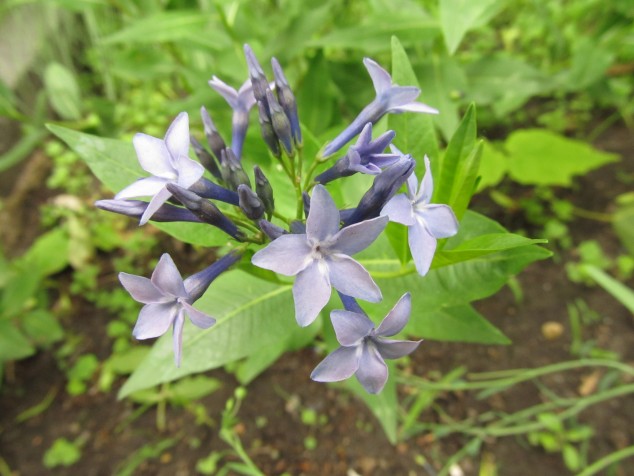
Amsonia or Bluestar
We all get the blues at times in our lives–even cowgirls get the blues sometimes. (I have more in common with Emmylou.) We can sing the blues, feel bad for a while, figure out why, then move on to the next thing. These blue flowers should inspire you towards love, beauty, and hope.
Changes
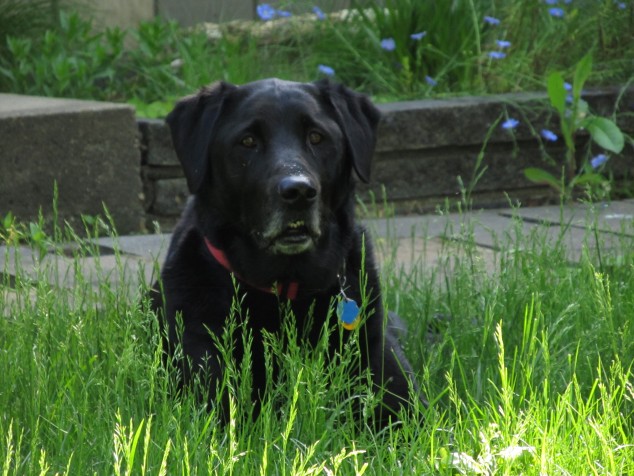 A week and two days ago we left home for a graduation, visiting family and friends, and a wedding. The lawn was freshly mown, and the leaves were not yet fully open on the oaks and maples. The lilacs were showing their clustered flower buds, and the crabapple was expectant with dark cherry red globes of folded flower petals.
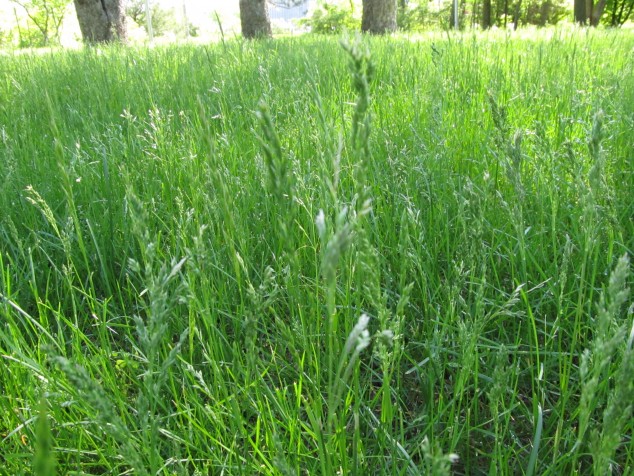
When we drove into the driveway yesterday, it looked like we had been gone a month! All the trees were fully leaved out, throwing great patches of shade onto the prairie-looking grass yard that had gone to seed.
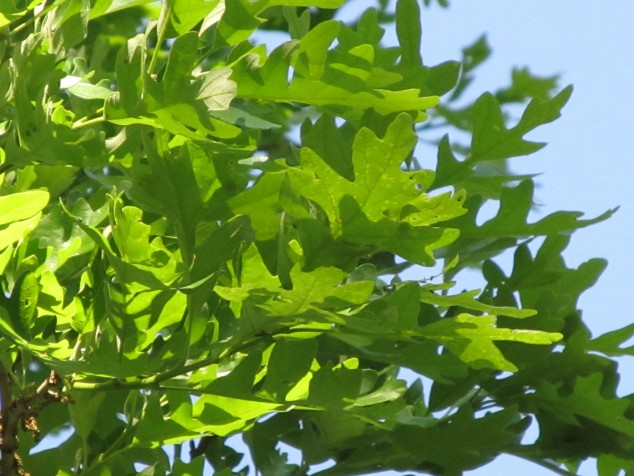
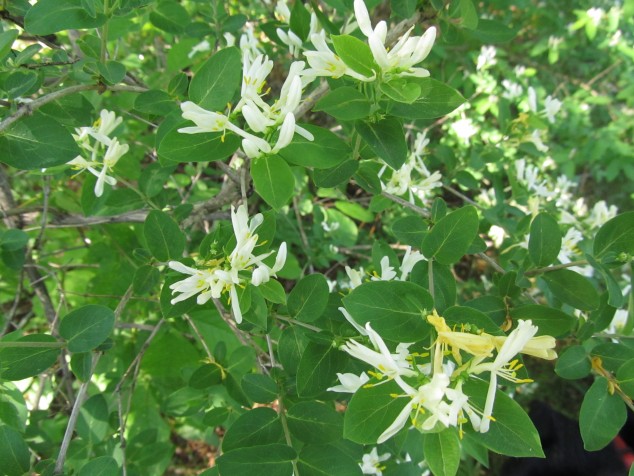
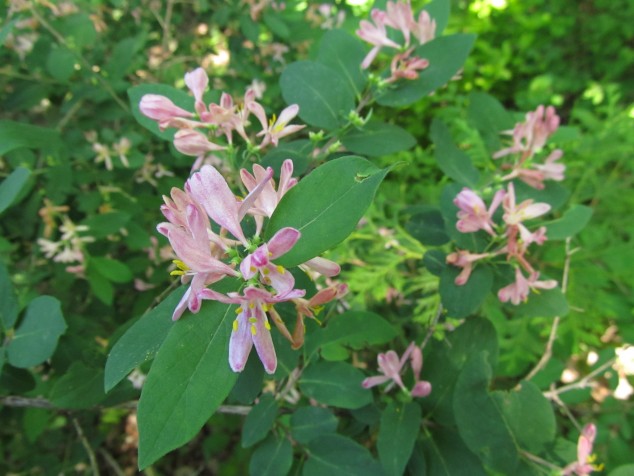
 The honeysuckle shrubs were covered with fragrant flowers–some white and yellow, some light pink, and others a pretty darker pink.
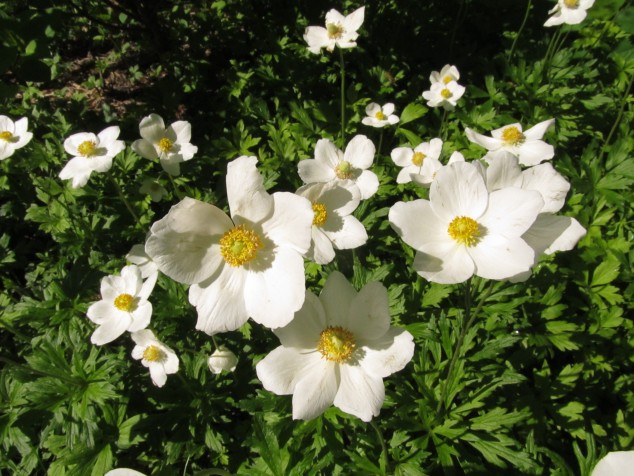
 A patch of anemones under the oak tree was bright and beautiful.
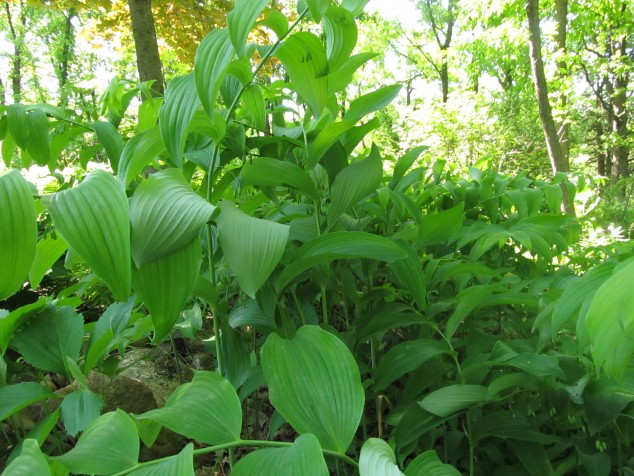
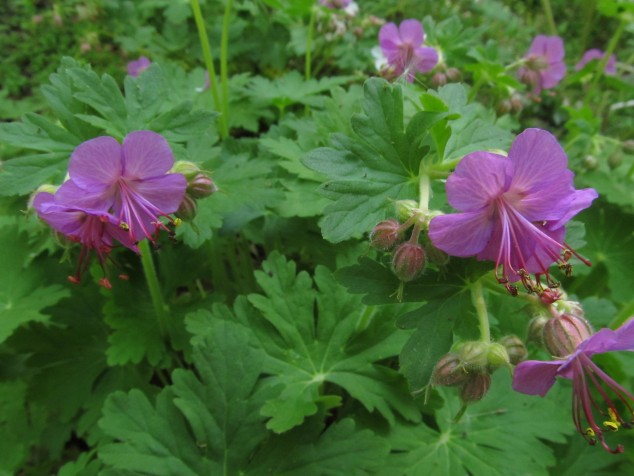
 Walking through the woods, the Solomon’s seal was thigh-high along the path, and the Hardy geranium, in contrast to its name, looked frail and delicate.
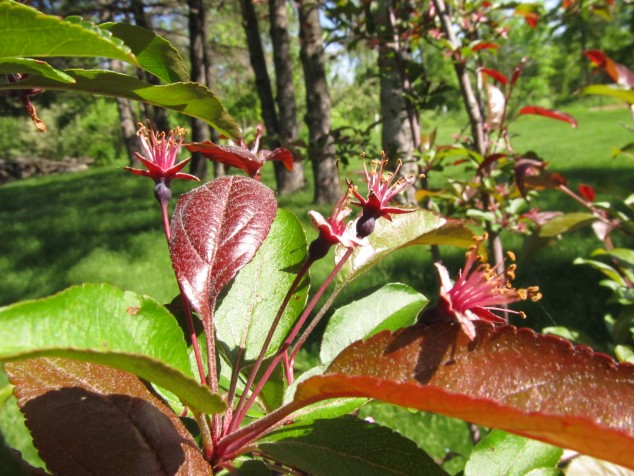
 The lilacs were spent and turning brown, and I was disappointed that I had missed the opportunity to bring a vase full of fragrant blooms into the house to perfume the indoor air. I had also missed the Prairiefire crabapple in its full blooming glory, but found the tiny fruits starting to form at the base of the flower.
 I was happy to see the brilliant flowers of perennial blue flax in full bloom, reminding me of the acres and acres of flax that used to be grown in eastern South Dakota.
If Spring came but once in a century, instead of once a year, or burst forth with the sound of an earthquake, and not in silence, what wonder and expectation there would be in all hearts to behold the miraculous change! –Henry Wadsworth Longfellow
We had traveled back to two places where we used to live–six and fifteen years ago, respectively. I was struck by the contrast of things that hadn’t changed at all and things that were completely different and unrecognizable. Some things that I expected to change, hadn’t, and other things that I expected–or wanted–to stay the same, had changed drastically. It is humbling and a little haunting to realize that we often have so little control over change. Nature’s changes, whether as fast as last week’s spring transformations or the slower evolution of one season to another or the still slower changes in landscape and climate, impact us in ways we scarcely know. And we, in turn, influence people and things around us, including Nature. May we all be more conscious of the miracles of Nature and of ourselves and of the ways we impact one another and the Earth.
Love and the Heart-leaved Bergenia
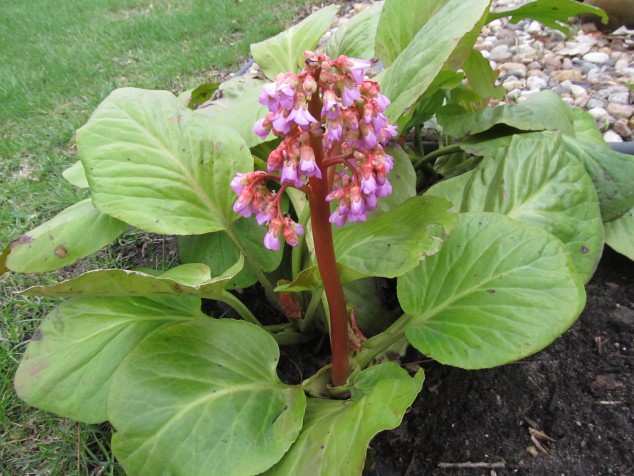
There is something to be said about making it through the winter in Minnesota with green leaves intact. This perennial is rather shocking in its large-leaved greenness when the beds are cleared of their winter coverage of snow and leaves. Many things about Bergenia are surprising–starting with its common name of Pigsqueak, which was taken from the noise produced when two leaves are rubbed together. It also has a large-stalked, showy flower that is our second perennial to bloom in early spring after the demure Pasque flower. The heart-leaved Bergenia has large, leathery leaves and propagates by rhizomes that slowly form clumps. They are relatively pest-free, though the vine weevil will eat the edges of the foliage giving it a notched look as seen in the third picture below. It is happy in most soils in part to full shade and has a beautiful fall color of reddish-bronze. The passage from bud to fully open flower took about two weeks this year with cool temps and cloudy, rainy days.
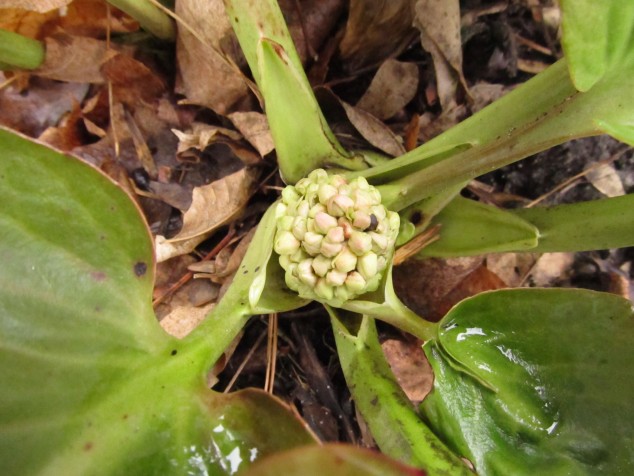
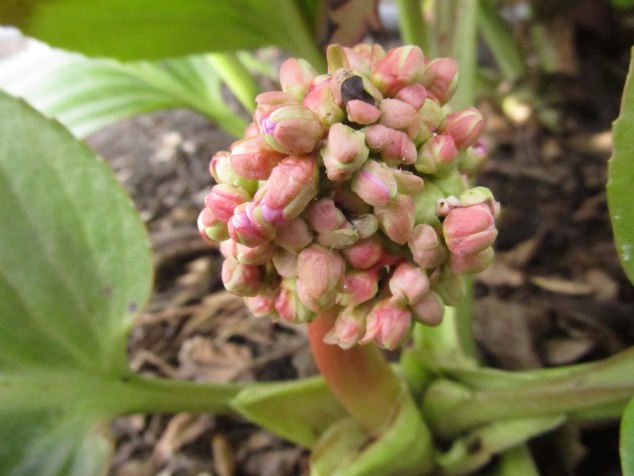
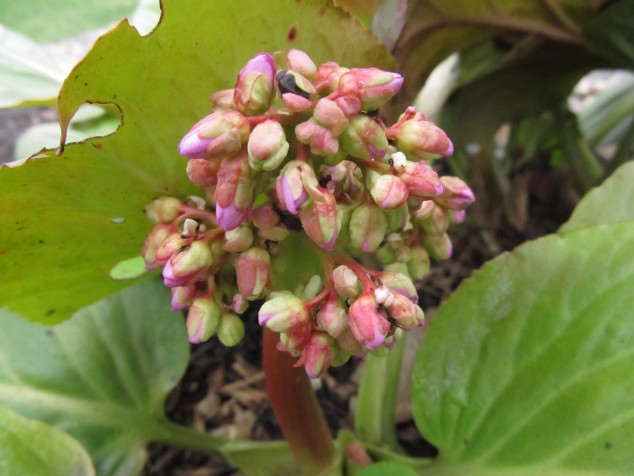
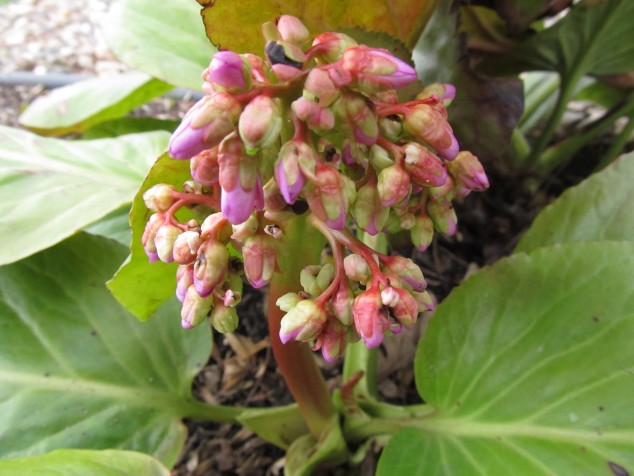
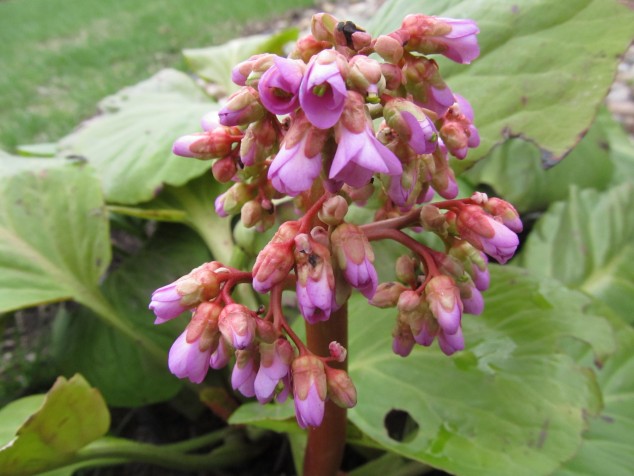
There is also something to be said about making it through thirty-two years of marriage with love and respect intact! We have weathered the surprises, the drought spells, the wrinkle-inducing stretches, and the just-get-me-through-the-next-day moments. We have also been incredibly happy with three amazing children, family and friends, animals to make our days, and the goodness and treasure of growing things together. Happy Anniversary to my Partner in Life!
Perennial People
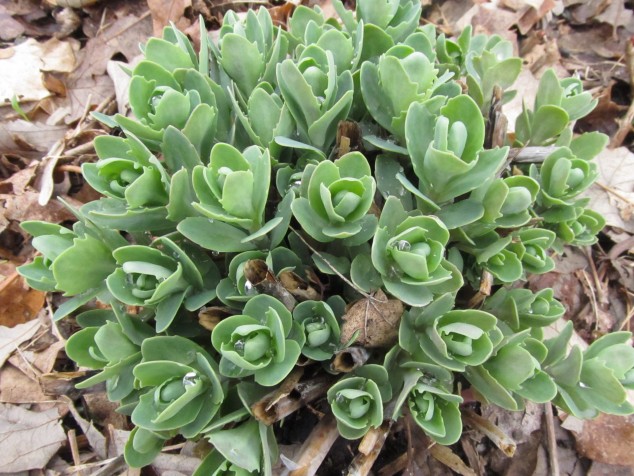
Sedum
One of my favorite things to do at this time of year is walk around the yard and through our path in the woods to see what’s up–literally! The perennials are popping up all over the place! I love to see them peeking, pushing, poking, unrolling, unfolding, unfurling. Each one is unique in color and form. These cold-hardy plants made it through another winter of below zero temperatures and feet of snow. Occasionally we have one that doesn’t make it–it could have been too cold, too dry, or too wet for it. We take a moment for sadness at its demise but hold onto gladness that we tried. But mostly, it is an amazing process of re-birth as we remove the ‘dead’ leaves and stems from last year’s growth to make way for the new. Gone are the hail-pocked leaves of last year, the slug or bug-eaten greenery, the sun-scorched, dog-trampled, drought-wilted, or wind-whipped foliage. They begin again. The new, tender leaves and stems are bright with their color and pristine in constitution. Let me take you on a tour.
It rained last night!
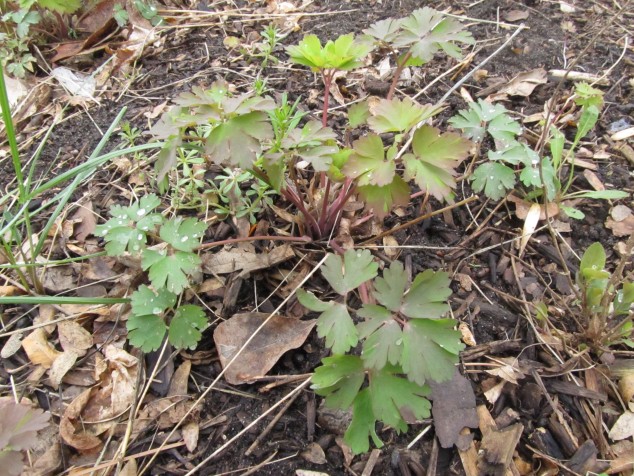
Columbine
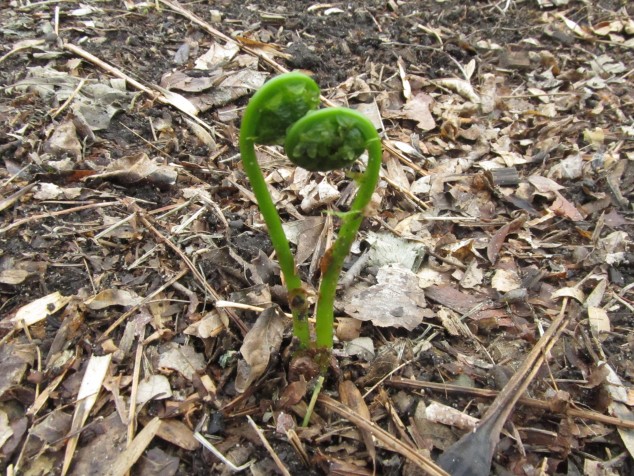
Fern
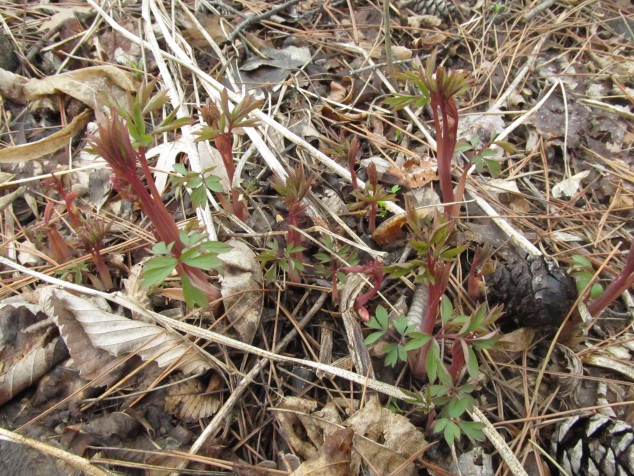
Bleeding Heart
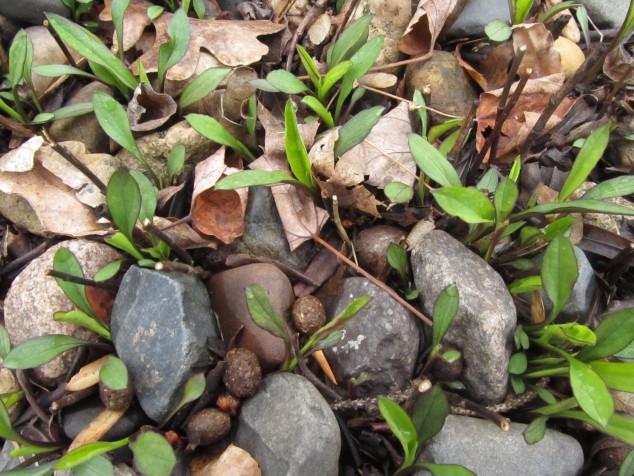
Asters–with evidence of who ate them in the Fall
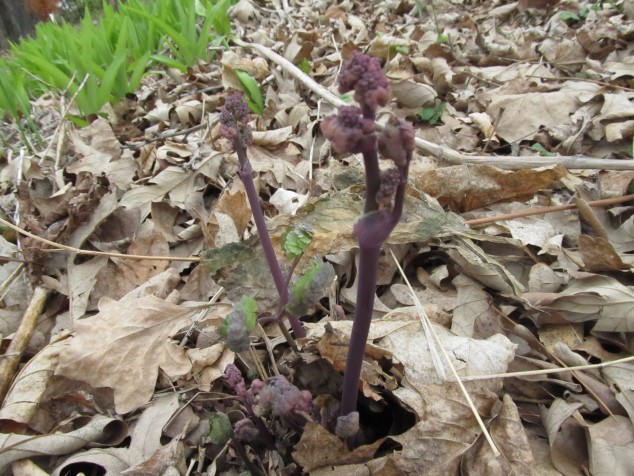
Meadow Rue with Daylilies in the background
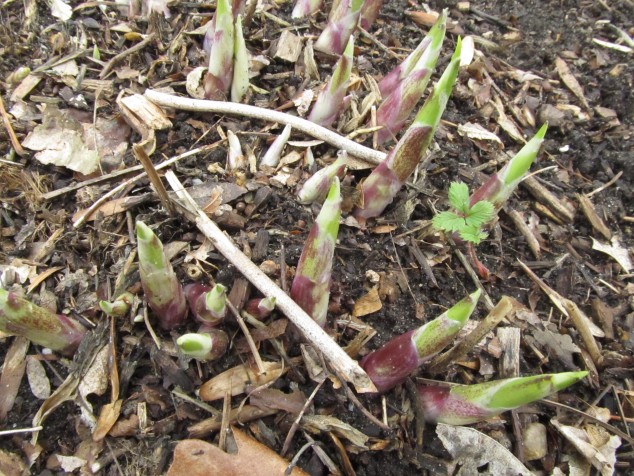
Hostas just coming up
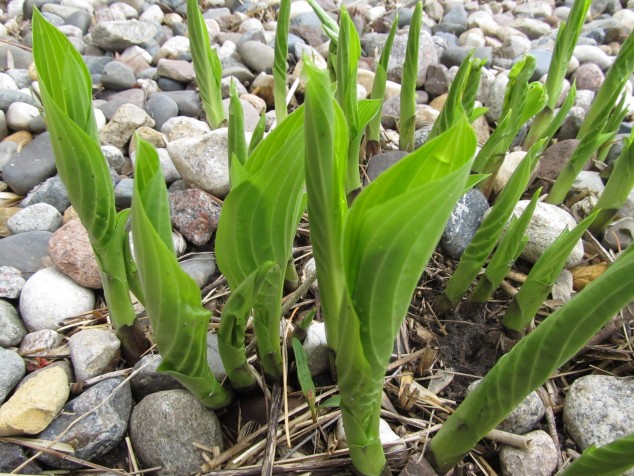
Hostas unrolling
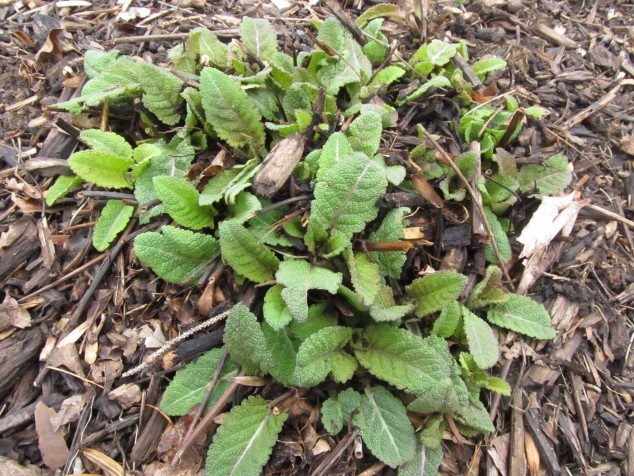
Blue Salvia
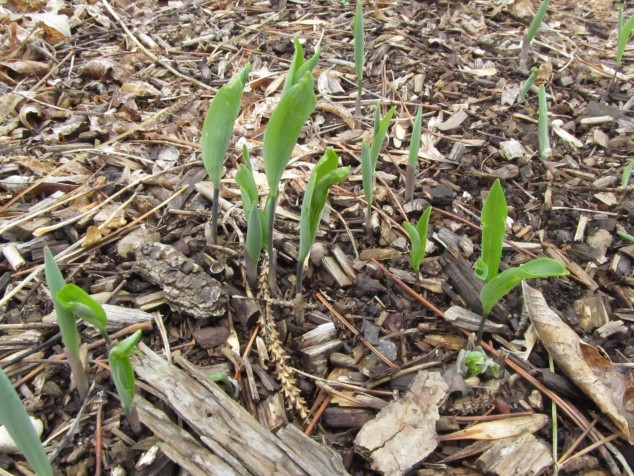
Solomon’s Seal
This feeling of newness and excitement reminds me of starting a new school year or calendar year. Whatever happened in the last year is behind us now. We take stock, heal our wounds, make plans or resolutions, change up a few things, and go onto the new: new classes, new teachers, new things to learn and do. We begin again. And though we carry our scars, we are perennial people. We are bright with hope and pristine in spirit once again.