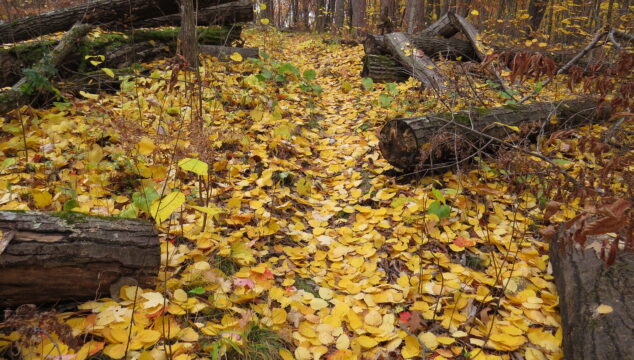
Come walk with me in the peak Autumn beauty of the Northwoods. To say that I love this time of year is an understatement. Most everyone can appreciate the colorful falling leaves---it reveals the 'true self' of a tree when its leaves are no longer producing chlorophyll. Their true colors are revealed, and there is something simple … [Read More...]
Gleanings from May 2015
Our back door is almost like a door to Nowhere. To be fair, it does have a sturdy cement stoop and a granite-covered sidewalk that leads twelve feet to the left to the screened-in porch door. But you can’t get to the garage or driveway or shed without walking through grass and around corners. It is a thick wooden door with ten panels, two of which are carved on the outside. One carving is a vine design, and the other is a dogwood-looking flower and leaves. I’m sure it is the original door of this sixty-year-old house, and it shows the weathering of time and sun. It faces WSW, and when I open the door, light floods into the rather dark corner of our living room through a full-glass storm door. The door that leads to Nowhere is really a doorway to Nature’s incredible, changeable Beauty. In Winter, I can see the River, silhouettes of old oak trees, and glorious sunsets. In Spring, I can see my square of prairie garden, my raised herb garden outside the porch door, the shallow clay birdbath on a stump, hostas, ferns, oaks, cedars, viburnums, and other extraordinary plants that make up the woods and yard outside our door.
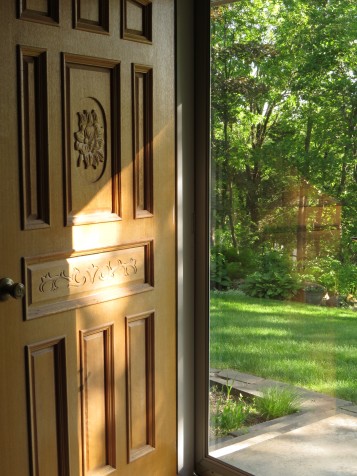
The month of May is the doorway to Summer. School is coming to a close, changing the landscape of family life for the next three months–or in our case, for the rest of our lives, as our youngest graduated from college. The external landscape changes drastically in the weeks of May, from tiny buds and leftovers of winter to the deep, rich lushness of Summer. By the end of May, we are looking at the possibilities, plans, and potentials of Summer!
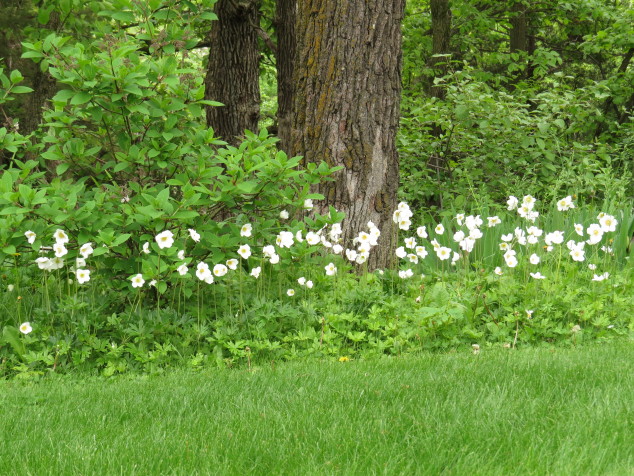
One of the delights right outside our back door has been the bright anemones or wind flowers. This perennial herb and popular wedding flower symbolizes anticipation and unfaded love.
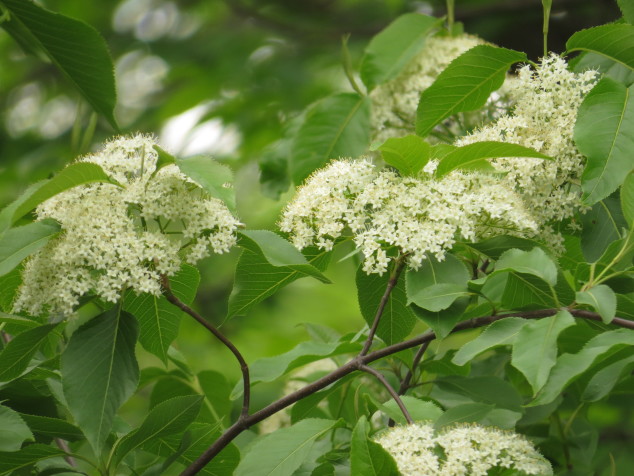
Close to the anemones is the pretty Nannyberry Viburnum with its clusters of white flowers.
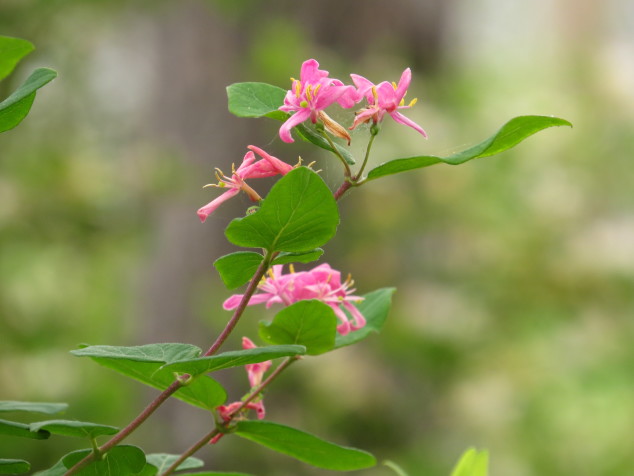
Honeysuckle shrubs of every size and shape are scattered throughout the woods. White, pink, and dark pink blossoms cover the shrubs in a coat of color.
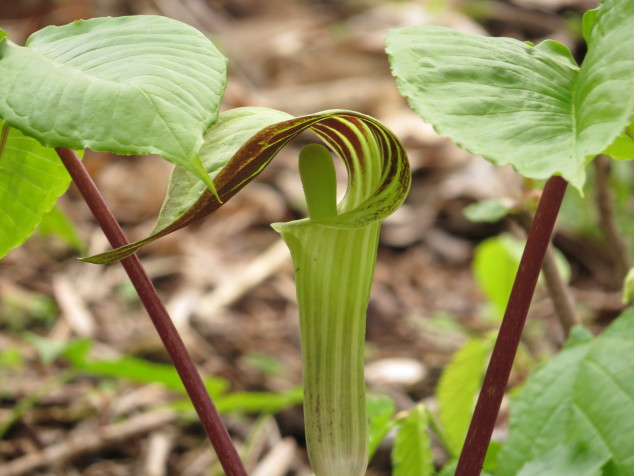
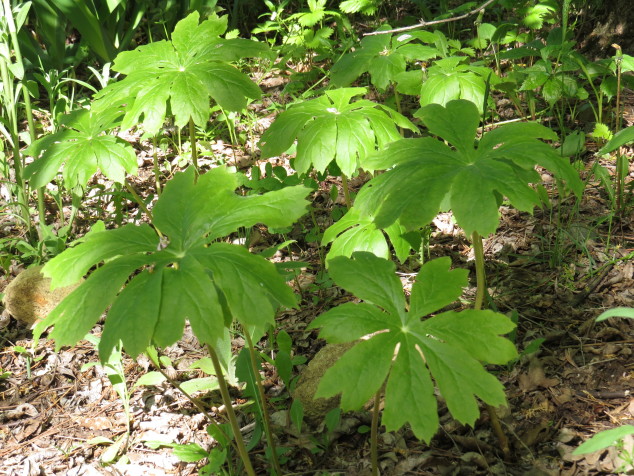
Jack-in-the-Pulpits are hidden treasures in the woods–hard to find, but ever so lovely and unique. Umbrella shaped Mayapples shade insects scuttling through leaf litter underneath them.
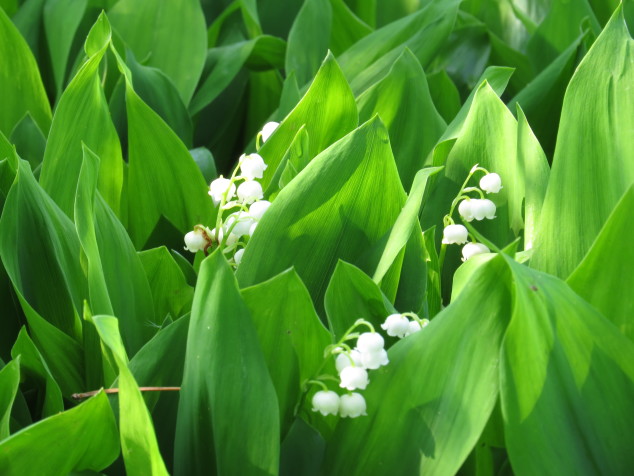
Fragrant Lily of the Valley flowers peek out from among the crowd of green leaves. Their stems of pure white bells make the most beautiful tiny bouquet to bring inside.
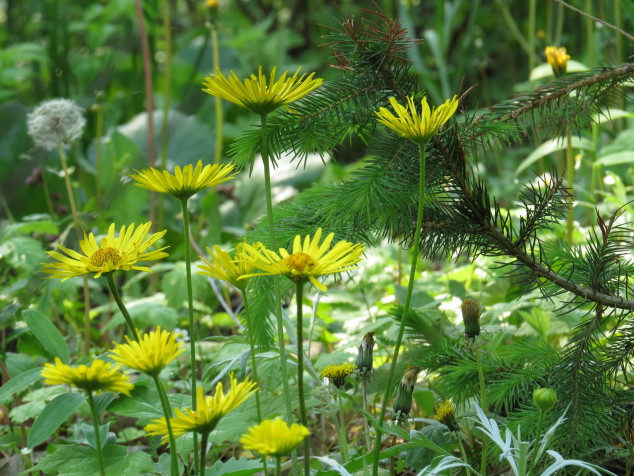
Leopard’s Bane and Dandelion roar into bloom with sunshine yellow in this month of May.
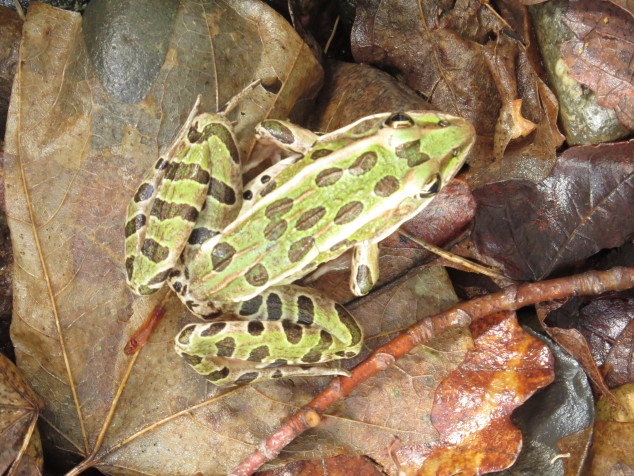
Along with May flowers that have adorned our yard, we have also had creature visitors. The first heavy rain of the month chased Leopard frogs into our deep egress window well.
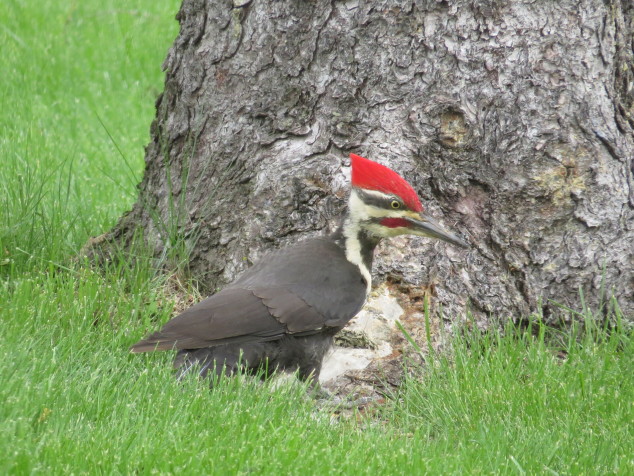
A Pileated Woodpecker checked out each one of the mature spruce trees in our front yard. Their food of preference is carpenter ants.
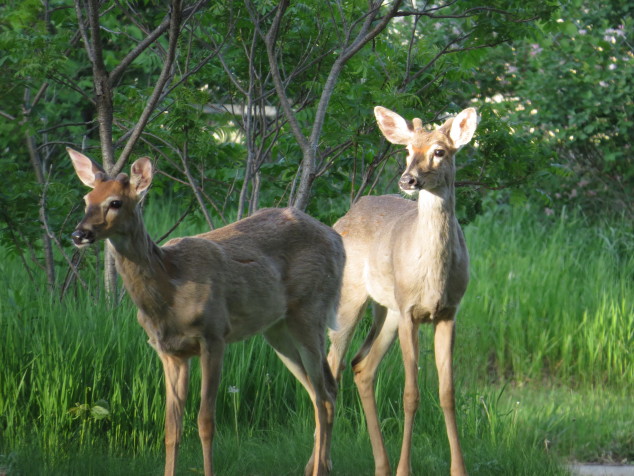
These two young bucks, probably last year’s fawns who were very familiar with our yard, walked up the driveway one evening. They watched our Black Lab dog wander around the outside of the house oblivious to the visitors we sent her out to chase away! (Interesting fact: Their antlers grow up to 1/2 inch each day from April to September!)
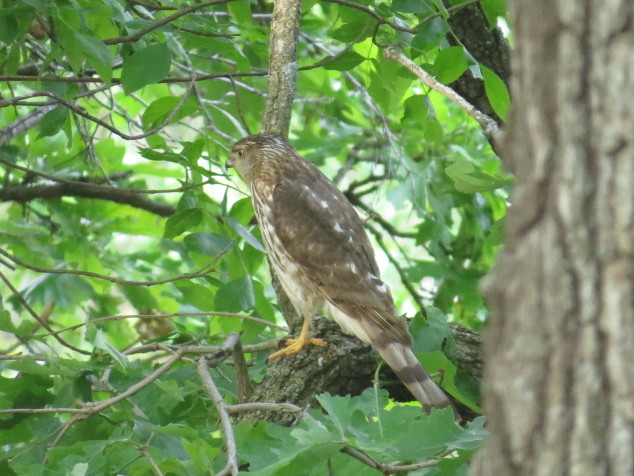
A Cooper’s Hawk is back in the neighborhood, darting through the tree branches, perching, watching, and flying again. He was likely the hunter of the pigeon carcass I found.
May holds promise for a new season, a new chapter in Life, and renewed hope and adventure.
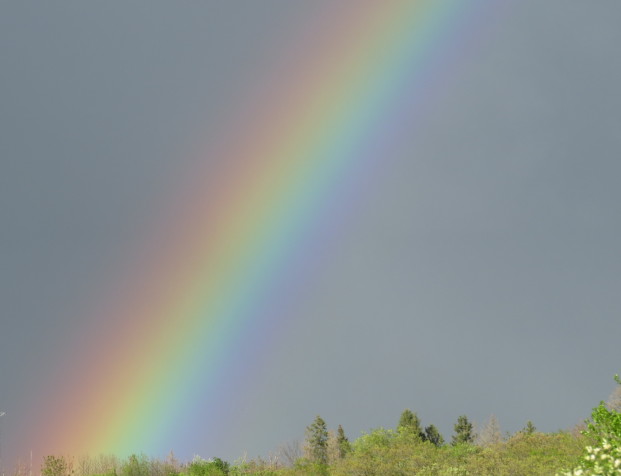
The month of May prepares us for Summer. It is a time to celebrate the end of school–for the year or for life–with parties and graduations. It is a time to celebrate anniversaries of unfaded love. It’s a time of anticipation for the warmth and fun of the Summer months that always go by too quickly. May is the doorway to a productive growing season of garden goodies and farm-raised crops and animals. As we open our doors to Somewhere–a place where the light illuminates the dark, where we find our niche among the crowd, where we carve our initials in our Tree of Life, and where we find our hidden treasures–let us step out in Beauty, Courage, and Love.
Happy New Year from Nature!
There is a subtle yet palpable excitement that I feel at this time of year. The colorful, organized seed racks are on prominent display at grocery, hardware, and do-it-yourself stores. Established nurseries and greenhouses have been busy for months sowing seeds into flats for vegetables and flowers. The pop-up garden centers are setting up their hooped greenhouses on pavement, surrounded by pallets of fertilizer, potting soil, and mulch. And the Spring plant material is arriving!
I also love the coming alive of the trees, shrubs, and perennials in our yard and woods. The quickly evolving changes demand a daily walk-about to see what has emerged from the dormant branches or the warming earth. After a fairly dry winter and early spring, the heavy gray skies on Sunday showered us with a half-inch of much-needed rain.
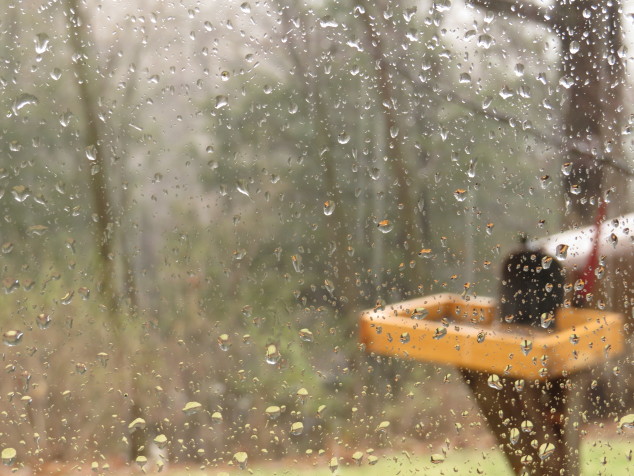
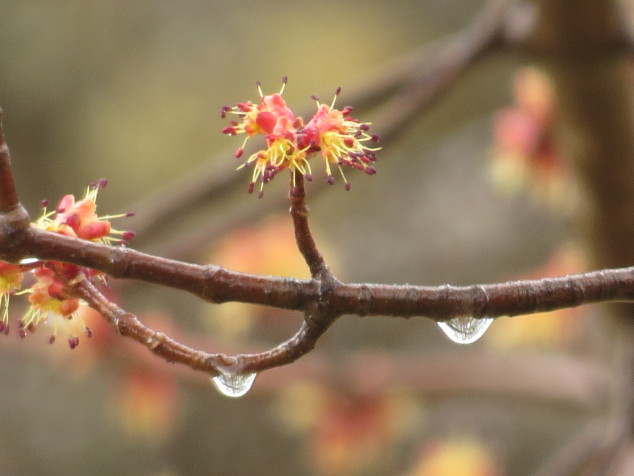
The grass turned green before our eyes, and the maple tree flowers opened their red buds to pompoms of scarlet and yellow.
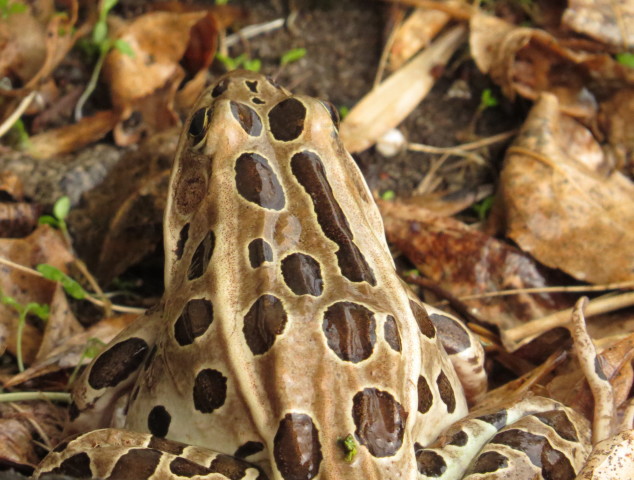
A leopard frog leaped through the yard towards the house, her belly swollen with eggs.
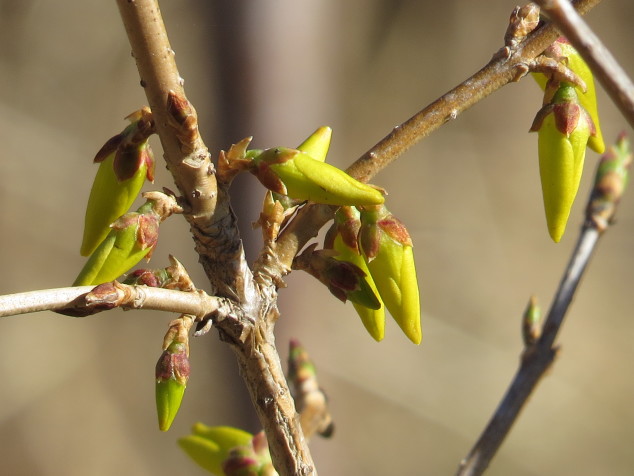
Gray pussy willow catkins and yellow-flowering forsythia are the harbingers of Spring.
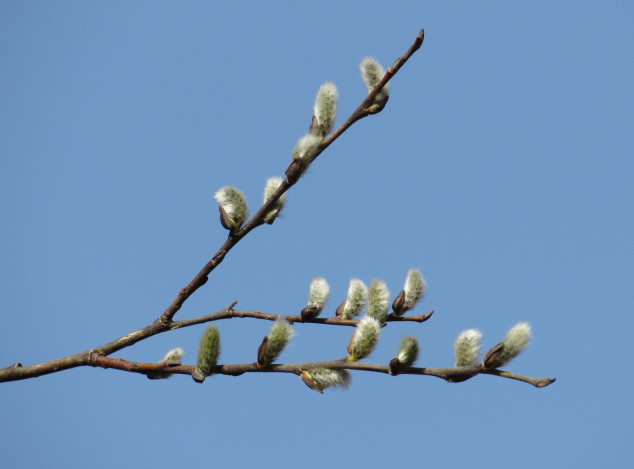
While the demure pussy willow is often overlooked, it is hard to ignore the sunshine bright forsythia when the flowers burst forth from their origami buds.
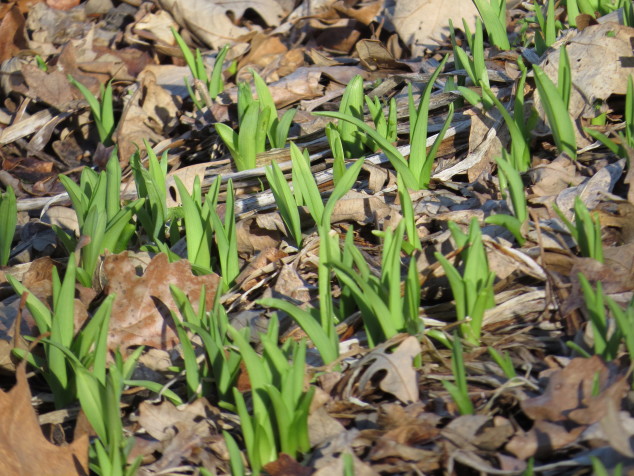
The rain prompted the growth of day lilies and irises, rising like the phoenix from the ash of dried leaves and last year’s rubble.

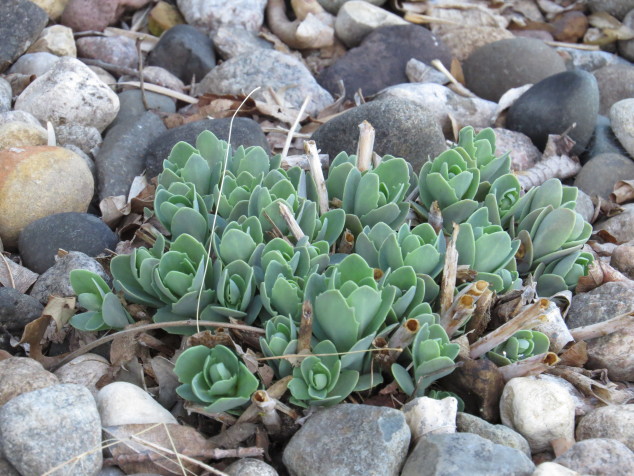
Rosettes of sedum popped through the river rocks on the warm, southwest side of the house.
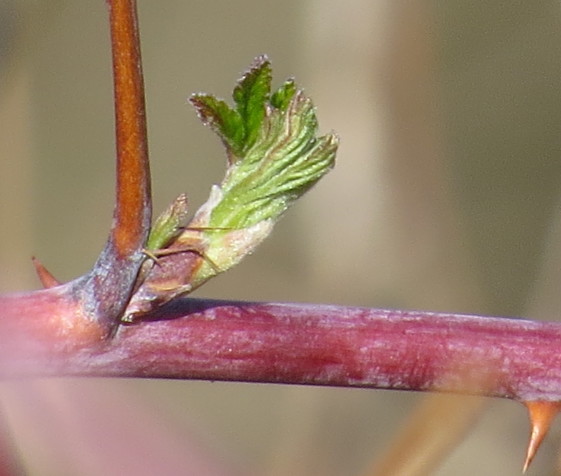
A crinkly raspberry leaf unfurled from the ivory bud, shimmering and full of potential.
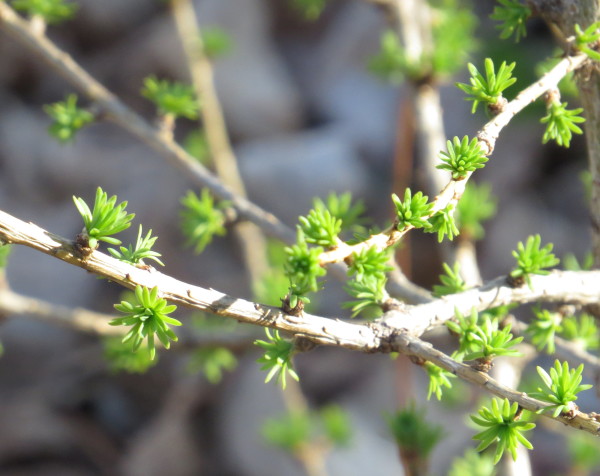
Clusters of lime green needles emerged from the woody stems of one of our petite larch trees. Larch are deciduous conifers that can grow 80-120 feet tall. Our trees are less than a yard tall–babies with a long life before them.
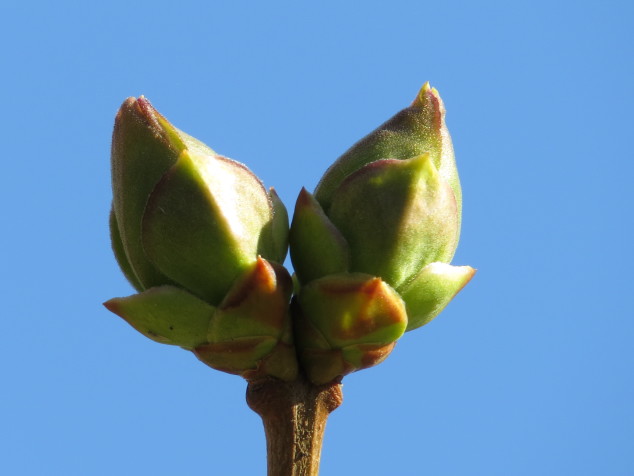
Sprays of buds adorned the lilac shrubs, each plump green leaf bud tinged with violet, foreshadowing the fragrant flowers yet to come.
I saw my first Robin last evening, the feathered harbinger of Spring. The vest of red-orange covering his rotund belly was bright against the gray tree branches. Welcome home to the North Country!
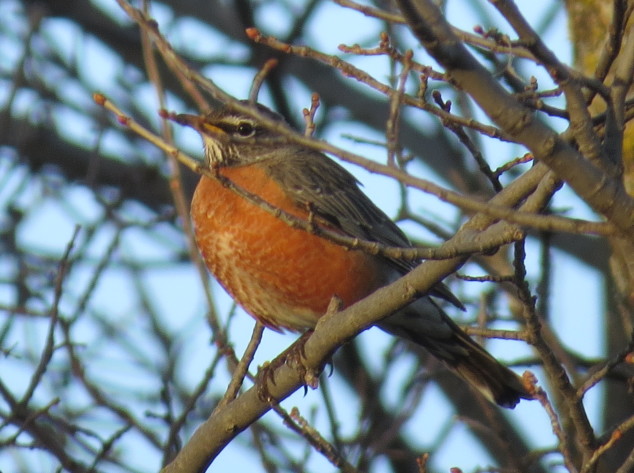
Spring is the Happy New Year in the seasonal life of Nature. It is a time of anticipation and excitement for a new growing season for the diverse Kingdom of Plants and for the next generation to take its place in the Kingdom of Animals. Plants embody the literal translation of ‘turning over a new leaf,’ while we embrace new beginnings and fresh starts.
The beginning of a New Year on January 1st has little data to prove itself beyond the calendar hanging on the wall. But Nature’s New Year has abundant and hearty proof that we can all begin anew and make a fresh start! When things seem impossible, we must remember to witness a tree transforming from a gray skeleton to a richly robed specimen. When the music is gone from our lives, we need only to experience the symphony of spring peepers or the melody of robins to know at our deepest level that Hope lives and sings in our soul.
The first sparrow of spring! The year beginning with younger hope than ever!
–Henry David Thoreau
Spring Anticipation
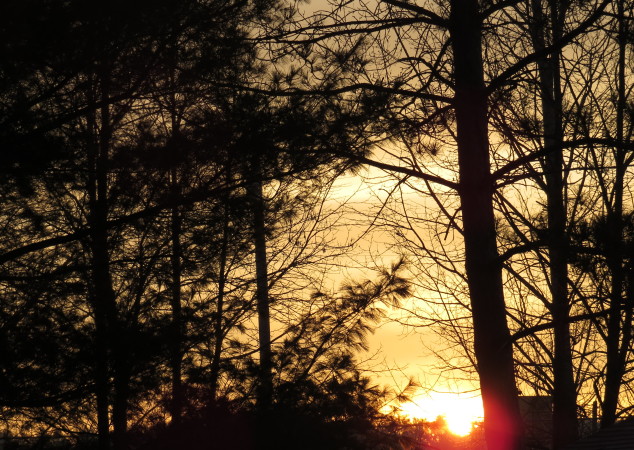
The sun rose to reveal an unusual sight for a Central Minnesota Spring Equinox–no snow! Two years previous, I was standing knee-deep in the white stuff on the first day of Spring, so we’re already way ahead in the waiting-for-the-real-spring-to-get-here game. That being said, I was hard-pressed to find many other signs of the vernal season.
I did locate a few patches of green grass by the spruce stumps, due mostly to the very early November snow we had that covered the yard with a thick blanket before the grass went dormant.
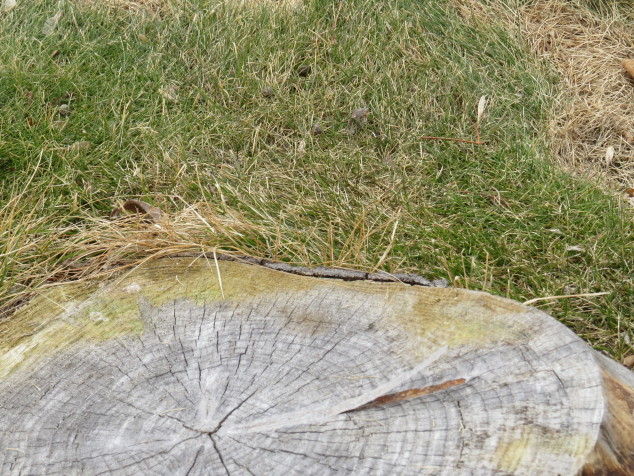
Those stumps remind me of the loss of five huge, old pines and spruces that succumbed to the harshness of the drought year, but I rejoiced when I saw a tiny replacement growing beside another towering pine. It must have been there last year, but in its tininess and surrounded by other green things, I never noticed it. So I’m counting the hardy little green tree as a first sign of Spring.
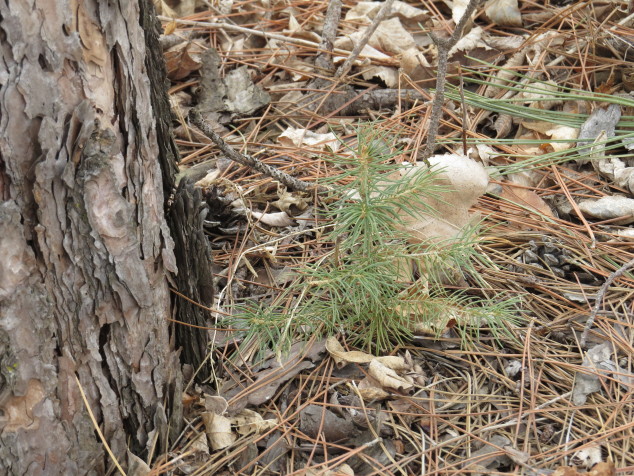
Locust seedpods and white pine cones littered the yard, looking like fall but indicating Spring with their shedding–getting rid of the old to make way for the new.
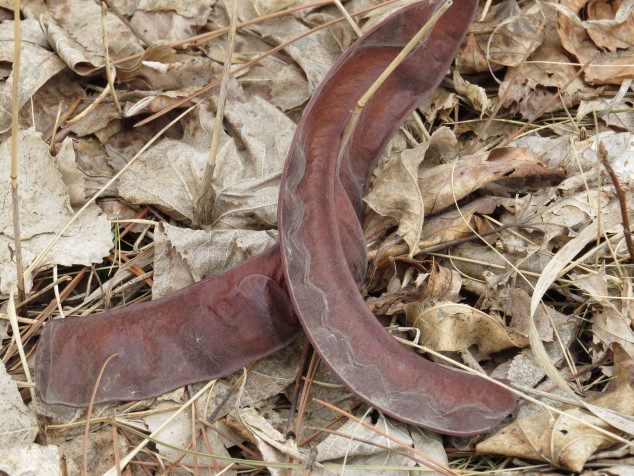
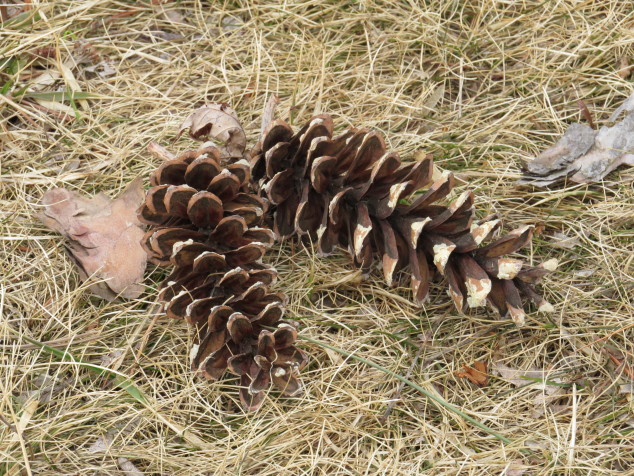
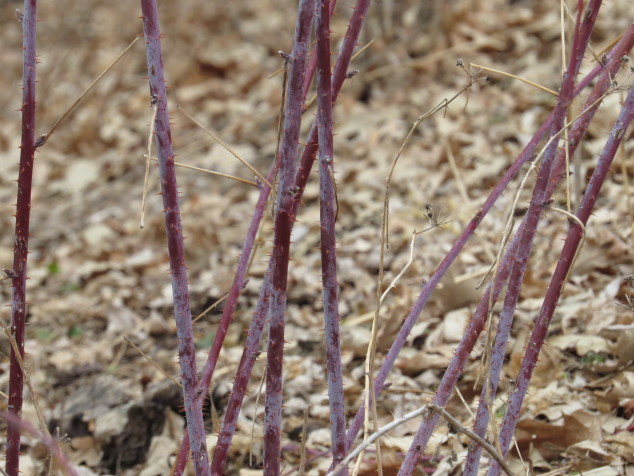
One shock of color in the brown woods was a clump of raspberry stems–vibrant and alive-looking in reddish purple, defended from the greedy rabbits by the battalions of thorns.
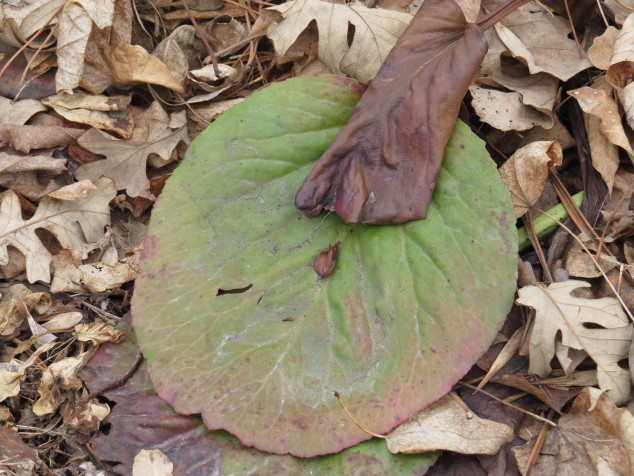
One green Bergenia leaf lay in the brown rubble of oak leaves and spent perennial stems. It whets my appetite for the spring ritual of uncovering the perennial beds to find the buds starting to grow from seemingly nothing. It makes one respect the power of the unseen.
And finally, I found a maple and a birch tree with swollen flower and leaf buds holding forth the promise of Spring.
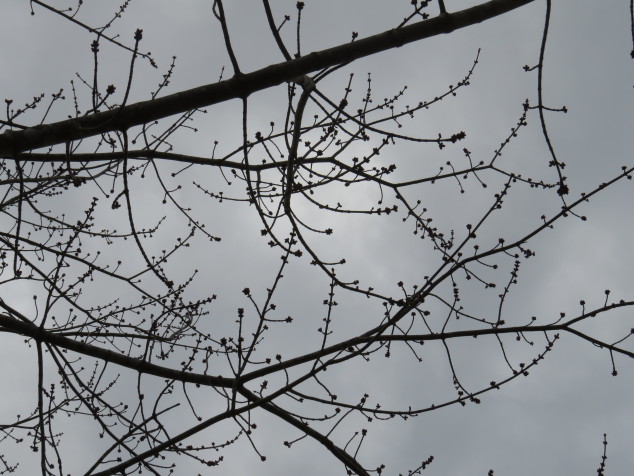
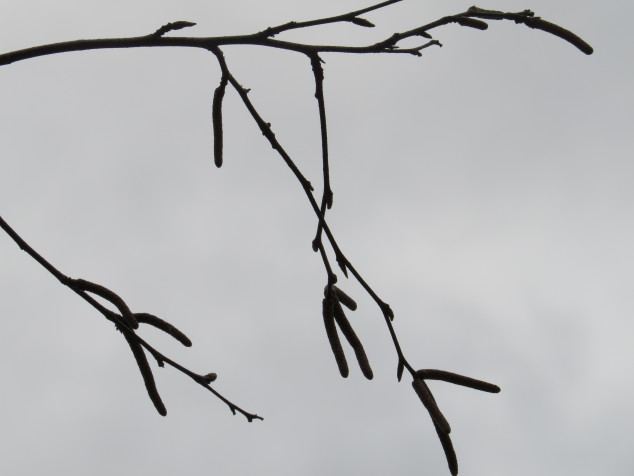
Spring usually arrives for us in a cloak of white. Even without the snow, we cannot boast of the usual harbingers of Spring like the Texas Bluebonnets or the Missouri Daffodils–as much as we would like to! What we do have are tiny indications that we are bidding Winter good-bye as we anticipate the warm, colorful Spring to come.
Anticipation is one of those words that we hold a fair amount of power over how it is perceived. It can be hopeful expectation or dreadful apprehension. And while the future event certainly influences our feelings, I like to think that we can control our impression of it. Is it an optimist/pessimist thing? How do we anticipate the dawning of a new day? How do we navigate the sorrow and reluctance of letting go of the old in order to embrace the new? How do we color our world when the landscape around us is gray and brown? How do we appreciate the tiny things and respect the power of the unseen? Even with snow in the forecast, I’m looking forward to a beautiful Spring!
The Story of the Early Snowstorm
Snow is a normal thing here in Central Minnesota. Our last spring snowstorm was in April, and now it isn’t even the mid-mark of November and we have nearly 14 inches. Many years the first substantial snowfall comes after Thanksgiving and stays the rest of the winter, blanketing the ground with white well into the spring months.
It’s normal to see snow on the hardy cedar trees scattered throughout our woods. Their branches hold the whiteness in winter-postcard splendor.
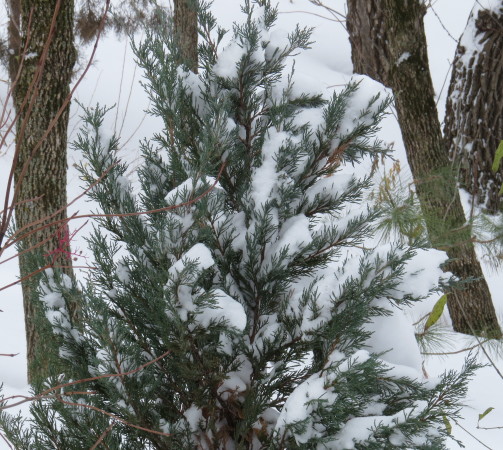 It’s expected to see snow on the driveway and sidewalk. It is the site of the winter workout with shovels poised at the house and garage doors. On a snow-stormy day, one can choose many reps with lower weights or less reps with heavy weights. Even wielding the snowblower through the plowed windrow of snow at the end of the driveway provides its own workout.
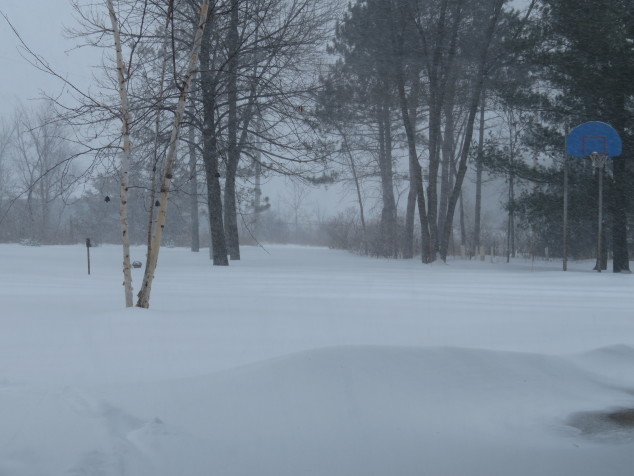
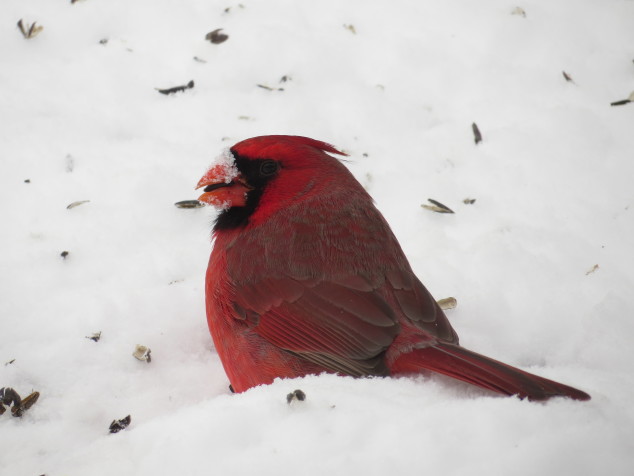
Cardinals and snow go together. As soon as the snow flies, the cardinals swoop in to the feeders looking picturesque in their scarlet plumage.
And our Black Lab loves the snow, leaping through the belly high fluff and plunging her head in for a mouthful of snow cone delight.

It’s a winter garden of interest when the snow lands and mounds up on spent seed heads of perennials and on the rough branches of the oak trees. Even the lingering leaves of the honeysuckle don’t look out-of-place in the snowscape.
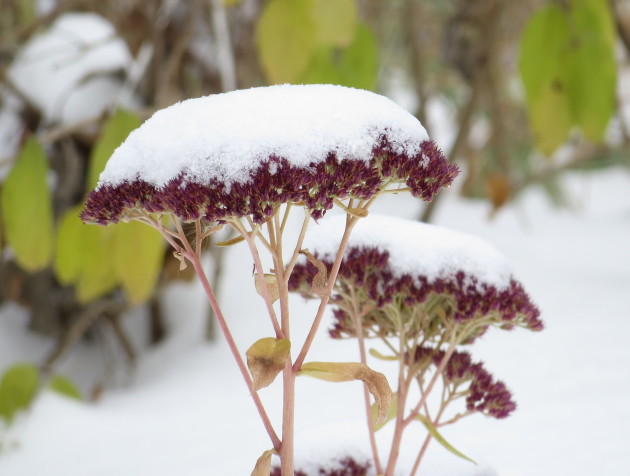
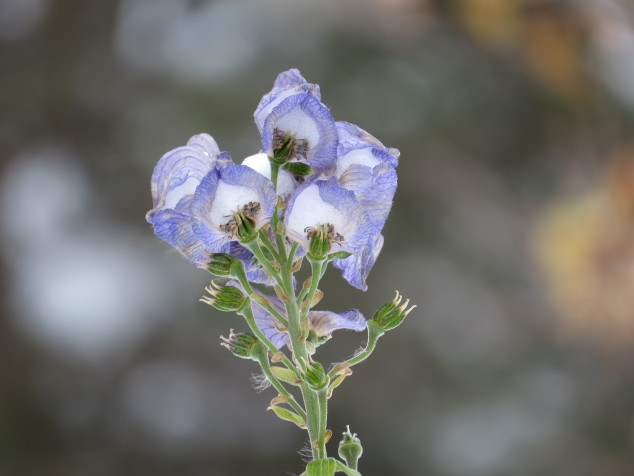
But this is the picture that has been on my mind since I took it on Tuesday. The delicate, still-blue petals of the Monkshood flower, not long past its prime, are filled with snow. This tells the story of the early snowstorm and exemplifies the unexpected.
Minnesotans know snow. We know frigid temperatures, long months of winter, being prepared, snow fun, discomfort and hard work, winter boots and hats, and snow weariness.
The snow-filled Monkshood flower reminds me of our vulnerabilities. The vibrant, late-blooming flower looks fragile in its frozen state. But there is also a haunting loveliness and a porcelain-like strength to it. No matter how prepared or how hard-working we are, there will be times when unexpected things happen. We are all vulnerable in certain ways and sometimes it takes an early snowstorm to see the beauty and strength of our own frailties.
This is What November Looks Like
I subscribe to a monthly magazine marketed ‘for women of style & substance,’ and while I would never claim to have the least bit of style, I would like to think my substance makes up for that! One section in the magazine has a beautiful photo of a real woman (as opposed to a model woman) and is titled, “This is What 50 Looks Like” or 62 or 45 or whatever age that particular woman of style and substance happens to be. It tells a little about her in soundbites like ‘On letting her hair go gray’ or ‘On keeping things simple.’ I like that page because the women look real–they may have wrinkles, imperfections, gray hair, or whatever, and it doesn’t matter. They look beautiful, healthy, and radiant and inspire by what they are doing to make a difference in the world.
So on this gray November day when most of the color is gone from Mother Nature’s palette, I want to show you that this is what November looks like in Central Minnesota.
ON SHOWING HER COLOR IN A GRAY LANDSCAPE
“The sumac seed heads are a colorful and enduring presence through late fall and all of winter, looking especially nice against the white of snow.”
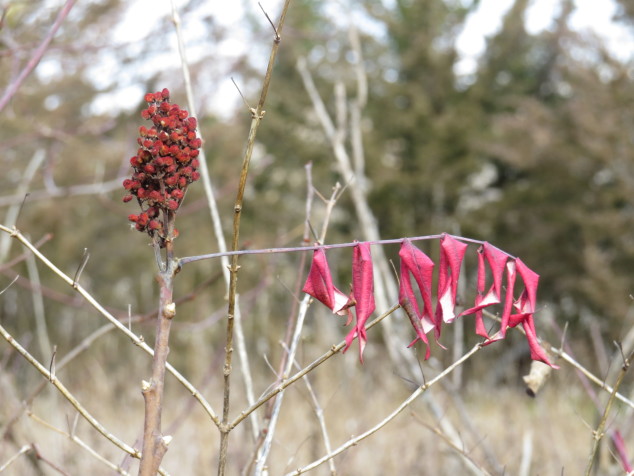
“The tiny blue berries of the Eastern Red Cedar are a delicate decoration on the large evergreen tree until the birds eat them. The cedar also provides excellent shelter and nesting space for many birds and small mammals.”
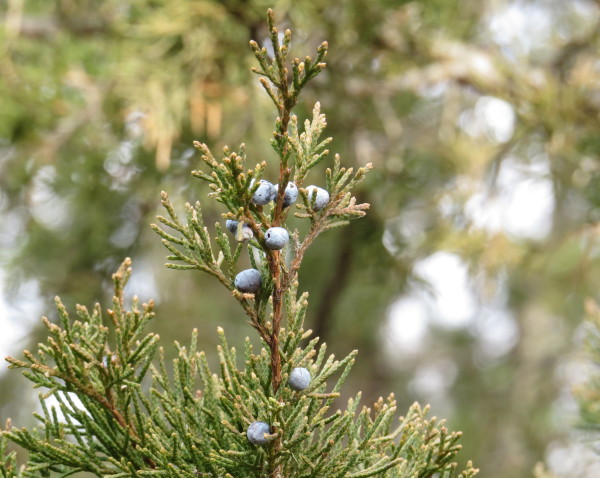
ON BEING THE INSPIRATION FOR THE MOSSY OAK EMPIRE
“It’s an honor, of course.”
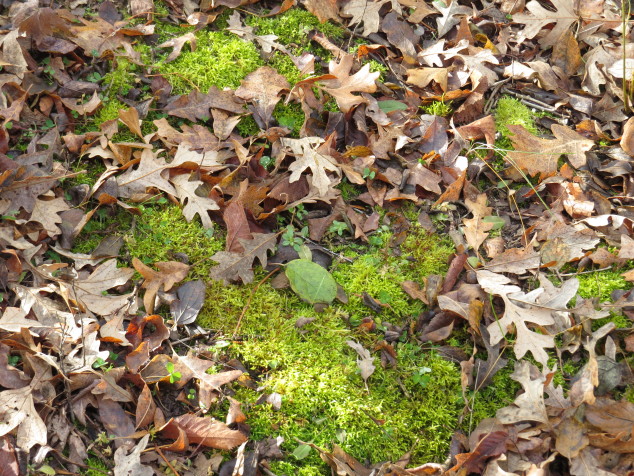
ON BEING GREEN
“We were green before going green was cool.”
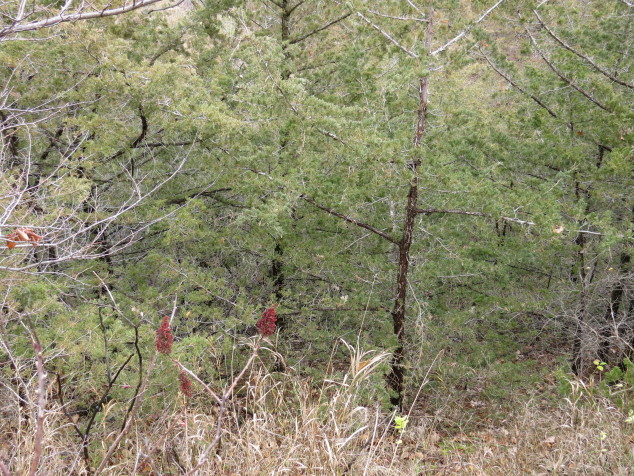
ON BEING CHOSEN AS THE BEST TREE IN THE SILHOUETTE CATEGORY
“My oaks are winners in multiple ways! They provide food and shelter for many birds and animals. They are so much more than a beautiful structure!”
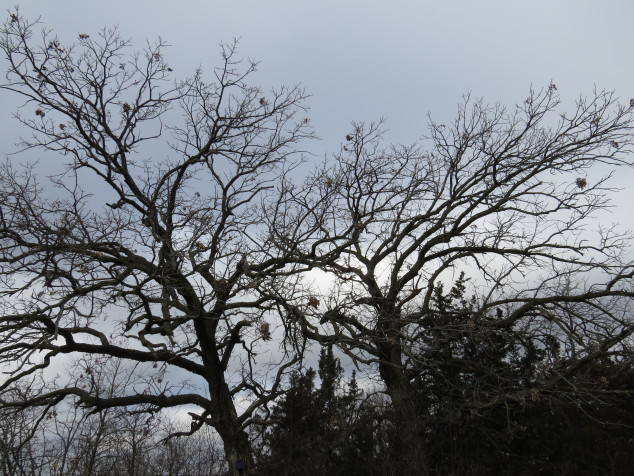
ON MINNESOTA’S TEN THOUSAND LAKES
“The lakes and rivers of Minnesota are one of the state’s greatest resources. They provide recreation and support tens of thousands of businesses. They are also home to a multitude of creatures.”
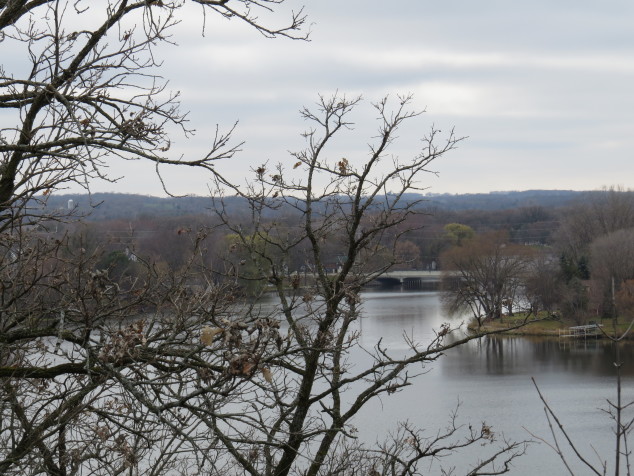
ON WINTER INTEREST
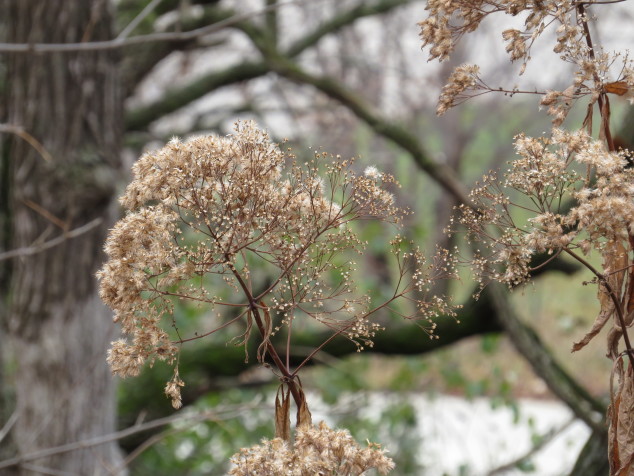
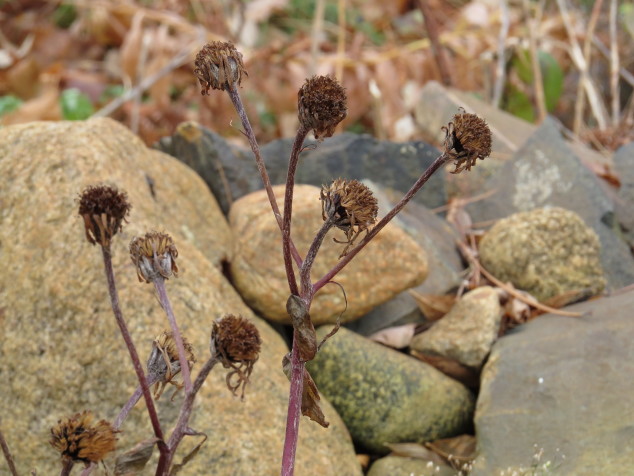
“Not only is the big, bold Joe Pye Weed great to keep for winter interest, so are perennial grasses and flowers with interesting seed heads, like the Ligularia. Of course, in Minnesota, they also have to be tall in order to be seen above the snow.”
ON DISPLAYING HER SCULPTURES
“This Gray Dogwood is a free form piece with strong yet flexible lines and added interest from scarlet flower stems and curly grapevine tendrils.”
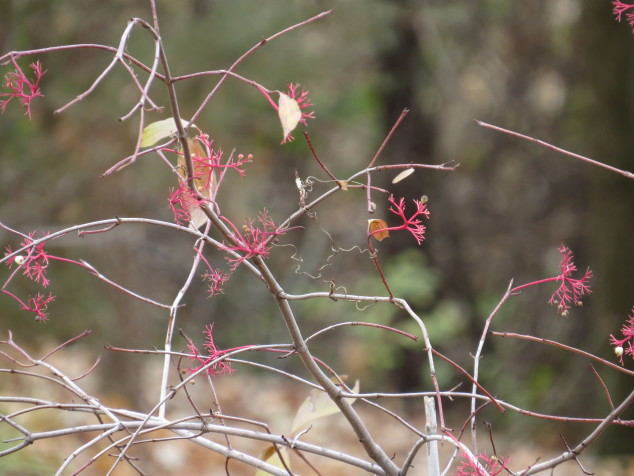
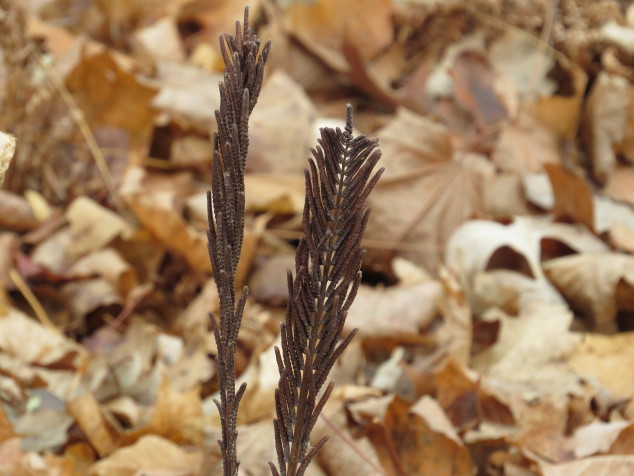
“This fern piece has a rigid upright form and sports a metallic look, contrasting nicely with the fallen leaves.”
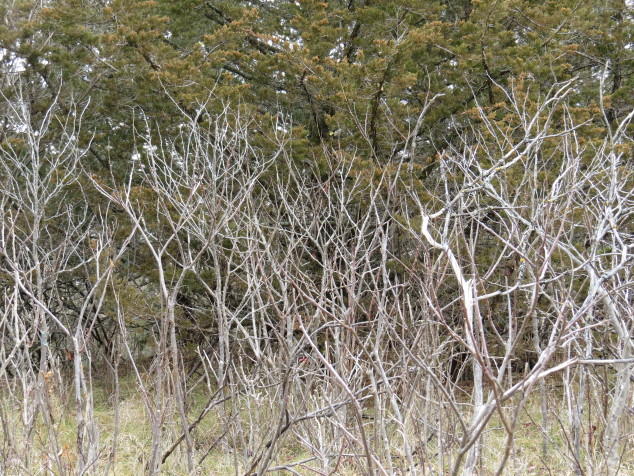
“This large, multi-piece sculpture is a study in contrasts thanks to the white branches of the sumac and the black branches of the Eastern Red Cedar tree.”
ON BRINGING NATURE INDOORS
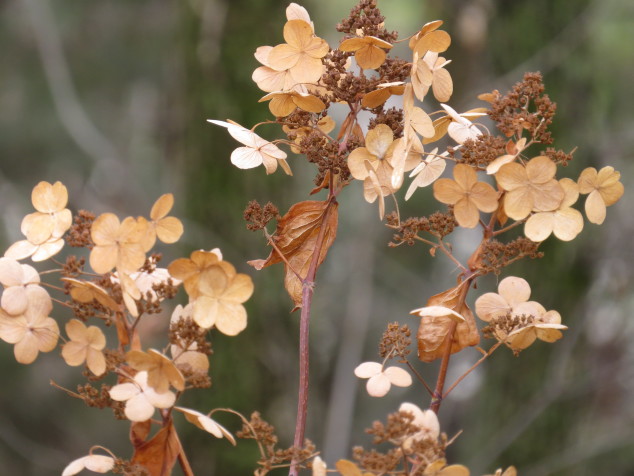
“The Quick Fire Hydrangea is the perfect dried seed head to bring indoors to decorate for the holidays. To glam them up, just spray paint with silver or gold.”
ON GOING DORMANT
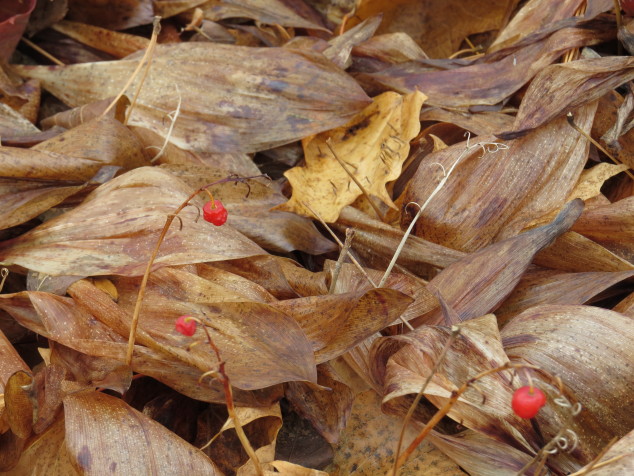
“Autumn is the season of transition to Winter. Winter is a time of dormancy, hibernation, tough conditions, and finding shelter from the storms. It is a time of introspection and internal growth after the exuberance of spring and summer growth and fruit and seed production.”
Thanks to Mother Nature for sharing the Beauty of November.
As told to Denise Brake
Gleanings from October
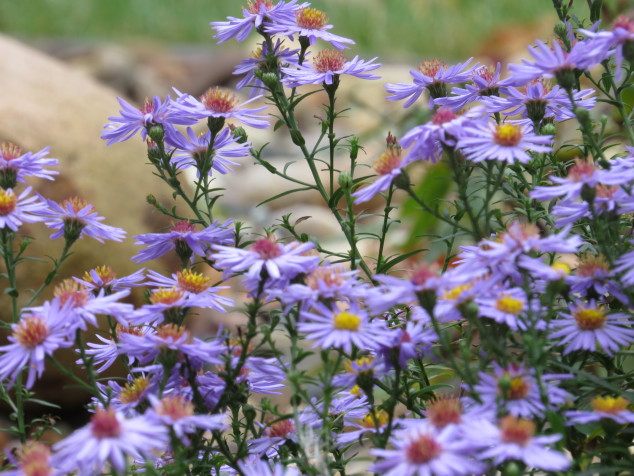
October is the month we get serious about winter. Though it starts off relatively green and warm, it ends with killing frosts and leafless trees. We had a glorious blast of color throughout the month, however; it was one of the best years in memory! Asters and mums dominated the floral landscape of this transition month.
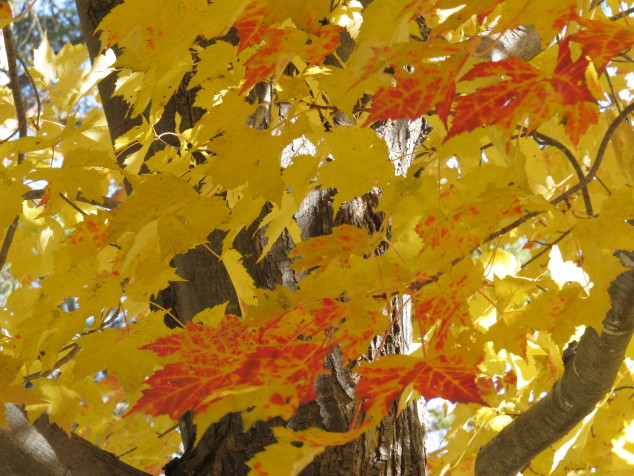
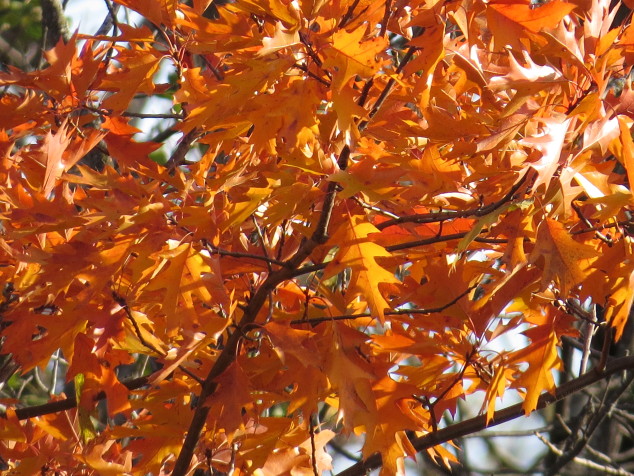
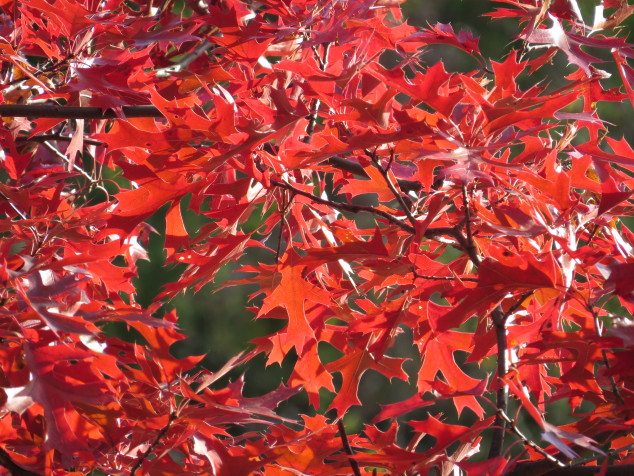
But the crown of glory goes to the deciduous trees as they stopped production of chlorophyll and let their colors shine through. The maples and oaks were spectacular this year with just the right combination of moisture, temperature, and wind to allow for a splendid show.
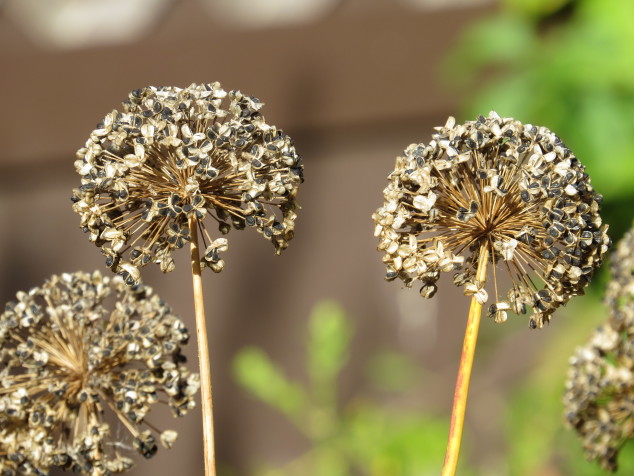
Seed production and dispersal is ongoing in its quiet and less showy manner. The lollipop balls of purple allium dry and rattle in the wind, and the tiny, black seeds dislodge and fall to the ground.
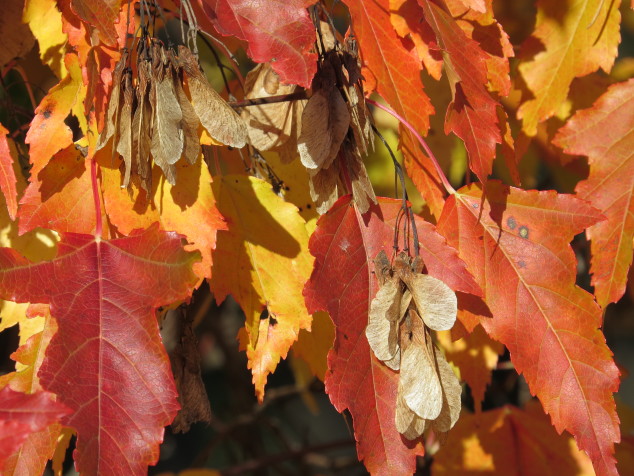
The winged seeds of the Amur maple hang clustered together among the fiery leaves and remain for a while longer after the leaves fall.
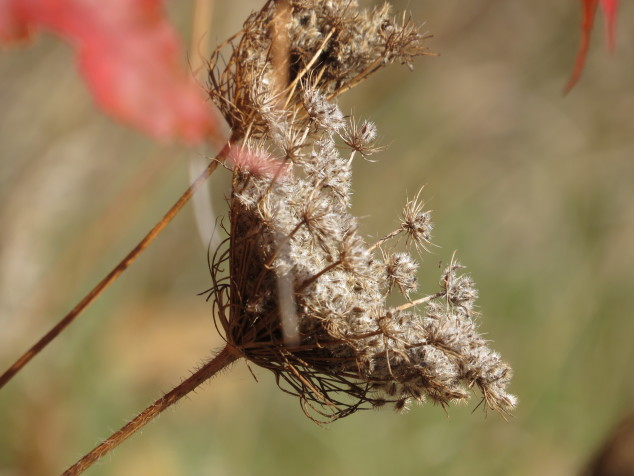
The white, delicate Queen Anne’s Lace flower closes as it dries and each seed is encased in a stickery covering, ready to hitch a ride on the fur of a passing animal.
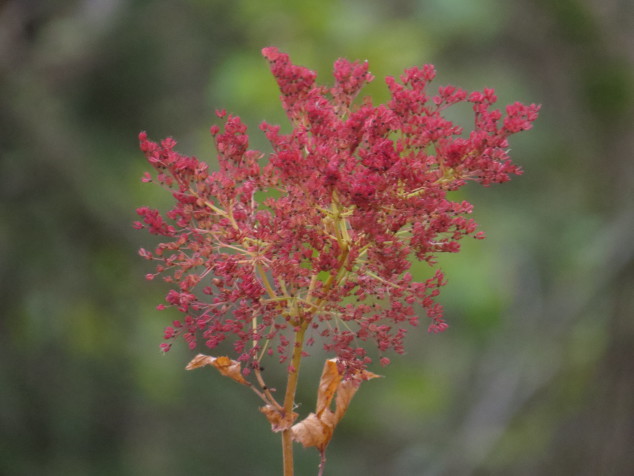
The seedhead of Queen of the Prairie turns a rosy red before drying and flaking off the paper-thin seedpods.
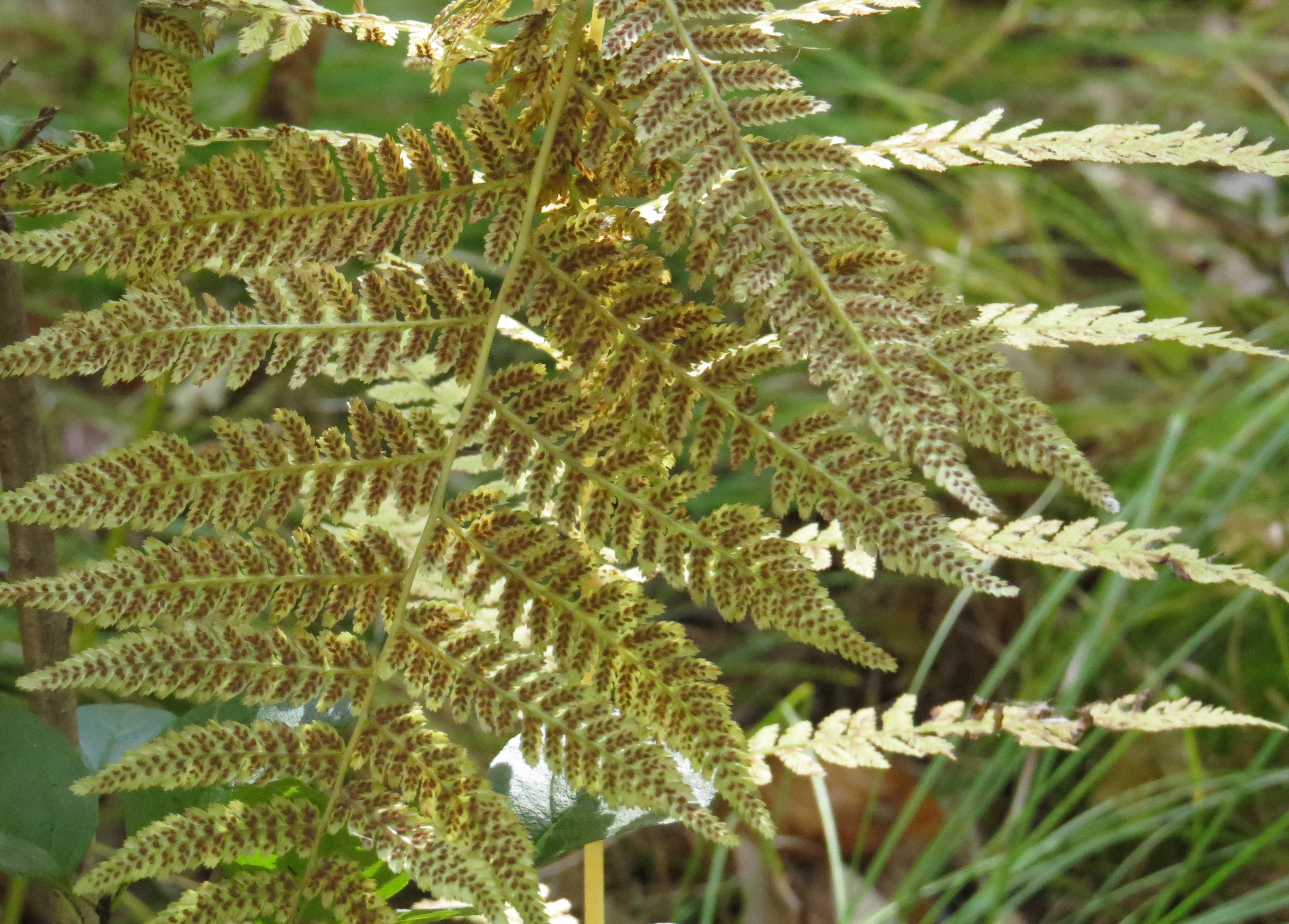
The reproductive process of the fern starts with the production of spores instead of seeds. Dotted casings full of spores can be seen on the underside of the leaf.
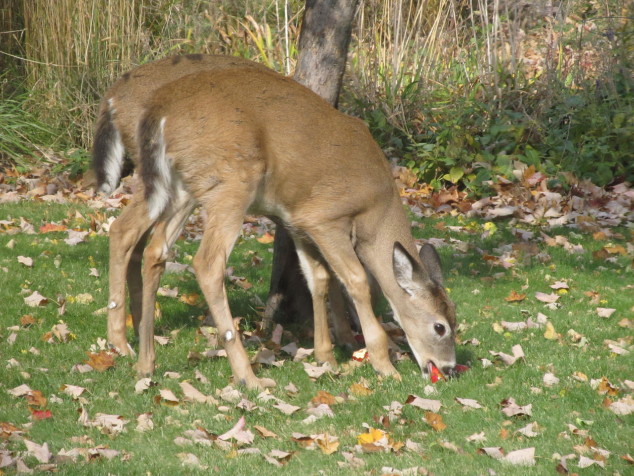
The animals also prepare for winter. This pair of spring fawns, now without their mother, filled their bellies with apples that had fallen from the tree.
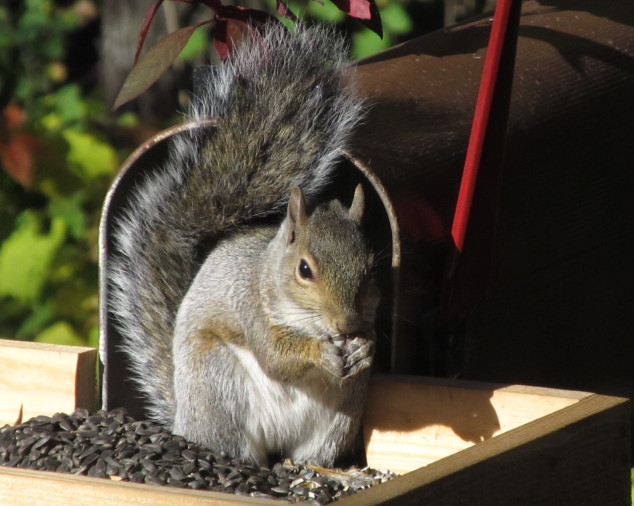
For the squirrels, it was a bad acorn year, so they are happy to try out the new bird feeder.
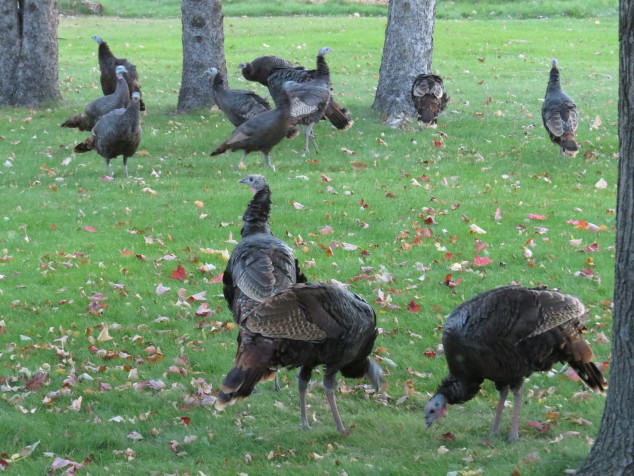
The turkeys also discovered the birdseed that had fallen from a feeder in the front yard.
October means leaf raking, tree watering, and perennial pruning. The potatoes and carrots are dug, the apples are picked and the apple butter made. Bird houses are put away and the feeders are hung up. Small evergreens are wrapped in burlap. Tree guards are put on small trunks. Clay pots of spent annuals are cleaned out and put in the shed. Pots of oak seedlings are covered with straw. There’s still more to be done.
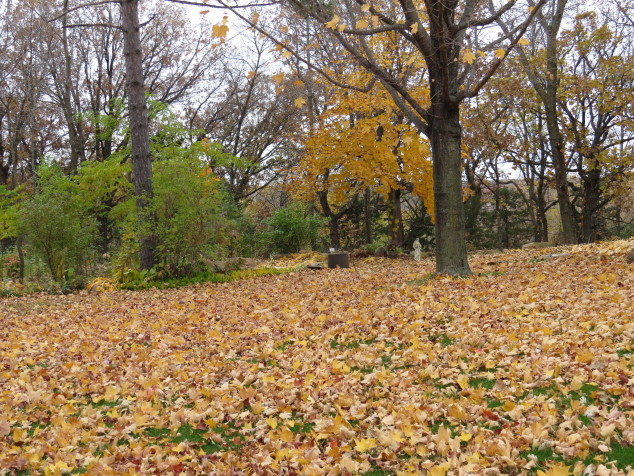
The reason we do so much work each October is two-fold. First off, you don’t mess with Old Man Winter in Central Minnesota. There are no guarantees that the extreme temperatures and drying winds won’t kill the trees and perennials that we have planted, so we help the best way we can. Ironically, the snow cover is beneficial for the plants, but makes life harder for the wild animals to find food. They need to be prepared by storing fat and having a sheltered place to live. Secondly, much of what we do is because of stewardship. We appreciate and love the natural world and believe it is our responsibility to care for our small piece of it. So as Nature has given us a spectacular show of Fall color, as the seeds for next year’s plants have been dispersed, and as the animals prepare for their cold, harsh season, we work hard to protect, prepare, and care for the creation around us. After all, it’s what we all do for the things in life we love.
An October Day of Contrasts
When I woke up, I heard the slow plopping of rain drops through the leaf-clogged downspout outside the bedroom window. It was our best chance of rain in weeks, but it didn’t sound very promising. The dry weather at this time of year is wonderful for farmers harvesting beans and corn, but the trees, shrubs, and perennials need good, soaking rains in preparation for the harsh winter. Our sandy soil and the drying winter winds can zap the moisture away from the roots and the branches of the evergreen trees in particular, especially the young ones. So more watering will need to be done.
The drizzle had collected, then streaked down the screens of the porch, dotting and striping the landscape beyond.
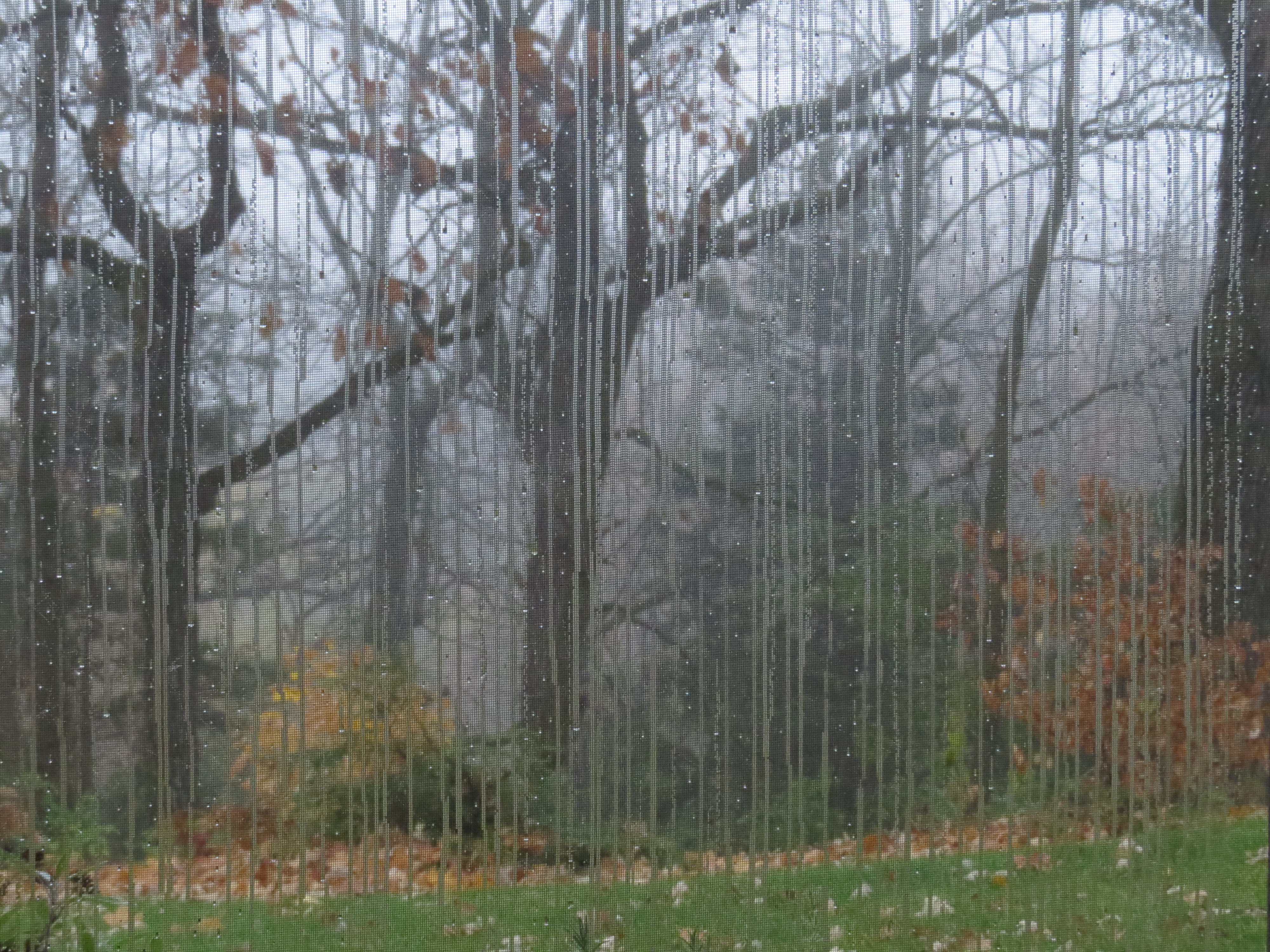
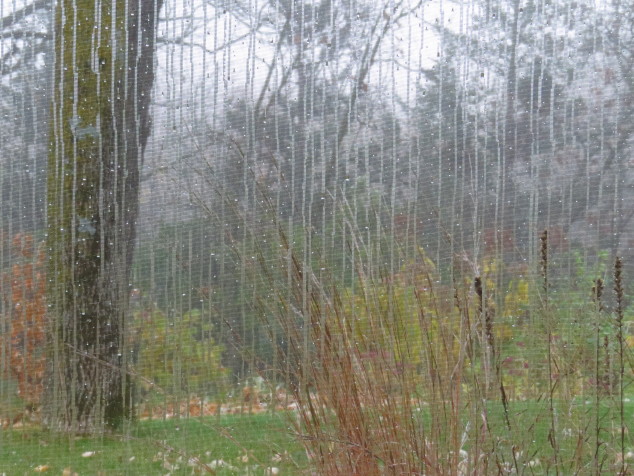
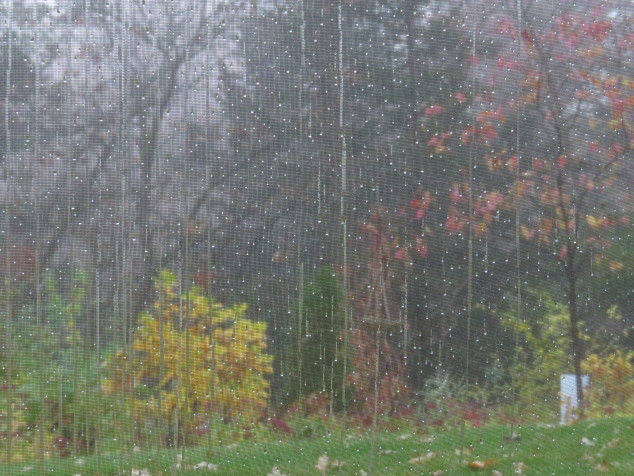
The Diablo Ninebark had brightened to its fall color from the dark purple-red, and the honeysuckles had suddenly turned golden.
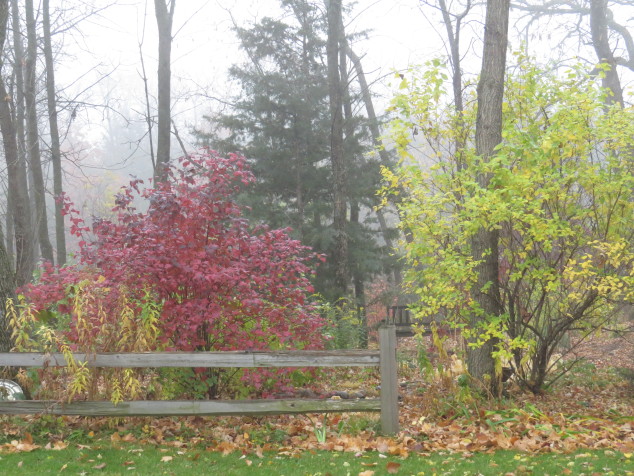
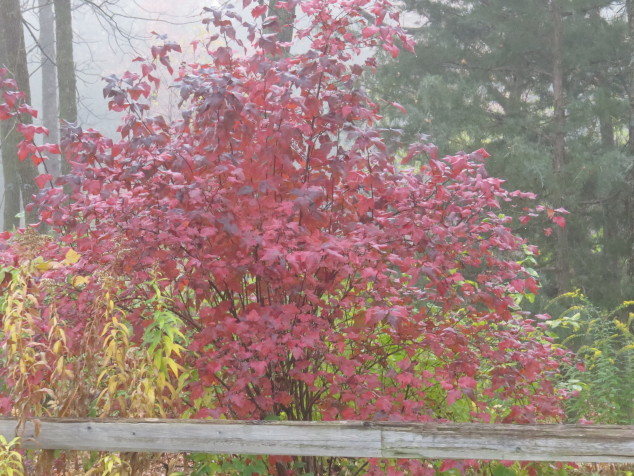
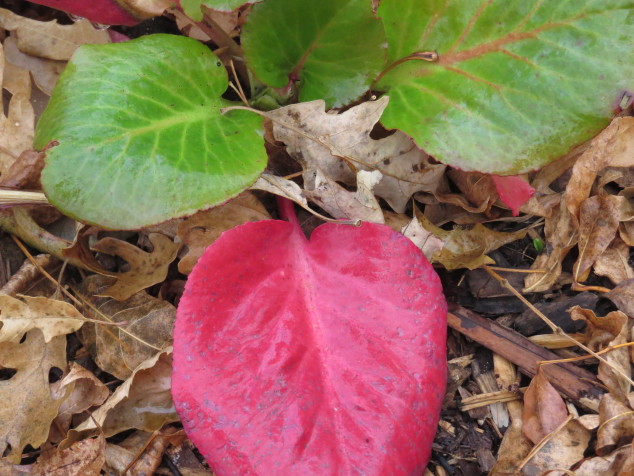
The heart-leaved bergenia had started its leaf by leaf color change, living up to its name in shape and color.
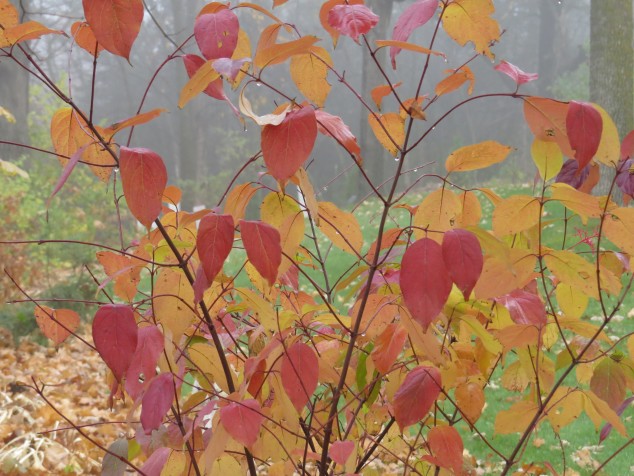
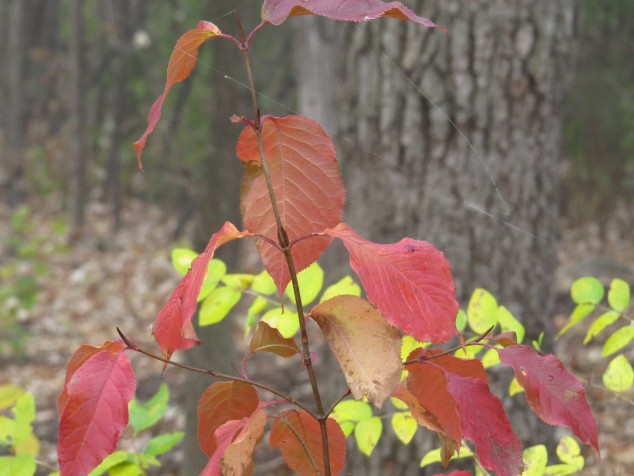
Apricot and rose-colored leaves on the gray dogwood looked vibrant against the drab, gray day.
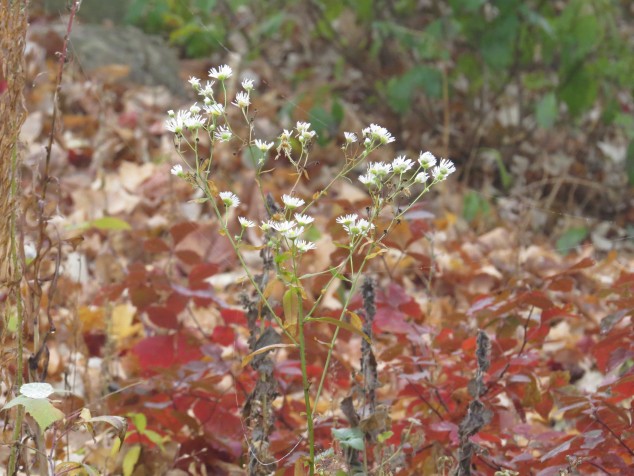
Though the leaves were falling off the trees, a few flowers were still blooming–violet spikes of lavender, a rogue Canadian thistle, a rose-colored mum, and this daisy fleabane.
A young Nannyberry viburnum was the scaffolding for a spider’s web that connected to the golden honeysuckle, a vivid picture in front of the old oak tree trunk.
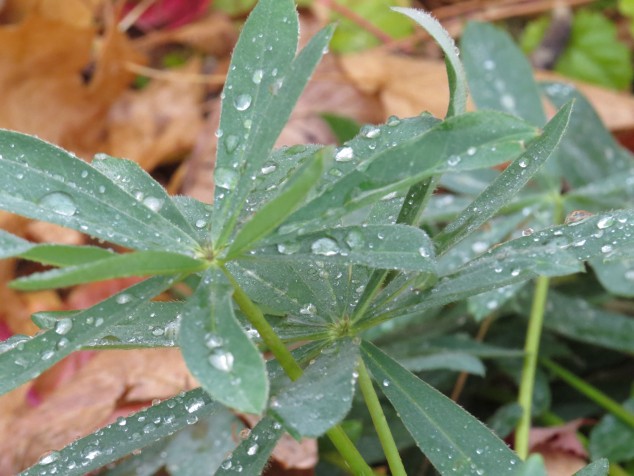
The leaves of the lupines were as green as ever, looking almost out-of-place in the autumn palette.
But the most amazing feature of the foggy woods was the tall, stately Monkshood! When most things are going dormant, these five foot tall spikes of violet-blue flowers are just coming into their own!
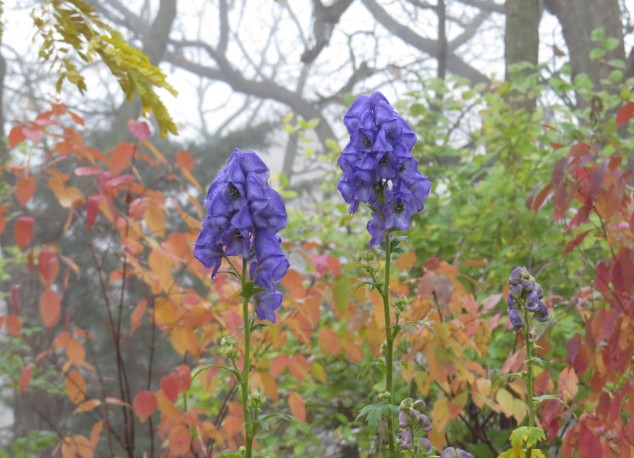
The beautiful late-bloomer dislikes hot weather, will grow in partial shade, and is poisonous, so the deer and rabbits don’t bother it. Each individual flower is shaped like a hood or helmet, giving rise to its common names.
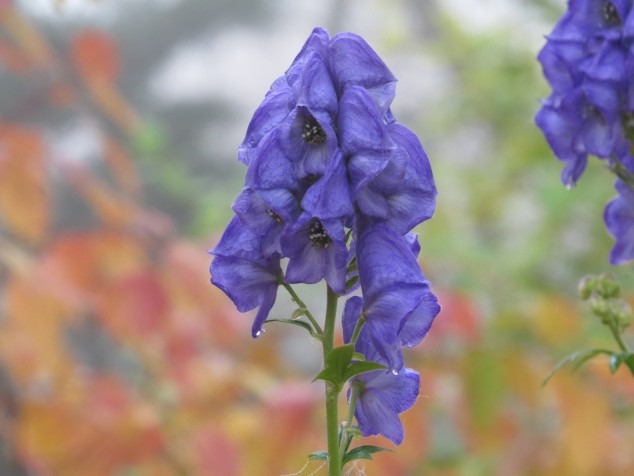
A day of contrasts–the rain we had and the rain we needed, the gray, foggy day and the bright autumn colors, the dying, dormant plants and the vibrant blooming flowers.
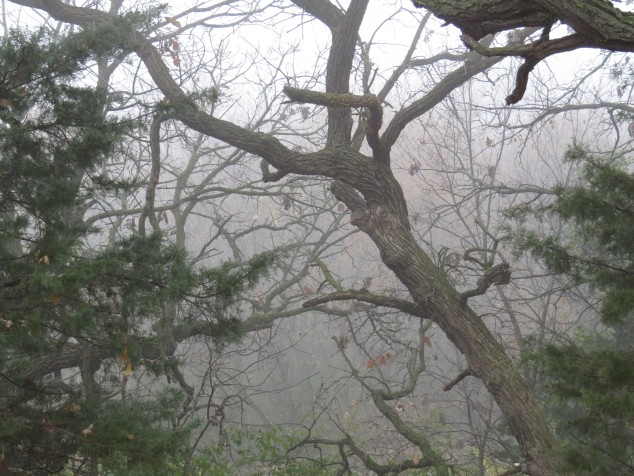
I love the fact that the Monkshood blooms so late in the year–it’s so unexpected! And unlike the daisy fleabane that can easily be missed, the bright violet-blue flowers grab your attention and your admiration. Our lives are filled with contrasts, and how we look at them often determines the quality of our lives. Can we see the value and the goodness of one side of things even as that same thing causes more work or pain for us? Can we appreciate the brightness that may or may not be so noticeable on a dreary day? Can we be the sturdy scaffolding that holds the delicate, transient things in our lives? I will probably chop down that rogue thistle that announced itself with its conspicuous purple flower–I can acknowledge its beauty and know that I don’t want it seeding itself in our woods. But I will hold all these contrasts in my heart–with love–for it is within love that we can grow and bloom, die back and go dormant, and grow and bloom again.
Gleanings from August
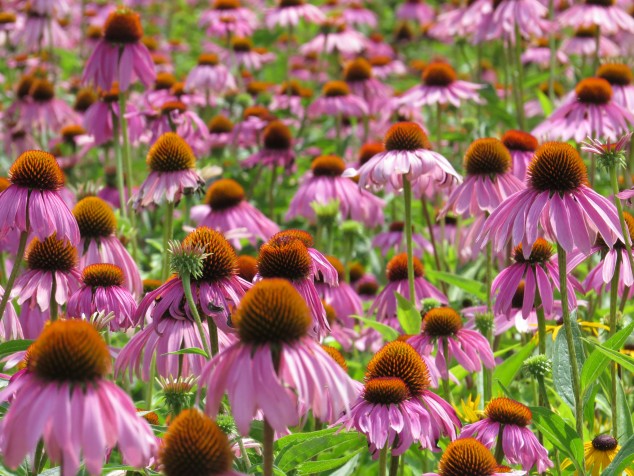
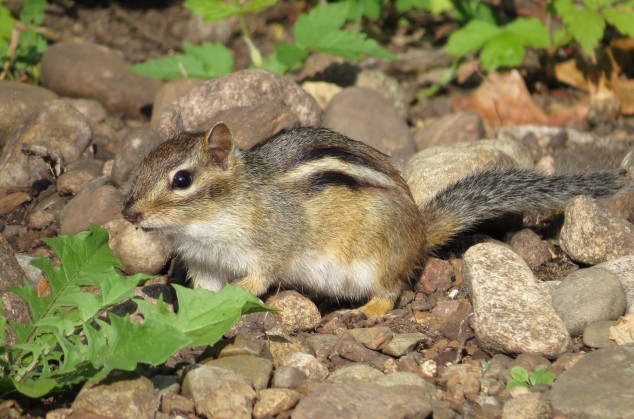
This impressive display of purple coneflowers Chris planted at the College of St. Benedict reminds me of a crowd of people at an outdoor concert–all shapes and sizes enjoying the sunshine and gathered for a common purpose. In the case of the coneflowers, their common purpose is Beauty! August and sunshine and purple coneflowers! Earlier that day while at St. John’s Arboretum, we saw flying sandhill cranes and a pudgy chipmunk who didn’t seem the least bit concerned that we were treading on his home territory.
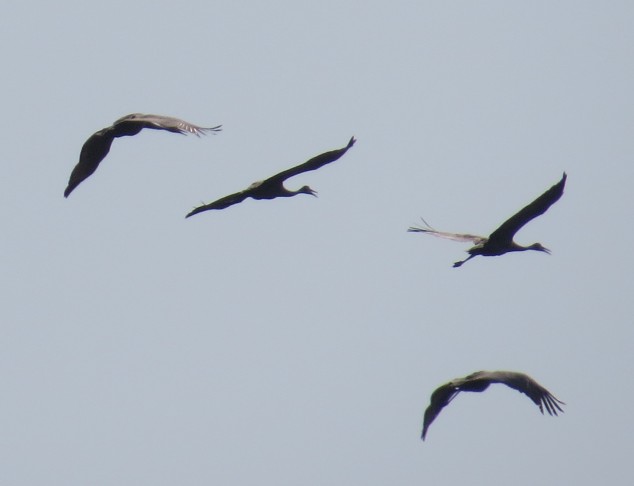
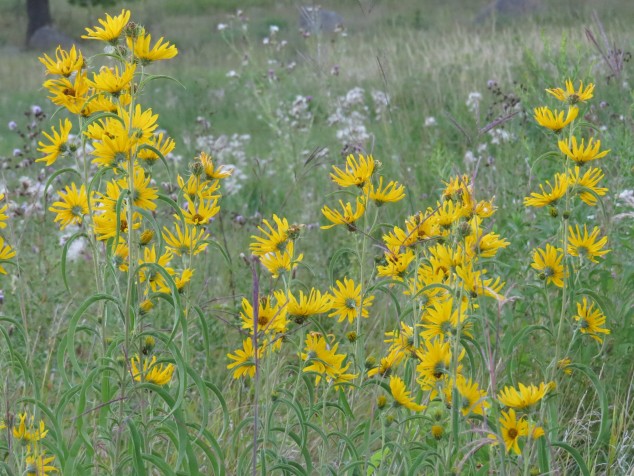
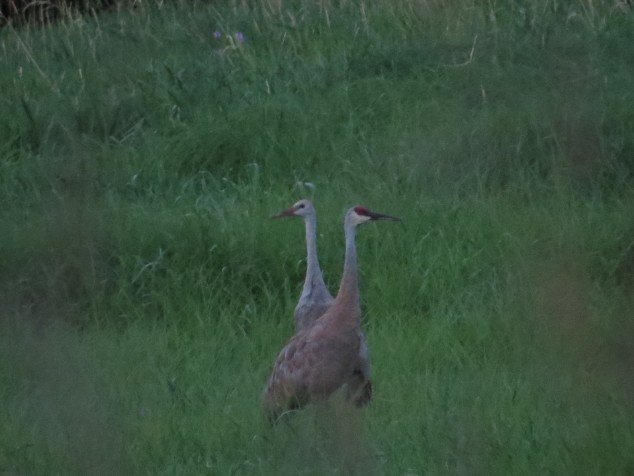
An evening August visit to Eagle Park revealed bursts of bright sunflowers amid the prairie grasses and a pair of sandhill cranes but no eagles.
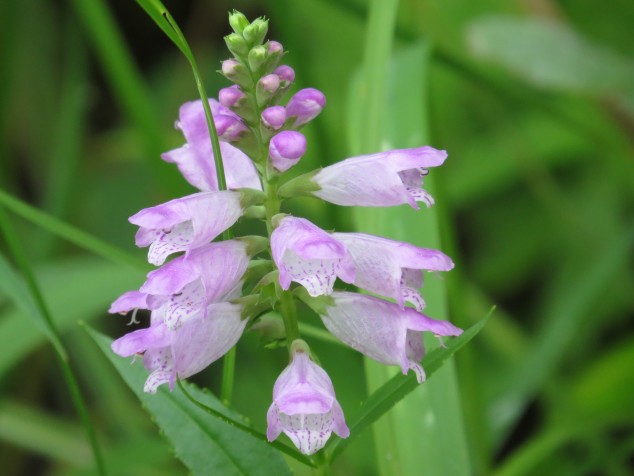
One of the most interesting flowers we saw on the banks of the Mississippi River was the Obedient Plant. It is so named because the individual flowers on the showy spikes can be moved around the stem and will stay where you put them!
One of my favorite flowers we have at home is Joe Pye Weed. It is also a native plant to eastern and central United States, including Minnesota. It is close to six feet tall and has large pink-purple blossoms on dark red stems. We planted it in a relatively sunny clearing in the woods. And I love its common name–said to be named after a Native American healer who cured the settlers of typhus with the plant.
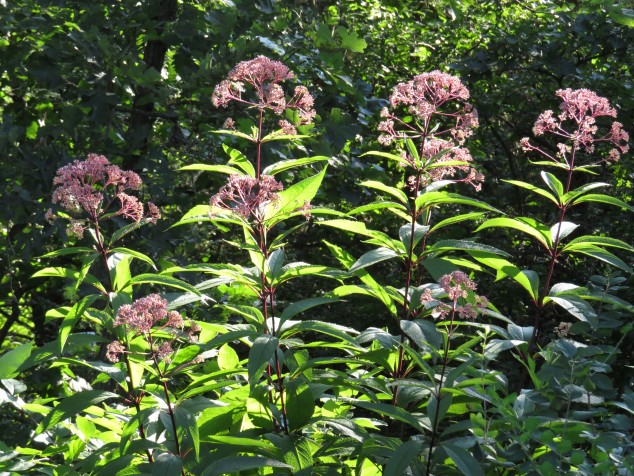
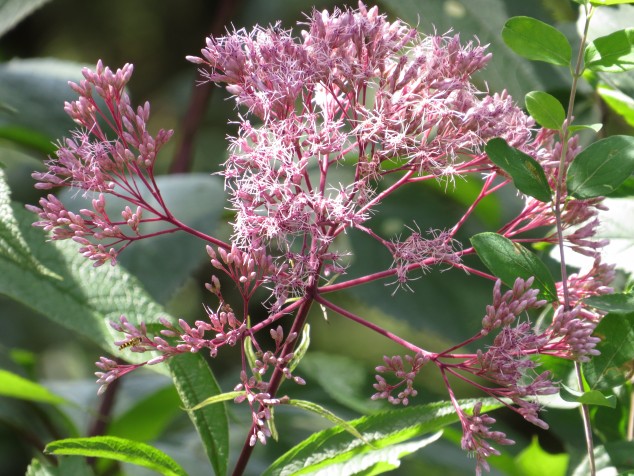
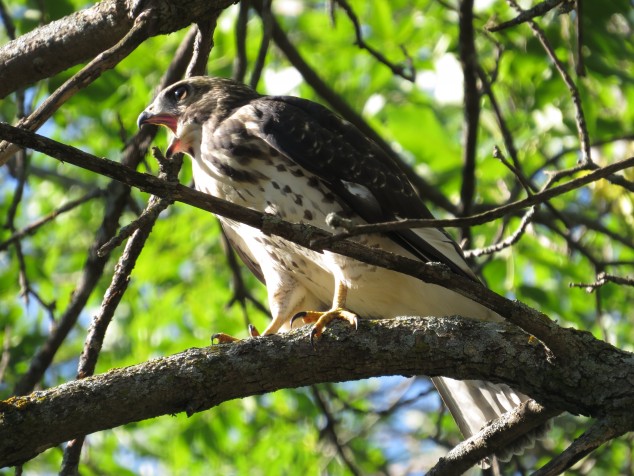
August brought many visitors to our yard–the doe and her spotted fawns, the wandering posse of turkeys, shy pileated woodpeckers, and the many wrens who hatched their young in the birdhouses. Another visitor announced his presence one morning with loud screeches. This young Cooper’s hawk was in an ash tree right outside our door.
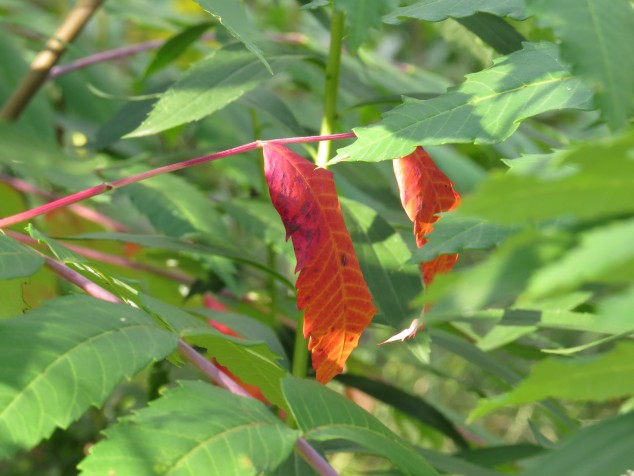
And we are getting hints of fall–red leaves on sumac, clusters of white asters, and white berries on red stems of the gray dogwood.
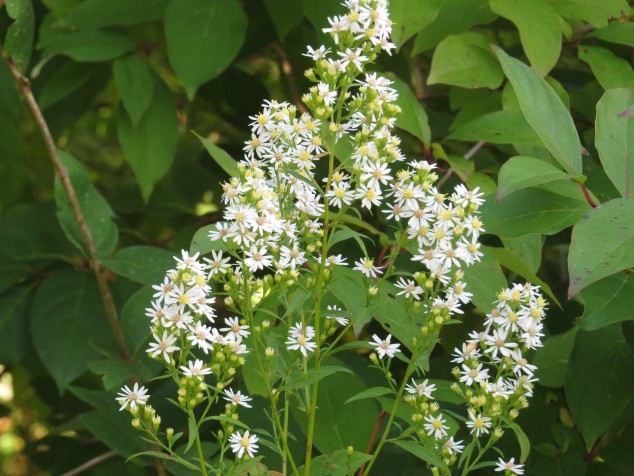
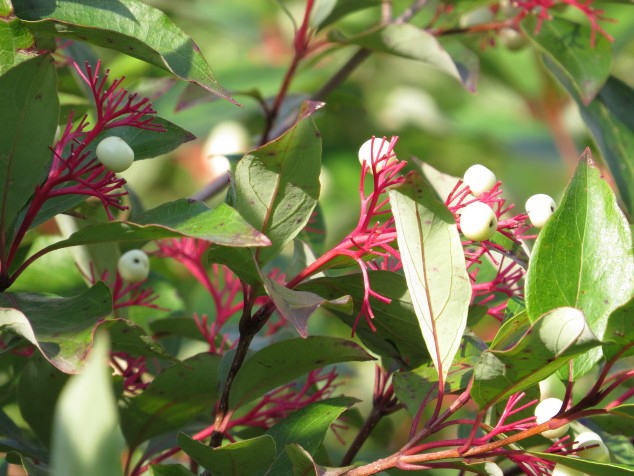
Whether we are one of many in a crowd or a solitary individual, we have a purpose at any given time. Whether we are flying through the sky or planted in a sunny spot, we are part of a larger community that needs our gifts. As summer winds down, may you find purpose, the voice to share it with your community, and time in each day for appreciating the Beauty of Nature.
Nature’s GPS
Have you ever been lost? Have you been convinced that you are going in the right direction and then something doesn’t look right or feel quite right? When Chris and I headed north to the Brainerd Lakes area to see Michaela’s camp, she had texted us directions. After 32 years of marriage, Chris and I make a pretty good team when it comes to getting somewhere–he’s a great driver, and I’m a good navigator. No GPS for us. Directions, a map, and a sense of adventure. We were headed north on 3 Highway looking for a right-hand turn onto 118. We passed a left-hand turn-off for 118, so anticipated seeing it continue to the right farther up the road–not unusual when skirting around lakes. We kept driving. I double-checked the directions. Yep, we were going the right way. More driving. There was another intersection. I checked the map again–whoops, we were too far north. We turned around, took 118 to the west, and easily found the camp.
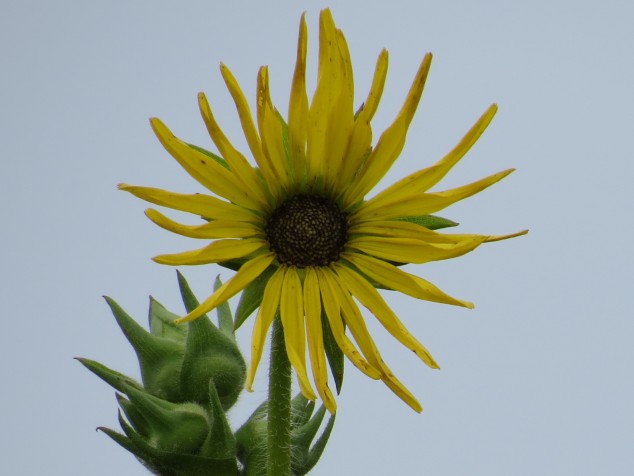
Imagine navigating across the vast prairie as the early settlers did. One native North American plant helped the travelers know they were heading in the right direction. Compass plant is a tall sunflower-looking perennial that towers above the prairie grasses in July and August.
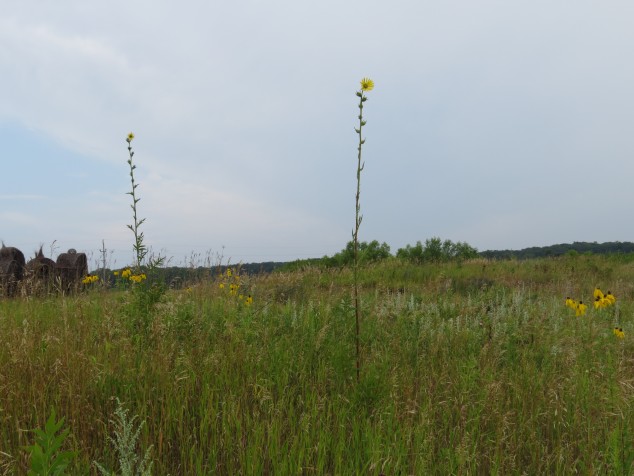
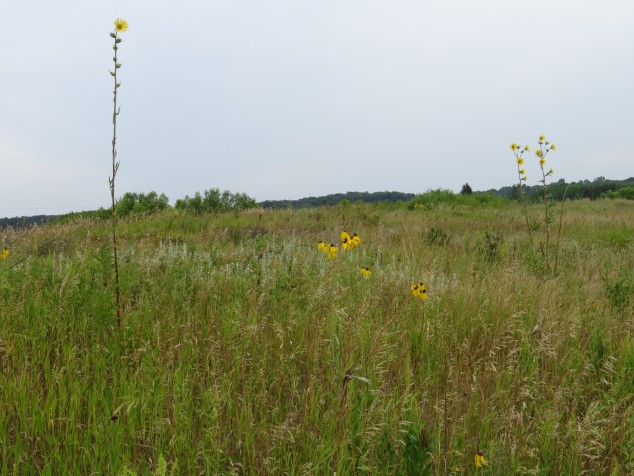
The prairie of St. John’s Arboretum has a number of compass plants rising six to nine feet into the sky. This towering plant has a deep taproot that helps maintain its tall structure. The stems contain a bitter, resinous sap the Native Americans used as chewing gum to cleanse the mouth. The leaves are deeply cut, rigid, and leathery with a rough surface. They orient themselves in a vertical position in a north-south direction. With the blades of the leaves facing the east-west direction, it reduces the amount of sun hitting the leaves, which conserves water.
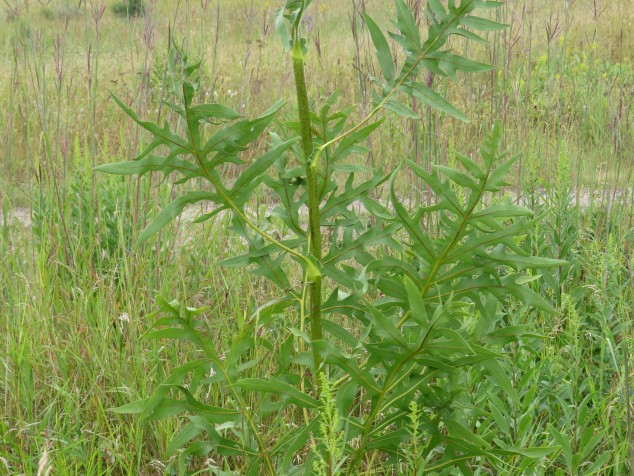
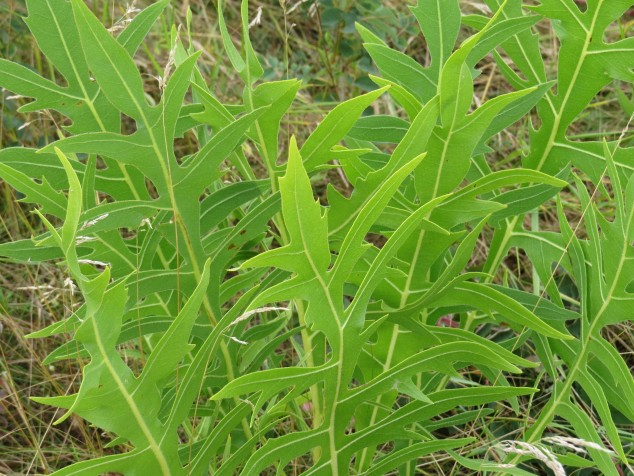
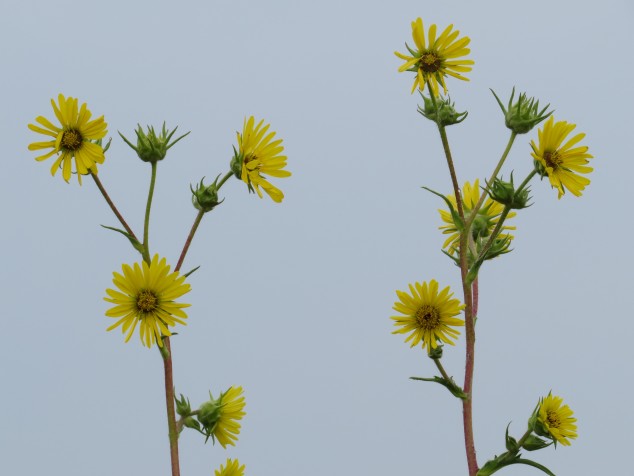
Compass plants take up to three or four years to mature and flower. The first year of growth from a seed is a single leaf, allowing the energy to produce extensive roots. The flowers bloom to the east like sunflowers.
We have all been lost at times–both physically and spiritually–even when we believe we are on the right path. Being aware of our surroundings, listening and looking for the signs around us, and having an inner sense of where we should be, help us on our journeys. We use different means to find our way–directions and maps, GPS, guidance from others and from God, a phone call, reading and writing, and even Nature’s plants.
Up Close and Personal
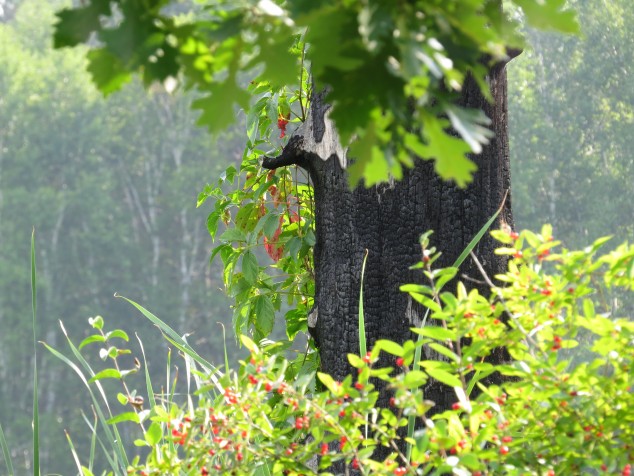
I’m not one to jump into things without thought…and contemplation…and risk assessment…and a list of pros and cons…and asking how does this fit into the Big Picture? Once I get the big picture though, I like to look at the details. When you examine things up close and personal, you can see what is not apparent from a distance. The details are intriguing–they are the puzzle pieces that fit together to make the whole what it is.
We hiked at Saint John’s Arboretum on Sunday. From a distance we could see a charred skeleton of a tree, stark and black against the summer colors. We traversed a marsh of cattails and green-black water on a winding boardwalk straight out of a Dr. Seuss book. The burnt tree stood beside two other long-dead trees where the shore of the marsh met the hill. Did high water kill them many years ago? Was the oak struck by lightning when the dead wood easily burned? Did a controlled burn get a little out of control? Virginia creeper snaked up one side of the trunk and was beginning to turn scarlet. Honeysuckle berries glowed red in the foreground while an oak branch hung down in vibrant green–all with a background of hazy gray-barked aspens. Let’s look a little closer.
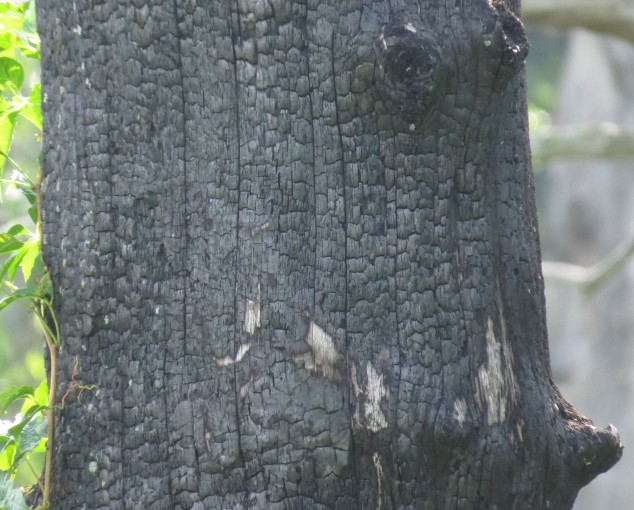
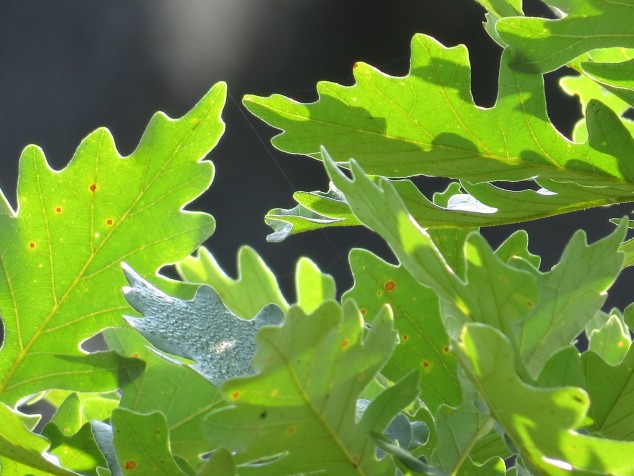
Gray places on the trunk where the fire skipped over. The tendrils of the Virginia creeper clutching to the scorched crevices. Rusty spots beside the veins on the oak. Dewdrops on the shaded leaf. A tiny black spider and a filament of web. Light and shadows.
Examine and enjoy the amazing details of plants from the arboretum and from our gardens…
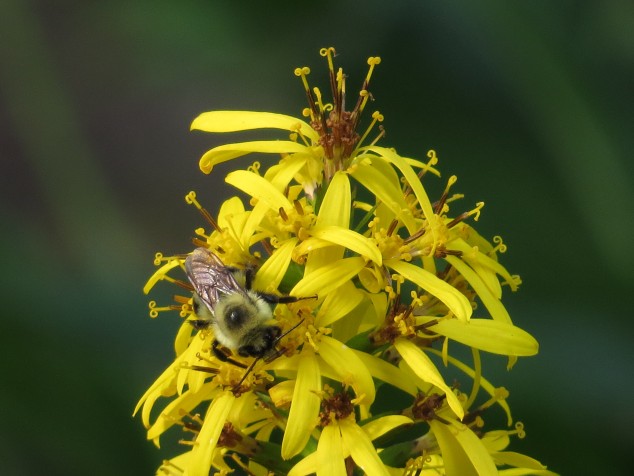
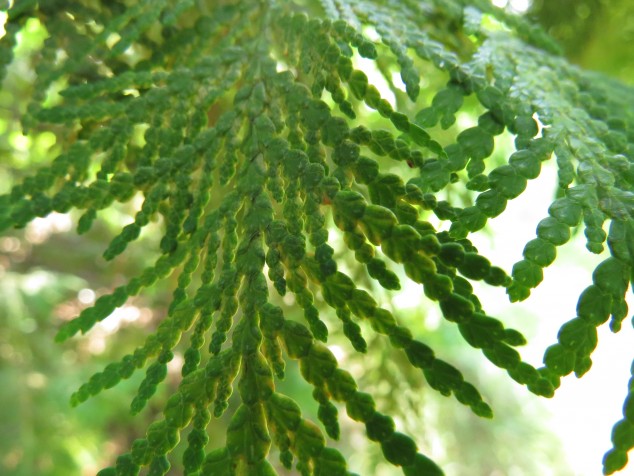
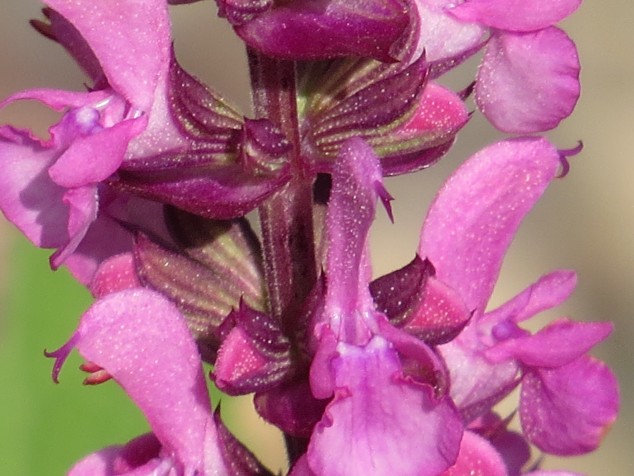
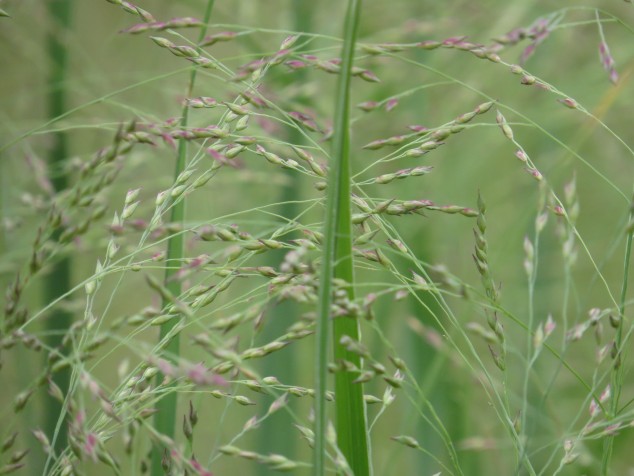
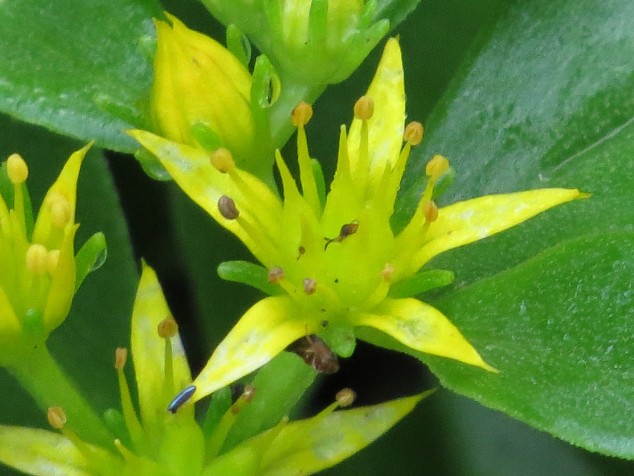
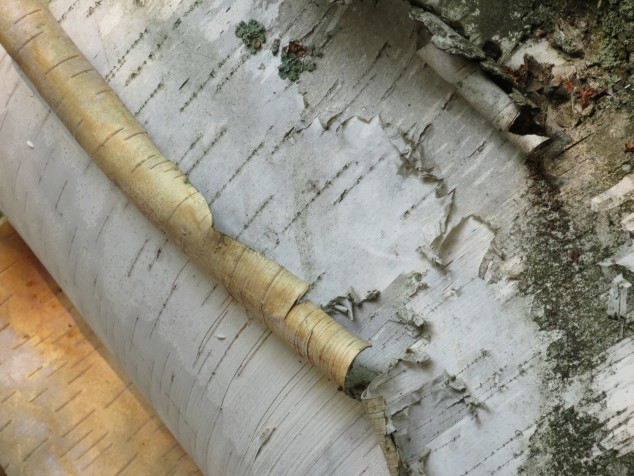
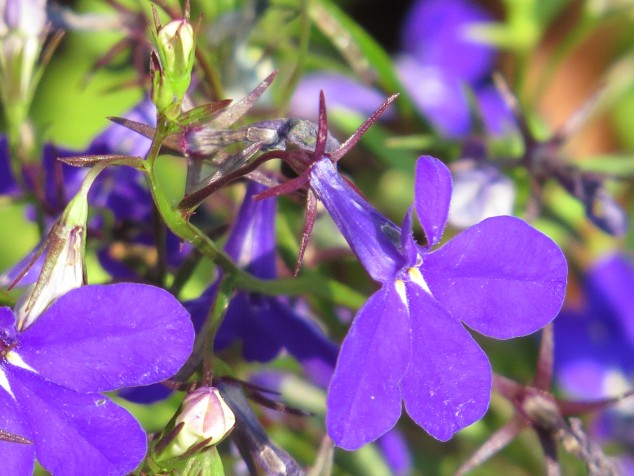
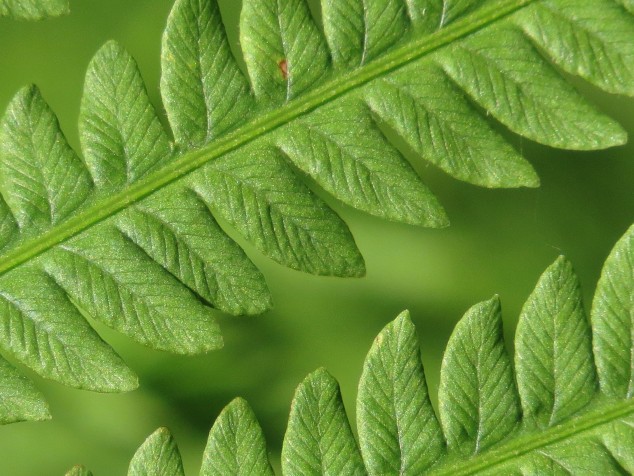
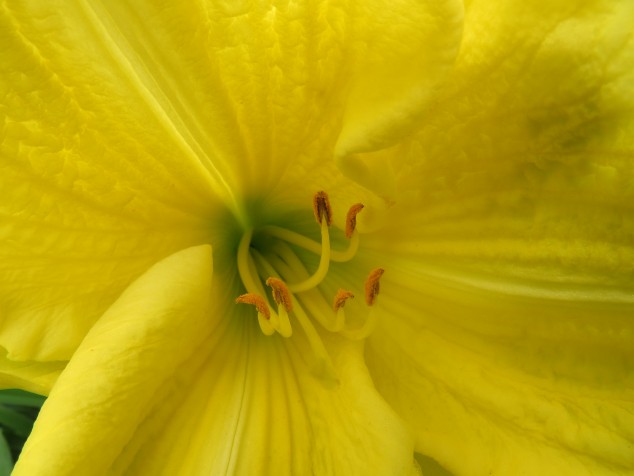
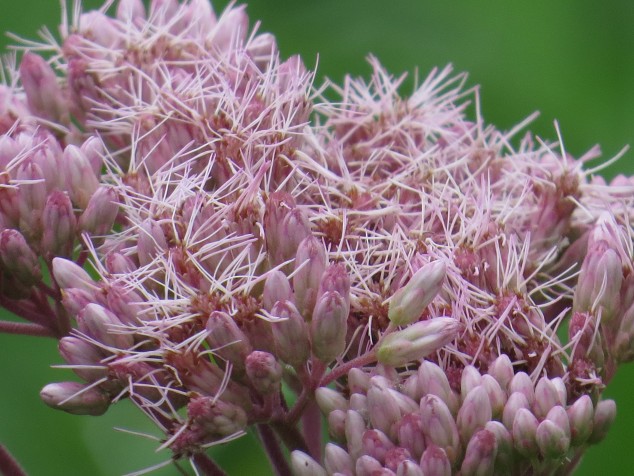
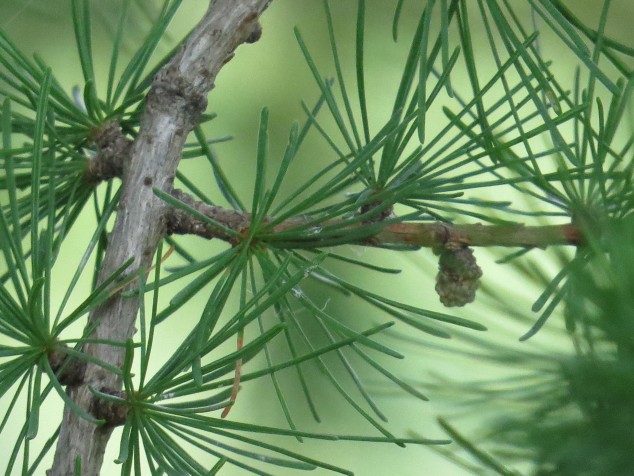
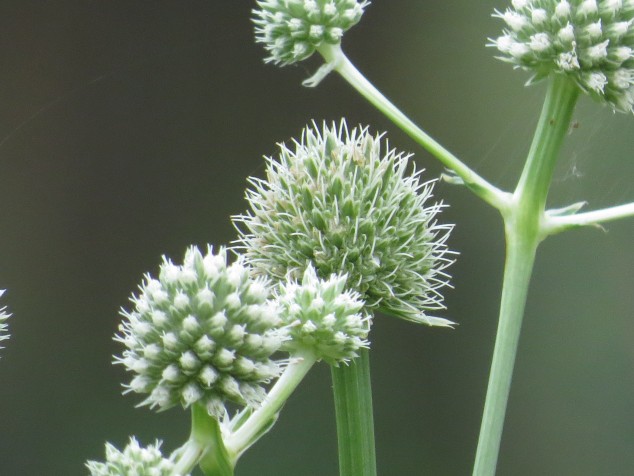
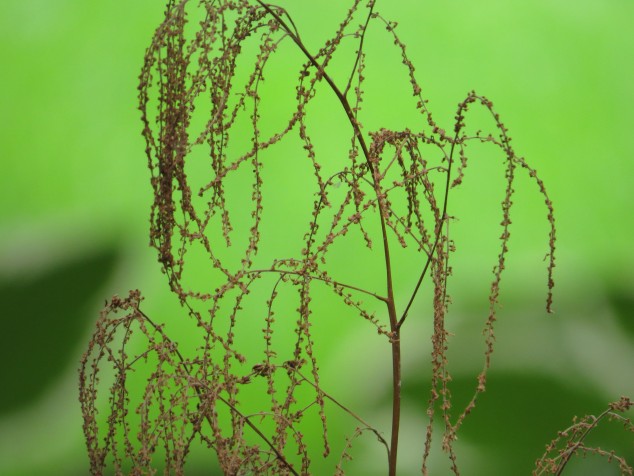
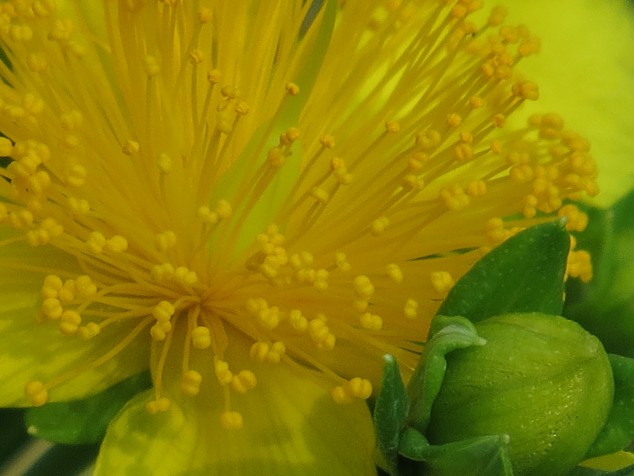
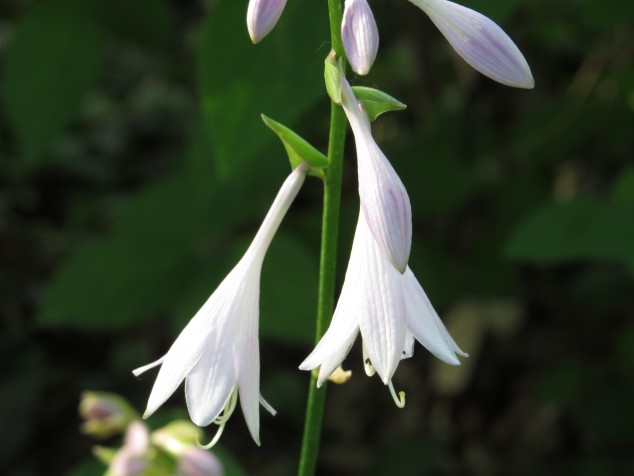
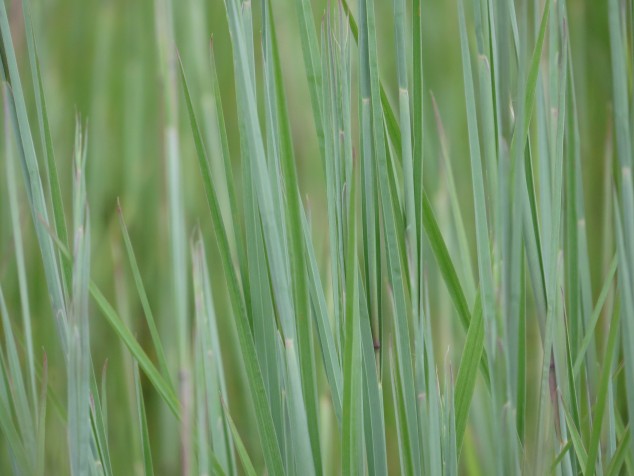
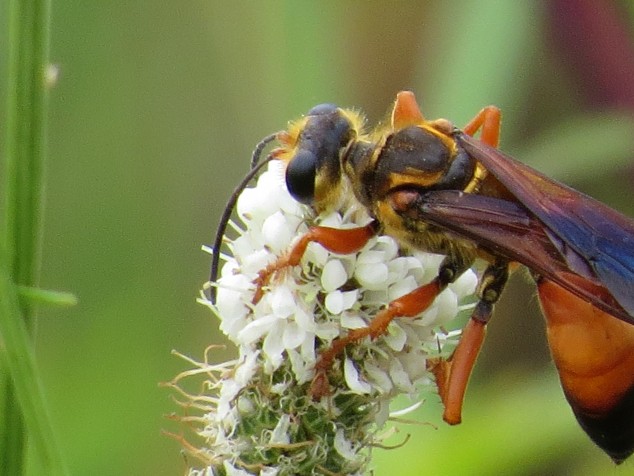
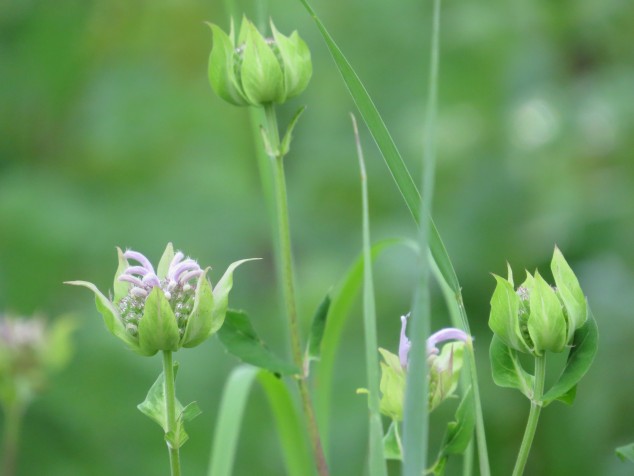
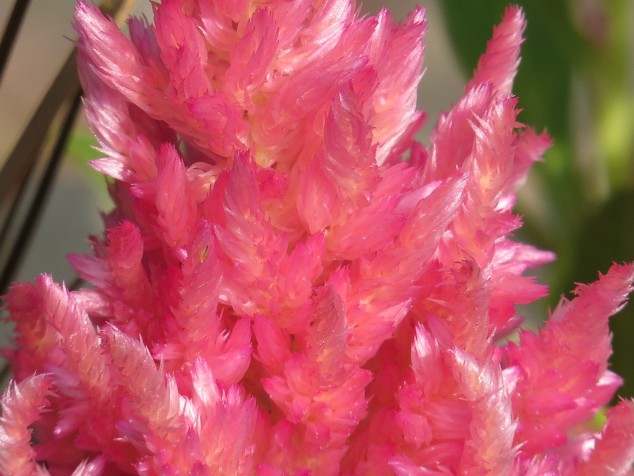
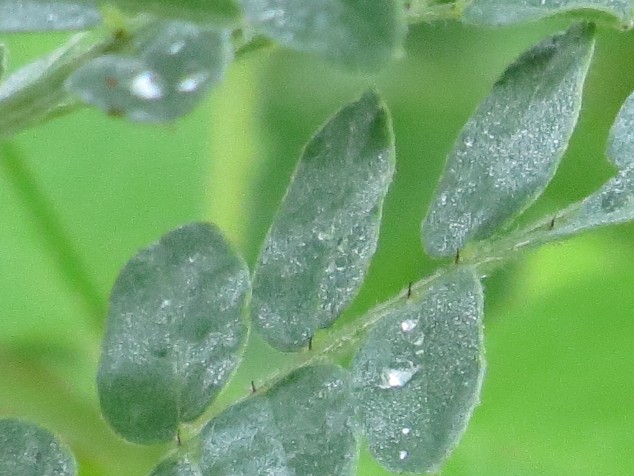
“There is a holiness to nature, in the intricacy of the system. Its secrets are open to all to learn, but it takes patience to develop the eyes and history necessary to see.”
Fr. Paul Schwietz, O.S.B., Founding Arboretum Director