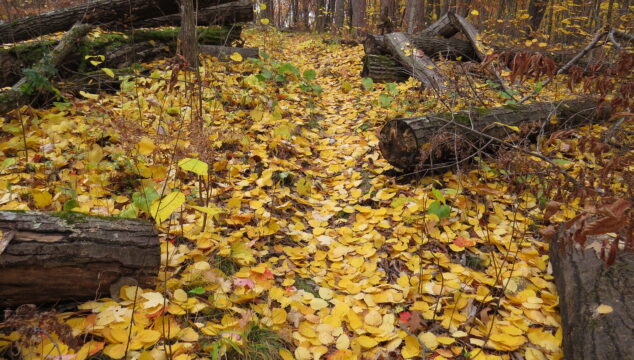
Come walk with me in the peak Autumn beauty of the Northwoods. To say that I love this time of year is an understatement. Most everyone can appreciate the colorful falling leaves---it reveals the 'true self' of a tree when its leaves are no longer producing chlorophyll. Their true colors are revealed, and there is something simple … [Read More...]
Gleanings from June–Synergy
It was June, and the world smelled of roses. The sunshine was like powdered gold over the grassy hillside.
–Maud Hart Lovelace from Betsy-Tacy and Tib
We began the month of June with a sun halo–a rainbow all around the sun. Also called a 22-degree halo, it is caused by millions of tiny ice crystals in high cirrus clouds that refract (at a 22 degree angle) and reflect the sun’s light. Amazing!

The flowers of June welcome the bees and butterflies. Wild roses peek their pink flowers between the stems of grass along the road.
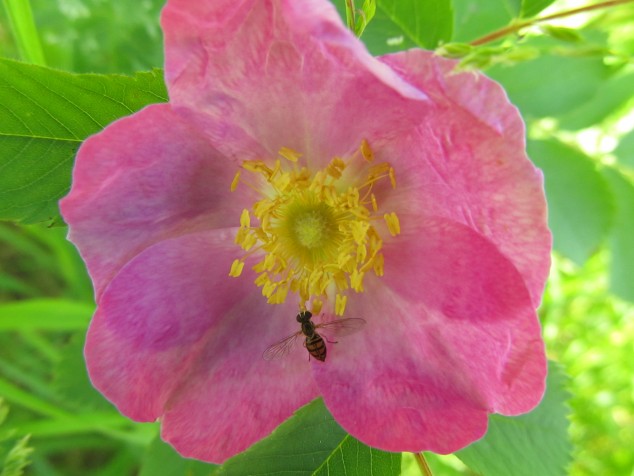
I’m in love with this Perennial Pink Salvia we have planted close to the front door. Each stalk of delicate pink blossoms attracts bees of all kinds–the hard-working pollinators of the world.
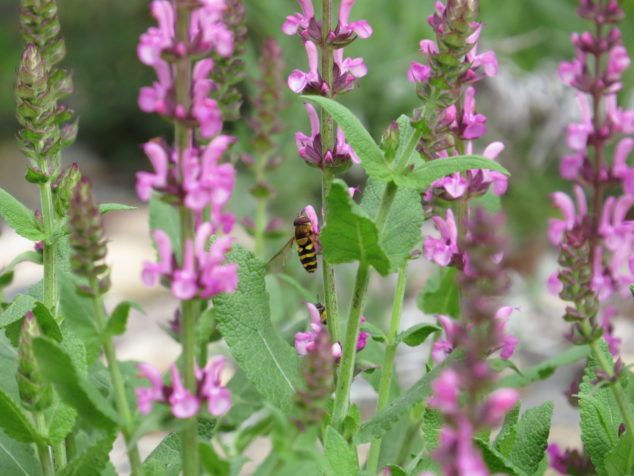
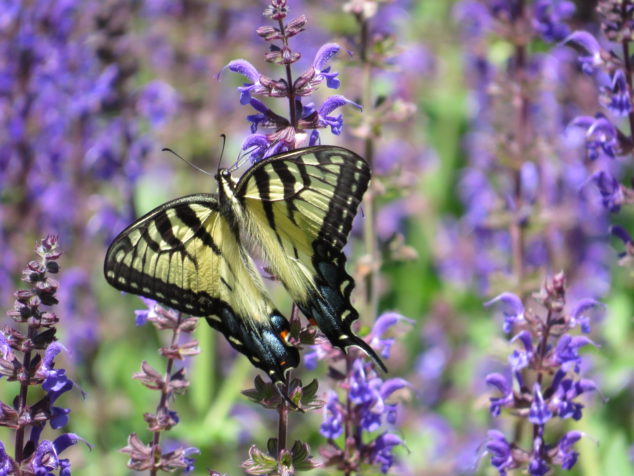
The much larger bed of Perennial Blue Salvia is spectacular when in full-bloom! Pollen-laden bumblebees rumble from flower to flower, and the sight of a Yellow Swallowtail is like a shimmering ornament on an already beautiful evergreen–synergistic beauty!
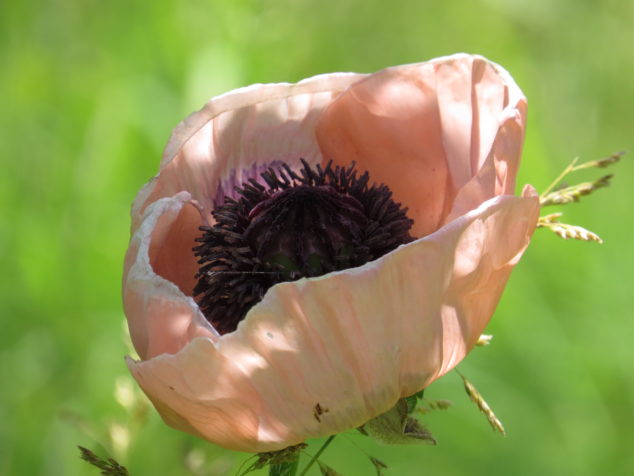
I am always delighted to see this Pink Poppy bloom in June. The crepe-paper-like petals are entire works of art in and of themselves and when combined with the dark purple, velvety center, it is so lovely to behold.
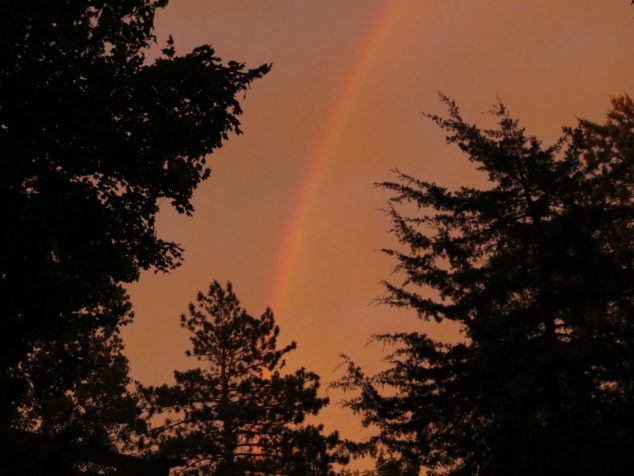
A late evening storm turned the sky pink, and as the clouds cleared to the west, the setting sun and water droplets created a rainbow among the maple, cedar, and pine trees.
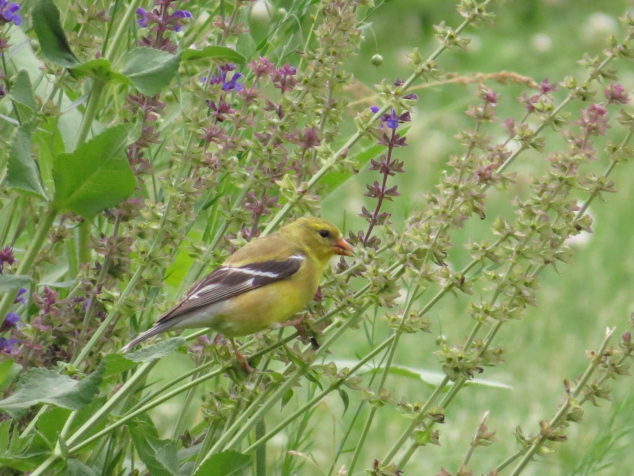
When the cobalt flower petals fell from the Blue Salvia and seeds formed in their place, the American Goldfinches gathered their bounty.
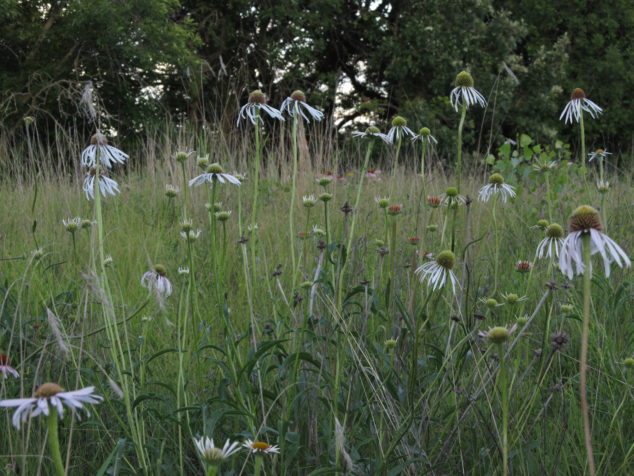
Pale purple coneflowers with their wispy, drooping petals danced in the breeze along the trail on an evening bike ride. Prairie grasses and coneflowers complement one another in the prairie landscape.
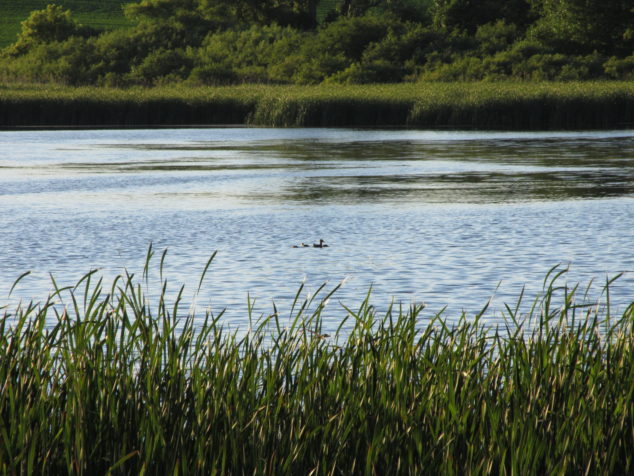
Farther along the quiet trail, the western sun glittered on a small lake and surrounding cattails that created a perfect home for this mother duck and her ducklings.
Synergy is defined as the interaction of elements that when combined produce a total effect that is greater than the sum of the individual parts. Nature combines the elements of sky, water, land, and vegetation to produce phenomena and beauty that is beyond our imagination. It works together for the good of all so that animals have a place to live, insects have food to eat, plants and trees are pollinated so fruits and seeds are produced that in turn feed other animals. It is the circle of life, the halo of Planet Earth created from the Source in the heavens above. May the powdered gold sunshine grace us all with sustenance, beauty, and synergy.
Gleanings from May–Birds and Blossoms
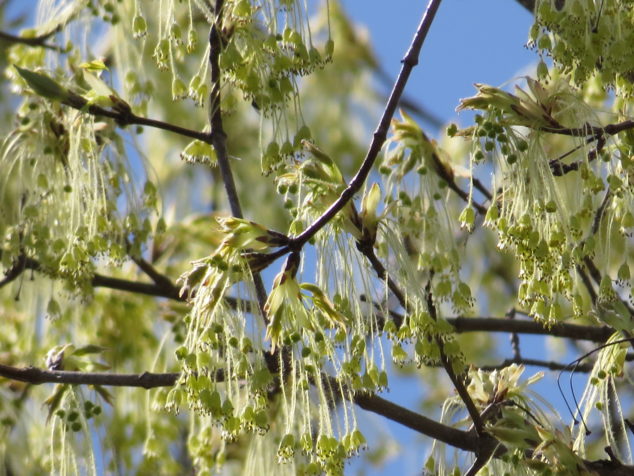
What a month is May! It’s a showcase of blossoms on trees, shrubs, and early blooming perennials. And while we have a great number of ‘winter’ birds that also stay around for the summer, we now see the birds that are passing through to their summer lands in Canada or those that nest and live in Minnesota for the warm season. May is the pleasant month of transformation when trees fully leaf out, exuberant growth occurs, sunshine begins to warm the lakes, and long, light evenings change the way we structure our activities. But back to the beginning of May–one of our maple trees was aglow with golden filaments of pompom-like flowers. Trees are heavily flowered (and thus seed producing) in different yearly intervals–some years it is difficult to notice any flowers at all, but this particular tree was spectacular this year!
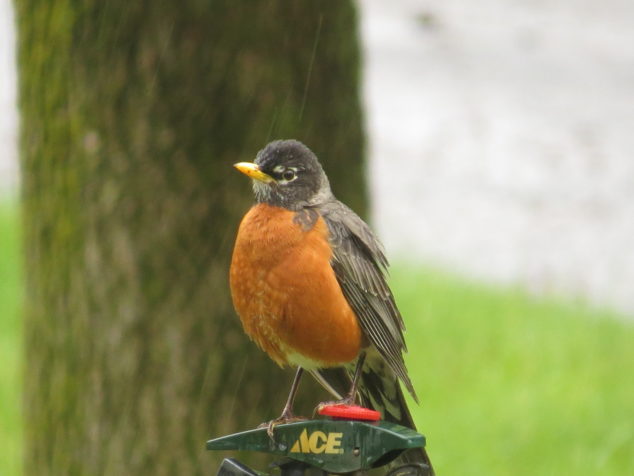
What is Spring without Robins? The sight of Robins is the herald of the vernal season when we know that any traces of Winter will soon be gone. Whether perching on the water sprinkler during a rain shower or hopping in the grass and pulling out worms after the rain, the Robin is a common companion of May.
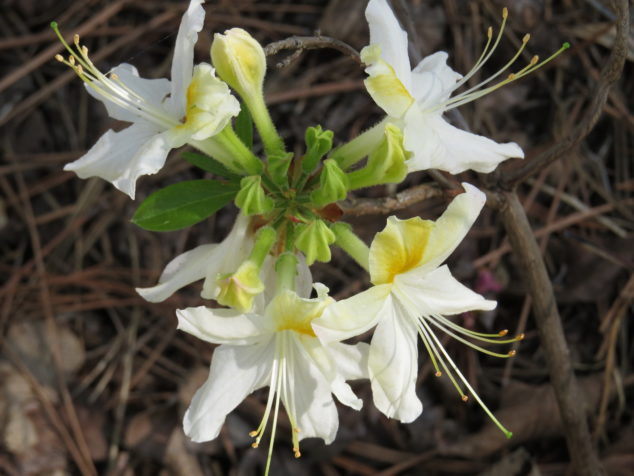
Northern Lights Azaleas, hardy deciduous shrubs developed at the University of Minnesota, allow us a small taste of the incredible beauty of azaleas in our northern climate. This is ‘Northern Hi-Lights,’ and while ours still struggle in our sandy soil, they do treat us to some amazing blossoms.
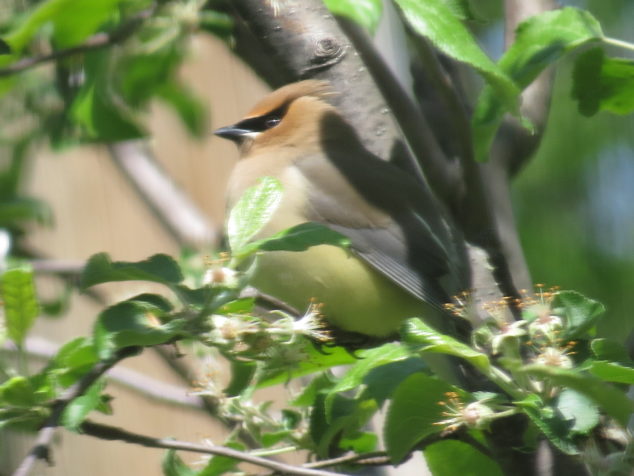
A couple of weeks ago the flower petals were falling off the apple tree. It was a super windy day, and I noticed a number of birds flying among the branches. With the zoom on the camera, I was able to identify the small flock of Cedar Waxwings–they were plucking the white flower petals and eating them!
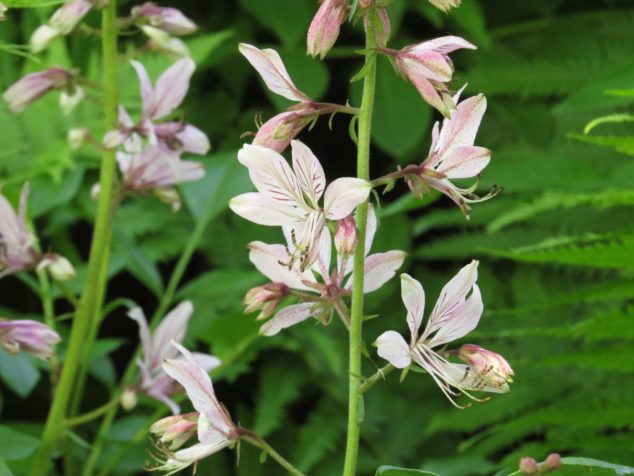
One of the delightful additions to our garden is the Gas Plant. Tall spikes of orchid-looking flowers peek above the ferns that make a lovely background for the pink flower. Gas Plants grow in sun or shade–we have ours on the edge of the woods. They are hardy, drought-tolerant, and not picky about soil. They do not like to be moved once established, as they have a deep tap-root. The name is derived from the citrusy, flammable fumes the flowers give off–on a still day, you can hold a match by the flowers and see a poof of blue flame!
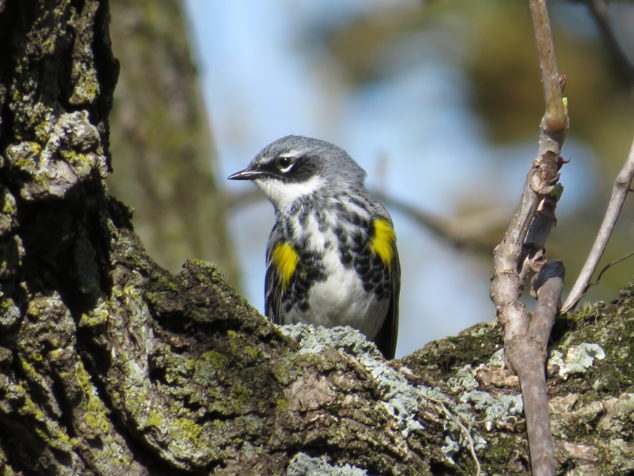
This little bird was flying in the woods before the leaves were fully out. I believe it to be a warbler of some kind, perhaps a Magnolia Warbler or a Yellow-rumped Warbler, both of which have their summer range in Canada.
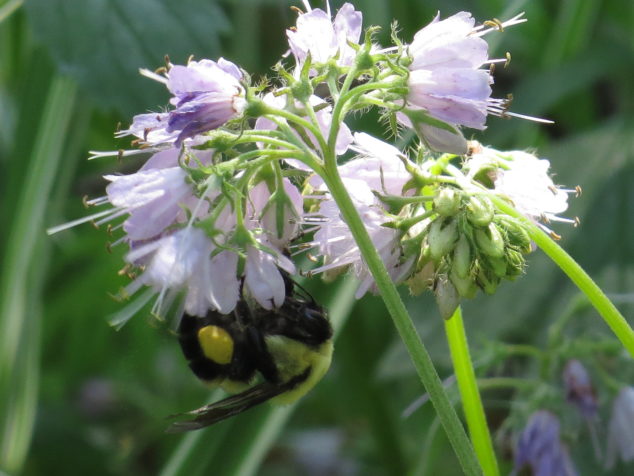
Once we got the buckthorn cleared out from beneath the oaks in our woods, this woodland perennial appeared–Virginia Waterleaf. The leaves are mottled with what looks like water stains, and clusters of white to violet flowers rise above the leaves. As you can see, they are a favorite of the bumblebee at this time of year.
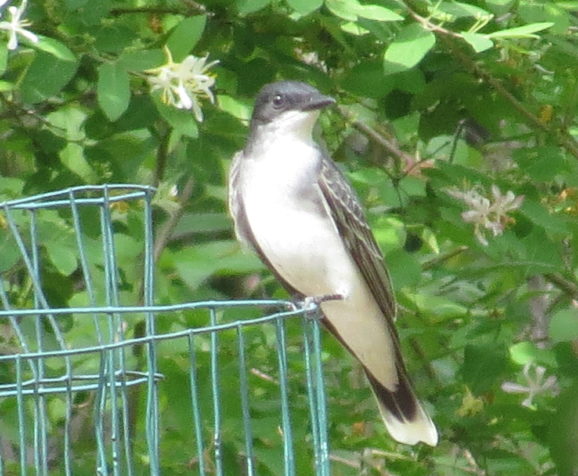
Eastern Kingbird’s scientific name is Tyrannus tyrannus, indicating his tyrannical traits of defending his territory. When defending the nest, he will aggressively attack hawks, crows and squirrels. He has a neat, suit-like appearance. The Kingbird has a crown of red, orange, or yellow feathers on its head that is usually concealed, but is raised when confronting an attacker. Both the male and female hunt for insects and feed the young for about seven weeks.
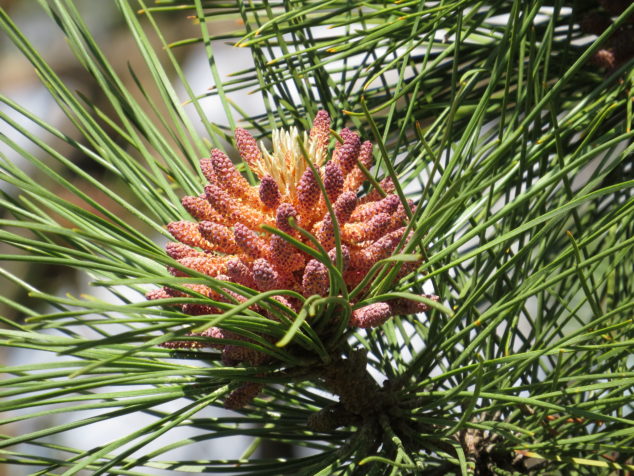
We don’t often think of evergreen trees flowering, but this is a pollen cone or male flower of the Red Pine tree. The pollen cones are most often found in the lower crown of the tree, while the small female flowers are in the middle to upper crown of the tree. Red Pine or Norway Pine is the state tree of Minnesota.
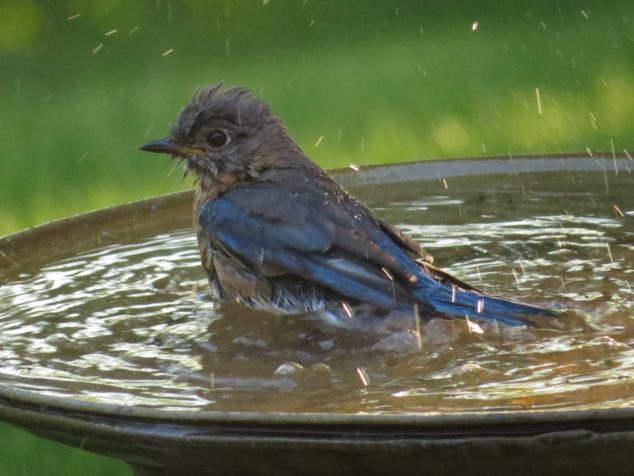
It was evening bath time for this little Bluebird! It’s so nice to have these birds in our yard, seeing them drop and dive for insects with a flash of blue color.
Birds and blossoms are the showcase of May. Spring bulbs, flowering shrubs and trees, and perennials become the houses and food for animals, birds, and insects as the yearly reproductive cycle of each creation happens before our eyes. We once again marvel at the transformation that occurs in this month as plants emerge from the ground, grow, and flower in such a short time! This Life Force of Nature is awe-inspiring! Do you see it? Do you notice and appreciate it? It is a privilege to be the observer, the caretaker, and the participant in this season of growth and beauty.
Walking Past Ginger, Jack, and May
When I was in college, there were two girls named Ginger who lived in my dorm. One Ginger was tall, dark-haired, and had a booming voice and personality. She walked with swag and tossed her head like a racehorse at the starting line. Wild Ginger majored in Physics or Engineering or something like that and would help guys with their homework, then go downtown and drink beer with them or anybody else who was up for it. She was colorful, energetic, and noticed. Quiet Ginger was also tall and smart, but I would say most people didn’t notice her. She didn’t talk much and just blended in with her surroundings. She seemed guarded, like something at one time had hurt her deeply, and so she hid herself for protection. But when you talked one-on-one with her, she was funny, strong, and very charming in her own way.
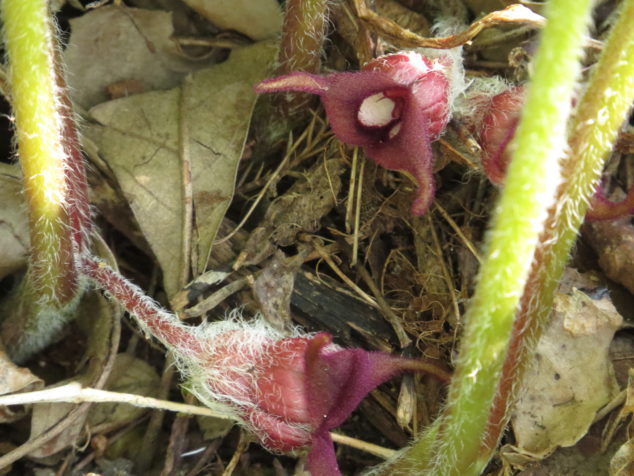
I think all flowers are cool. They are unique, intricate sculptures of petals, pistils, and stamens. Many are colorful, showy, fragrant, and well-known to most people. But there are a few Spring woodland flowers that one could easily walk past and not notice. I was on my hands and knees weeding around this small Wild Ginger plant on the hillside of our woods. Only after I had pulled some weeds away did I notice the small, dark red flower at the base of the plant! What a crazy, beautiful, strange flower!
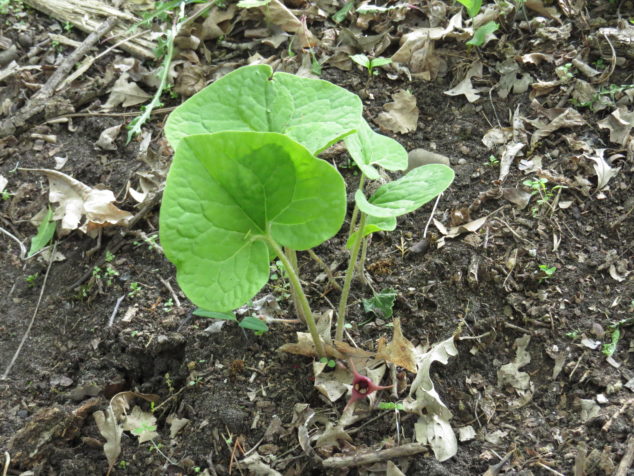
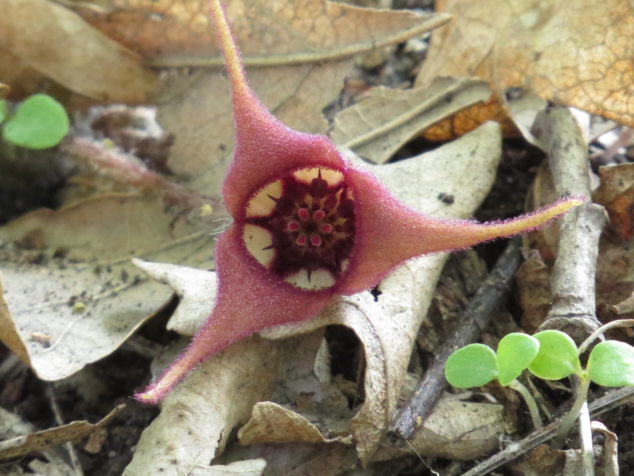
So I walked up the hill to where we had a larger, more established colony of Wild Ginger and pushed the dried leaves away from the base of the plants, and there were the hidden flowers! Wild Ginger (Asarum canadense) is no relation to culinary ginger, though the Native Americans and later the settlers used the root as a seasoning and to treat colds and fever. This low-growing, shade-loving ground cover with heart-shaped leaves is deer resistant, does not go dormant in the summer, and is an important food source for the Pipevine Swallowtail Butterfly.
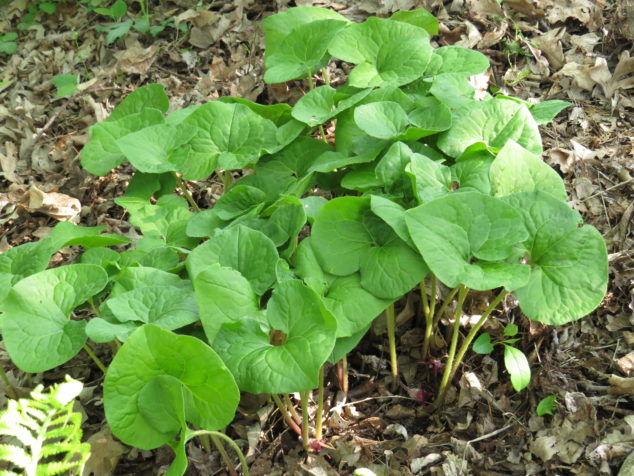
The flowers at the base of the plant attract small, pollinating flies that emerge from the ground in early spring. The flies crawl into the flower for protection and to feast on the pollen, which they carry with them to the next flower.
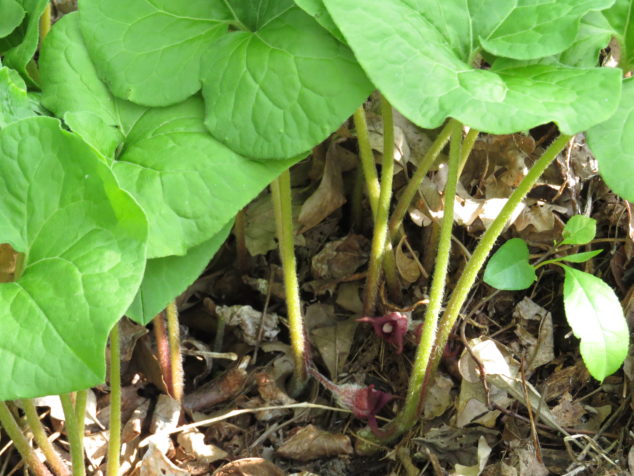
When the Wild Ginger seeds ripen, they have an oily appendage attached called an elaiosome, which attracts ants. The ants carry the seed to their homes, consume the ‘food’ and leave the seed to germinate. At least three different insects rely on the Wild Ginger plant with the quietly beautiful, hidden flower.
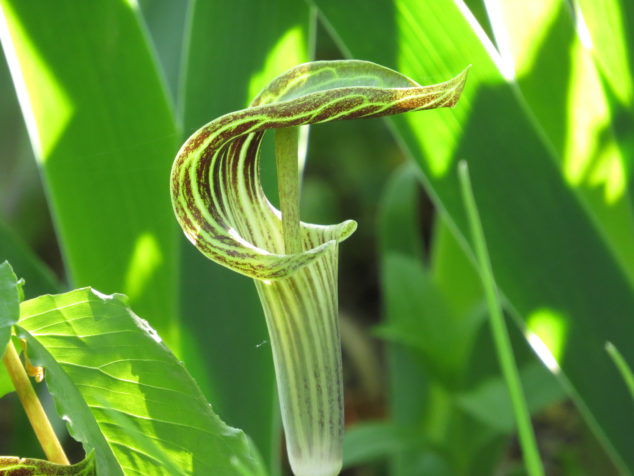
Another flower that is easy to walk past without noticing is the Jack-in-the-Pulpit (Arisaema triphyllum.) Tubular, hooded flowers rise on their own stalks to the level of the large leaves that are divided into three leaflets.
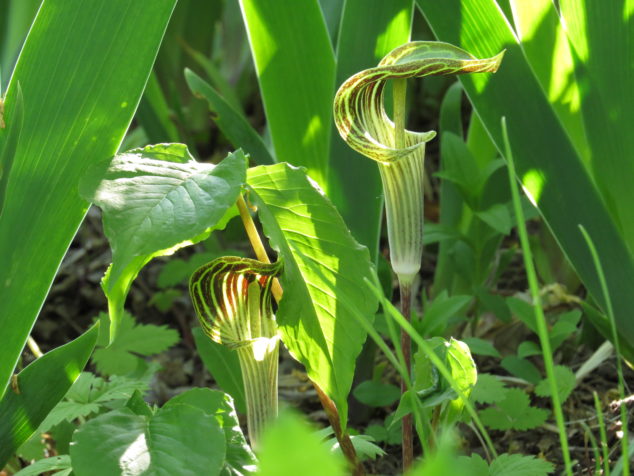
The flowers are green with brown stripes that blend in with the surrounding woodland foliage. Jack-in-the-Pulpits are most noticeable in late summer when clusters of bright red berries form.
A third woodland flower that is easy to walk past is the Mayapple (Podophyllum peltatum.) Mayapples are unique in that they only have two leaves and one flower which grows in the axil of the leaves. Lovely umbrella-shaped leaves hide the pale yellow flower that later forms a yellow, edible fruit that can be used in jellies. Mayapples die back in mid-summer in dormancy until the following spring.
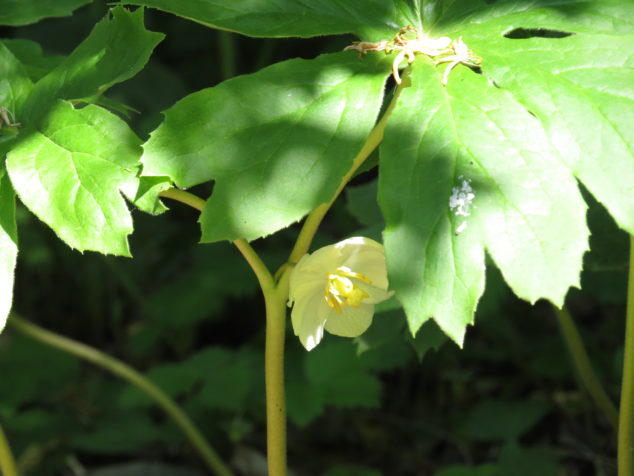
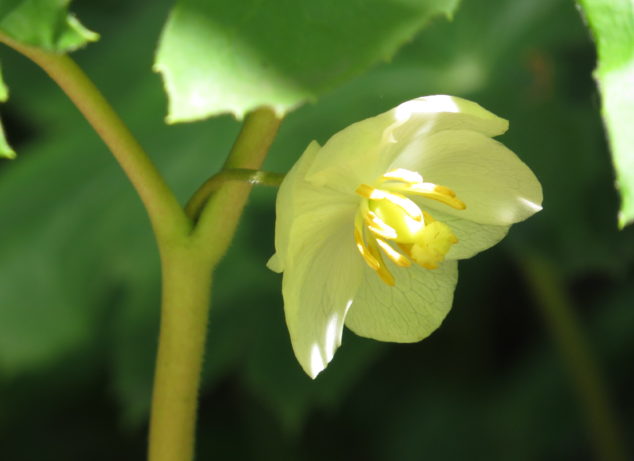
When we think of flowers, we most often bring to mind showy, colorful blossoms that attract attention and inspire awe. These three Spring woodland flowers are not easily seen when walking by, but all have beautiful and unique foliage that is to be appreciated. A closer look reveals the interesting, hidden flowers–a quiet splendor in the woodland world. Getting to know the hidden treasures–whether flower or human–is worth the extra time and effort. It will enrich your life with wonder and gratitude.
What’s in a Name?
When I met my husband oh so long ago, he said his name was Chris, and he gave me the slip of paper that was his nonresident short-term fishing license from the State of Minnesota, because it had his address on it–and he promised to write back if I wrote him a letter. He was headed back to Missouri from Minnesota with a stop in South Dakota for the night. I was in the right place at just the right time for him to ask me to dance. The brown-eyed handsome man named Chris captured my heart. Later I learned that his family and friends called him Mick. Many times over the years he asked me to call him Mick, and even though I tried, it felt awkward saying it to him.
A walk through our yard and woods at this time of year is an exploration of blooming flowers! I know most of them by their common names and often Chris will tell me their Scientific names. Both names give clues about the flowering plant or tell a story about its history.
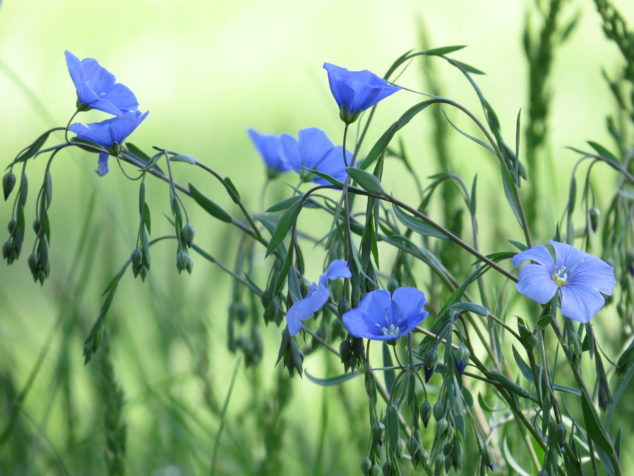
Perennial Blue Flax–Linum lewisii–named in honor of Meriwether Lewis of Lewis and Clark who discovered this blue beauty on their expedition across the Plains. (And speaking of names, Meriwether!)
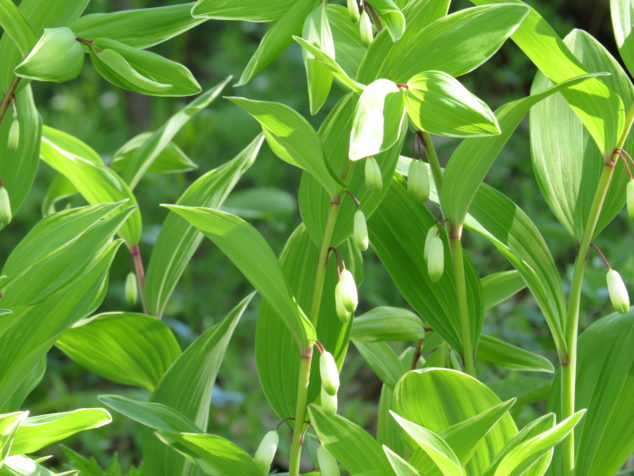
Variegated Solomon’s Seal–Polygonatum odoratum var. pluriflorum ‘Variegatum’–poly meaning ‘many’, gonu meaning ‘knee joints’ referring to the jointed plant rhizomes; pluriflorum meaning ‘many flowered’; Solomon’s Seal for the wound sealing properties of the plant.
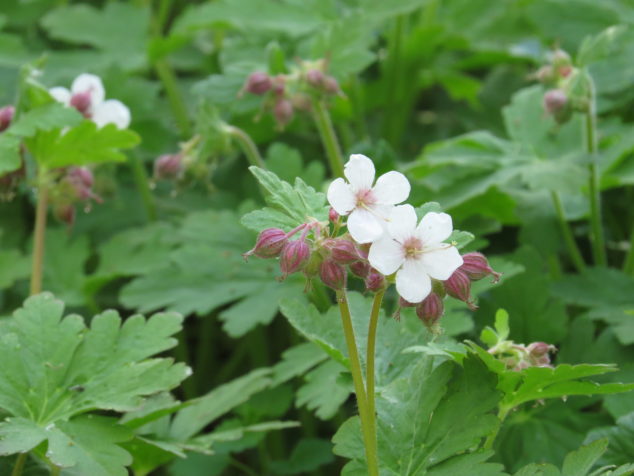
Wild Geranium–Geranium maculatum–large flowering (relatively speaking, since this flower is 1 inch or more compared to others of under half an inch.)
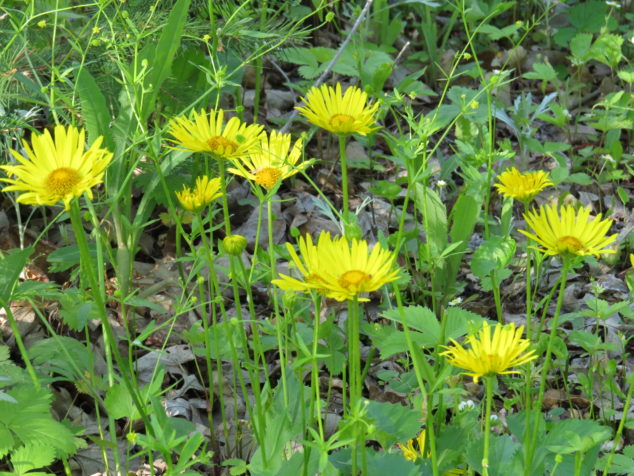
Leopard’s Bane–Doronicum orientale–all in this genus were once thought to be poisonous to animals.
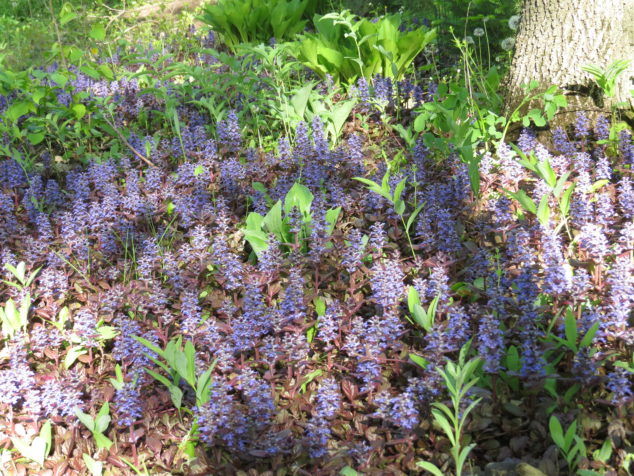
Carpet Bugle–Ajuga reptans–a groundcover that spreads across the ground like a carpet.
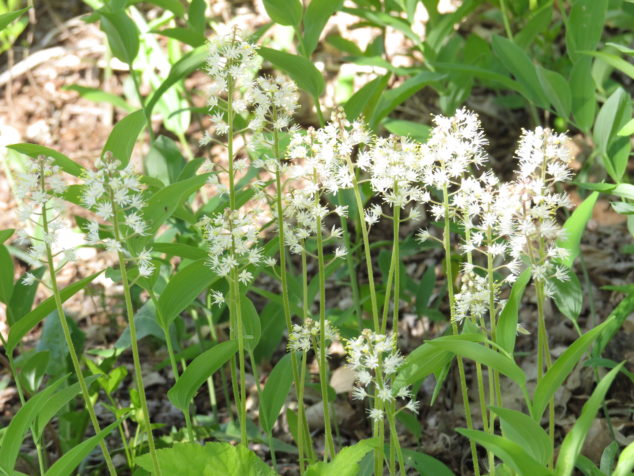
Foam Flower–Tiarella cordifolia–Tiarella meaning ‘small crown’ from the shape of the fruit; fluffy, airy flowers.
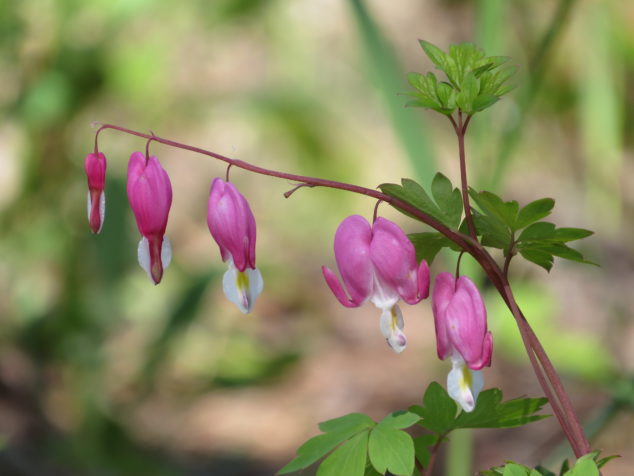
Bleeding Heart–Dicentra spectabilis–Dicentra meaning ‘two spurs’, spectabilis meaning ‘spectacular’; Bleeding Heart by the shape of the flower.
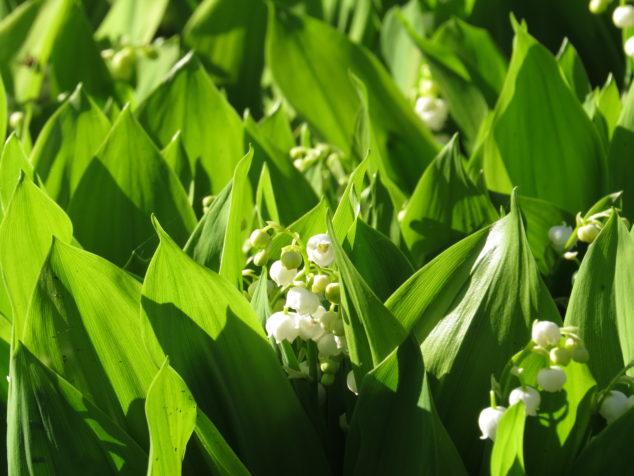
Lily of the Valley–Convallaria majalis–majalis meaning ‘that which belongs to May.’
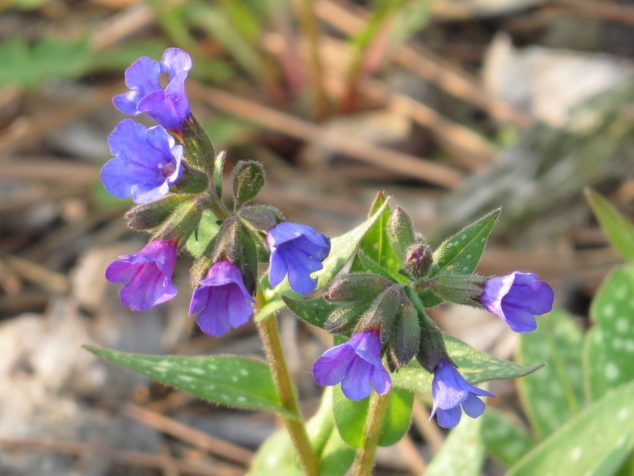
Lungwort–Pulmonaria spp.–herbalists long ago thought the spotted leaves looked like diseased lungs and used it to treat lung ailments; ‘wort’ meaning ‘to heal or cure.’
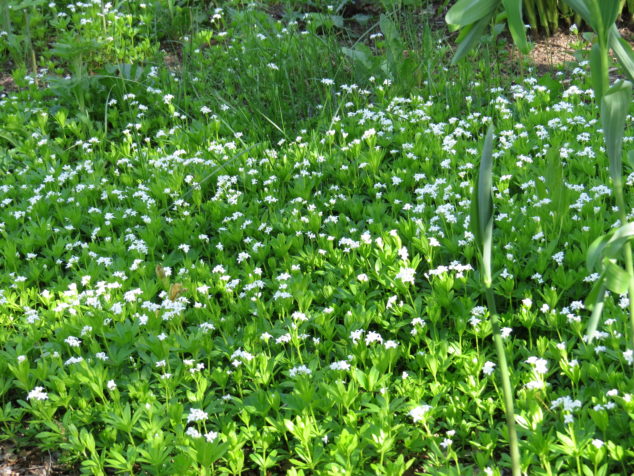
Sweet Woodruff–Galium odoratum–fragrant leaves and flowers; Woodruff is Old English for ‘wood that unravels’ meaning the creeping rootstock; another common name is Sweet Scented Bedstraw as the dried leaves were used to stuff mattresses.
Flowering plant names, both Scientific and common, often describe or tell a story about the plant. Our given names are carefully chosen by our parents–name books are consulted and brainstorming with lists of names are ‘tried on’ and discarded or ‘liked’ by our mothers and fathers until the list of ‘likes’ is whittled down to the perfect name for that child. We can honor parents, grandparents and other relatives by giving their name to our child, and in the course of a lifetime, the child may come to know the honor of carrying that name. Nicknames usually have a story about how they came to be, and once a person is lovingly known by that name, it is difficult to say otherwise. I call my husband Mick when I talk to his family, though there is still a fraction of a hesitation before doing so. But the man I fell in love with is and will always be Chris on my tongue and in my heart. It is a particular and all-encompassing blessing when we are called by our name.
In Love with This Green Earth
I am in love with this green earth. –Charles Lamb
Do you remember the feelings you had when you first fell in love with your beloved? A euphoric happiness settled over me. I thought about him all the time. I couldn’t wait to see him again, though months would pass since we lived 400 miles from one another. I happily spoke about him, sharing stories of who he was as a person. I read and re-read the letters he sent and immediately answered them. I marveled at his handsomeness, his politeness, his kindness to family and friends. I felt lucky or blessed or pinch-me-I’m-dreaming that he felt the same way about me.
May turns a corner for us into the fullness of Spring, and I have to say, I am quite smitten. The green-ness and new-ness of this season should not come as any surprise–it happens every year! And yet, I find myself thinking, “Was last Spring this beautiful?!” I can’t get enough of looking out the window at the lush green grass and the emerging leaves.
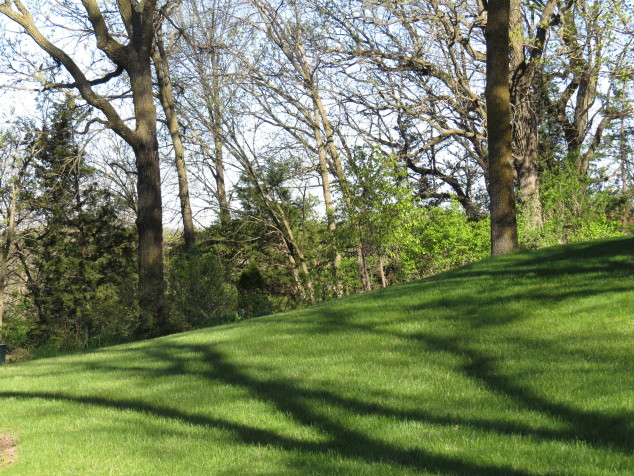
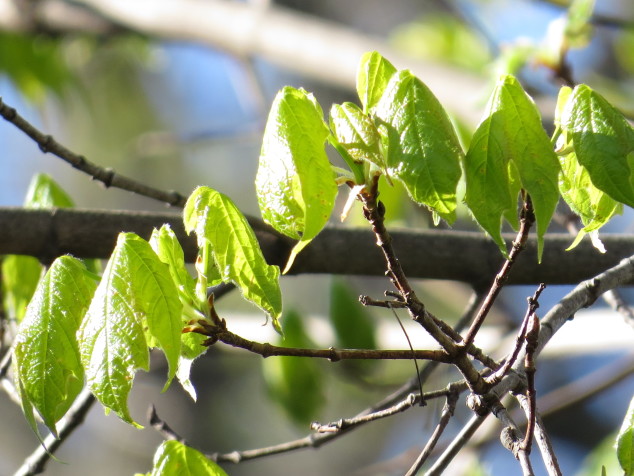
I happily wander through the yard and woods, delighting at the swiftly growing ferns and the spring-blooming perennials.
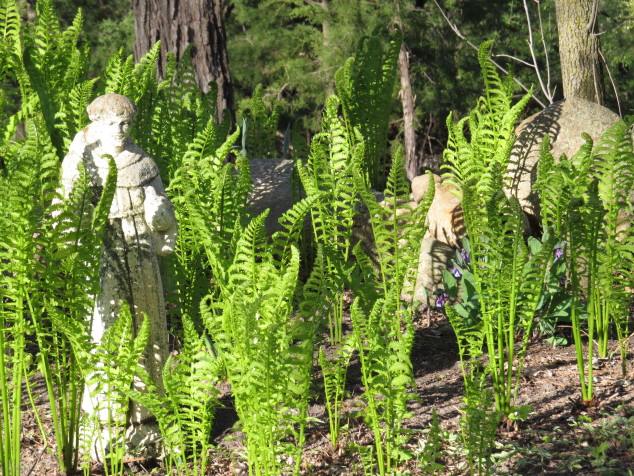

There is an overabundance of growth, a population explosion of buds, flowers, and plants coming back to life from the dormancy of winter. (Go to North Star Nature Facebook page to ‘Like’ and see more May flowers and photos of nature.)
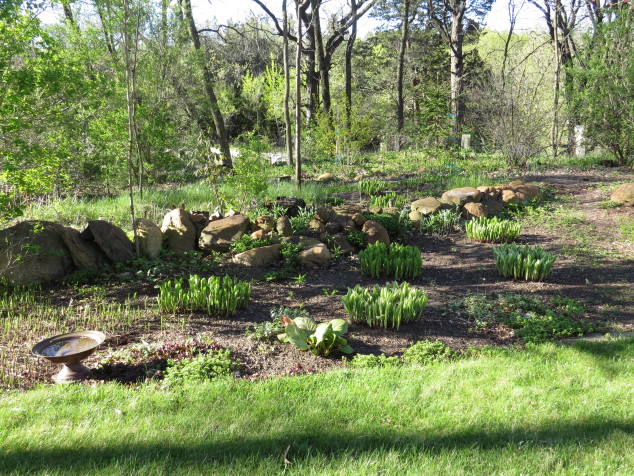
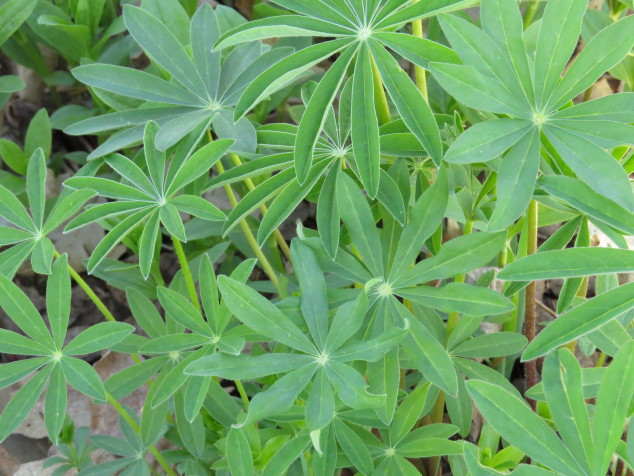
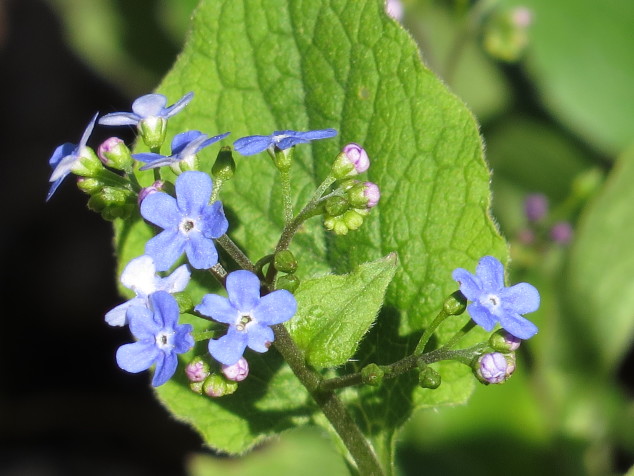
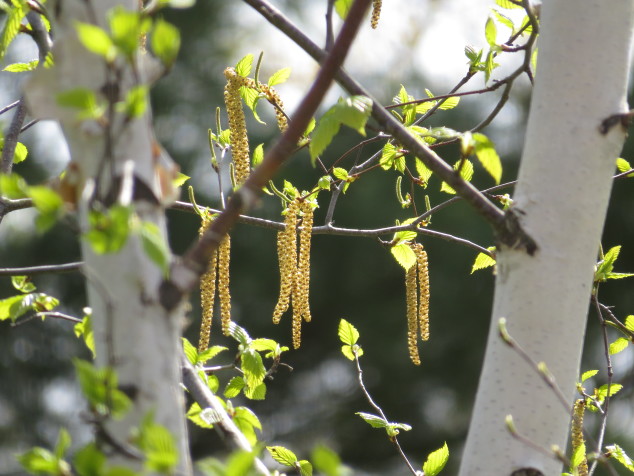
I am in love with this green earth. The changing seasons have a way of opening our minds to development and the cycles of Life–like falling in love with your beloved. Spring flushes the winter dormancy and old ideas from our minds and bodies to be replaced with possibilities and reliabilities–like having faith in Goodness. Renewal fills our souls with explosions of hope for the greener, growing, greater days ahead–like living in a Sanctuary. We are blessed to be living on this beautiful green earth!
Gleanings from September 2015
We have all heard the phrase that a picture is worth a thousand words, and some have enlarged that value to ten thousand words. The saying has been linked to Fred R. Barnard, a United States advertising executive in the early 1920’s who promoted the effectiveness of graphics. Barnard attributed the saying to a Japanese philosopher and later as a Chinese proverb. With my amateur photography and mission to showcase the beauty of Nature, I believe in the power of an image to convey something words cannot express. And yet, there have been some frustrating moments for me these past months of August and September where I could not capture the essence of the experience with my camera. The latest of these moments was the super-moon eclipse. The first half of the eclipse was visible between roiling clouds that eventually took over and obscured the ‘coming out’ phase.
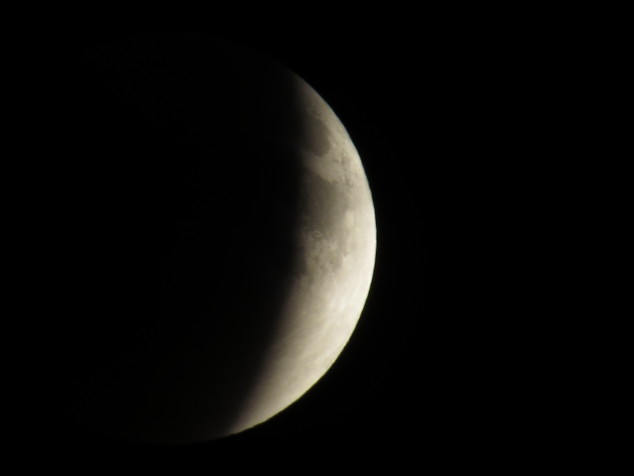
There are many wonderful photographs of the eclipse shared on the internet, but even a series of professional images could not capture the essence of the eclipse experience. To see the huge, shining full moon taken over by the shadow and how the atmospheric particles shone red was awe-inspiring. It made me realize the movement of our earth and universe and just how small we each are in the whole scheme of things.
While autumn finery is easier to capture in pictures, part of our ability to appreciate the images is our familiarity with it. Most have experienced the miracle of changing leaves, the smell and sound of dried leaves crunching underfoot, and coolness of air on a blue-sky fall day. By looking at a photo, we can ‘imagine’ the rest.
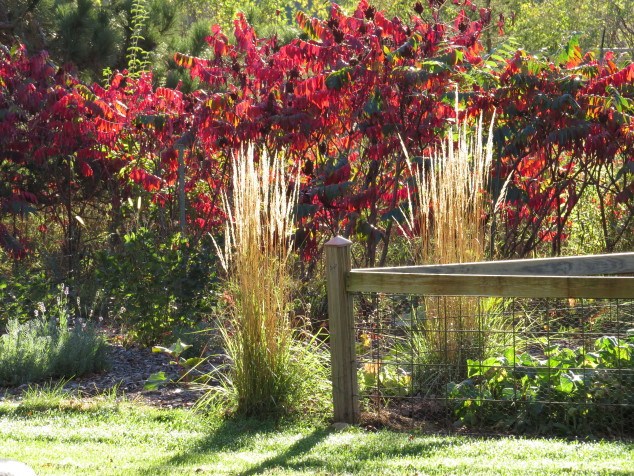
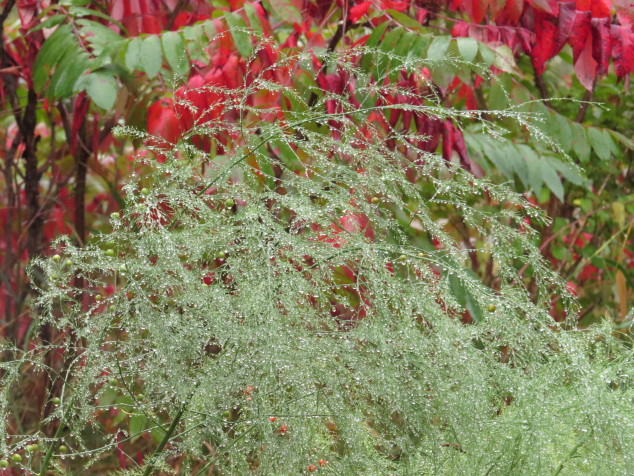
We have had a dry September–only one measurable rain at a much-needed, yet insufficient half-inch. We all drank it in.
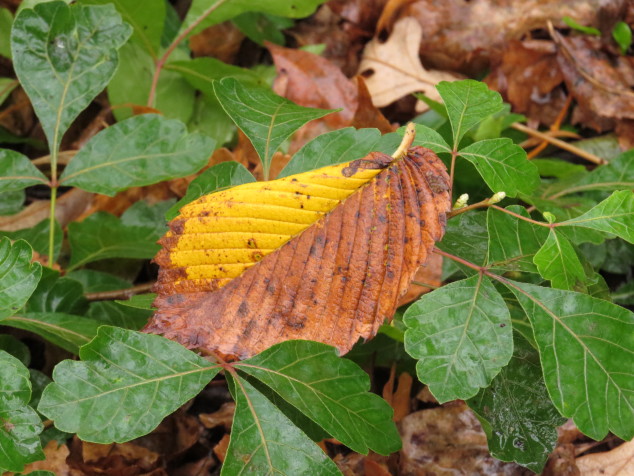
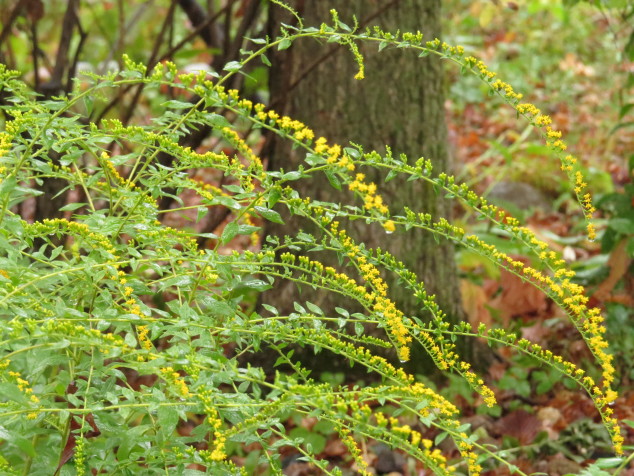
Our dry weather is turning the changing of the colors to the drying and browning of leaves, but one of the fall perennial stand-outs is in full bloom–‘Fireworks’ goldenrod. This deer and drought resistant cultivar has an explosion of tiny yellow flowers on horizontal stems.
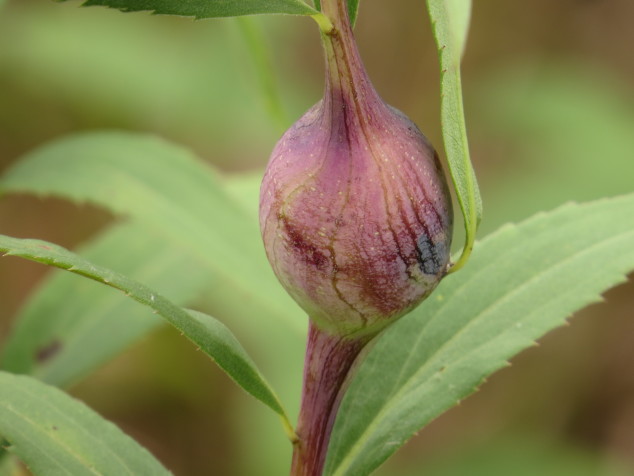
Many of the common goldenrod growing in the wild areas have an interesting feature–a purplish, rounded gall on the stem. The Goldenrod Gall Fly is a parasite that lives its entire life cycle on the goldenrod plant. After mating on the plant, the female deposits her eggs into the stem with her ovipositor. The larvae hatch in ten days and eat inside the stem. Their saliva has a chemical in it that causes the plant to grow the abnormal galls. The larvae stay in the galls for a year, producing an anti-freeze-like chemical to keep them alive through the winter. In Spring, the larvae become pupae and then adults, and then they leave the galls to find mates. The armor-like galls protect the larvae from most predators, but the Downy woodpecker seeks out the galls to break them open to feast on the juicy larvae.
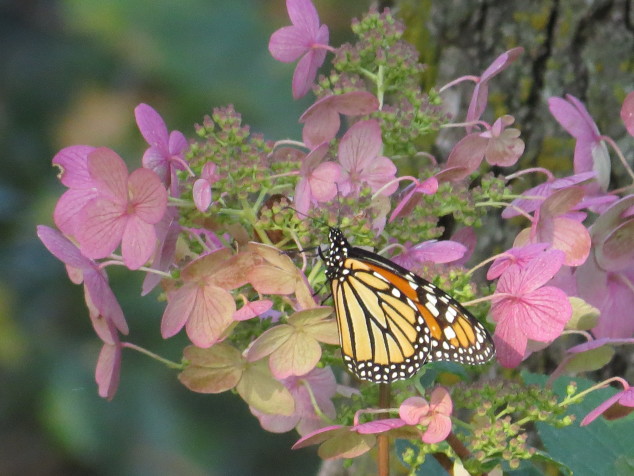
September was also the month of the Monarch. Our intention to let more milkweed grow paid off in the currency of butterflies.
A picture is worth a thousand words, ten thousand words, and maybe more. They are valuable in the appreciation of Beauty and the conveyance of details. The Essence of the Experience of walking through the Lost Forty forest last month or of viewing the super-moon eclipse could not be captured by photography, however. It could not represent the other senses–the smell of the pine needles, the quiet wind whispering through the tree tops, the feel of three hundred year-old bark– or the ‘other worldliness’ of moons and planets aligning and of the deep history and holiness of the land. As we live our entire life cycle on Planet Earth, pictures, words, and imagination cannot be stand-ins for the Essence of Experiences, for no matter the currency, they are worth millions.
Wonder Will Be Yours
I remember staring with wonder at each of the tiny human beings we brought home from the hospital. I couldn’t get enough of looking into their eyes, holding their perfectly plump bodies with those tiny fingers and toes, and kissing their delightful cheeks while inhaling that ambrosial baby smell. Every good force of Nature and God was involved in bringing forth these new creations to occupy our family life for a time, and the awesomeness and privilege of that is not lost on me. Not even after all these years. Especially after all these years–when they have all gone on to living their own lives.
But still, when I see my cherished children, which is not often, I find myself staring at them, looking into their adult eyes, wanting to hold their hand or push back the hair from their forehead, and longing to kiss their cheeks. Their individual worlds are separate from ours now–the way of Nature–but the wonder is still there.
There are tiny, little worlds all around us. We catch glimpses of them from time to time and our understanding is expanded by information in books, nature films, and the encyclopedic internet. We can take a closer look at these tiny worlds at almost any time. Imagine the world of the honeybee–we see them working to gather nectar and pollen, but we don’t realize how much work goes on inside the hive. Sedum ‘Autumn Joy’ is an abundant source of nectar for honeybees at this time of year.
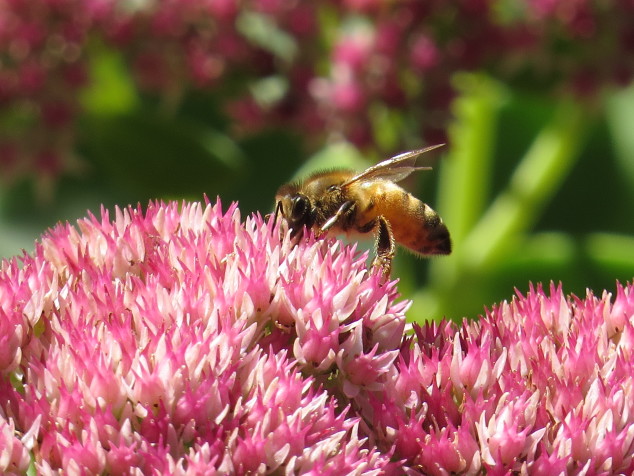
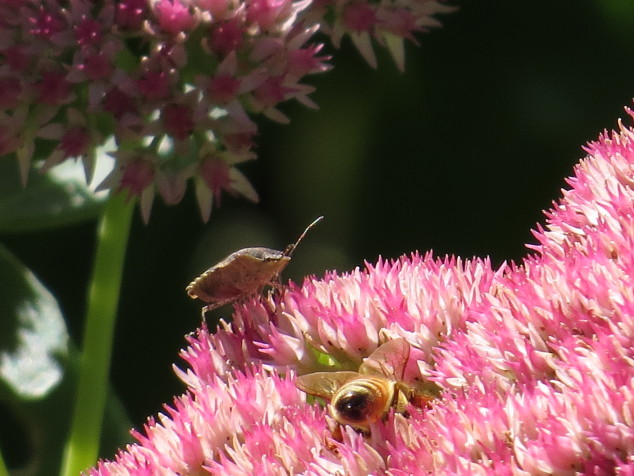
They share the joy with a pungent stink bug who raised his antennae in alarm when the honeybee flew near, but he determined that the bee was no threat to him. There was plenty of nectar to share.
Another little world lies hidden in a wild rosebush.
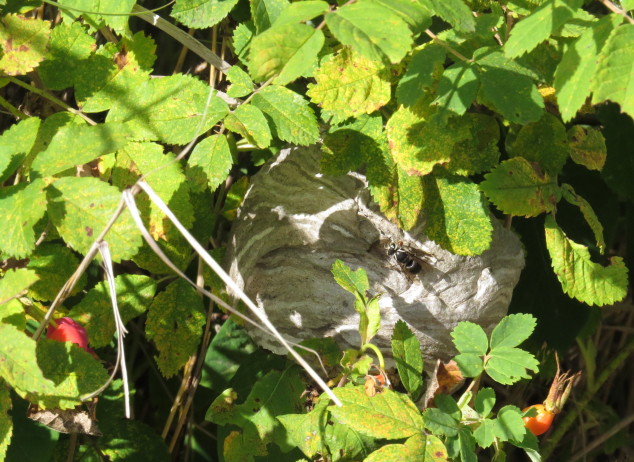
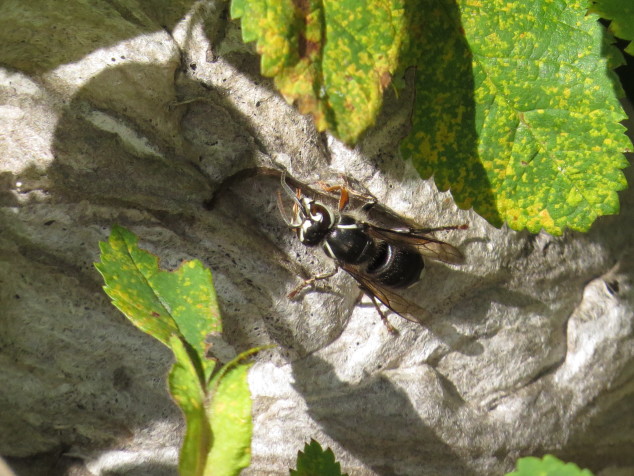
The bald-faced hornet, which is really a yellow jacket wasp, collects and chews wood, mixes the fibers with saliva to make pulp, and constructs a paper nest that houses comb-like nests of larvae and hundreds of worker bees.
Most everyone knows the life cycle of the Monarch butterfly. Milkweed is the host plant for the Monarch caterpillar that hatches from eggs deposited by the butterfly. The caterpillar eats milkweed until mature, then forms a hanging chrysalis.
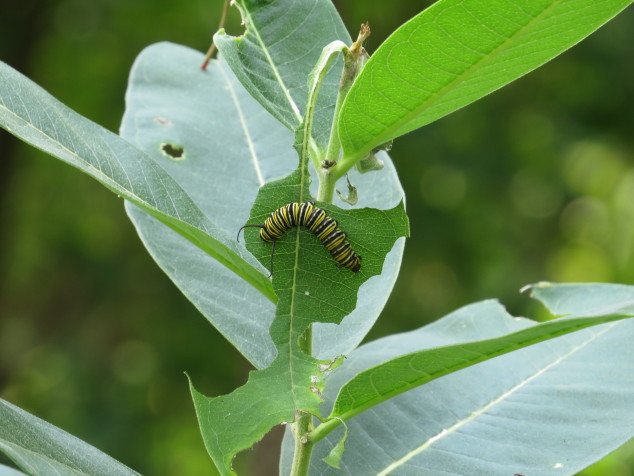
When the butterfly emerges from the chrysalis, he leaves the Milkweed world and flies into the vast, diverse Unknown full of dangers and delights. One of the delights is the formidable Joe Pye Weed that grows up to seven feet tall and produces huge mauve pink flower heads full of vanilla sweet nectar.
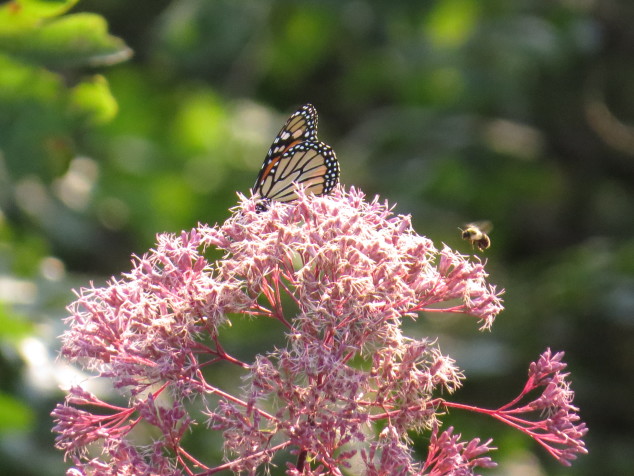 While watching the butterflies and bees swarm the Joe Pye Weed, I noticed a hummingbird at the nearby Summer Sweet bush. This small native shrub is another important source of nectar for butterflies and hummingbirds, and its fragrant, bottle-brush flowers will bloom in shade.
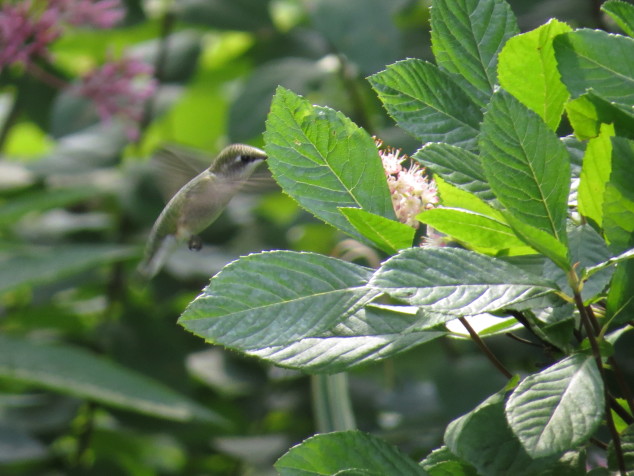
What a summer show! The enticing, sweet blossoms and the birds, bees, and butterflies!
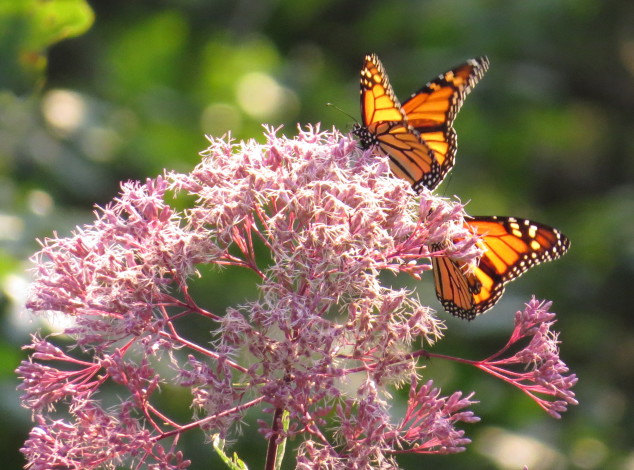
And then…Wonder! The Hummingbird flew over to the jeweled iridescence of the butterfly and hovered there!
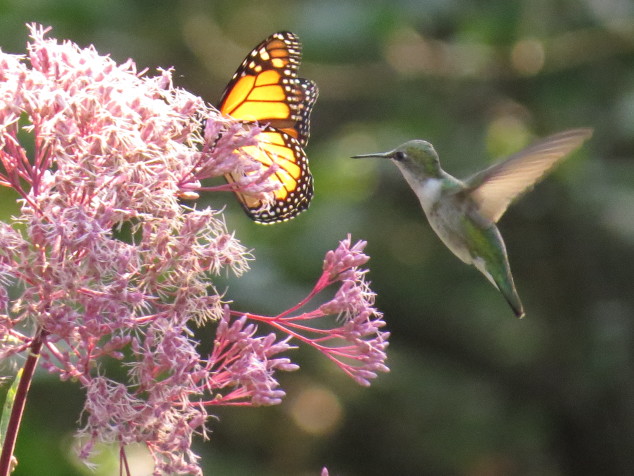 I am grateful and privileged to witness such a moment in the late summer world of Joe Pye. These tiny-world moments play out all around us, most of the time without our knowing. Take some time to notice the tiny world of some part of Nature and share the Autumn Joy!
I am no longer part of the daily world of my children, though daily they are in my thoughts, my whispered prayers, my silent sending of blessings upon their adult lives. I want to remind them, and all of you, that looking into another person’s eyes connects two souls, shares our tiny worlds, and reflects the face of God. Touching another person’s hand conveys interest and caring and does wonders for our physiology. Kissing a cheek bestows a gift to the one kissed and the giver alike. Let every good force of Nature and God inspire your life as you go through your life cycle and know that the nectar of love and joy is abundant–there’s enough for everybody! And Wonder will be yours.
Gleanings from July 2015
July is our true summer month here in Central Minnesota. We have our warmest temperatures that team up with high humidity, making me pine for air conditioning–for a week or so! While looking through my photos from July, I realized two things–I didn’t get out much (‘out’ meaning beyond our place), and July is the month of flowers! So my gleanings post will be about flowers–all of which have bloomed in July here on the home place.
We have a number of shrubs that bloom in the heart of summer, the most spectacular being the hydrangeas. Annabelle hydrangeas are tough, cold-tolerant shrubs that have huge, showy white flowers every year, even after severe pruning.
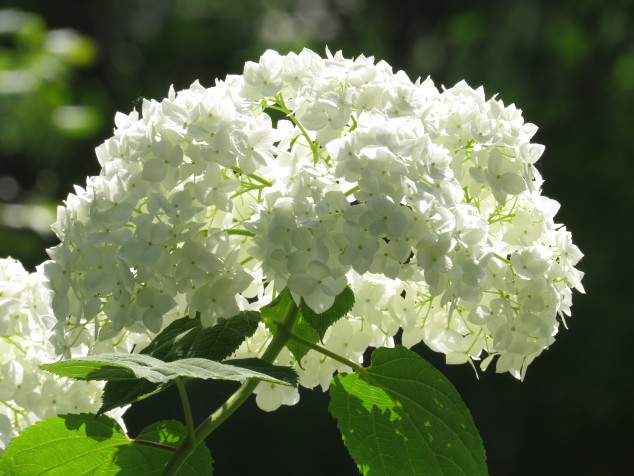
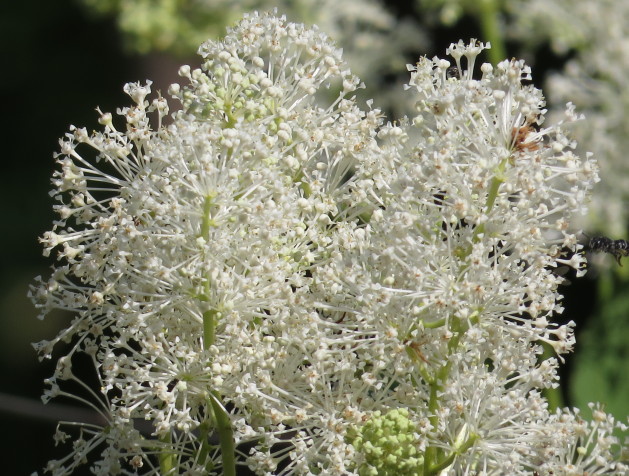
A small native shrub that attracts butterflies, bees, and hummingbirds is New Jersey Tea. The dried leaves were used as a tea substitute during the American Revolutionary War. The flowers look like fireworks!
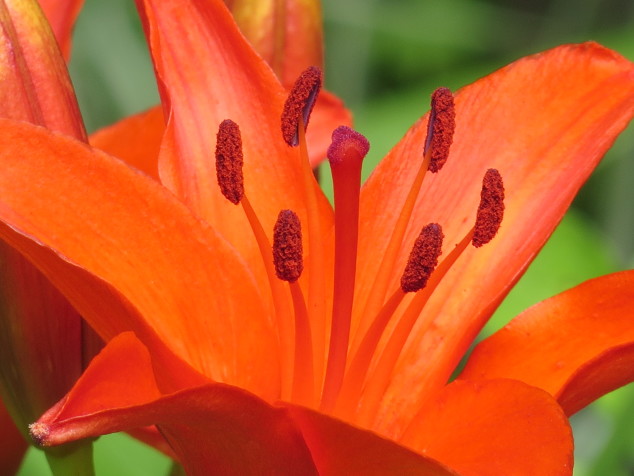
Extravagant, colorful Lilies celebrate summer in bold style: fragrant Oriental lilies…
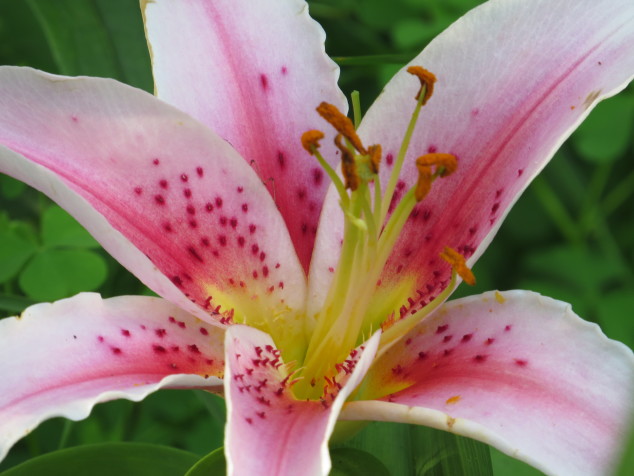
elegant Asiatic lilies…
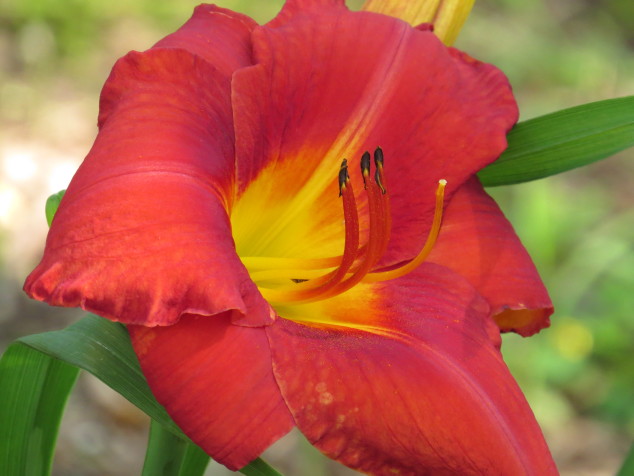
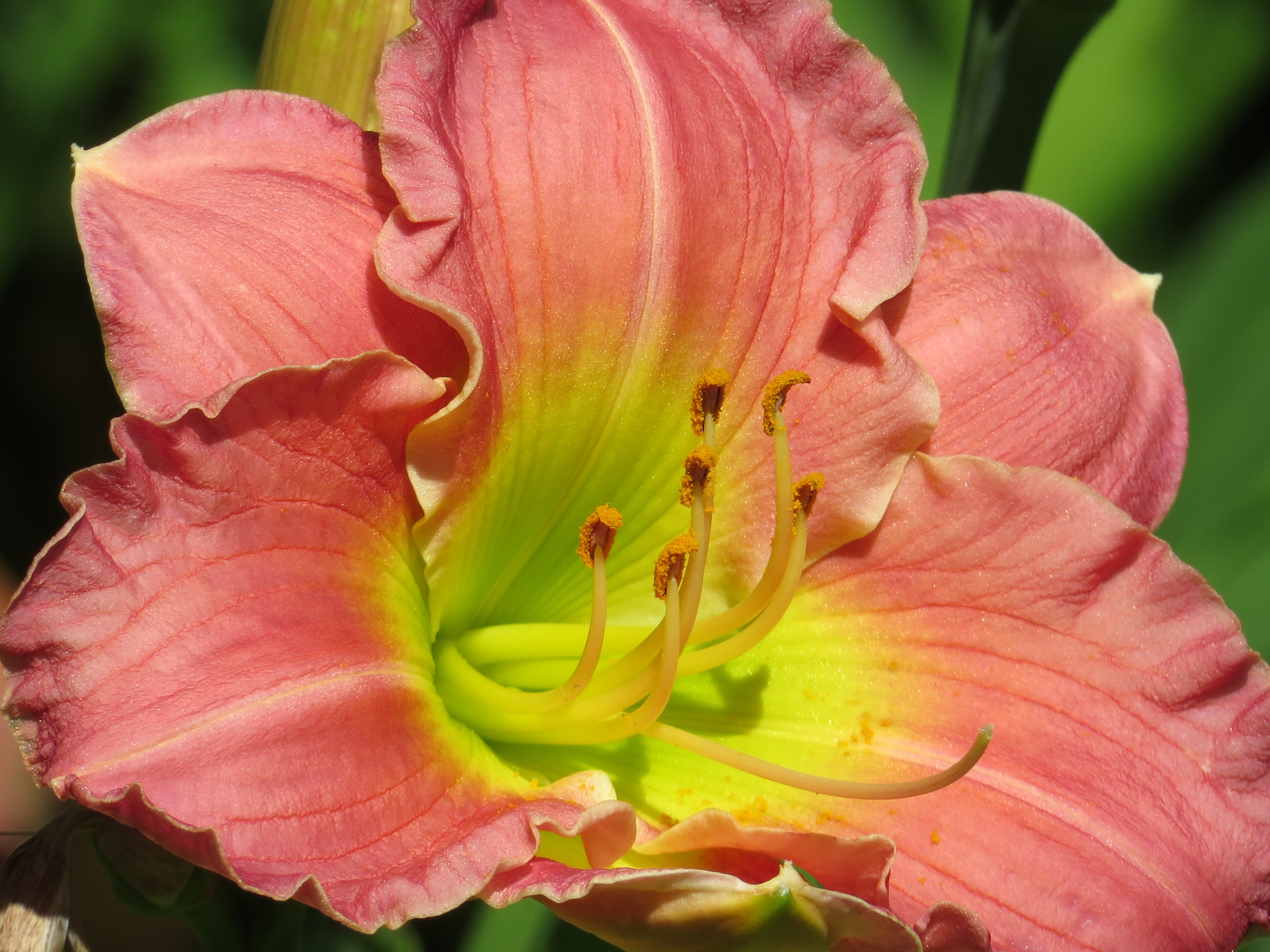
and the fleeting beauty of a Daylily.
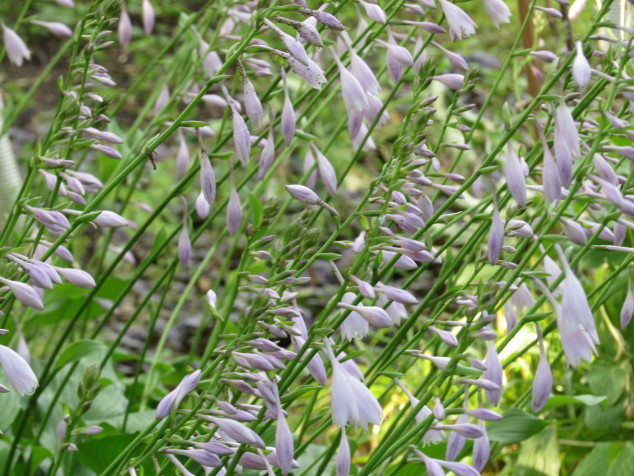
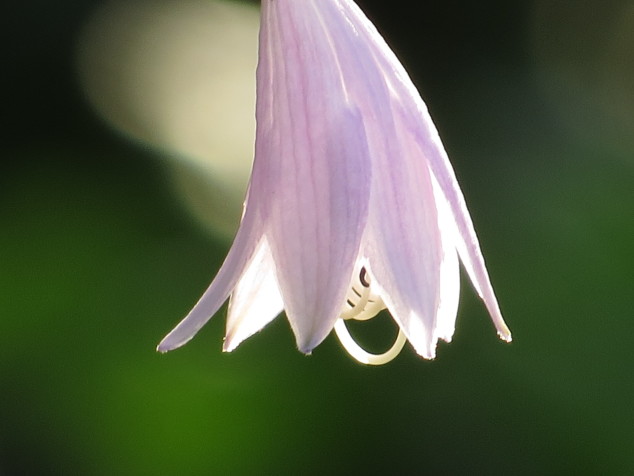
Mature Hosta plants produce an abundance of tall flower stalks covered with light purple, bell-shaped blooms which open from the bottom up. The overwhelming number of blossoms masks the beauty of the individual flower…
…until you look at it closely.
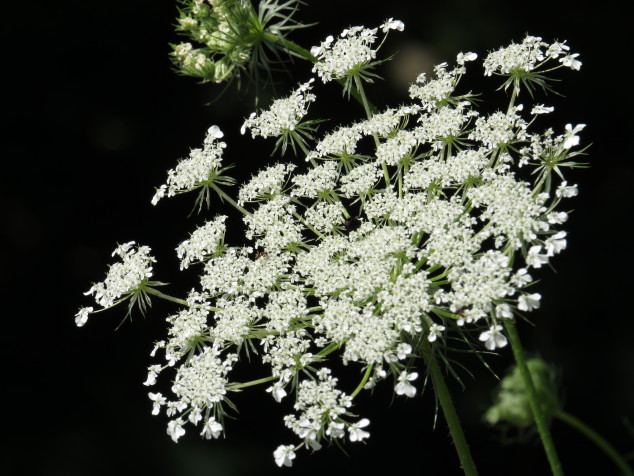
 July is the month for royalty–Queen Anne’s Lace and Queen of the Prairie! Queen Anne’s lace is a biennial. The tender first-year leaves can be used in salads. The root of this ‘wild carrot’ has a high sugar content, second only to the beet among root vegetables, and has been used to sweeten foods. Use extreme caution before harvesting, as the leaves of this edible plant resemble the leaves of poison hemlock, fool’s parsley, and water hemlock, which are all poisonous.
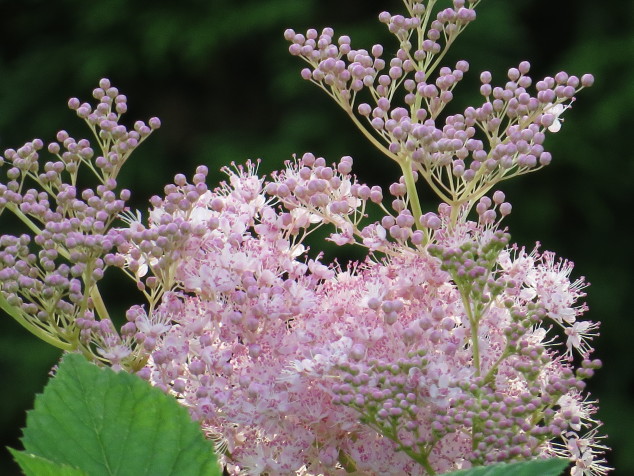
Queen of the Prairie has frothy clusters of pink flowers on three to six-foot tall stems. It is a native perennial of northeastern and north central United States.
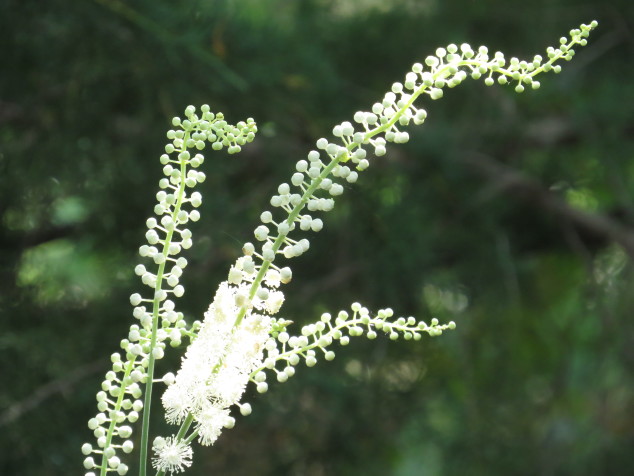
Black snakeroot (Cimicifuga Racemosa) is a tall, shade-loving plant with spikes of bottle-brush flowers.
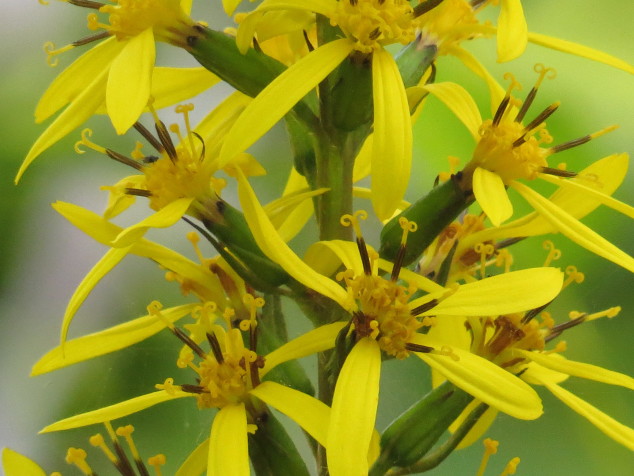
Ligularia ‘ The Rocket’ loves moist shady areas. It is a clumping perennial with toothed foliage and tall spikes of yellow flowers.
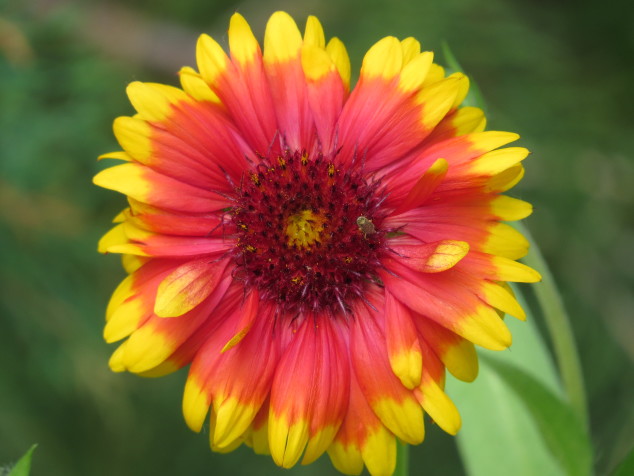
Blanket flowers or Gaillardia are bright, sun-loving perennials that are easy to grow.
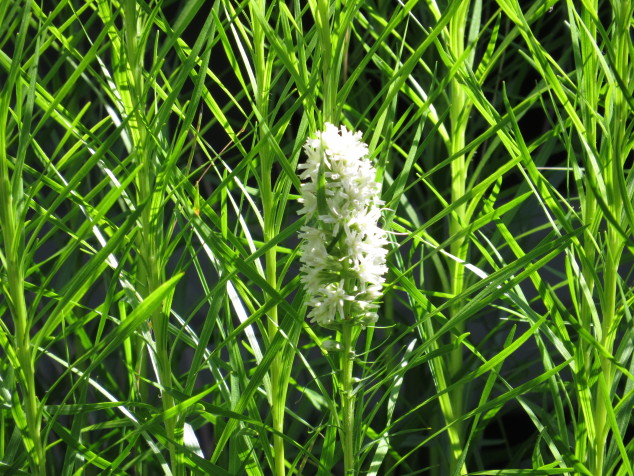
 Liatris or blazing star is commonly purple in color, and we have many of them, but I think my favorite is the ‘Alba’ or white cultivar. The grass-like leaves create a beautiful background to these spiky flowers that, unlike most flowers, bloom from the top down.
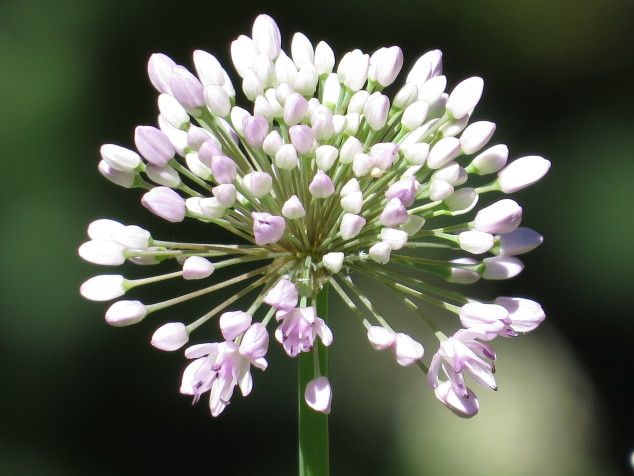
Onions and garlic are Alliums for the vegetable garden, but there are many ornamental Alliums. They are grown from bulbs that need to be planted in the fall. These oniony-smelling plants are deer and rodent resistant and need very little care.
Flowers have an expression of countenance as much as men or animals. Some seem to smile; some have a sad expression; some are pensive and diffident; others again are plain, honest and upright, like the broadfaced sunflower and the hollyhock. Henry Ward Beecher
Perhaps we have more in common with flowers–and vice versa–than we thought! Some of us are bold and stand out in a crowd. Others are understated and may get lost in a crowd. Some have a calm and regal air about them. We are all different sizes and colors and smells. But one thing is for sure–each one of us is a valued member in the Garden of Life.
P.S. The three eaglets that we have been following have fledged! Another empty nest!
Gleanings from June 2015
And what is so rare as a day in June? Then, if ever come perfect days….Whether we look, or whether we listen, We hear life murmur, or see it glisten. James Russell Lowell
The long, light days of June have slipped by, and we really have had some perfect days! The combination late Spring/early Summer brings warm, wonderful weather, incredible plant growth, exquisite flowers, and animals intent on nesting and raising their young. Life murmurs and glistens all around us, subtle yet extravagant, common yet miraculous.
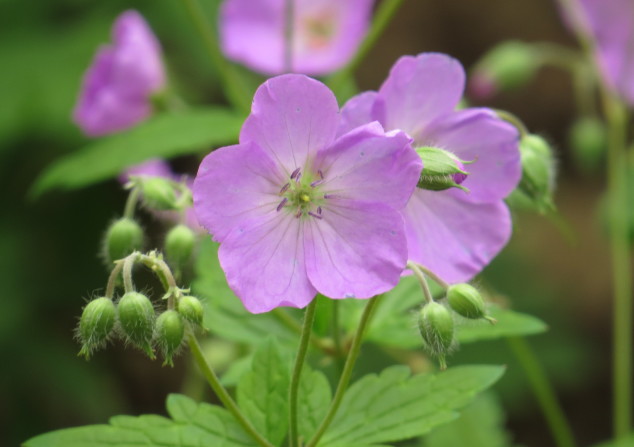
Wild Geranium is a delicate woodland flower that graces the paths through our woods.
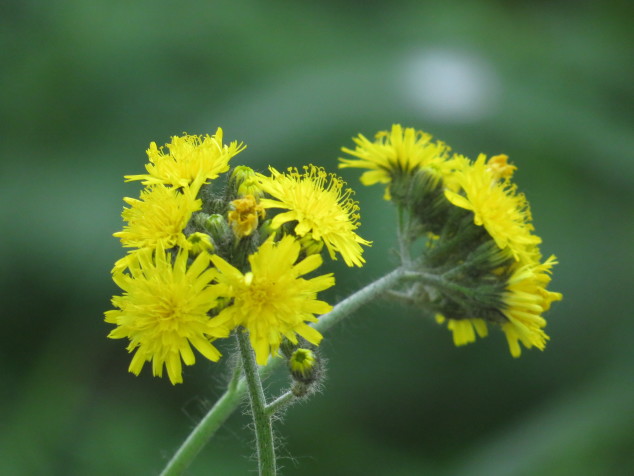
False dandelion grows in our woods, though I have also seen it in full sun along the road ditches. A cluster of small, dandelion-like flowers sways atop a two-foot stalk.
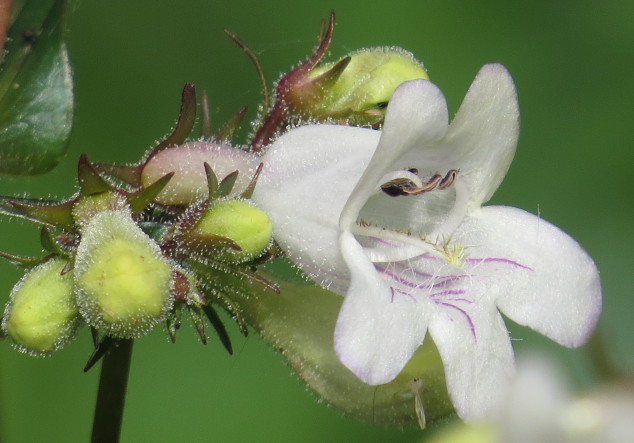
Our sun garden displays the glorious Penstemon digitalis ‘Husker Red’. It has dark maroon foliage and shining white flowers on tall stems. You can see why its common name is Beard tongue; the sterile stamen (one of five stamens) is lined with tufts of small hairs.
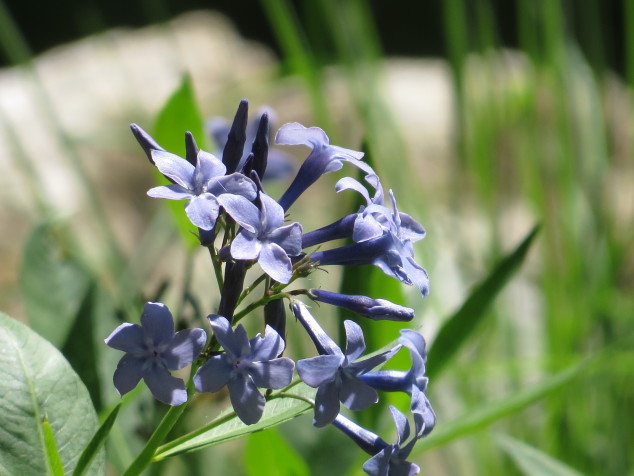
One of my prairie garden flowers–Amsonia or Bluestar–looks perfect in front of the wispy prairie grasses and the Western South Dakota petrified wood.
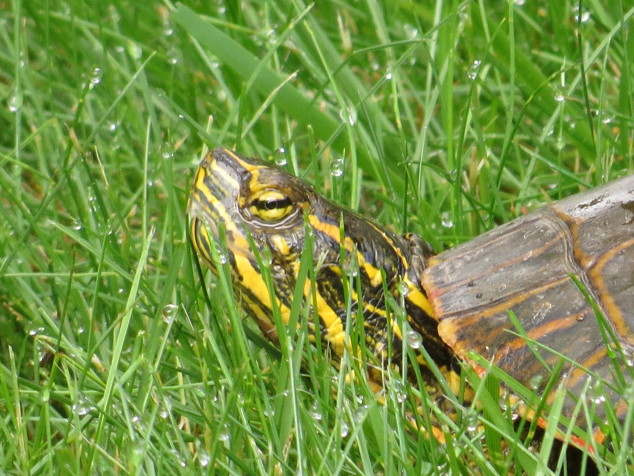
One of the critters that walked through our June yard was a Western Painted Turtle. She quickly ambled through the dewy grass until she saw me–then she stopped as I got pictures of her. She was likely on her way to her nesting place where she digs a hole with her hind feet and deposits her clutch of leathery white eggs. Incubation time is 72-80 days, and since we live so far north, the hatchlings stay in the nest until the following spring!
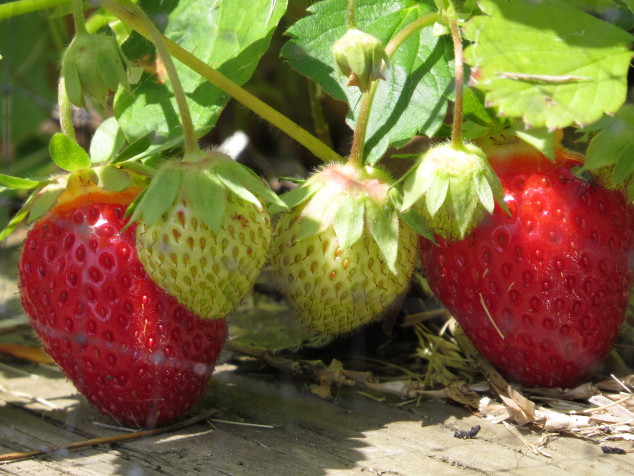
 Tiny wild strawberries and our larger cultivated ones turn a shiny red in ripeness–a sweet treat for whoever finds them first.
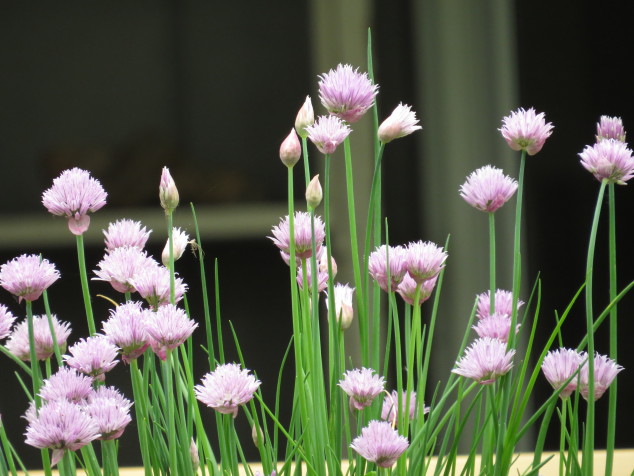
Outside the screened-in porch, the chive blossoms line up like children at the schoolyard.
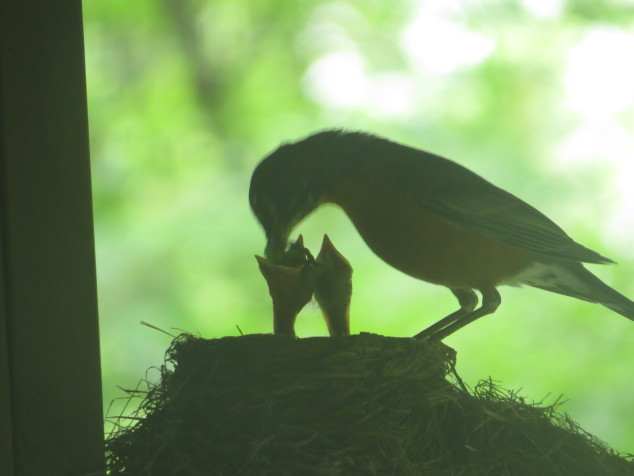
And speaking of the screened-in porch, my re-do project is on bird delay! A robin thought the unscreened cross beam would be a perfect place for her grass and mud nest. There are three hungry baby birds in the nest in spite of the sawing and hammering going on below. Staining and re-screening will have to wait until the young ones fly from the nest!
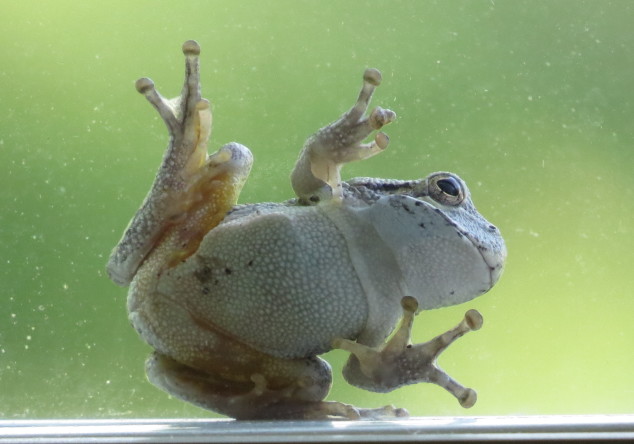
A couple of other creatures seemed to want a glimpse of human life inside the big wooden box with windows. I observe Nature every day–do we ever think about the creatures observing us?
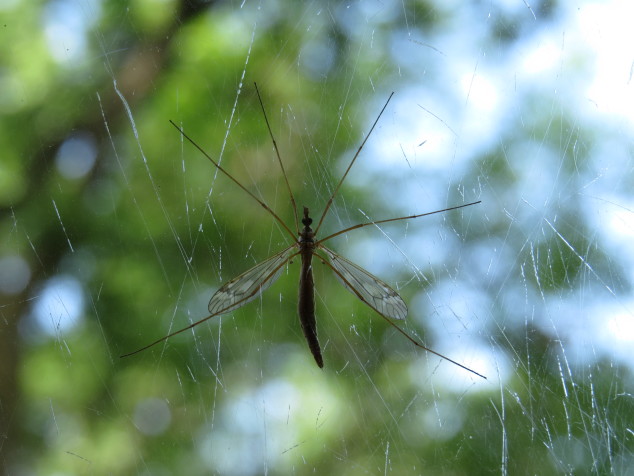
All I can say to the little critters is that I definitely need to wash windows!
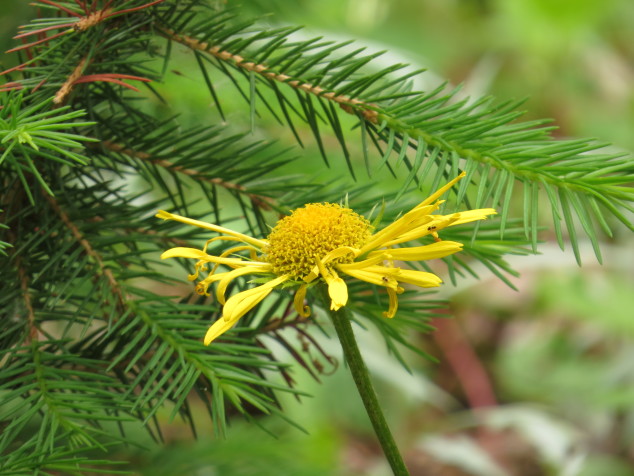
I liked this photo of Leopard’s Bane against the Norway Spruce tree. The flower is spent, on its way to decay with petals drying and falling off and with ants crawling on it. It is up against the supple new, green growth of the spruce tree. A study in contrasts.
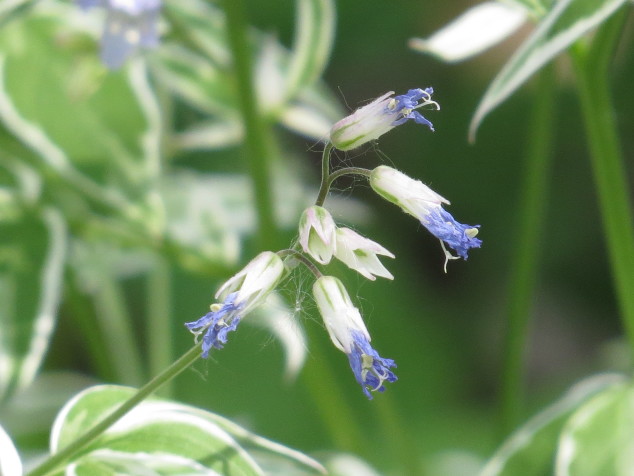
But there is beauty in the ‘spentness’ of flowers, too. Dried blue blossoms of the pretty variegated Jacob’s Ladder reminds us that the bridge between heaven and earth includes the worn out and expended of us who are just a little farther along on our journey.
Perennial Blue Salvia in its ‘spent’ state provides food for a pair of American Goldfinches. It is in its prime time of nourishment for others, though its peak visual beauty is past.
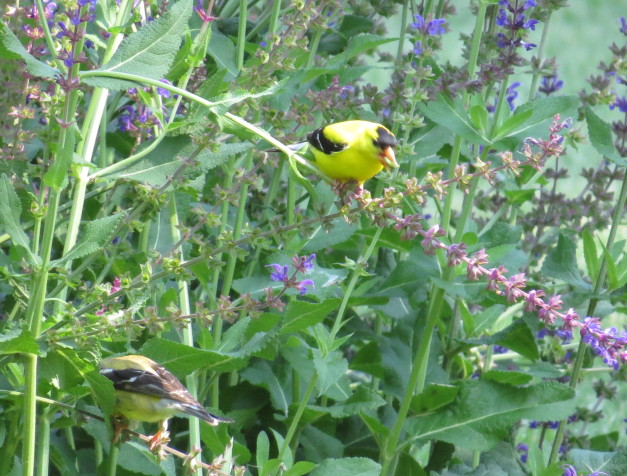
So June encompasses the fresh, invigorated newness of plants, flowers, and creatures and also those in decline. Like all the seasons of Nature and of Life, change is always happening, whether barely discernible or a drastic metamorphosis.
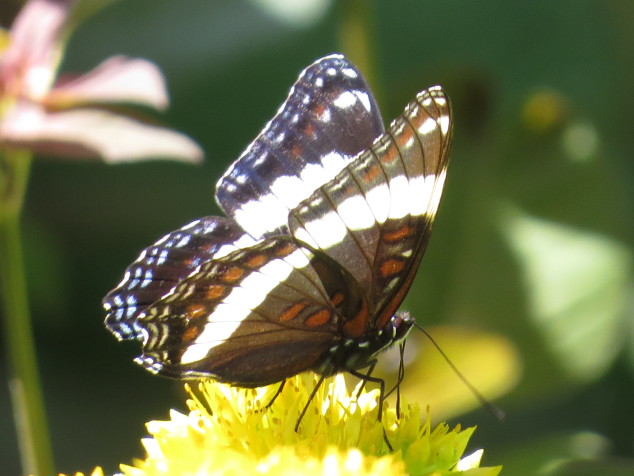
Perhaps the rarity of a perfect day in June is not so rare after all. Perhaps every common day holds miracles waiting to be seen and heard. Where ever we are on our journey, whether ready to fly from the nest, in the perfect place, or in a spent state, we have gifts to offer the world and one another. As the murmur of angels ascending and descending beside us, escorts us on our journey, it is our faces that glisten on each perfect day.
Listening to the Silence
My middle growing-up years were in Pennsylvania on our little acre of hilly land, out of sight from everything, but within earshot of the Pennsylvania Turnpike. Most every summer, we would pack up the Mercury wood-sided station wagon with us four kids, our little brown suitcase of ‘things to do’, and a Johnny Cash eight track tape and head west on that turnpike. Most often we would leave on Friday night after my Dad got home from working at the shop, and my parents would take turns driving, straight through, to my Grandparent’s place in South Dakota. We would arrive early Sunday morning before my Grandpa headed off to church and my Grandma put a large beef roast in the oven. It was always good to be back Home!
One evening–maybe that very first one after our long drive–my Dad was sitting on the porch stoop. I opened the door, walked out onto the porch, and asked him what he was doing. He said, “I’m listening to the Silence.” I can’t remember how old I was at the time, but I remember thinking that was a crazy thing to say! How can you listen to Silence?! He patted the cement beside him for me to sit down. He told me about hearing the crickets and frogs, the cows lowing in the paddock as they came up from the pasture to the round, wooden water tank, how the windmill squeaked as the breeze moved the blades, and how the geese chattered in the slough over the hill. We sat there together for a while, and I really started to listen for all the different sounds of the Silence on the farm.
Today is Father’s Day and the First Day of Summer! I smile when I realize it’s 10 o’clock in the evening, and there’s still a hint of light outside. I love it when I can go outside with no coat and no shoes! I laugh at our dog when we go out to get the mail, and she rolls in the warm grass and watches me walk to the mailbox. I marvel at all the bird mamas and daddys who are flying, hunting, and taking care of their babies.
Summer is…my most favorite flower–perennial Blue Flax…
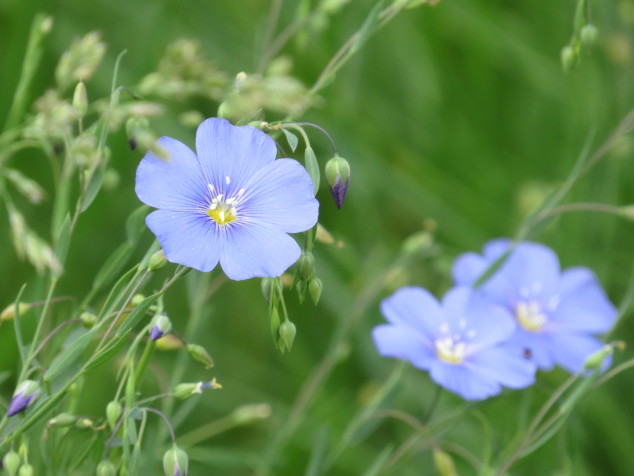
blooms and birdhouses…
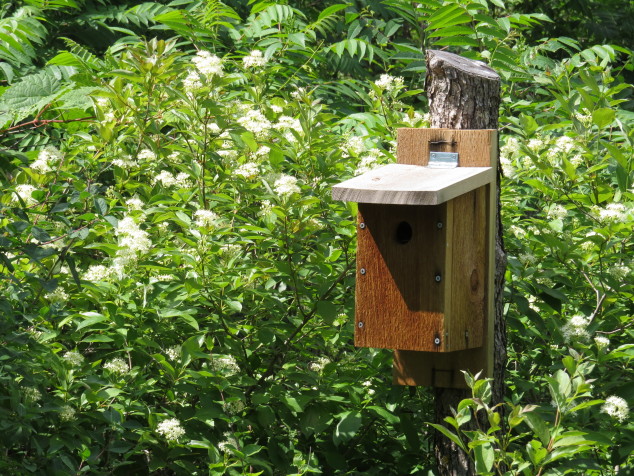
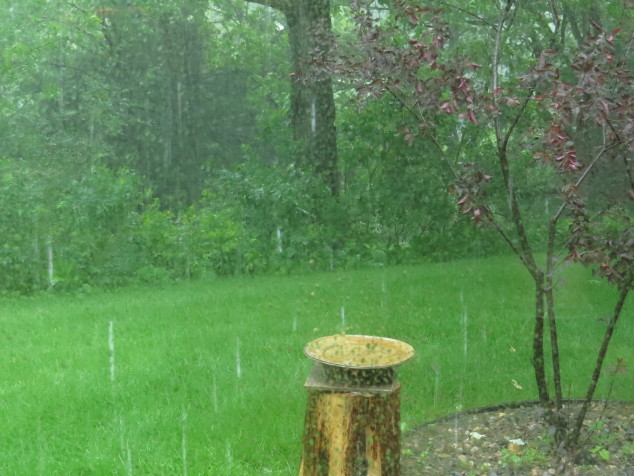
rain…
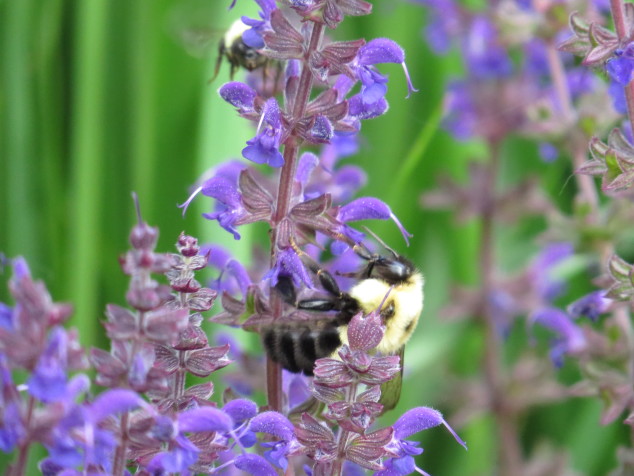
bumblebees…
and birds.
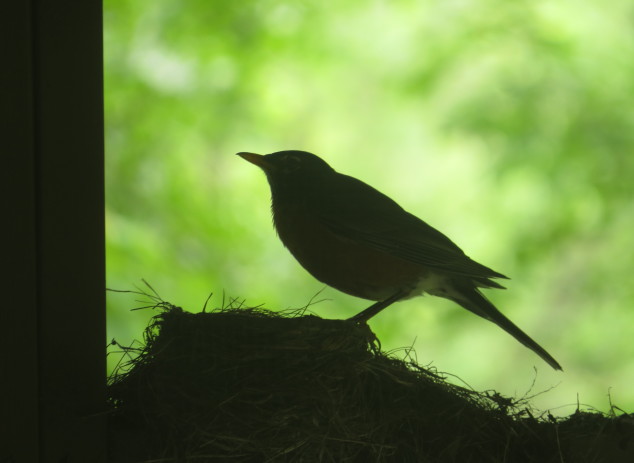
Summer is being outside with Nature, toes in the grass, head under the stars, fish on the line, sun on skin, and listening to the Silence.
Thinking back on those 1500 mile trips with four kids in the car, the constant buzz of turnpike traffic at our house, and the din of diesel engines working as a truck mechanic, it’s no wonder my Dad wanted the calm and quiet of an evening on the farm in South Dakota. That special memory of me and my Dad has stayed in my mind and heart for decades, and I continue to appreciate the quiet sounds of Nature. Happy Summer to all of you, and if you can’t be with your Dad today, I hope you can call to mind a special memory of him while listening to the Silence of Nature.