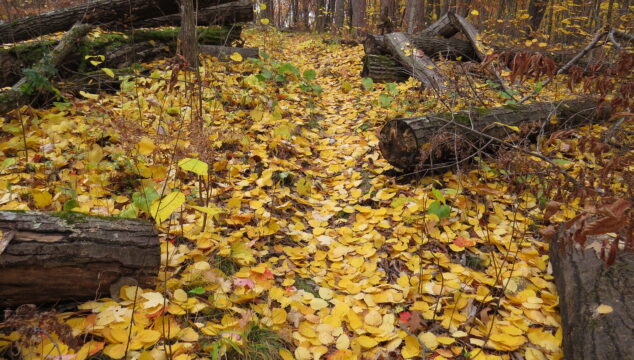
Come walk with me in the peak Autumn beauty of the Northwoods. To say that I love this time of year is an understatement. Most everyone can appreciate the colorful falling leaves---it reveals the 'true self' of a tree when its leaves are no longer producing chlorophyll. Their true colors are revealed, and there is something simple … [Read More...]
Knee-deep in Snow and Peace
I have always been intrigued with people who say they don’t take any stock in people’s praise of their work….if they did, it would follow they would also take to heart the criticisms. Just think about the ramifications if that is expanded to praise and criticism of who we are as a person. This opens up so much about who we are and how we operate in the world. At one level, it sounds like a lofty, enlightened realm-of-being, when one is so grounded in who they are and what they do that it truly doesn’t matter what others think. They do their good work regardless. On the other hand, there are callous, uncaring people who do what they want to do for their own purposes, who couldn’t care less about what others think or the very real consequences their actions may have on other’s lives. It’s kind of a mind-boggling philosophical humanity question, but I bet most of us have struggled with the themes of praise and criticism at some time in our lives and how it relates to our work and to our being.
I have inadvertently been a people pleaser most of my life—I didn’t consciously choose such a role, but I actively wanted people around me to be pleased—with themselves, with the circumstances, with me, with everything. I doled out praise thinking everyone wanted and needed to be affirmed. (Not sure that’s really in the past tense.) Exhausting work, as it turns out. Thankfully most of us age out of that to a great extent as we choose whether our ‘limited’ energy goes to others or to our own well-being. My challenge has been how to do that and still be a force of goodness to the people around me and for the world. I know I’m not alone in that rigorous challenge.
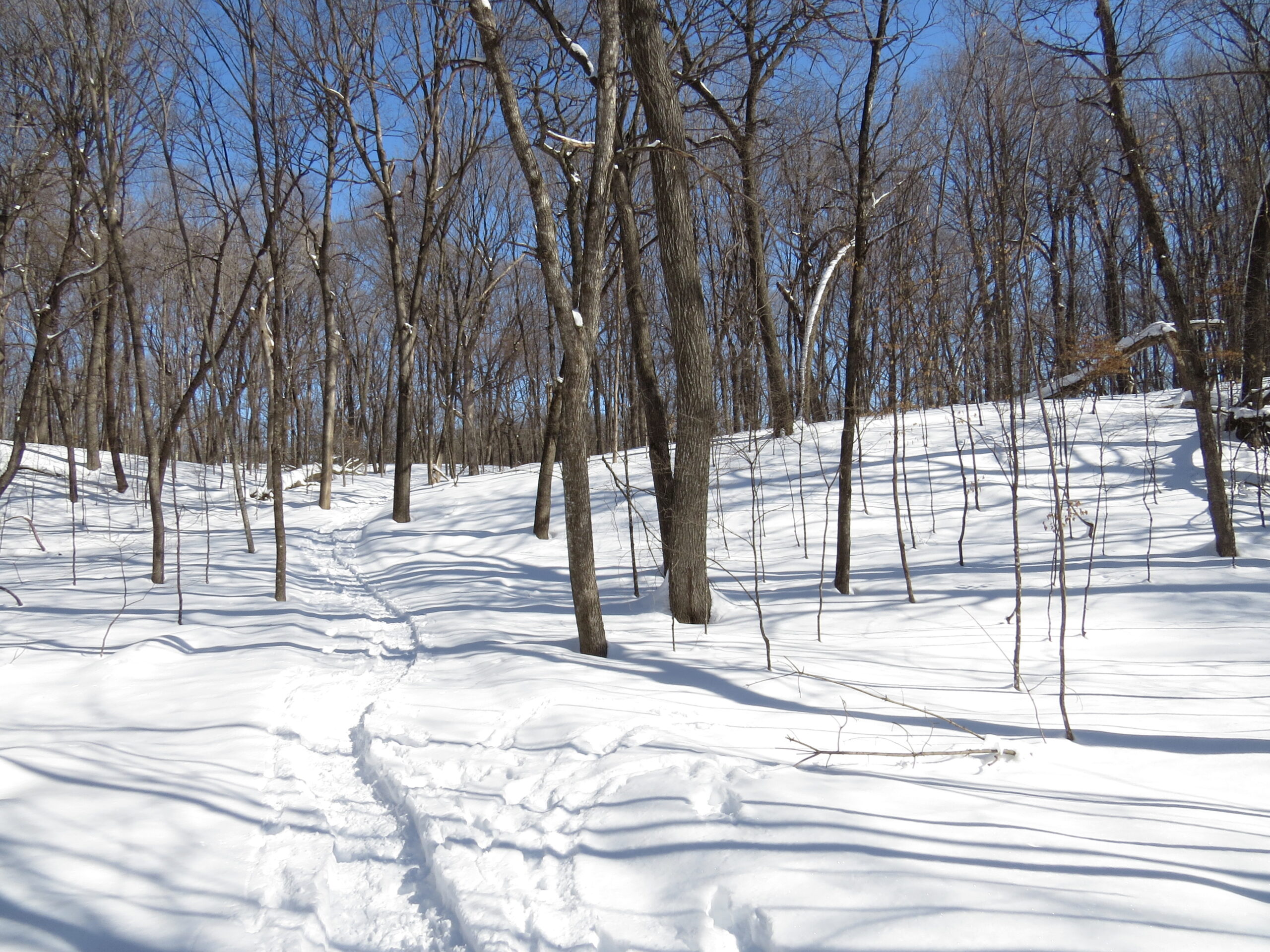
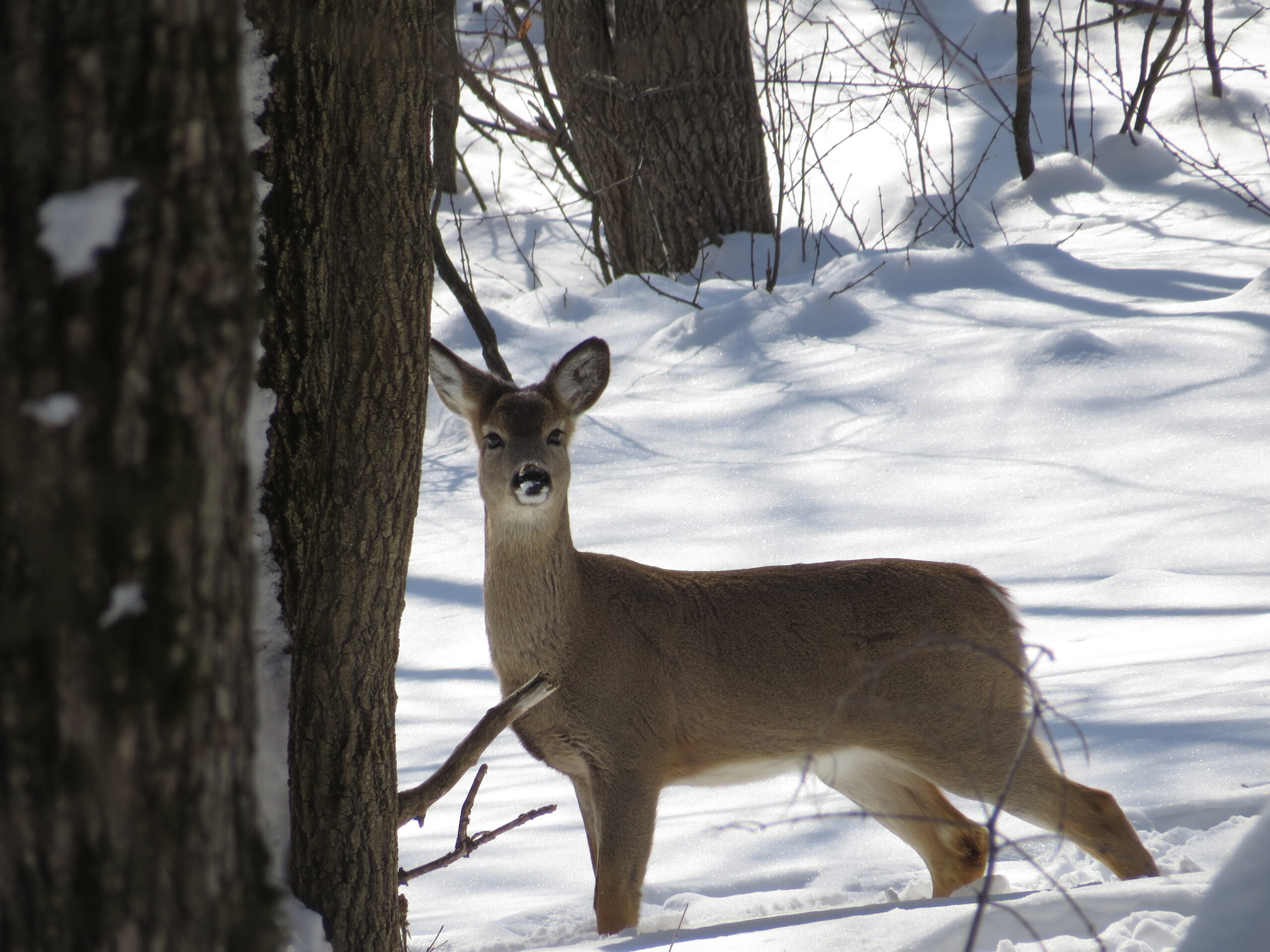
As overwhelming and existential as these questions are, I have slowly realized (and was recently reminded by my friend Mark) that the inner quality that needs to be cultivated is peace. It’s not about giving and receiving praise. When I was younger, I really had no idea what ‘peace’ even meant, let alone how to manifest it in my own life. I take that back—I did want to be a peacekeeper in my people-pleasing role. I did desire external peace—no conflict, no chaos, no discord, no disturbances. No kidding. My job is easier now that I can work on bringing internal peace to myself. A big part of that is accepting and respecting all the former iterations of myself with all the flaws and foolishness that I embodied. Another part is actually experiencing peaceful places. I love the stripped-down winter woods that lays bare the essentials—blue skies, brilliant white snow, and textured gray-brown wood of the trees.
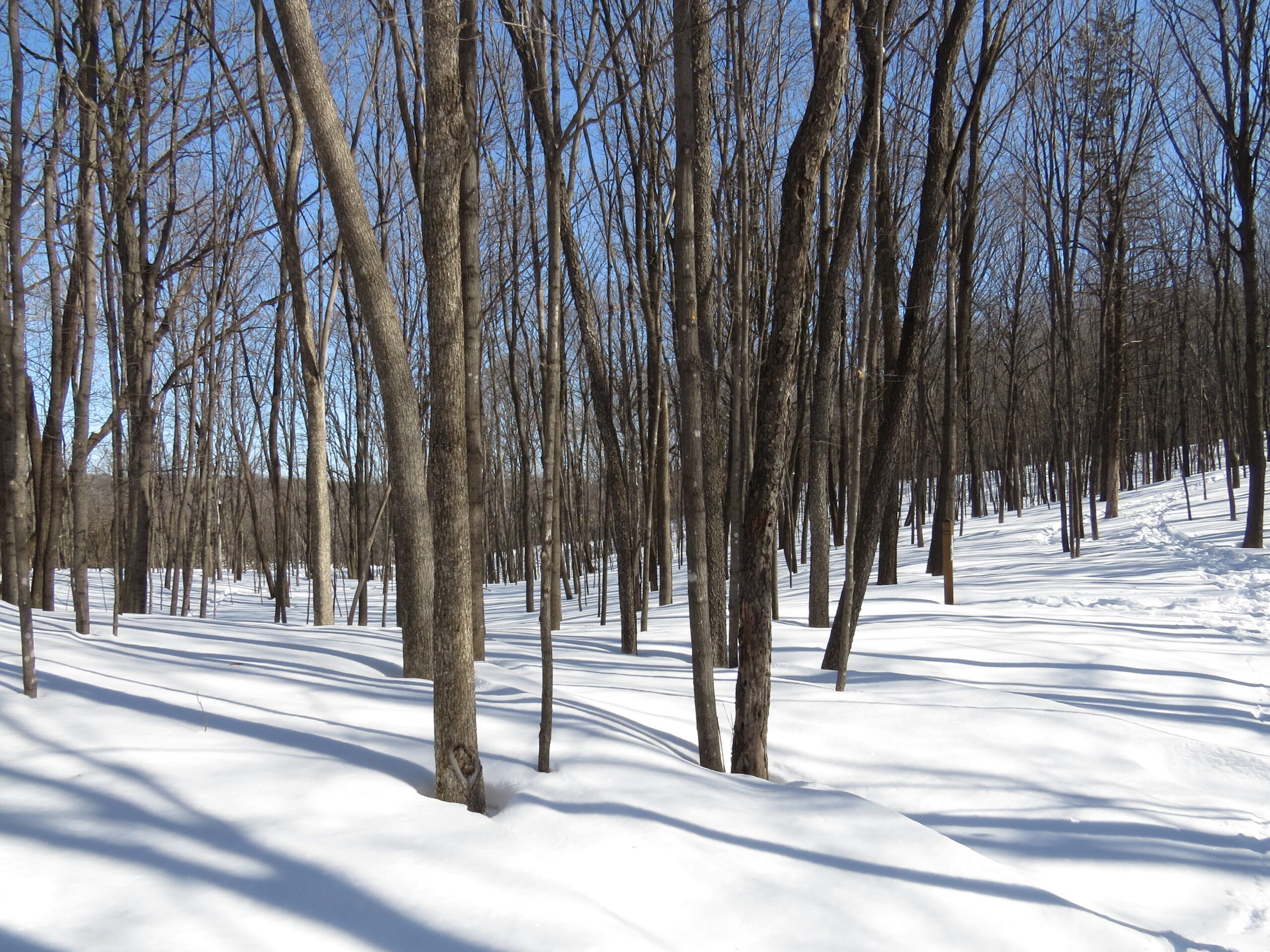
The clear sky and sunshine illuminated another essential—our shadows. To come to peace, we must know and accept our shadow side. Easier said than done.
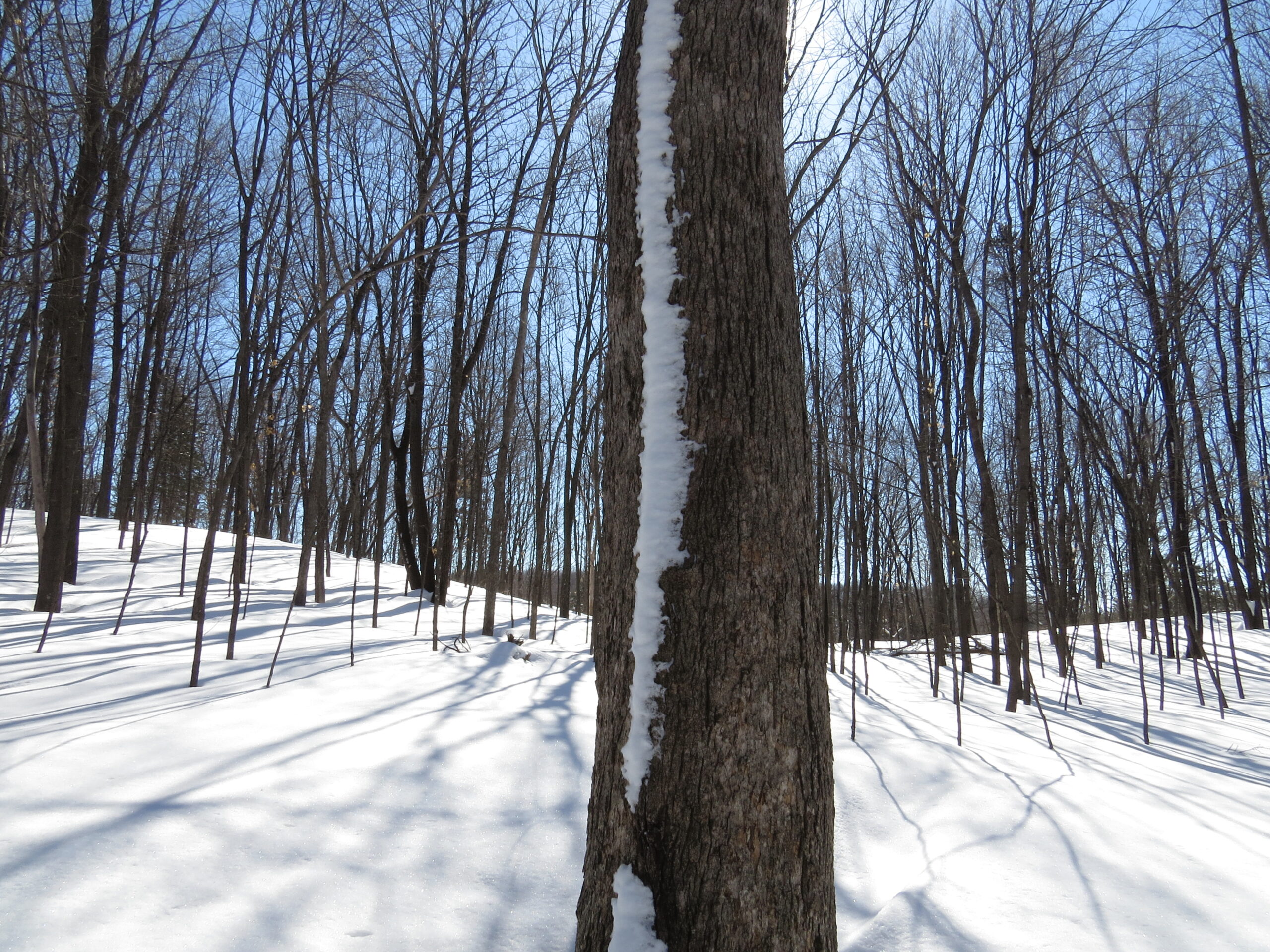
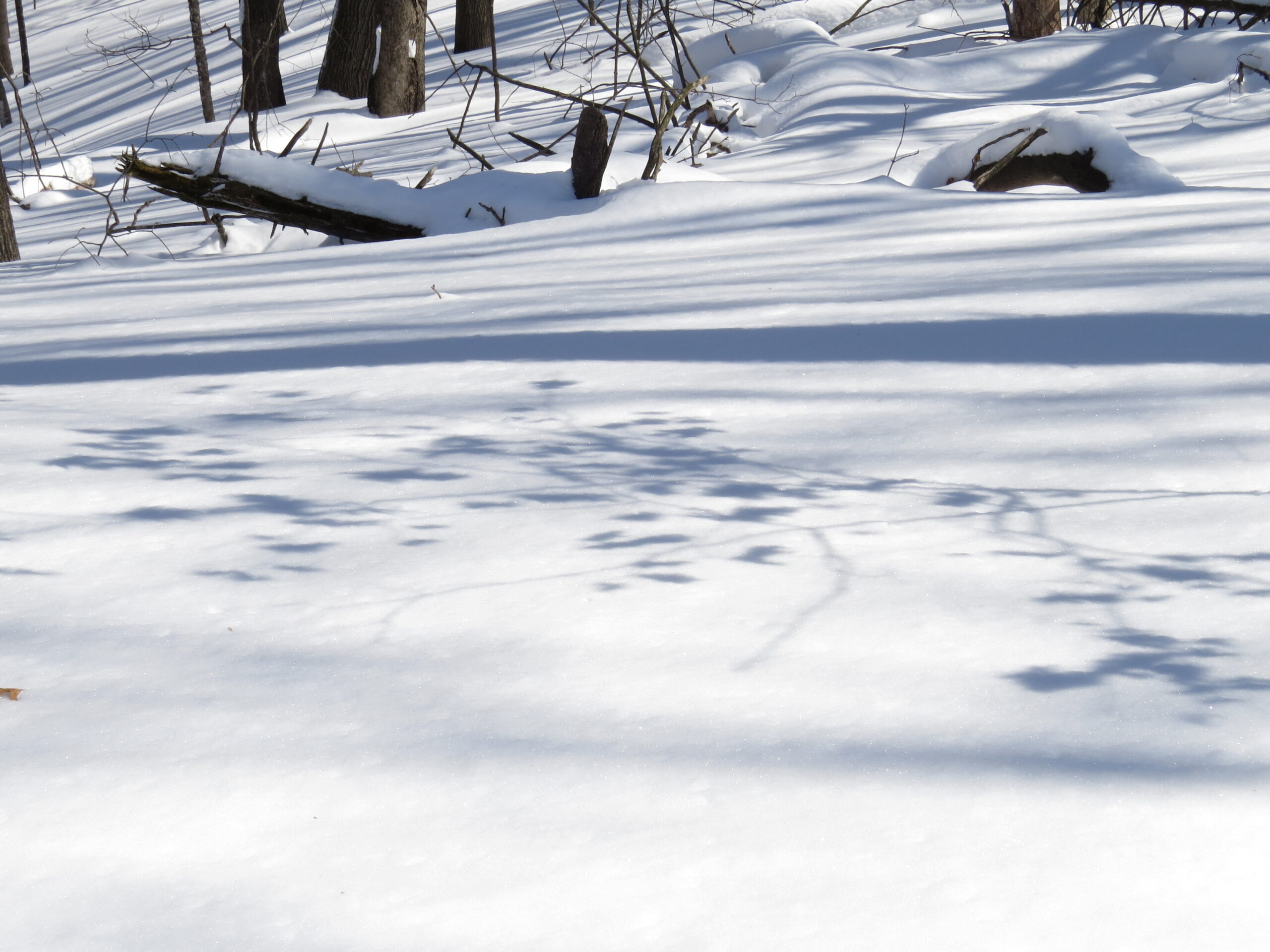
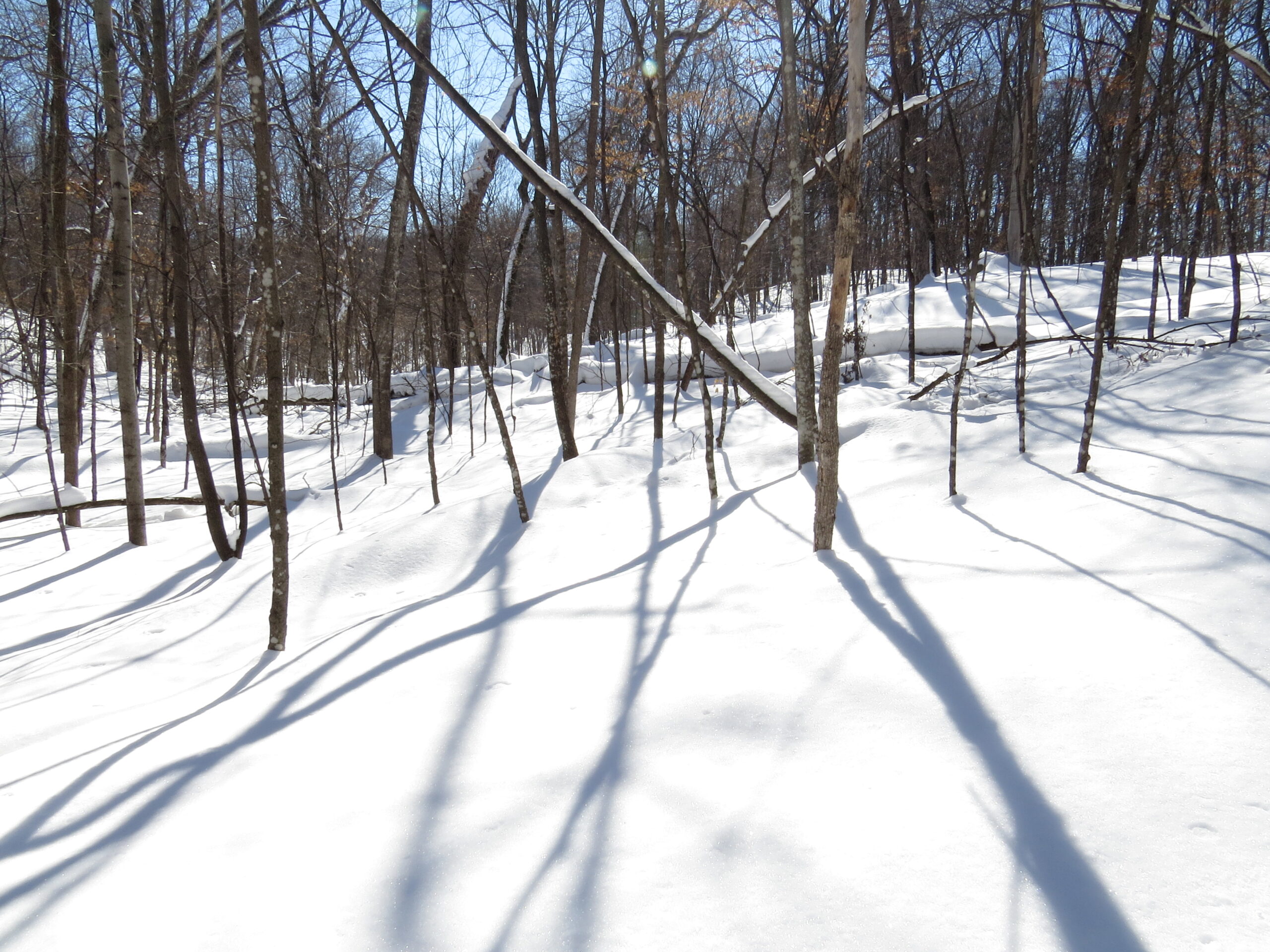
For peace, we have to allow decay and death to happen—to old ideas, to old ways, to old things and people who have lived their lives with valiant strength and their God-given goodness.
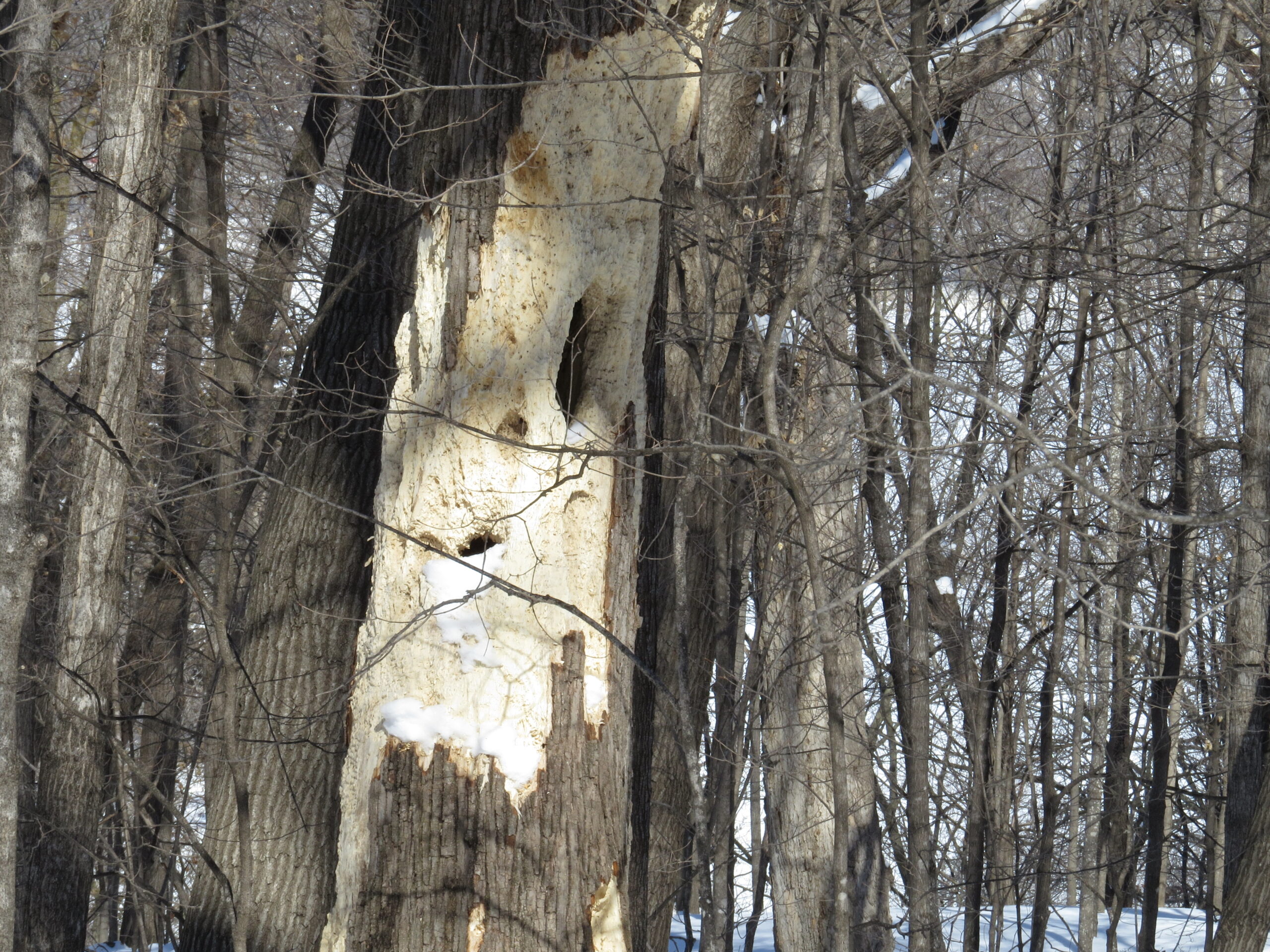
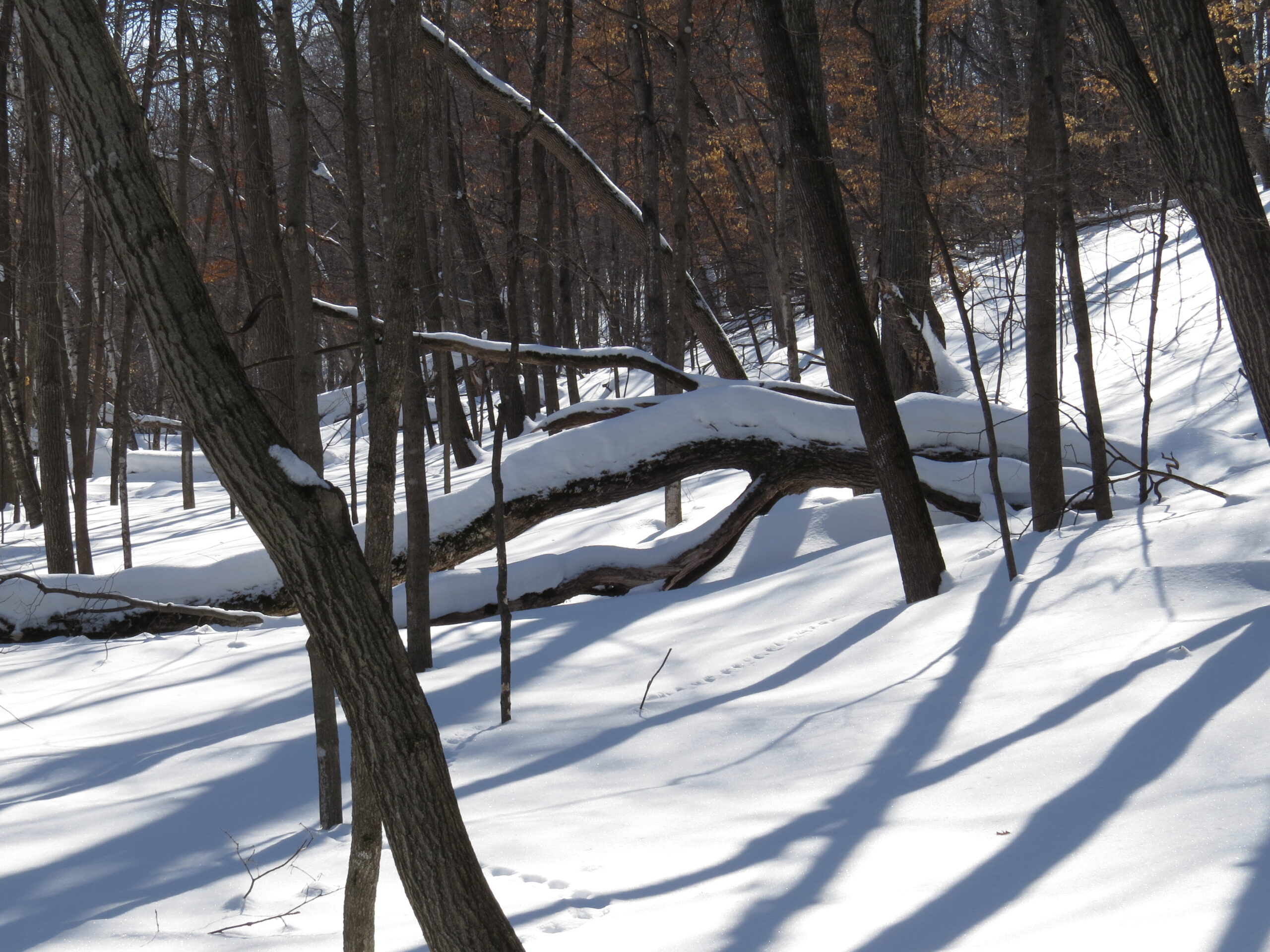
For peace, we must come to terms with the people in our lives—those in the past and those who surround us now. That may be an uphill climb.
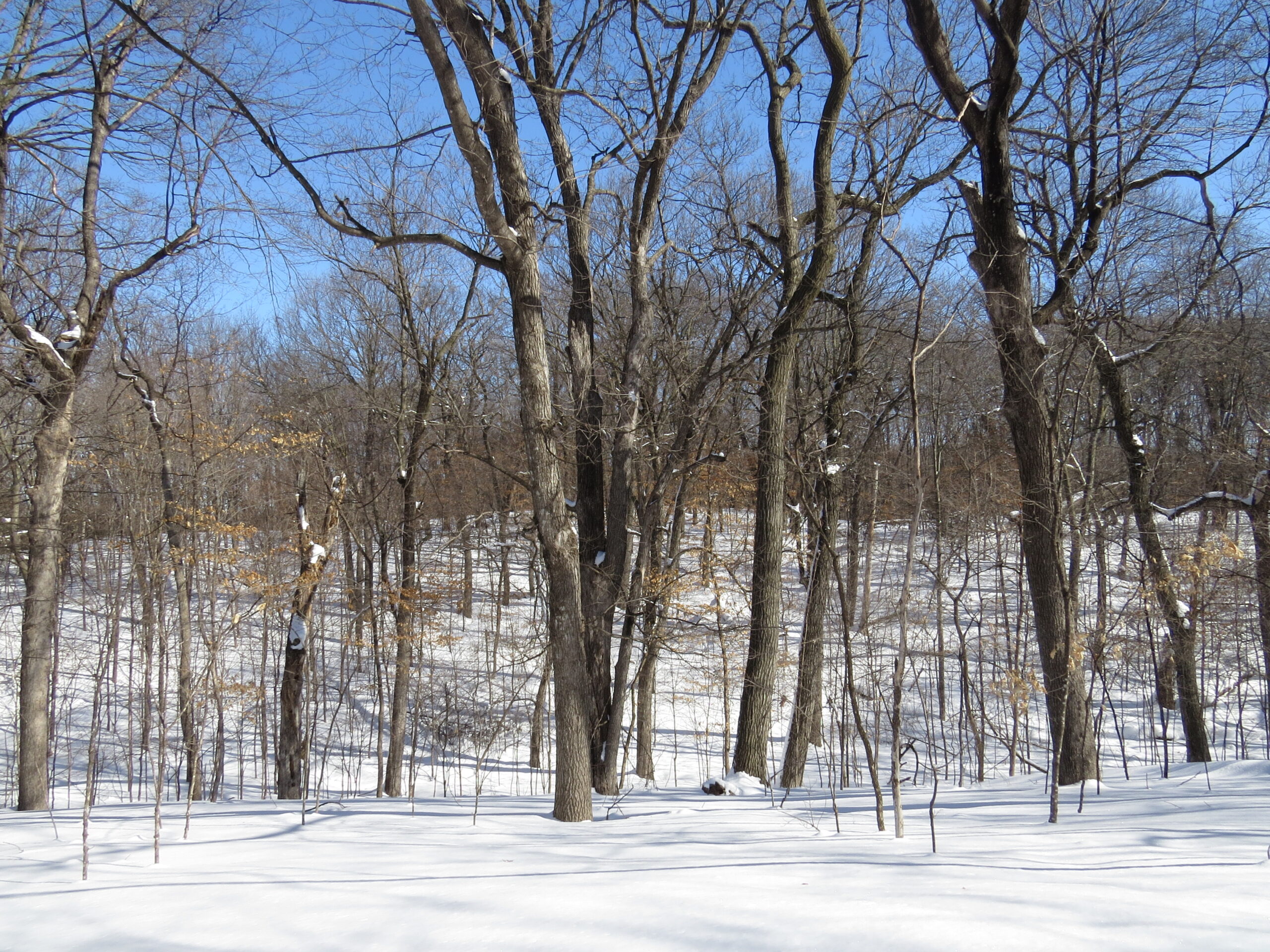
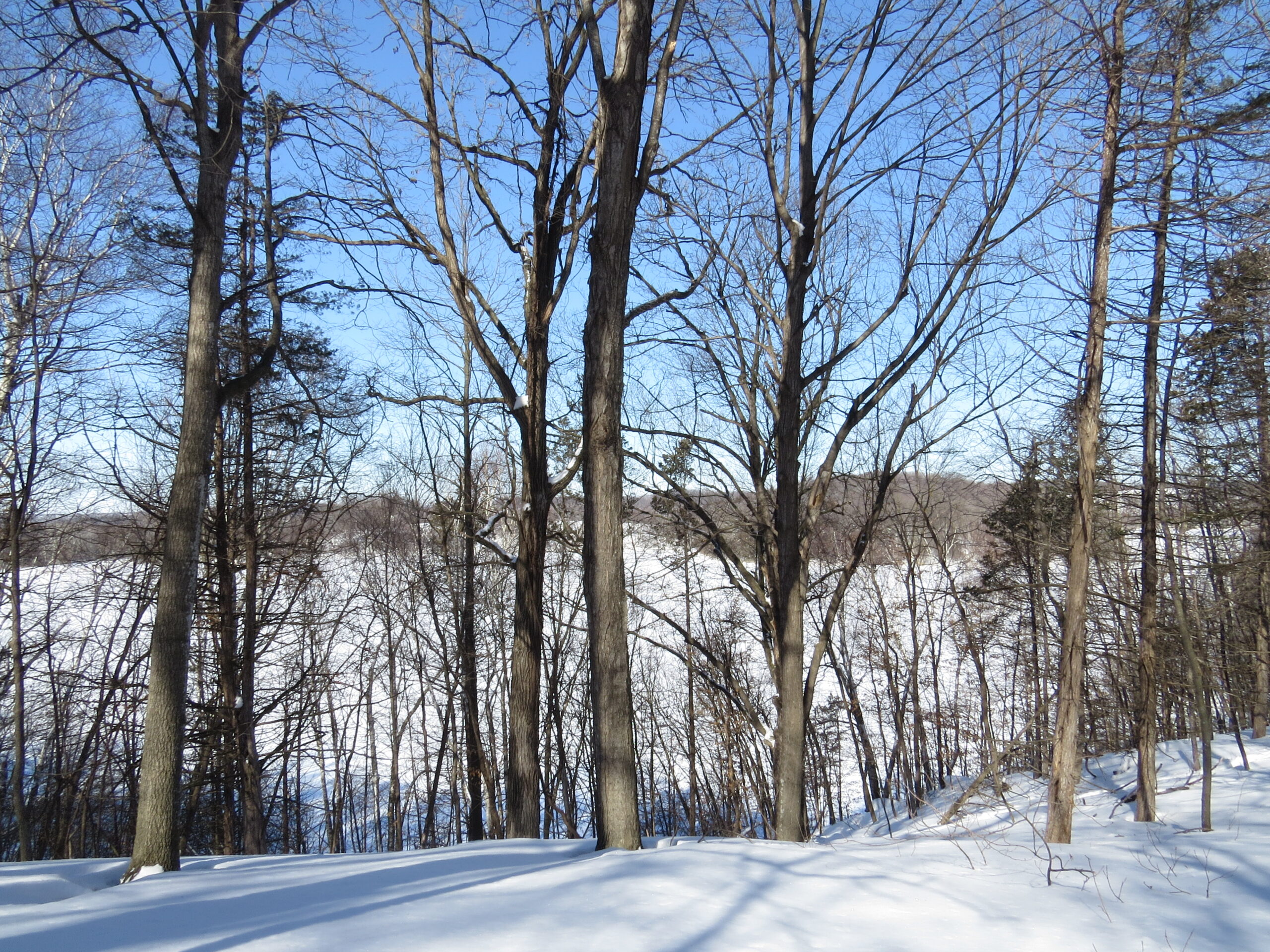
Peace is living into who we have become with age and experience. The travails of life may swirl around us, but they don’t overwhelm us as much as they did when we were younger. Humbly accept the power of you.
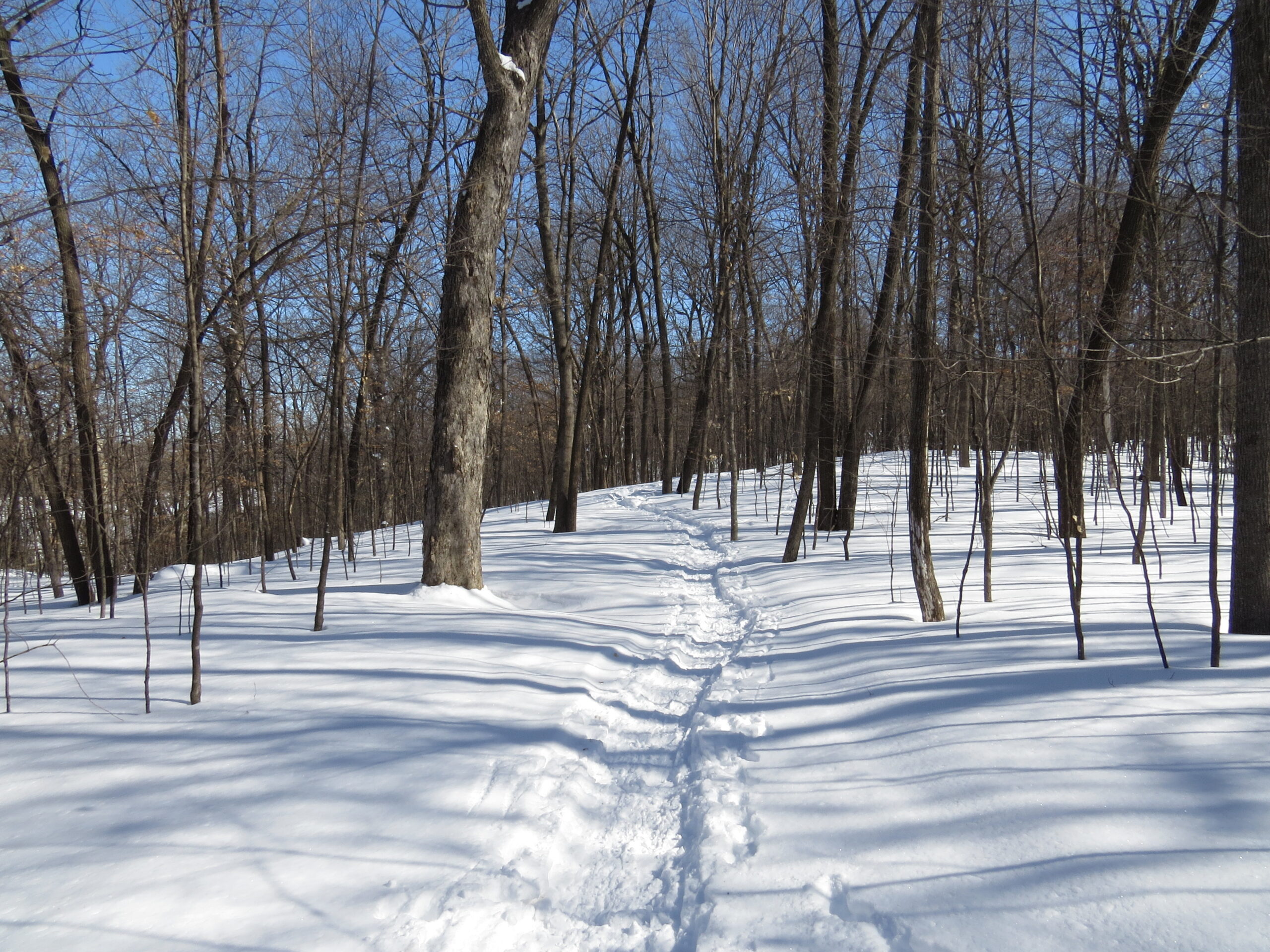
Peace is climbing the hills, letting the shadows slide down behind us.
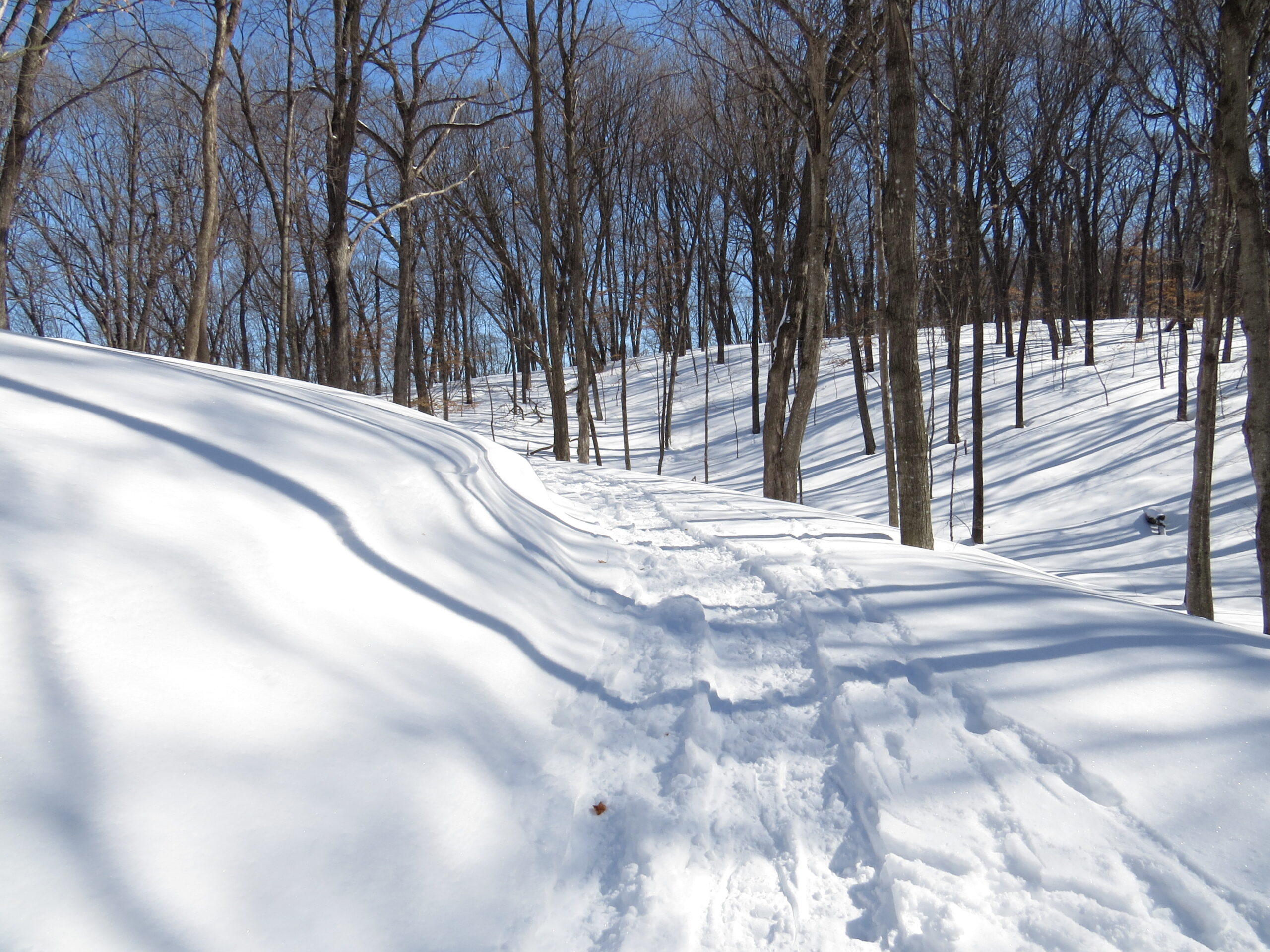
Peace is letting the sunshine soothe and warm us like a humming lullaby.
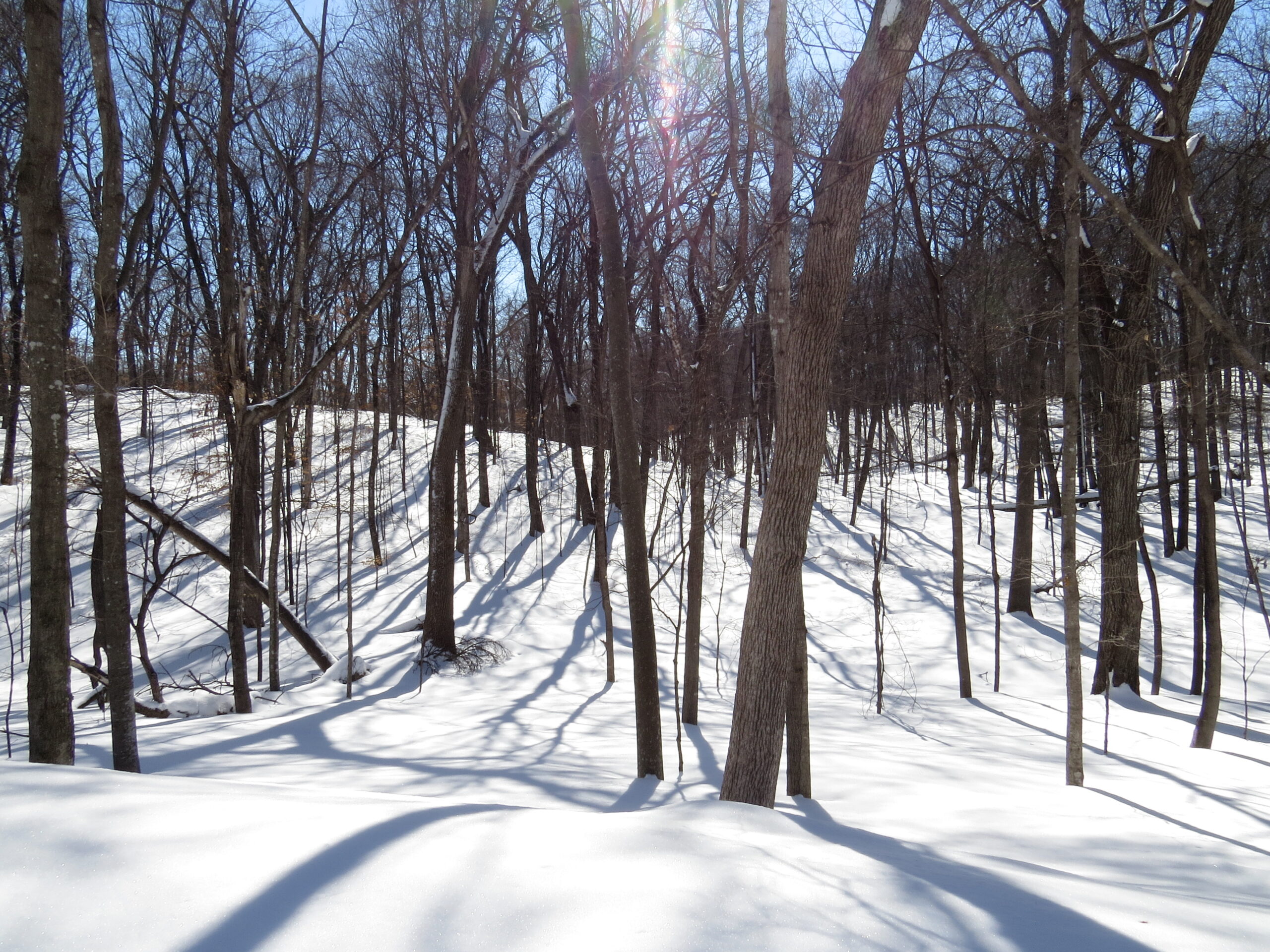
Peace is turning a corner when others choose a different path.
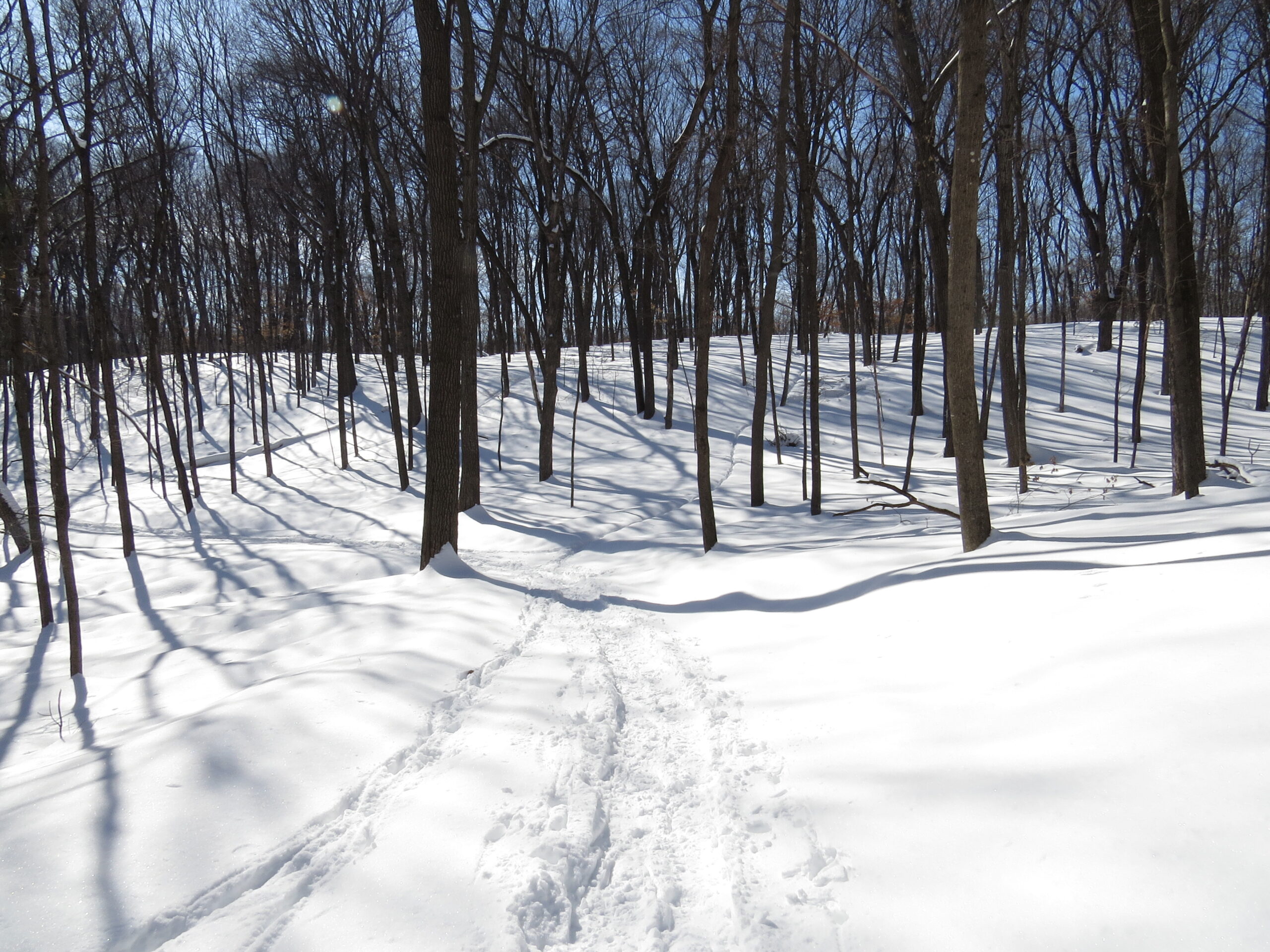
Peace is having faith in the seasons of life.
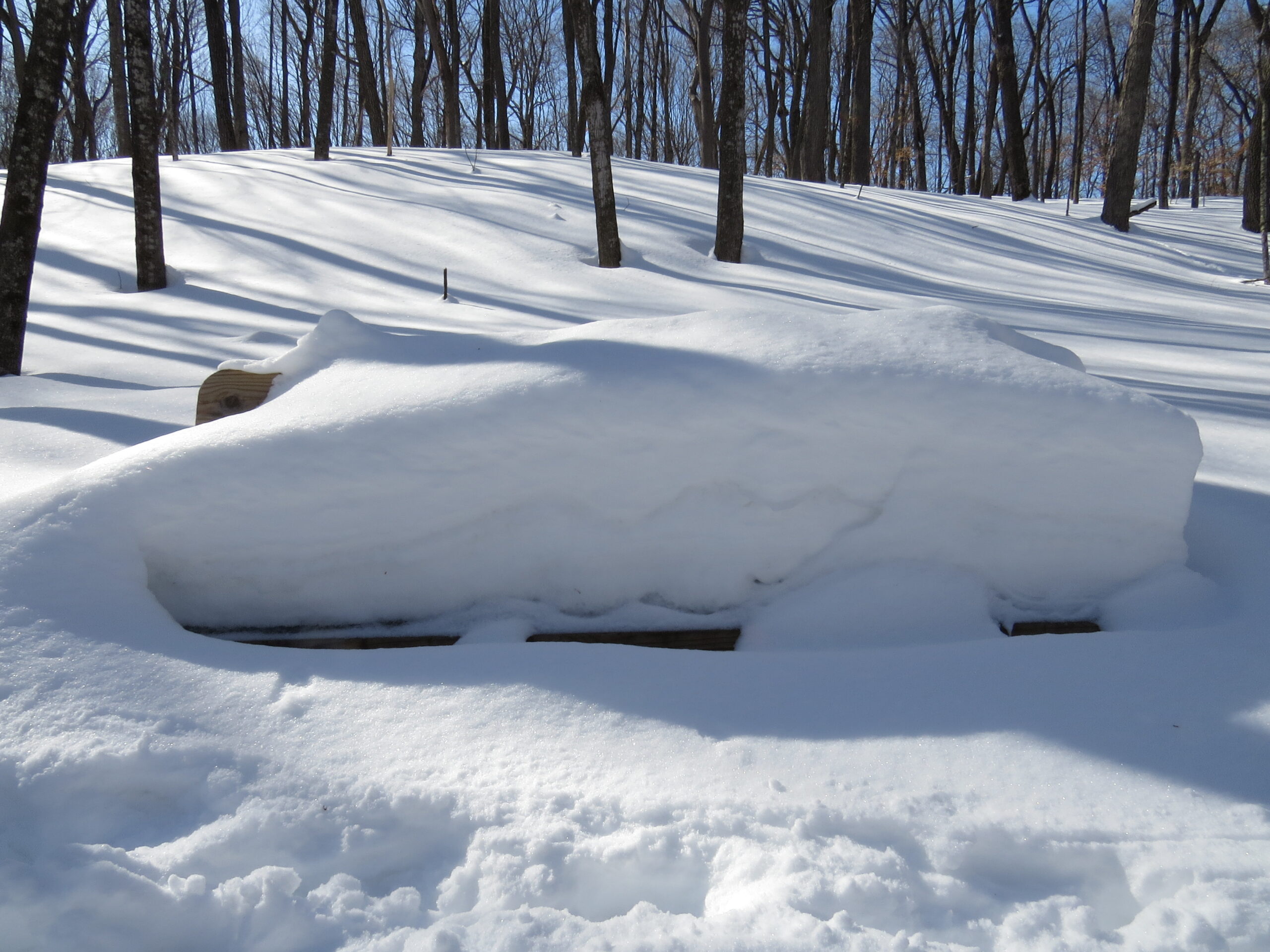
Peace is glimmering silence for thought and introspection.
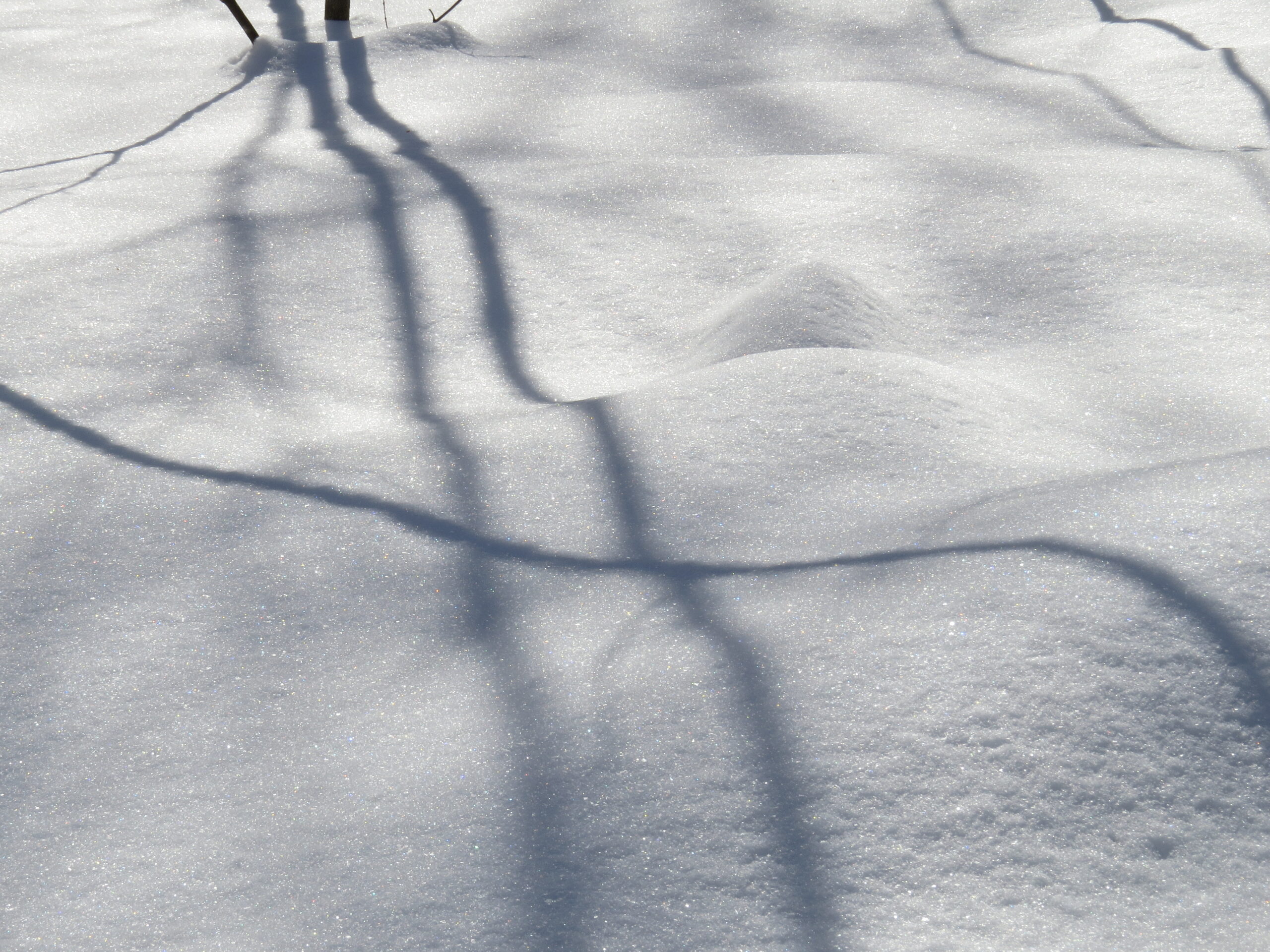
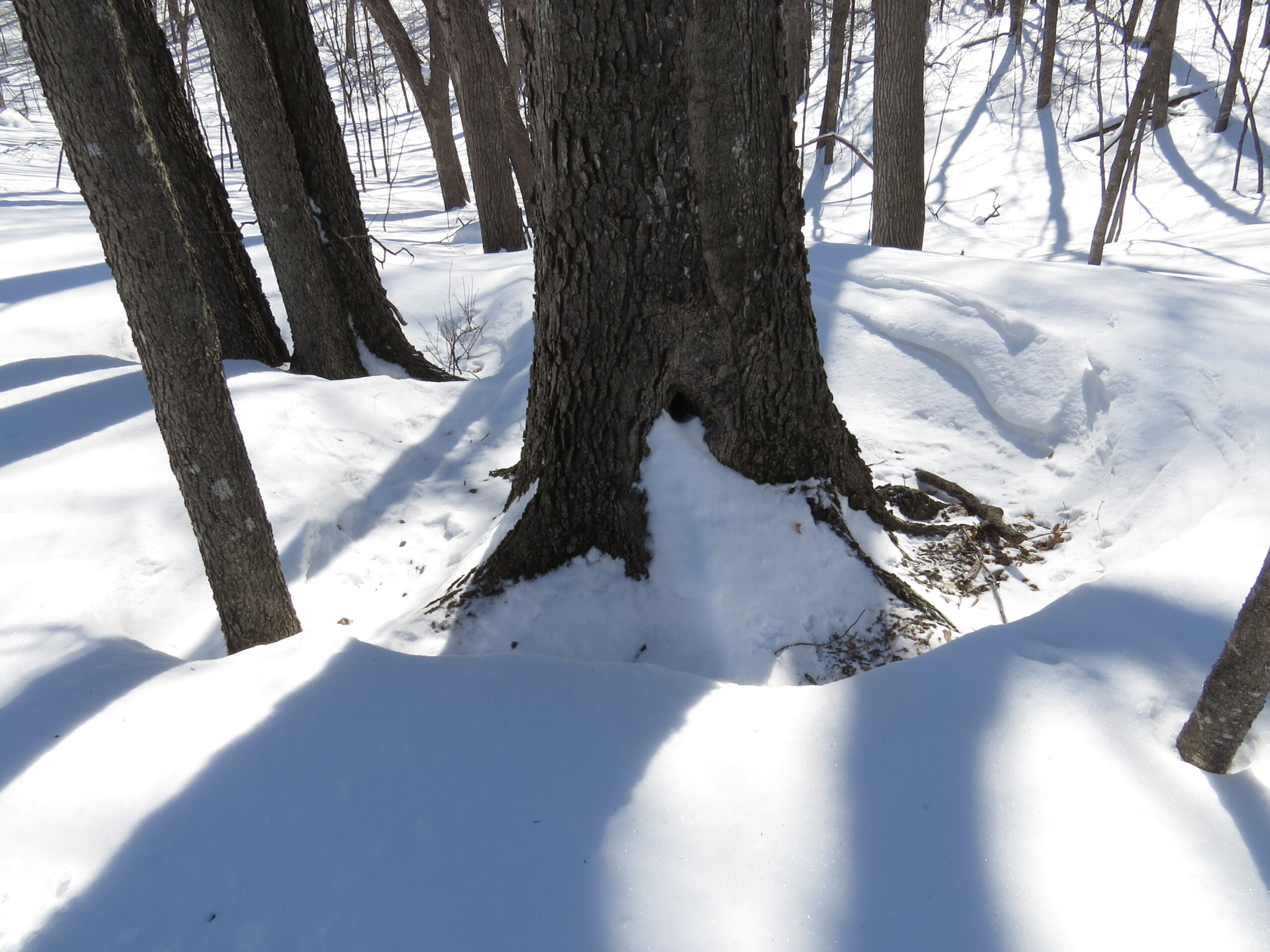
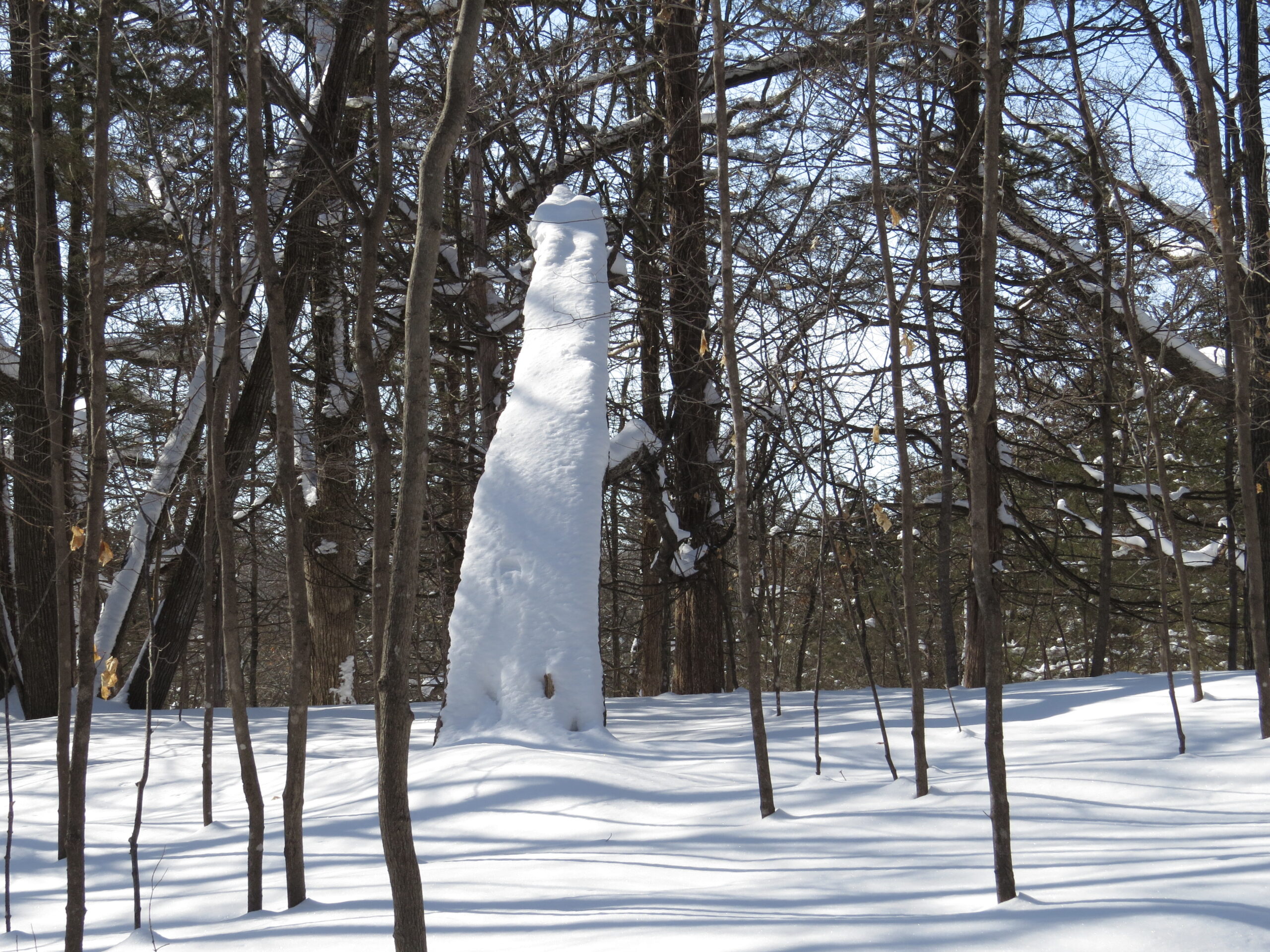
Peace is being curious, moving forward through fear, and letting your creativity imagine finding an enormous praying mantis in a snowy forest.
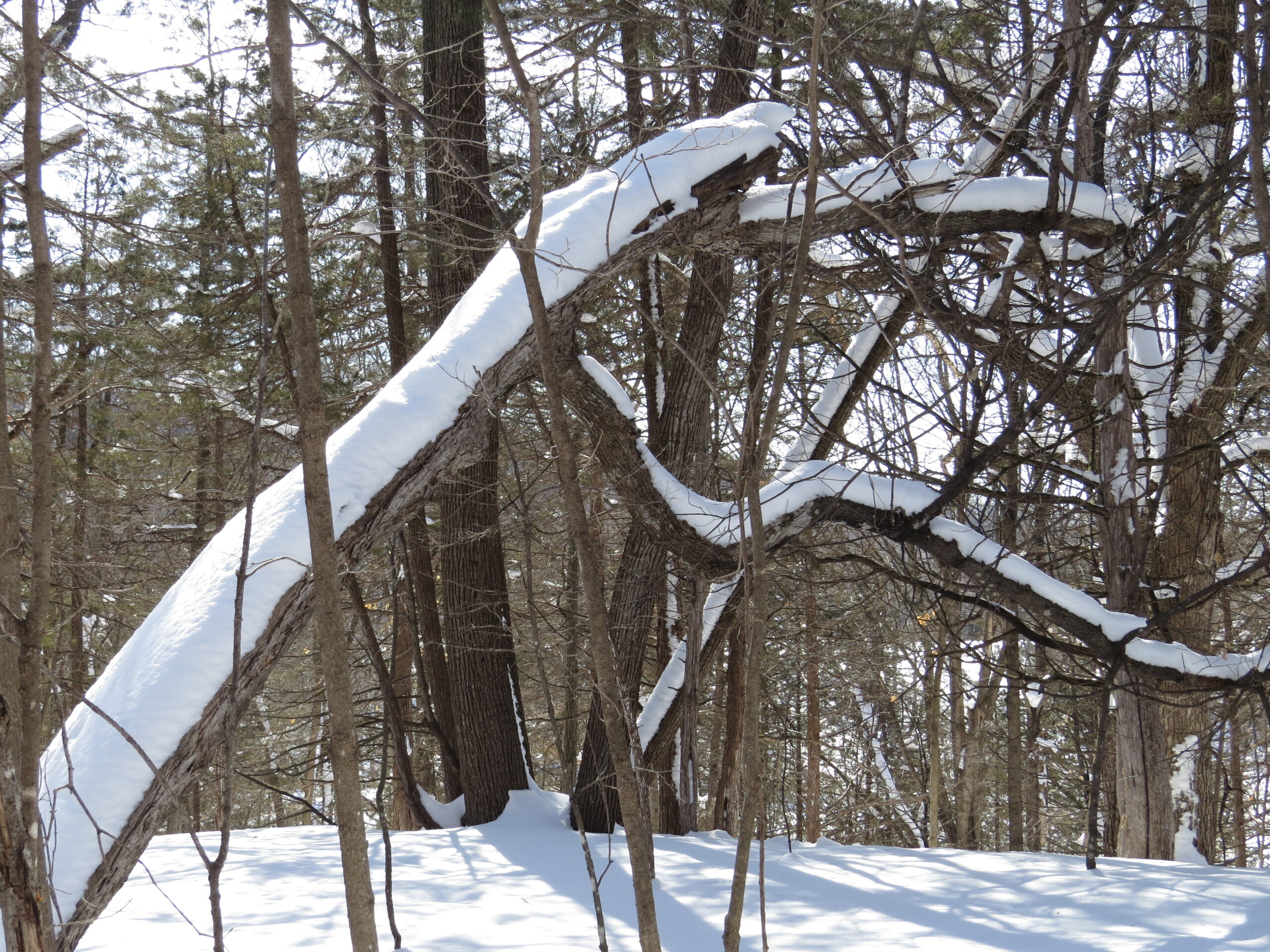
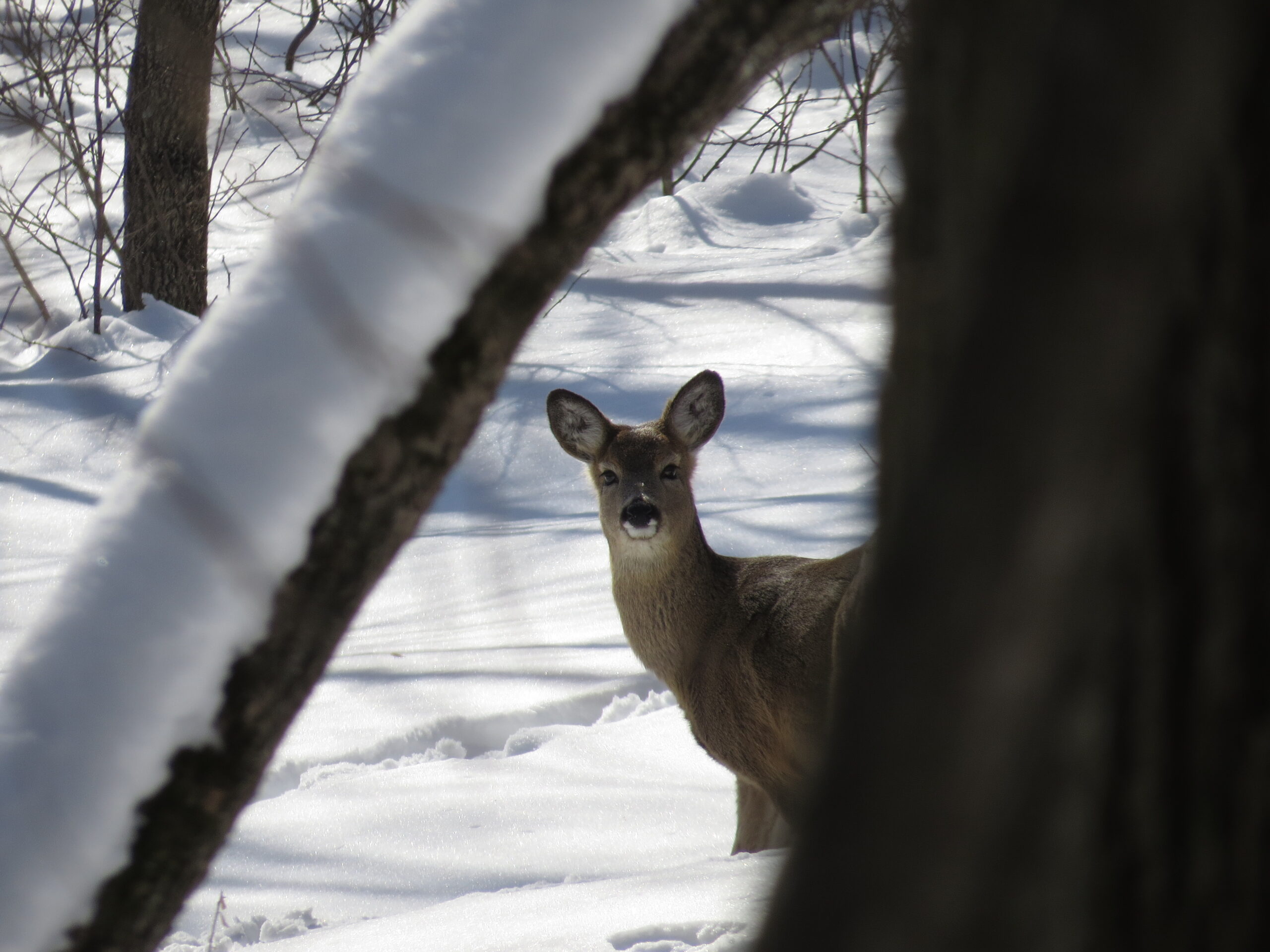
Peace is standing knee-deep in snow along with the wild things that are just as curious about us.
Peace be with you all.
Peace of the Pine Forest
I’ve been crying a lot lately—not for me and my station on this good, green Earth, but for other people. I cried for the victims of Putin’s war—the mothers and children who fled their homes, the fathers and brothers who stayed behind to fight, the old and infirmed who couldn’t flee and were bombed to death, and for every lost life and destroyed city. The tears escape my eyes when I watch the news or see the headlines—it is my knowing that what I am witnessing is antithetical to Goodness. Last week it was for the grocery shoppers in Buffalo, New York who were targeted and killed because of their skin color. This week, the tears flowed again for the young students and teachers at Uvalde, Texas. It could literally happen at any school at any time. Even the mass shootings happen so frequently that the mourning for the one before has hardly begun before it is ‘lost’ to the coverage of the newest one. Not to mention all the other, pervasive deaths by violence. Not to mention the perverse political rhetoric around the ‘reasons’ for the deaths. It is soul-crushing.
I know for sure that the fallout from each one of these violent losses of life is far-reaching and will be long-lived. Many of the victims, the families, the first responders, and the witnesses will carry the burden of trauma with them for their lifetime. The price we as individual persons and as a society pay for violence is unbelievably staggering. In the midst of a political culture that is not doing all it can to help prevent such tragedies, an individual person can feel overwhelmed and impotent in the face of it all. What do we do? Let me begin with a story that presented me with an important lesson.
Seventeen years ago when my father-in-law died, my brother-in-law sent a message to us that ended with “Peace be with you.” I was already in a state of activation—death, grief, loss, change—and I remember exclaiming rather indignantly to Chris, ” How can we have peace at a time like this?!” I did not understand at the time that my brother-in-law was offering a gift to each of us individually—that in spite of our loss and grief, we could have the comfort of peace. I did not accept that gift at the time—I didn’t know how—but since that time, I have not forgotten that offering. I have tried again and again and again to find peace within myself in the midst of my own pain and loss and of that of the world’s. A substantial part of finding peace in a time of crisis or a reaction to it, is learning to calm down our activated bodies—and when a person has an ingrained trauma response, it takes lots of practice to change. One of my practices to calm down and find peace is to go to the woods—I did it intuitively as a child, and I do it intentionally as an older adult. I find peace in the Pine forest.
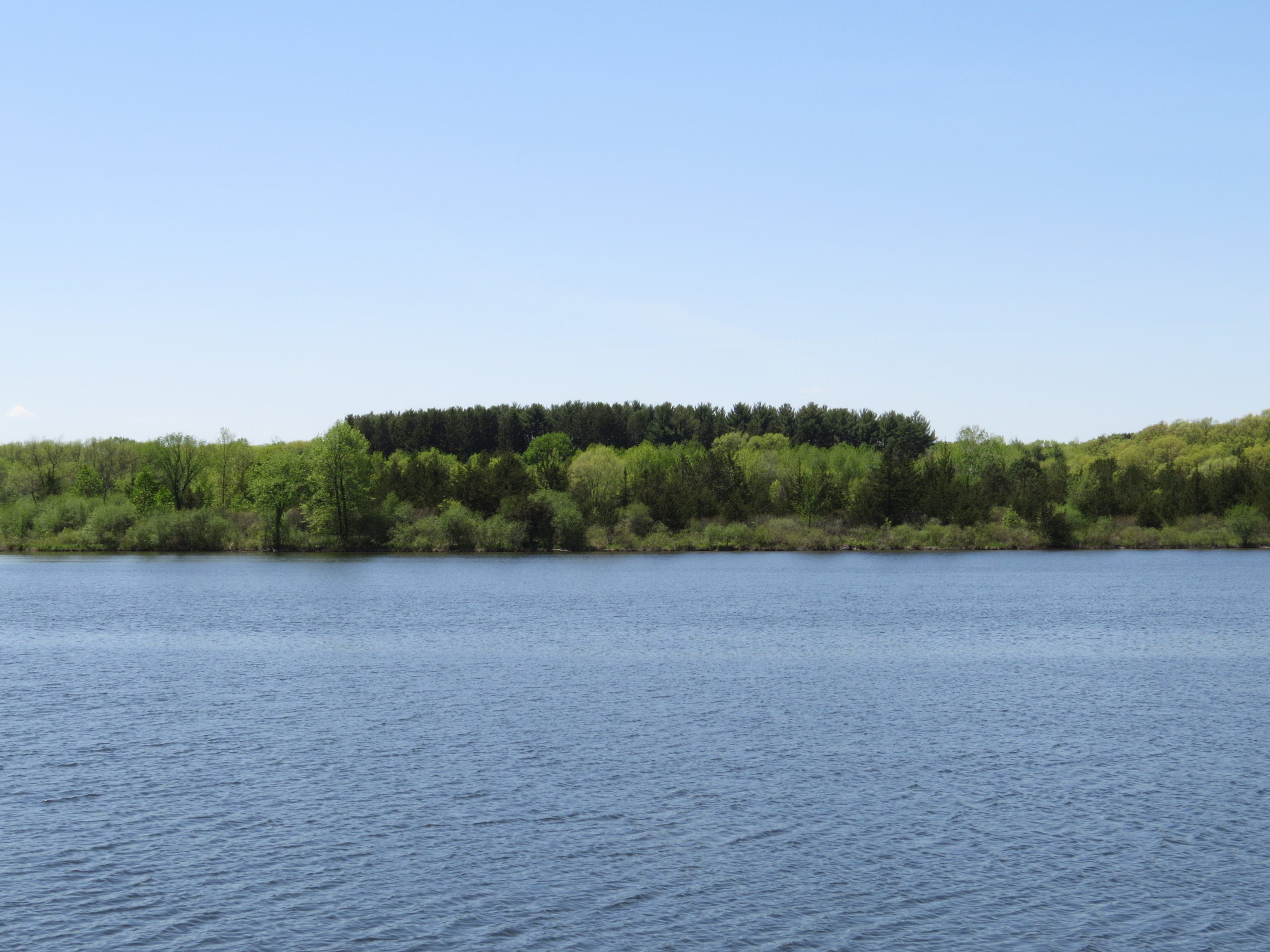
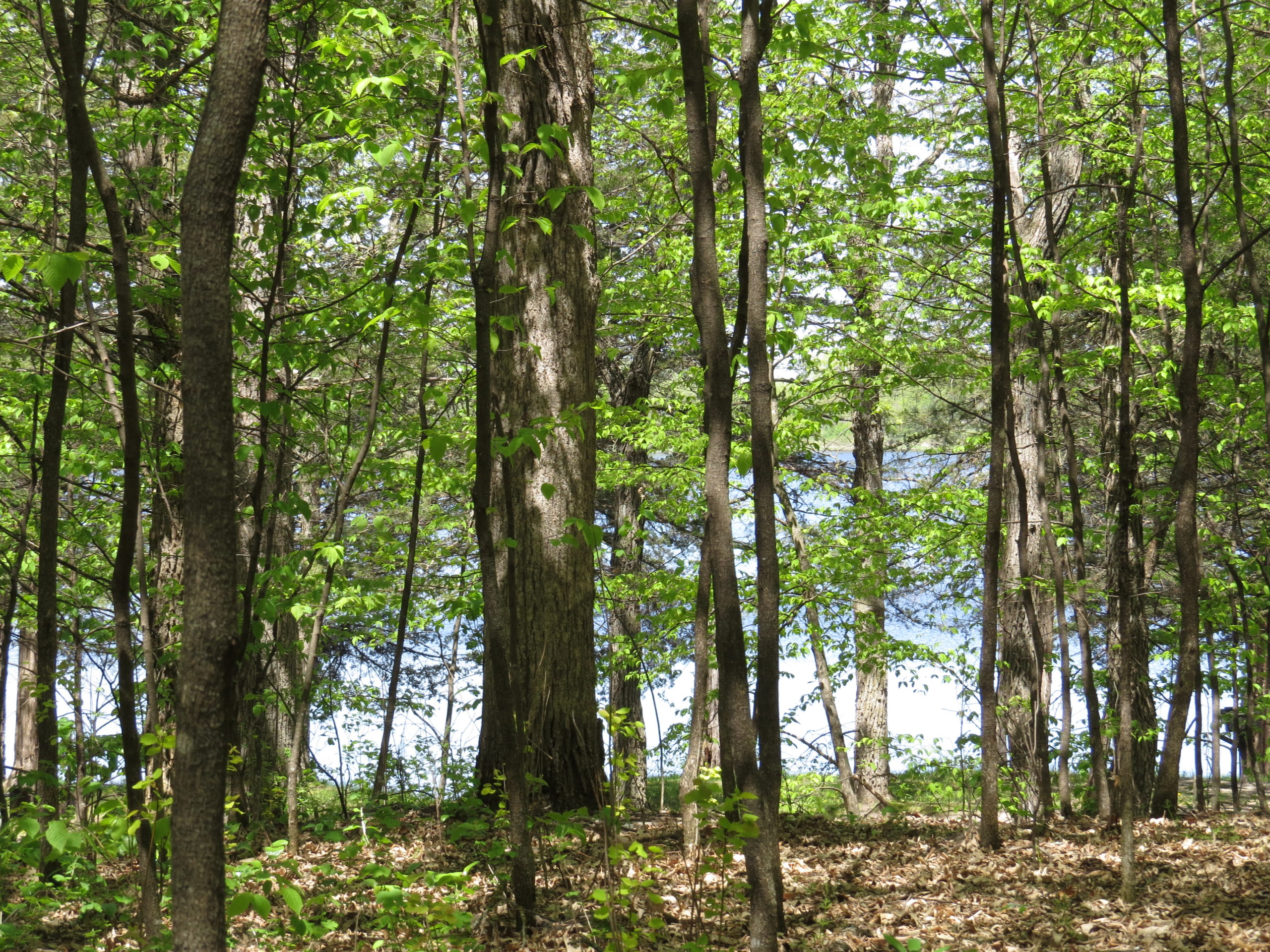
So we went to Warner Lake County Park where I left Chris and his healing hip to sit beside the lake. He could see the Pine forest across the water. He was in the midst of the noise and exuberance of young adults who were already free for the summer and were anxious to sunbathe and swim in the chilly lake water. I tried to appreciate their exuberance even as I gladly walked away from their noise. Come walk with me into the forest.
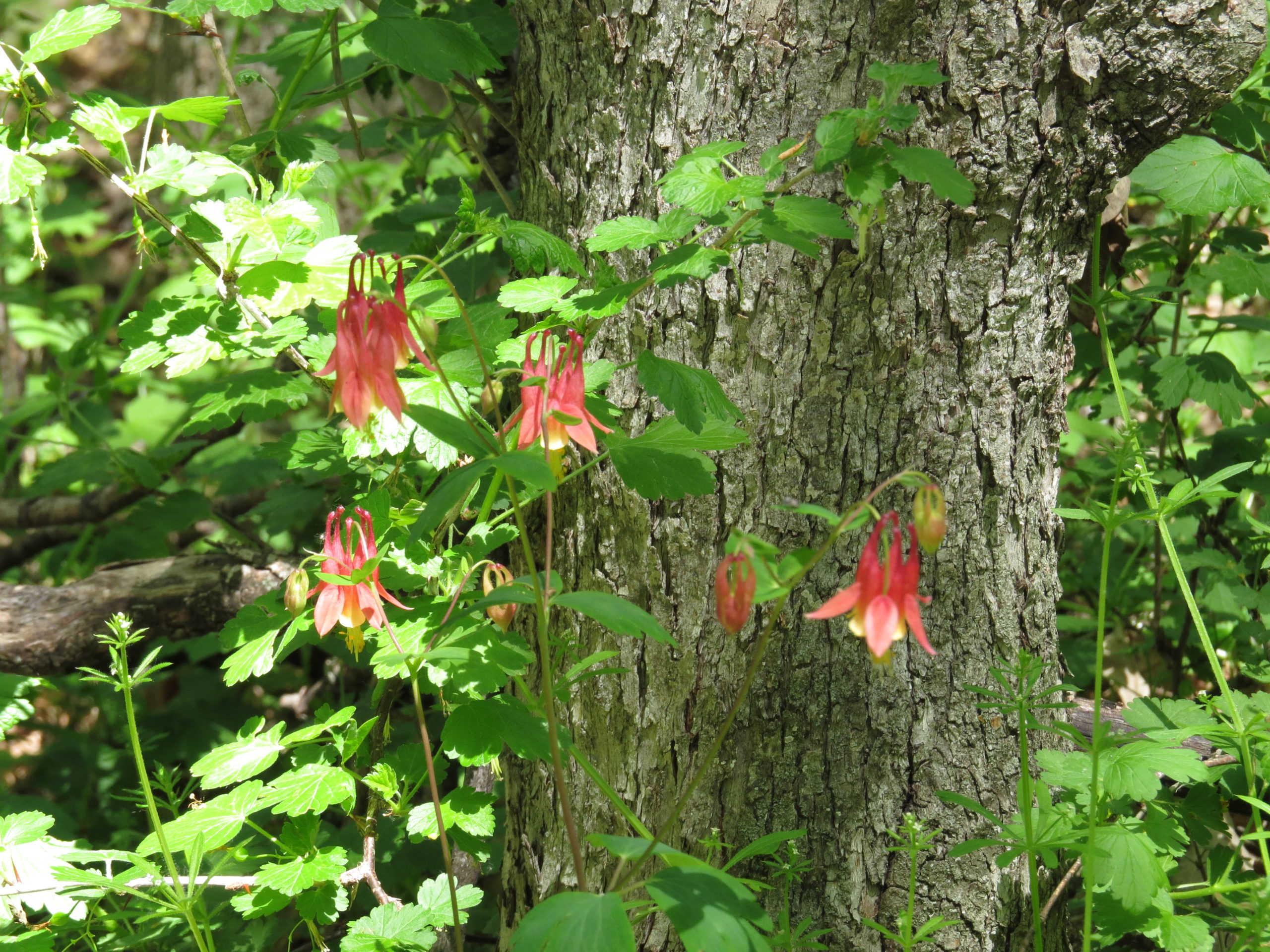
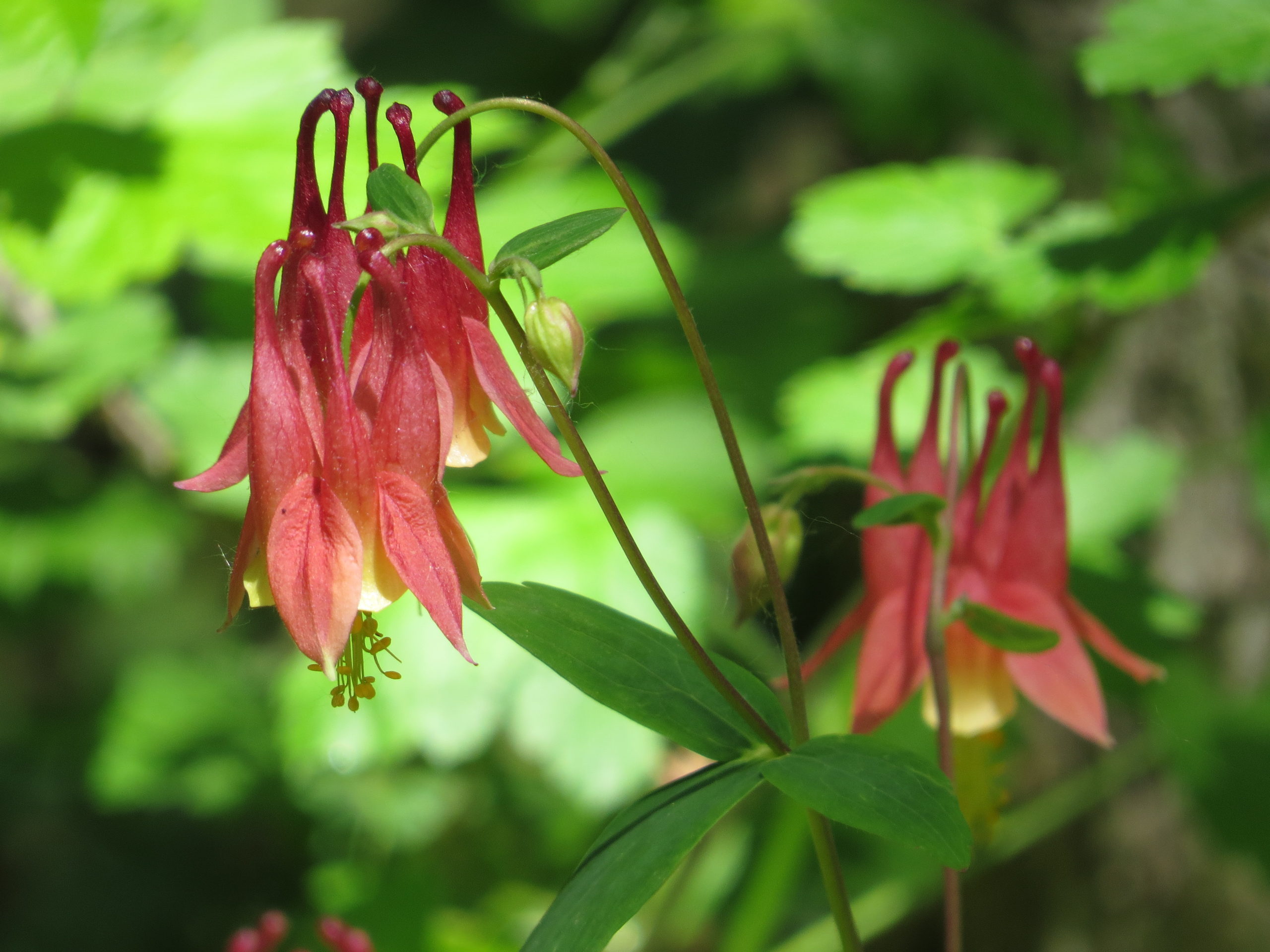
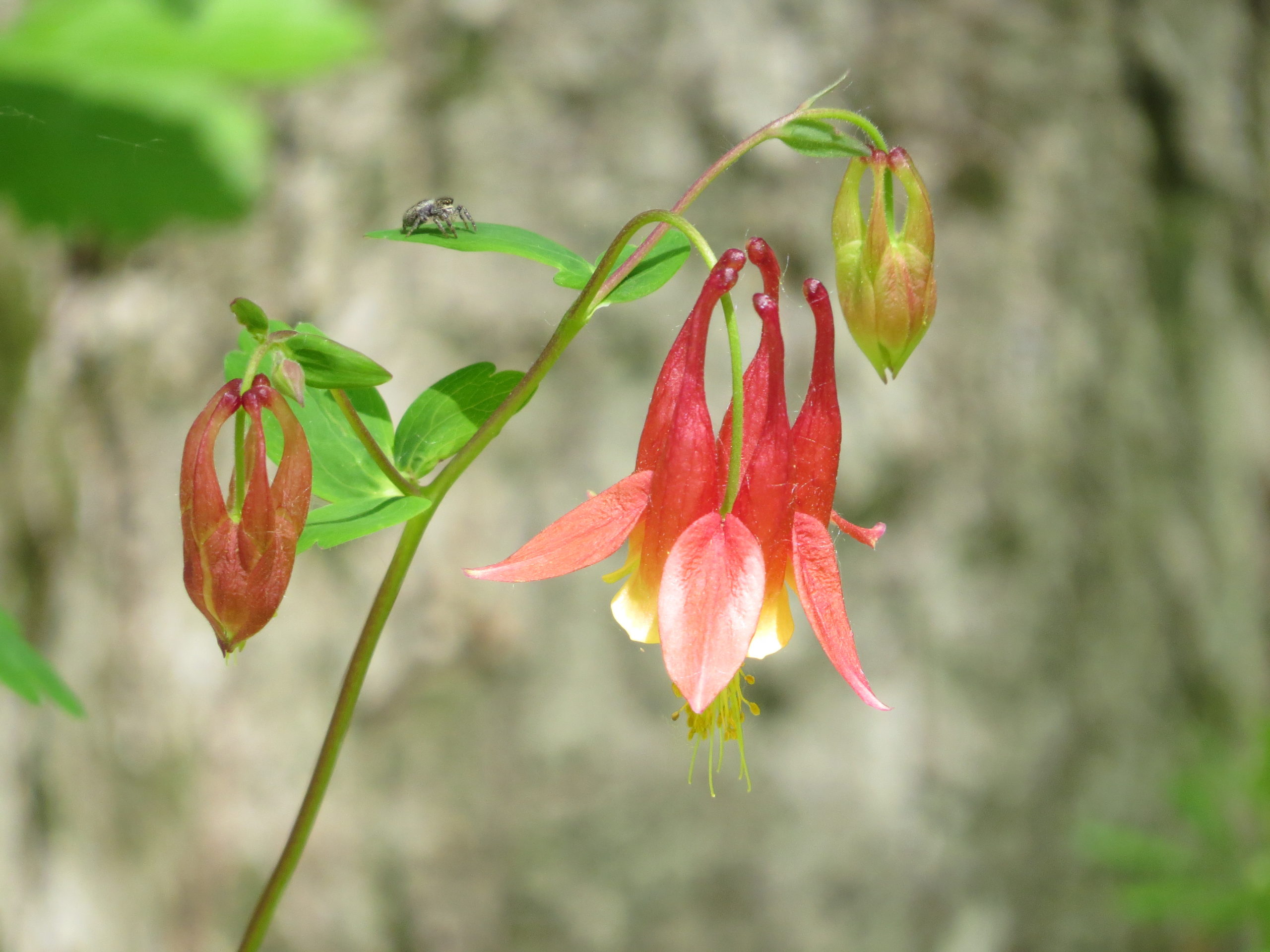
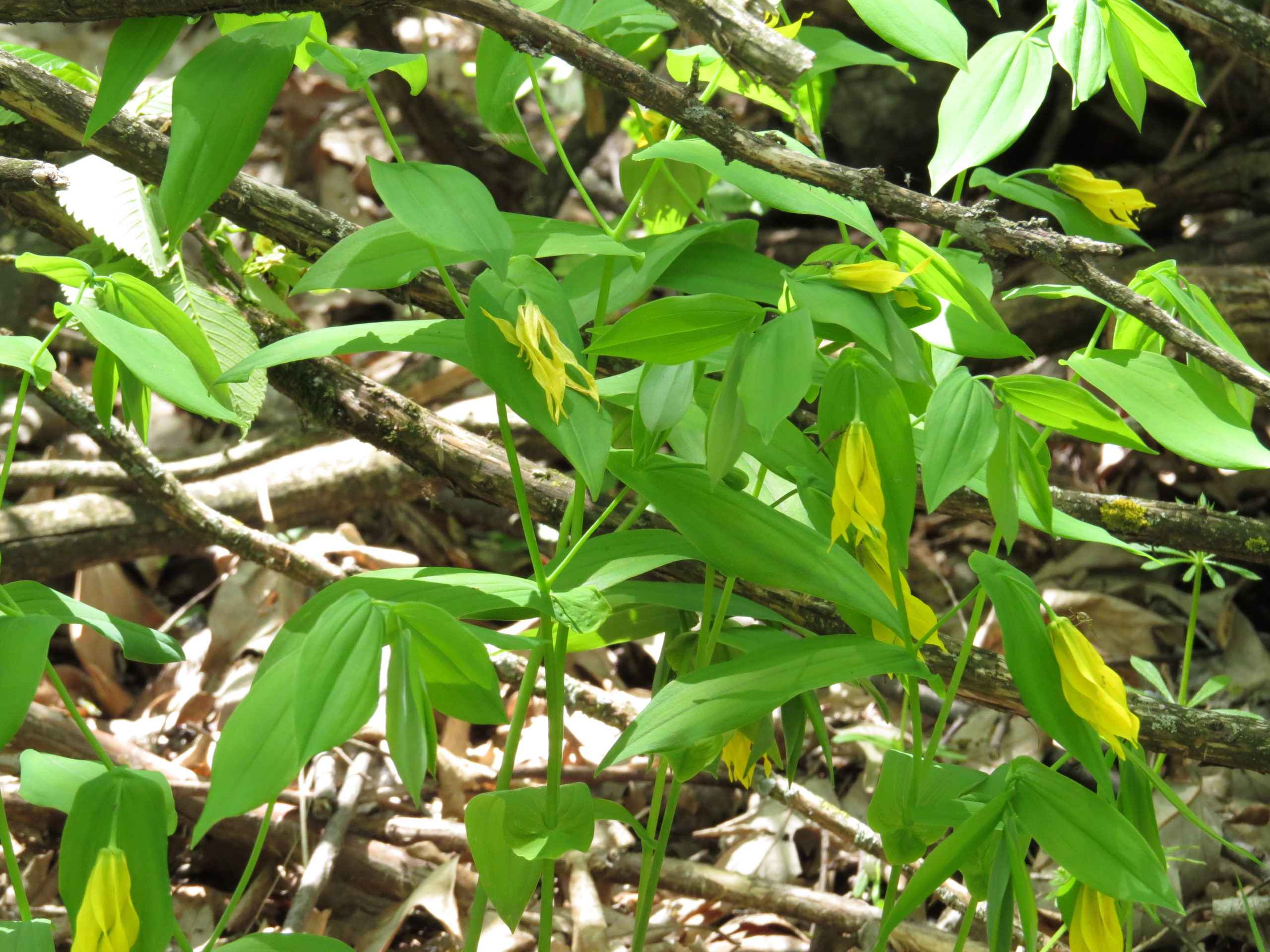
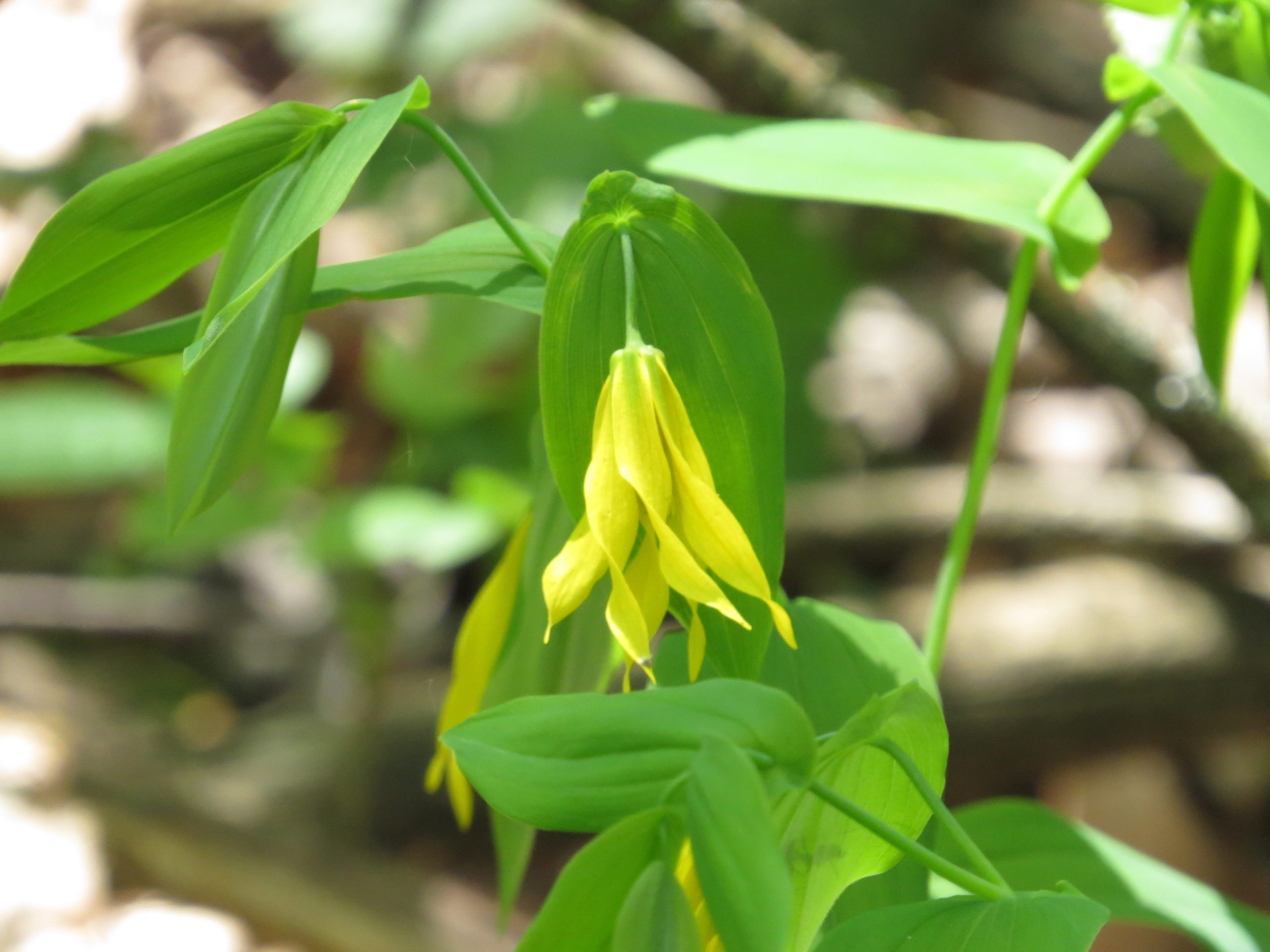
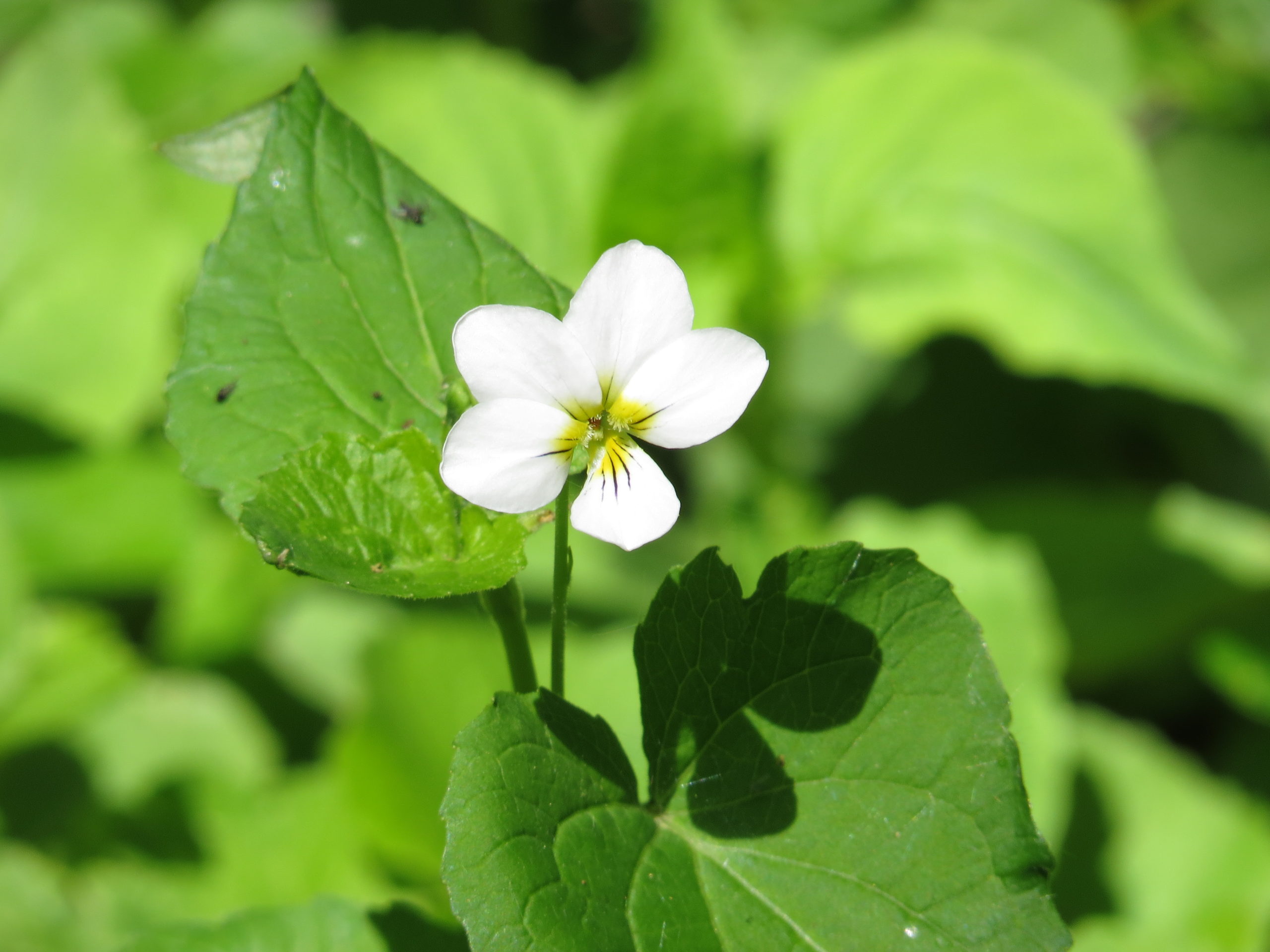
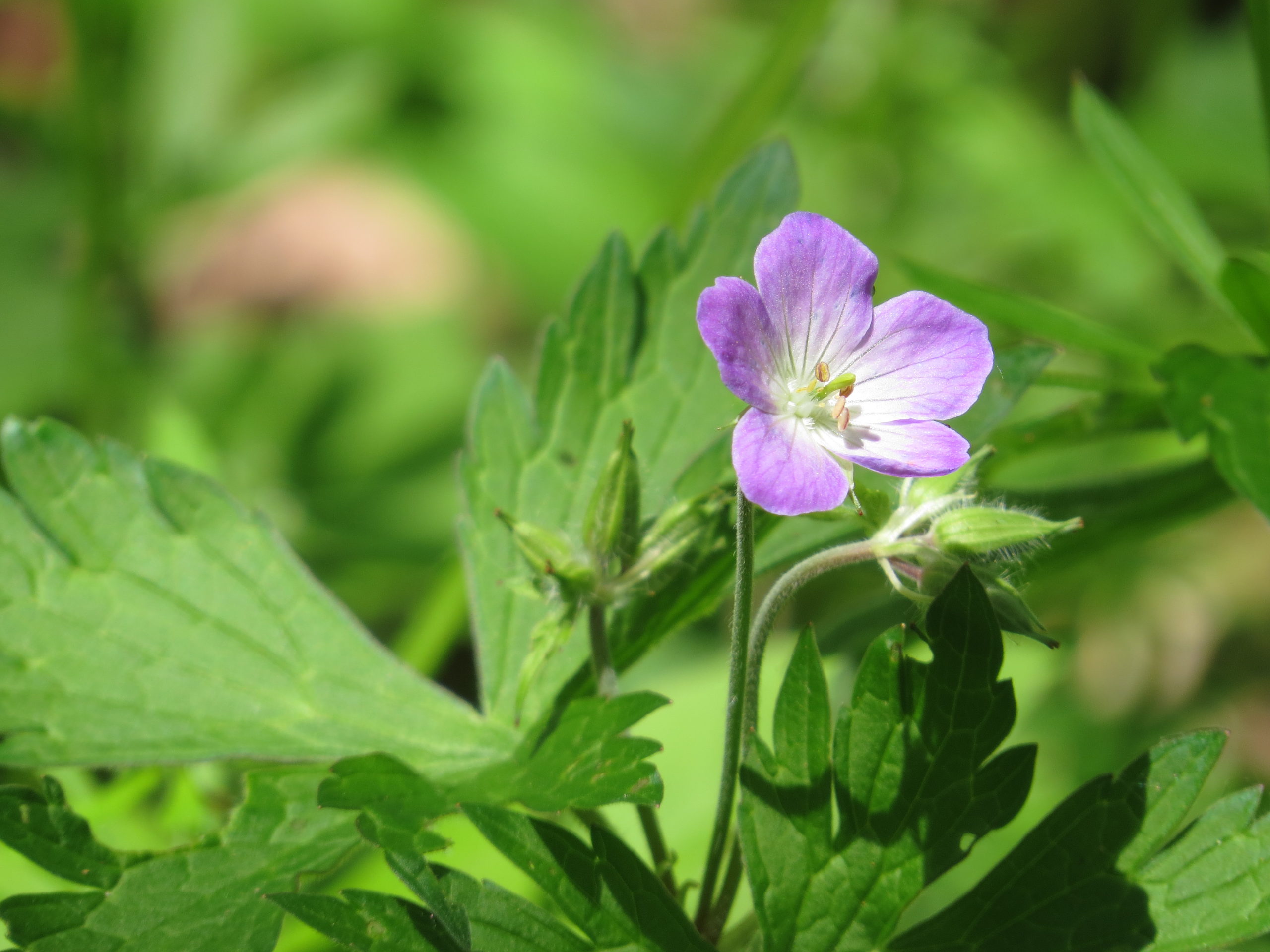
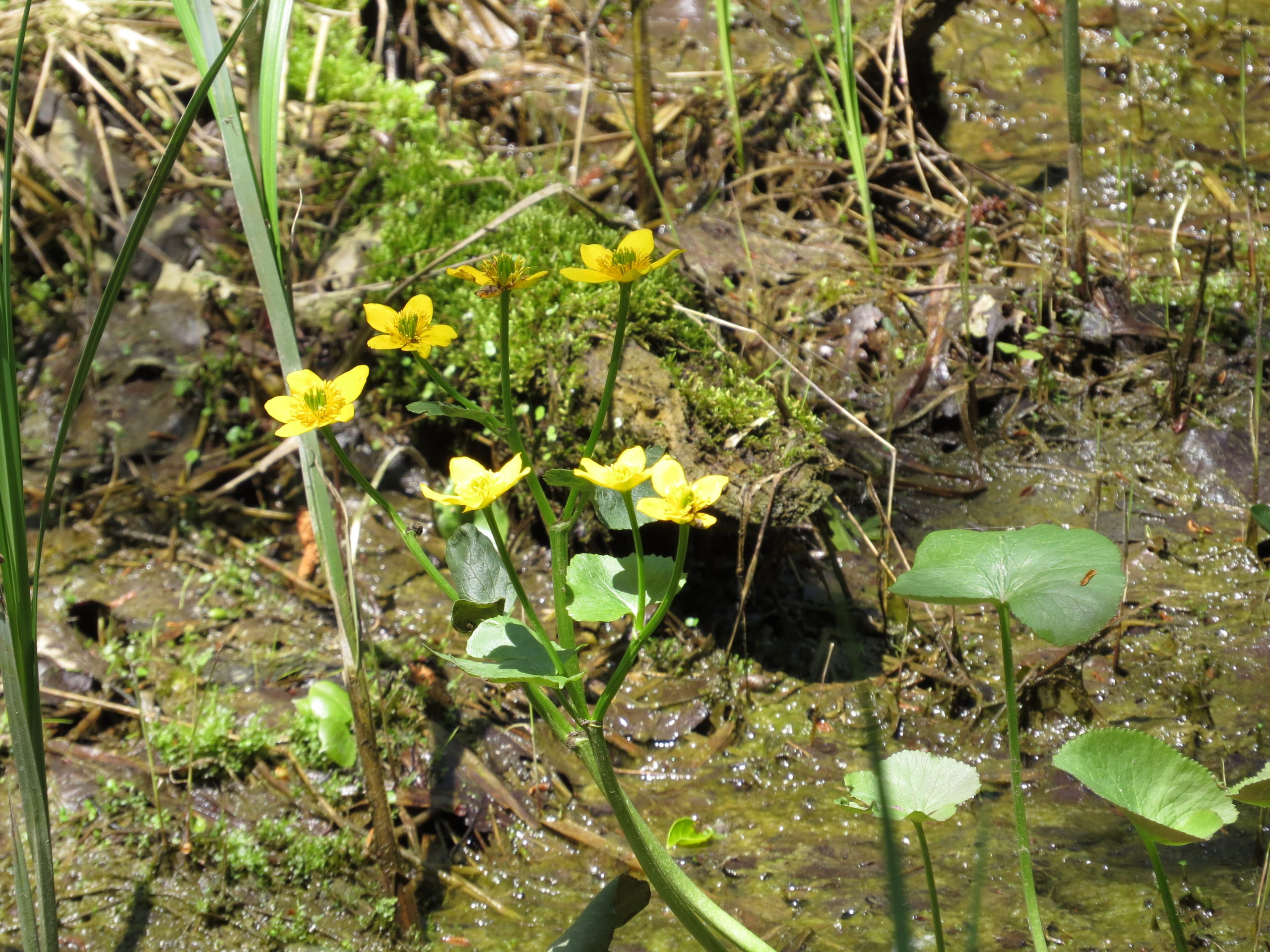
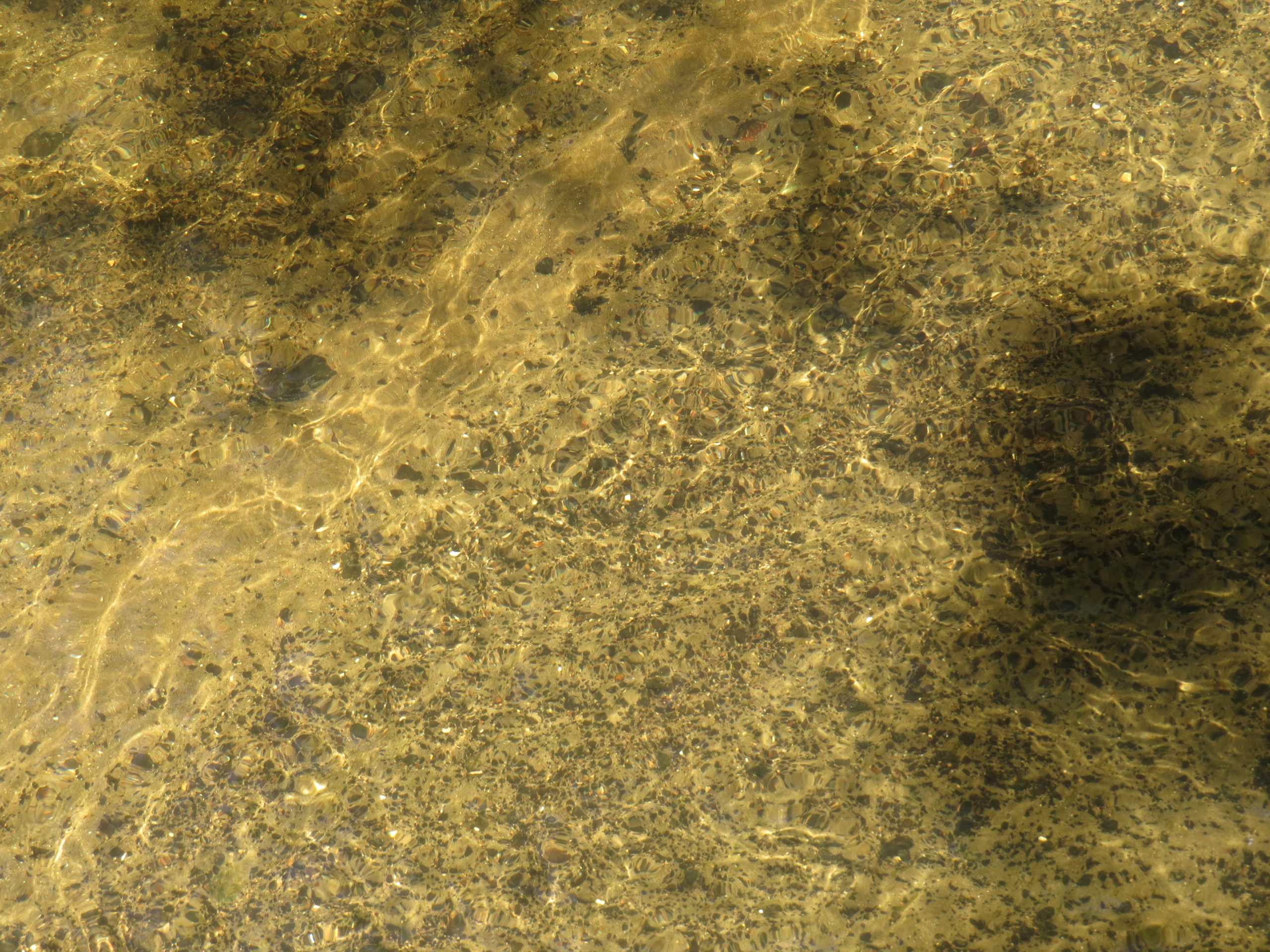
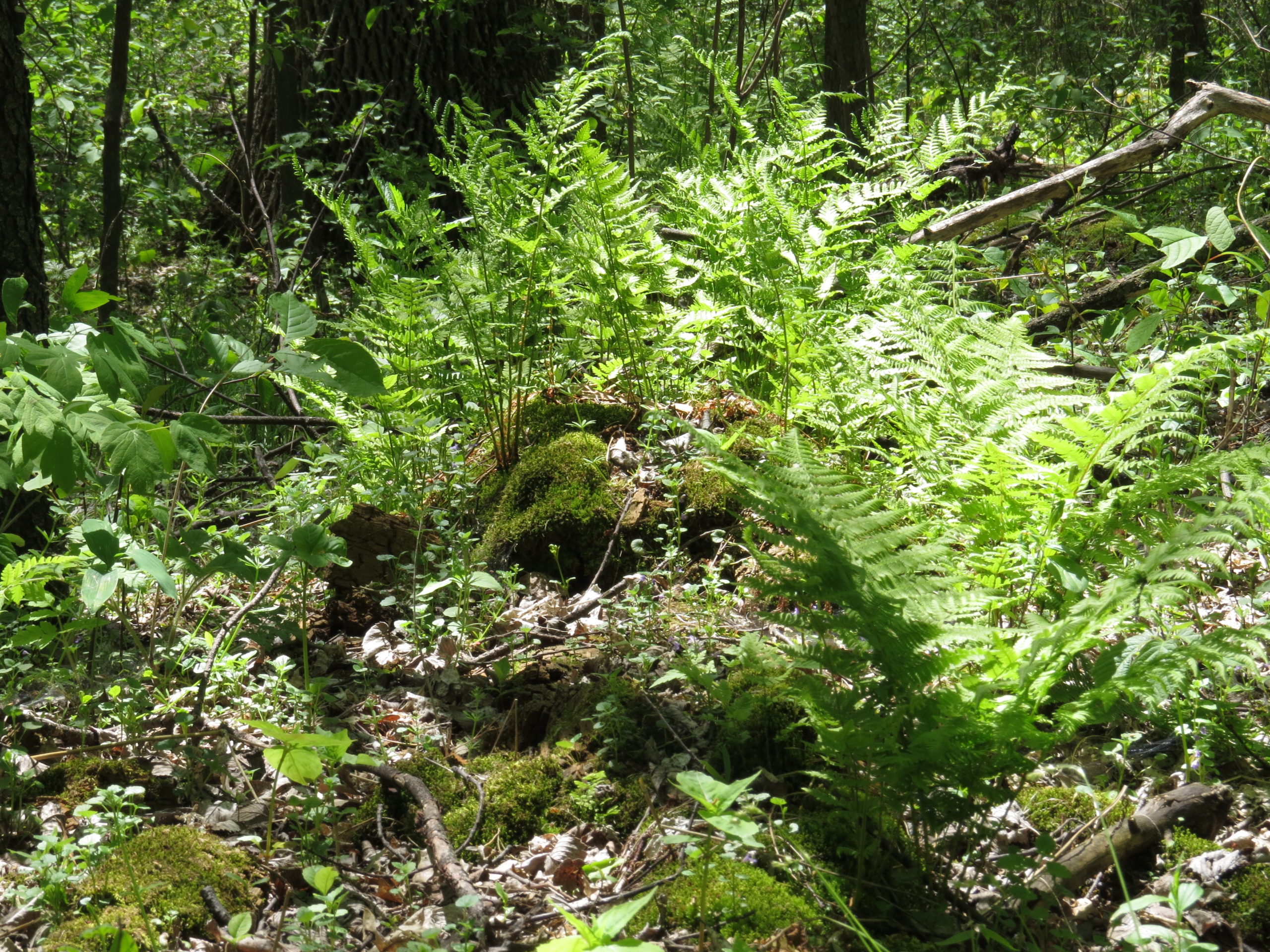
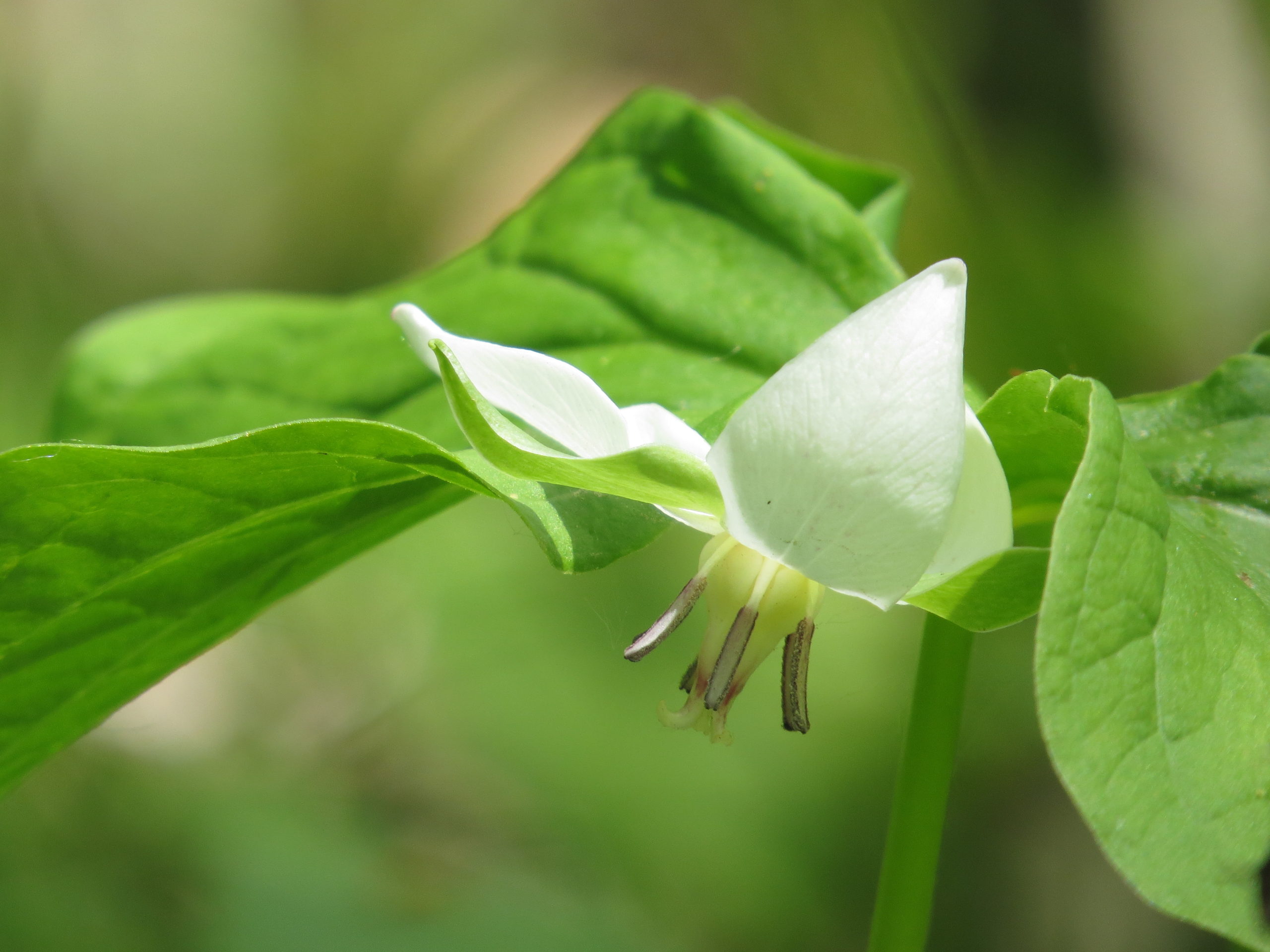
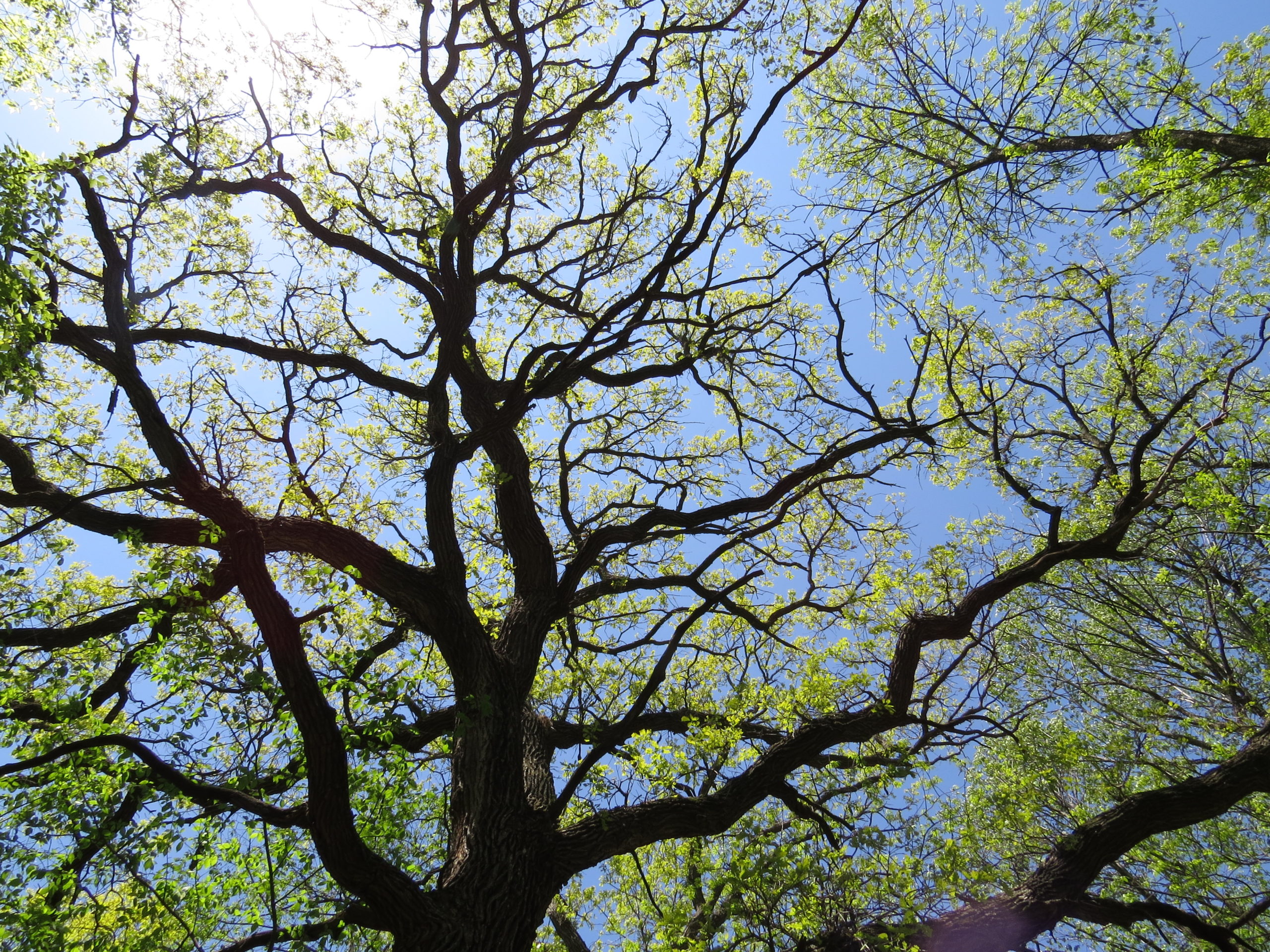
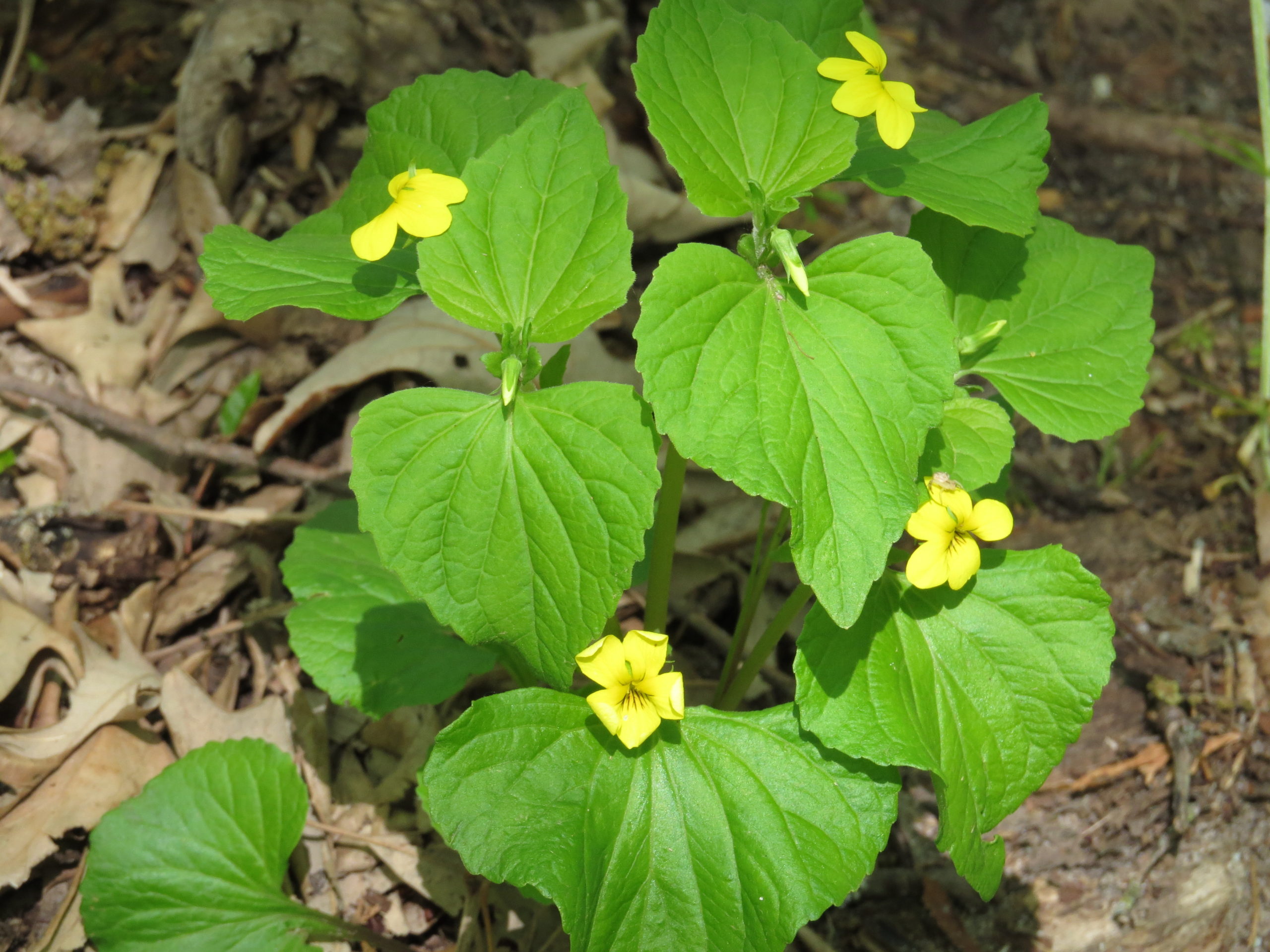
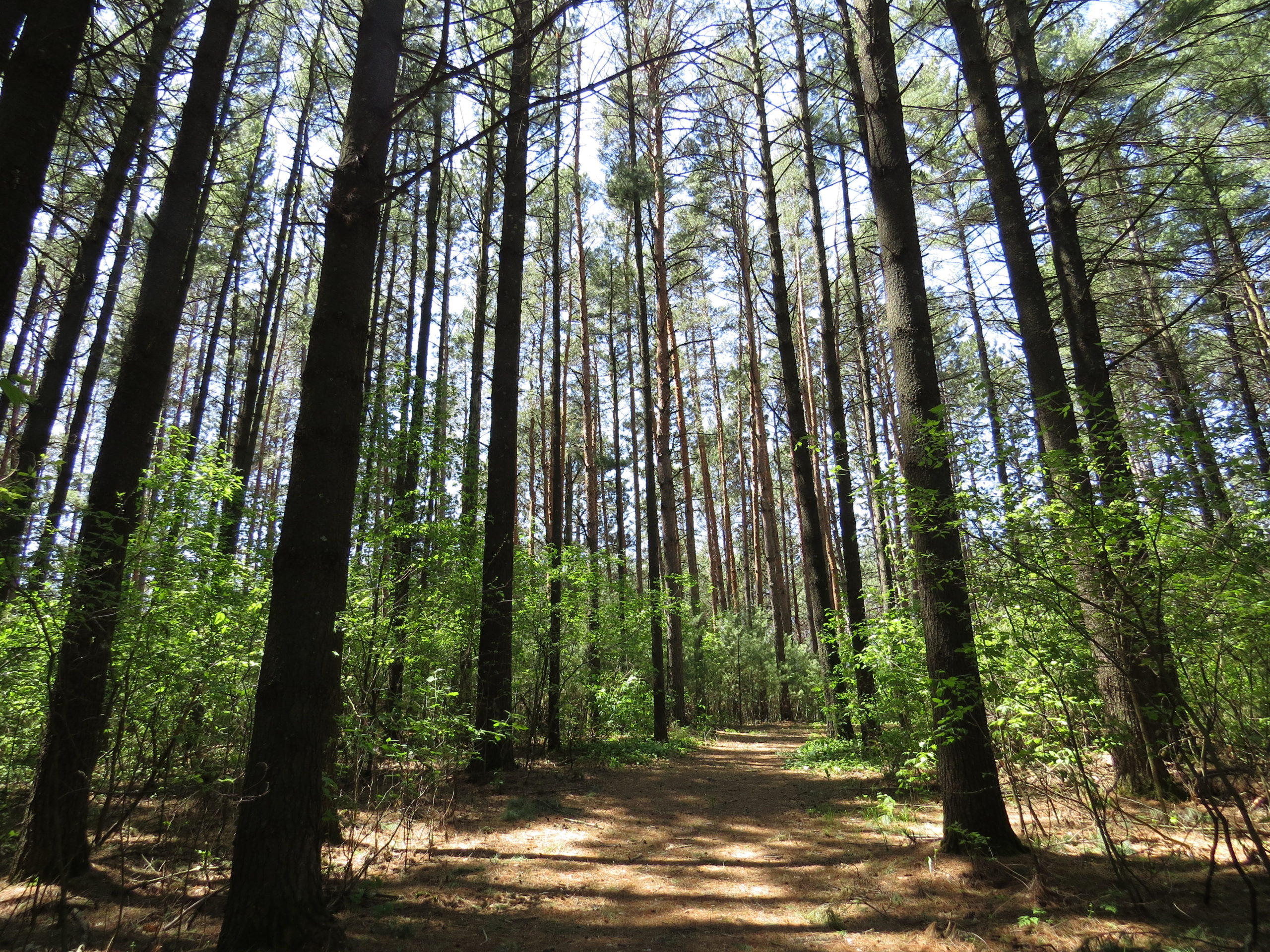
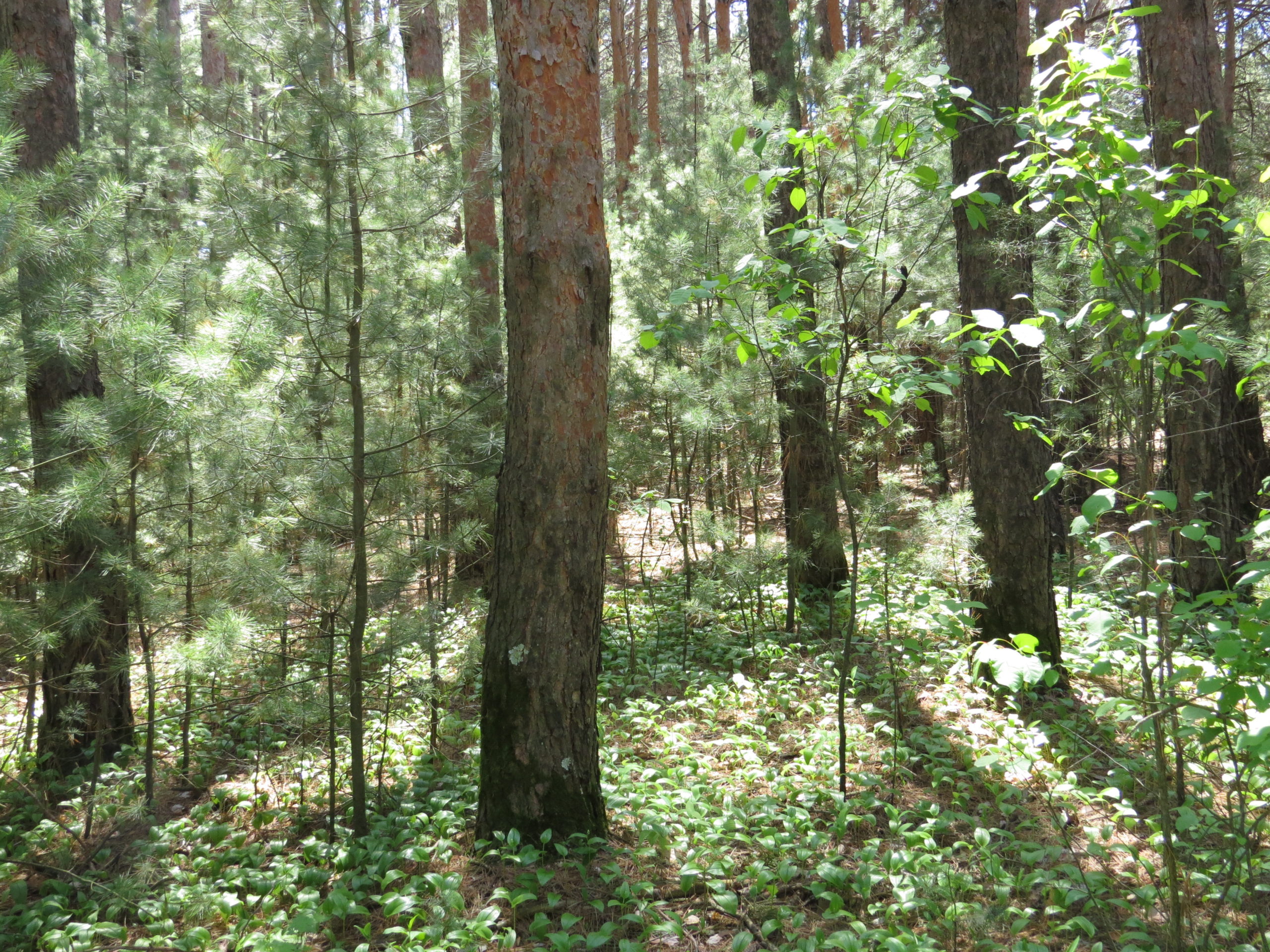
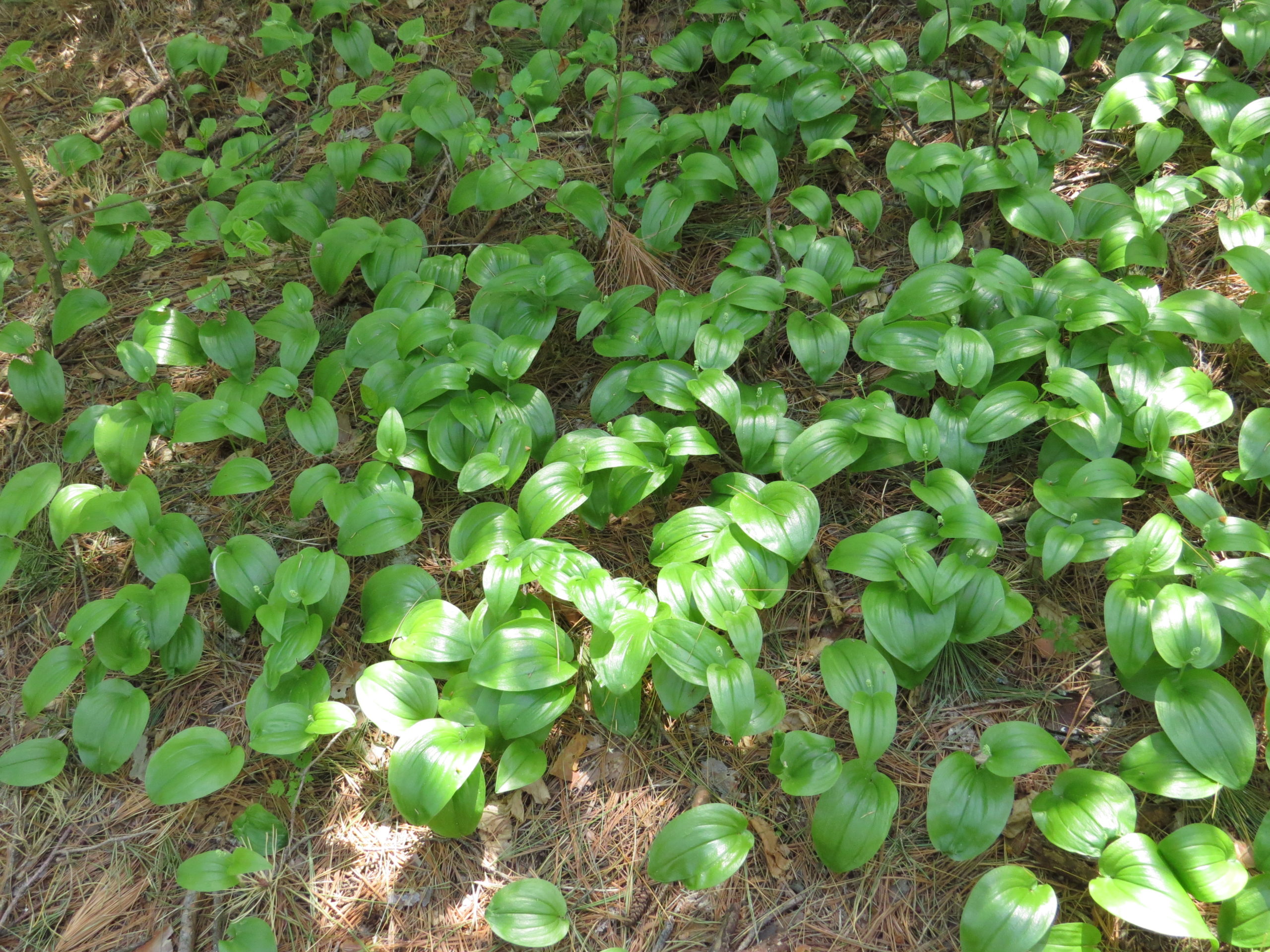
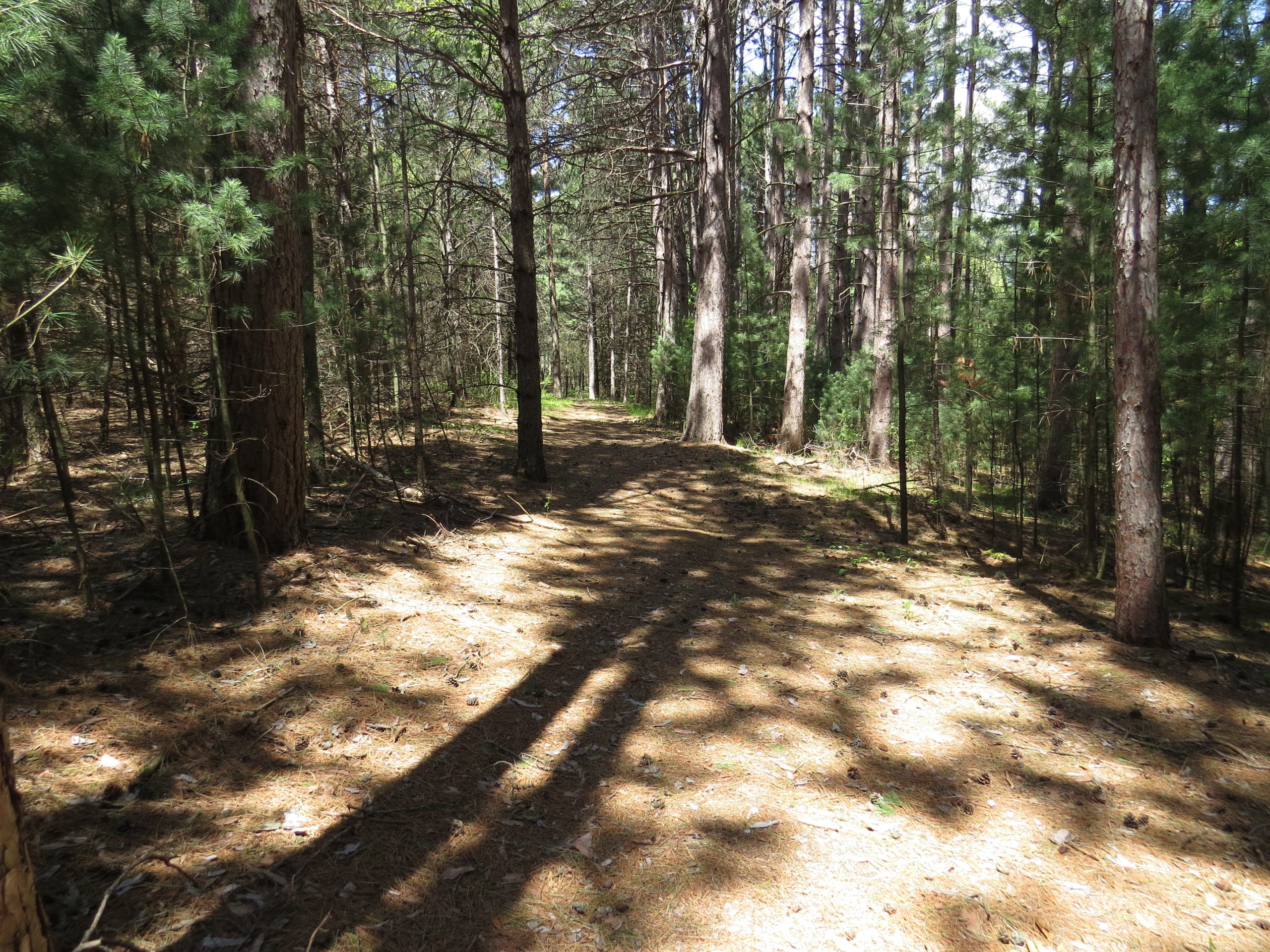
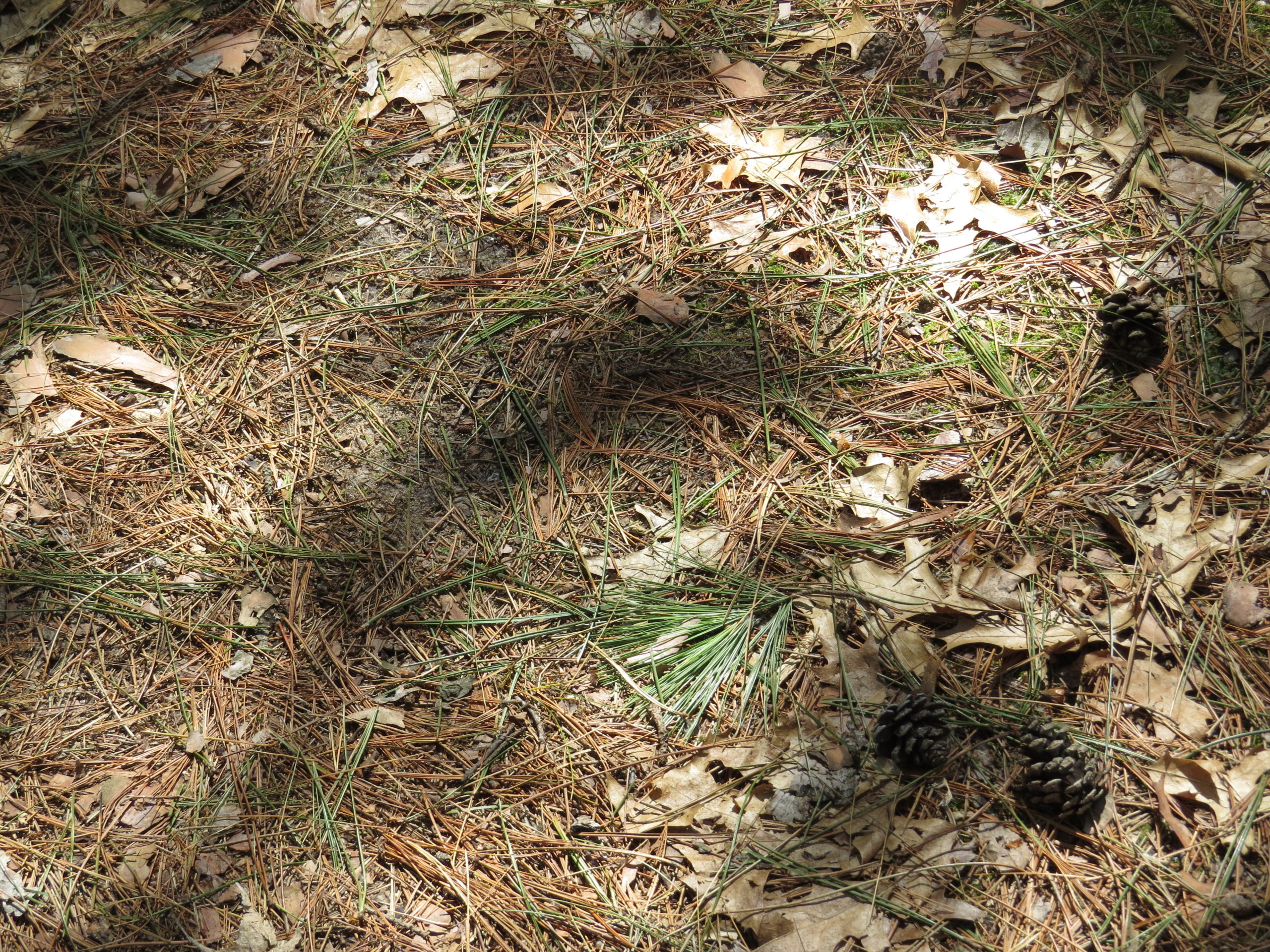
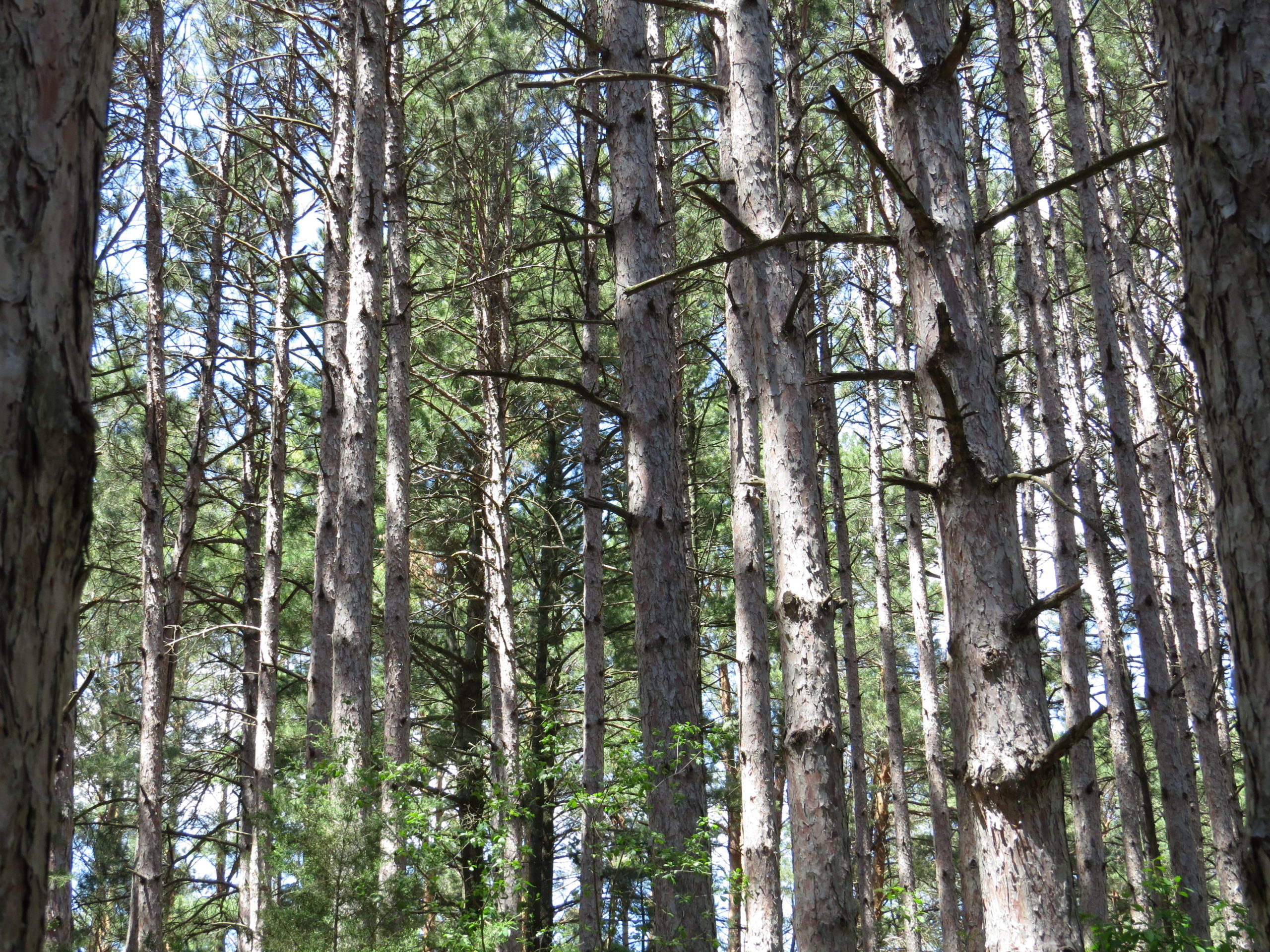
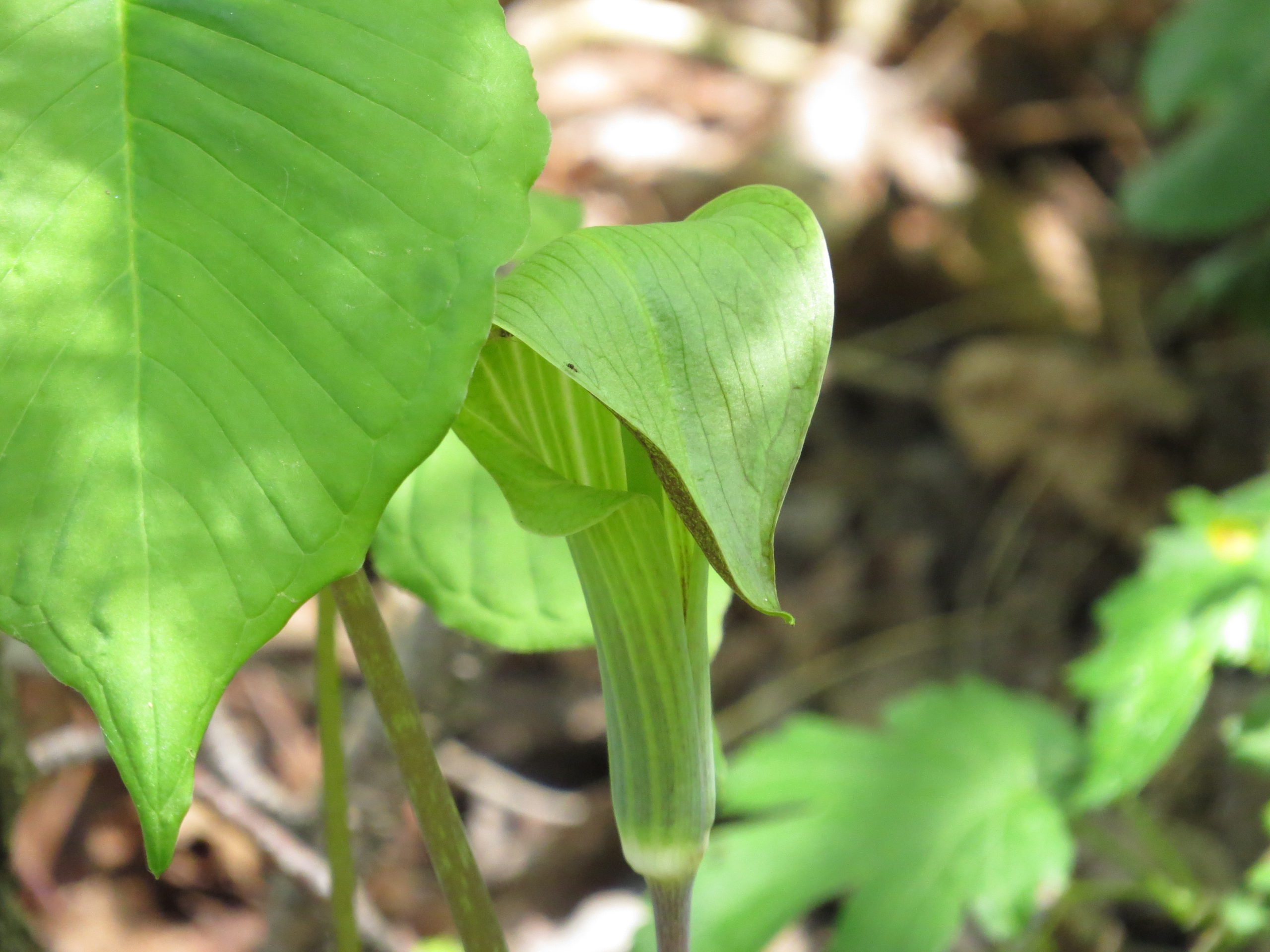
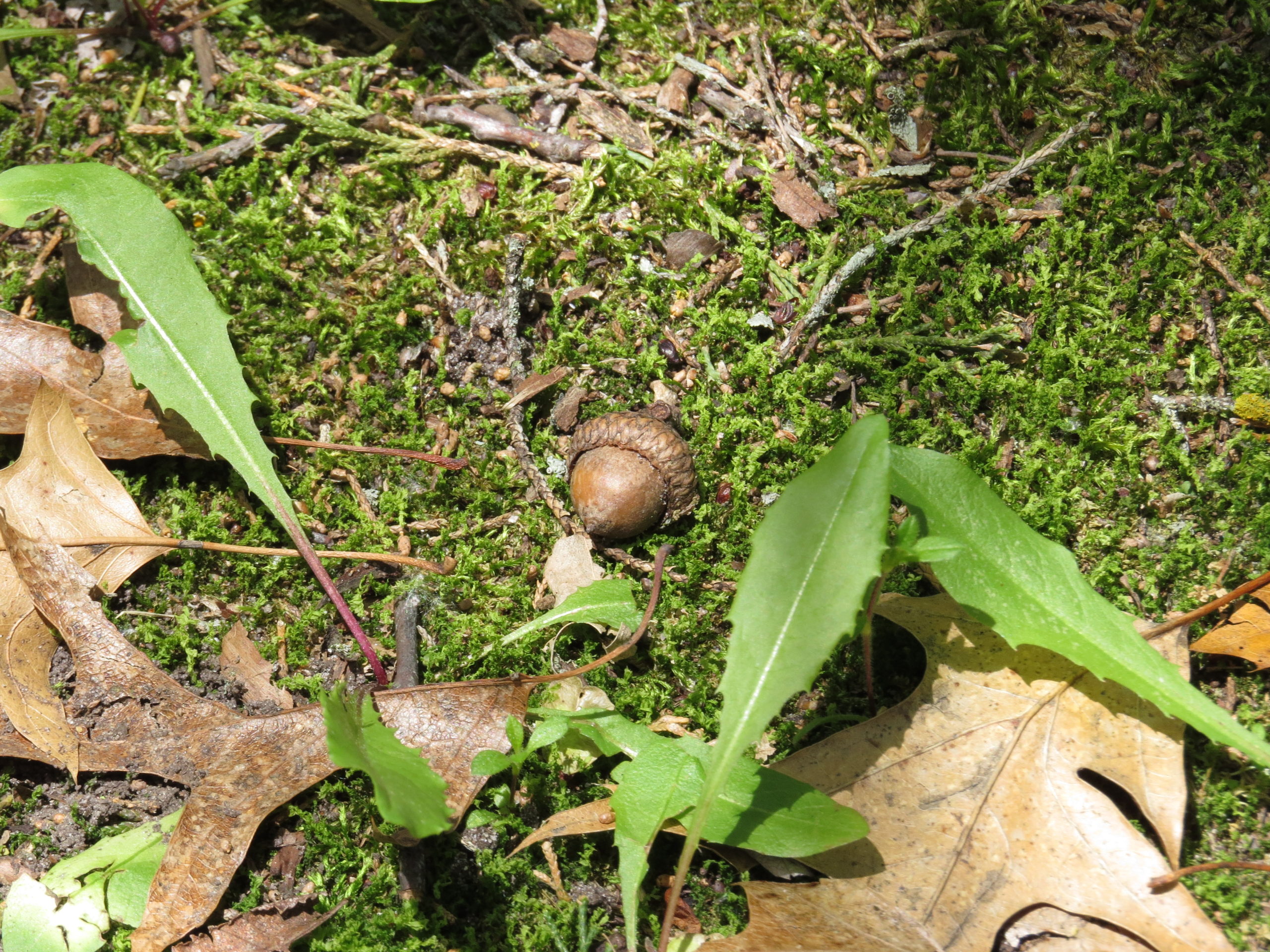
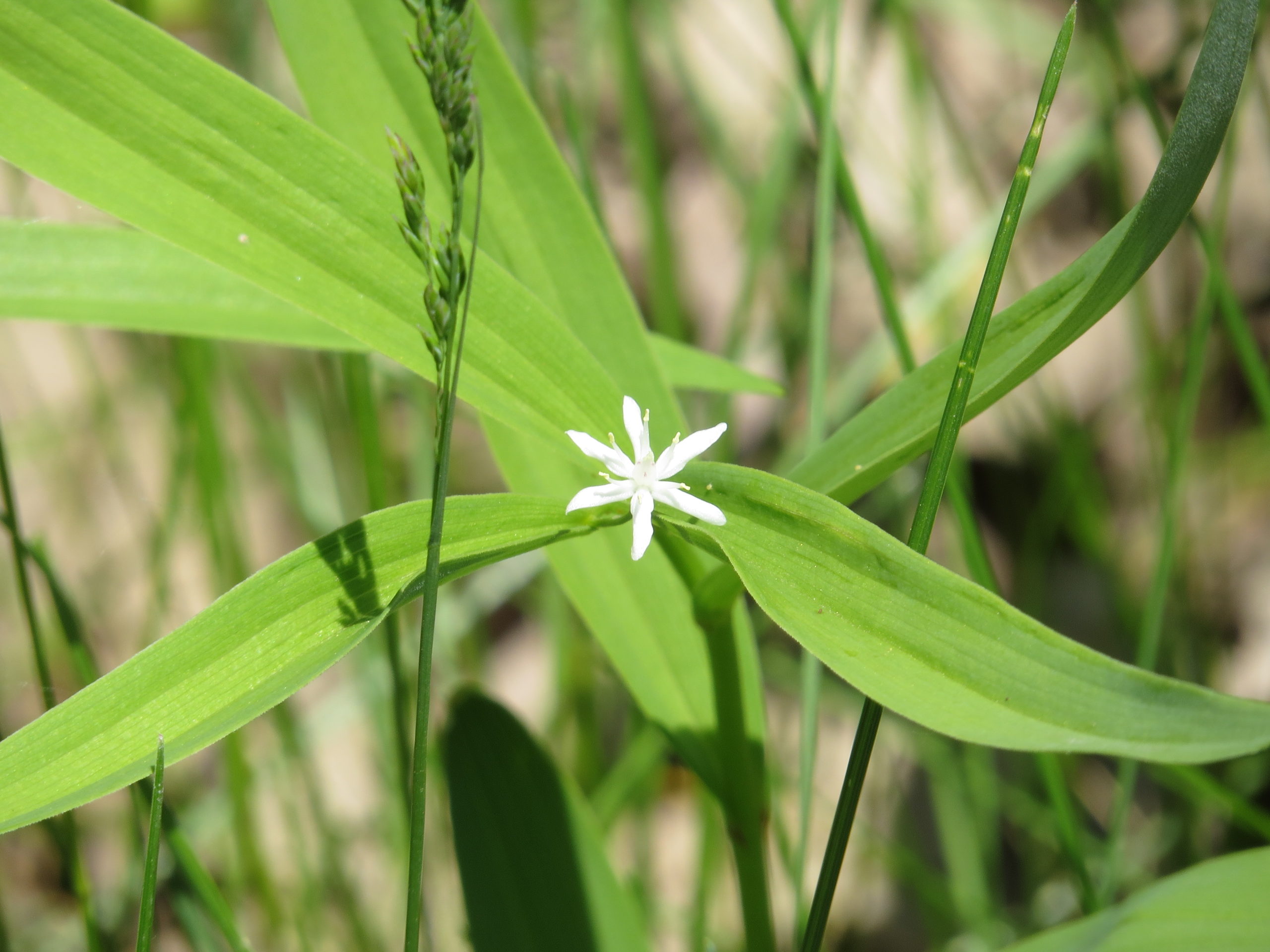
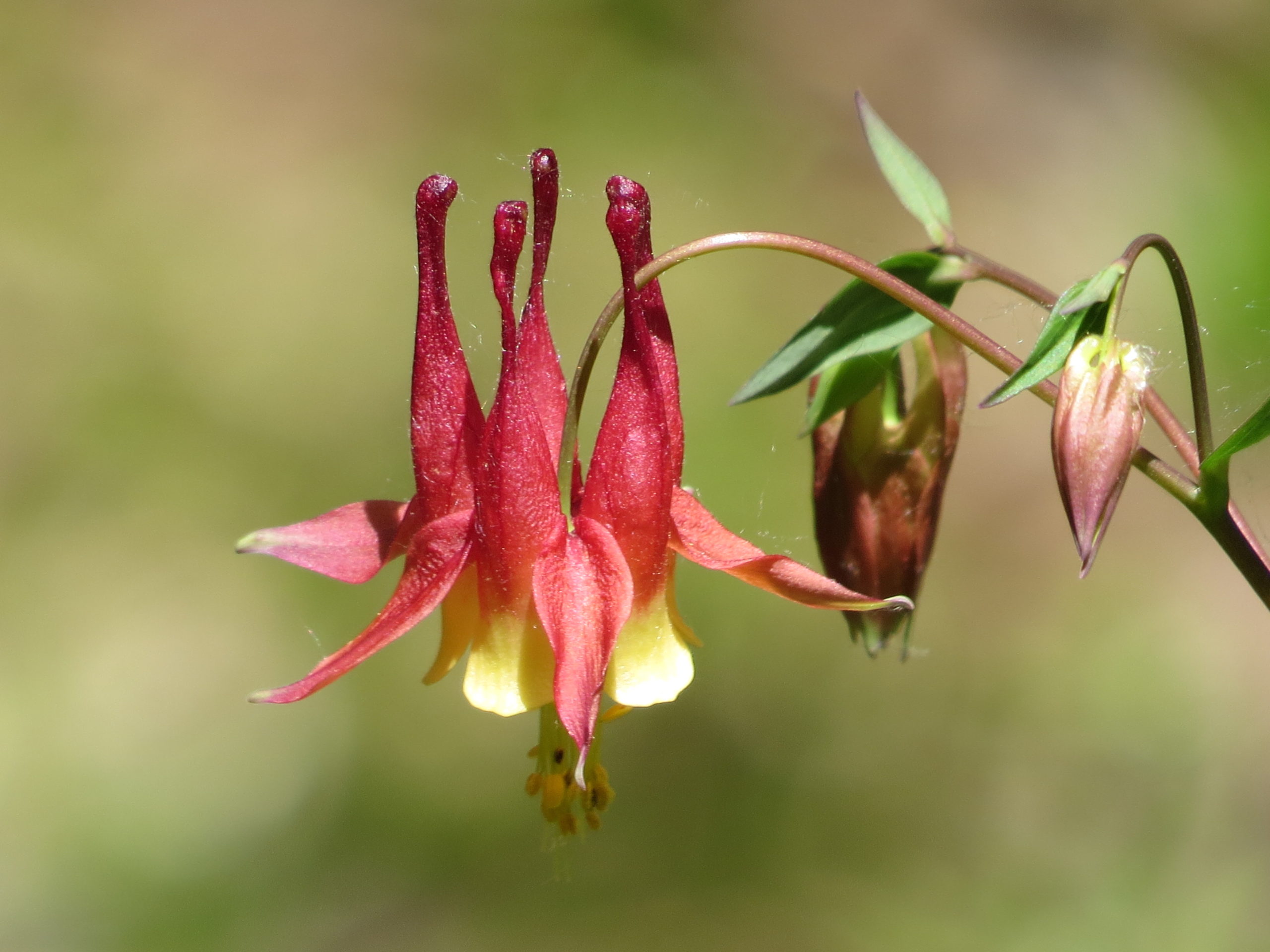
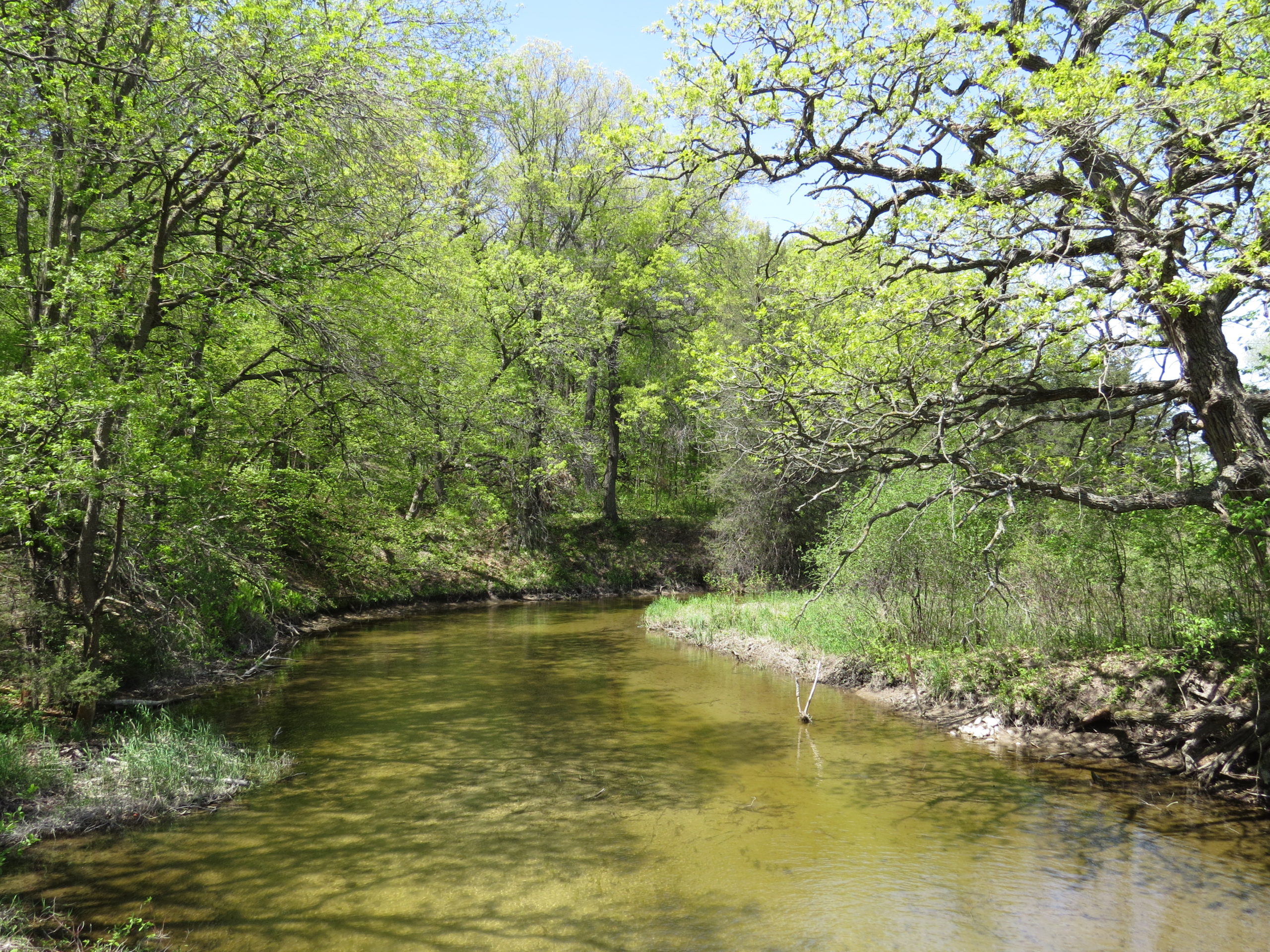
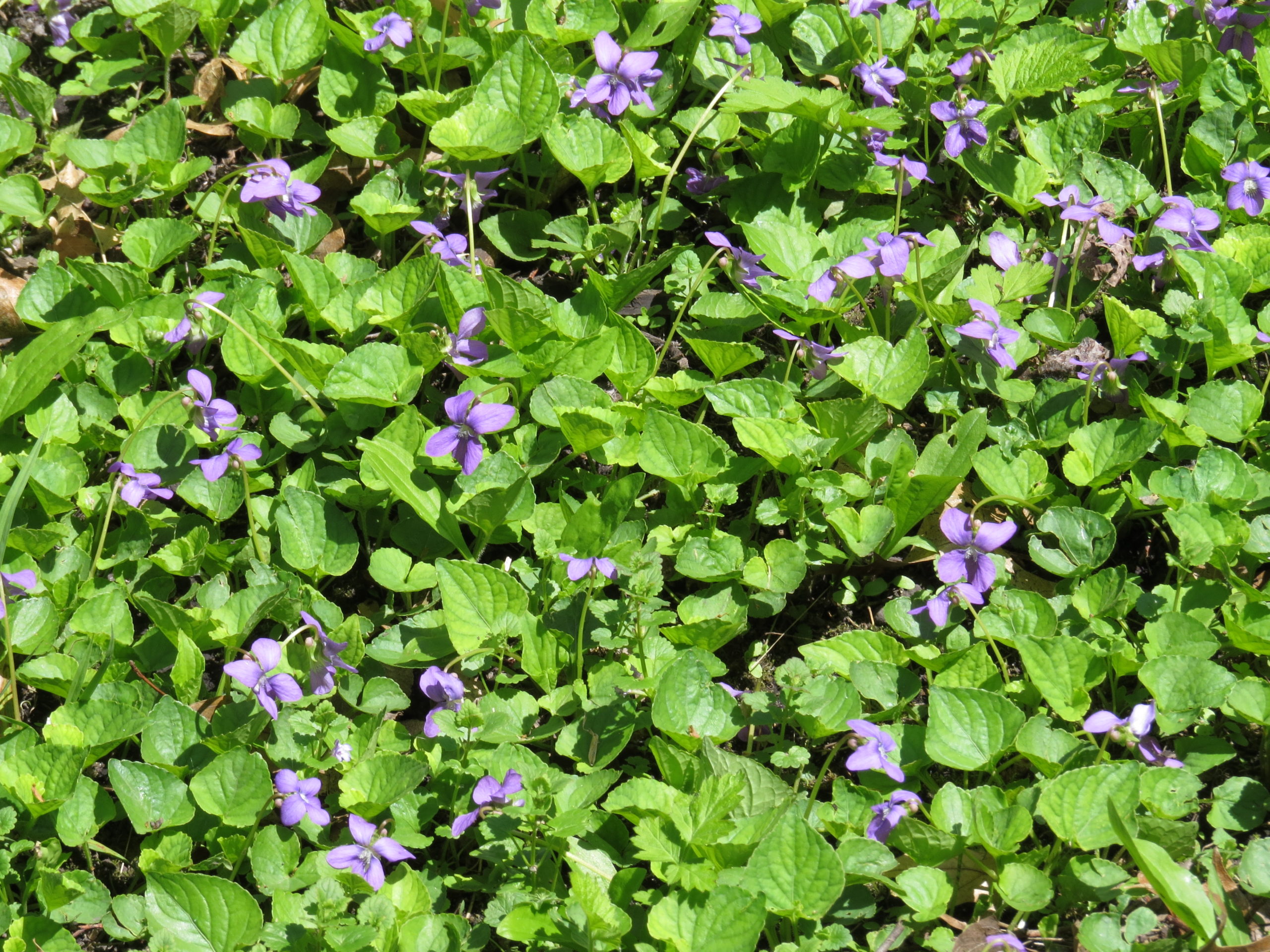
According to florgeous.com, Violets symbolize honesty, protection, dreams, healing, and remembrance. May it be so. Peace of the Pine forest be with you.
Aqua Terra Part I
When we emerged from the wilderness of the Boundary Waters in August, I bought myself a bracelet made from Aqua Terra Jasper to remind me of my amazing week. Water and land. Life-sustaining water and body-grounding earth. The colors of blue-green, sand, and reddish-brown swirled and intermingled on the beads, every one a distinct work of art that together embodied the look and feel of Nature’s offering to us in the Boundary Waters. The stone of peace.
Four weeks after leaving the peace of the Boundary Waters with our kids in far northeastern Minnesota, Chris and I traveled to the southwestern corner of the state to camp for the weekend with my Mom. We met at Blue Mounds State Park, just north of Luverne, in the county named Rock, which we quickly saw was merely an accurate description of the land. As we settled into our campsite—my Mom with her self-renovated retro camper and us in our little tent—we soon discovered that Aqua Terra would also be the most compelling environments of this prairie place.
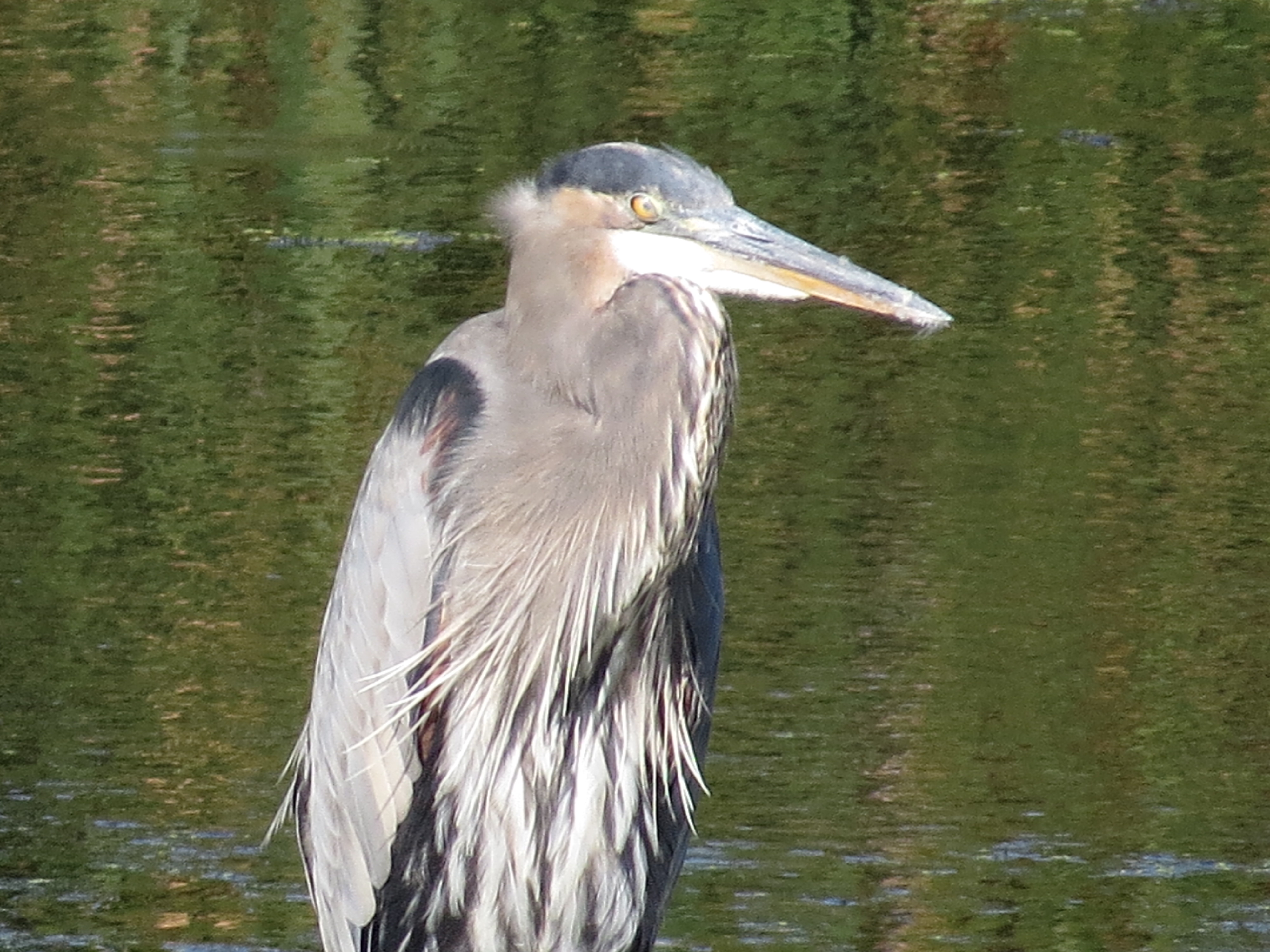
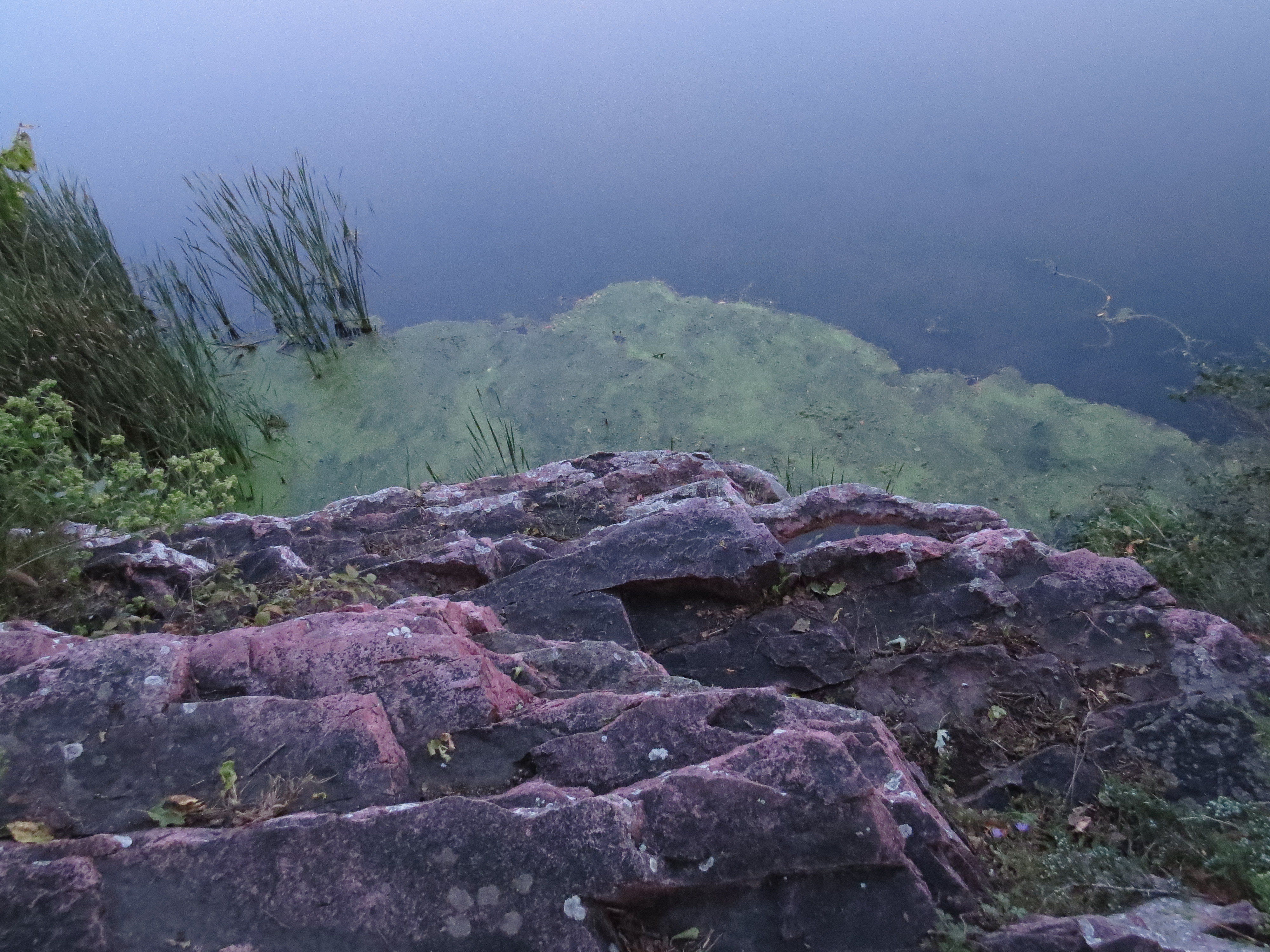
Right behind our campsite was a short path through a few trees to a cliff of red rocks that overlooked a narrow, dammed lake of Mound Creek. It was the inhabitants of this aqua environment that captured my attention each dawn and dusk and serenaded us each night. With our late afternoon arrival and my mini-exploration, one creature stood in the shallow water in front of a field of waving cattails—a Great Blue Heron. He was statue-still, a little bent-over looking, shoulders drooping as his wings hung down in rest or resignation.
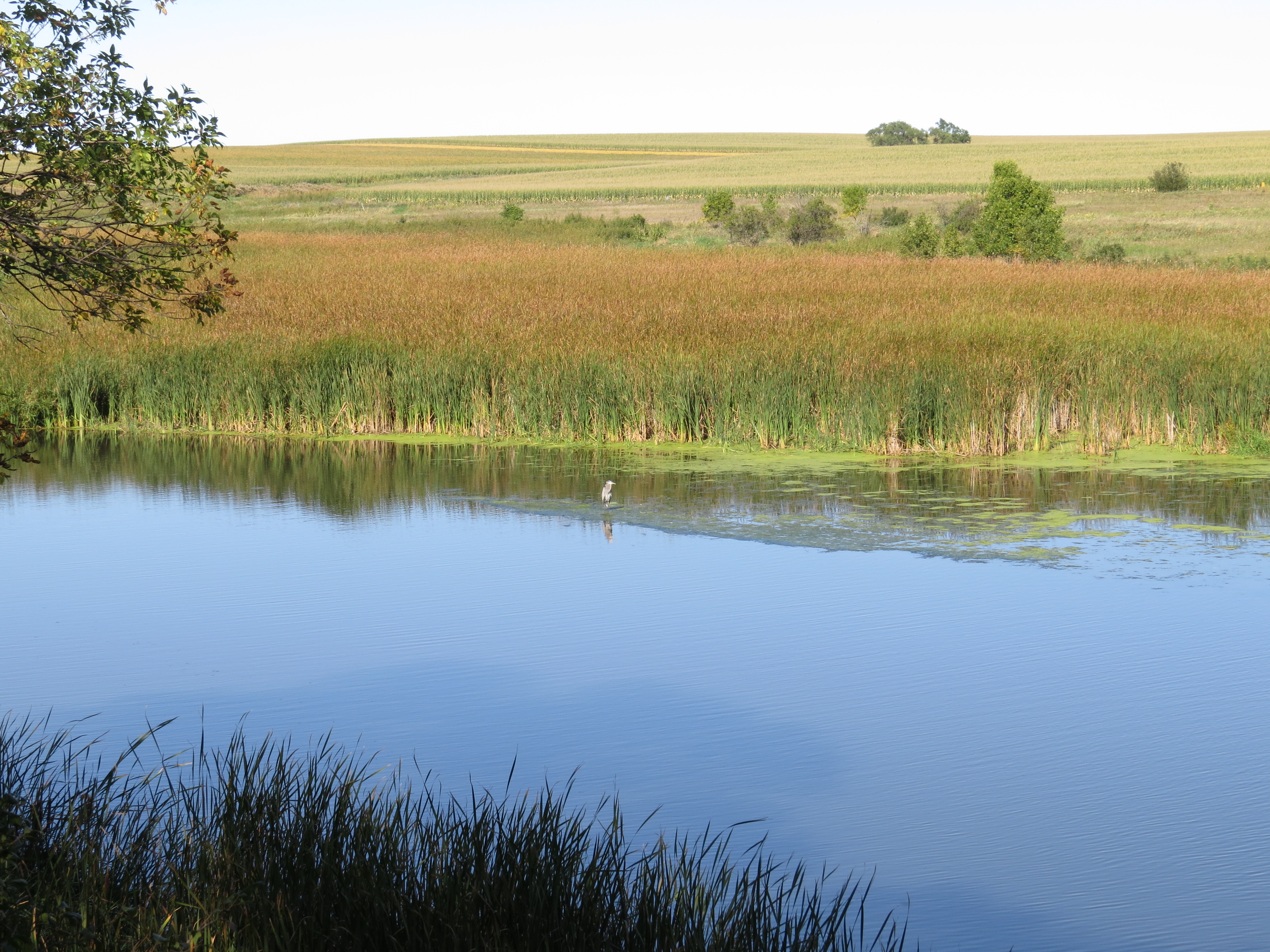
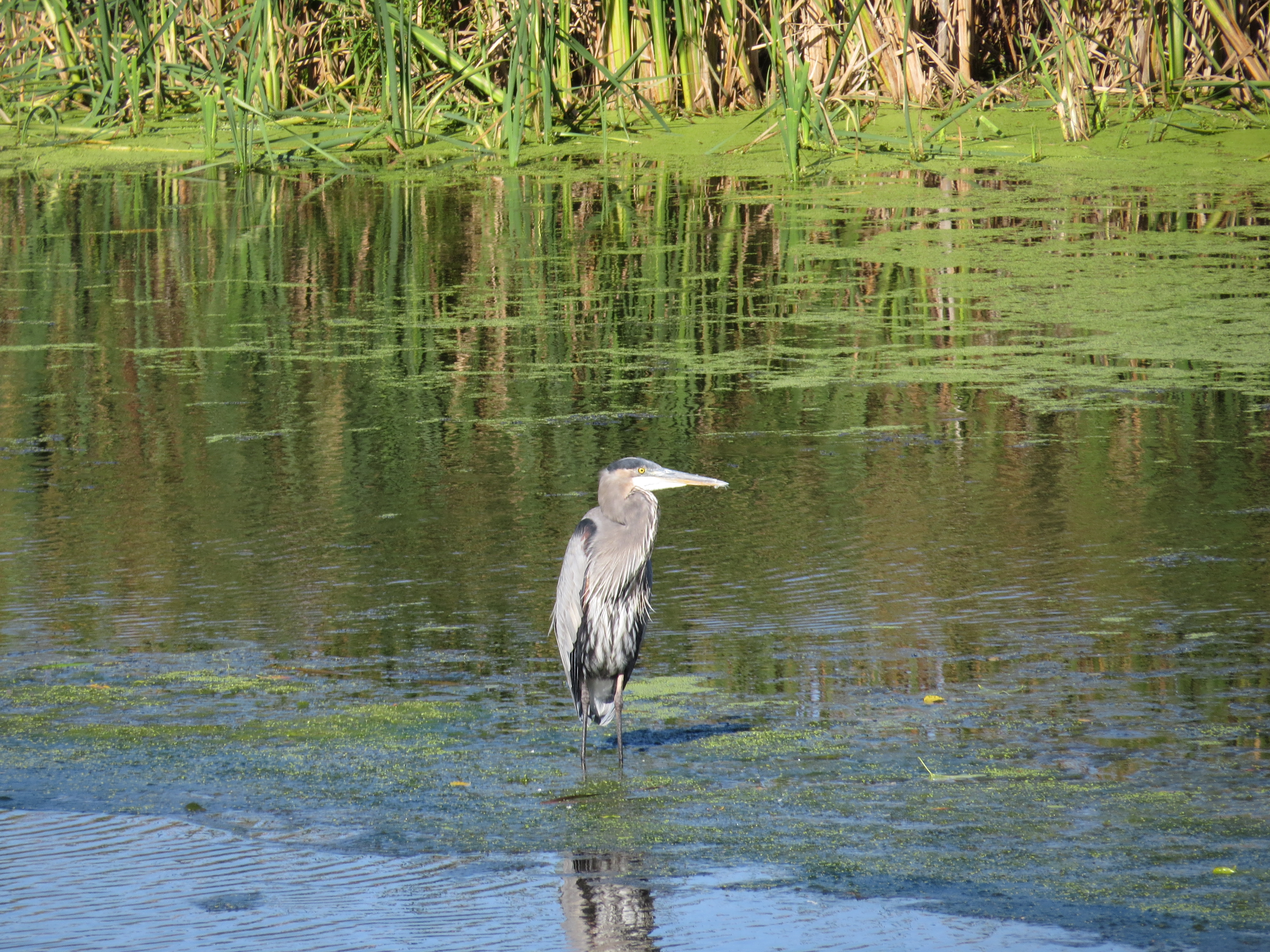
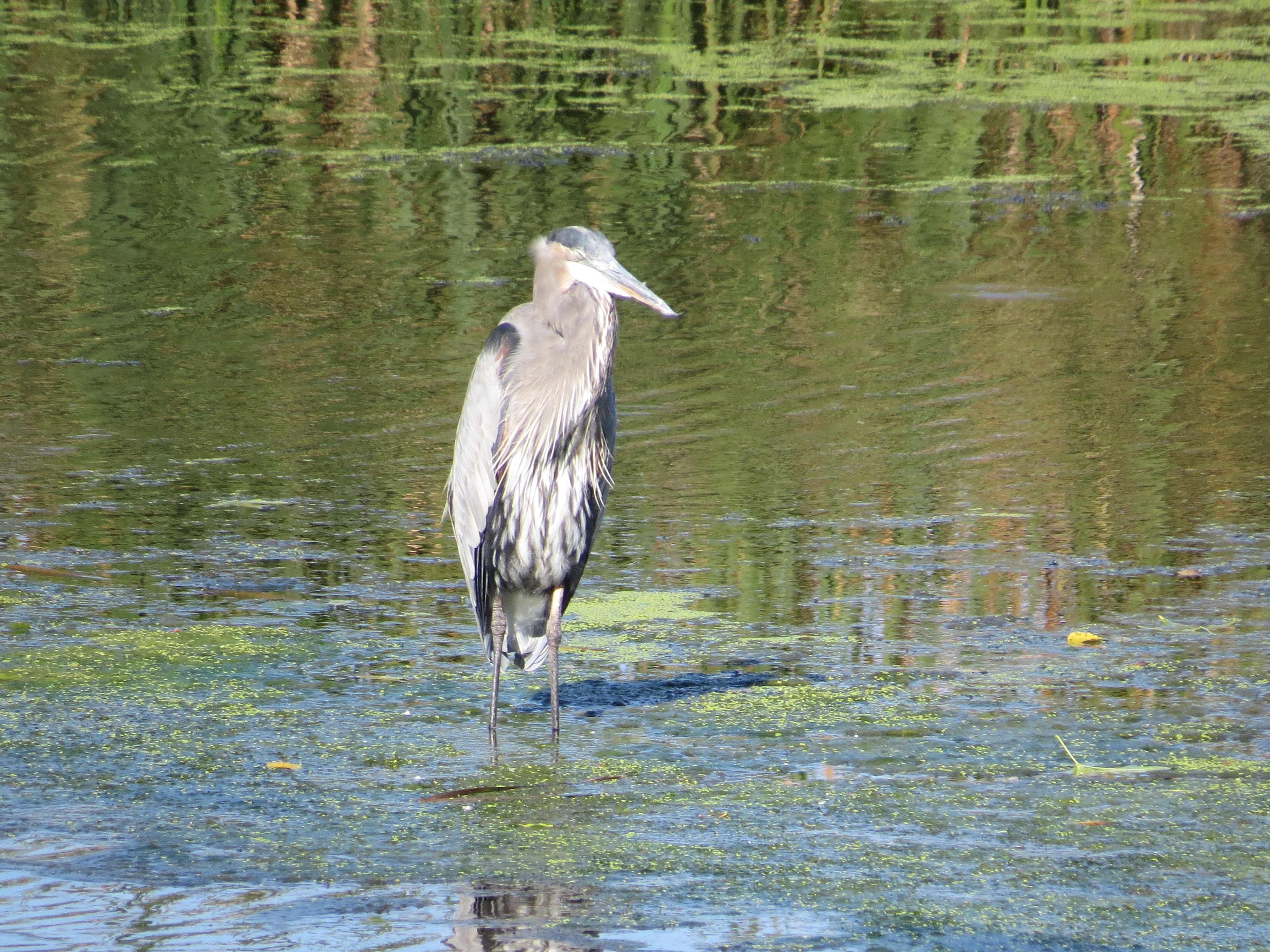
He had some unruly chest plumes, but also a tuft of down feathers at the back of his head—a young one, perhaps? His eyes closed and opened in his stillness.
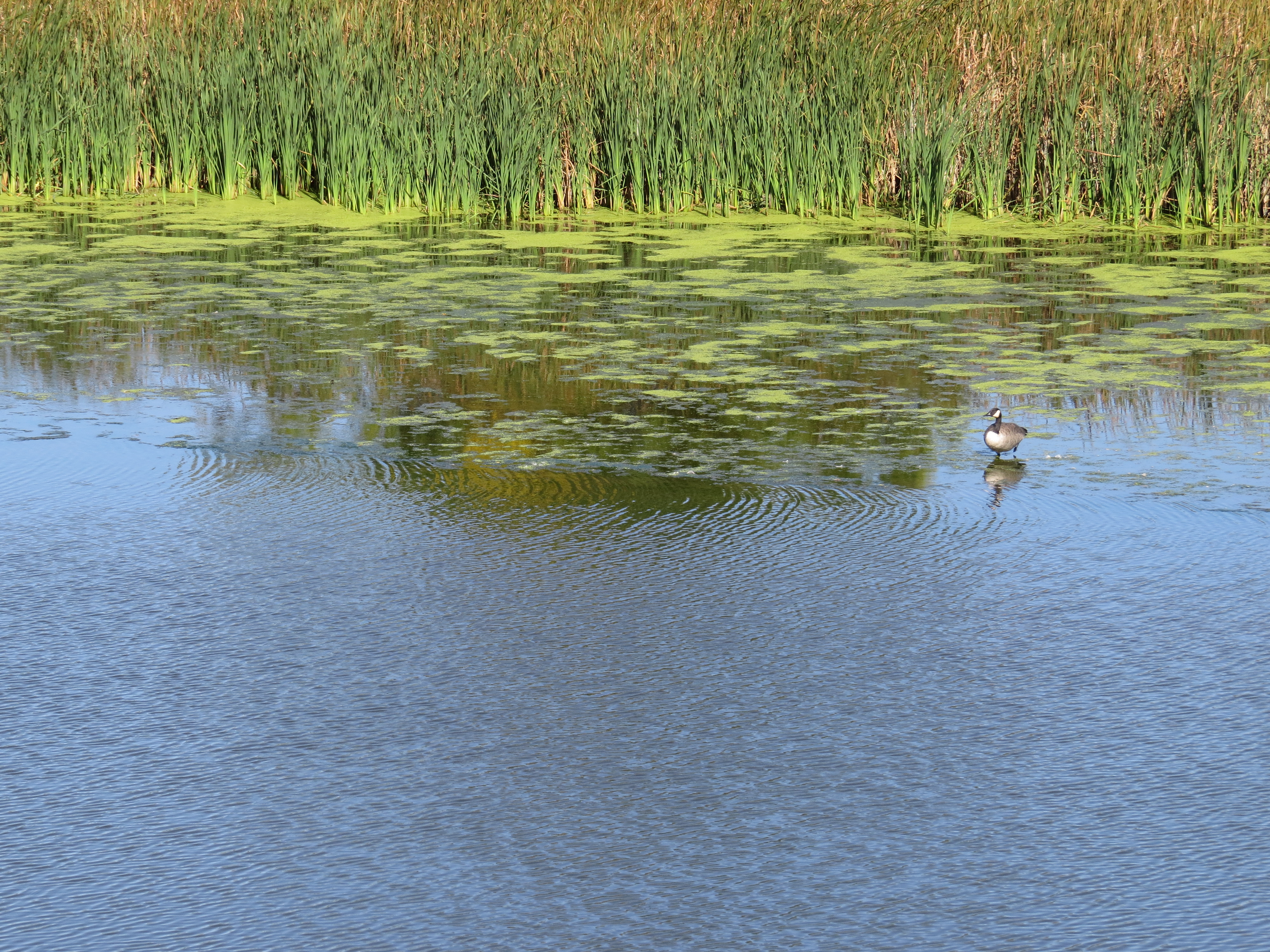
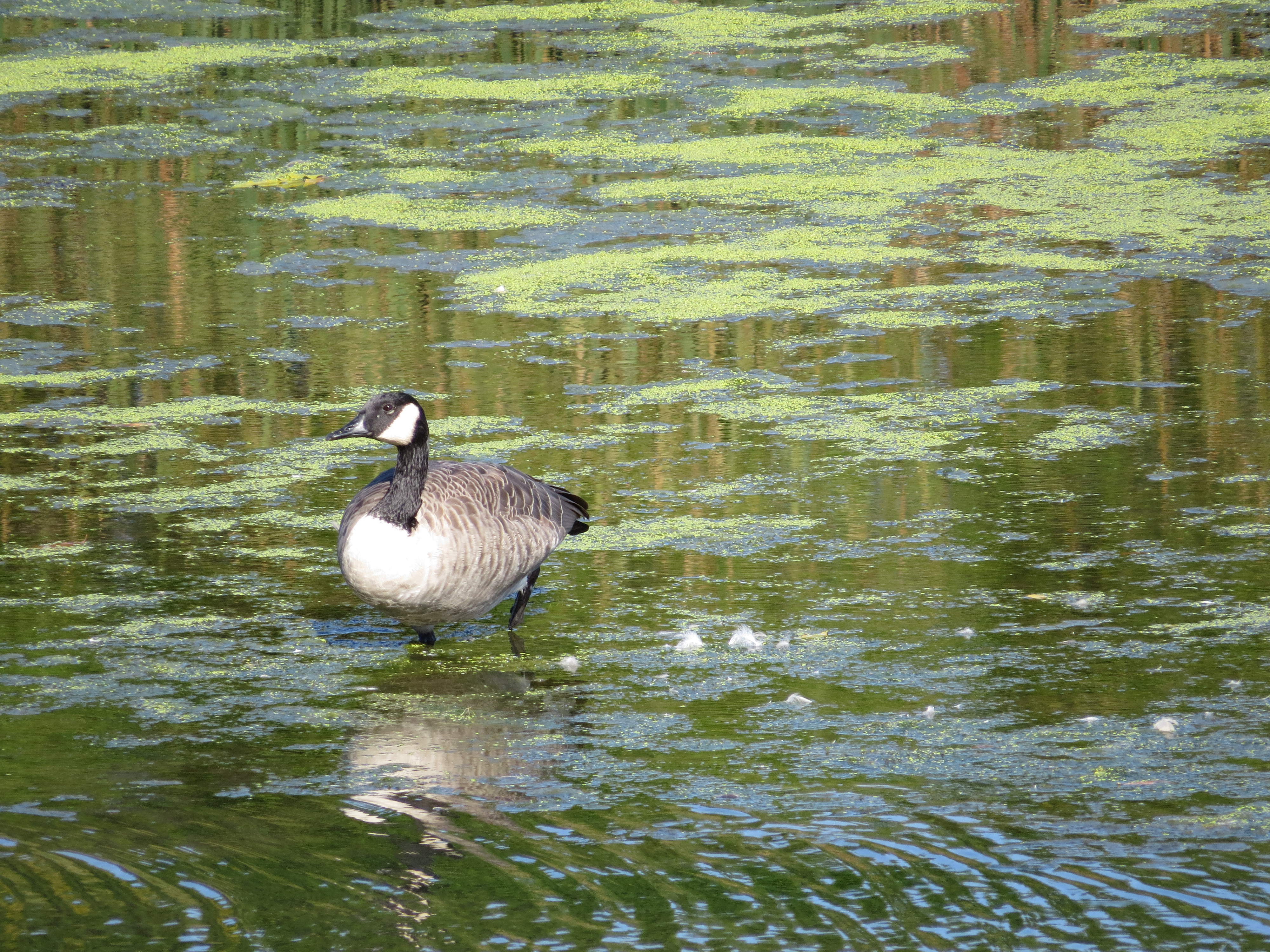
Down the lake a ways, there stood another aqua-creature, again as still and quiet as a statue, and they seemed to be watching one another. A Canadian Goose stood rather awkwardly, one foot behind the other, with a bent head and neck looking in the direction of the heron. Beside her on the water were little piles of down feathers—at first I thought she had been preening herself, but that usually happens when the bird is relaxed, and she was not relaxed. Perhaps there had been a scuffle of territory between the two? They both stayed in the same position for all the minutes I watched them.
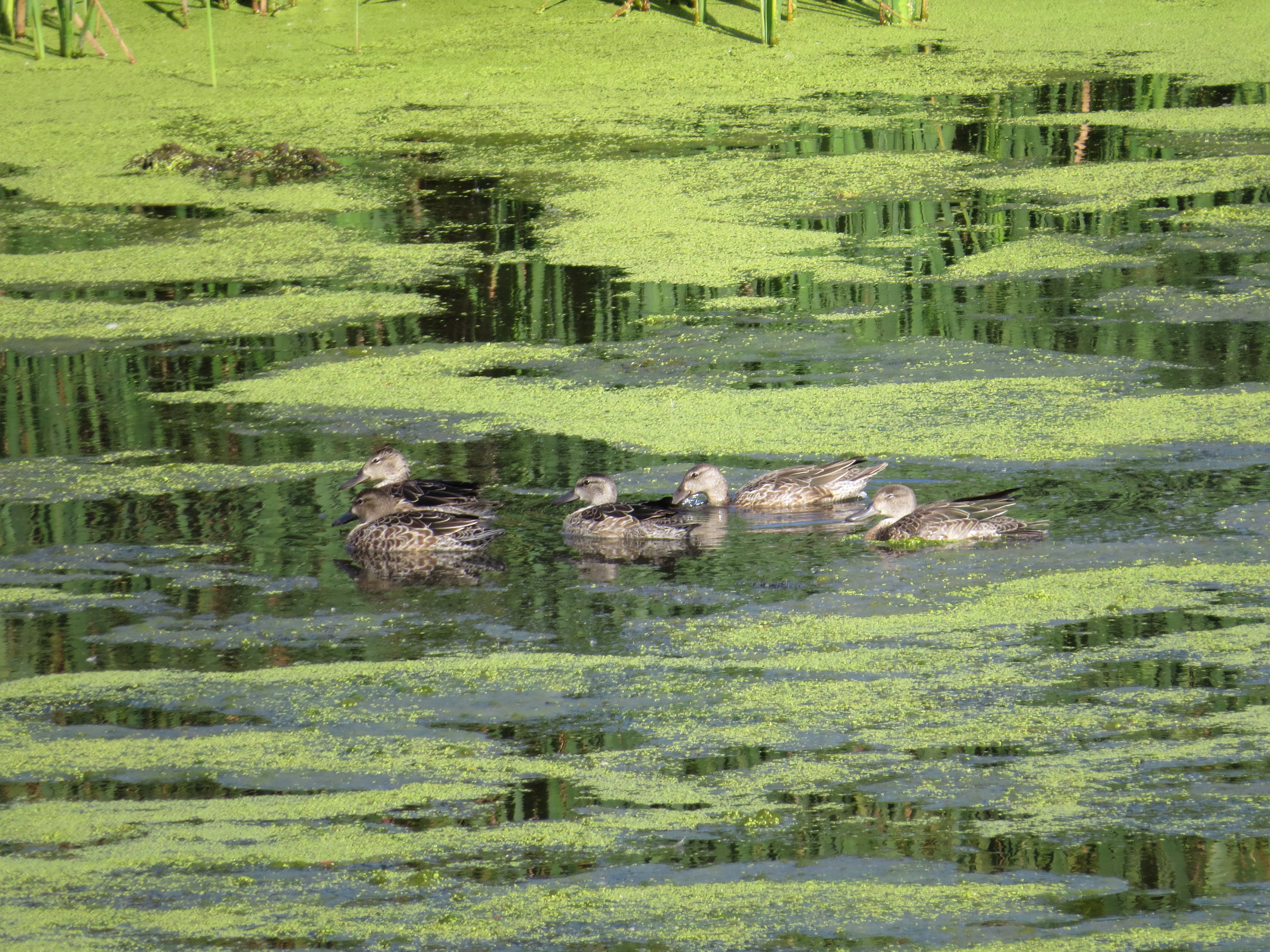
There were some waterfowl who seemed not to have a care in the world—a few immature Blue-Winged Teal (most likely.) Happy ducks swimming through duckweed.
After our quick, light supper, we drove to the Bison viewing platform where the rocky, rolling prairie terra sustains a herd of over 100 bison, including the spring-born calves.
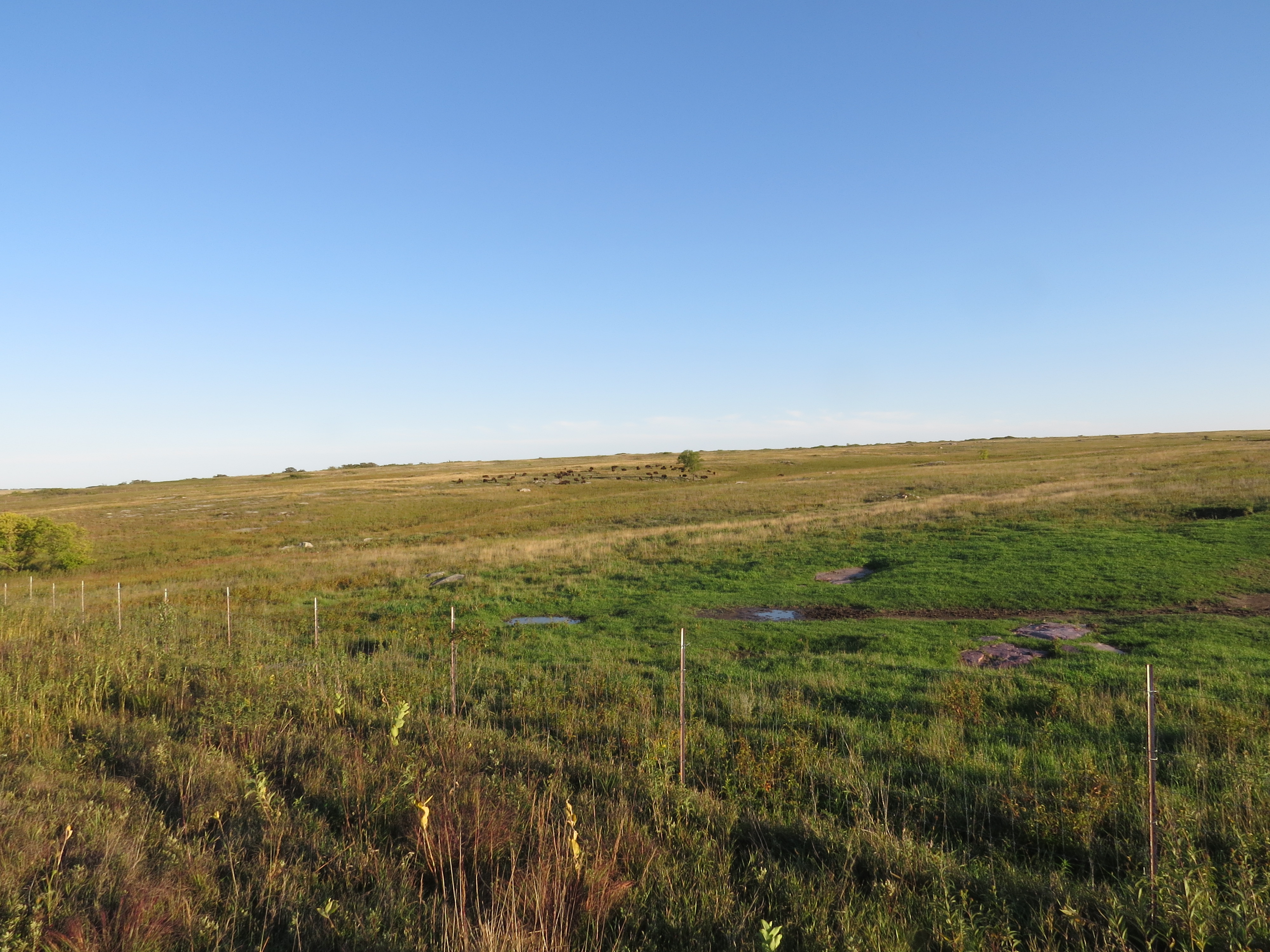
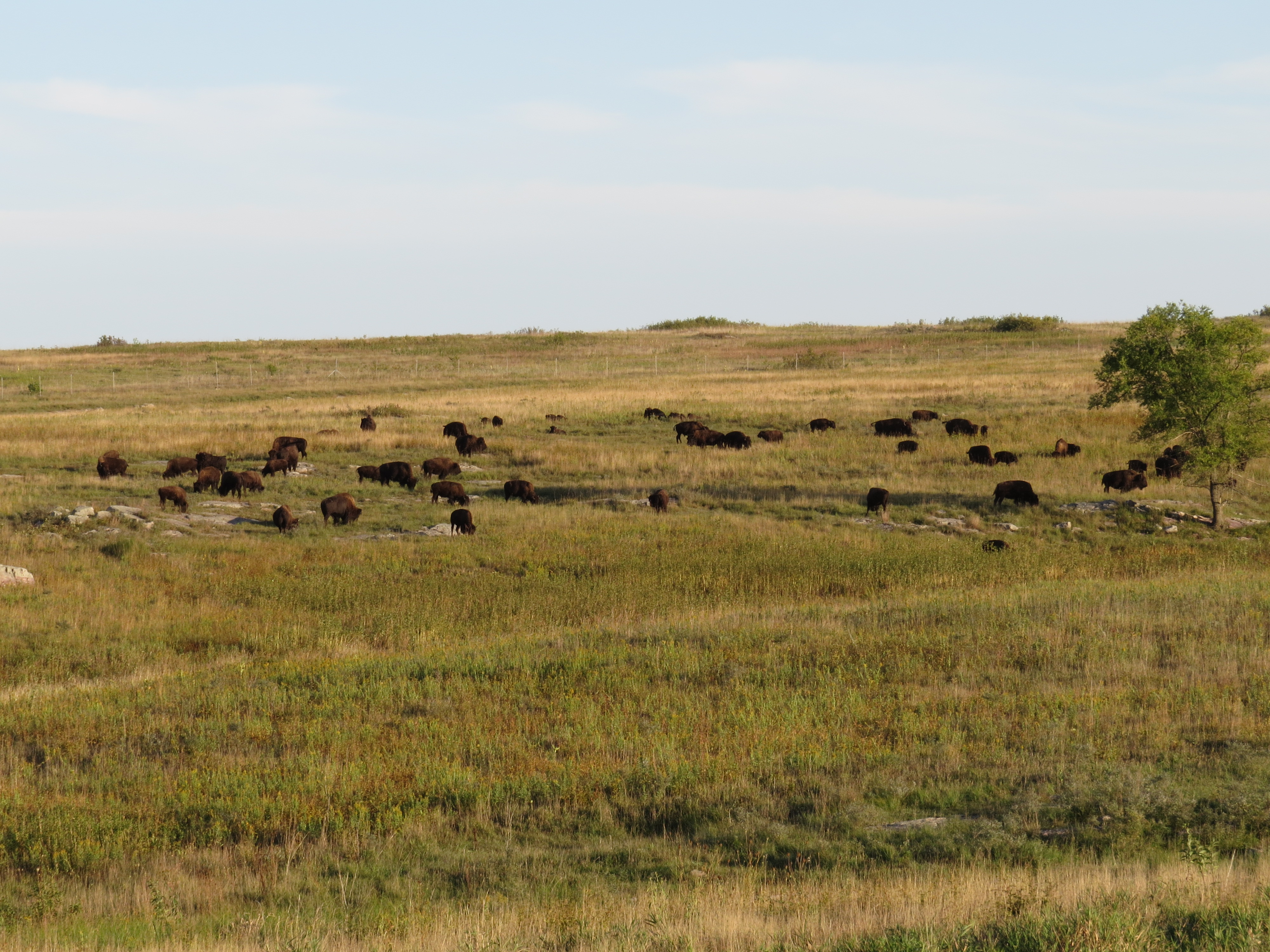
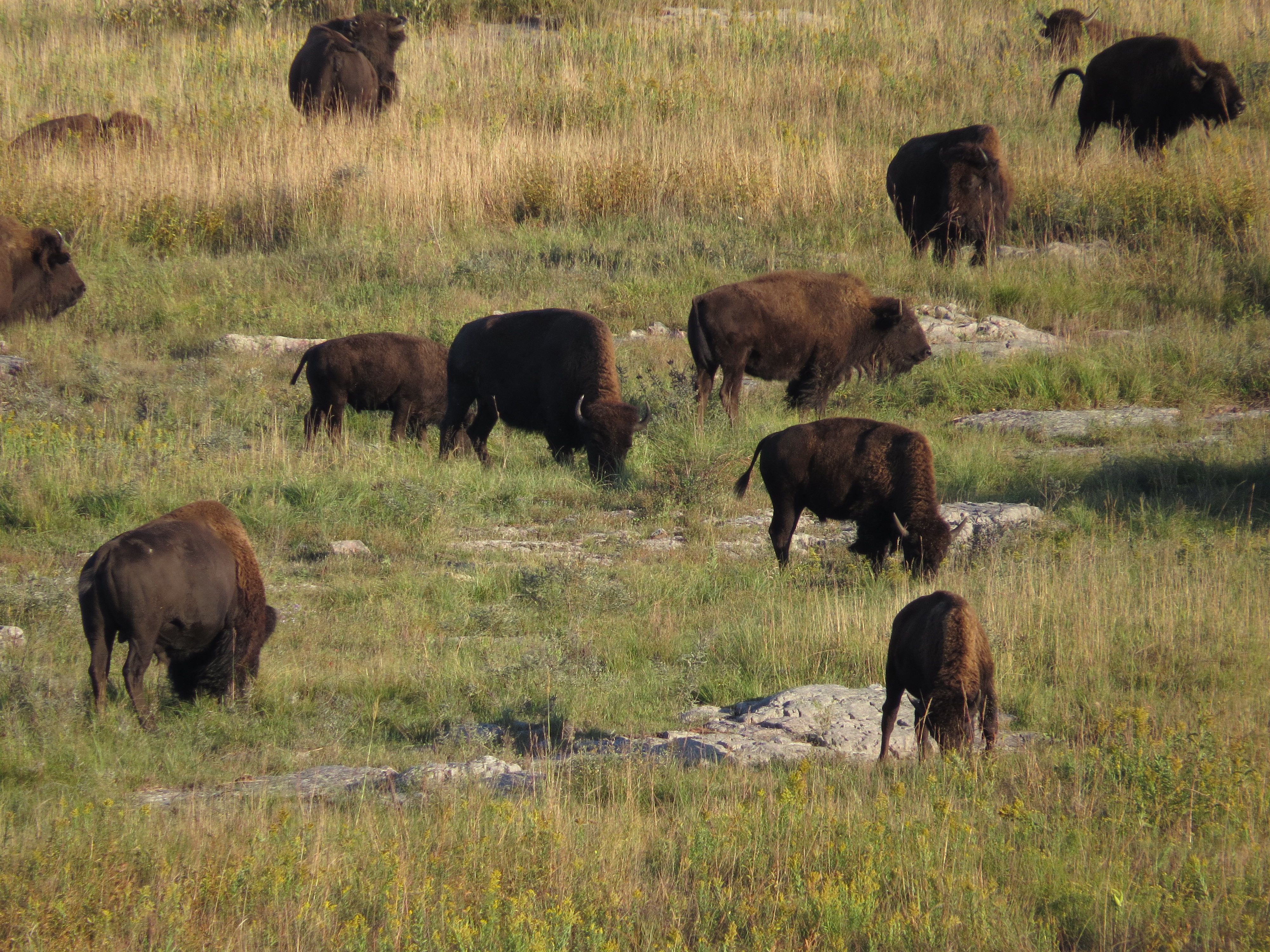
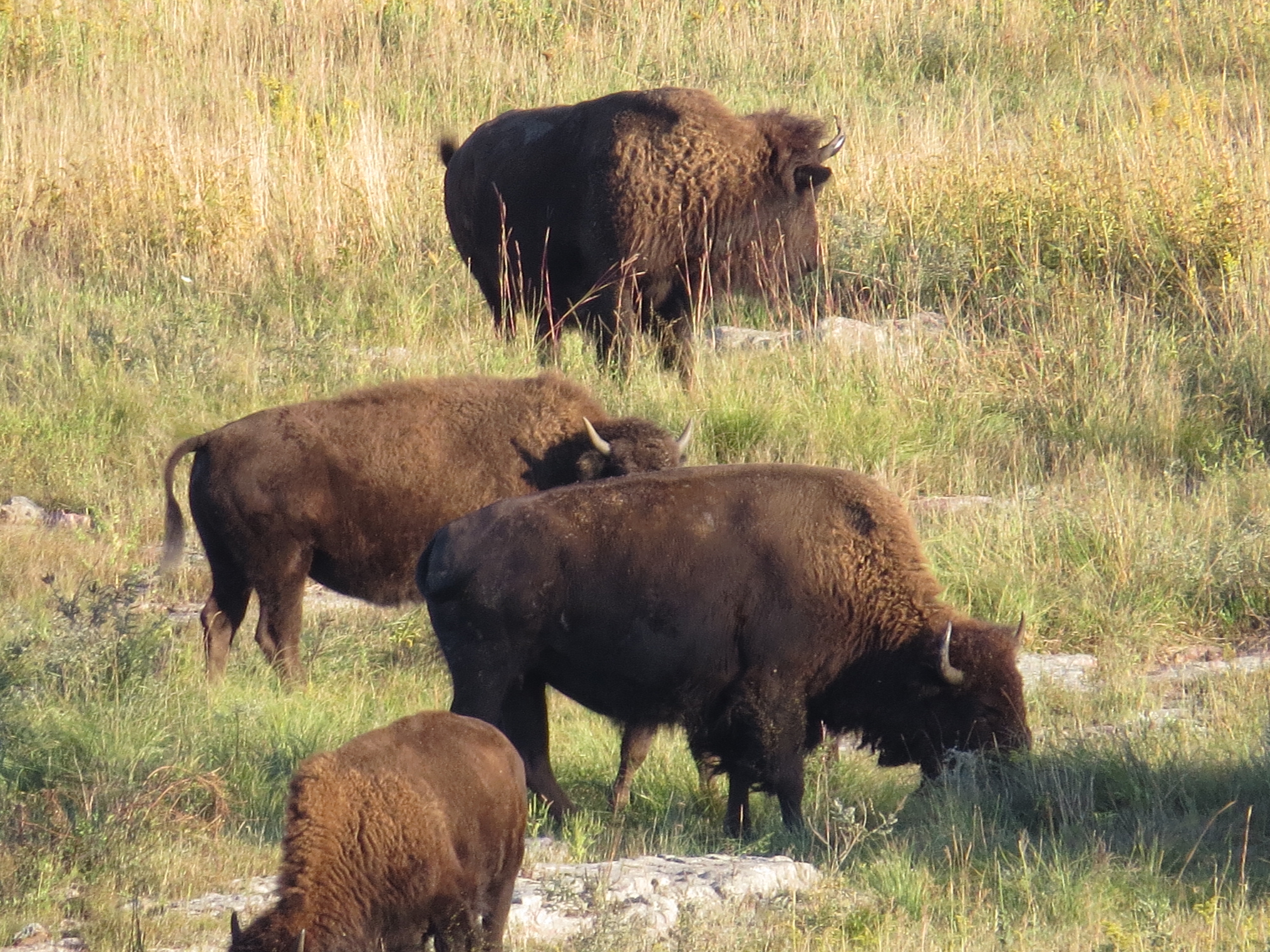
There were many outcrops of Sioux Quartzite rocks and boulders, pink to purple in color from the presence of iron oxide and millions of years of formation. Some of the boulders were as big as a buffalo or is the buffalo as big as a boulder?
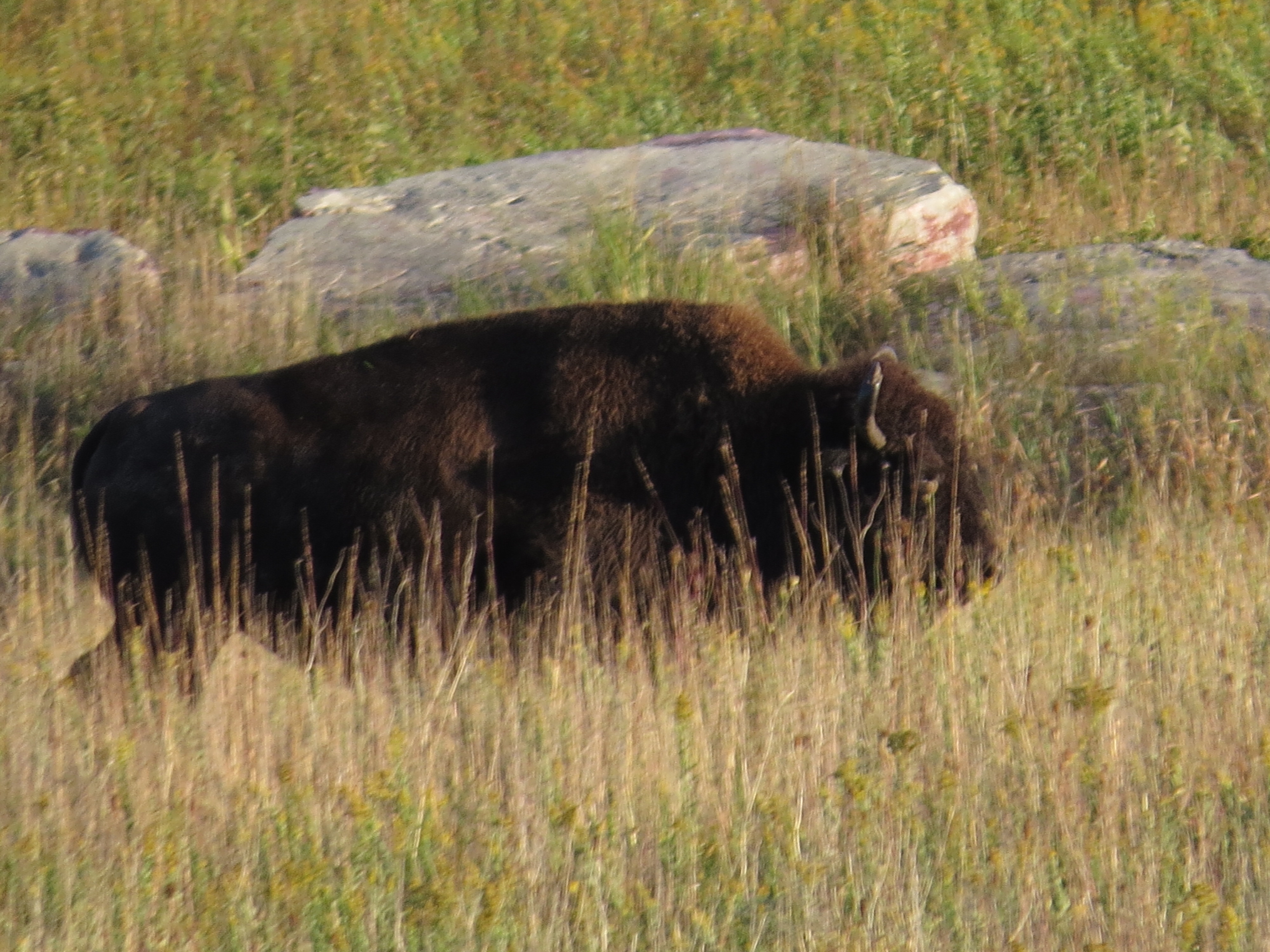
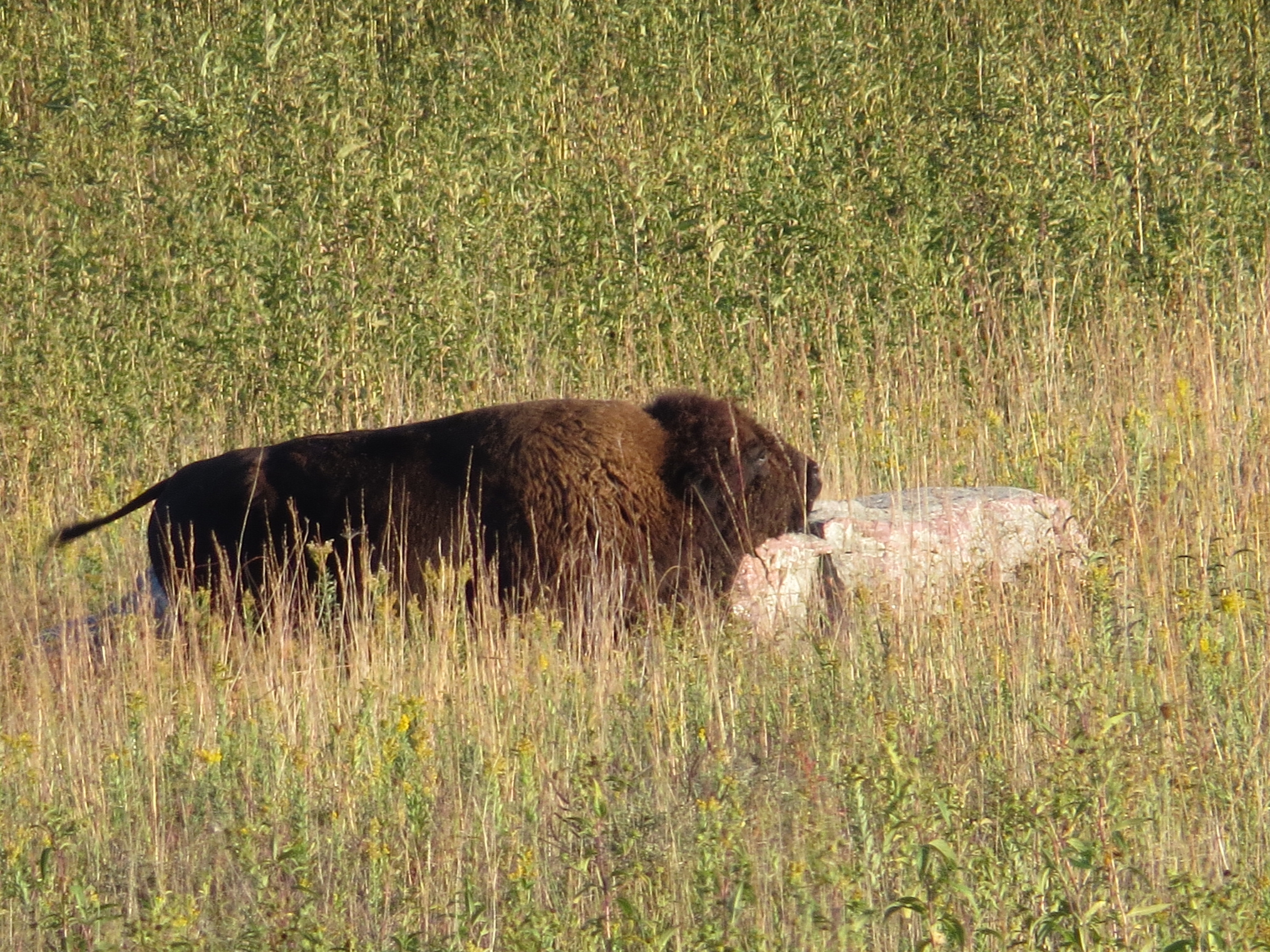
The boulders are used as ‘scratching posts’ for the bison and have been for many thousands of years. They rub their wooly heads and necks against the corner of the rocks, and in doing so, smooth the boulders to a shiny pink texture while relieving the itch of shedding their thick winter coats.
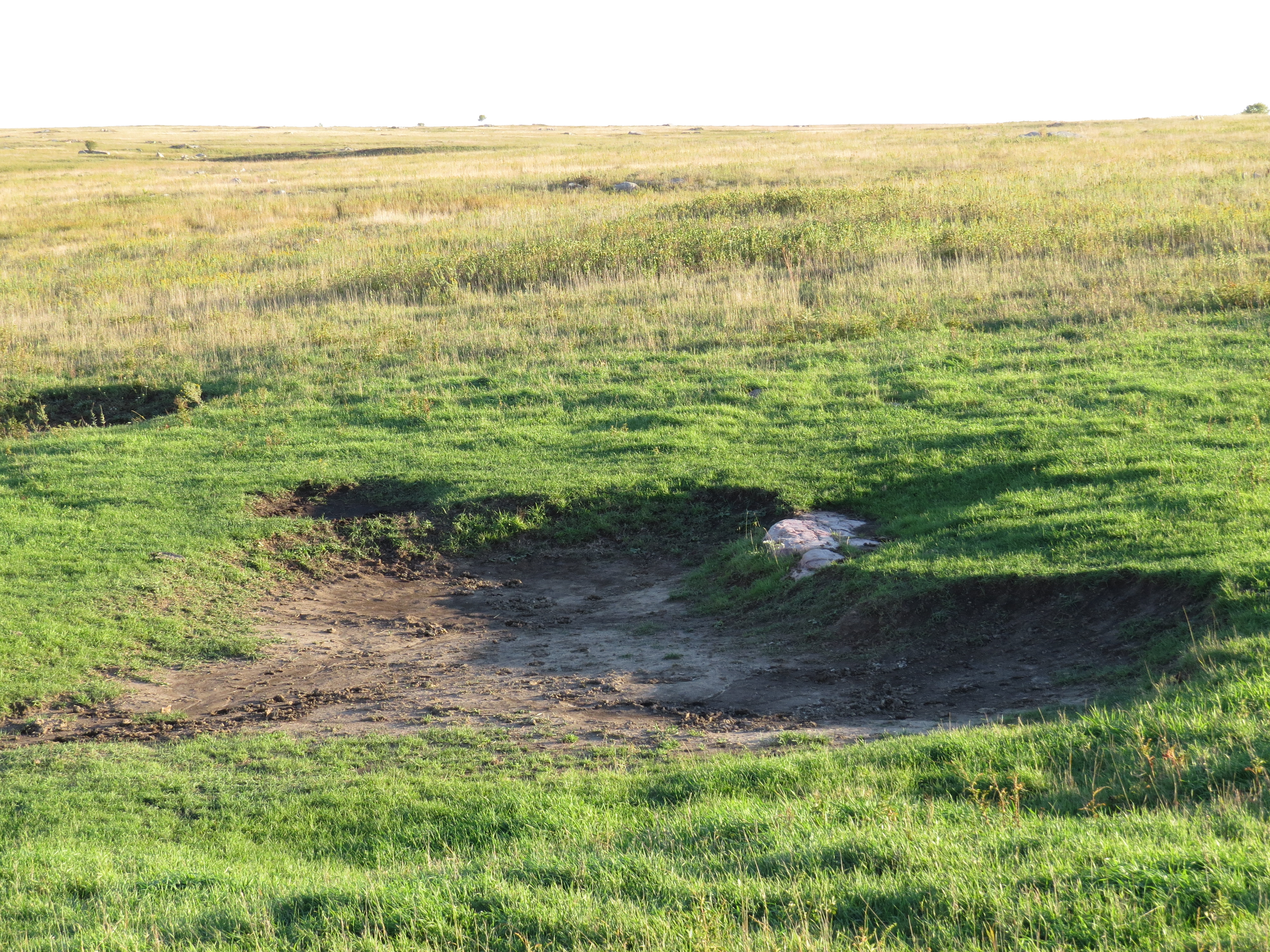
Another way bison scratch is using a buffalo wallow in the dirt. They may rub their heads or actually roll in the dirt to help with shedding, to get relief from biting insects, or to cool down in the heat.
Officially, these animals are American Bison—Bison bison as genus and species. But many of us call them buffalo. When the French fur trappers came here in the 1600s, they called them “boeuf” because they looked like the buffalos of Asia and Africa (Water and Cape Buffalos). I tried to call them bison for the weekend, to get my brain and mouth re-trained, but my default is still ‘buffalo.’
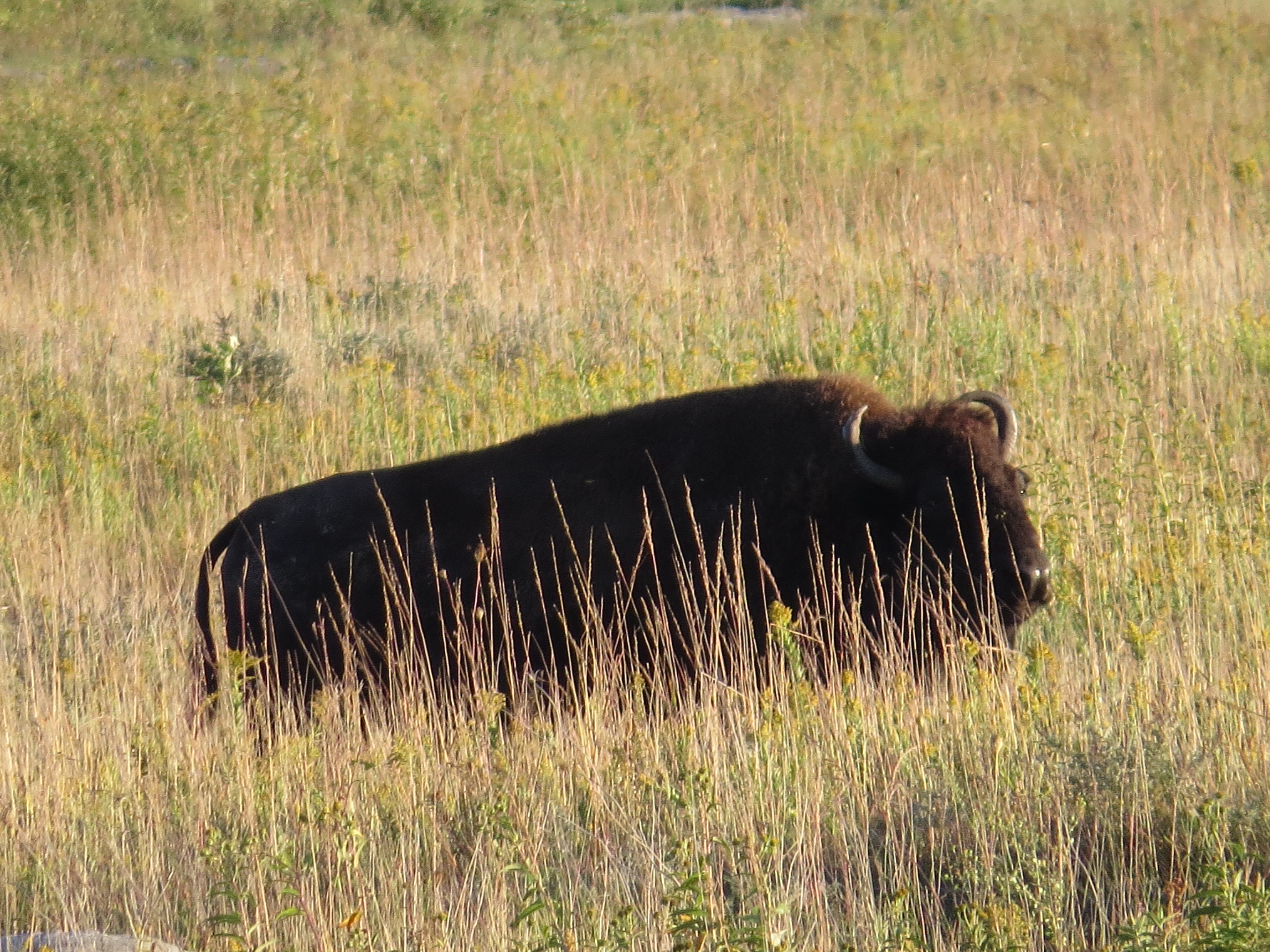
Gestation for a bison is 283 days—9.5 months—and the calves are 25-40 pounds at birth with a reddish-brown coat that darkens with age. So even by September, they have coats like their parents, and only size helps to identify them from far away. They are also growing horns already—both males and females.
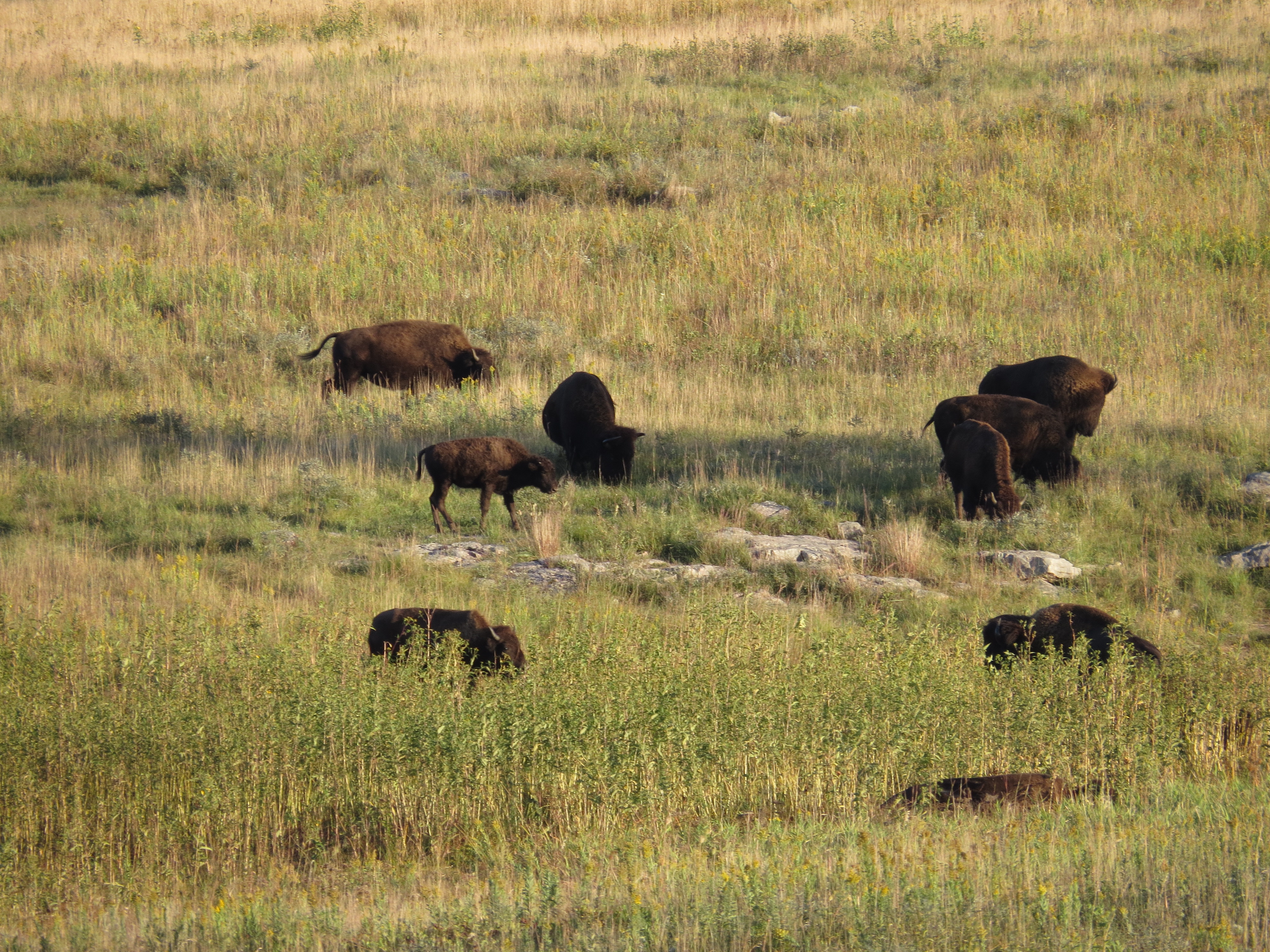
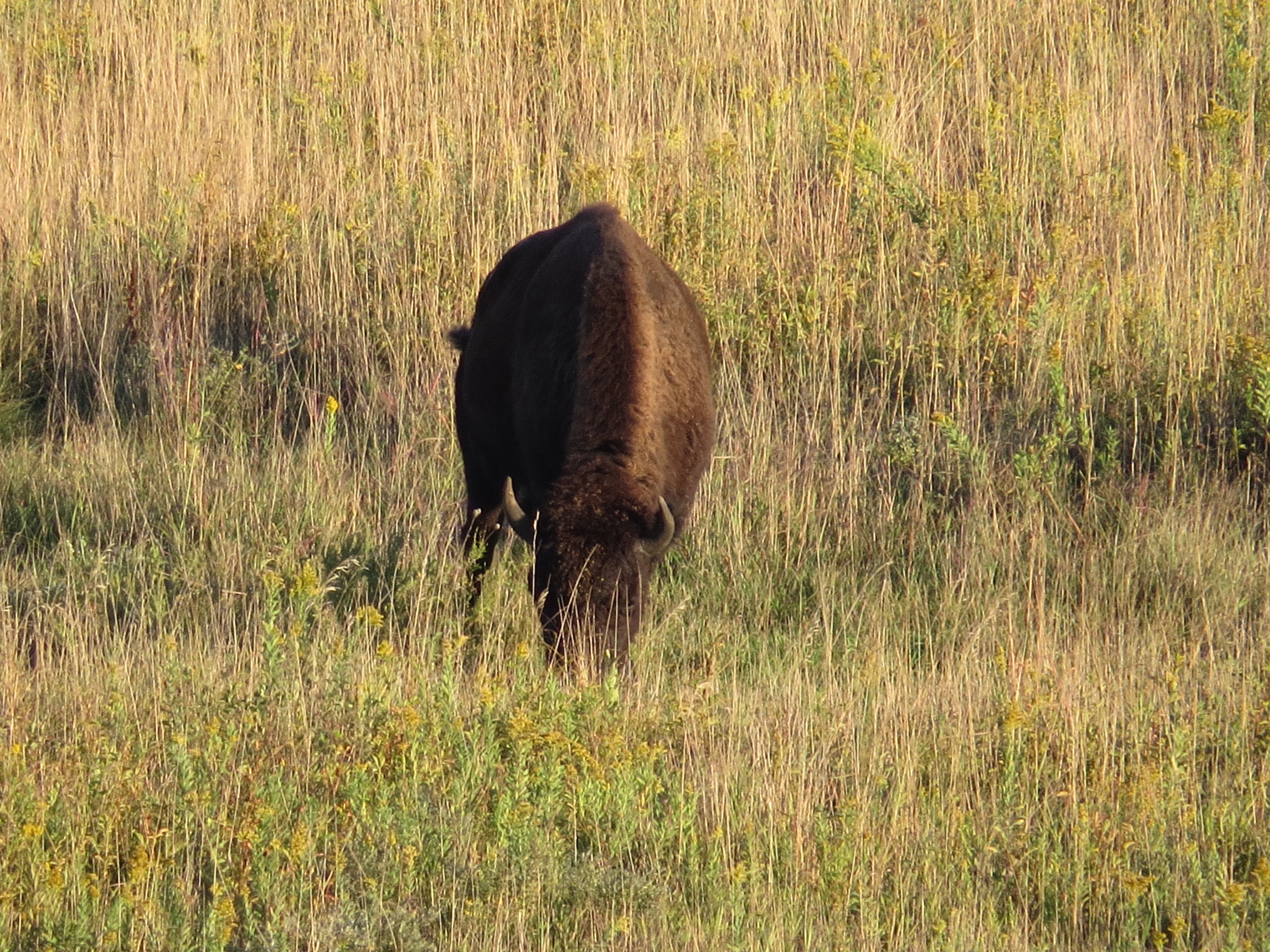
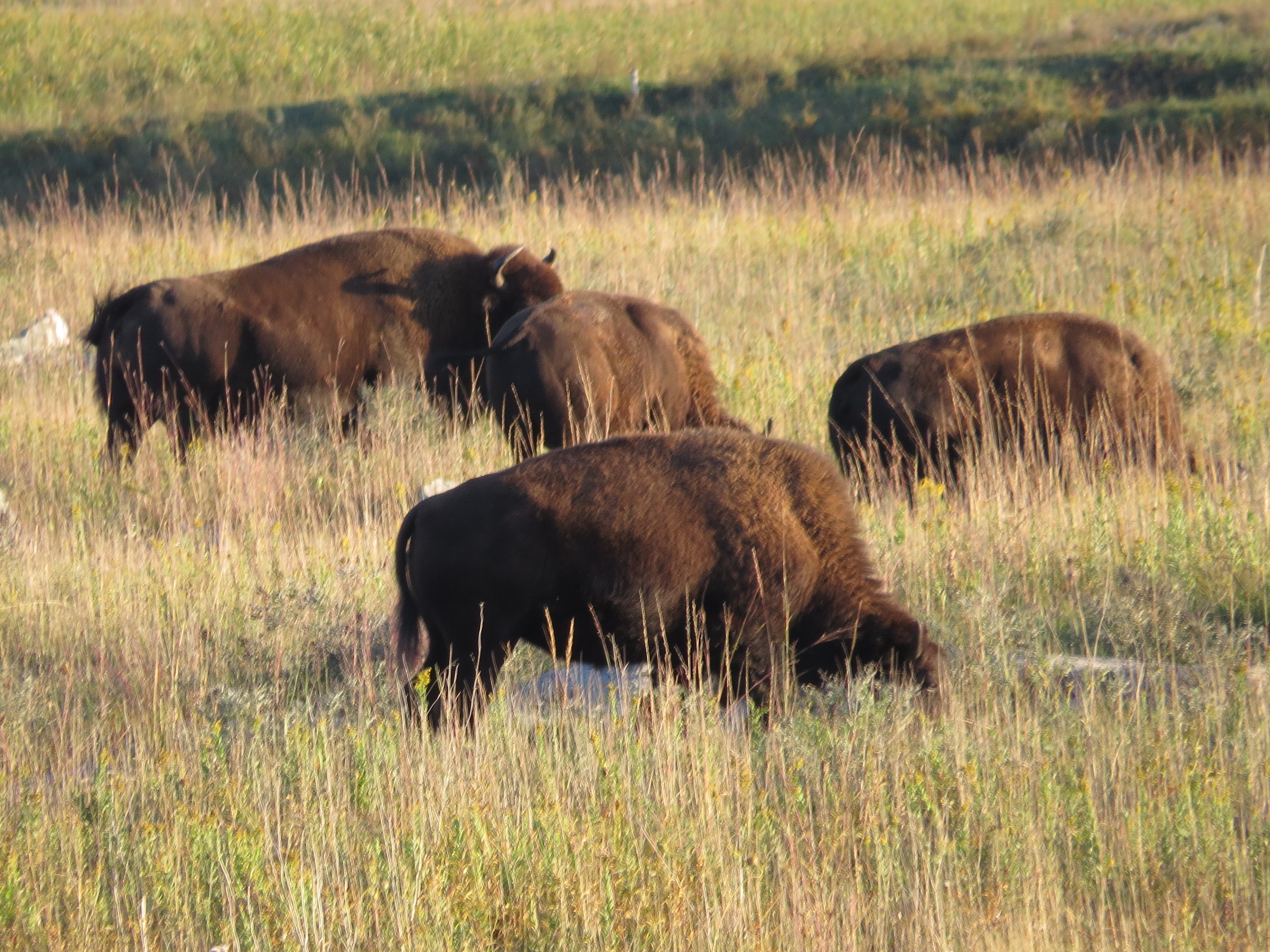
As we watched, the bison peacefully grazed across the pasture and up the hill, disappearing over the horizon. They graze for nine to eleven hours each day, year round, using their massive heads to move snow aside, if need be.
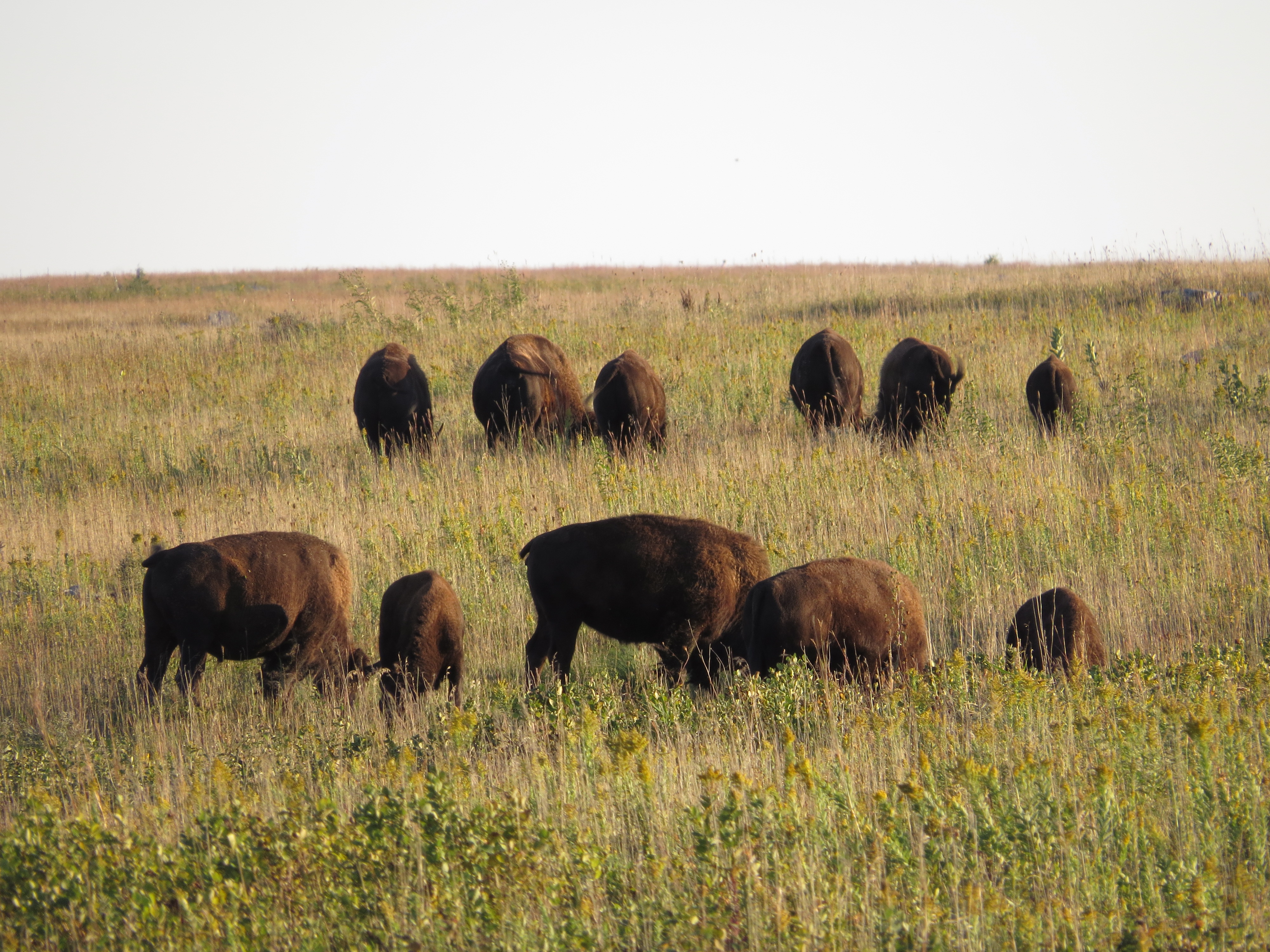
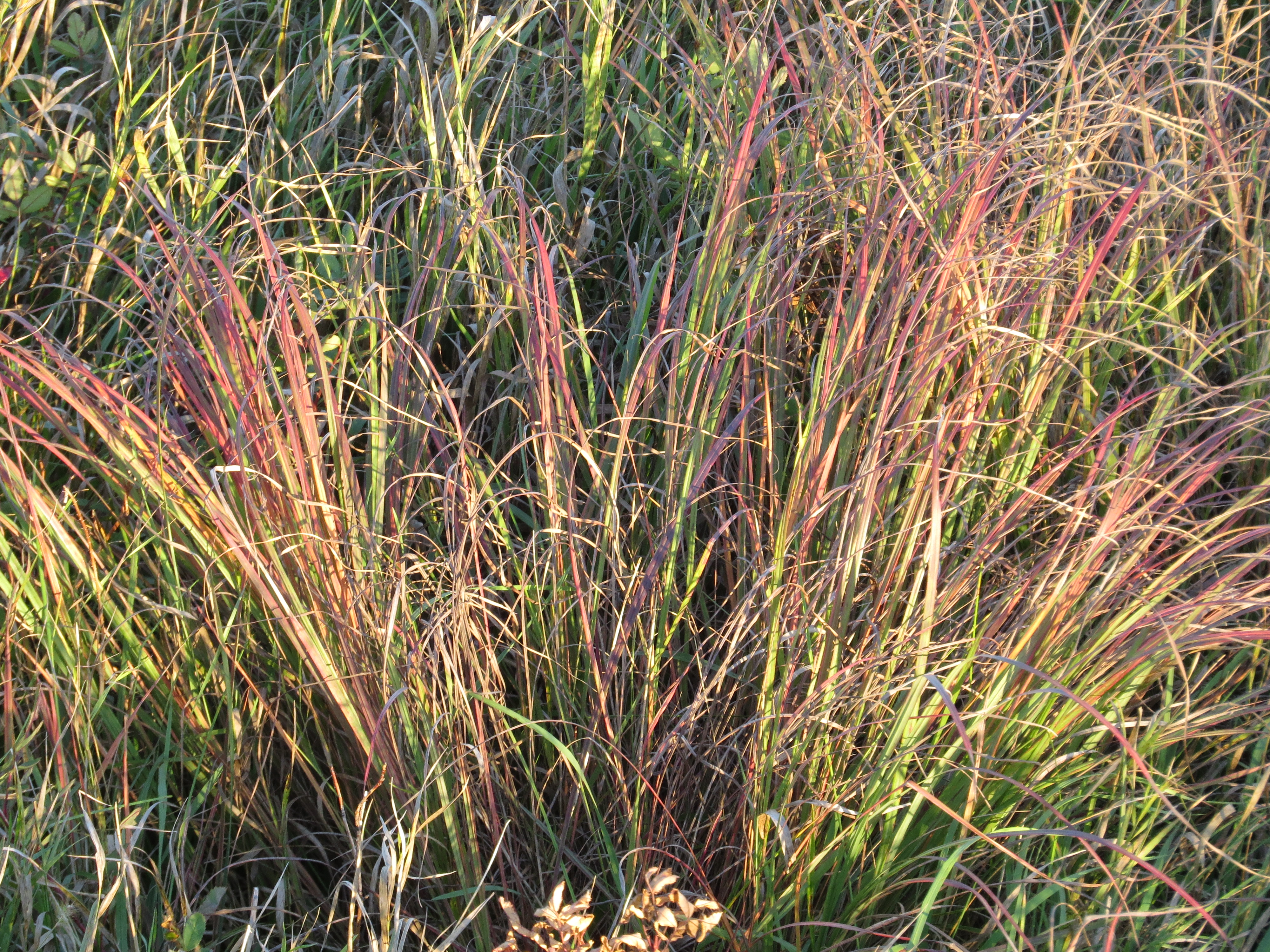
The earth supported their huge half-ton to ton bodies. Bluestem grass, along with other prairie grasses and wildflowers, is the staple for nourishment to sustain their large frames.
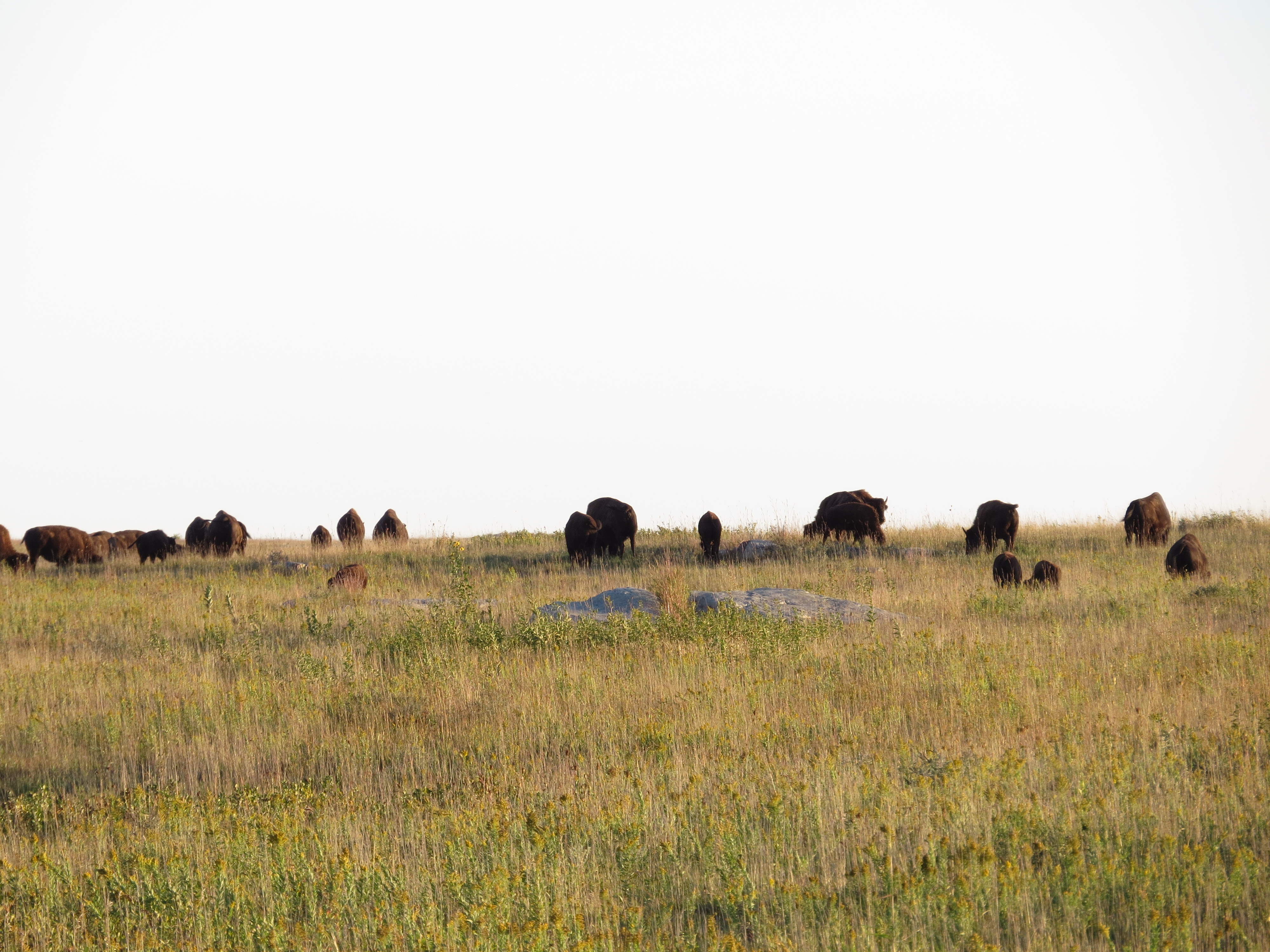
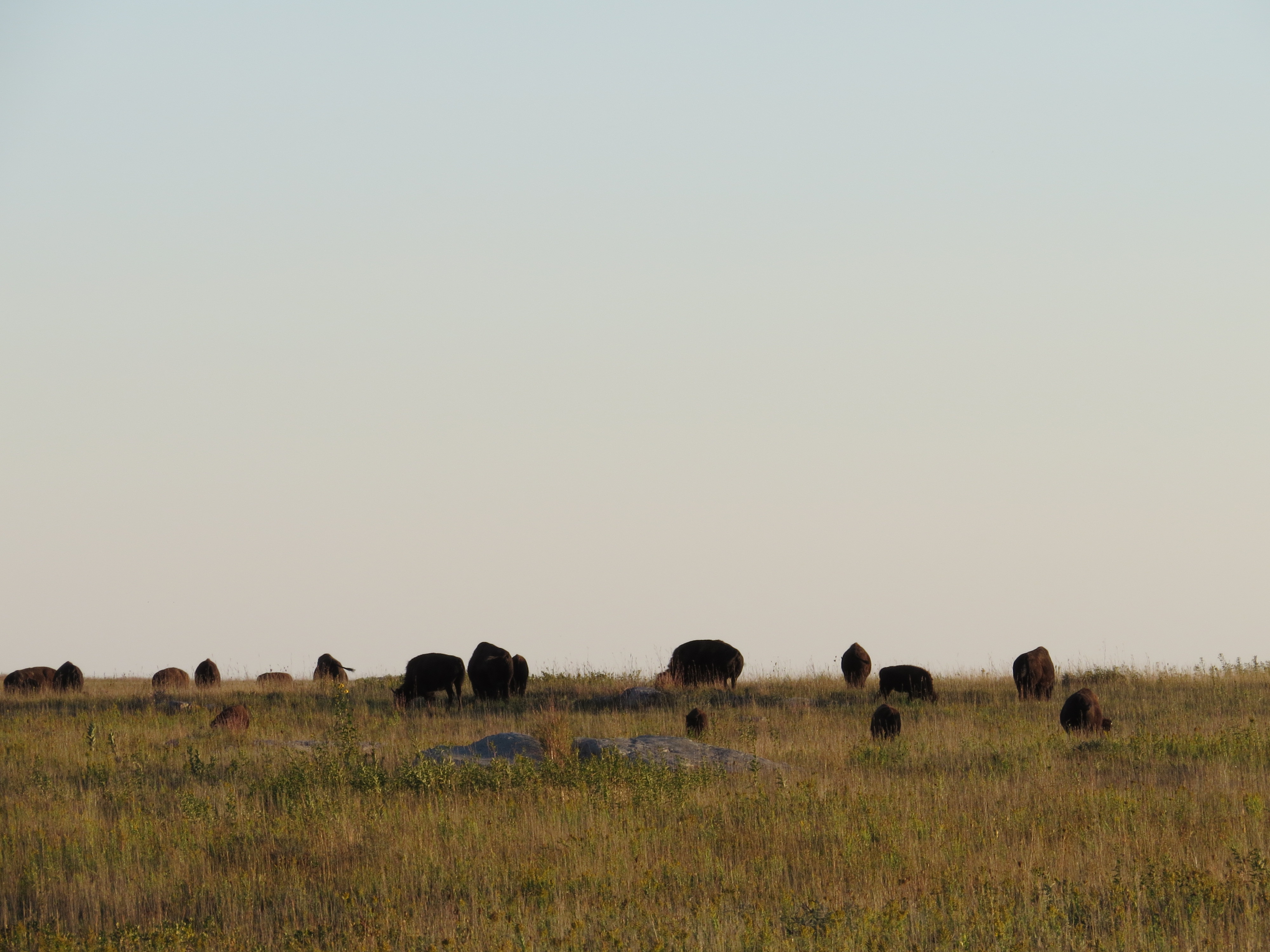
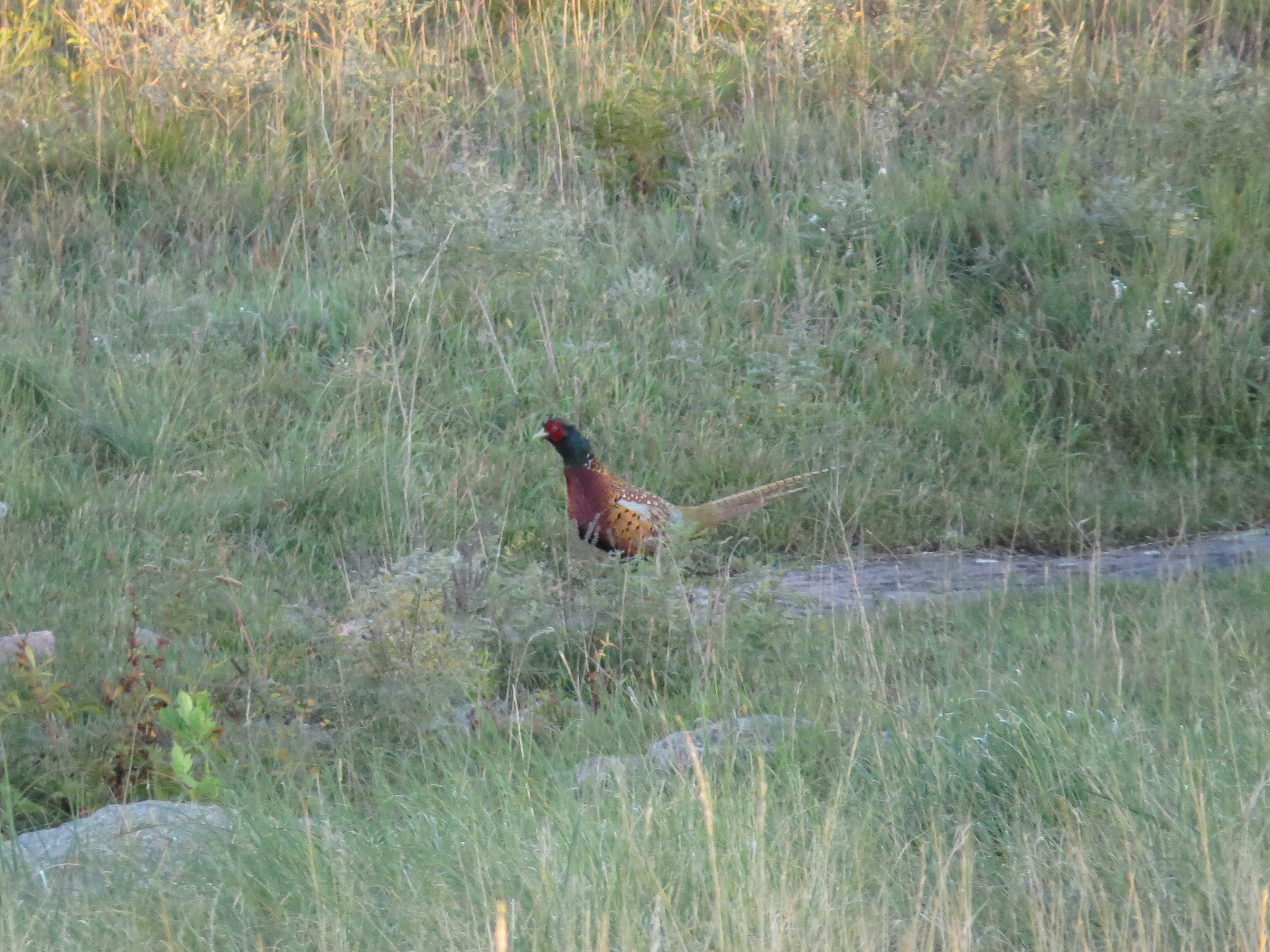
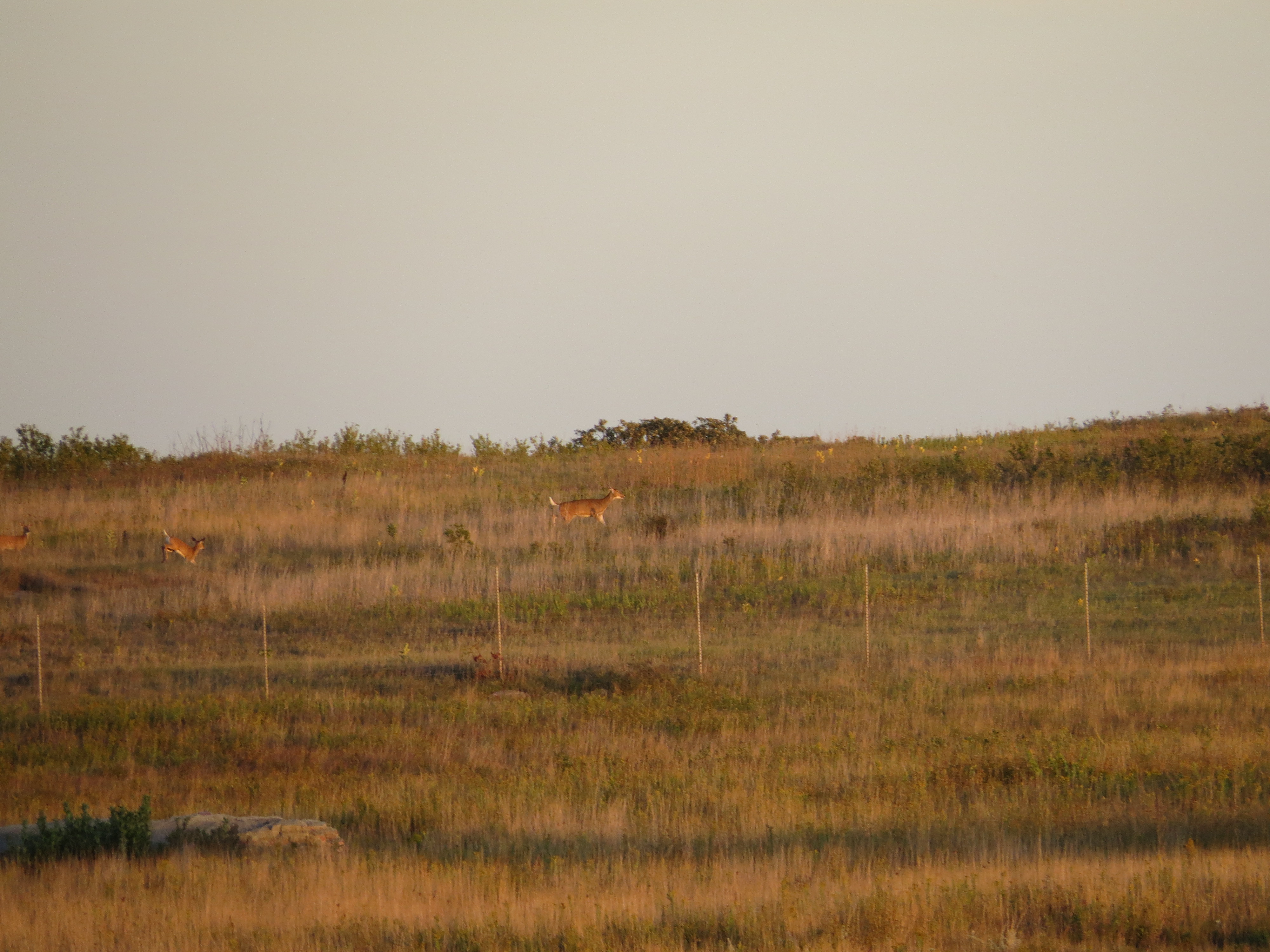
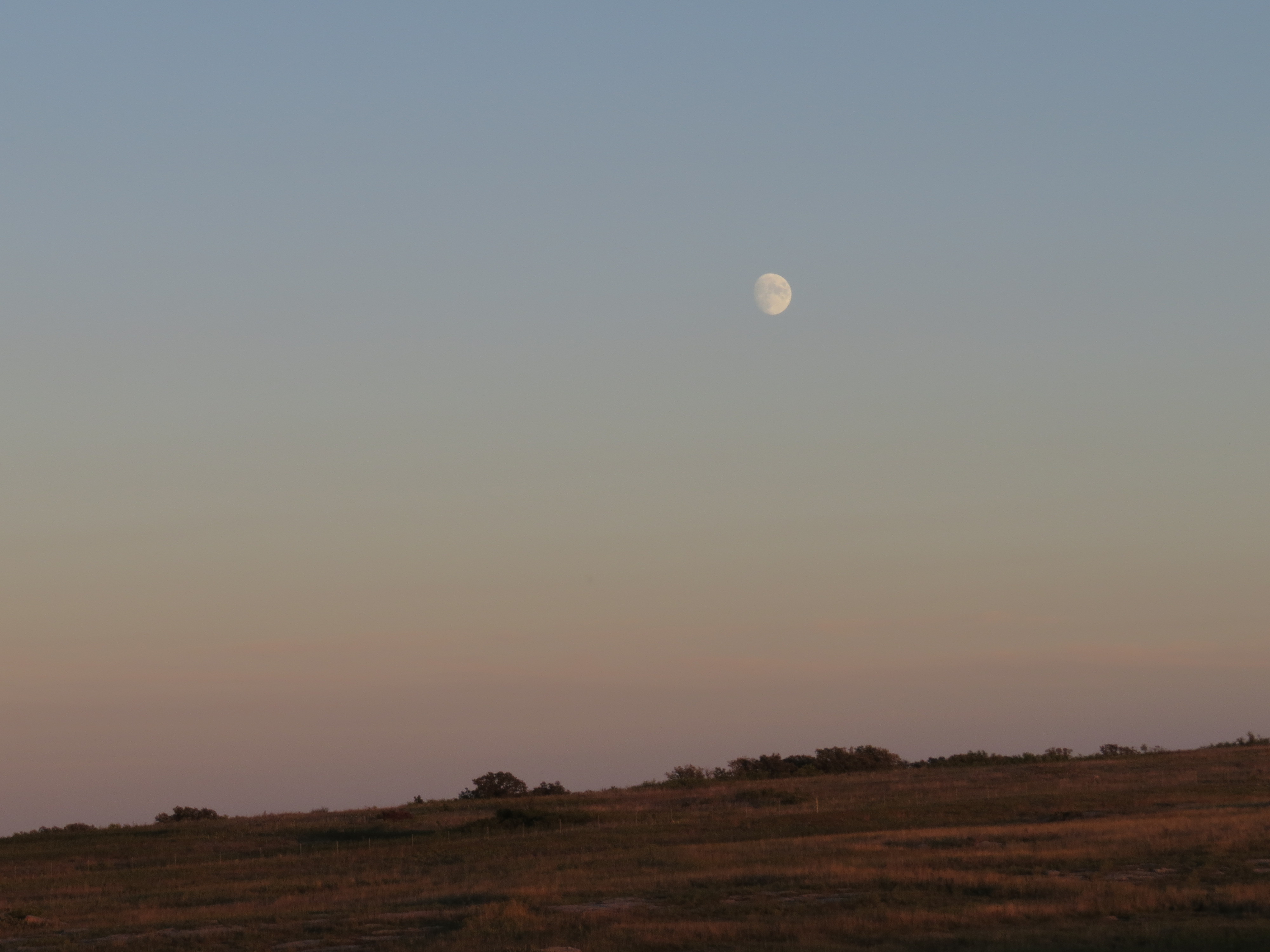
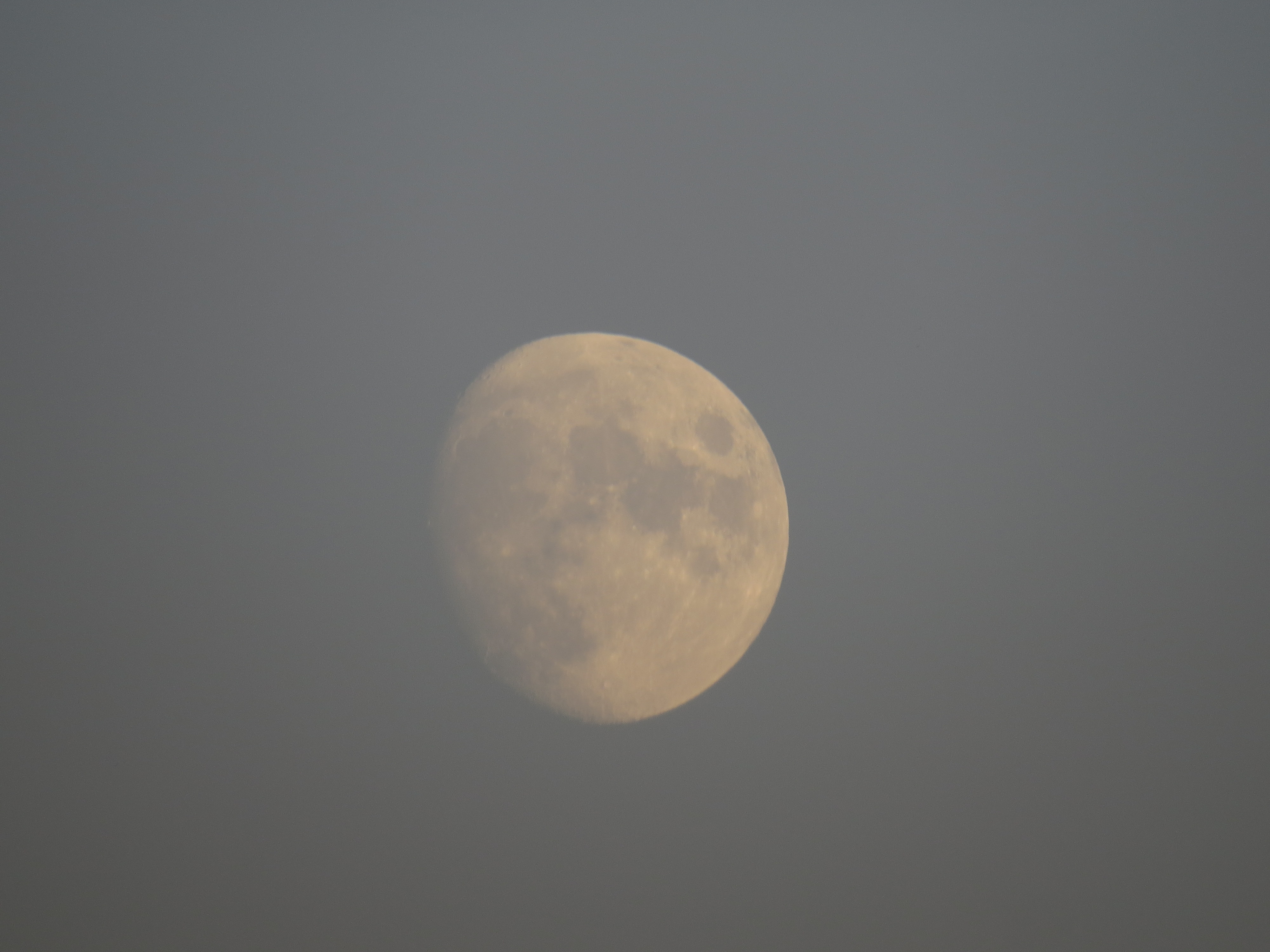
As the sun sank in the western sky and the bison grazed away from us, a flock of blackbirds swooped across the sky, and a pheasant rooster squawked and ran through the grass. Deer leapt across the prairie, their coats burnished by the setting sun. And the nearly-full moon revealed itself as the sky darkened.
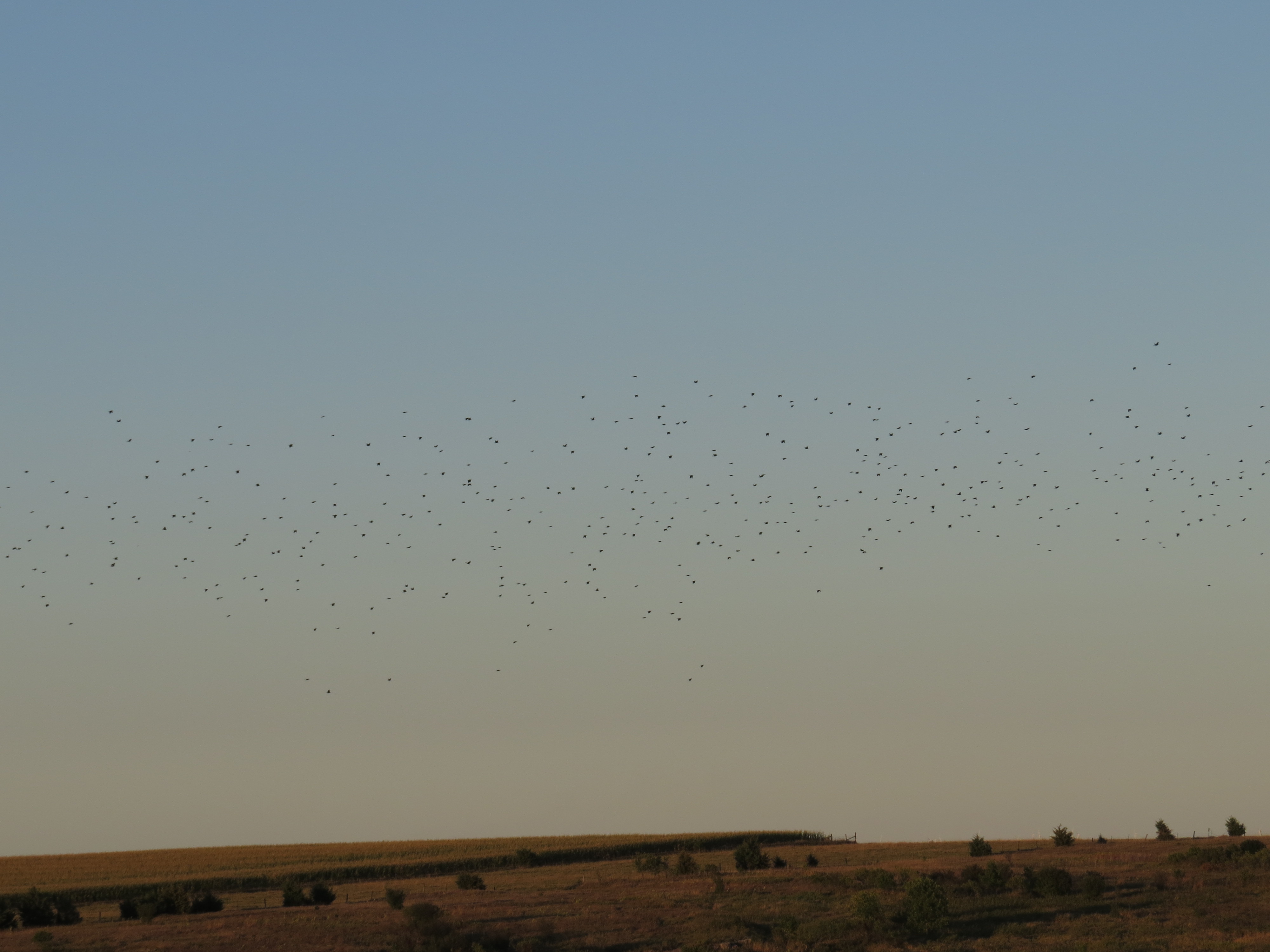
Back at our campsite, we heard where the blackbirds were settling for the night—that ‘field’ of cattails by the lake behind us. The chorus of their chattering continued long into the darkness. More geese flew in to Upper Mound Lake, their ‘Aquabnb’ for the night. We heard some rattling calls from the heron who may not have been so happy to share ‘his lake’ with all the others.
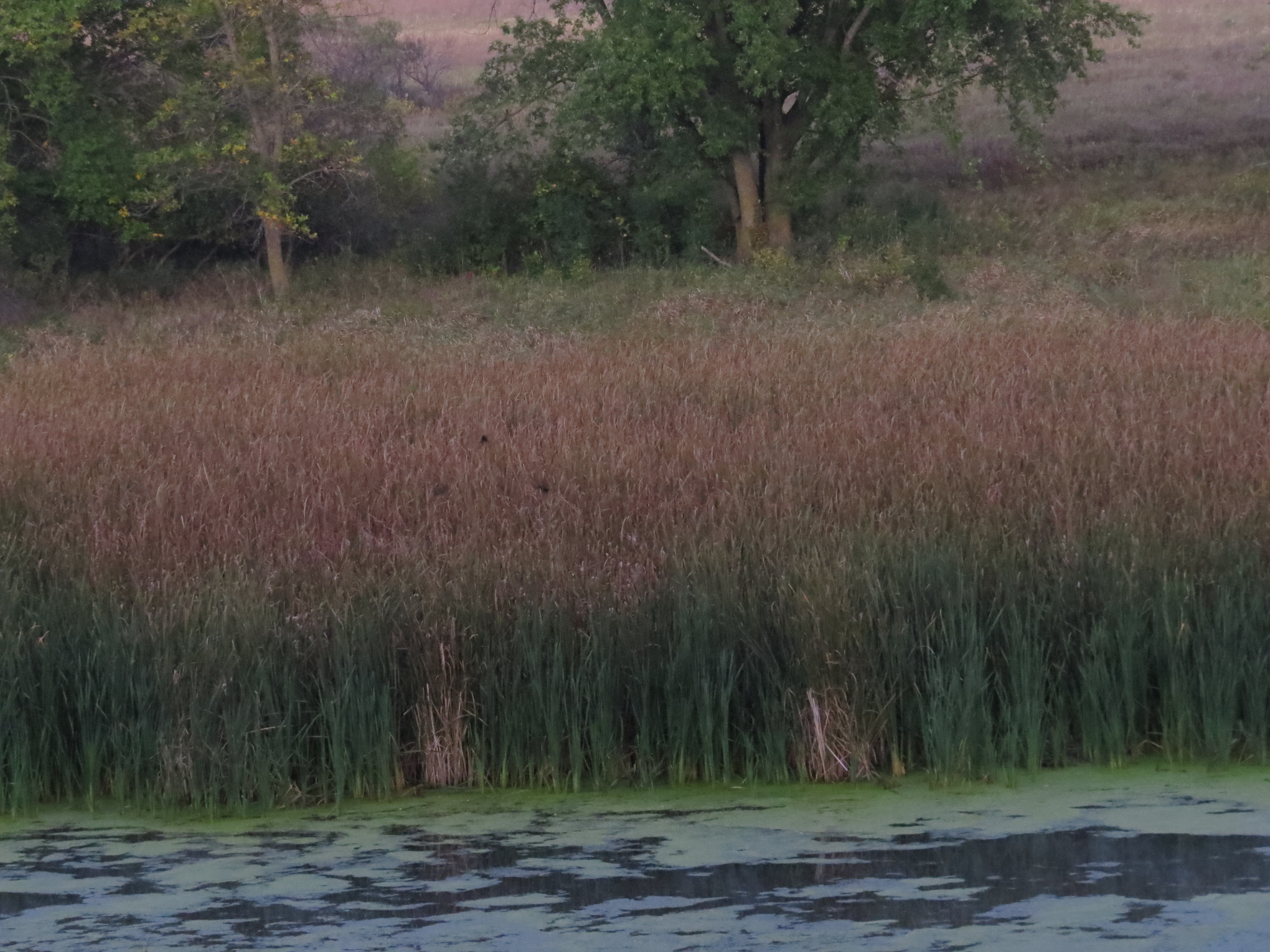
In the dusky light, the red rock cliff had a pink and purple glow about it—the firm terra at the edge of the fluid aqua.
The environments themselves—terra and aqua—are incredibly diverse—the number of different species of grasses and perennial wildflowers in a native prairie is in the hundreds, if not thousands. The lakes and streams support the same diversity of aqua species. But the showstoppers of our weekend at Blue Mounds were the birds of the lake and the bison of the land. Both were enchanting. When was the last time you were enchanted? And what was the source of that enchantment? Was it a temporary ‘high’ or a deeply satisfying ‘knowing’ that you were experiencing a bit of magic? The aqua-creatures and the terra-creatures were captivating, especially the heron and the bison. The source of that enchantment was Mother Nature—the creator of all that sustains us, all that supports us, and all that flows within us. Peace.