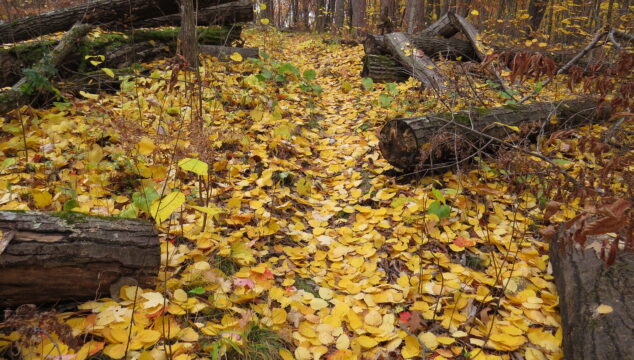
Come walk with me in the peak Autumn beauty of the Northwoods. To say that I love this time of year is an understatement. Most everyone can appreciate the colorful falling leaves---it reveals the 'true self' of a tree when its leaves are no longer producing chlorophyll. Their true colors are revealed, and there is something simple … [Read More...]
Without a Map or an App
In this stay-at-home/ social distancing/ unprecedented time of the Covid-19 pandemic, we find ourselves without a map or an app. How do we do this? Which way is the best way to go? Where do we end up if we follow this path? The unknown is unnerving. Even as the hope of Spring is pulling us out of the dark, bleak Winter, there is still bleakness all around—death, sickness, chaos, partisanship, job loss, fear, hunger, and more. We haven’t done this before! What are we supposed to do?!
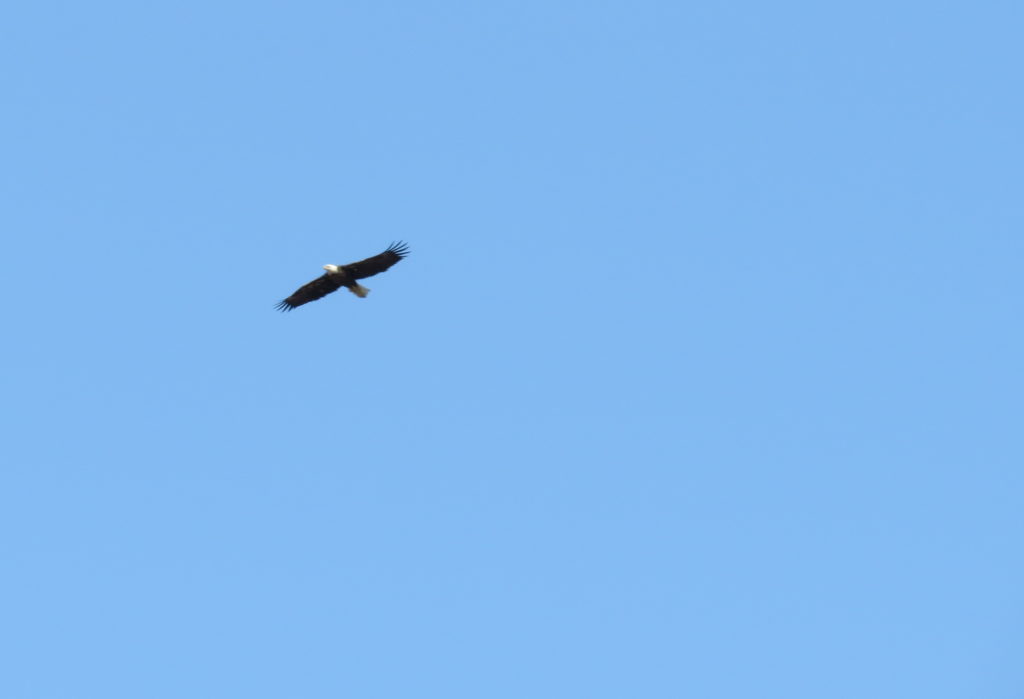
Twelve days ago Chris and I drove west to Birch Lakes State Forest. We had been there once before, a number of years ago. The gate was closed at the entrance, as the unplowed, sandy road was still snowy in places and soggy in the rest. We parked by the sign, the only ones—the only human ones, that is—to inhabit the forest for the afternoon. Before we were even out of the car, we saw an eagle circling above our heads. They are so impressive and free—watching them fly takes me out of my earthly worries into the clear blue strata above.
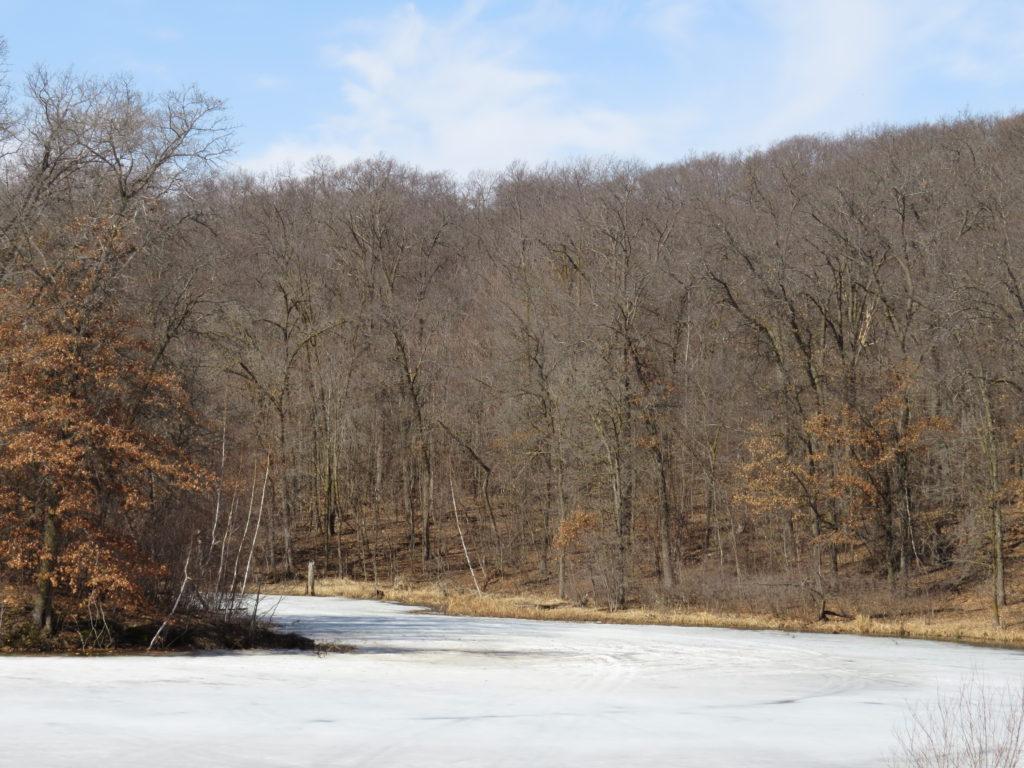
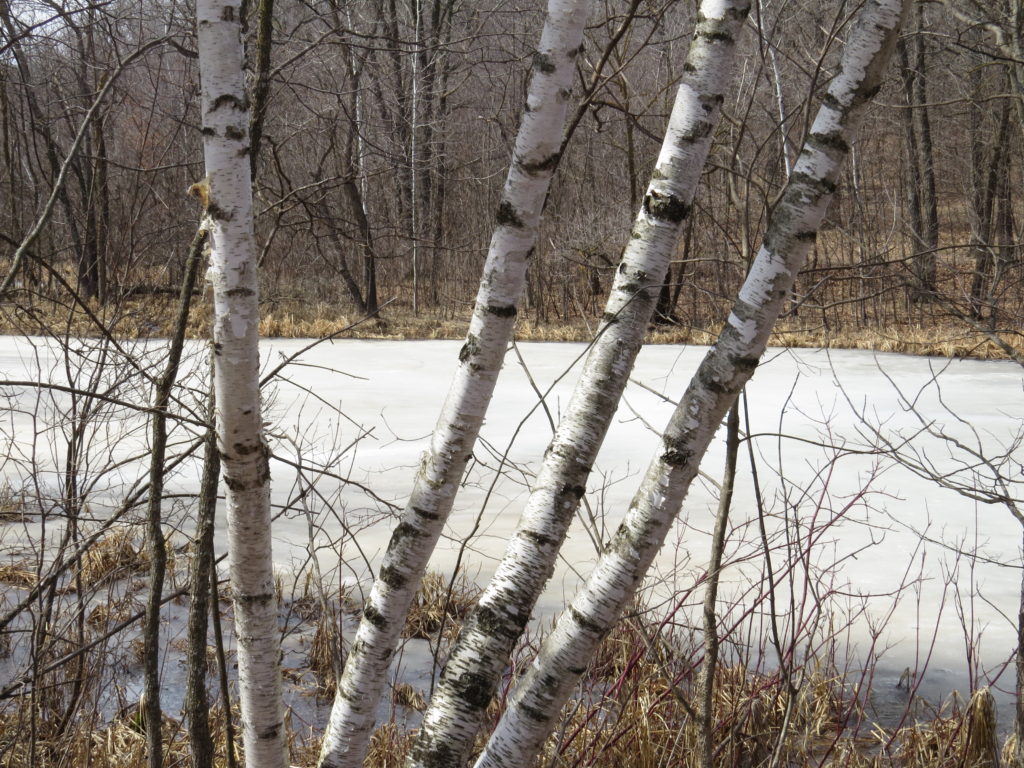
The pond across the road was still ice-covered, the snowmobile tracks still visible, the trees in the forest still unadorned. As much as we want our beautiful, full-blown Spring, this is our Spring reality.
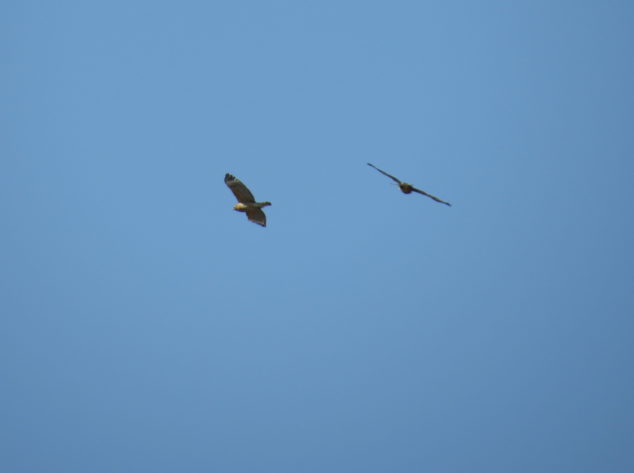
Before we left the car side, we heard a high-spirited screeching in the sky. Two hawks were singing and swooping in a joyful sky dance! The mated pair flew apart, then close together (one carrying a stick in its beak) with grace and energy for the Spring ritual of mating, nesting, and raising a family.
It was only when we saw a path and entered the forest that I remembered we didn’t have a map of the trails. No worries—even though we hadn’t hiked in this area before, I knew Birch Lake was at the end of the road, and we would find our way.
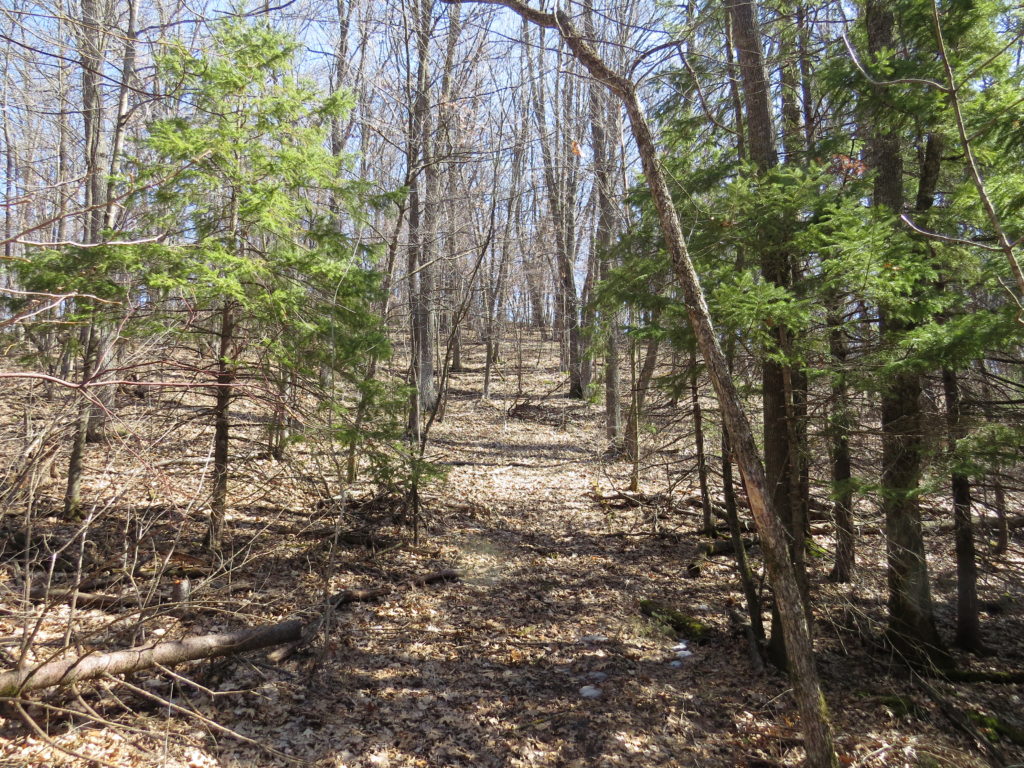
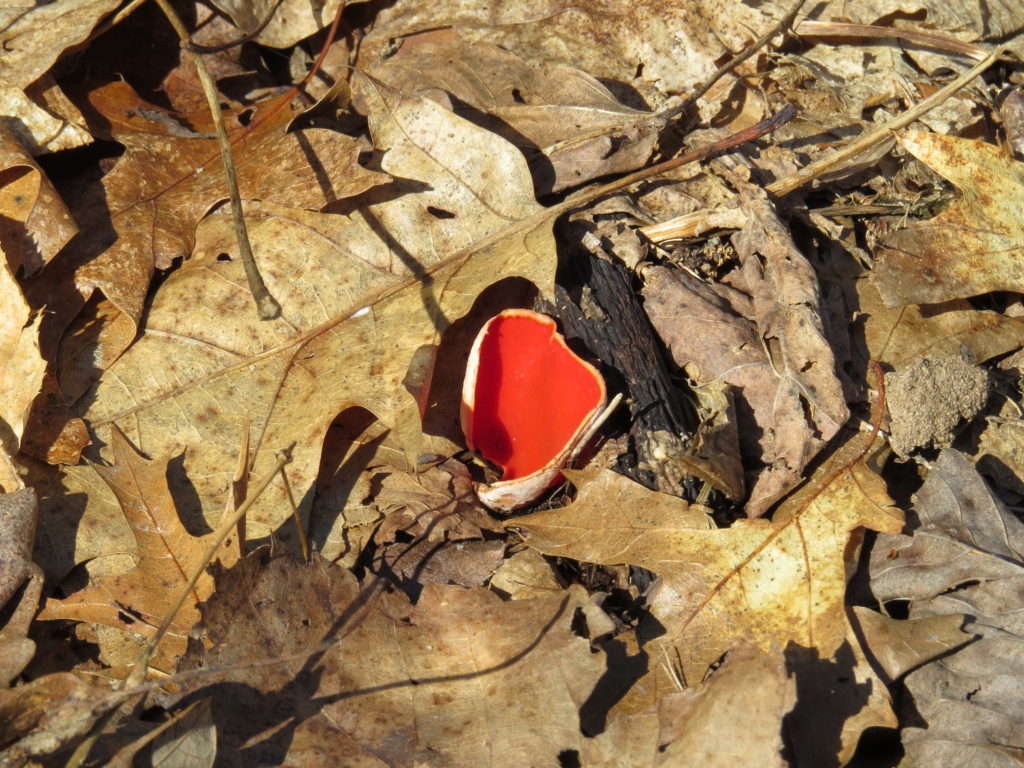
With the exception of a few Fir and Spruce trees, the landscape was brown and gray—until we walked a little farther and looked a little closer. I saw a bright red dollop in the brown leaves—one of the earliest, showiest fungi—the Scarlet Elf Cup.
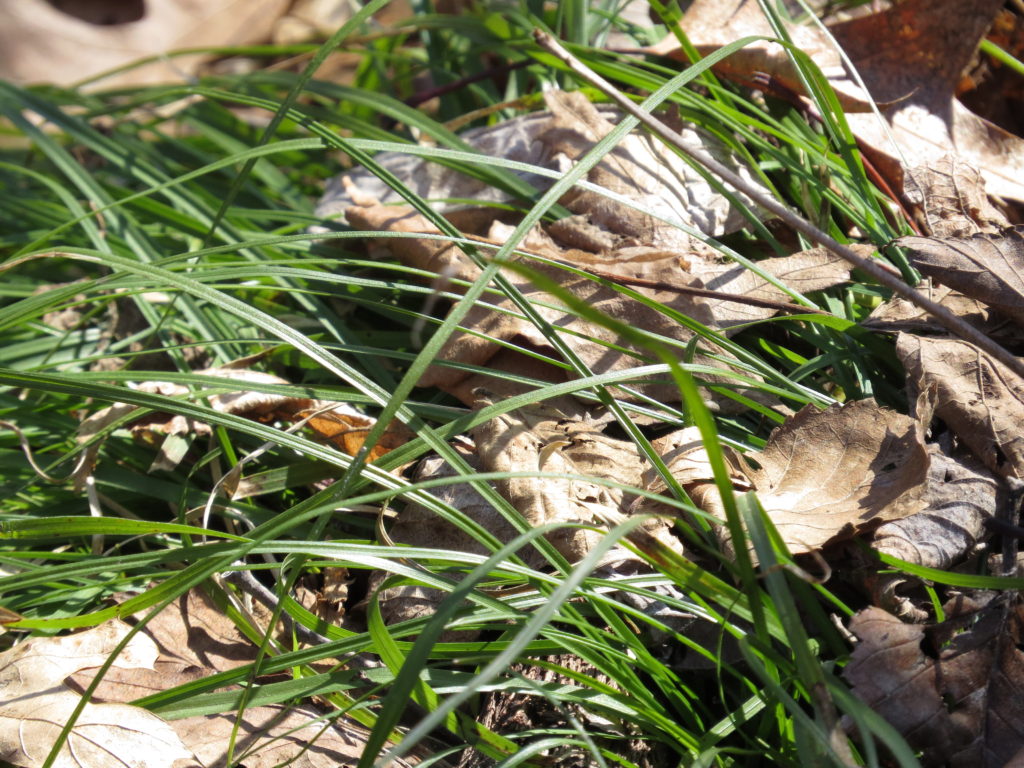
Vibrant green Sedge grass looked unscathed by five months of being buried under snow.
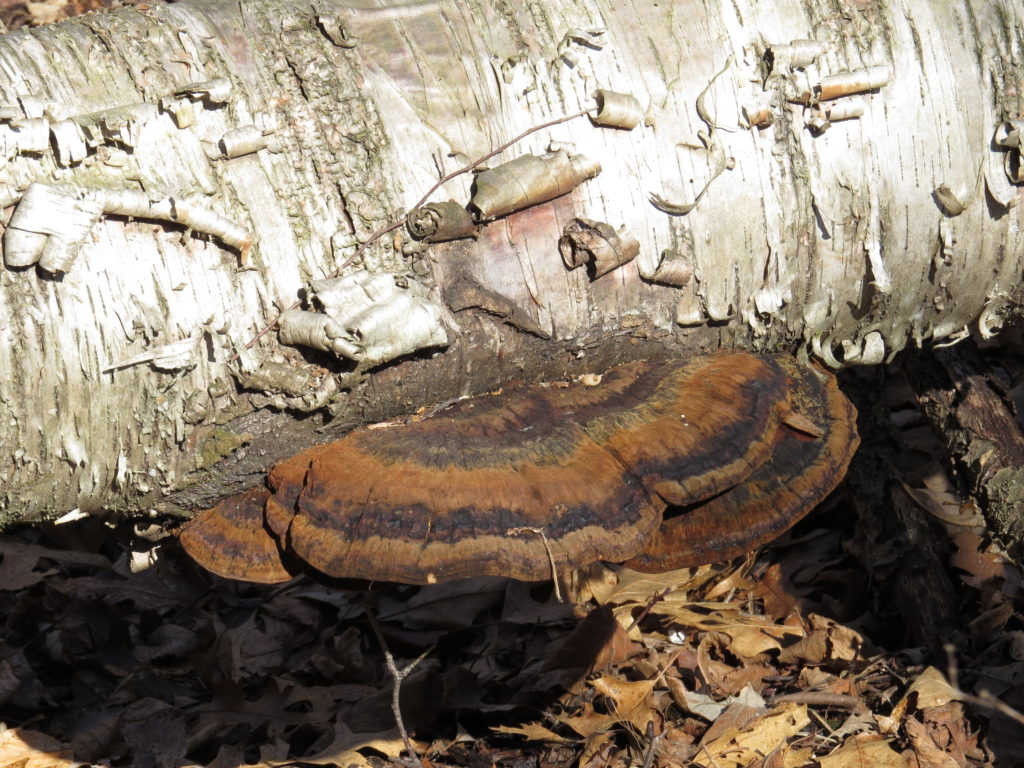
Fungi was the star of the show in the brown woods, in color, texture, and form with expressive names like Turkey Tail, Oyster, and Artist’s Conk.
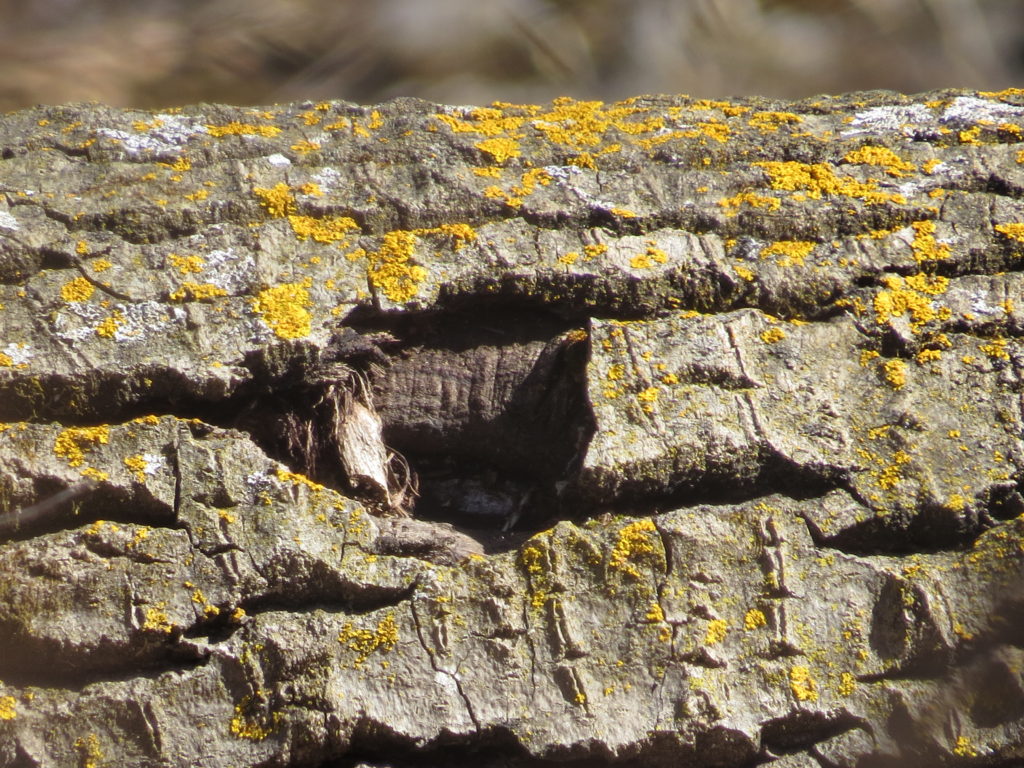
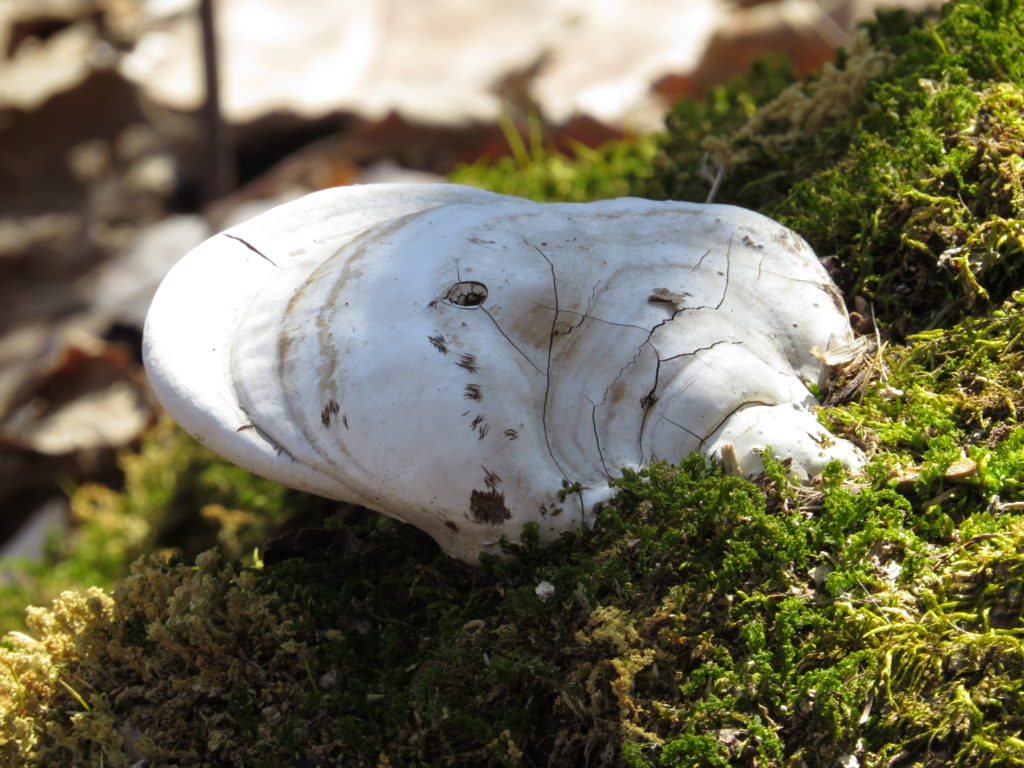
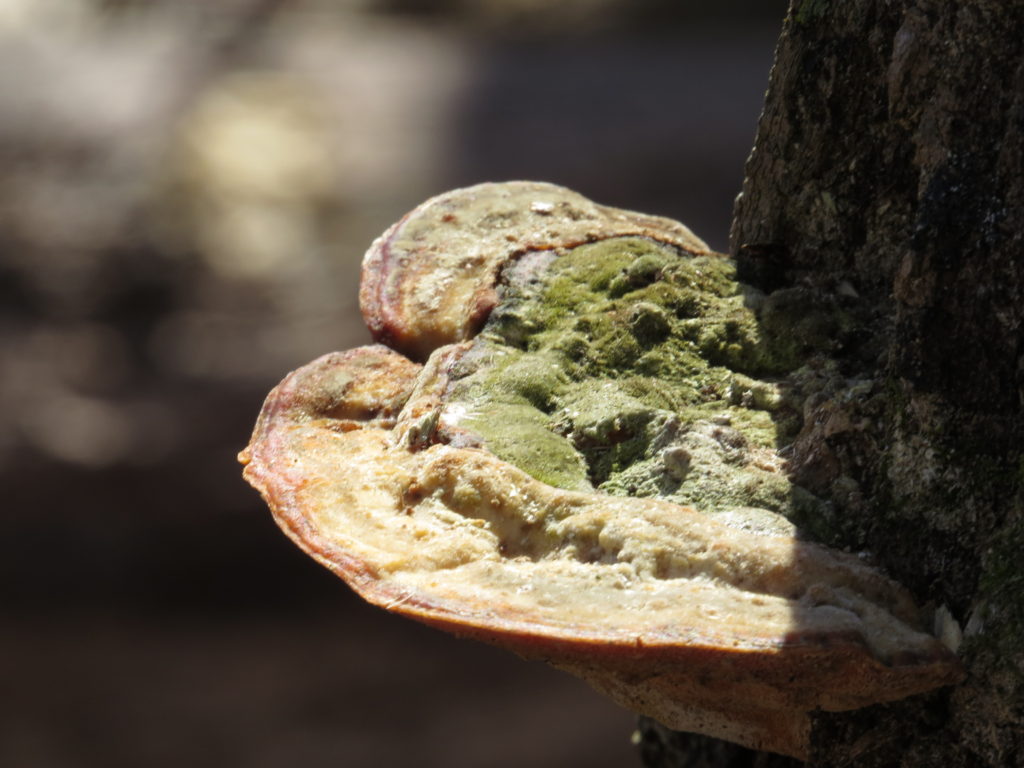
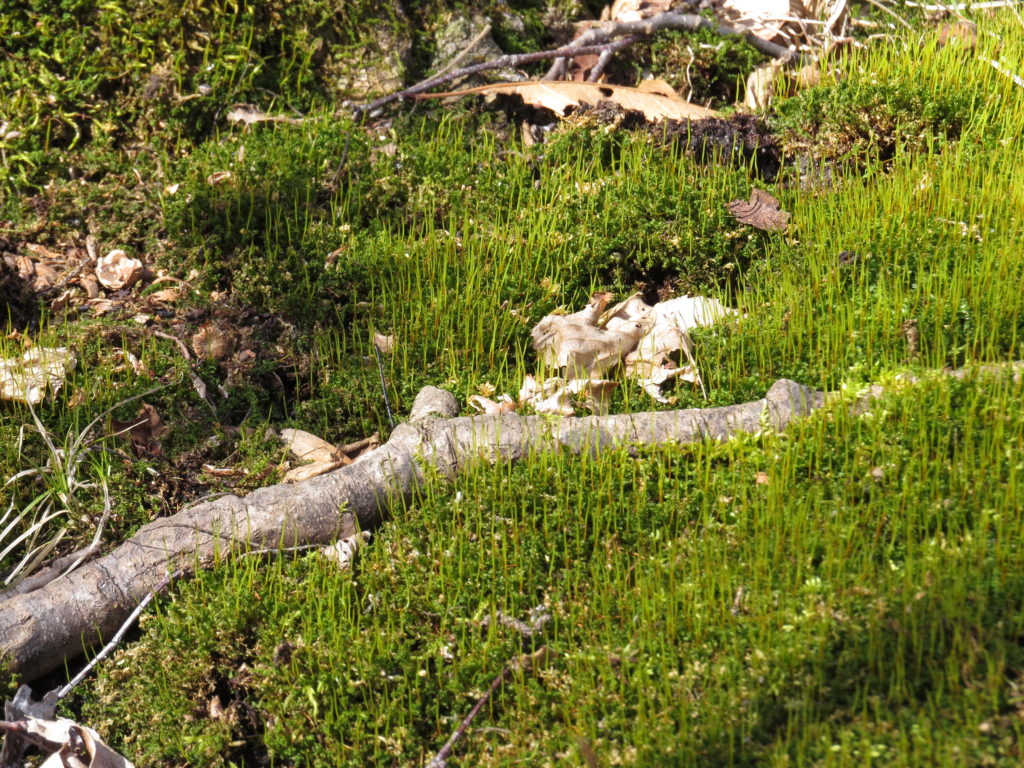
Lush green moss covered areas of trees, logs, and ground in impressive mini-scapes.
From the hardwood, deciduous forest we entered a quiet, moss-covered Spruce forest. The sun streaked through in an other-worldly way.
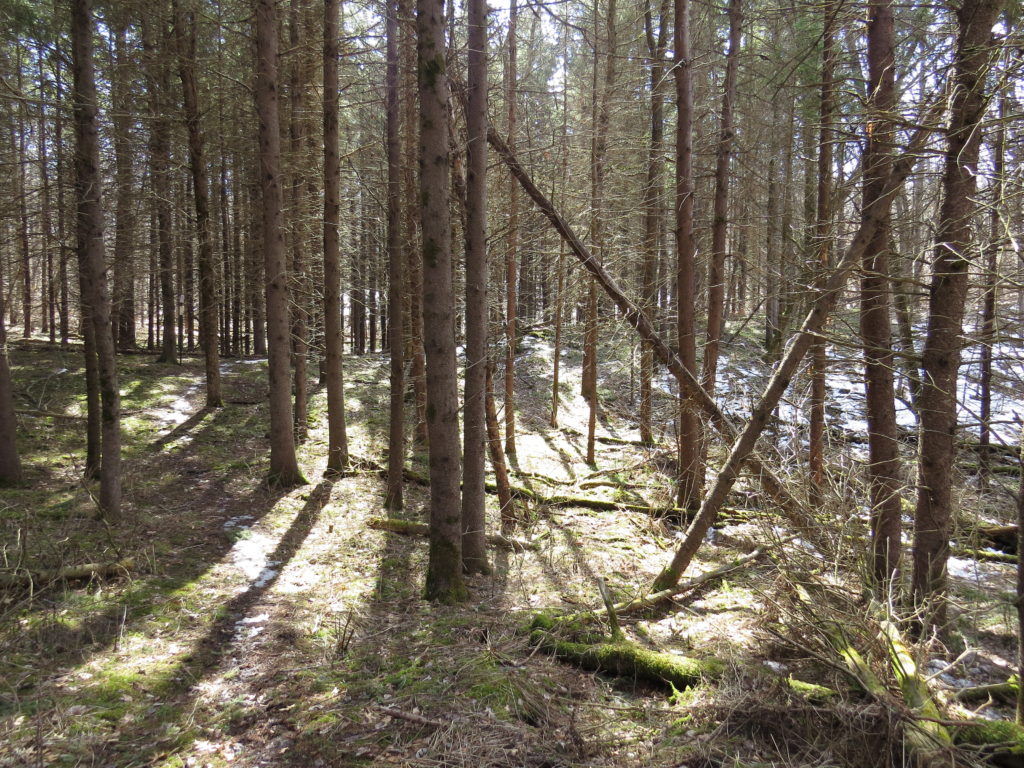
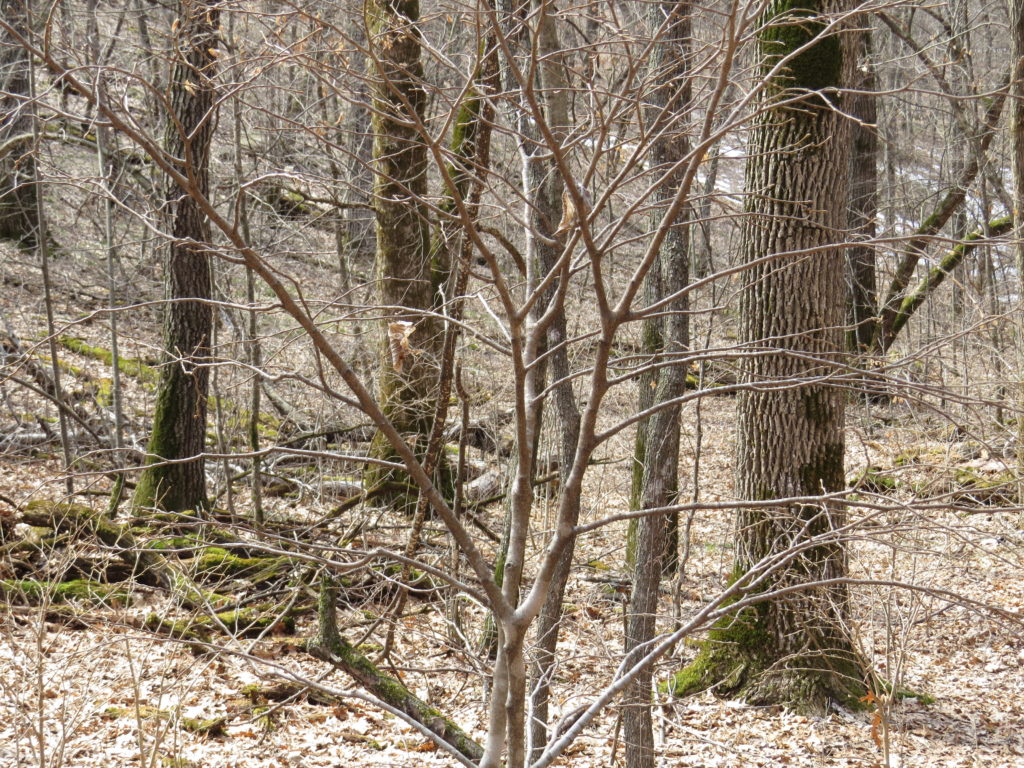
A number of times the trail diverged in the woods—which way to go? Where will it lead? I would choose one. The hills were steep in places, and the north faces still had quite a bit of snow. One lower area had a population of Leatherwood trees—short, almost shrub-like trees with pliable, yet strong branches. They bloom in early Spring with tiny yellow flowers before getting any leaves, but we were still a little too early to see them.
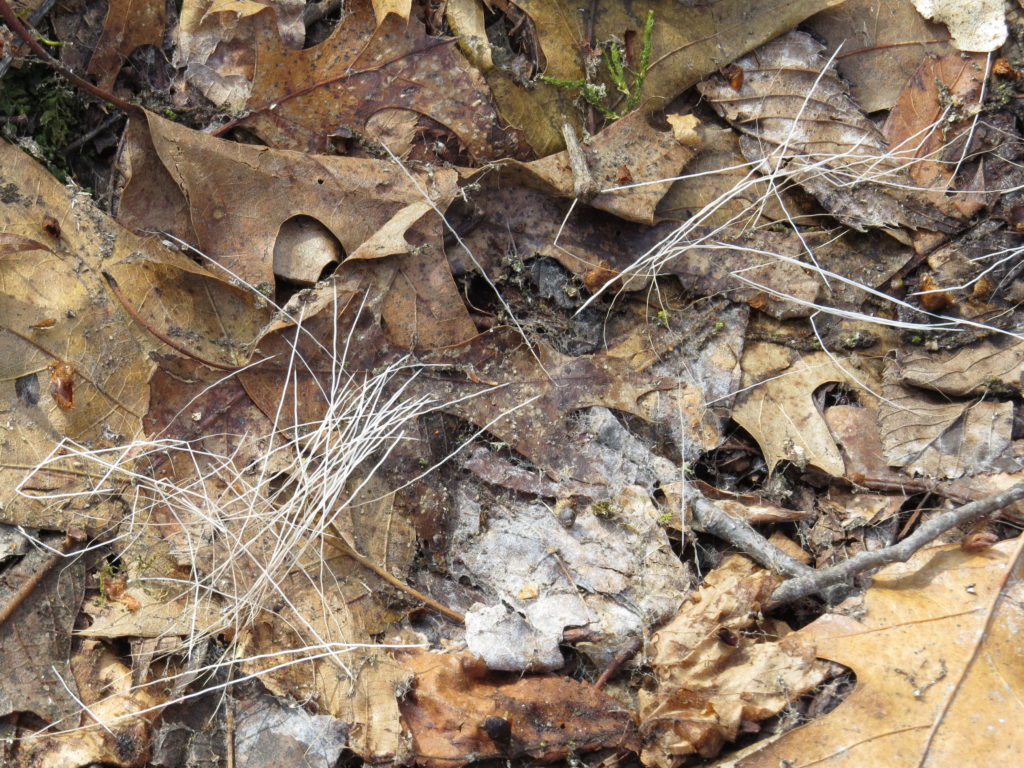
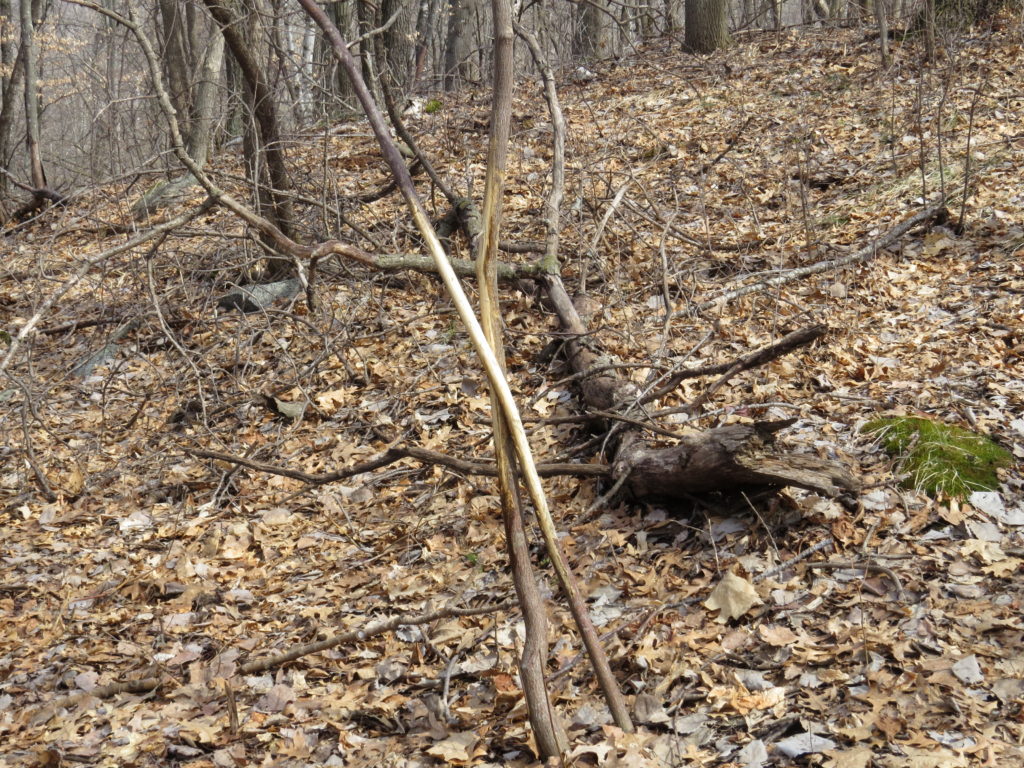
We found evidence of the non-human occupants of the forest—a clump of deer hair in a patch of snow mold and a deer rub where the bucks rub their antlers against a young tree.
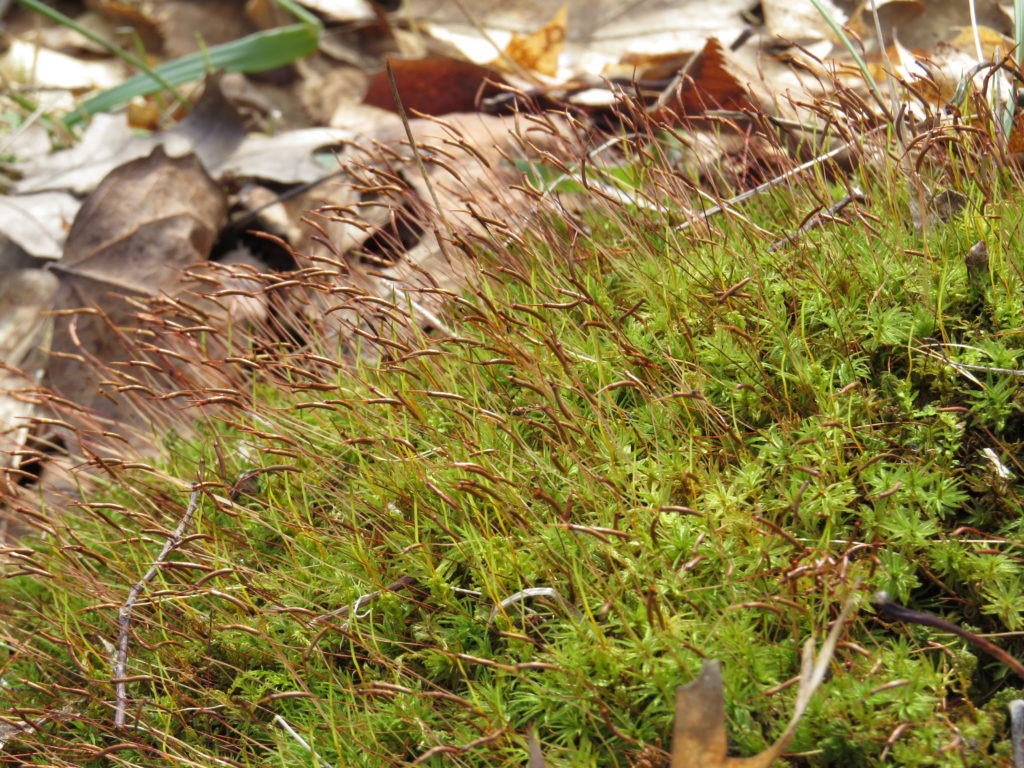
The landscape looked bleak after the snow melt, but small signs of the hope of Spring could be found—the moss was flowering!
The ice was melting!
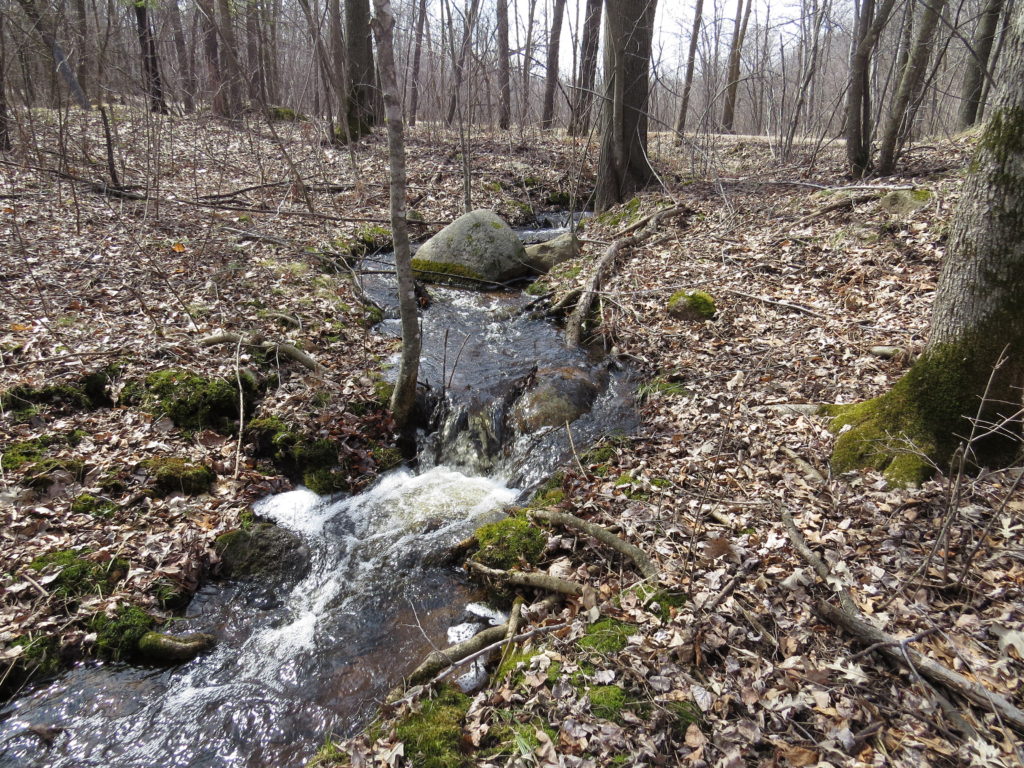
The water was flowing!
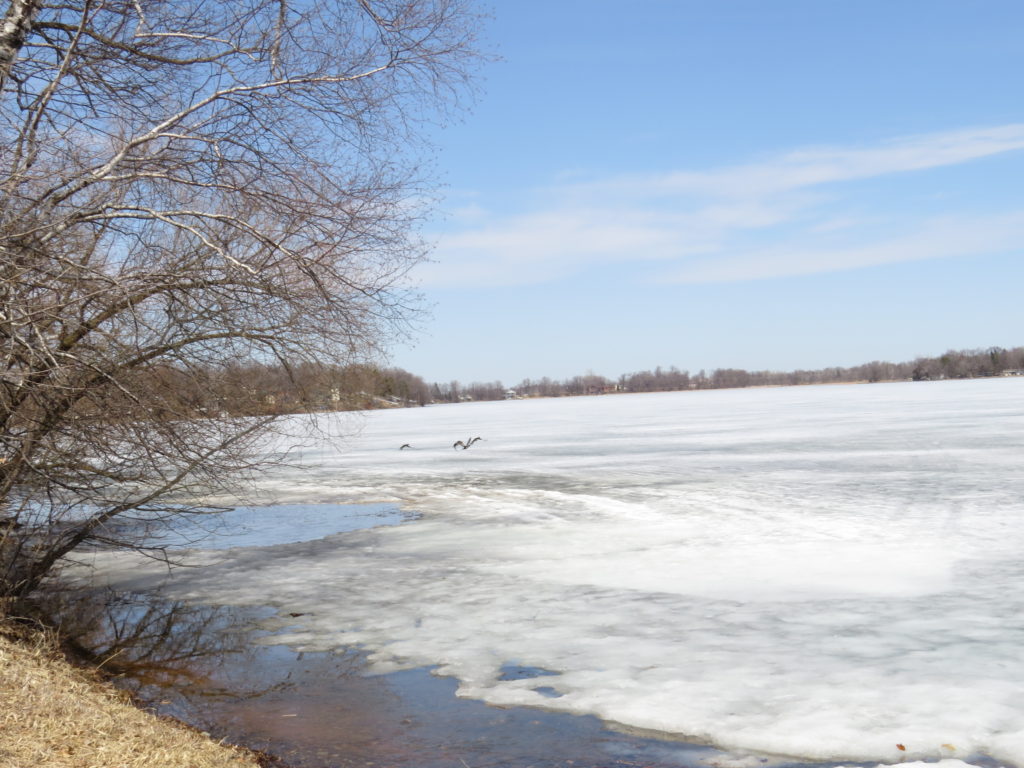
The geese were flying!
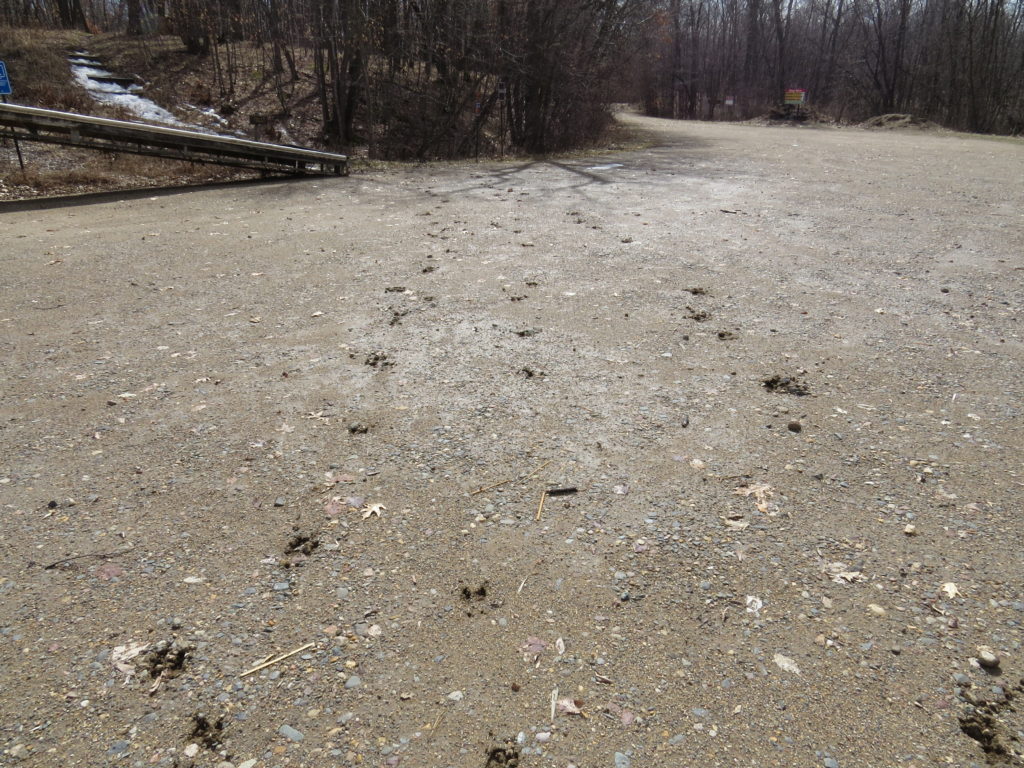
With no map, we navigated our way through the forest and ended up at Birch Lake. We walked back to the car in the soggy sand road marked occasionally by fresh deer tracks.
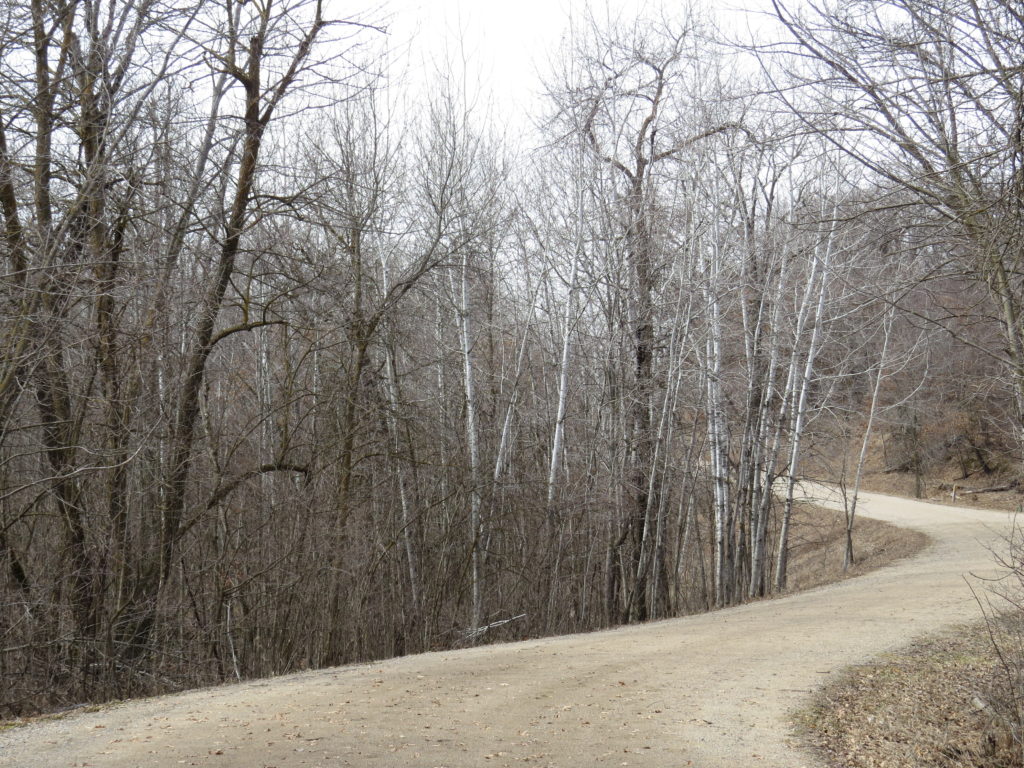
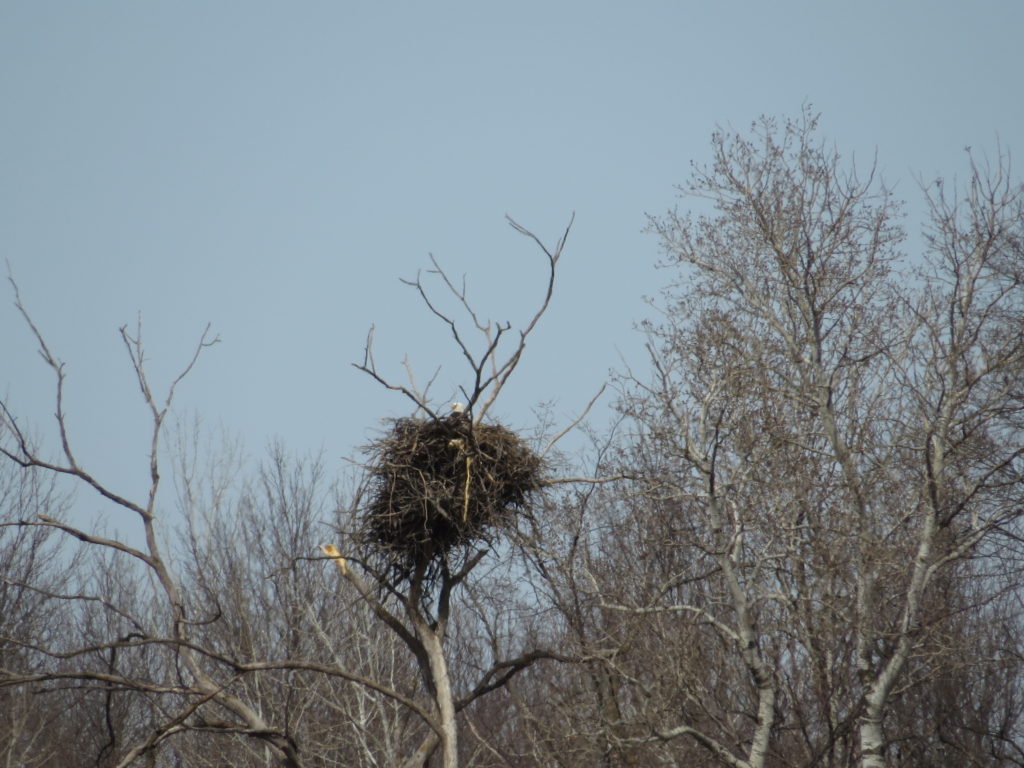
When we left the State Forest, we circled around Birch Lake by car, and we saw a huge, dark eagle’s nest in the distant trees. Our hike had begun and ended with an eagle—one high in the sky with his bird’s eye view and eagle eyes looking for food and the other sitting high in a tree with her nest of eggs or young ones.
The unknown doesn’t need to be unnerving—it can be an adventure. How do we do this? One day at a time with patience, faith, and love. Which way is the best way to go? Follow the signs (six feet apart) and maintain that inside sense of direction. Where do we end up if we follow this path? Expertise, knowledge, science, and history of past hard times will guide our path in this new time with the novel virus. What does a bird’s eye view show us about how we were living in the past, how we are living now, and how we want to choose to live in the future? This is our Spring reality—not how we’d like it to be, certainly not beautiful, definitely bleak in many ways, but there are small signs of hope everywhere when we look closely. No worries, dear people of our Earth, the process and the path will unfold. We will find our way.
The Gift of a Paper Birch Tree
In all things of nature there is something of the marvelous. –Aristotle
One of the most marvelous trees in Nature is the Paper Birch. It thrives in colder-climate regions, is one of the first species to grow after a wildfire in these northern climates, provides food for moose, deer, birds, and porcupines, and the bark is an excellent fire-starter, even when wet, because of its high oil content. The leaves have been used for centuries by herbalists as a topical for skin problems as well as infusions for a wide array of internal problems.
These beautiful trees have been designated National Memorial Trees for Mothers with one planted at Arlington National Cemetery named the National Mothers’ Tree. We are fortunate to have one right outside our front door.
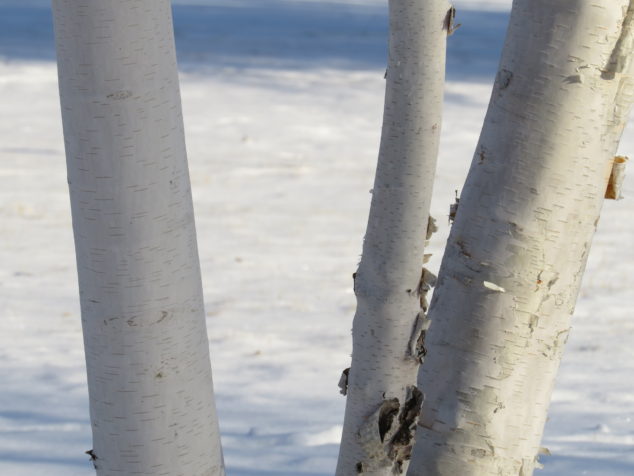
The shiny white bark has characteristic ‘dashes’ in light gray, and as the tree grows, the older bark peels off in large curls.
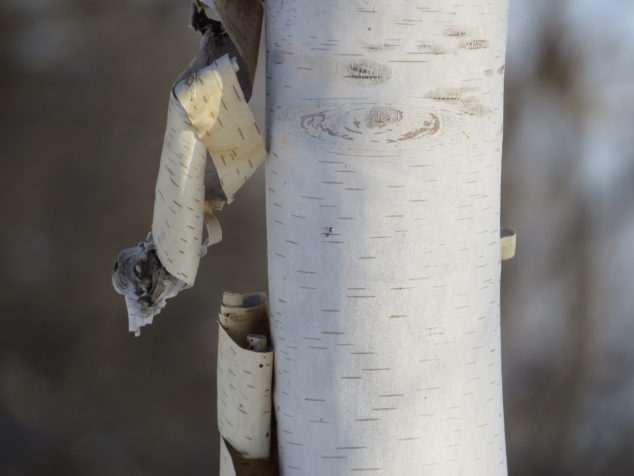
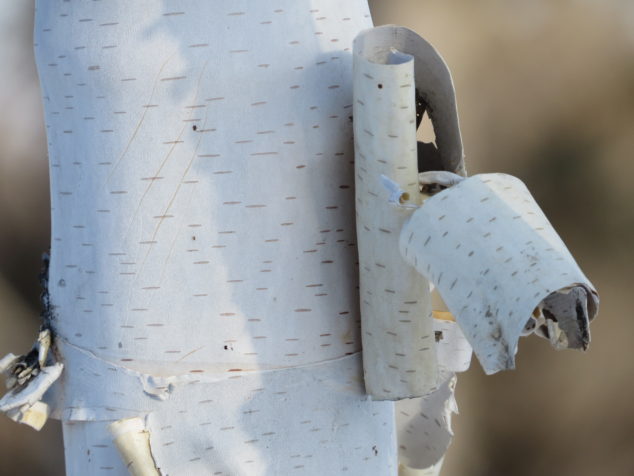
The curls of peeling bark get stuck on the knots where the branches grow and hang on until it gets worked loose.
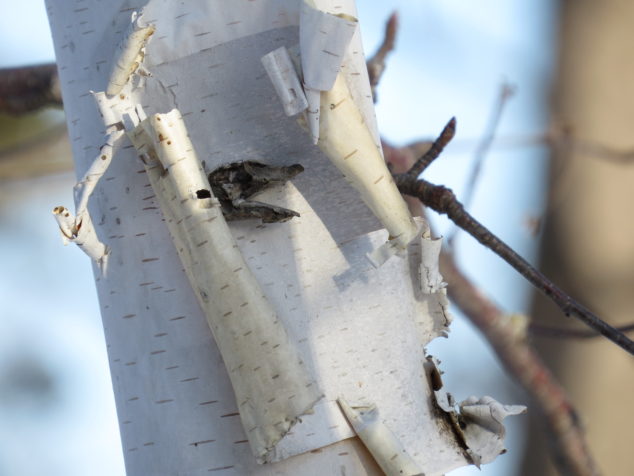
We also have a pile of logs from an old Birch that had to come down. The rotting process has begun. Often the inside wood will rot away leaving an empty shell of tough birch bark.
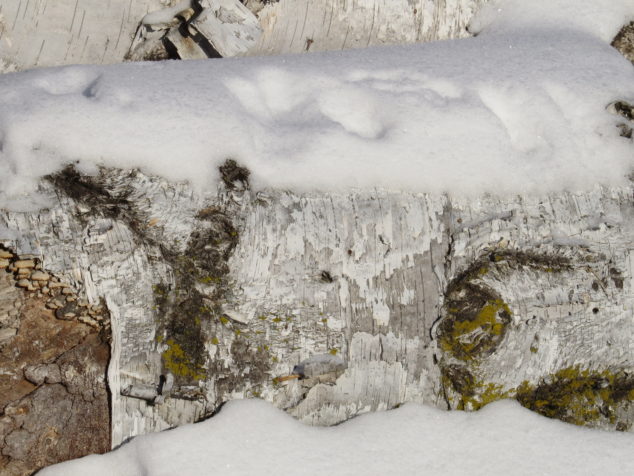
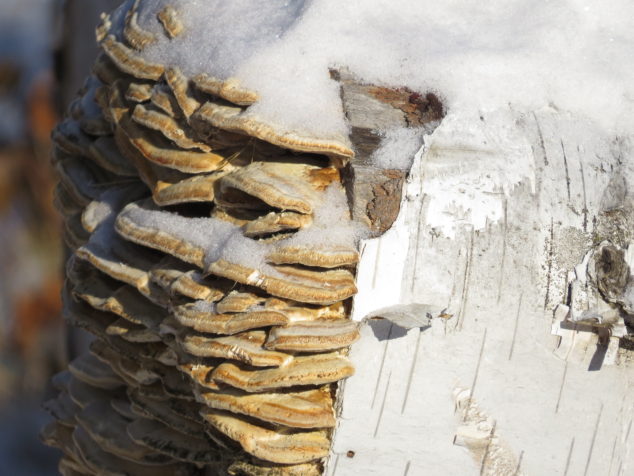
Fungi, like a stack of morning pancakes with frosty white syrup of snow, grows from one end of a log.
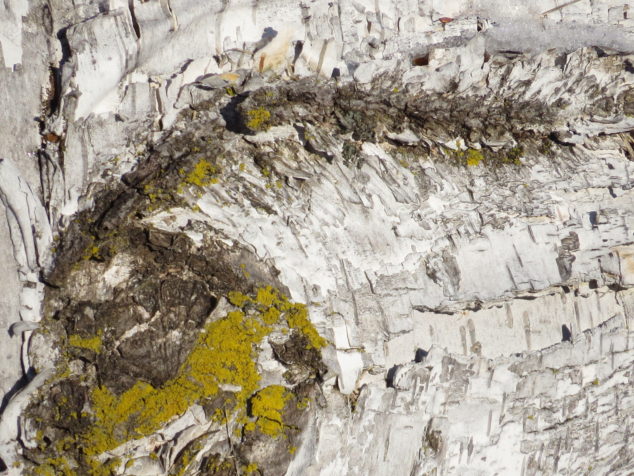
Colorful lichens decorate the ‘eye’ of the log where a branch was cut from the trunk.
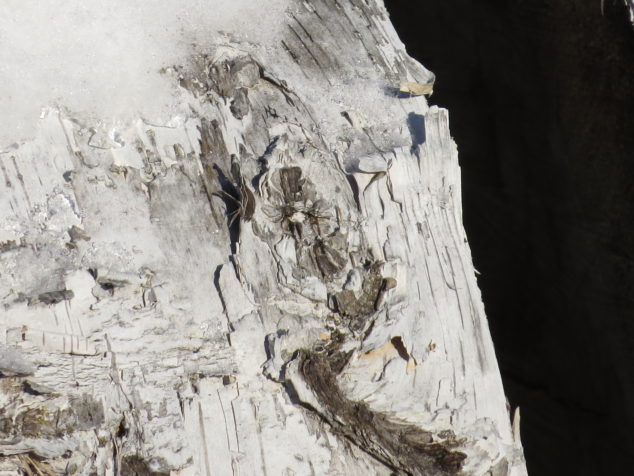
There is something almost magical in the bark of a Paper Birch, with its strength, resiliency, and weather-proof properties.
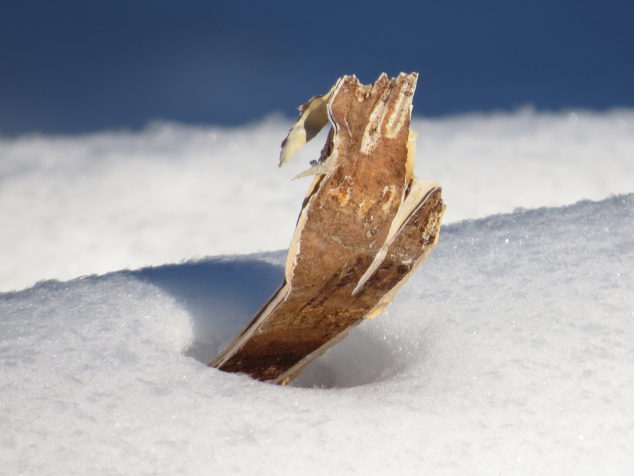
From downed trees, the bark can be peeled off in thick layers. The Native Americans used the bark for making containers and canoes, and for the shells of wigwams.
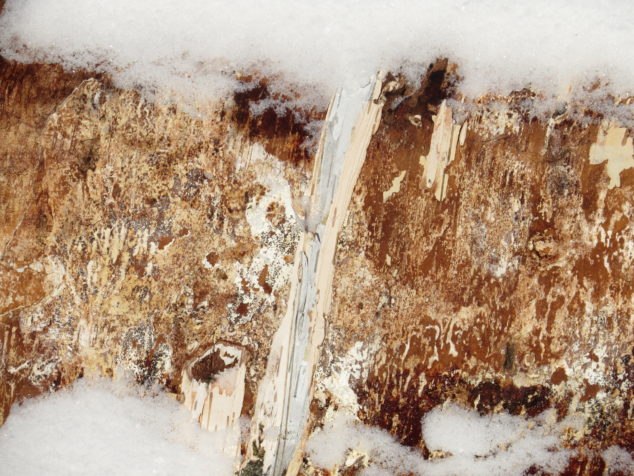
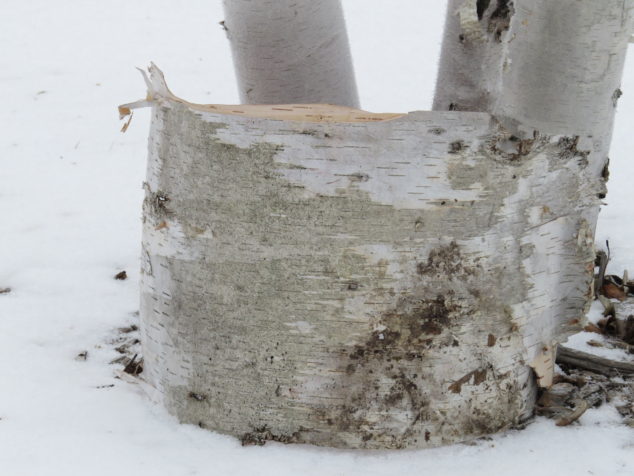
But in our household, Chris uses the bark to make ornaments for our Christmas tree and for gifts!
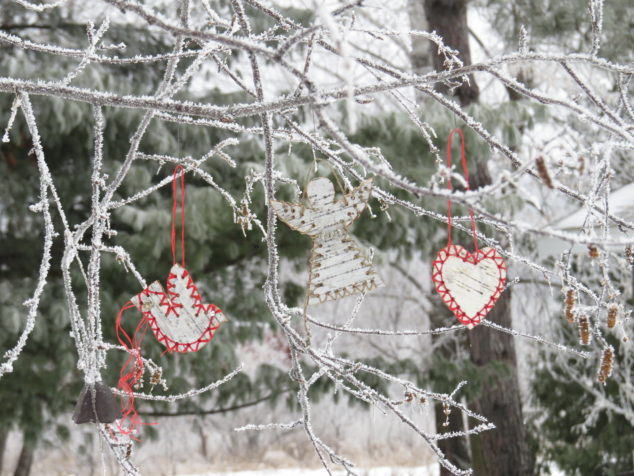
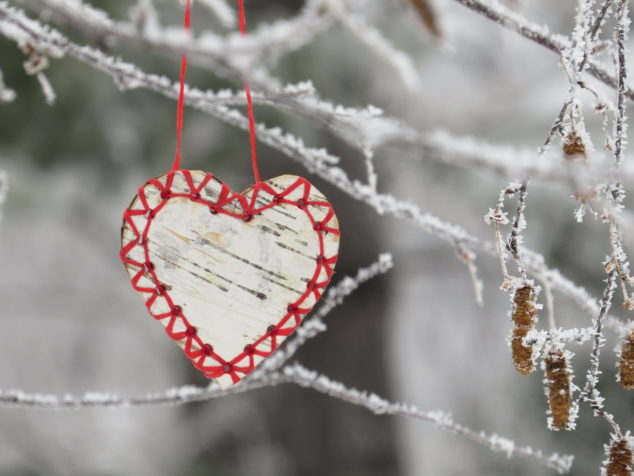
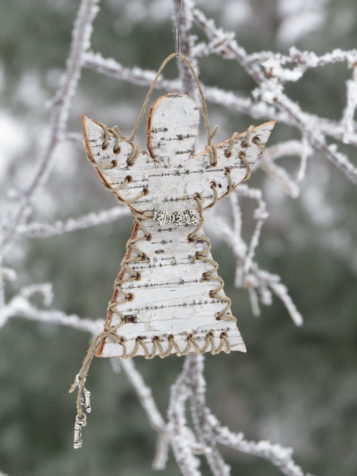
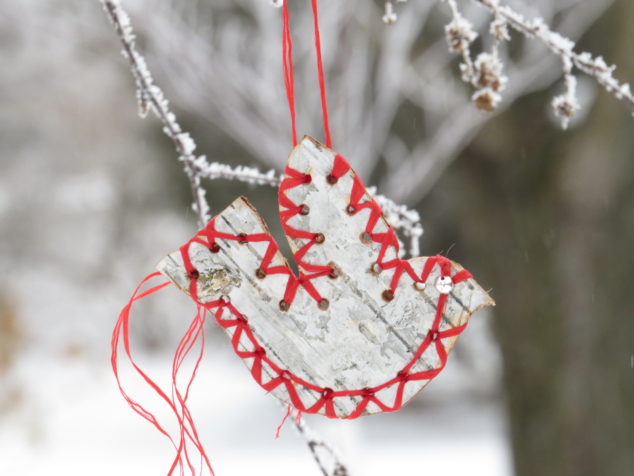
A marvelous tree—from beautiful live Mothers’ tree to downed logs to handmade gifts of Nature and Love. In this season of advent, the ‘old’ is peeling away in anticipation of what’s to come—we make room for the new. We may get hung up on knots of uncertainty, of doubts and fears, but whether we are ready or not, the Child is born to the Mother of God, the new year greets us, Joy is made available—do we embrace it? Life is a magical, miraculous gift, and we are the strong, resilient participants, the givers, the receivers, and the gifts themselves. From our household to yours, we wish you Love, Protection, and Peace!