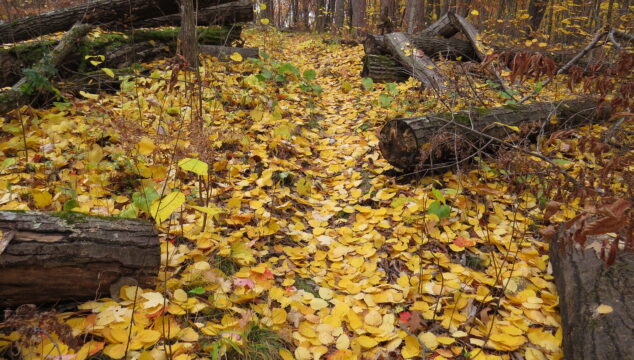
Come walk with me in the peak Autumn beauty of the Northwoods. To say that I love this time of year is an understatement. Most everyone can appreciate the colorful falling leaves---it reveals the 'true self' of a tree when its leaves are no longer producing chlorophyll. Their true colors are revealed, and there is something simple … [Read More...]
Begin, Again, at the Beginning
I wanted to begin the New Year at the beginning of the Mississippi River—it seemed like a wonderfully symbolic way to leave the old year behind and begin again with the new year. It was the antithesis of the Times Square chaos of people, noise, and celebration; it was the three of us—Chris, Emily, and me, it was unbelievably quiet, and the fiesta was a frolic in the frosty forest on snowshoes. We walked out of the old year and into the new year with hope and the renewal that comes from a flip of the calendar. It is like a universal ‘permission’ to lay down the things we no longer want to carry and an ‘encouragement’ to begin again. Little did we know on that day that in one week’s time we would have to ‘pick up’ what we did not want to carry and begin, again, with another round of January grief.
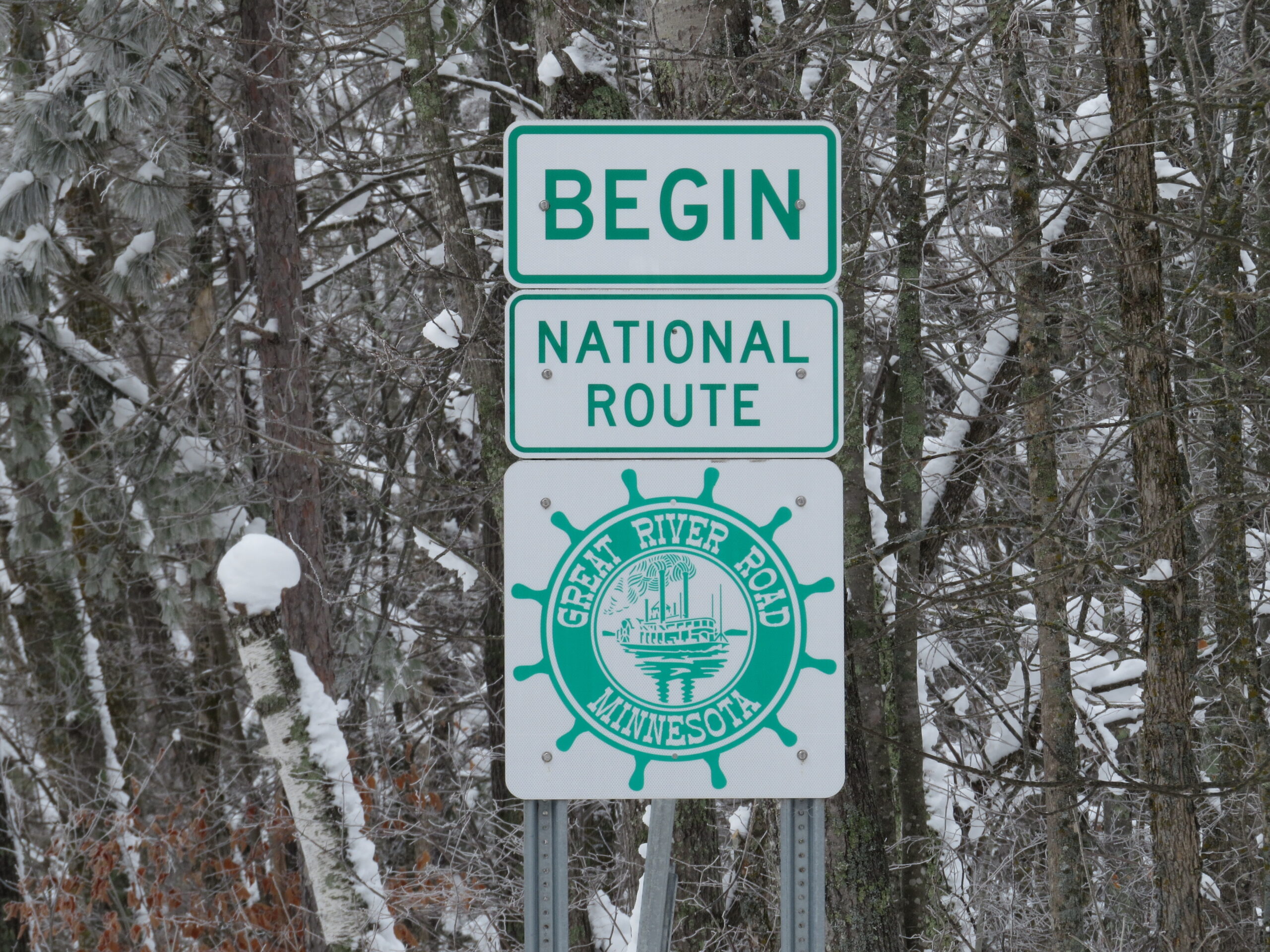
With the beginning of the Mississippi River is the start of the Great River Road—3,000 miles of National Scenic Byway that runs on both sides of the River at various places through ten states. Here at Itasca State Park is the beginning of the Great River Road; it is the same road we turn off from to get to our home in Sartell; it is the same road that goes through St. Paul where our son Aaron lives; it is the same road that goes through tiny Cassville, Wisconsin where Chris’ folks were born, raised, and buried; and it is the same road that goes through the metropolitan area of St. Louis, Missouri where a little girl named Mary Brake lived at the beginning of her life.
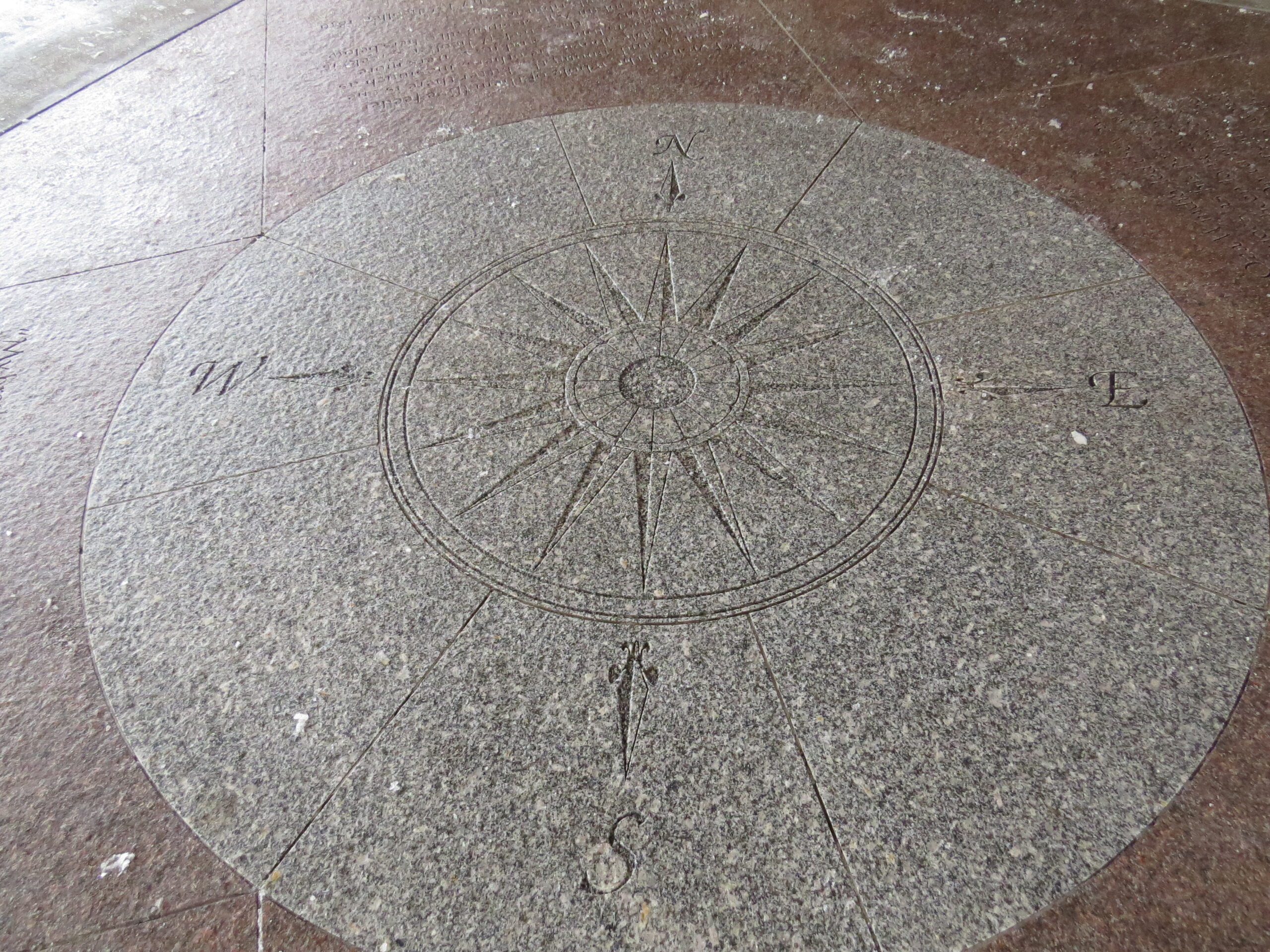
By our second day at Itasca—New Year’s Day—we were getting our bearings. It takes a while to do so when in a new place. It takes a while to do so when death impinges on our lives.
The Great Mississippi River begins at a pile of rocks where water flows from the North Arm of the wishbone-shaped Lake Itasca. It flows north for a time, then arcs east, southeast, southwest, then southeast again until it maintains its southward flow. It took a while for it to get its bearings, too, I guess.
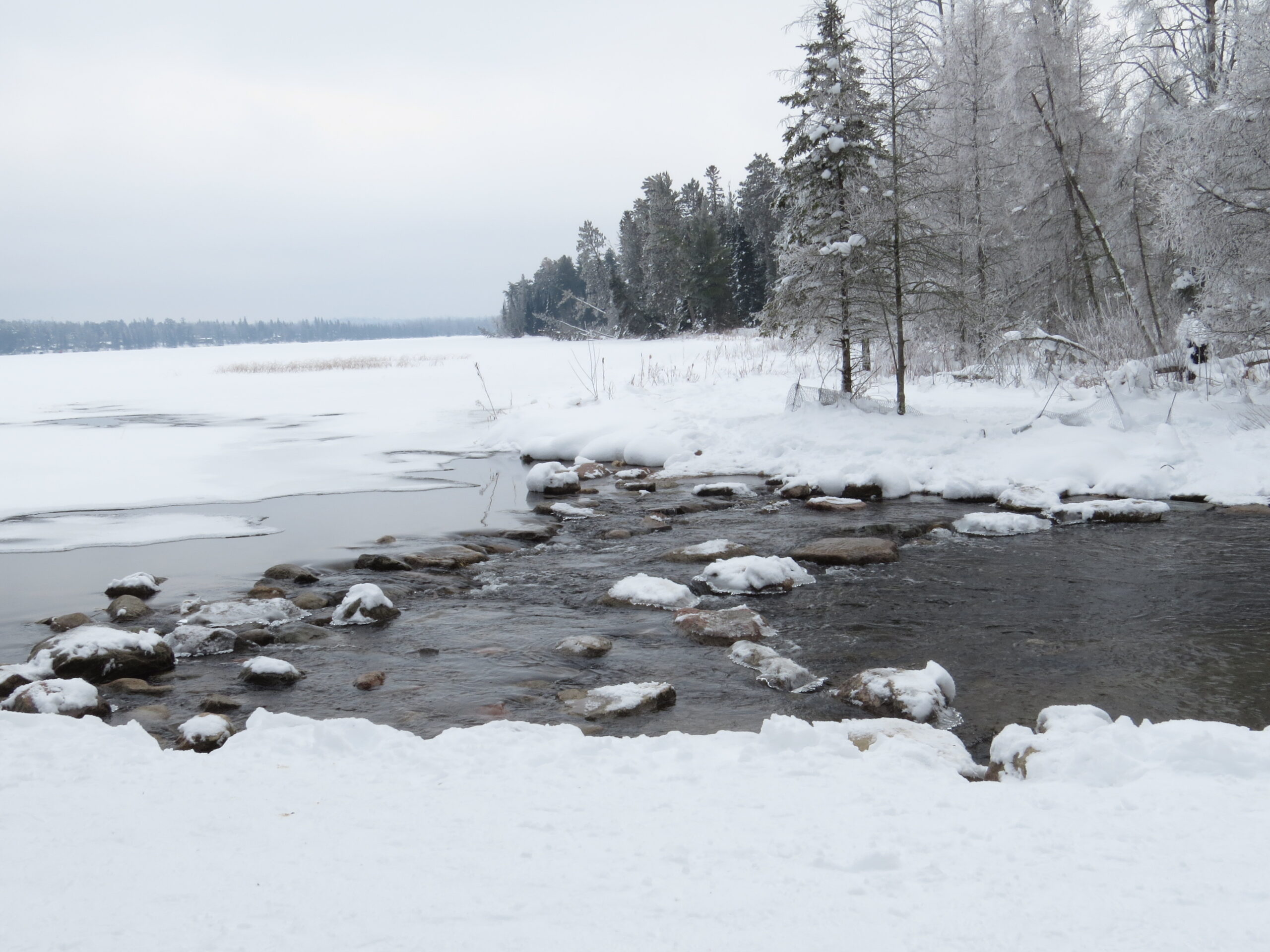
What a fascination (or is it merely function?) we have for ‘crossing’ a creek, a stream, or a River. In the summertime, thousands of people cross the source of the Mississippi on the rocks or by wading in the shallow water. Not fifty yards downstream was a thick wooden plank placed across the mighty maiden river. I wasn’t the first to walk the snowy plank. A little ways down the trail was another bridge where I could see another bridge from which I saw a fourth bridge! I wonder how many bridges cross the 2,552 miles of great, winding River?!
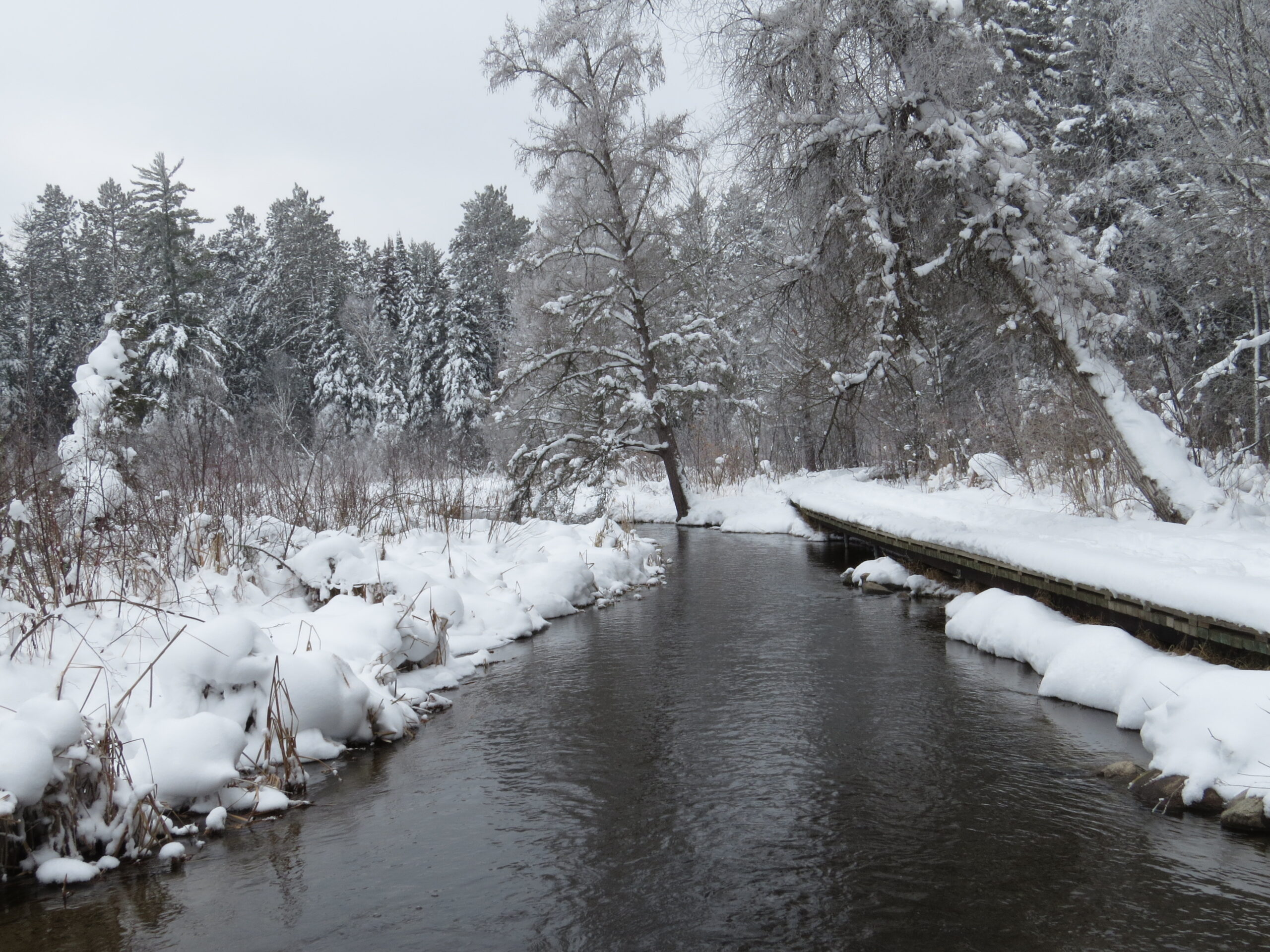
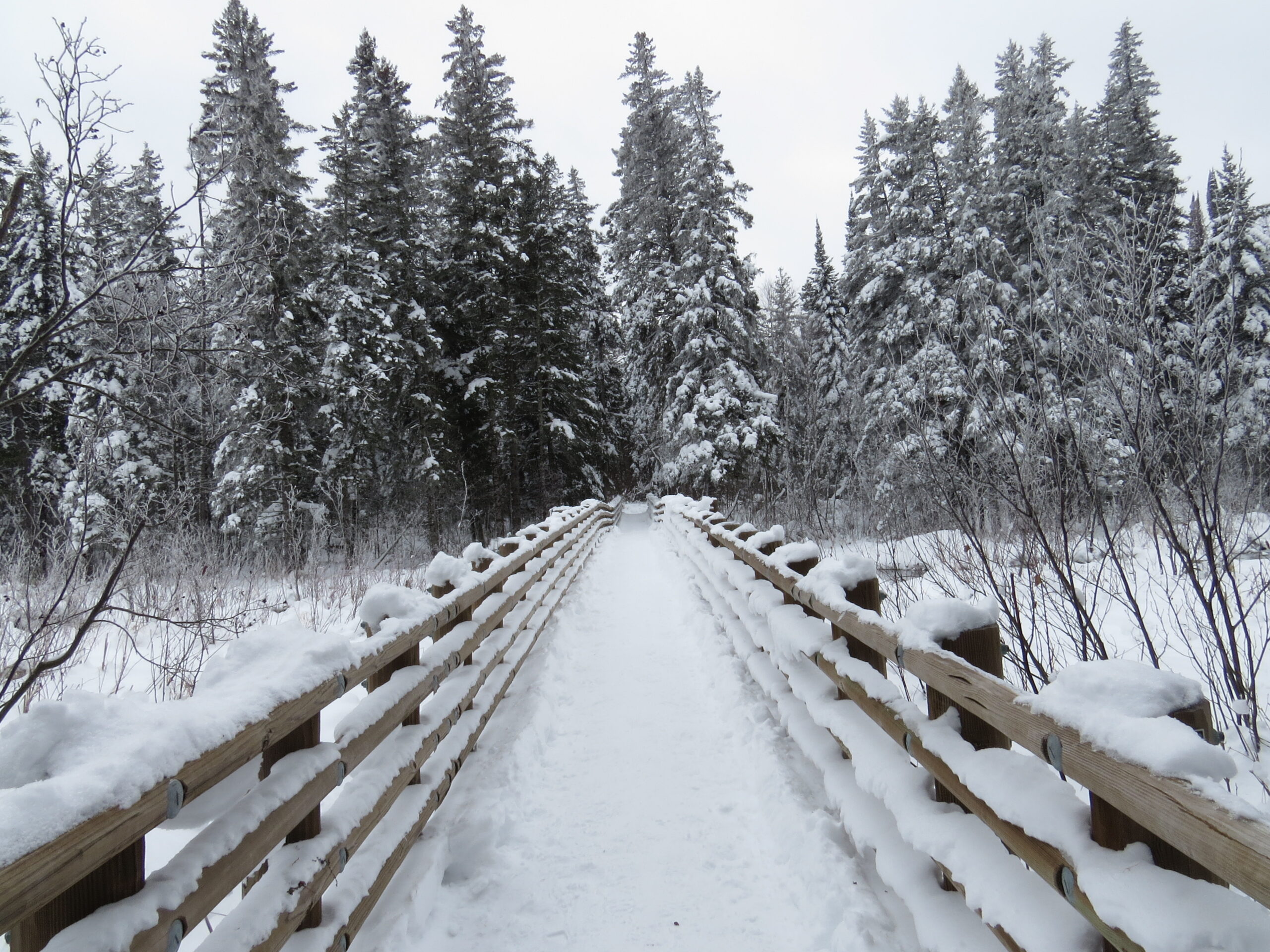
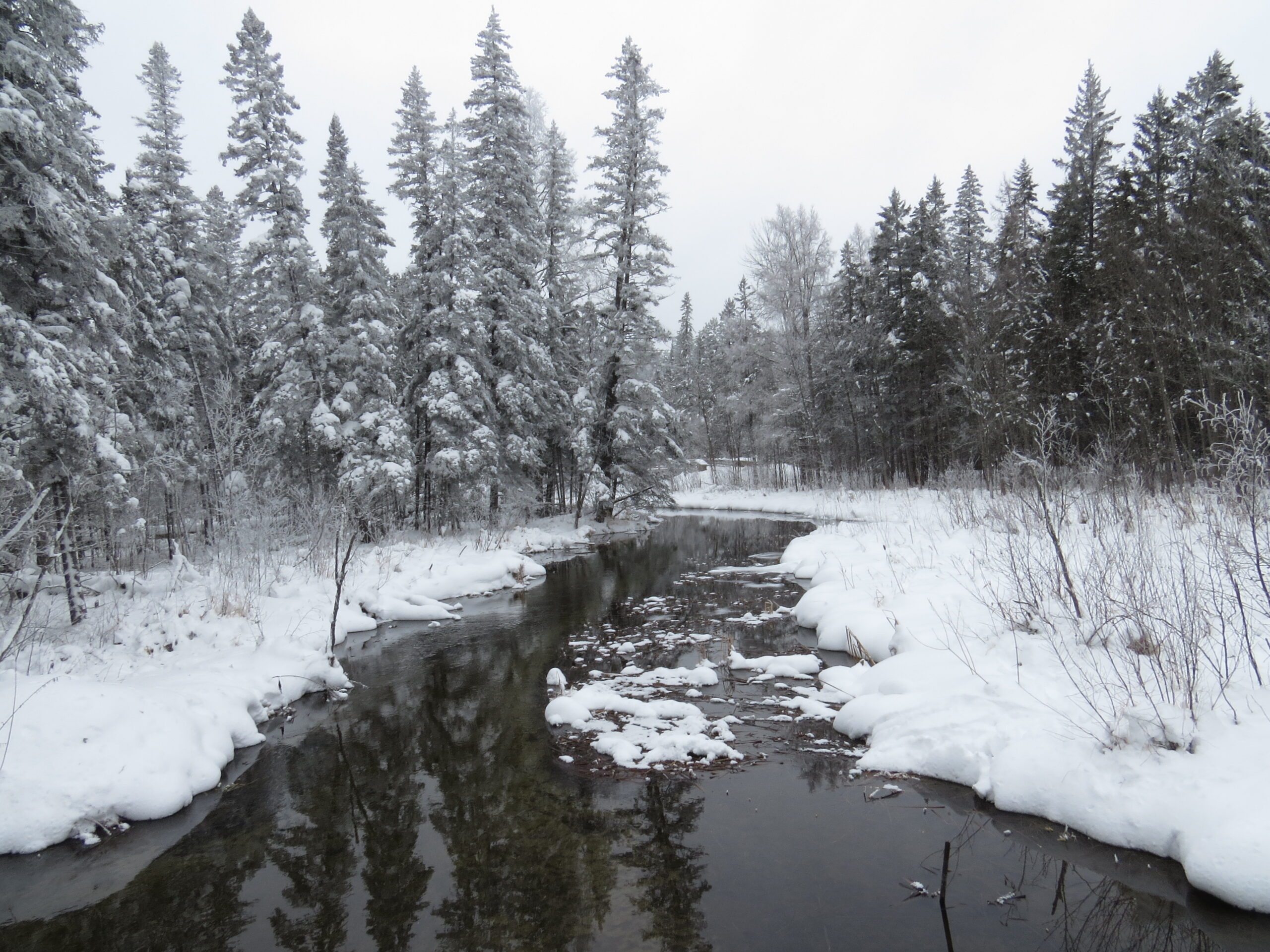
And so it begins….
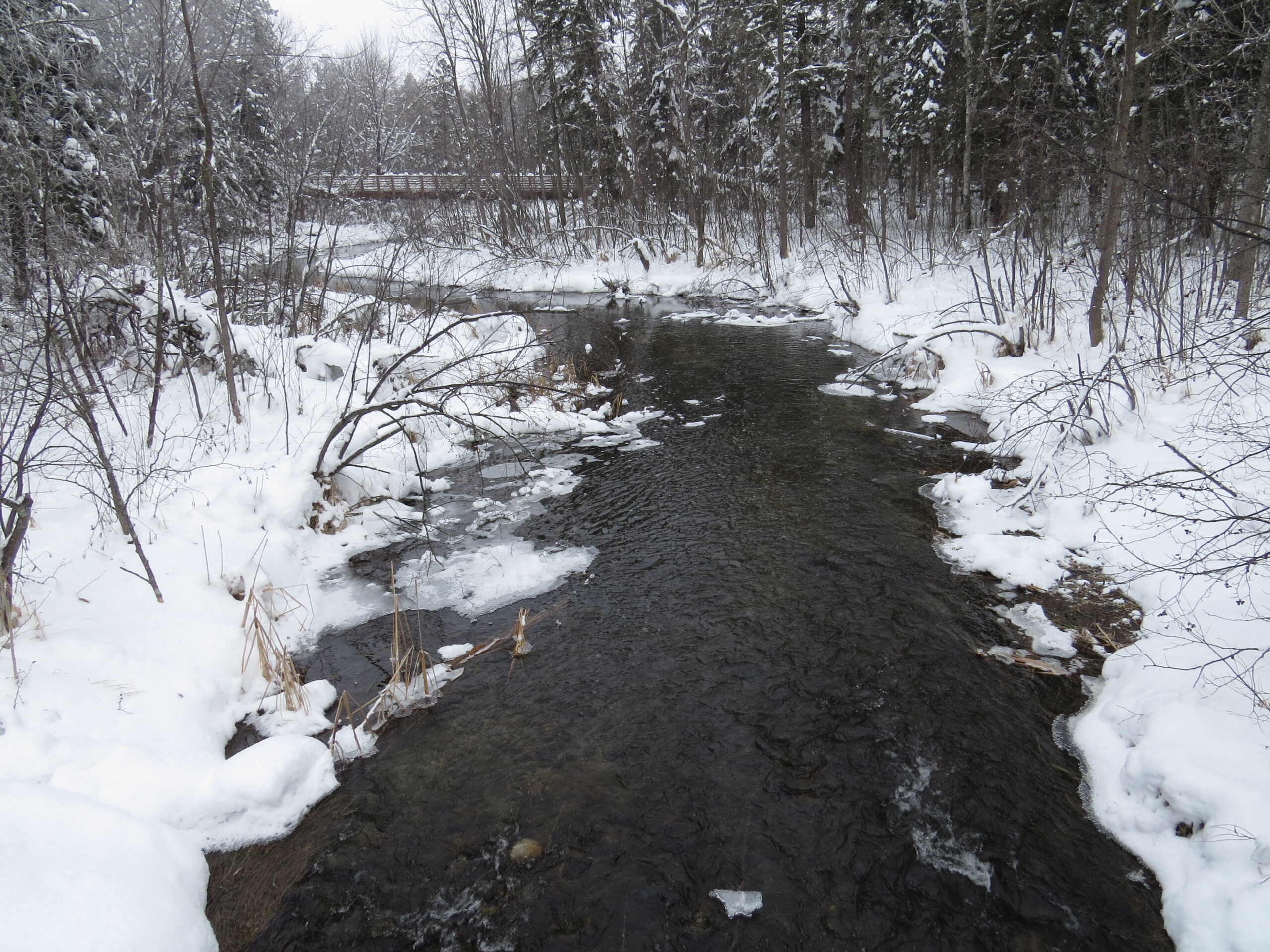
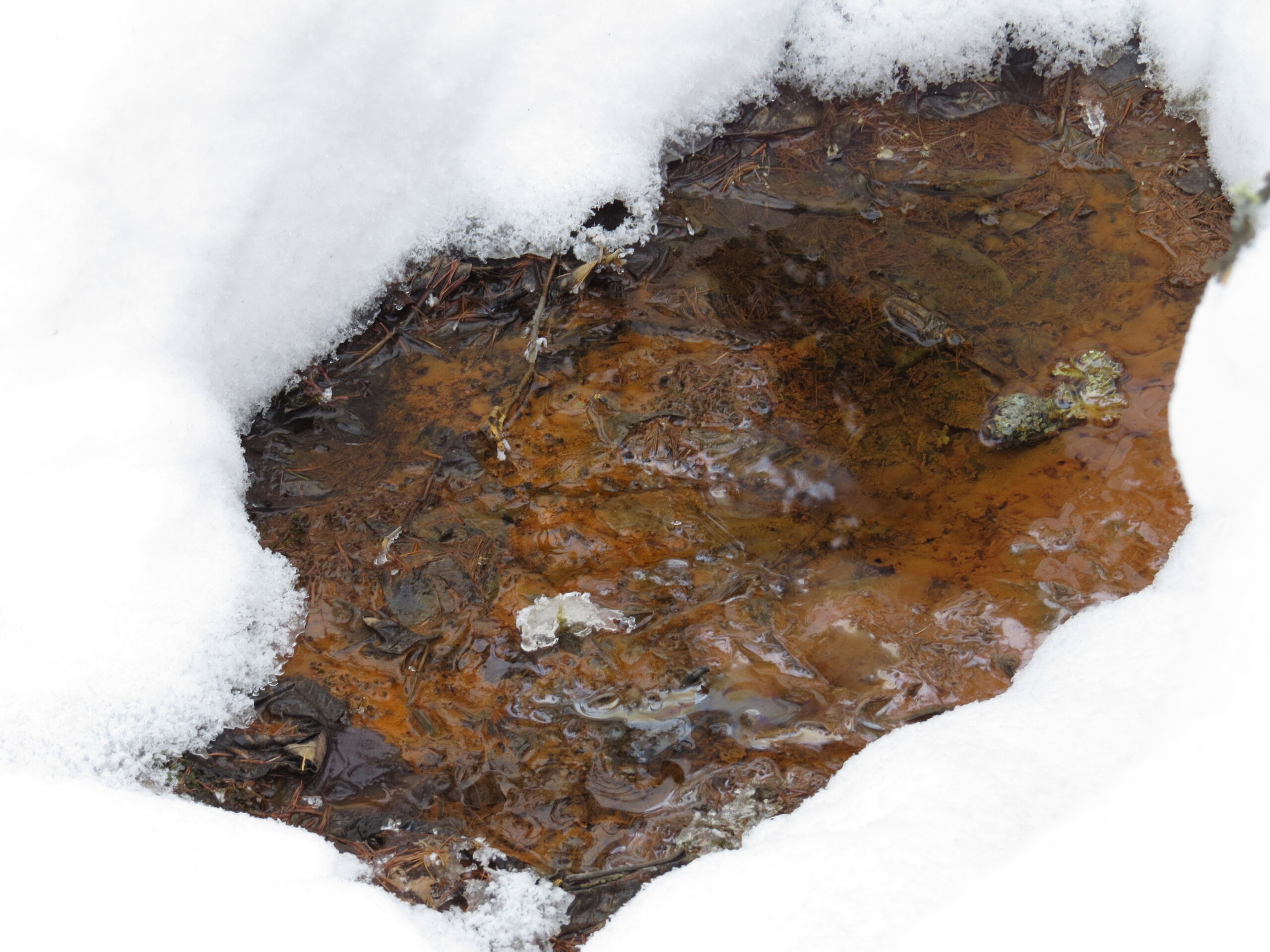
With our map, our bearings, a good night’s sleep, a wonderful cabin-cooked breakfast, and our enthusiasm for the New Year, we strapped on our snowshoes to follow the two-mile loop of Dr. Roberts Trail. It was narrow and ungroomed, a perfect snowshoe trail. The first stretch was on a boardwalk through a bog. Patches of tannin-orange and brown bog water showed through the snow, and even with its lazy flow, I wondered why it wasn’t frozen like the large Lake Itasca we walked beside.
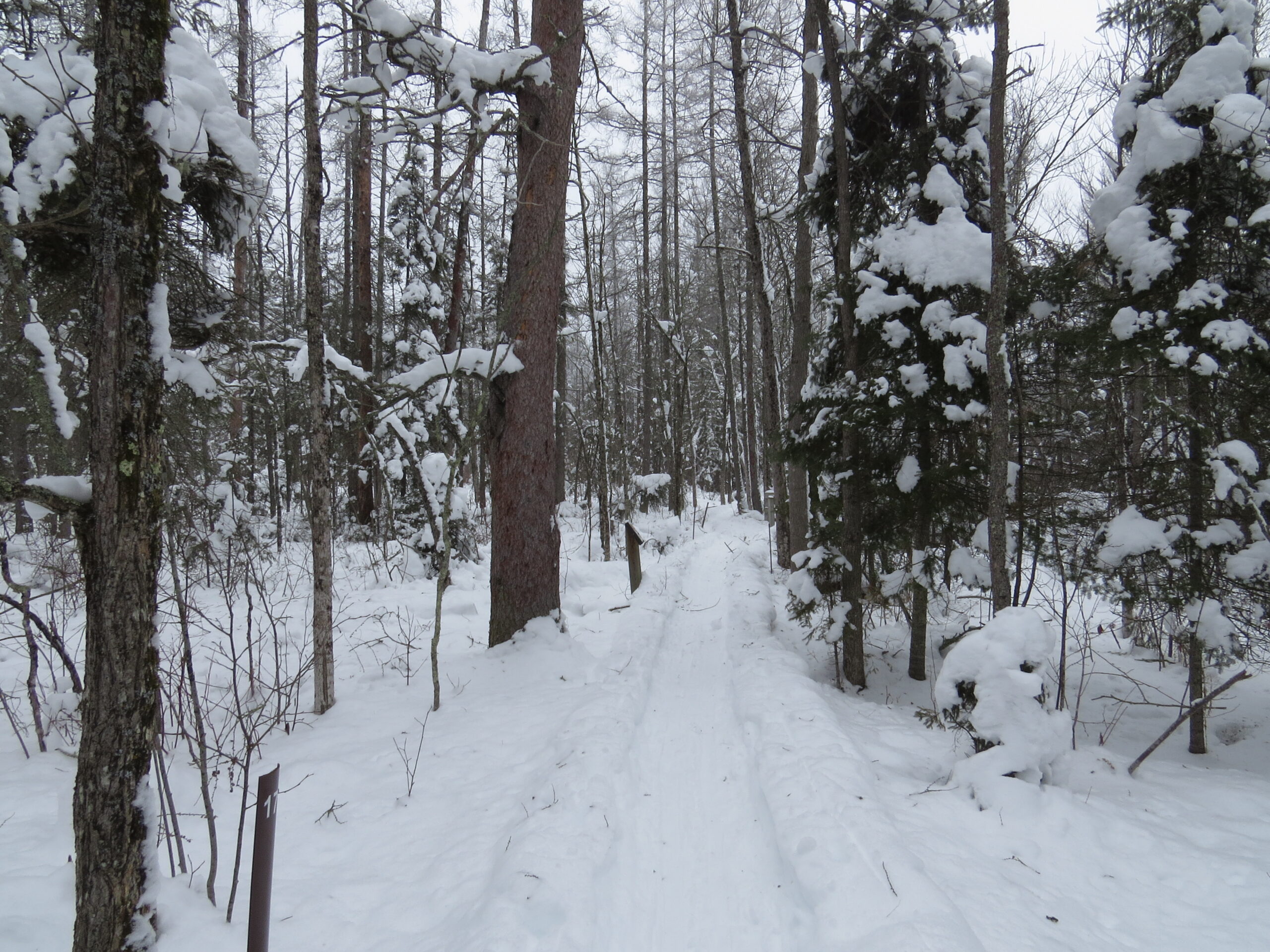
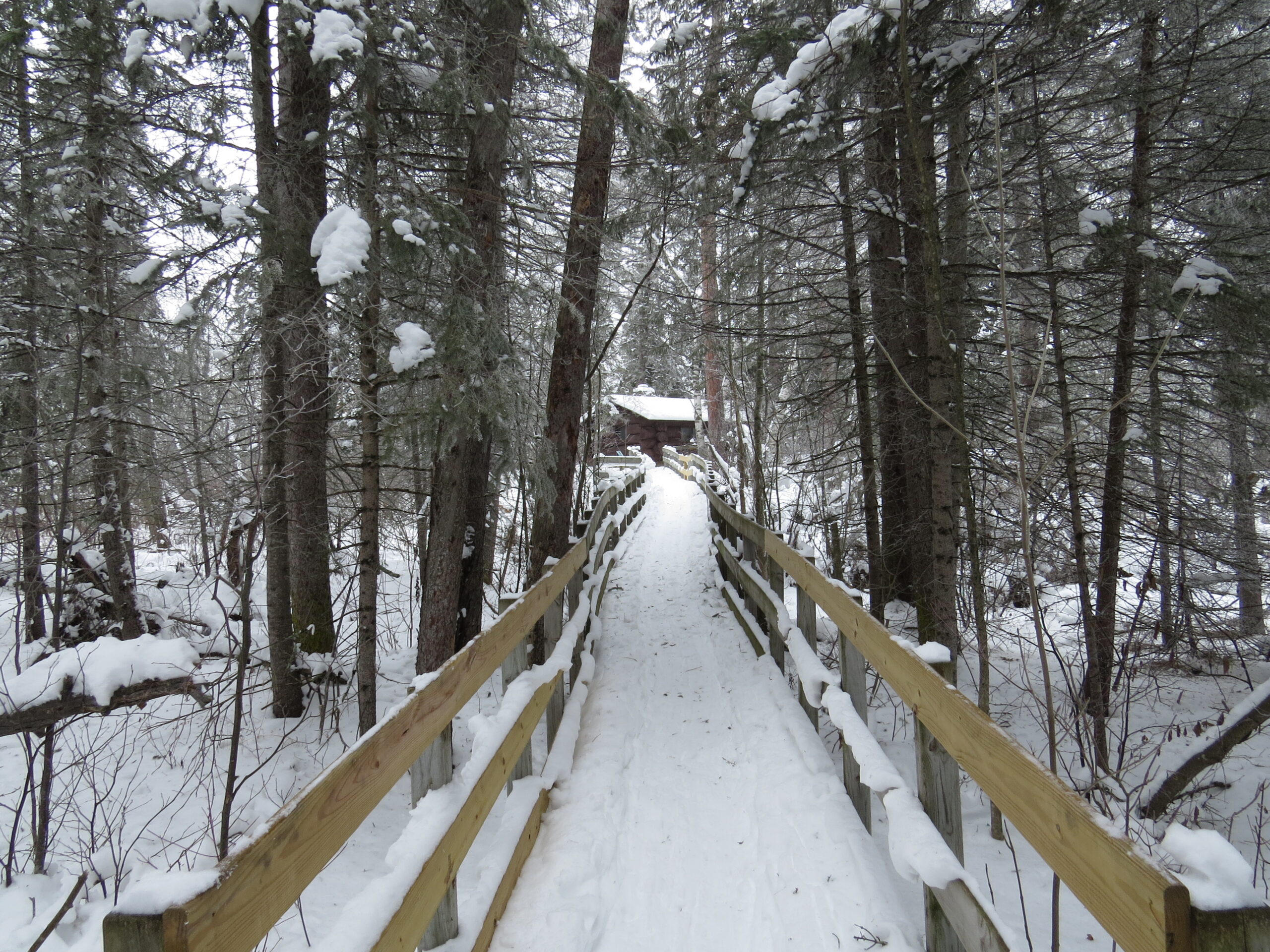
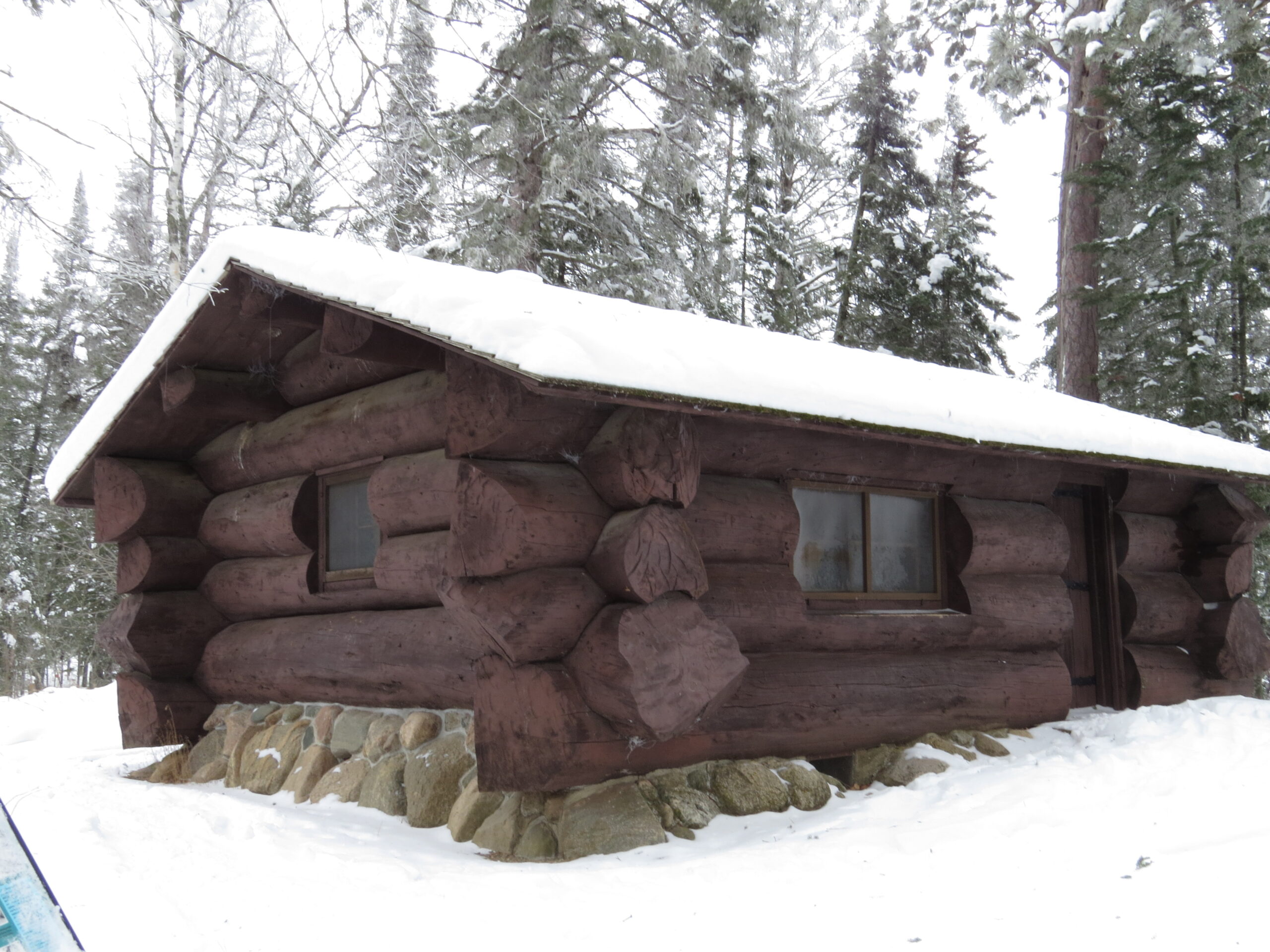
A boardwalk bridge lifted us to a little hill where the Old Timer’s Cabin overlooked the Lake. It was the first building project of the Civilian Conservation Corp (CCC) at Itasca, which began in December 1933. Also notable is the size of the logs—a cabin built with only four logs!
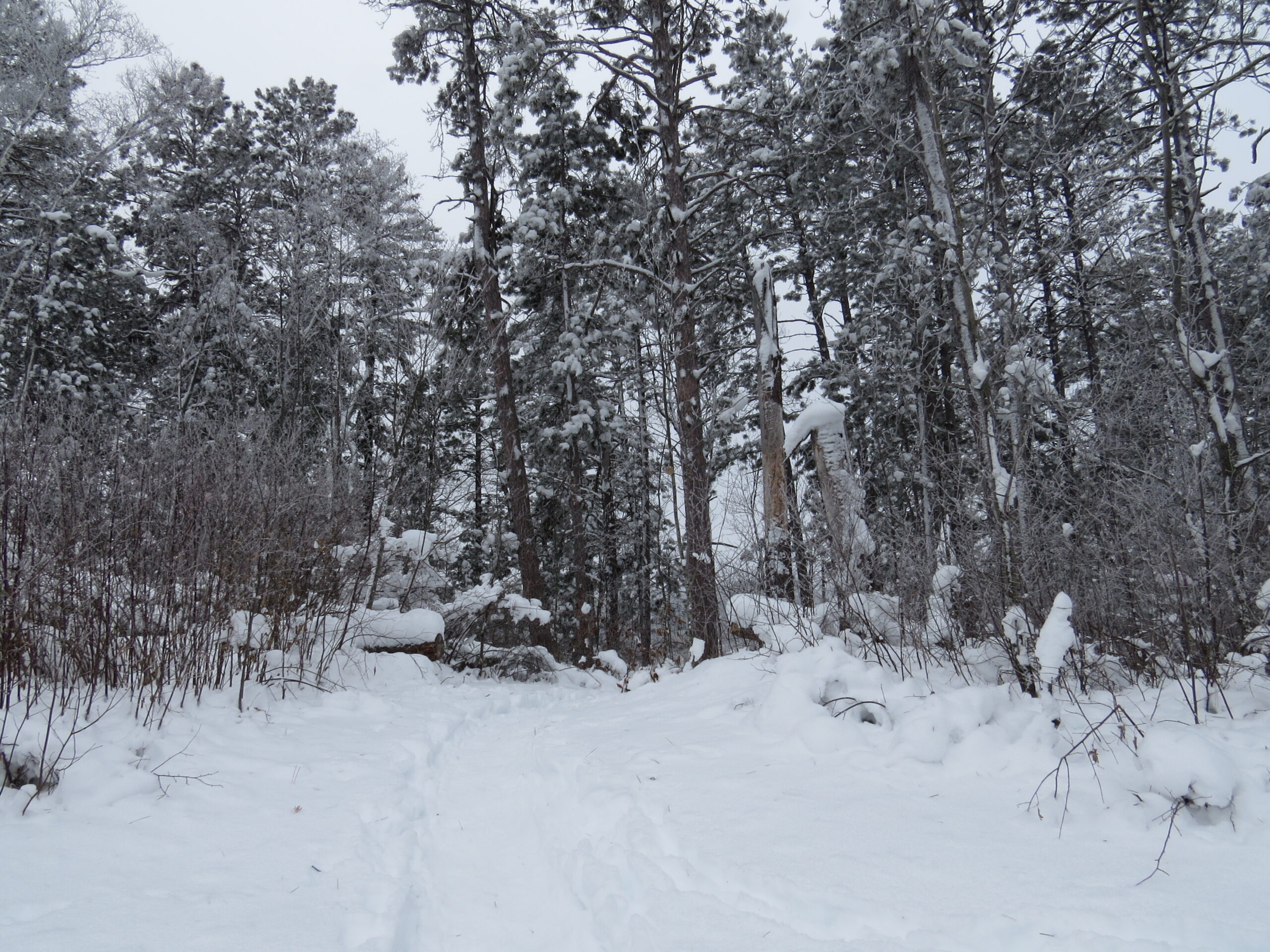
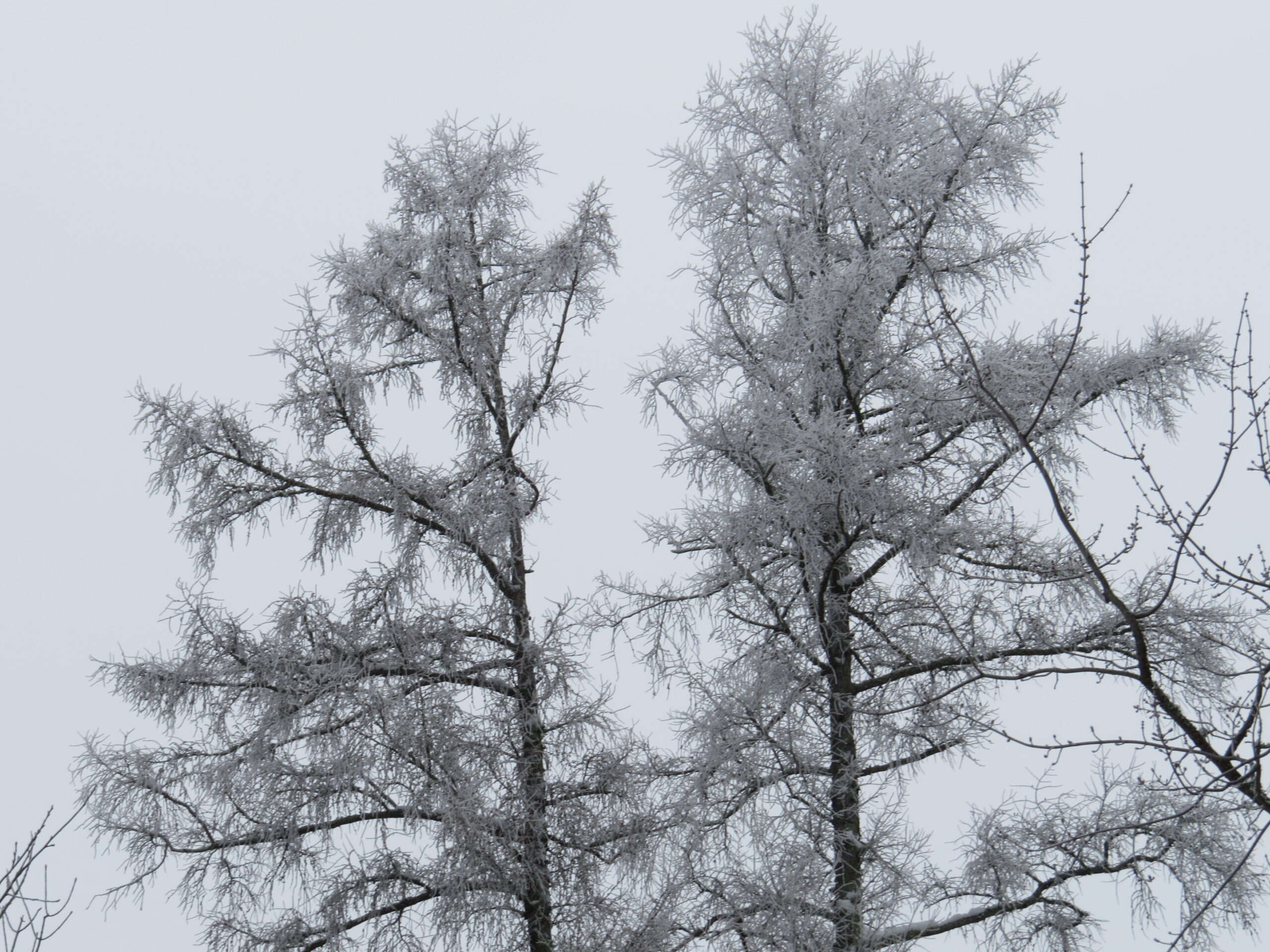
The trail followed the east arm of Lake Itasca and climbed a high ridge. The trees were ghostly with frost in the cloudy, foggy day.
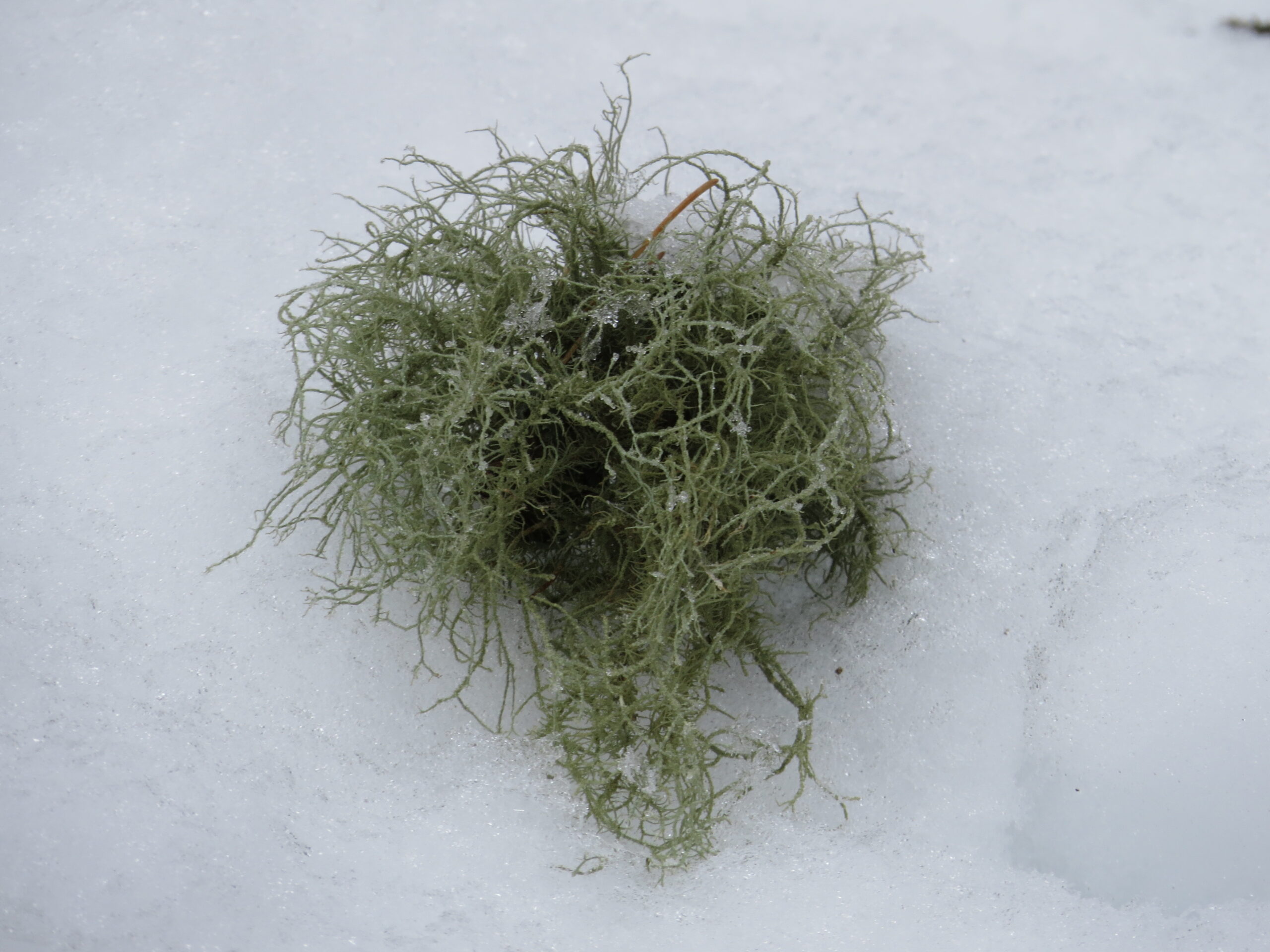
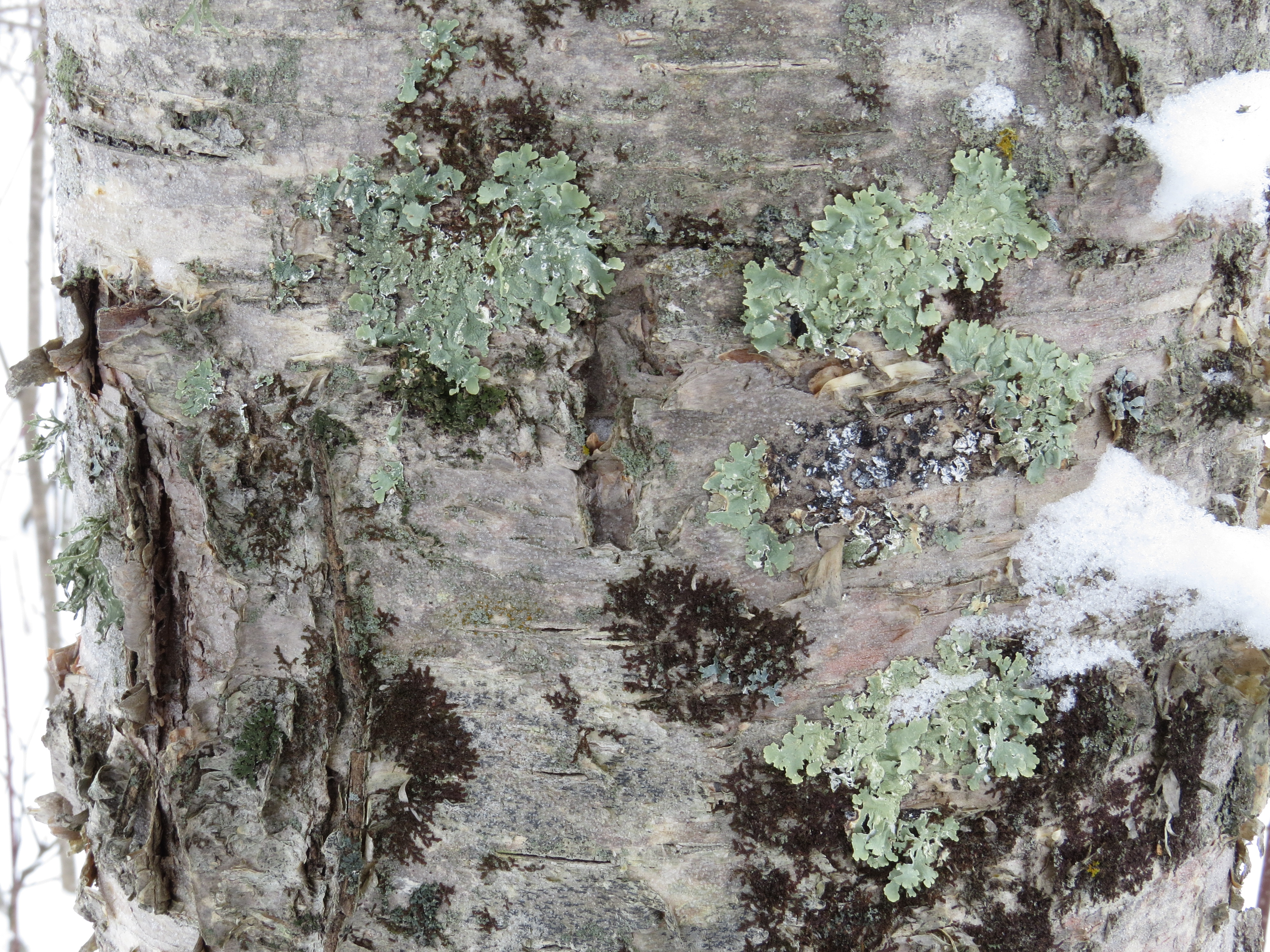
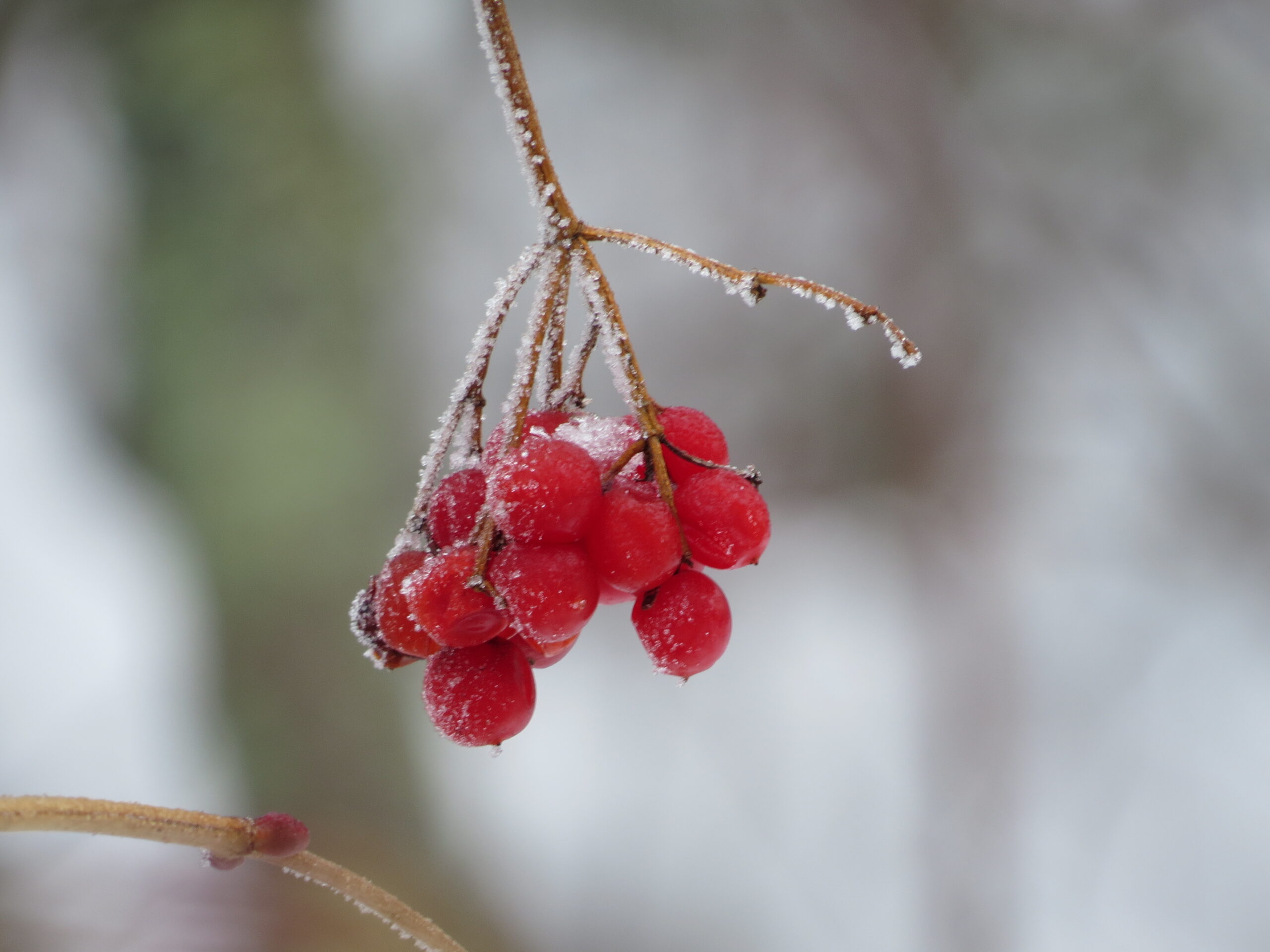
Green Lichens and red Highbush Cranberry berries were almost shocking in their brilliant color compared to the vast white/gray/brown landscape we ‘shoed’ through.
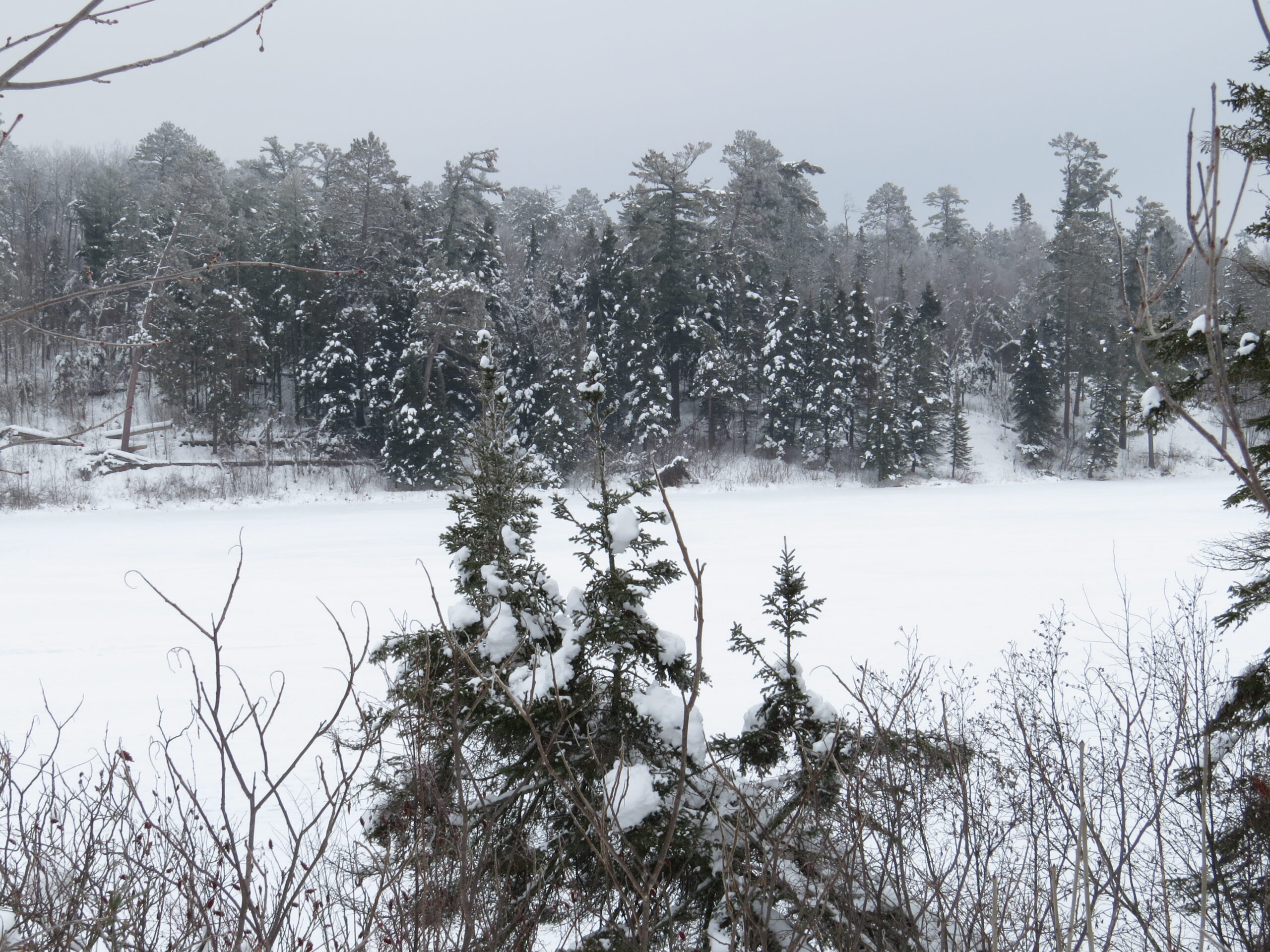
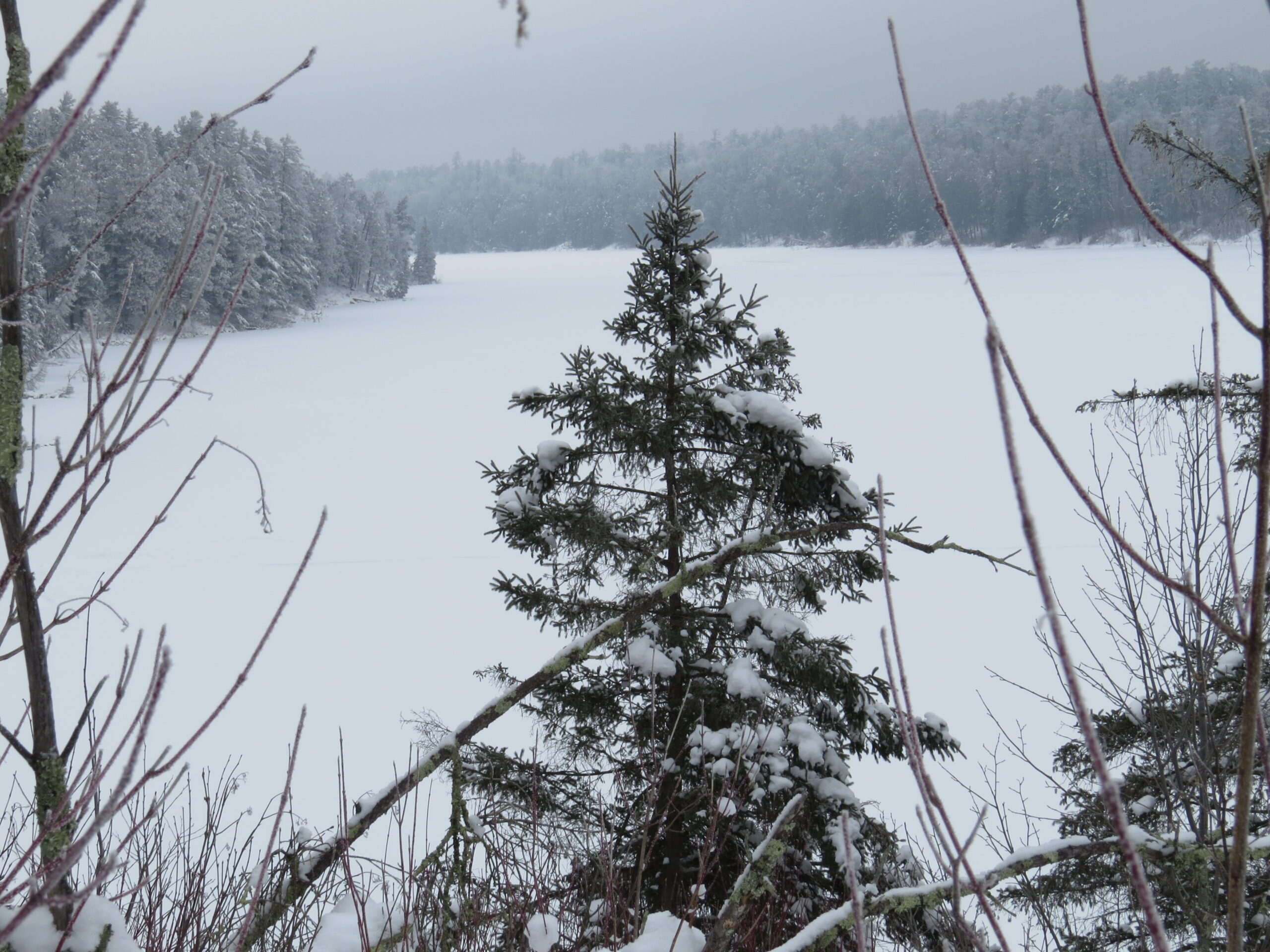
After our climb to the ridge, we descended to a small lake about halfway around the loop. It looked wild and remote.
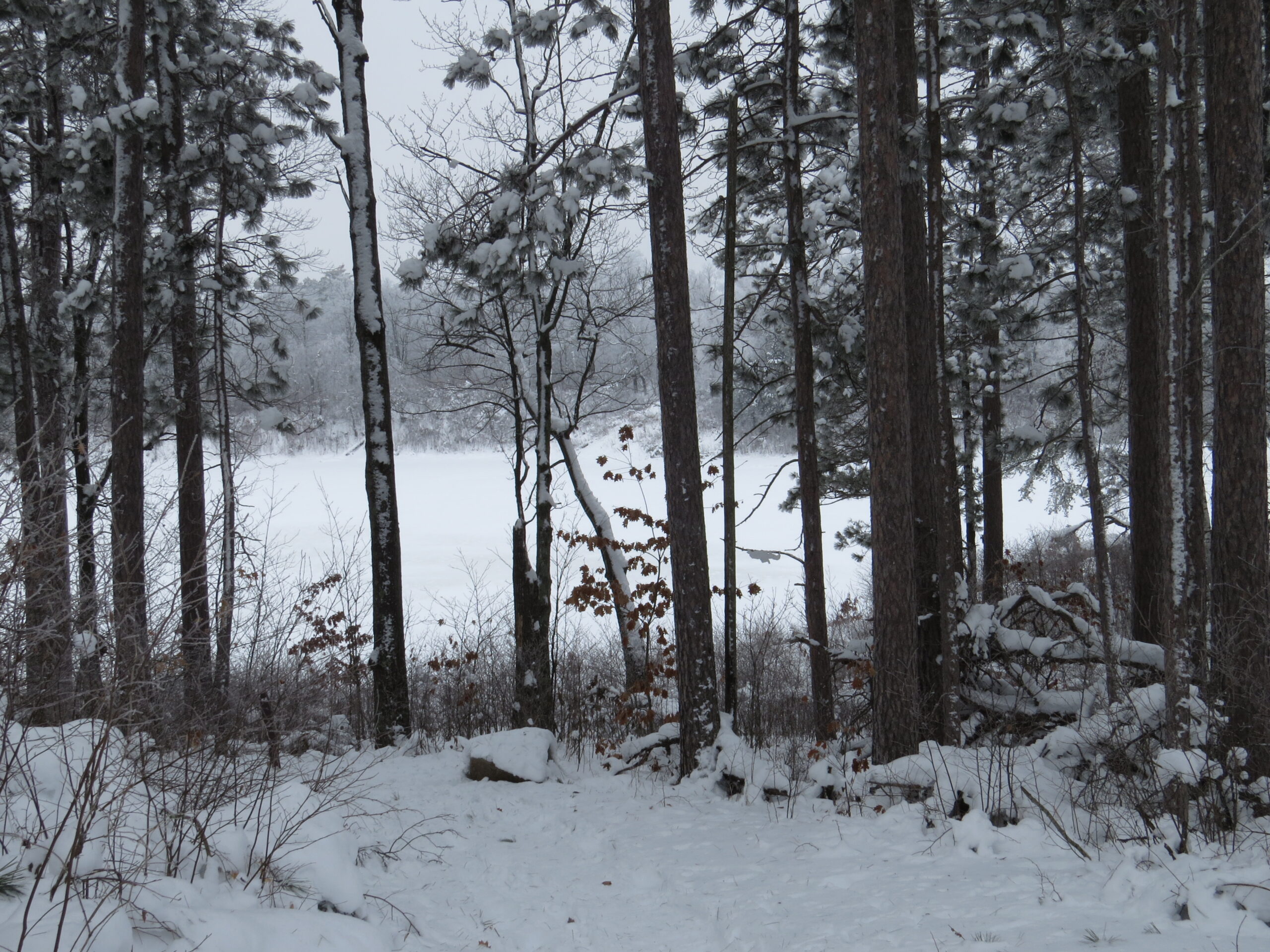
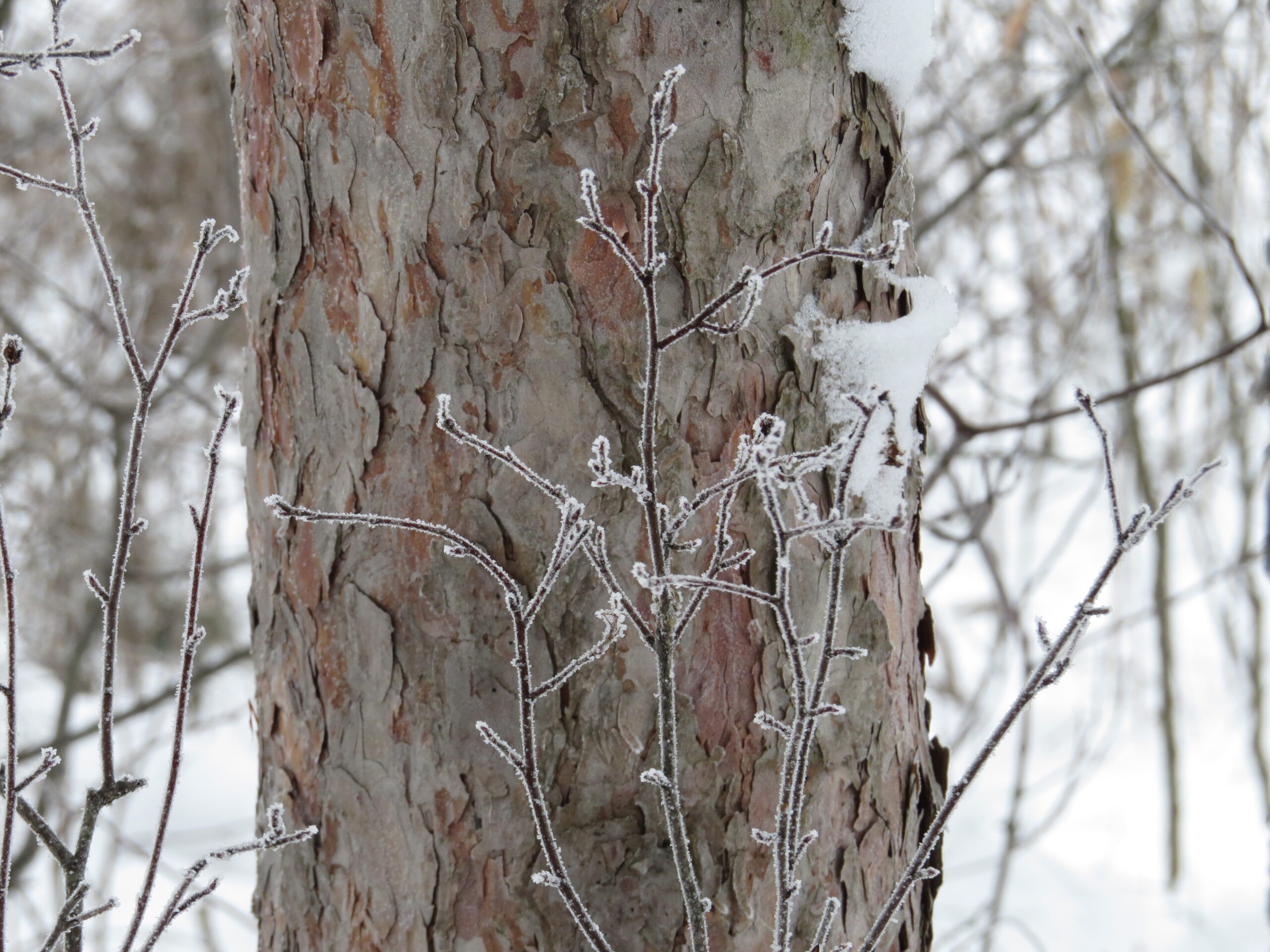
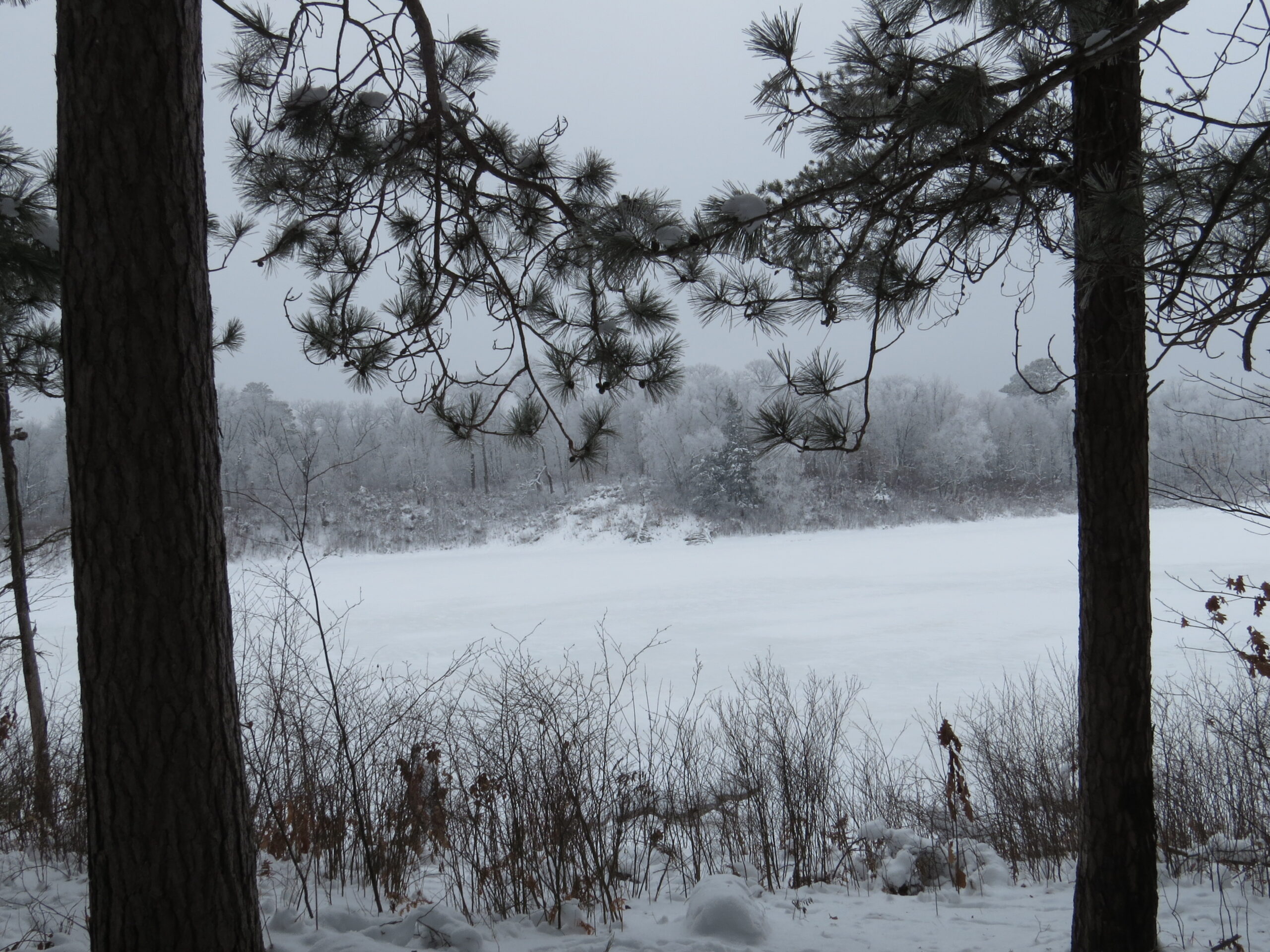
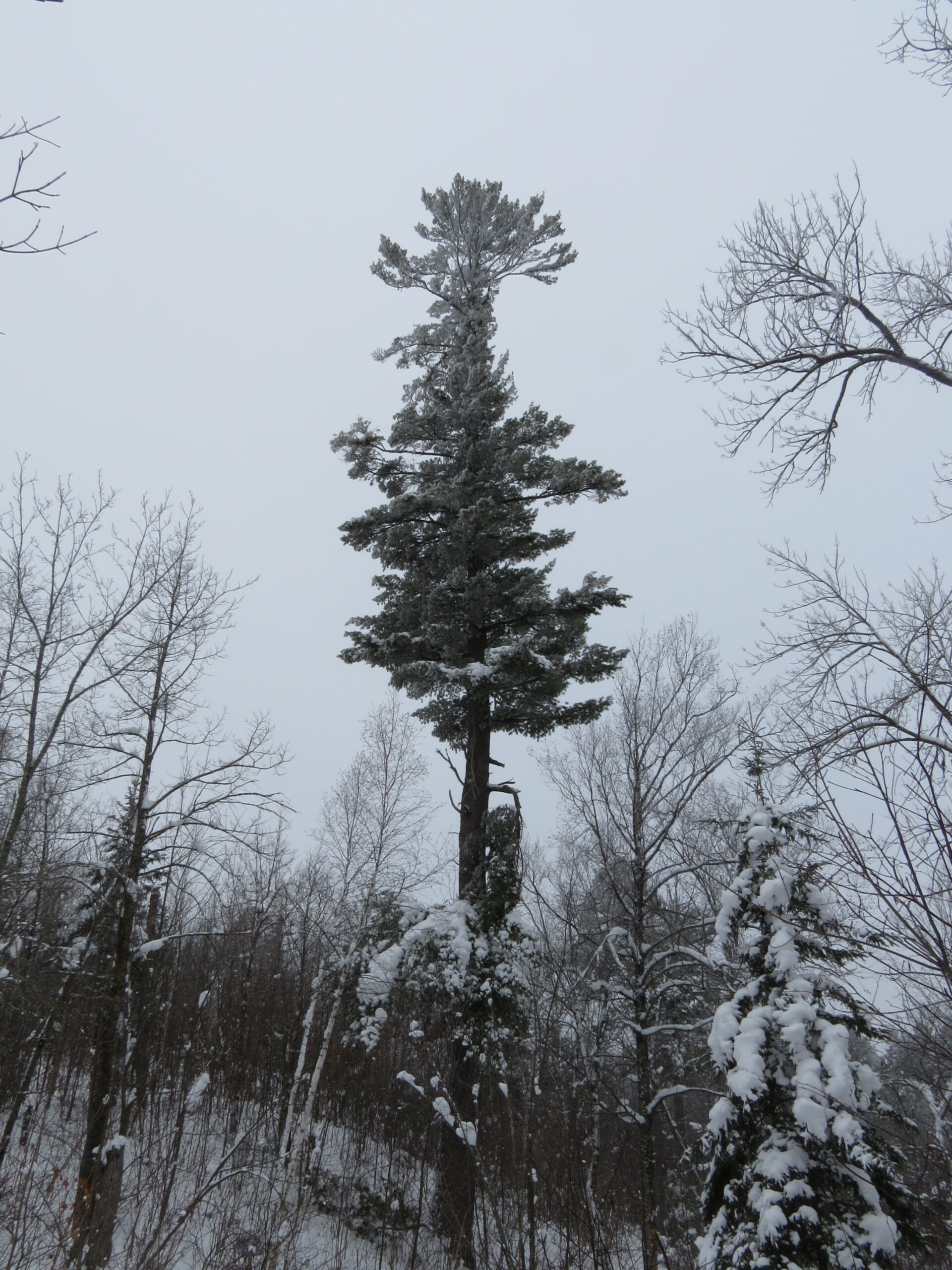
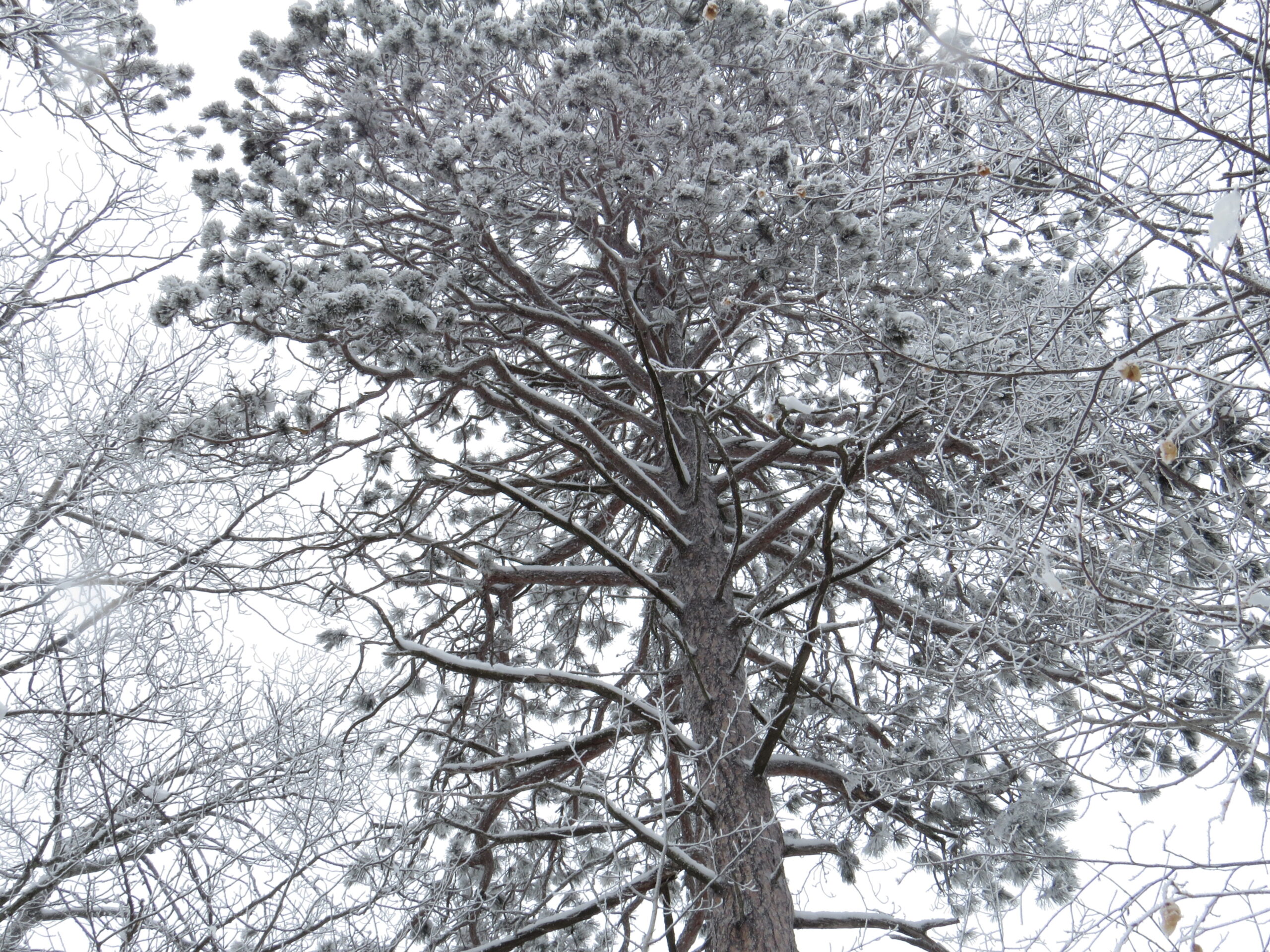
We continued to pass by giant White Pines, the ‘ancient’ ones in the diverse, frosted forest. It was a snowshoe hike that opened my lungs and strained my legs. When we stopped to rest, the snowy quiet bathed my senses, and it all felt so good.
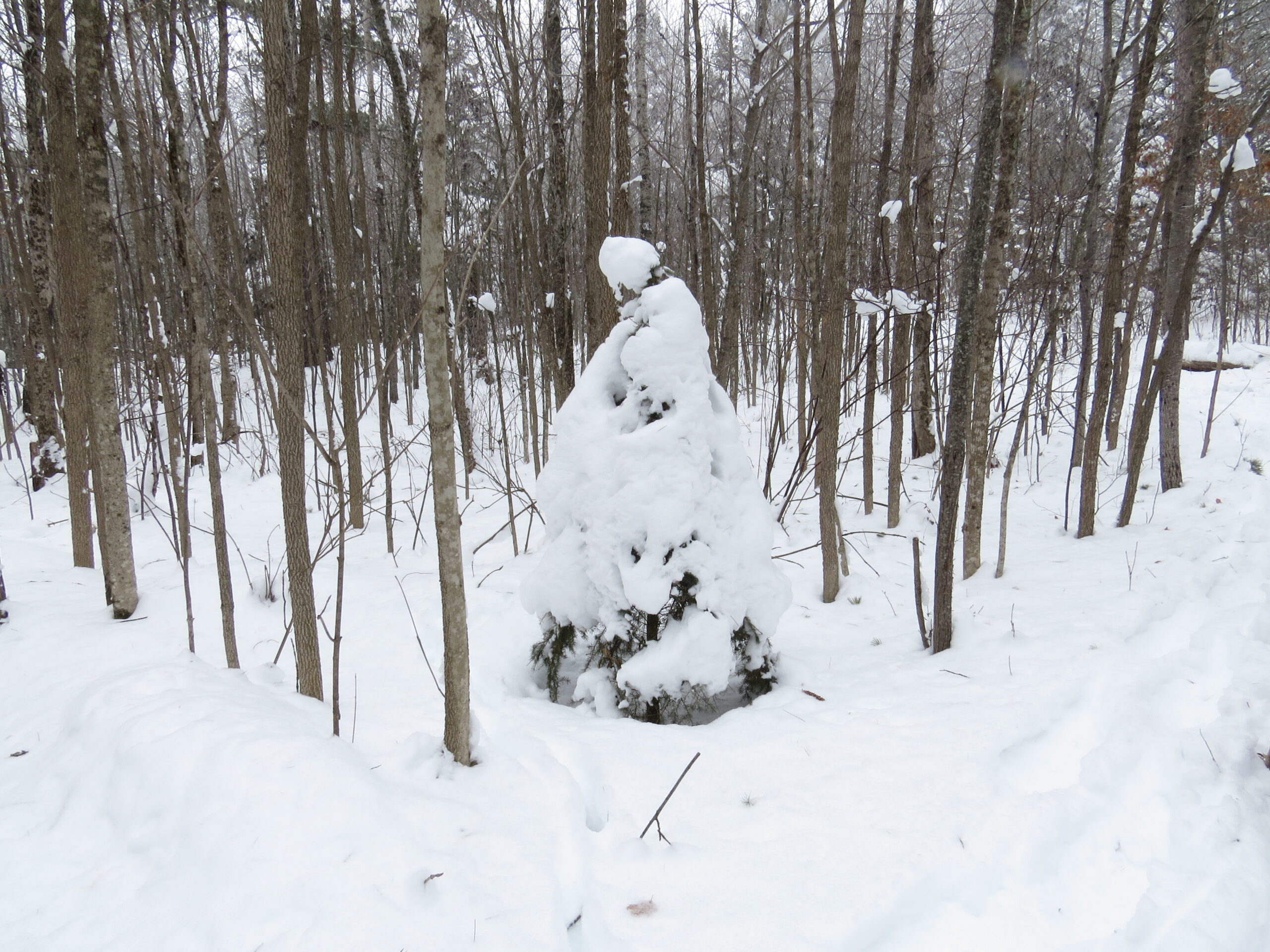
Towards the end of the trail we saw this little snowman tree—an evergreen wrapped in a blanket of snow—surrounded by his young deciduous friends.
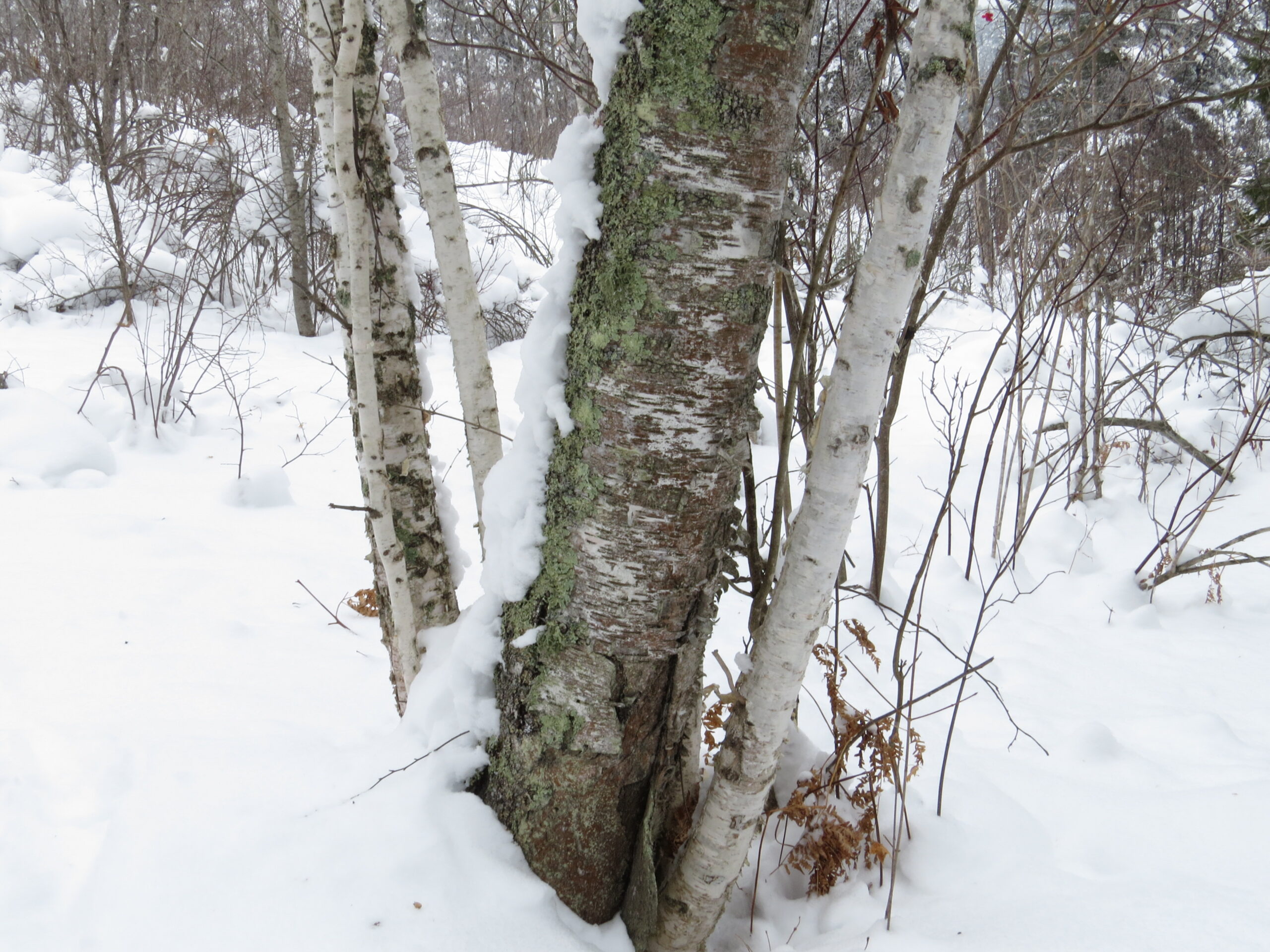
A cluster of Paper Birch trees epitomized our old year/new year weekend. The old Birch had wounds and peeling bark, layers of lichens and moss, and had lost the white luster of a young Birch. The young ones grew from the base of the elder and had been nourished by the extensive root system of the old one. Old and new ending and starting from the same place.
We ended our year in the same place we began our new year, and yet, it still had a different feel from one day to the next. The Mississippi River runs deep in the heart and soul of those who lived and died on and beside the River like Chris’ family had in the little village of Cassville. Chris feels it when he sees the River. My feelings about the River are more primitive, I think. I see it as life-giving water, a metaphoric trail of our life’s flowing journey, a barrier and boundary that stresses us in our quest to ‘move on,’ and a rich source of unbridled beauty. The Great River Road, complete with all its bridges, seems to be our human solution to encompass all of those things. I didn’t realize until I was writing how the The Great River Road, along with the flowing River, has connected our present living location to the Brake homeplace in Wisconsin and to the place where Chris’ only sister Mary began her life.
Mary was born with Down Syndrome, and in the mid-fifties, it was common practice for the medical community to recommend and facilitate the institutionalization of babies like Mary. She never came home from the hospital but was sent to a place on the other side of the state—by the Great River. Imagine the shock and trauma of every member of the family, especially for Mary and Chris’ Mom. Mary eventually returned to the west side of the state, closer to home, and she spent holidays and vacations with her parents and five brothers. Finally, with the social emergence of group homes, she had a real home to live and work in—she flourished at her vocational services job for thirty-seven years and built friendships with her cohorts and caregivers with her loving and outgoing personality. She was a joy to our family and to all who met her in so many ways. Mary’s life ended one week after the beginning of the New Year. She will be buried high on a hill that overlooks the Great River in Cassville. We will travel the The Great River Road to be there.
And thus, we begin, again, at the beginning of a New Year with hope and expectations. We also begin, again, at the beginning of another January of grief at the loss of a sibling, the same as we were just one year ago when Chris’ brother Jon died. But we aren’t really starting at the beginning—the slate does not get wiped clean—but it is a new beginning, nonetheless. Our grief over Mary’s death gets added to the grief over Jon’s death and brother Paul’s death, and Chris’ parents’ deaths, and my Dad’s December death seven years ago, along with the ongoing grief of broken relationships that have a deep river flowing through them with no bridge in sight. What does one do with such grief? It will take a while for us to get our bearings again, but we will. With each grief-filled experience, we have learned that we will get through it, even when the hurt feels unbearable. We have become resilient in a way that wasn’t planned or wanted. It has strained our hearts and made them stronger. It has opened our awareness to the tragedy, joy, heartbreak, goodness, chaos, and peace of living these lives we have been given. And every time we walk in the forest, we will be bathed in unbridled beauty and quiet, and it will all feel so good.
We and Wood
I have a tendency to hold on to things. Not so much in the sense that I will be able to use a certain item at a future time or for a future project but as a snapshot of what my life was like at a particular time. I kept a blow-up orange that my Dad brought back from Florida for each of us kids when he was driving truck cross-country. I have a piece of rock from the outcropping where Chris proposed to me. I have priceless pictures and tiny clay sculptures from when the kids were little. They are all in boxes now, tucked away from sight and mind on a daily basis. But they are there if I want to revisit those times. Holding something in my hand that represents a certain time in my life gives physical reality to the past.
At this time of year with the passing of an old year to a new one, we each get to decide what to keep from the past and what to purge. It is not a stretch to say that everyone was glad to see 2020 go. What a crazy, chaotic, Covid year. But we can’t just throw it all out and pretend it didn’t happen. There were memorable, deeply moving moments that should be remembered and cherished. There were a myriad of important lessons to be learned. But what about the garbage, the refuse, and the rubbish of the past year? What about the things that have hurt us, held us back, or no longer nourish our life? Burn them. Literally or figuratively or both, send them into the flames of a fire.
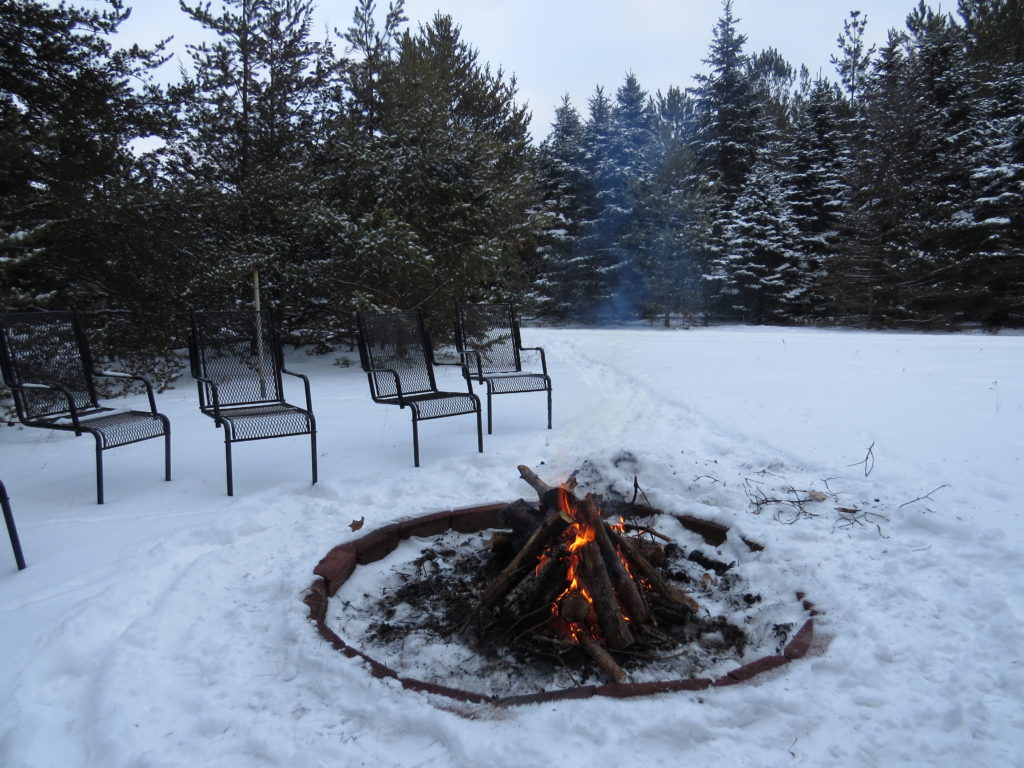
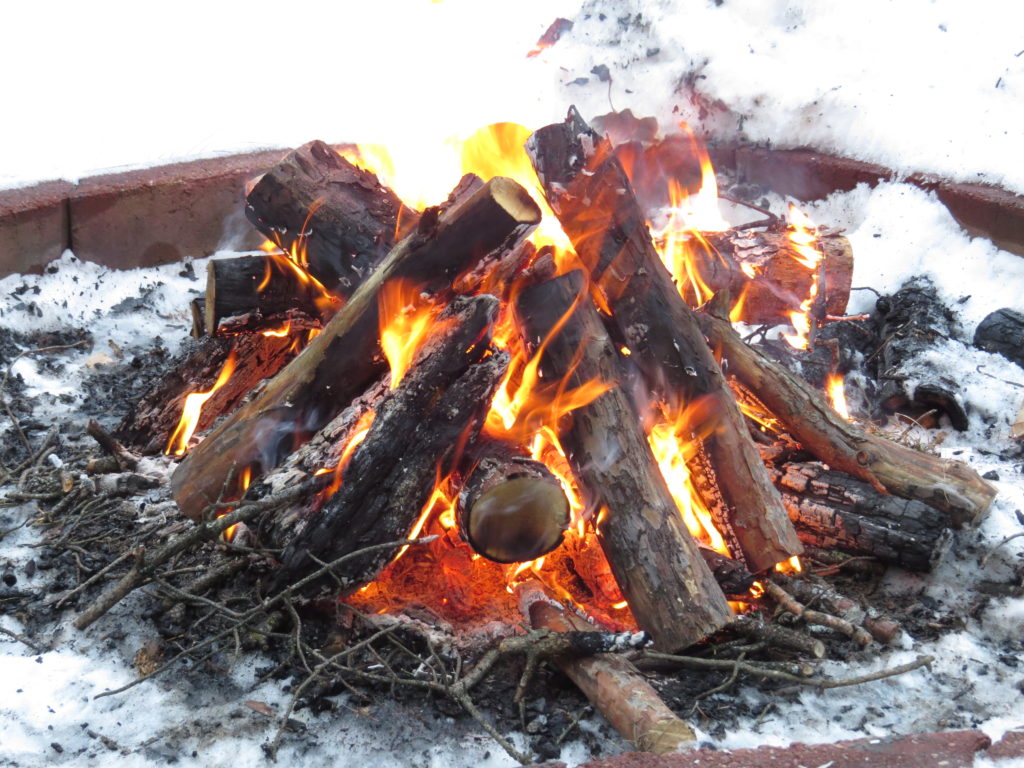
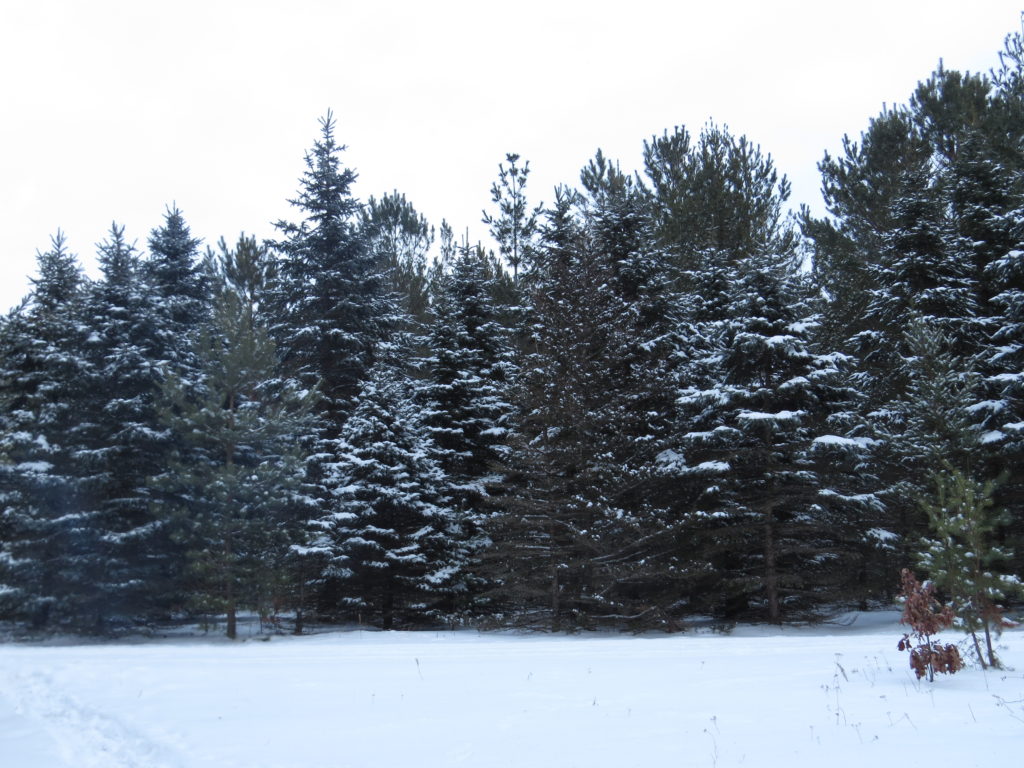
We spent a number of our New Year’s hours building and tending a fire. It was a still day, a perfect fire day when the smoke ascends straight up to the sky. There was no shifting and moving to keep the smoke out of our eyes. We were clear-sighted and clear-headed. The trees around us still held their embellishments of fluffy snow—their holiday season decorations.
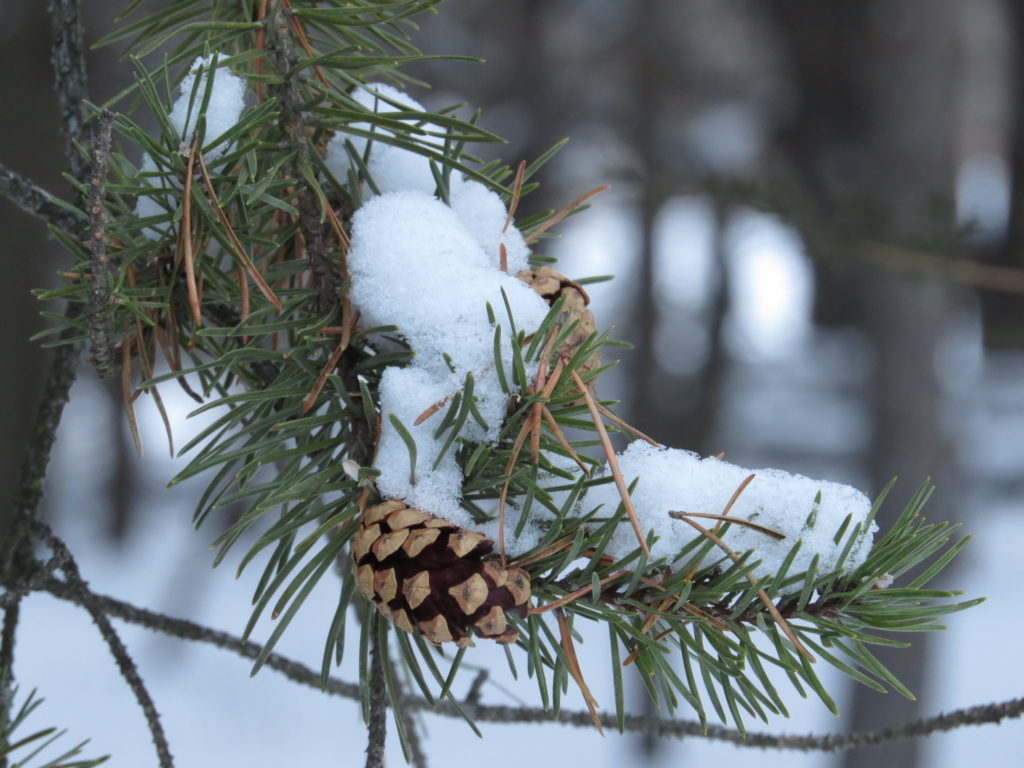
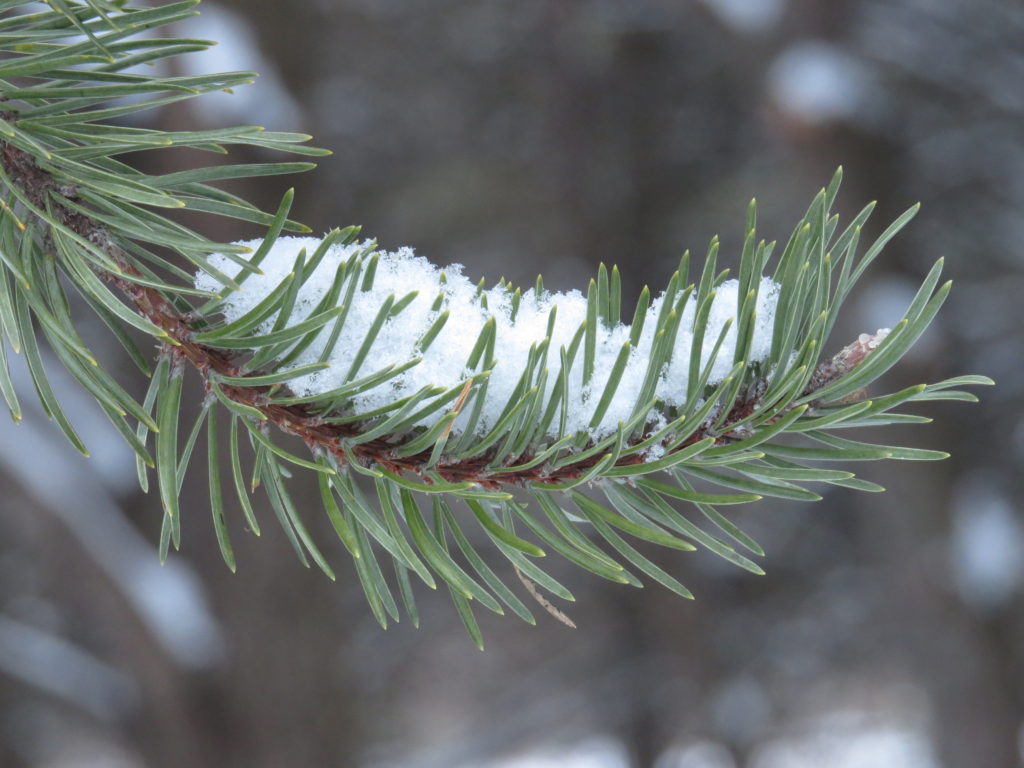
Old discarded needles fell among the vibrant green ones that sustain the tree. And a seed-containing cone had started the process of drying and opening for the dispersal of the next generation. Past, present, and future.
Fire, like any element of Nature, can be life-giving or destructive. There needs to be parameters, limits, containments, and safe practices in order for it to be life-giving. Fire becomes destructive in the hands of a maniac who has no regard for rules or for others. Power of any kind, like fire, can move from helpful to harmful to catastrophic in the blink of an eye.
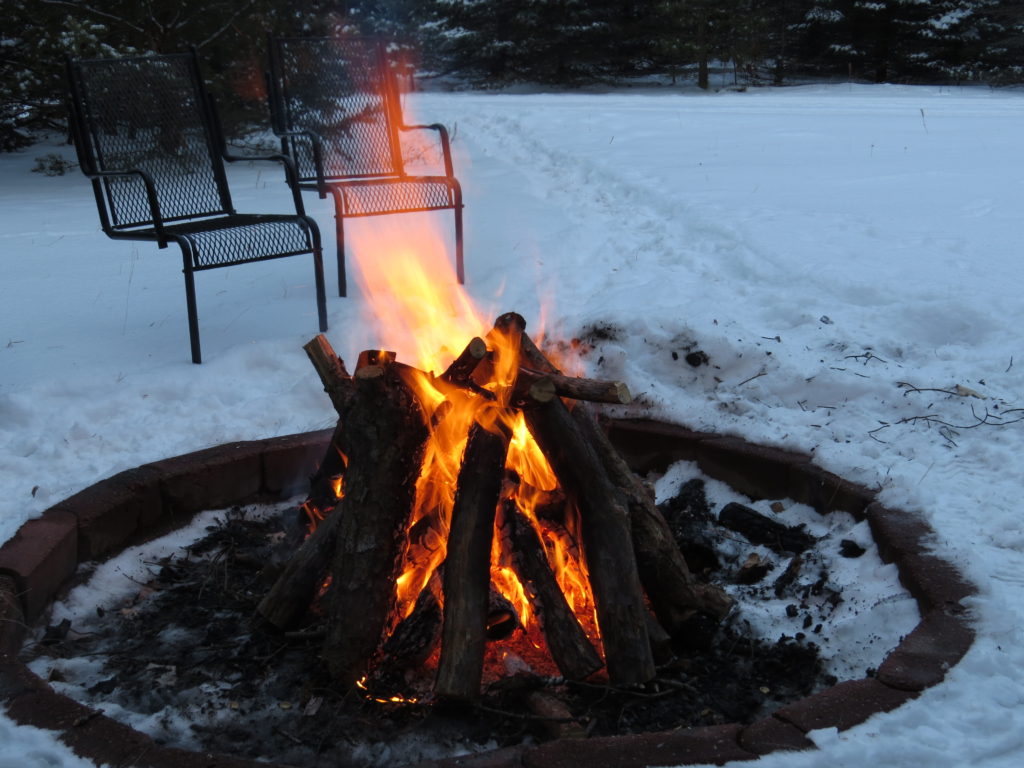
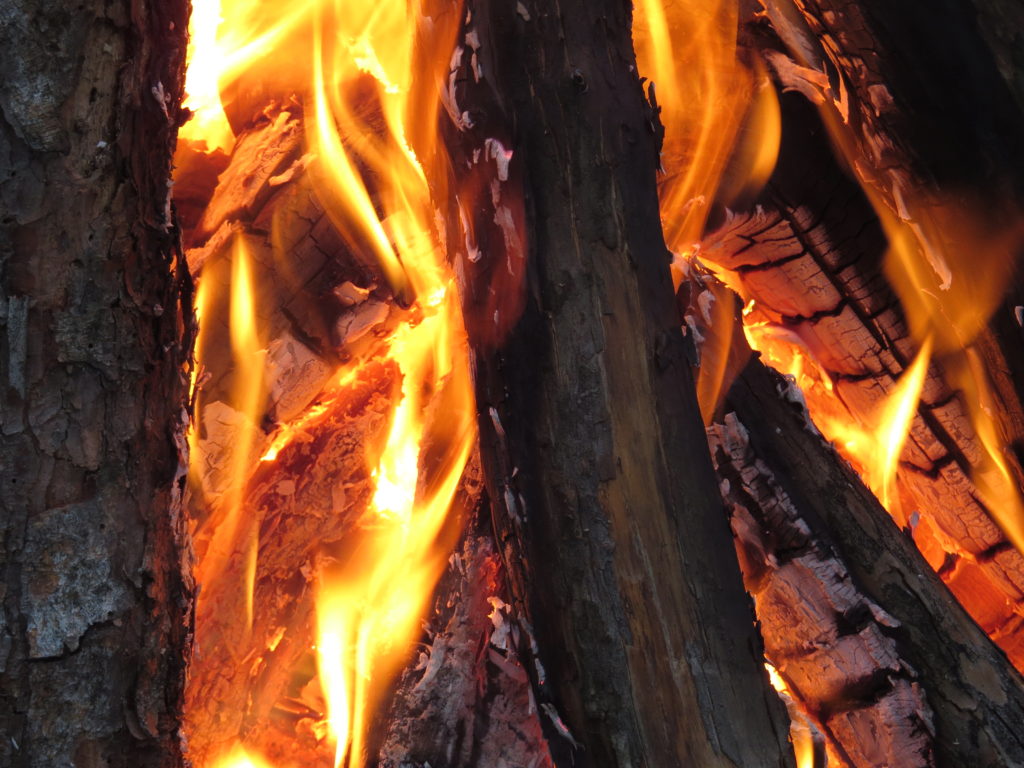
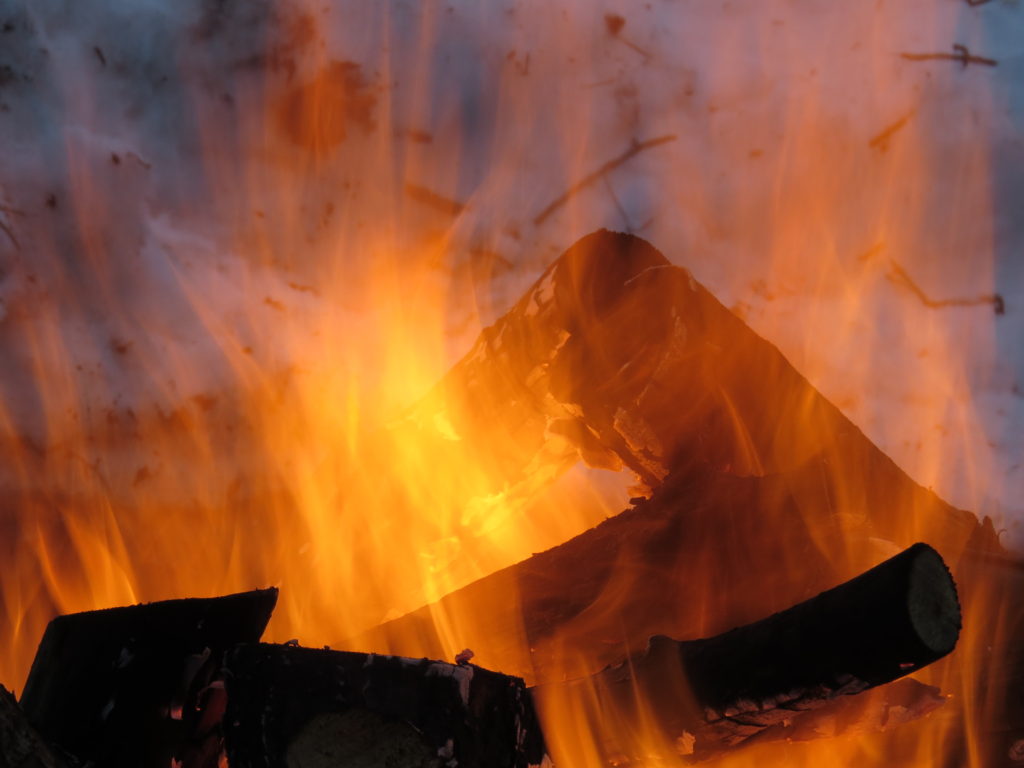
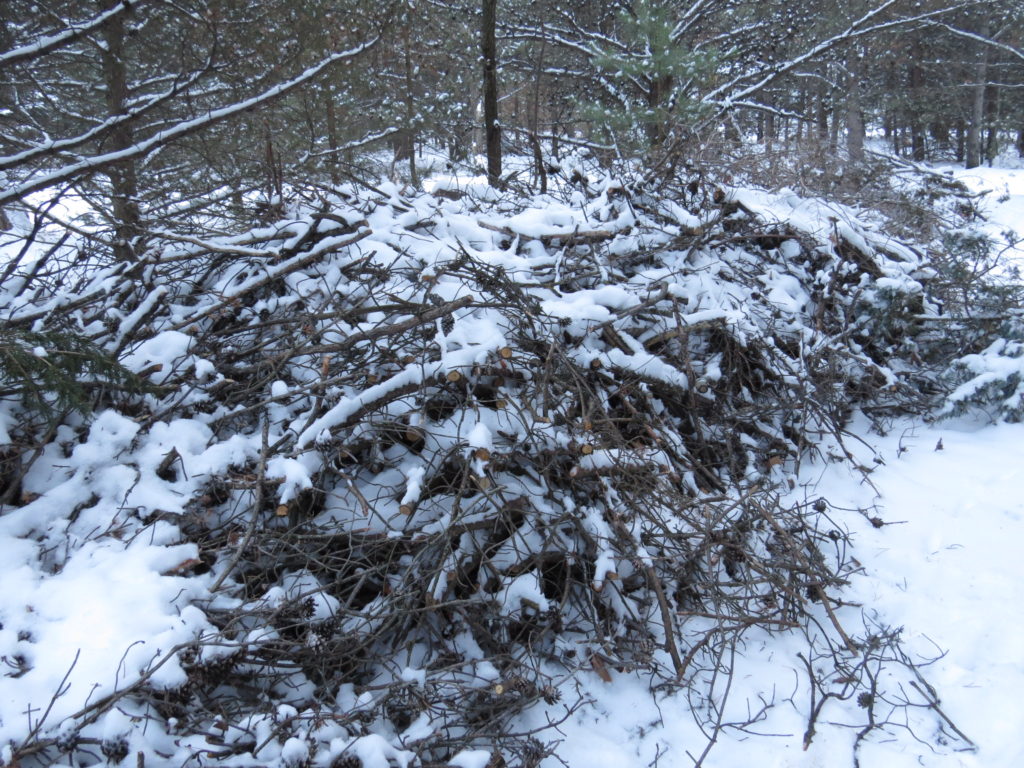
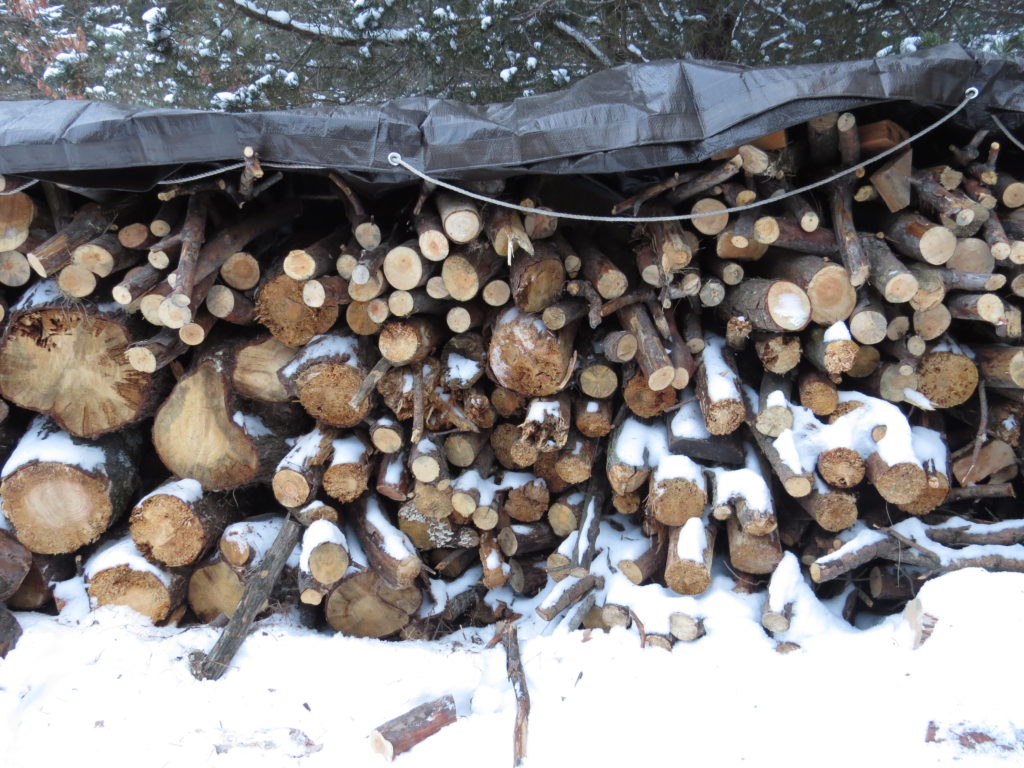
There cannot be fire without fuel. Chris’ summer clean-up work has given us a stack of fuel—brush for kindling and branches and logs for sustaining a warm Winter fire.
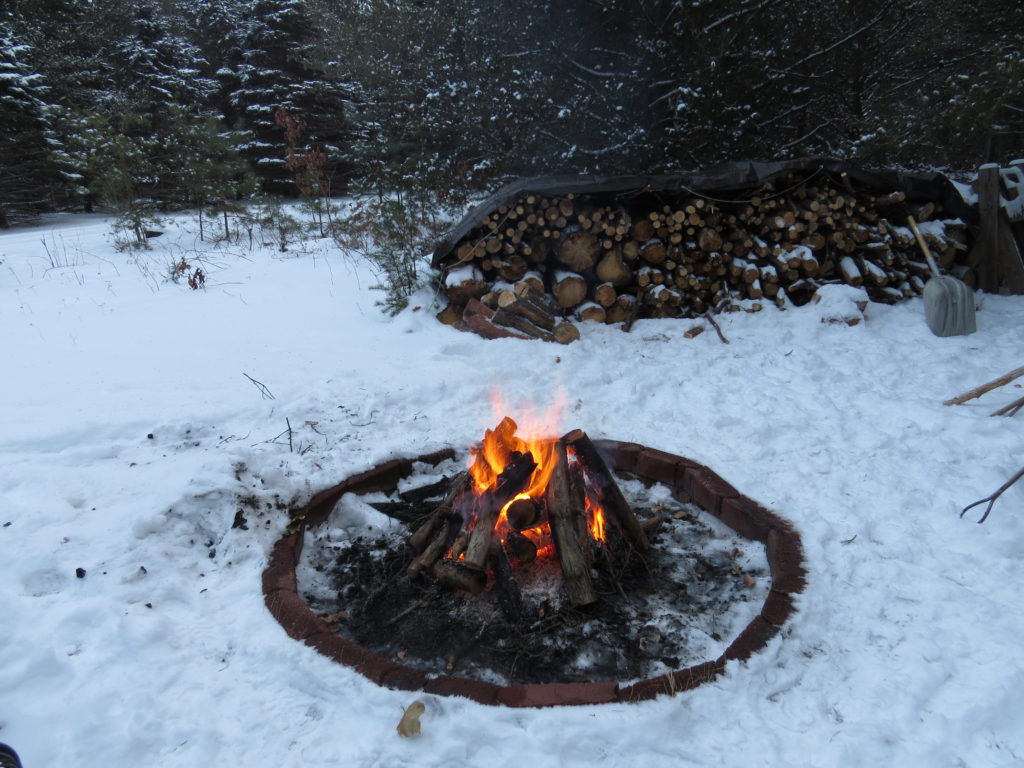
Burning wood is a multi-step chemical reaction—wood + oxygen + heat = carbon dioxide + water + ash (simplified). It is a transformative process where molecules are broken down and new molecules are formed. Heat and light are produced from the chemical reaction. But most importantly, all the atoms are conserved. Nothing disappears or is ‘wasted’—it is just rearranged. Something new is formed from the old.
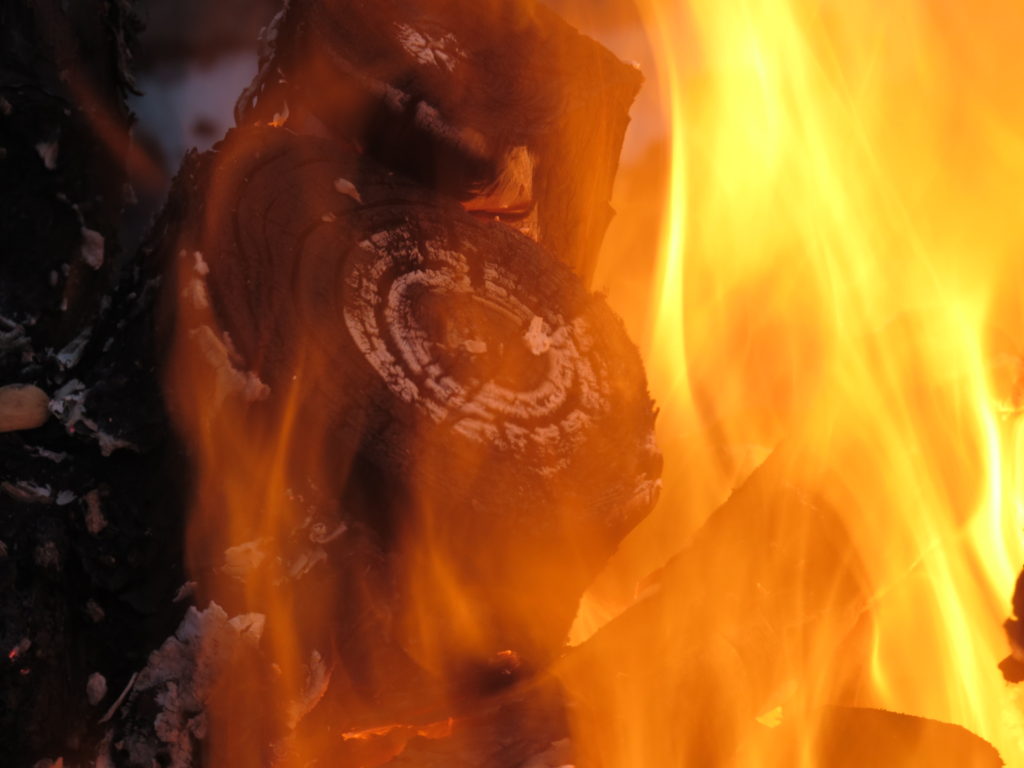
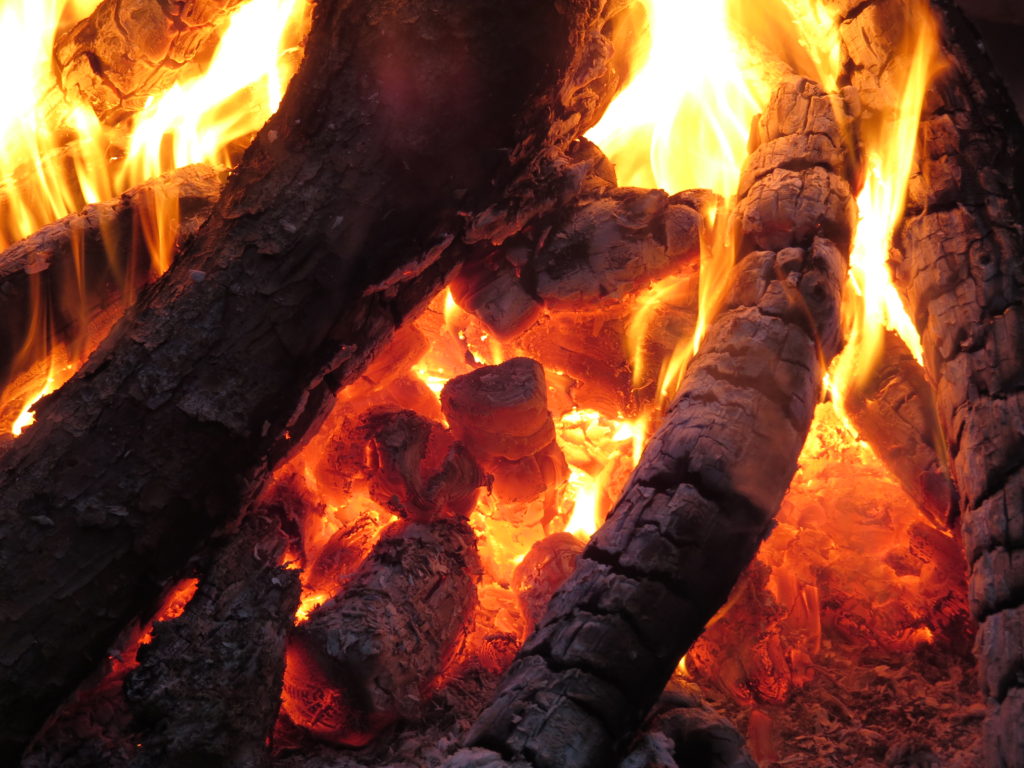
(Fun fact: flames are ‘pointed’ because of gravity and subsequent pressure differences.)
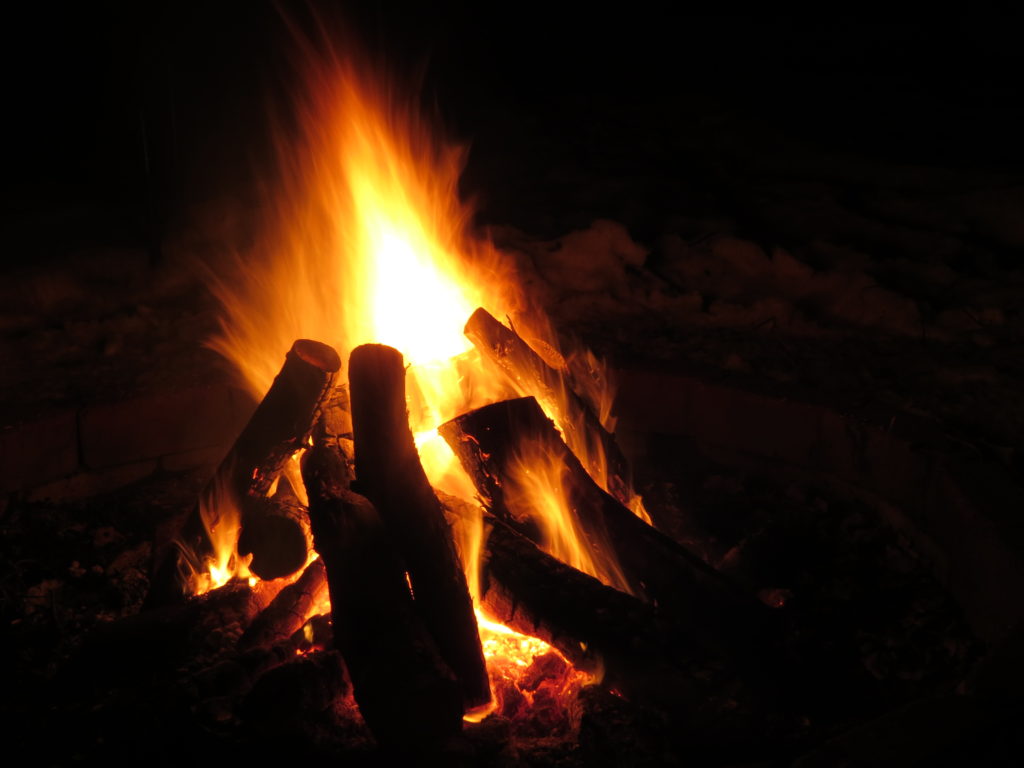
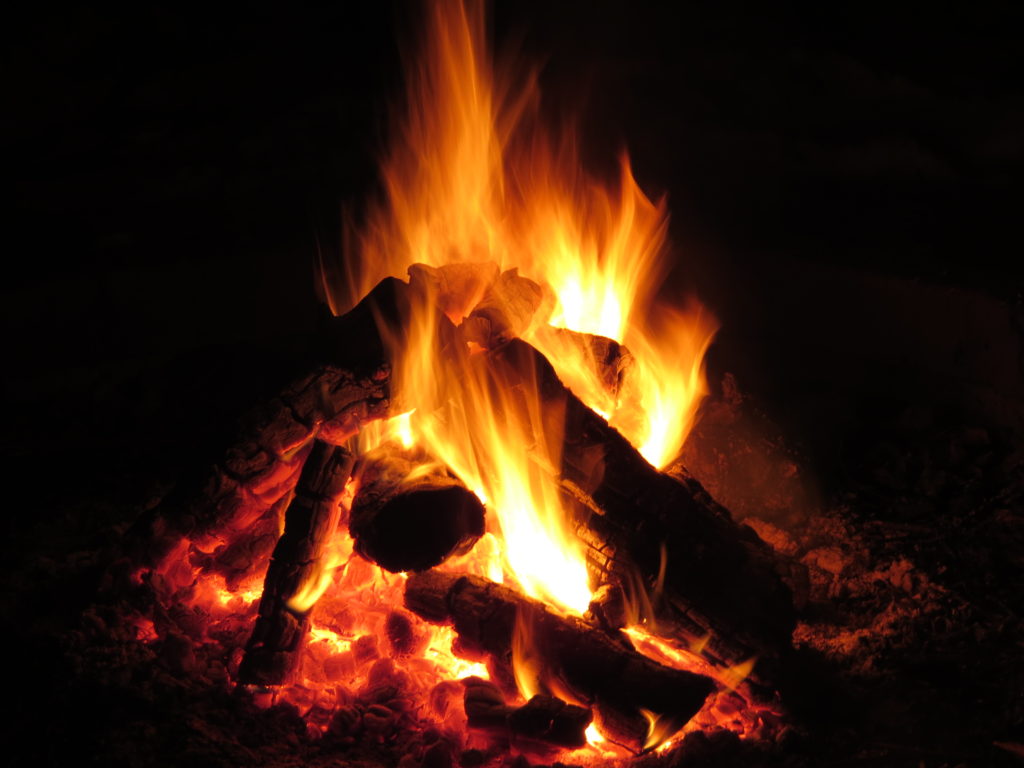
Our New Year’s fire, complete with a visit from a wise, wonderful friend, was a multi-layered transformative process. Warmth and light were produced as we and wood were transforming. So while we each get to decide what to keep and what to purge at any time in our lives, we always carry our past, our present, and our future. Some of us like to hold the material, realistic, factual items of our past; others throw them away. It is understandable that we want to purge the hurts and pain, the disappointments and soul-searing experiences that burden us, and the utter garbage that lies in the wake of destructive power. But nothing is wasted. Cherish the memorable moments. Learn the lessons that need to be learned. Use the fire, use the chemical reaction, use the contained power of transformation to break it down, rearrange, and build it into something new and life-giving. Fuel your fire with love.
What is Your Default Setting?
Twenty-one days. How have you spent the last twenty-one days? What has been your default setting for those days? In the calendar year, the three weeks around Christmas and New Year’s are usually not the normal way we spend the rest of the year. Busyness, traveling, shopping, concerts, parties, baking, cooking, wrapping, decorating. What is your default setting when things are crazy busy? Are you happy, grumpy, a recluse, a shining star? What is the essence of you?
This time of year has always been a joy for Chris and I—the kids were all born within these weeks, so we celebrate three birthdays and Christmas in two weeks’ time; add two more weeks and throw in New Year’s Day and Chris’ birthday! A time for celebration! Not all years have been a joyous celebration—my Dad died two days after Christmas two years ago, my horse of twenty-one years died on New Year’s Eve many years ago, and last Christmas, Chris and I dined alone and didn’t see our kids. Sadness intertwines with joy. This year, we are fortunate to have Emily with us for twenty-one days—definite Joy! Aaron joined us for Christmas and New Year’s—Happiness! Anna wasn’t able to be with us—Longing and Sadness. All mixed together in this holiday season. With Emily here, this darling child of mine, I realized that my default setting was to “be” with her—no distractions of phones or computers. Social media is a great tool when you are far from your loved ones and friends, but I had no desire to spend time on Facebook when Emily was sitting across the table from me. Of course I’m grateful for the web and Facebook to circulate my posts and keep in touch with friends, and I purposefully checked in with my weekly posts, but I am evermore so grateful to have our grown children spend time with us.
What is Nature’s default setting at this time of year? Our northern winter sun rises, peaks, and sets in a low arch in the southern sky. This photo was taken a little after 1:00 pm on January 5th with the sun low on the horizon. The sunrise that day was 7:58 am CST, and sunset was at 4:50 pm—a short day of light.
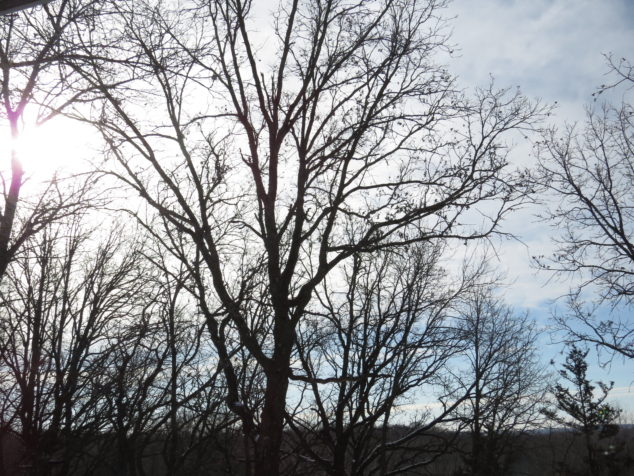
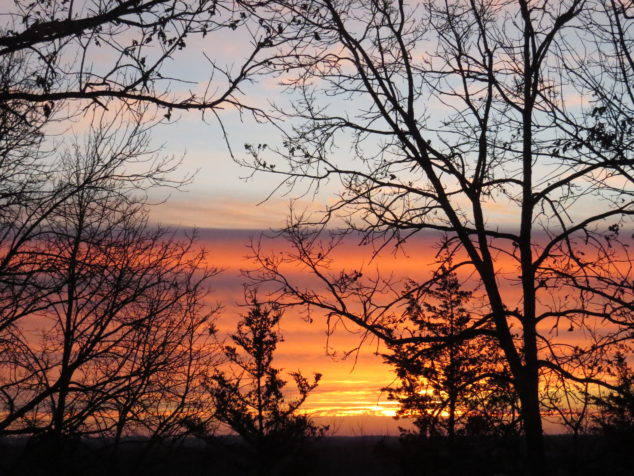
Nature’s automatic course of action of sunrises and sunsets determined by the tilt and rotation of the Earth in relation to the Sun happens no matter what else is going on—we can rely on it and enjoy its beauty.
Another of Nature’s default settings is the constancy and reliability of the Moon and its phases. The New Year began with the rising of the full moon, traditionally called the Full Wolf Moon in the Northern Hemisphere according to The Old Farmer’s Almanac.
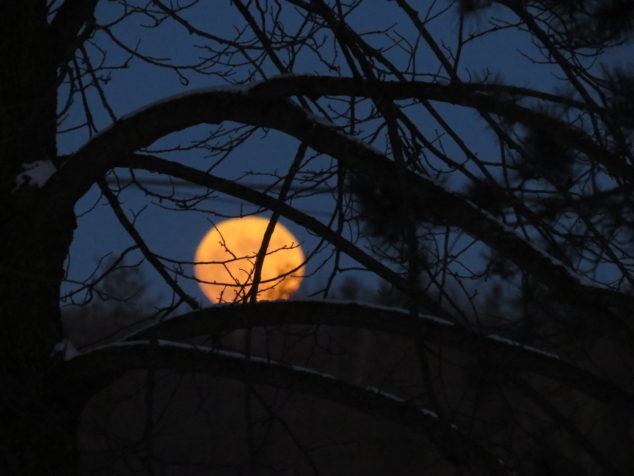
The close-to-Earth supermoon looked huge and orange as it rose in the below zero temperatures of New Year’s Day.
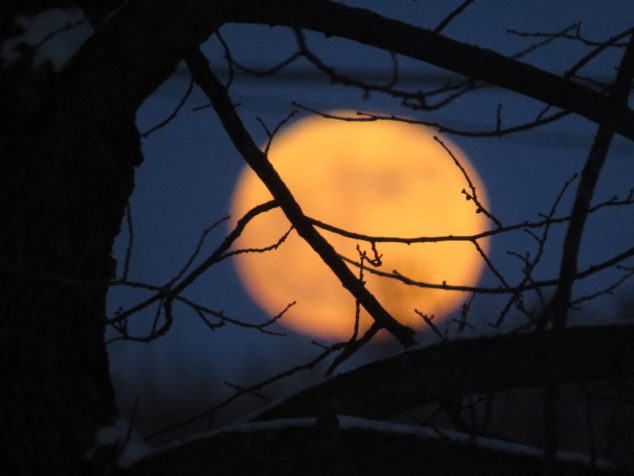
The second full moon of the month—a Blue Moon and another supermoon—will rise on the 31st of January and brings the only eclipse of the year for North America.
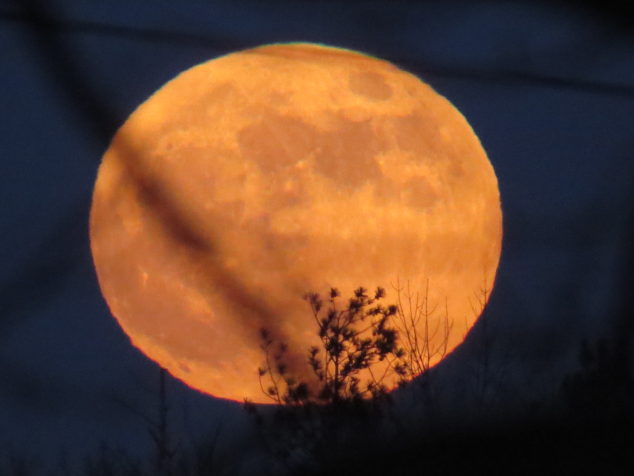
The constancy and reliability of the sunrises, sunsets, and moon phases are default settings in Nature that we often just take for granted. This automatic course of action affects the very intricacies of our lives—our sleep/wake cycle, the tides of the oceans, the production of blooms and fruit in plants, and reproduction in animals. When we look at our own default settings, we can see that they too affect so many aspects of our lives—relationships, health, outlook, education, and our environment. The things that happen around us are all mixed together in a milieu of self and other, of desire and fate, of purpose and happenstance. We can examine our default settings—those ways in which we automatically act and react—and we can ask ourselves if they truly represent the essence of ourselves. If not, we can override that automatic course of action and change the default setting. Overriding the default settings of our lives is not an easy task—it takes courage, love, time, education, and often many attempts—but it is worth it when you find something in yourself that you can rely on and at the same time, enjoy its beauty.