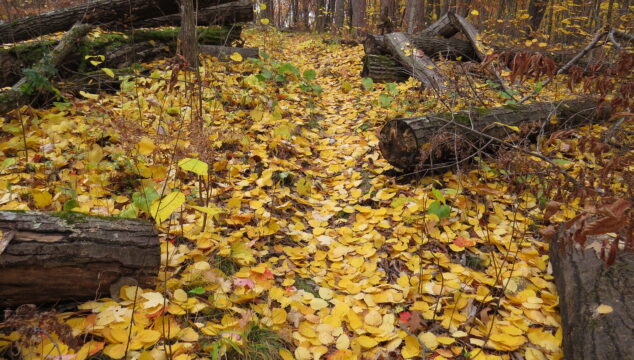
Come walk with me in the peak Autumn beauty of the Northwoods. To say that I love this time of year is an understatement. Most everyone can appreciate the colorful falling leaves---it reveals the 'true self' of a tree when its leaves are no longer producing chlorophyll. Their true colors are revealed, and there is something simple … [Read More...]
Meandering Along the Mississippi River
Meandering leads to perfection. —Laozi, ancient Chinese philosopher
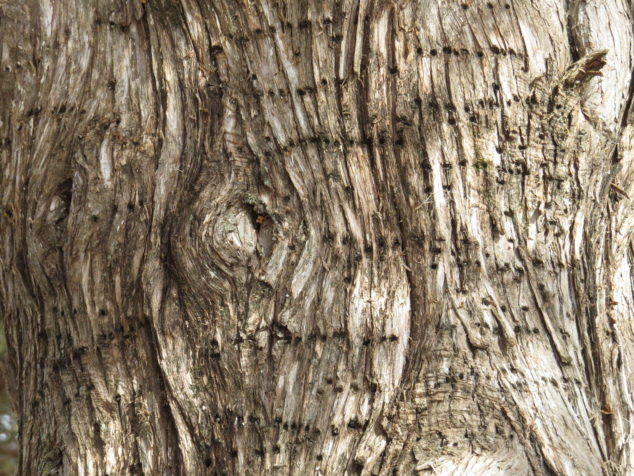
Our Sunday journey began with a distinct purpose and place in mind—to find and explore the Mississippi River County Park. We had never been to this park, but knew it wouldn’t be too hard to locate, as the Mississippi River runs right through St. Cloud and its northern suburbs. Once on the right road with the River on our right, we headed north past large houses, an old saw mill dam, and groves of evergreen trees. Finally, we saw the large sign for the park. A man with his two small children and two large dogs tumbled from a pick-up truck for some outdoor running and fun in the snow-free prairie area. A teenage girl drove slowly through the park again and again under the tutelage of her Dad. The first thing I saw when I disembarked from the car was this huge old cedar tree, pockmarked with rows and rows of woodpecker drills. What if our every wound was evident on the outside of us, for all the world to see? Would we be kinder? Would we take better care of one another?
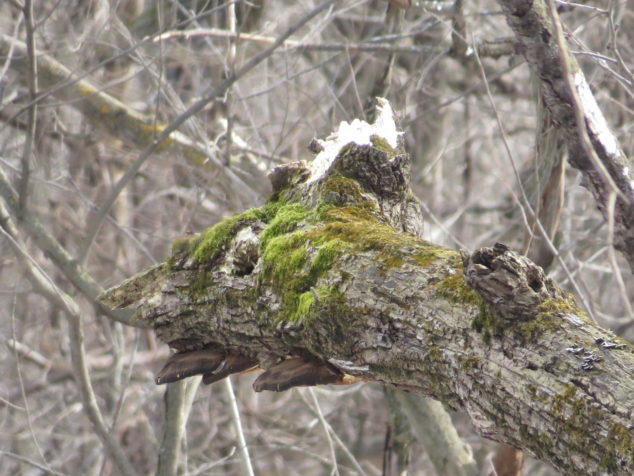
A patch of white in the gray woods caught my eye. Zooming in with the camera, I found a monster branch with a cyclops eye, shaggy moss green hair and shelf fungi hands, like gargoyles hanging from a ledge. I’m still not sure what the white was—it seemed too white for a broken limb on such a dead looking branch, and the warm week of temperatures surely would have melted any snow that high in the tree. Mystery.
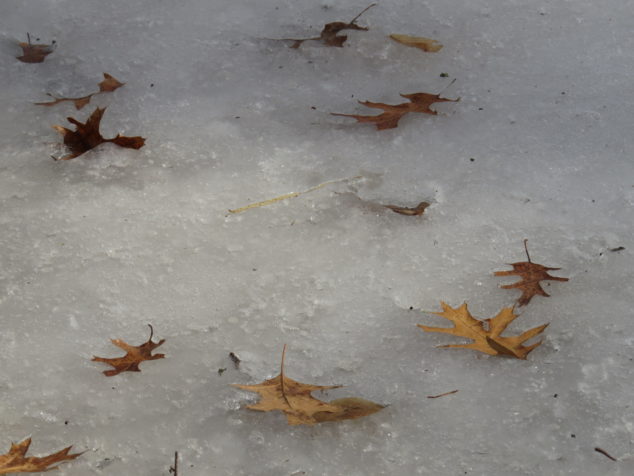
We started down a trail to get to the River but didn’t get very far on the slick, water-coated snow/ice. We tried another trail, but encountered the same thing—slippery slopes of melting ice with no traction. The ice-covered River was within sight but out of bounds for today. We would try another time.
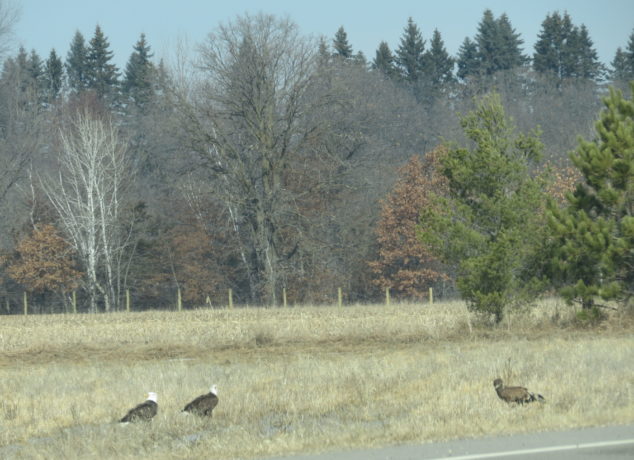
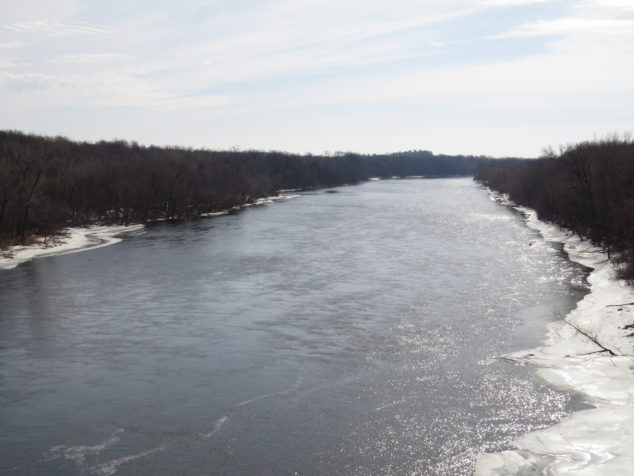
With our plan and purpose foiled, we decided to follow the Great River Road, meandering north to see what we could see. Prairie Home Companion played on the radio—Chris Thile’s mandolin filling the car and my soul with melodic music. We saw a bald eagle swoop down to the ditch where its mate and a juvenile were standing. Beyond them, the River was now open, flowing, with shelves of ice still hanging from the shores.
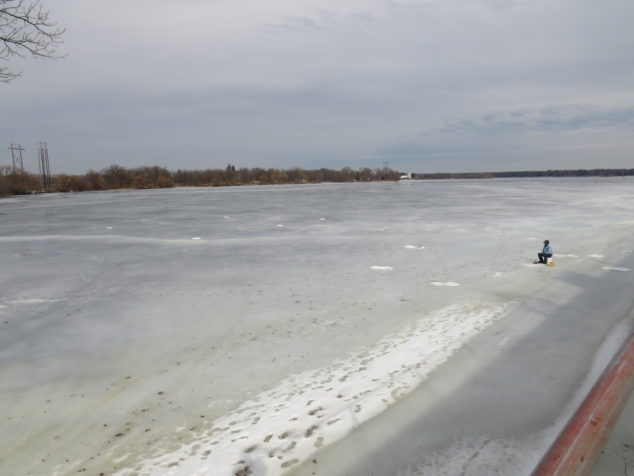
We drove to Blanchard Dam, one of the tallest dams on the Mississippi River. It holds back water to create Zebulon Pike Lake (named after explorer Zebulon Pike who was commissioned to find the source of the Mississippi River in 1805.) Above the dam, the lake was still iced over, despite our warm week, and a lone ice fisherman sat on his bucket patiently waiting for a bite.
We walked out on the old railroad bridge, now the Soo Line Trail, that crosses the river just below the dam. Huge chunks of ice cascaded and fell from the open gates. The noise of the water was deafening, and a stiff wind confused our senses even more.
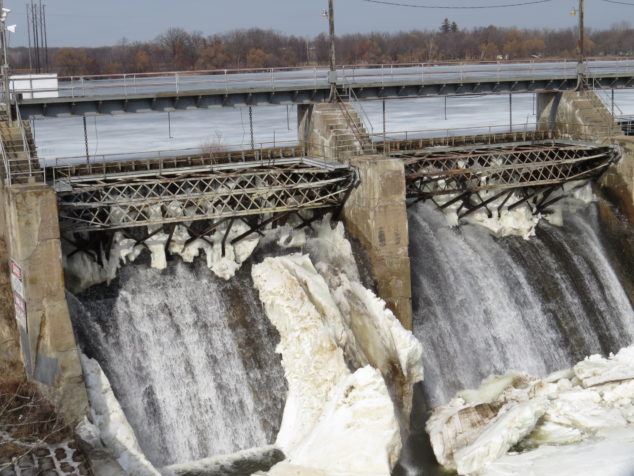
Yet it was kind of exhilarating and marvelous at the same time!
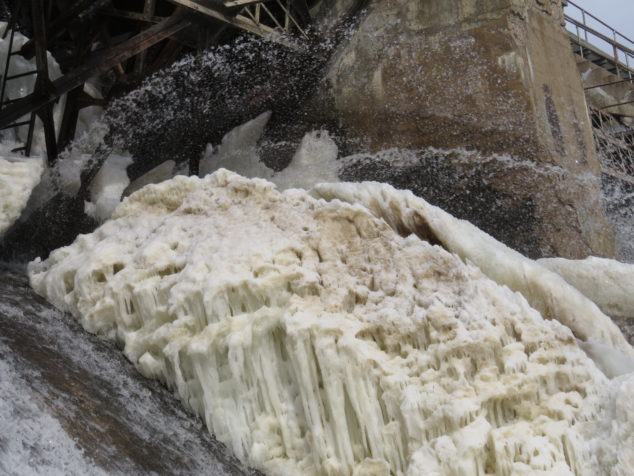
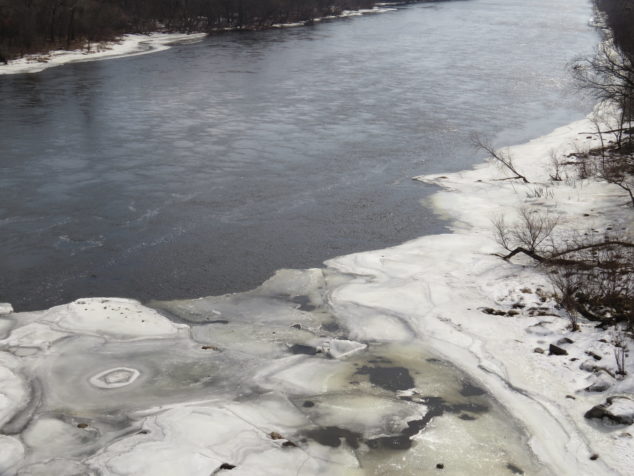
Interesting ice patterns under the bridge by the shore gave way to the mighty Mississippi…
…meandering on its long journey to the Gulf of Mexico.
Our attempt to get to the Mississippi River at the county park, as planned, didn’t work. But sometimes things don’t go as planned. We run into wounded things and mysterious monsters. We try to navigate the road ahead and find ourselves on slippery slopes that want to take us down—and I don’t mean down to the River. Our purpose and intention fail us. It’s disappointing, to say the least. My first inclination was to reject the quote by Laozi—how could meandering lead to perfection?! Purpose, practice, goals, work, intention—those are the qualities that lead to perfection, right? But then, when I looked more closely at my day, I realized how enjoyable it was to meander along the river. Listening to Prairie Home Companion with nothing else to do but stare out the window at the River was soothing and satisfying. The serendipitous sighting of a trio of eagles was a gift. Standing in the power and beauty of the roaring, unleashed energy of the River was exhilarating. Meandering along the Mississippi River really was the perfect part of my day.
Gleanings from April 2015
When I was in grade school there were two boys who rode my school bus who sat at the back of the bus and talked loudly and used foul words that made me cringe. I thought they were knuckleheads. It didn’t stop me from taking my place at the back of the bus where I would verbally spar with them using words they didn’t know. In fourth or fifth grade, I got a phone call from one saying the two of them wanted to come see me on Saturday. I had absolutely no clue why they would want to come to my place, but after saying okay, I started planning our expedition. A beautiful creek wound around our place in the foothills of the Blue Mountains. It was my wilderness passage–from our long gravel driveway to the huge culvert that went under the Pennsylvania Turnpike and was large enough for us to ride our horses through. The boys arrived that Saturday morning. I stood in my rubber boots, saying we would explore the creek. The beginning of the journey was easy and benign–the babbling creek with rocks and crayfish was picturesque and navigating it went smoothly. As we ventured on, the way got more difficult–briars folded thickly over the sides of the creek. One cannot barrel through such brambles without harm–it takes patience and skill to lift the thorny branches and scramble under them. The boys started complaining and wondered why anyone would do this. And I was in my element–each passage through the creek was an exploration of Nature’s wonders. I told them all about the plants and creatures I knew about. After more than an hour of leading the expedition, we arrived at the waterfalls–my favorite place. Boulders built the four-foot high falls, and the water from the mountains cascaded over them into a deep, cold pool. This was the reward for toiling up and down muddy banks, through the briars, and over the slippery rocks! What a great morning! The boys were tired and complaining and called their mom as soon as we got back home. It was the only time they came to my place.
In the middle of April, my friend Ruth invited me to explore the islands in the Mississippi River below her house. With our minimal snowfall and spring rain, the River was low enough to walk across rocks to get to the islands. Our canine companion Coors was eager to investigate and happily ran ahead of us.

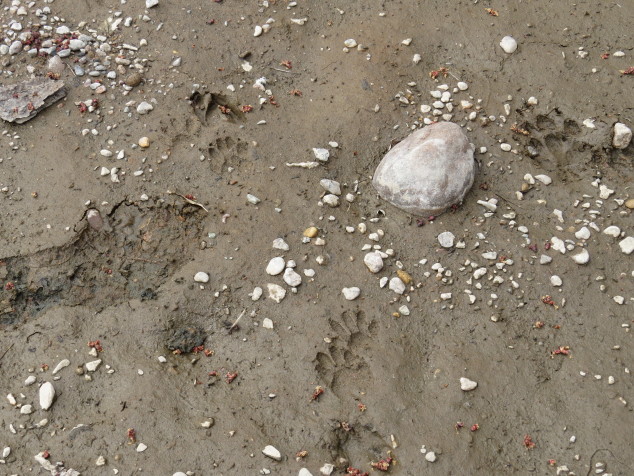
We discovered tracks and made tracks of our own in the mud.
Even the main channel of the River was low, and the water swirled around the sandbars poking through.
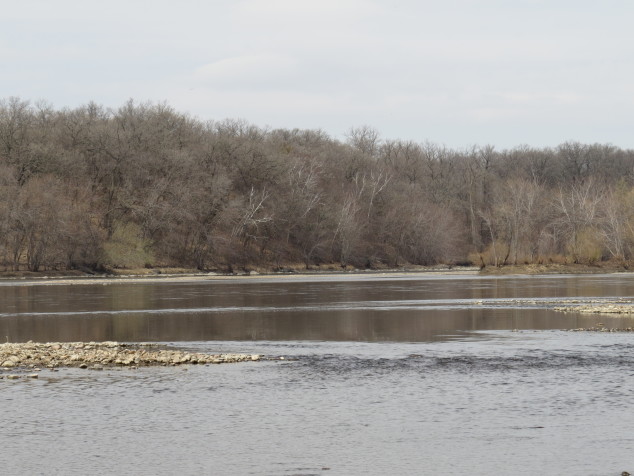
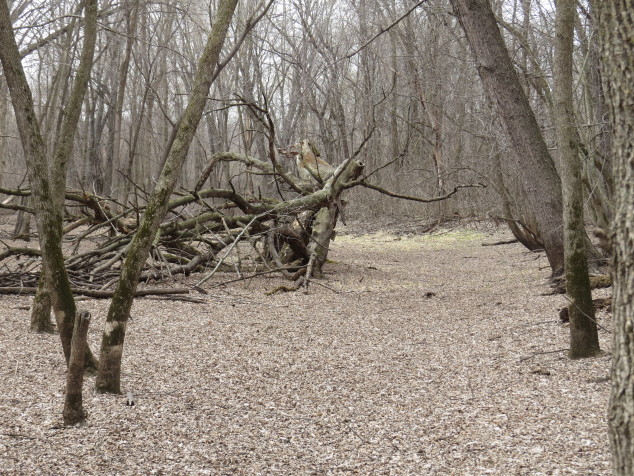
Walking the islands was like we were navigating a different world. Tall trees, both standing and marooned, inhabited the island wilderness with no regard for the homes that lined the banks of the River on either side of it.
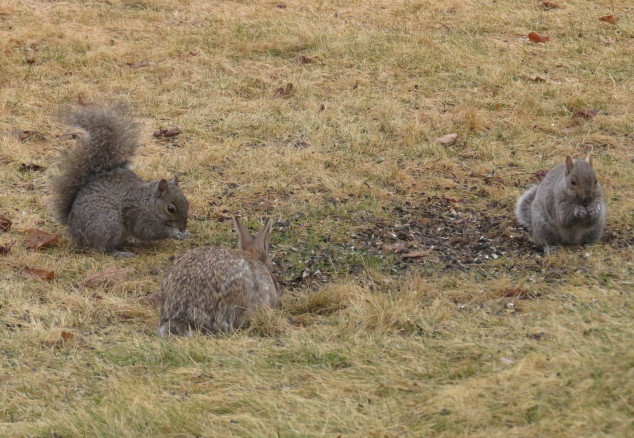
April is an exploration of Spring. New discoveries unfold with each passing day. Creatures of all kinds can be found at any given time. I was surprised to find two squirrels and a rabbit eating together beneath the bird feeder.
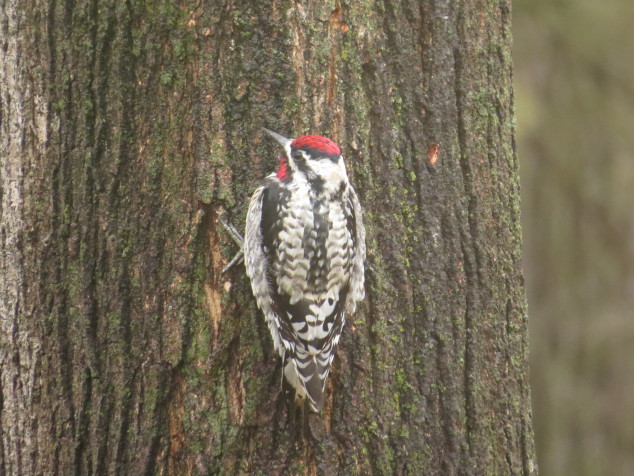
When the sap was flowing from the drilled maple tree, I noticed the yellow-bellied sapsucker spending most of his day clinging to the tree, lapping up the sweet liquid.
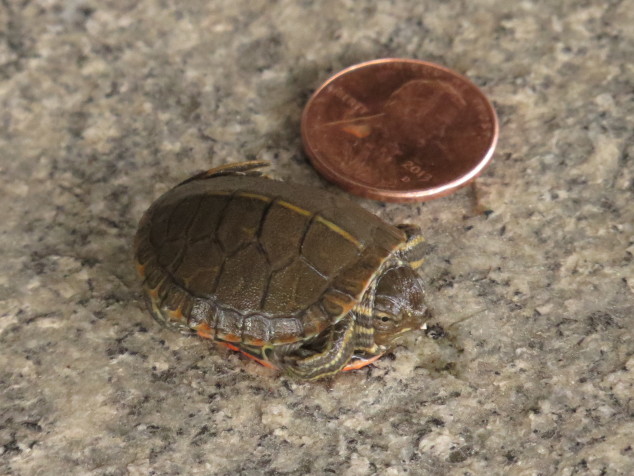
On a walk one day, we found a tiny, penny-sized turtle alongside the road.
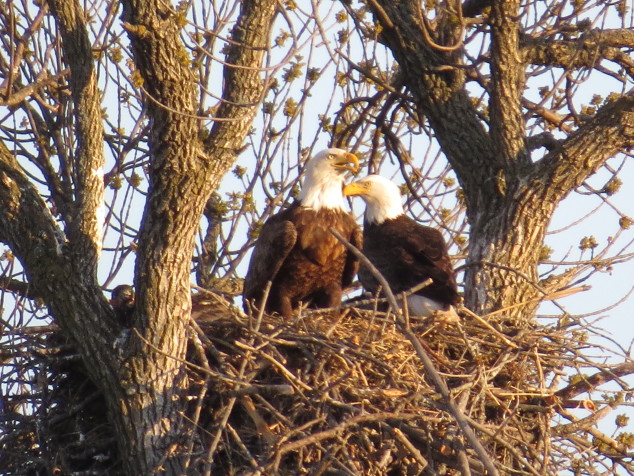
When we returned to the eagles’ nests, we discovered the first nest was empty. Perhaps the eggs never hatched or the tiny eaglets didn’t make it for one reason or another. At the second nest, we were surprised at how fast the two eaglets had grown in a month’s time! They were nearly as large as the parents! And still we spotted the papa eagle bringing food to the young ones.
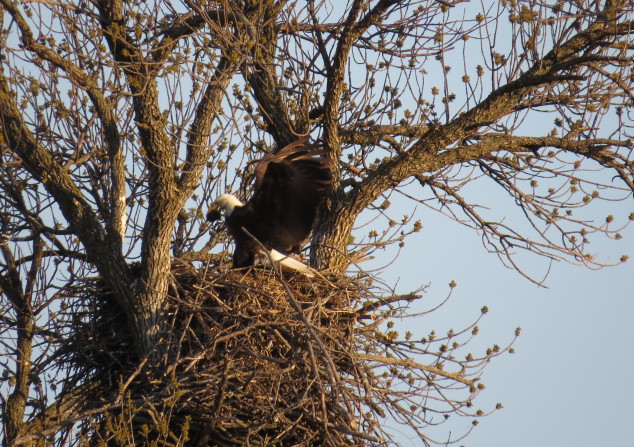
The young eaglets were standing in the nest when I first got out of the car, but the mama must have told them to lie low when she saw me. The one dark-feathered eaglet is to the left of the male with its head at the fork of the tree trunk, while the other one is behind the mama.
Early spring flowers trailblazed through April with color and magnificence–first bright forsythia, then elegant star magnolia and furry pasque flowers.
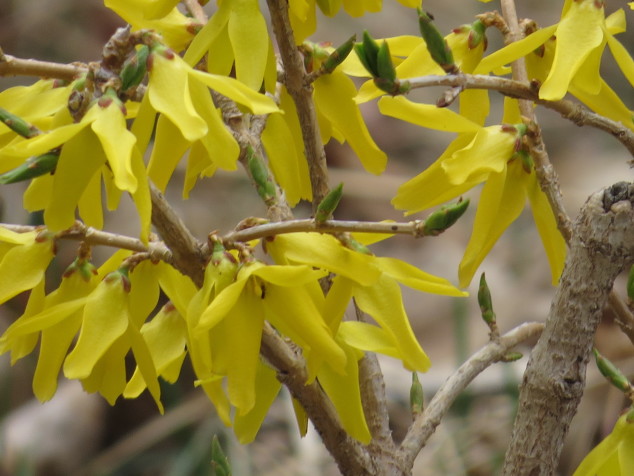
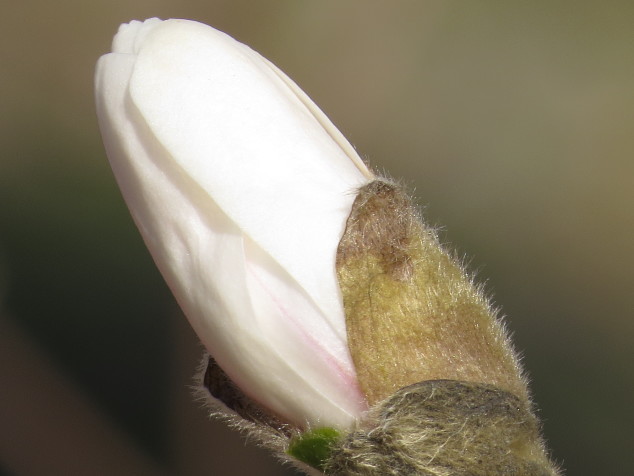
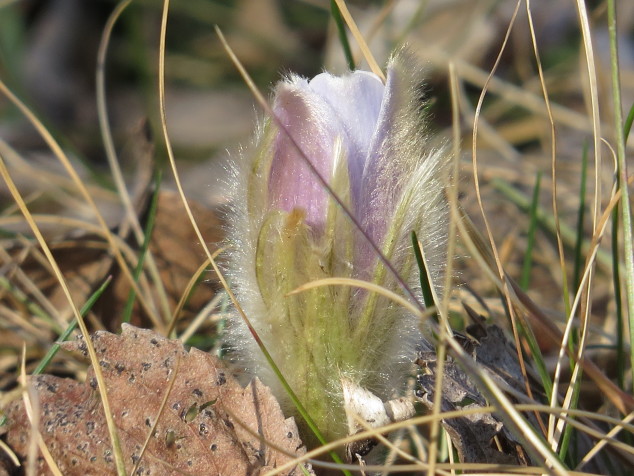
April snow and April rain unearthed Spring among days of sunshine and warmth.
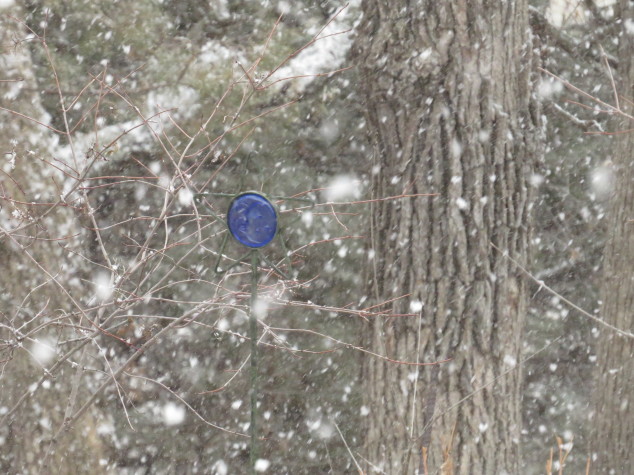
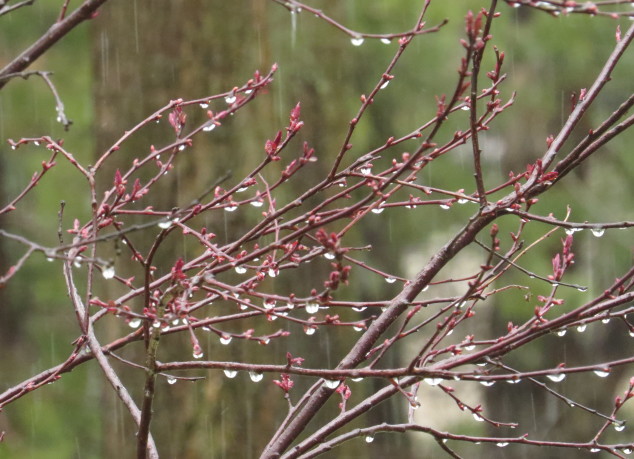
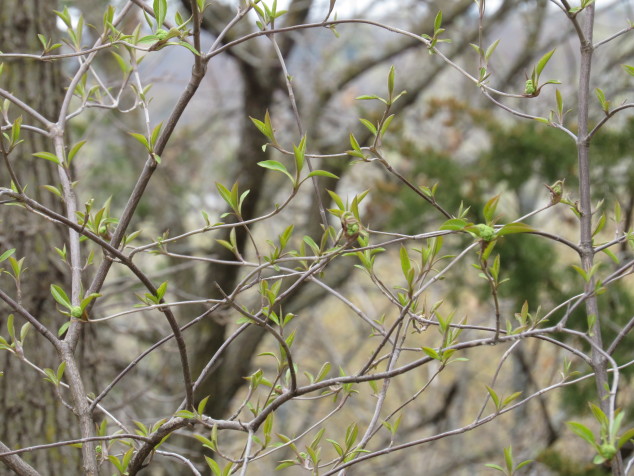
Life is like my first photograph of the Viburnum tree–the present is unfolding right in front of us, grabbing our attention and our energy. But there is so much more beyond the opening of the leaves or the expedition following the creek. I never knew why those boys came to my house–perhaps one of them liked me. We never talked about it again, but they seemed to have a new respect for me or maybe for all girls. What lies beyond or behind the present? The oak and cedar trees are an important backdrop to the viburnum–the woods are deep and wide with discoveries to be made. My expedition up the creek had little to do with those boys and much to do with my past and my future. We decide which tracks to follow and which tracks to make. We navigate life like the River and the creek, watching out for sandbars, sometimes getting stuck, sometimes finding treasures. And each year brings Renewal–often side by side with loss and pain. From our nest of protection and sustenance, we are free to explore, grow, make new friends, and drink the sweetness of life.
Pearl Buttons from the River

A convergence of occurrences led me to writing about pearl buttons. First was the date February 2–Groundhog’s Day to most, but to the Brakes, it is also the wedding anniversary of Chris’ parents. They were married in Chicago in 1944, he in his Army uniform and she in a stylish suit. Doug and Ruth both grew up in Cassville, Wisconsin, a tiny little town nestled between the tree-covered bluffs and the mighty Mississippi River in southwestern Wisconsin. The second occurrence was the fact that it was February in Minnesota, and my outdoor nature ‘opportunities’ were a little bit harder to find. And third, as I was finally putting away Christmas decorations, I came across something that Chris’ Mom had made.
On one of our Brake family reunions at Eagles Roost Resort in Cassville, we took The Pride of Cassville Car Ferry up the Mississippi to the town of Guttenberg, Iowa. The ferry has been running the river since 1833–the oldest operating ferry service in the state of Wisconsin. It connects The Great River Road and the Iowa Great River Road, two National Scenic Byways. We rode the ferry as walk-on passengers for a $2 fare one way. When we disembarked in Guttenberg, we saw an old limestone building beside the River. It was once a button factory. There were huge piles of discarded freshwater mussel shells in the sand between the stone building and the River that had been used to make pearl buttons. So the kids and I collected shells.
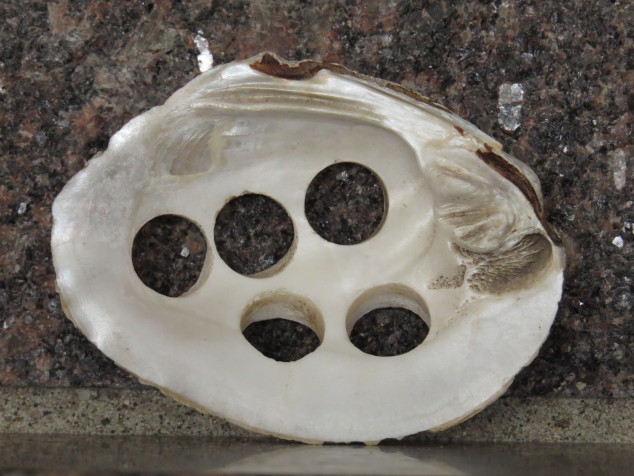
Empire Buttonworks opened in 1909–one of four button factories in Guttenberg. The Mississippi River provided a seemingly endless supply of freshwater mussels that were gathered by the clammers using dragging hooks. Mussels were boiled and pried open to remove the meat, then the shells were soaked before cutting buttons from the iridescent layers. Grinding and polishing followed, then the buttons were sewn on to a card. Millions of pearl buttons were made in this one factory during its fifty years of business, and this was just one factory of many along the Mississippi River.
I gave some of my collected shells away to other people, and some I arranged in a hurricane glass with a candle that reminded me of the River.
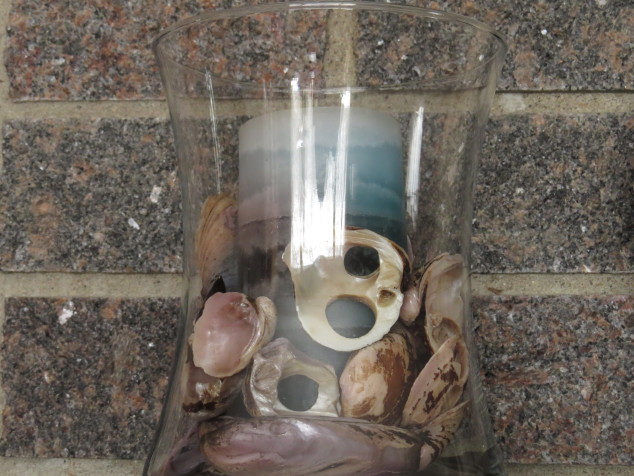
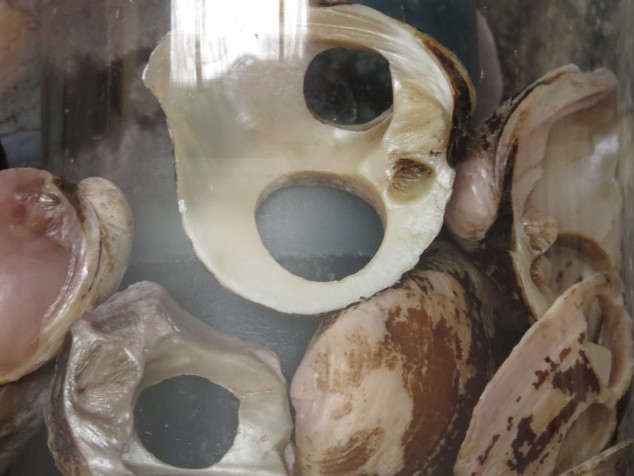
Long before I became a Brake, Ruth and her kids had collected Guttenberg button shells also. She and Chris took a pie pan, some sand, the shells, and plaster of paris out to the backyard to make a plaque. It was displayed in their living room for many years, reminding them of their River home in Wisconsin. It was passed on to us after they died.
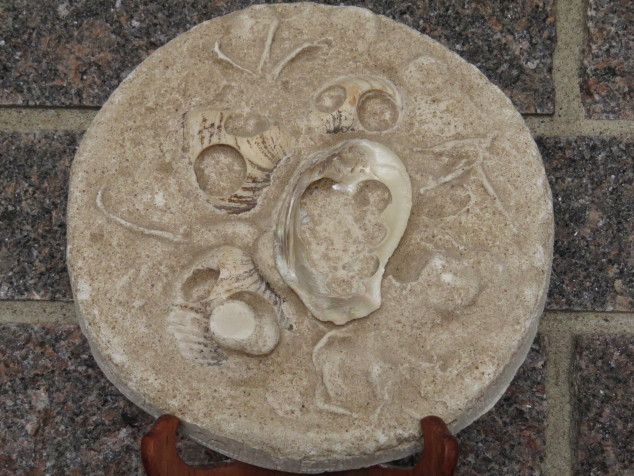
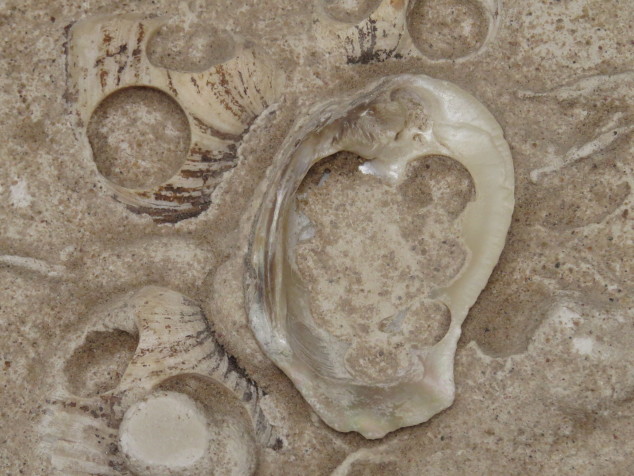
Bringing Nature indoors keeps us connected to the Earth, and in the case of the button shells, connected to a long history of family. An even longer history emerges from the shell button industry–an idea, the abundance of natural resources, work for many people, depletion of those resources, a new idea (buttons from plastic), and so it goes….
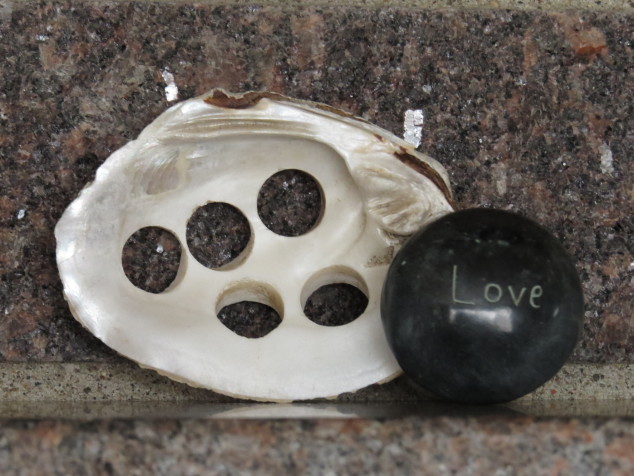
I treasure the simple plaque that Chris and his Mom made. I treasure the memories of that ferry-boat ride to Guttenberg with the Brake family and collecting button shells with my kids. I keep the shell with the five holes on the windowsill above the kitchen sink along with a rock carved with Love. It represents our family of five and the prevailing emotion that I tried to bring to all our days together. Perhaps this will be part of a convergence of occurrences that leads someone else to a treasured pearl.
Trumpeter Swan Symphony
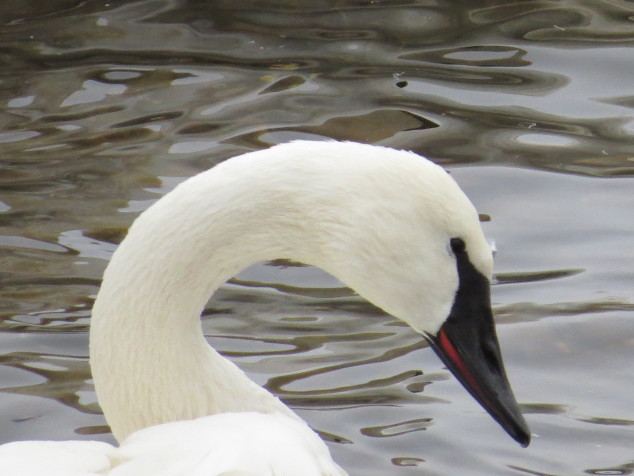
This beautiful, graceful creature is the largest North American waterfowl–the Trumpeter Swan. It stands at a height of four feet with a wingspan of more than seven feet. Downstream from a power plant on the Mississippi River in Central Minnesota, hundreds of Trumpeter swans gather in the open water to spend the winter.
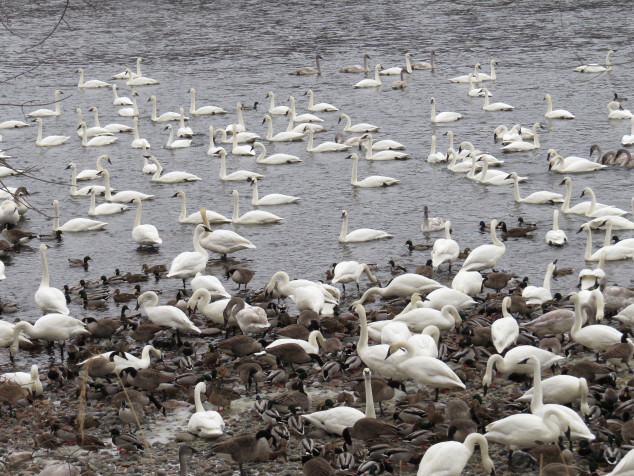
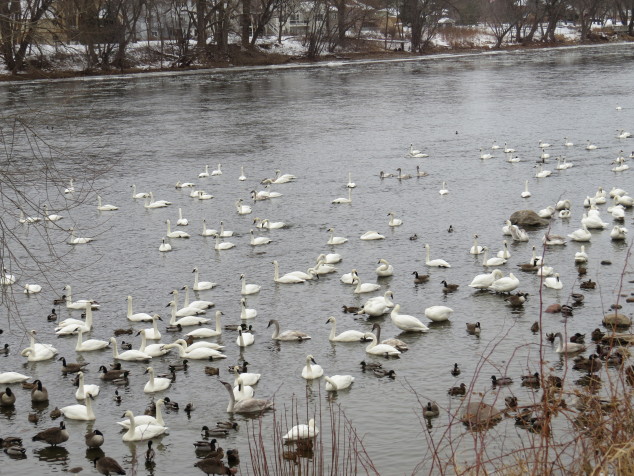 Swans first arrived in this area for wintering in 1986 as the nesting areas of shallow marshes and ponds froze up. Other Minnesota swans migrate to Oklahoma, Arkansas, and Texas for the winter. Most leave their wintering grounds in early March to return to their nesting areas.
Adult Trumpeter swans have pure white plumage that is often stained a rusty color on the head and neck from feeding in iron-rich water. They mate for life and can live longer than twenty-four years.
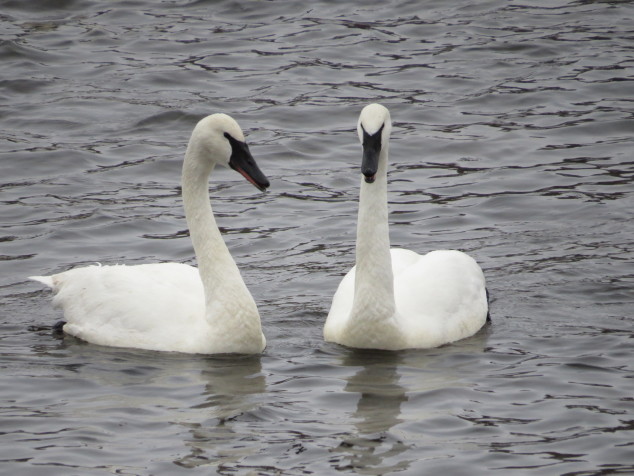
They make a hollow trumpeting sound.
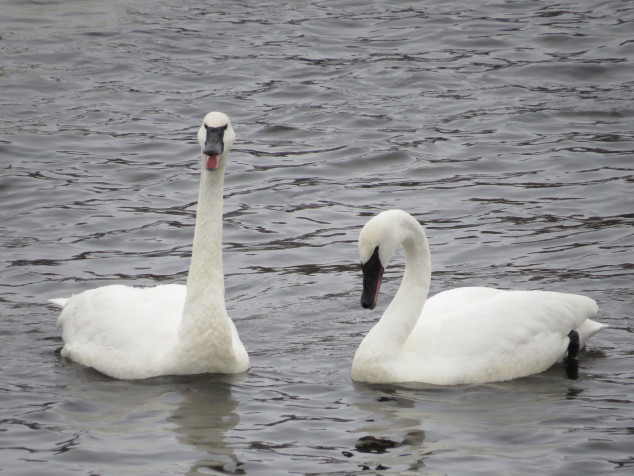
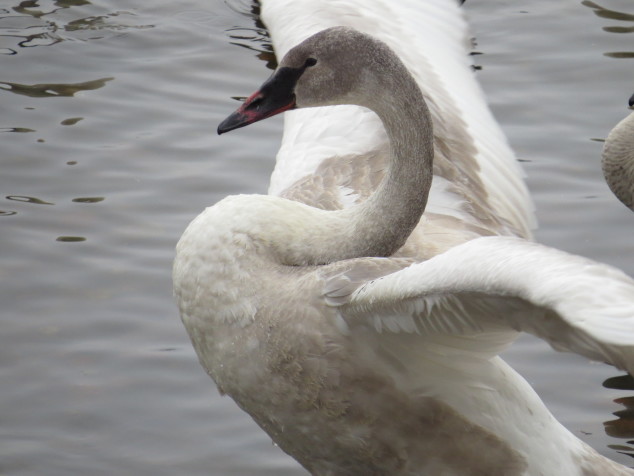
Young swans or cygnets are gray until they are a year old and stay in family groups through early spring.
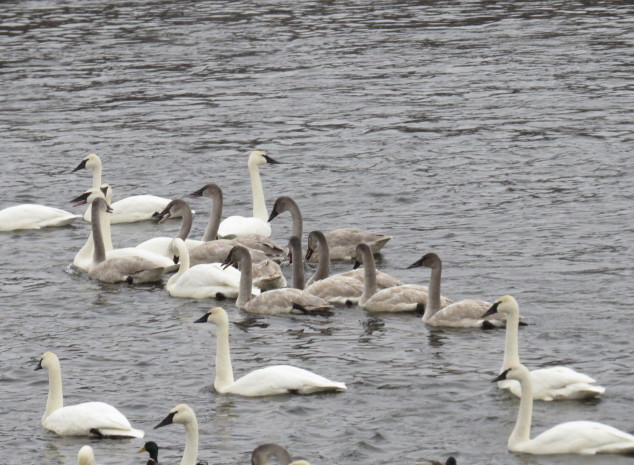
Swans were hunted extensively in the 1600s-1800s for their meat, skins, and feathers, leading to their near extinction. Their large flight feathers made the highest quality quill pens. It is estimated that 2900 swans live in the state of Minnesota at this time, after more than fifty years of restoration.
The swans share their space with Canadian geese and Mallard ducks who look small in the presence of the large Trumpeter swans.
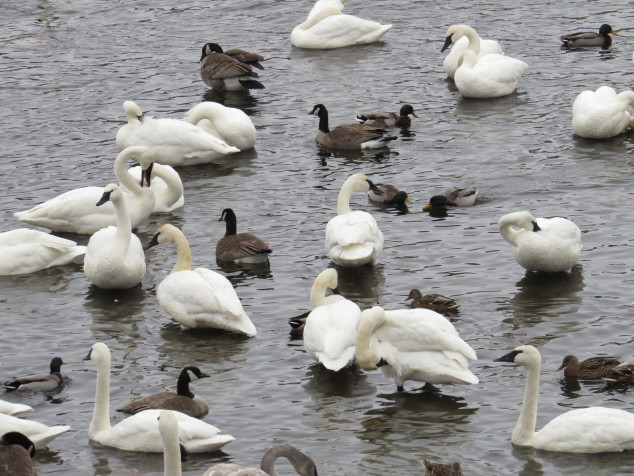
And when they are all vocalizing, it creates a sweet Waterfowl Symphony!
The mated pairs live most of the year on their own, guarding the territory where they raise their young. In the winter, they become social birds and can be seen gathering in a circle of four to six, honking, puffing out their chests, and flapping their wings–like a dance! According to Madeleine Linck, Wildlife Technician for Three Rivers Park District, this behavior is for family bonding and showing off. (http://www.startribune.com/sports/outdoors/240621061.html)
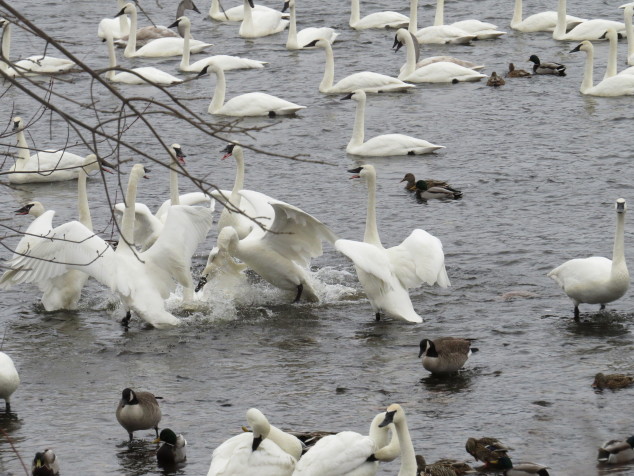 The swans, geese, and ducks fly to surrounding fields to feed, and they take advantage of the kindness of a local resident who feeds them buckets and buckets of corn every day. After feeding, the swans and geese can be seen preening their feathers and taking a morning nap.
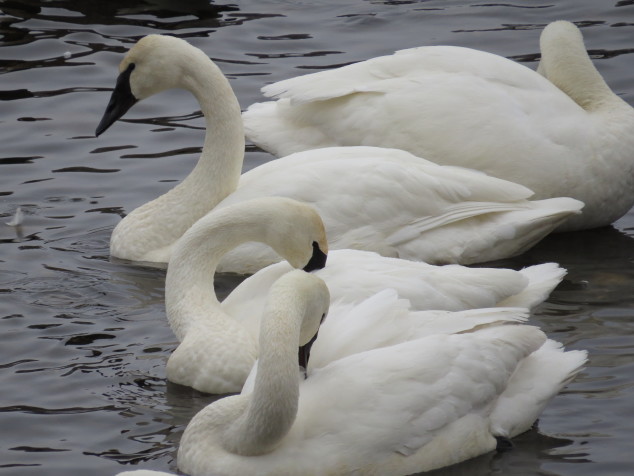
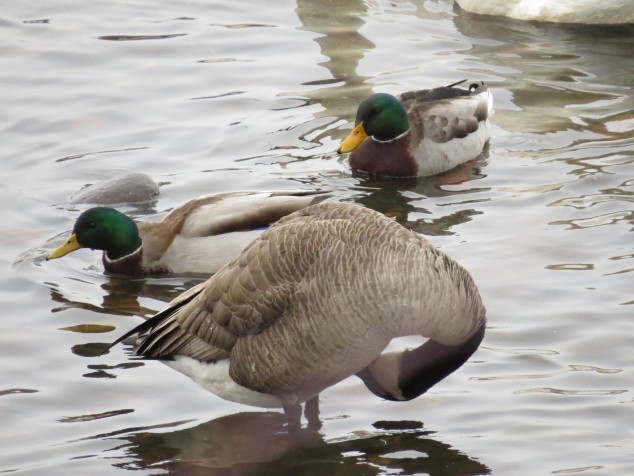
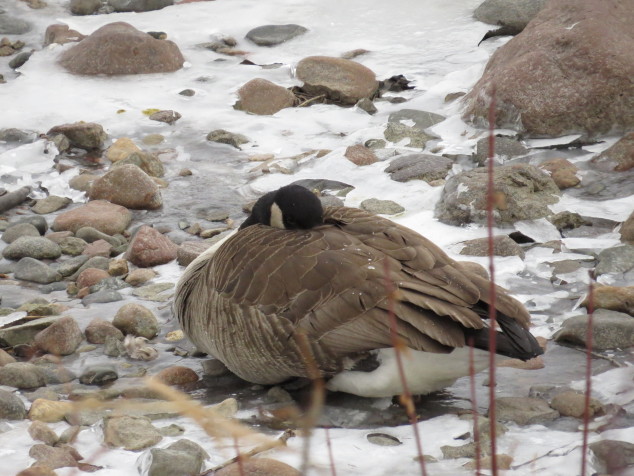
Wintering is also a time for courtship. When swans are three to four years old, they choose a mate. Courtship displays include head bobbing, trumpeting together, and spreading and raising their wings.
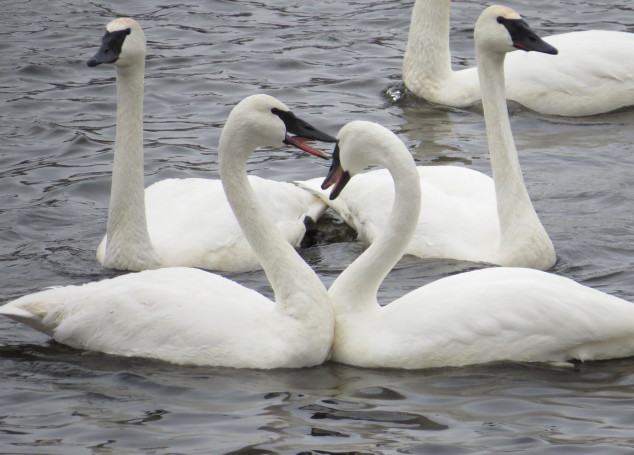
The Trumpeter swans are an impressive sight with their regal carriage, sleek alabaster plumage, and incredible size. The large overwintering population seemed to get along fairly well–we saw a few ‘fights’ between some individuals, but for the most part, they coexist peacefully with one another and with the ducks and geese. This social resting time prepares them for the next breeding season and for the work of raising their next nest of offspring.
We humans spend much of our year taking care of the ‘nest,’ finding food, and keeping our young safe. And like the swans, we get together with our families in the cold months of winter to bond with them, show off a little, make some noise, and rest and restore ourselves for the months ahead.
Great-Grandaddy Cottonwood Tree
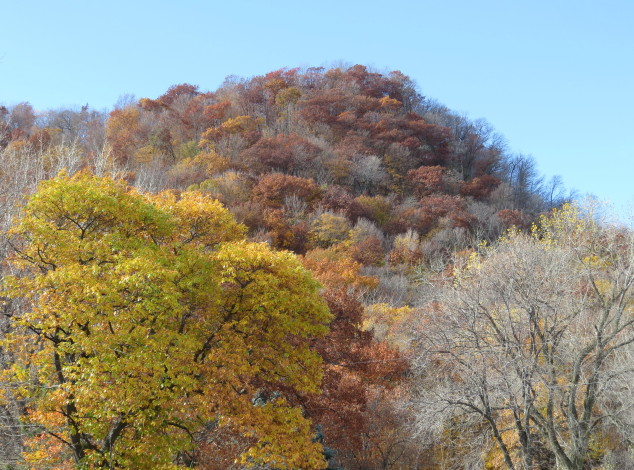
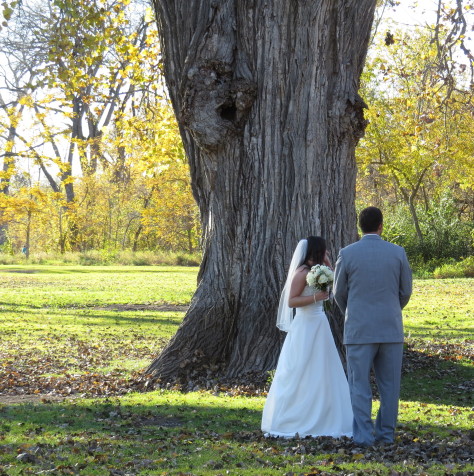
We traveled down the Great River Road from Red Wing to La Crosse, with the Mississippi on our left and the river bluffs on our right. Most of the leaves were gone from the trees, though the rusty-brown oaks still warmed the bluffs with their color. The sky was clear and blue, and the day was uncharacteristically warm for October 25th. We were on our way to a wedding–an outdoor wedding in a park beside the Great River. And the wedding was held beneath the grandeur of this great-grandaddy cottonwood tree.
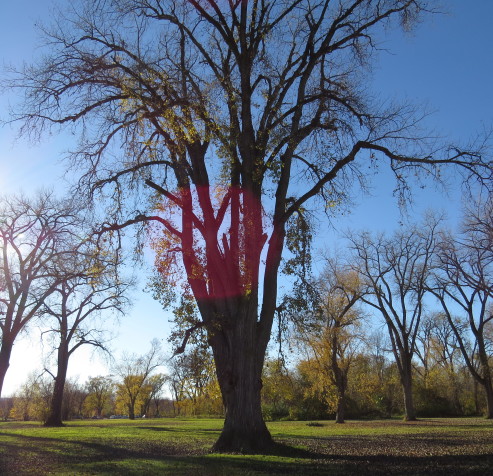
The huge old tree, with only a few of its heart-shaped leaves still glowing in the sun, was a gorgeous altar. According to The Meaning of Trees: Botany-History-Healing-Lore by Fred Hageneder, the cottonwood represents honesty, humility, and self-sacrifice. The Sioux Indians used a young cottonwood for the Sun Dance, and Kablaya, the one who first taught his people the Sun Dance, spoke to the tree, “…you, O rustling cottonwood have been chosen in a sacred manner…for you will bring that which is good to all beings and all things.” A fitting place to start a life together.
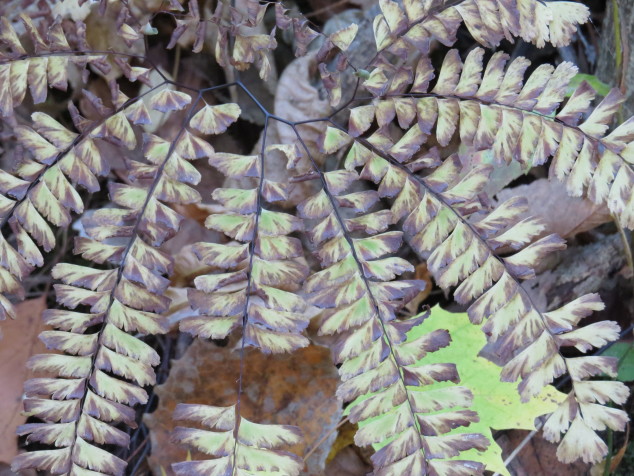
The morning after the wedding, in equally beautiful weather, we drove up Bliss Road to Grandad Bluff. As we slowly ascended the 600-foot high bluff, we saw patches of my favorite Maidenhair ferns glowing whitish-gray in their fall color.
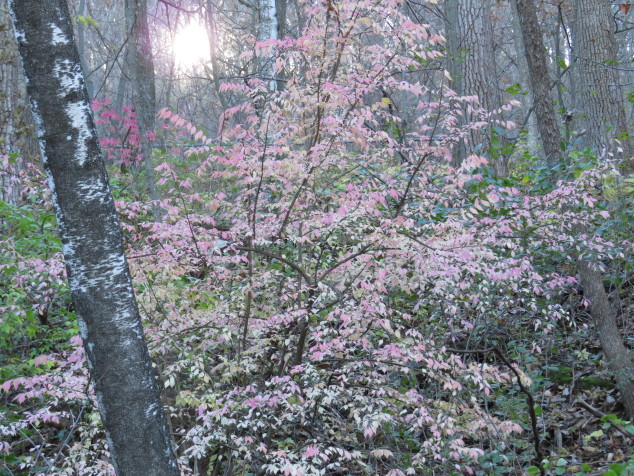
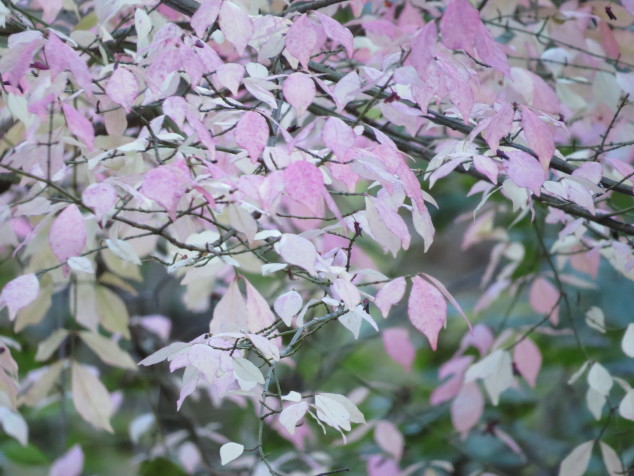
And then we saw an ethereal pinkish-white tree decorating the landscape, looking like Christmas or Easter or a Wedding Day against the ordinary gray and green of the autumn woods.
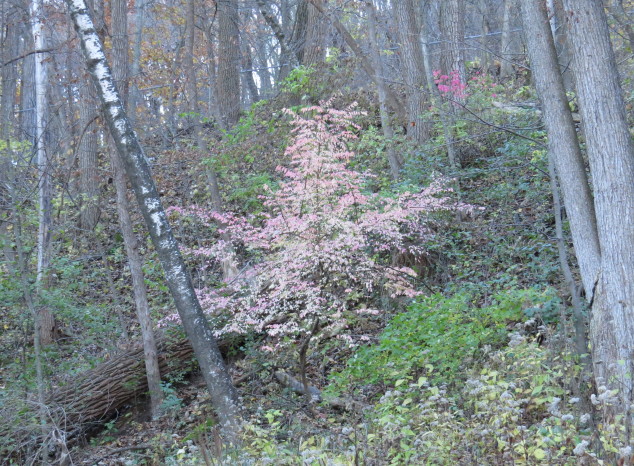
We saw only two of the small trees on our drive, and Chris excitedly identified them as Eastern Wahoo or Indian Arrow Wood. (Euonymus atropurpurea) These large shrubs or small trees are native to the eastern half of the United States and prefer light shade and moist soil. The young twigs have a square shape that is typical of the Euonymus genus. The mature stem or trunk is reddish-gray with vertical splits. Wahoo has small, dark pink flowers in spring that form bright pink seed pods that hang down in small bunches. The seed pod opens to reveal a red-covered seed. The seed pods are often still on the tree after the leaves drop, but I did not see any on either of the trees.
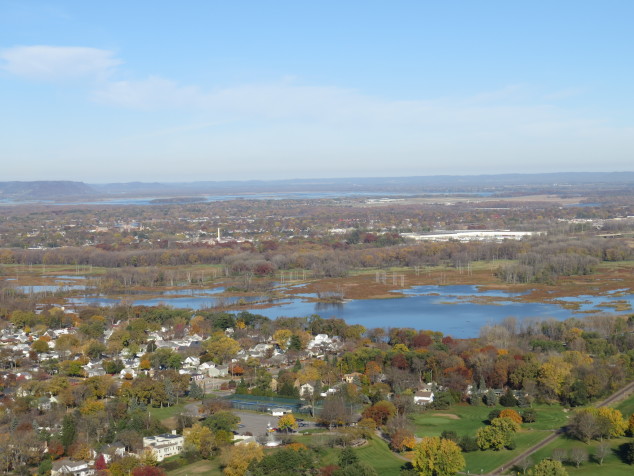
At the top of Grandad Bluff, we looked over the city of La Crosse to the Mississippi River Valley that included the three states of Wisconsin, Minnesota, and Iowa. It was a breath-taking view!
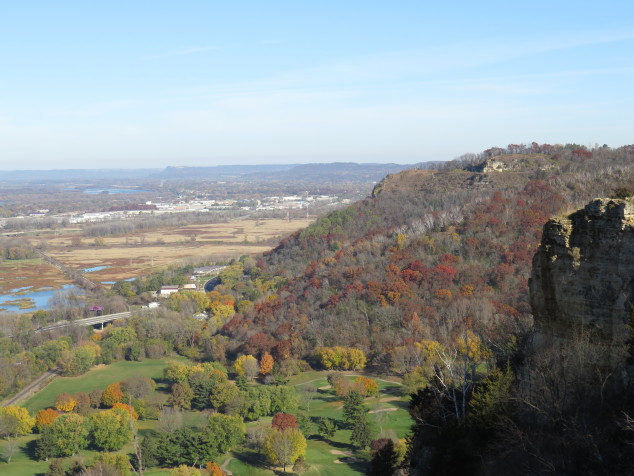
The area at the top of the bluff had been renovated a few years ago and included a beautifully restored prairie. Asters and yarrow still bloomed among the bluestem.
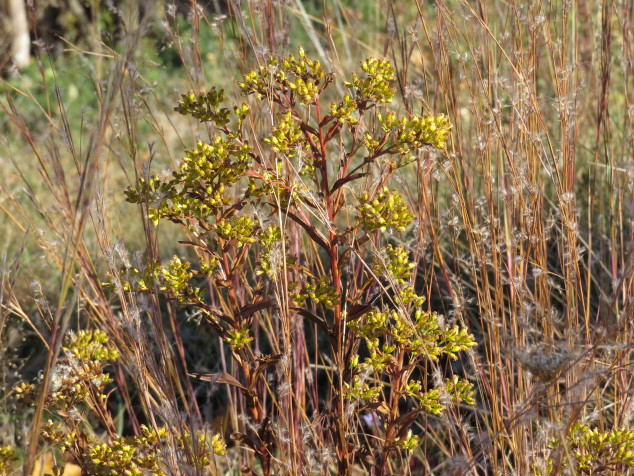
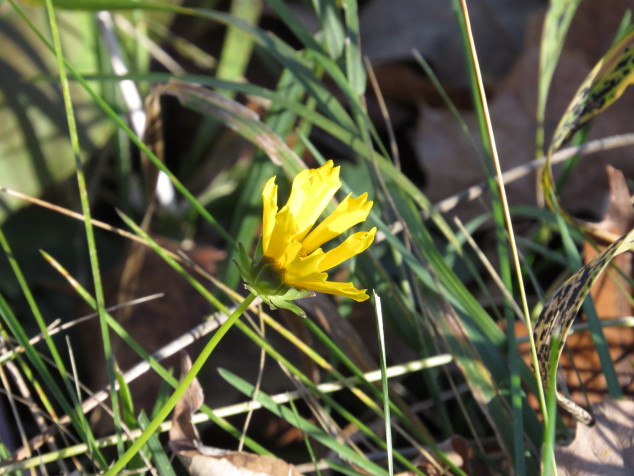
A couple sunshiny yellow prairie coreopsis flowers caught my attention.
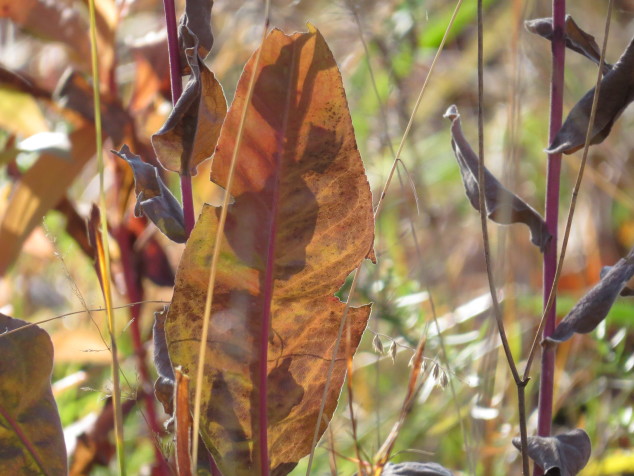
And then I saw a plant that looked like a feather stuck in the ground! We had no idea what it was!
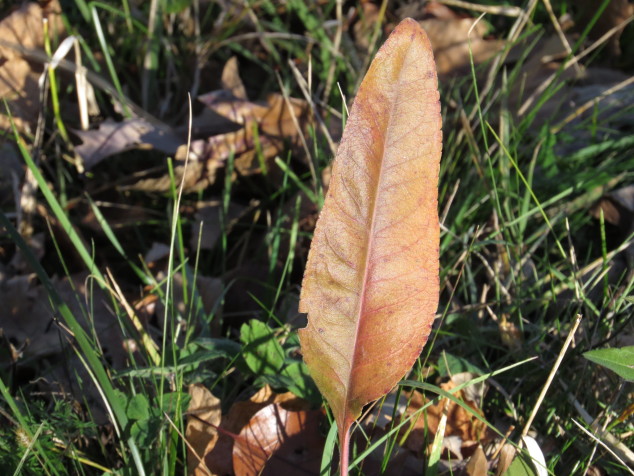
We didn’t see any flowers or seed heads coming from the unidentified plant, but the leaves were tough and sandpaper rough. They lit up in the morning sun.
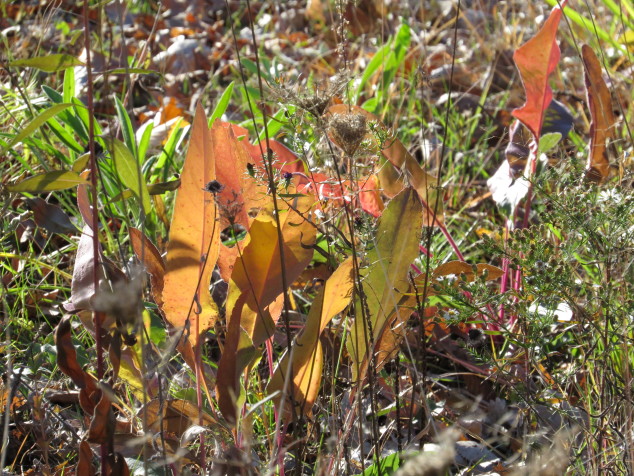
I have tried to find the name of this beautiful plant, but without a flower to help identify it, I didn’t have any luck. So the feather-leaved prairie plant remains a mystery.
We followed the Great Mississippi River to the Great-grandaddy Cottonwood tree to witness the beginning of a new life together under that ancient tree. Adam and Ashley will need the honesty, humility, and self-sacrifice the wise tree imparts to them as they navigate their married life. May they have the excitement of rare and beautiful finds among the ordinary, like the Wahoo tree. May they have breath-taking views as they climb the hills together. May they find and accept and honor the Mysteries of Life. And may the Sun shine upon them with all that is good.
The Beautiful Mississippi River
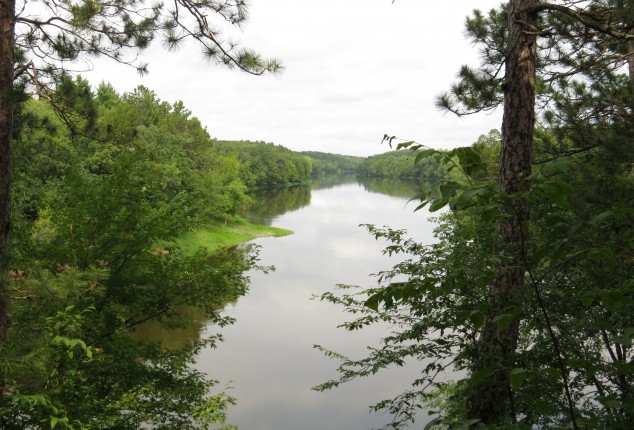
Isn’t this a beautiful view of the Mississippi River? We were at Crow Wing State Park just south of Brainerd, MN. Our oldest daughter is visiting from Austin, Texas, so I will be taking pictures and will share more with you later! Thanks to all for following NorthStarNature!