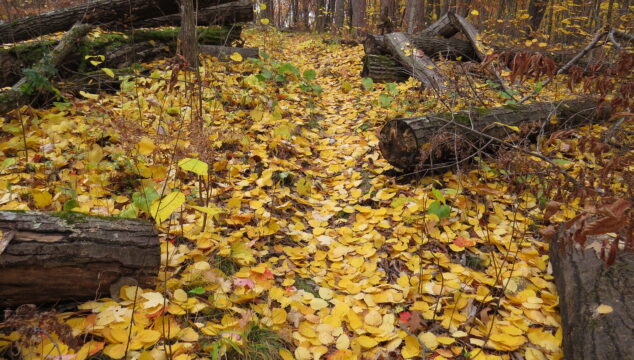
Come walk with me in the peak Autumn beauty of the Northwoods. To say that I love this time of year is an understatement. Most everyone can appreciate the colorful falling leaves---it reveals the 'true self' of a tree when its leaves are no longer producing chlorophyll. Their true colors are revealed, and there is something simple … [Read More...]
The Story of Life in One Leaf
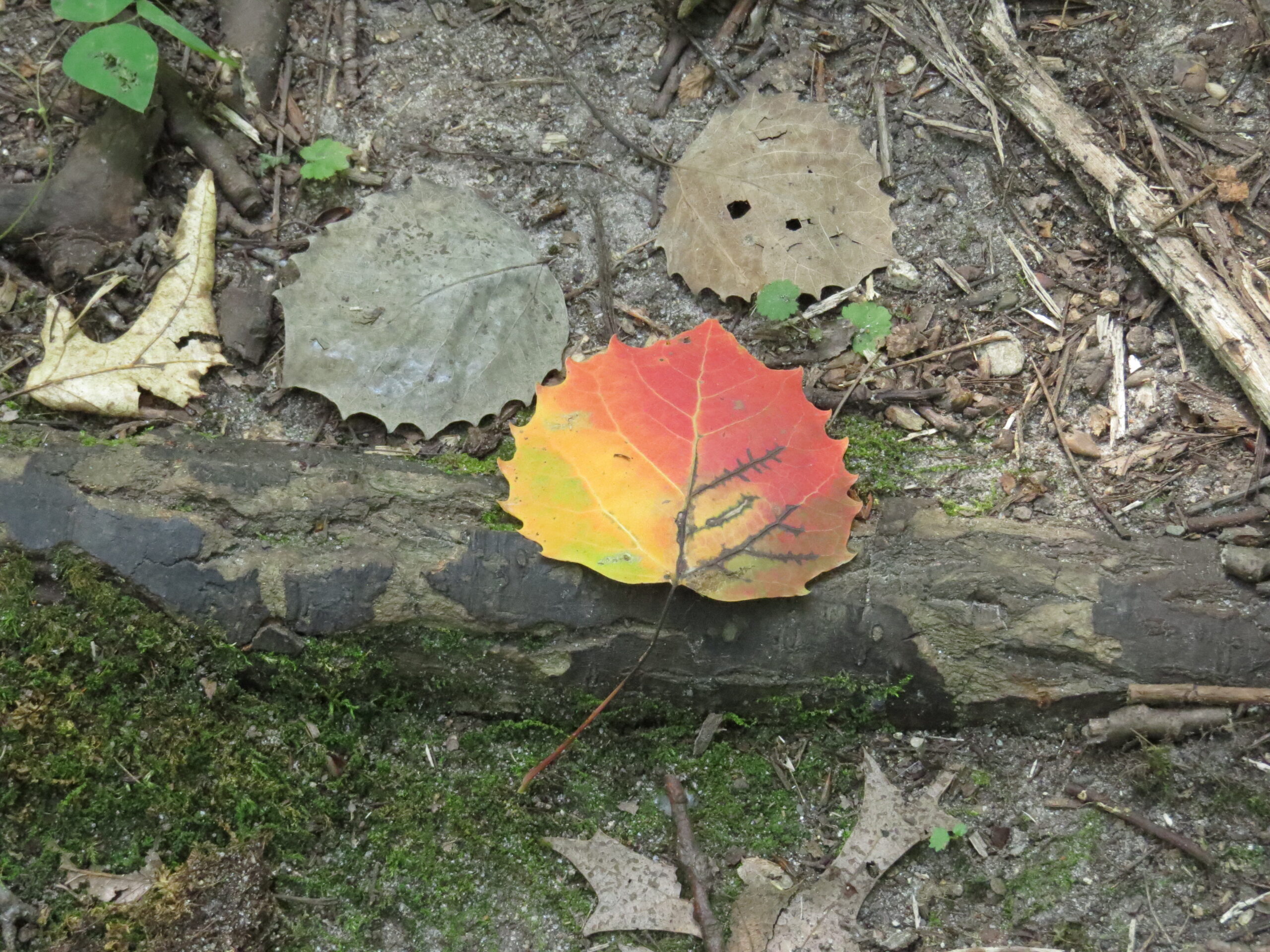
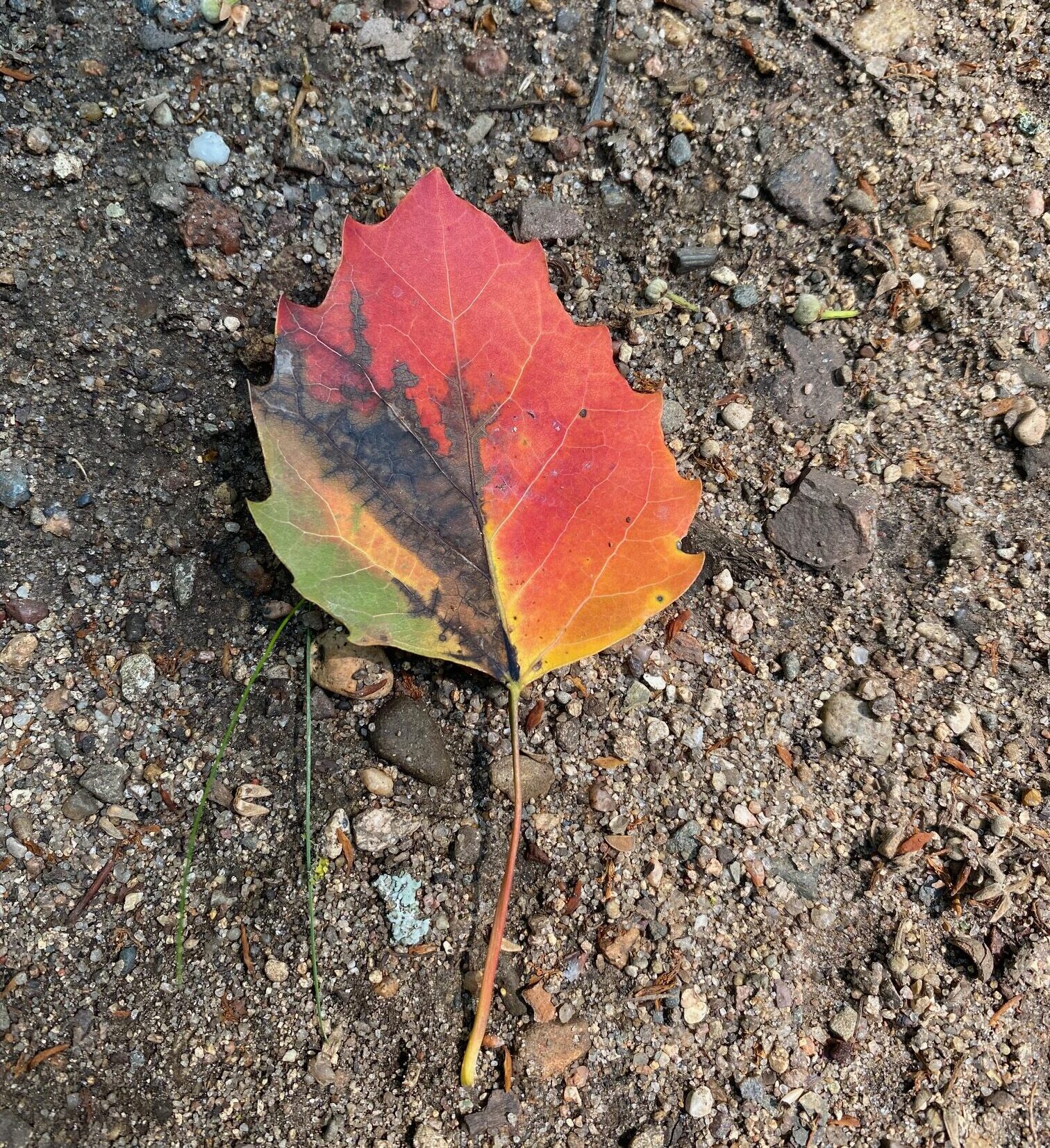
I found the story of a life all in one leaf on our hike last weekend. It comes fairly close to my life at the age I find myself—certainly not the age I feel myself to be. If one is younger, the leaf would be much more green; if older, perhaps more black, and yet, within us all are all the colors. My young green has faded, but it is still there. Childhood memories are green, as is my curiosity and those times when I laugh at something unexpected and childishly delightful.
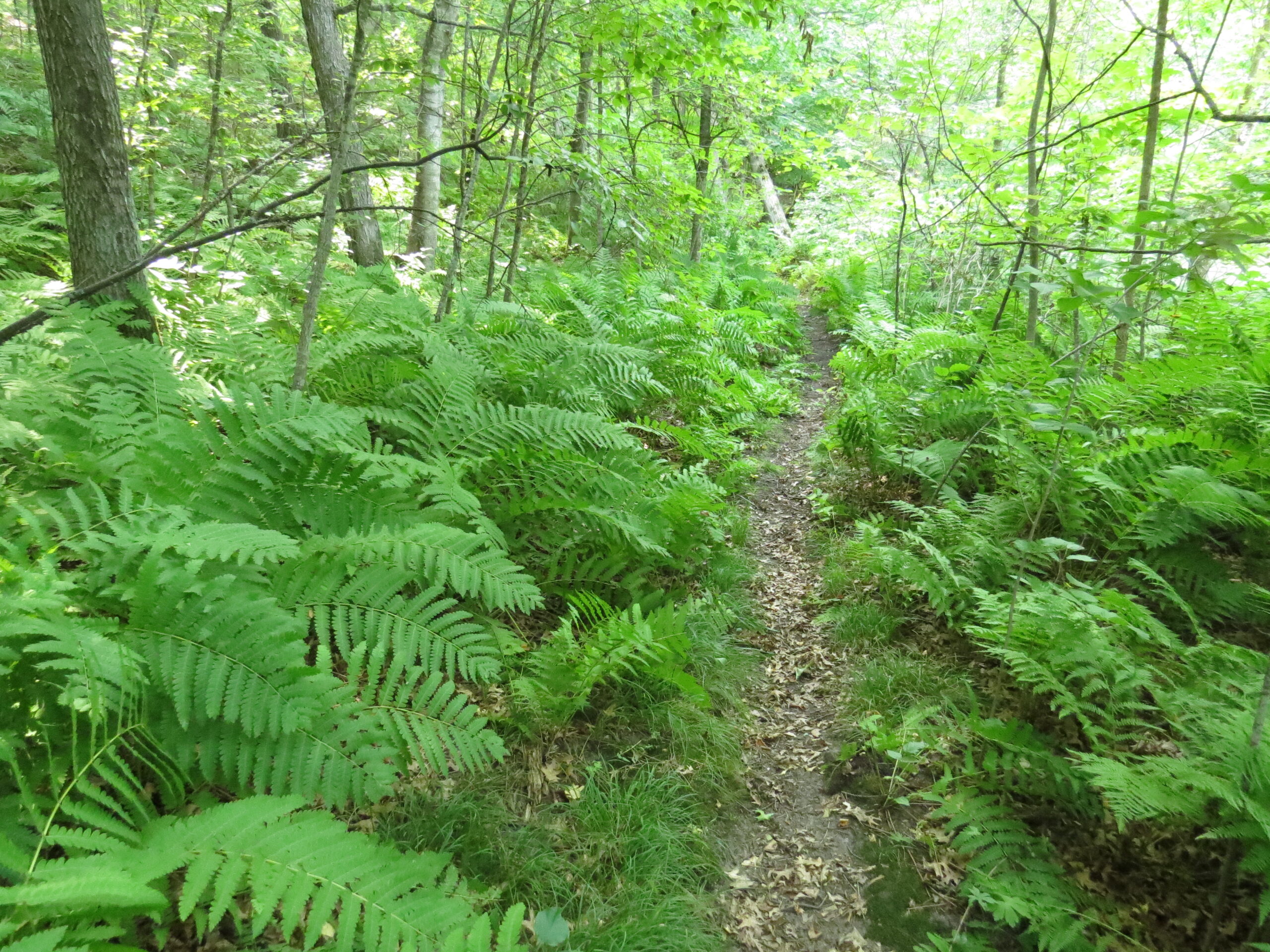
On the narrow trail of our hike was a lush stand of ferns near a life-giving wetland. The drought continues in central Minnesota, yet the wetland provided the mother’s milk for the surrounding plants. The vegetation was green, vibrant, and in some cases, flowering.
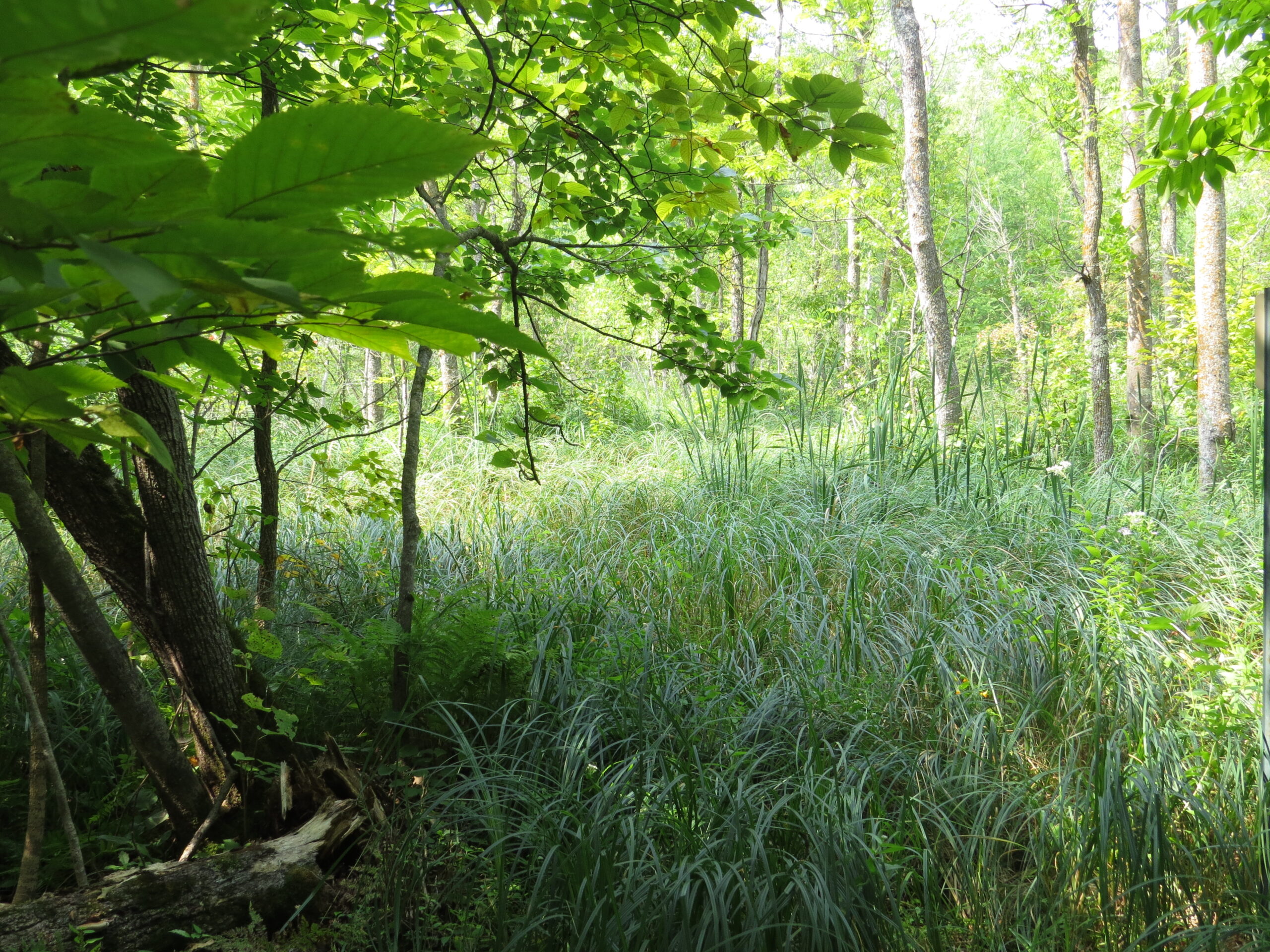
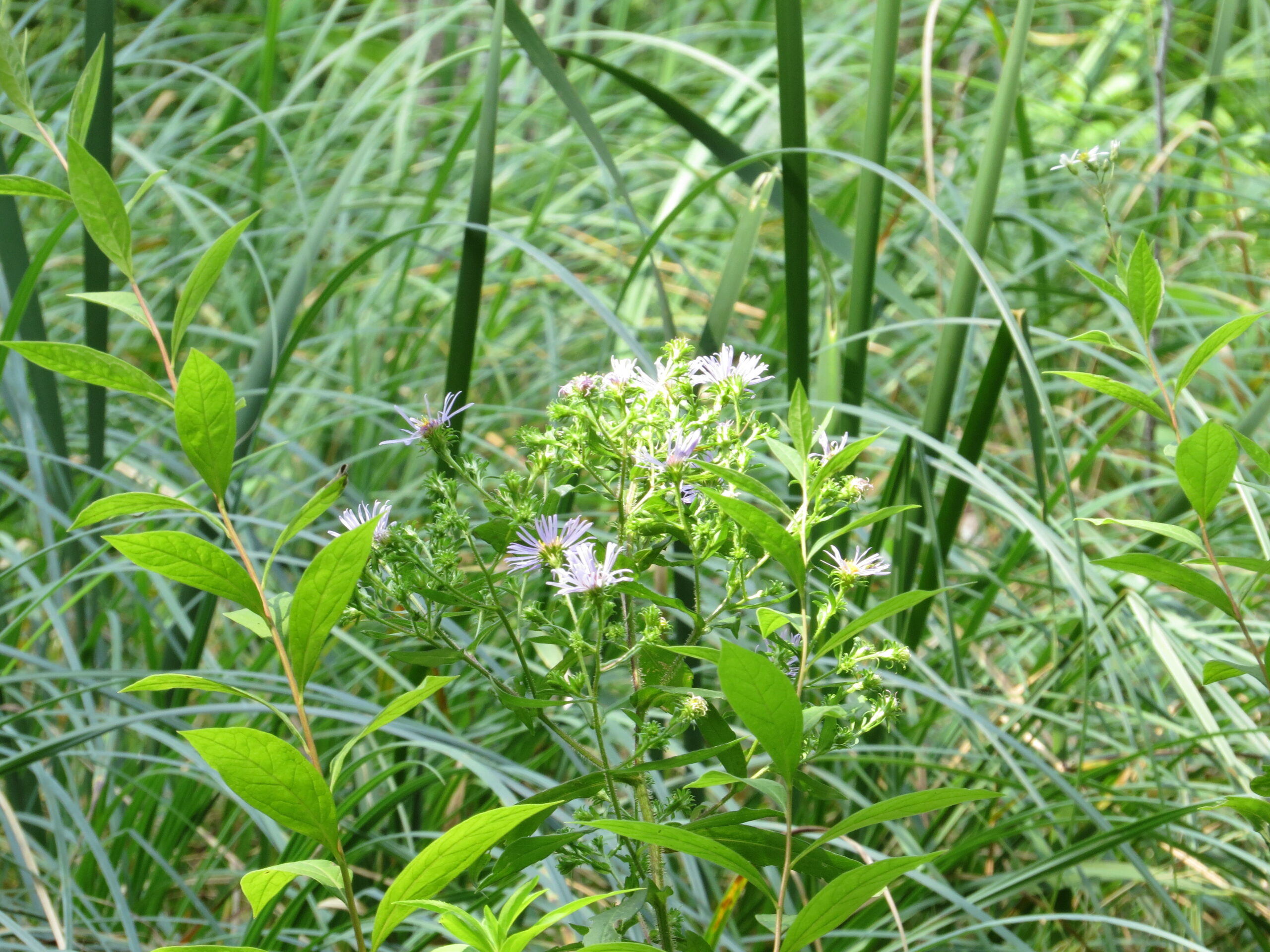
Green is suppleness and flexibility like the Leatherwood shrub. Those parts of youth may have stiffened with age, but body practices like yoga and qigong can help reverse, or at least keep at bay, that stiffening.
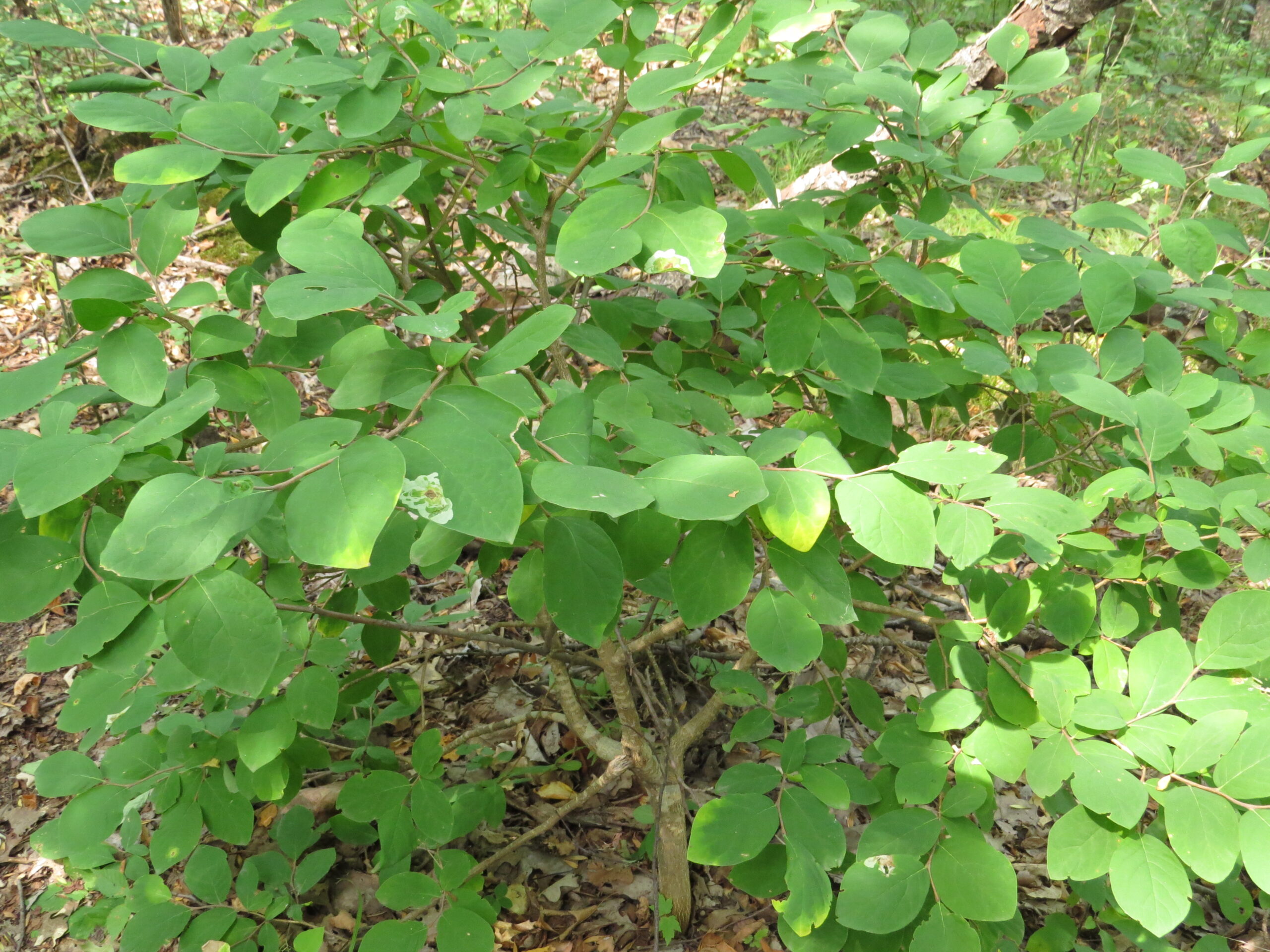
Young adulthood is green and yellow, a complex intermingling of growth and stability, of space and closeness, of venturing out on one’s own and clinging tightly to loved ones. It is a time for flowering. I still have yellow in my life.
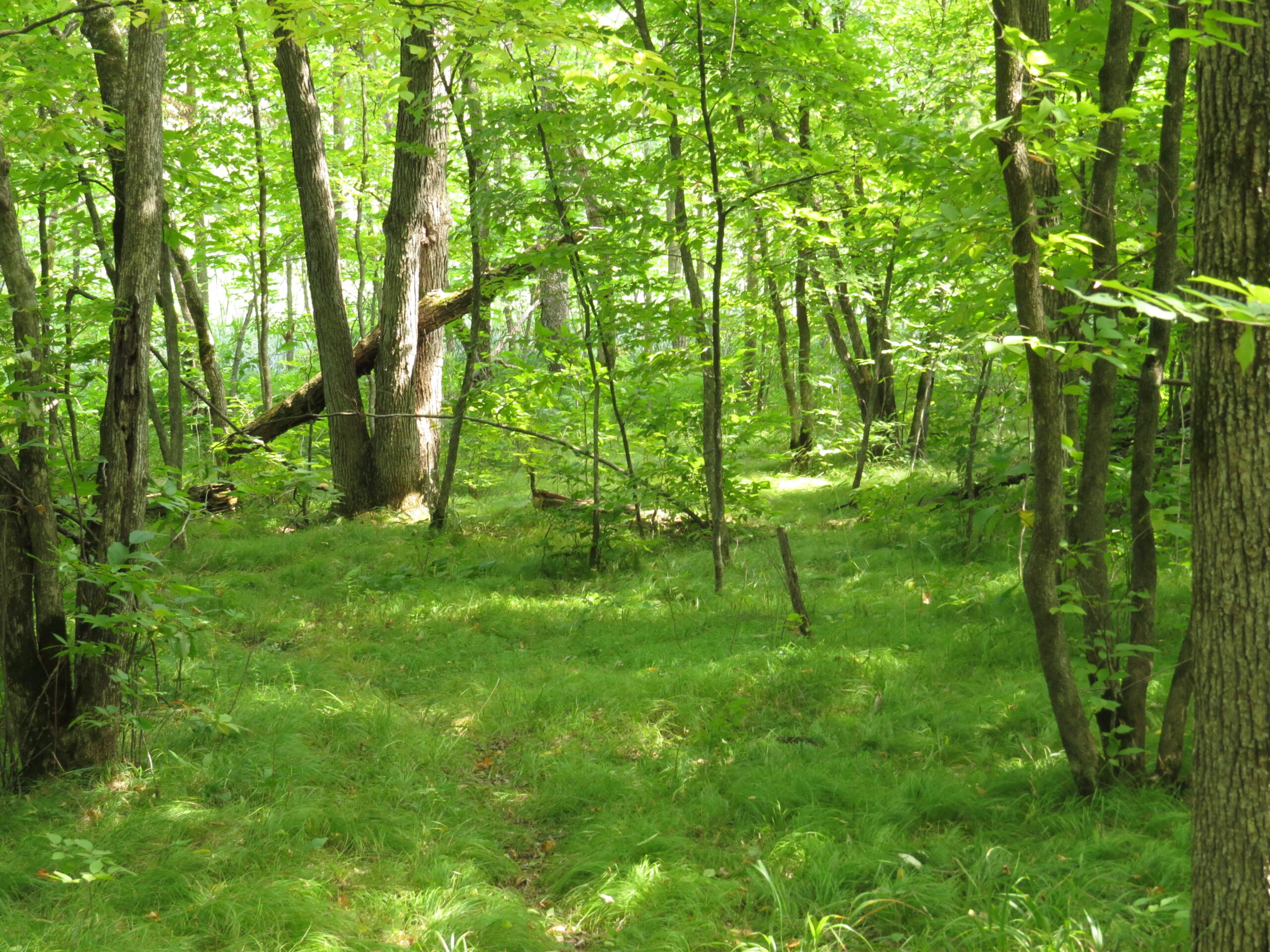
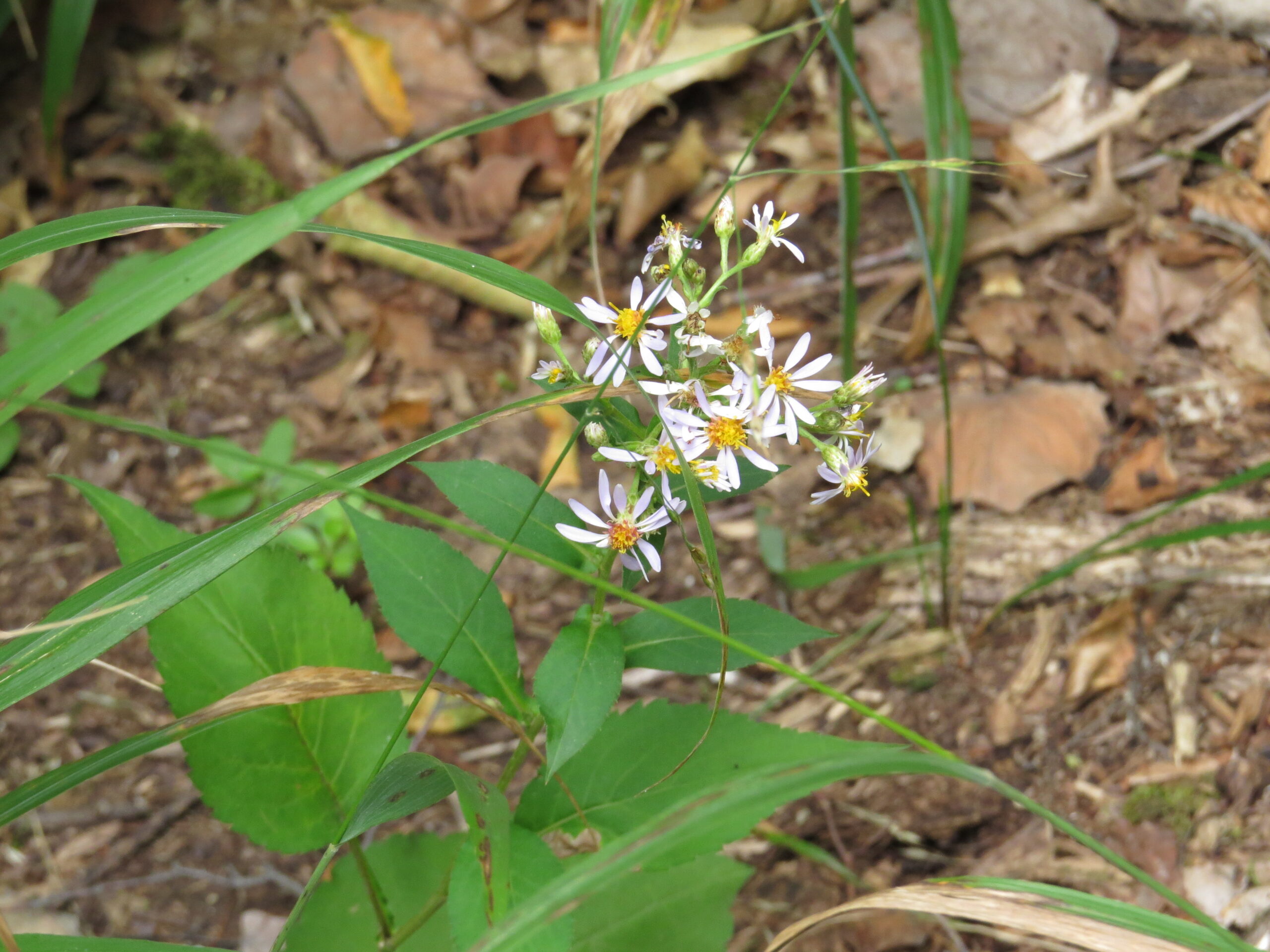
Yellow morphs into red, into maturity, into production, into fruit bearing. Life in the red zone is busy, noisy, urgent, and full of life. I find that again when in the presence of the fruit that I bore.
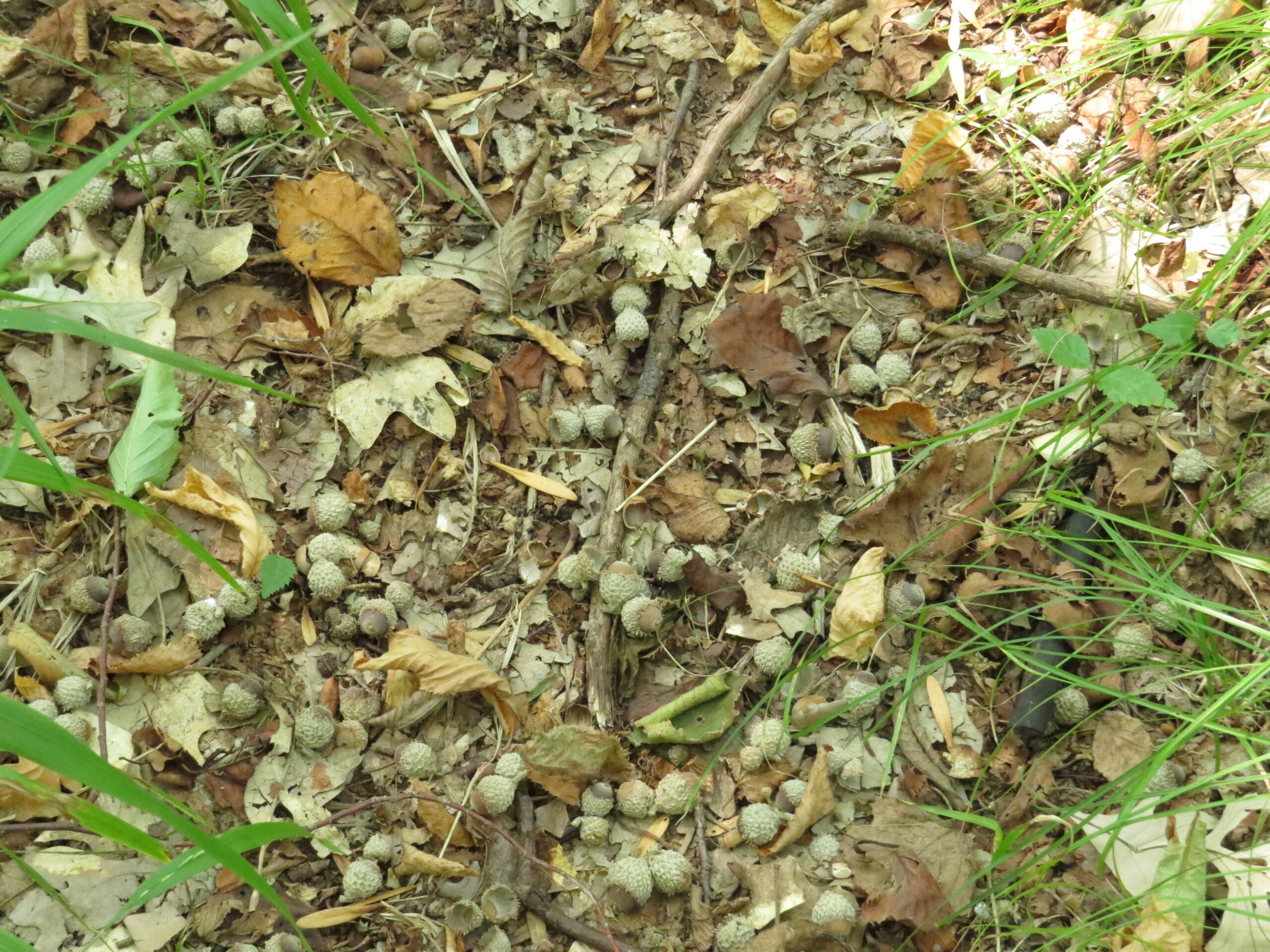
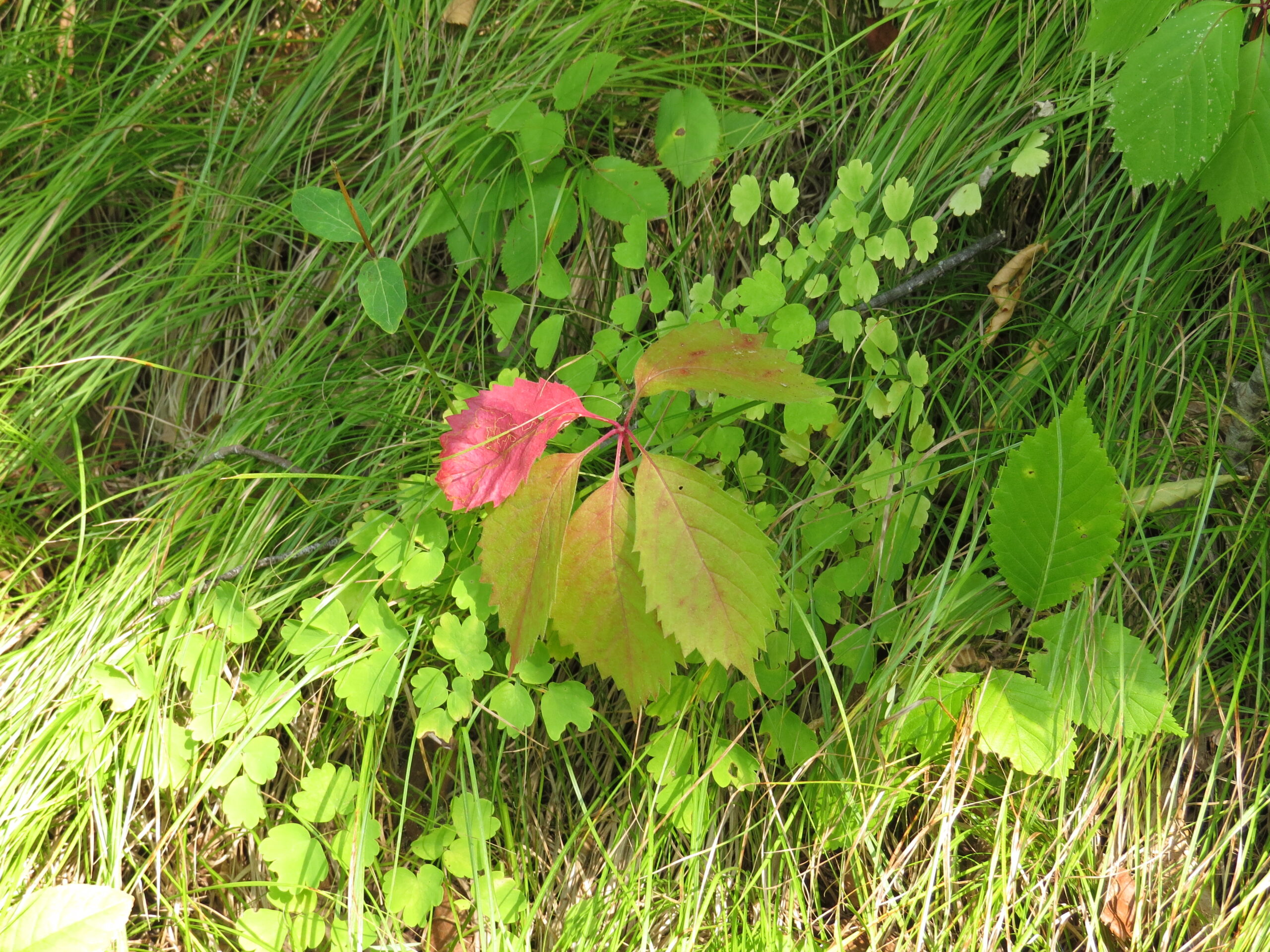
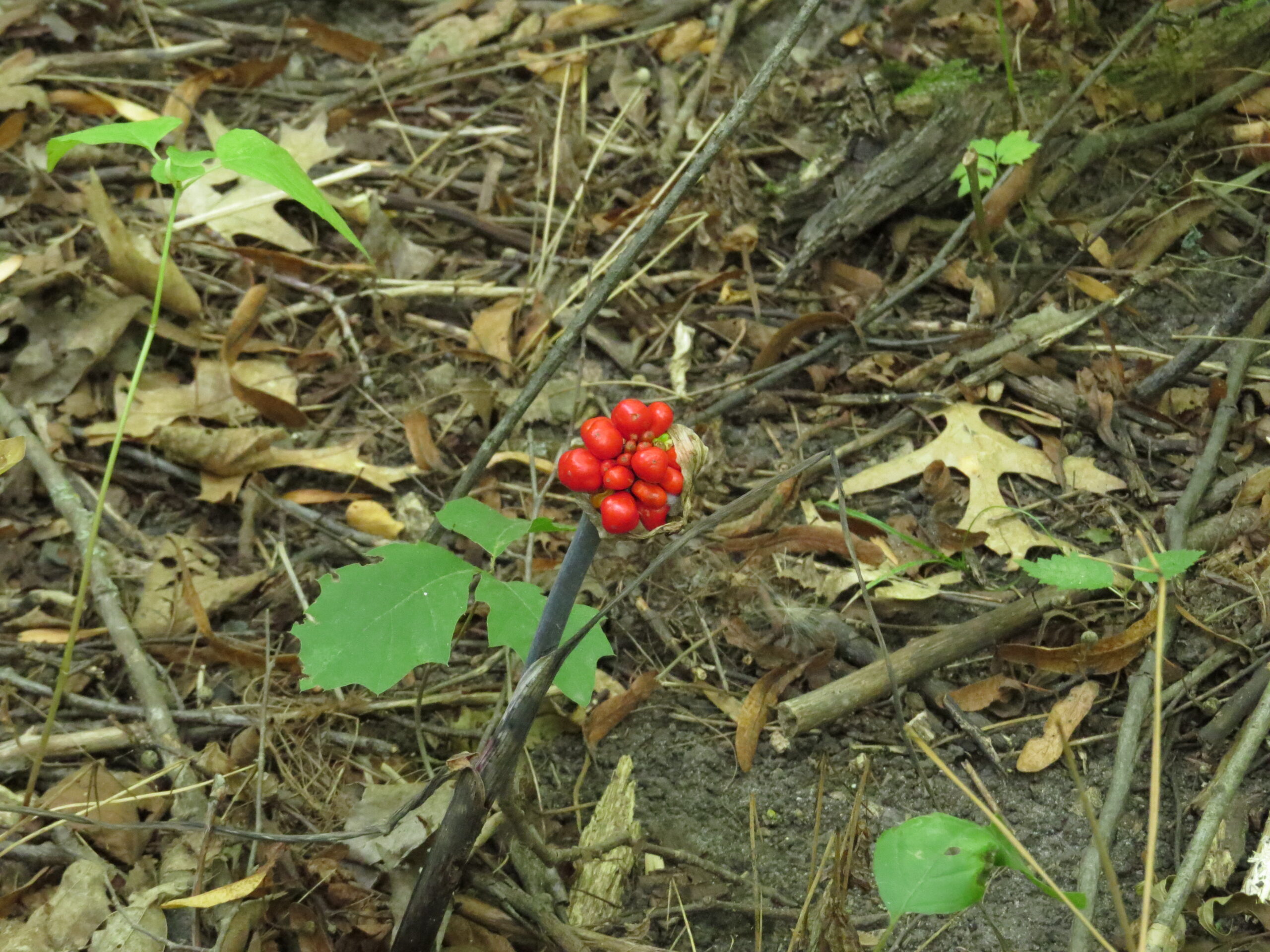
Brown creeps in to the red zone, slowing the busy, quieting the noisy, easing the urgent. It is a rich time. I’m glad my second favorite color is brown.
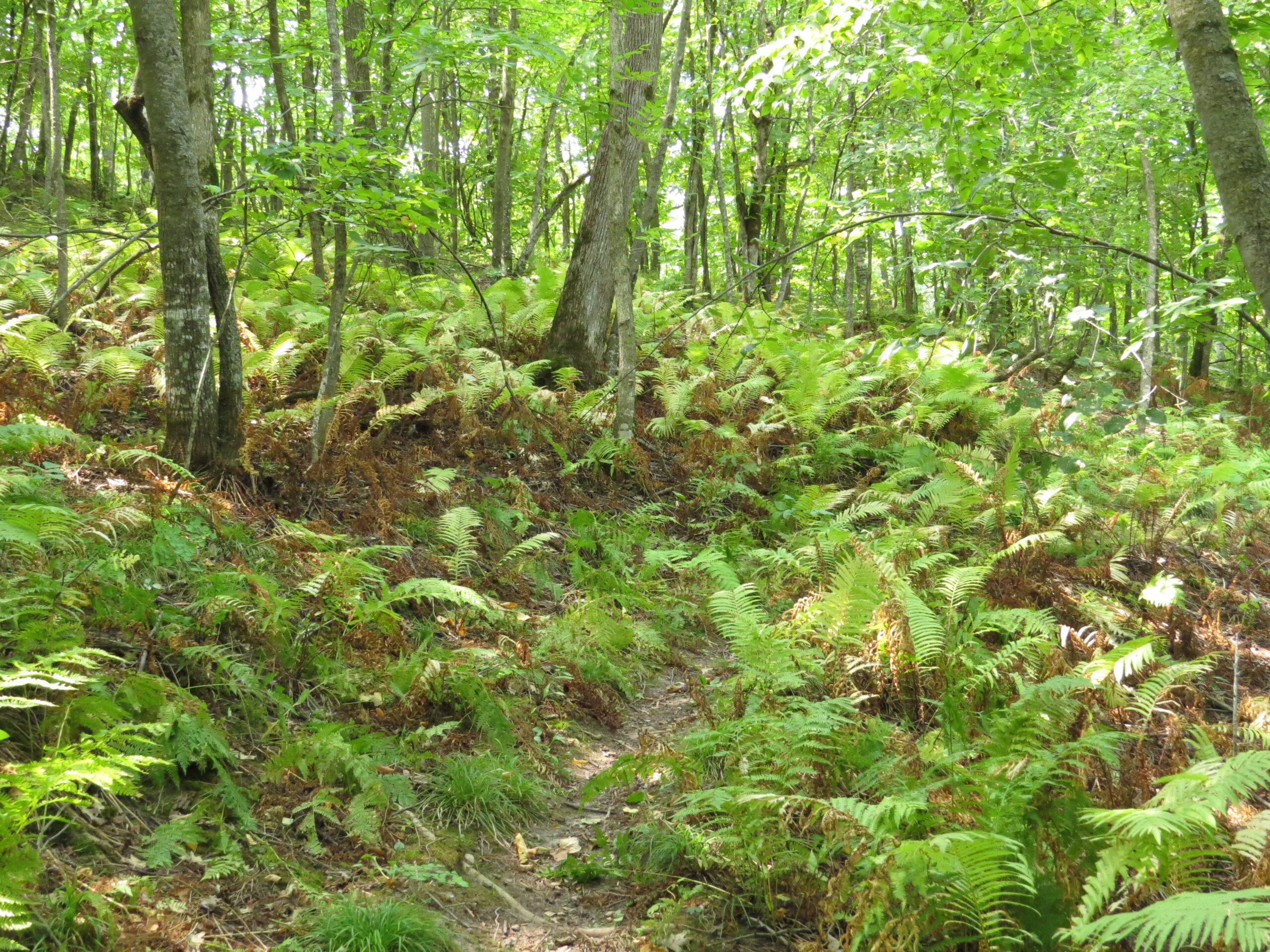
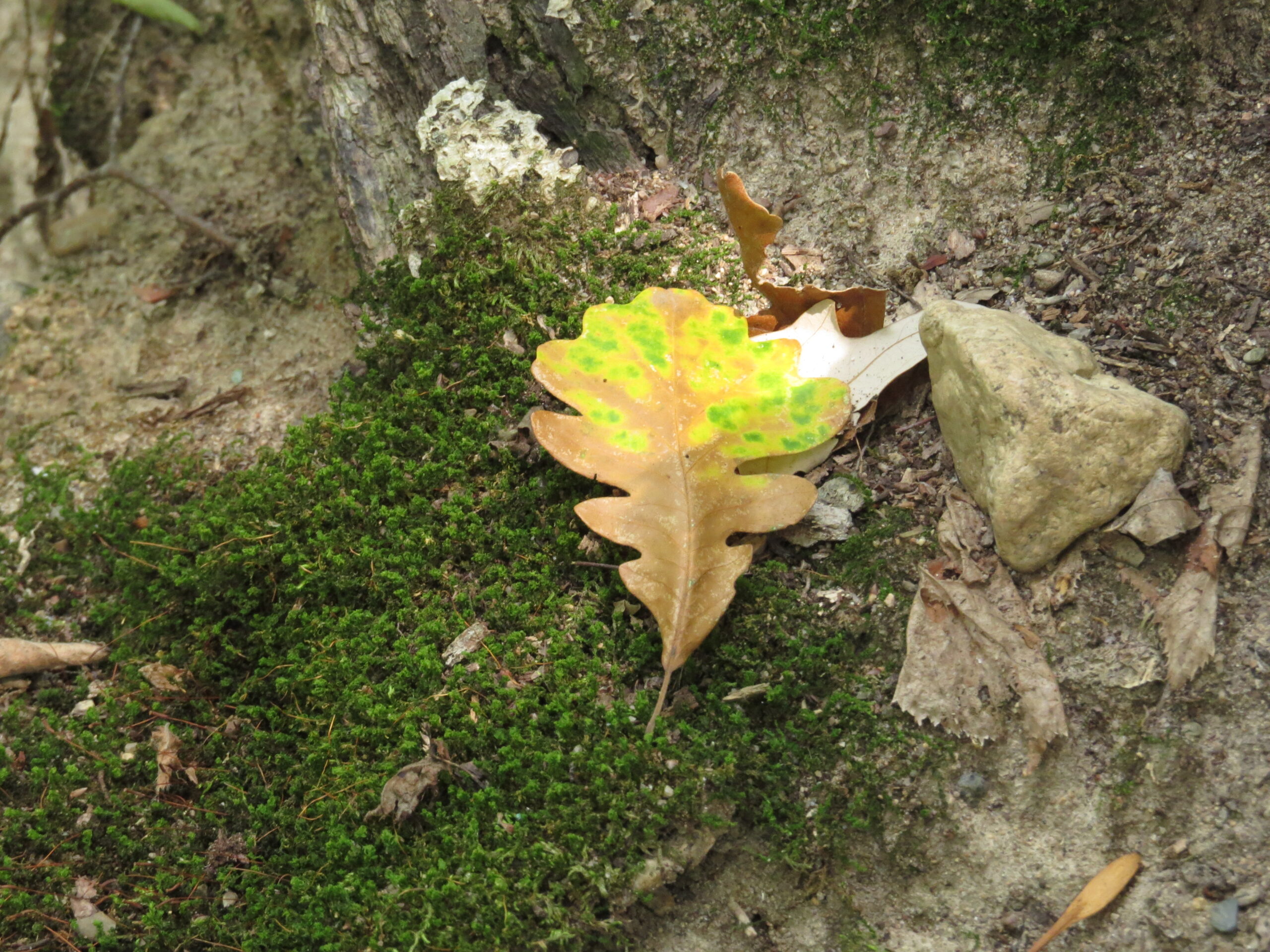
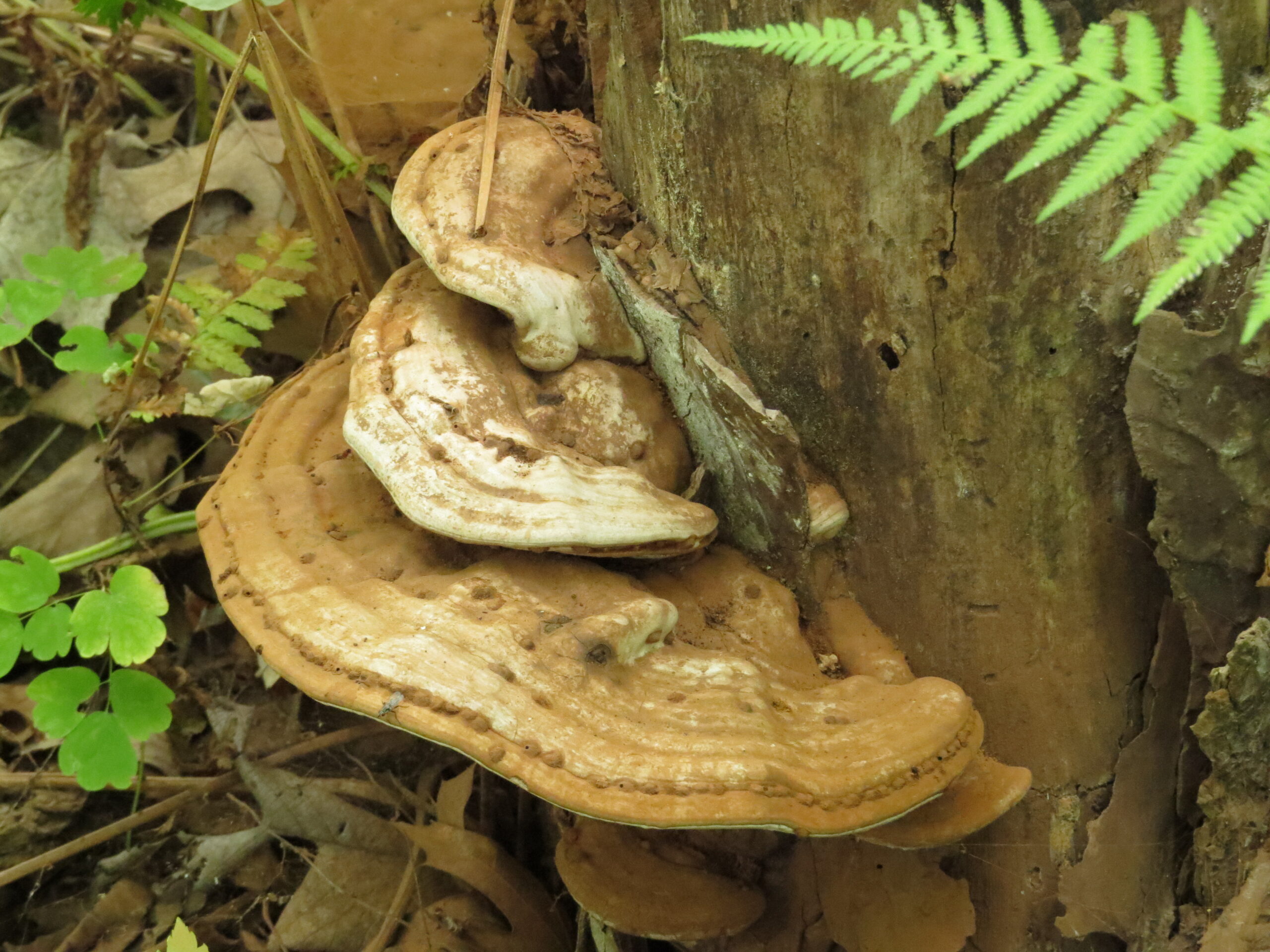
Black inches into our lives, sometimes with a crash, sometimes from our center even as our growing edge is still pure and white. Black is unexpected, usually unwanted, but confoundingly inevitable.
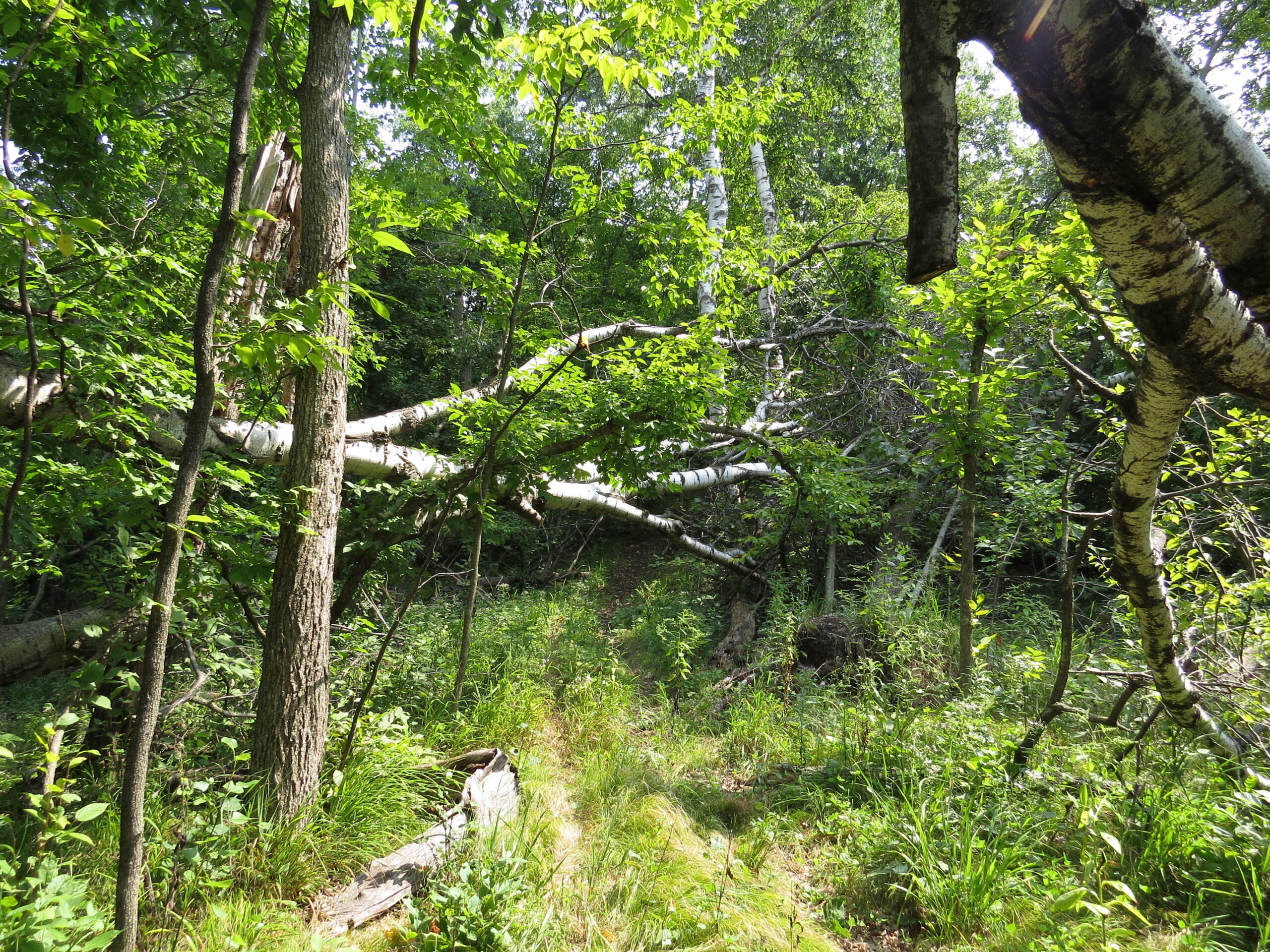
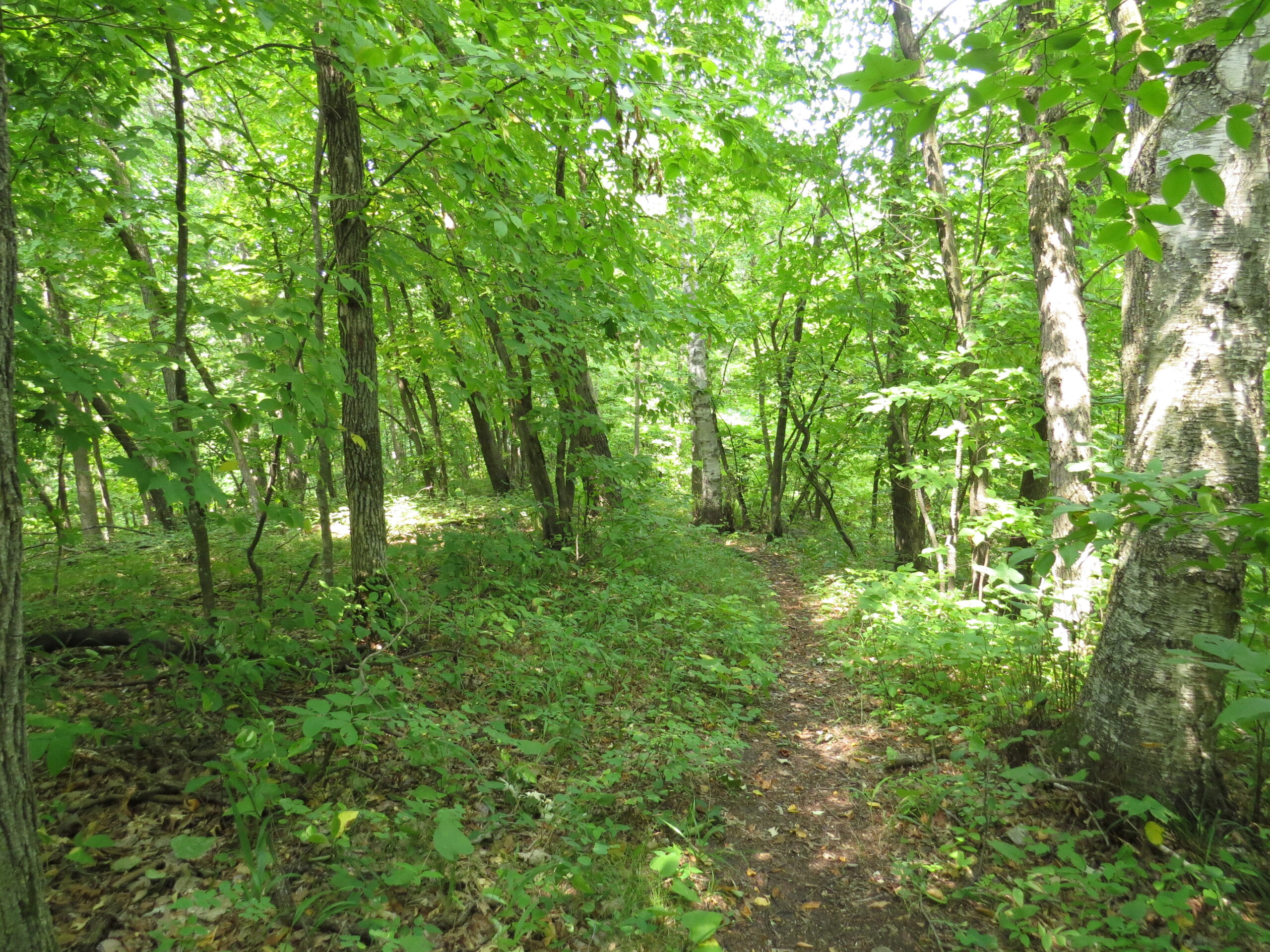
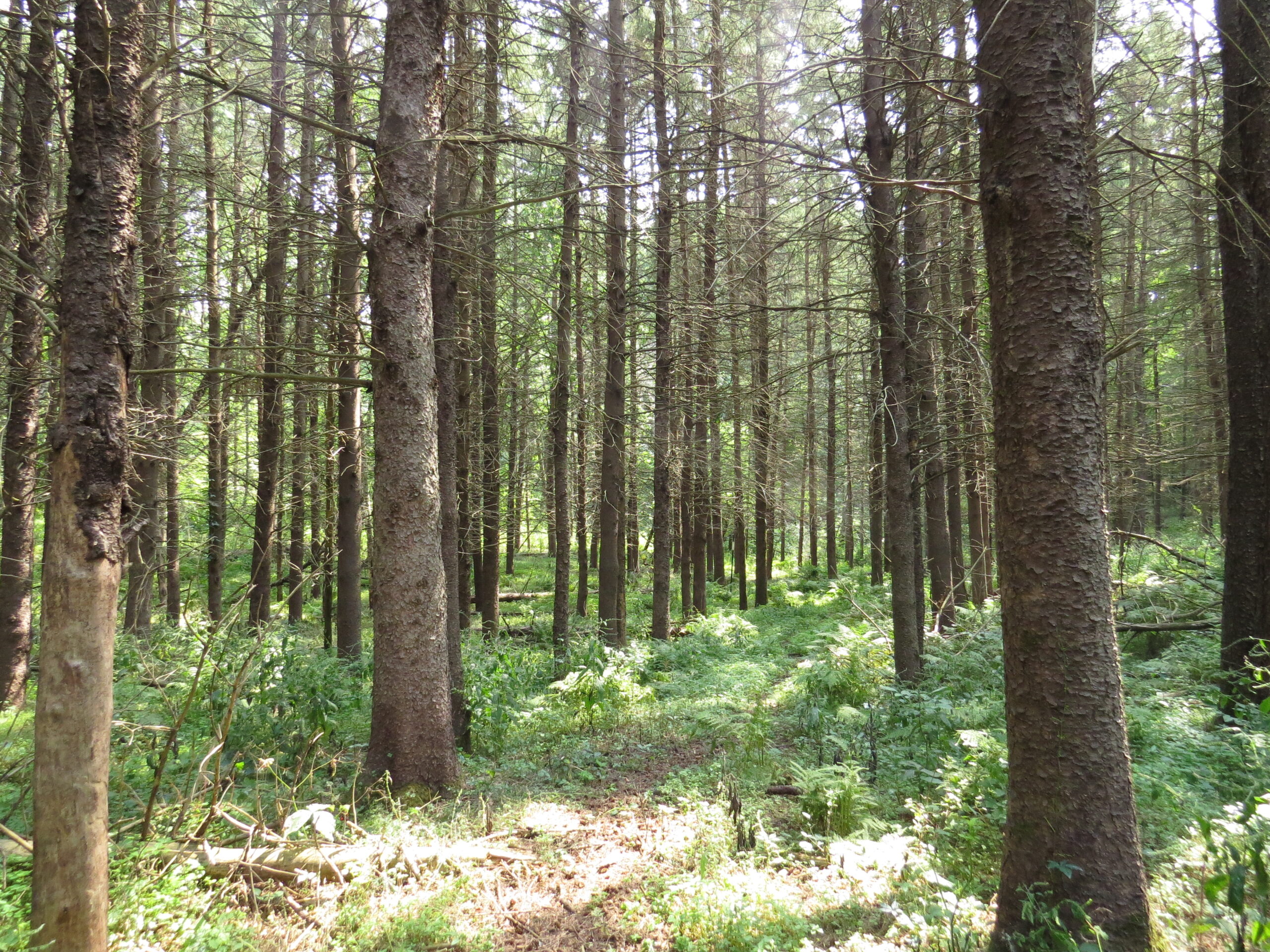
How do we befriend it? As I roam in the red-brown zone, it becomes more clear to me that the journey through the Black Spruce forest is a time of mystery and wonder. We can turn old age into new age—not our mortal bodies but our immortal souls. So I plan to walk down that boggy path with awareness, through shadows and light, breathing in the mind-enlightening smell of evergreen boughs, into Goodness and Light.

Darkness Brings Promise
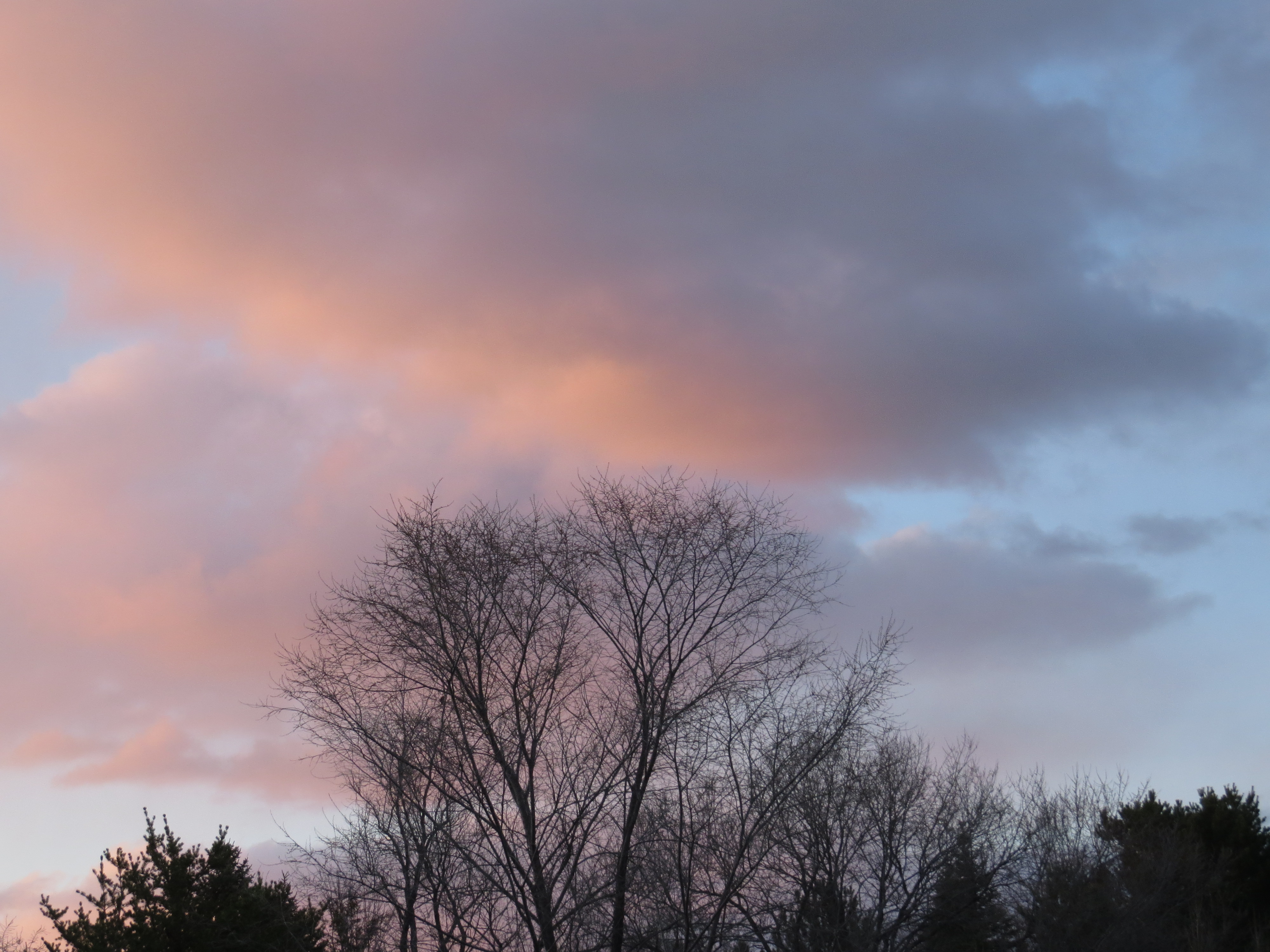
Spring sunsets look like promise to me, which seems backward—one would think sunrises bring promise with the beginning of a new day. So I’m not sure what it is exactly that makes me think that, but I do know promise arises from some very dark situations.
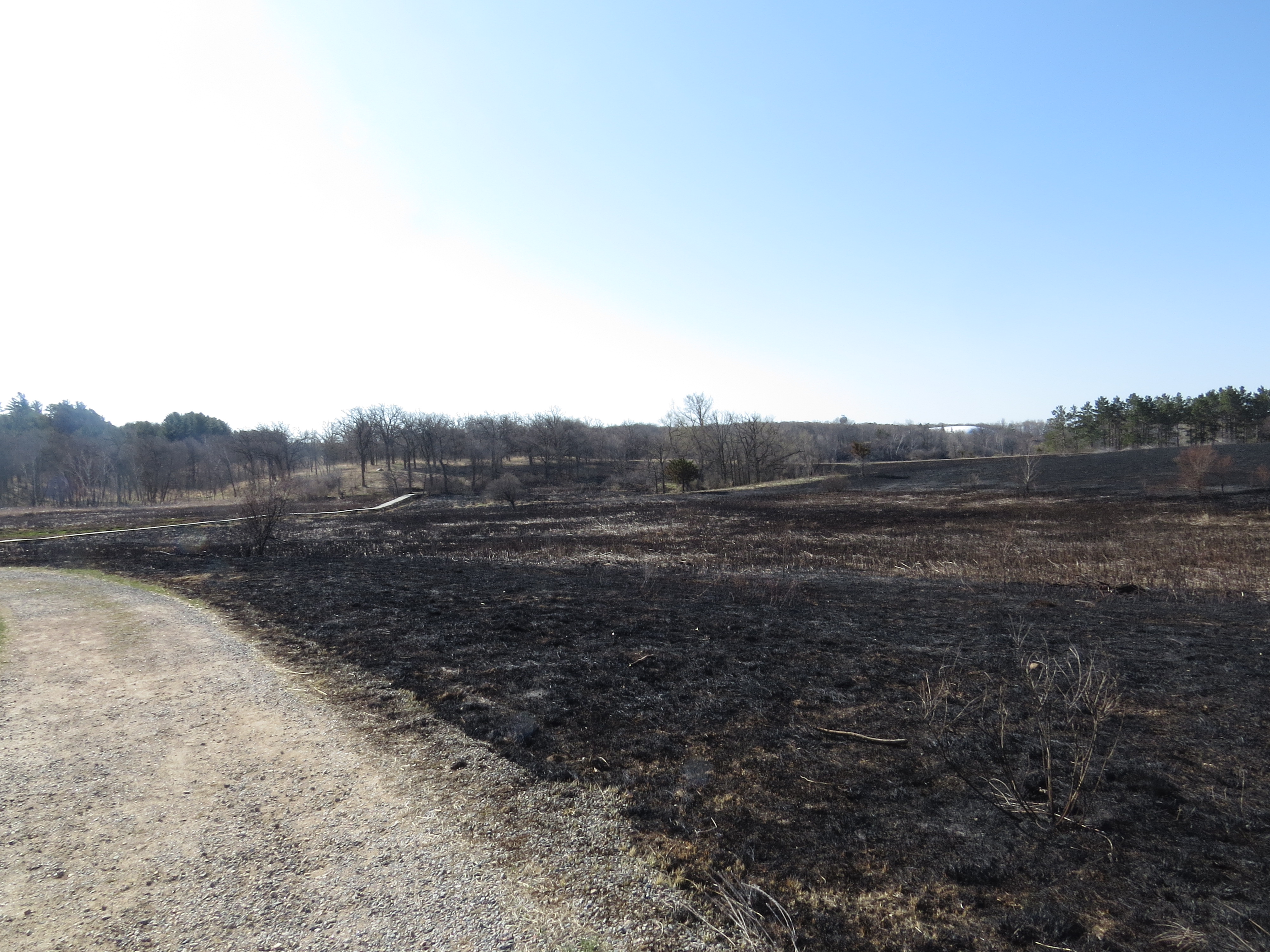
Fire-scorched earth greeted a friend and I when we arrived for a morning walk at St. John’s Arboretum. It’s rather shocking to see acres and acres of blackened prairie and wetland. There were no more smoldering embers, but the acrid smell of smoke and ash swirled into the air and into our nostrils with the stiff breeze. The trail was the line of demarcation as we walked—on one side was the black earth, on the other side the brown and greening prairie.
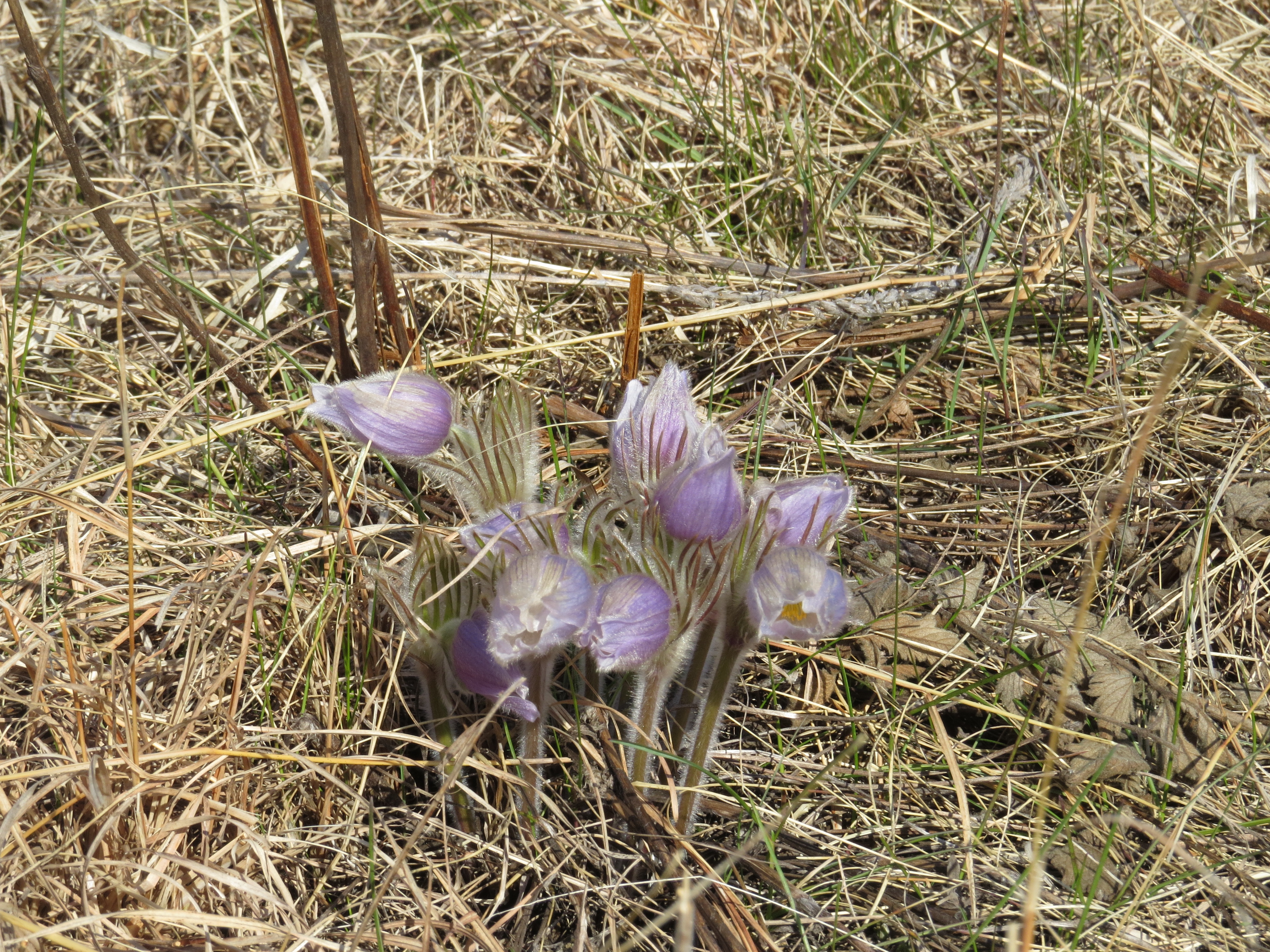
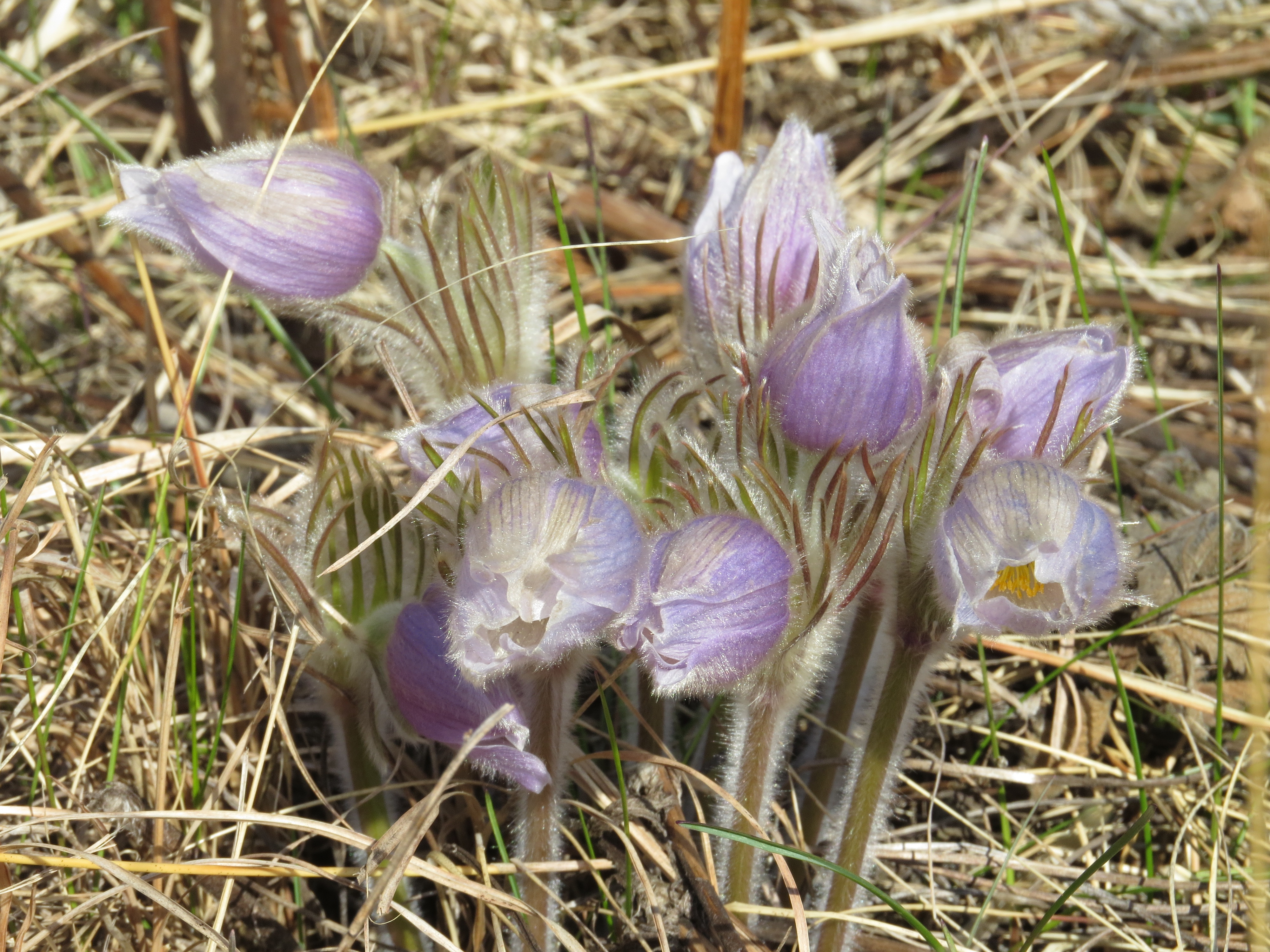
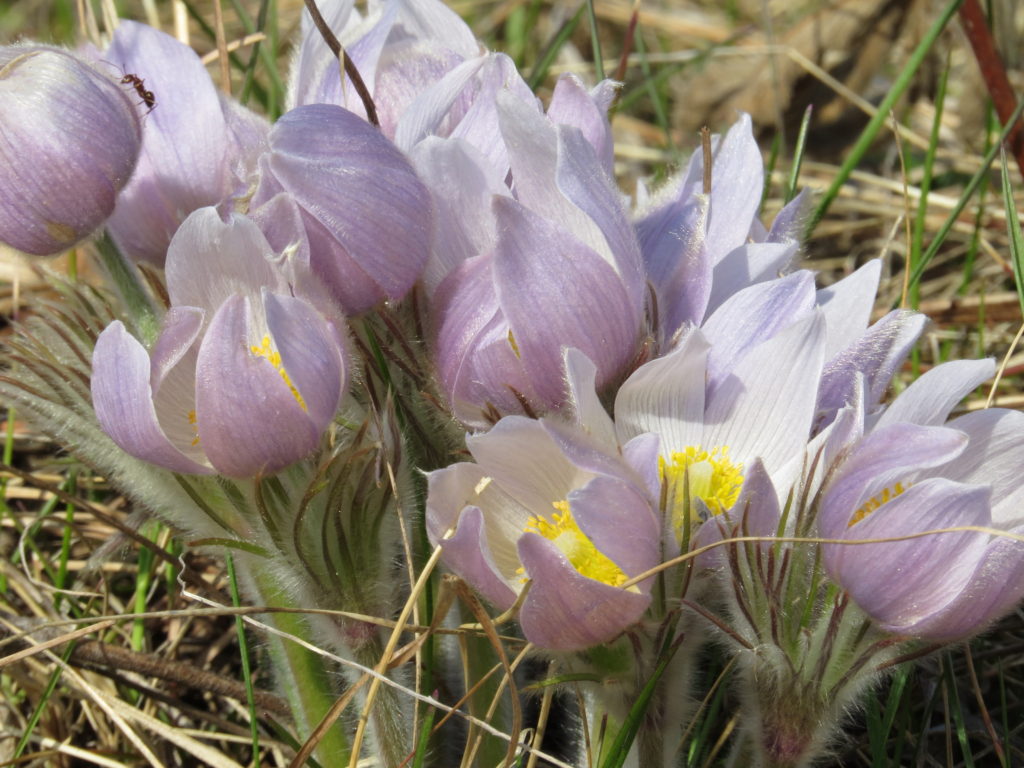
Among the old, brown grass and new, green shoots, we found a clump of Pasque flowers—early bloomers of the prairie. The pale purple flowers were closed; the long, silky white hairs that covered the whole plant shone in the sunlight. The state flower of South Dakota, Pasque flowers are dear to my heart. They are known by some as May Day Flower.
Prescribed or controlled burns of prairies are a common tool to manage the land. Fire destroys invasive and woody plants, thus improving the native plant community. It quickly returns nutrients to the soil by way of the ash as opposed to years of decomposition of accumulated dried grasses.
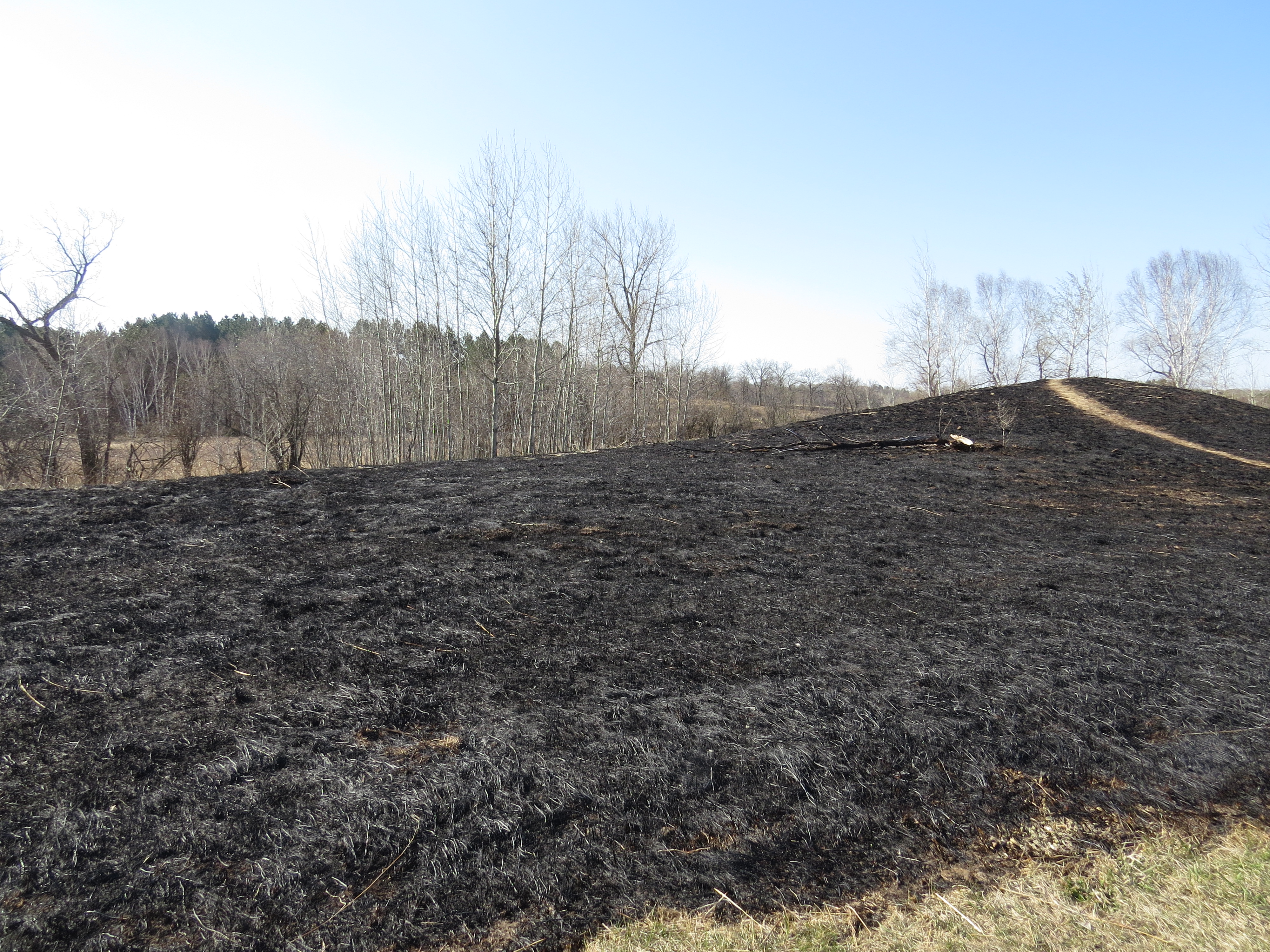
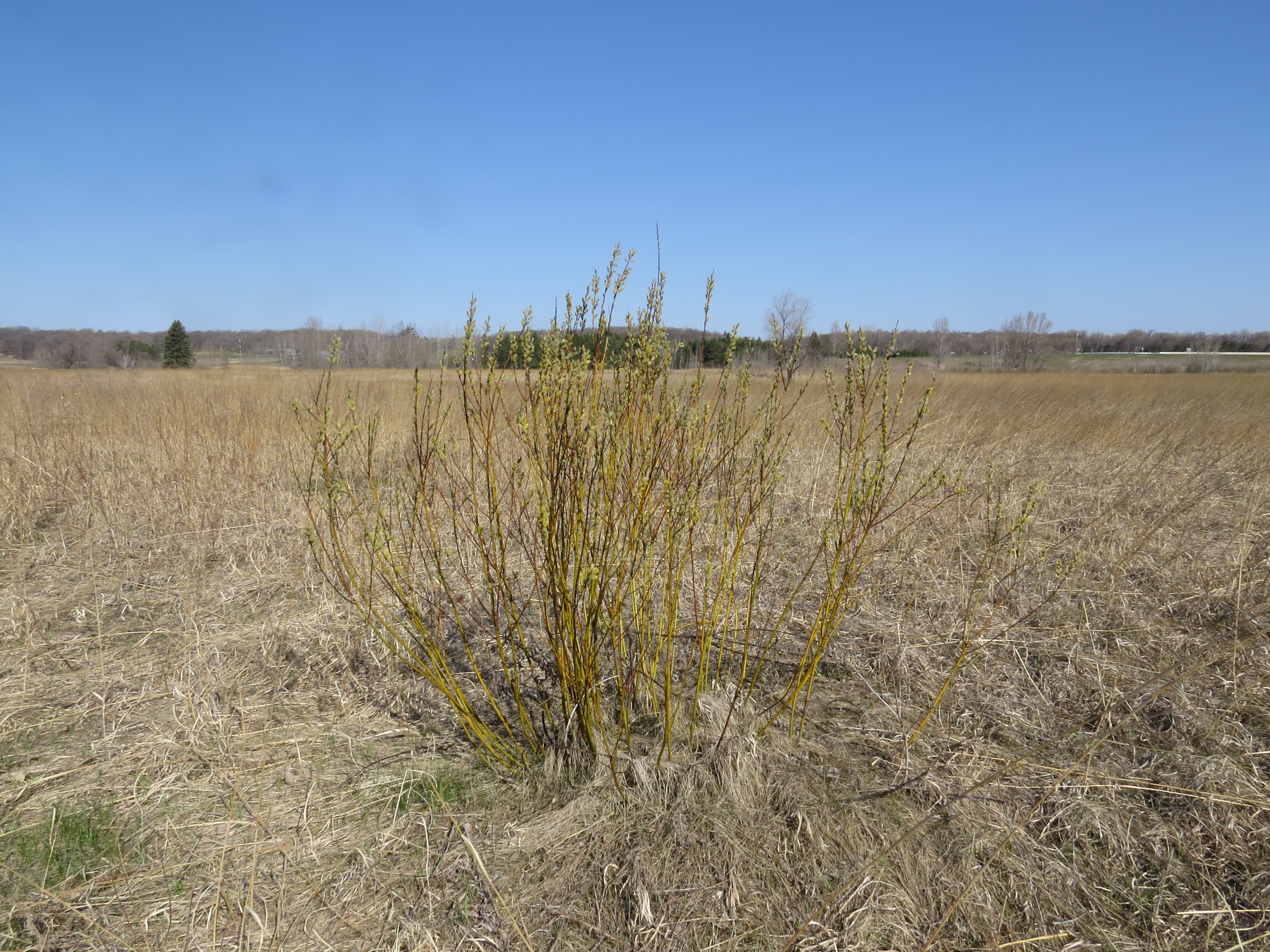
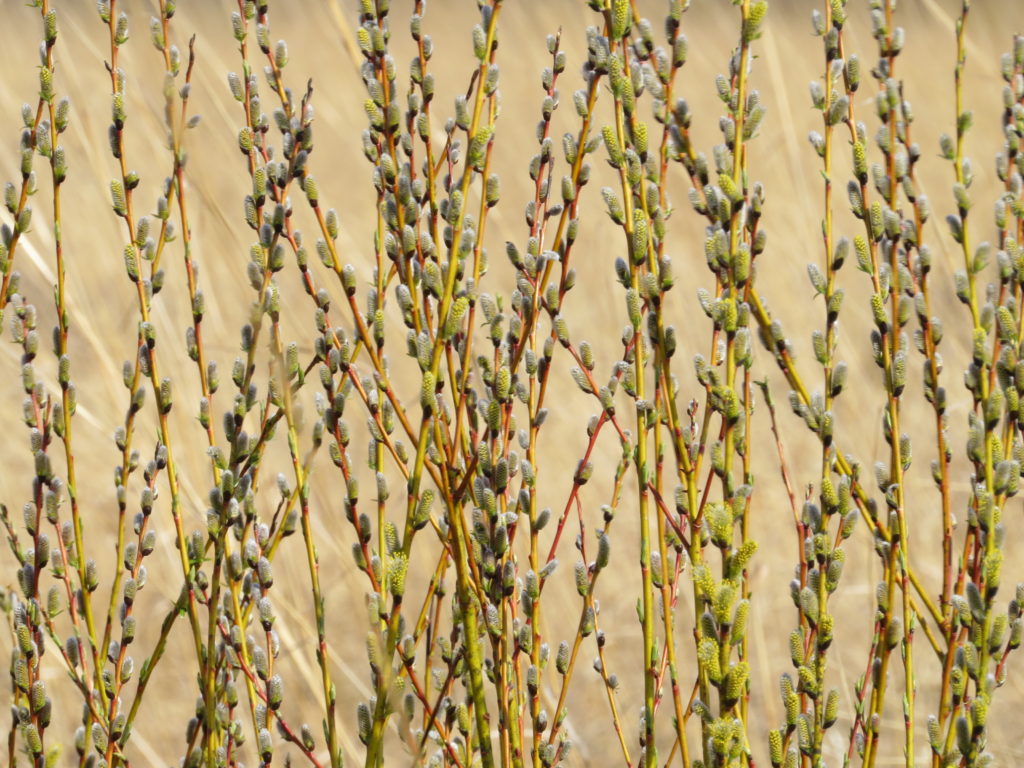
A yellow-stemmed willow, a woody plant, is out of place on the prairie. While the matted, dried grasses provide protection for perennials over the cold Winter, it takes much more time for the prairie to ‘turn green.’ The black, burned side soaks up the sunlight, which warms the earth, the root systems, and the growth crowns of the grasses and wildflowers that remain. As stark as the burned side looks now, it will be lush and green before the other side. There is promise in fire.
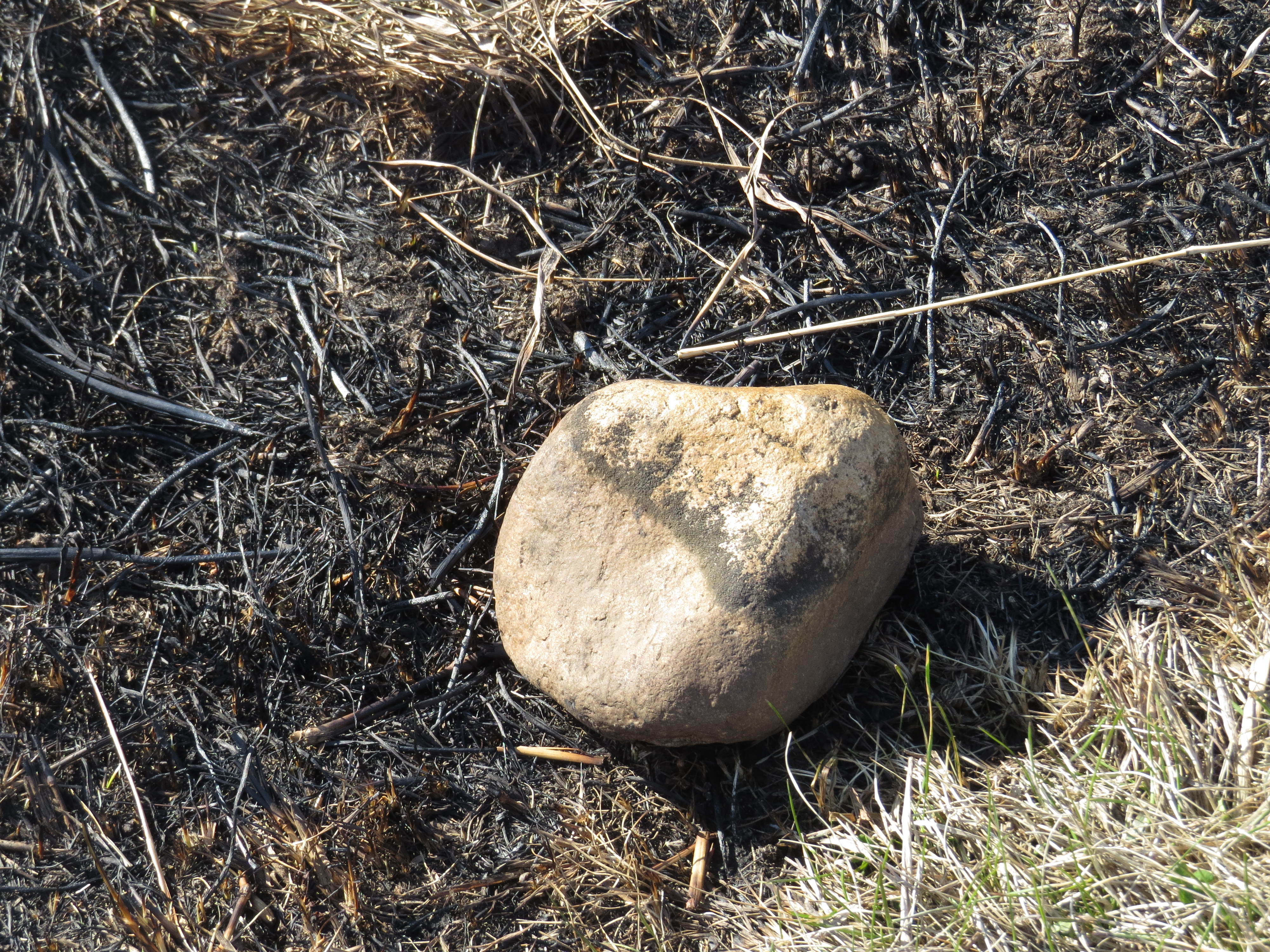
So although it doesn’t look like it, much remains after the fast-burning prairie fire.
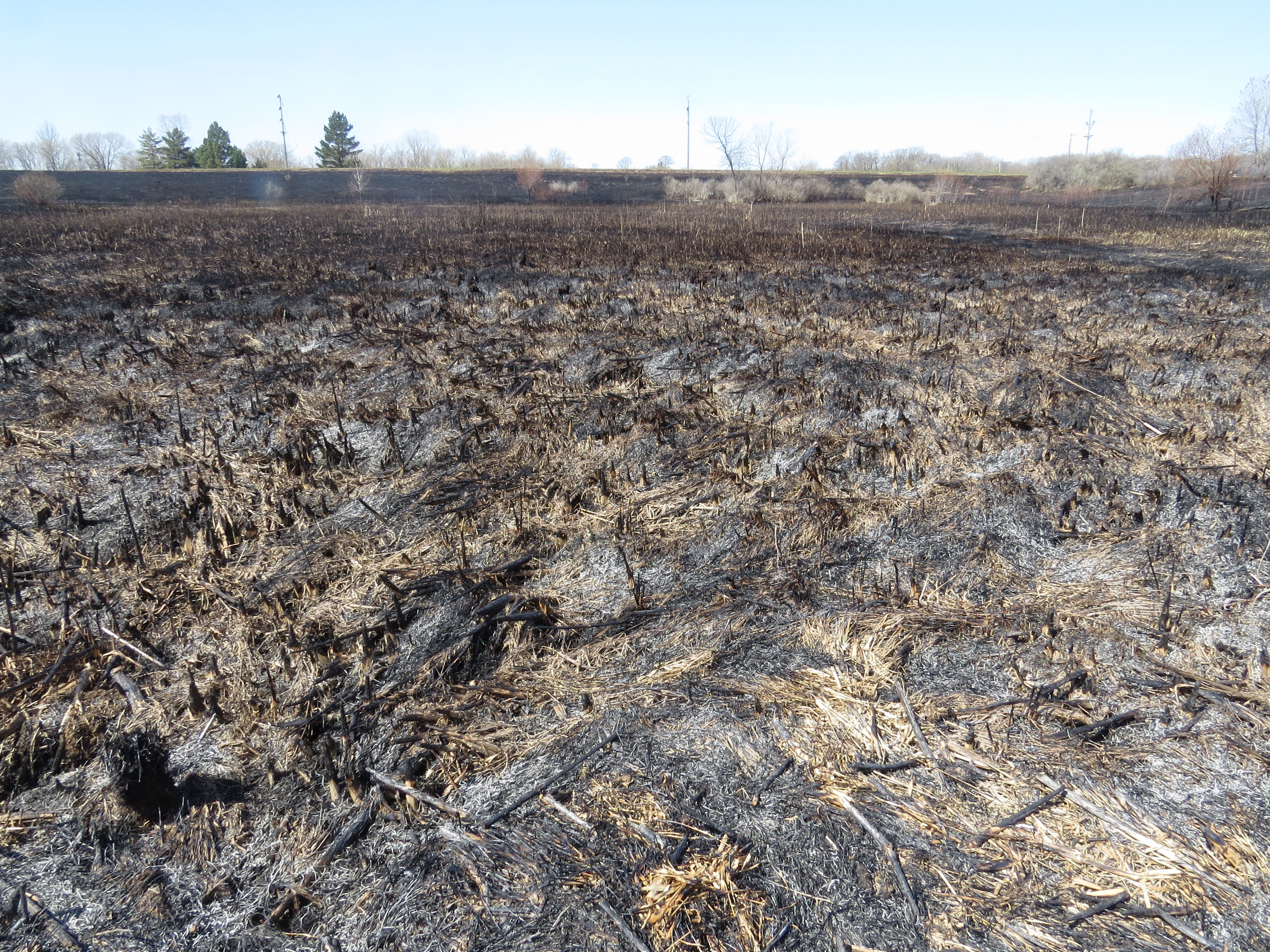
Since it was a relatively dry Winter without much snow, and early Spring was also fairly dry, the ‘wetland’ of cattails and rushes could also be burned this year.
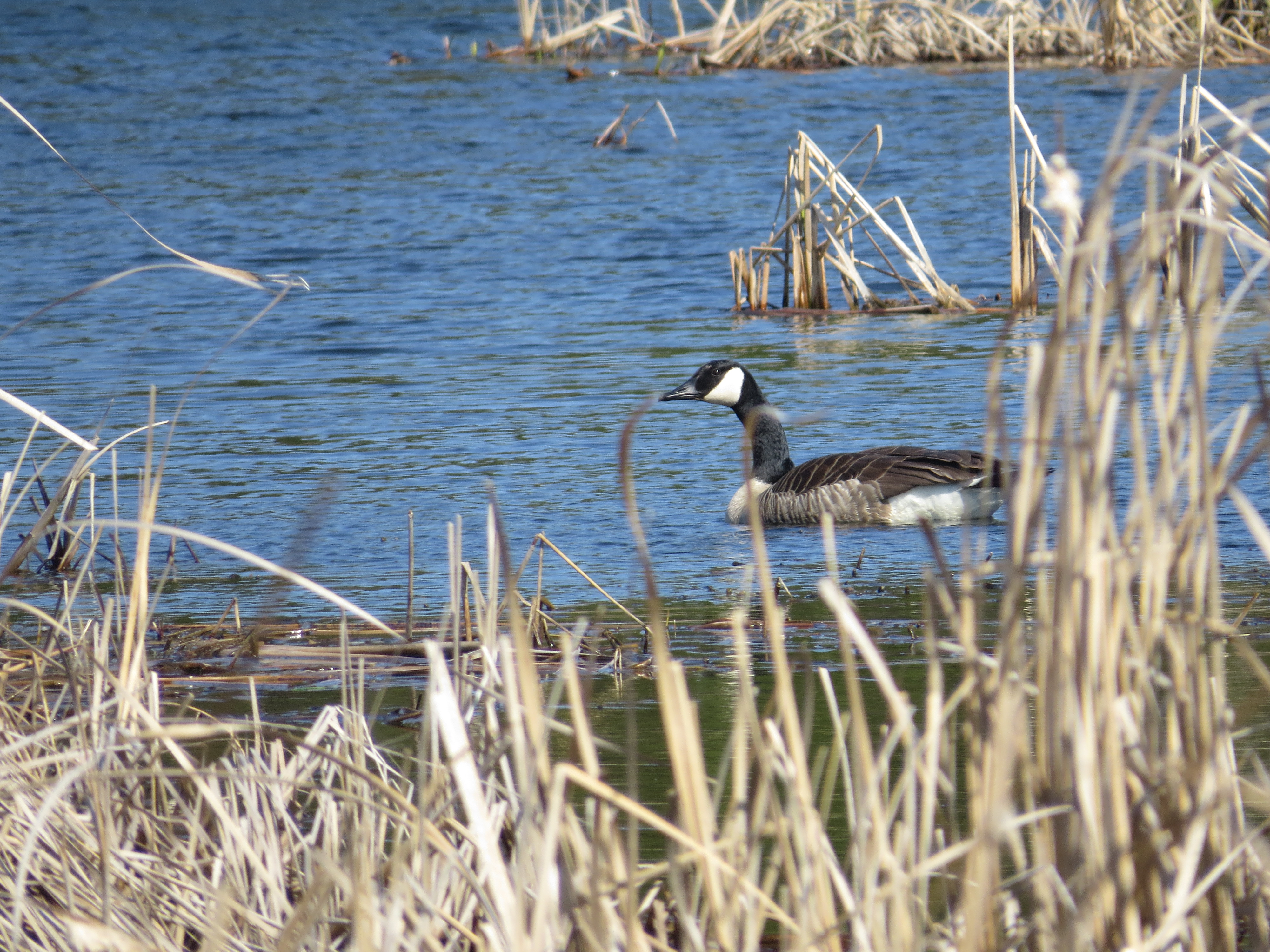
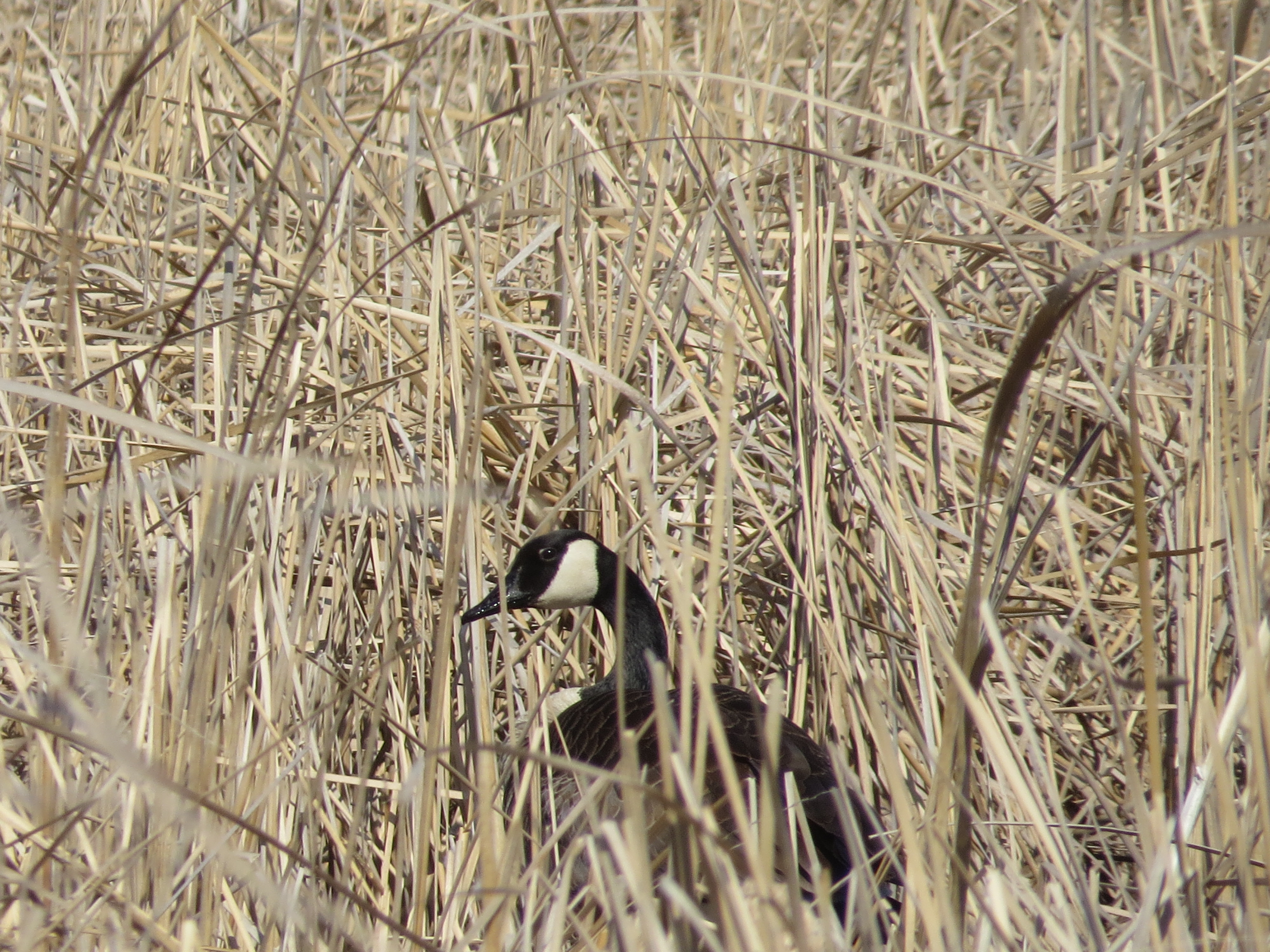
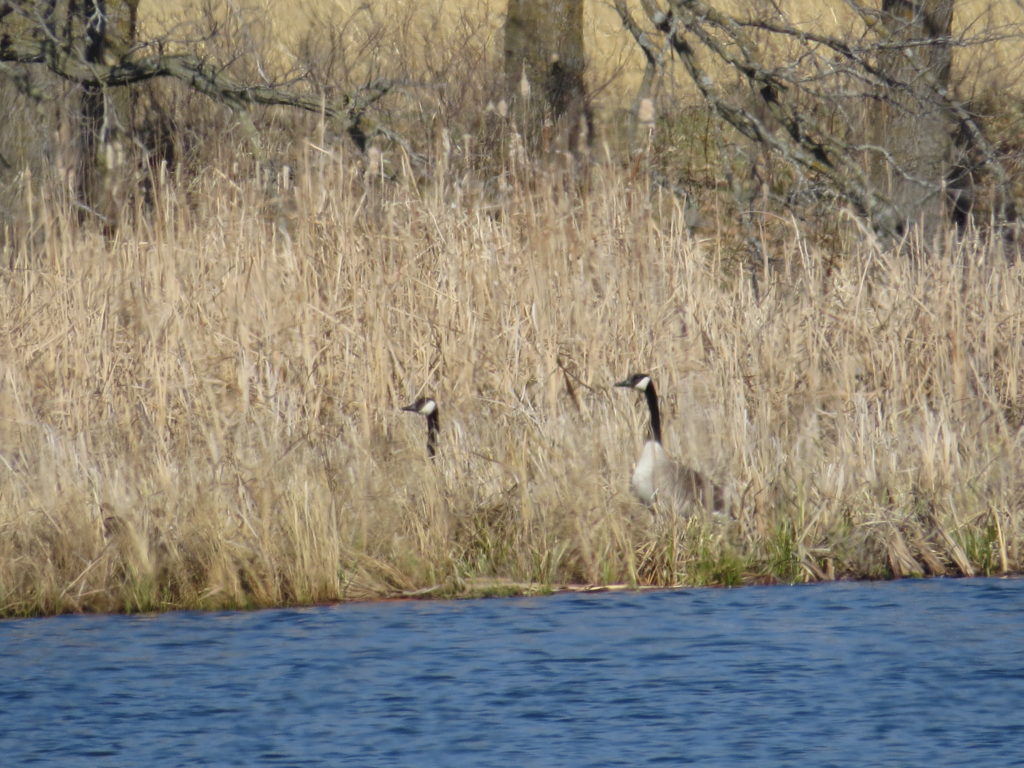
But on the other side, the old, brown stalks of cattails and rushes gave cover to the nesting waterfowl. This young-looking Canadian Goose was frozen in her long-necked posture when we walked by on the boardwalk. At first I wondered if she was injured, but later I realized that she was probably just alarmed for her nest of eggs.
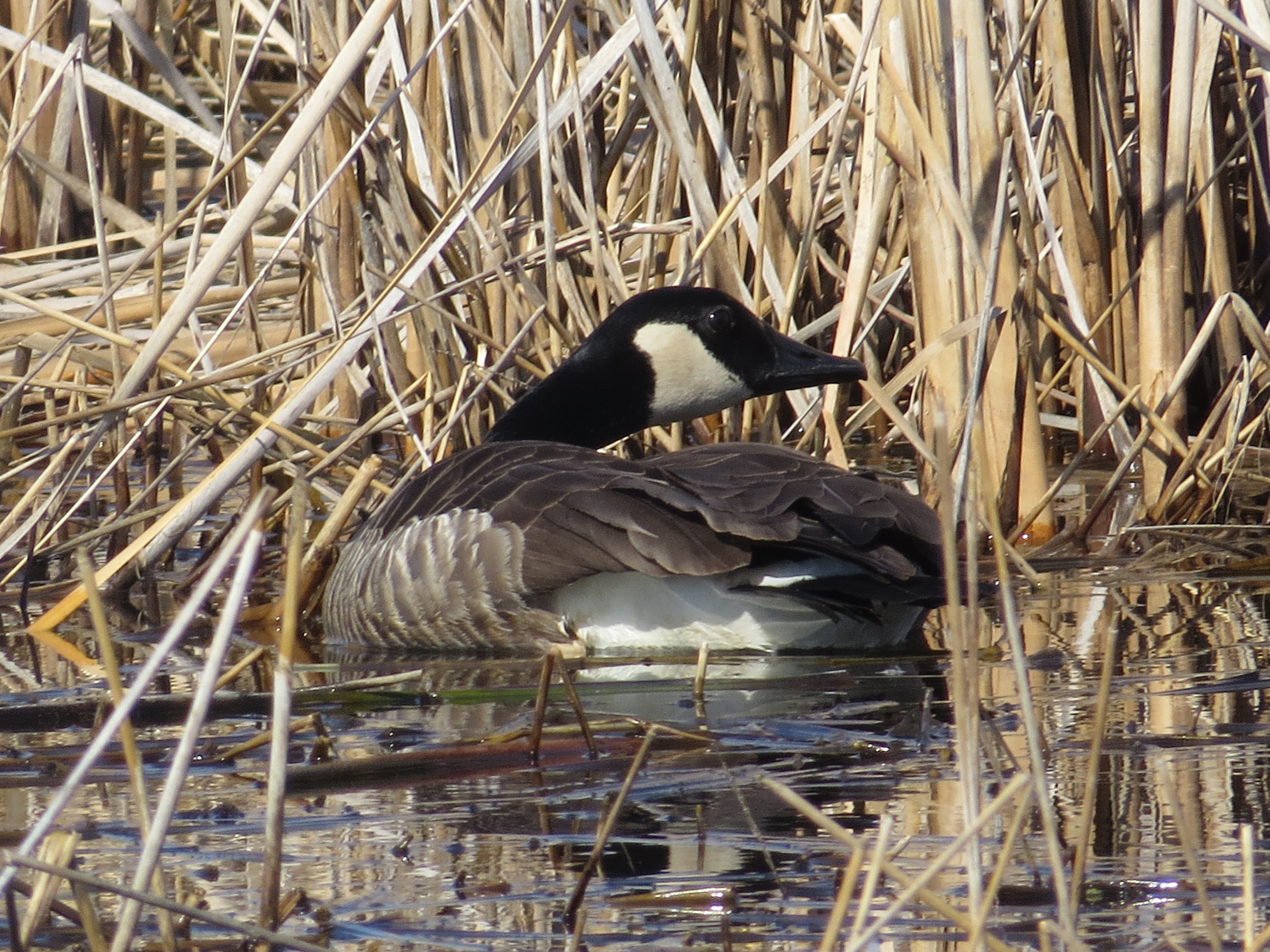
Her mate flew in as we walked on, so we backtracked to see that the female was in the cattails, probably at her nest. A nest full of potential.
As we left the prairie and wetlands, we entered the forest and saw what I was hoping to see—blooming Leatherwoods! The tubular yellow flowers hung from the tough, flexible branches of the understory shrubs.
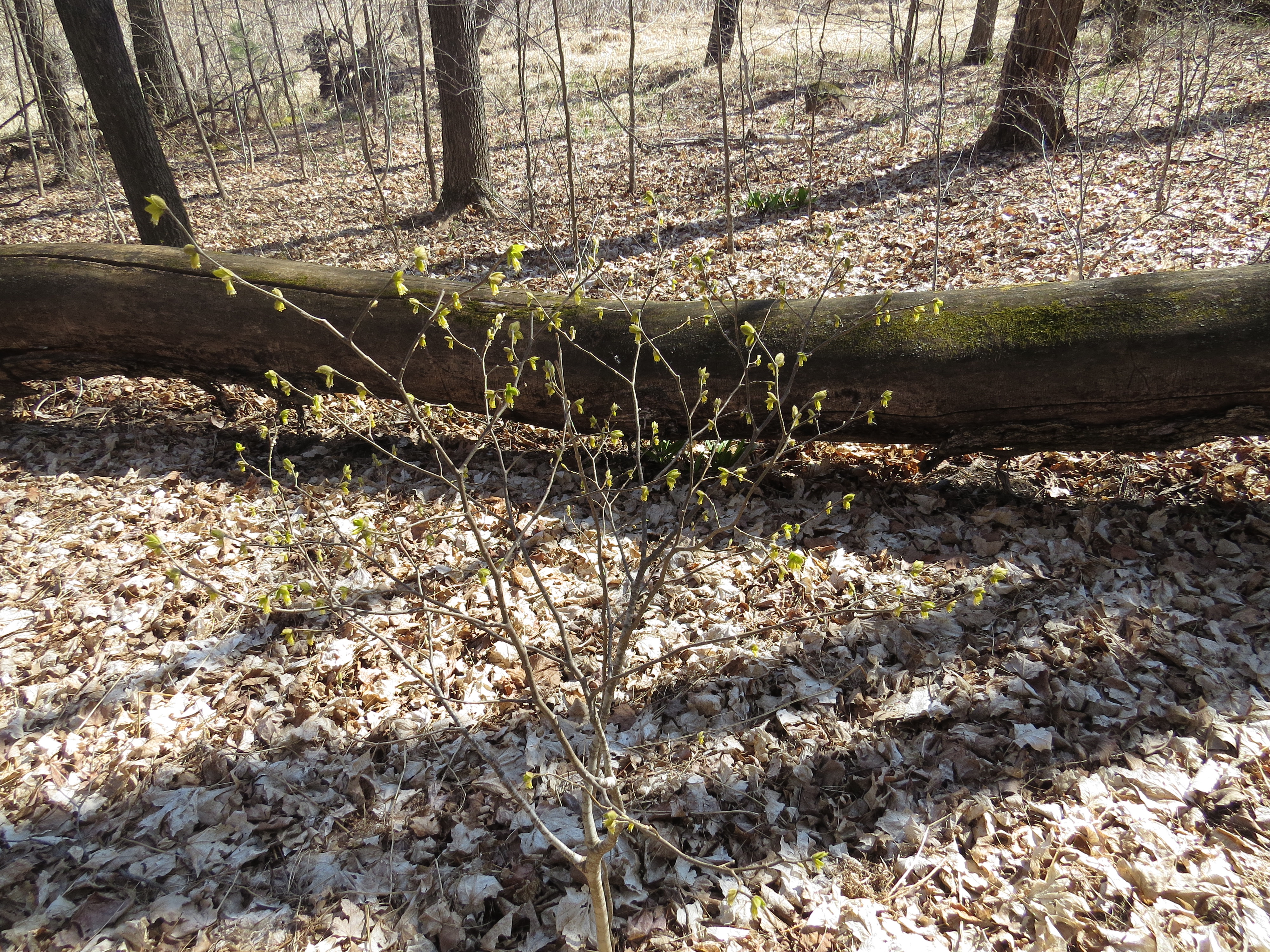
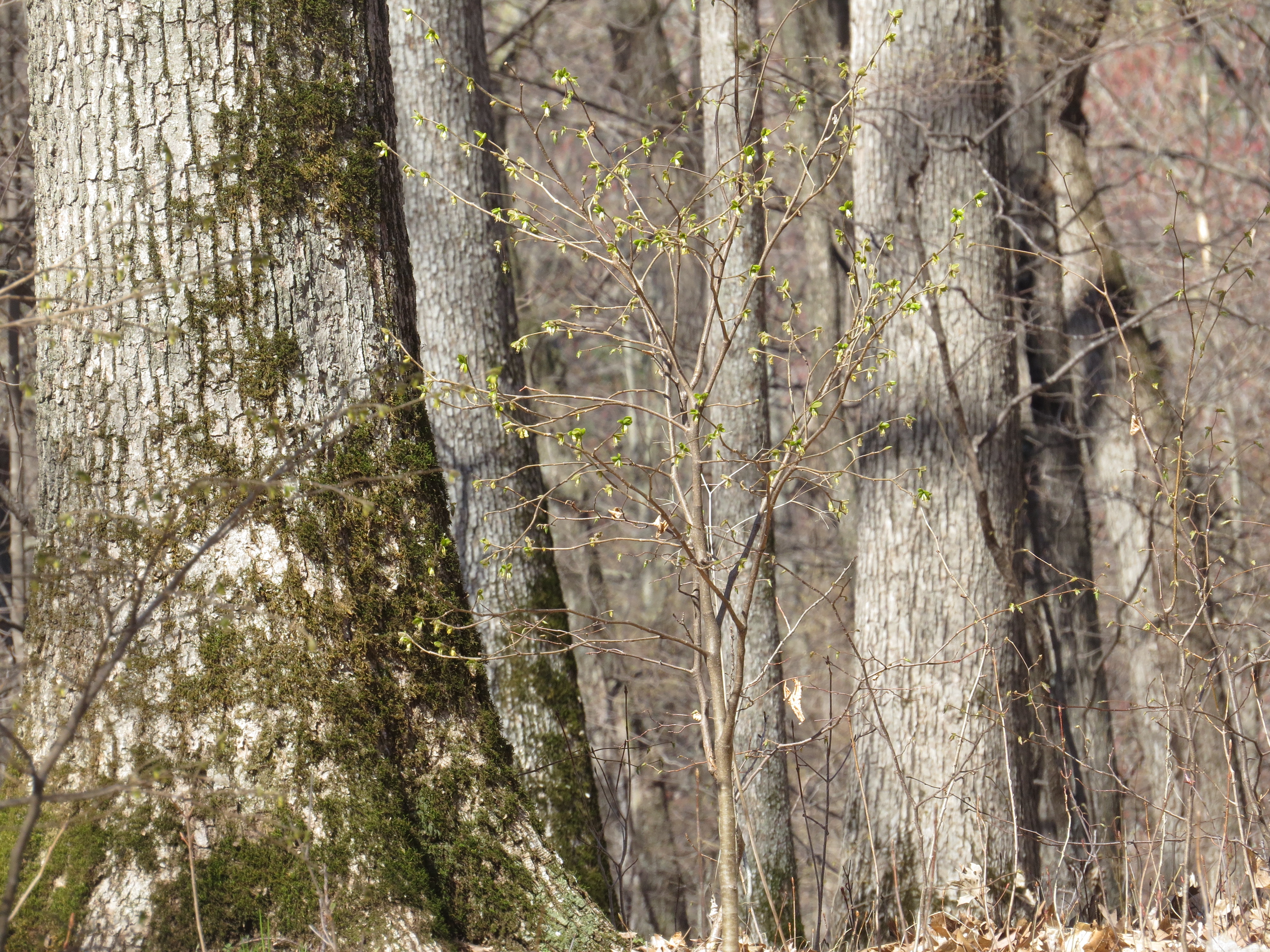
This little Leatherwood tree looked like a child to me—fresh and bright, strong and pliable beside the tall, mature forest trees. The embodiment of prospects and hopes.
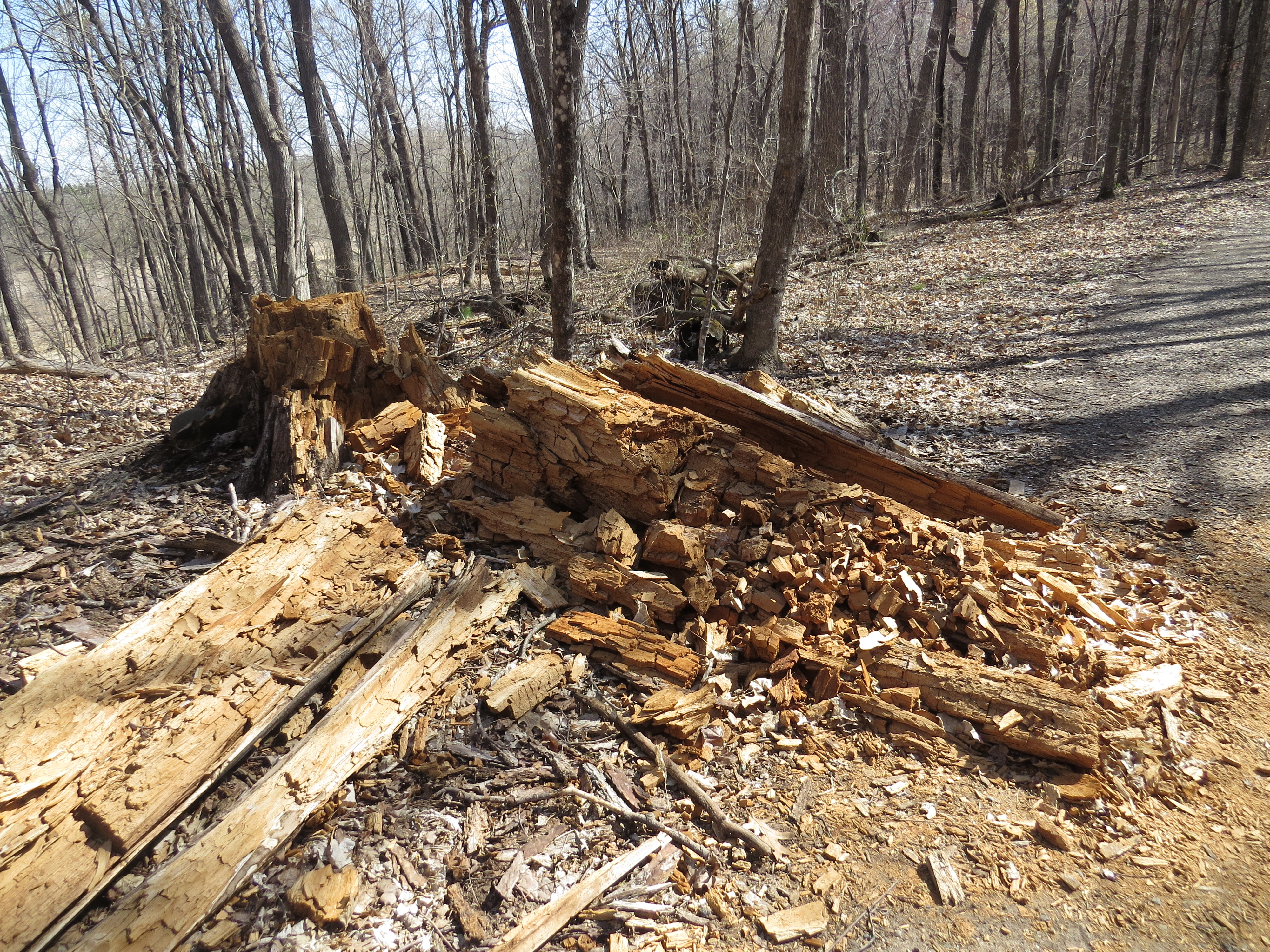
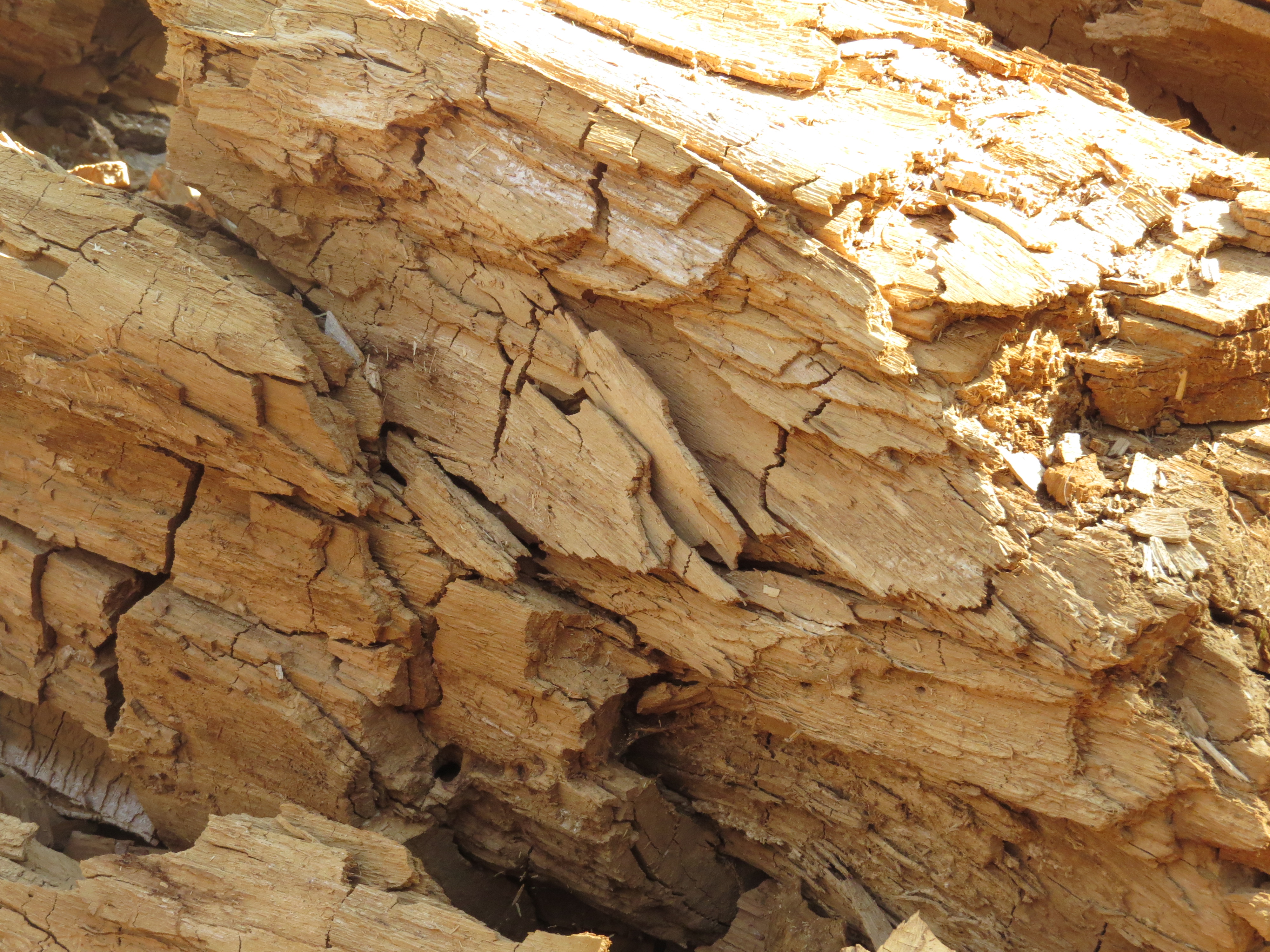
A fallen tree had scattered across the trail. It was unusual in that it had been so far-decayed while standing. Usually a dead tree falls and most of the decay process happens on the ground. The light amber wood of this tree was dry and crumbly, like a Jenga tower tumbling to the ground.
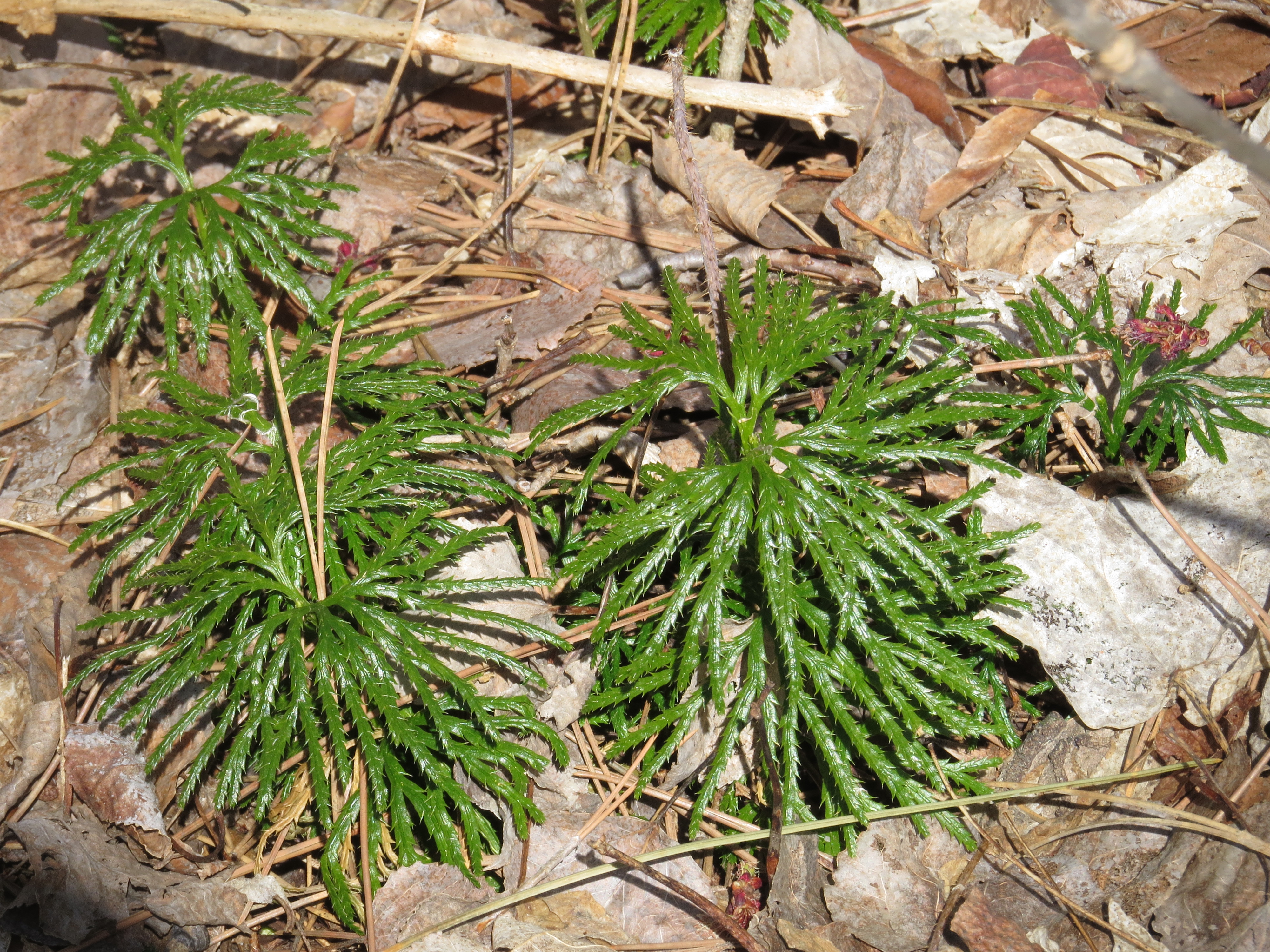
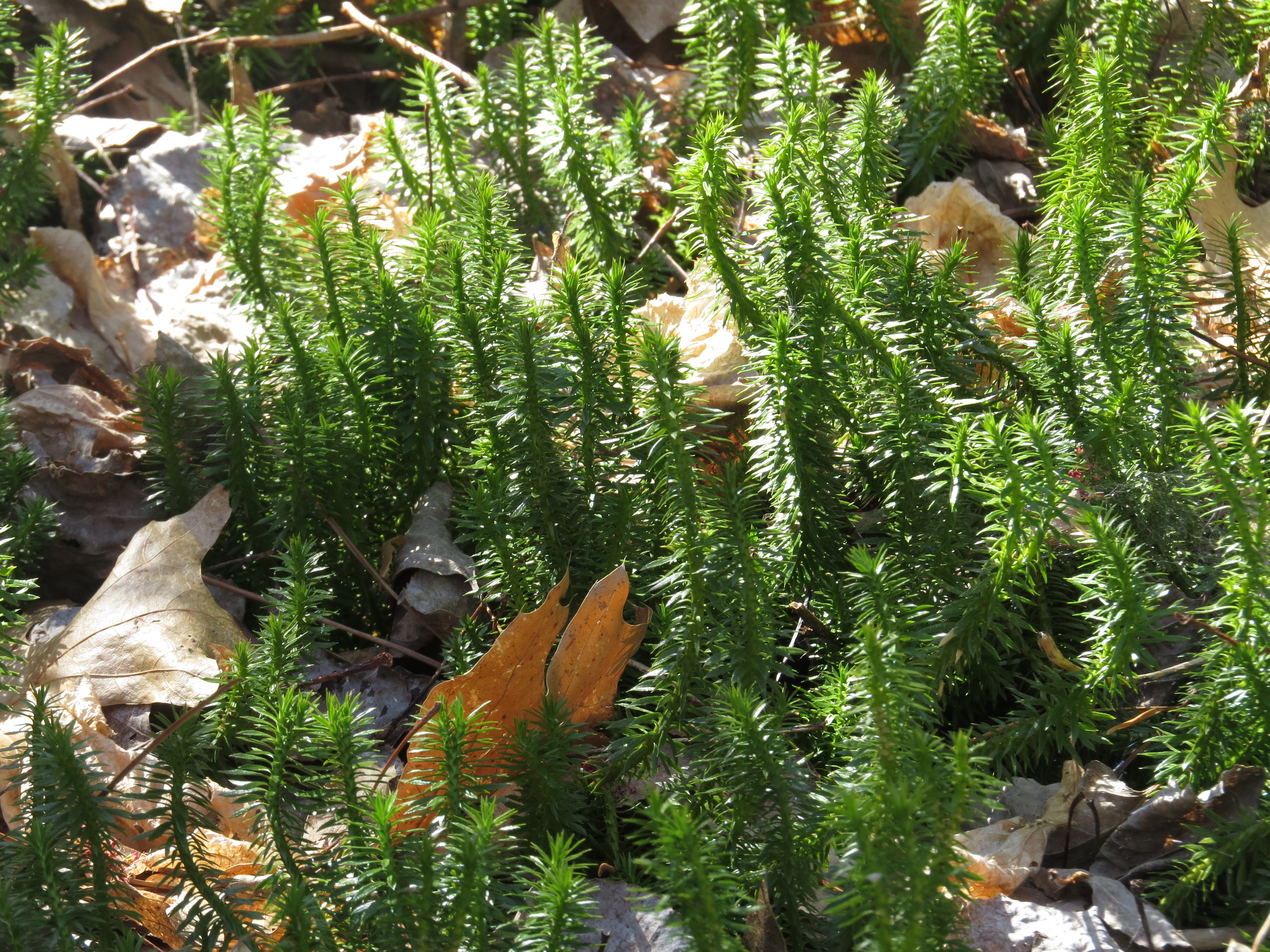
Bright, vibrant Fan Clubmoss and Shining Clubmoss grew from the old leaf litter, like miniature Cedars and Pines. Evergreens keep hope alive even through the longest Winters.
A small hanging nest, last year’s nest, was visible on the bare, budded branches. There will be new nest building and some re-use of old as the Spring promise of new eggs and new baby birds unfolds.
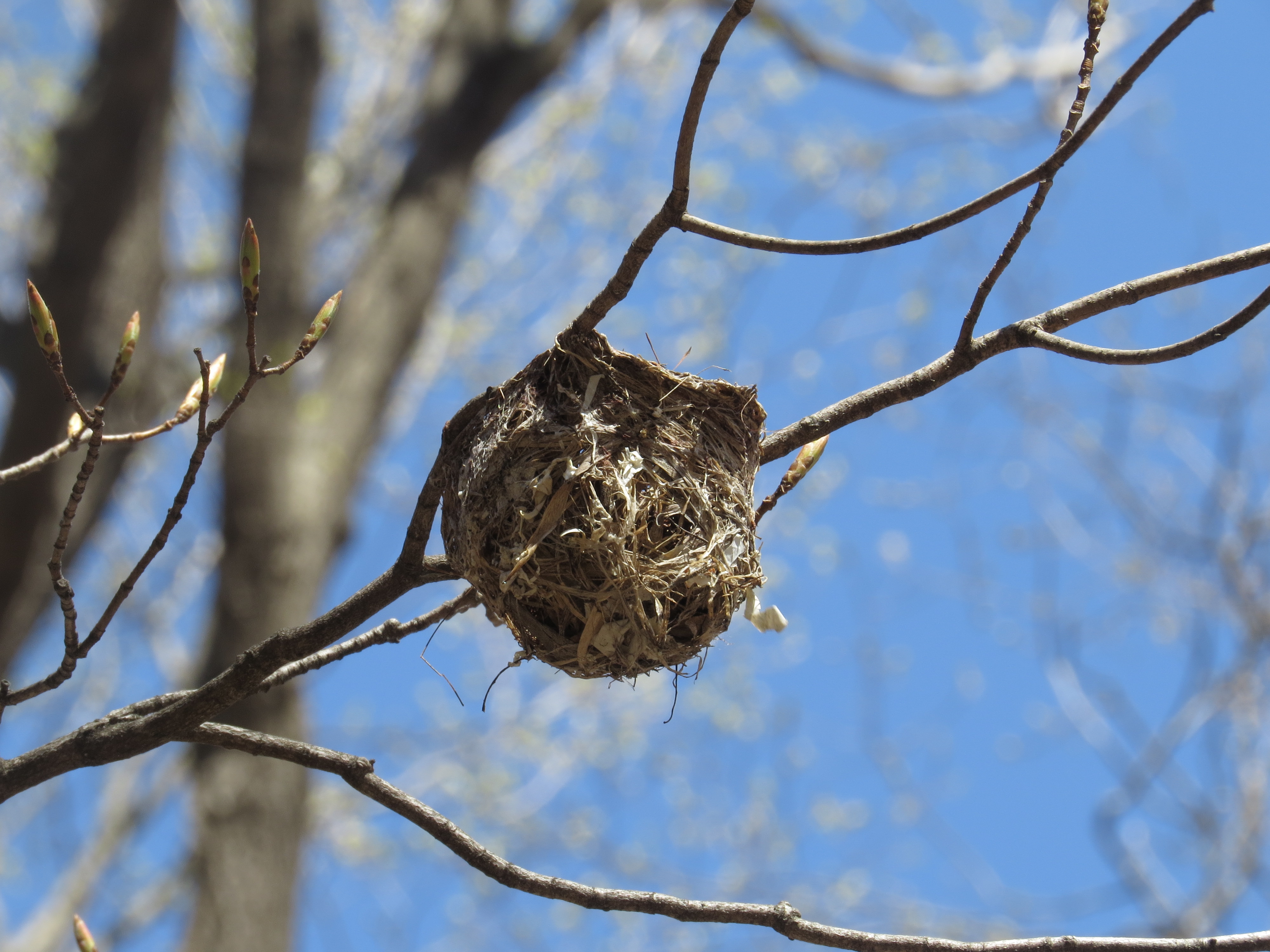
Nature embraces and expresses duality in most every aspect—the dark of night and the light of day, fire and ash and new, green growth, exposure and protection, decay and flexible growth. Should we think our lives would be any different? We are a part of Nature, her sons and daughters who start from eggs and grow and develop with protection and vulnerability. No matter what scorches us, our roots remain, and we can rise like the Phoenix from the ashes. That’s how sunsets show us promise, how first flowers display hardiness, how the young goose reveals potential, how Leatherwood demonstrates flexibility, and how the Jenga tree explains the cycle of Life.
No One is Exempt
There is a collective suffering in the world right now. We can’t ignore it like we have conveniently done in the past—when the suffering didn’t affect us or threaten us or kill us or shut down our businesses or make us lose our jobs or change the way we lived our lives. But now…now all of those things are possible or happening. No one is exempt. Some are better off than others, but no one is exempt.
Suffering is personal, even as we do this together as a world. It hurts our bodies, our spirits, our resolve, our bank accounts, our hearts. In the throes of our personal suffering, we slip into survival mode—we become less social, more focused on ourselves. We may lash out at those around us—the very ones we love and adore who are standing up in the shaky boat with us. Or we may project our pain and suffering onto ‘them,’ the ‘others’—the ones making the ‘rules’ to try to keep us from dying, the media who are informing us, our neighbors who aren’t following the ‘rules,’ the ones who think, act, look, or believe differently than we do. ‘They’ are to blame for the pain.
Personal suffering feels like living all alone in a hermit hut in the wilderness—and the roof leaks when it rains—and the cold wind blows in through the cracks—and there’s barely room to lay down—and the food is scarce—and there are creatures lurking about outside and inside the tiny hut….
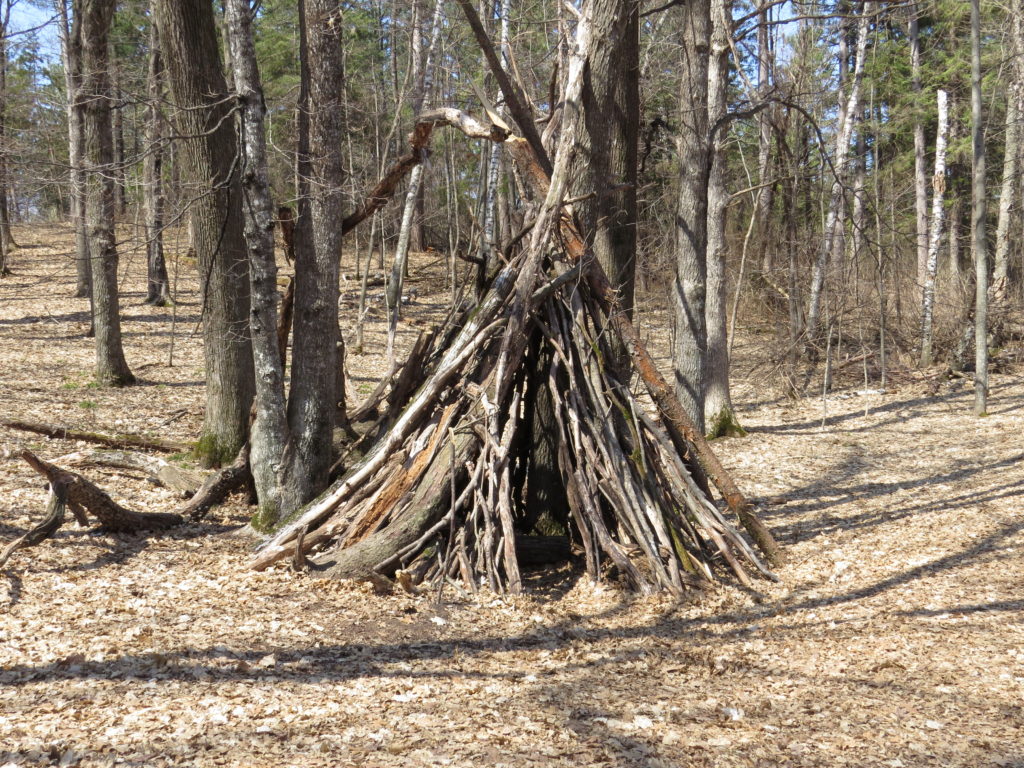
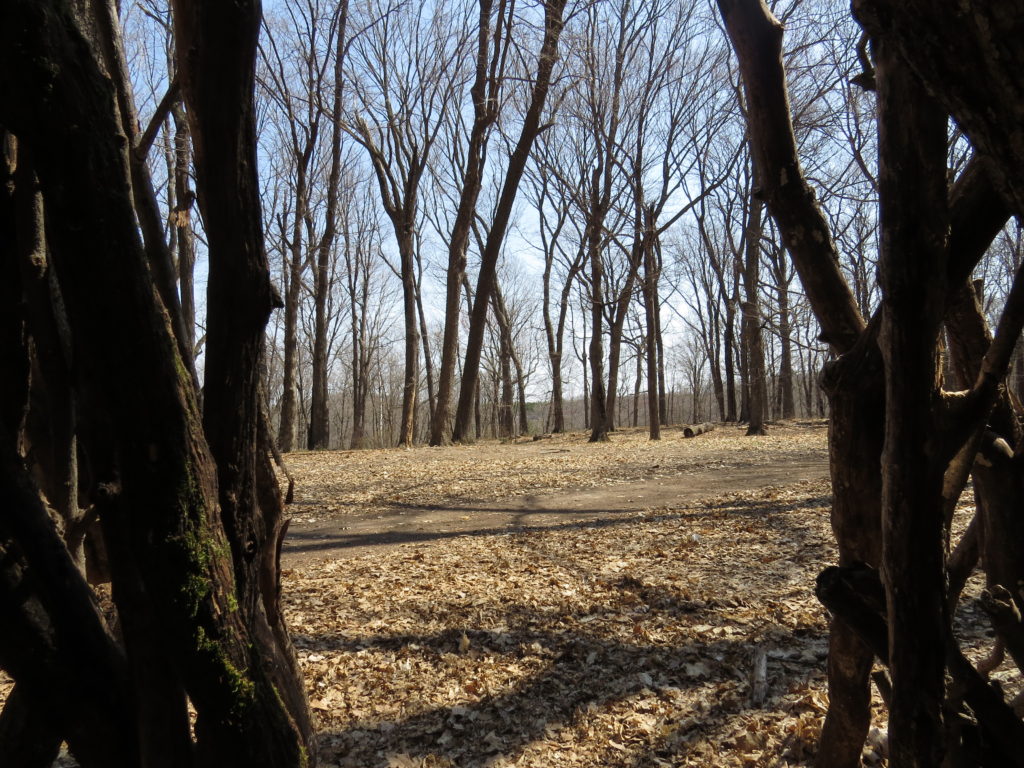
…and looking out, the world looks bleak and bare.
Chris and I hiked at Saint John’s Arboretum last weekend. We were not very far into our walk before I saw a sight that made my heart so happy—a cluster of Pasque flowers! Lavender sepals with delicate stripes, bright yellow stamens, soft, fuzzy stems to insulate them from the still-cold nights. Pasque flowers are the first prairie flowers to bloom; they signal the end of Winter, as they can bloom surrounded by snow. They are a sign of Spring and hope. (The word Pasque is derived from the Hebrew word for Passover.) So lovely!
Yellow and red-twigged Willows with yellow-flowering catkins burst into life around the lakes.
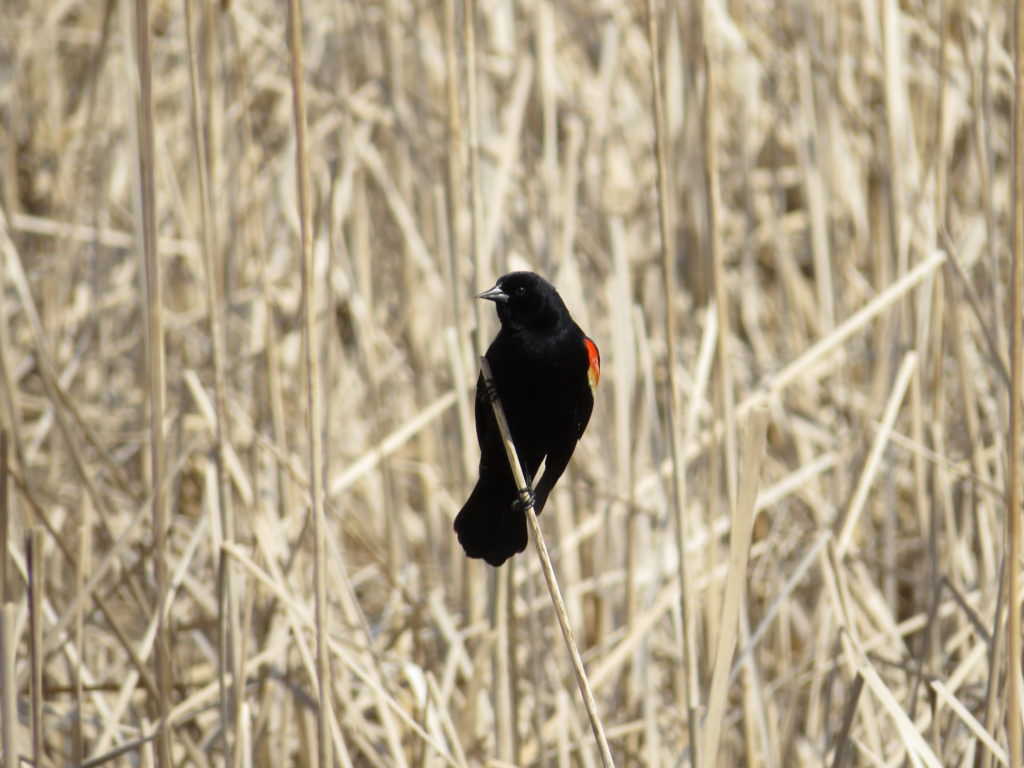
Red-winged blackbirds sang their joyous melody from their precarious perches on old Cattail stems.
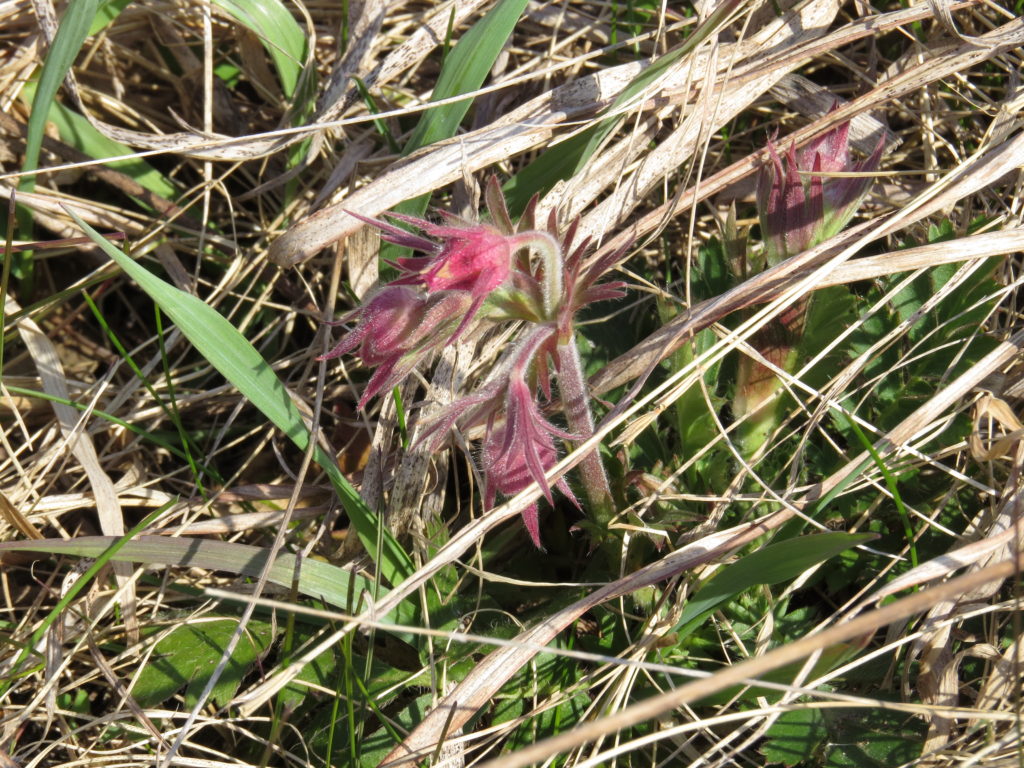
Another early-blooming grassland plant is Prairie Smoke. I scarcely caught sight of the pinkish-red flower buds in the old and new growth of the prairie grasses.
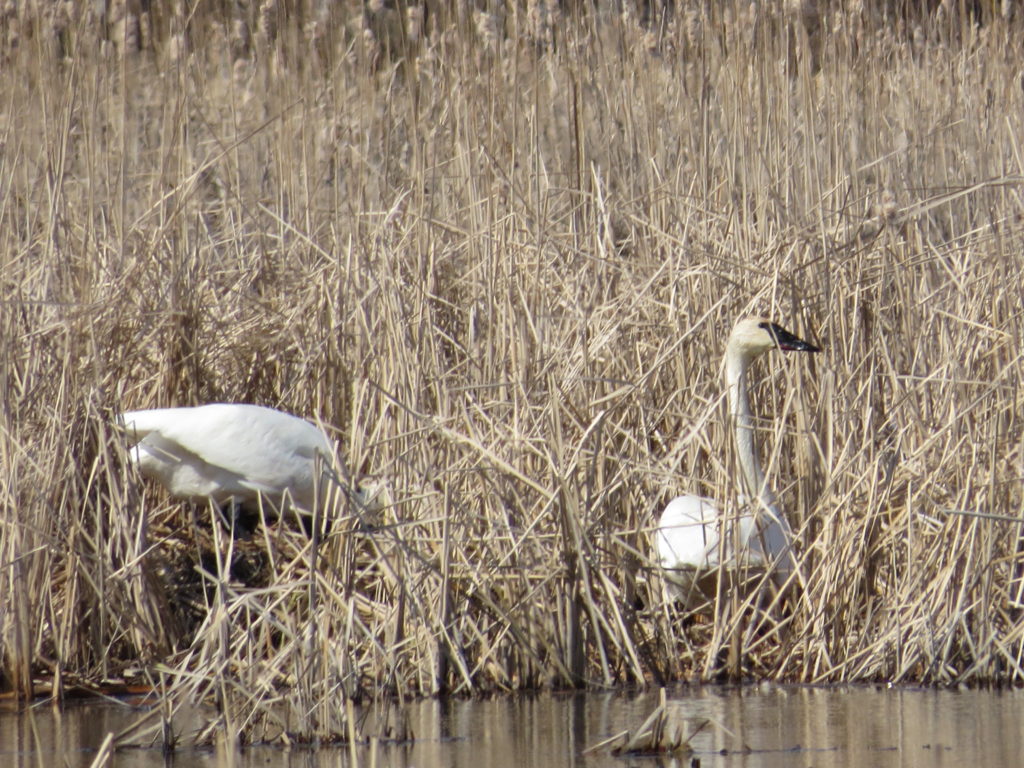
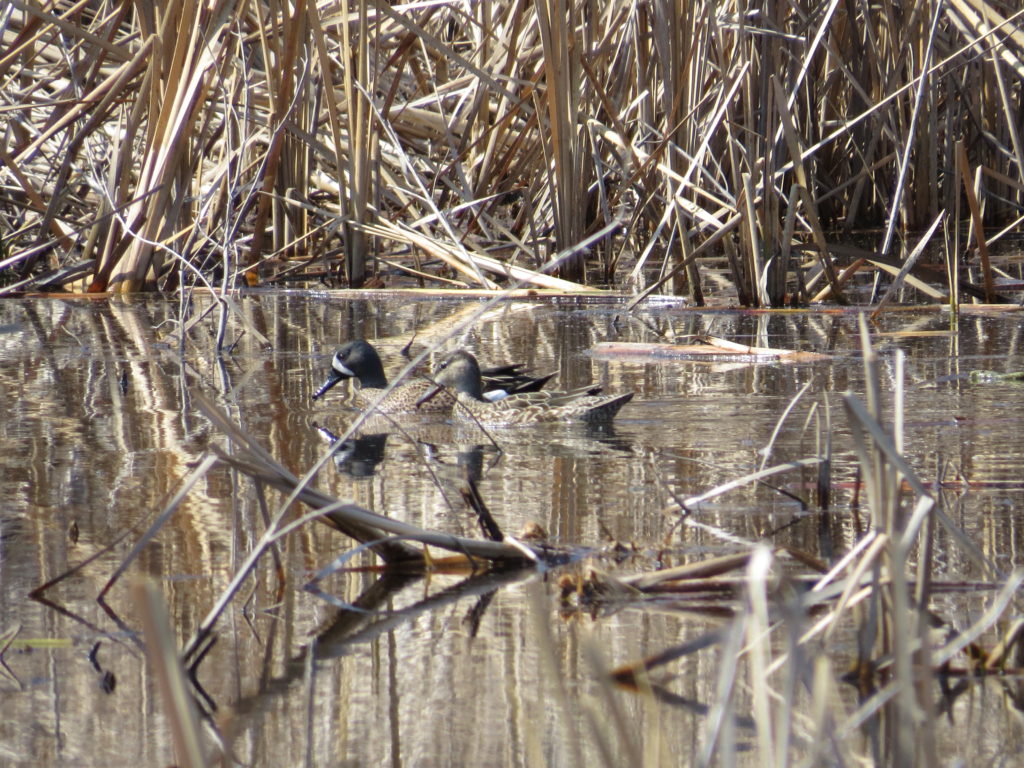
The waterfowl birds were in the predictable, peaceful process of nest-building, mating, and raising a family. The seasonable cycle, the circle of Life. New life among the remains of last season’s life.
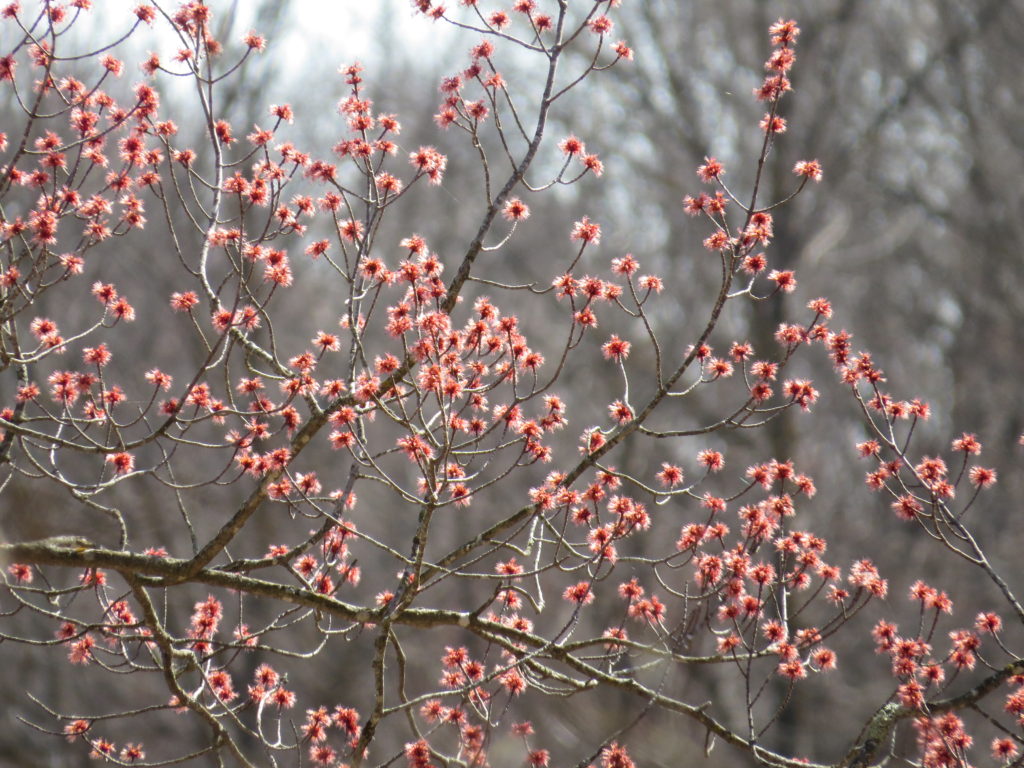
Trees at the Arboretum had just begun to bloom—the pinkish-red cloud of Maple tree blossoms…
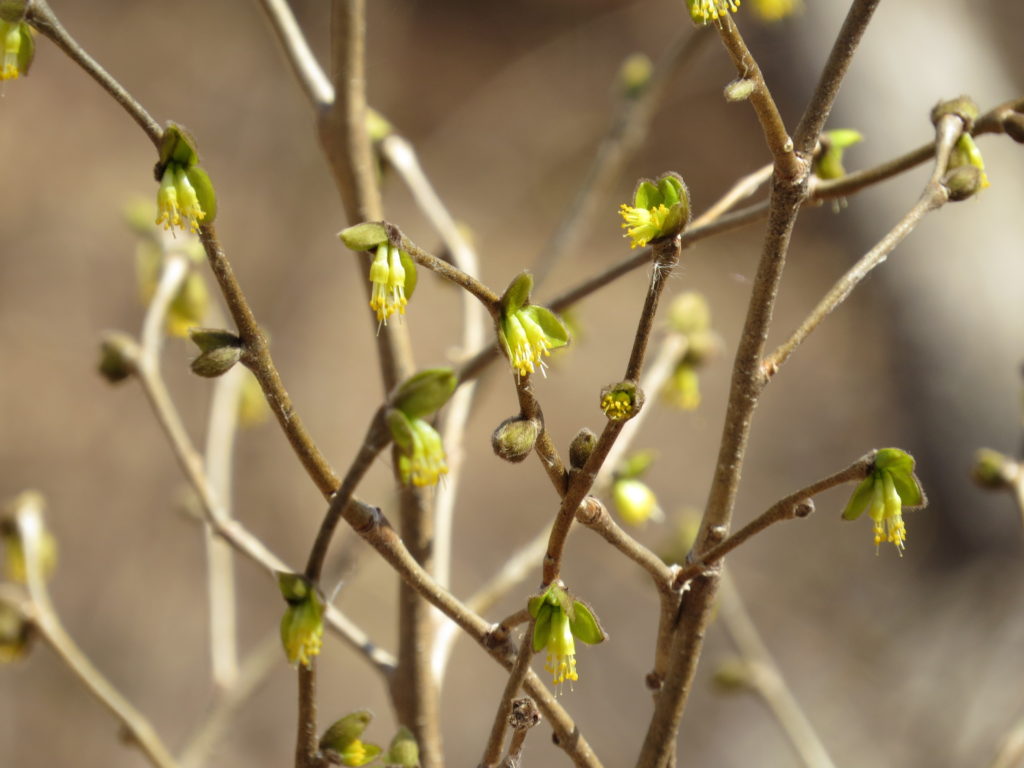
…and the delicate yellow blooms on my favorite flexible little tree, Leatherwood!
No matter the length or harshness of Winter, when the warming sun of early Spring hits the bare, leaf-covered ground in the forest, the Spring Ephemerals burst into bloom! They grow, flower, and fade away quickly, but they are an important part of the ecosystem being the first food for pollinators.
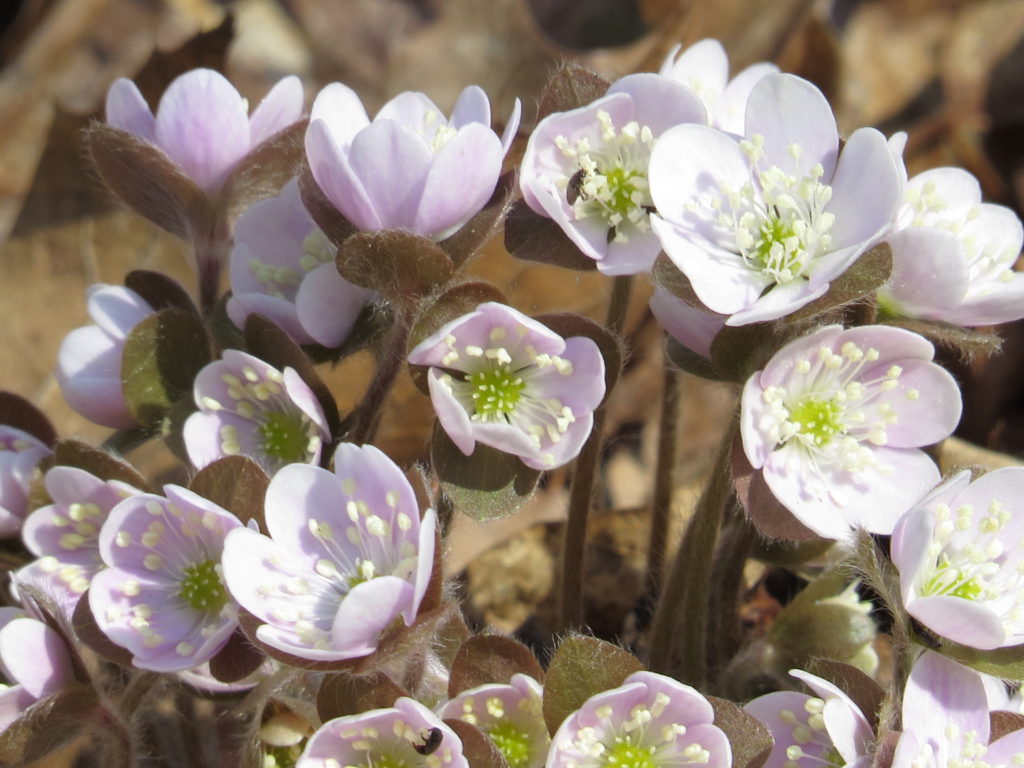
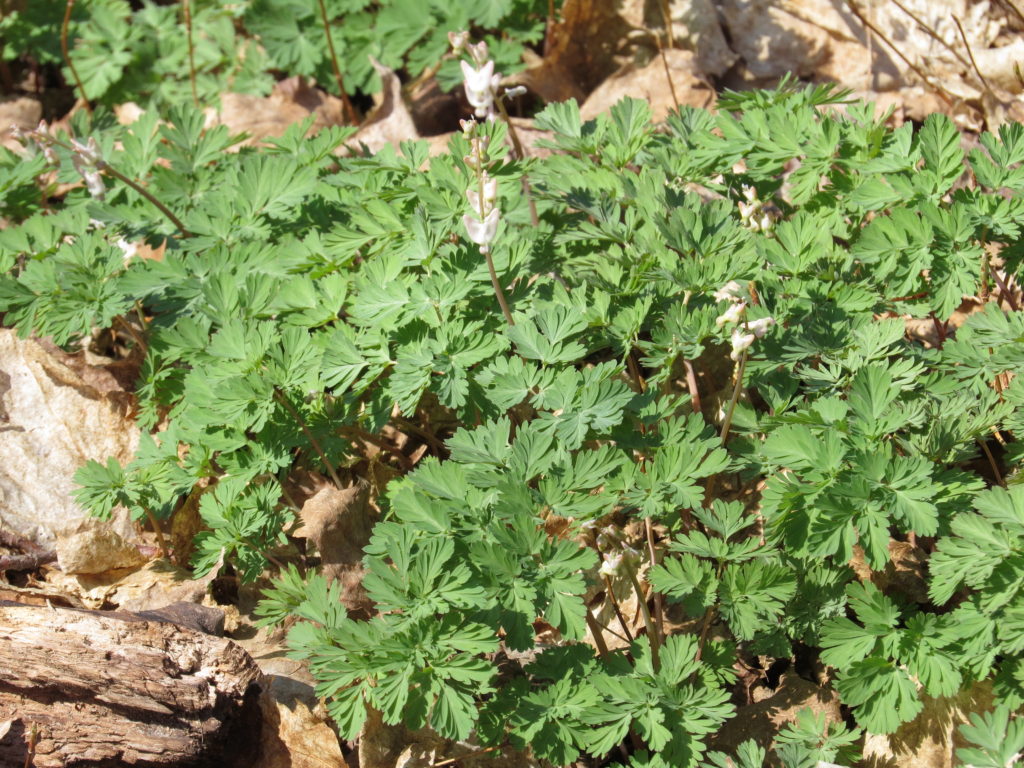
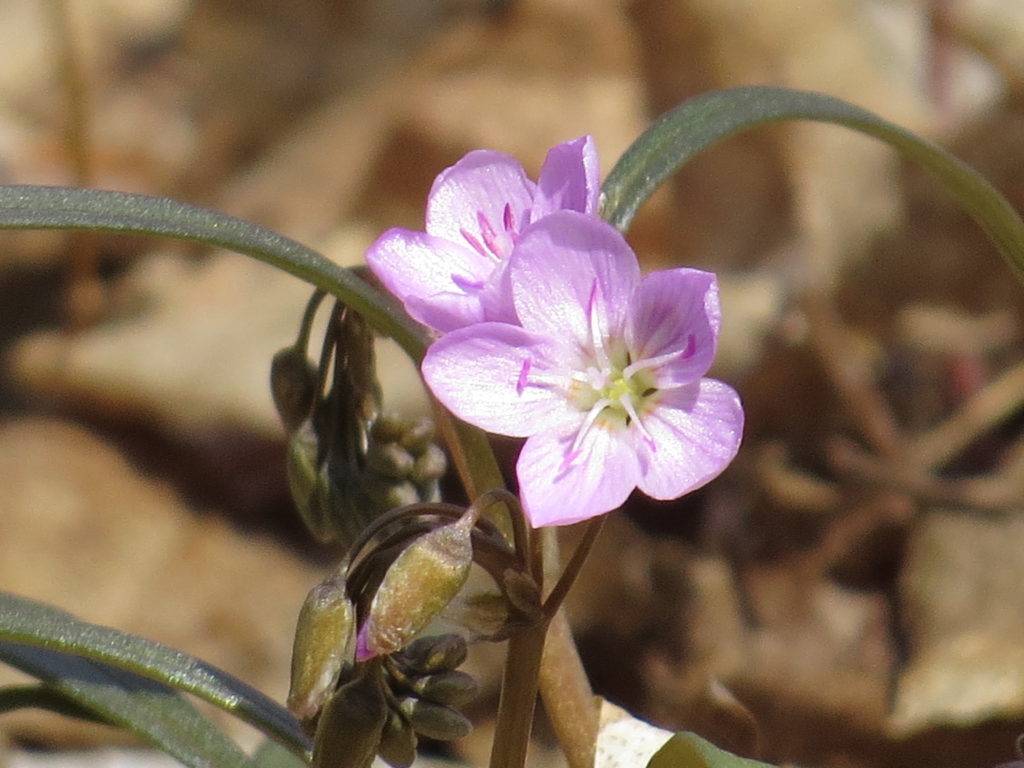
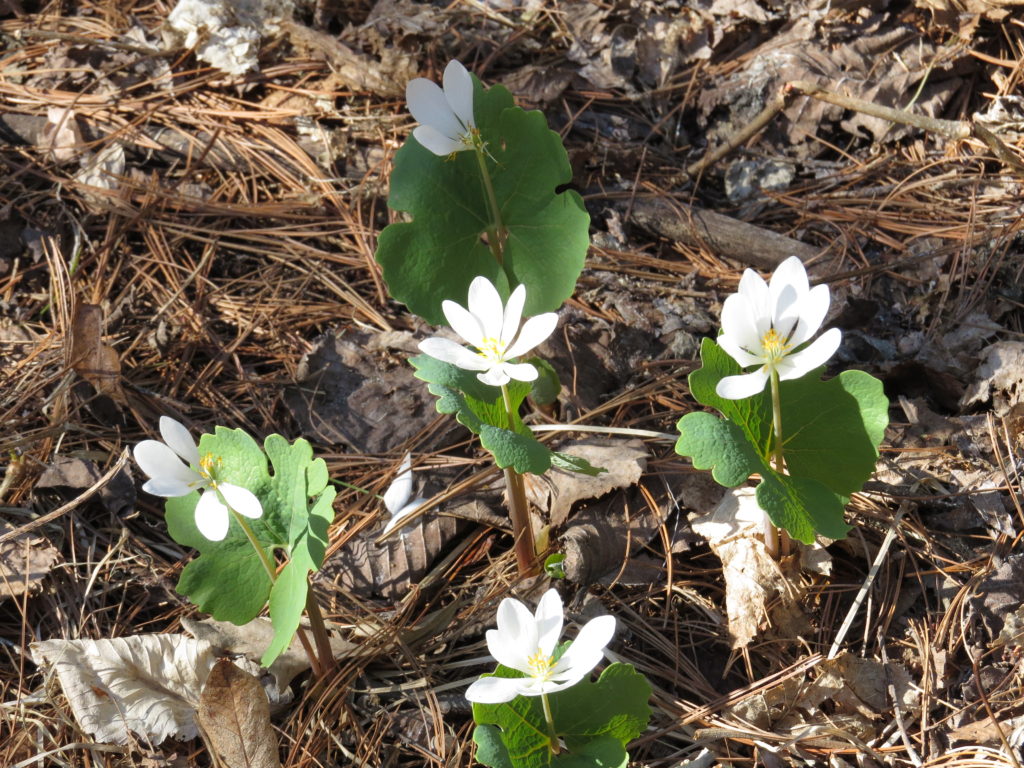
Life was coming to life again after a cold, seemingly lifeless Winter. It is the way of Mother Nature. The bleak and bare world was an illusion—the life force was hidden for a while, resting, quiet, gathering nutrients and strength, preparing itself for the growth and renewal of Spring.
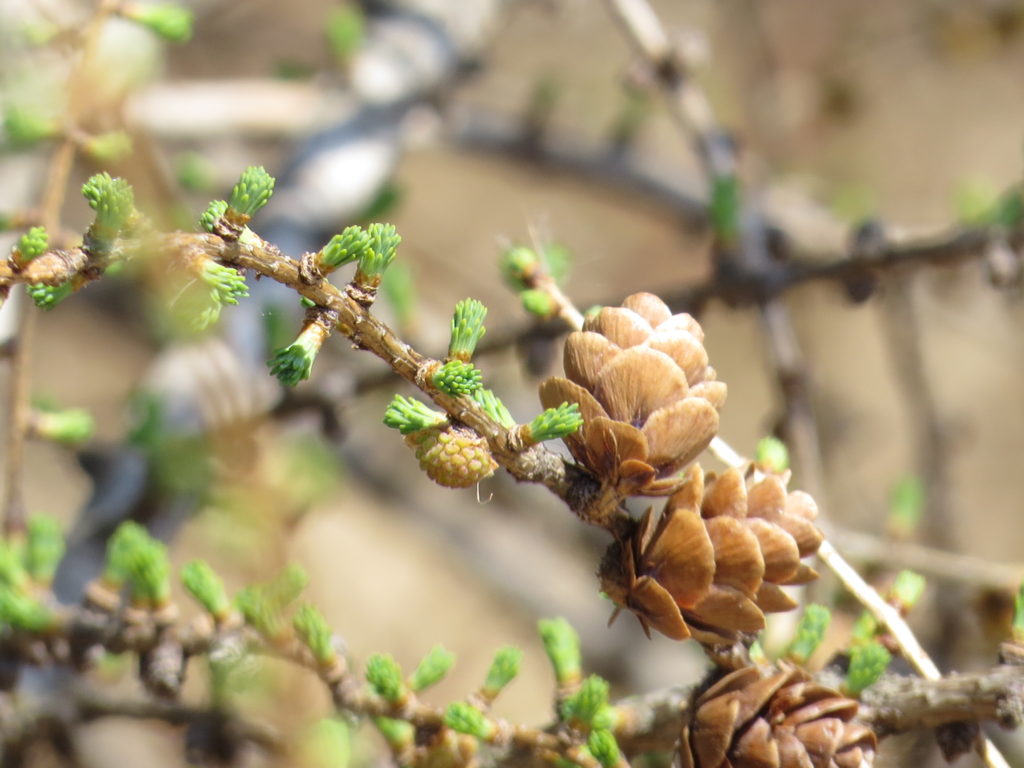
Mother Nature brokers in miracles.
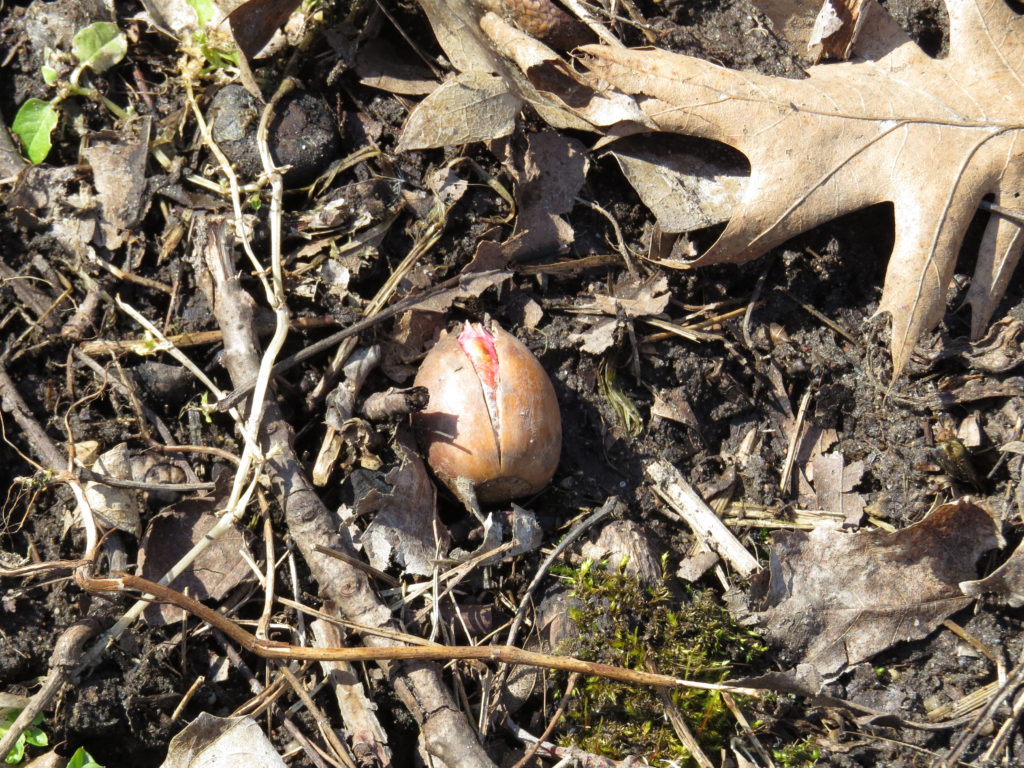
What if no one was to blame for the pain and suffering of this virus? Not China or Trump or Democrats or Republicans or immigrants or Pelosi or that woman governor or fill-in-the-blank. That’s not to say that no one has responsibility or that no one has made mistakes or even that no one hasn’t purposely tried to injure or subject another group of people to hardship. In leadership there is accountability, responsibility, and consequences. Blame is a useless act of projection based on trying to get rid of our own very real pain. Suffering is the illusion of a bleak and bare world. It is the winter of our lives. It is living in a hermit hut and hating every minute of our existence. It is lashing out at those we love and those we oppose. What if pain and suffering are actually harnessing our virtuous qualities to pull us away from the perils in the old life? What if we are resting, a needed rest, in order to burst into new growth? What if right beyond our suffering is a blooming, melodious, life-creating world? Nature is the harbinger of miracles. No one is exempt from the Grace.