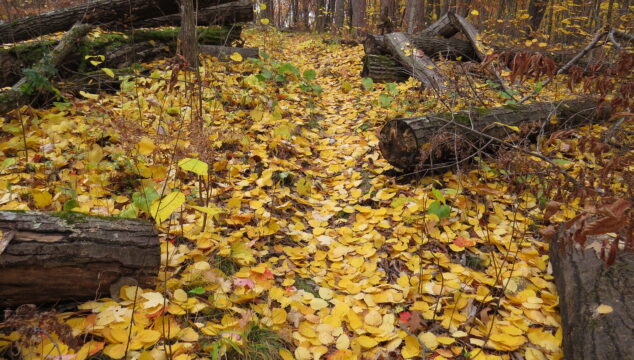
Come walk with me in the peak Autumn beauty of the Northwoods. To say that I love this time of year is an understatement. Most everyone can appreciate the colorful falling leaves---it reveals the 'true self' of a tree when its leaves are no longer producing chlorophyll. Their true colors are revealed, and there is something simple … [Read More...]
Begin, Again, at the Beginning
I wanted to begin the New Year at the beginning of the Mississippi River—it seemed like a wonderfully symbolic way to leave the old year behind and begin again with the new year. It was the antithesis of the Times Square chaos of people, noise, and celebration; it was the three of us—Chris, Emily, and me, it was unbelievably quiet, and the fiesta was a frolic in the frosty forest on snowshoes. We walked out of the old year and into the new year with hope and the renewal that comes from a flip of the calendar. It is like a universal ‘permission’ to lay down the things we no longer want to carry and an ‘encouragement’ to begin again. Little did we know on that day that in one week’s time we would have to ‘pick up’ what we did not want to carry and begin, again, with another round of January grief.
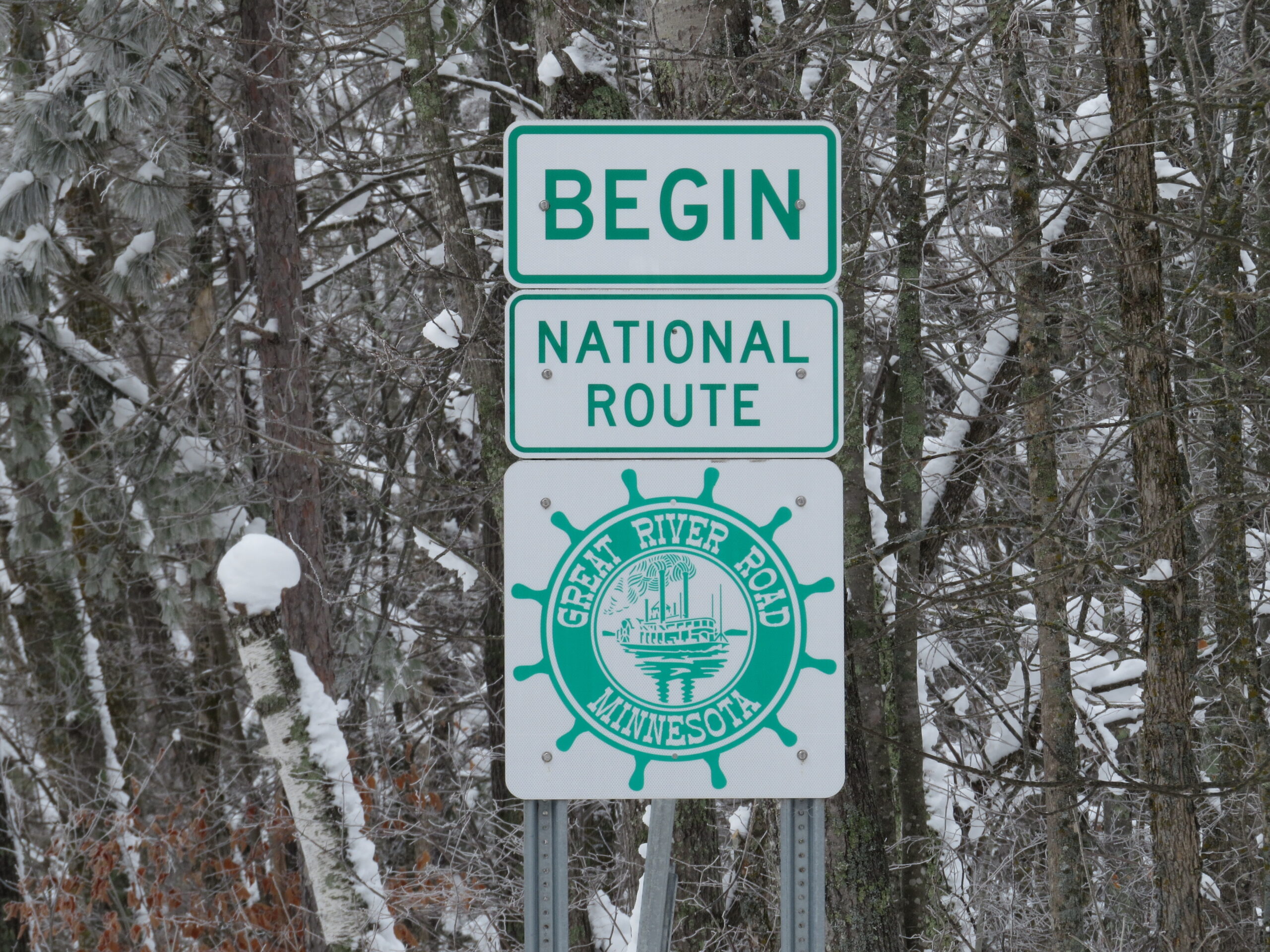
With the beginning of the Mississippi River is the start of the Great River Road—3,000 miles of National Scenic Byway that runs on both sides of the River at various places through ten states. Here at Itasca State Park is the beginning of the Great River Road; it is the same road we turn off from to get to our home in Sartell; it is the same road that goes through St. Paul where our son Aaron lives; it is the same road that goes through tiny Cassville, Wisconsin where Chris’ folks were born, raised, and buried; and it is the same road that goes through the metropolitan area of St. Louis, Missouri where a little girl named Mary Brake lived at the beginning of her life.
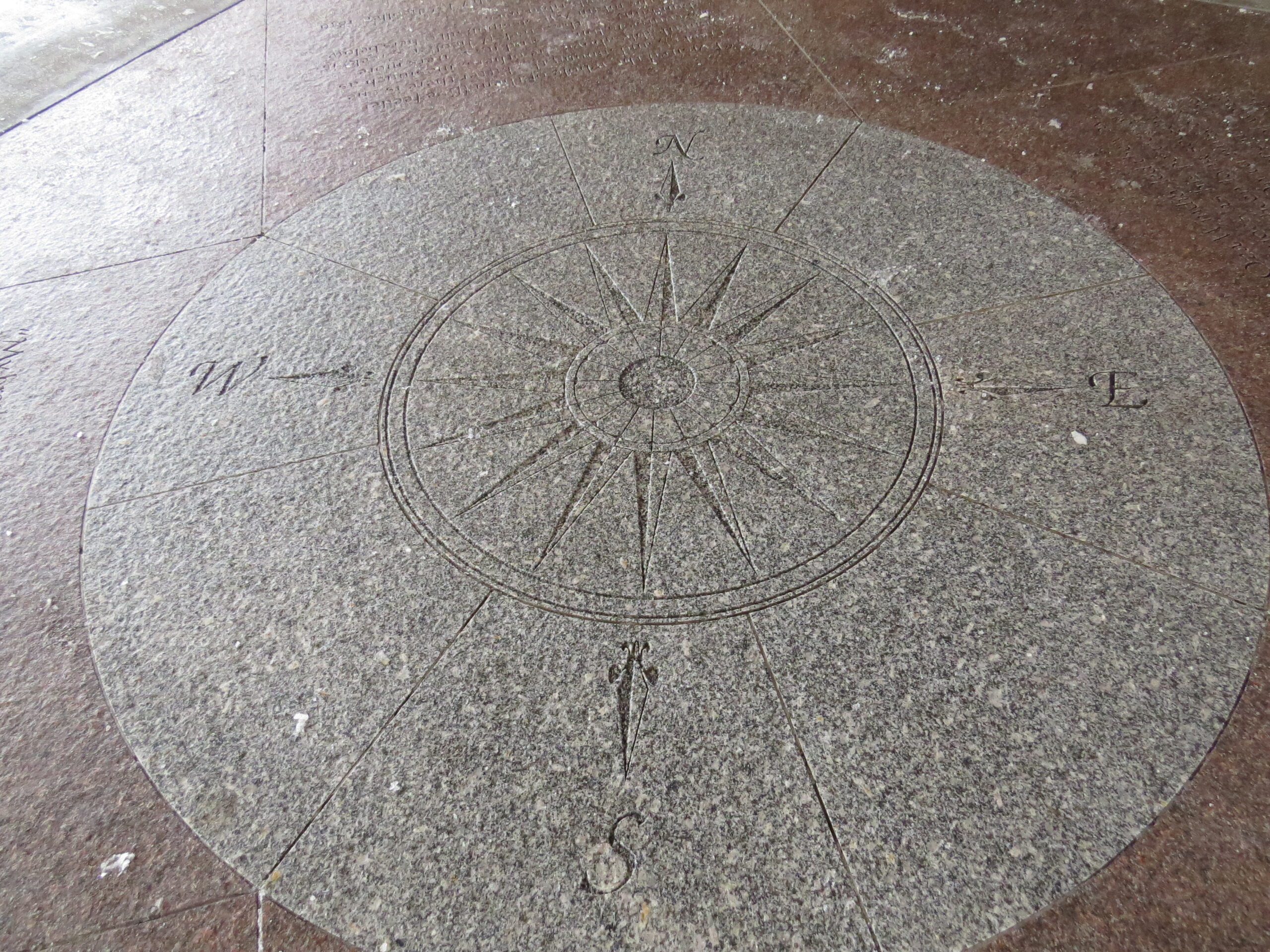
By our second day at Itasca—New Year’s Day—we were getting our bearings. It takes a while to do so when in a new place. It takes a while to do so when death impinges on our lives.
The Great Mississippi River begins at a pile of rocks where water flows from the North Arm of the wishbone-shaped Lake Itasca. It flows north for a time, then arcs east, southeast, southwest, then southeast again until it maintains its southward flow. It took a while for it to get its bearings, too, I guess.
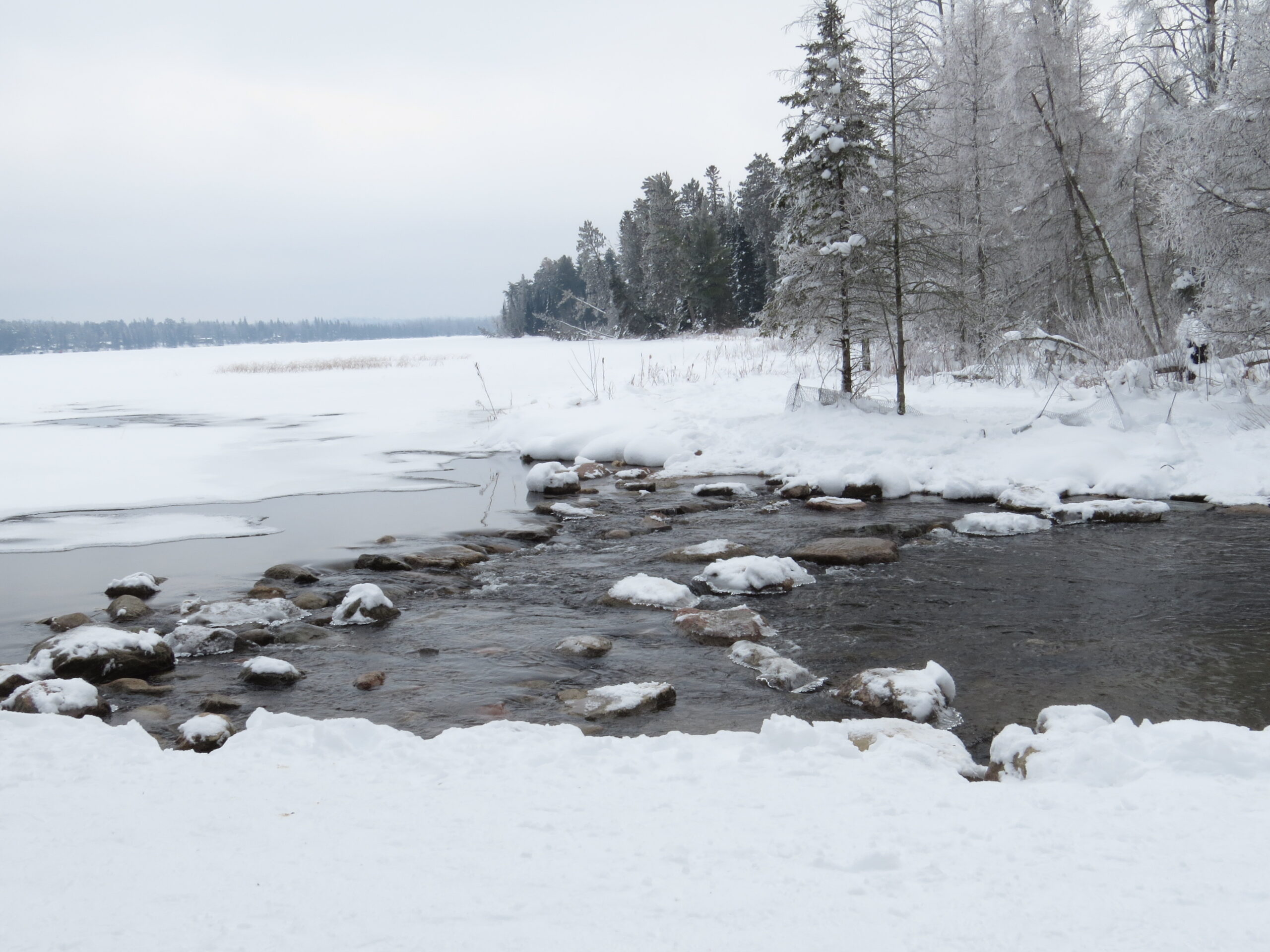
What a fascination (or is it merely function?) we have for ‘crossing’ a creek, a stream, or a River. In the summertime, thousands of people cross the source of the Mississippi on the rocks or by wading in the shallow water. Not fifty yards downstream was a thick wooden plank placed across the mighty maiden river. I wasn’t the first to walk the snowy plank. A little ways down the trail was another bridge where I could see another bridge from which I saw a fourth bridge! I wonder how many bridges cross the 2,552 miles of great, winding River?!
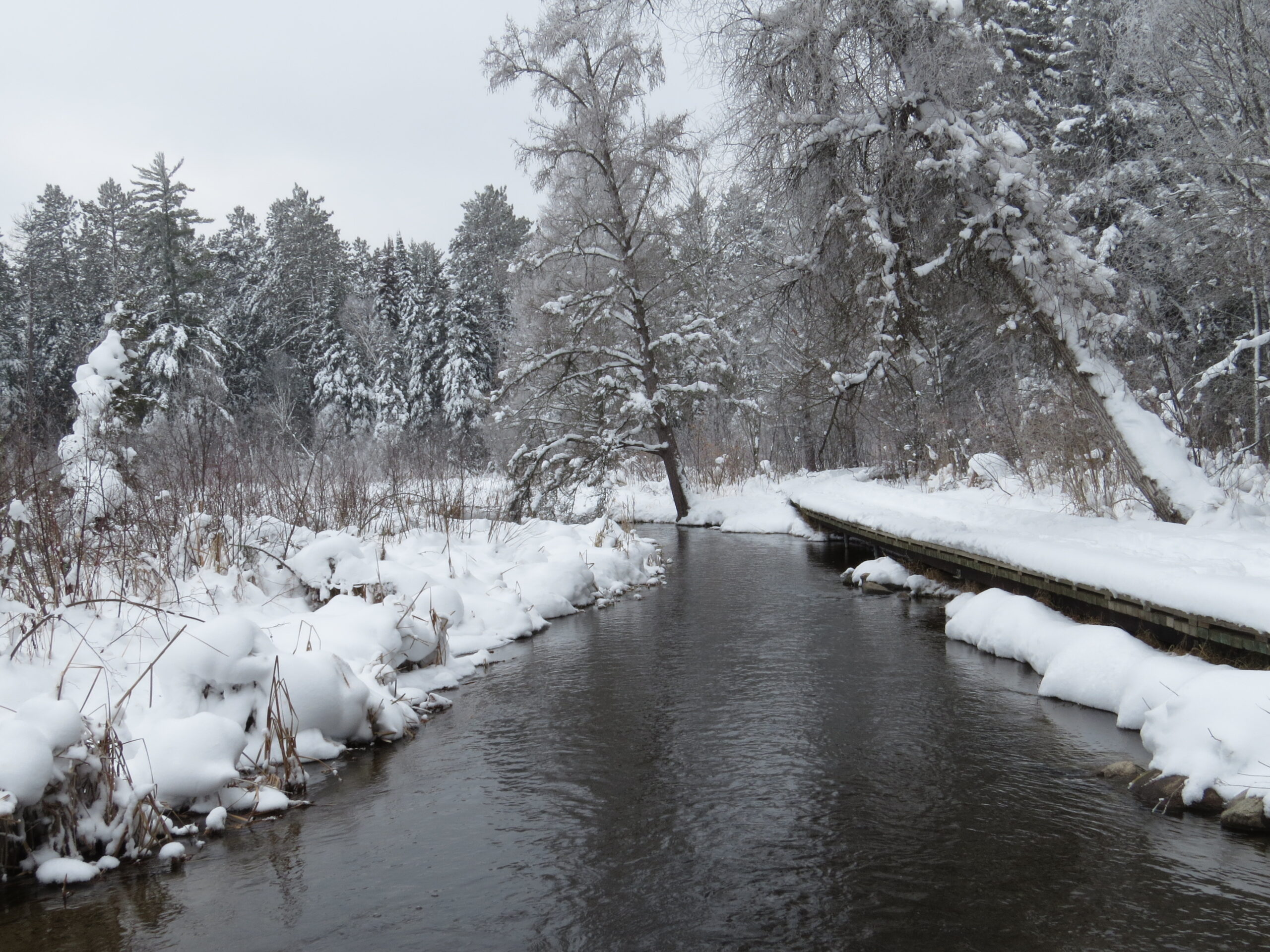
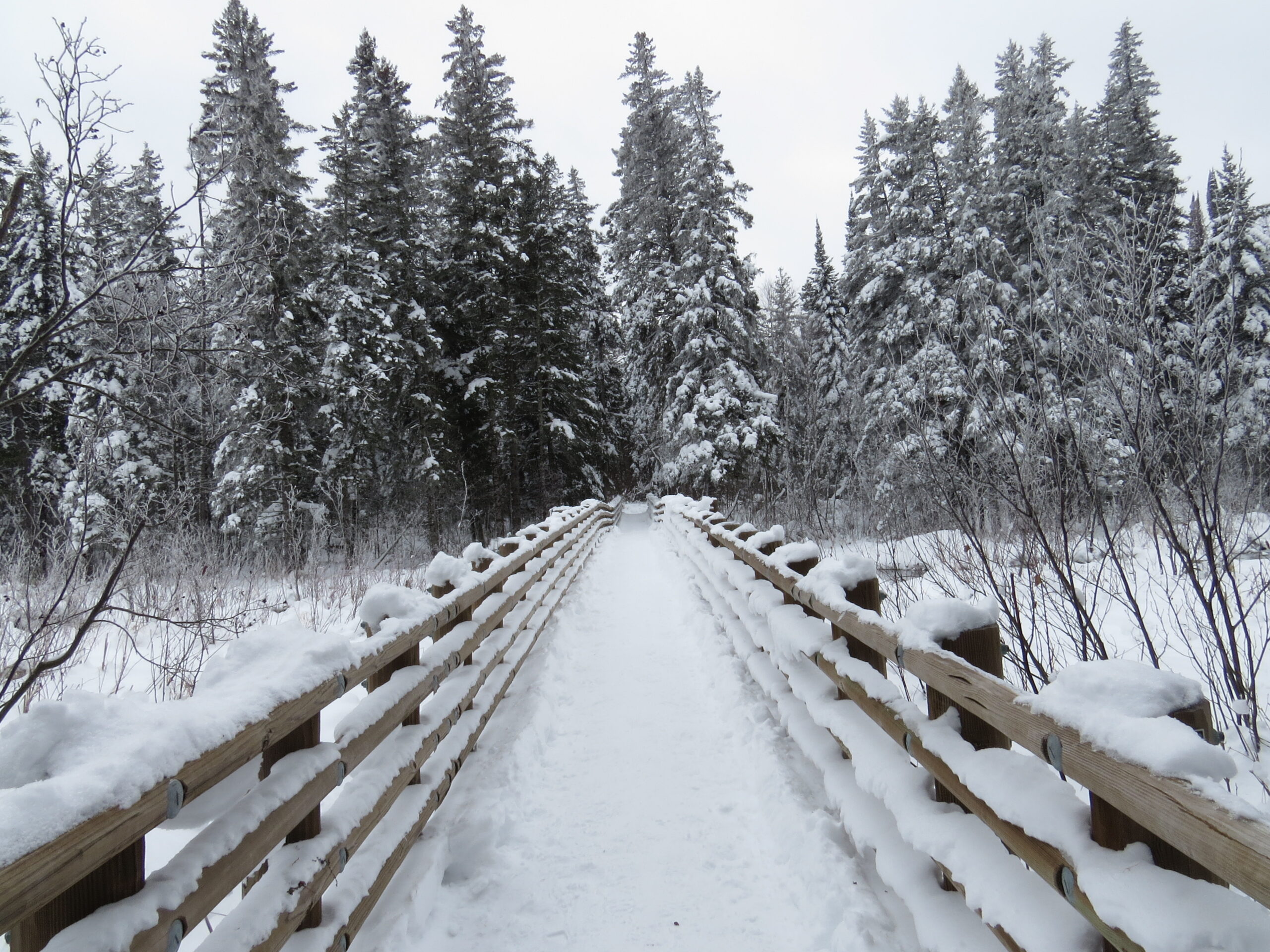
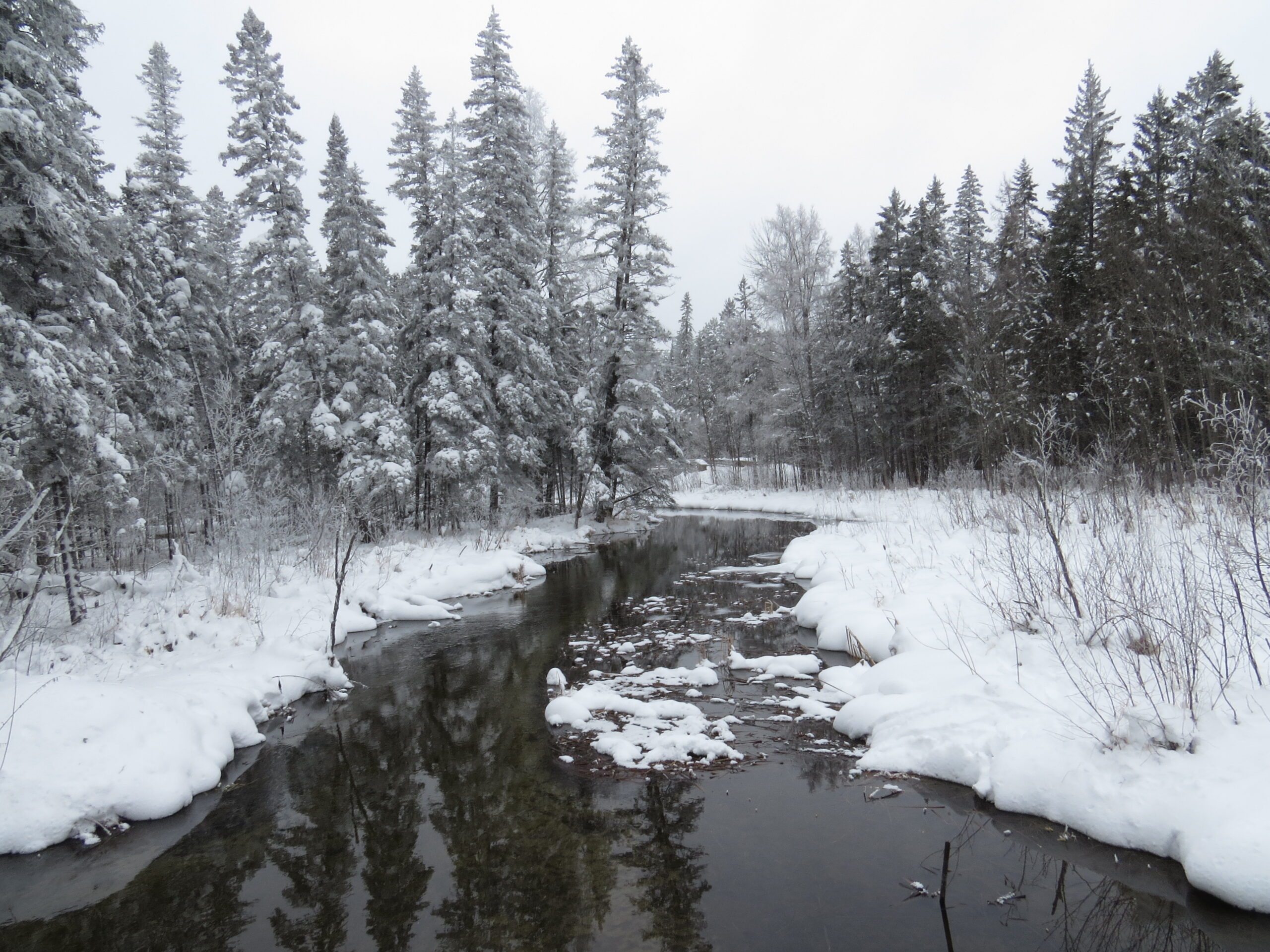
And so it begins….
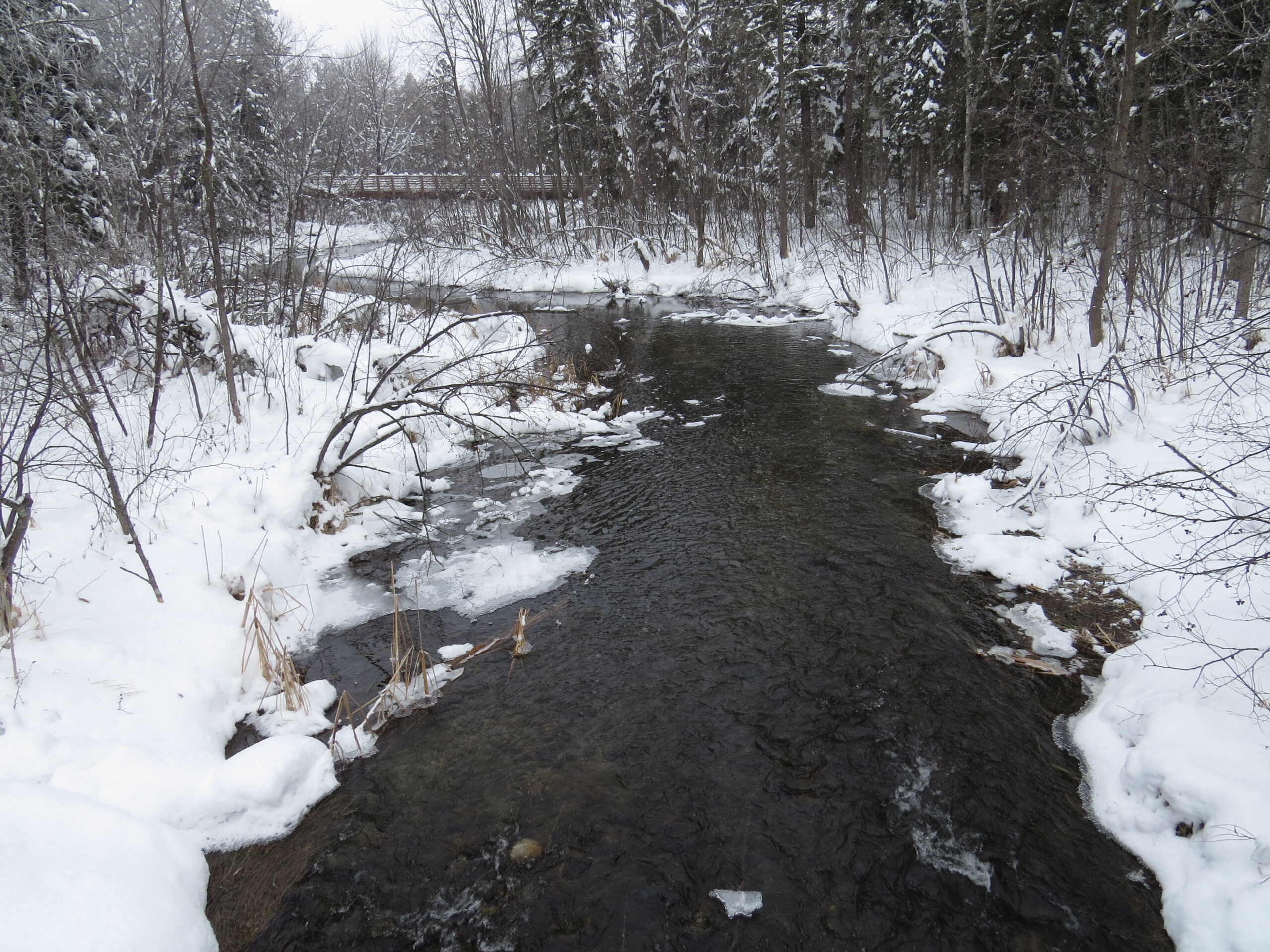
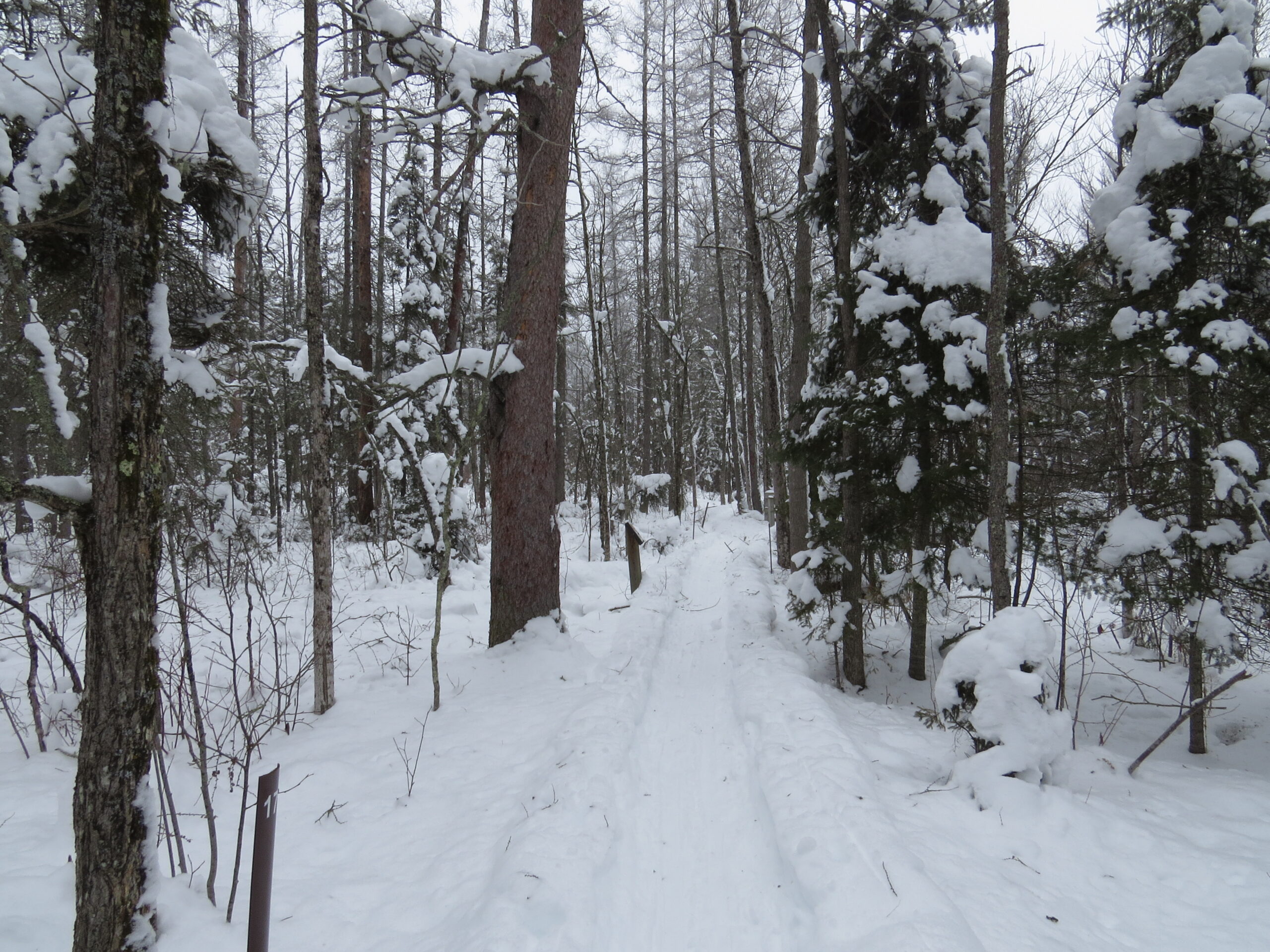
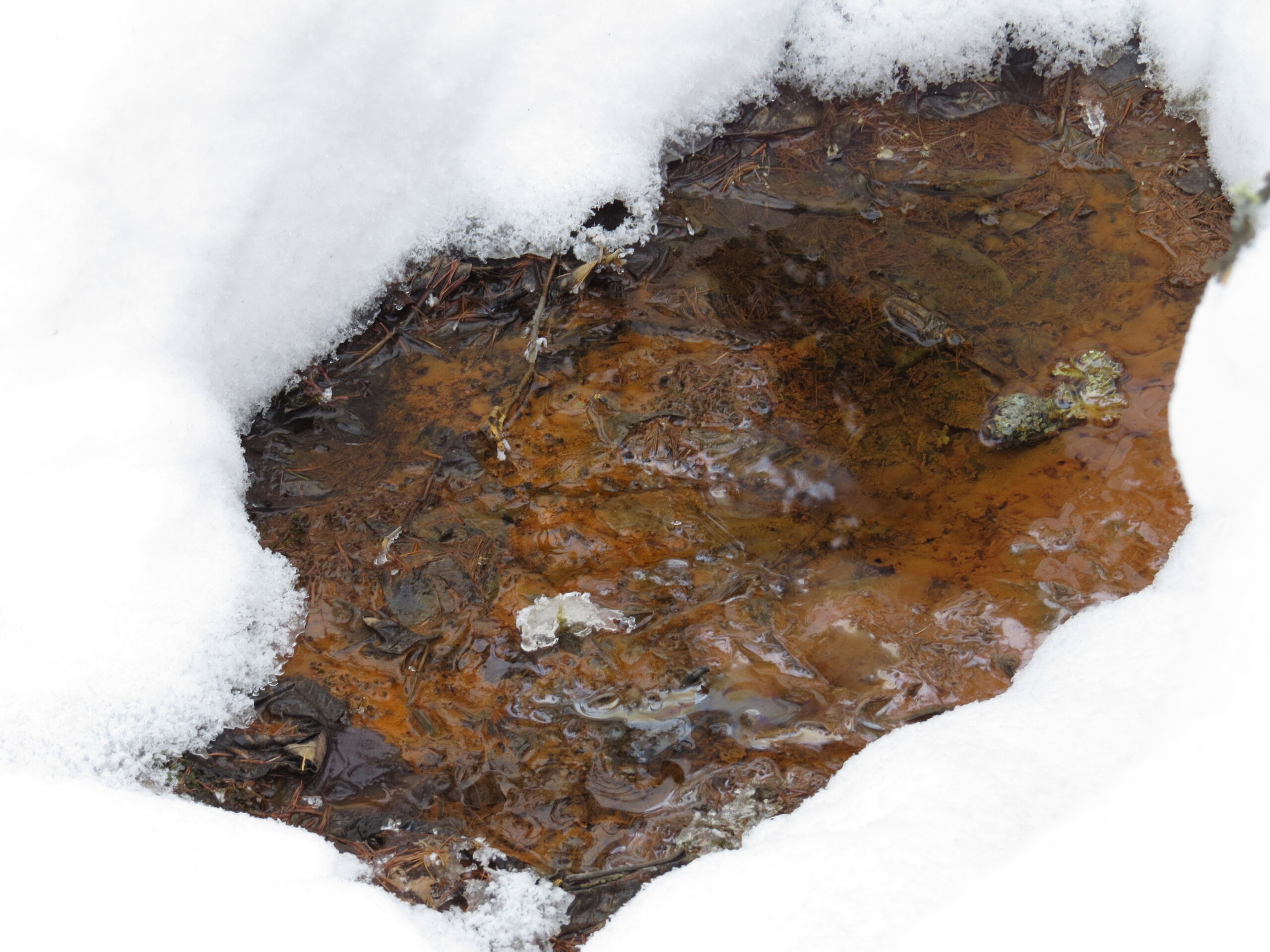
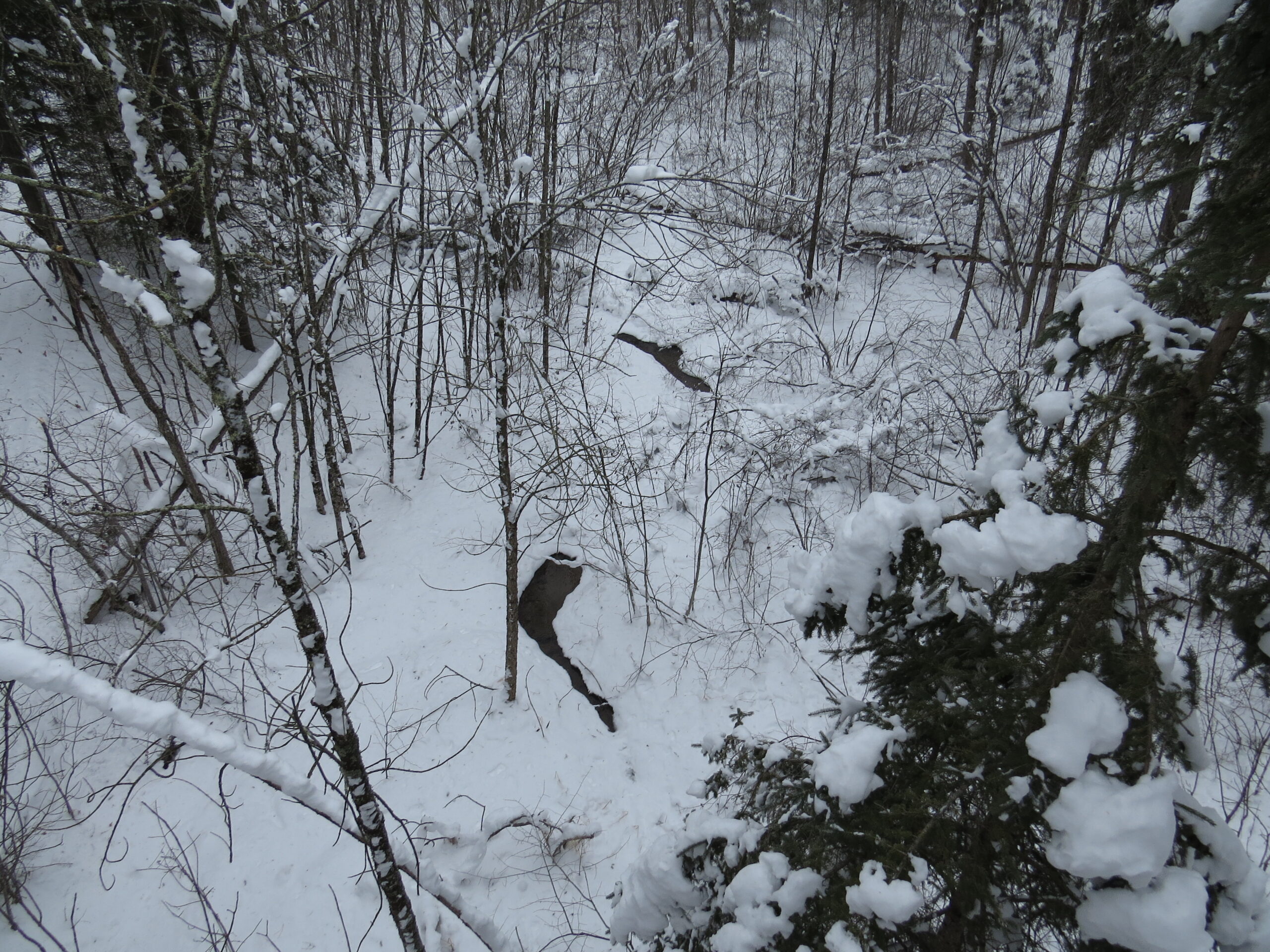
With our map, our bearings, a good night’s sleep, a wonderful cabin-cooked breakfast, and our enthusiasm for the New Year, we strapped on our snowshoes to follow the two-mile loop of Dr. Roberts Trail. It was narrow and ungroomed, a perfect snowshoe trail. The first stretch was on a boardwalk through a bog. Patches of tannin-orange and brown bog water showed through the snow, and even with its lazy flow, I wondered why it wasn’t frozen like the large Lake Itasca we walked beside.
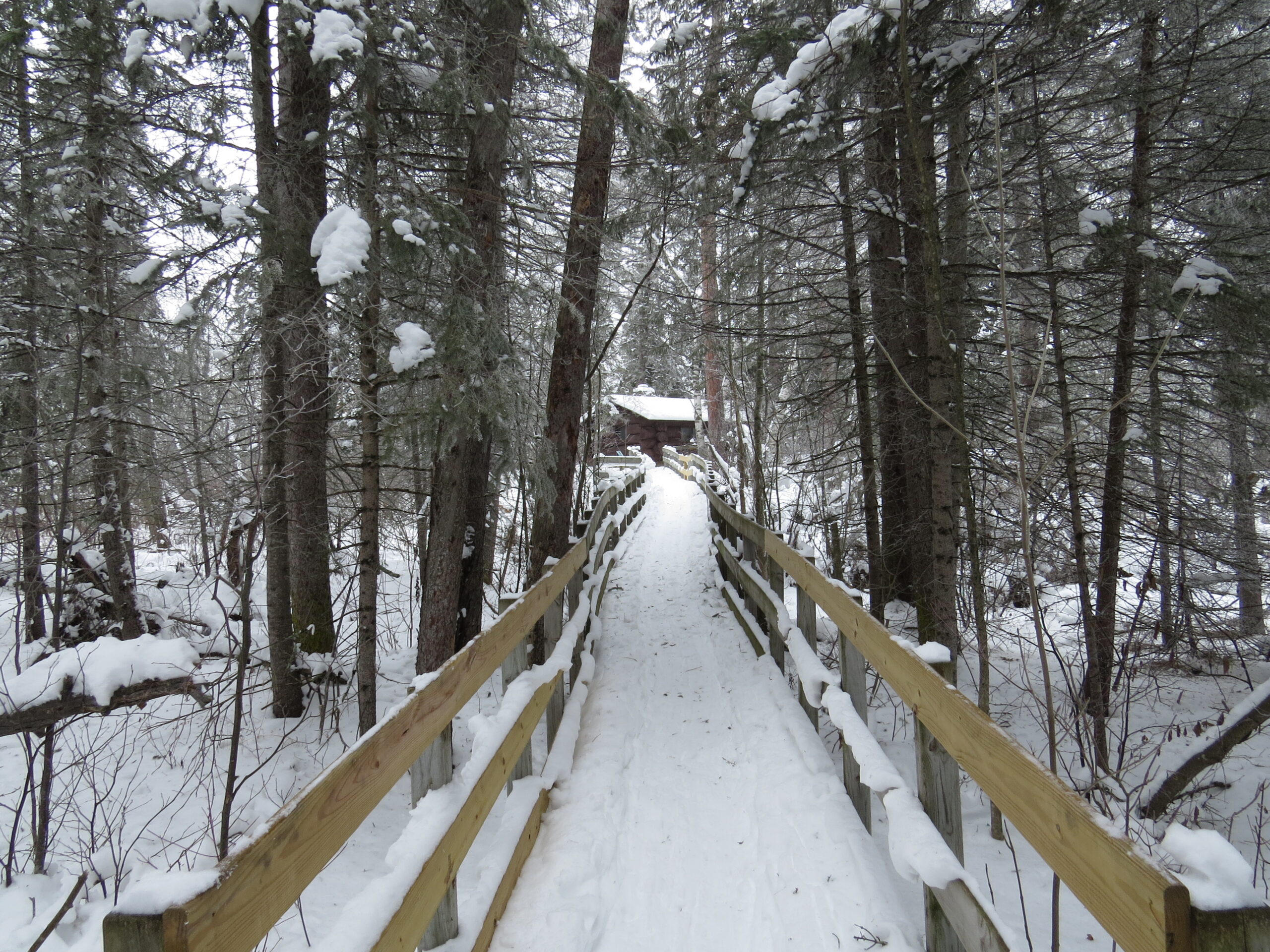
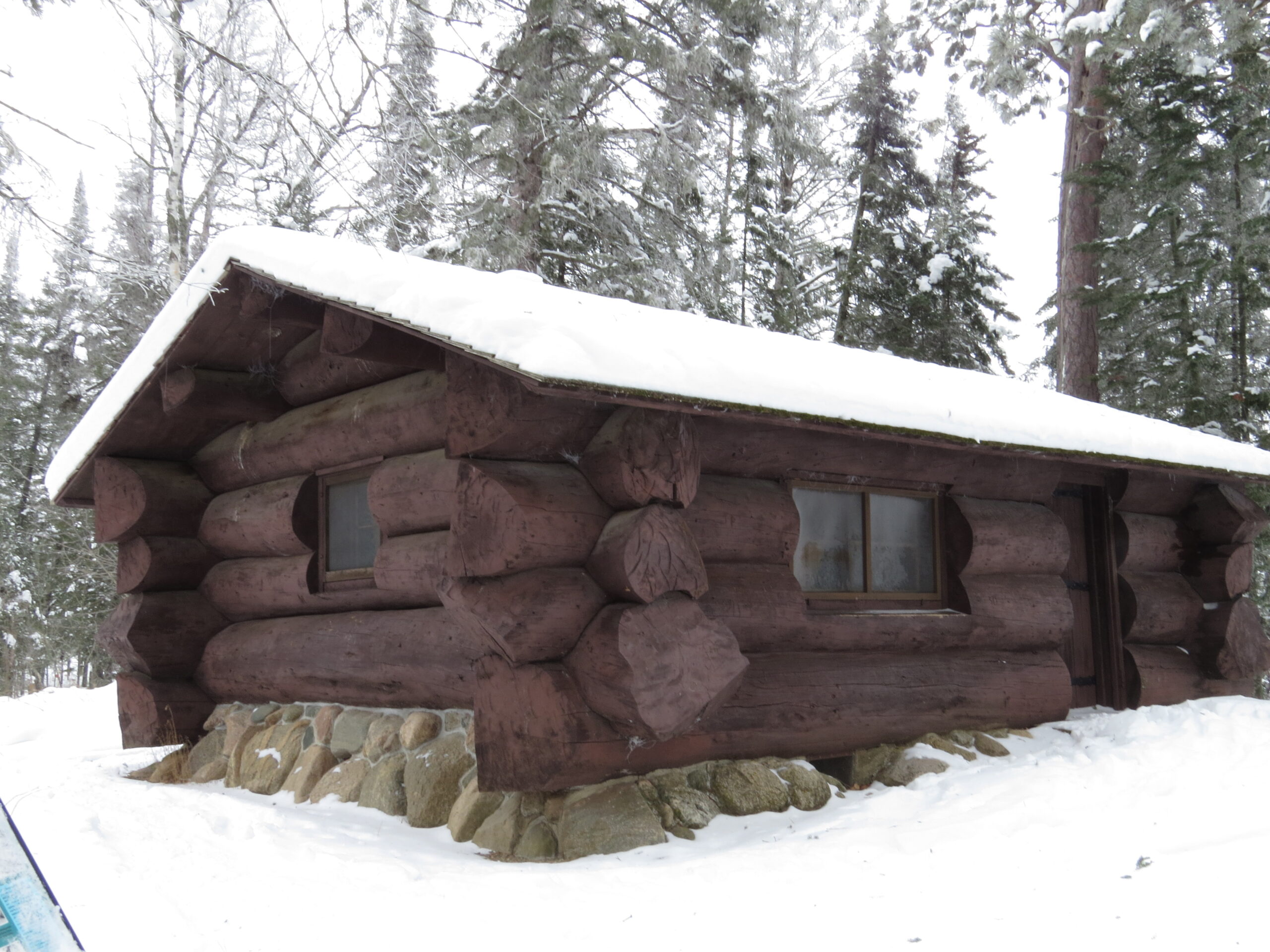
A boardwalk bridge lifted us to a little hill where the Old Timer’s Cabin overlooked the Lake. It was the first building project of the Civilian Conservation Corp (CCC) at Itasca, which began in December 1933. Also notable is the size of the logs—a cabin built with only four logs!
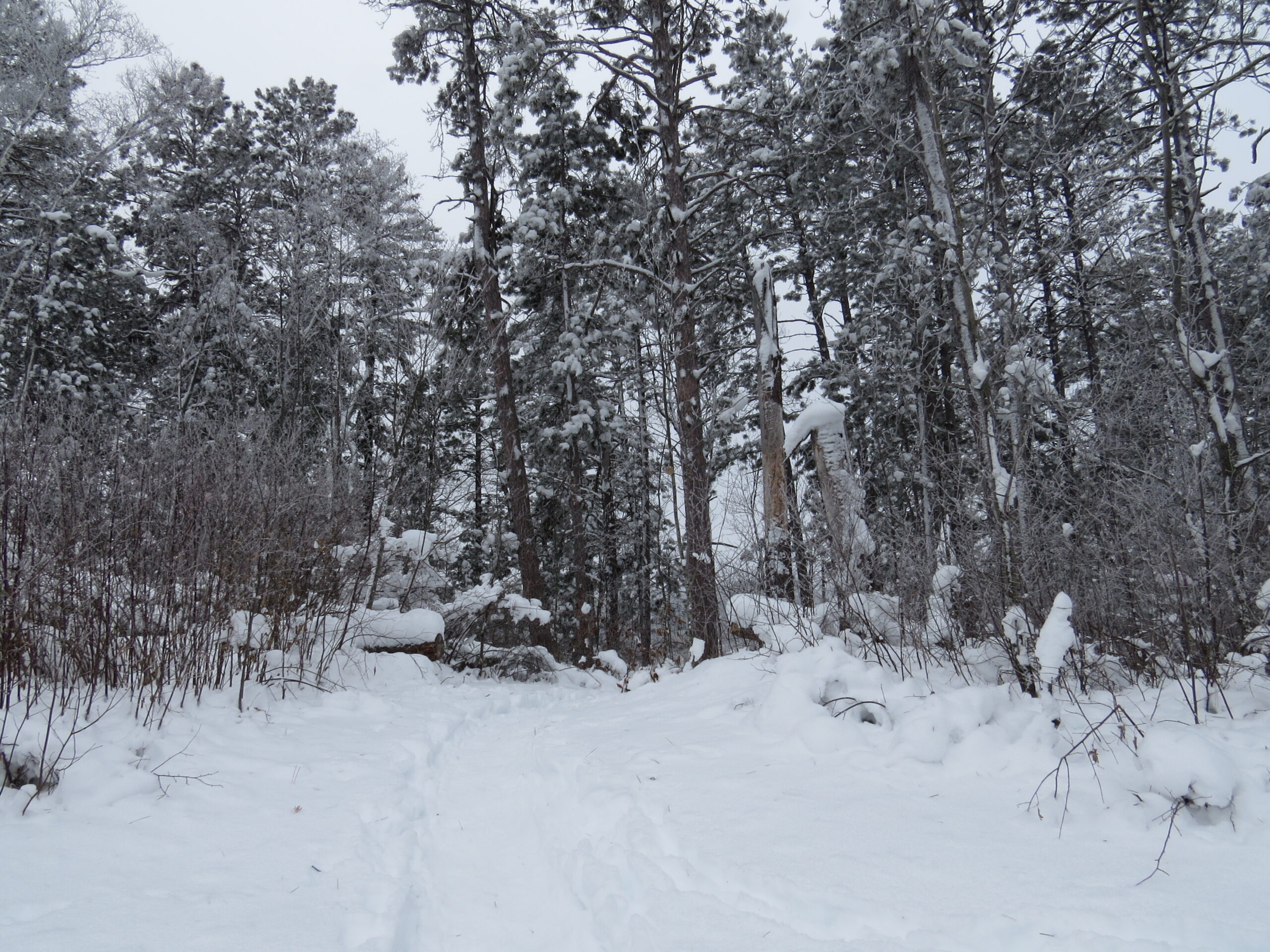
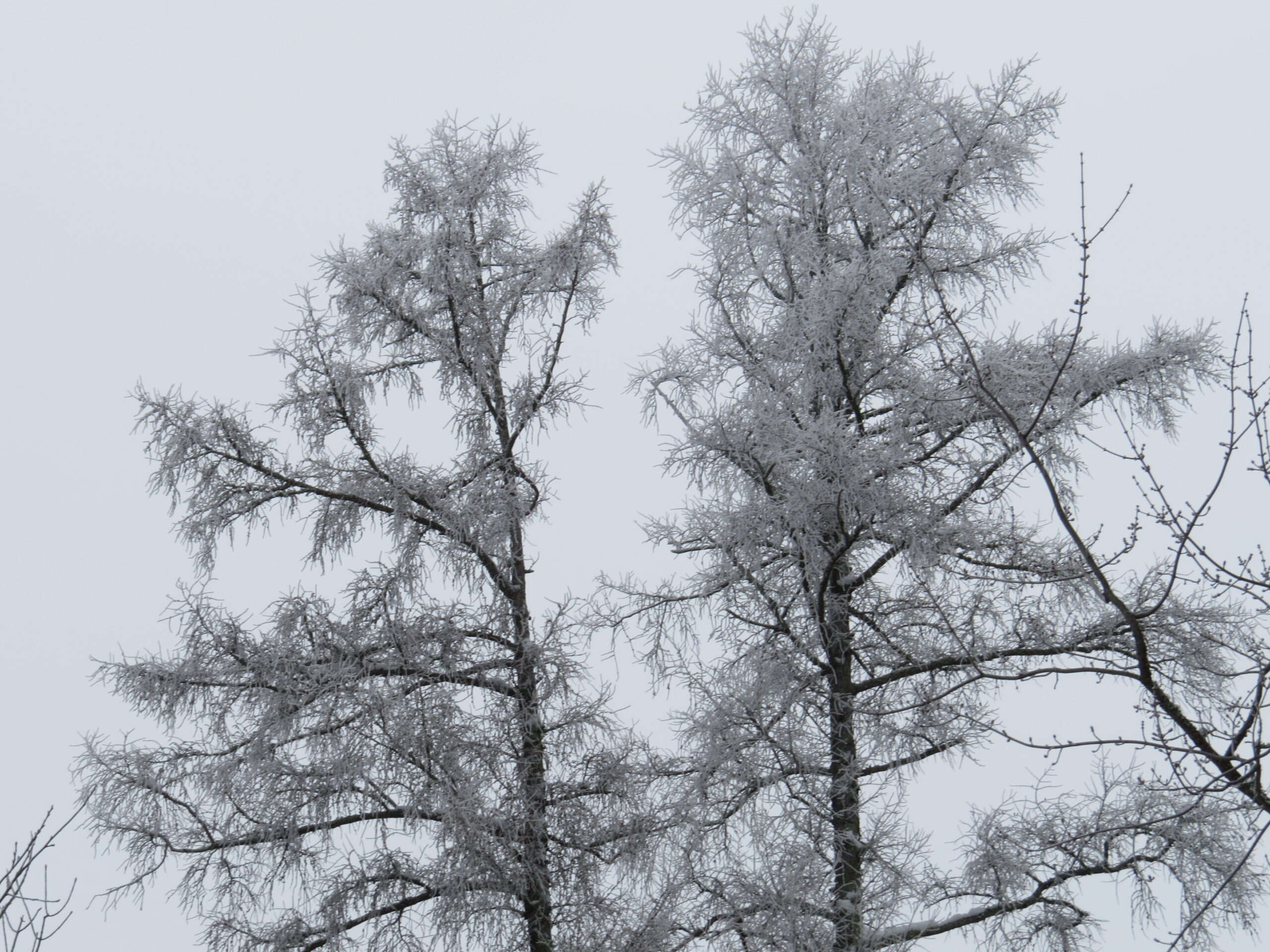
The trail followed the east arm of Lake Itasca and climbed a high ridge. The trees were ghostly with frost in the cloudy, foggy day.
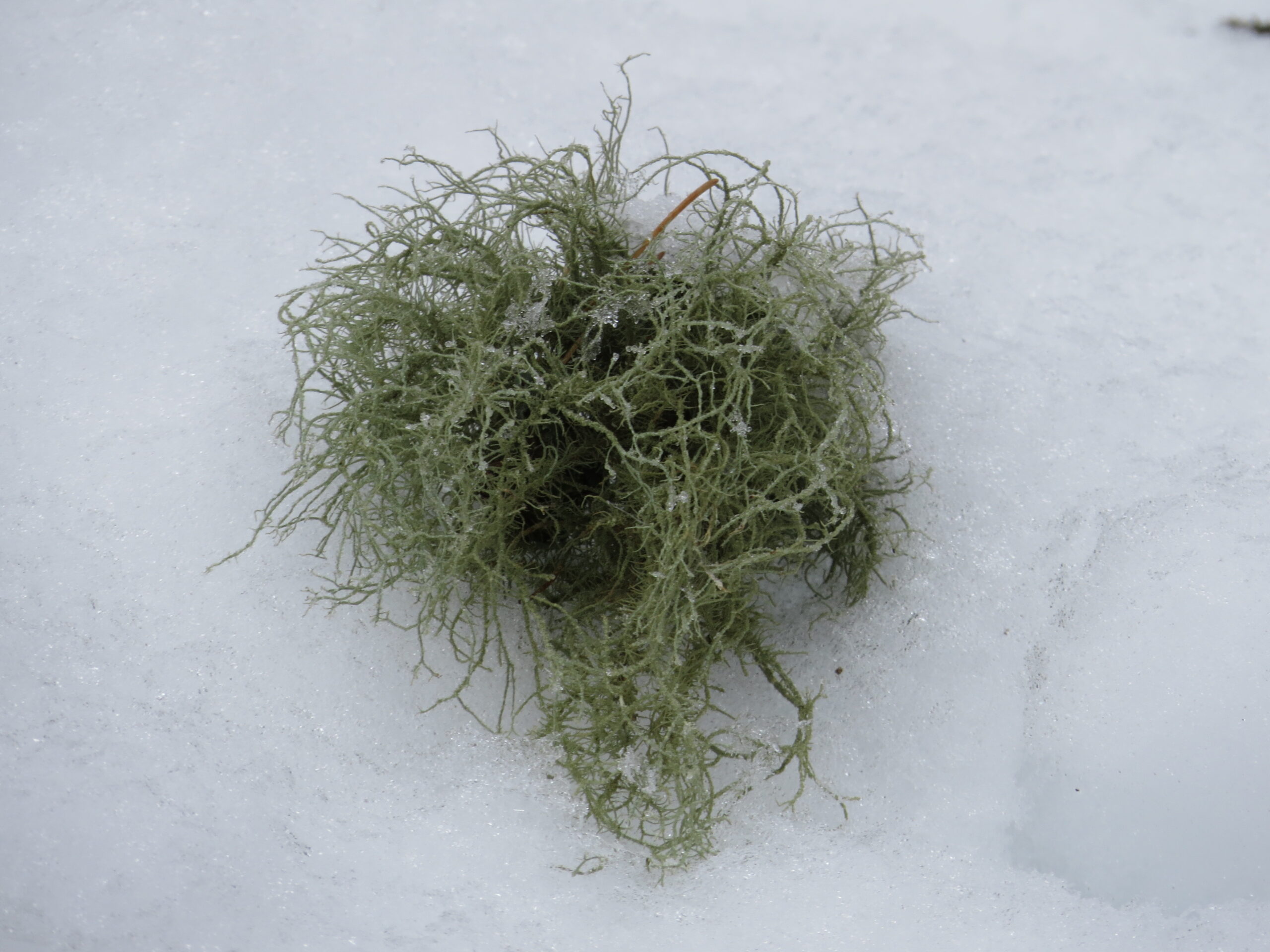
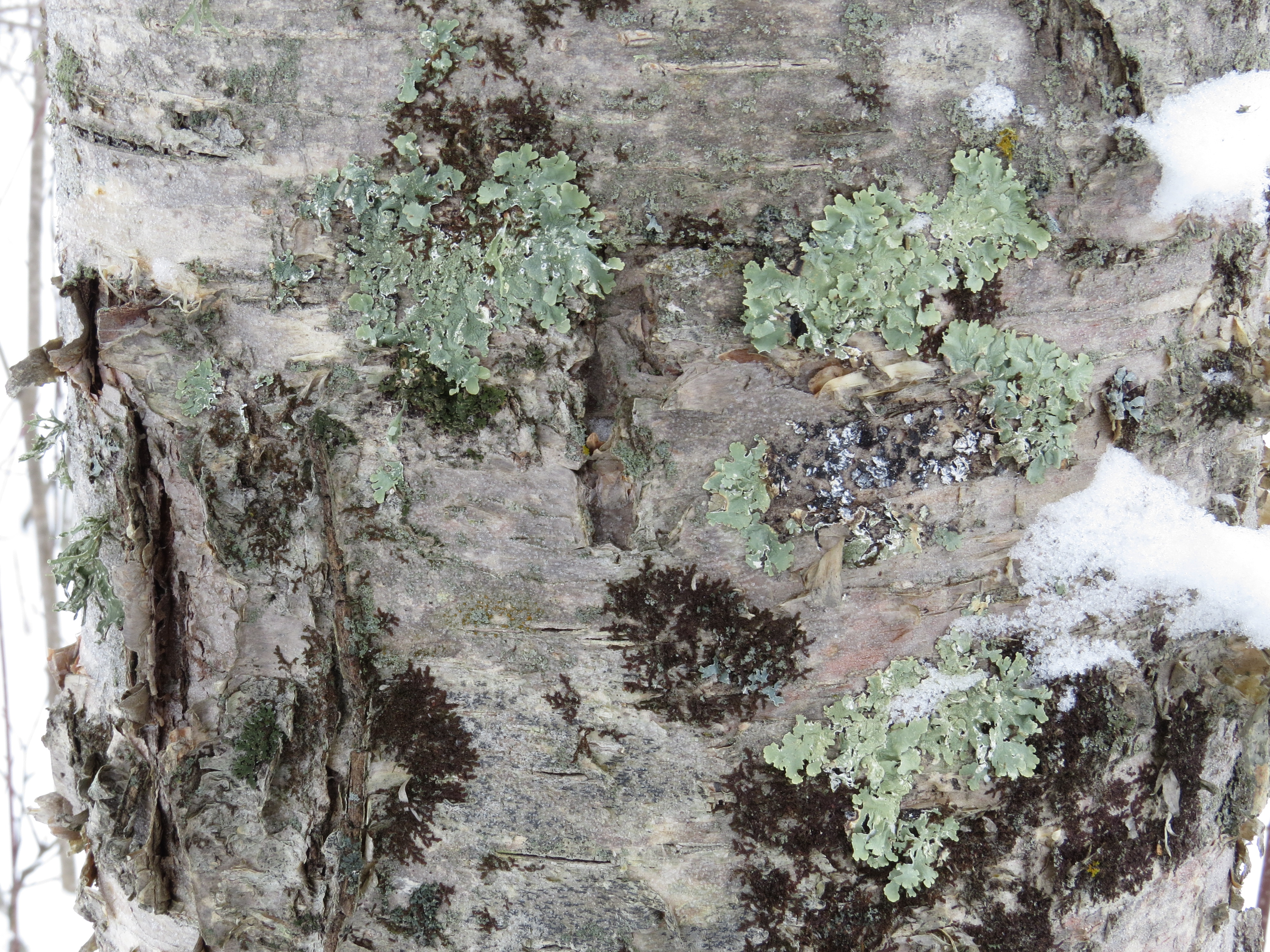
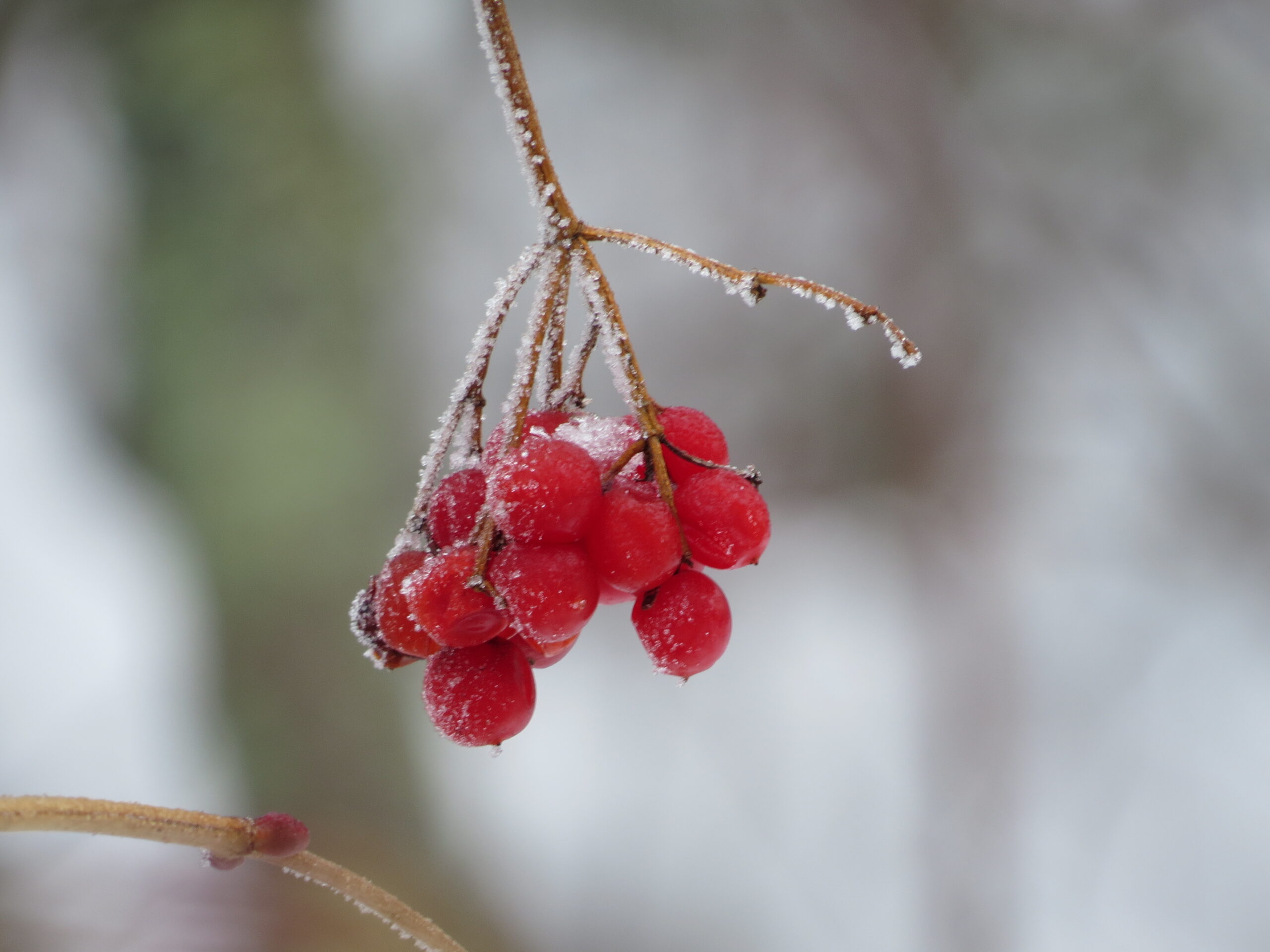
Green Lichens and red Highbush Cranberry berries were almost shocking in their brilliant color compared to the vast white/gray/brown landscape we ‘shoed’ through.
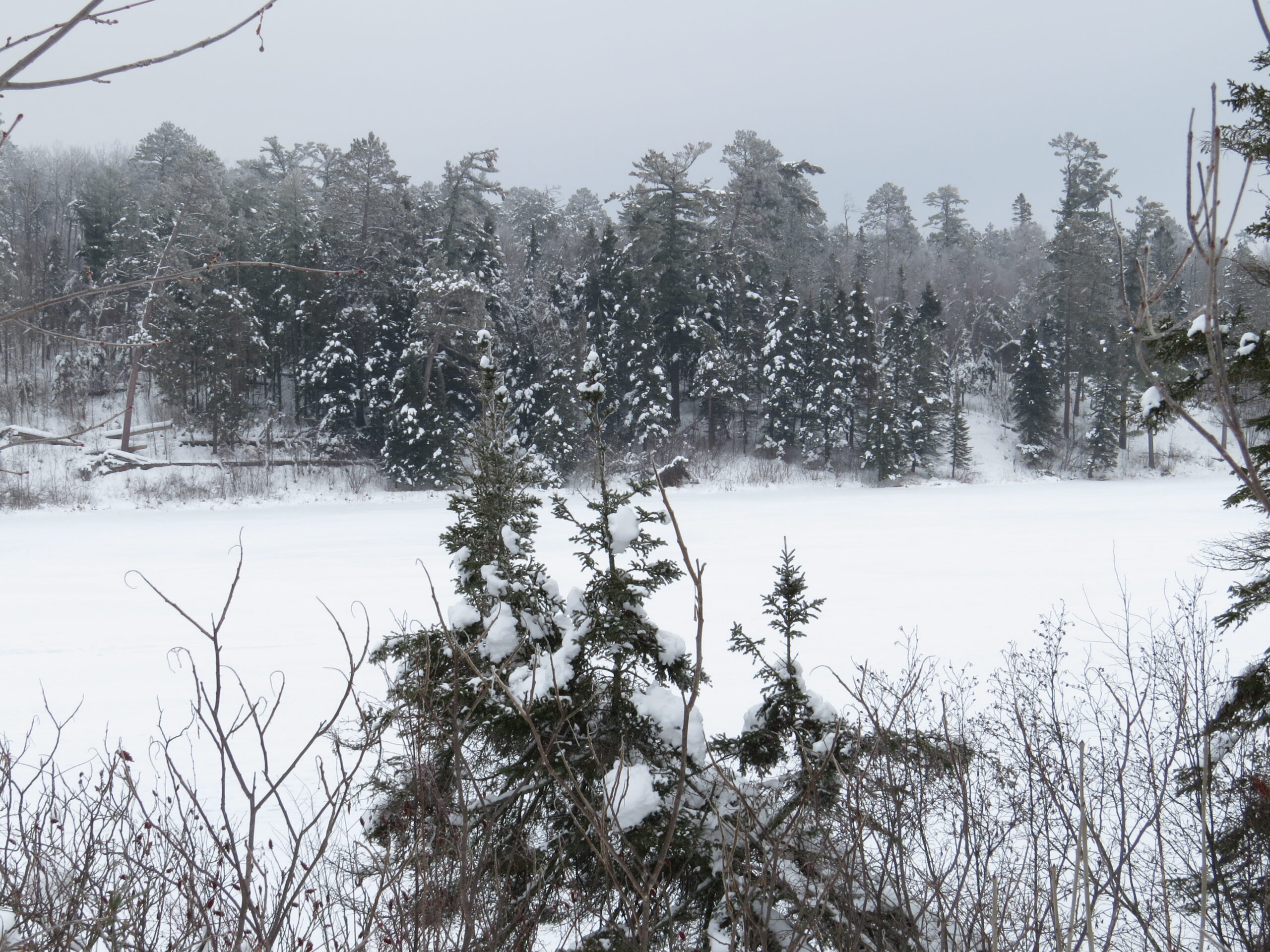
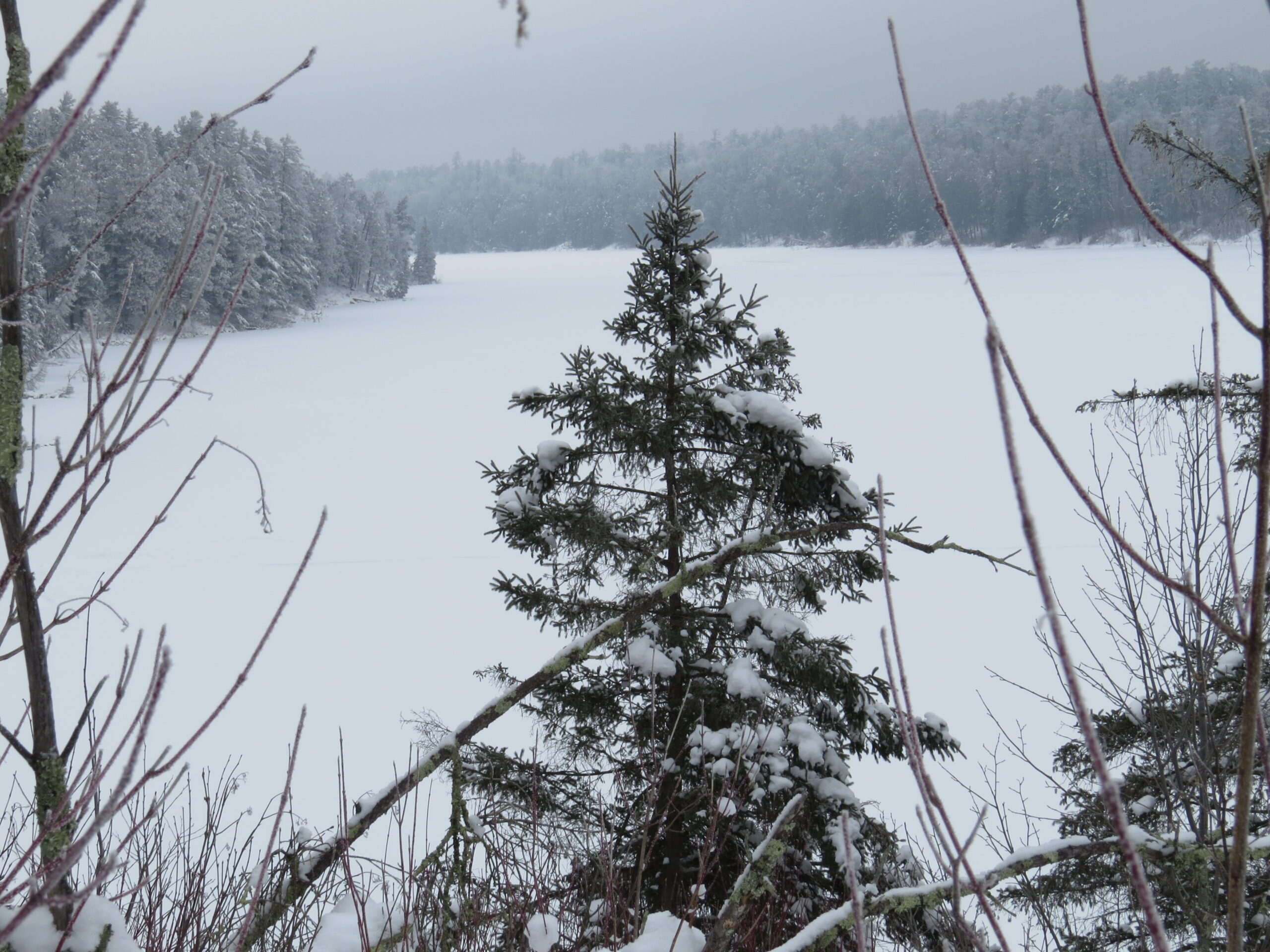
After our climb to the ridge, we descended to a small lake about halfway around the loop. It looked wild and remote.
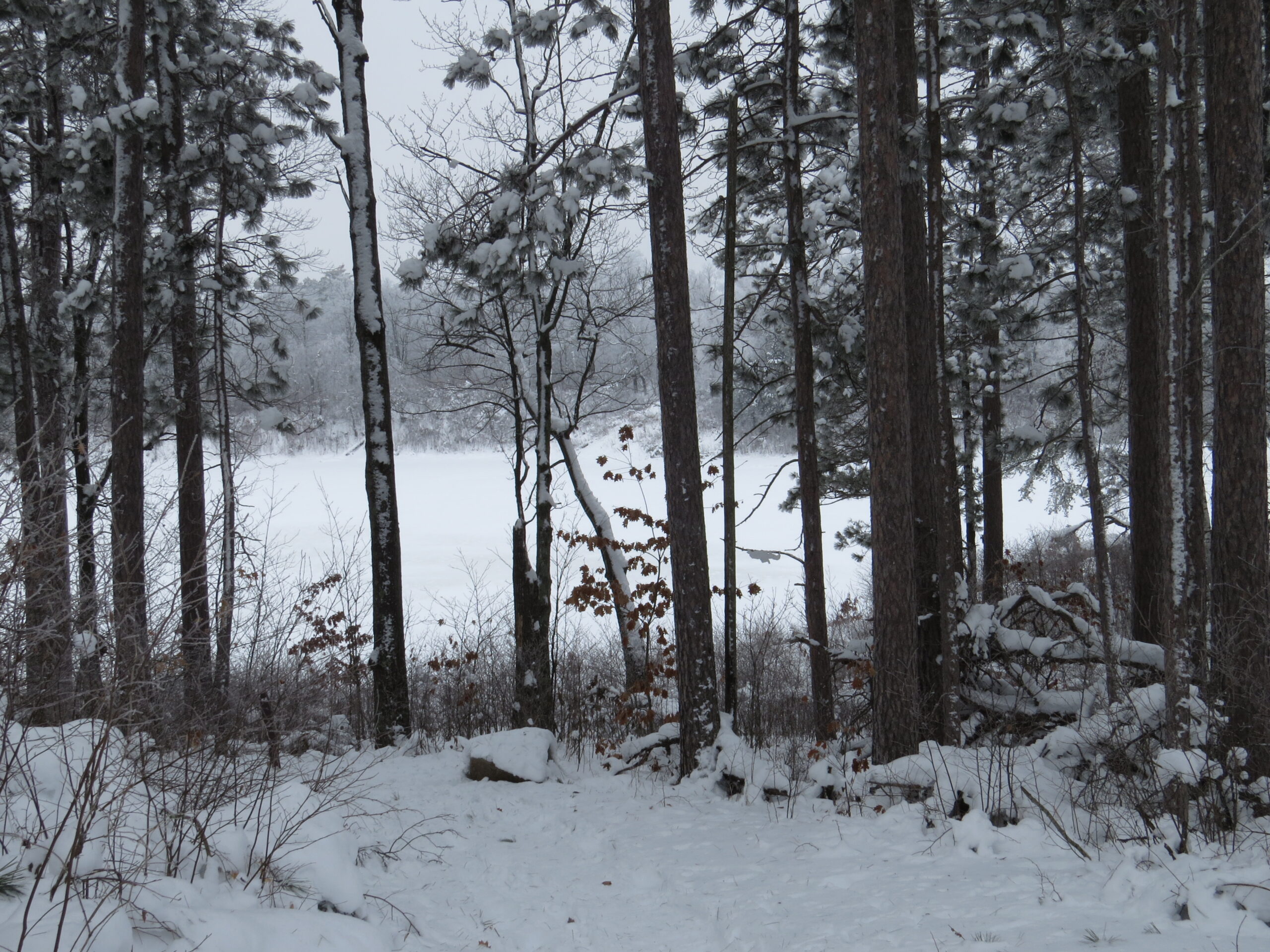
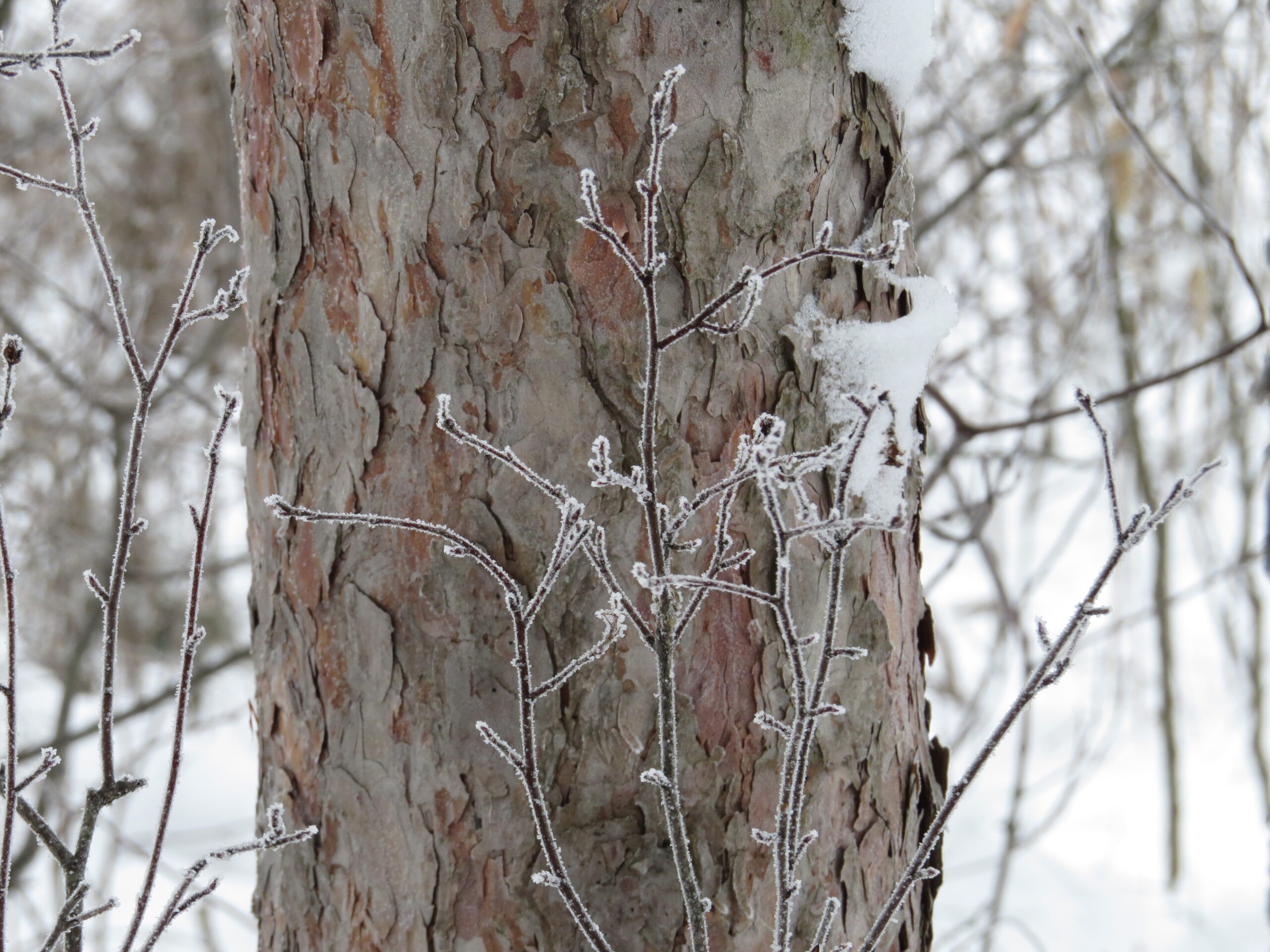
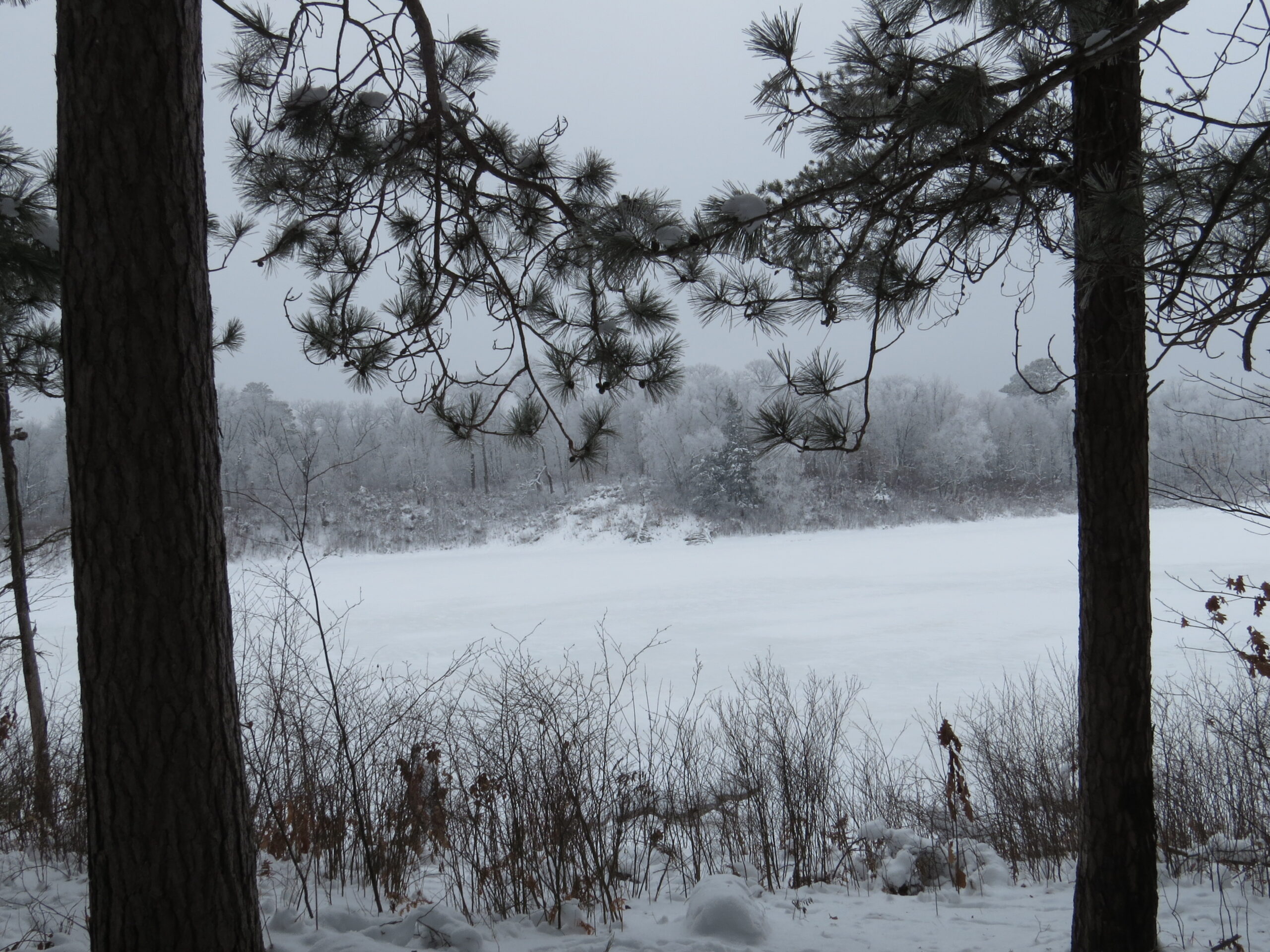
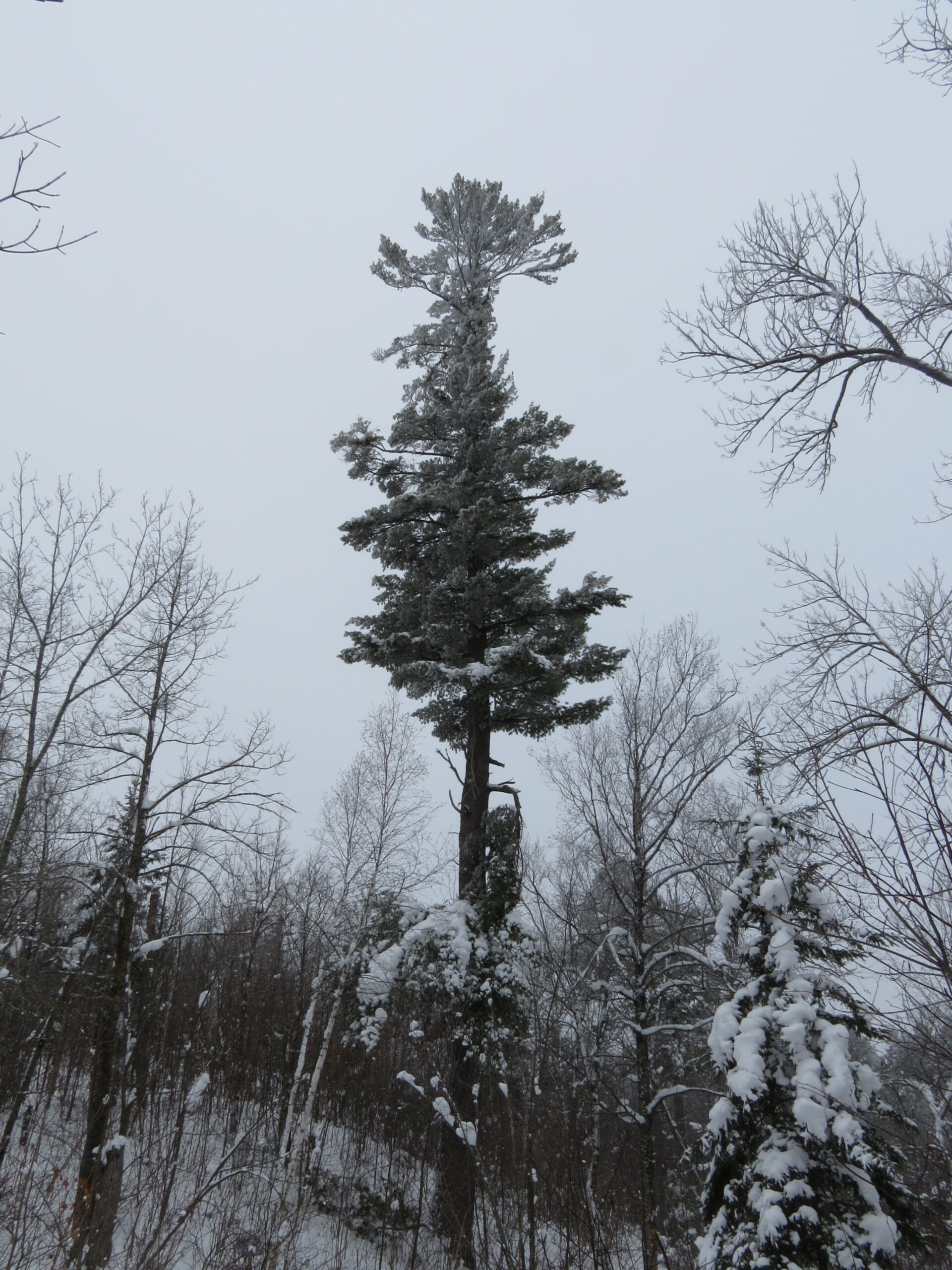
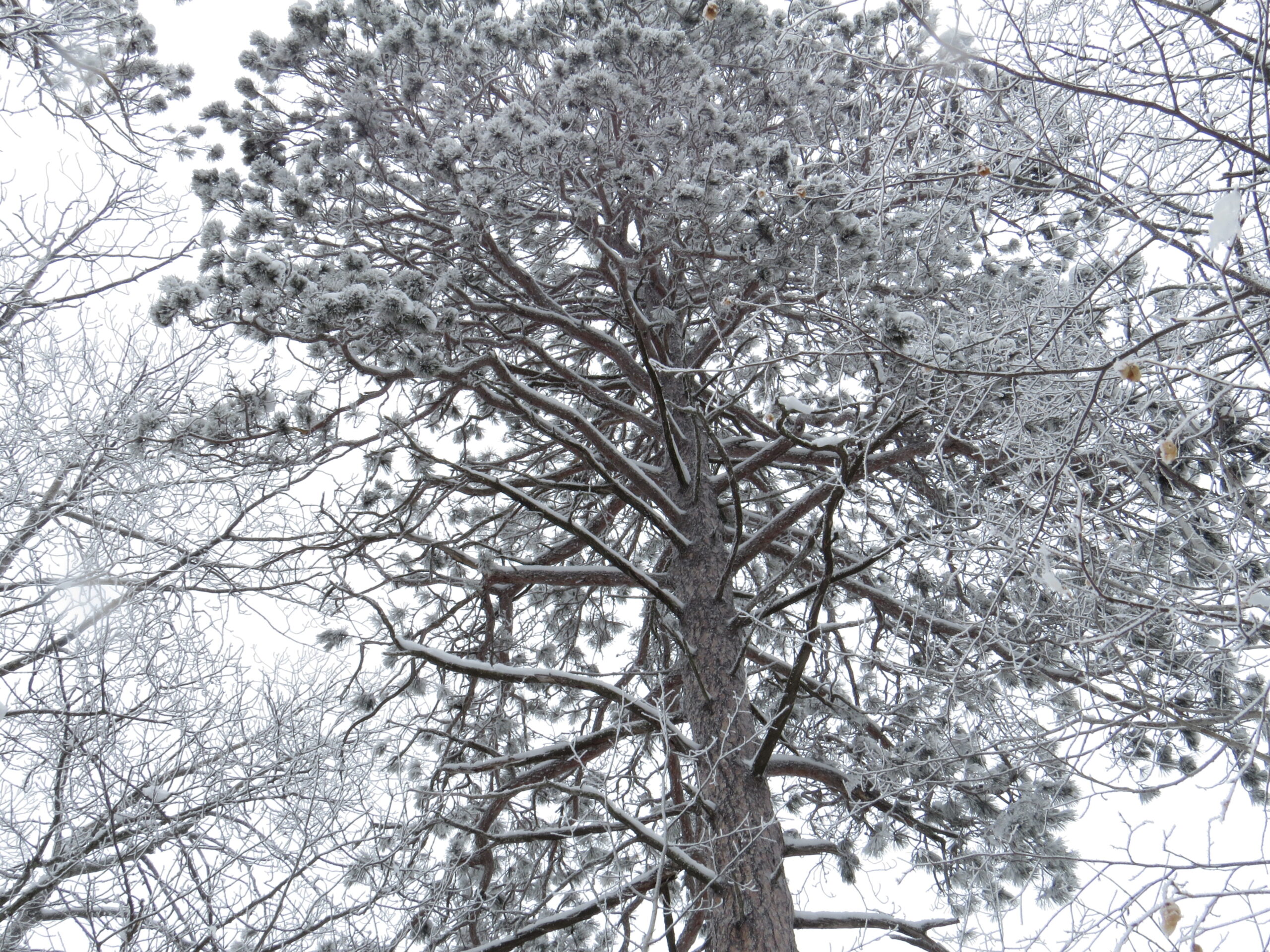
We continued to pass by giant White Pines, the ‘ancient’ ones in the diverse, frosted forest. It was a snowshoe hike that opened my lungs and strained my legs. When we stopped to rest, the snowy quiet bathed my senses, and it all felt so good.
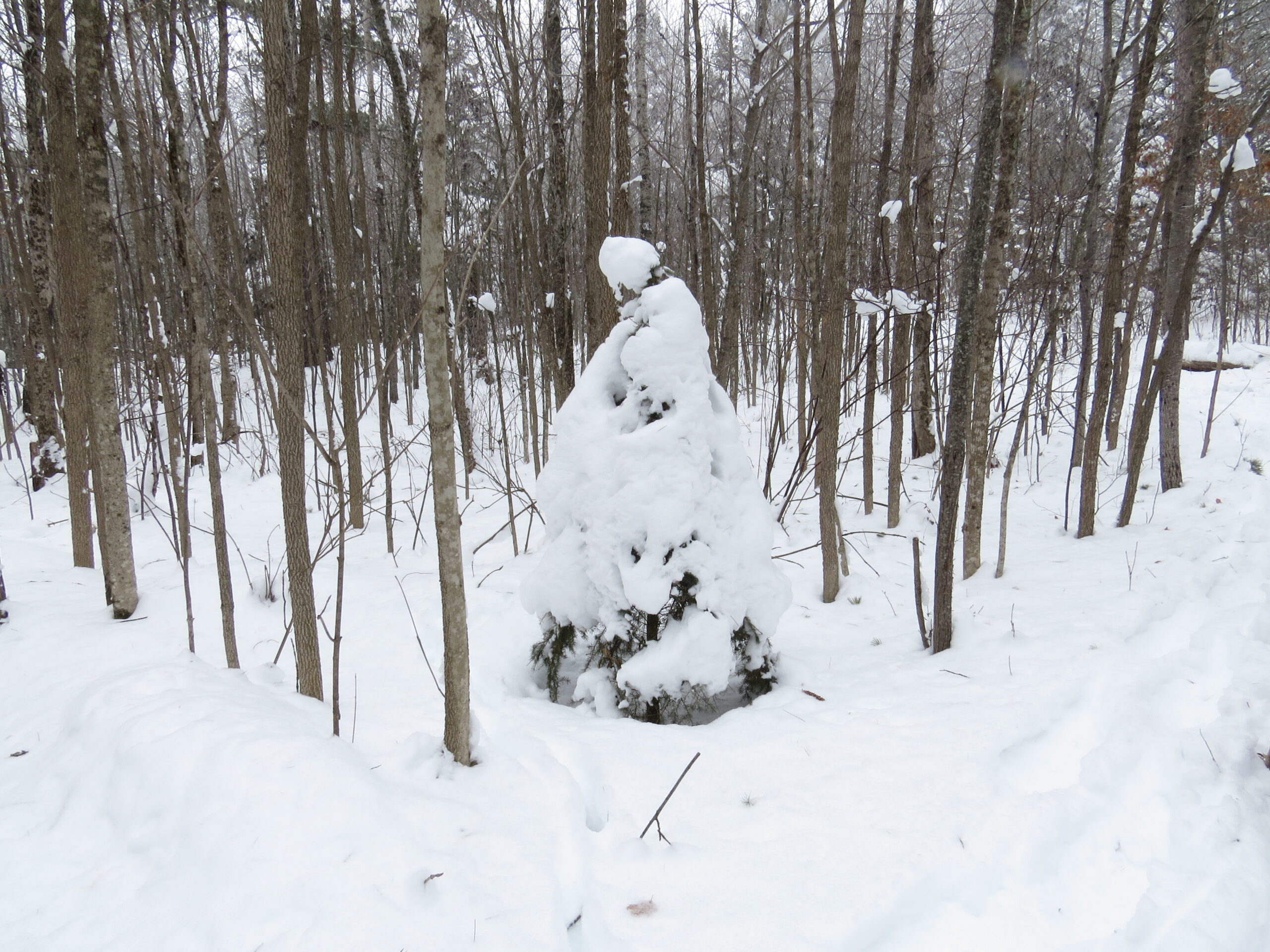
Towards the end of the trail we saw this little snowman tree—an evergreen wrapped in a blanket of snow—surrounded by his young deciduous friends.
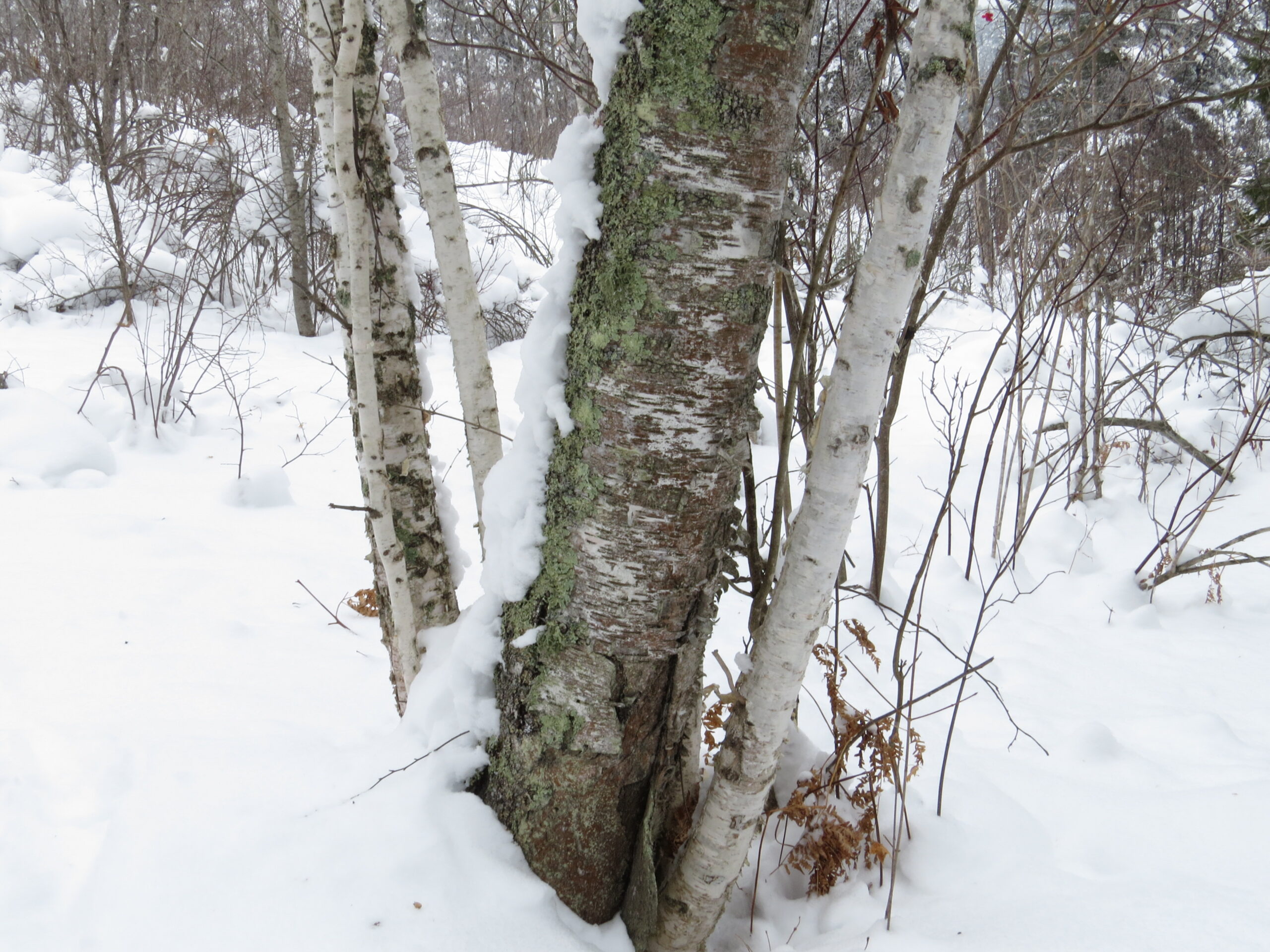
A cluster of Paper Birch trees epitomized our old year/new year weekend. The old Birch had wounds and peeling bark, layers of lichens and moss, and had lost the white luster of a young Birch. The young ones grew from the base of the elder and had been nourished by the extensive root system of the old one. Old and new ending and starting from the same place.
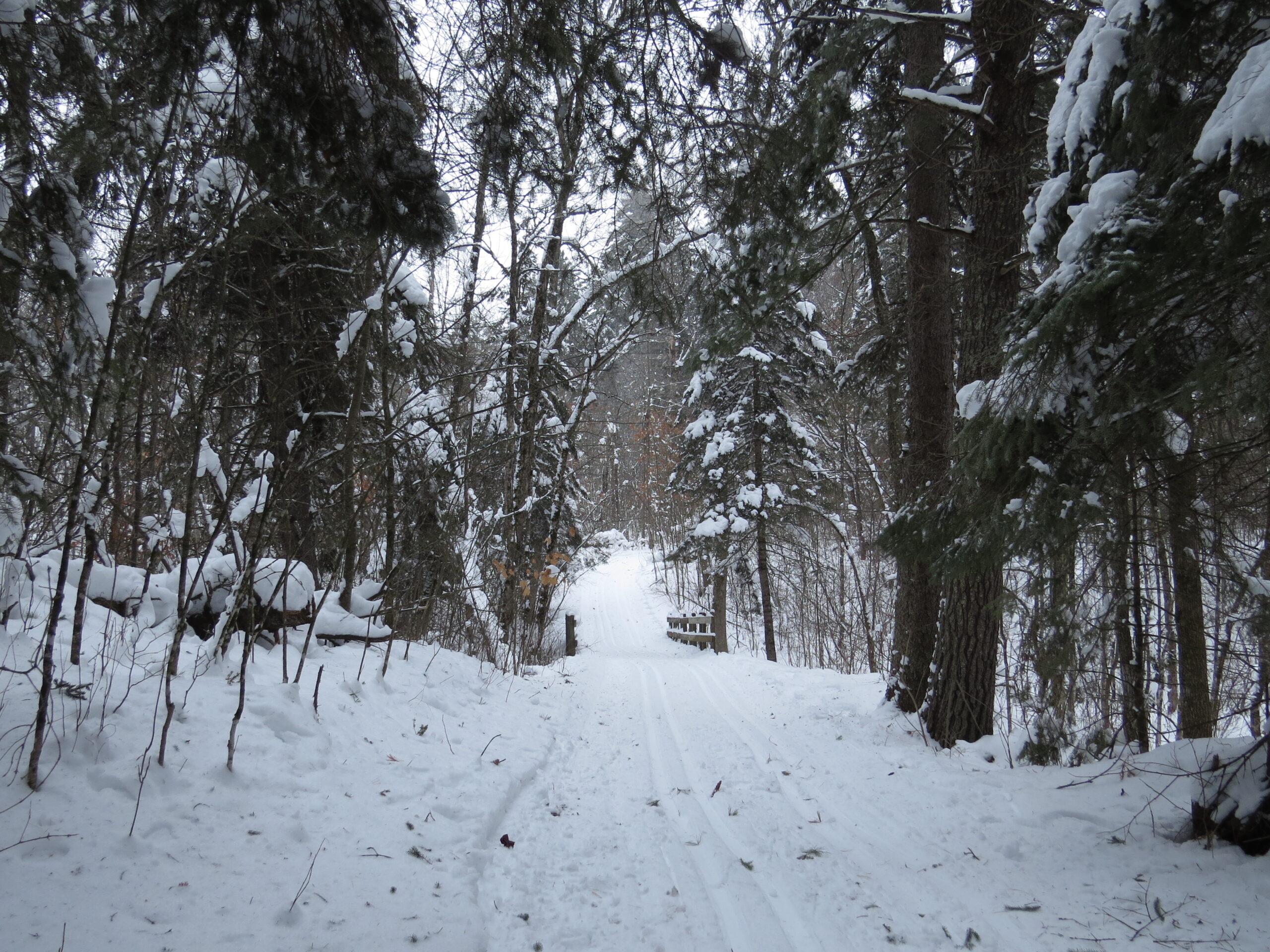
We ended our year in the same place we began our new year, and yet, it still had a different feel from one day to the next. The Mississippi River runs deep in the heart and soul of those who lived and died on and beside the River like Chris’ family had in the little village of Cassville. Chris feels it when he sees the River. My feelings about the River are more primitive, I think. I see it as life-giving water, a metaphoric trail of our life’s flowing journey, a barrier and boundary that stresses us in our quest to ‘move on,’ and a rich source of unbridled beauty. The Great River Road, complete with all its bridges, seems to be our human solution to encompass all of those things. I didn’t realize until I was writing how the The Great River Road, along with the flowing River, has connected our present living location to the Brake homeplace in Wisconsin and to the place where Chris’ only sister Mary began her life.
Mary was born with Down Syndrome, and in the mid-fifties, it was common practice for the medical community to recommend and facilitate the institutionalization of babies like Mary. She never came home from the hospital but was sent to a place on the other side of the state—by the Great River. Imagine the shock and trauma of every member of the family, especially for Mary and Chris’ Mom. Mary eventually returned to the west side of the state, closer to home, and she spent holidays and vacations with her parents and five brothers. Finally, with the social emergence of group homes, she had a real home to live and work in—she flourished at her vocational services job for thirty-seven years and built friendships with her cohorts and caregivers with her loving and outgoing personality. She was a joy to our family and to all who met her in so many ways. Mary’s life ended one week after the beginning of the New Year. She will be buried high on a hill that overlooks the Great River in Cassville. We will travel the The Great River Road to be there.
And thus, we begin, again, at the beginning of a New Year with hope and expectations. We also begin, again, at the beginning of another January of grief at the loss of a sibling, the same as we were just one year ago when Chris’ brother Jon died. But we aren’t really starting at the beginning—the slate does not get wiped clean—but it is a new beginning, nonetheless. Our grief over Mary’s death gets added to the grief over Jon’s death and brother Paul’s death, and Chris’ parents’ deaths, and my Dad’s December death seven years ago, along with the ongoing grief of broken relationships that have a deep river flowing through them with no bridge in sight. What does one do with such grief? It will take a while for us to get our bearings again, but we will. With each grief-filled experience, we have learned that we will get through it, even when the hurt feels unbearable. We have become resilient in a way that wasn’t planned or wanted. It has strained our hearts and made them stronger. It has opened our awareness to the tragedy, joy, heartbreak, goodness, chaos, and peace of living these lives we have been given. And every time we walk in the forest, we will be bathed in unbridled beauty and quiet, and it will all feel so good.
Walking Out of the Old Year
It was particularly apparent to me this year—perhaps because we were staying the night at a cabin or because it was exceedingly quiet and contemplative: we were ending the old year at exactly the same spot that we were beginning the new year. Obvious, right? But we don’t often think of starting over or being a ‘new you’ or taking a ‘leap of faith’ as happening from the exact same place as ‘old ways’ or being ‘stuck’ or even ‘routine and repeat.’ But I actually liked the idea.
Chris and I, along with our daughter Emily from Texas, ventured to Itasca State Park on New Year’s Eve. It was cloudy, foggy, and frozen as we drove north and west. We checked into our two-room cabin, complete with indoor plumbing, and rented a pair of snowshoes for Emily. There were only half a dozen people or so who had had the same idea as we did. After unpacking, we set out to snowshoe a loop called Dr. Roberts Trail, but even with map in hand, we promptly ‘got lost’ and took a trail we later figured out was the Ozawindib Trail. There was so much snow and frozen haze, closed-down log cabin buildings, and new-place-disorientation that it took us some time and exploring to ‘get our bearings.’ The trail we found ourselves on had been groomed for cross-country skiing with snowshoeing on the sides. It was so very quiet that the noise of the snowshoes on the crisp snow seemed loud.
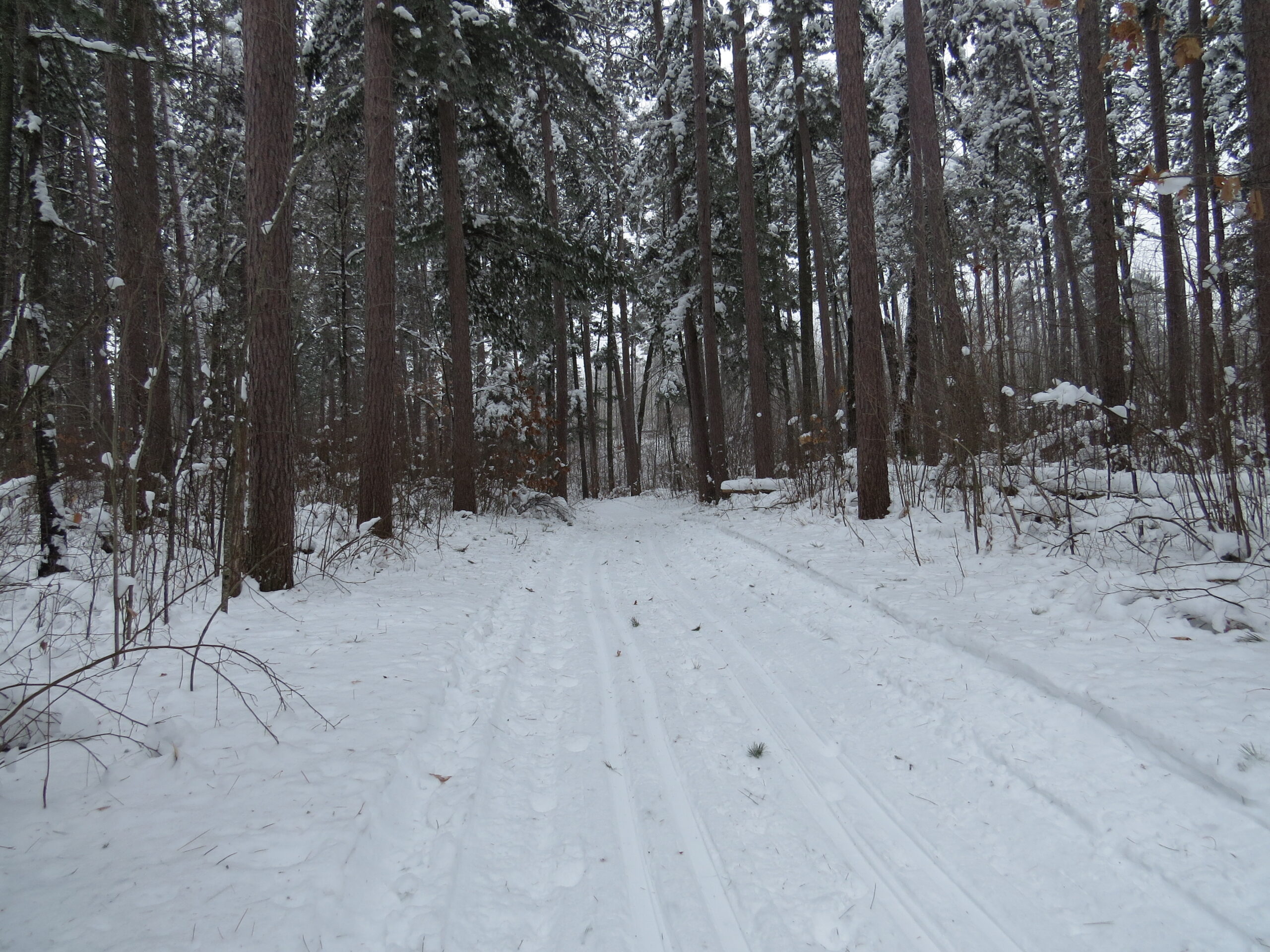
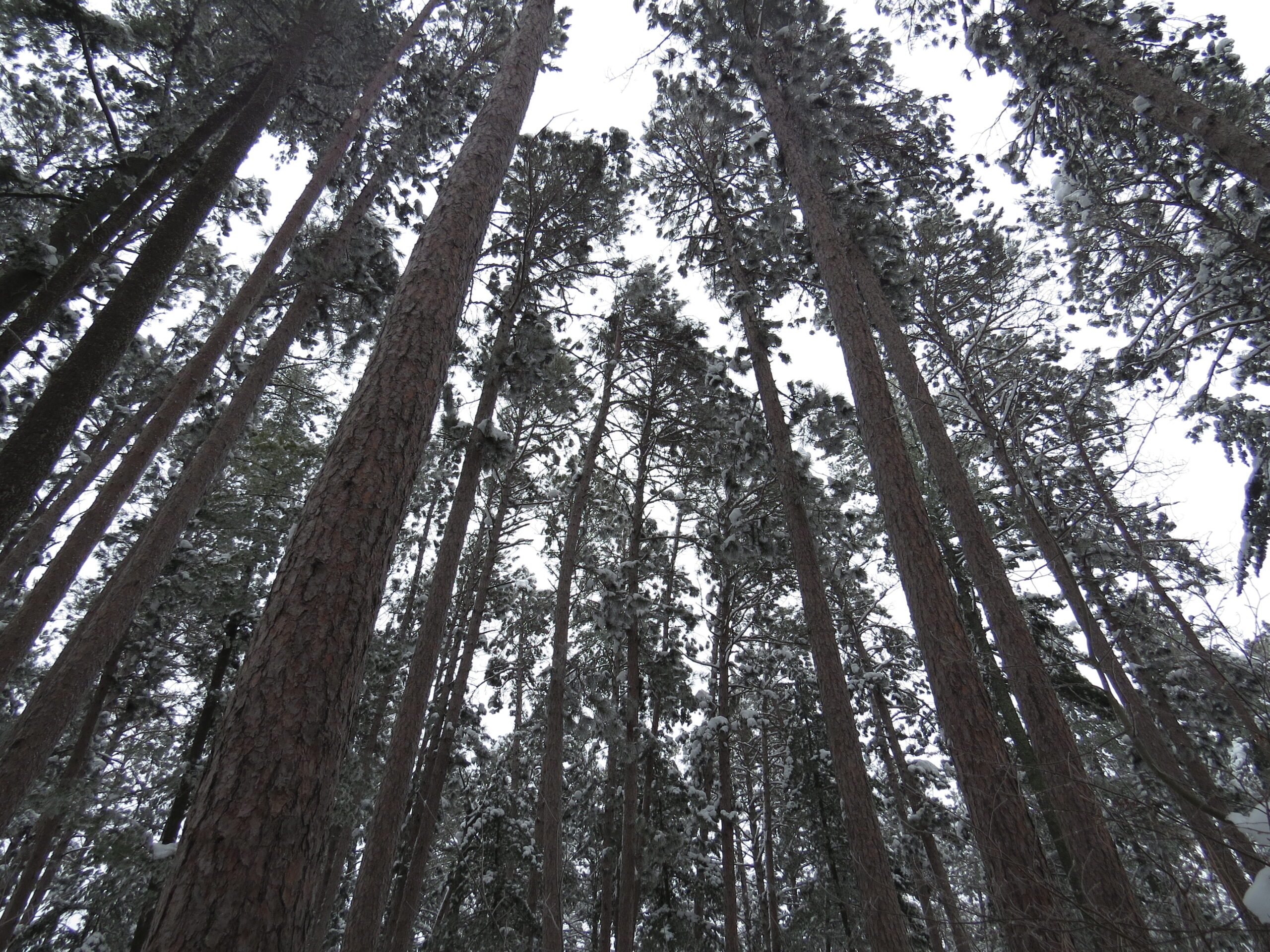
Itasca is the oldest state park in Minnesota (established in 1891) and protects over 32,500 acres of forests and lakes, including a large area of old-growth Red and White Pines. They have seen many decades of old years go and new years come in their long lives.
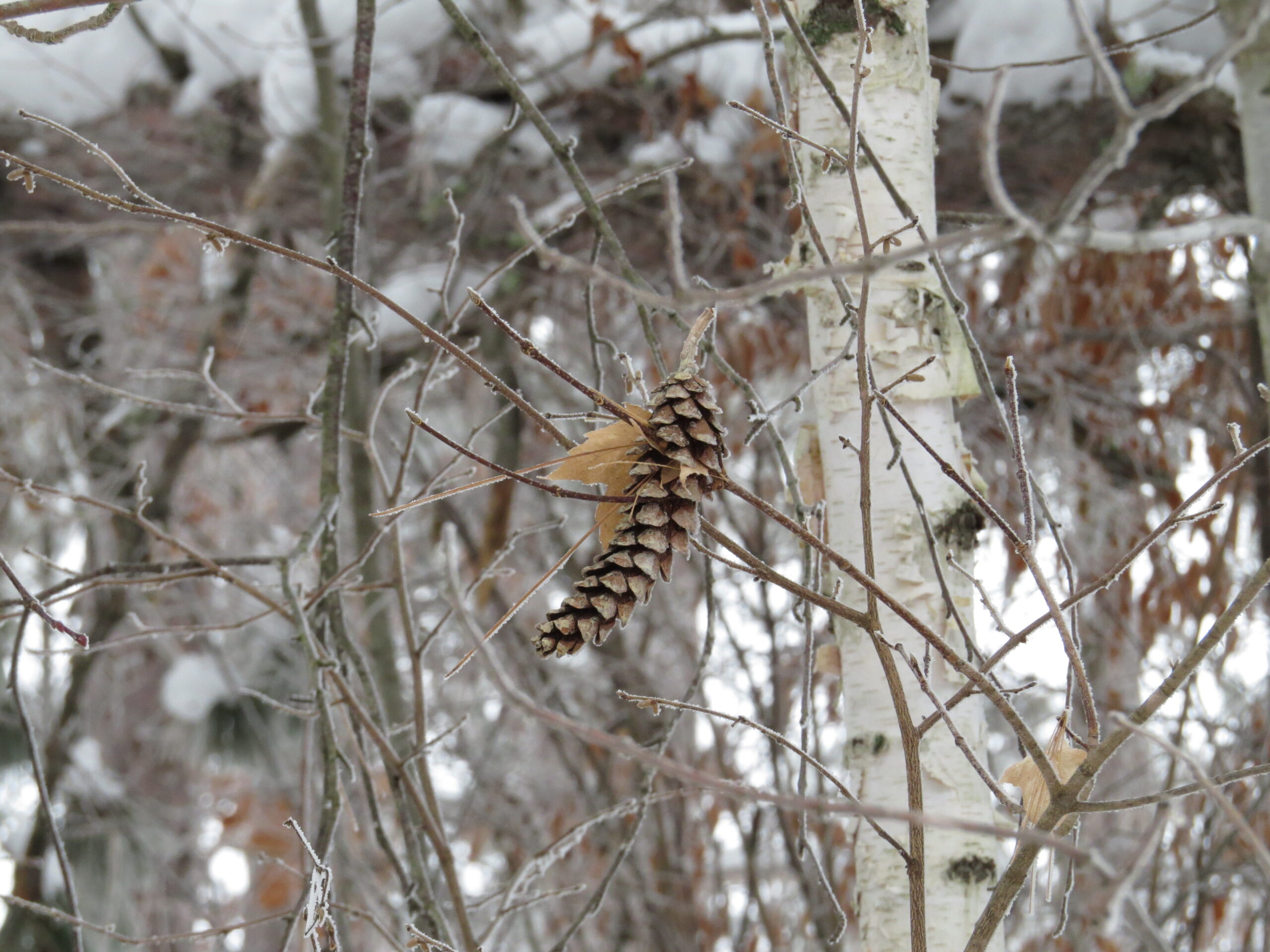
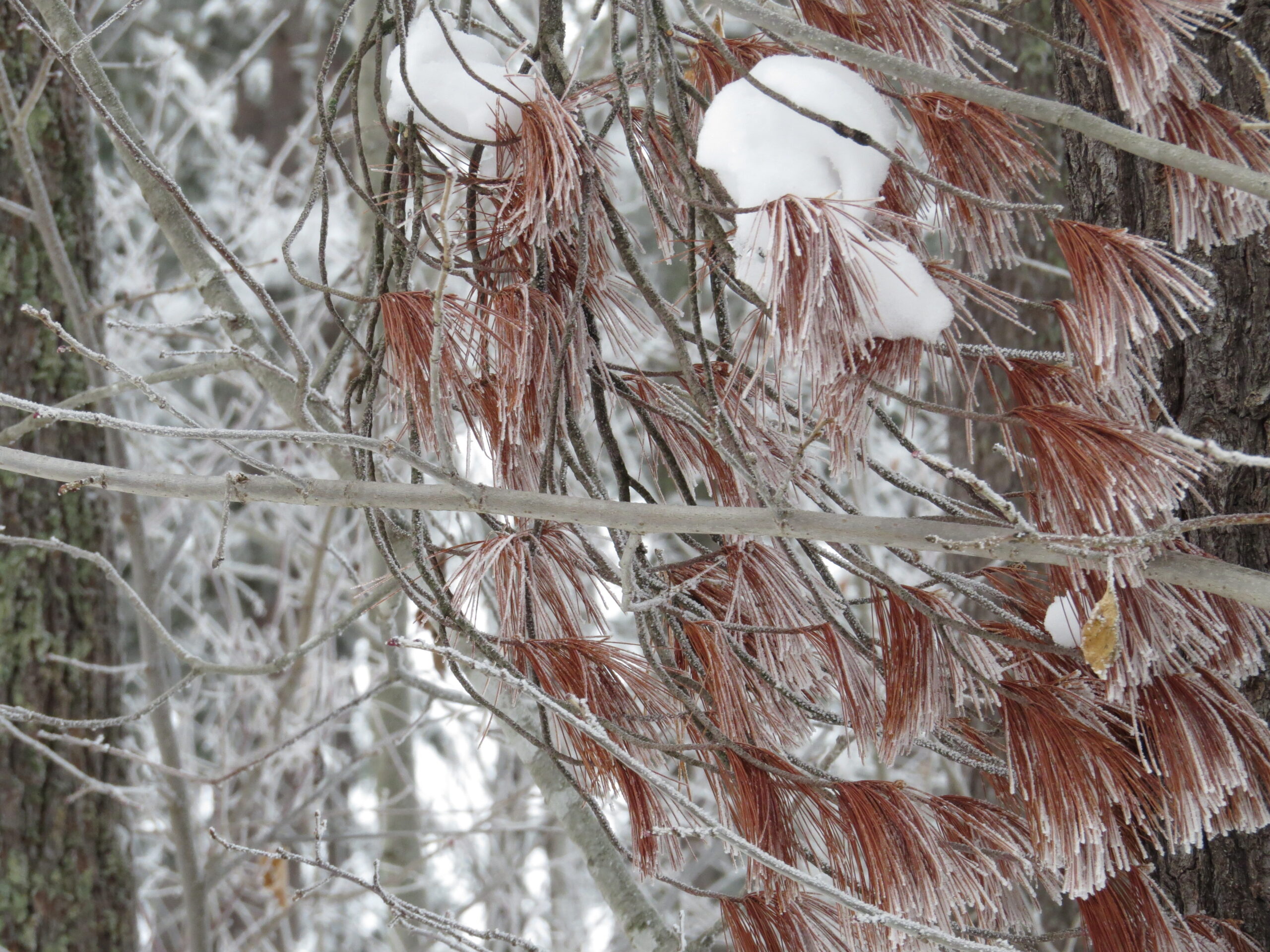
Even in the winter season, there is evidence of the sloughing of old ways—leaves, opened pine cones, and peeling birch bark—and the promise of new things to come—millions of tiny, protected buds of new growth.
We trekked to a larger road closed to vehicle traffic for the winter, and there we discovered Mary Lake, which helped us get our bearings, find our place on the map, and turn around when we saw we were nowhere near Dr. Roberts Trail.
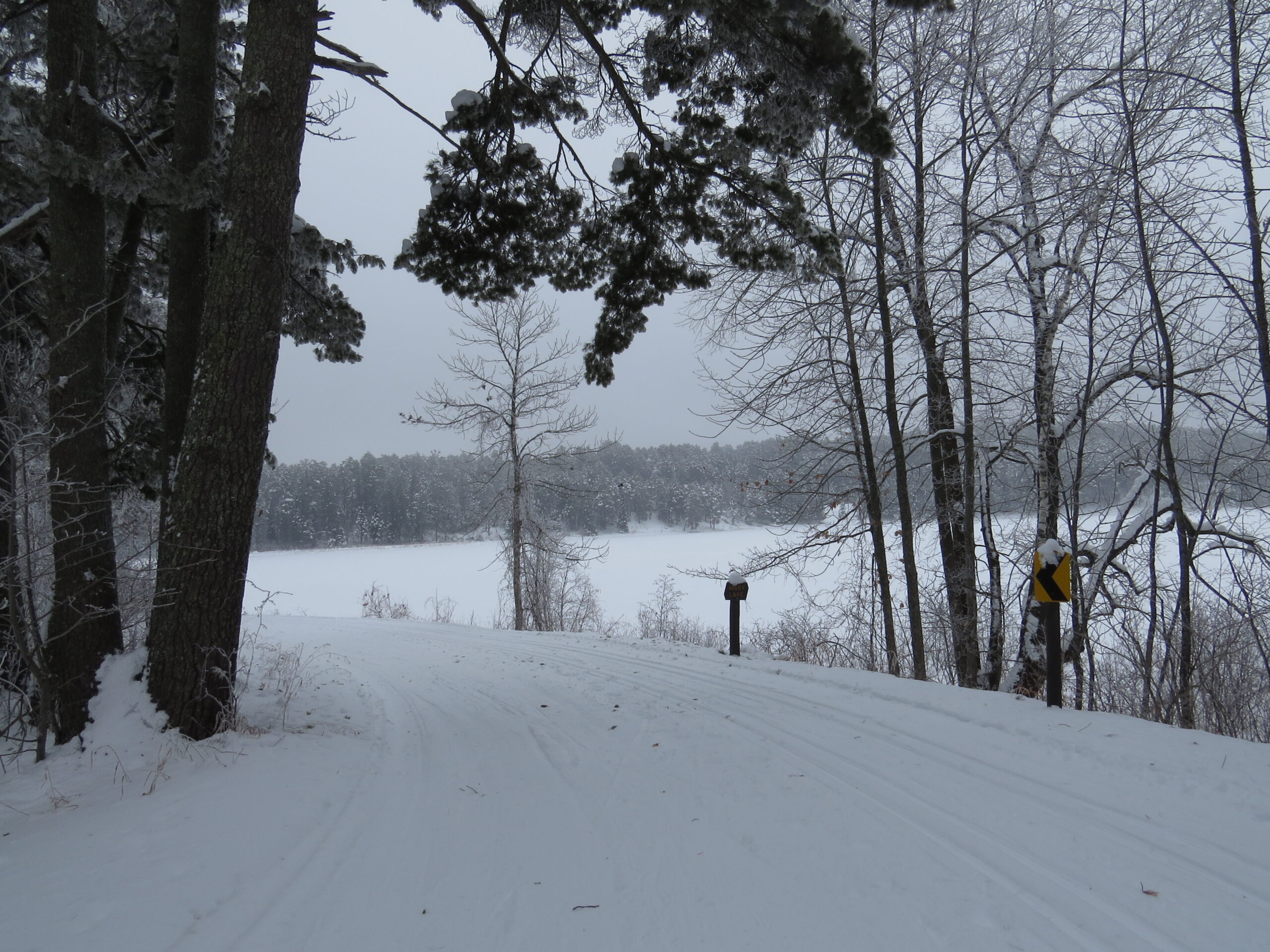
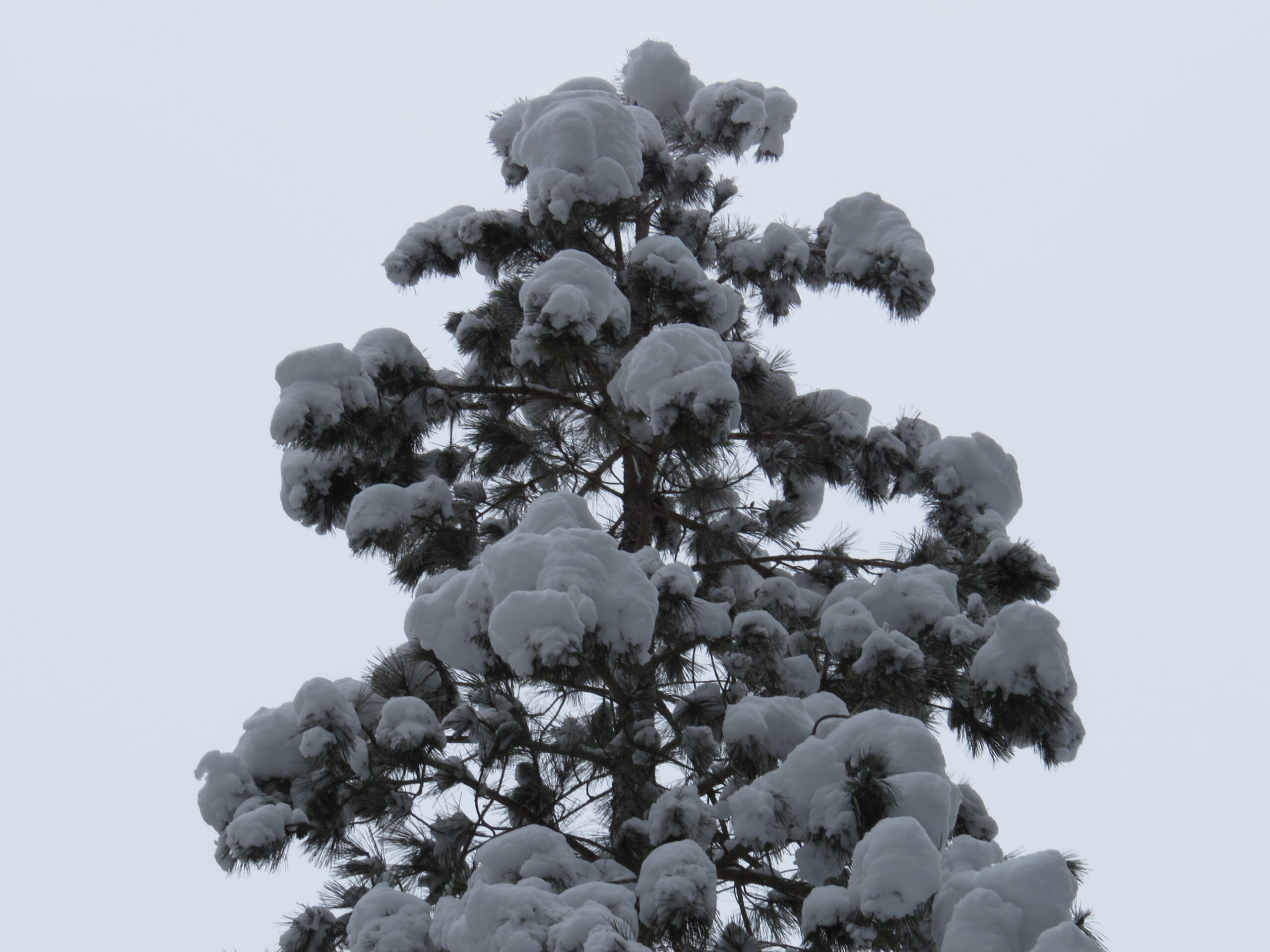
Old growth forests have been protected from catastrophic disturbances such as logging or forest fires for over a hundred years and provide a complex biodiversity of plants and animals in all stages of development—from new life to maturing to declining.
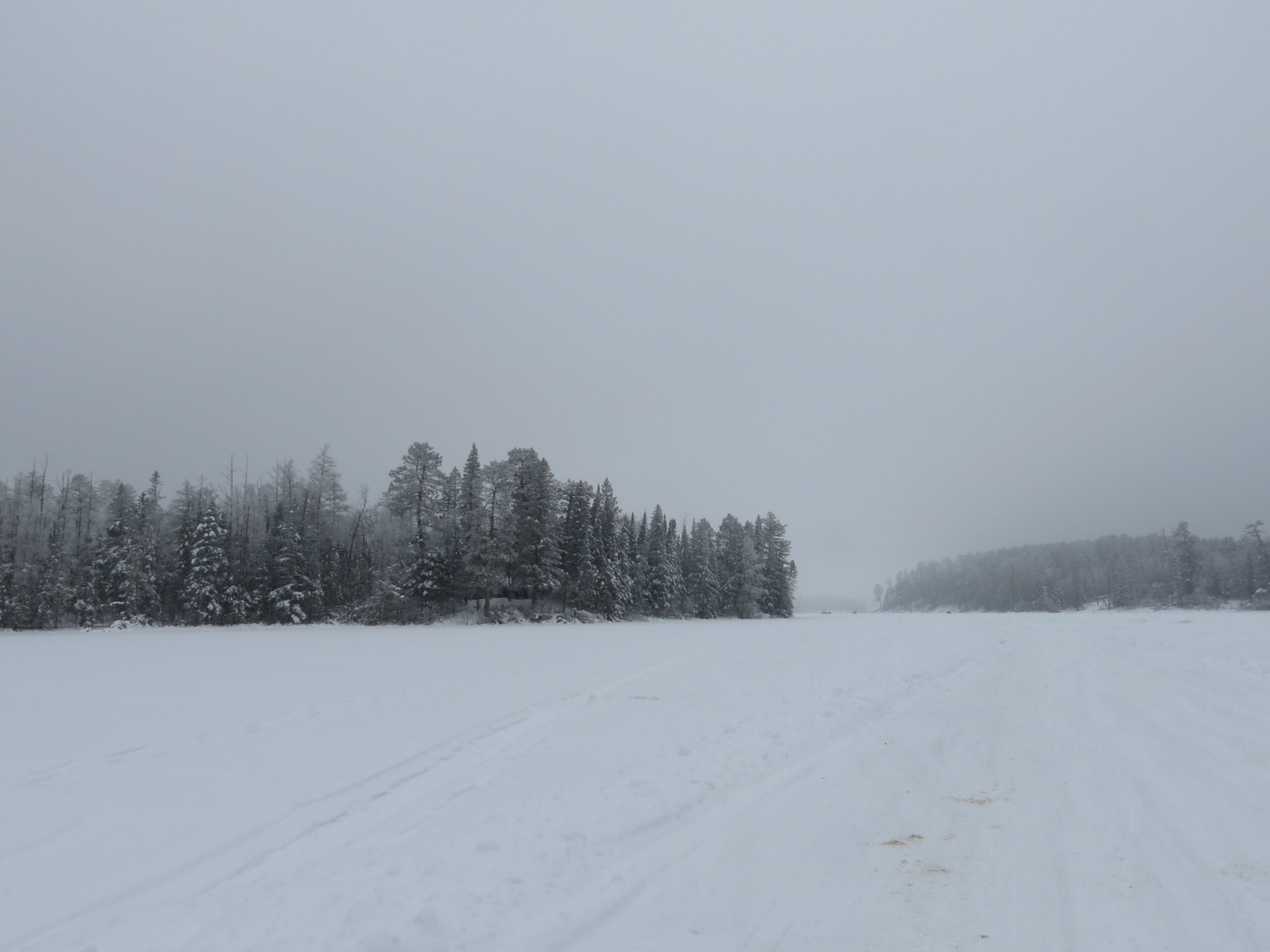
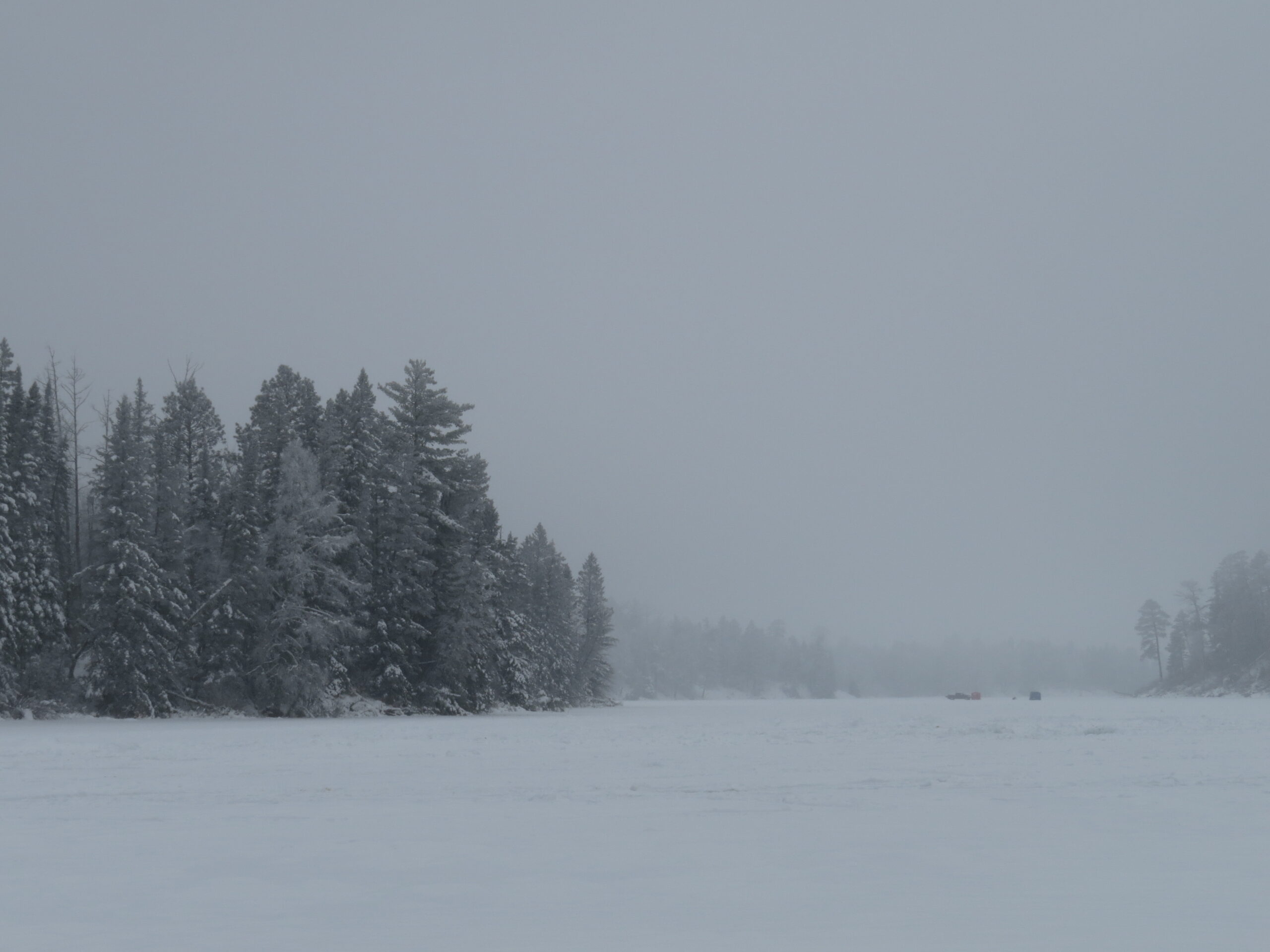
We snowshoed back to the empty lodge area and followed a road past the fish-cleaning house, under a walking bridge, to a parking lot with a huge tour boat docked on land for the winter. We walked out onto the lake ice that was covered with deep snow, confident in our safety when we saw the ice road, ice houses, and trucks of ice fishermen.
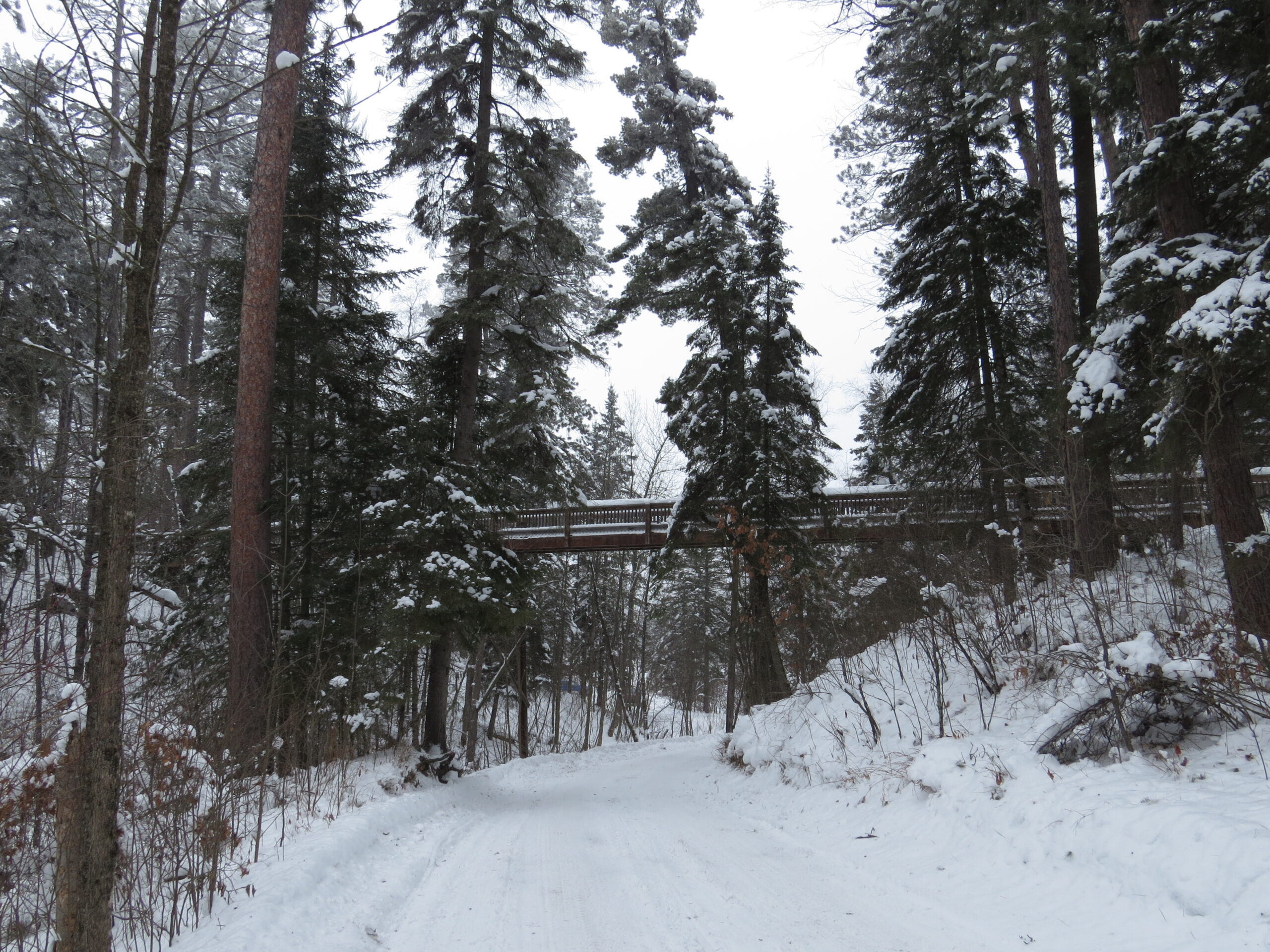
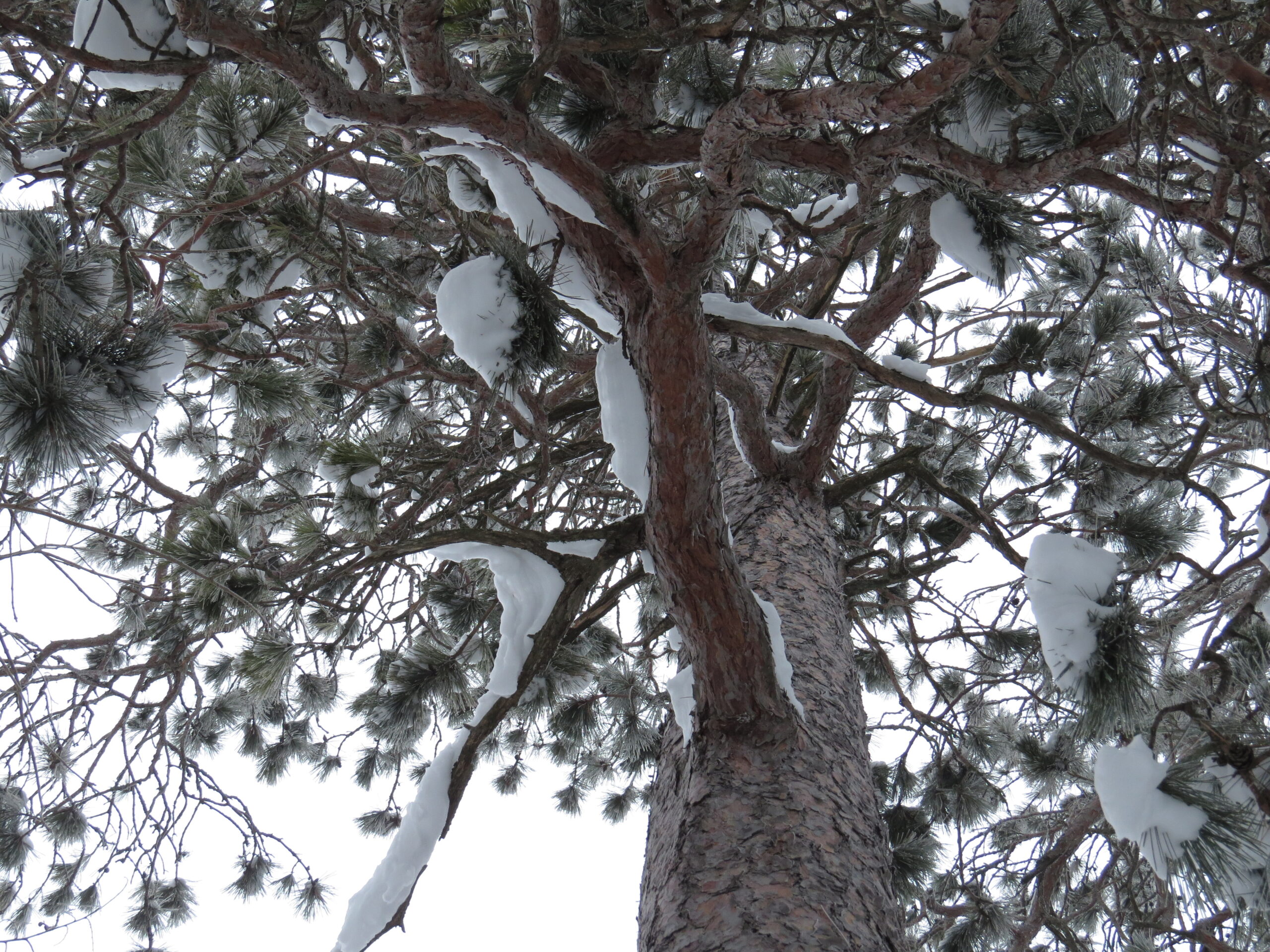
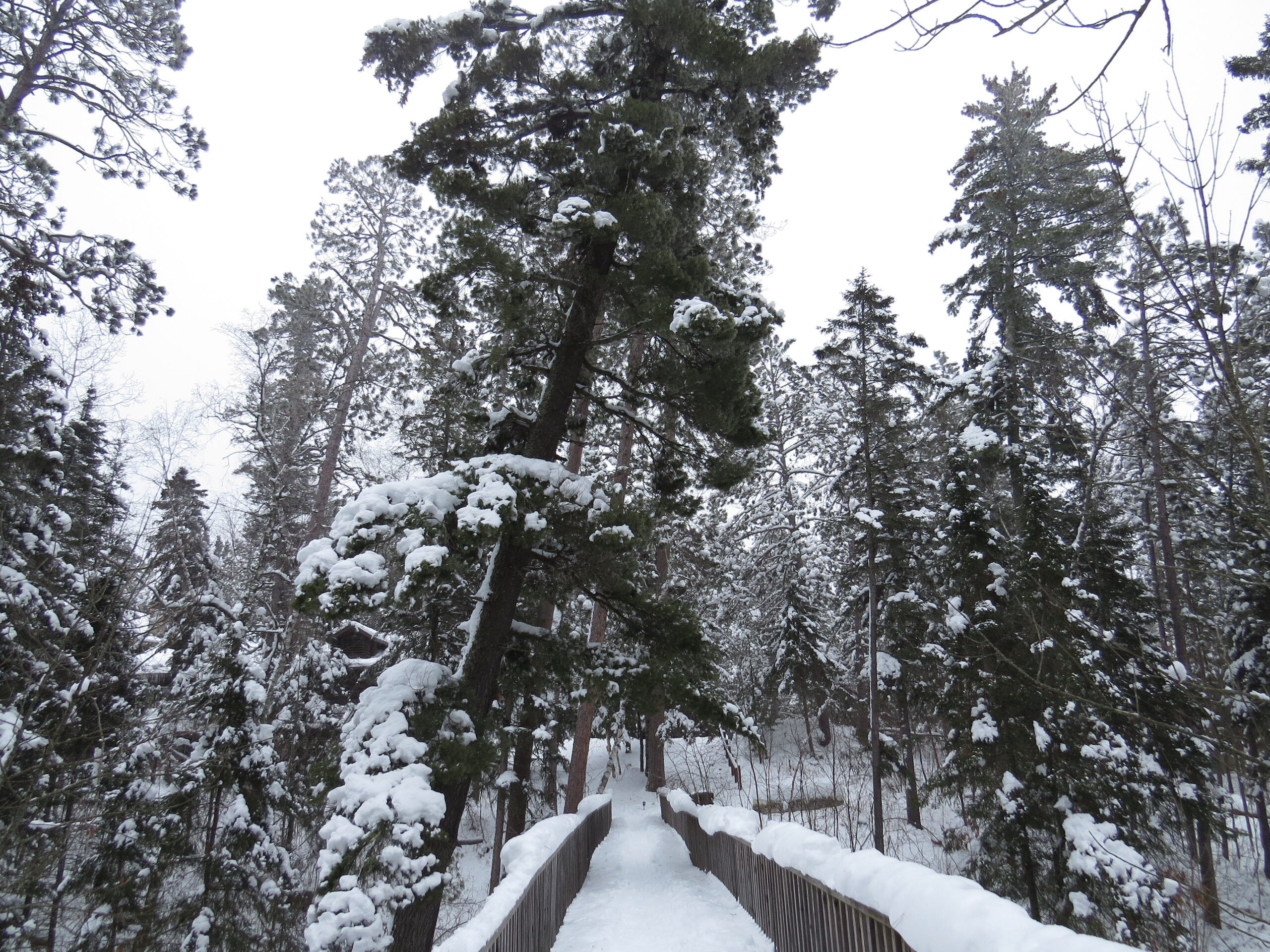
We climbed a hill up to the walking bridge where we joined the trees mid-height for a different perspective far above the ground and close up to a colorful Red Pine.
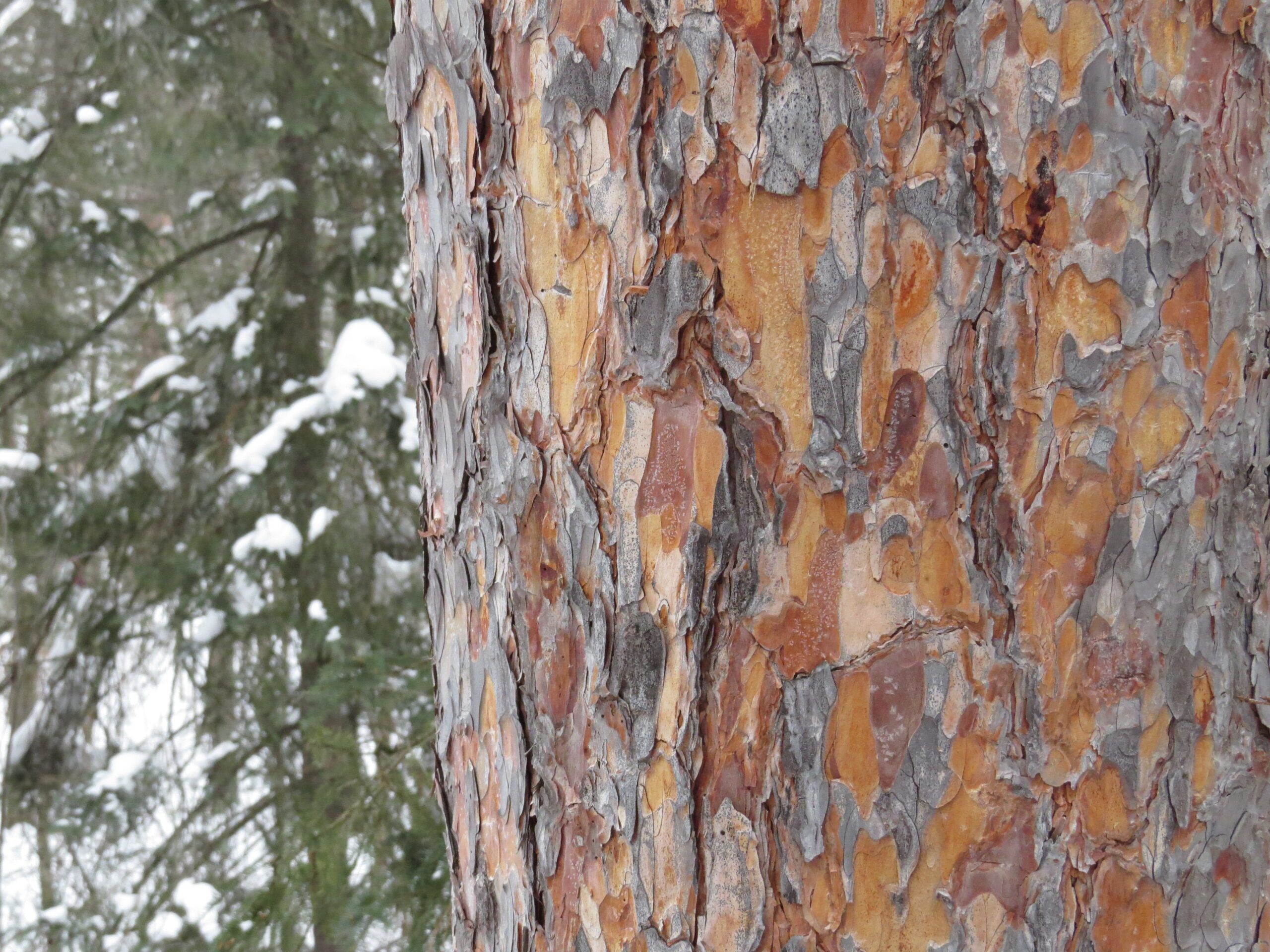
Our first snowshoe trek was orienting and invigorating as we explored our surroundings, but we also had plans for a luminous walk that evening. We returned to the cabin for a toasty crockpot supper, rest, and warmer clothes. The illuminated walk was three-quarters of a mile around the Bear Paw Campground. The only vestiges of a campground were the snow-piled picnic tables that were occasionally seen in the background of the strings of lights, but even those looked uncommon and foreign in the foggy, frozen landscape. One young couple with a small child was finishing up their walk when we arrived; otherwise, we had the place to ourselves. It was so incredibly quiet and still. We stopped at various points along the trail, suspending our talk and halting our crunching footsteps to soak in the silence. It was a bit disorienting to be in the dark, in the frozen fog, and in the noiseless forest, but as time passed, it became more comfortable and peaceful. From far away, the lights looked contiguous, but as we walked, we realized there were sections of light and sections of dark. The illuminated spots were light enough to get us through the dark places.
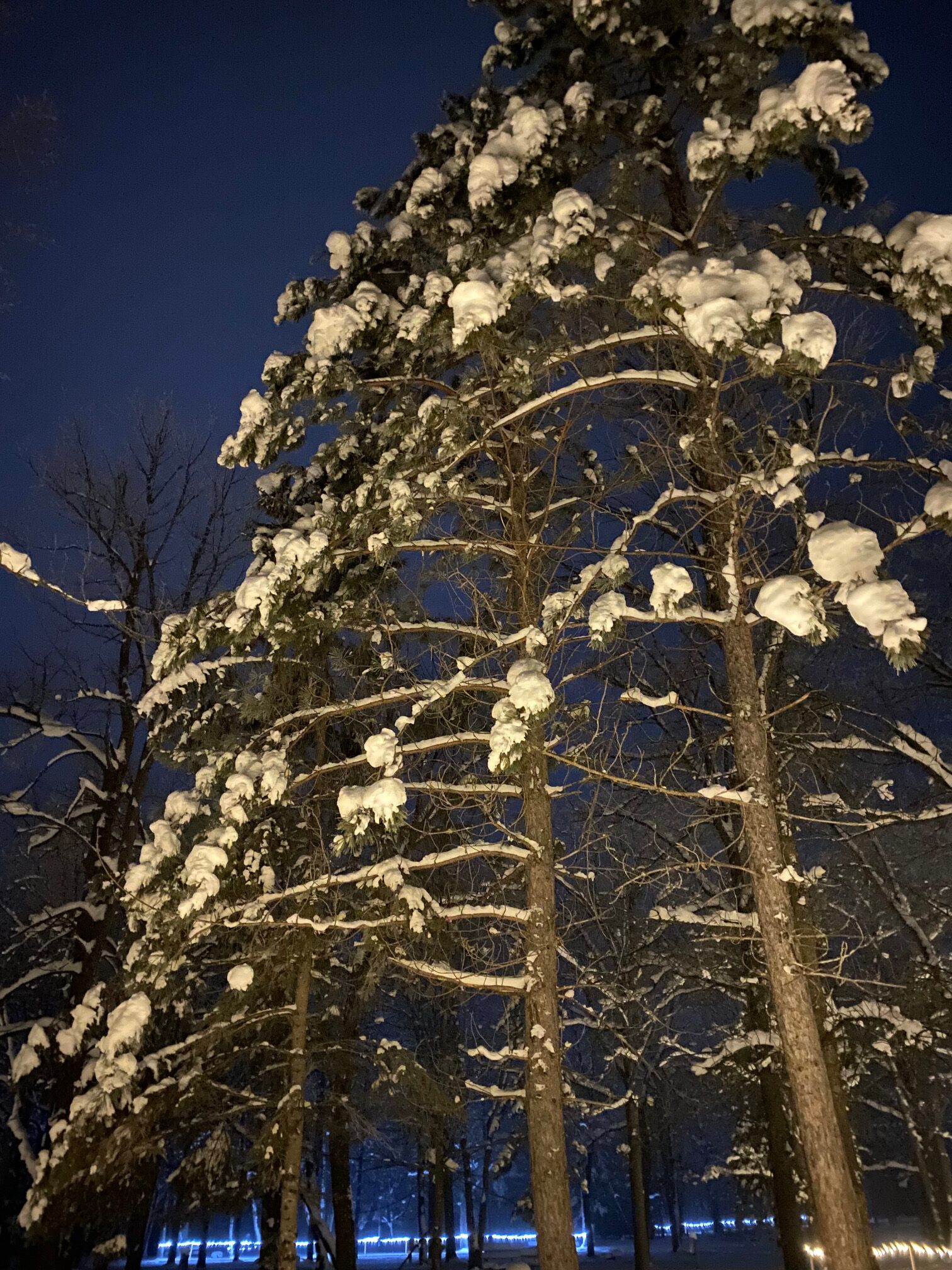
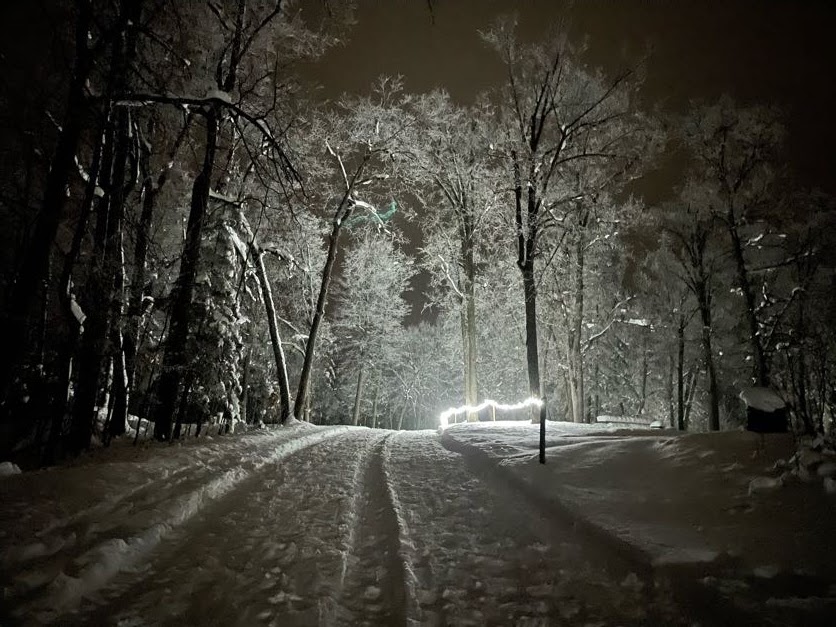
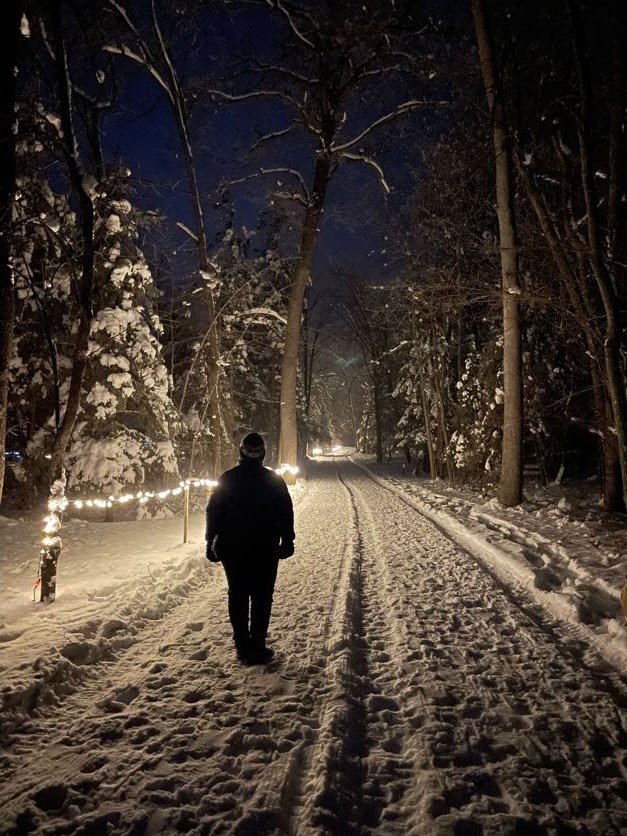
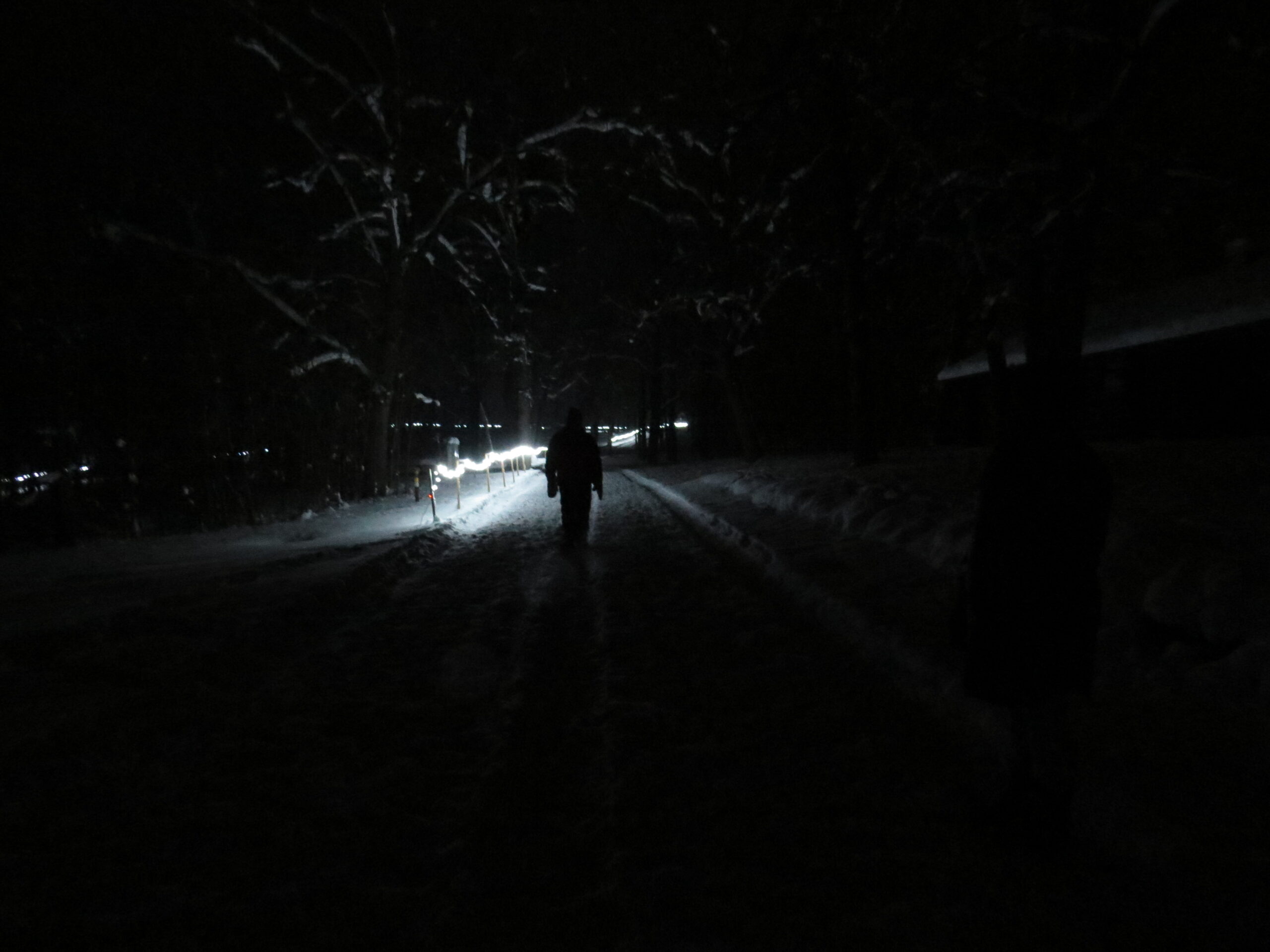
That’s how the old year was—stretches of grief, heartache, and worry, then periods illuminated with joy, fun, and laughter. The dark times came from death, illness, and disharmony, and much of the illumination came from our grown-up children spending time and energy with us. At the end of an old year, we can honor the past, whether we considered it difficult or wonderful, for in reality, it is both. It is helpful to explore our interior landscapes in order to get our bearings after a disorienting event. Seeking and soaking in the silence can mute the noisy self-talk that often undermines our well-being, and we can return to peace. Winter strips away many of the distractions—the noisy and beautiful distractions—that sweep us up in the rest of the year. Allow the illuminated times to get you through the dark spaces, and allow the quiet and beauty of Winter to bring you peace as you walk out of the old year.