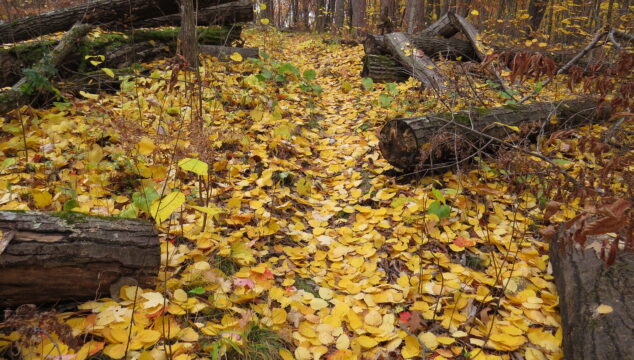
Come walk with me in the peak Autumn beauty of the Northwoods. To say that I love this time of year is an understatement. Most everyone can appreciate the colorful falling leaves---it reveals the 'true self' of a tree when its leaves are no longer producing chlorophyll. Their true colors are revealed, and there is something simple … [Read More...]
UnSnowed
When we lived on our little farmstead in Missouri in our younger years, we had a trencher come and dig in a water line. The machine slices into the earth making a narrow but deep gash in which to lay the water pipe so it doesn’t freeze. Once the pipe was in place, there was a slight mound of extra dirt in a line across the field. After a rain, Chris and Emily walked along the cut path. Emily noticed a beautiful, blush-colored spear point laying on top of the soil. Unearthed by machine and rain. After all that time.
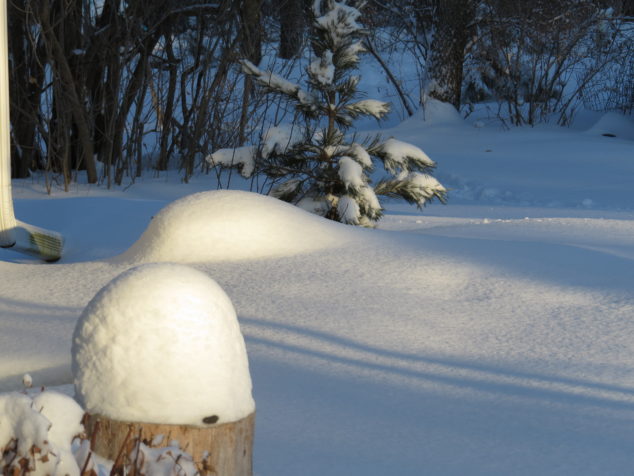
In the last three weeks, we have become unsnowed. After what seemed like a long, snowy winter (not really so long as many others), the culprit has mostly disappeared in a short amount of time. Just when we think that things we don’t like and time move slowly! Change does not often adhere to our time schedule. As a snow-lover, it is leaving too quickly for me—even as the cold temps this weekend have slowed the loss and even as a part of me desires the warmth and greenth of Spring. In my fickleness, I miss the bright snow-light of the morning. After all that time.
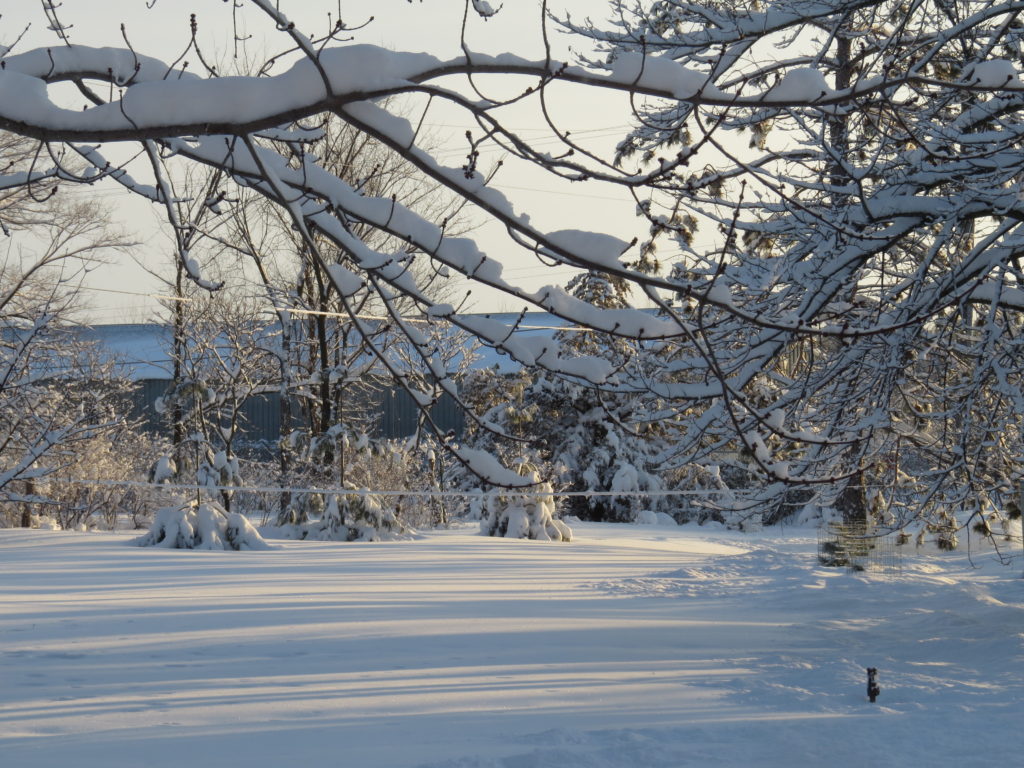
From our last ten-inch snowstorm to unsnowed—just three weeks in time.
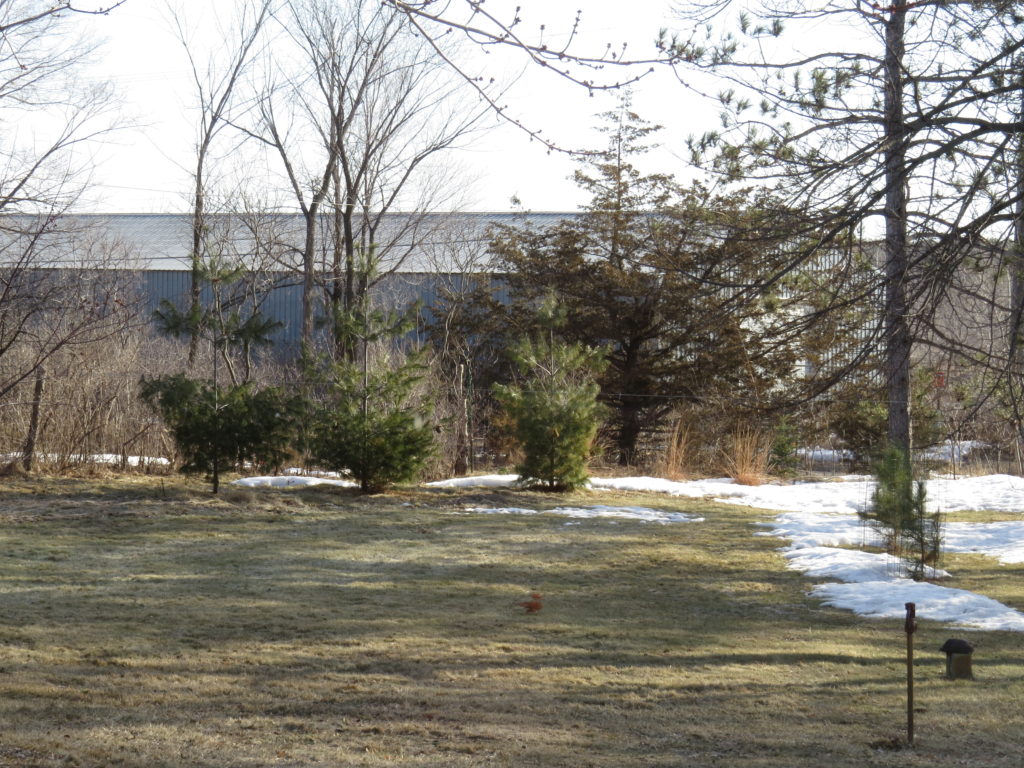
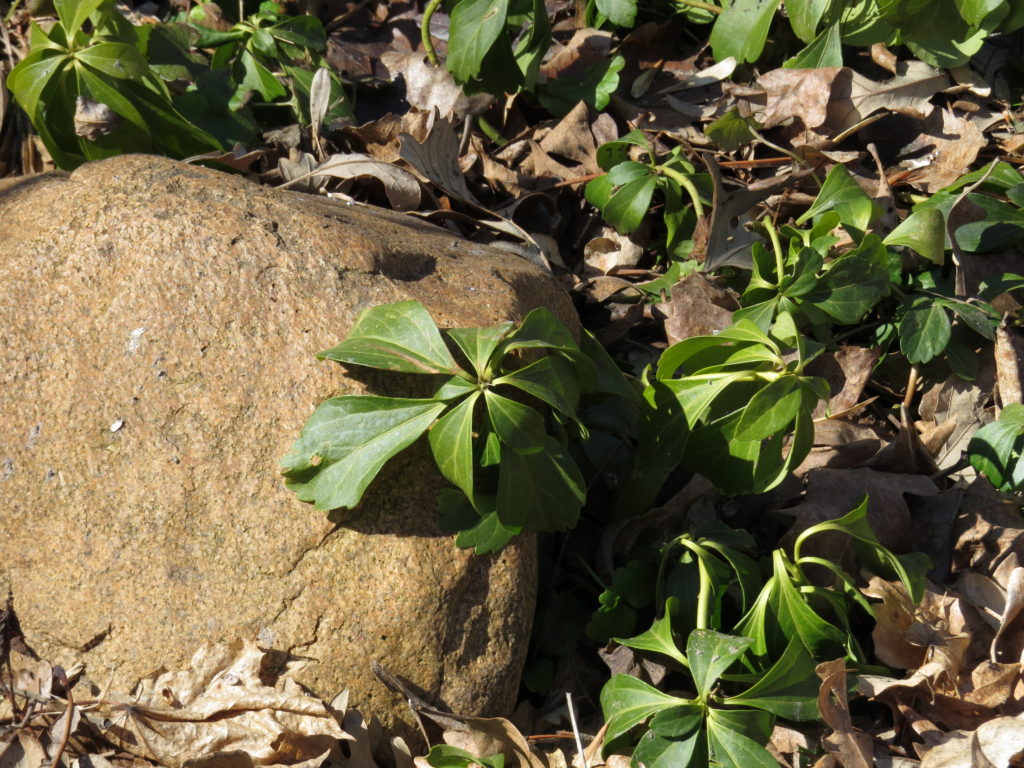
I discovered some green Pachysandra in the unsnowing—our eyes and memories ‘forget’ what lies underneath the real and compelling recent past.
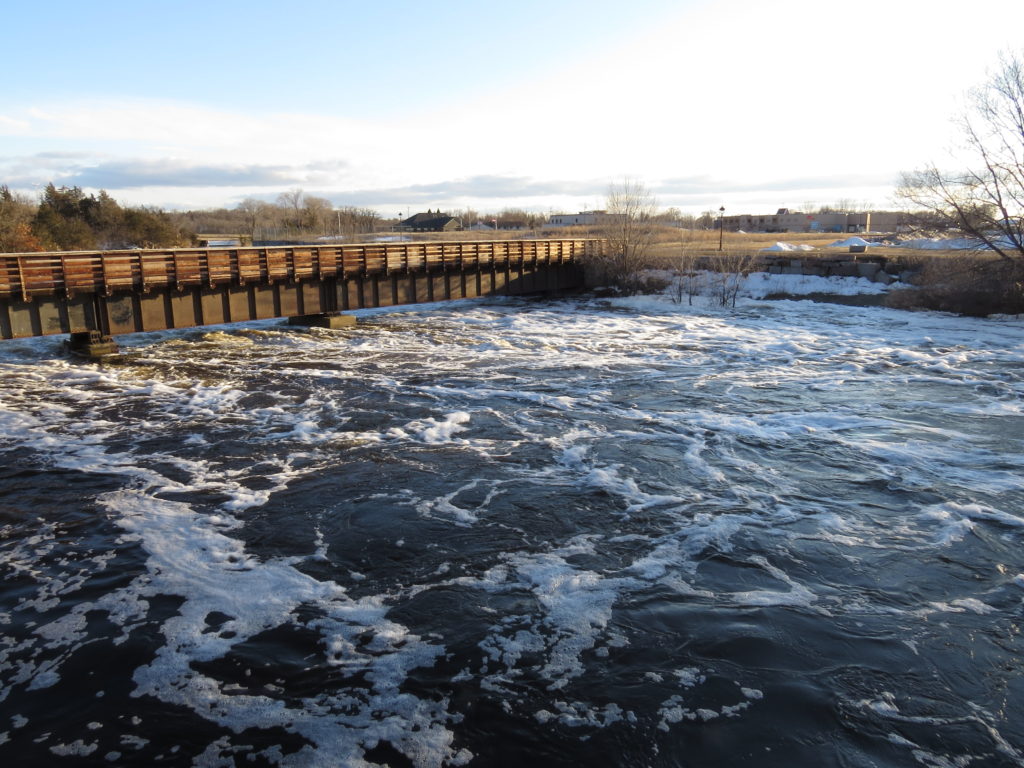
Where did the snow go? With the frost still in the ground, the melted snow made its way down the hill to the River. The high water just about touched the old railroad bridge as ice floes and foam bubbled from the dam.
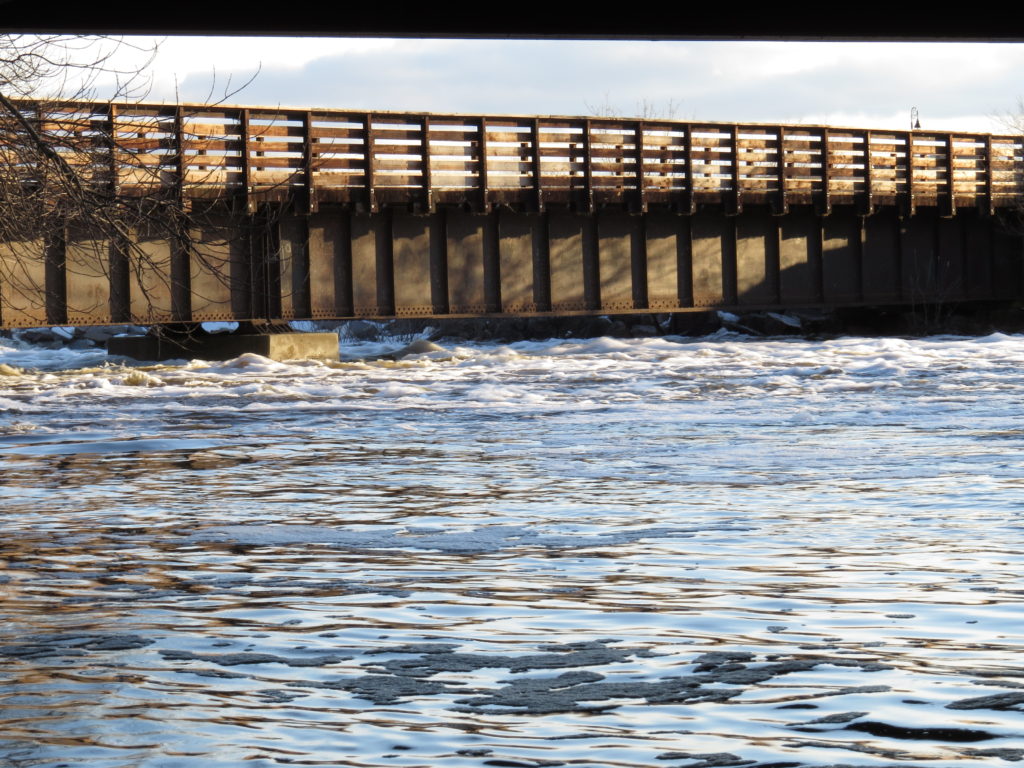
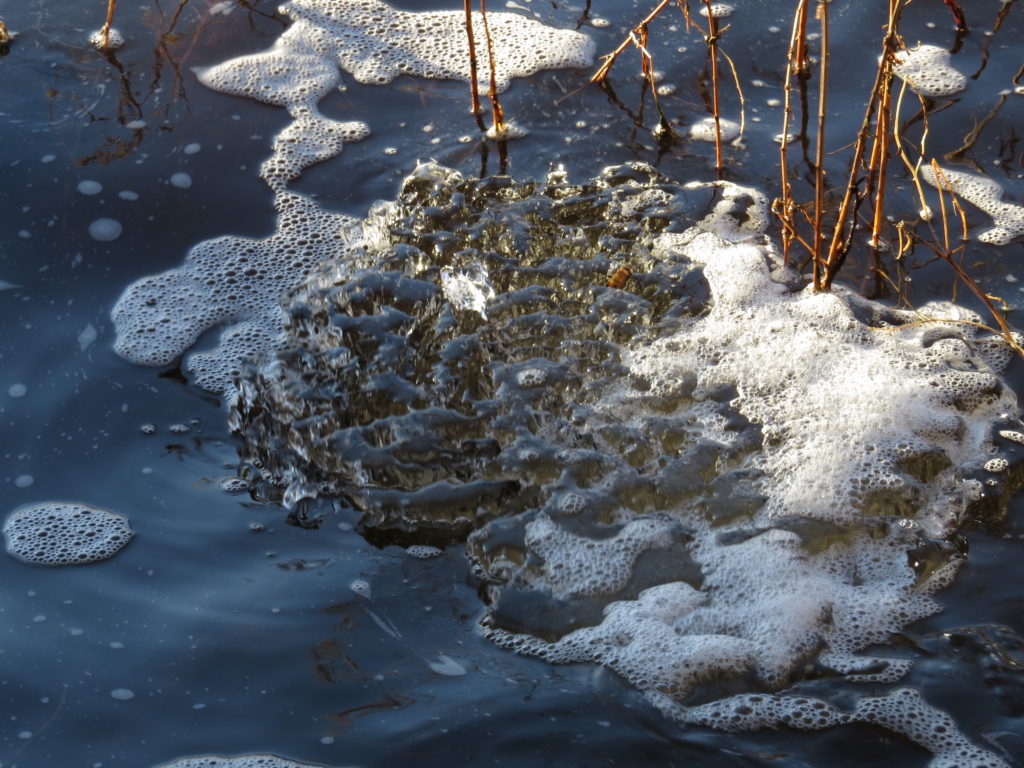
In places, it was hard to distinguish the foam from the snow.
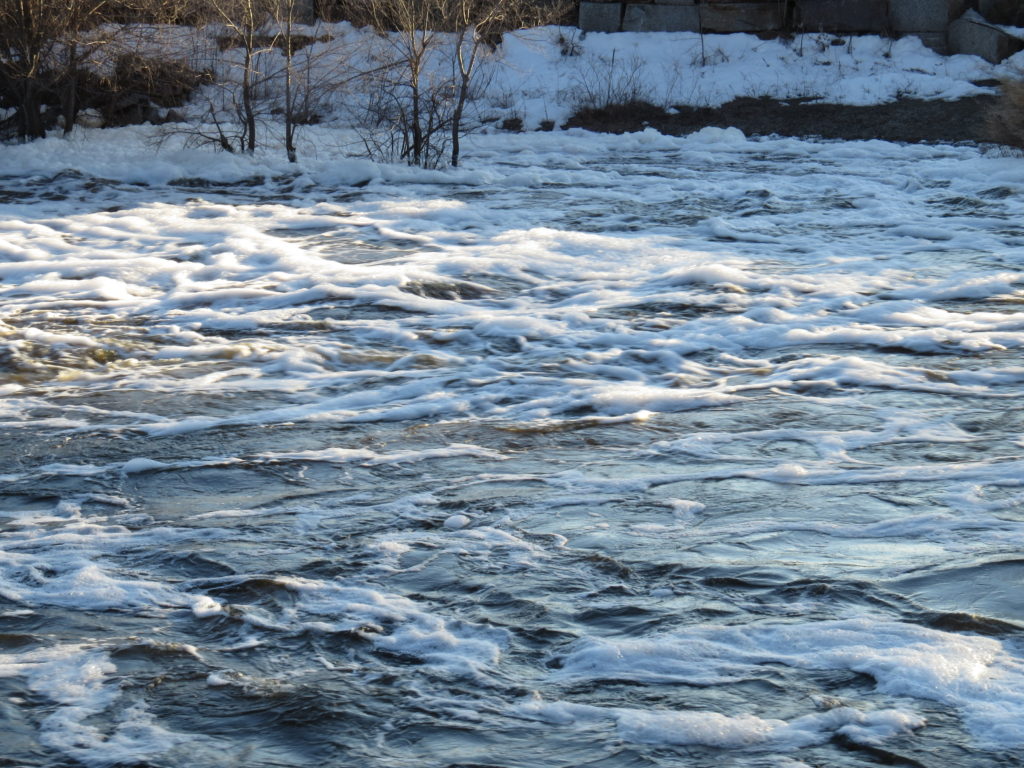
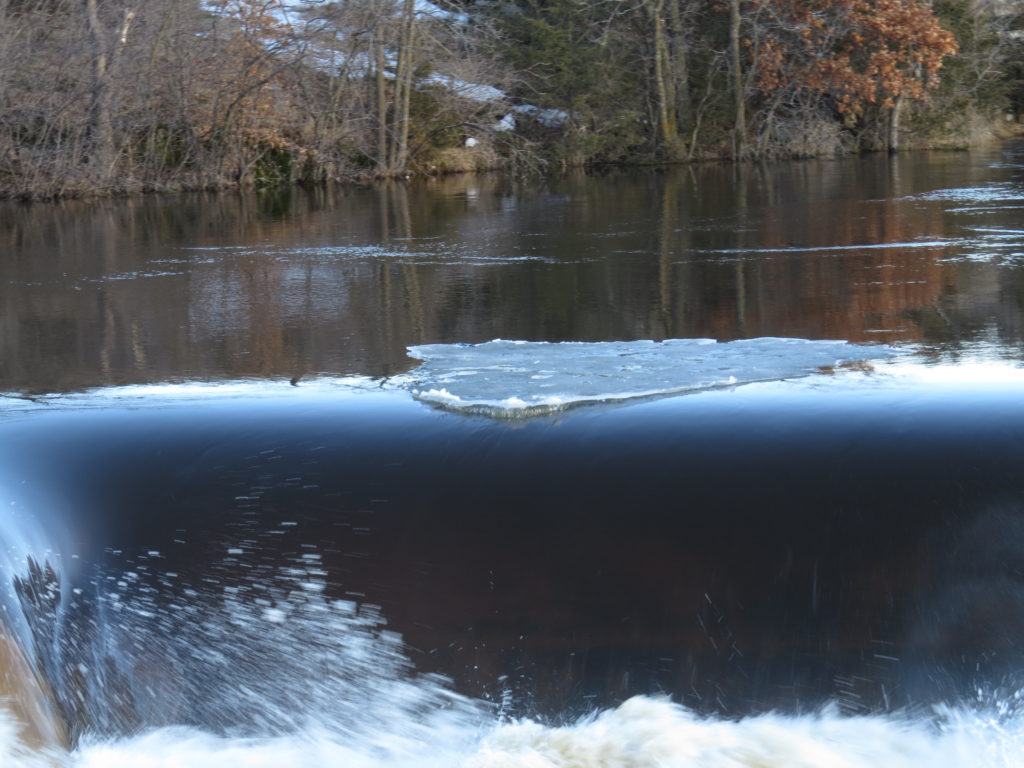
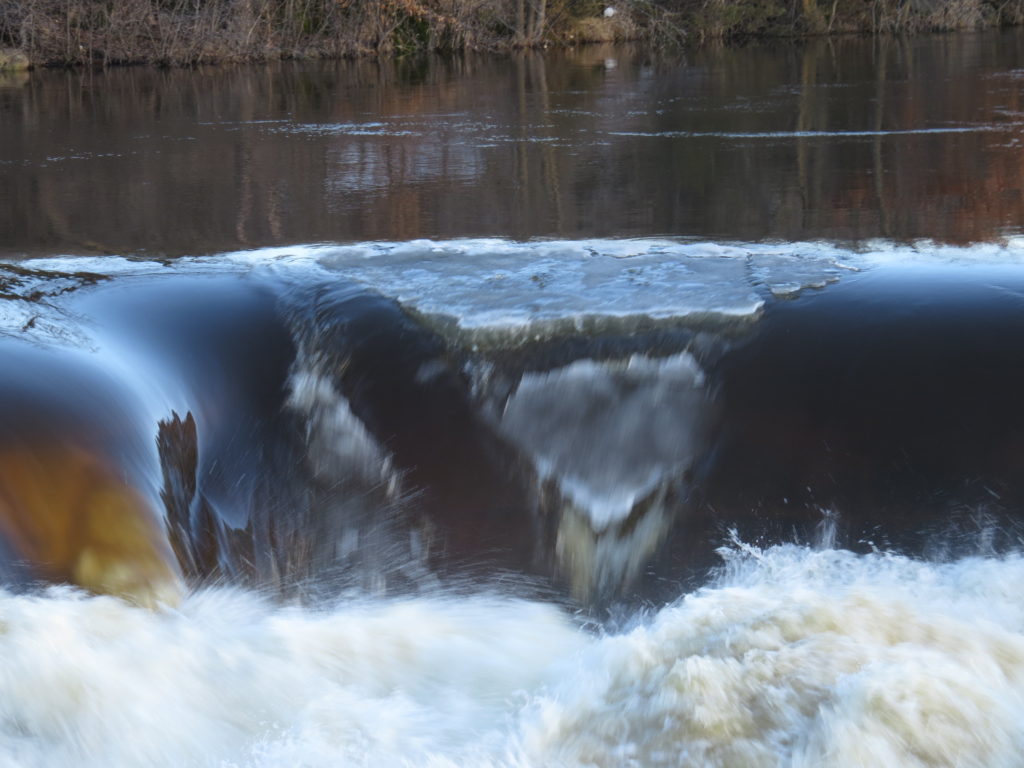
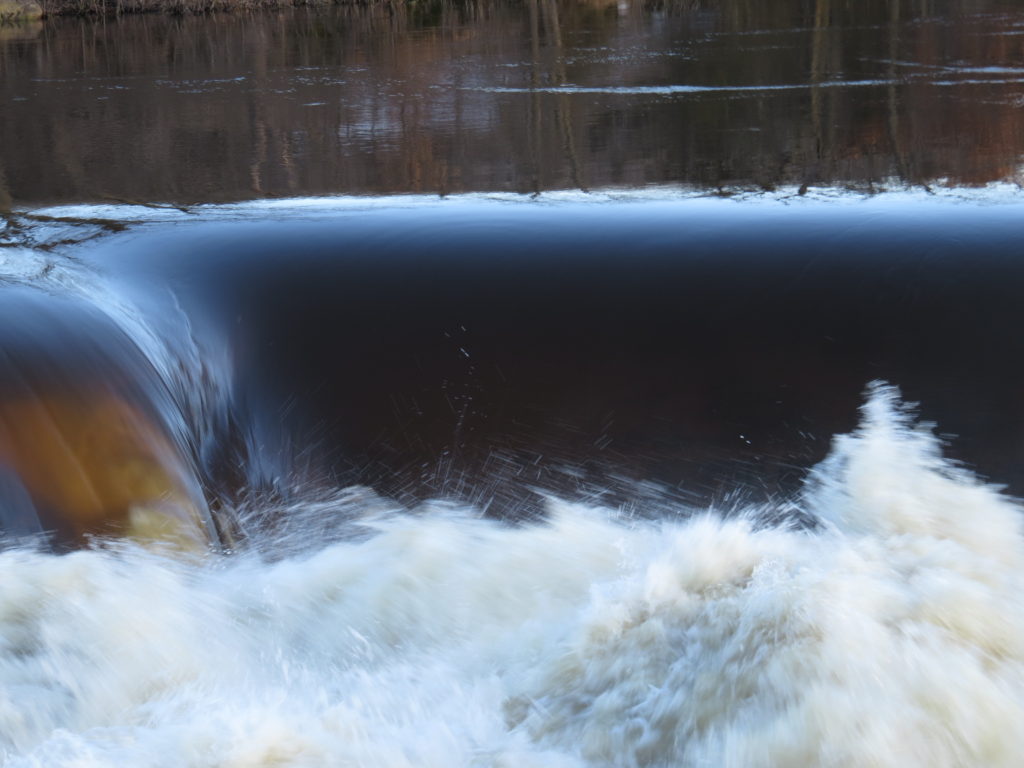
The old mill dam was covered by a dark, smooth sheet of water that crashed over the short drop-off into a frenzy of voluminous, white-capped churning.
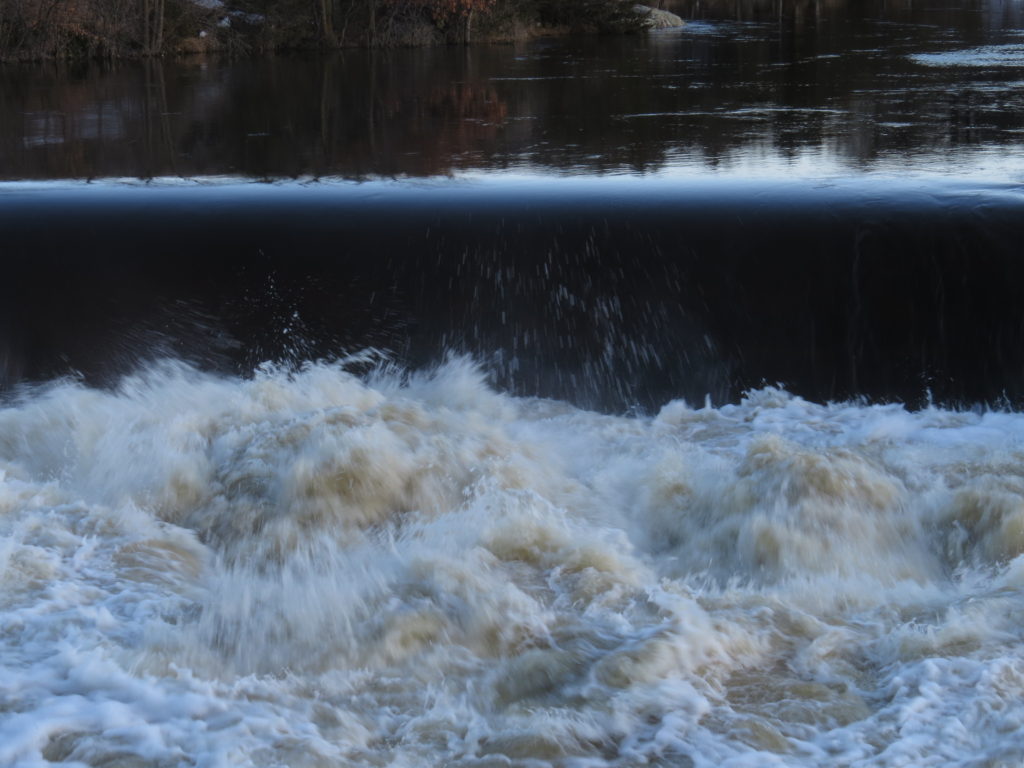
We caught sight of an approaching ice floe that had been dislodged from the upstream lakes and sent on its northern trek towards the Mississippi.
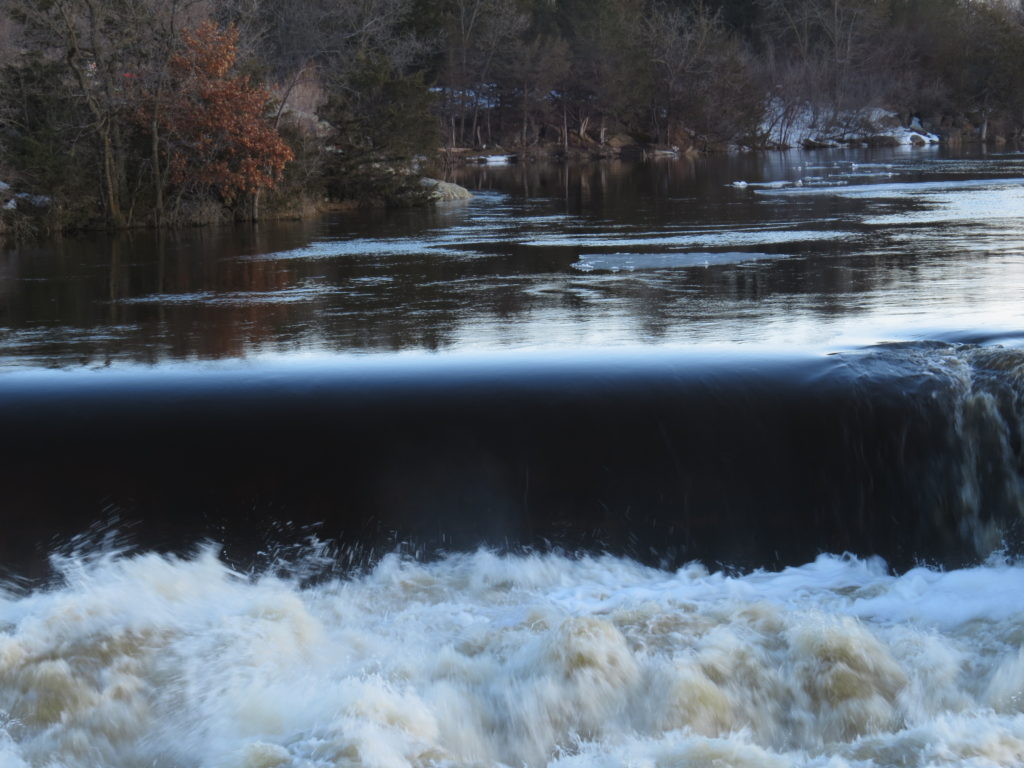
It was rather mesmerizing to watch the floating ice draw near the dam, change course in the current, and break into pieces as gravity and churning water broke the tenuous bonds and instantly changed the state of ice to the state of water and vapor.
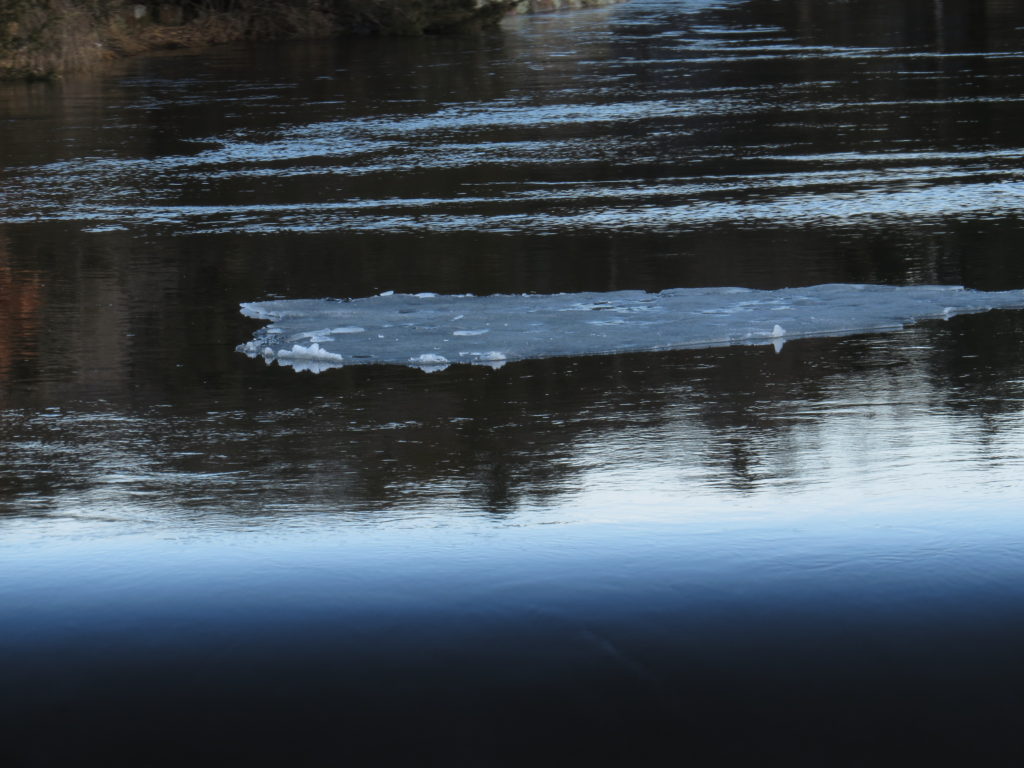
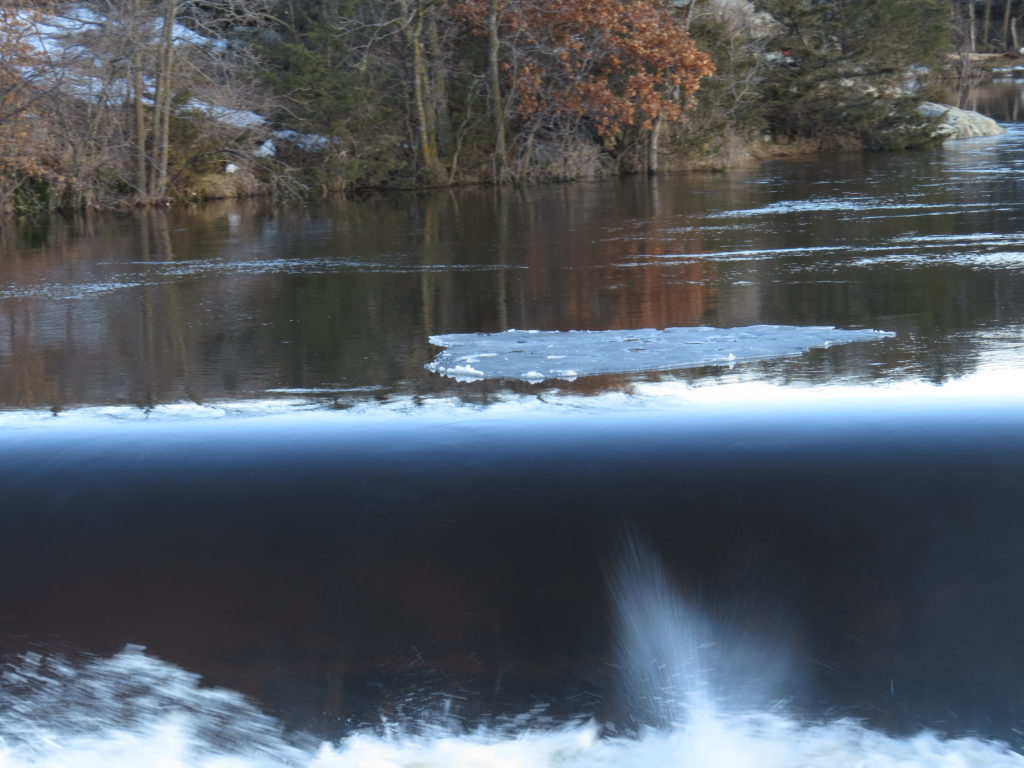
Upstream more blocks of deconstruction floated quietly by, unsuspecting of the turmoil that lay ahead.
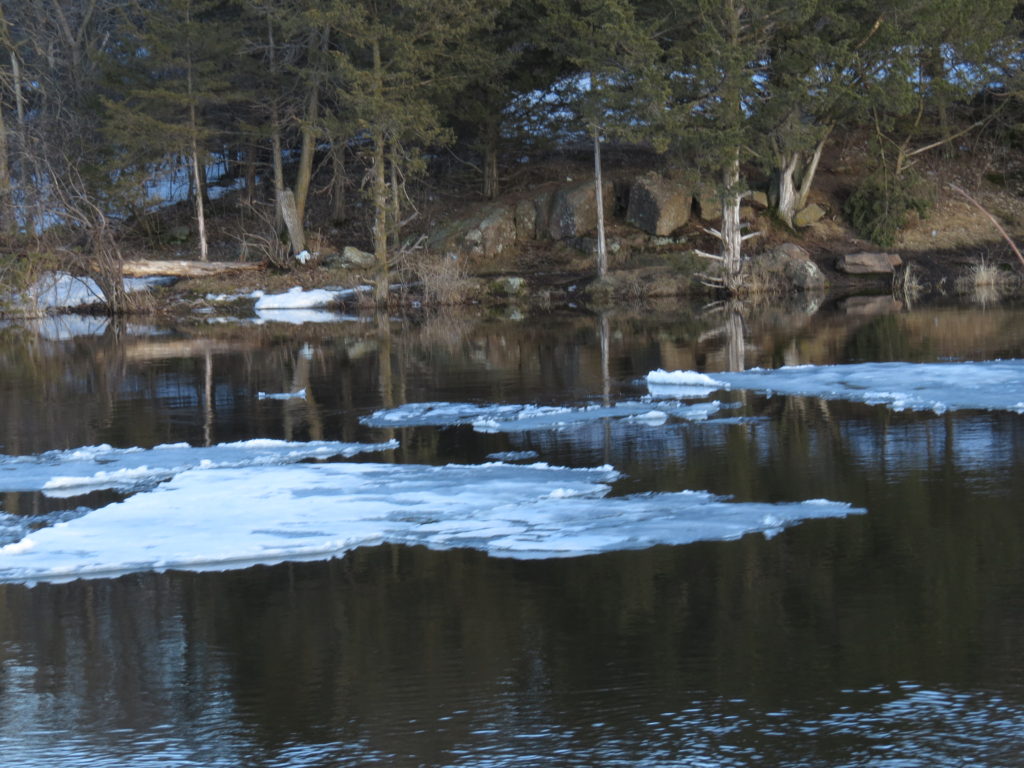
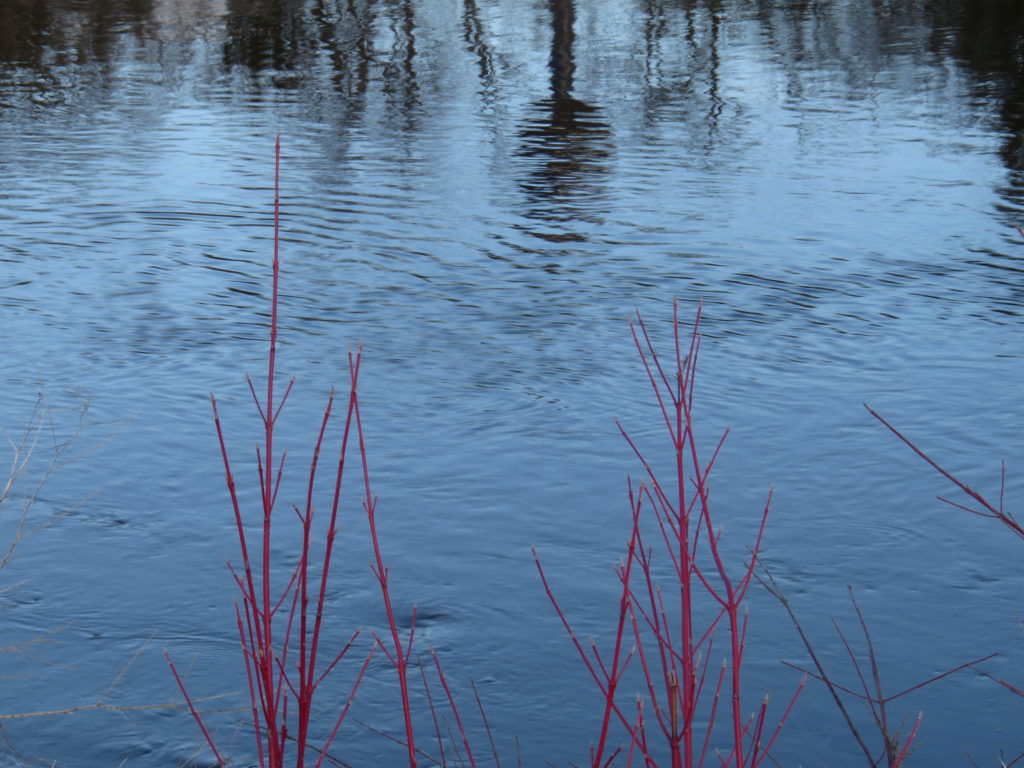
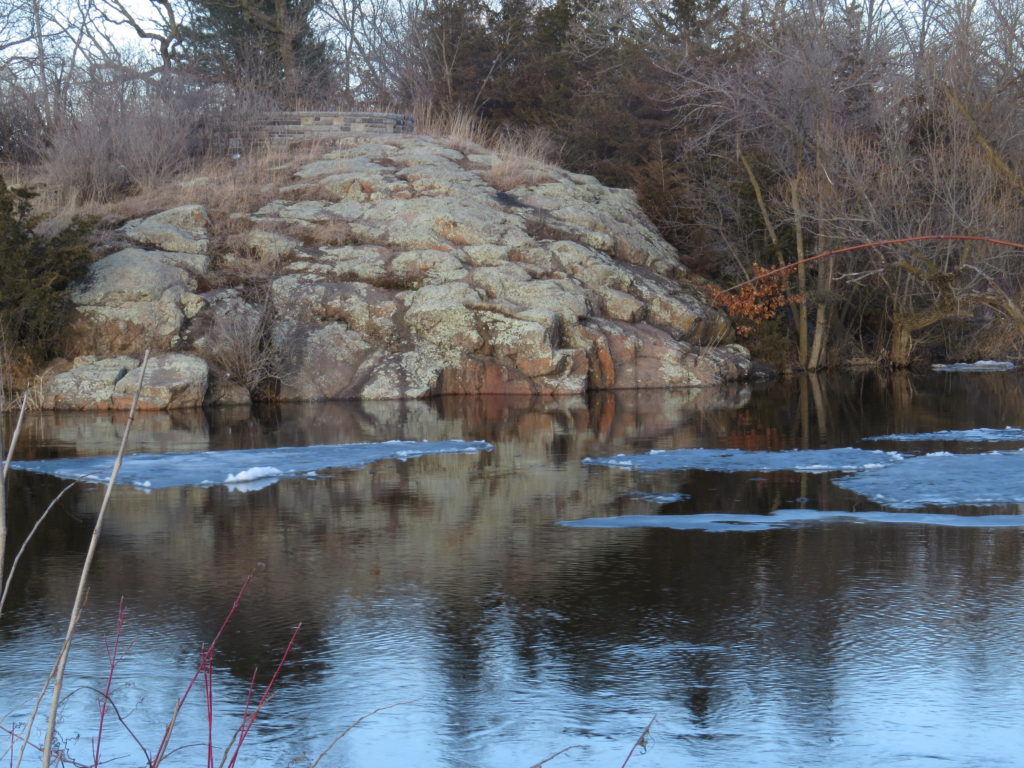
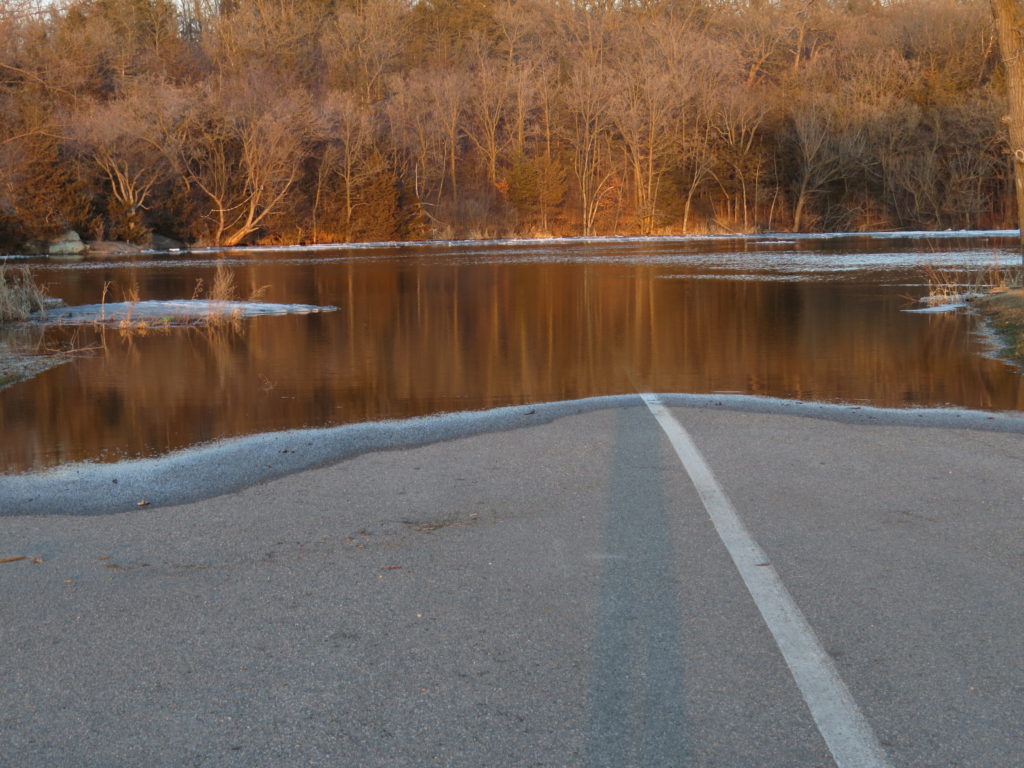
A short ways upstream, past one more highway bridge, a boat ramp accepted excess water, just as all the lower-lying areas of all these Midwest flooded rivers have done. There is no choice in the matter.
High above the River on the bluff, where the tips of the Spruce trees rise above the Oaks, is where we live, where the snow melted, where the water ran from.
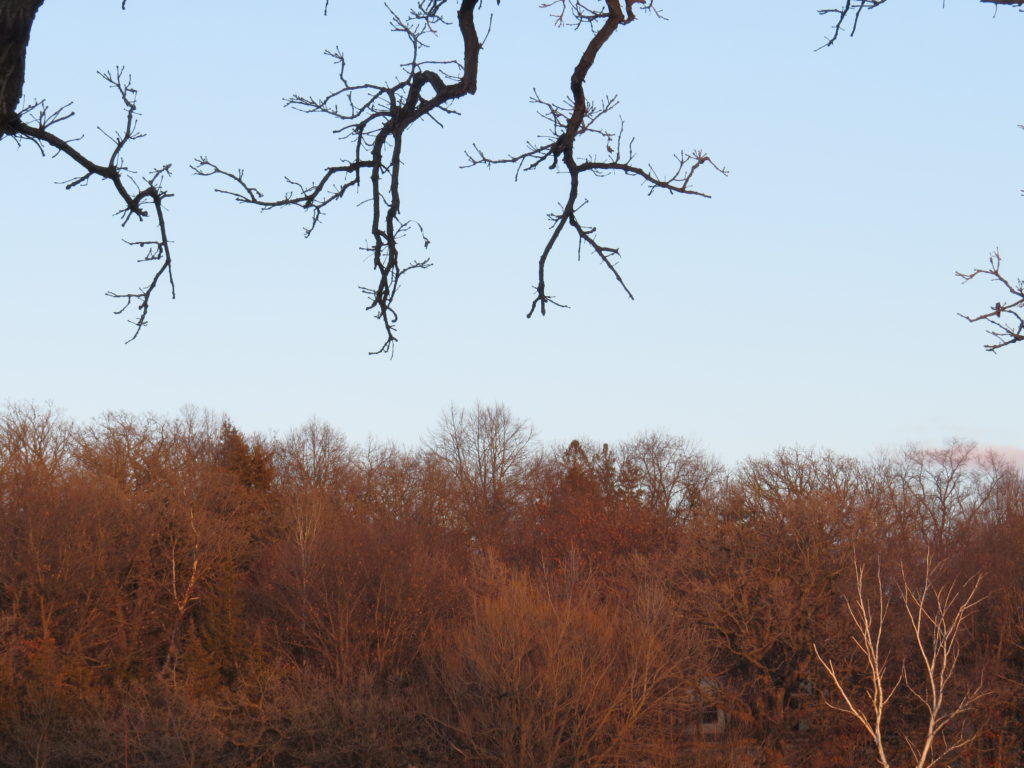
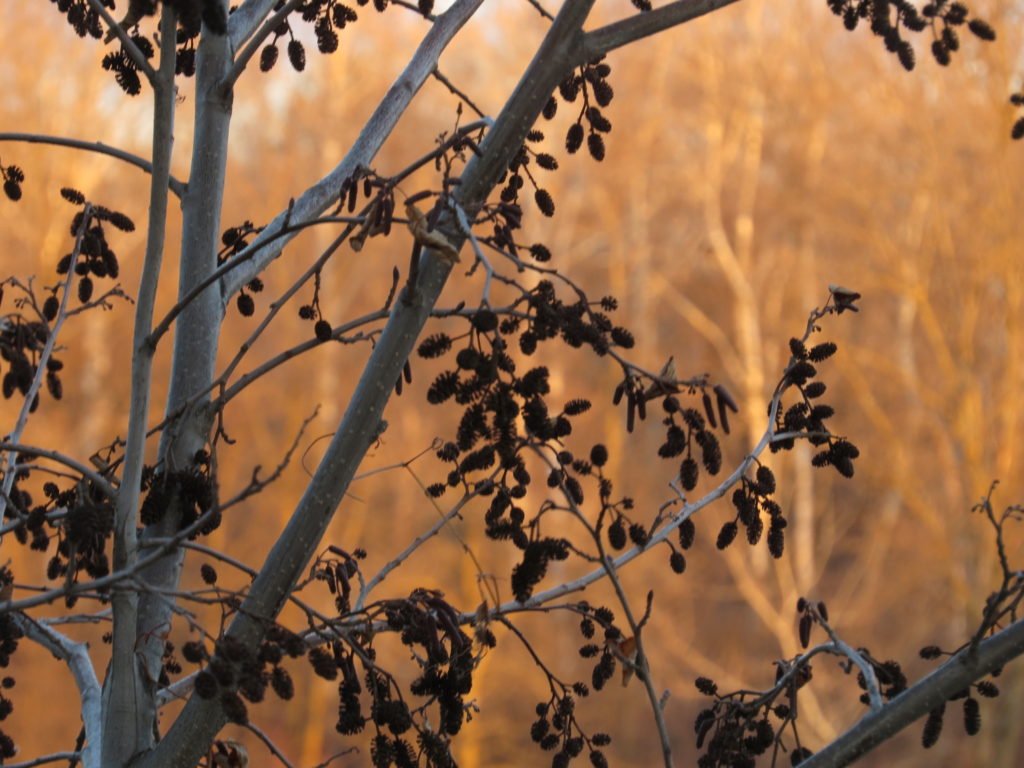
An evening silhouette of Alder cones and catkins stood beside the River, against the golden-hued trees on the opposite shore.
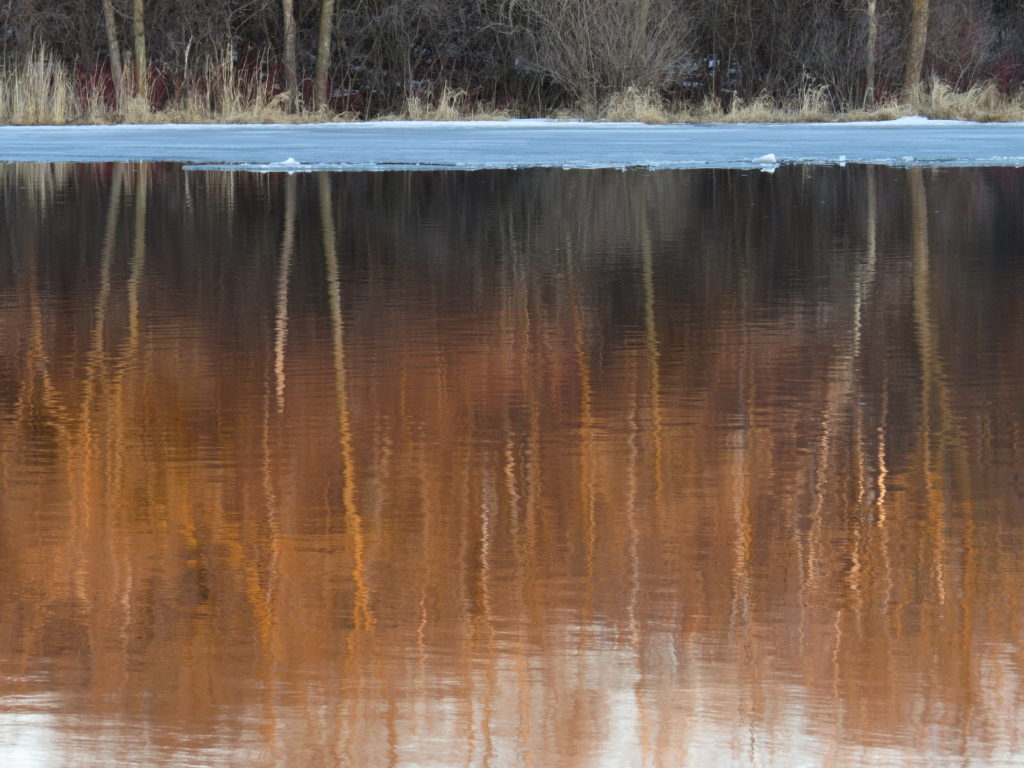
Squiggly, golden reflections of winter-weary trees shone on the water, bypassing the blunting, matte ice still clinging to the shore. It is time to see ourselves again.
Snow has ruled our lives for the last three and a half months—there is no choice in the matter if you live in Minnesota. (Only three and a half months—not six, for those who believe our winters are unreasonable.) It is not unusual or unexpected. Seasons unfold in unmistakable ways. And now the snow is (almost) gone. We have been unsnowed.
With longer life comes the opportunities to change our states. I have been undone, unnerved, undecided, and uncomfortable. I have felt unworthy, unsettled, unsafe, and unaccepted. Events and issues in my life have been unexplainable, unbearable, unforeseen, and unfair. And I have also lived my life with unwavering hope, unceasing love, unbridled joy, and unmitigated faith. What happens within us when things are unspoken, unresolved, untenable, and unbalanced? What happens within us when we become unburdened, untangled, unmasked, and unafraid? The state of our mind and body changes. Our eyes and memories can forget the recent or distant past, and we can unearth the treasure of who we are. We can see ourselves again. After all that time.
Snow, Ice, and Water–These Three are One
“Water, in all its forms, is what carries the knowledge of life throughout the universe.” –Anthony T. Hincks
When a person lives where water is always liquid and falling as rain or flowing like a river, I think there is a tendency to not think about it much, to perhaps take it for granted. But when something is ‘too much’ or ‘not enough’—flooding or drought—or something unusual or rare—snow in Texas—we tend to pay attention. We haven’t had much snow here in Central Minnesota for most of this winter—until the week before last, that is, when we had over a foot of it. I looked out the front door at the big pile of white stuff and thought, “Isn’t snow funny and amazing and beautiful?” I mean, it’s just water, frozen water! Beautiful crystals of frozen water falling from the sky! Frozen water that is shoveled and piled, rolled and patted into balls to form snowmen and forts by kids at recess. Amazing!
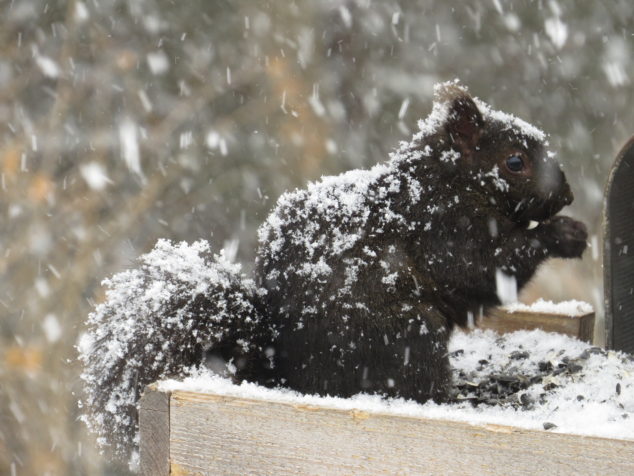
“There is a beauty about winter that no other season can touch.” –Hailey DeRoo Haugen
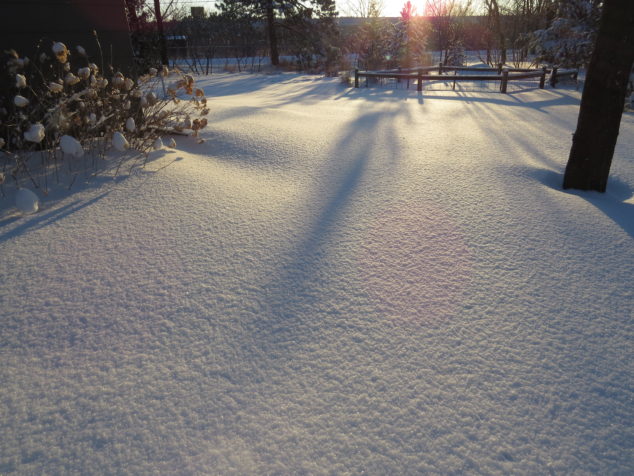
“Kindness is like snow—It beautifies everything it covers.” –Kahlil Gibran
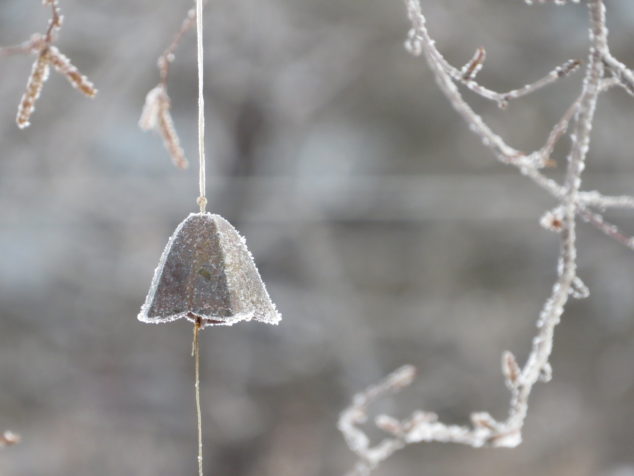
Another beautiful frozen water phenomenon is frost—frozen water vapor on the surface of objects.
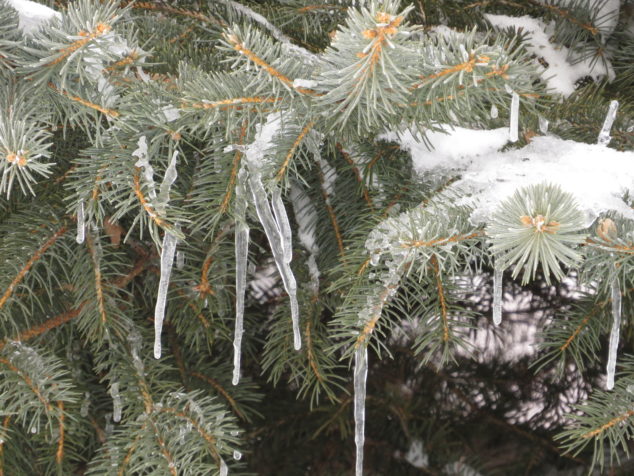
Sun-warmed and melted snow dripped and re-froze into icicles—Mother Nature’s decorating of the evergreen Spruce trees.
“Snow is water, and ice is water, and water is water; these three are one.” –Joseph Dare
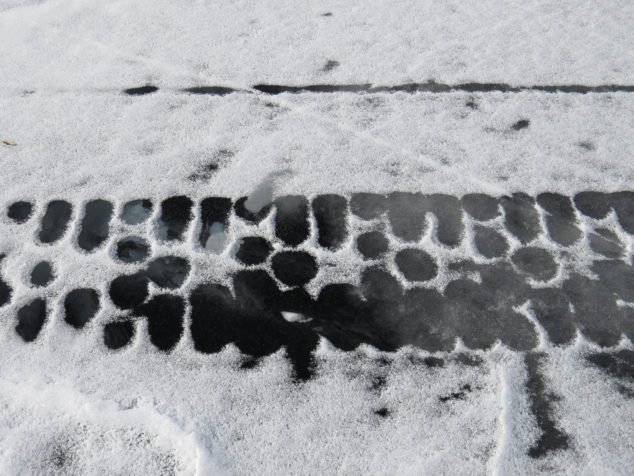
And then there’s ice. Ice that’s strong enough to drive a truck on. Ice that captures and immobilizes tree branches, leaves, aquatic plants and roots. Ice that holds a village of ice shacks and fishermen.
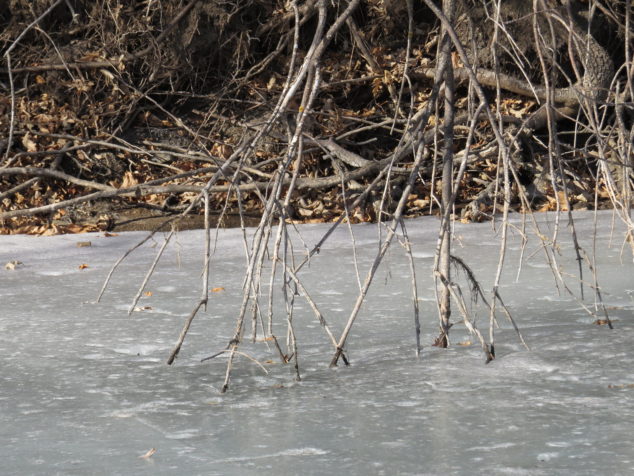
“The water hears and understands. The ice does not forgive.” –Leigh Bardugo
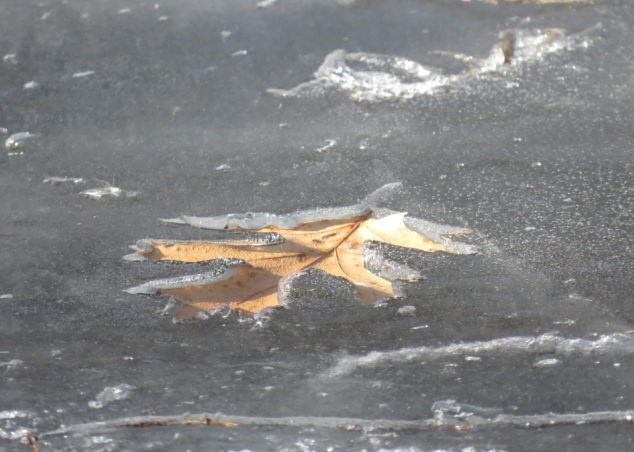
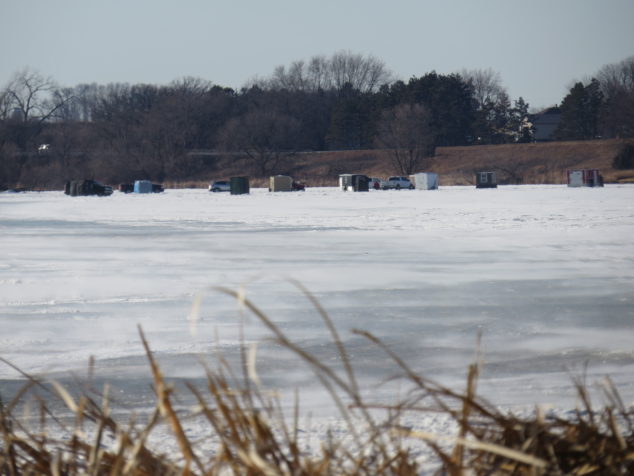
Ice as art. Ice as frozen Rorschach tests. What do you see?
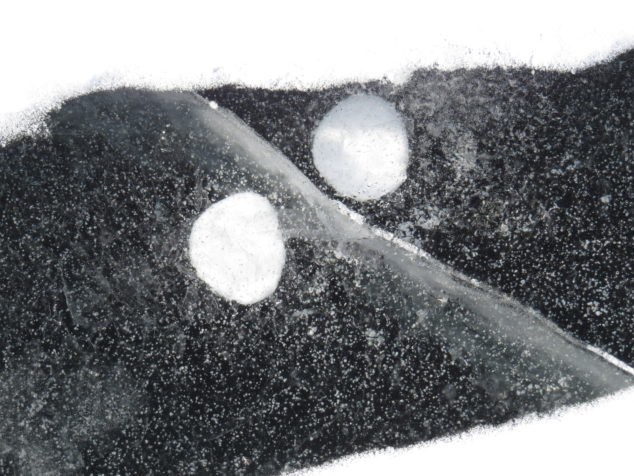
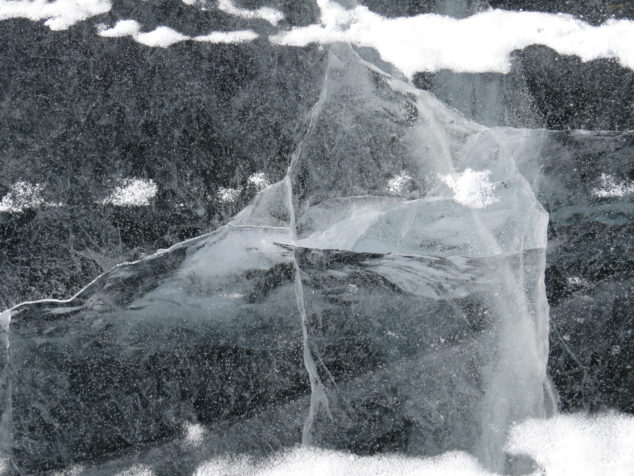
“You’re gonna catch a cold from the ice inside your soul.” –Christina Perri
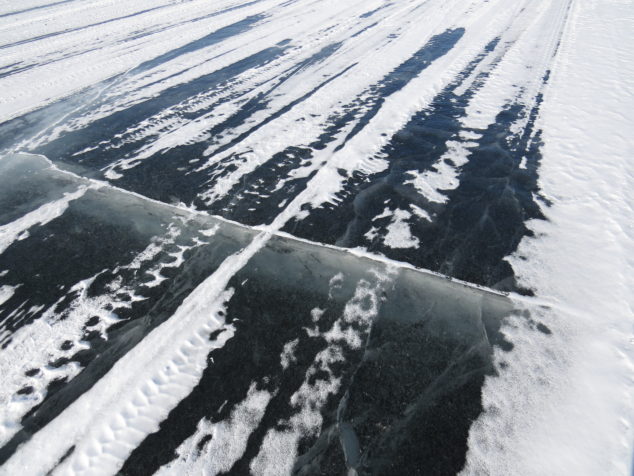
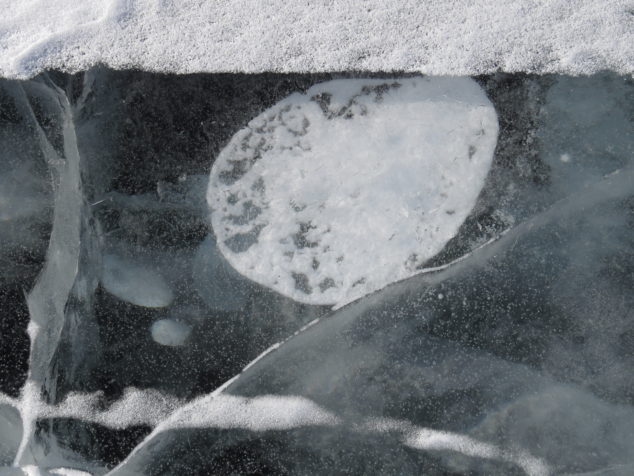
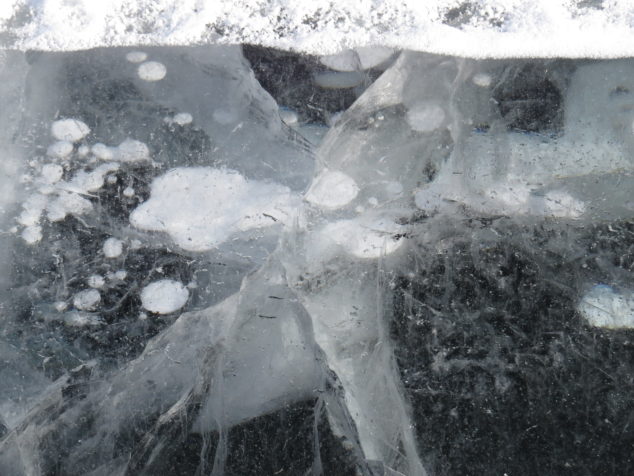
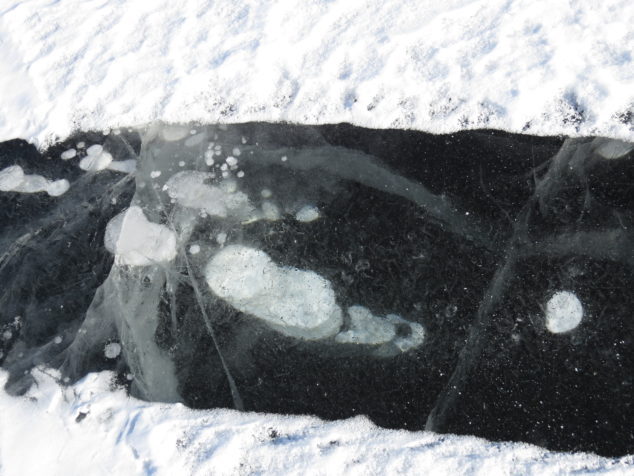
If water, in all its forms, carries the knowledge of life, we have a lot to learn in Winter. I respect the idea that winter, in all its starkness, can radiate a beauty like no other. I love the idea of beautifying the world with kindness. I like how water and situations and people can be transformed, change states, be honed in the process of warming, melting, and re-freezing to flowing, understanding, and forgiving. Goodness and Grace can thaw an icy soul. I also honor the toughness of ice, how it builds up inch by inch during the harshness of Winter’s cold in order to support the things we drive and those that drive us. How it supports a village of people who want the same basic things in life, in spite of how the harshness can capture and immobilize us at times. I appreciate that frozen water (oh, the chemistry and physics of it all!) is art. How we can stare into the depths of it or notice the light or marvel at the structure, and at the same time, learn something about ourselves. There is a great deal of hope in every snowflake that falls, in every frost pattern that forms, in every layer of ice that is laid down, and in every process of melting. Life is funny, amazing, and beautiful—all three in one.
Island Ice Walkers
“In a sense, each of us is an island. In another sense, however, we are all one. For though islands appear separate, and may even be situated at great distances from one another, they are only extrusions of the same planet, Earth.” –J. Donald Walters
Last weekend, I got away to an island. It was sunny and warm—so warm that the snow was melting! Down the hill from our house is the Sauk River which winds its way through the Horseshoe Chain of Lakes—thirteen connected lakes with convoluted shorelines, jutting peninsulas, and a multitude of islands. We parked at a boat ramp at Horseshoe Lake as a group of ATVs raced around on the ice. Cars and trucks crept through the rushes on an ice road to the little village of fish shacks.
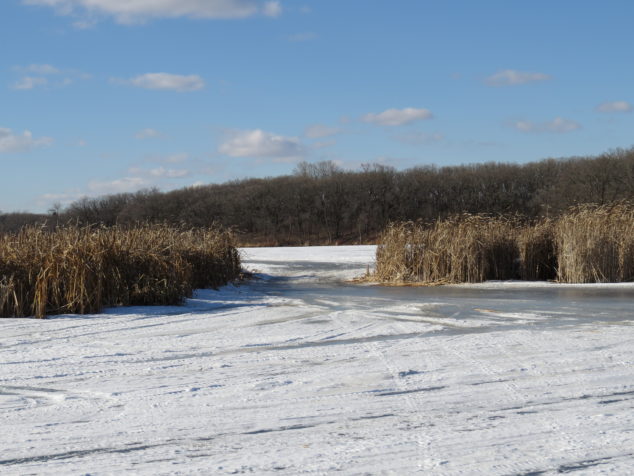
But we were going a different way by a different mode of transportation. We followed the snowmobile tracks to the island.
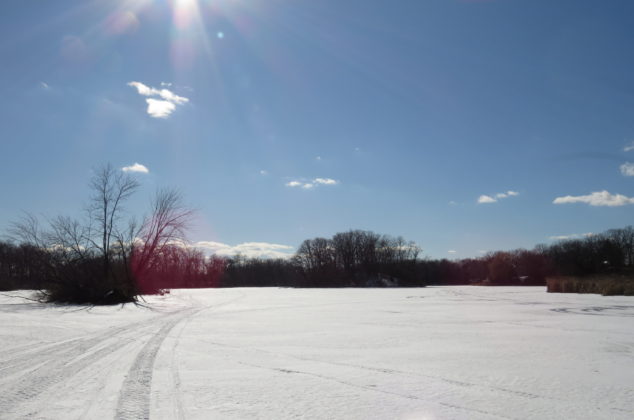
Most of the ice was snow-covered, which made walking easier, but there were places of clear ice where I peered into the depths of it, wondering how thick it was.
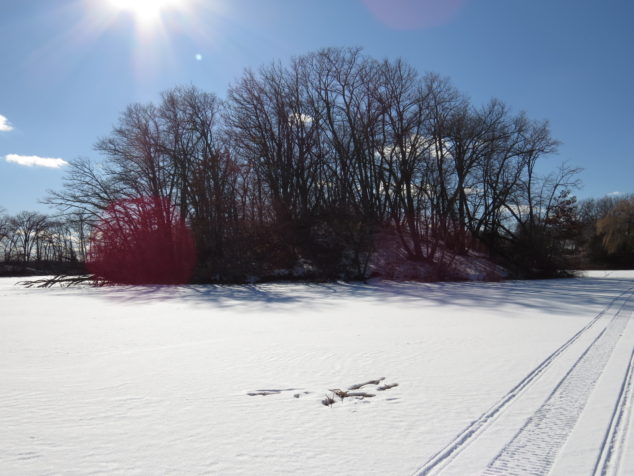
We weren’t the only creatures walking the ice to check out the island.
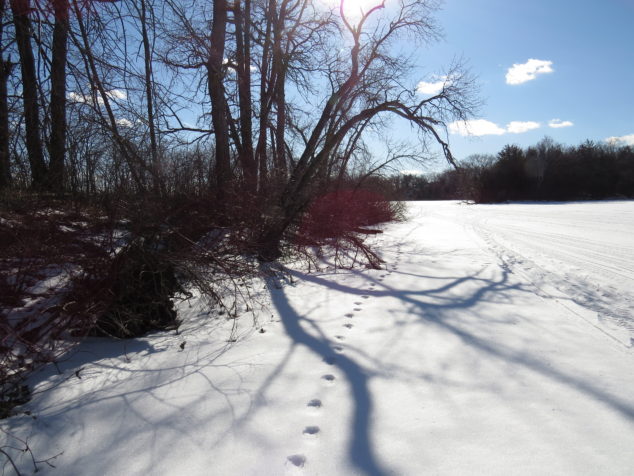
The island was like an incline rising from the water (ice) with the highest point facing the northwest, from which we came.
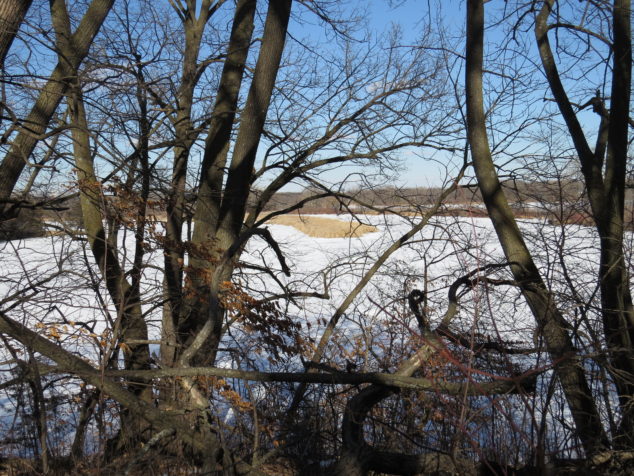
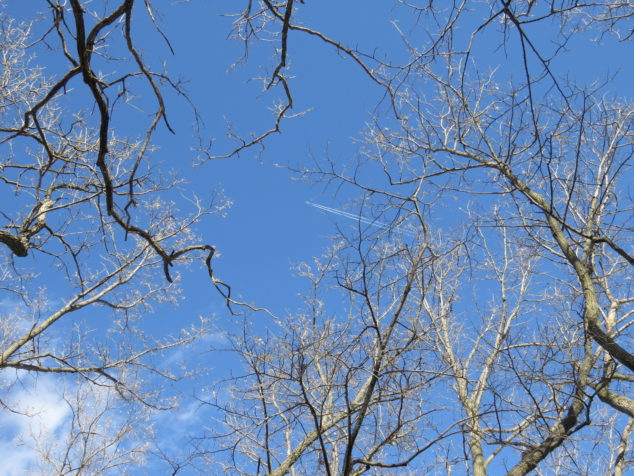
Oak, Basswood, Box Elder and Ironwood trees populated the island, and I was surprised as one of the fluffy-tailed inhabitants ran past me while I was gazing at the jet trail in the azure blue sky.
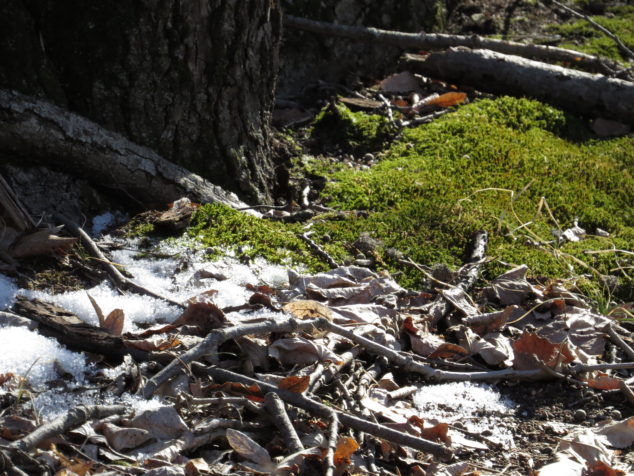
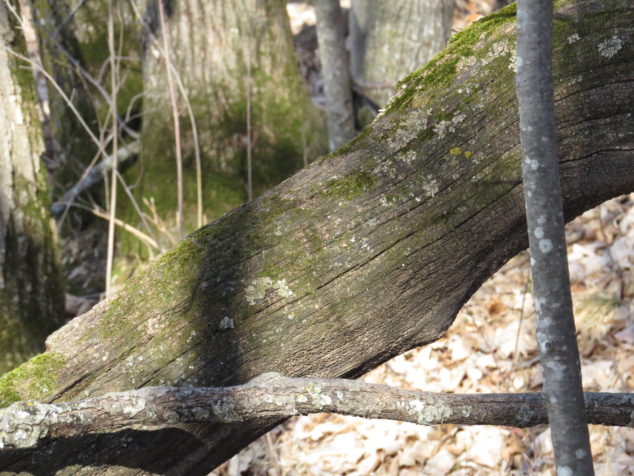
Most of the snow had melted from the island, and it was rather startling to see the vivid green moss at the base of the trees and crawling up the trunks.
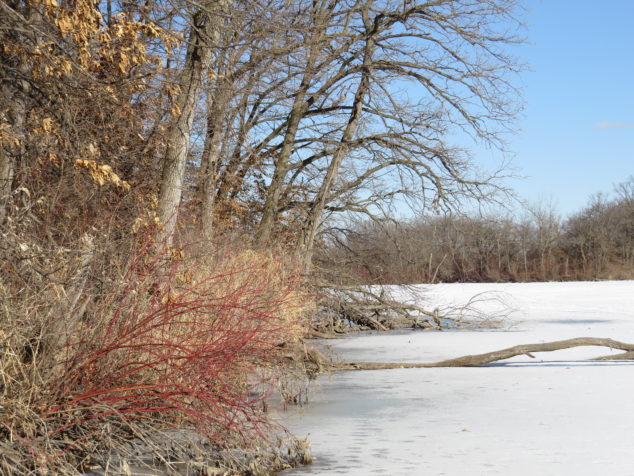
Just as vivid was a scattering of Red-twigged Dogwoods along the shore, reaching out to the sunlight.
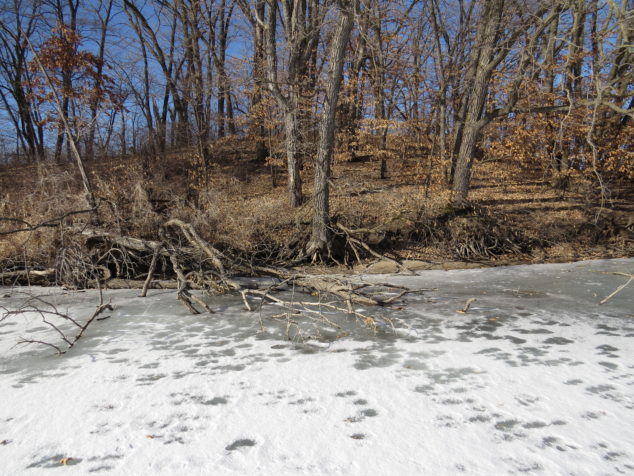
Downed trees had fallen into the water after years of erosion had loosened the roots from their moorings.
The branches gathered seaweed and algae from high-water summers…
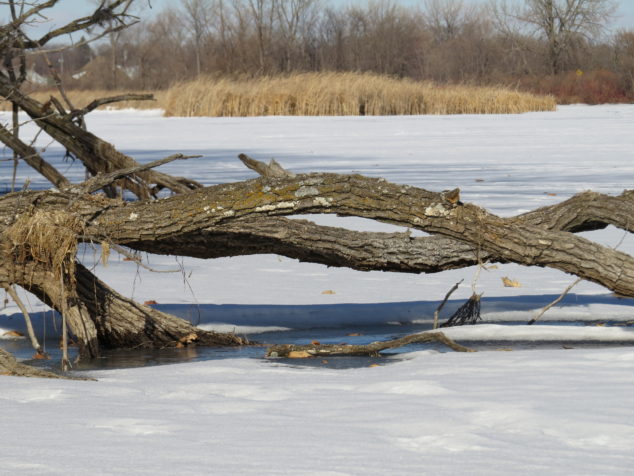
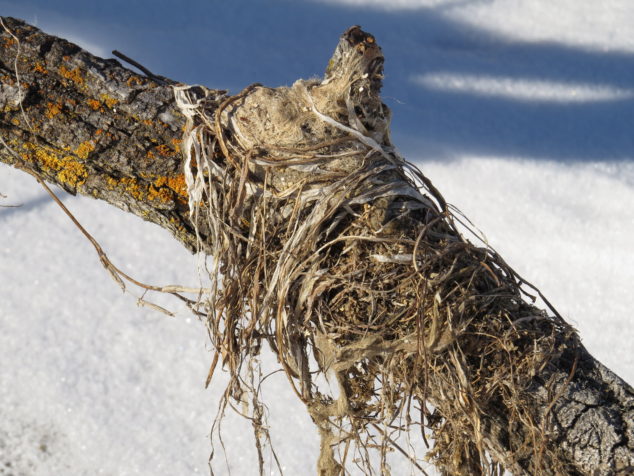
and were polished to sculptural driftwood by summer waves.
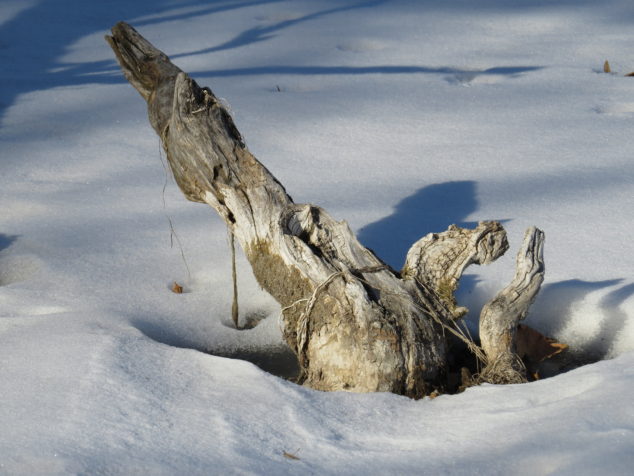
We dubbed the island ‘Lone Squirrel Island’ as we walked back over the ice.
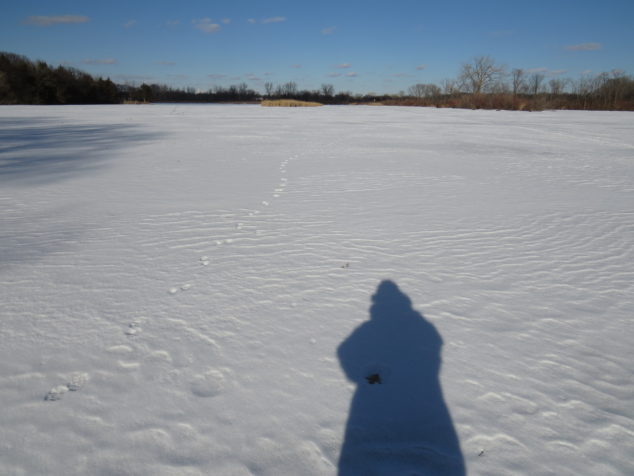
Islands are sort of mysterious. They lend themselves to exploration, enticing the boater, the squirrel, and the ice walkers to come see what lies within these shores. I was impressed with the quality of the woodland ecosystem on Lone Squirrel Island—the acorn-bearing Oaks and the beautiful Ironwood trees. It’s not as easy to get to know an island when a watery moat surrounds it as it is when thick ice supports cars, trucks, snowmobiles, or walkers. What if each of us is an island? We appear separate. Some of us are situated at great distances from one another. What is the quality of our ecosystem? Has anything loosened our roots from their secure moorings? Yet, like the underlying Earth of the islands, we are all connected. “Love is the binding force of the Universe. It holds us together. It makes us One.” –J. Donald Walters The thick ice was our bridge to the island. What bridges us together? Listening. Understanding. Empathy. Patience. Kindness. Let’s all be ice walkers. As we peer into the depths of Love, can we even fathom how deep and wide it is?
The Bringer of Hope and Light
“We live in a world of constant juxtaposition between joy that’s possible and pain that’s all too common.” —Marianne Williamson
I have been burdened by pain lately. Pain is a funny thing—it can be the physiological reaction to a purely physiological phenomenon—you burn your finger, and pain is the messenger that automatically pulls your finger from the heat source. You don’t have to think about it. Pain is your friend in this instance. Emotional pain can also be ’embodied’—emotional anguish, especially prolonged, can sink into your tissues and find a vulnerable spot. From there it calls out for attention with inflammation and pain. Eventually it can wreak so much physical havoc that disease occurs.
I like the word ‘juxtaposition’—an act or instance of placing close together or side by side for comparison and contrast. Artists consciously do it or use it all the time in their act of creating. Nature and Nature with the influence of humans, create scenarios where side by side comparisons and contrasts are sometimes subtle, sometimes glaring, sometimes puzzling. Human nature, as Marianne Williamson alludes to, is no less likely to contain a myriad of juxtapositions where we stand between two ideas or possibilities and have the power to choose.
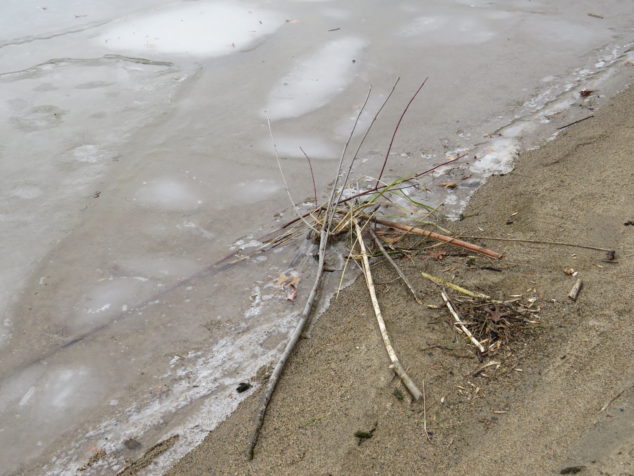
One of the most striking juxtapositions we encountered on our hike at Warner Lake County Park was the sandy swimming beach and the ice-covered lake water. The sand extended up from the water into trees that would provide shade on a hot, summer day. Benches were tucked under the trees for moms and dads to sit on while the kids built castles in the sand and splashed in the water. But at this time of the year, the ice crawled up the beach, and instead of kids and castles in the sand, there were sticks and leaves.
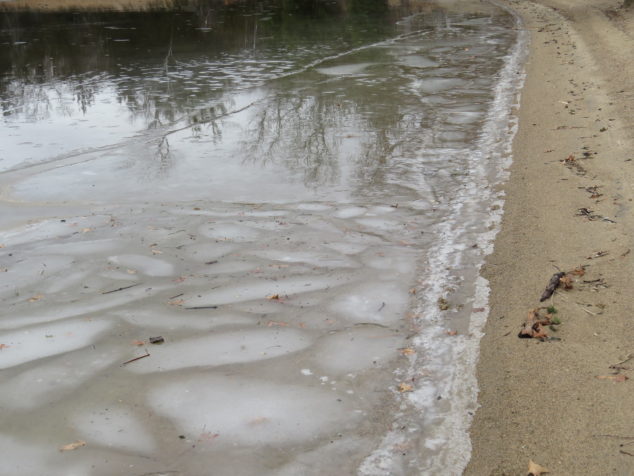
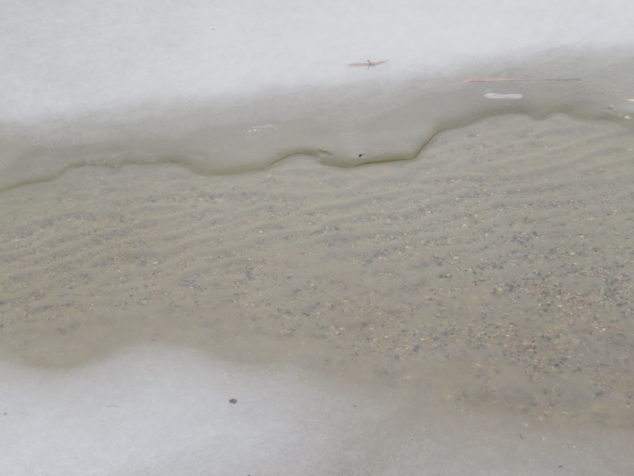
Ripples in the sand, sculpted by wind and waves, are now preserved and displayed under a layer of clear ice. From movement to stillness.
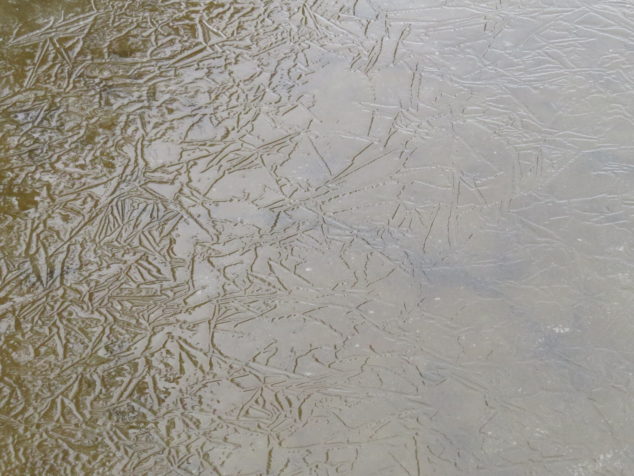
Most of the time we think of ice as relatively smooth, but the sheltered north side of Warner Lake had an intricate design etched into the ice.
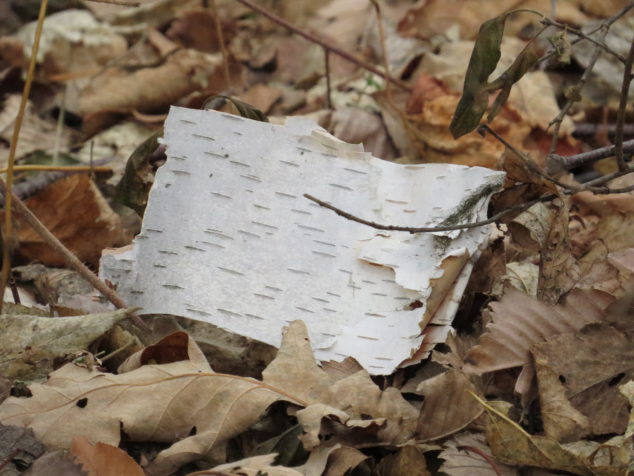
The white brightness of a piece of birch bark lay among the brown, fallen leaves in the woods. The postcard size and shape made me imagine that it was a harbinger of season’s greetings, a bringer of hope and light in the dark and ‘dead’ time of year.
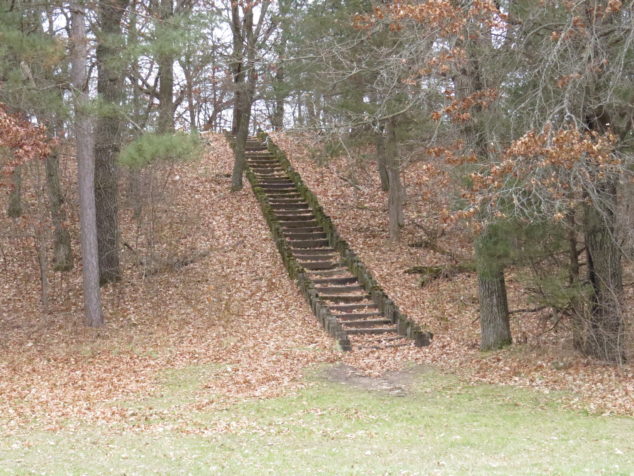
One more puzzling juxtaposition we found at Warner Lake Park was a stairway in the middle of the woods. Stairway to where? The lure of the answer compelled me to climb the leaf-covered stairs. At the top was….a parking lot! From the top, it made perfect sense to have a stairway from the parking lot to the fishing pier, but from the bottom, it looked like a stairway to nowhere.
I took a Mindfulness-Based Stress Reduction (MBSR) class. The program began at the University of Massachusetts Medical Center almost forty years ago as a way to empower patients with chronic pain and disease. Six weeks into the program we had a retreat day with six hours of meditation, movement, and silence. As I lay on my back on a mat during a body scan meditation, all I could think about was the pain in my back and how uncomfortable I was—silence and pain, breathing and pain, relaxation and pain. MBSR teaches awareness and acceptance—including of pain, but I just wasn’t having it. The pain was too big. But as I stayed with it and gave it the attention of my breath, something shifted. All of a sudden I felt deep gratitude for my body and for all it had been through over the decades. The feeling of deep gratitude reached over to Chris for his love and loyalty to me through all those years. The deep gratitude grew and enveloped our children and the rest of our families. It spread over our teacher and the other people in the class who were challenged by this MBSR process in a myriad of ways. And then….I felt joy! The juxtaposition between pain and joy. There I was—right in the middle of the two, right in the midst of them both. And the pain lessened as the gratitude grew.
We are each an intricate design of creation—our physical bodies are the most amazing living mechanisms, yet paired with our mind, emotions, and spirit, we transcend even our most abundant, far-reaching definition of ourselves. If we become curious about the juxtapositions in our lives, curious about the pain, aware of our breathing, aware of connections, and accepting of where we are right this moment, we have a better chance to see our lives from the top of the stairs where things make perfect sense. The Bringer of Hope and Light can suddenly appear and chase away our pain and darkness.
Standing in the Middle of a Lake
Having courage does not mean we are unafraid. –Maya Angelou
Fear has been my worst friend most of my life—my friend because there has rarely been a day when it hasn’t been by my side—and worst because friends are supposed to be fun, encouraging, and loving, and fear is none of those. We know each other well, inevitable after so many decades together, but it still surprises me at times when fear takes the bit and bolts at a dead run. I’m learning how to gather the reins, loosen the bit from its teeth, and get control again.
One of the things I’m afraid of is deep water. I can swim enough to get from point A to point B if they aren’t very far apart, if one has no judgement on my ‘technique,’ and oh, if I can just about touch bottom. When canoeing I prefer to stay close to the shore, and my temporary best friend is the aptly named life jacket. Larger boats are more enjoyable—if I don’t think about how deep the water is below us. The only thing worse than deep water in the summer is the thought of falling through the ice in the middle of a lake—uncommon, but not unheard of in Minnesota. My mind had come up with this blog post title a number of weeks ago, so I knew I couldn’t write about it unless I did it. Okay. So here I am, standing in the middle of a lake…
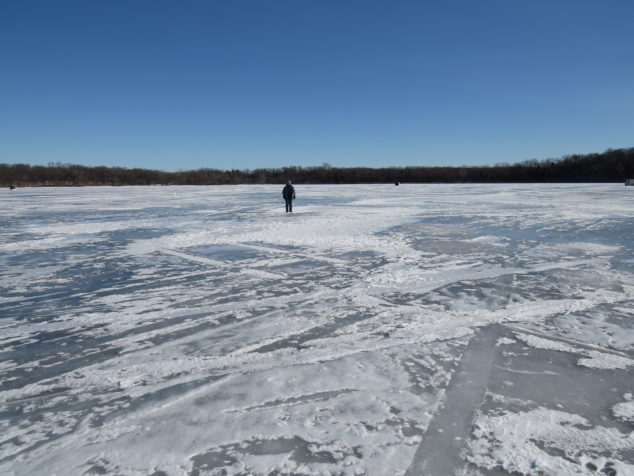
Chris and I traveled to Eden Lake, a 263 acre oval-shaped lake to the south of us. It’s 77 feet deep at the deepest point. (yikes) The temperature was a chilly twelve degrees, but the sun was bright and the sky a beautiful blue. We walked out on the lake as I reassured myself that the ice was safe—after all, there were plenty of pick-ups out there.
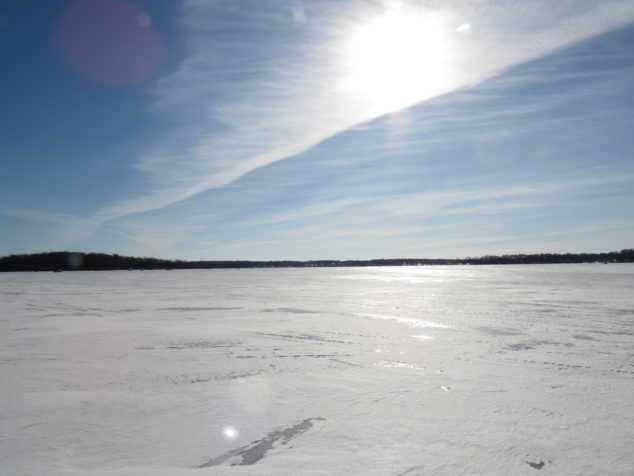
The ice was mostly snow-covered in interesting patterns crafted by the wind. It made walking easier.
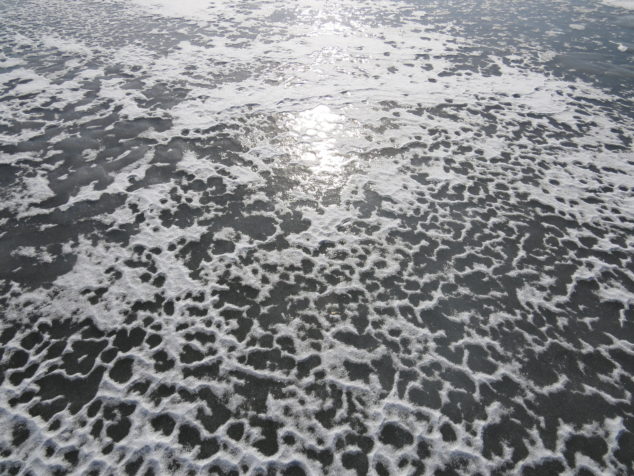
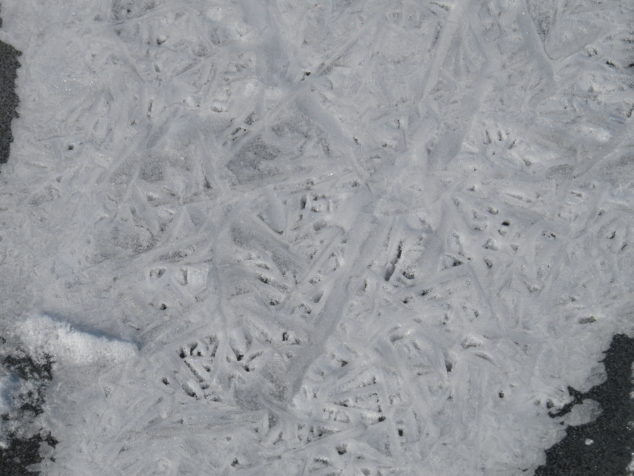
There were places where the ice was topped with a lacy white frosting that shattered like glass when we stepped on it.
Truck tracks ran in many directions, but one ‘road’ seemed to get the most traffic.
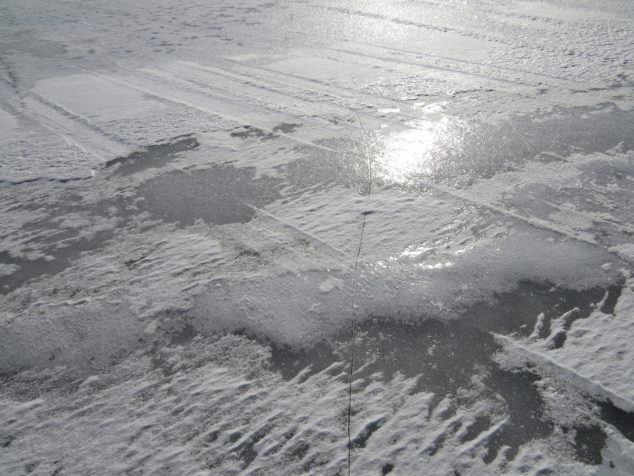
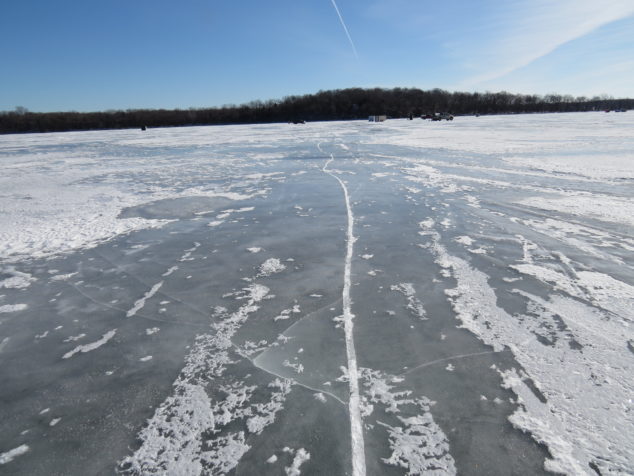
Cracks appeared in the ice, and there was evidence that melting water had seeped up from them during the January thaw but once again were frozen over and slick.
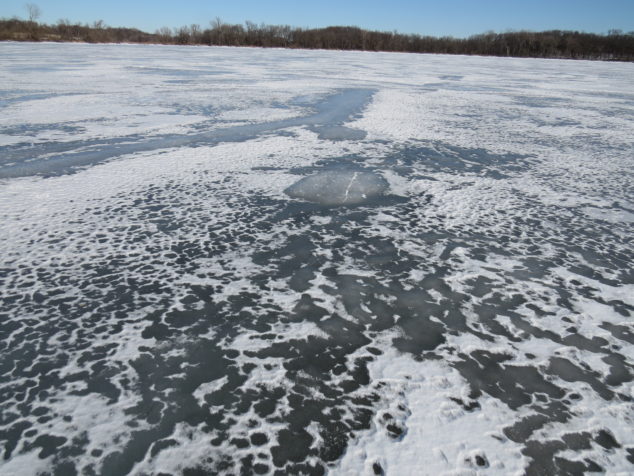
Ice chunks lifted from holes cut for spearing fish made it look like a moonscape.
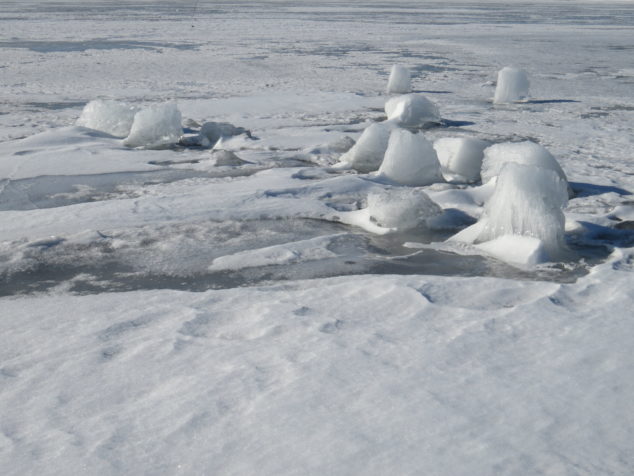
Cedar branches marked the holes that had been cut, warning drivers to stay clear.
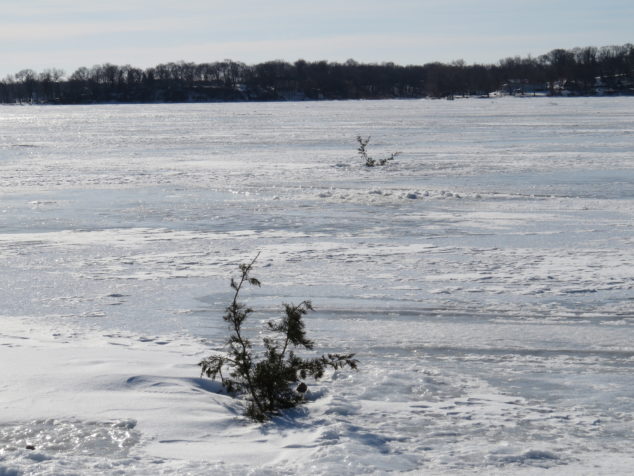
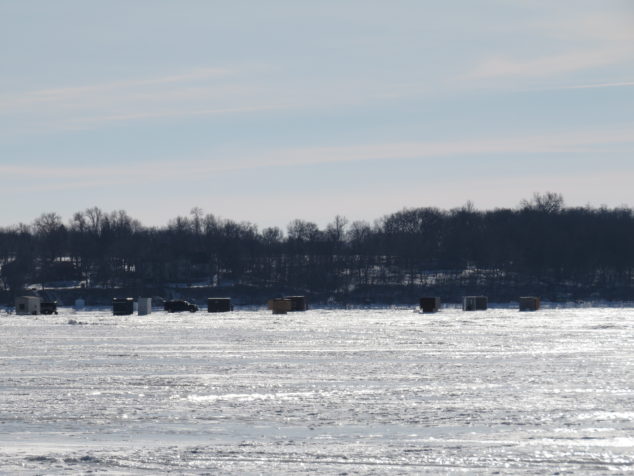
Ice houses were scattered in three different areas of the lake…
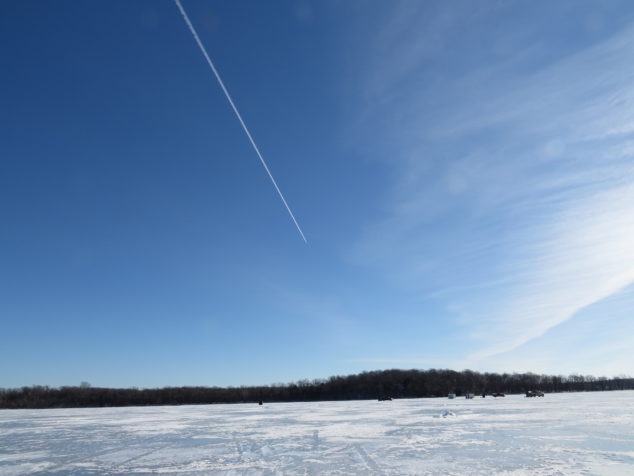
with a little village of them at the far end of the lake, at the end of the ice road.
I peered down through the ice where it was clear, unable to ascertain the thickness. I wondered about the large cracks, like center-lines down a highway. The ice landscape was so unfamiliar to me, though the fishermen must know how to ‘read’ it after years of experience. Probably only the foolish end up falling through the ice—maybe the ones with no fear.
As I was leaving the lake, I stopped to ask a man how deep the ice was—he had just drilled some new holes and said the ice was about sixteen inches thick, more than enough for a pick-up truck to drive on according to the MN Department of Natural Resources. How much is recommended for safe activities on foot? Four inches! Though the DNR clearly states that ice is never 100% safe. Fear is not something I need to get rid of completely—it serves a purpose in keeping me safe in many situations. And like walking on ice, I am never 100% safe. But I really had nothing to fear standing in the middle of Eden Lake on that day. John Berryman, a poet who lived and died a tragic life, wrote, “We must travel in the direction of our fear.” Maybe my mind, by coming up with a title, was urging me towards my fear. Maybe the center-line cracks illustrate that the highway of life has perils to be navigated. We just have to make certain that fear does not completely envelop us, like it did poor John Berryman. Maybe it’s the village at the end of the road that will dissipate the fear and bring us back to safety. Maybe fear is not my worst friend, after all.
Thanks to Sterling for answers to my ice questions.
The Treasure of a Diamond
I’m not much of a ‘jewelry’ person. I wear my simple gold wedding band on my left hand and a silver, lapis, and turquoise ring I bought years ago at Mount Rushmore, on my right hand. The single diamond in my engagement ring was knocked out decades ago when I was doing laundry. My ears aren’t pierced. And most days of my life, I would look pretty silly wearing a necklace with my jeans and fleece. But, I remember when I was a kid, I loved looking at the diamonds in my Mom’s jewelry box. Rows of dangly earrings and intricate brooches sparkled with what seemed like hundreds of tiny diamonds. What a treasure! It didn’t matter to me that they weren’t ‘real’ diamonds.
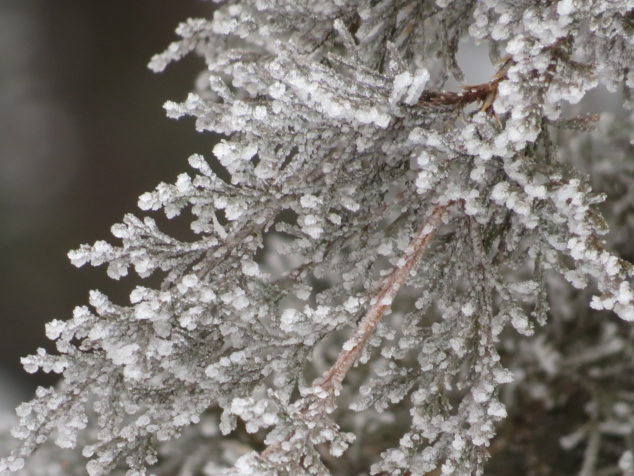
Melting snow during Thanksgiving weekend created a thick fog that condensed and froze on everything. The Cedar trees were encrusted with glittering ice ‘diamonds!’
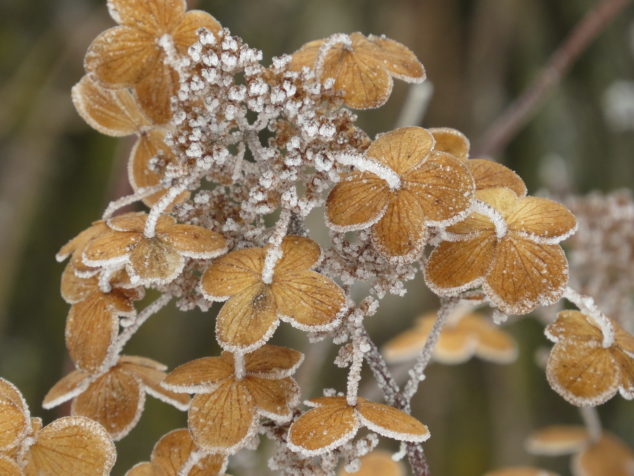
The ice-covered Hydrangea reminded me the most of the earrings I admired in the jewelry box–clusters of tiny diamonds and flower-shaped dangles. What a treasure.
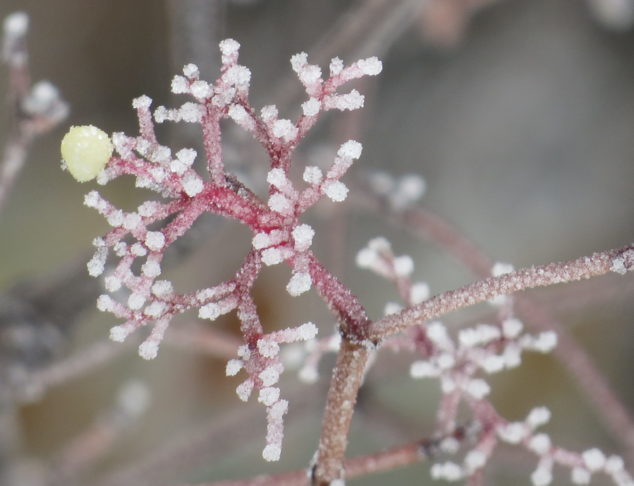
The berries of the Gray Dogwood, fall food for the birds, were replaced by diamonds of ice.
Those of you who know of my non-proclivity for jewelry also probably know of my love for Emmylou Harris. I was introduced to Mark Knopfler’s voice and song-writing from their album together, All the Roadrunning. You know how at certain times in your life a certain song ‘speaks’ to you? The second song on this album spoke to me—it was on repeat and played loudly in the quiet of my car or the solitude of the house for many months.
I dug up a diamond / rare and fine / I dug up a diamond / in a deep, dark mine
If only I could cling to / my beautiful find / I dug up a diamond / in a deep, dark mine
My gem is special / beyond all worth / strong as any metal / or stone in the earth
Sharp as any razor /or blade you can buy / bright as any laser / or star in the sky
I had been to the bottom of the deep, dark mine—that spiritual journey that shakes up all the beliefs that hold your life together. When you are digging and clawing for something to make sense of all the pain. When you’re covered in the dust of disappointments and heartache, and it’s so dang hard to breathe. And then I realized I had found a rare and fine diamond, and it was me. We lose what we were and become something new. Each one of us is special, beyond all worth—what a treasure! Take your place, Bright Star, and shine.
Ducks on Ice
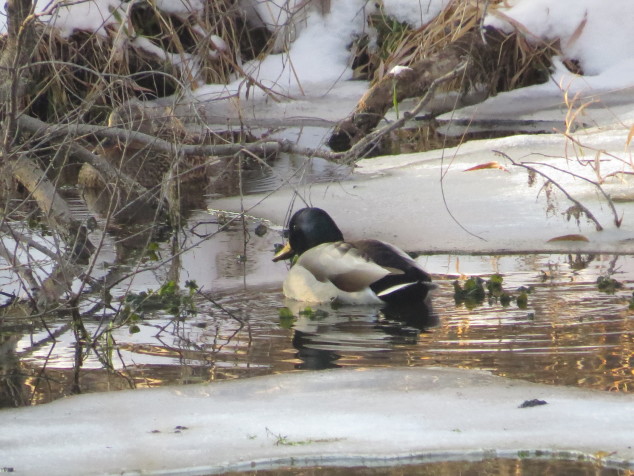
When the chill of winter is settling into your bones, think of this pair of Mallard ducks swimming in the icy water. By comparison, we are all cozy warm! This little pond is just off the Sauk River and within the limits of our small town. Here they are safe from hunters and have shelter and food.
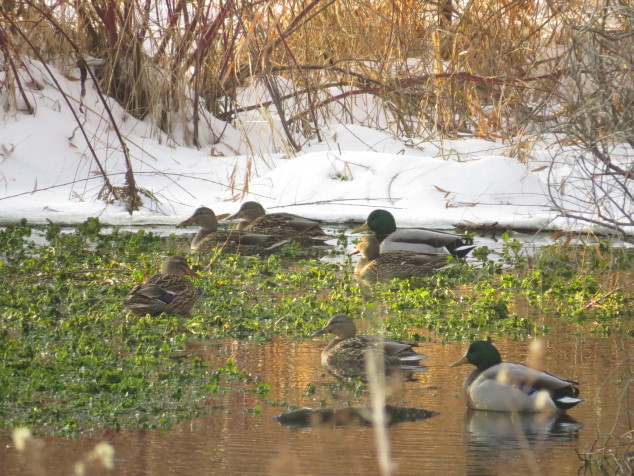
On the other side of the snowy, brush-covered bank is the partially iced over river.
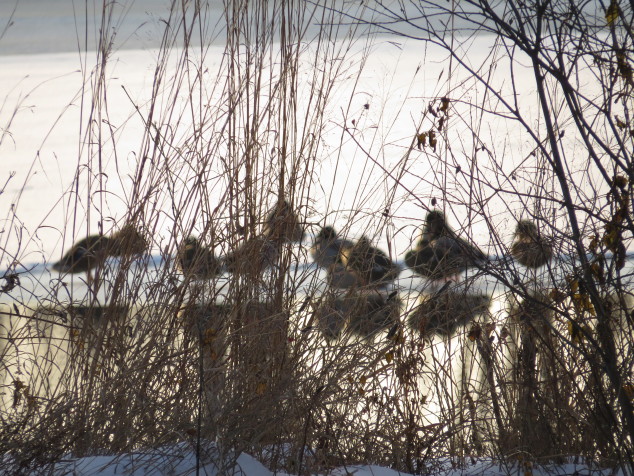
Another group of ducks huddles at the edge of the open water, preening their feathers and stretching their legs, necks, and wings.
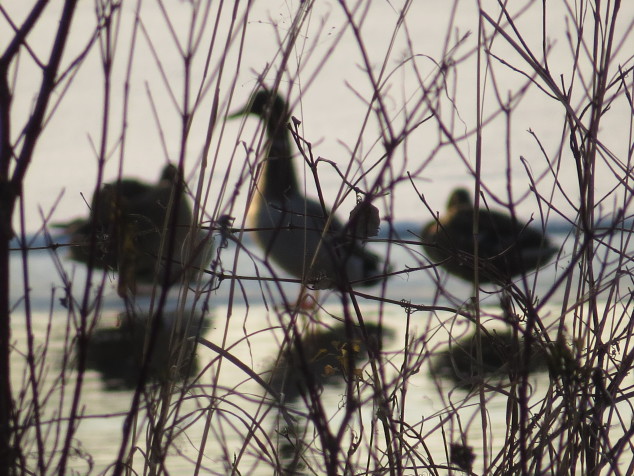
They stand precariously close to the open water on the blue-colored thin ice.
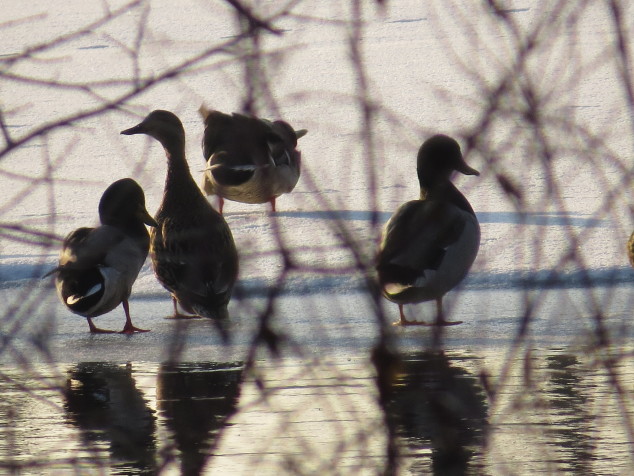
Mallards are the most abundant and familiar of all ducks. They live in any kind of wetland habitat. The males or drakes have iridescent green heads, white neck rings, brown breasts, gray flanks, two black tail-curl feathers, and a yellow bill. The females or hens are mottled brown with orange and brown bills. Both have white-bordered blue speculum feathers on their wings.
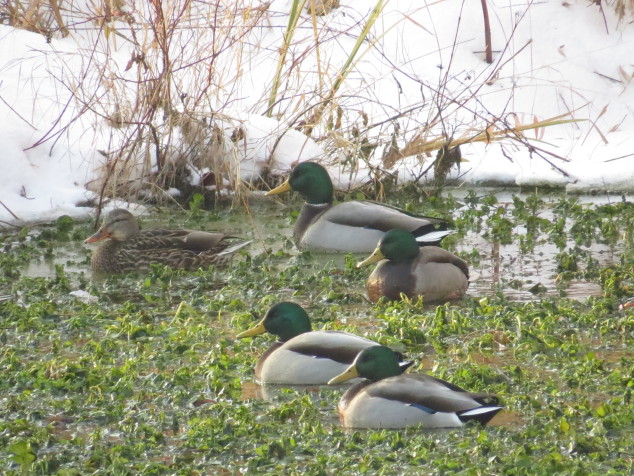
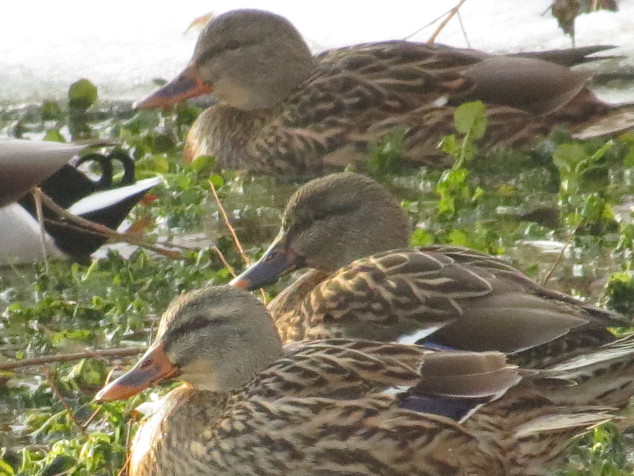
Mallards are considered ‘dabbling ducks.’ They feed by tipping forward into the water to graze on underwater plants, invertebrates, amphibians, and fish. They almost never dive completely under the water. During migration, they also eat grains and plants in fields.
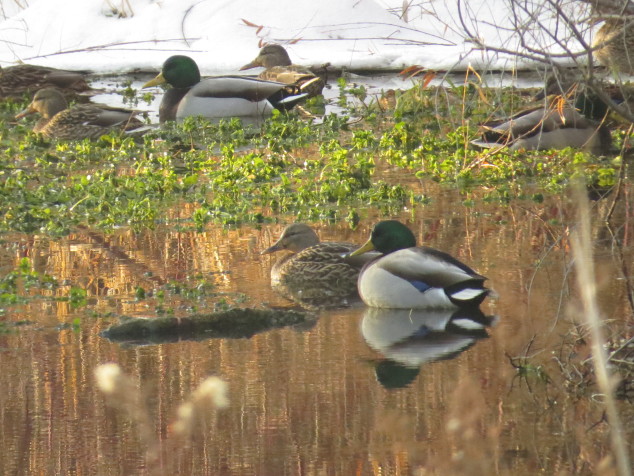
These long-bodied ducks pair up in the fall, long before spring breeding season. After the breeding season, they shed all their feathers, leaving them flightless for three to four weeks. The female incubates the eggs and cares for the ducklings.
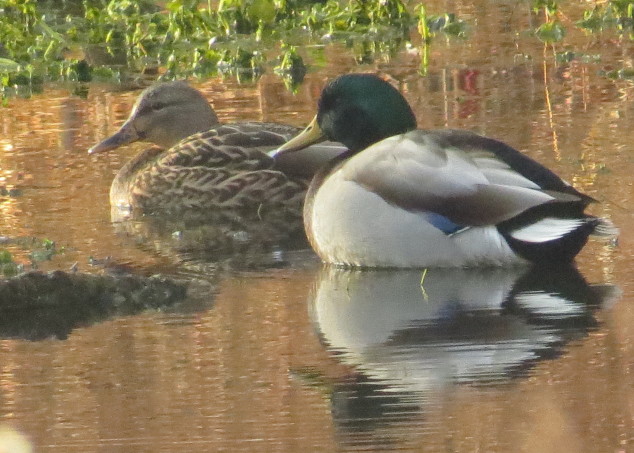
Mallards are the ‘poster duck’ for all wild ducks. Most domestic ducks come from this species. They are abundant late fall migrants, wide-ranging in their habitat. They are adaptable strong fliers and swimmers. And they are beautiful!
May we have the grace to swim through rough, cold waters. When we are walking on thin ice for whatever the reason, may we have the ability to swim or fly to save ourselves if we fall through. May we have protection during our vulnerable, flightless times. And with a patch of blue or a black curl, may we show our beauty to the world.