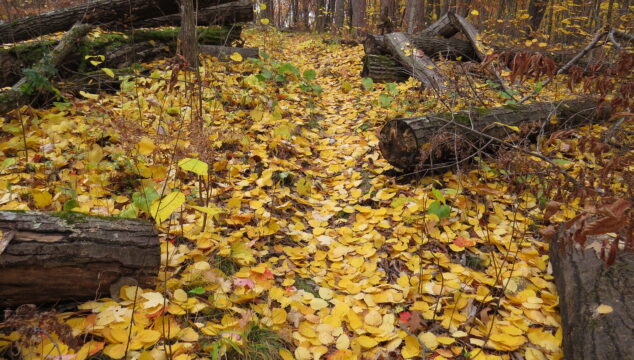
Come walk with me in the peak Autumn beauty of the Northwoods. To say that I love this time of year is an understatement. Most everyone can appreciate the colorful falling leaves---it reveals the 'true self' of a tree when its leaves are no longer producing chlorophyll. Their true colors are revealed, and there is something simple … [Read More...]
Lead Into Gold
“Every human being has gone through a tragedy of sorts. And the idea is that you have two paths you can take. You can find that alchemy that turns lead into gold, find that magic where you can see the loss as an entry point for learning and grow from it and become wiser and stronger.” —Jillian Michaels
A small meadow that I walk by every day had been mowed a while ago. The grass was not growing back very fast as we had had dry weather until recently. But something caught my attention earlier this week—a Milkweed plant had grown knee-high above the shorn grass and stood out in stark relief from the dry, brown grass.
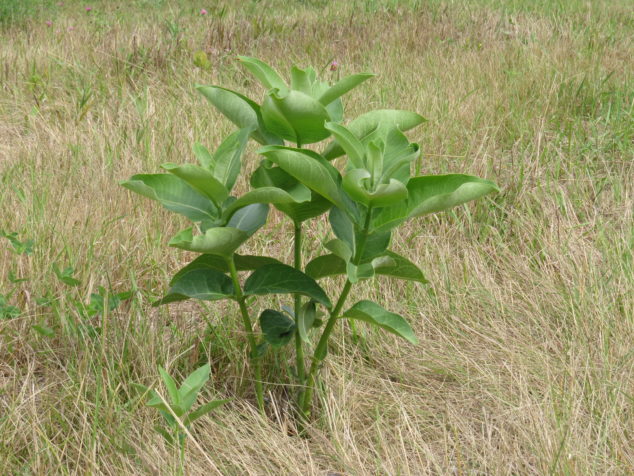
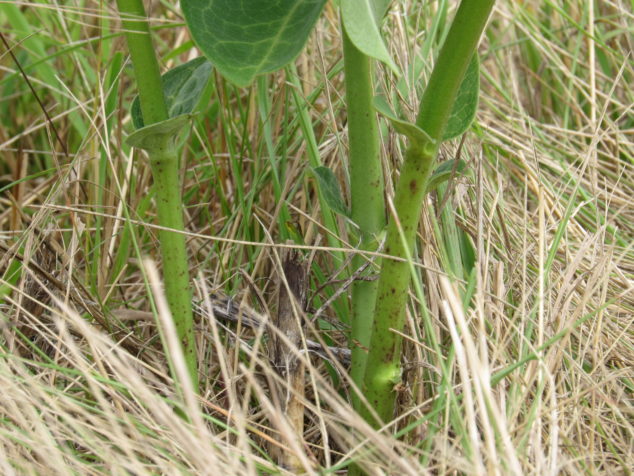
I was curious whether a plant had been cut down or if this was a new plant. When I looked closely, I saw that one stem of the Milkweed had been mowed off, and in its place, three new stems had grown.
As I looked around the meadow, I saw other plants that had been mowed down that were now tall and blooming! Red Clover, Daisy Fleabane, the tough, persistent Canadian Thistle, and others.
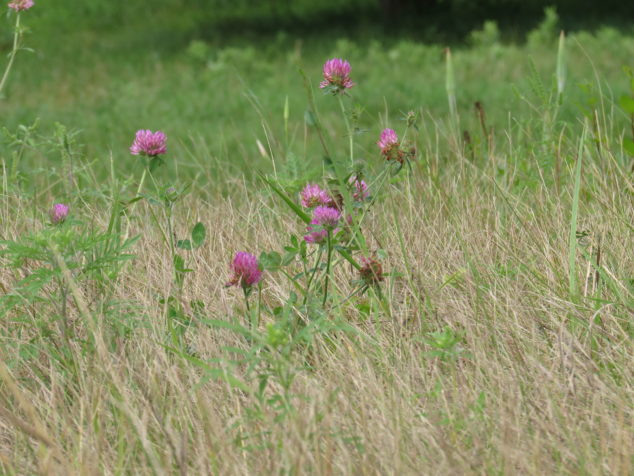
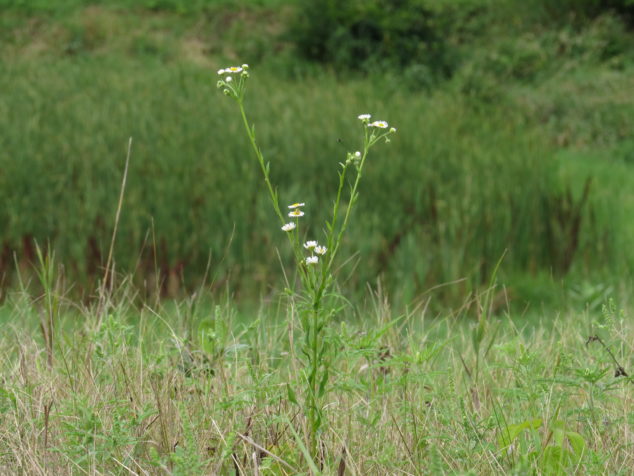
It was not the first time the meadow had been mowed, and I knew for sure the Milkweed had not had its chance to bloom yet. The Red Clover, like Alfalfa, grows fast and had probably bloomed before each mowing. The grass had already gone to seed before it was mowed the second time—its life cycle for the season was complete. But the Milkweed had still not bloomed or produced pods full of fluffy seeds. It seemed to have accelerated growth to compensate for the set-back of being mowed down.
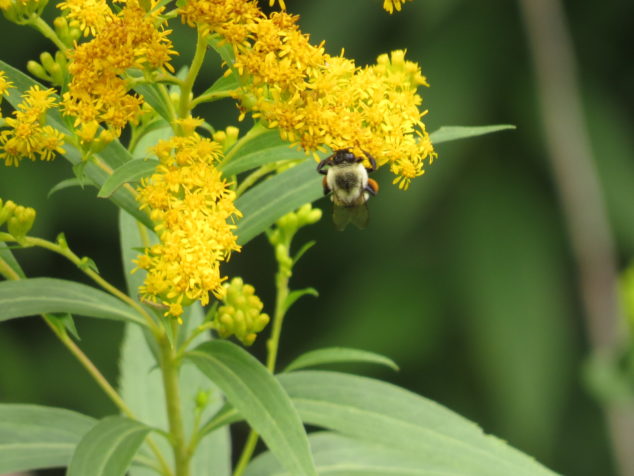
In 1995, Lawrence Calhoun, PhD, along with Richard Tedeschi, PhD, coined the term post-traumatic growth (PTG)—when our biggest life challenges can offer opportunities for meaning and growth. While the term ‘post-traumatic growth’ is relatively new, the theme of suffering, meaning, and growth has been prominent in ancient spiritual and religious traditions, literature, and philosophy for eons. Resilience is bouncing back to ‘normal’ after a tragedy or challenge, whereas with PTG, we bounce back higher, so to speak. We learn to make meaning of our suffering. We learn a new way of being. We grow, bloom, produce seeds and fruit, and complete our life cycle. We turn lead into gold.
Be Like the Birch Tree
All change is not growth, as all movement is not forward. –Ellen Glasgow
Yesterday I went back to school! Oh my gosh, do I love school! Sitting in the dim classroom with all the other students, getting the syllabus, seeing what’s on the agenda for the day, week, or semester, and meeting the new teacher or professor—it’s one of the best feelings! Actually, this time, my school was only for a one-day conference, but it was exciting, nonetheless, and represents something that is key to my life—learning and growing.
The Birch tree right outside our front door is growing, seemingly right before our eyes. Large and small swatches of white bark are peeling off the Paper Birch in horizontal strips.
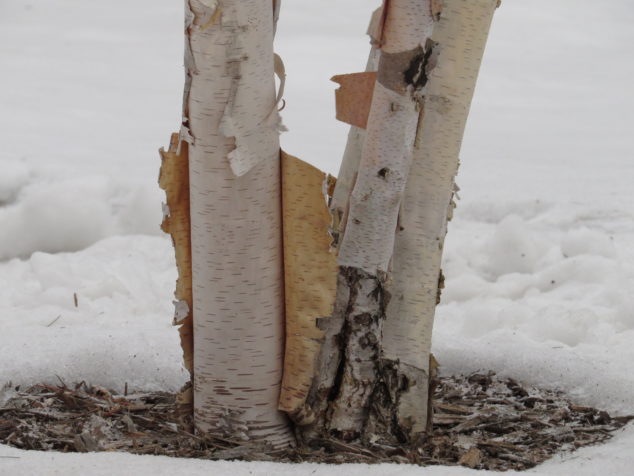
It seems to just be bursting out of its bark!
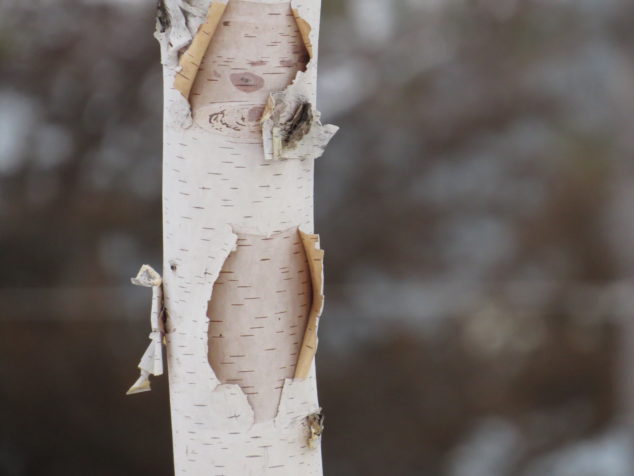
Betula papyrifera is a fairly fast growing tree that will add 13″-24″ each year and is one of a few trees that annually sheds its bark.
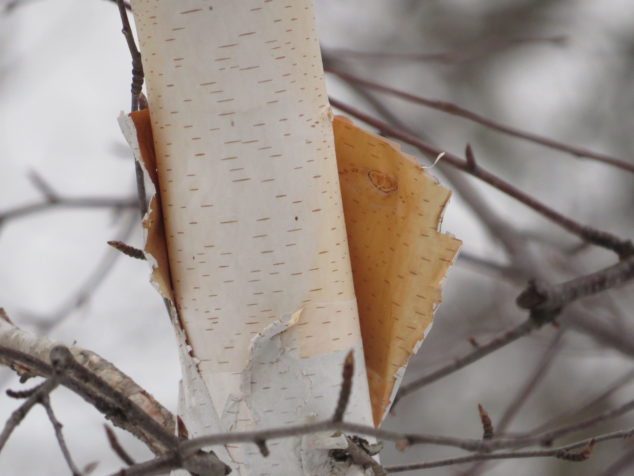
Young Paper Birch bark is darker in color and when older than five years, the white bark will appear.
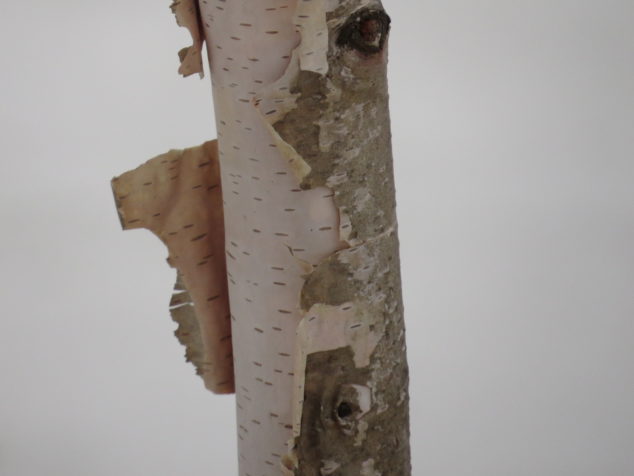
The Paper Birch is also called Canoe Birch, as the Native Americans and early fur trappers used the bark to make canoes, containers, and wigwams.
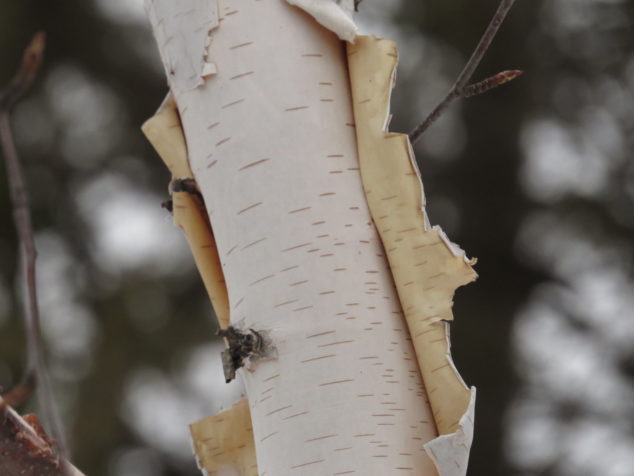
The bark has a high oil content making it an excellent fire starter even when wet and is what gives the bark its waterproof and weather resistant qualities.
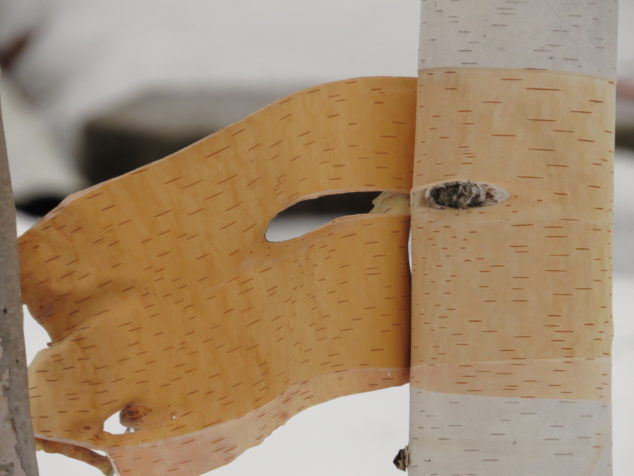
The discarded bark was also used as paper to send messages to people, and we have been the lucky recipients of a few birch bark postcards when our kids lived up in the Northwoods for the summers.
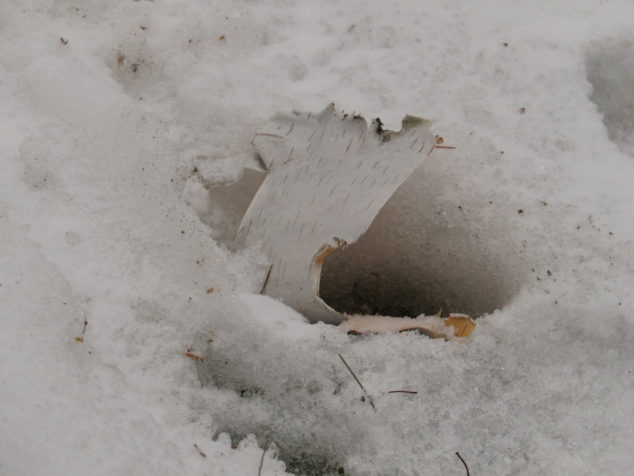
One of the three trunks of our Birch was drilled by a woodpecker last summer in neatly spaced rows. Often they drill for sap and insects it attracts, preferring soft bark and high sugar content, both of which the Birch tree has.
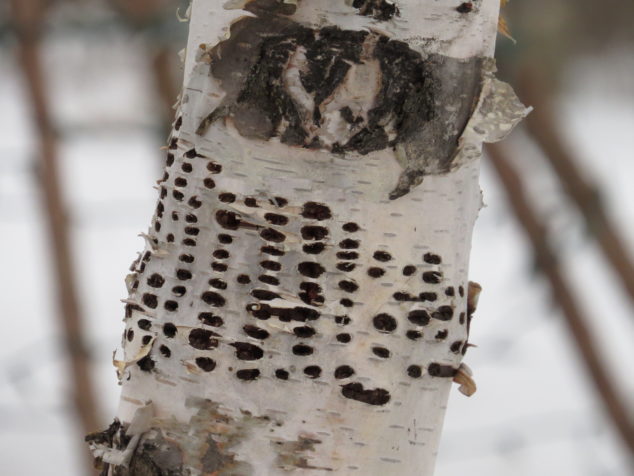
This truck’s growth is not as exuberant as the other two and is probably using its energy to combat the injury from the woodpeckers and/or insects.
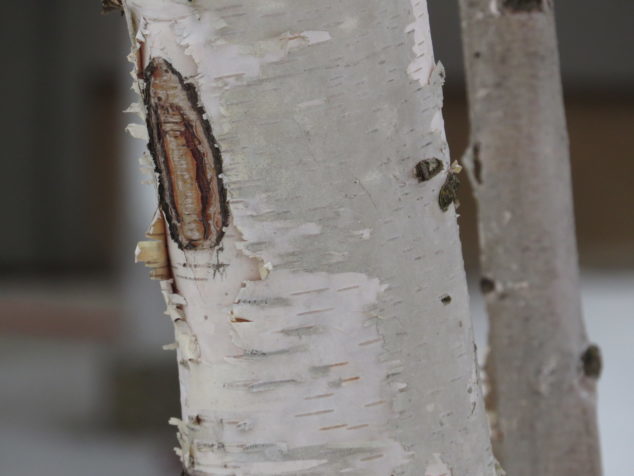
I am like the Birch tree with its burst of growth. Sometimes our growth comes when we choose it—like going back to school or taking a class to learn a new skill. Other times our growth happens from circumstances that present themselves to us—an opportunity for a new job or a trip to a different country. And then there are times of wounding—of injury or disease, of divorce or estrangement, of betrayal or abandonment—when our souls and hearts are drilled with holes, when it feels like our life-force is seeping out. It’s hard to believe that anything so devastating can lead to growth. At first, all our energy goes to stop the bleeding, to send out the immune cells that protect us from losing the battle when the first shots are fired. When stabilized, ever so slowly we begin to stitch together some new fabric, discarding the threads that no longer work and incorporating new ones that are stronger, more resilient and authentic. The winter of our discontent begins to wane in the face of the sun. Tiny shoots of new growth push up through the soil of darkness. Old beliefs peel away to reveal our smooth, authentic Self. The old bark has done its job, protecting us when we needed it, and then provides the kindling to ignite a new stage of growth. Be like the Birch tree!