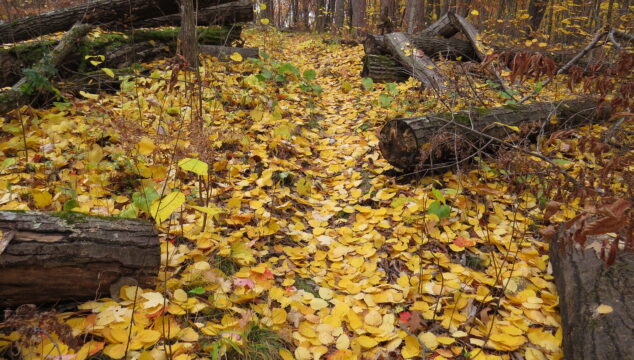
Come walk with me in the peak Autumn beauty of the Northwoods. To say that I love this time of year is an understatement. Most everyone can appreciate the colorful falling leaves---it reveals the 'true self' of a tree when its leaves are no longer producing chlorophyll. Their true colors are revealed, and there is something simple … [Read More...]
At the Foot of the Rock
I can see the light of a clear blue morning/ I can see the light of a brand new day/ I can see the light of a clear blue morning/ And everything’s gonna be all right/ It’s gonna be okay –Dolly Parton
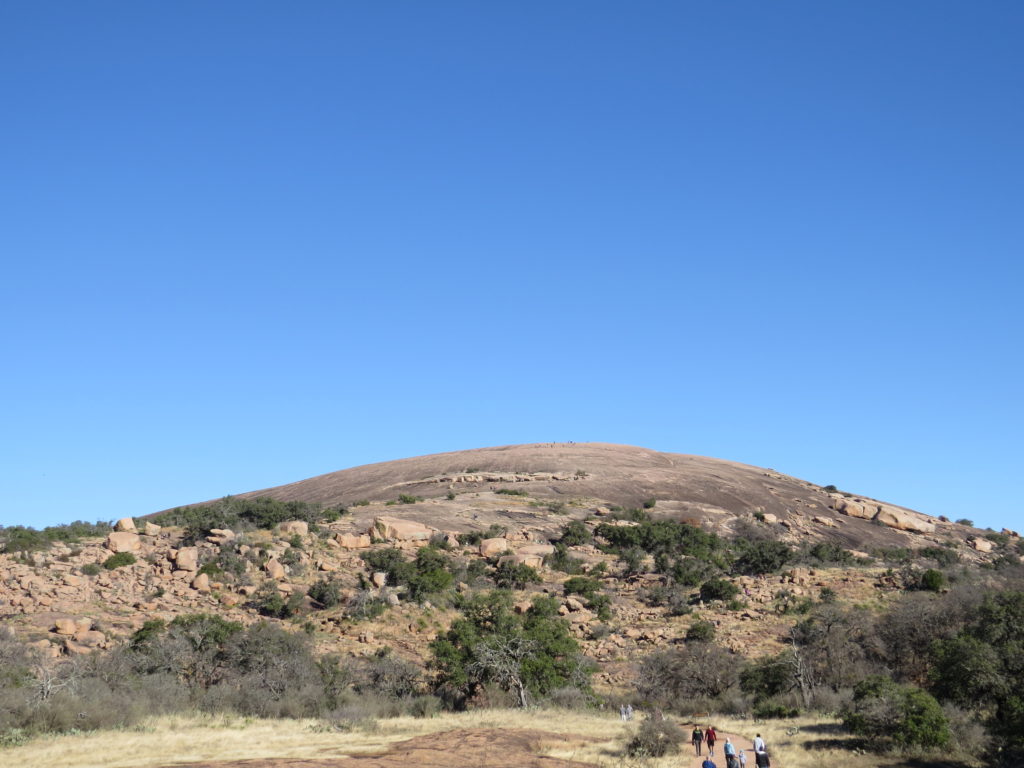
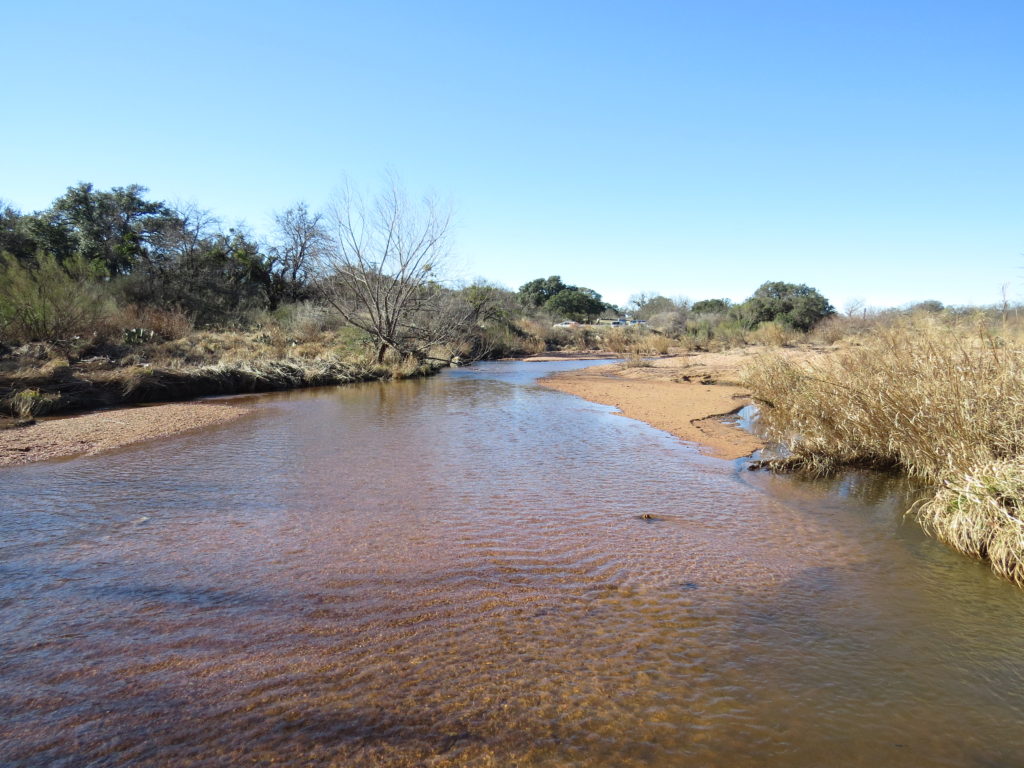
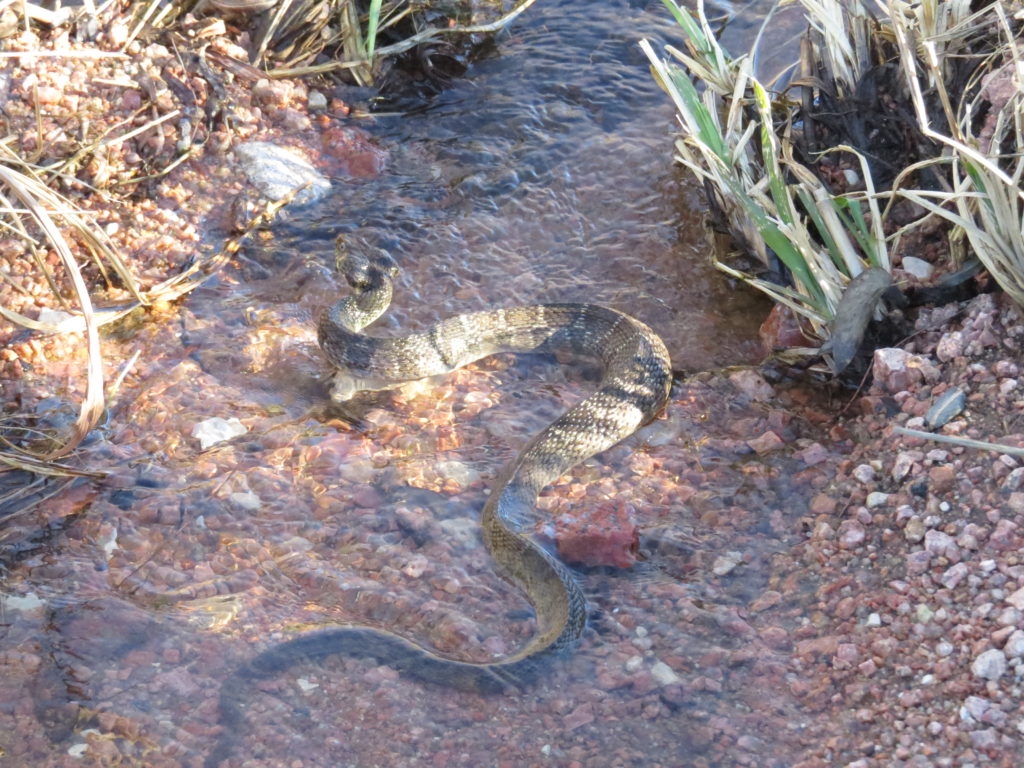
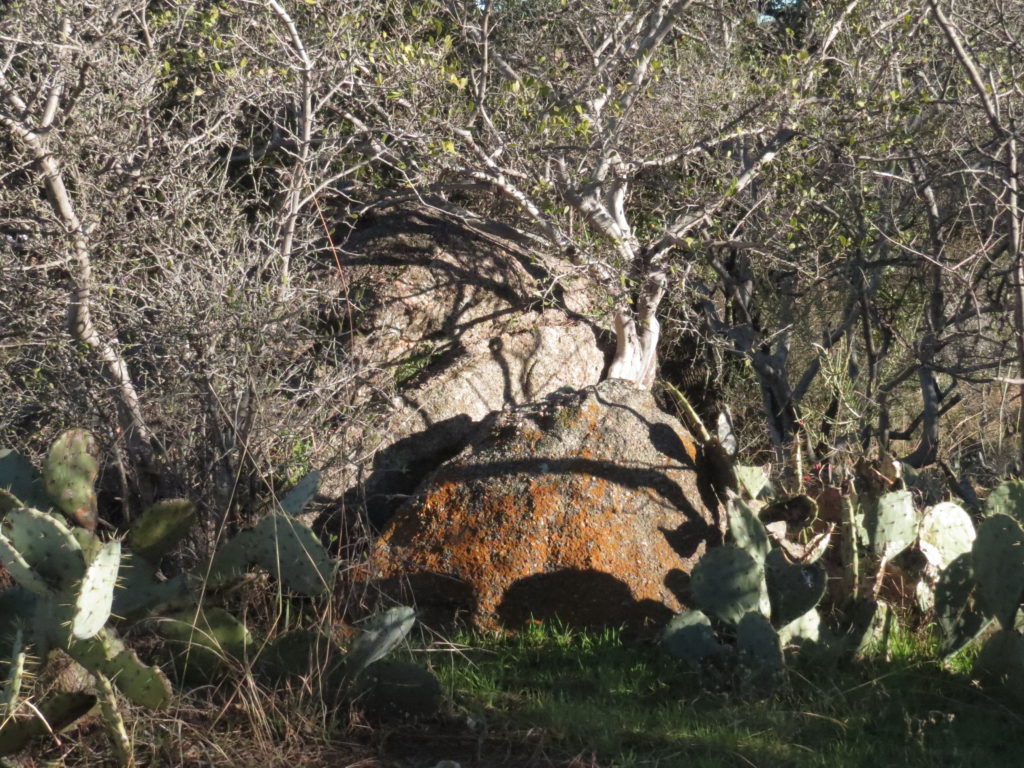
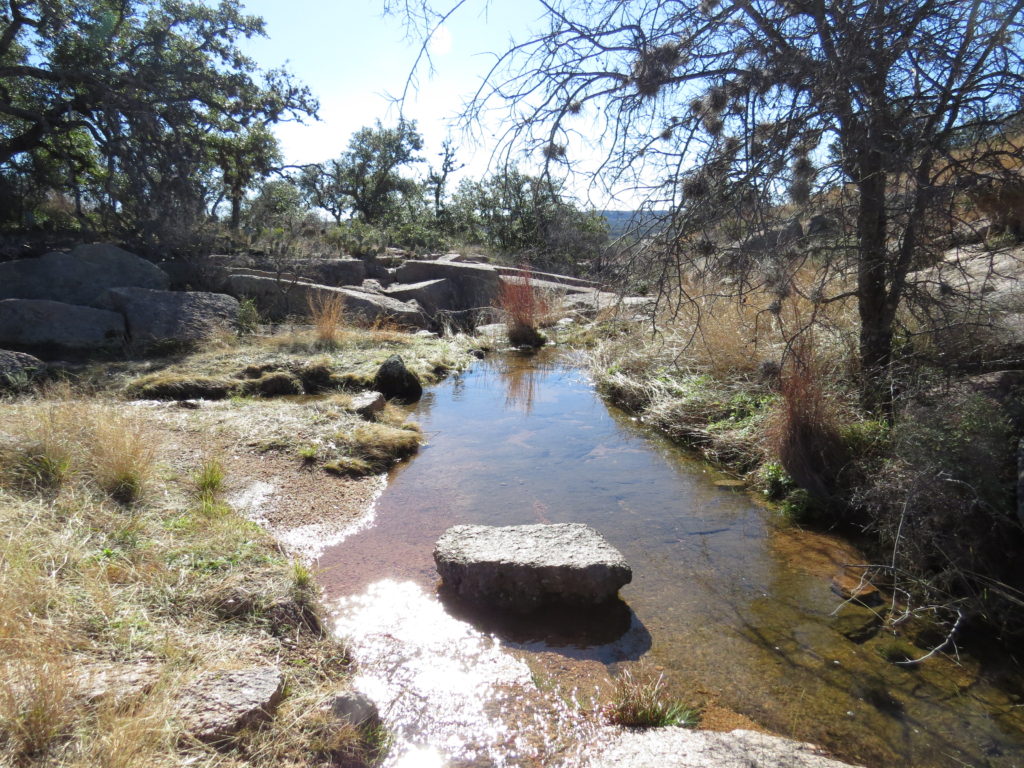
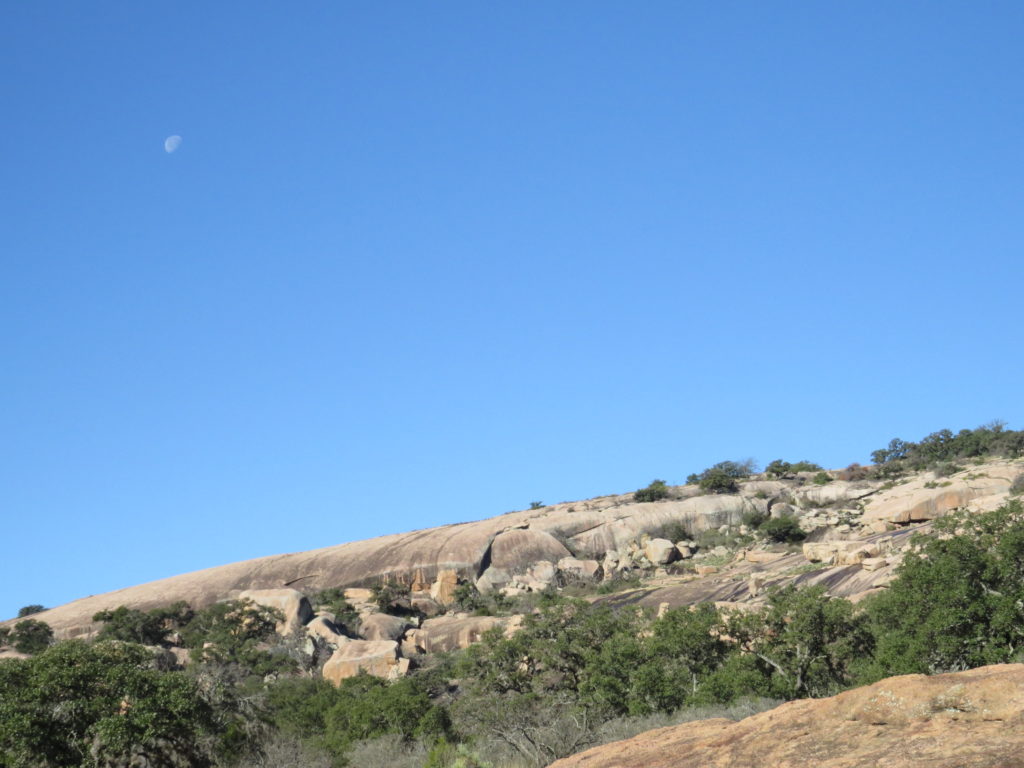
There’s something to be said for being able to clearly see what lies before you, what your task is, even what path you will choose. The first time I heard about Enchanted Rock in the Hill Country of Texas was when our daughter Emily worked at The Outdoor School in Marble Falls. It sounded, well, enchanting—a huge dome of granite rock that bubbled up as magma a billion years ago, then slowly began eroding. It is a place that humans have camped at and called home for more than 12,000 years. There are stories and legends of spirits and sacred spaces from explorers and Native Americans and of how the mammoth rock glitters on clear nights with ‘ghost fires.’ I wanted to see it, and I wanted to climb to the top. Enchanted Rock is a small visual part of a huge underground area of granite called a batholith that covers one hundred square miles, so even what is unbelievably large is small compared to what lies unseen below it. The pink granite dome rises 425 feet above the base elevation of the park—like climbing stairs of a thirty to forty story building, and the people at the top looked like ants from our vantage point. Before climbing the granite dome, we explored around the other environments at the base of the rock—the floodplain, Mesquite grassland, and Oak woodland. It had rained the night before, so the shallow creek-bed was flowing with clear water and home to a great-looking snake.
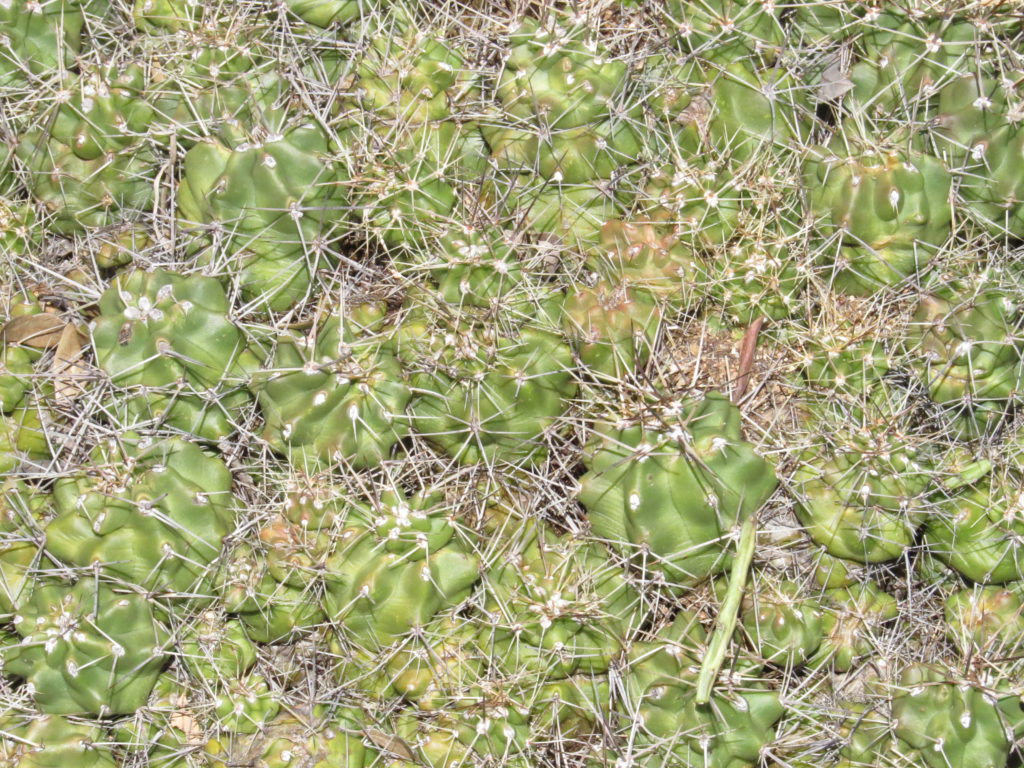
Like all the places we had visited in Texas, I was amazed at how the prickly pear cactus occupied such diverse environments and how some of the trees still wore their green leaves.
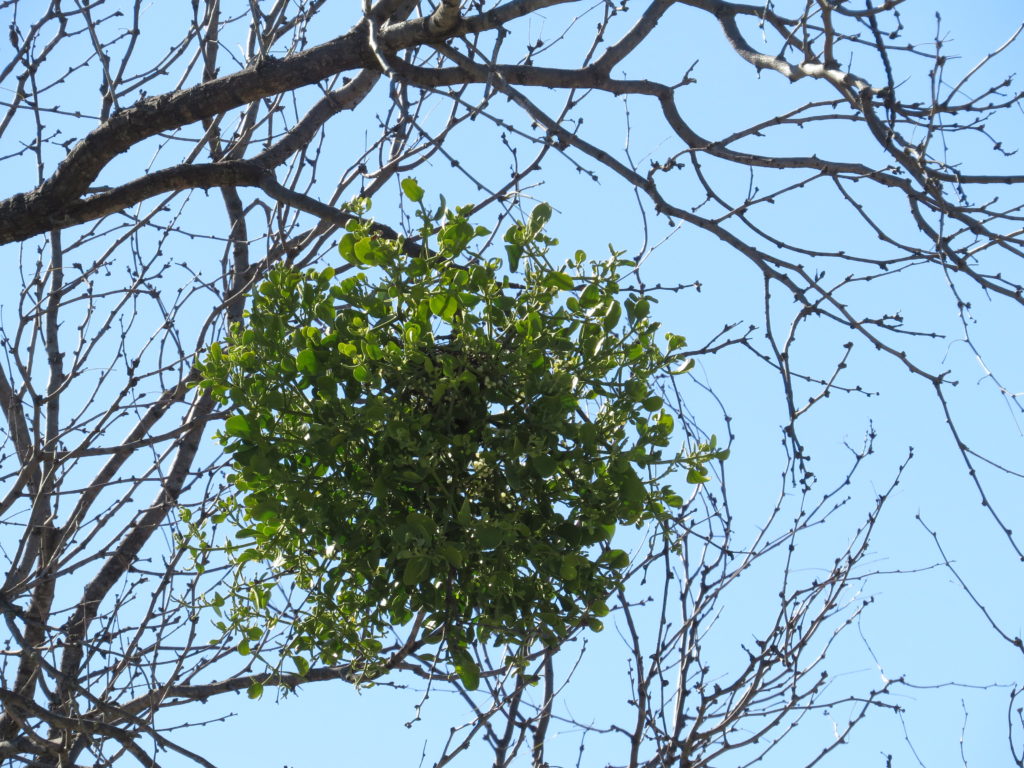
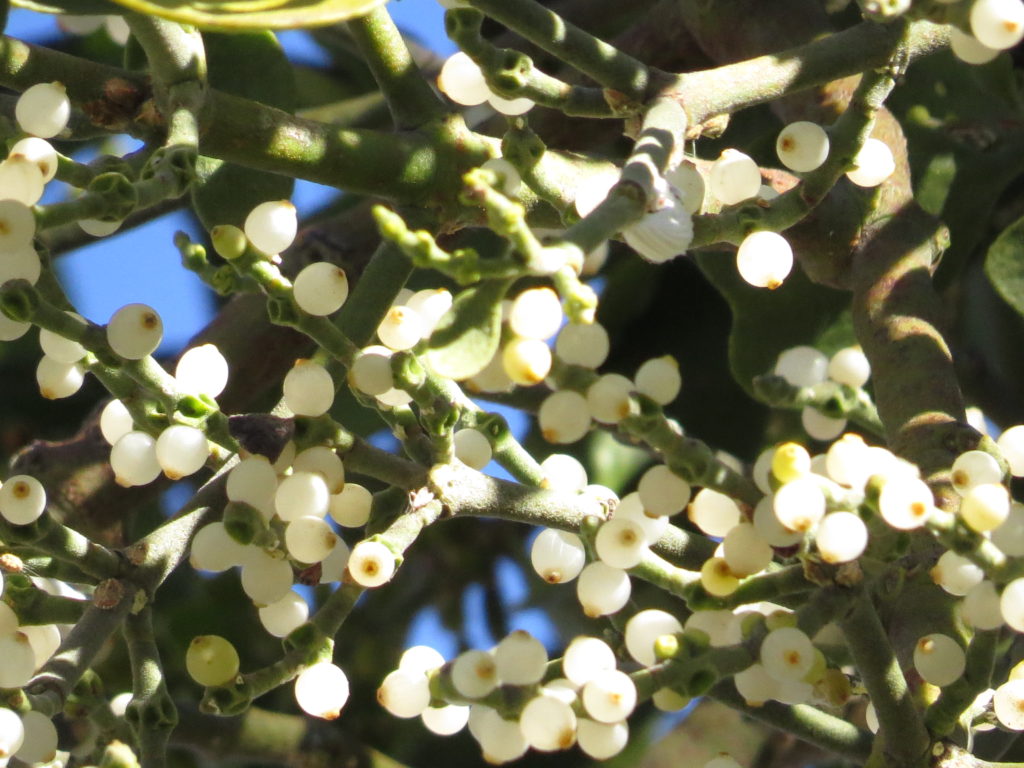
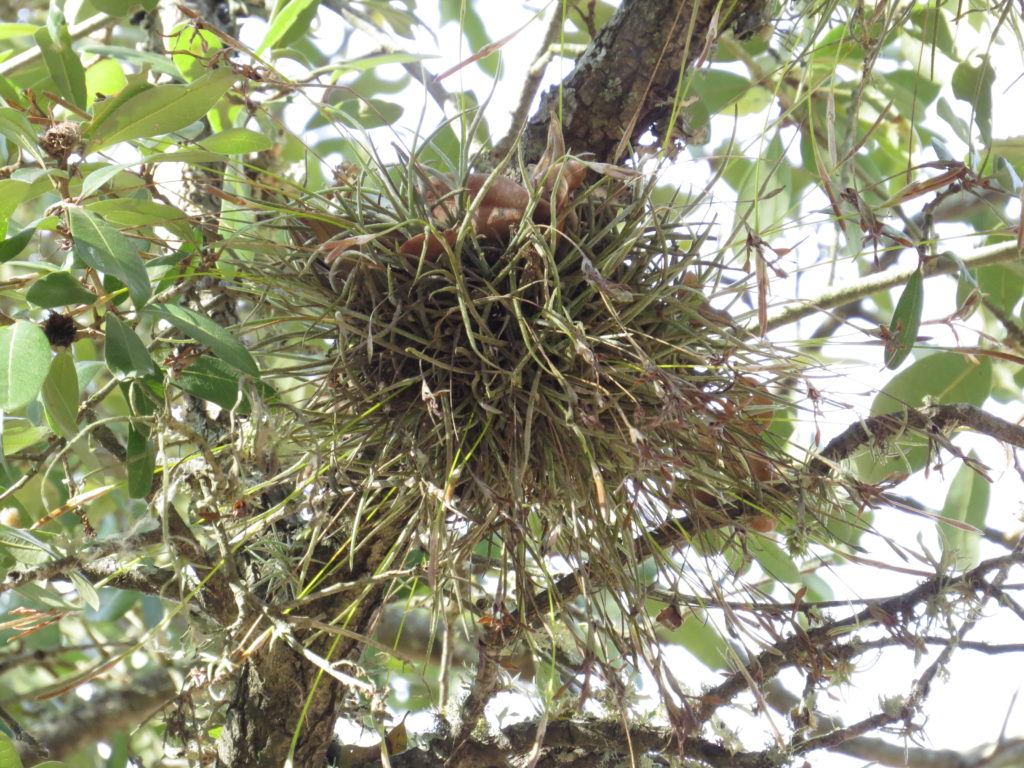
One of the unusual sights for me was a ball of green Mistletoe in a bare tree. The tradition of kissing under the Mistletoe began with the ancient Greeks, as the evergreen plant with its shining white berries symbolized fertility. Now it has become a tradition/decoration of the Christmas season. It is a parasitic plant that sends its roots into the wood of a branch and usurps water and nutrients from the tree. A heavy infestation of Mistletoe can cause dying of branches or death of a tree.
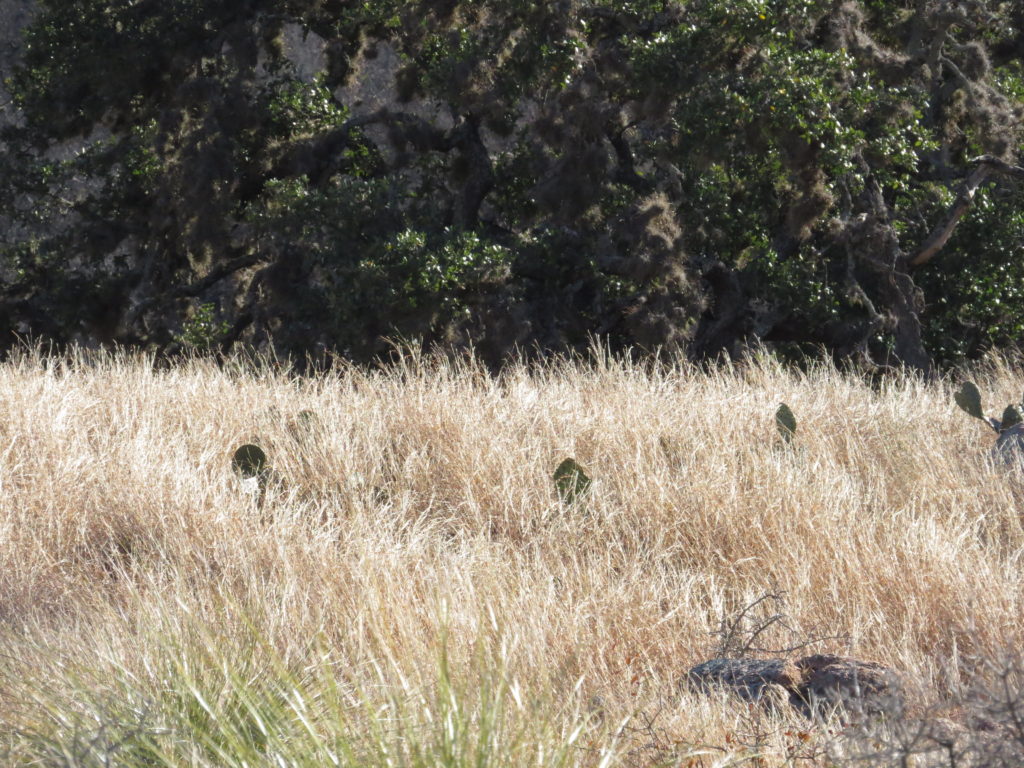
Another plant that is sometimes thought to be a parasite is Ball Moss, seen as the gray balls in the Oak trees below. They are actually epiphytes—plants that live on other plants, but absorb water and nutrients through their leaves from the air. These ‘air plants’ anchor themselves to the bark of a tree with tendrils. Some arborists believe the tendrils can strangle a branch, and eventually kill a tree, but it is very common to see a tree full of Ball Moss with their pokey seed pod stalks. ( I like how the Prickly Pears poked their ‘heads’ out of the grass in this picture.)
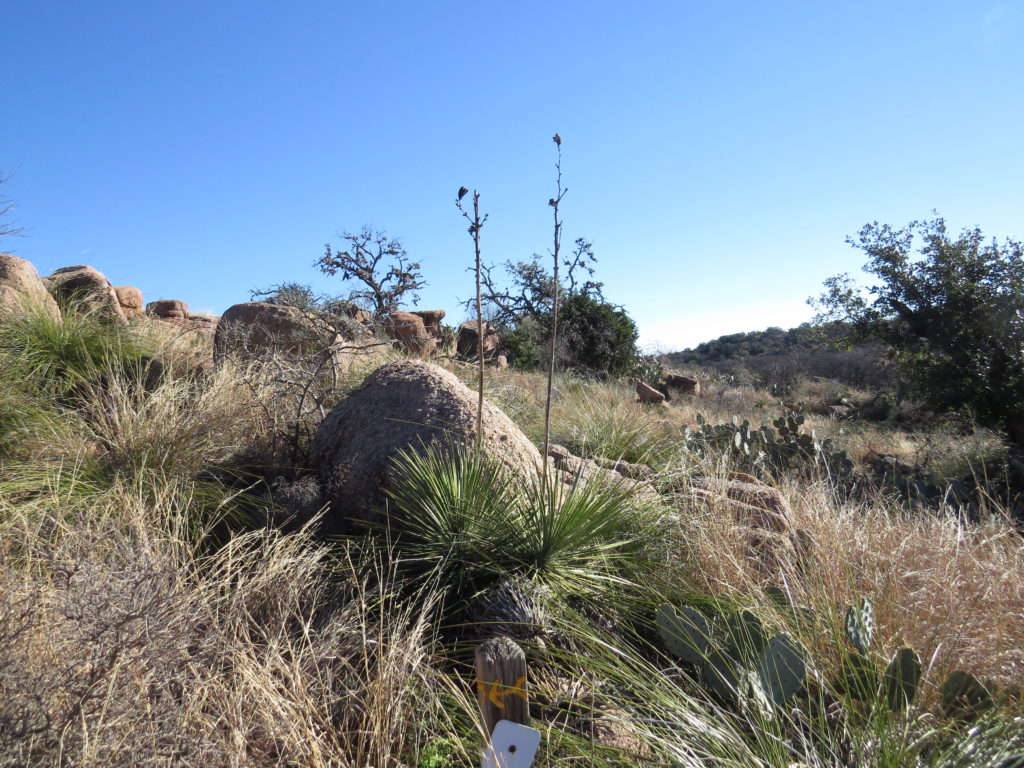
Yucca plants with their tall stalks of seed pods grow among the Prickly Pears, grasses, and rocks.
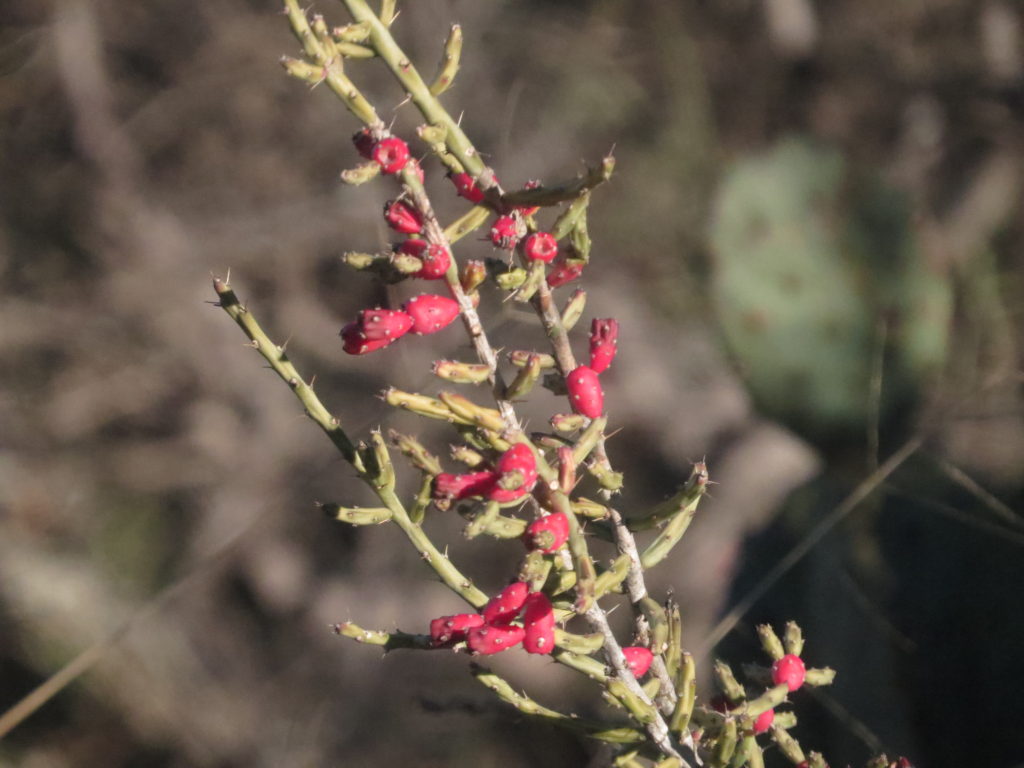
In fitting attire for our after-Christmas hike was the colorful fruit of the Desert Christmas Cactus, sometimes called Pencil Cactus because of the slender leaves.
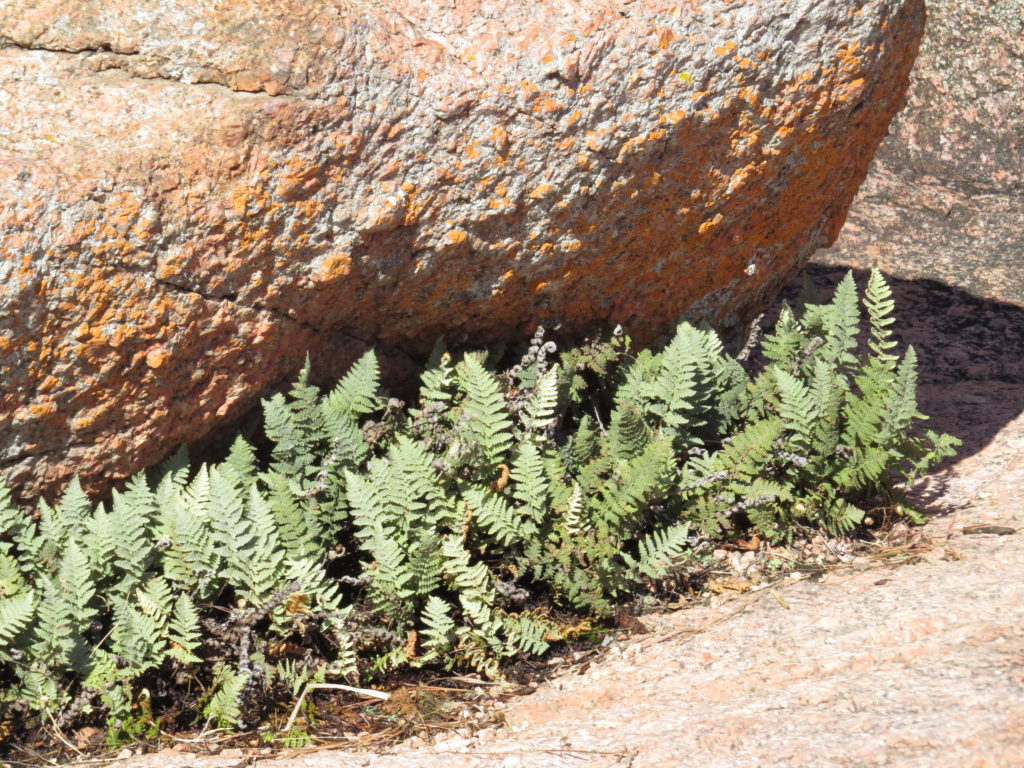
In the millions of years of erosion, exfoliation of layers of rocks has tumbled down the side of the dome into piles at the foot of Enchanted Rock.
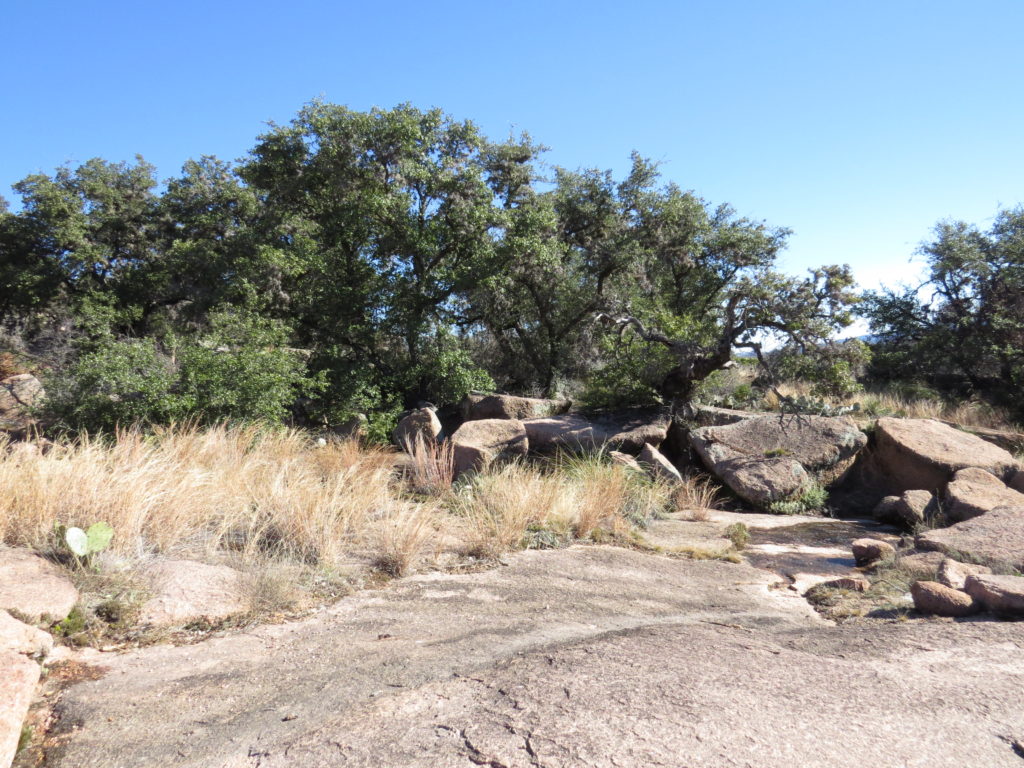
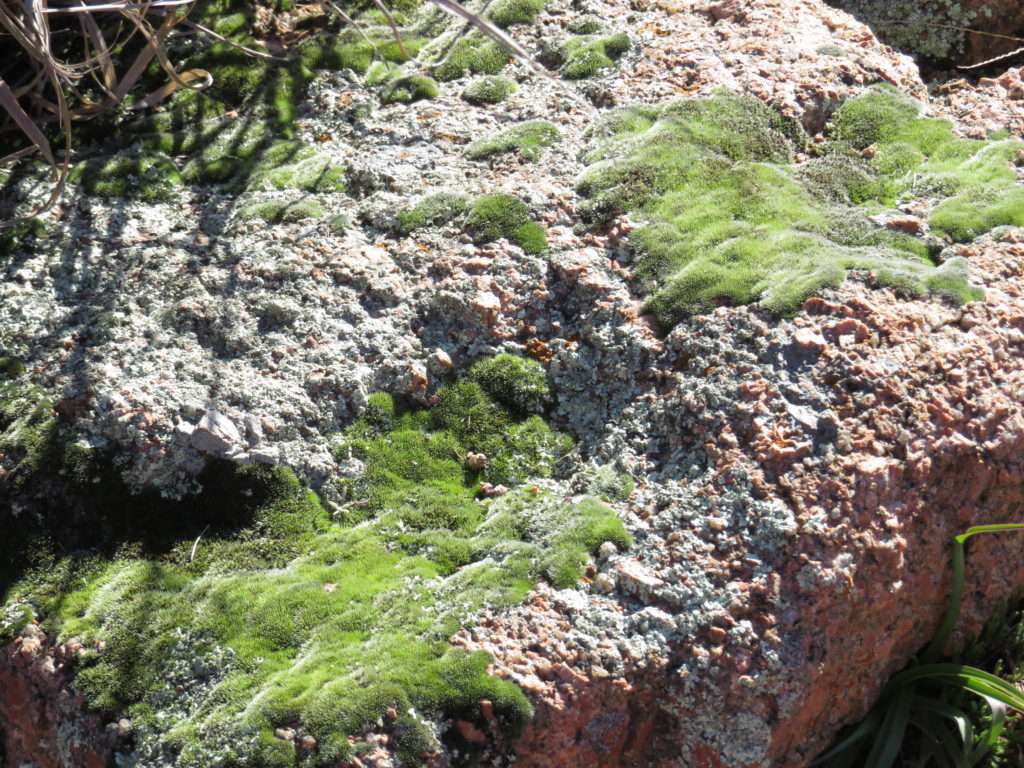
Miniature ecosystems form on and below the rocks where moisture is a bit more abundant…
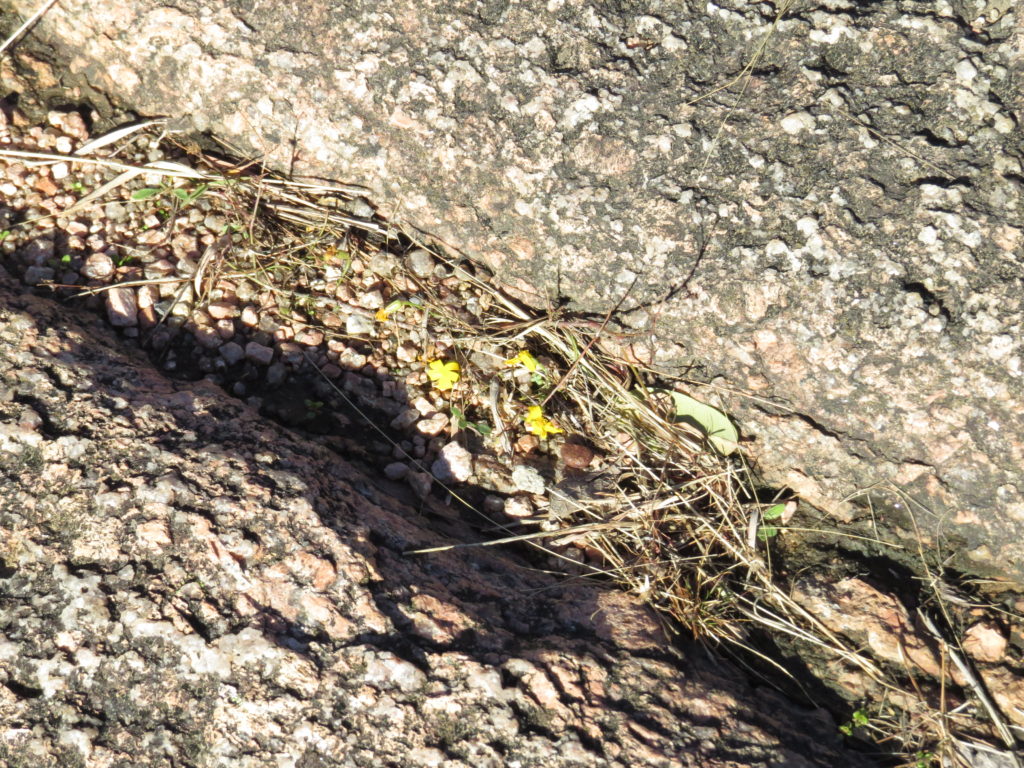
…and where tiny, viney yellow-flowering plants survive in a crack between rocks, perhaps blooming in response to the recent rain.
The ecosystem at the foot of E-Rock is hard and harsh with the masses of granite rocks and cacti, and yet at the same time, there is a softness and flexibility in the flowing water, the swaying grasses, and the carpets of delicate moss that cover the rocks in the floodplain.
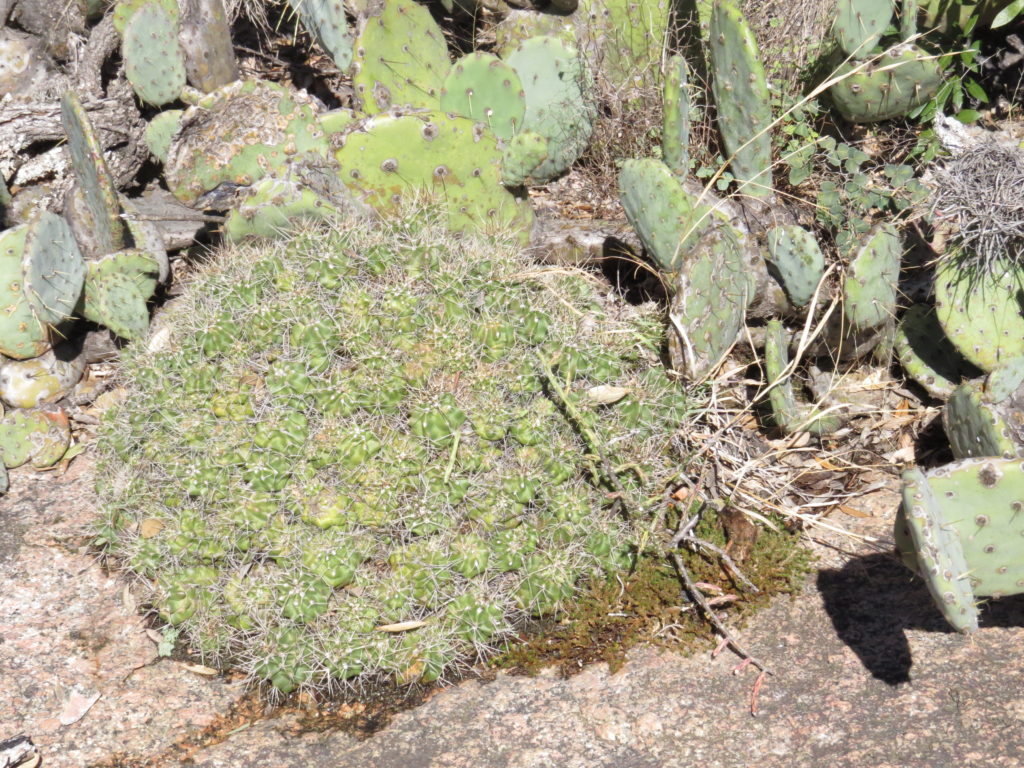
This impressive granite rock, with its long history of geological wonder and spiritual acclaim, attracts people to stand at the foot of the rock in awe of what lies before them. There are times in our lives when we stand in such awe looking forward in our lives—at graduations, at weddings, at funerals, at the births of children, and then again when those children leave the nest. What we see at those times is small compared to what lies unseen in the life-altering tasks before us. Perhaps naivete and enthusiasm are the glasses we need to look through in order to propel us through the droughts, the prickly places, and the hard times. Dolly sings about those long, hard nights, the long hard fights, and the “clinging vines that had me bound.” The largest and most enchanting rock that lies before us is not anything that happens in our external world, but that which happens within us. It’s time to explore. It’s time to face the daunting task of noticing the stories and legends we carry in our hearts. It’s time to eradicate the parasitic thoughts that are killing our souls. There’s something to be said for being able to clearly see what lies before you, what your task is, even what path you will choose. And through it all, we look forward to seeing the light of a clear blue morning and a brand new day. Everything’s gonna be all right. It’s gonna be okay.
Earth, Teach Us on this Earth Day
EARTH, TEACH ME
An Ute Prayer
Earth teach me quiet—as the grasses are still with new light.
Earth teach me suffering—as old stones suffer with memory.
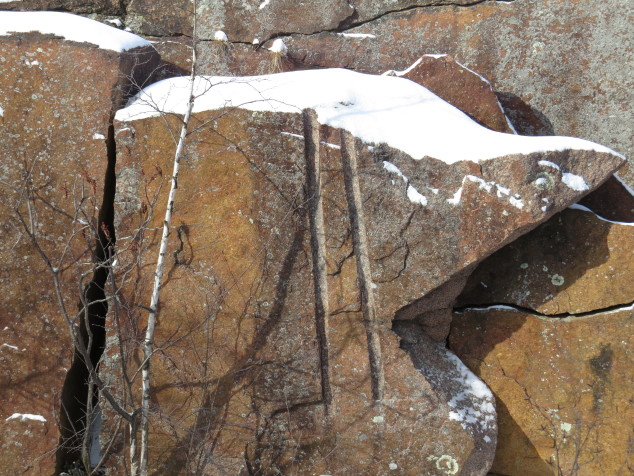
Earth teach me humility—as blossoms are humble with beginning.
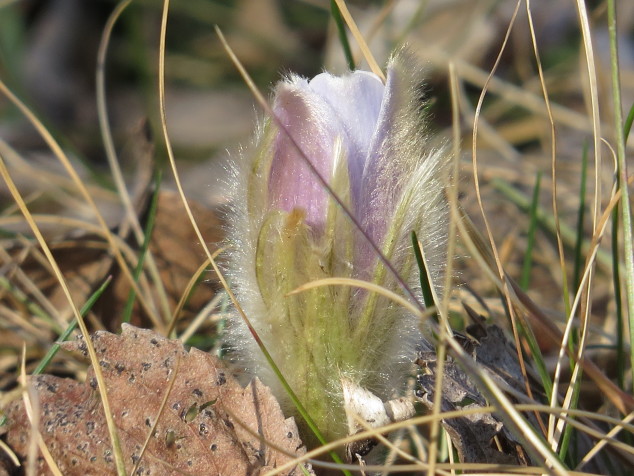
Earth teach me caring—as mothers nurture their young.
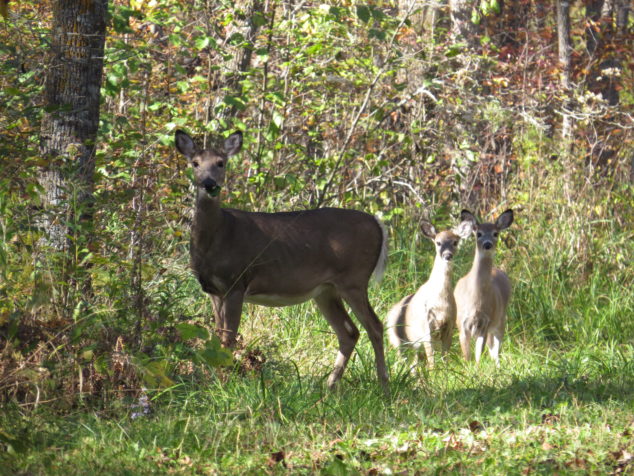
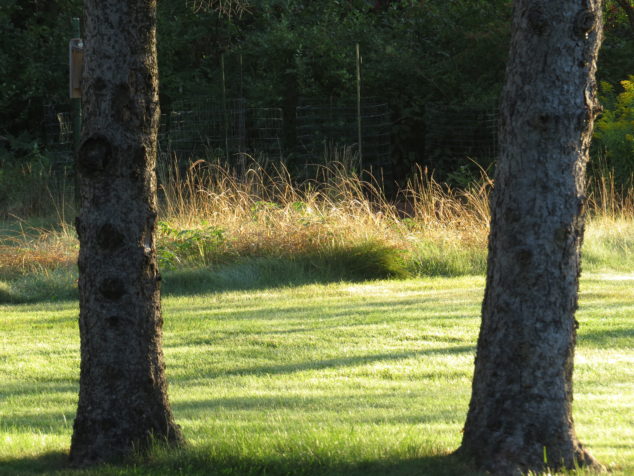
Earth teach me courage—as the tree that stands alone.
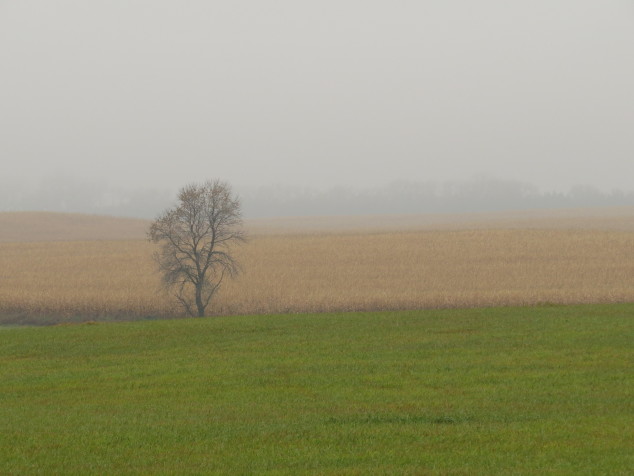
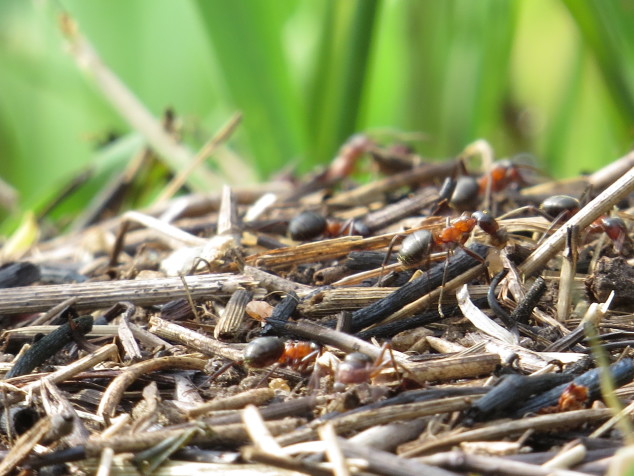
Earth teach me limitation—as the ant that crawls on the ground.
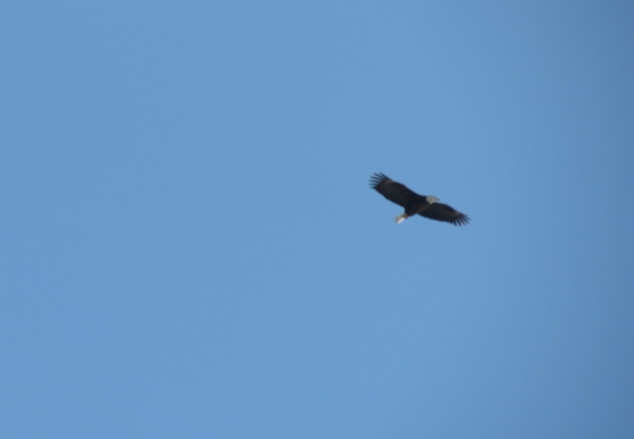
Earth teach me freedom—as the eagle that soars in the sky.
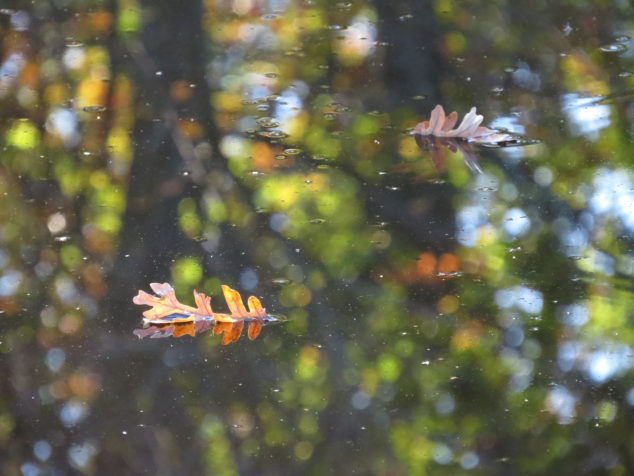
Earth teach me acceptance—as the leaves that die each fall.
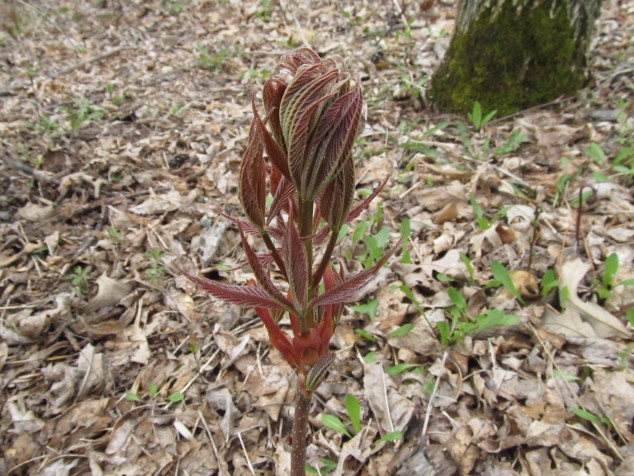
Earth teach me renewal—as the seed that rises in the spring.
Earth teach me to forget myself—as melted snow forgets its life.
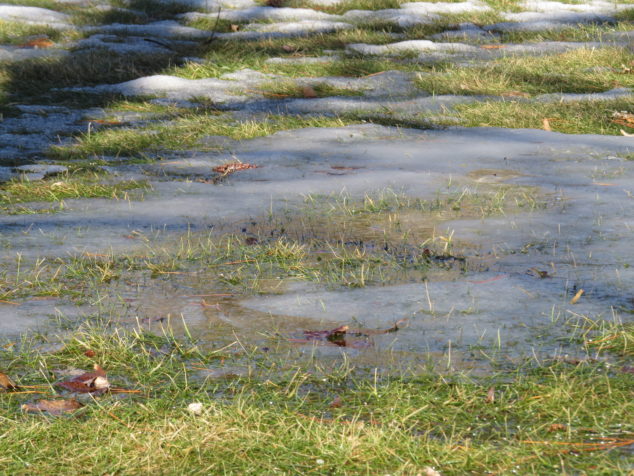
Earth teach me to remember kindness—as dry fields weep with rain.
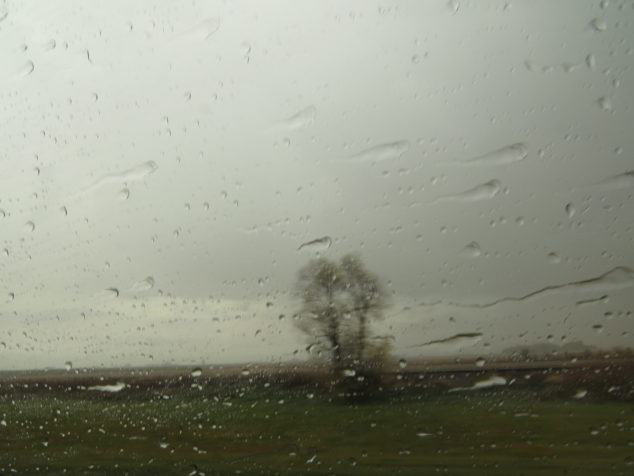
Let the words of this beautiful prayer float around you as they are sung by this talented choir.
Earth Day is a special day to remember and celebrate all that is good and beneficial about our Earth. We are the stewards of this Home to us all. And just as caregivers to children or elders know, the cared-for also teach us in profound ways. The Earth and all of Nature—our Mother Earth, our Mother Nature—can teach us qualities we need to know. Are we receptive? We can learn listening skills from the quiet of grasses in the morning light. We can learn resilience from the suffering of our earth and rocks from exploitation and apply that to the heavy stones we carry of our burdensome memories. Like a child, we can cultivate wonder and humility as we watch the miraculous unfolding of flowers. We can learn responsibility and how to nurture vulnerable creations as we watch animal parents care for their young. The solitude of a lone tree can offer us a model of courage and fortitude in the face of harsh conditions. When we feel small and inadequate, we can remember how the ant lives with limitations, and in that reality, can actually perform great feats. An eagle in the sky models freedom and possibilities. We can learn acceptance and peace from the cycle of life. There are yearly lessons of renewal and rejuvenation with each Spring. We can learn about transformation and transcendence as we watch snow melt to water, water turn to vapor, vapor fall as rain. And as that rain provides the very basic need of water to dry plant life, we can learn about kindness, philanthropy, and grace. There, but by the grace of God, go I. Imagine our world, our Earth, our lives if everyone learned these eleven lessons. Happy Earth Day!
The Wall That I Built
Perhaps I shouldn’t be so disgusted with Trump’s billions-dollar wall—it is an act of self (country) preservation, albeit in a grandiose, extremely expensive way. And we all do it. We all build walls of one sort or another—literally and figuratively—in order to keep something out or in and to protect ourselves. It’s not that boundaries aren’t important—they are imperative to the working order and preservation of a person, family, company, or country.
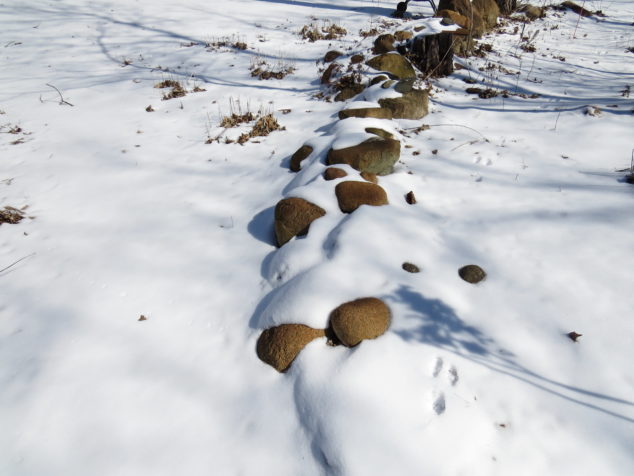
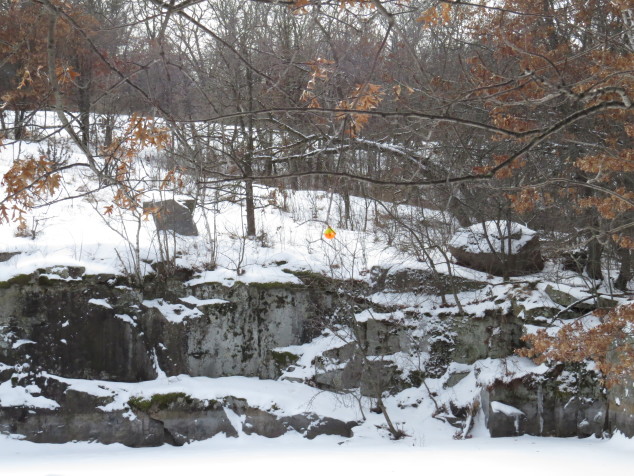
We live across the road from an inactive quarry whose perimeter is lined with a six-foot chain-link fence with three strands of barbed wire above that—a daunting barrier to anyone who is looking to lift a piece of granite. (Actually ‘lifting’ a piece of granite is the hard part.) As daunting a barrier as it is, there are many breeches of that secure fencing in just the short area I walk by each day. Last Sunday’s snow made under-the-fence trails evident. This trail is used by a fox, as I have seen her cross the road from quarry to woods on the other side. It must be a daily route, because the snow and grass have a path worn into them. Rabbits also use this path which is probably just fine with the fox!
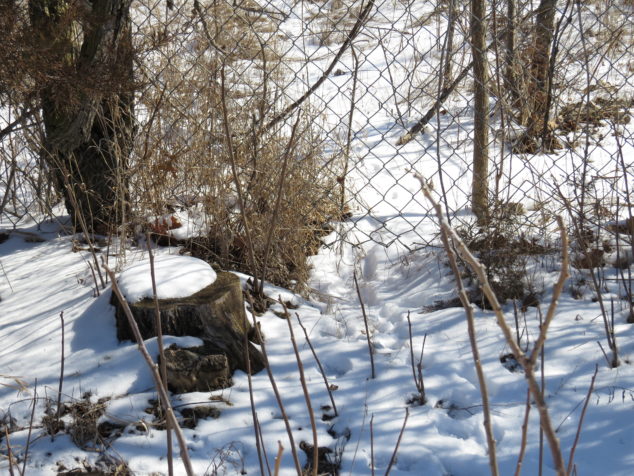
Other frequent visitors to our yard and to the places along our road are deer. I have seen deer jump over three strands of barbed wire that surround cow pastures, but the tall chain-link and barbed wire fence is another story—especially when the doe has fawns. So they made another way.
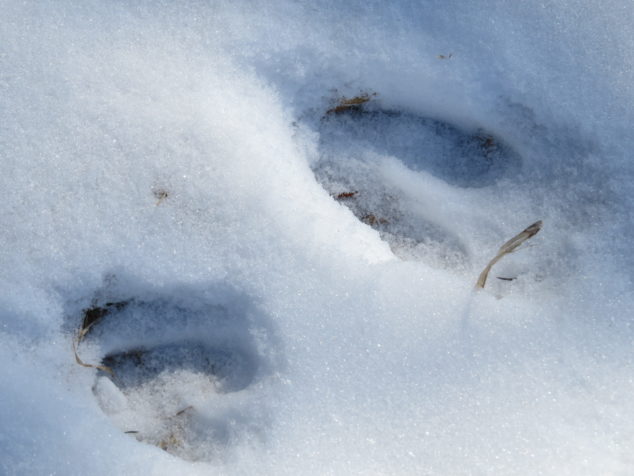
They go under the fence, too!
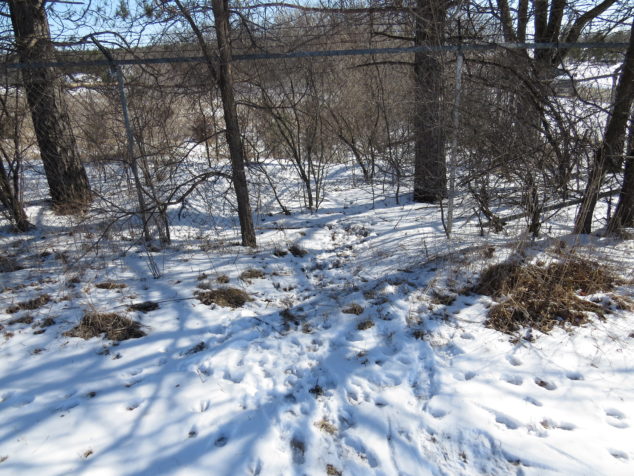
I have never actually seen them do it—it must be a limbo sort of maneuver since the fence is pushed up only mid-thigh high on a short woman, but the tracks tell the story. Wild turkeys also use this trail when making their feeding rounds.
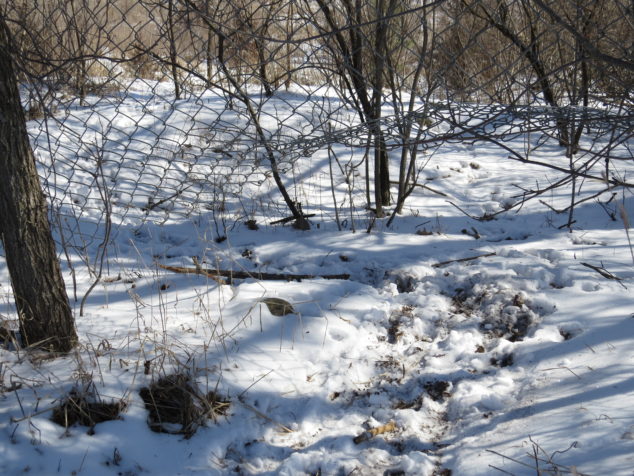
The inactive quarry is like a refuge for the deer and other creatures. Occasionally trucks and humans rumble through, but for the most part, it is quiet and unoccupied.
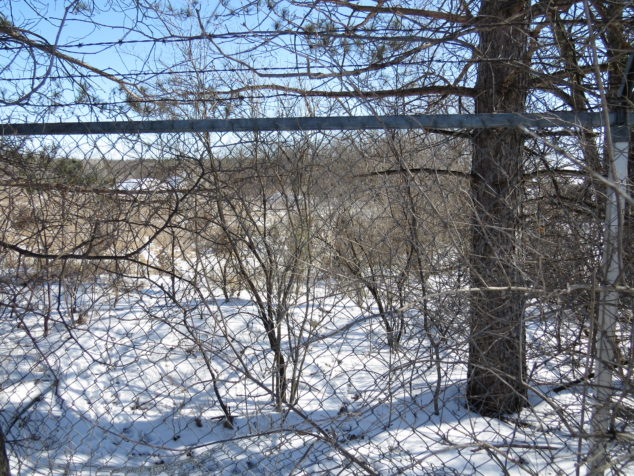
It is a safe nursery for fawns—I saw a young spotted one curled in a ball under the brush one spring.
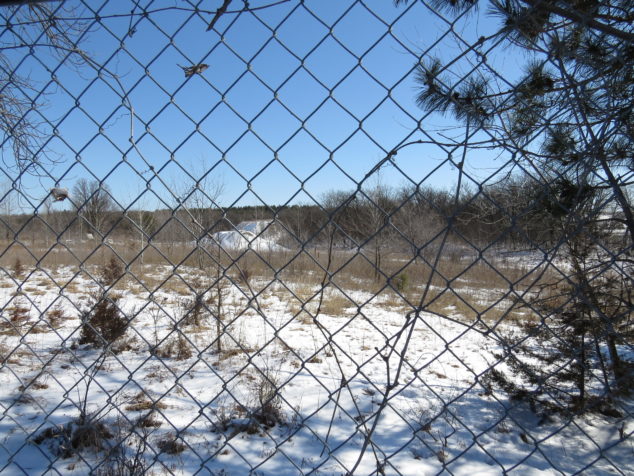
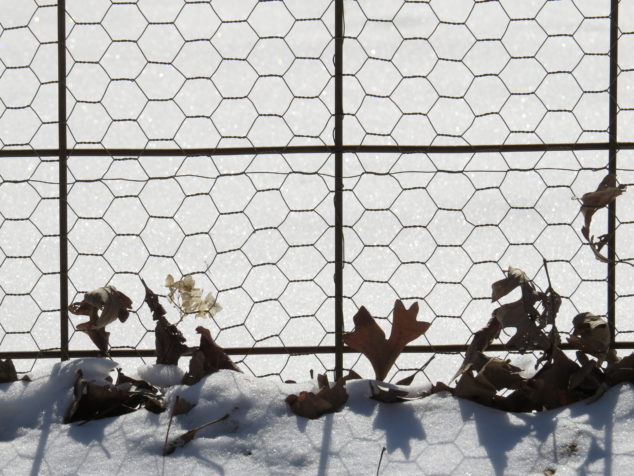
A fence surrounds our garden, mainly to keep out the rabbits. It helps to keep the deer out, but they have been known to jump the fence and taste the maturing vegetables.
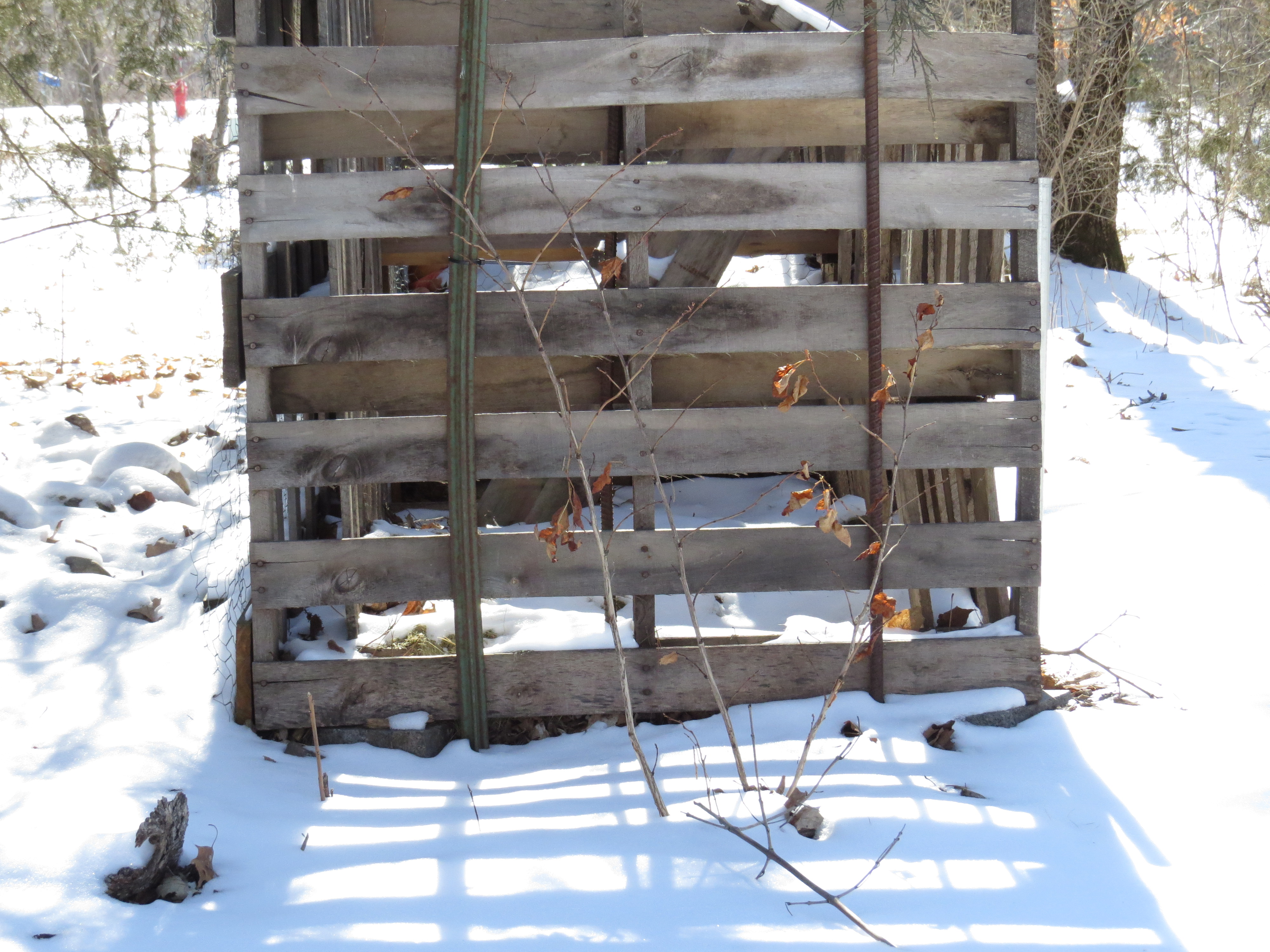
Pallet wood compost bins keep most of the leaves, food scraps, and lawn clippings in while letting rain, air, and chipmunks in, too, but it keeps the dog out.
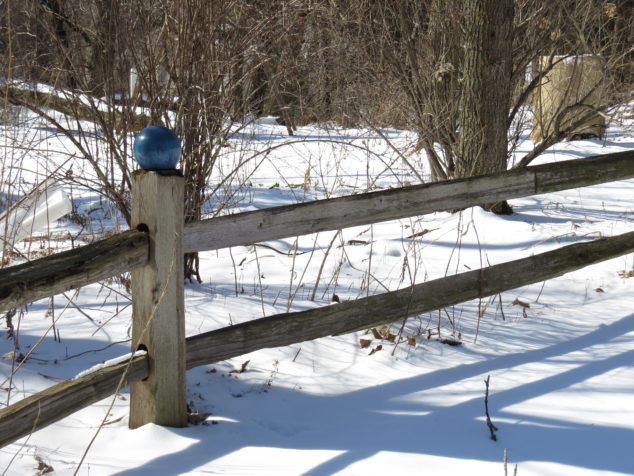
Even decorative fencing makes a person walk around, if legs aren’t long enough to go over.
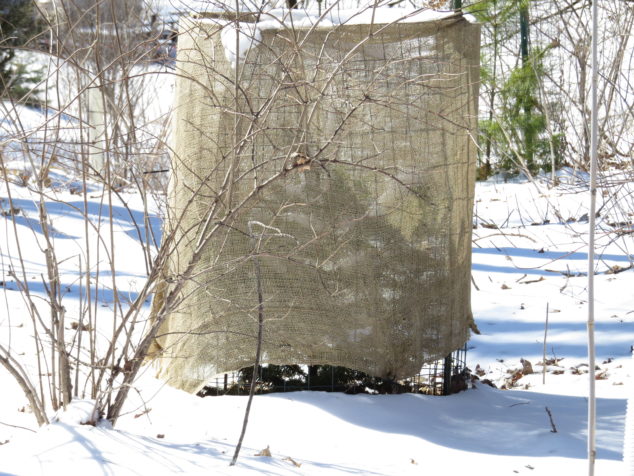
Burlap and landscape fencing protects young evergreens from munching deer and drying winter winds.
Sometimes walls just mark a border and are low enough to slow us down, lift our feet, or cause us to stumble if we aren’t paying attention.
Walls, fences, borders, boundaries, and barriers are necessary for the smooth operation of gardens, lives, quarries, companies and countries. But can we go too far? And what is the price we may have to pay for that fortified fortress?
The black and white heart
Closing down–it’s easy.
It comes from years of practice.
I won’t let myself get hurt.
Walls are built–stone is best:
Cold and hard–impenetrable.
But just as hurt cannot invade,
No warmth penetrates the fortress.
Love is deflected; it lay
useless on the cold earth at my feet.
If only it would follow the rules
then maybe I would let it in.
But it doesn’t–I can’t predict the road ahead.
But the road and years teach–have I learned….
to see where sight loses its power,
to hear the heart instead of words,
to smell the freshness of old life,
to touch the touch of God and love?
I wrote this poem years ago when I realized that I had lost love and joy and laughter and goodness and power in my life in order to protect myself and try to keep myself safe. The problem was compounded in that I built that wall when I was a child, and it was a reaction and not a well-thought-out plan with pros, cons, strategies, ramifications, and budget considerations—love and/or money. The ‘mortar’ that kept the wall tight and upright was the lies I told myself about why I needed the wall—and when you repeat a lie over and over again, it becomes your truth….until I realized that the wall didn’t really protect me at all. I still got hurt, rejected, ignored, and abandoned. My benefit to cost ratio was abysmal. The fear and hurt that built my wall didn’t go away—in fact, it reverberated back to me a thousand fold. It didn’t protect me from the wounds of life—it probably made me more vulnerable. And the costs in love, joy, peace, fun, and happiness were more than I care to compute. Looking back, there were times when the wall was ascended, the fence was pushed up, the burlap ripped down—by the animals in my life. There are reasons why a horse is a girl’s best friend, why a dog is man’s best friend. Which gets us back to Love. Fear builds walls, and Love finds a way to scale them and tear them down. Wounded hearts and childish ways do whatever they can for self-preservation, but as we put our childish ways behind us, what are we if we have not Love? *
*1 Corinthians 13
Between a Rock and a Hard Place
You know how things can be going along rather smoothly with blue skies and sunshine, then all of a sudden, you find yourself between a rock and a hard place?
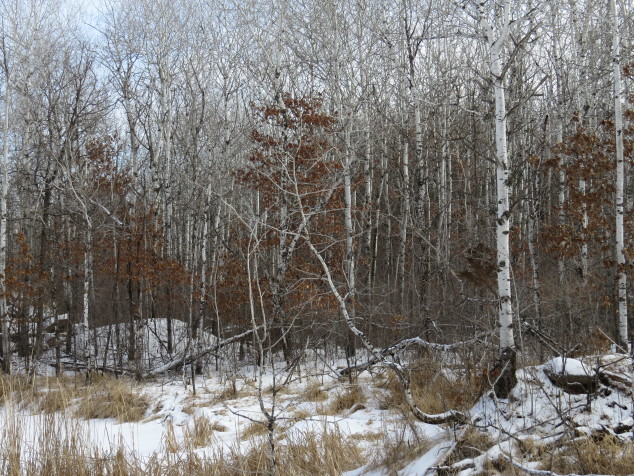
Quarry Park, with all its bedrock and spoils piles, exhibited a portfolio of examples of living creation dealing with an unyielding environment. But back to the smooth sailing for a moment….This aspen grove looks idyllic at the marshy end of one of the quarries, but not far below the snow and thin layer of soil is a deep layer of rock. The aspens grow in large clonal colonies derived from a single seedling. The extensive root system allows them to survive forest fires and thrive when growing over and between granite.
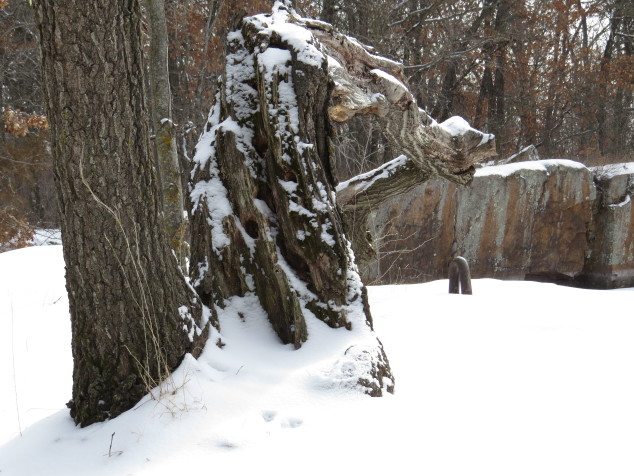
What is the story of this bent-over oak tree? How could such a large tree be bent at a ninety degree angle? Squirrel tracks in the snow showed how it was now used as a highway to the next tree.
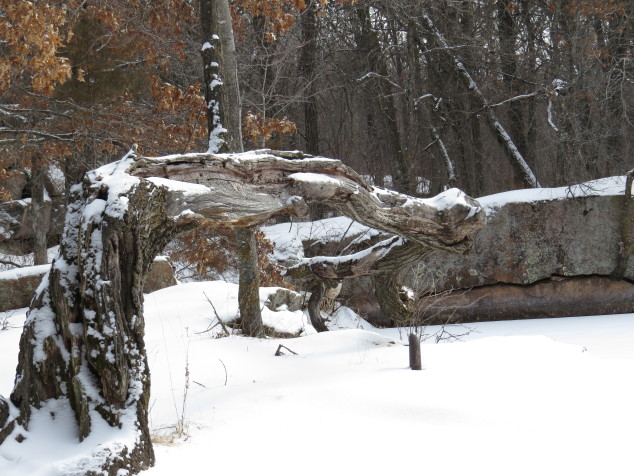
It wasn’t until I was home and looking through photos that I noticed the huge iron staple below the wounded tree. Since it was adjacent to the quarry, perhaps the quarriers somehow used the tree and iron staple to hoist the blocks of rocks from the hole.
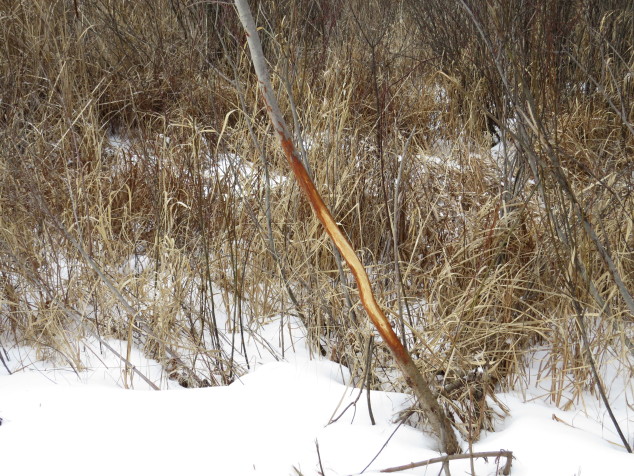
Two interesting saplings along the trail demonstrated that it wasn’t just rocks or iron that could put a tree in a hard place. This young, flexible tree was used for a deer rub. Bucks of all ages will rub the velvet off their antlers in late summer; then during the fall rutting season, the more mature bucks rub to attract does and warn away other bucks. The rub is a visual warning as well as an olfactory one, as the buck rubs the scent gland on his forehead against the exposed wood.
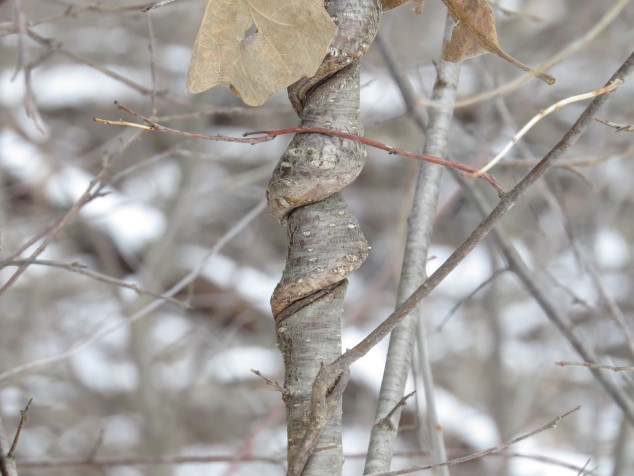
I didn’t look closely enough to tell if this buckthorn sapling was being strangled by its own or another’s branch, though the reddish twig suggests it is from another.
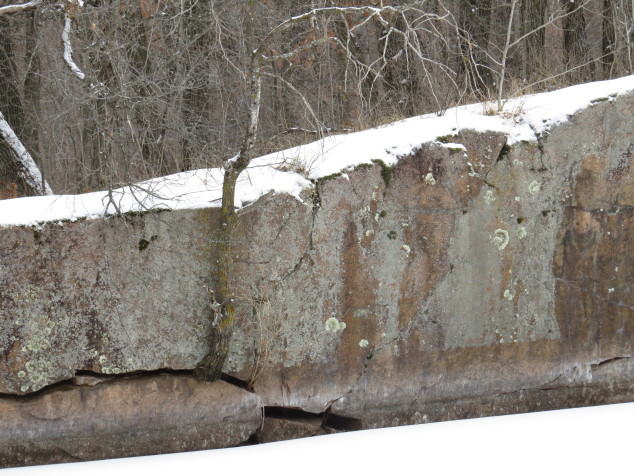
The last quarry on our hike was the only one with ice falls. Spring water flowed and froze on either side of the large plateau of granite where, miraculously, a sizable cedar tree was growing!
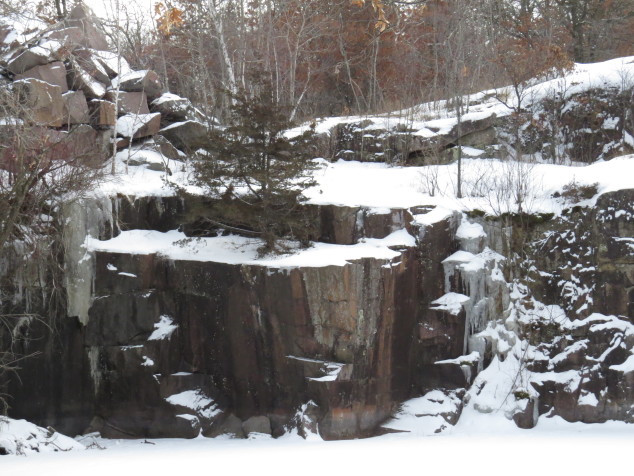
The snow-capped ice draped over the granite, and tiny trees pushed their way through the crevices of the rock face.
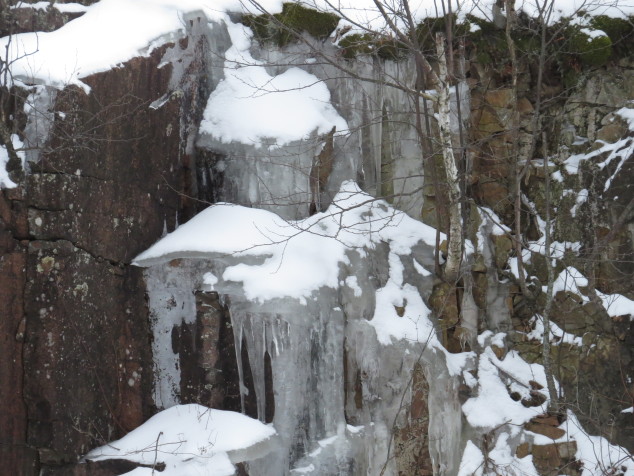 A green patch of moss with a head of white snow and a beard of ice nestled itself on a granite ledge.
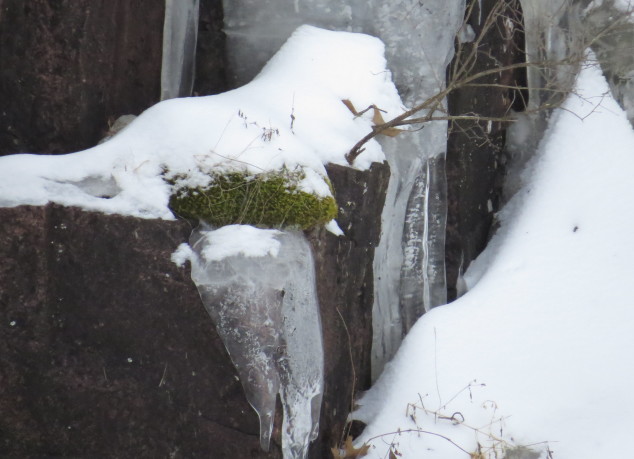
The twigs of a tree were captured by the ice fall while its roots were wedged between rocks. Another tree caught between a rock and a hard place.

All of us will find ourselves in a very difficult situation at some time in our lives. It may be a physical challenge or a moral dilemma that offers two equally difficult or seemingly unacceptable choices. Sometimes we get ourselves into a tight spot when a person or situation looks like one thing but below the surface is really something else. Other circumstances or people can tear away at our defenses for their own purposes or wrap themselves around us so tightly that we can’t grow and be our best. At those times, we need to ask ourselves, “What’s my story? How did I get myself into this condition? And more importantly, how do I get myself out?” We need to connect to our colony of family and friends, the ones who sustain us through tough times with roots reaching with love and encouragement. It is possible to stand tall and prosper in spite of hardship, and like the ice that holds the twigs hostage, this too shall pass.
The Weight of the World
Have you ever felt the weight of the world on your shoulders? I returned to graduate school twenty years after getting my bachelor’s degree. I was so excited to get back to school! I wasn’t concerned about studying, even though I had three kids–we could all do homework together. I didn’t care about being in school with classmates who were twenty years younger than me–I thought they were great. I looked forward to doing research with animals–animals were my first loves. After a move of 450 miles, I walked back into the same building that I had walked out of twenty years before. I loved that place–the classrooms, so new when I was first there, the arena with the sweet smell of cedar shavings and animals, the labs, the animal units or farms, and the sunny lobby where students gathered between classes. Six years after my return, I literally couldn’t make myself walk into that place.
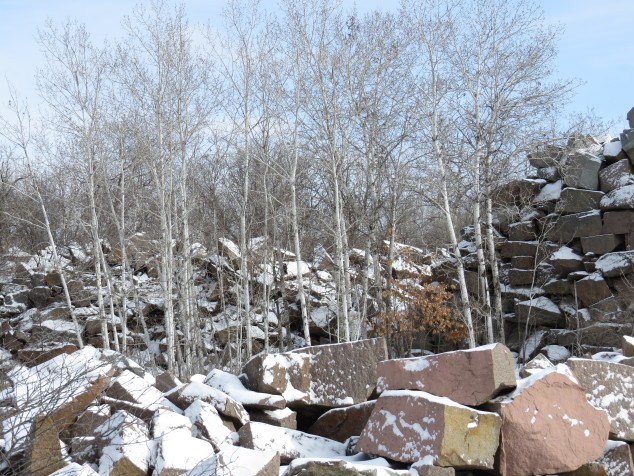
One of the things I thought about when we were hiking at Quarry Park last weekend was how much all those granite blocks of rocks must weigh! We have a pile of ‘small’ chunks behind our garden shed, and I can’t even carry some of those. The size and weight of each one of the ‘spoils’ in each huge pile is staggering! (And then I wondered how this birch tree grew up through all those rocks!)
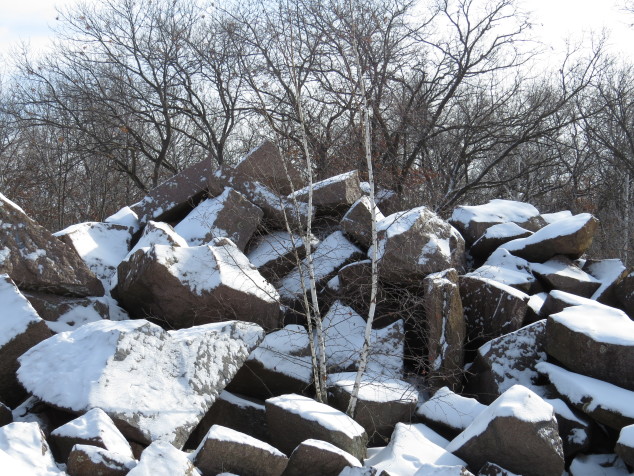
One of the quarries had the spoils blocks neatly stacked along one side, like a child’s wall of wooden blocks. How did they do that? And why were these blocks of rocks so deliberately placed compared to most of the piles?
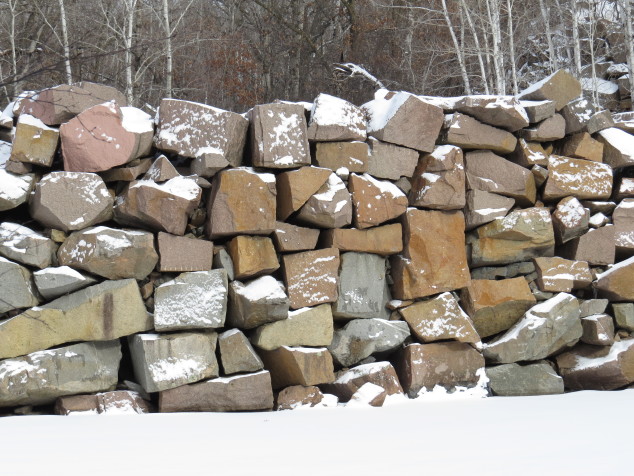
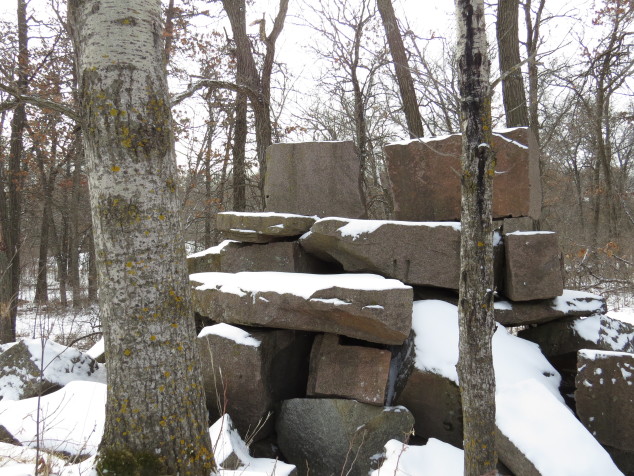
At the other end of the quarry, a sculpture of sorts was assembled. What an artist that quarrier was!
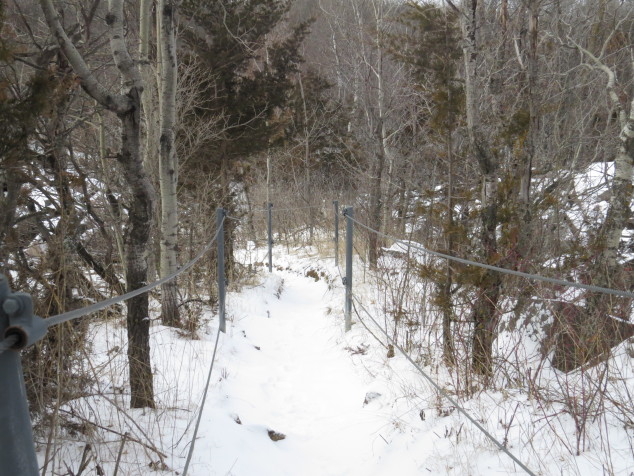
We hiked toward the place on the map labeled ‘Overlook.’ The trail was steep and snow-covered, so we were glad to have the cables running on either side as handholds.
From the platform at the top, we could see the oak and aspen woods, the prairie, and the wetland below us.
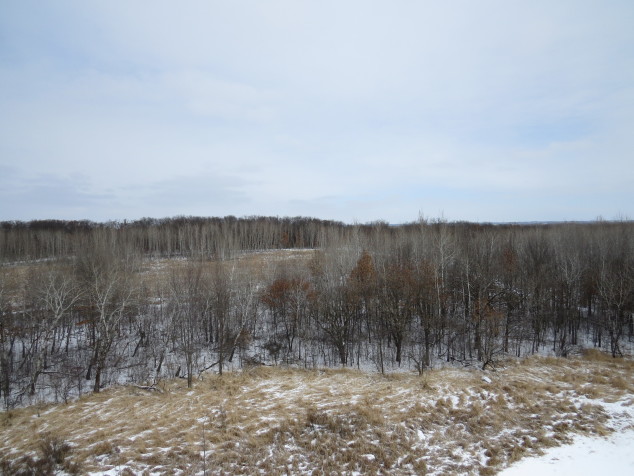
Then I realized the overlook platform was on top of one of the huge grout piles!
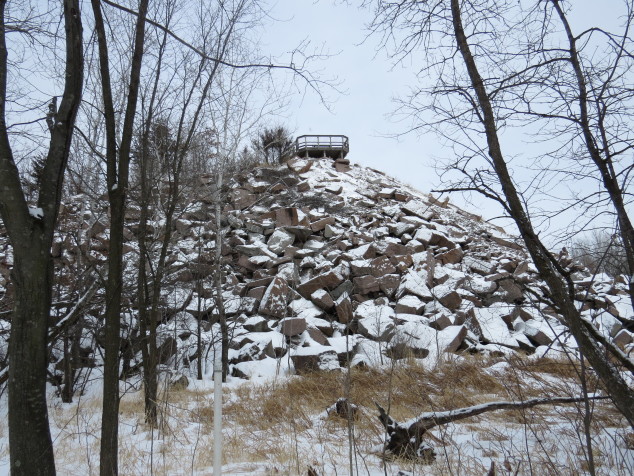
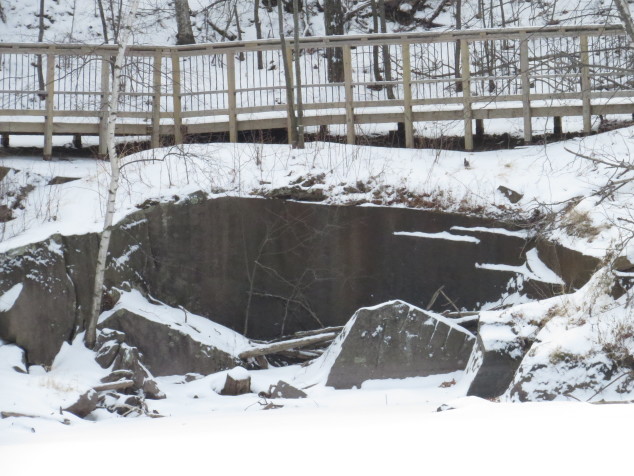
The large, deep swim quarry had a path beside this mountain of spoils blocks which led to a bridge that guided the brave swimmers to the jumping rock.
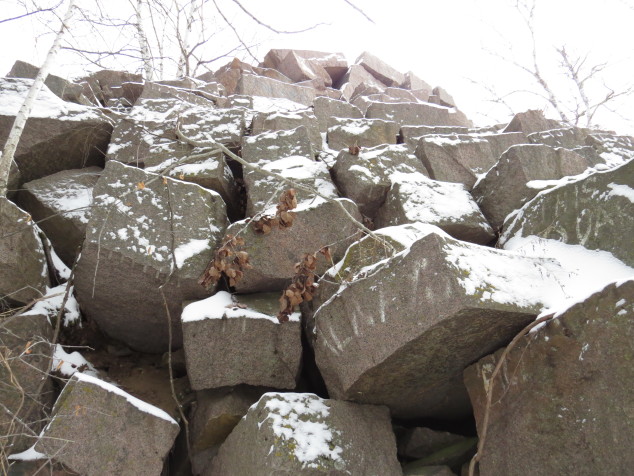
What courage it takes to jump from such a safe place into the unknown!
We like to think we plan our lives and control the routes we take, but in reality Life orchestrates our journey. I started back to school with such energy, ready to climb whatever mountain I had to in order to reach my goal. But the granite-like weight of the past and the slippery, uncertain path of my endeavor sank my soul into the depths. I didn’t jump willingly into that dark water. Stars of Light that didn’t have a clue about what was happening to me, gave me the strength to go forward. The Great Artist guided me across the bridge of love to an unexpected place high on the rubble pile–back to Myself, and once again, I can see the future.
Many thanks to my Animal Science Stars of Light who also love the smell of cedar shavings and animals: Gina, Chaundra, Heidi, Chanda, Matt, Kristy, Earl, Tanya, and Josh.
Do It In the Quarry
A cold weekend hike at Quarry Park and Nature Preserve challenged my physical capacity to stay warm, my photographic skills with bright, bright snow and dark rocks, and my Wheel of Fortune skills when I looked back over my pictures.
Quarry Park is now owned by the Stearns County Park System. It was an active quarry starting in the early 20th century when St. Cloud Red Granite was discovered there. When quarrying stopped in the mid 1950’s, the land began to return to its more natural state. The 684-acre park has twenty quarries of various sizes, oak and aspen woodlands, open prairies, and wetlands.
But getting back to my Wheel of Fortune skills….The sun and snow were bright when I was snapping pictures, so at the time, I didn’t even see the worn graffiti on the rock. When I first looked at the picture, I didn’t pay much attention to it, but then it caught my curiosity. Well, the bottom word has to be Quarry and that’s definitely In and the first word looks like Do and the second word starts with an I….Do It In the Quarry! Oh! Well, I thought, I certainly can’t use that picture!
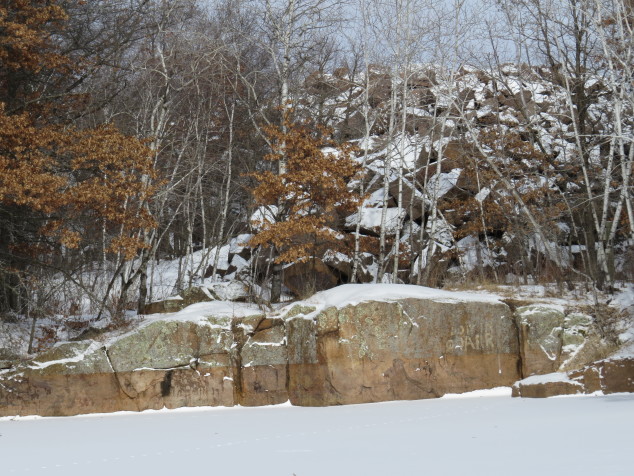
I suspect the graffiti writer meant to say what some of us are thinking, and there are probably thousands of nooks and crannies for such activity in the park. But the more I thought about it, the more I realized that it may be the perfect tagline for what this park has to offer!
Do hiking in the Quarry! Or mountain biking or picnicking. Trails throughout the park wander through woods and prairies from one quarry to the next. You can pack in a picnic and dine beside one of the beautiful quarries or circle the whole park on a mountain bike trail.
Do rock climbing in the Quarry! Quarry #17 has been mapped and graded by local climbers. Free permits are required to get to the restricted area to climb this granite wall.
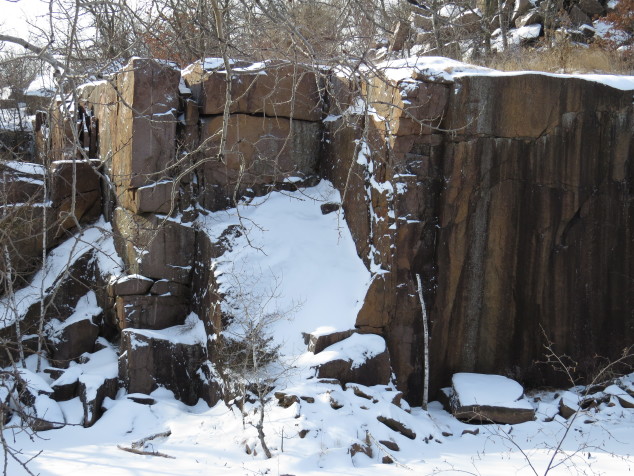
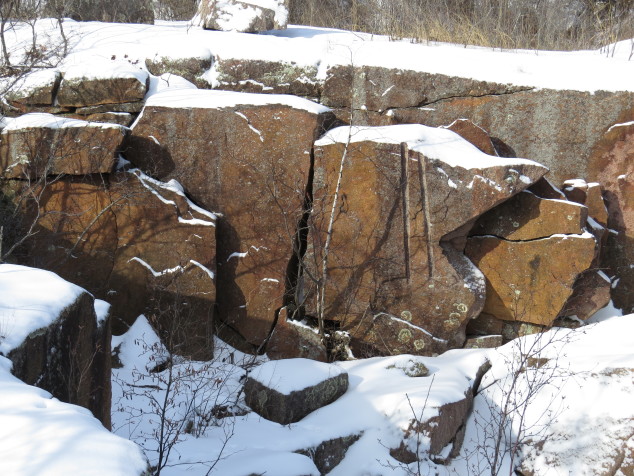
My favorite part of Quarry #17 is the chunk of granite with the drill holes that looks like a map of the state of Minnesota.
Do scuba diving in the Quarry! Most all the quarries have water in them–and now ice, of course. Four of the larger quarries are designated for scuba diving, including Quarry #13. Certified divers, along with a buddy and permits, can dive at their own risk because of ‘various underwater hazards.’ This quarry has several vehicles in the deeper area of 39 feet!
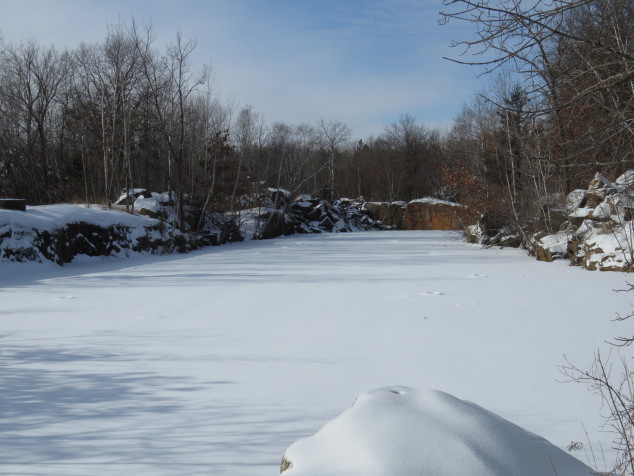
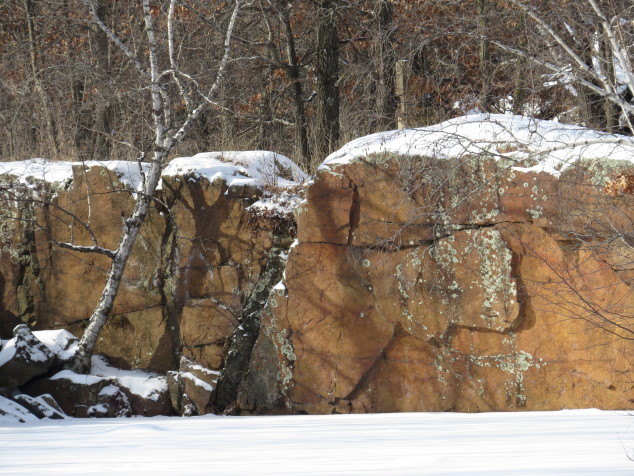
Do swimming in the Quarry! This one sort of gives me the heebie-jeebies. Quarry#2 is the swimming hole. It is the largest and deepest quarry at 116 feet. Yikes! To make things scarier, kids jump off the large rock wall into the blue-black water.
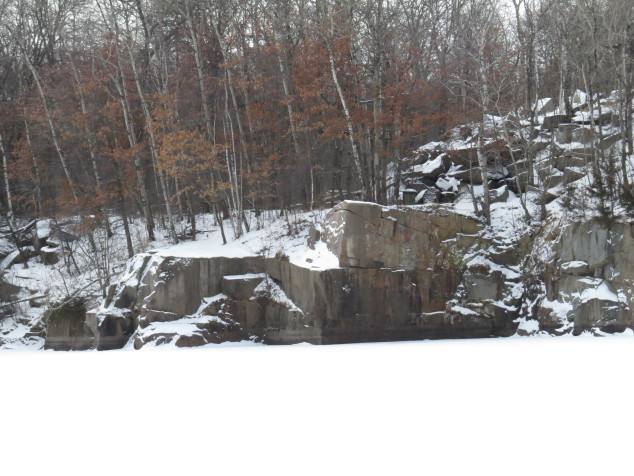
The ‘spoils’ are the quarried rock remnants, and since this quarry is so large and deep, the spoils piles are tall and wide.
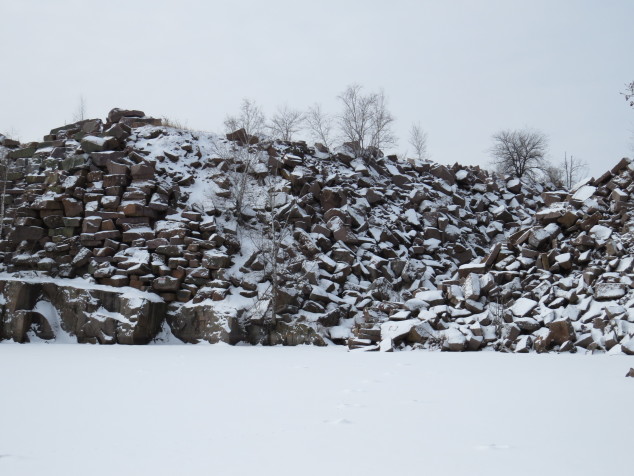
They are constructing a new swimming hole in the Do It Quarry #11, complete with sandy beach.
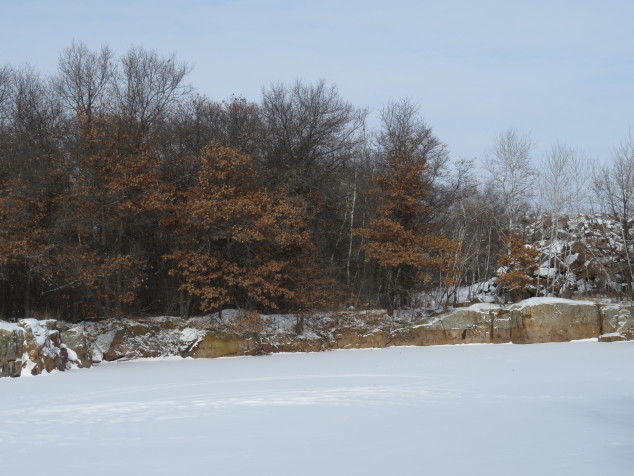
Do fishing in the Quarry! Eight of the quarries permit fishing and have been stocked with trout. Just watch out for those tree branches when you cast!
In the winter, do cross-country skiing, snowshoeing, and fat tire bicycling! The cross-country ski trail is groomed and lit (white poles) for after-dark skiing.
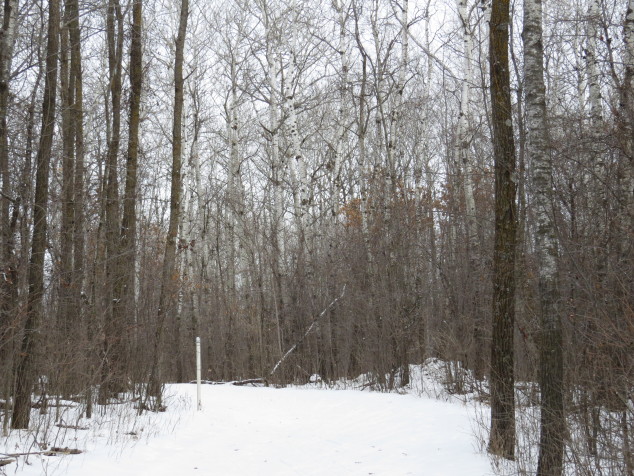
Sixty years ago, when quarrying ceased, I’m sure most people considered this area a wasteland. The quarry holes, spoils piles, and destruction of natural resources by equipment devastated the land. The abandoned quarry returned to Mother Nature, and ever so slowly, she transformed the devastation into a diamond. The forests grew and enveloped the quarries and grout piles. Water filled the quarries, and wildlife returned. Willows, dogwoods, juneberries, wild roses, bittersweet, and gooseberries were restored to the land. Mother Nature’s inherent power to Do It In the Quarry restored the man-made wreckage to a natural wonder once again.
An advertisement for Origins Plantscription serum said, “Life puts the wrinkles in. Let Nature help take them out.” I love this! Life can be hard and messy at times, and it can take a toll on our physical and emotional self. Just like Mother Nature restored Quarry Park to a diamond, never underestimate the healing and restorative power of Nature to help take the wrinkles out of your life.
Two Good Weekend Surprises
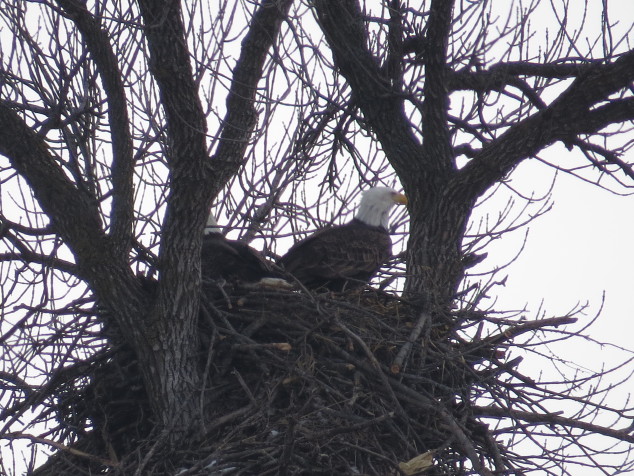
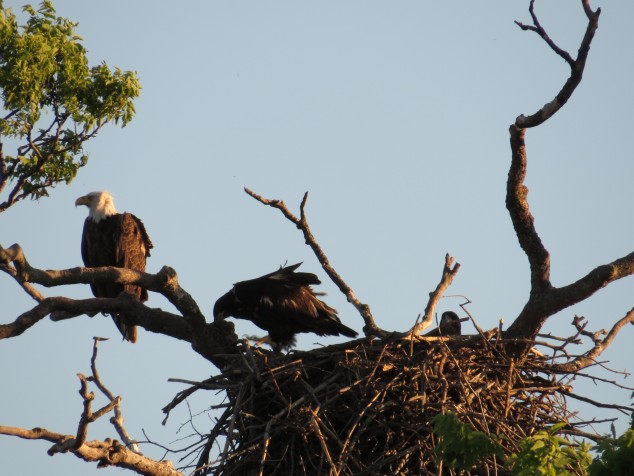
The first good surprise was a visit from my Mom. She called after lunch on Friday and asked if we had plans for the weekend. With nice weather in the forecast, she hit the road and was here by suppertime! On Saturday, we drove to Eagle Park to check on the raptors–no eagles in sight. A couple of hours later we checked again and found both sitting in the tree.

Chris walked down to the river as Mom and I started around the eagle tree trail. Soon the male flew toward the river. When Chris caught up to us, he said he had scared up a flock of pigeons from under the bridge. From his vantage point in the tree, the male probably saw the pigeons fly up and hoped to catch a meal. The female watched as we walked the trail.
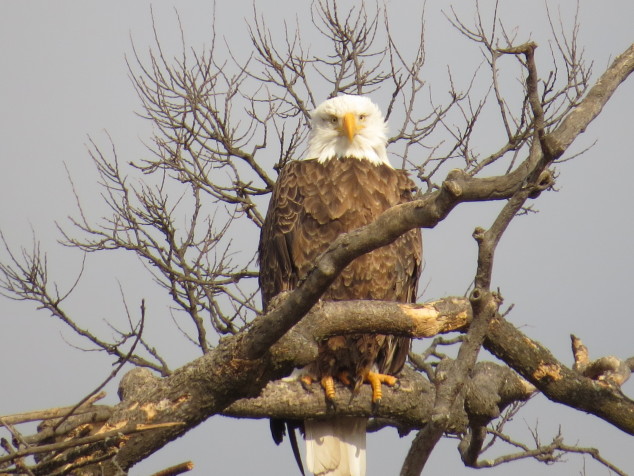
We hiked the circular path around her tree, getting a look at her from all angles.
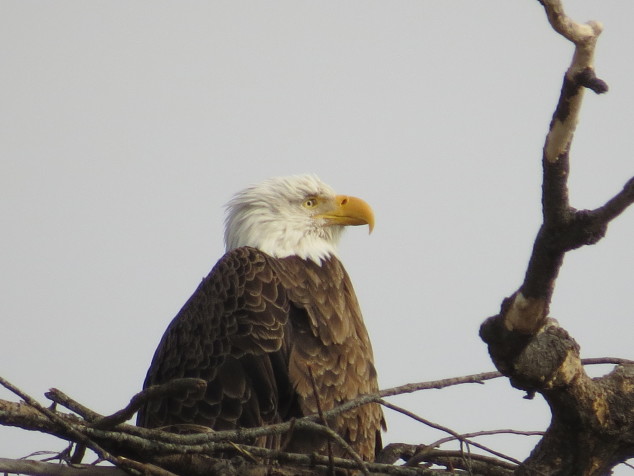
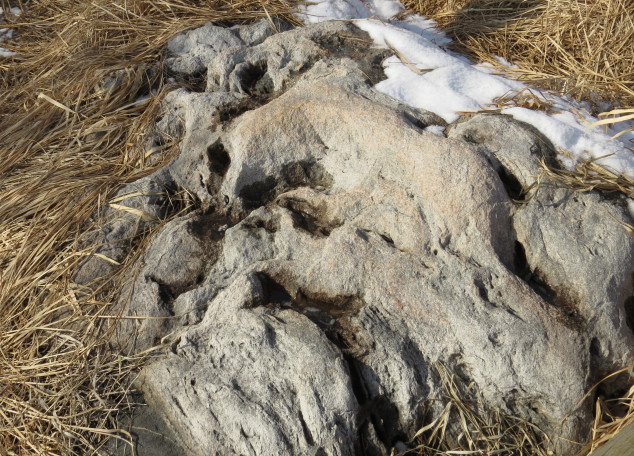
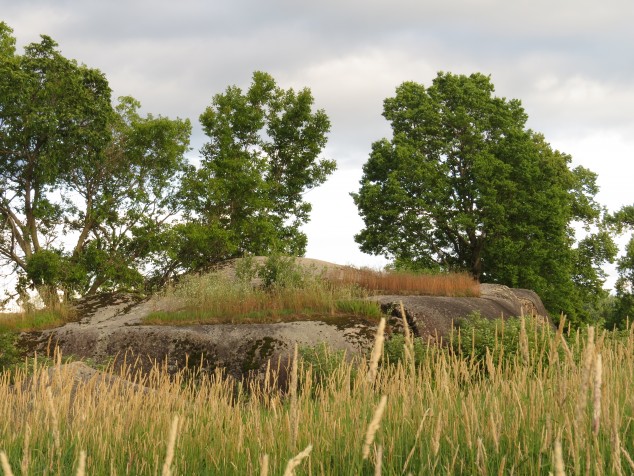
Mom was surprised by the huge granite boulders that were scattered throughout the park.
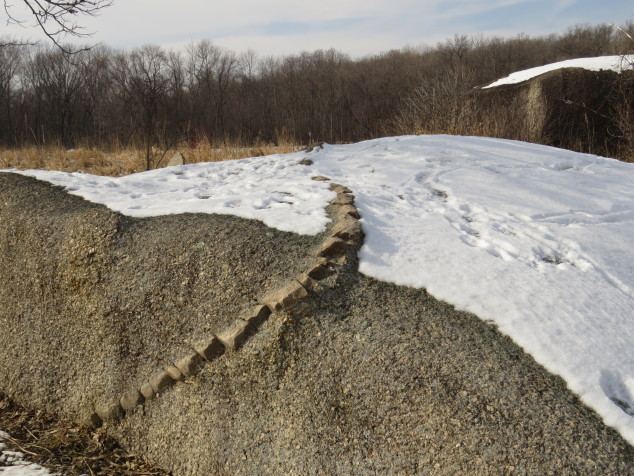
One of the rocks was called Morton Gneiss, estimated to be about 3.5 million years old–the oldest type of rock in the United States. It is normally found in southwest Minnesota, so how this rock got here was a ‘geological puzzle!’
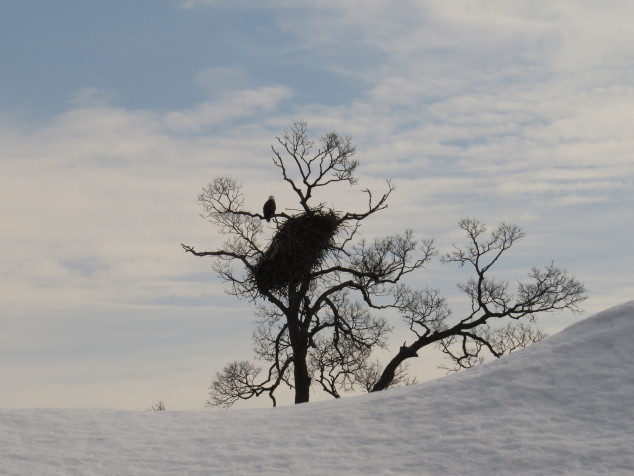
I think the eagle tree and nest are an anatomical puzzle! How does the tree hold such a huge nest? And how do the eagles engineer such a marvel?
After leaving Eagle Park, we drove along Rockville County Park road and found the second good surprise of the weekend–another eagle’s nest! It’s about a mile away from the first nest and is not as large. We had driven by it before, but with the leaves on the trees, we had not noticed it.
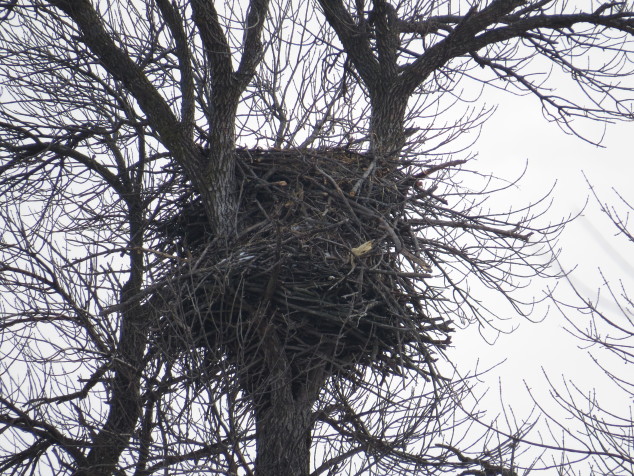
As I was trying to focus in on the nest and get a picture, an eagle flew in with a rabbit or something dangling from his talons. Chris and Mom saw it, but I missed it! We know the nest has a mated pair, and I’m really excited to watch the raising of eaglets in two different nests!
(Watch Minnesota DNR’s live webcam of an eagle’s nest in the Twin Cities area.)
A beautiful, relatively warm weekend in the first part of February is certainly a nice surprise, but this one was made even better with a visit from my Mom. Both of us love the outdoors, and almost every visit includes some sort of walk or hike in Nature, whether she comes to Minnesota or I go to South Dakota. The unexpected in Life can affect us in a myriad of ways, depending on the event, our previous expectations, our stage in life, and the openness of our heart. My weekend was totally different from what I expected but in a good way! I’m grateful for a healthy Mom to hike with, a loving and supportive husband, the old and new in Life, and good surprises!
Leap of Faith
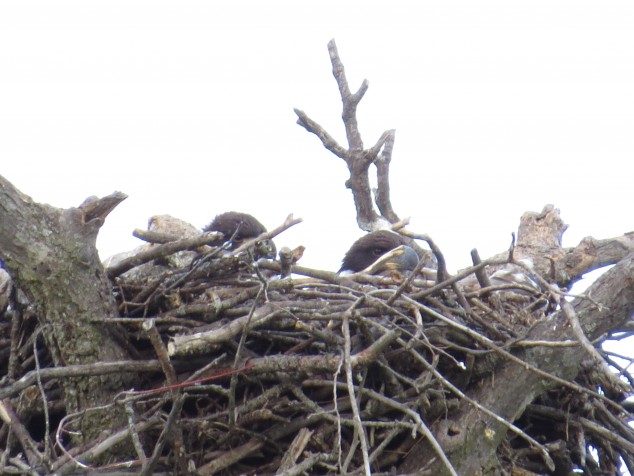
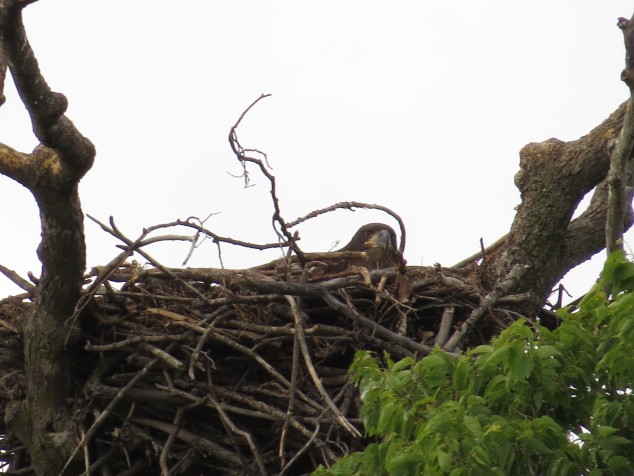
We checked in at Eagle Park to see if the young eaglets had ‘fledged’ or flown from the nest. At the beginning of last week, we went on a cool, windy day. The two eaglets were hunkered down in the nest with only their heads showing, and that’s where they stayed the entire time we were there. We didn’t see either of the parents.
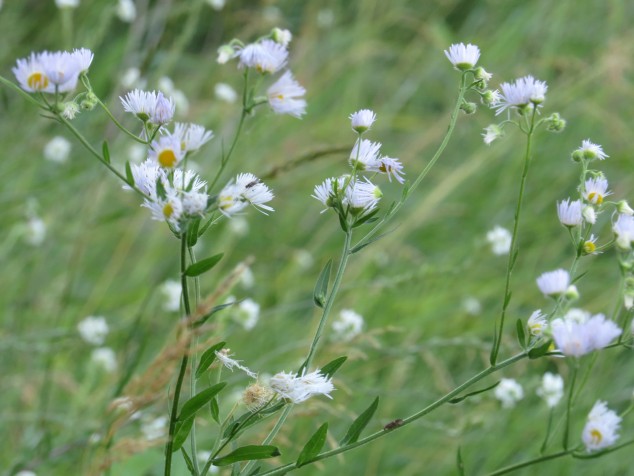
So we wandered around the park trail looking at wildflowers, grasses, and rocks. One of my favorite wildflowers is the delicate Daisy fleabane. This common, understated member of the Sunflower family is so named because of its use to repel fleas. I wonder if the eagles use it in their nest.
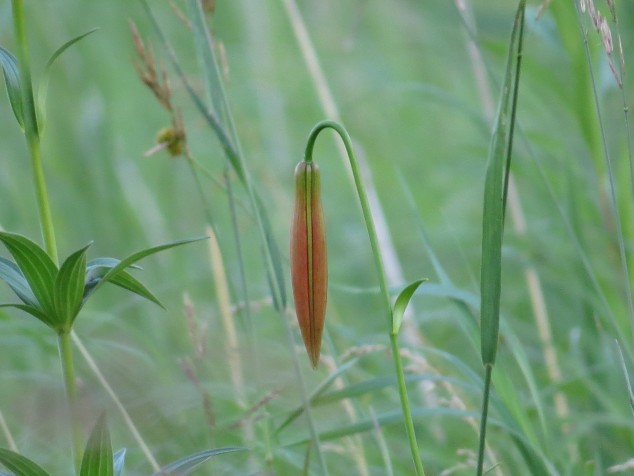
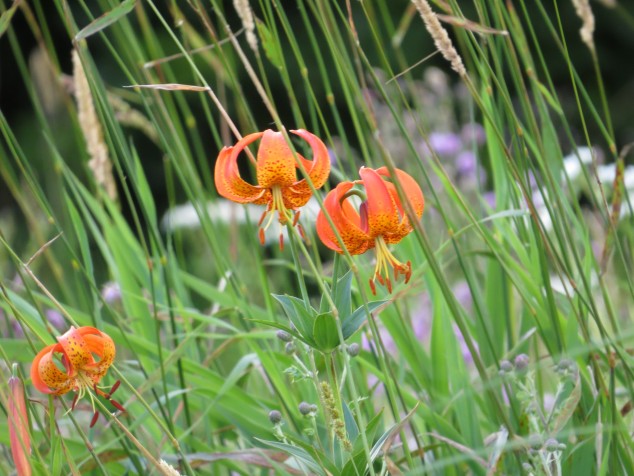
I love the ‘potential’ in a flower bud. The following photo is the bud of a Turk’s-cap lily. The petals unfold and curve back to showcase the extended stamens and showy anthers. Isn’t it amazing that the bud contains all of that!
The Butterfly weed was still looking spectacular, also.

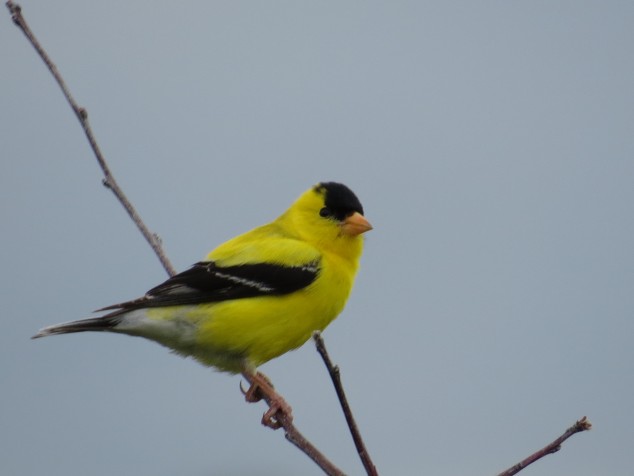
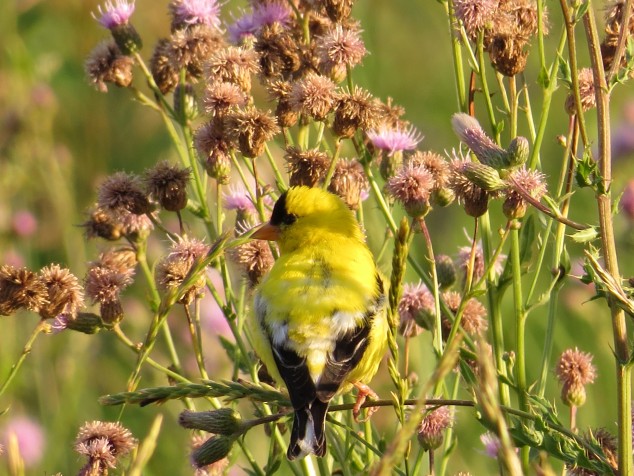
We returned to the park last evening. The Goldfinches were flying from the bare branches of a crabapple tree to the large sweeps of thistles that were going to seed.
And who was in the nest this time?
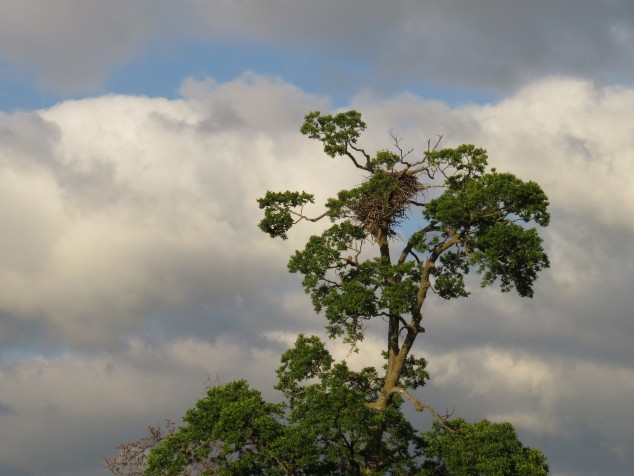
We found only one eaglet in the nest. He stayed there for most of the time we hiked around the trail.
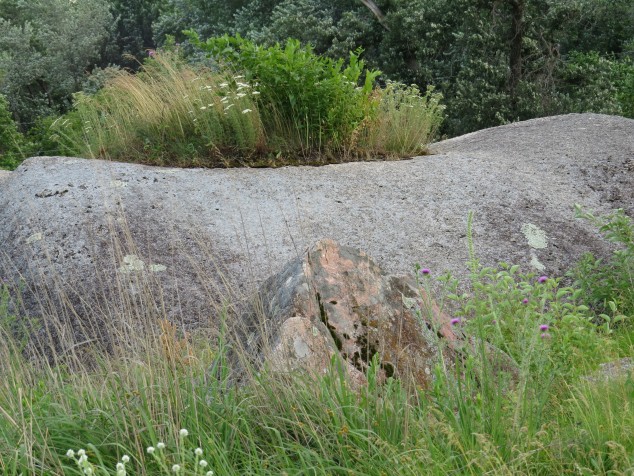
I like this pink granite boulder and the tuft of wildflowers and grasses that are growing on the top of it.
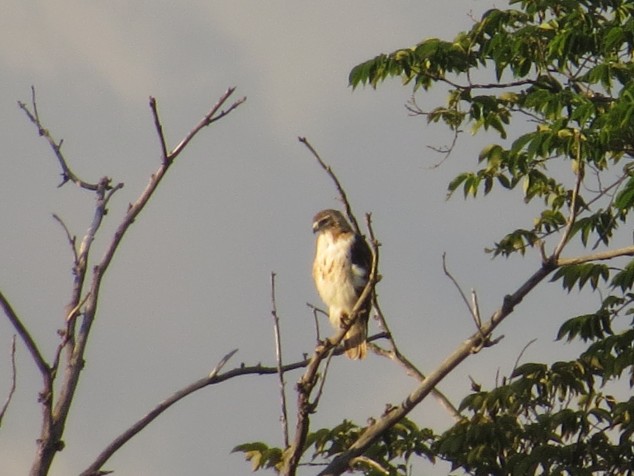
We saw a Red-tailed hawk scanning the ground for glimpses of movement that might mean a tasty meal.
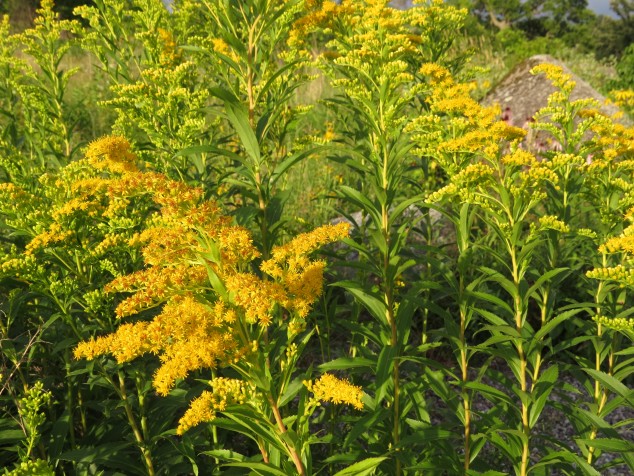
The goldenrod was blooming–is it trying to move us out of summer already?!
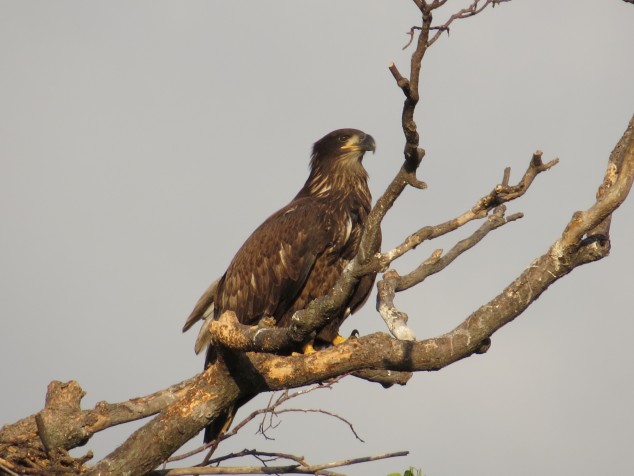
As we were talking about the flowers, I saw the young eagle jump out of the nest onto a branch.
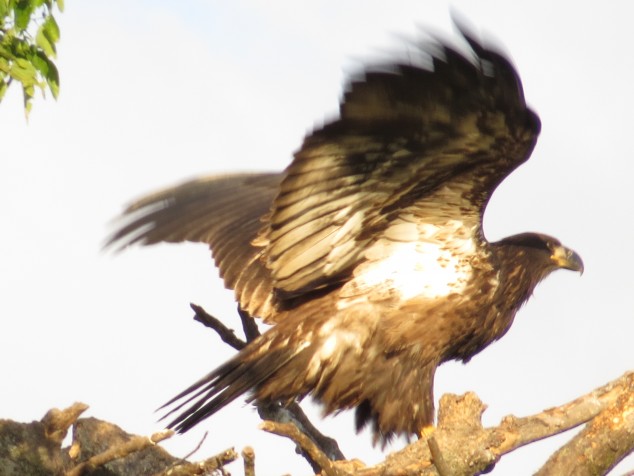
And then he lifted his wings, and with a leap of faith he flew away! Just like that!
Not only is the goldenrod pointing us towards fall, but the eagles are also. They will all occupy the nest for a number of weeks more as the young eagles learn about hunting. The parents will continue to bring food back to the nest as the fledglings practice their hunting skills. Then they will begin their solitary life of four or five years to mature and change color before picking out a mate.
The Spring egg holding the potential young eagle. The lily bud holding the glorious Turk’s-cap flower. The flowering thistles holding hundreds of the favored seeds for the Goldfinches. Let’s all take our innate potential and fly!
Eagles Among the Granite and Wildflowers
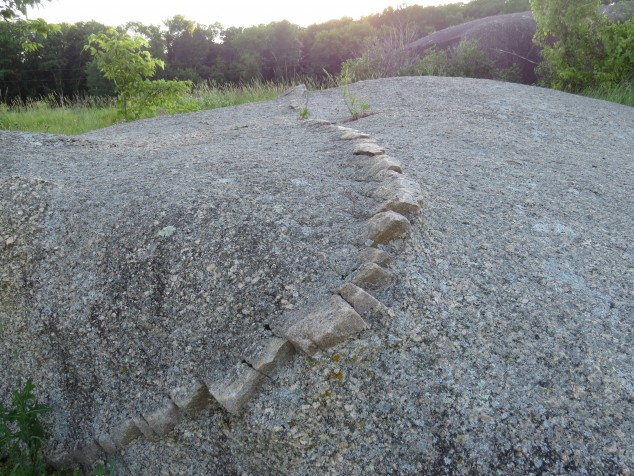
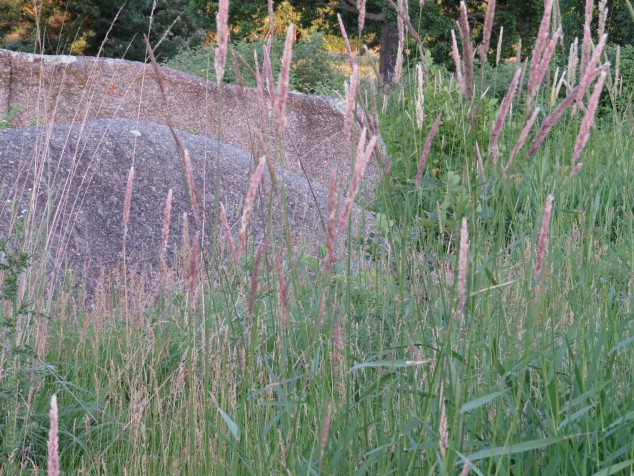
We live in granite country. Quarries–some old and some still productive–are everywhere, and there are a number of granite warehouses within miles of our place. Commercial buildings are sheathed in granite of different hues. Our garden walls and steps are granite, and everywhere a person may want to dig, there will be granite. Eagle Park is strewn with granite boulders called core stones that have surfaced from the granite bedrock. The igneous rock in this area is made up of clear to gray quartz, black mica, with pink and white feldspar crystals and is called Rockville Granite. I’ll walk you around the park of granite boulders, eagles and wildflowers.
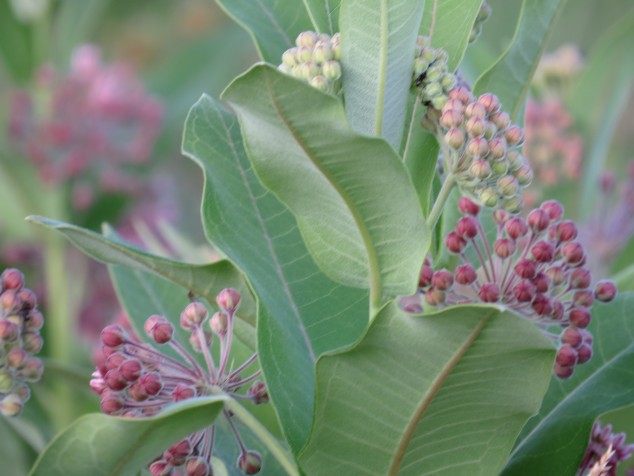
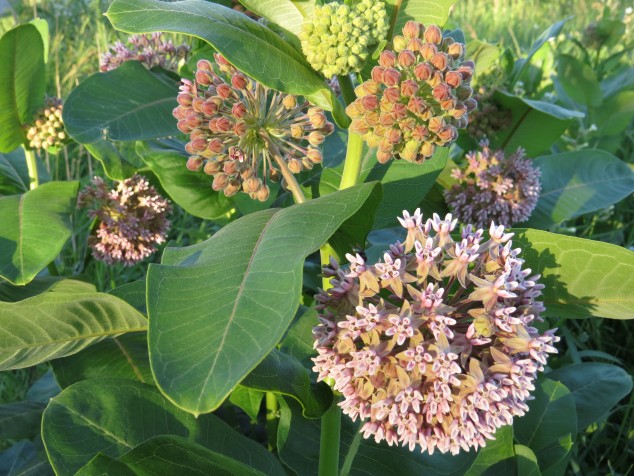
The milkweed was abundant, and each ball of buds or blooms was a shade of candy-confection pink. No wonder the monarch butterflies love this plant!
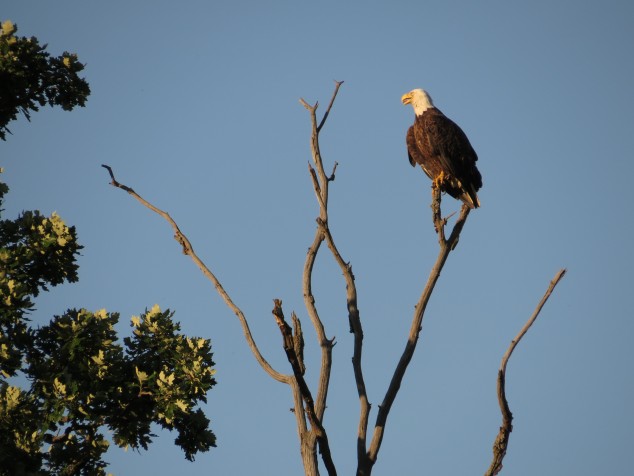
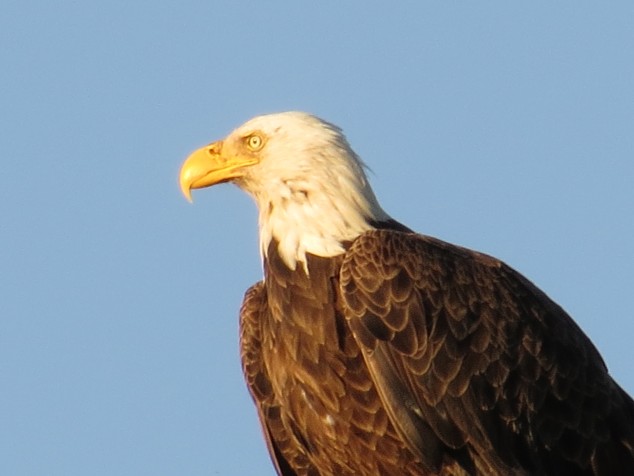
While I was looking at flowers, Chris spotted an eagle in the tree ahead of us. It is hard to differentiate the male and female bald eagle, especially when they are not side by side. The female is larger and has a deeper beak. The male generally has a sleeker head, so by comparing the pictures from the last post, I would say this is father eagle! He flew from this perch overlooking the floodplain back to the nest in the gnarled hackberry tree in the center of the park.
The path circles the park, skirting the immense granite boulders and winding past giant oak trees.
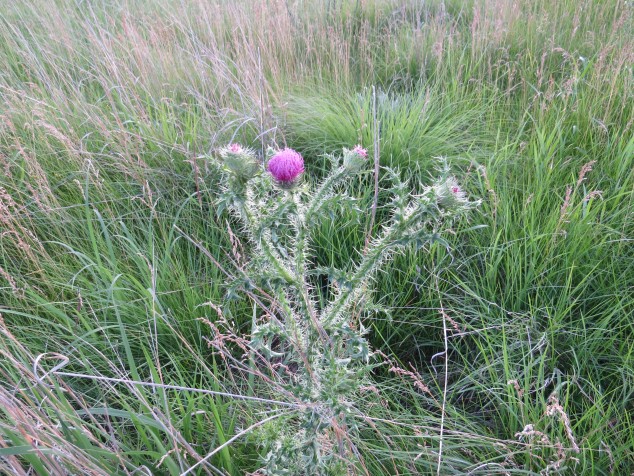
Thistles have encroached upon the park from an adjacent untended pasture, living side by side with the prairie grasses and wildflowers. The prolific seeders take over more ground year after year.
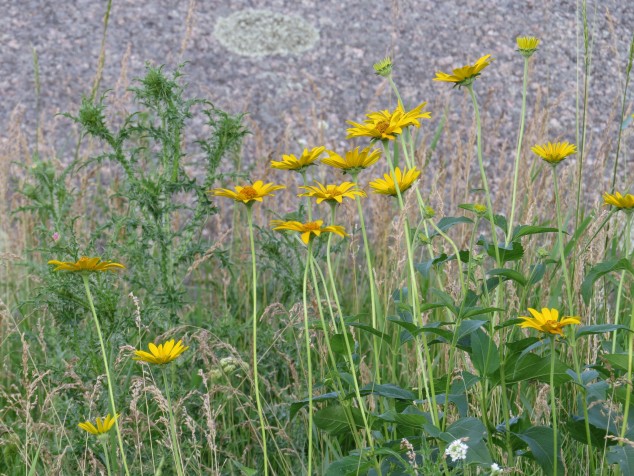
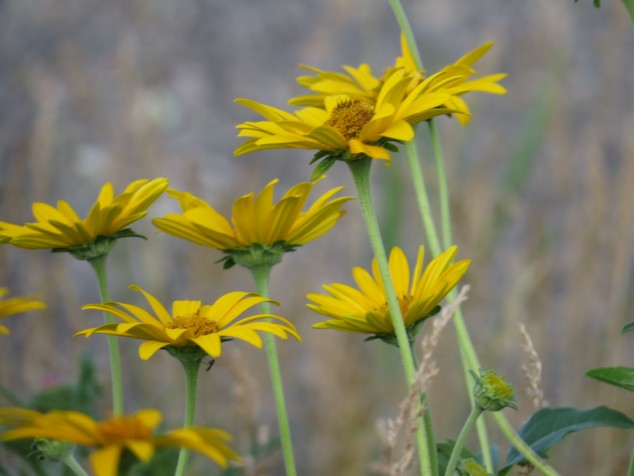
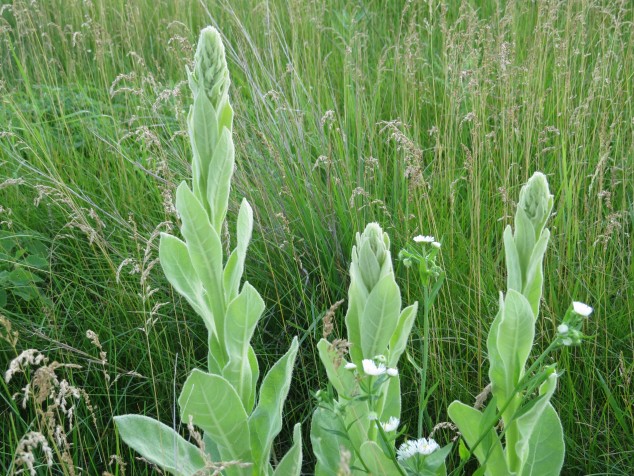
A trio of fuzzy-leaved mullein stands poised, ready to bloom.
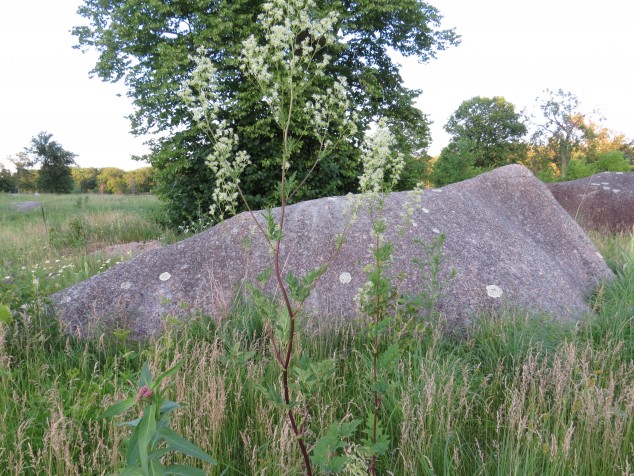
Meadow rue and prairie phlox adorn the granite.
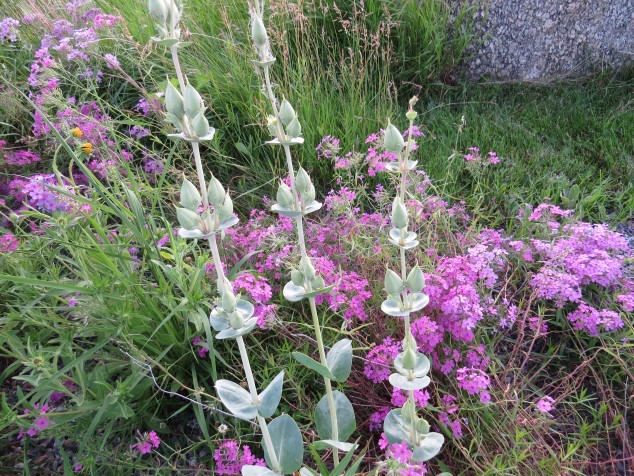
Leadplant and butterfly weed brighten the landscape.
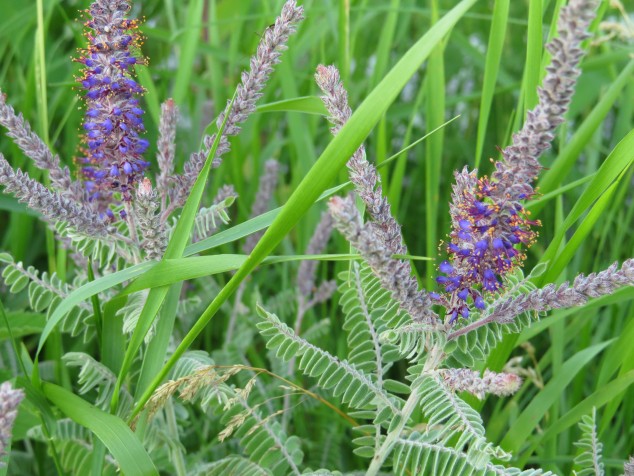
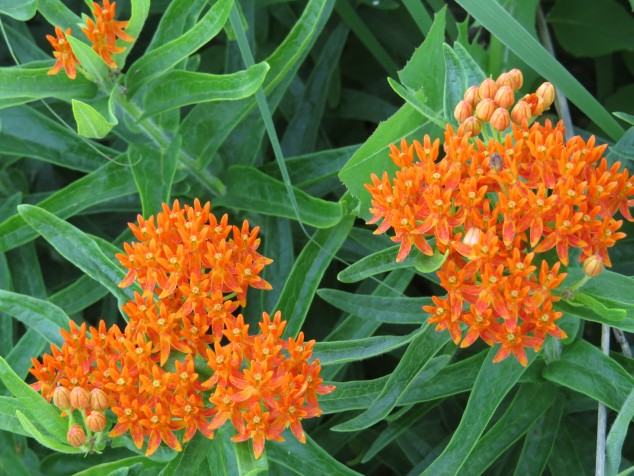
Blue vervain and purple coneflower have prominent seed heads, insuring the propagation of their kind for another year.
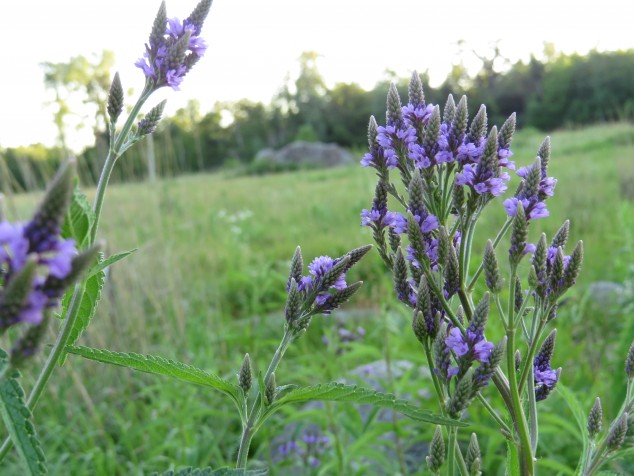
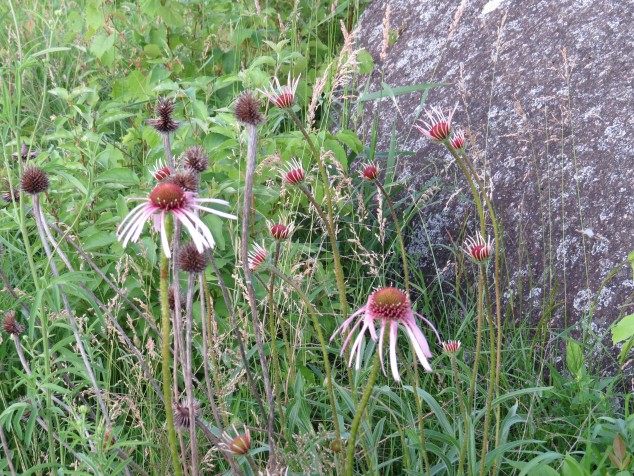
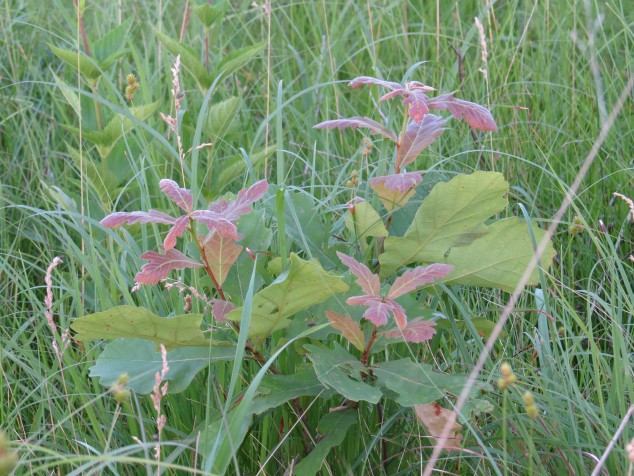
And a lovely young oak puts on its yearly coat of new growth.
The granite has been in this place for eons. This pair of eagles has been here for ten years now. They have adapted to the circling of curious spectators as they raise their eaglets in their home high above the grasses, thistles, and wildflowers. We all take our place in the history of the eons, adapting to the changes that come our way. We learn from the hard times and the thorny issues that invade the beauty of our lives. We need to feed upon the candy-confection beauty of the world and let the seeds of that beauty–love, compassion, kindness, faith and hope–spread beyond our own selves. We need to view the world from that high home in the sky.