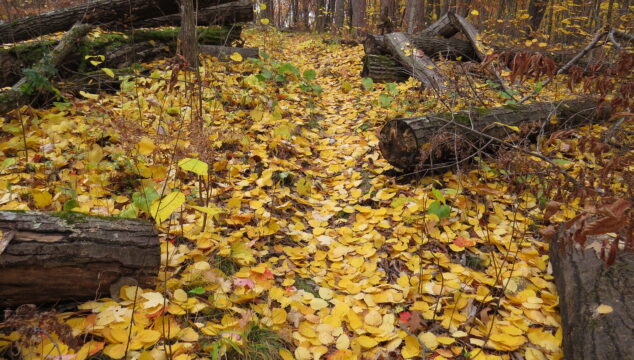
Come walk with me in the peak Autumn beauty of the Northwoods. To say that I love this time of year is an understatement. Most everyone can appreciate the colorful falling leaves---it reveals the 'true self' of a tree when its leaves are no longer producing chlorophyll. Their true colors are revealed, and there is something simple … [Read More...]
The Ancient Way
I’ve known rivers: I’ve known rivers ancient as the world and older than the flow of human blood in human veins. My soul has grown deep like the rivers. –Langston Hughes
The third leg of our exploration of the Saint Croix River at Interstate State Park was confined to a smaller area called the Glacial Potholes, adjacent to the turbulent rapids of the Dalles.
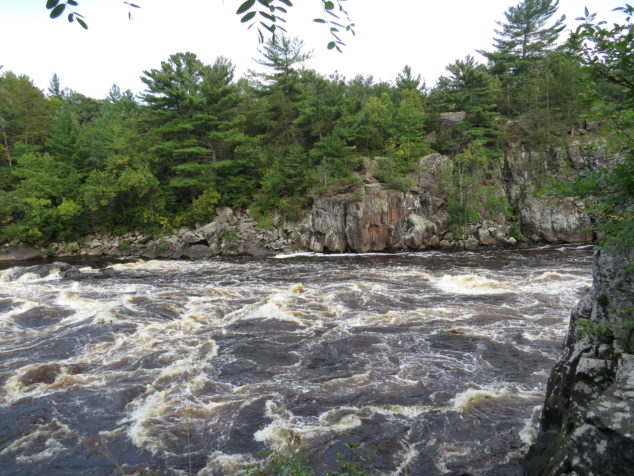
This area is a geologist’s delight—it contains more potholes in a smaller area than any other place in the world. The word pothole reminds most of us of those annoying holes in the road at the end of winter, but these potholes were carved by the ancient Glacial River St. Croix into the even more ancient volcanic basalt rocks of the Dalles. When the Glacial Lake Duluth melted and drained away, tremendous amounts of water flowed down the Glacial River St. Croix cutting through the sandstone rock that had been deposited above the basalt during the shallow sea era. The speed and turbulence of the water and sandstone sediment carved the potholes into the hard, volcanic rock. Whirlpools were created as the water pummeled against large rocks then swirled around behind it, grinding cylindrical holes into the basalt.
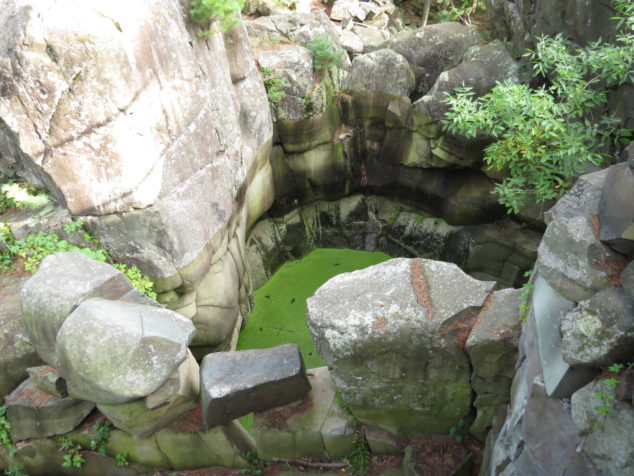
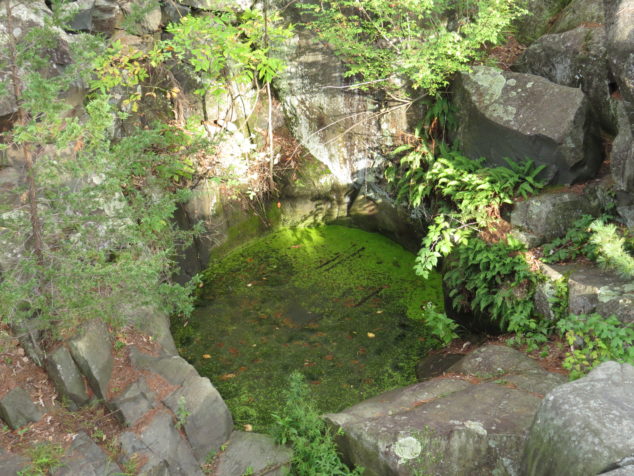
Some of the potholes have been excavated, including one called the Bottomless Pit that is nearly sixty feet deep. Others are assumed to be even deeper. Grindstones of various sizes have been found in the bottom of the pits. Sediment and trash are removed from the potholes at certain times of the year.
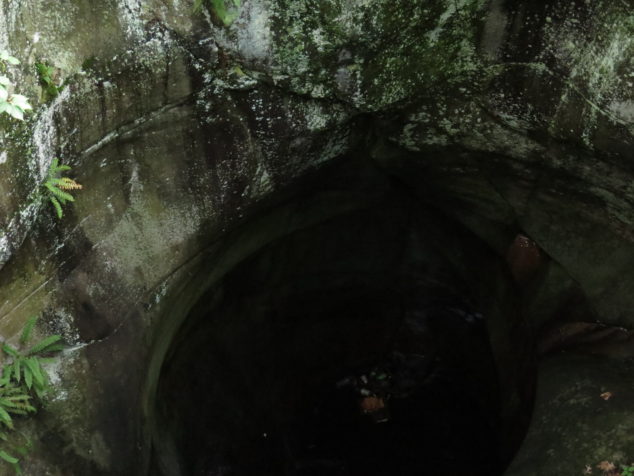
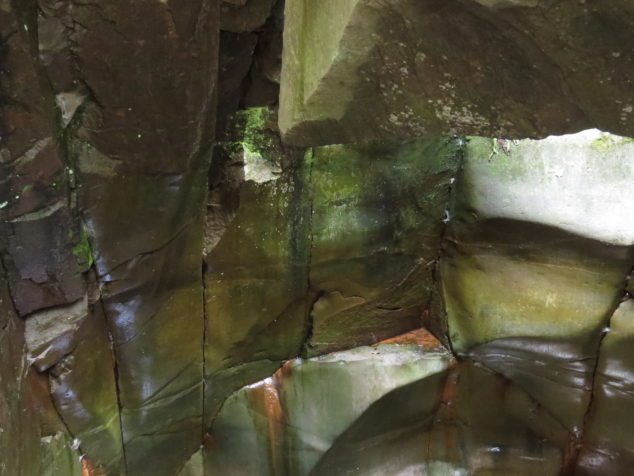
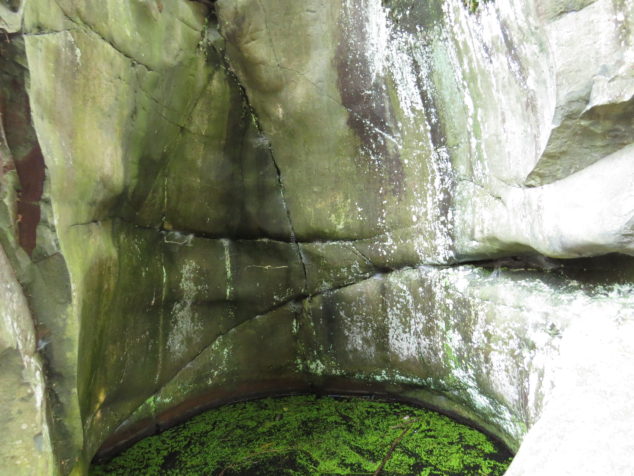
Paths and bridges wove their way through the multi-level pothole area, and people climbed rocks and discovered yet another of the four hundred or so potholes. Baby potholes lined a high rocky area with trees—small bowls in the rock, holding water, pine needles, and duckweed.
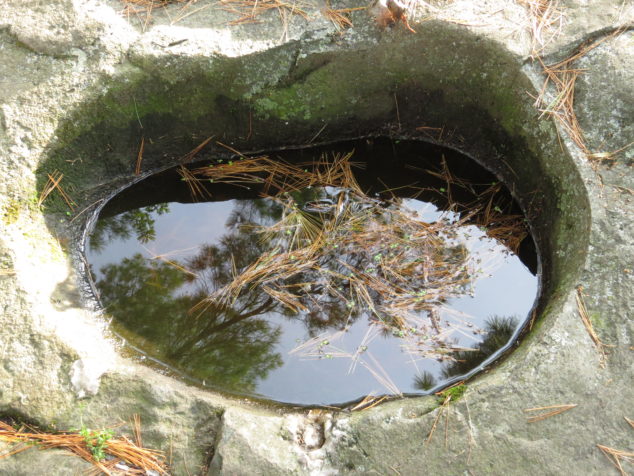
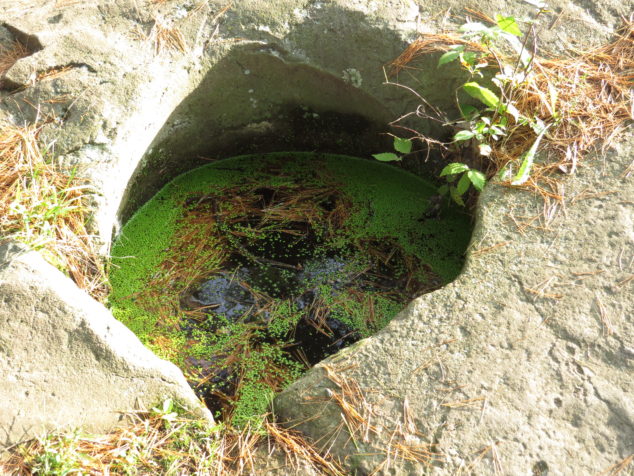
Water and rock—the ancient carver and the medium that it worked on.
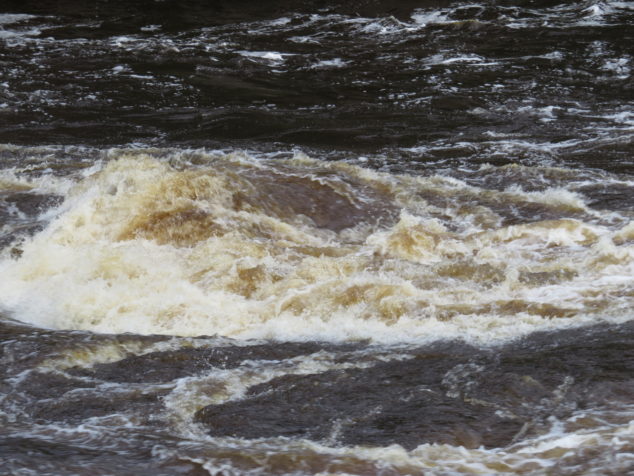
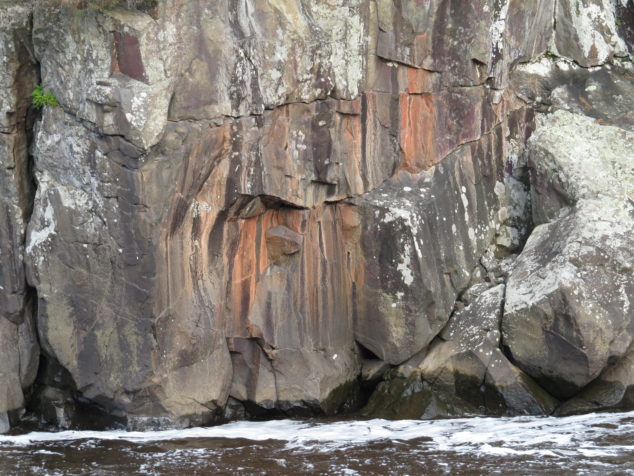
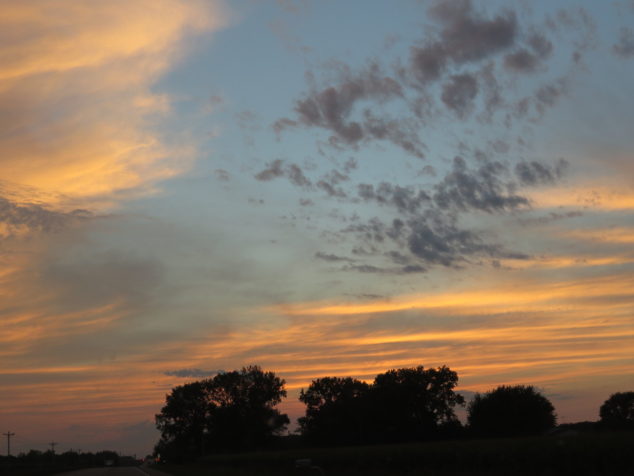
My weary legs called an end to our Saint Croix exploring, and as we drove west towards home, the sky mirrored some of the colors we had seen in the rocks and water of the Dalles region.
It is awe-inspiring to realize the ground we walked on was once an ancient lava flow. It was humbling to realize the land was once covered in an ancient sea. Even the relatively ‘young’ glaciers of ten thousand years ago that melted and carved their way through this area seem ancient in terms of our short lifetimes. Looking at the water and rocks of the Saint Croix River was beautiful in the present time and at face value, but knowing about the geological history deepened the story and beauty of the area. It gave it soul. We each have our own lives in present time and at face value—it can be beautiful or not so great. When we excavate the history of our lives, we begin to know the truth, we have a greater understanding of why things look the way they do in the present, and we get in touch with our souls. There is an unseen, ancient wisdom that flows like a river through our lives—let it expose the beauty.
Don’t Know Much About Geology
My knowledge of geology is simple and child-like–rocks are pretty and interesting; I like to pick them up and take them home. Most every room in our house has rocks in glass Mason jars or lying around on tables or shelves. Some are from Canada, some from Texas, and some from West River South Dakota. I’m pretty sure there are still some in boxes that remain in waiting for the next geological discovery–“I love this rock! I forgot I had it!”
Chris and I traveled west an hour or so to Glacial Lakes State Park to a geological area commonly known as the Leaf Hills. The hills, valleys, and ridges were formed by the last glaciers more than 10,000 years ago. The park has some of the greatest depth of glacial till–rocks, gravel, and dirt the glacial ice scraped off as it moved southward, then deposited when the ice retreated.
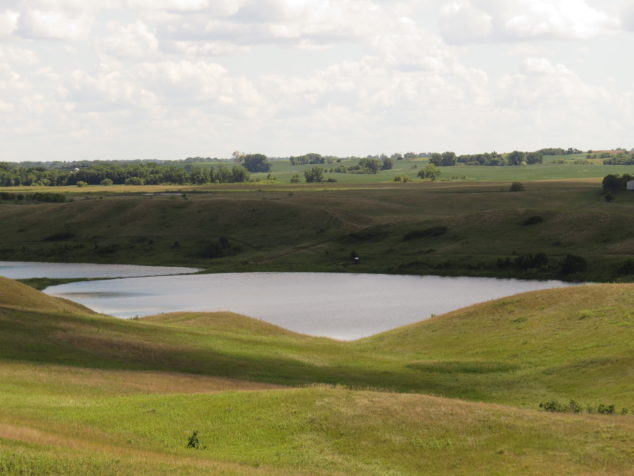
The information provided by the State Park introduced me to geology terms I had never heard before: kames, kettles, eskers, moraines, and erratics. “Kames are conical-shaped hills formed by glacial debris deposited by meltwaters flowing into and down holes in the ice mass. A kettle is a depression (which usually becomes a lake or marsh) that formed when a block of ice melts after being separated from the glacier and covered by glacial debris. An esker is a worm-like ridge that forms beneath a glacier as debris-laden meltwater runs under the ice. When the ice melts, the stream bed, formed by the running meltwater, shows up as a winding ridge. End moraines are areas where the leading or “resting” edge of a glacier “dumped” a load of debris that it carried like a conveyer belt transports material, or where two lobes of advancing ice cross over each other.” And this is my favorite, “An erratic is any boulder carried and deposited by a glacier.” The park contains rocks that have ferrous oxide (iron ore) from northeastern Minnesota and Canada, granite, possibly from the St. Cloud area, and basalt, probably originating from northeast Minnesota. The erratics help trace the movement of the glaciers.
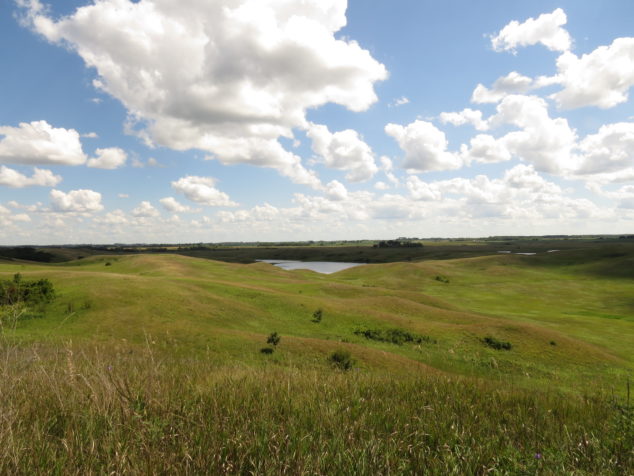
Glacial Lakes State Park is located where the prairie of the west and south meets the hardwood and conifer forests to the east and north. Only about .1 of 1% of the original Minnesota prairie remains, and the park preserves a portion of that native prairie. It has a spring-fed, crystal clear Signalness Lake that is surrounded by oak-covered hills for camping, boating, swimming, and fishing. The park also has a horse camp area and riding trails through the prairie.
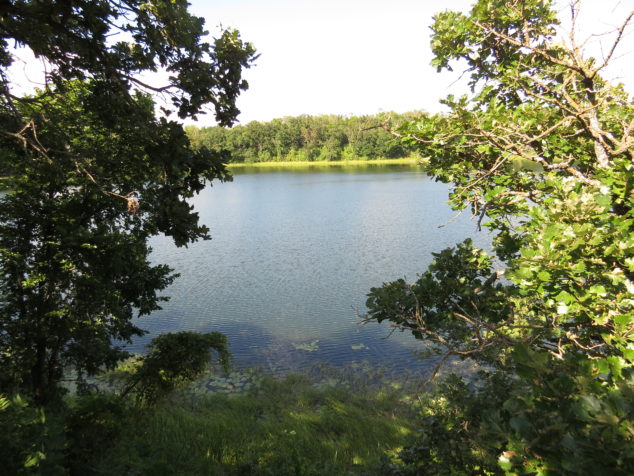
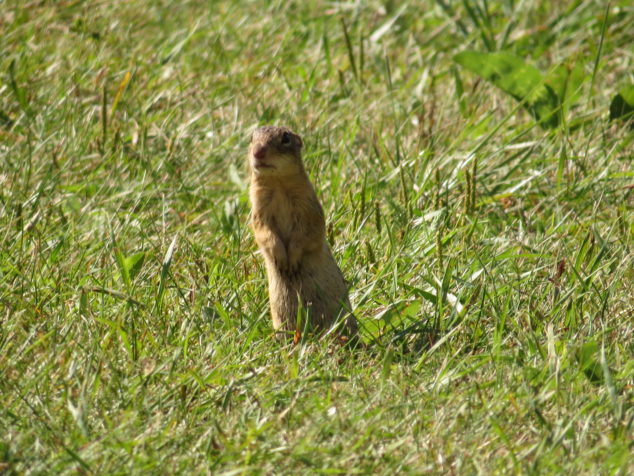
We hiked through mosquito-thick woods and prairie trails to reach the highest point in the park that overlooked the rolling prairie. Our only animal companion was a 13-lined ground squirrel who had a burrow right in the middle of the trail.
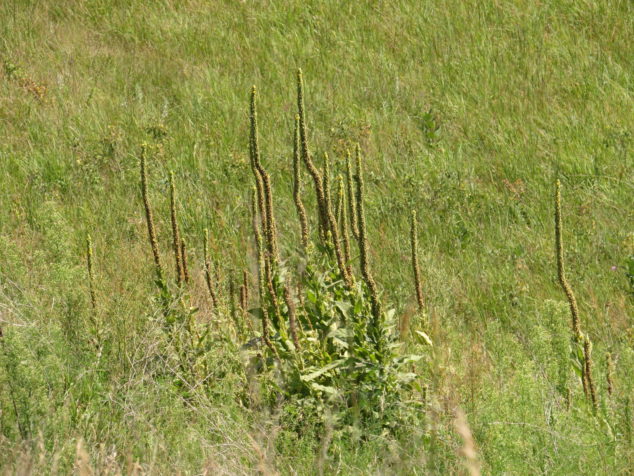
Bent, spiky seedheads of Mullein rose like saguaros of the prairie.
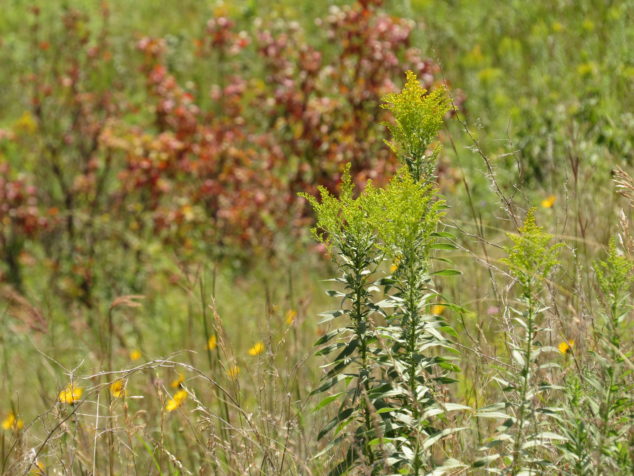
Tall Goldenrod and other late summer wildflowers bloomed on the hillside by the wild plums that were already wearing their fall colors.
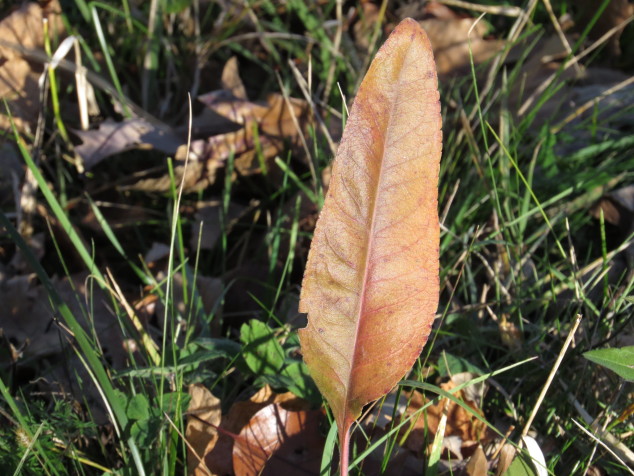
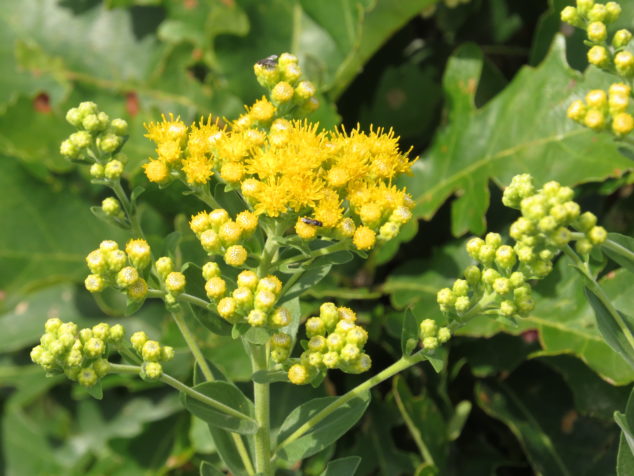
I finally identified the feather-leafed prairie plant I first saw in La Crosse two years ago! (Below is the photo I took then and here’s the link to Great-Grandaddy Cottonwood Tree.)
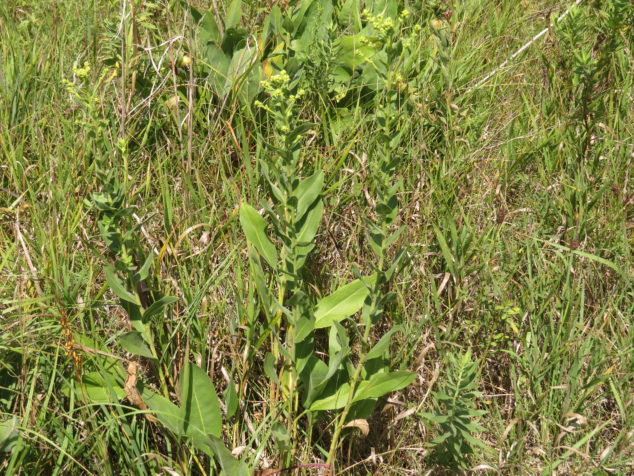
The prairie trail was lined with green leaved versions of the feather-leafed plant that were just beginning to flower. It is called Stiff Goldenrod–tall, rough-leaved, and deep-rooted–one of many Goldenrods blooming at this time of year.
Indiangrass and Big Bluestem bloomed golden-brown and bluish-purple….
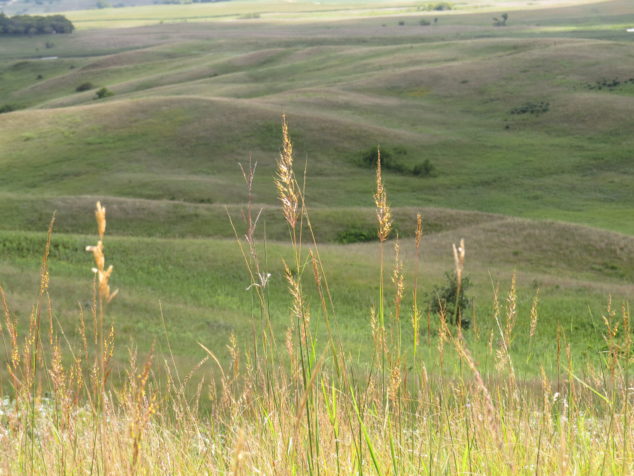
…making a patchwork quilt of colors with the other prairie plants.
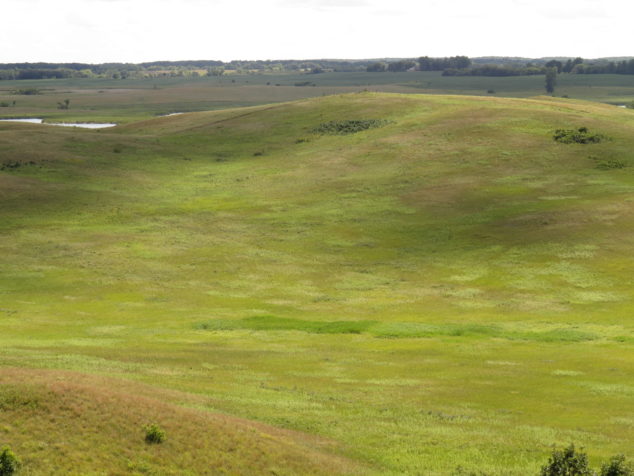
Don’t know much about Geology, but I do know that I love rocks and I love the Prairie. Coming to a place like Glacial Lakes State Park makes one appreciate the enormous history of our beautiful green Earth and realize the teeny-tiny part our lifetimes play in that history. I wish we could all be human erratics–carried and deposited in all areas of our country and world, so that we can trace the movement of the people who stand up for clean water, clean air, and preserved wilderness, forests, and prairie. In so doing, we can make sure that our children’s grandchildren will be able to stand underneath the Great-Grandaddy Cottonwood tree and profess their vows to love and to cherish. What a wonderful world this would be!