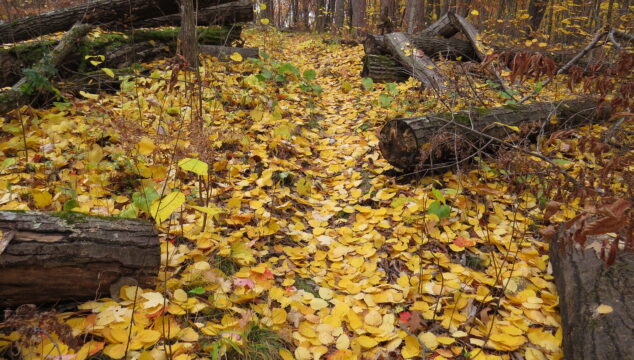
Come walk with me in the peak Autumn beauty of the Northwoods. To say that I love this time of year is an understatement. Most everyone can appreciate the colorful falling leaves---it reveals the 'true self' of a tree when its leaves are no longer producing chlorophyll. Their true colors are revealed, and there is something simple … [Read More...]
Storytellers and Swimmers
I cannot begin to count the number of days in my life that have slid by in a blur. Some were in the self-centered days of early childhood when as children, we concentrate on getting our needs met and learning about the world. Others were in the extreme busyness of going to graduate school while juggling the activities and needs of three kids. Still others were once again in self-centered mode when pain could not be relieved, and my world shrunk down to cocoon-size in an attempt to manage the overwhelm. I have no negative judgement of those times—we do what we have to do in any given situation. But because of plenty of those blurry, constricted times, I am very aware of the times that are sharply outlined, slowly delicious, and wonderfully expansive for my mind-body-spirit freedom.
A good way to discover that mind-body-spirit freedom is to find some water, trees, and wild sky to park yourself in for a few days. The ‘agenda’ becomes play in the water, hike to the hill-top, and watch the moon rise over the trees. The process originates from our senses—noticing what we see, hear, smell, taste, and touch. And all of the feel-good sensing and activities are grounded in our bodies, memories, and soul by sharing them with people we love who love us. It’s a win-win-win.
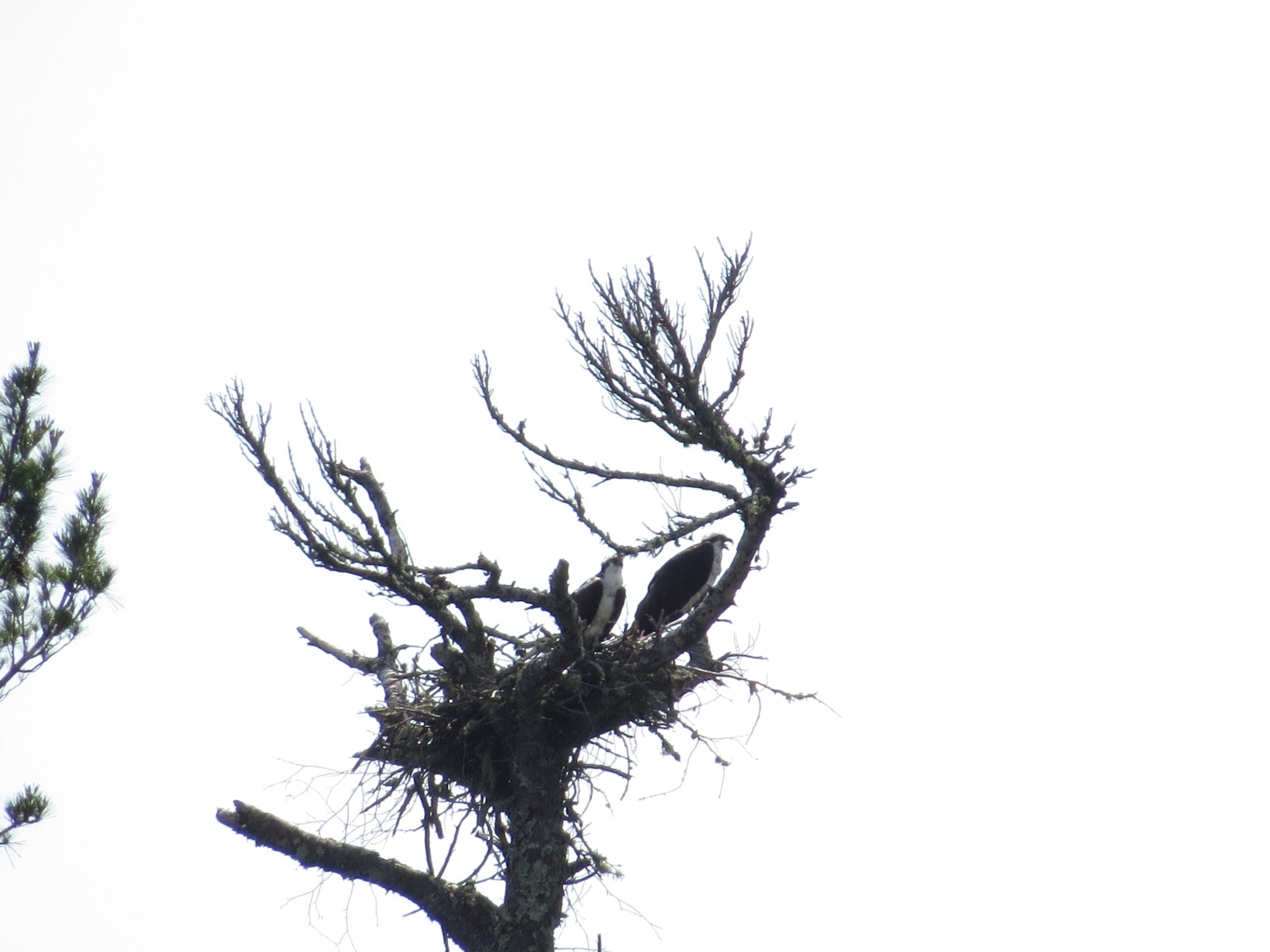
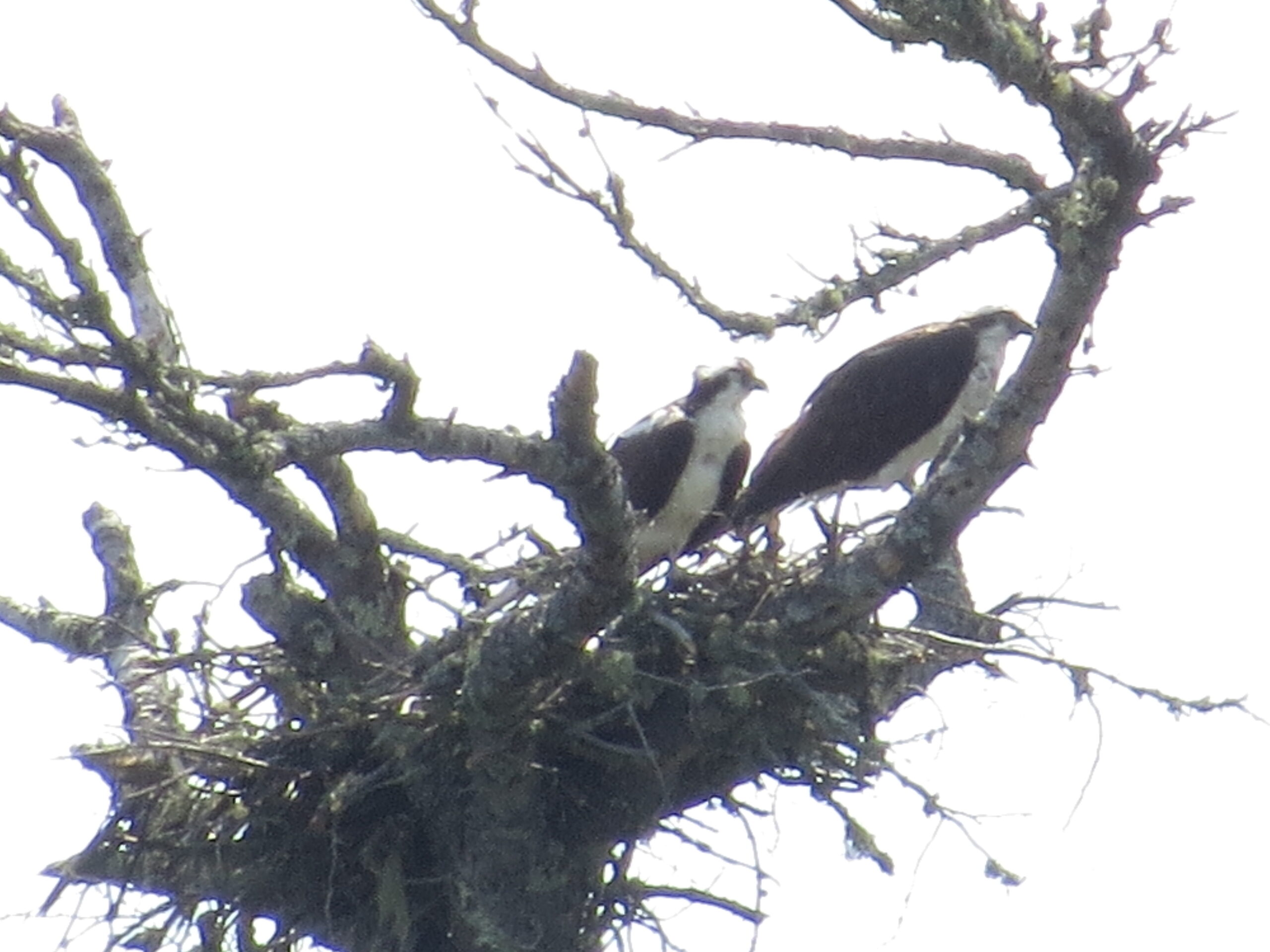
One of the first sounds I heard was a loud, chirping/cheeping chatter. It sounded like a much louder version of the baby chicks we used to house on our back porch until they were big enough to move to the chicken coop. A pair of Osprey sat in a haphazard nest in the dead top of a Pine tree and told their story to all who could hear them.
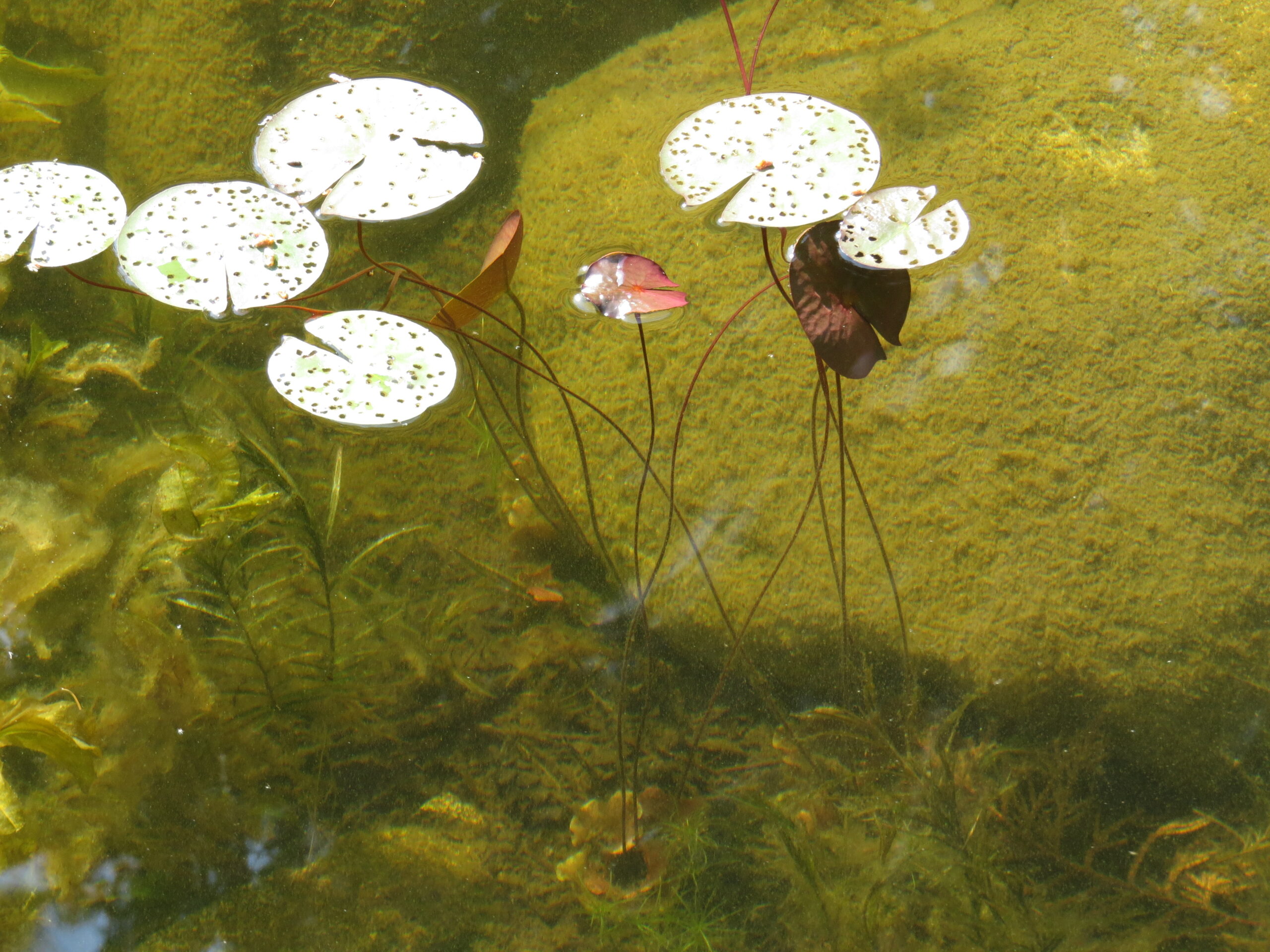
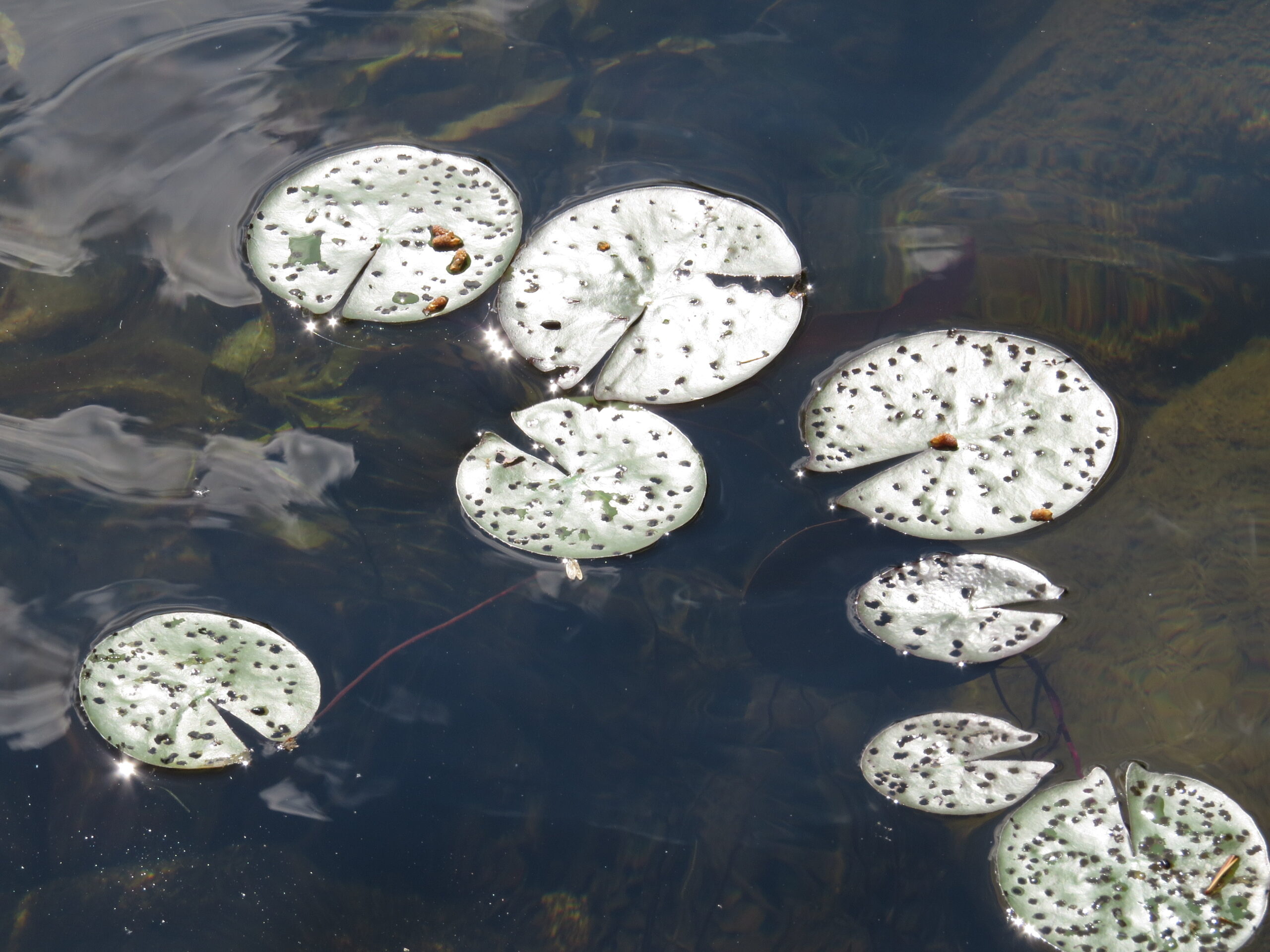
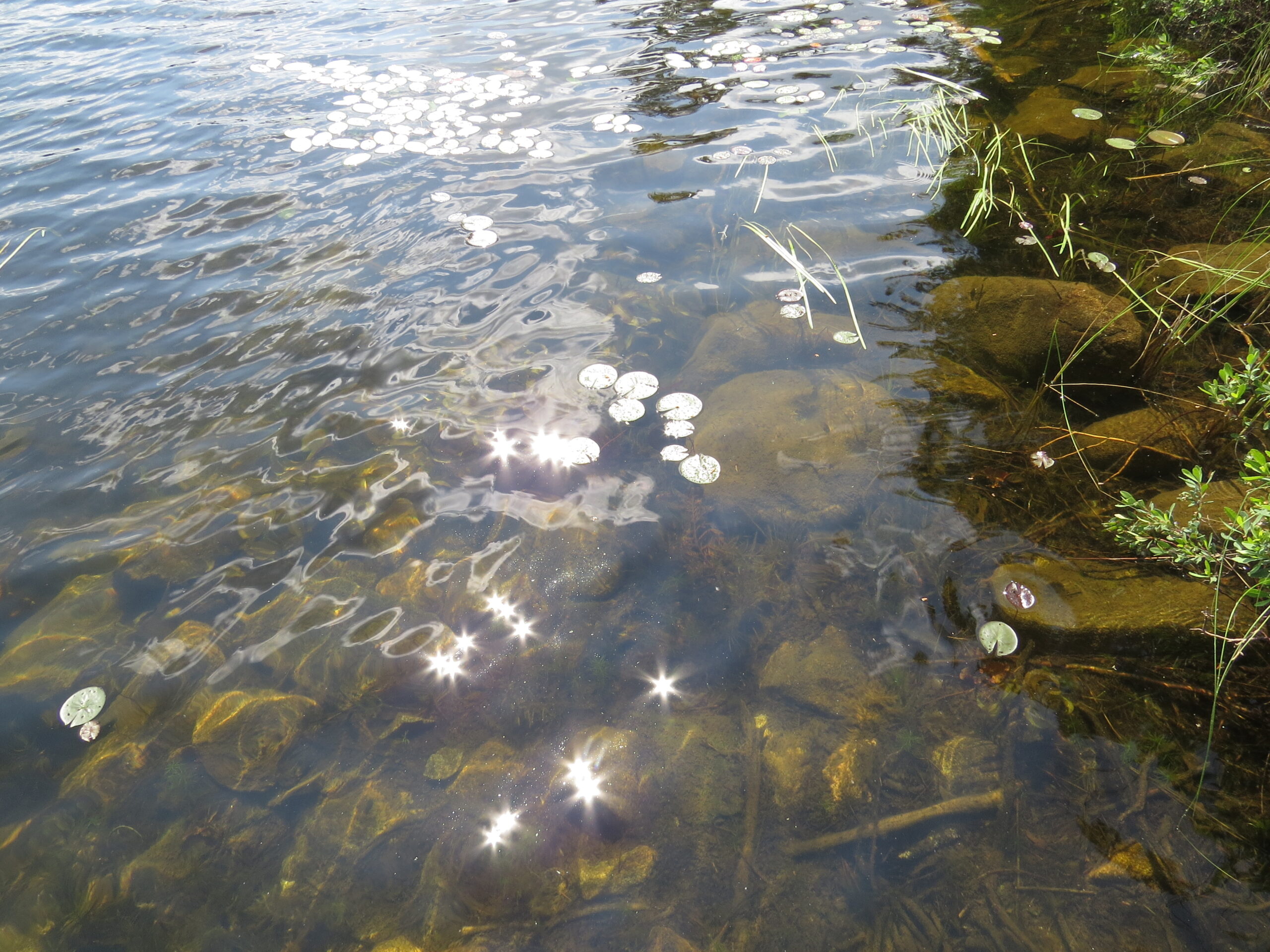
The water the Osprey overlooked and fished from was clear and cold. Red-stemmed Water Lilies floated on the surface like silver coins, along with the silver star reflections made by the afternoon sun.
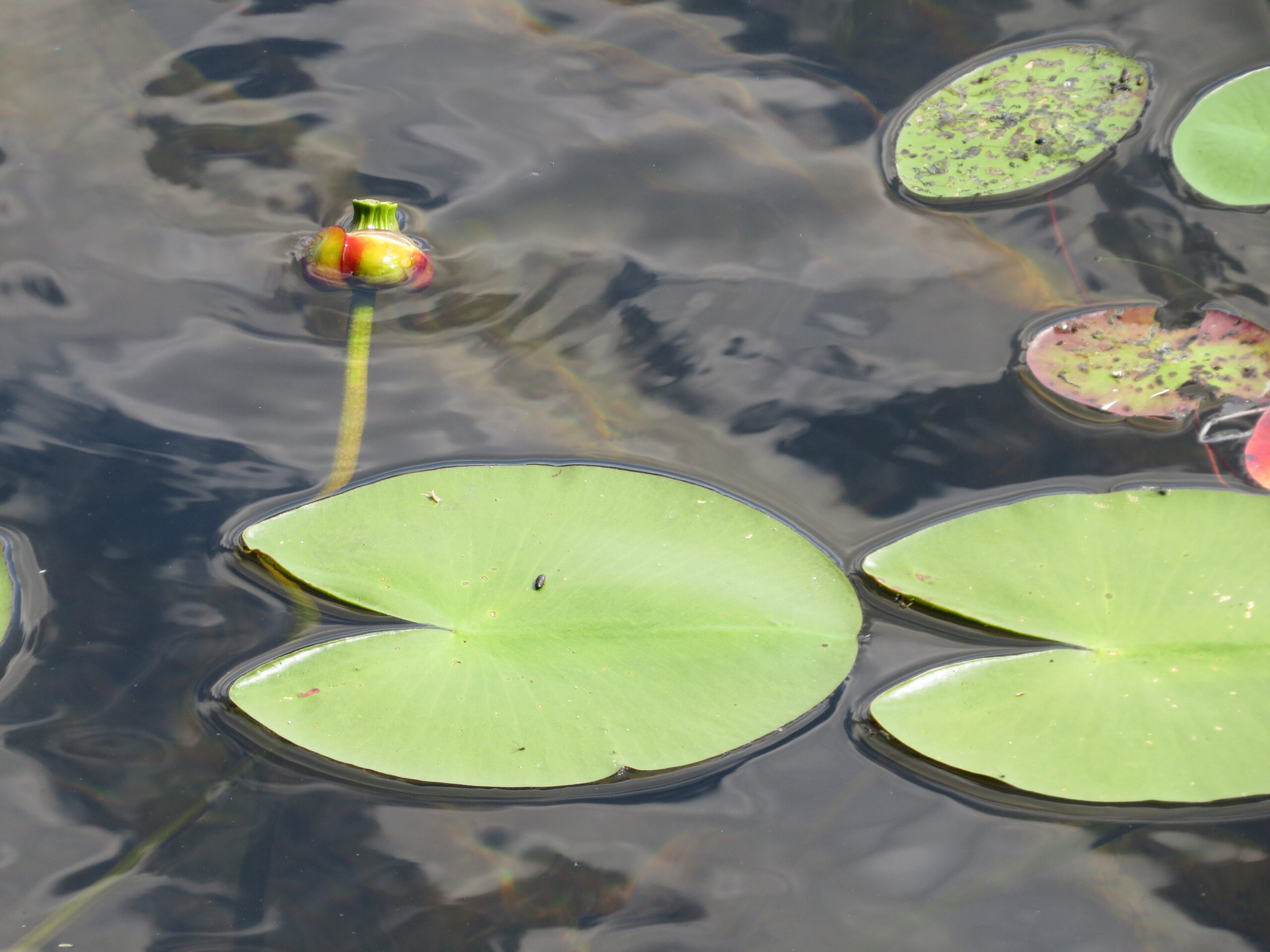
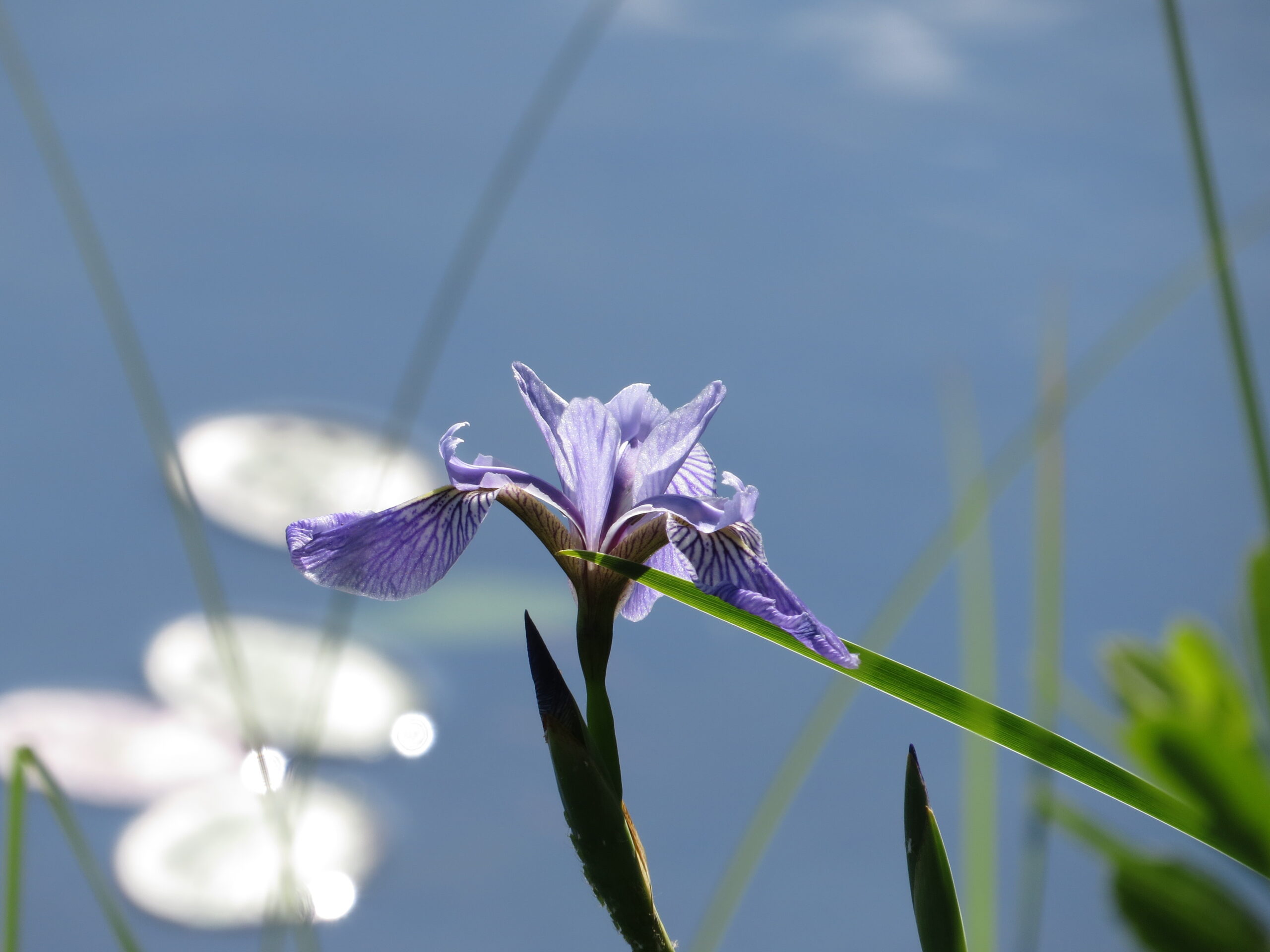
Yellow Pond Lilies and Northern Blueflag Irises decorated the water and shore with their Summer colors.
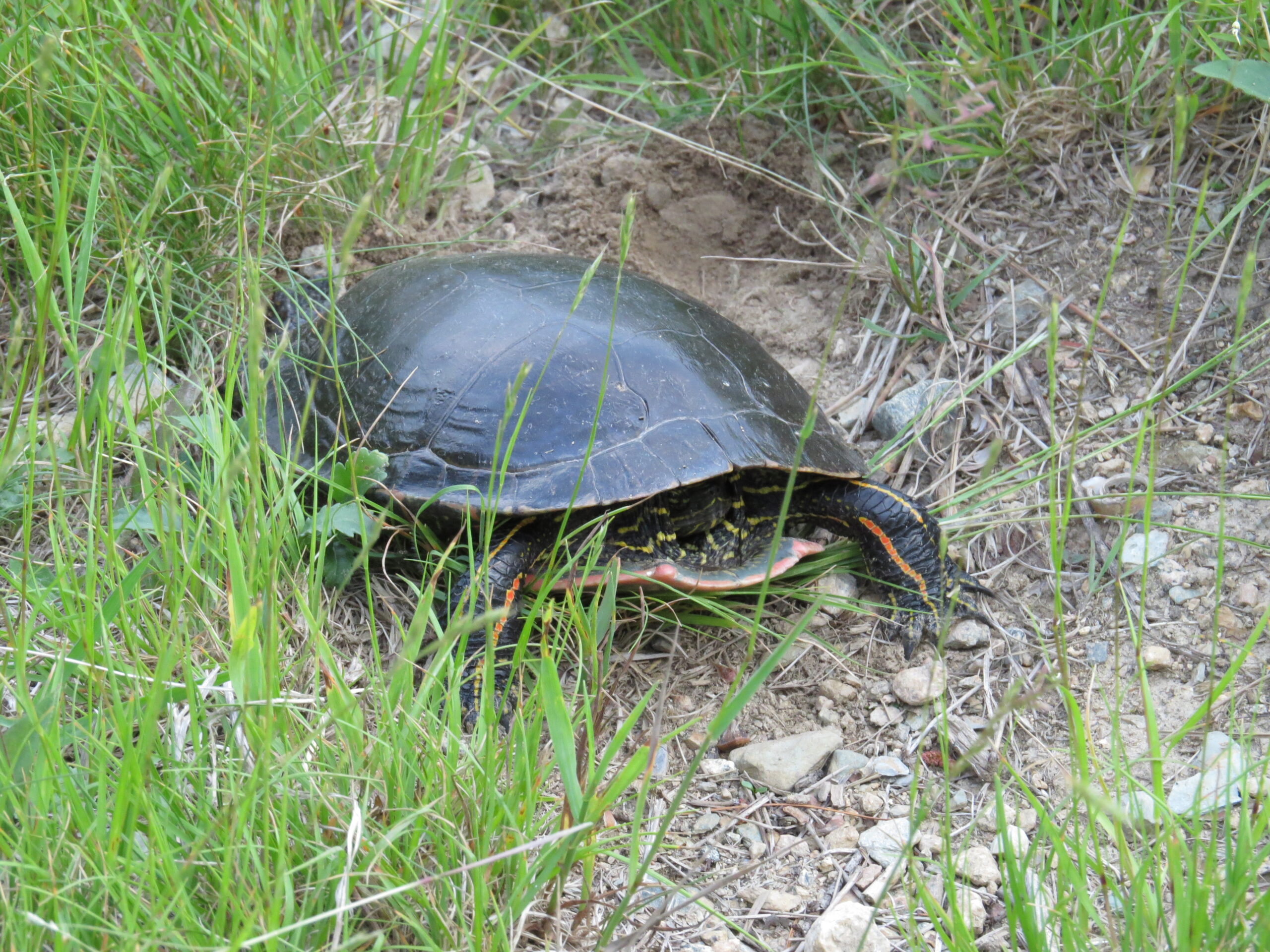
A Painted Turtle had crawled up on shore and dug a hole with its sharply-clawed hind feet in order to lay eggs. Our presence interrupted those plans.
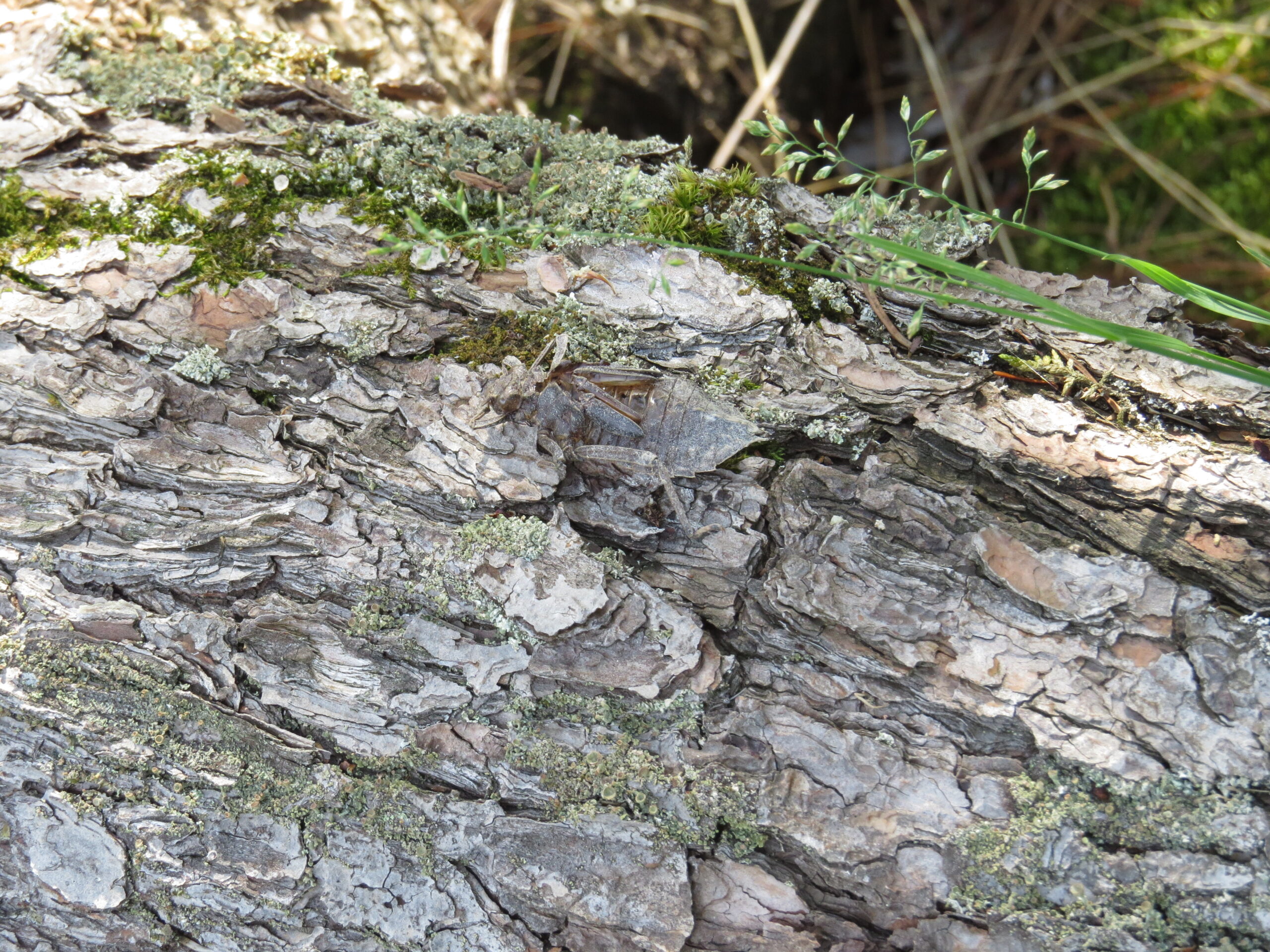
One of the common foods for Painted Turtles is Dragonfly larvae. They live in the water through numerous molts, then crawl out of the water, learn to breathe air, shed their skin, and emerge as an adult, winged Dragonfly. A larva shell is stuck to the bark of this fallen log. (right in the middle of the picture) A new Dragonfly flies away!
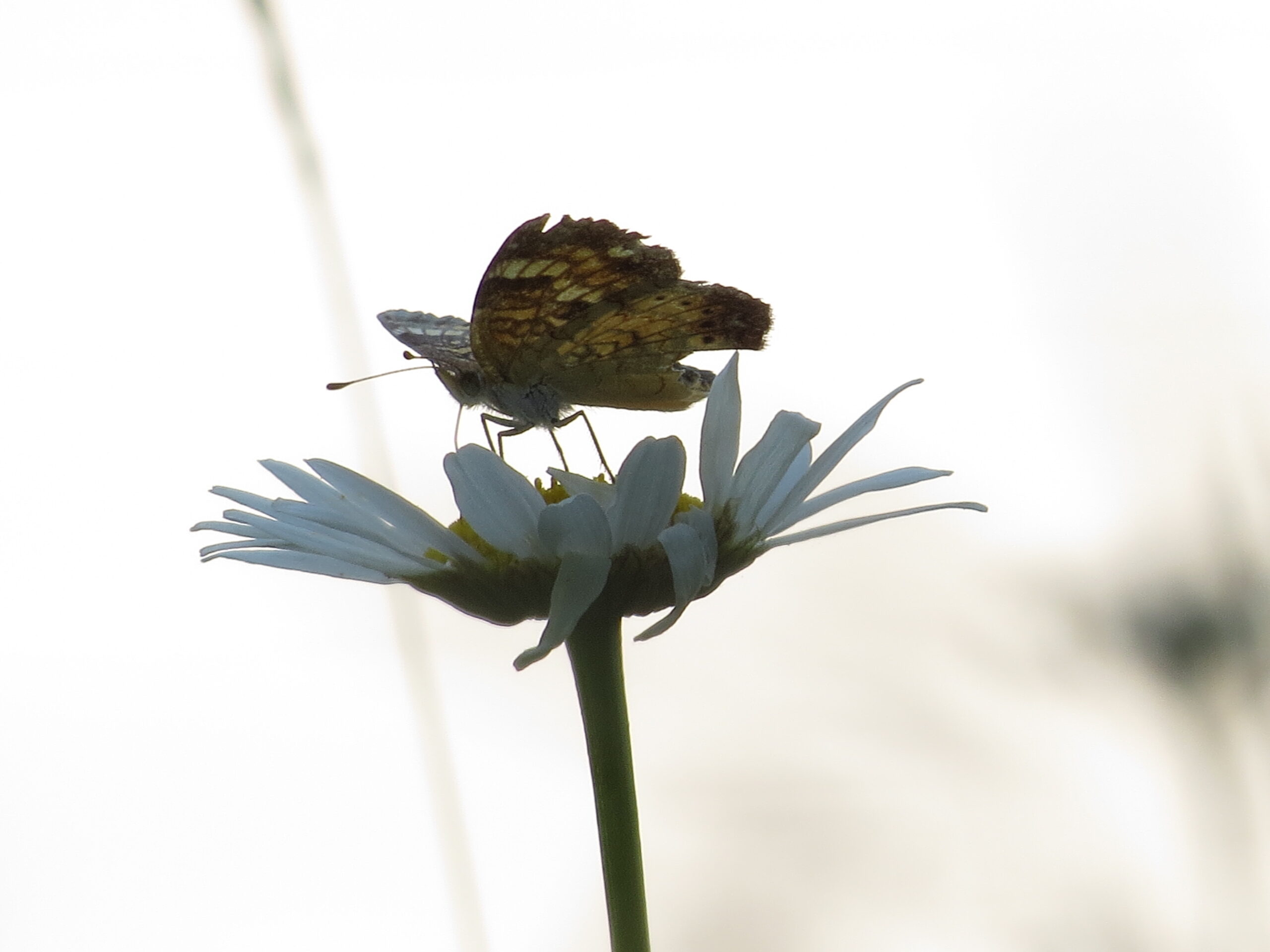
Freedom is often depicted with the image of a butterfly that has completed its metamorphosis from egg to caterpillar to larva in a cocoon or chrysalis to adult butterfly. Freedom to develop, nourish one’s self, grow, incubate, isolate, change, and fly.
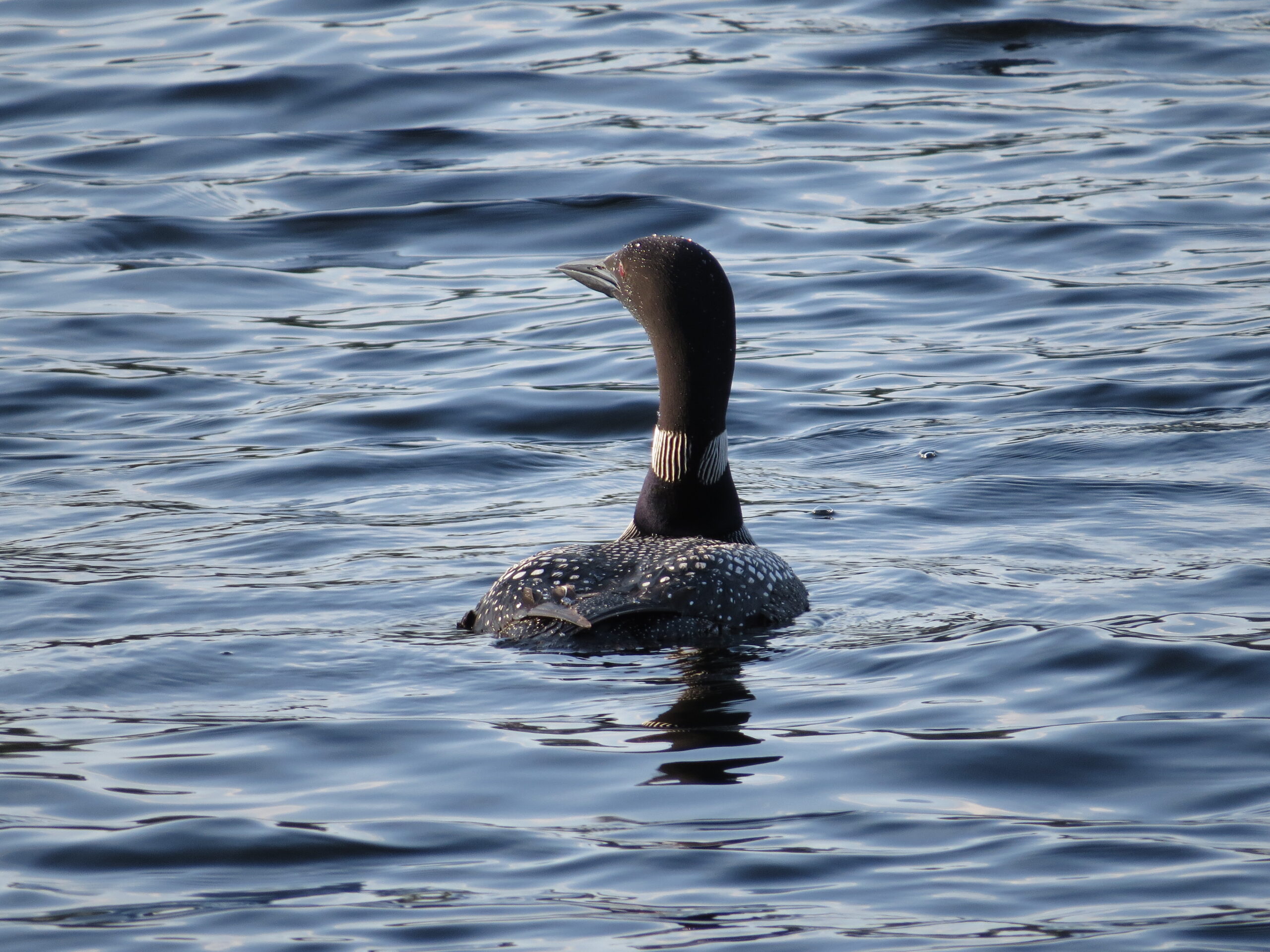
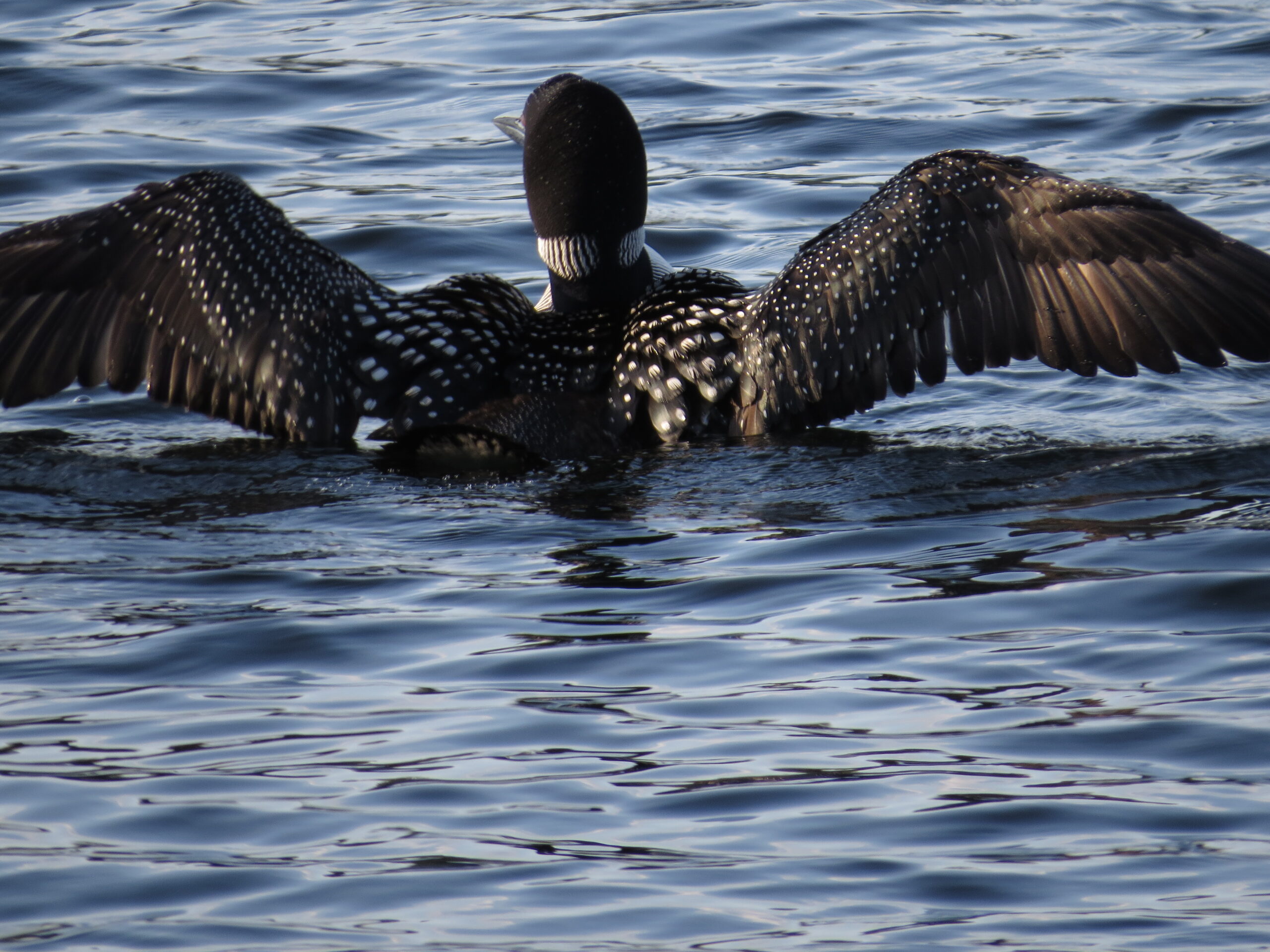
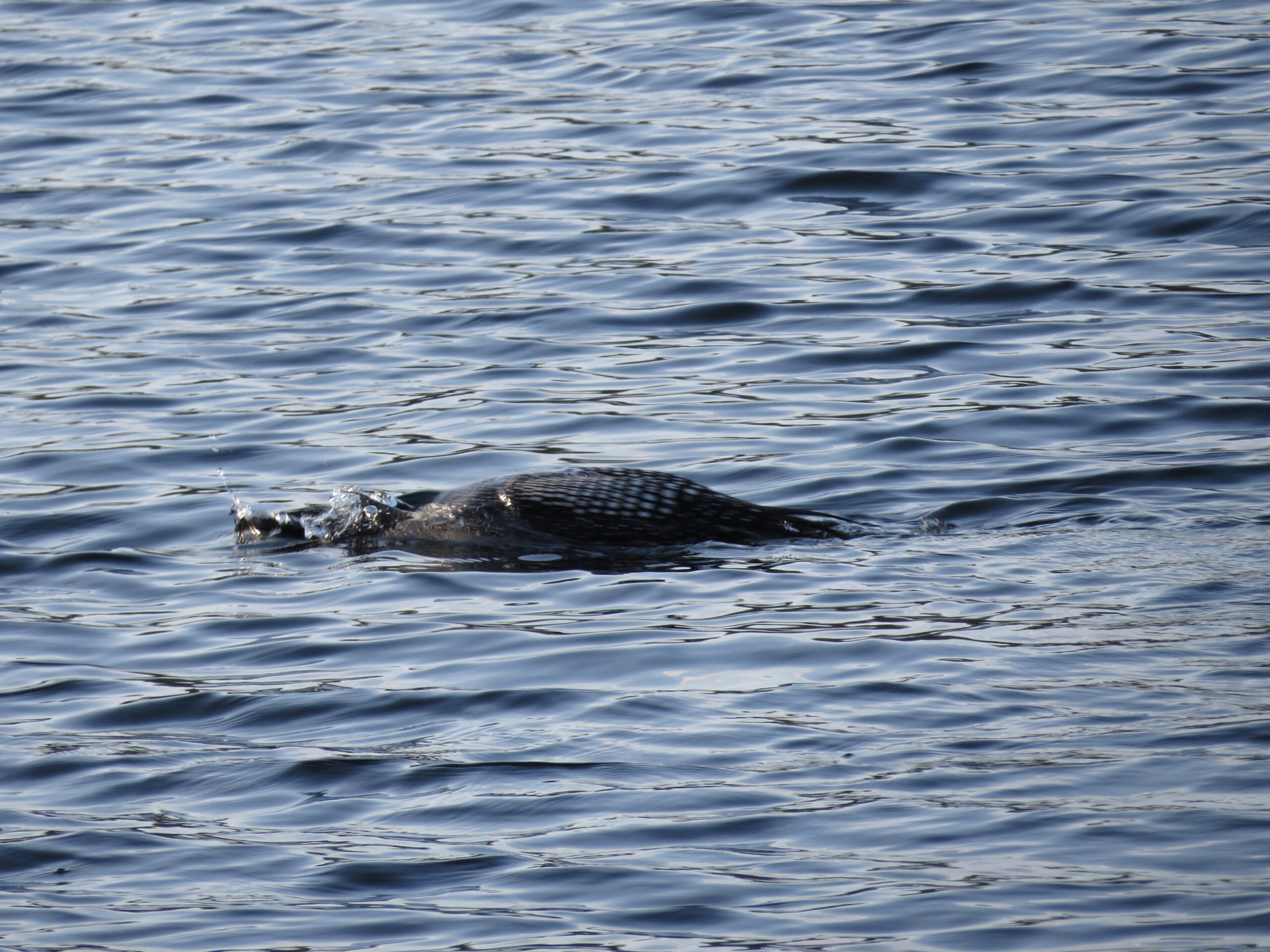
Another resident bird of the lake can sing a person to sleep in the evening as the western sky still holds the day’s light. The Common Loons also woke me in the early morning with a flurry of calls and a swimming/flying routine I called ‘motorboating.’ I wasn’t sure if they were doing their morning exercise or if this activity was for another purpose; I did notice their calls seemed more vigorous than usual.
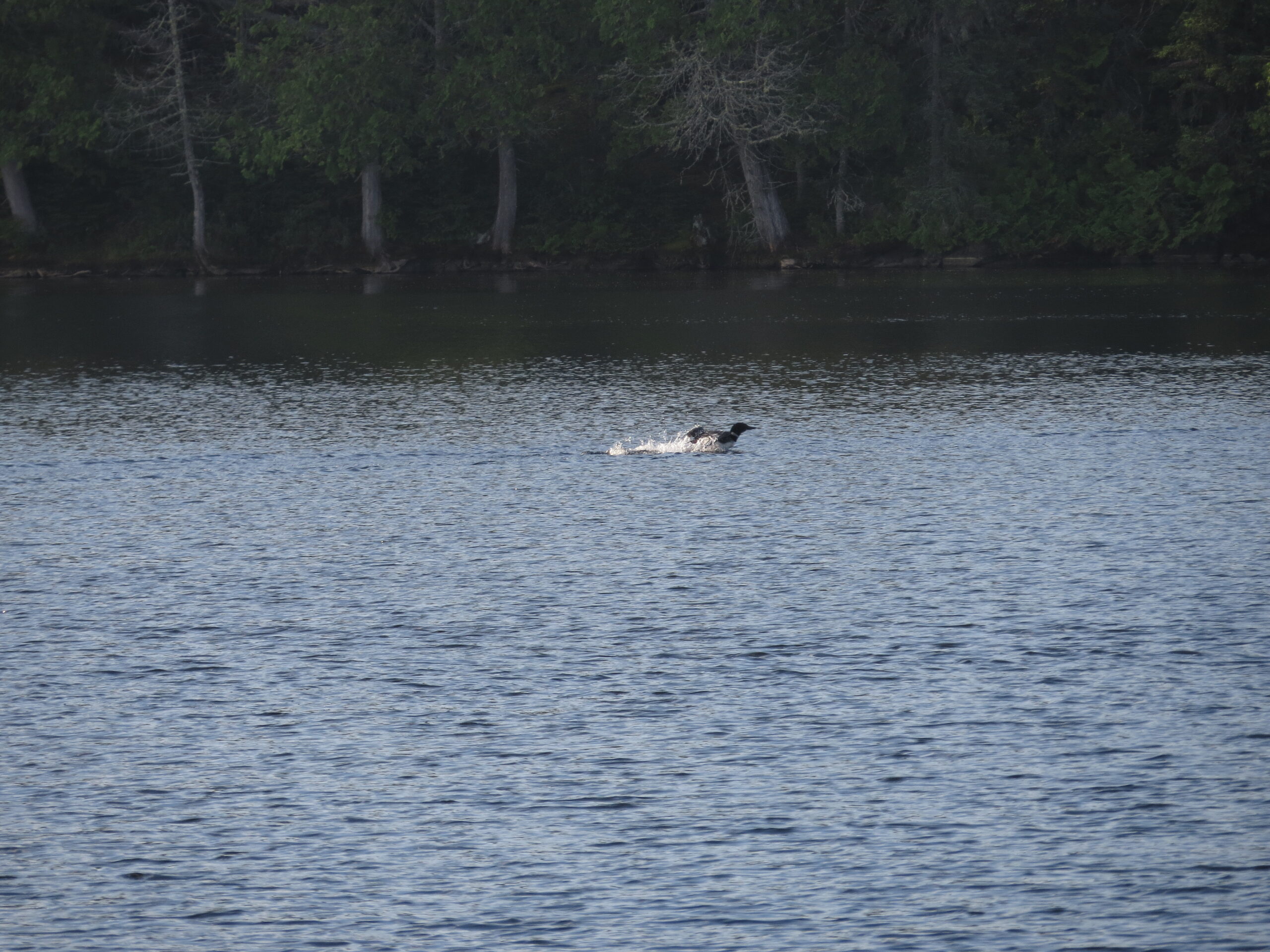
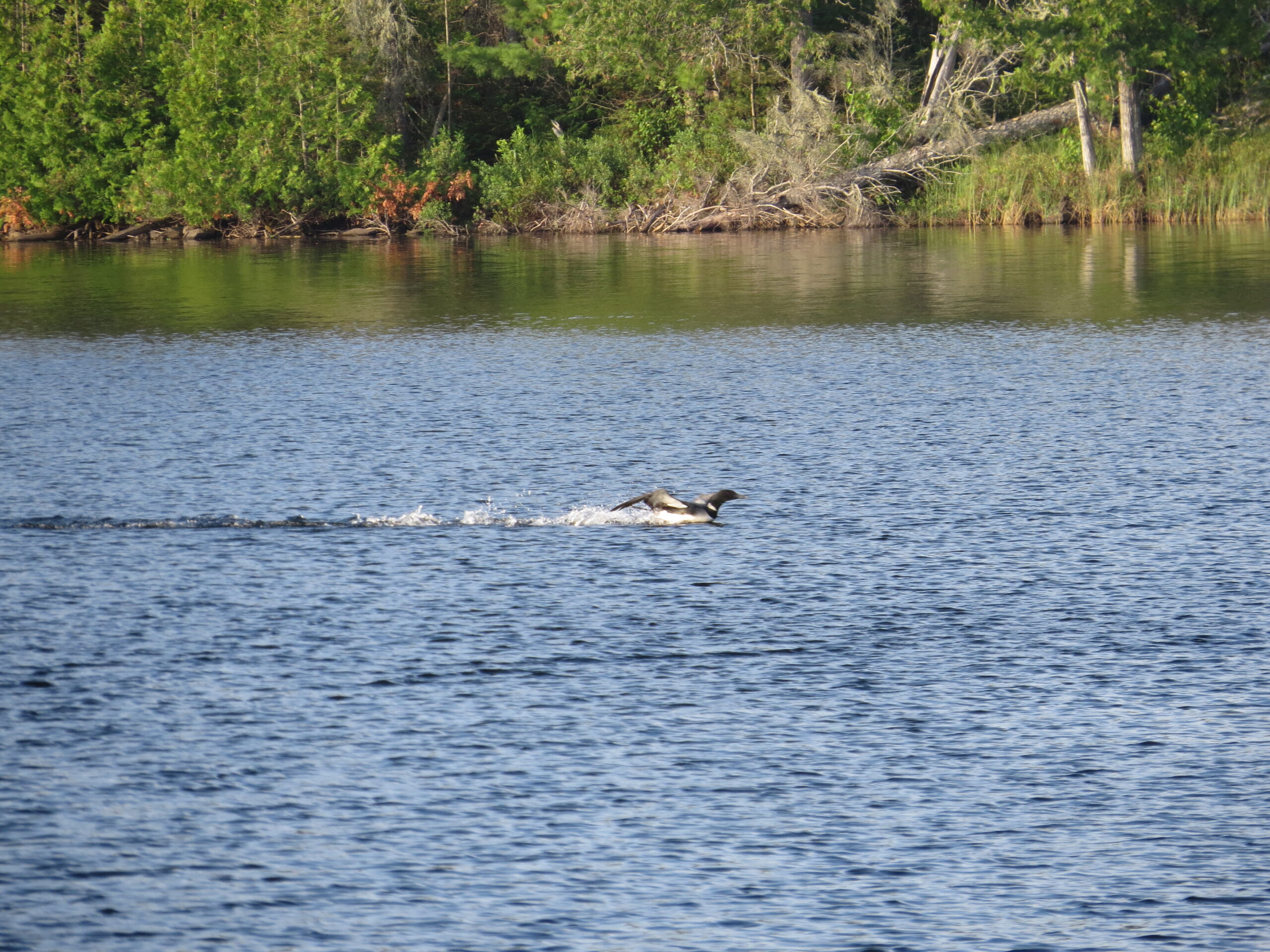
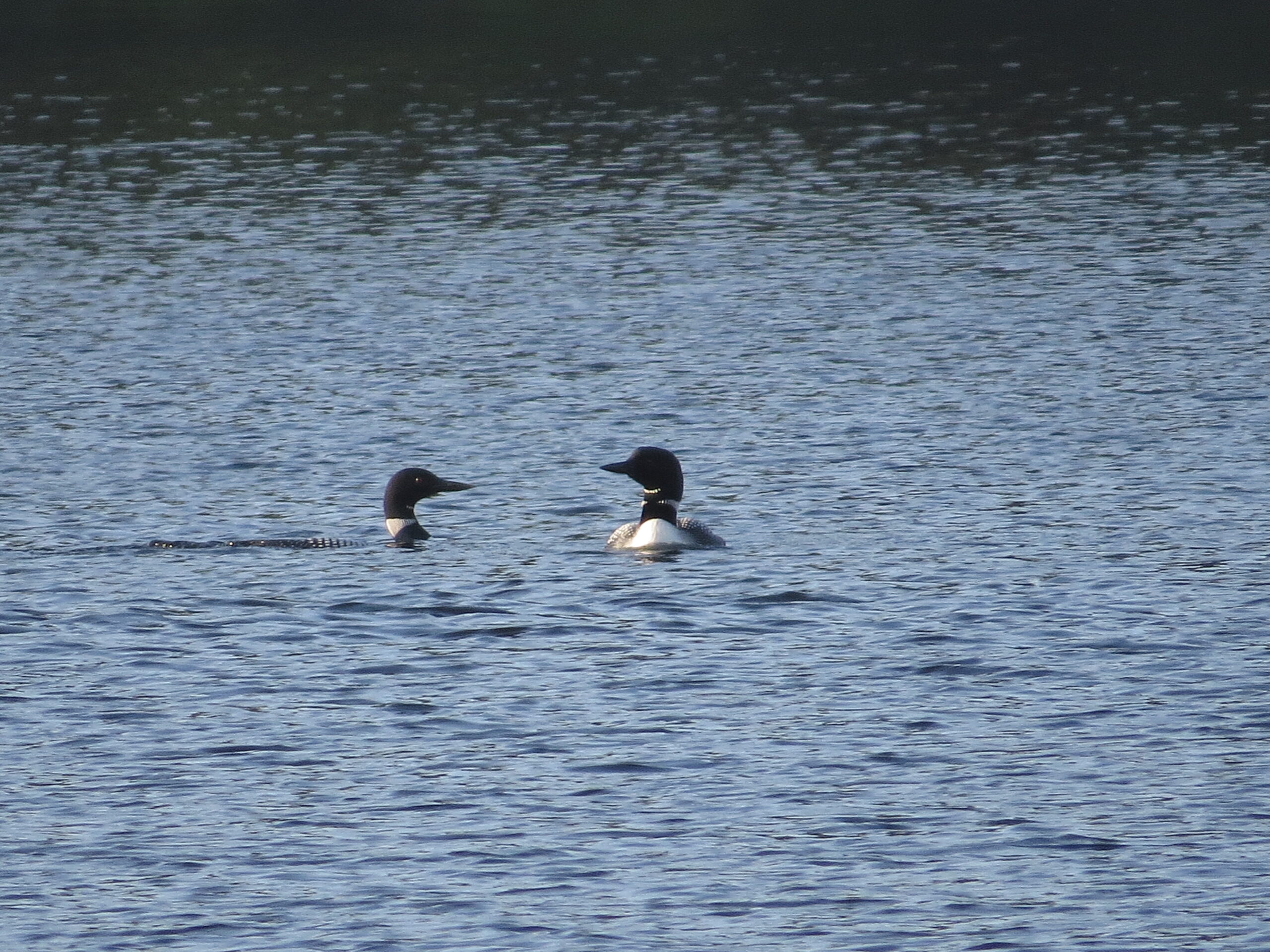
Then I saw another lone Loon in a different part of the lake, so perhaps they were defending their territory.
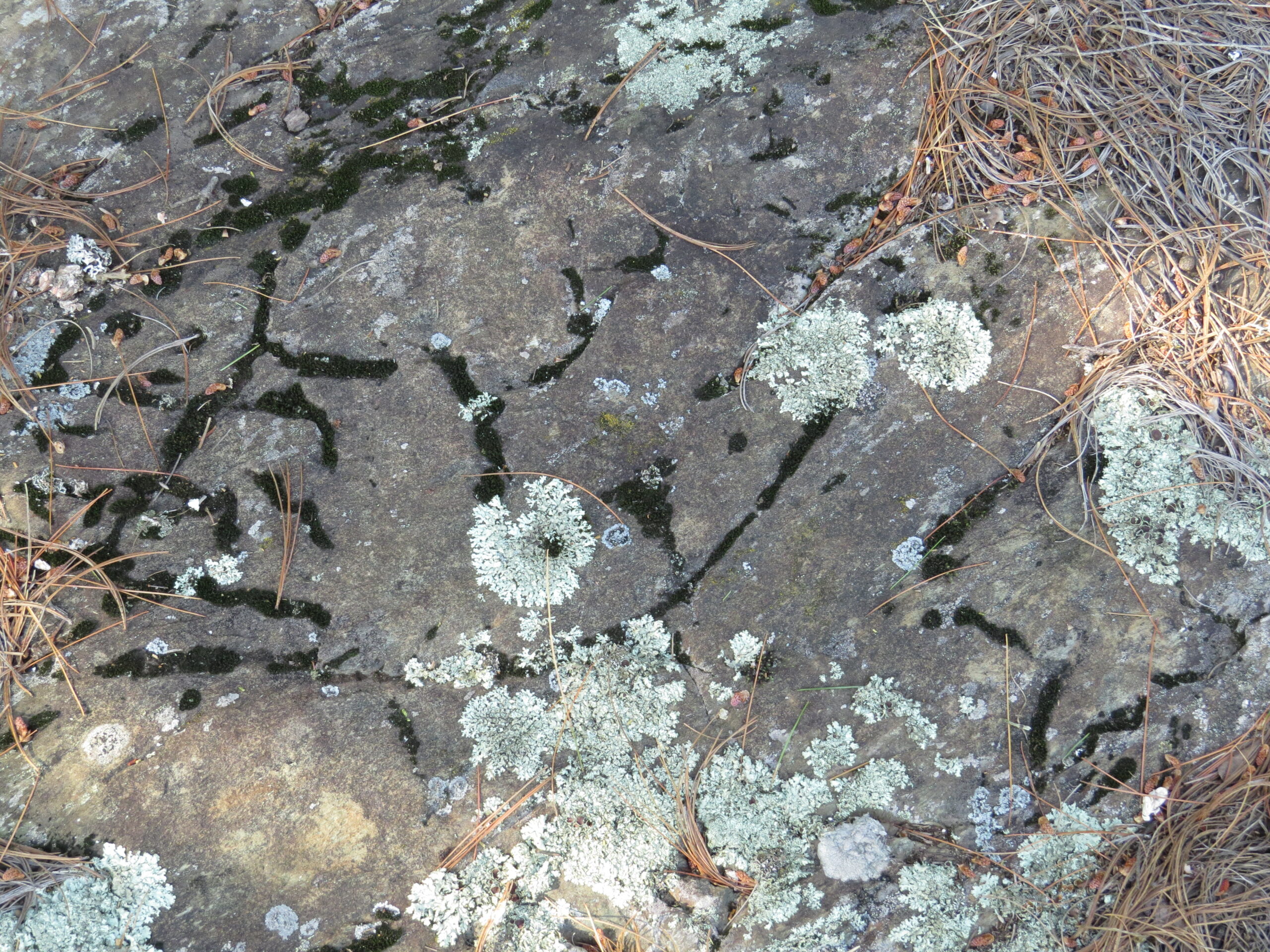
Rocks are the hold-in-your-hand or hold-up-your-feet entities that make a person know what gravity is, what sun-induced warmth is, and what eons of history are in this place. Lichens and moss are the writing that tells the story.
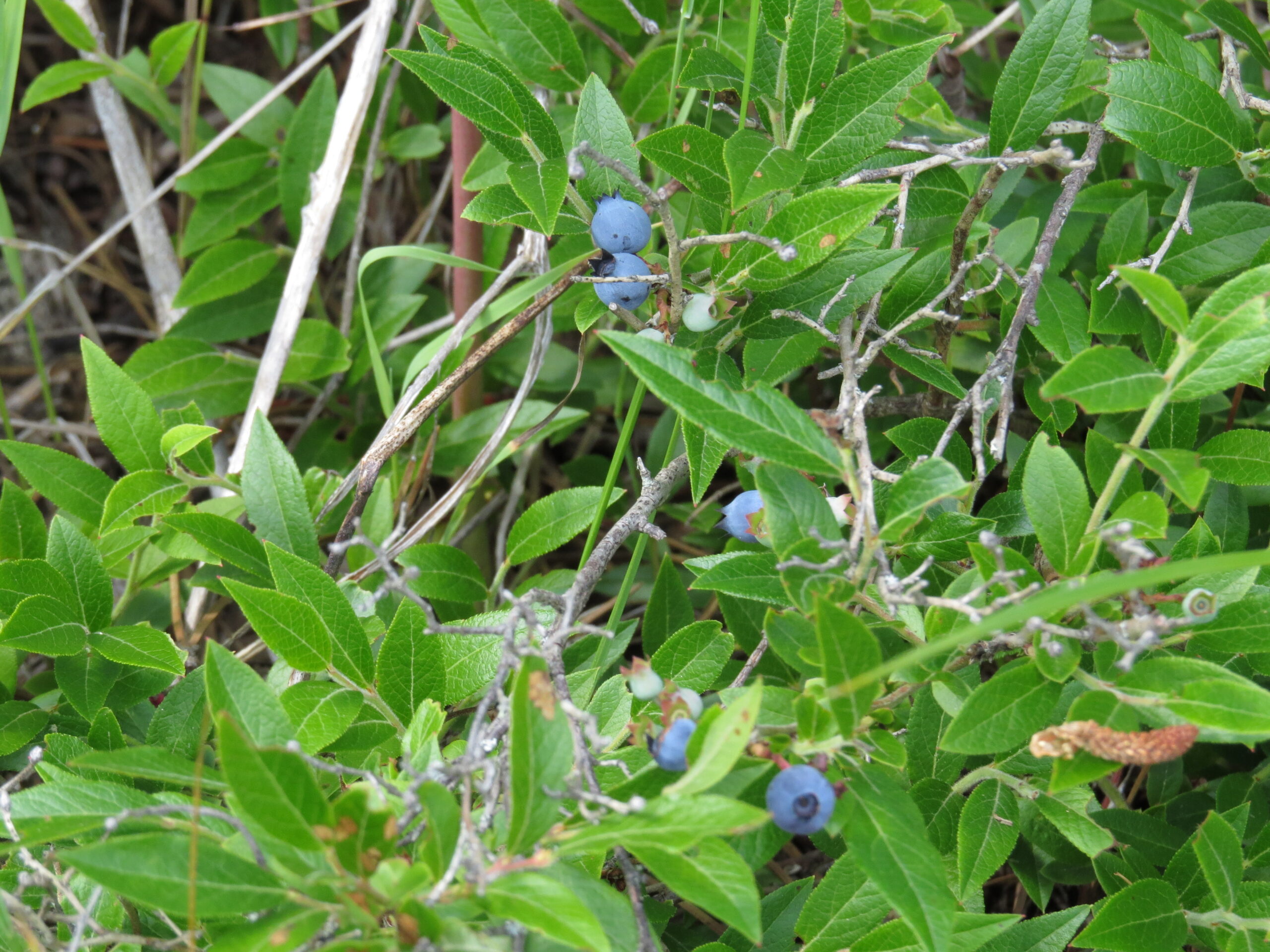
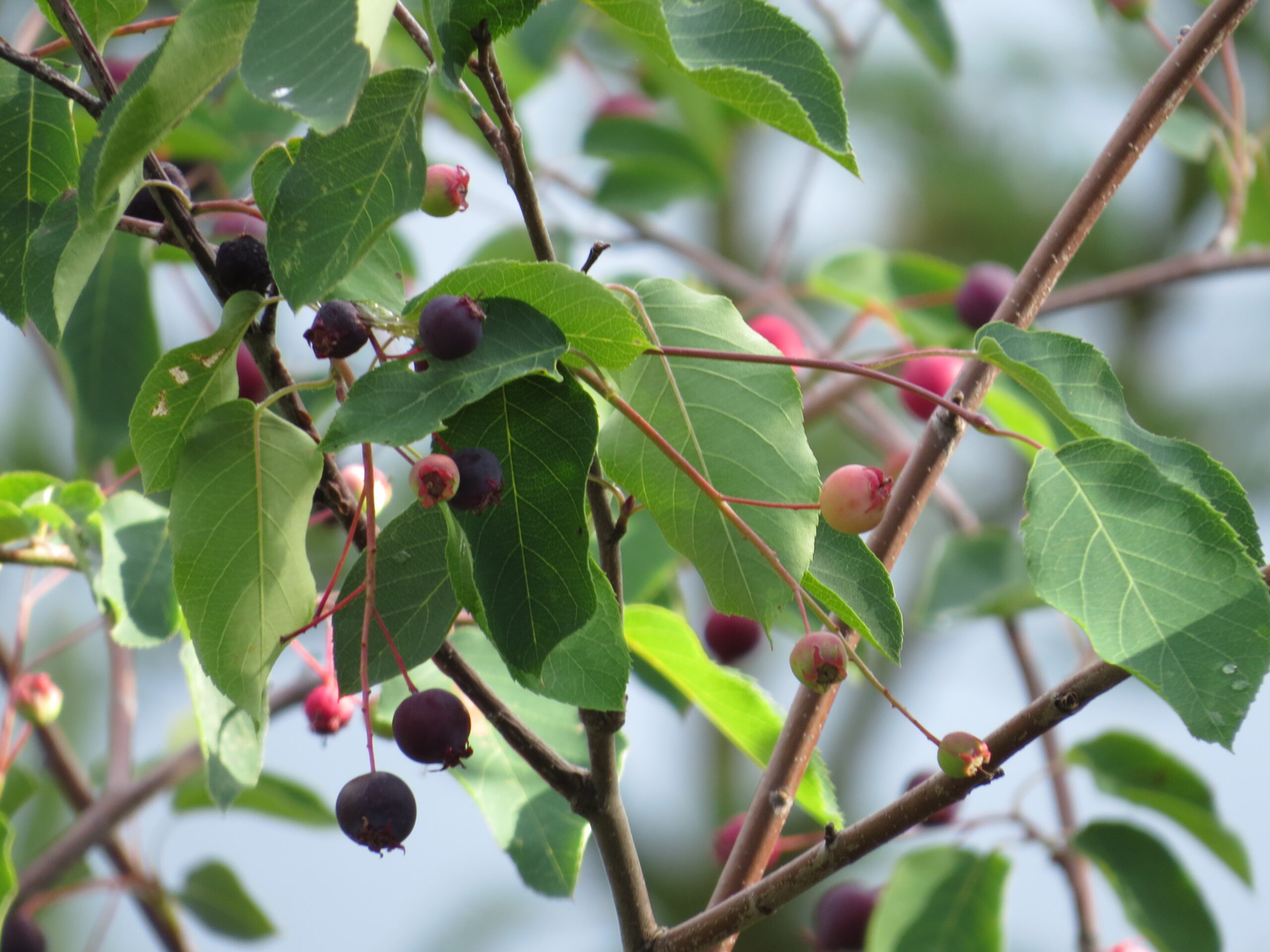
Like a foraging Black Bear or a hungry Gray Jay, I browsed through the brush of Wild Blueberries growing in the scant soil over the large rocks. They were just beginning to ripen, so pickings were precious and few. Not so with the Juneberries on the shrubby, thin-branched trees—they were ripe and abundant and oh-so-delicious!
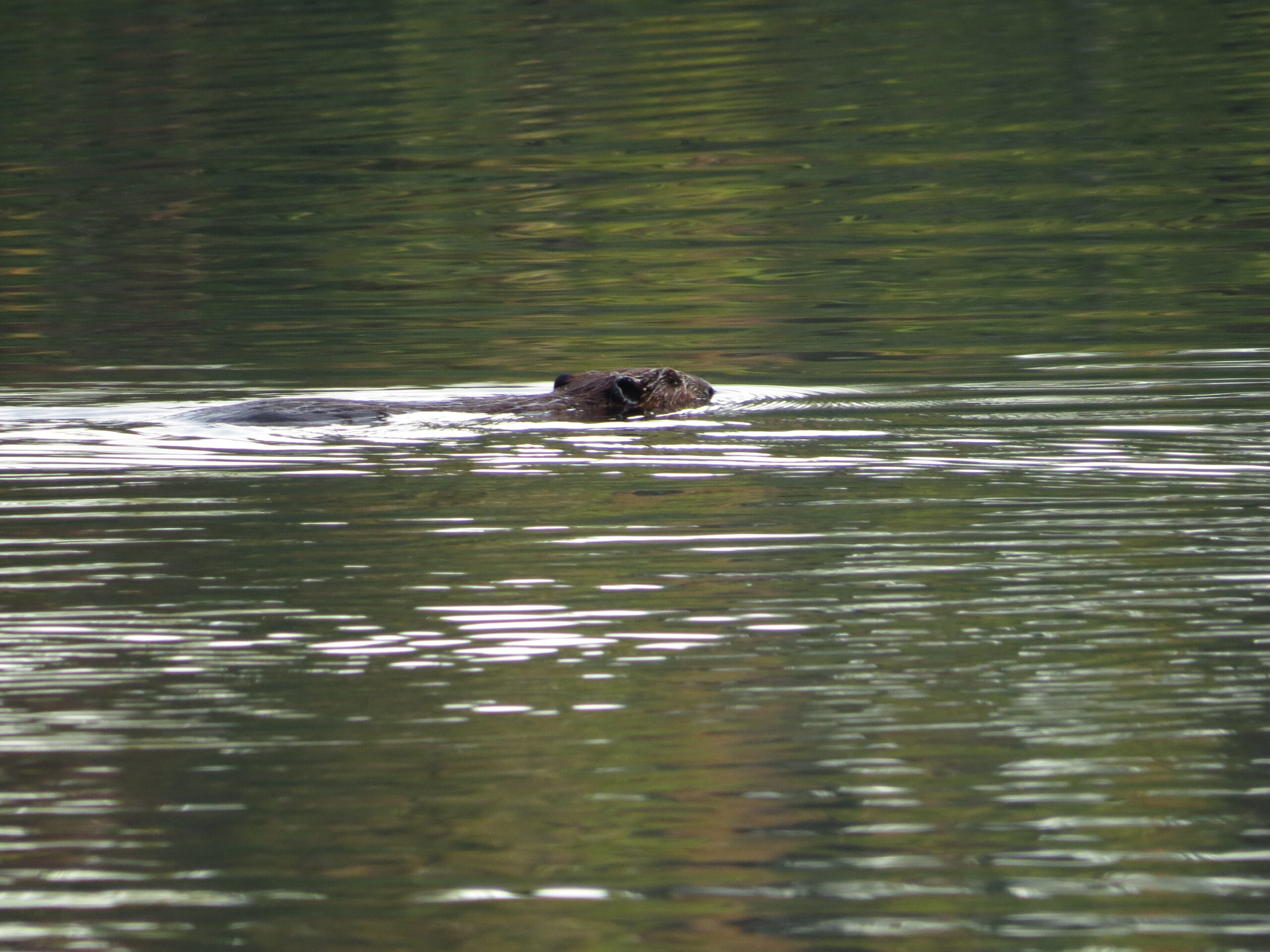
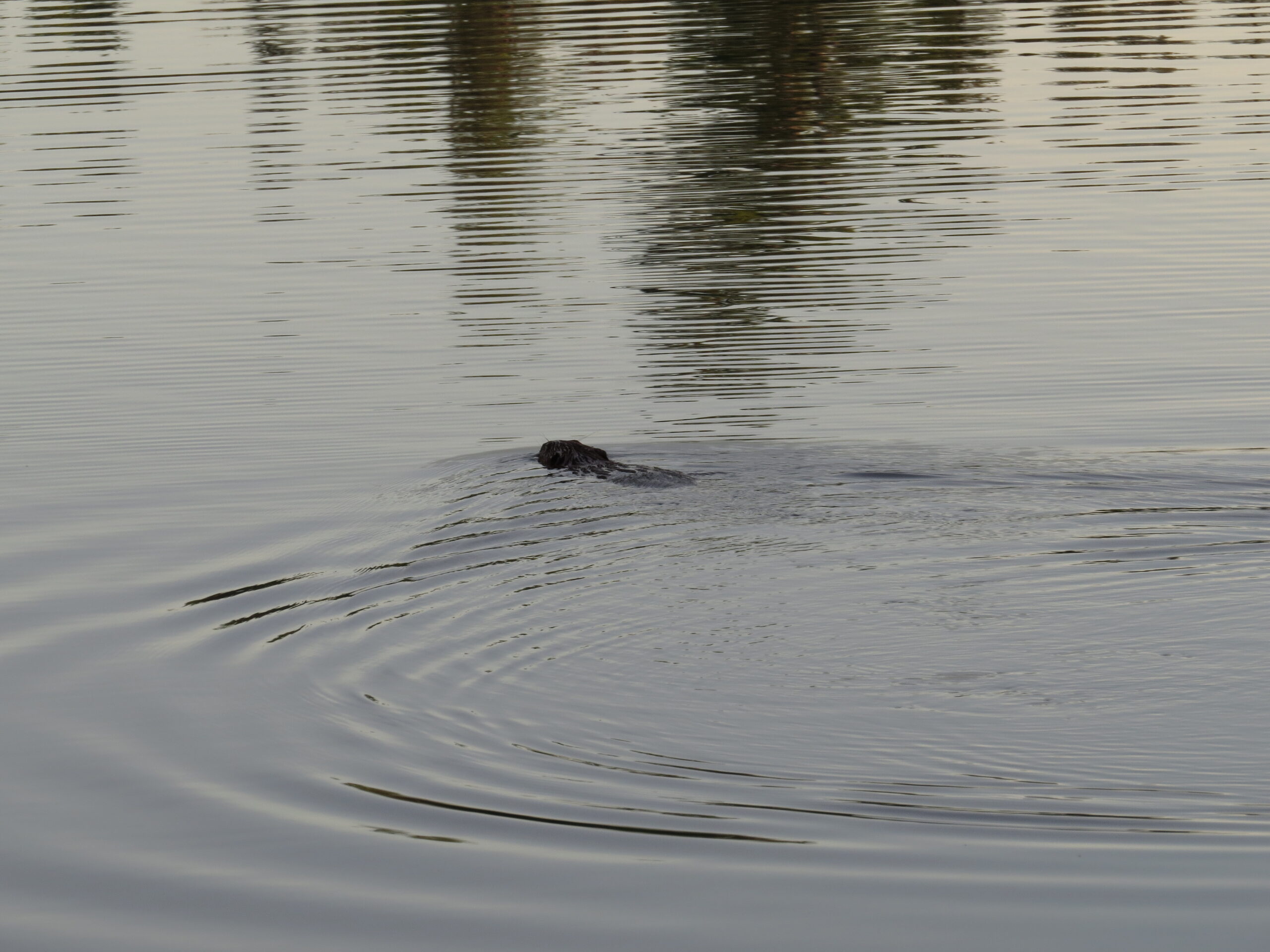
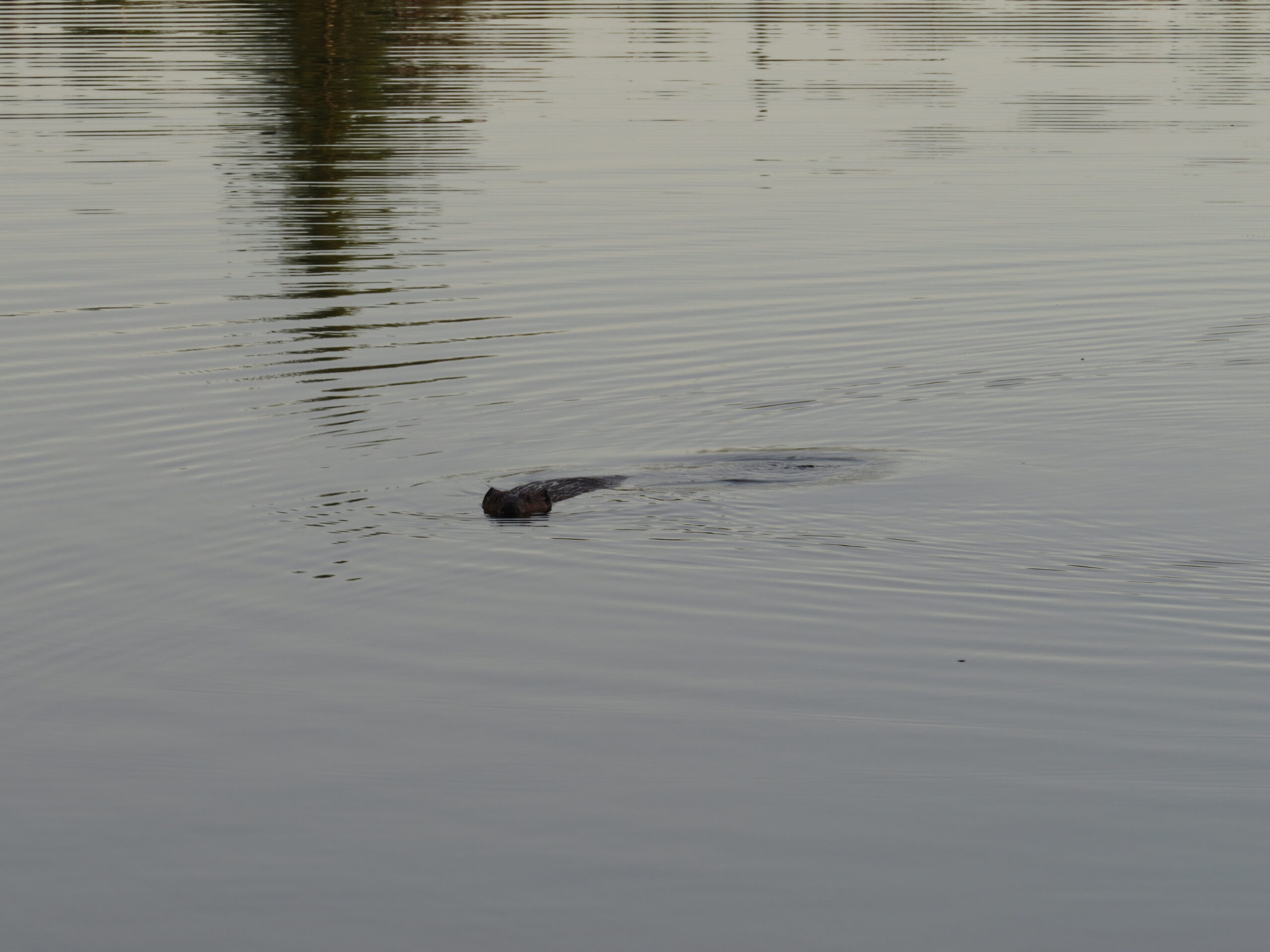
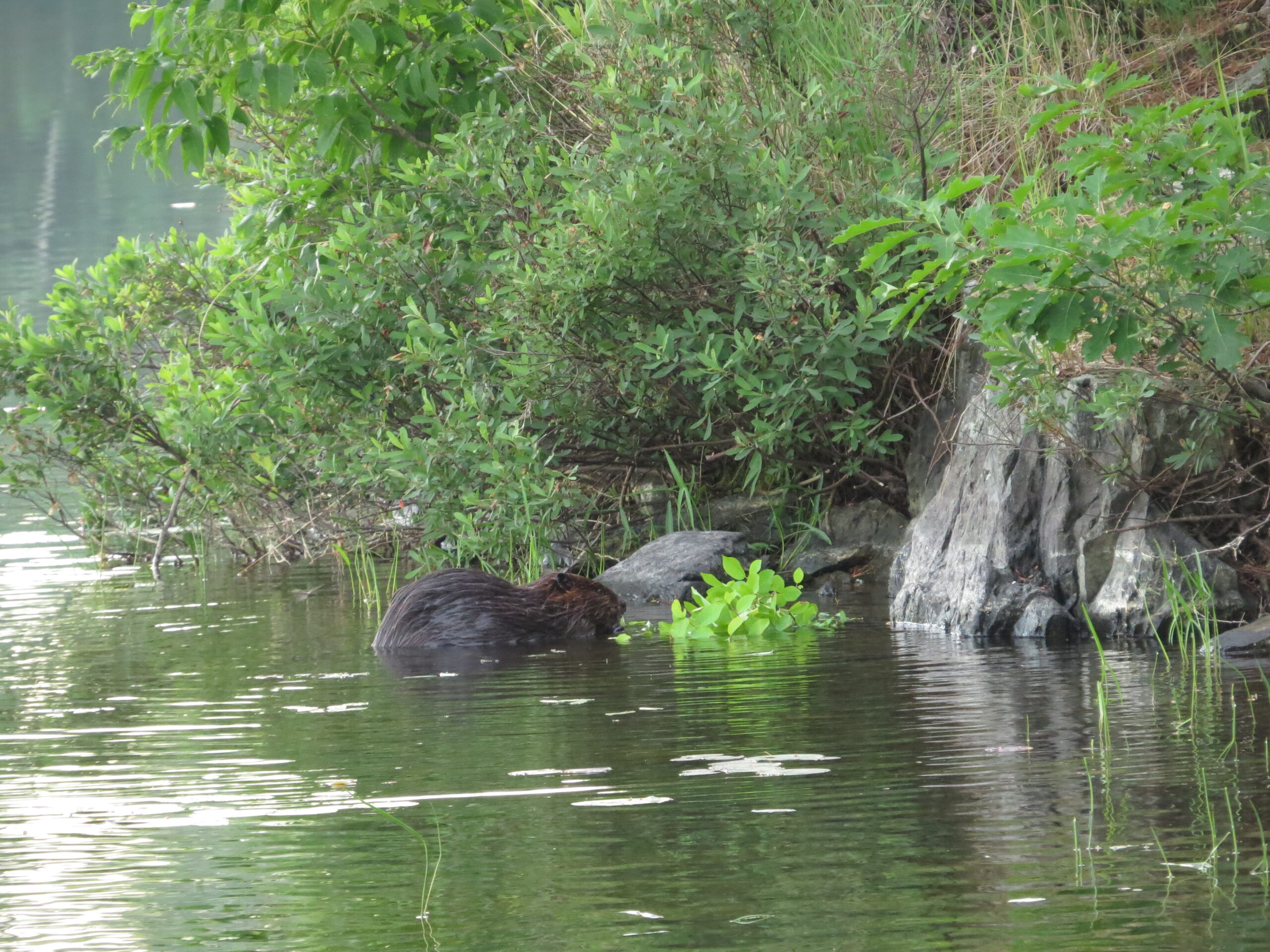
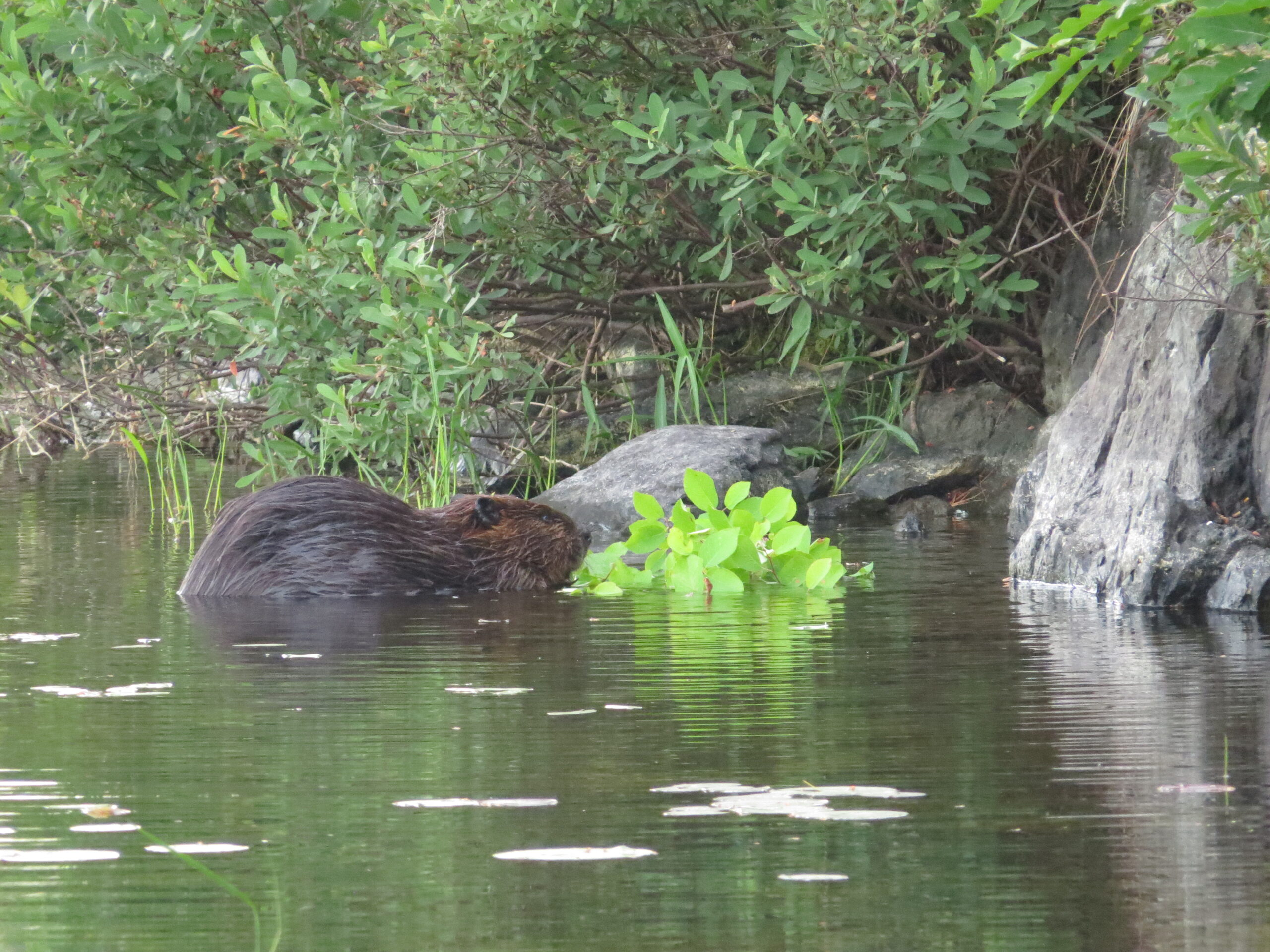
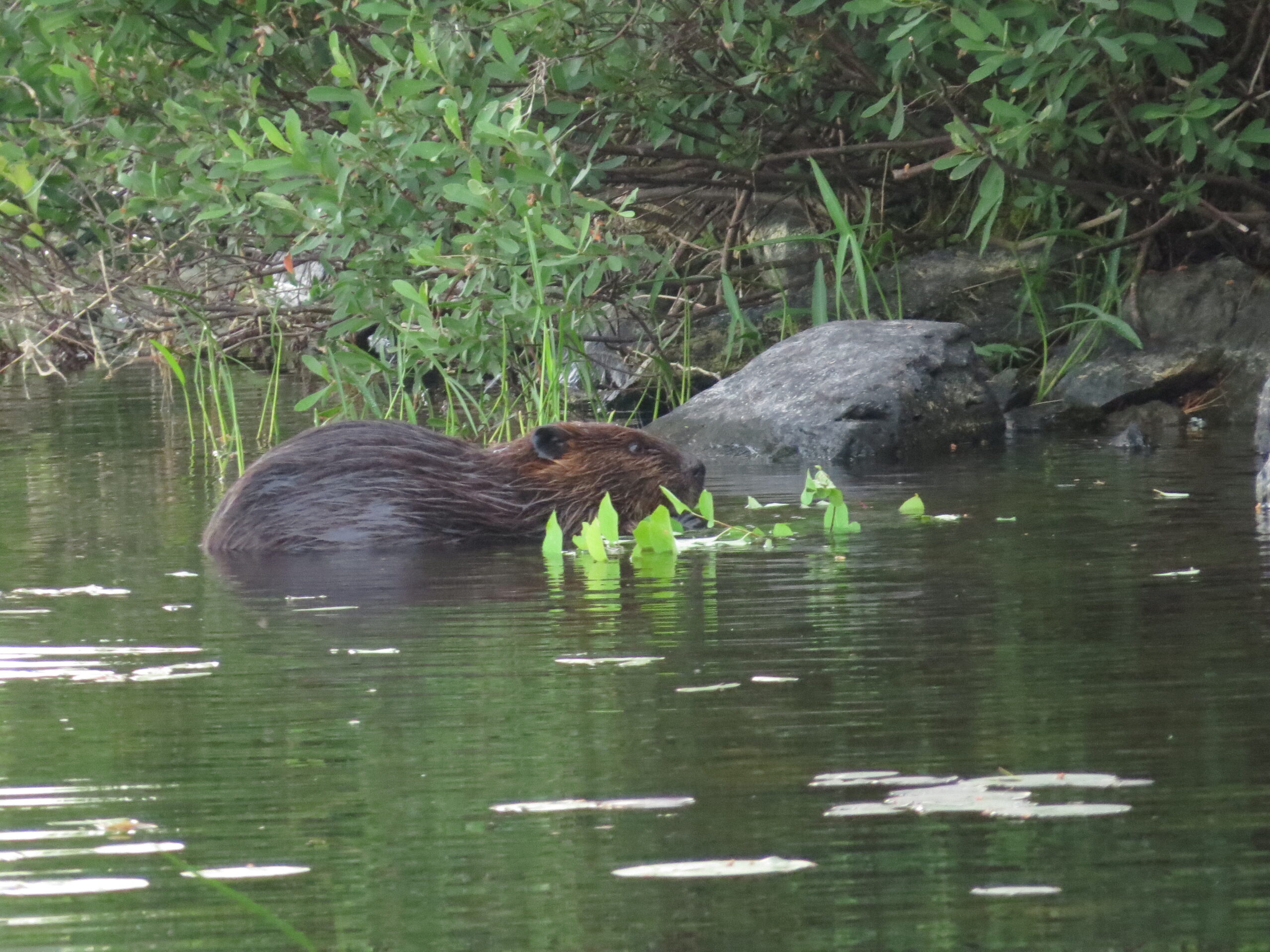
The smell of campfire smoke is like a signal to relax, prepare some nourishment, eat slowly and laugh often. Usually only one or two people of the group become the fire-tend-er; others take care of food, clean-up, and equipment—there are shared responsibilities even when time is slow and relaxation is the goal. As evening smoke drifted up into the calm sky, a beaver swam in circles in the lake—again, it seemed like he was doing it for fun, for the pure joy of movement. At one point we startled him, and he slapped his tail on the water with a loud ‘crack’ and dove out of sight. But soon he was back to swimming his laps. We saw him swim to the shore where a bright green branch of leaves grew or lay in the shallow water, and he nibbled and nibbled his post-workout snack until it was almost gone.
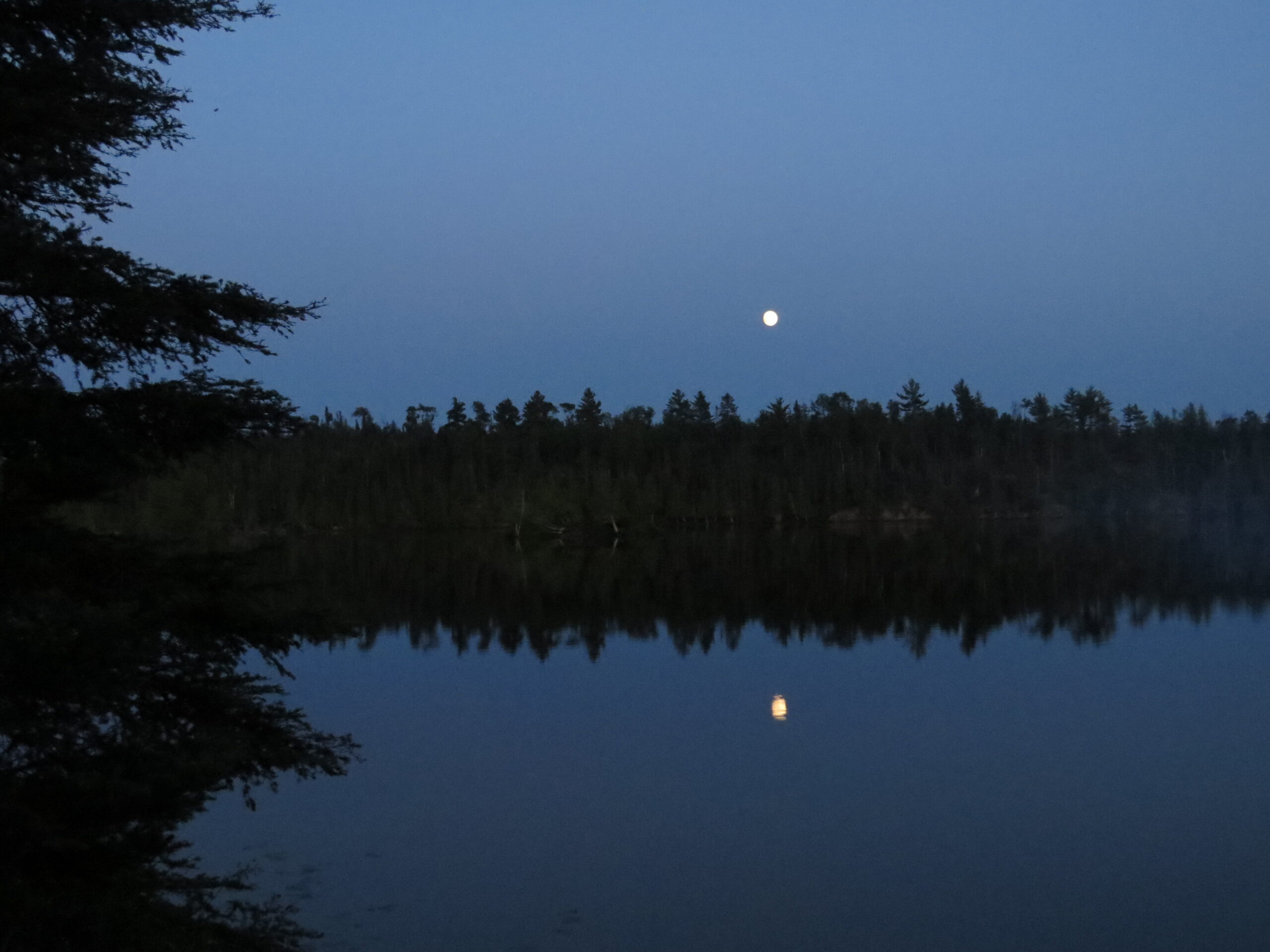
Late evening and watching the almost full moon rise above the trees and reflect on the water—I wonder if these moments could get much better. It’s a ‘savor-moment’—it makes me feel like everything is going to be okay in a time when so many things make it feel otherwise.
Then morning comes after a Loon-call-filled night. Mist from a warm day, cool night floats above the water. Reflections on the calm, still water give us a slightly different view of reality, expanding our minds.
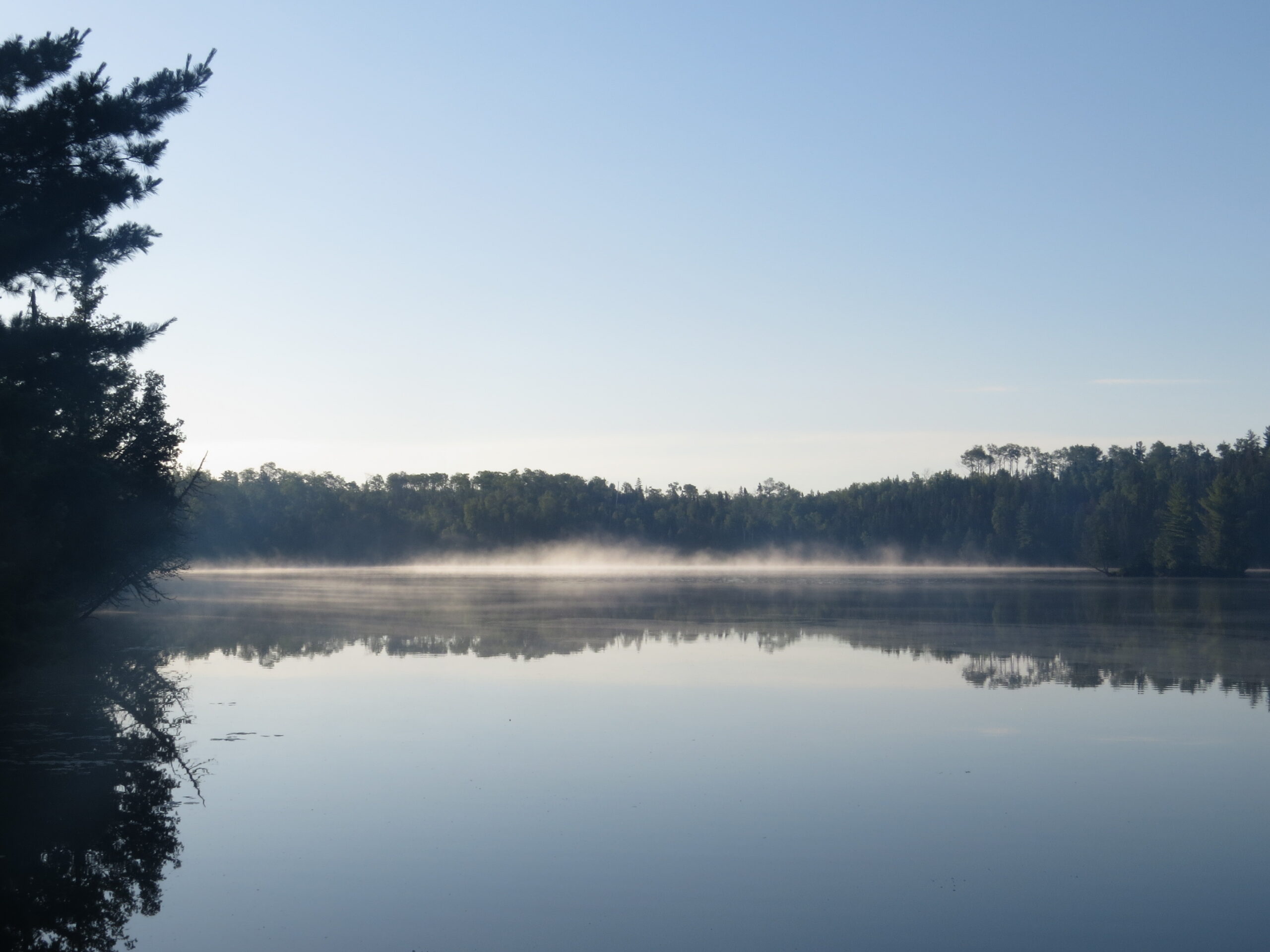
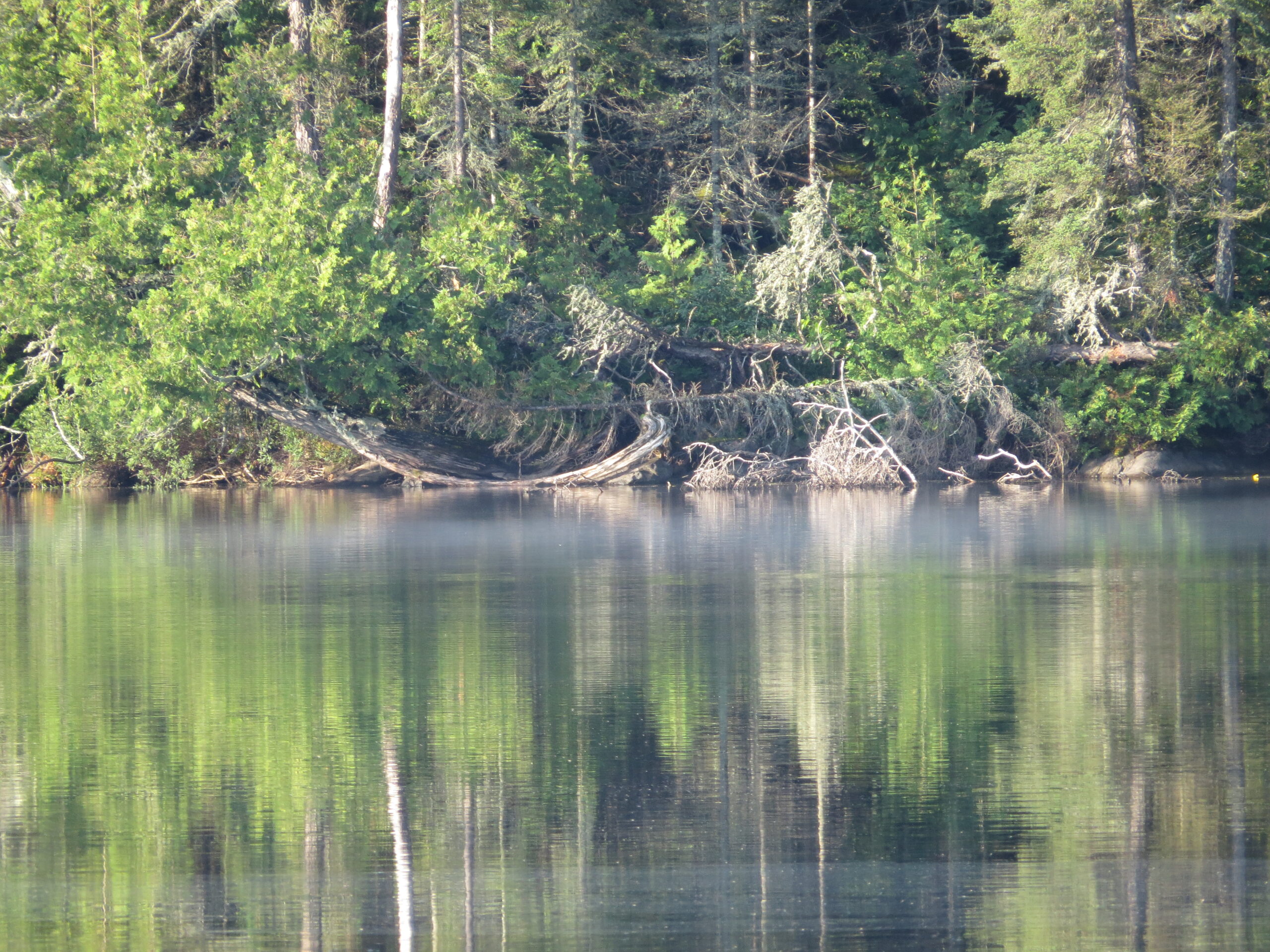
We all go through constricted times in our lives when facts and feelings are blurry. Pain, whether physical or emotional, is a constrictor. We don’t usually have the capacity to do much beyond dealing with the very real but usually distorting pain. Looking back to those times in my life, I realize there were negative consequences to my being in the cocooning pain, but there were also gifts to be had and lessons to be learned. Extreme busyness also tends to blur the perceptions and memories of a given time. Both pain and busyness are integral parts of Life. We won’t escape them, but we can cultivate more feelings of freedom. Being in the arms of Mother Nature, listening to the Loons and Osprey, seeing the full moon rise over the trees, smelling the campfire, tasting the Juneberries, and touching the warm rocks all expand my mind, body, and spirit. I feel like I could fly. I want more of that.
Failures and Gibbous Moons
My failures have fallen like bread crumbs behind me over the years and decades, and I can trace my steps back to those times at rapid speed. The past is never far away. Some of the failures are not merely crumbs, but lumpy, massive loaves that cannot be overlooked, that trip me up with each return, that mark my defeat for all to see. Those massive loaves of failure were life-changers, and I have yet to see ‘the good’ that supposedly comes from the path not taken. (And that is not a good feeling for an optimist.) In a ‘winner’ world, my failures plainly show that I am not one of those—no accolades, no trophies, no cheers, and no prize money. Sorry, you lose. Go to the back of the line. Laughter, whispers, and talk behind my back. The failures are bright, they glow in the dark, and when I walk—forwards or backwards in time—they pull my attention towards them. In a big six decades of life, my failures are phosphorescent.
There are times each month when we step out into the night and our eyes are instantly drawn to the bright orb of the gibbous moon. Gibbous comes from a root word that means hump-backed or something that protrudes or creates an obvious bulge. Gibbous moons are the waxing and waning phases where the moon is more than half illuminated. When there is a gibbous or full moon, the sky is so lit up by the moonlight that it is harder to see the stars.
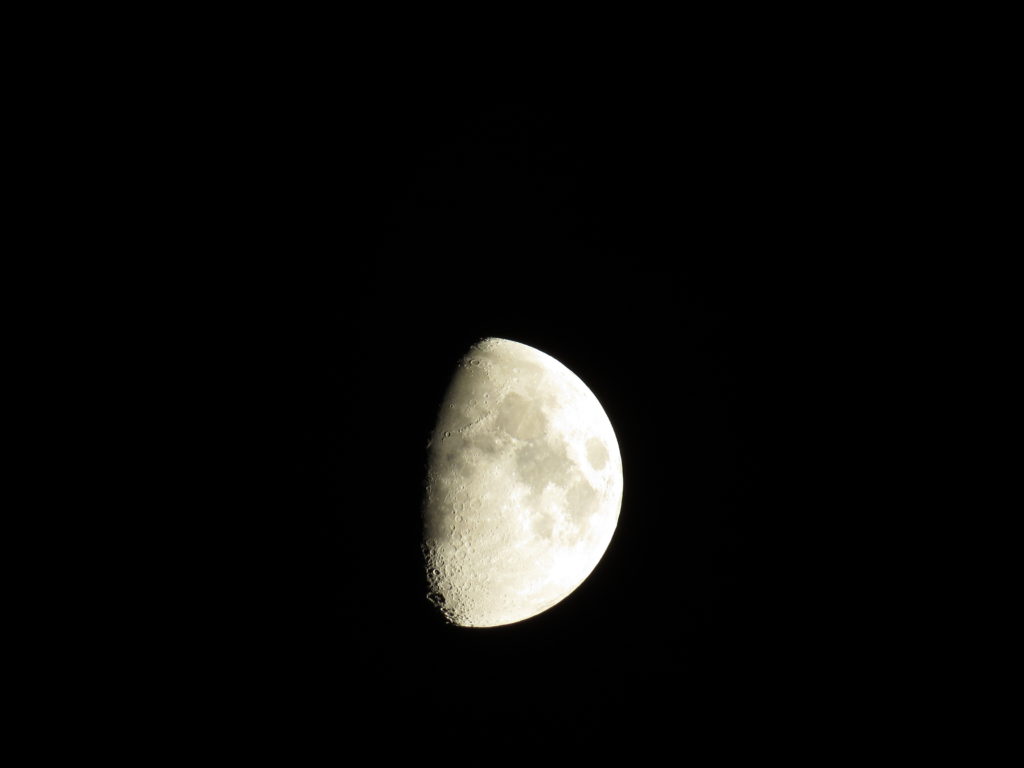
The bright glow makes a walk in the night possible without a flashlight or headlamp—we become like nocturnal animals—we can ‘see’ in the dark. But my favorite thing about those radiant nights is the moon shadows, especially of the bare trees on snow during the winter.
Oh, I’m being followed by a moon shadow, moon shadow, moon shadow, Leapin’ and hoppin’ on a moon shadow, moon shadow, moon shadow….Did it take long to find me? I asked the faithful light. Did it take long to find me? And are you gonna stay the night? — Cat Stevens
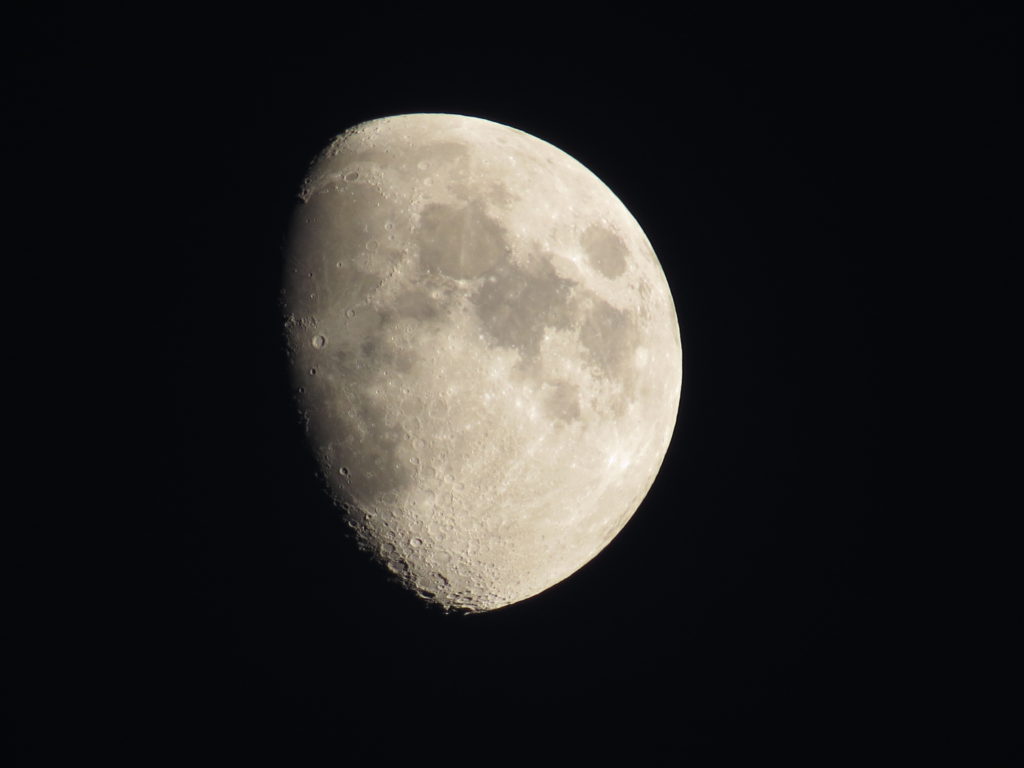
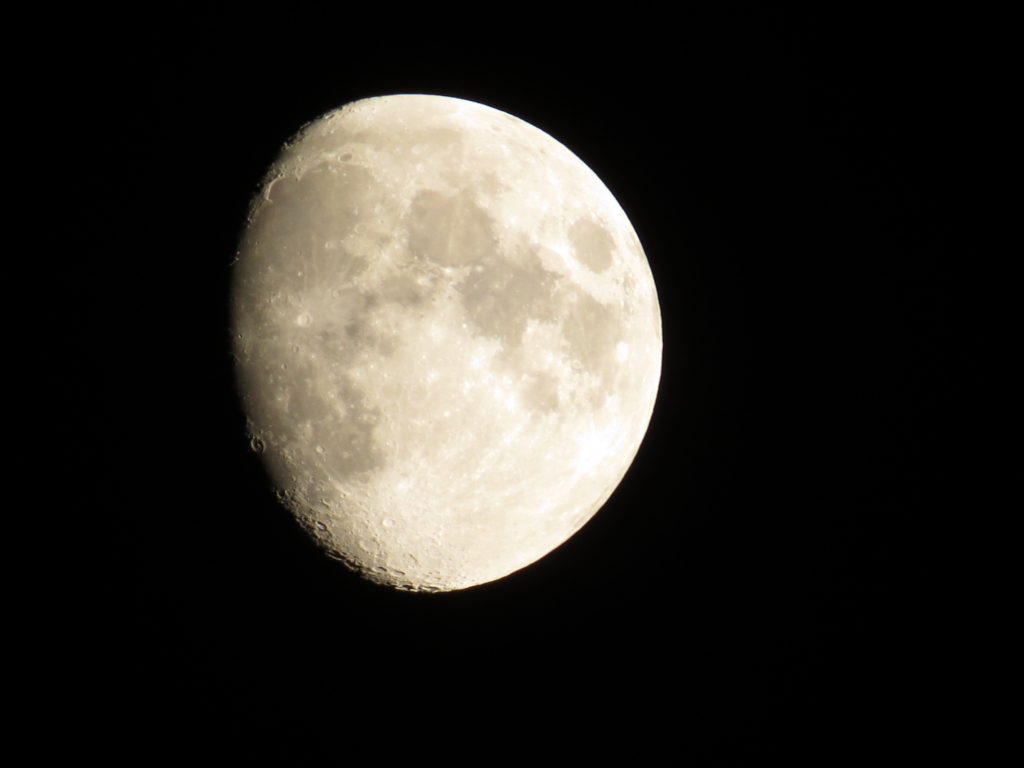
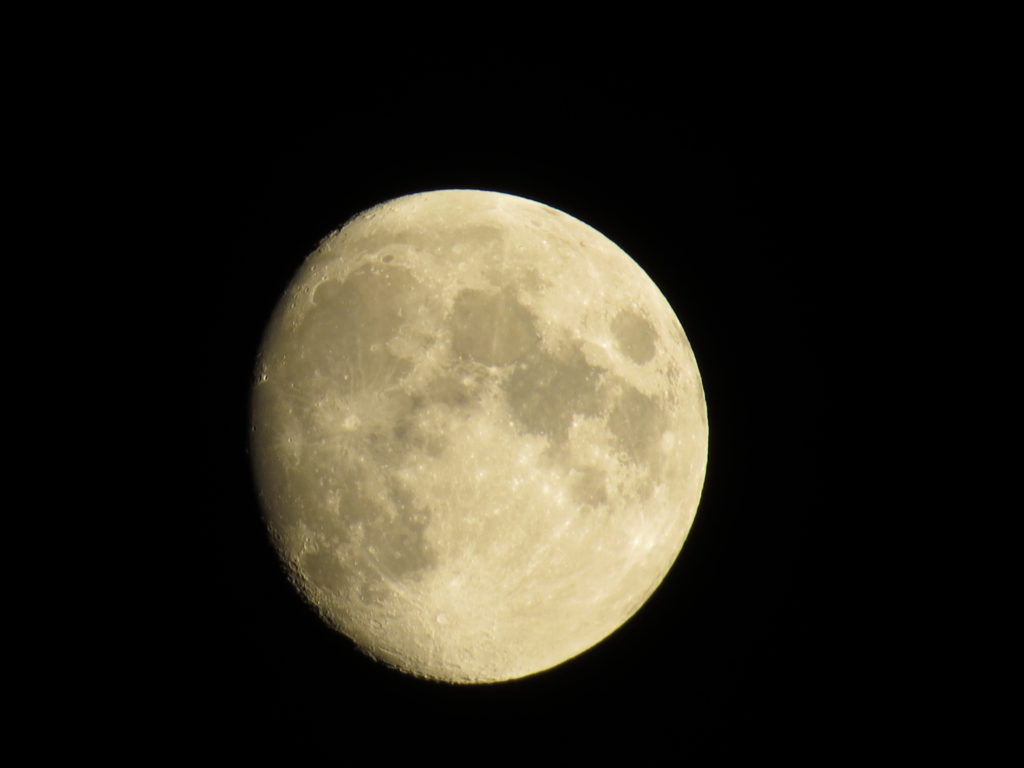
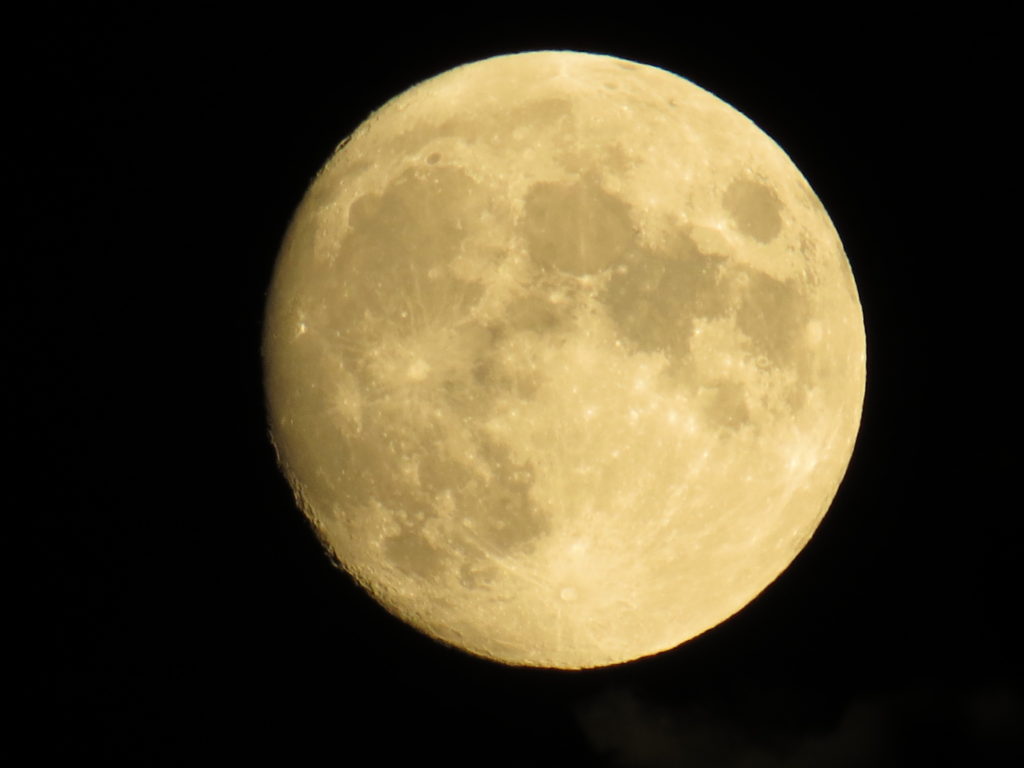
Failures are big and bright in my head—and not in a good way. They garner my attention, hold my chin, and tell me not to look away, even as I try to avert my eyes in shame.
But something has been happening with my bread crumbs (and loaves) of failure. I have been going back on that long trail of moon shadows and picking up my failure crumbs one by one—I look at them carefully and lovingly. Who was I when this happened? What were the circumstances surrounding me? Were there people around who understood the impact on me? Were they able to help me process what happened? That time I tried out for the chorus at school and didn’t make it? Humiliating and disappointing. But look, I went on to lead songs every day at church camp for three summers. I like to sing! I put that crumb in my backpack, and I now carry it with me. Each failure that blinded me with its big-ness is now in my bulging backpack—behind me, tamped down, lovingly contained. It is a part of me now. I am able to see more things and even appreciate how the brightness of those failures add to the picture of who I am. The faithful light took a long time to find me—or rather, it took me a long time to find it.
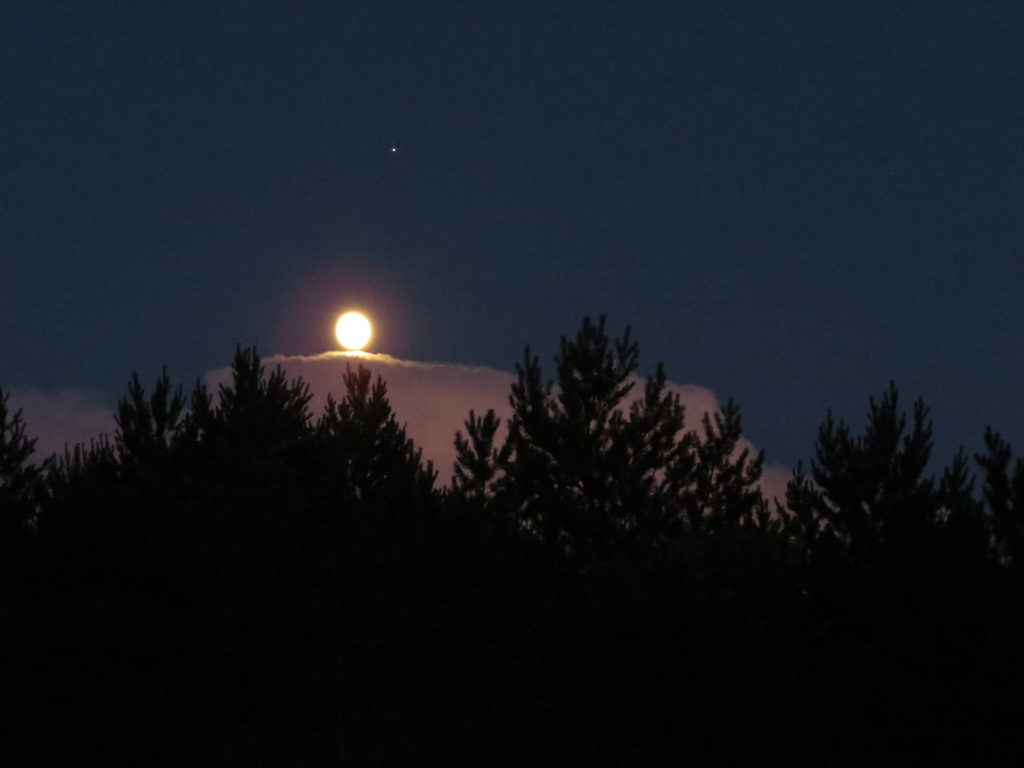
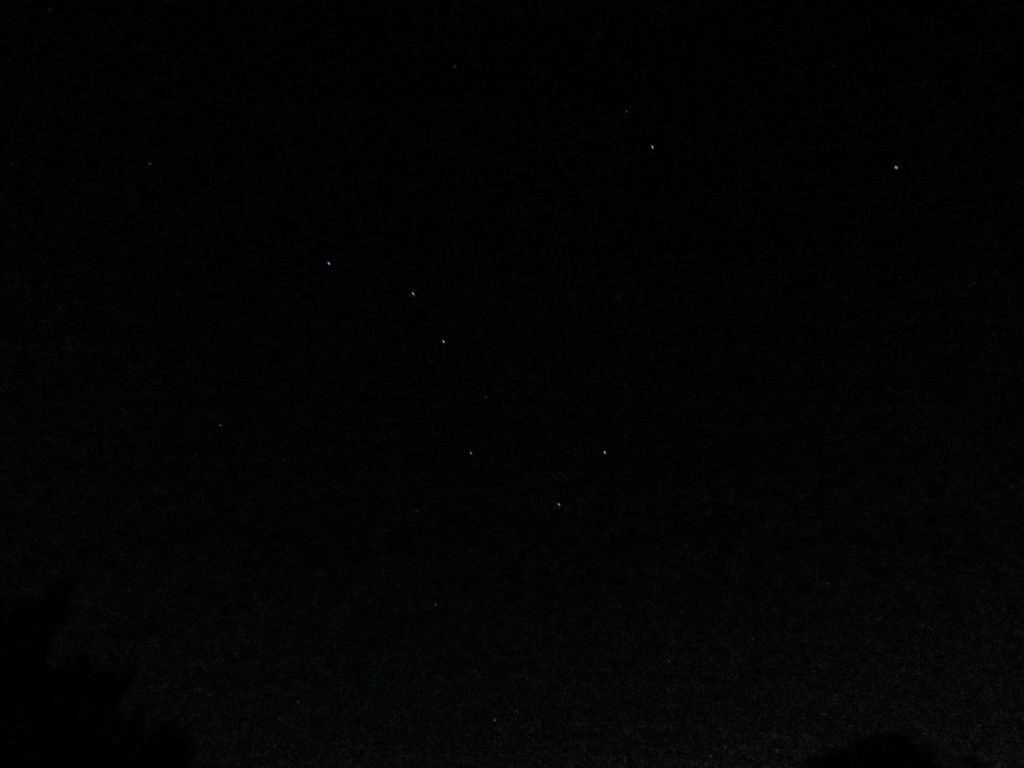
Every once in a while, my backpack spills open, and my failures morph into their previous monstrous selves, overwhelming me to tears and inaction. A reminder of where I’ve come from, yet a reminder of what I have over-come. Humbling and confirming all at the same time. I can swiftly and easily pack those crumbs back into my backpack and continue my journey. Looking up, I can see the stars more clearly now. I see the Big Dipper. The outer two stars of the bowl of the Big Dipper point to Polaris—the North Star—the tip of the handle of the even dimmer Little Dipper constellation. I adjust my gibbous backpack, turn towards my true north, and sing out as I walk on…”Oh, I’m being followed by a moon shadow, moon shadow, moon shadow…”
Our 20/20 Vision
Anyone who needs glasses knows that a lens or two can make all the difference in the world. With contact lenses, a person can ‘look’ like they have 20/20 vision, even as the tiny lenses float on the cornea in front of each eye’s intrinsic lens. Then there are camera and binocular lenses, microscope and telescope lenses, and lenses in a lighthouse, each performing a specific function in order for us to see more clearly. Anything with a curved surface that is transparent—even a drop of water—can be a lens that focuses light.
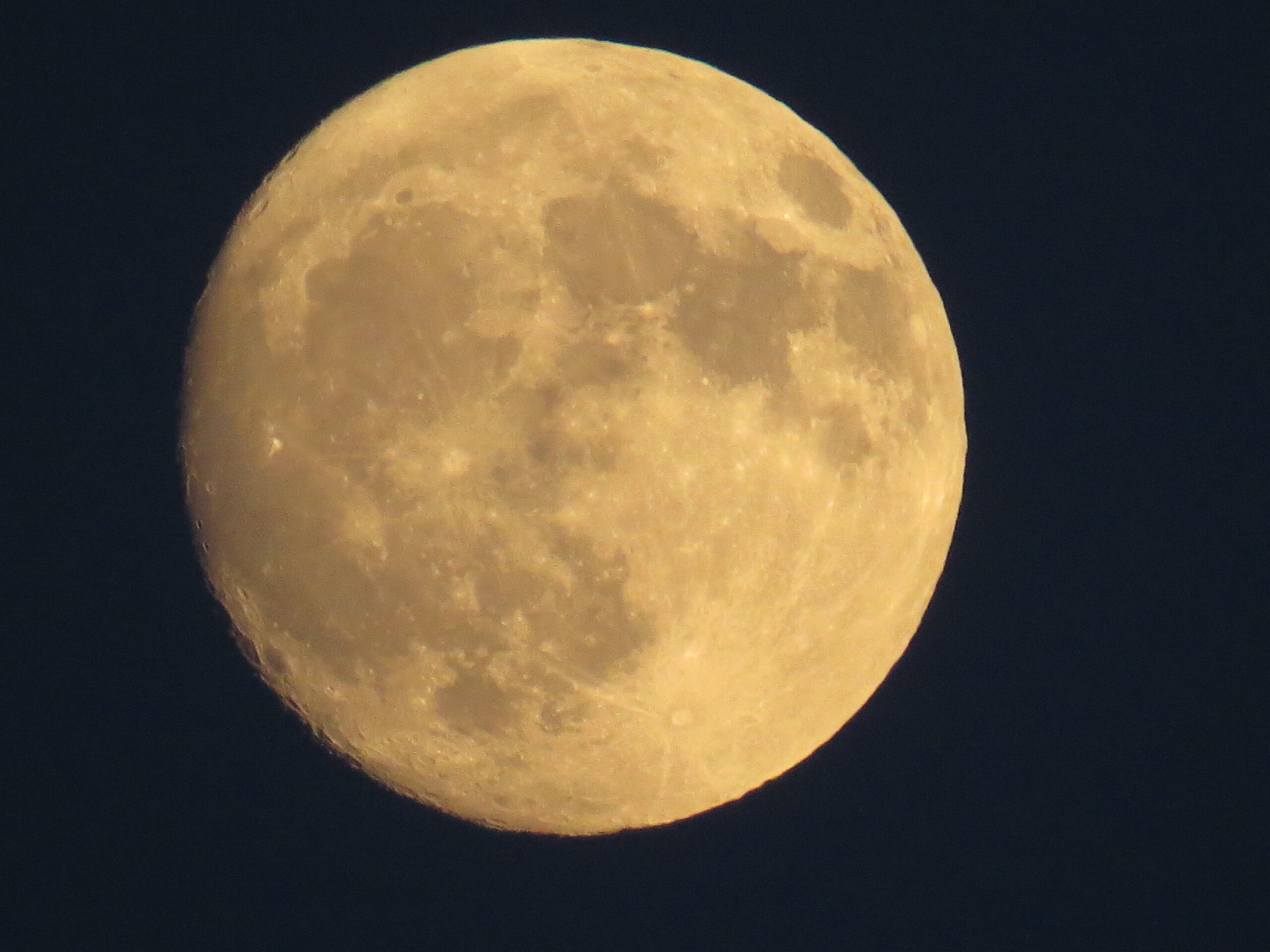
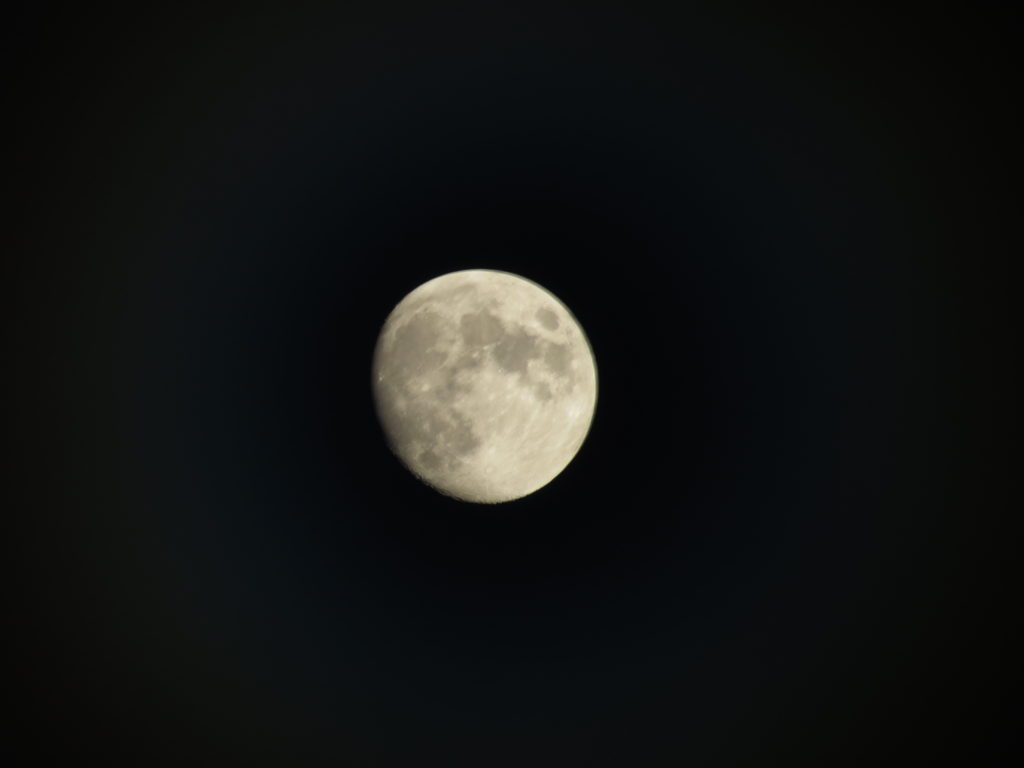
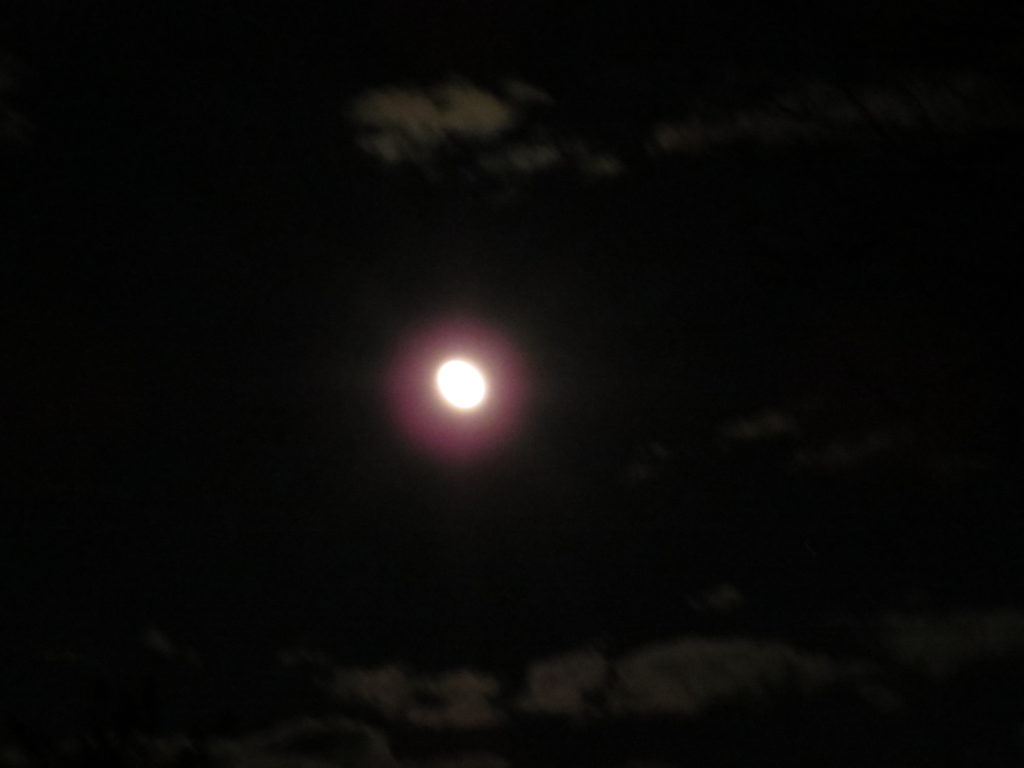
Thursday evening I took my camera from the cooled inside of our house to the warm, humid patio to snap a picture of the nearly-full moon. The muggy, warm air fogged the lenses of my glasses and of the camera. I swiped away the moisture with my shirttail. The moon is intriguing, even in its cyclic sameness—a lunar body close to Earth that reflects the light of the far-away Sun. Even without a change in the camera apparatus, the color of the moon can look different from photo to photo—from a greenish tinge…
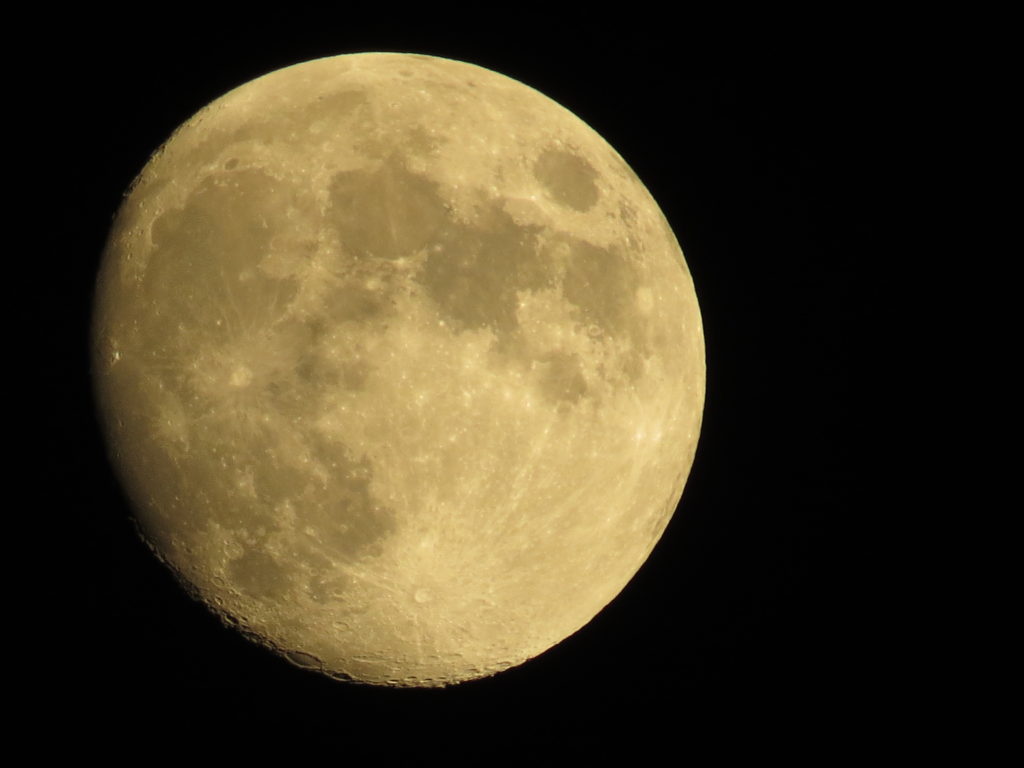
…to a rose tinge…
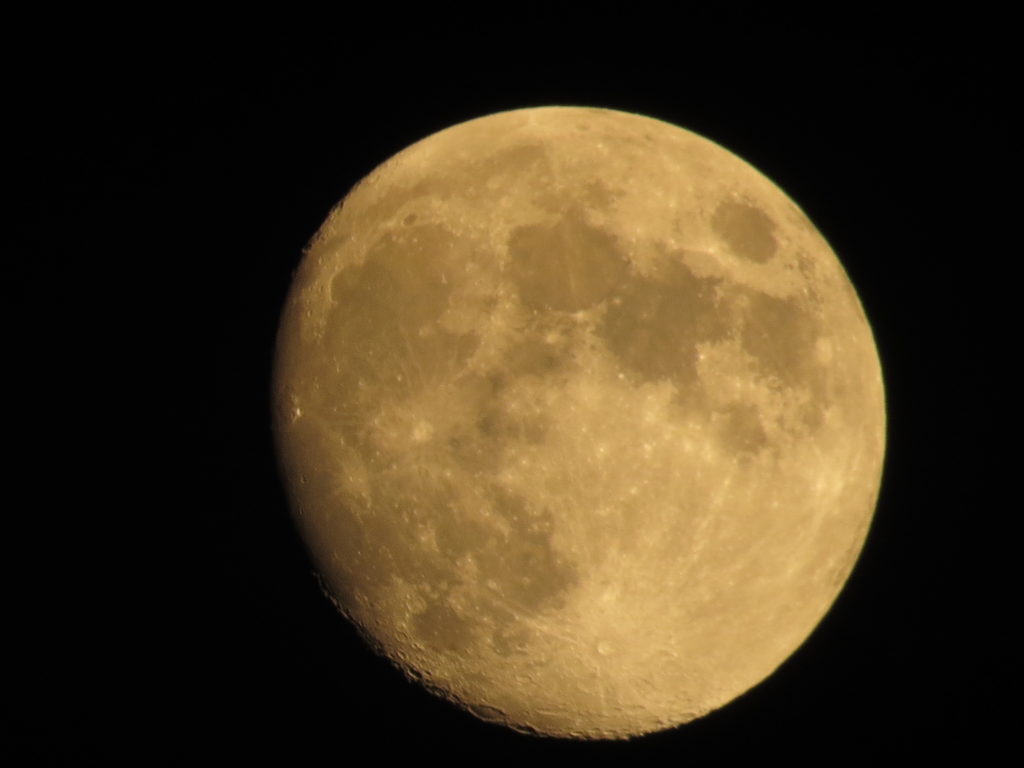
…to gray.
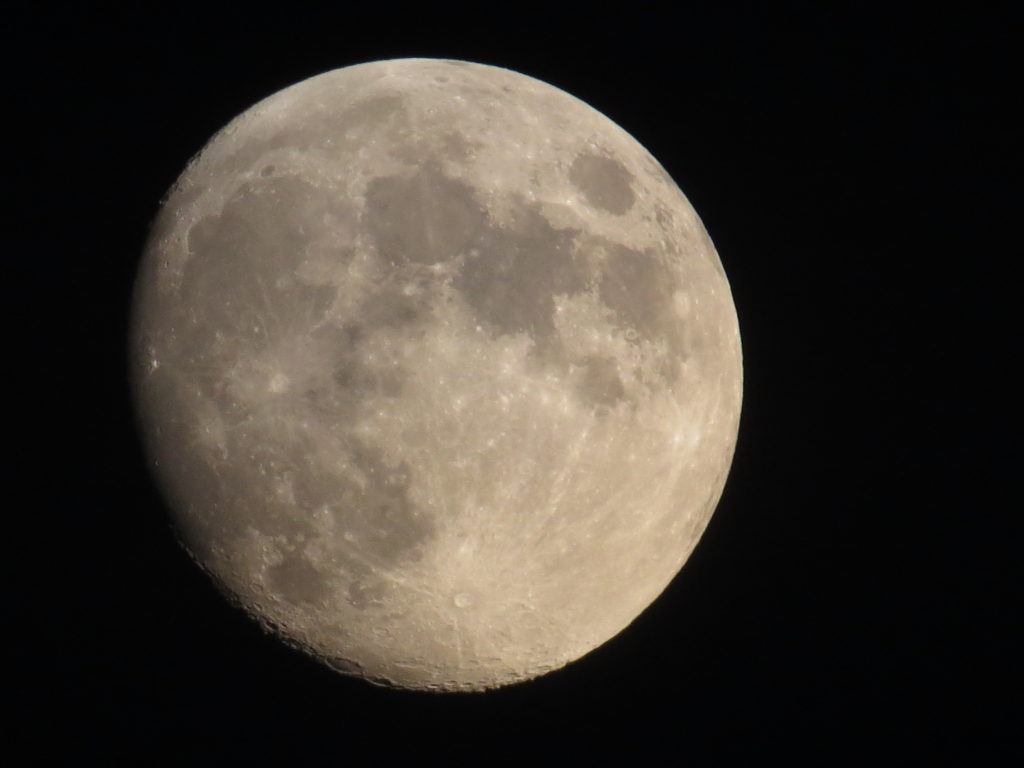
As I zoomed out for another shot, I noticed a faint circle of color around the moon. The colors changed and got brighter.
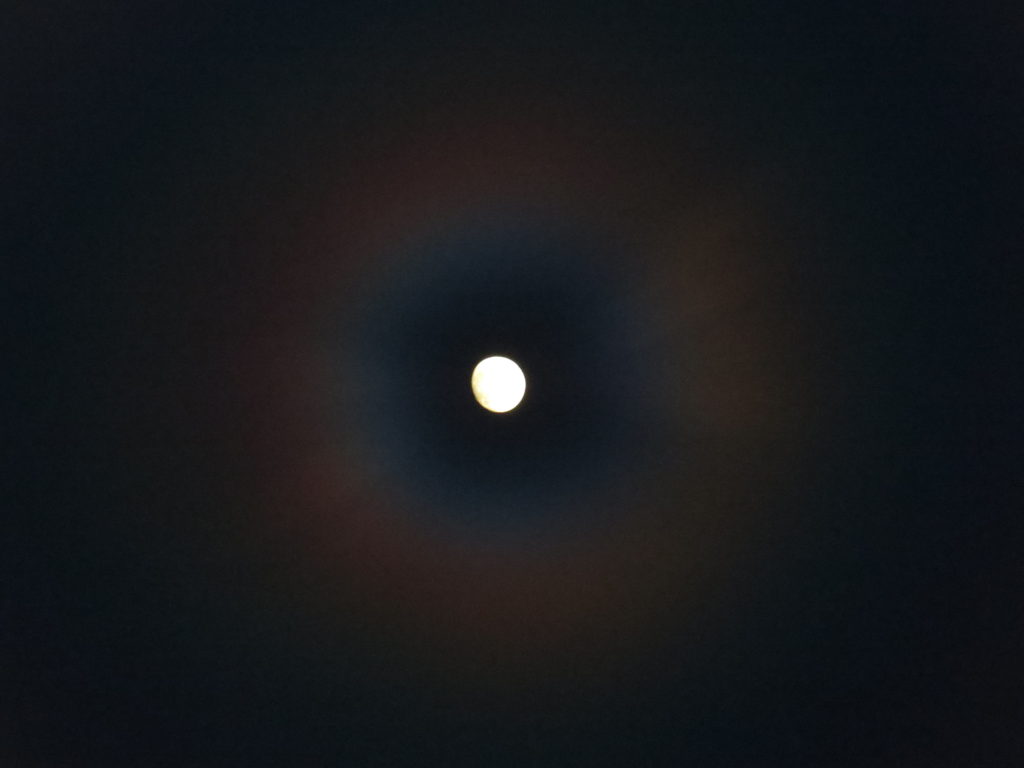
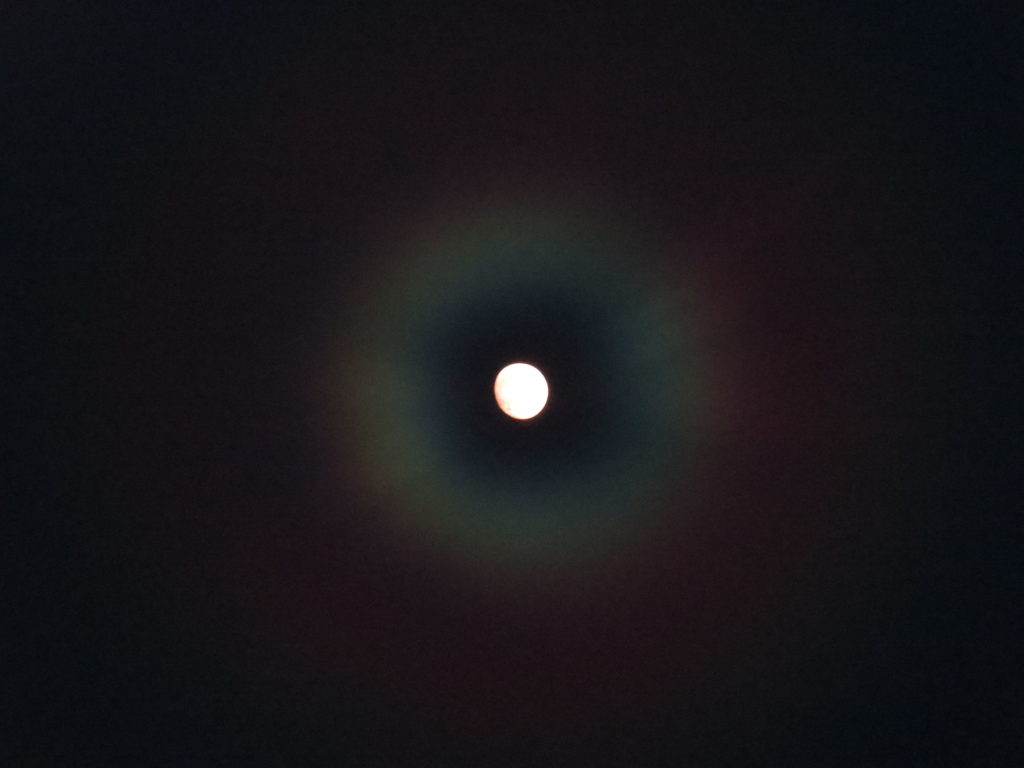
I realized that the rainbow colors around the moon were only seen through the camera lens—the humid air was condensing on the lens once again and fragmenting the moon light into its spectrum of colors!
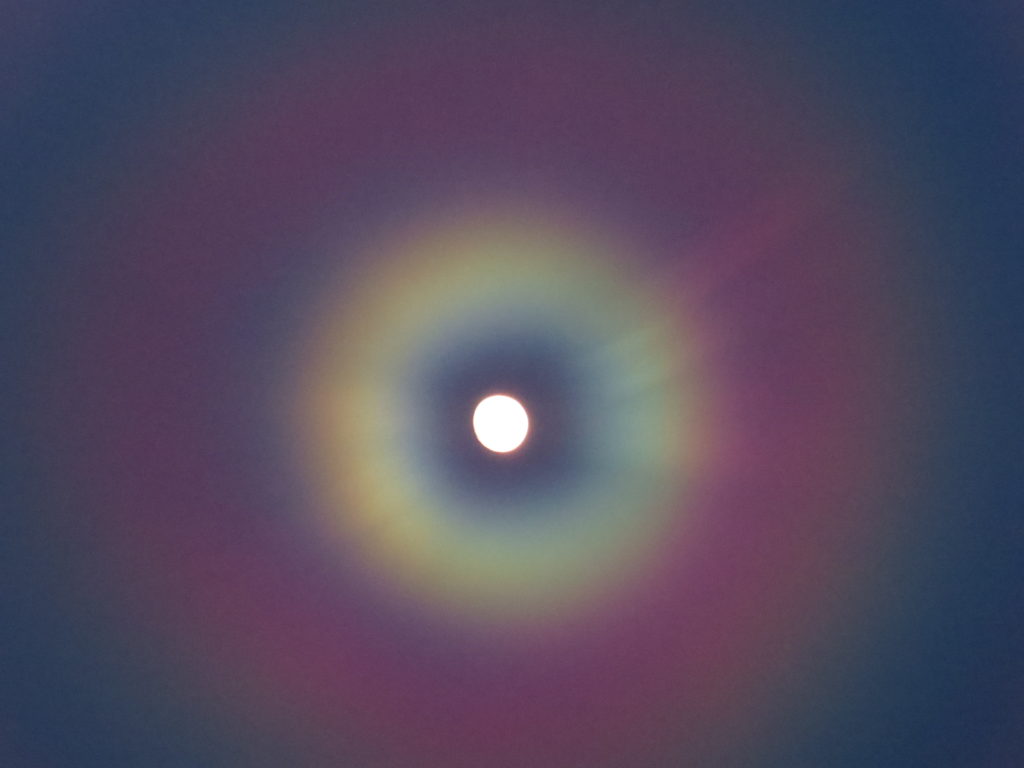
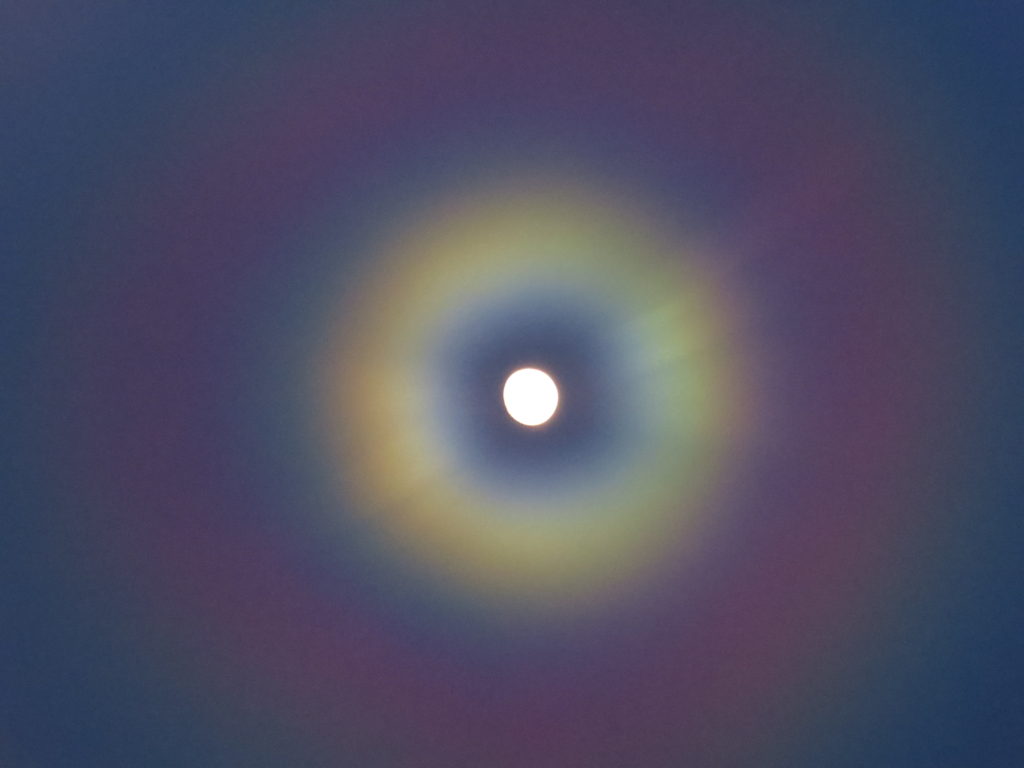
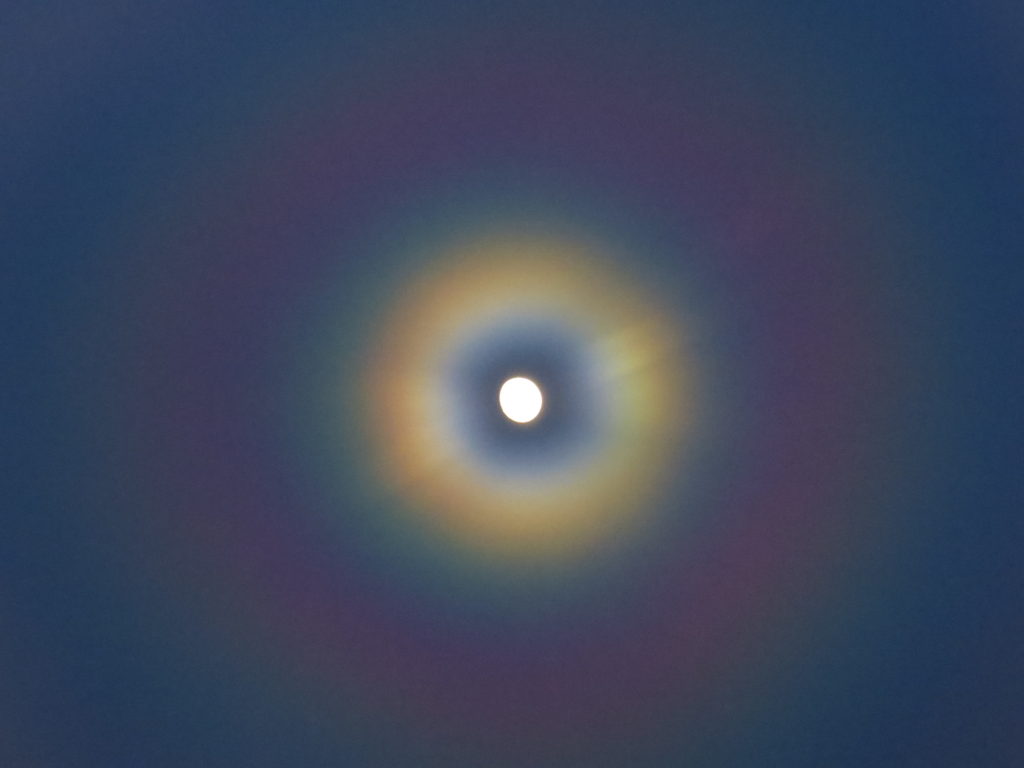
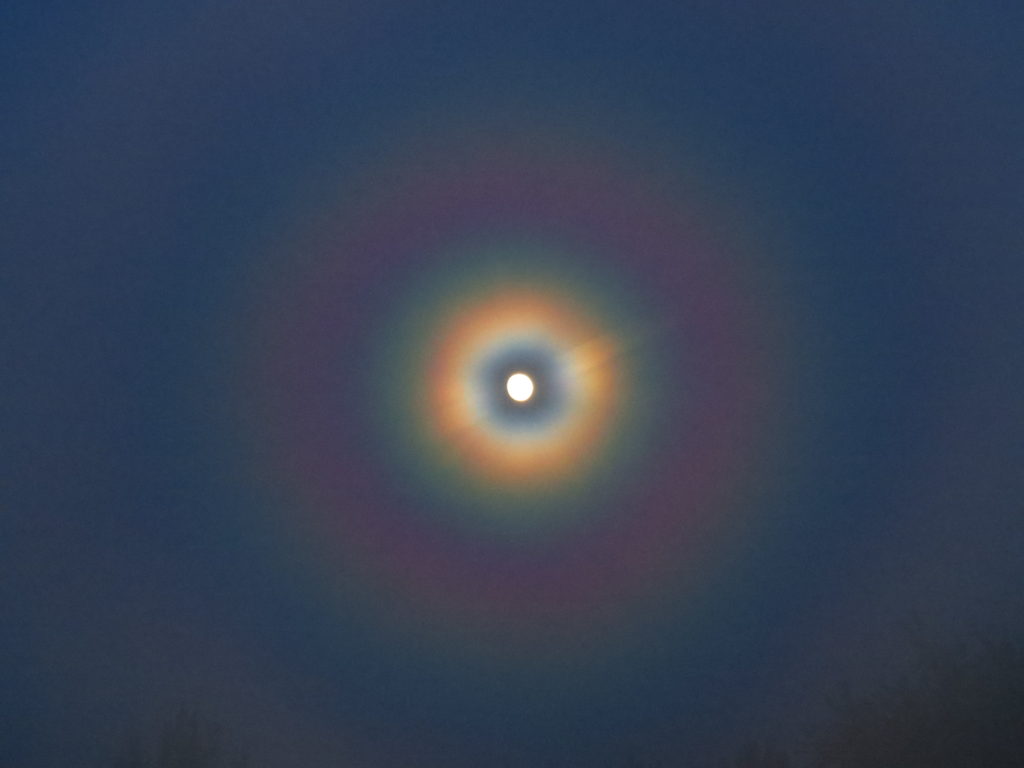
Talk about intriguing! I was mesmerized with the colorful rainbow light around the beautiful nearly-full moon.
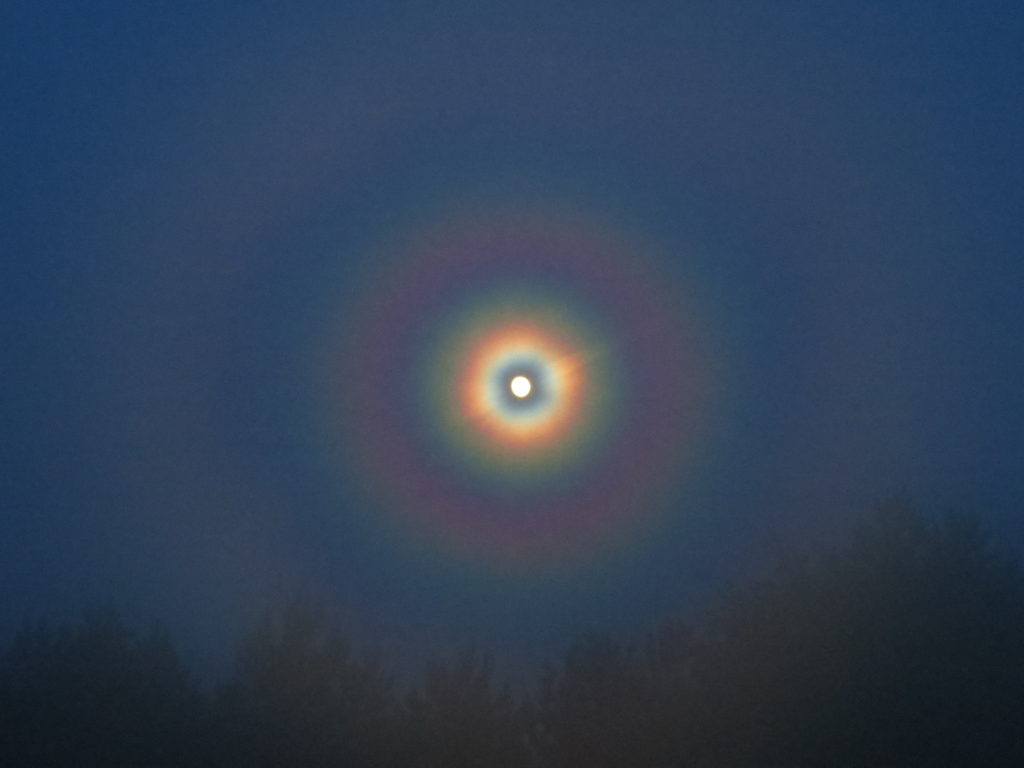
I was so distracted by the concentric circles of color that I ignored the mosquitoes landing on my skin.
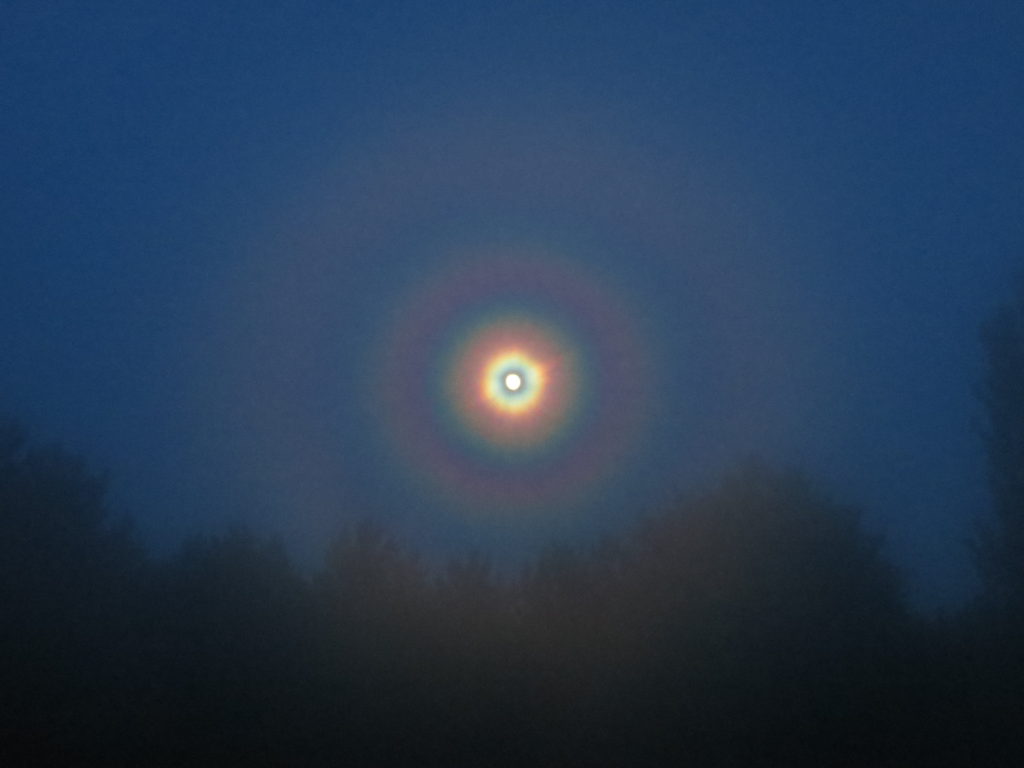
Even though I knew the phenomenon was the result of the hot, humid weather, I believed in the vision of my rainbow moon.
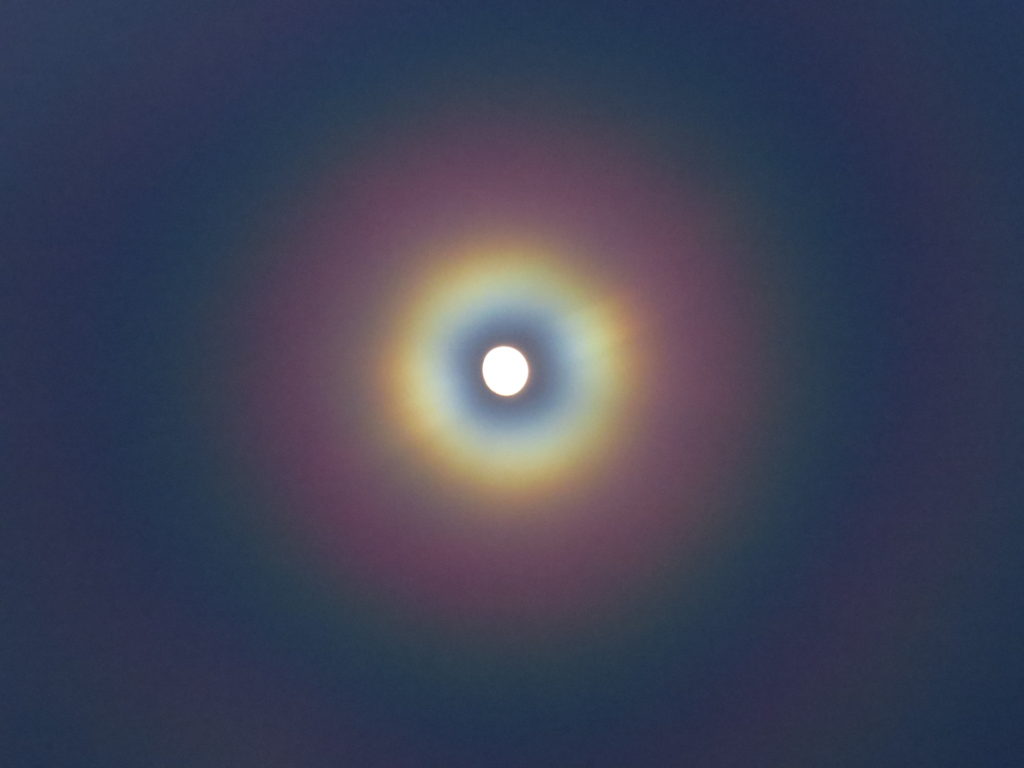
I mean, look at these photographs, look through the camera, how can you not believe?! (The only thing better would be a unicorn flying by.)
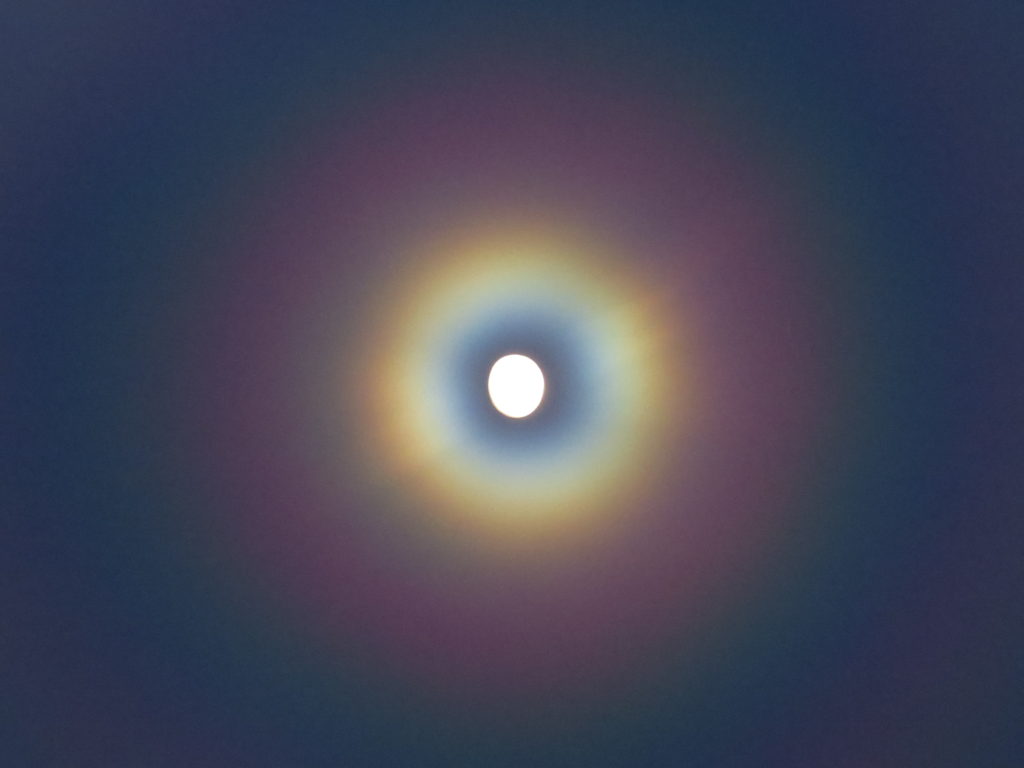
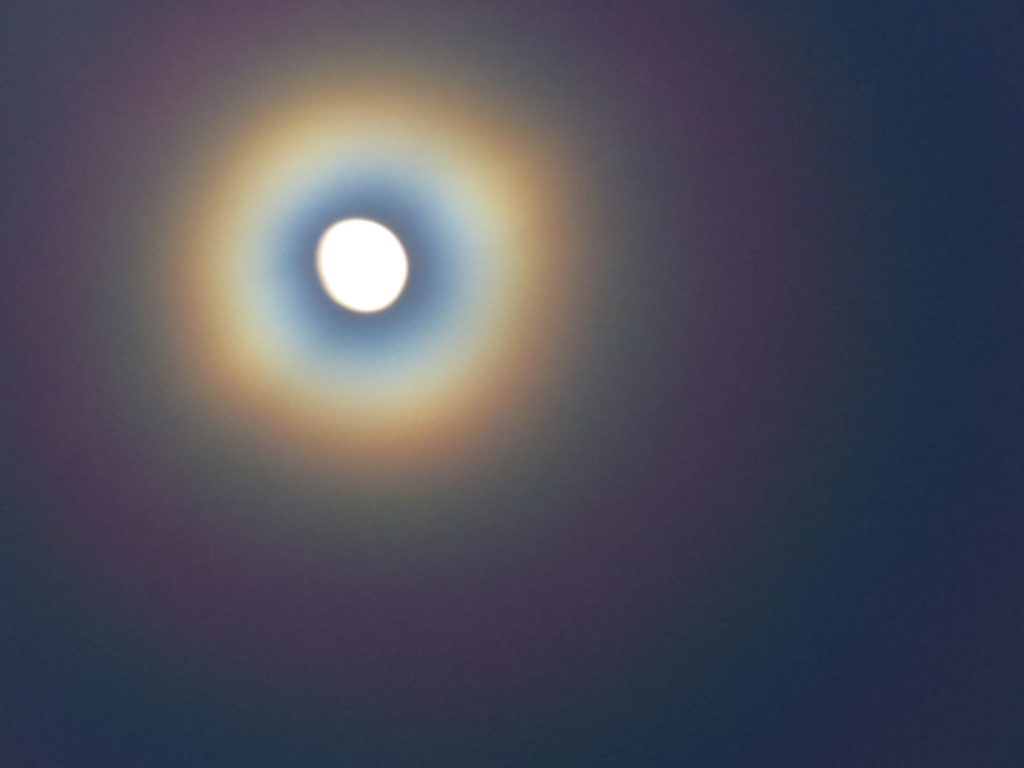
What kind of lens do we look at the world and our lives through? Is something condensing on our lenses when we look at other people? I lived with rose-colored glasses for a good part of my life—it was a coping mechanism I unconsciously employed in an attempt to make me feel safe, to make it look like there were no bad things or bad people in the world. In contrast, there are many people wearing dark-colored glasses who see a certain kind of people as bad, who feel like bad things are happening all around them. Neither vision is the truth, but it is our truth that we see through our lenses. Our fogged up lenses distract us from the very real experiences and happenings of life—whether it’s rainbows, unicorns, monuments, or masks. The energy is fragmented, scattered to peripheral issues that pull us away from the painful reality right in front of us. It is a coping mechanism. We all want to feel safe. Deflect and deny. In truth, the painful reality we are most afraid of is not what is in front of us but what is inside of us.
We all have lenses through which we observe the world. Many are helpful and meaningful to our life’s work, to helping others, and to our relationships. But oftentimes we have a foggy lens—what we see isn’t reality. We need to clear that lens with a clean cotton shirttail. Focus the light on our hearts. Ask yourself, “What do I see in me?” Then the rainbows (as beautiful as they are) and the fear can fall away, and we can see the moon as it is. We can see individual people as they are (just like me in many ways.) We can see harmful situations and a way to make them better. We can want for others what we want for ourselves. It can make all the difference in the world.
Earth Day, (Re)Birth Day, Worth Day
On this Easter Day and Earth Day Eve, I am struggling with writing about this convergence of really important things. What is ‘worth-it’ to us as individuals, as businesses, as a country? What values are we willing to throw under the bus to get our way for power or money or whatever reason we deem important? Why do we even celebrate Easter, Birthdays, Earth Day, church days, Spring days? We don’t celebrate for the sake of celebrating—we celebrate to honor the underlying message or value of each of those days.
We have a number of friends who have or soon will be celebrating the Birth Days of their children or grandchildren. What a glorious event to witness the birth of a new human being! But just as magnificent is witnessing the growth and development of every person, no matter their age. We never stop being worthy of being celebrated.
The Re-Birth Day of Easter is celebrated today by Christians around the world. Just when things look bleak and dark, when hope seems lost, when things do not go as they should or as planned, there is a transformation that startles us from gloom and despair to light and joy. Transformation of that magnitude deserves celebration!
Earth Day is a reminder of all the glorious, life-giving gifts that our Earth offers to us every moment of every day. It is a time when we examine what is worthwhile in our daily lives. How much worth do I place on being able to breathe clean air? Is it important to have clean water to drink, to fish in, to swim in, and for our ocean animals to live in? Should companies be allowed to emit whatever they want into the air and water, even when it is known to be harmful? What things can we do to mitigate the extreme financial, emotional, and collateral hardships that occur due to frequent extreme weather events? What is the real cost of the destruction of the rain forest? How can I make a difference? For over forty years, Earth Day has been a reminder to us of these and other questions.
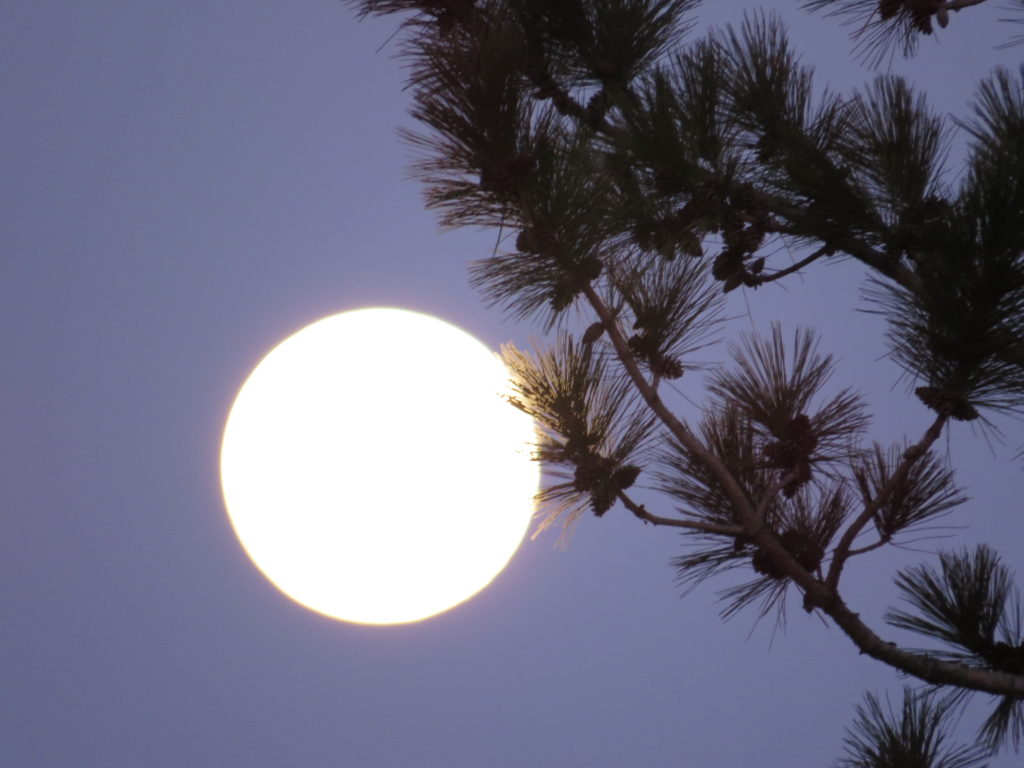
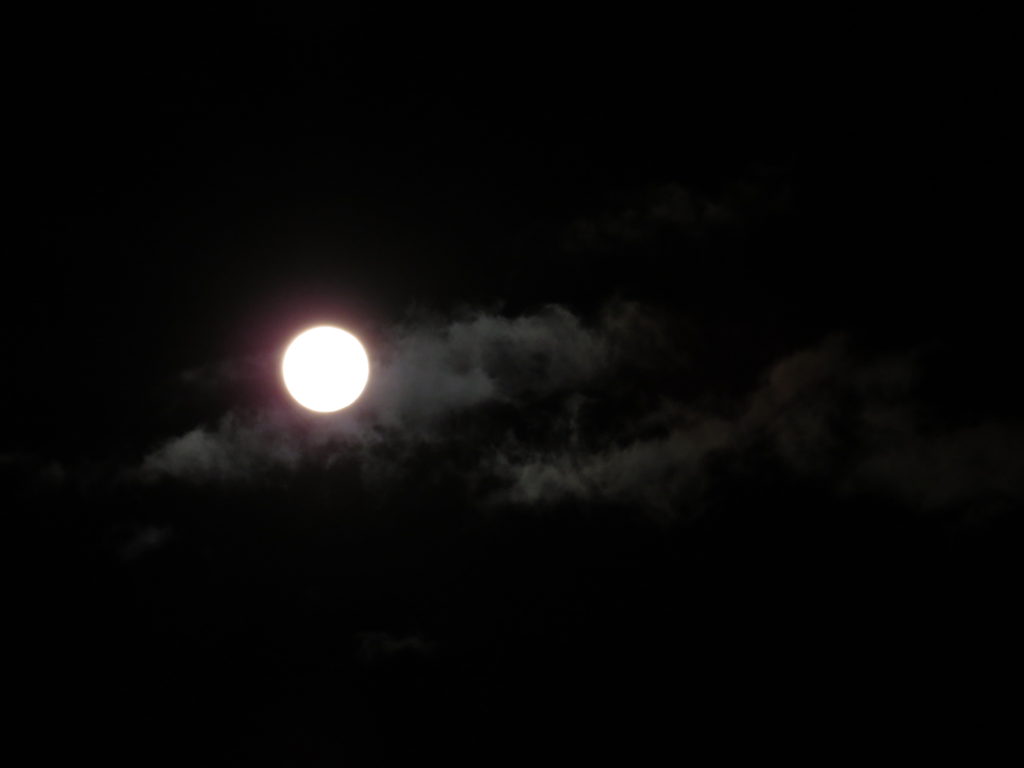
The April full moon or “Pink moon” shone bright on Holy Thursday and Good Friday/Passover. It is called “Pink moon” after early-blooming Wild Ground Phlox and other pink flowers that symbolize the start of Spring. Just as ‘blue moon’ and ‘blood moon’ don’t indicate the color of the moon on the given months, the Pink Moon doesn’t represent its color. But clouds and lighting captured a pink glow nonetheless.
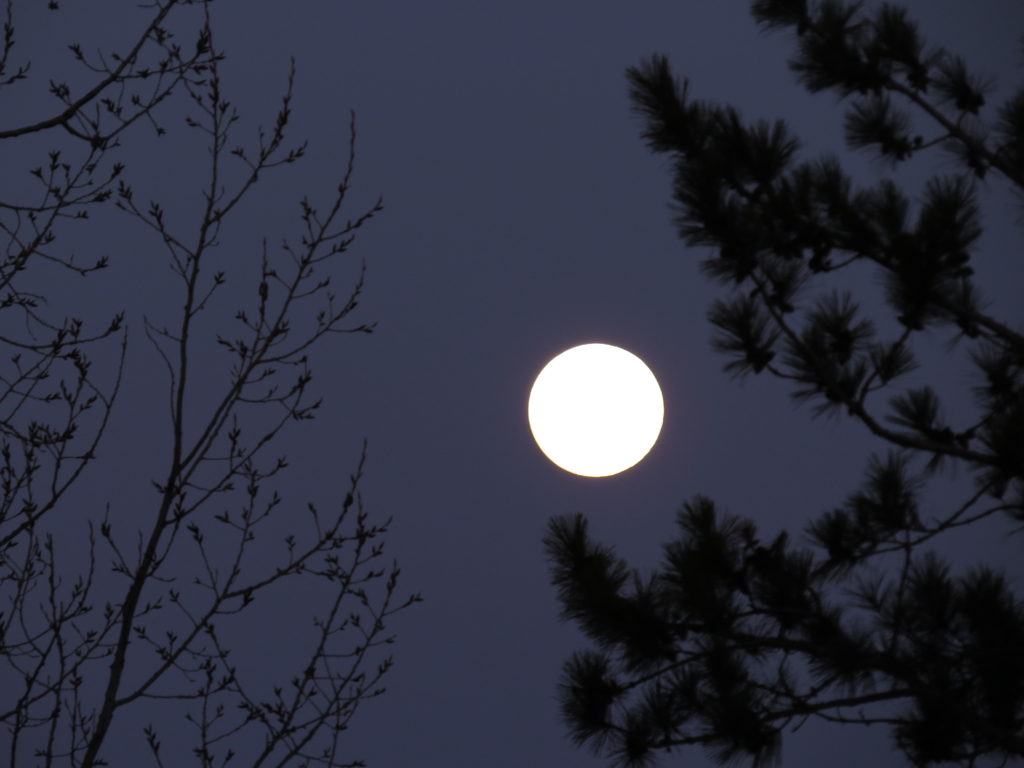
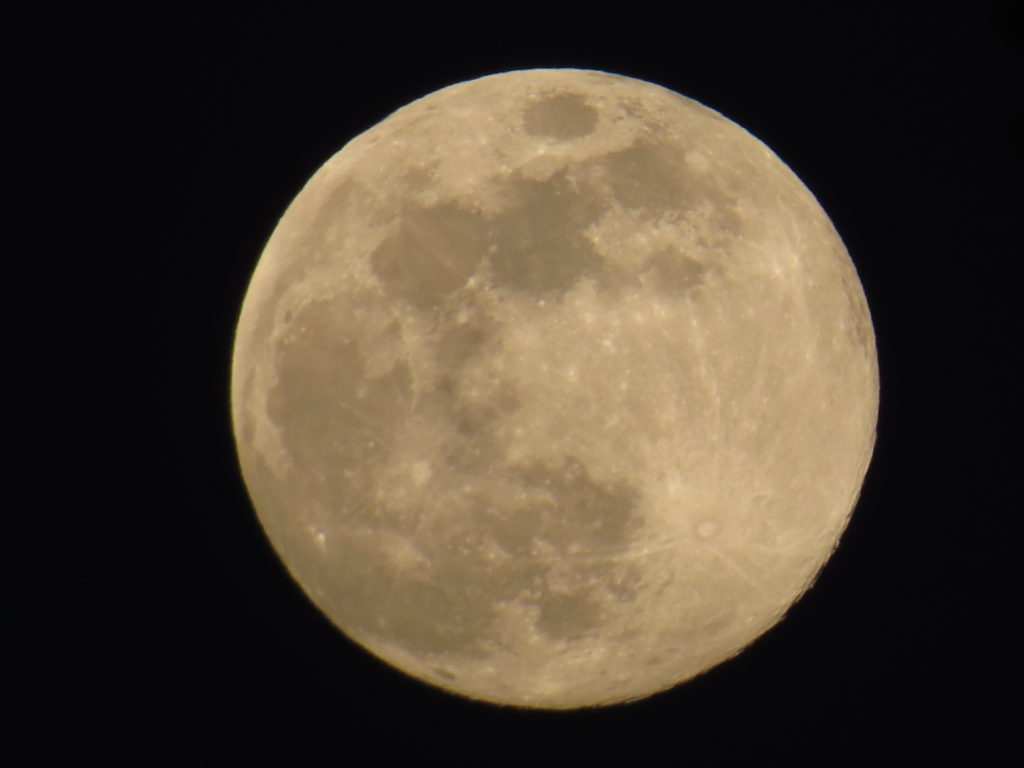
I like how the moon illuminated the pine needles as it ‘passed by.’
We are charged with being stewards of our Earth—caretakers of the water, air, and land. At times I feel despair that these resources are being used and abused with little thought for the world that our children and grandchildren will inherit. If we deem them worthy for our own selves, then, as caretakers, it is imperative that we make sure they will be available in the future. Celebrations are a time to honor and acknowledge the gifts of a new life, a developing, maturing life, the core values of a religious or spiritual life, and the very essence and sustenance of all our lives from the Earth. I challenge you to be an illuminating presence, full of goodness and mercy, as you pass by the people and places in your world.