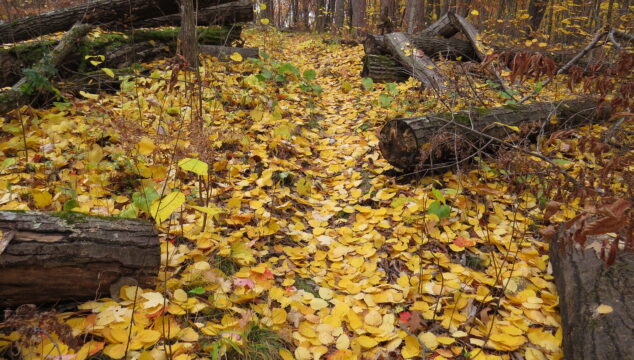
Come walk with me in the peak Autumn beauty of the Northwoods. To say that I love this time of year is an understatement. Most everyone can appreciate the colorful falling leaves---it reveals the 'true self' of a tree when its leaves are no longer producing chlorophyll. Their true colors are revealed, and there is something simple … [Read More...]
Storytellers and Swimmers
I cannot begin to count the number of days in my life that have slid by in a blur. Some were in the self-centered days of early childhood when as children, we concentrate on getting our needs met and learning about the world. Others were in the extreme busyness of going to graduate school while juggling the activities and needs of three kids. Still others were once again in self-centered mode when pain could not be relieved, and my world shrunk down to cocoon-size in an attempt to manage the overwhelm. I have no negative judgement of those times—we do what we have to do in any given situation. But because of plenty of those blurry, constricted times, I am very aware of the times that are sharply outlined, slowly delicious, and wonderfully expansive for my mind-body-spirit freedom.
A good way to discover that mind-body-spirit freedom is to find some water, trees, and wild sky to park yourself in for a few days. The ‘agenda’ becomes play in the water, hike to the hill-top, and watch the moon rise over the trees. The process originates from our senses—noticing what we see, hear, smell, taste, and touch. And all of the feel-good sensing and activities are grounded in our bodies, memories, and soul by sharing them with people we love who love us. It’s a win-win-win.
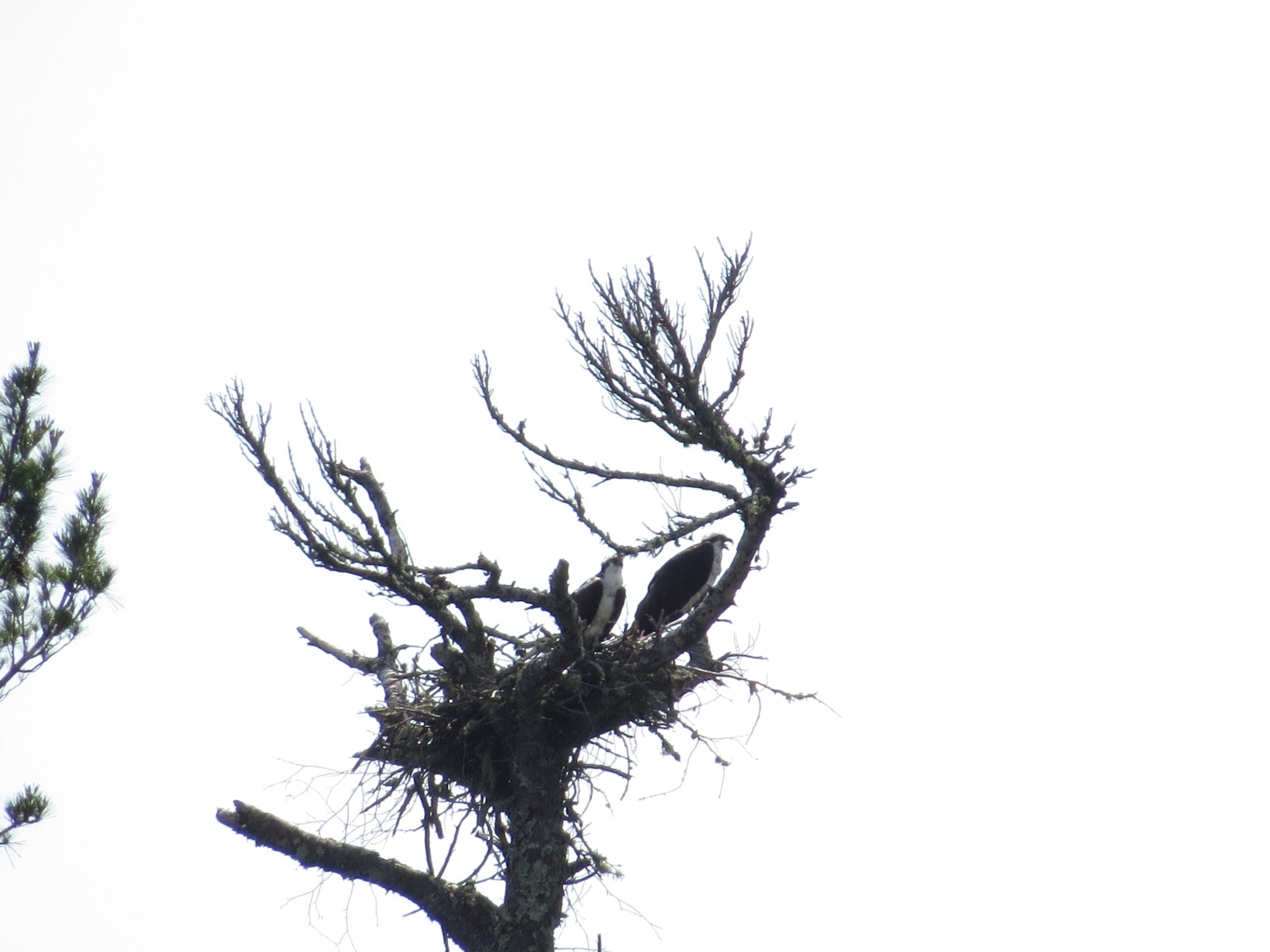
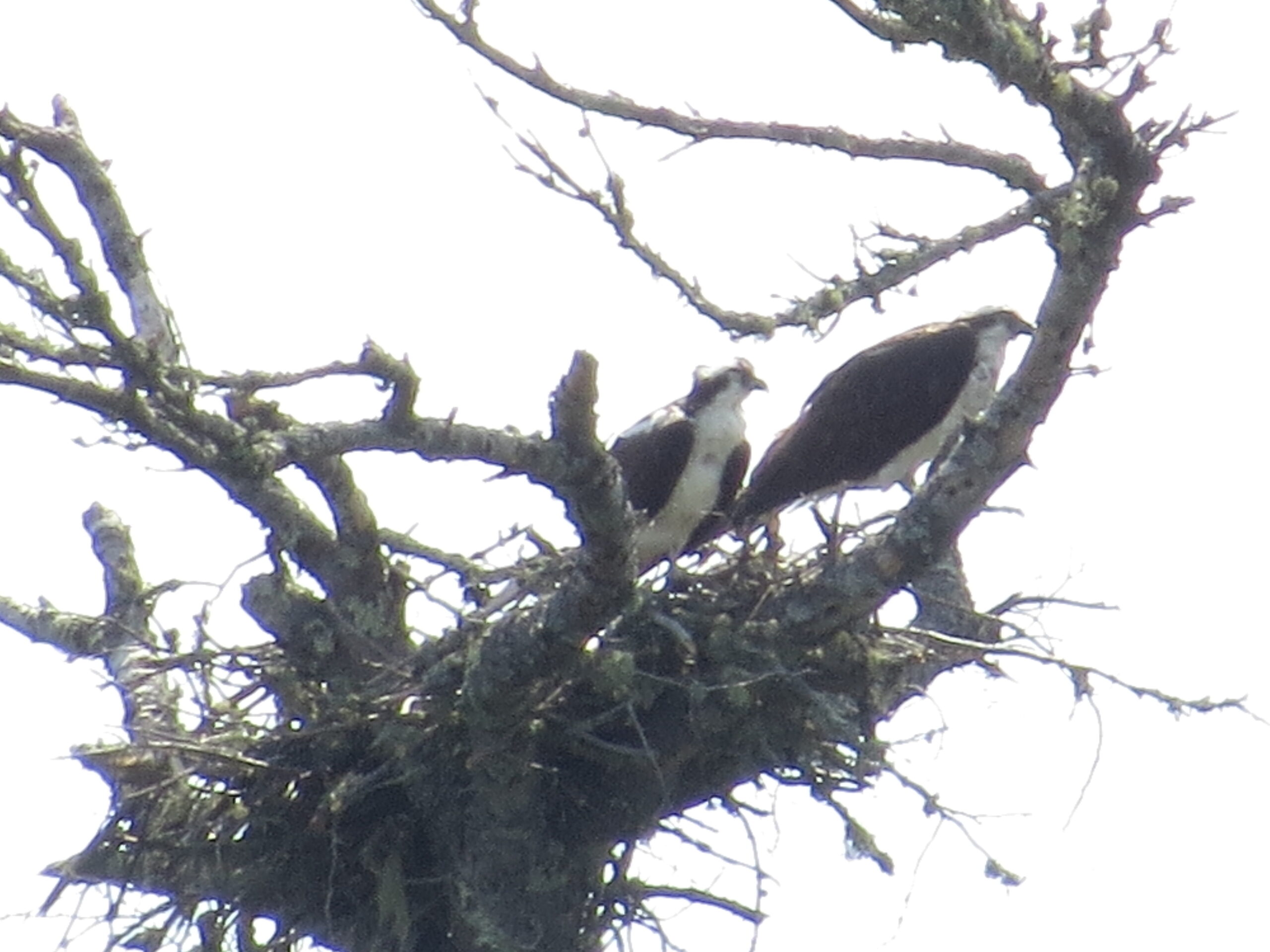
One of the first sounds I heard was a loud, chirping/cheeping chatter. It sounded like a much louder version of the baby chicks we used to house on our back porch until they were big enough to move to the chicken coop. A pair of Osprey sat in a haphazard nest in the dead top of a Pine tree and told their story to all who could hear them.
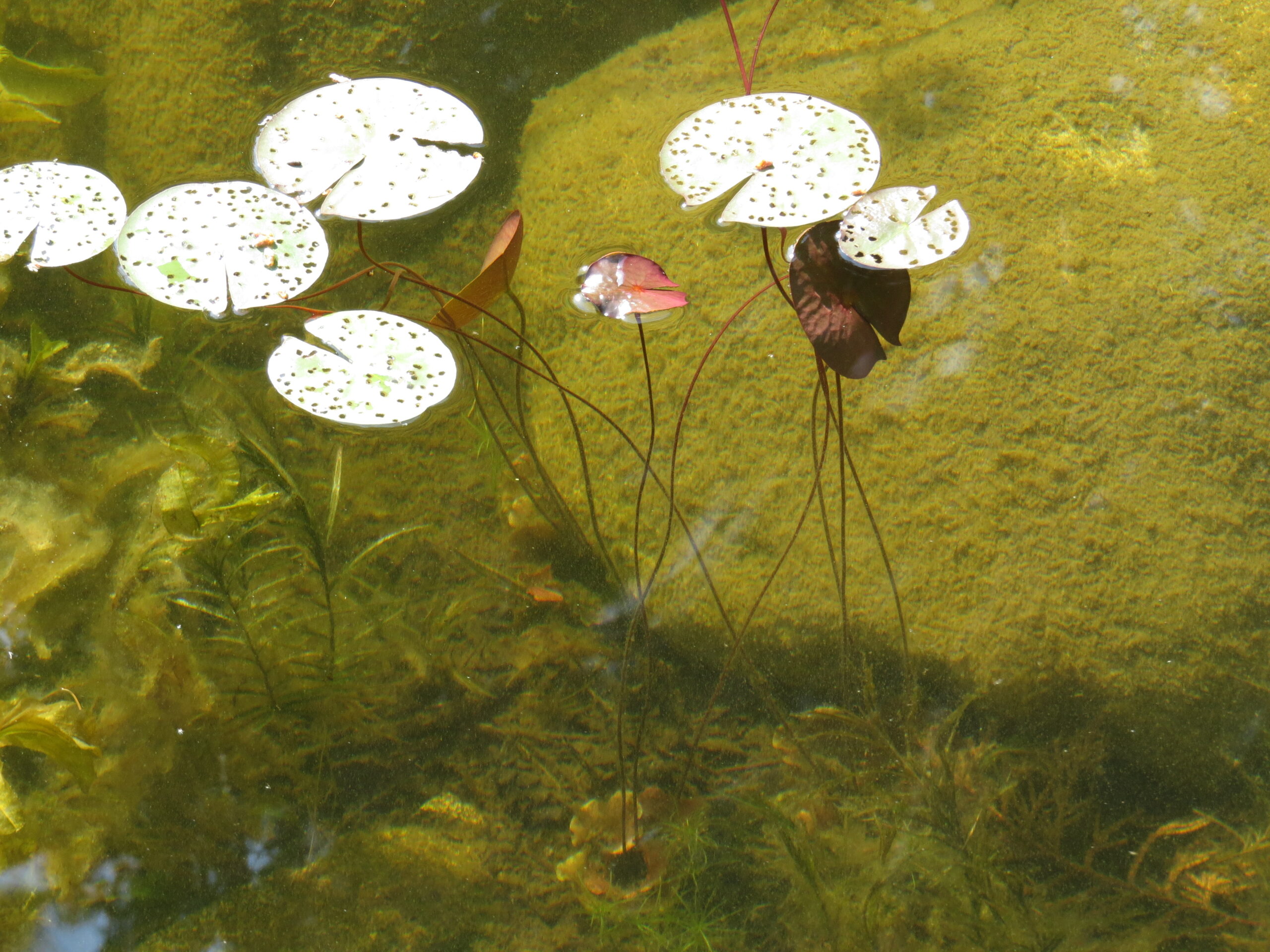
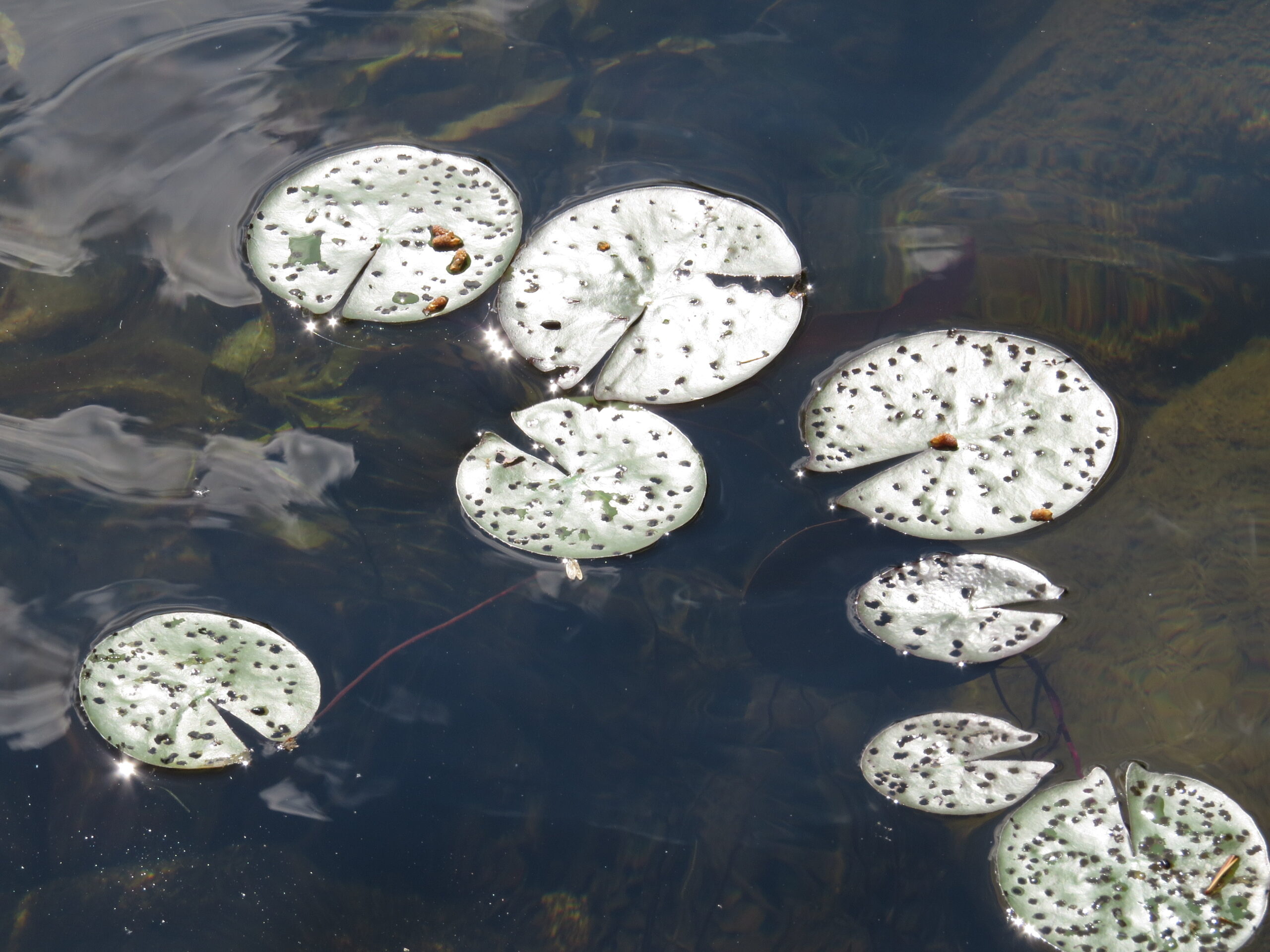
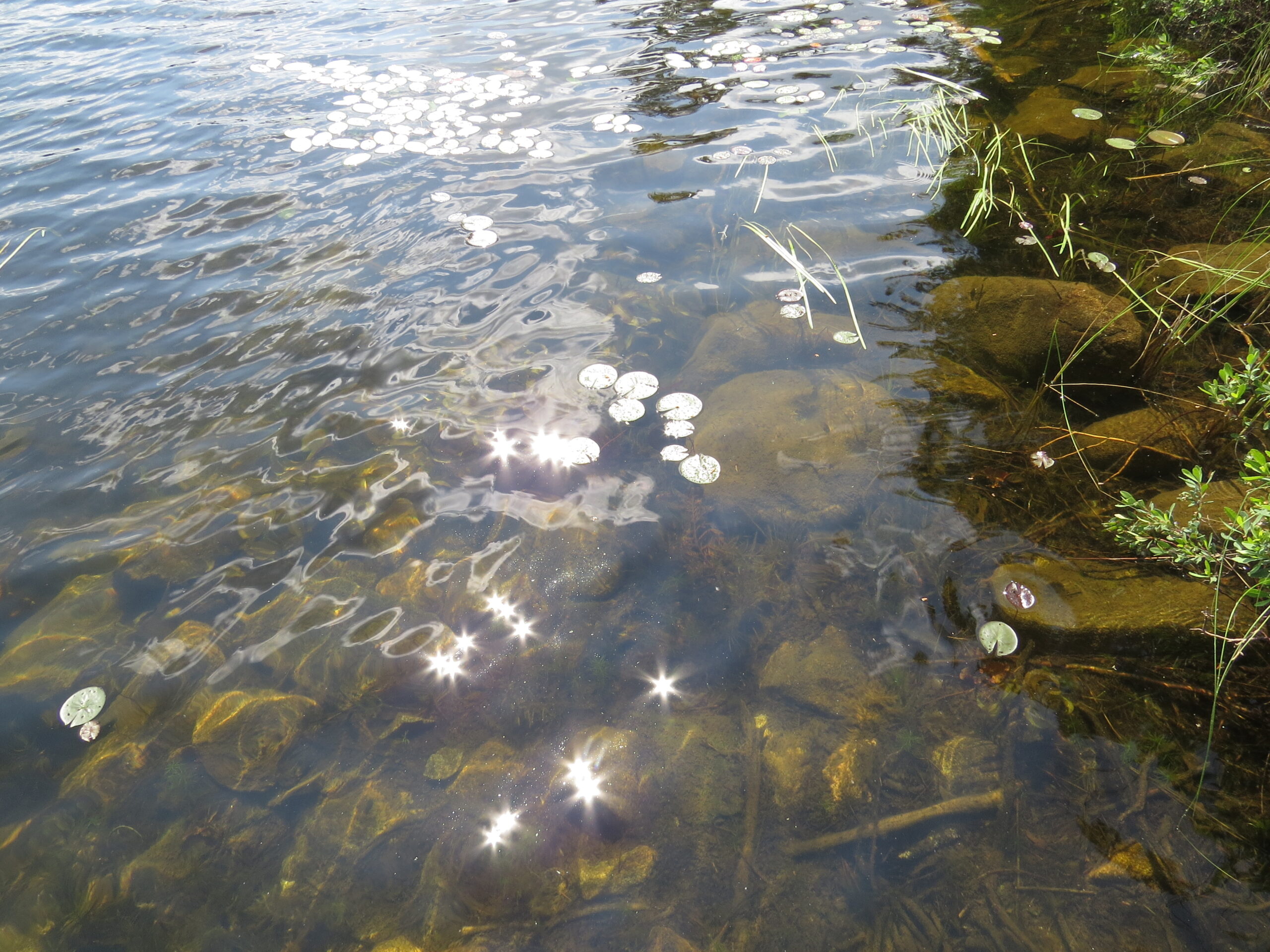
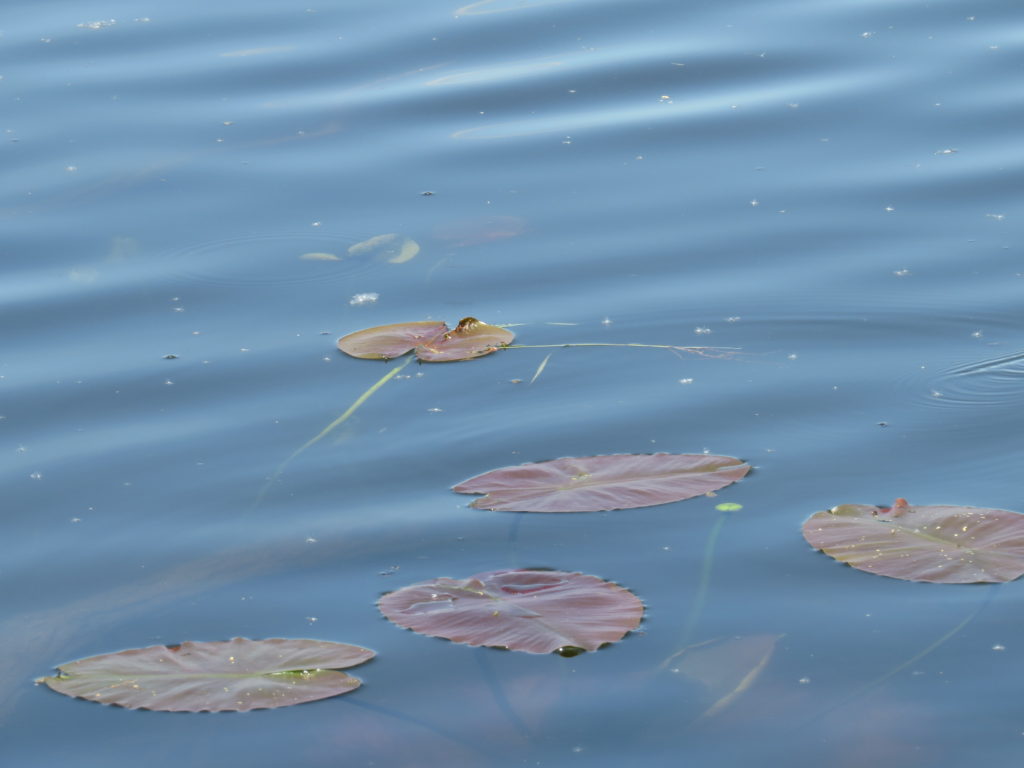
The water the Osprey overlooked and fished from was clear and cold. Red-stemmed Water Lilies floated on the surface like silver coins, along with the silver star reflections made by the afternoon sun.
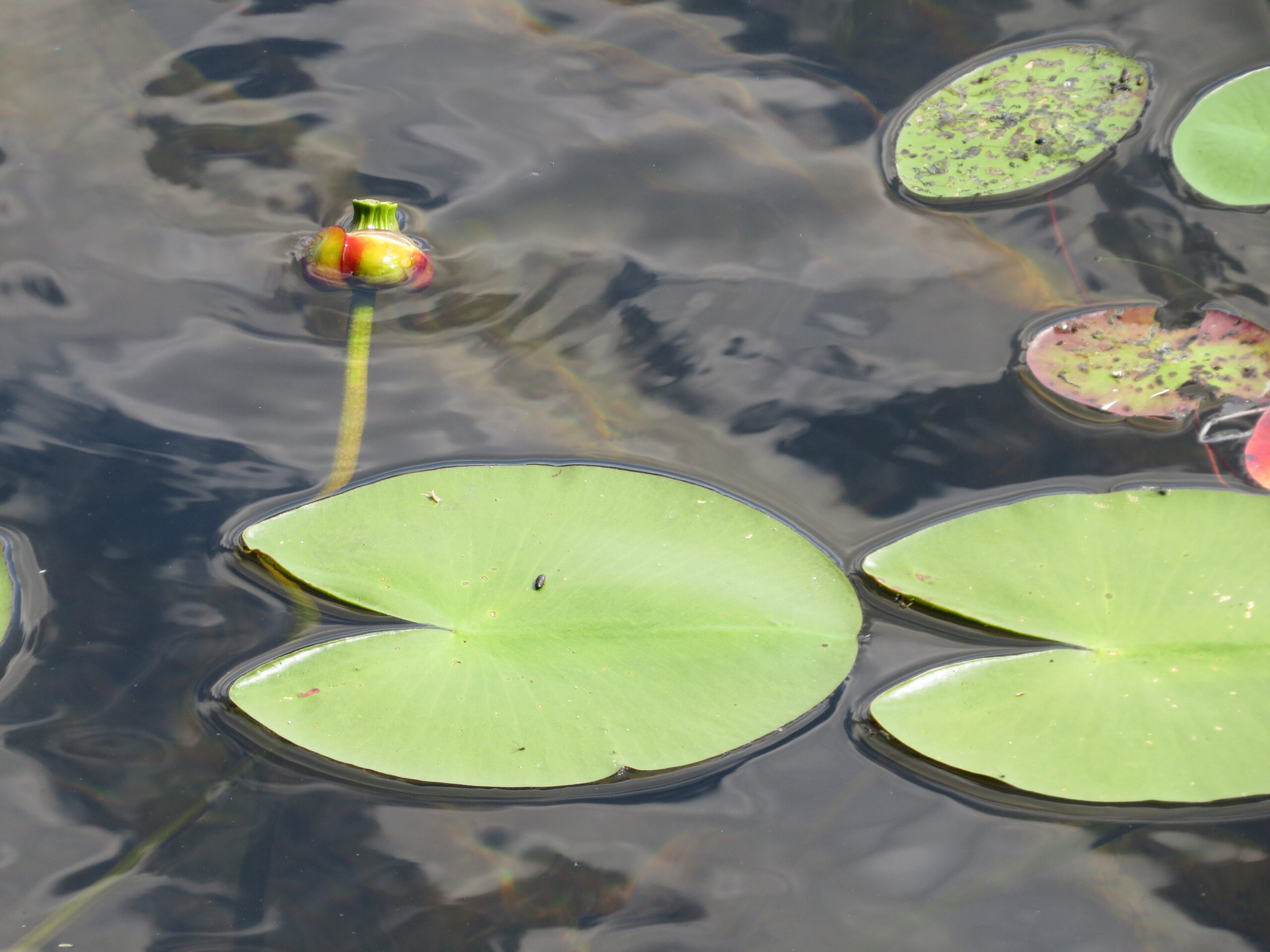
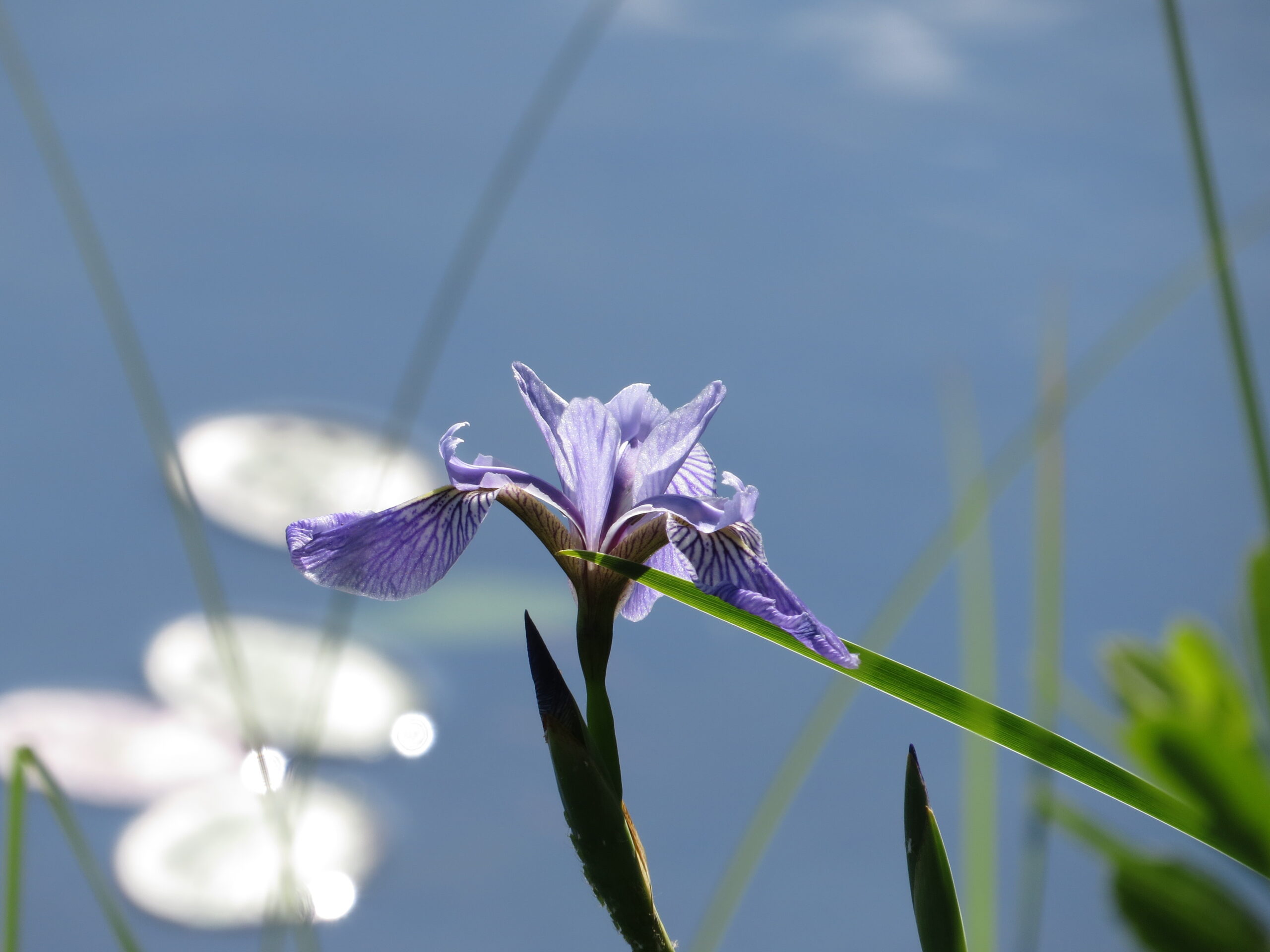
Yellow Pond Lilies and Northern Blueflag Irises decorated the water and shore with their Summer colors.
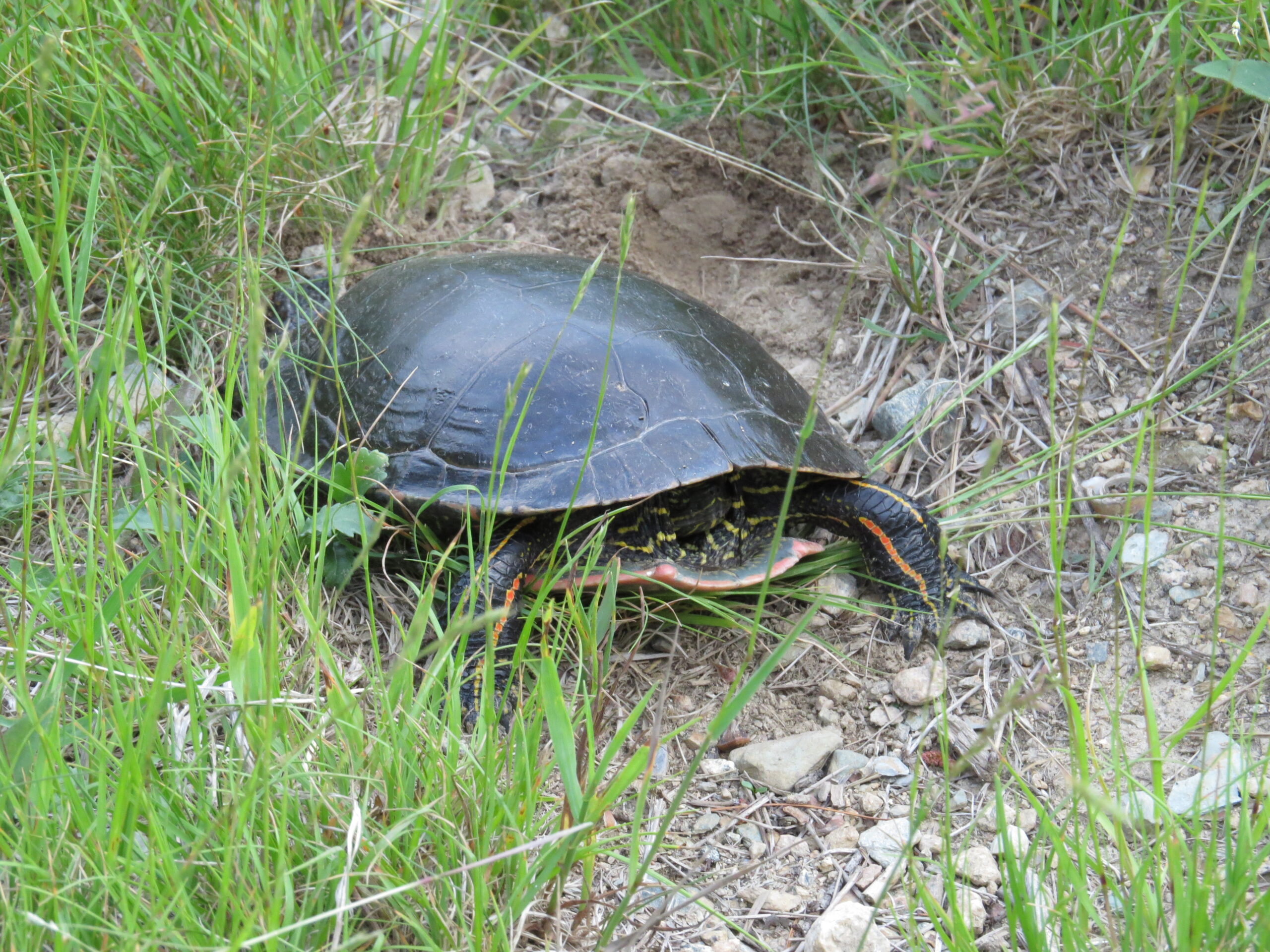
A Painted Turtle had crawled up on shore and dug a hole with its sharply-clawed hind feet in order to lay eggs. Our presence interrupted those plans.
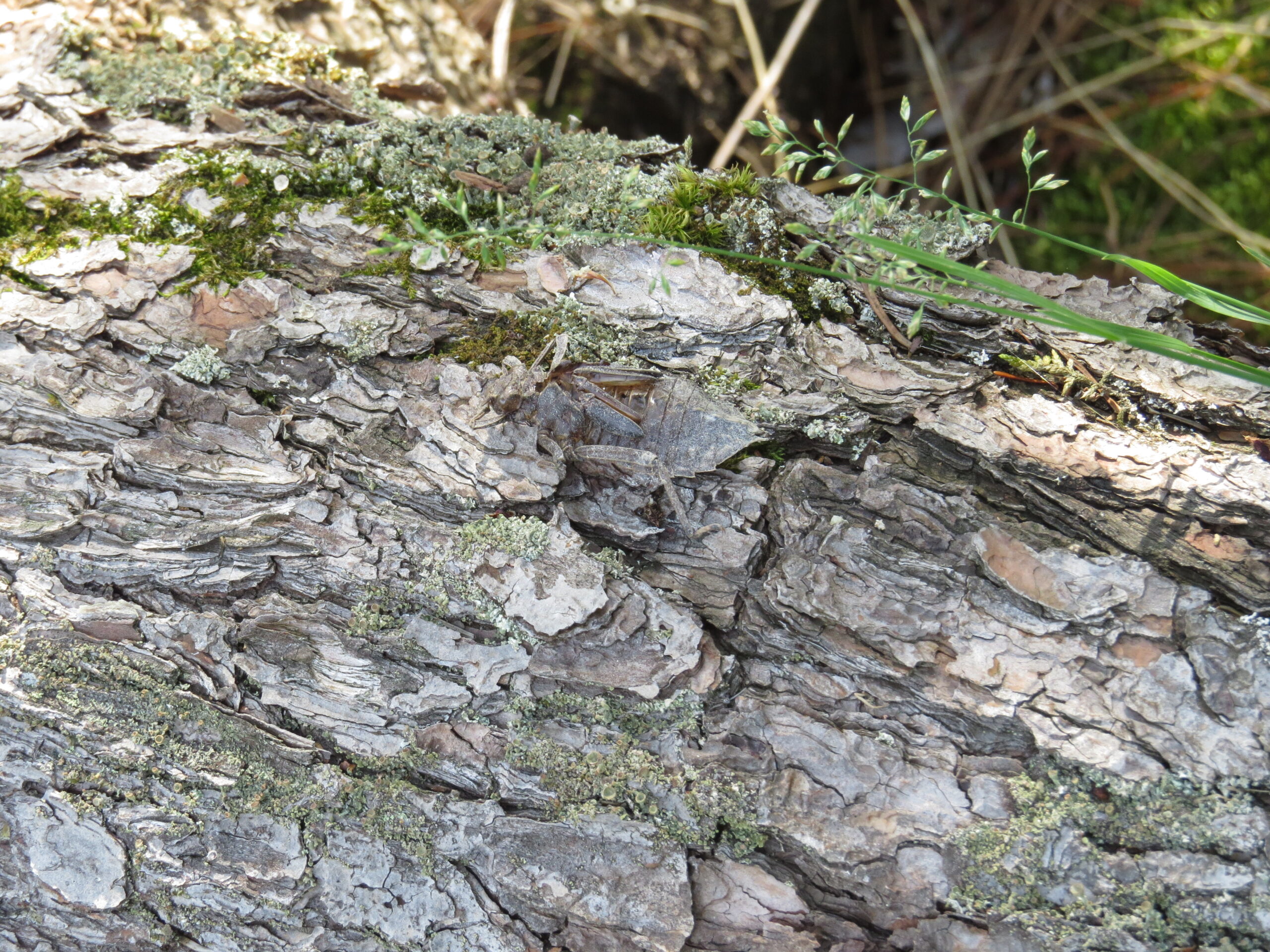
One of the common foods for Painted Turtles is Dragonfly larvae. They live in the water through numerous molts, then crawl out of the water, learn to breathe air, shed their skin, and emerge as an adult, winged Dragonfly. A larva shell is stuck to the bark of this fallen log. (right in the middle of the picture) A new Dragonfly flies away!
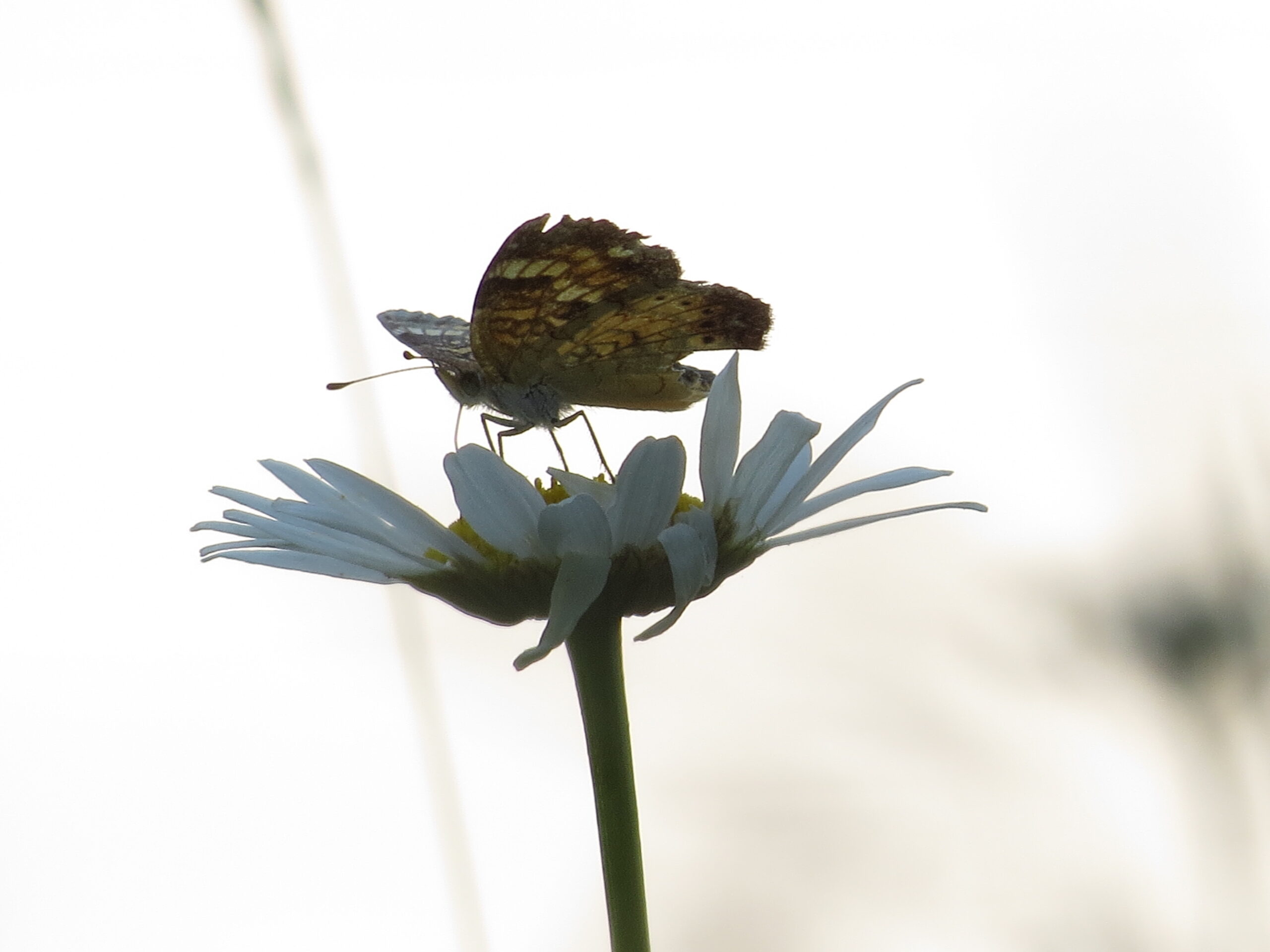
Freedom is often depicted with the image of a butterfly that has completed its metamorphosis from egg to caterpillar to larva in a cocoon or chrysalis to adult butterfly. Freedom to develop, nourish one’s self, grow, incubate, isolate, change, and fly.
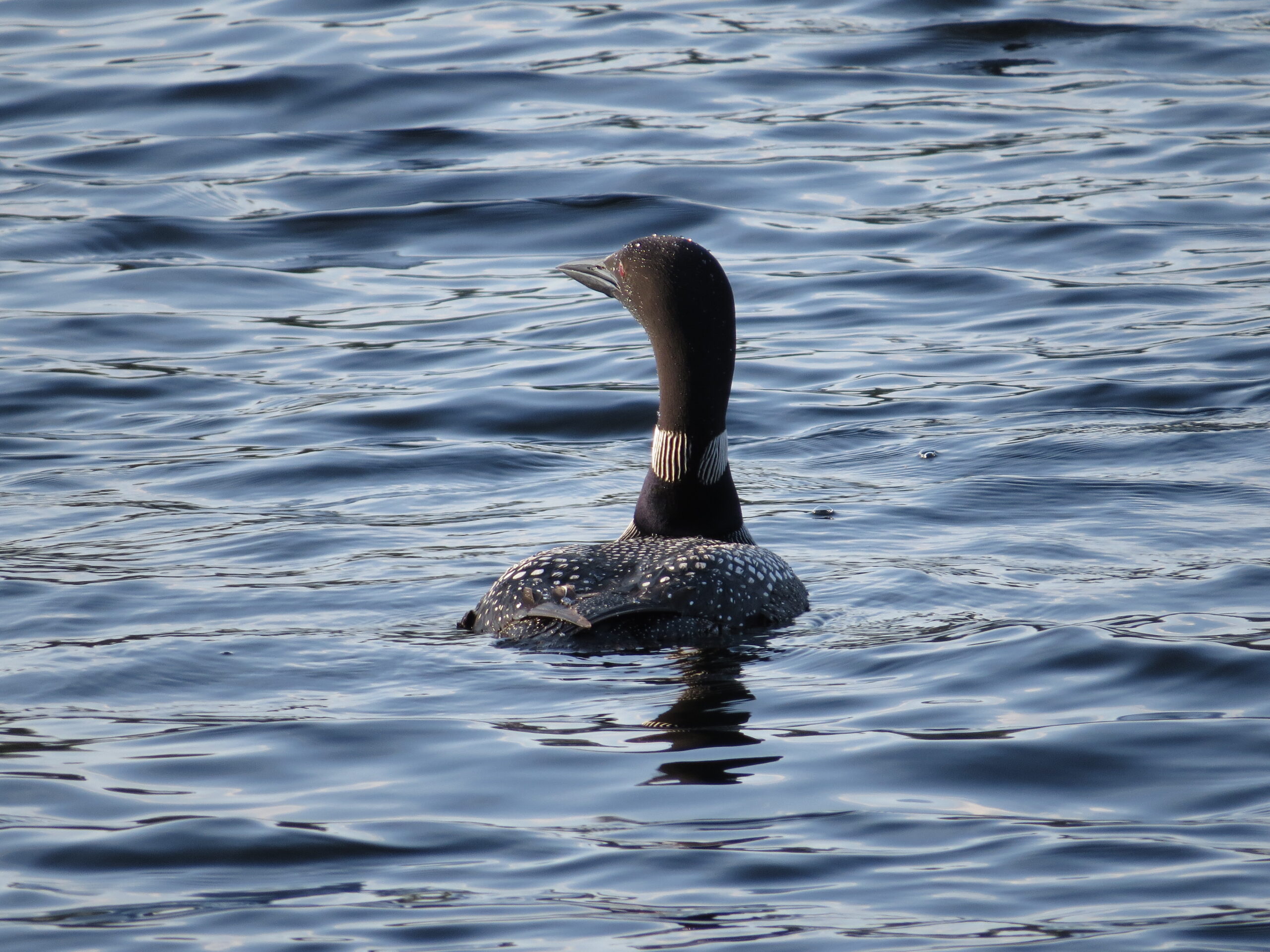
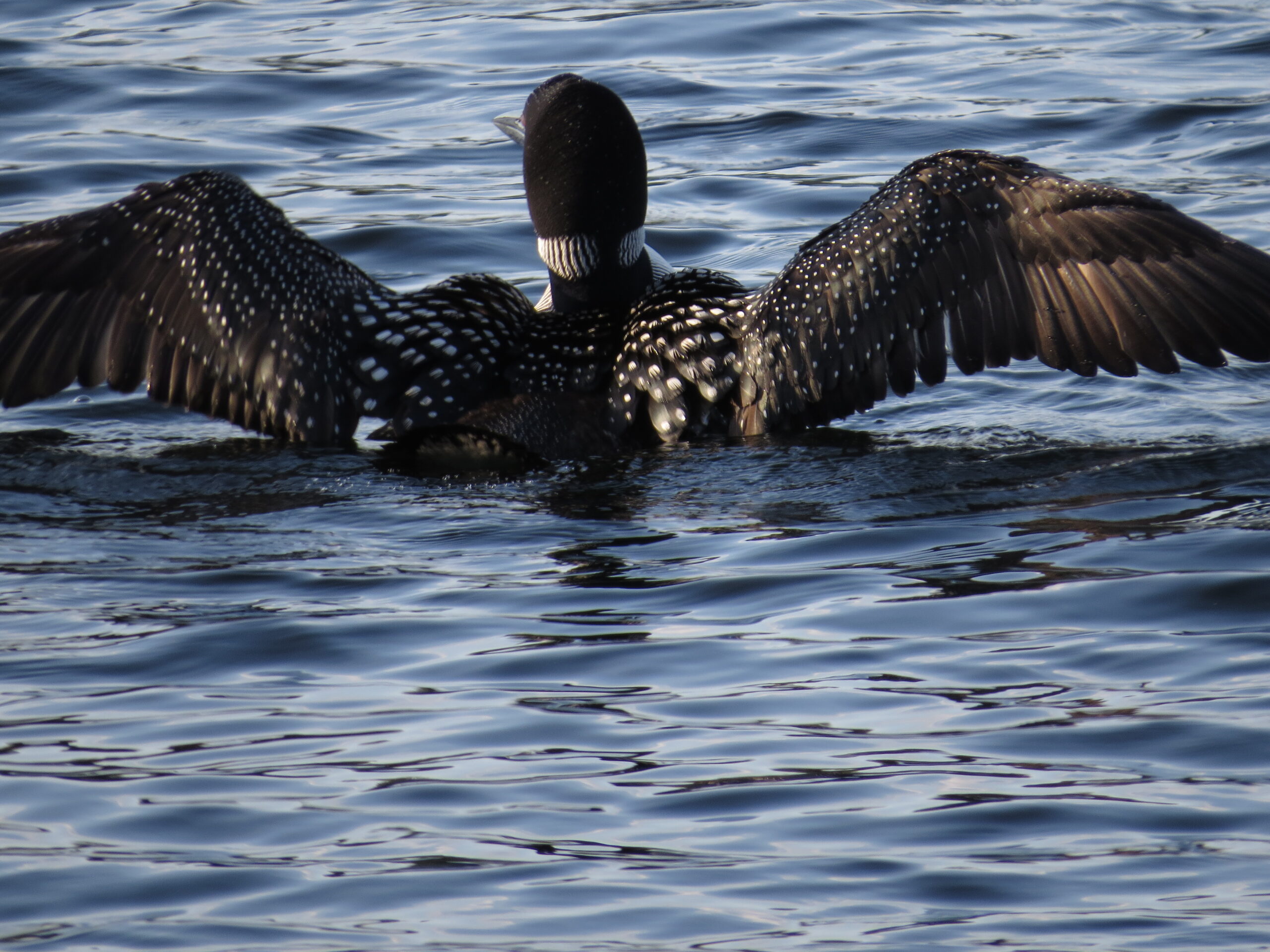
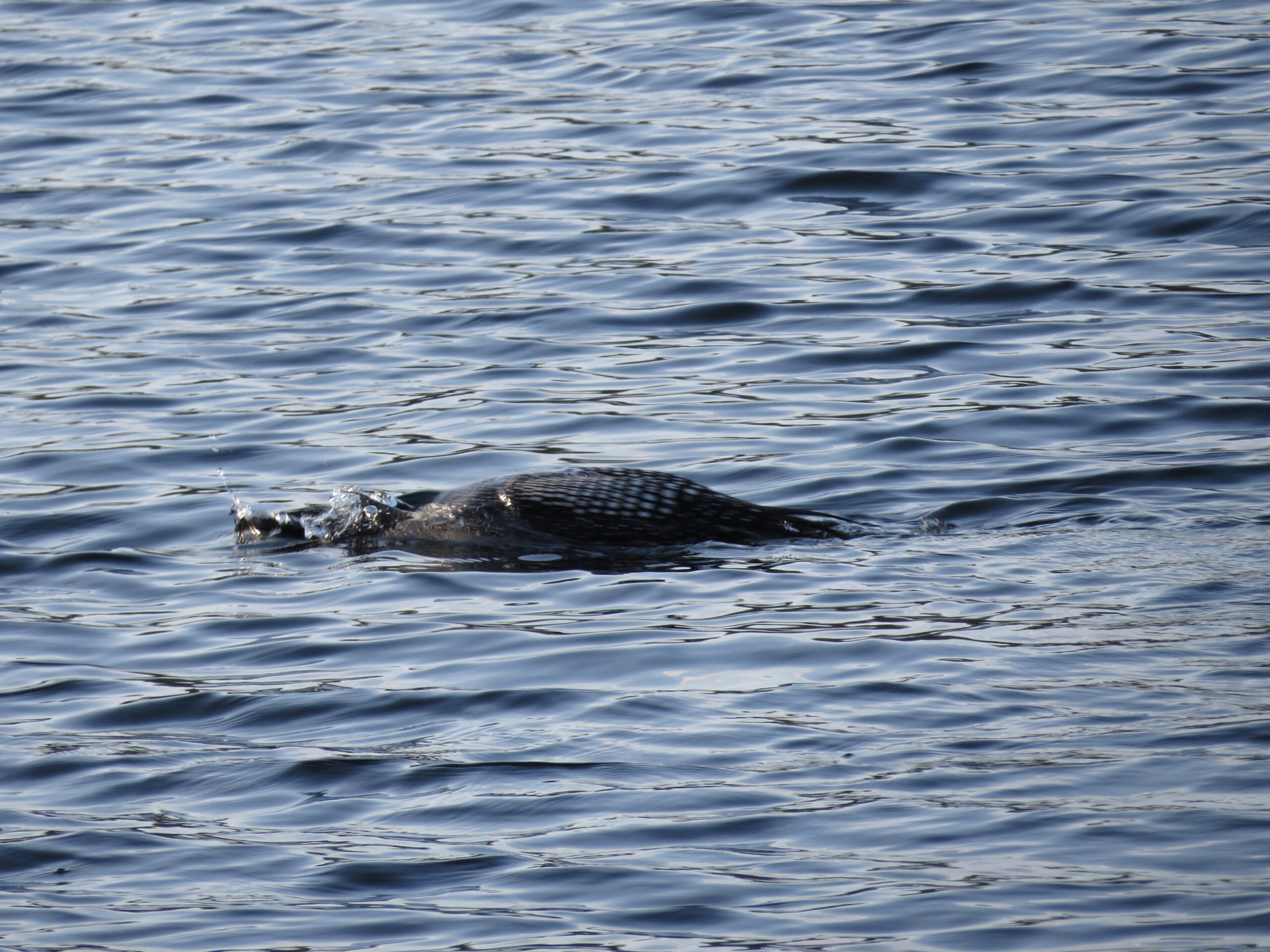
Another resident bird of the lake can sing a person to sleep in the evening as the western sky still holds the day’s light. The Common Loons also woke me in the early morning with a flurry of calls and a swimming/flying routine I called ‘motorboating.’ I wasn’t sure if they were doing their morning exercise or if this activity was for another purpose; I did notice their calls seemed more vigorous than usual.
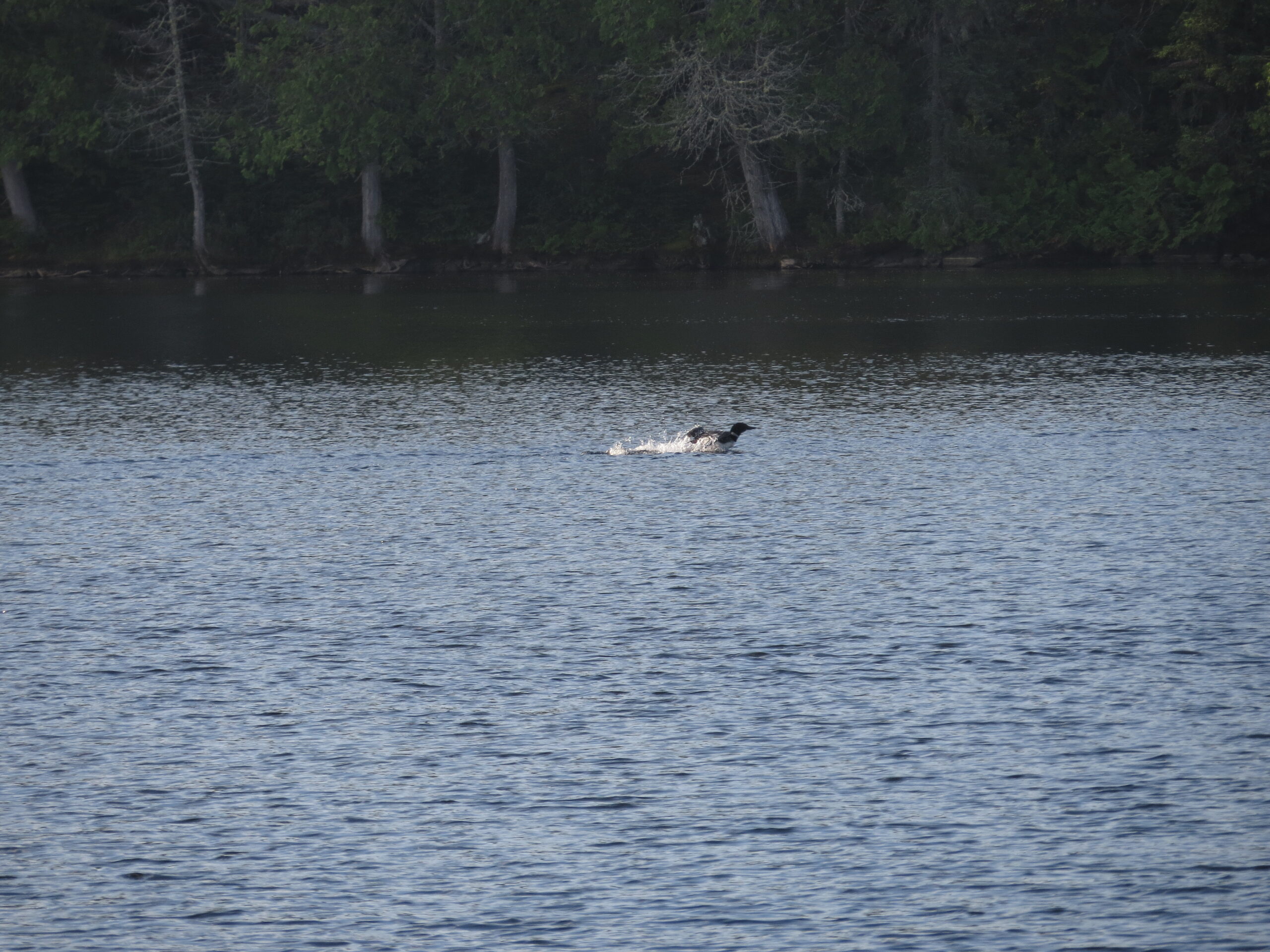
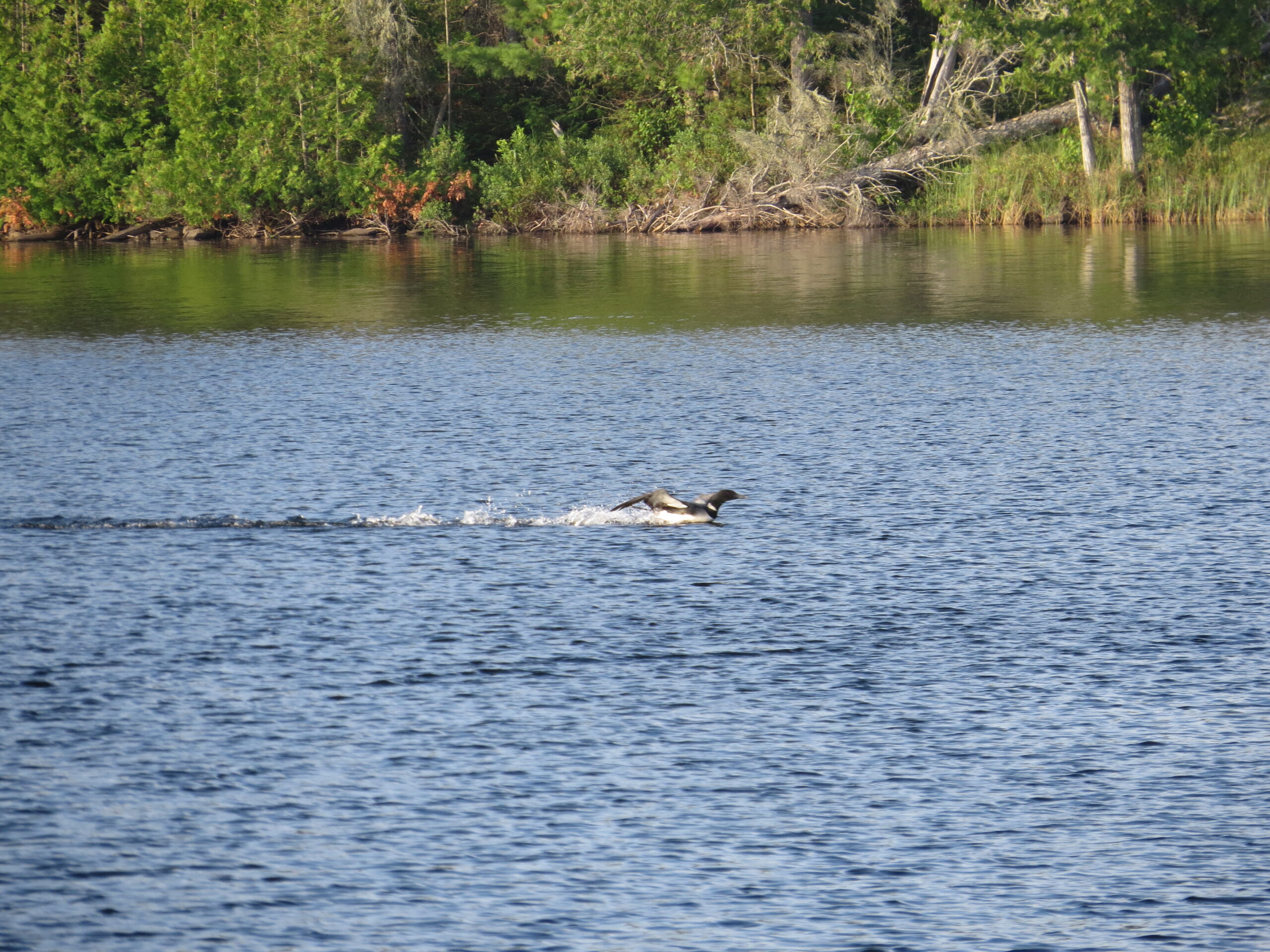
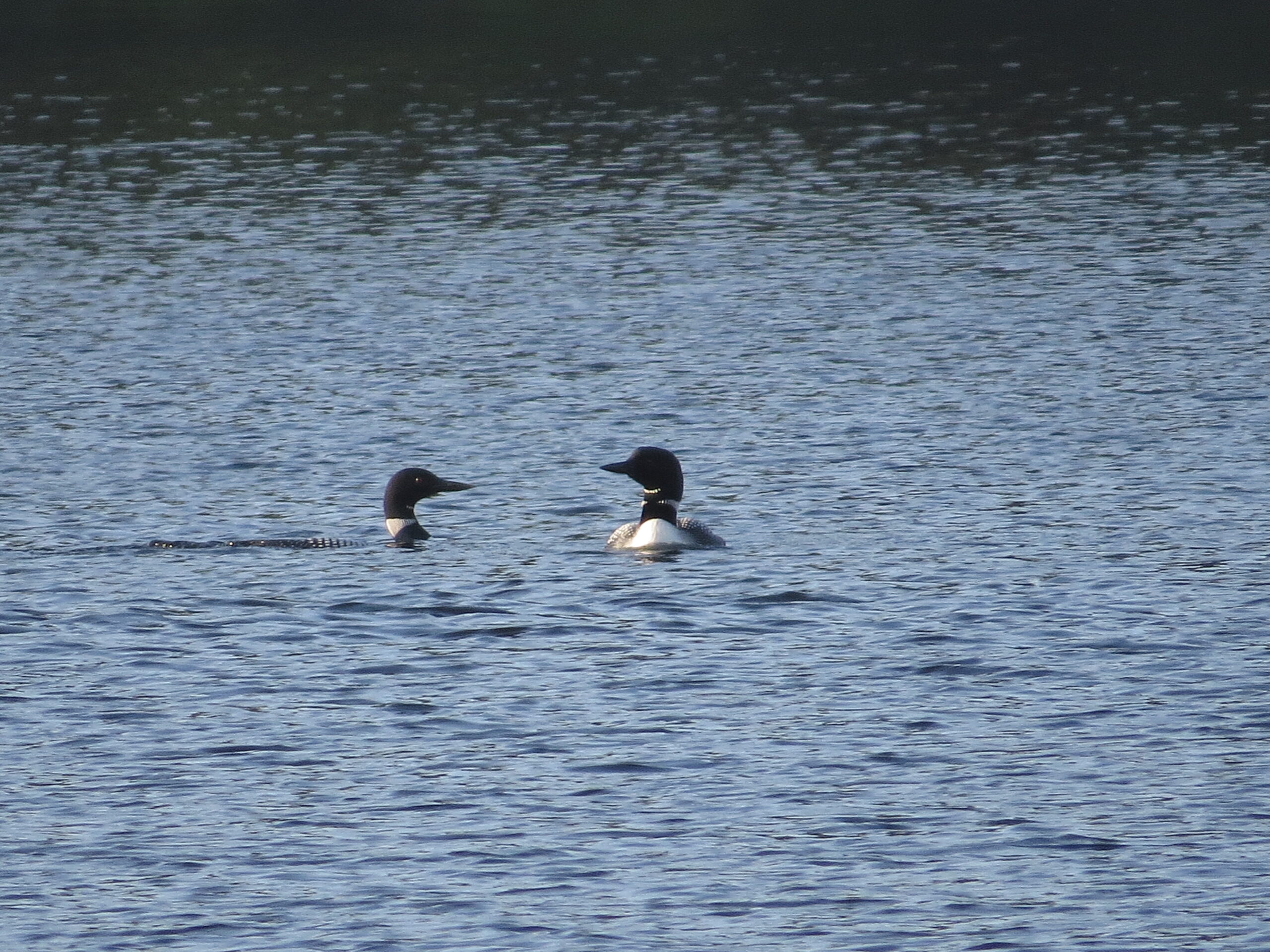
Then I saw another lone Loon in a different part of the lake, so perhaps they were defending their territory.
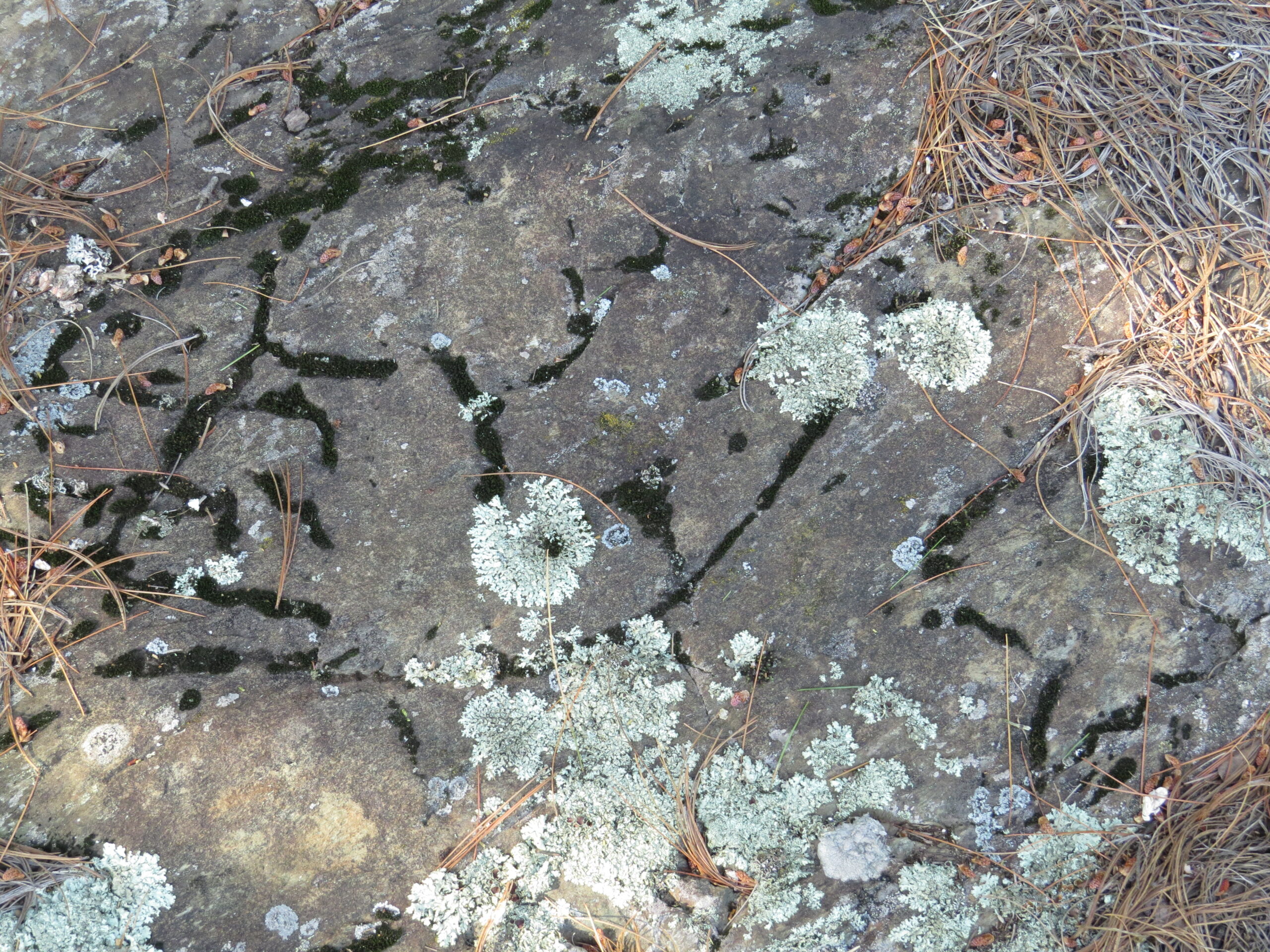
Rocks are the hold-in-your-hand or hold-up-your-feet entities that make a person know what gravity is, what sun-induced warmth is, and what eons of history are in this place. Lichens and moss are the writing that tells the story.
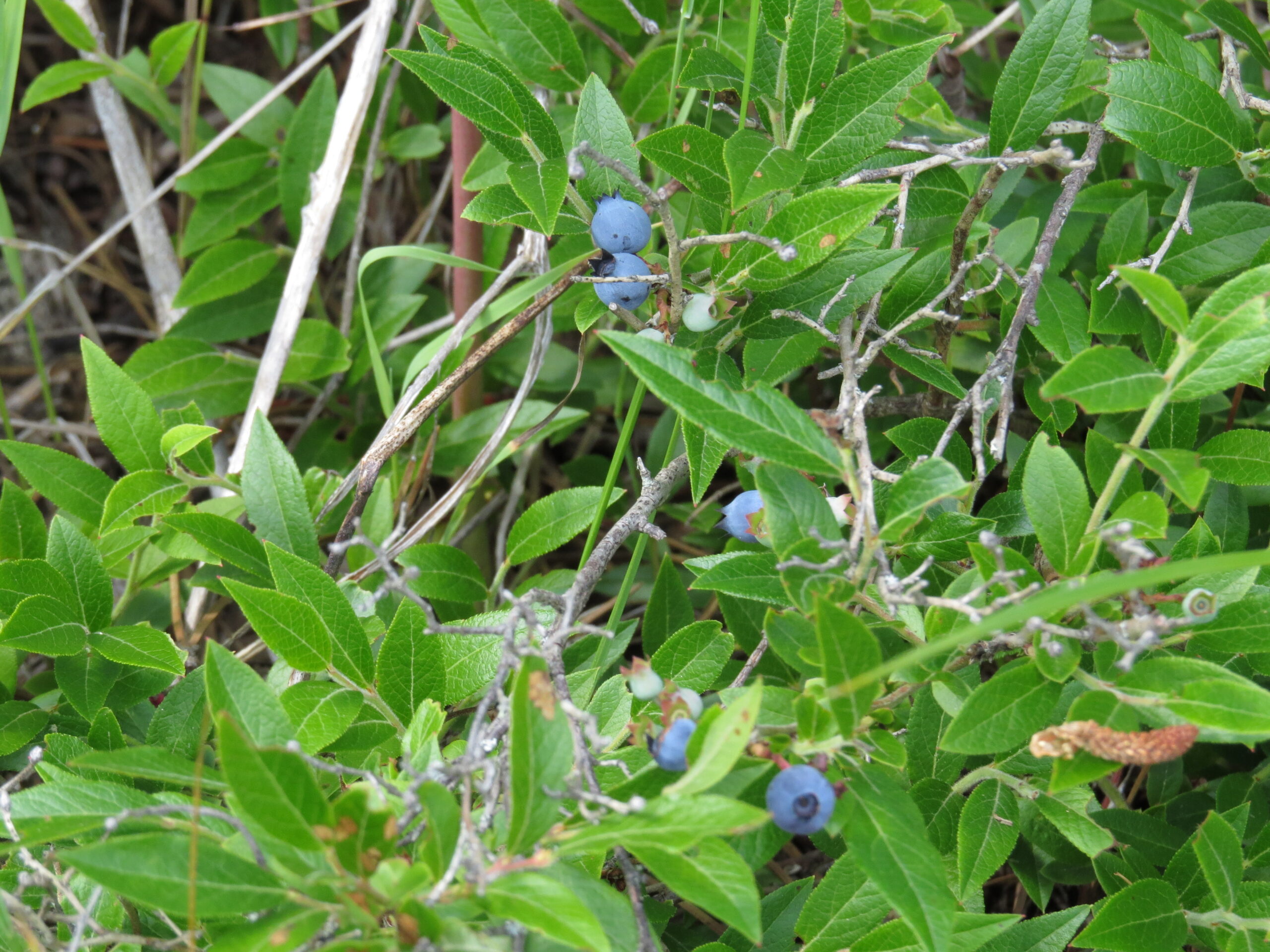
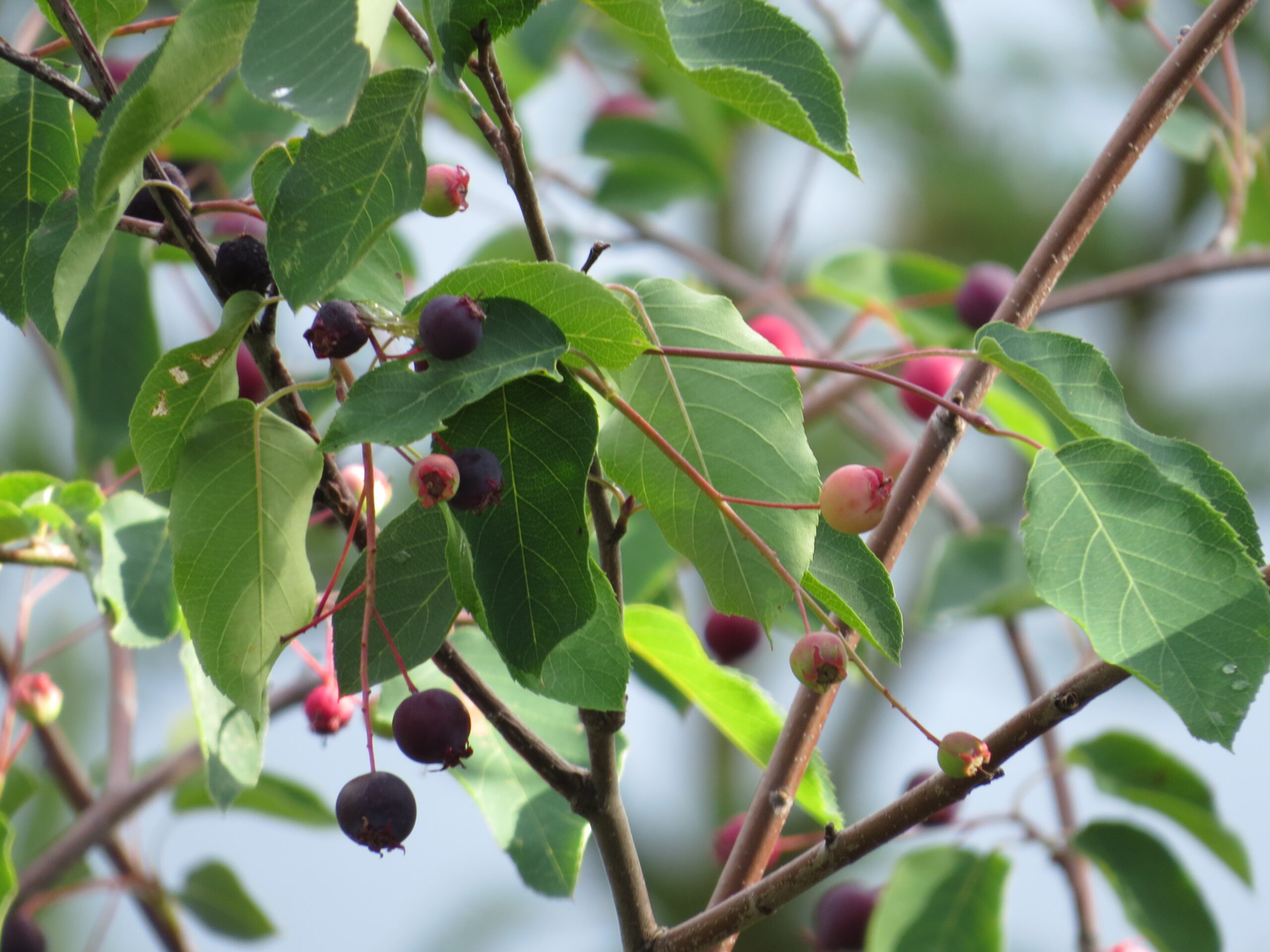
Like a foraging Black Bear or a hungry Gray Jay, I browsed through the brush of Wild Blueberries growing in the scant soil over the large rocks. They were just beginning to ripen, so pickings were precious and few. Not so with the Juneberries on the shrubby, thin-branched trees—they were ripe and abundant and oh-so-delicious!
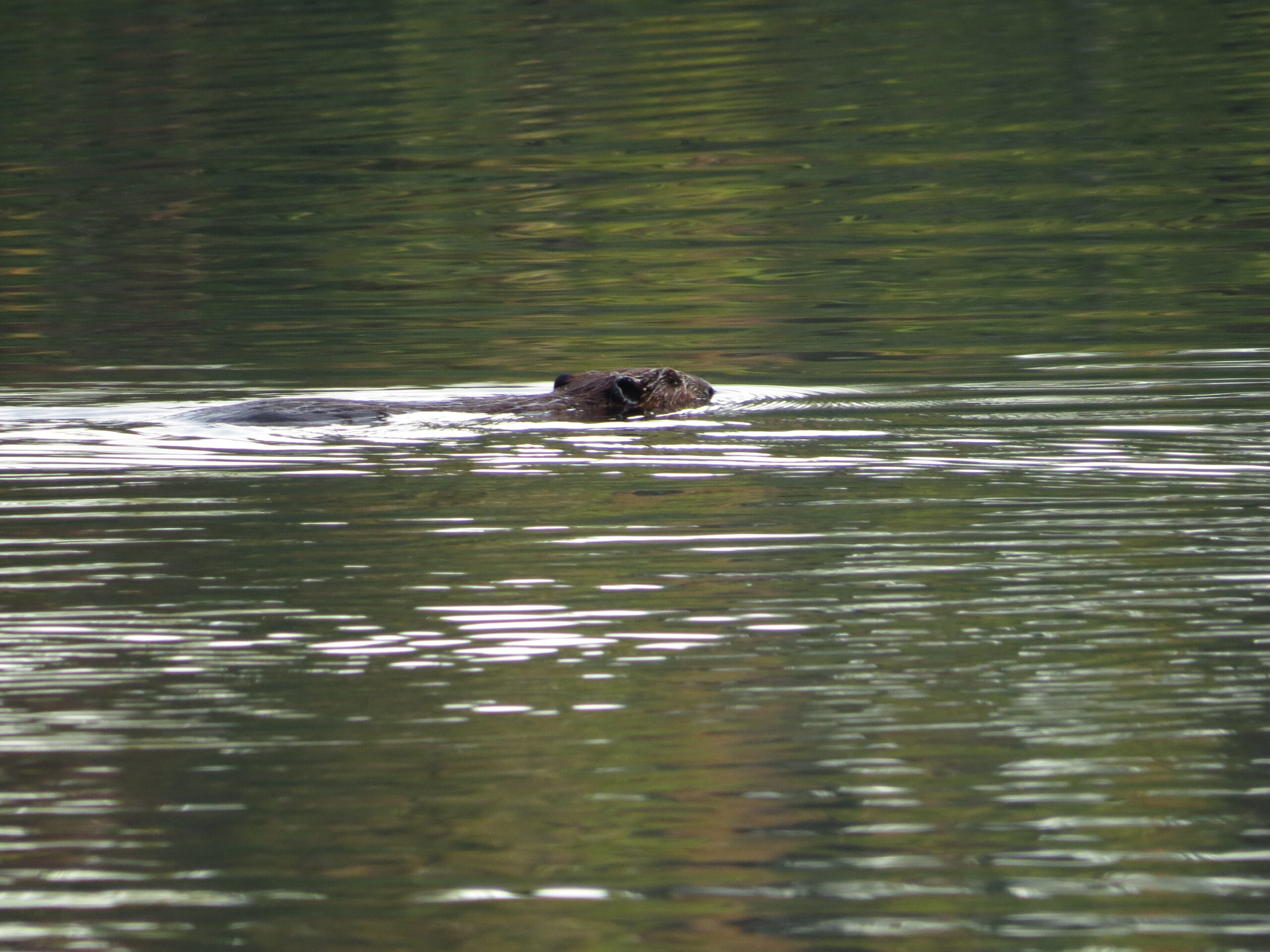
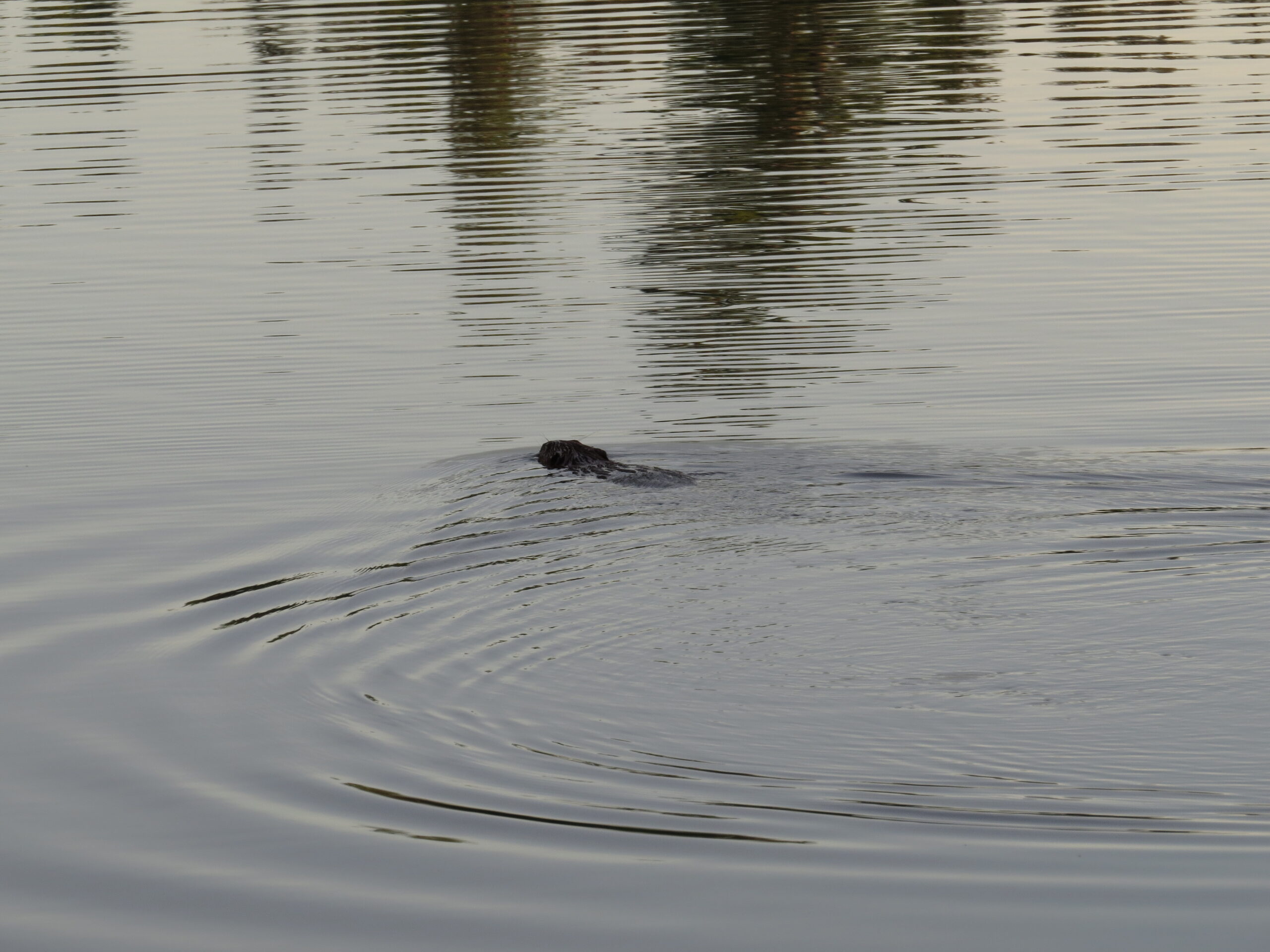
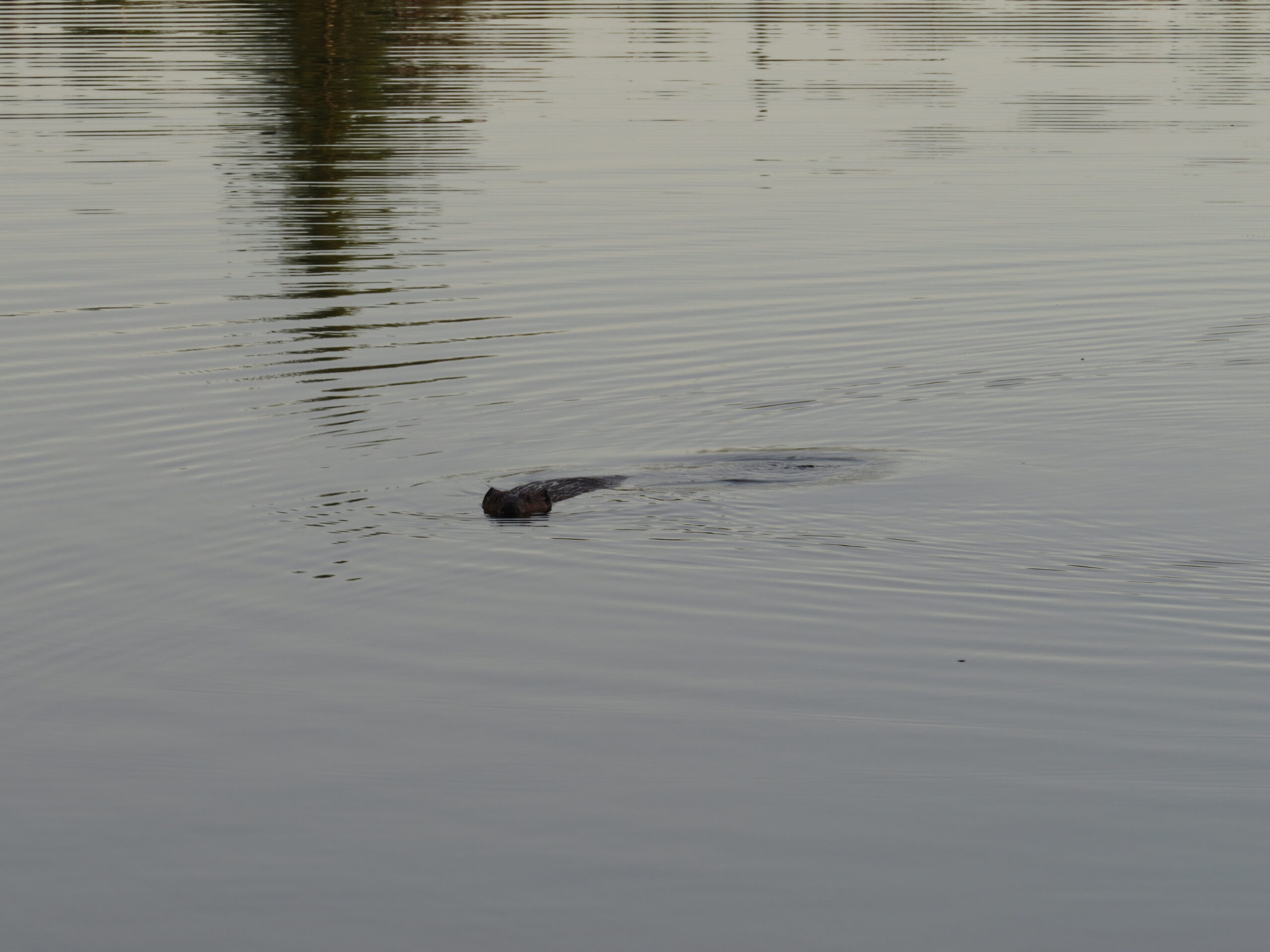
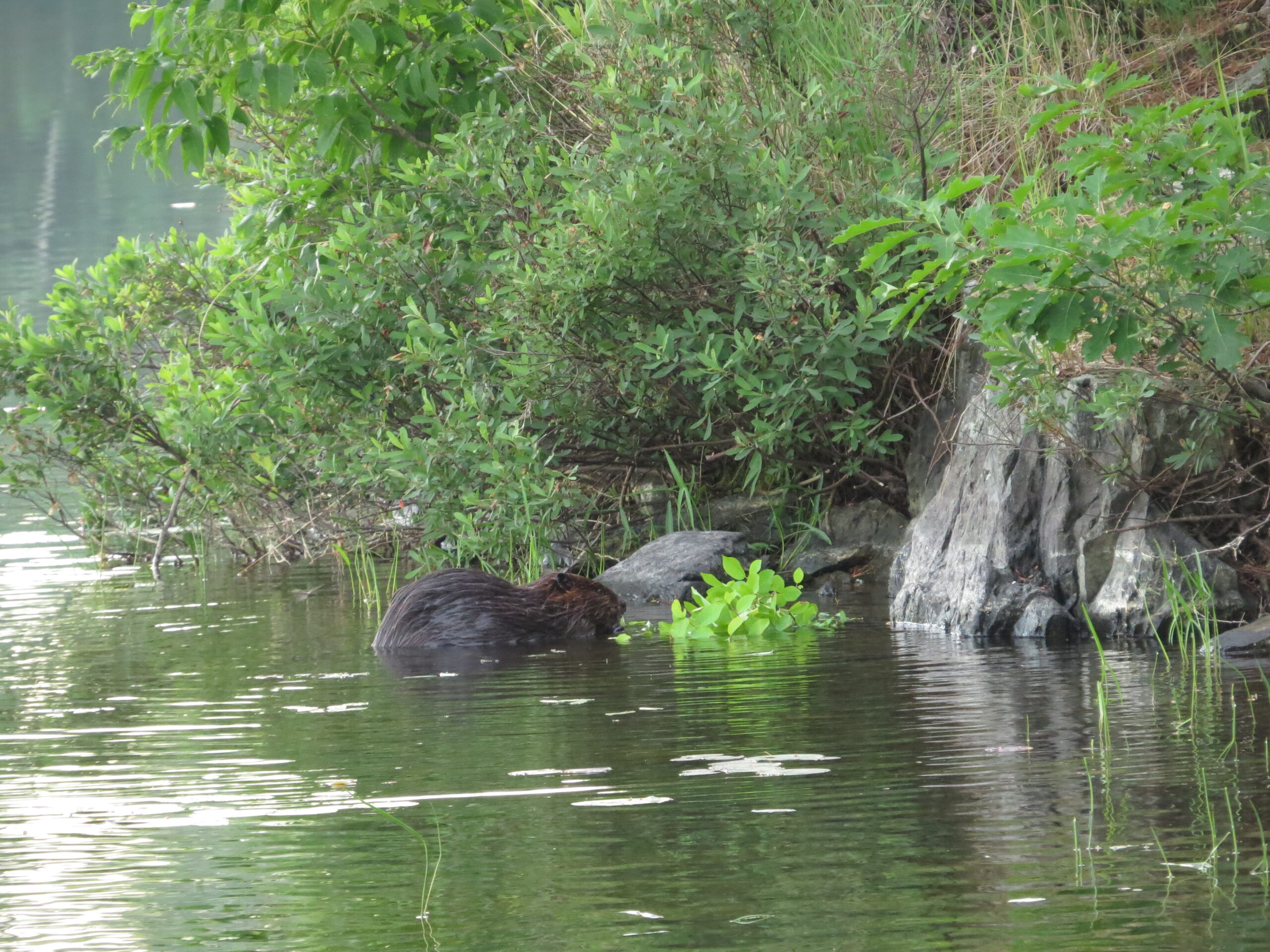
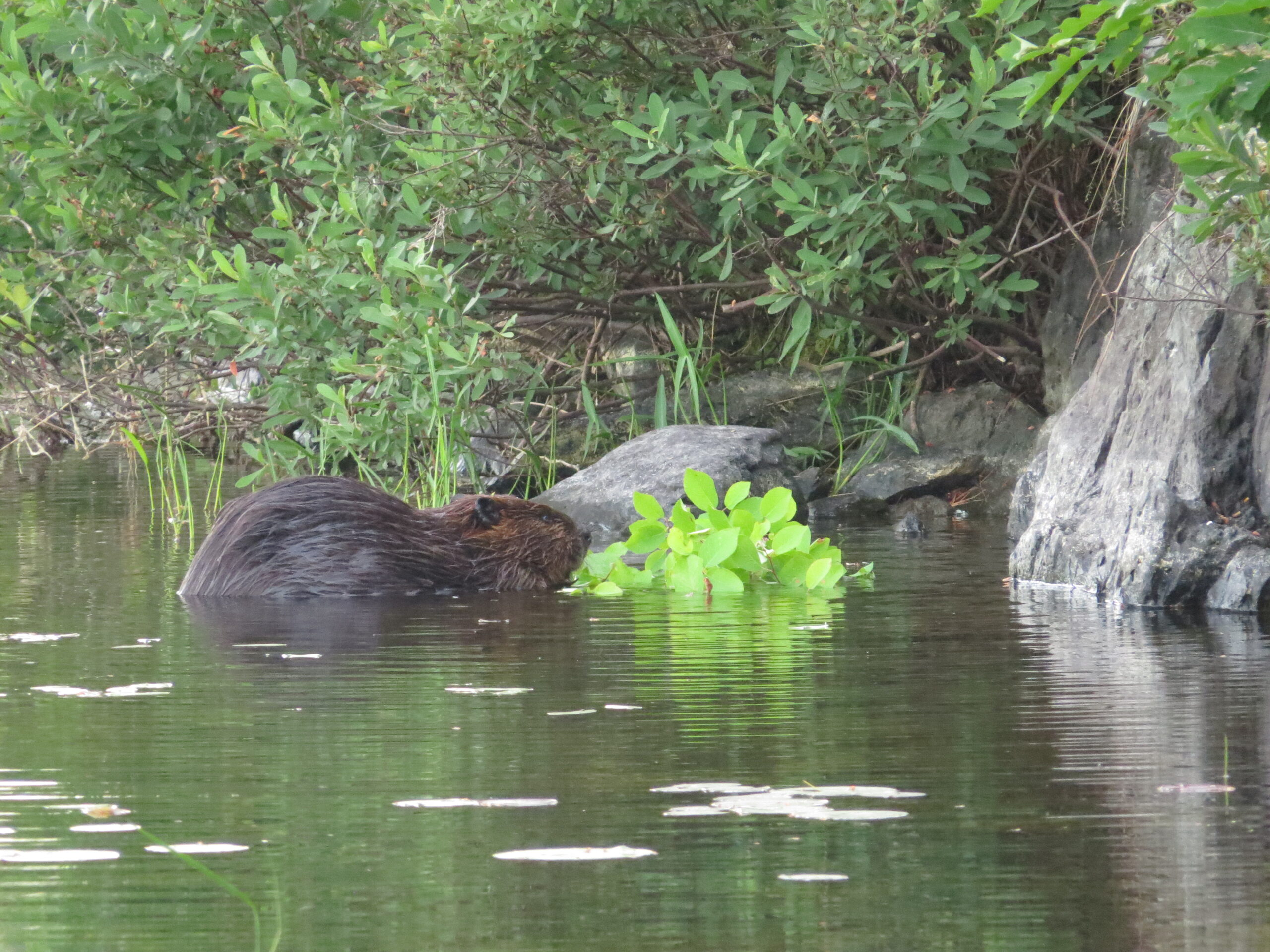
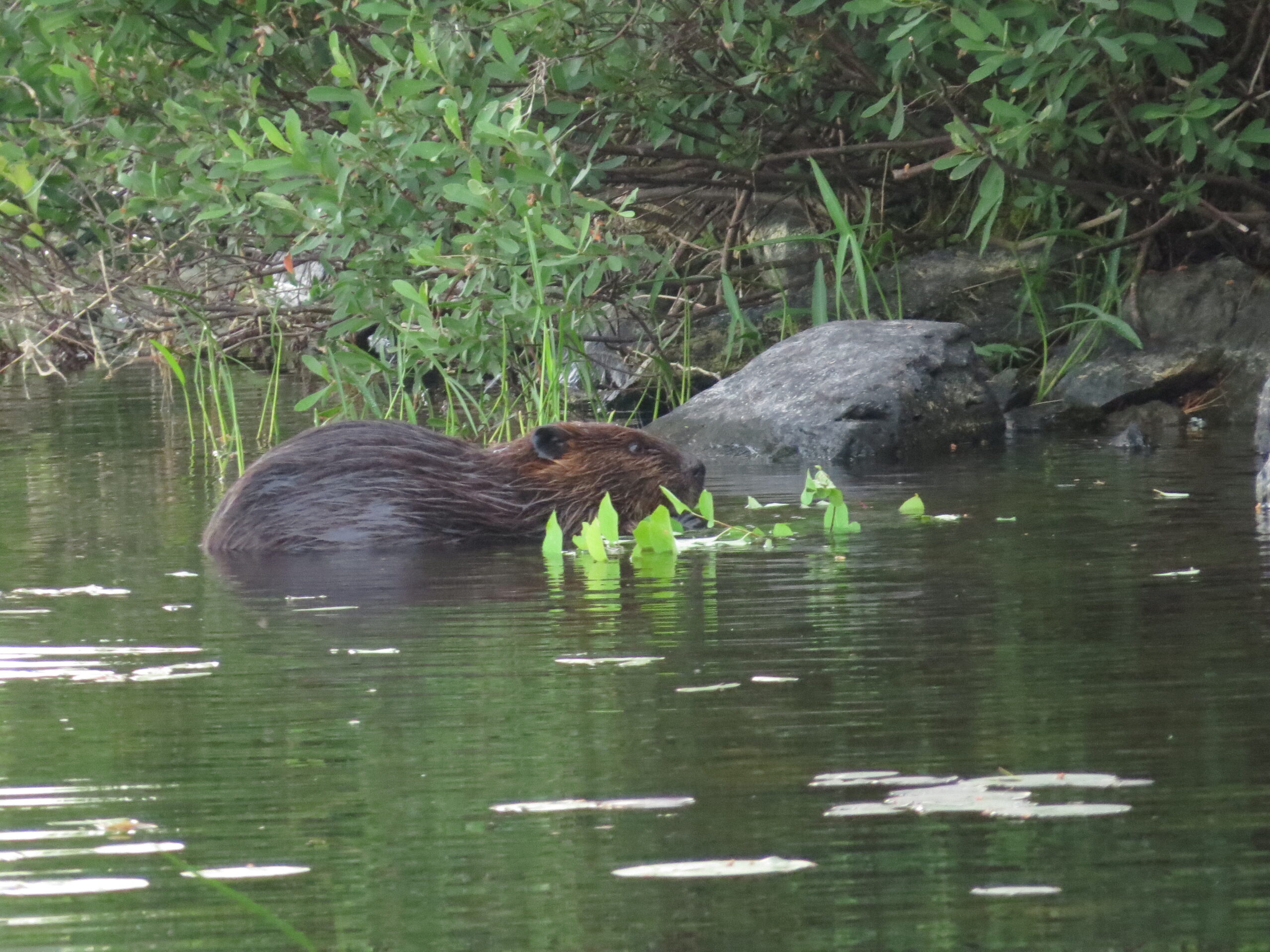
The smell of campfire smoke is like a signal to relax, prepare some nourishment, eat slowly and laugh often. Usually only one or two people of the group become the fire-tend-er; others take care of food, clean-up, and equipment—there are shared responsibilities even when time is slow and relaxation is the goal. As evening smoke drifted up into the calm sky, a beaver swam in circles in the lake—again, it seemed like he was doing it for fun, for the pure joy of movement. At one point we startled him, and he slapped his tail on the water with a loud ‘crack’ and dove out of sight. But soon he was back to swimming his laps. We saw him swim to the shore where a bright green branch of leaves grew or lay in the shallow water, and he nibbled and nibbled his post-workout snack until it was almost gone.
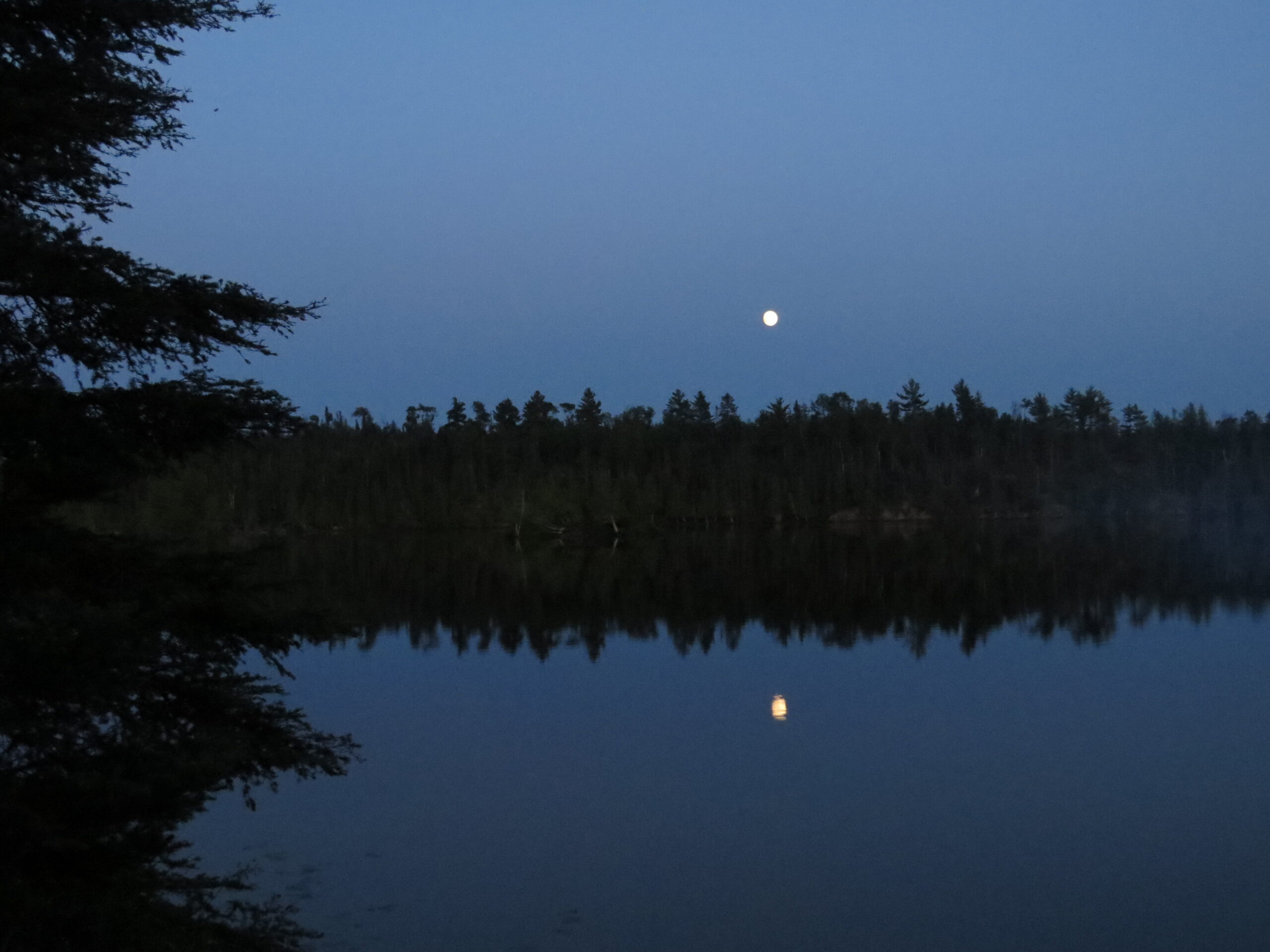
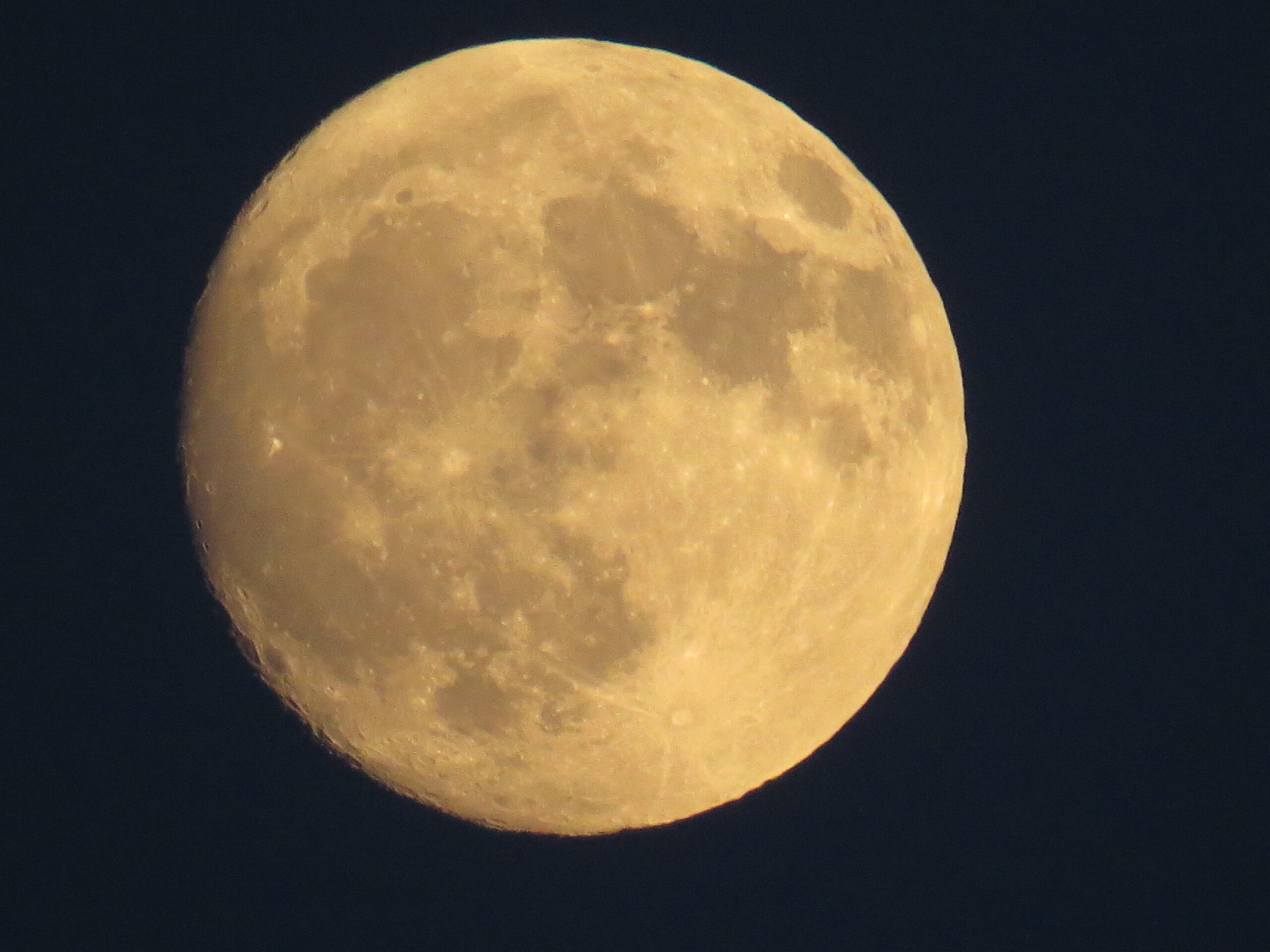
Late evening and watching the almost full moon rise above the trees and reflect on the water—I wonder if these moments could get much better. It’s a ‘savor-moment’—it makes me feel like everything is going to be okay in a time when so many things make it feel otherwise.
Then morning comes after a Loon-call-filled night. Mist from a warm day, cool night floats above the water. Reflections on the calm, still water give us a slightly different view of reality, expanding our minds.
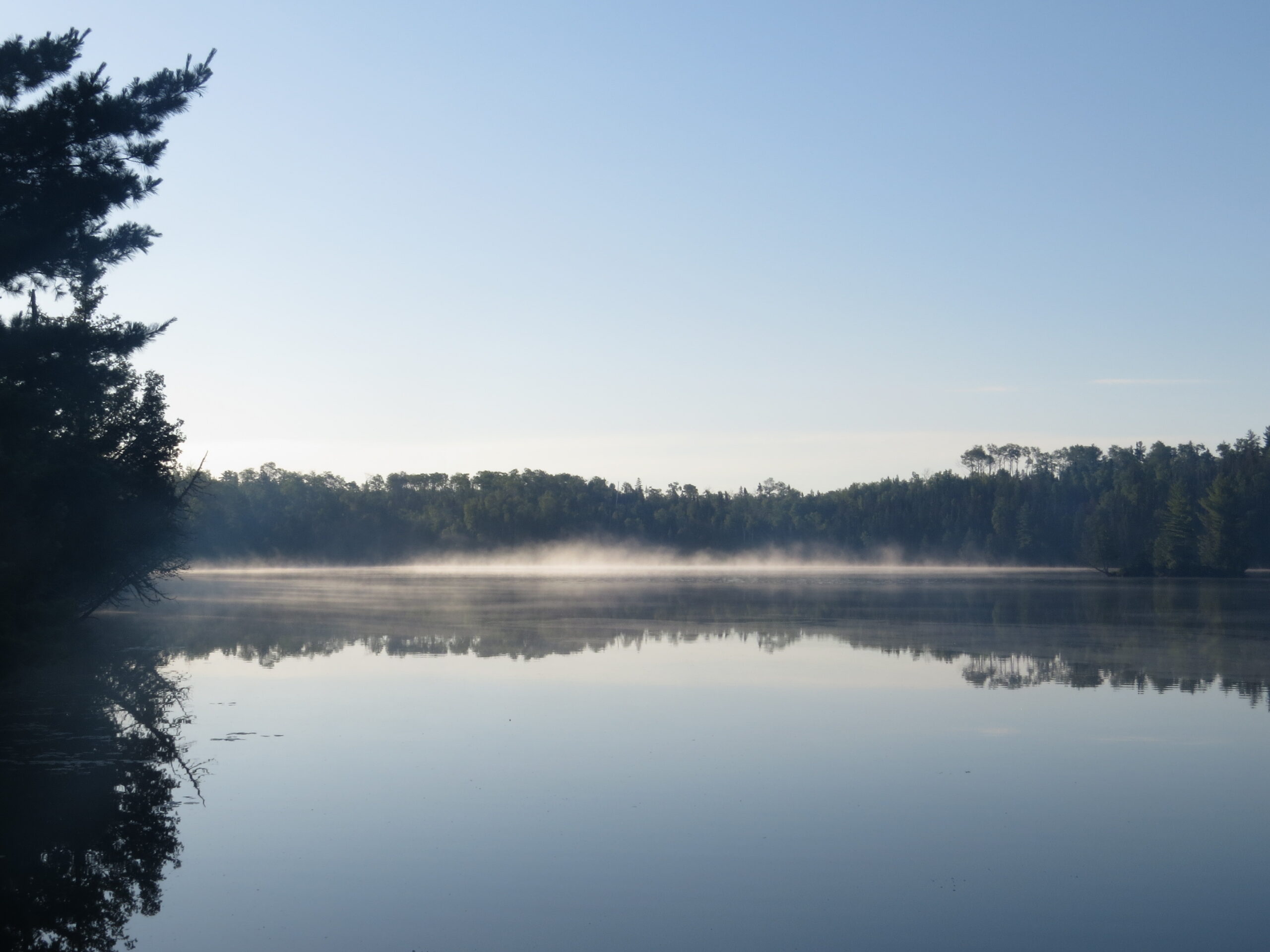
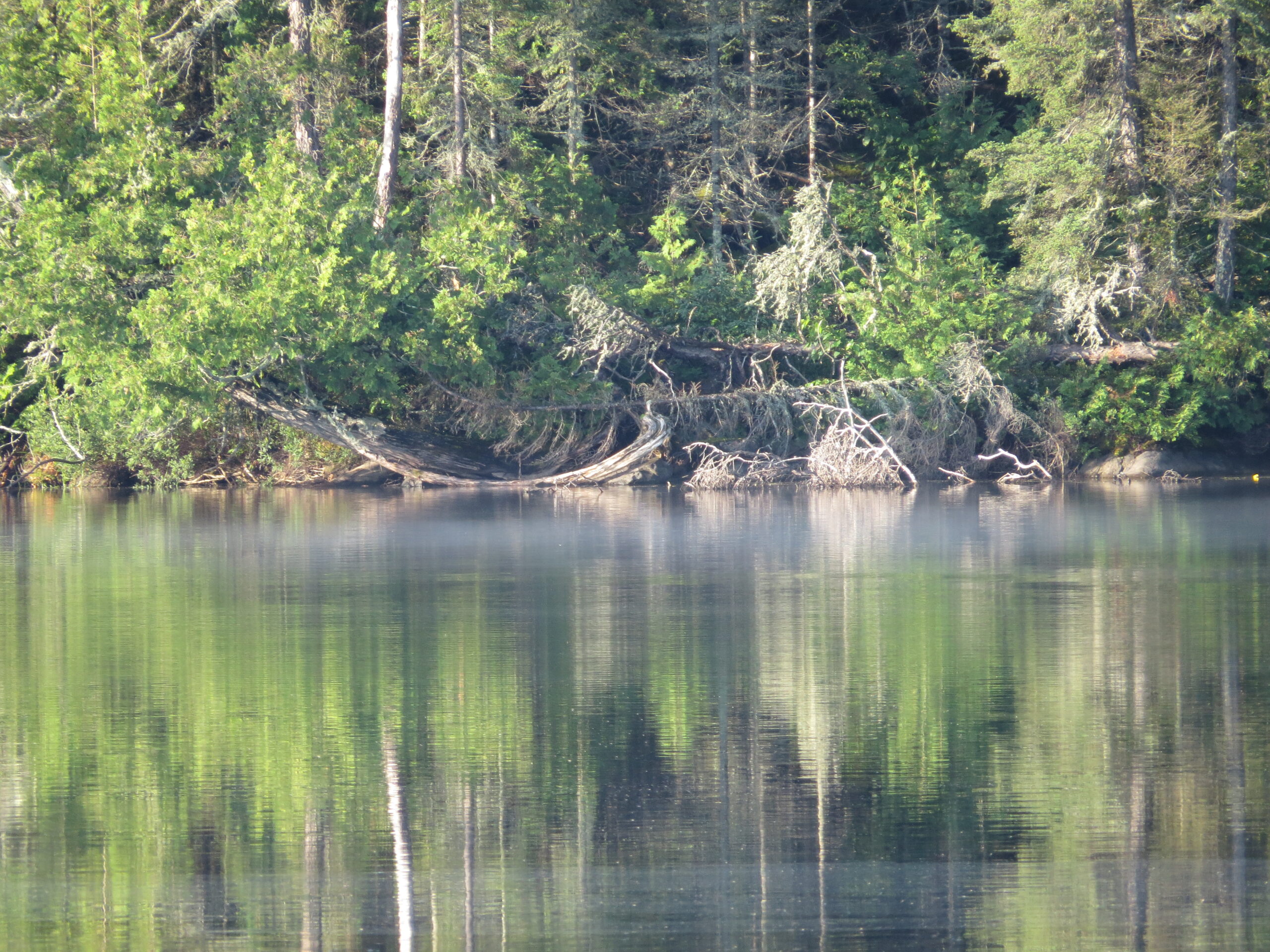
We all go through constricted times in our lives when facts and feelings are blurry. Pain, whether physical or emotional, is a constrictor. We don’t usually have the capacity to do much beyond dealing with the very real but usually distorting pain. Looking back to those times in my life, I realize there were negative consequences to my being in the cocooning pain, but there were also gifts to be had and lessons to be learned. Extreme busyness also tends to blur the perceptions and memories of a given time. Both pain and busyness are integral parts of Life. We won’t escape them, but we can cultivate more feelings of freedom. Being in the arms of Mother Nature, listening to the Loons and Osprey, seeing the full moon rise over the trees, smelling the campfire, tasting the Juneberries, and touching the warm rocks all expand my mind, body, and spirit. I feel like I could fly. I want more of that.
We’re Just Like Birds
After last week’s post about flying dreams, I realized I had an accumulation of photos of the ‘real flyers’—the ones who inspire us to take off, fly high, and soar on the wind—in our dreams and metaphorically in our lives. They go where we cannot go without the aid of a ‘big silver bird.’ They seem to have a freedom and a reach that us ‘grounded’ creatures can only wistfully watch and long for—oh, to be as free and majestic as the Eagle!
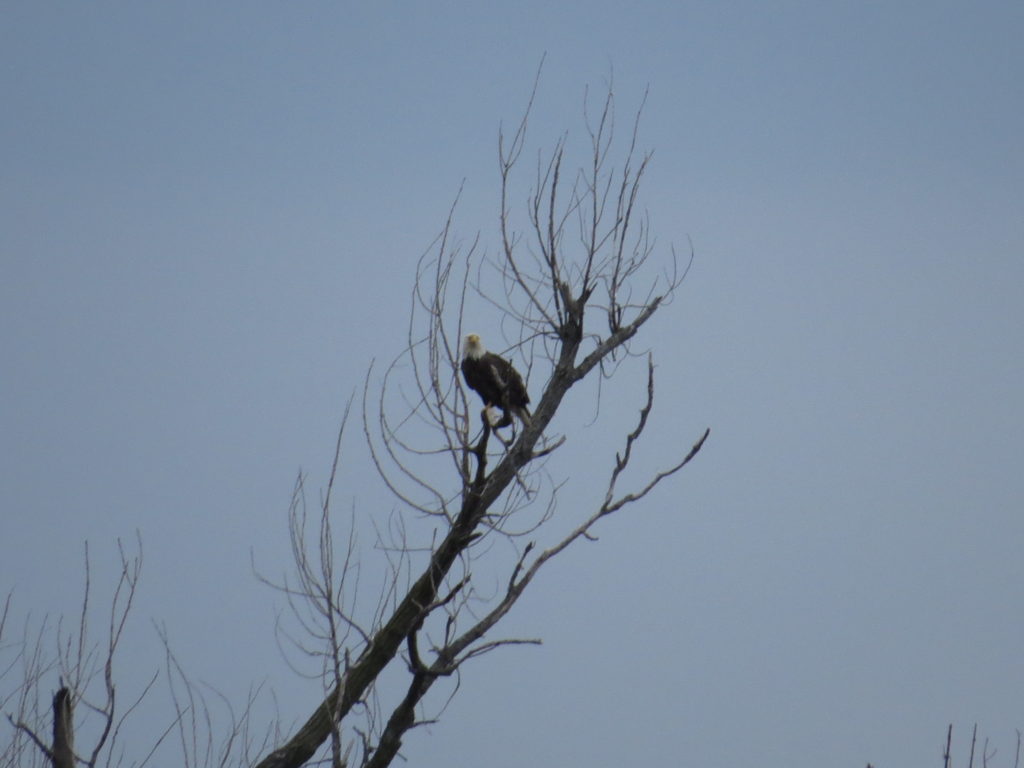
And yet, as I looked at the photos, I realized that maybe birds are more like us than we realize (or we like them?) They like to hang out with their family and friends, and life is good on the water.
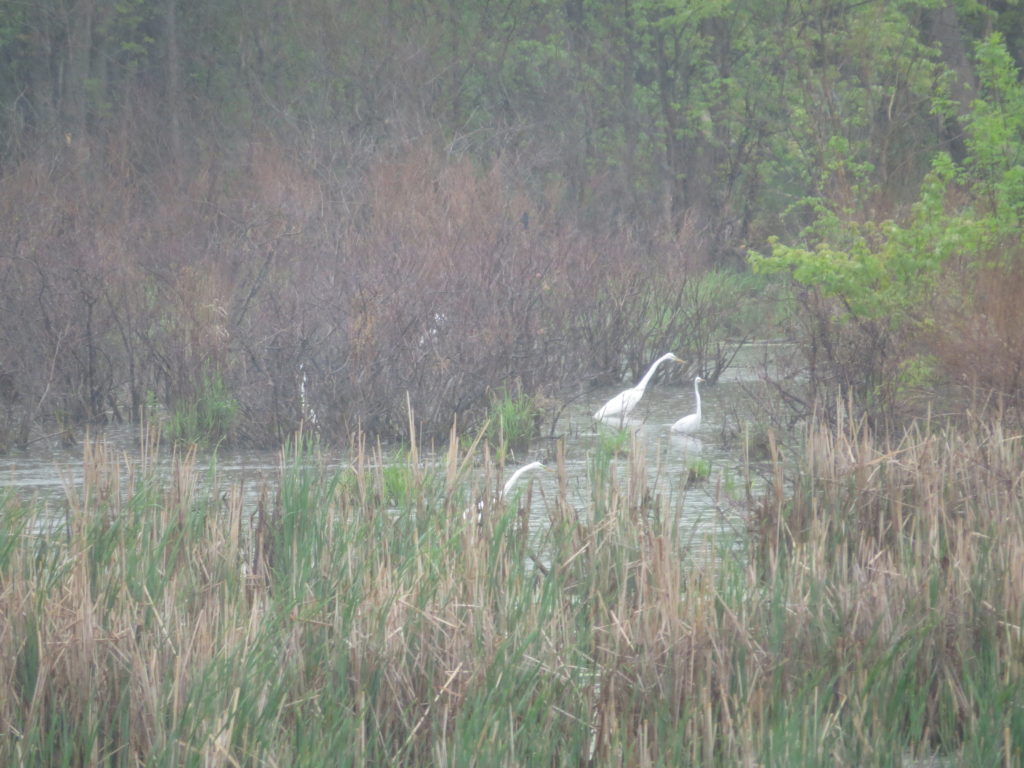
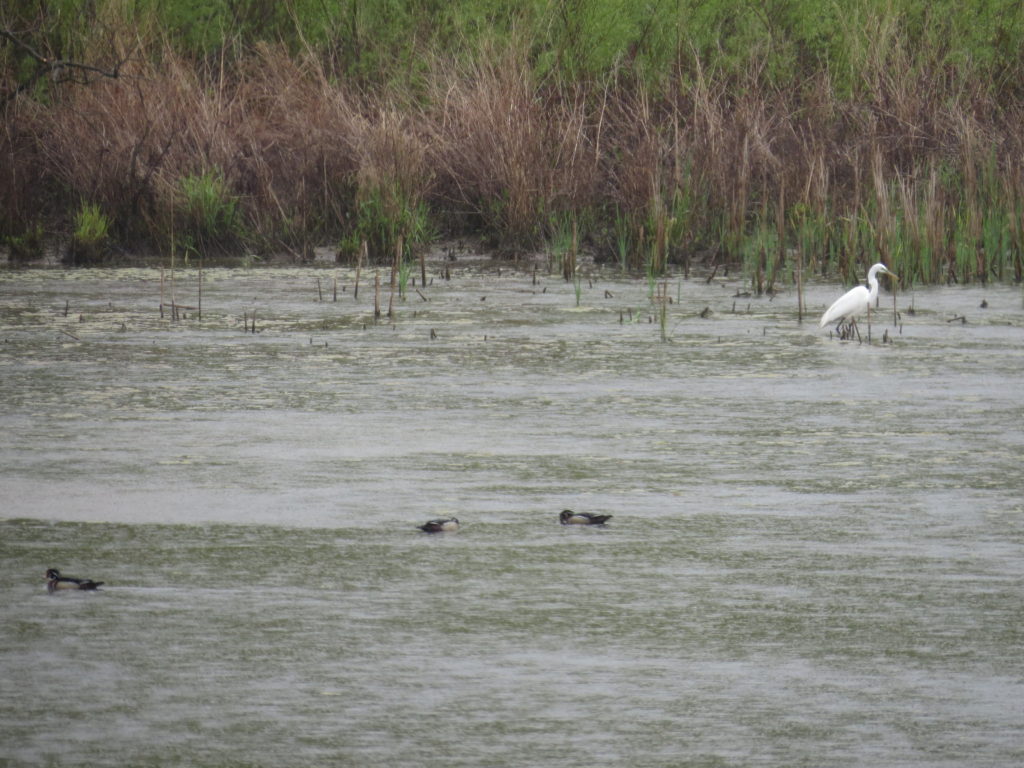
Some of them/us are loners—we don’t have mates or children or even many friends. We know how to be alone and how to be relatively okay with it. Inner life can take a higher priority than outer life.
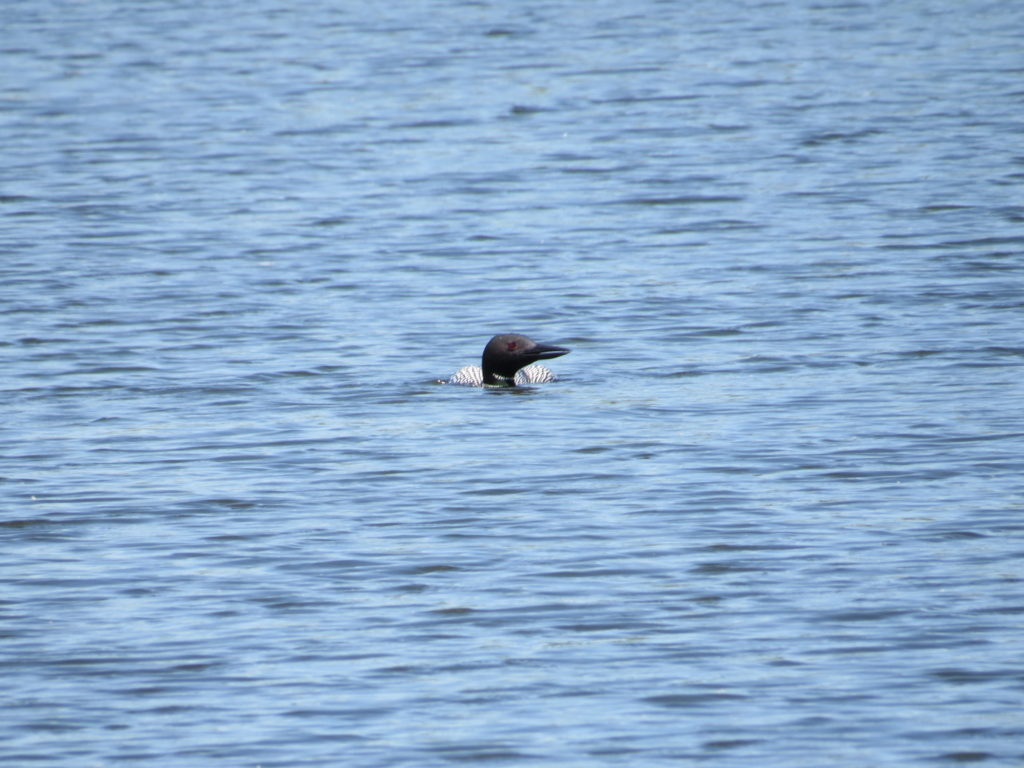
Birds have curiosity, like most of us. What do I see? What do I hear? What does that mean for me and others?
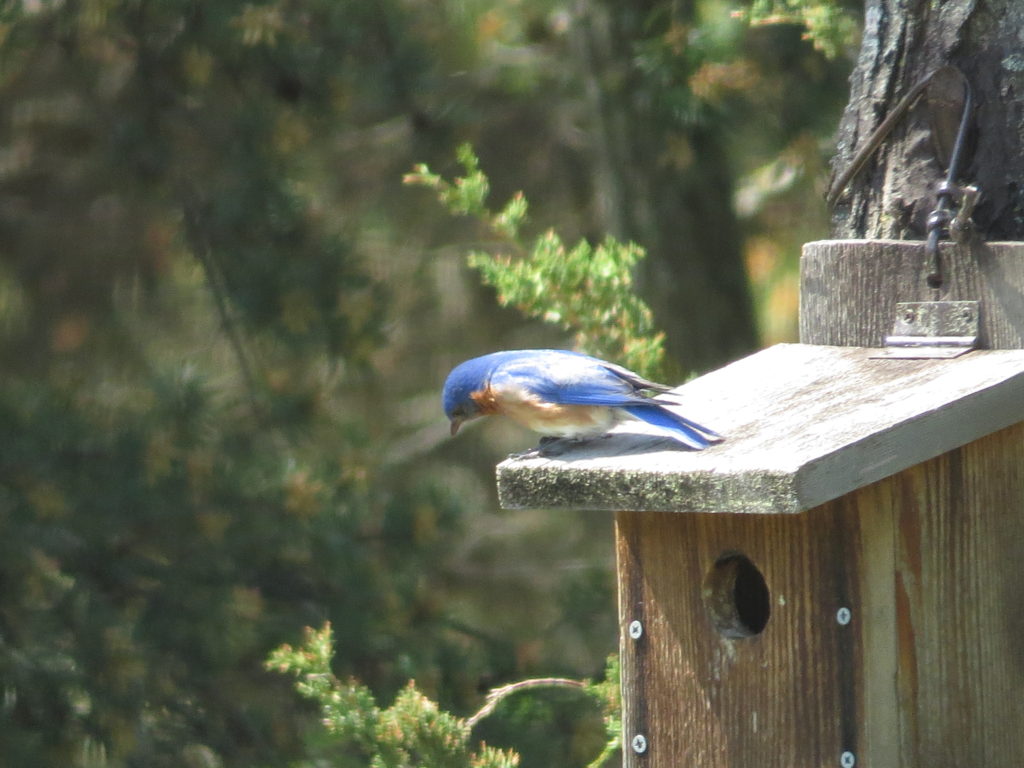
They also can be startled, intimidated, territorial, fearful, protective, bullying, and loud. Sound familiar?
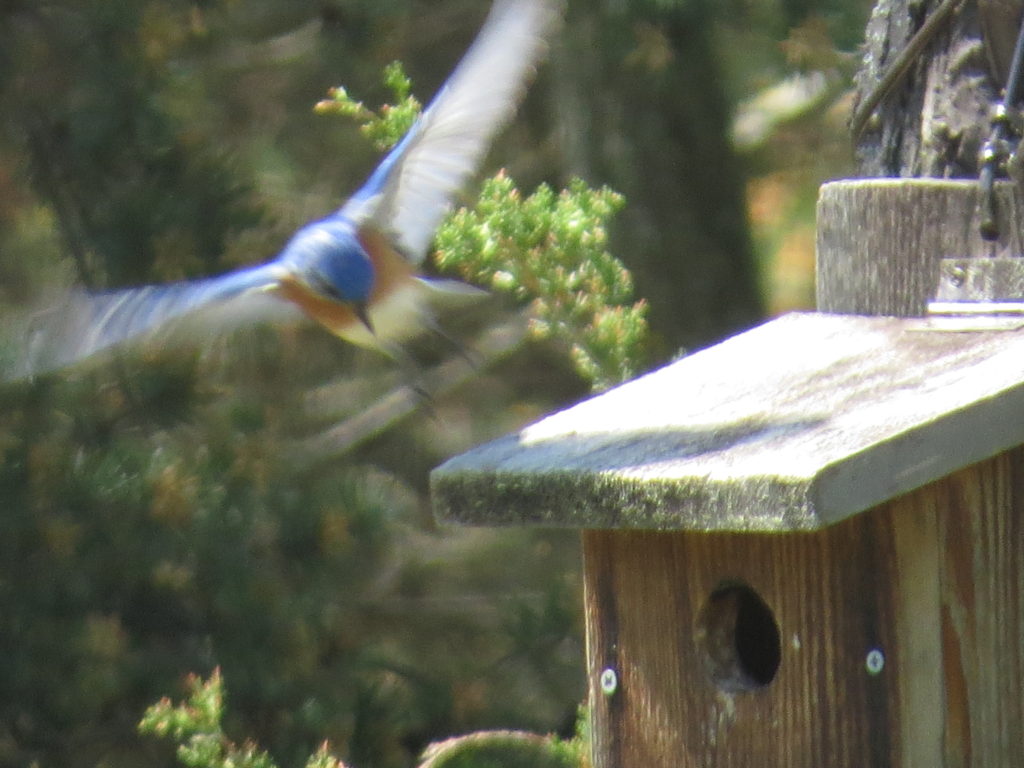
Birds spend a huge portion of their time and energy doing the work of providing food for themselves and their families. It takes concentration and patience, know-how and skill, and very often we and they are rewarded for our efforts. But not always…it also takes tenacity and resilience to keep trying when the opportunity slips away.
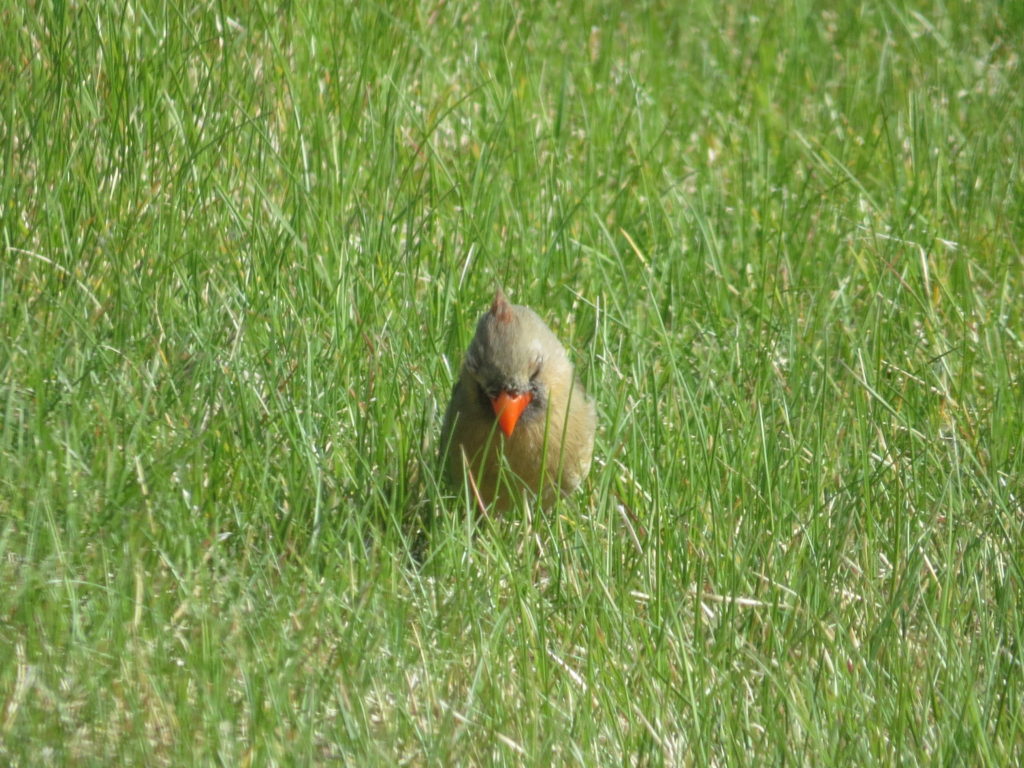
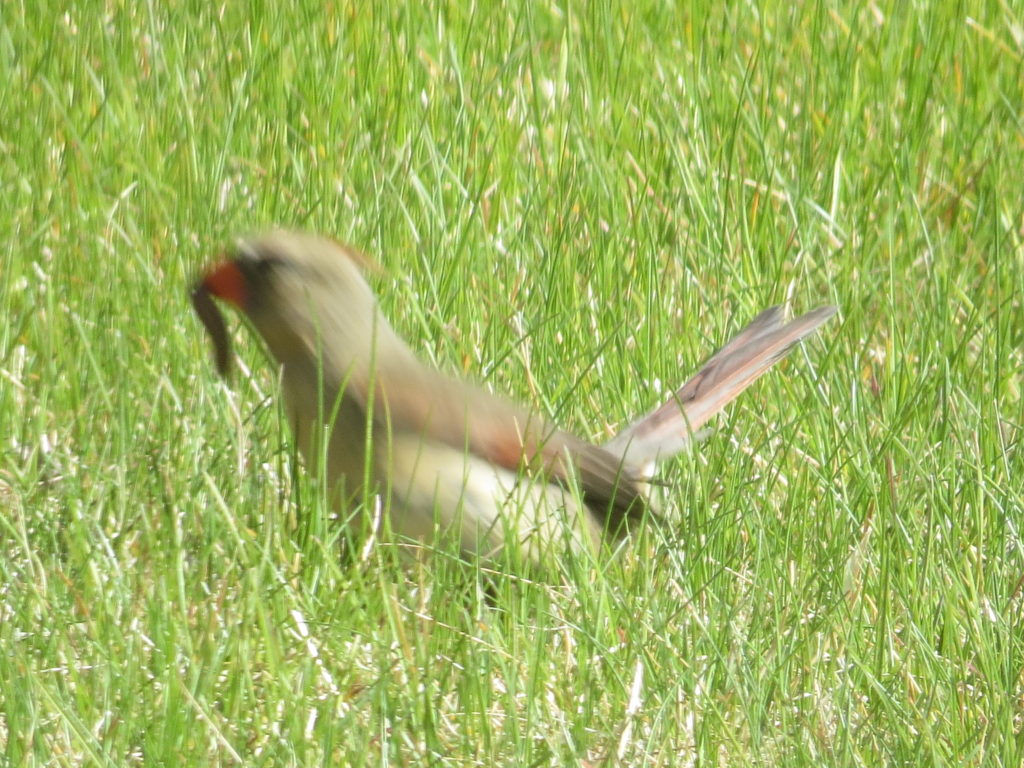
Housing is a big issue—is this going to be a good place to raise our family? Look it over, try it on, envision our future, determine the safety, can we afford it? Let’s make a nest. Let’s raise a family.
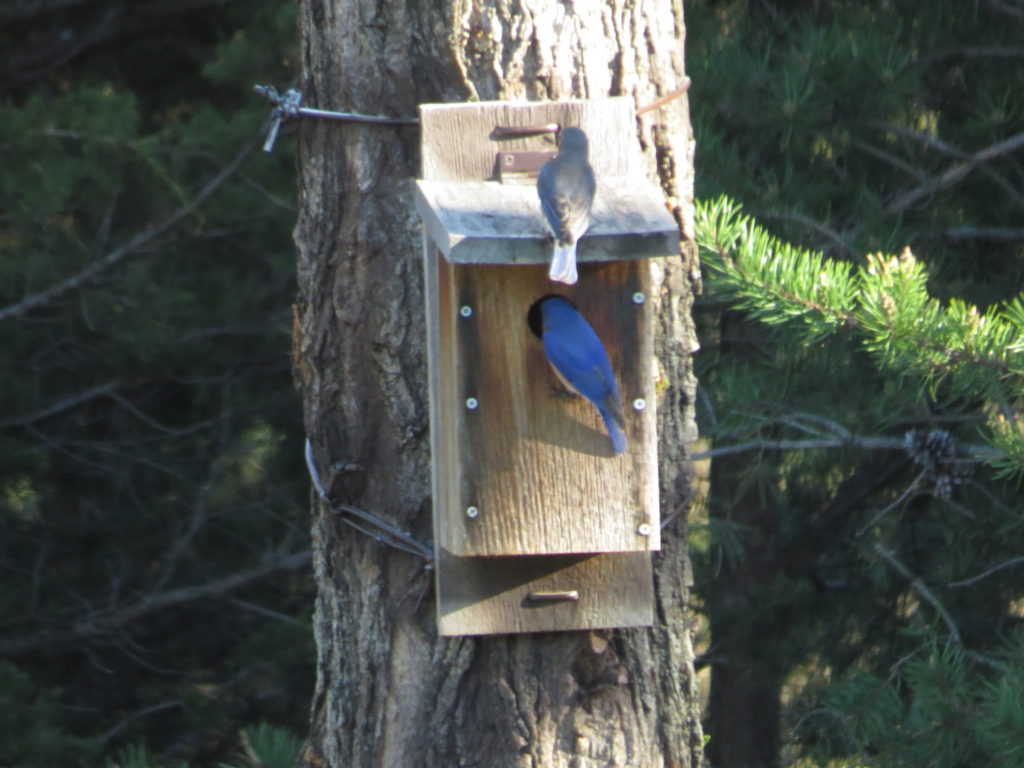
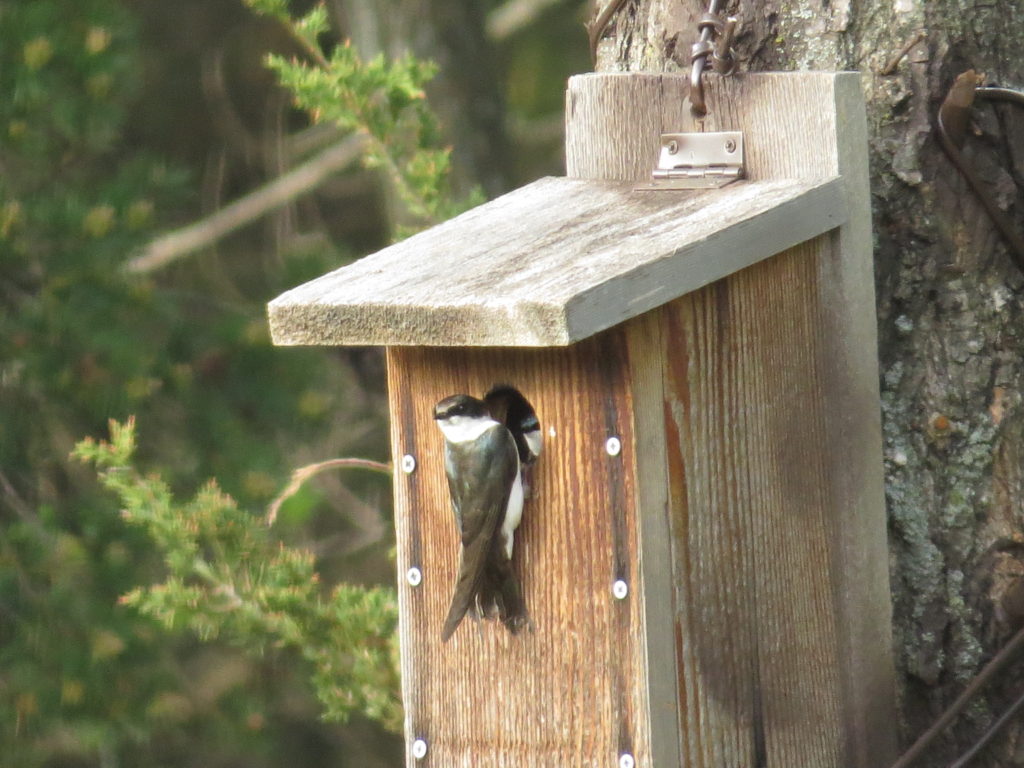
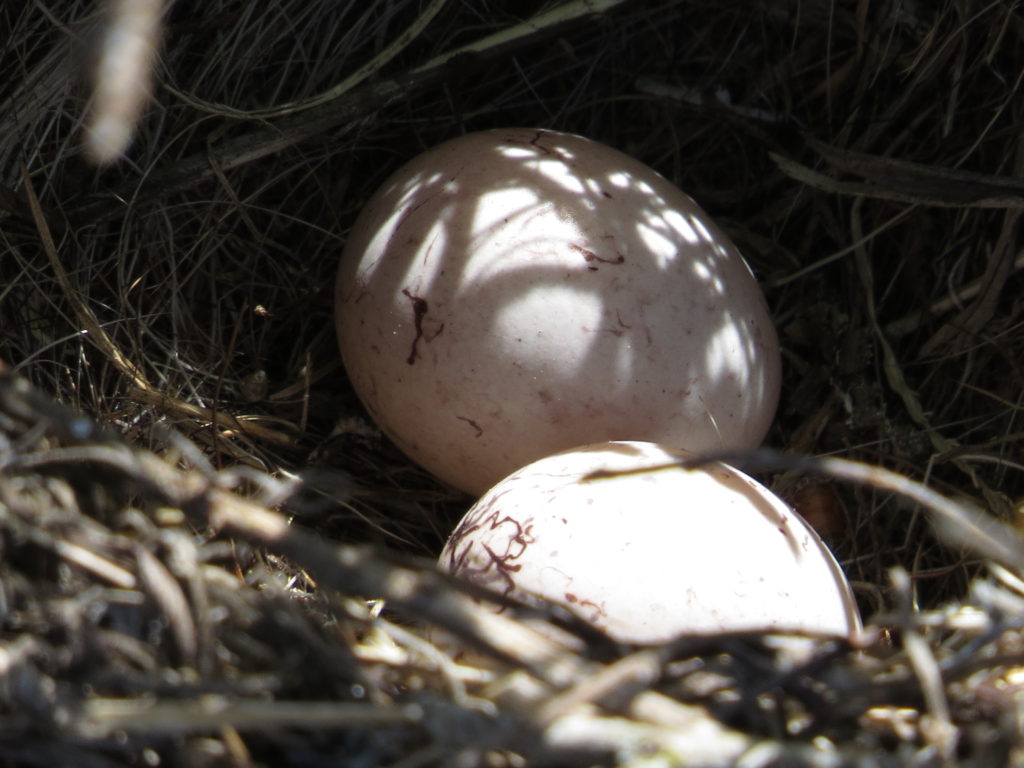
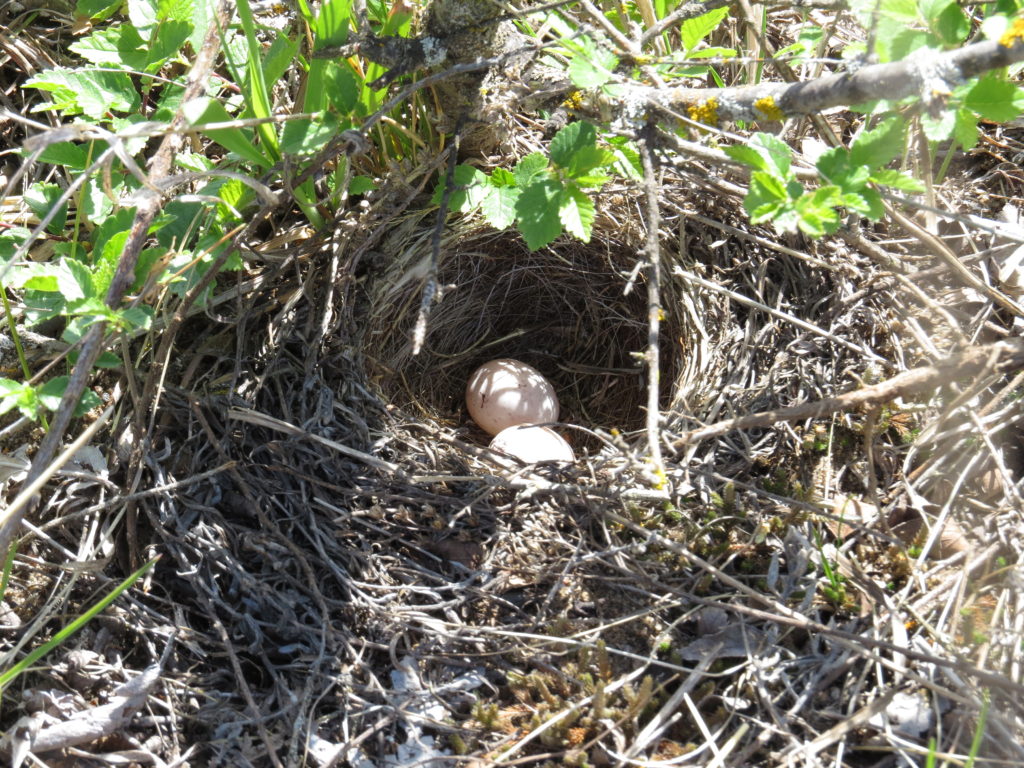
It takes an enormous amount of time, energy, fortitude, worms and bugs (and their for-human counterparts), sleeplessness (and sleep), learning, humbleness, mistakes, forgiveness, patience, and love to raise that family from infancy to independence. The birds have a compacted time frame in which to do so, yet they do it time and time again in each yearly cycle of their life span. They raise their children to fly. They teach them how to find their own food, to stay safe, to expand their knowledge. They teach them to be curious and wary, adventurous and prudent. They protect them the best they can.
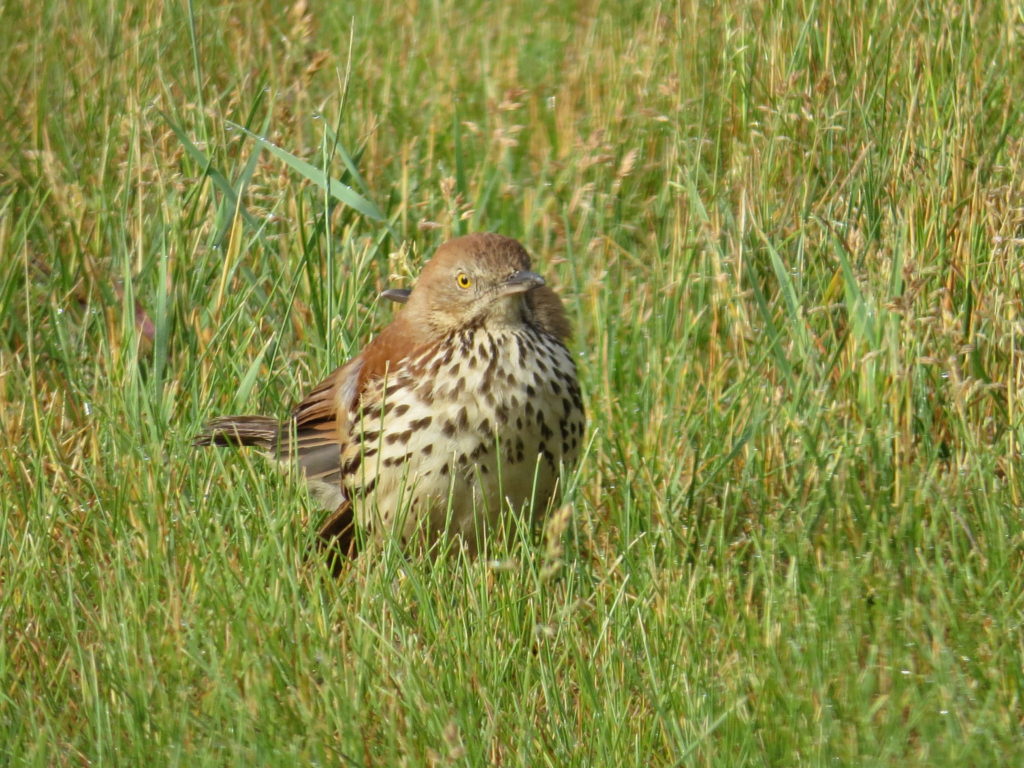
They try to ward off those who would take advantage of their young ones with a fierce look and a strong beak.
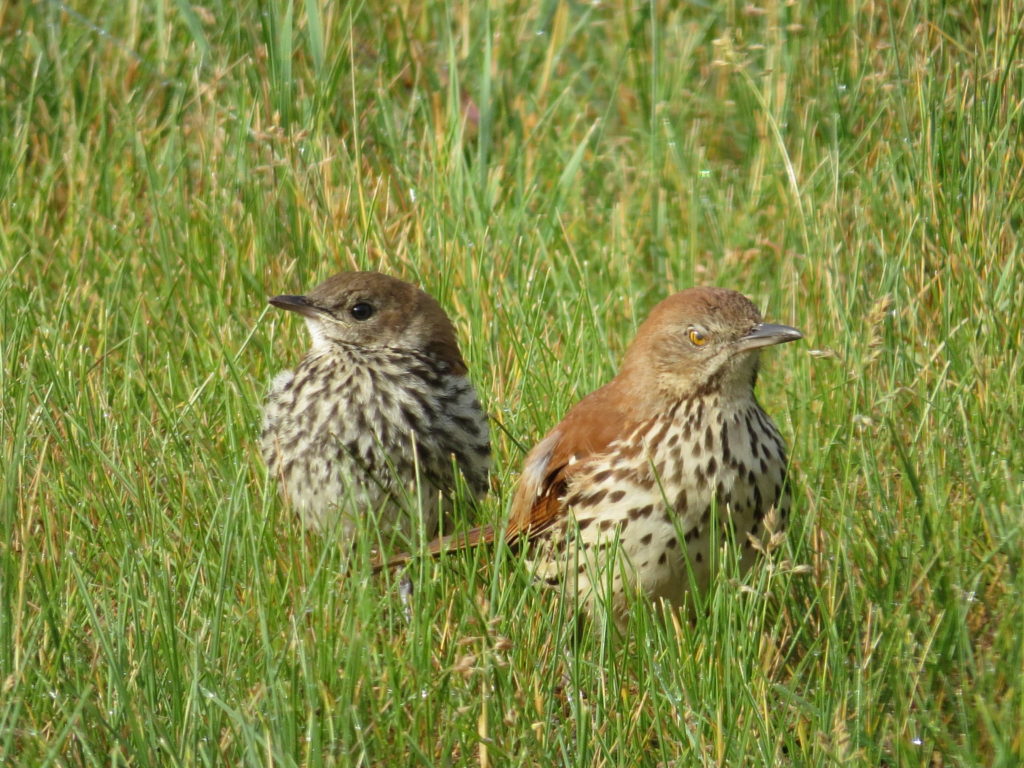
They are observant and alert.
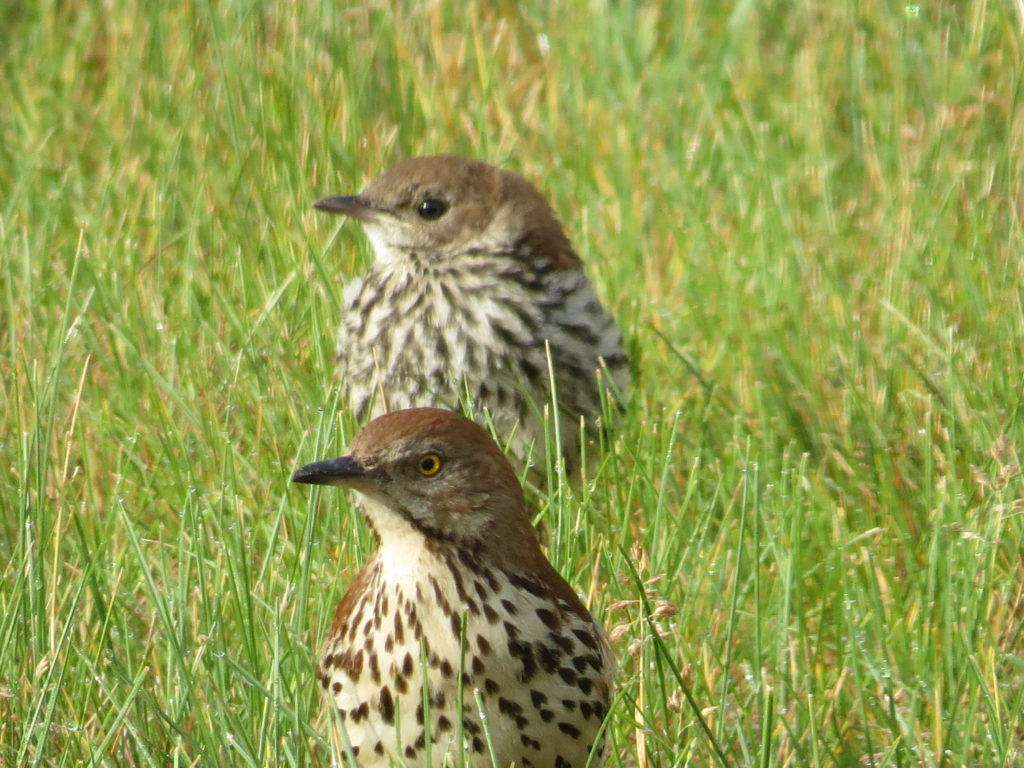
They model behavior, good and bad, with and without intent and consciousness.

They are proud of their fledglings.
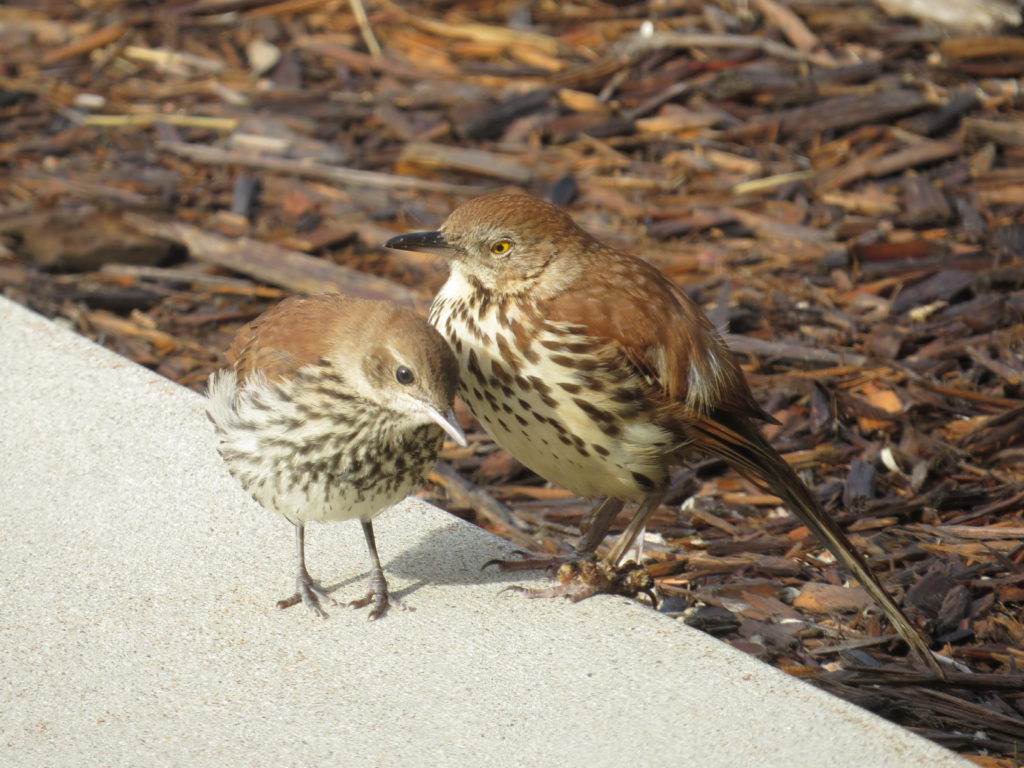
And they love them.
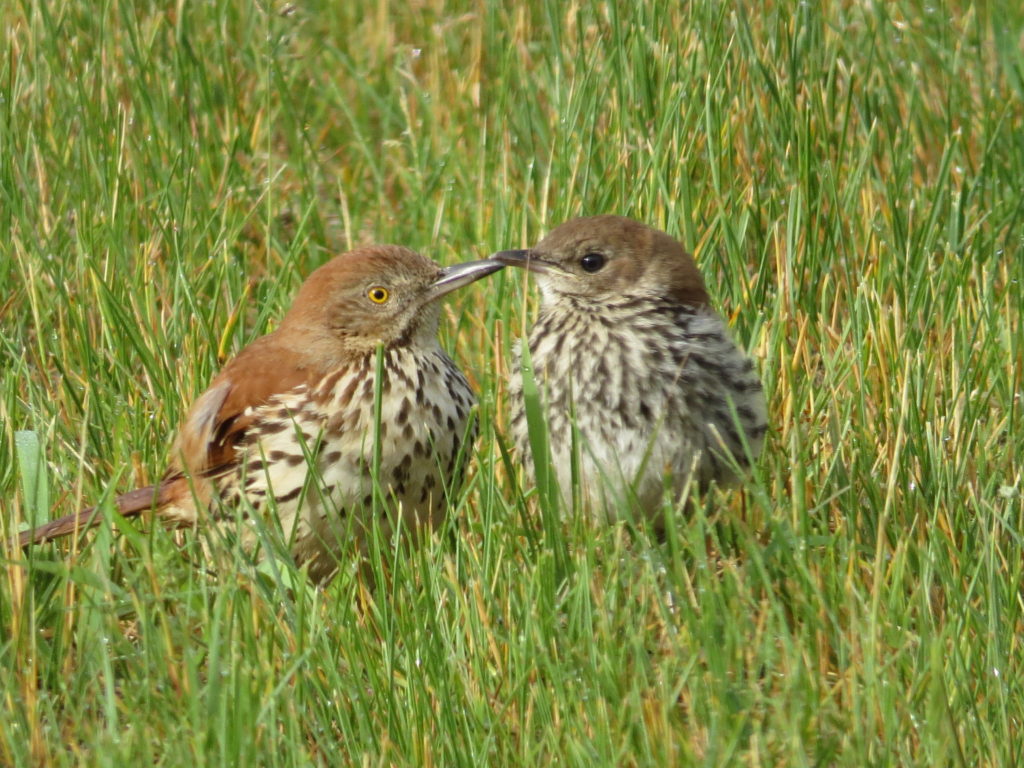
Birds don’t spend most of their time in unfettered freedom, soaring the skies for fun and pleasure. They spend their time doing the day-to-day things that we do—working for food, shelter, and a place to raise young ones, and they use their innate tool of being able to fly in doing so. Maybe we aren’t so different from birds. Perhaps our freedom and reach extend along the ground we humbly inhabit instead of the heavens—to our families and friends, to the ones in solitude, and to the children in our lives. Maybe we are like the eagles—majestic and free.
Flying Dreams
Love it seems, made flying dreams, so hearts could soar. Heaven sent, these wings were meant to prove once more, that love is the key. Love is the key. —‘Flying Dreams’ written by Jerrald Goldsmith and Paul Williams
I have had flying dreams my whole life. Many times I am in a room with tall ceilings, and I can just leap into the air and fly to the ceiling, then push off the wall with my feet to change direction. Perhaps it is more like weightlessness, like floating, like an astronaut in space. Other times I am flying outside, skirting high-line wires and trees, steering Peter Pan-like with my arms, and looking to my side to see birds flying with me. Whether inside or out, my flying dreams bring an immense sense of freedom and an indescribable feeling of joy.
In spite of the ease of flying in my dreams, in ‘awake’ life, flying isn’t always easy, especially the getting-off-the-ground part—or in the case of a dragonfly, the getting-out-of-the-water-climbing-up-any-available-vegetation-to-dry-out-wings part.
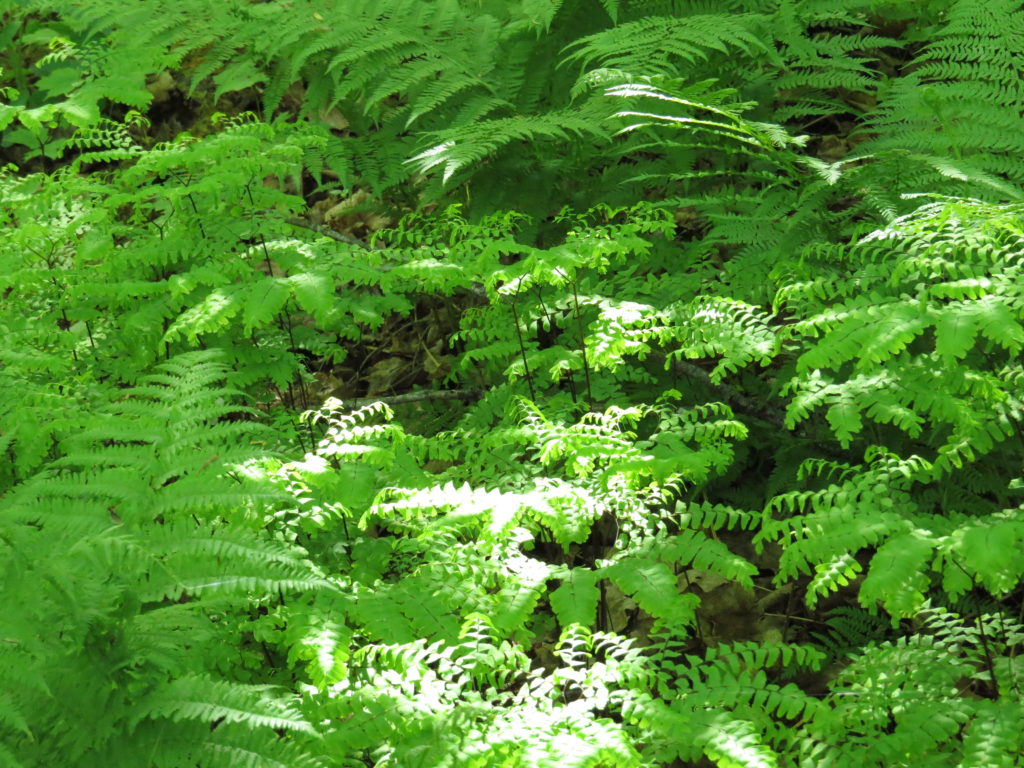
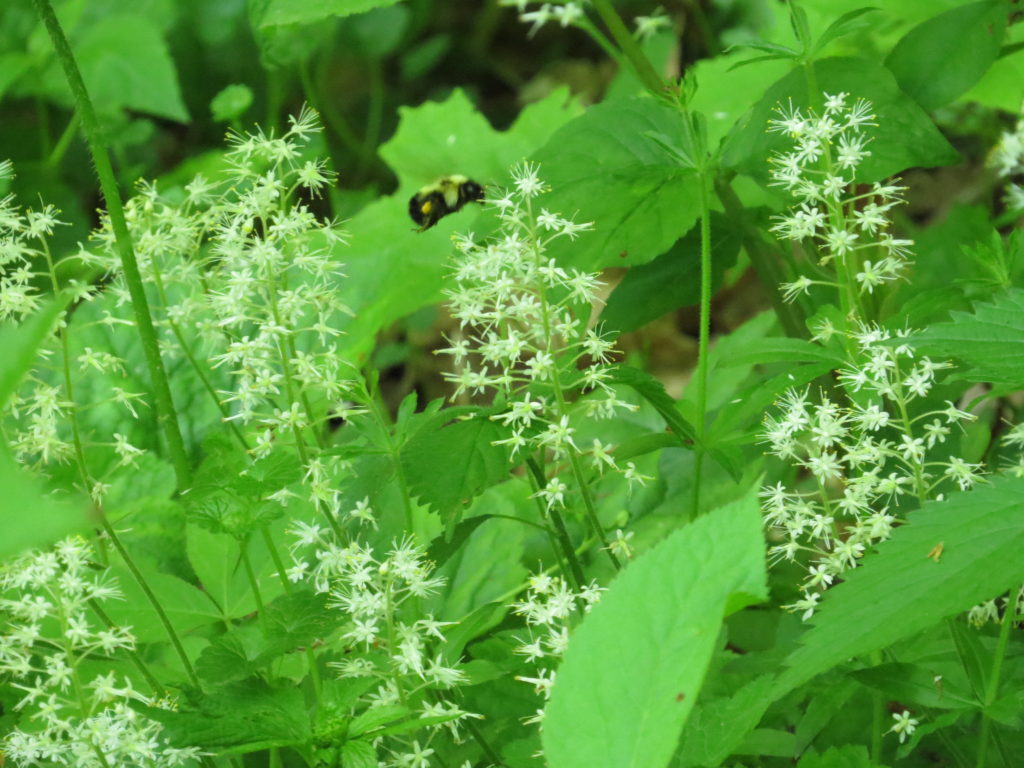
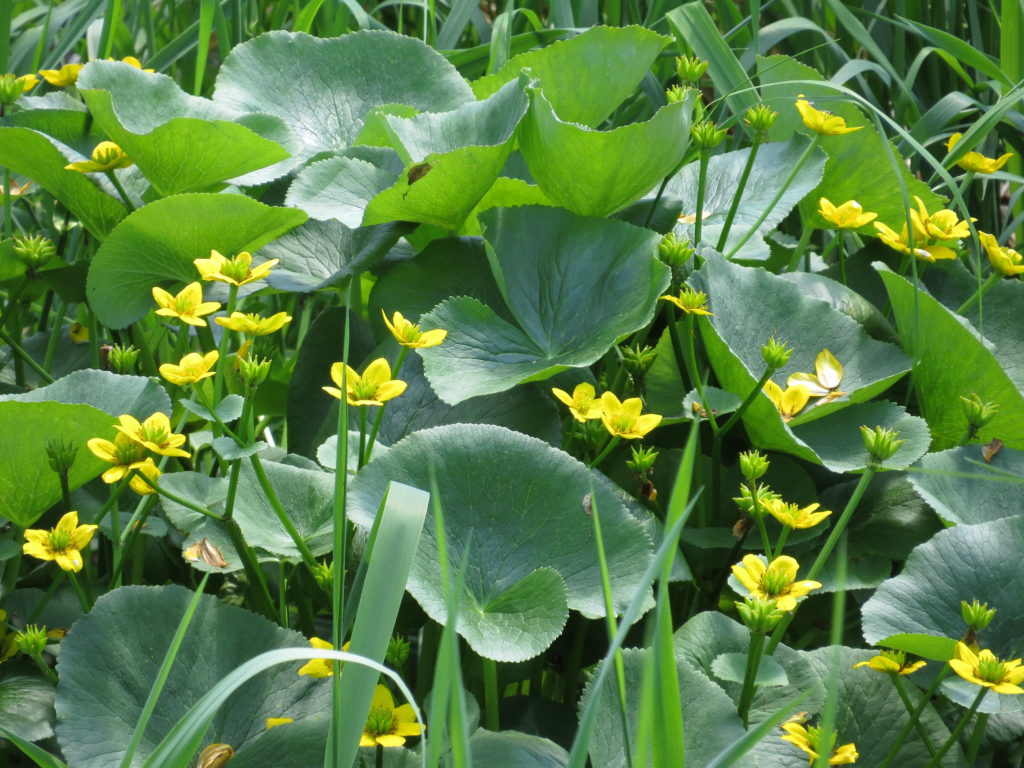
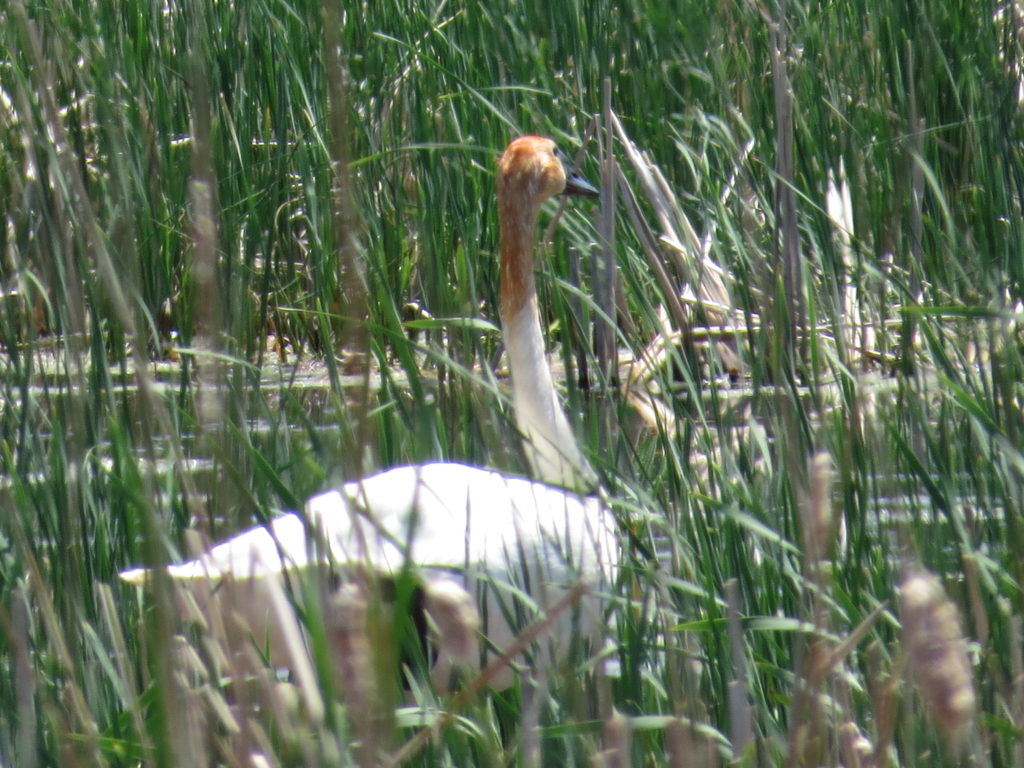
A little over three weeks ago, my friend and I went to Saint John’s Arboretum to try to find the hawk’s nest I had discovered before the leaves were on the trees—but this time we were unable to see it in the camouflage of leaves. We did find some beautiful ferns, spring wildflowers, a tannin-stained Trumpeter Swan, and….
…lots and lots of dragonflies! Most of them were not flying however—they were clinging to the shrubs and trees that lined a small lake. They were ‘tenerals’ or newly emerged from the aquatic larval stage. Dragonflies begin their life cycle in the water where an adult will lay eggs on a plant in the water or in the water itself.
The larval or nymph stage can be one to four years of growing and molting under the water. Water temperature and length of growing season determines maturation of the nymph. Emergence usually happens in the early morning when the nymph crawls out of the water up a stem of a plant. Some crawl several yards to a vertical plant to begin the final shedding of the larval skin to become the adult dragonfly.
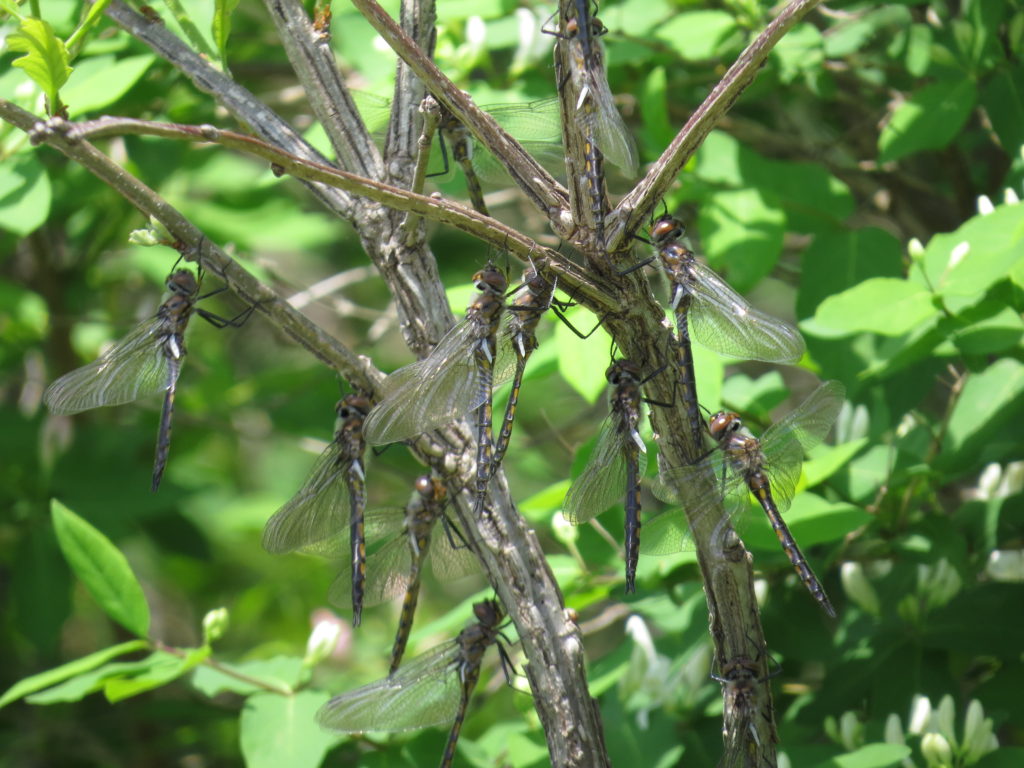
During this transformation time, the dragonflies are vulnerable to predators, mainly birds. Even rainfall at this time can damage their soft body tissue. Up to a 90% mortality has been observed in one emerging population. Their legs are the first to harden so they can hook their claws into a plant or tree. Their wings are colorless, like shiny saran wrap.
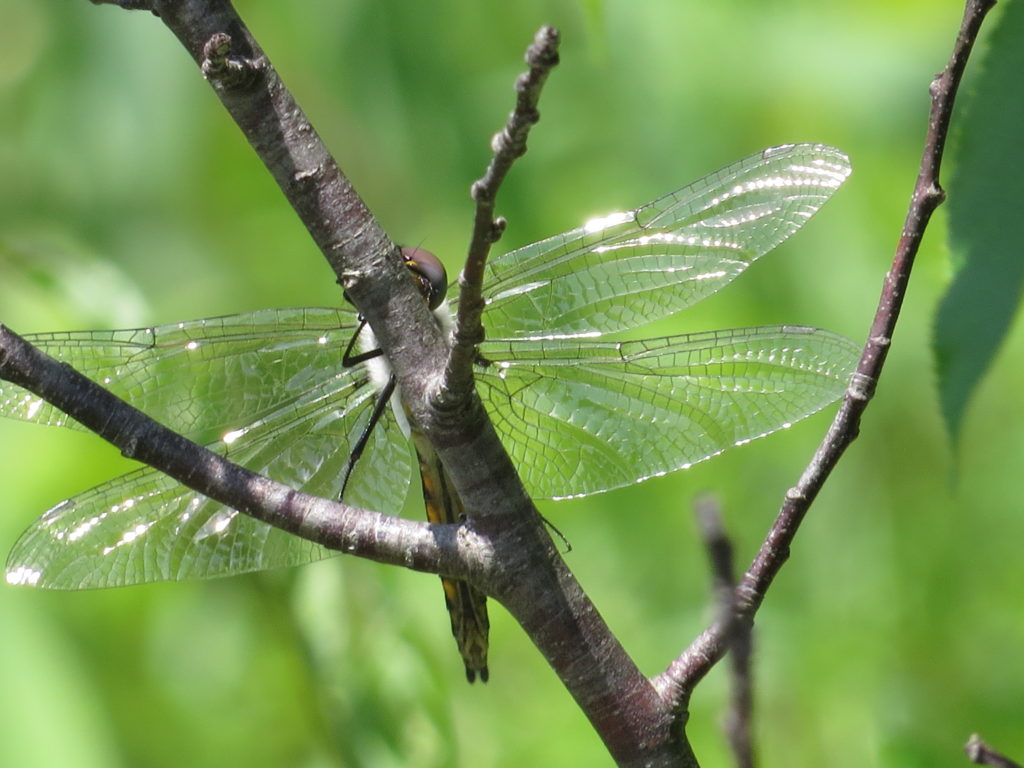
Eyes of the ‘tenerals’ are reddish-brown above and gray below. Both the wings and eyes will develop more color as they mature.
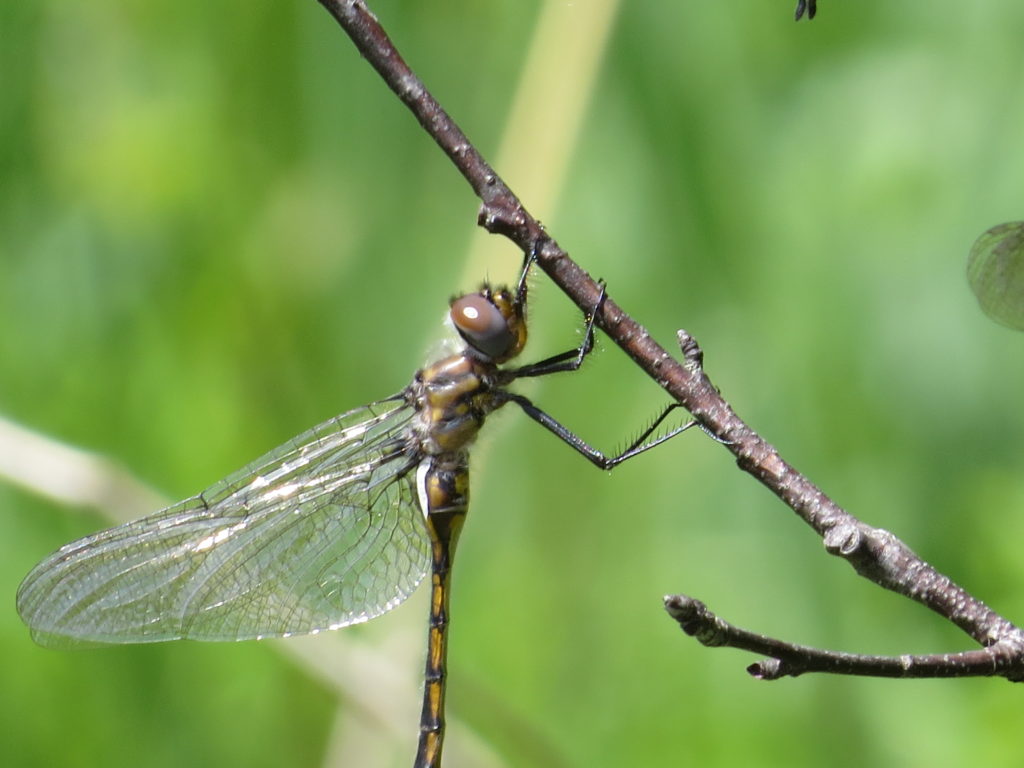
The newly-emerged dragonflies did fly from their drying posts when we walked by, but their flight was weak, and they only flew a short ways to other shrubs.
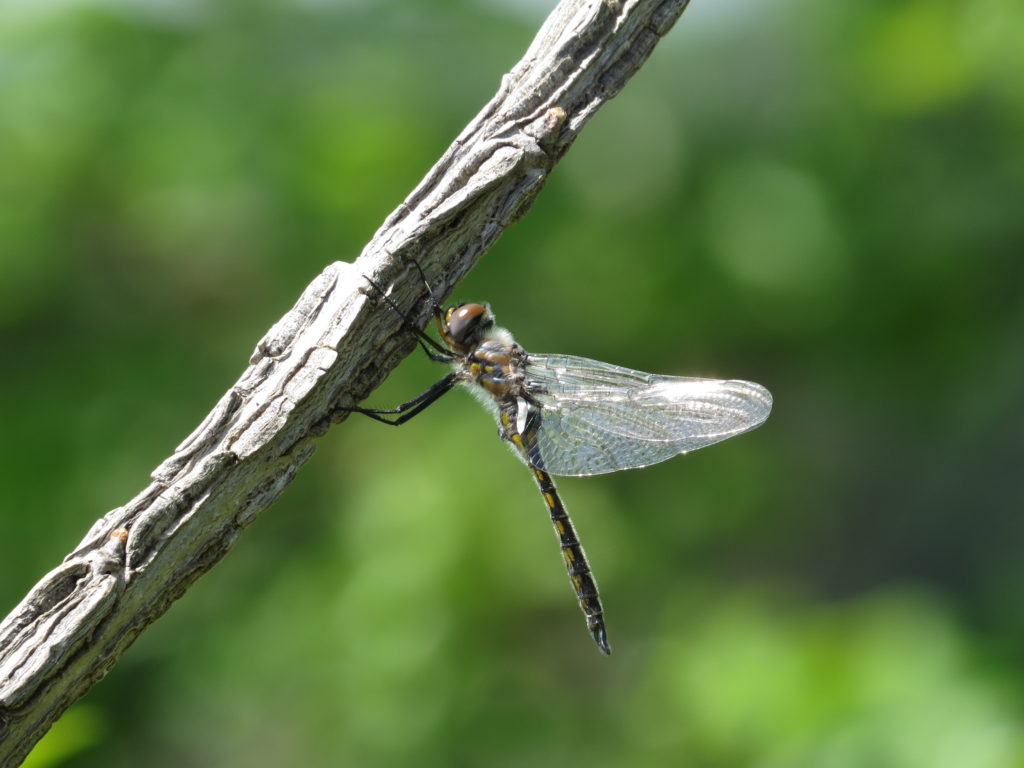
Along the edge of the lake on the shrubs and trees, when we looked closely, were thousands and thousands of dragonflies climbing and sunning and drying. When we walked by, a swirling frenzy of flying circled our heads until they once again settled on the branches. Practice flights to ready them for their short adult life of only weeks. Once they are ready, the fairy-like flyers are graceful and powerful. They can hover in the air and fly in all six directions as they capture mosquitoes and flies for their food.
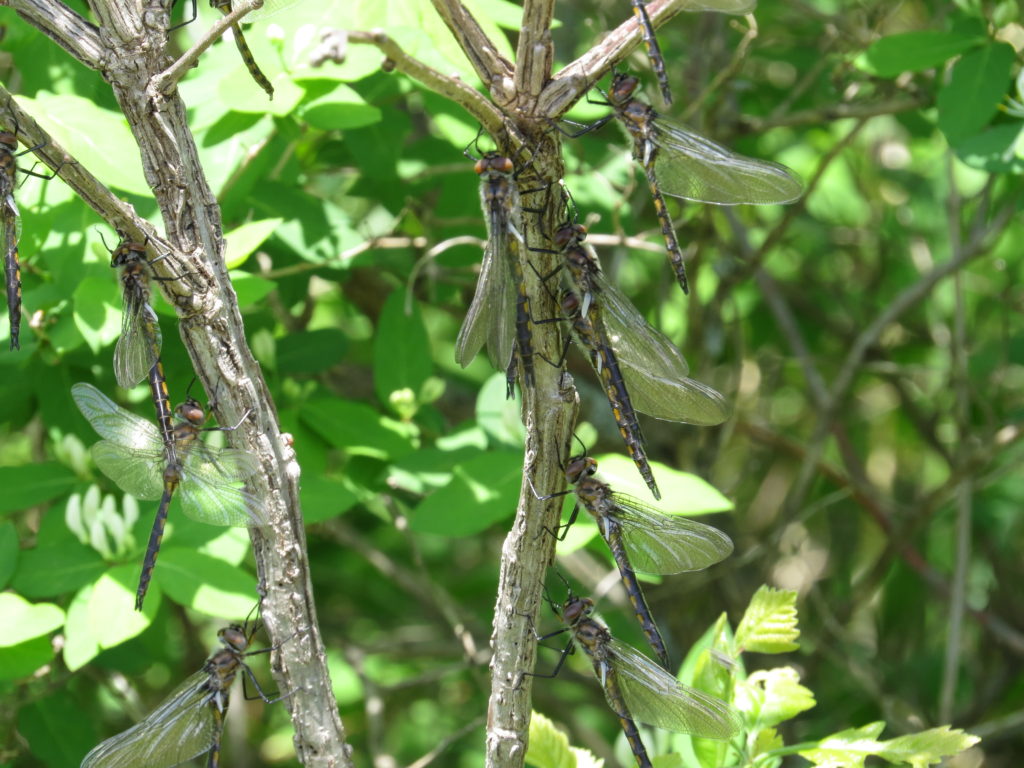
Flying dreams represent having our own personal power, a new perspective, spiritual connection, and freedom—freedom of expression and possibilities, and hope. Dragonflies represent transformation, adaptability, joy, wisdom, and illumination. Flying dreams release us from our perceived limitations; we break free from those things that tether us to earth, that hold us down. I love how our dreaming minds can give us a sense of freedom, power, and joy—a flight map for ‘awake’ life. The dragonflies have a vulnerable time—when their new, soft bodies are susceptible to weather and predators. They need time to settle into their bodies, to ‘harden’ their vulnerabilities, and to feel and know the intrinsic power of their wings. We all go through vulnerable times in our lives. What is most helpful to you during those times? Some are culturally vulnerable, when the walk to freedom is long and difficult, when history tethers them down with invisible ties, and when breaking free of those ties is thwarted at most every turn. We all need flying dreams. We all deserve flying dreams, and we deserve powerful, grace-full people to model, mentor, and mediate a flight map to freedom, power, and joy. Love is the key.