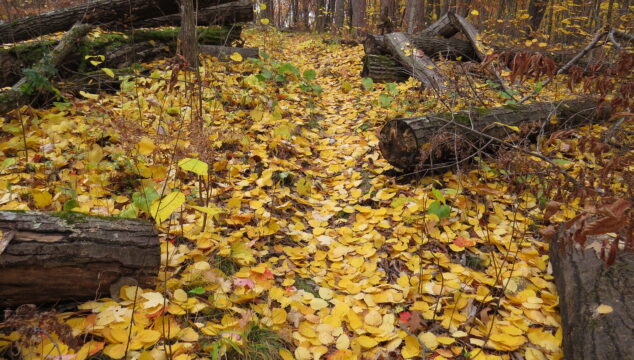
Come walk with me in the peak Autumn beauty of the Northwoods. To say that I love this time of year is an understatement. Most everyone can appreciate the colorful falling leaves---it reveals the 'true self' of a tree when its leaves are no longer producing chlorophyll. Their true colors are revealed, and there is something simple … [Read More...]
What Used to Be
There is always an interplay between change and holding steady. Not only does it play out in the overarching culture of the world but also in smaller community and relationship entities. But the most personal, most impactful, and most difficult interaction between change and holding steady happens inside each one of us. We have a desire for learning, a curiosity of the world around us, and an innate drive for ‘something new’—except when we don’t feel safe. Safety is our default system—our primitive brain takes over when we are threatened by anything—real or imagined. When that happens, curiosity, compassion for others, learning, and openness get shut out from our brain and body until we feel safe again. So what happens when the people around us and the media we consume continuously stoke our fears?
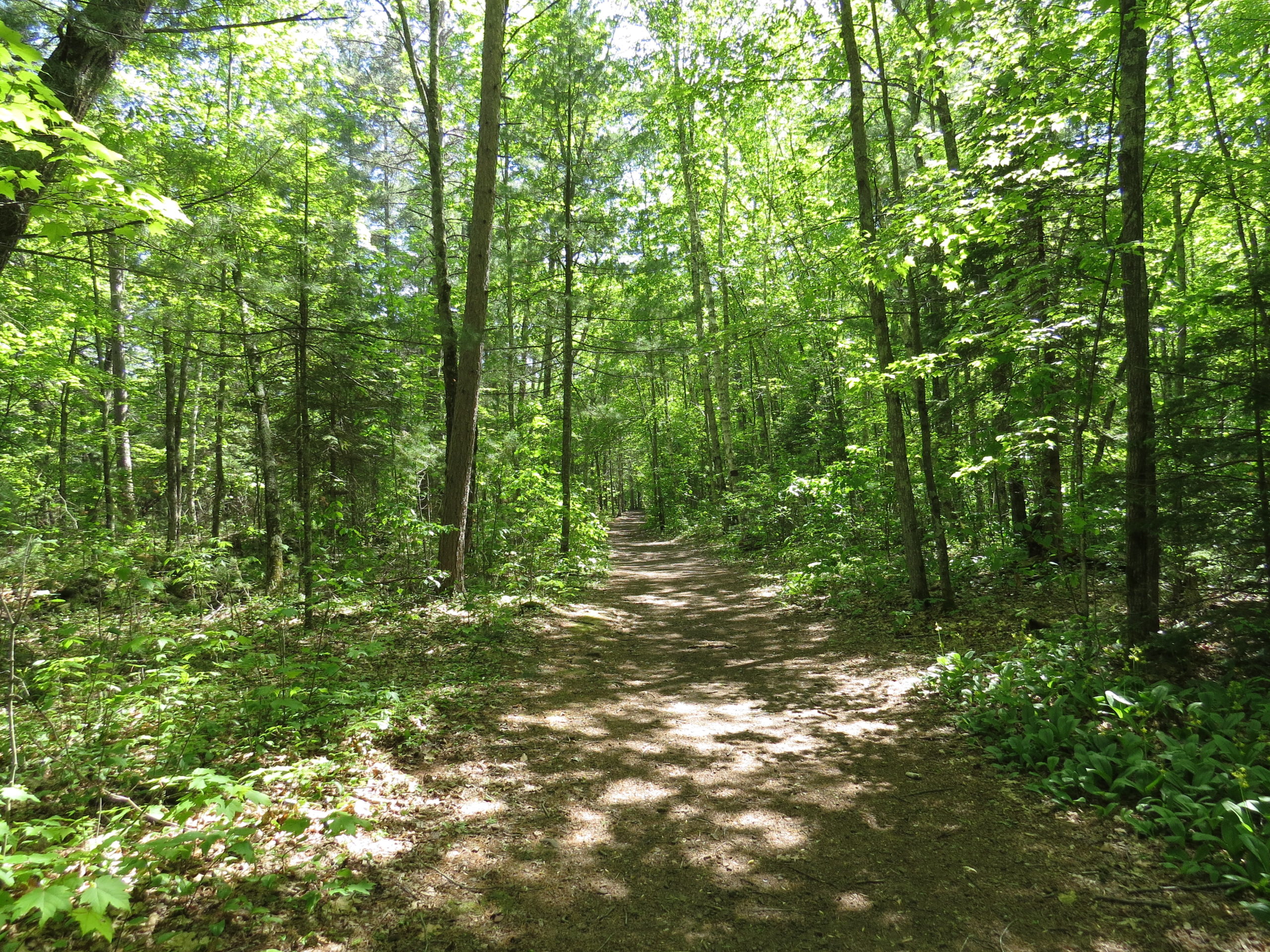
I am already a month behind in my posts—it used to be the beginning of June, and it used to be Spring. On our way home from our Duluth wedding weekend at the beginning of June, we stopped at Banning State Park. We didn’t have a great amount of time, Chris was still on ‘no hiking’ status from his hip surgery, and the mosquitoes were ravenous. But Emily and I braved a one and a half mile hike on the Quarry Loop trail that followed the beautiful Kettle River. The trail used to be a railroad.
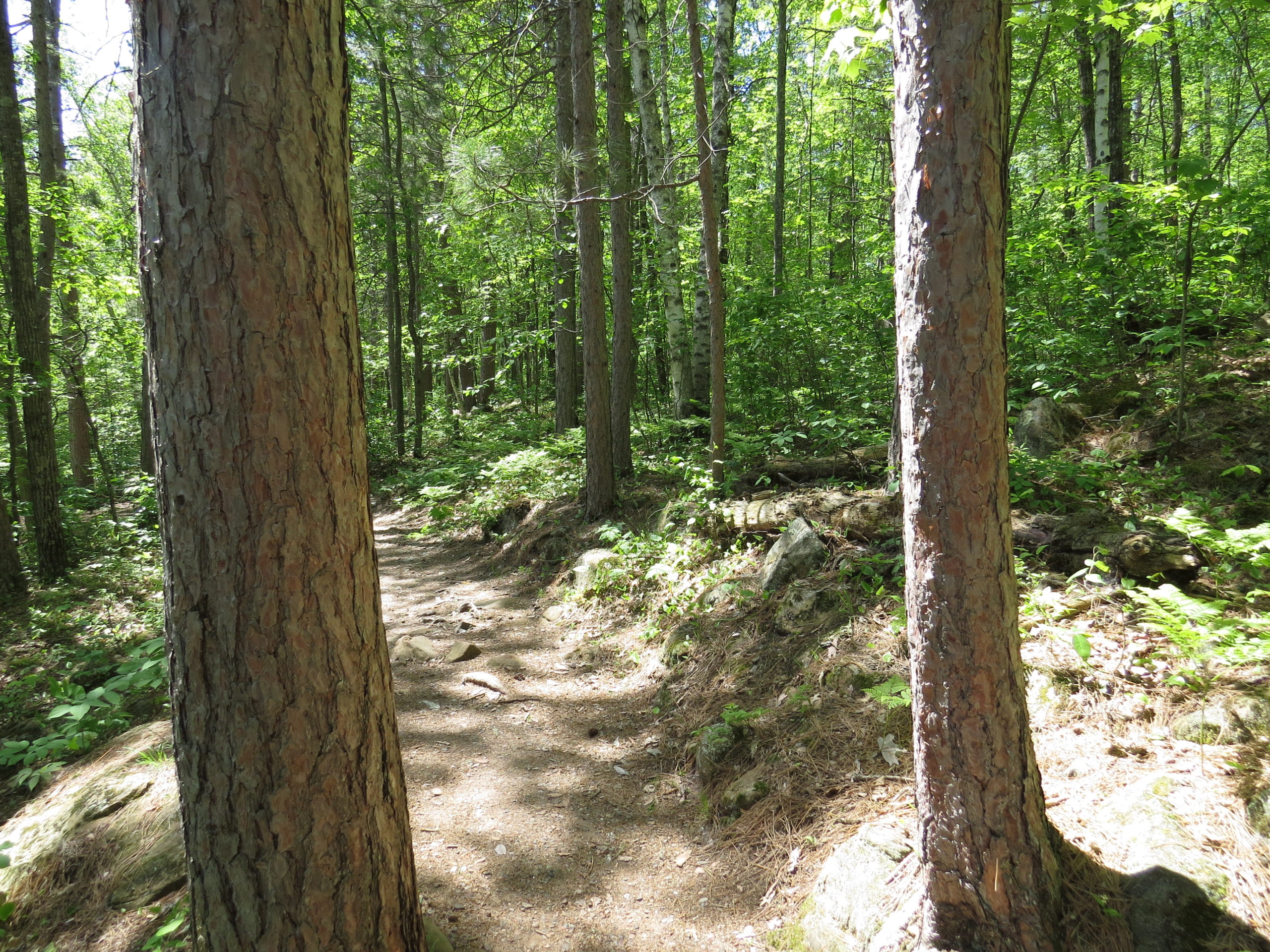
There used to be a forest of towering Red and White Pines in this area that was logged in the mid-1800’s. The Kettle River was used to move logs to the St. Croix River and to mills. In 1892, the Hinkley Sandstone of the area began to be quarried, thus the railroad to haul it away to the Twin Cities and Duluth for building blocks and road pavers. Then the enormous Hinkley fire in 1894 took trees, lives, and losses for the railroad and quarry. What used to be.
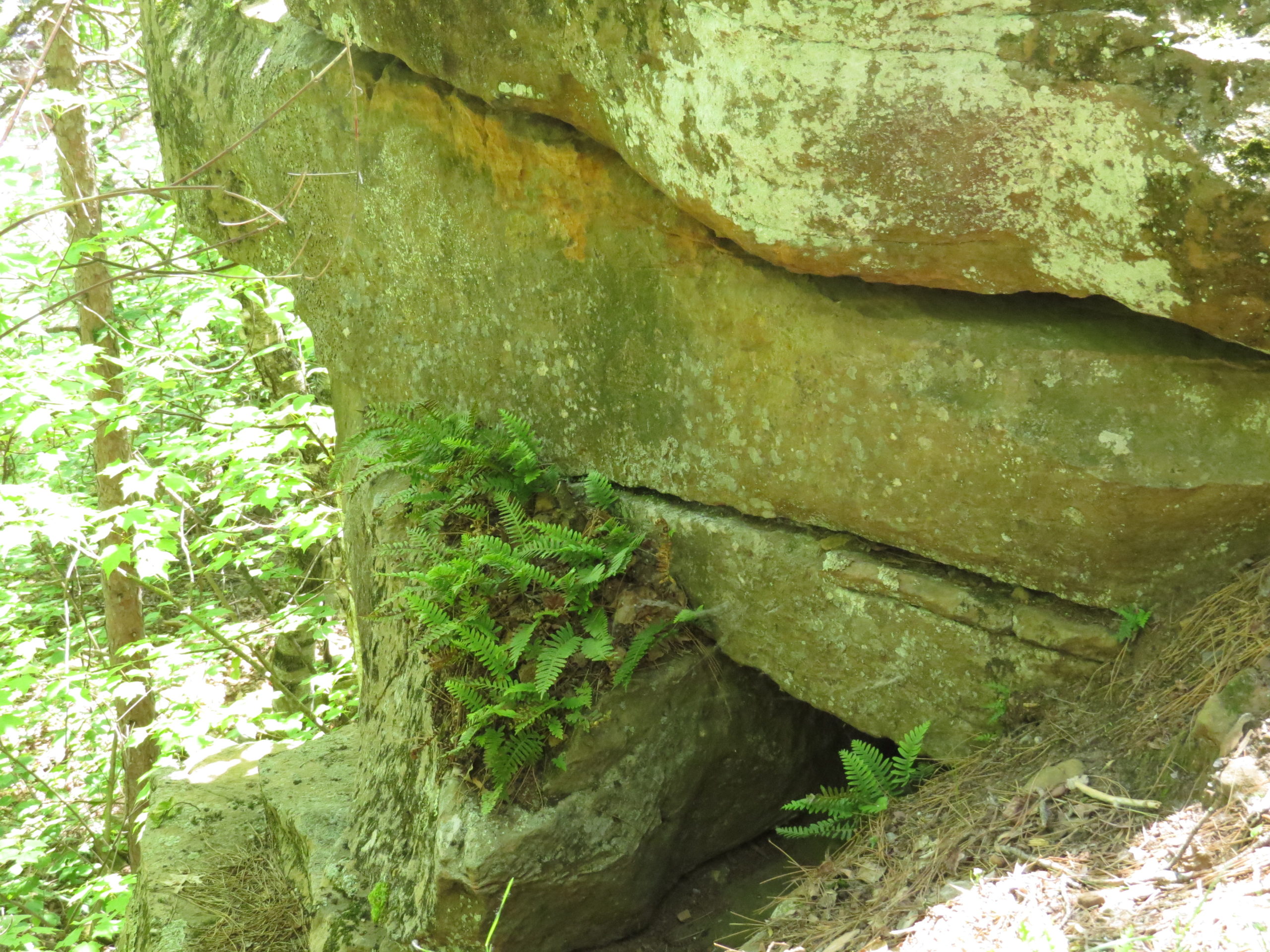
Long before enormous trees and logging, desirable sandstone and quarrying, there used to be a sea here hundreds of millions of years ago. The silica and sand formed the rock that is now called Hinkley Sandstone. There used to be a glacier here tens of thousands of years ago that upon melting created Lake Superior and the Kettle River that formed along a fault line. What used to be.
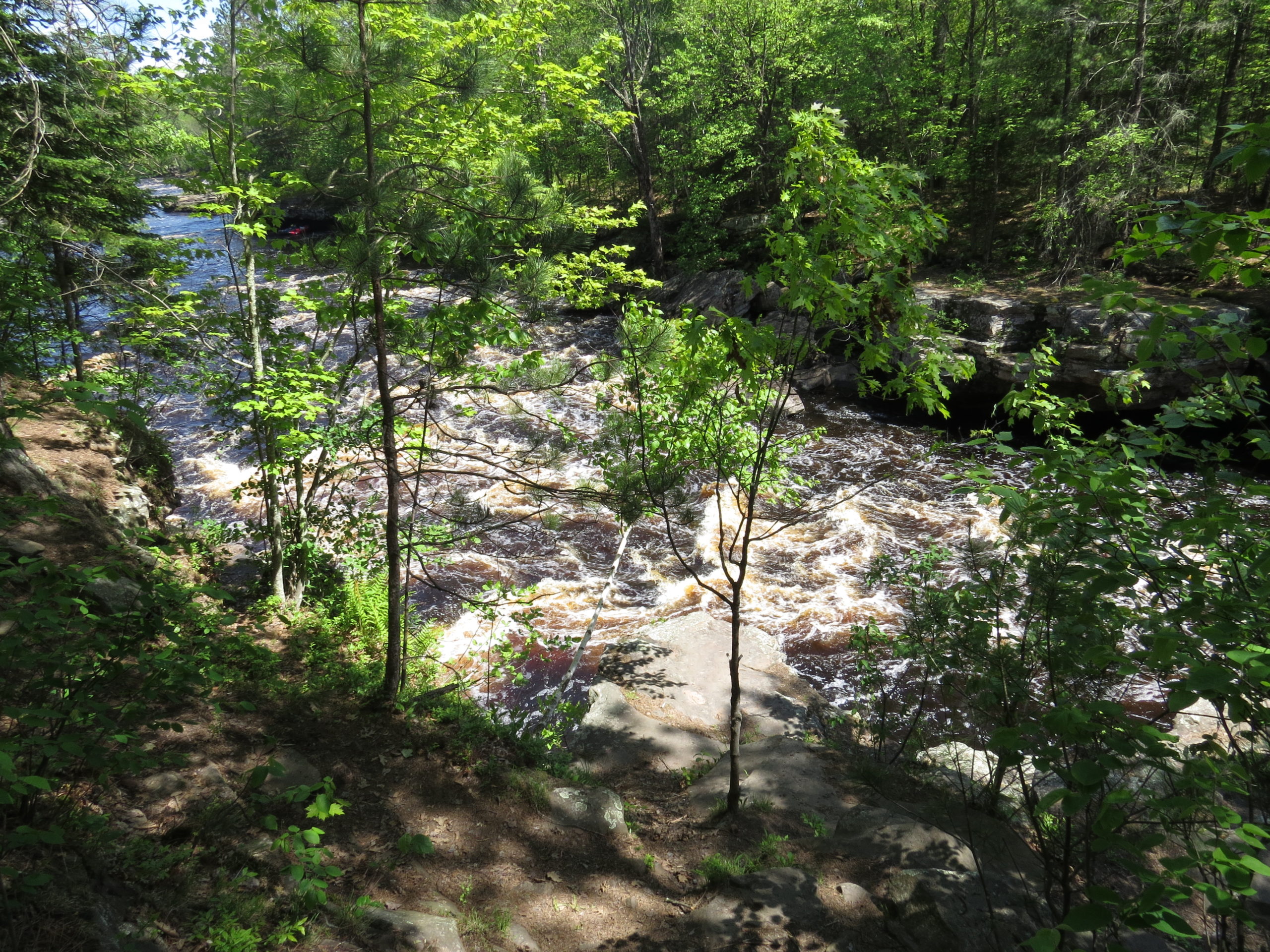
But in the here and now, the Kettle River is a favorite place for experienced whitewater paddlers with Class III-V rapids named Blueberry Slide, Dragon’s Tooth, and Hell’s Gate.
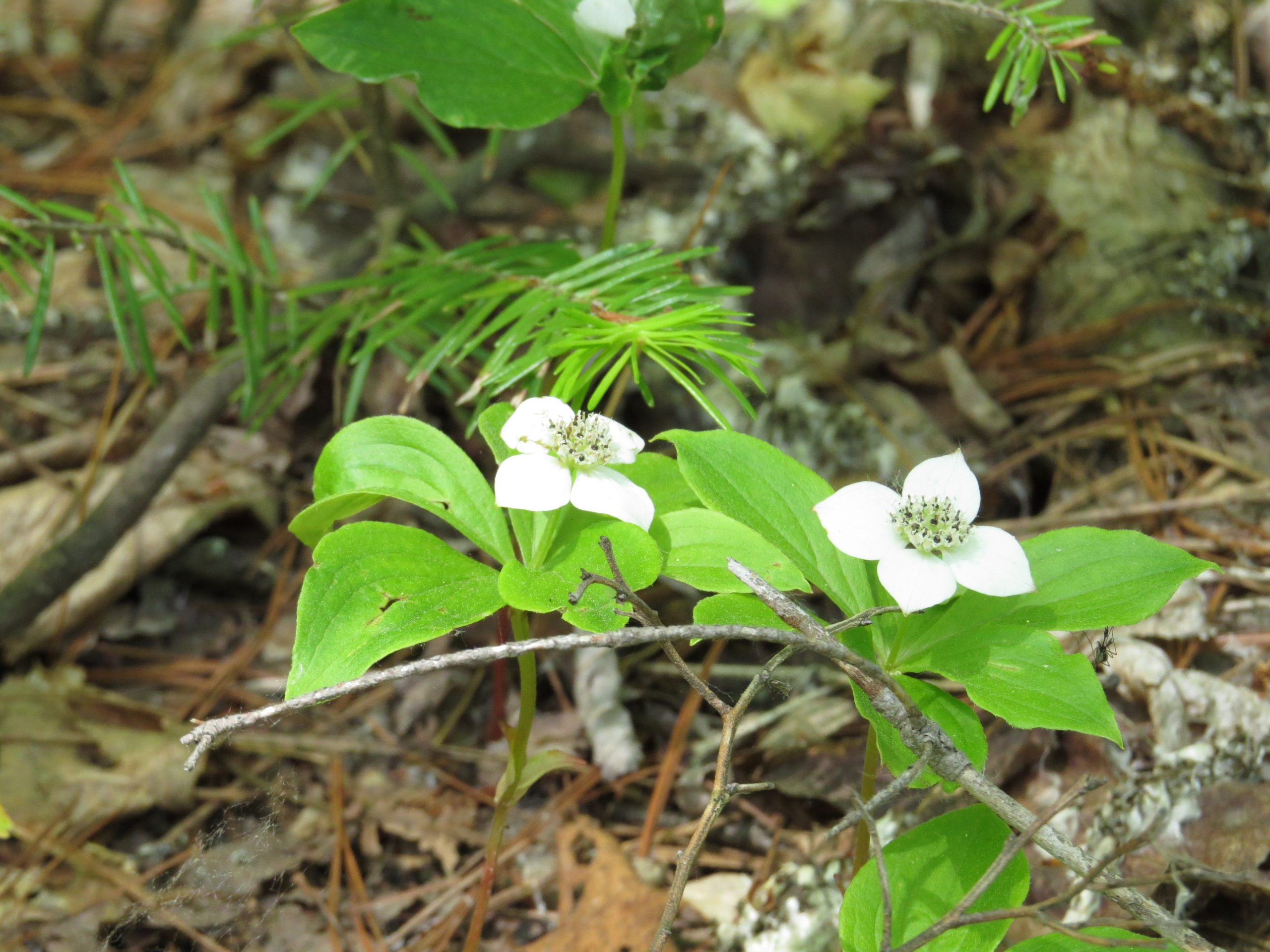
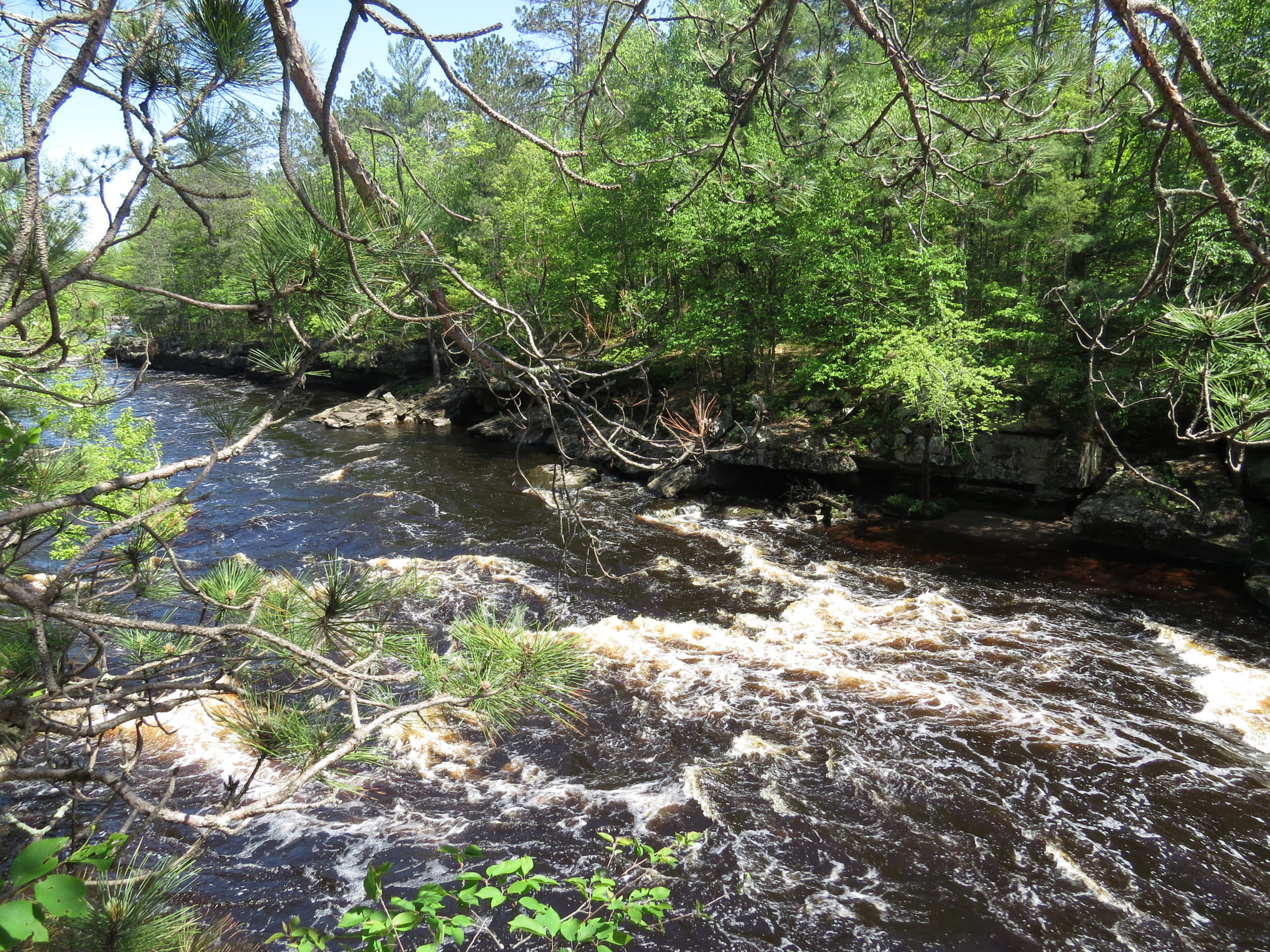
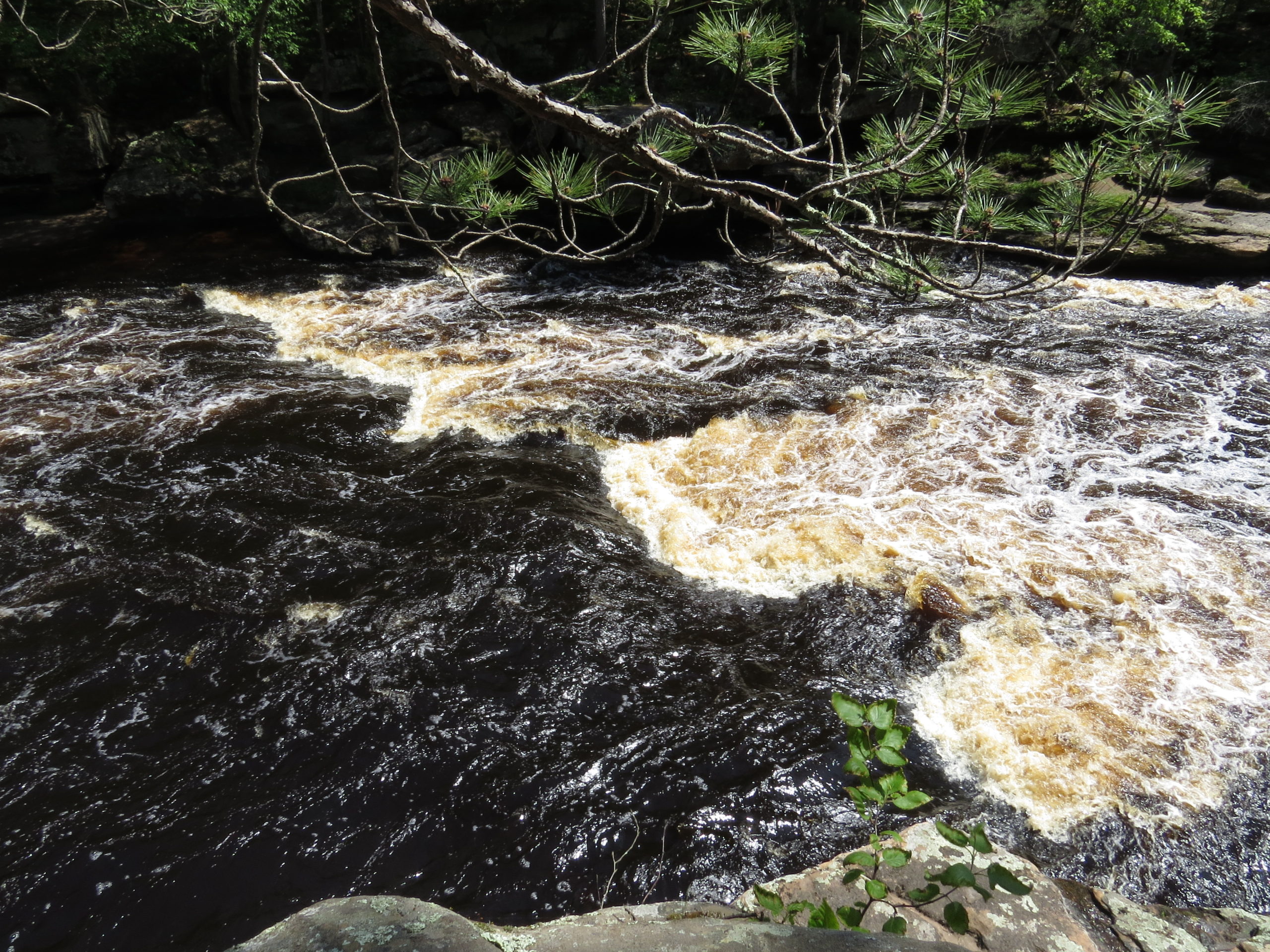
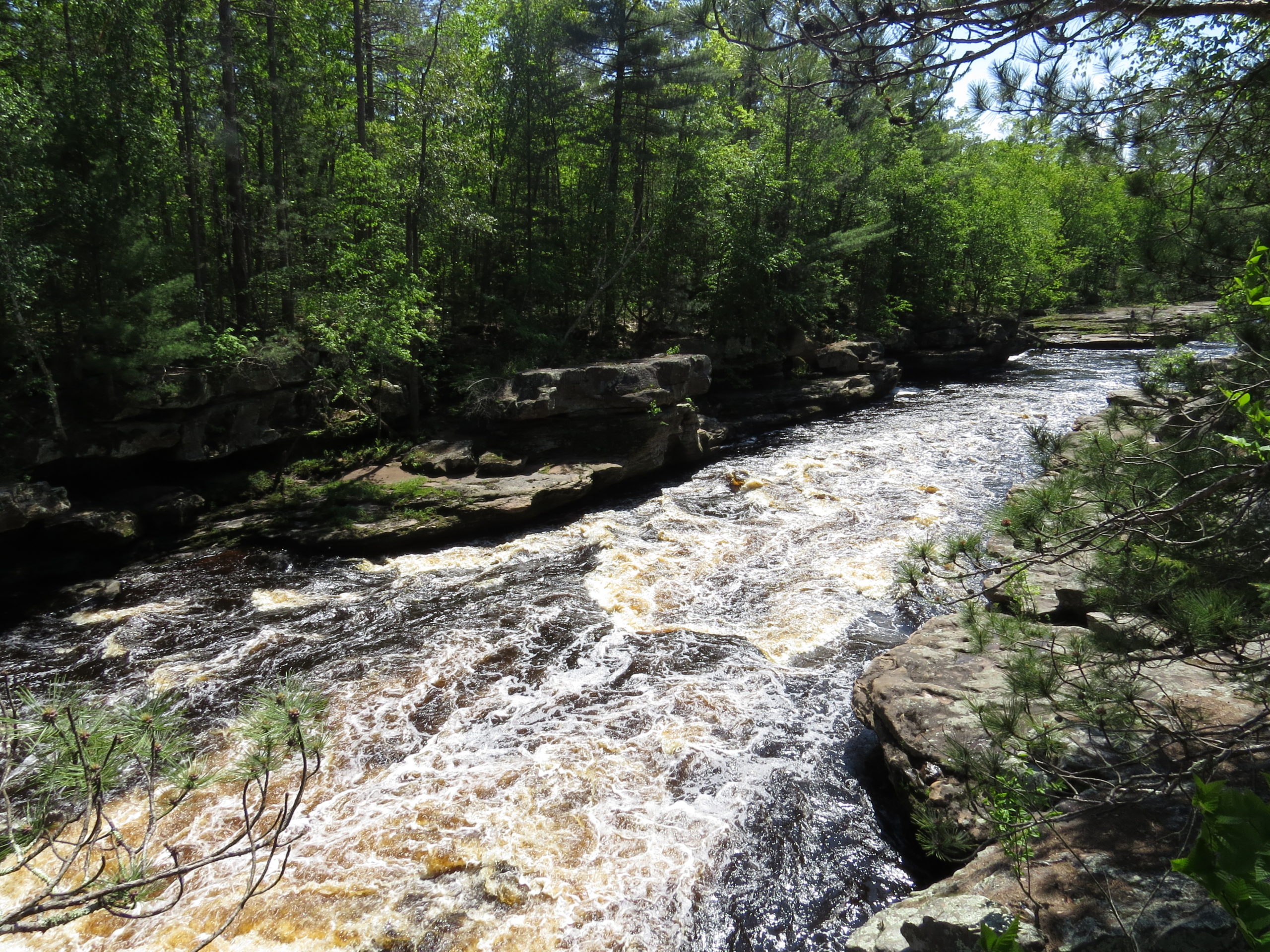
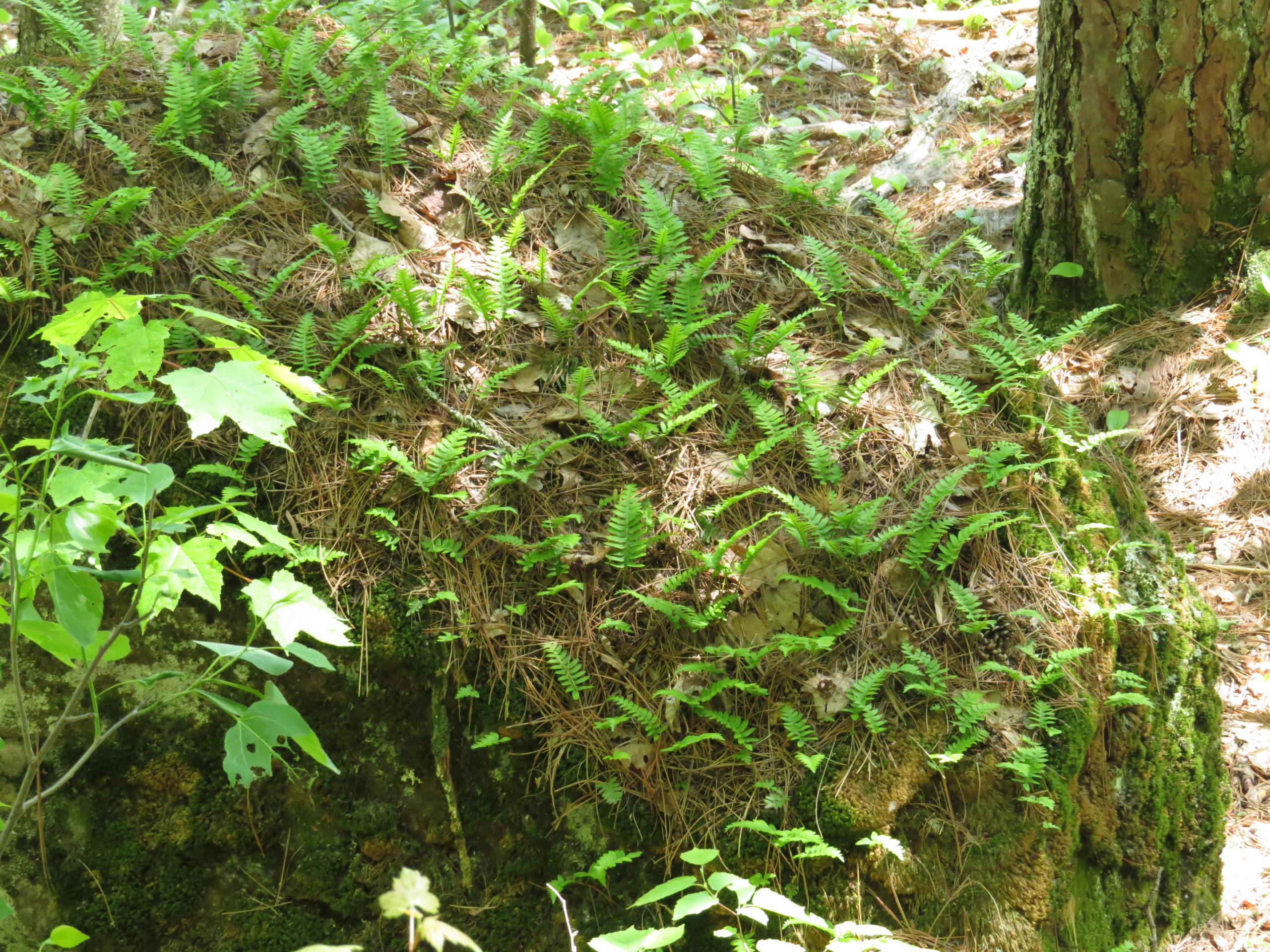
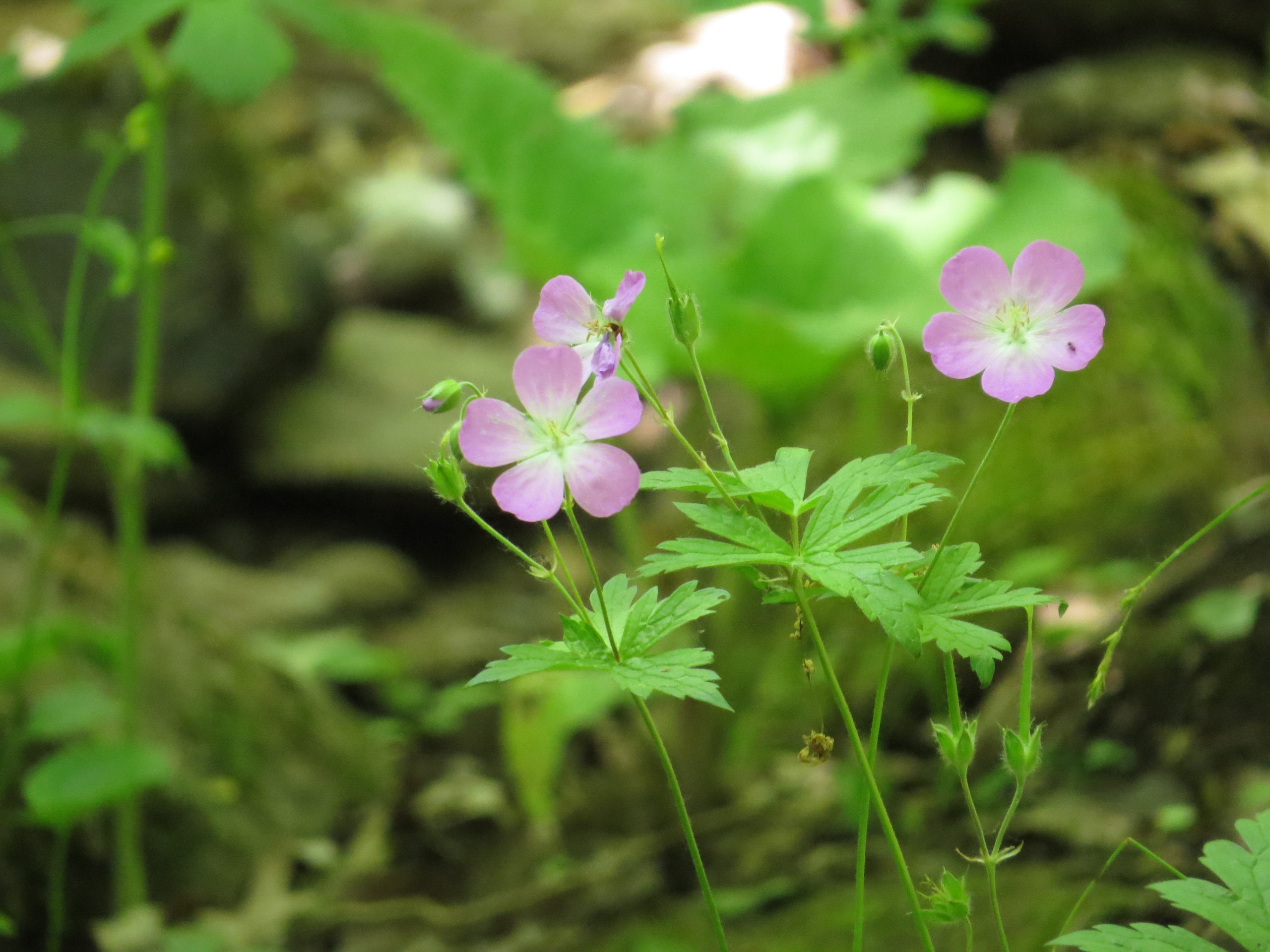
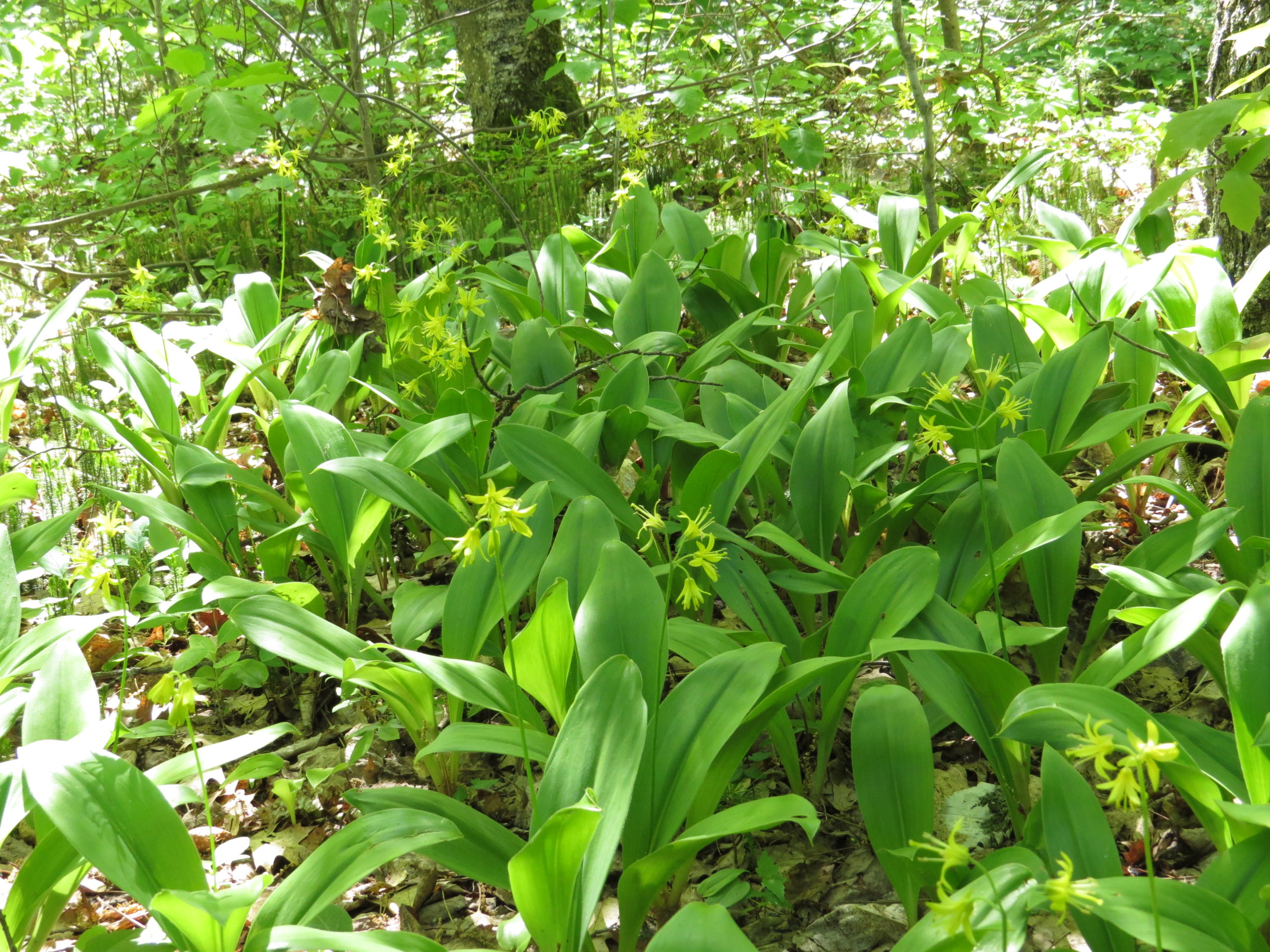
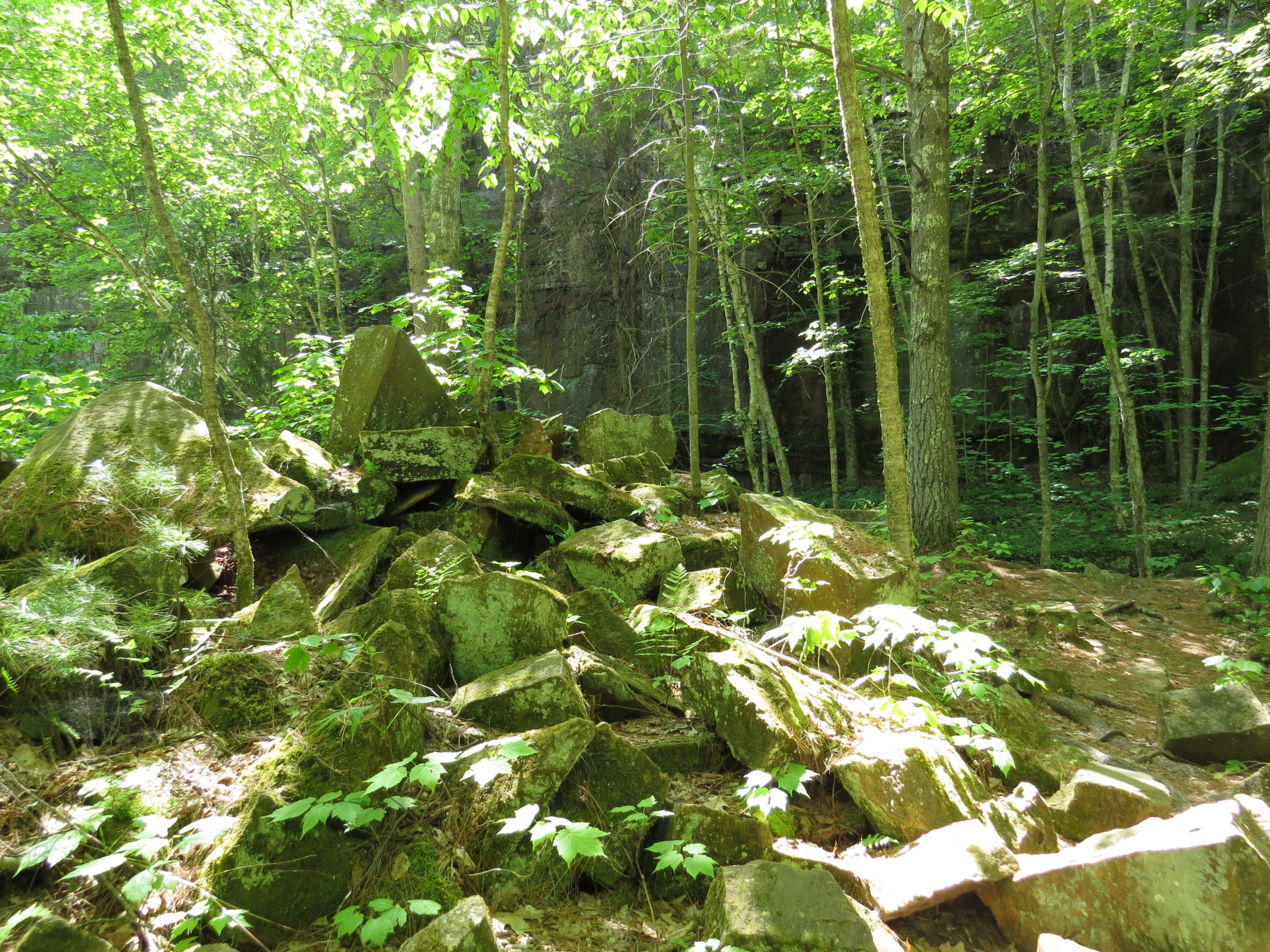
What used to be—the quarry and railroad—is being taken over by Nature. Ferns, trees, grasses, and wildflowers have incorporated into the sandstone boulders and cliffs once again.
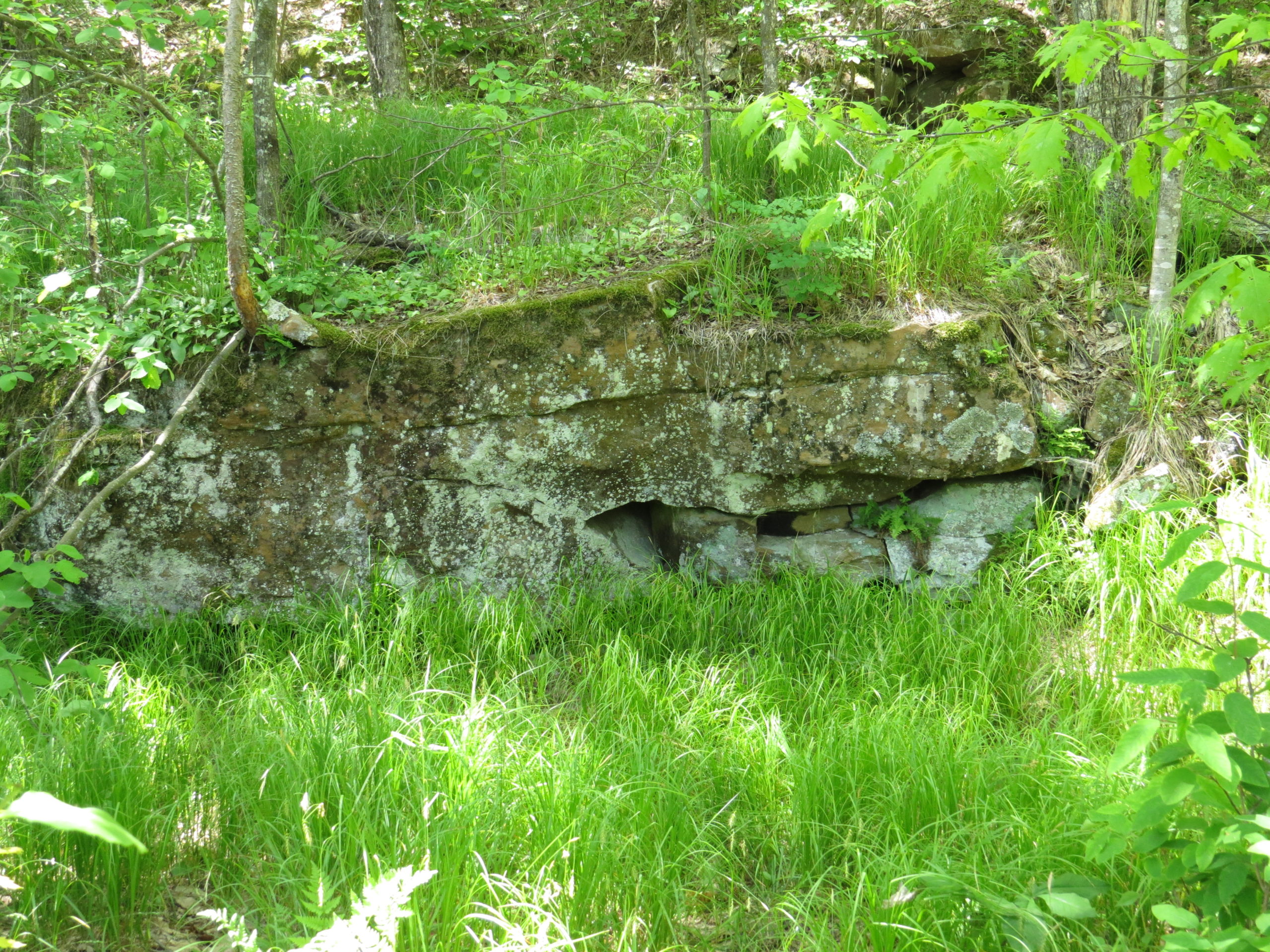
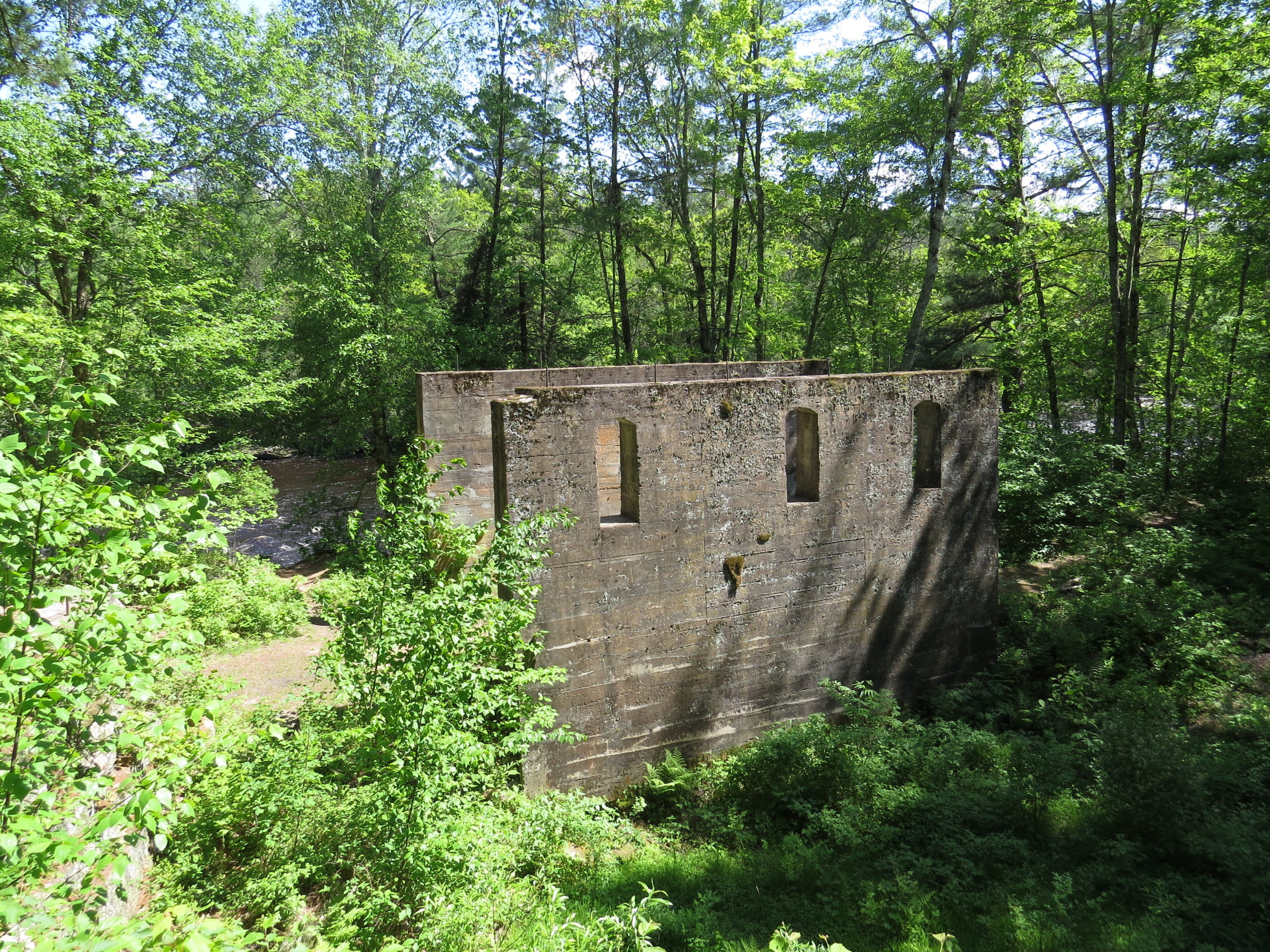
But there are ruins and remains of the Quarry still evident and still standing—the Rock Crusher and the Power House which contained a coal-fired steam generator and interestingly, an artesian well where ‘Sandstone’ water was bottled and sold as a side business to the quarry. What used to be.
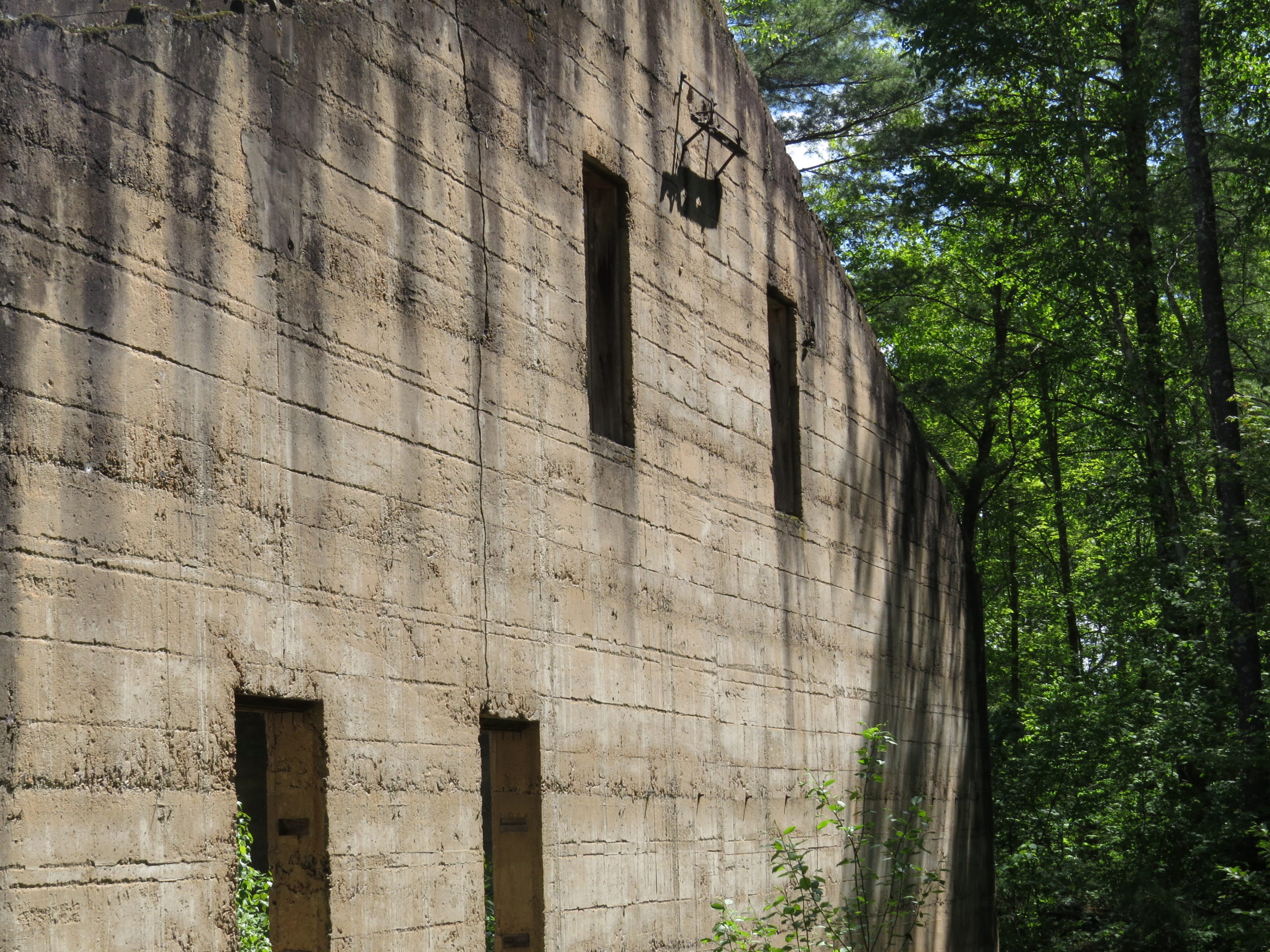
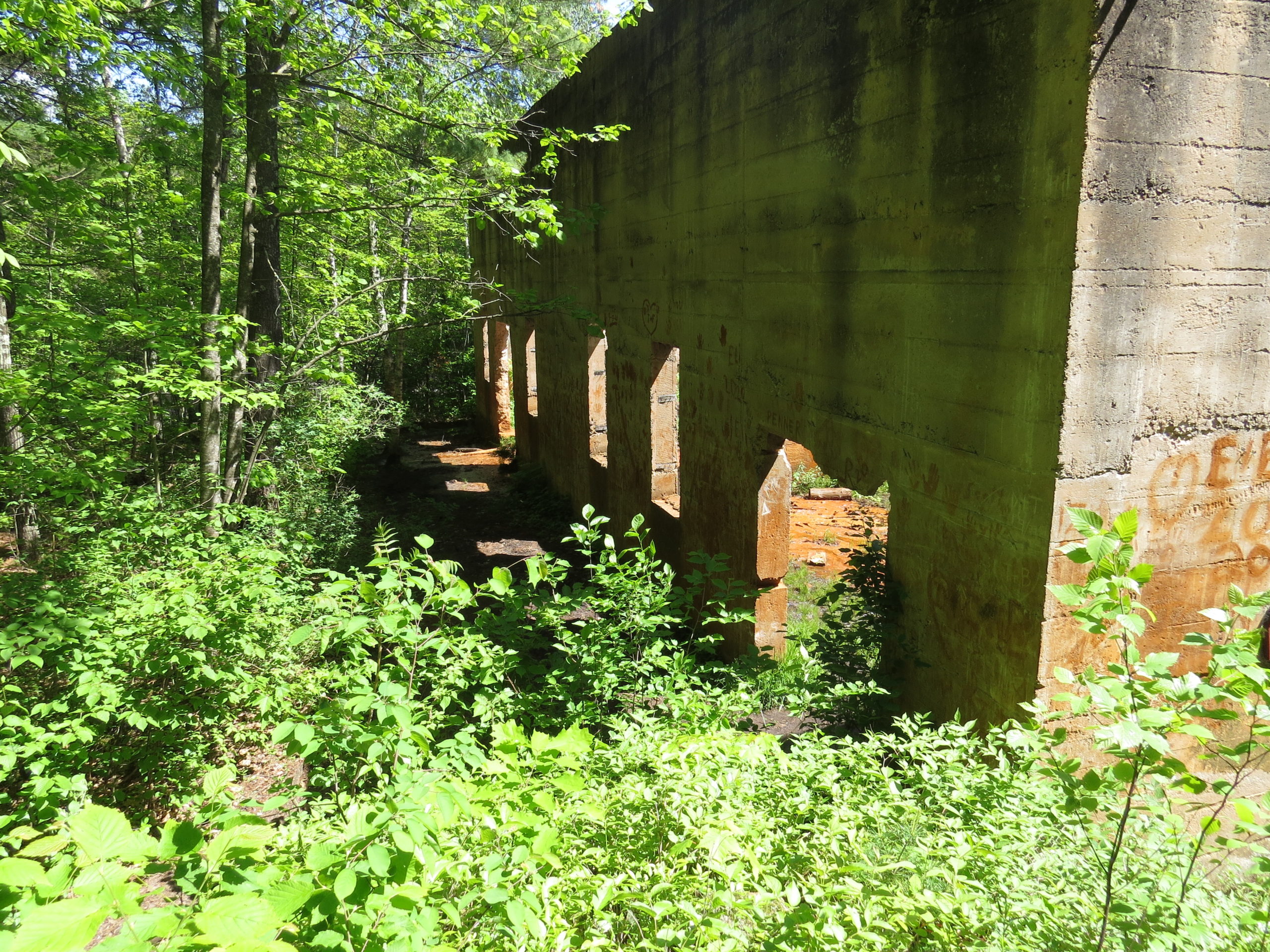
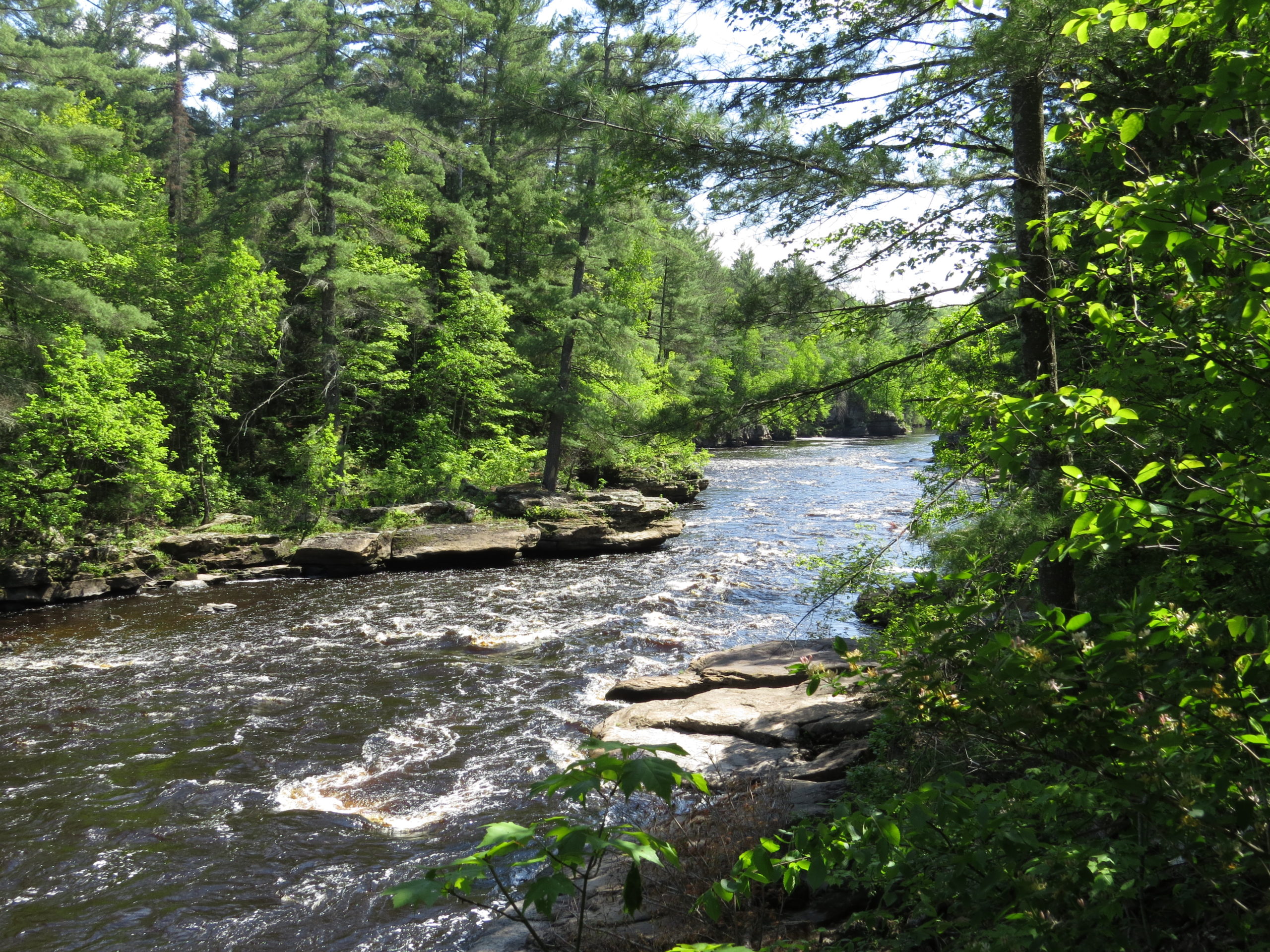
Above the Hell’s Gate rapids on a level area once stood the town of Banning, established in 1896 and abandoned in 1912 when the quarrying boom was over. The town site is no longer visible—Mother Nature has covered up what used to be.
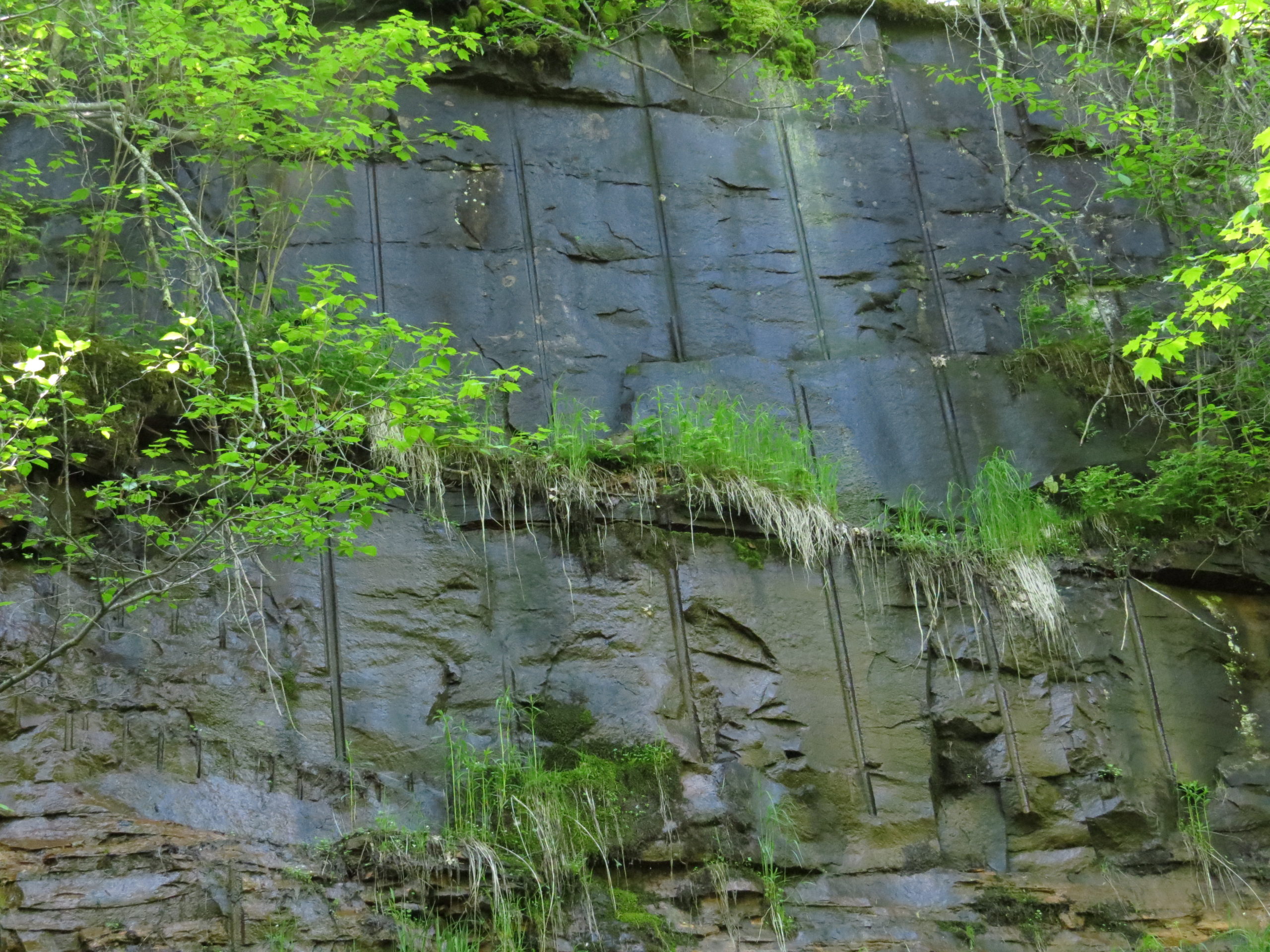
Precisely-spaced drill holes remain on this sandstone wall where black powder and slow-burning fuses would simultaneously blast a section of rock off the cliff.
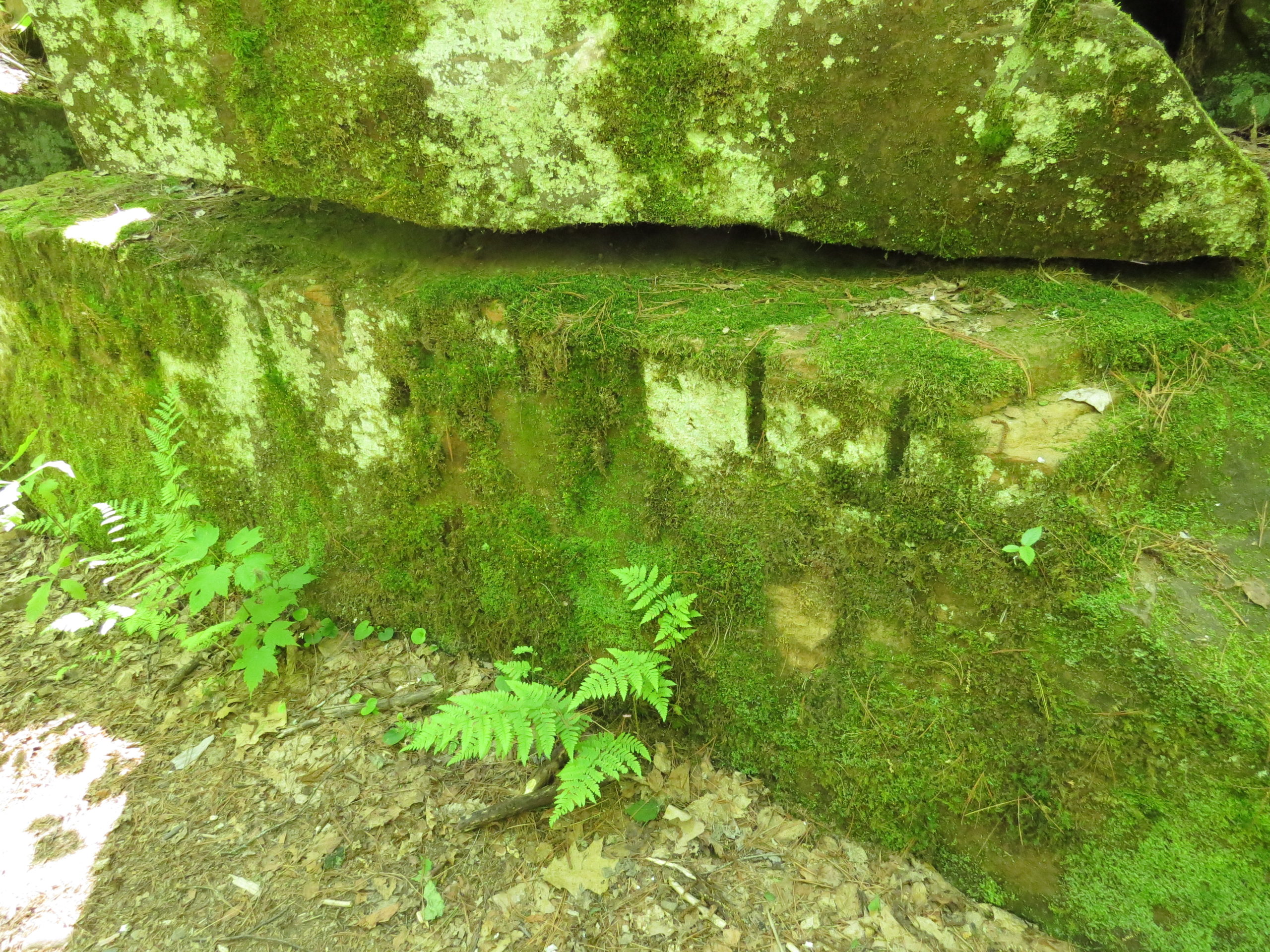
This section of smooth rock wall was not quarried—it is called a ‘horst’ where a section of the earth’s crust is lifted along a fault line.
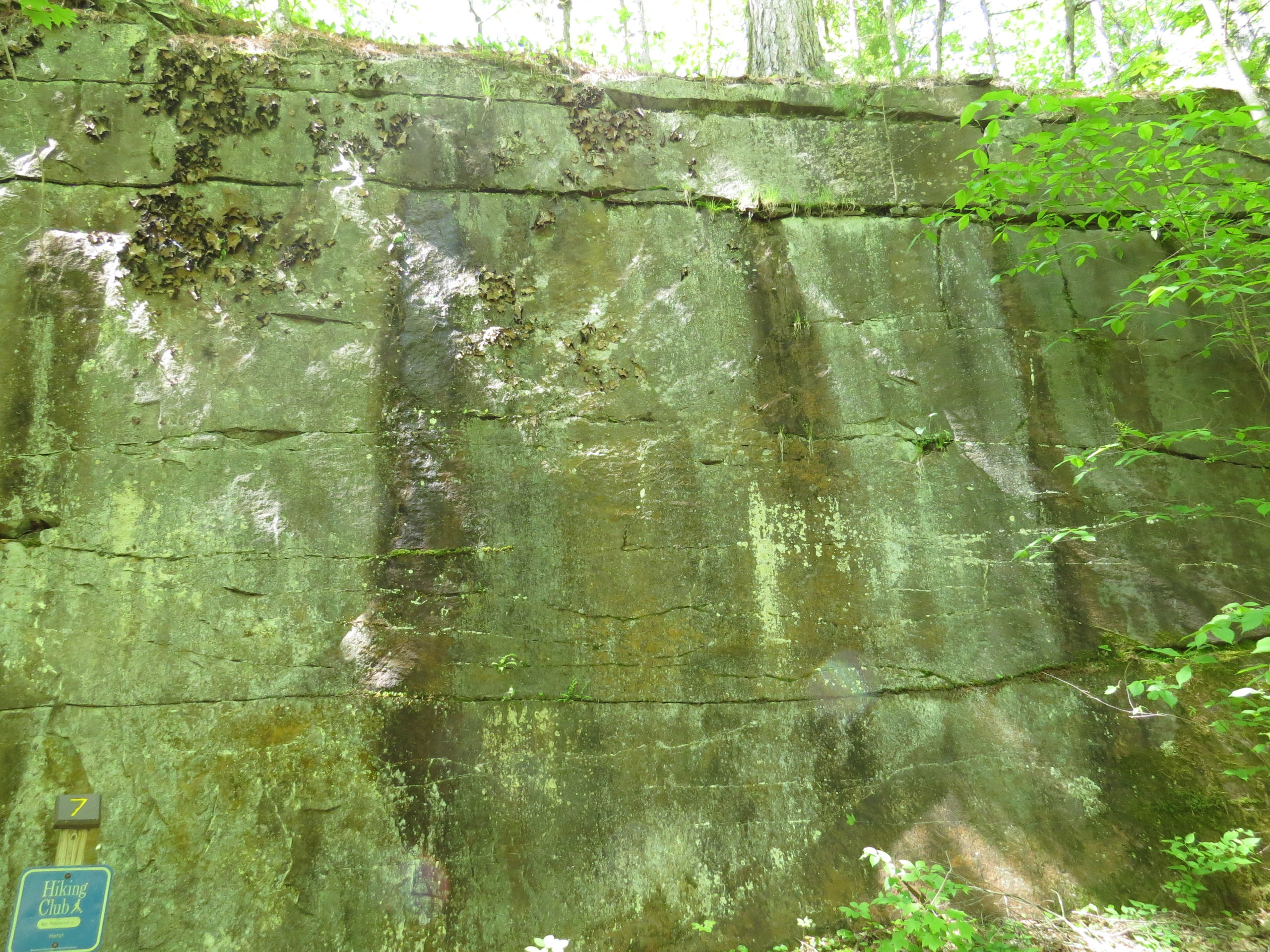
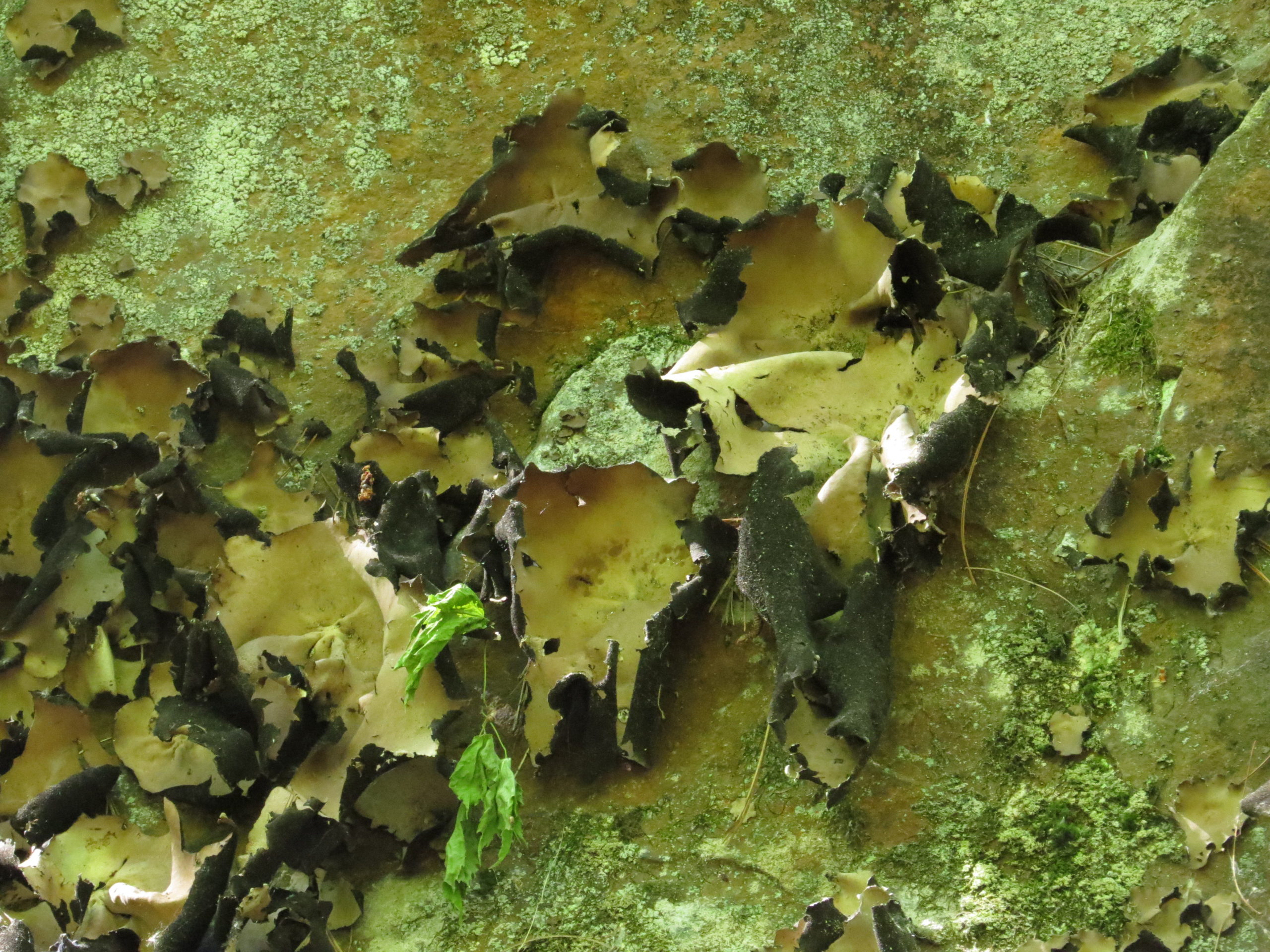
Strange Liverworts, like plastered fallen leaves, grow on the horst, and water drips from the cracks to nourish the plant life that found their unlikely place to grow.
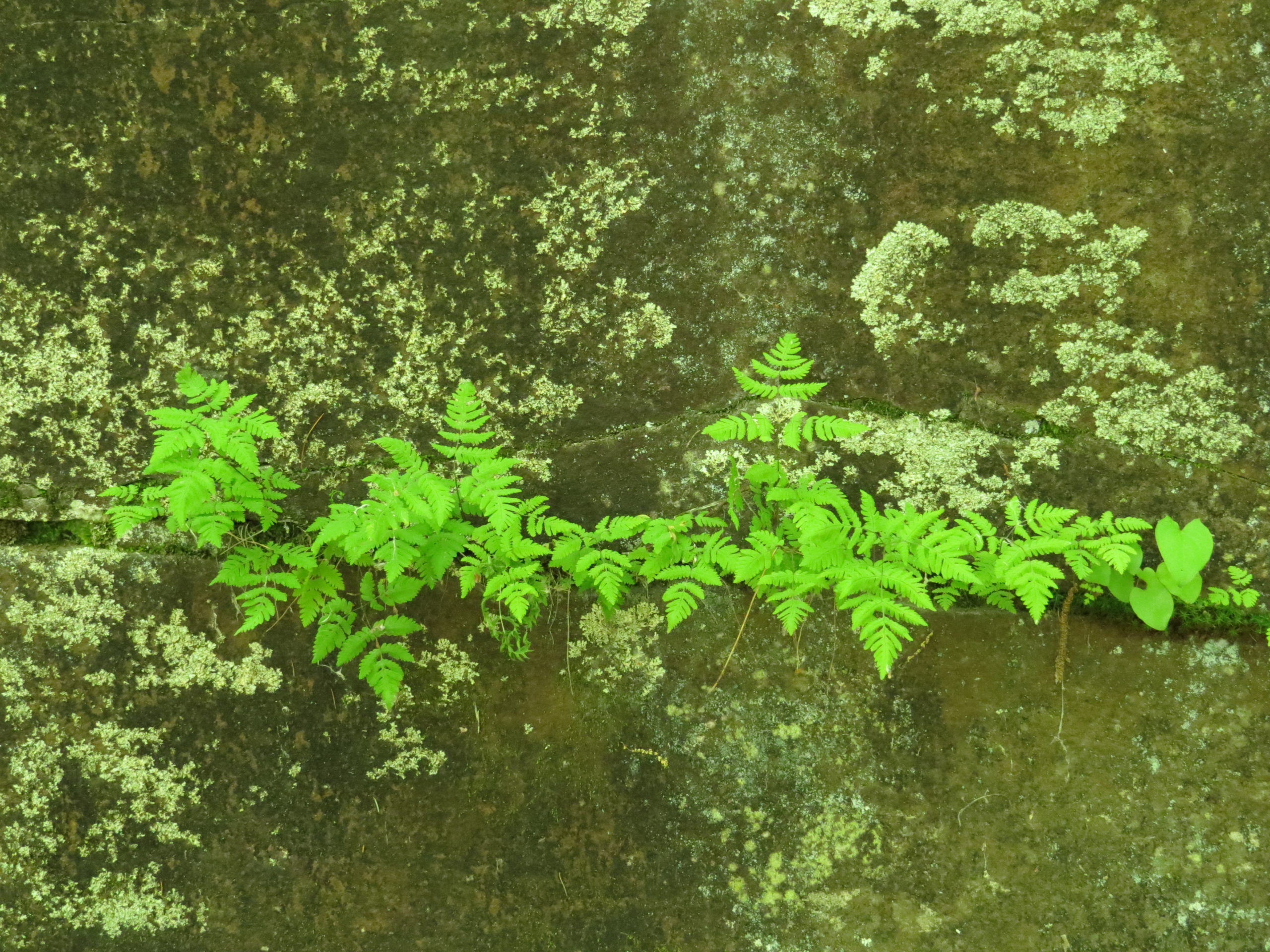
While reading about the history of the Park, I was amazed that railroads, a town, hundreds of quarrymen, and numerous businesses had occupied the trails we were hiking and the forest that had re-grown. There is value in what used to be—many buildings still stand with foundations and walls made from Hinkley Sandstone. There is also value in looking back at what used to be—how it was accomplished, what mistakes were made, what the unacceptable costs were—in order to move forward in a different and better way. Holding steady is a form of safety, as are ‘the law of the land,’ guardrails, rules and norms, order, and peace. They help us get our bearings and feel safe, so we can be in the here and now with those around us. Change and holding steady are not opposable values and actions. Holding steady—safety—is the foundation from which we can be compassionate, be curious, learn and do new things. Do you know what makes you feel steady, open, and peaceful? Do that. Are you aware of who or what brings unfounded fear and stress to your life? Purge them. Fear is being used as a tool to manipulate people for political and financial purposes—one of the oldest tricks in the book. Don’t fall for it. In the ruins and remains of what used to be—in our collective past or our individual past—there is space for peace and renewal and a place to grow.
Anticipation
The pandemic birthed the idea. We were having weekly Zoom meetings with some of our kids in the winter of the Winter. Our extroverted daughter Emily was struggling with the isolation and the unknown, undetermined future. She wondered how I could seem so happy in the midst of it all. (Introvert advantage.) She reminded us again and again, ‘We-all aren’t getting any younger.” Her desire for movement, planning, connection, action, and excitement was palpable. I knew how important it was for her to have something to look forward to, and her ‘not getting any younger’ statement hit home with me…so I said, “Why don’t we plan a summer trip to the Boundary Waters?” And the anticipation began.
Anticipation includes preparation, expectation, eagerness, planning, and excitement about something that is going to happen. For me, anticipating this trip into the Boundary Waters also included apprehension, doubts, and a good dose of the big, boogeyman F-word—Fear. While Emily and Aaron had both been guides for many summers preparing for and taking people into the Boundary Waters, this trip would be my first time…. And I don’t swim. And I’m kind of scared of deep water. And I’m afraid of tipping the canoe…and losing my glasses…and not keeping up…and, well, the list goes on. But plans were made, equipment acquired, plane tickets from Texas reserved, BWCA (Boundary Waters Canoe Area) permit obtained, menu planned, food bought, etc., etc. On August 14th, we headed north.
We stayed two nights at KoWaKan, the camp the kids worked at during their college years. We did our last minute shopping (and eating) in Ely and spent time relaxing in the sun and beauty of the northwoods.
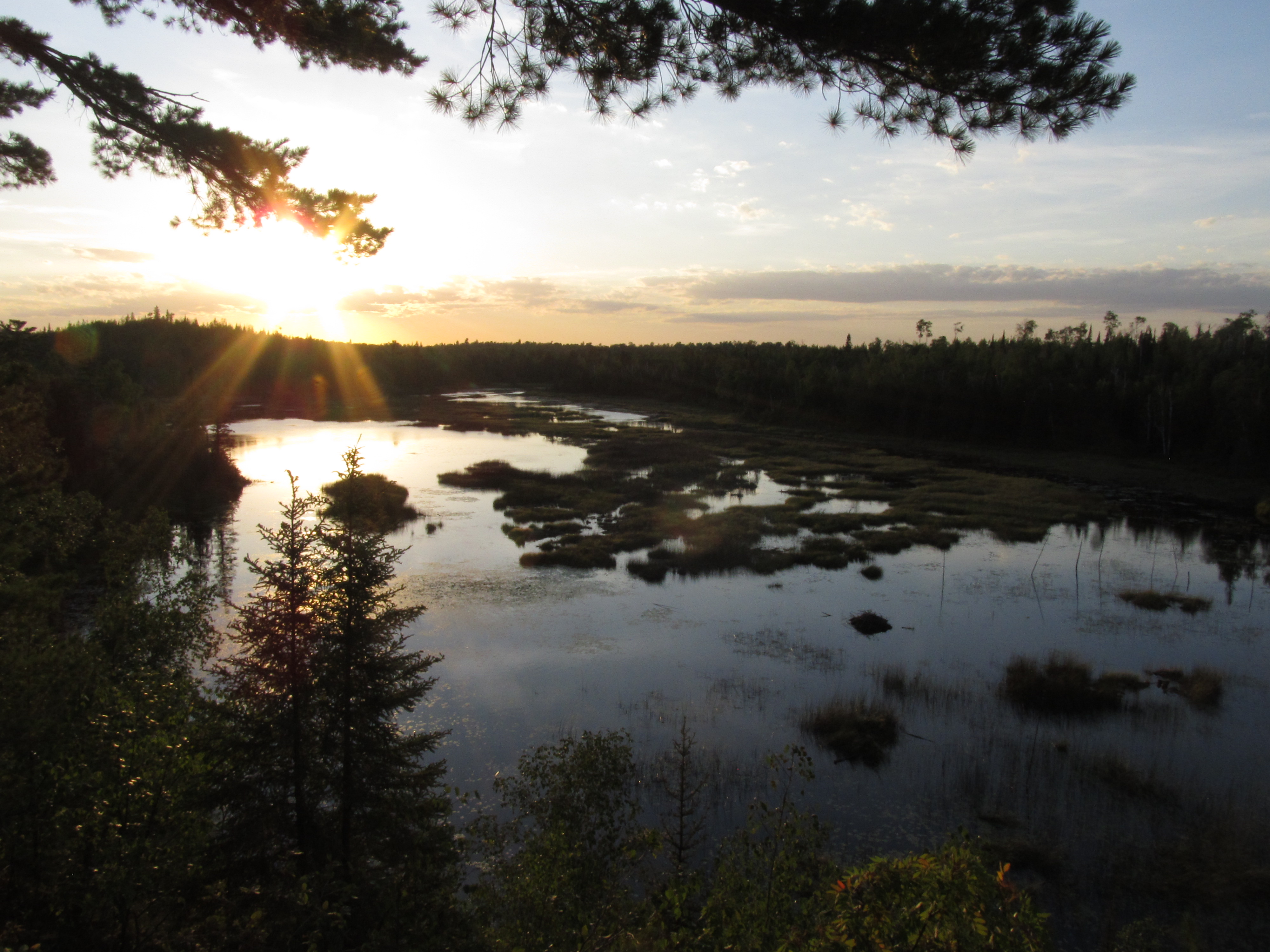
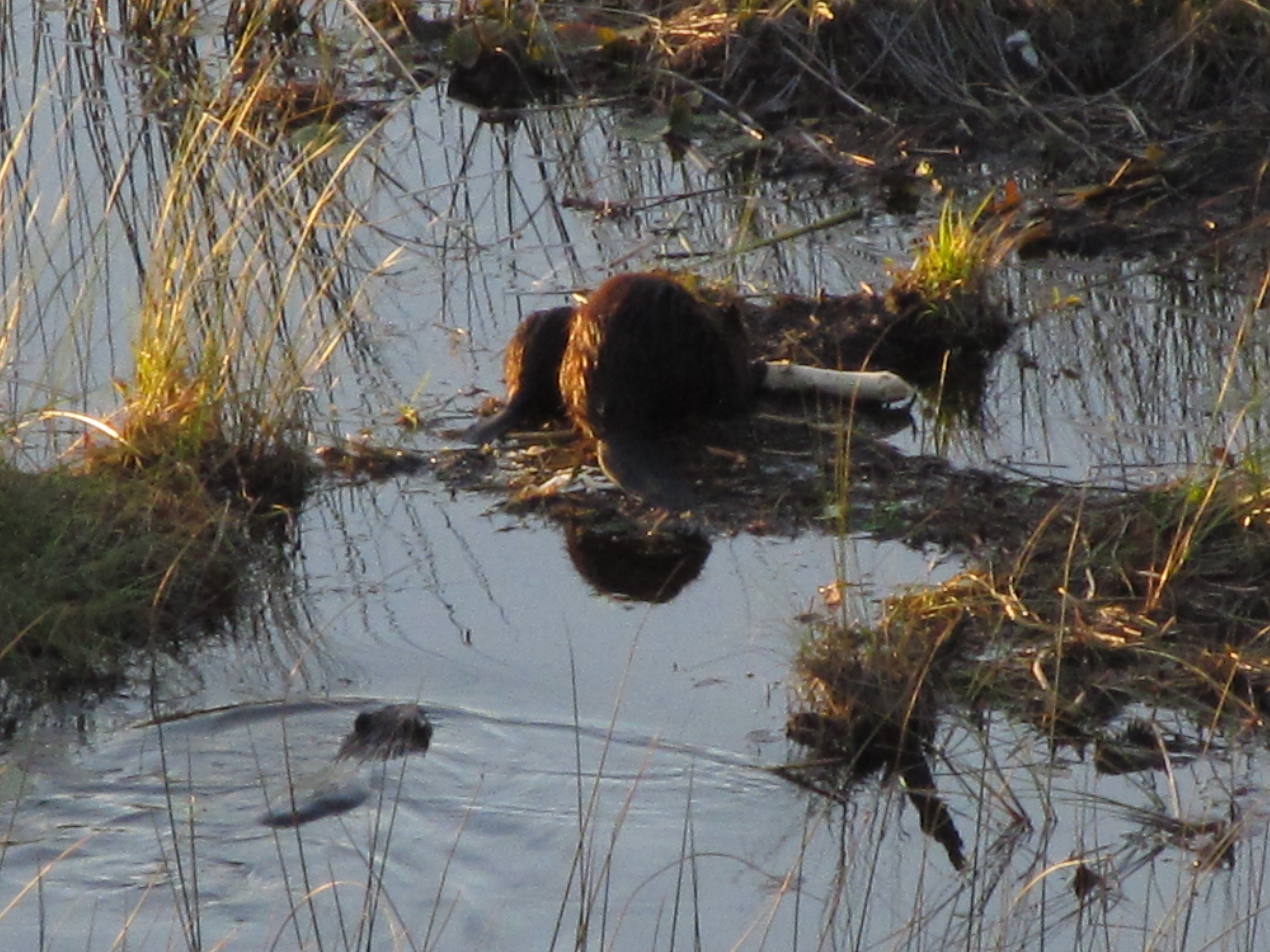
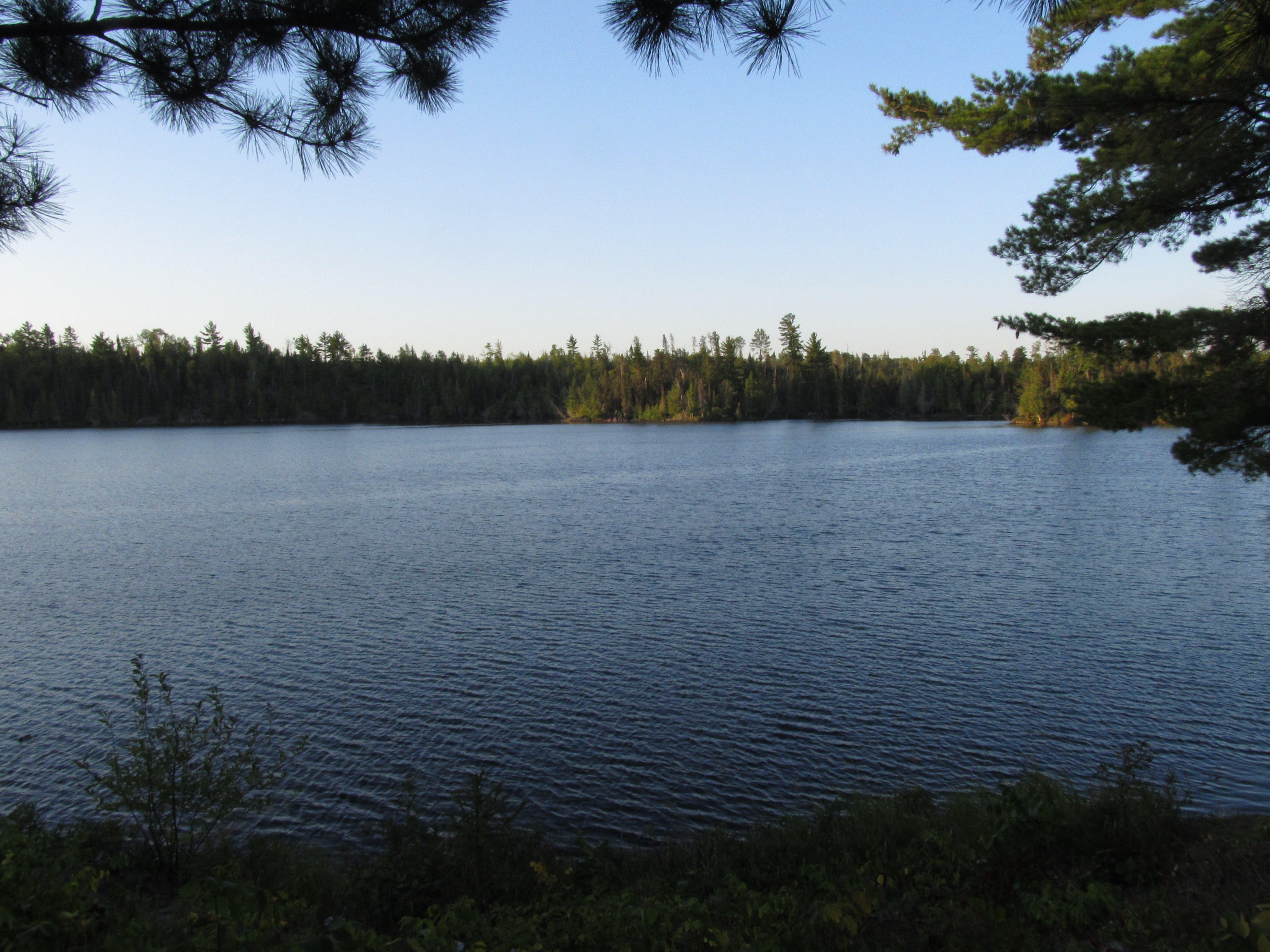
We talked about our goals (fishing was high on the list) and concerns. My concern was waves and how to navigate them, so Aaron hopped into a canoe with me on that very windy day, and we practiced.
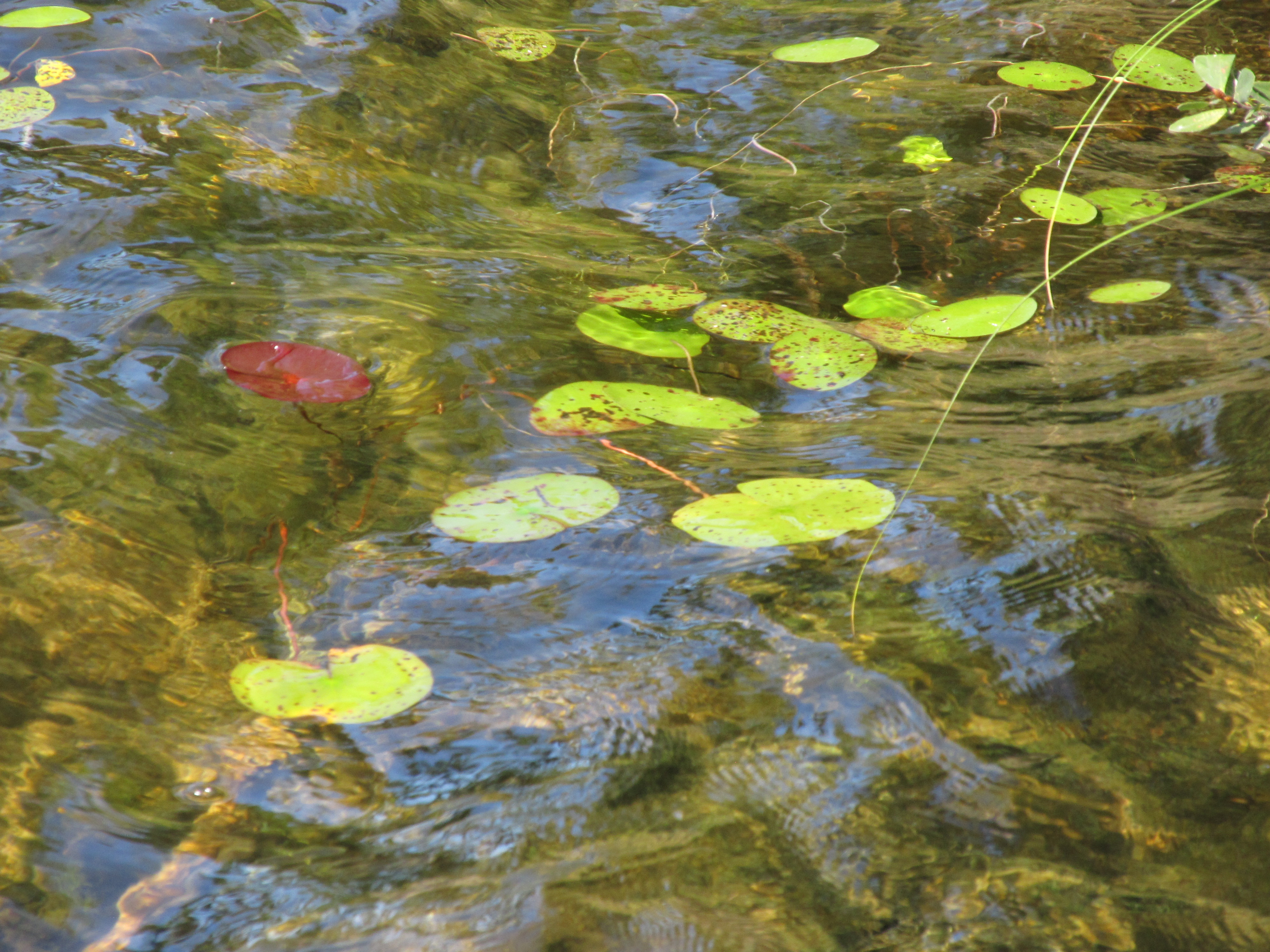
By evening, the last minute packing was underway, and the non-essentials were stashed in the vehicles for our return. The anticipation was building.
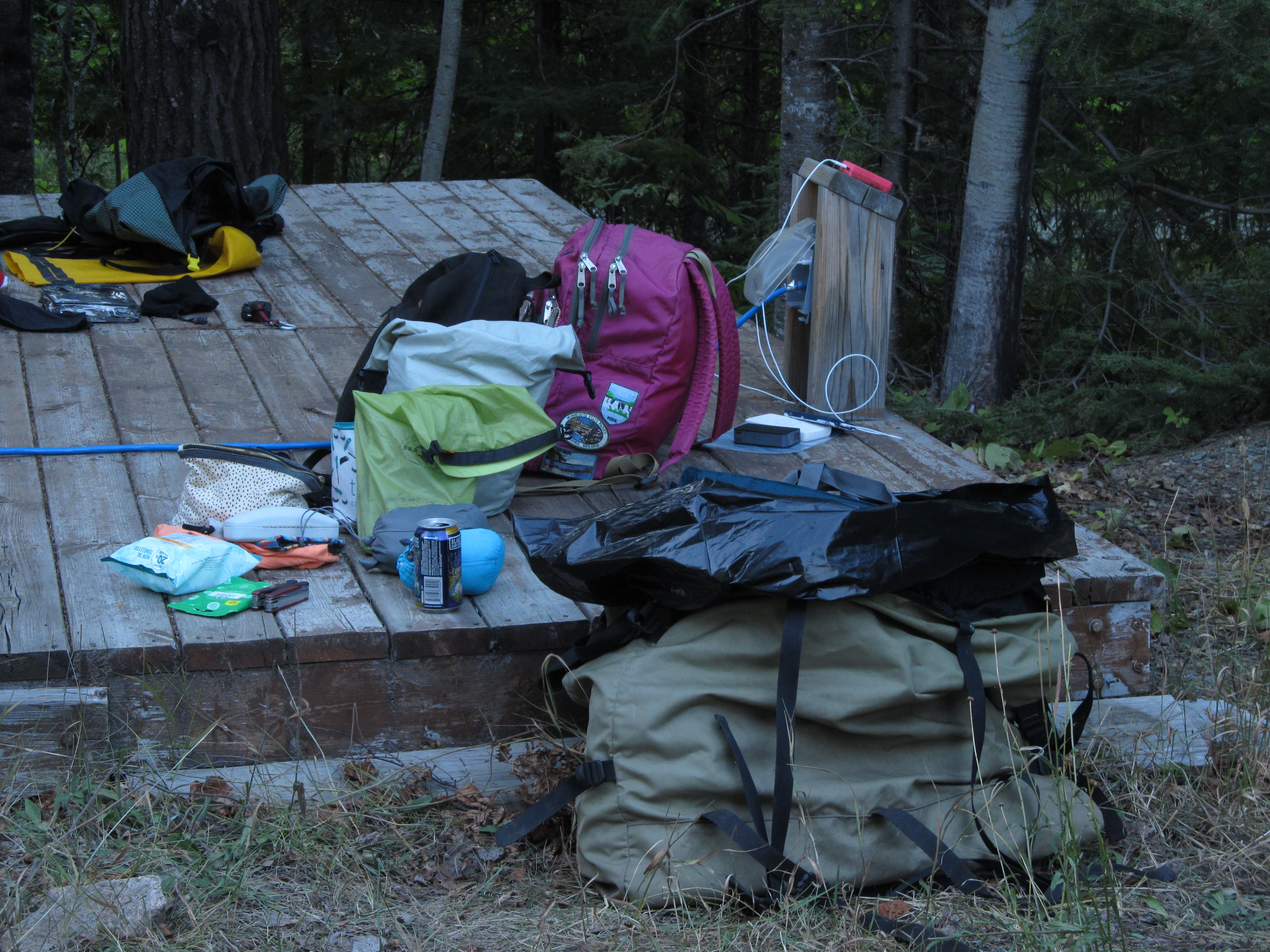
There’s a fine line between excitement and nervousness. As the packs and canoes were loaded on the cars the next morning, I crossed that line. My stomach began to feel ill. I took a few trips to the outhouse. Tears welled up in my eyes. My steps slowed. Now that we were ready to go, I was not at all sure I could do this.
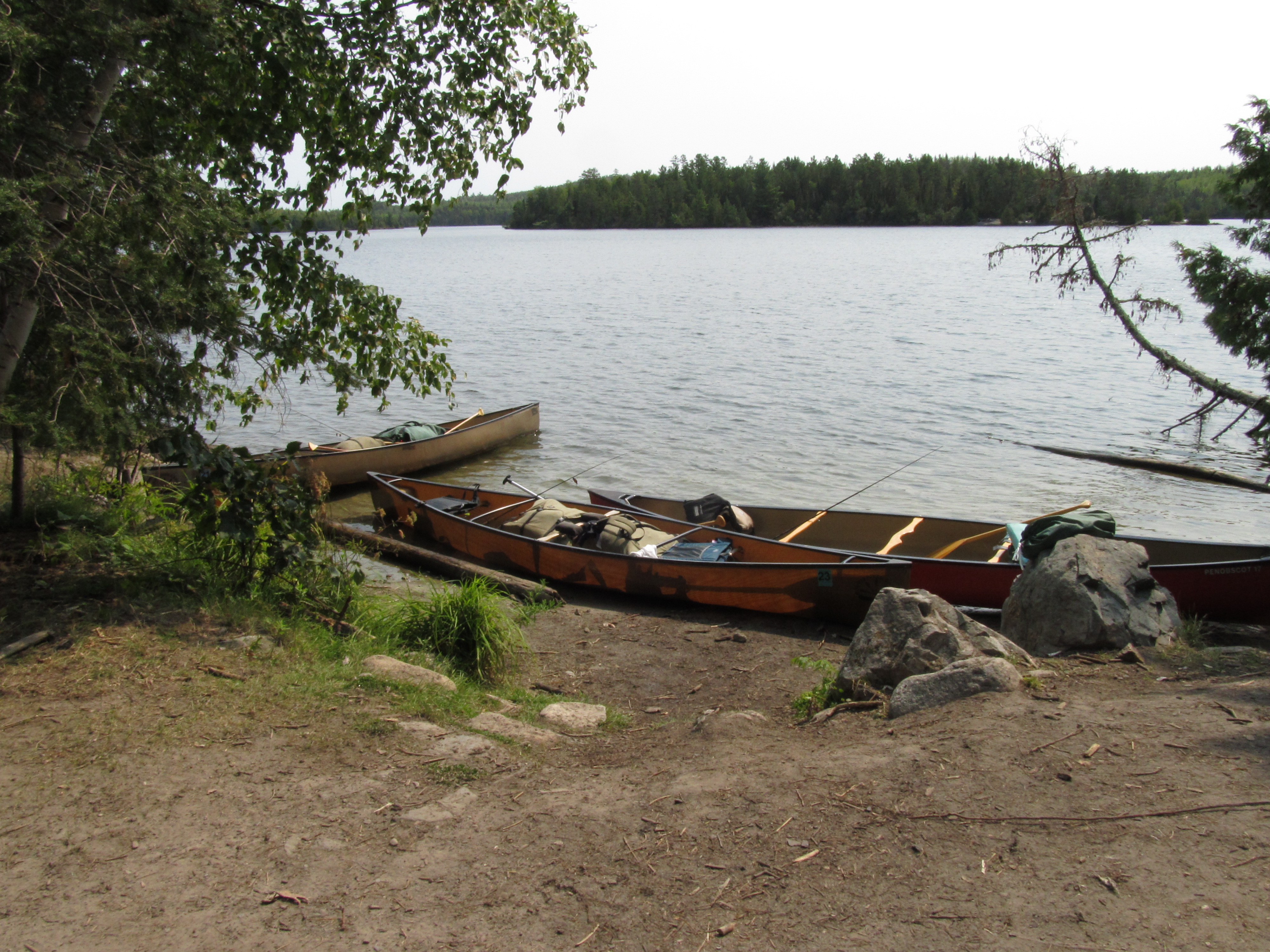
Chris, Emily, and the others gave reassurance that they would help me and take good care of me. I trusted their experience and their words. Deep breaths. We drove to Moose Lake entry point, unloaded the three canoes, five packs, and fishing poles, and we were off on our BWCA adventure!
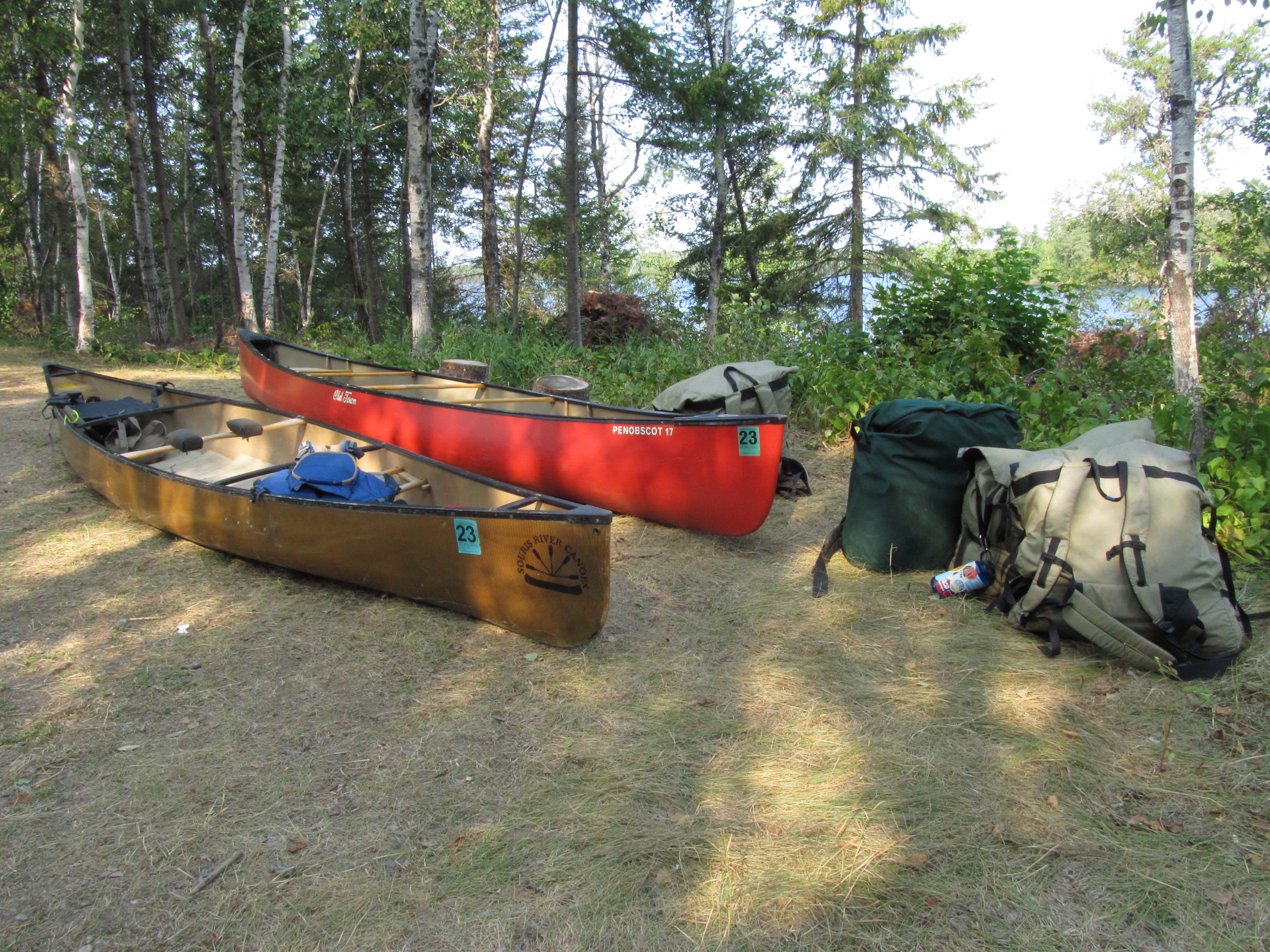
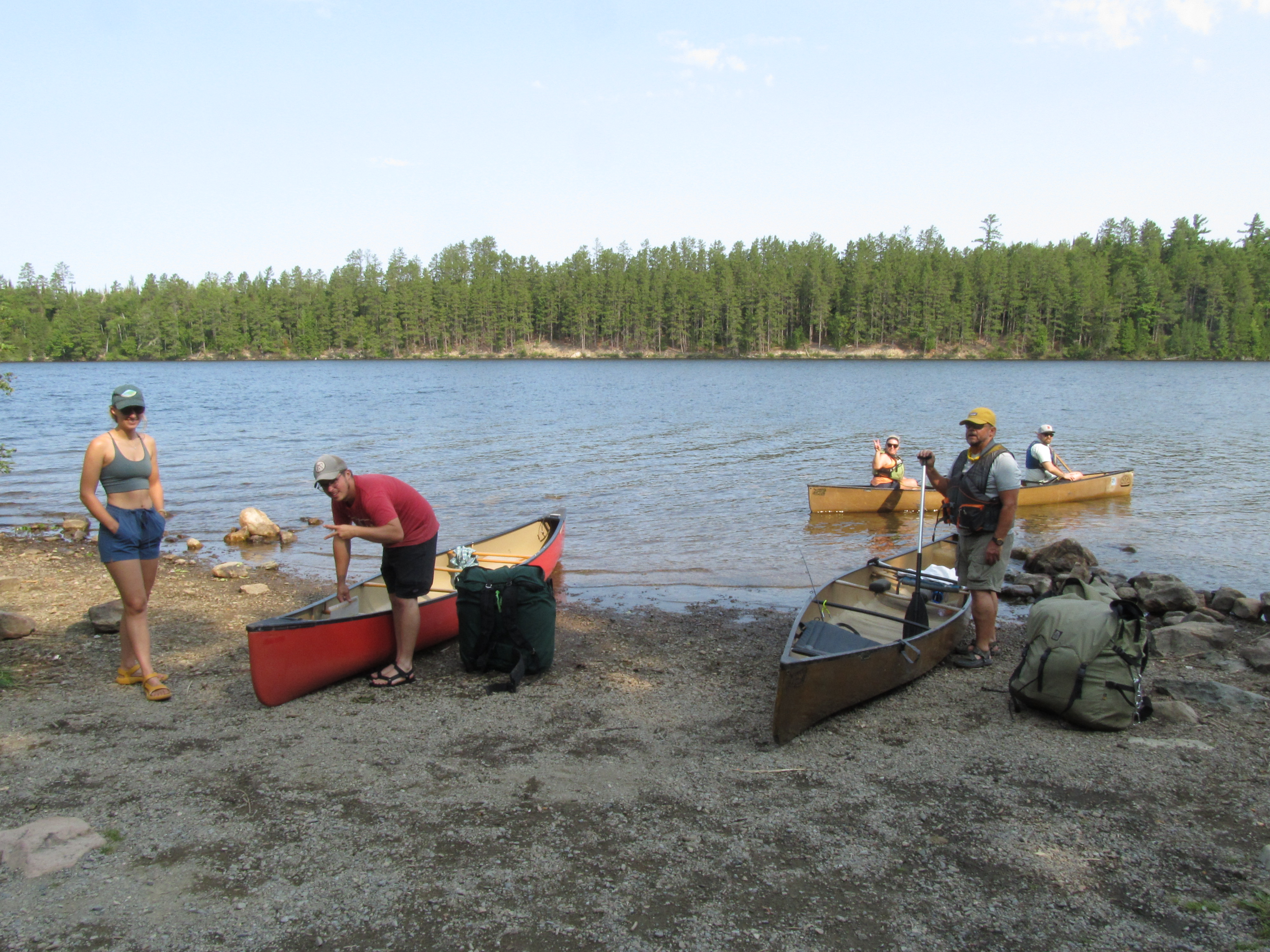
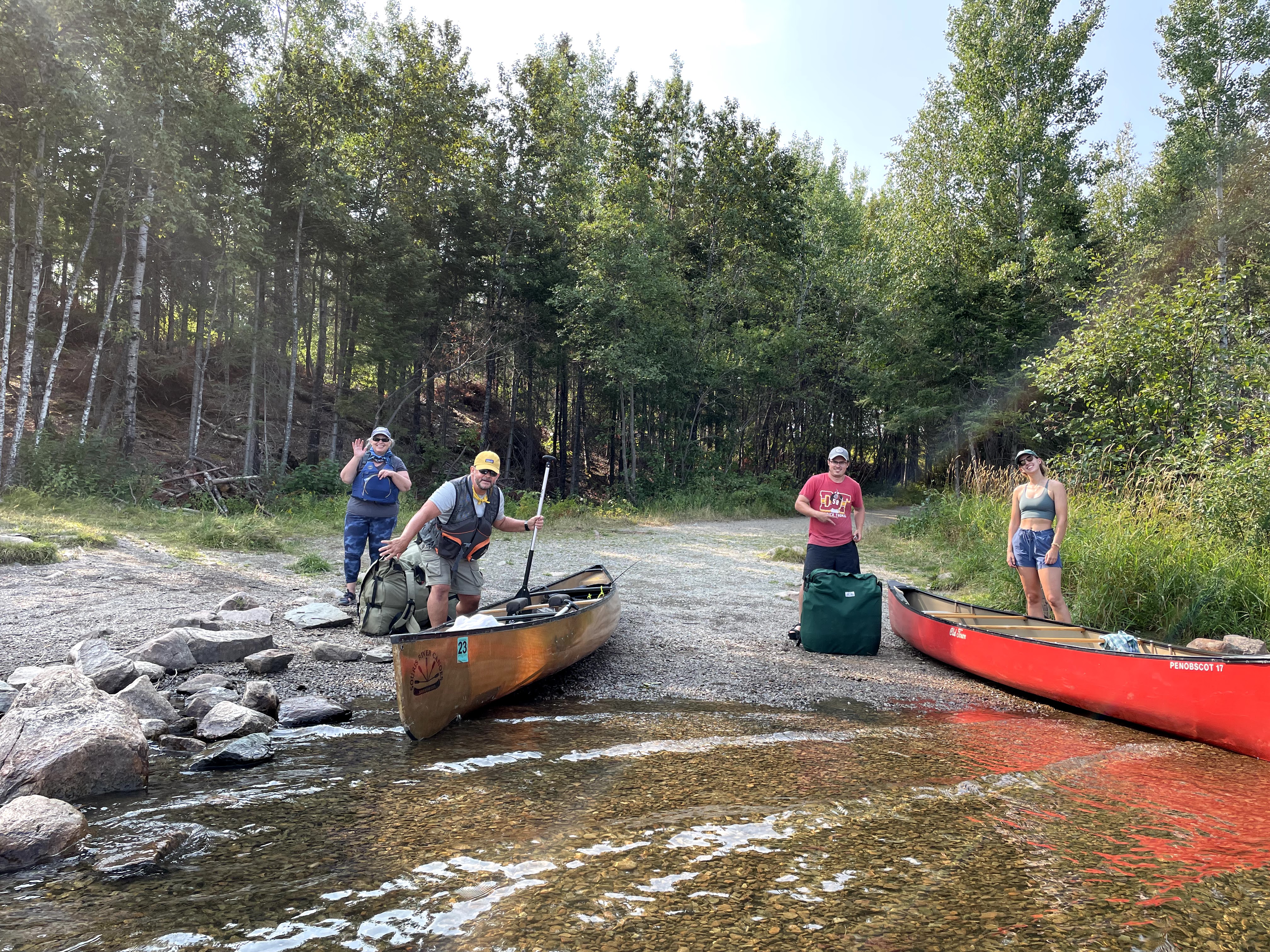
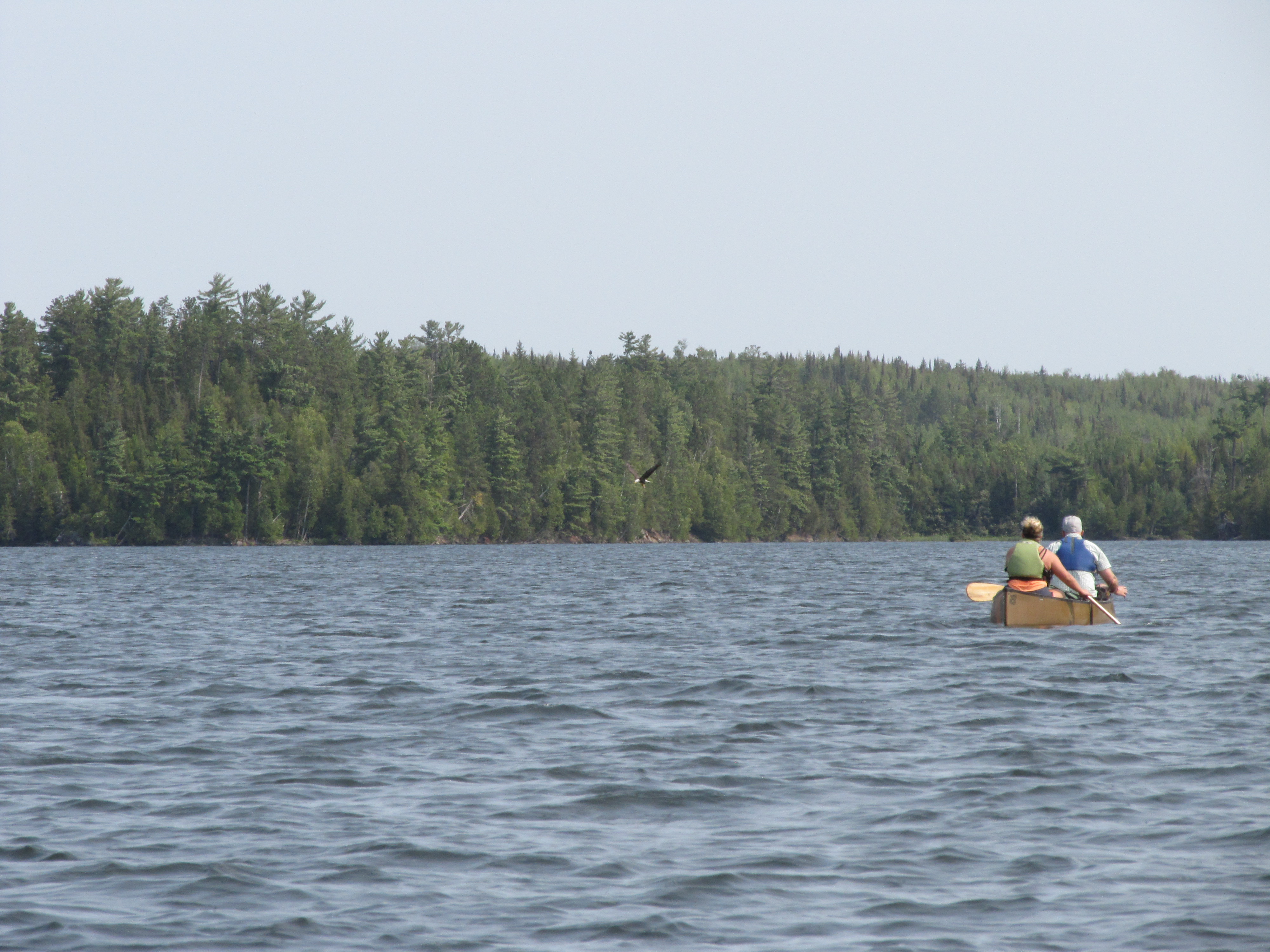
Fishing began right away—for the humans and the eagles that chattered from the trees alongside the lake.
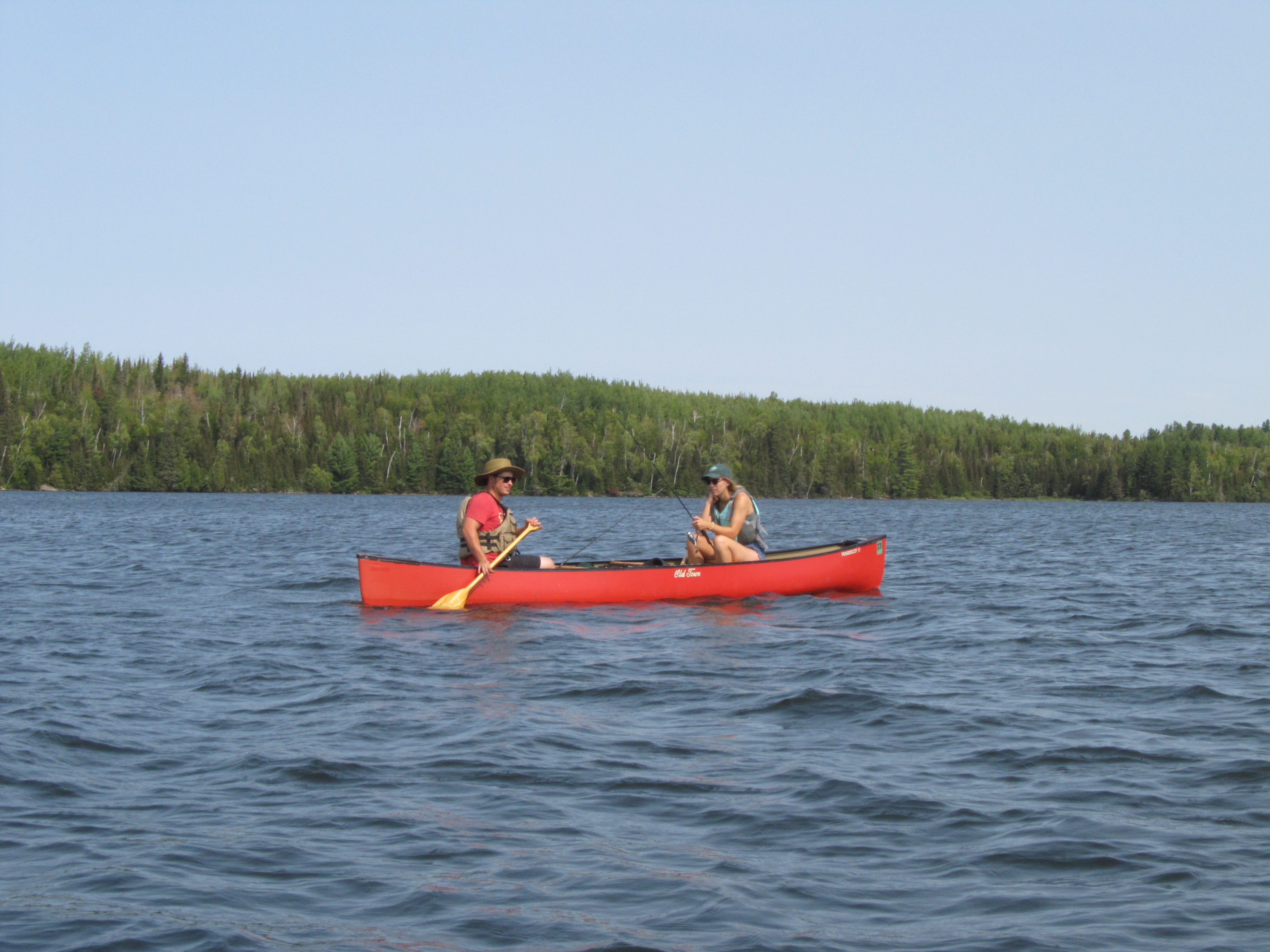
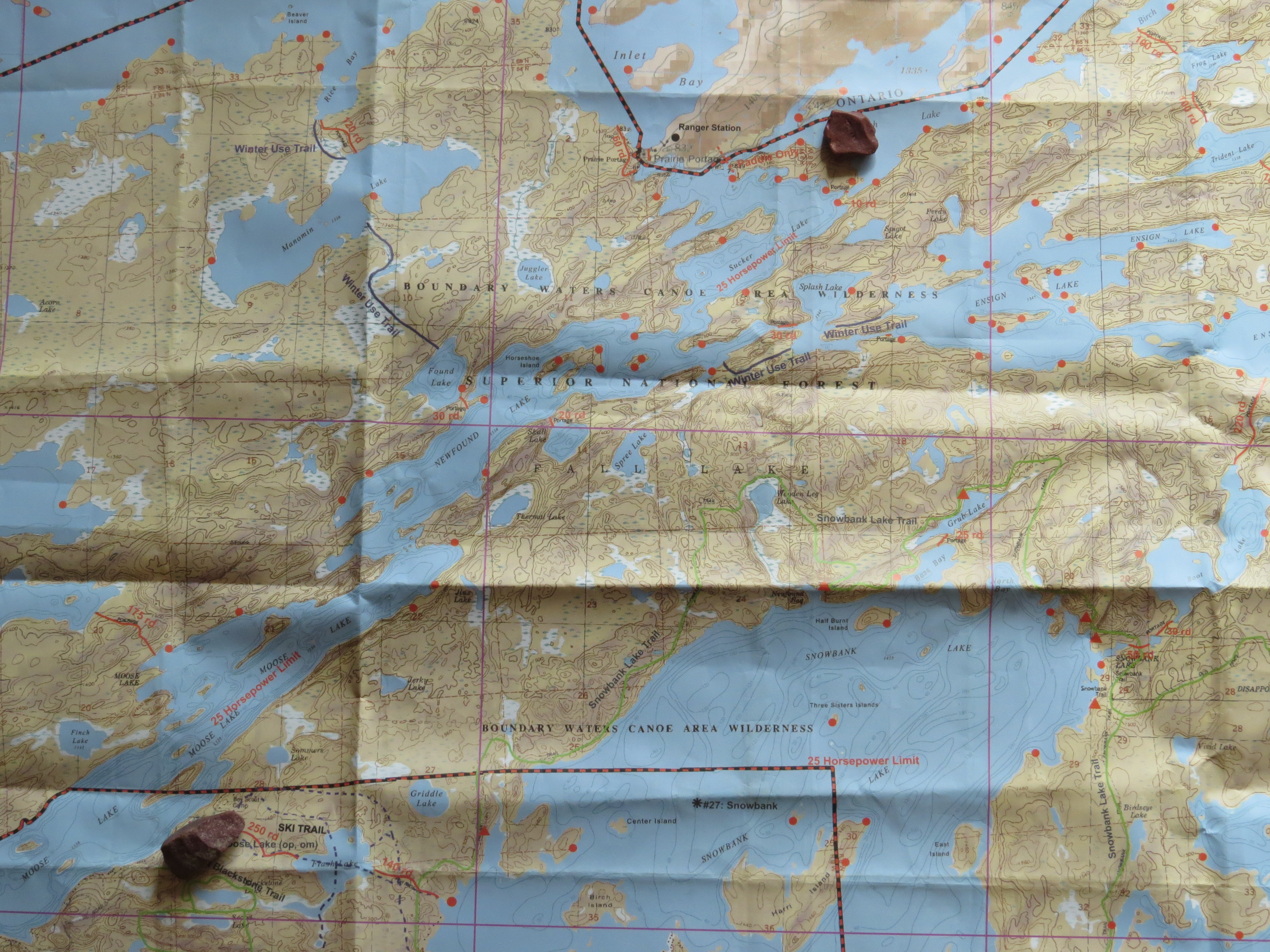
In the months prior to our trip, I had a BWCA map laid out on a bed, and I looked at it every morning. I had no idea at first how far we would go, so I concentrated on Moose Lake where our entry point was and hoped we could get to Horseshoe Island in Newfound Lake, the lake after Moose.
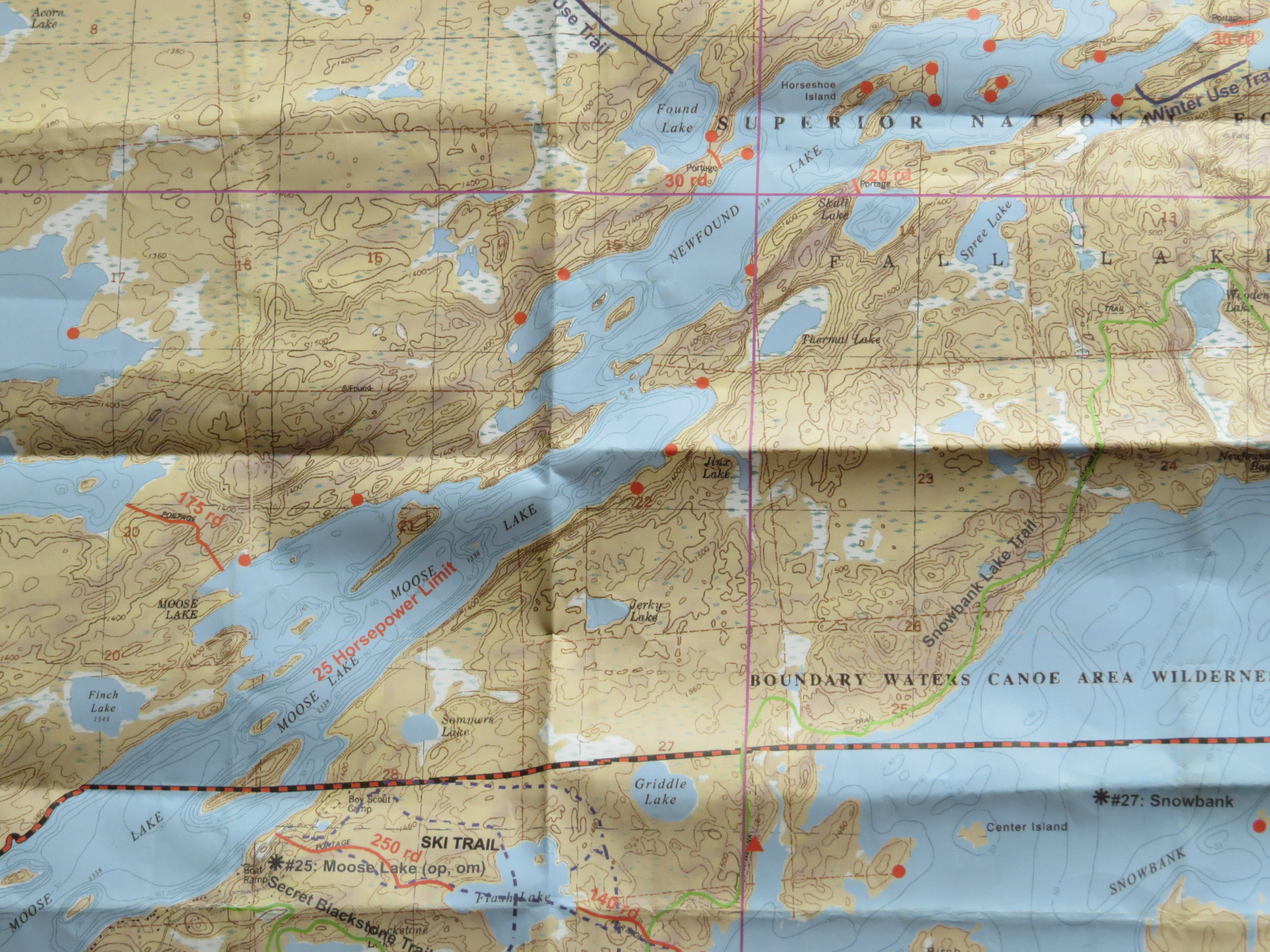
Little did I know at the time that we would be eating our lunch on the first day on Horseshoe Island! It’s strange not knowing the time at any given time of the day. We looked to the sun and our stomachs for clues, but as the days went by, it mattered less and less what the actual time was since it had no bearing on our day. But it was hard to let that time-structure go.
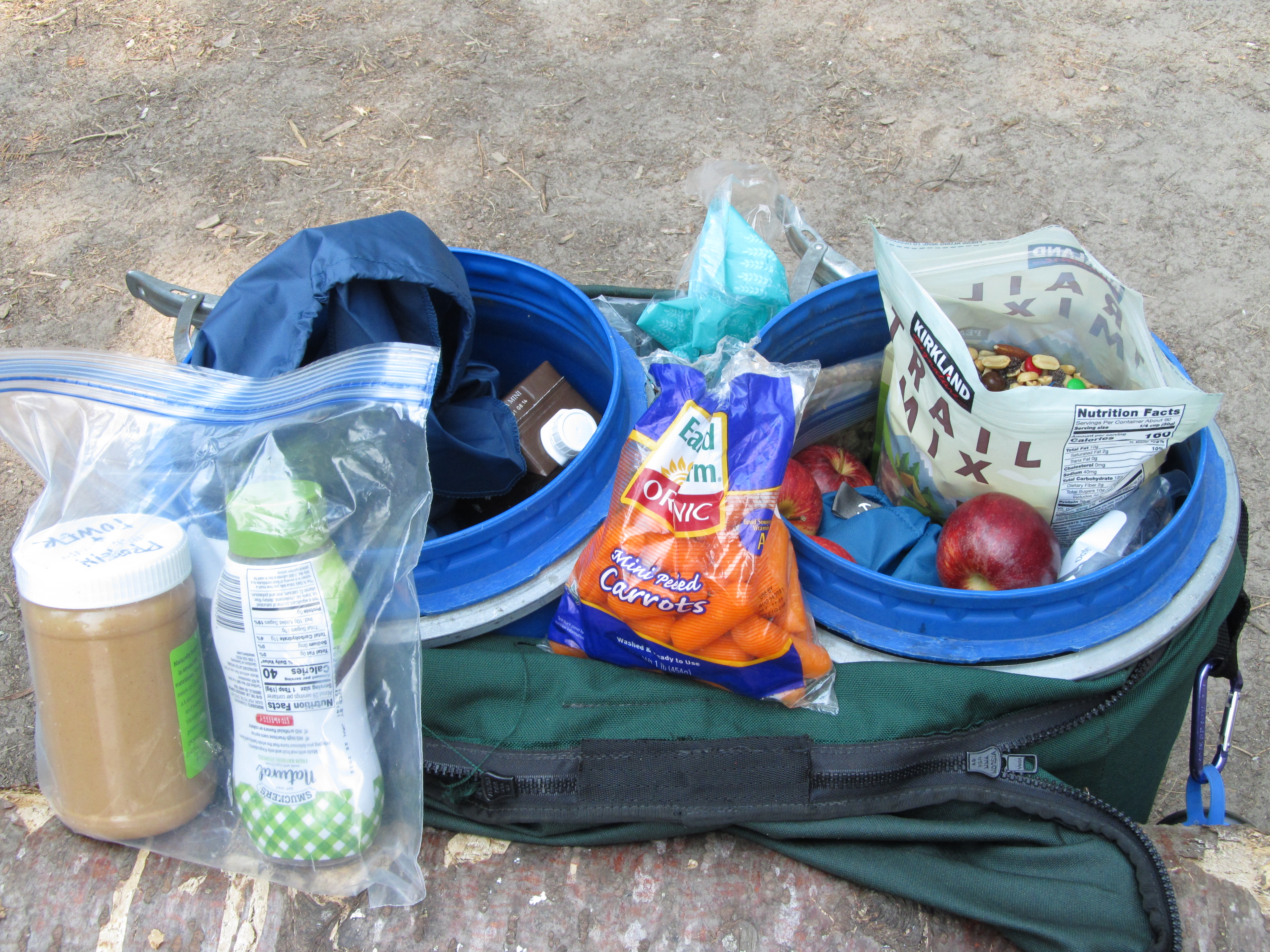
Food preparation was planned and executed by Emily who had done the same process for numerous groups over three summers. She made a menu, we bought the food, she measured it out, bagged it up, and labeled everything. All the food has to be carried in and contained in ‘bear barrels’—plastic barrels with metal closures that protect the food from bears. Since it was a drought year, and wildlife were hungrier than usual, the bear barrels also were required to be hung in trees at night and during the day when mealtime was over.
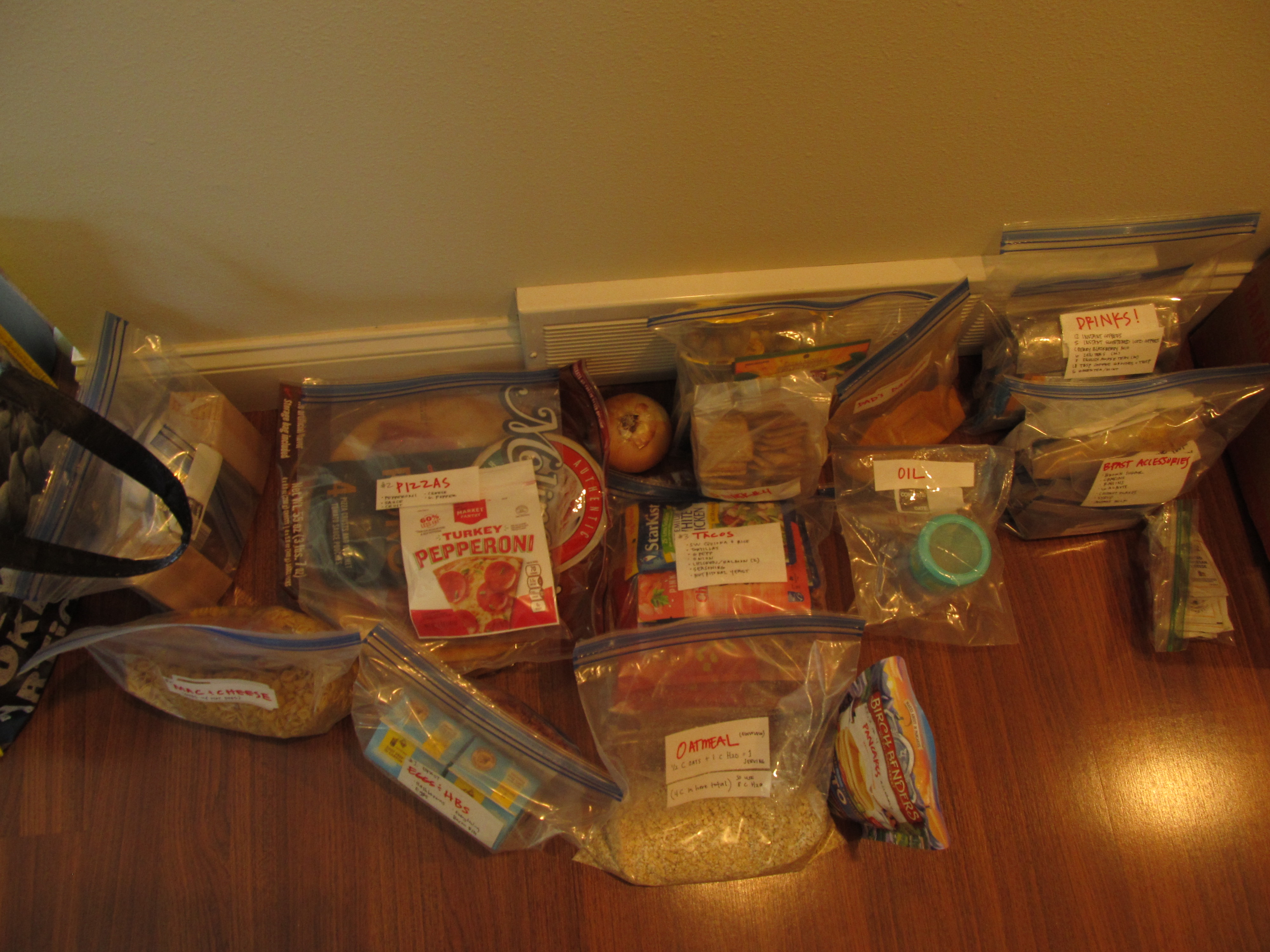
She had different stuff sacks for breakfast, lunch, and dinner to help organize the barrels. As plastic food bags emptied, they were used for trash, as it is required to carry out all trash. (Which has to go back into the barrels, so it doesn’t attract bears.) Lunches were bagels or pitas, summer sausage, cheese, or peanut butter and jelly. We had one apple each for the week so could choose which day we wanted it. Carrots were our ‘fresh’ vegetables. A handful of trail mix or a homemade granola bar were for dessert or a needed snack.
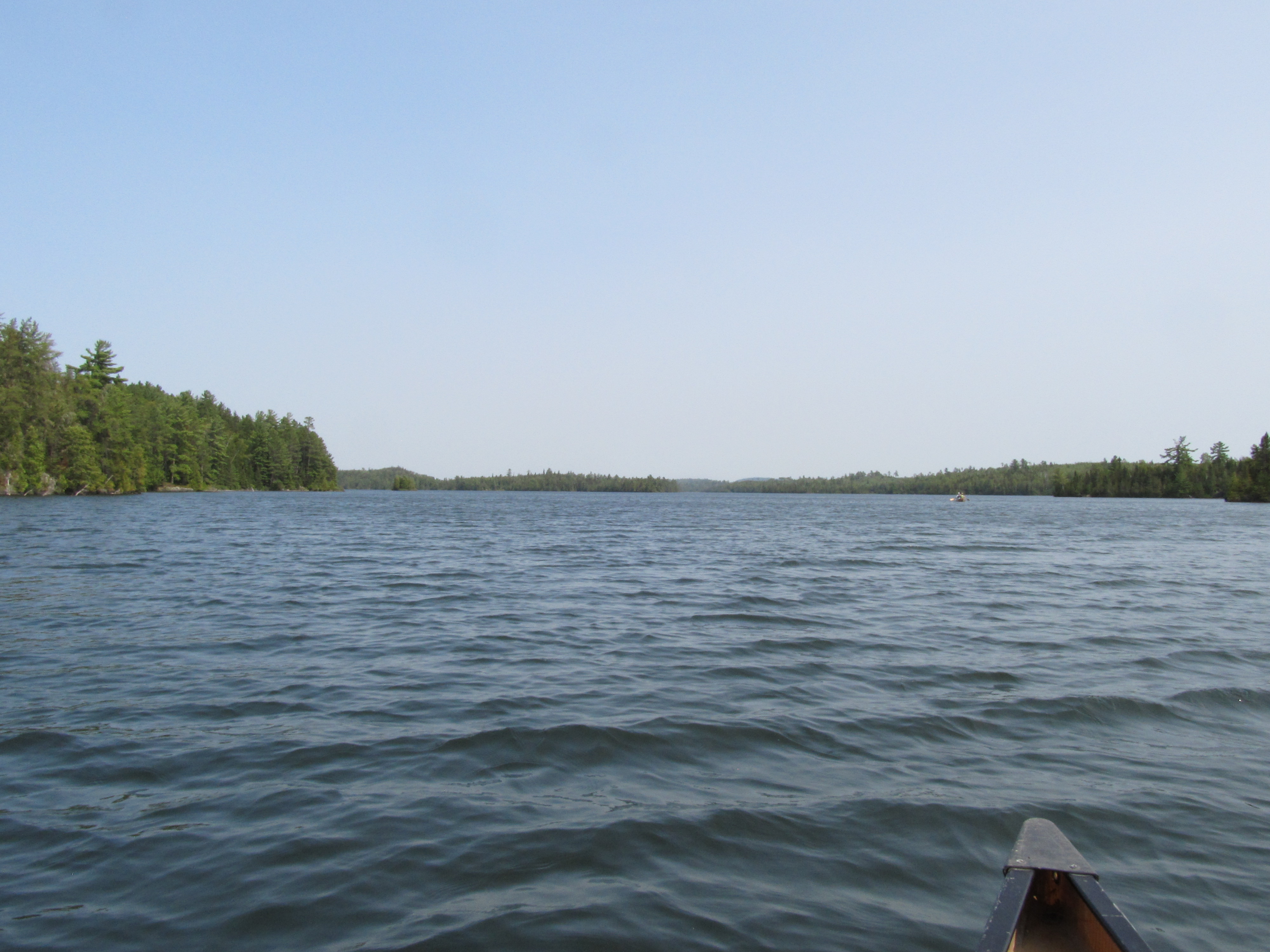
After lunch we paddled through Sucker Lake until we reached…Canada! We turned to Birch Lake where the low-horsepower motor boats were no longer allowed as they were on Moose, Newfound, and Sucker Lakes.

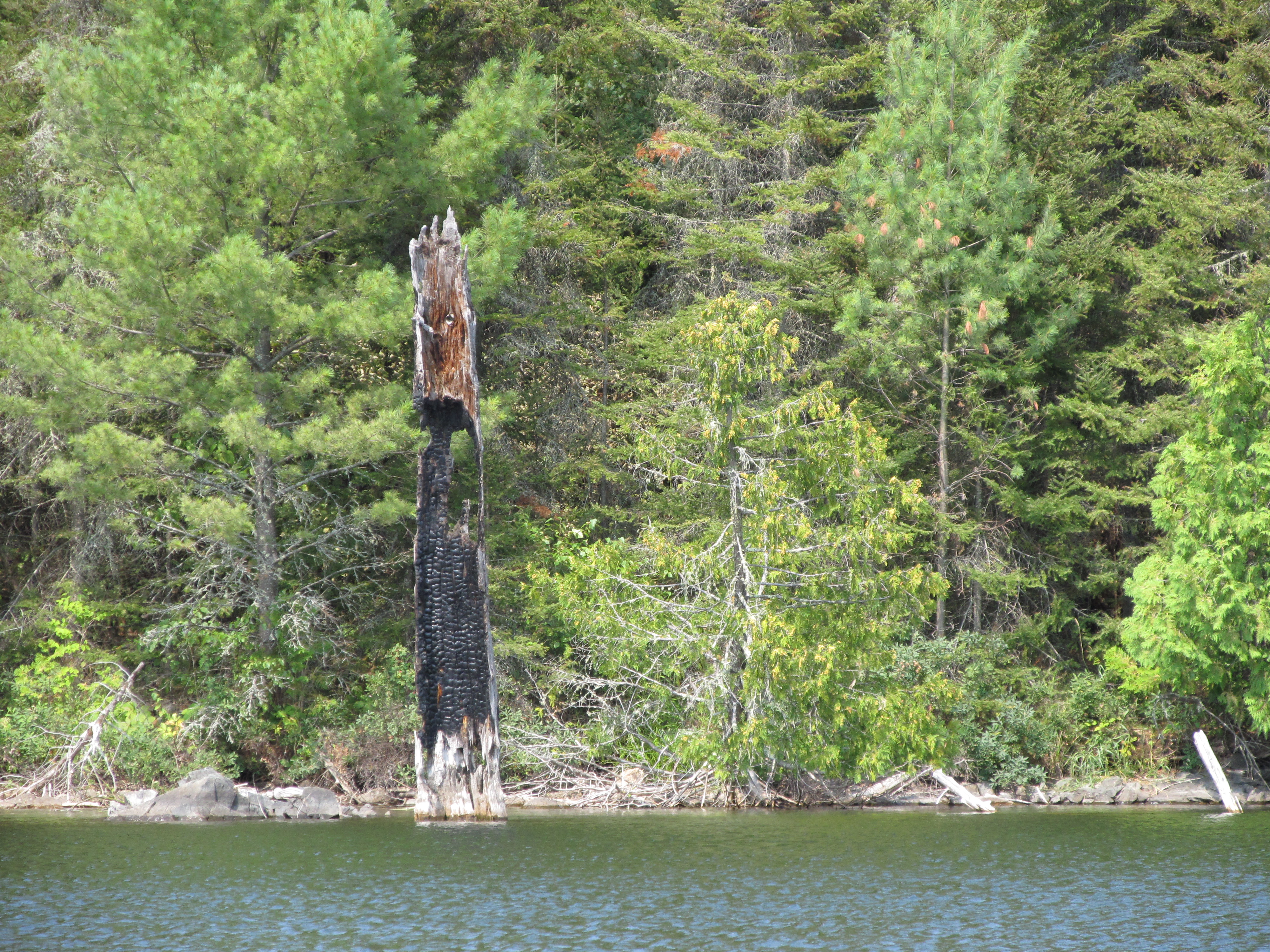
We paddled with Canada on our left and the United States on our right until we found a campsite on a peninsula that was hanging by a five-rod portage to the mainland. The almost-island campsite was our home for the night.

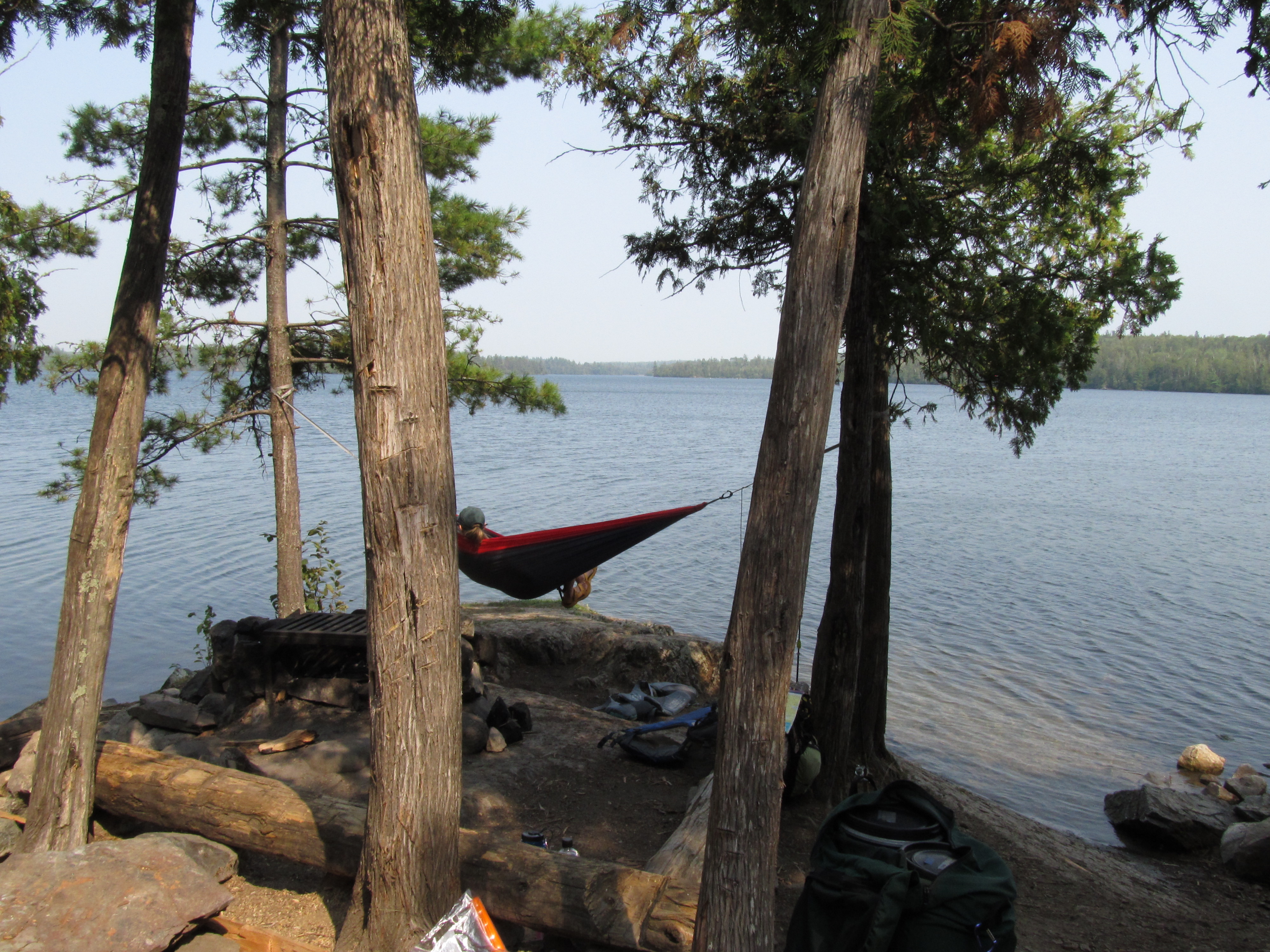
We unloaded the canoes, set up tents and hammocks, and hung the bear barrels. The fishermen got serious about fishing. The nappers got serious about napping.
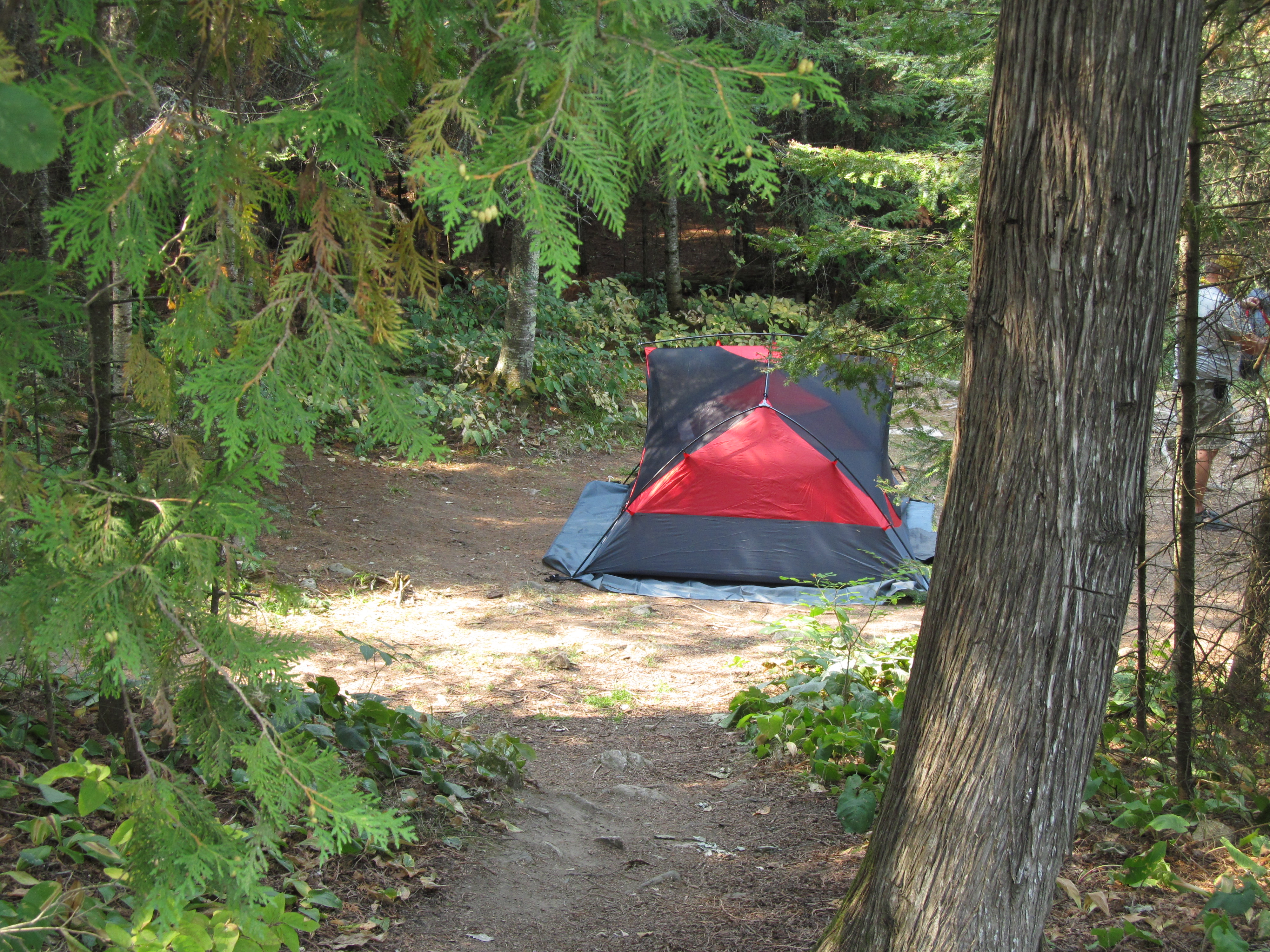
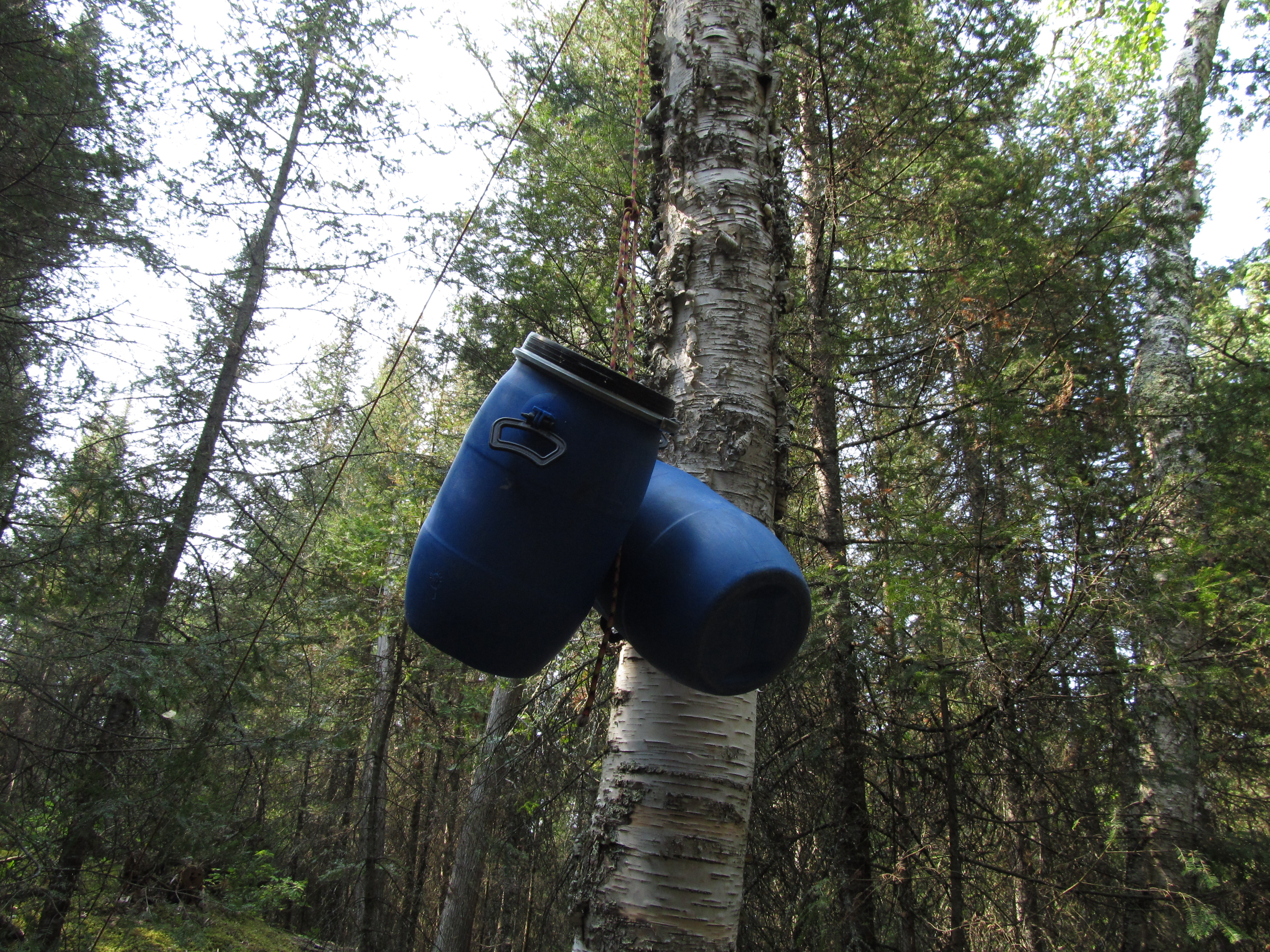
The hazy sky of afternoon turned smokier—we could smell it, and the smoke seemed to settle on the water. Because of the drought and Canadian wildfires, there has been a fire ban in the BWCA and most of northern Minnesota. So no campfires for us or anyone. We cooked over a small white gas backpacking stove—our first supper was macaroni and cheese with polish sausages. So good! The largest fish of the trip was caught by our son-in-law Shawn just as evening settled around us. The feisty 30-inch Northern was the one who got away before a picture could be taken—but the excitement of the ones who saw him will stay with us.
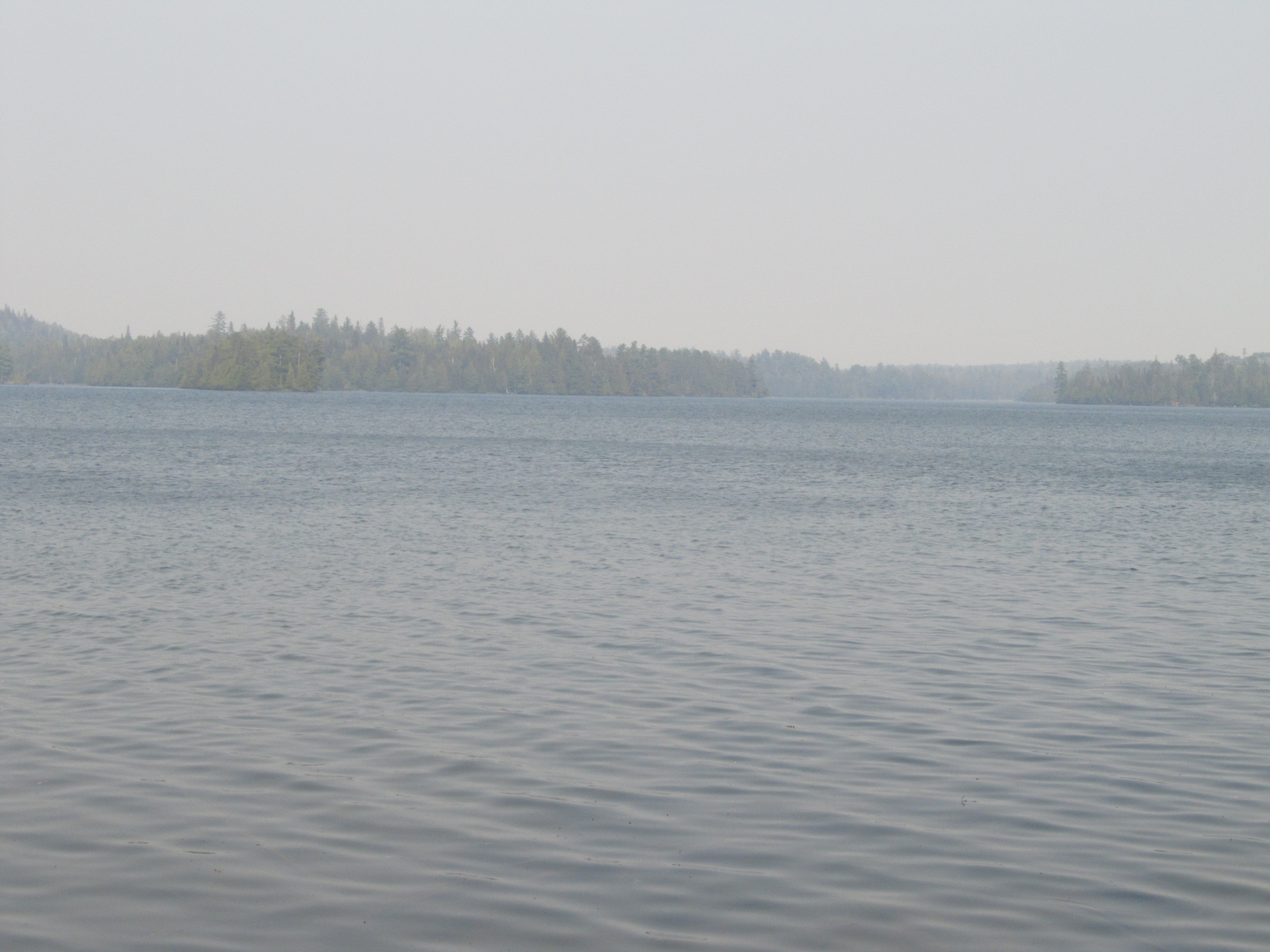
We traveled for about eight miles this first day with no portages (as we determined by the map and key after we returned from our trip.) I was getting used to the water and waves. The process was intriguing, the landscape incredibly beautiful, and the companionship of our family comforting.
Because of the drought, there were not many wildflowers blooming, but down by the water in a little boggy area beside our tent, the showy Jewelweed brightened up the dry and dusty landscape. It’s a native plant of the Impatiens genus whose sap from the watery stems has been used by Native Americans to relieve pain and itching from hives, poison ivy, and insect bites. A jewel to look at and a jewel for relief.
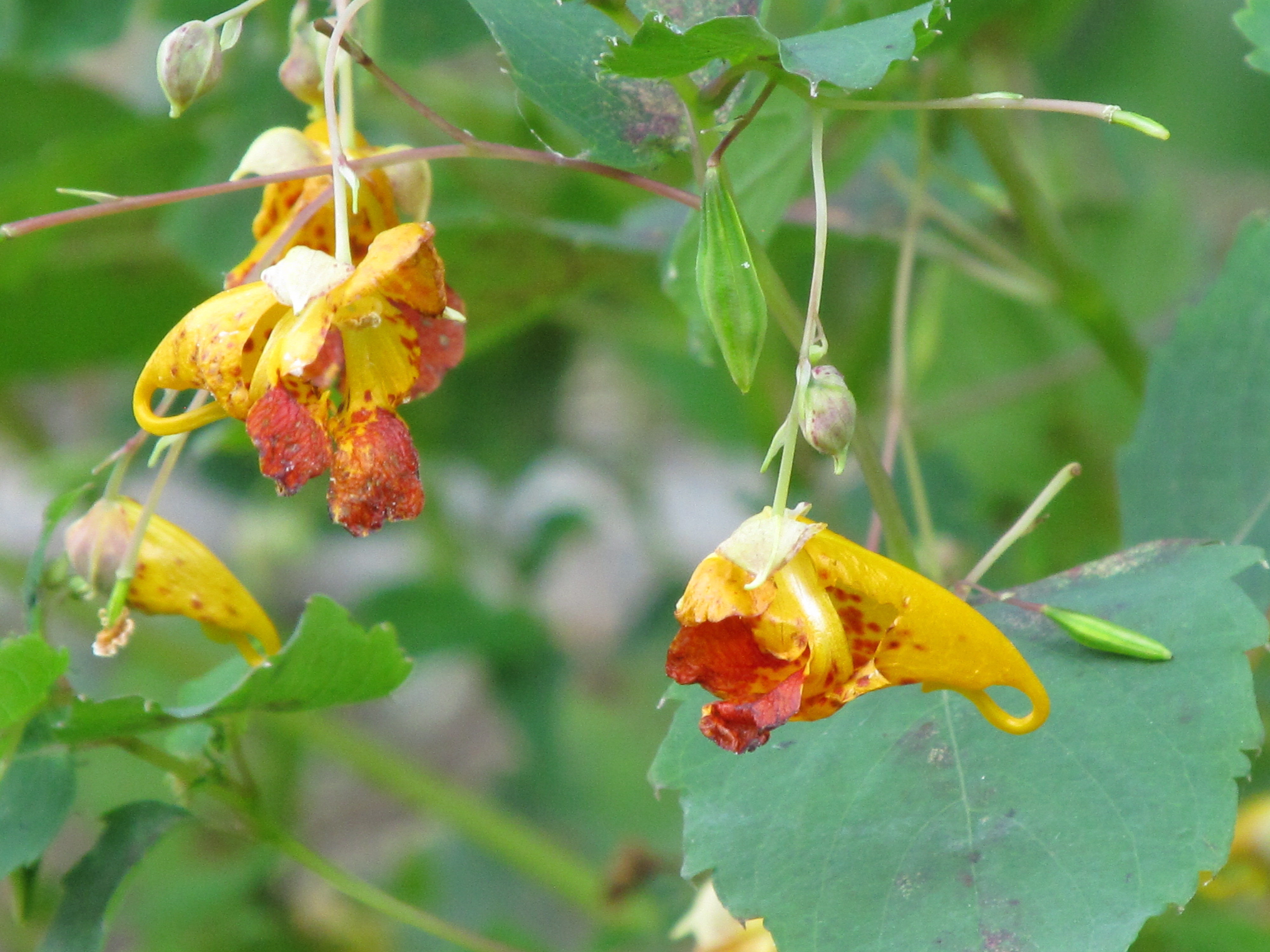
My anticipation of our Boundary Waters trip was like the Jewelweed—part jewel and part weed. I loved the excitement and planning of it over months of otherwise difficult times of pandemic and political unrest and uncertainty. It is a priceless gemstone to engage with adult children in a common love and endeavor. But there were definitely weedy things about it—even though my decision to suggest the trip in the first place took much thought and can-do self-encouragement, I still struggled with my fears when the time actually came. If only our fears could be plucked out like weeds and tossed into the compost pile. But they reside with us until they are respectfully encountered and challenged. As I stared up at the stars in our unflyed tent, listening to the calming, flute-like calls of Loons and hoping for a breeze on the stuffy, smokey night, I decided that it had been a pretty great first day.
This is the first post in a series of five that chronicles my experience of five days in the Boundary Waters Canoe Area (BWCA). It is best to read the whole series from the beginning (Anticipation) in order to understand certain things I refer to in my other posts.
The Meeting Place
When I was in my early twenties, I was staying with friends of mine who lived out in the country. Before going to sleep one night, I saw a light flashing by the window. Instantly I was scared. I froze in stillness with my eyes wide open, trying to see where the light was coming from. Was it somebody walking around with a flashlight? My friends were sleeping in the next room. I was convinced I was in danger, that there was a bad person prowling around outside, but I was frozen with fear. I don’t know how long I lay there in fear, finally falling asleep against my will.
We headed east from Ely. Superior National Forest surrounded Highway 1 in Autumn glory. Our late September trip up north wasn’t quite over, even as we were heading home. We drove to the shore of Great Lake Superior. It is such an amazing sight! We stopped at Tettegouche State Park—just one of around 17 state parks that line the eastern border of Minnesota along Lake Superior, the St. Croix River, and the Mississippi River. Tettegouche is a French Canadian phrase meaning “meeting place.” The land was home to a logging camp in the late 1890’s, then a fishing camp and retreat, and conserved by a couple owners and The Nature Conservancy before becoming a state park in 1979. With the afternoon waning, we opted to hike to High Falls along the Baptism River, the highest of four falls that drop the Baptism River 700 feet to Lake Superior.
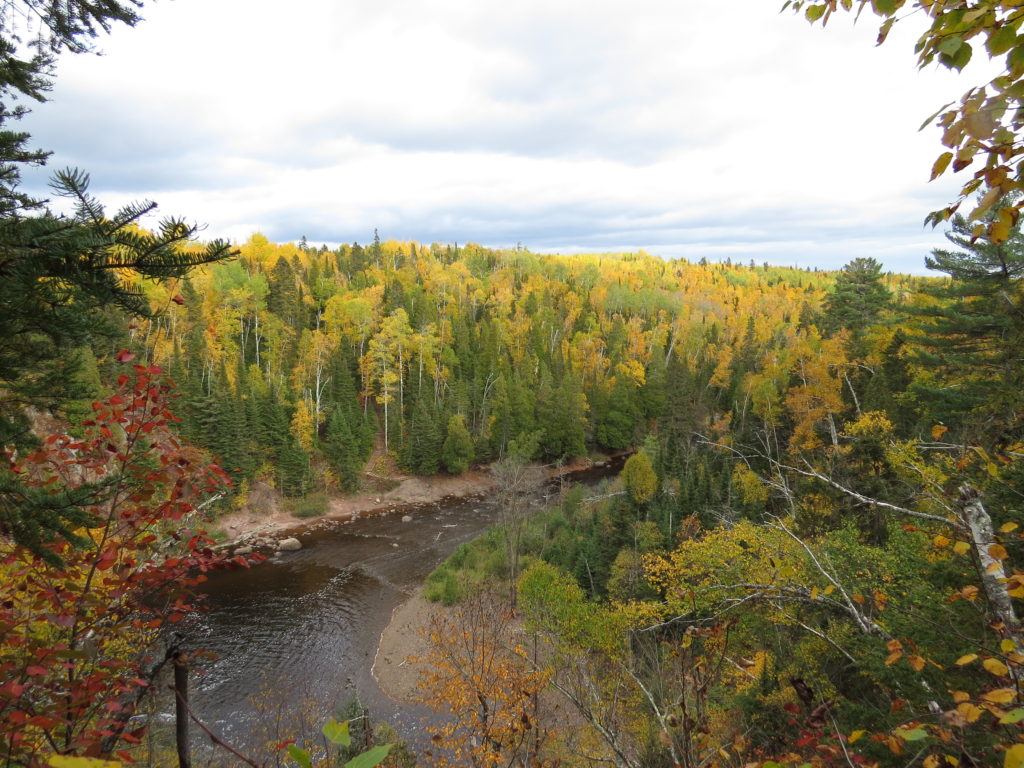
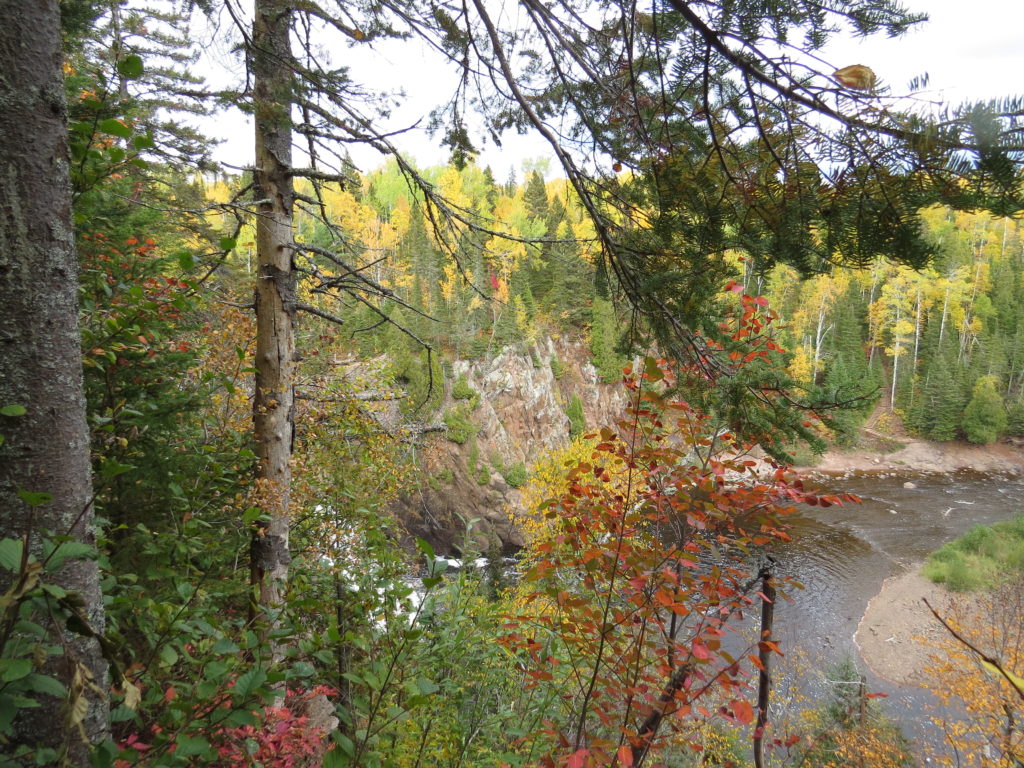
Getting up to the falls took a substantial amount of breath, but once there, we walked across the swinging bridge to peer upstream and downstream to the edge of the falls.
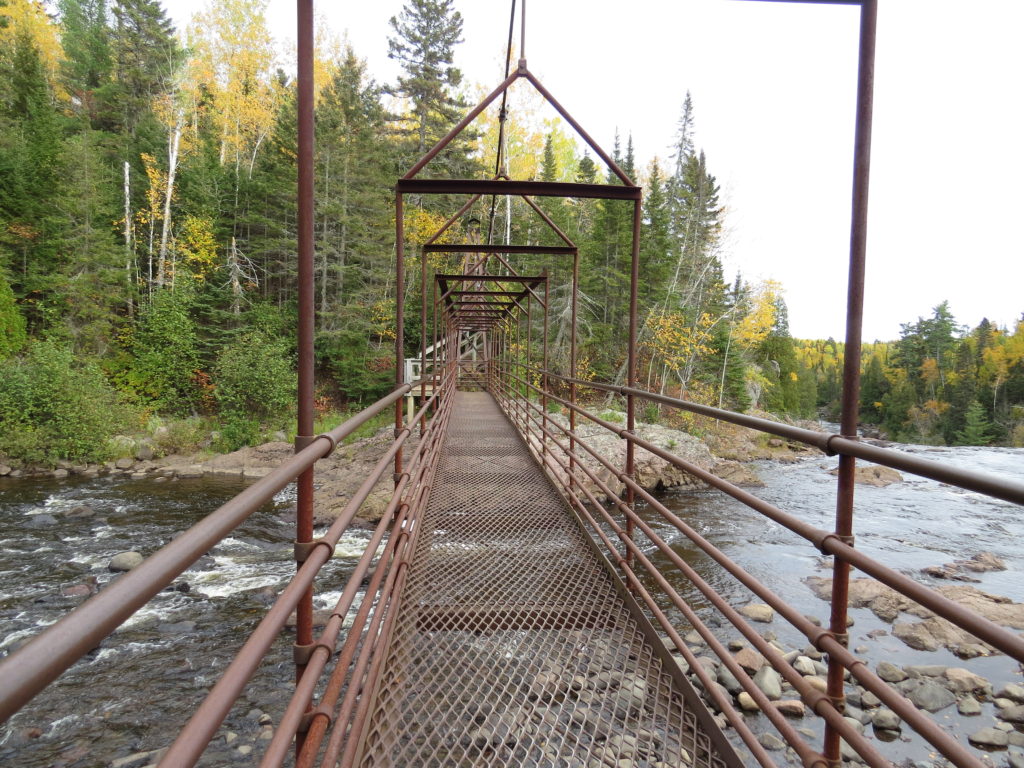
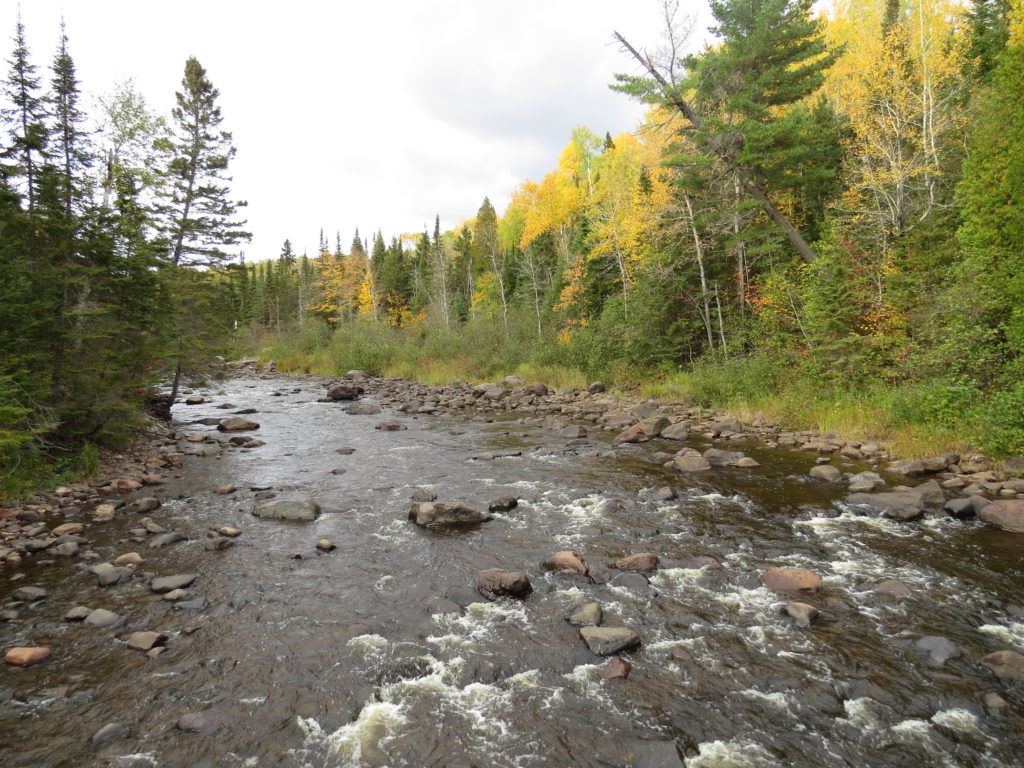
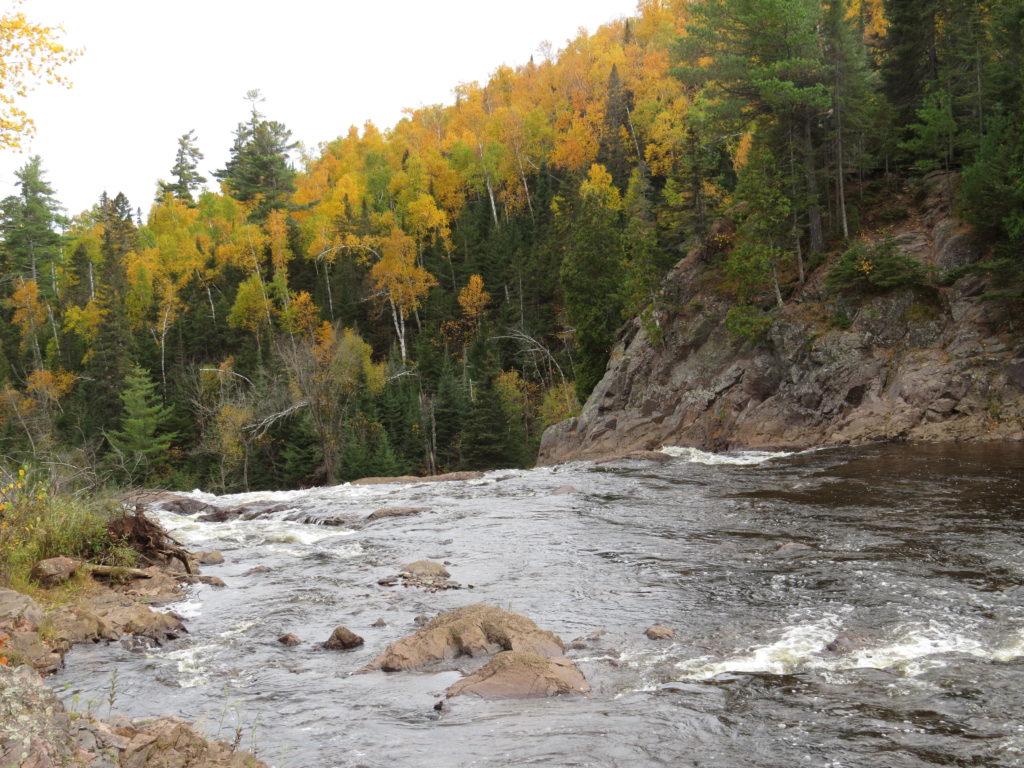
Trails on both sides of the River, along with the bridge, allowed us to see the spectacular rock face and sixty feet of cascading water.
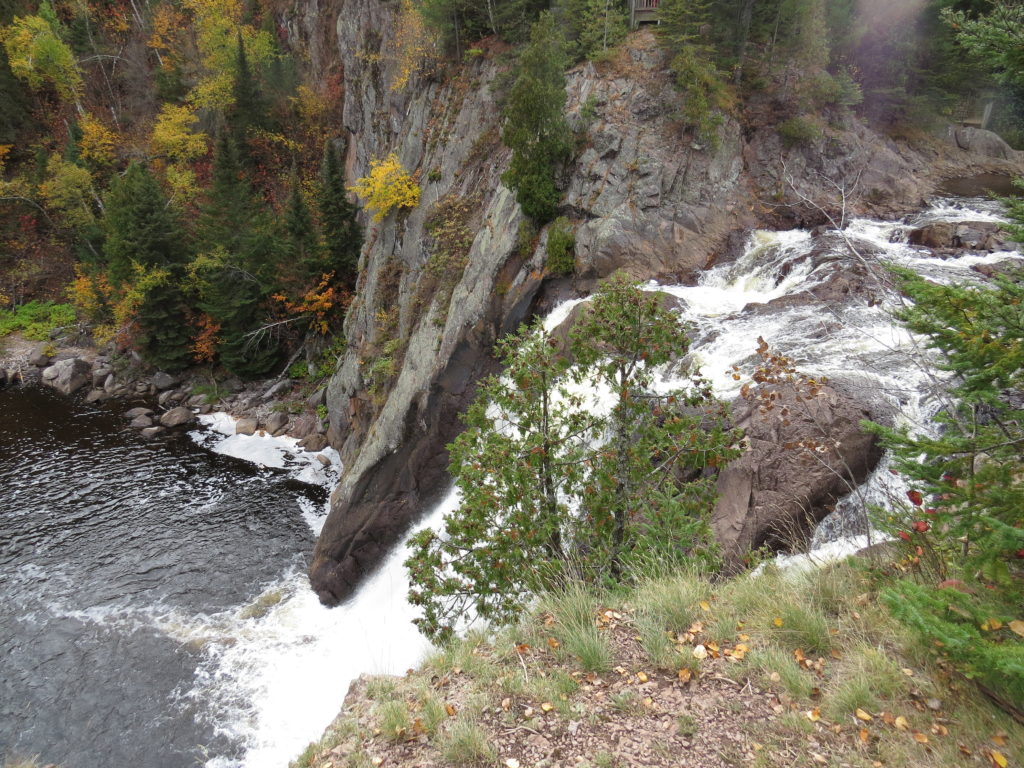
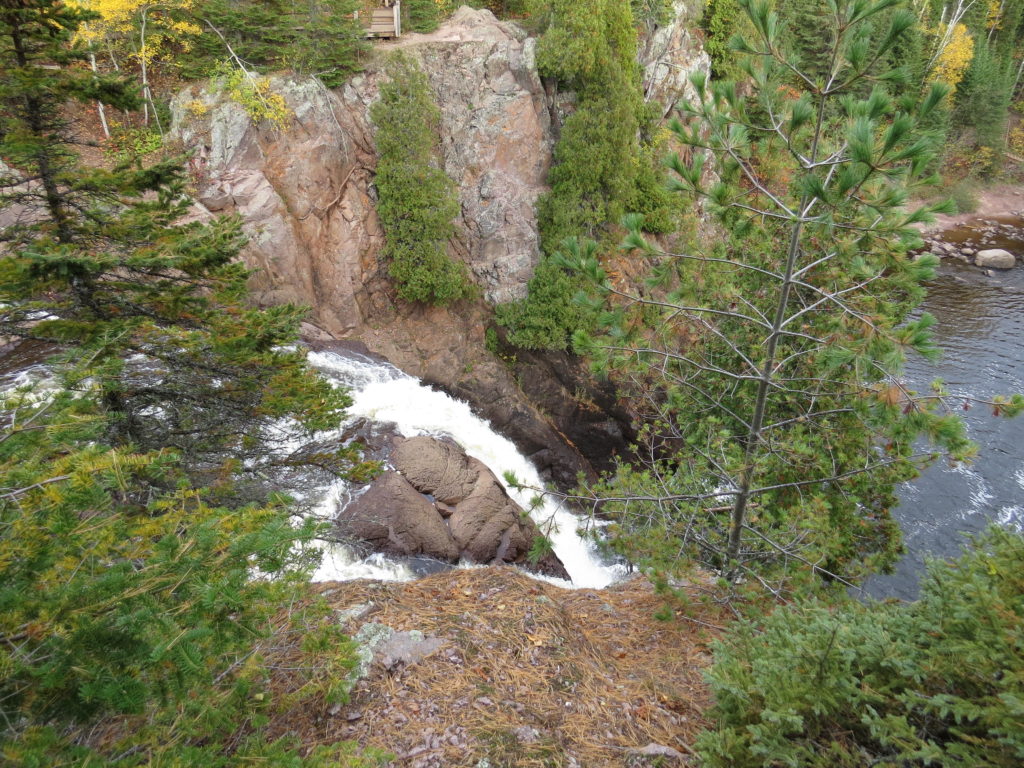
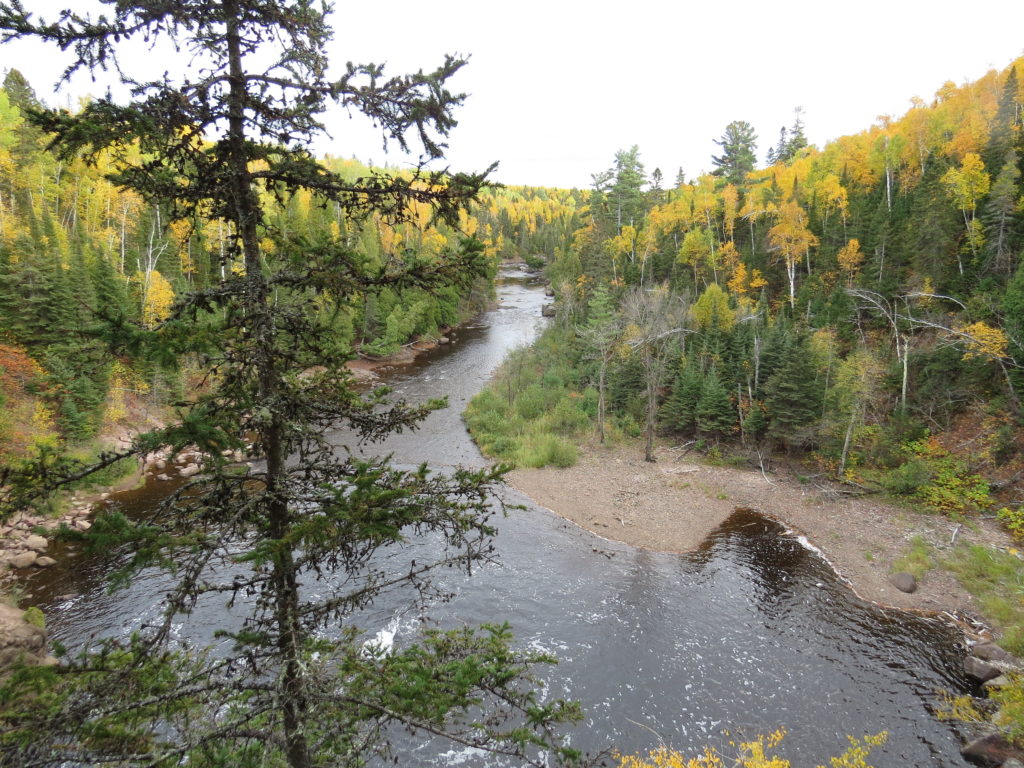
We hiked back down to the car, crossing the Superior Hiking Trail that runs though the park.
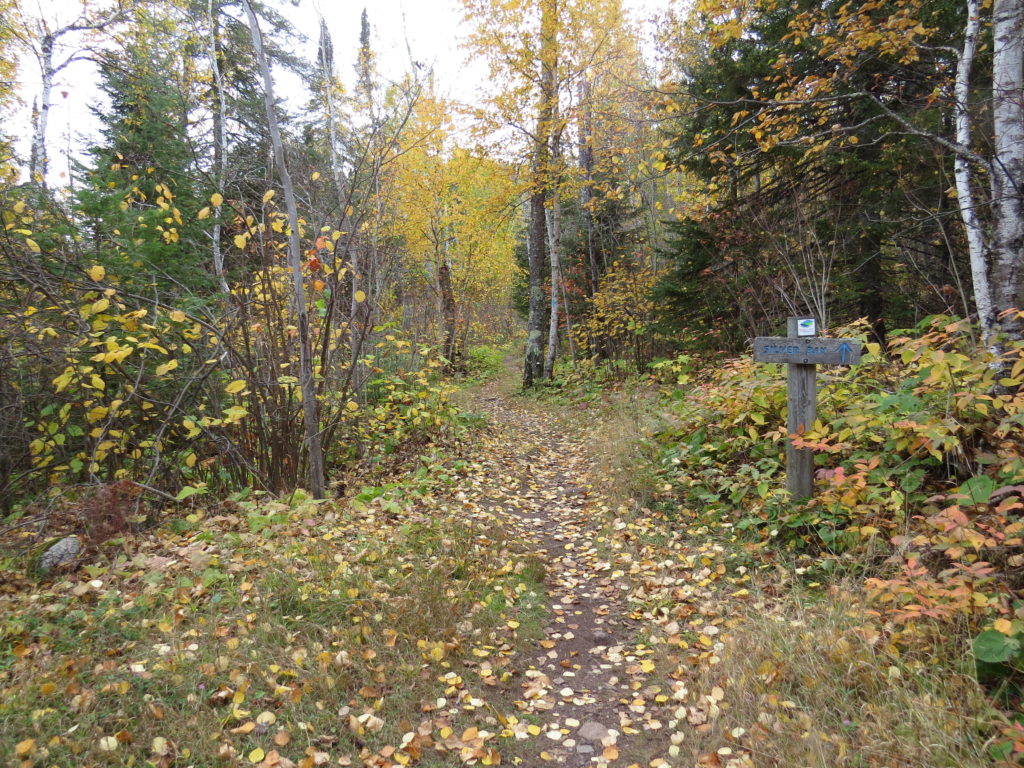
We wanted to see where Baptism River meets Lake Superior. The rock cliffs guided the River to the Great Lake who had tossed up a sand bar of polished rocks, seemingly blocking the flow of the river.
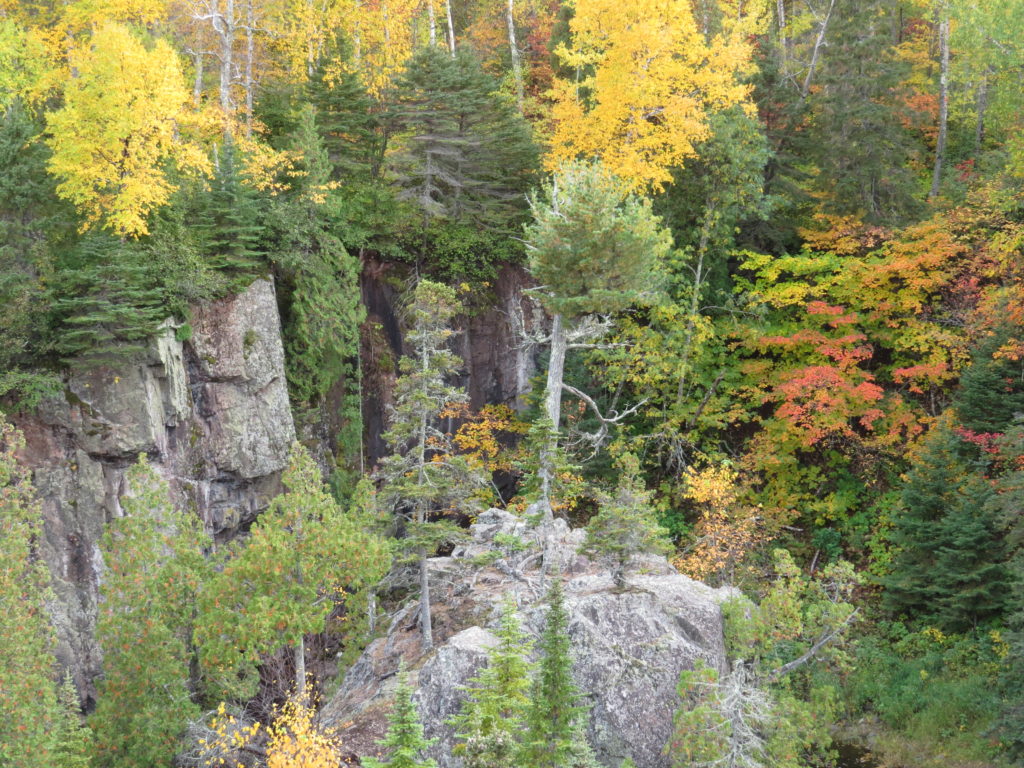
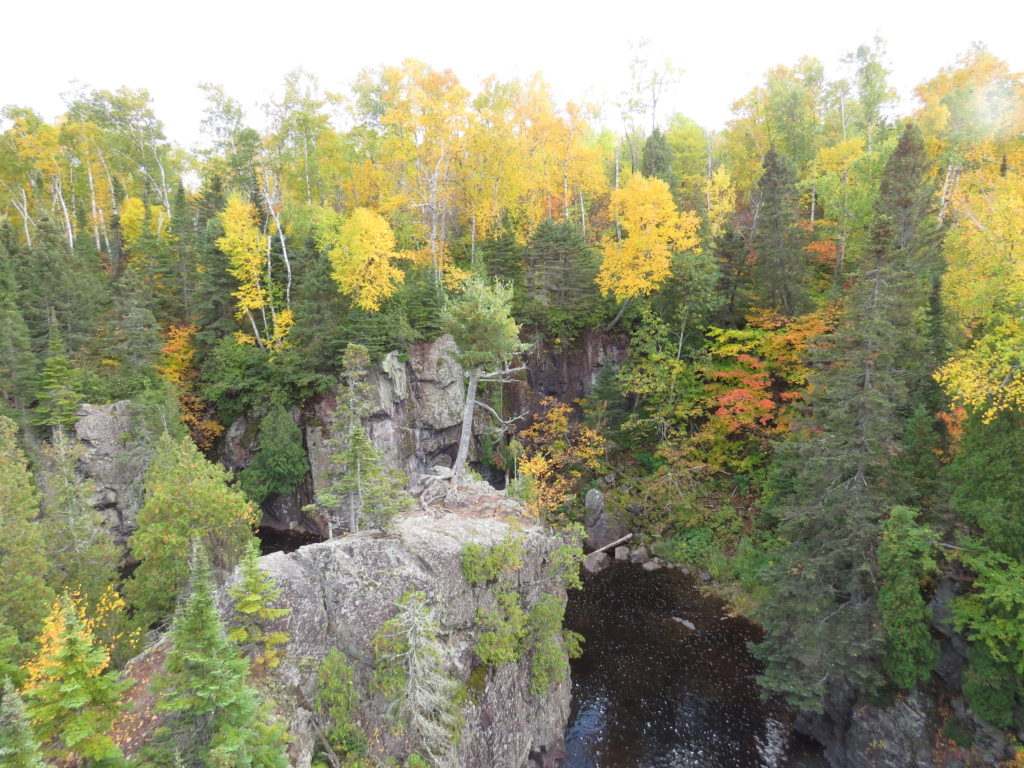
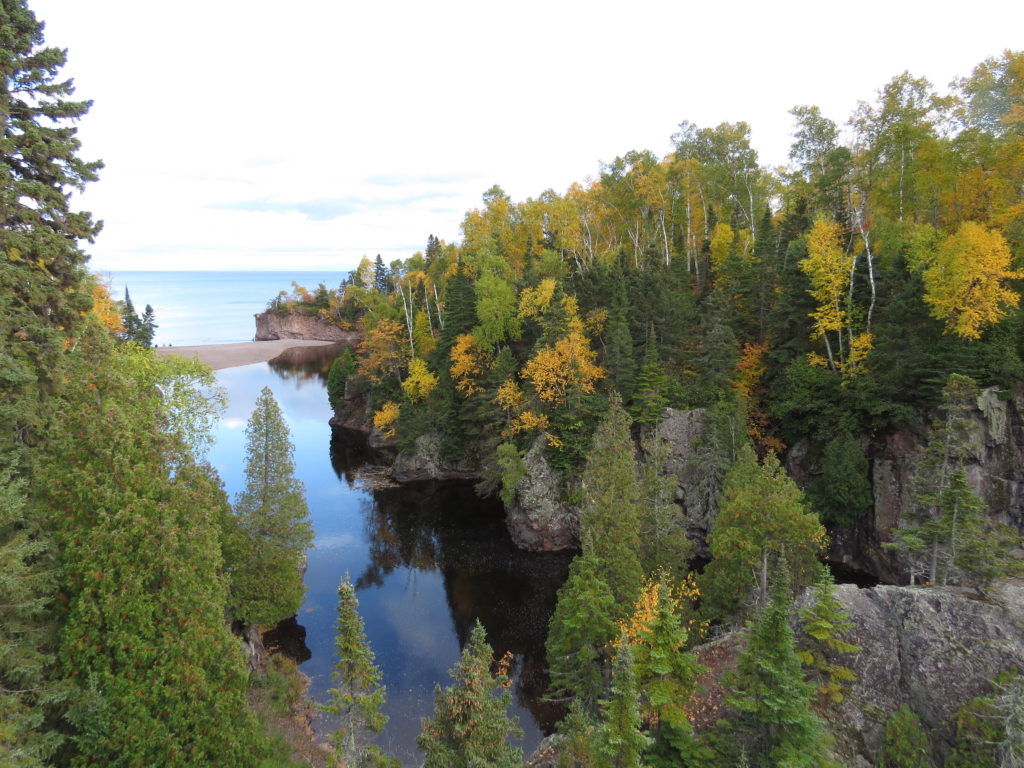
The ‘rockbar’ stretched across most of the mouth, but the River rushed around the corner of it, spilling into Superior.
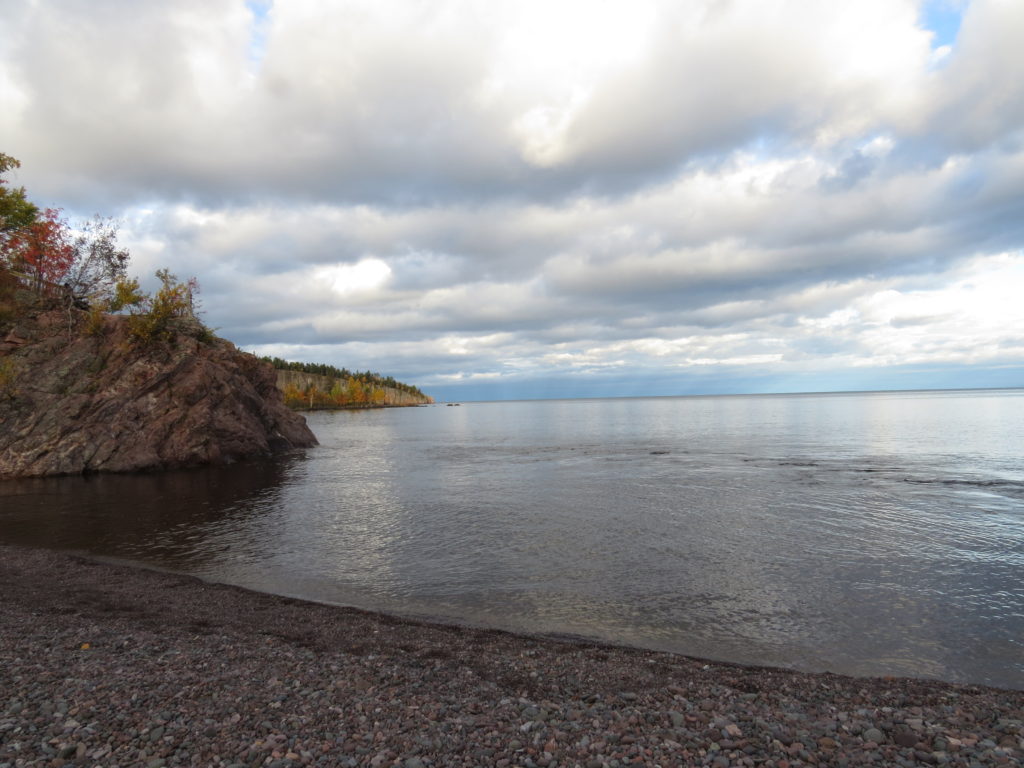
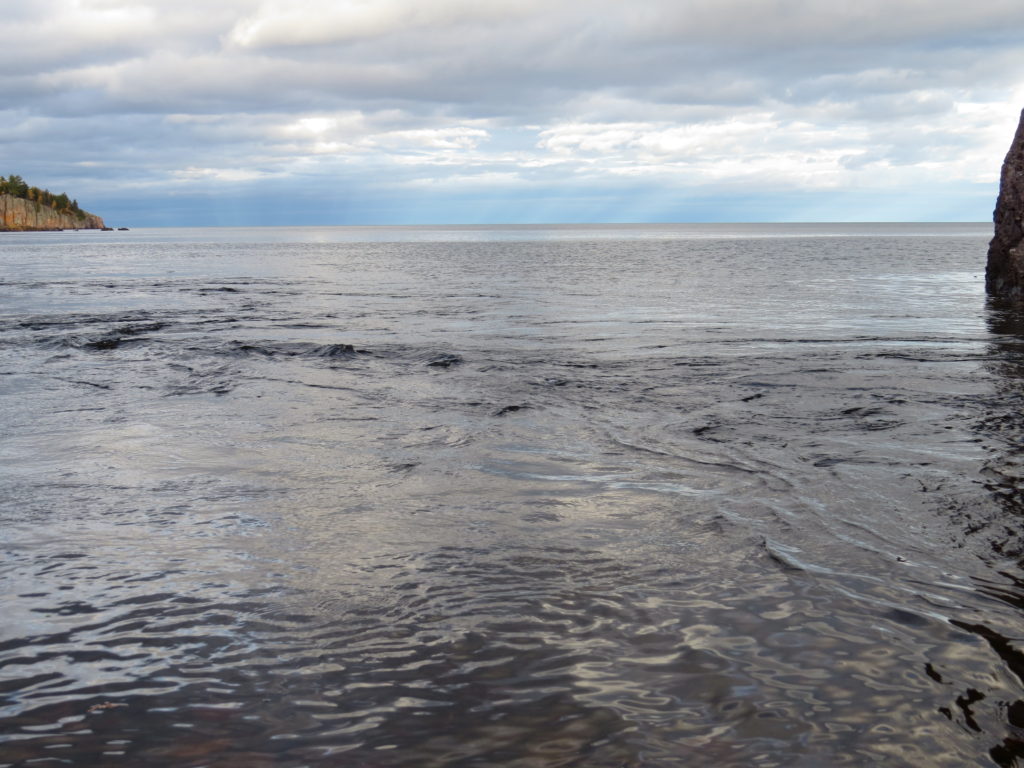
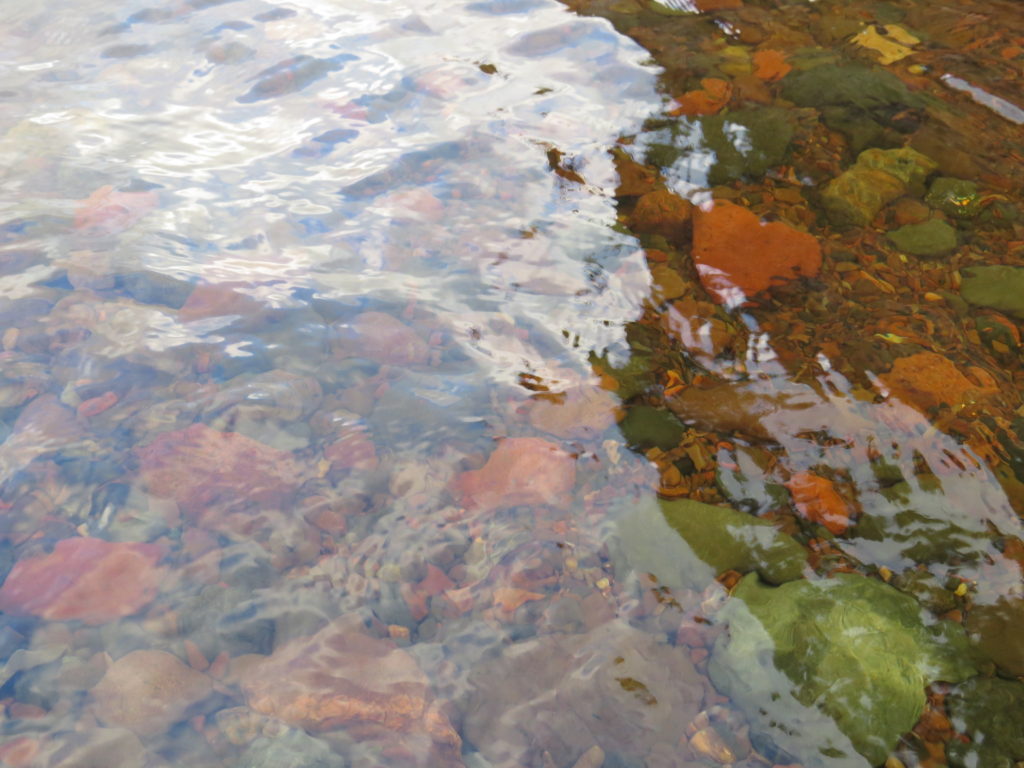
We rock-hounded for a while, gathering some, leaving other ‘heart’ treasures the spirited Lake protects with her cold waters.
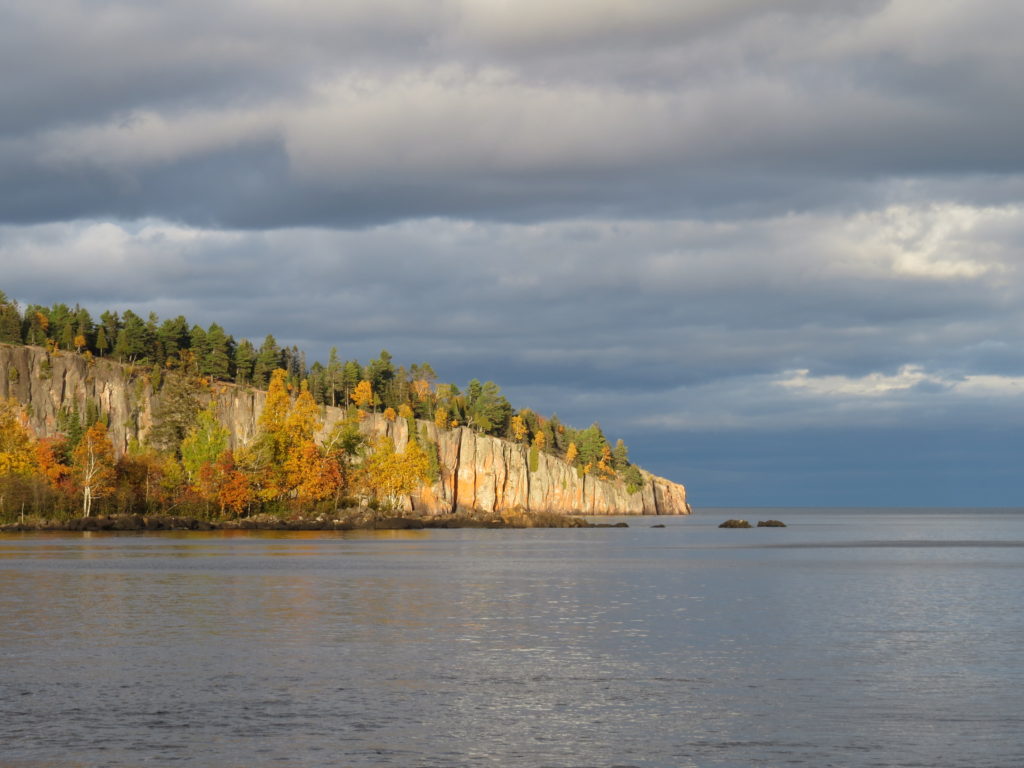
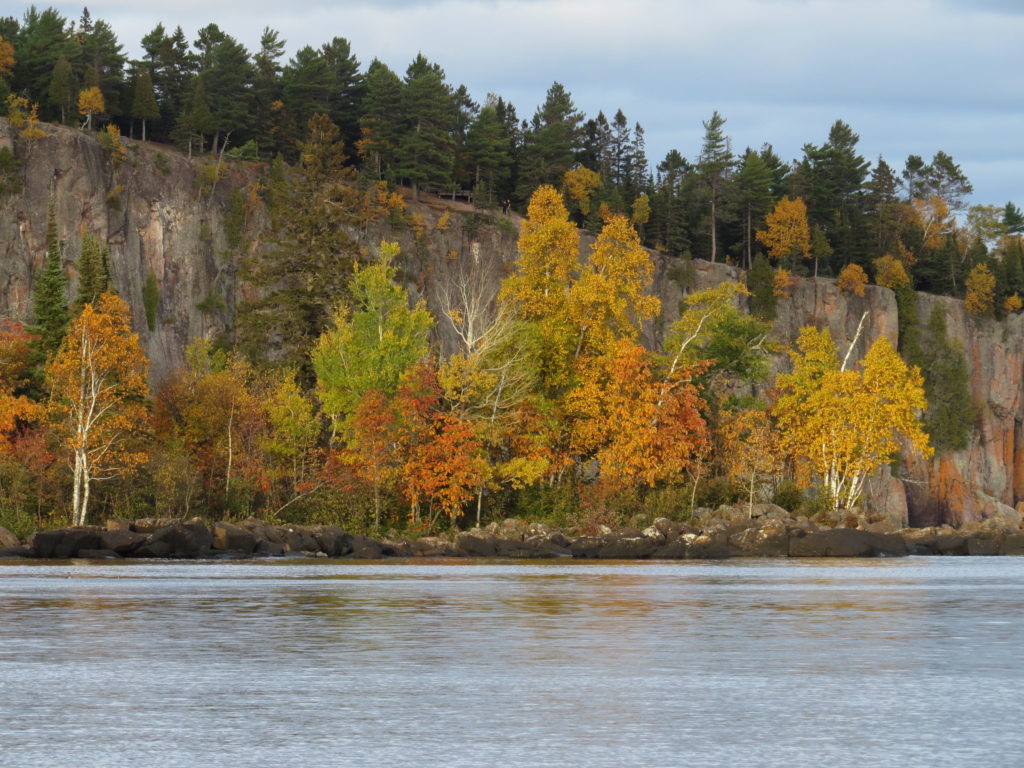
The spectacular Shovel Point, where rock meets water, glowed in the evening sunshine.
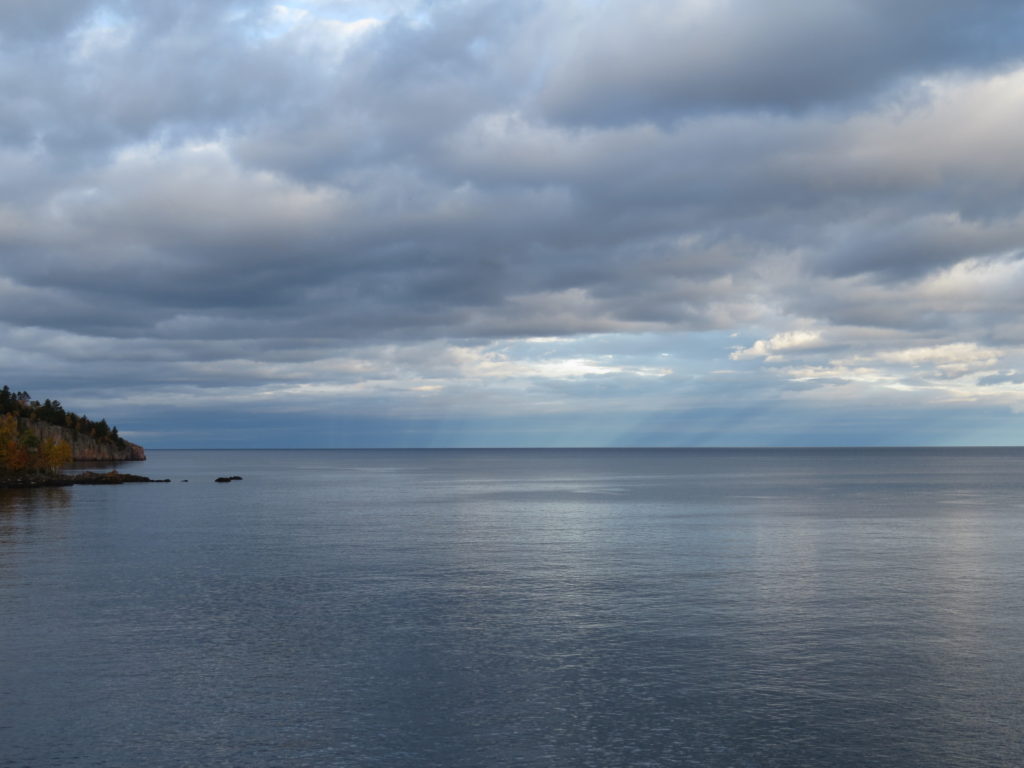
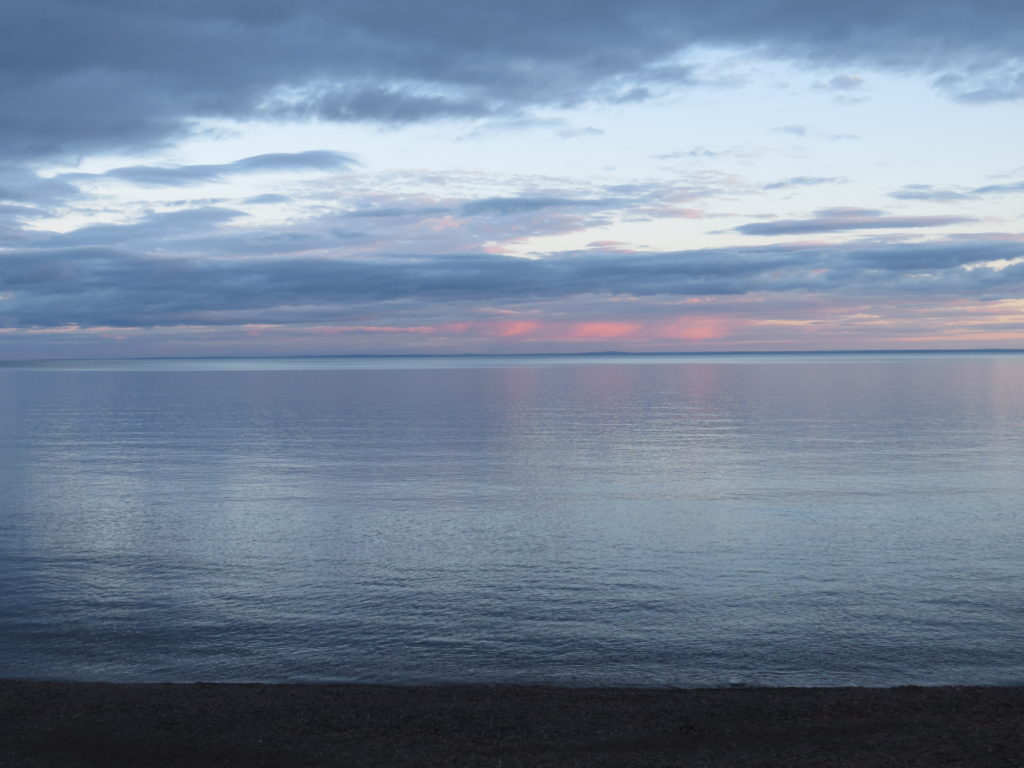
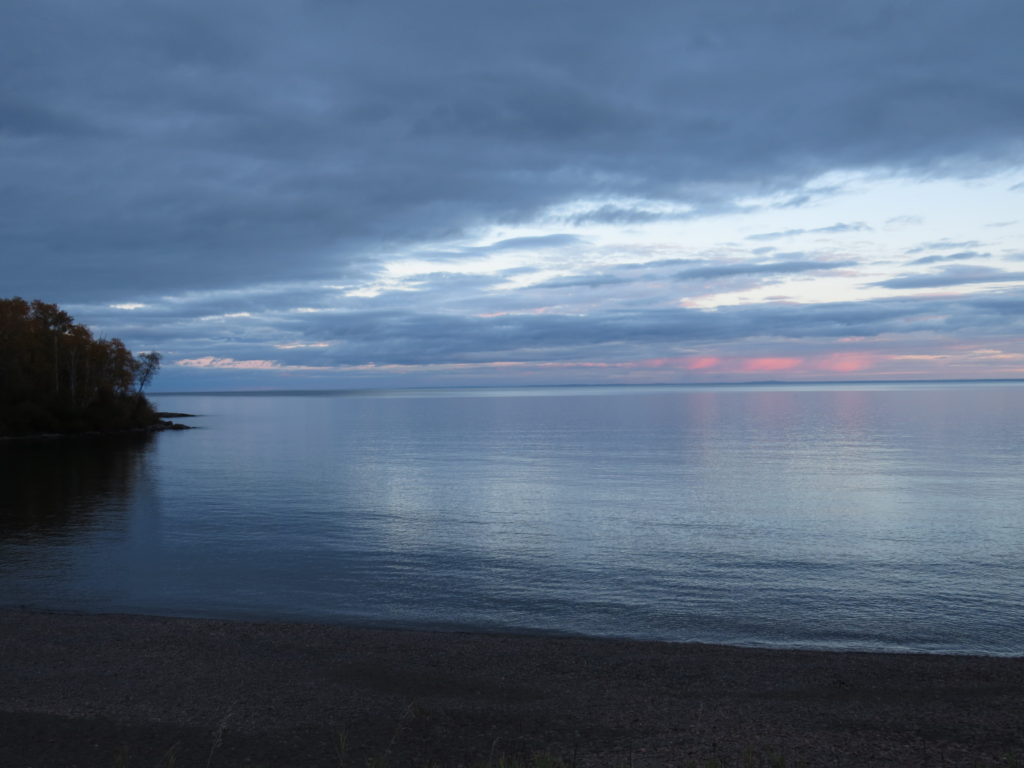
The clouds and dancing light of the sunset reflected down on our Minnesota sea where sky meets water.
It was many years after my frightening experience when that memory came rushing back to me. It was when I saw a light flashing by a window, just like that time so many years ago. This time I didn’t freeze. I was able to walk to the window and look out…. I saw fireflies. I had had a life-threatening encounter with fireflies. This time I marveled at how bright the tiny insects were when they flew close to the window. It’s such an embarrassing story, but it was very real to me. When we are exposed to what we perceive to be a life-threatening experience in our childhood and there is no resolution, our bodies become programmed for fear—for fight, flight, or freeze. Without thinking, my body froze when I was a young adult. Adrenaline coursed through my body, my heart raced, my pupils dilated. Fear took over my brain and body.
We are a nation divided by a great chasm of belief systems that are seemingly miles and years apart. Each side fears the other. I’m here to remind us that fear first works on our bodies and in the process, shuts down the logical, reasoning pre-frontal cortex of our brains. When we are in fight or flight mode, there is no reasoning with us. I truly believed that I was in danger that night, that I was going to be harmed. But in reality, I was safe. Fireflies pose no threat. I was wrong in my fear, my very real fear. This is when and where we need to extend grace to ourselves and others. Grace is the meeting place between us humans and the divine. It allows us to have a meeting place between our hearts and minds in order to dispel the fear that is taking over our bodies. That is work only we can do for ourselves, albeit with help from others. Blessings to us all in this endeavor.
We may differ widely in environments, education, learning, knowledge, or lack of it, and in our personalities, our likes and dislikes. But if we set ourselves the task, we’ll find a meeting place somehow and somewhere. Faith Baldwin, 1893-1978
Standing in the Middle of a Lake
Having courage does not mean we are unafraid. –Maya Angelou
Fear has been my worst friend most of my life—my friend because there has rarely been a day when it hasn’t been by my side—and worst because friends are supposed to be fun, encouraging, and loving, and fear is none of those. We know each other well, inevitable after so many decades together, but it still surprises me at times when fear takes the bit and bolts at a dead run. I’m learning how to gather the reins, loosen the bit from its teeth, and get control again.
One of the things I’m afraid of is deep water. I can swim enough to get from point A to point B if they aren’t very far apart, if one has no judgement on my ‘technique,’ and oh, if I can just about touch bottom. When canoeing I prefer to stay close to the shore, and my temporary best friend is the aptly named life jacket. Larger boats are more enjoyable—if I don’t think about how deep the water is below us. The only thing worse than deep water in the summer is the thought of falling through the ice in the middle of a lake—uncommon, but not unheard of in Minnesota. My mind had come up with this blog post title a number of weeks ago, so I knew I couldn’t write about it unless I did it. Okay. So here I am, standing in the middle of a lake…
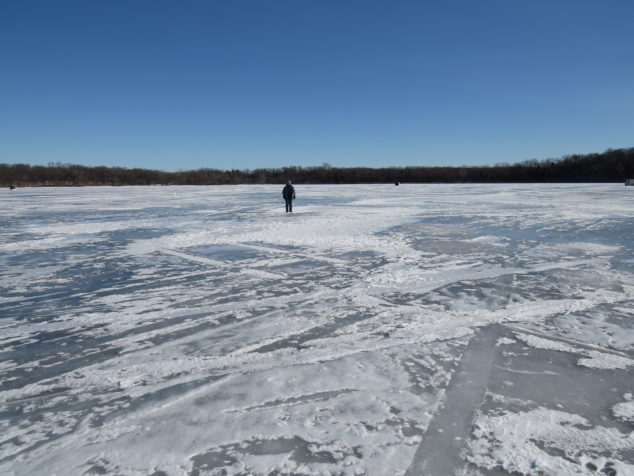
Chris and I traveled to Eden Lake, a 263 acre oval-shaped lake to the south of us. It’s 77 feet deep at the deepest point. (yikes) The temperature was a chilly twelve degrees, but the sun was bright and the sky a beautiful blue. We walked out on the lake as I reassured myself that the ice was safe—after all, there were plenty of pick-ups out there.
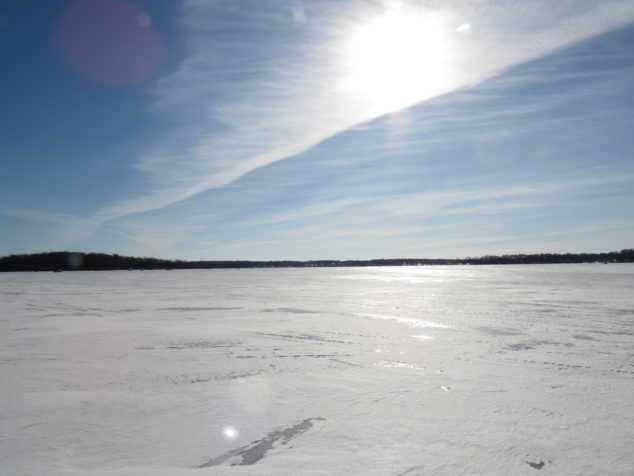
The ice was mostly snow-covered in interesting patterns crafted by the wind. It made walking easier.
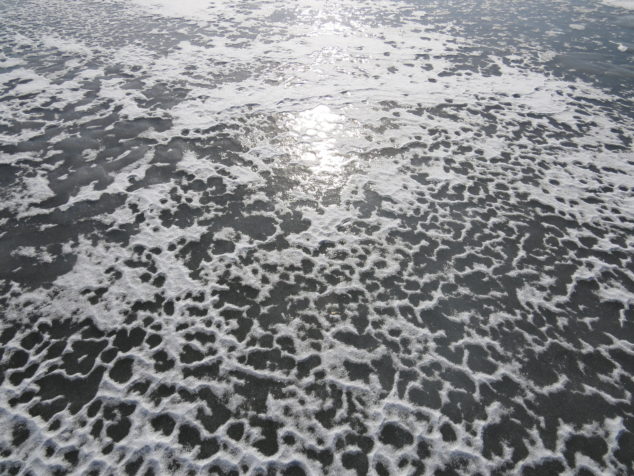
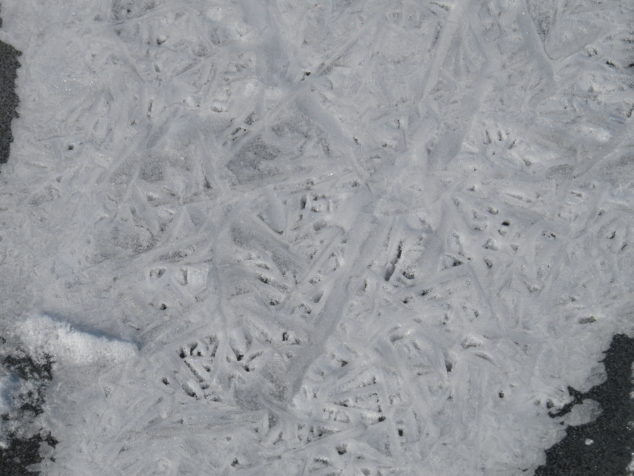
There were places where the ice was topped with a lacy white frosting that shattered like glass when we stepped on it.
Truck tracks ran in many directions, but one ‘road’ seemed to get the most traffic.
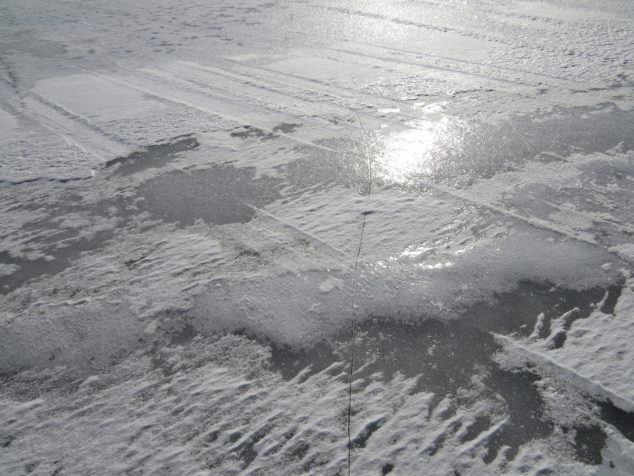
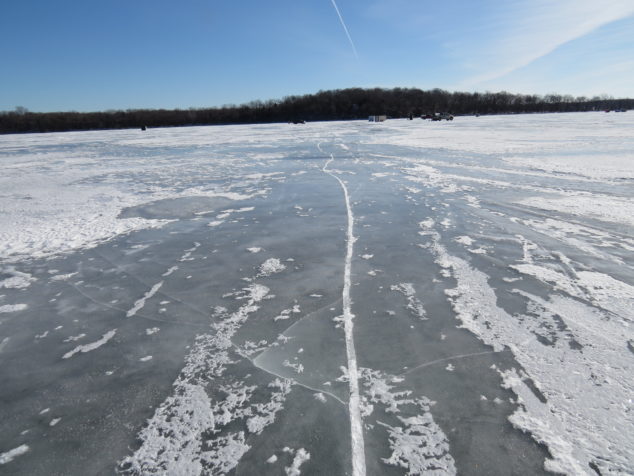
Cracks appeared in the ice, and there was evidence that melting water had seeped up from them during the January thaw but once again were frozen over and slick.
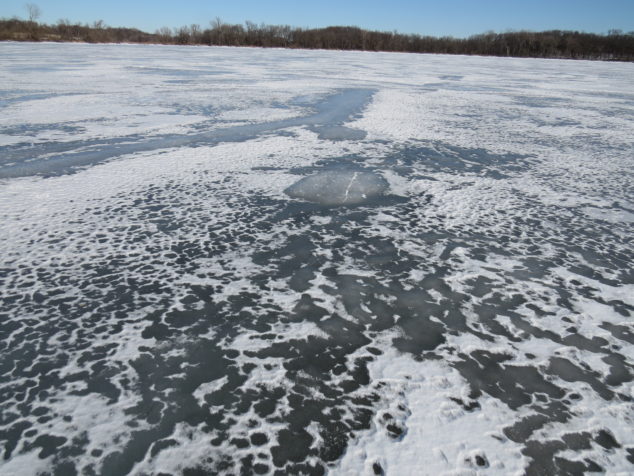
Ice chunks lifted from holes cut for spearing fish made it look like a moonscape.
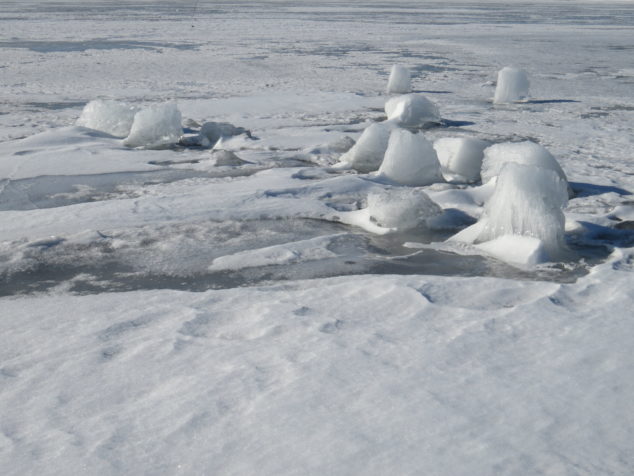
Cedar branches marked the holes that had been cut, warning drivers to stay clear.
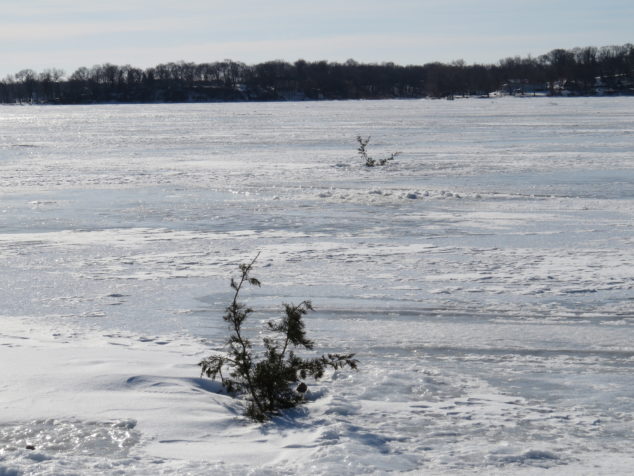
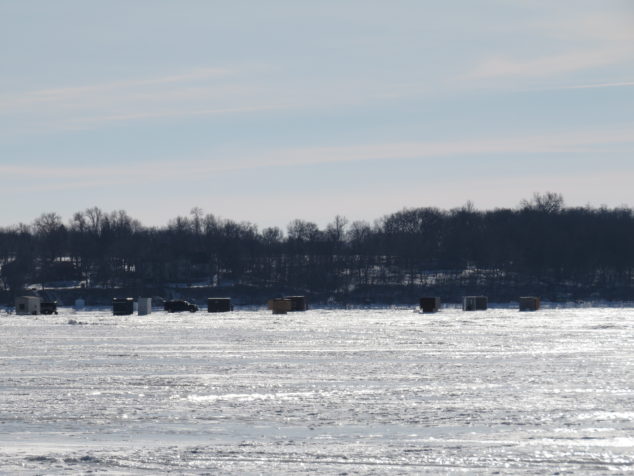
Ice houses were scattered in three different areas of the lake…
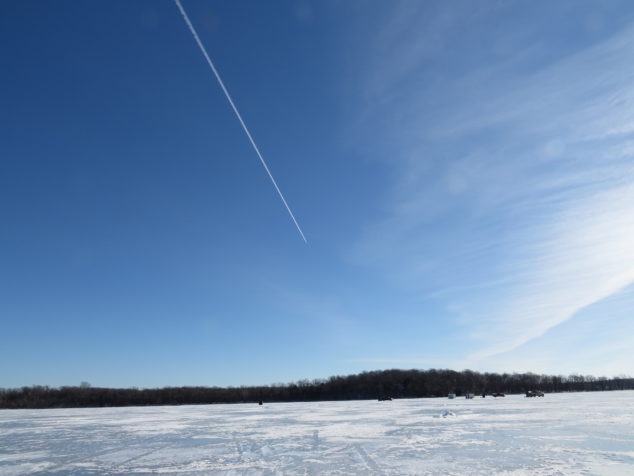
with a little village of them at the far end of the lake, at the end of the ice road.
I peered down through the ice where it was clear, unable to ascertain the thickness. I wondered about the large cracks, like center-lines down a highway. The ice landscape was so unfamiliar to me, though the fishermen must know how to ‘read’ it after years of experience. Probably only the foolish end up falling through the ice—maybe the ones with no fear.
As I was leaving the lake, I stopped to ask a man how deep the ice was—he had just drilled some new holes and said the ice was about sixteen inches thick, more than enough for a pick-up truck to drive on according to the MN Department of Natural Resources. How much is recommended for safe activities on foot? Four inches! Though the DNR clearly states that ice is never 100% safe. Fear is not something I need to get rid of completely—it serves a purpose in keeping me safe in many situations. And like walking on ice, I am never 100% safe. But I really had nothing to fear standing in the middle of Eden Lake on that day. John Berryman, a poet who lived and died a tragic life, wrote, “We must travel in the direction of our fear.” Maybe my mind, by coming up with a title, was urging me towards my fear. Maybe the center-line cracks illustrate that the highway of life has perils to be navigated. We just have to make certain that fear does not completely envelop us, like it did poor John Berryman. Maybe it’s the village at the end of the road that will dissipate the fear and bring us back to safety. Maybe fear is not my worst friend, after all.
Thanks to Sterling for answers to my ice questions.