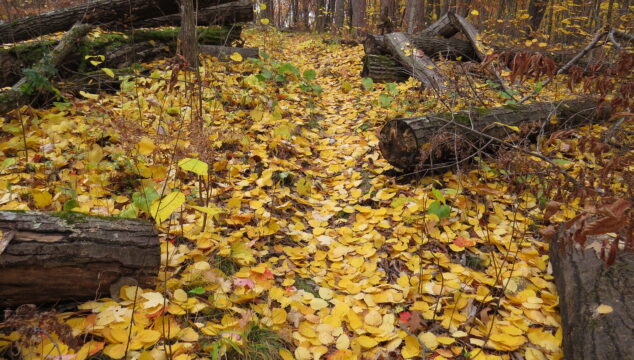
Come walk with me in the peak Autumn beauty of the Northwoods. To say that I love this time of year is an understatement. Most everyone can appreciate the colorful falling leaves---it reveals the 'true self' of a tree when its leaves are no longer producing chlorophyll. Their true colors are revealed, and there is something simple … [Read More...]
Welcome the Light
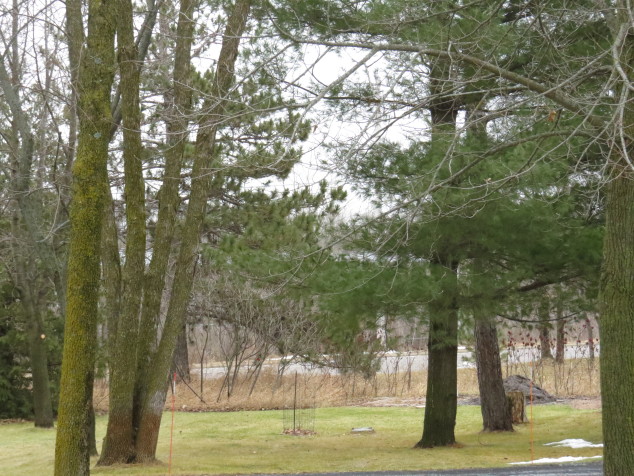
It’s Christmas Eve in Minnesota. As the temperature flirted with the freezing point the last few days, precipitation fell as rain instead of snow. As a snow lover, I have to say I’m a bit disappointed–well, actually more than a bit. But this is Christmas!
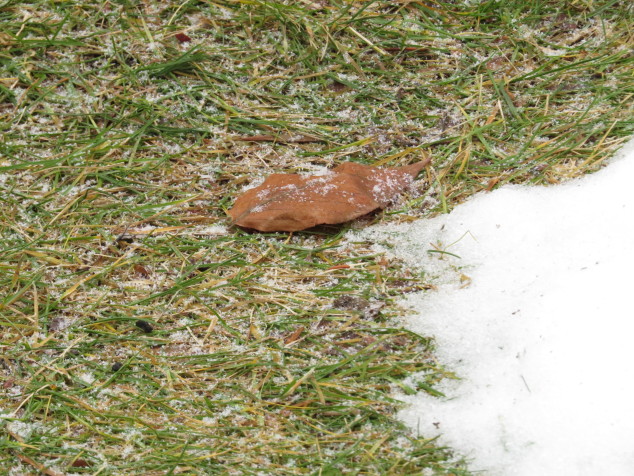
We don’t have a real Christmas tree this year like we always have in the past. We have had balled and burlapped trees, cut your own from the fir forest, cedar trees from the fence line, free ones from the grocery store on Christmas Eve, and even one delivered to our house by the tree trimmers who gave us the beautiful top of a fir they had to cut away from the power lines. We have had trees that were perfectly shaped and others that were Charlie Brown trees. It didn’t matter–they were all enchanting when decorated with lights, our homemade sweet-gum ball garland, and our mish-mash of ornaments accumulated over all the years of marriage and the raising of three children.
This year, for various reasons, we have a two-foot artificial tree that used to be in one of the kids’ bedroom for Christmas joy. As a real tree lover, I’m a bit disappointed. But this is Christmas!
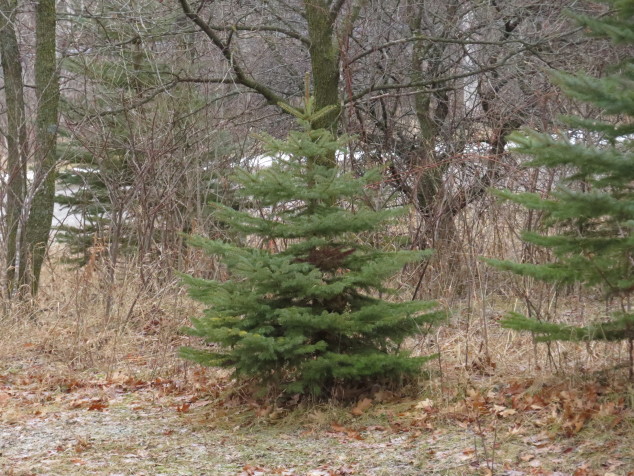
We aren’t going to be with our kids or families this year for the first time ever. Two of our kids are together in Austin for a warm Texas Christmas, and the other will be with Brake family uncles, aunts, and cousins in Kansas City. Our tentative plans to gather with the Andersens in South Dakota were foiled with the vacillating forecast of rain or snow and Chris’ snow removal responsibilities. As one who loves and adores our kids and our families, I am very disappointed. But this is Christmas!
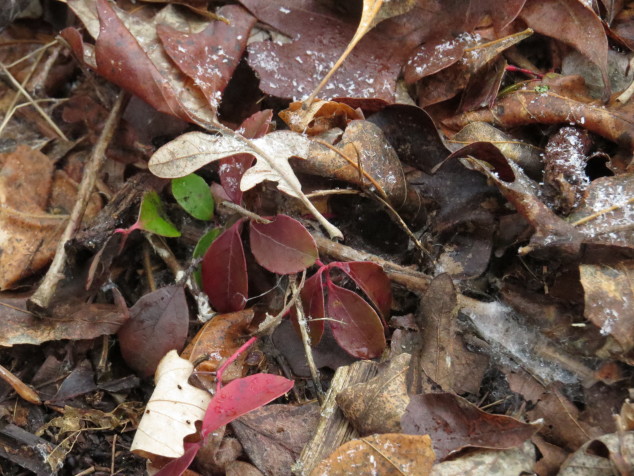
One of the plants in our woods that is seldom seen in the winter because of the snow is Wintergreen or Gaultheria. Wintergreens continue photosynthesis in the winter. Like the pines, spruces, and firs, it is ‘evergreen.’ Gaultheria has a sweet, woodsy odor when bruised and contains an oil that is commonly used as the minty flavoring in chewing gum, mints, tobacco products, and toothpaste. It has been used as a folk remedy for muscle and joint pain, inflammation, poor circulation, and a whole host of other problems, as it contains methyl salicylate. As a nature lover, I am thrilled to see the wintergreen. And this is Christmas!
I have no nostalgic, Kinkade-like photos to share with you this Christmas–no beautiful snow scenes, no twinkling, decorated evergreens. These pictures taken this morning are rather gray and drab, but this is Christmas! We will get more snow to satisfy all the Minnesota snow lovers. And we are surrounded by trees–pines, firs, spruces–of all sizes and shapes–outdoor Christmas trees. We have a few presents under our pint-sized artificial tree. One of those presents has been under our tree every year since 2005. It was a gift given to Chris by his Mom and Dad–a leather wallet wrapped in ‘hohoho’ wrapping paper. For some reason, he unwrapped it very carefully, lifting the tape, not tearing the paper. Since he didn’t need a new wallet at the time, he wrapped it back up. It was the last gift Chris got from his Mom and Dad before they died. He puts it under the tree each Christmas so he always has a present from them.
Our kids should have a happy Christmas in Texas and Missouri with family and friends who are dear to them. They have the memories of all our Christmas pasts–times that hopefully sustain them with the love that was freely given, no matter what was under the tree. We miss the kids but carry them with us in our hearts. Chris and I will experience a ‘Christmas Eve in the Barn’ service this evening and a meal together tomorrow with dear friends of our own. And through it all, we are reminded that the remedy for all the problems of the Earth is born again tonight. We welcome the Light! After all, this is Christmas!
What is Christmas? It is tenderness for the past, courage for the present, hope for the future. It is a fervent wish that every cup may overflow with blessings rich and eternal, and that every path may lead to peace.
–Agnes M. Pharo
Making an Evergreen Wreath

The evergreen wreath is a prominent decoration for the Christmas season. It has been used symbolically for centuries in all parts of the world. The circular shape represents eternity–no beginning and no end. Evergreens, which battle the forces of winter and remain green, symbolize growth and everlasting life.
Chris had gathered evergreen boughs before our November 10th snowstorm and made our front door arrangement in a large clay pot after the annuals were pulled from it. The weather over this past weekend had warmed above freezing, so I went to the screened-in porch to make a wreath with the left-over boughs. The snow melted and dripped, dripped, dripped from the roof. Our Black Lab circled the table while I worked, sniffing for the dog treats I placed in the middle of the materials. Garrison Keillor told and sung his stories on the radio. And all the while, the heady smell of evergreens filled my nostrils with the smell of Christmas.
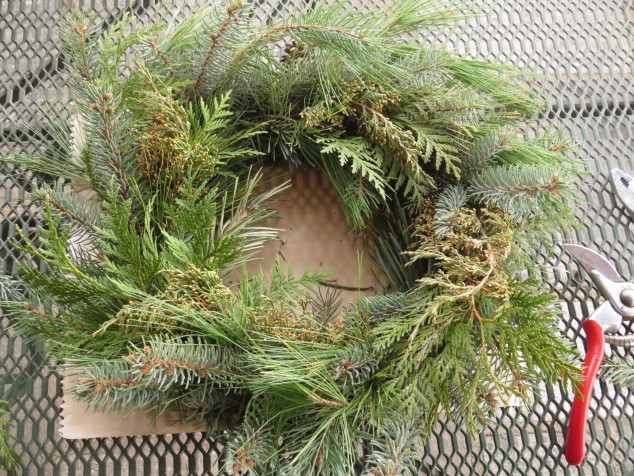
I started with a circular metal base and an assortment of pine, fir, and blue spruce boughs.
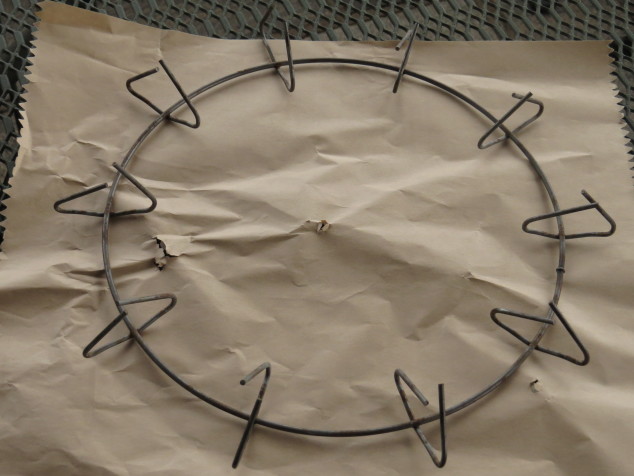
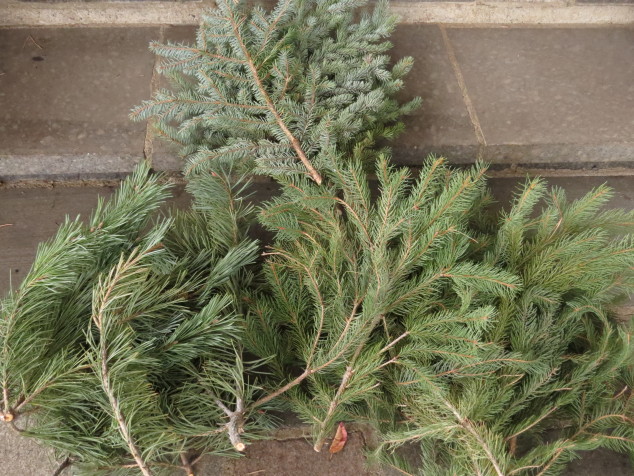
I opened up the wire clips with pliers and laid pine branches of about 10 inches around the wire circle.
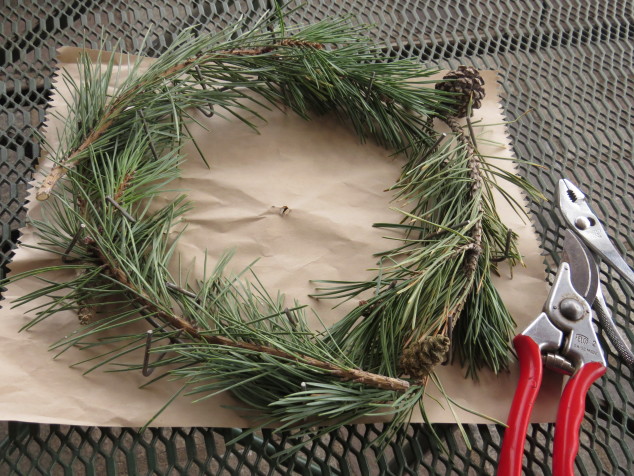
I added fir branches of the same size, making sure they stayed between the metal clips.
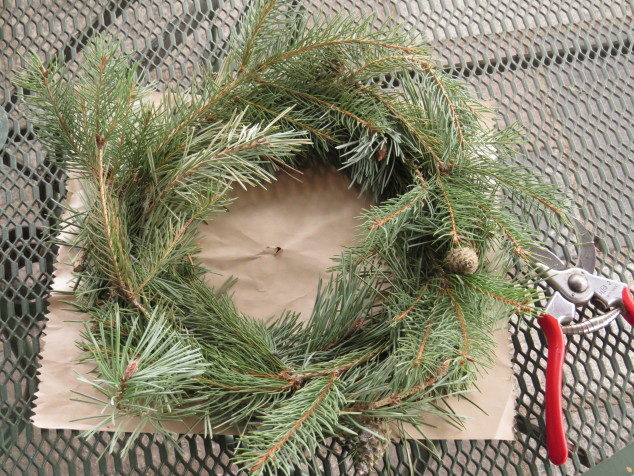
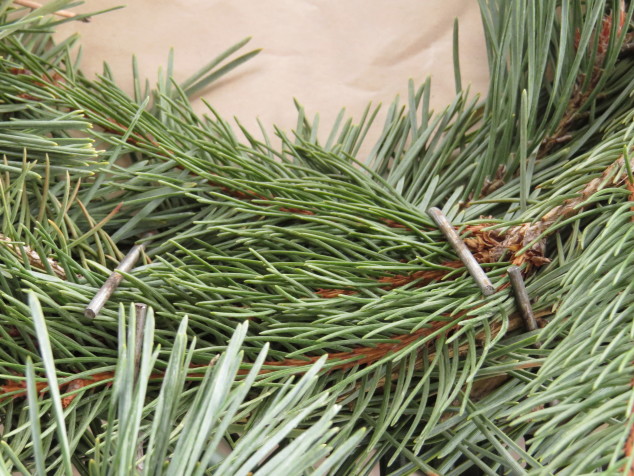
After the second layer of branches, I folded the clips over the evergreens with the pliers.
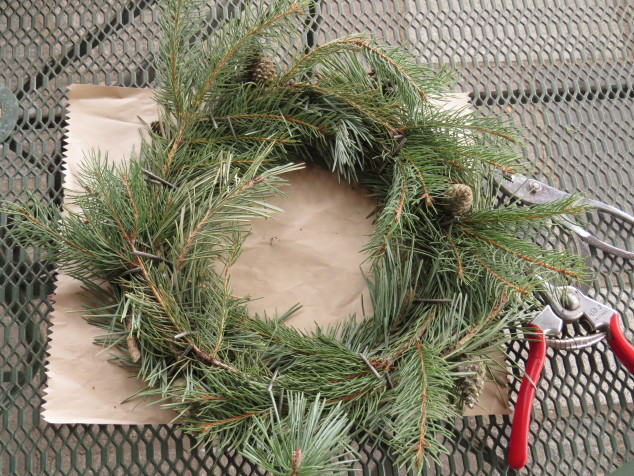
I put on my boots, hat, and coat and carried the pruners outside to gather some white pine, red cedar, and arborvitae boughs.
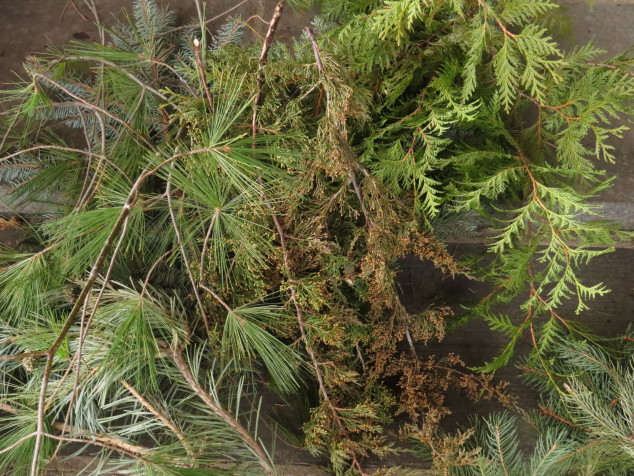
I added shorter (5-6 inches) branches of blue spruce, white pine, red cedar, and arborvitae to the wreath by pushing the end of the stem under a clip or securely under other branches, going in the same direction around the circle.
The day before the snowstorm, as we scrambled to put up plastic and put things away, I had cut a couple of handfuls of bluestem and prairie dropseed grasses from my prairie garden. The prairie dropseed has long, fine leaves that cascade outward, forming round tufts. They have beautiful fall color and are very pliable.
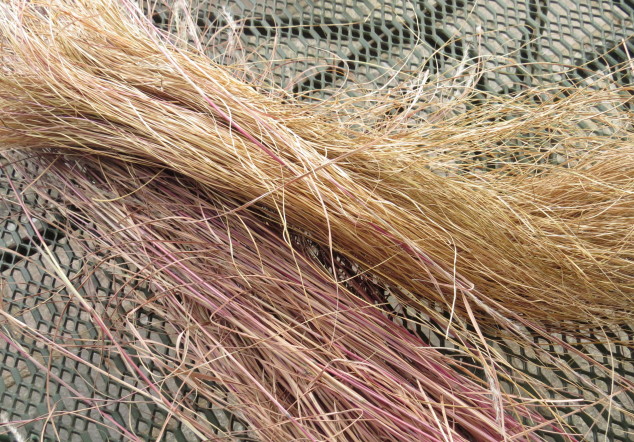
I made a ‘pony tail’ of the prairie dropseed by wrapping a twisty tie around the cut end, then braided it. At the end, I knotted it on itself to hold the braid in place.
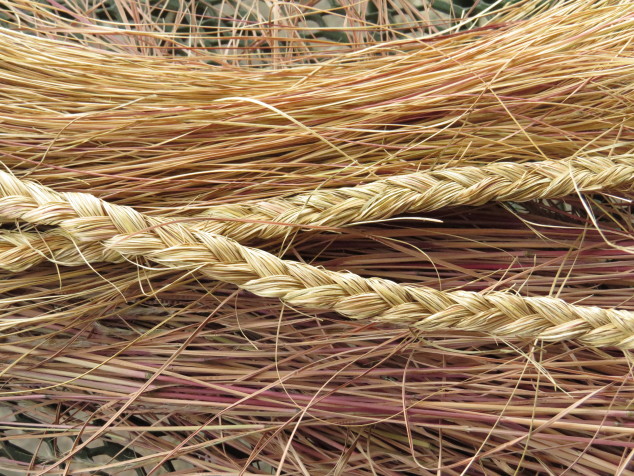 I tied the braids onto the wreath with green tie tape, but you could use craft wire or jute string. After looping the braids into a bow, I tied it again.
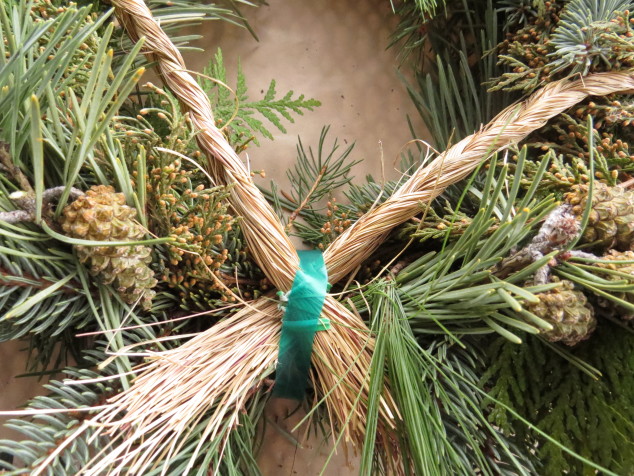
I put a small branch with two cones and a sumac seedhead into the wreath to cover the tie of the grass bow. And the wreath was finished!
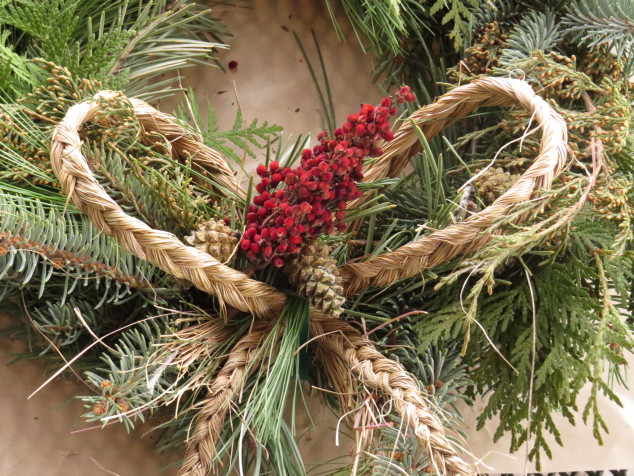
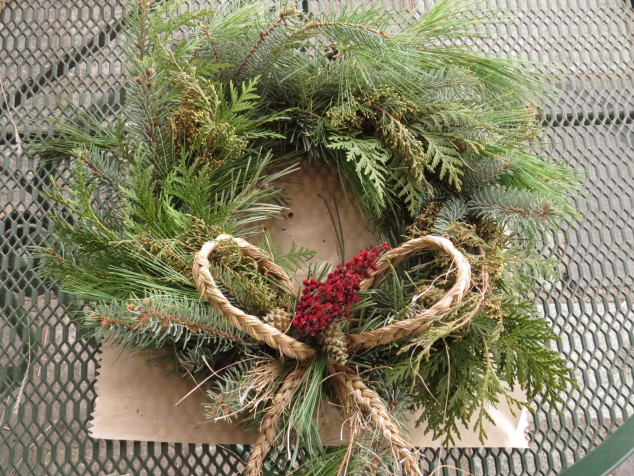
Evergreen wreaths symbolize the unending circle of life, and each of the greens represent a specific theme. Pine represents eternal life, and spruce gives us hope in adversity. Cedar stands for strength and healing, while juniper represents protection. The fir boughs symbolize a ‘lifting up.’ Cones and seedpods represent new life and resurrection. From a distance, a Christmas wreath is a sign of welcome and holiday cheer. In this season of gathering and giving, may you experience all things Evergreen.
Getting Rid of the Old
Autumn leaves are brilliant, colorful, showy, breathtaking, vacation-worthy, and postcard picture perfect….
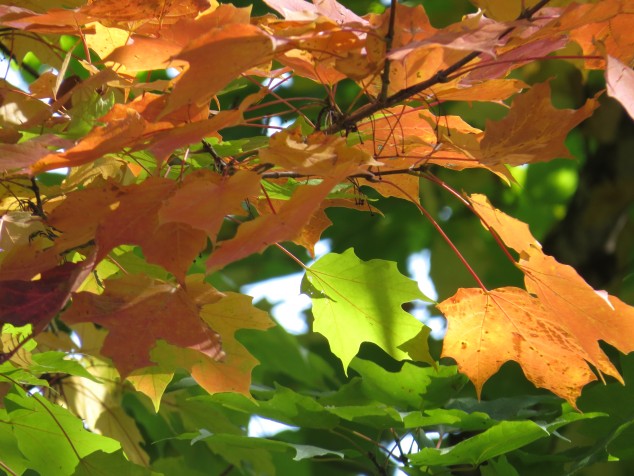
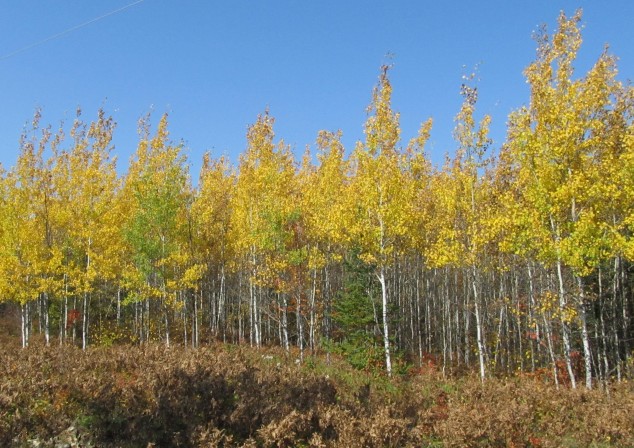
photo by Aaron Brake
until they fall off the tree. Then they become crinkly, earthy-smelling piles of fun, work, mulch, and compost!
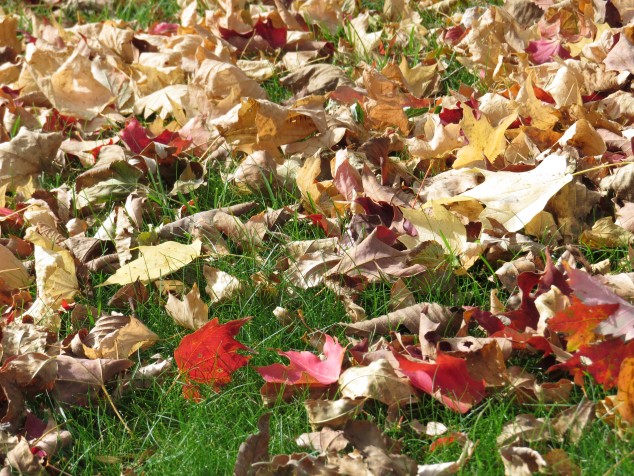
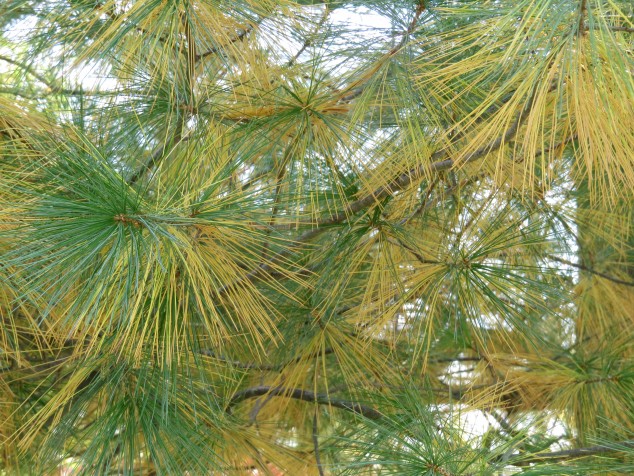
We all know that deciduous trees lose their leaves–the hallmark of fall. But did you know that evergreen conifers lose their leaves, too? Their leaves are generally called needles, and like deciduous trees, new growth occurs every spring. Unlike the deciduous trees who shed all their leaves each fall, the evergreens keep a number of years’ growth throughout the year. But they don’t keep them all. Evergreen foliage lives for one to seven years, depending on the species. As the new growth emerges, the older growth becomes shaded and produces less food for the tree. White pines keep three years’ growth in the summer, drop the inner needles in the fall, and keep two years’ growth in the winter. The inner needles turn bright yellow quite suddenly and remain attached for seven to ten days, depending on the weather.
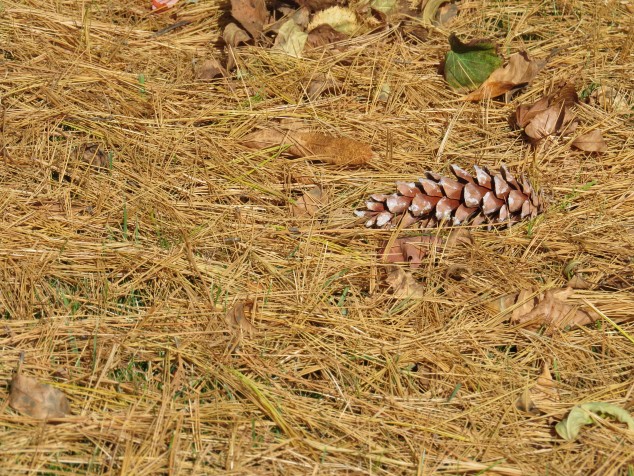
And then they fall to the ground, carpeting the grass with a sappy layer of pine needles decorated with an occasional cone.
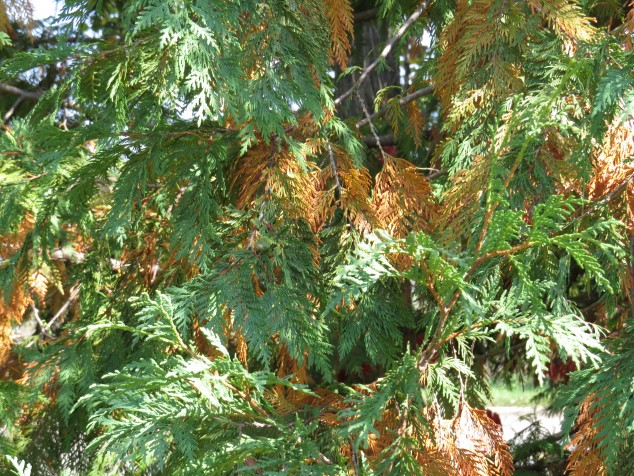
The inner scale-like leaves of Arborvitae (White cedar) turn brown and remain on the tree longer than the white pine needles, but they too will eventually fall off to mulch the ground below.
Red pines also exhibit seasonal needle drop, though not as noticeably as white pines or arborvitae.
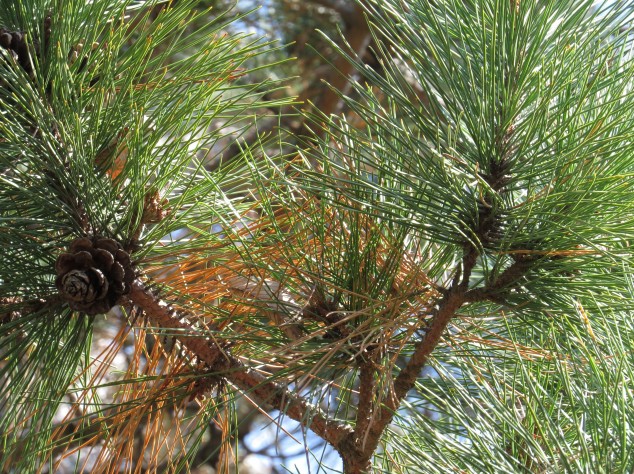
Needle drop on spruces and firs is even less noticeable, for they maintain the largest number of years’ growth. On the opposite end of the spectrum are deciduous conifers that drop their needles every year–larch, bald cypress, and dawn redwood.
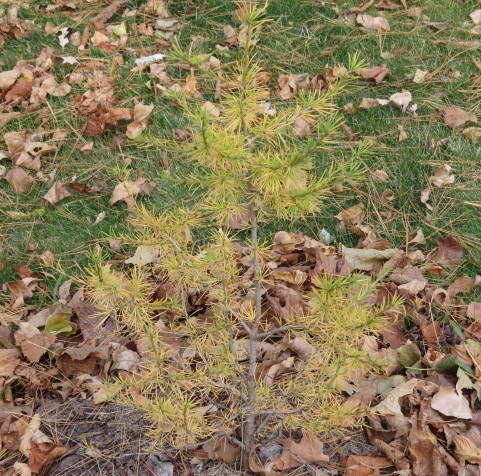
The larch
The death and deposition of the oldest, innermost needles of evergreen trees reflects the normal growth cycle of a healthy tree. The white pine in our yard looks lighter and healthier now that it has shed its yellow needles. It will be a beautiful beacon this winter in a landscape of white as it prepares itself for next year’s spring growth.
Like the evergreens’ inner needle drop, I think it’s important for humans to periodically get rid of ‘the old.’ Maybe getting ready for winter helps us do that–cleaning and tossing out junk that has accumulated from the carefree summer so that everything fits into the garage, shed, or closet. Making sure things are ready and fit for winter use. Cleaning up leaves and cutting back perennials so the trees and plants will be ready for new growth after their long winter hiatus. Perhaps we also shed some ‘old thoughts’ in the process that no longer feed us, making us lighter and healthier as we head into the winter and into our own preparation for a season of new growth.
New Growth
 Deciduous trees are the attention-getters in spring, summer and fall. We know it is finally Spring when the new leaves have fully developed on the branches that have been bare all winter long. It is a dramatic change! The evergreens’ spring growth is no less amazing, however.
New growth blankets the young spruce and fir trees, covering the ‘old’ with a bright new coat. The growth is soft and tender and hardens off as summer progresses.
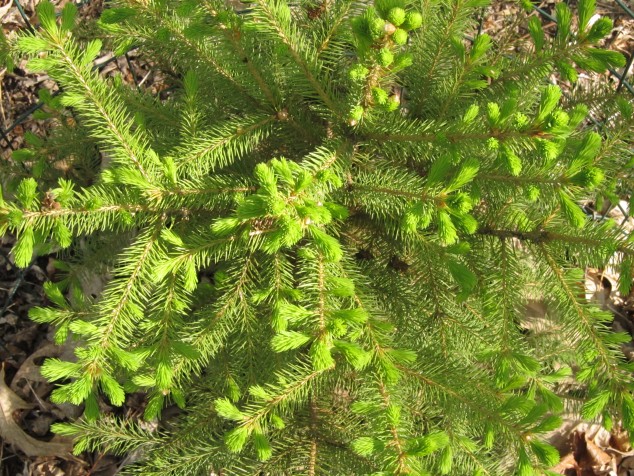
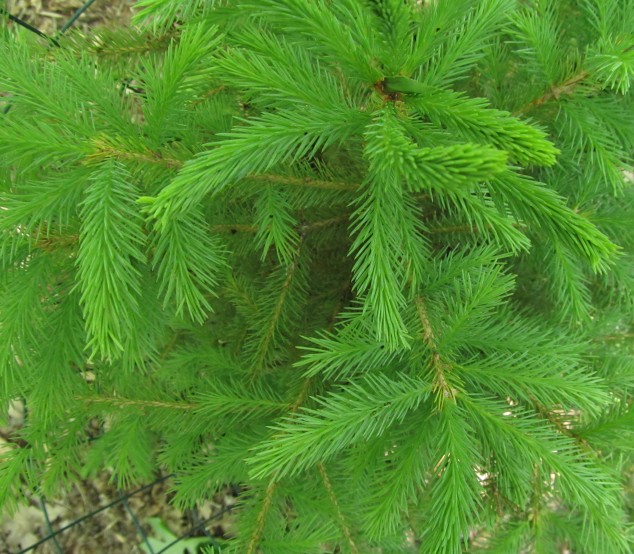
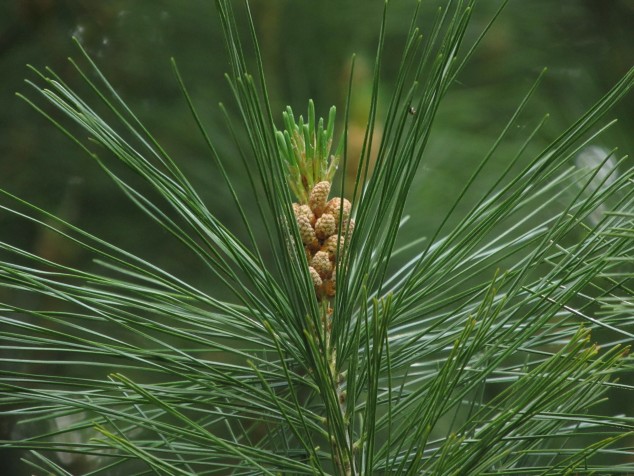
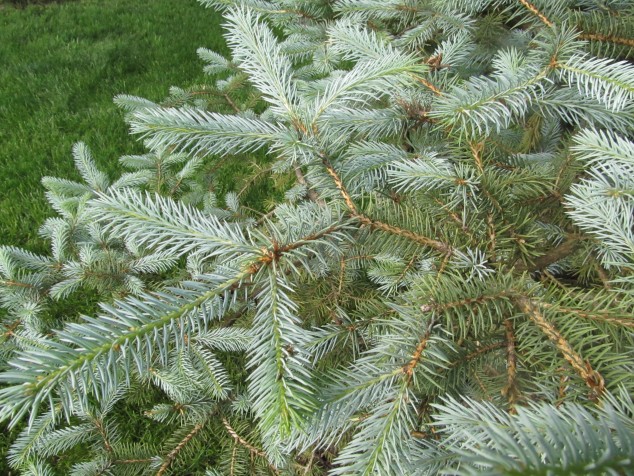 The new growth on pines, spruces, and firs is called candles–a new flexible stem and developing bundles of needles. The upright ‘candle’ look is epitomized on the pines as the new growth emerges upward from the old needles.
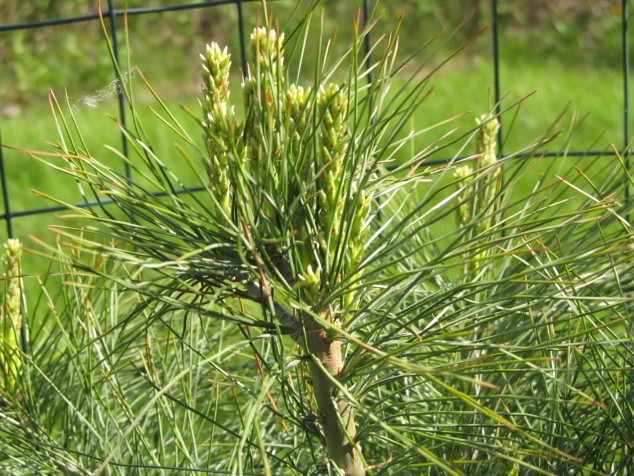
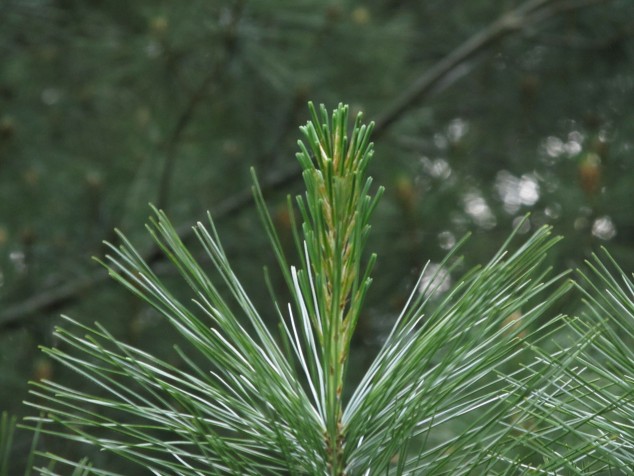 The young evergreens throw out their candles and grow with abandon, maturing a little more with each year’s growth. Sometimes it seems to go exceedingly slow as only inches are added with a whole 365 days of life. But the growth really encompasses more than the new candle of needles. After the new growth matures and hardens off in the summer, it will develop terminal buds that remain dormant until next year’s spring flush of growth. The trunk and branches will increase in size with another ring of growing cells. And the root system will continue to grow deeper and longer to provide nutrients to the developing tree. We see the candle growth, yet much of the important growth goes undetected.
And when the tree matures, cones develop that house the seeds and pollen. Some cones mature and release seeds the same year as formed; others, like the white pine, release seeds the second summer.
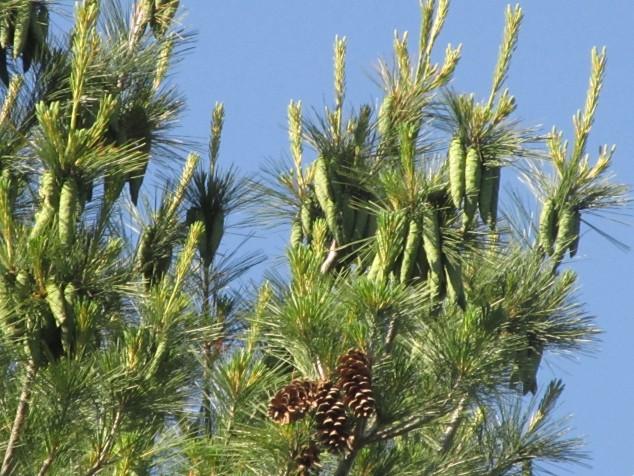
The young of a species grow their fresh new coats every year, becoming taller and more mature. Their work is growing! The older ones become more productive to the world around them, along with their new growth. And finally, the old, mature individuals work to populate a new generation, to provide a respite for others, and to make the living community a good place to dwell–and still, they send up new shoots of growth!
New growth looks good on all of us–what is your candle?