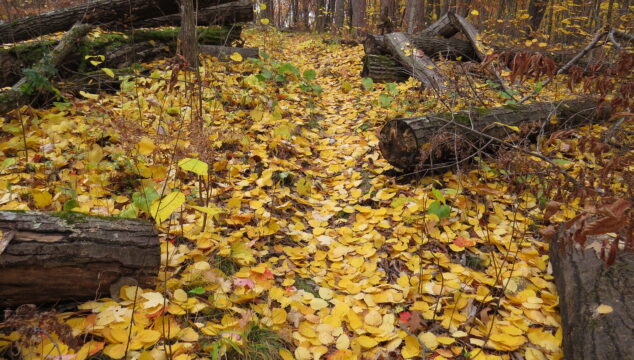
Come walk with me in the peak Autumn beauty of the Northwoods. To say that I love this time of year is an understatement. Most everyone can appreciate the colorful falling leaves---it reveals the 'true self' of a tree when its leaves are no longer producing chlorophyll. Their true colors are revealed, and there is something simple … [Read More...]
Curiosity of an Explorer
I’m a homebody in many ways—I love being home and even eschew the idea of leaving for an evening activity once supper and dishes are done. I am usually content with my routine. But I do get an explorer’s thrill when we plan to go to a new place in Nature! The Latin root for explore is ‘explorare,’ meaning to investigate or search out. We had heard that Savanna Portage State Park was a beautiful and interesting place, so Chris had gotten reservations for us weeks ago. He loves the anticipation of a planned trip even as I get a bit nervous about leaving home. But once I’m in the car with a map in hand (sorry Google Maps), I forget about leaving home and look forward to exploring and learning about a new place.
In just over two hours, we pulled in to Savanna Portage State Park, which is in the middle of the expansive Savanna State Forest. Commence our journey of exploration of the Wilderness! There are a number of characteristics according to exploreratlarge.org that define the mentality of an explorer, the first of which is curiosity. What will we see? What will we experience? I was hoping for a chance encounter with a Moose—will I see one? Our first hike was around Loon Lake trail. Loon Lake is a designated trout lake, just a mile or so in circumference, and the trail hugged the lake shore. Come explore with me!
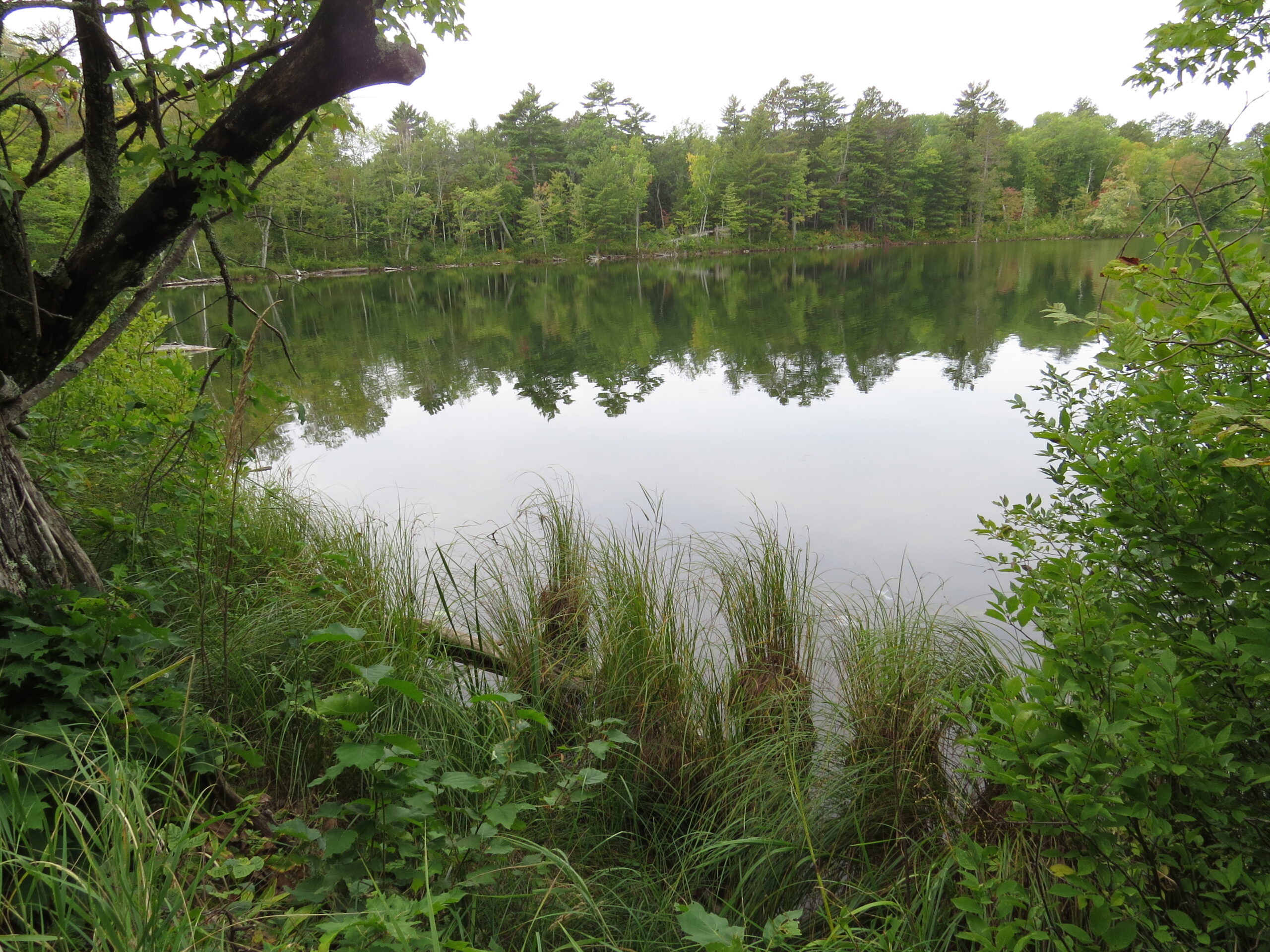
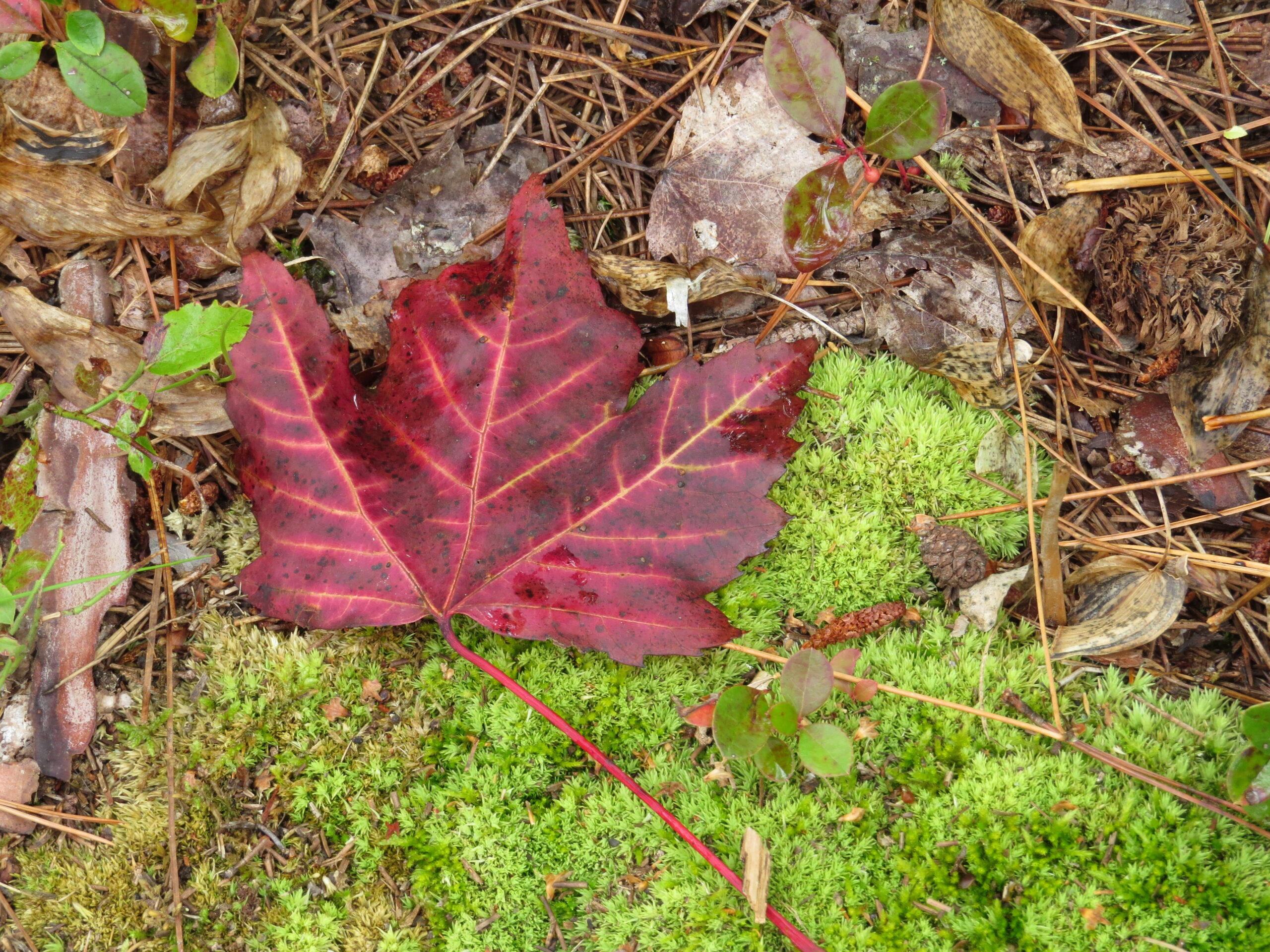
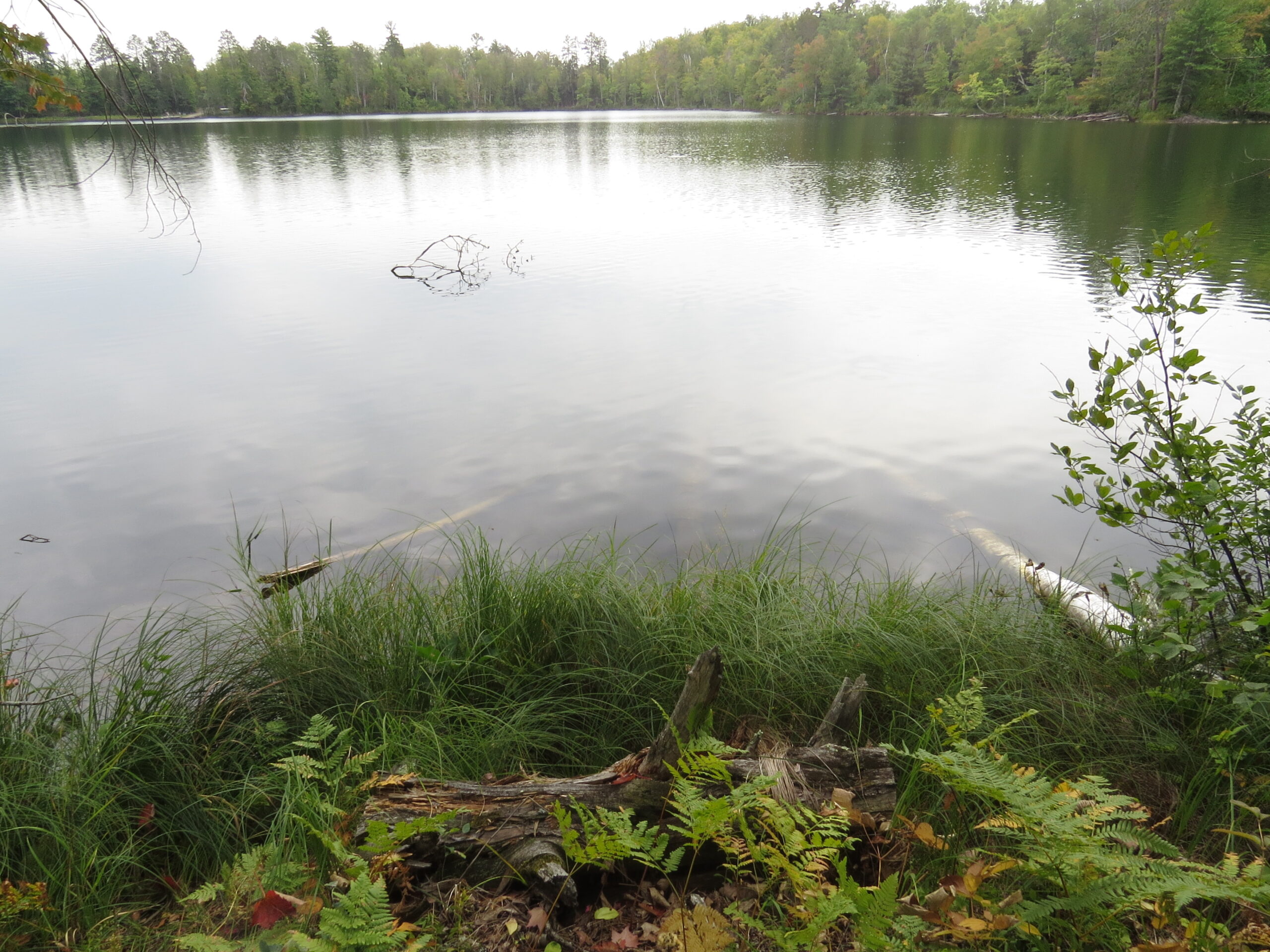
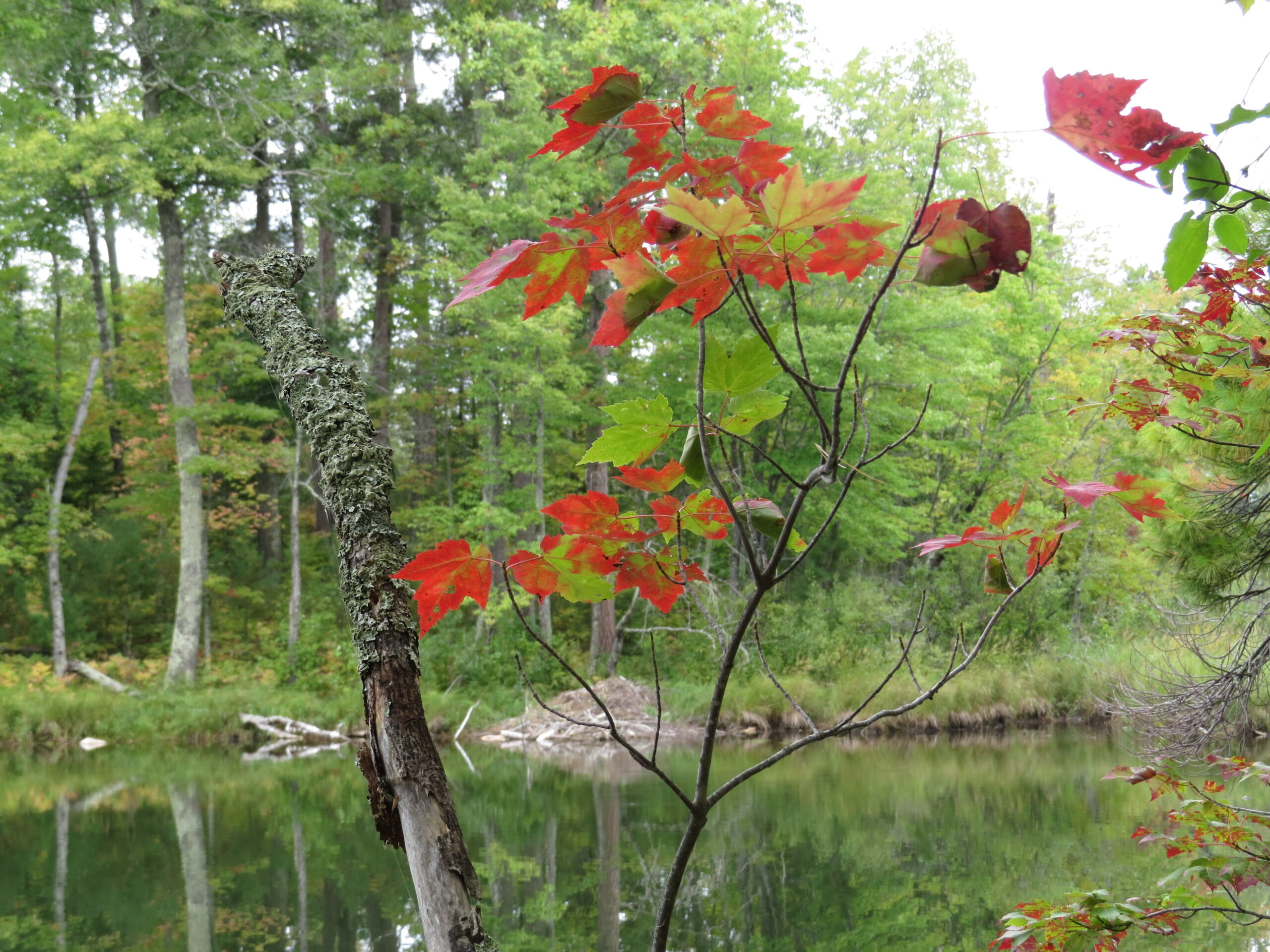
The lake was calm with the slightest breeze occasionally rippling the mirror-like water. Autumn had begun—the Maple trees were beginning to turn color, red reflected on water and leaves falling on the trail.
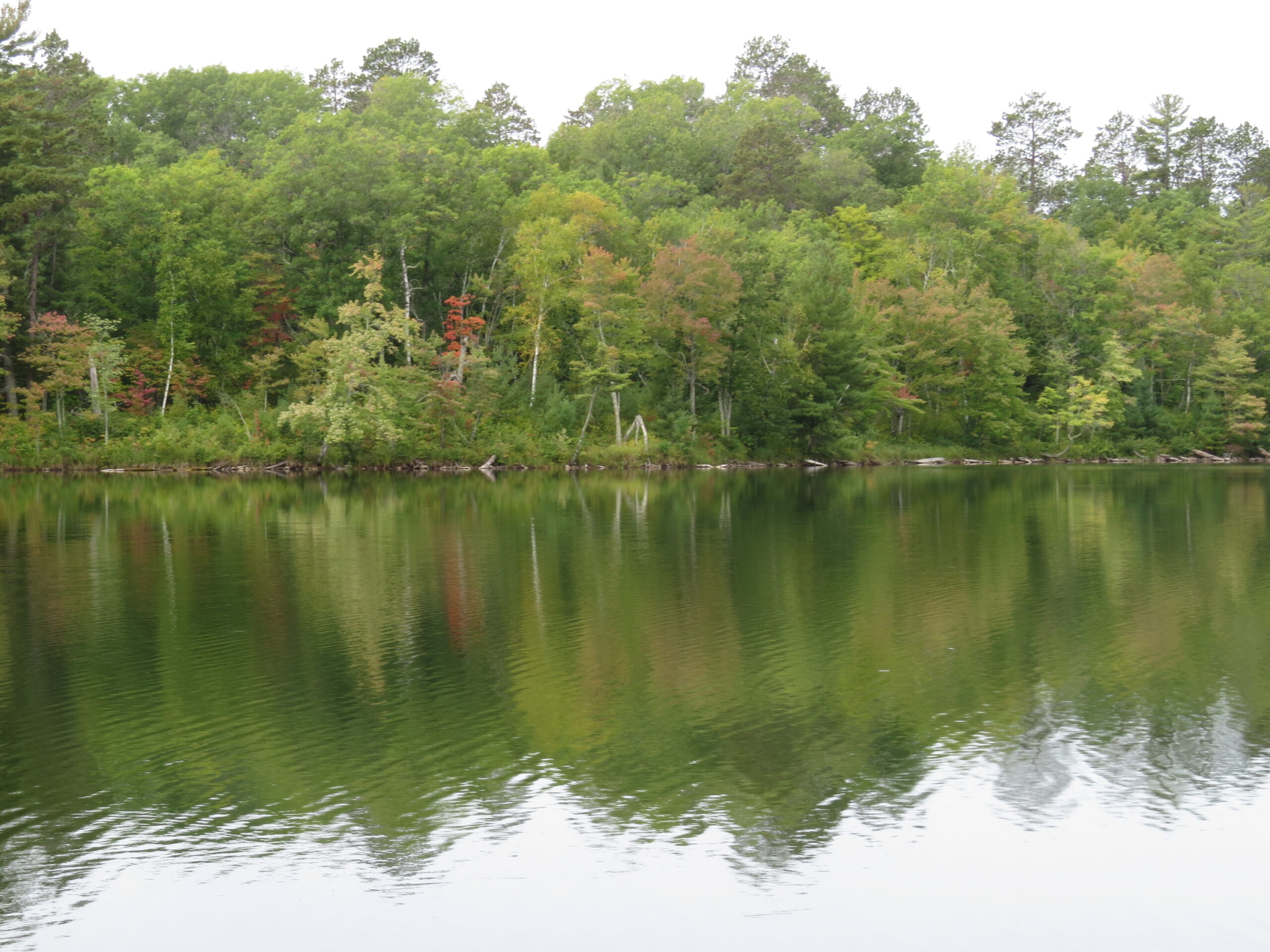
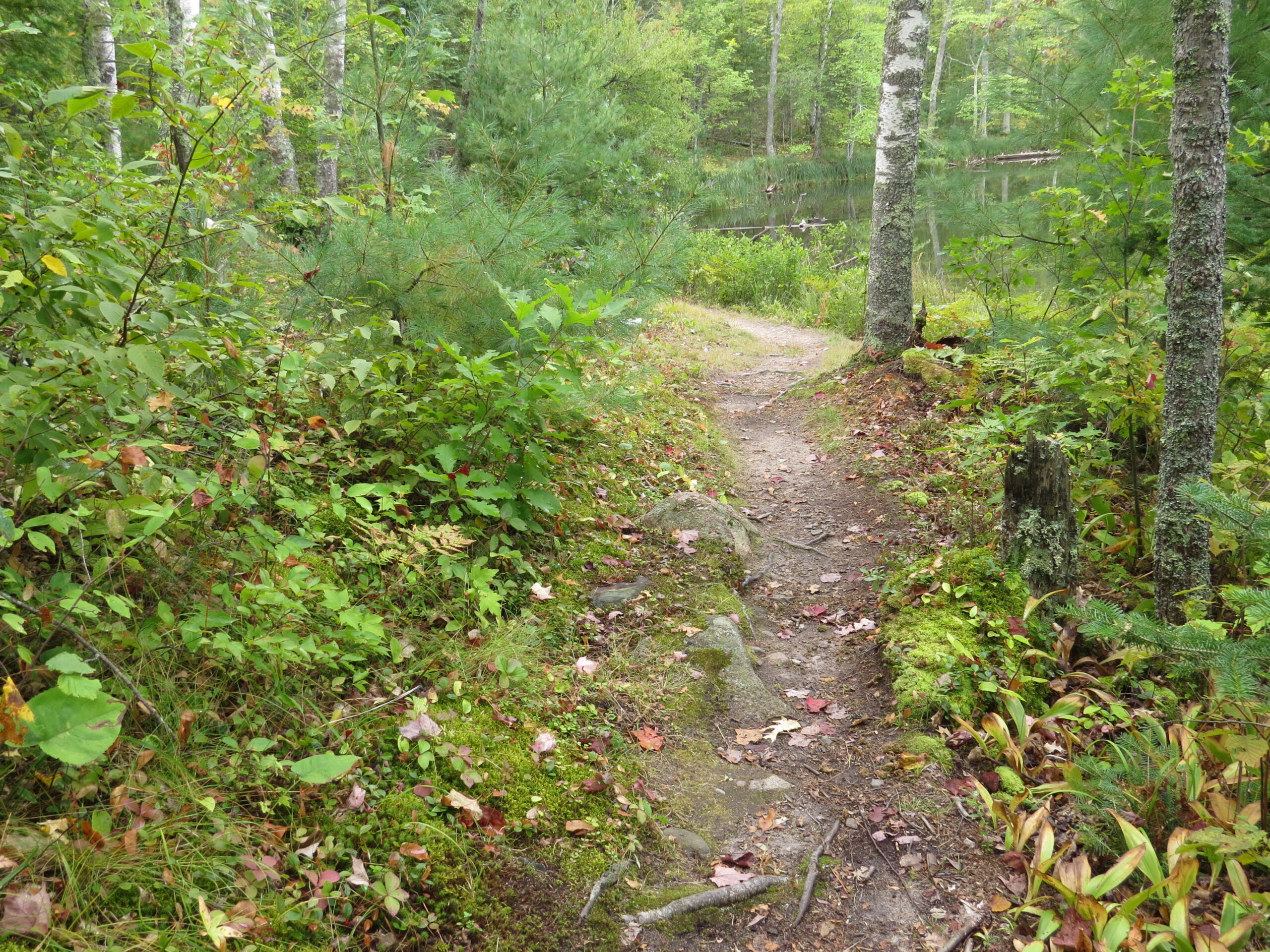
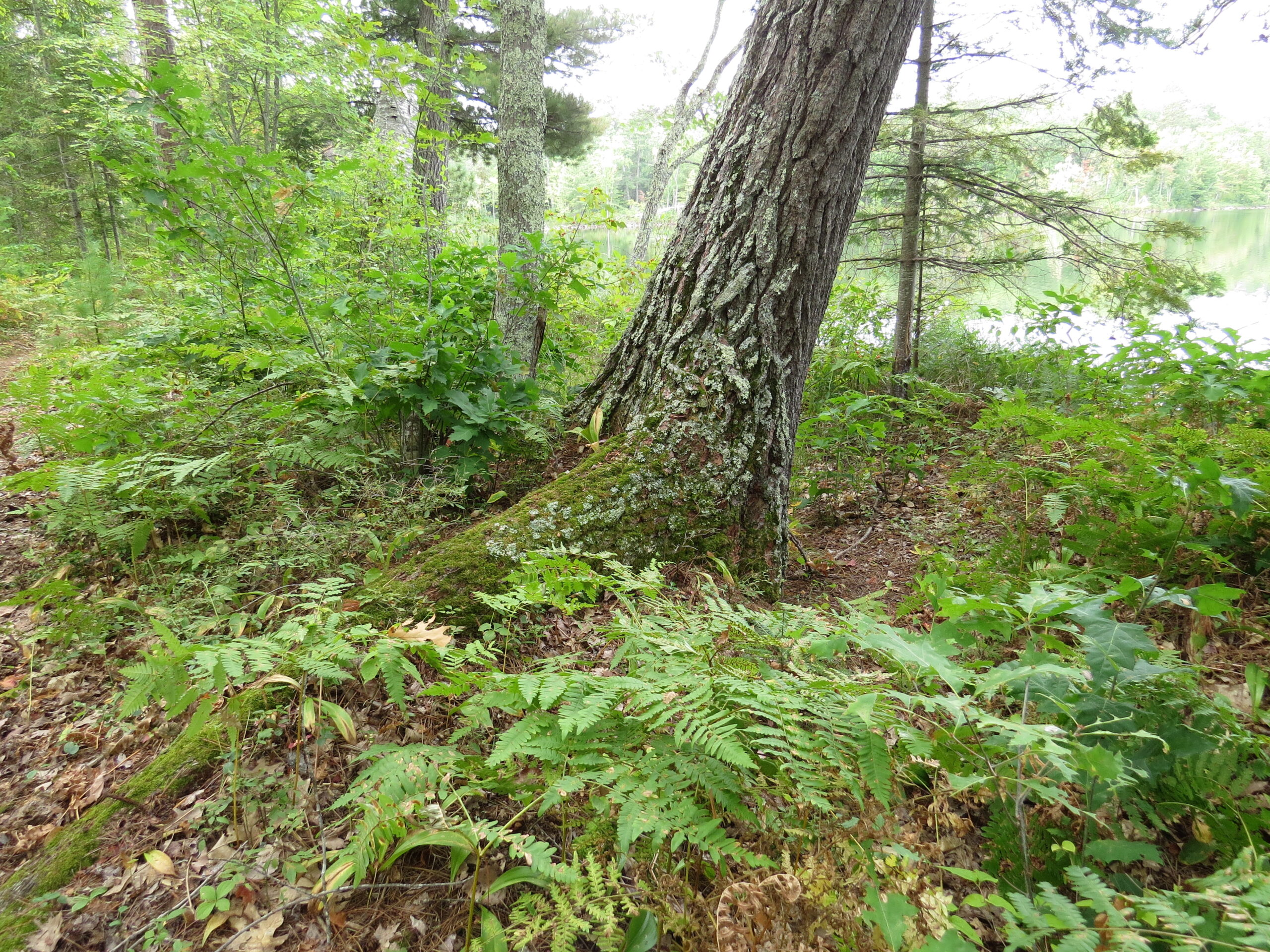
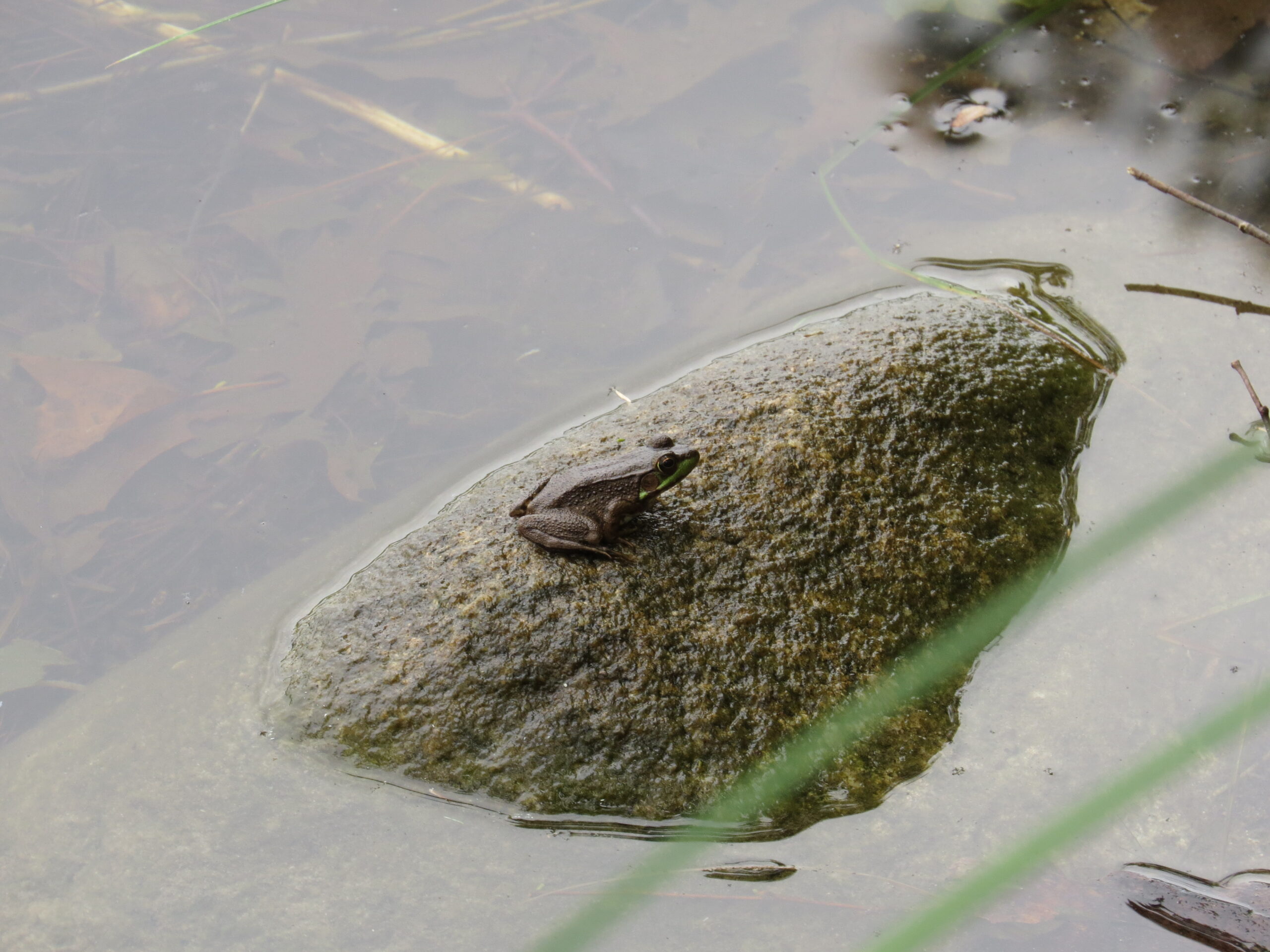
Large, old Pine trees, White and Red, gripped the ground with their massive roots. A frog was our first creature to be found.
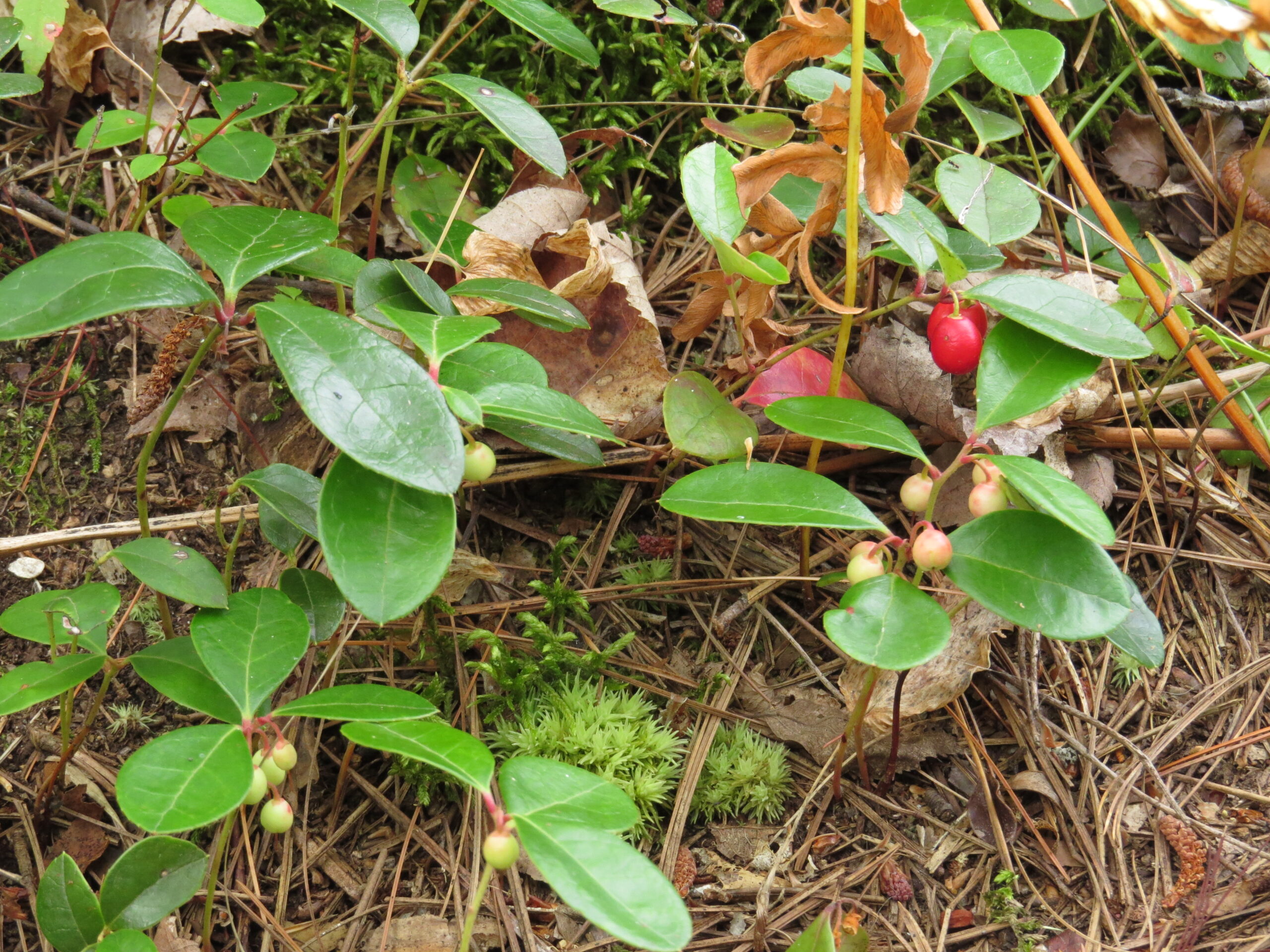
I was delighted to see Wintergreen growing beside the trail, its berries beginning to turn red, its leaves pungent with the flavor we associate with chewing gum or toothpaste. (It was the original source of that flavor which is now mostly synthetic.)
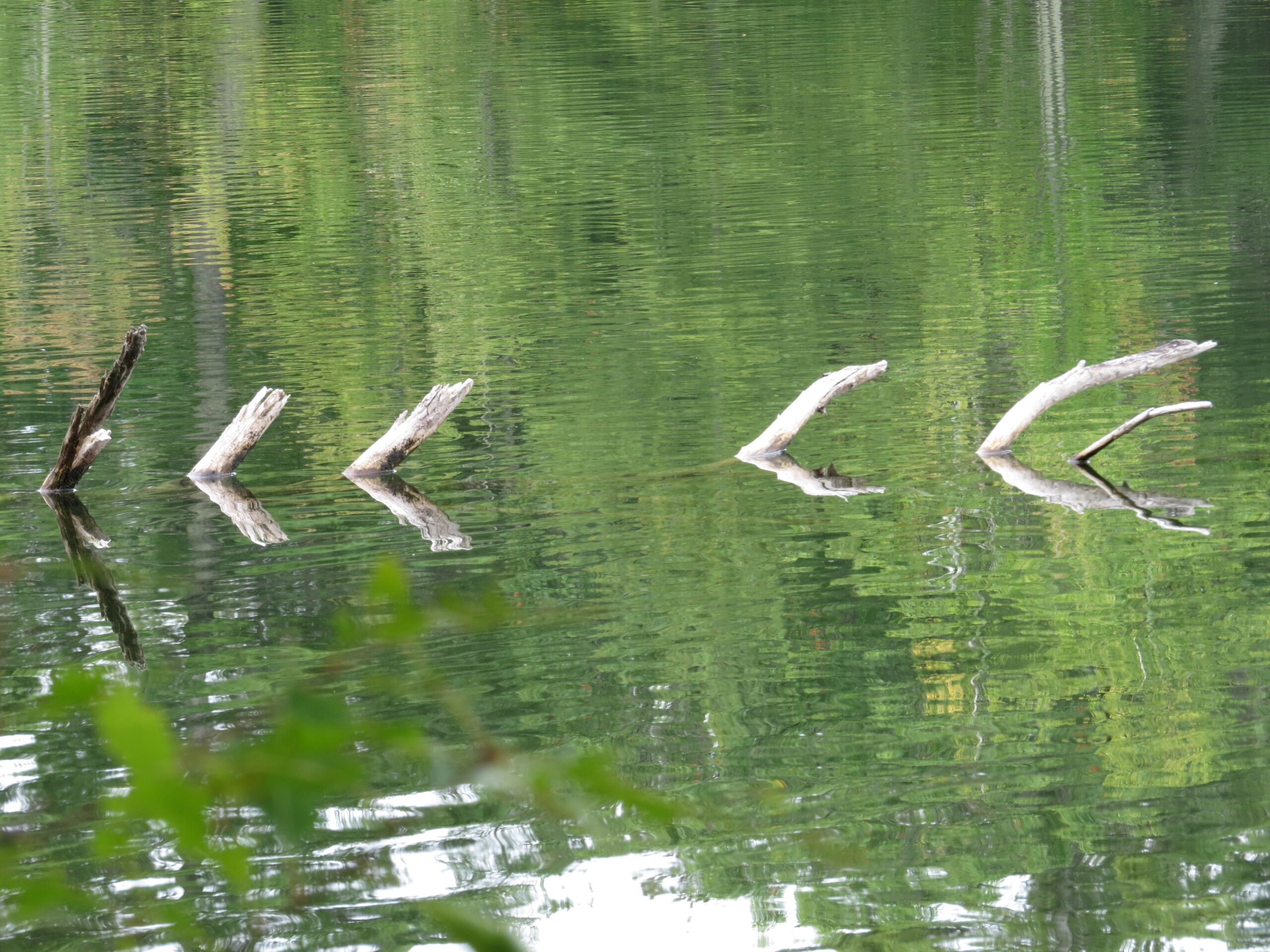
One Pine tree embedded in the lake now reflects arrows that point the way.
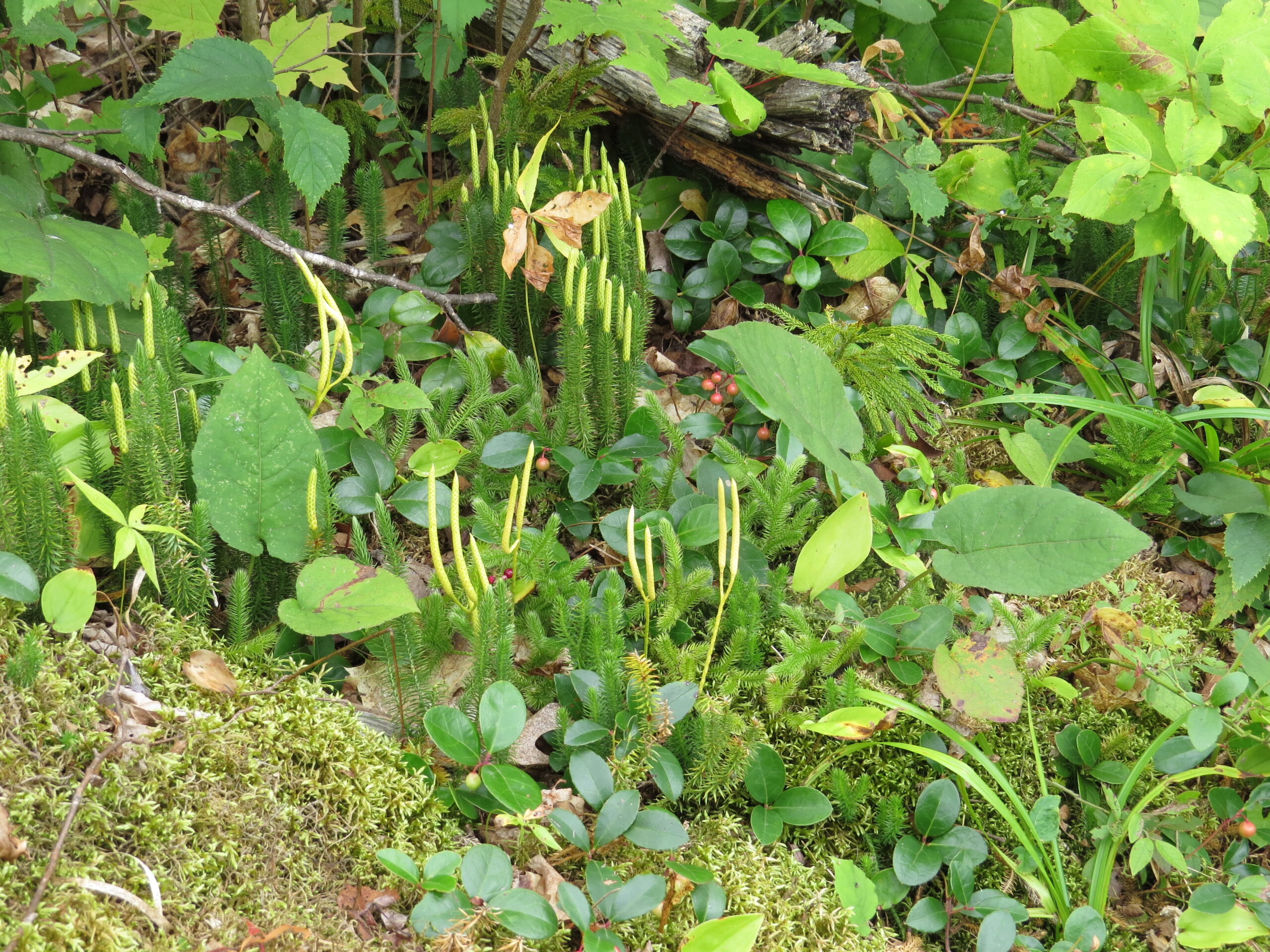
Along with the Wintergreen, a number of different species of Clubmosses grew and flowered like little evergreen trees.
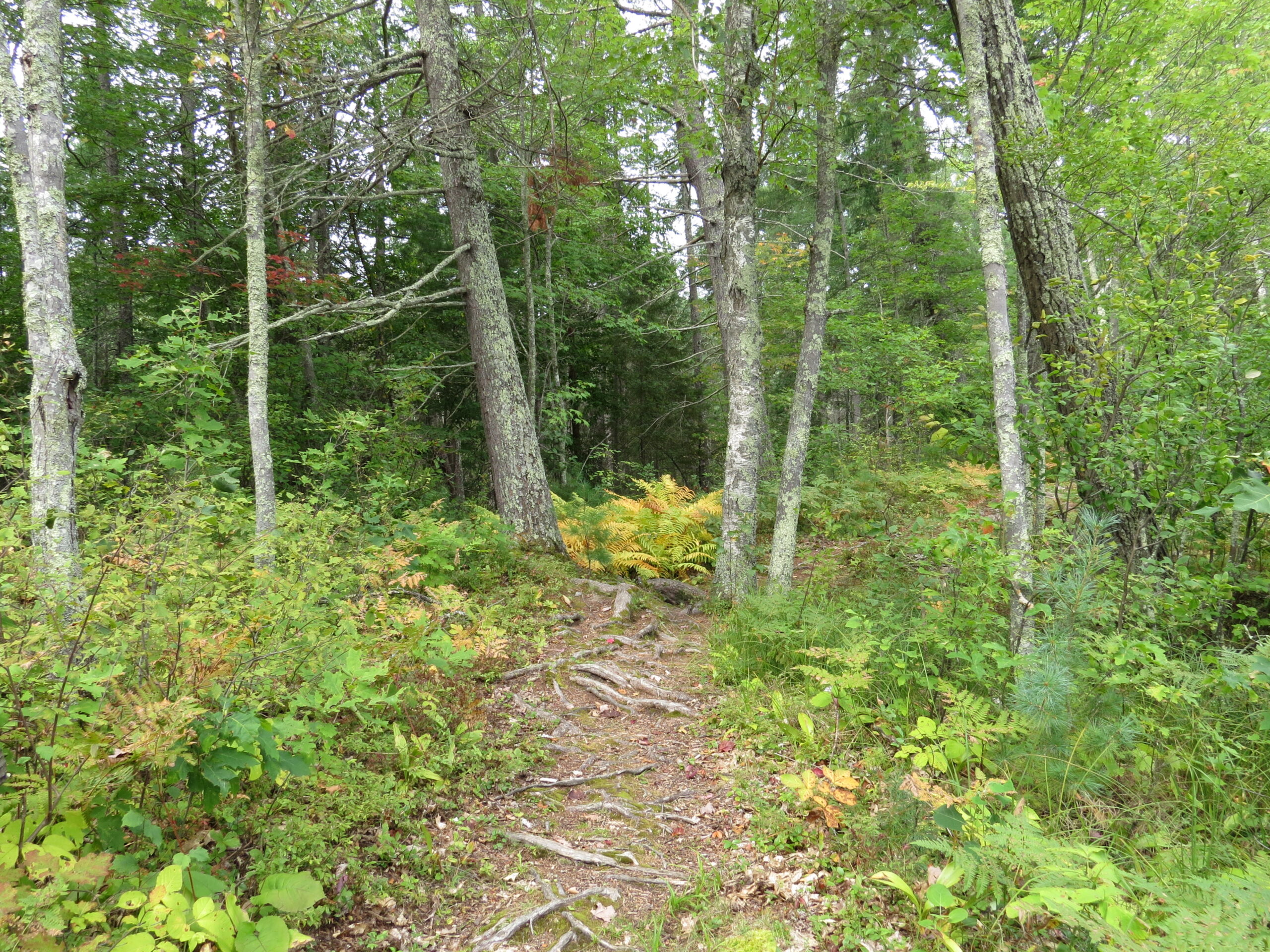
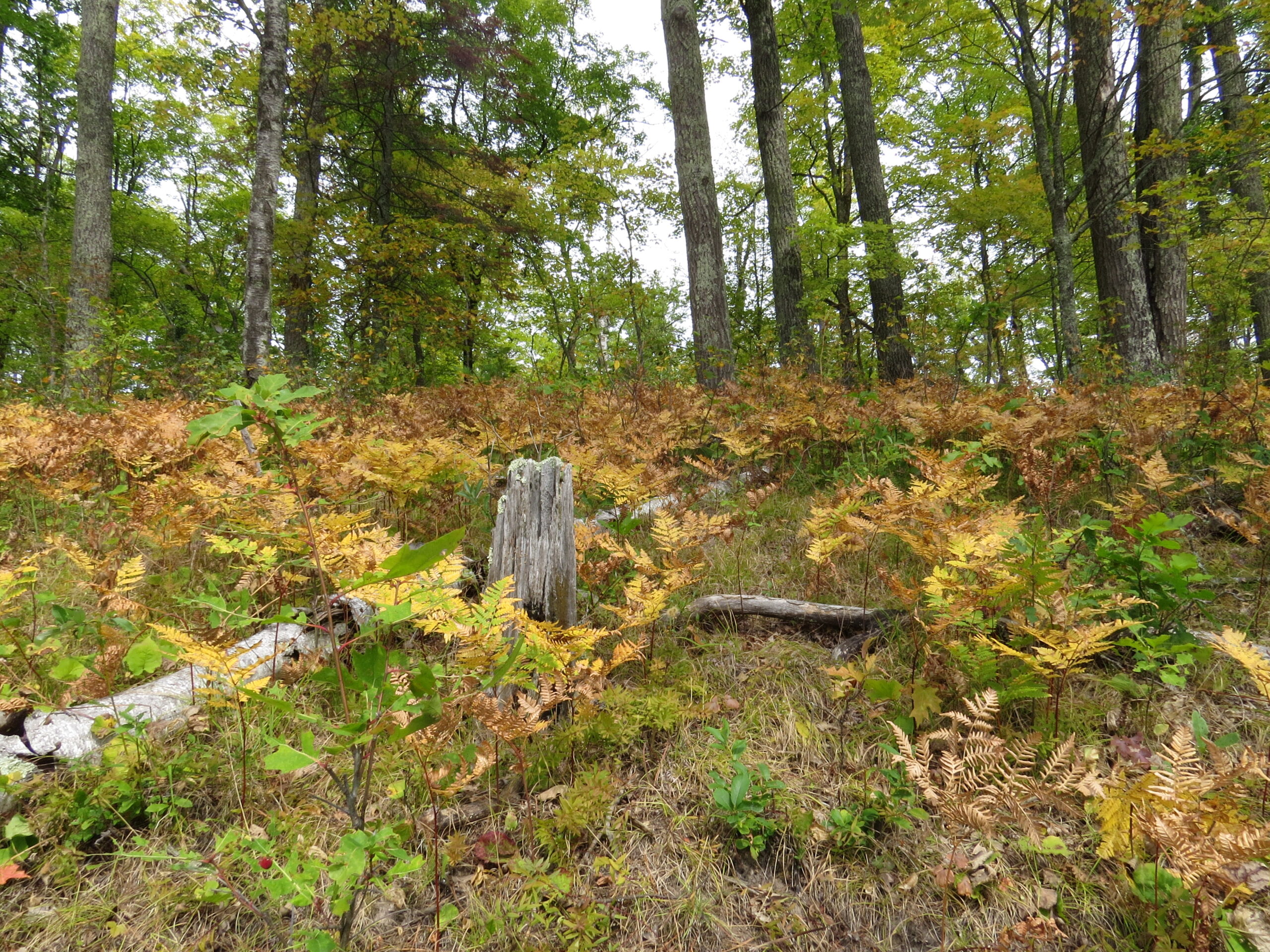
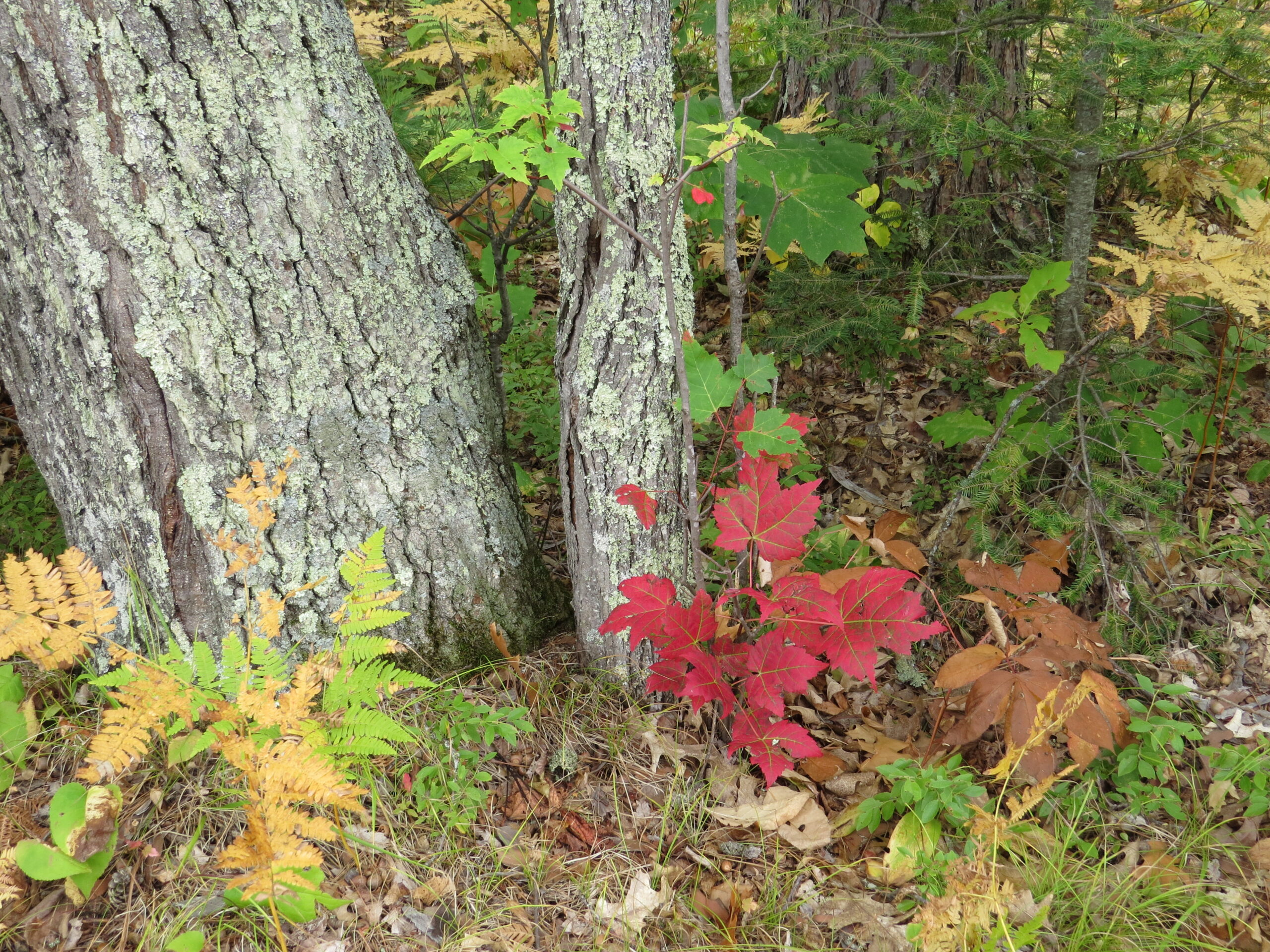
The rooted trail led us to, then past a collection of golden-morphing Ferns—so beautiful!
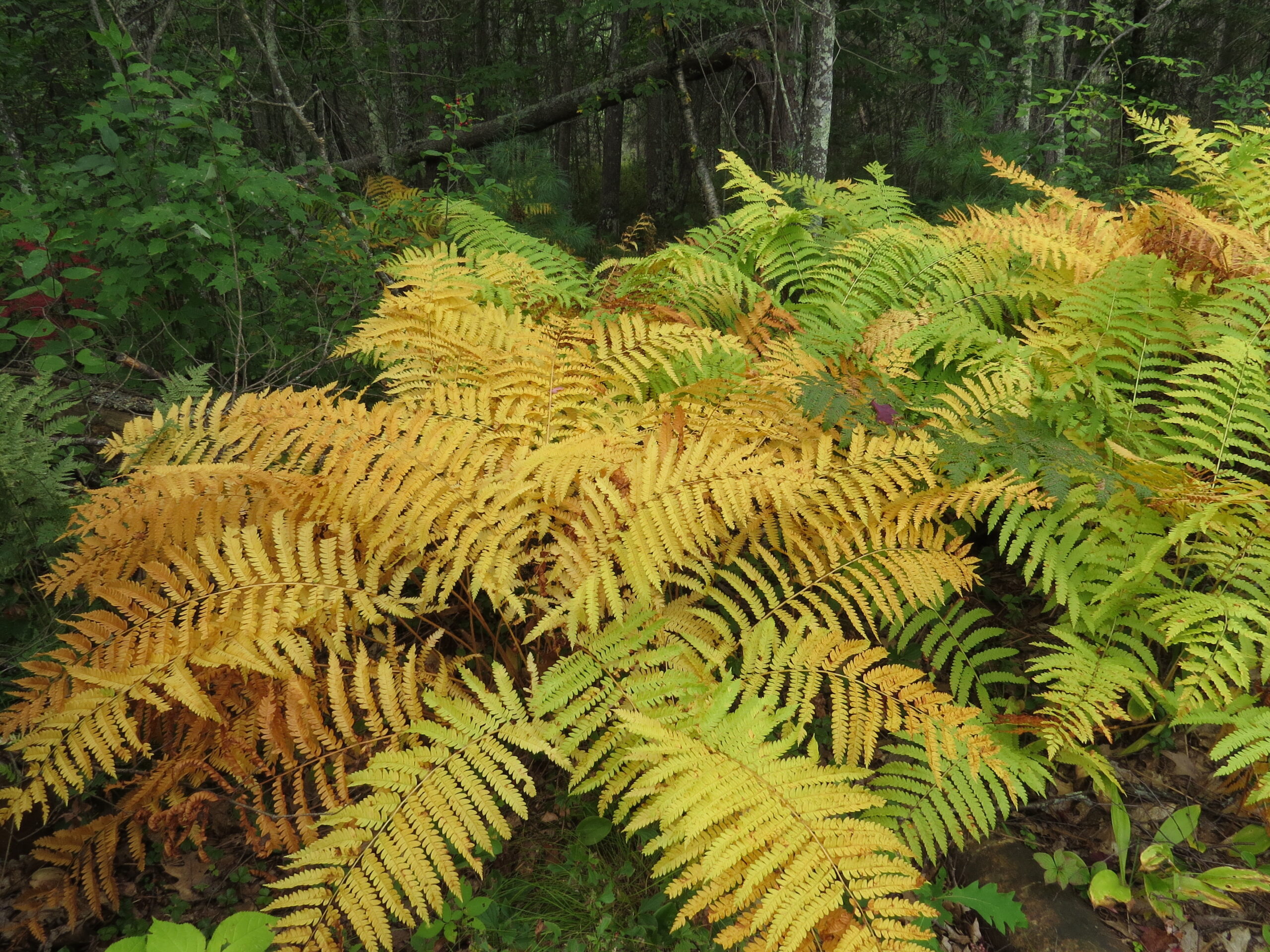
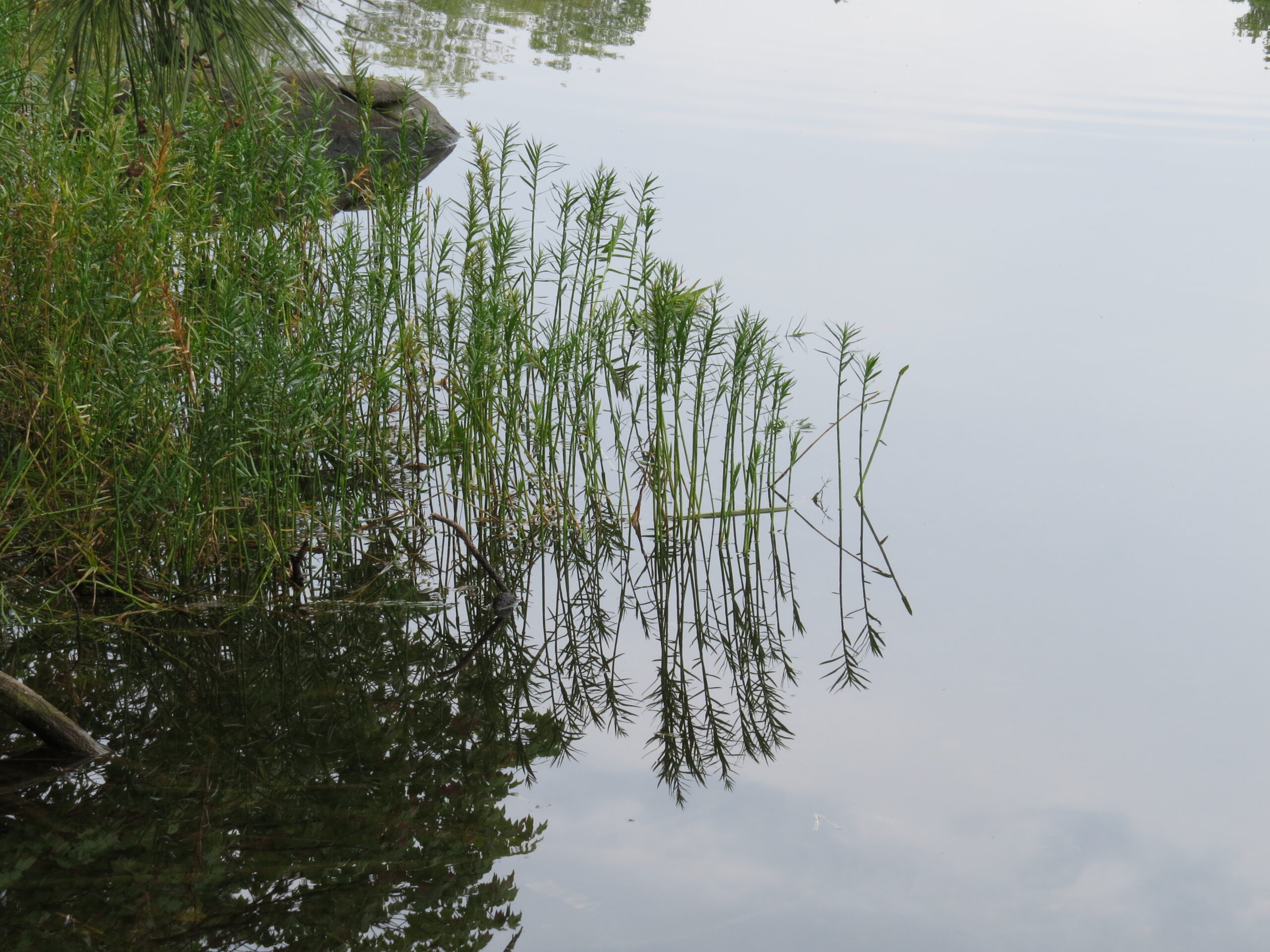
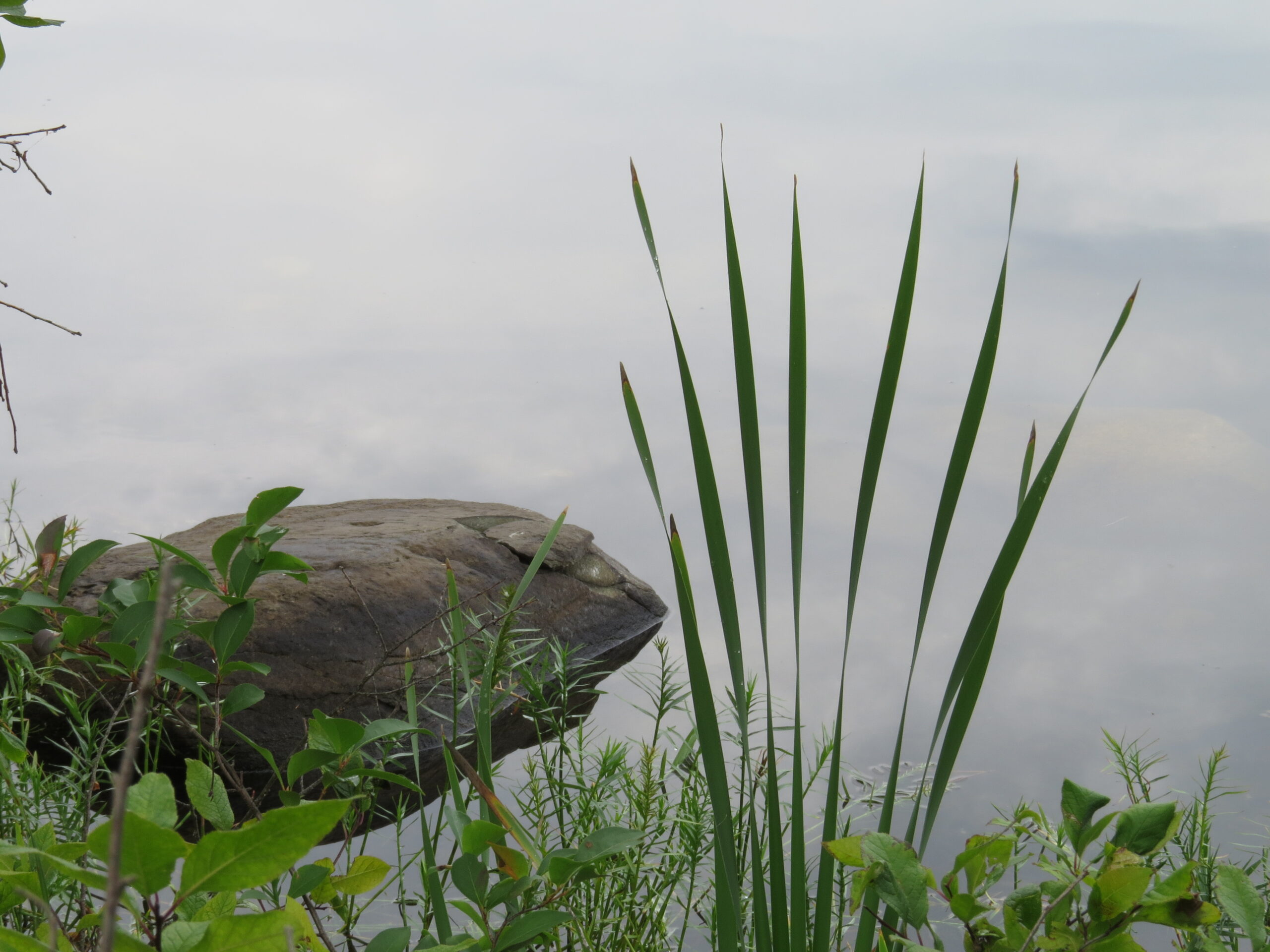
Form and shape, color and contrast, reflections and realities all help us appreciate the diverse plant life in any given environment.
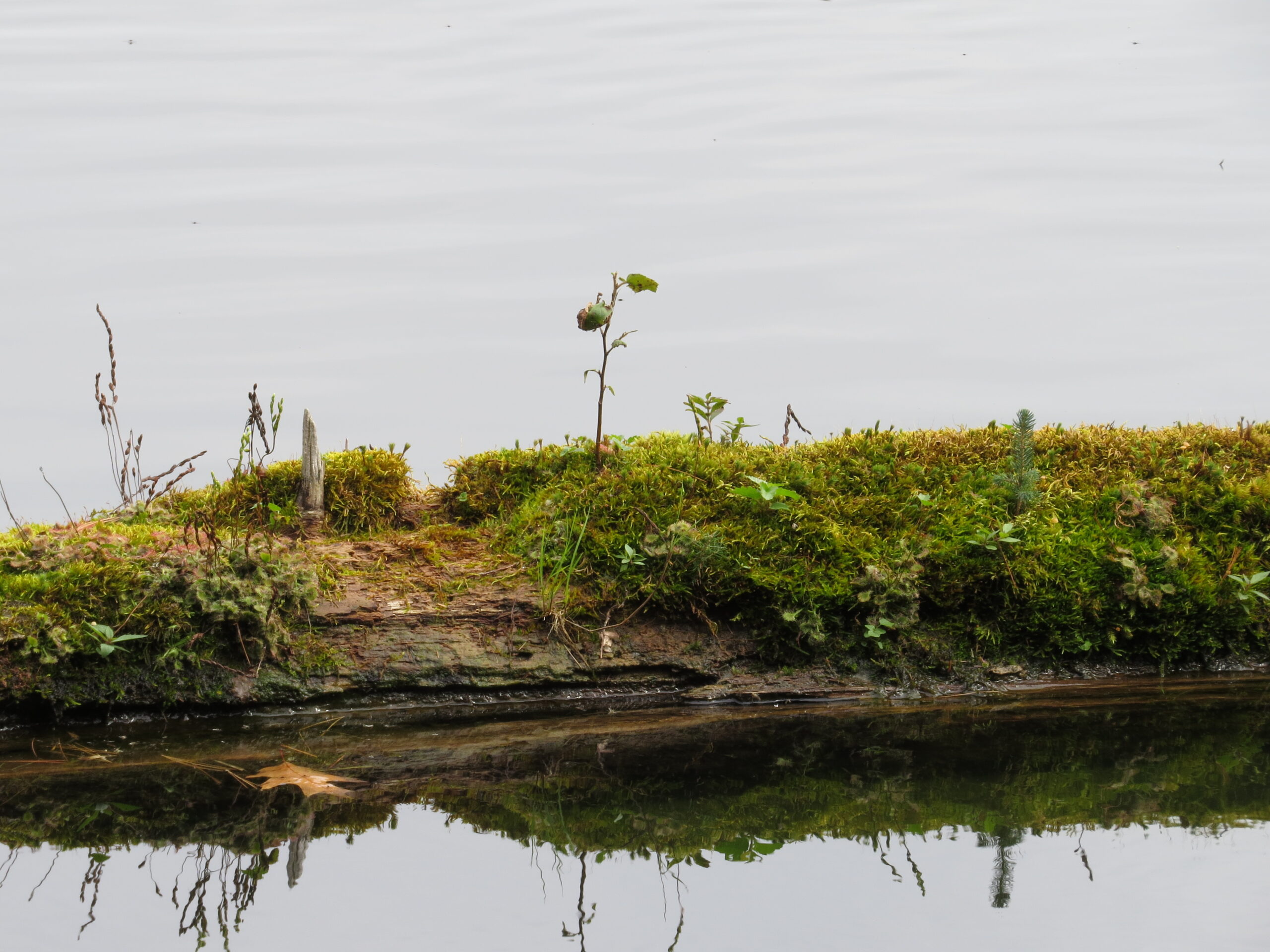
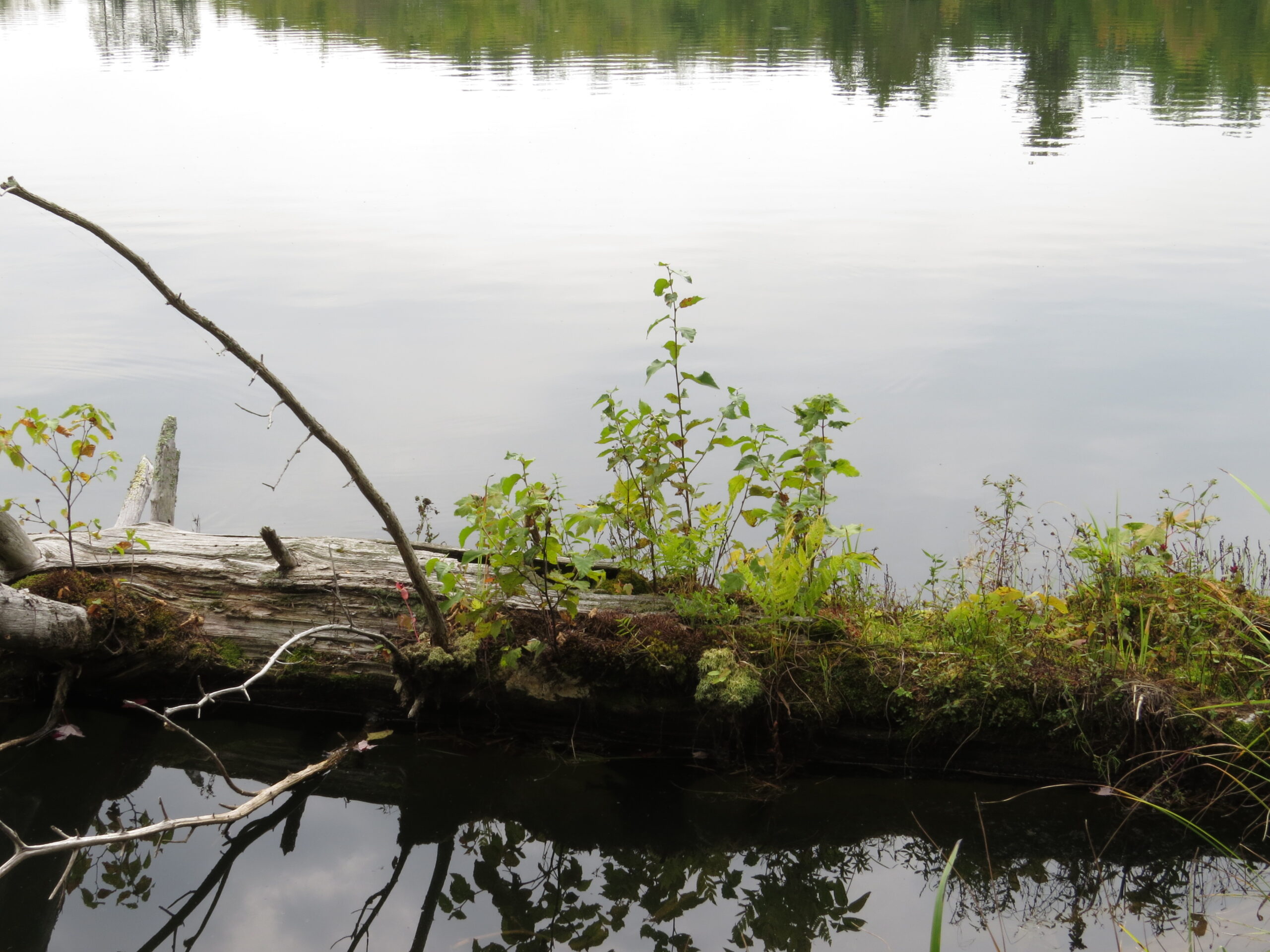
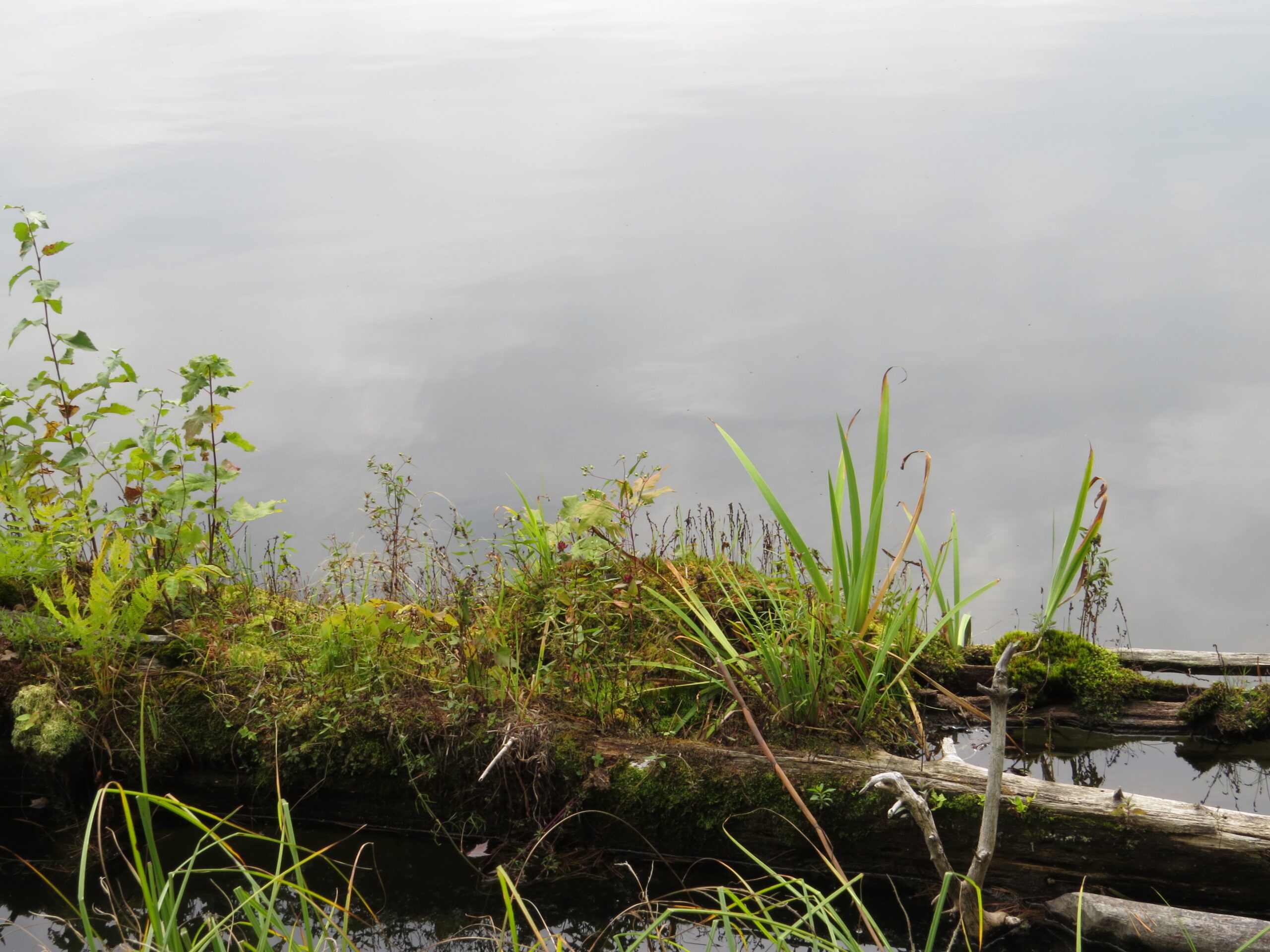
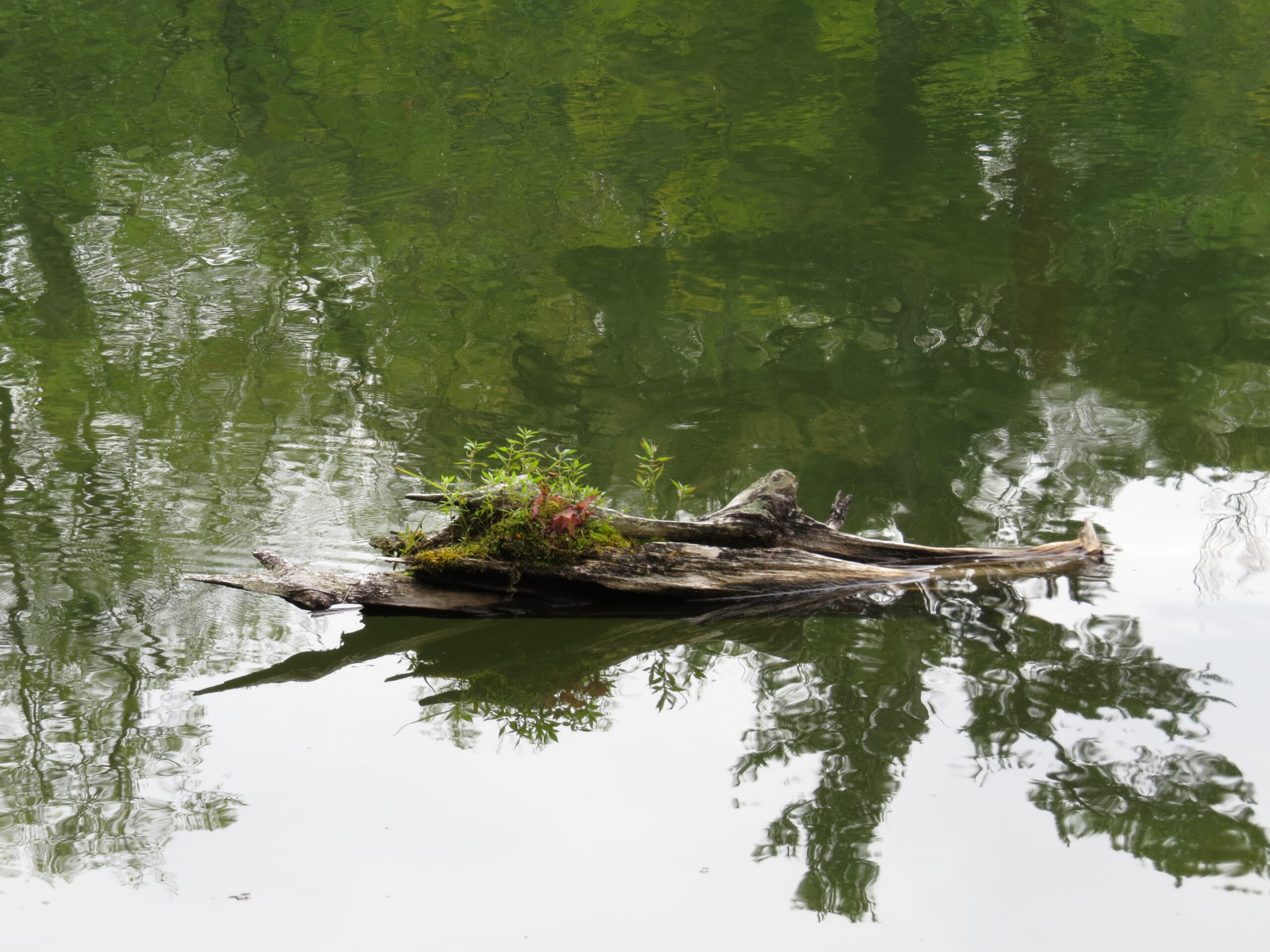
Many of the branches and trees that had fallen into the lake had become floating ‘treeariums,’ growing with mosses, ferns, shrubs, and other plants. Each created its own little environment, some used by the swimming creatures as a resting place.
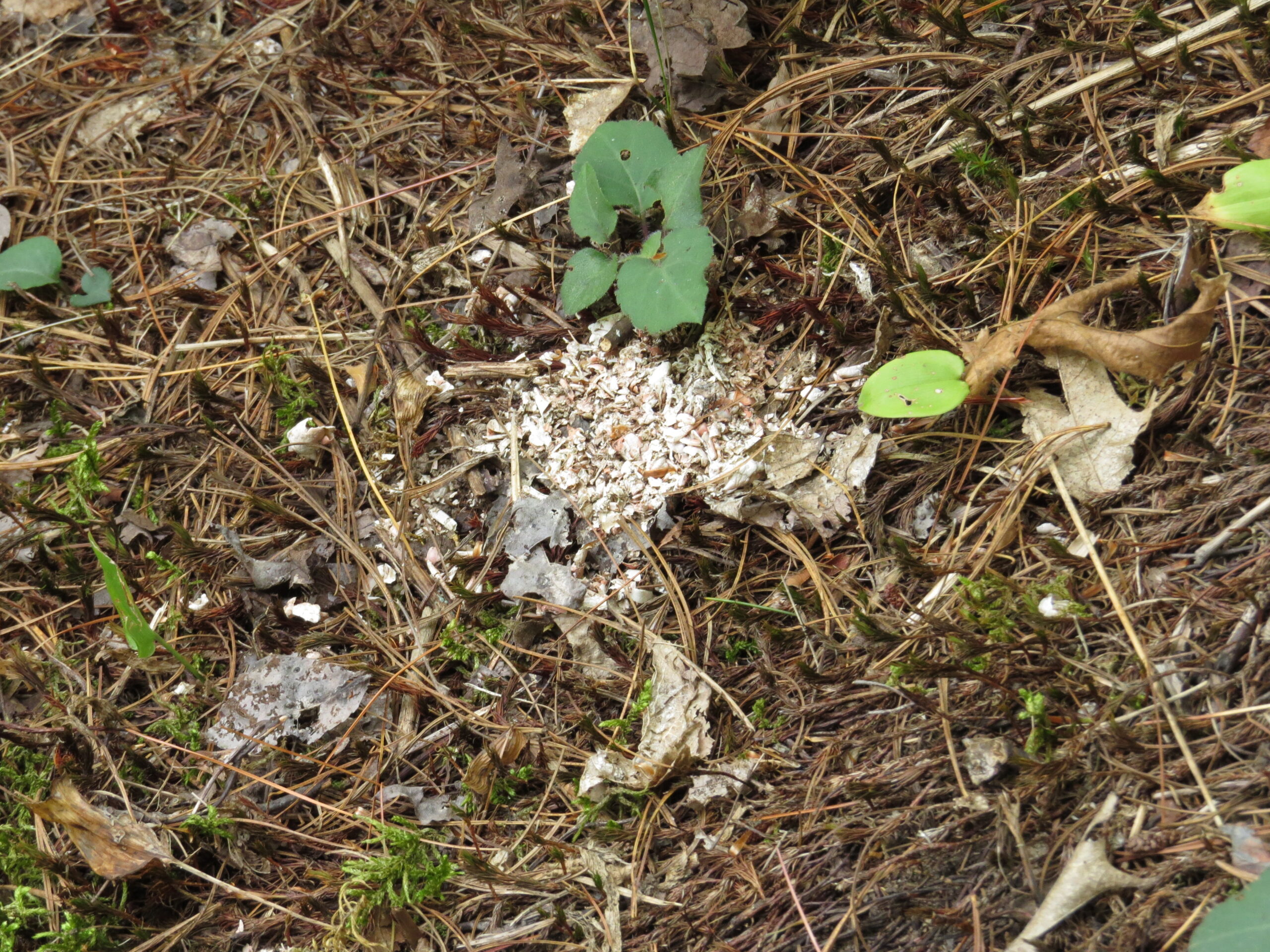
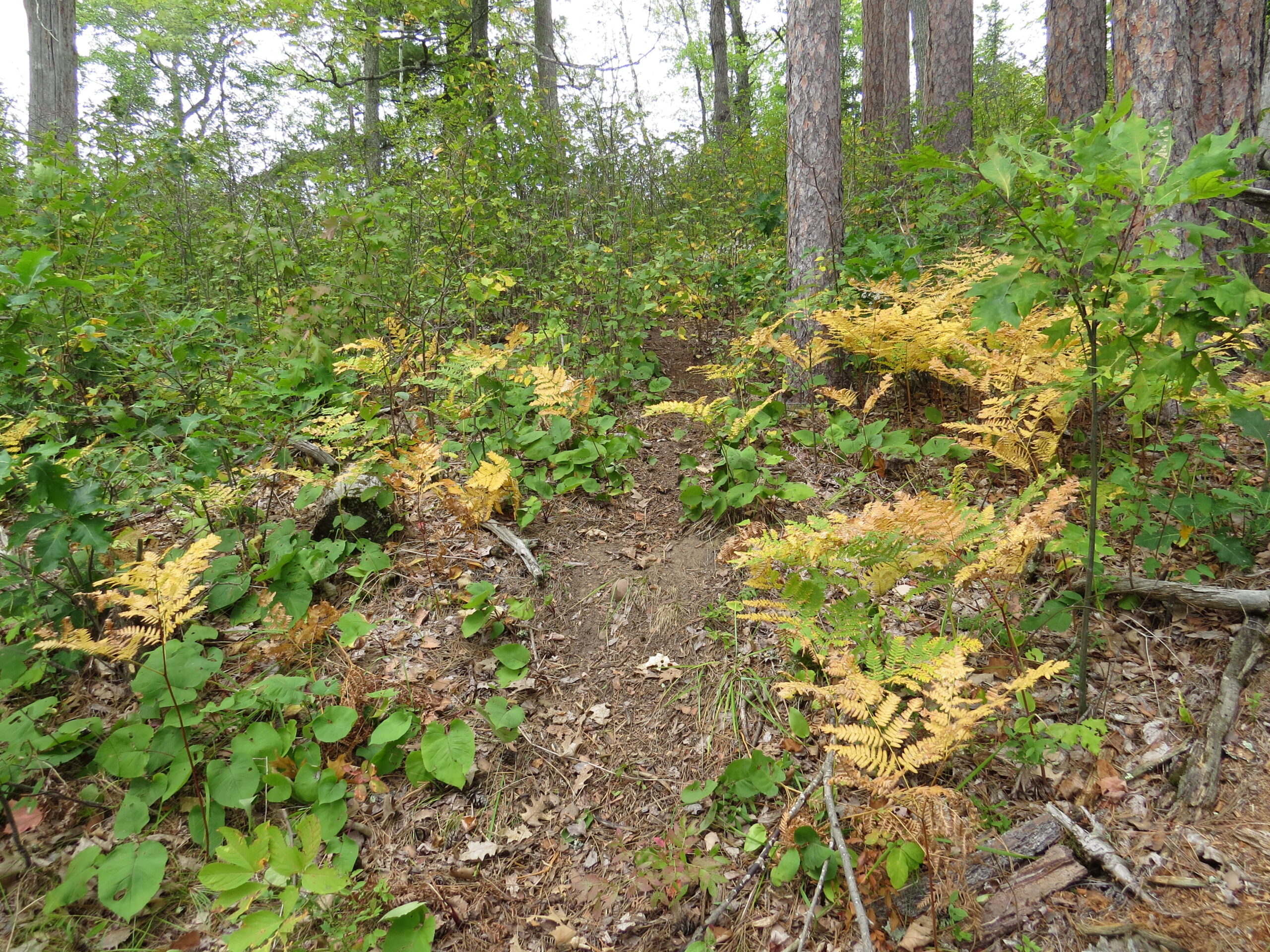
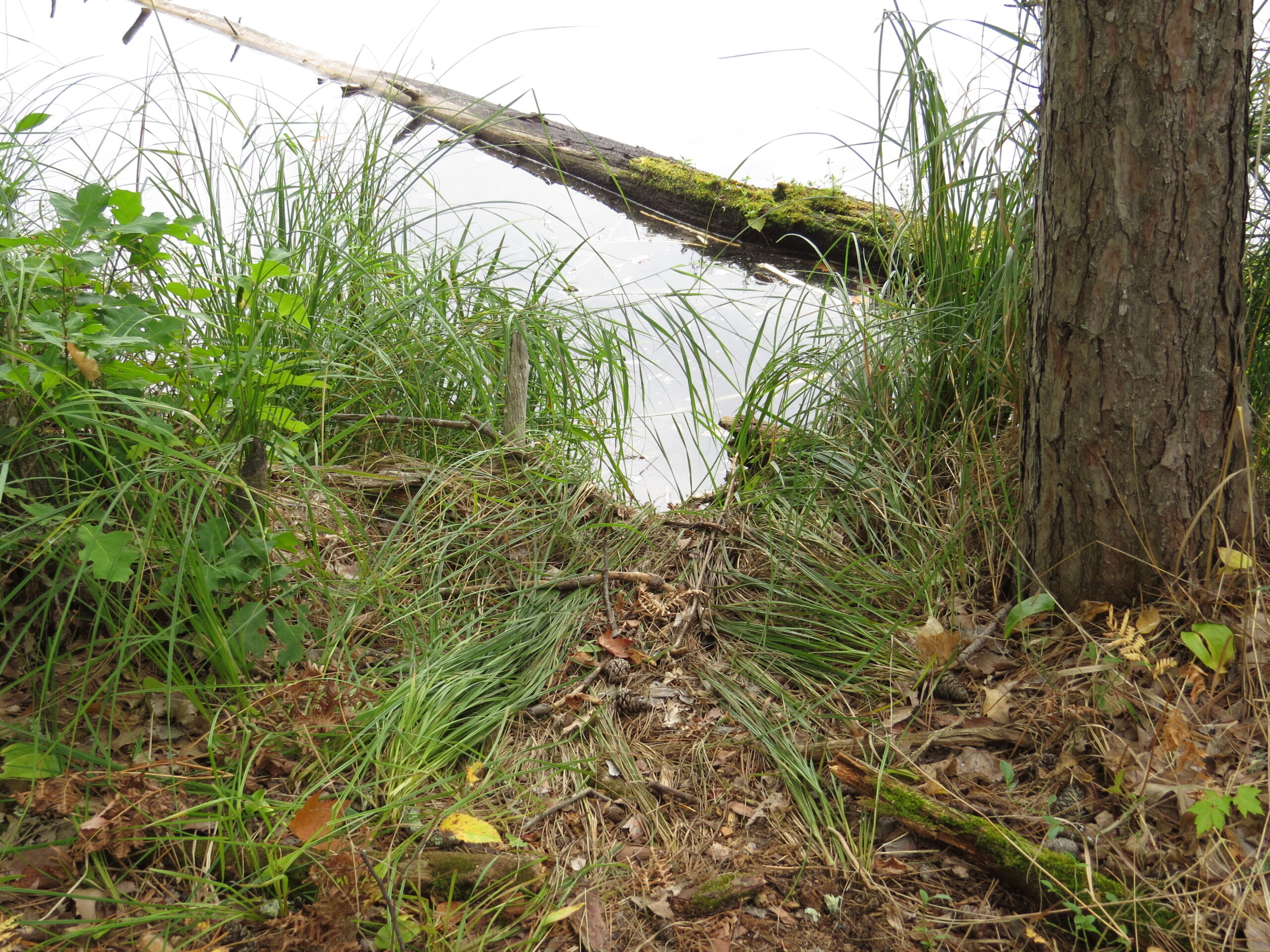
Along with curiosity, an explorer must use discernment and logic. What are these white piles of dried-up scat from? Looking more closely, the white pieces were bones and pink-tinged shells, probably from crayfish. My guess of otter scat was substantiated when we saw a grass-flattened ‘slide’ from the hillside into the lake! We saw many slides and many piles of territory-marking ‘spraints,’ as otter scat is called.
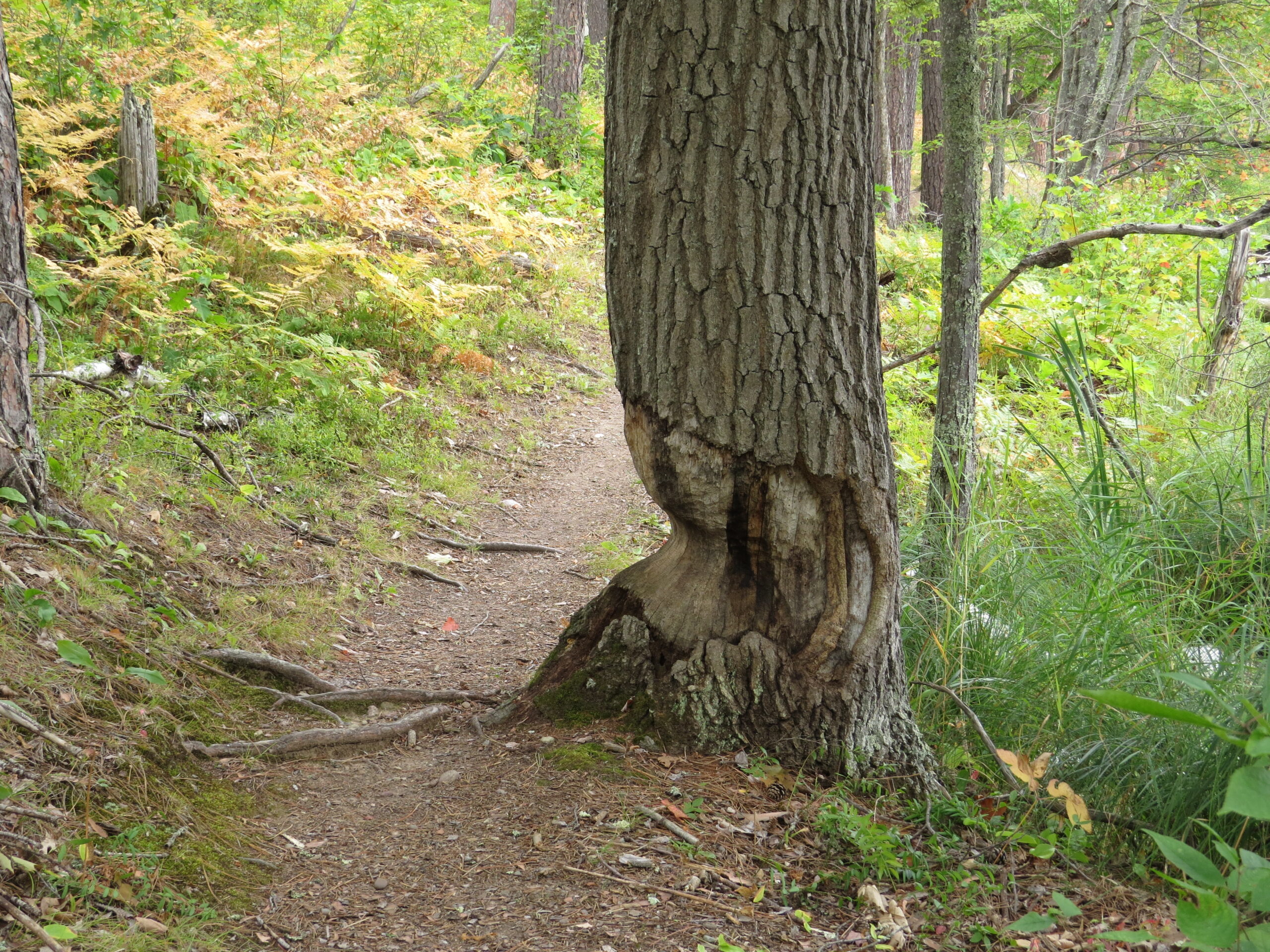
A very industrious and disillusioned Beaver lived here some time ago. The tree was working to heal that gaping beaver wound.
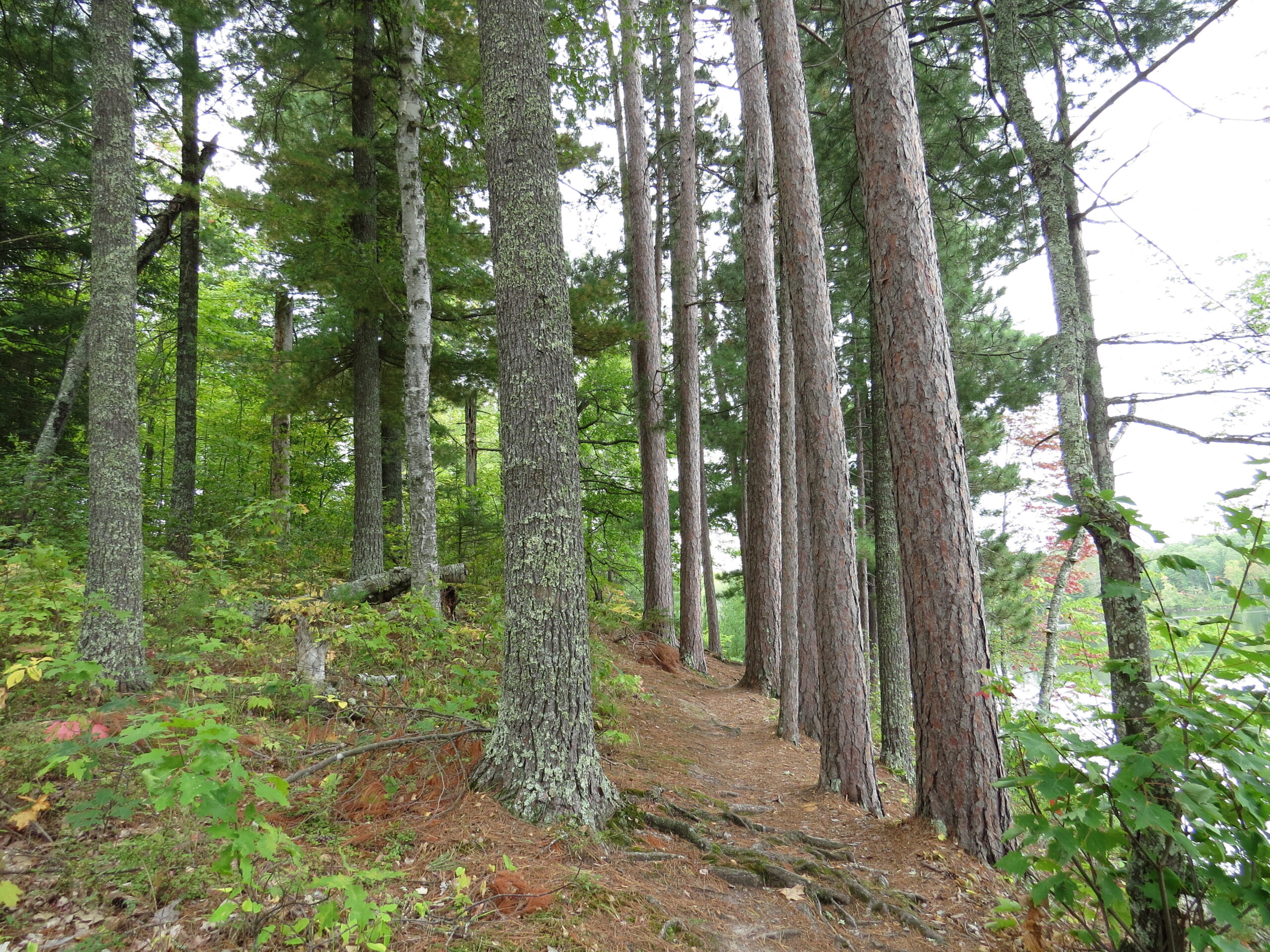
At times along the trail, a small grove of Pines bordered the lake and path. What beauty in the bark of a mature Red Pine!
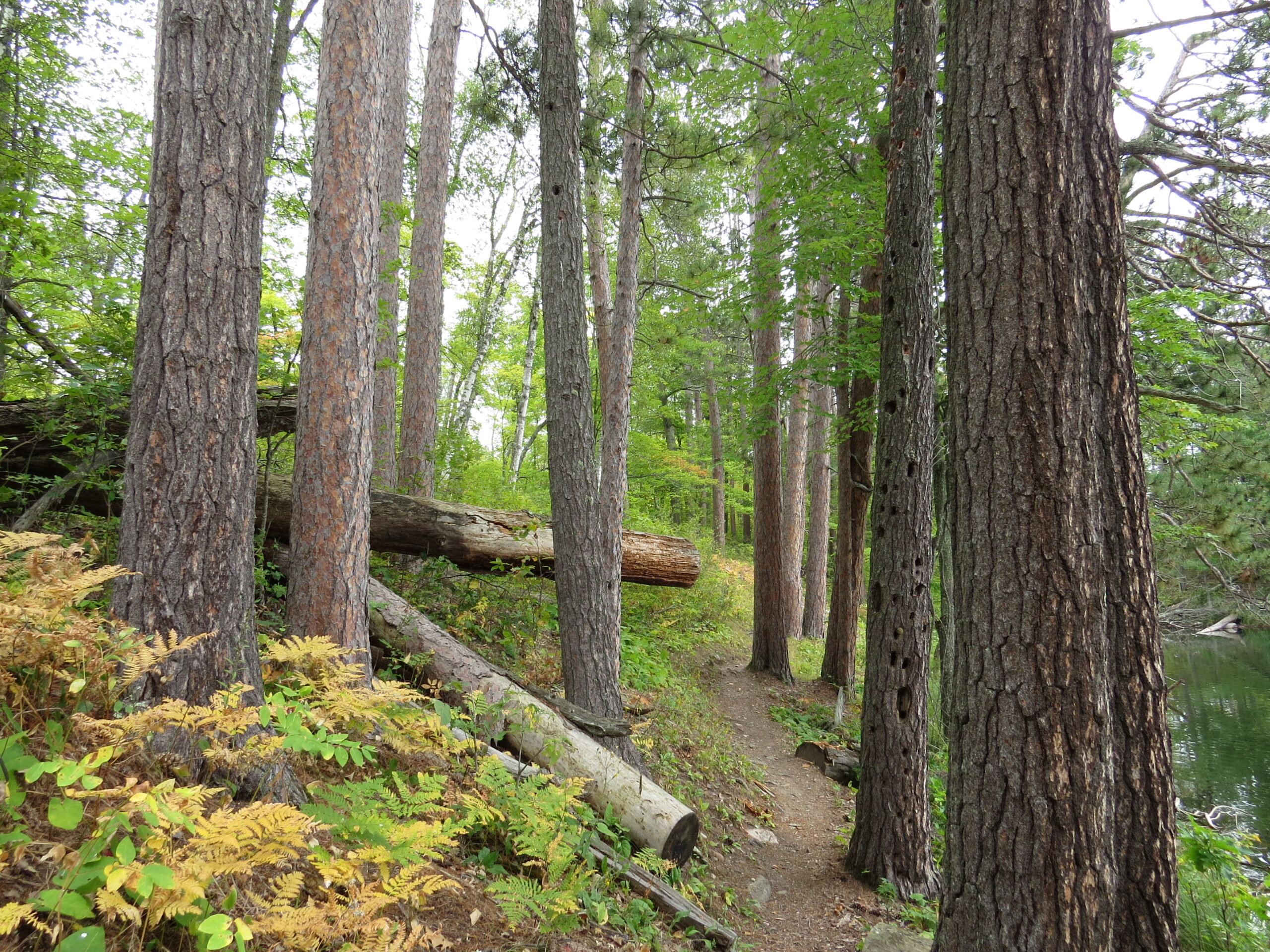
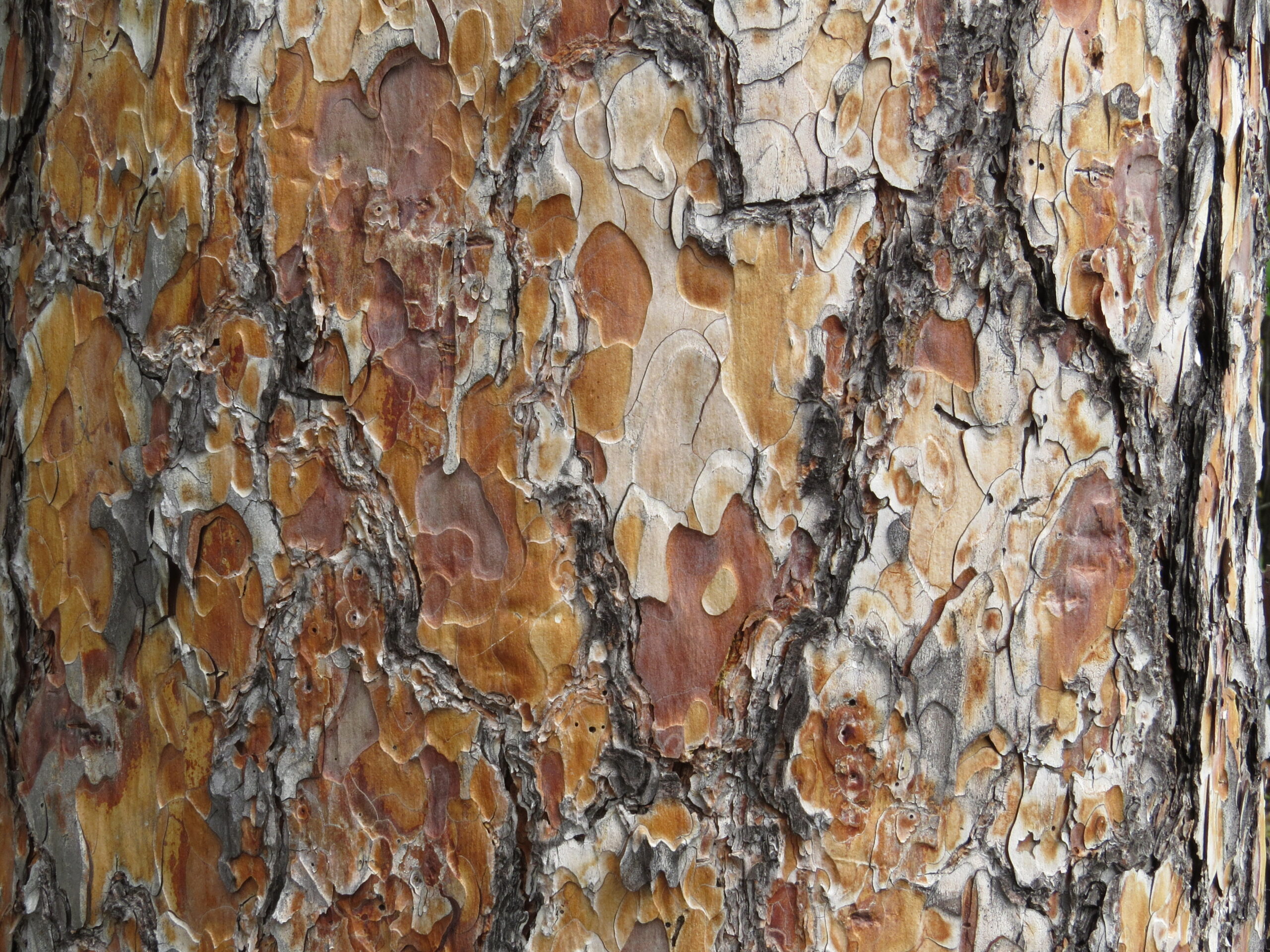
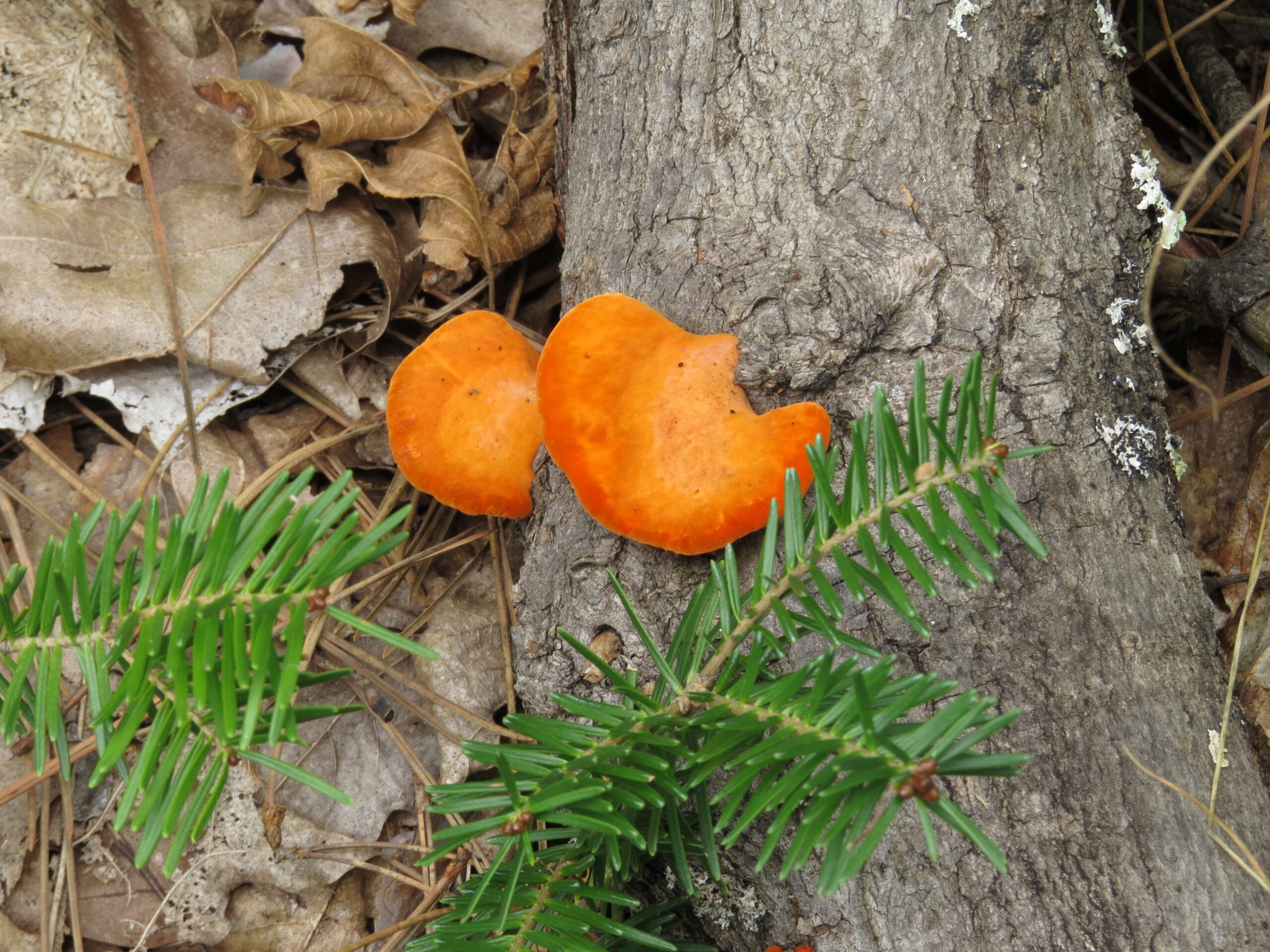
Balsam Firs were the other evergreens of the forest along with the Pines. Most were younger and content to grow in the shade of the canopy trees. An orange fungus was a colorful surprise!
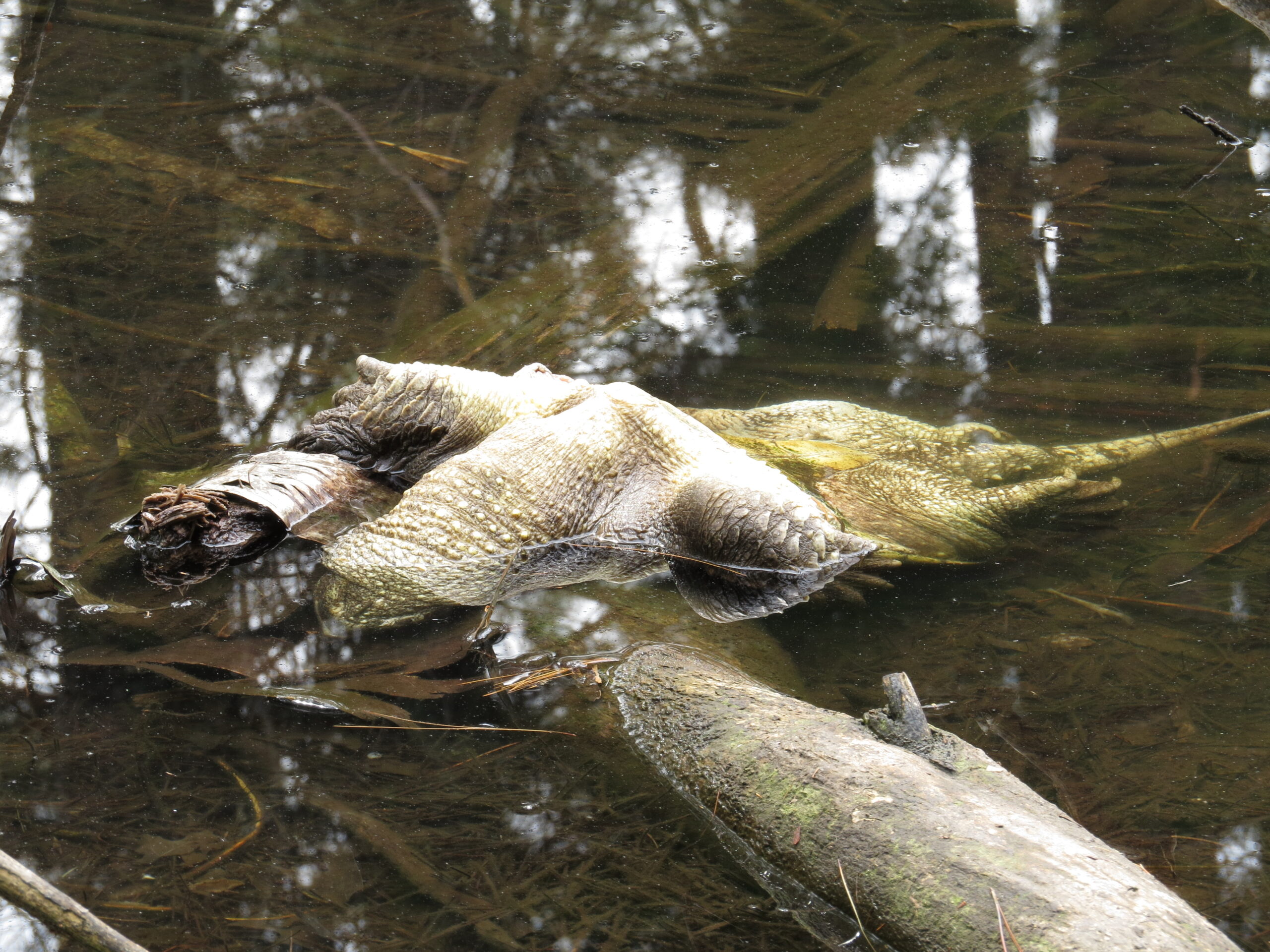
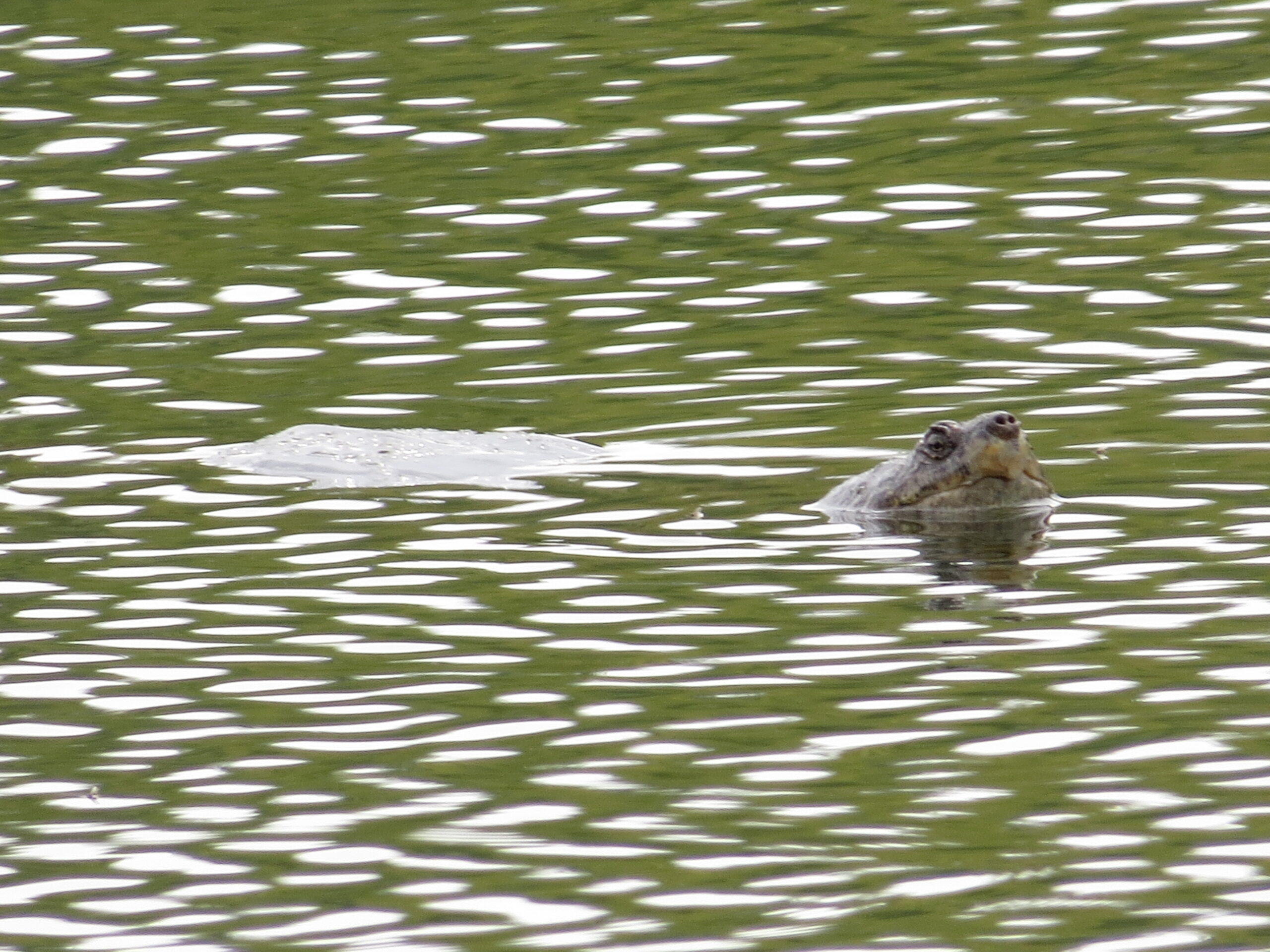
Another rather startling discovery was a dead Snapping Turtle, upside-down, over a log. I wondered how he got there. Adult Snappers are sometimes attacked by otters, bears, or coyotes, so that was definitely a possibility. But then we saw a live monster-of-a-turtle swimming in the lake and wondered if the males fight one another.
More ‘treeariums,’ golden ferns, and red leaves decorated the Loon Lake trail as we circled around it. (No Loons to be seen, but we did find a beaver lodge.)
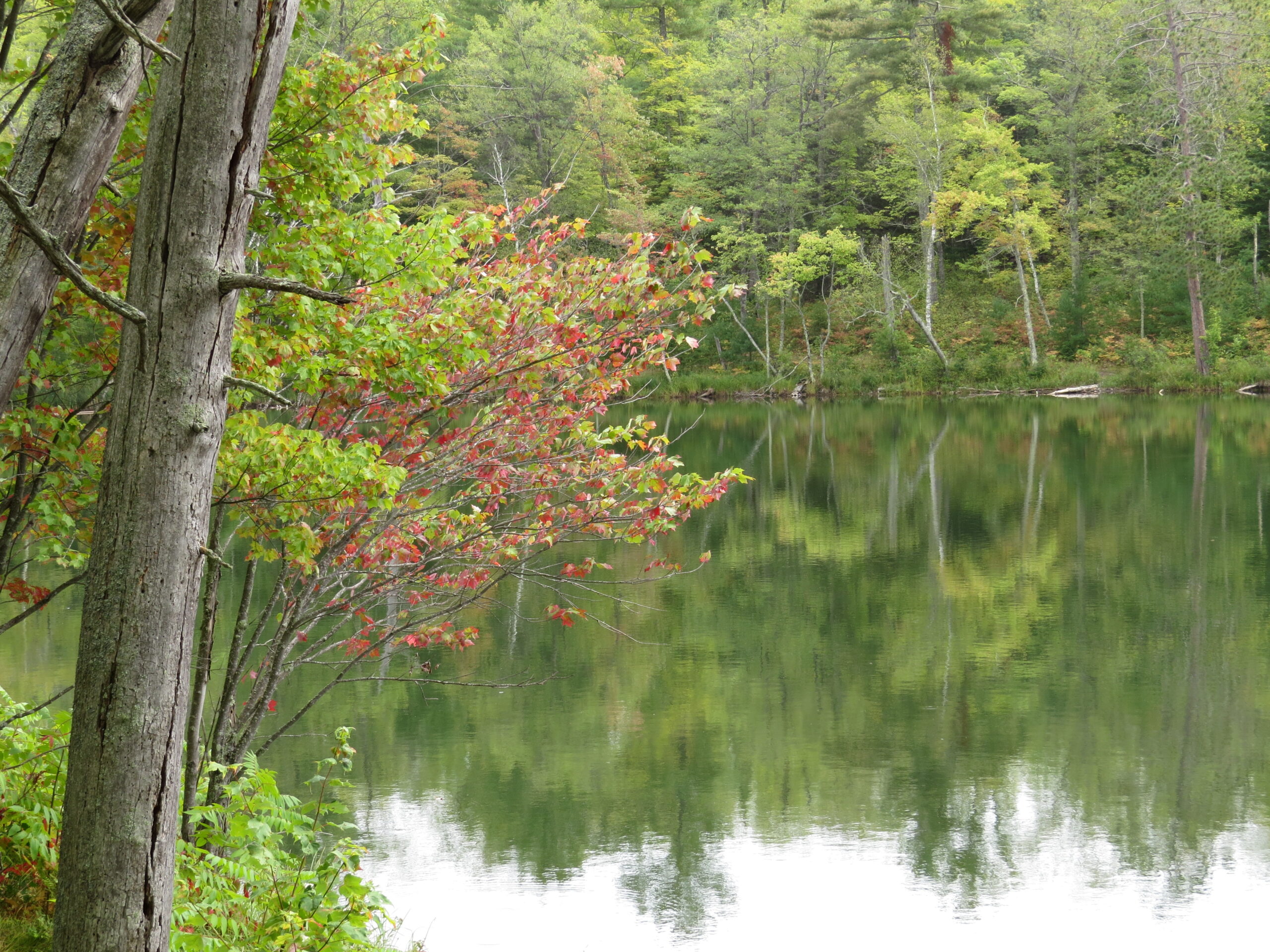
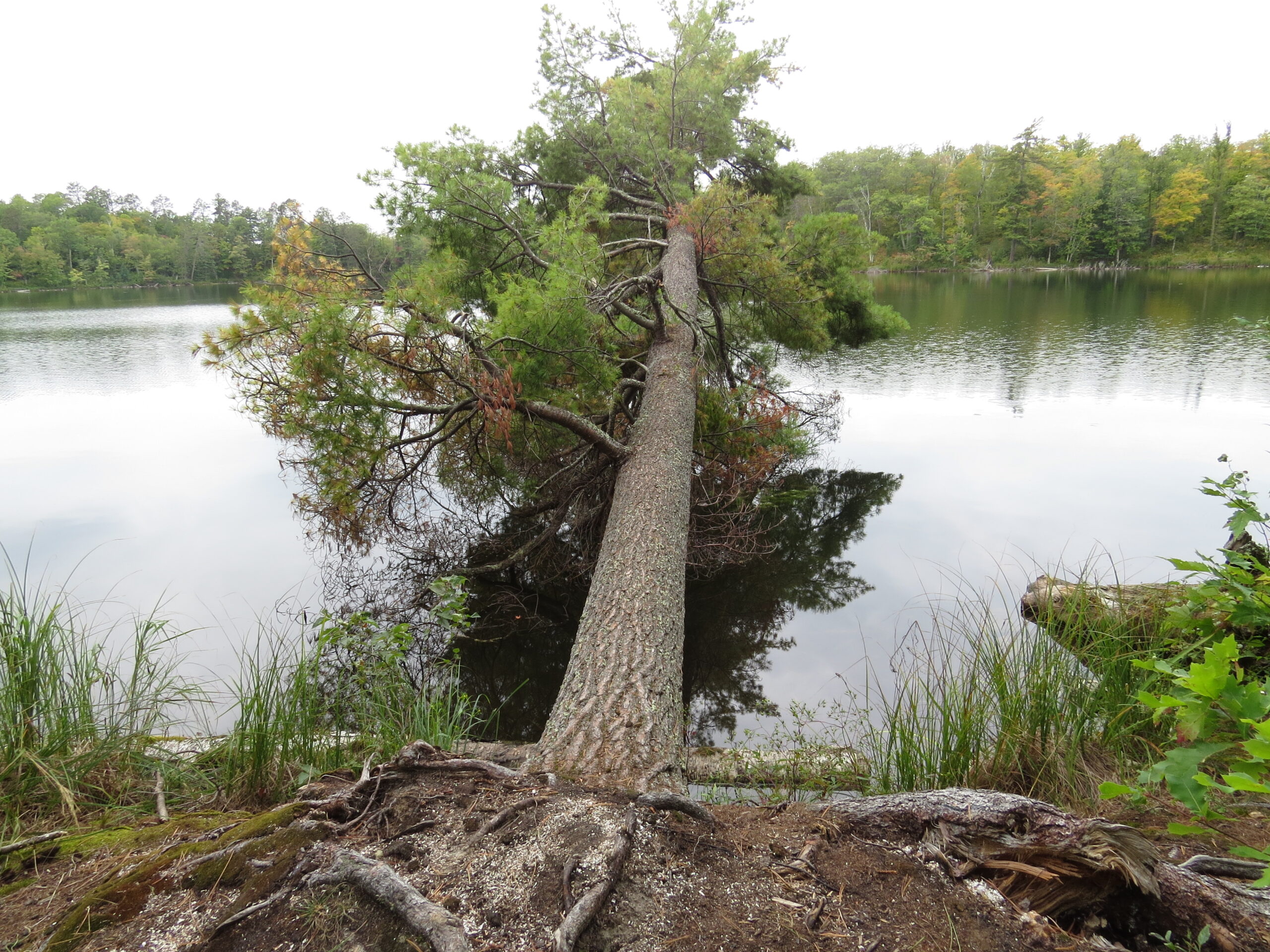
Towards the end of the trail, a large White Pine had tipped over into the water. The root ball was covered with Otter spraints, and we imagined they used the tree as a playground. Playfulness is another quality of an explorer, as expertly embodied by Otters running and sliding, swimming, rolling, and playing.
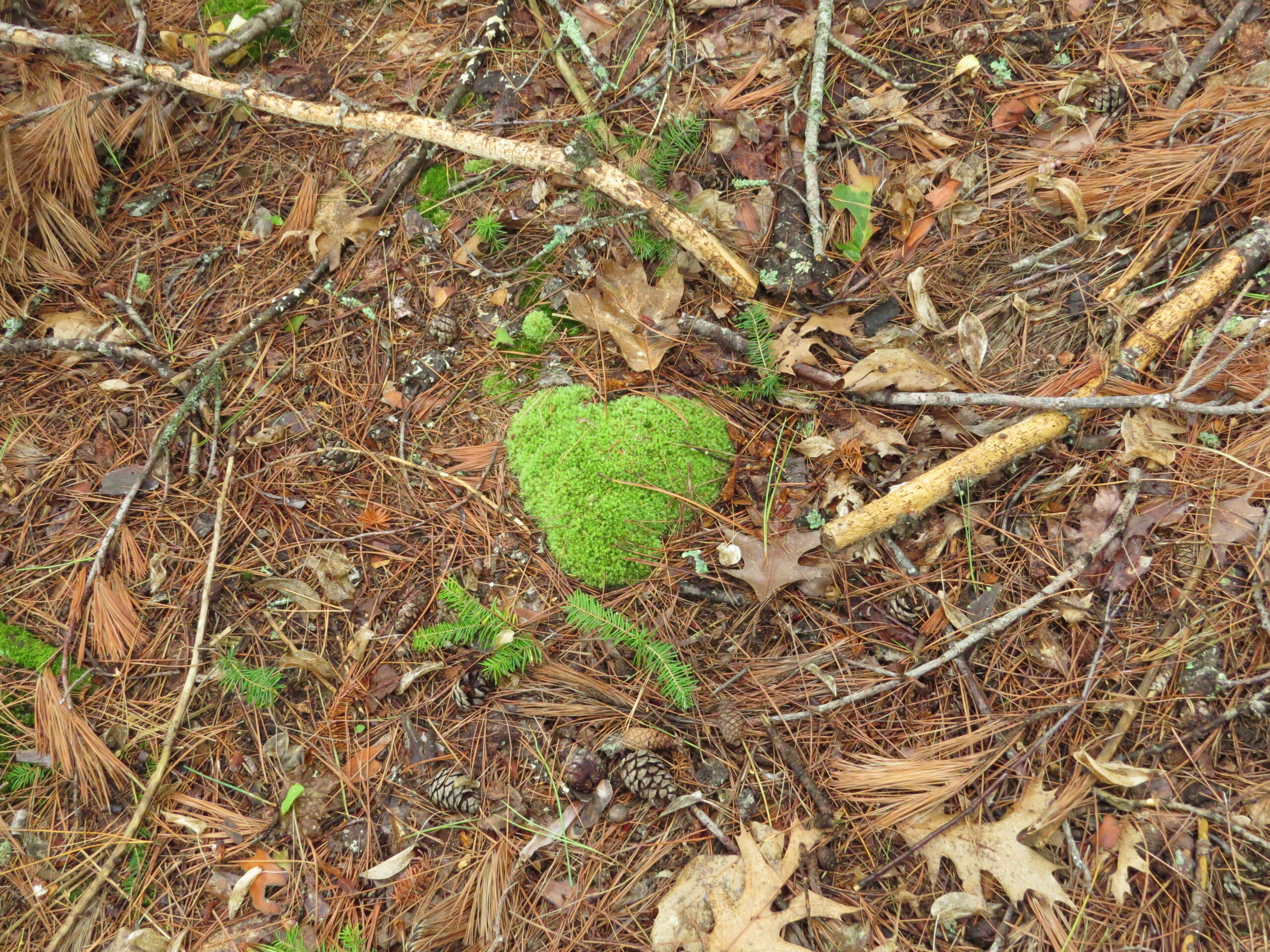
I fully embrace being a homebody and an explorer of Nature. Each of us has these seemingly opposing qualities in one way or another. Yet I have always lived my life with curiosity and wonder (another quality of an explorer). It has been the foundation of my learning, schooling, and being a scientist, as well as being an explorer. In my next posts, I will share other trails we hiked at Savanna Portage and other qualities of being an explorer. Until then, what kind of explorer are you?
Camouflage and Curiosity
One of our childhood games, as with most people I would guess, was hide and seek. Living in the country with four children in the family, it was the perfect get-outside-and-run activity with just enough ‘players’ to make it fun and last for a while, at least. I remember that giddy excitement after the designated person started counting—‘Where should I hide?!’ Or being the counter at the large pear tree, which I did slowly and deliberately, and finally yelling, ‘Ready or not, here I come!’ The seeking and the hiding both had an element of anticipation and surprise and would most often end in laughter, with only occasional arguments and crying. Yet I remember one morning when hide and seek wasn’t a fun game. When I woke up, I noticed my younger sister wasn’t in her bed, which was unusual. I went downstairs, but she was not eating breakfast or watching tv. I went back upstairs to look in her room, check under the bed, and look into my other sleeping siblings’ rooms. I felt the panic rising in my body. I couldn’t find her. I don’t even remember if it was summer, a weekend, or if my mom and dad were home or at work. After much frantic searching, I found her sleeping on the floor behind the couch. I was so incredibly relieved that I had found her, and she was safe. I know I asked her why she was there, and I know she had a reason that had made perfect sense to her at the time—but I can’t remember what it was.
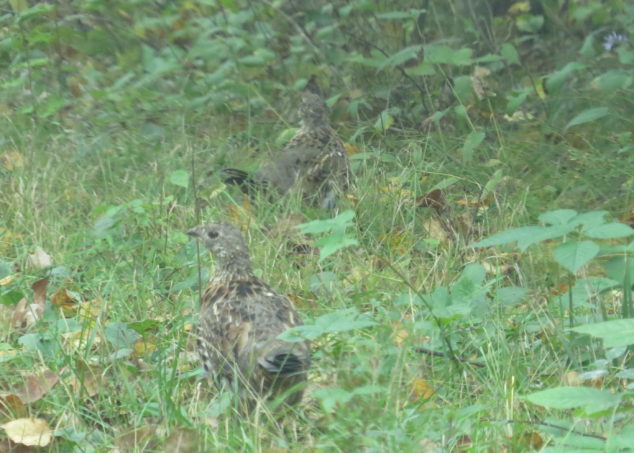
Hiding is a survival mechanism for many animals in the wild. Camouflage by color—a rattlesnake or tree frog, and by shape—a walking stick or katydid, are common ways for animals to blend in with their environment in order to hide from predators. While driving along the gravel road at St. Croix State Park last month, we saw little creatures dart across the road and disappear into the foliage. ‘What was that?!’ I asked Chris. We slowed down and once again caught sight of one by the road but lost track of it when it moved into the woods. Finally a couple of them stopped, and we stopped, and I could get a picture of the Ruffed Grouse! They were so camouflaged with the surrounding environment that the camera had a difficult time focusing on anything!
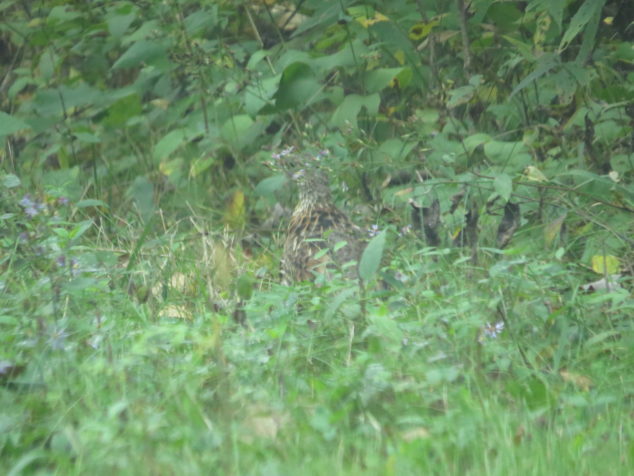
These chicken-like birds with short legs and a crest of feathers are non-migratory, live in heavily forested areas, and forage for seeds and insects on the forest floor.
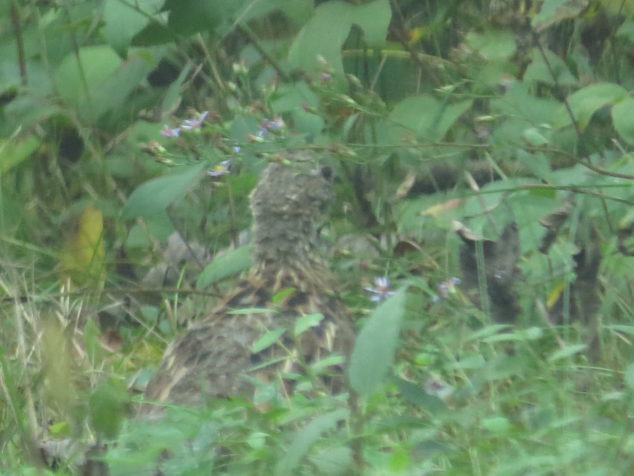
In spring, the males’ mating display includes a black ruff of neck feathers and fan-shaped tail feathers. Most notably, they stand on a log or rock and make a booming ‘drumming’ sound with the movement of their wings.
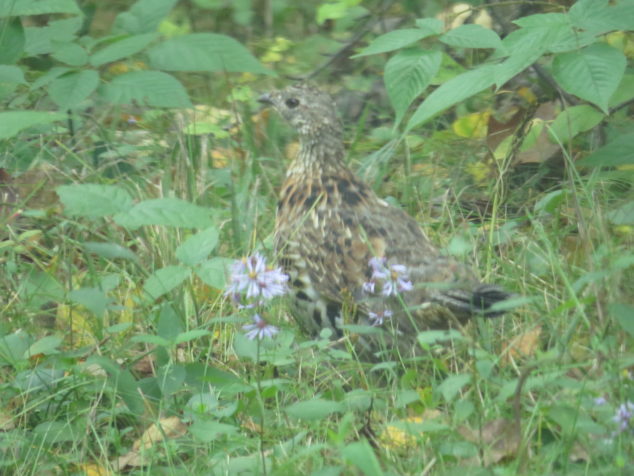
In winter, Ruffed Grouse eat buds of deciduous trees, roost in soft snowbanks for protection, and grow projections on their toes that act as snowshoes! The bird in the back of the photo has the crest of feathers up on his head.
Another woodland animal that uses camouflage is the white-tailed deer. The adult coat color blends in with the surrounding environment, and very young fawns with their white spots, hide in the brush while their mothers forage for food. Another characteristic of deer is their curiosity. As we hiked along a grassy road in the forest at St. Croix State Park, I looked up to see these three looking at us!
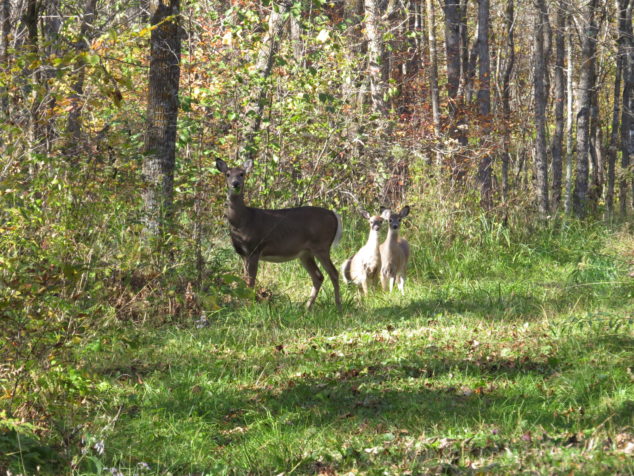
We stopped when we saw them, and I started taking pictures. The fawns were so cute and curious–it makes me smile every time I see these pictures!
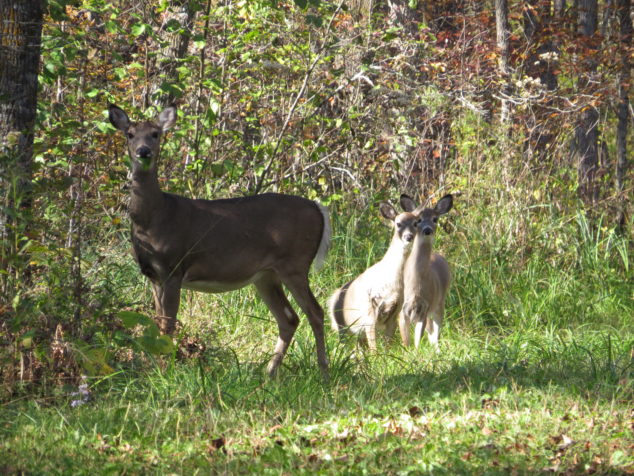
They stood looking at us with bright eyes and attentive ears as long as we stayed still.
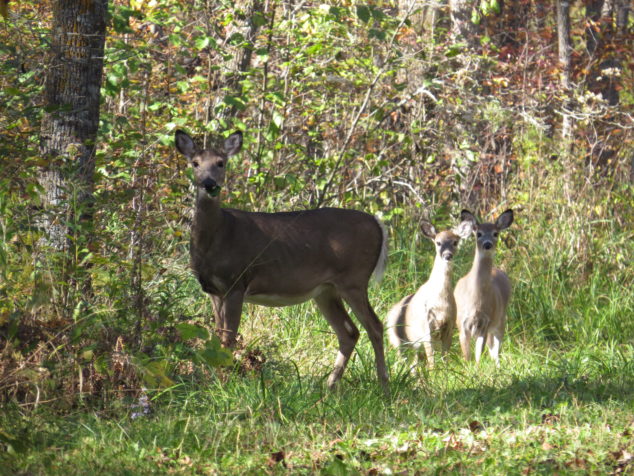
But when we began to walk slowly toward them, their ears flicked one way then another, and they looked around with wariness…
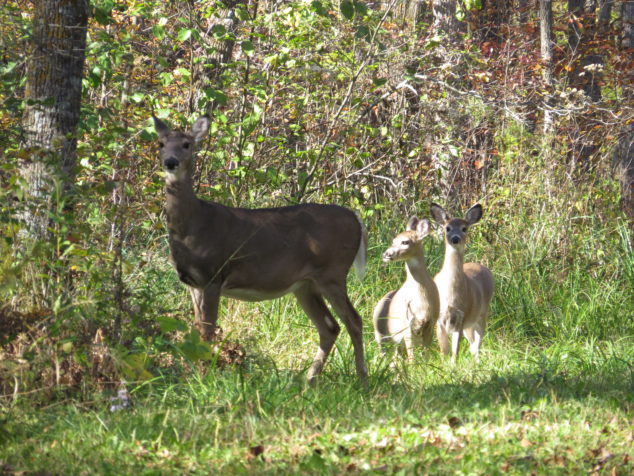
and soon scampered off into the woods.
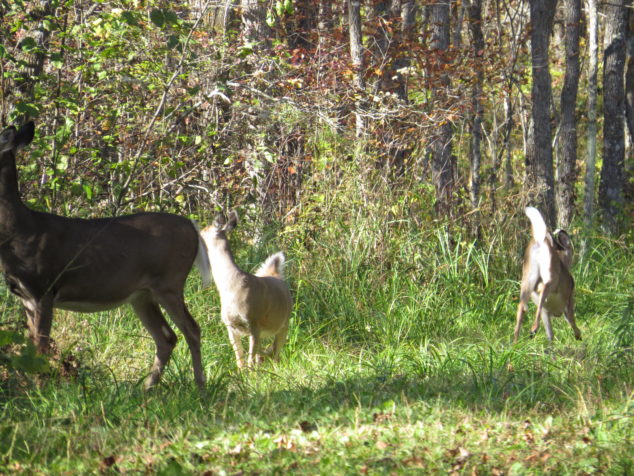
Hide and seek. Camouflage and curiosity. Our mammalian brains are wired to ensure our safety. We take in cues from the external environment, just like the deer, and decide what is important, threatening, or dangerous. Most of this is accomplished without our conscious brain ‘knowing.’ This part of our brain is also where our emotions reside, which explains why I remember certain emotionally charged things about trying to find my sister but completely can’t recall other details surrounding it. I’m sure most of us can remember times in our lives when we just wanted to blend into the environment and not be seen or times when we wanted to run and hide—that is our brains working to keep us safe. Luckily, we also have a highly developed cerebral cortex that gives us the ability to learn, attach meaning, do abstract thinking, plan, predict, imagine, and choose, all within a sense of time, context, and empathy. Our brains are amazing! Within the confines of a safe place, our innate curiosity is unleashed, and we seek to learn about ourselves and the world around us. Childhood games and play are the training grounds for our minds and bodies for learning how to cope with our daily challenges. From our safe place, with curiosity, courage, and caring, we can yell, ‘Ready or not, here I come!’ and be prepared for whatever comes around the corner.