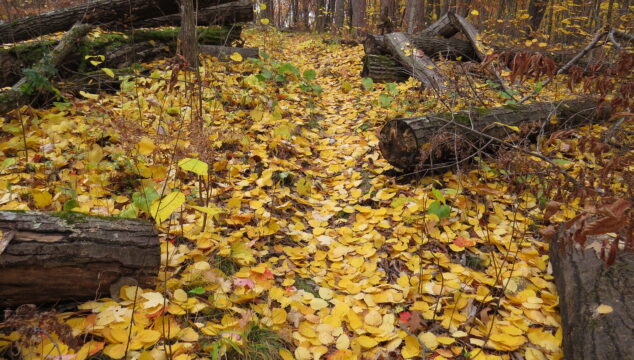
Come walk with me in the peak Autumn beauty of the Northwoods. To say that I love this time of year is an understatement. Most everyone can appreciate the colorful falling leaves---it reveals the 'true self' of a tree when its leaves are no longer producing chlorophyll. Their true colors are revealed, and there is something simple … [Read More...]
Seasons Within a Season
Imagine our lives as Mother Nature sees us—as a part of Nature, a part of Her. We are like the trees, moon, rivers, the prairie, elk, dragonflies, and the sweet apple. We were created as one of them. We have cycles, instincts, reflexes, and a myriad of functions that perform without our conscious will. We are physiological miracles! Our lives are on a trajectory towards death—that’s how it is generally portrayed, that is. Then we do all sorts of things to not think about that end—how do we distract ourselves, hold on to our youth, our old values, our accumulated wealth?
Imagine our life’s trajectory defined as seasons. Whether we view our lifespan as 80 or 100 years, we have completed our Spring season by our early to mid- twenties. Just when we feel we are ‘beginning’ life on our own, we are one-fourth of the way through our journey. We have budded, developed, learned, created, become. Our twenties, thirties, and into our forties are our Summer—productive, vibrant, energetic, full of growth. Summer gets things done.
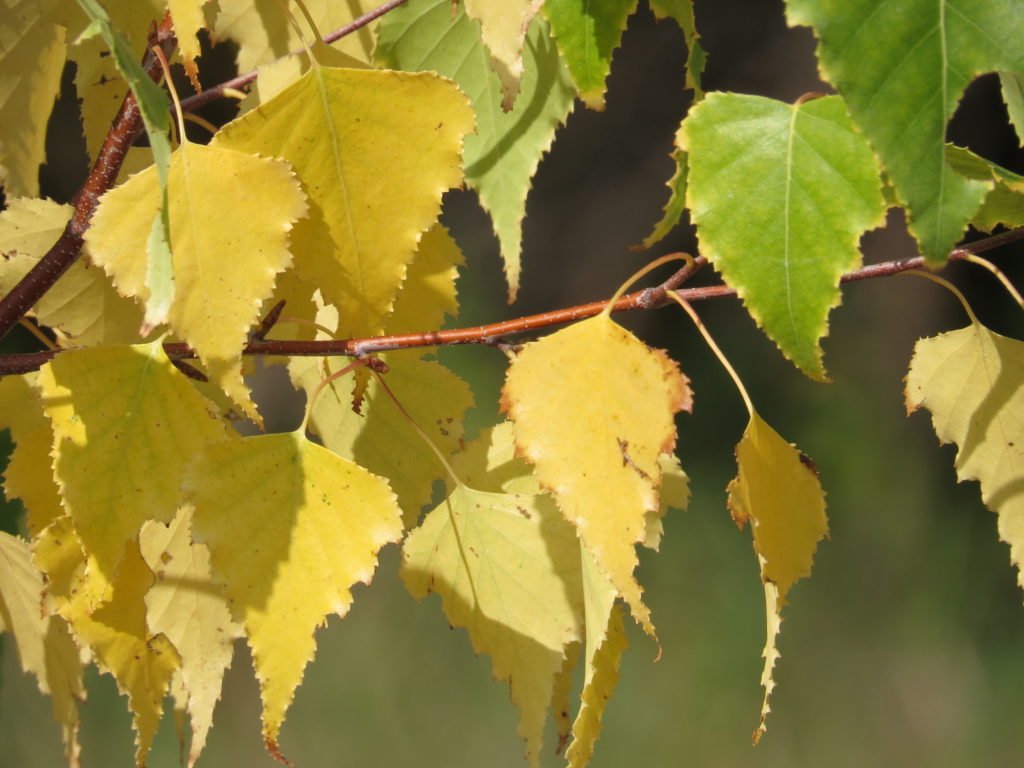
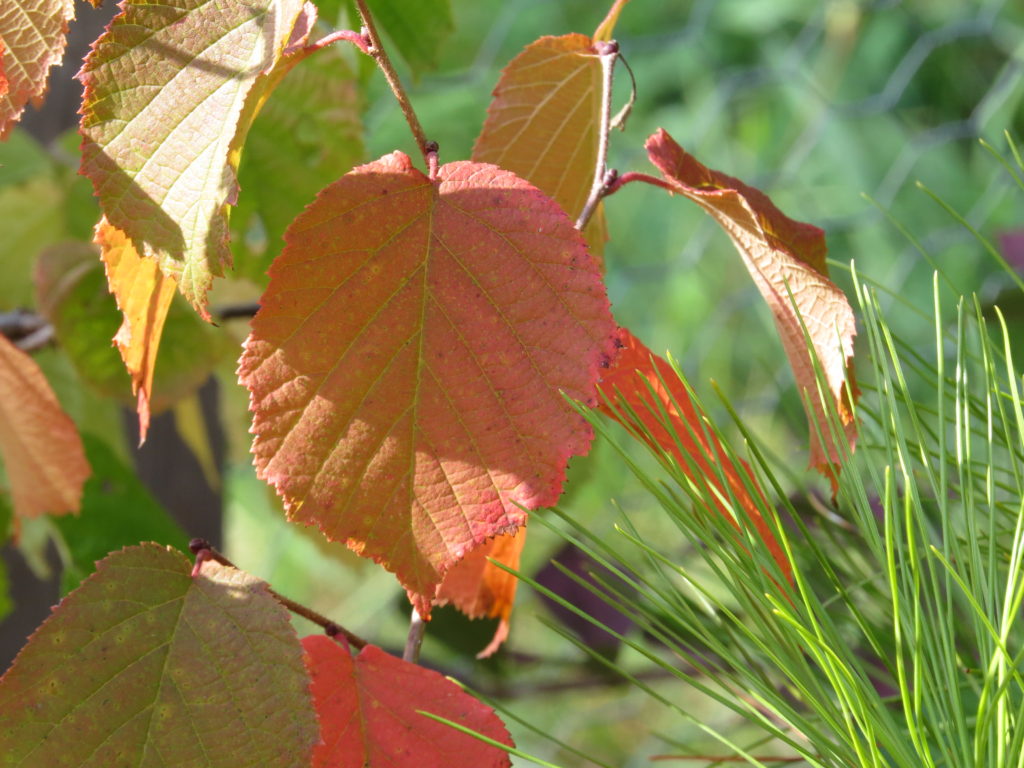
Here we are in Autumn—literally. It is a favorite season for many, a season of harvest, brilliant leaves, campfires, pumpkins, cool weather, and a turn towards the hearthside. A short walk outside my door immersed me in the transition season—it could not be denied. A Birch tree and Hazelnut shrub are showing their colors.
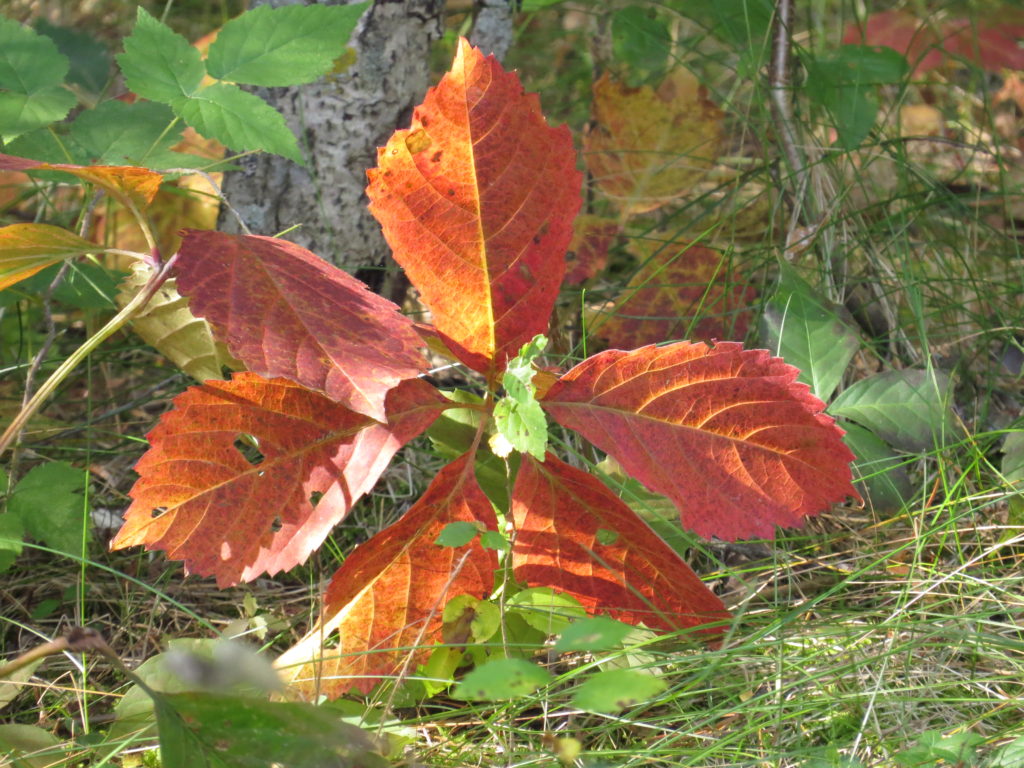
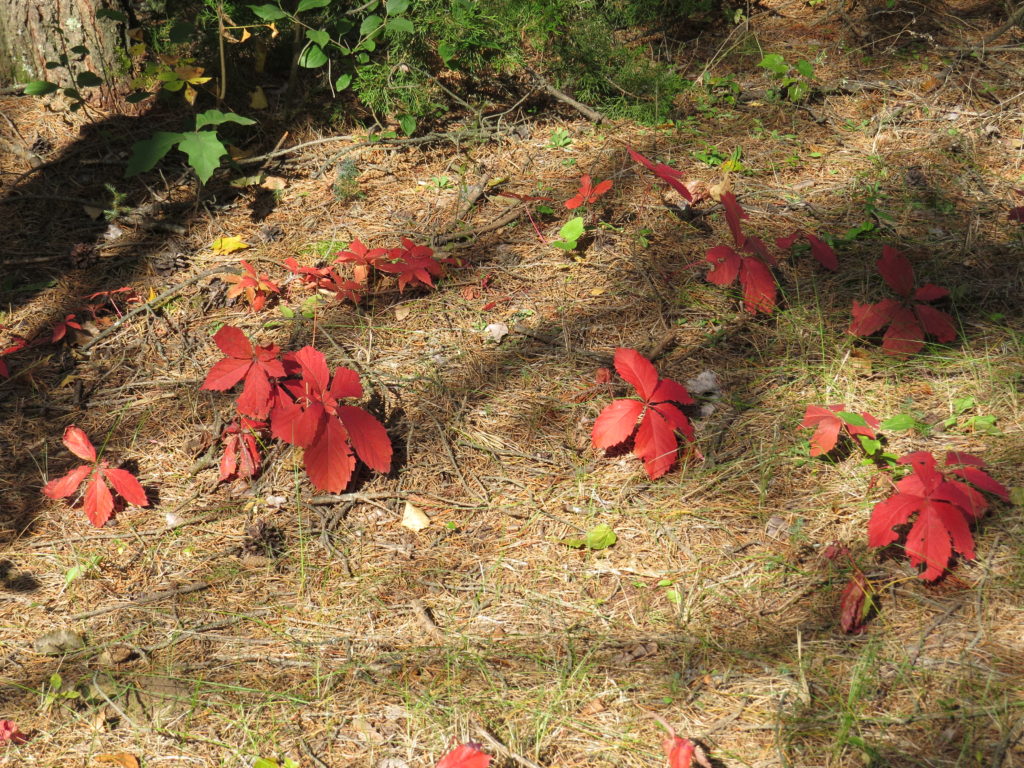
Virginia Creeper vines, once just another green-Summer thing, stand out in brilliant red, and always project a poinsettia-like image of another season to me.
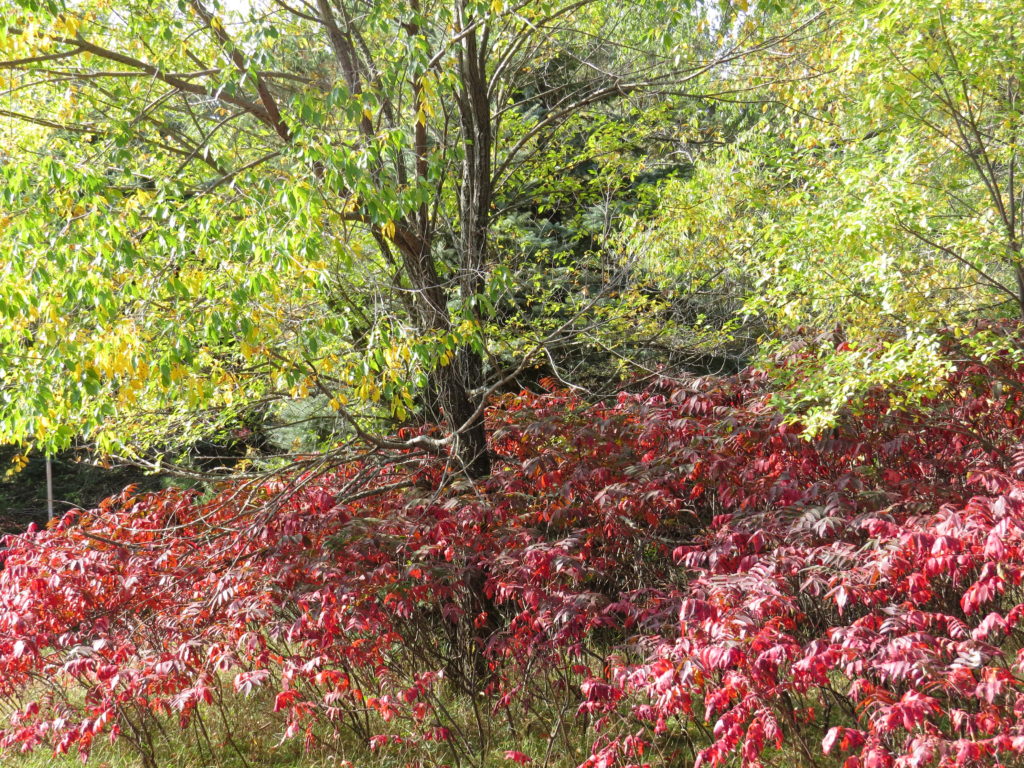
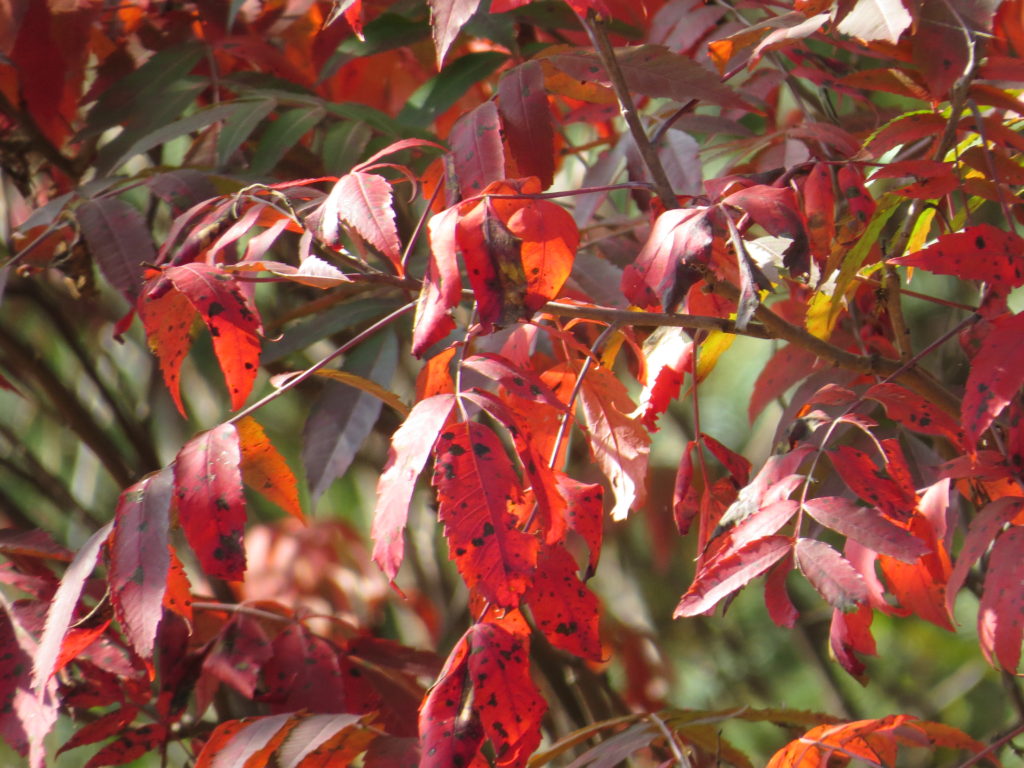
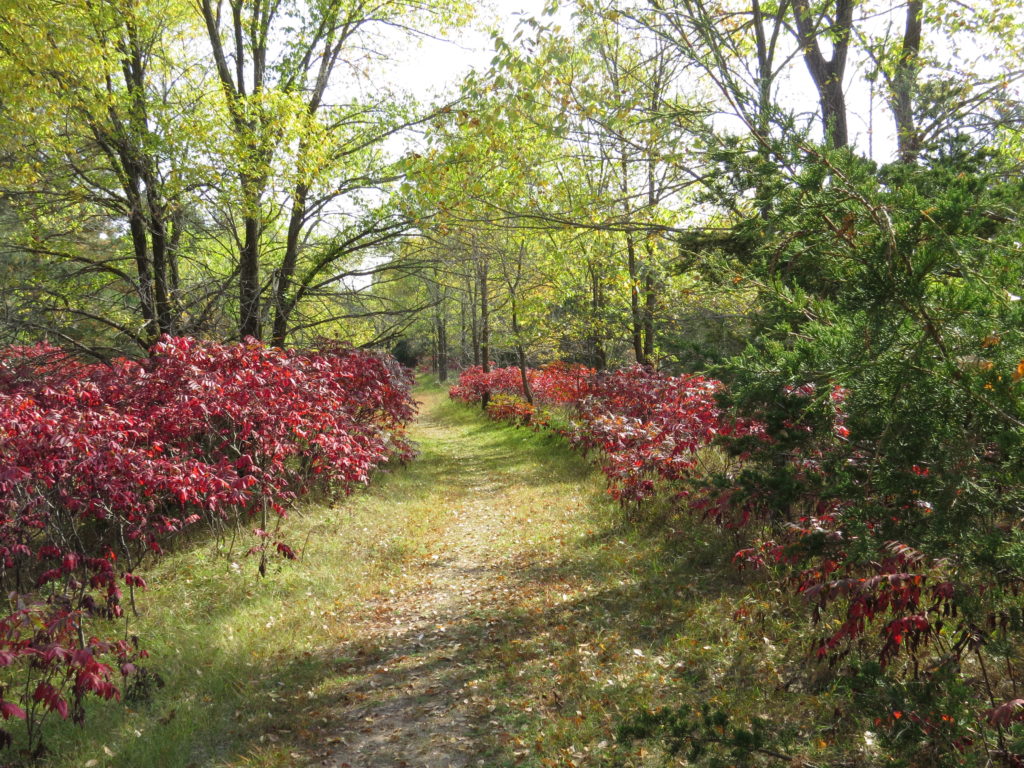
A sweep of Sumac under the yellowing Elms is showing its fiery colors and is being noticed in this Autumn season.
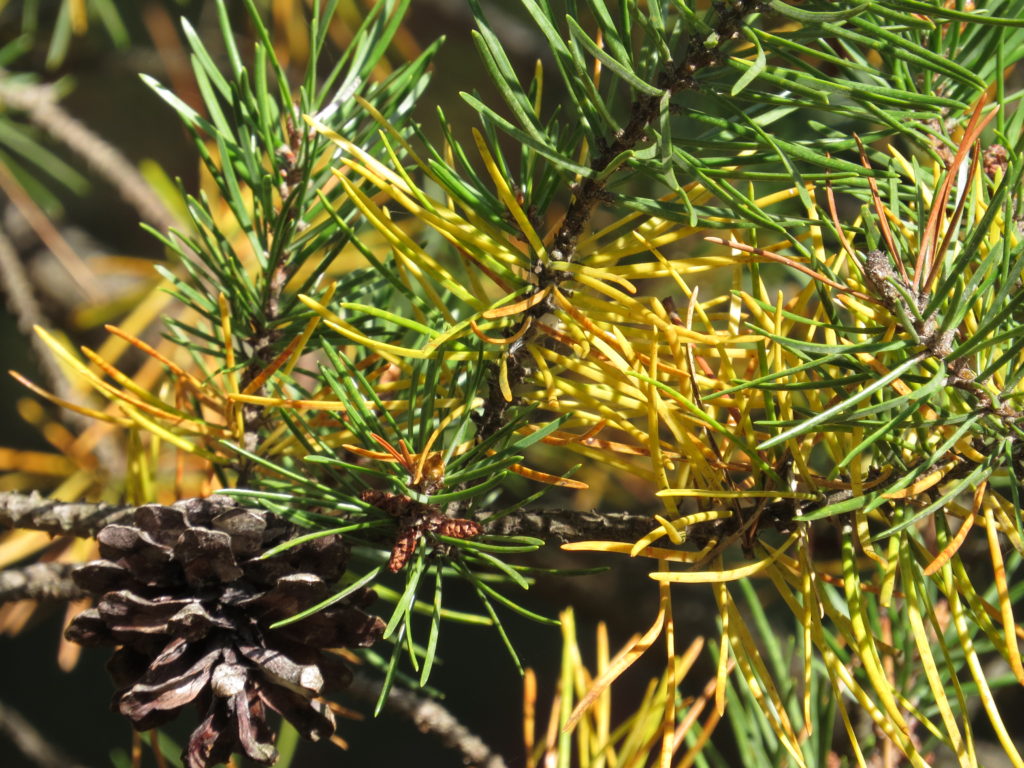
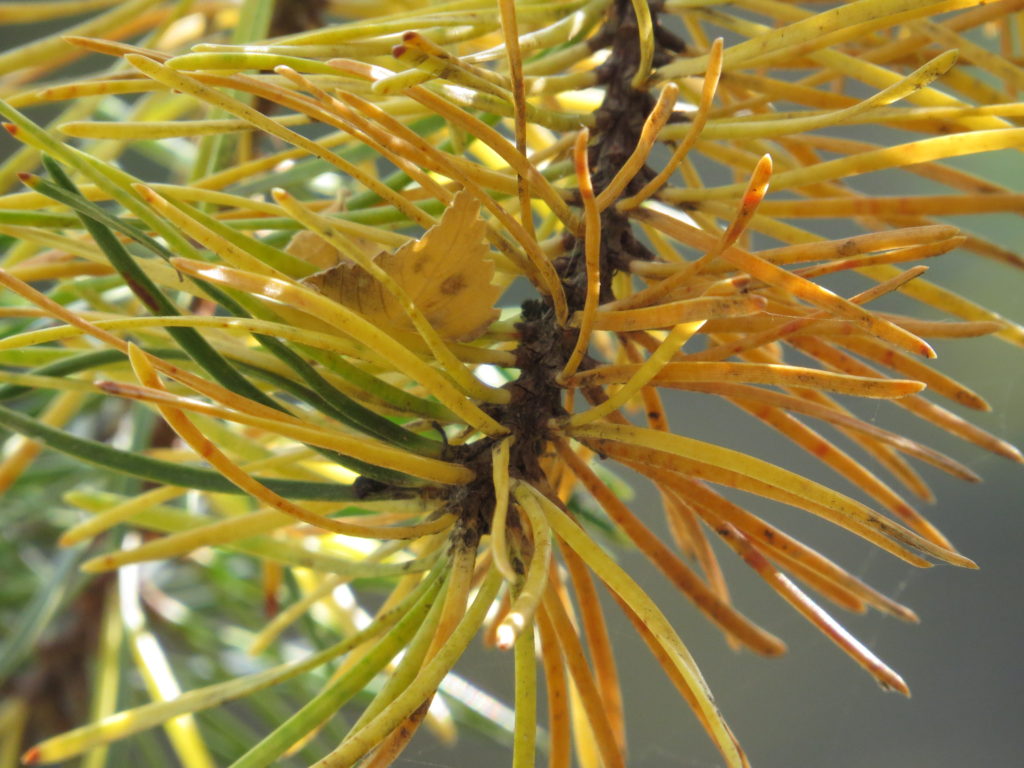
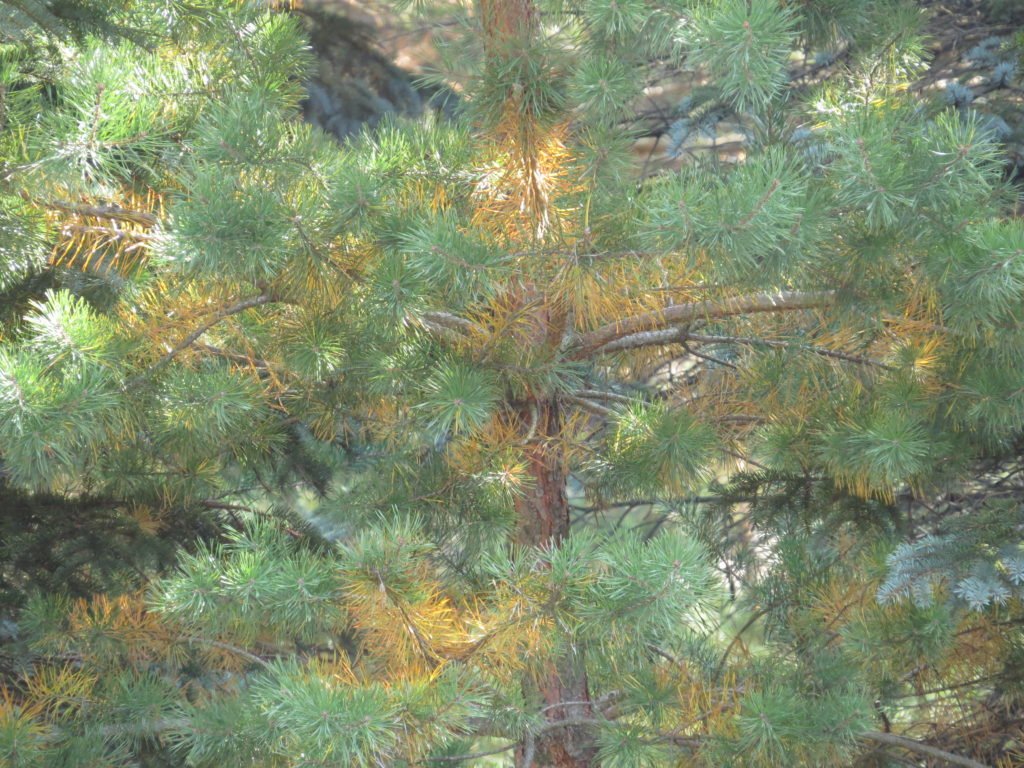
Even the ‘evergreen’ Pine trees change color and drop some of their needles in the Fall. They are culling the number of needles, downsizing in order to conserve energy during the cold winter.
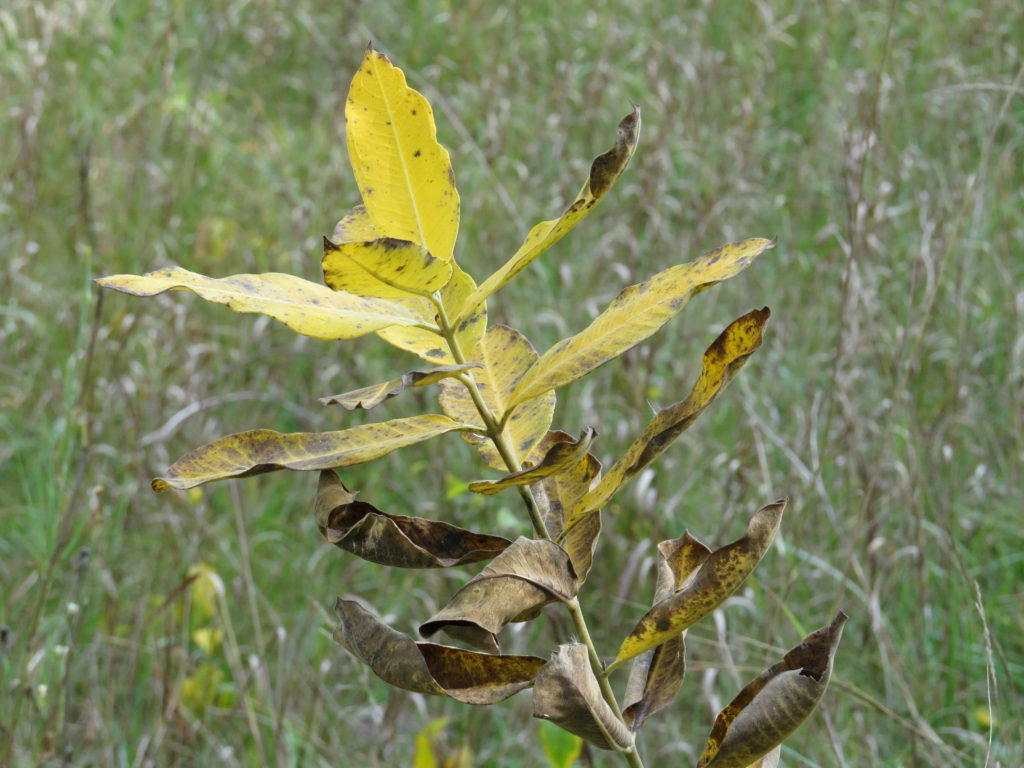
I found a couple of Wild Turkey feathers on the shared trail along with yellow Milkweeds, rosy leaves and berries of a Mountain Ash tree, a tall, fuzzy-leaved Mullein, and the mottled tips of an Oak.
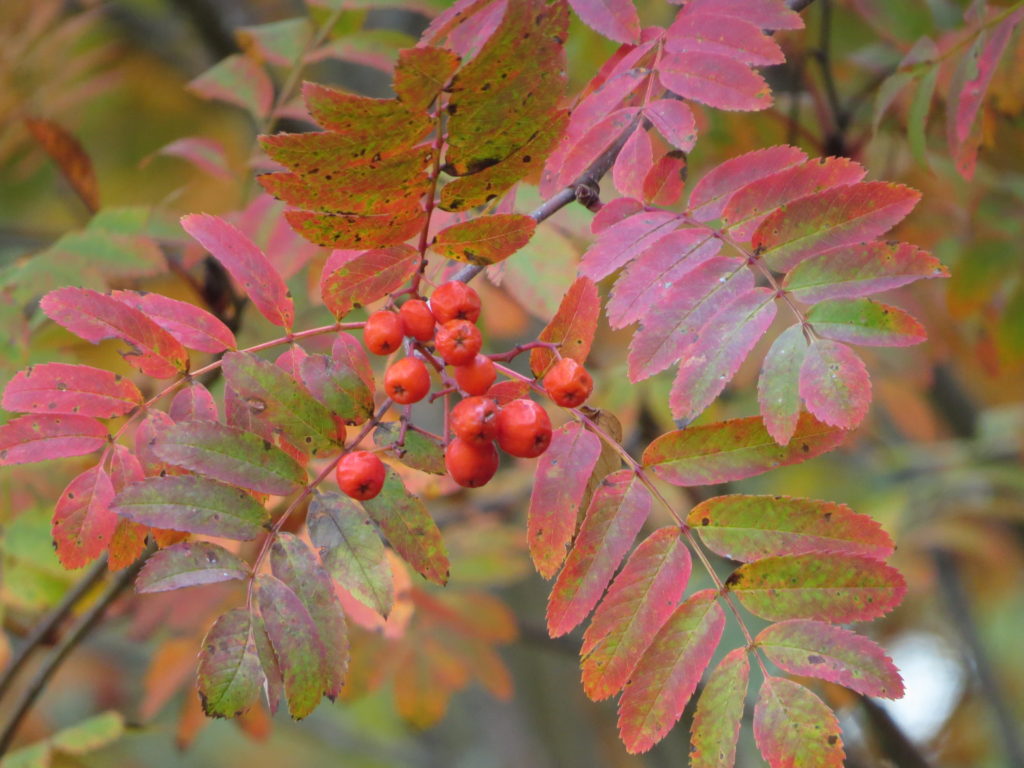
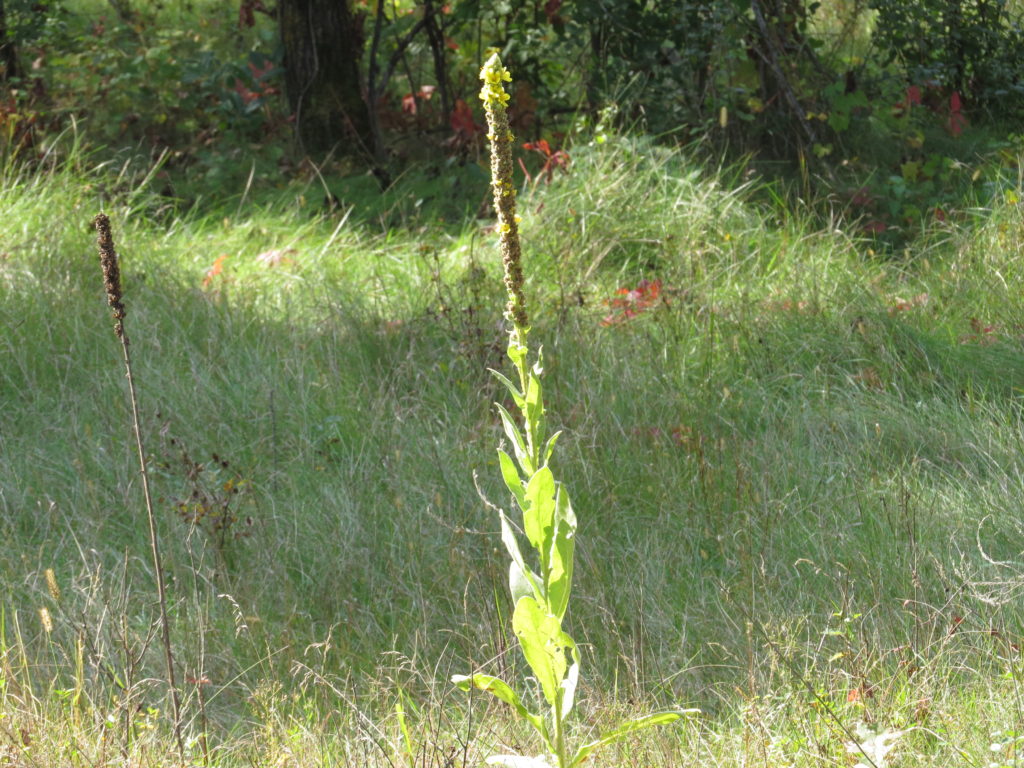
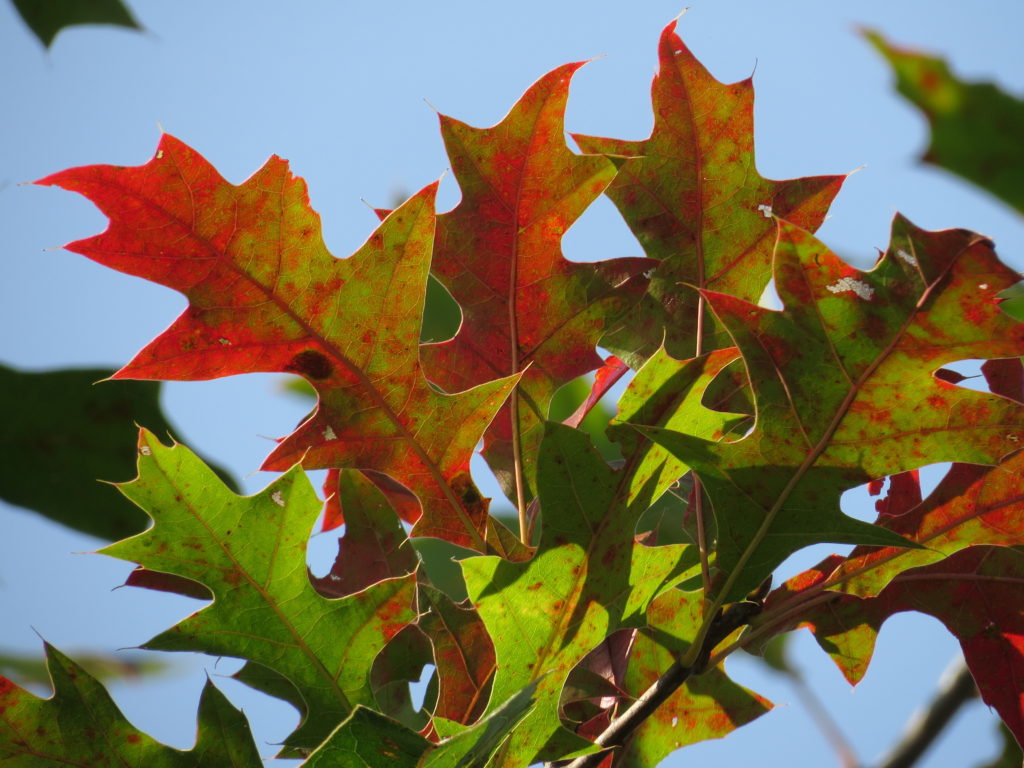
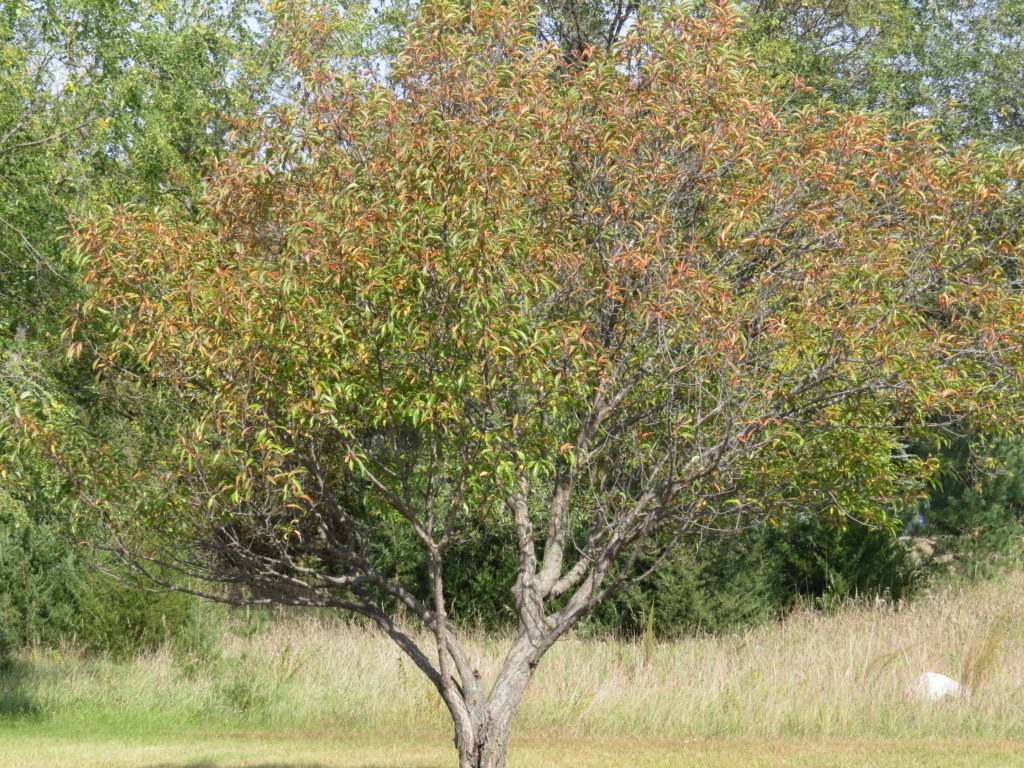
Back in the yard, a Wild Plum tree reminded me of an Autumn person—day by day there was a slight change of color, like a person gradually going gray.
The Crabapple tree, with its dark purple Summer leaves, actually gets brighter and more beautiful in Autumn.
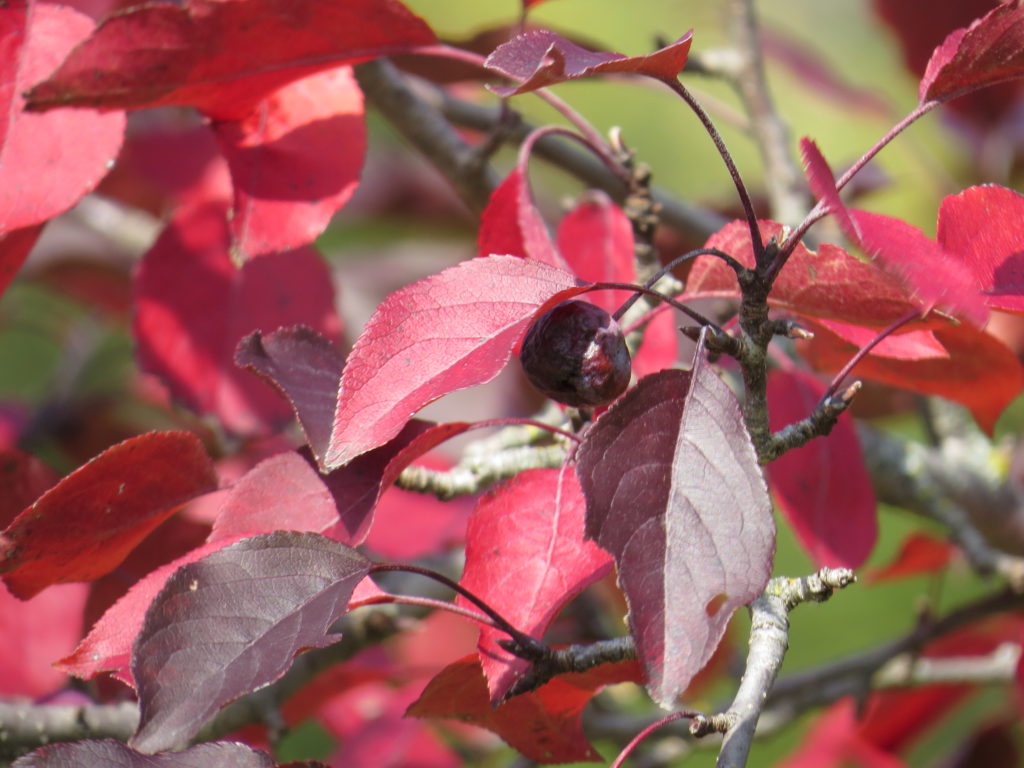
Looking at our lives as seasons honors the development and beauty of each part. It has a rhythm and sensibility about it. There is no ‘over the hill’ as there is on a birth-to-death time line. In each season we have ‘work’ to do, challenges to overcome, and things to experience and learn. It’s like each season of our lives has its own cycle of seasons! Seasons within a season! And yet each is unique—Autumn is the only time the leaves turn brilliant colors and drop from the trees. It is a time for culling and downsizing. The Autumn season of our lives gives us empty nests, just like the birds. We conserve energy, and as the old way leaves us, we enter a period of quiescence while looking forward to a future new thing. No need for distractions. The seasons and cycle of Nature sustain us.
The Partnership of Art Between Kelly and Nature
The true work of art is but a shadow of the divine perfection. –Michelangelo
From Kansas City we flew to Austin, Texas, home to our first-born and her husband. It had been three years since we were there for their wedding, and we were all excited to do more exploring of this city and landscape that had captured their hearts. One bright, sunny morning we drove to the University of Texas campus where the Blanton Museum of Art stands in grand Texas style. Our destination was the recently completed standing work of art and architecture by Ellsworth Kelly, appropriately entitled ‘Austin.’ The artist gifted the design concept to the Blanton in 2015 before his death, and it was completed in 2018. Kelly was enamored by the architecture of cathedrals in Paris when stationed there in World War II. The structure is shaped like a cross, igloo-like with curved roof lines and brilliant white exterior.
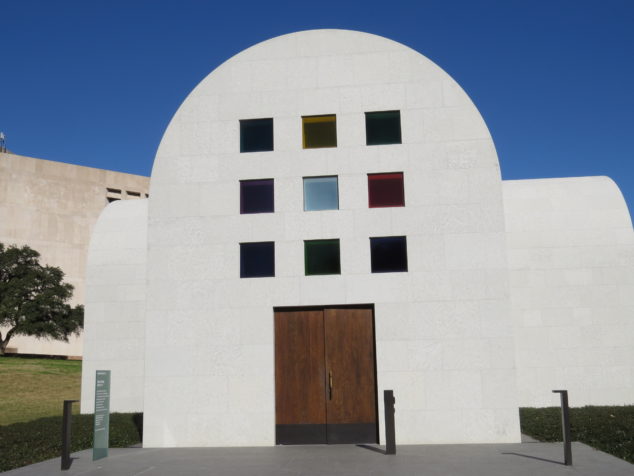
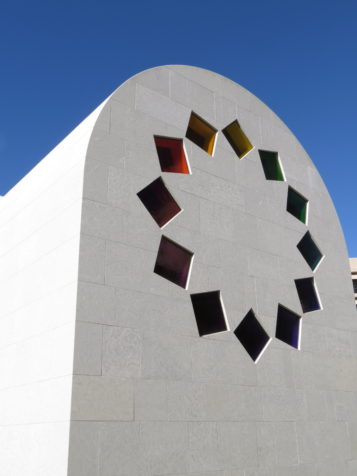
The south, east, and west sides of the building are adorned with colored glass windows—the ‘color grid’ at the entrance, ‘tumbling squares’ on the east face…
…and ‘starburst’ on the west.
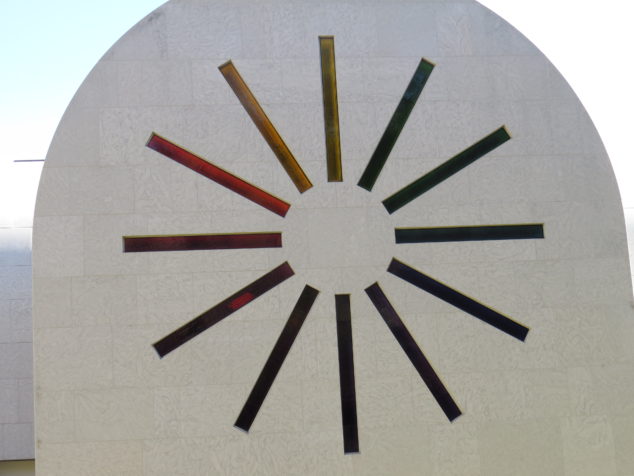
The shining white exterior is covered in 1,569 limestone panels from Alicante, Spain—each block a story and work of art in and of itself.

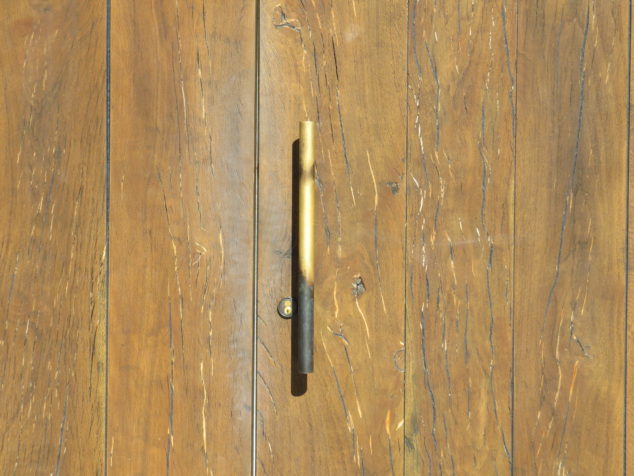
The entrance door is made from native Texas Live Oak, repurposed from some other life. I like how the metal handle is burnished from expectant hands reaching for entry.
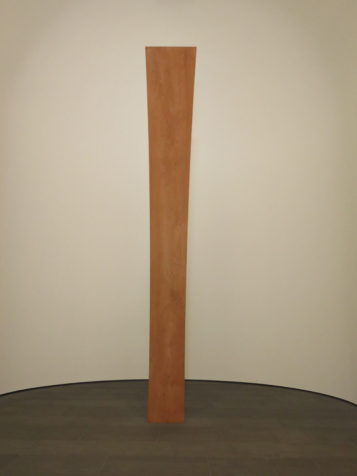
Once inside, I was shocked by how empty it was, though I don’t really know what I was expecting. Straight ahead was the fourth, north-facing arm of the cross, and nestled in the curve of that arm rose a totem made of Redwood logged in the nineteenth century and reclaimed from the bottom of a riverbed. New life and rich patina from a century-old, forgotten log of a beautiful Redwood tree!
The colored glass windows were made from handblown glass by Franz Mayer of Munich. The ‘color grid’ was a theme used by Ellsworth Kelly in much of his other art…
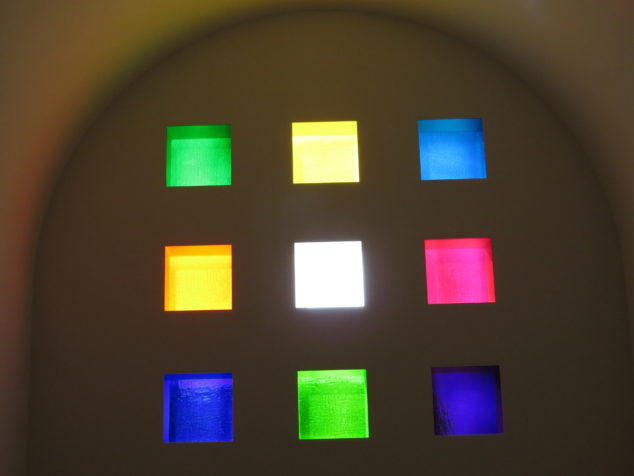
…as was the spectrum of colors used in the east and west windows, reminiscent of refracted light through a glass prism or millions of drops of water that creates a rainbow. The outside light directed the colors onto the interior ceiling and walls…
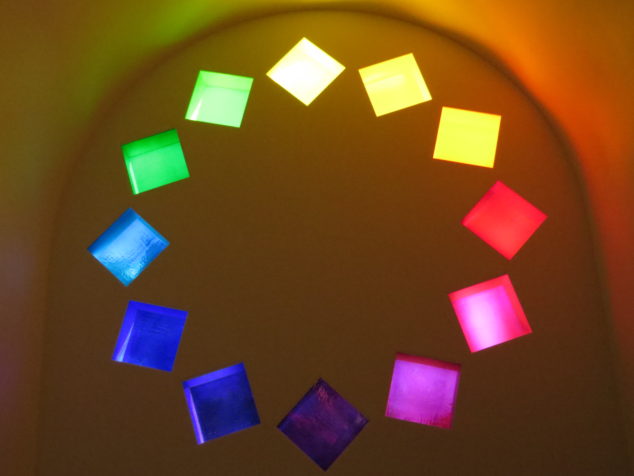
…and even reached over to its opposite window to reflect yellow on purple, blue on red, and pink on blue.
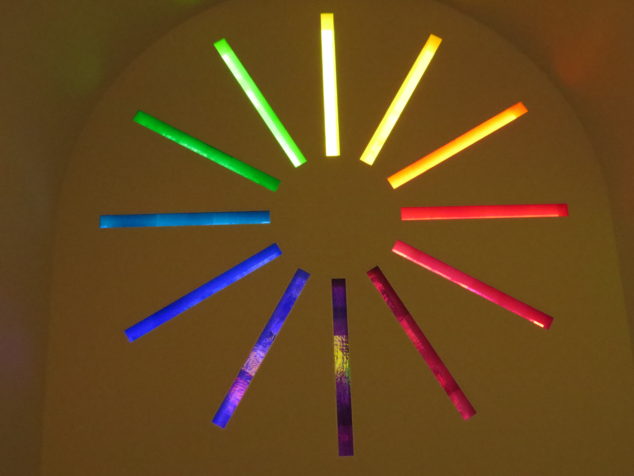
The ‘starburst’ was my favorite, here along with two of my favorite people.
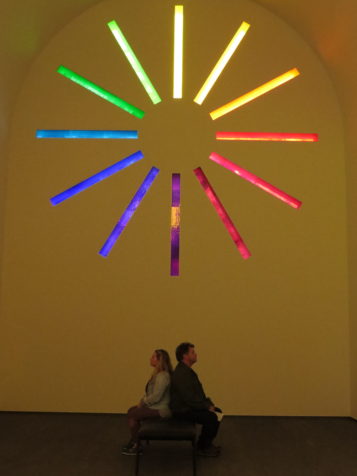
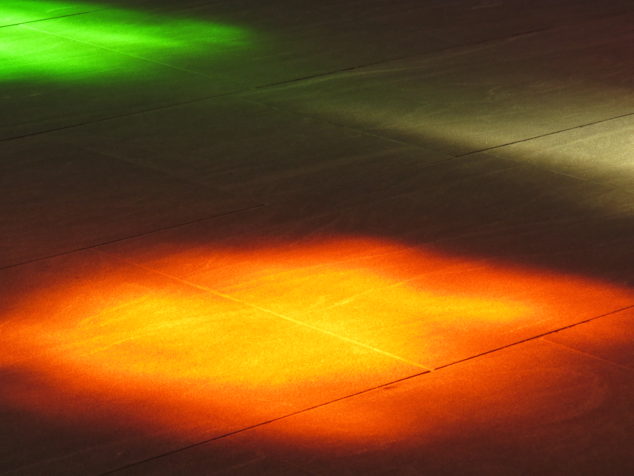
The real partnership of art between Kelly and Nature morphed into being when the sun shone directly through the ‘color grid’ windows onto the walls, onto the floor, and onto the black and white relief panels that line the walls. The panels are made from marble—the white marble sourced from Carrara, Italy where Michelangelo chose his stone and the black from a quarry in Belgium. Kelly, a life-long atheist, conceived the fourteen panels as abstract versions of the Catholic Stations of the Cross.
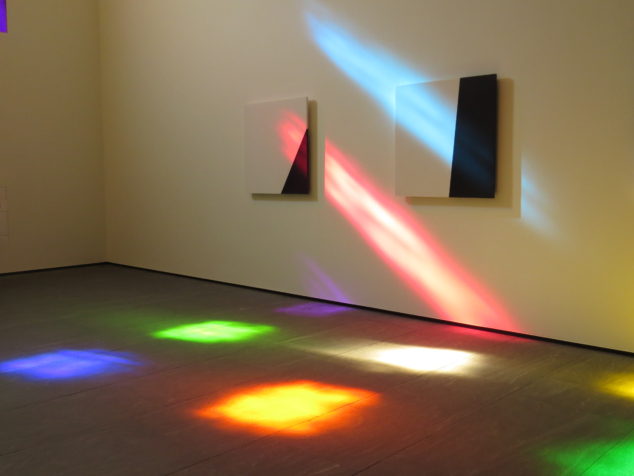
The black and white non-colors represent something basic and elemental and often oppositional, such as light and dark or good and evil.
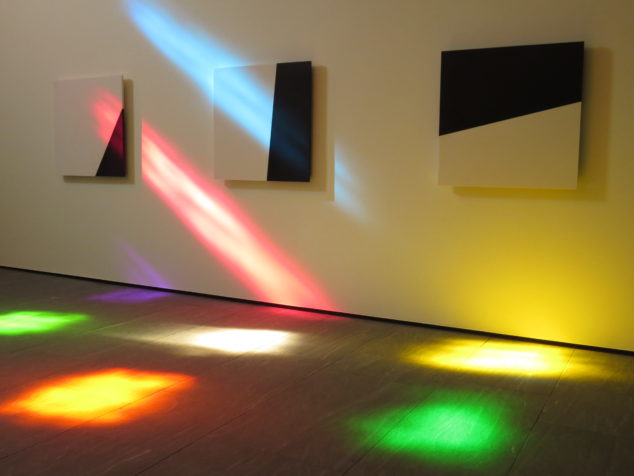
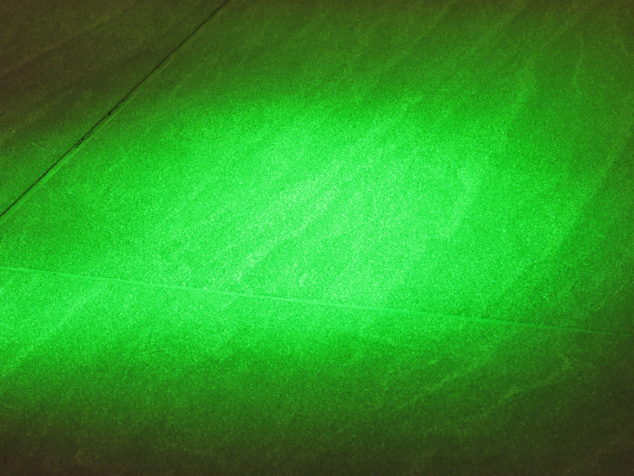
The floor of ‘Austin’ is black granite from the state of Georgia. The sun-shining colors illuminate the dark stone with a rich, almost neon effect. Whatever the time of day, the art, the picture of color on granite or marble, changes, morphs, and becomes new again.
Artists and Nature have been partnering for eons—from cave dwellers with pigments made from minerals, charcoal, and limestone mixed with spit or animal fats to Native people with dyes made from barks, leaves, and flowers to Michelangelo with his huge blocks of marble. (“I saw the angel in the marble and carved until I set him free.”) Nature has been the inspiration, the means, or the medium for practically every artist. Ellsworth Kelly’s ‘Austin’ displays the rocks, wood, and rainbow colors in a simple, naturally elegant, and compelling way. He envisioned his work of art as a site for joy and contemplation—the same qualities that Nature or a chapel offers to all of us. What happens to us when we immerse ourselves in art of some form or in Nature? What parts of ourselves do we consciously disown yet display in full sight through our art? I think art offers us a reflection of the rich patina of our lives, complete with the building blocks that have pieced us together—each a story and work of art, in and of itself. Each one of us is a refracted ray of light from divine perfection that shatters into some unique color, and together we partner to create a true work of art.