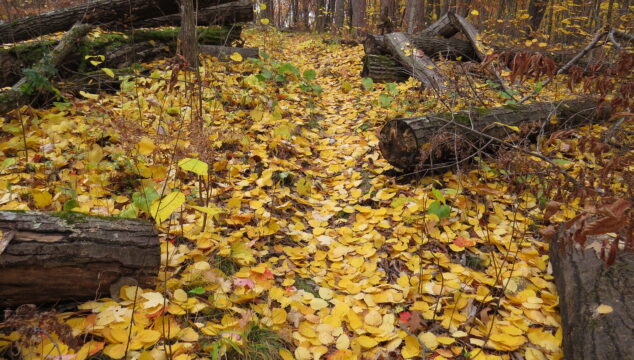
Come walk with me in the peak Autumn beauty of the Northwoods. To say that I love this time of year is an understatement. Most everyone can appreciate the colorful falling leaves---it reveals the 'true self' of a tree when its leaves are no longer producing chlorophyll. Their true colors are revealed, and there is something simple … [Read More...]
Walking in the Sand
…in every grain of sand there is the story of the earth. –Rachel Carson
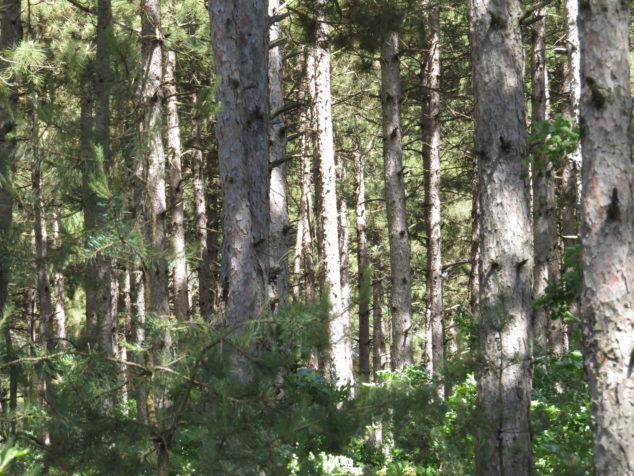
Walking in the sand along the shore of a lake or ocean is the epitome of a romantic sunset evening or a sand-castle fun family day. Bare feet sink into the dry sand, slowing down the pace of gait and time. Sand has been used for training athletes, including Walter Payton, to improve speed, agility, and strength with the added resistance of moving through sand. Now imagine going for a hike in the middle of a pine forest in Minnesota and walking in the sand!
Sand Dunes State Forest and Uncas Dunes Scientific and Natural Area is located in the Anoka sand plains created when meltwater from the last glaciers deposited a large area of sand. Sand dunes were formed when strong winds blew across the flat landscape. Prairie grasses grew on the sand, and when European settlers arrived, they plowed the virgin prairie for cropland. The drought and Dust Bowl era of the early 1930’s ended farming in the area as the sandy soil “took to the air and drifted like snow.” Hardwood and conifer trees were planted in 1941 to stabilize the sandy soil. In 1943, the state legislature passed a bill to set this land aside for conservation, and since that time, the forest has been enlarged to over 10,000 acres. It now includes camping, swimming beach, horse camp, and trails for hiking, riding, and snowmobiling.
Over 2,400 acres of pine trees have been planted over the decades. They are thinned and harvested for forest products every 5-10 years.
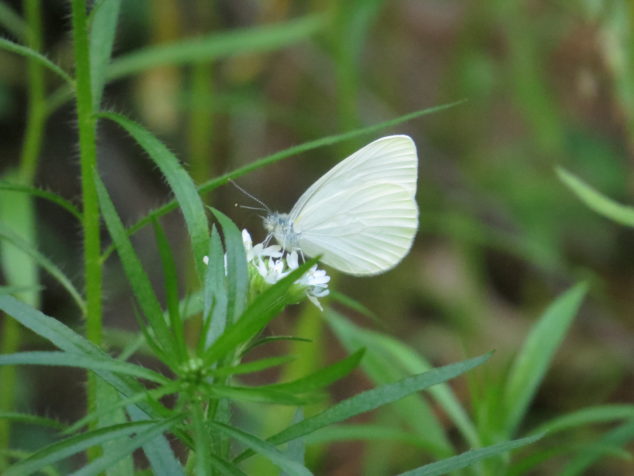
The Uncas Dunes Scientific and Natural Area lies within and adjacent to the State Forest. It was established to protect the sand prairie, the dry sand savanna, and the Uncas skipper, a state endangered butterfly. We had no idea at the time of our hike what the Uncas skipper looked like, but my photo of a small butterfly turned out to be a Mustard White butterfly.
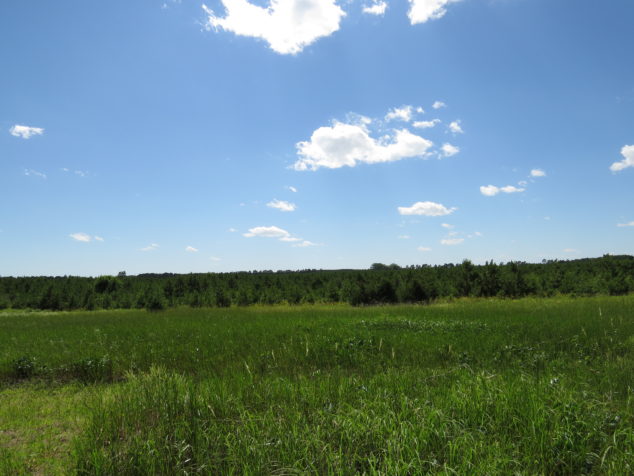
Prairie, pine forests, and blue skies surrounded us as we hiked. Unfortunately, the deer flies also surrounded us, and I tried implementing the Aaron Brake Mind-Over-Mosquito Strategy for the extremely annoying pests.
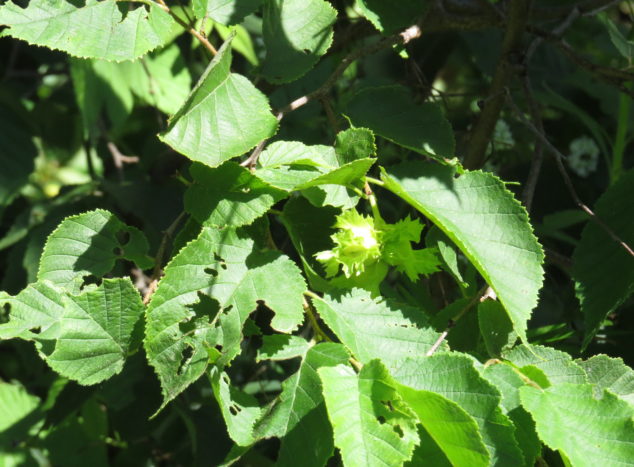
We hiked past native hazelnut shrubs with their frilly, pale green seed pods encasing the immature nut.
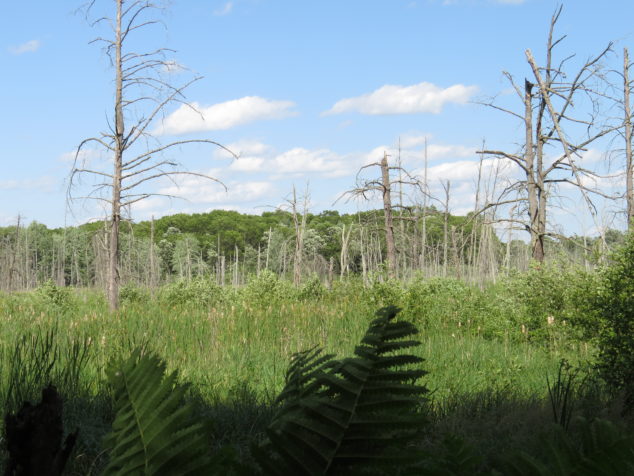
A fern-lined wetland area held the remains of trees that had died from wet feet.
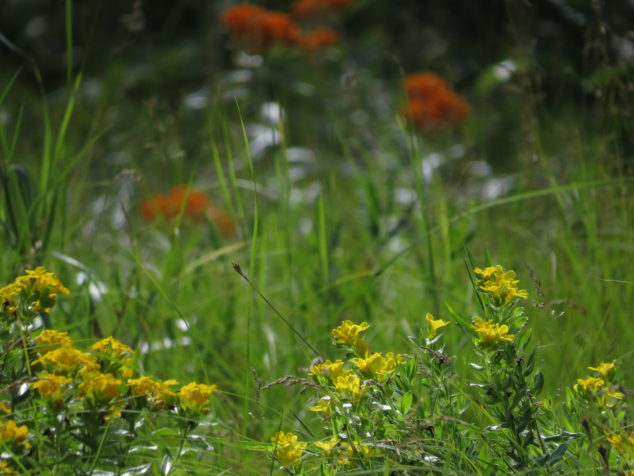
The trail of trees opened up to a small meadow where a brilliant Butterfly Weed was in full bloom. Dark green lance-shaped leaves were outlined with sunlight. The bright orange flowers attract butterflies and hummingbirds. Native Americans chewed the tough roots of the Butterfly Weed as a cure for pleurisy and other pulmonary ailments.

Another wild flower that I didn’t know was in the foreground of the Butterfly Weed. It is either Hoary or Hairy Puccoon, similar sandy soil-loving perennials that are known for the intense reddish-purple dye derived from their deep tap root.
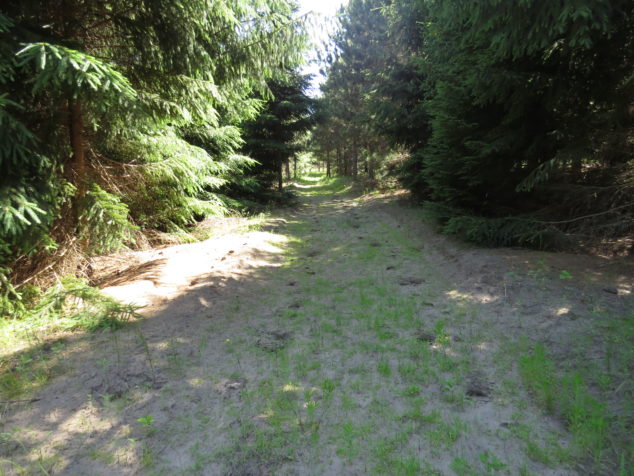
As the time edged closer to suppertime, we decided to turn around and head back to the car, ready to be free of the circling deer flies. Our footprints sank into the sand, along with deer and horse hoof prints.
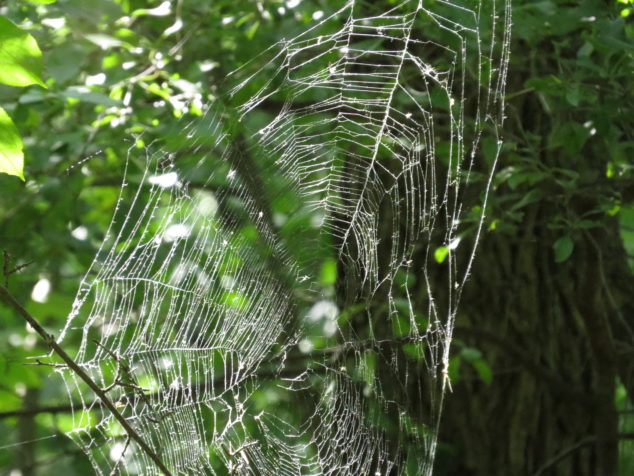
Evening sunlight streamed through the trees and lit up a spider’s web that was previously unseen.
Explorer Will Steger has been doing a yearly ice-out solo expedition in Northern Minnesota and Canada for the last number of Springs. He travels with a sled or specially designed canoe that he can either pull across the snow and ice or float in the rivers and lakes when the ice breaks up. He radios in a daily report telling about his night and day. Most often the temperatures are below freezing and sometimes below zero. Some days the wind chills are staggering. Snowstorms can dump many inches of snow that impede his travel. Food and fuel sometimes need to be rationed towards the end of his trip if he is in the wilderness longer than planned. And yet, he wraps up his report of a freezing night in a tent, thigh-high snow to trek through, and treacherous ice to navigate with “it was a good workout, though.” This 71-year-old explorer challenges his mind and body with these solo expeditions, doing the hard work, and calling it good.
We find ourselves in trying times with lives endangered in a myriad of ways. Somehow we must stabilize the shifting sands. So whether we’re trekking through deep snow, walking in sand with deer flies, navigating polarizing politics, or trying to save lives, let Light shine on the previously unseen, let us challenge ourselves to do the hard work, and at the end of each day, call it good.
Gleanings from June–Synergy
It was June, and the world smelled of roses. The sunshine was like powdered gold over the grassy hillside.
–Maud Hart Lovelace from Betsy-Tacy and Tib
We began the month of June with a sun halo–a rainbow all around the sun. Also called a 22-degree halo, it is caused by millions of tiny ice crystals in high cirrus clouds that refract (at a 22 degree angle) and reflect the sun’s light. Amazing!

The flowers of June welcome the bees and butterflies. Wild roses peek their pink flowers between the stems of grass along the road.
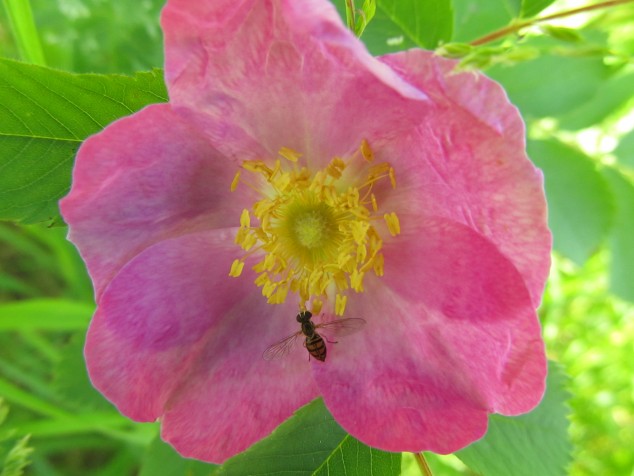
I’m in love with this Perennial Pink Salvia we have planted close to the front door. Each stalk of delicate pink blossoms attracts bees of all kinds–the hard-working pollinators of the world.
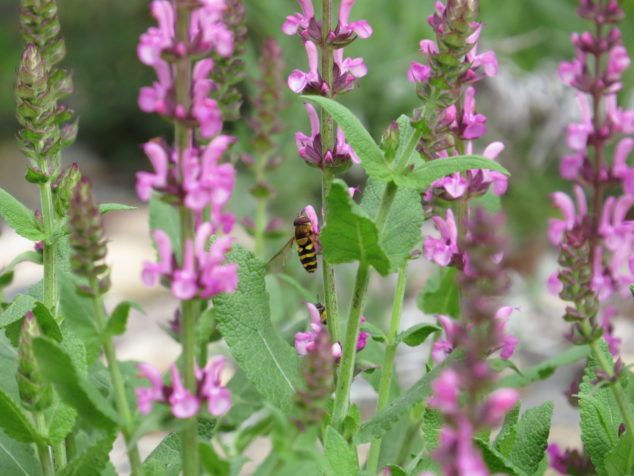
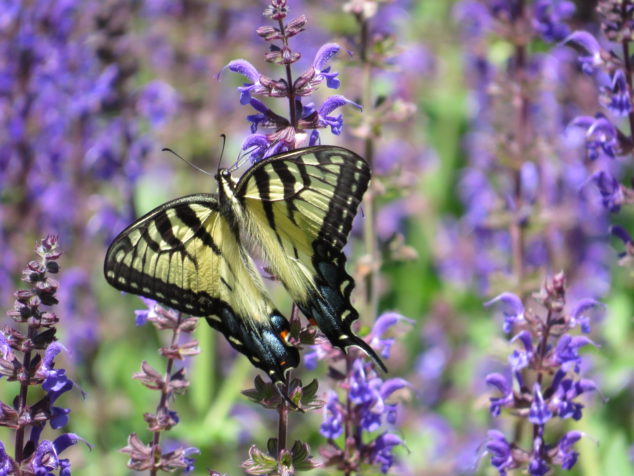
The much larger bed of Perennial Blue Salvia is spectacular when in full-bloom! Pollen-laden bumblebees rumble from flower to flower, and the sight of a Yellow Swallowtail is like a shimmering ornament on an already beautiful evergreen–synergistic beauty!
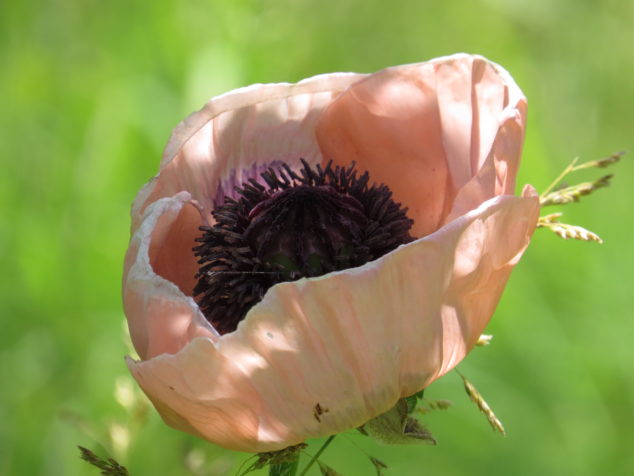
I am always delighted to see this Pink Poppy bloom in June. The crepe-paper-like petals are entire works of art in and of themselves and when combined with the dark purple, velvety center, it is so lovely to behold.
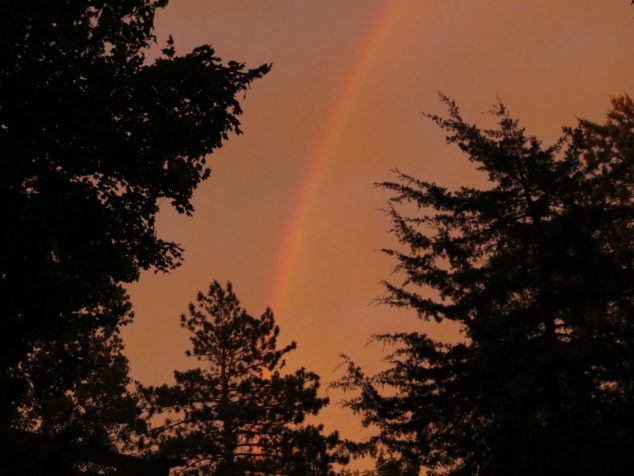
A late evening storm turned the sky pink, and as the clouds cleared to the west, the setting sun and water droplets created a rainbow among the maple, cedar, and pine trees.
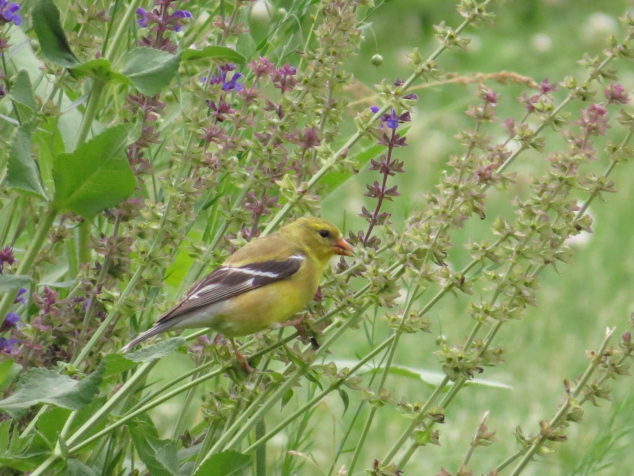
When the cobalt flower petals fell from the Blue Salvia and seeds formed in their place, the American Goldfinches gathered their bounty.
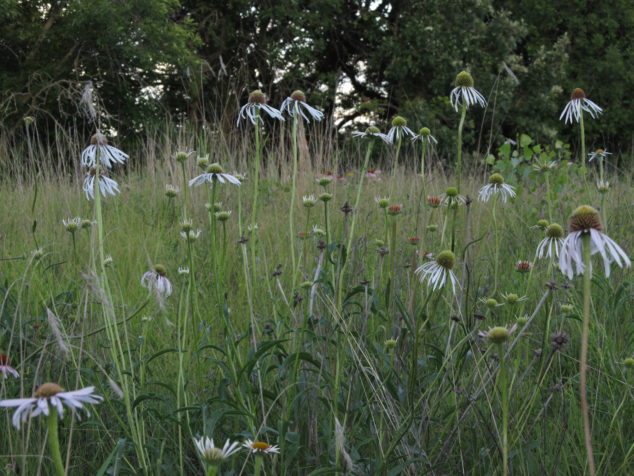
Pale purple coneflowers with their wispy, drooping petals danced in the breeze along the trail on an evening bike ride. Prairie grasses and coneflowers complement one another in the prairie landscape.
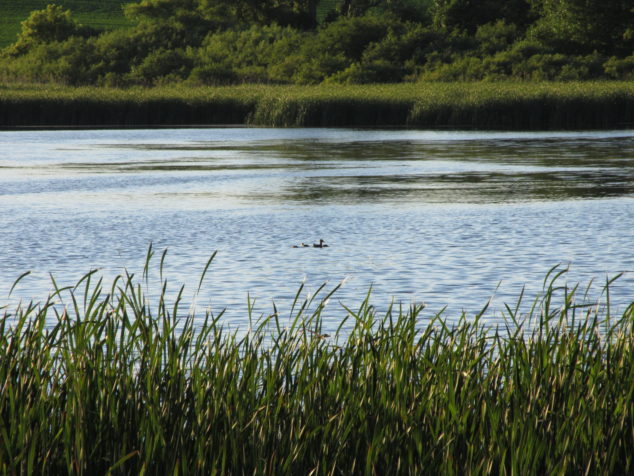
Farther along the quiet trail, the western sun glittered on a small lake and surrounding cattails that created a perfect home for this mother duck and her ducklings.
Synergy is defined as the interaction of elements that when combined produce a total effect that is greater than the sum of the individual parts. Nature combines the elements of sky, water, land, and vegetation to produce phenomena and beauty that is beyond our imagination. It works together for the good of all so that animals have a place to live, insects have food to eat, plants and trees are pollinated so fruits and seeds are produced that in turn feed other animals. It is the circle of life, the halo of Planet Earth created from the Source in the heavens above. May the powdered gold sunshine grace us all with sustenance, beauty, and synergy.
Biking and Hiking Where the Wild Things Are
Our copy of Maurice Sendak’s classic picture book ‘Where the Wild Things Are’ is tattered and worn, the shiny gold Caldecott Medal sticker peeling along the circular edge. I would hate to guess how many times we read it. The story is about play, actions, feelings, imagination, and processing. (If you are unfamiliar with ‘Where the Wild Things Are,’ click here to see a YouTube reading of the book.)
These wild things in Max’s imagination are at the opposite end of the spectrum to the literally wild things in Nature. And before I go any further, I must give due respect to the multitude of places across the world that are much more ‘wild’ than here in Central Minnesota. Nonetheless, all it takes is a bike ride or a hike close to home to encounter the wild things.
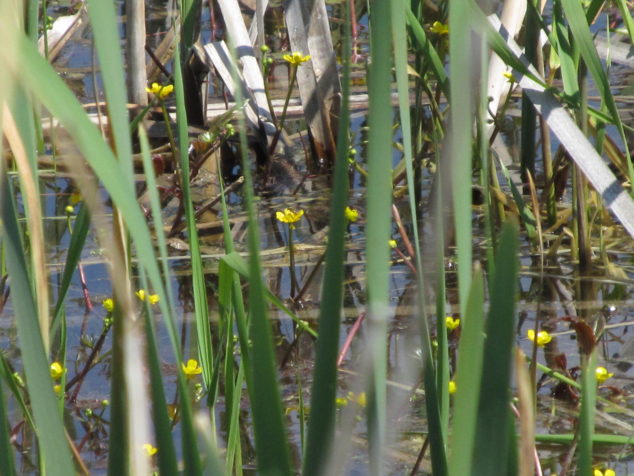
We can cross the highway down the hill from our house and ride the twelve-mile bike trail to the west. Redwing blackbirds sing from their cattail podiums and frogs chortle in the wetland area strewn with Yellow Water Buttercups.
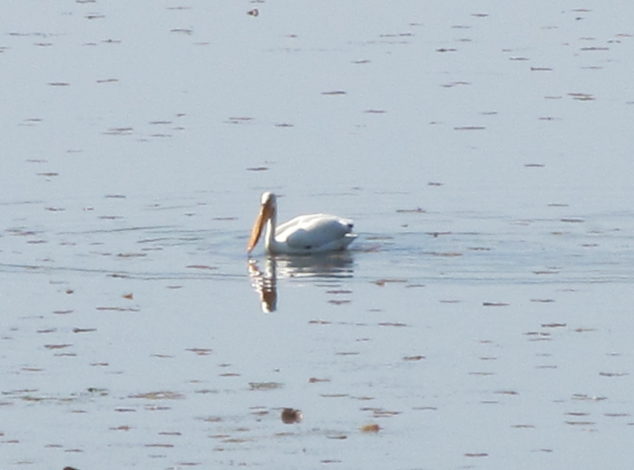
Farther down the trail, the Sauk River flows from the Chain of Lakes where the geese and the pelicans float. Beware–if you were a fish, he’d eat you up, he loves you so.
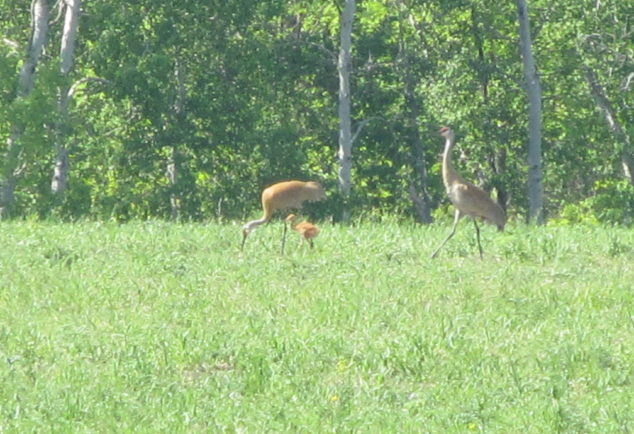
Down the ditch, across the busy highway, through trees and grass, I saw the strange walking movement of a family of Sandhill Cranes. These red-masked, five-foot-tall birds with a wingspan of nearly seven feet are formidable defenders of their young ones. They survey the world all around them for tasty frogs, snakes, insects, small mammals, and grains. Their distinctive trilling call draws your eyes skyward during spring and fall migration.
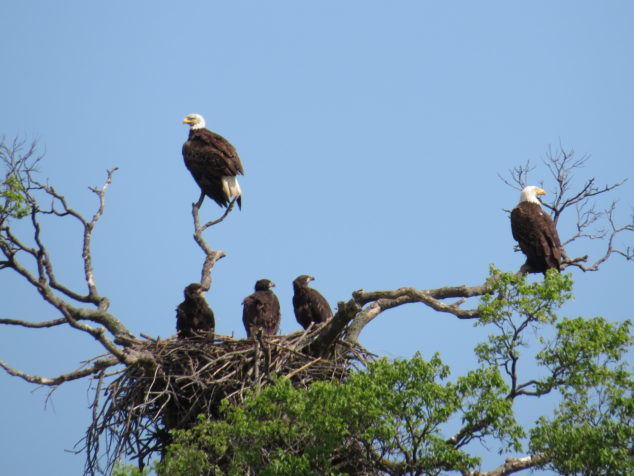
Last weekend we hiked through Rockville County Park to discover we are six baby eagles richer than we were a year ago. The family of five, with all their yellow eyes and terrible claws, sat peacefully in their lofty nest, watching as we walked around their prairie.
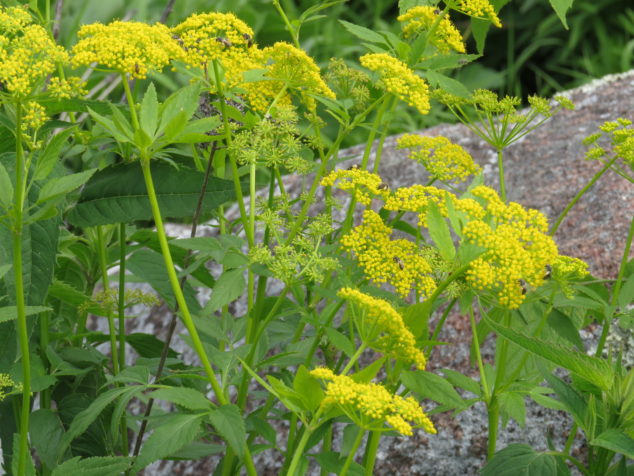
Golden Alexander, a member of the carrot family, is a host plant for Black Swallowtail caterpillars. It has a wild, beautiful scientific name–Zizia aurea–one that is meant to be proclaimed out loud! ZIZIA AUREA!
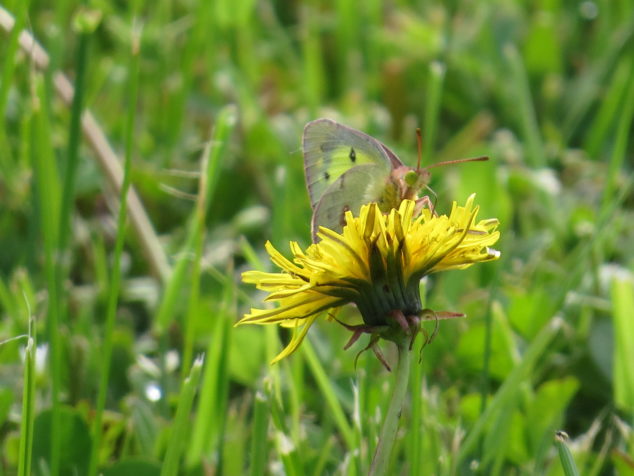
Be still and look at this beautiful little butterfly on the most common of all wildflowers.
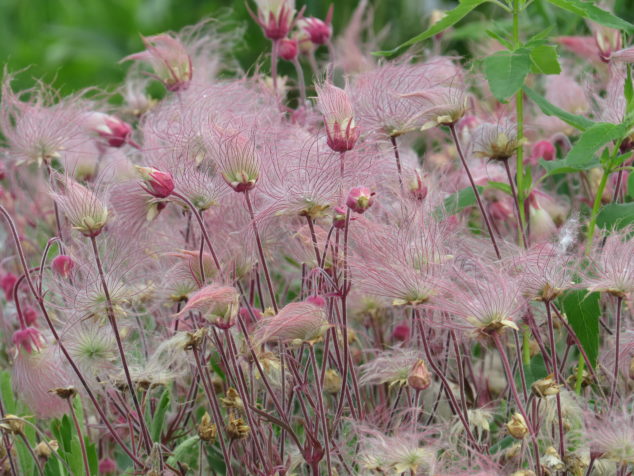
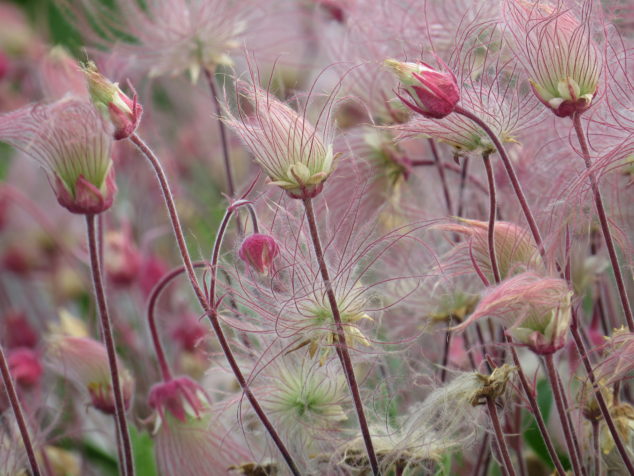
The exuberant wildness of Prairie Smoke drifted in the breeze. The nodding pink-red flowers stand up and open up after pollination and has a seed at the base of each feathery plume.
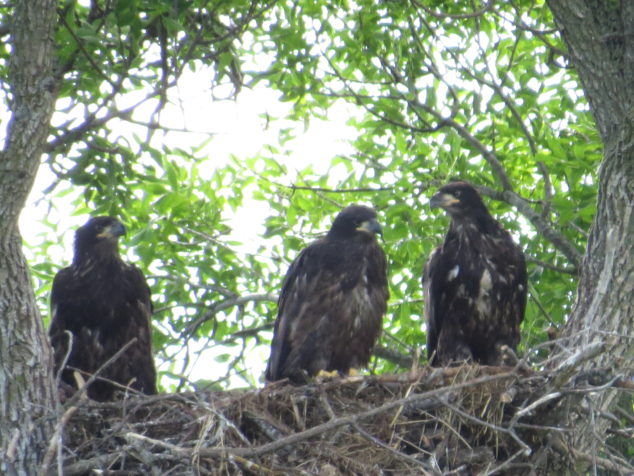
The other eagle’s nest is on the edge of the forest, and the three young ones sat patiently waiting for their parents to return with supper.
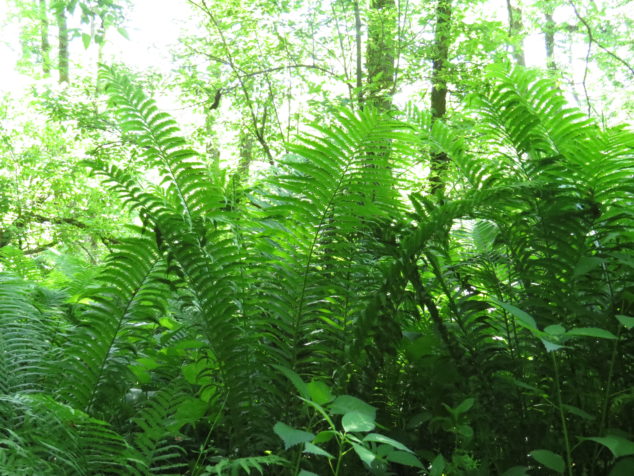
As we walked through the forest towards the Sauk River, we saw ferns that grew and grew and grew until they were as tall as we were!
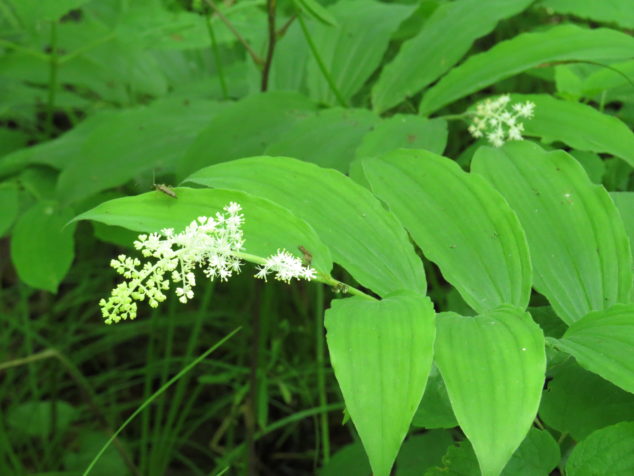
We saw a woodland plant that looked like Solomon’s Seal, but it had a different flower from the ones that hang from the underside of the arching stems. When we got home, I looked it up–it’s False Solomon’s Seal–I was both right and wrong.
We all possess the magic trick of staring into our own eyes, letting our imagination run wild, and believing it to be the truth. We become the king of our own wild imaginations. We like being in charge of the wild rumpus that ensues. But like Max, we eventually become lonely, and something from far away entices us to give up being king. Our ego cries, “Oh please don’t go.” But we say “No!” Amid the terrible roars and gnashing of teeth, we step into our true self and sail back to where Someone loves us best of all.
Gleanings from September 2015
We have all heard the phrase that a picture is worth a thousand words, and some have enlarged that value to ten thousand words. The saying has been linked to Fred R. Barnard, a United States advertising executive in the early 1920’s who promoted the effectiveness of graphics. Barnard attributed the saying to a Japanese philosopher and later as a Chinese proverb. With my amateur photography and mission to showcase the beauty of Nature, I believe in the power of an image to convey something words cannot express. And yet, there have been some frustrating moments for me these past months of August and September where I could not capture the essence of the experience with my camera. The latest of these moments was the super-moon eclipse. The first half of the eclipse was visible between roiling clouds that eventually took over and obscured the ‘coming out’ phase.
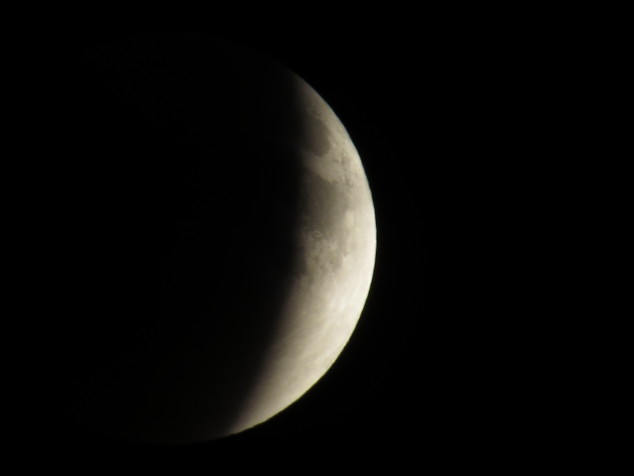
There are many wonderful photographs of the eclipse shared on the internet, but even a series of professional images could not capture the essence of the eclipse experience. To see the huge, shining full moon taken over by the shadow and how the atmospheric particles shone red was awe-inspiring. It made me realize the movement of our earth and universe and just how small we each are in the whole scheme of things.
While autumn finery is easier to capture in pictures, part of our ability to appreciate the images is our familiarity with it. Most have experienced the miracle of changing leaves, the smell and sound of dried leaves crunching underfoot, and coolness of air on a blue-sky fall day. By looking at a photo, we can ‘imagine’ the rest.
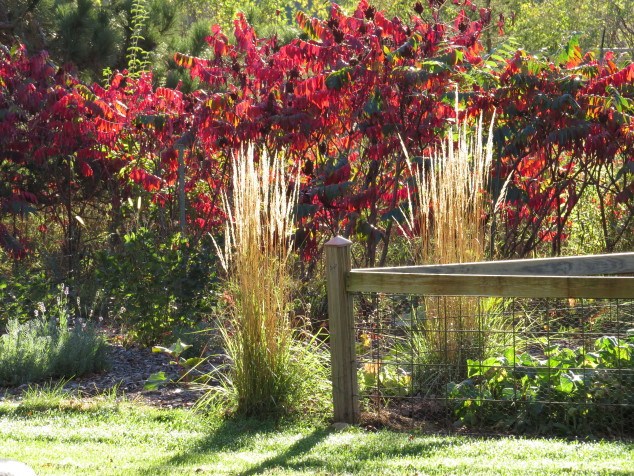
We have had a dry September–only one measurable rain at a much-needed, yet insufficient half-inch. We all drank it in.
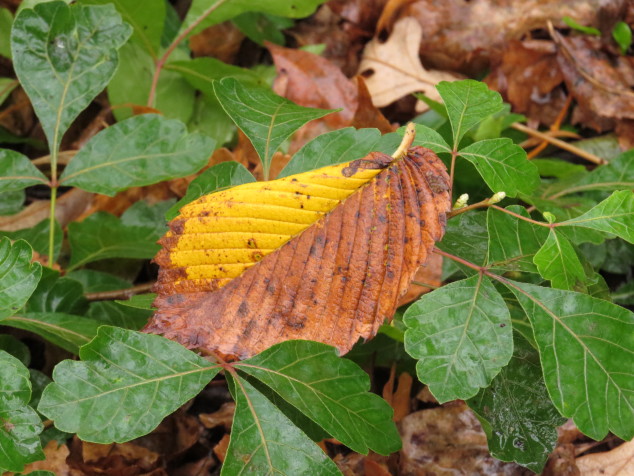
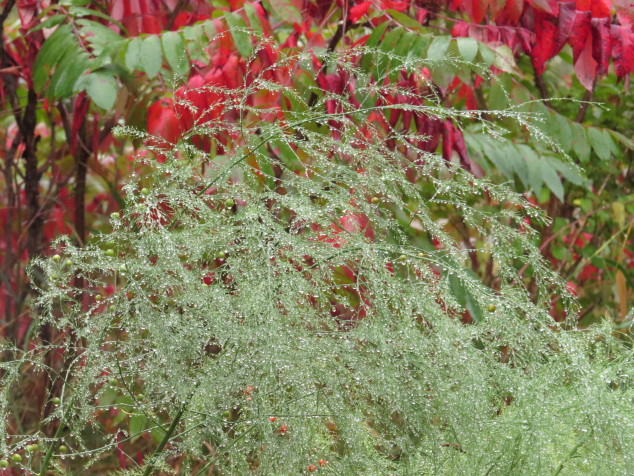
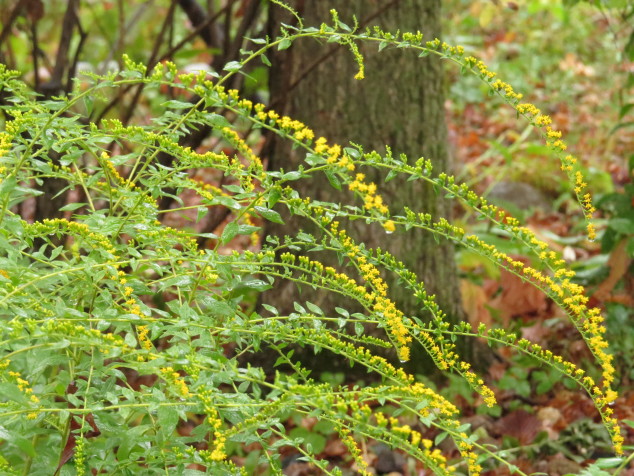
Our dry weather is turning the changing of the colors to the drying and browning of leaves, but one of the fall perennial stand-outs is in full bloom–‘Fireworks’ goldenrod. This deer and drought resistant cultivar has an explosion of tiny yellow flowers on horizontal stems.
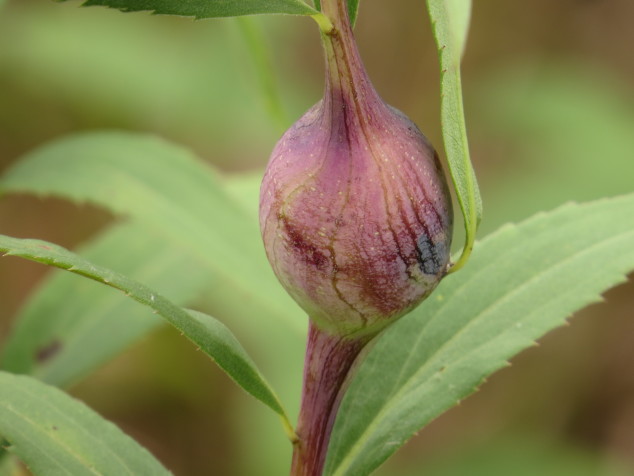
Many of the common goldenrod growing in the wild areas have an interesting feature–a purplish, rounded gall on the stem. The Goldenrod Gall Fly is a parasite that lives its entire life cycle on the goldenrod plant. After mating on the plant, the female deposits her eggs into the stem with her ovipositor. The larvae hatch in ten days and eat inside the stem. Their saliva has a chemical in it that causes the plant to grow the abnormal galls. The larvae stay in the galls for a year, producing an anti-freeze-like chemical to keep them alive through the winter. In Spring, the larvae become pupae and then adults, and then they leave the galls to find mates. The armor-like galls protect the larvae from most predators, but the Downy woodpecker seeks out the galls to break them open to feast on the juicy larvae.
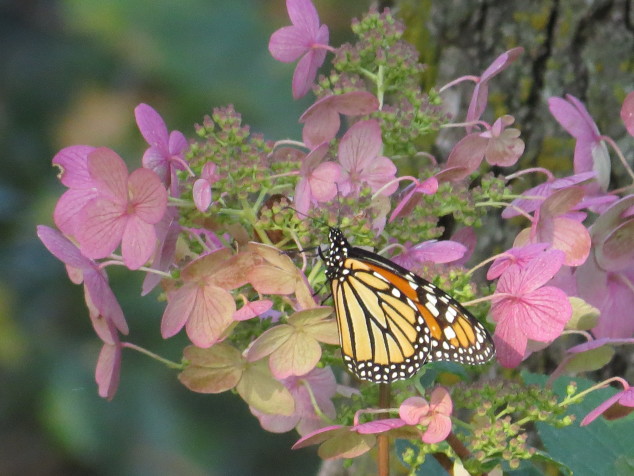
September was also the month of the Monarch. Our intention to let more milkweed grow paid off in the currency of butterflies.
A picture is worth a thousand words, ten thousand words, and maybe more. They are valuable in the appreciation of Beauty and the conveyance of details. The Essence of the Experience of walking through the Lost Forty forest last month or of viewing the super-moon eclipse could not be captured by photography, however. It could not represent the other senses–the smell of the pine needles, the quiet wind whispering through the tree tops, the feel of three hundred year-old bark– or the ‘other worldliness’ of moons and planets aligning and of the deep history and holiness of the land. As we live our entire life cycle on Planet Earth, pictures, words, and imagination cannot be stand-ins for the Essence of Experiences, for no matter the currency, they are worth millions.
Wonder Will Be Yours
I remember staring with wonder at each of the tiny human beings we brought home from the hospital. I couldn’t get enough of looking into their eyes, holding their perfectly plump bodies with those tiny fingers and toes, and kissing their delightful cheeks while inhaling that ambrosial baby smell. Every good force of Nature and God was involved in bringing forth these new creations to occupy our family life for a time, and the awesomeness and privilege of that is not lost on me. Not even after all these years. Especially after all these years–when they have all gone on to living their own lives.
But still, when I see my cherished children, which is not often, I find myself staring at them, looking into their adult eyes, wanting to hold their hand or push back the hair from their forehead, and longing to kiss their cheeks. Their individual worlds are separate from ours now–the way of Nature–but the wonder is still there.
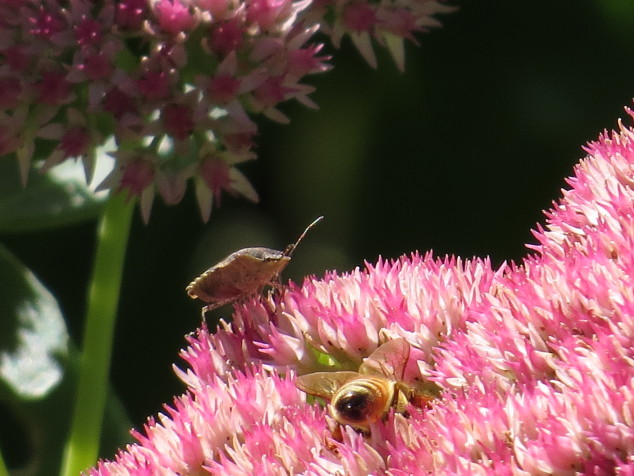
There are tiny, little worlds all around us. We catch glimpses of them from time to time and our understanding is expanded by information in books, nature films, and the encyclopedic internet. We can take a closer look at these tiny worlds at almost any time. Imagine the world of the honeybee–we see them working to gather nectar and pollen, but we don’t realize how much work goes on inside the hive. Sedum ‘Autumn Joy’ is an abundant source of nectar for honeybees at this time of year.
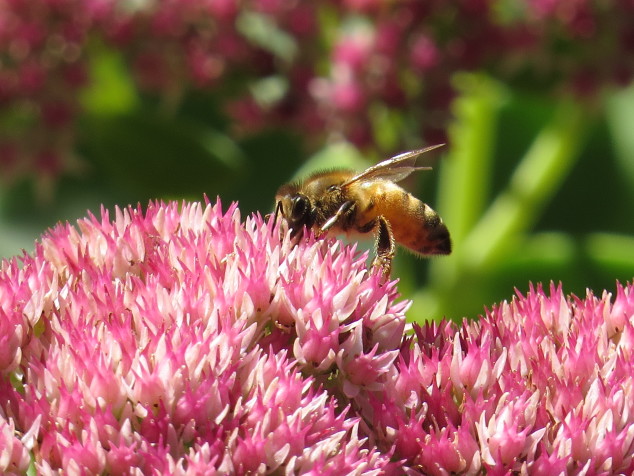
They share the joy with a pungent stink bug who raised his antennae in alarm when the honeybee flew near, but he determined that the bee was no threat to him. There was plenty of nectar to share.
Another little world lies hidden in a wild rosebush.
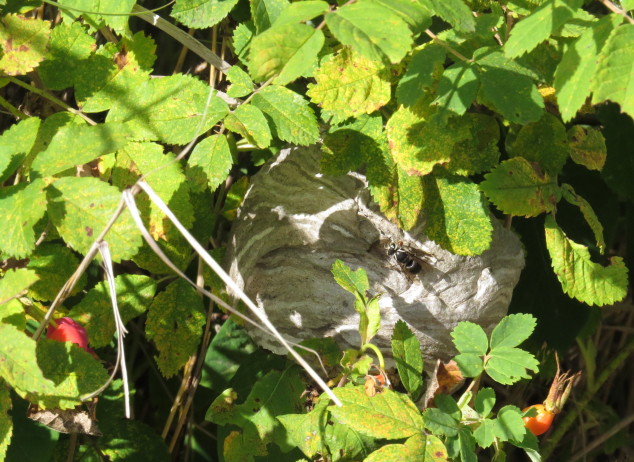
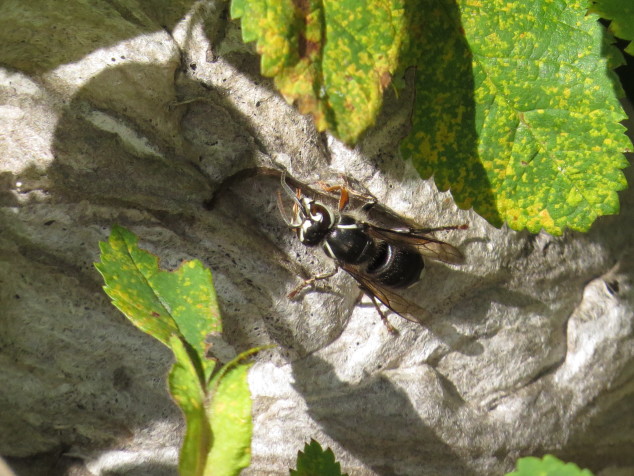
The bald-faced hornet, which is really a yellow jacket wasp, collects and chews wood, mixes the fibers with saliva to make pulp, and constructs a paper nest that houses comb-like nests of larvae and hundreds of worker bees.
Most everyone knows the life cycle of the Monarch butterfly. Milkweed is the host plant for the Monarch caterpillar that hatches from eggs deposited by the butterfly. The caterpillar eats milkweed until mature, then forms a hanging chrysalis.
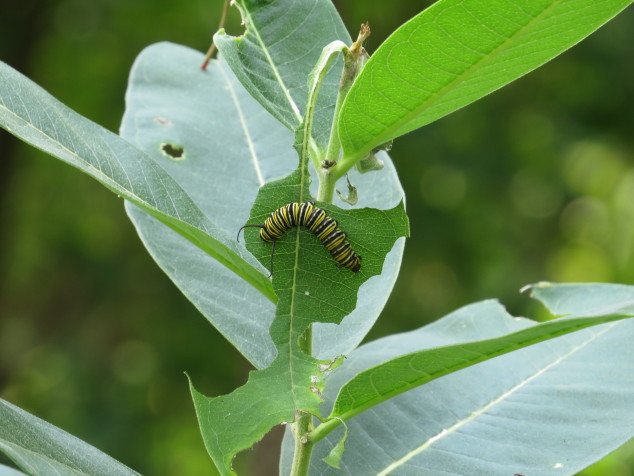
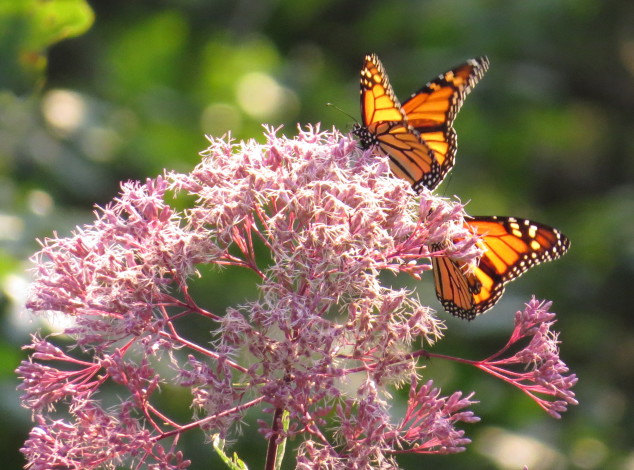
When the butterfly emerges from the chrysalis, he leaves the Milkweed world and flies into the vast, diverse Unknown full of dangers and delights. One of the delights is the formidable Joe Pye Weed that grows up to seven feet tall and produces huge mauve pink flower heads full of vanilla sweet nectar.
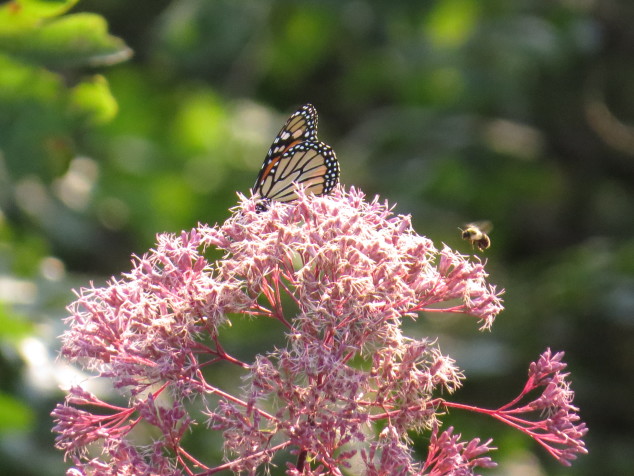 While watching the butterflies and bees swarm the Joe Pye Weed, I noticed a hummingbird at the nearby Summer Sweet bush. This small native shrub is another important source of nectar for butterflies and hummingbirds, and its fragrant, bottle-brush flowers will bloom in shade.
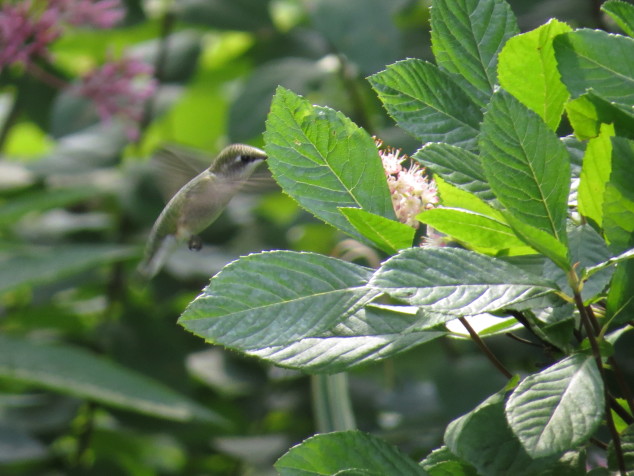
What a summer show! The enticing, sweet blossoms and the birds, bees, and butterflies!
And then…Wonder! The Hummingbird flew over to the jeweled iridescence of the butterfly and hovered there!
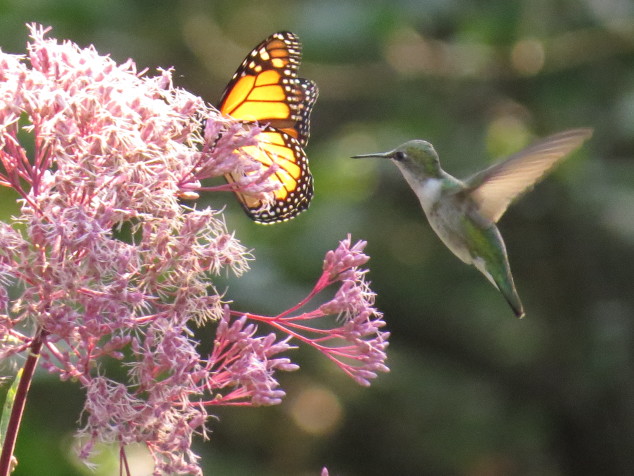 I am grateful and privileged to witness such a moment in the late summer world of Joe Pye. These tiny-world moments play out all around us, most of the time without our knowing. Take some time to notice the tiny world of some part of Nature and share the Autumn Joy!
I am no longer part of the daily world of my children, though daily they are in my thoughts, my whispered prayers, my silent sending of blessings upon their adult lives. I want to remind them, and all of you, that looking into another person’s eyes connects two souls, shares our tiny worlds, and reflects the face of God. Touching another person’s hand conveys interest and caring and does wonders for our physiology. Kissing a cheek bestows a gift to the one kissed and the giver alike. Let every good force of Nature and God inspire your life as you go through your life cycle and know that the nectar of love and joy is abundant–there’s enough for everybody! And Wonder will be yours.
Gleanings from June 2015
And what is so rare as a day in June? Then, if ever come perfect days….Whether we look, or whether we listen, We hear life murmur, or see it glisten. James Russell Lowell
The long, light days of June have slipped by, and we really have had some perfect days! The combination late Spring/early Summer brings warm, wonderful weather, incredible plant growth, exquisite flowers, and animals intent on nesting and raising their young. Life murmurs and glistens all around us, subtle yet extravagant, common yet miraculous.
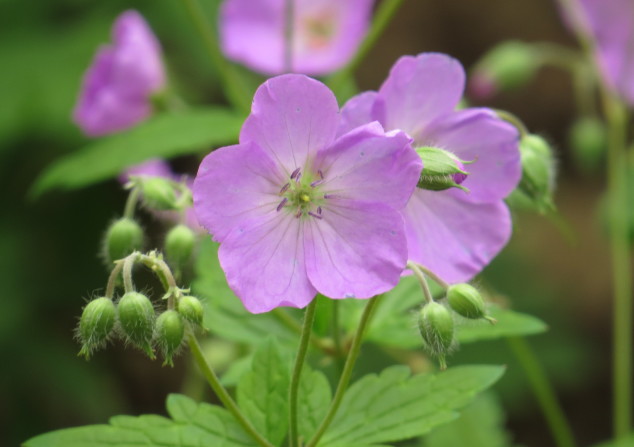
Wild Geranium is a delicate woodland flower that graces the paths through our woods.
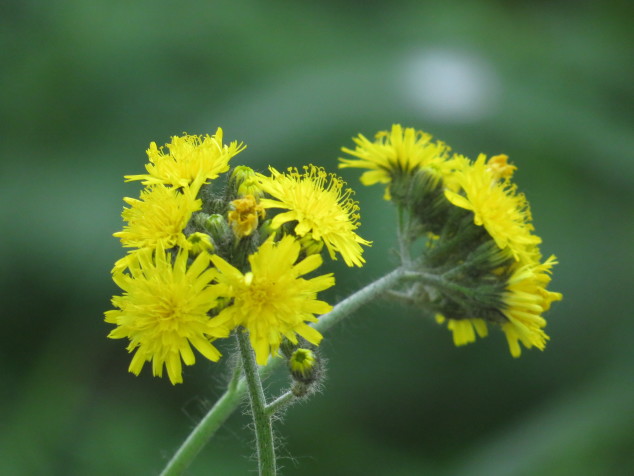
False dandelion grows in our woods, though I have also seen it in full sun along the road ditches. A cluster of small, dandelion-like flowers sways atop a two-foot stalk.
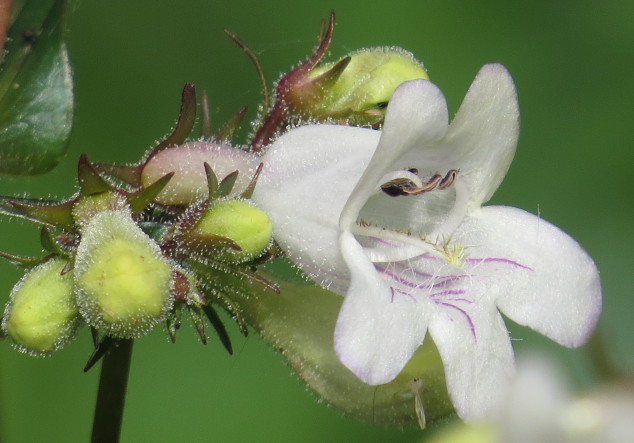
Our sun garden displays the glorious Penstemon digitalis ‘Husker Red’. It has dark maroon foliage and shining white flowers on tall stems. You can see why its common name is Beard tongue; the sterile stamen (one of five stamens) is lined with tufts of small hairs.
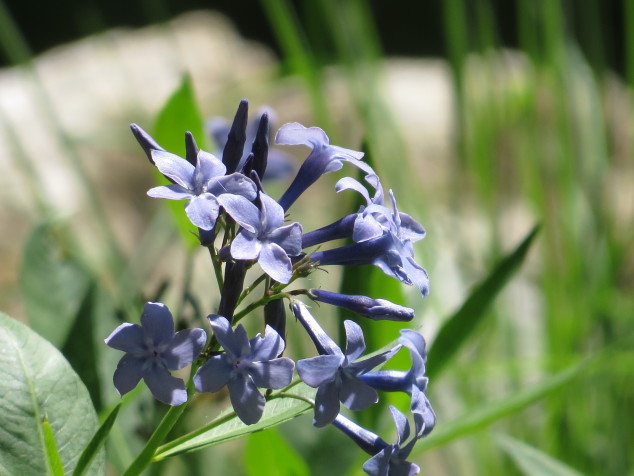
One of my prairie garden flowers–Amsonia or Bluestar–looks perfect in front of the wispy prairie grasses and the Western South Dakota petrified wood.
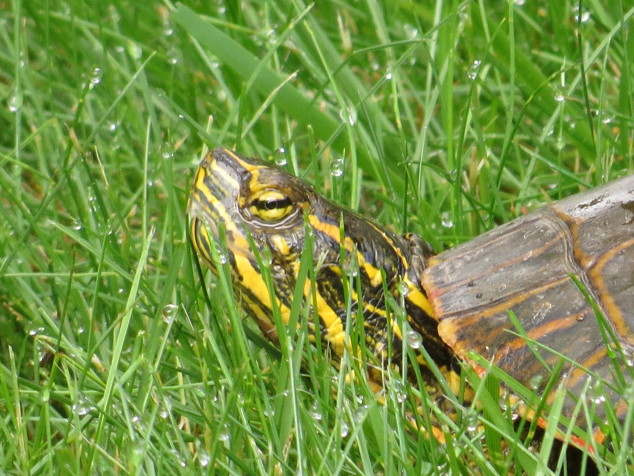
One of the critters that walked through our June yard was a Western Painted Turtle. She quickly ambled through the dewy grass until she saw me–then she stopped as I got pictures of her. She was likely on her way to her nesting place where she digs a hole with her hind feet and deposits her clutch of leathery white eggs. Incubation time is 72-80 days, and since we live so far north, the hatchlings stay in the nest until the following spring!
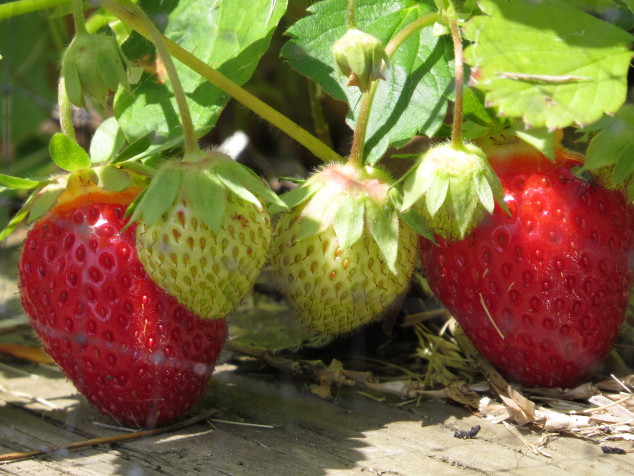
 Tiny wild strawberries and our larger cultivated ones turn a shiny red in ripeness–a sweet treat for whoever finds them first.
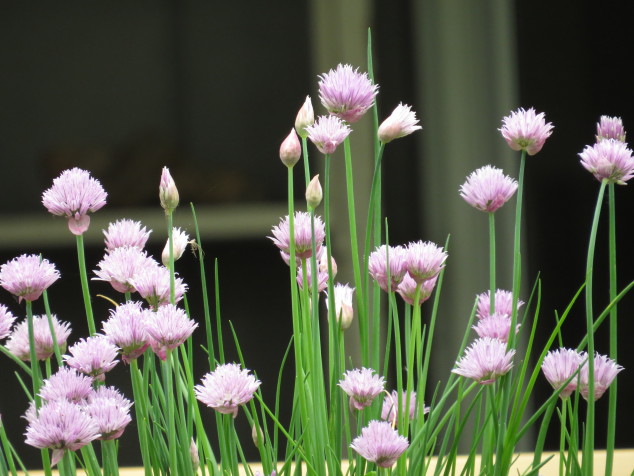
Outside the screened-in porch, the chive blossoms line up like children at the schoolyard.
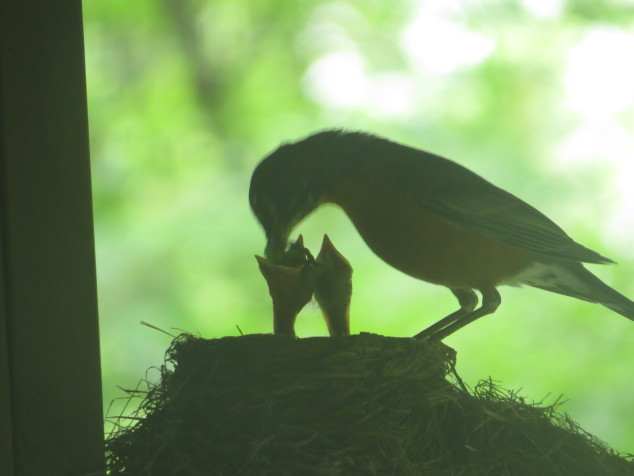
And speaking of the screened-in porch, my re-do project is on bird delay! A robin thought the unscreened cross beam would be a perfect place for her grass and mud nest. There are three hungry baby birds in the nest in spite of the sawing and hammering going on below. Staining and re-screening will have to wait until the young ones fly from the nest!
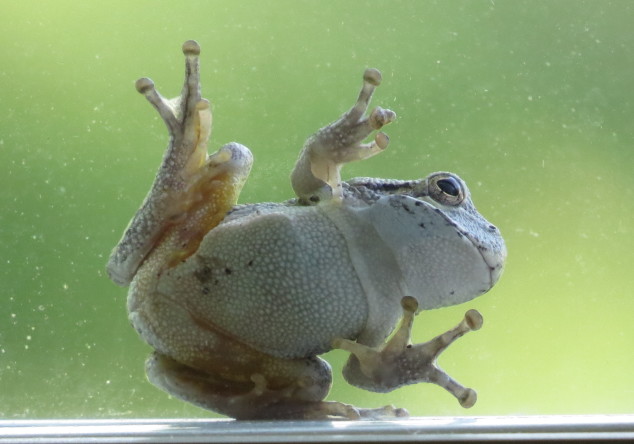
A couple of other creatures seemed to want a glimpse of human life inside the big wooden box with windows. I observe Nature every day–do we ever think about the creatures observing us?
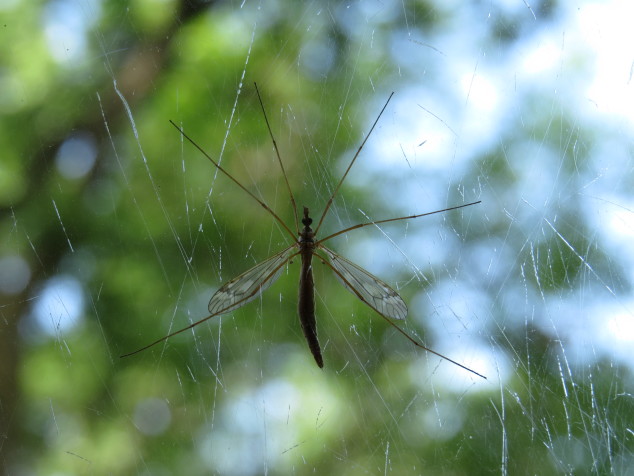
All I can say to the little critters is that I definitely need to wash windows!
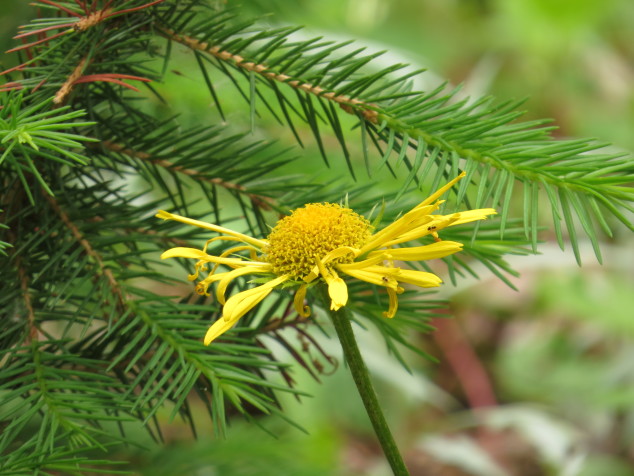
I liked this photo of Leopard’s Bane against the Norway Spruce tree. The flower is spent, on its way to decay with petals drying and falling off and with ants crawling on it. It is up against the supple new, green growth of the spruce tree. A study in contrasts.
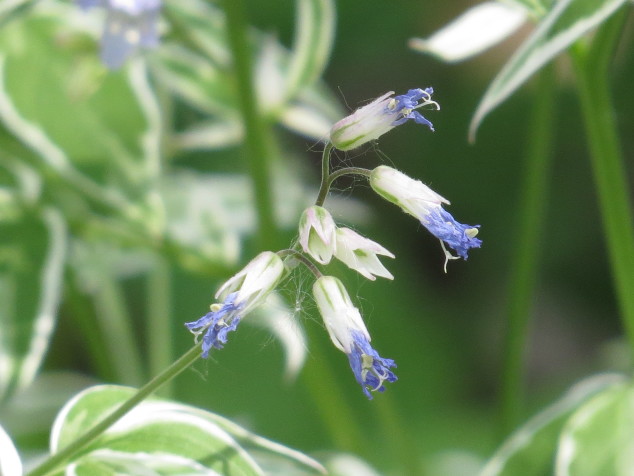
But there is beauty in the ‘spentness’ of flowers, too. Dried blue blossoms of the pretty variegated Jacob’s Ladder reminds us that the bridge between heaven and earth includes the worn out and expended of us who are just a little farther along on our journey.
Perennial Blue Salvia in its ‘spent’ state provides food for a pair of American Goldfinches. It is in its prime time of nourishment for others, though its peak visual beauty is past.
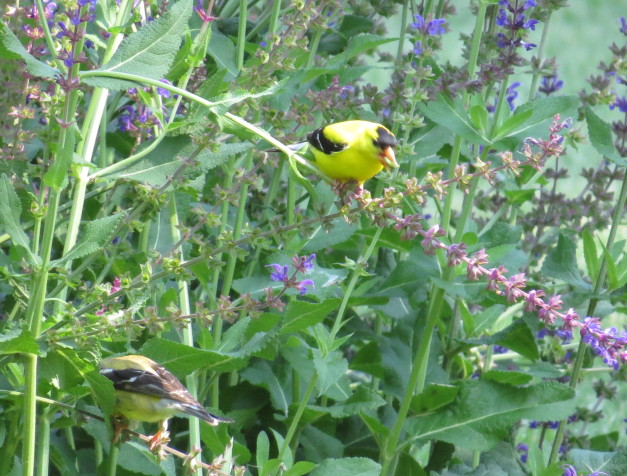
So June encompasses the fresh, invigorated newness of plants, flowers, and creatures and also those in decline. Like all the seasons of Nature and of Life, change is always happening, whether barely discernible or a drastic metamorphosis.
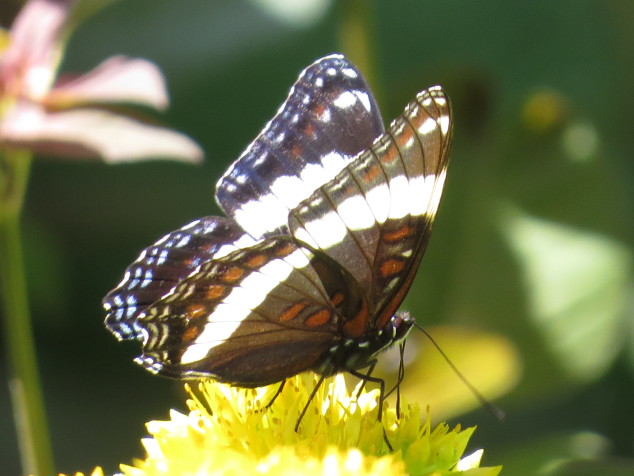
Perhaps the rarity of a perfect day in June is not so rare after all. Perhaps every common day holds miracles waiting to be seen and heard. Where ever we are on our journey, whether ready to fly from the nest, in the perfect place, or in a spent state, we have gifts to offer the world and one another. As the murmur of angels ascending and descending beside us, escorts us on our journey, it is our faces that glisten on each perfect day.
Caterpillars, Cocoons, and Butterflies
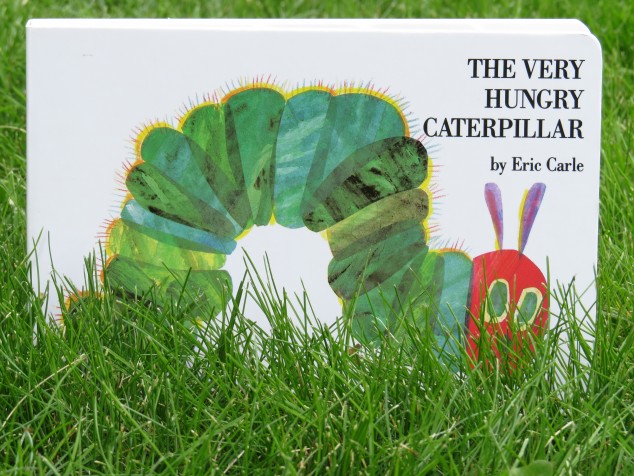
I love a good picture book! And Eric Carle is one of the best authors/illustrators for Nature picture books for young children. It is important to teach children about Nature, to introduce them to the natural world, and to instill in them an appreciation for all creation. If you teach children to love Nature, they will respect and care for our Earth.
The winners of Eric Carle’s The Very Hungry Caterpillar board books are:
Maggie and Lynda–two of the most beautiful butterflies I know! You both have so much to offer to all the people around you! Maggie, your energy, humor, and goodness reach out and touch people deeply. Lynda, what wisdom and love-in-action you model to those lucky enough to be in your presence. So glad I have spent many years in the company of both of you! I will get your books to you next week!
The other butterfly–Emily–who indeed has migrated far from home–you inspire me every day with your energy, your insight, your compassion, and your love. I still have our Very Hungry Caterpillar book in a box somewhere!
Amy, you are so right that this northern climate going into fall and winter makes one want to spin a cocoon! It’s a good place to be when it’s cold and dark outside. It can be a time of rest, reflection, and rejuvenation–you of all people know the benefit of such a time. And when you spread your wings and your talent and love, we are all blessed by knowing you.
And to my fellow caterpillars, my sisters Brenda and Sam, we all find ourselves in this empty nest struggle–the end of all the years of caring for our kids on a daily basis to the beginning of the years of relating with our adult children. How do we do this?!? No manual for that either. It makes me want to eat chocolate–when I know I should be eating green leaves! And so we work on our next transformation…. Love to you both!
Eric Carle is best known for his children’s books, but when our daughter Emily was in an old bookstore in Ely, MN, she found the book Nature Thoughts–A Selection that was illustrated by Eric Carle! The copyright was 1965 and the original cover price was $1.00!
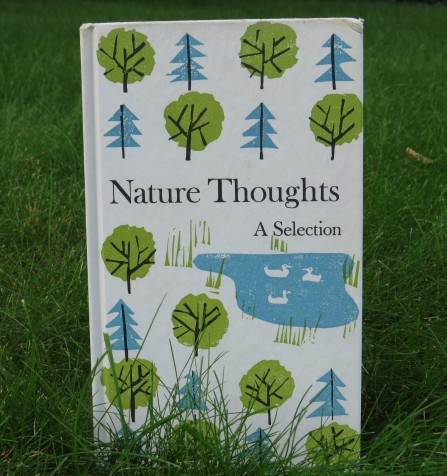
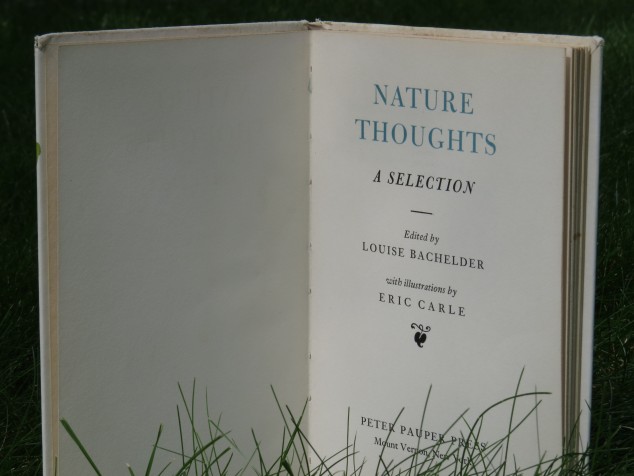
One of the quotes from this book talks about the changes in Nature–how we are given ‘some beauties’ in every season. My wish for you is to recognize the ‘beauties’ in your life, no matter the season, so you can cherish them, appreciate them, and take good care of them.
Nature gives to every time and season some beauties of its own; and from morning to night, as from the cradle to the grave, is but a succession of changes so gentle and easy that we can scarcely mark their progress.
Charles Dickens
From Hungry Caterpillar to Beautiful Butterfly
We lived in Missouri when the kids were little, and we had black walnut trees on our acreage. Messy as they are in autumn when the green nuts fall from the trees and turn tarry black, they are the host tree for the eggs of a magnificent moth. The kids and I found a silken wrapped cocoon among the leaves one day in late summer and brought it into the house. The cocoon resided on the end table under the brass lamp, and for months we didn’t give it much thought. One day I heard a noise–a rattling, shaking noise–coming from the cocoon! And it was moving! In a number of days, the activity inside the cocoon increased until one morning, a wet-looking, bedraggled moth emerged and crawled up the lamp to hang on the lampshade to rest and fill its wings. The wings were bright green with eyespots and long tails on the hind wings. It was a big, beautiful Luna Moth! The kids were so excited that their cocoon had ‘hatched!’ The moth flew around in the house for a few days, then laid rows of brownish eggs on the lampshade. The adult moths do not eat–they mate, lay eggs, and die within a week of emerging from the cocoon.
The whole transforming process of butterflies and moths–from eggs to hungry caterpillars to flying adults–is intriguing and inspiring. It is the iconic metaphor of changes in life–beginnings, development, growth, rest time, transformation and struggle, and the beauty of the emerging self.
I have collected a few photos of butterflies and caterpillars over the summer–others, like the Yellow Swallowtail, teased me with their frequent visits to the flowers, but I just wasn’t able to get their pictures.
The familiar Woolly Bear caterpillar, known for the folklore of predicting the severity of the upcoming winter, is also called the Hedgehog caterpillar because it curls up and ‘plays dead’ when disturbed.
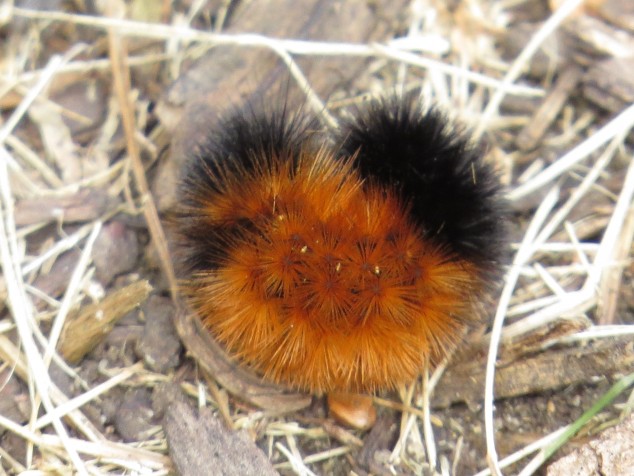
The more interesting fact about this caterpillar is that it overwinters in its caterpillar form, producing a cryoprotectant or natural antifreeze in its tissues that allows it to live frozen all winter. The Woolly Bear caterpillar thaws in the spring and pupates to become the little known but beautifully named Isabella Tiger Moth.
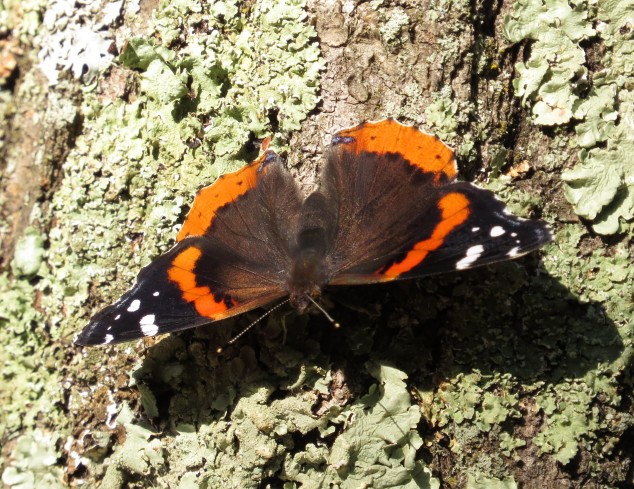
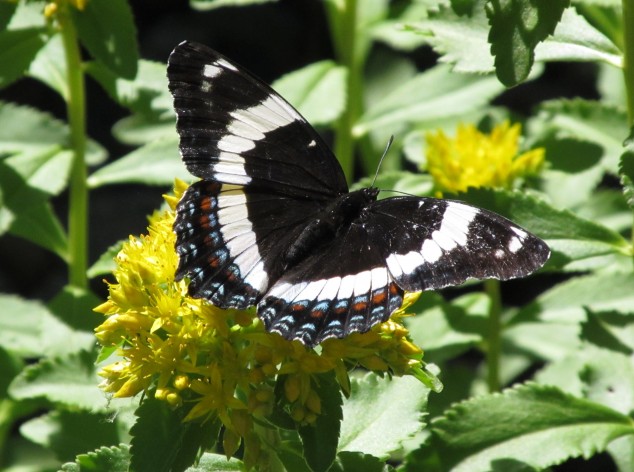
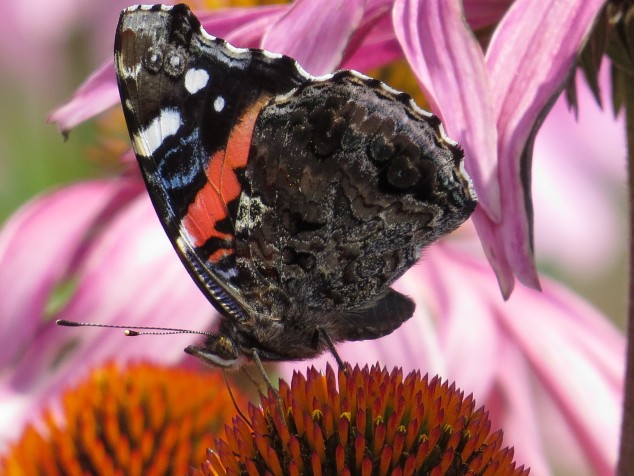
I found a Red Admiral butterfly on a tree up in the Brainerd Lakes Area and a White Admiral right outside our front door.
 A Painted Lady graced the Purple Coneflowers at the College of St. Benedict, complementing one another in their colorful beauty.
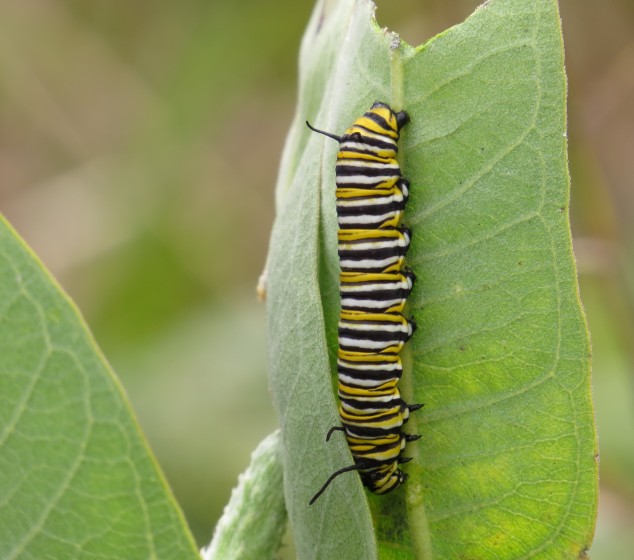
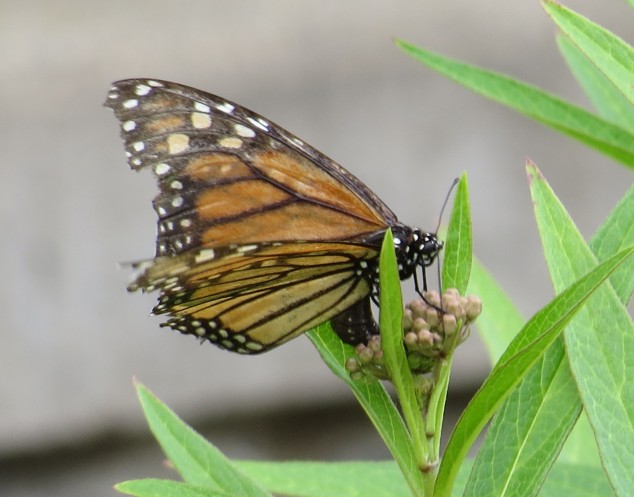
On a Milkweed plant along the road by our house, a hungry, striped, Monarch caterpillar munched on its food of choice.
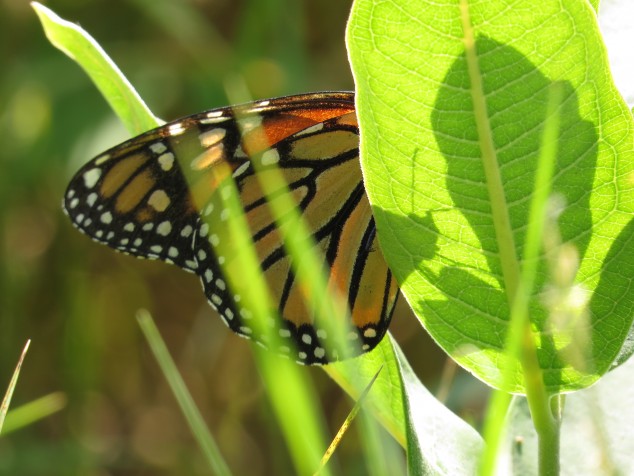
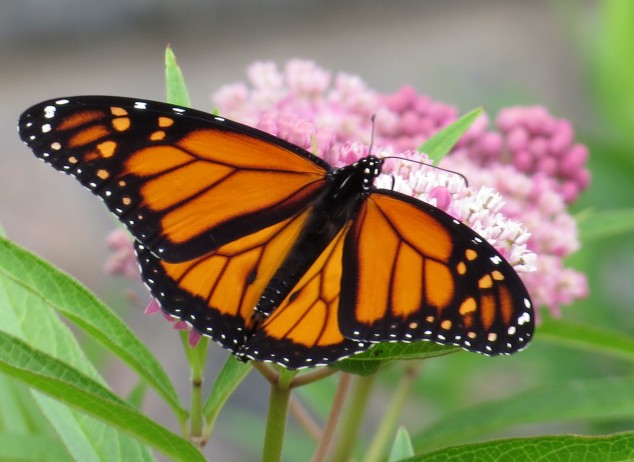
At the Butterfly Garden at the College of St. Benedict, a brilliantly colored Monarch in pristine condition alighted on a milkweed flower, while nearby a tattered, pale-colored one rested on buds that were not yet open. What storms and struggles had this faded beauty been through? It must have been close to the end of its 6-week adult life. Only the adults who emerge from the chrysalis in late summer migrate en masse up to 3000 miles to warmer climates.
The transformation of caterpillar to butterfly is illustrated in Eric Carle’s classic children’s book The Very Hungry Caterpillar.
In celebration of two seasons of blogging, I am giving away new 5″ x 7″ board books of The Very Hungry Caterpillar to two readers. ‘Like’ my NorthStarNature Facebook page if you haven’t already, share this post on Facebook or with someone you know, and tell me in your comment if you feel like a caterpillar, chrysalis (cocoon), or butterfly at this time in your life! I will randomly choose two names and let you know the winners on Friday. Thanks to all of you for reading my blog!