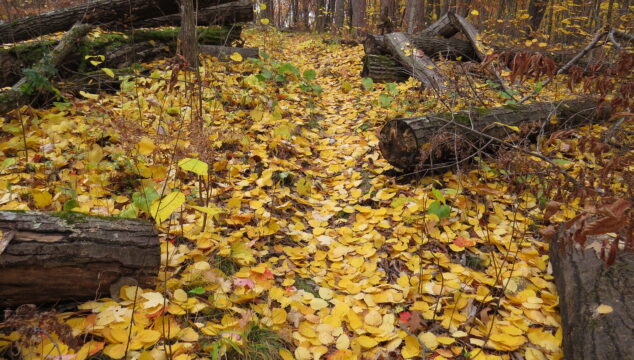
Come walk with me in the peak Autumn beauty of the Northwoods. To say that I love this time of year is an understatement. Most everyone can appreciate the colorful falling leaves---it reveals the 'true self' of a tree when its leaves are no longer producing chlorophyll. Their true colors are revealed, and there is something simple … [Read More...]
The Prairie and the Grazing Buffalo
I love the prairie, and I mourn the demise of it as more and more prairie grasslands are tilled and converted to row crop farming. The prairie ecosystem evolved with the American bison—and the buffalo became the source of life for the Native Americans of the Great Plains. The closely interwoven relationships between prairie, buffalo, and Native Americans have been severed, for the most part, for oh so many reasons. Yet there is a pull to preserve that way of life, even in the smallest of ways, because of what we can learn from the prairie, from the buffalo, and from the people whose lives intertwined with both.
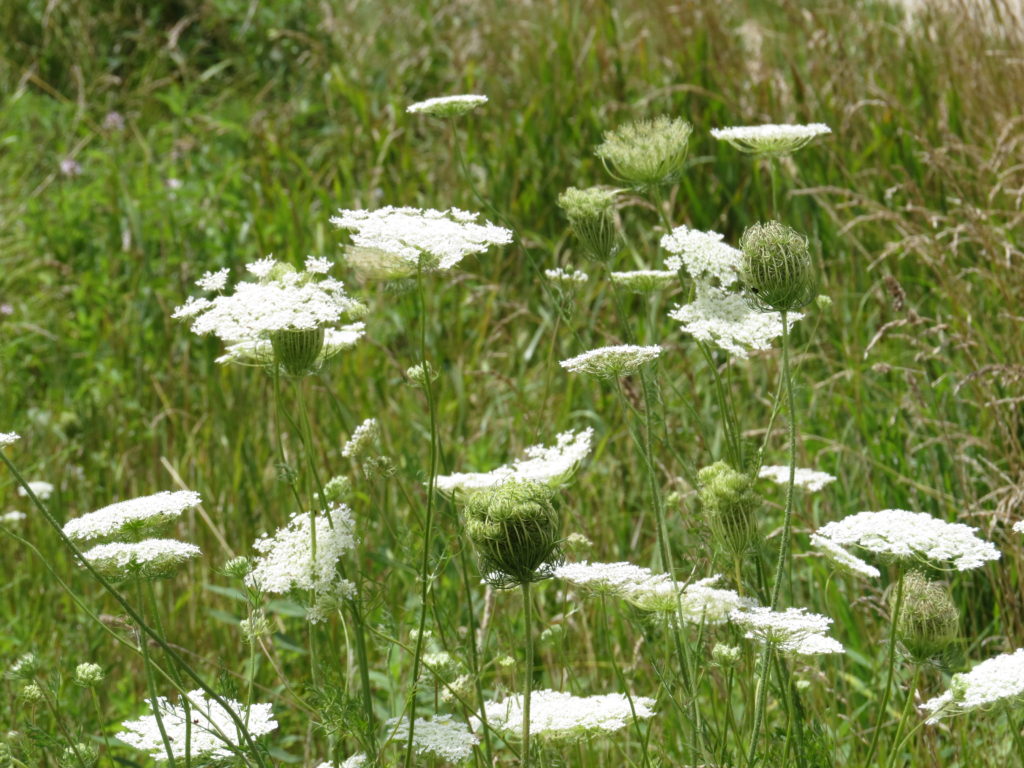
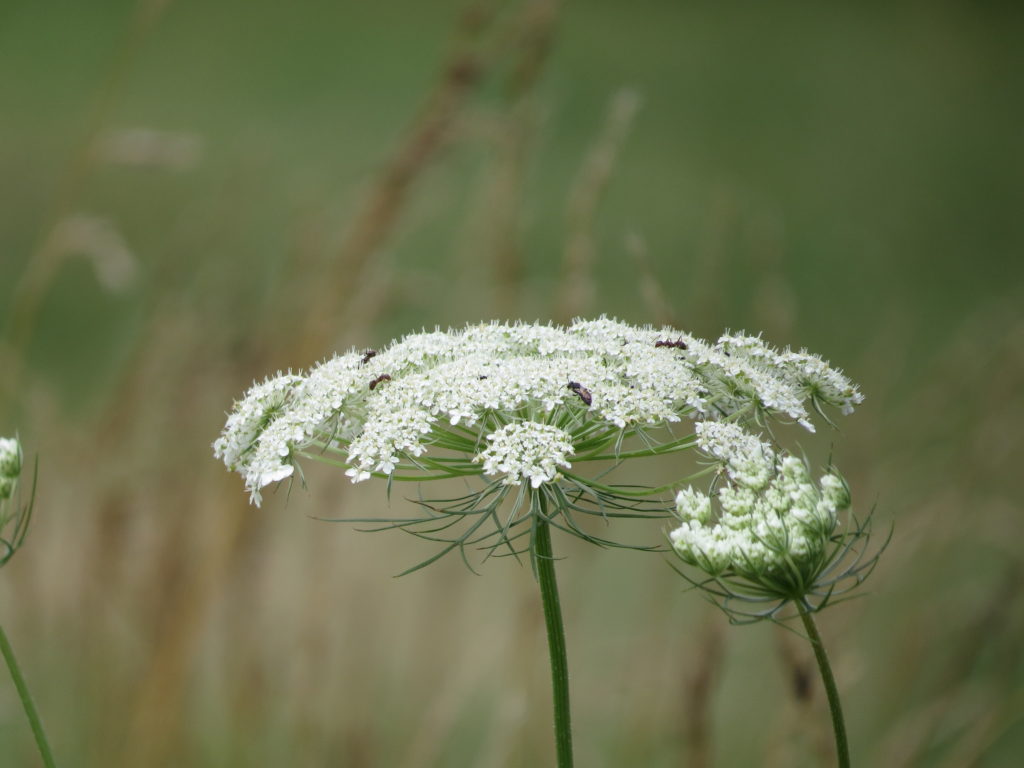
Driving along the highways in Missouri in the month of July, one notices a sweet triad of color, shape, and form—Queen Anne’s Lace, blue Chicory, and Purple Clover. Tall, willowy Queen Anne’s Lace, a member of the carrot family, is the most striking of the three with large, lacy flower heads that sway in the breeze. We stopped at the Eagleville rest area on southbound I-35, the welcome center for Missouri. A large prairie area with a mown walking path covers the hillside behind the building, and Queen Anne’s Lace grows along the periphery.
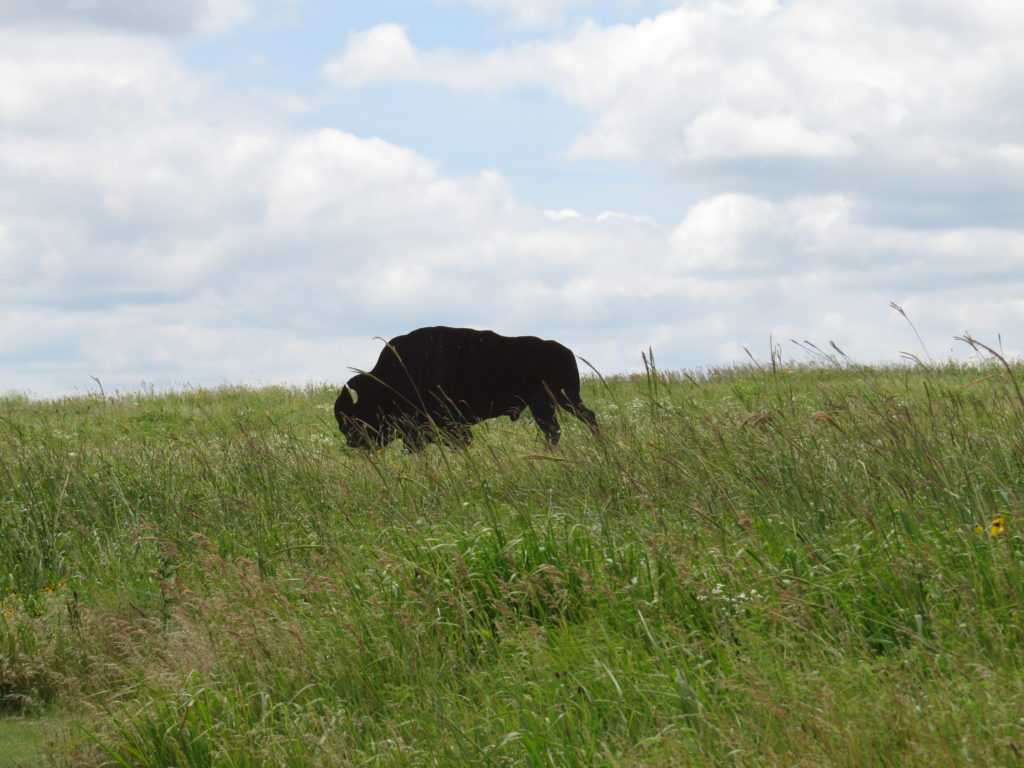
Up on the hill, a grazing buffalo dropped his large head into the tall prairie grass. Animals need to feel ‘safe enough’ to graze—if there is a threat or danger of any kind in the area, they won’t be eating. Grazing or feeding and digestion are processes that are undertaken when the body is relaxed (a parasympathetic state.)
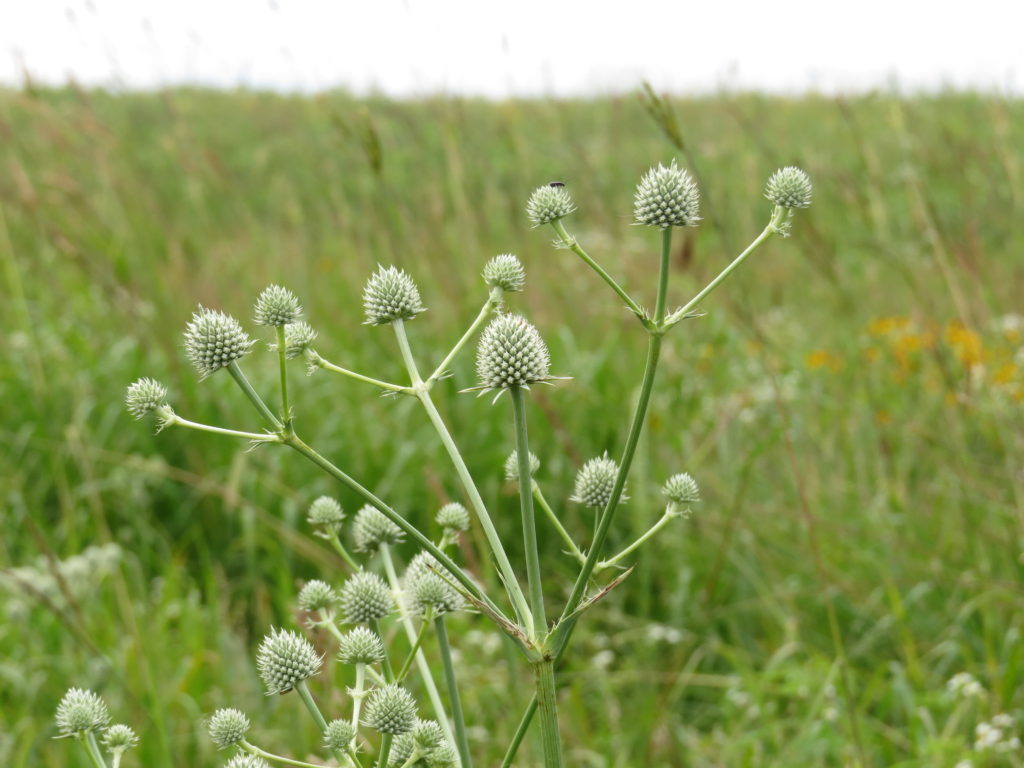
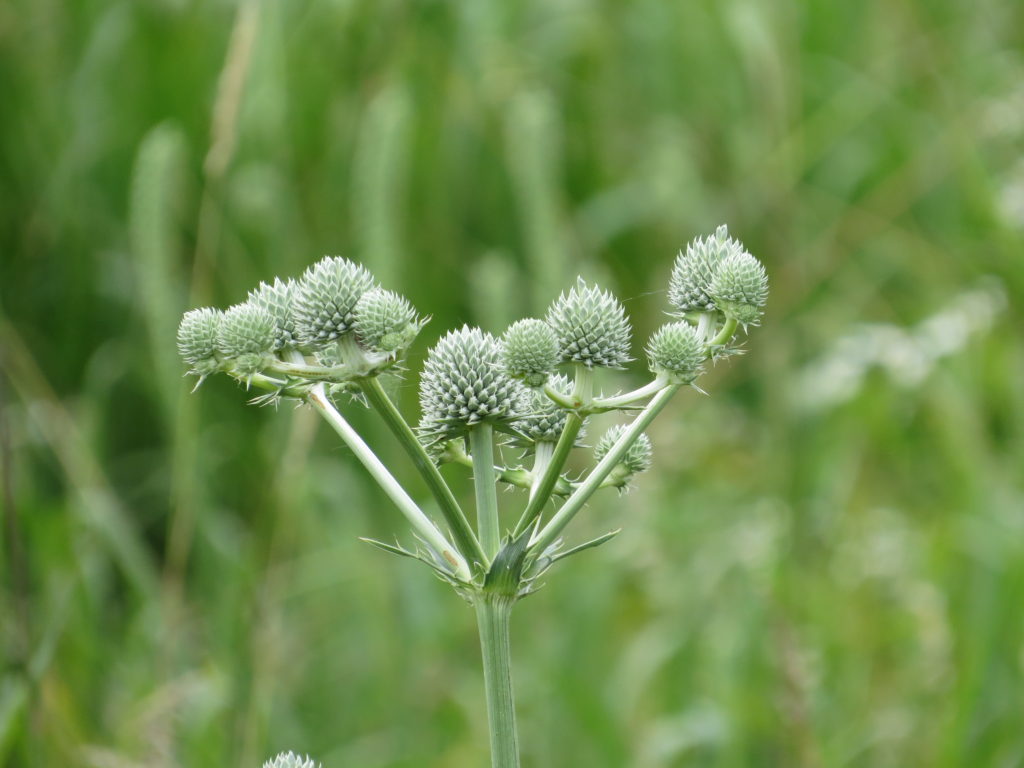
Another eye-catching and unusual plant in the tall grass prairie is Rattlesnake Master. Along with its great name, this plant is also a member of the carrot family. The gray-green seedheads hold small clusters of white flowers and were dried and used as rattles by native people.
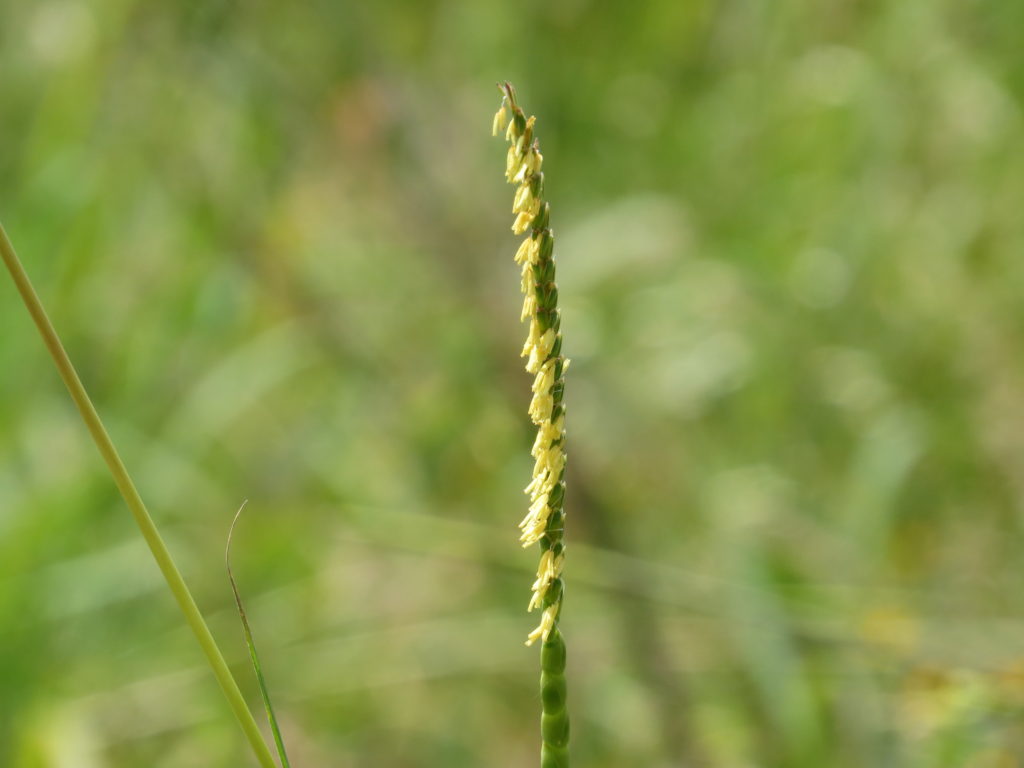
We don’t often think about grasses flowering, but every plant that produces seeds has some kind of flower, as indistinct as it may be.
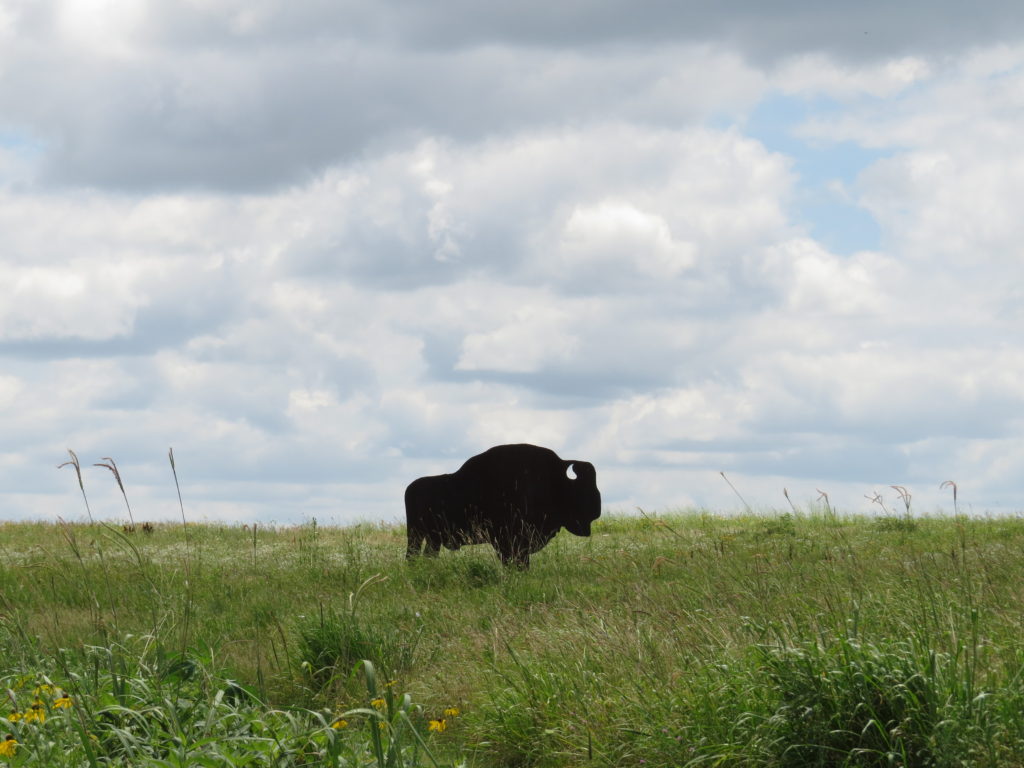
A standing buffalo on the hill was alert and watchful. Often herds of animals will have a sentry or ‘look out’ who will be aware of the surroundings and will warn others if there is some danger or predator.
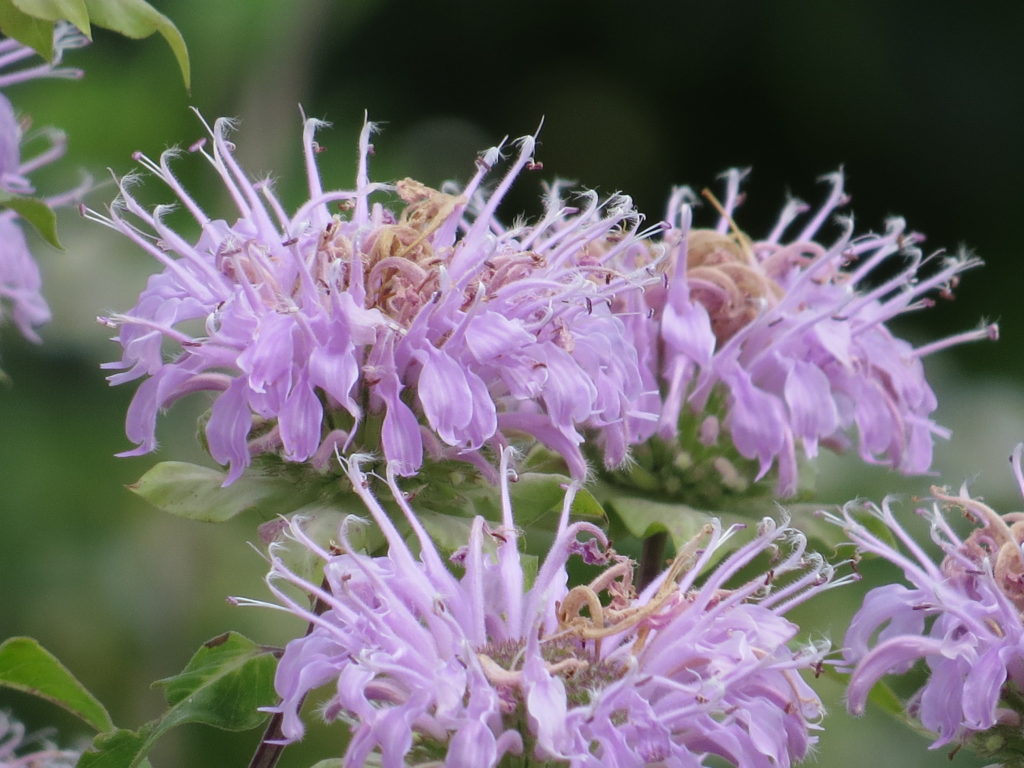
Spiky crowns of lavender flower petals top Wild Bergamot or Bee Balm. Native Americans used teas and tinctures of this minty plant to treat respiratory illness and other ailments.
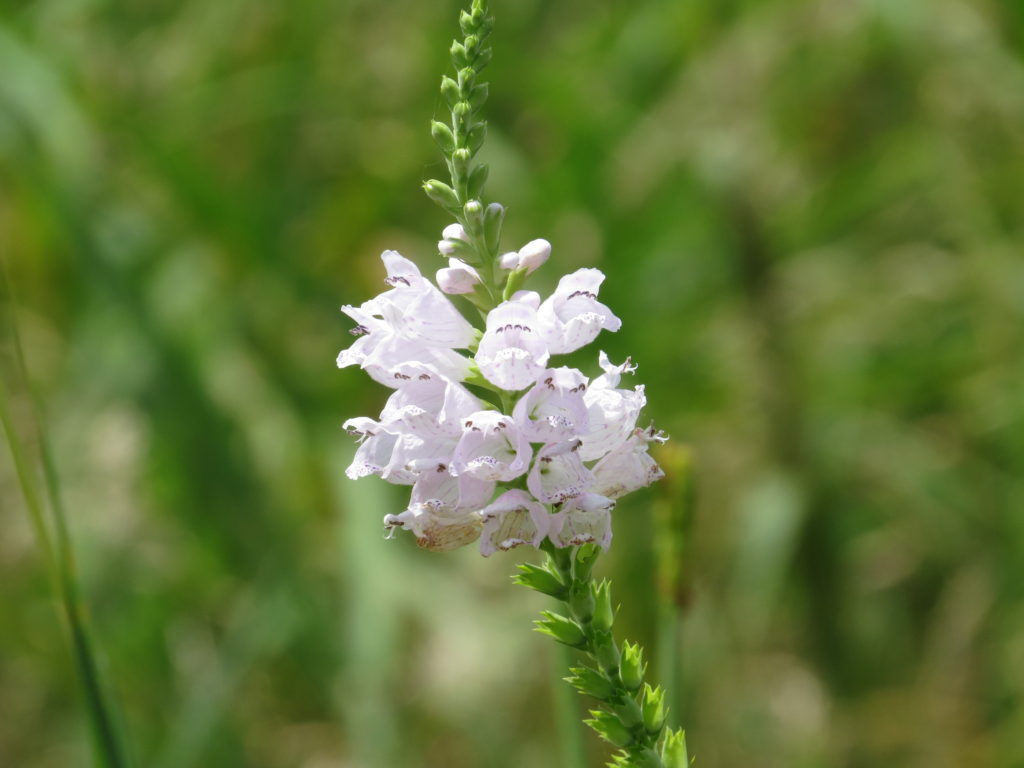
Another member of the Mint family is the Obedient Plant with snapdragon-like flowers that will stay in position after being turned in a certain way.
A charging buffalo haunched down in the prairie grass, head lowered, muscles taut, tail lifted. When danger has threatened the herd, energy is activated (sympathetic response), and the animals run or fight. (Running is the usual first line of defense. Males and closely threatened mamas will turn and fight.)

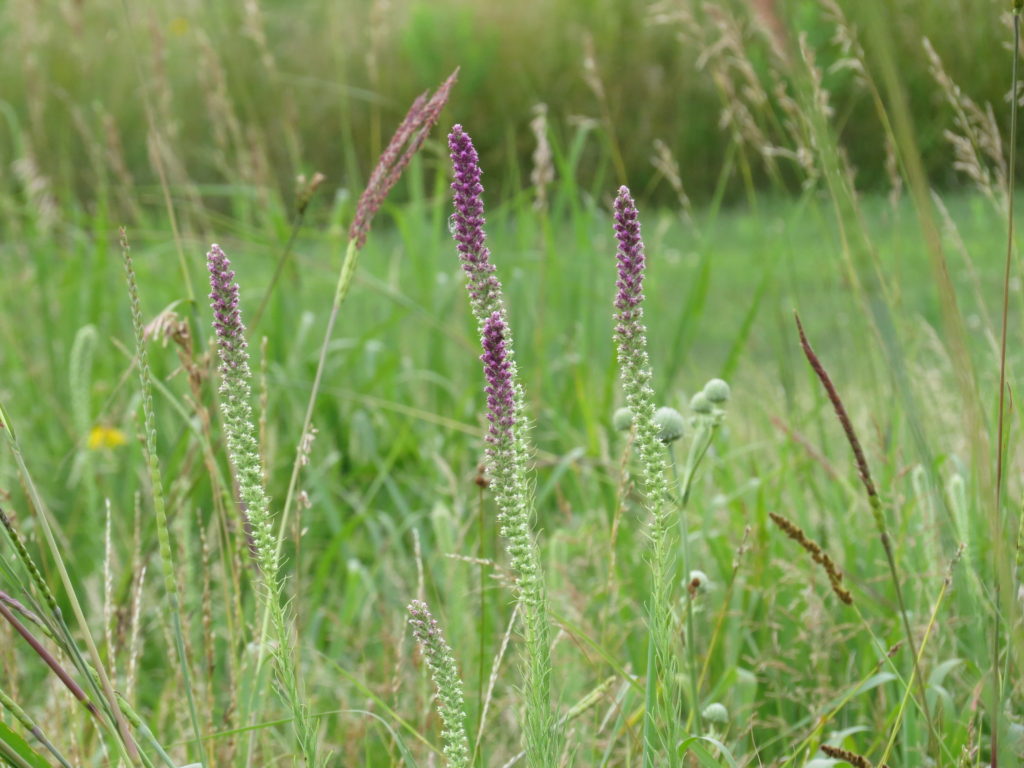
Blazing star or Liatris was just beginning to bloom from the top down on the purple-flowering spikes.
Dogbane is a toxic plant that was used by some native tribes as a fiber. The stems were rolled into strong, fine threads and twines.

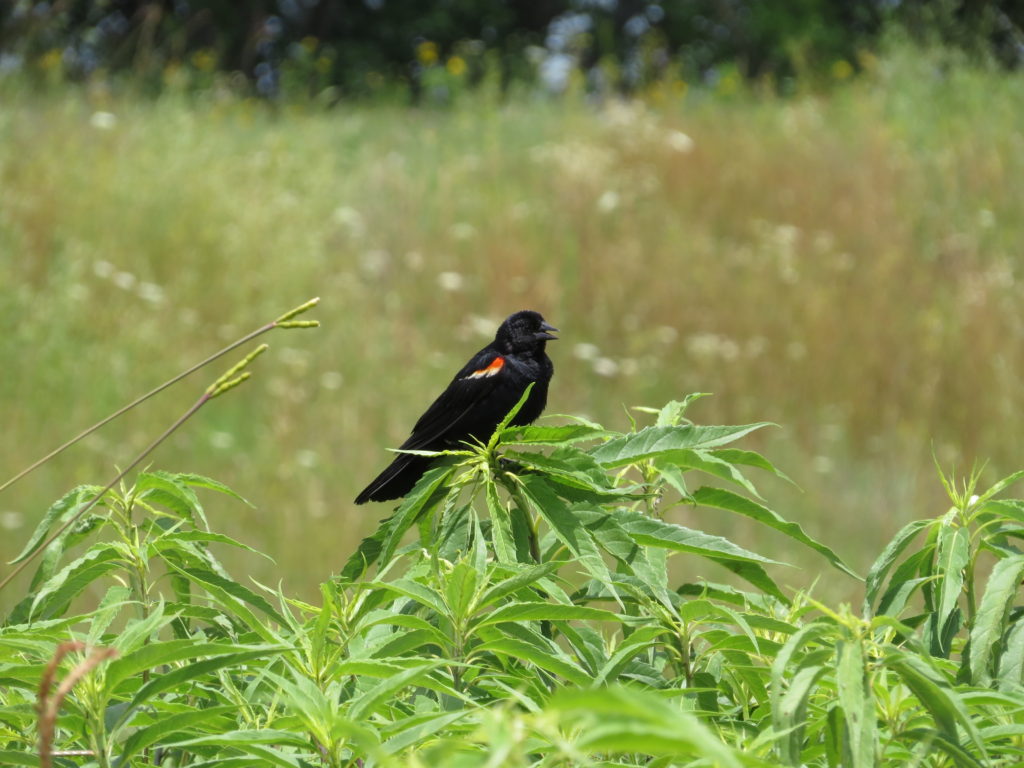
While walking the prairie, stretching my legs, and appreciating the summer grasses and wildflowers, a Red-winged Blackbird chatted and sang its summer song.
To me, walking through a prairie feels like ‘coming home.’ It is familiar, reliable, sustainable, and beautiful—like a sanctuary. It relaxes my body, calms my mind, and feeds my soul. The wide-open sky gives me perspective on how small each of us really is compared with the world at large. The prairie grasses and plants remind me that, as small as we each are, we are part of an ecosystem or community that works together to create the greater whole. We grow and bloom in our own unique and wonderful ways. The buffalo sculptures were produced by Creative Edge Master Shop in Fairfield, Iowa, a great tribute to the icons of the prairie. Their depictions of the different states of the herd animals reflect the physiology of every mammal, including humans. One state not depicted, or not seen at least, was that of the freeze state—like that of a young calf lying in the grass, hiding from danger. Freeze, fight or flight, and rest and digest are all states that we humans slide in and out of automatically, just like the buffalo. Ideally, we would spend most of our time between the alert, aware, yet calm state and the relaxed rest and digest state, and use the freeze and fight only when absolutely needed. But how often do we find ourselves immobilized by some threat or fear? How often do we feel like running away from our life and its problems? How often do we fight with sharp words, lowered heads, and win-at-all-cost ways? Feel it. Think about it. Make a strong, powerful rope out of a toxic situation. Find your place that feels like ‘coming home.’
‘The Breath of the Buffalo in the Wintertime’
It’s been a year now since my Dad moved through his final days of life, receiving hospice care on Christmas Day and for two short days after that. I still have the notes I took each time I talked to him while he was in the hospital and rehab center. I still have his phone number under Dad in my cell phone, though no one’s there to answer. I still have the picture of him in my mind of how he looked when I saw him for the last time two months before he died. His hair and beard were white and long. The sharp pain of his passing has waned, and I find myself carrying gratitude for him, his life, and his stories.
One story he told about his childhood years was riding to the nearby town of Badger in the horse-drawn sleigh. Grandpa would harness and hitch up the horses, and then the whole family would pile into the sleigh and cover themselves with a big buffalo robe—the tanned hide of a buffalo with the hair left on it. Dad said it was the warmest blanket for traveling across the snow-covered prairie in an open sleigh.
We’ve been having a bit of a cold spell here in Minnesota over the past week or so—temperatures in the teens or single digits with wind chills up to 25 below zero, with last night’s actual temperature a frigid 25 below! January weather before the Winter Solstice. During this cold weather last Saturday, we visited a Christmas tree farm that offers horse-drawn sleigh rides (or wagon, if not enough snow) to see their buffalo. The big, black Percherons stood in front of the hitching post, patiently waiting for the next group of bundled sight-seers. We were not among the bundled, but the horses, the cold, and the buffalo reminded me of Dad’s story of winter prairie life.
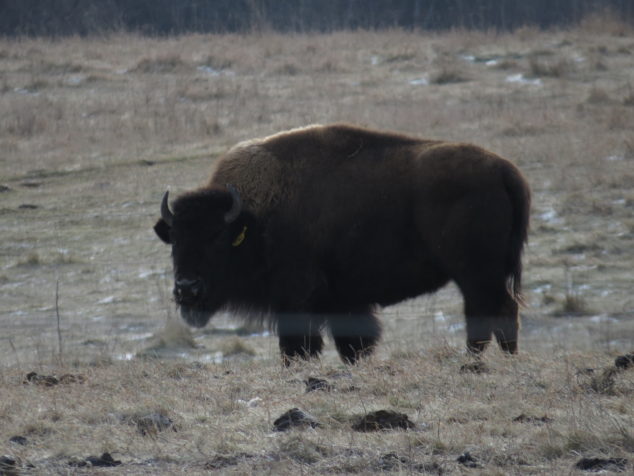
One buffalo was standing his ground while the others grazed or ate hay. His moisture-laden breath wreathed his big head and froze on his muzzle like a great white beard.
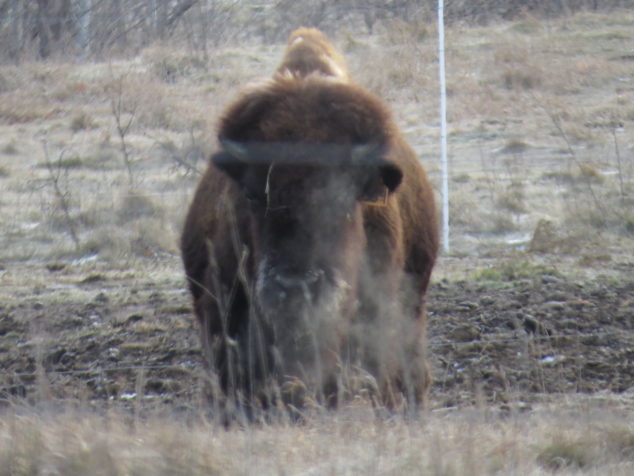
“What is life? It is the flash of a firefly in the night. It is the breath of the buffalo in the wintertime. It is the little shadow which runs across the grass and loses itself in the sunset.” –Crowfoot, Blackfoot warrior and orator
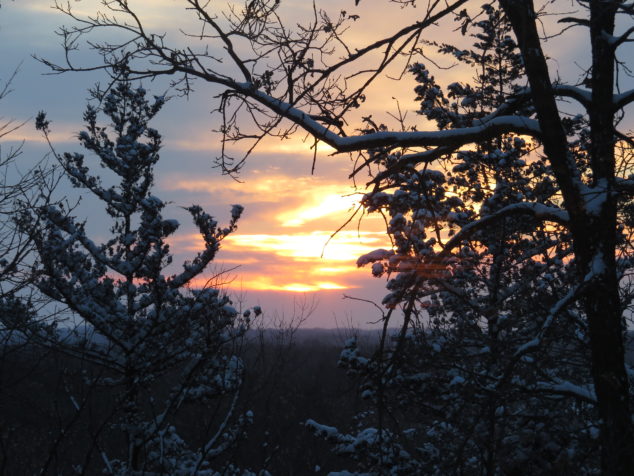
What is life? Would we even know without the pain and poignancy of death? Crowfoot reminds us that life is the little things that happen in our world—the flash of a firefly, the frozen breath of a buffalo, notes from a phone call, childhood stories, a sunset, and a hug good-bye. Christmas and other holidays feel different when our loved ones are no longer in our lives—through death or by choice. There are missing pieces that dampen the joy and celebration. And while the sharp pain subsides with time, the loss chills our hearts in small but real ways. So I cover myself with the buffalo robe of memories—it’s the warmest way for traversing this new path.