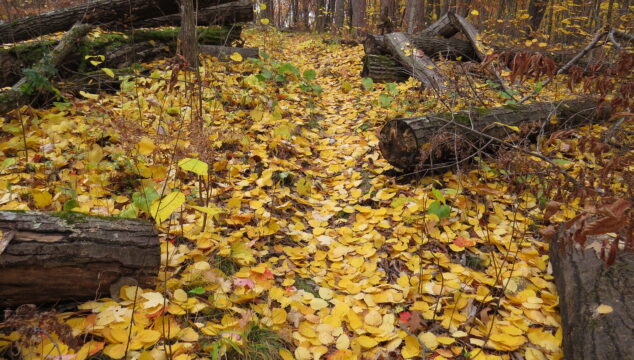
Come walk with me in the peak Autumn beauty of the Northwoods. To say that I love this time of year is an understatement. Most everyone can appreciate the colorful falling leaves---it reveals the 'true self' of a tree when its leaves are no longer producing chlorophyll. Their true colors are revealed, and there is something simple … [Read More...]
Legacy of the Rocks
If you were to ‘leave your mark’ on the world after you are gone, what would it be? To compress that even further, how would you do that if you had only the medium of a granite cliff and red ochre mineral pigment mixed with animal fat? And the only way to get to your granite cliff was by canoe? How would you condense your life experience into a message of importance to those who come after you?
The pictographs of Hegman Lake in the Boundary Waters Canoe Area Wilderness are such a legacy, though we don’t know the person who drew them or the reason why. Many have tried to interpret the meaning of the pictographs, but there is mystery as to the story and even to what exactly each part of it represents. It is estimated that the Native American rock artwork is between 500 and 1000 years old, but even that is a guess. But there is something compelling about it that draws thousands of people to Hegman Lake to paddle the clear, cool water to see it (or to ski or snowshoe to it in the Winter.)
A day permit is needed to enter the lake, and one has to portage canoes and packs of any kind 80 rods (about a quarter of a mile) from the parking lot to the lake. It’s a beautiful portage with many giant White Pines. Rocks and roots concentrate your gaze at your feet, however. We had three canoes and three experienced young people to portage them, as Chris and I carried packs, fishing poles, paddles, and water bottles. It wasn’t long before we were gliding across the beautiful South Hegman Lake!
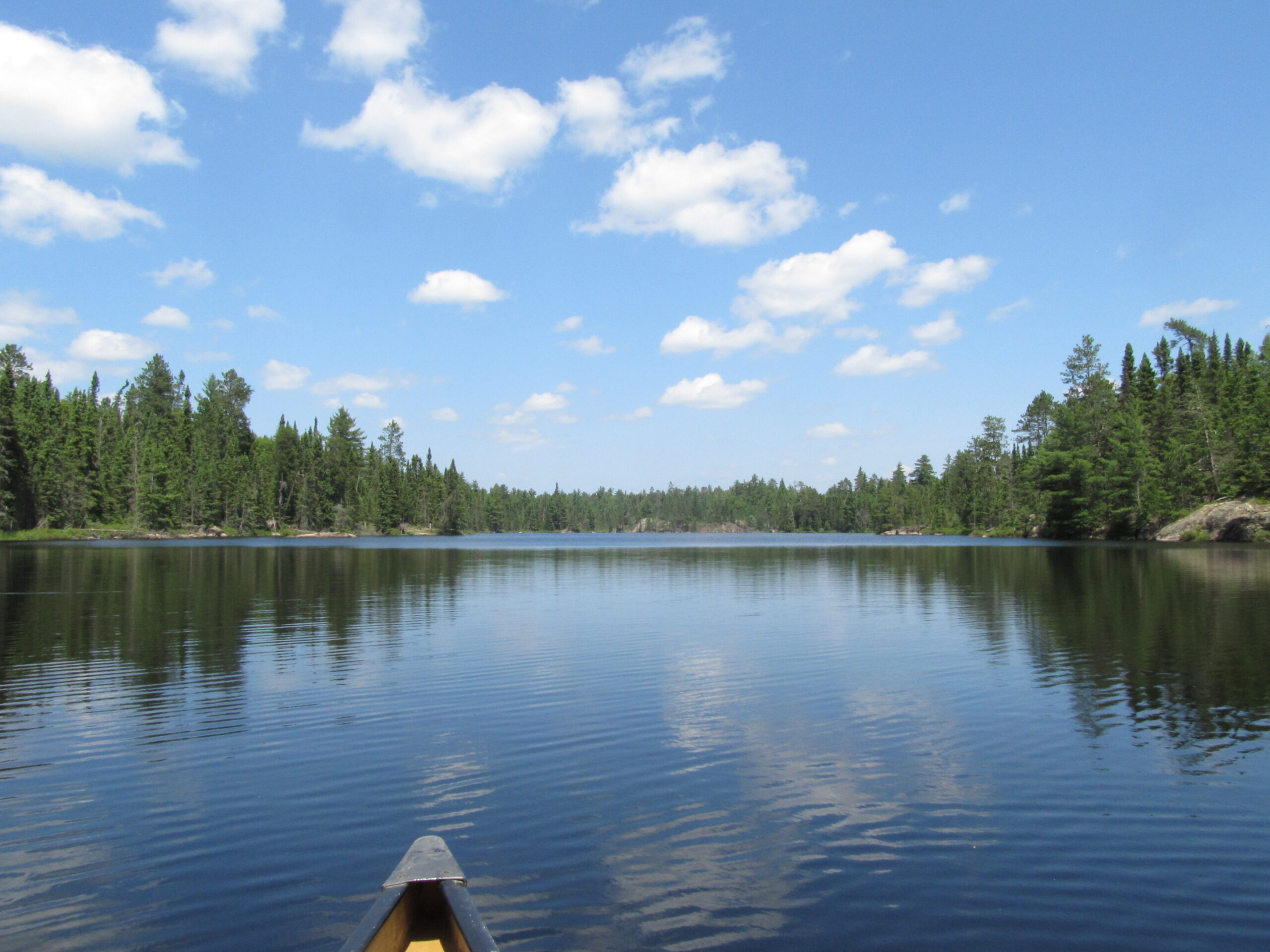
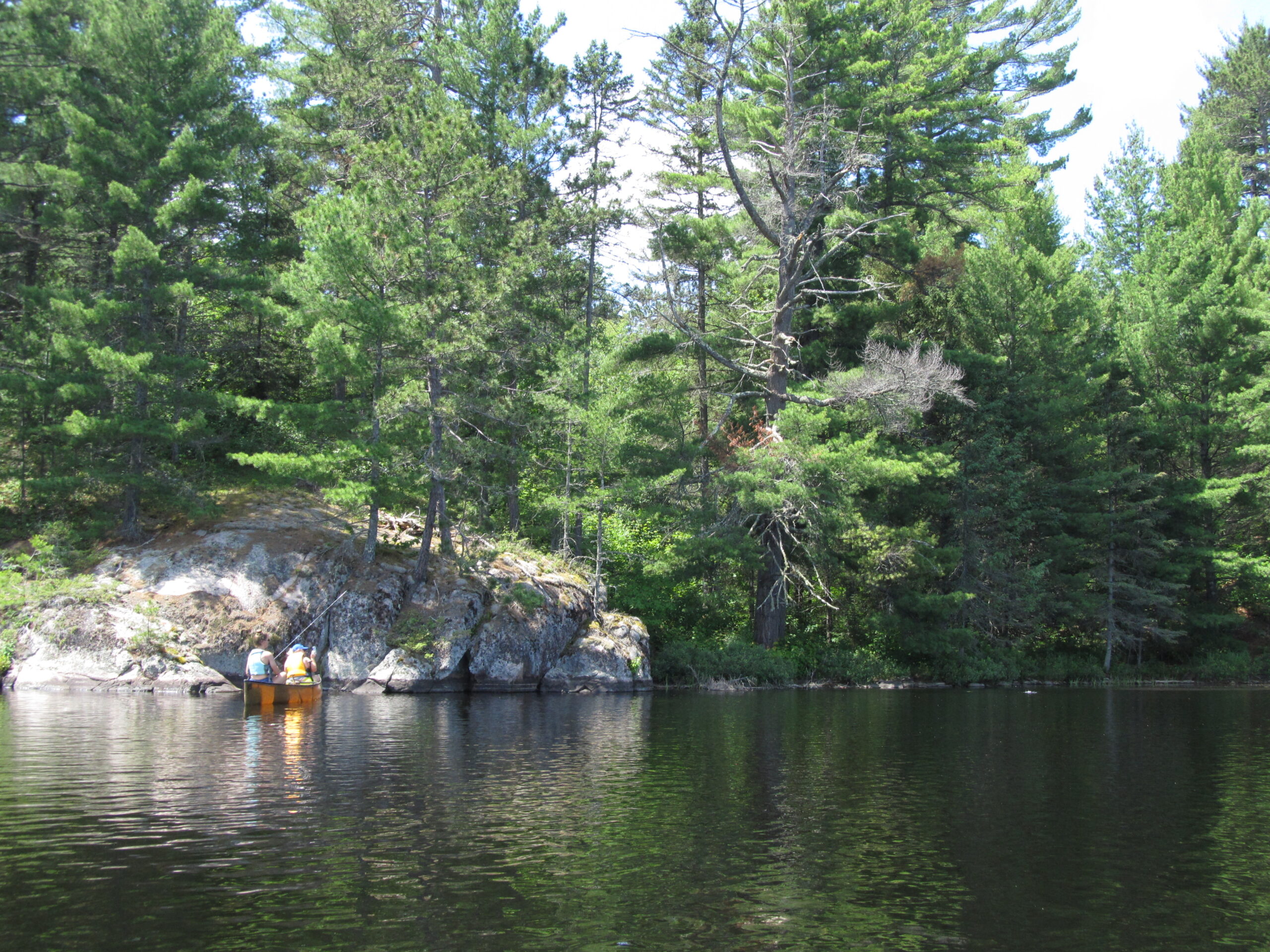
Three of us were fishermen and two of us cameramen, along with our paddling duties, so the pace was slow and easy. Fish were caught and released, some micro, some larger, some recorded, some returned to their home with a “thanks, good to see you.”
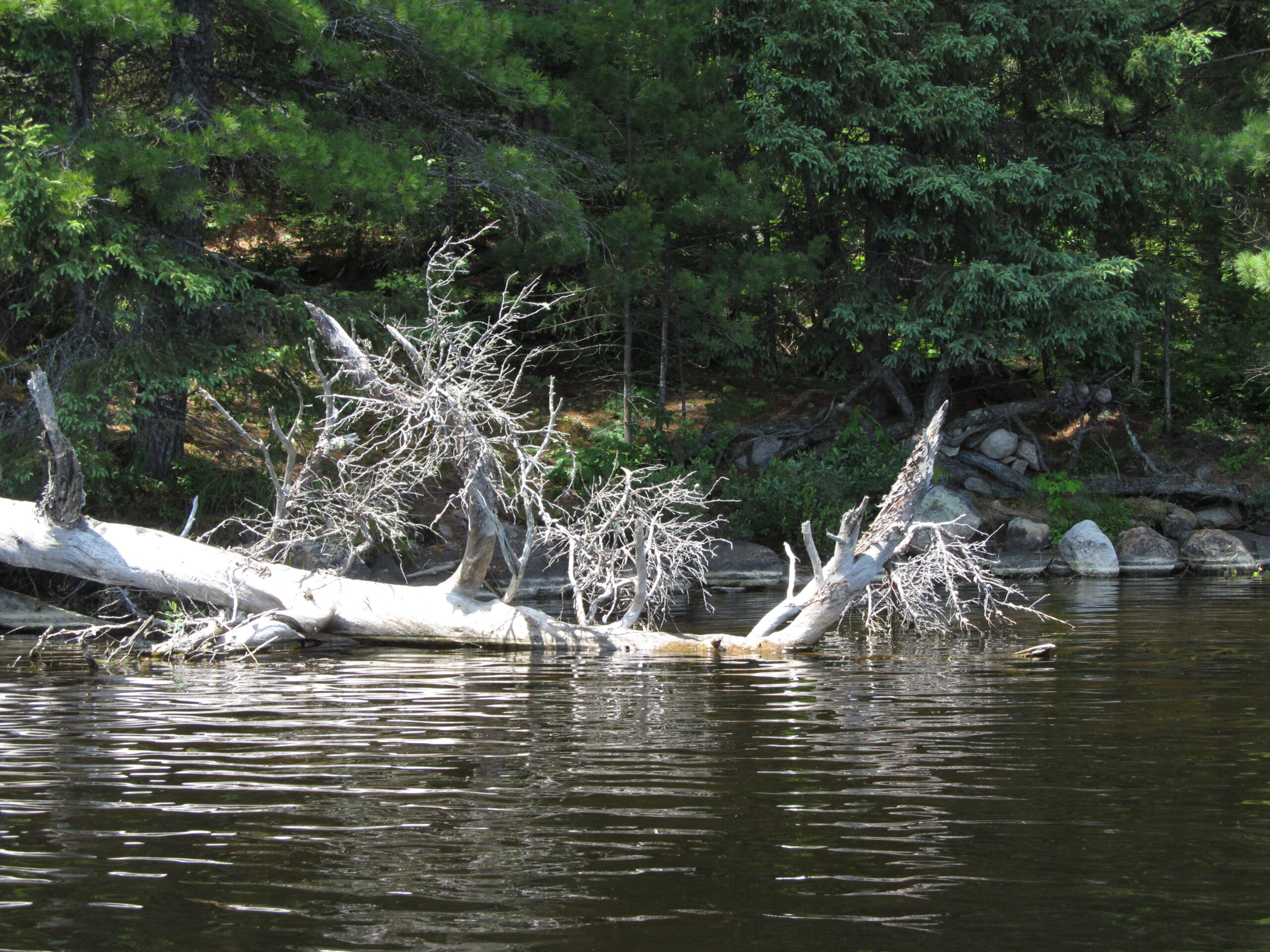
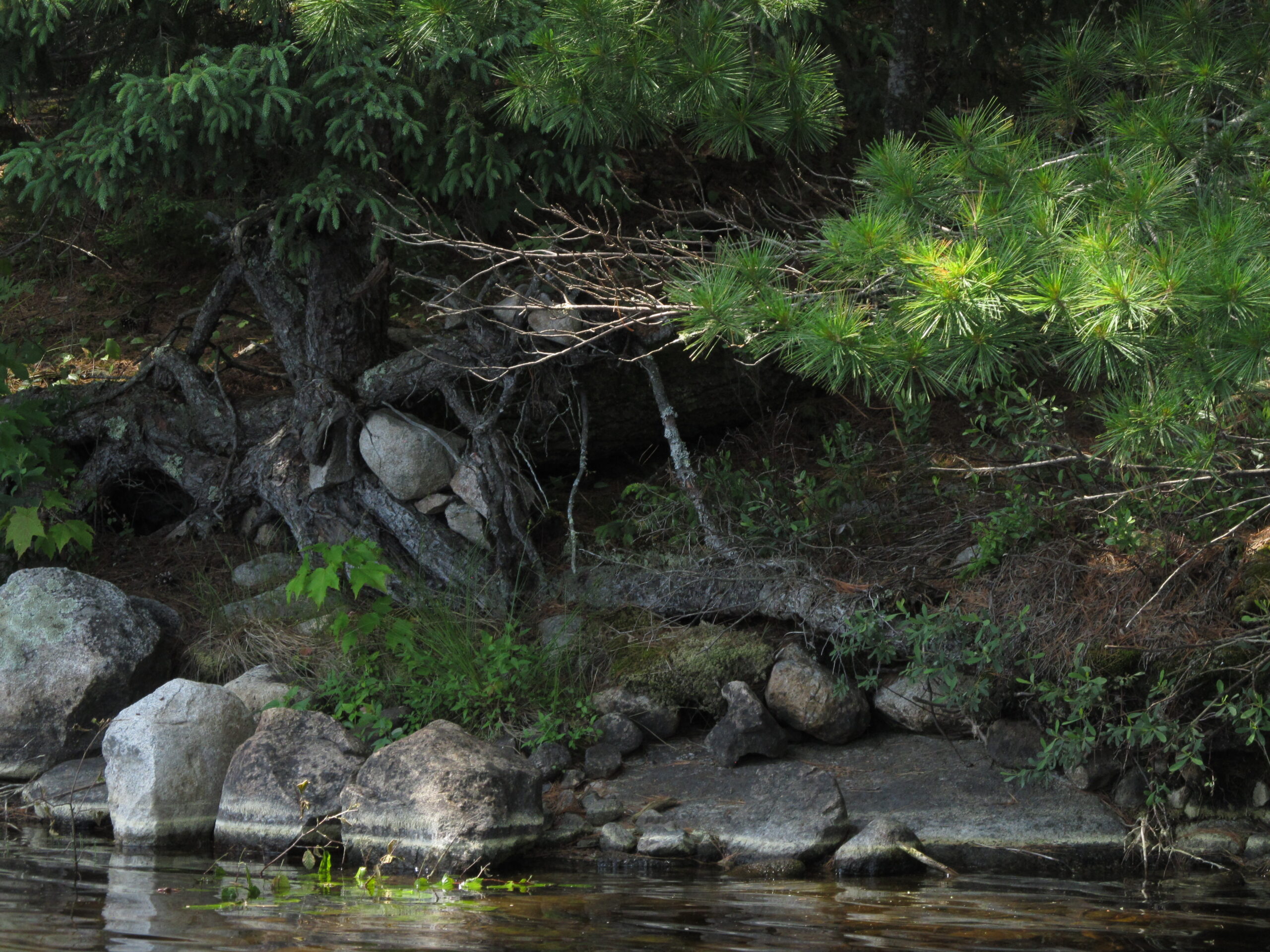
The Pines and Spruces were stately and impressive in all stages of life. One had fallen into the lake and was bleached white by sun and water. Another had tipped over onto the hillside, and its shallow roots had lifted the shore rocks with them, creating a pinwheel of wood and stone. Water levels of the past had left stripes of algae on the shore boulders.
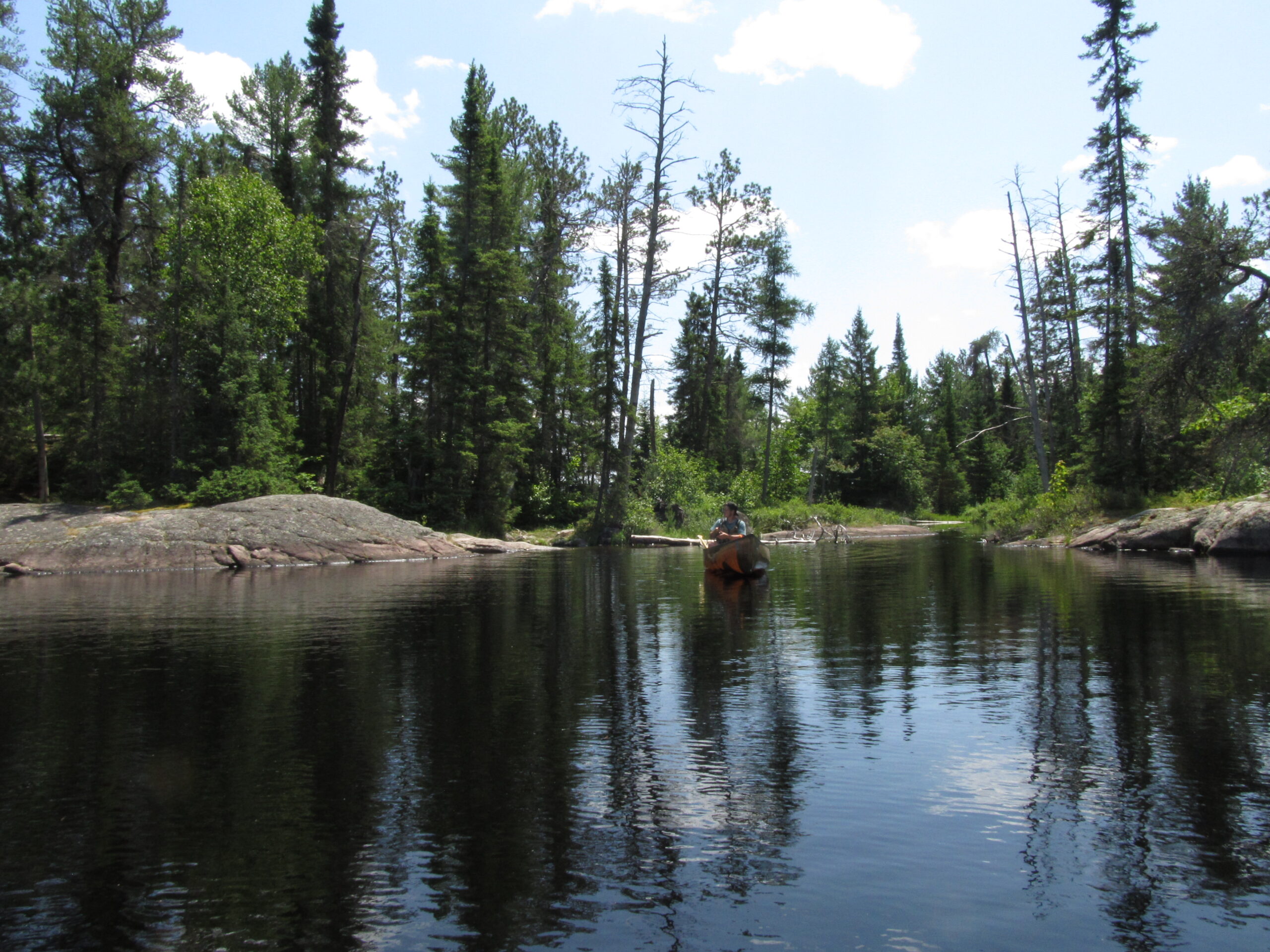
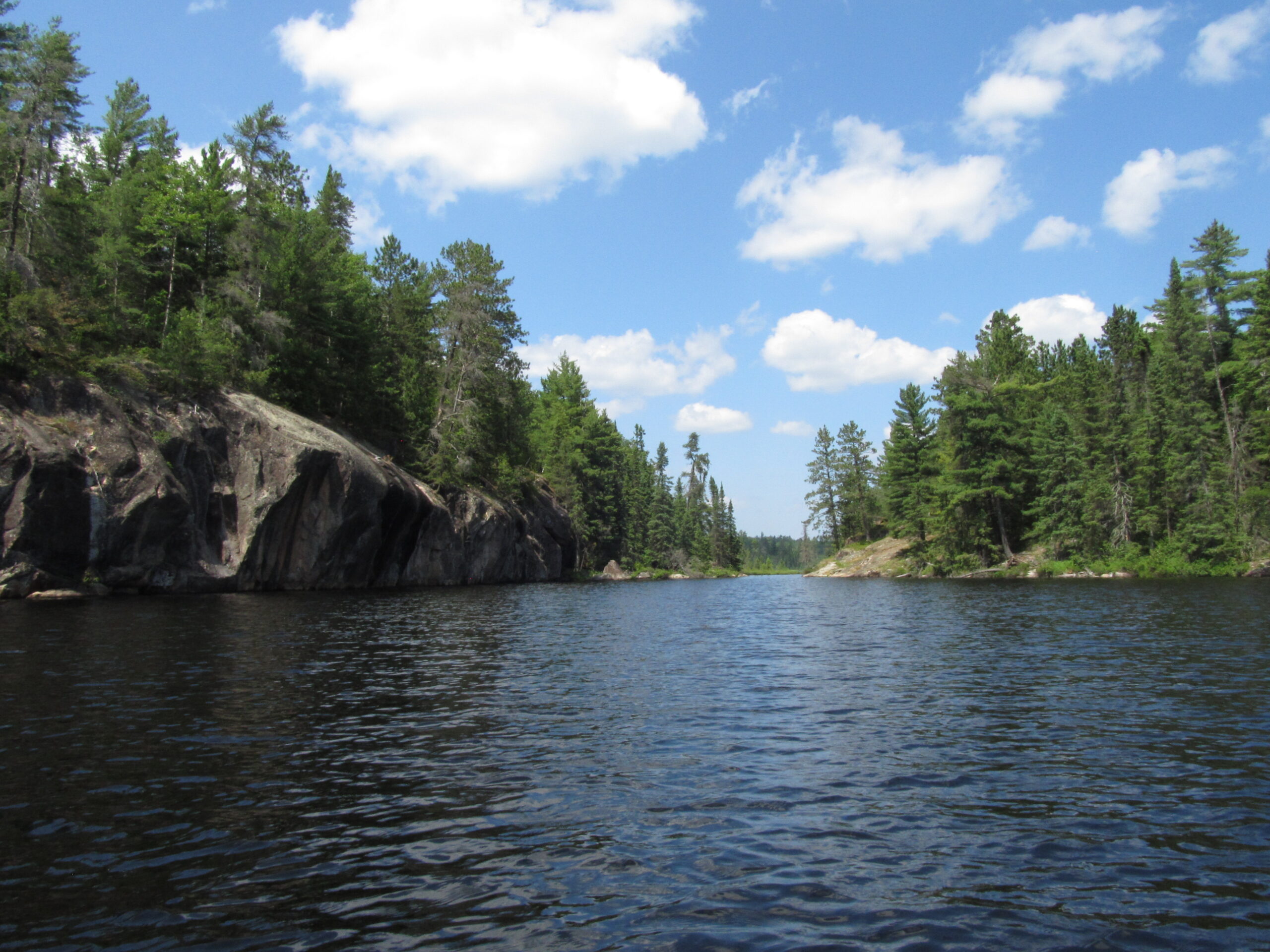
After a second short portage of only five rods in which we just carried canoes upright with everything in them, we entered North Hegman Lake. The terrain looked even more rugged with huge outcroppings of rock along the water.
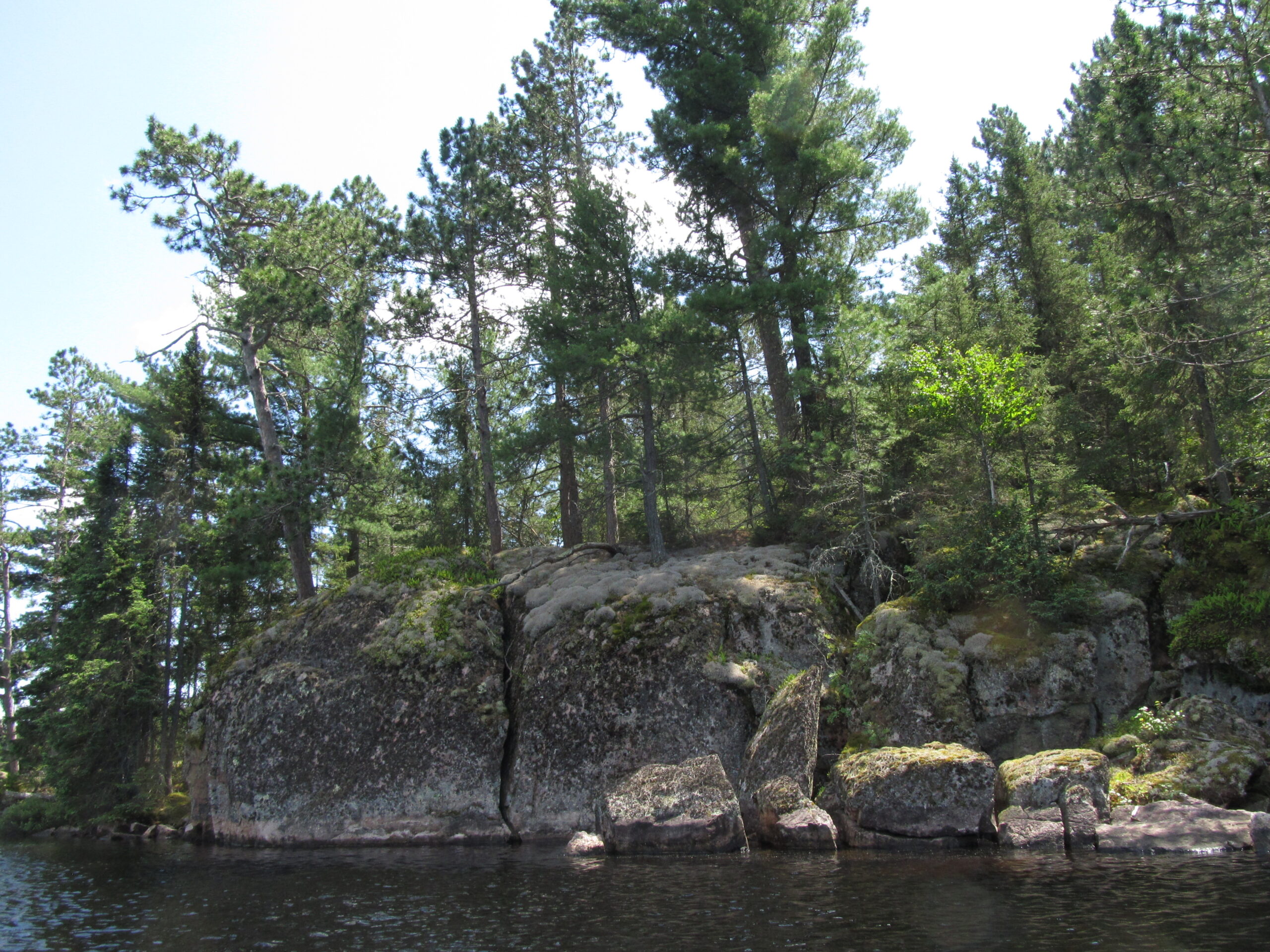
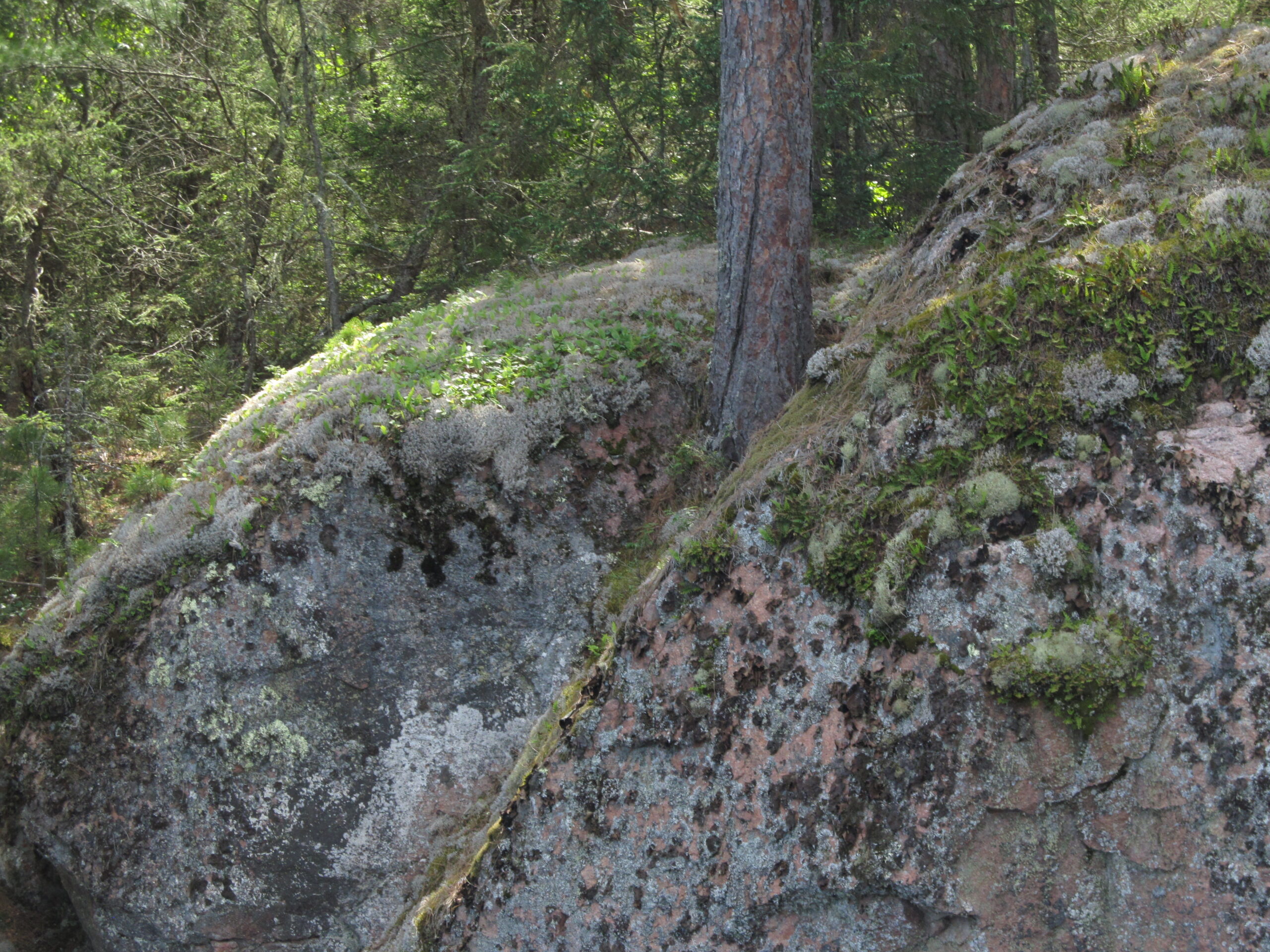
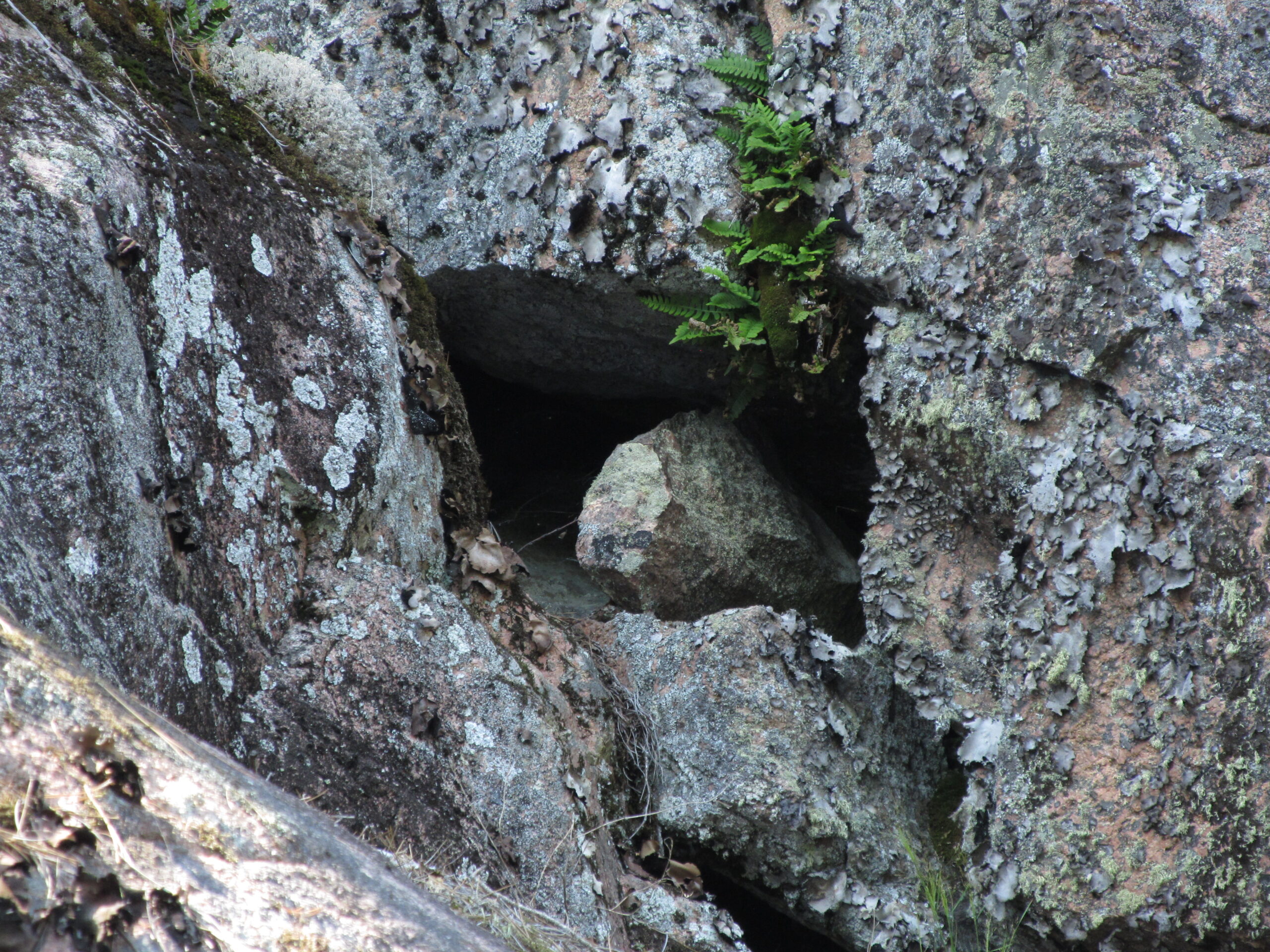
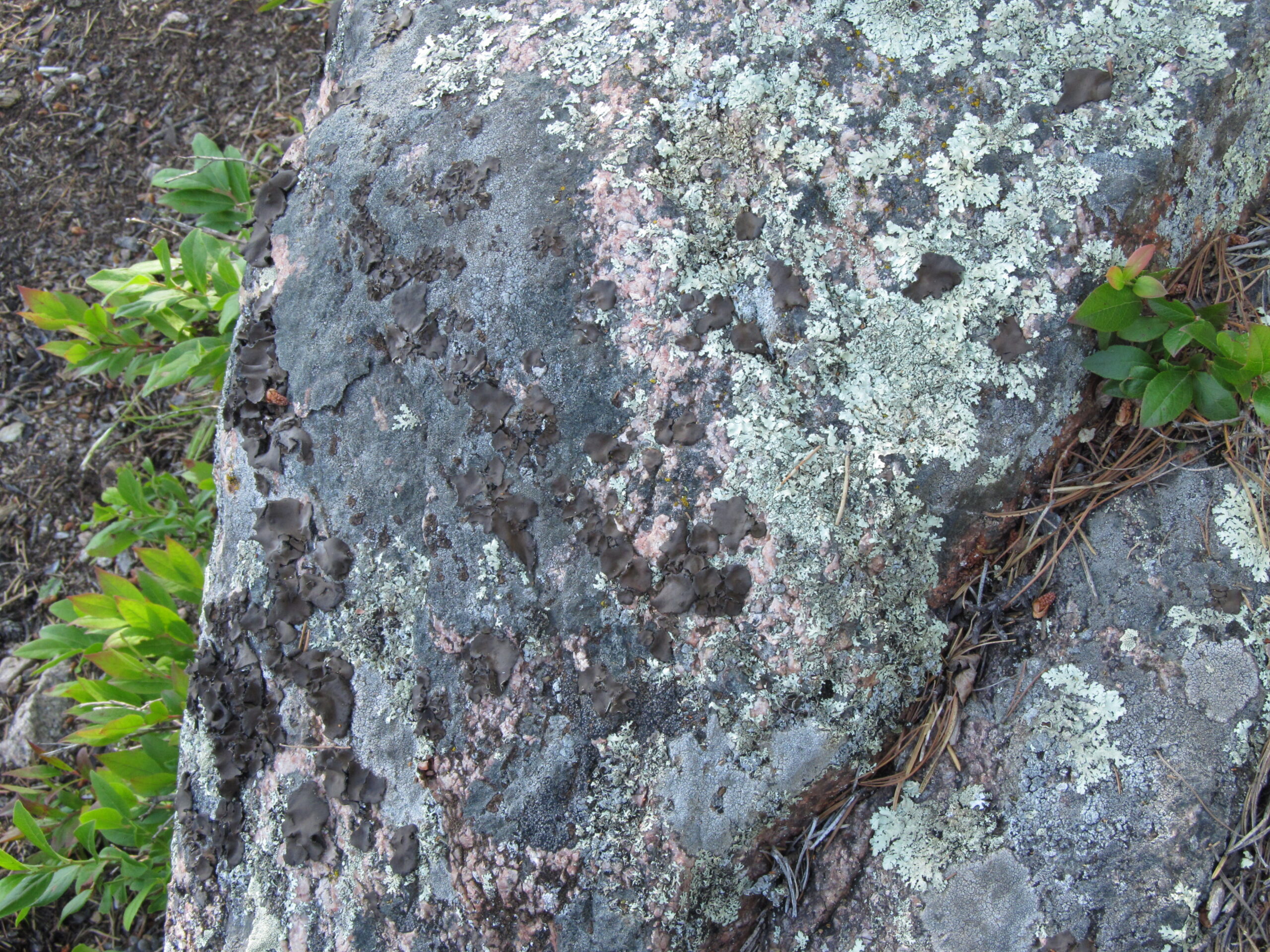
Green mosses and white Caribou moss, which is really a lichen, covered the rocks under the evergreen trees. A combination of sun and shadows painted the rocky landscape.
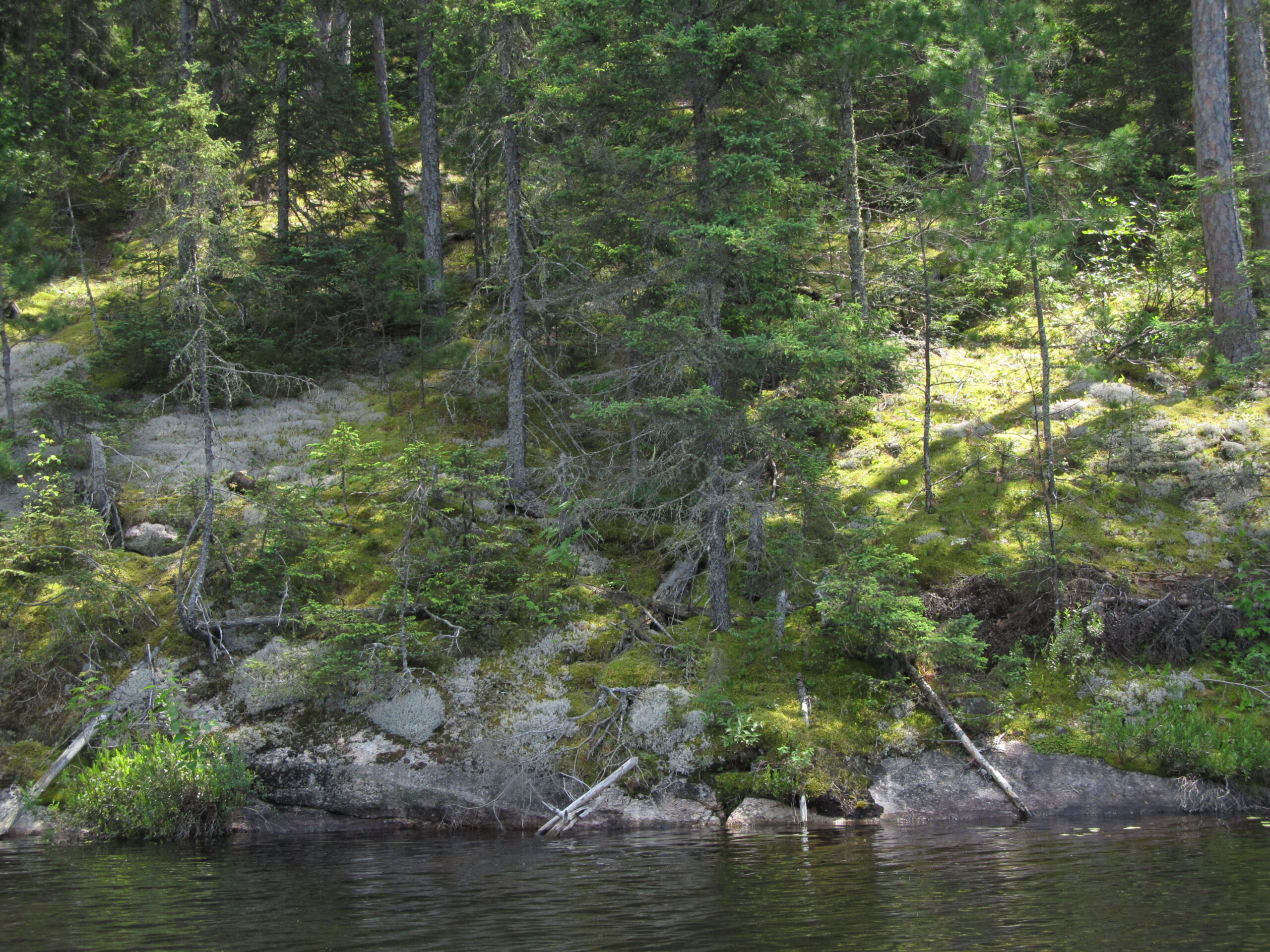
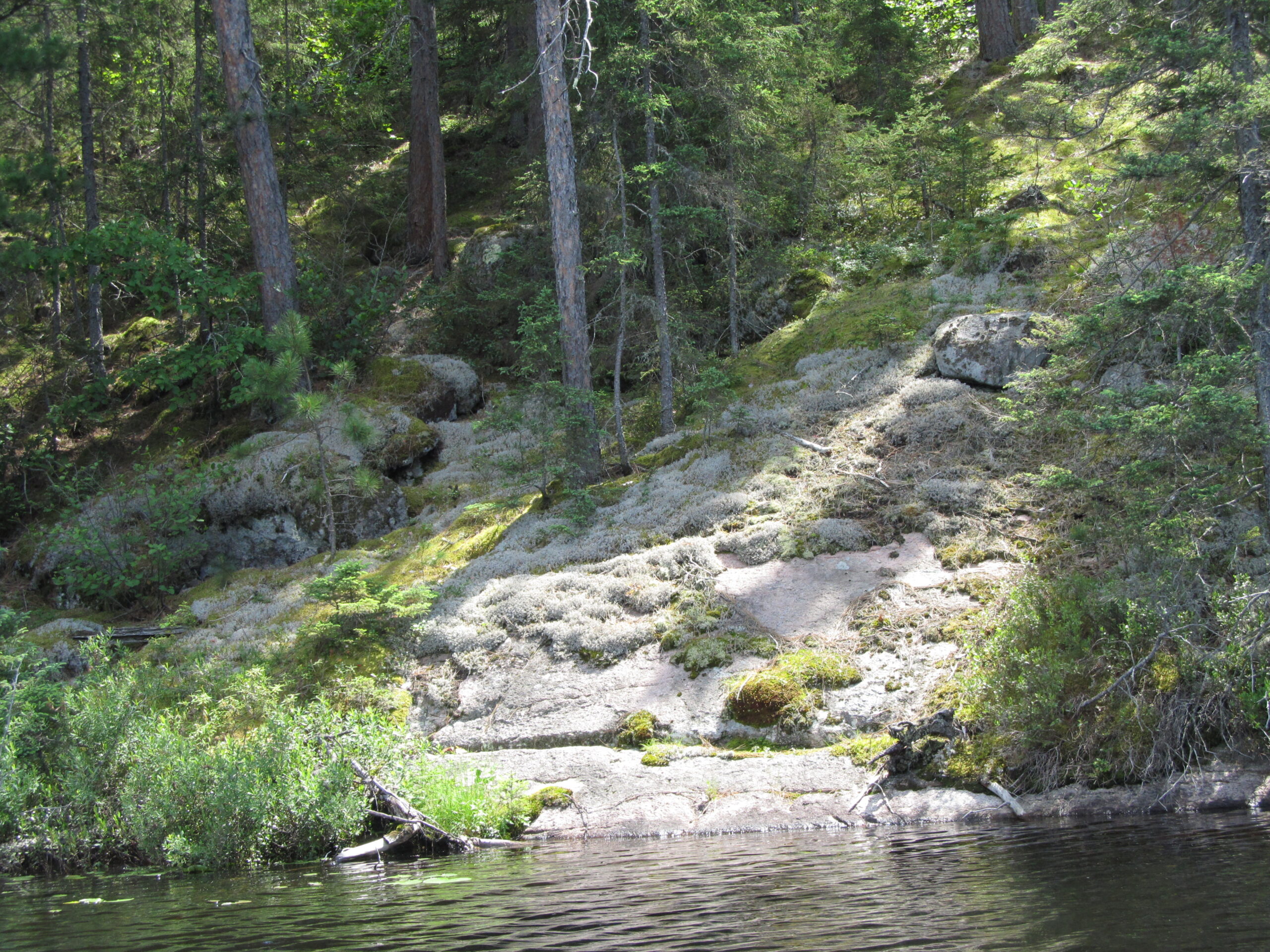
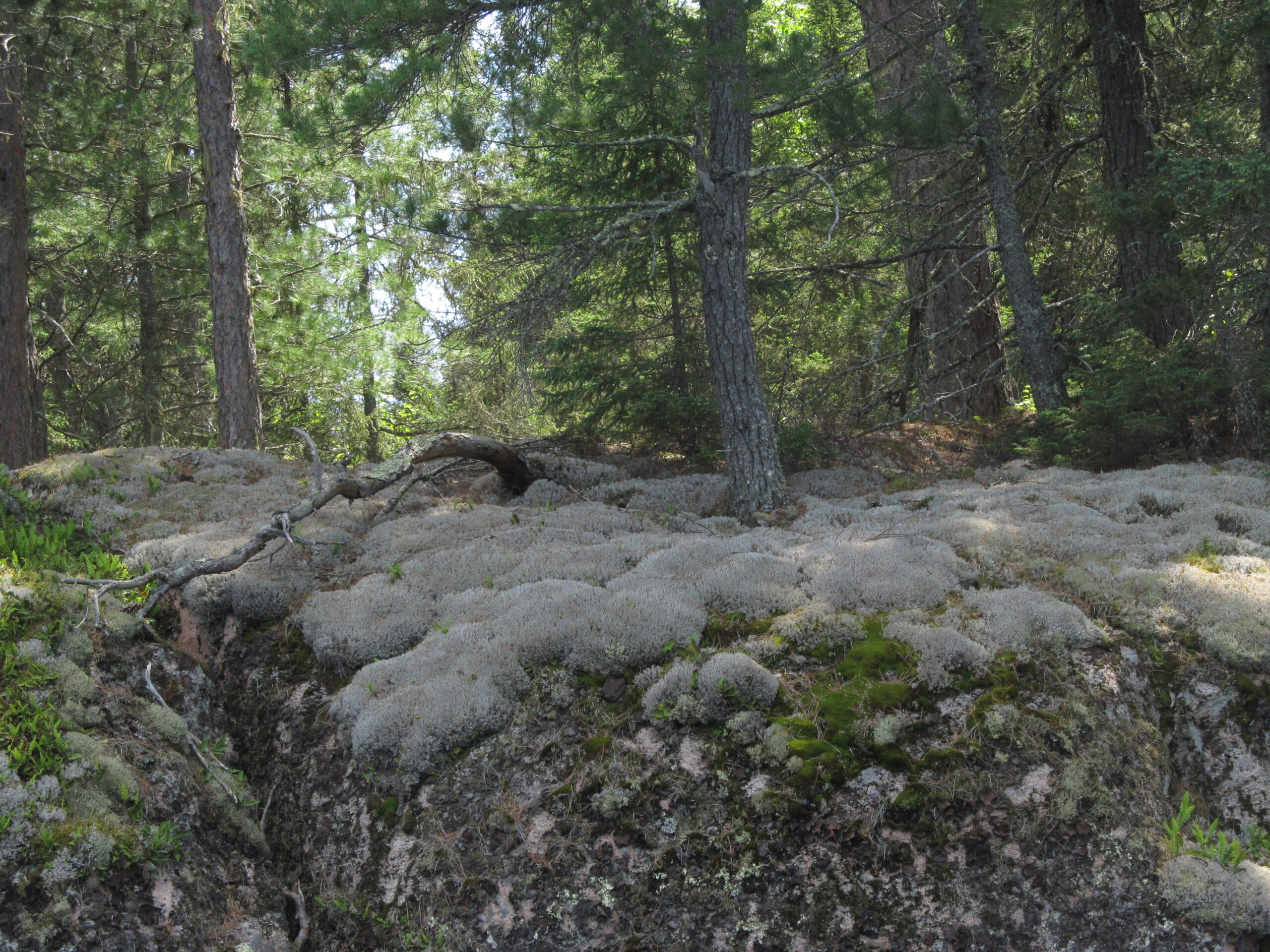
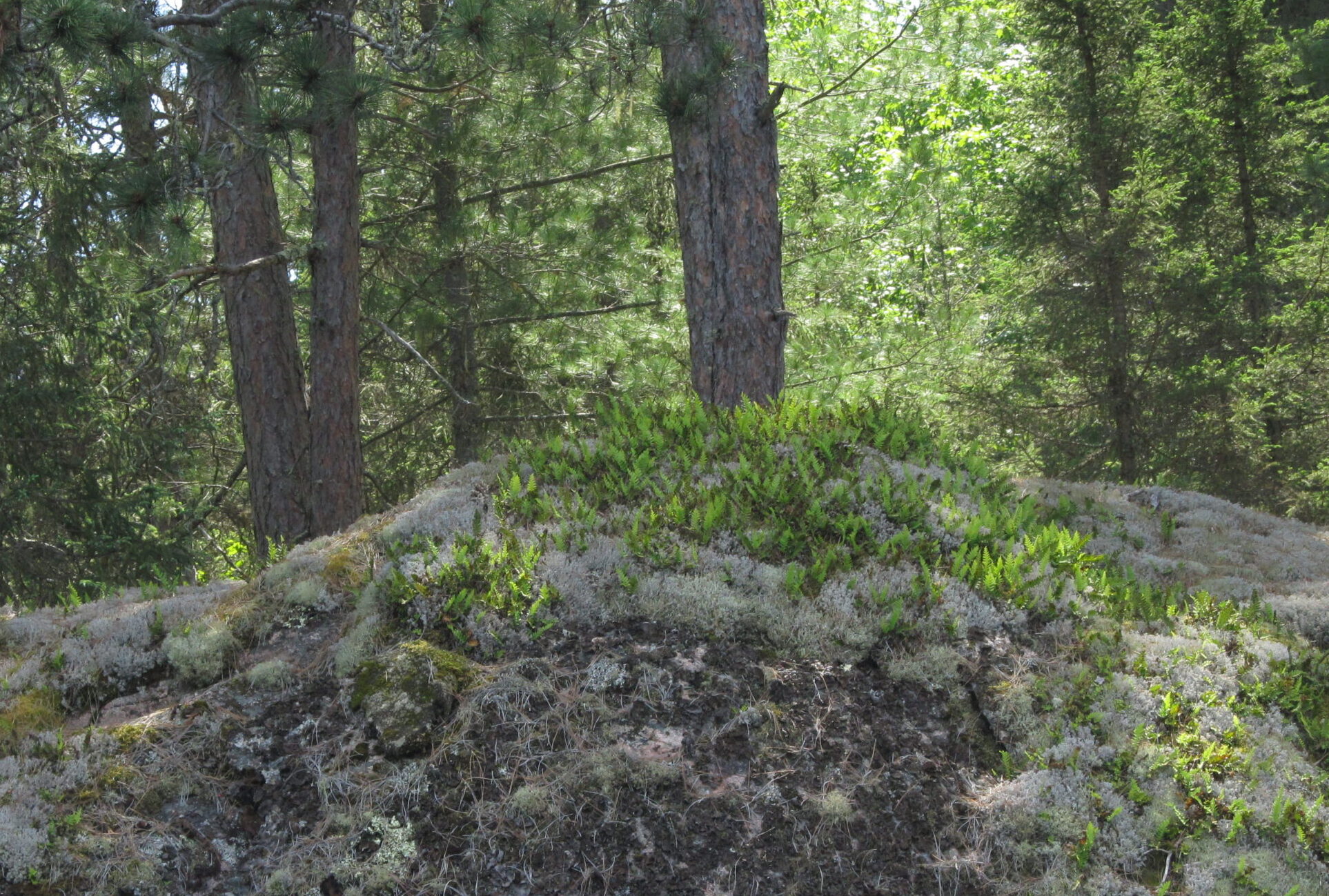
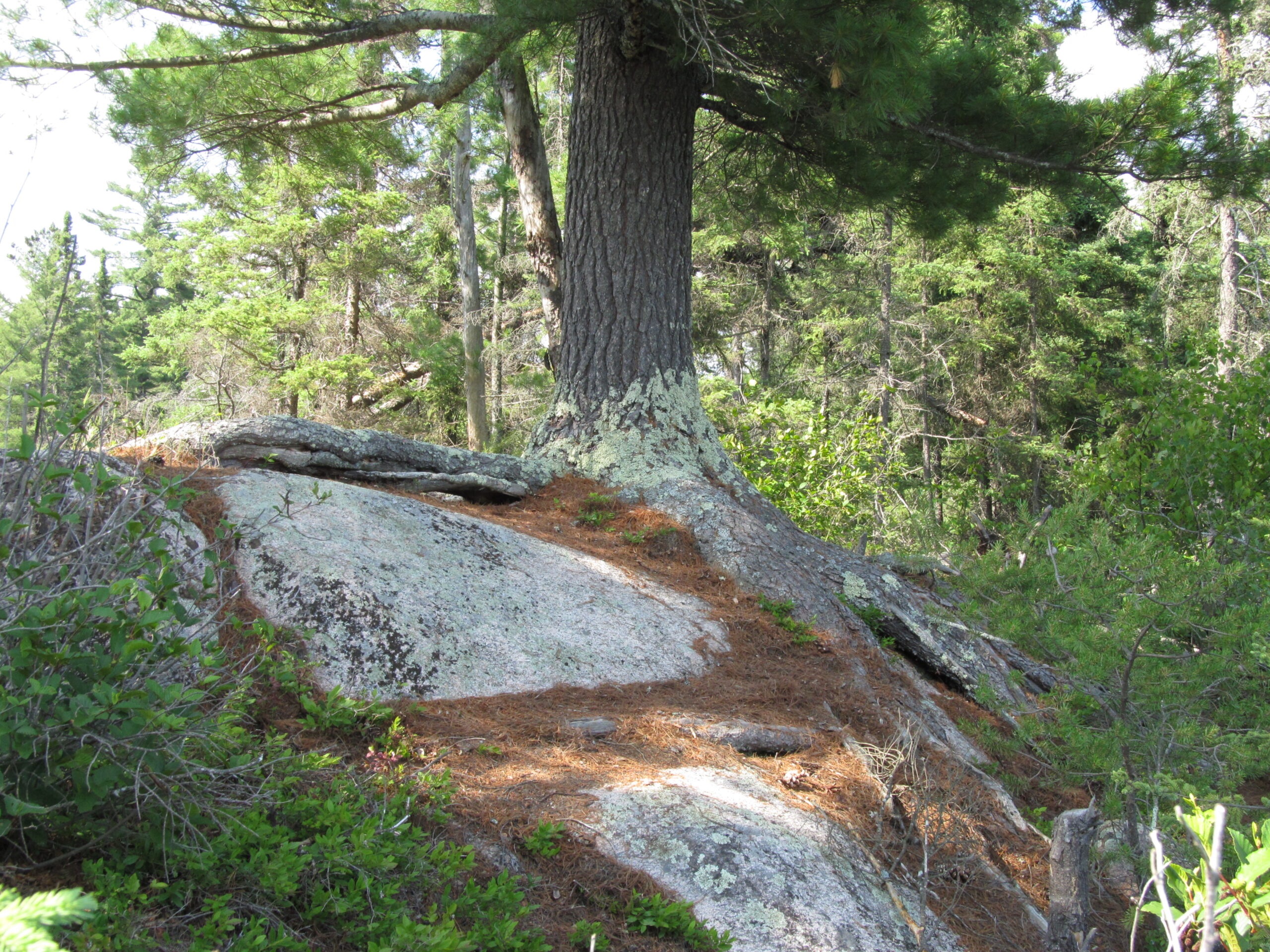
It is a miracle how the trees grow out of the rocks. How adaptable they are! We expect they need feet of soil for roots to form—instead they have feet of rocks with crevices of soil!
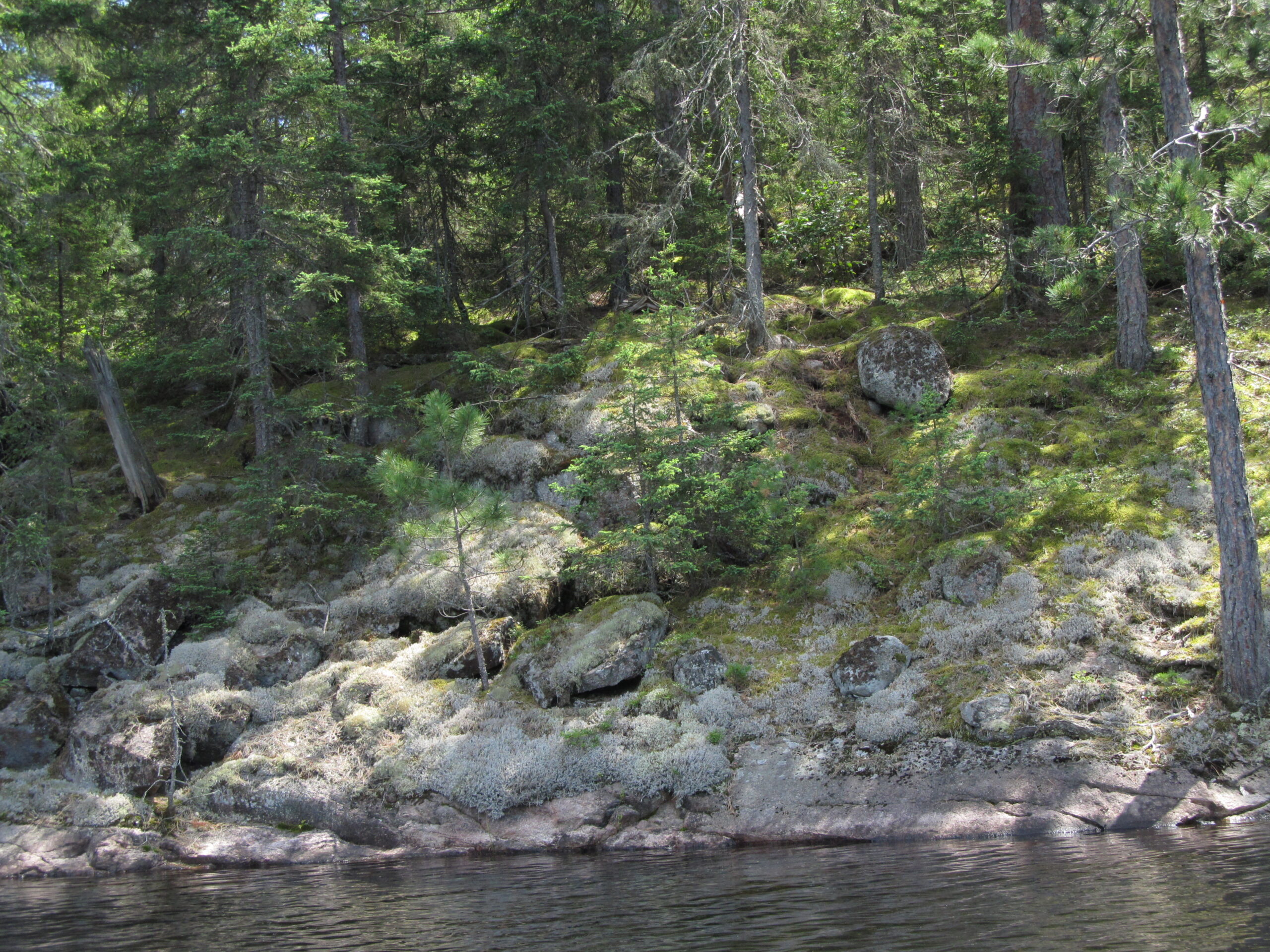
I love the look of the cushy, ghost-like Caribou Moss. The arctic lichen is sometimes one of the only food sources for caribou and reindeer in the Winter. It gives them carbohydrates to keep warm, and each has adapted by having special microorganisms in their gut to digest the lichens.
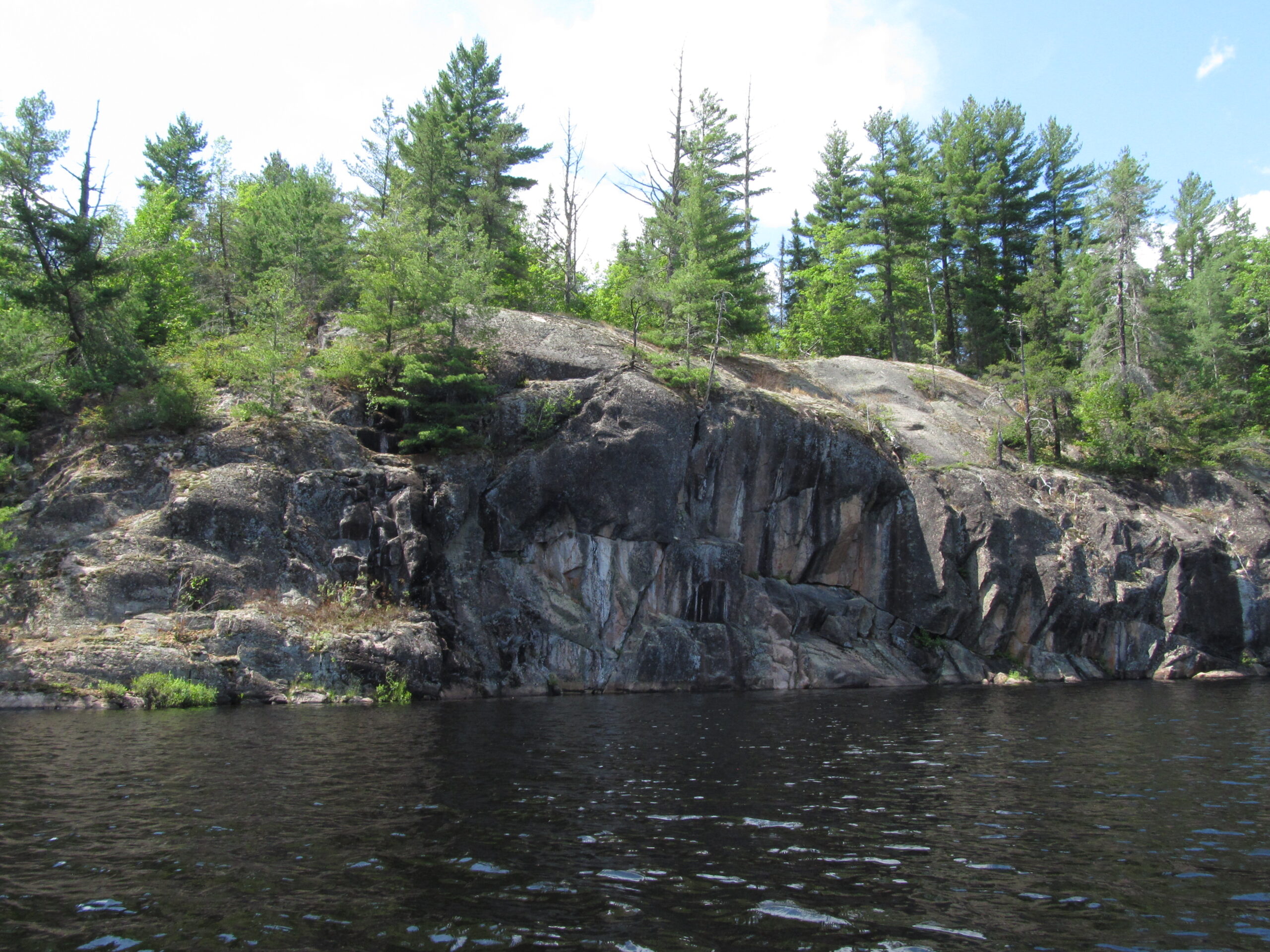
At the north end of North Hegman, we saw the granite cliffs that were the huge canvas for the proportionately tiny pictographs.
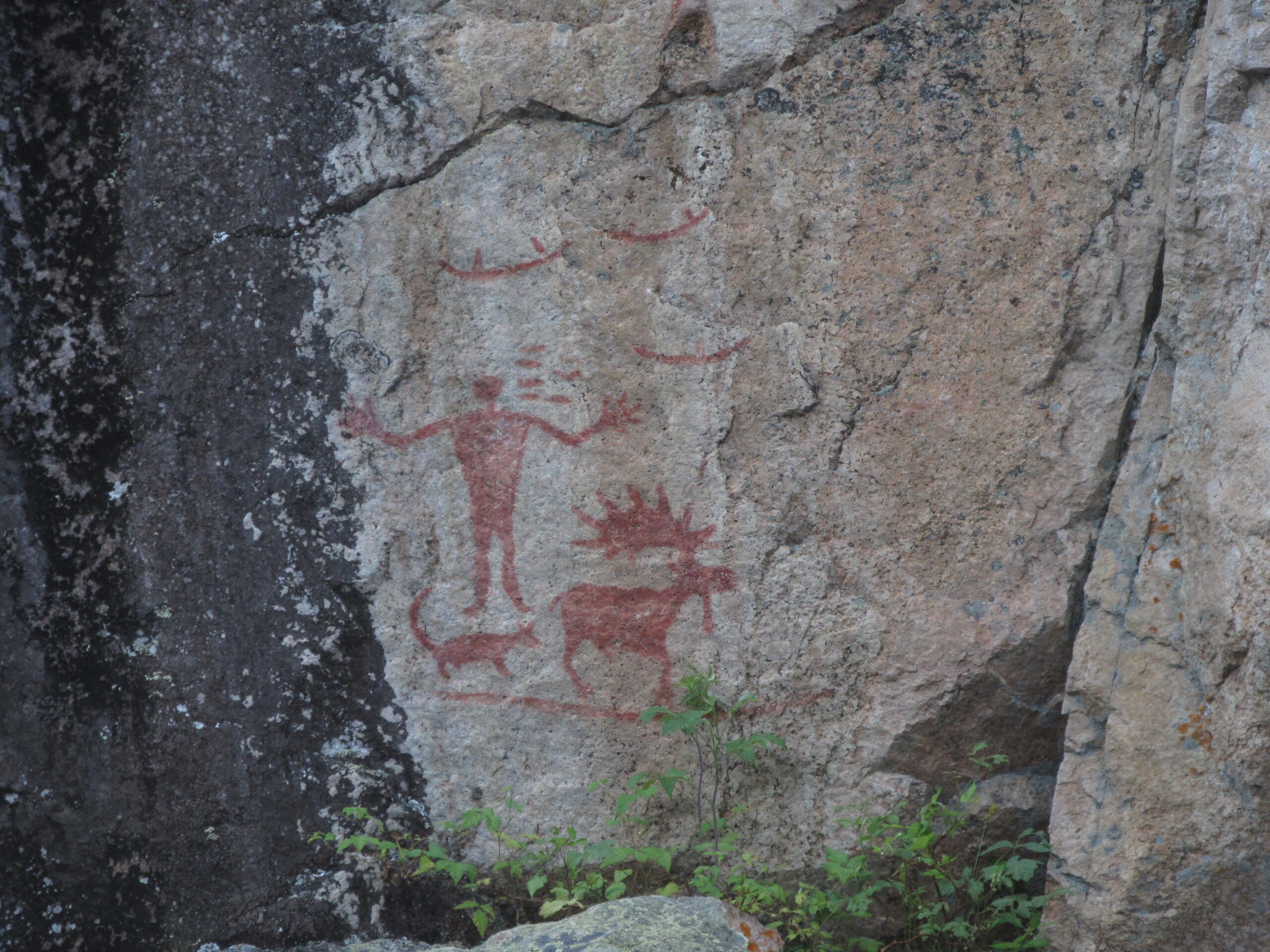
Splits and shifts in the rock face created little ledges and crevices, and right above a ledge was the red-stained painting of a bull moose, a human figure with large hands, a mountain lion/wolf/dog figure, a line under the animals, canoe-looking marks with two people in two of them and one in the other, hash marks by the human (six or seven), and a cross or x above it all. What is the story or message of the pictographs? Carl Gawboy, an Anishinaabi artist, has studied the drawings for decades and believes them to be Ojibwe depictions of constellations of the Winter sky—Orion–Winter Maker, the Great Moose, Great Panther–as Spirit of the Water, and the North Star at the top. Perhaps this was a map of sorts using the stars as guides. Maybe it was an encouragement to persevere through the long months of Winter. Maybe it was just art for the sake of art or art for the sake of a story. We can certainly relate to that.
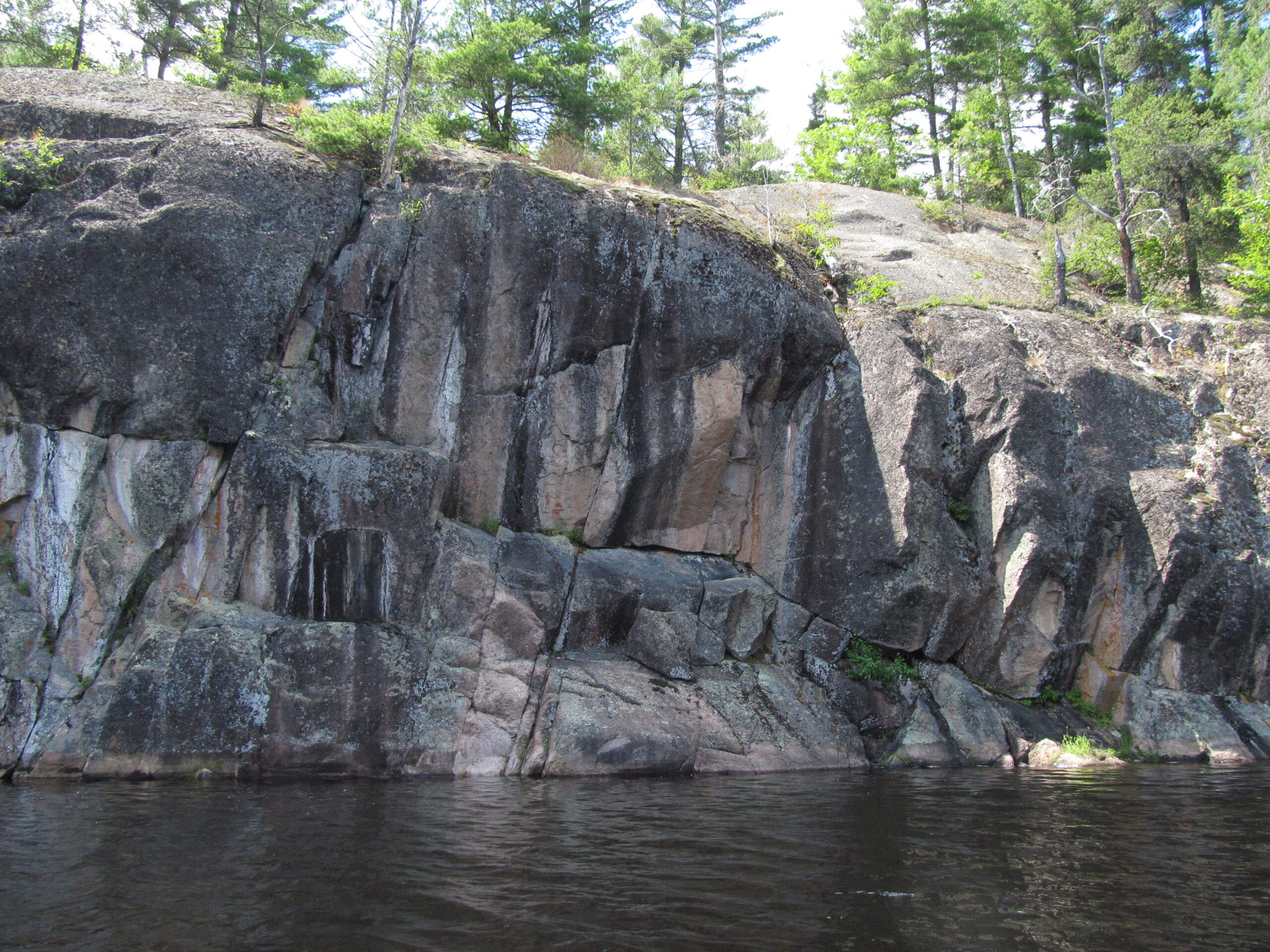
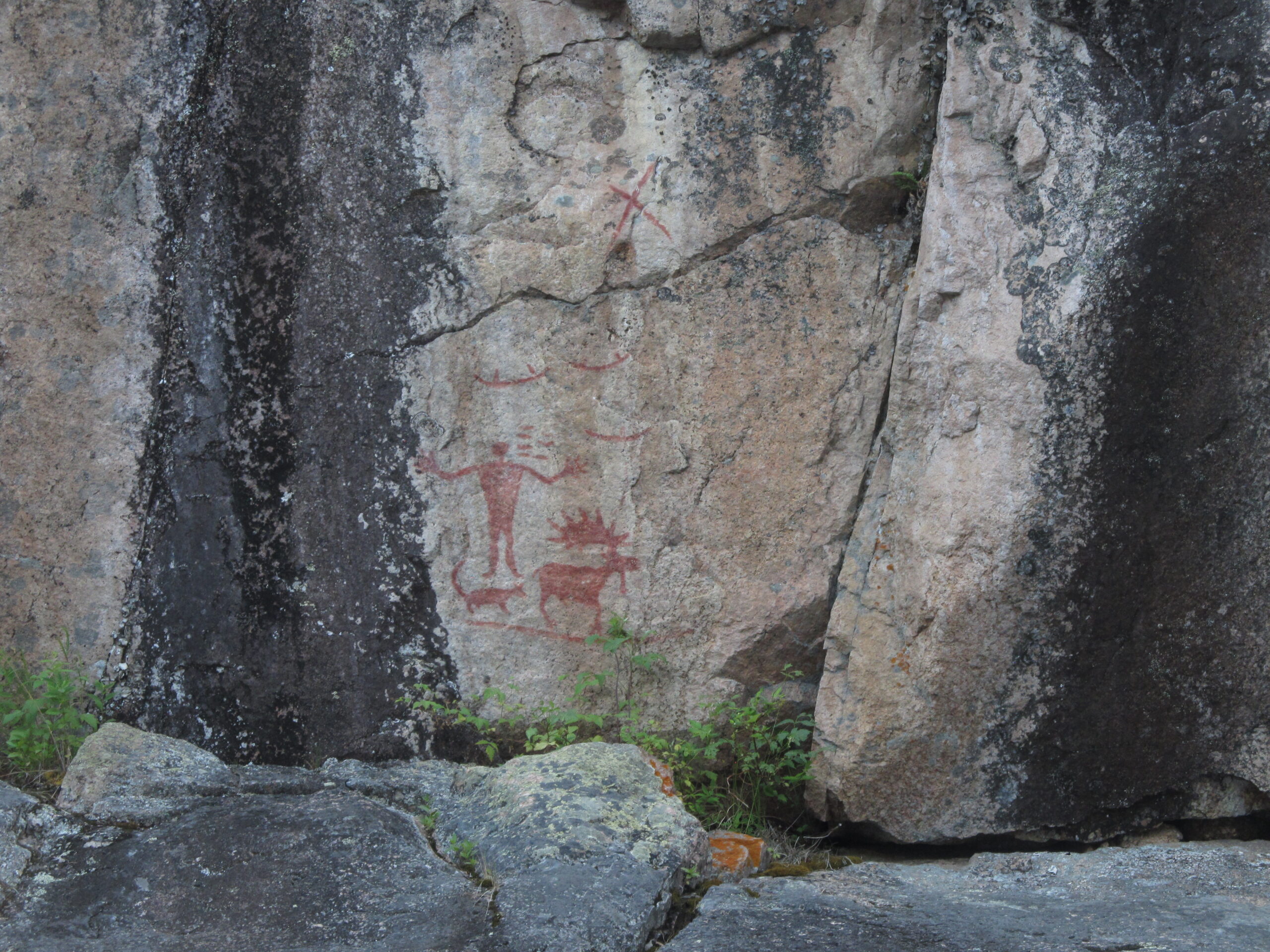
We can each make our own story about it—three canoes, two people in two and one in the other–just like our three canoes that day. Six strong decades of life with a faint line of the seventh yet to be. An ongoing wish to see a Moose. And my trek towards my own North Star.
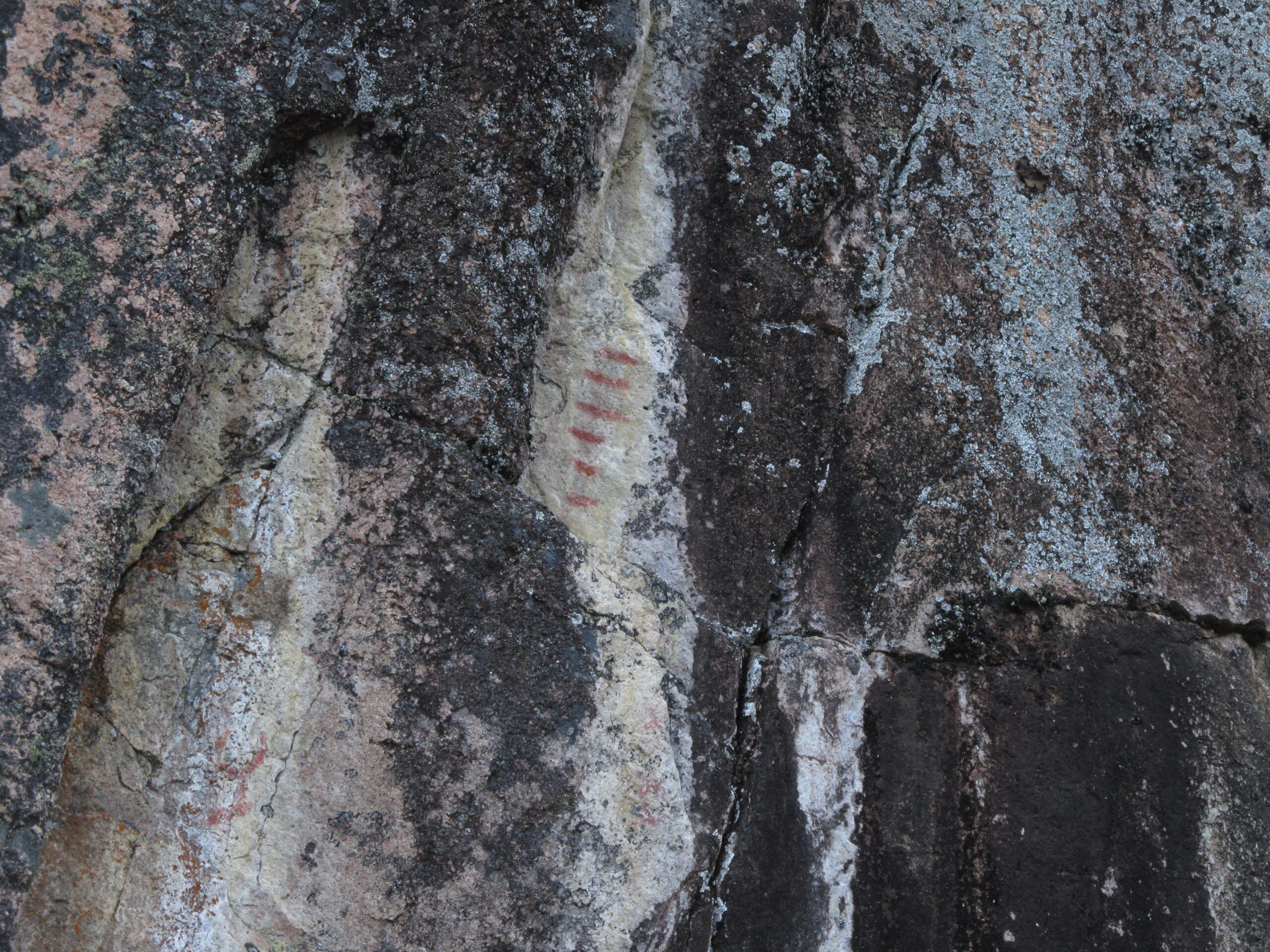
The palisade of granite and the layers of different colored rock are works of art in their own right.
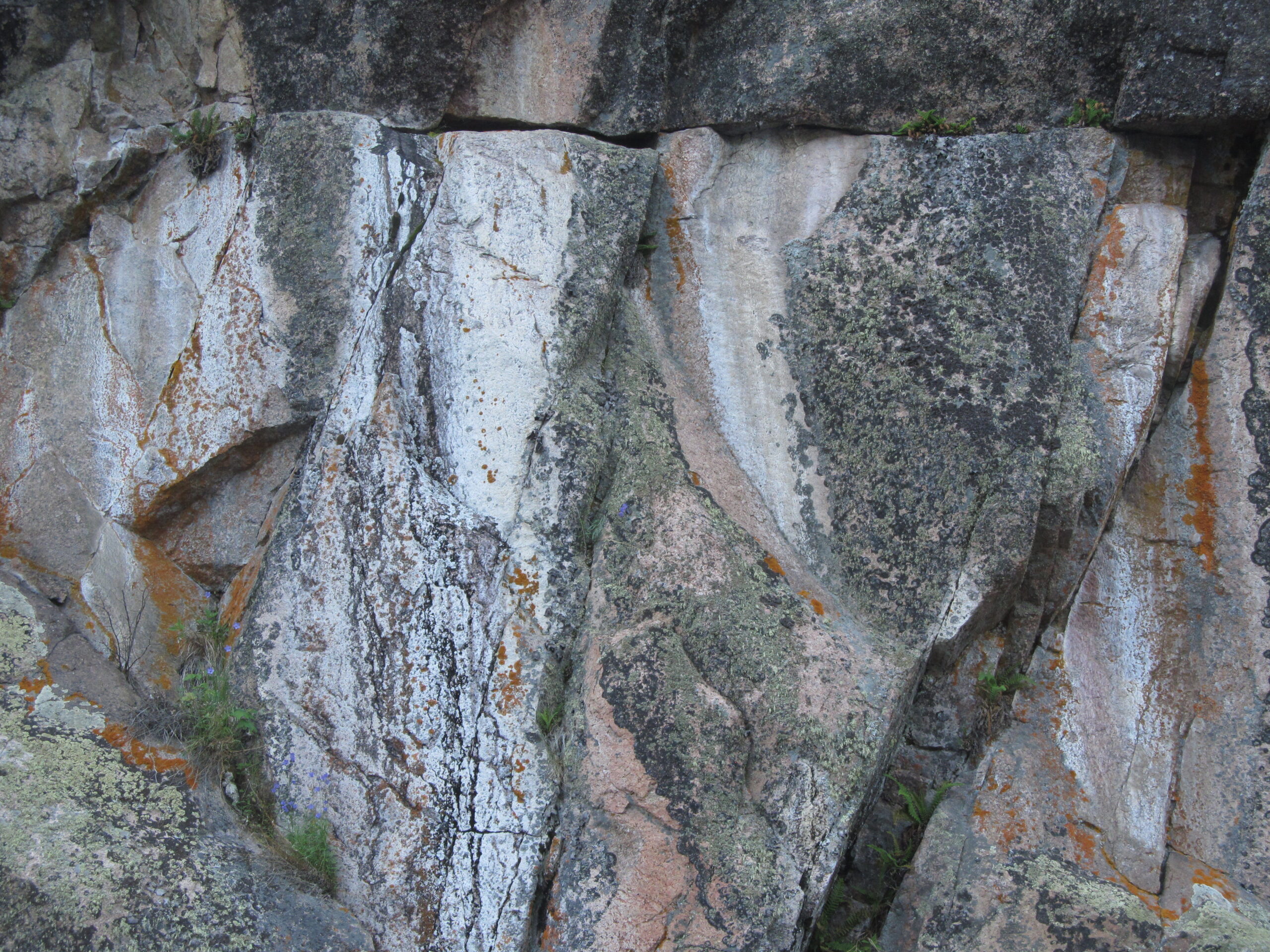
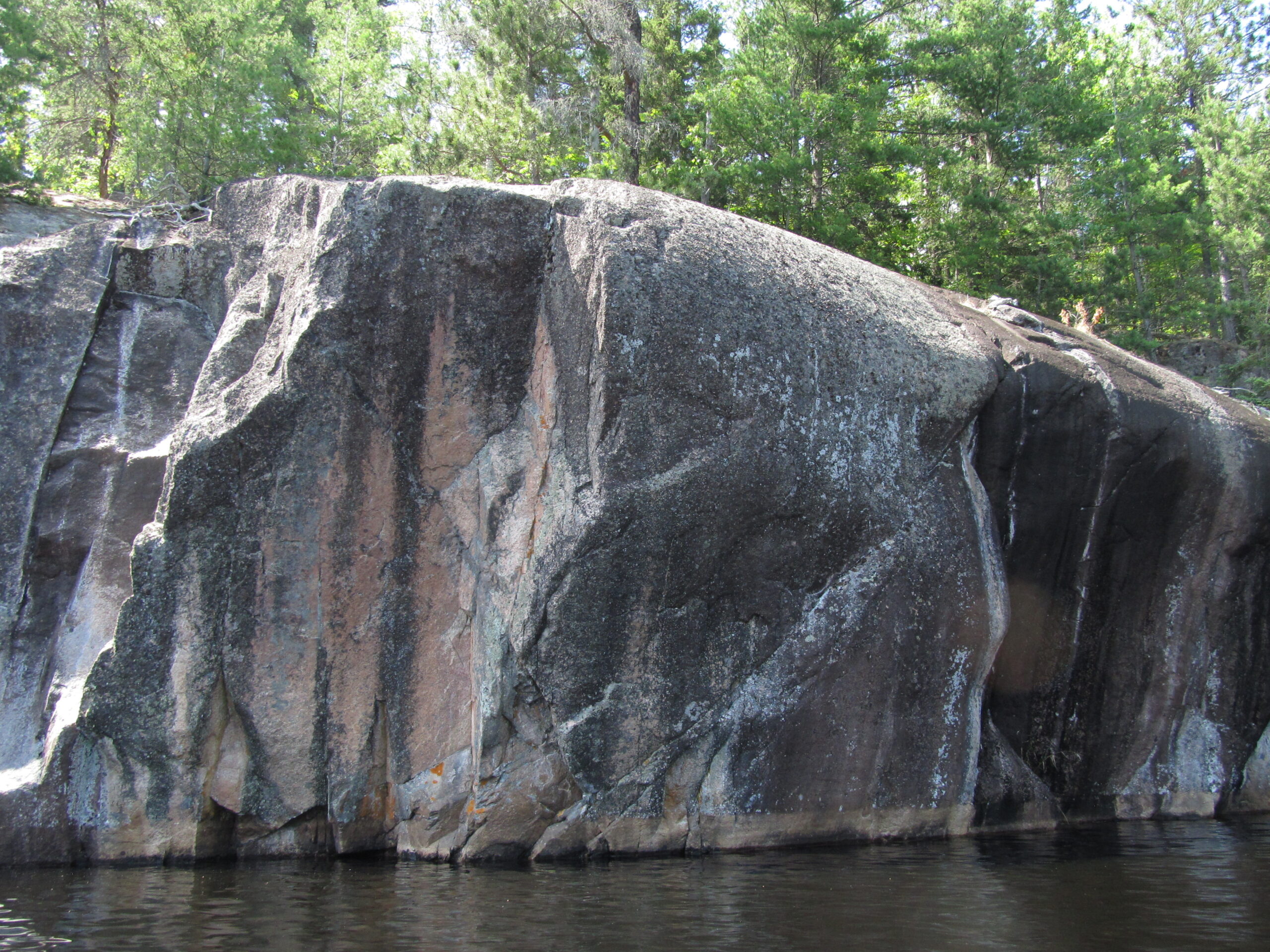
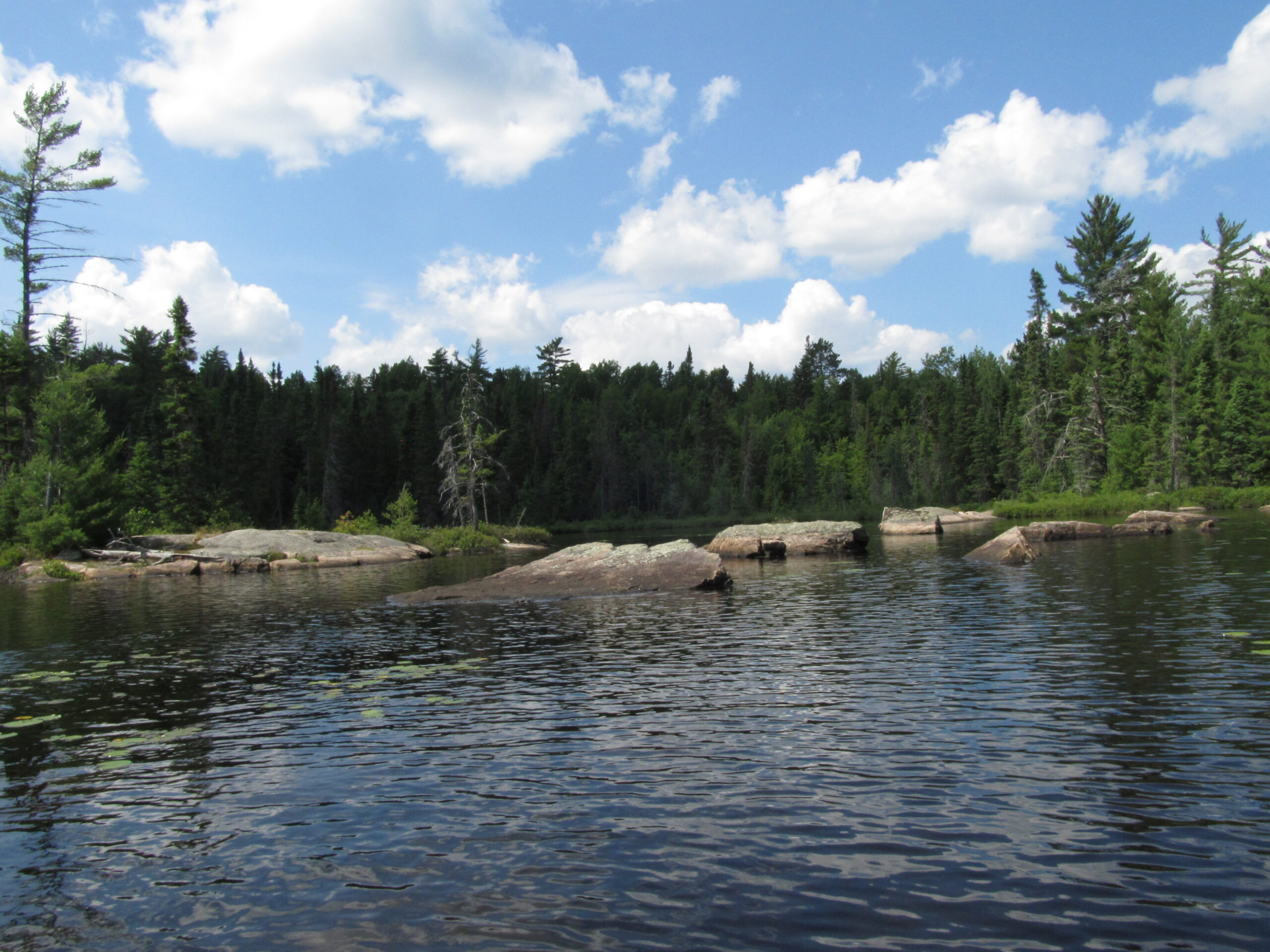
On our way back, we passed by a line of boulders that jutted from the water. I thought these giant rocks needed a name and deemed them ‘The Guardians of the Bay.’ (Perhaps that is where the Moose lives.)
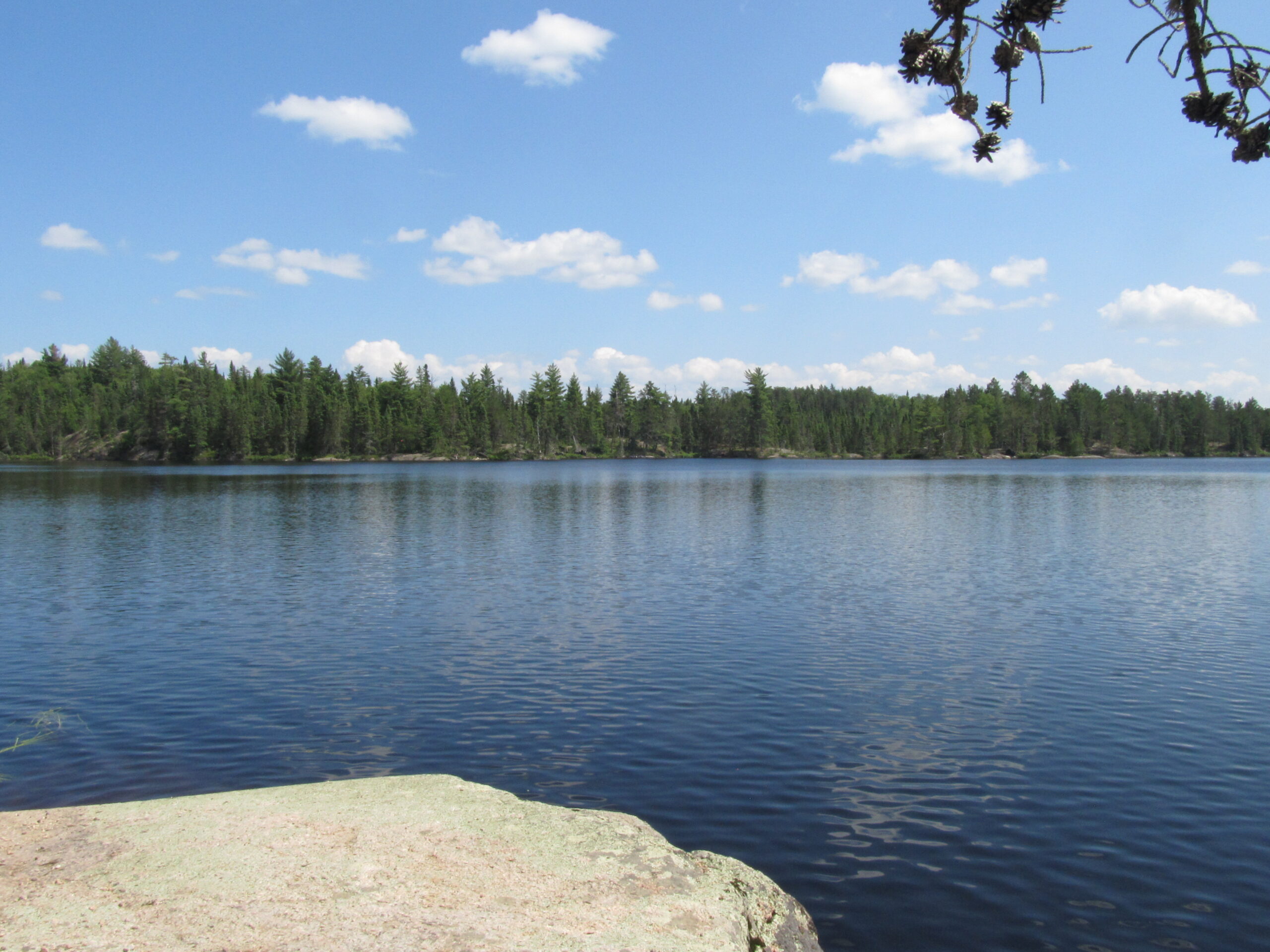
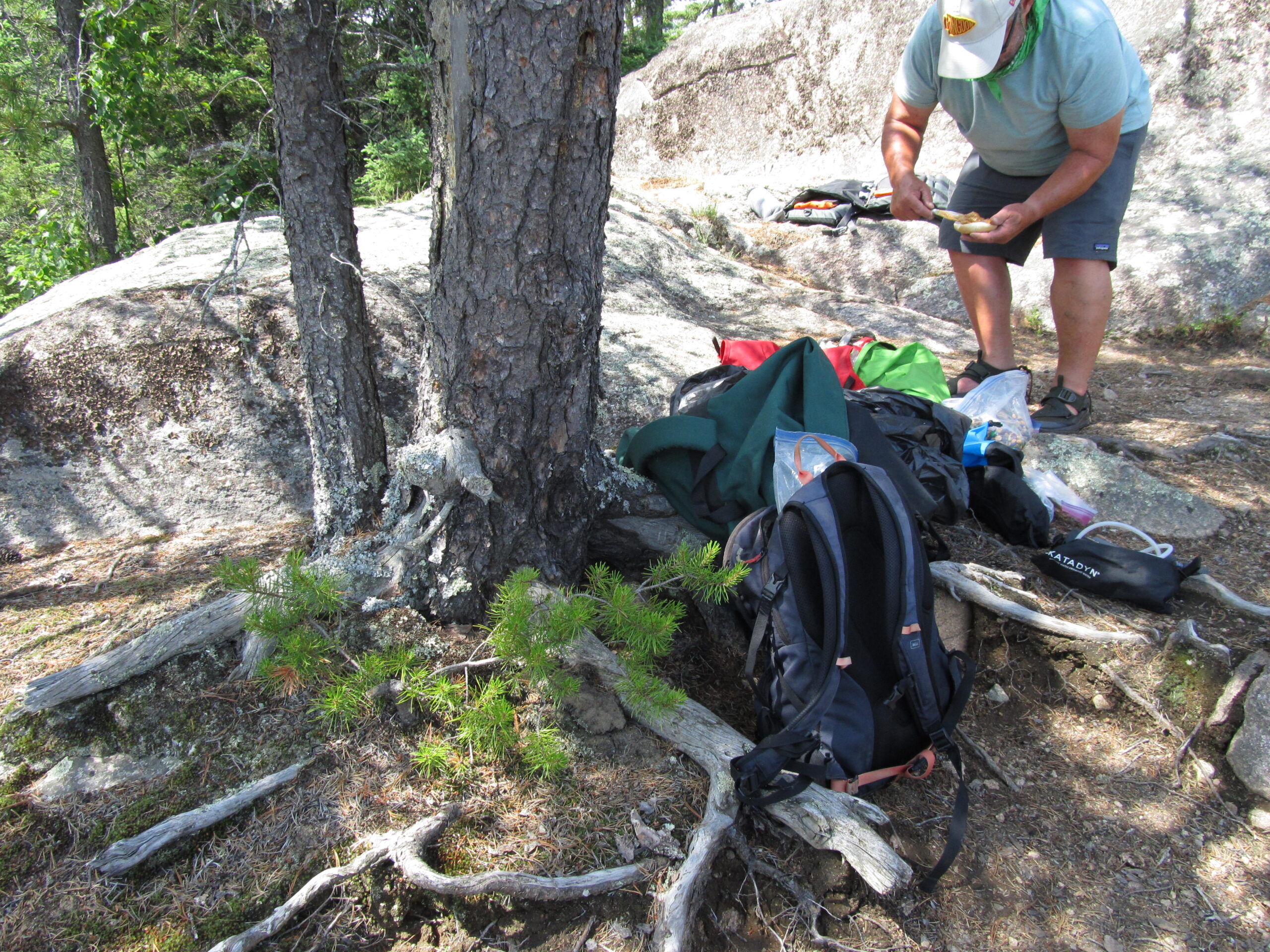
On an island past the Guardians (or maybe it was an extended peninsula), we pulled over for a lunch break. The point of the island was all rock, like many campsites in the BWCA, and the view was typically beautiful and wild.
Aaron filtered some water to replenish our Nalgenes, and Chris spread out our lunch food on the rock table. In turn, we made our peanut butter bagel sandwiches and grabbed a handful of nutty and sweet gorp or a homemade granola bar. Simple and satisfactory.
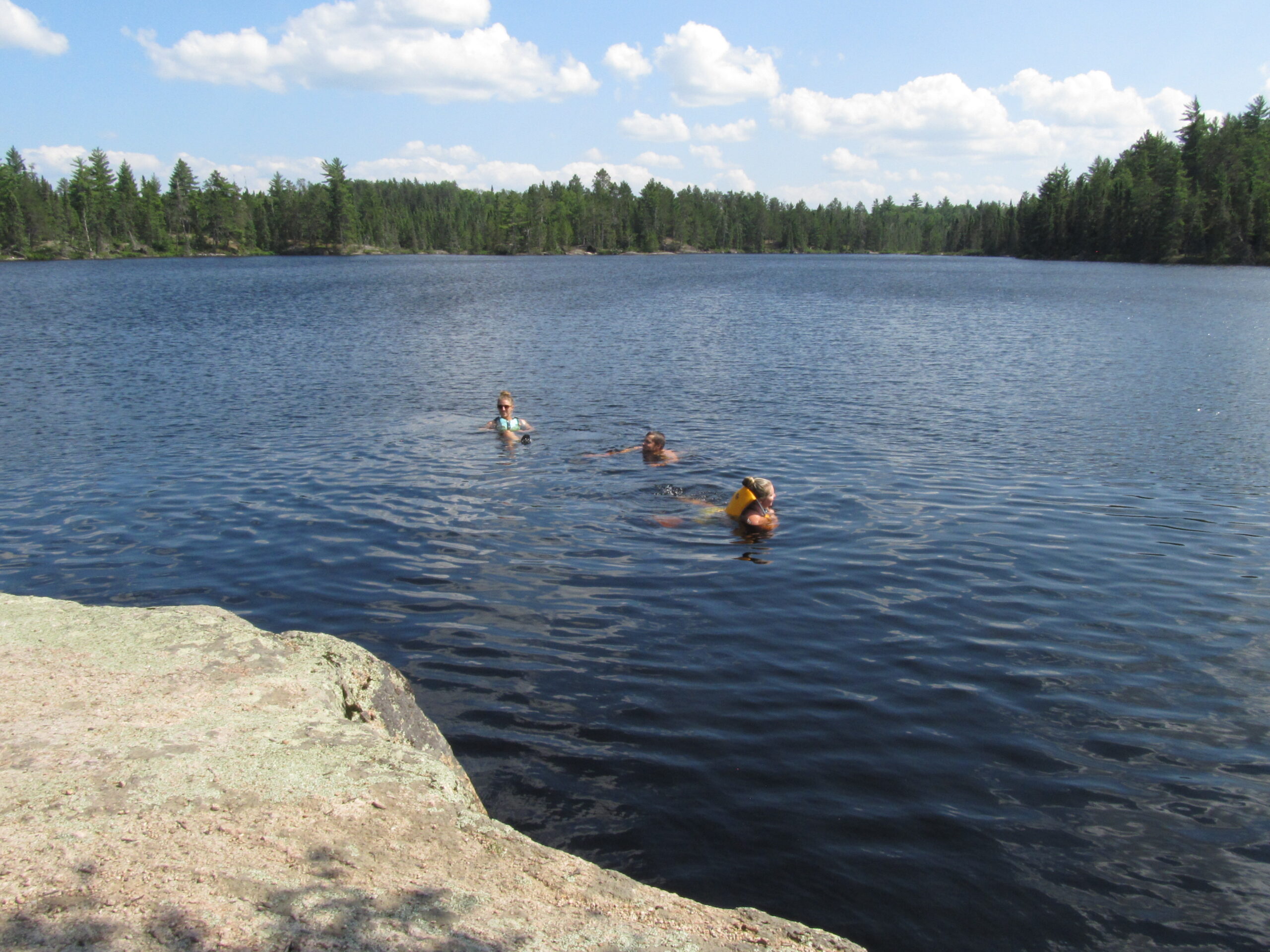
Then the kids jumped into the lake to cool down and float and play in the wilderness water like otters.
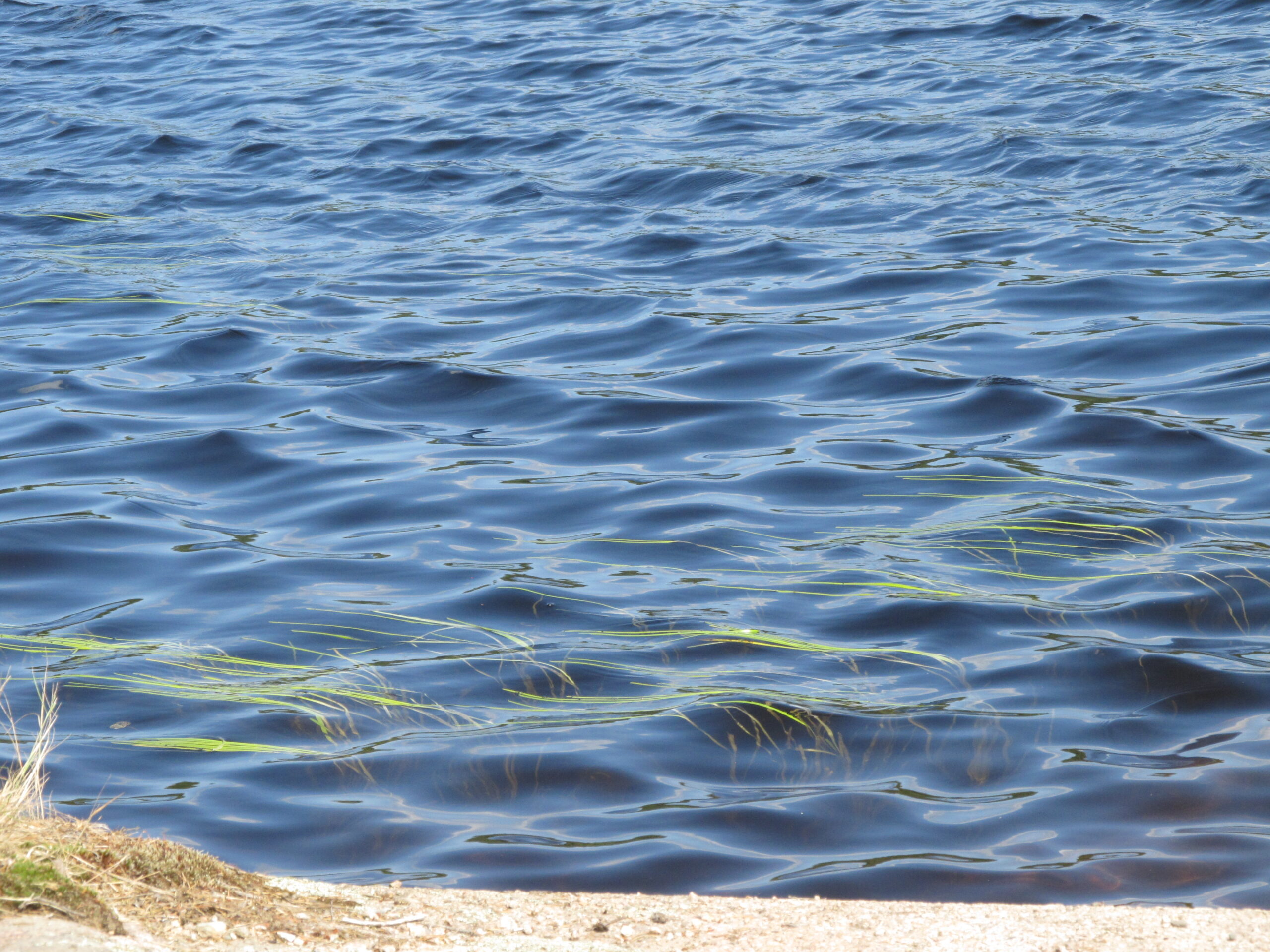
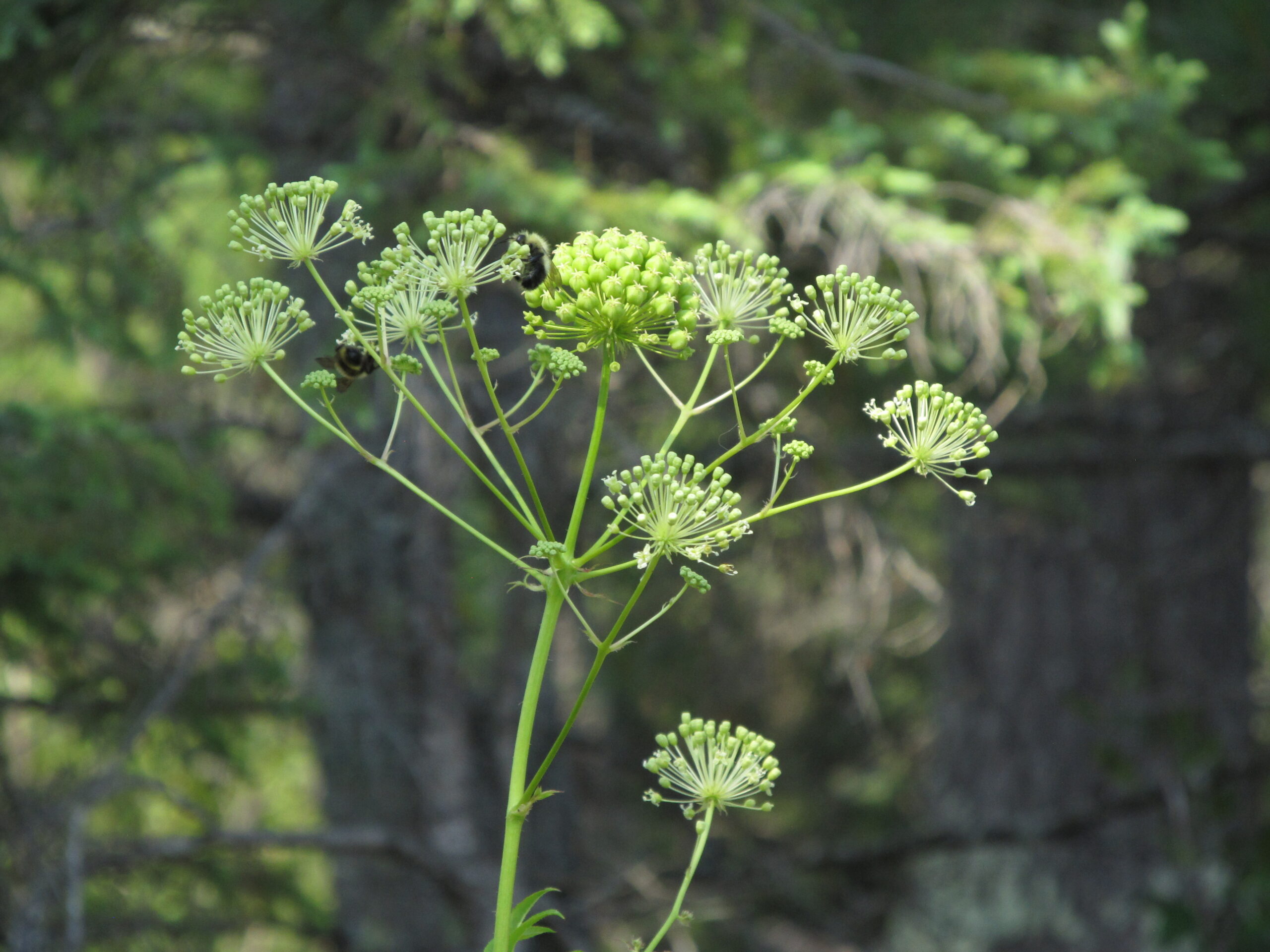
The bees and I explored the island flora. Wintergreen crept along the ground on the northwest side, and blueberries grew among the rock crevices in their sparse bits of soil. I picked and ate a few blue ripe ones, but most of the crop was yet to be.
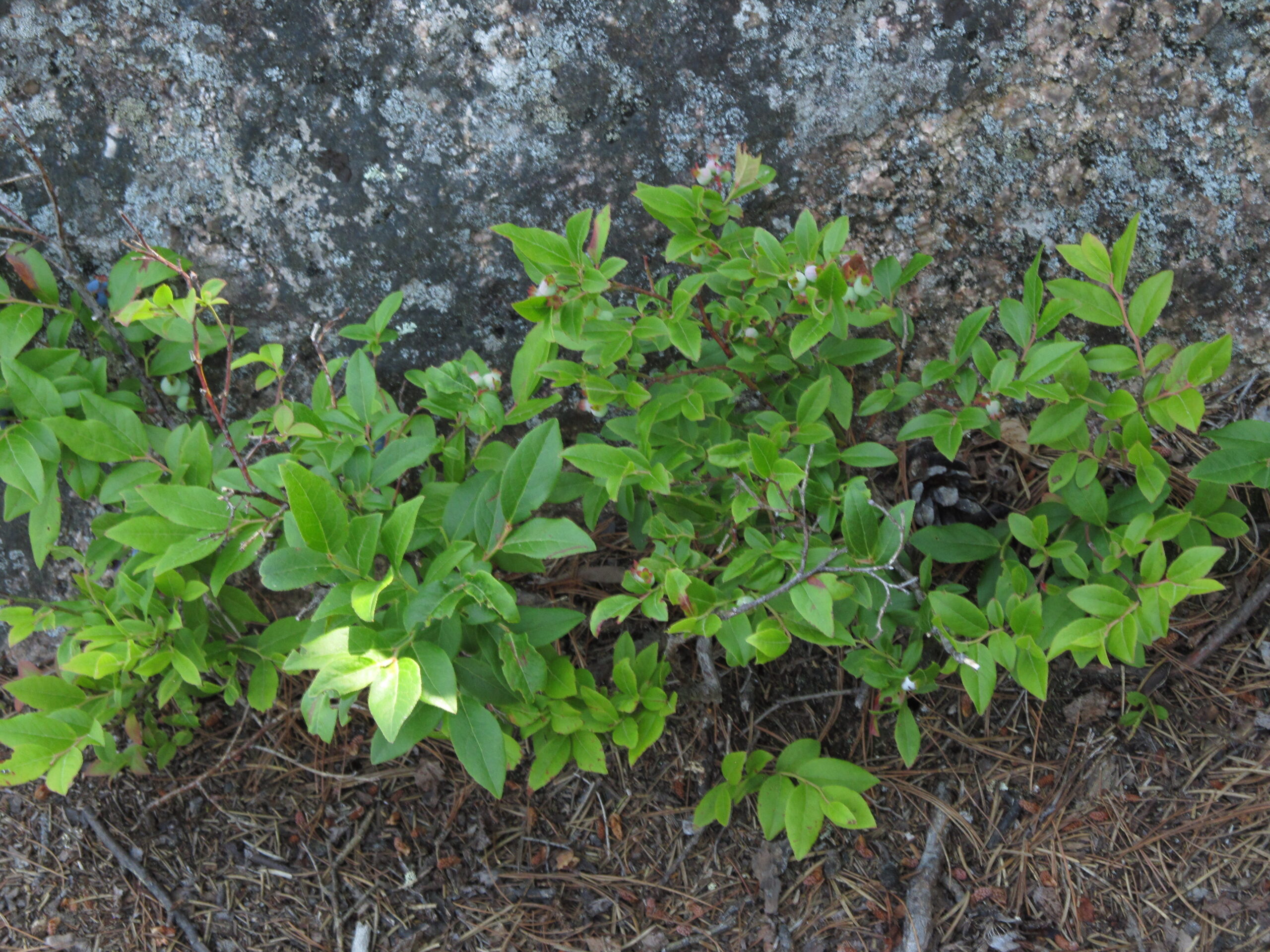
I admired the tall Grandfather White Pine who stood sentry on the rock outcropping. His roots grew on top of the rock, clutching and crawling and anchoring to anything that would hold him. His shedded needles created paths of brown that will eventually transform to soil. As the swimmers dried themselves in the sun, I soaked up the warmth of the rock and rays in a healing sauna of sorts.
Time is pretty much irrelevant in the wilderness, besides getting to where you need to be before dark, whether campsite or car. The sun and our bodies become timekeepers for travel, eating, and rest. It doesn’t take long to re-set to this natural way of being—if you allow it.
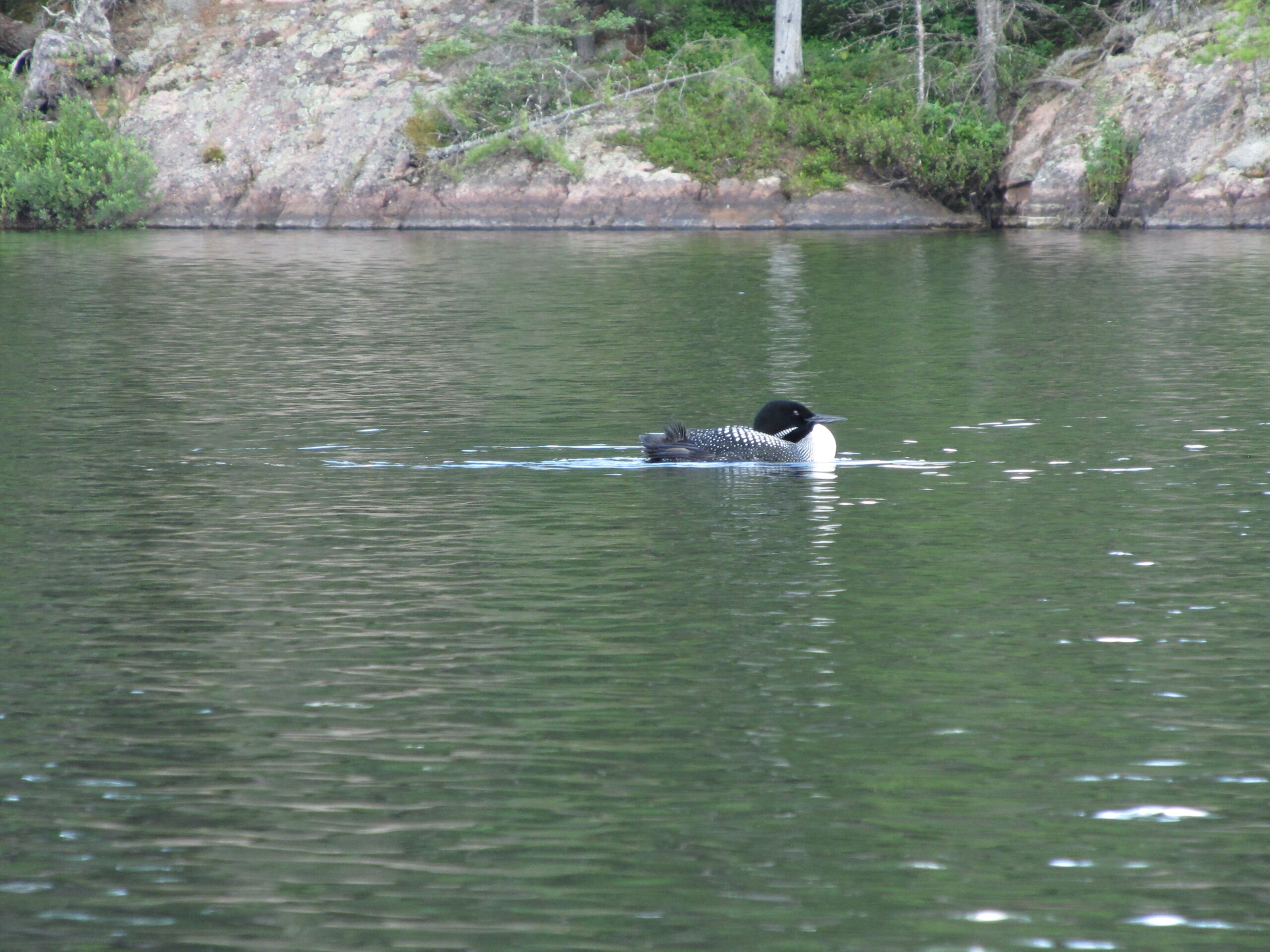
As we paddled back to the portage, a Loon swam along beside us. Its feeding of the day was finished, and he preened and cleaned his feathers as he floated along.
The water had calmed, and reflections of the kids in their canoes made a comforting picture. The water softly rippled as the point of the canoe cut through it and the paddle lifted and let go of the medium of our travel.
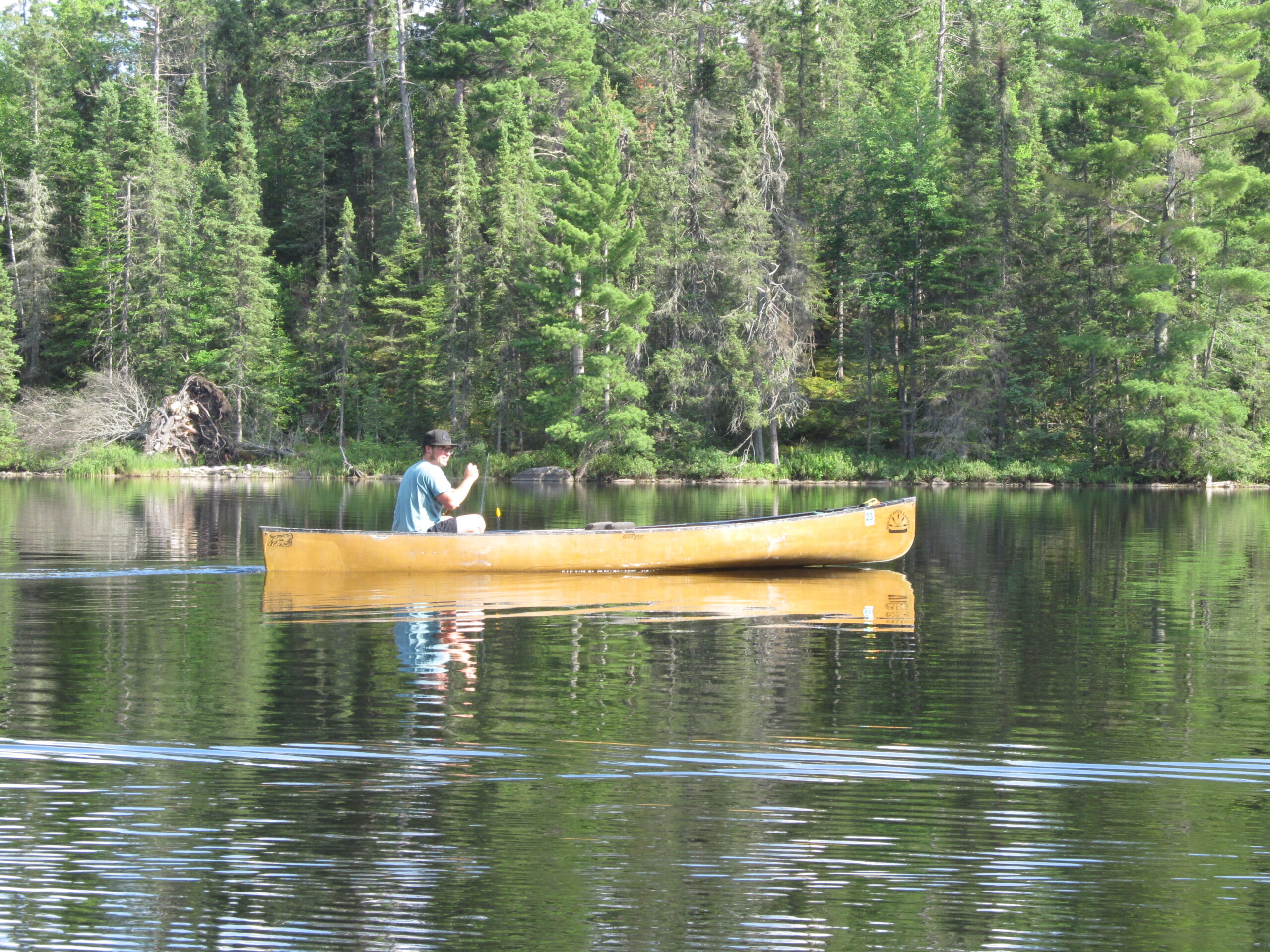
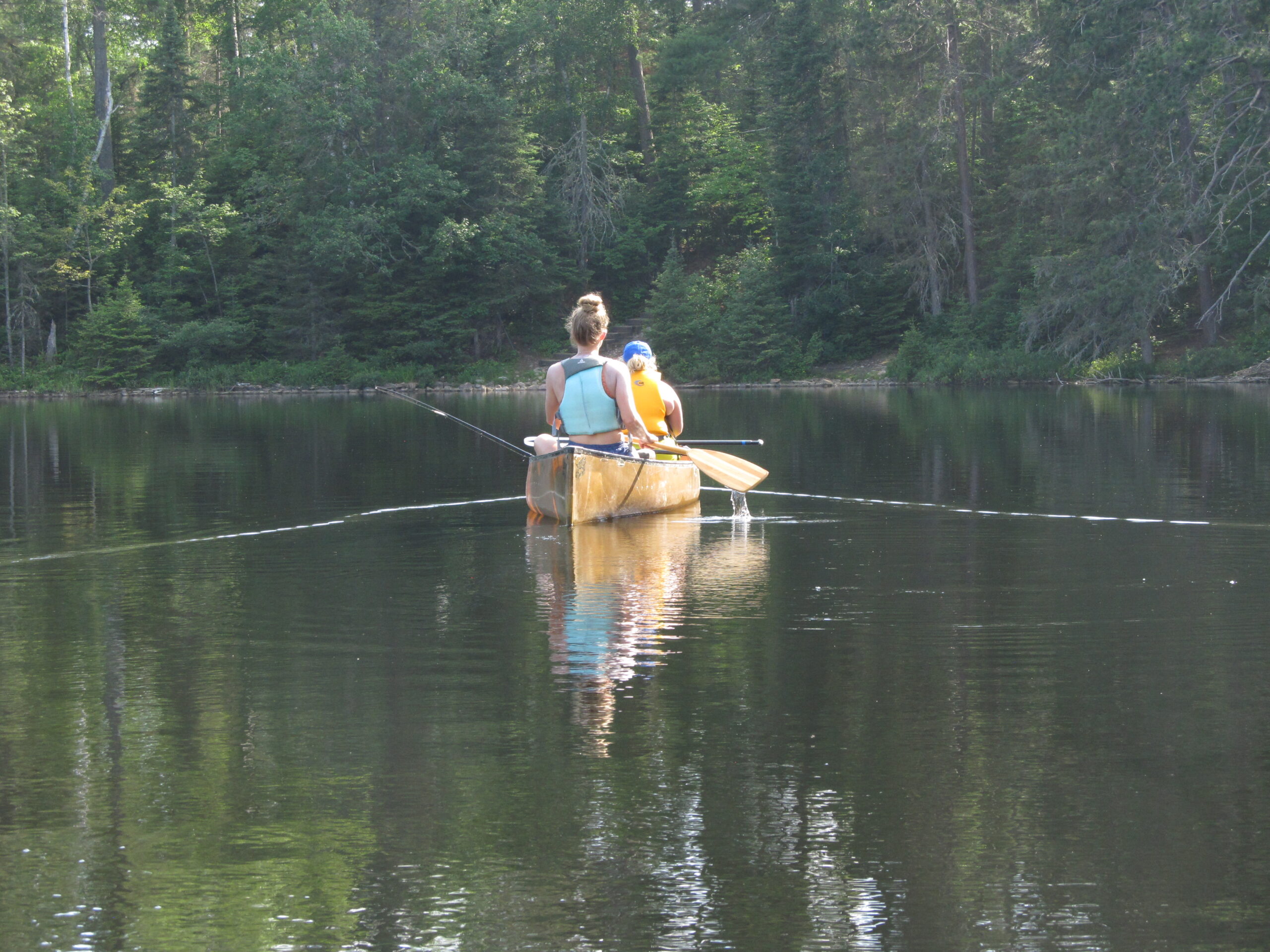
Part of our legacy in the flesh floated along beside us—do they know that they are our messages of importance? That we carefully and consciously gave them our time and attention with brushstrokes of love? That we allowed space for creativity and immersion in Nature? That we now are turning the story over to them? The story of Chris and I as individuals encompasses more than our many chapters of parenthood, and our footprints in time will reach more people than our children. But sometimes those parts are forgotten after decades of parenting. Carl Gawboy asked about the pictographs, “Who are the people that met there? And said, well, this is what we have to remember and this is what we have to teach.” What we have to remember and what we have to teach—it really is the foundation of a legacy. What is your message of importance? How have you grown out of the rocks, the hard times? How have you anchored yourself despite those hard times? Our messages are conveyed by words, art, and actions, and the reality of it is the message is just as much for ourselves as those who come after us. The receivers of the message see it with their own eyes and their own interpretations. It may be inspiring or discouraging. So it remains mysterious, no matter the message or the medium. And still we grow on, move on, and love on to what is yet to be.
Connection Under an Azure Blue Sky
It all began with my prejudice against red pepper flakes. We were eating our breakfast at KoWaKan, sitting at picnic tables under the tarp-covered kitchen. One of the board members we met the night before sat beside me and sprinkled red pepper flakes on his scrambled eggs. My Scandinavian sensibilities instantly went into danger mode—ie. ‘how to ruin a perfectly good, calm, comforting morning meal.’ When I cautiously mentioned his usage, he assured me that it made everything taste better. In my righteous and myopic defense of Northern European culinary practices, I quipped something like “and you’re from Minnesota?!” He was not from Minnesota. He said he grew up in Kansas City. Well, that explains it, I thought, as I told him that that was where my husband Chris grew up, too, (who also flavors his eggs with red pepper). We continued to eat our eggs and chat. When Chris walked over from the fire where he had been warmly eating his breakfast, I told him that John was from Kansas City! Chris asked him what part of KC he was from, then asked if he had gone to Southwest. John said no, that he had gone to Rockhurst High School. Things kind of went slow motion in my head as I looked from one to the other, and then he added, ‘Class of ’76.’ Chris and John were classmates! What the heck?! They used to play basketball together every day in the ‘short-guy-lunch-hour basketball league!’ We were in the northern wilderness of Minnesota at a Methodist camp and two Kansas City Catholic boys meet again after 40-some years! It blew my mind—I could hardly stand the deliciousness of it!
We were all on the same work team that morning, and the conversation between them flowed from past memories to present day to how they got here. During the shoveling, bucketing, trimming, and digging, in the midst of the smudge smoke that kept the black flies from our eyes, there was a re-connection from a distant time and place. From all the stories that Chris had told me about Rockhurst, I knew that it, too, had a ‘Spirit of the Place‘ about it.
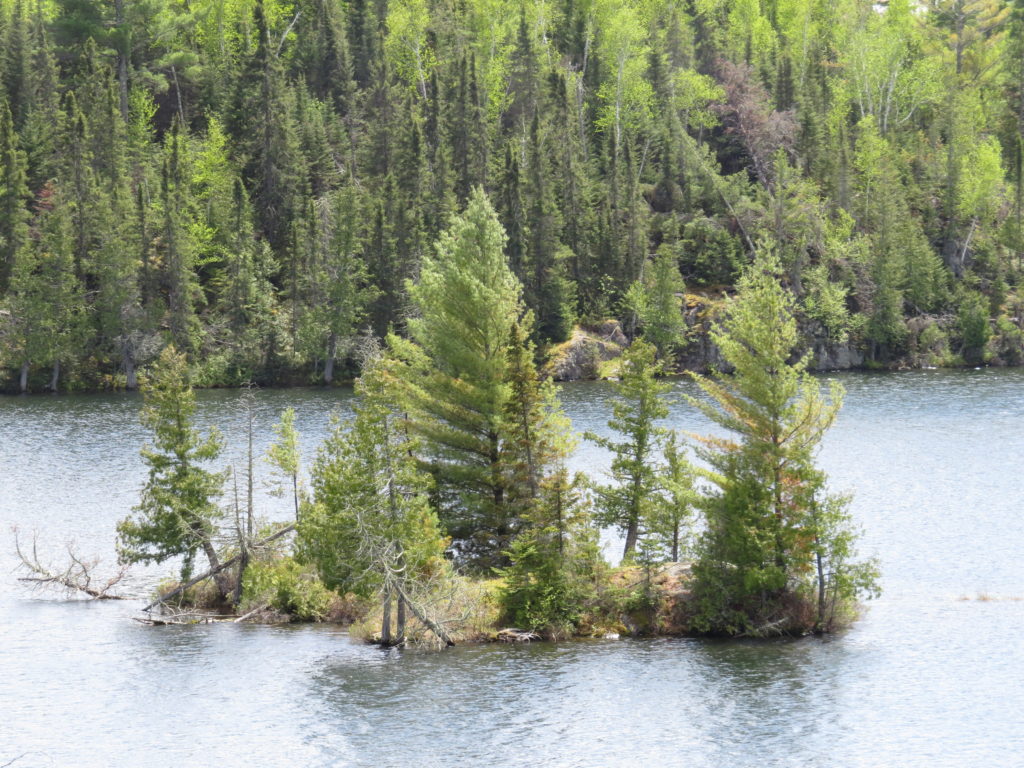
Later in the day, I walked the trail from the Meadows to Hilltop, capturing the details of a late Spring day in the forest. Spruce, Pine, Fir, Birch, and Aspen are the largest trees in the forest, including those on the three islands of Section 12. Star-white flowers of small Serviceberry trees will produce dark, edible berries later in the summer.
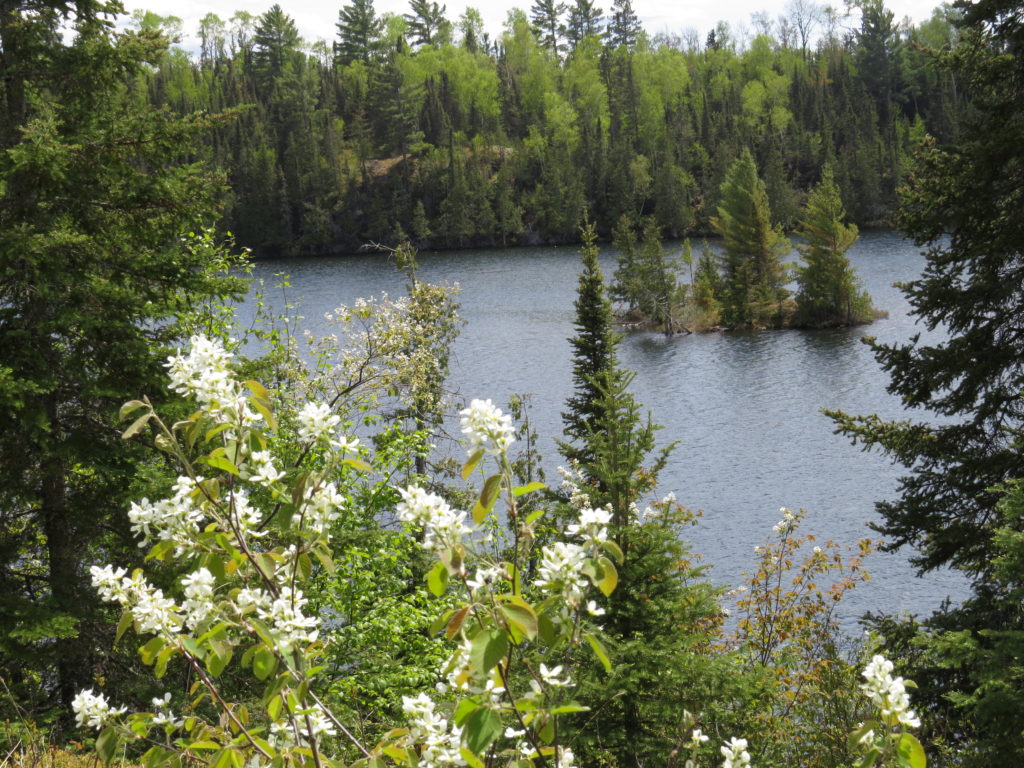
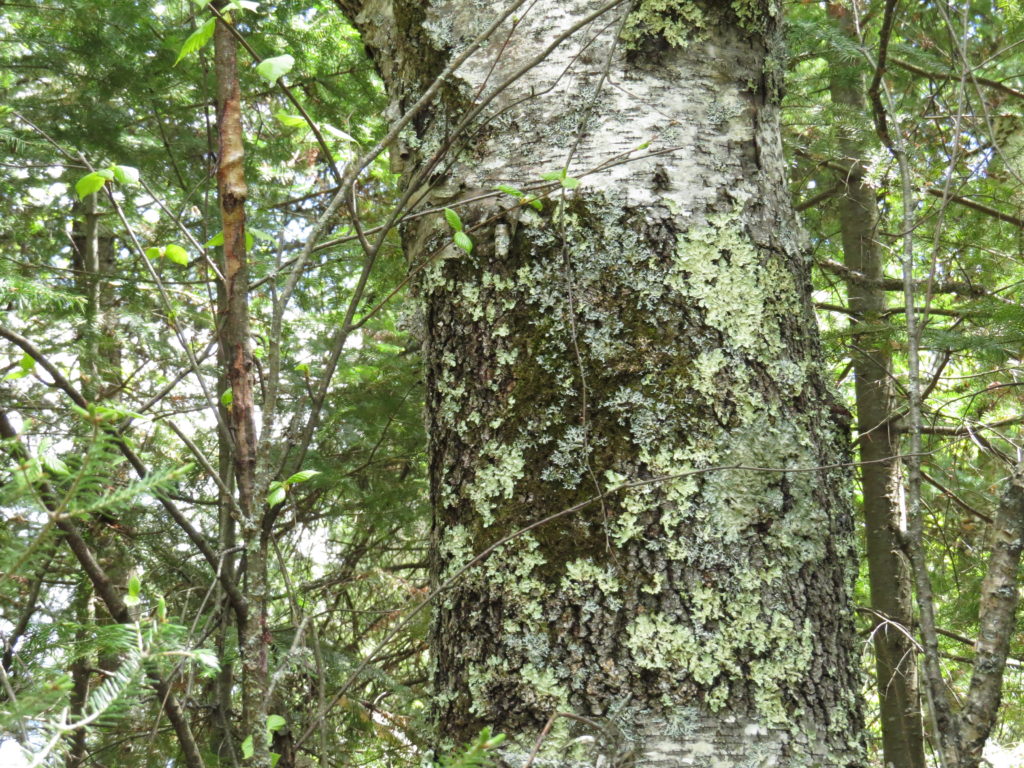
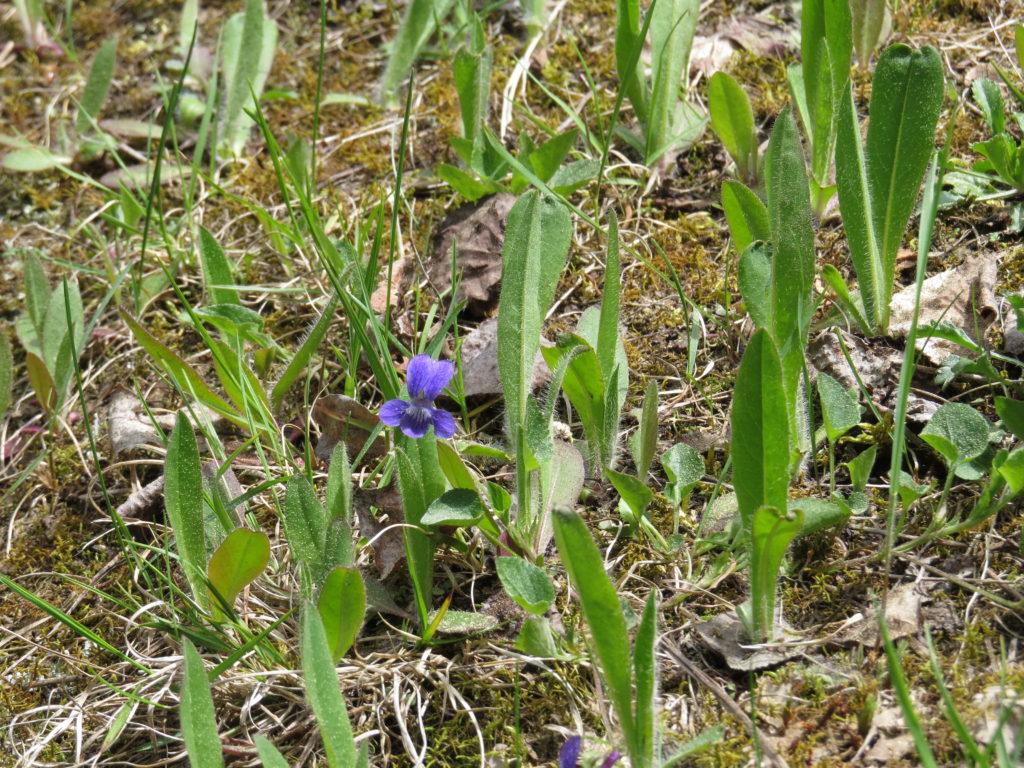
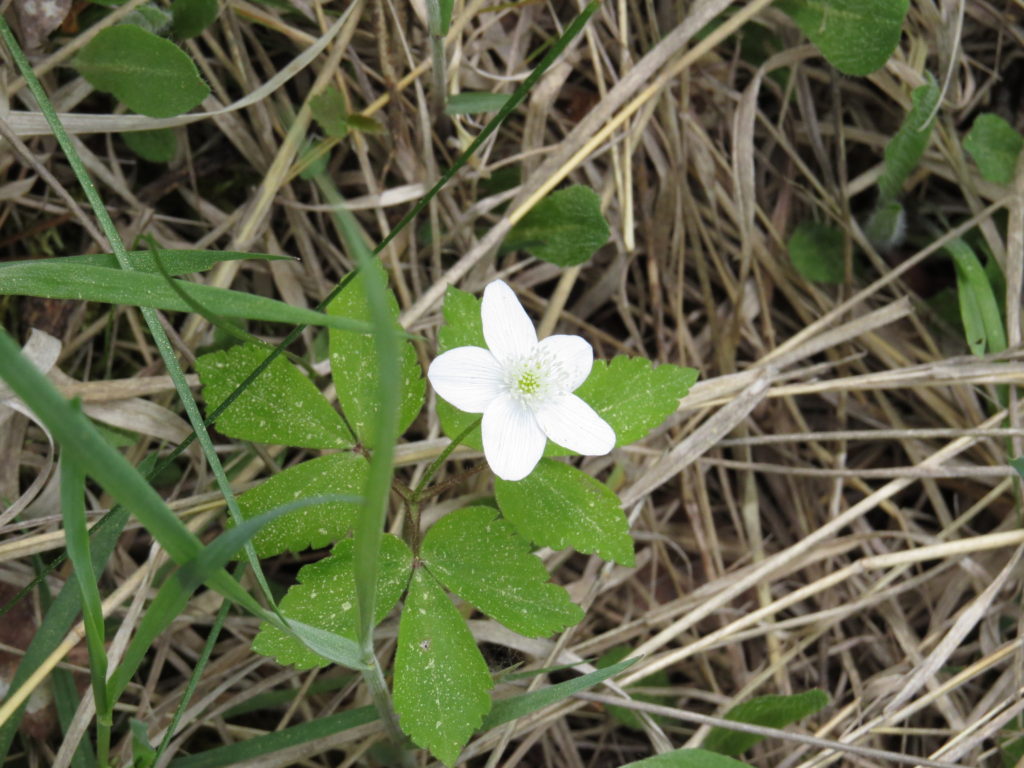
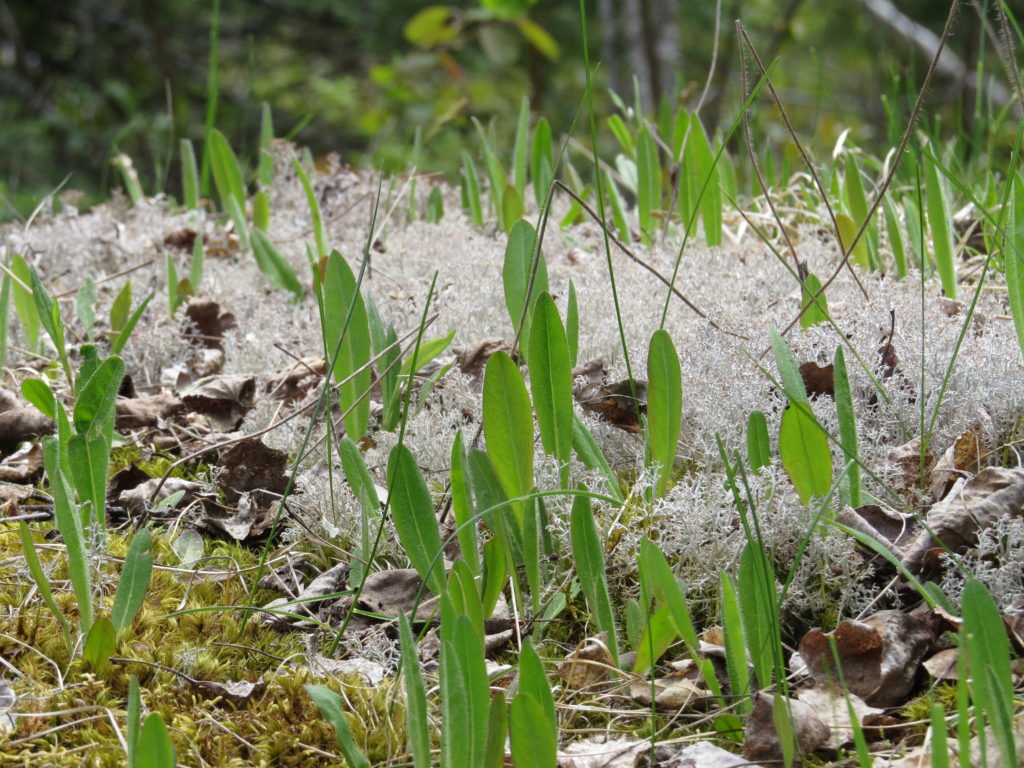
Moss and lichens grow on nearly everything. The moss-covered rocks and soil are interspersed with tiny Violets, Wood Anemones, and other plants for later blooming.
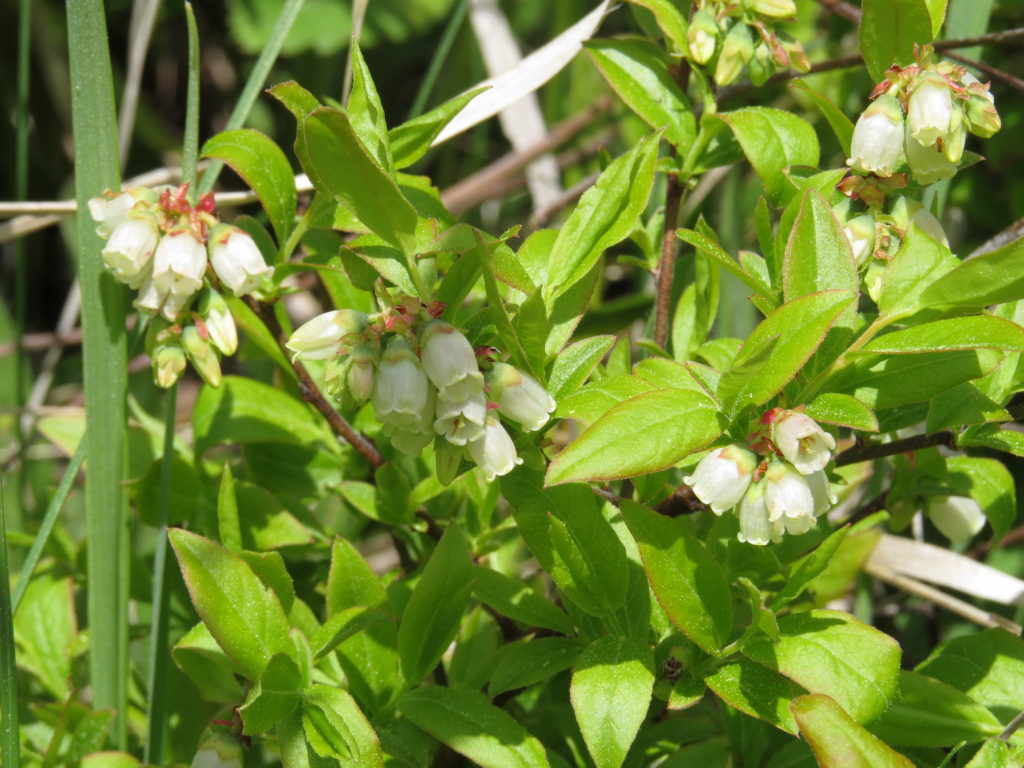
Wild Blueberries grow on a sunny, rocky hill facing the lake. The low-to-the-ground shrubs with their small, pale, bell-shaped blossoms can easily be overlooked.
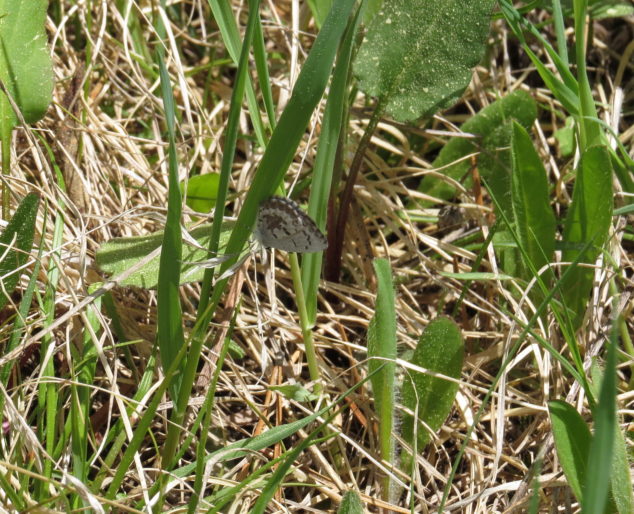
Wild Blueberries are the larval food for the Spring Azure Butterfly, who is almost camouflaged when its wings are folded, but who is a tiny piece of blue sky when flying.
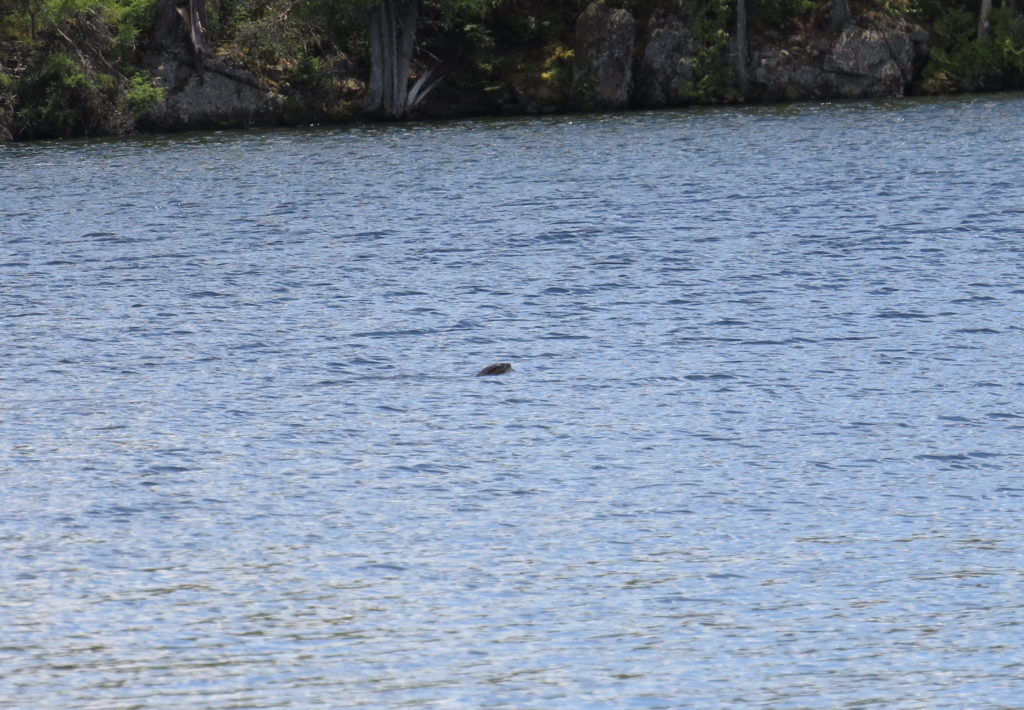
I saw a swimmer out in the lake, gracefully going under and up in a measured, undulating cadence. From a distance, I knew it wasn’t a Loon, and Aaron confirmed that he had seen River Otters here during his work summers.
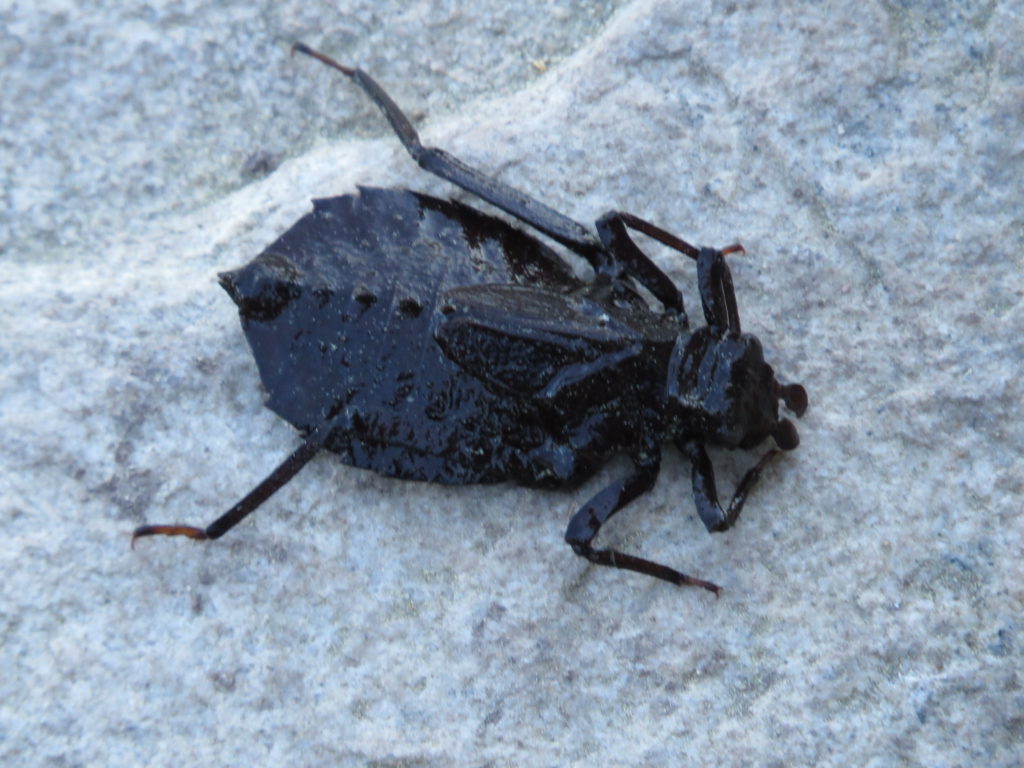
Another resident of the lake that Aaron retrieved for closer inspection was a dragonfly nymph. After the adult lays eggs on a plant in the water, the nymph grows and develops for up to four years before emerging from its shell and the water to become a flying dragonfly!
After my cold and restless second night in the tent, I was rewarded for getting up before the sunrise to see the mist rising from the still water.
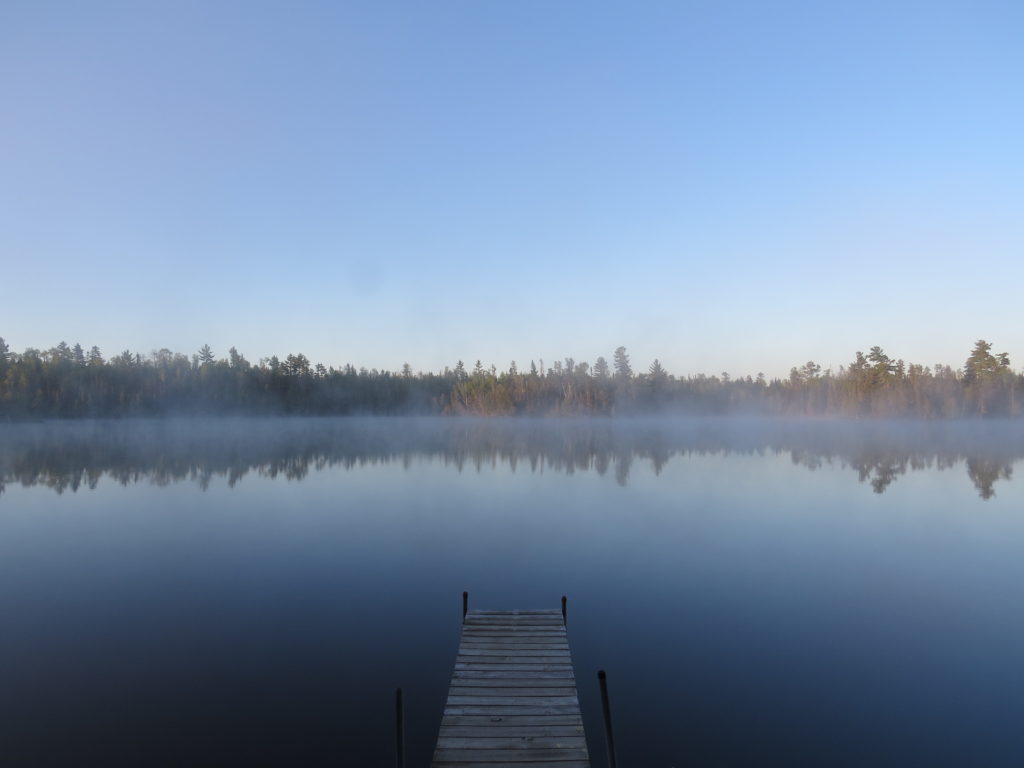
Even the island was obscured in the morning mist…
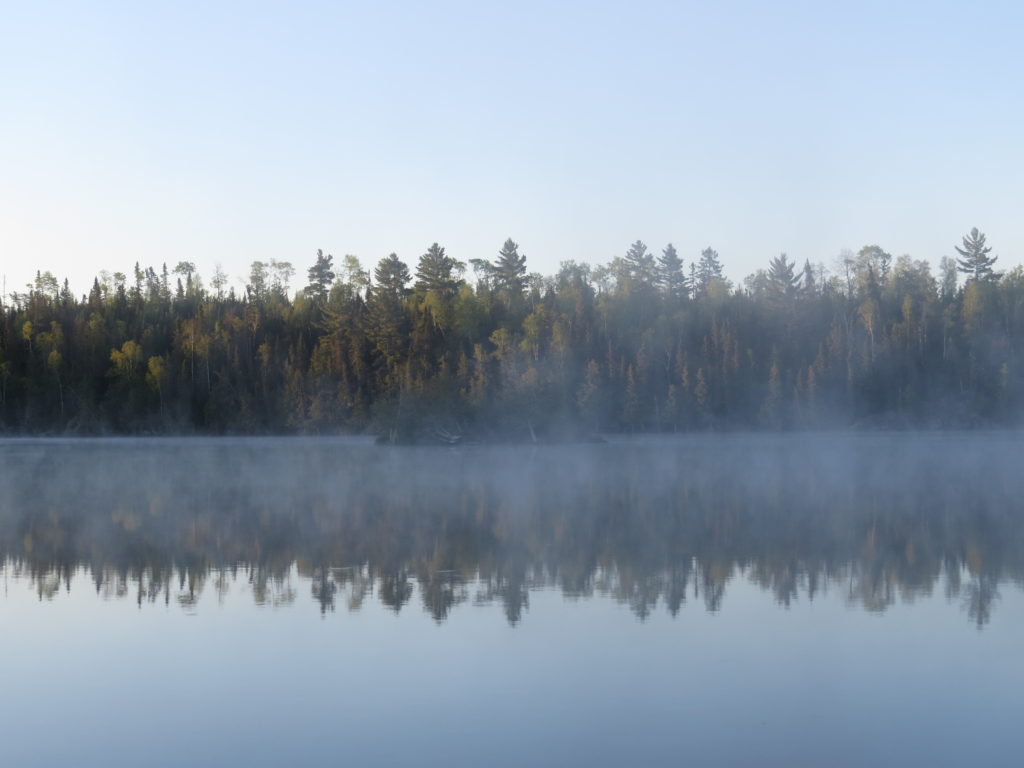
…but the Loons who had sung our evening lullabies were seen swimming in early morning reverie.
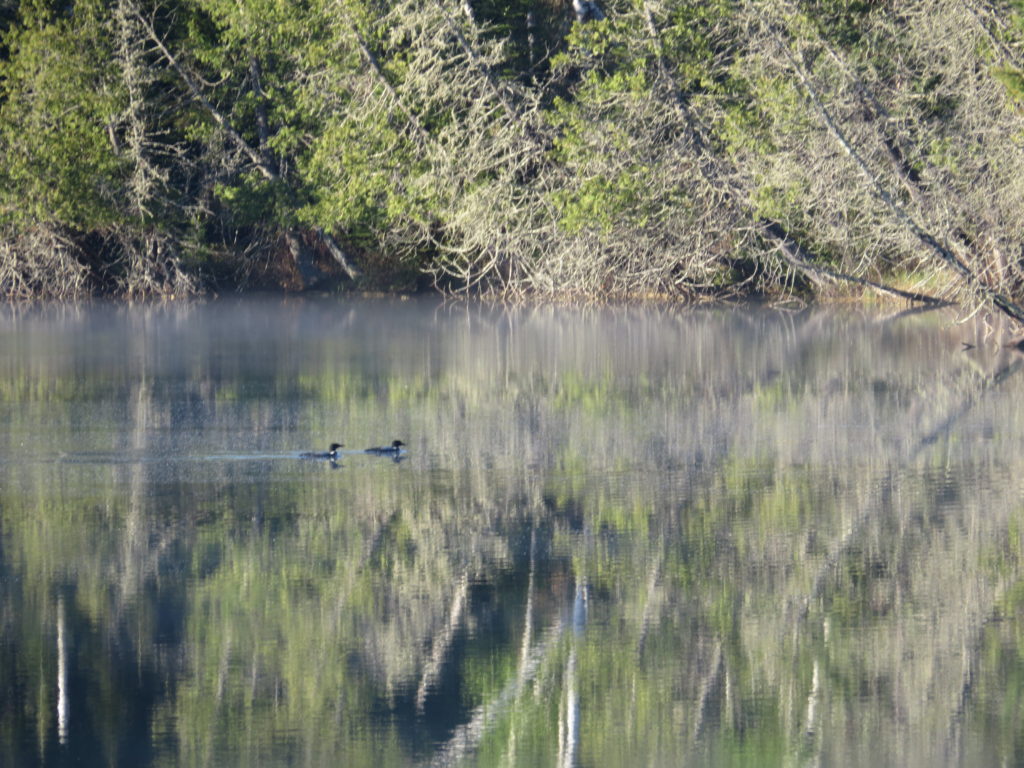
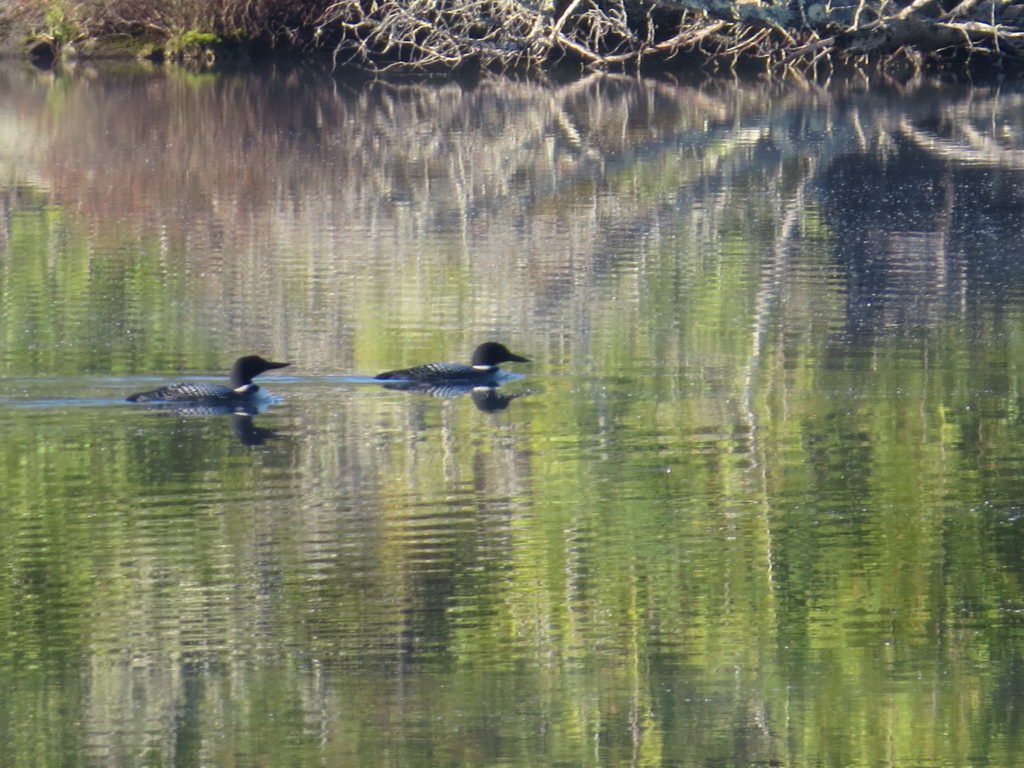
We are like islands in the sea, separate on the surface but connected in the deep. –William James
Our weekend of service and connection with Aaron and our friend Luke and in this special place would have been wonderful in and of itself, despite the chilly nights. But the meeting of the classmates after more than forty years?! That chance? meeting just gave me so much delight! Later in the weekend, we also found out that two other fellow KoWaKan helpers had lived and camped at a Lutheran church camp that I had worked at in South Dakota when I was in college!! Ah, the graceful cadence of our lives! That Grace, that Cadence, is often overlooked in our busy lives or obscured by the mist of work, children, responsibilities, or ‘more important’ things. How do we connect with those other islands around us? I think first is the acknowledgement that we are already connected ‘in the deep.’ Secondly, it takes communication—talking, listening, asking questions, telling stories, and being open and brave. And finally, it takes caring, dedication, belief, faith, service, and the all-encompassing sea of Love. All of those converged that weekend under that tiny piece of azure sky of KoWaKan.