Come walk with me in the peak Autumn beauty of the Northwoods. To say that I love this time of year is an understatement. Most everyone can appreciate the colorful falling leaves---it reveals the 'true self' of a tree when its leaves are no longer producing chlorophyll. Their true colors are revealed, and there is something simple … [Read More...]
Walking Where Bears Tread
Come walk with me in the peak Autumn beauty of the Northwoods. To say that I love this time of year is an understatement. Most everyone can appreciate the colorful falling leaves—it reveals the ‘true self’ of a tree when its leaves are no longer producing chlorophyll. Their true colors are revealed, and there is something simple and shimmering about that. But many people dread the coming cold and snow and how the days are short on sunshine and light. I have learned to appreciate the gray clouds of a Winter’s day and how the light has shifted from peeking into the north windows of the house to the full, long gaze through the southern windows. It’s a warm gift from the tilt of the Earth. Receive it with an open heart. And the invigorating cold and the beautiful snow…but I’m getting ahead of myself!
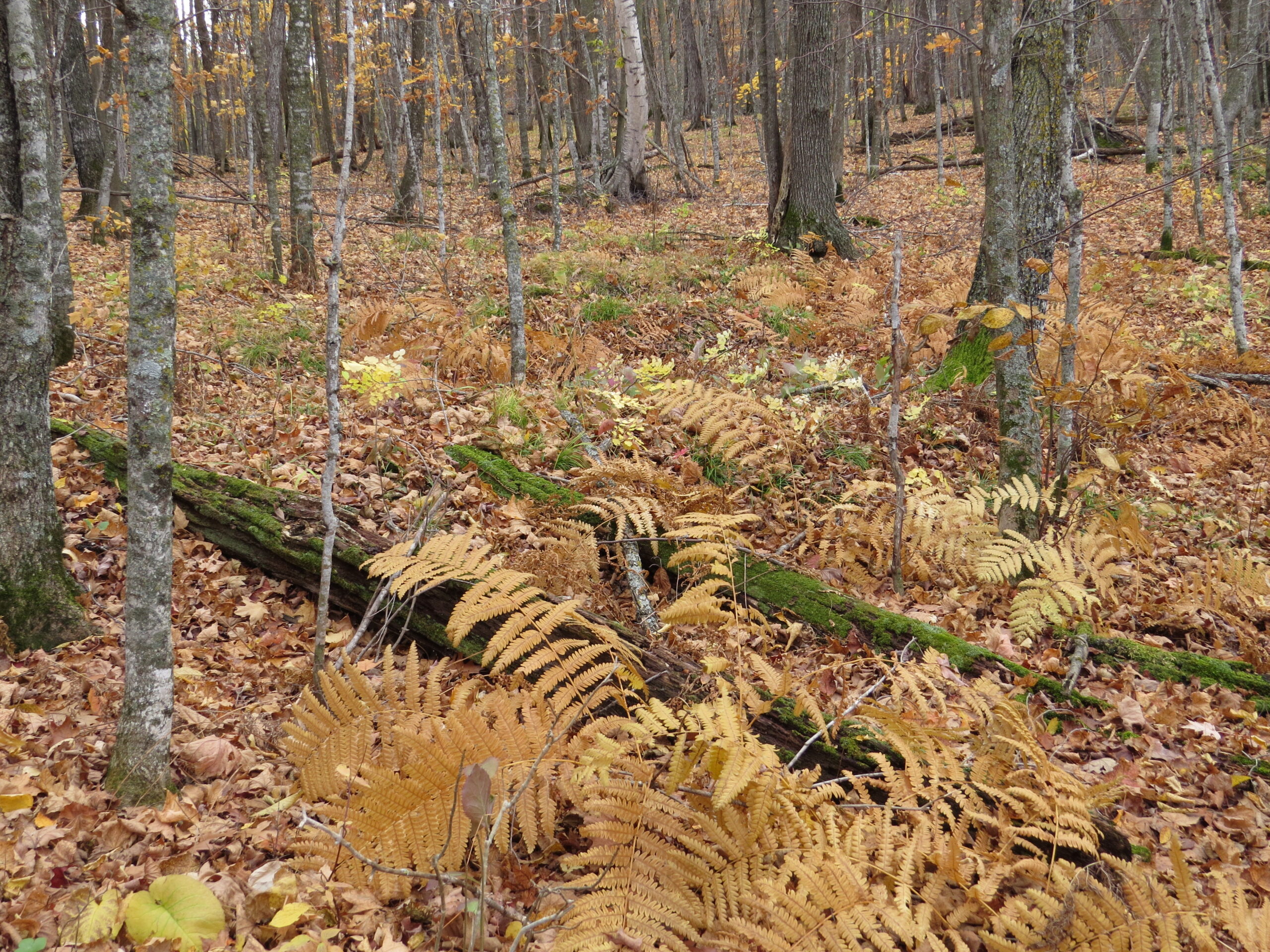
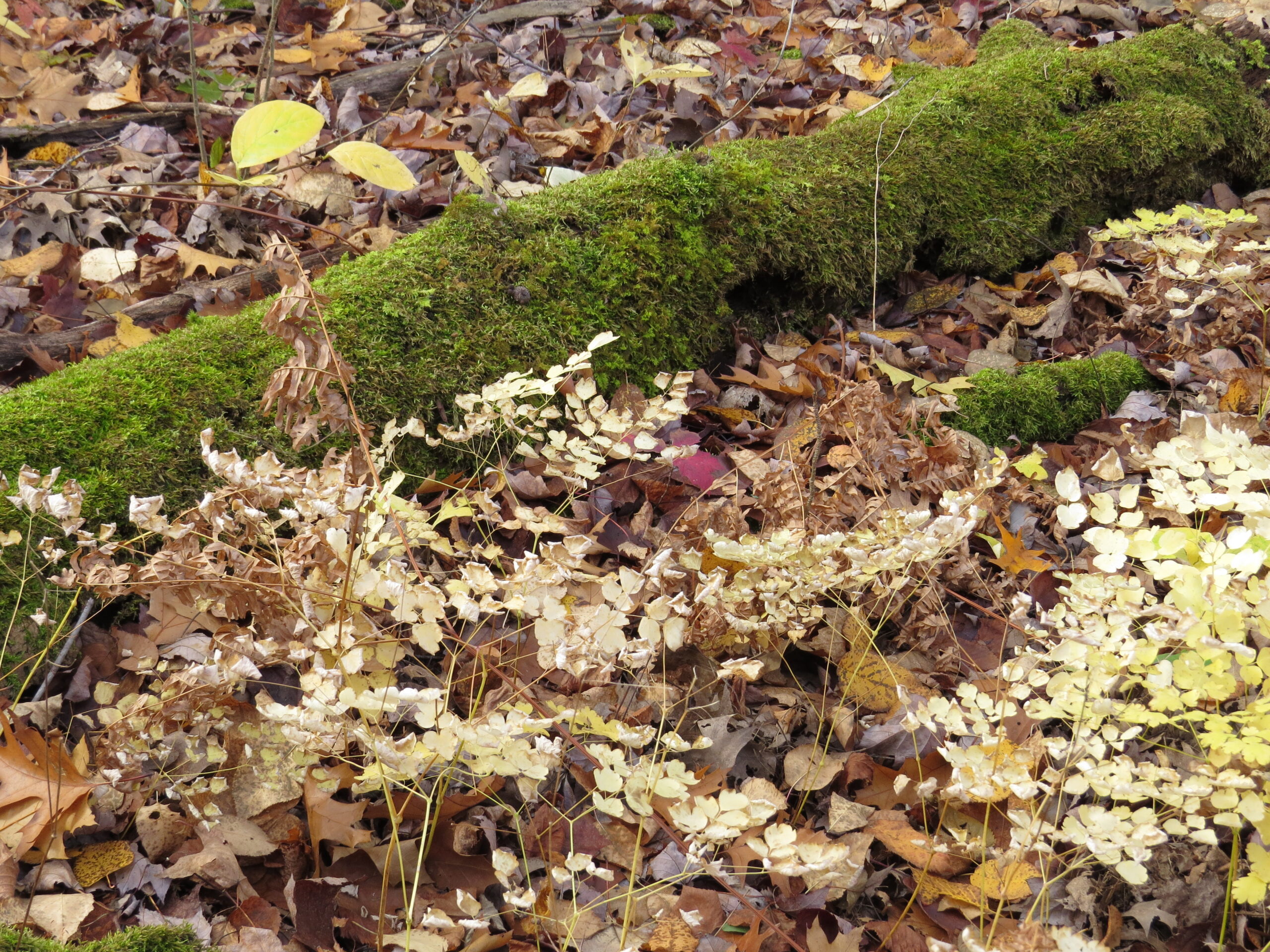
Before our trip to Mille Lacs Kathio State Park a couple weeks ago, I checked the website for alerts and notices, and at the top of the list was this: “The bears are active! Please practice bear safety and plan accordingly.” Good to know. The DNR has a couple of dedicated pages to bear safety—what to do, what not to do, and reassurance that bears (like so many wild animals) are not ‘out to get you.’ So we were well aware that we were walking into bear territory as we packed our snacks, but we soon had Fall’s colorful changes in our eyes and on our minds. The perennials—ferns, grasses, and flowers—go through their own color transformations that add interest to the forest floor. The greens of mosses and ‘evergreen’ plants are the rich outliers in the Autumn palette.
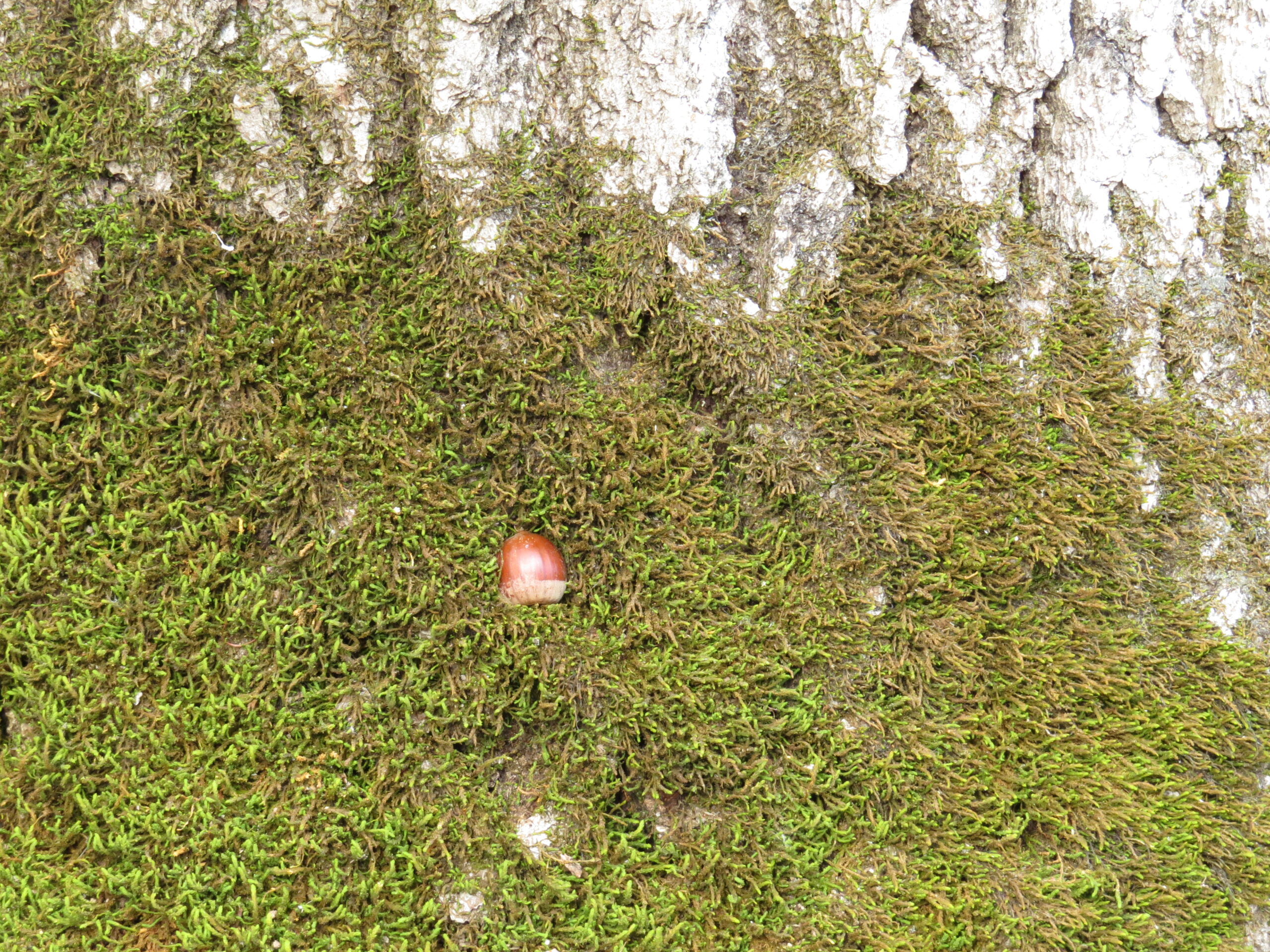
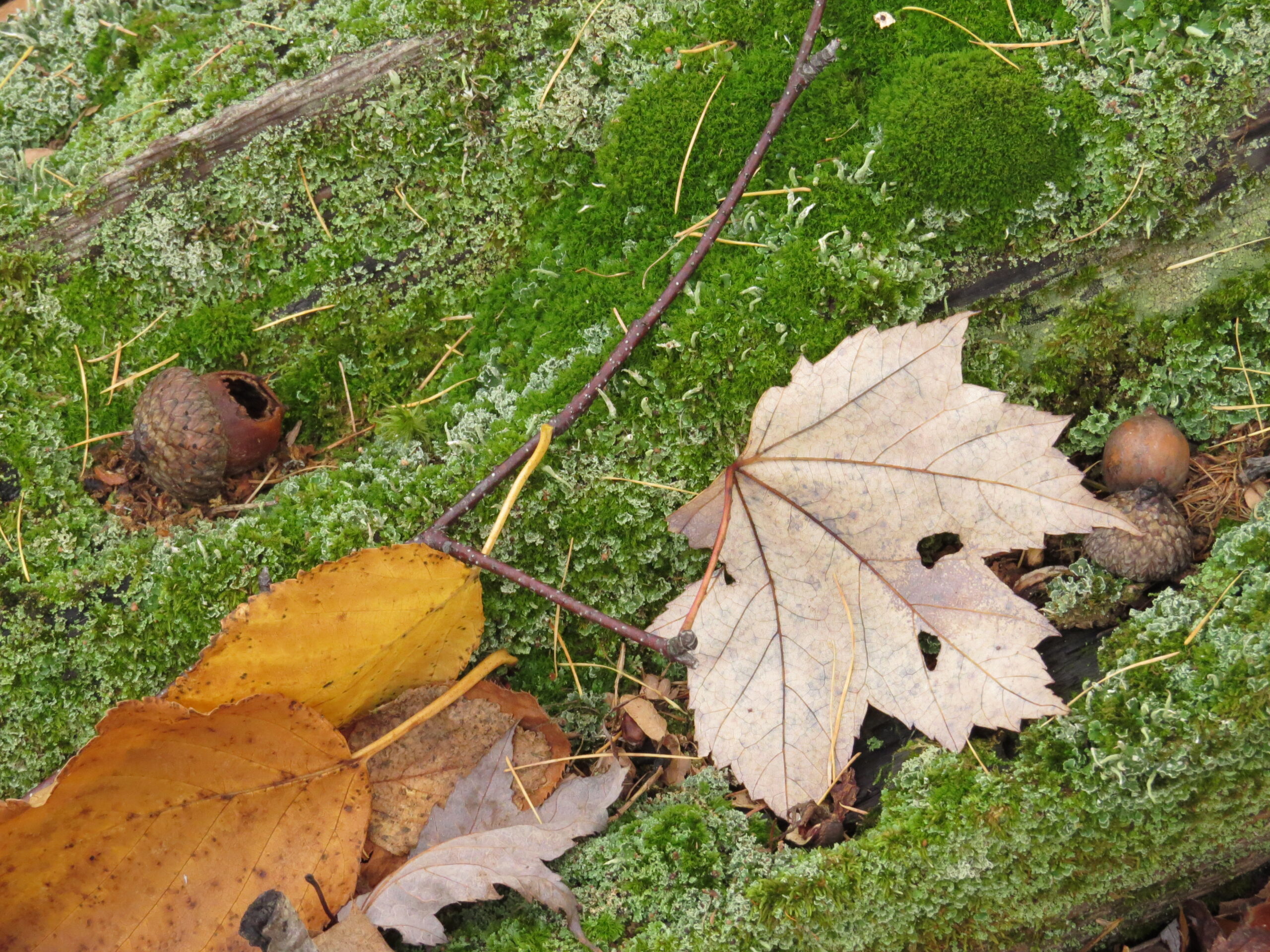
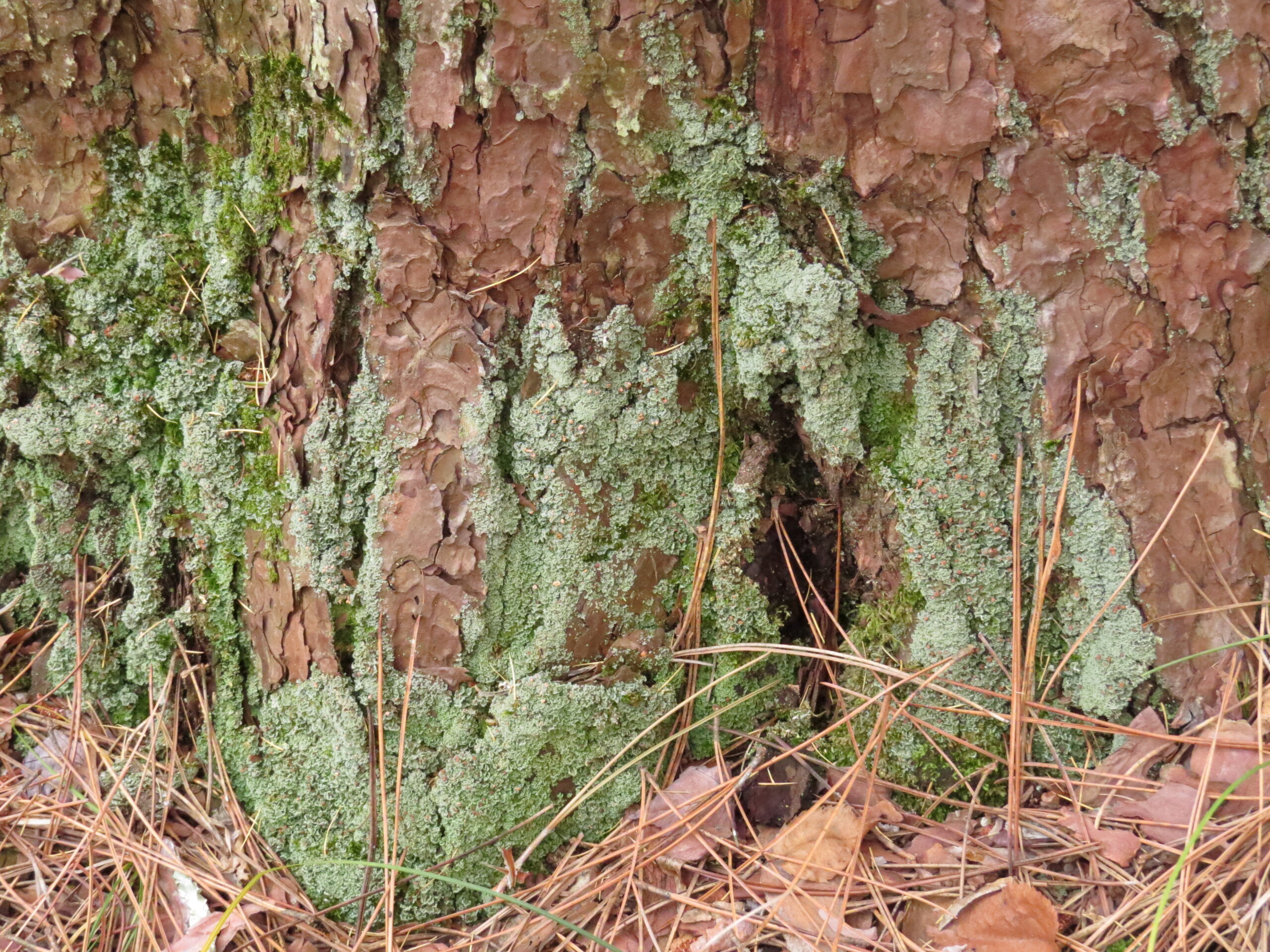
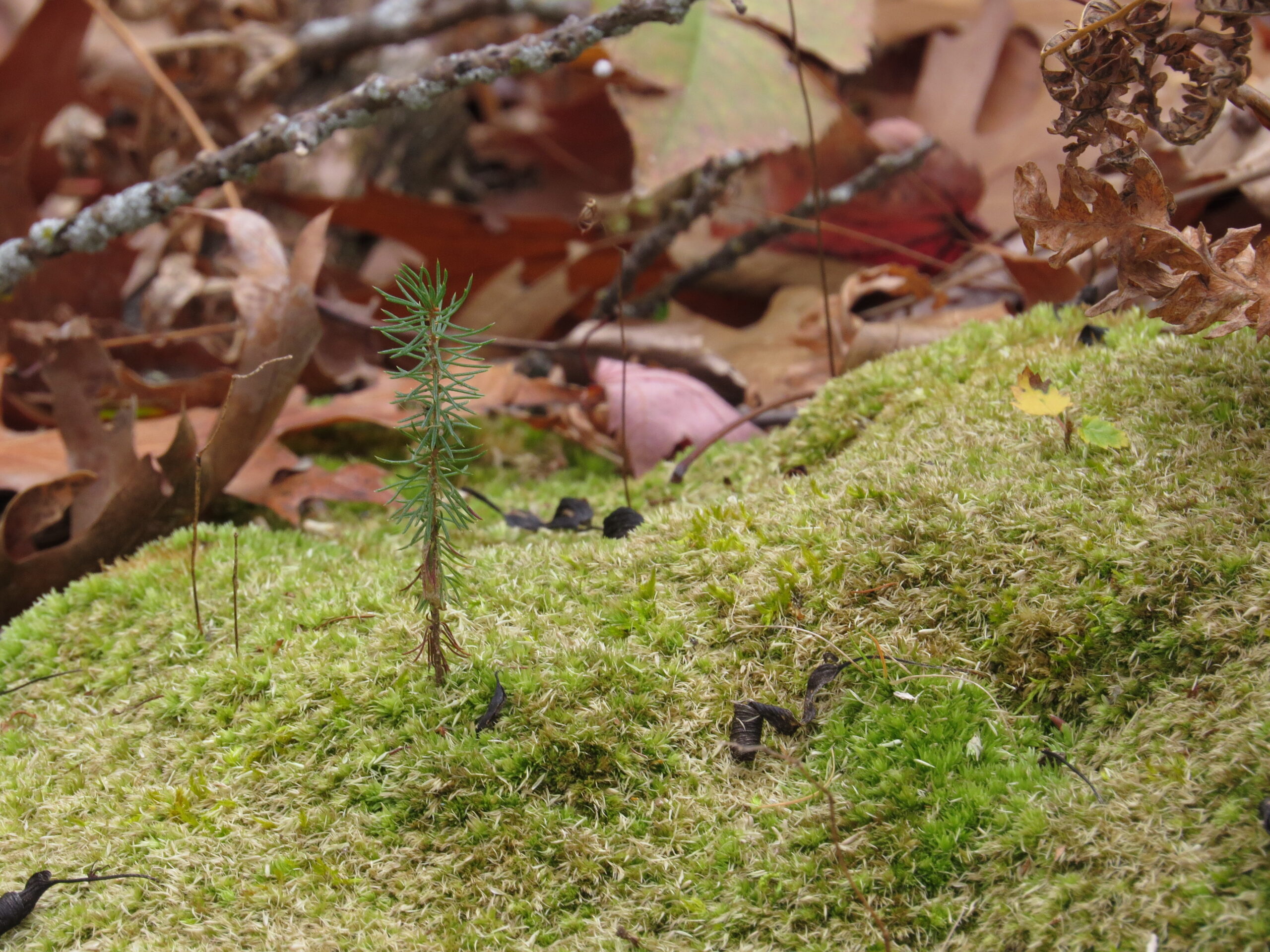
I loved how some little creature had tucked an acorn into the thick moss that was growing up a rough-barked Pine!
An amber wetland with spikes of dead trees was surrounded with the rust and red glory of Oak trees. A water trail through the cattails made by a beaver connected him to the forest trees.
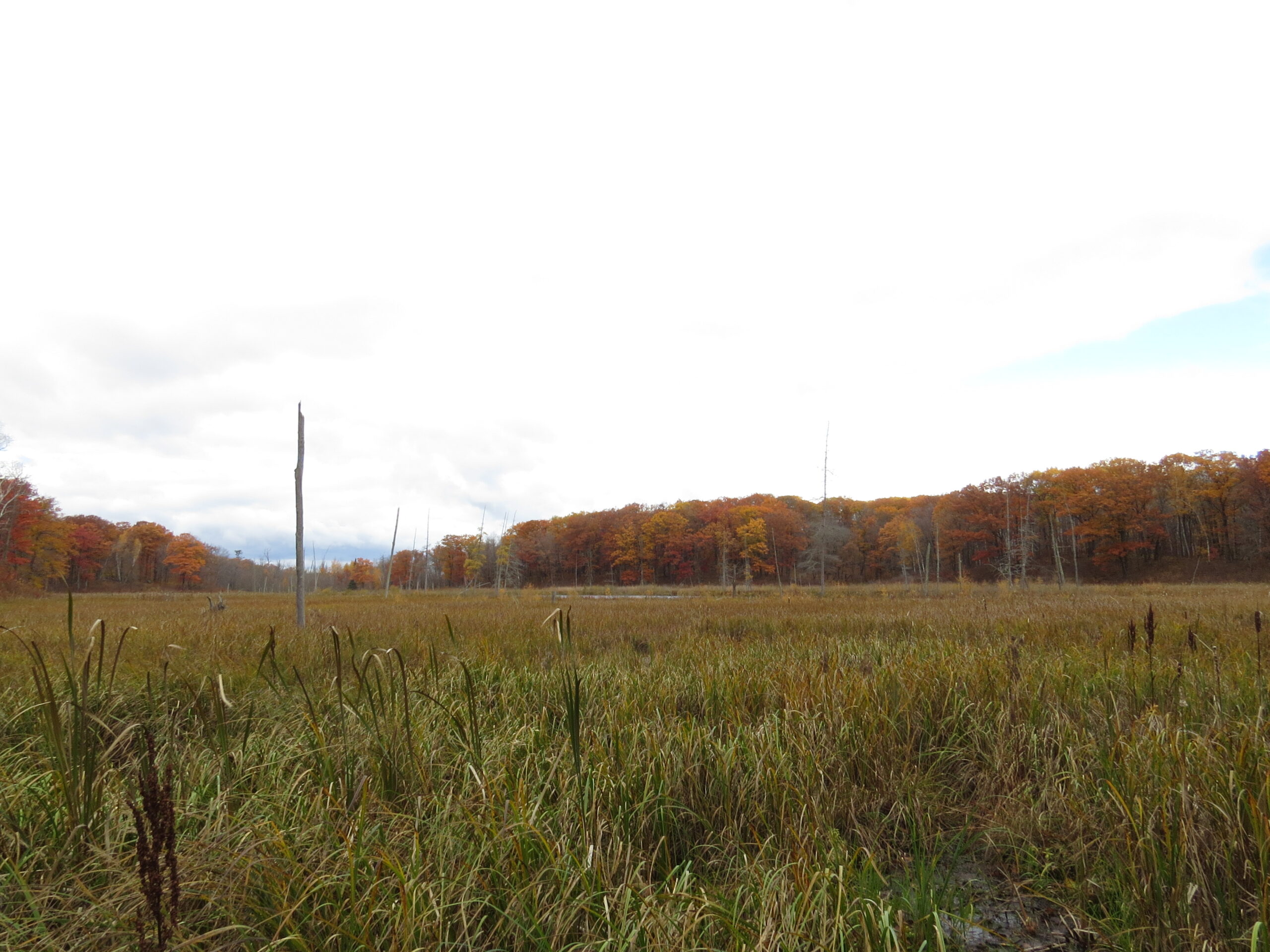
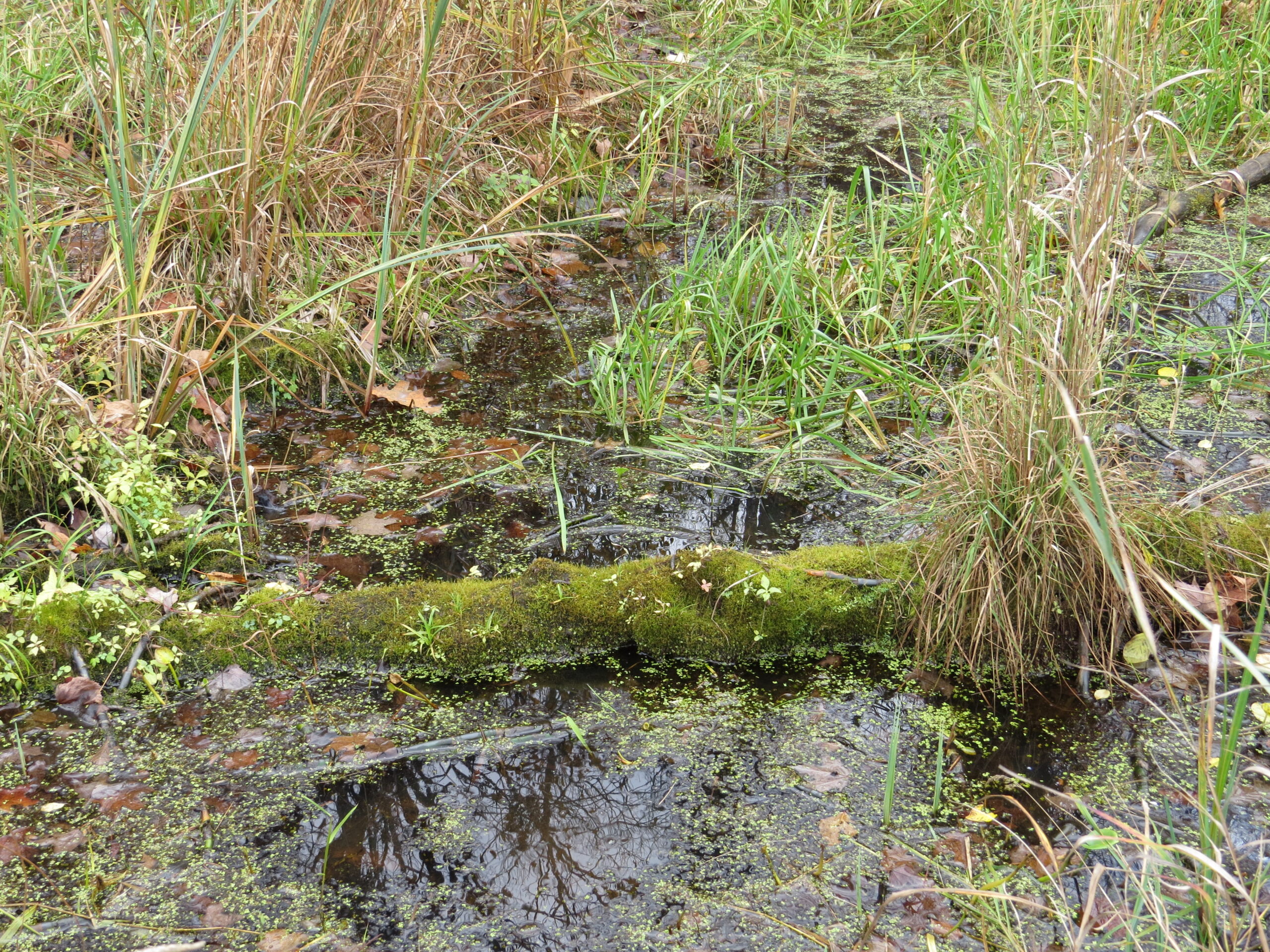
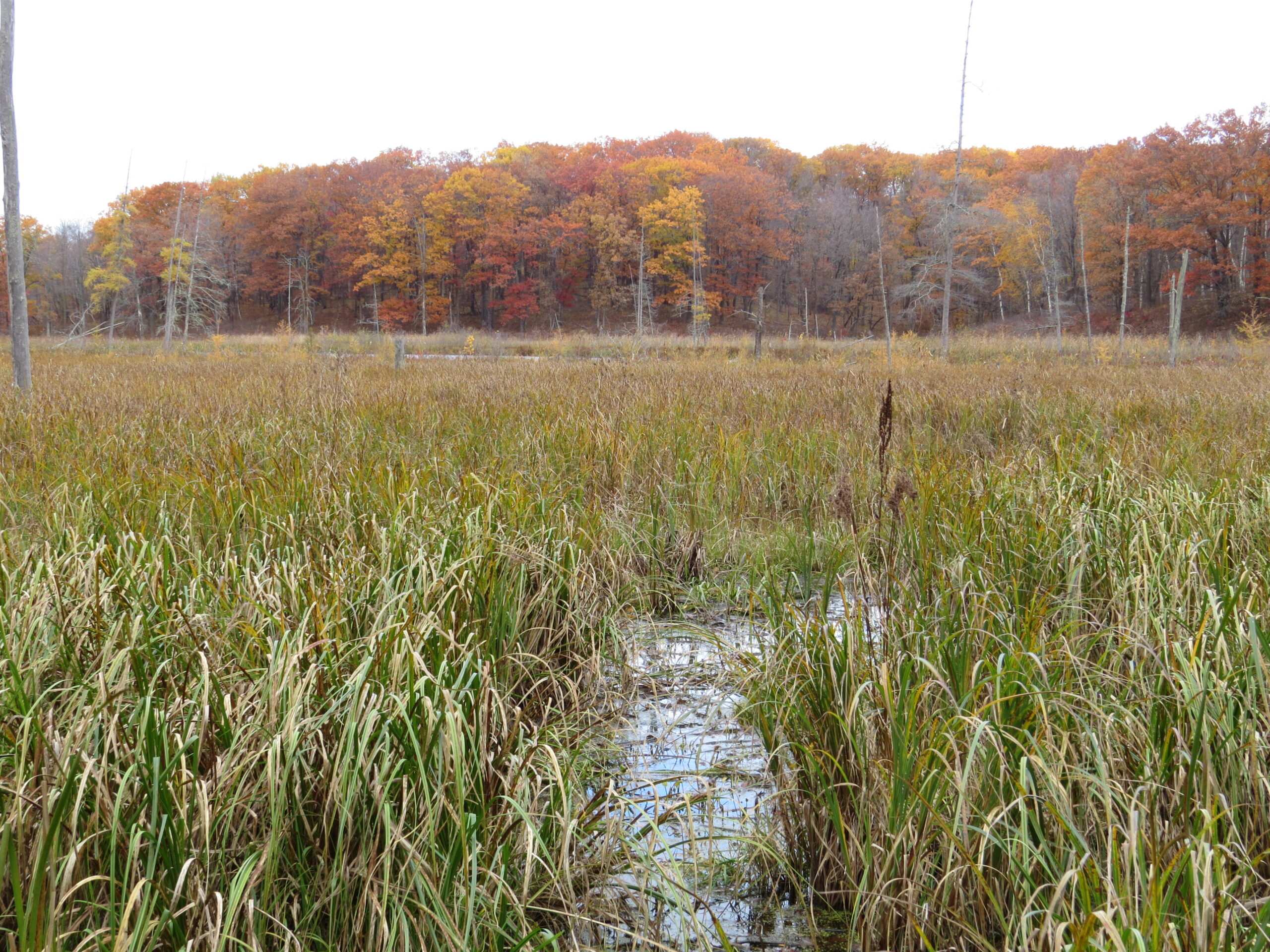
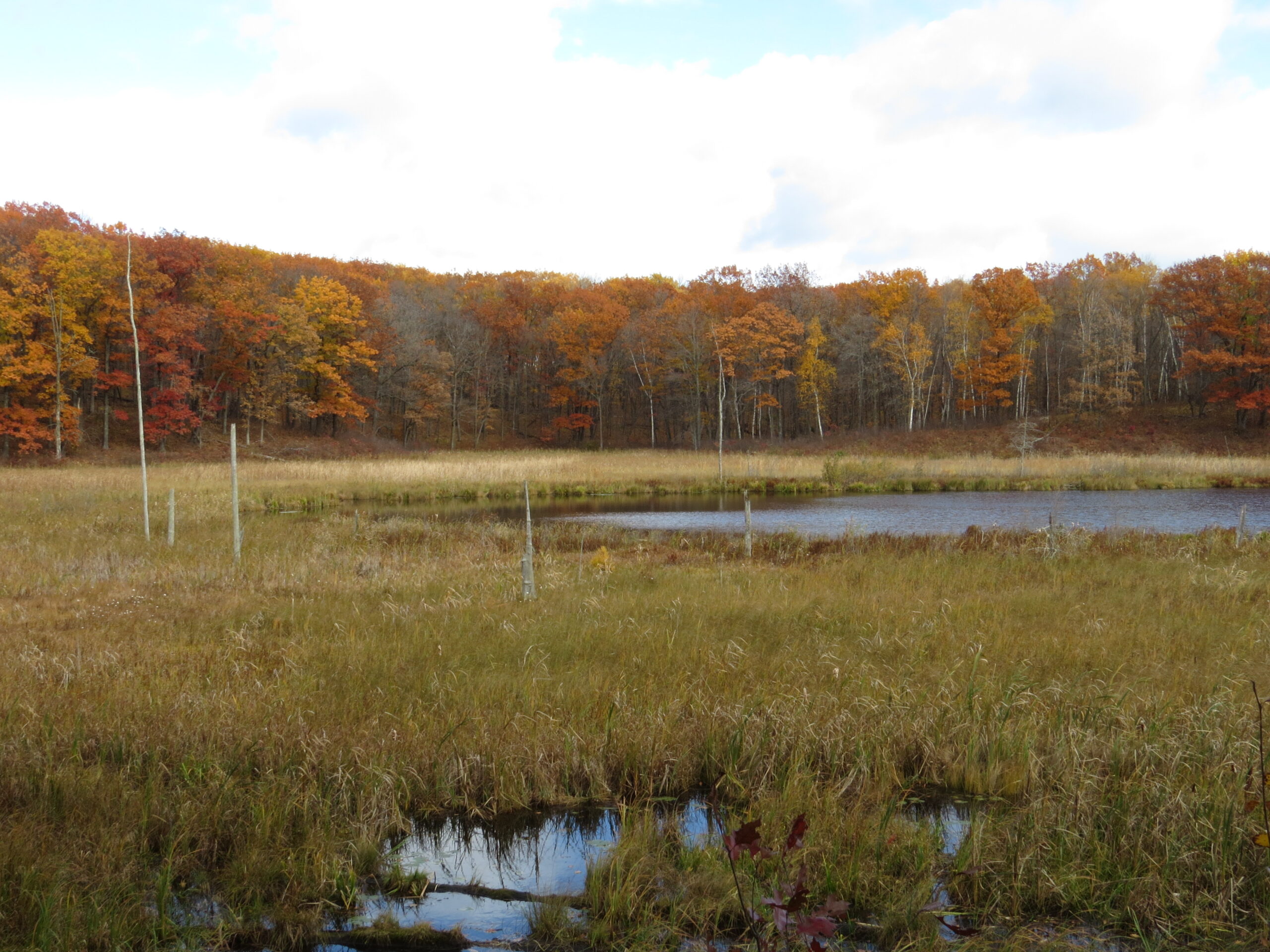
The woods were quiet except for our rustling through the fallen leaves.
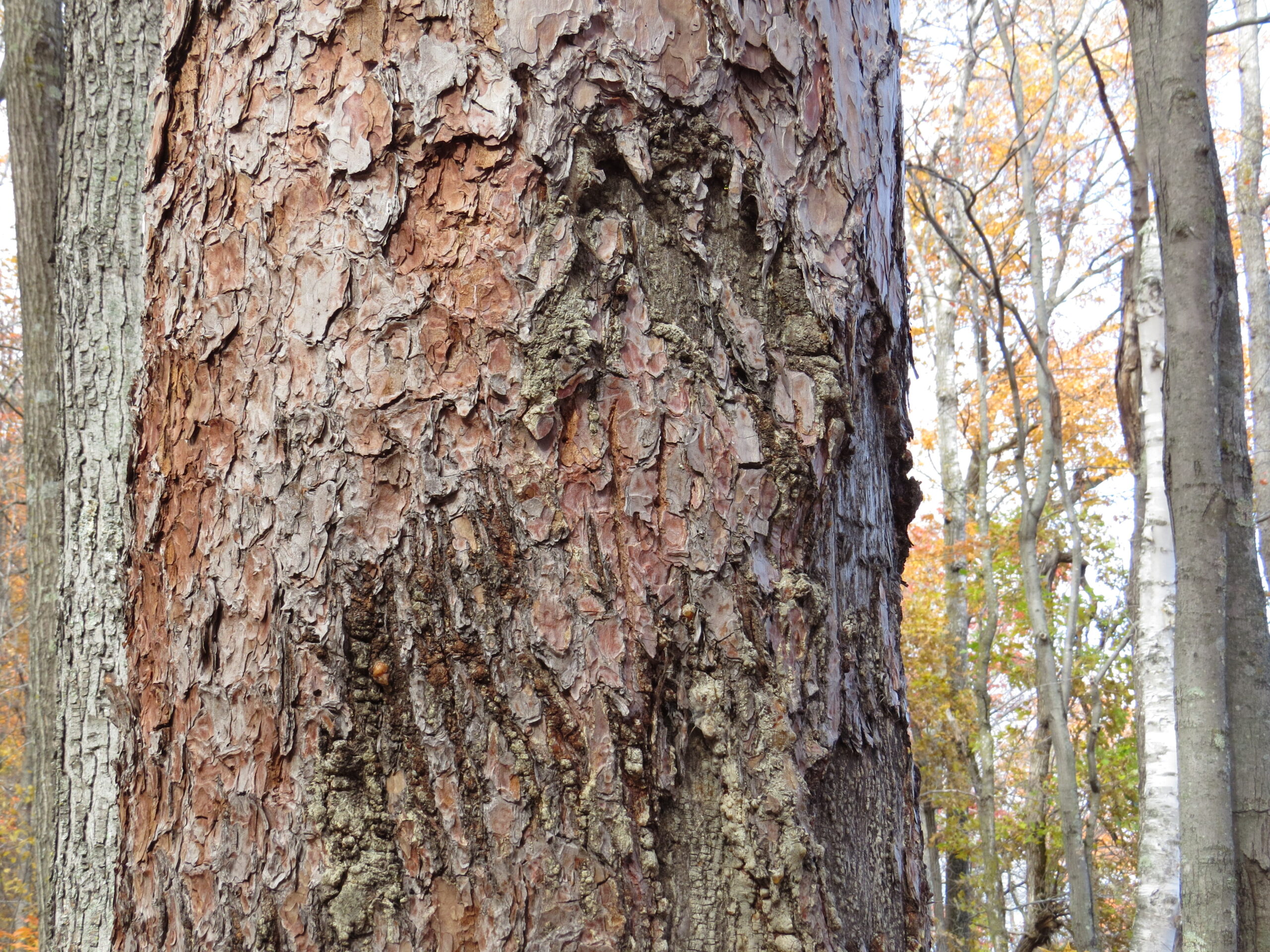
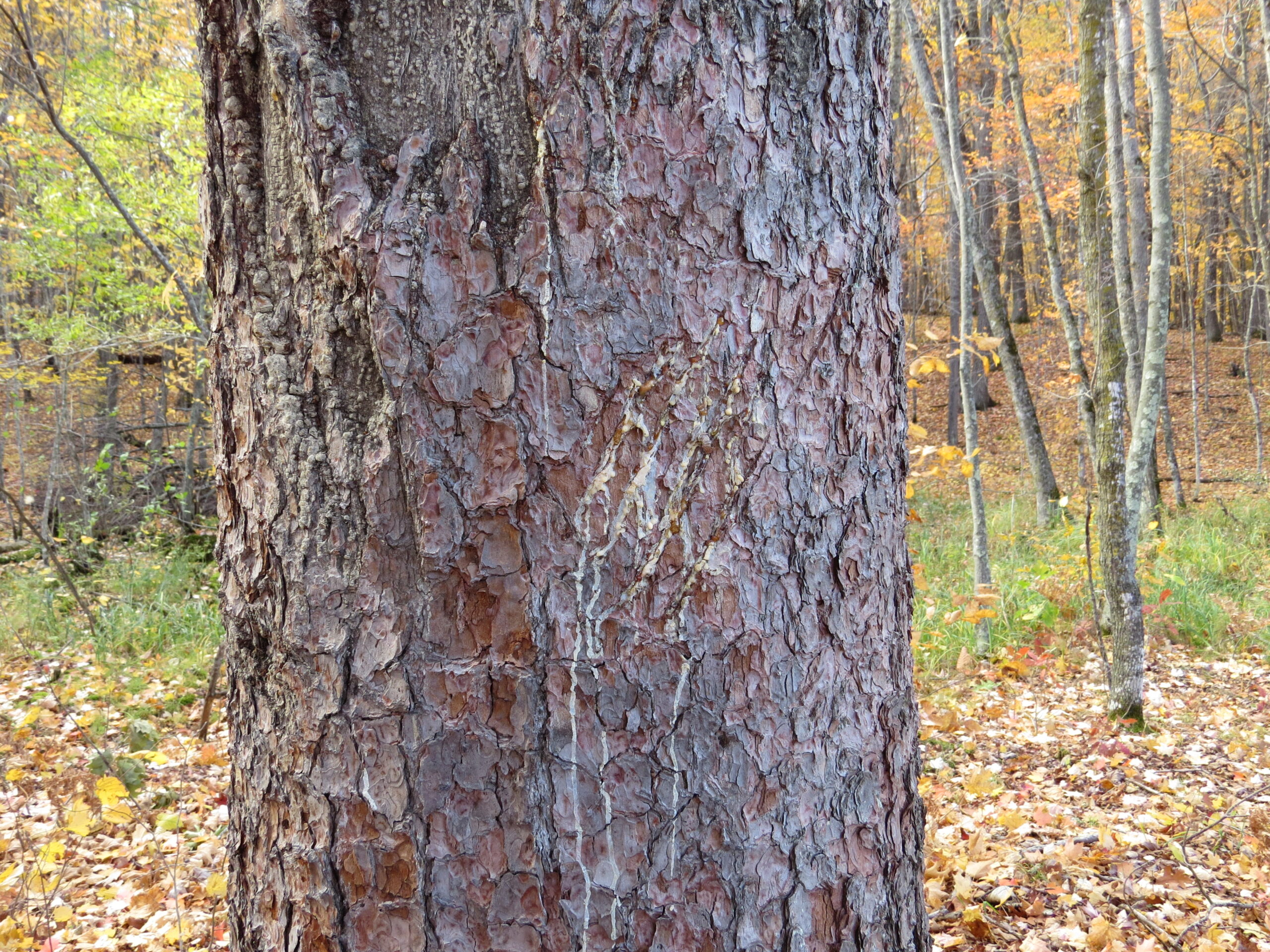
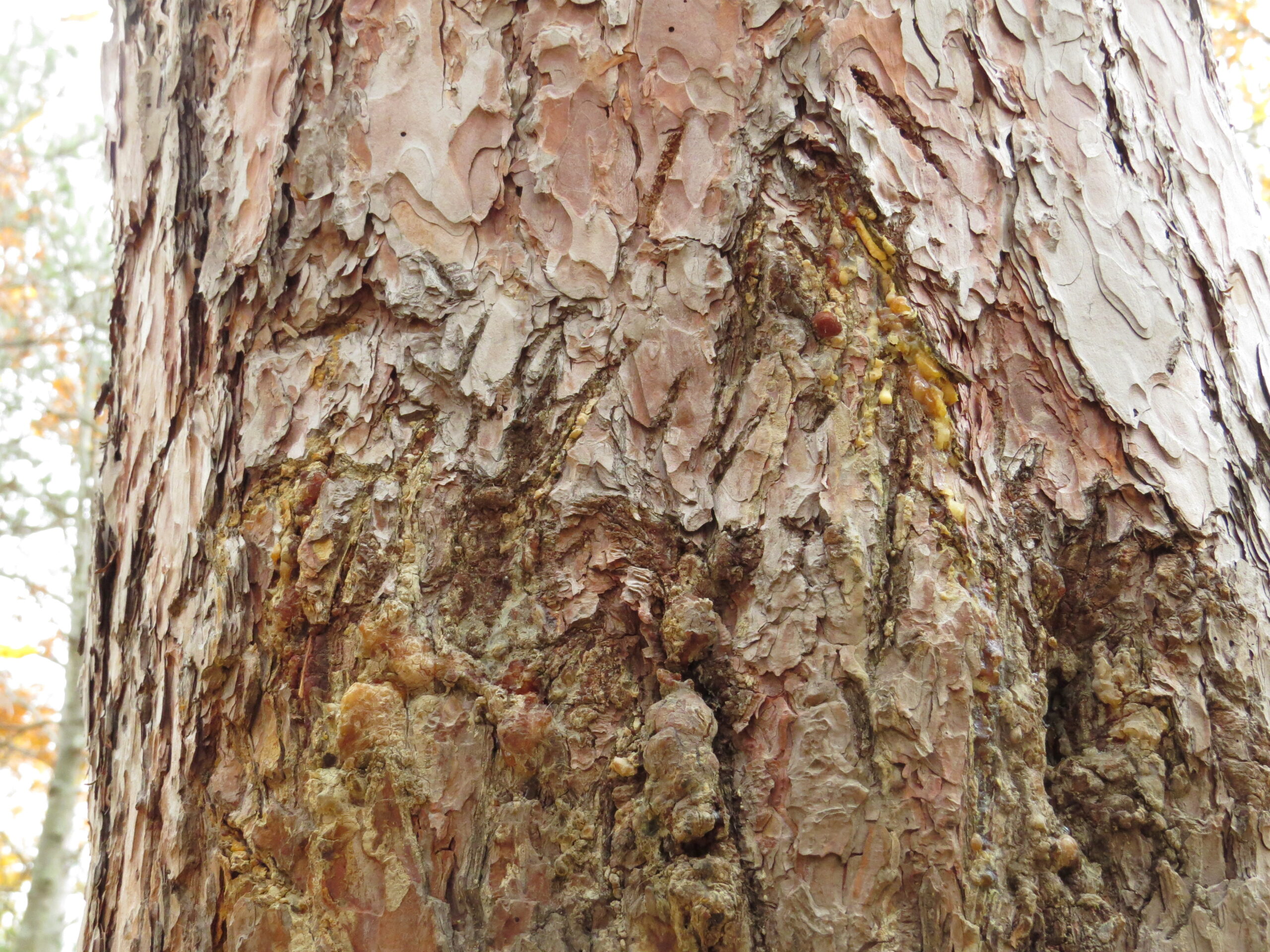
Then I recognized and remembered a Grandfather Pine ahead of us on the trail. Old darkened claw marks from a bear had scarred the tree from year’s past with beads of hardened sap like amber rings on the claw print. And on the other side of the tree, there were much newer claw marks with whitened, sugary sap dripping from them. (Not so new that the sap was still wet!) Mad respect for claws that can do that to an old tree.
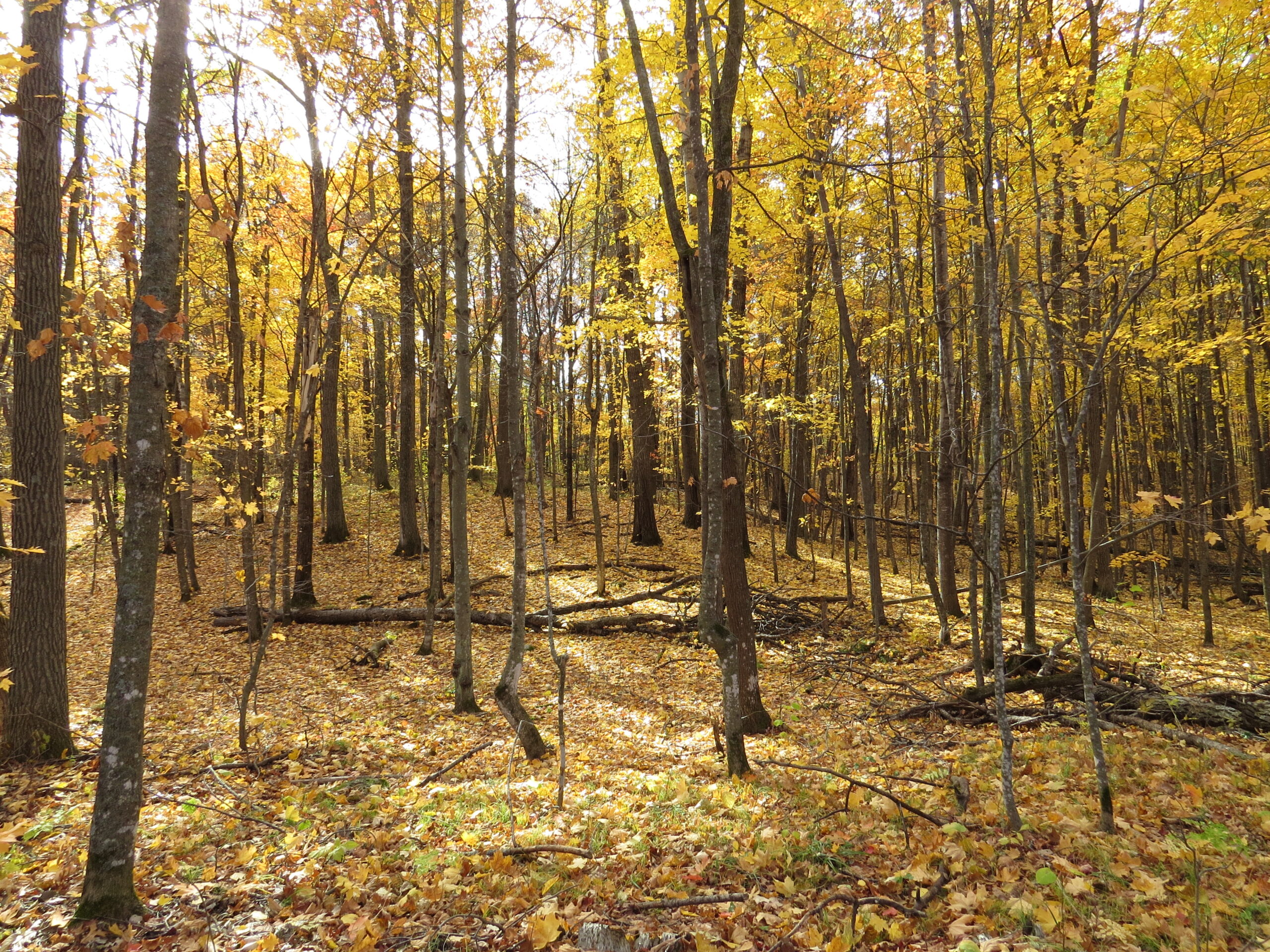
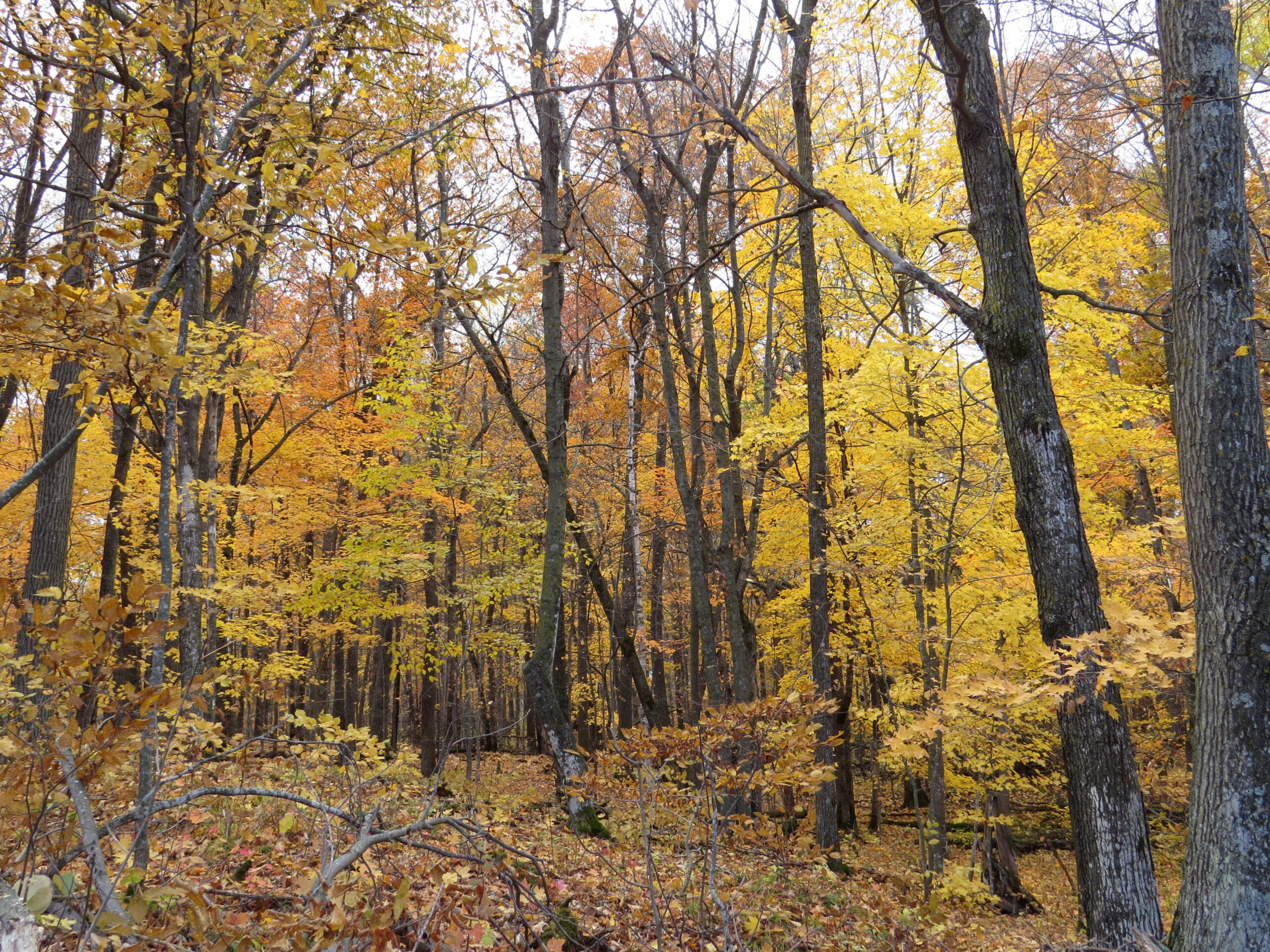
The backpack camp site where we were hoping to eat our snacks was occupied with tenters—lucky them to be camping on that beautiful place overlooking the lake! So we curved back through the glorious Maple trees towards a bog, one of dozens in the 10,000-acre park.
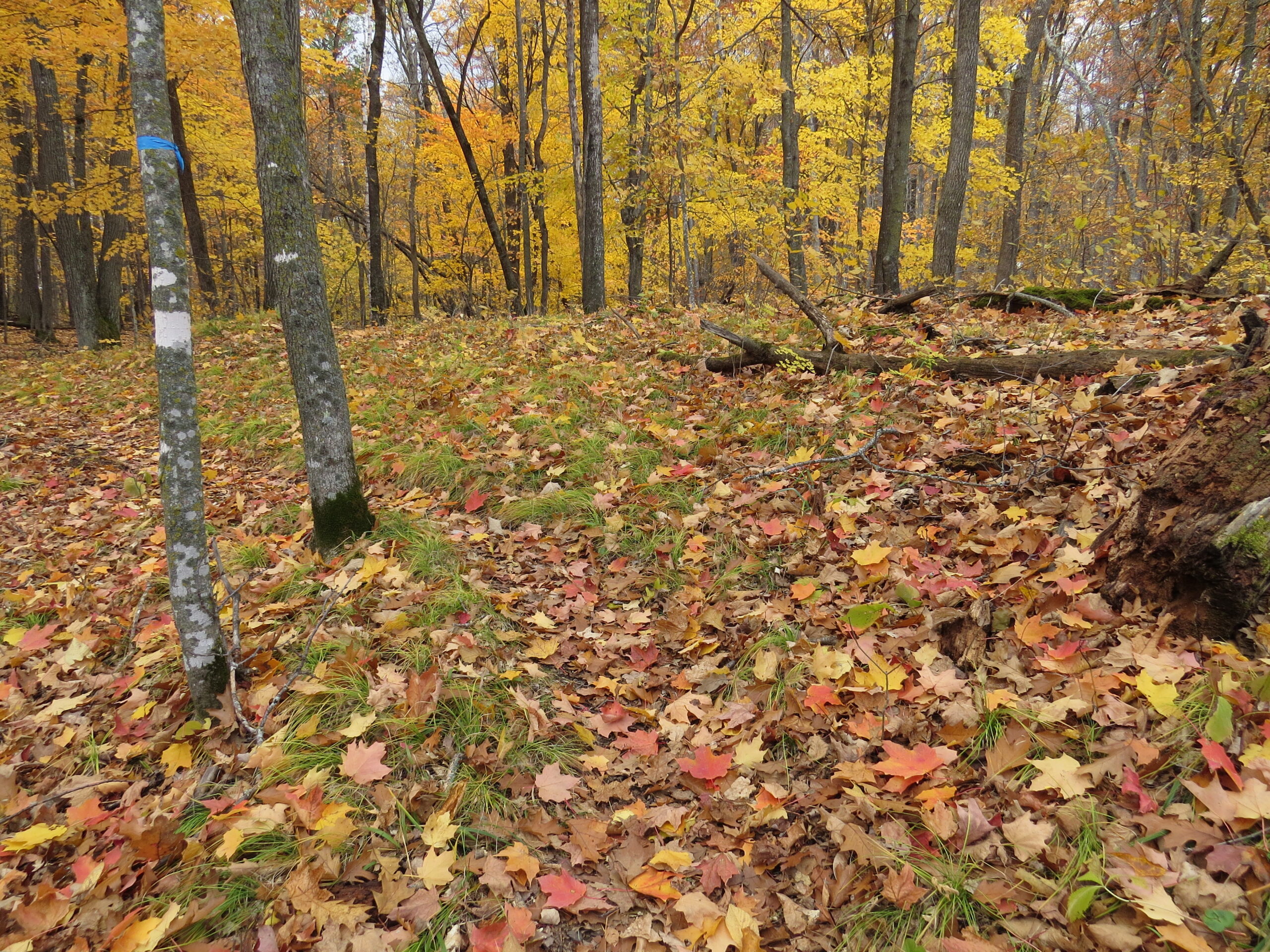
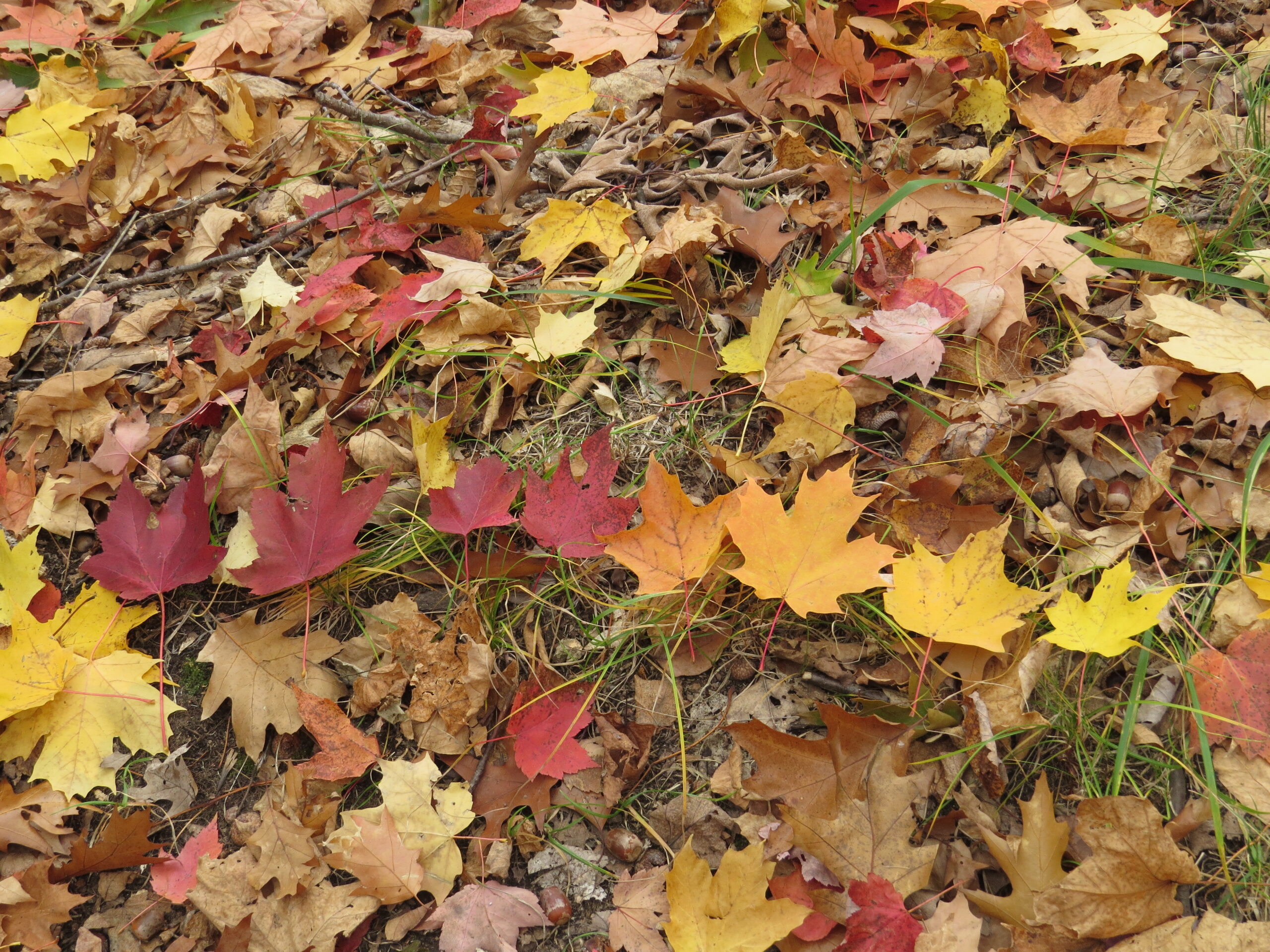
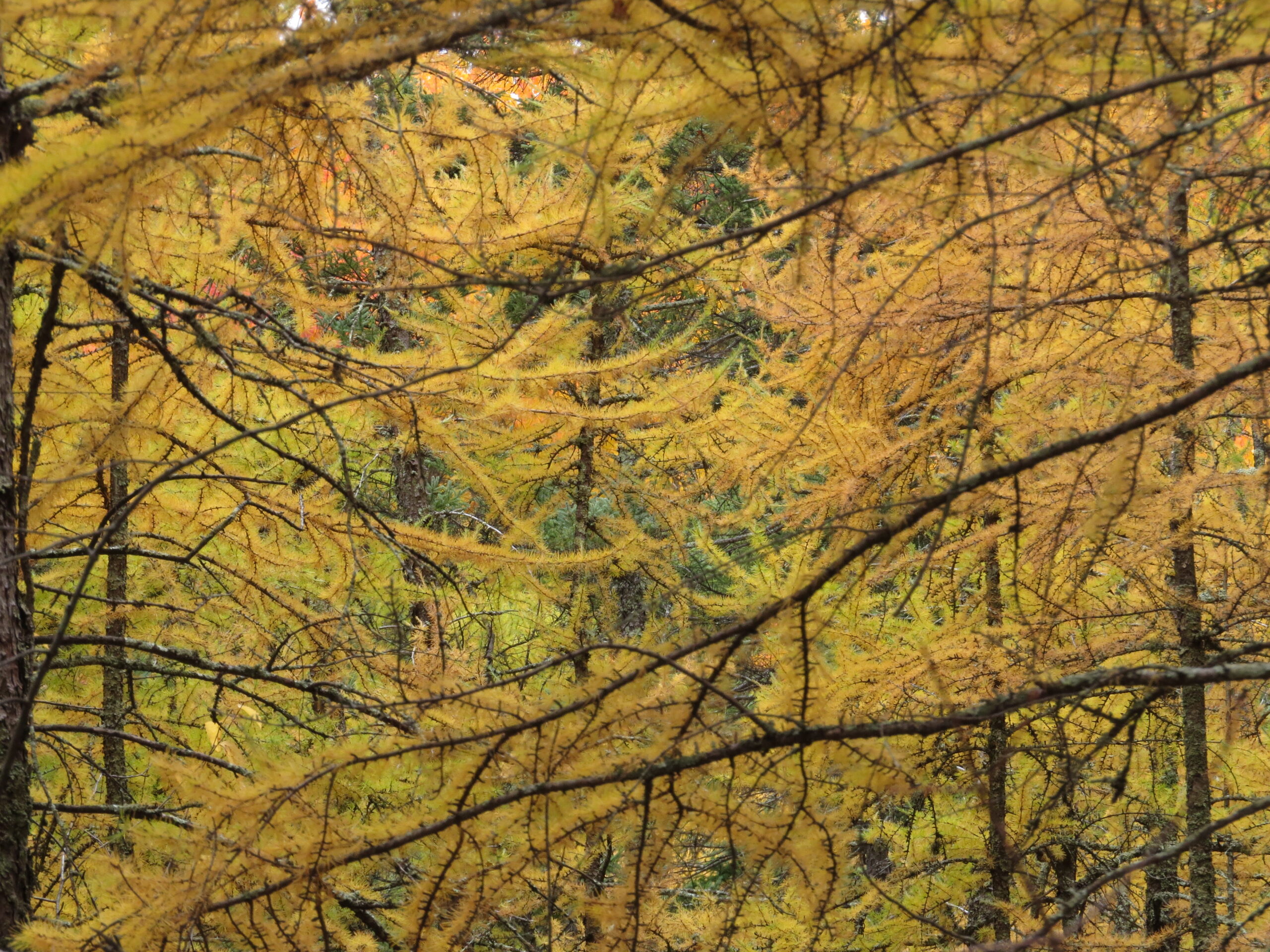
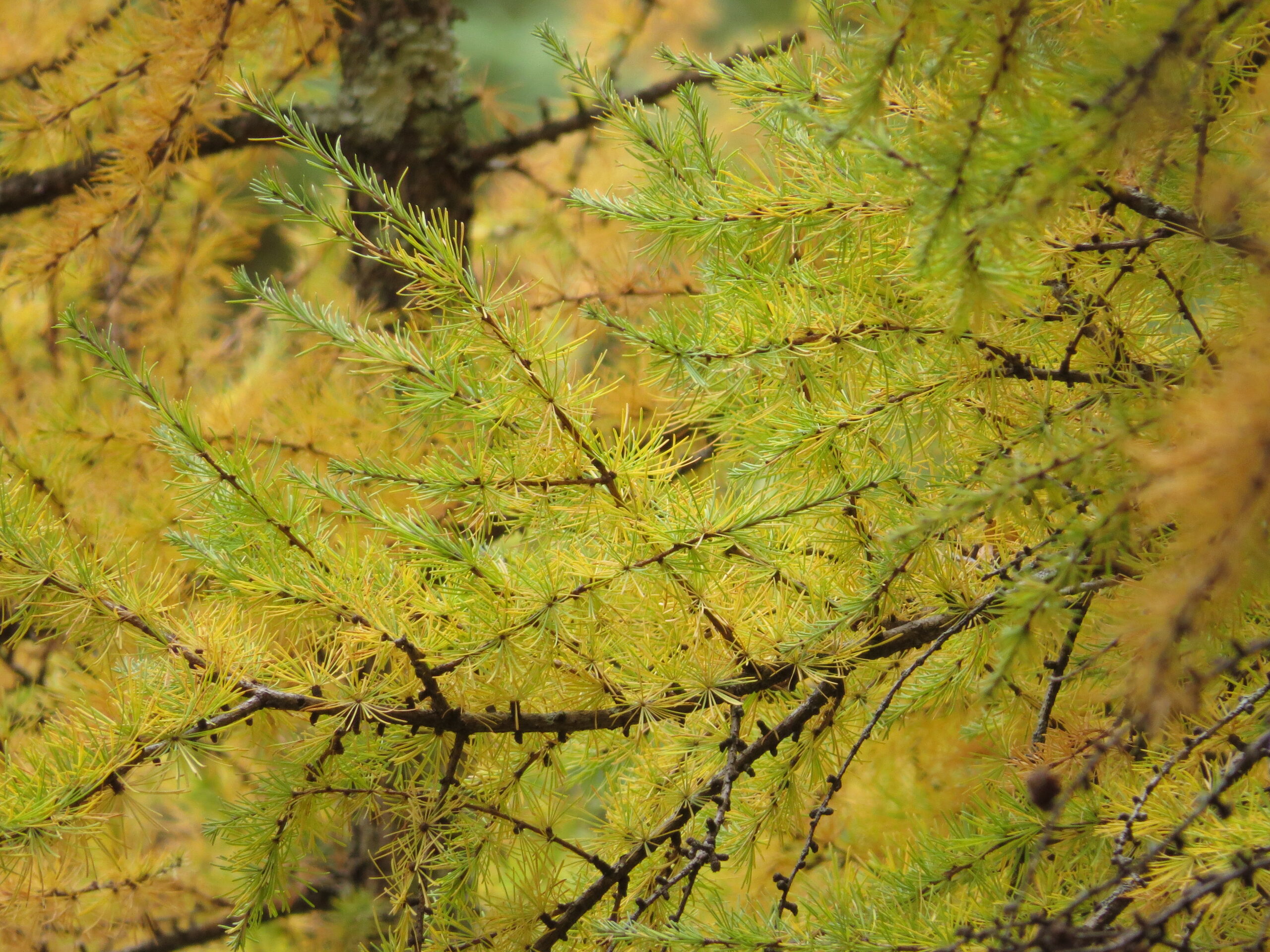
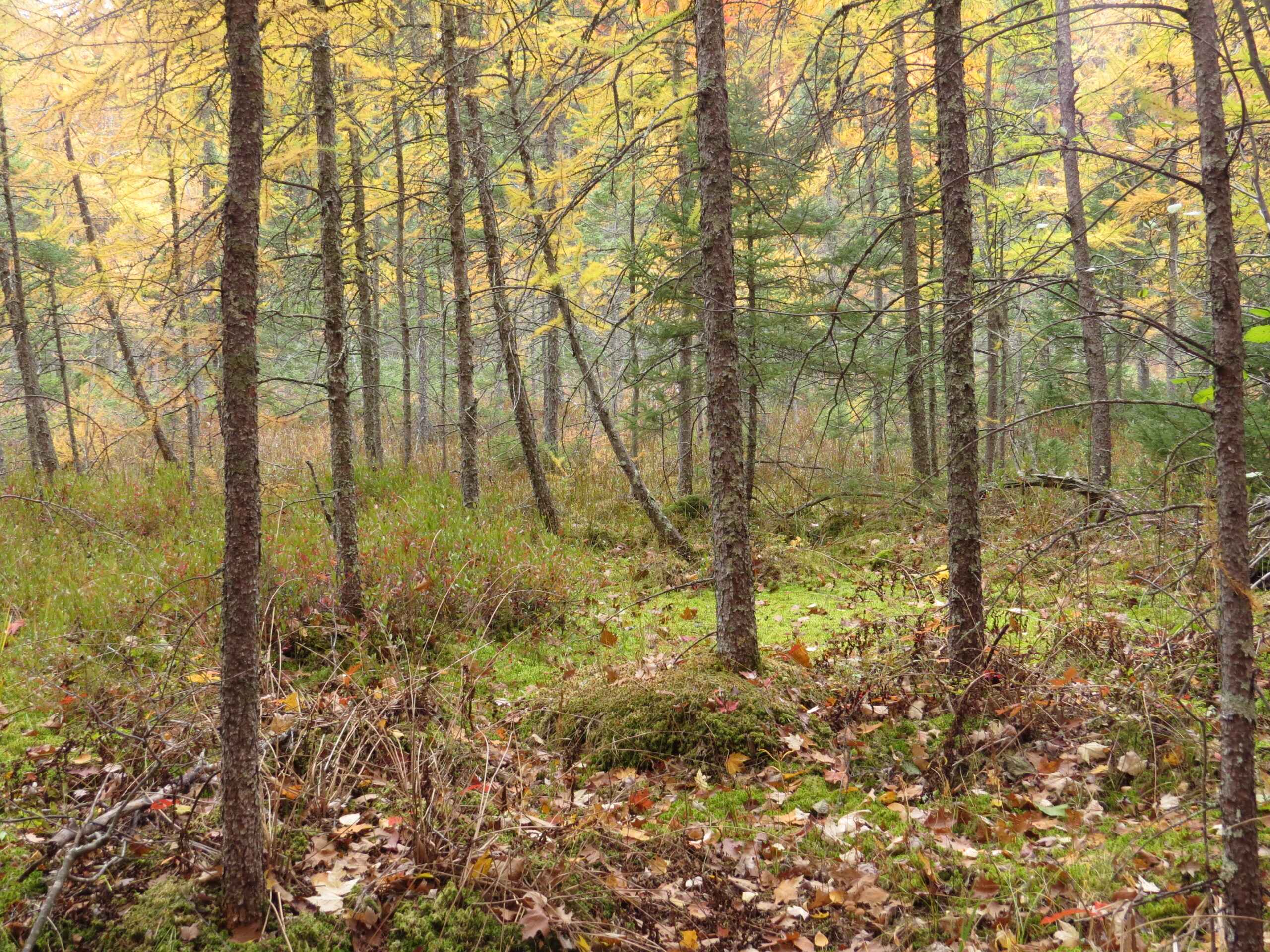
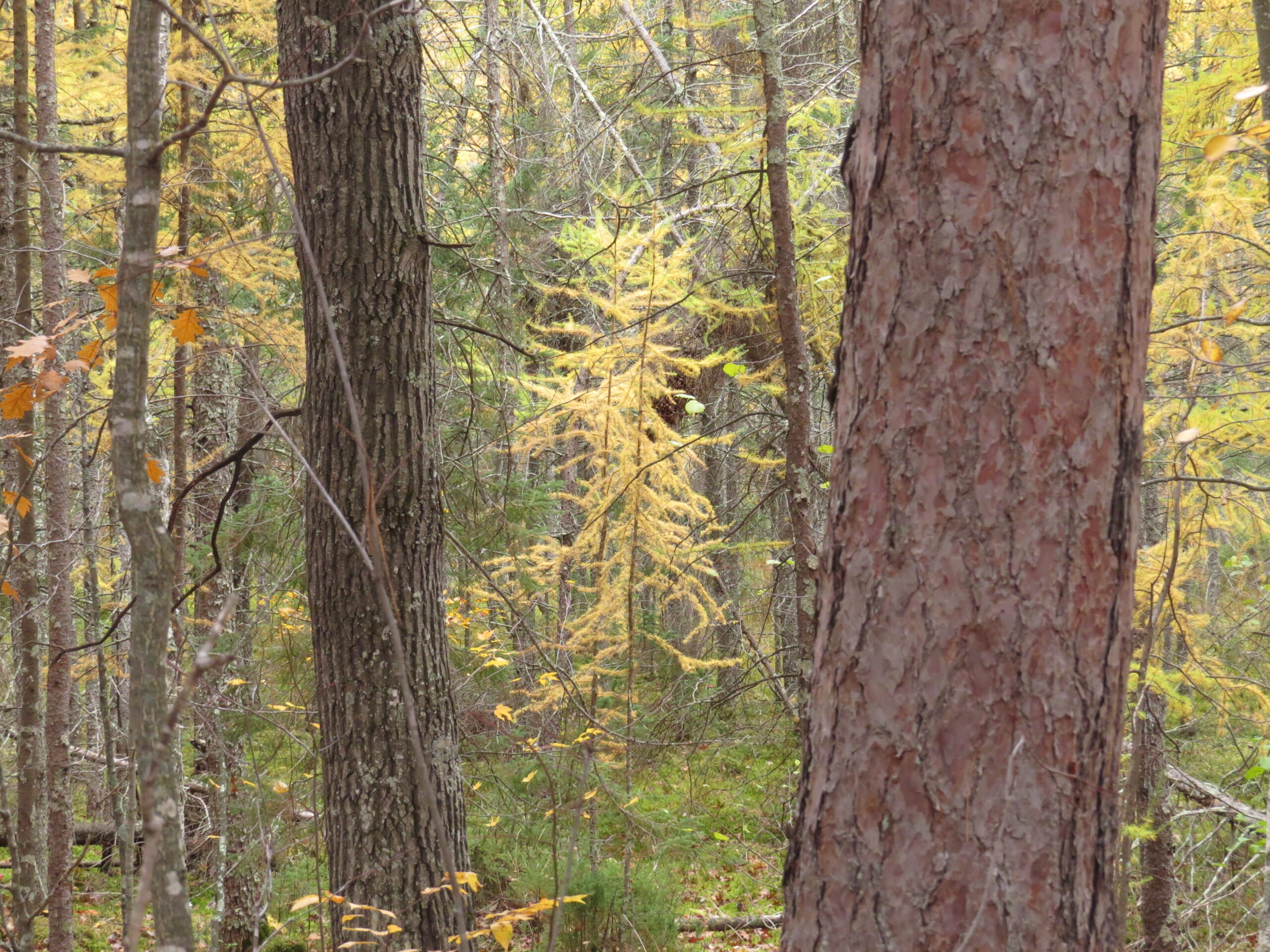
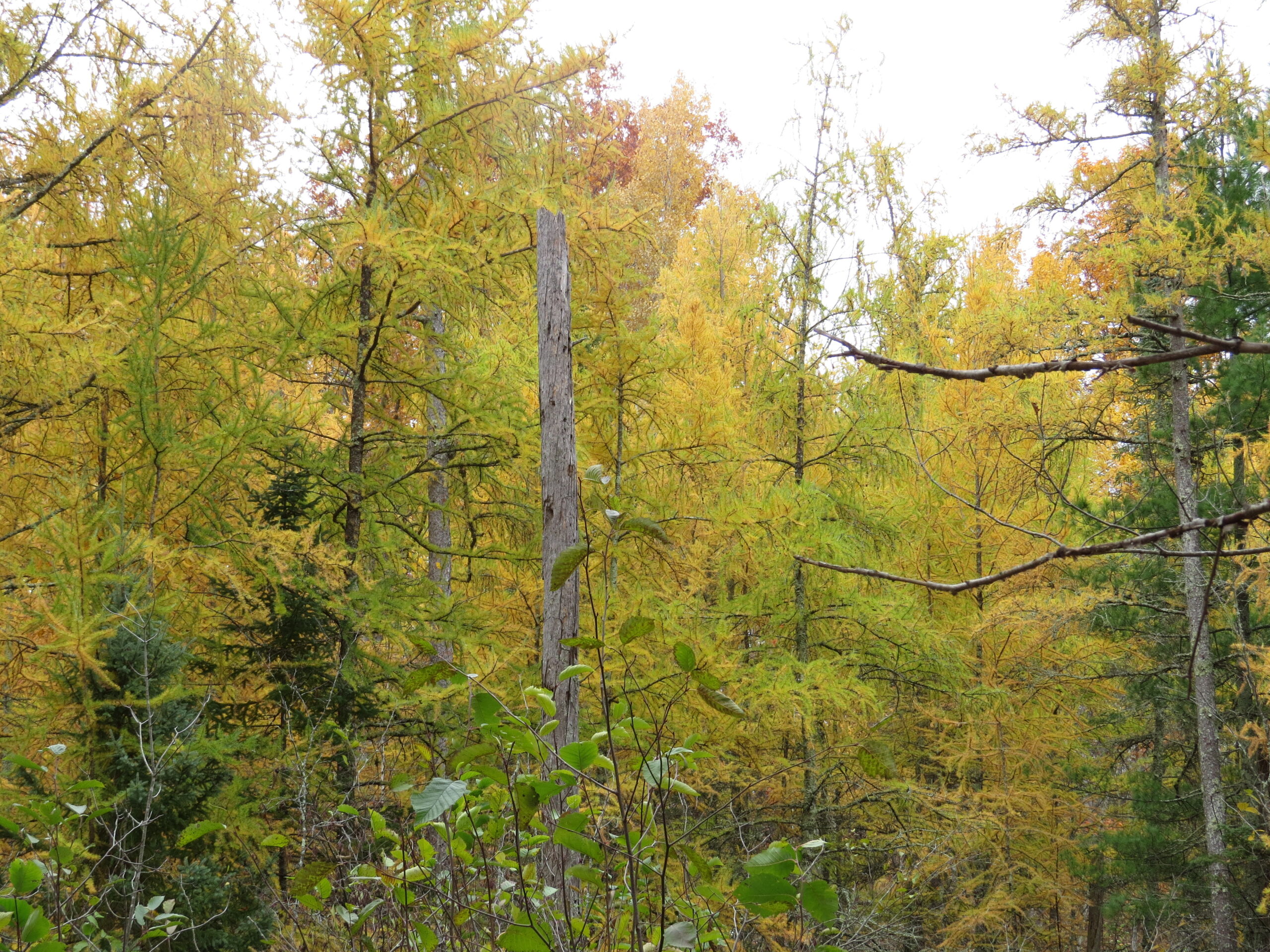
The bog was ethereal as the sun lit up the golden Tamarack trees. They weren’t quite in their full glory, as some were still tinged with green, but there is hardly anything more beautiful than a stand of golden-yellow Tamaracks before they drop their deciduous needles!
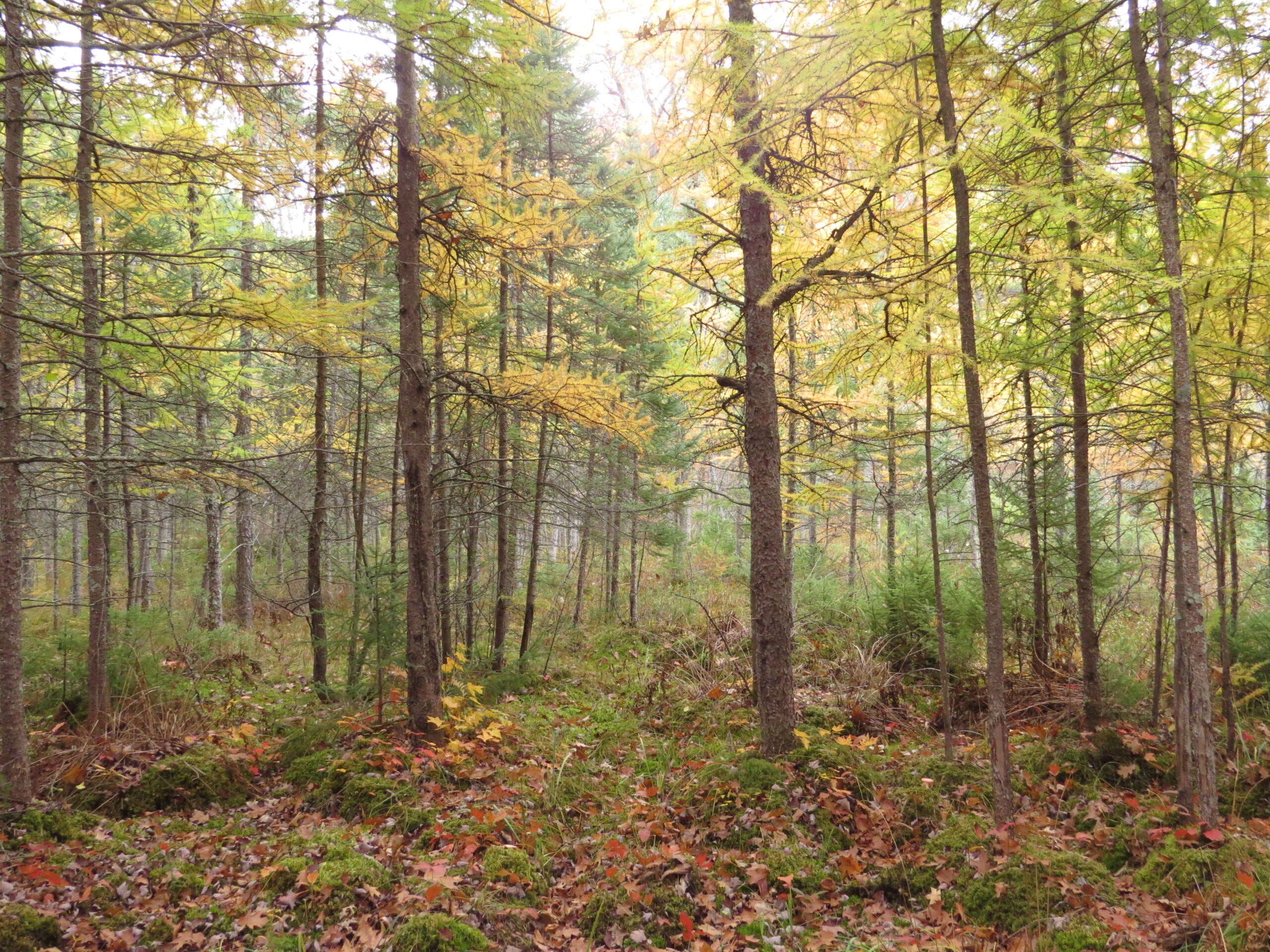
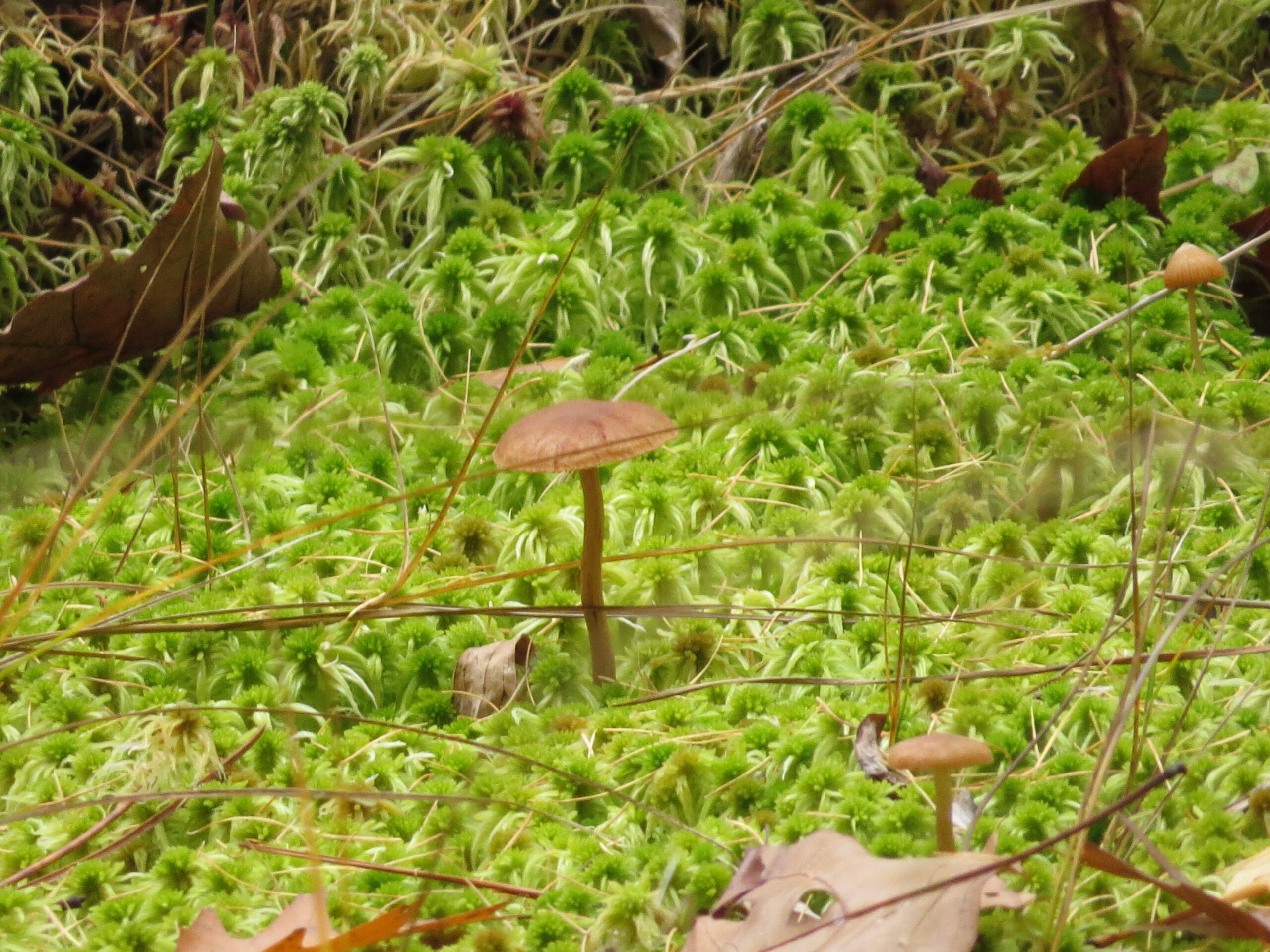
Bogs are fascinating ecosystems! Peat moss looks like a solid substrate from which all the trees and plants grow, but with only one step into the bog from the forest floor, my boot sank into the water just under the surface. That’s why only certain trees will grow there, those adapted to wet feet and acidic environments. So even while the colorful Oak seedlings germinated in the mossy bog, they don’t stand a chance of maturing there.
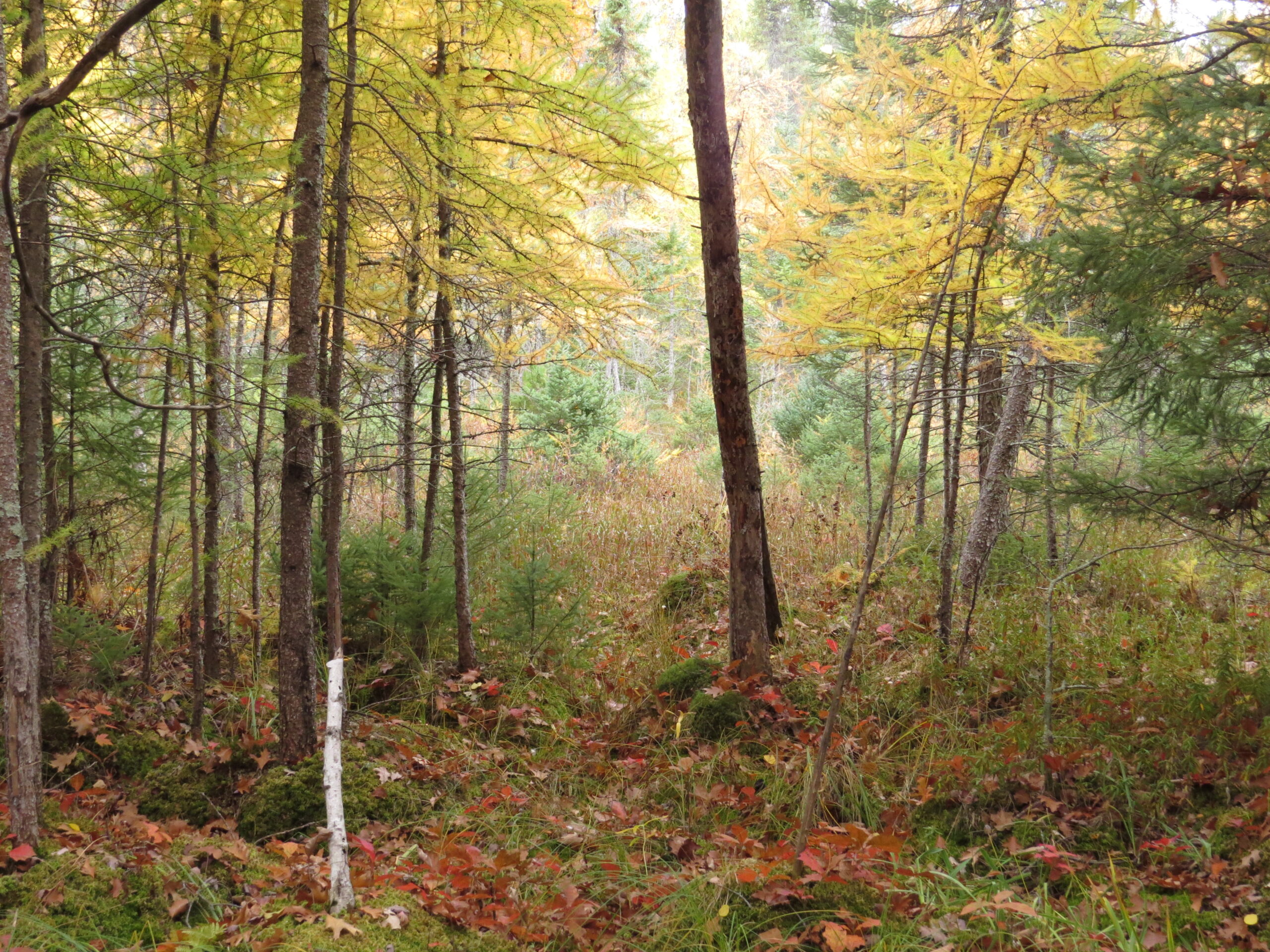
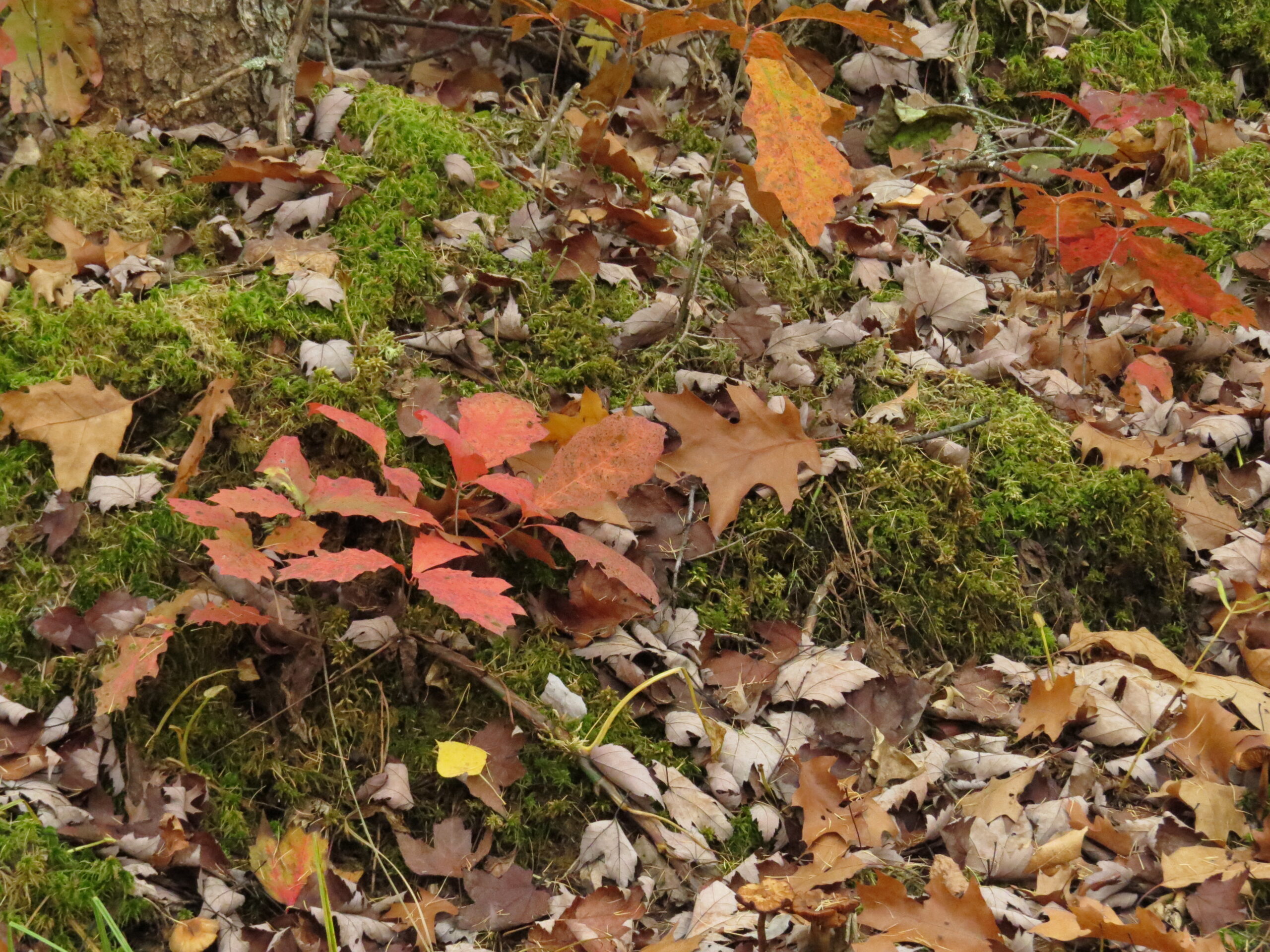
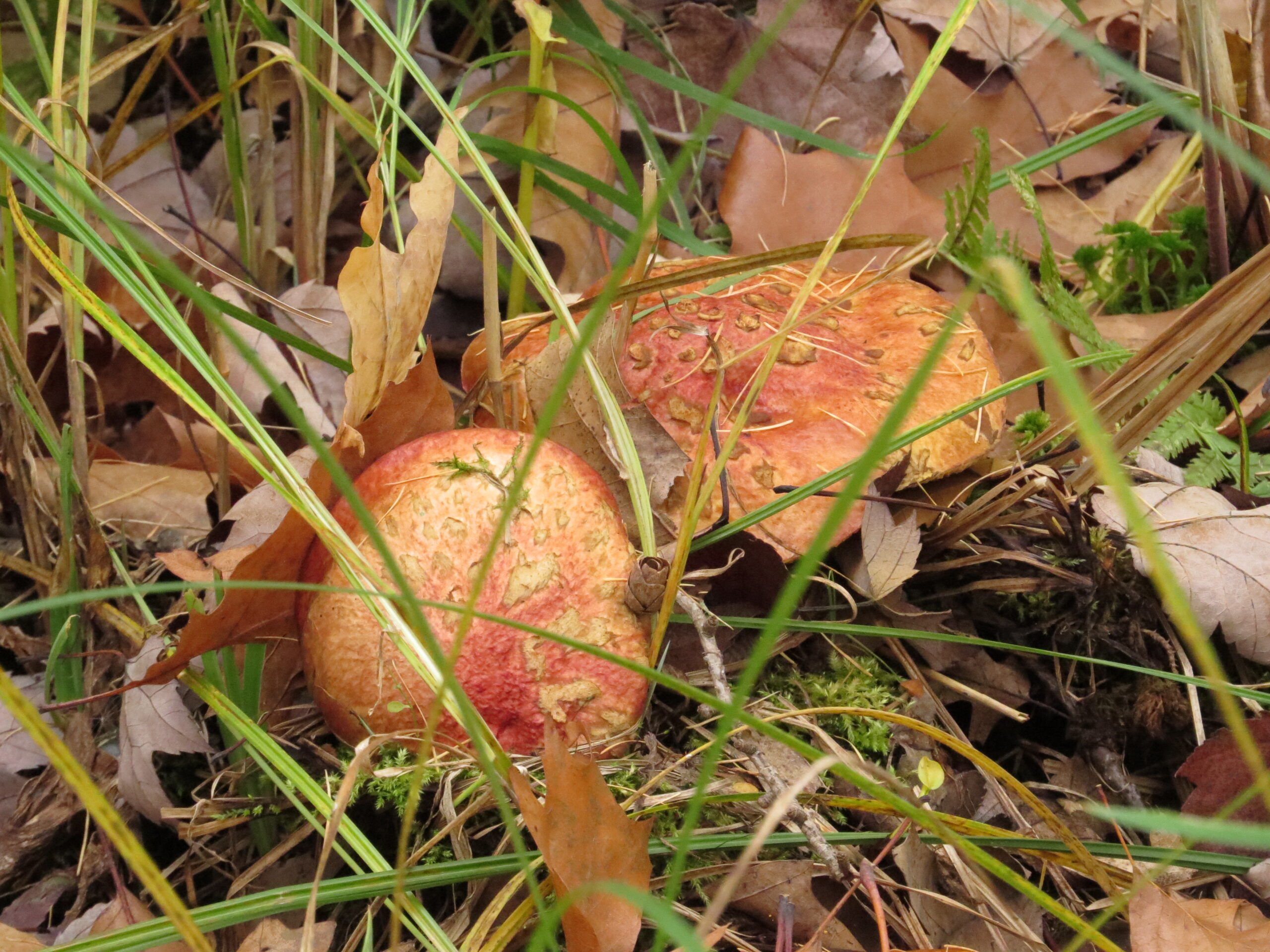
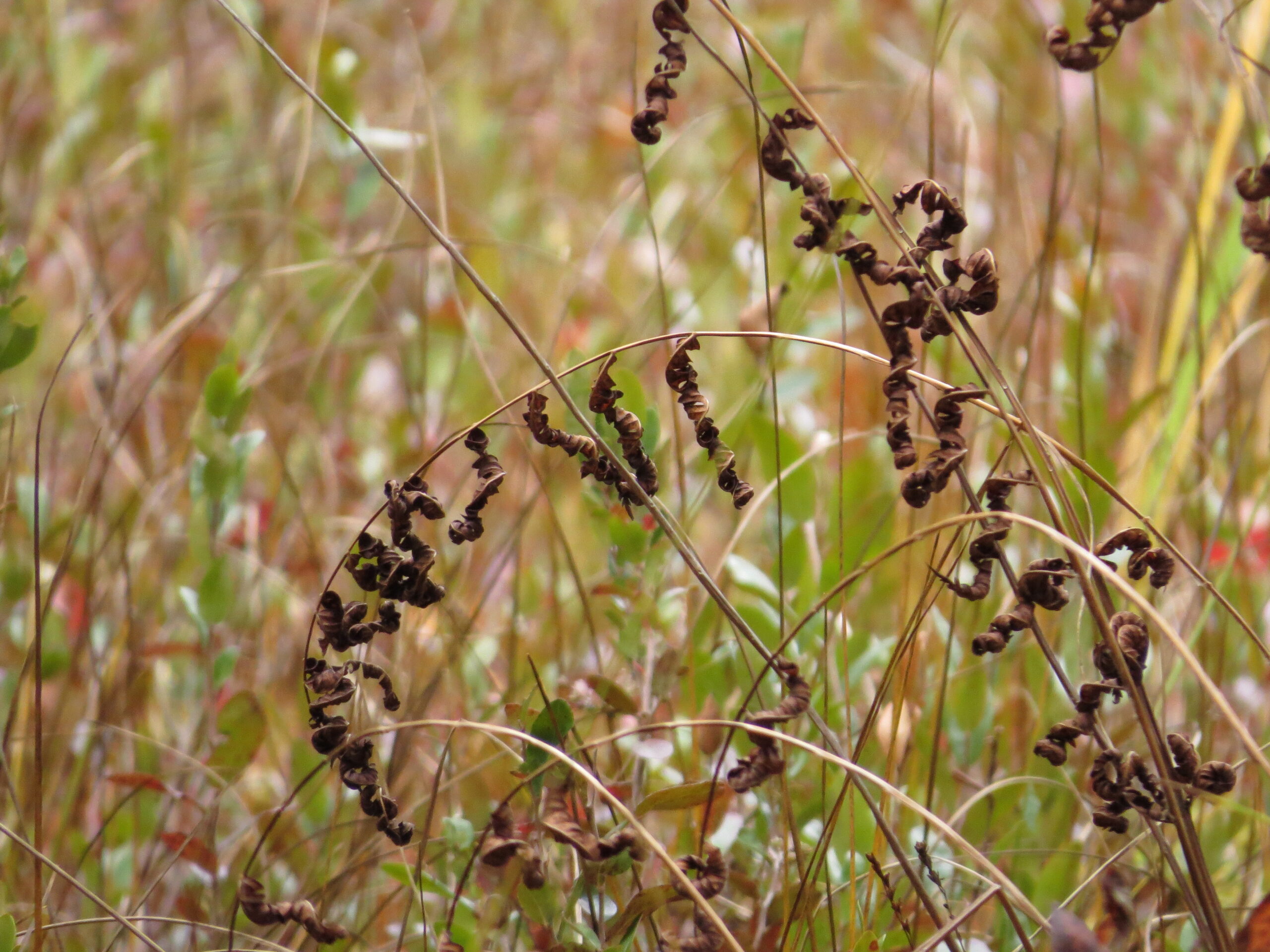
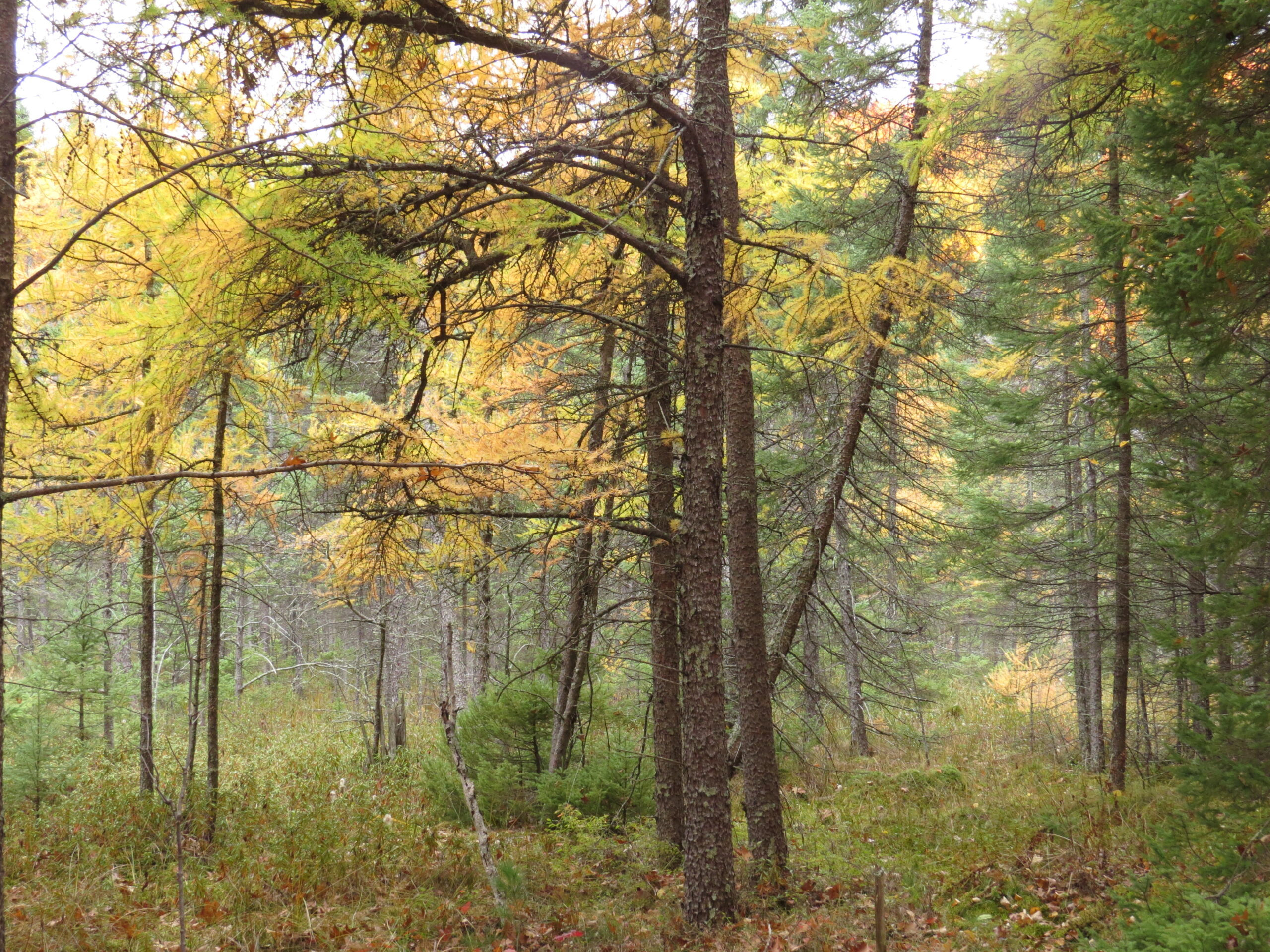
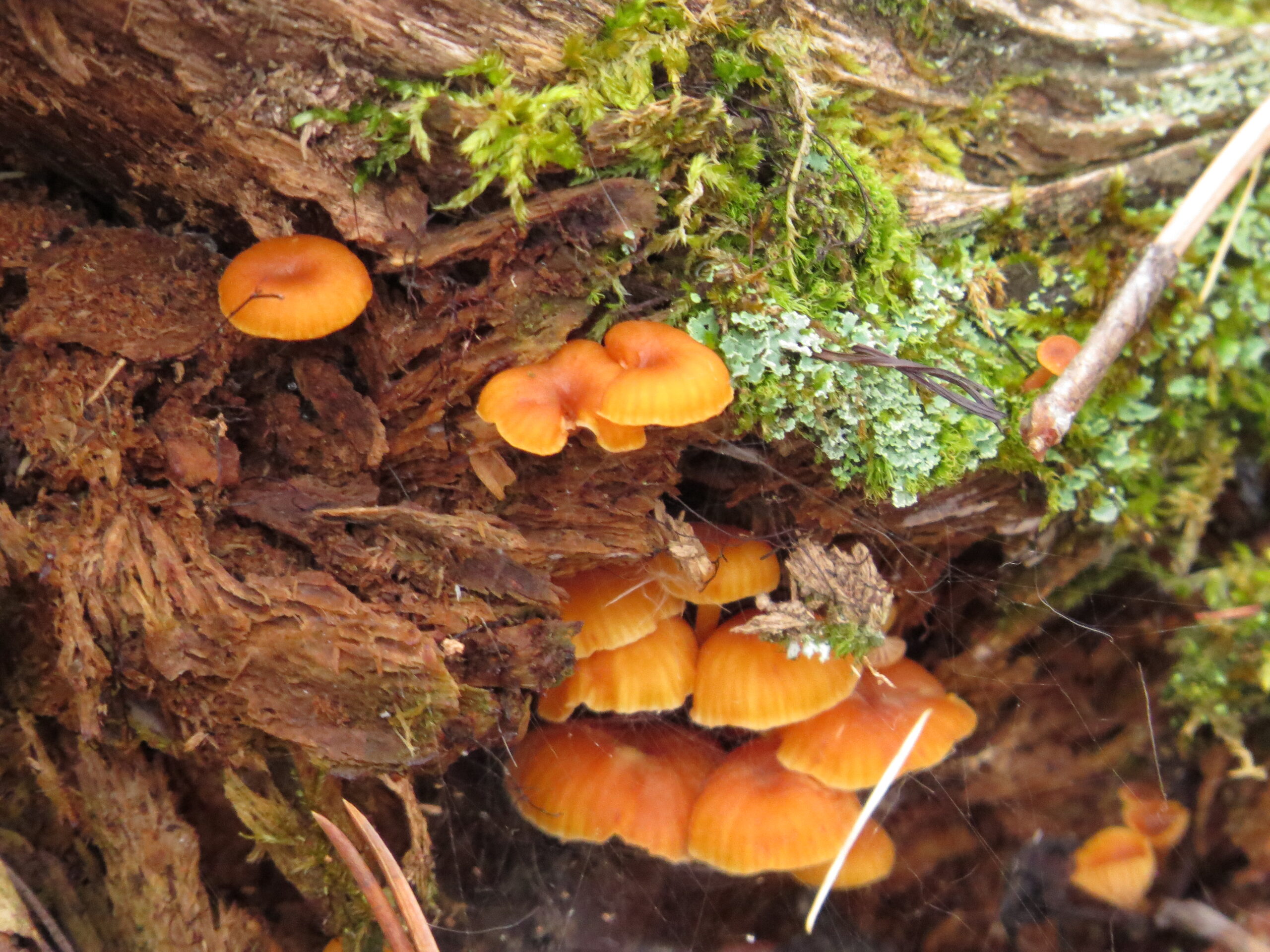
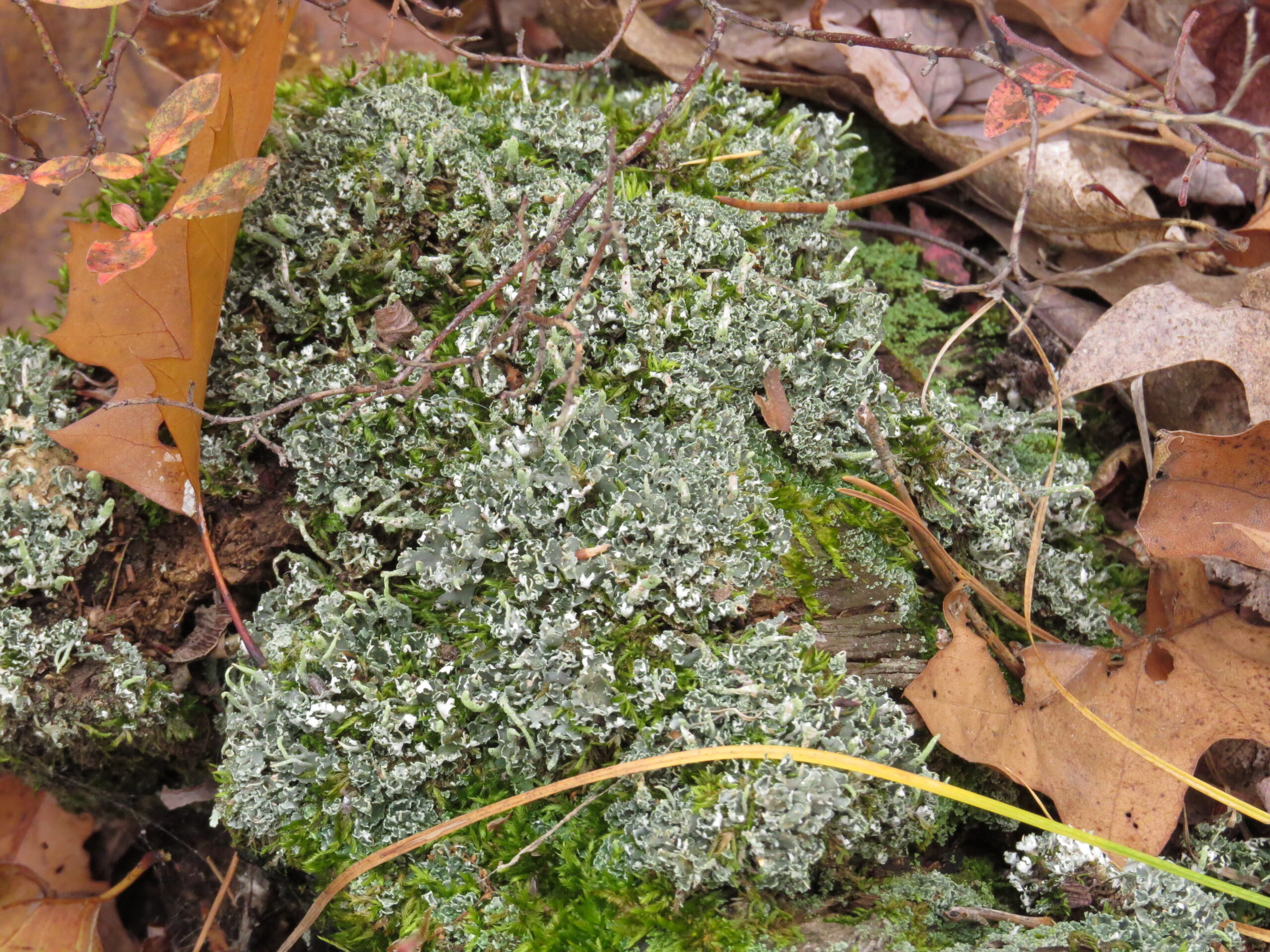
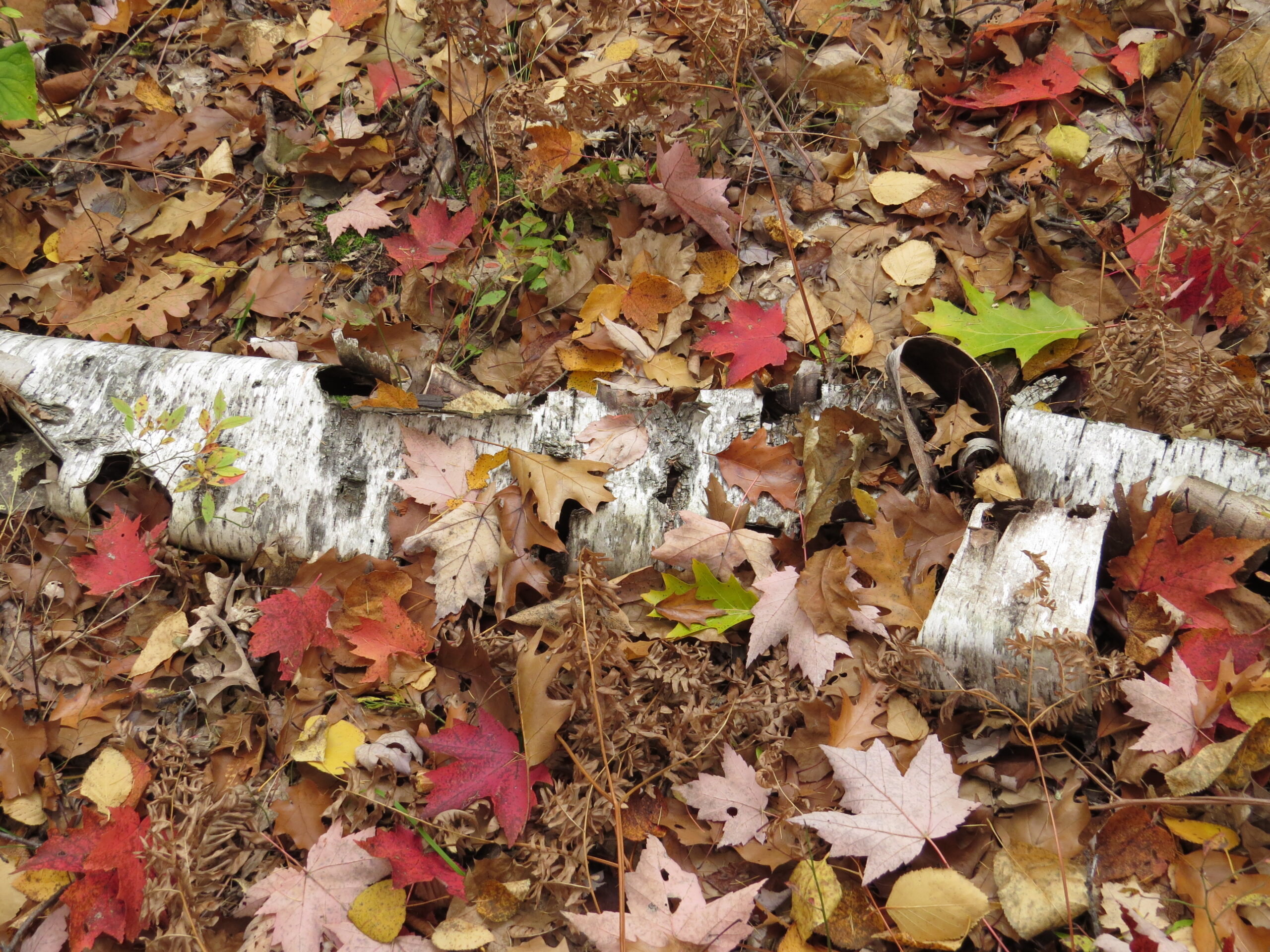
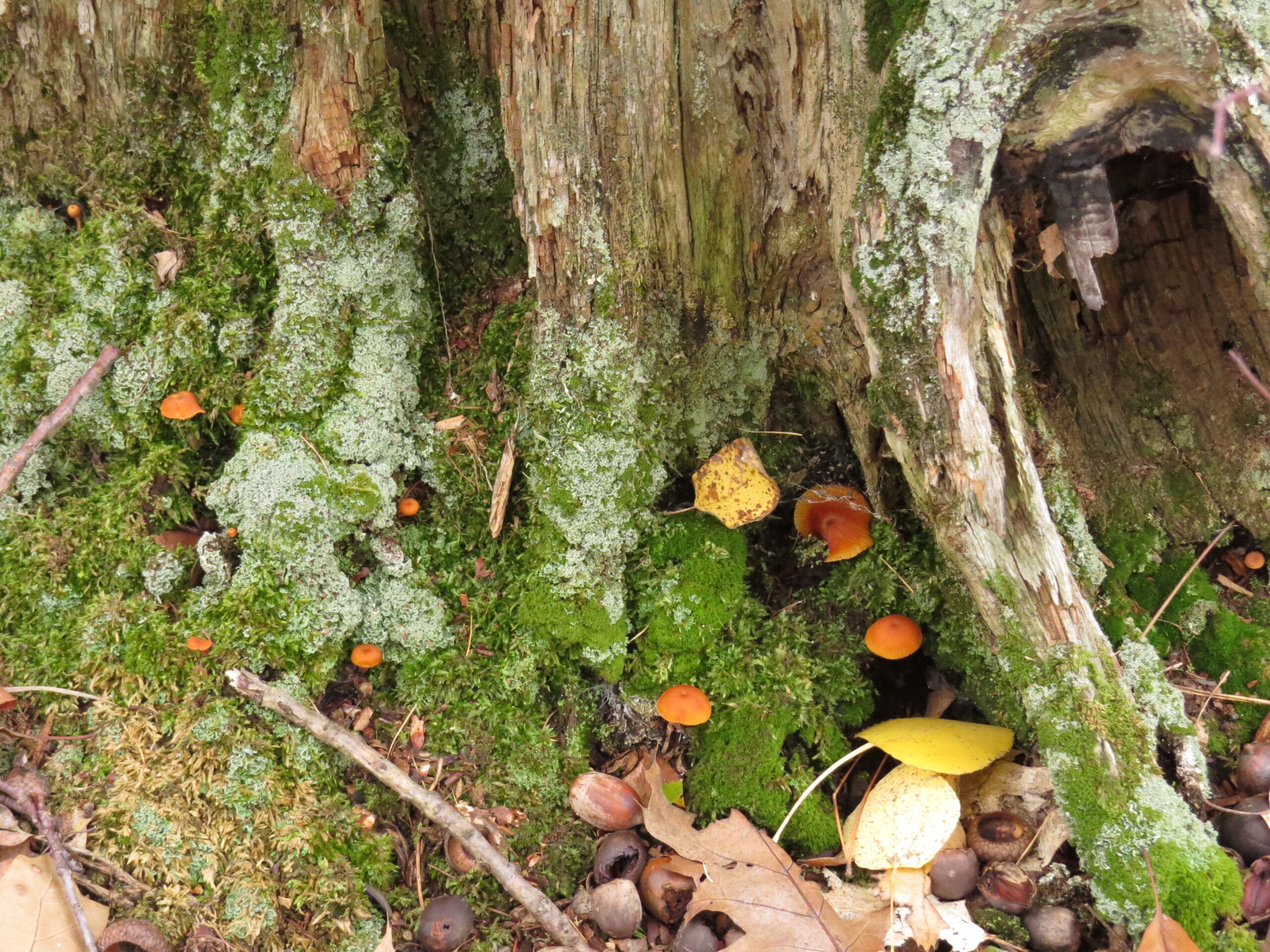
We circled around the bog, often walking on boardwalks over the low spots. Orange mushrooms, green moss, gray lichens, and a scattering of leaves decorated the fallen logs and ground.
All I could do was peer into the bog, into its mystery. I wondered if a bear would cross a bog. What creatures live in the floating fantasyland? These places where we cannot go capture our attention and imagination.
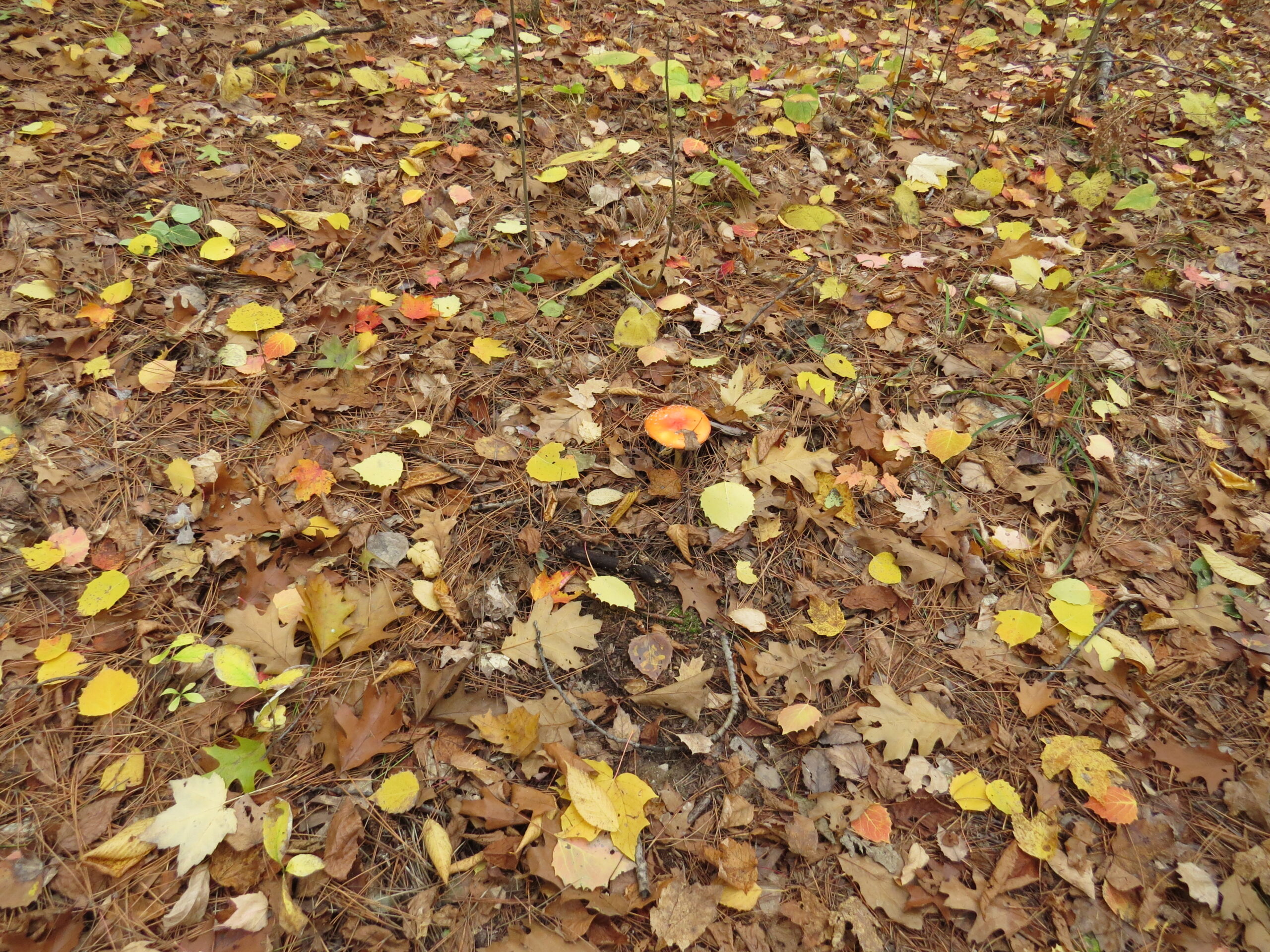
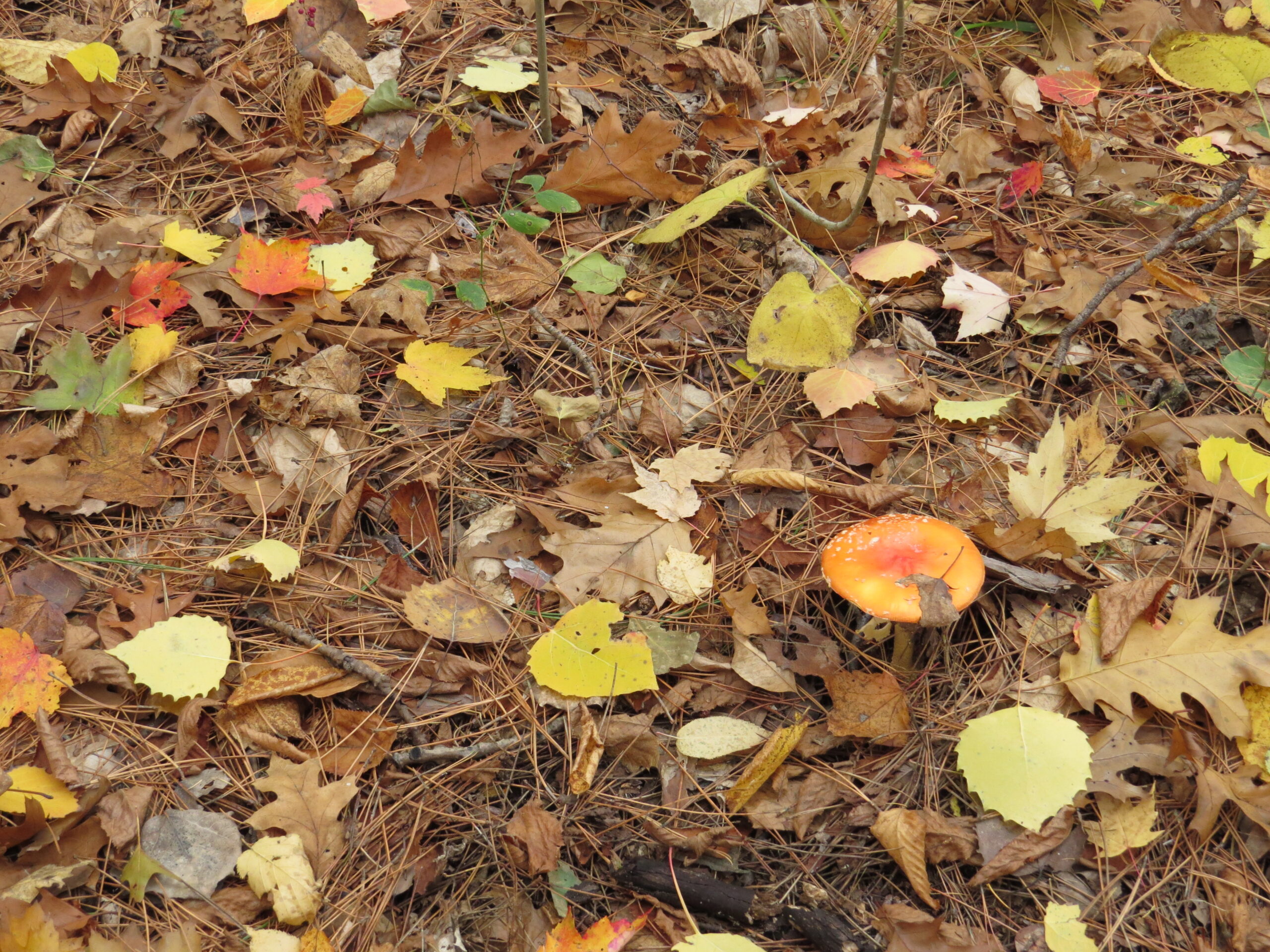
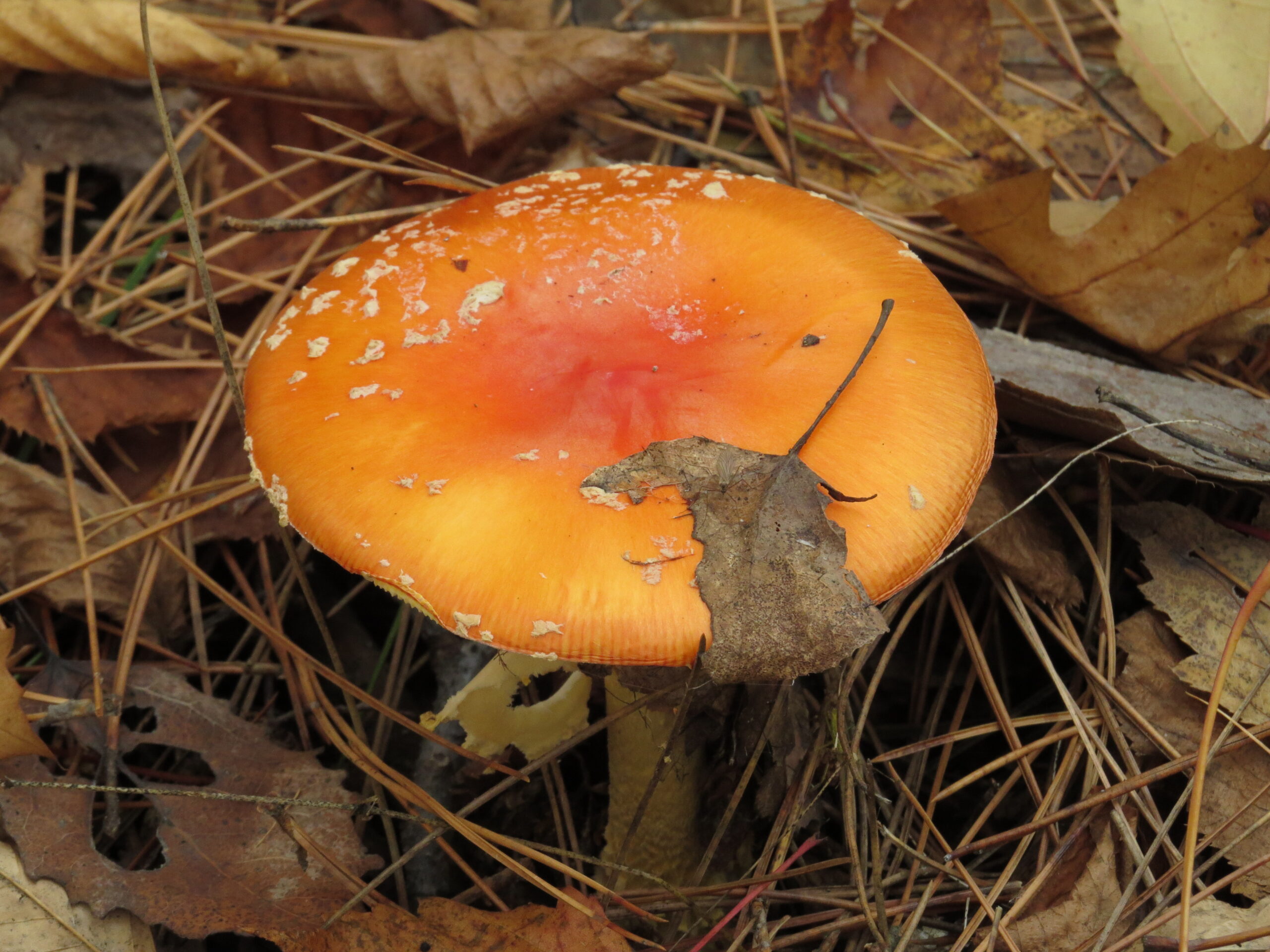
Colorful leaves camouflaged a colorful Fly Agaric mushroom popping from the ground in its Autumn season. This one is pretty but toxic.
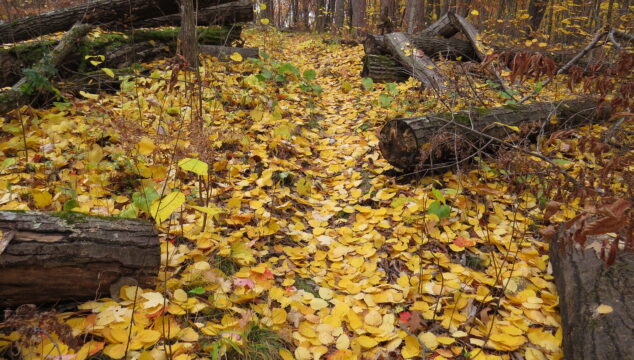
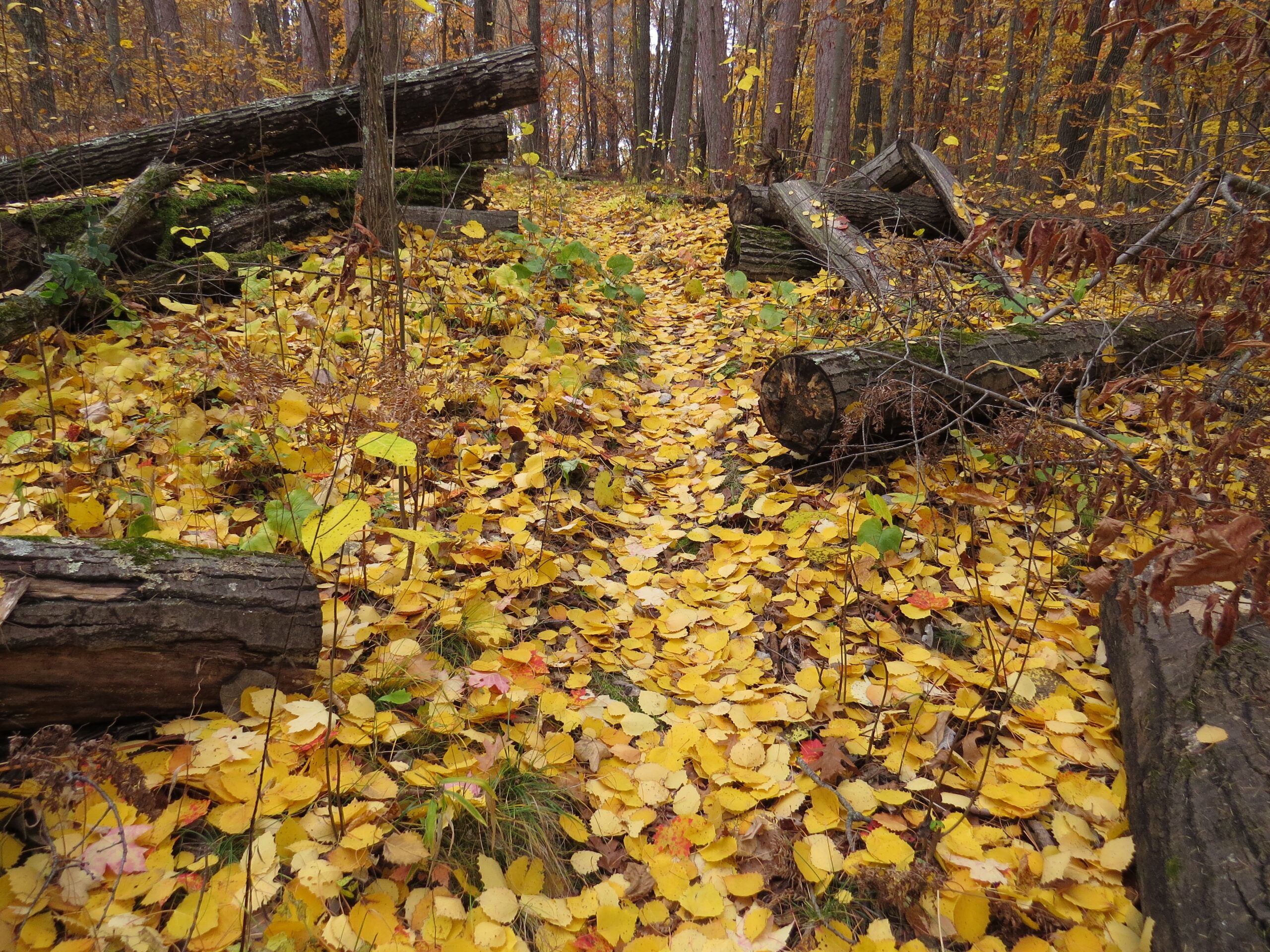
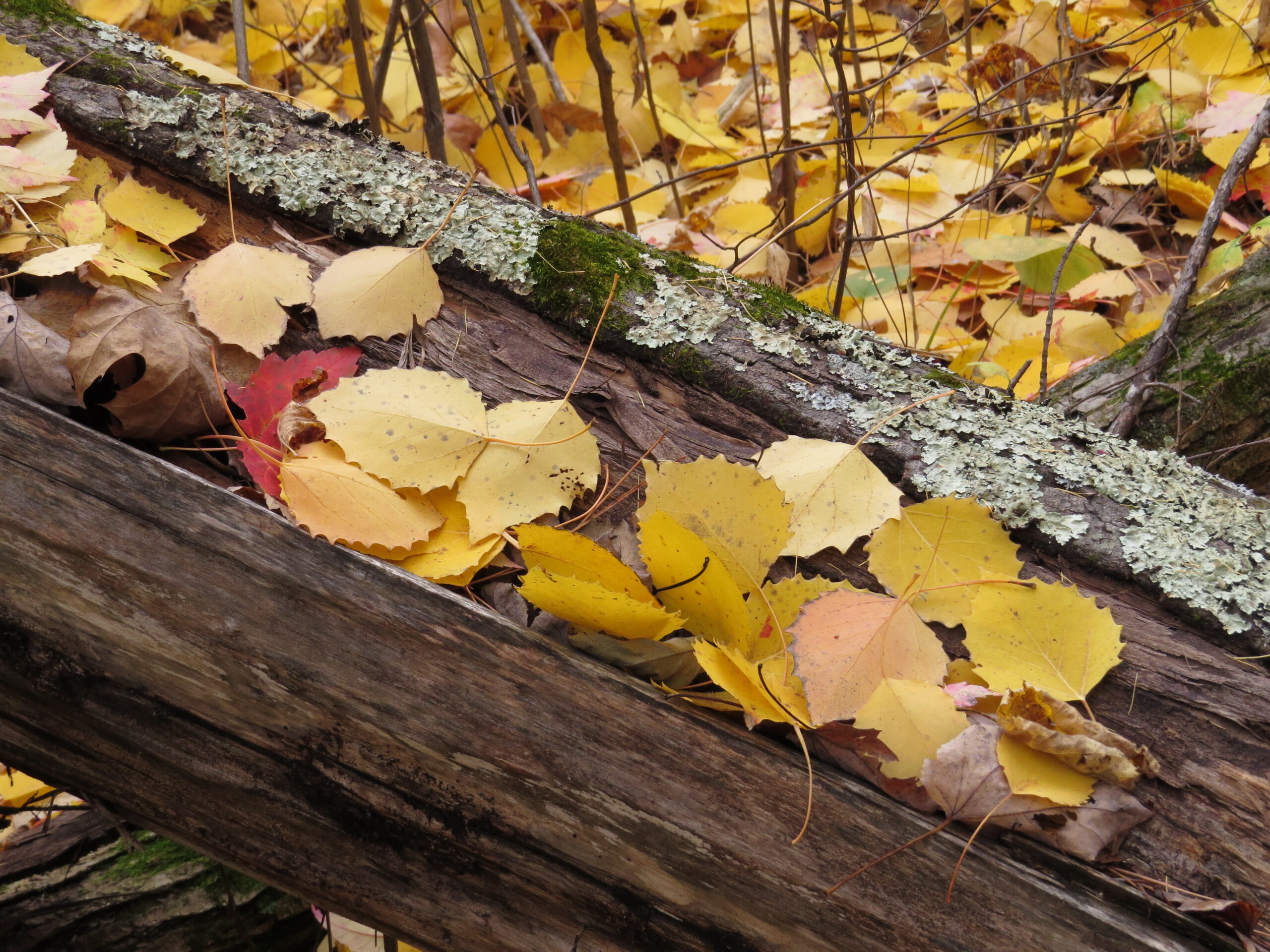
The trail veered away from the bog and was covered with a golden blanket of Big-toothed Aspen leaves. Old logs, like troughs, held the shimmering leaves. Drink in the beauty.
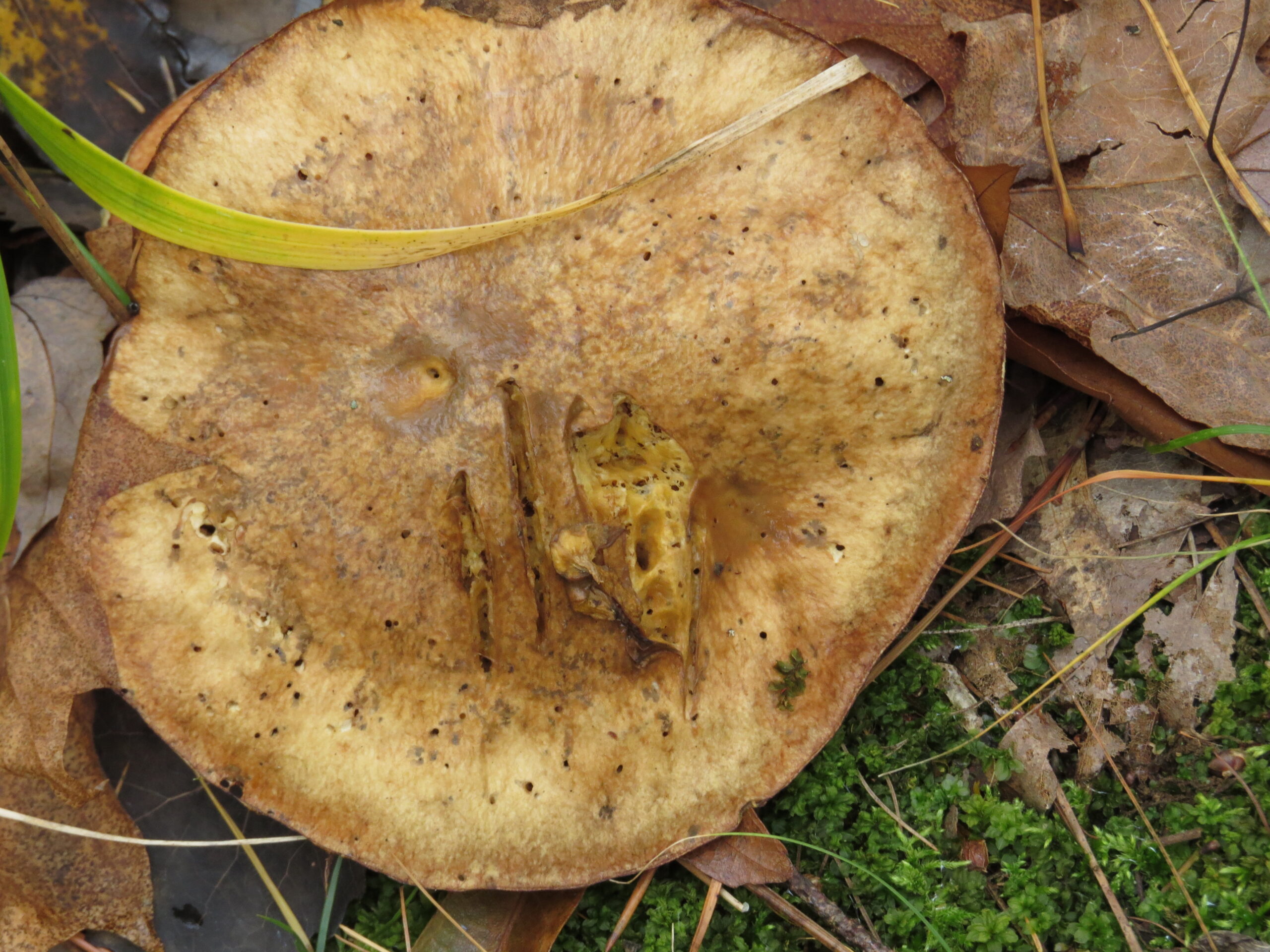
Claw marks from a smaller-than-a-bear animal were etched into a mushroom on the trail, but soon we passed another large Pine tree that had the head-high scratches from a bear.
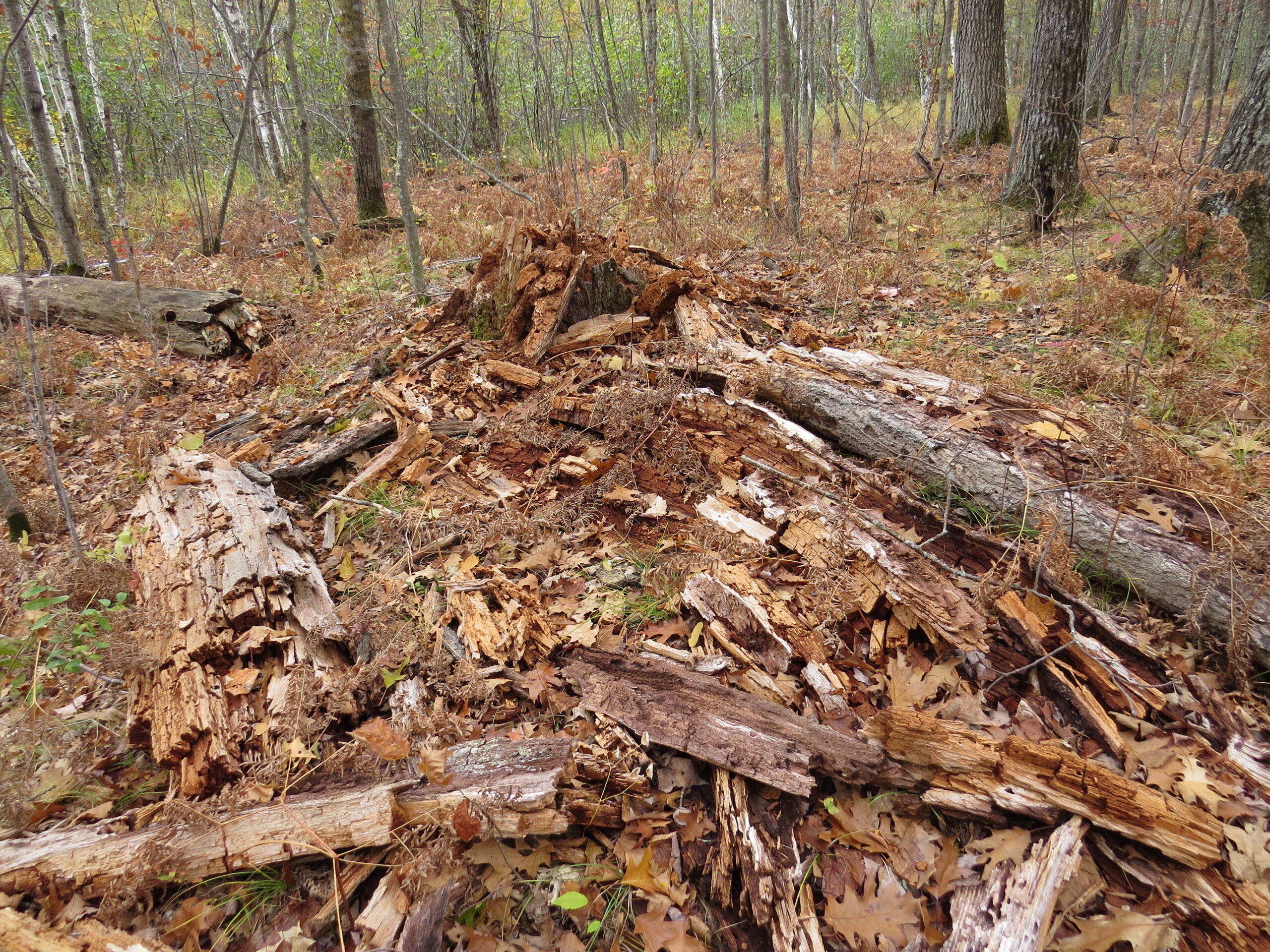
Another sign was a torn apart rotten log where a bear had been on a quest to find ants, grubs, or rodents.
One tree gone back to the Earth, a new one to take its place.
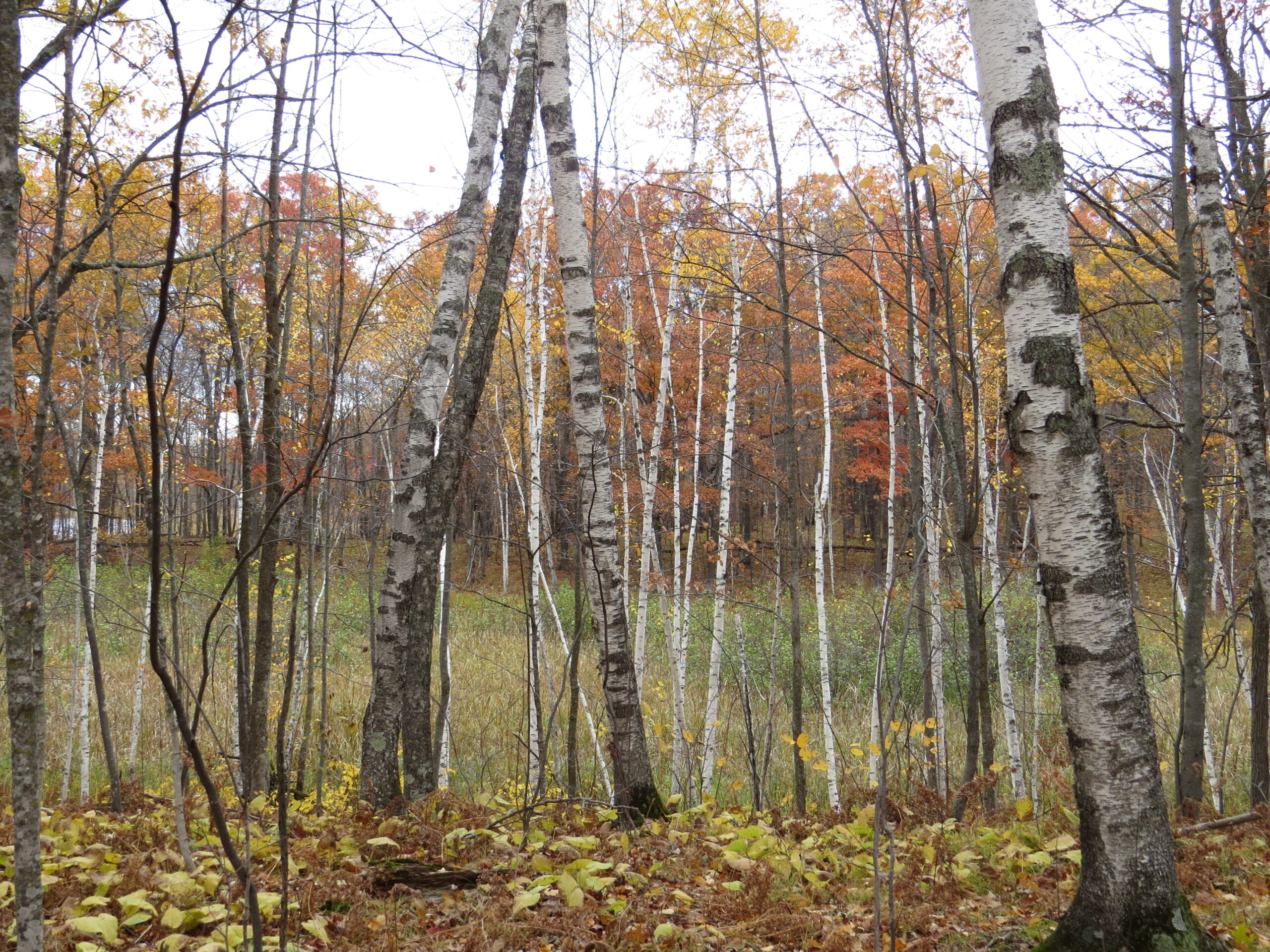
Towards the end of the trail, there was a wetland of rushes and grasses carving out a space in the forest of Oaks and Aspens. The most beautiful part was a ring of young Paper Birch trees standing in a singing circle close to the edge of the wetland.
There is mystery and intrigue with bears and bogs. Both are natural and necessary parts of Northern Minnesota. The water-laden peat moss is an unsteady anchor for most trees, yet others have adapted their root systems to splay out in order to stand tall. The bog plants are unique in the same way—adapting to the sometimes harsh conditions in order to thrive. The bog and the bears stand apart from passers-by (usually), even as we are in their midst. We know on whose ground we tread (or tread around.)
Autumn is a glorious time—perhaps to fill our hearts with goodness and appreciation in order for us to traverse our more difficult Winter. Life is like that—we have goodness-filled glorious moments to sustain us through our hard times. Through it all, we are walking the trail of our Life’s journey towards our true self. We begin to see our own true colors and those of the people around us. And there is always a place, a part, a piece of us that seems like a place we cannot go, a place we fear to go. It nags at us, consciously or unconsciously, and intrigues us in some wistful way. That’s where we need to go—it’s an invitation and a map. There may be bears and bogs that frighten us and deter us, but our true self is brave. Our hearts are open to receive it. Drink in the Beauty of it.
Thank you, readers! I am grateful for all of you who have joined me on this glorious Autumn walk. This post marks my 500th post of North Star Nature! I began this venture almost ten years ago (March of 2014) to share Nature’s beauty and wisdom, never dreaming I’d write 500 posts and share over 7500 photographs! A special thank you to those of you who have been with me from the beginning. If you love the great outdoors, be sure to like and share North Star Nature!
The Day the Sun Stands Still
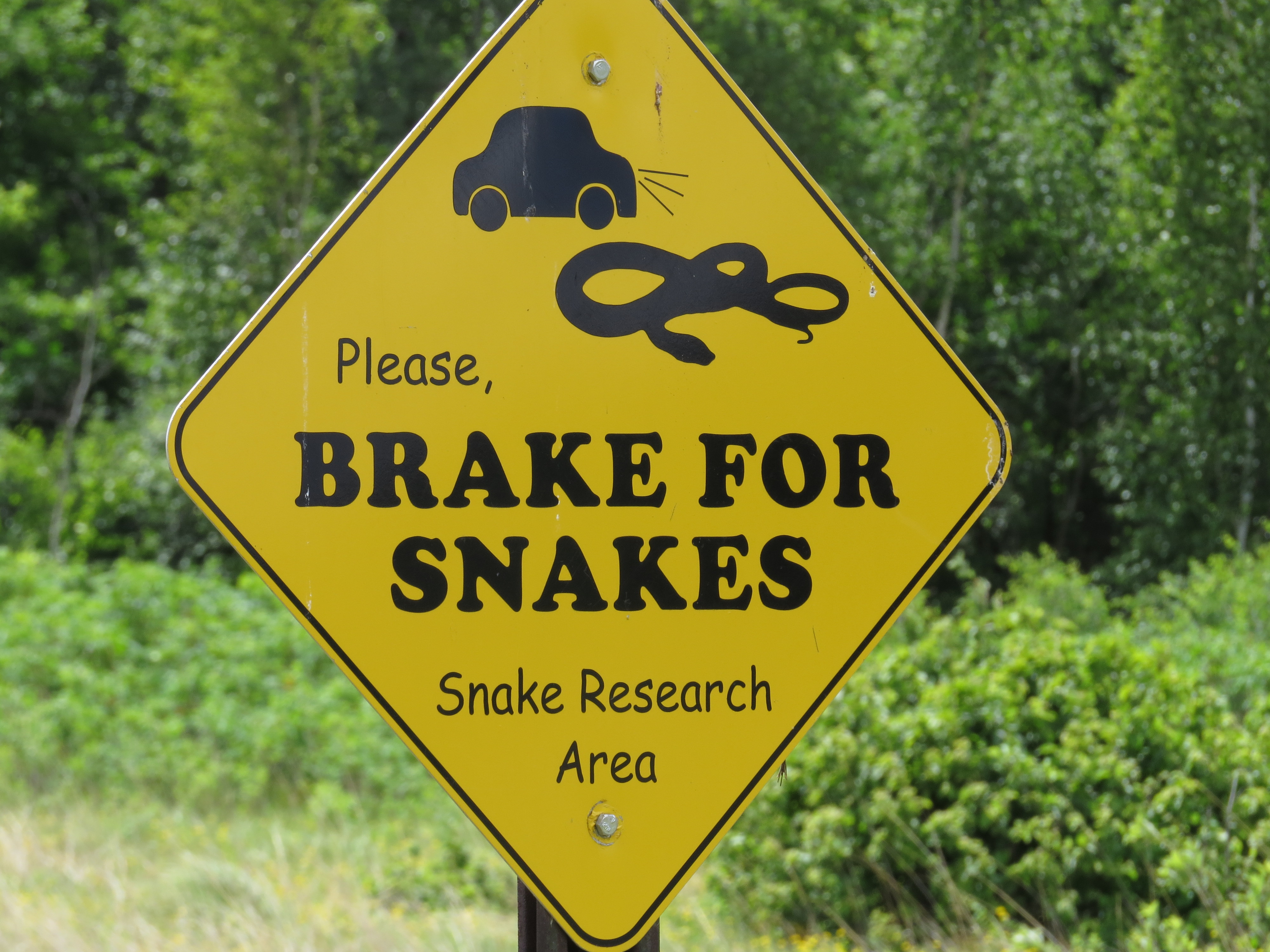
The first thing to greet us as we pulled into Wild River State Park was a most unusual sign! “Please, BRAKE FOR SNAKES.” Nobody would need to tell us to do so—we Brakes are a snake-loving family, especially our son Aaron. You could say, “Brakes for snakes” and be perfectly correct!
Chris and I were going camping on the Summer Solstice for the first time, just the two of us, in over three decades. It was an experiment. Did we remember how to do this? Could we do it? Would we want to do this again? And most importantly, could we sleep?! Since it was a Monday, the campground had plenty of available spots; we checked in, parked in our campsite, and headed out to hike after a brief rain shower.
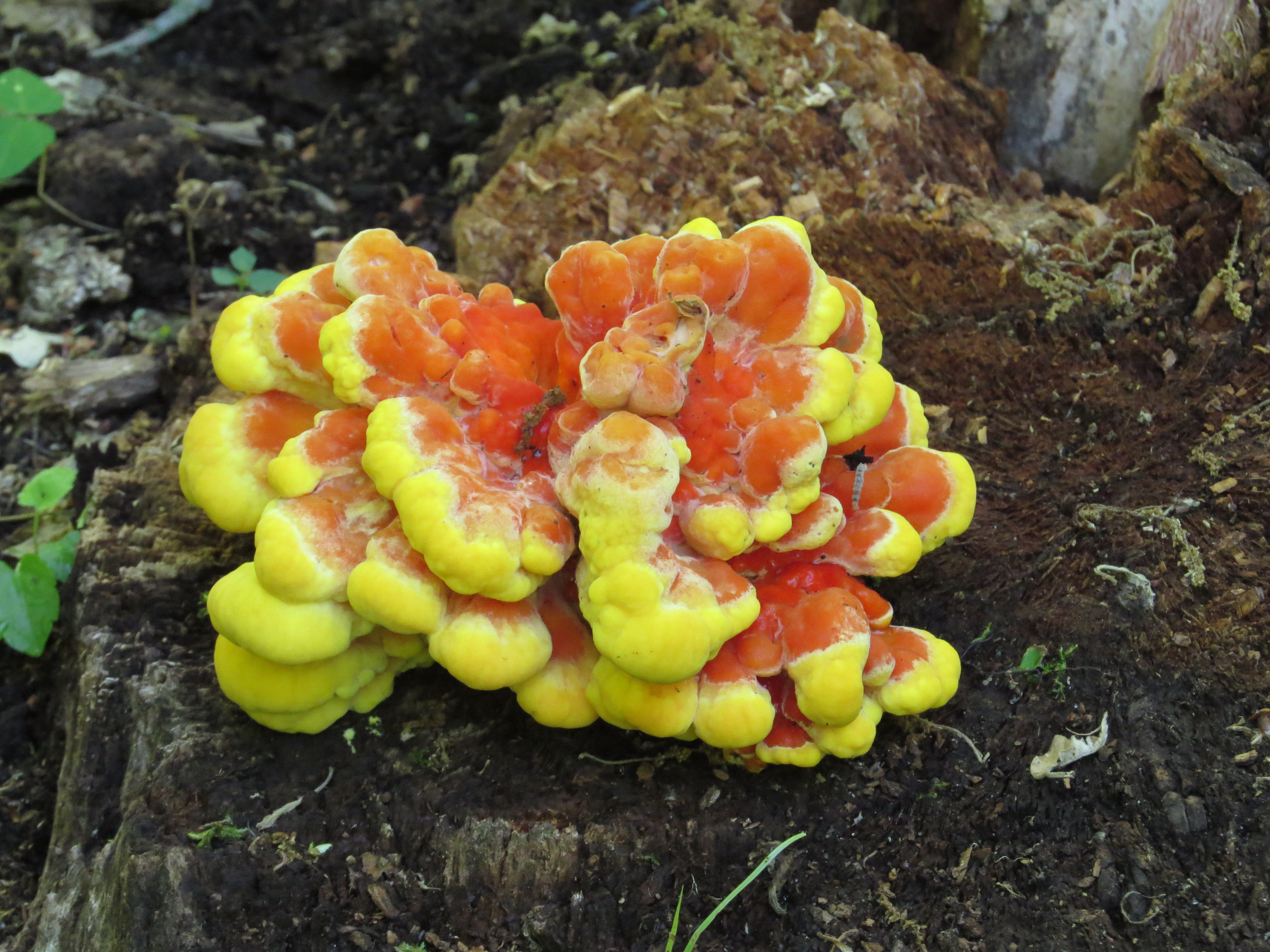
We hiked along the Old Logging Trail, a paved bike/walking trail, to the Visitor Center where we had our picnic lunch, looked out over the trees to catch a glimpse of the wild St. Croix River, and learned how Vice President Walter Mondale had worked tirelessly to protect the natural resources of Minnesota and the United States, including the Wild and Scenic Rivers Act in 1968 that helped preserve this river. We left the paved trail and walked toward the River after discovering a colorful and unique Chicken of the Woods mushroom.
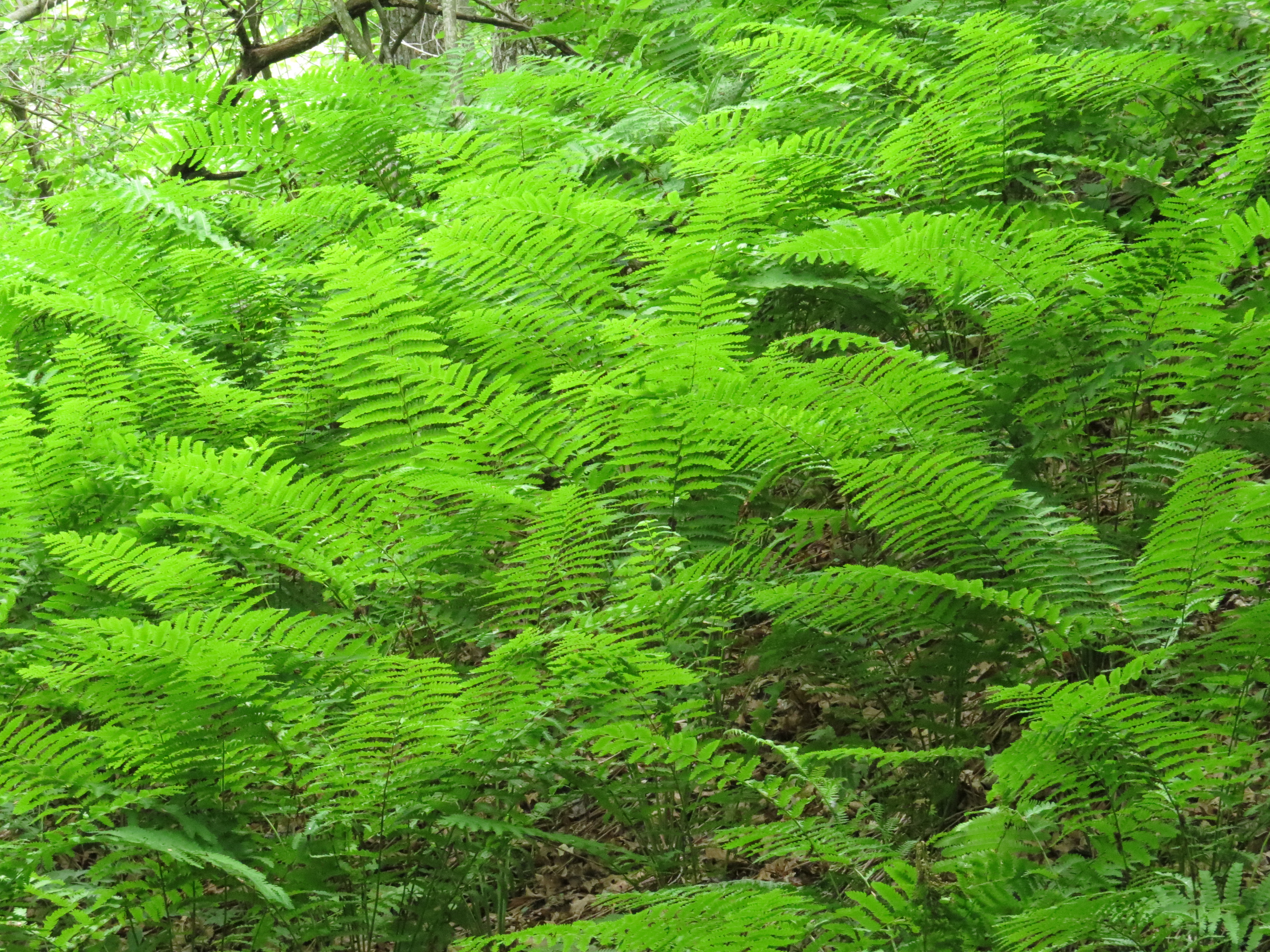
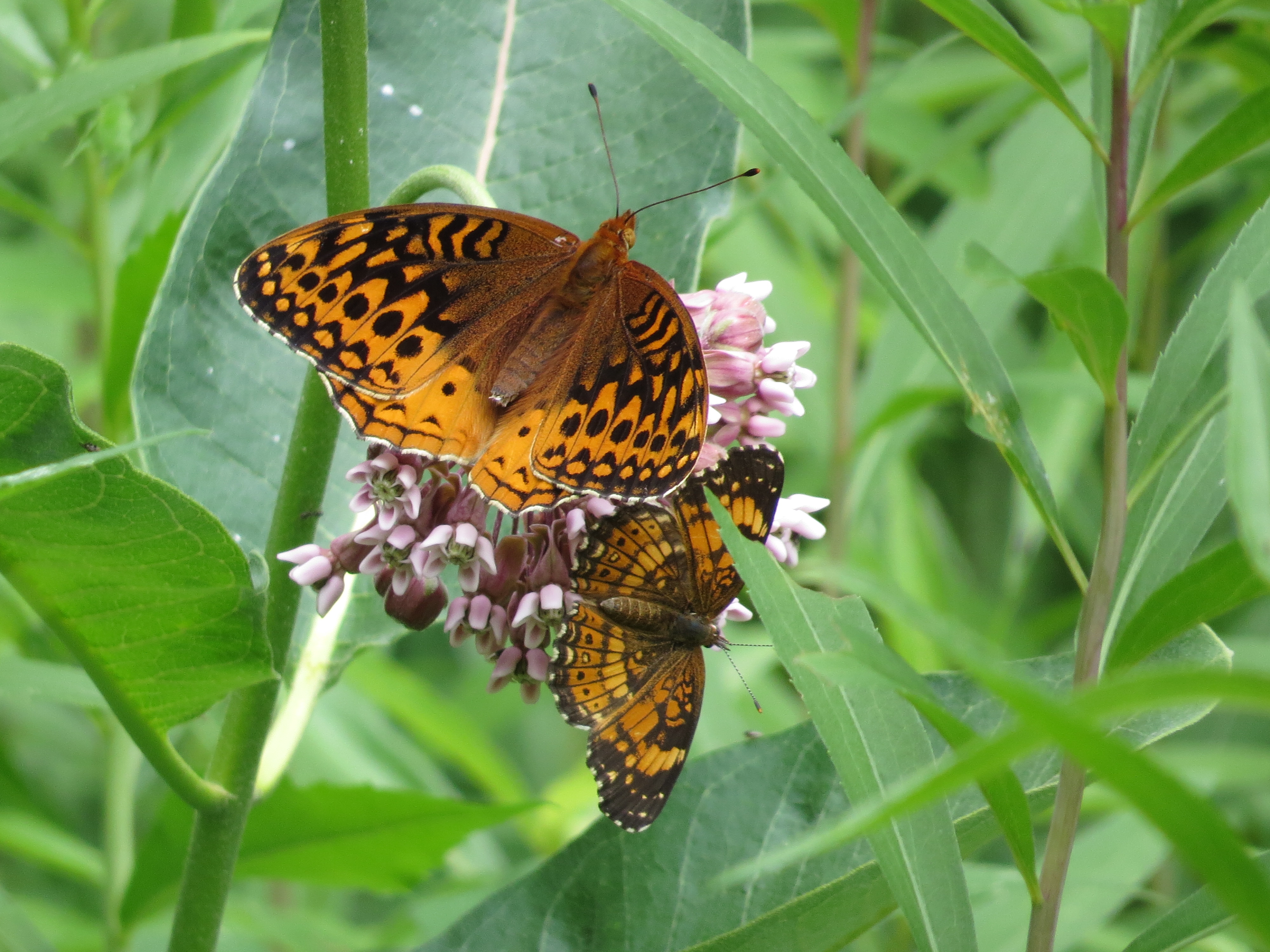
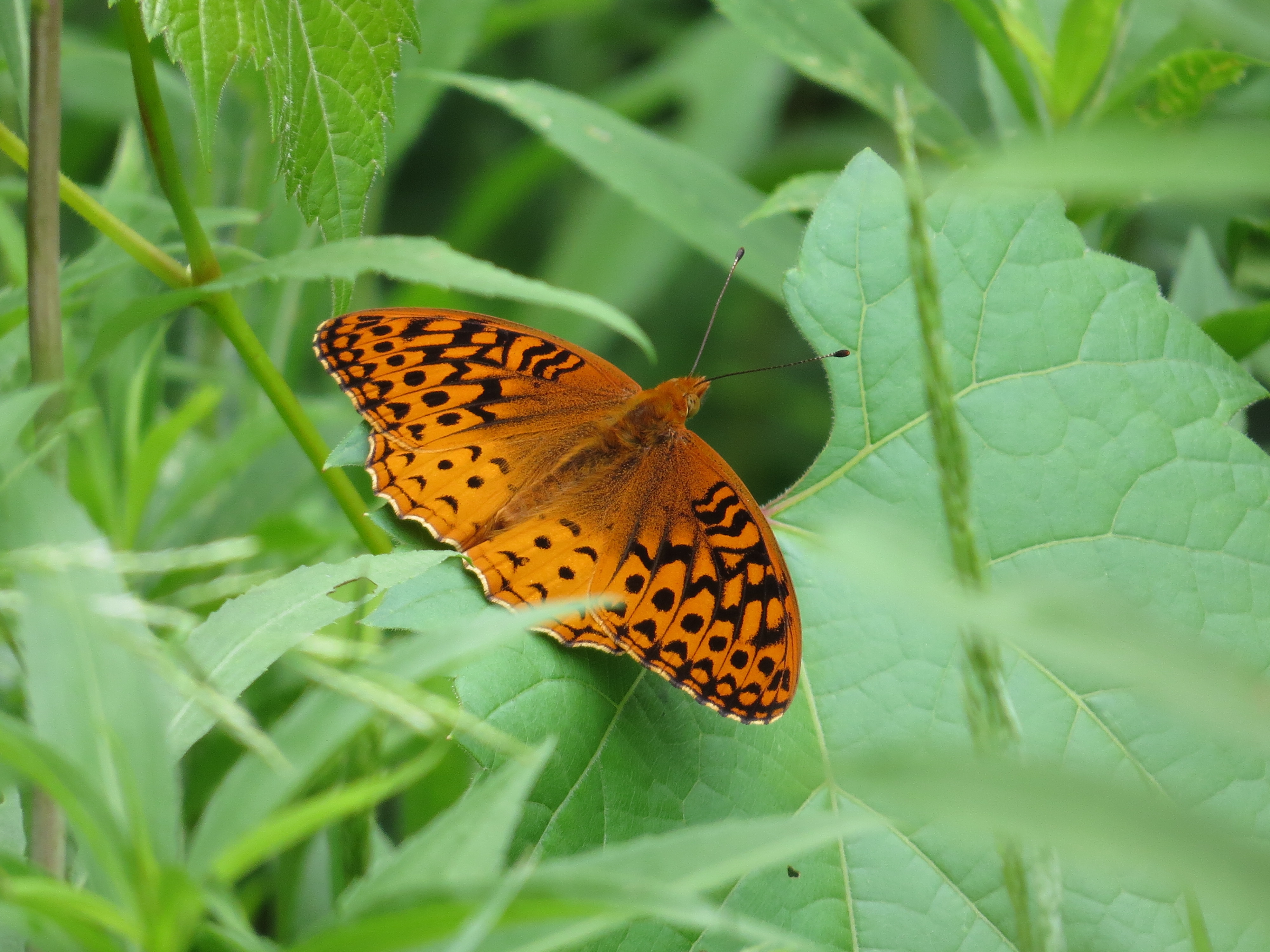
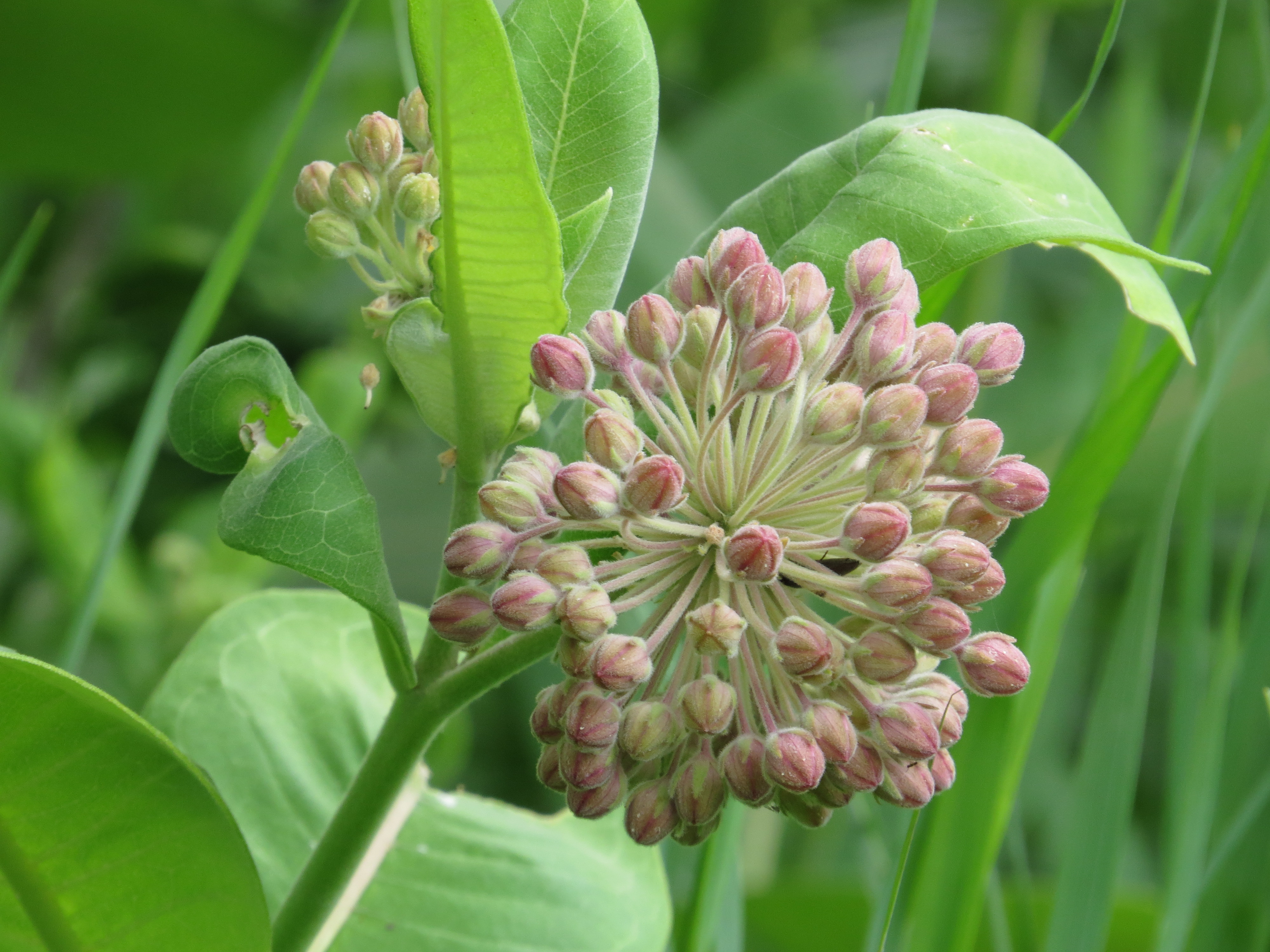
The trail dropped from the ridge through fern-covered hillsides and milkweed patches teeming with butterflies. There is something exquisitely beautiful about the fair pink and green ball of about-to-bloom buds of the Common Milkweed flower.
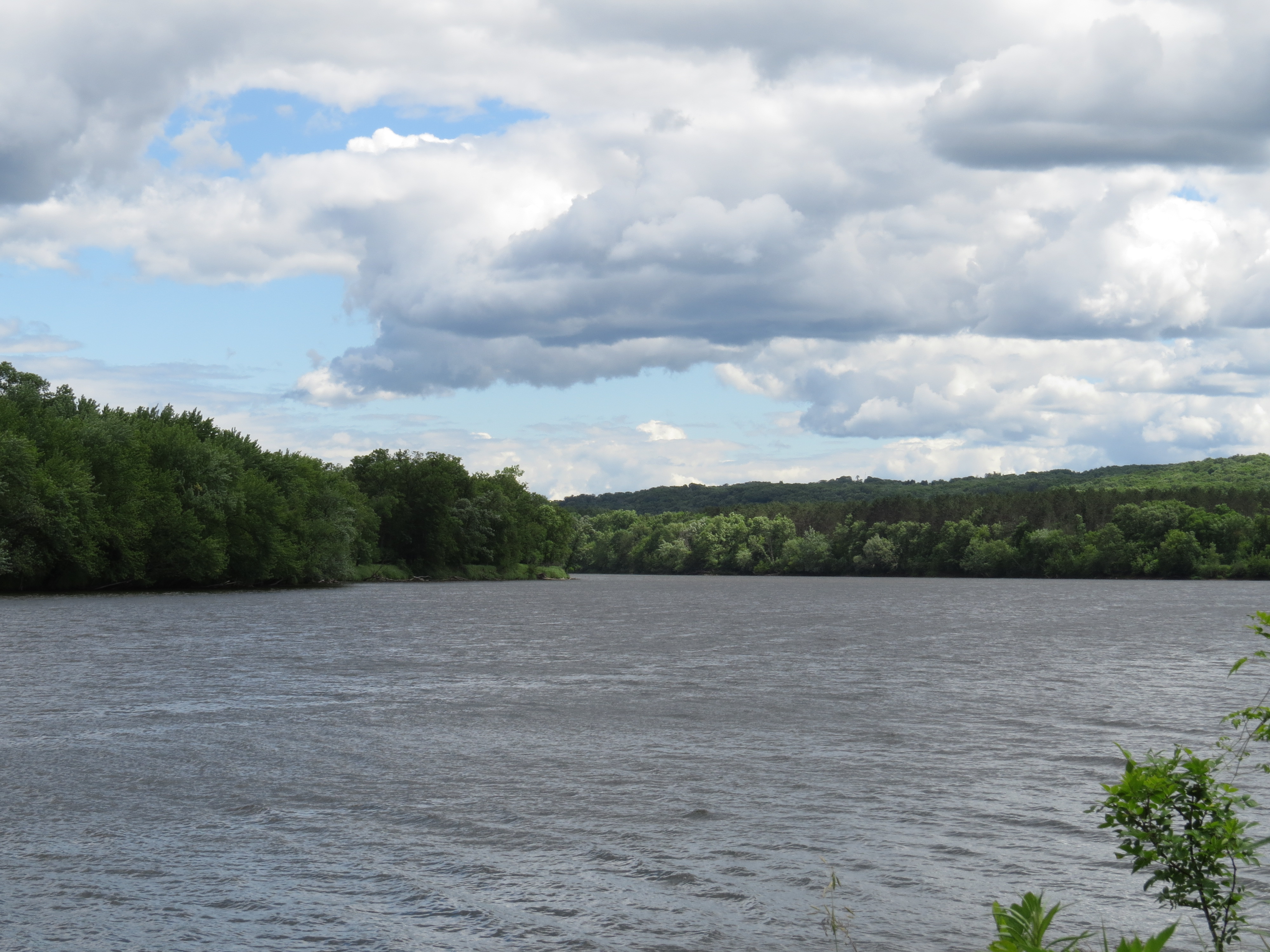
The trail turned and followed the River for over a mile and a half and would bring us back to the campground. The St. Croix River is a large river originating in northwest Wisconsin and creating the boundary for Minnesota and Wisconsin for 130 miles of the River.
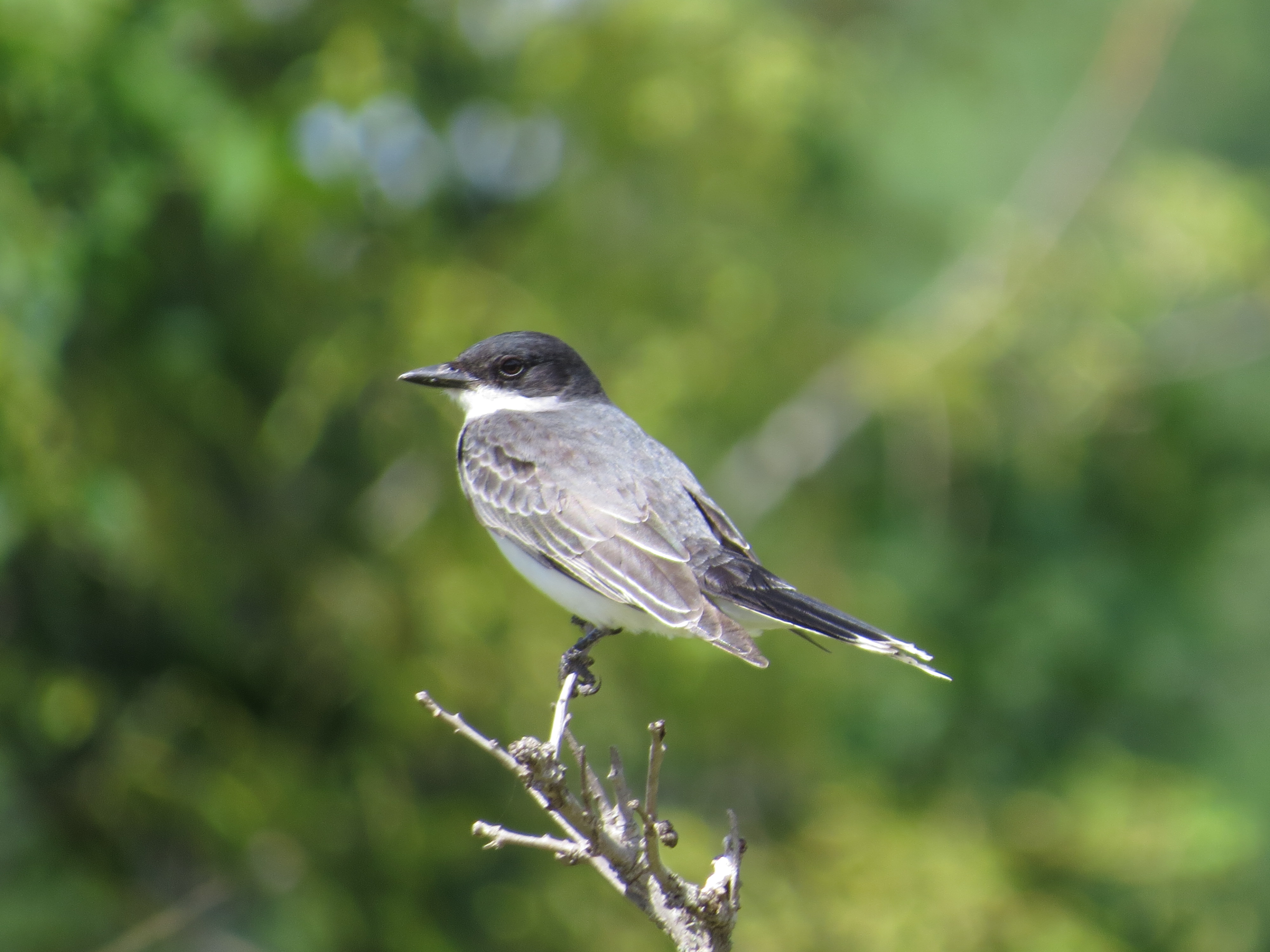
King of this part of the River is an Eastern Kingbird. The genus-species name is Tyrannus tyrannus, an indication of his territorial behavior. He will harass crows, hawks, even Great Blue Herons who ‘intrude’ on his territory.
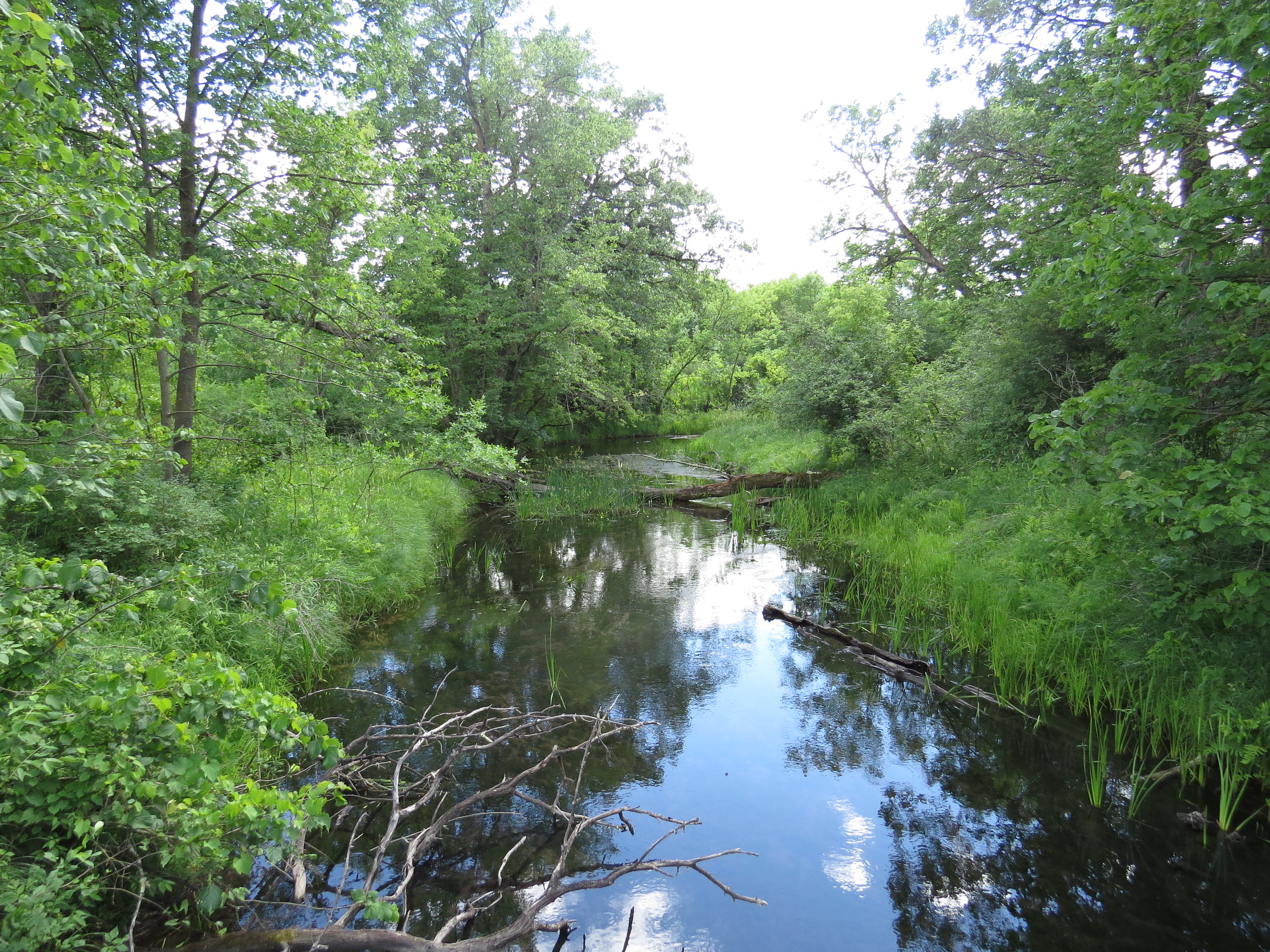
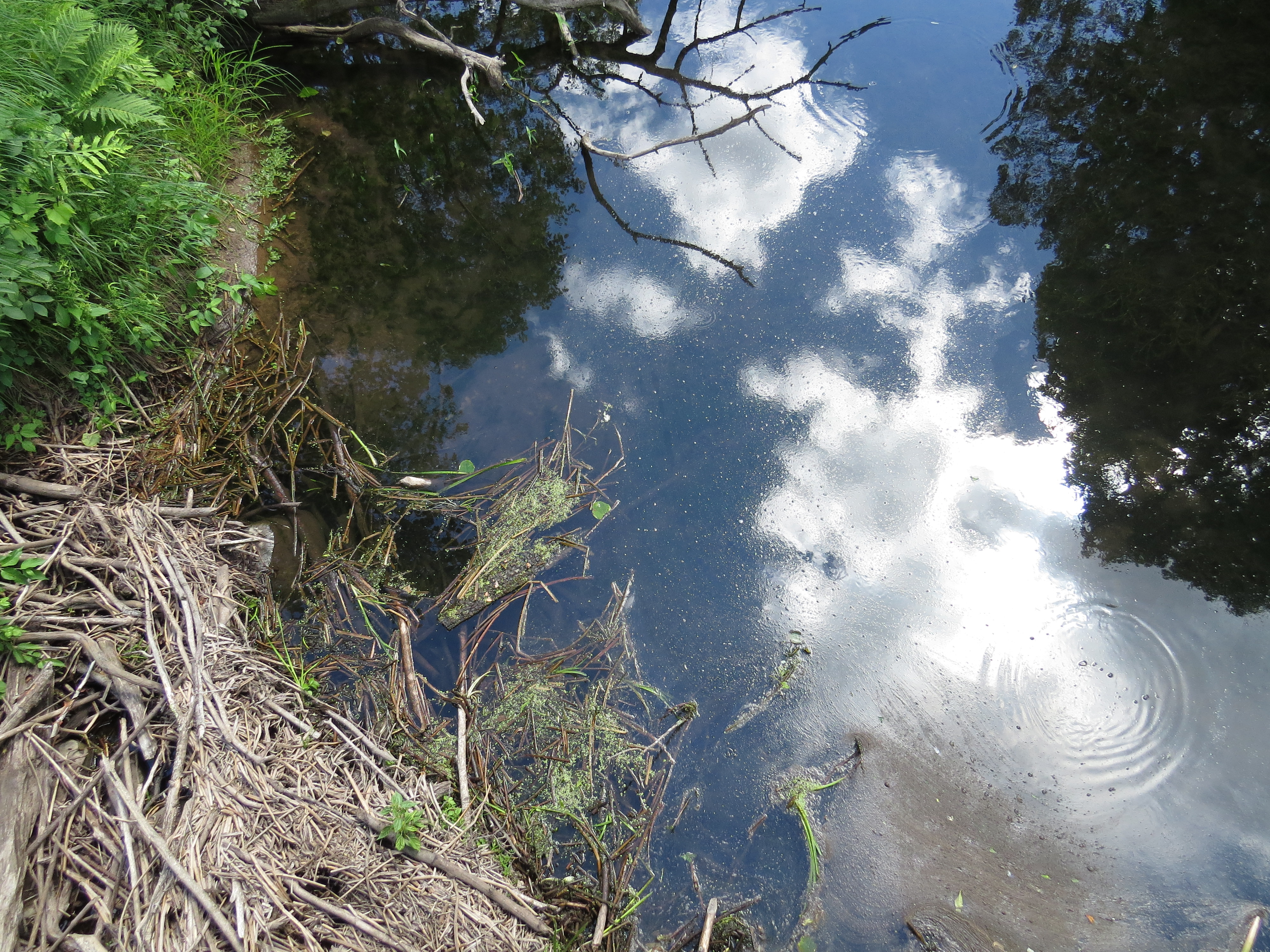
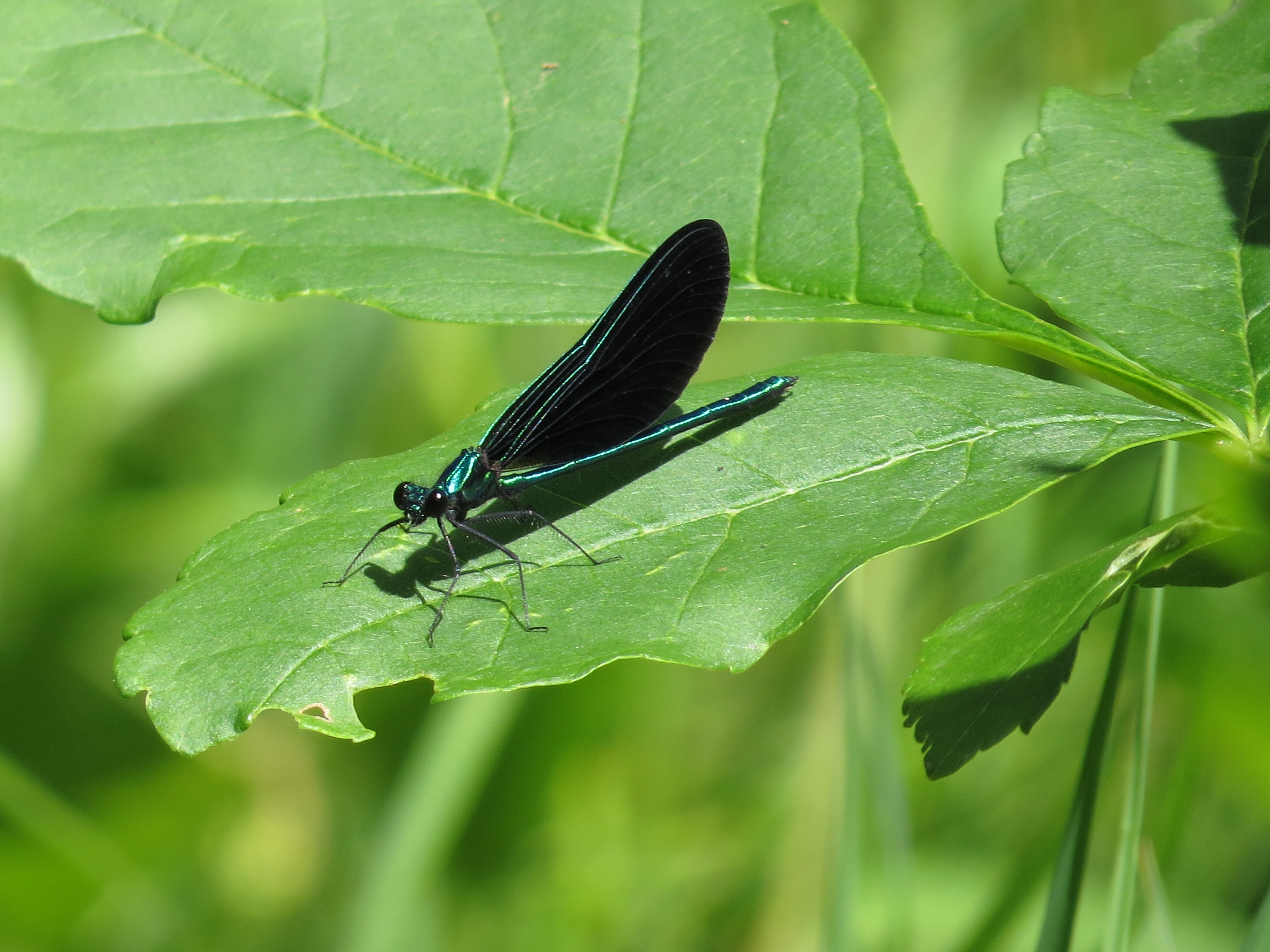
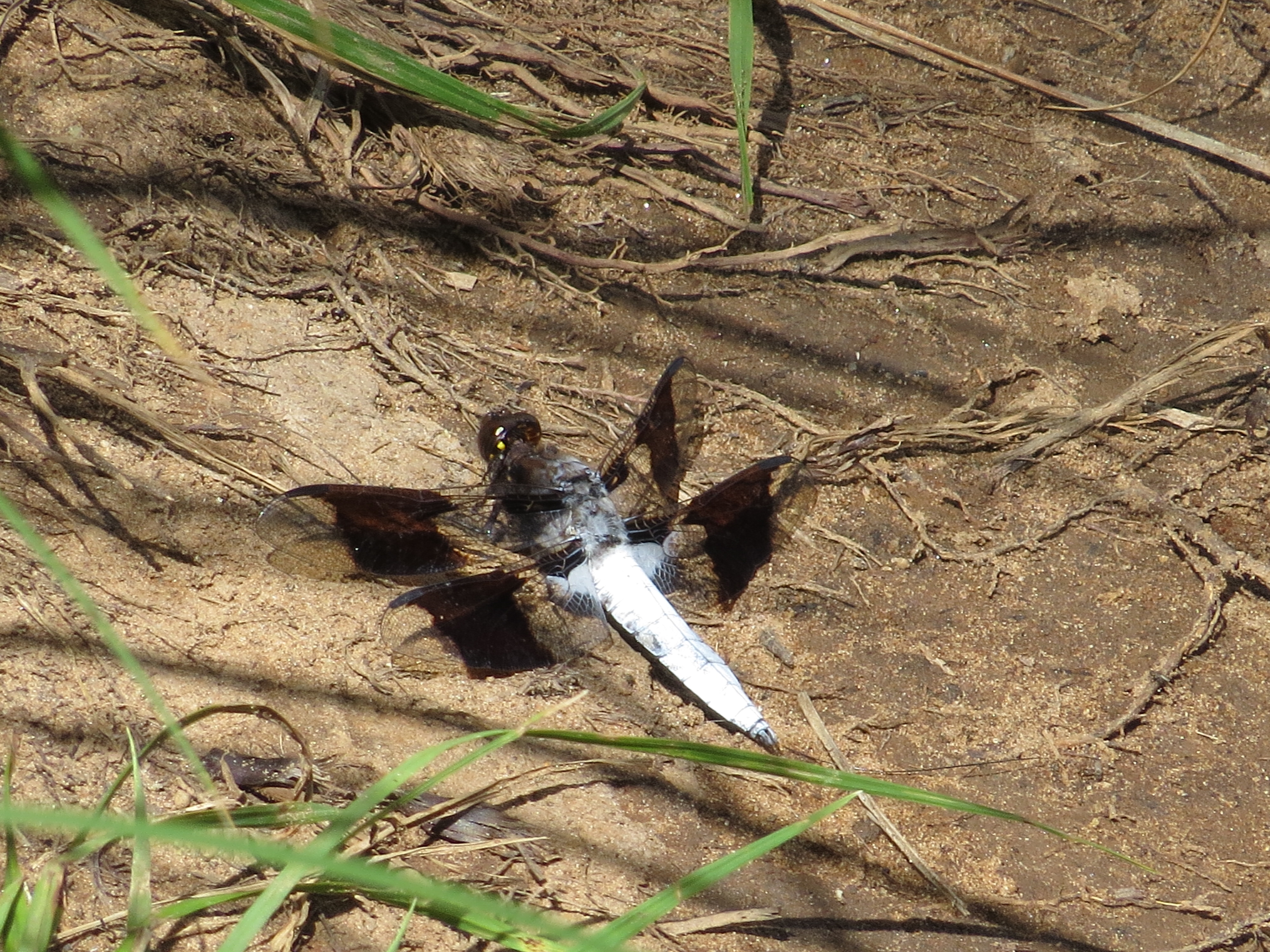
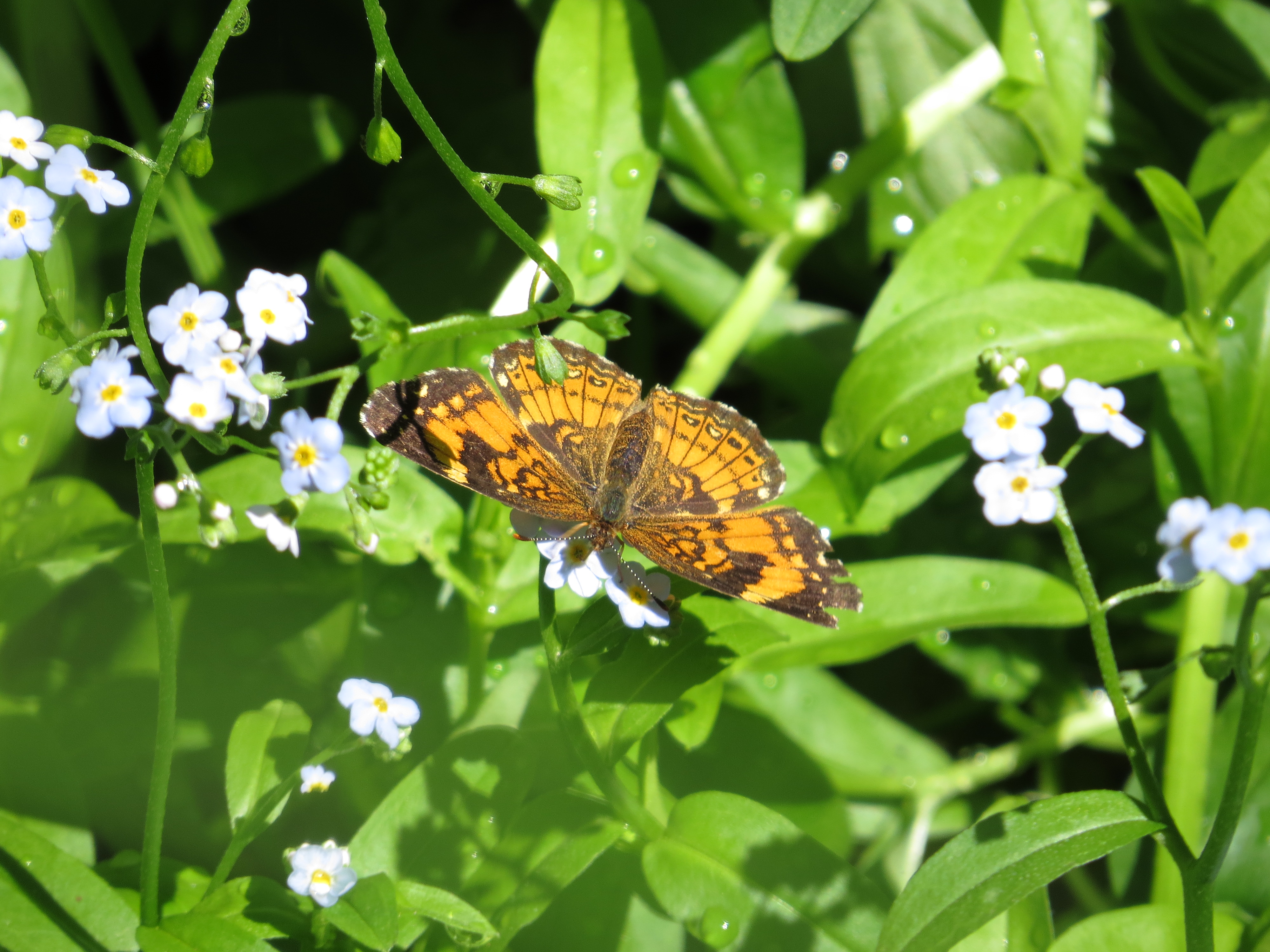
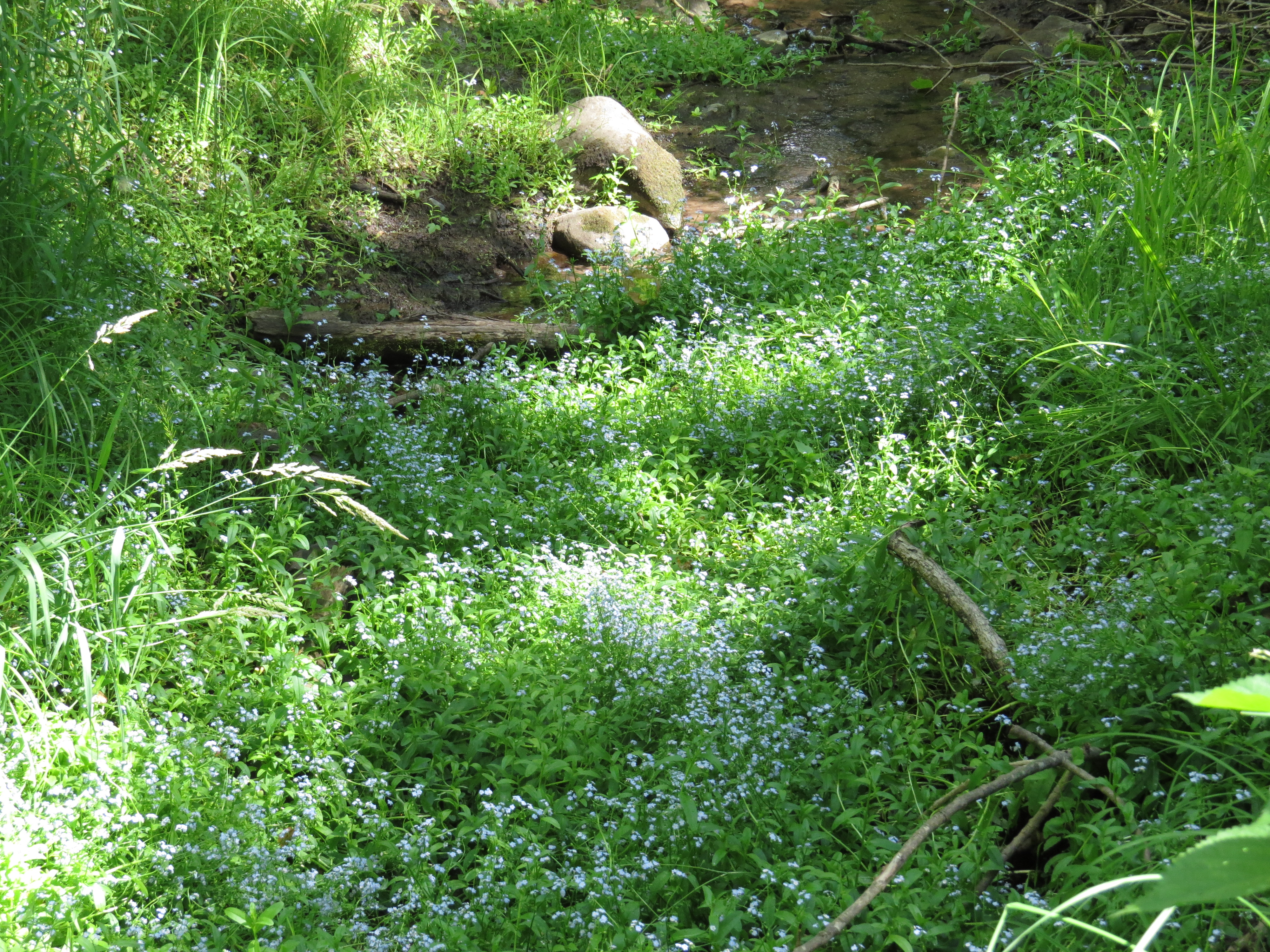
The ‘backwaters’ of the St. Croix were interesting little ecosystems of sometimes stagnant water, beaver activity, damsel and dragonflies, and pretty patches of Forget-me-nots.
We heard the distinct ‘talking’ of an eagle to its young ones. Looking up, I could barely see the nest, but then discovered who was doing the ‘talking.’ It was an old-looking eagle—pale eyes and rather disheveled feathers—who has seen many more humans than humans who have seen him.
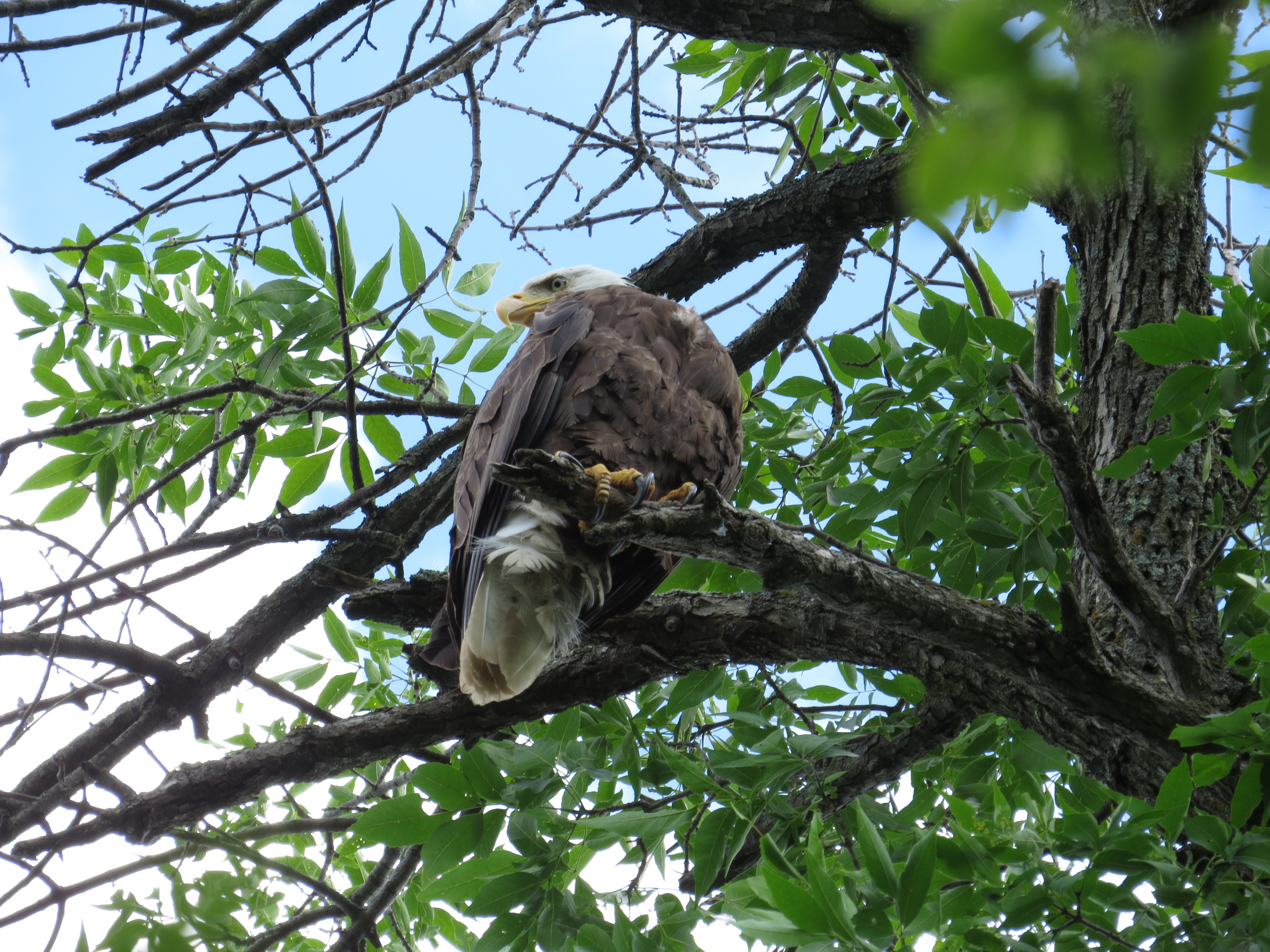
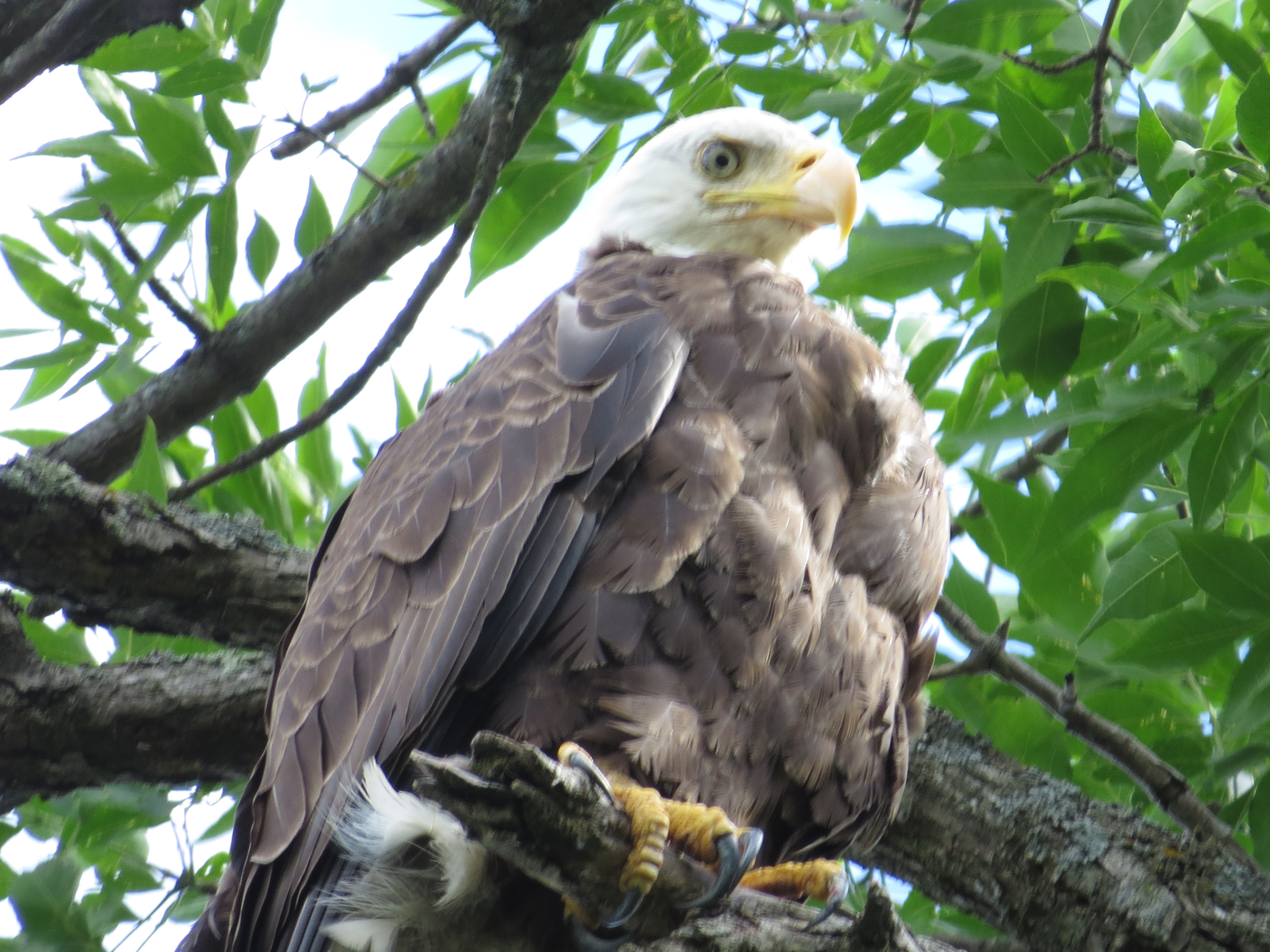
St. Croix River was used as a means of moving logs from the northern forests to the mills during the logging era in the late 1800’s. A pile-driven dam was constructed at this site in 1890, so logs could be let through at an even pace, after they had experienced numerous, humungous log jams that halted production at the mills. The last ‘log drive’ was in 1912, and the dam was removed in 1955.
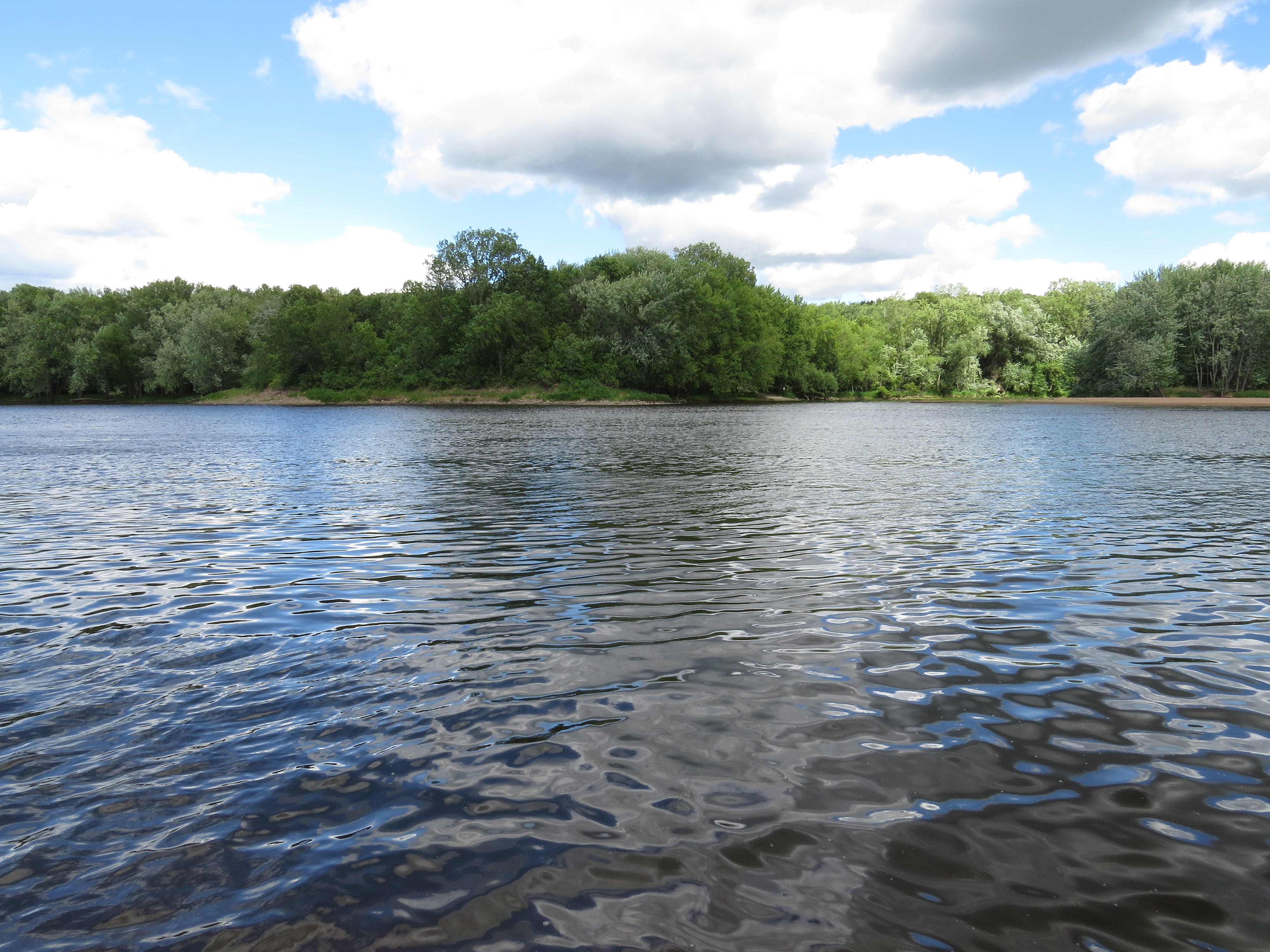
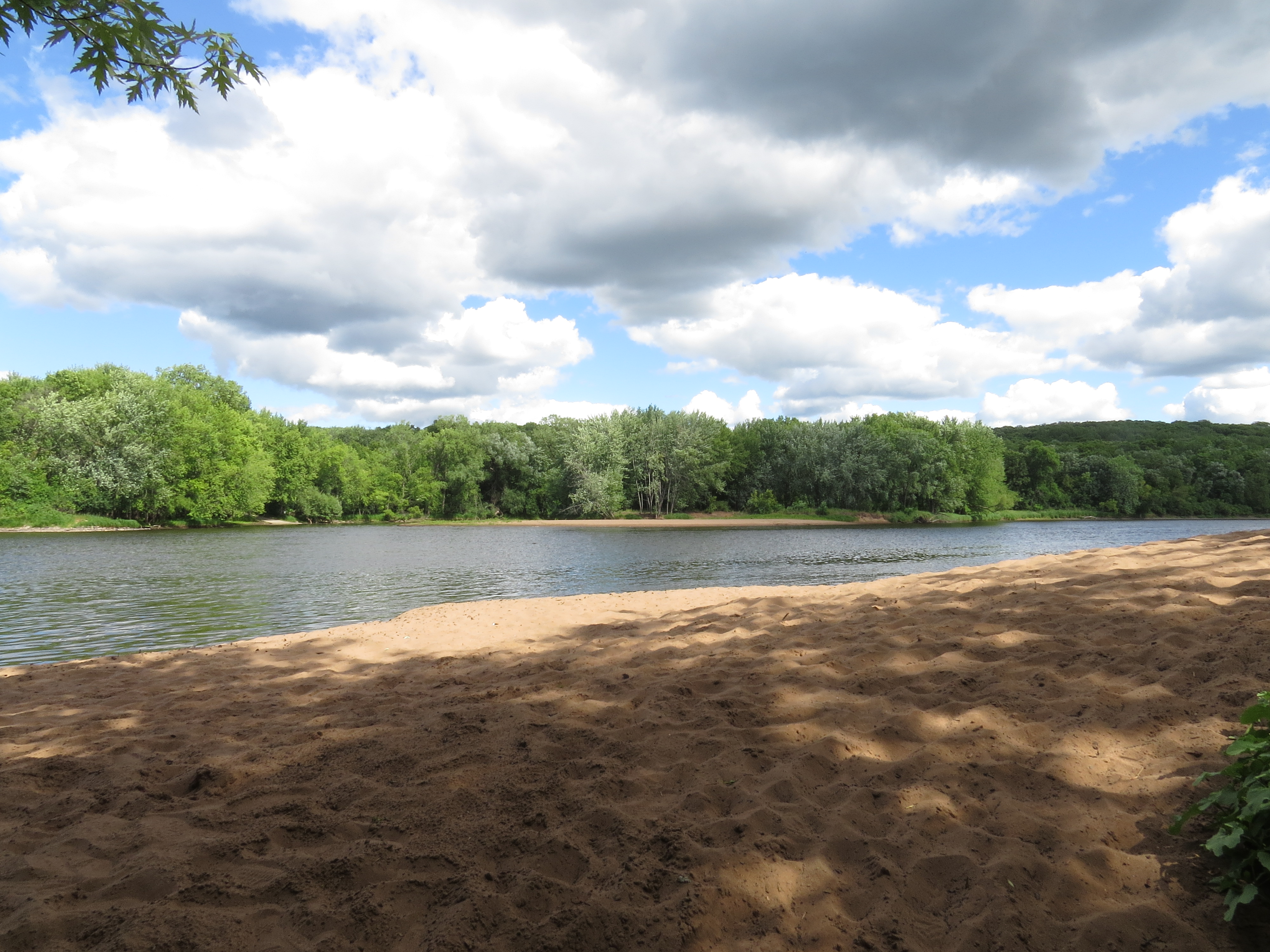
When we returned to the campground, a deer was wandering through the trees between the campsites with no cares about the people wandering through. I practically had to shoo it from the door of the outhouse when I went there…where I was greeted with a sign and warning about other visitors.
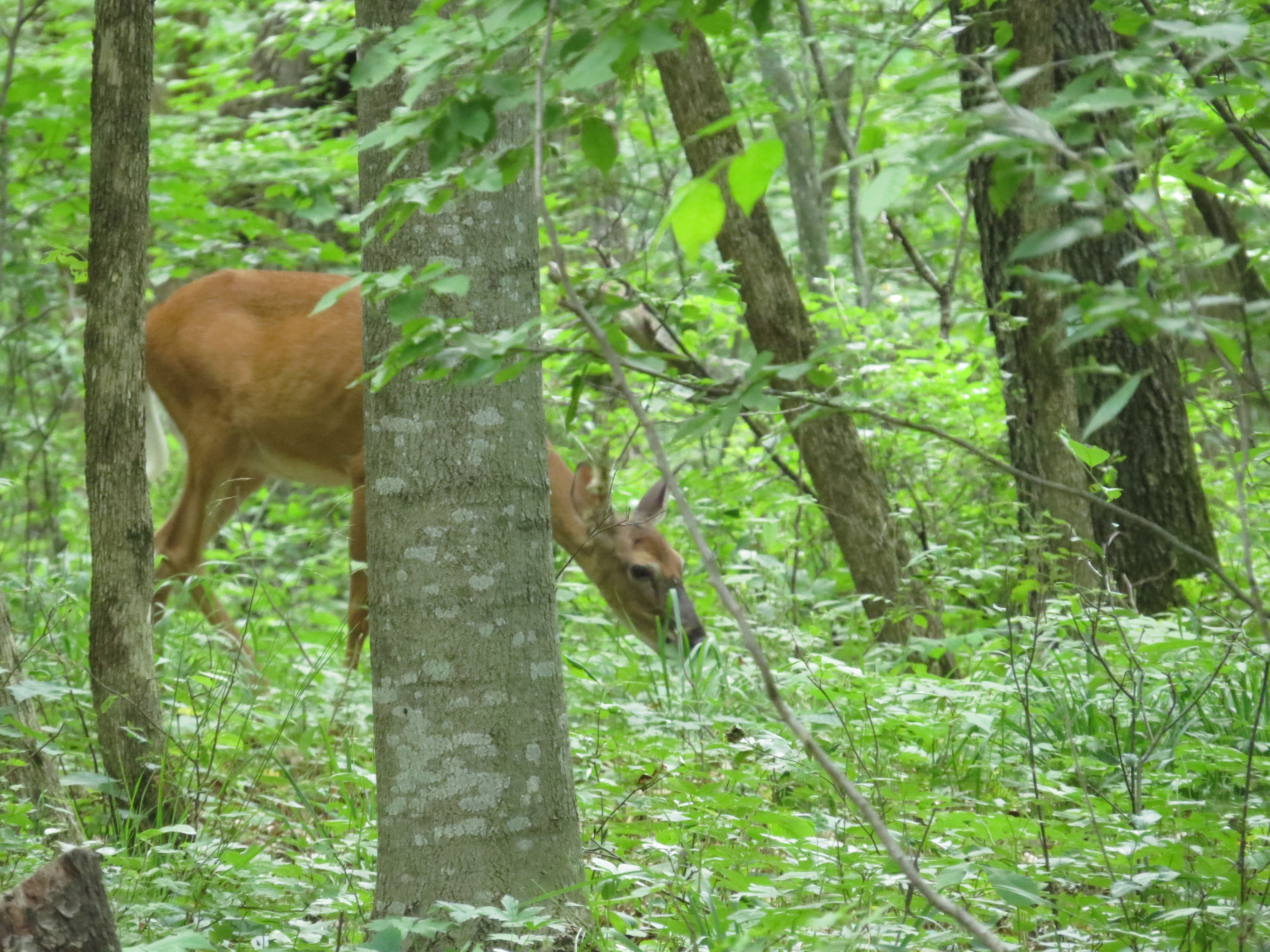
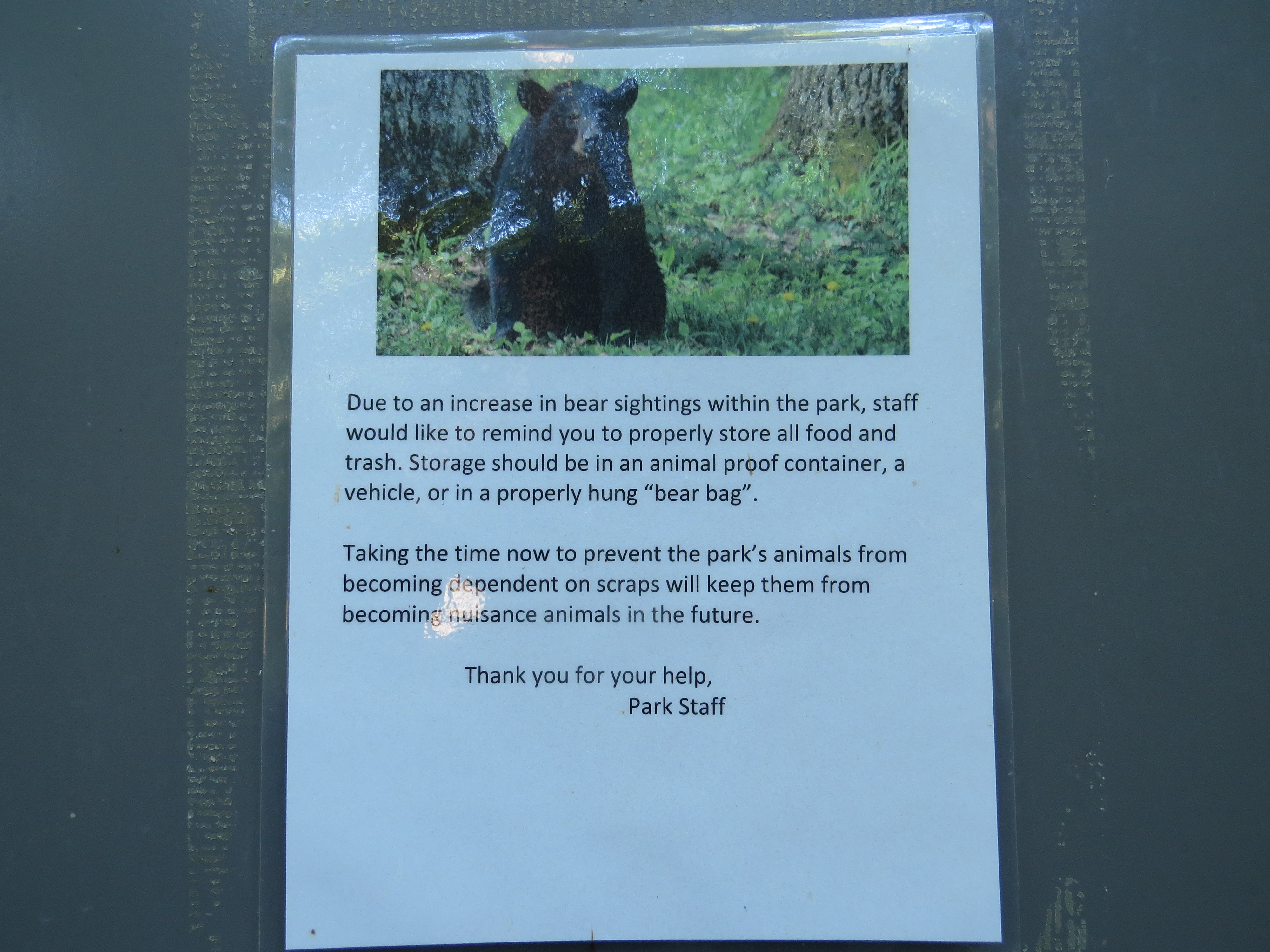
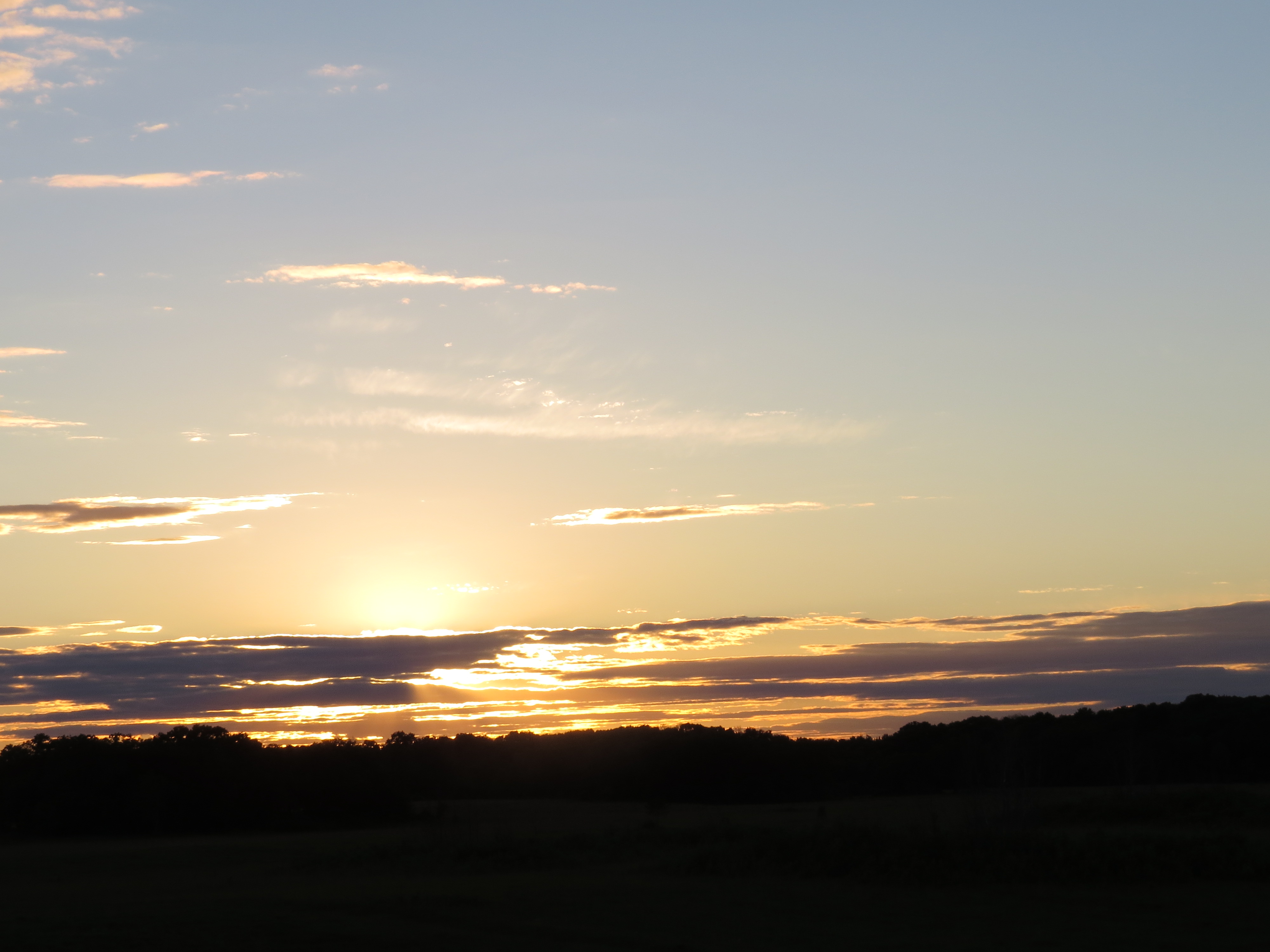
Okay—fair warning. We set up our humble campsite and settled in for the longest day of the year. As the sun disappeared behind the trees around our campsite, I decided that I wanted to get a picture of the sunset on the Summer Solstice. We drove to an observation deck that overlooked the Amador Prairie—after stopping for the deer that were crossing the road.
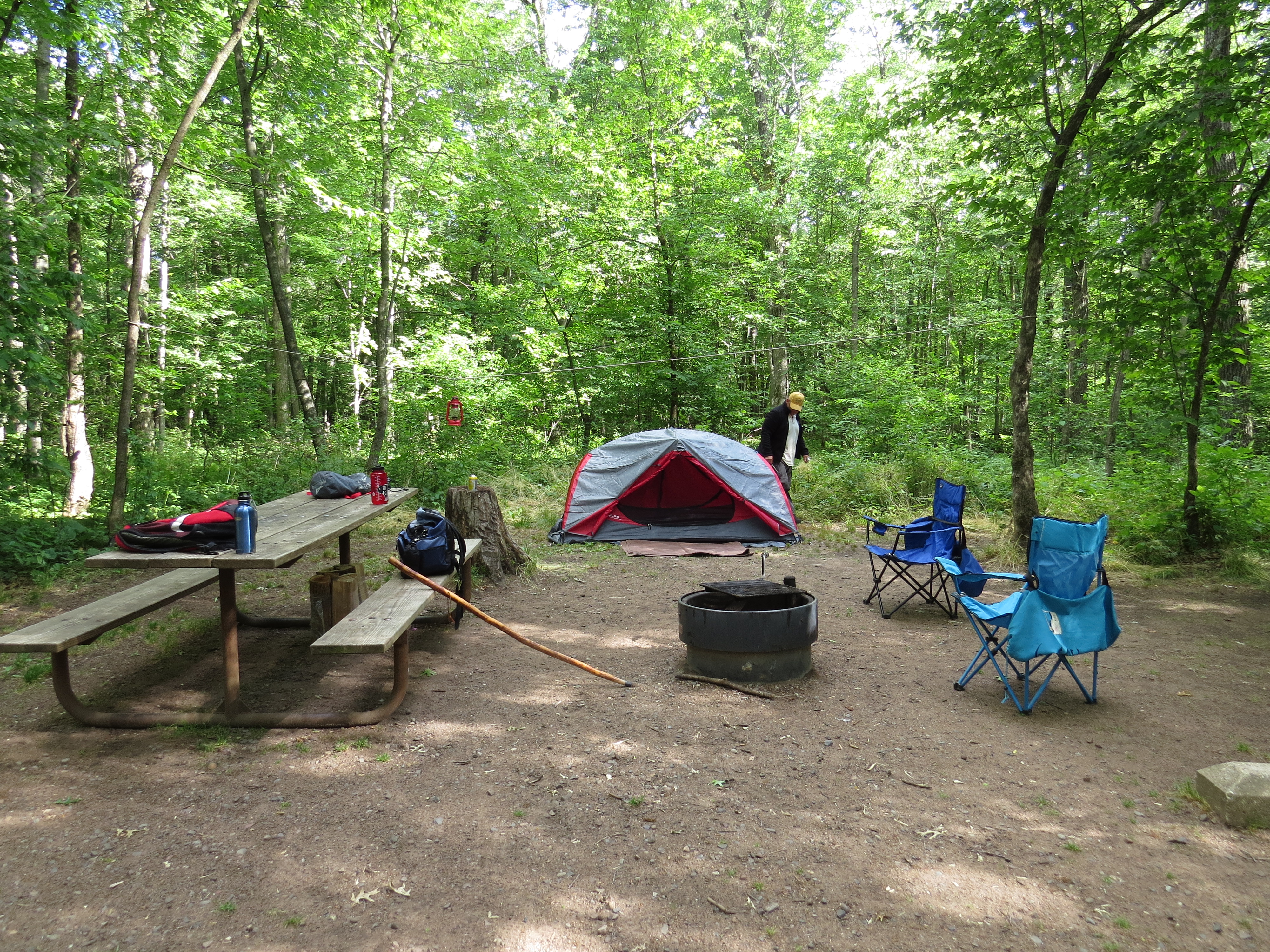
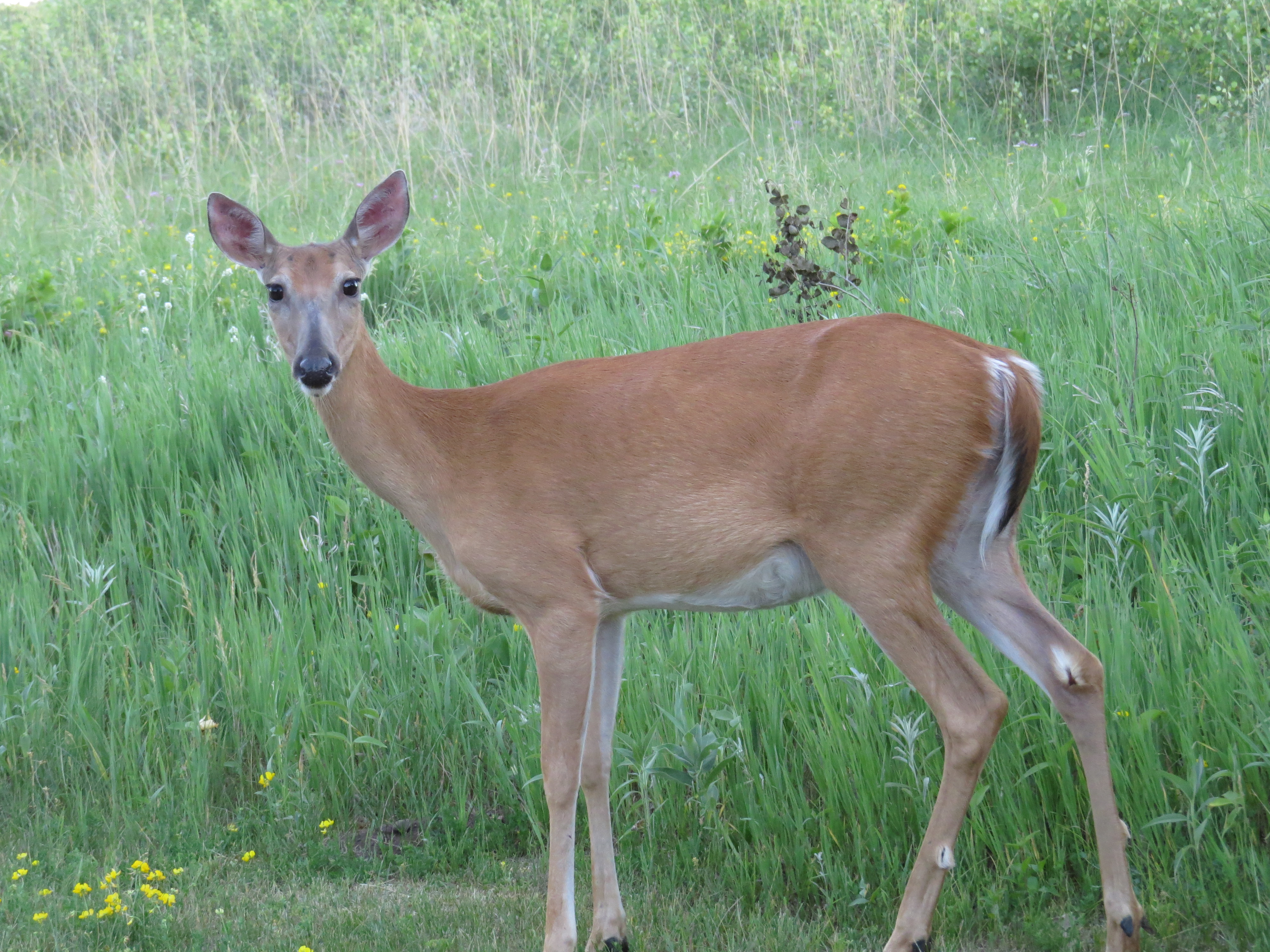
The prairie was full of deer looking this way and that way, running, leaping, and grazing.
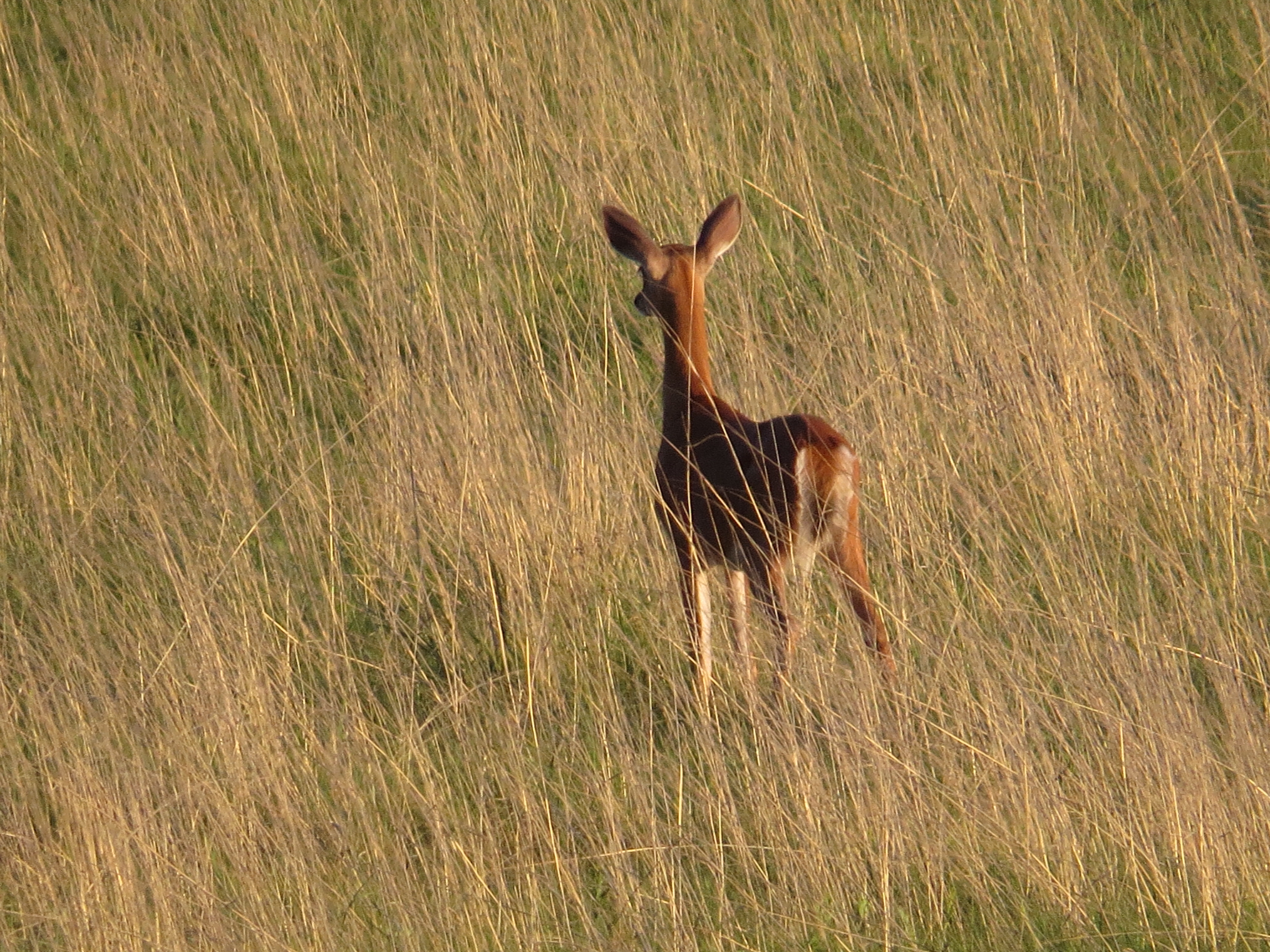
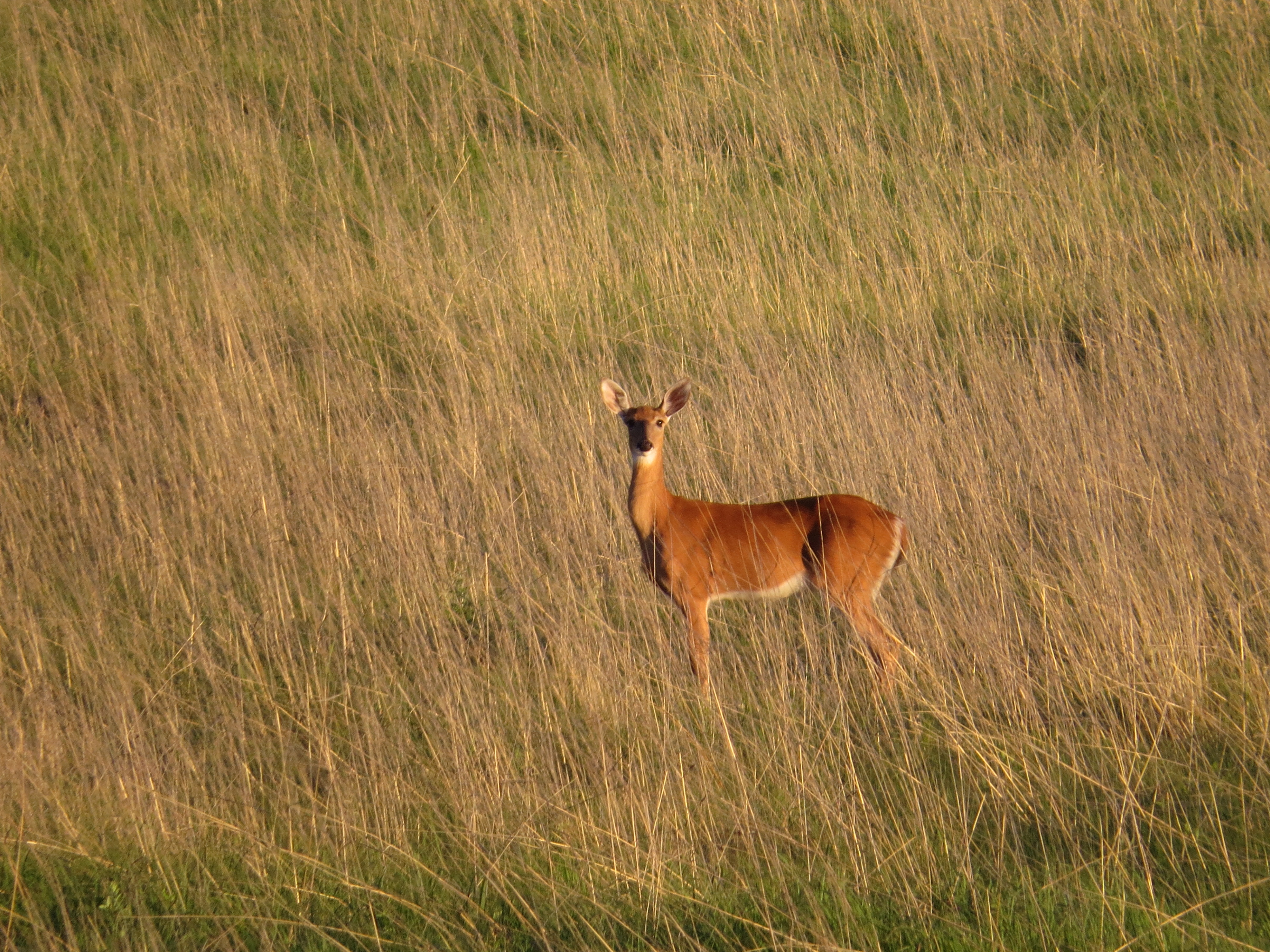
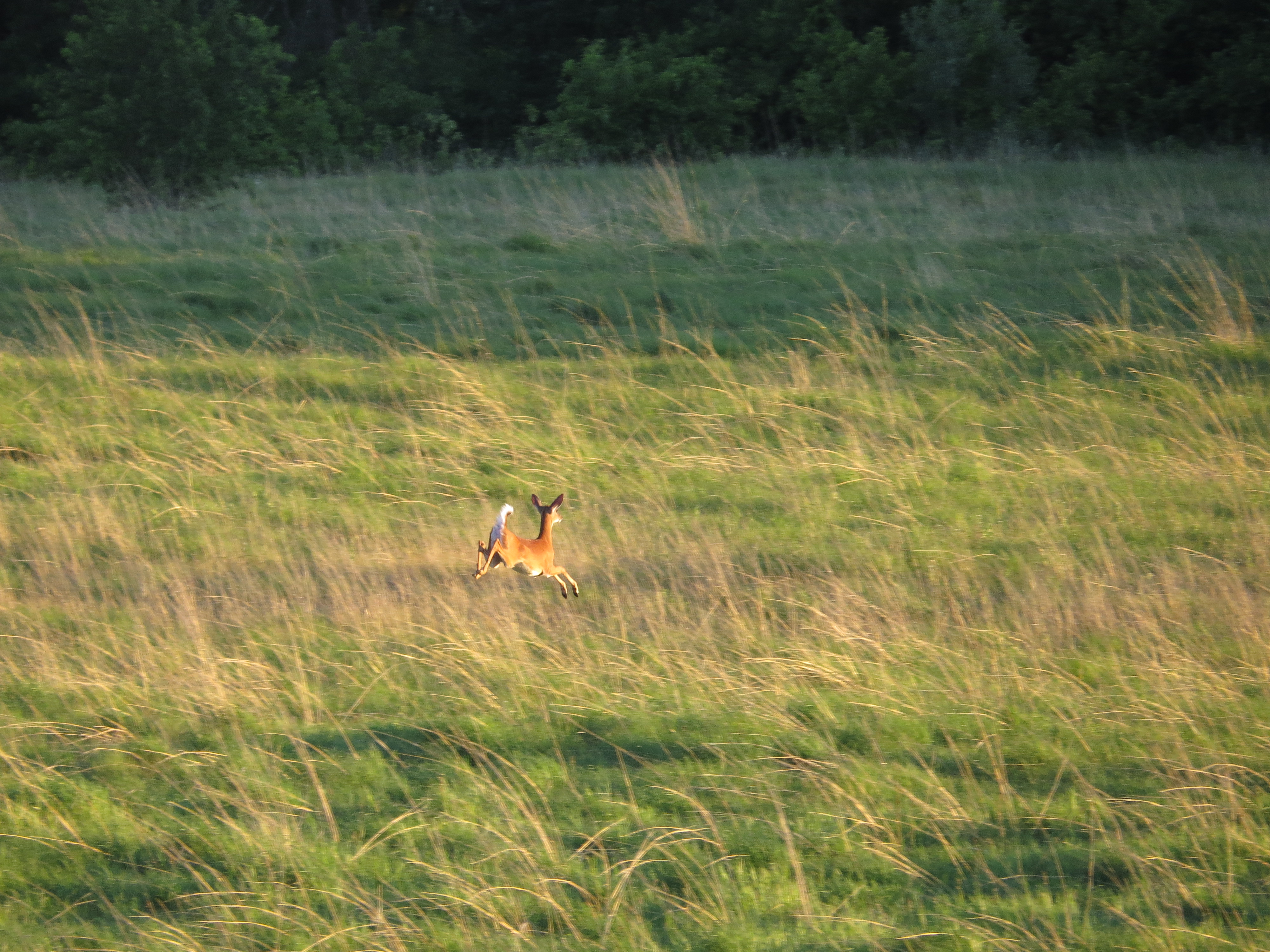
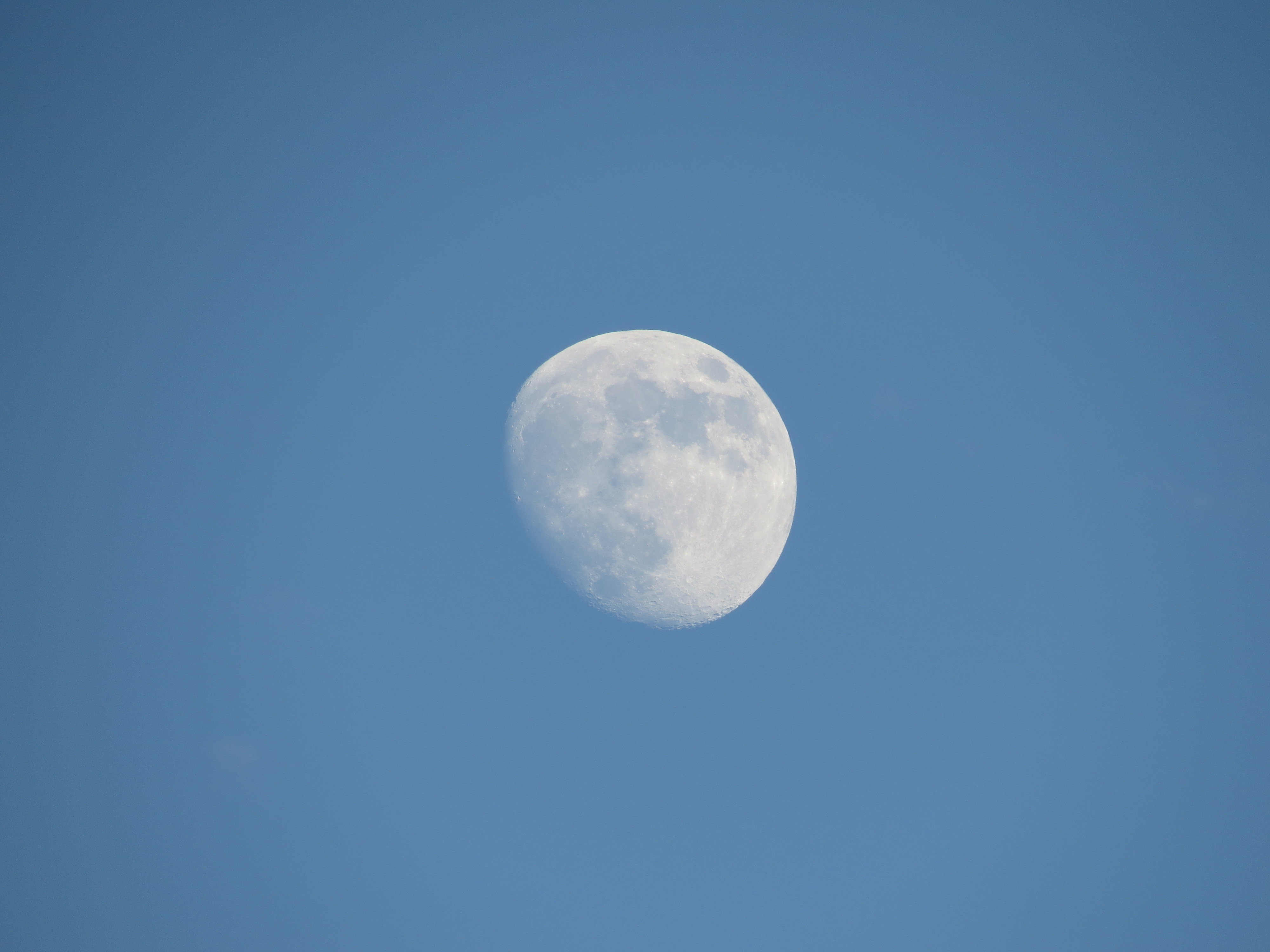
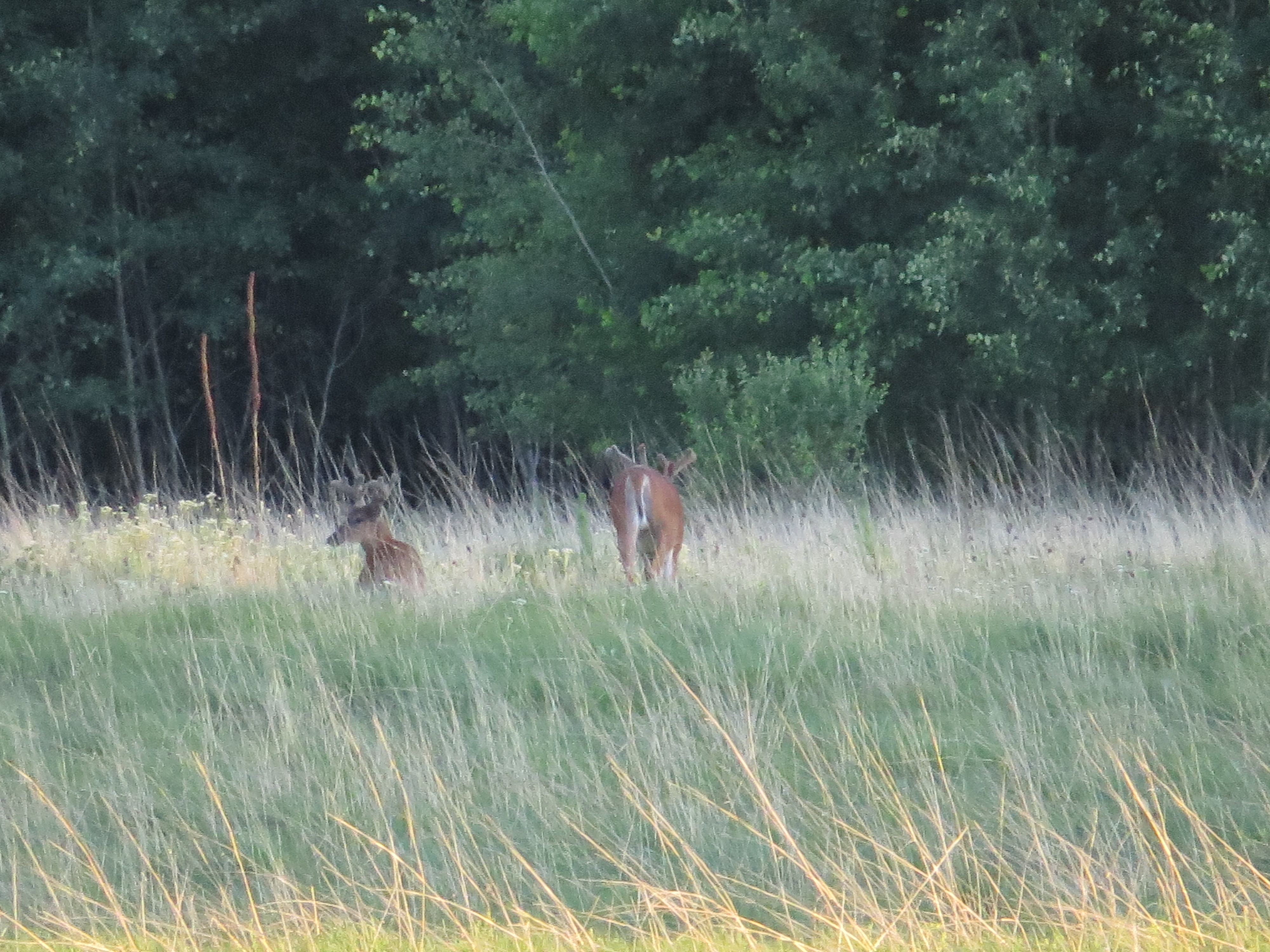
The sun was still shining so brightly on the horizon that I could barely look at it, so I found other things to look at while we waited for the sun to set. The almost full moon was already high in the sky; a couple of bucks with velveted antlers roamed the edge of the woods.
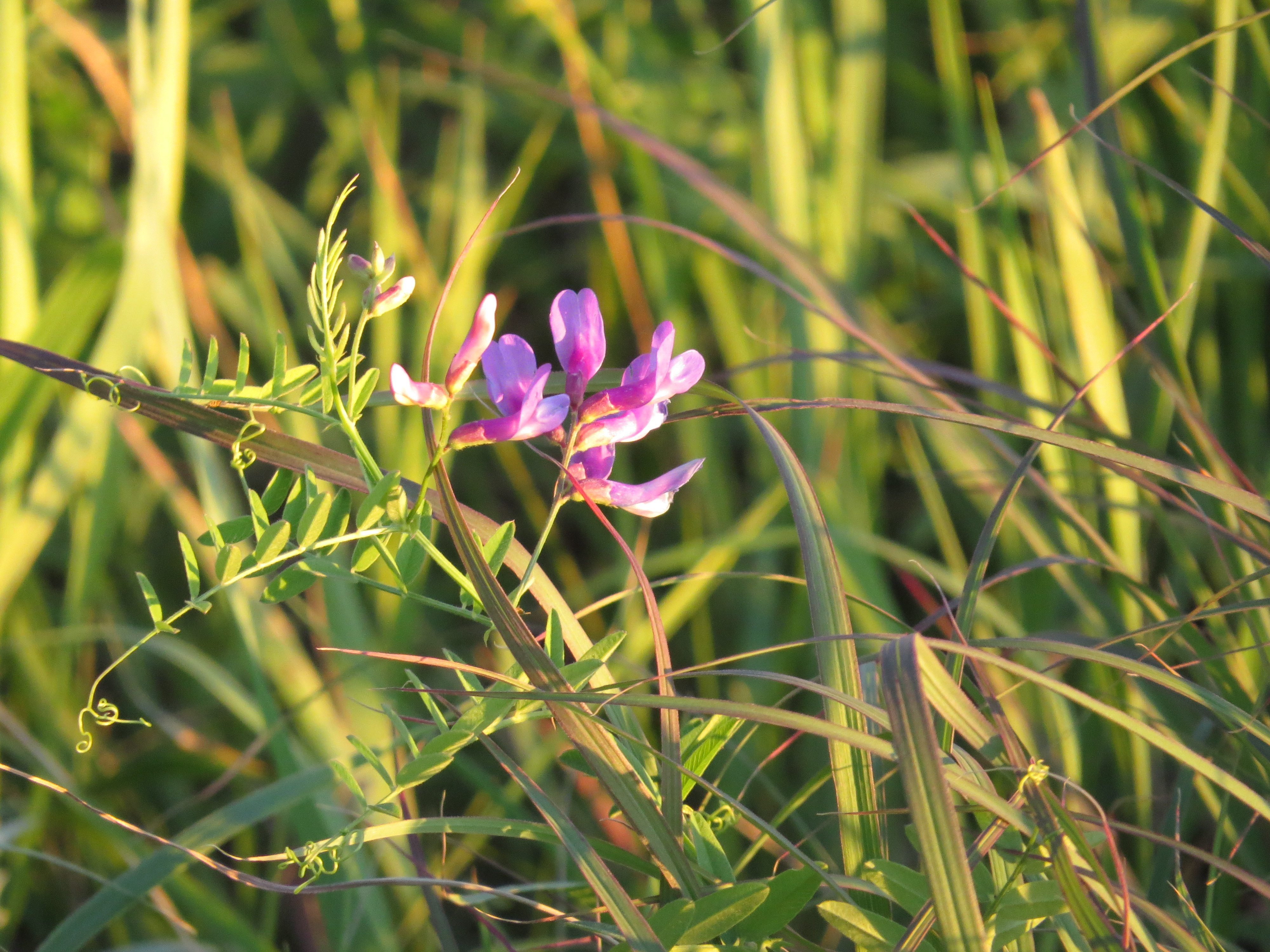
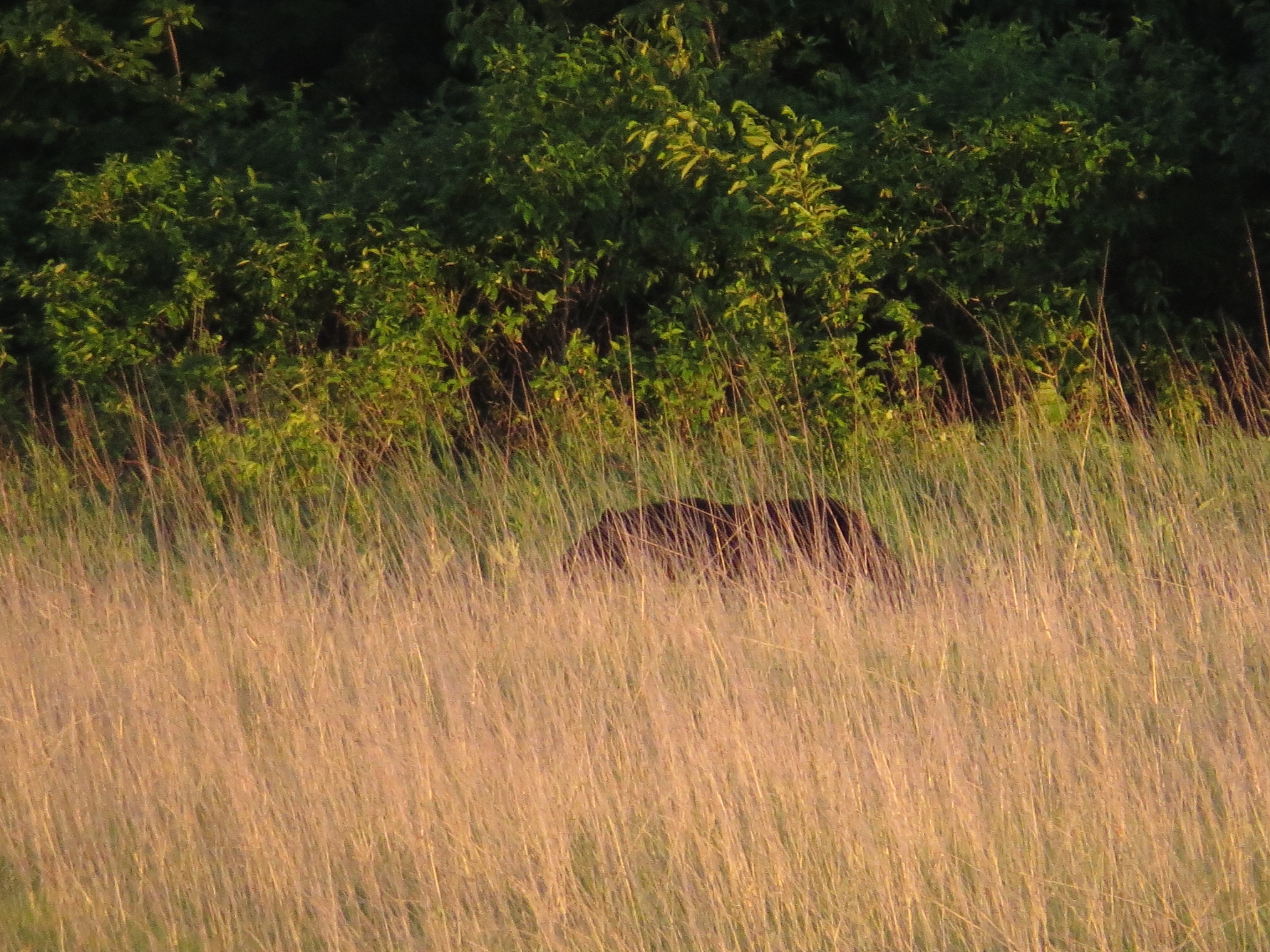
The purple flowers of a tendrilled Vetchling(?) picked up the purple color in the sundrenched spears of Bluestem grass. It takes a long time for the sun to set on the longest day of the year. I was over taking pictures of deer. I lounged against the boards while looking to the west into the bright orb of sun. I joked to Chris, “Where’s that bear when you need him?!” Not two minutes later, as he looked over my shoulder, he very matter-of-factly said, “There’s a bear over there.” What?@! I turned and looked at a very dark, moving object way over by the trees.
Sure enough, there was my bear!
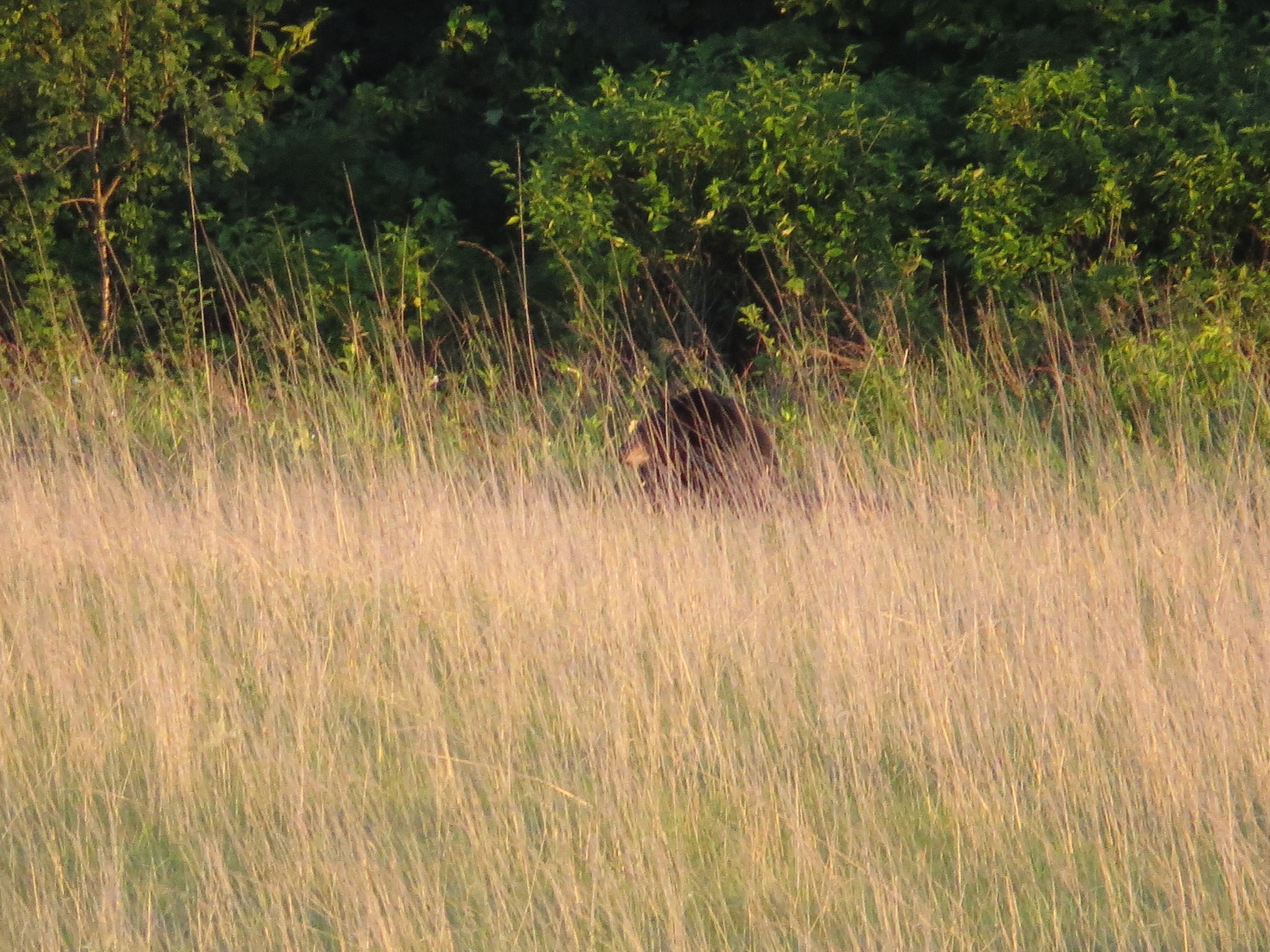
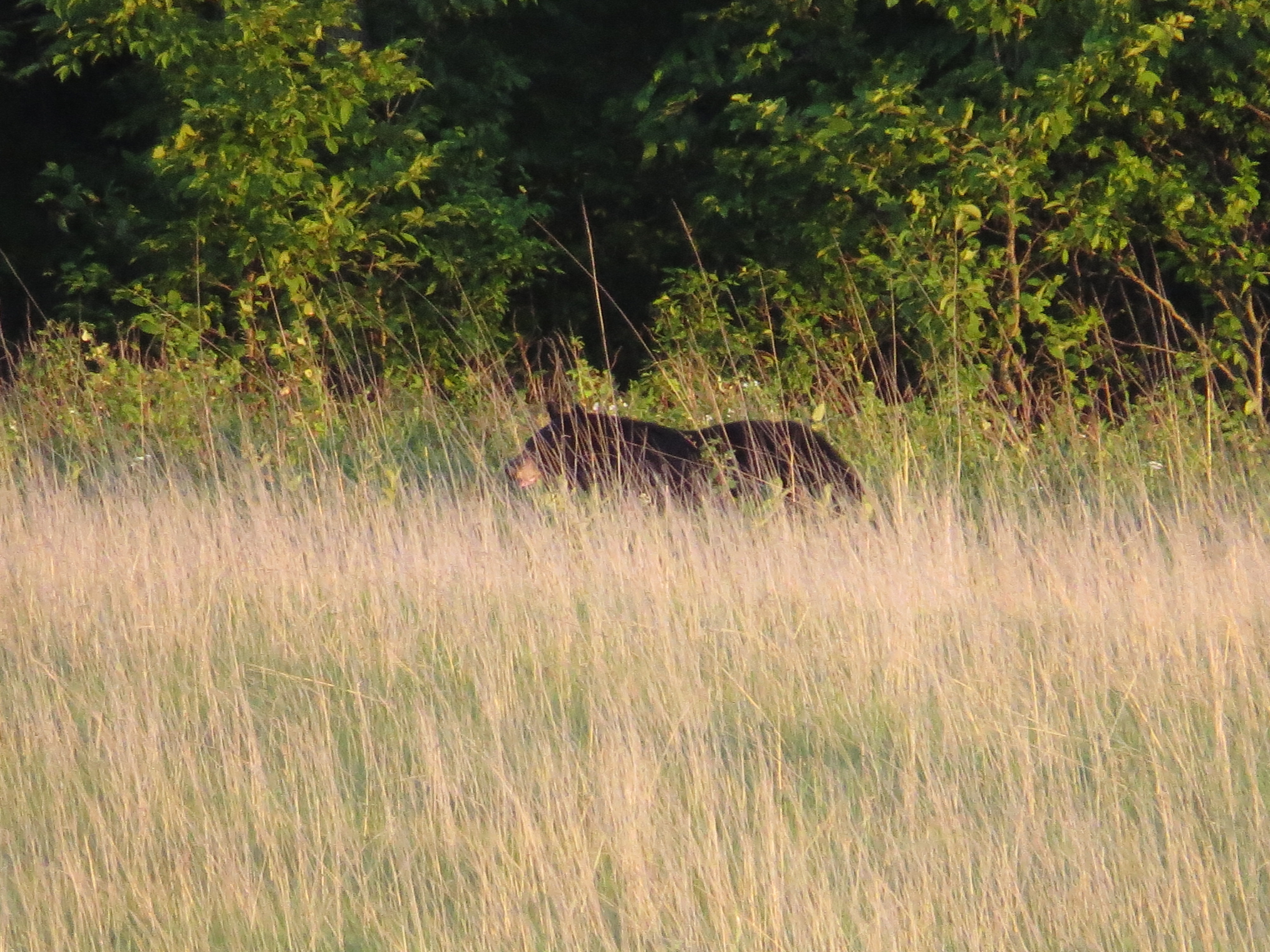
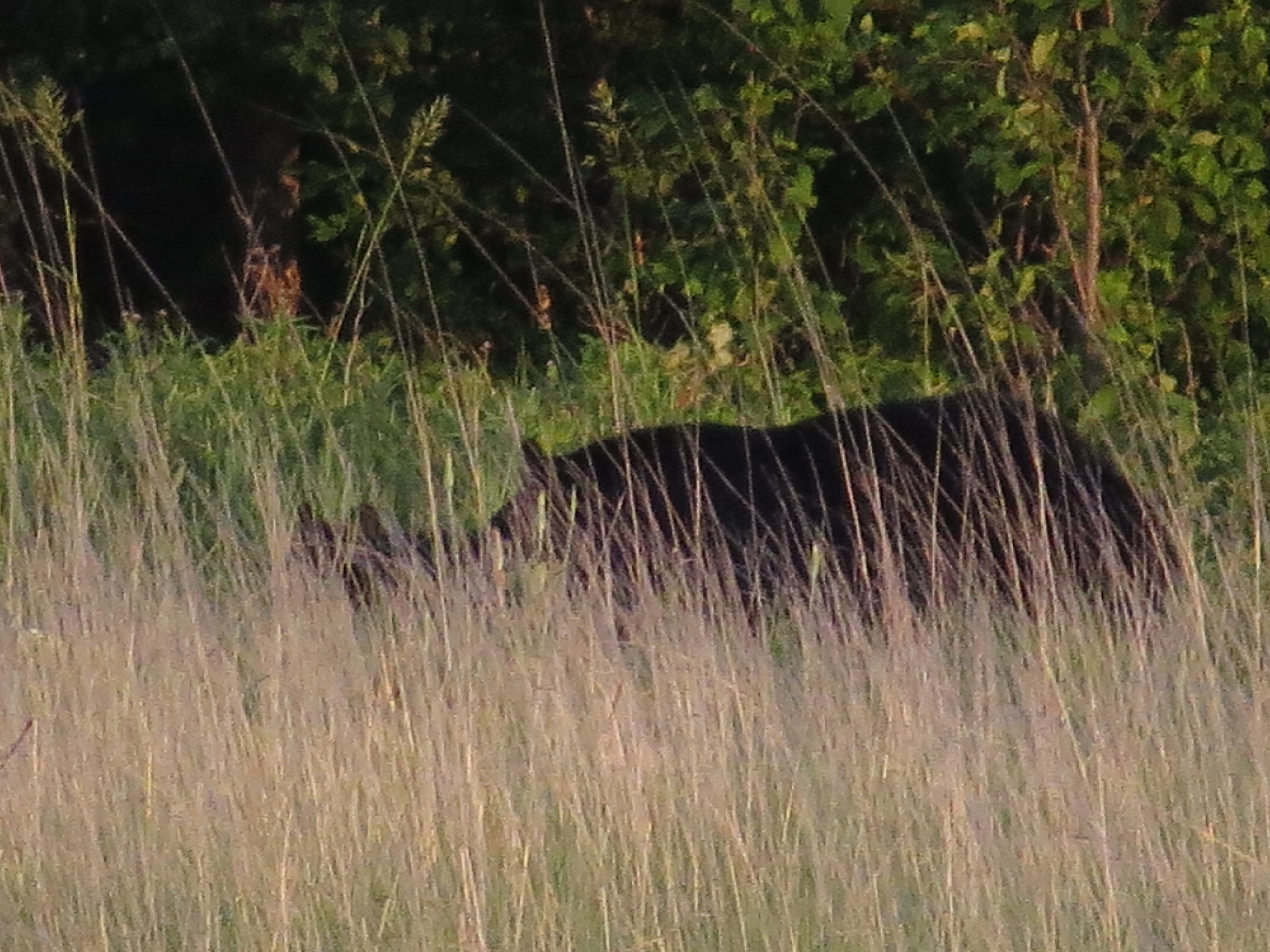
But it wasn’t a ‘he’ and it wasn’t just one. It was a mama bear with two little cubs bounding along with her, mostly hidden in the tall grass.
Solstice is derived from the Latin words sol meaning ‘sun’ and sistere meaning ‘to stand still.’ On this day, the North Pole is tipped directly towards the sun, making it seem like the sun is standing still.
We didn’t see any snakes that day, but we experienced the exquisitely beautiful about-to-bloom season of summer. Or are we more like the Swedes who celebrate the Solstice as midsummer, the height of the warm, sunshiny season? However it falls, the longest day does hold some magic worth noting. The magic of empty-nest experimenting with pre-children pastimes. The magic of flowers and butterflies, birds and dragonflies, wild rivers and sweeping prairies. But most of all, for me that day, the magic of seeing my first bears in the wild—just when I needed them.