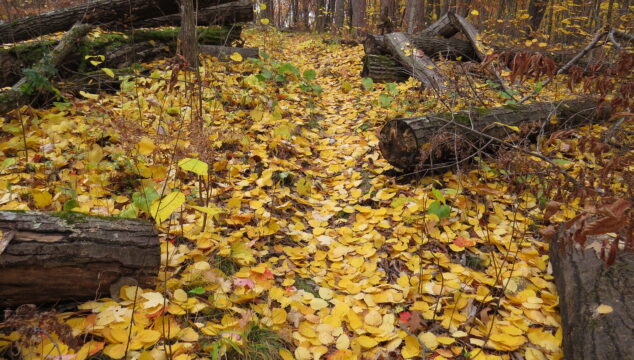
Come walk with me in the peak Autumn beauty of the Northwoods. To say that I love this time of year is an understatement. Most everyone can appreciate the colorful falling leaves---it reveals the 'true self' of a tree when its leaves are no longer producing chlorophyll. Their true colors are revealed, and there is something simple … [Read More...]
Where the New Ones Grow
We’ve all heard of ‘black and white thinking’ and have probably participated in it at some time in our lives. It is when we think or feel in absolutes—good or bad, right or wrong, valid or in-valid—with no in-between or gray area. This dichotomous thinking (or splitting) is often a self-protective trauma response when we feel unsafe. It often goes along with ‘me thinking’ when we feel or believe that others ‘should’ think the same way we do and therefore act the same way we do. (And of course ‘me thinking’ is always the ‘right’ way.)
Part of that way of thinking is to try to maintain some sort of order or control over any given situation, which is exactly what traumatized people are always trying to do when they get triggered or activated or to keep from getting that horrible feeling in their guts. We also like to ‘order’ our time with categories, routines, schedules, and things that make sense to us. It helps to ‘calm’ our bodies and minds. We do it with Nature, too. We want the natural world to fit into our categories—just think Winter, Spring, Summer, and Fall—‘white or gray thinking,’ ‘light green thinking,’ ‘dark green and bright colors thinking,’ and ‘yellow and orange thinking.’ But at every turn, Nature is moving us beyond those categories, beyond our limited thinking.
Chris and I walked through a predominantly White Pine forest in the middle of the year at the height of summer. It was dark green with mature foliage and rich brown with tree trunks and only glimpses of bright color at a few chosen places. The trail was covered with pine needles and strewn with pine cones. Sunshine through the trees dappled the pine carpet.
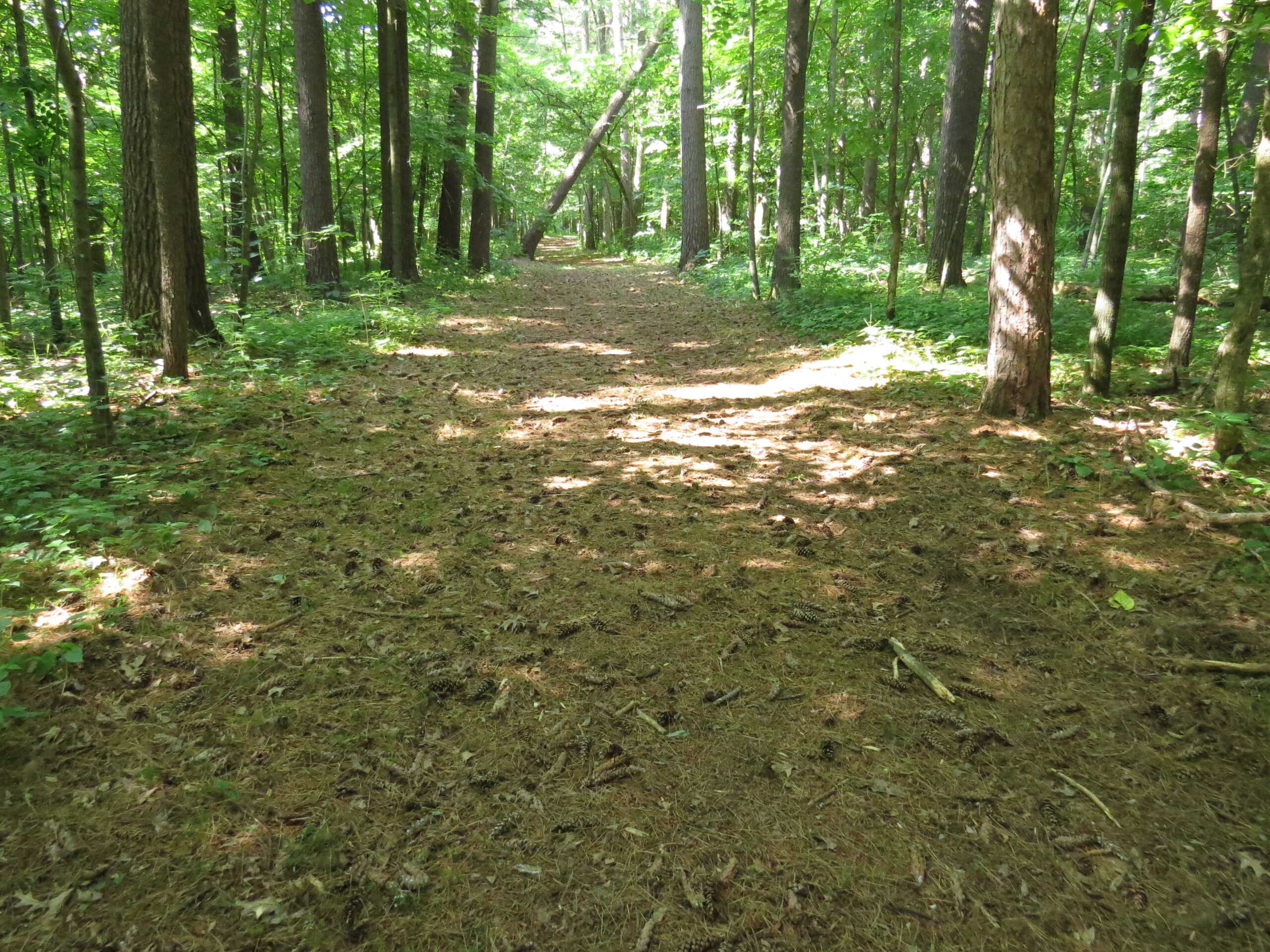
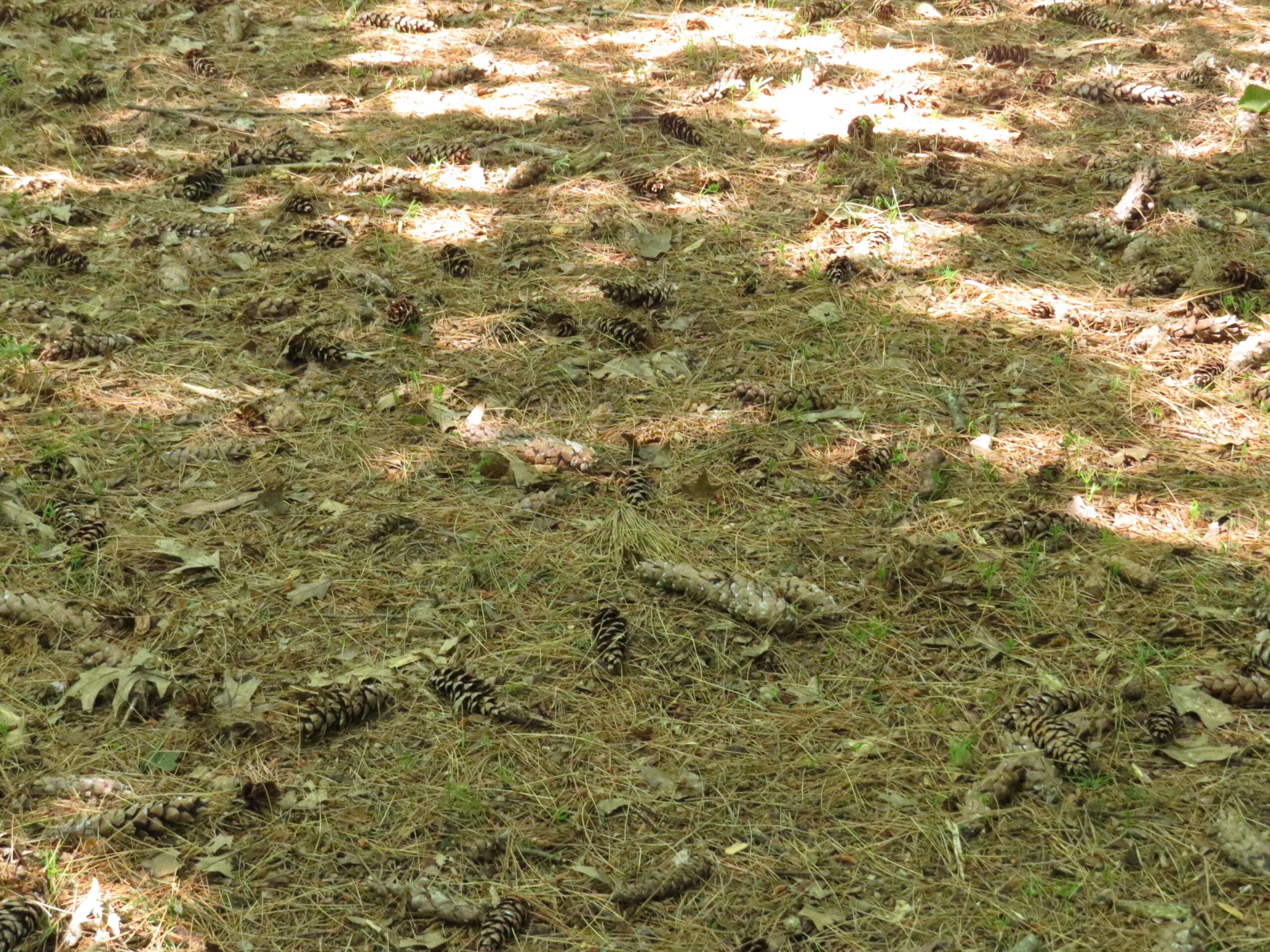
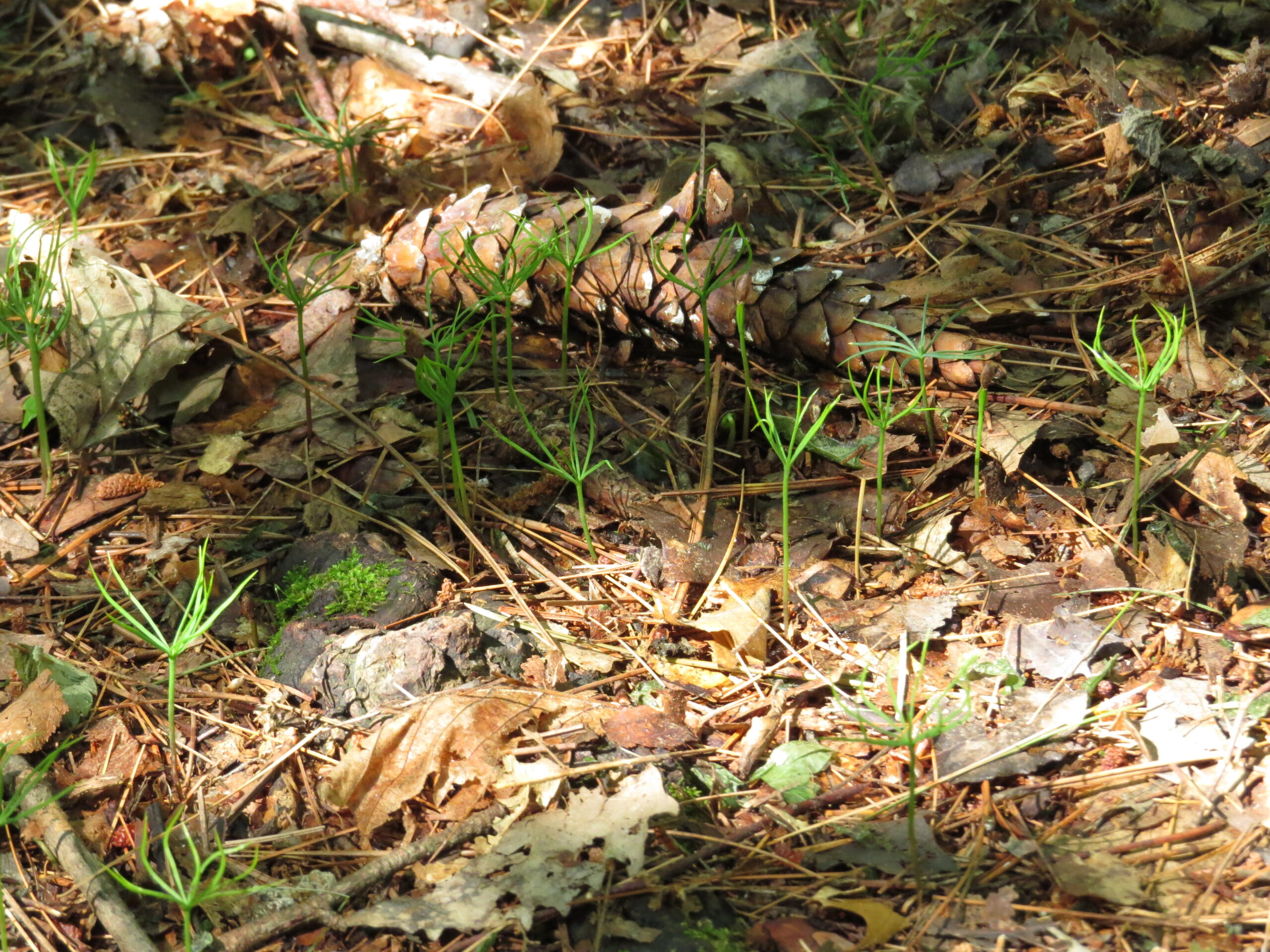
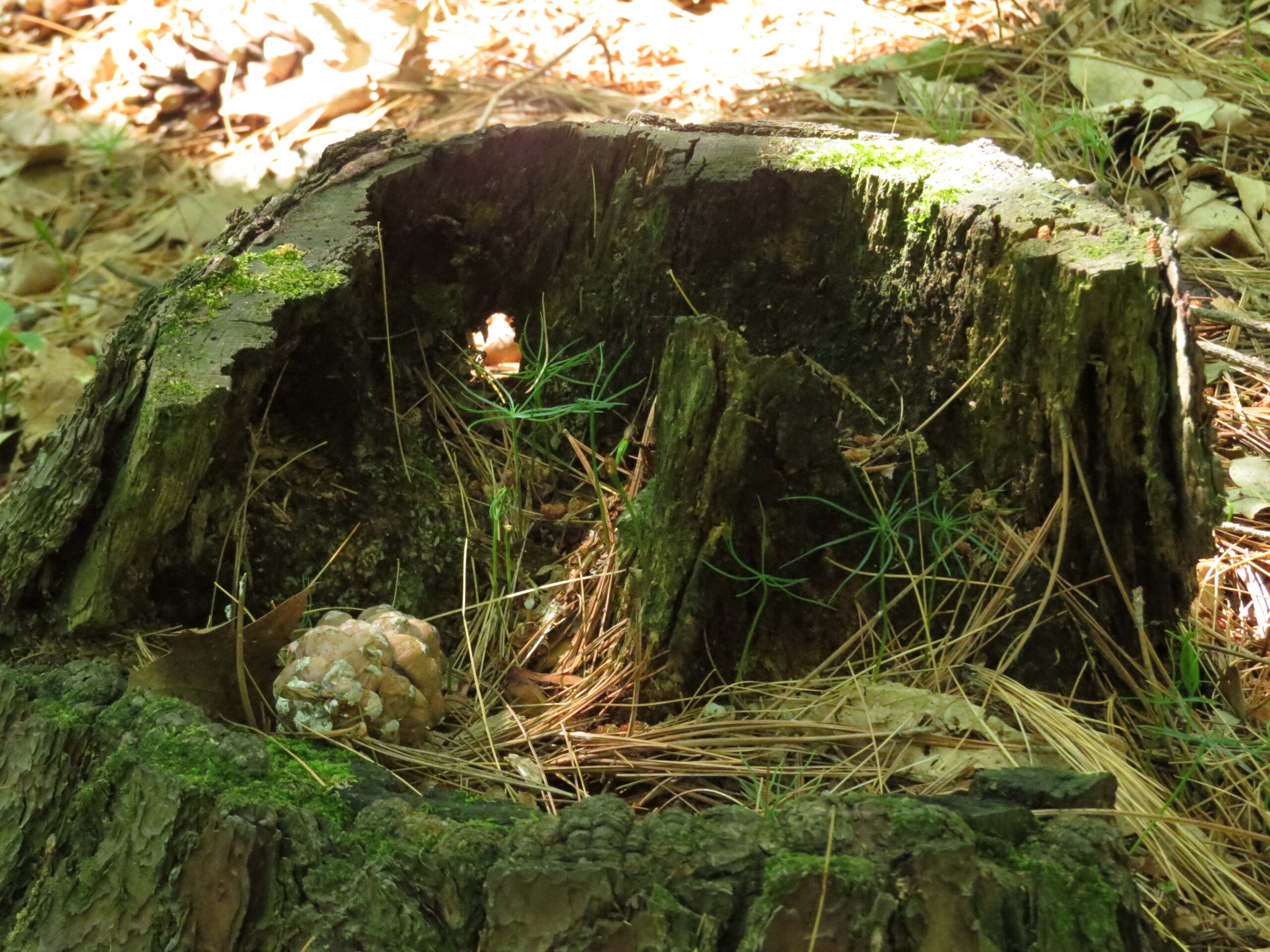
I walked quite a ways on the noticeable carpet of pine needles and cones before I realized that everywhere we walked, tiny Pine seedlings had sprouted from the seeds that had been released from the opened cones. Right in the middle of summer there was new growth sprouting like it was early Spring! Hundreds of thousands of them so tiny and new that our boots could not miss them.
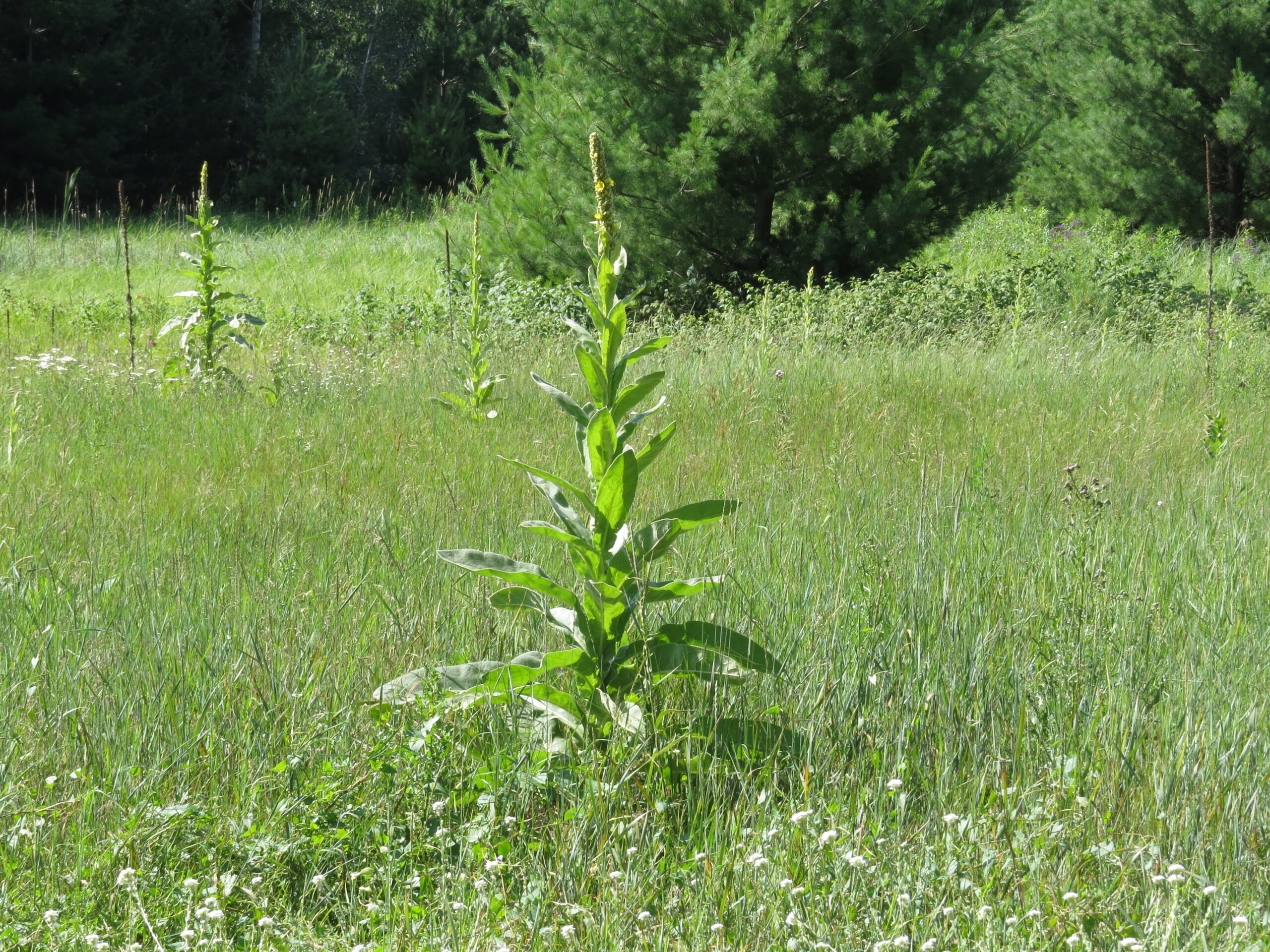
A meadow opened up to bright sunshine and grasses. Mullein, like dancers of the prairie, were standing five feet tall with a spike of yellow flowers that open before dawn and close by mid-afternoon. This wooly plant begins its biennial life with a low-growing whorl of fuzzy leaves in its first year. It needs cold temperatures to induce flowering the following year. It is capable of self-pollinating, and each plant can produce 100,000 to 240,000 tiny seeds that are viable for decades! Respect!
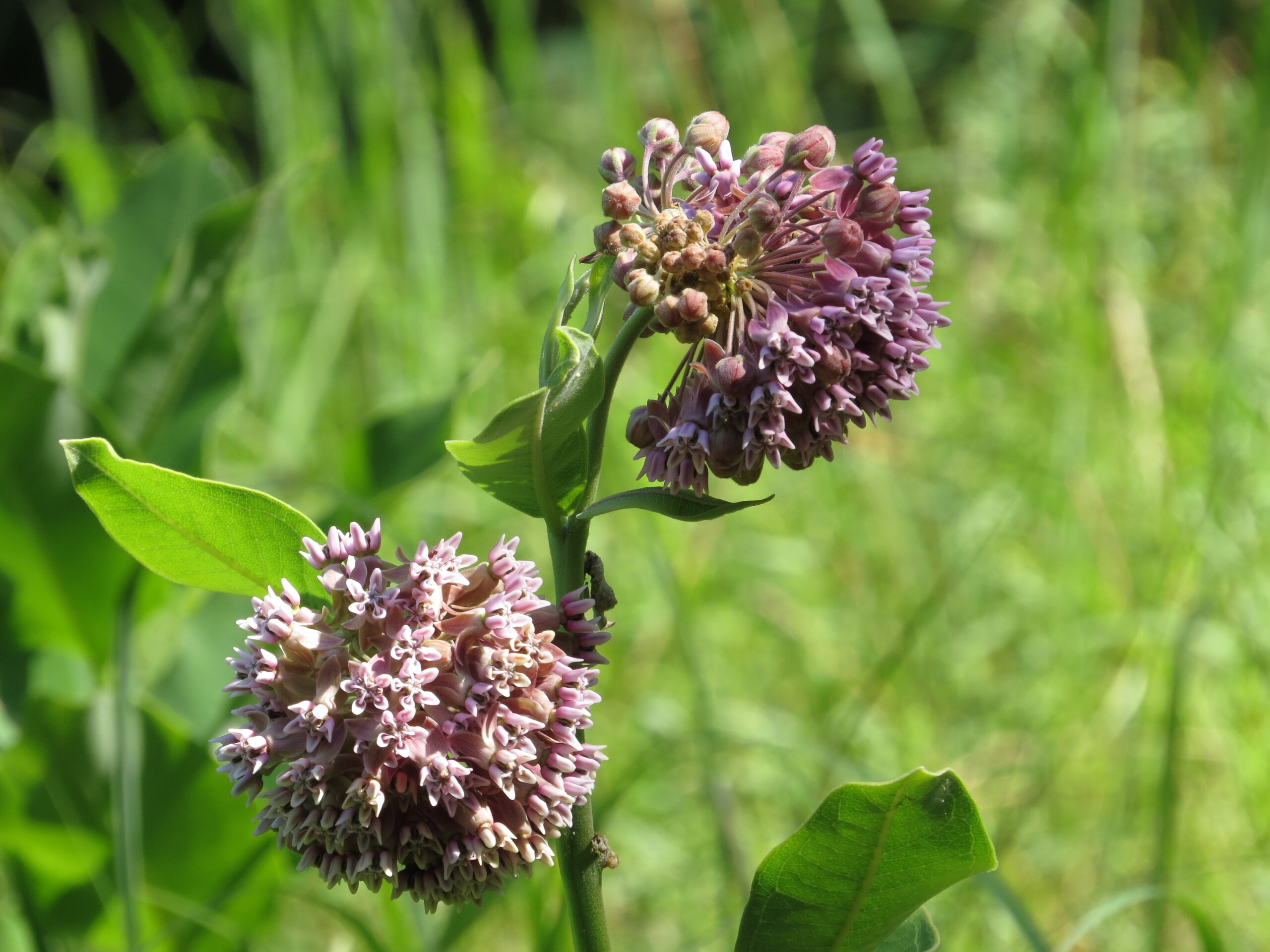
Another beautiful fuzzy plant is the Common Milkweed. The veined leaves are a work of art in and of themselves. And then the incredible ball of flower! Milkweeds are considered a ‘fugitive species’ in the southern Great Plains—their growth is dependent on disturbance because they can’t compete with other vegetation. Here in the northern plains, they are a more permanent member of the ecology.
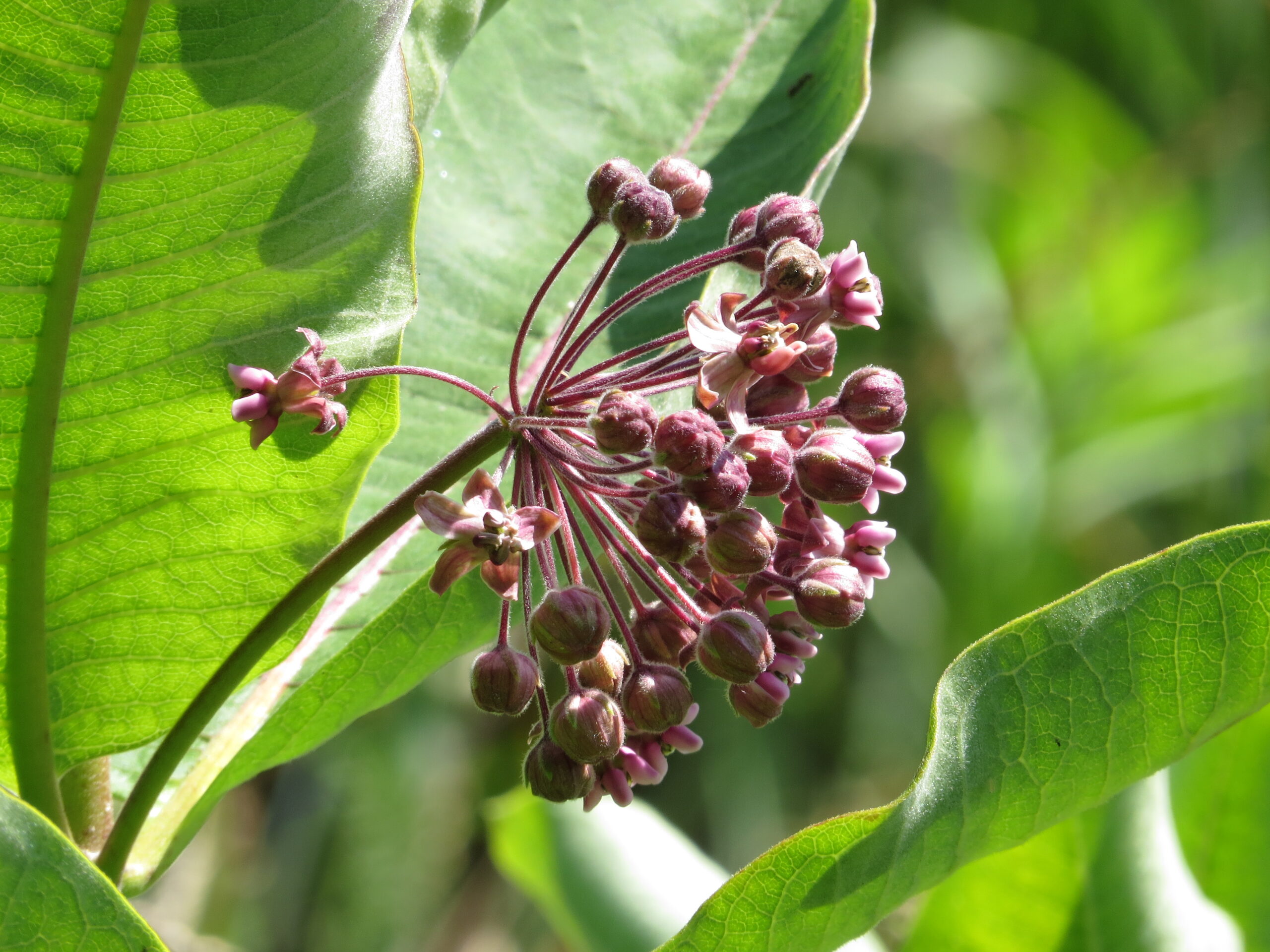
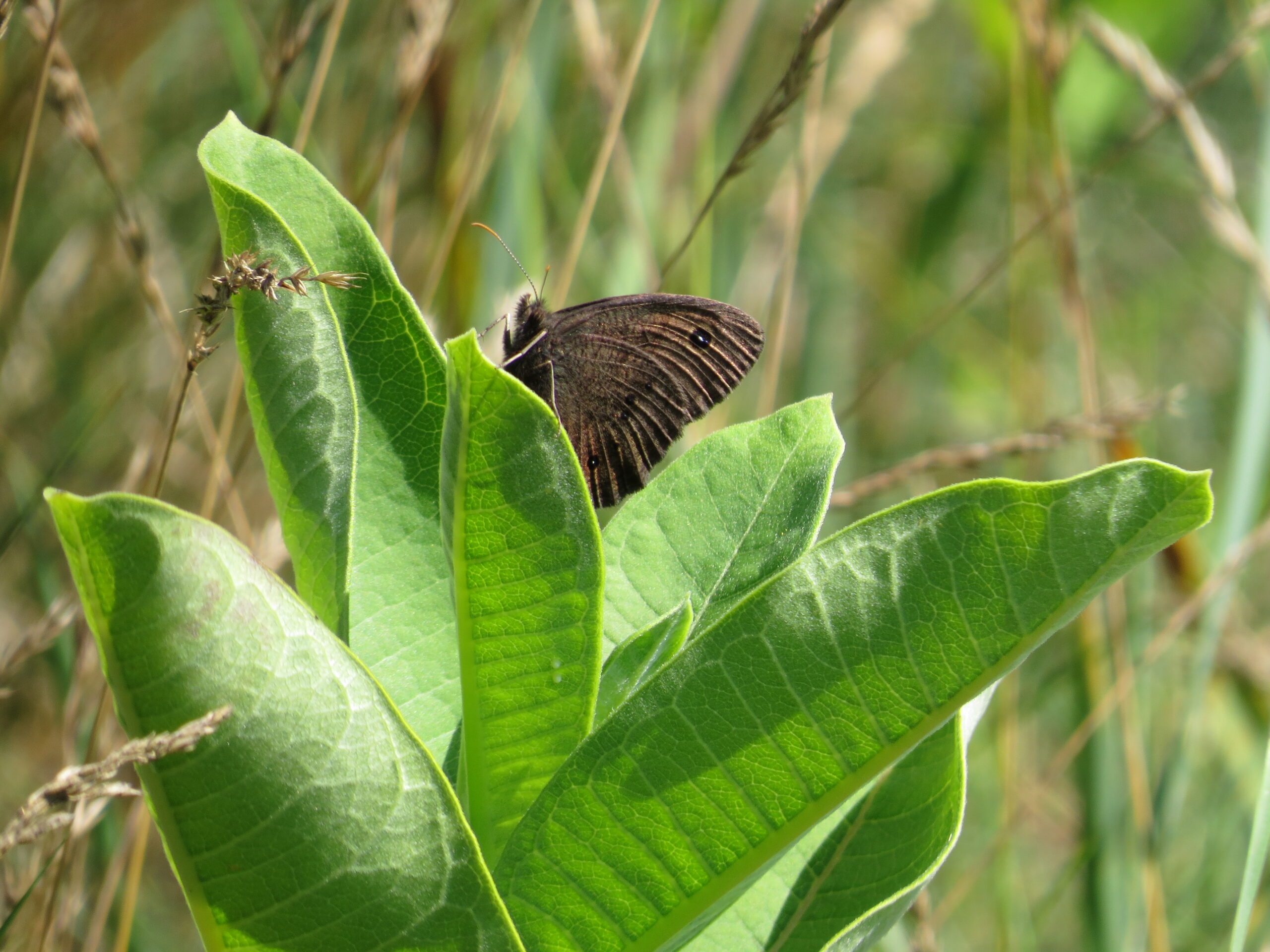
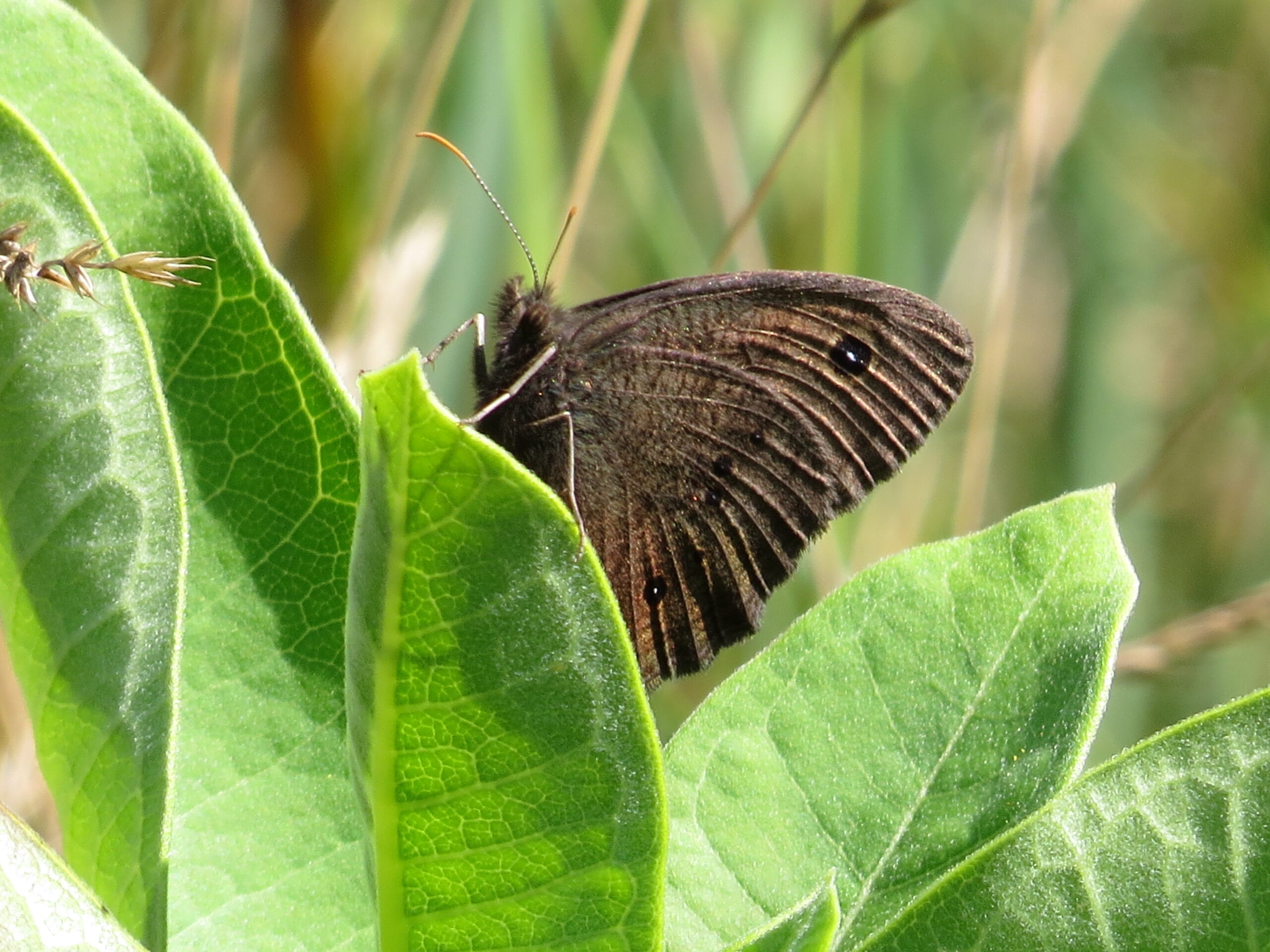
Milkweeds contain cardiac glycosides that infuse the Monarch caterpillars who eat their leaves (and also the butterfly) with a toxin that deters birds and other predators. Genius defense. (Not to mention the Viceroy Butterfly who looks similar to the Monarch to take advantage of Mullerian mimicry.) But the butterfly we saw on the Milkweed was a not-colorful Wood Nymph whose unusual characteristic is over-wintering as a hibernating caterpillar instead of in the protection of a cocoon.
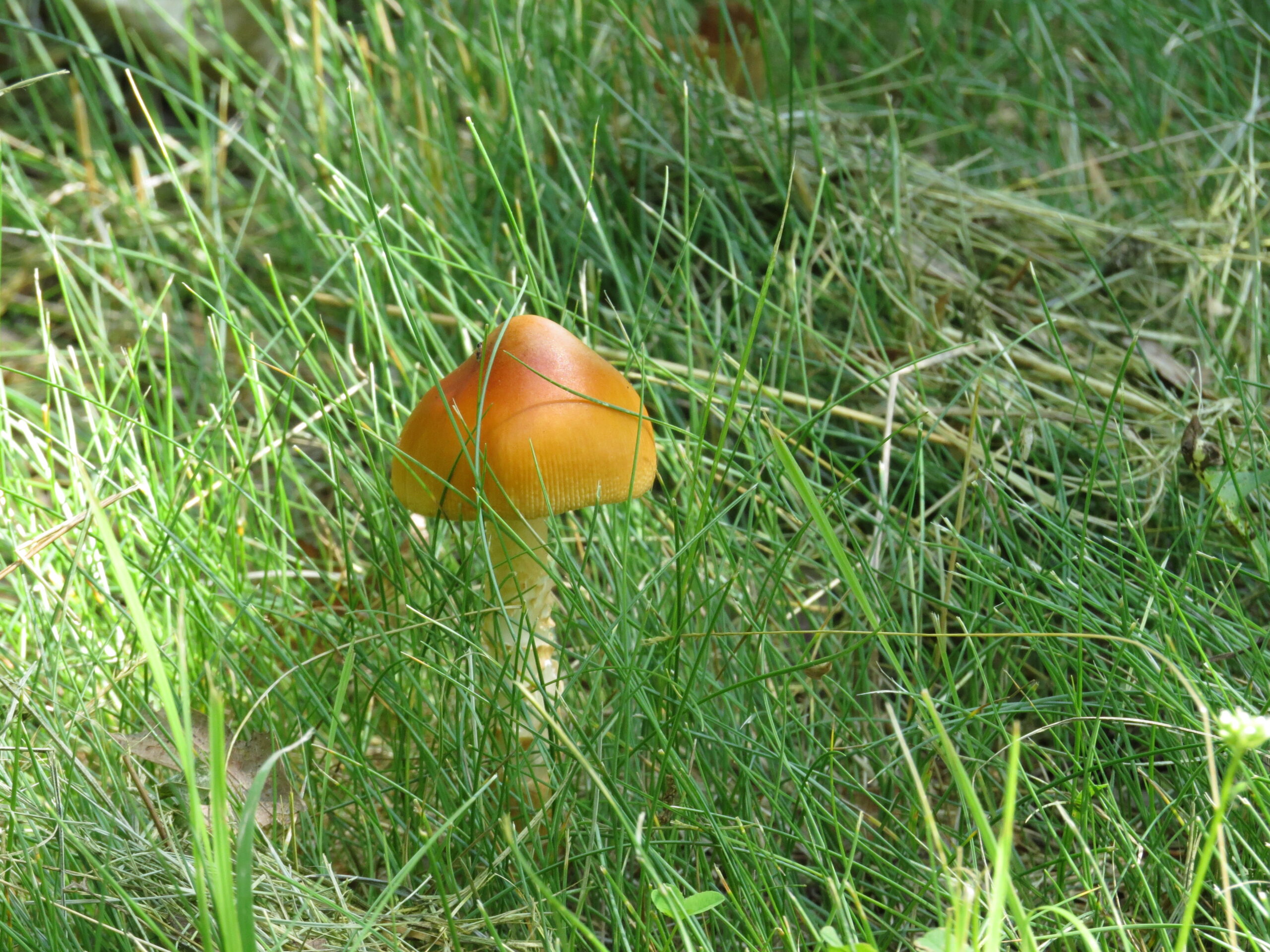
Who would ever think there is a mushroom called the Funeral Bell?
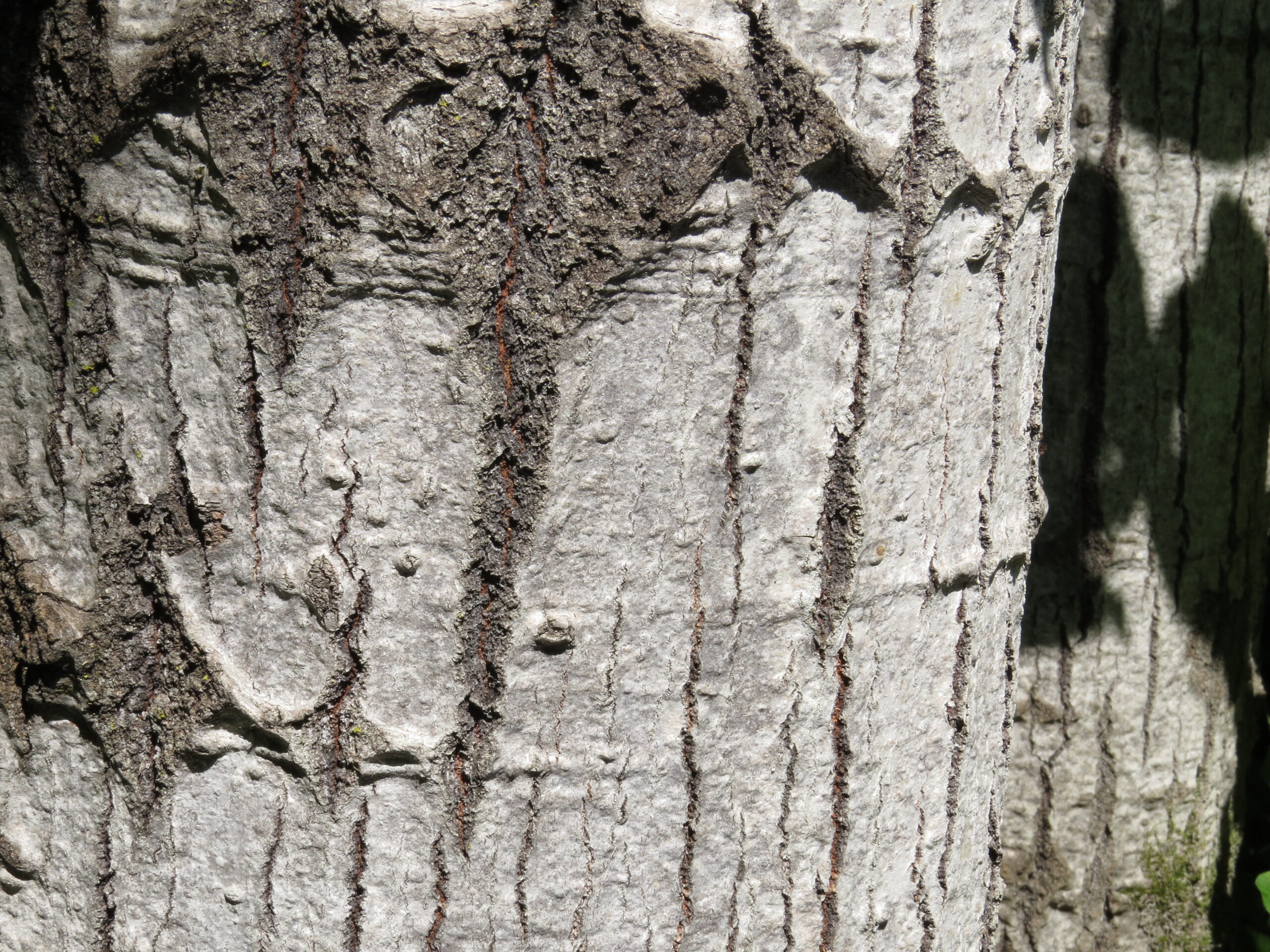
Two old Bigtooth Aspens grew side by side. Aspens are clonal plants that can grow from root suckers. They are categorized as a ‘pioneer species’ that is one of the first to grow after fire or clear-cutting. Five hundred different species of plants and animals utilize the Aspen tree in some way! What an impact one species of tree can have on the world!
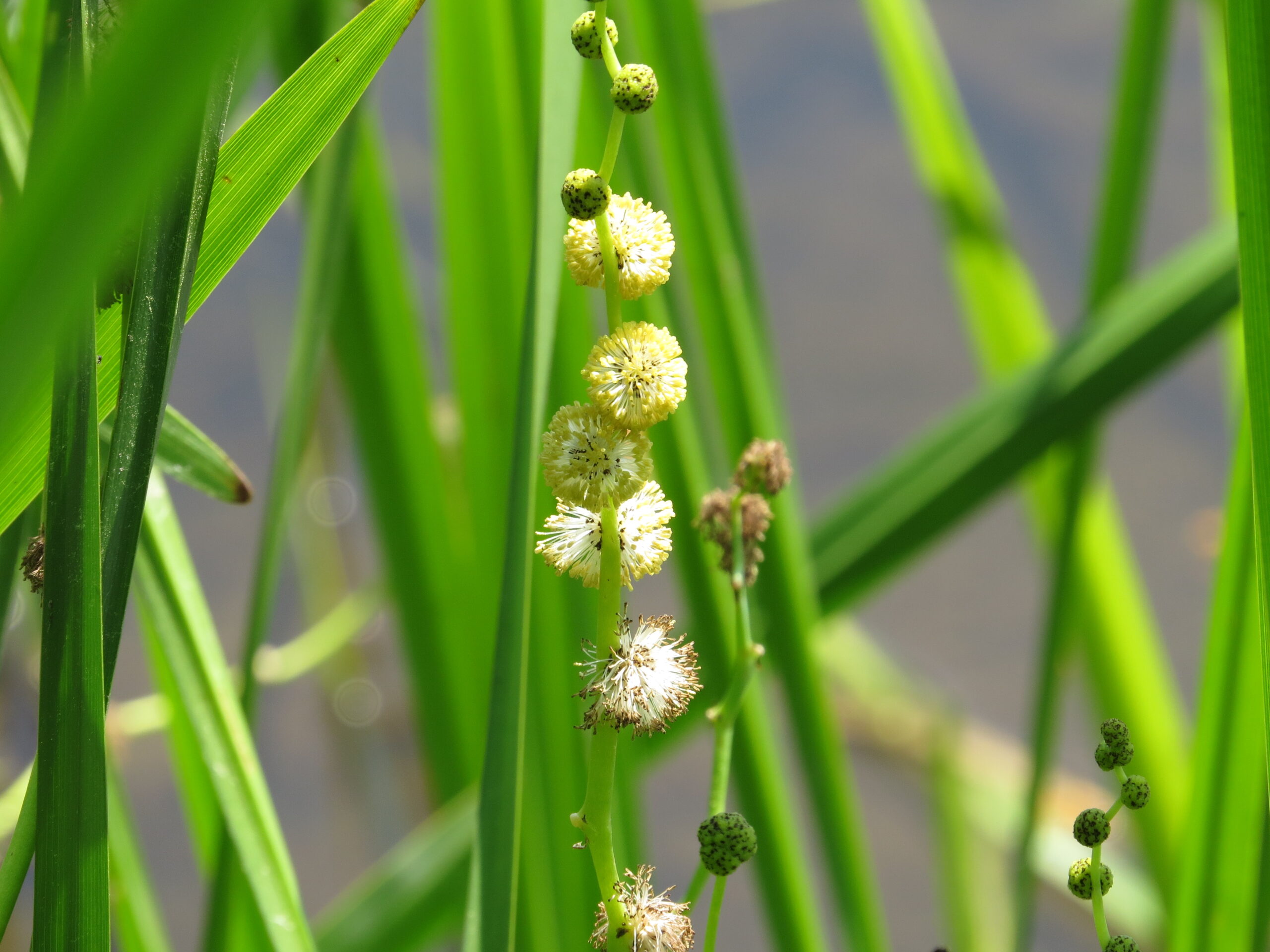
Bulrushes grow near and in rivers and lakes. They are important for fish and bird habitat, including spawning areas for Northern Pike, nesting cover for Bass and Bluegills, and food for ducks, geese, and swans.
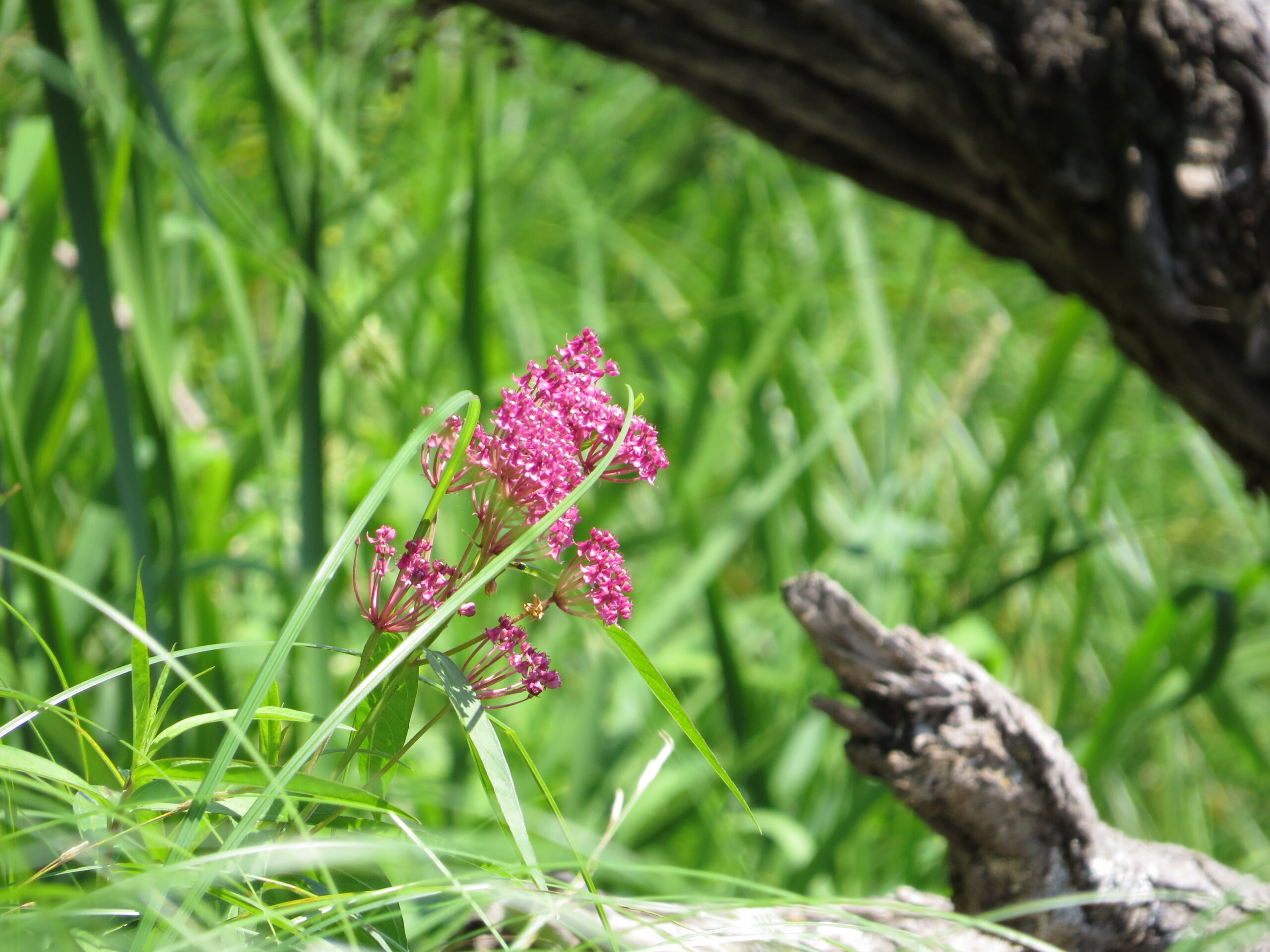
Swamp Milkweed (Asclepias incarnata) is named after the Greek god of medicine (Asklepios) and is a food source for the Monarch. They have specialized, scented white roots that like heavy, wet soil.
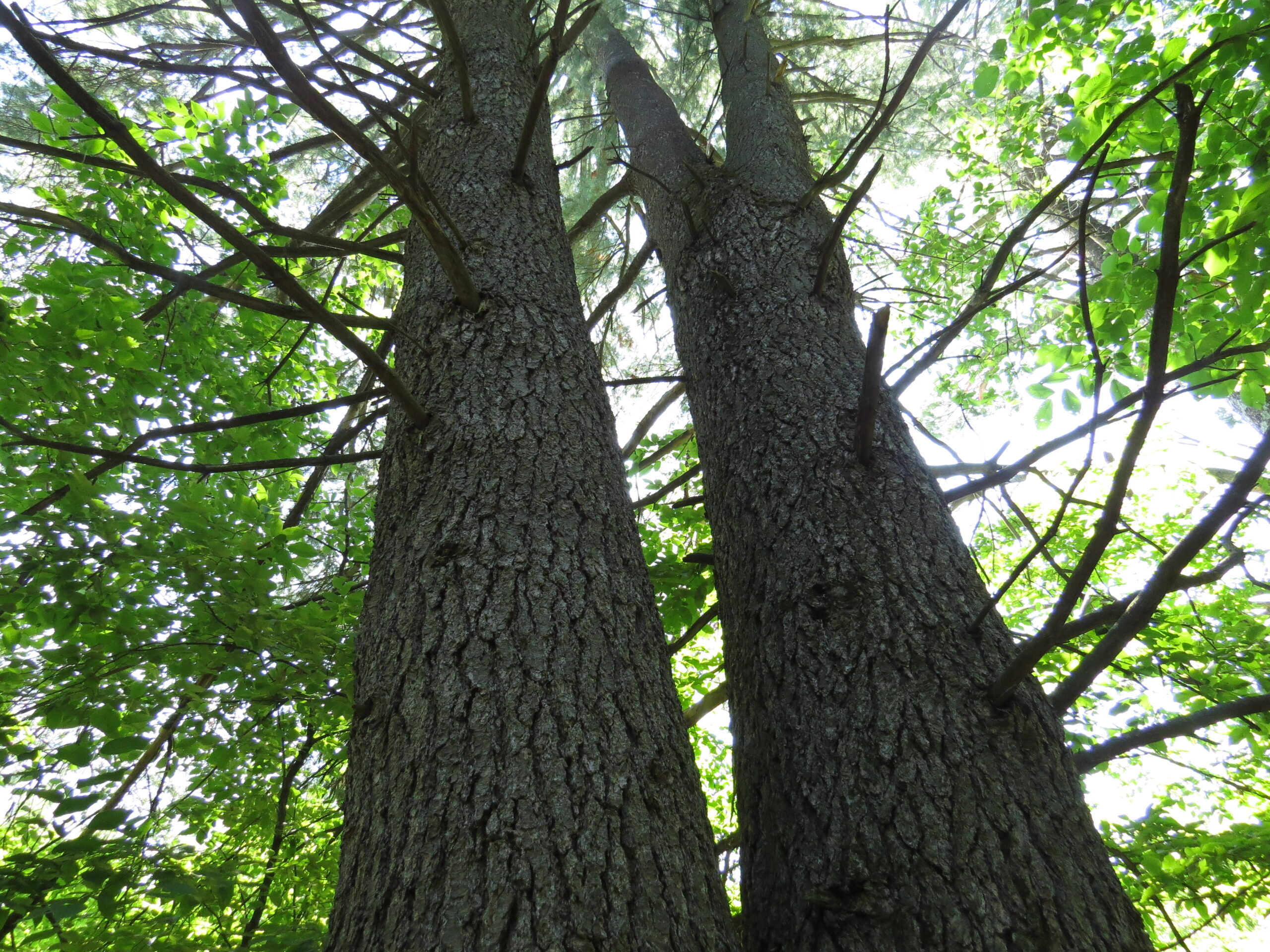
The forest had many trees as large as these twin White Pines, stately, iconic Minnesota trees. They give a person a feeling of grandeur and history—all the things these trees have seen in their long lives! Wow!
And right there on the forest floor, from the nourishment of old trees, needles, and leaves, the new ones grow.
Nature is neither bad nor good—it defies dichotomous thinking and human categorization. It has gray areas galore. It has diversity and interdependence that connects species and truly makes the world go round. How many of the amazing ‘facts’ did you know about these few plants? Can you believe that individual people have similar ‘amazing facts’ that make up their lives? Just as Nature is a moving circle of Life that creates, develops, grows, matures, and dies, we are the same. We cannot be placed in ‘them or us’ boxes. I have thought and reacted with black and white thinking in a desire for control of who or what was triggering the horrible feeling in my gut. I did it for many, many years, but trying to control other people or things is not the way to erase those feelings. The work is ours, and it is on ourselves. Nature can be our guide to move us beyond our limited thinking, to help us show respect for the unique individuals in our midst, to see beauty and interdependence with ‘colorful thinking,’ and most importantly, to help us heal the wounds that have hurt us all.
Black and White Wonderland
“If one more person says ‘Winter Wonderland’….” and he trailed off to silence. I knew the frustration he was feeling—we had been through this for years. I am that person who happily calls this snowy scenario a ‘Winter Wonderland.’ But this was the third day in a row of substantial snow, ice, and sometimes rain—as beautiful as it was, it was also extremely messy and difficult to ‘remove’ from all the places that need to be cleared on a college campus. The snow was heavy, laden with moisture as temperatures hovered for days and nights around the freezing mark. Chris gets up long before the five o’clock hour in order to be on the road—sometimes plunging through unplowed snow, other times following snow plows—to get to work. Then he bundles up to get in the snow removal machine and begins to clear the sidewalks. He and his two full-time workers have a carefully planned ‘execution map’ of their routes. The student workers are taking their finals or have already left for home, so the hand-shoveling gets pushed back on the to-do list. Sometimes the equipment breaks down, and sometimes people all over campus are emailing him to tell him about slippery spots. Welcome to Winter.
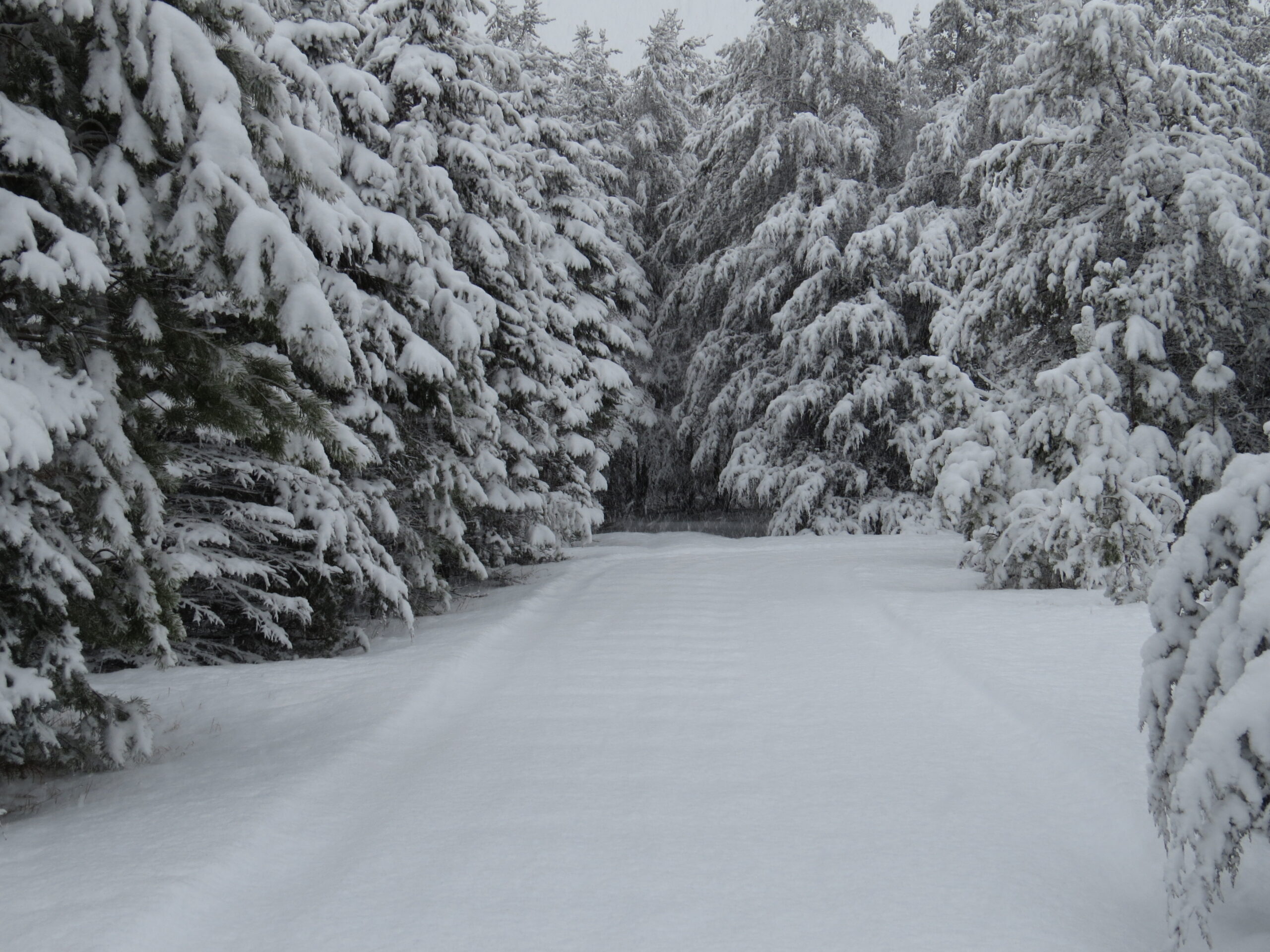
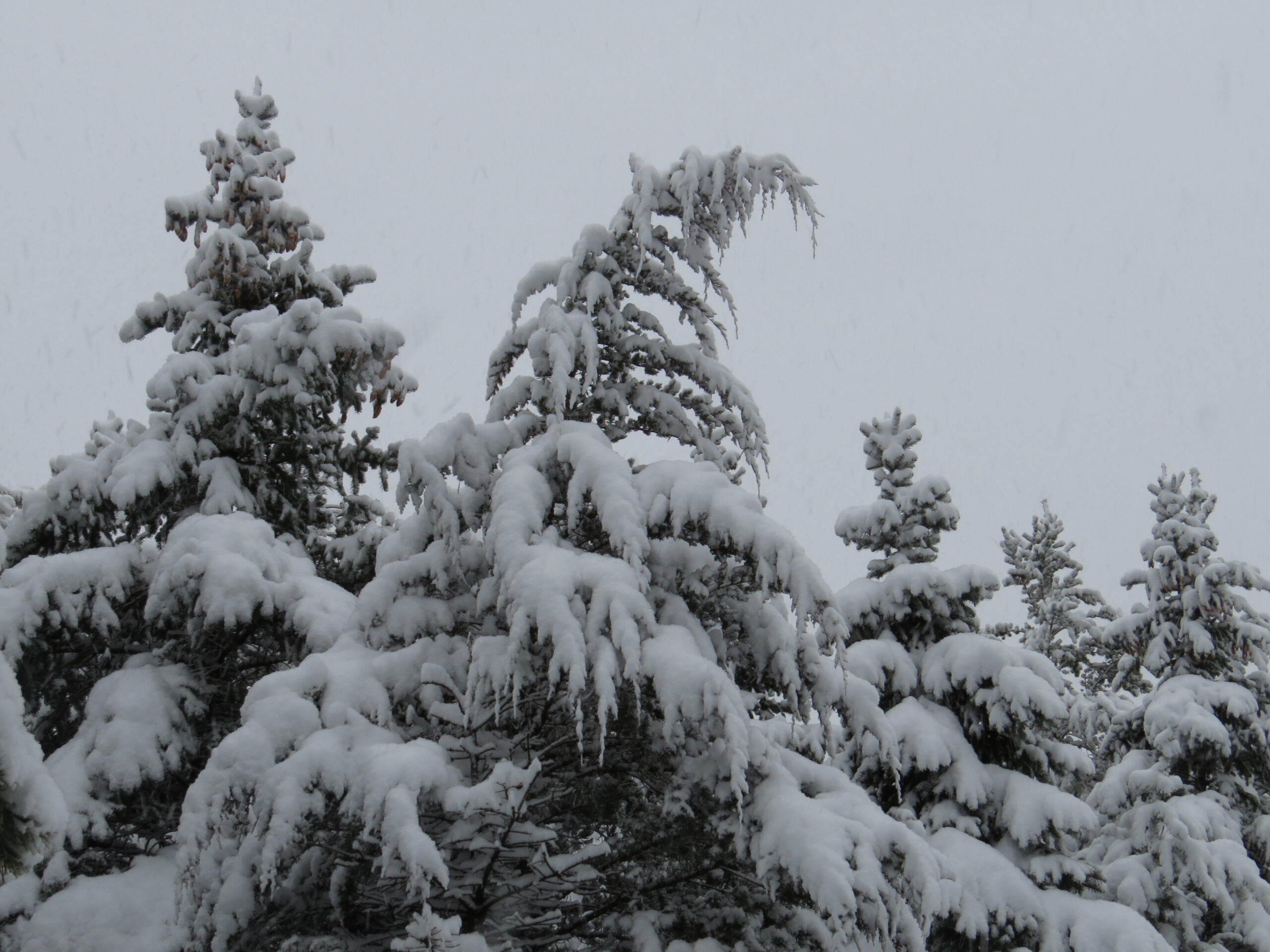
Before I worked on our own long driveway of snow removal, I walked out into the black and white Winter Wonderland world. The sky was dark gray and large crystalline flakes fell slowly and softly on the already heavily–flocked trees. It was so incredibly silent. And it felt good—we hardly notice how we are inundated with noise for most of our waking hours and for the toll it takes on our nervous system. Silence is a gift from Mother Nature. But in the midst of the snowing Winter Wonderland was the reality of a black and white world—black tree trunks and branches covered in white snow, black evergreen trees wearing coats of white, the gray sky and white ground.
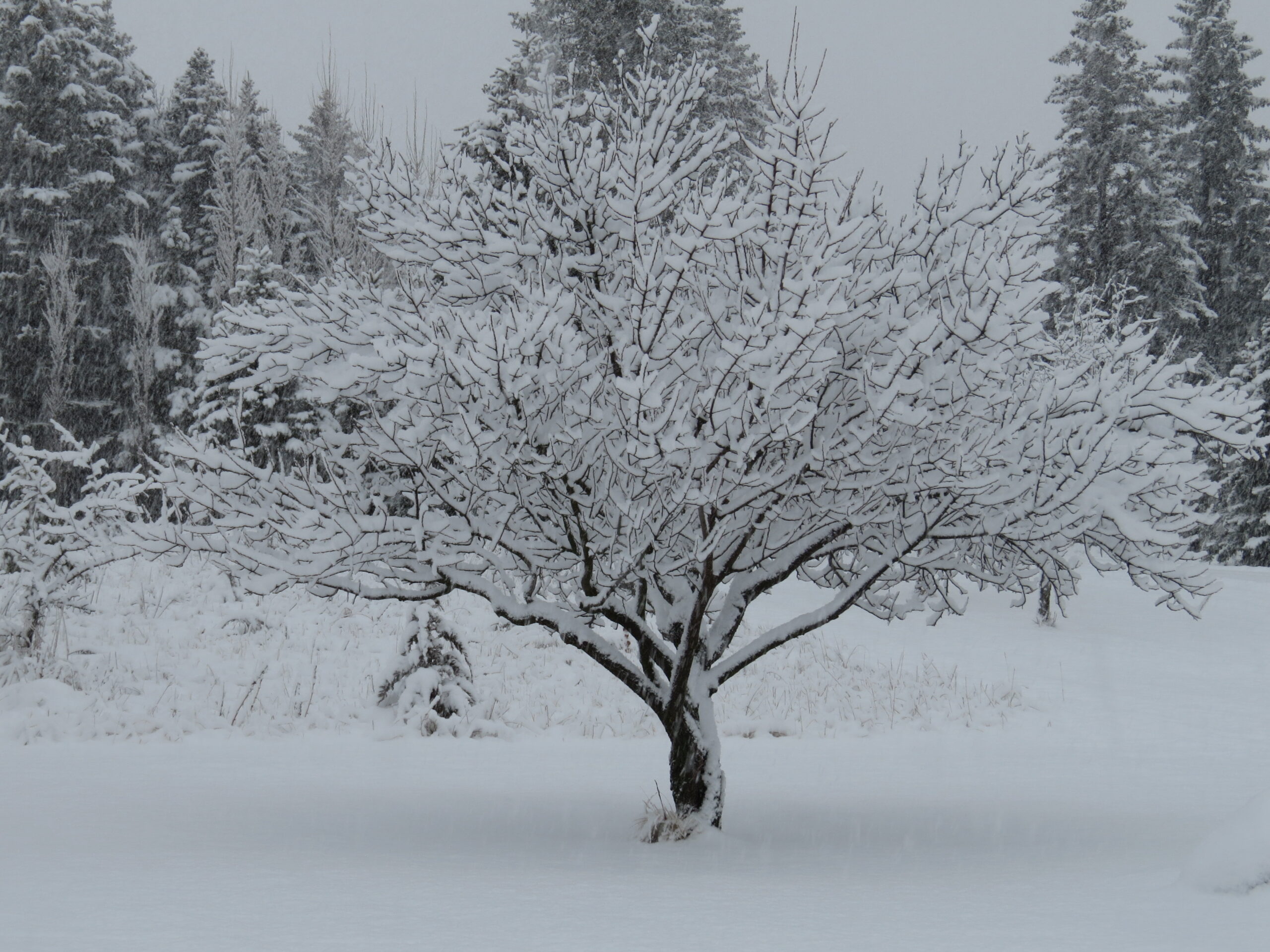
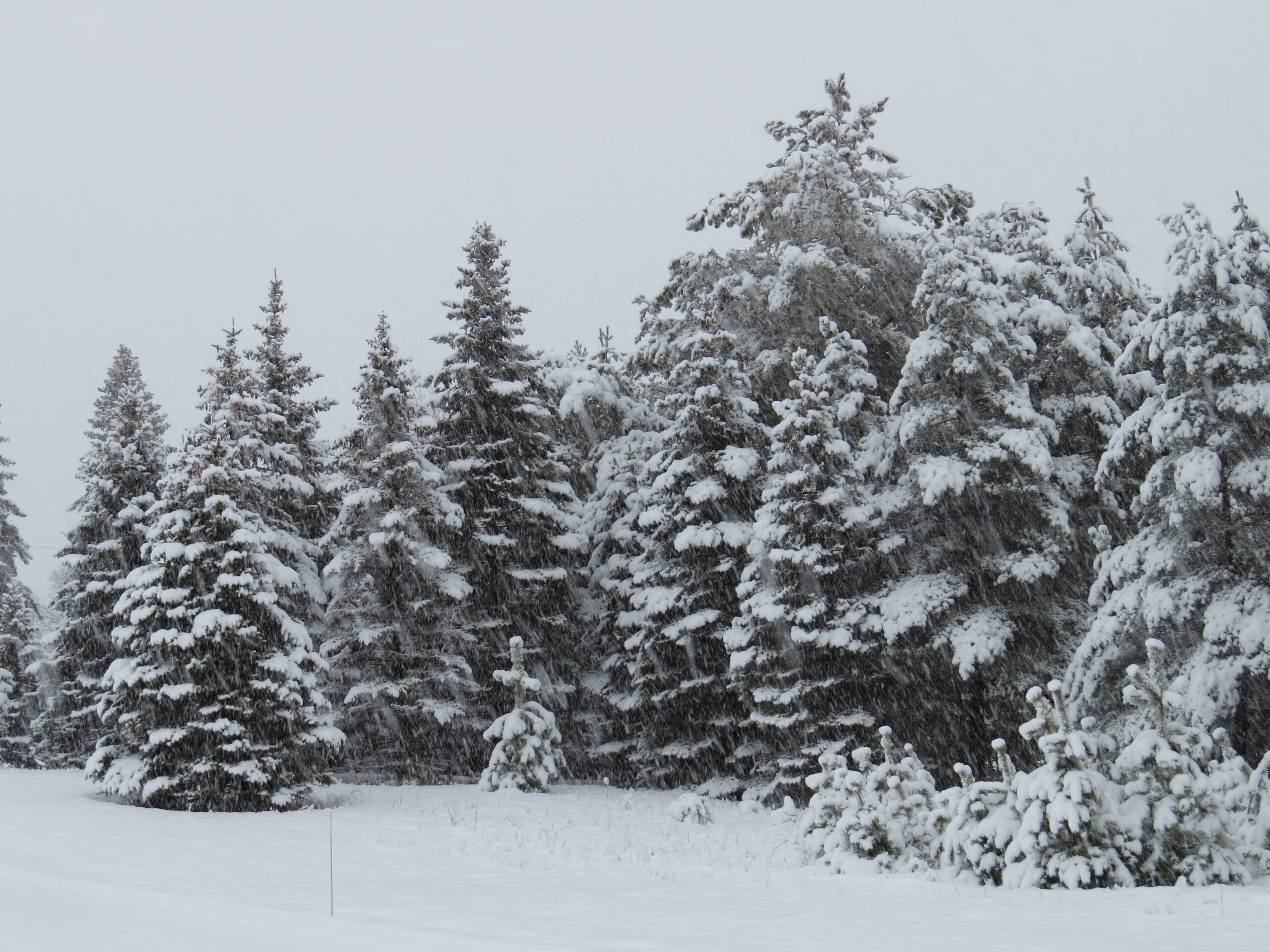
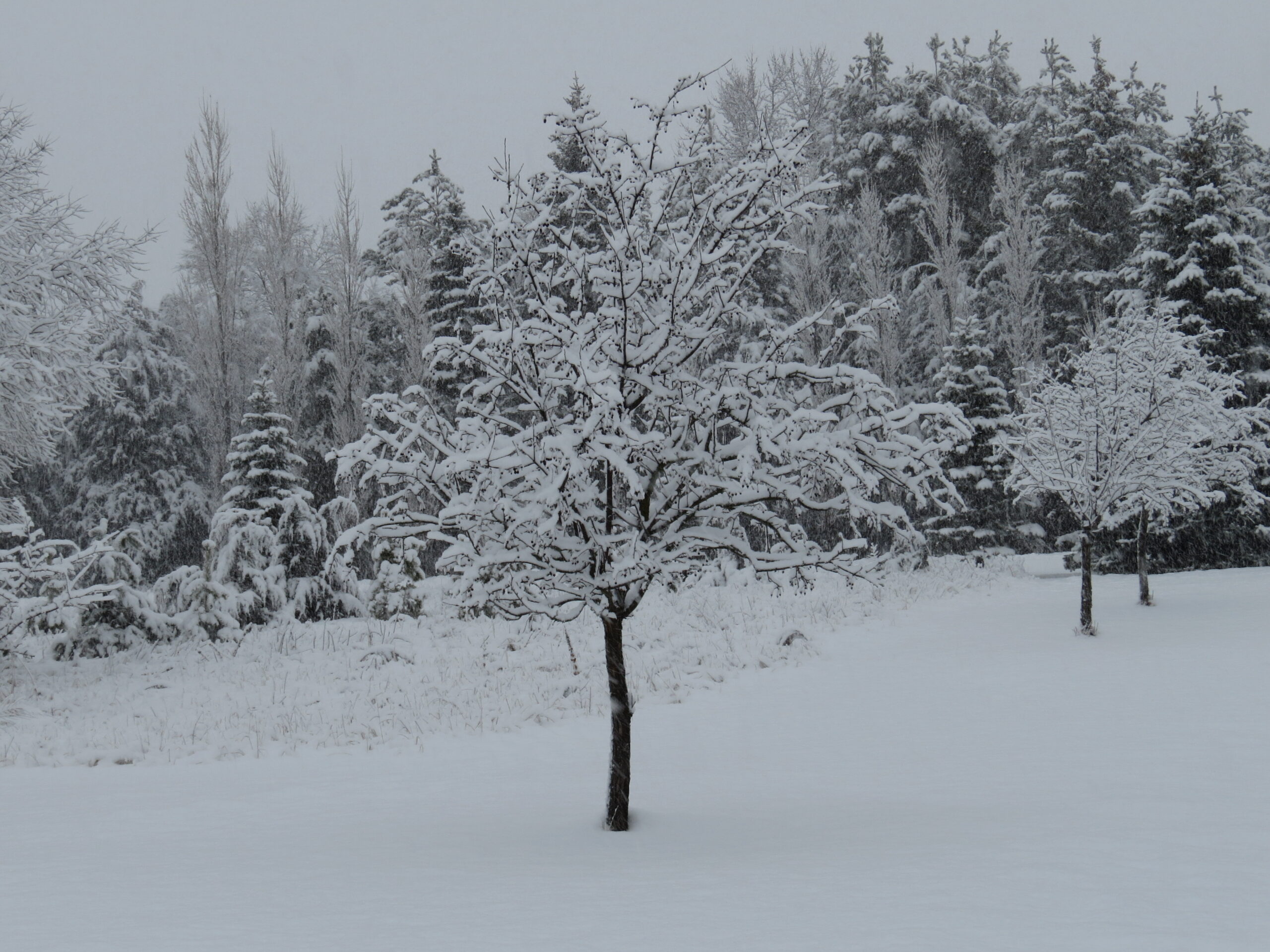
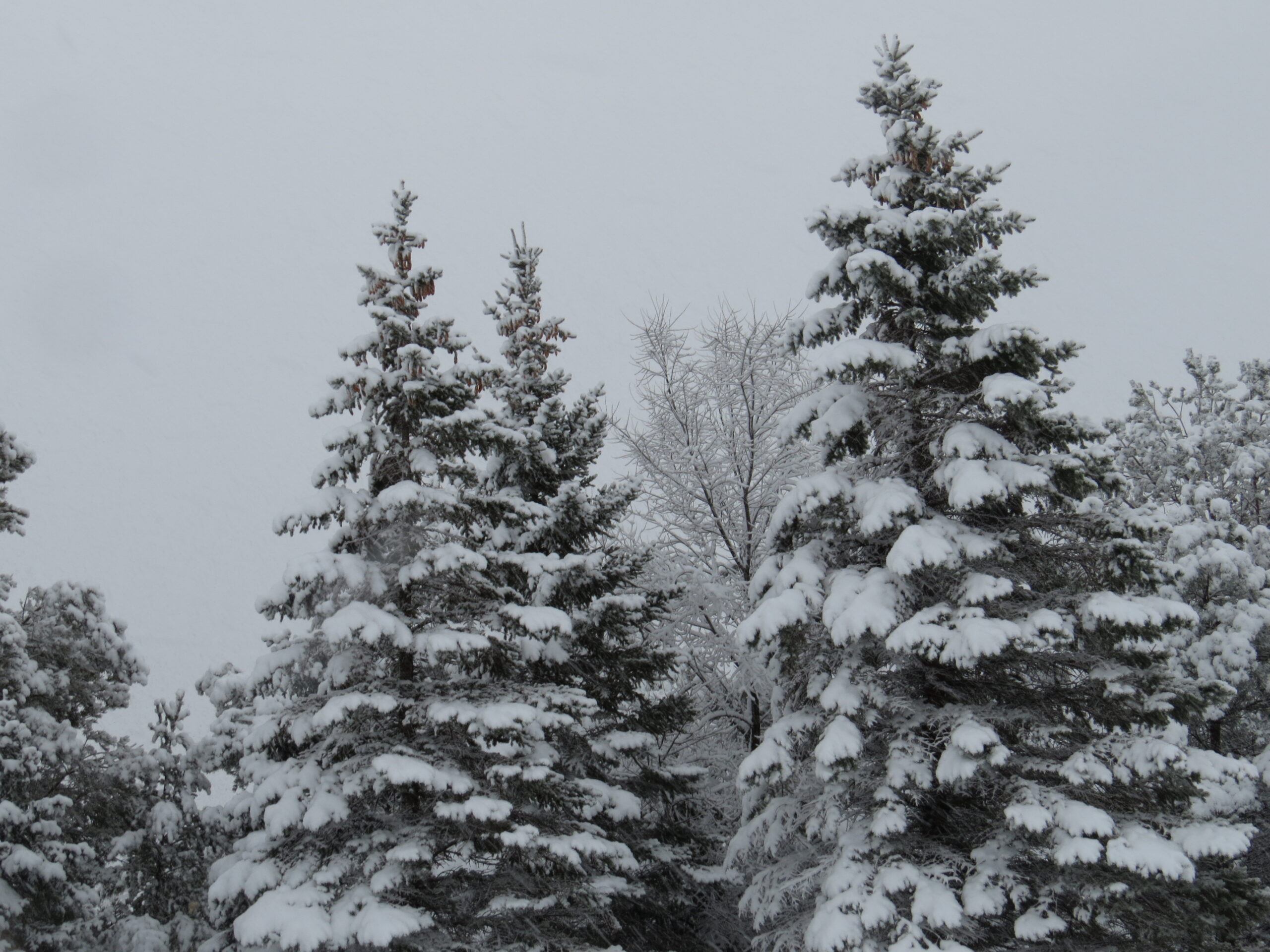
Our vision and perception of what we see in the world is so fascinating to me. In physiology we learn that the retina in our eyes contains specialized cells called rods and others called cones. We are taught that rods are for night vision—they distinguish size, shape, and brightness but do not perceive color. Cones are for day vision, are highly concentrated in the central part of the retina, and distinguish fine details and all the colors we see. Black and white functions, right? Except why do our retinas contain 91 million rods and only 4.5 million cones when we are basically diurnal animals? What are our rods doing on a day like this one when what we ‘see’ looks black and white?
We do see the size and shape of an Elm tree with its fine, lacy branches…
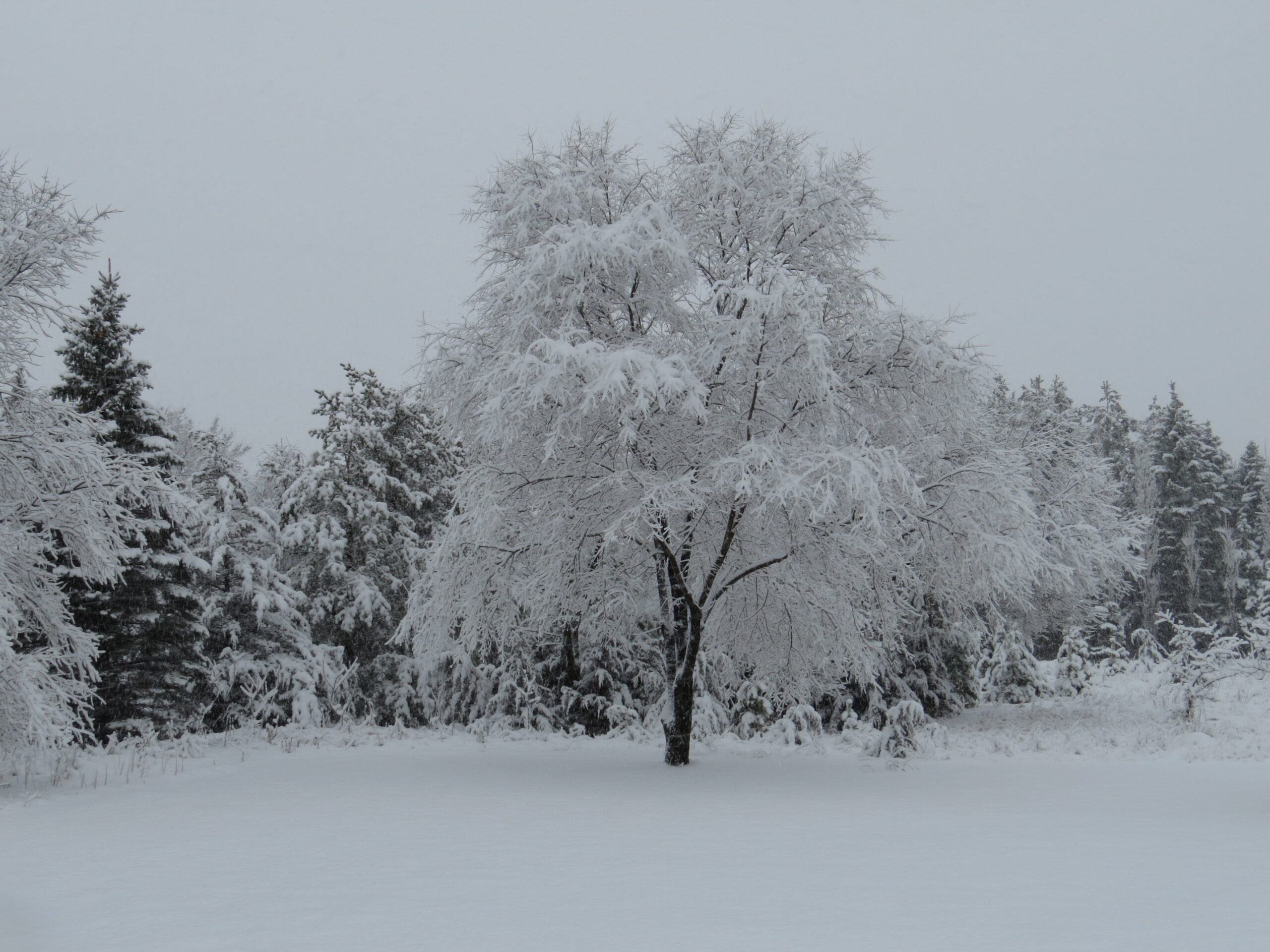
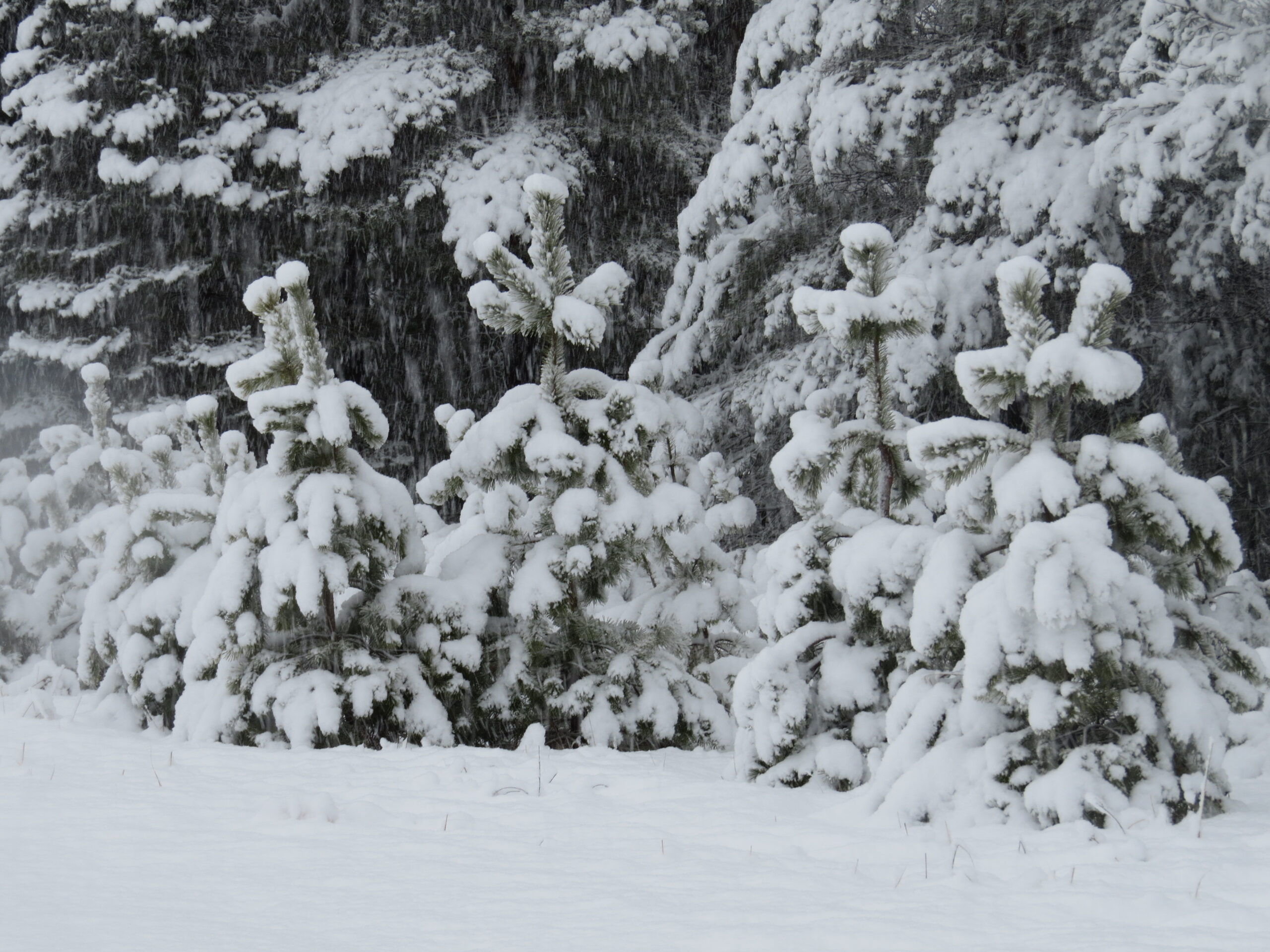
and how these young, squat Jack Pines covered in snow look like toddlers in snowsuits…
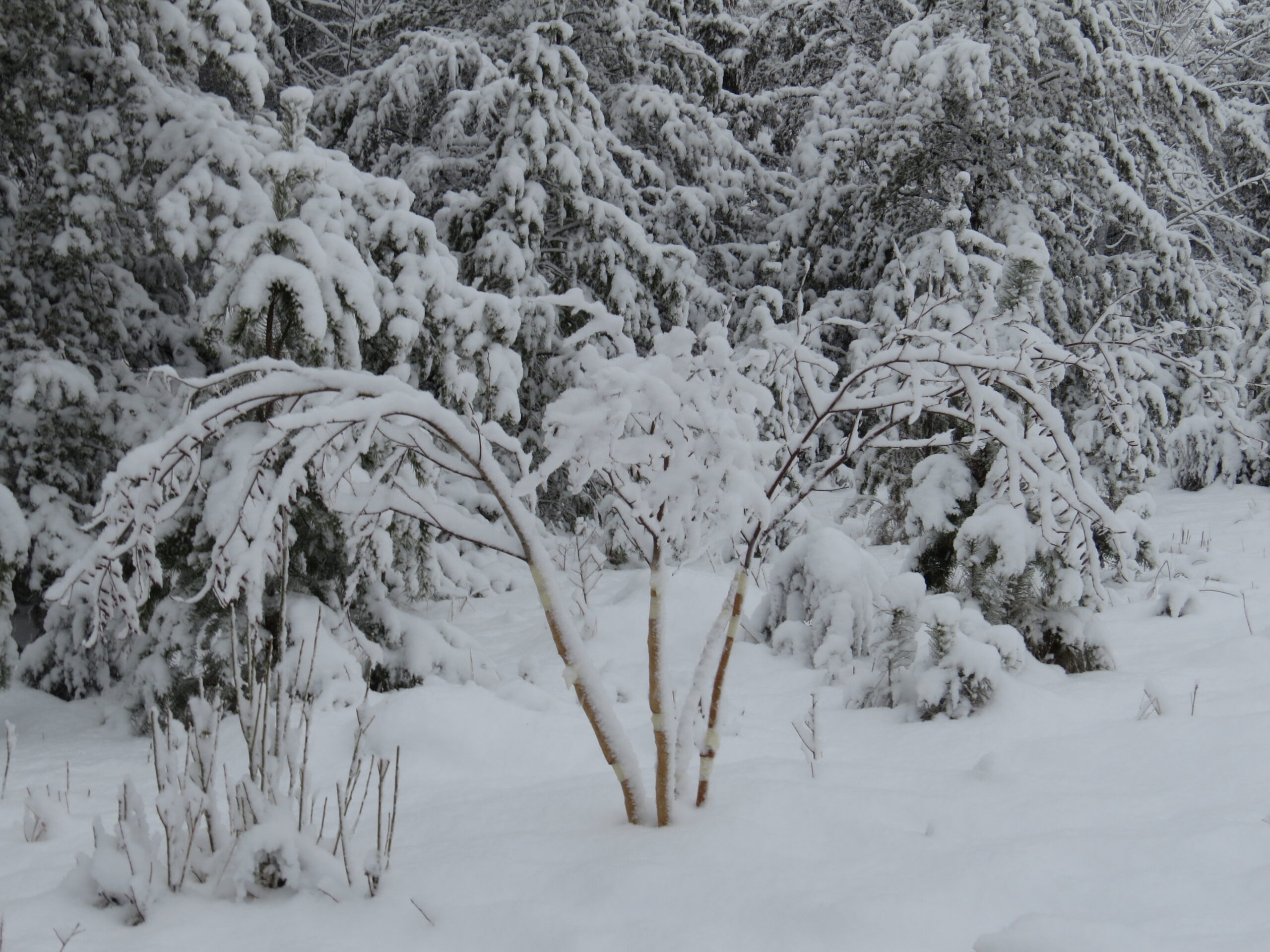
and how the flexible branches of a Paper Birch bend and bow under the weight of the wet snow.
One has to look closely to notice any detail in the black and white snow globe. The snow obscures most of the defining features we see in the other seasons.
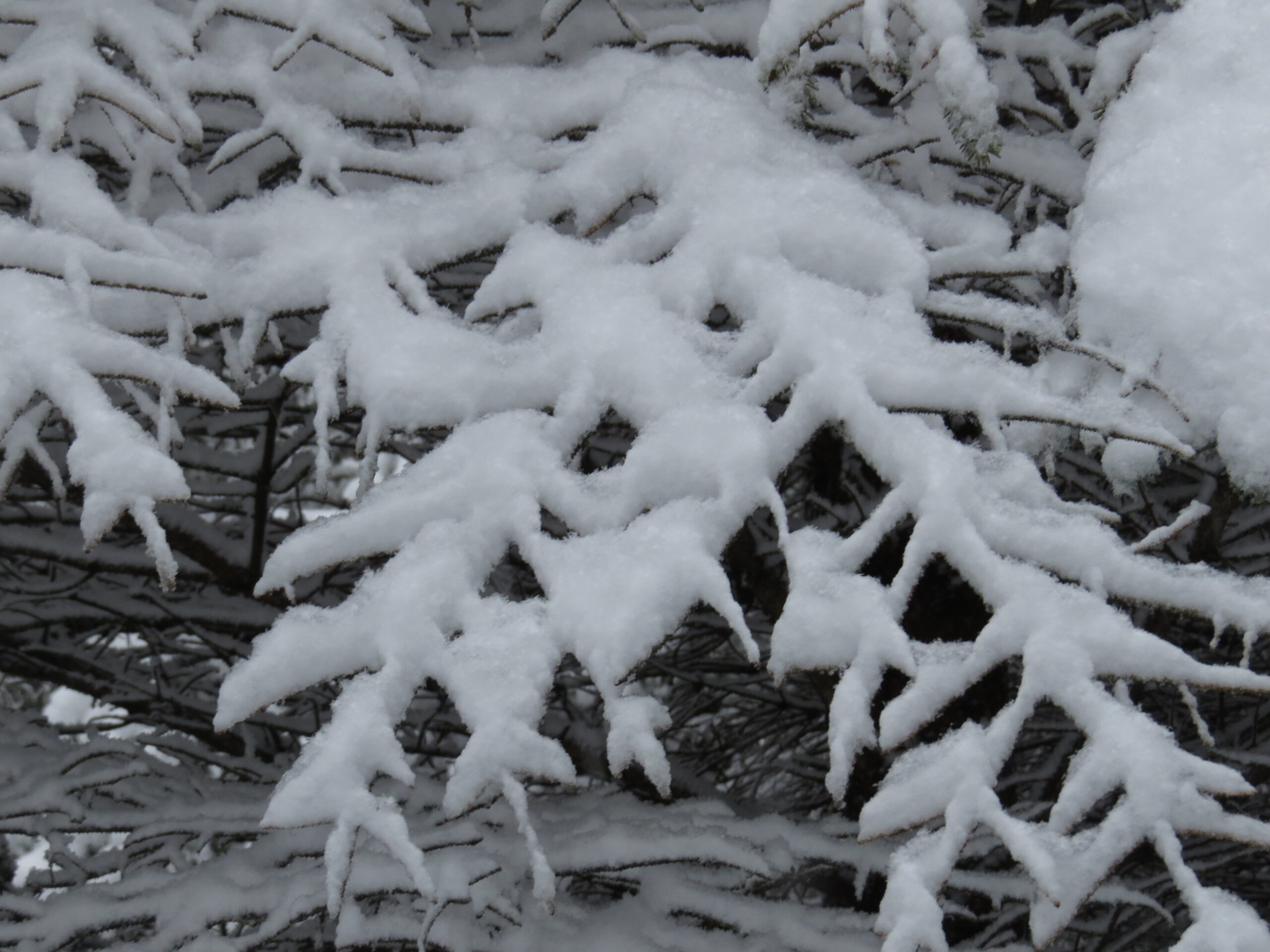
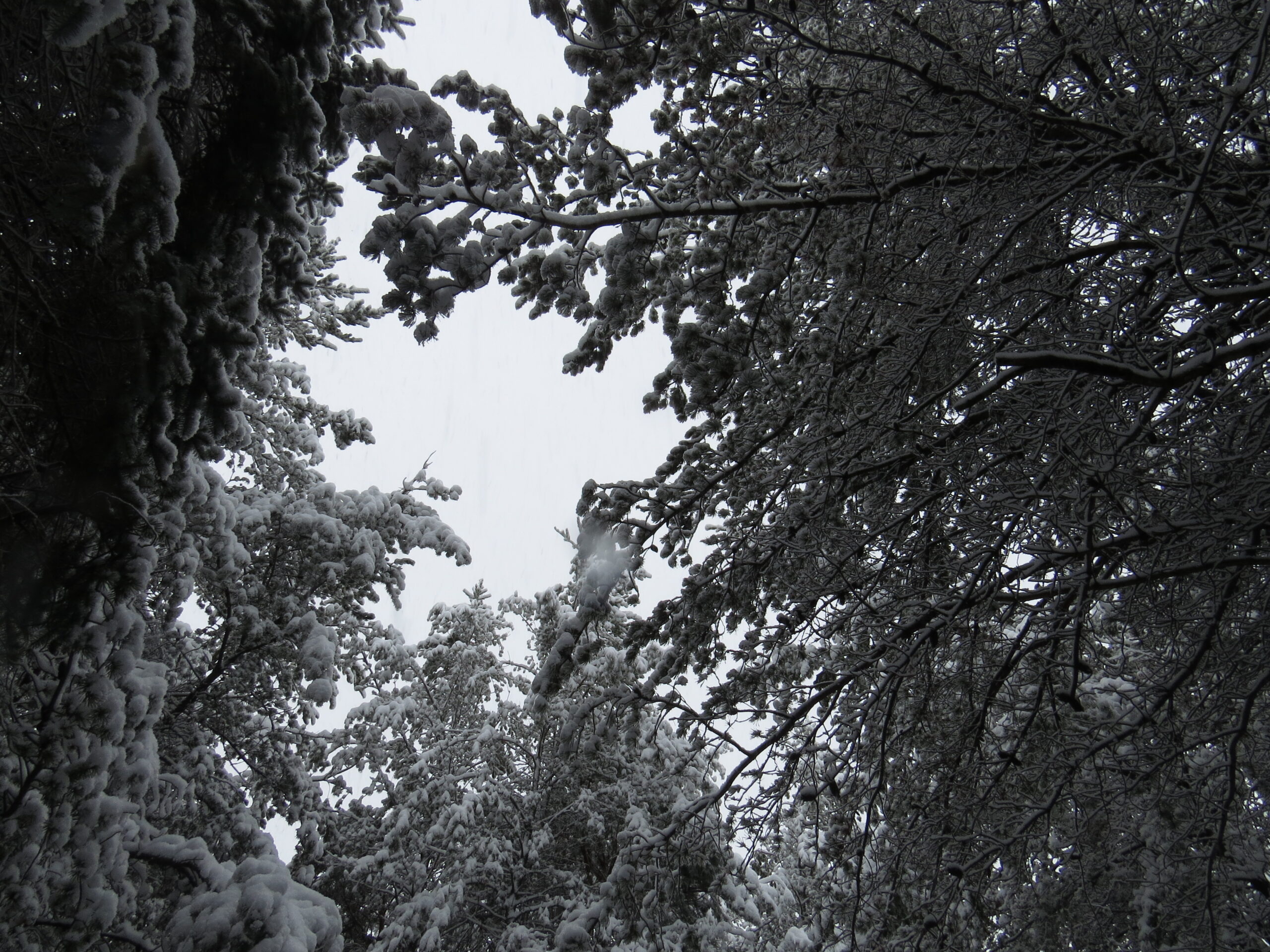
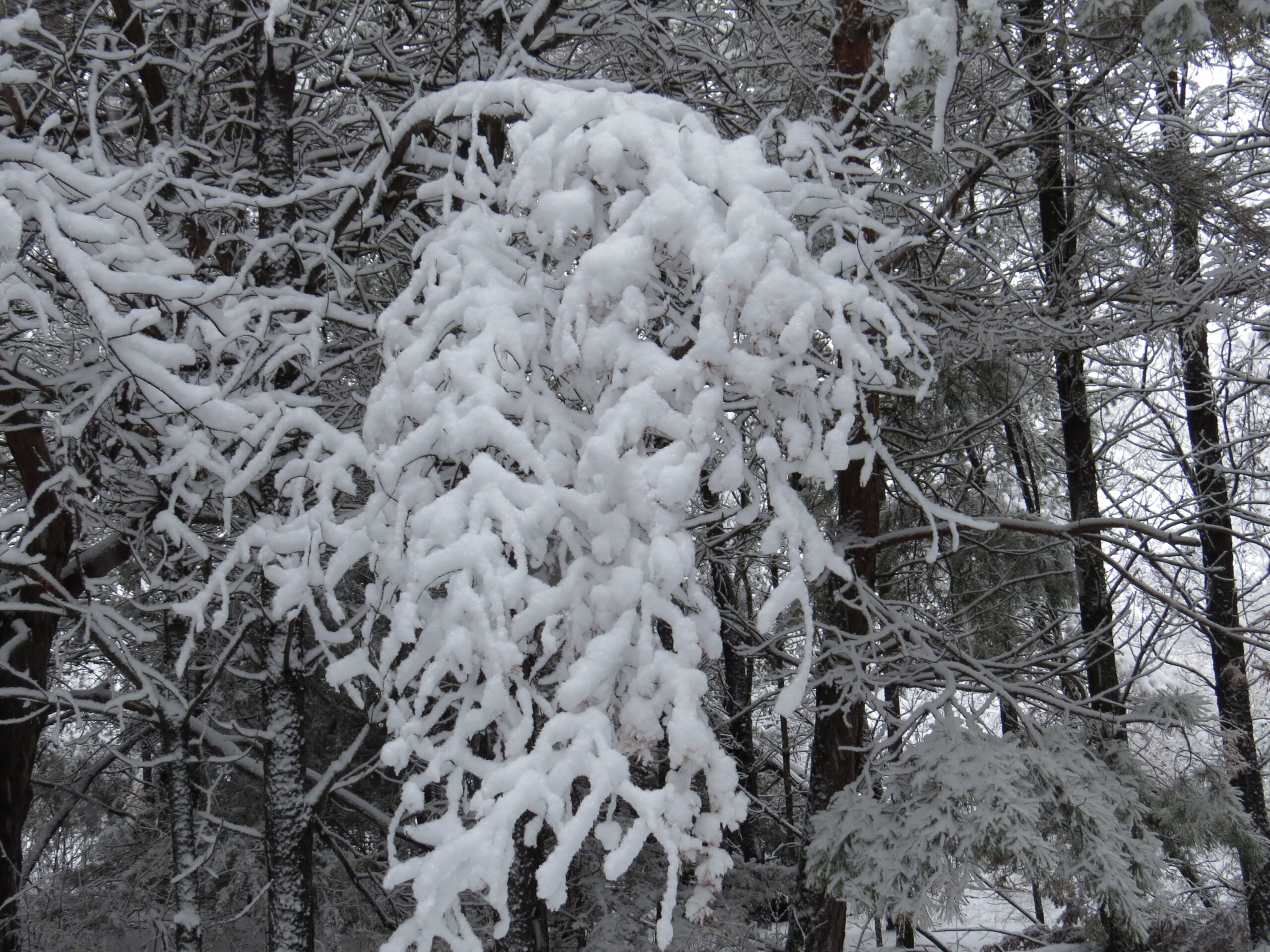
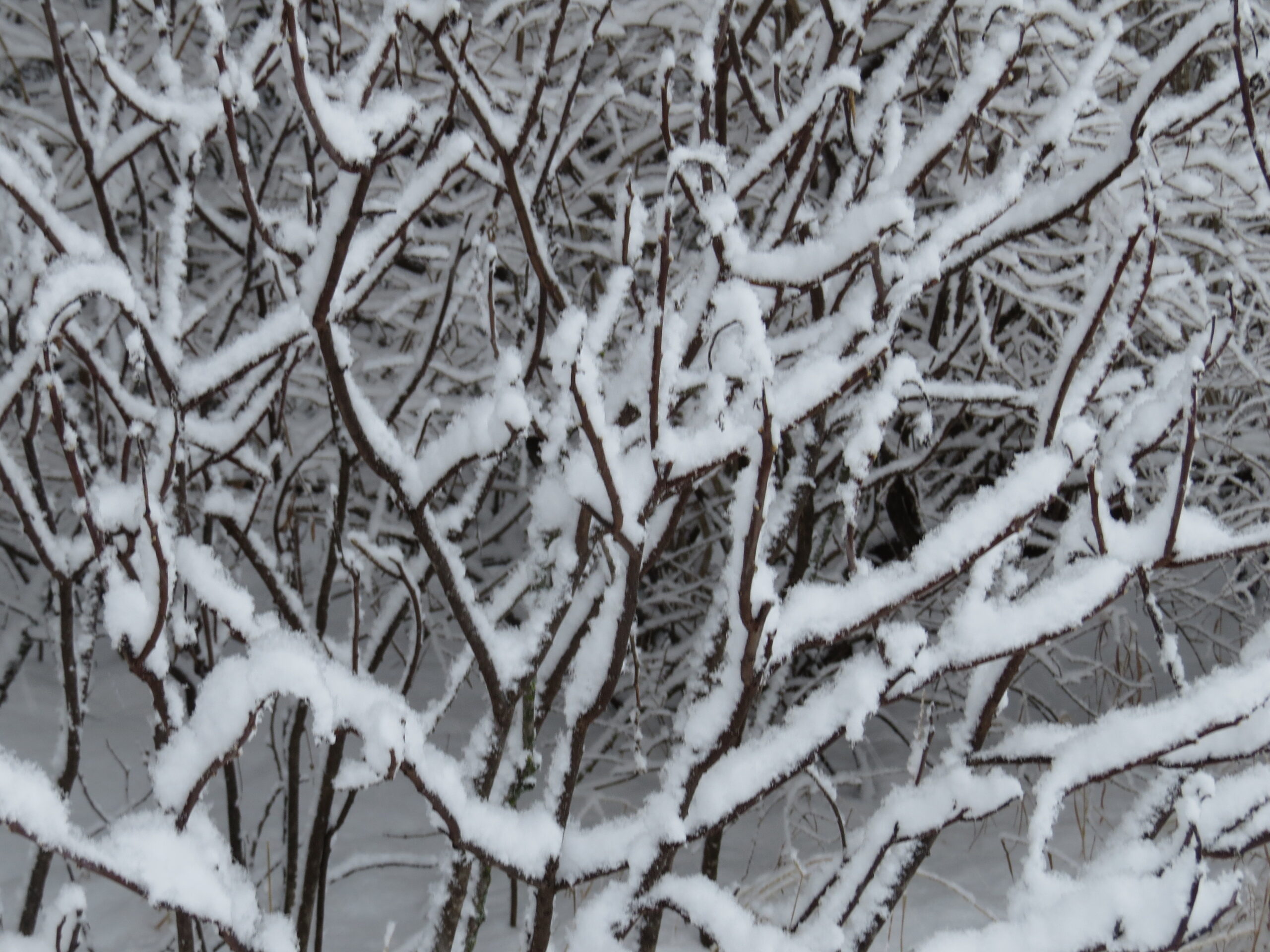
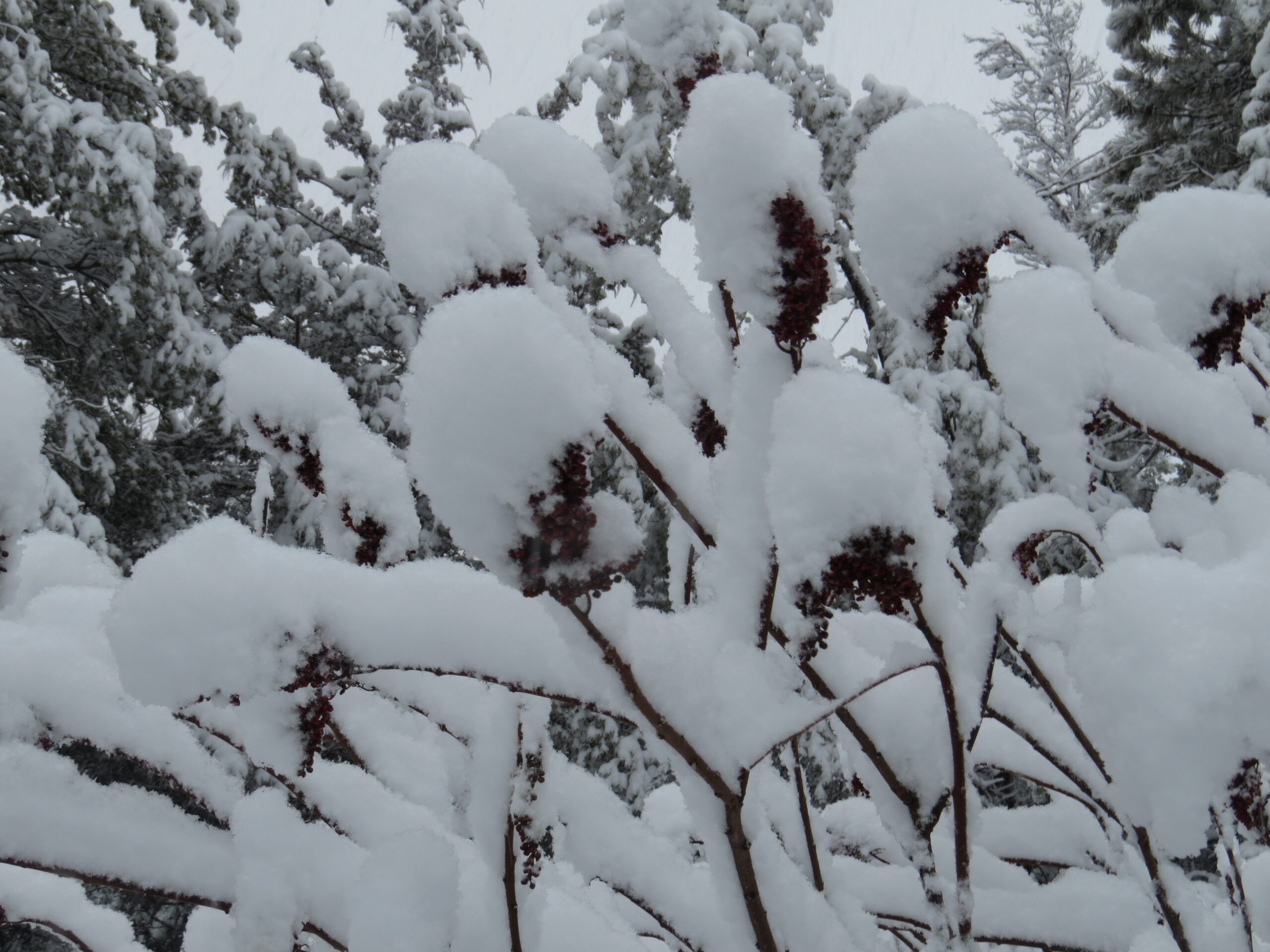
Black and white thinking is an ‘easy’ way of thinking. Things are right or wrong, good or bad, helpful or unhelpful. I’m a pro at it. (And notice I did it with the word ‘easy.’) It’s actually an immature way of thinking that we all go through in our development. As we grow, our developing brains are better able to detect nuances, comparisons, contrasts, subtleties, ‘gray areas,’ diversity, patterns, details, and connections—the ‘cone-like’ qualities. (This is what good education teaches us.) But as ‘mature’ as we are in our adult, educated brains, when we are emotionally triggered by unprocessed traumas and wounds, we revert back to our ‘rod-like’, child-like, black and white thinking. Our primitive reptilian brain takes over—it is ’91 million’ strong compared to our ‘4.5 million’ pre-frontal cortex. We are complex and wonderfully made creatures with both rods and cones, with both limbic and cortical regions of the brain, with both immature and mature skills and qualities. But we do not have to be at the ‘whim’ of our triggering emotions—we can use Mother Nature’s gift of silence to calm our bodies and brains in order to notice details, to see all the colors of our situation, and to know that two opposing things can be true (and okay) at the same time. We’ve had a beautiful Winter Wonderland week and a really messy, difficult, time-consuming clean-up. Welcome to Winter and Life!