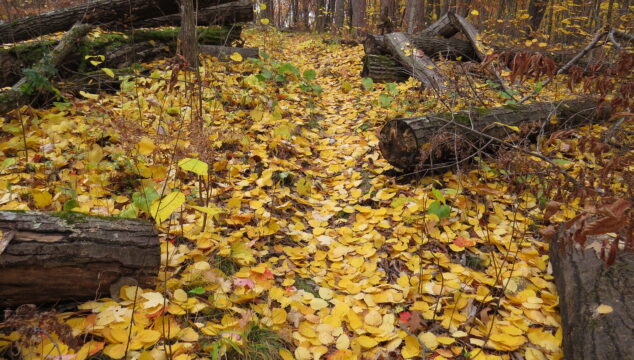
Come walk with me in the peak Autumn beauty of the Northwoods. To say that I love this time of year is an understatement. Most everyone can appreciate the colorful falling leaves---it reveals the 'true self' of a tree when its leaves are no longer producing chlorophyll. Their true colors are revealed, and there is something simple … [Read More...]
Aqua Terra Part II + Aeris
I think we all have a natural affinity to the earth or water, either through our long lines of ancestral DNA or the environment or most likely, both. We are the products of nature and nurture. Water is beautiful to me and intriguing. I love the aqua reflections and ripples, cascades and still pools. I’m also not very comfortable in bodies of water like those deep lakes in the BWCA—I carry some fear and an extra dose of caution. But the land…that’s a different story. I feel at home on the land. It is my home.
We camped at Blue Mounds State Park with my Mom. Both her and my Dad came from farm families in eastern South Dakota. The land was their home, their livelihood, and the entity they interacted with on a daily basis. My parents farmed for a living for a short period of their married lives, but the connection to the land continued and was passed down from their parents through them to their children.
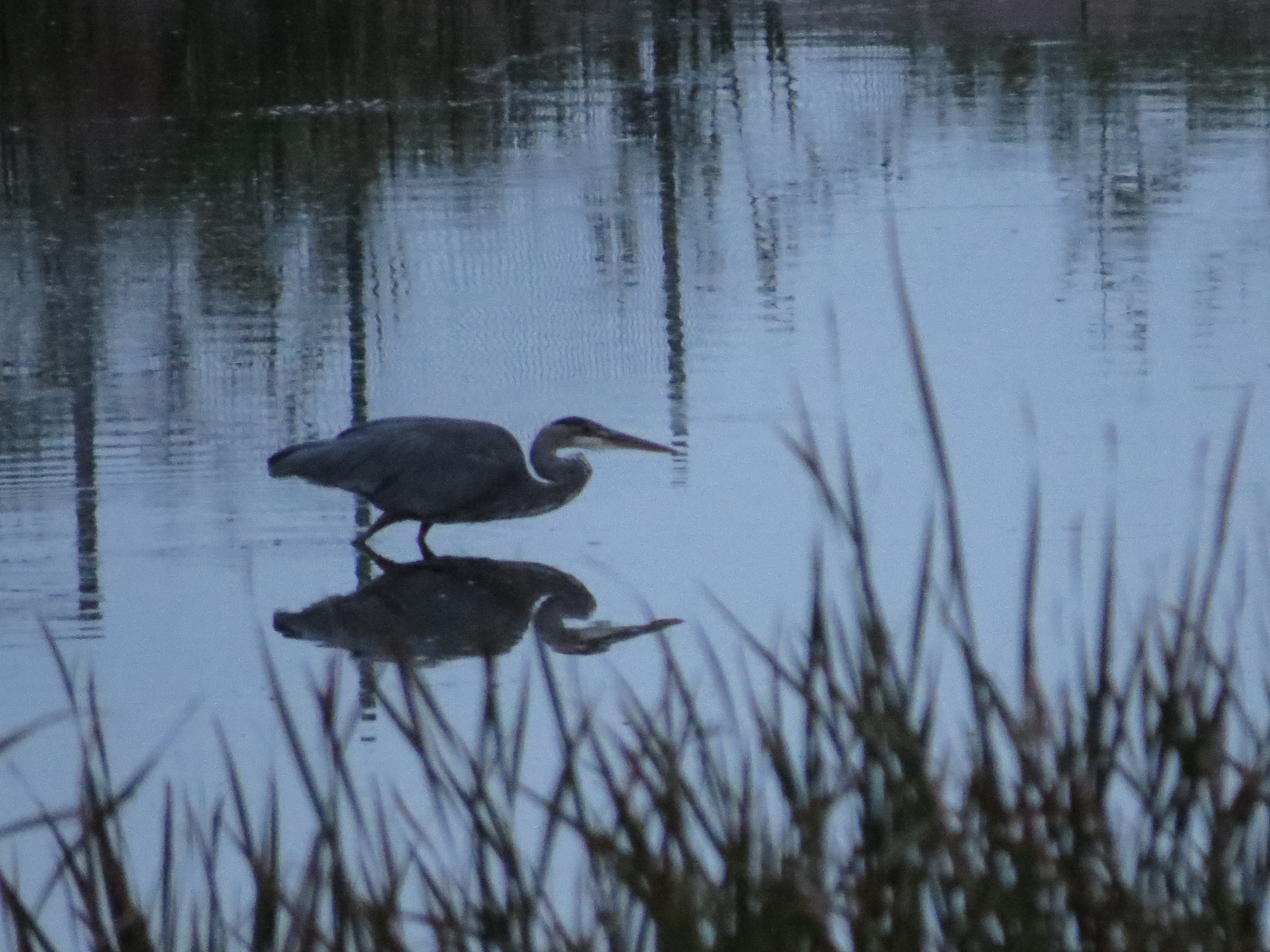
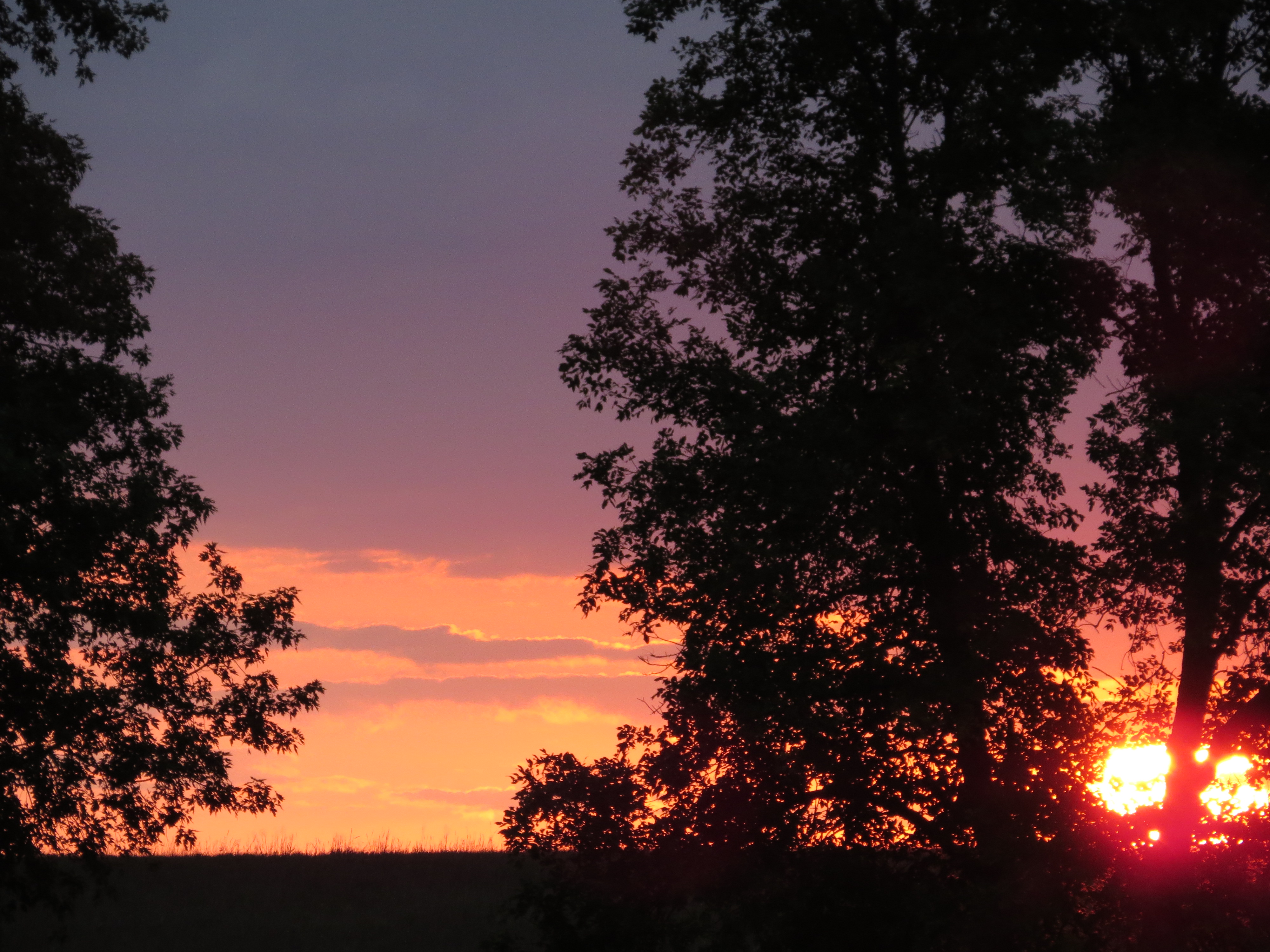
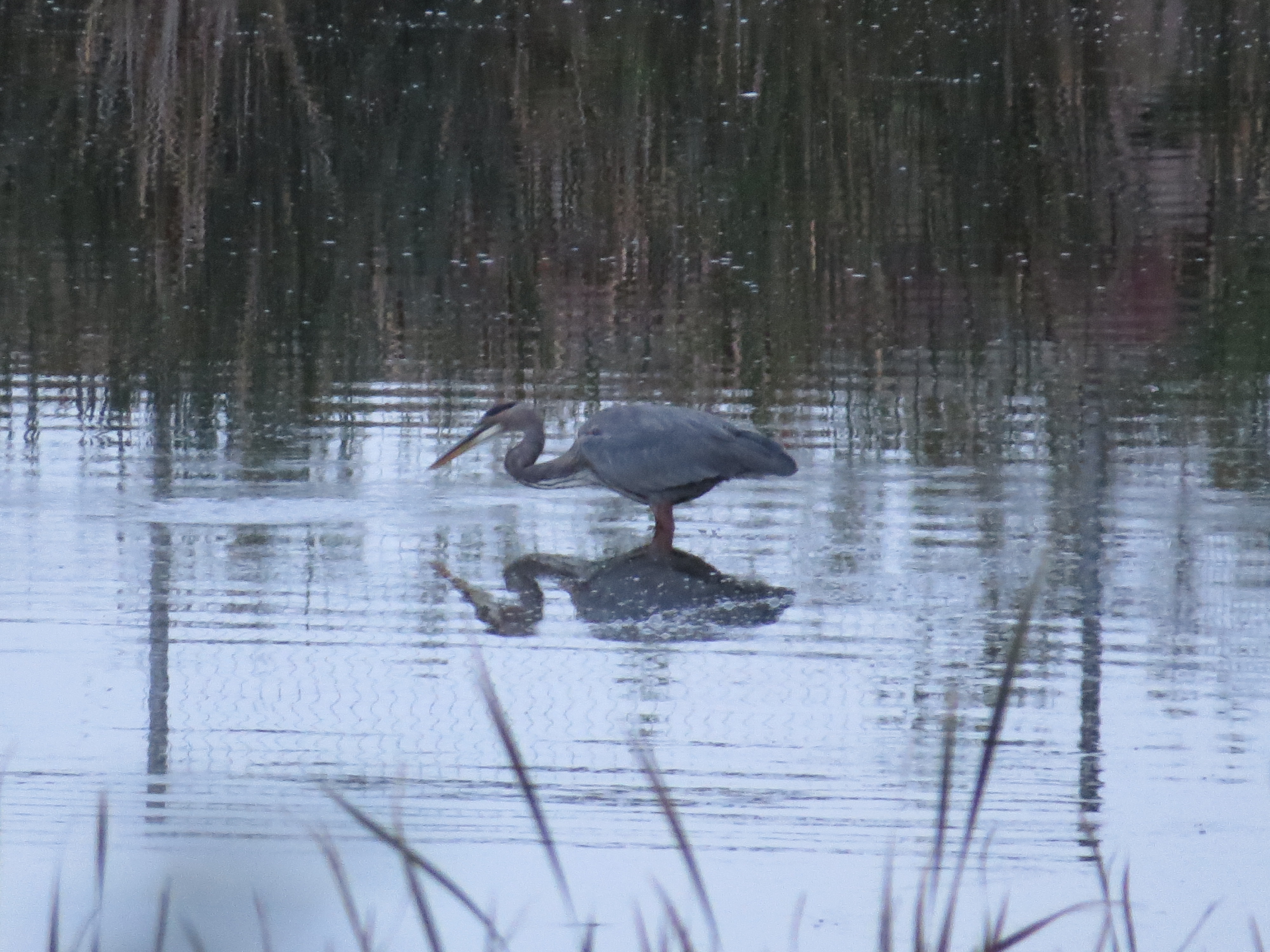
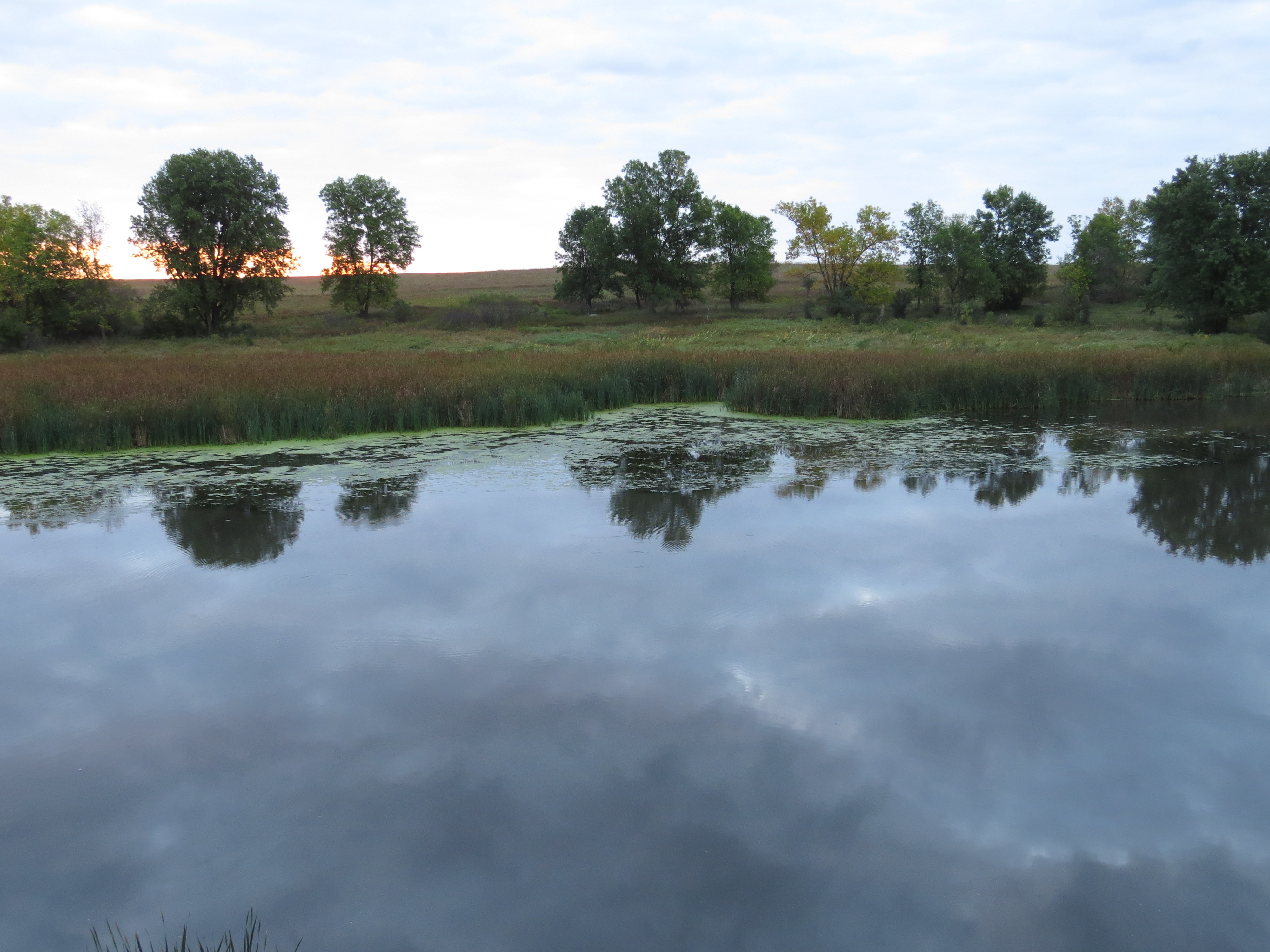
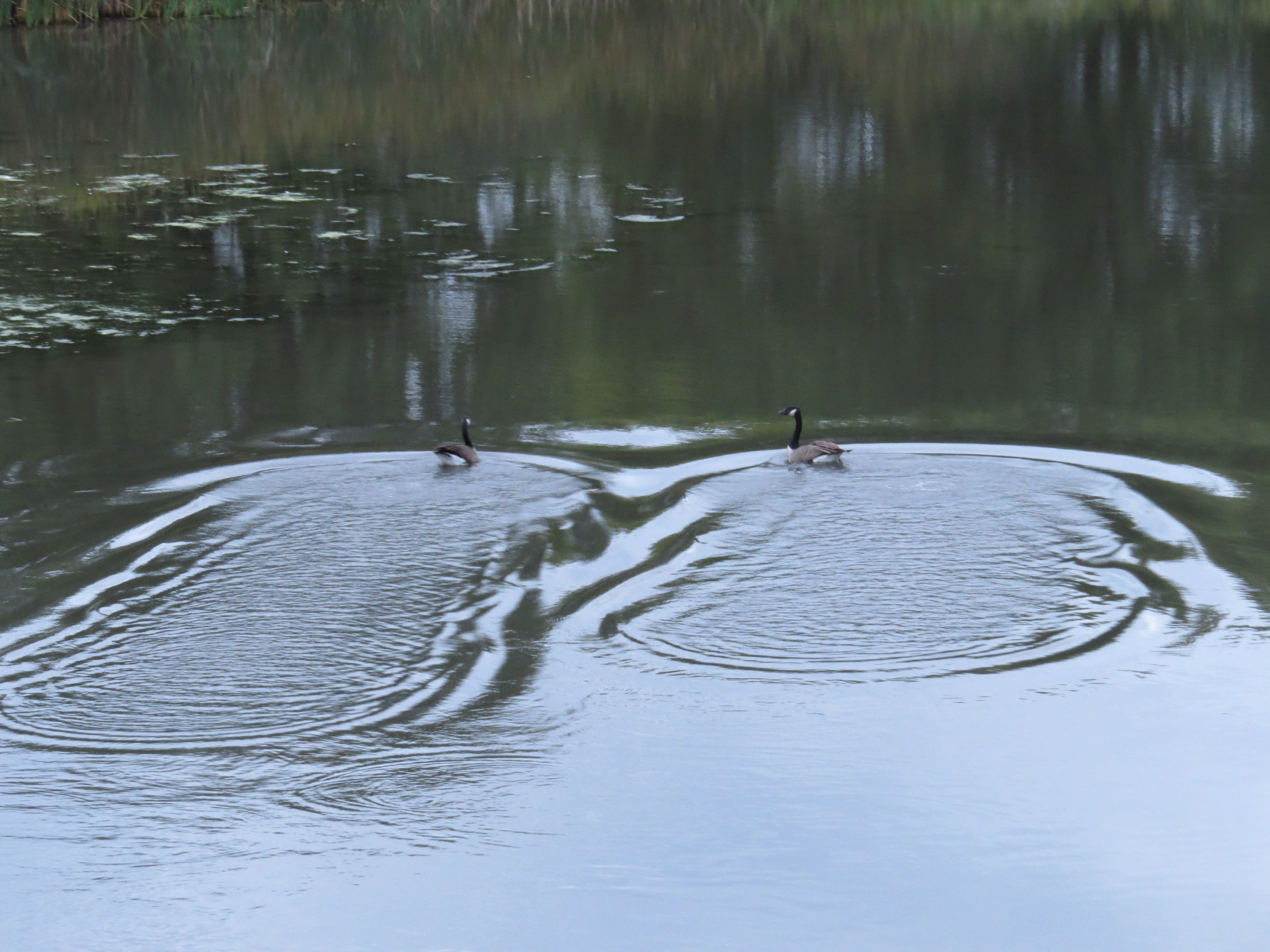
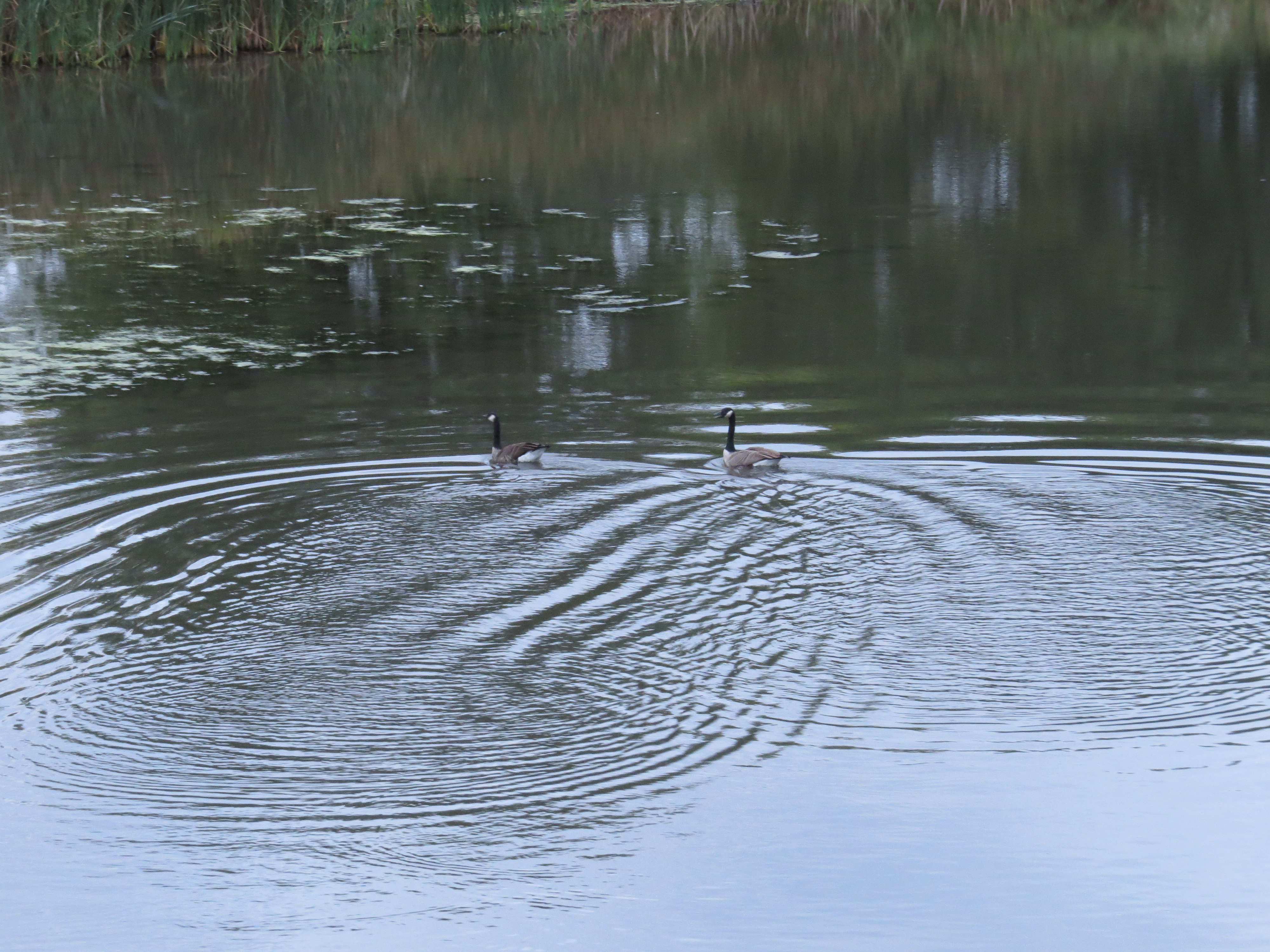
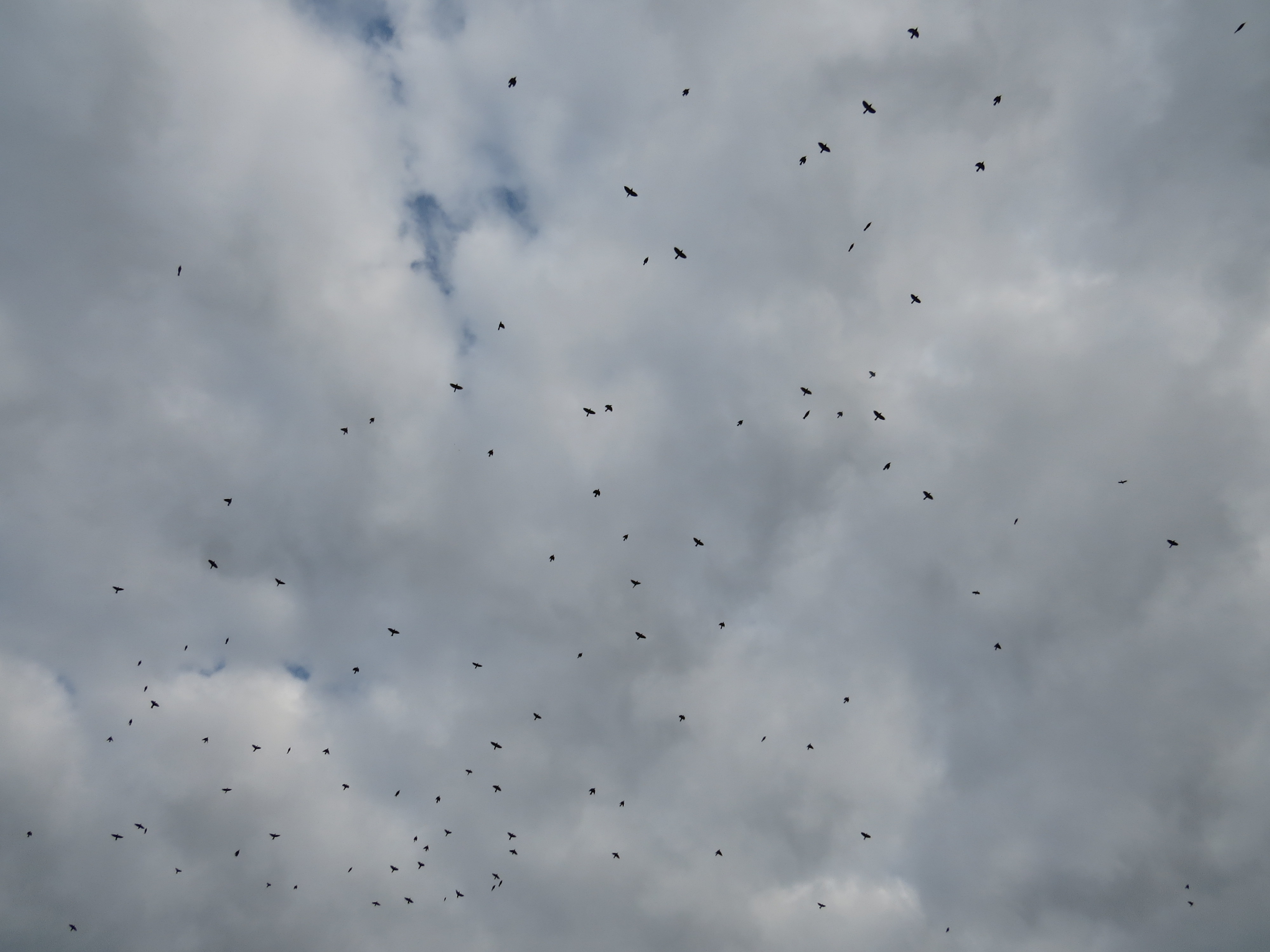
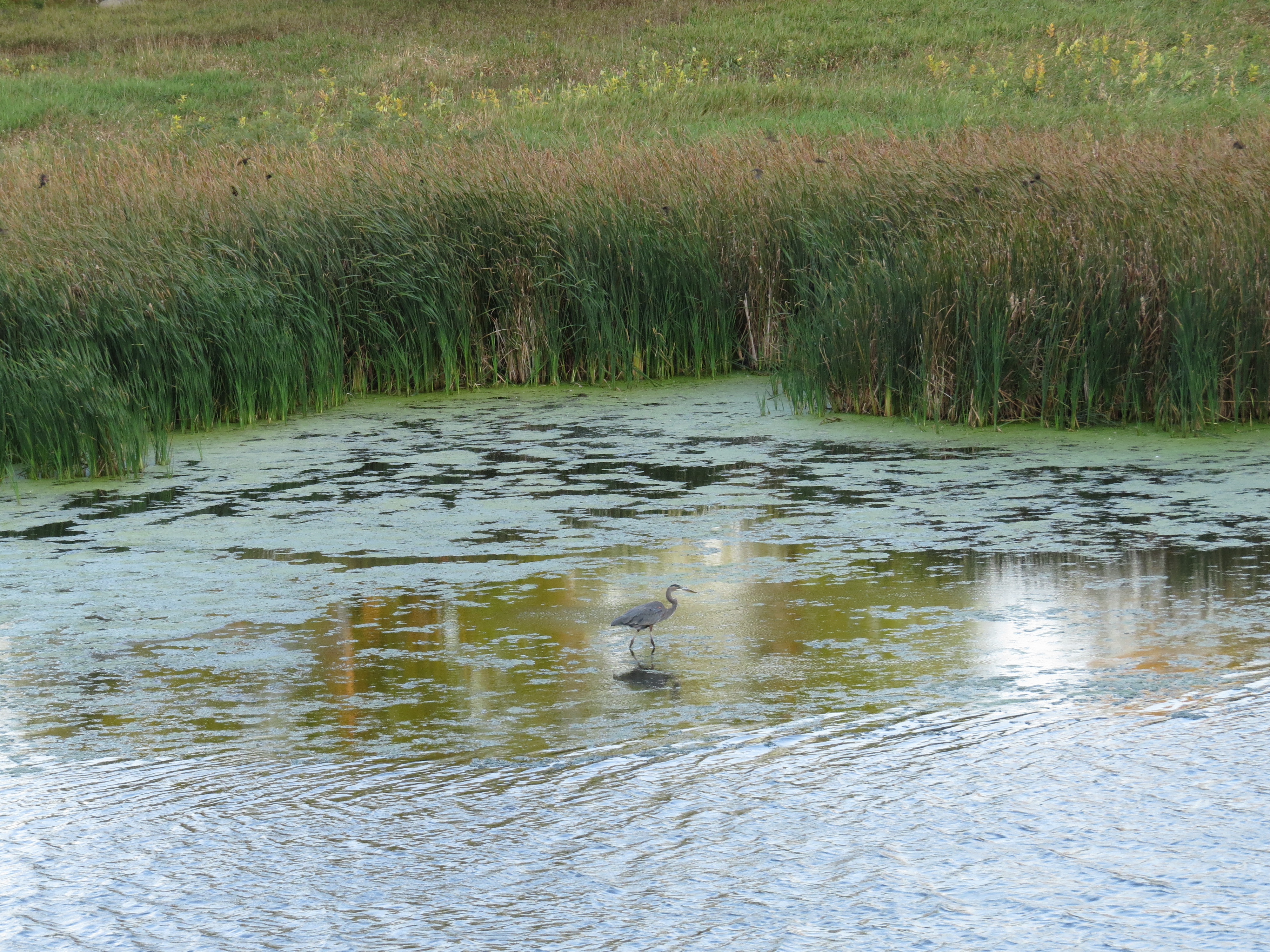
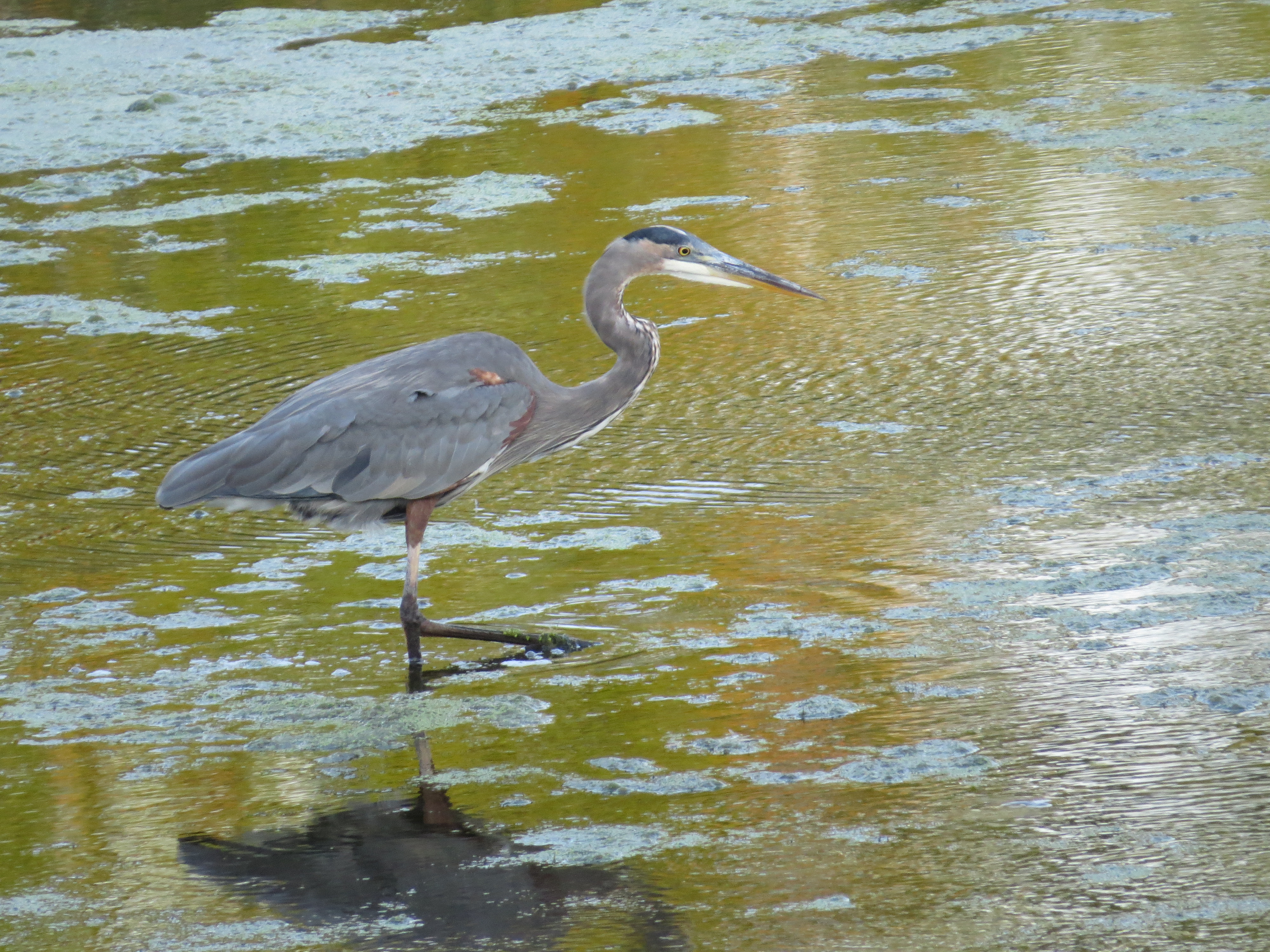
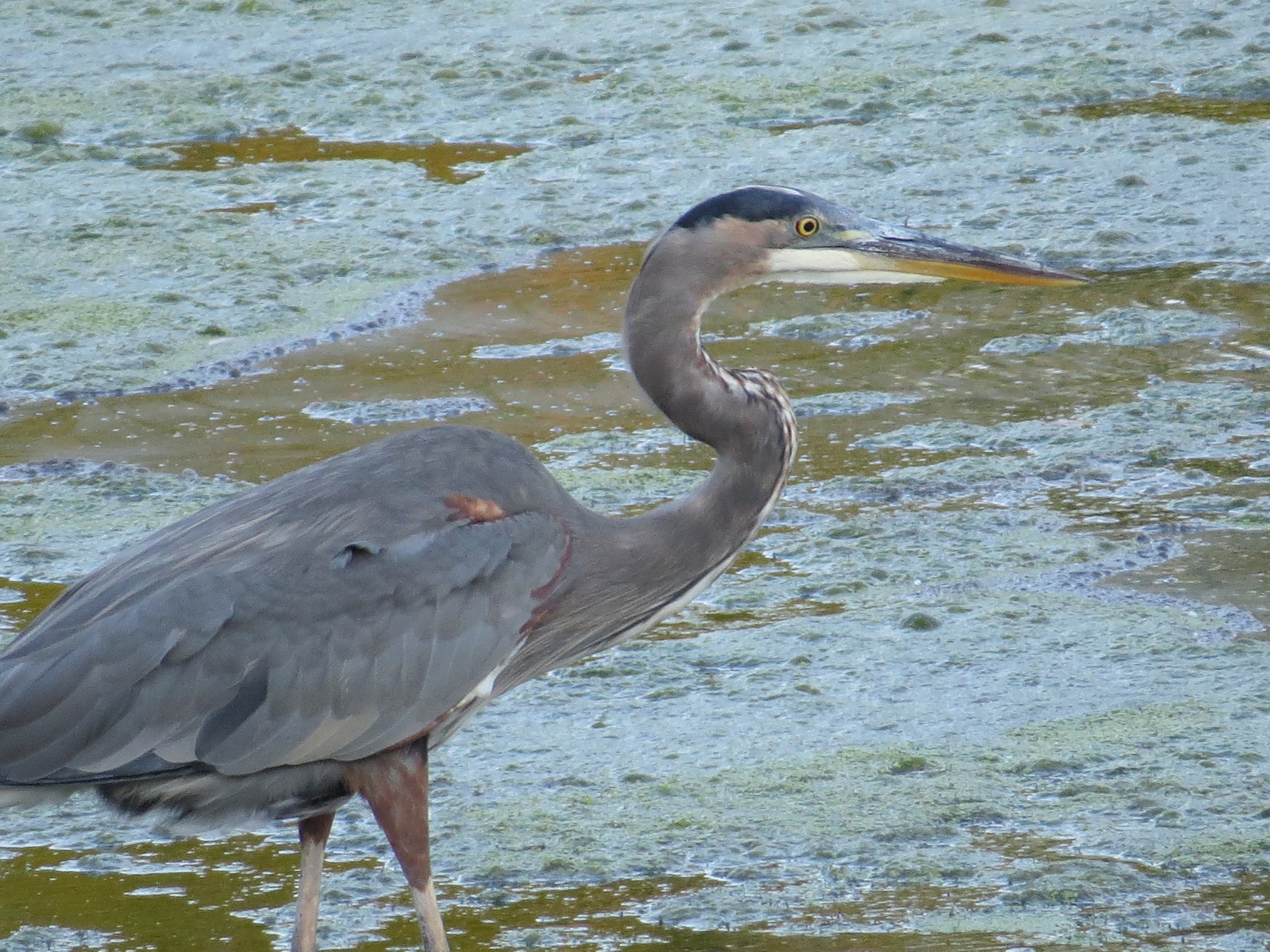
We awoke when the lake behind us was waking up—the Great Blue Heron was fishing for his breakfast, stalking the wetland and darting his long bill into the water, then stretching his neck to let the fish slide down his lengthy gullet. The sun popped up over the horizon, coloring the dawn sky with the same hues as the quartzite rock that lay in the ground around us. A pair of geese landed on the water, their ripples separate, then merged. And the mega-chorus of blackbirds lifted from the cattails into the aeris.
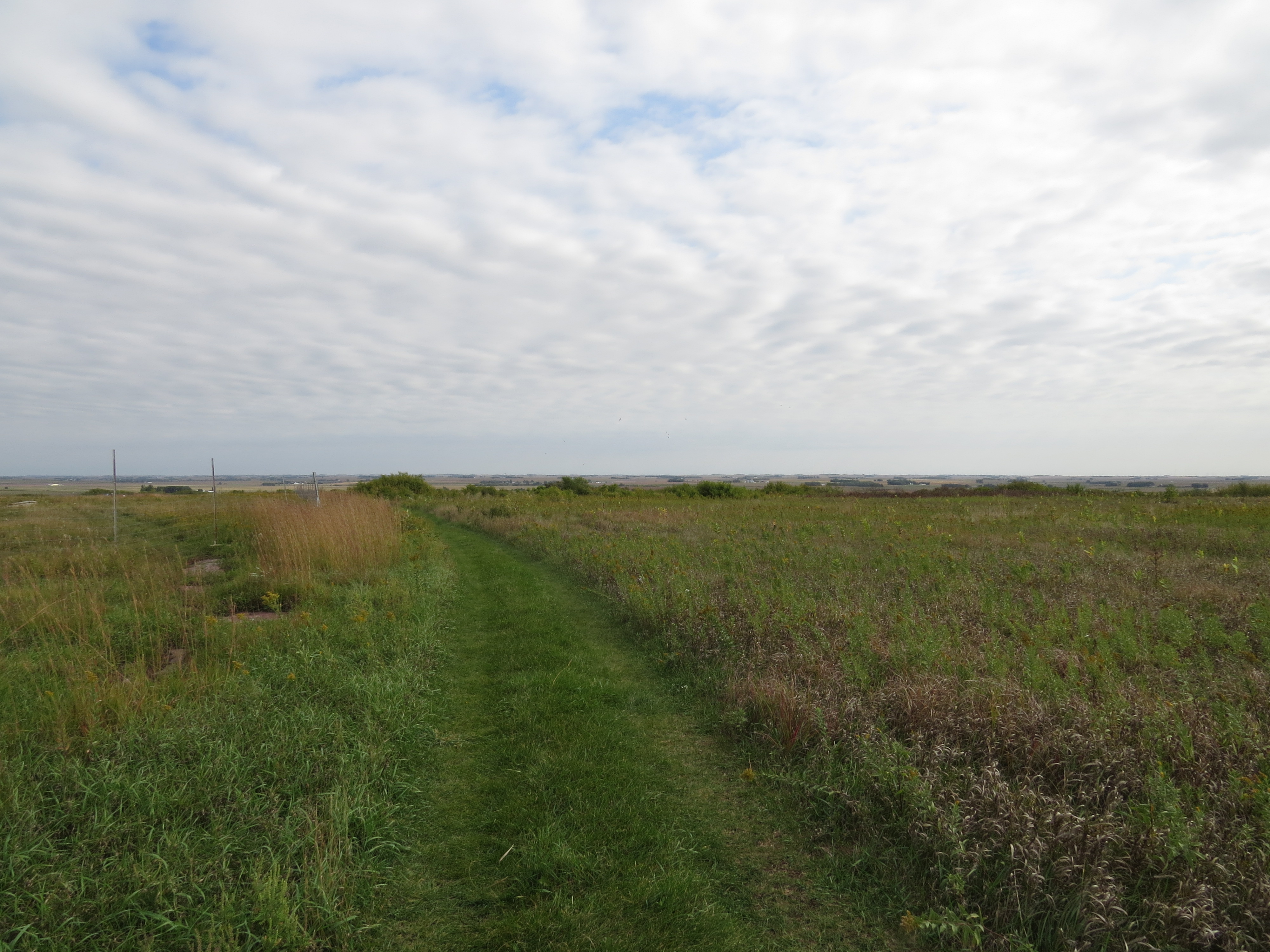
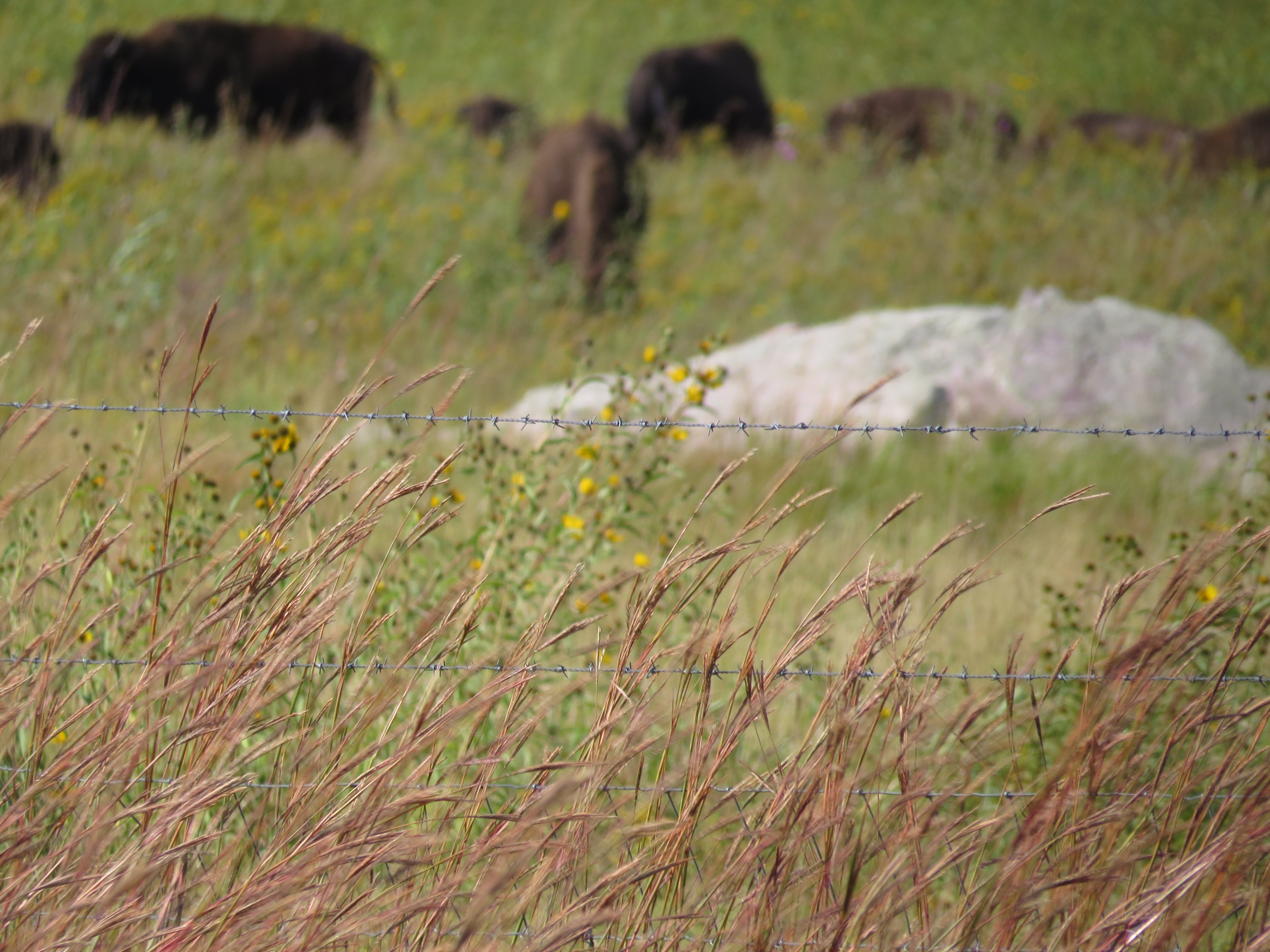
We cooked breakfast and readied ourselves for hiking. We planned to go on Mound Trail, described as one long, gradual hill—1.5 miles one way. It followed the fence line that enclosed the bison, so we were hoping to see them again. The mowed grass trail was easy to walk on, and as described, the slope was gentle. The tallgrass prairie had gone to seed—the grasses, most of the flowers, and the weeds. Whenever we turned around, we marveled at how far we could see, and then realized we weren’t even close to the top of the Mound.
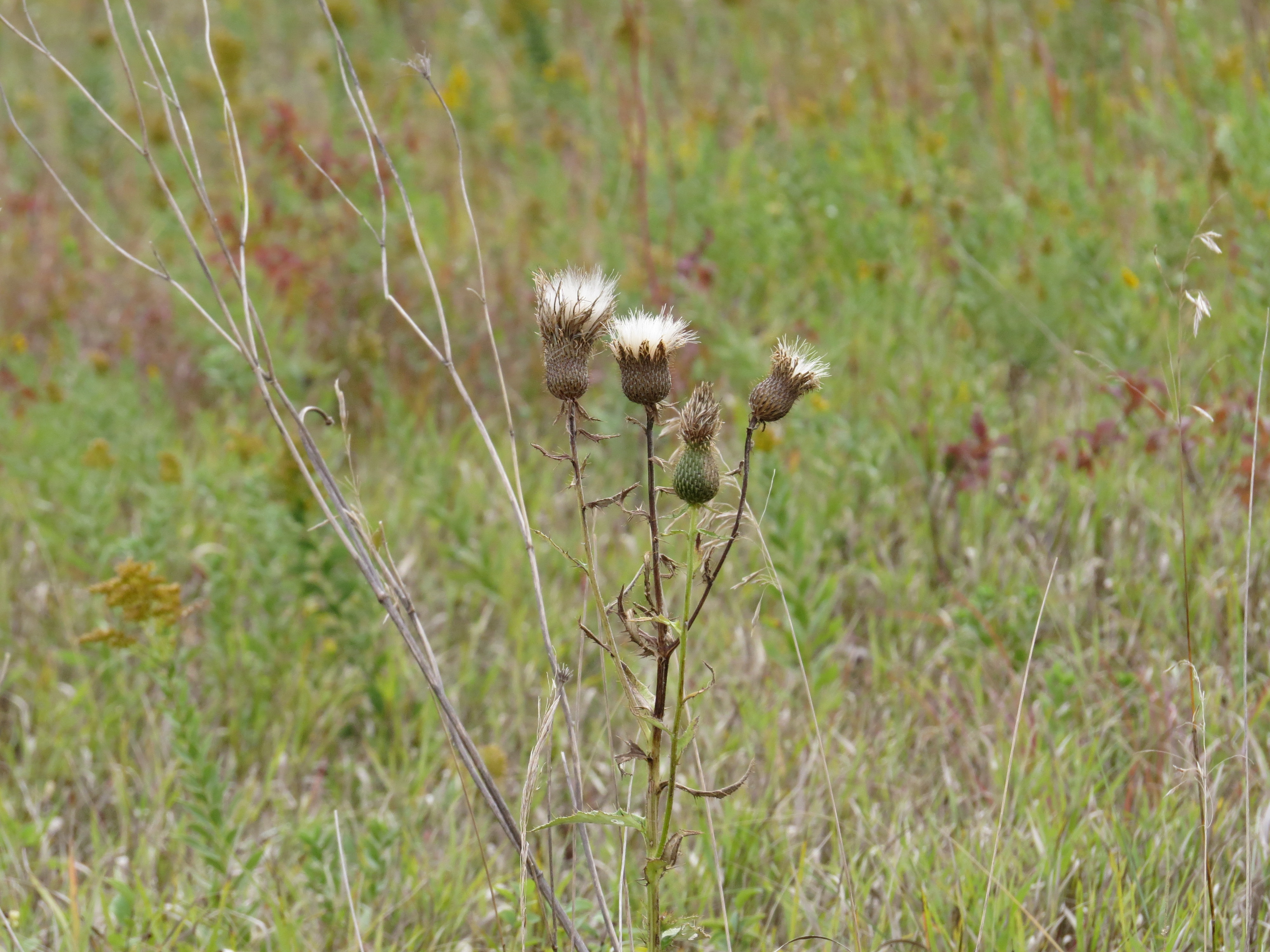
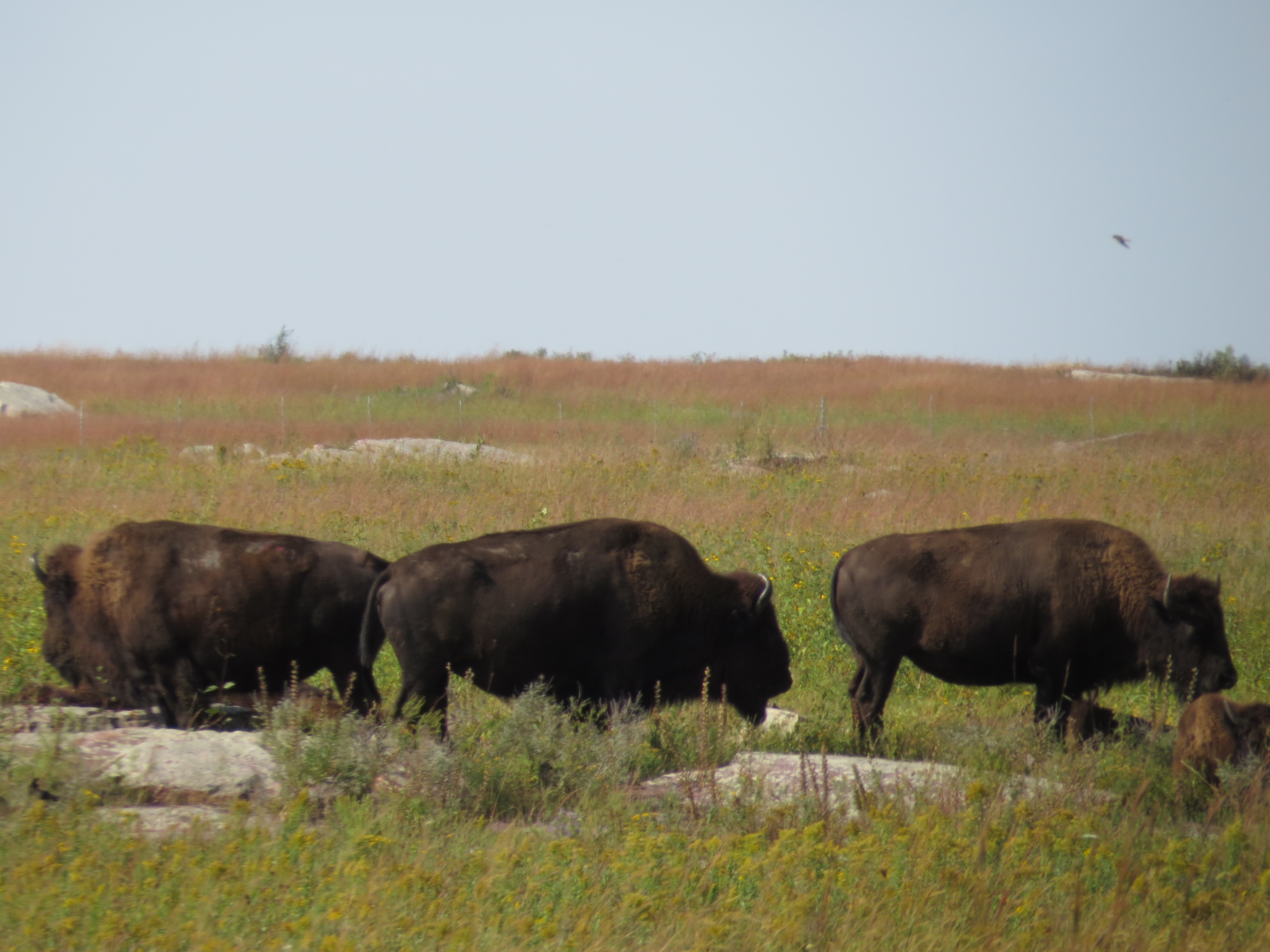
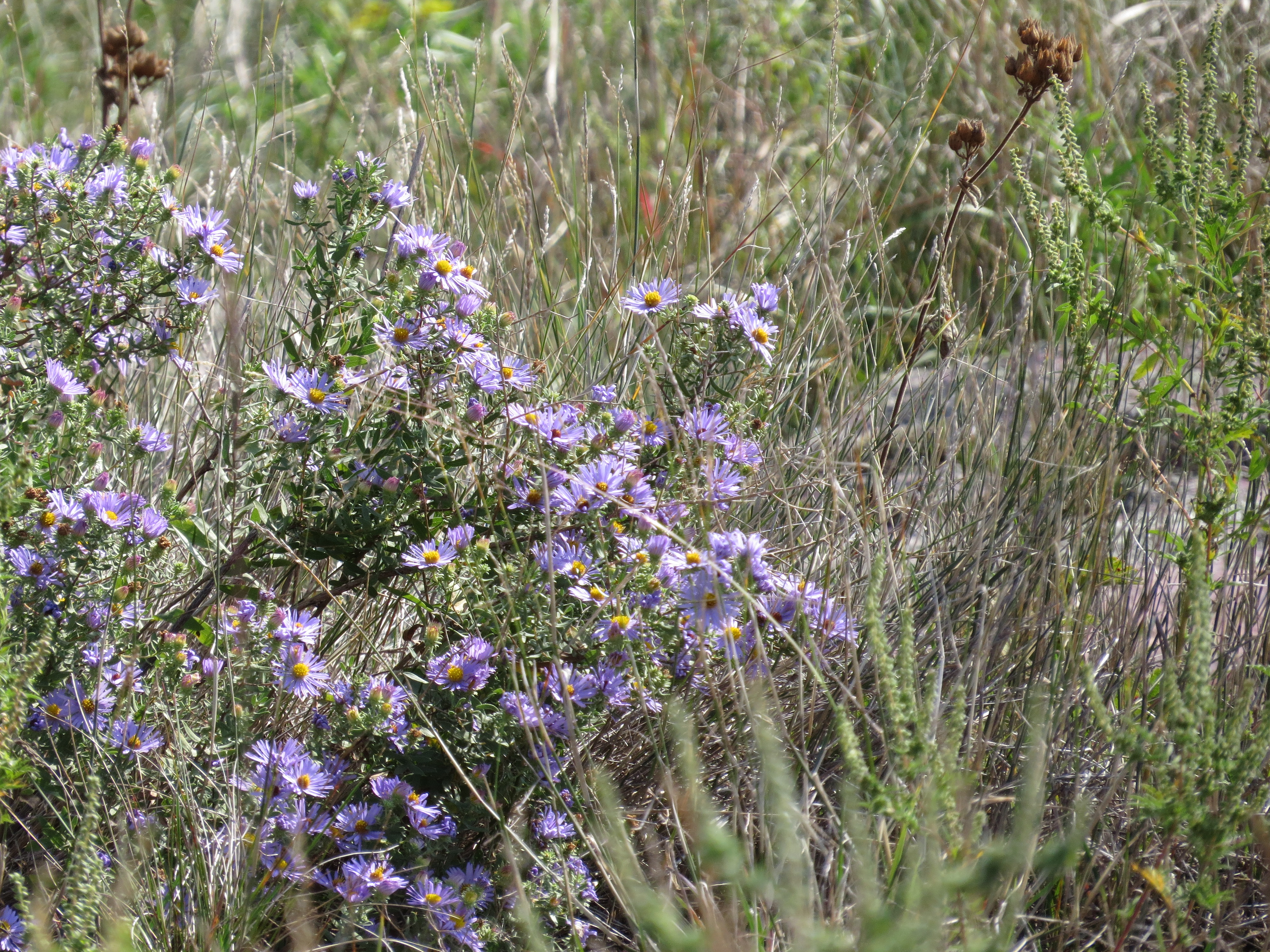
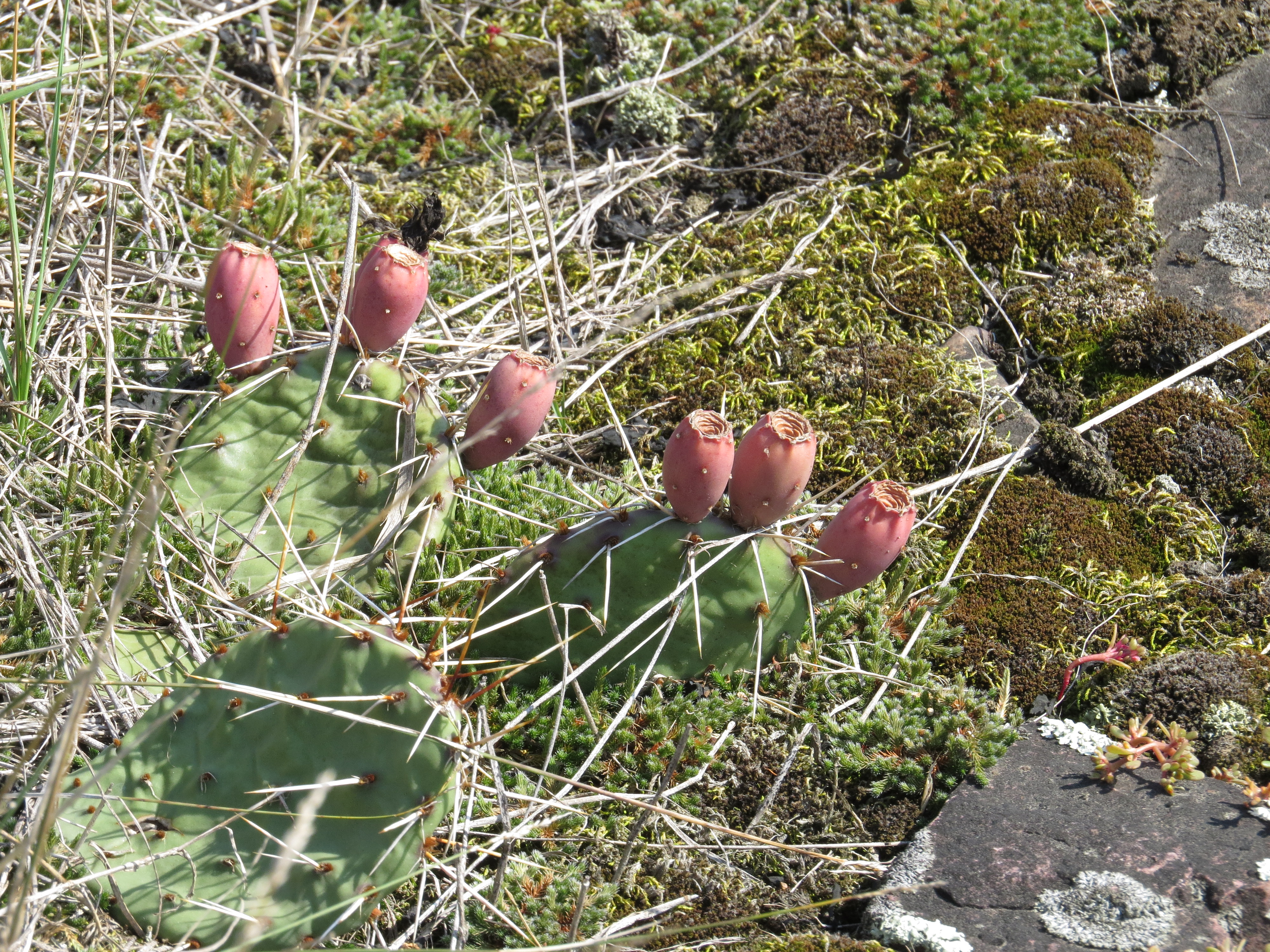
At some point up the trail we encountered a small group of Bison mamas and babies just basking in the sunlight. Sprays of purple Asters and an occasional Sunflower bloomed in the prairie grasses. Prickly Pear Cacti were scattered throughout the Mound prairie, most often by the boulders that protruded from the ground where the soil was thin and heat from the rocks provided them a desert-like environment. At this time of year, the red fruits of the cacti contrasted from the green paddles and the long, white, needle-like spines.
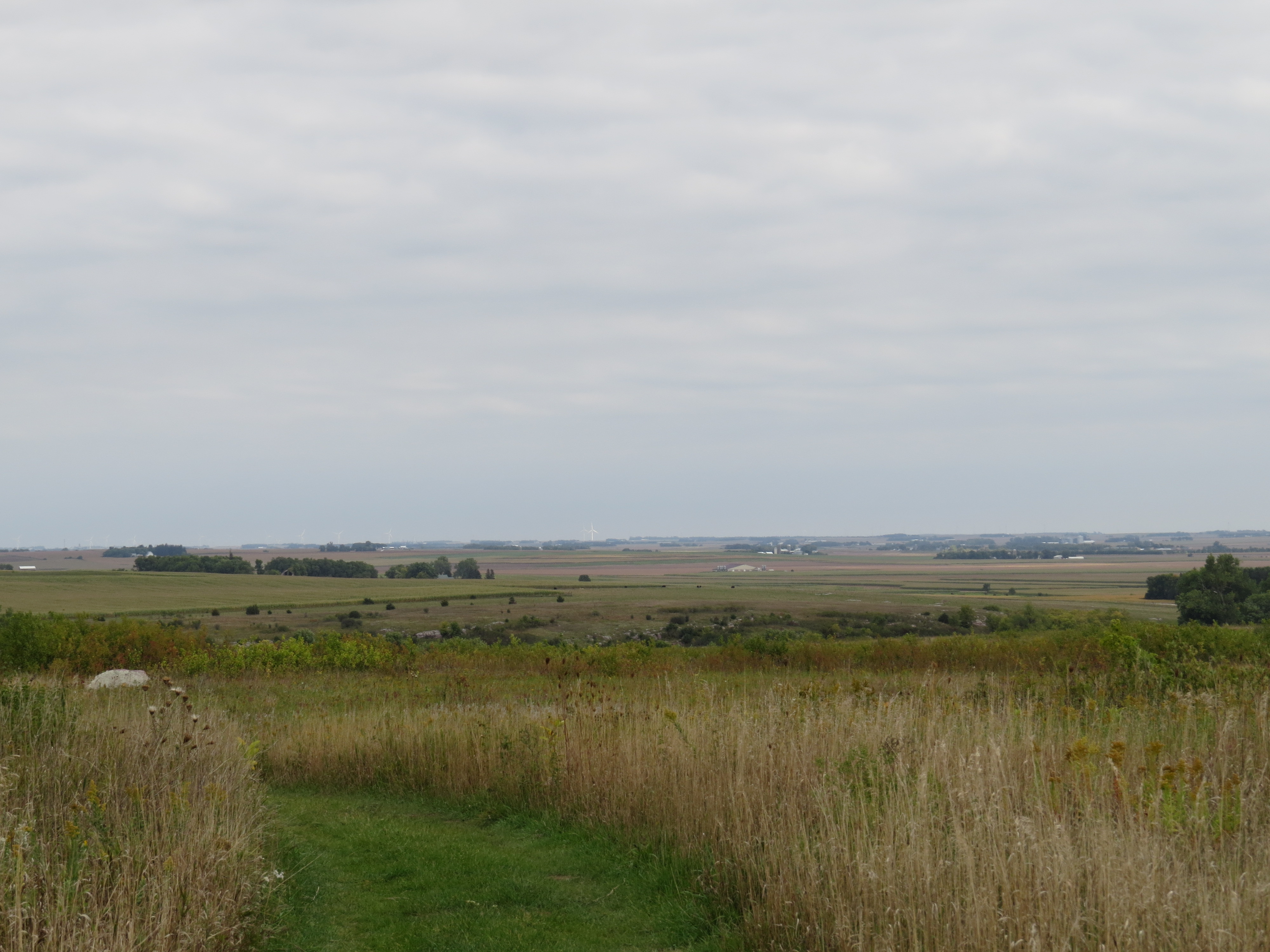
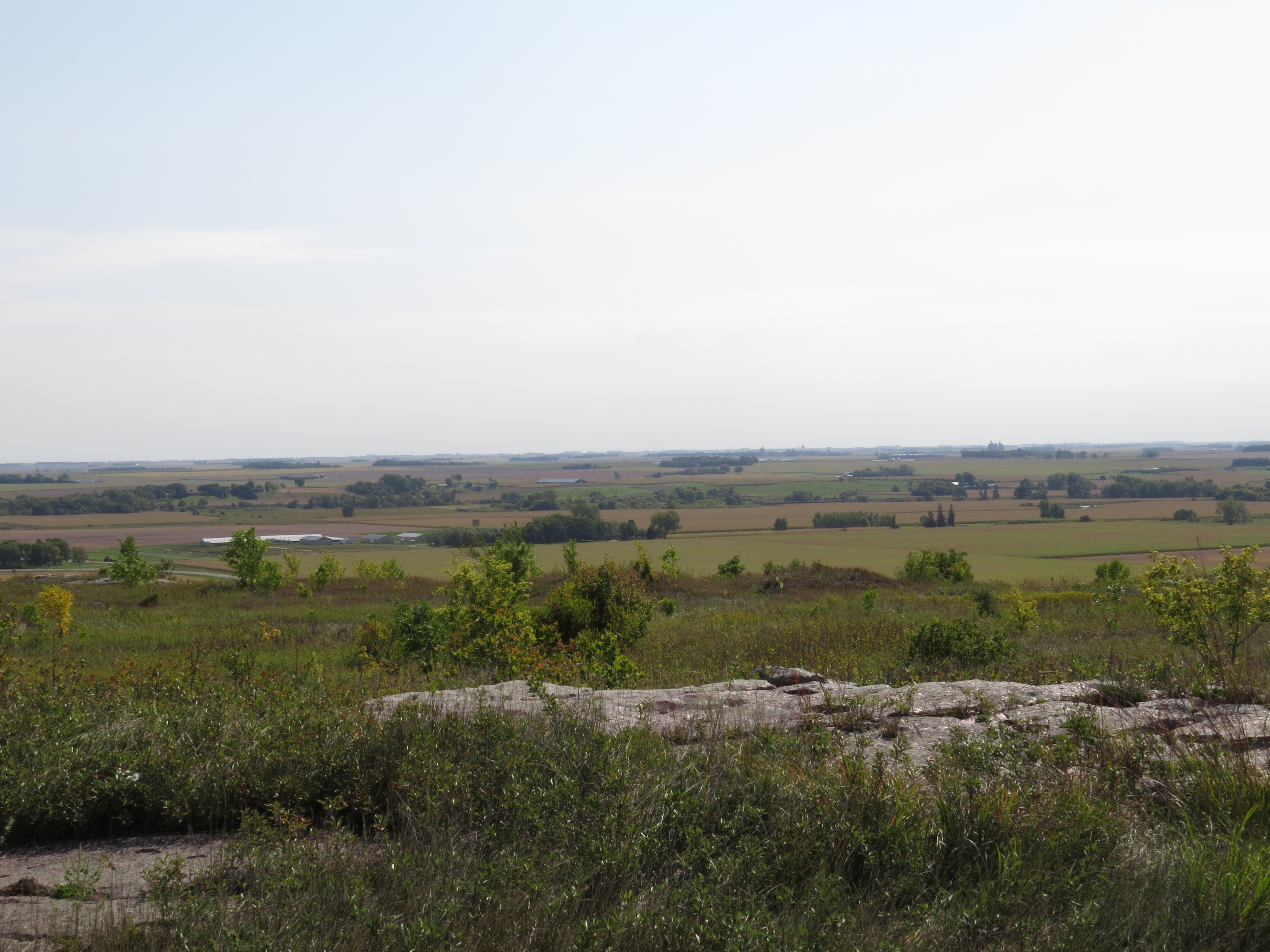
At the top of the Mound by a landmark boulder called Eagle Rock, we had a full 360 degree view of the surrounding terra. Adventurer, lawyer, and painter George Catlin, on his journey to the nearby Pipestone quarry in 1836 wrote:
“There is not a tree or bush to be seen. The eye may range east and west to a boundless extent over a surface covered with grass. The grass is green at one’s feet but changes to blue in the distance like the blue and vastness of the ocean. Man feels here, the thrilling sensation of unlimited freedom.”
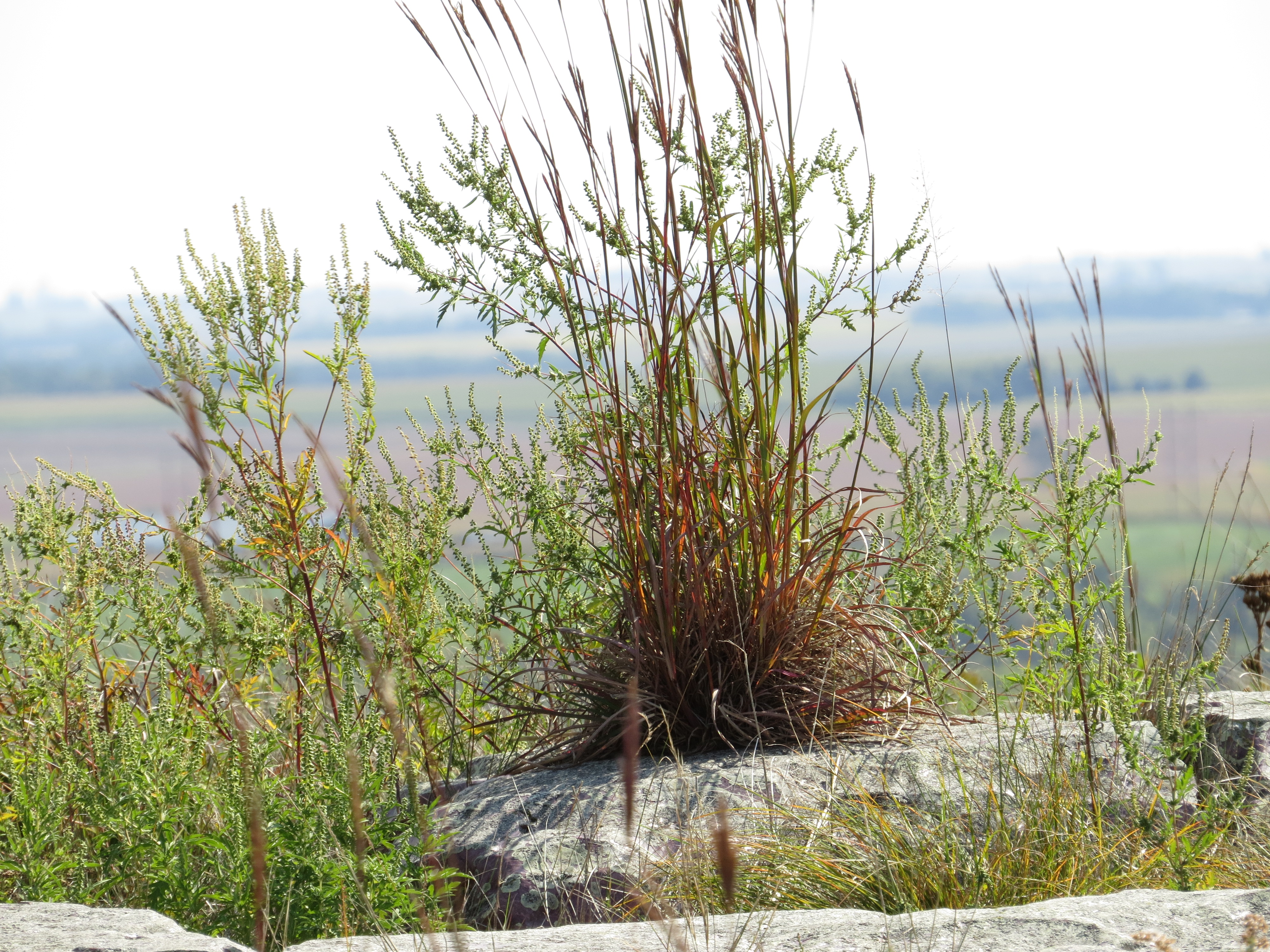
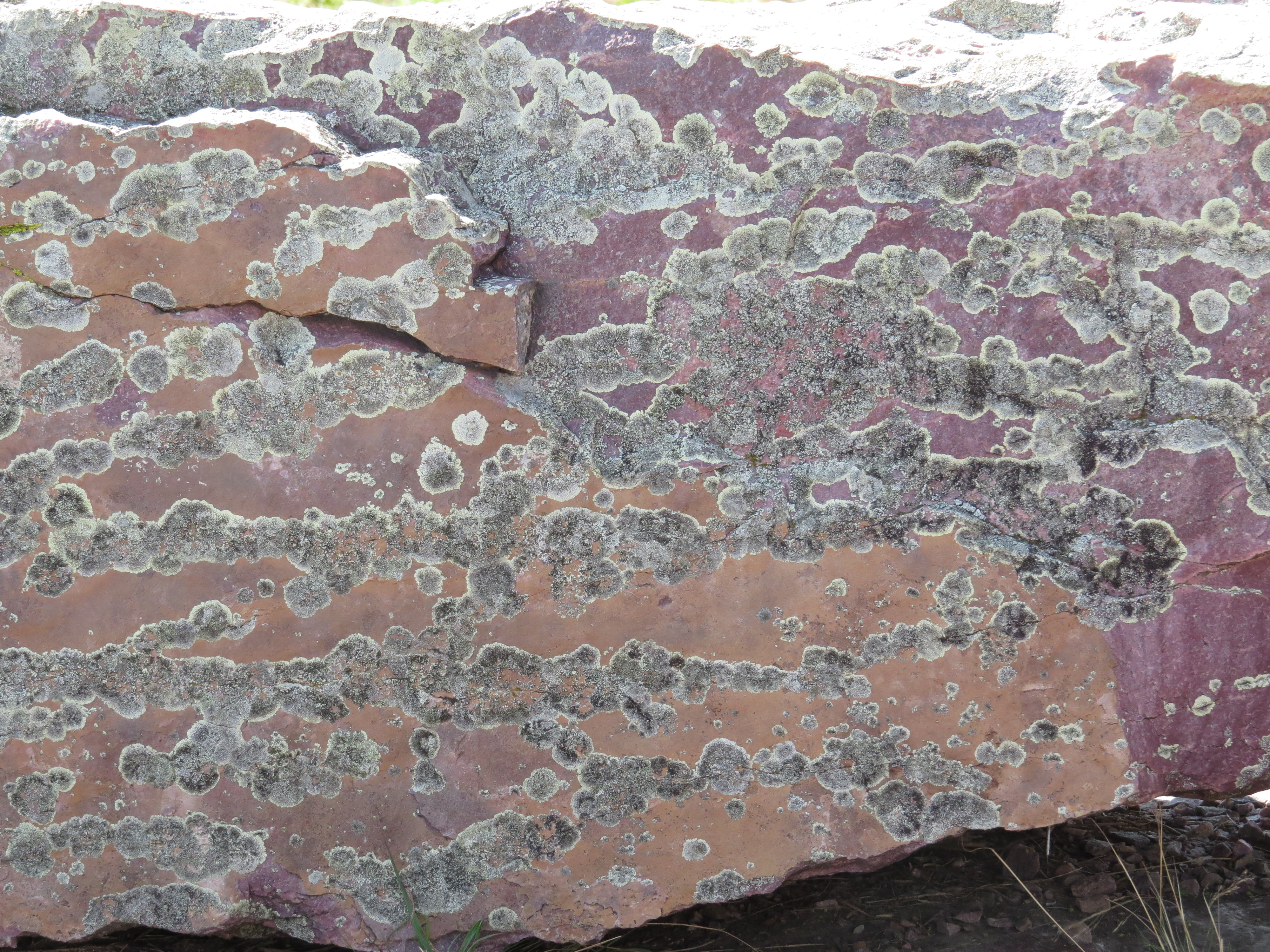
From Eagle Rock, it was a short hike down to the former home of Frederick Manfred, author of many books, including Lord Grizzly (made into the movie ‘The Revenant.’) The home and surrounding land was purchased in 1972 by Minnesota State Parks and transformed into the interpretive center (now closed due to structural problems) and Blue Mounds State Park.
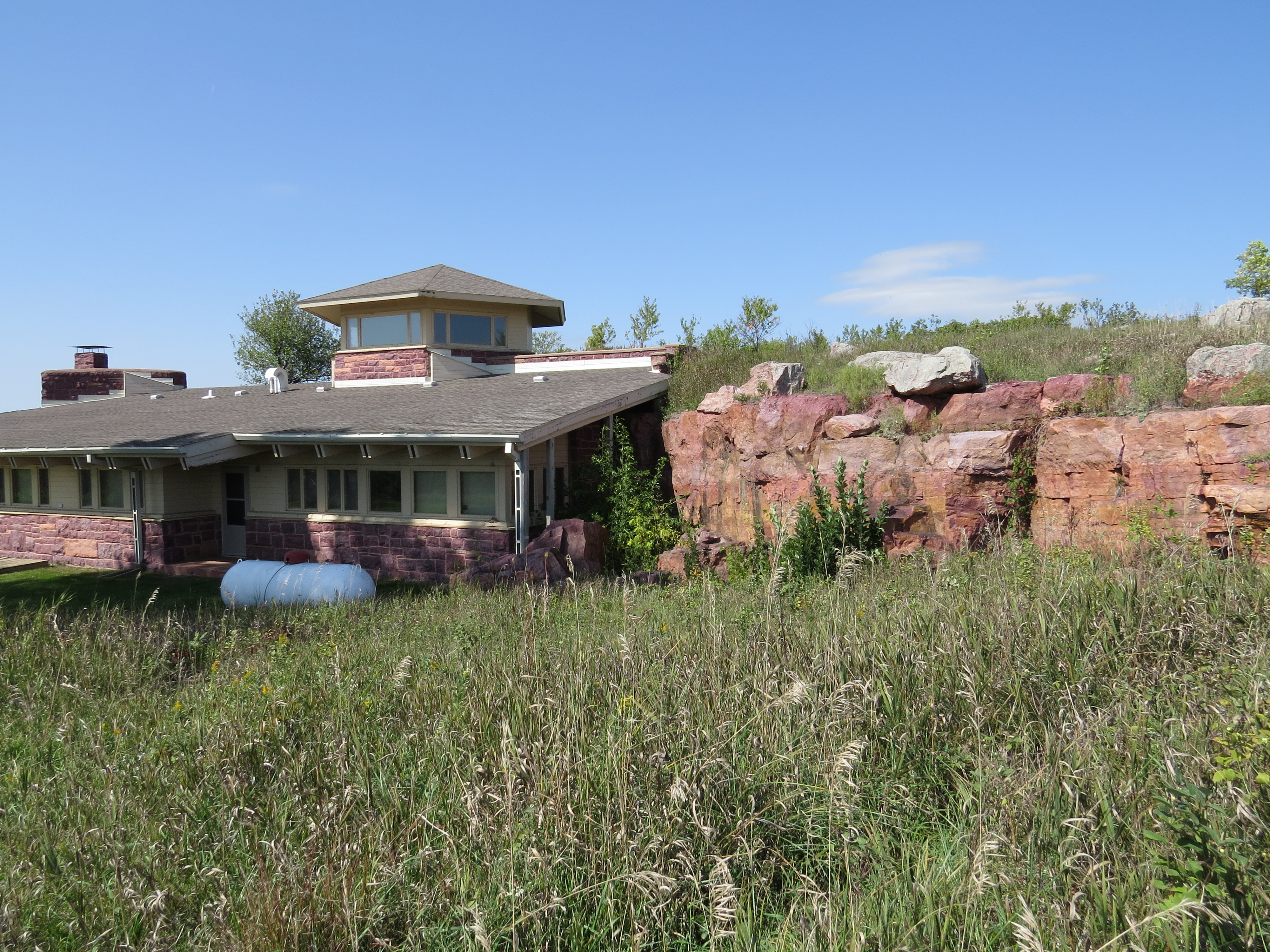
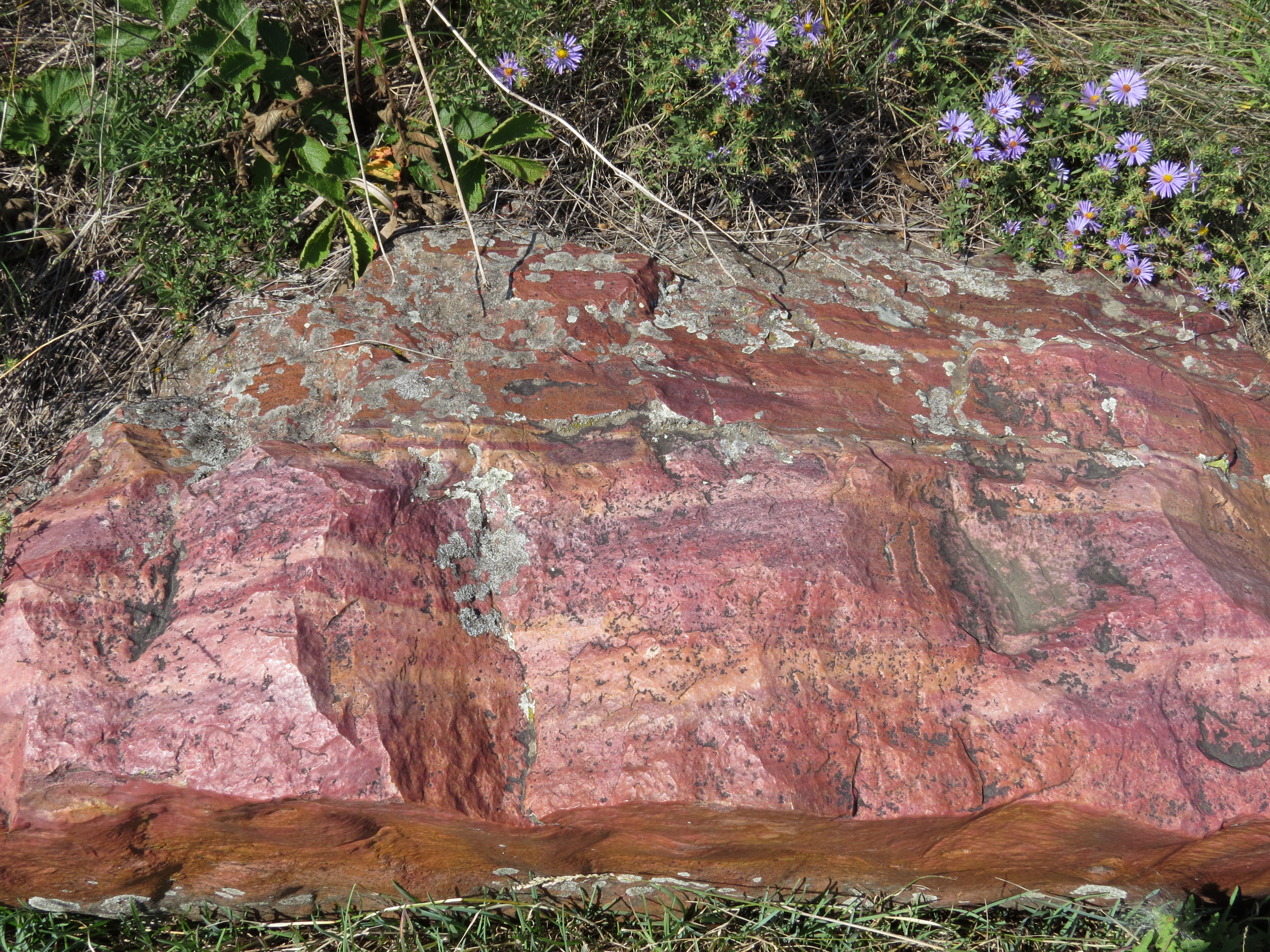
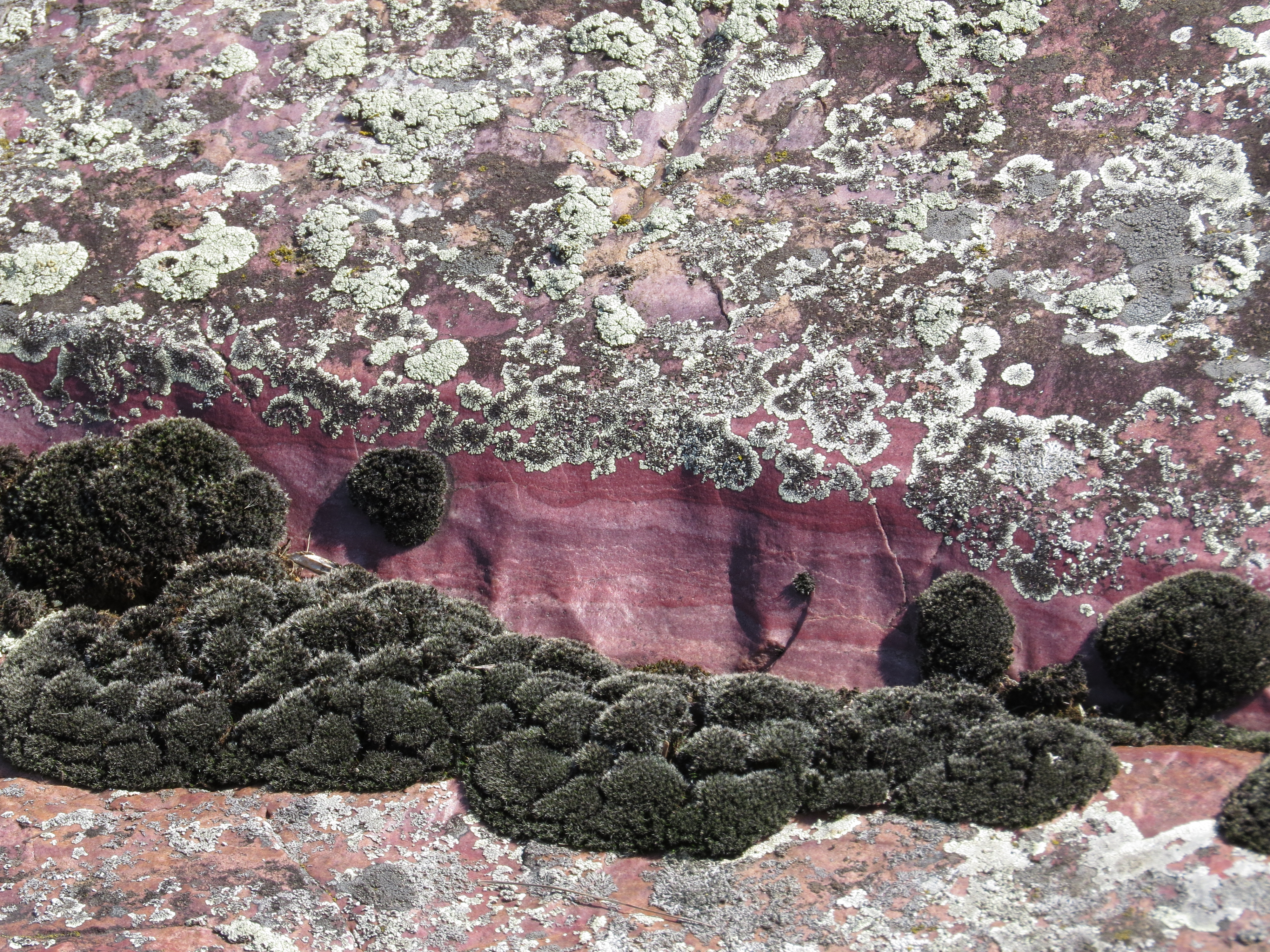
The rock used on Manfred’s home was salvaged from the first school built in 1897 in Luverne that had been originally quarried from this historic red rock quarry. The old quarry site is available to climbers, one of whom we talked to who had just free-climbed the steep wall. Meanwhile, my knees got weak as I inched towards the edge and looked down at the beautiful red rock.
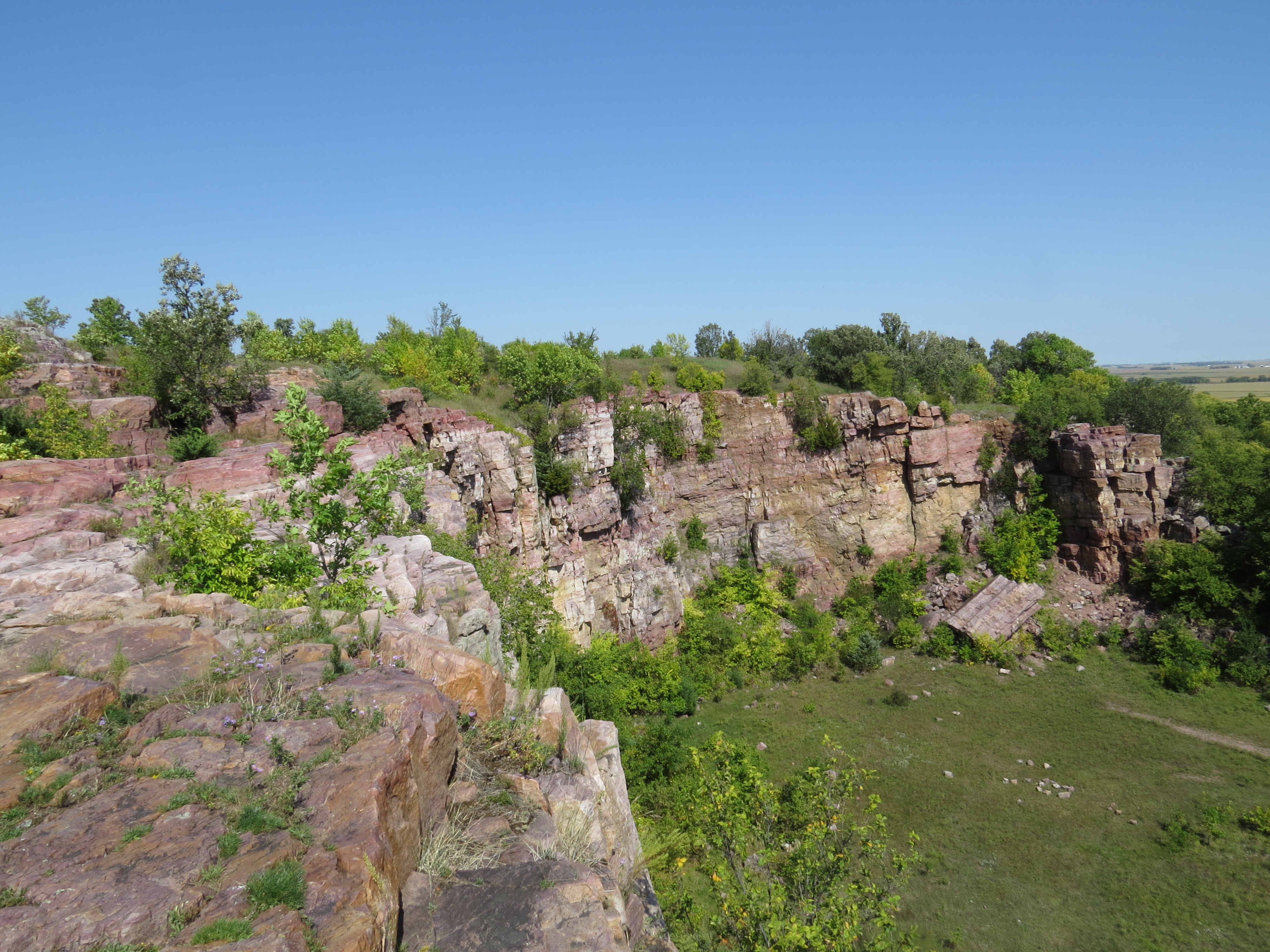
We had 1.5 miles to return to the trailhead on the Upper Cliffline trail loop that passed by the quarry. And here I want to give kudos to my Mom, whose almost-mid-80’s birthday we were celebrating. It was a warm, sunny day for this substantial and interesting hike, and she kept up with us ‘young-uns.’ Young and old are such relative terms—weeks ago we were the ‘old ones’ with our kids in the BWCA, and now we were the young ones. My Mom is an inspiration—I hope I’m still hiking and exploring when I’m her age.
Back at our campsite, we rested, built a fire, and assembled our ‘hobo dinners’ of ground beef raised on my Mom’s pasture land, potatoes and onions dug from her garden, and carrots I bought and cut up–lol. We wrapped it all in foil and threw them on the red hot coals. A delicious dinner in fifty minutes along with a tomato and cucumber salad from her garden! She is still a woman of the land—my terra-mother.
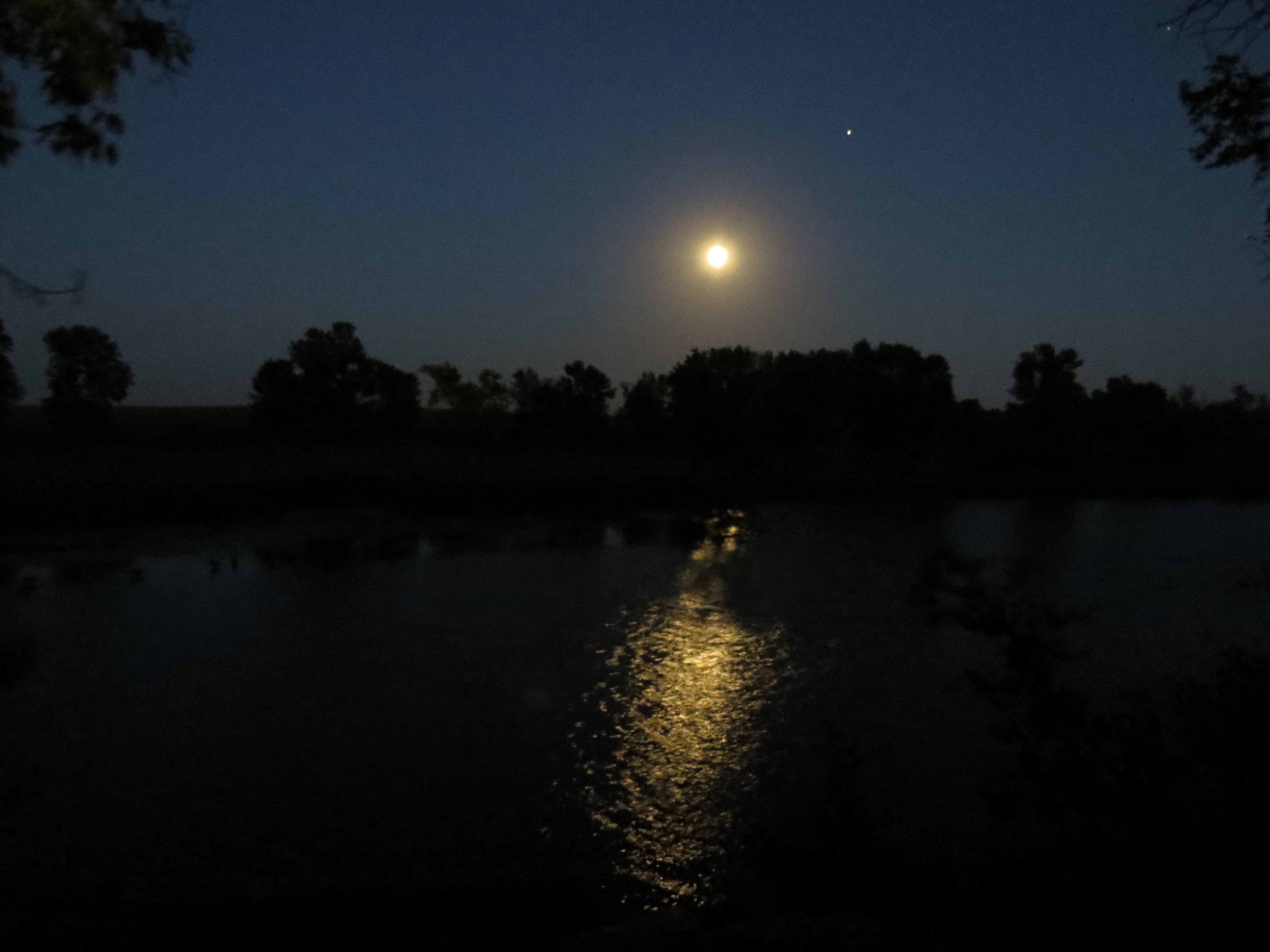
At evening sunset time, the resident heron was standing in a golden pool of water—aqua gold—stealthily placing one foot in front of the other for some late-day fishing. The blackbirds were once again noisily settling into their cattail shelters. And as darkness fell, the moon reflected its golden light on the midnight blue water.
The next day, we added ‘aeris’ to our aqua and terra—the air or atmosphere. We hiked at nearby ‘Touch the Sky Prairie’, a joint venture between the Brandenburg Prairie Foundation and the U.S. Fish and Wildlife Service. Photographer Jim Brandenburg splits his time and love between the Northwoods forests around Ely and the southwestern prairies where he grew up. We had followed his path between these two places. I understand his divided love—the prairie never leaves you, and new places can take up residence in your heart.
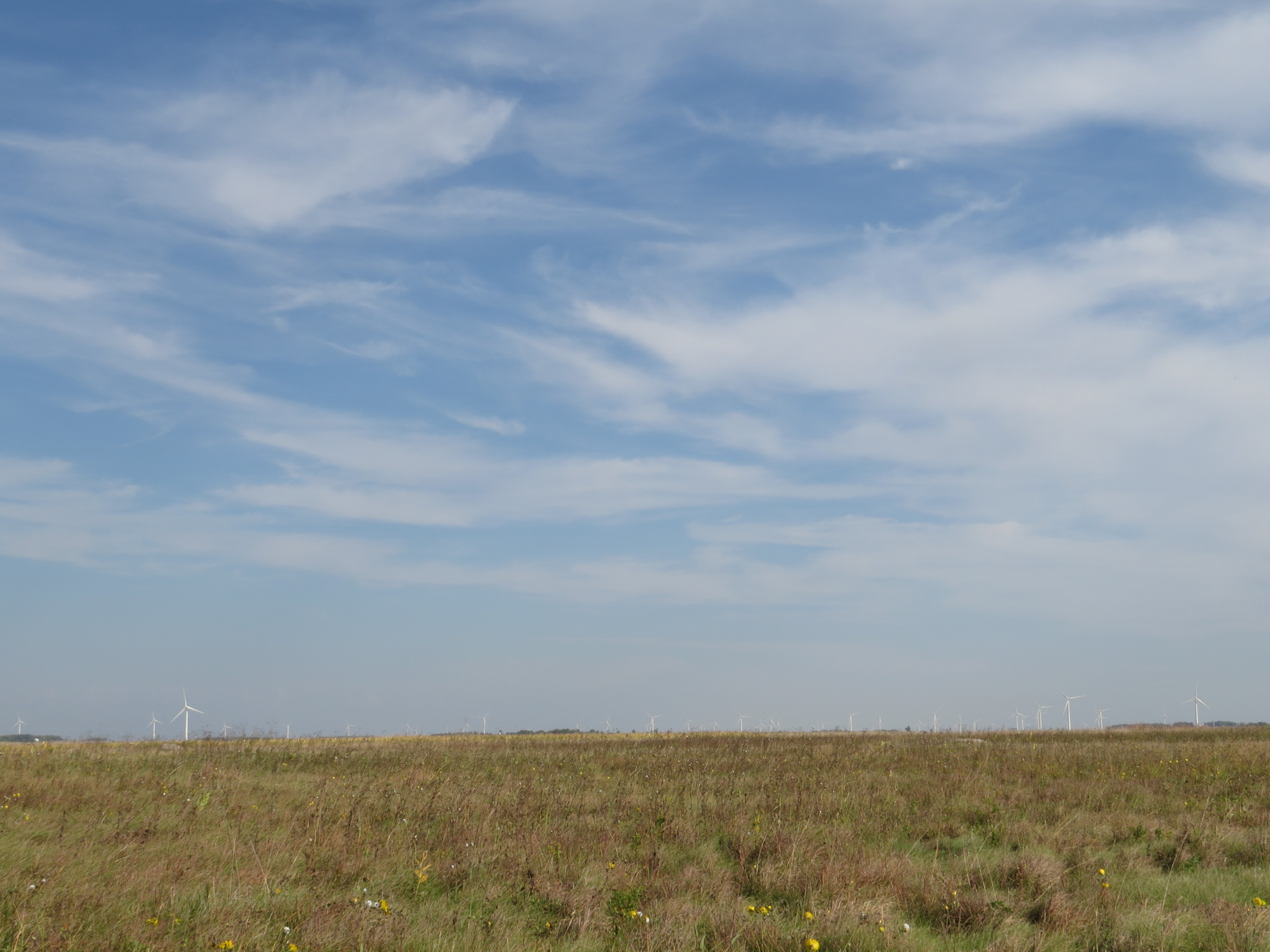
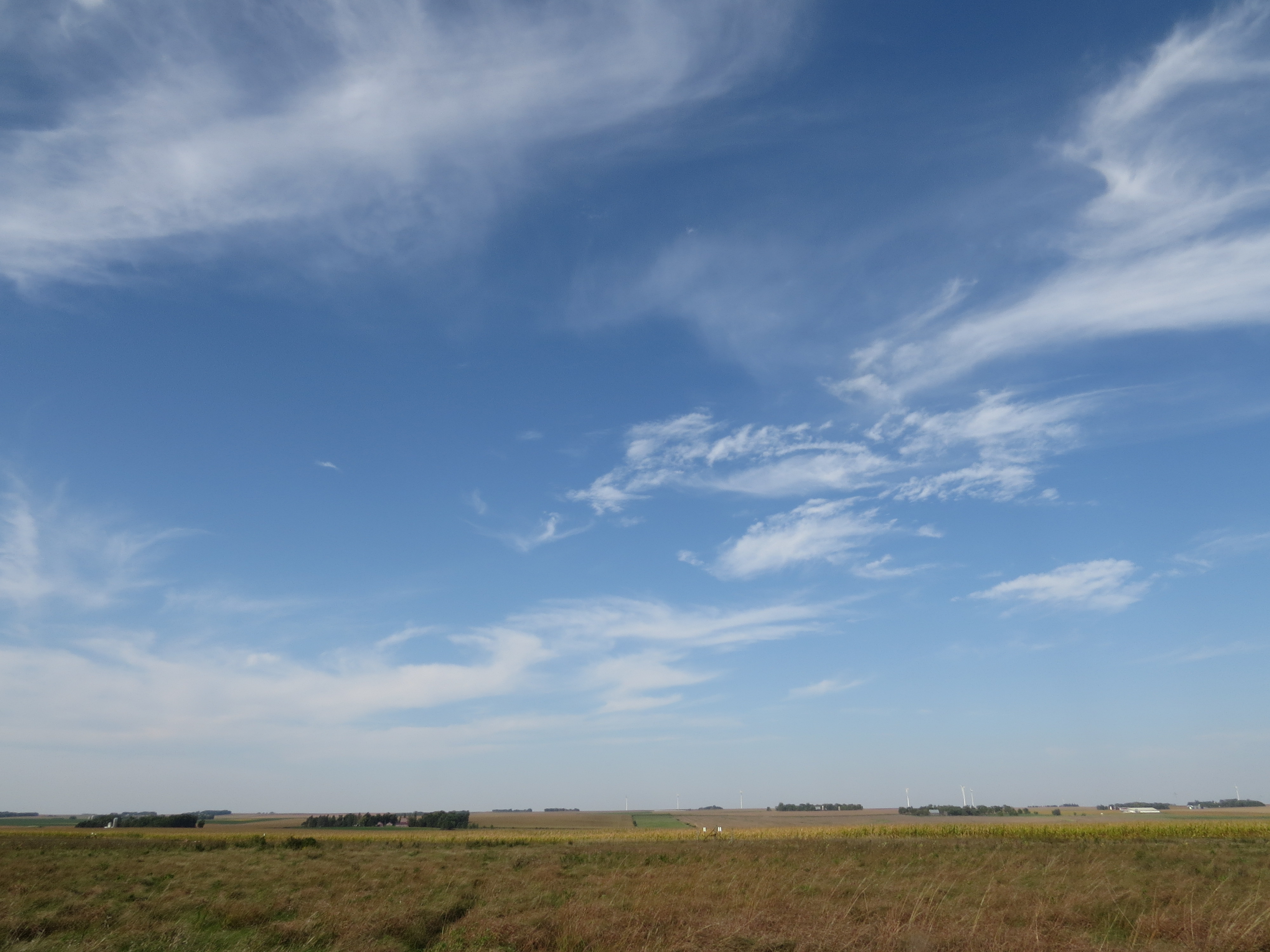
While I appreciate the water, I love the land, the earth, and I most specifically love the prairie. It is in my DNA and from my terra-nurturing Mom. The prairie allows a person to ‘see.’ Nothing gets in the way. The prairie holds the water, allows it to flow, and meets the aeris with humbleness. It showcases the large bodies of animals, colorful wildflowers, boulders of geological wonder, and a magnificent sky. The tallgrass prairie has diminished to a small percentage of the land since George Catlin wrote about its ocean-like qualities—fields and trees have replaced the waving grasses. Visiting these historic prairie vistas, with bison and purple asters, reminds me of the ripples generated by one person’s life and choices and how those ripples merge, interact, and combine into one entity. The terra-earth is all of our homes, the aqua-water sustains each one of us, and the aeris-air gives us life. It’s a thrilling sensation.
Aqua Terra Part I
When we emerged from the wilderness of the Boundary Waters in August, I bought myself a bracelet made from Aqua Terra Jasper to remind me of my amazing week. Water and land. Life-sustaining water and body-grounding earth. The colors of blue-green, sand, and reddish-brown swirled and intermingled on the beads, every one a distinct work of art that together embodied the look and feel of Nature’s offering to us in the Boundary Waters. The stone of peace.
Four weeks after leaving the peace of the Boundary Waters with our kids in far northeastern Minnesota, Chris and I traveled to the southwestern corner of the state to camp for the weekend with my Mom. We met at Blue Mounds State Park, just north of Luverne, in the county named Rock, which we quickly saw was merely an accurate description of the land. As we settled into our campsite—my Mom with her self-renovated retro camper and us in our little tent—we soon discovered that Aqua Terra would also be the most compelling environments of this prairie place.
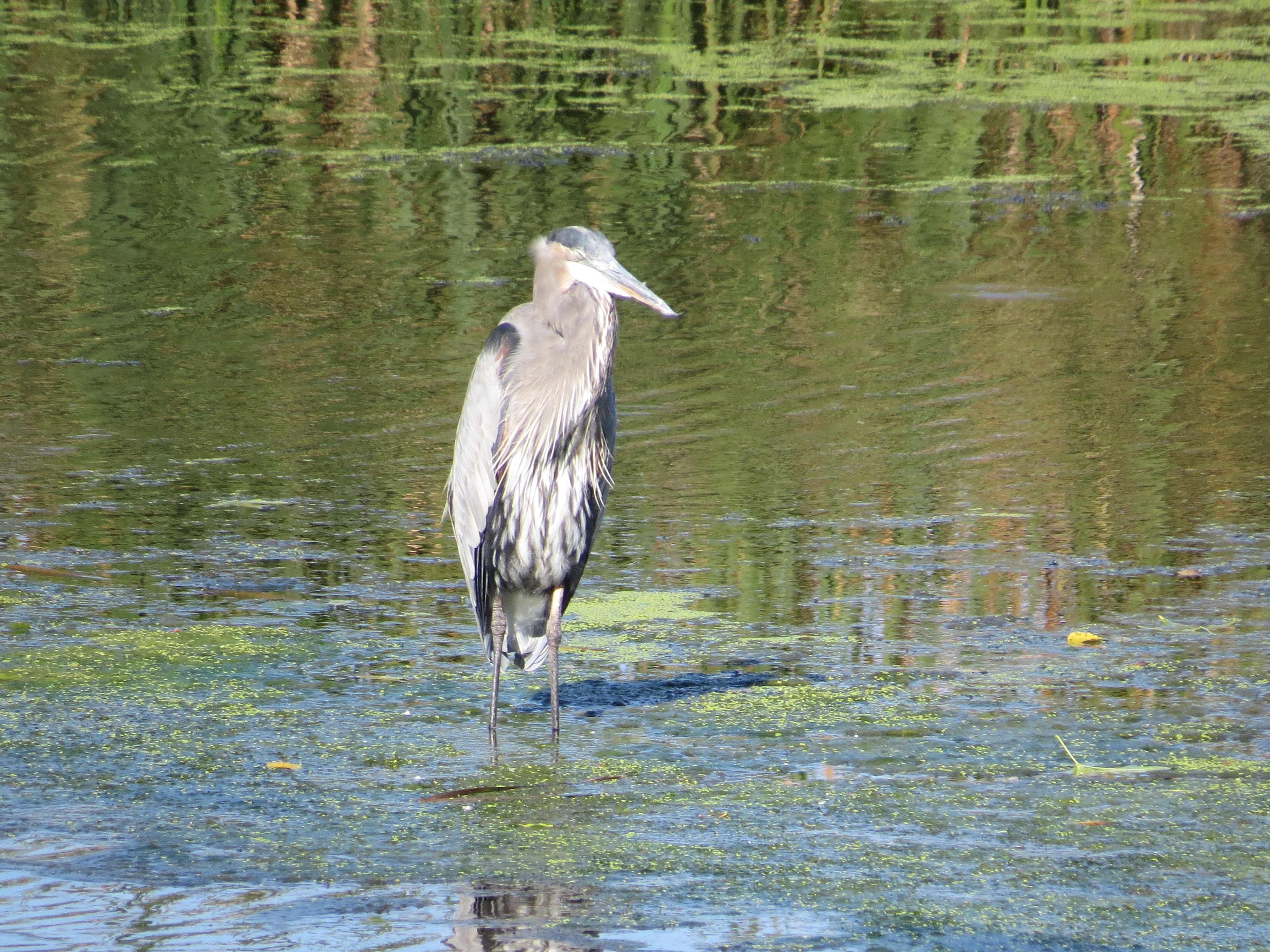
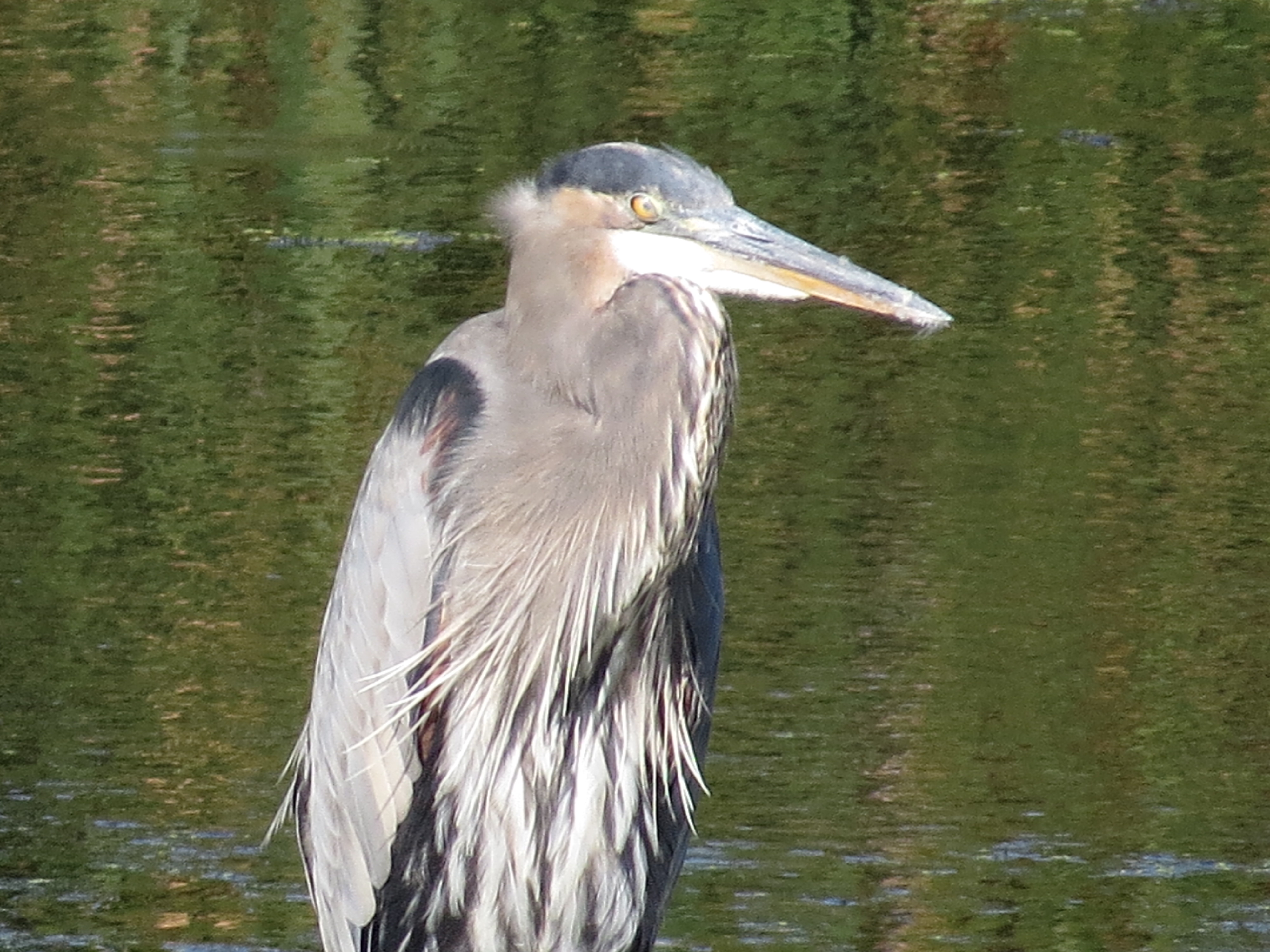
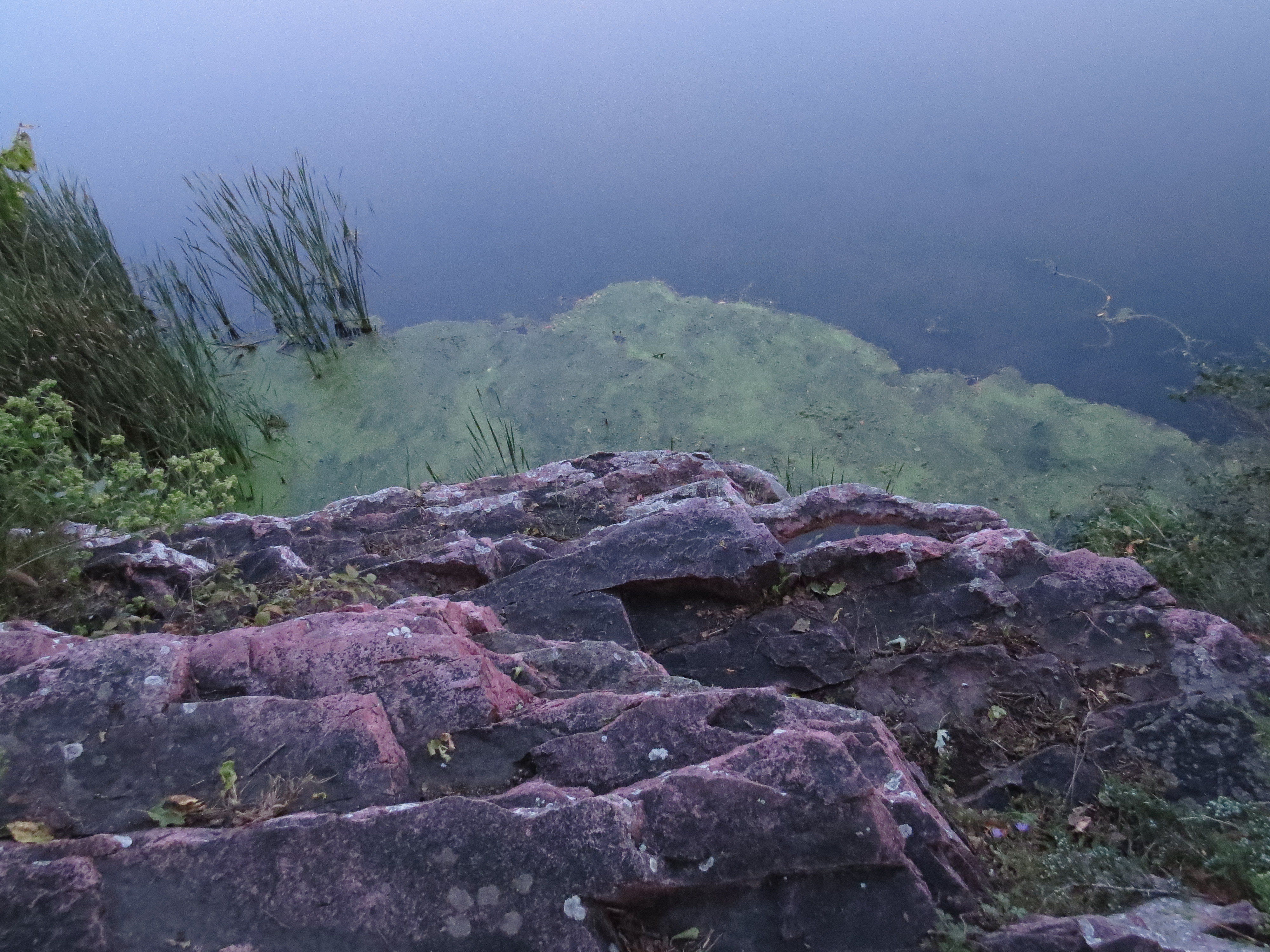
Right behind our campsite was a short path through a few trees to a cliff of red rocks that overlooked a narrow, dammed lake of Mound Creek. It was the inhabitants of this aqua environment that captured my attention each dawn and dusk and serenaded us each night. With our late afternoon arrival and my mini-exploration, one creature stood in the shallow water in front of a field of waving cattails—a Great Blue Heron. He was statue-still, a little bent-over looking, shoulders drooping as his wings hung down in rest or resignation.
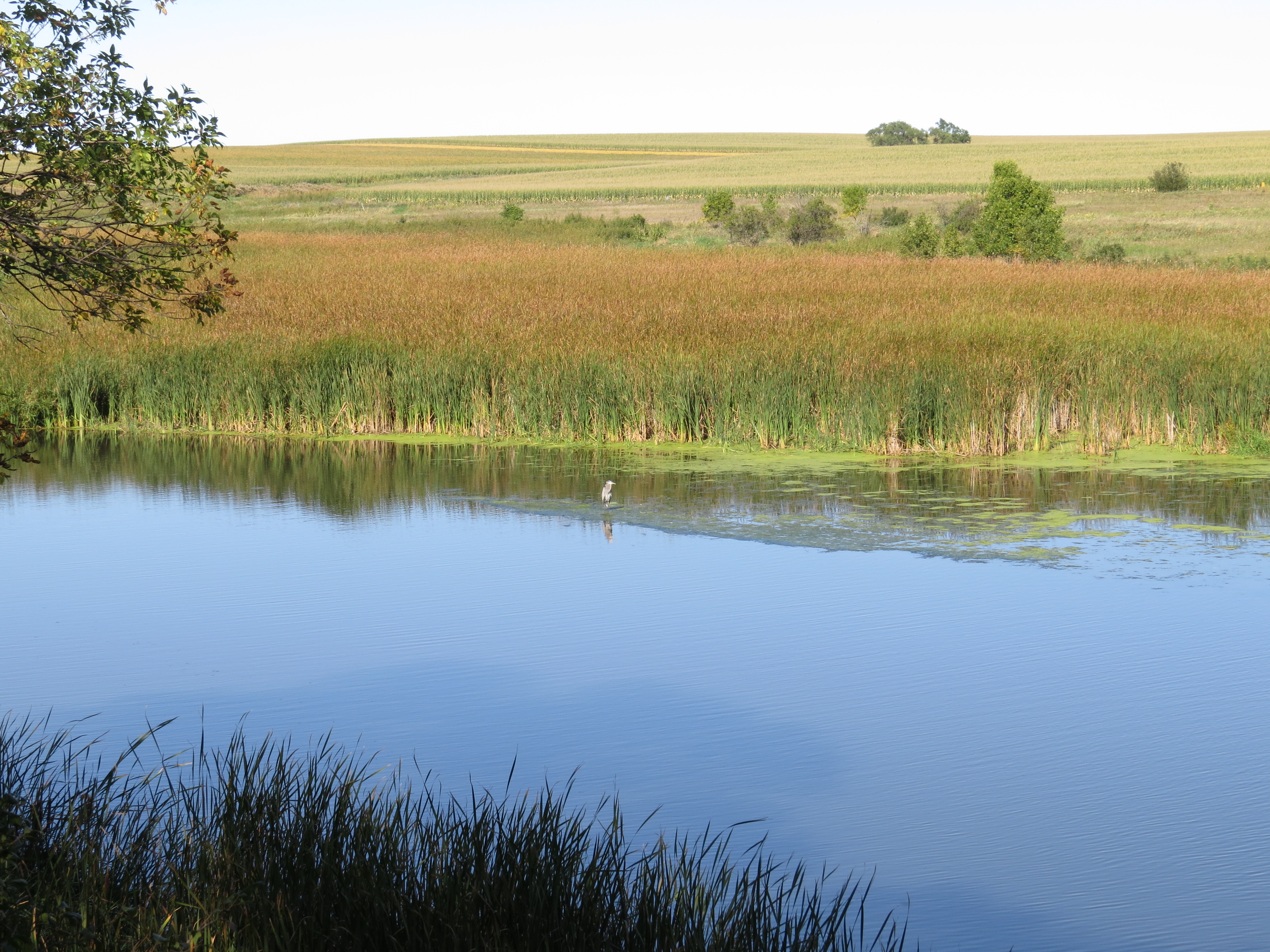
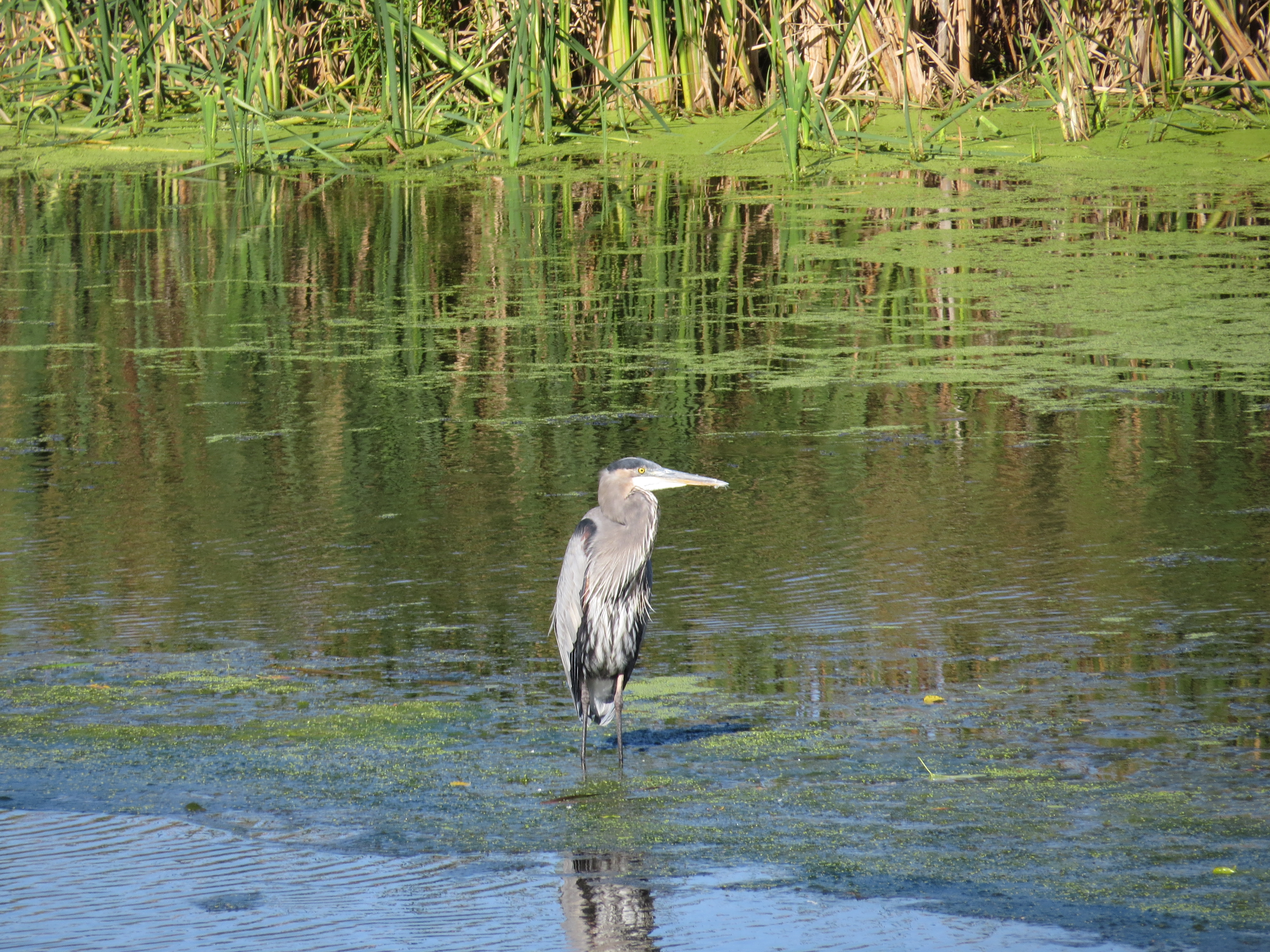
He had some unruly chest plumes, but also a tuft of down feathers at the back of his head—a young one, perhaps? His eyes closed and opened in his stillness.
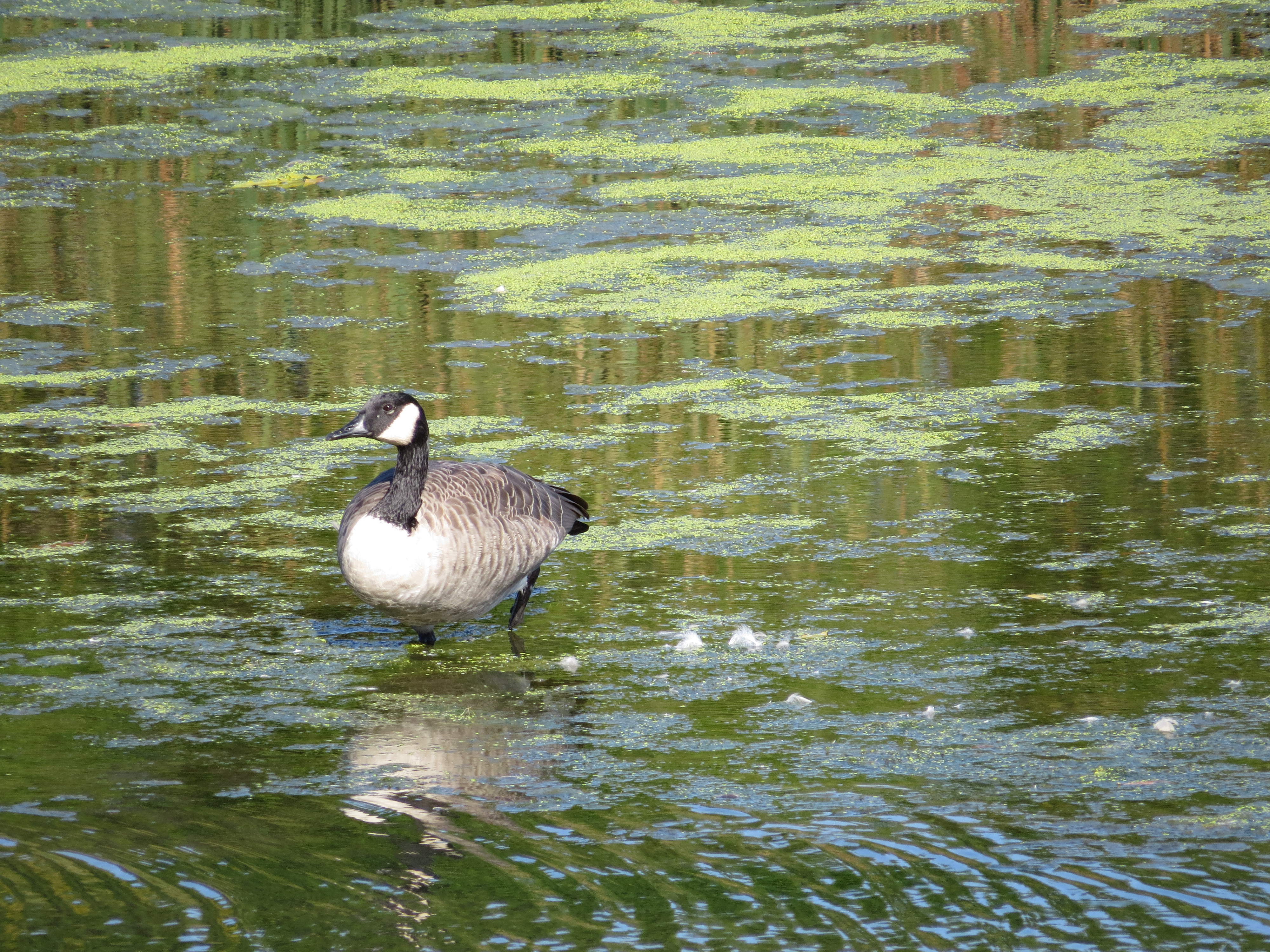
Down the lake a ways, there stood another aqua-creature, again as still and quiet as a statue, and they seemed to be watching one another. A Canadian Goose stood rather awkwardly, one foot behind the other, with a bent head and neck looking in the direction of the heron. Beside her on the water were little piles of down feathers—at first I thought she had been preening herself, but that usually happens when the bird is relaxed, and she was not relaxed. Perhaps there had been a scuffle of territory between the two? They both stayed in the same position for all the minutes I watched them.
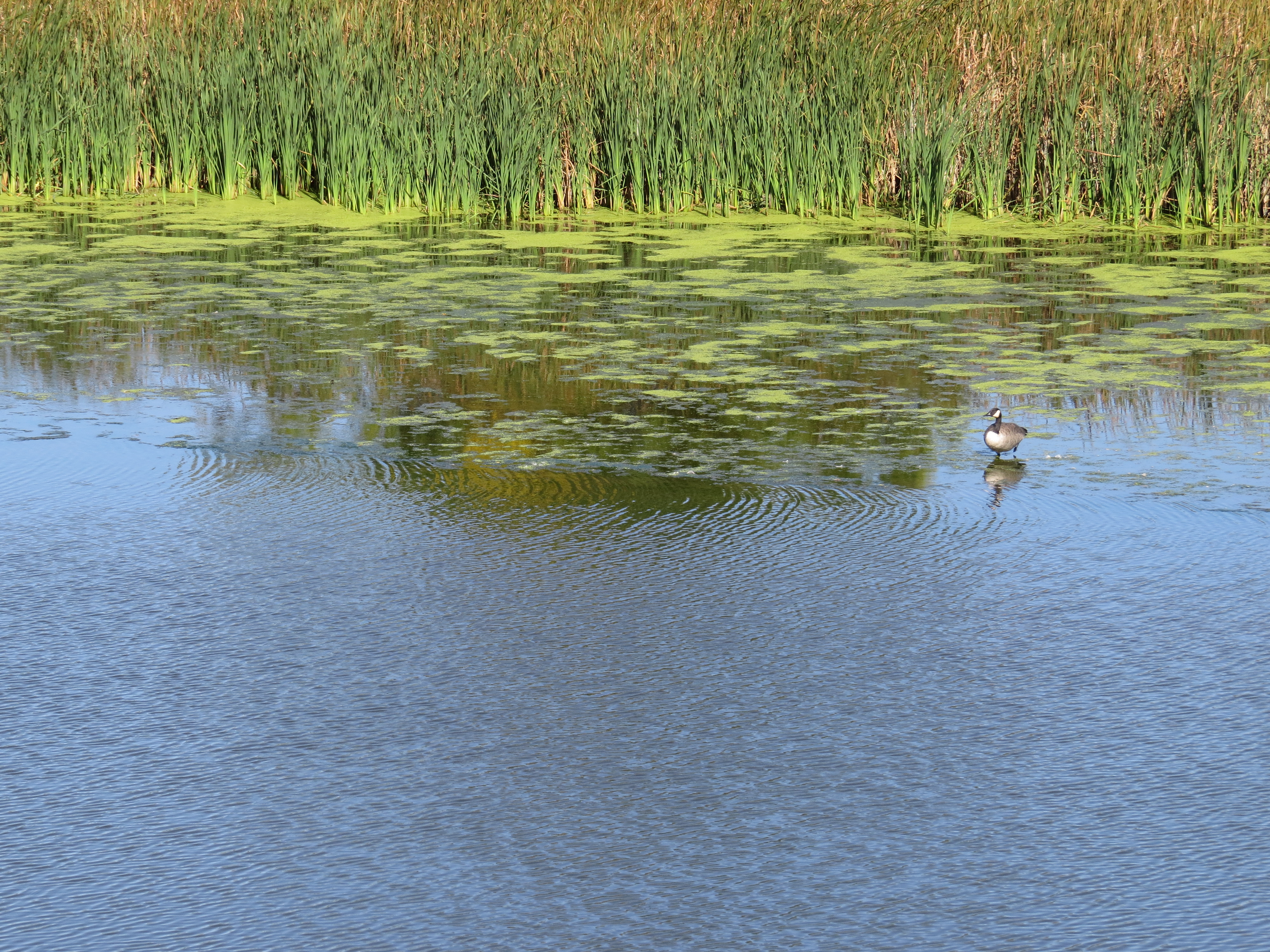
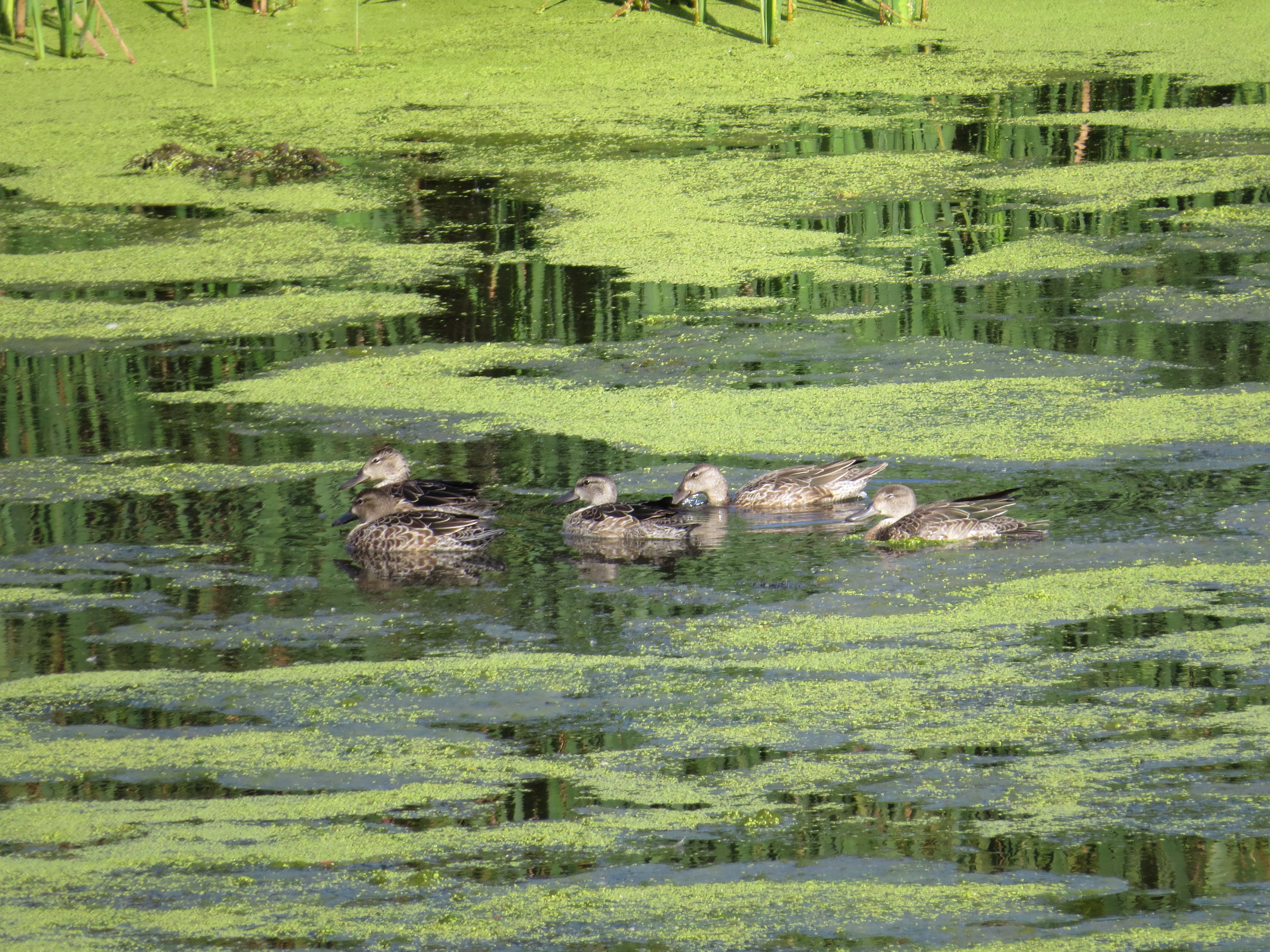
There were some waterfowl who seemed not to have a care in the world—a few immature Blue-Winged Teal (most likely.) Happy ducks swimming through duckweed.
After our quick, light supper, we drove to the Bison viewing platform where the rocky, rolling prairie terra sustains a herd of over 100 bison, including the spring-born calves.
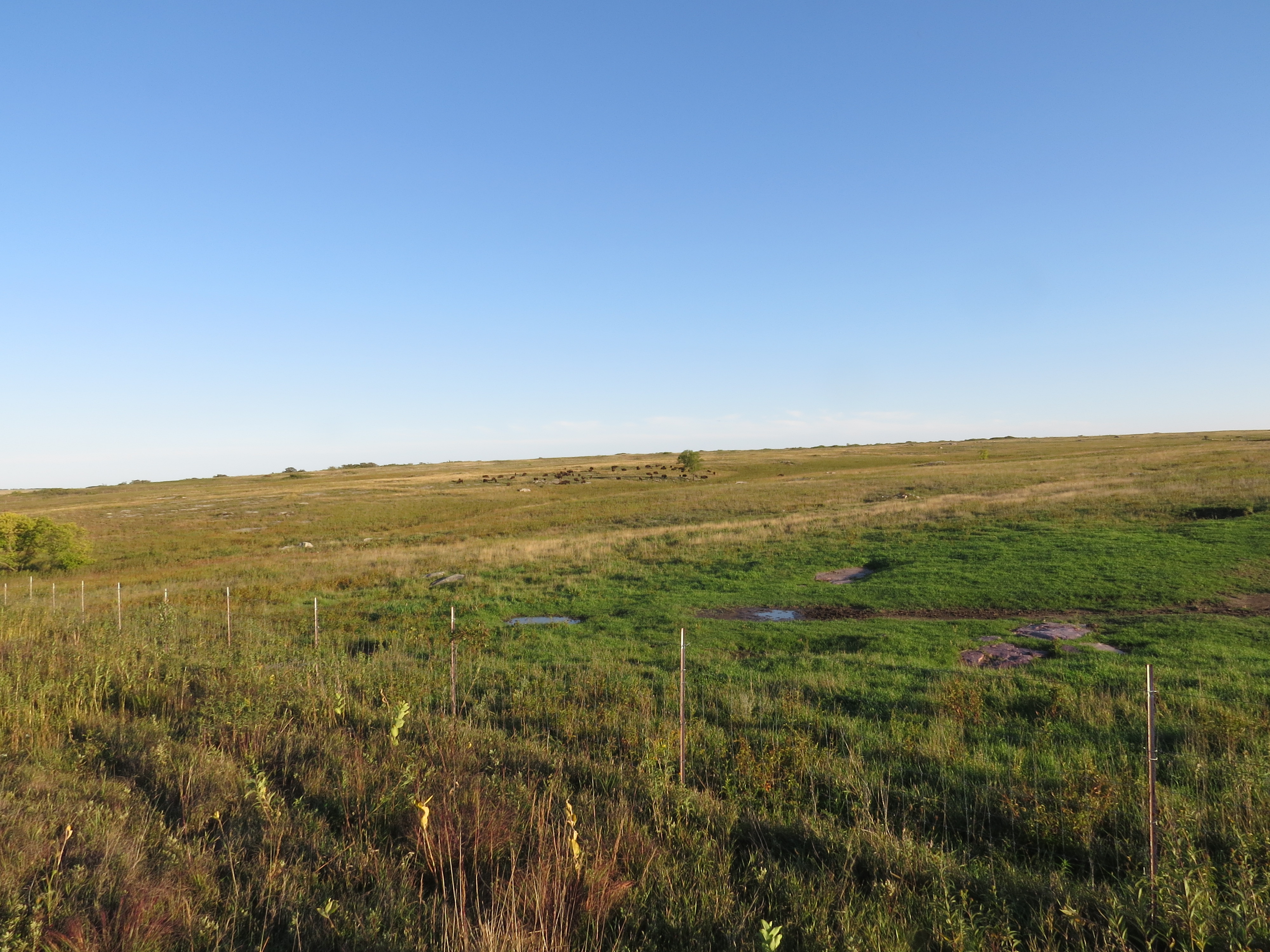
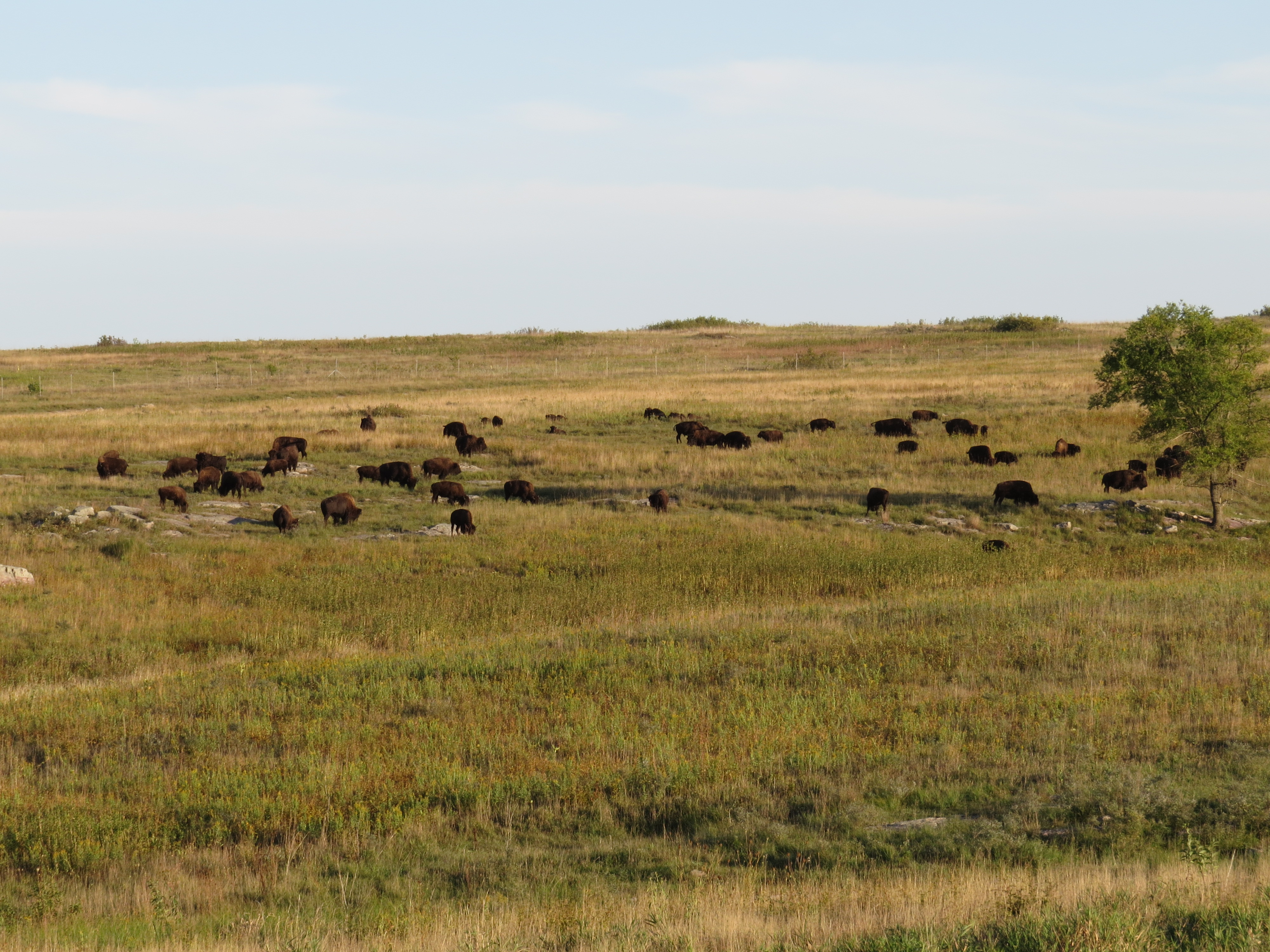
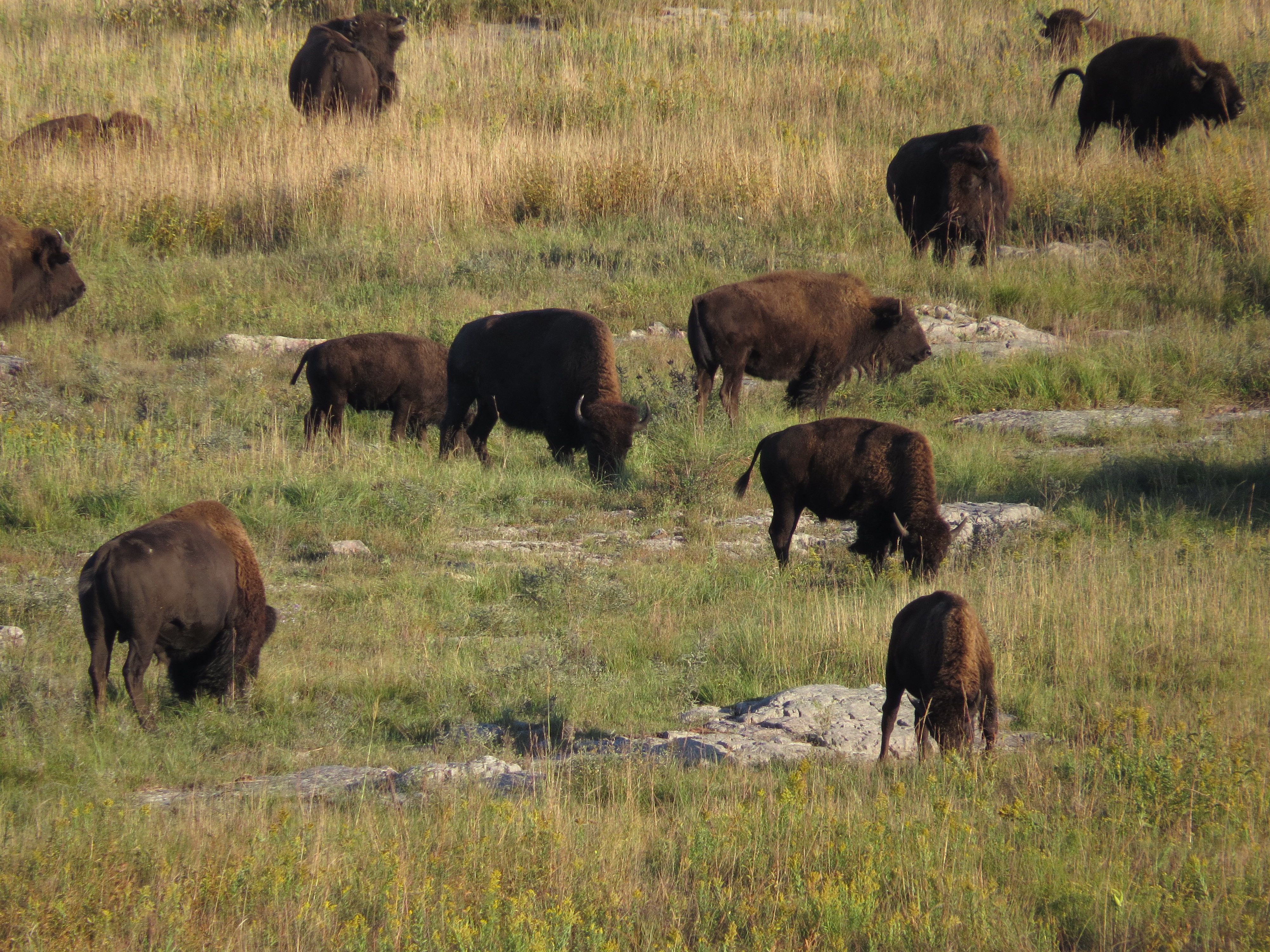
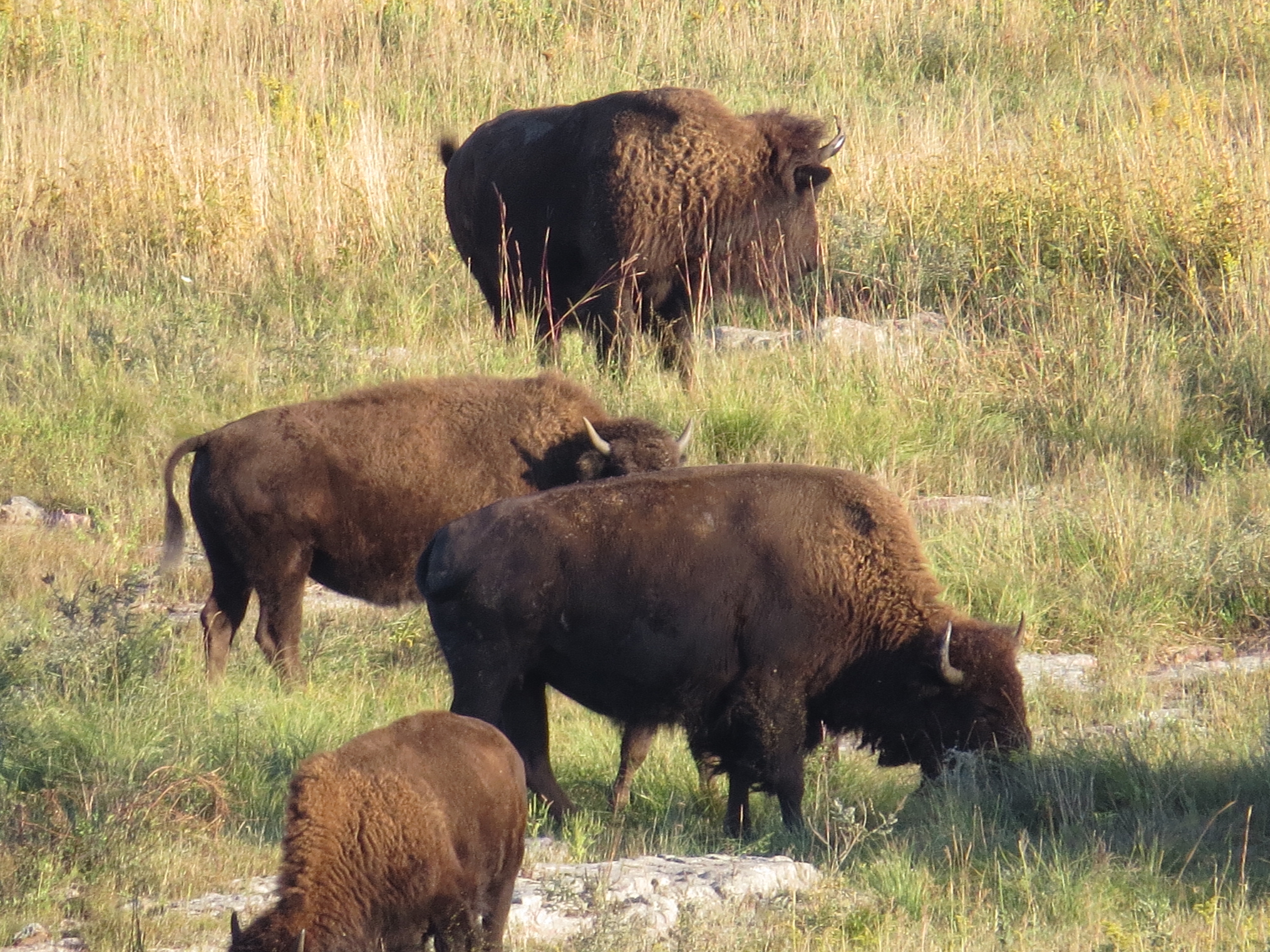
There were many outcrops of Sioux Quartzite rocks and boulders, pink to purple in color from the presence of iron oxide and millions of years of formation. Some of the boulders were as big as a buffalo or is the buffalo as big as a boulder?
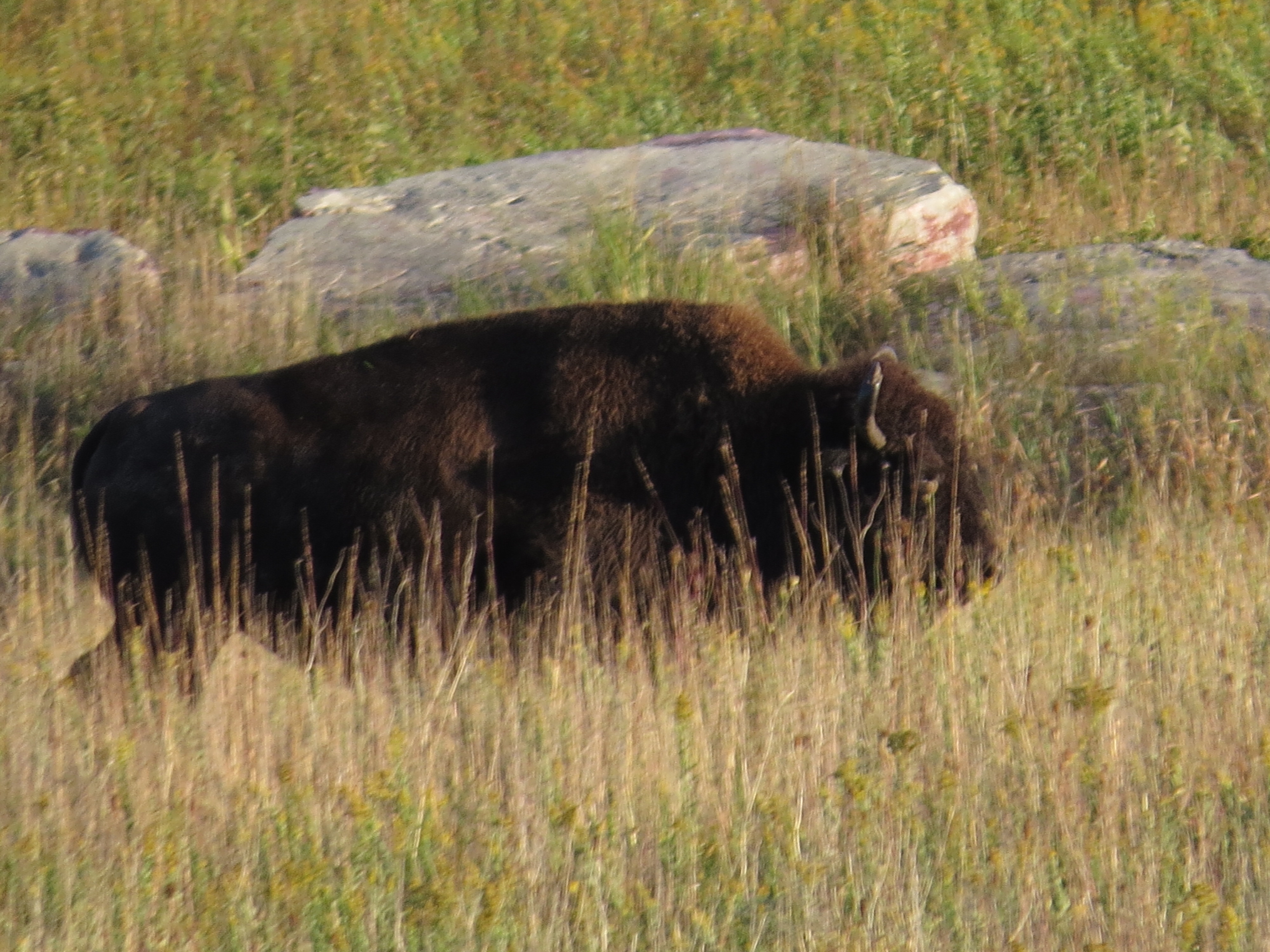
The boulders are used as ‘scratching posts’ for the bison and have been for many thousands of years. They rub their wooly heads and necks against the corner of the rocks, and in doing so, smooth the boulders to a shiny pink texture while relieving the itch of shedding their thick winter coats.
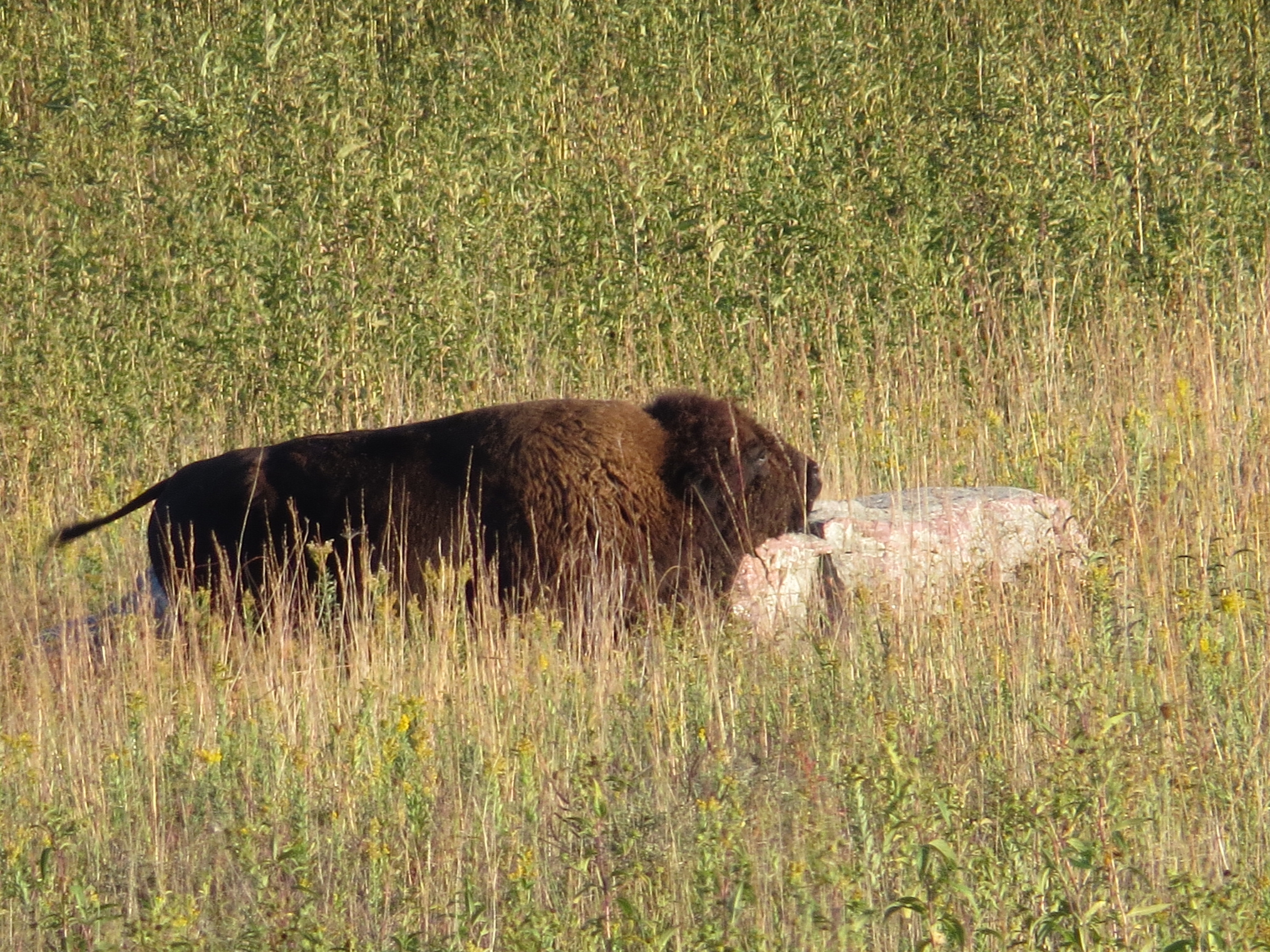
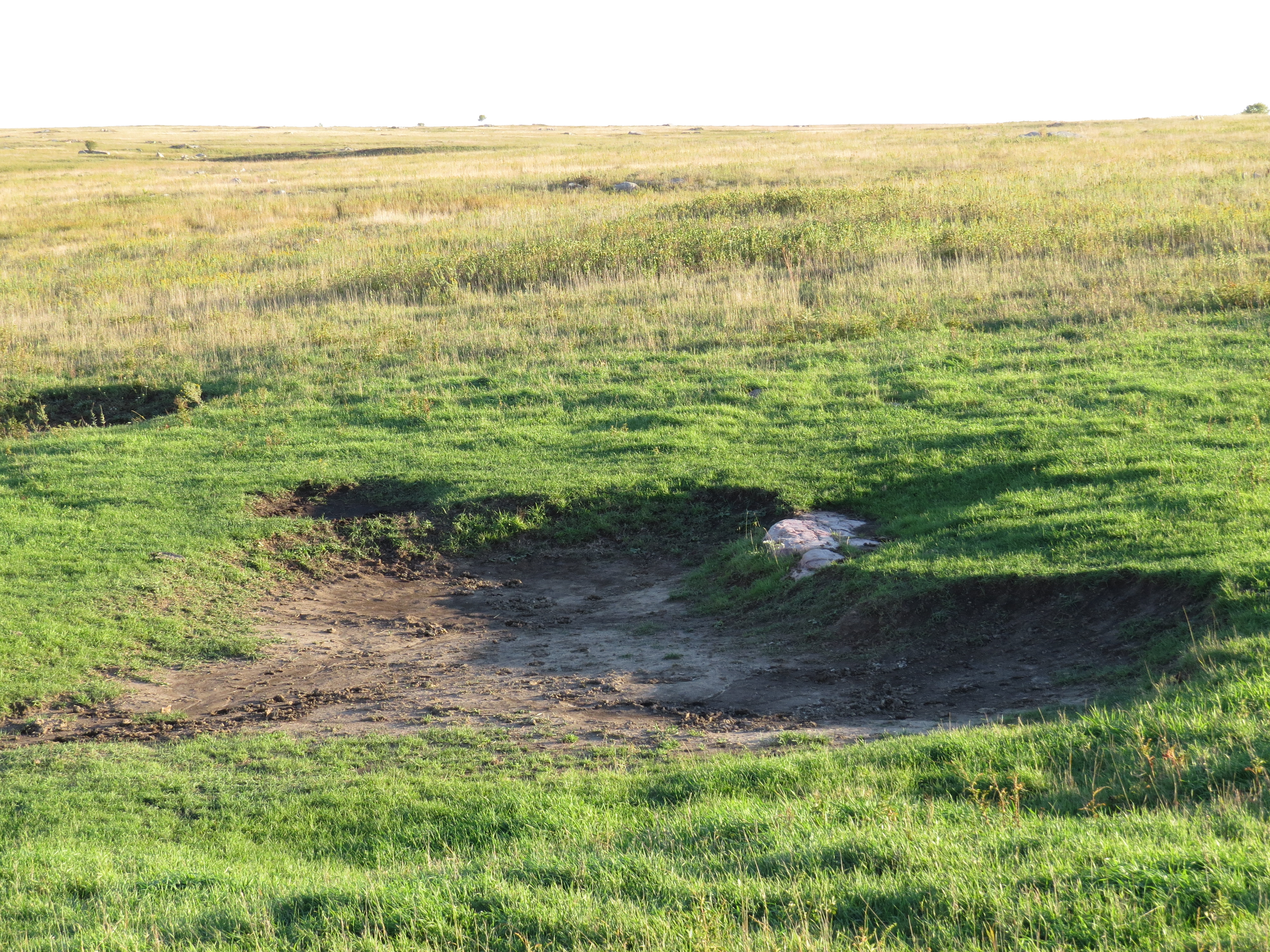
Another way bison scratch is using a buffalo wallow in the dirt. They may rub their heads or actually roll in the dirt to help with shedding, to get relief from biting insects, or to cool down in the heat.
Officially, these animals are American Bison—Bison bison as genus and species. But many of us call them buffalo. When the French fur trappers came here in the 1600s, they called them “boeuf” because they looked like the buffalos of Asia and Africa (Water and Cape Buffalos). I tried to call them bison for the weekend, to get my brain and mouth re-trained, but my default is still ‘buffalo.’
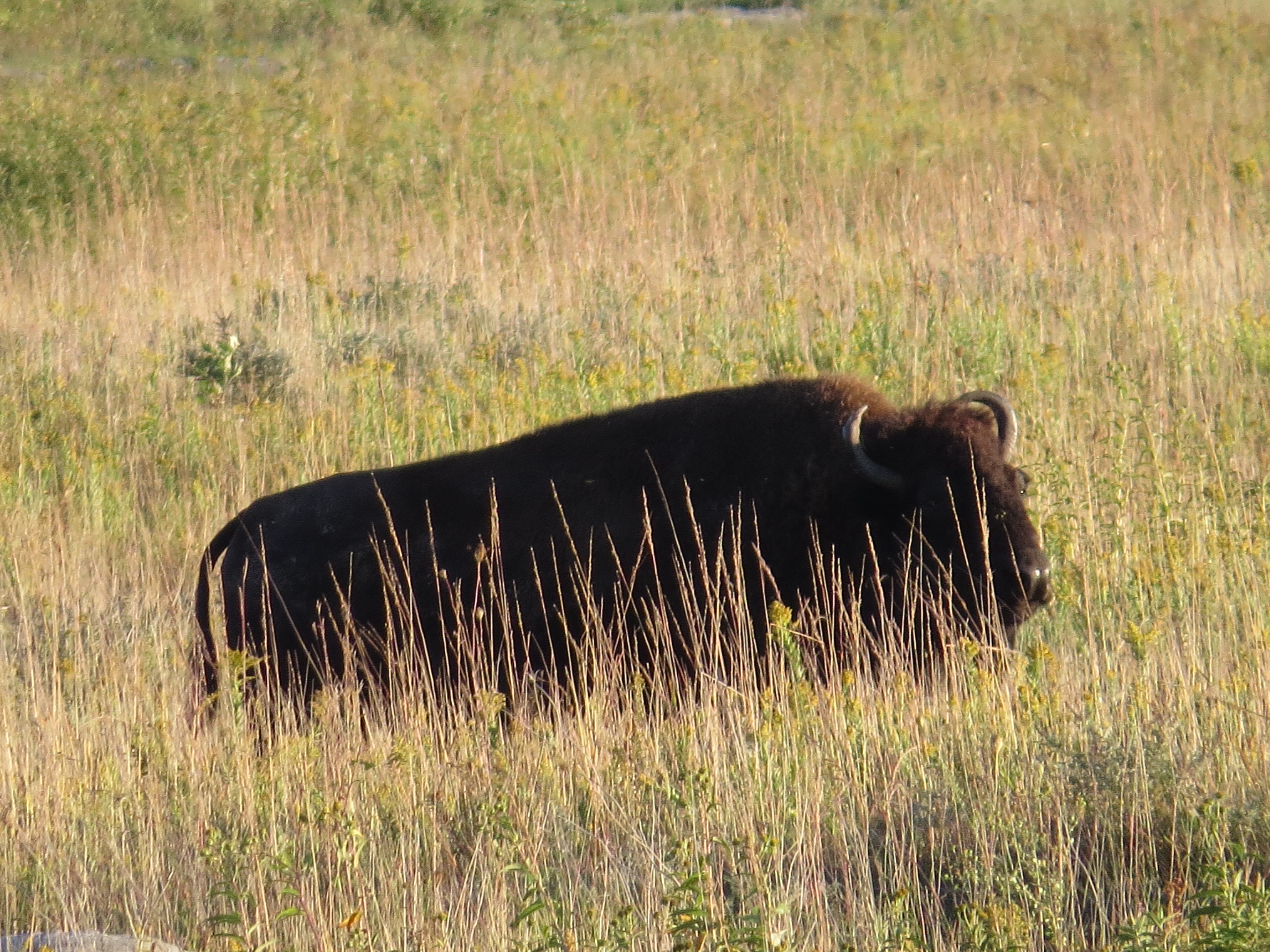
Gestation for a bison is 283 days—9.5 months—and the calves are 25-40 pounds at birth with a reddish-brown coat that darkens with age. So even by September, they have coats like their parents, and only size helps to identify them from far away. They are also growing horns already—both males and females.
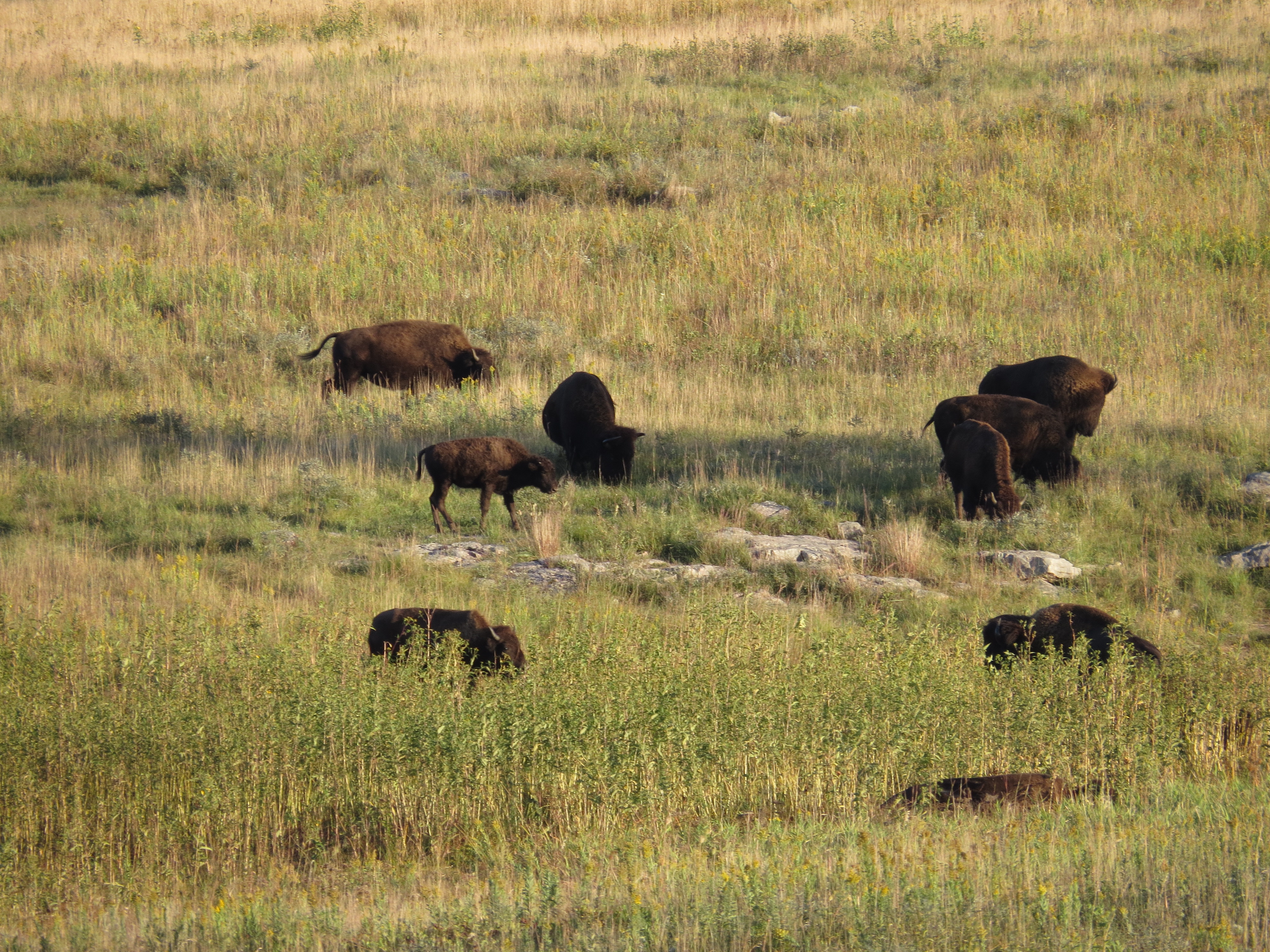
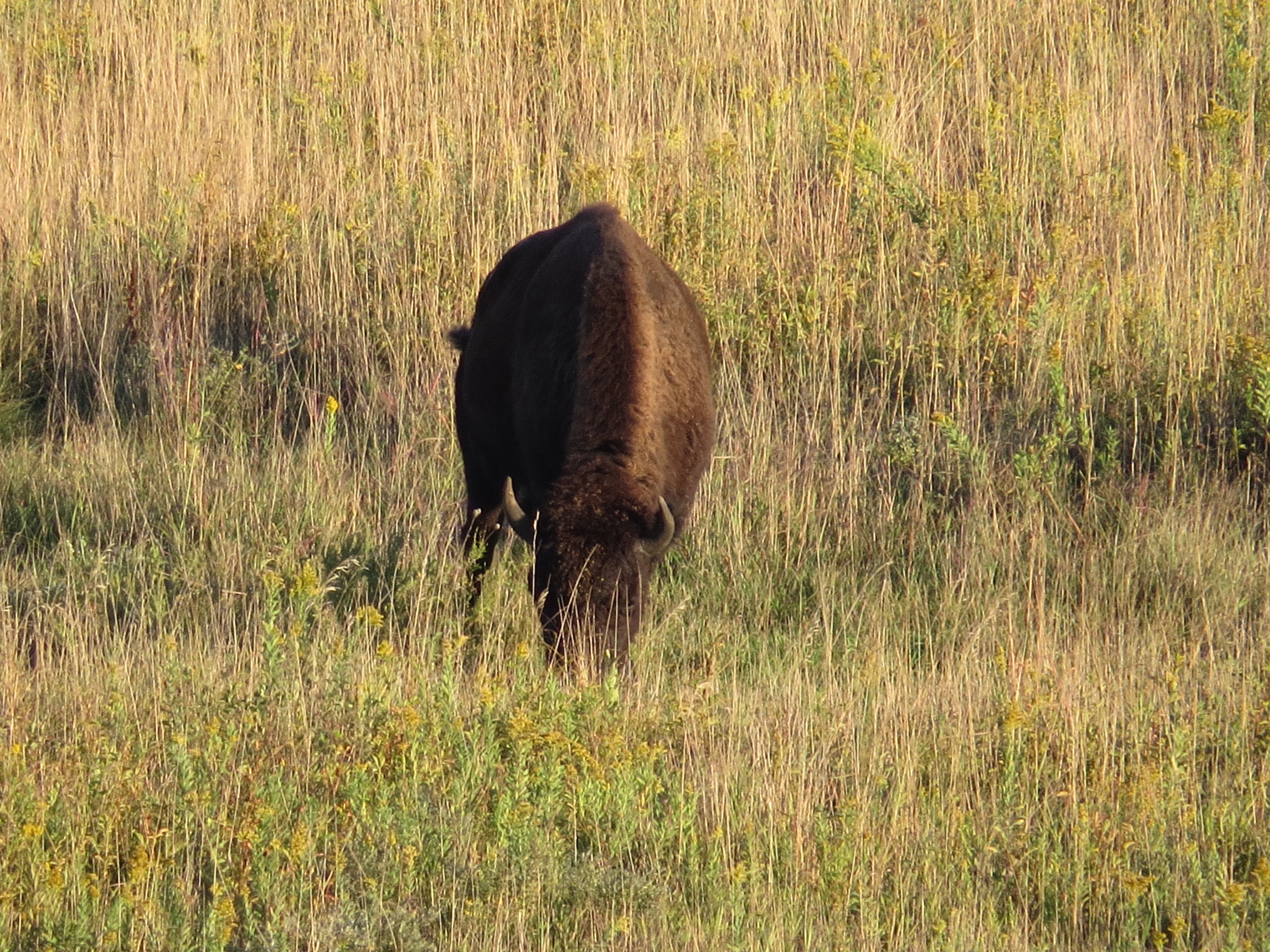
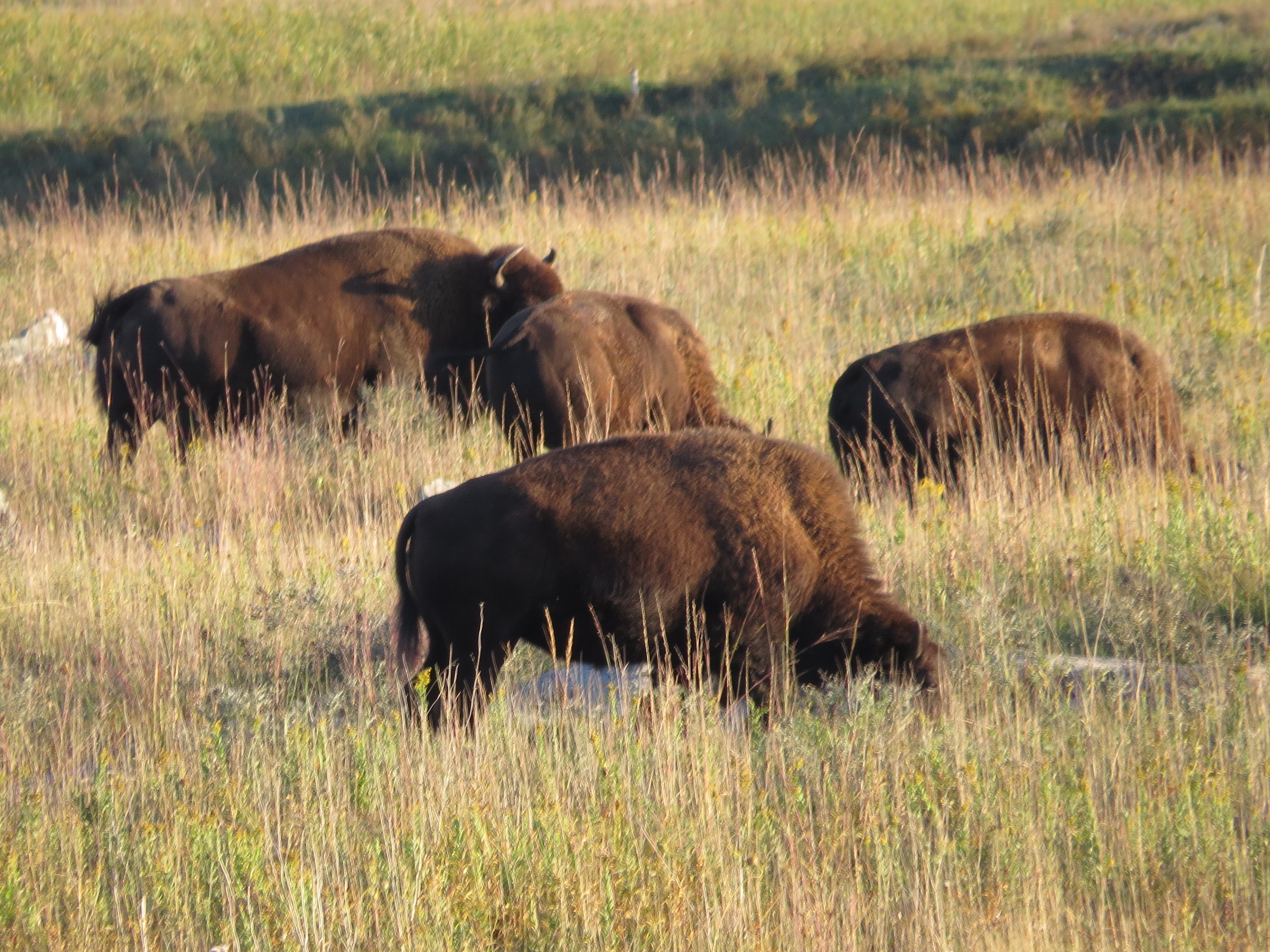
As we watched, the bison peacefully grazed across the pasture and up the hill, disappearing over the horizon. They graze for nine to eleven hours each day, year round, using their massive heads to move snow aside, if need be.
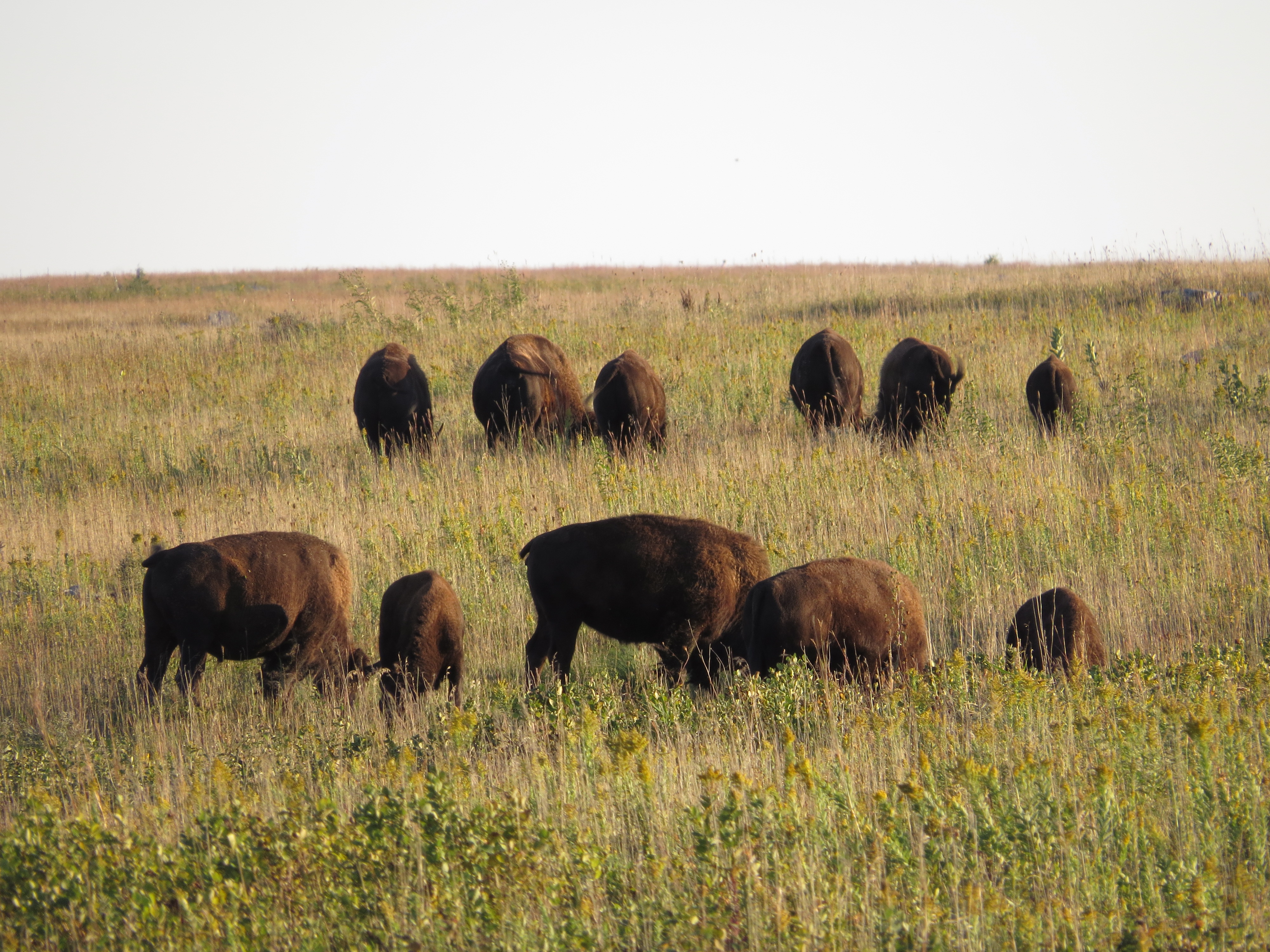
The earth supported their huge half-ton to ton bodies. Bluestem grass, along with other prairie grasses and wildflowers, is the staple for nourishment to sustain their large frames.
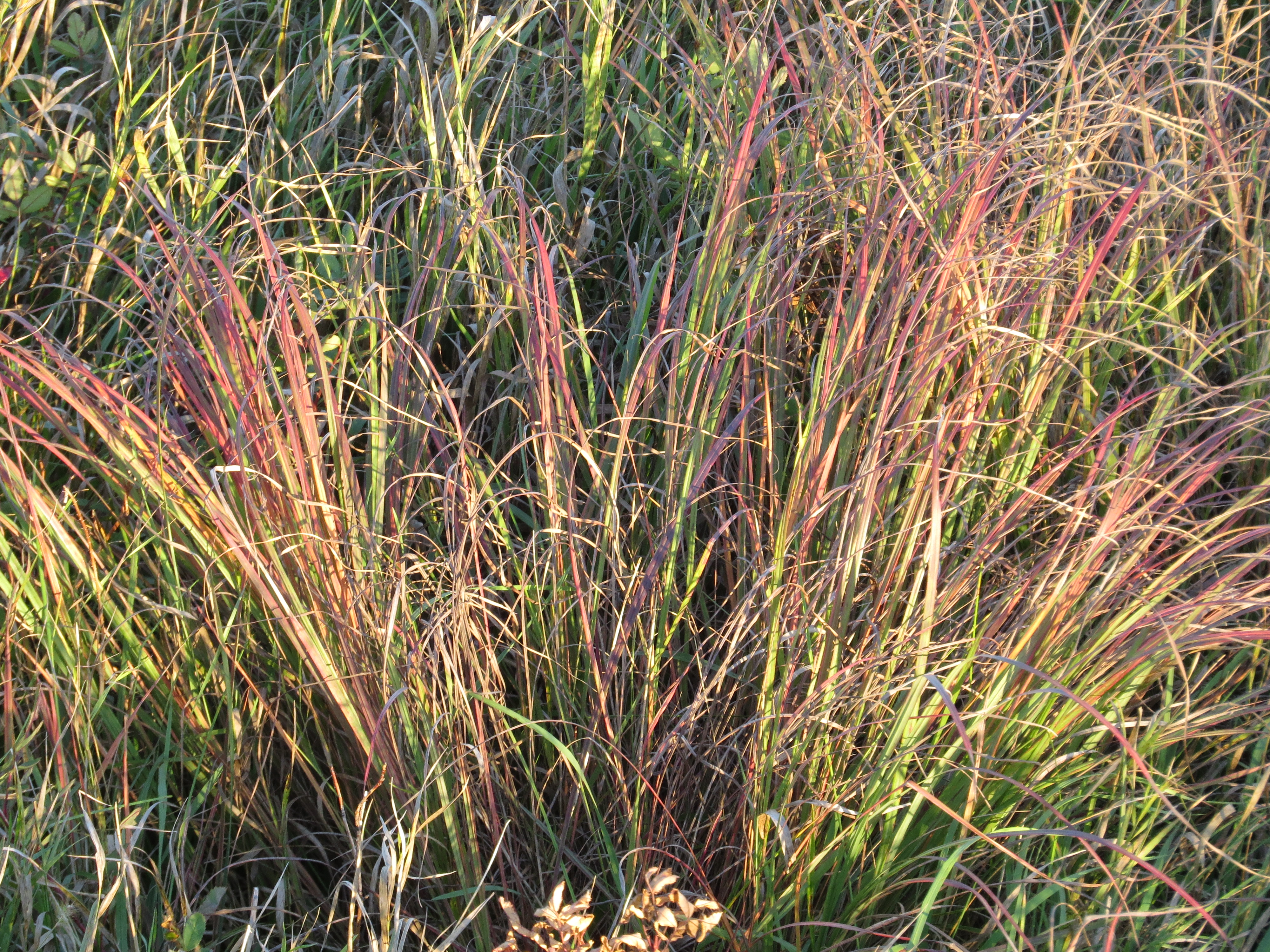
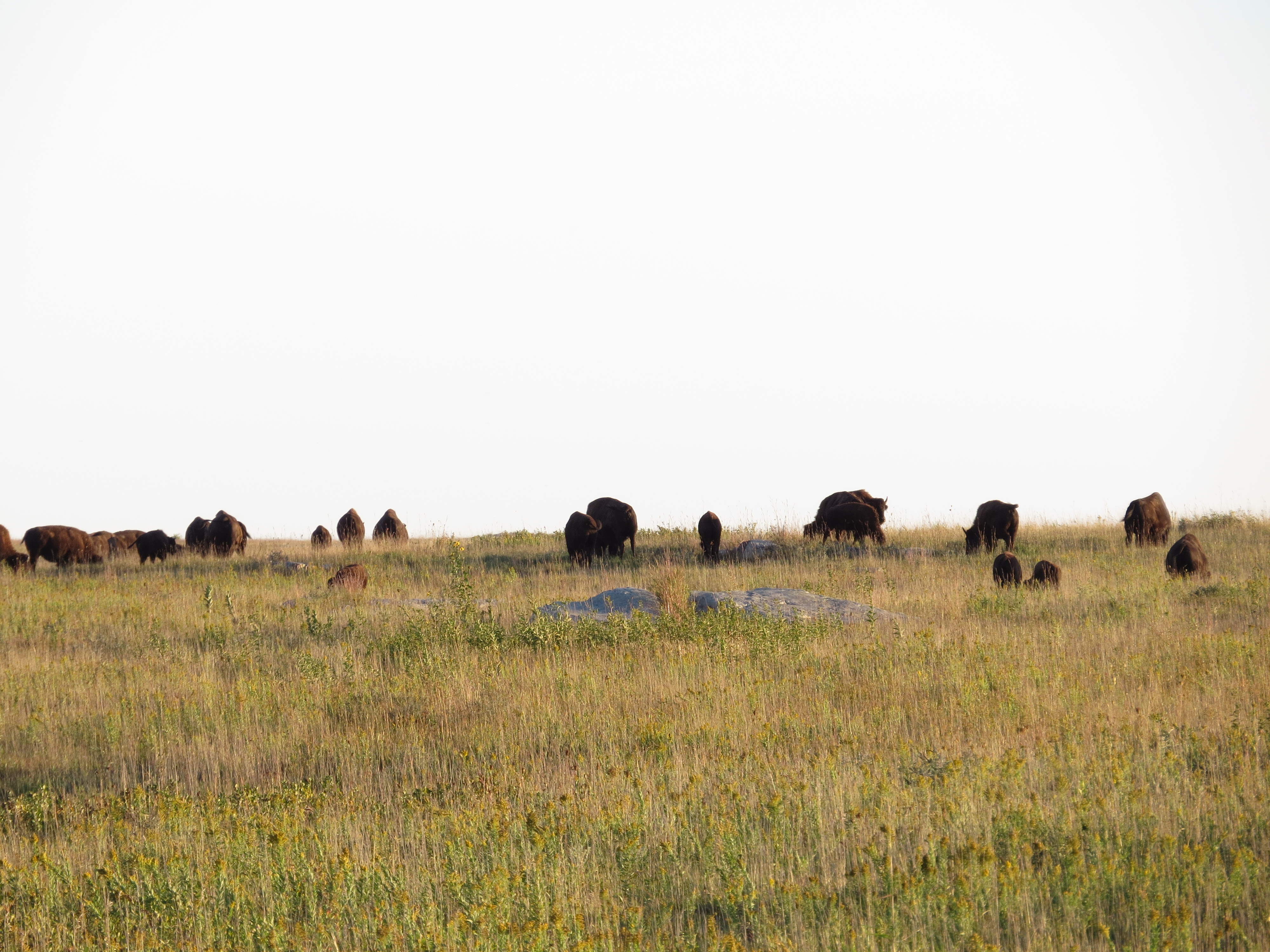
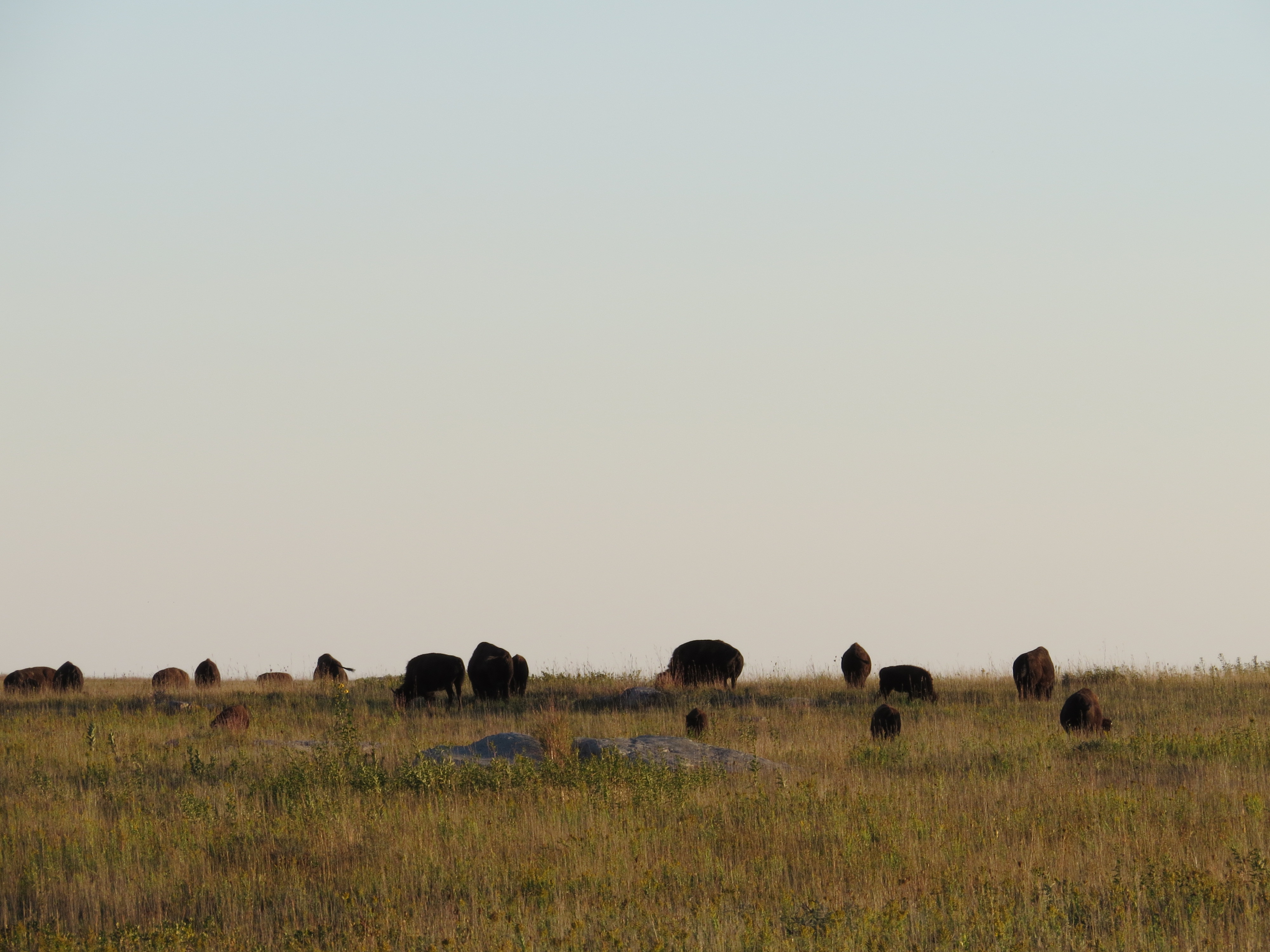
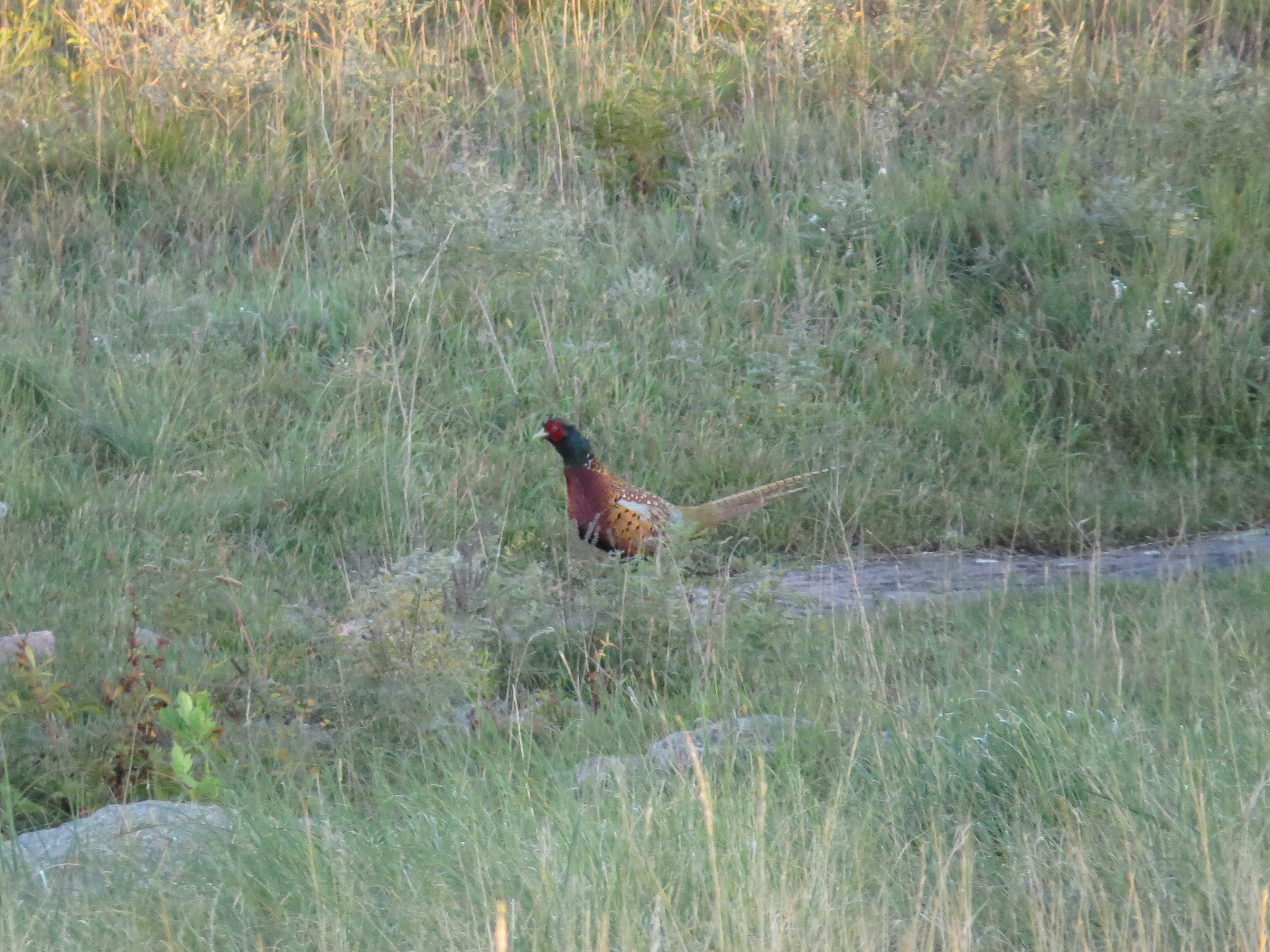
As the sun sank in the western sky and the bison grazed away from us, a flock of blackbirds swooped across the sky, and a pheasant rooster squawked and ran through the grass. Deer leapt across the prairie, their coats burnished by the setting sun. And the nearly-full moon revealed itself as the sky darkened.
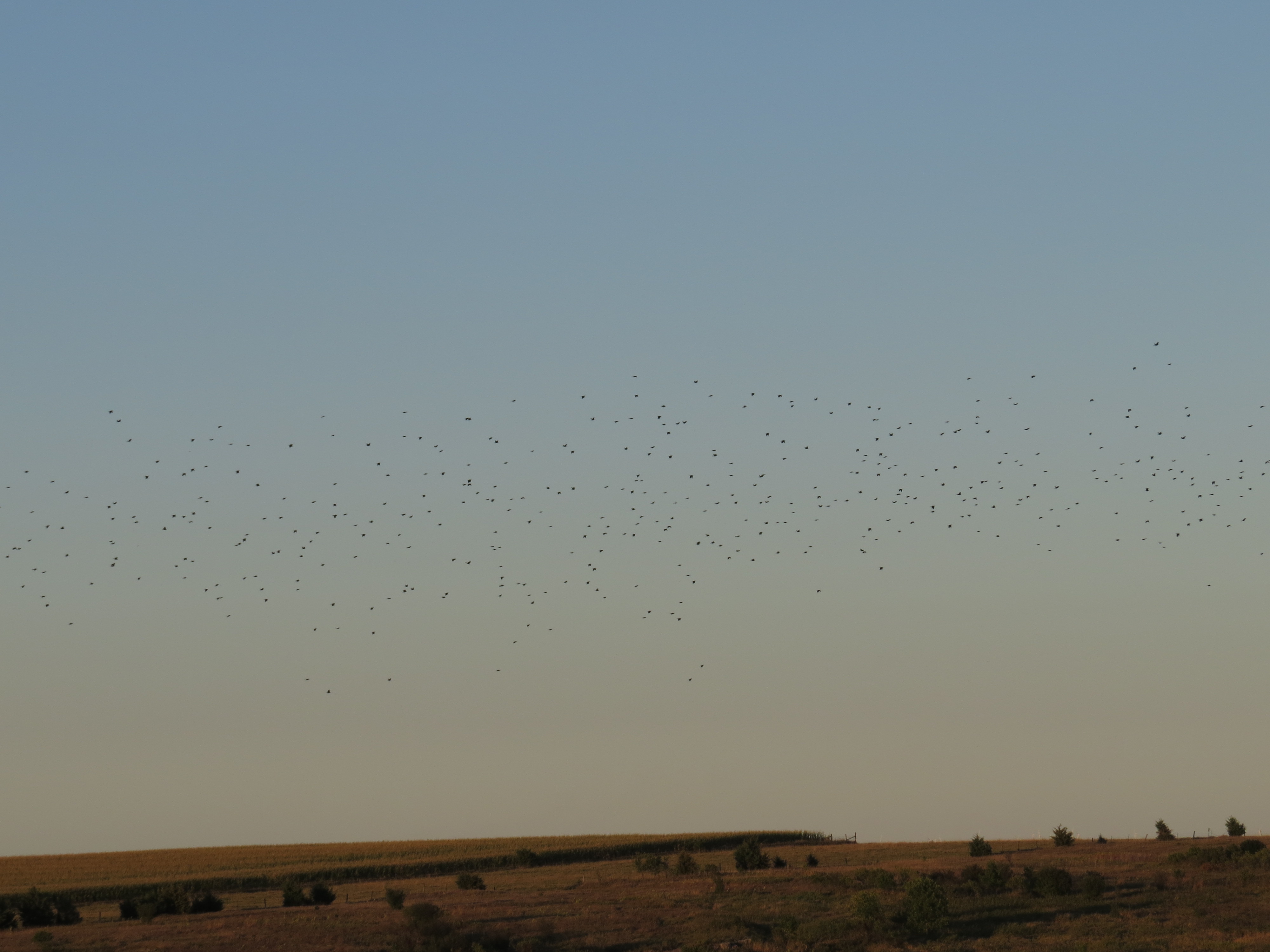
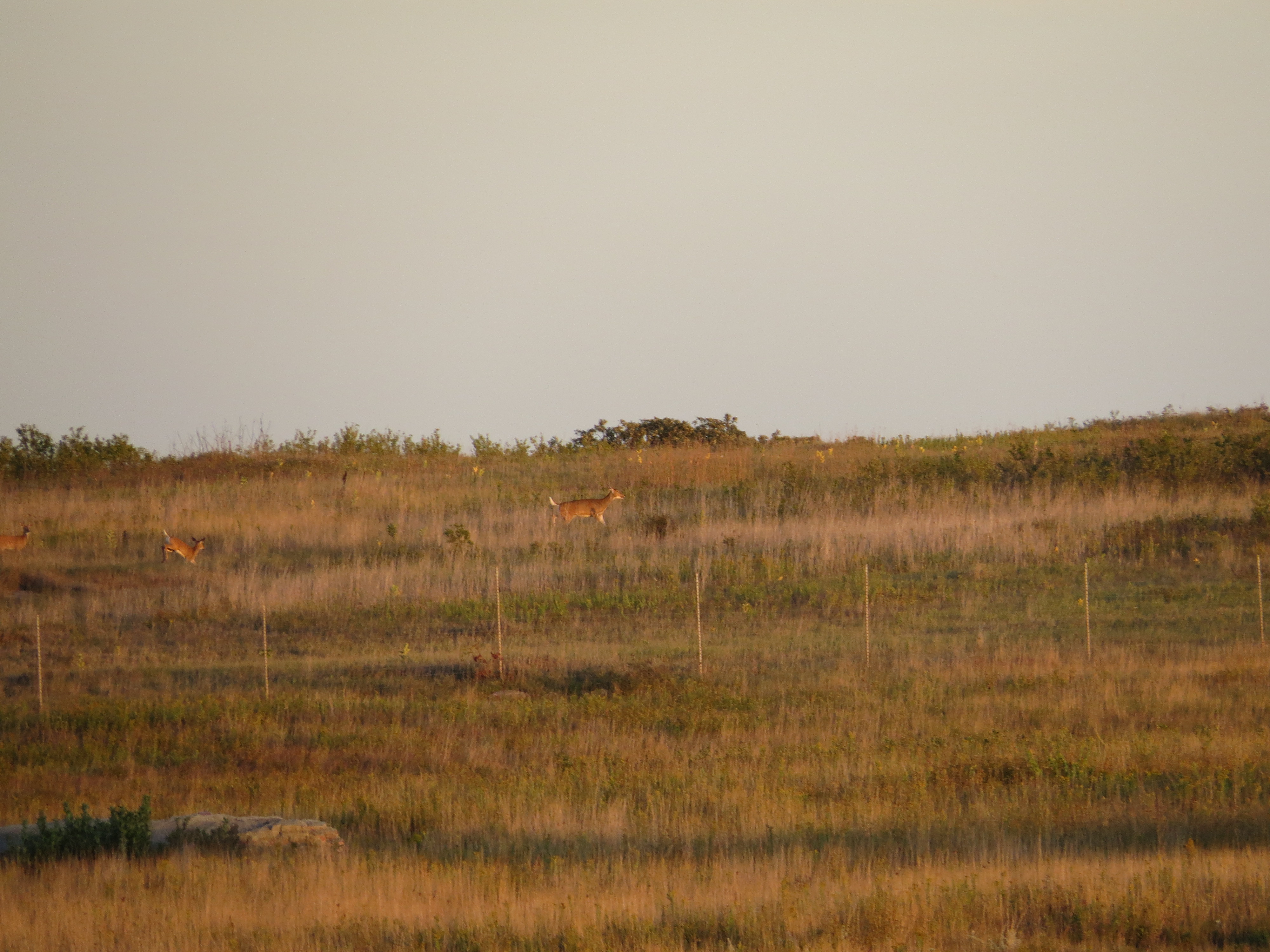
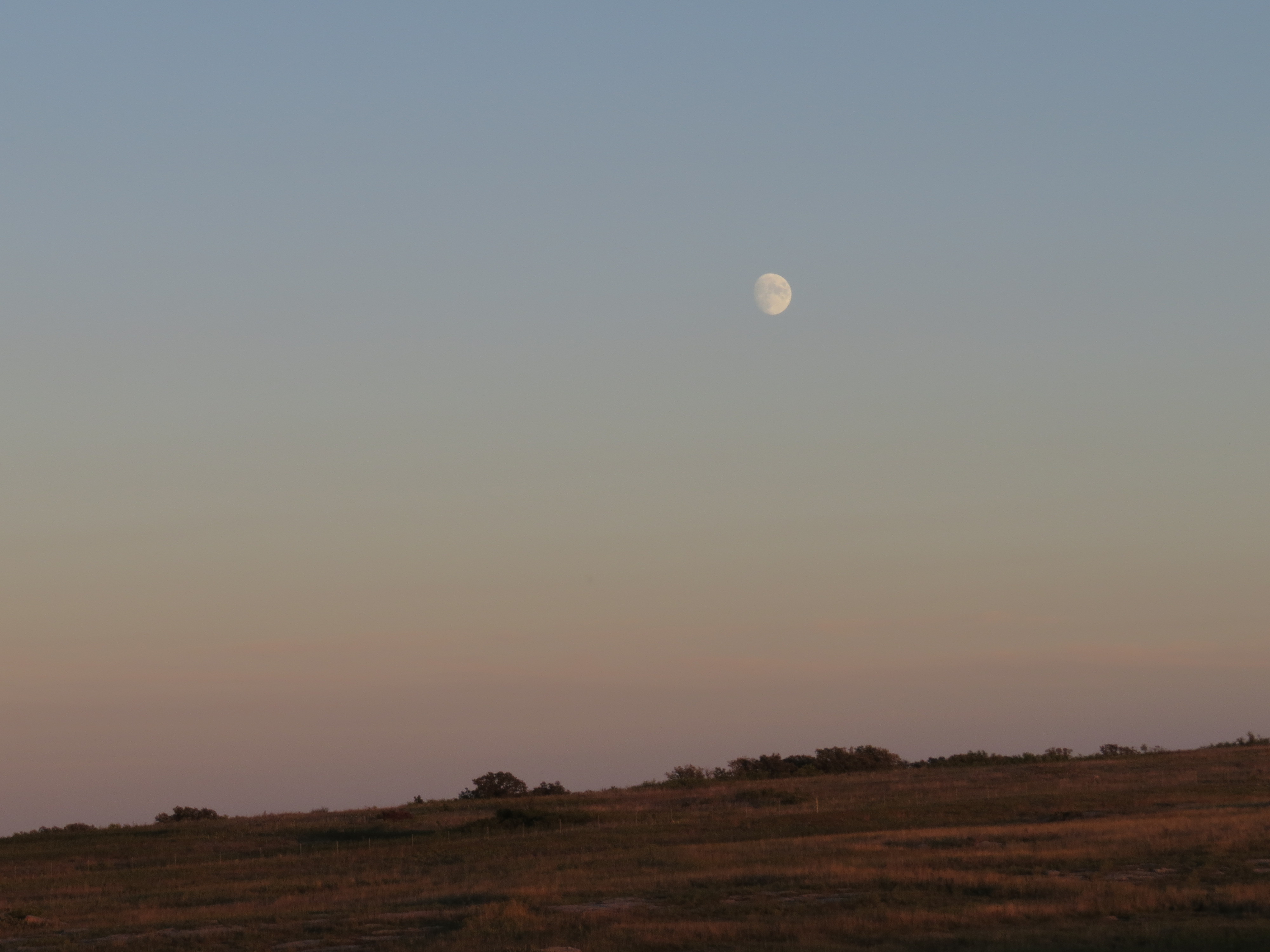
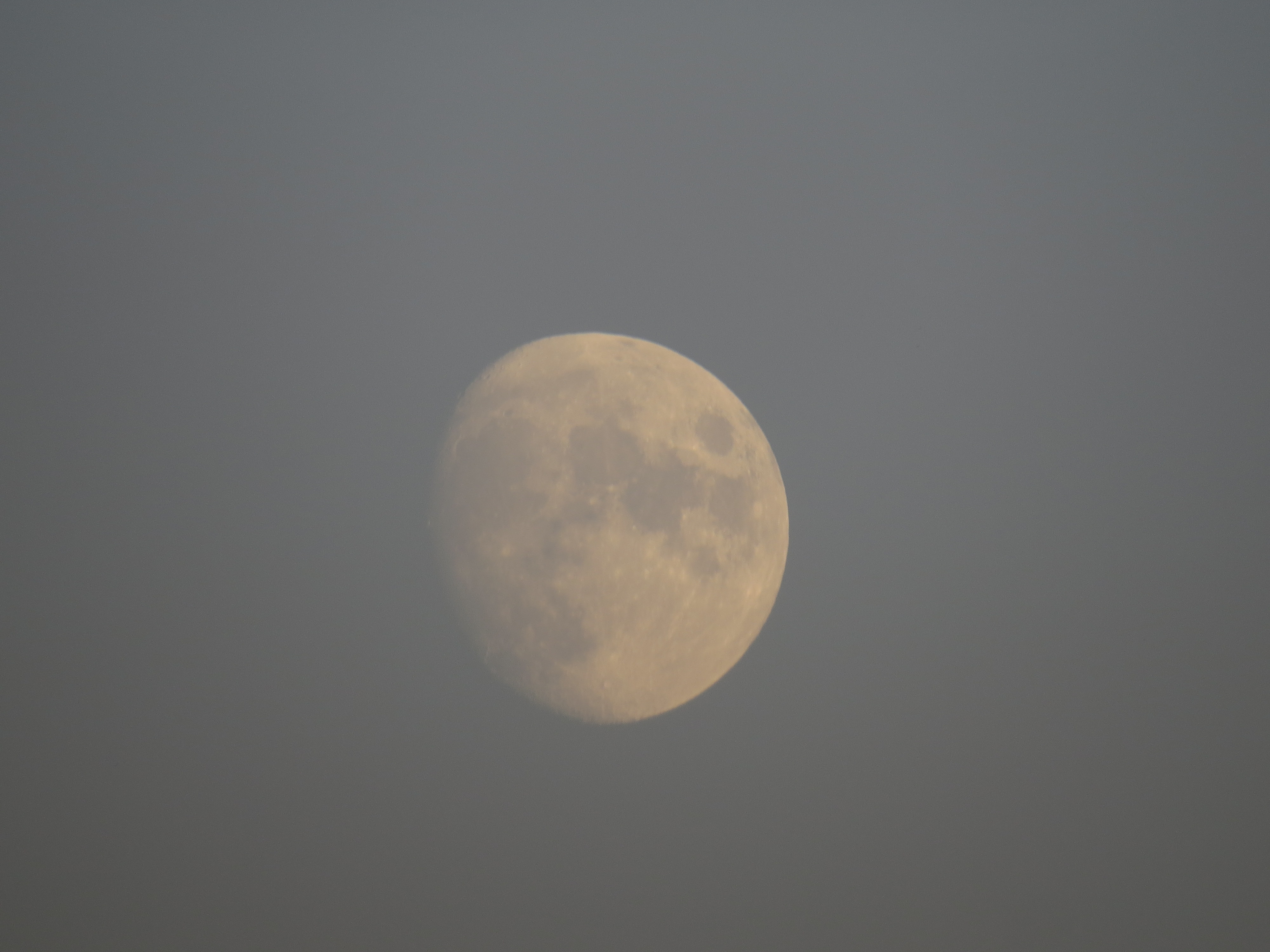
Back at our campsite, we heard where the blackbirds were settling for the night—that ‘field’ of cattails by the lake behind us. The chorus of their chattering continued long into the darkness. More geese flew in to Upper Mound Lake, their ‘Aquabnb’ for the night. We heard some rattling calls from the heron who may not have been so happy to share ‘his lake’ with all the others.
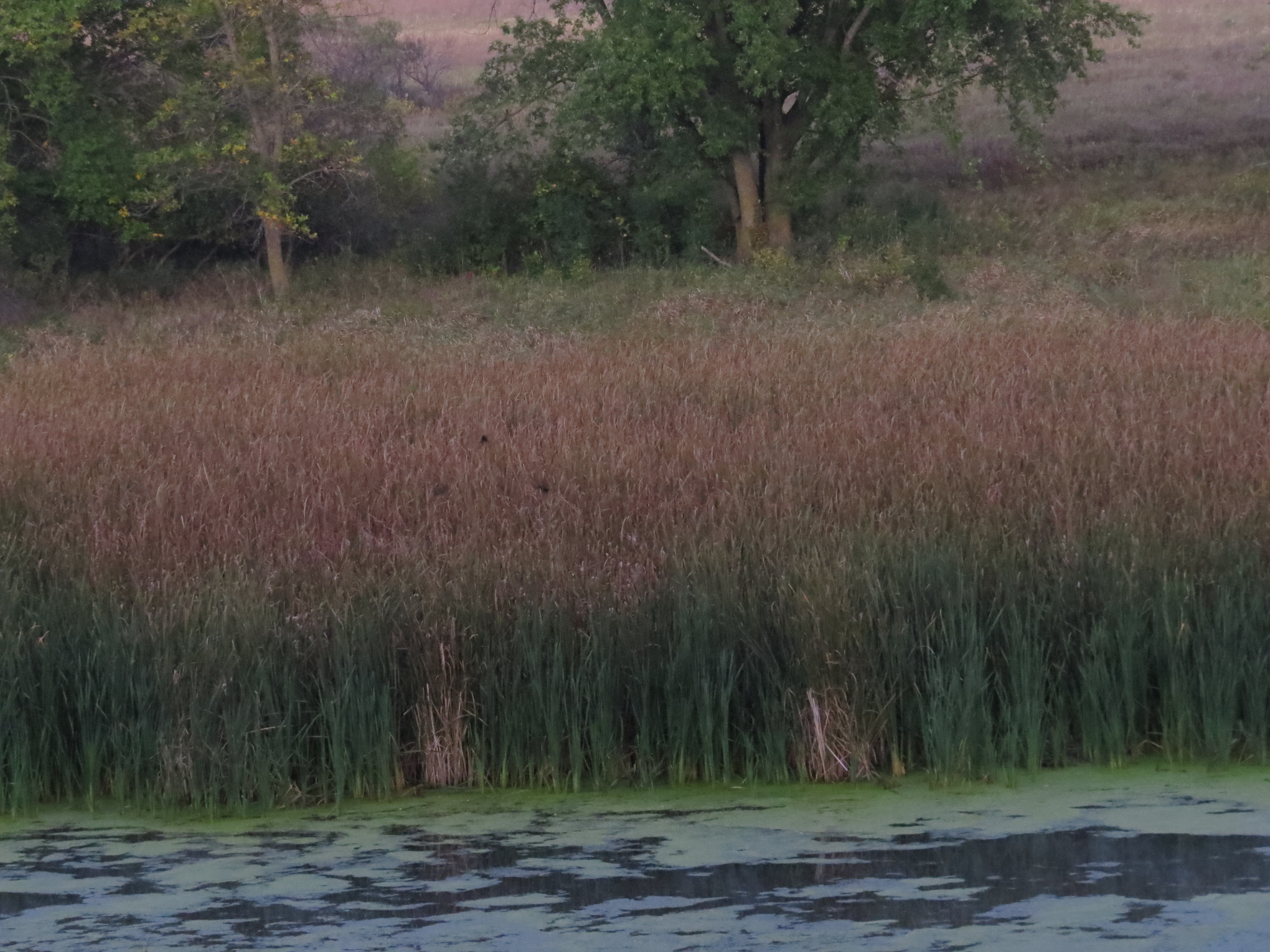
In the dusky light, the red rock cliff had a pink and purple glow about it—the firm terra at the edge of the fluid aqua.
The environments themselves—terra and aqua—are incredibly diverse—the number of different species of grasses and perennial wildflowers in a native prairie is in the hundreds, if not thousands. The lakes and streams support the same diversity of aqua species. But the showstoppers of our weekend at Blue Mounds were the birds of the lake and the bison of the land. Both were enchanting. When was the last time you were enchanted? And what was the source of that enchantment? Was it a temporary ‘high’ or a deeply satisfying ‘knowing’ that you were experiencing a bit of magic? The aqua-creatures and the terra-creatures were captivating, especially the heron and the bison. The source of that enchantment was Mother Nature—the creator of all that sustains us, all that supports us, and all that flows within us. Peace.