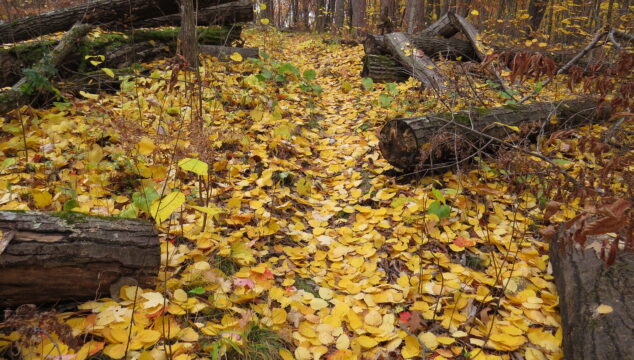
Come walk with me in the peak Autumn beauty of the Northwoods. To say that I love this time of year is an understatement. Most everyone can appreciate the colorful falling leaves---it reveals the 'true self' of a tree when its leaves are no longer producing chlorophyll. Their true colors are revealed, and there is something simple … [Read More...]
Splish Splashing in the Water
His name was Apples, and he loved water. My little strawberry roan horse never shied away from crossing a creek and would dawdle in the water, sipping it through his bit, letting it dribble down his chin. The creek seemed much more interesting to him than the dusty trail on the other side where the rest of the horses had gone.
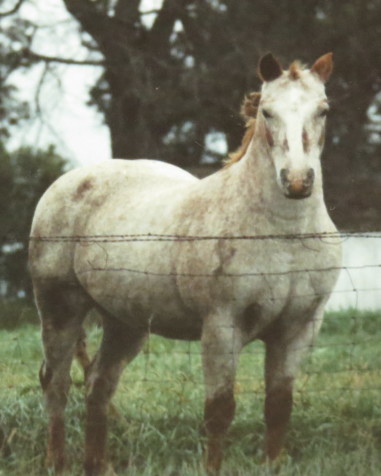
One hot summer day in South Dakota, I was riding with my sister. We had had a large amount of rainfall that pooled into a low spot in the pasture. As we were riding by the clear water, Apples had different plans! He walked into the knee deep water and started pawing–the water splashed up onto his belly, onto my legs, and all around us! He dipped his head down, stuck his nose into the water, took sips, and blew the water out of his nostrils. I remember laughing at how much fun he was having in the cool water on that hot day! Then I felt him gathering his legs, taking small steps inward, and I knew that he was going to lay down! His legs folded, we went down, I kicked my feet out of the stirrups and stepped off of him into the water, all in one smooth, slow-motion movement. As my boots filled up with water, my sister and I laughed at how my little water-loving horse had changed the course of our ride!
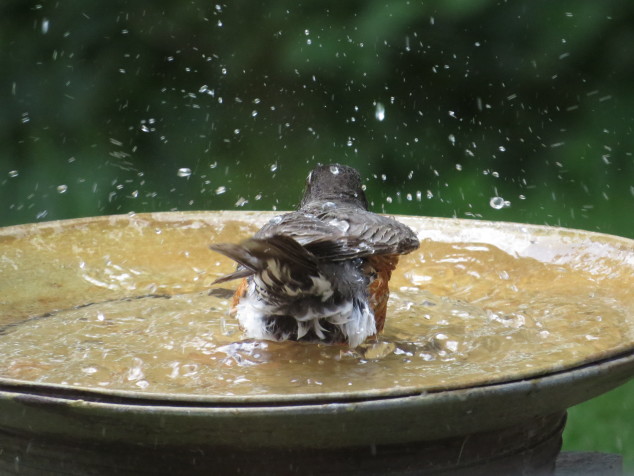
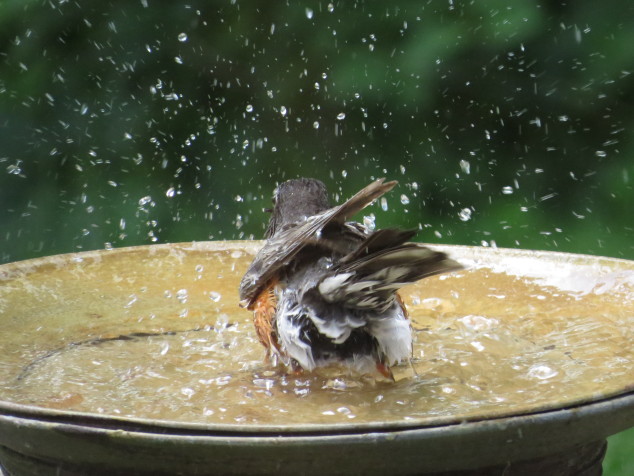
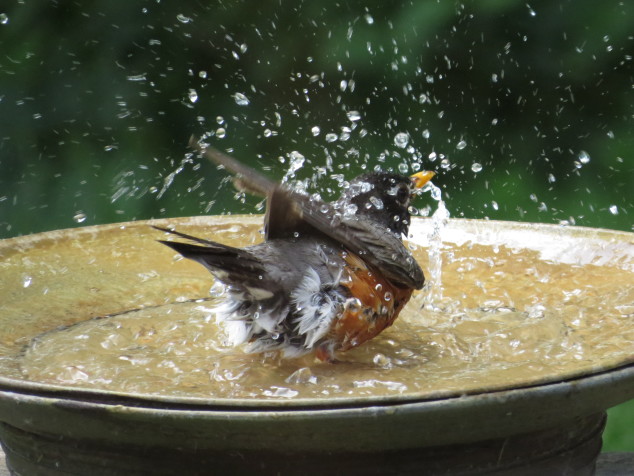
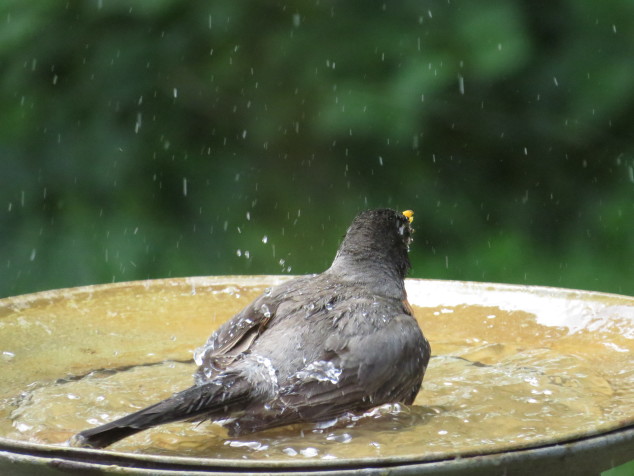
That ride was over thirty years ago, but the memory of it was brought back to me when I saw a robin taking a bath in one of our bird baths. She flailed her wings in the water, lowering her head, shaking her tail, quivering her body, as the water droplets flew around her. Then she stopped for a few seconds, turned a bit, and started over again.

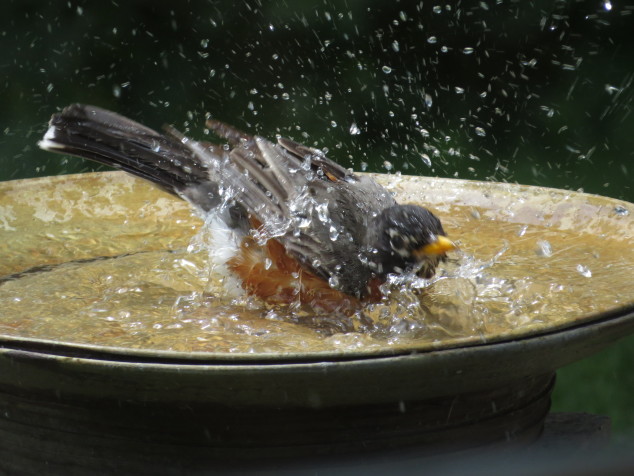
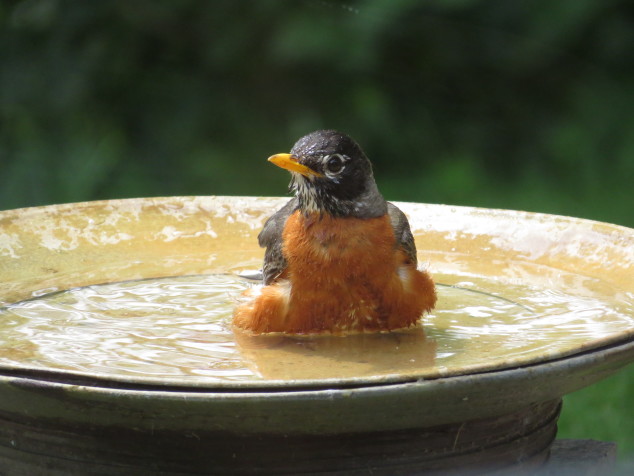
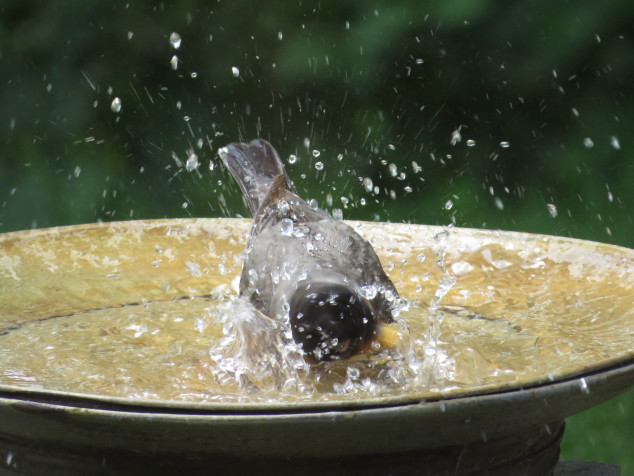
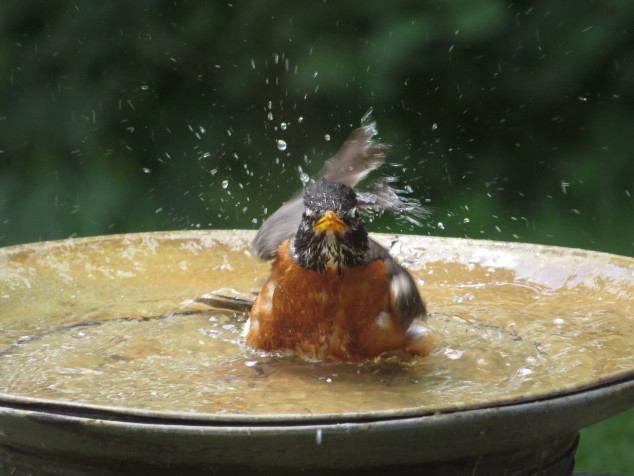
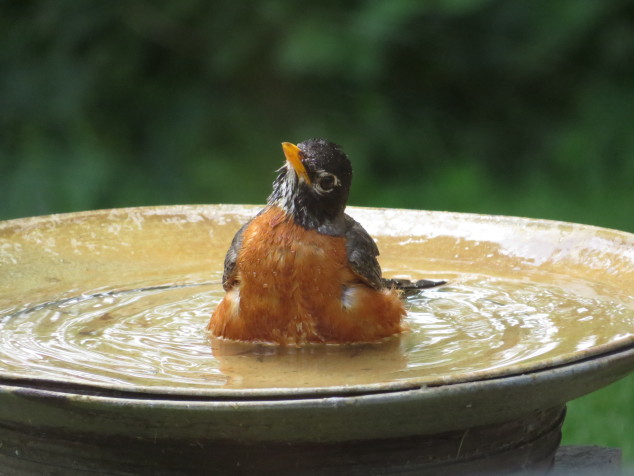
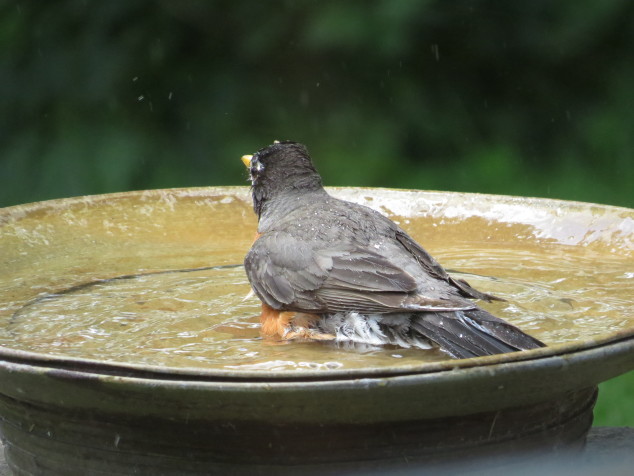
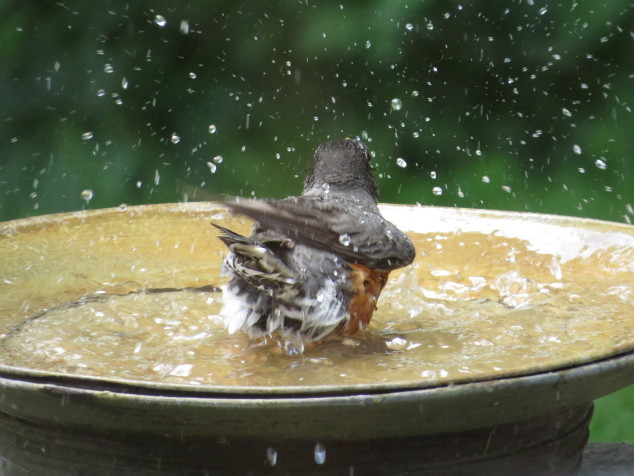
We sometimes forget that all the living creatures around us need, use, and enjoy water–just like us. The robin reminded me. The memory of Apples reminded me. On these hot, summer days as you enjoy the lakes, rivers, fountains and pools, remember to provide water for the animals–for sustenance, cooling, cleaning, and fun! Happy Summer!
Happy Independence Day!
Among my flowers and trees, Nature takes me into her own hands, and I breathe freely as the first man. –Alexander Smith
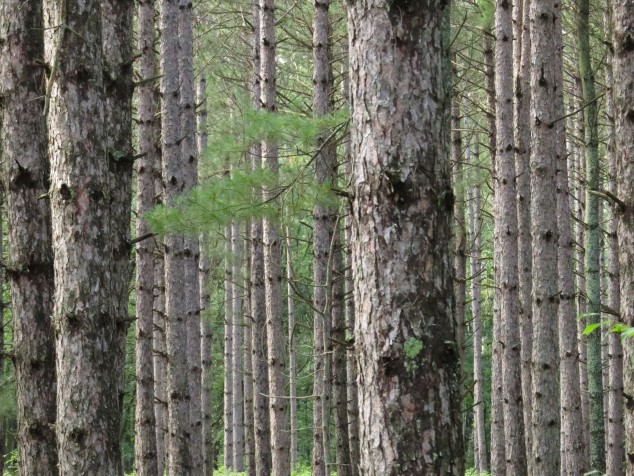
Yesterday was a good day for flying! The Robin babies in the nest on the screened-in porch were getting crowded.
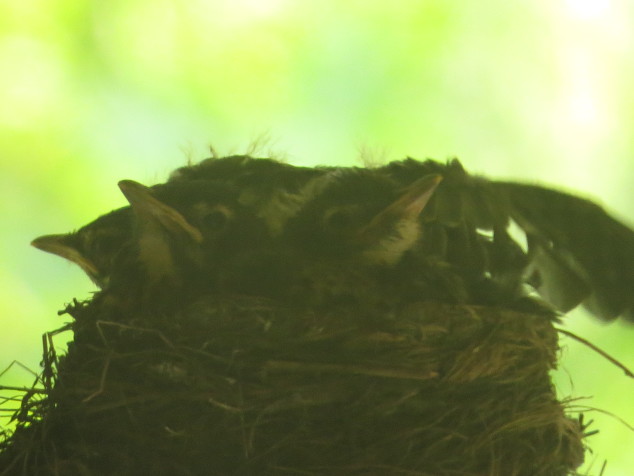
Some time yesterday they fledged the nest! It was empty. They were gone. So much activity, then stillness.
This morning, I saw one of the babies in the maple tree close to the house.
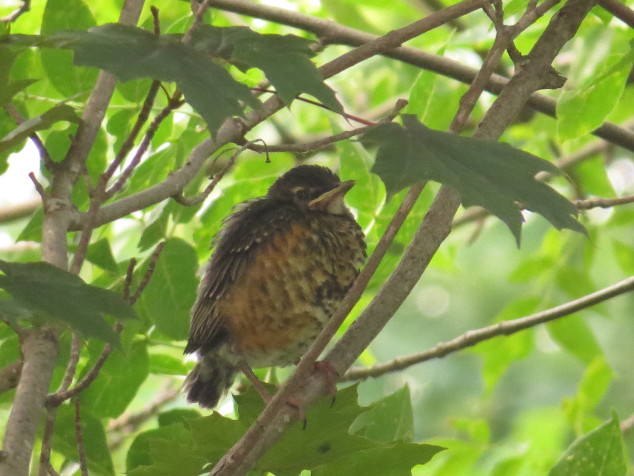
Independence Day!
But one still needs a little help from Mom even after leaving the nest!
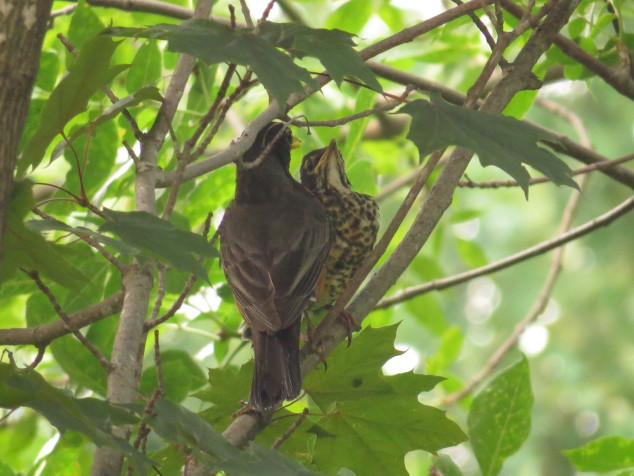
Hope your day is Happy and Safe. Hope you spend some time with Nature and breathe freely. Hope you enjoy your Independence while maintaining the connections that feed your body and soul.
Gleanings from June 2015
And what is so rare as a day in June? Then, if ever come perfect days….Whether we look, or whether we listen, We hear life murmur, or see it glisten. James Russell Lowell
The long, light days of June have slipped by, and we really have had some perfect days! The combination late Spring/early Summer brings warm, wonderful weather, incredible plant growth, exquisite flowers, and animals intent on nesting and raising their young. Life murmurs and glistens all around us, subtle yet extravagant, common yet miraculous.
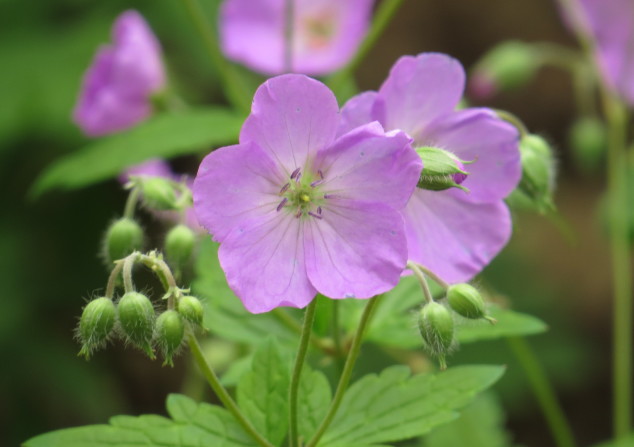
Wild Geranium is a delicate woodland flower that graces the paths through our woods.
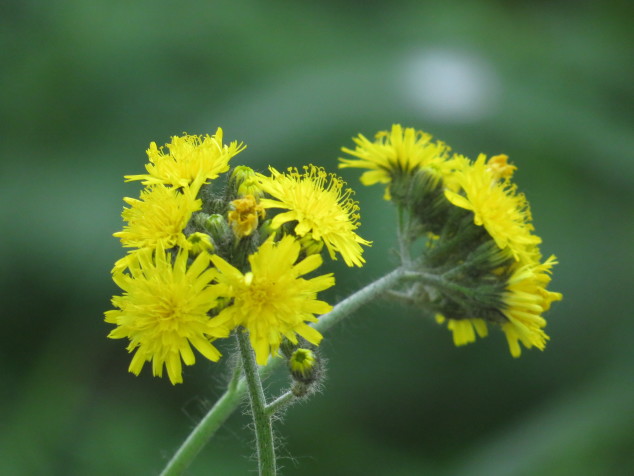
False dandelion grows in our woods, though I have also seen it in full sun along the road ditches. A cluster of small, dandelion-like flowers sways atop a two-foot stalk.
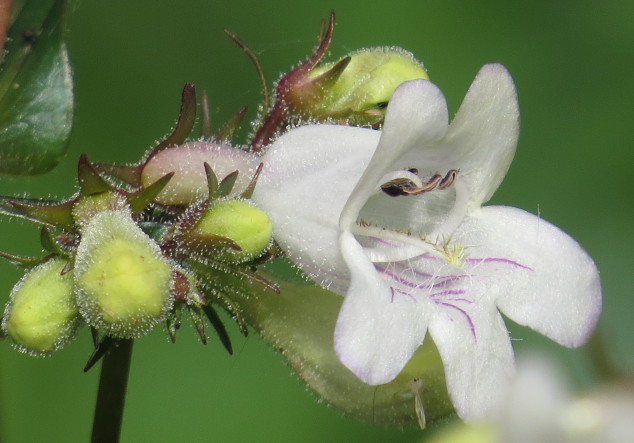
Our sun garden displays the glorious Penstemon digitalis ‘Husker Red’. It has dark maroon foliage and shining white flowers on tall stems. You can see why its common name is Beard tongue; the sterile stamen (one of five stamens) is lined with tufts of small hairs.
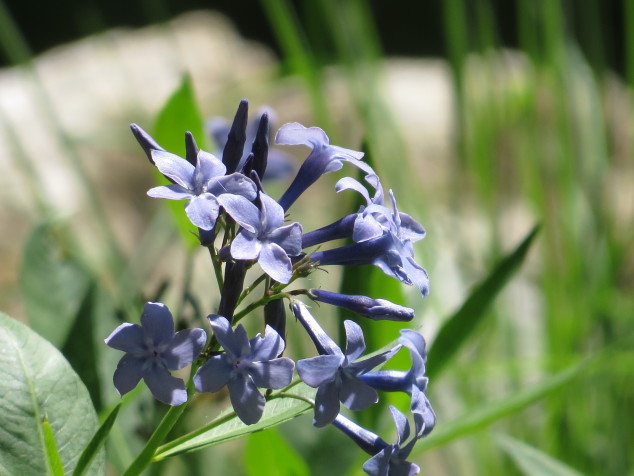
One of my prairie garden flowers–Amsonia or Bluestar–looks perfect in front of the wispy prairie grasses and the Western South Dakota petrified wood.
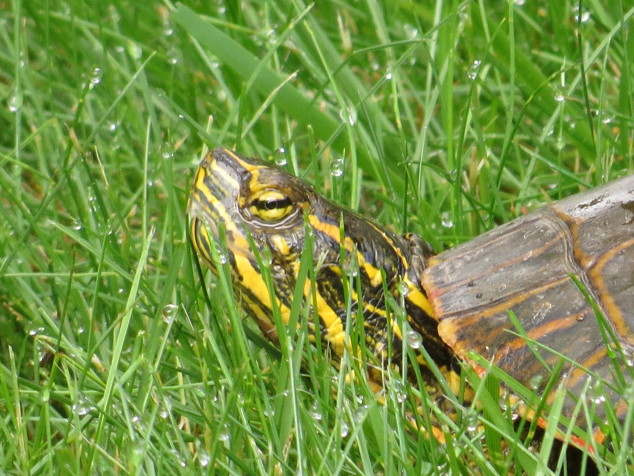
One of the critters that walked through our June yard was a Western Painted Turtle. She quickly ambled through the dewy grass until she saw me–then she stopped as I got pictures of her. She was likely on her way to her nesting place where she digs a hole with her hind feet and deposits her clutch of leathery white eggs. Incubation time is 72-80 days, and since we live so far north, the hatchlings stay in the nest until the following spring!
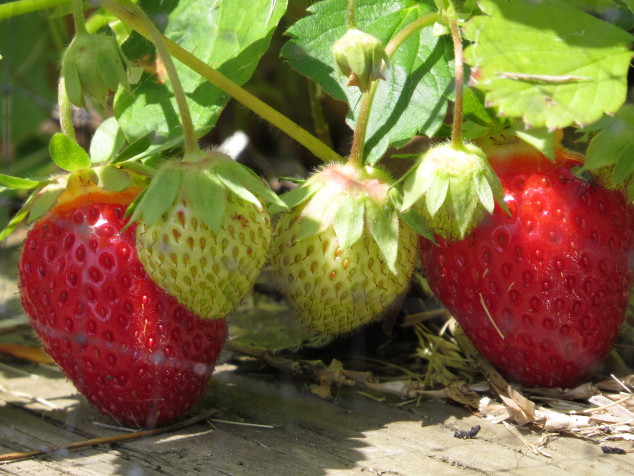
 Tiny wild strawberries and our larger cultivated ones turn a shiny red in ripeness–a sweet treat for whoever finds them first.
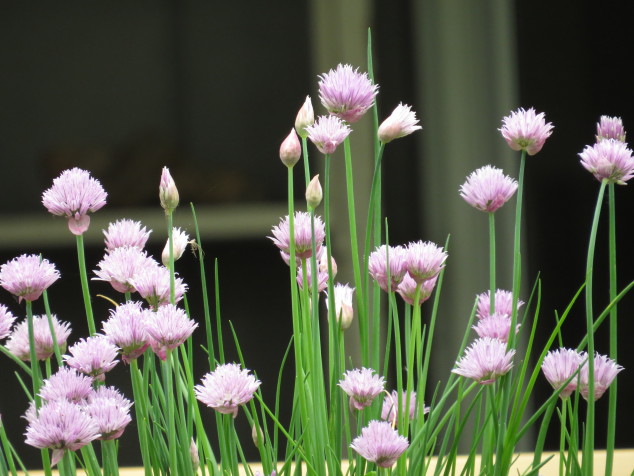
Outside the screened-in porch, the chive blossoms line up like children at the schoolyard.
And speaking of the screened-in porch, my re-do project is on bird delay! A robin thought the unscreened cross beam would be a perfect place for her grass and mud nest. There are three hungry baby birds in the nest in spite of the sawing and hammering going on below. Staining and re-screening will have to wait until the young ones fly from the nest!
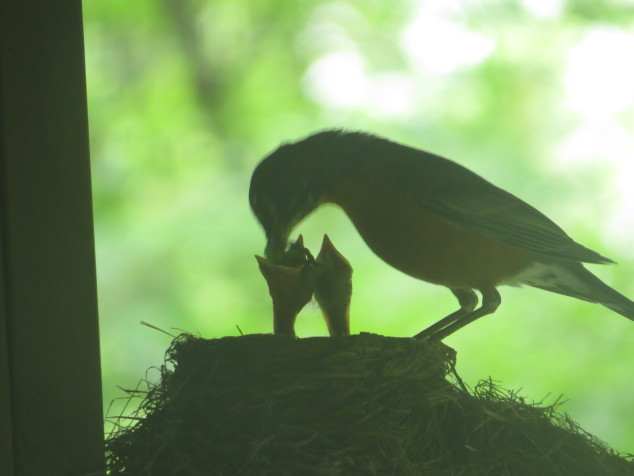
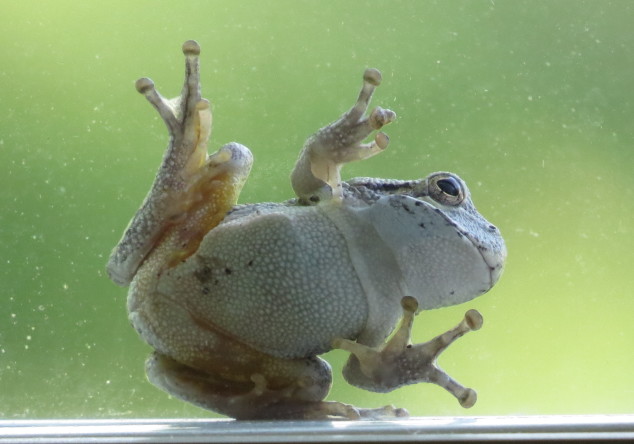
A couple of other creatures seemed to want a glimpse of human life inside the big wooden box with windows. I observe Nature every day–do we ever think about the creatures observing us?
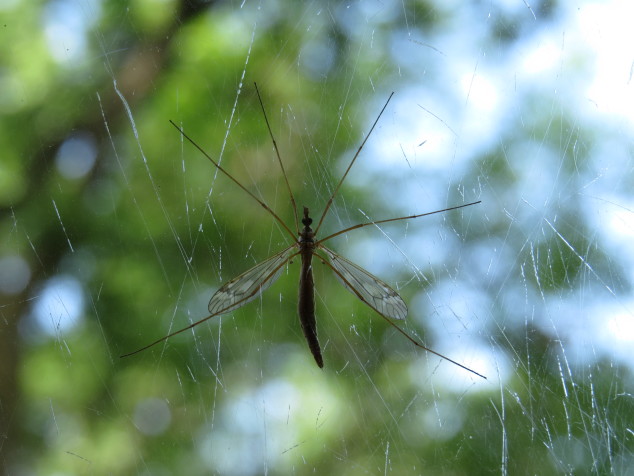
All I can say to the little critters is that I definitely need to wash windows!
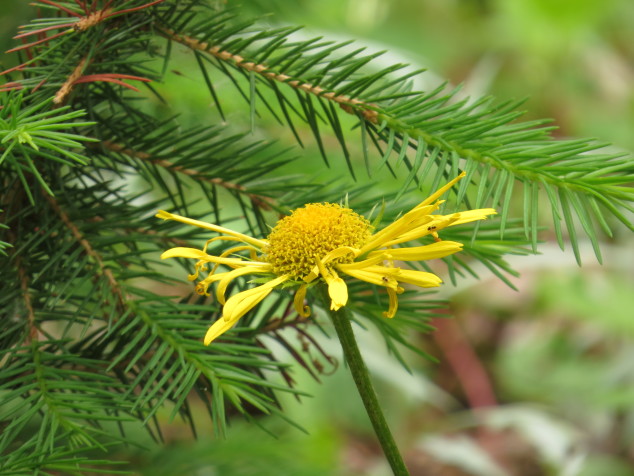
I liked this photo of Leopard’s Bane against the Norway Spruce tree. The flower is spent, on its way to decay with petals drying and falling off and with ants crawling on it. It is up against the supple new, green growth of the spruce tree. A study in contrasts.
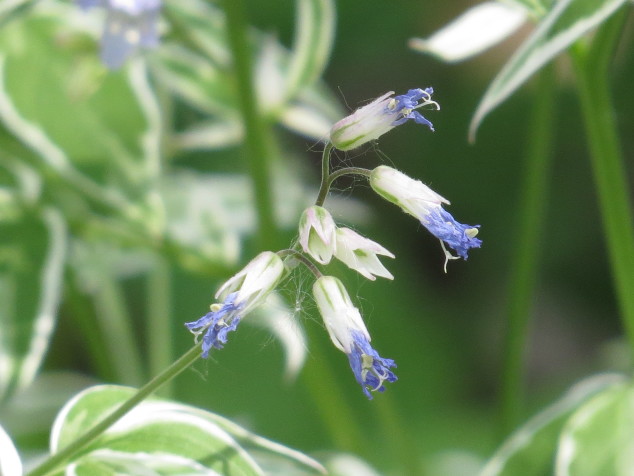
But there is beauty in the ‘spentness’ of flowers, too. Dried blue blossoms of the pretty variegated Jacob’s Ladder reminds us that the bridge between heaven and earth includes the worn out and expended of us who are just a little farther along on our journey.
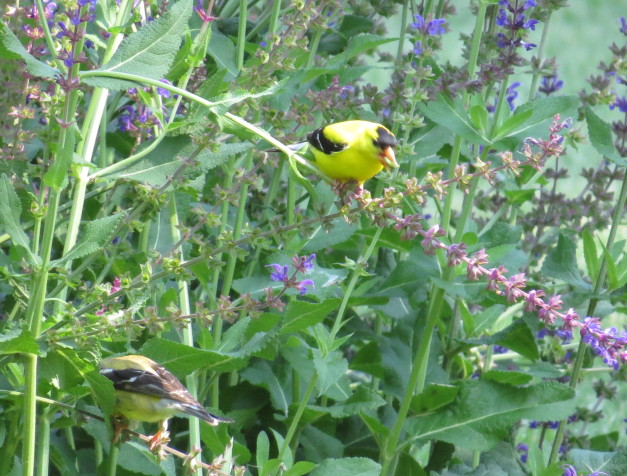
Perennial Blue Salvia in its ‘spent’ state provides food for a pair of American Goldfinches. It is in its prime time of nourishment for others, though its peak visual beauty is past.
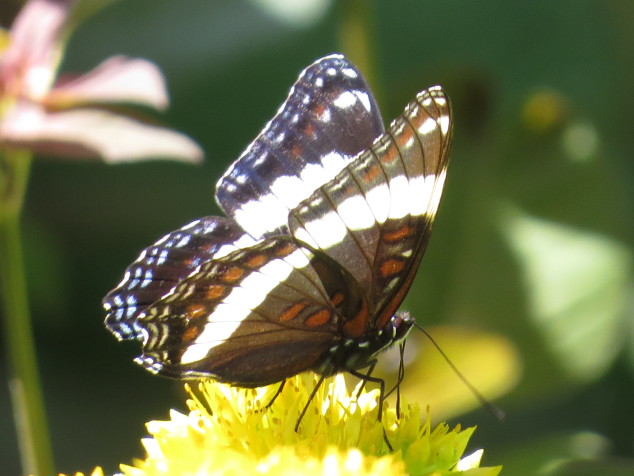
So June encompasses the fresh, invigorated newness of plants, flowers, and creatures and also those in decline. Like all the seasons of Nature and of Life, change is always happening, whether barely discernible or a drastic metamorphosis.
Perhaps the rarity of a perfect day in June is not so rare after all. Perhaps every common day holds miracles waiting to be seen and heard. Where ever we are on our journey, whether ready to fly from the nest, in the perfect place, or in a spent state, we have gifts to offer the world and one another. As the murmur of angels ascending and descending beside us, escorts us on our journey, it is our faces that glisten on each perfect day.
Listening to the Silence
My middle growing-up years were in Pennsylvania on our little acre of hilly land, out of sight from everything, but within earshot of the Pennsylvania Turnpike. Most every summer, we would pack up the Mercury wood-sided station wagon with us four kids, our little brown suitcase of ‘things to do’, and a Johnny Cash eight track tape and head west on that turnpike. Most often we would leave on Friday night after my Dad got home from working at the shop, and my parents would take turns driving, straight through, to my Grandparent’s place in South Dakota. We would arrive early Sunday morning before my Grandpa headed off to church and my Grandma put a large beef roast in the oven. It was always good to be back Home!
One evening–maybe that very first one after our long drive–my Dad was sitting on the porch stoop. I opened the door, walked out onto the porch, and asked him what he was doing. He said, “I’m listening to the Silence.” I can’t remember how old I was at the time, but I remember thinking that was a crazy thing to say! How can you listen to Silence?! He patted the cement beside him for me to sit down. He told me about hearing the crickets and frogs, the cows lowing in the paddock as they came up from the pasture to the round, wooden water tank, how the windmill squeaked as the breeze moved the blades, and how the geese chattered in the slough over the hill. We sat there together for a while, and I really started to listen for all the different sounds of the Silence on the farm.
Today is Father’s Day and the First Day of Summer! I smile when I realize it’s 10 o’clock in the evening, and there’s still a hint of light outside. I love it when I can go outside with no coat and no shoes! I laugh at our dog when we go out to get the mail, and she rolls in the warm grass and watches me walk to the mailbox. I marvel at all the bird mamas and daddys who are flying, hunting, and taking care of their babies.
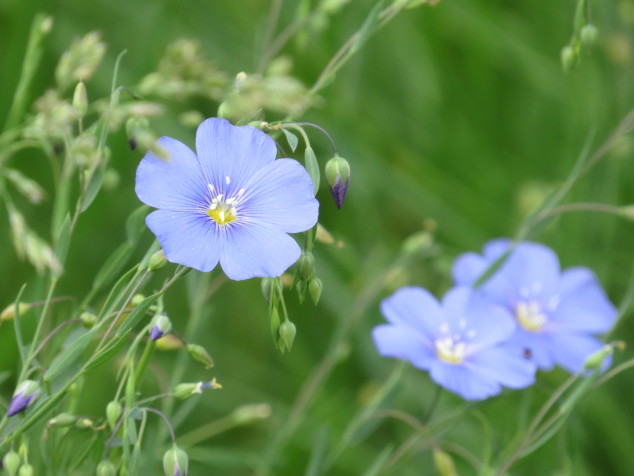
Summer is…my most favorite flower–perennial Blue Flax…
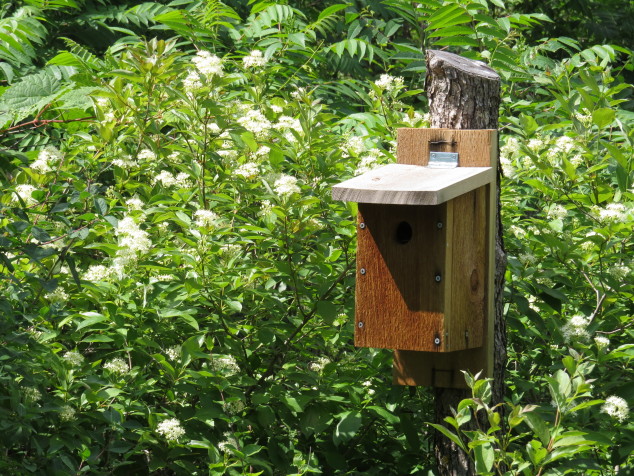
blooms and birdhouses…
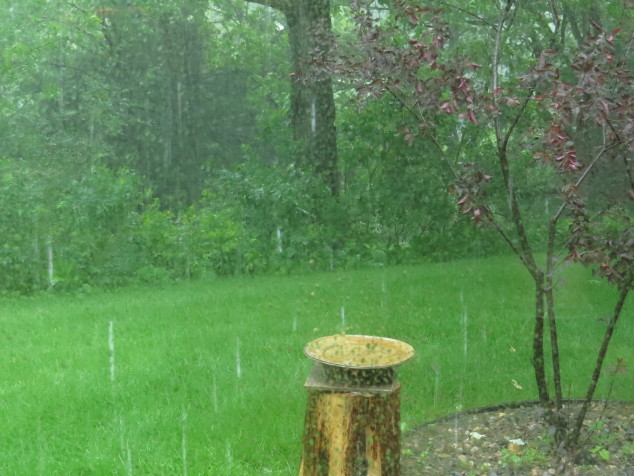
rain…
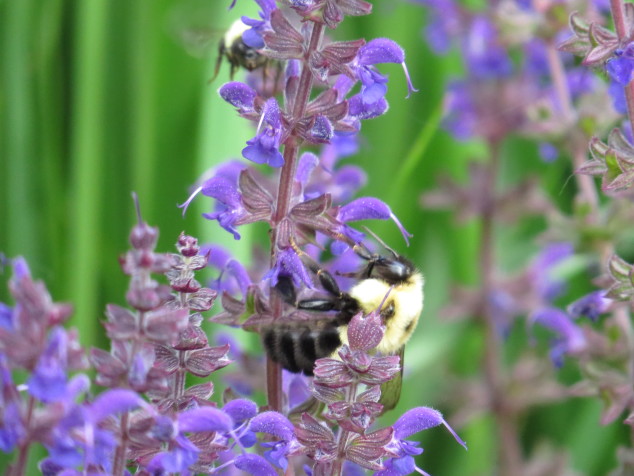
bumblebees…
and birds.
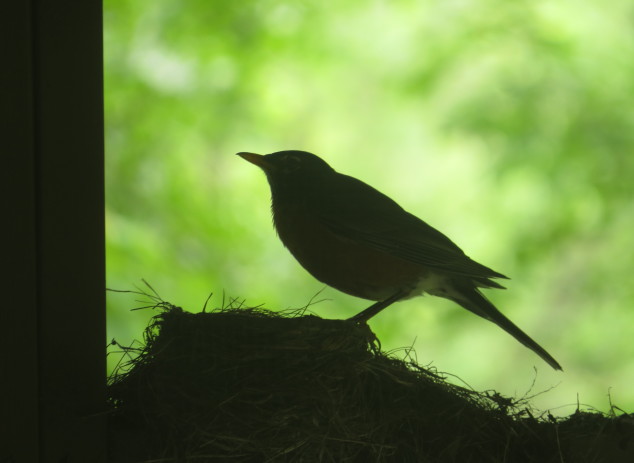
Summer is being outside with Nature, toes in the grass, head under the stars, fish on the line, sun on skin, and listening to the Silence.
Thinking back on those 1500 mile trips with four kids in the car, the constant buzz of turnpike traffic at our house, and the din of diesel engines working as a truck mechanic, it’s no wonder my Dad wanted the calm and quiet of an evening on the farm in South Dakota. That special memory of me and my Dad has stayed in my mind and heart for decades, and I continue to appreciate the quiet sounds of Nature. Happy Summer to all of you, and if you can’t be with your Dad today, I hope you can call to mind a special memory of him while listening to the Silence of Nature.
Gleanings from May 2015
Our back door is almost like a door to Nowhere. To be fair, it does have a sturdy cement stoop and a granite-covered sidewalk that leads twelve feet to the left to the screened-in porch door. But you can’t get to the garage or driveway or shed without walking through grass and around corners. It is a thick wooden door with ten panels, two of which are carved on the outside. One carving is a vine design, and the other is a dogwood-looking flower and leaves. I’m sure it is the original door of this sixty-year-old house, and it shows the weathering of time and sun. It faces WSW, and when I open the door, light floods into the rather dark corner of our living room through a full-glass storm door. The door that leads to Nowhere is really a doorway to Nature’s incredible, changeable Beauty. In Winter, I can see the River, silhouettes of old oak trees, and glorious sunsets. In Spring, I can see my square of prairie garden, my raised herb garden outside the porch door, the shallow clay birdbath on a stump, hostas, ferns, oaks, cedars, viburnums, and other extraordinary plants that make up the woods and yard outside our door.
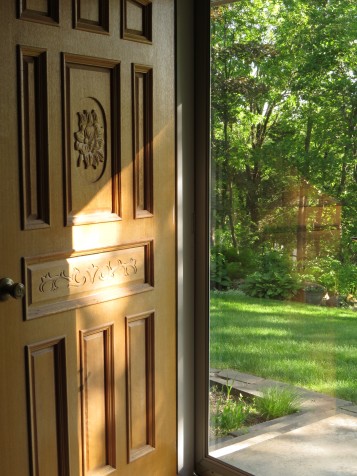
The month of May is the doorway to Summer. School is coming to a close, changing the landscape of family life for the next three months–or in our case, for the rest of our lives, as our youngest graduated from college. The external landscape changes drastically in the weeks of May, from tiny buds and leftovers of winter to the deep, rich lushness of Summer. By the end of May, we are looking at the possibilities, plans, and potentials of Summer!
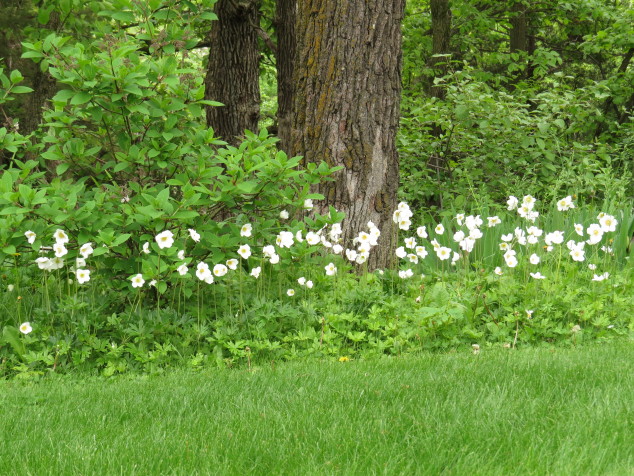
One of the delights right outside our back door has been the bright anemones or wind flowers. This perennial herb and popular wedding flower symbolizes anticipation and unfaded love.
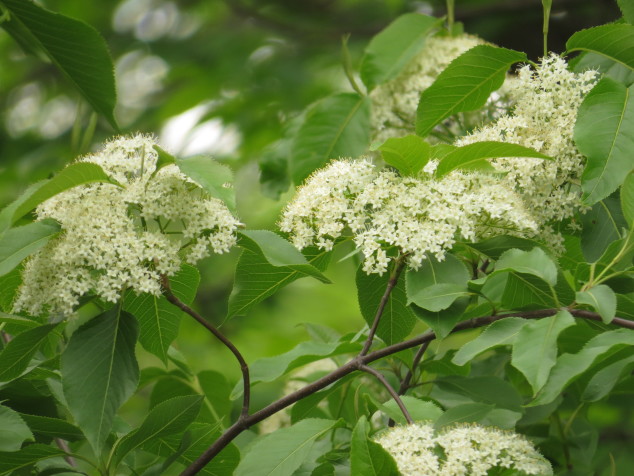
Close to the anemones is the pretty Nannyberry Viburnum with its clusters of white flowers.
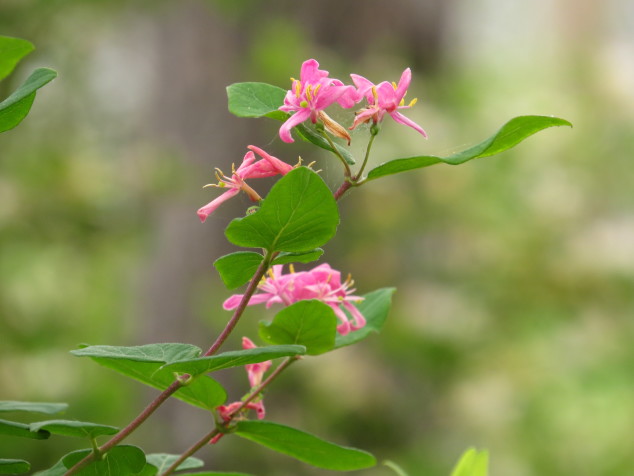
Honeysuckle shrubs of every size and shape are scattered throughout the woods. White, pink, and dark pink blossoms cover the shrubs in a coat of color.
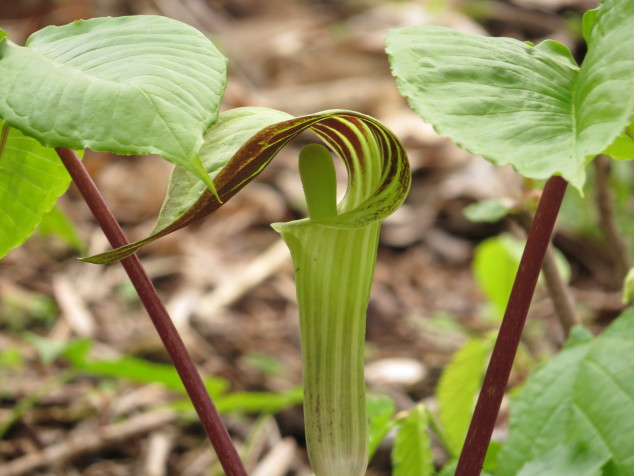
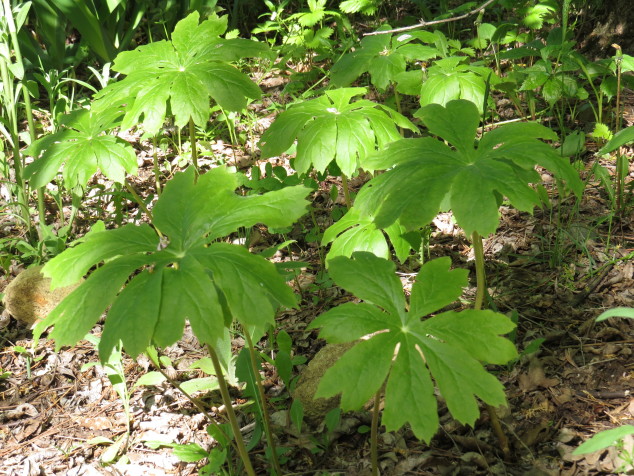
Jack-in-the-Pulpits are hidden treasures in the woods–hard to find, but ever so lovely and unique. Umbrella shaped Mayapples shade insects scuttling through leaf litter underneath them.
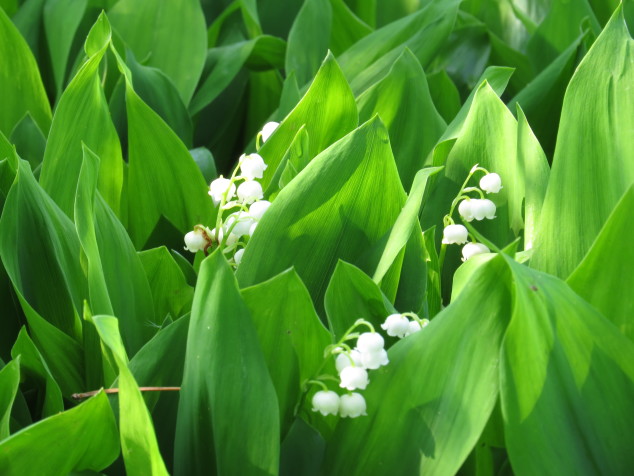
Fragrant Lily of the Valley flowers peek out from among the crowd of green leaves. Their stems of pure white bells make the most beautiful tiny bouquet to bring inside.
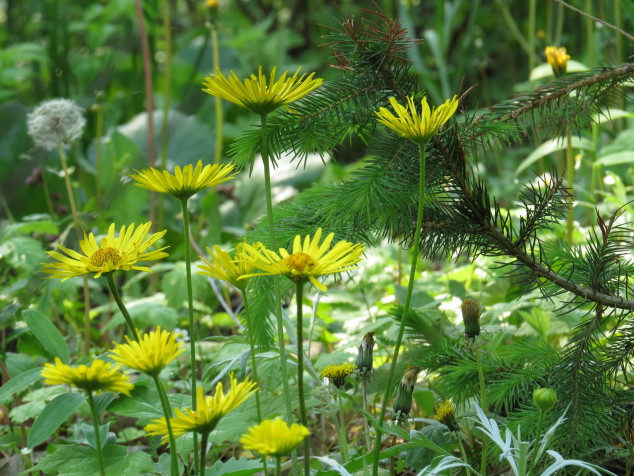
Leopard’s Bane and Dandelion roar into bloom with sunshine yellow in this month of May.
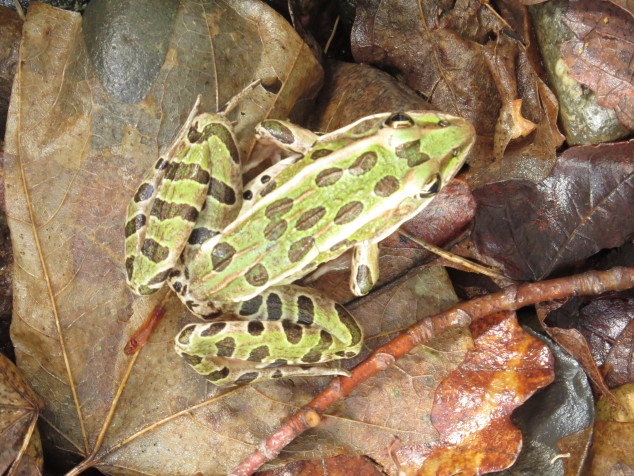
Along with May flowers that have adorned our yard, we have also had creature visitors. The first heavy rain of the month chased Leopard frogs into our deep egress window well.
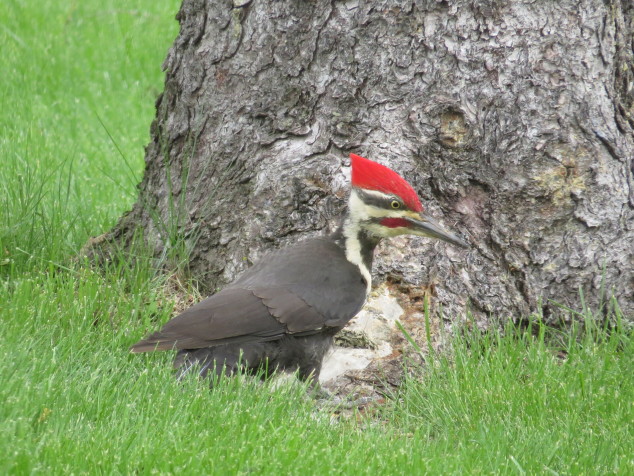
A Pileated Woodpecker checked out each one of the mature spruce trees in our front yard. Their food of preference is carpenter ants.
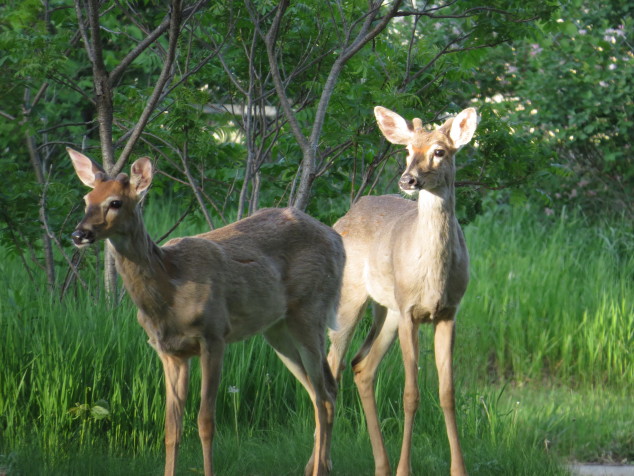
These two young bucks, probably last year’s fawns who were very familiar with our yard, walked up the driveway one evening. They watched our Black Lab dog wander around the outside of the house oblivious to the visitors we sent her out to chase away! (Interesting fact: Their antlers grow up to 1/2 inch each day from April to September!)
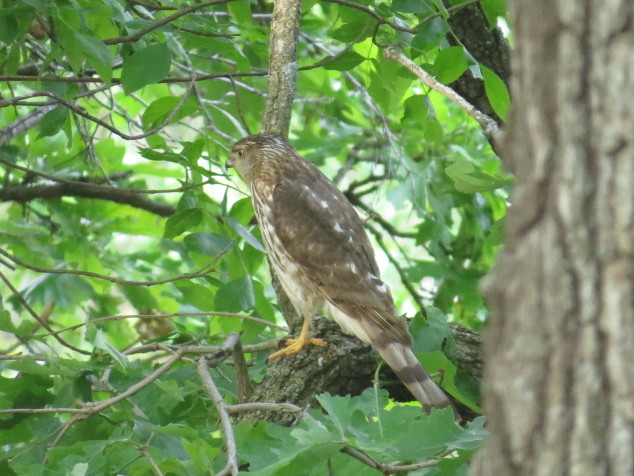
A Cooper’s Hawk is back in the neighborhood, darting through the tree branches, perching, watching, and flying again. He was likely the hunter of the pigeon carcass I found.
May holds promise for a new season, a new chapter in Life, and renewed hope and adventure.
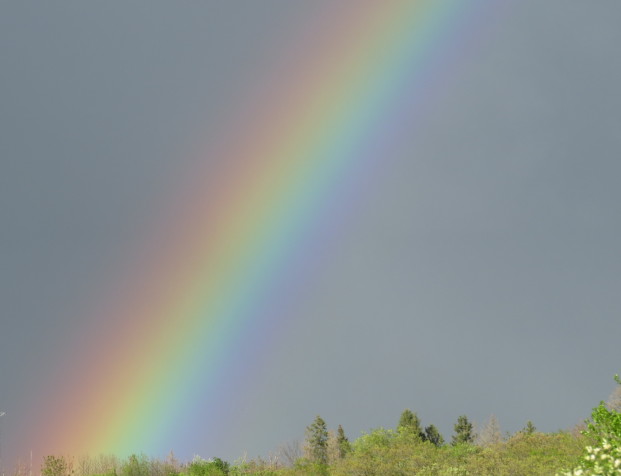
The month of May prepares us for Summer. It is a time to celebrate the end of school–for the year or for life–with parties and graduations. It is a time to celebrate anniversaries of unfaded love. It’s a time of anticipation for the warmth and fun of the Summer months that always go by too quickly. May is the doorway to a productive growing season of garden goodies and farm-raised crops and animals. As we open our doors to Somewhere–a place where the light illuminates the dark, where we find our niche among the crowd, where we carve our initials in our Tree of Life, and where we find our hidden treasures–let us step out in Beauty, Courage, and Love.
Gleanings from March 2015
When warmer weather arrives, we tend to forget that the month started with snow!
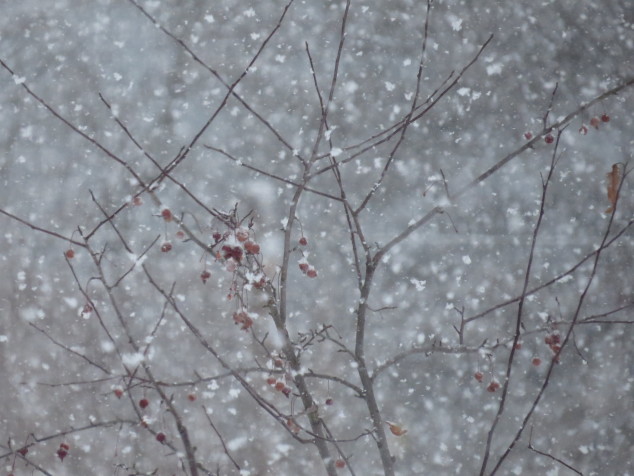
Snow and melting, melting and snow was the mantra for March. The freezing and thawing cycle was also what made March the month for tapping maple trees and drawing sap.
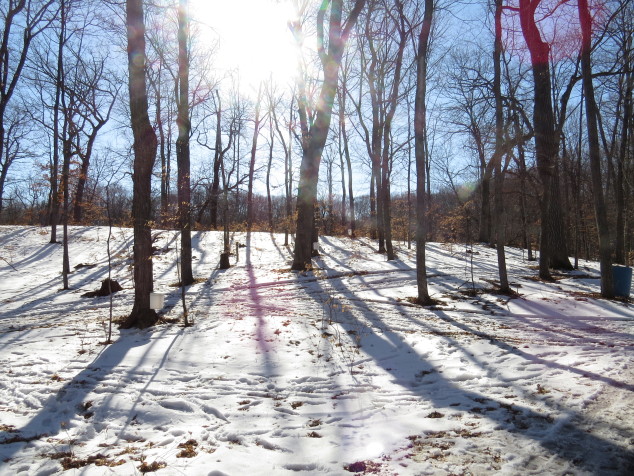
A late-bursting pair of cattails shone in the sunshine in the sugar bush at St. John’s Arboretum.
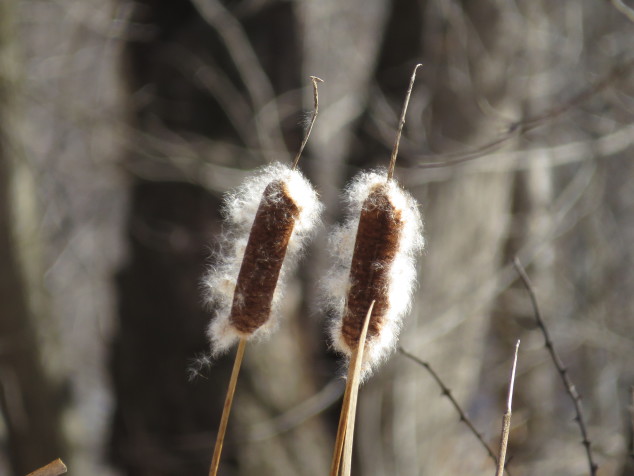
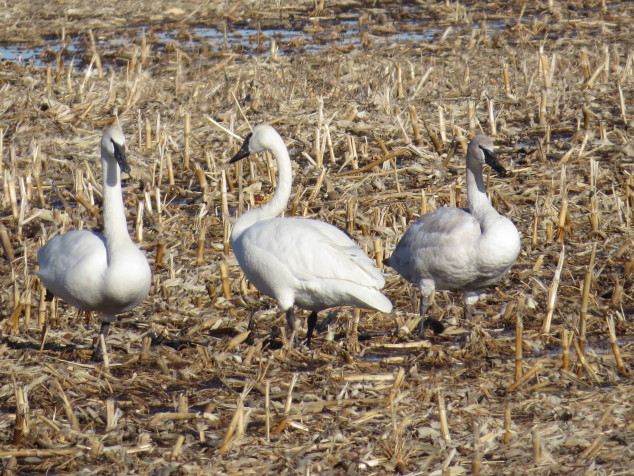
A family of trumpeter swans grazed in a stubble field. One adult swan stood on one leg as the rest of the family moved around her. I’m thinking she must have been injured.
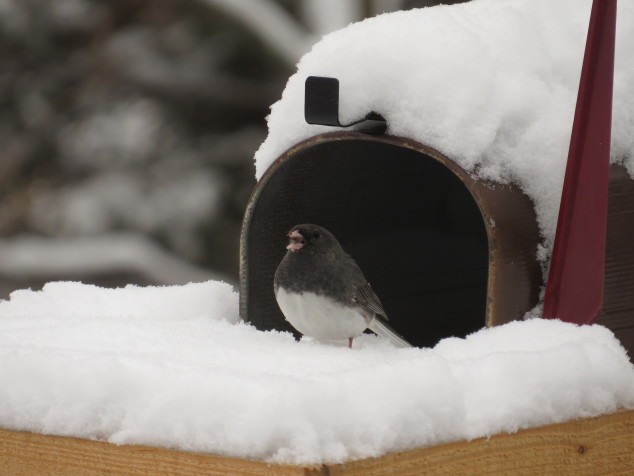
Another snow on the 22nd brought the dark-eyed juncos to the feeders.
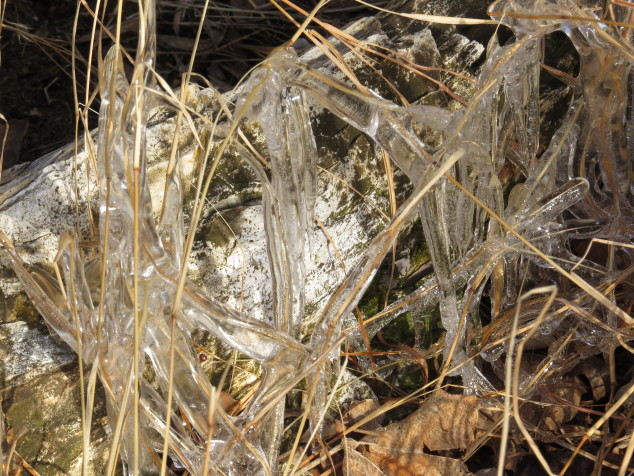
Melting snow dripped from the house, coating the ornamental grass under the roof line with ice.
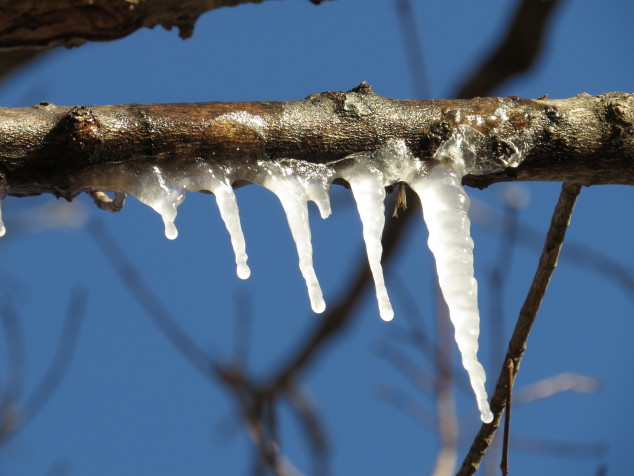
Two freezing days after a warming trend formed sapsicles in the maple tree.
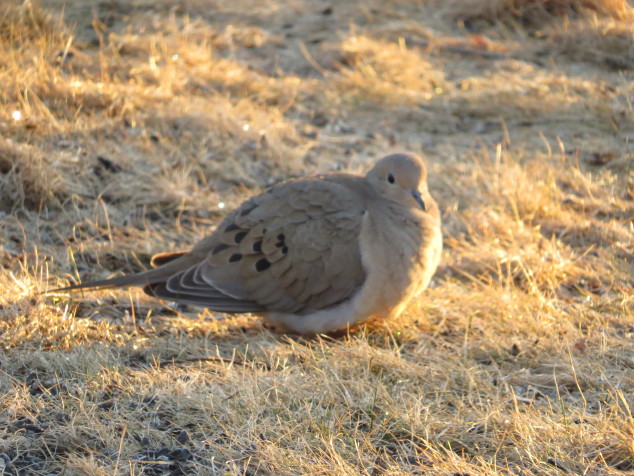
A mourning dove and her mate waddled on the ground under the bird feeder, warming themselves in the morning sun. Their melancholy coos sounded calming and comforting.
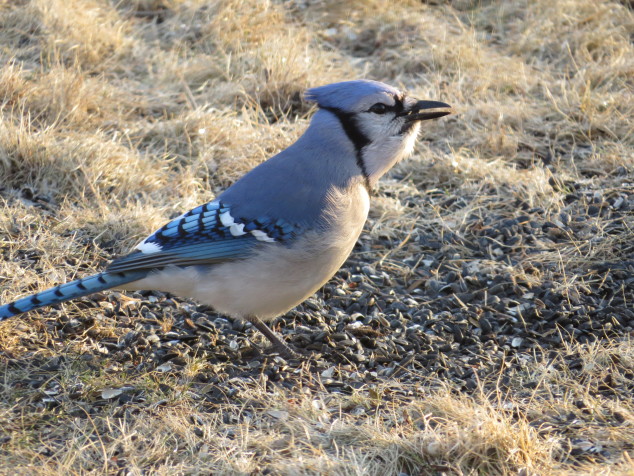
A blue jay was performing the spring mating ritual of feeding his mate. He gathered a seed or two, flew up in the tree where she sat on a branch, and fed her. The cardinals also carry out this chivalrous act in the spring.
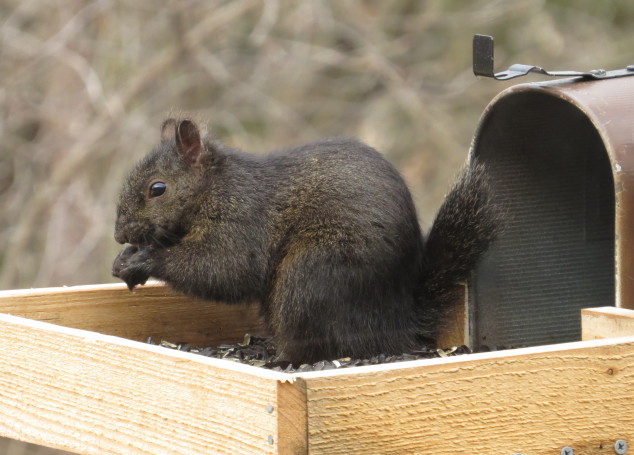
This little black squirrel showed up last week. His stubby tail made me wonder what Squirrel Nutkin adventure he had been up to!
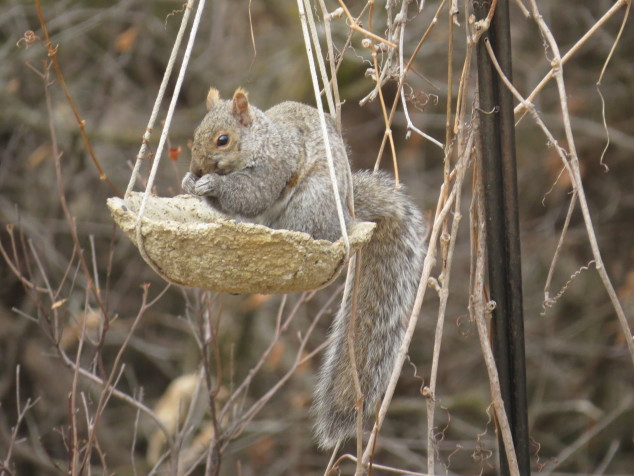
While Stubby was eating at one bird feeder, a gray squirrel was flaunting his long, beautiful tail at the other feeder.
The end of the month was ice-out on the Sauk River down the hill from our house. Spring is here!

Days of warm weather and wind have probably melted the rest of the ice on the River and made conspicuous holes in the lakes’ ice. I have migrated back to South Dakota for a while to join my mom in helping my sister recover from hip surgery. I miss my mate and our evening meals together, though it’s wonderful to be back on the prairie again. As Spring bursts forth in small, incremental ways, I plan to cherish the time with my family and enjoy the creatures and features of new life.
Gleanings from February 2015
When I started the gleanings posts last June, it was because I had an abundance of photos that didn’t fit into any particular post but still highlighted Nature’s treasures. In the short, cold, wintry month of February, I have slim pickings for gleanings photos!
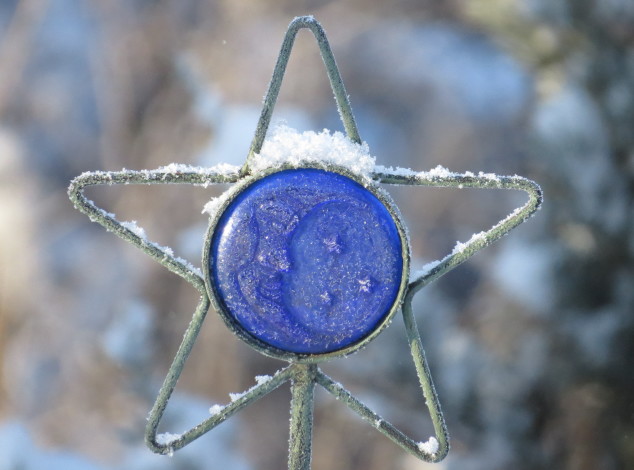 February began with hardly any snow, and while we’ve had a few inches here and there, it has been the least snowy February in quite a while.
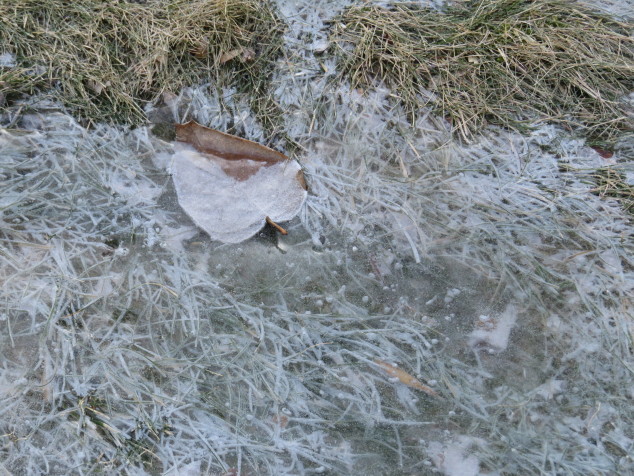
The upside to that is we could get out to do some winter hiking. It was great fun to see the eagles’ return to their nests and the almost daily sightings of them perched over the Sauk River near the bridge in town. Yesterday’s eagle update: it looks like both females are brooding their eggs! Ninety-eight percent of the time one parent, mostly the female, remains on the nest for the thirty-five days of incubation.
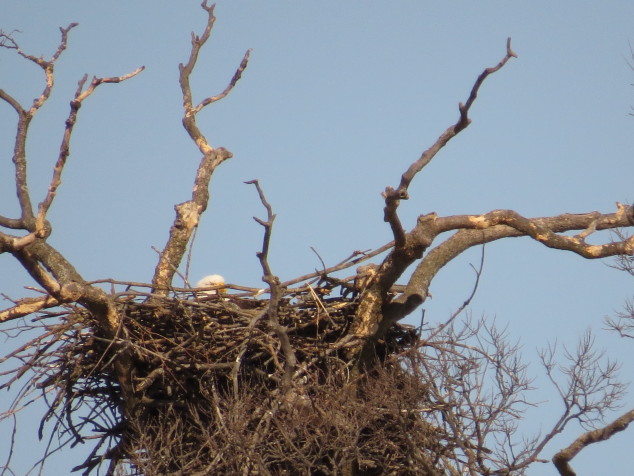
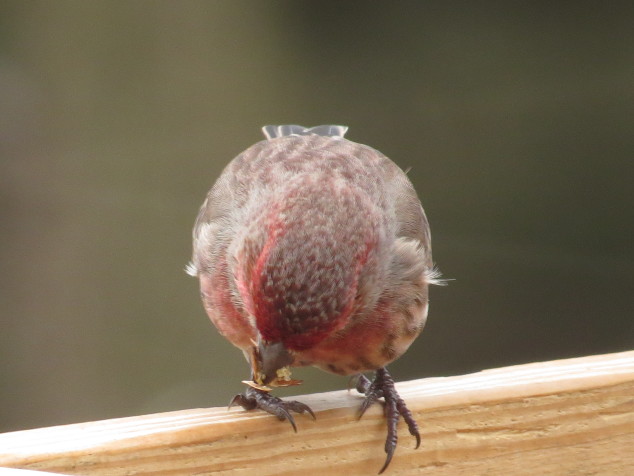
Purple finches usually come to the feeders in a group, like college kids flocking to the commons at suppertime. Unlike some of the other birds, they don’t seem to mind who dines with them.
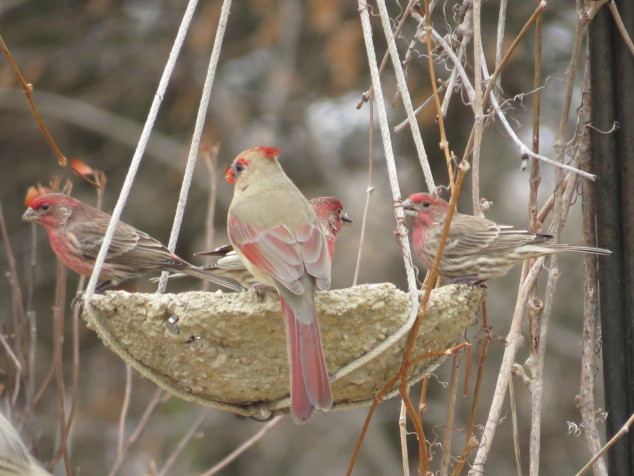
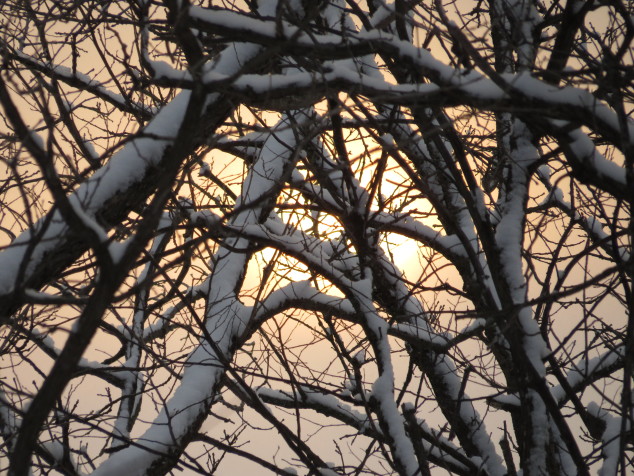
An early February snow clung to the tree branches as the afternoon sun shone through the snow clouds and trees–a cathedral of color and light.
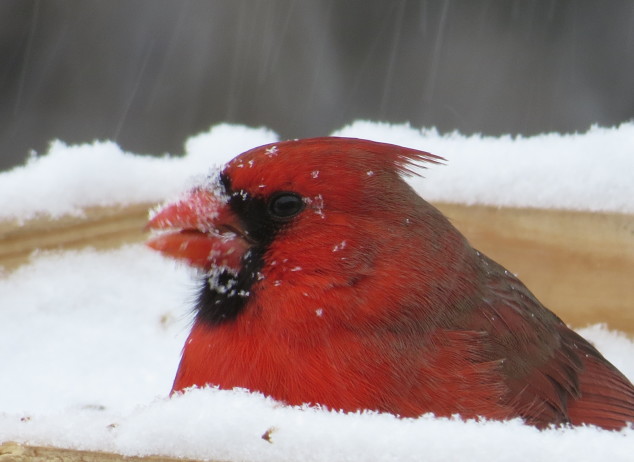
One brave parishioner was out before the snow stopped, wallowing in the glory of Winter.
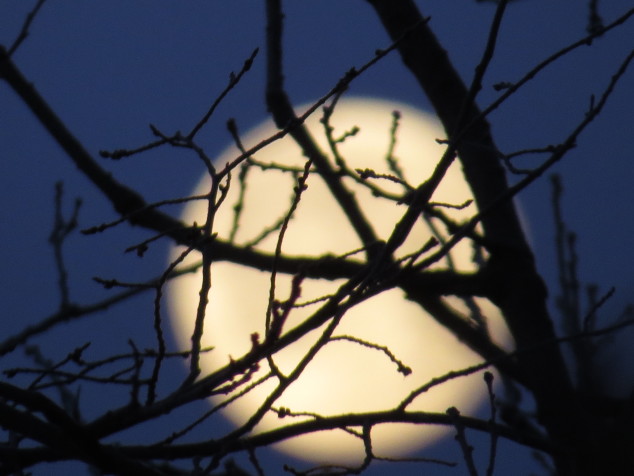
A full moon was setting in the western sky one morning as I rose from my warm, flannel-covered bed. Good morning, Moon!
Clouds and color paint a nightly work of art as the sun says good-bye to another day. Good night, Sun!
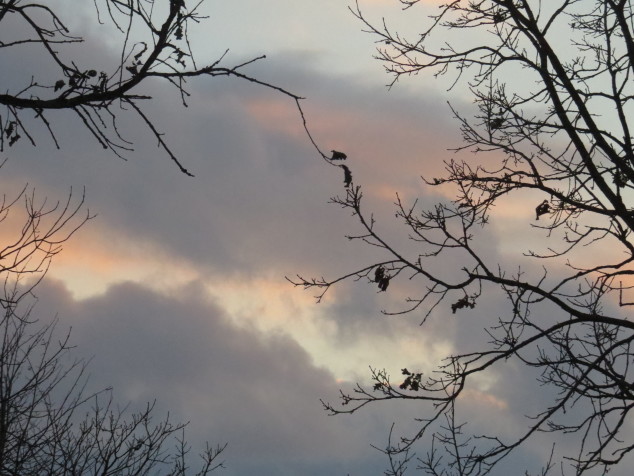
Snow and cold and lack of subjects caused slim pickings for my February photos. It seems like February and the end of winter can get on a person’s last nerve–slim pickings of patience. It’s good to finally see the first day of Spring on the calendar as we turn to March. But oftentimes, there is a shortage of other things in our lives. Some literally have slim pickings of food before their paycheck comes again. Others have a shortage of good will for those around them. Some don’t have much love or friendship to brighten their days. What is lacking is our lives? And how can we help bring abundance to others? Let’s all wallow in the constancy of each day’s sun, the hope of new Spring life, and the glory and beauty of Nature.
Gleanings from January 2015
As any parent will remember, there is a certain age when our children constantly ask questions. They are trying to piece together the world as they experience it. By age four, children have the words to ask the questions that help them learn and make sense of things.
I scrolled through all the pictures I had taken in January and was surprised when questions kept popping into my mind. Usually I get some ideas of what I want to say when I look at them, but never before have the ideas come as questions.
What’s brewing on the horizon?
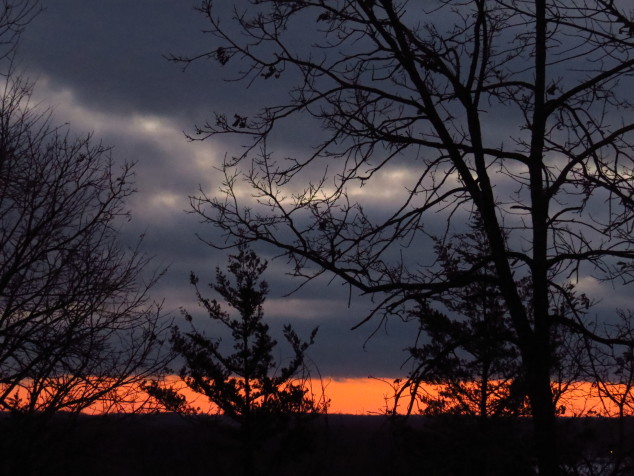
Where are we going?
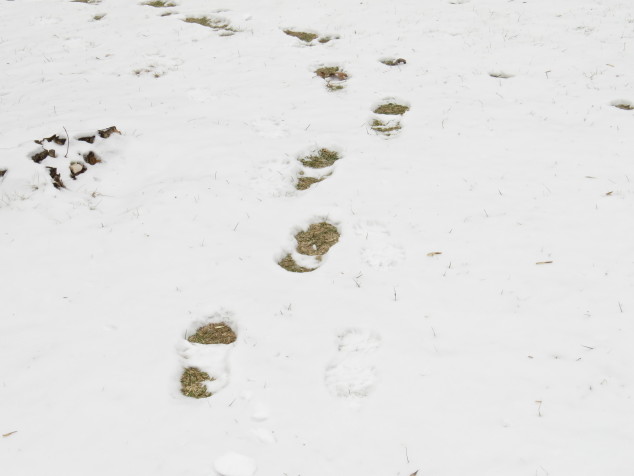
What are our hidden treasures?
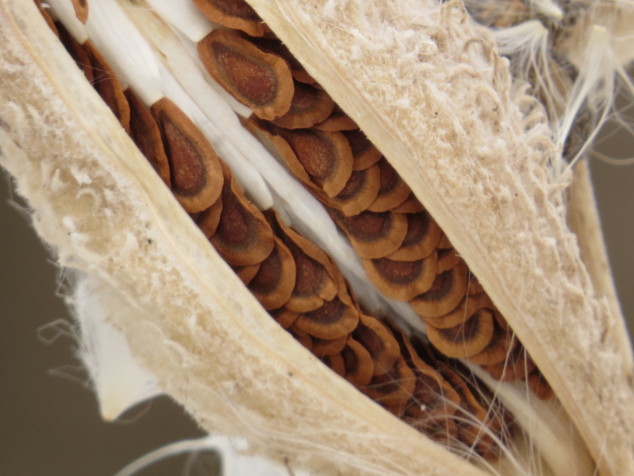
How do we get along with others?
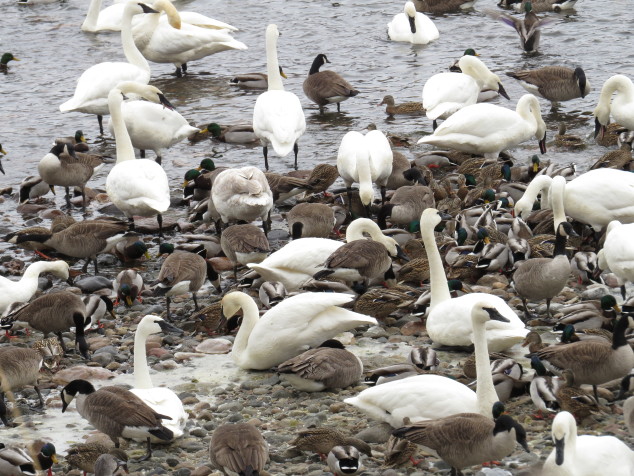
Are we gathering the wisdom of the ages?
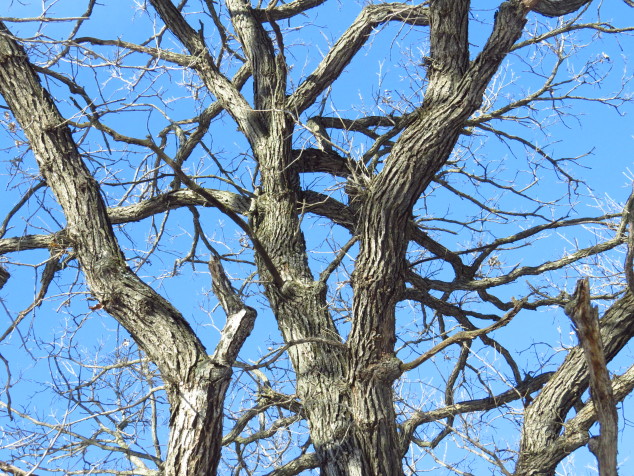 Who’s talking? Who’s listening?
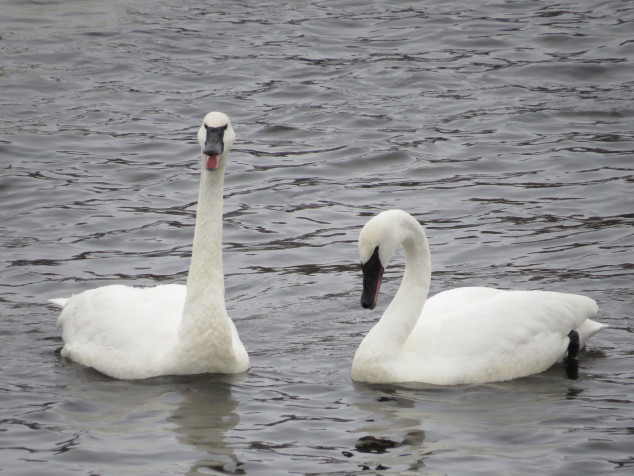
What seeds are we planting for the future?
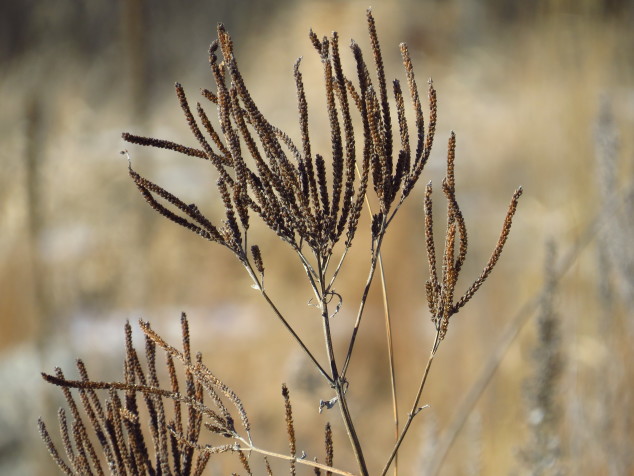
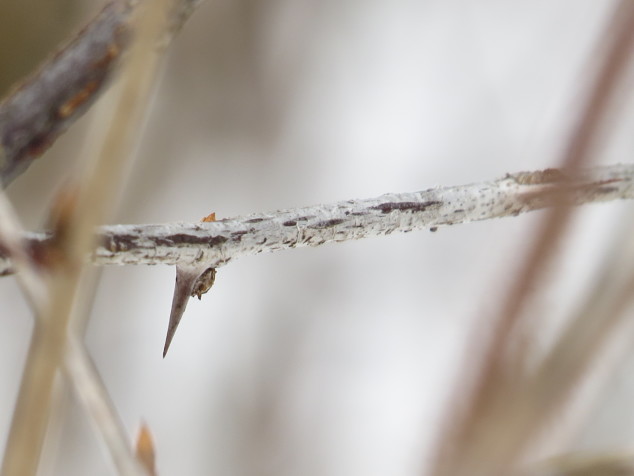
How do we handle Life’s thorns?
What makes us happy and want to dance?
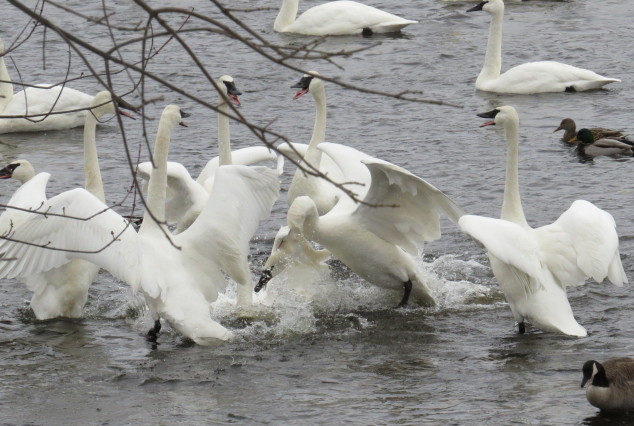
What happens when we fall down?
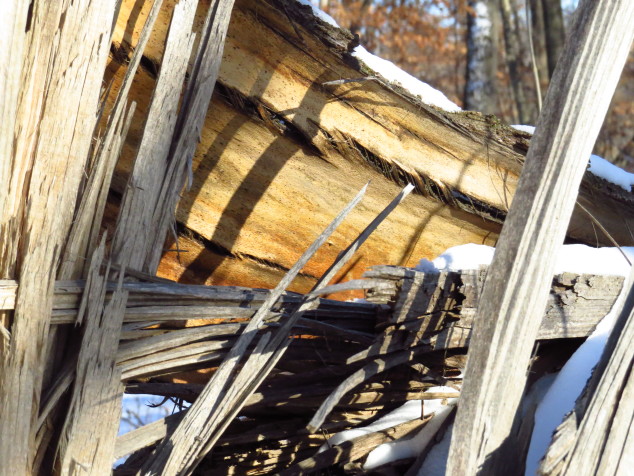
How do we see the world?
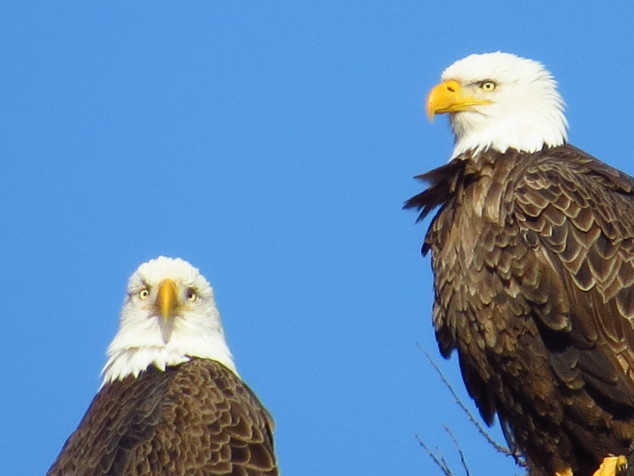
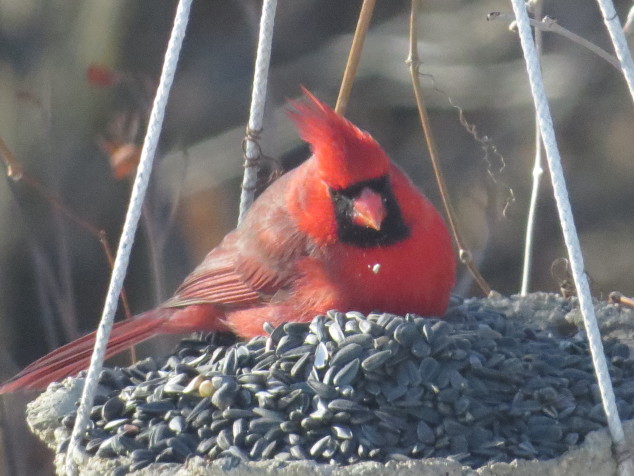
How do we handle abundance?
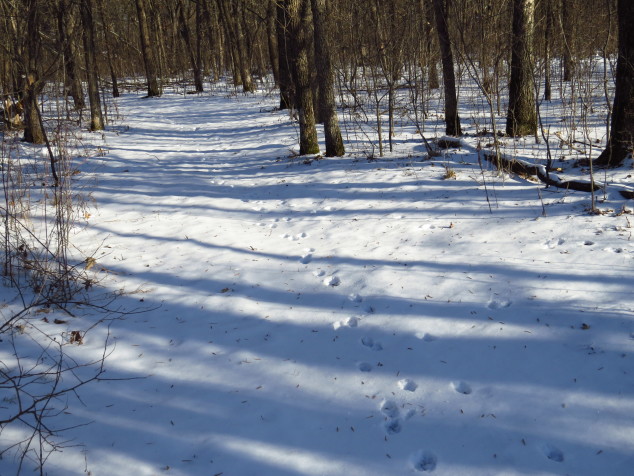
Whose tracks are we following?
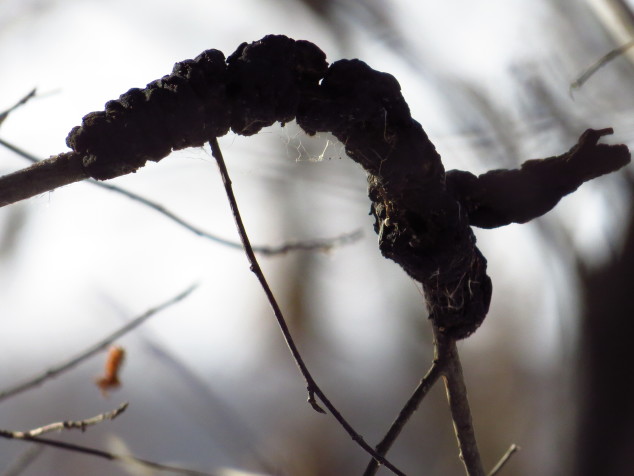
What bad stuff do we need to get rid of?
What are we hiding from?
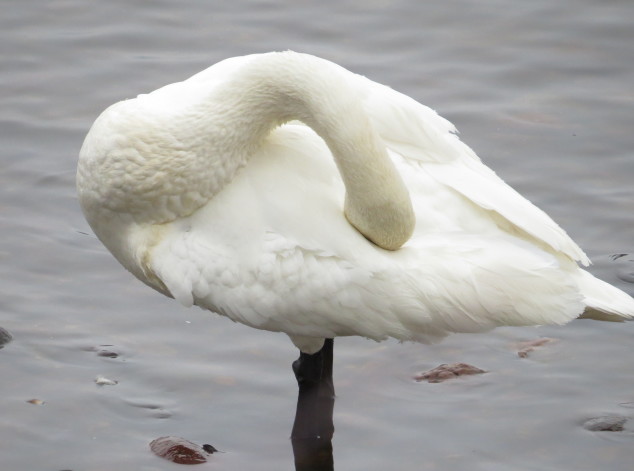
Is anything obscuring our Light?
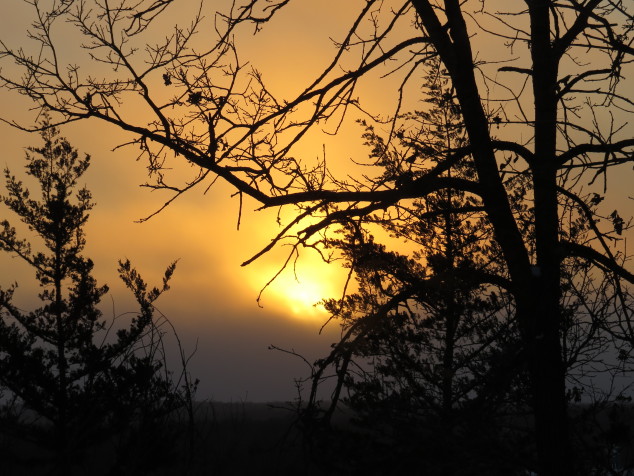
Are we heeding the warning signs?
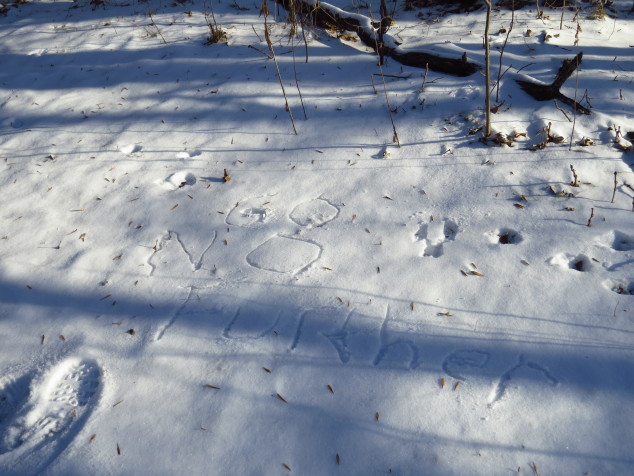
What are the bright spots in our lives?
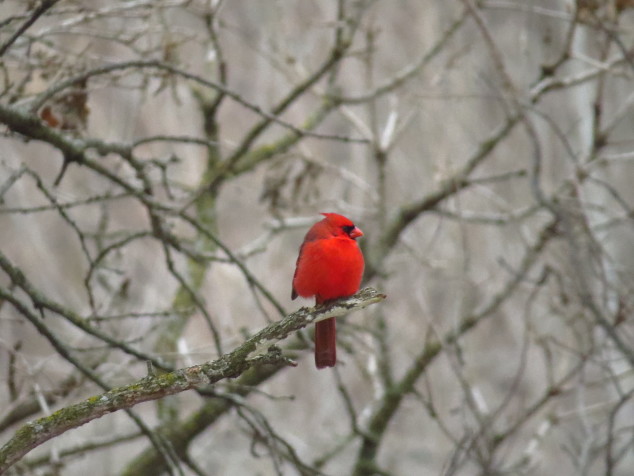
What direction are we flowing? Are we walking on thin ice?

Where is our shelter from Life’s storms?
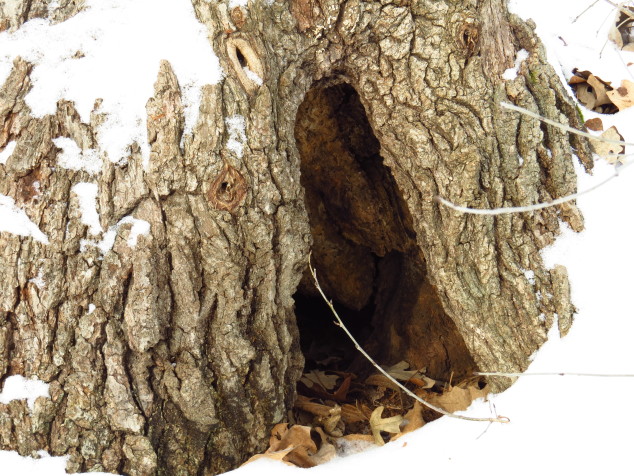
What’s around the bend? How do we want to step into the future?
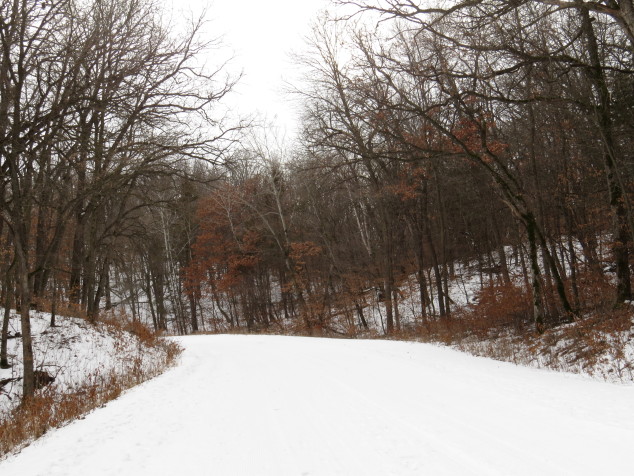
Why did we stop asking questions? We have accumulated countless Life experiences that have become the picture puzzle of our lives. And many of those pieces were put together with our child’s mind and no longer fit us well. The questions now must be asked and answered by each one of us in order to learn about and make sense of our interior world. These grown-up questions are just as developmentally imperative as our four-year-old questions were in order to integrate the Life of the World Outside us with the Life Within.
Trumpeter Swan Symphony
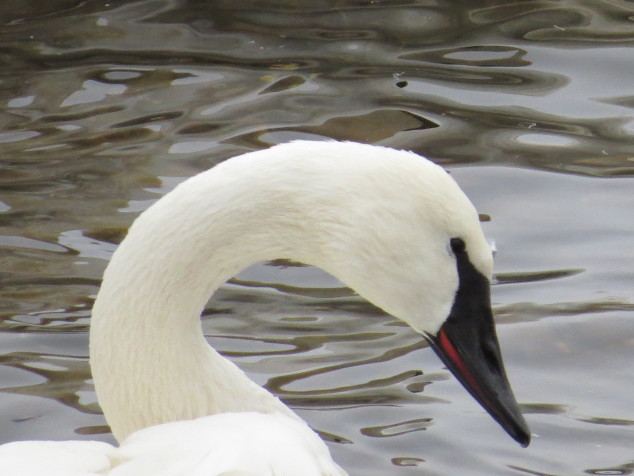
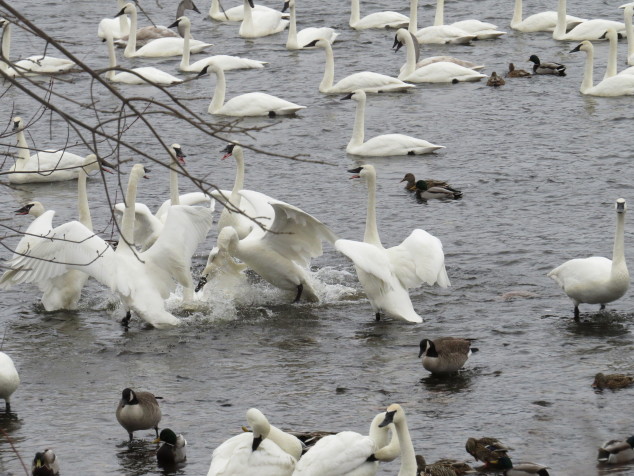
This beautiful, graceful creature is the largest North American waterfowl–the Trumpeter Swan. It stands at a height of four feet with a wingspan of more than seven feet. Downstream from a power plant on the Mississippi River in Central Minnesota, hundreds of Trumpeter swans gather in the open water to spend the winter.
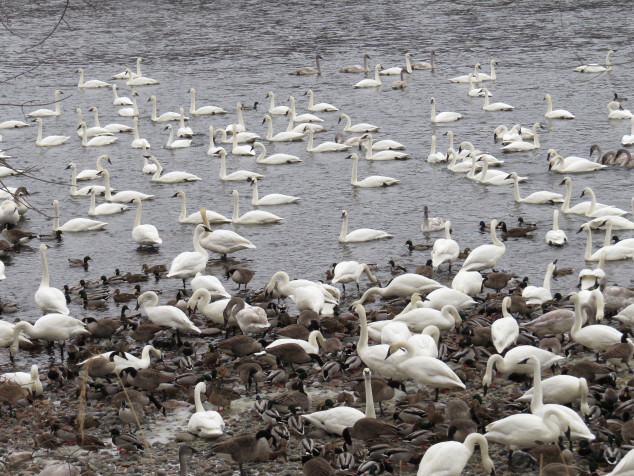
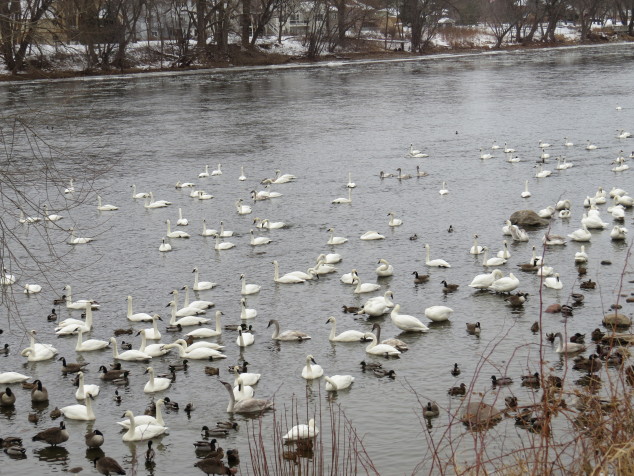 Swans first arrived in this area for wintering in 1986 as the nesting areas of shallow marshes and ponds froze up. Other Minnesota swans migrate to Oklahoma, Arkansas, and Texas for the winter. Most leave their wintering grounds in early March to return to their nesting areas.
Adult Trumpeter swans have pure white plumage that is often stained a rusty color on the head and neck from feeding in iron-rich water. They mate for life and can live longer than twenty-four years.
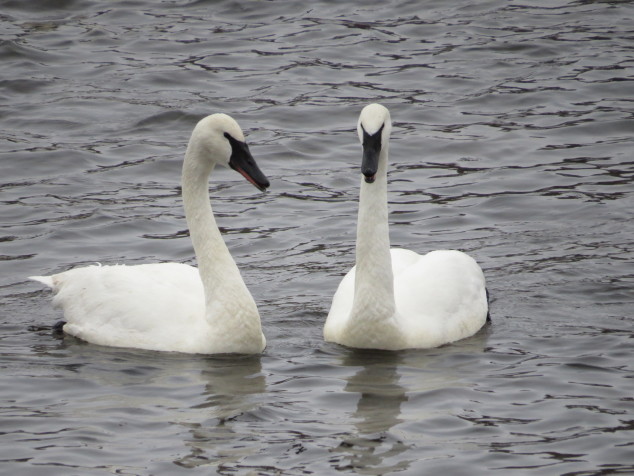
They make a hollow trumpeting sound.
Young swans or cygnets are gray until they are a year old and stay in family groups through early spring.
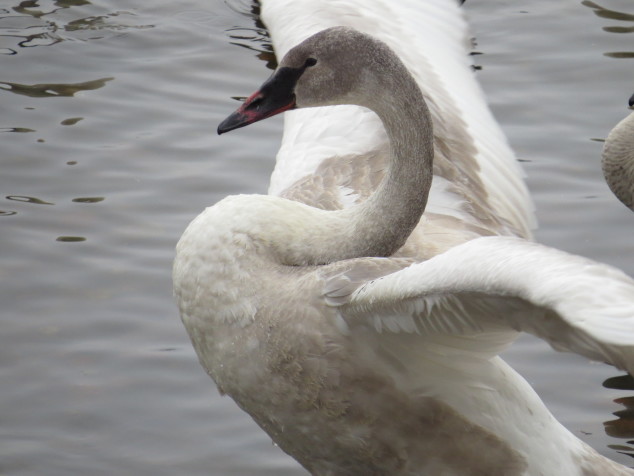
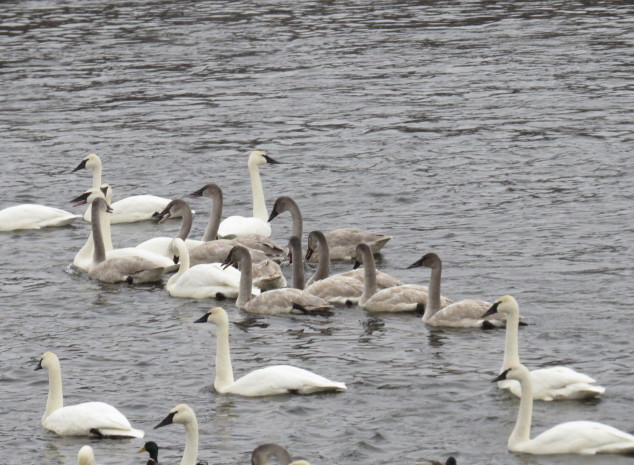
Swans were hunted extensively in the 1600s-1800s for their meat, skins, and feathers, leading to their near extinction. Their large flight feathers made the highest quality quill pens. It is estimated that 2900 swans live in the state of Minnesota at this time, after more than fifty years of restoration.
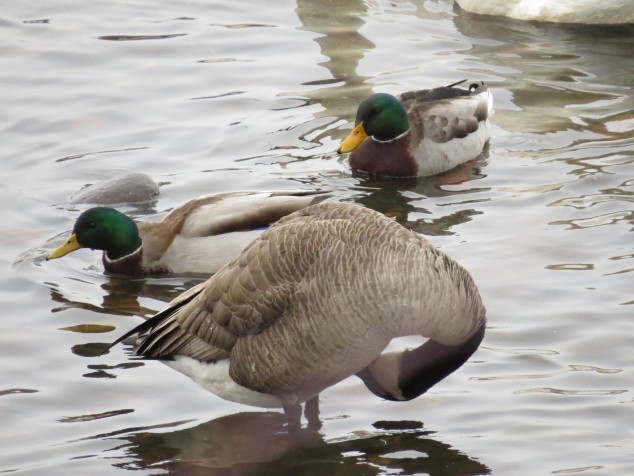
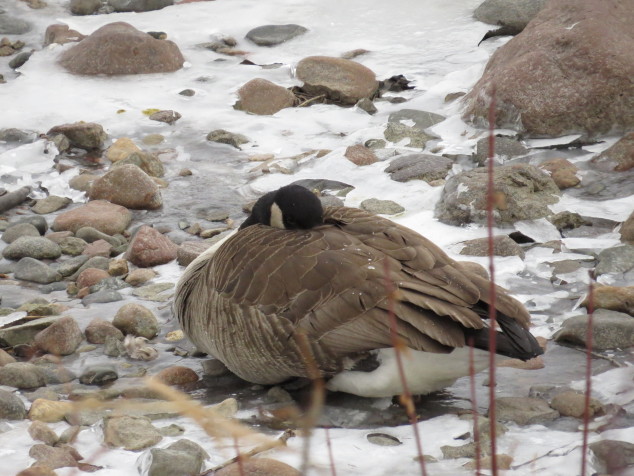
The swans share their space with Canadian geese and Mallard ducks who look small in the presence of the large Trumpeter swans.
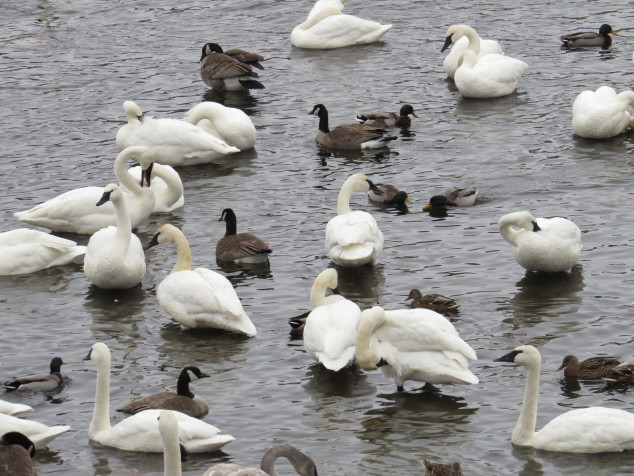
And when they are all vocalizing, it creates a sweet Waterfowl Symphony!
The mated pairs live most of the year on their own, guarding the territory where they raise their young. In the winter, they become social birds and can be seen gathering in a circle of four to six, honking, puffing out their chests, and flapping their wings–like a dance! According to Madeleine Linck, Wildlife Technician for Three Rivers Park District, this behavior is for family bonding and showing off. (http://www.startribune.com/sports/outdoors/240621061.html)
 The swans, geese, and ducks fly to surrounding fields to feed, and they take advantage of the kindness of a local resident who feeds them buckets and buckets of corn every day. After feeding, the swans and geese can be seen preening their feathers and taking a morning nap.
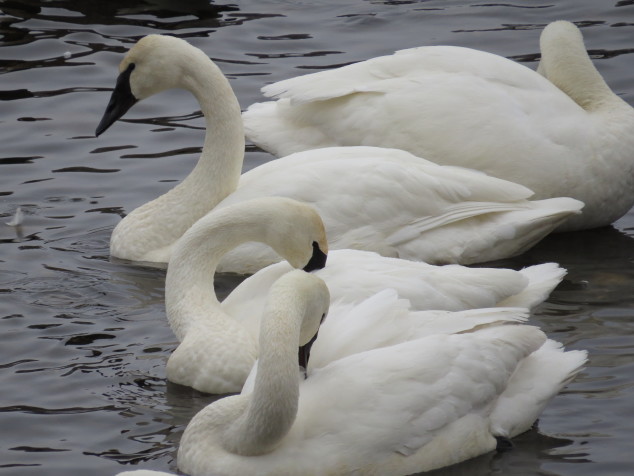
Wintering is also a time for courtship. When swans are three to four years old, they choose a mate. Courtship displays include head bobbing, trumpeting together, and spreading and raising their wings.
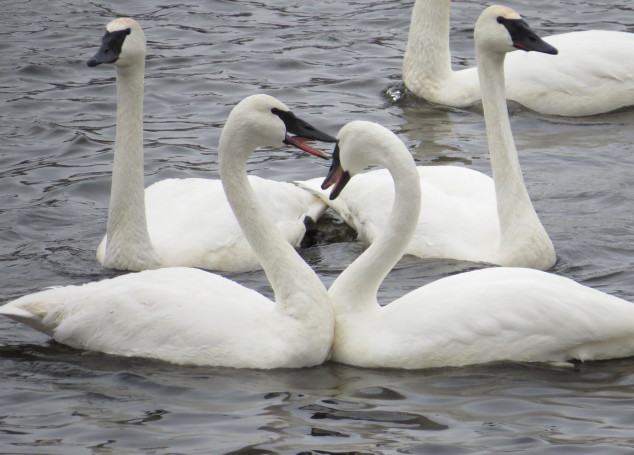
The Trumpeter swans are an impressive sight with their regal carriage, sleek alabaster plumage, and incredible size. The large overwintering population seemed to get along fairly well–we saw a few ‘fights’ between some individuals, but for the most part, they coexist peacefully with one another and with the ducks and geese. This social resting time prepares them for the next breeding season and for the work of raising their next nest of offspring.
We humans spend much of our year taking care of the ‘nest,’ finding food, and keeping our young safe. And like the swans, we get together with our families in the cold months of winter to bond with them, show off a little, make some noise, and rest and restore ourselves for the months ahead.
Gleanings from December
December is a special month for us. All three of our children were born in December–in two weeks time, we celebrate three birthdays and Christmas! So, many previous Decembers have been busy flurries of activity–cake-baking, special meal-making, decorating, gift-making and wrapping, school concerts, finals, homecomings, parties, and more. But this Christmas was quiet. Our last college student finished finals and flew to Austin to spend Christmas with one of his sisters. We sent our love and best wishes to them–it just wasn’t the same.
December weather wasn’t the same as usual either. It began cold and clear with a thick blanket of snow covering the ground. Day after day of that first week we were dazzled by incredible sunsets and magnificent moonrises.
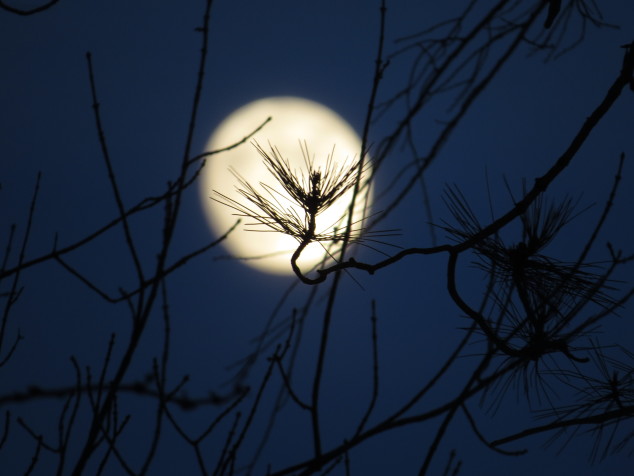
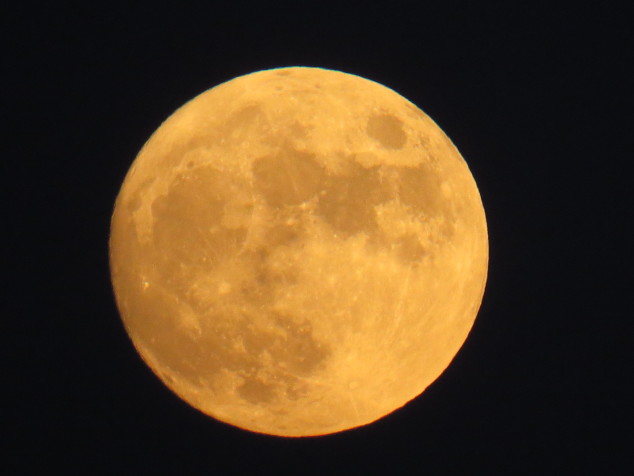
Contrails, from jet airplane exhaust condensing and freezing into ice crystals, crisscrossed the blue sky.

The afternoon sunlight streamed through the leaves still holding onto the honeysuckle, creating a glowing shrub of gold.
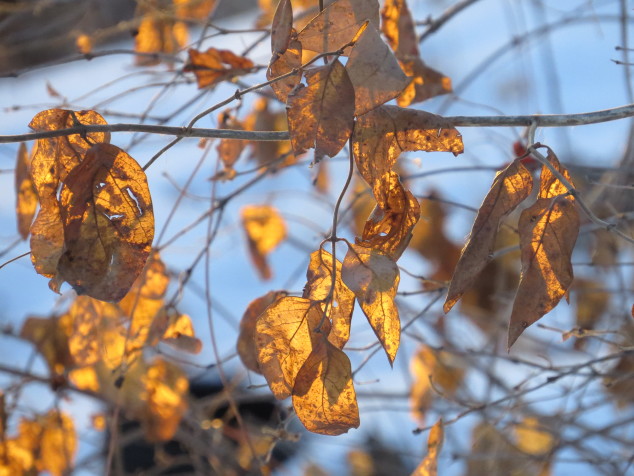
That brilliant week faded into cloudy days where temperature and moisture created an inversion, entombing us in fog. At first the fog froze and built a halo of frost on the red, clustered sumac seedheads and the winged seeds of the amur maples.
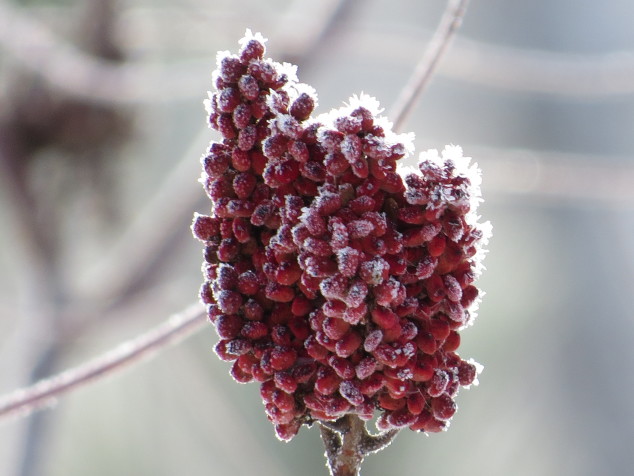
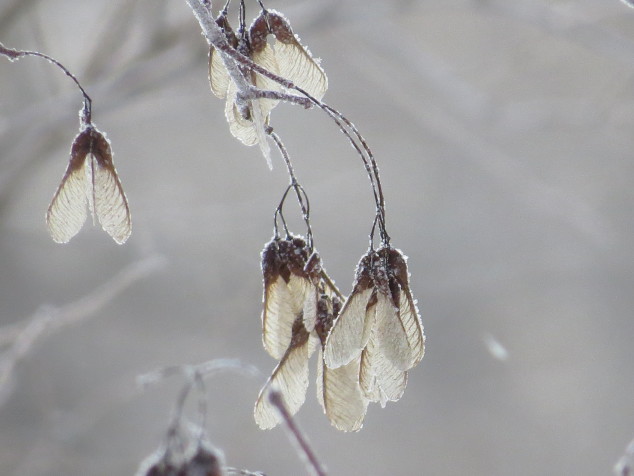
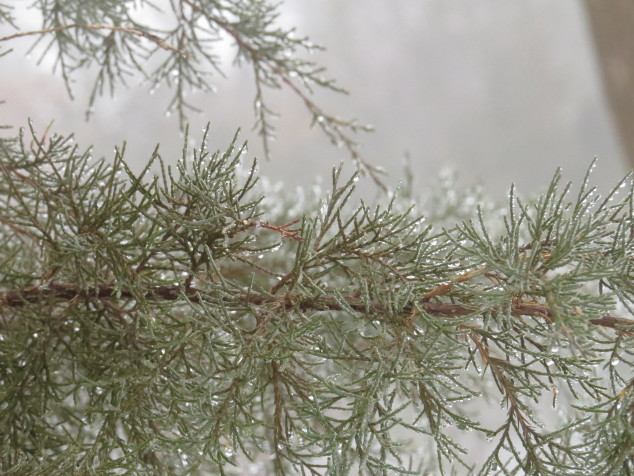
Then the temperatures warmed and began melting the snow. Water droplets adorned the trees.
Autumn was uncovered as the snow melted.
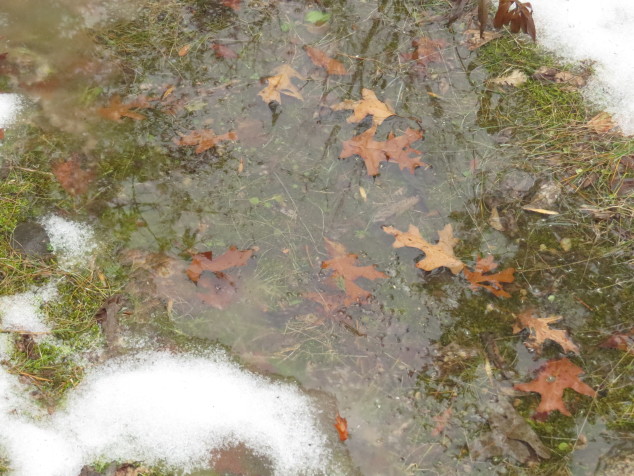
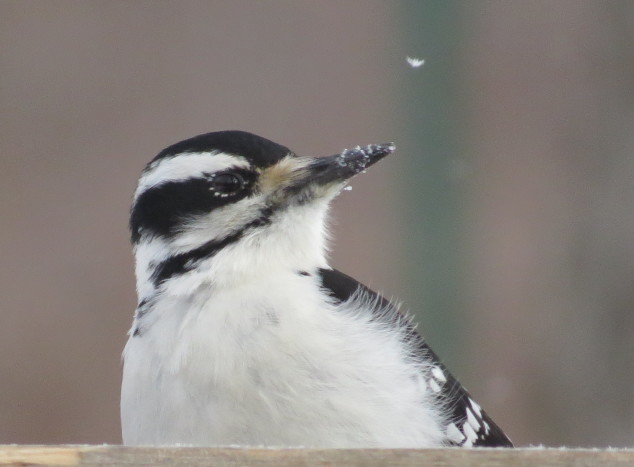
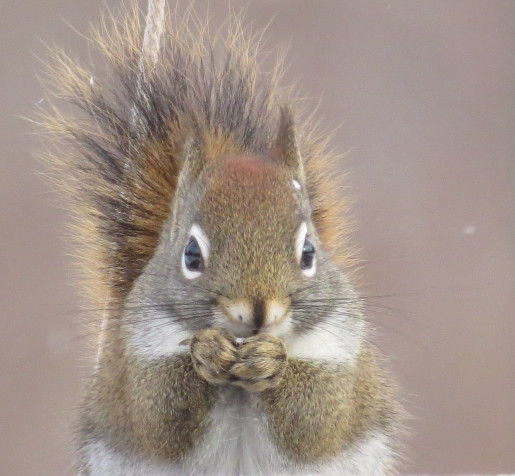
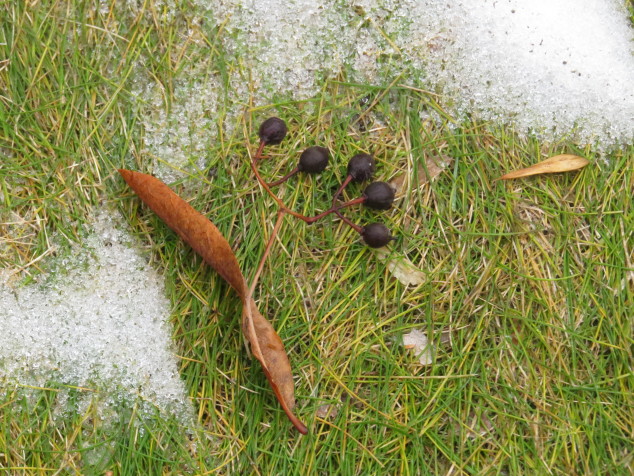 Then as soon as we saw green grass, it snowed again. Critters arrived at the birdfeeder to fuel up on black oil sunflower seeds–a female Hairy woodpecker and a jittery red squirrel.
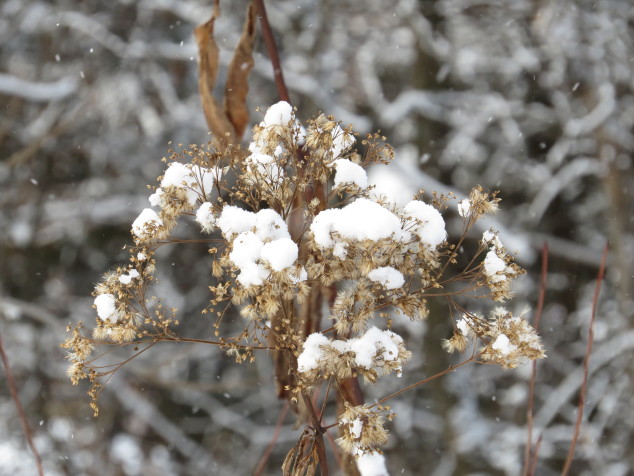
Clouds persisted into the fourth week as we headed toward Christmas. Temperatures once again rose above freezing, melting the white from Christmas….until the evening of Christmas Day when the snow started falling again. The flower heads of lilac and Joe Pye weed caught the snow–a year’s worth of seasons contained in the image.
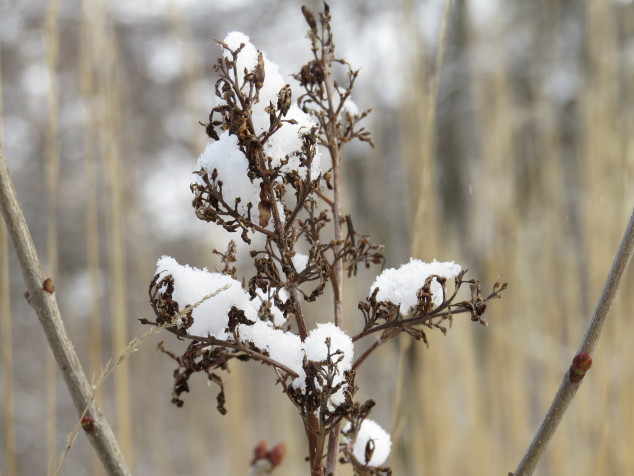
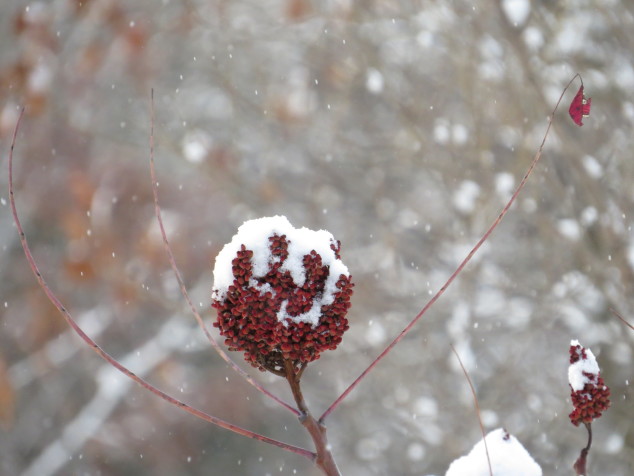
The seedhead of the sumac–the flower of this year and the seeds for the future–was faded and covered in white, holding up its arms to catch the new snow.
We end this month and this year with the turning of seasons and time. The constancy of the sunsets and moonrises keeps us grounded as so many other things change around us. The unexpected may leave us in a fog for longer than we care to be there, but it happens for good reason. Sometimes we need to go back in order to move forward. We need the quiet in order to glean the gold from our past and let the chaff fall away in forgiveness. Take the gold and the haloed moments of your life and let them fill you and sustain you for the journey ahead. Let the trail you leave behind be one of love and goodness. As a year’s worth of seasons shine from your face, lift up your arms to embrace the New Year.
- « Previous Page
- 1
- …
- 3
- 4
- 5
- 6
- 7
- Next Page »