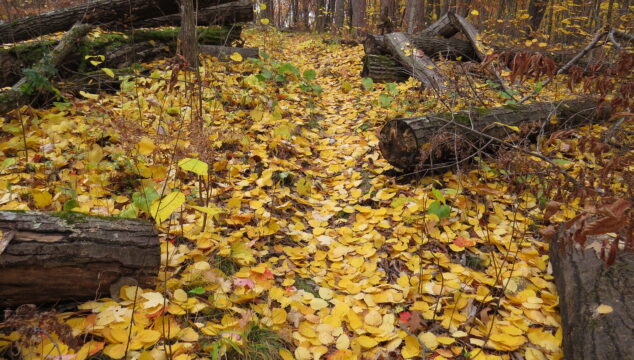
Come walk with me in the peak Autumn beauty of the Northwoods. To say that I love this time of year is an understatement. Most everyone can appreciate the colorful falling leaves---it reveals the 'true self' of a tree when its leaves are no longer producing chlorophyll. Their true colors are revealed, and there is something simple … [Read More...]
Gleanings from May–Birds and Blossoms
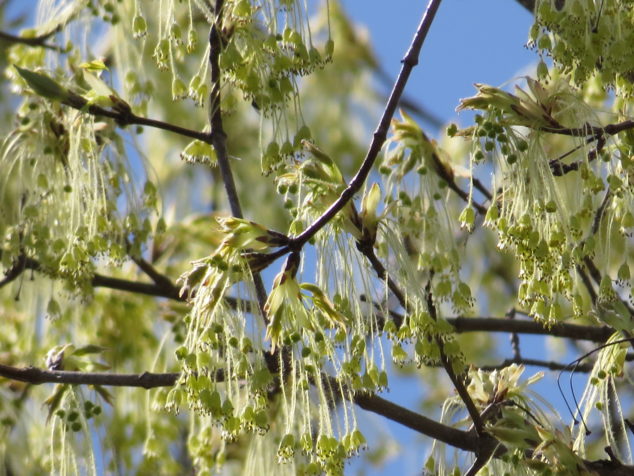
What a month is May! It’s a showcase of blossoms on trees, shrubs, and early blooming perennials. And while we have a great number of ‘winter’ birds that also stay around for the summer, we now see the birds that are passing through to their summer lands in Canada or those that nest and live in Minnesota for the warm season. May is the pleasant month of transformation when trees fully leaf out, exuberant growth occurs, sunshine begins to warm the lakes, and long, light evenings change the way we structure our activities. But back to the beginning of May–one of our maple trees was aglow with golden filaments of pompom-like flowers. Trees are heavily flowered (and thus seed producing) in different yearly intervals–some years it is difficult to notice any flowers at all, but this particular tree was spectacular this year!
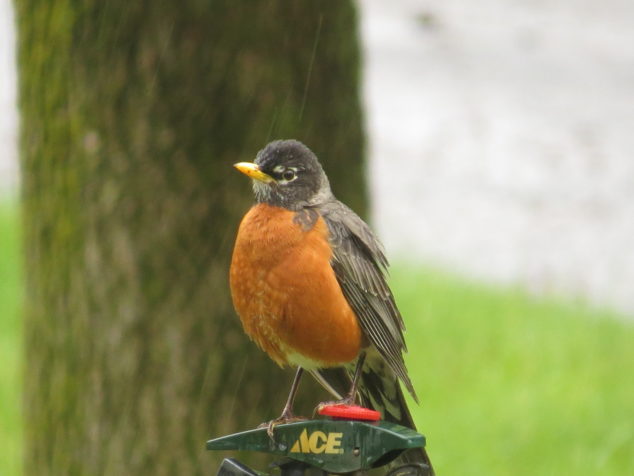
What is Spring without Robins? The sight of Robins is the herald of the vernal season when we know that any traces of Winter will soon be gone. Whether perching on the water sprinkler during a rain shower or hopping in the grass and pulling out worms after the rain, the Robin is a common companion of May.
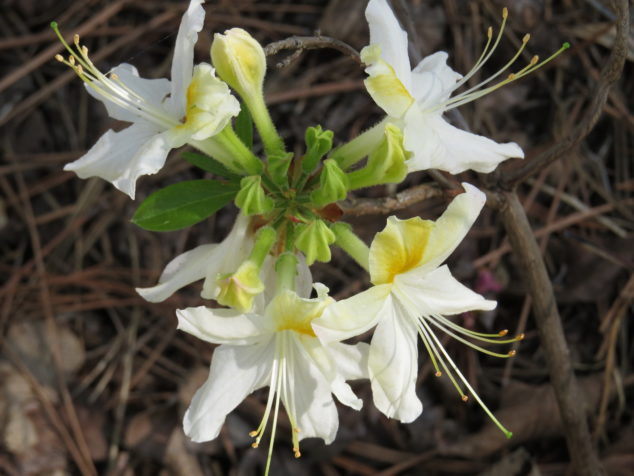
Northern Lights Azaleas, hardy deciduous shrubs developed at the University of Minnesota, allow us a small taste of the incredible beauty of azaleas in our northern climate. This is ‘Northern Hi-Lights,’ and while ours still struggle in our sandy soil, they do treat us to some amazing blossoms.
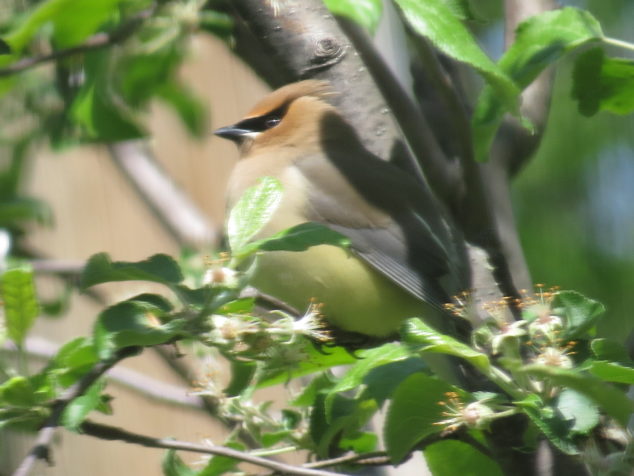
A couple of weeks ago the flower petals were falling off the apple tree. It was a super windy day, and I noticed a number of birds flying among the branches. With the zoom on the camera, I was able to identify the small flock of Cedar Waxwings–they were plucking the white flower petals and eating them!
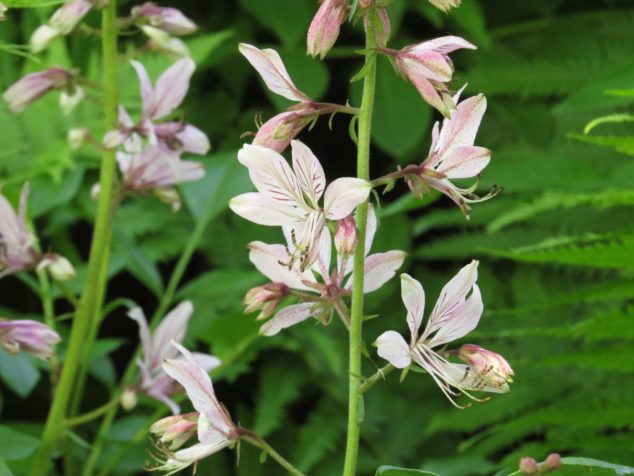
One of the delightful additions to our garden is the Gas Plant. Tall spikes of orchid-looking flowers peek above the ferns that make a lovely background for the pink flower. Gas Plants grow in sun or shade–we have ours on the edge of the woods. They are hardy, drought-tolerant, and not picky about soil. They do not like to be moved once established, as they have a deep tap-root. The name is derived from the citrusy, flammable fumes the flowers give off–on a still day, you can hold a match by the flowers and see a poof of blue flame!
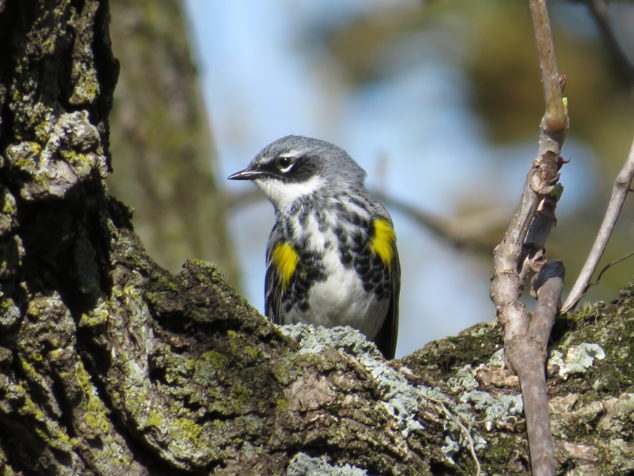
This little bird was flying in the woods before the leaves were fully out. I believe it to be a warbler of some kind, perhaps a Magnolia Warbler or a Yellow-rumped Warbler, both of which have their summer range in Canada.
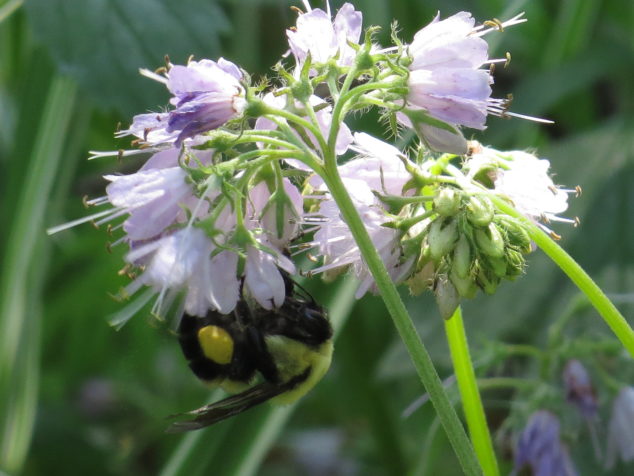
Once we got the buckthorn cleared out from beneath the oaks in our woods, this woodland perennial appeared–Virginia Waterleaf. The leaves are mottled with what looks like water stains, and clusters of white to violet flowers rise above the leaves. As you can see, they are a favorite of the bumblebee at this time of year.
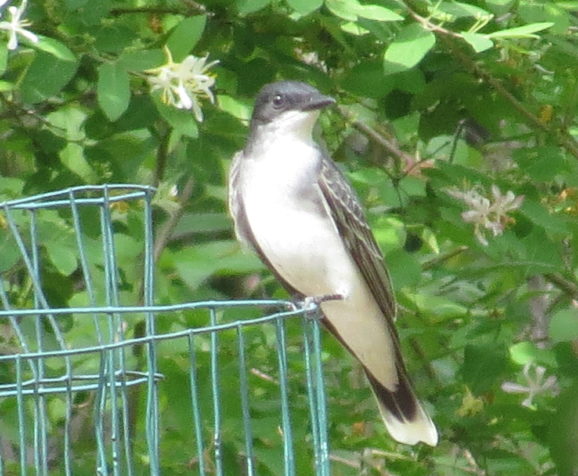
Eastern Kingbird’s scientific name is Tyrannus tyrannus, indicating his tyrannical traits of defending his territory. When defending the nest, he will aggressively attack hawks, crows and squirrels. He has a neat, suit-like appearance. The Kingbird has a crown of red, orange, or yellow feathers on its head that is usually concealed, but is raised when confronting an attacker. Both the male and female hunt for insects and feed the young for about seven weeks.
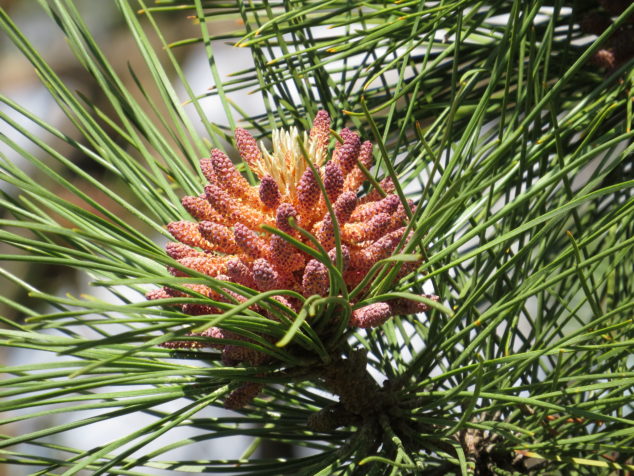
We don’t often think of evergreen trees flowering, but this is a pollen cone or male flower of the Red Pine tree. The pollen cones are most often found in the lower crown of the tree, while the small female flowers are in the middle to upper crown of the tree. Red Pine or Norway Pine is the state tree of Minnesota.
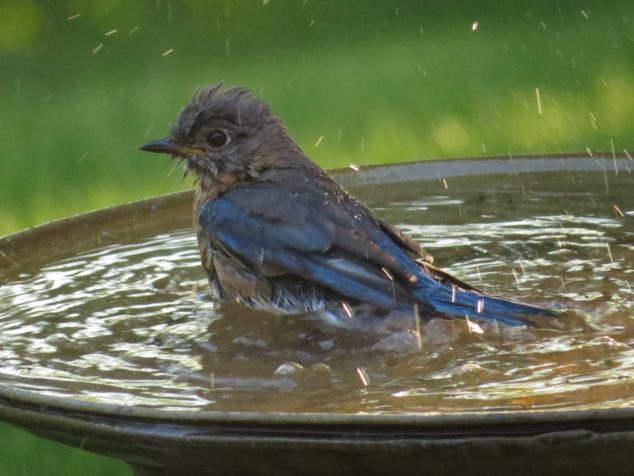
It was evening bath time for this little Bluebird! It’s so nice to have these birds in our yard, seeing them drop and dive for insects with a flash of blue color.
Birds and blossoms are the showcase of May. Spring bulbs, flowering shrubs and trees, and perennials become the houses and food for animals, birds, and insects as the yearly reproductive cycle of each creation happens before our eyes. We once again marvel at the transformation that occurs in this month as plants emerge from the ground, grow, and flower in such a short time! This Life Force of Nature is awe-inspiring! Do you see it? Do you notice and appreciate it? It is a privilege to be the observer, the caretaker, and the participant in this season of growth and beauty.
Our Spaceship Earth on Earth Day
Spaceship Earth is a term popularized in the 1960’s, particularly by architect-inventor-system theorist R. Buckminster Fuller when he wrote the book “Operating Manual for Spaceship Earth.” The inventor of the geodesic dome relates Earth to a spaceship that has finite resources that cannot be resupplied. He spent much of his life researching and developing designs and strategies to help us sustainably exist on Earth.
Another forward thinker Marshall McLuhan, who predicted the World Wide Web almost thirty years before it was invented, is quoted, “There are no passengers on spaceship earth. We are all crew.”
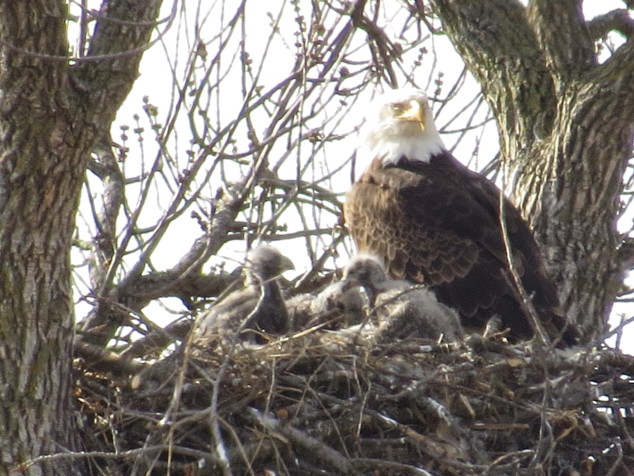
Last Sunday Chris and I checked on the eagle nests–yes, we have babies! One nest has three, fuzzy-feathered eaglets, and the other nest has at least one that I was able to see.
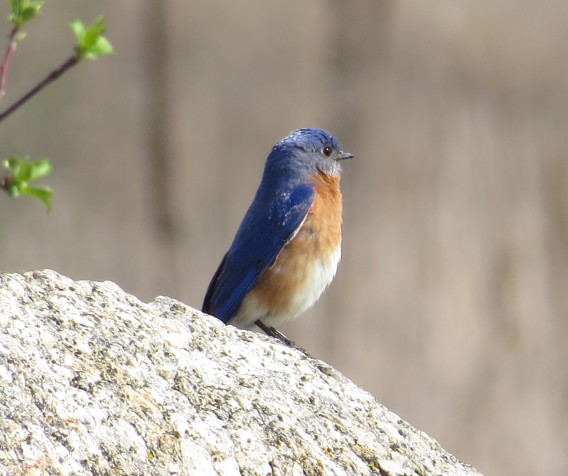
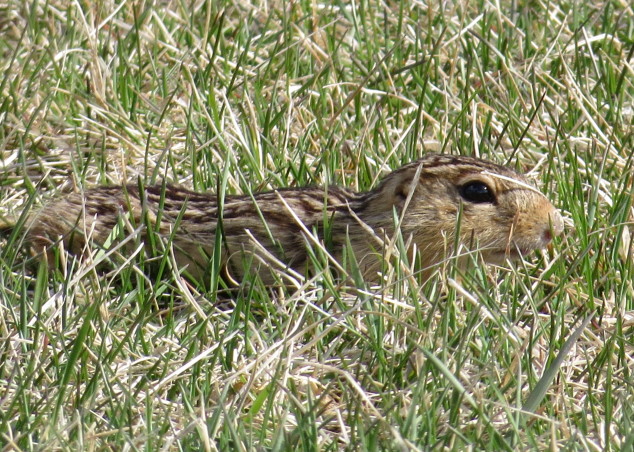
The bluebirds were nesting nearby, and a ground squirrel slunk through the grass trying not to be seen.
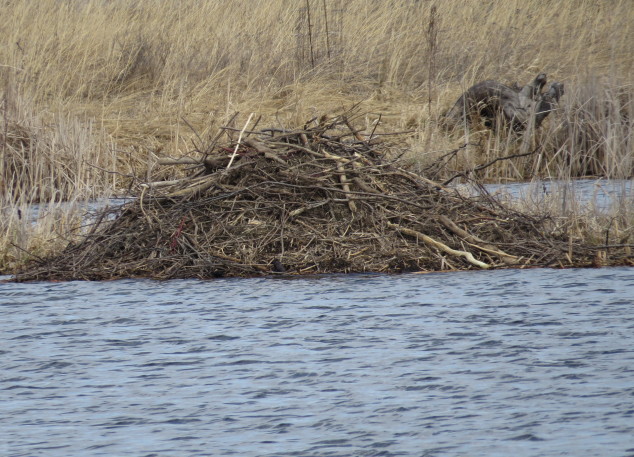
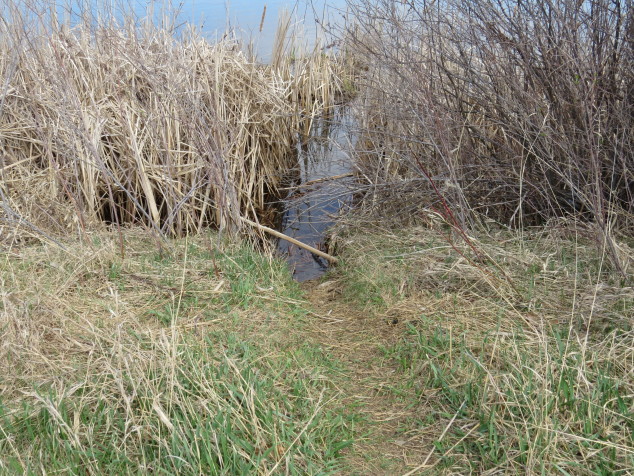
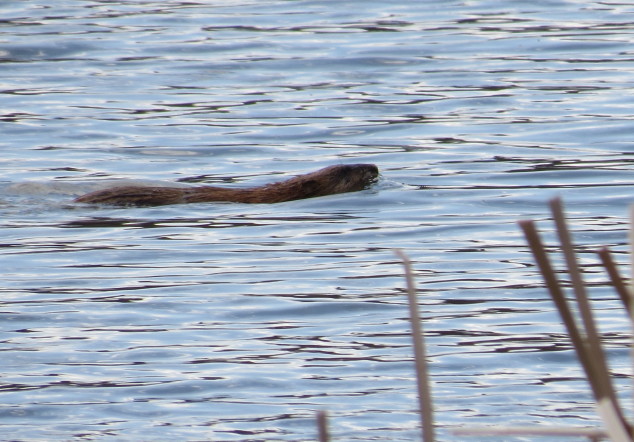
We then drove to St. John’s Arboretum and hiked the Boardwalk Loop through prairie, wetland, maple forest, oak savannah, and conifer forest. In a short 1.5 miles, it was a lesson in ecosystems and a glimpse into the diversity of animal and plant life in a tiny part of spaceship earth. A beaver lodge rose from a blue lake on one side of the road. There was a path through the cattails and up the bank for the beaver to get to the lake on the other side.
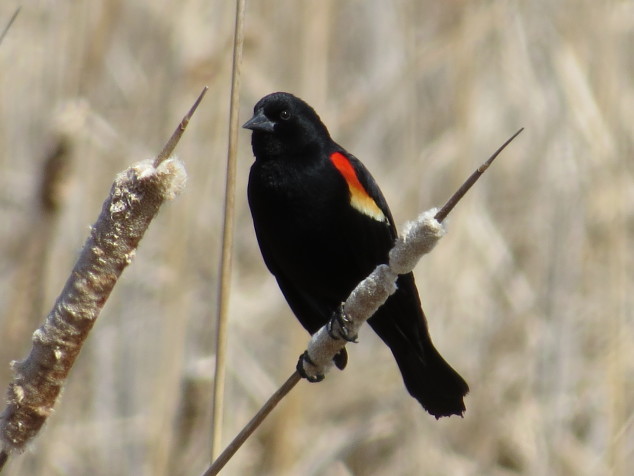
Red-winged blackbirds sang from their perches on cattails.
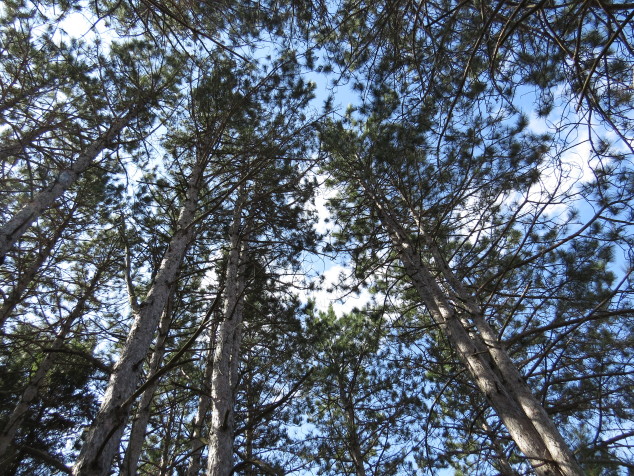
The delicious scent of the pine forest filled our noses with the smell of contentment.
We crossed the boardwalk over the wetland…
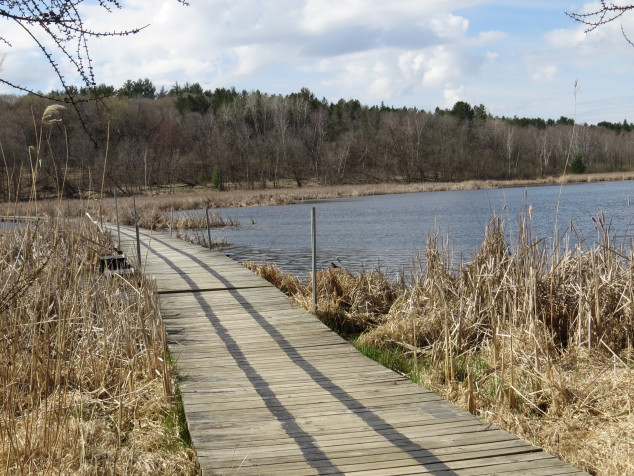
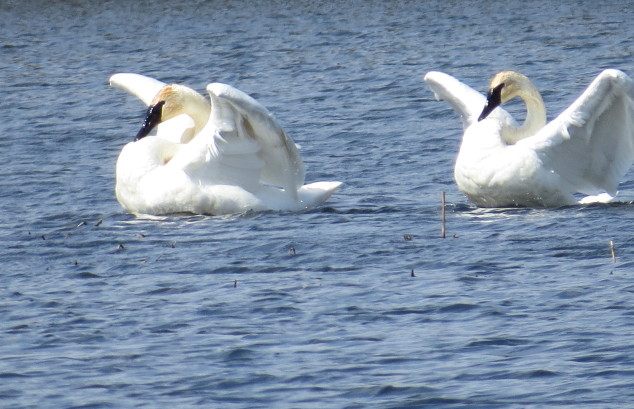
and saw geese, ducks, and a pair of Trumpeter swans.
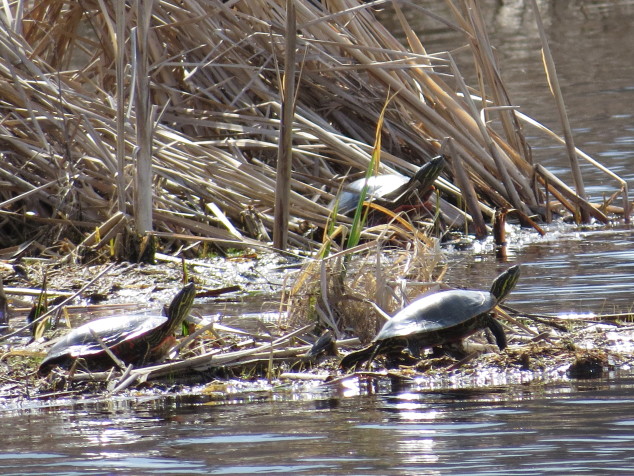
Painted turtles sunned themselves in the warm spring sunshine.
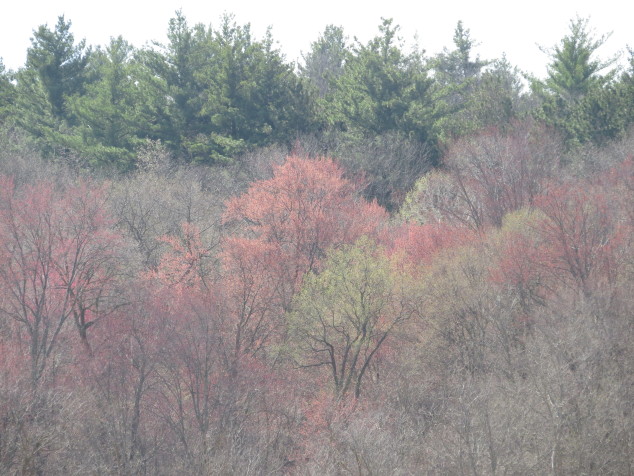
Maple trees with red and lime green blossoms contrasted with the deep green of the pines.
The woodland trail through the tall maples still looked like late winter…
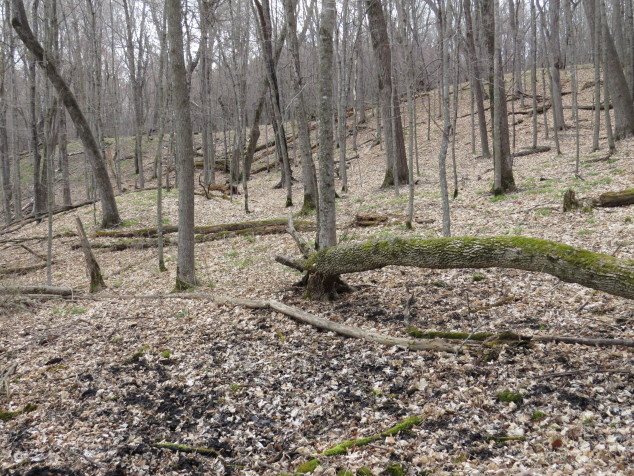
…until we saw the Spring Ephemerals! These early blooming flowers take advantage of the small window of sunshine between snow melt and when the trees have leafed out. They grow, flower, are pollinated, and produce seeds in a short period of time and often go dormant by summer. We found Spring Beauty…
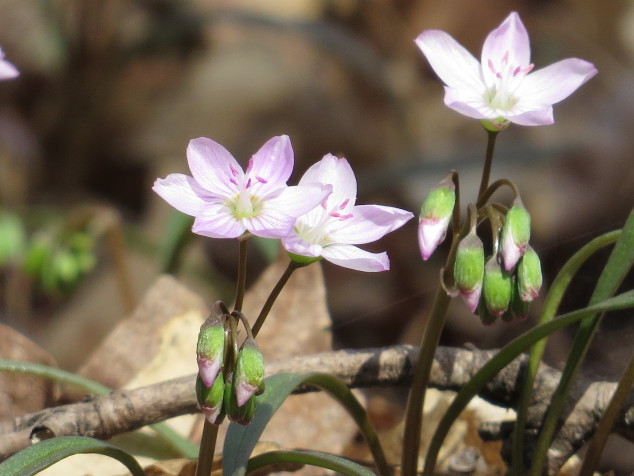
…False Rue Anemone…

…and Hepatica bursting through the leaf cover.
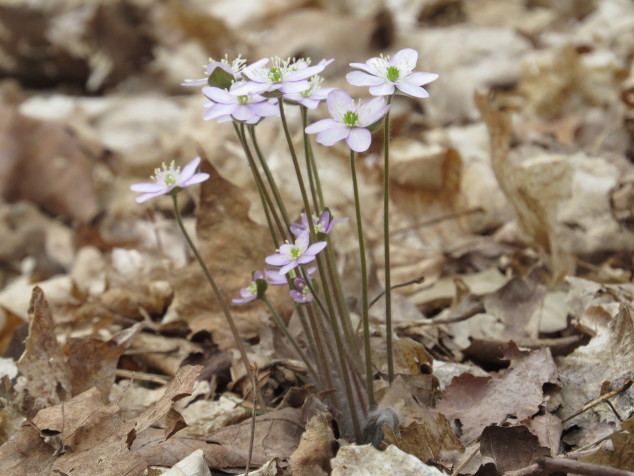
Two short walks less than ten miles from one another, and we were blessed to see such an array of plant and animal life that was once again coming to life in the Minnesota Spring. In honor of all these amazing creations, I would like to urge everyone to take good care of our Spaceship Earth. We are all crew members with tasks to do and responsibilities to carry out, even if it’s only in our tiny part of this big, blue planet. Happy Earth Day!
Gleanings from March–Spring Comes Gently
In a usual year, March is snowy and blustery, and most people wish away the remains of the piled up snow and freezing weather in the hope of Spring. But this March was different–we started the month with snowless ground and accumulated only an inch or two during a couple of flurried days. In between, we had above freezing temperatures with a record high of 58 degrees in the second week of the month–too warm! So this year, Spring comes gently and early to Central Minnesota.
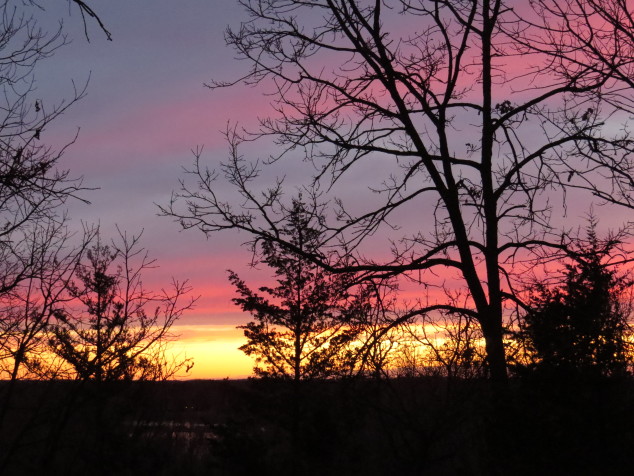
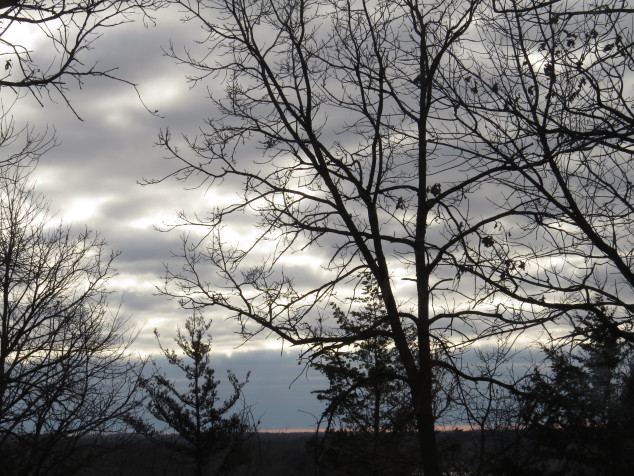
The setting sun is shifting to the northwest, but we still had some spectacular evening skies outside our living room window this month.
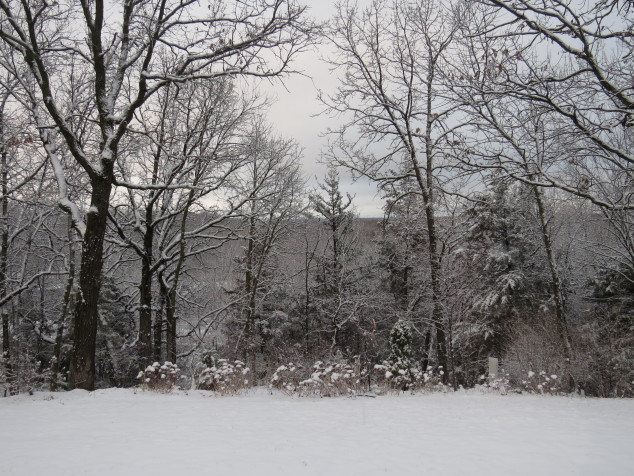
On Easter morning, we awoke to a beautiful covering of snow with frigid blue-gray skies.
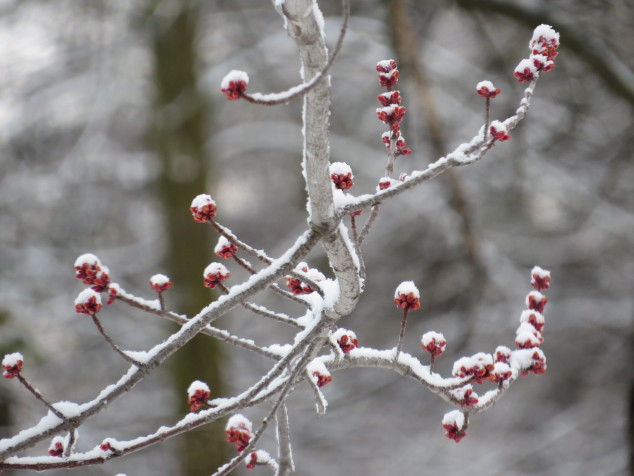
By afternoon the snow had melted, and Chris, my Mom and I hiked around the nearby County Park to check on the eagle nests.
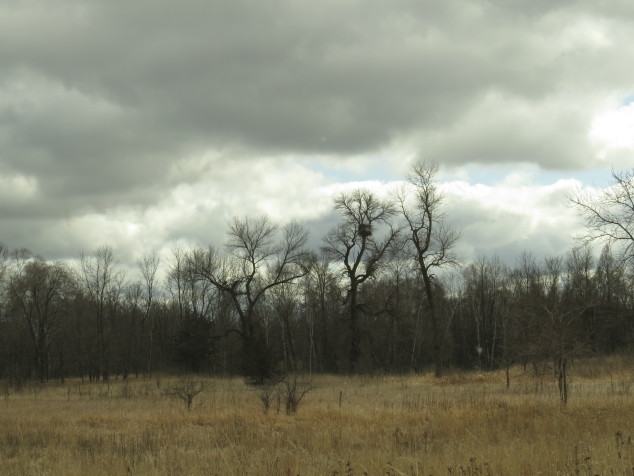
One of the pair in each nest was laying on eggs–content and calm before the storm of activity that comes with the hatching of the hungry eaglets.
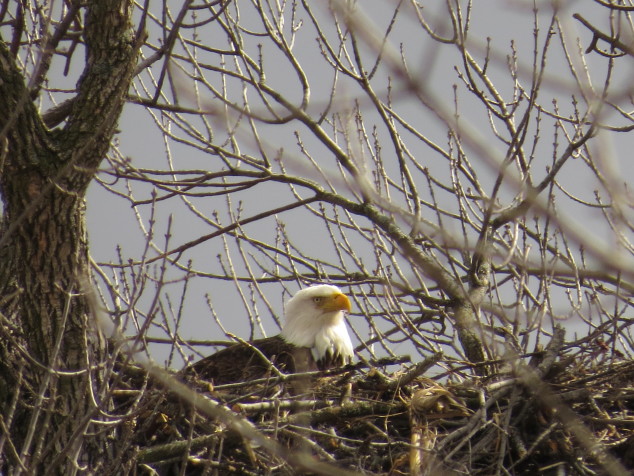
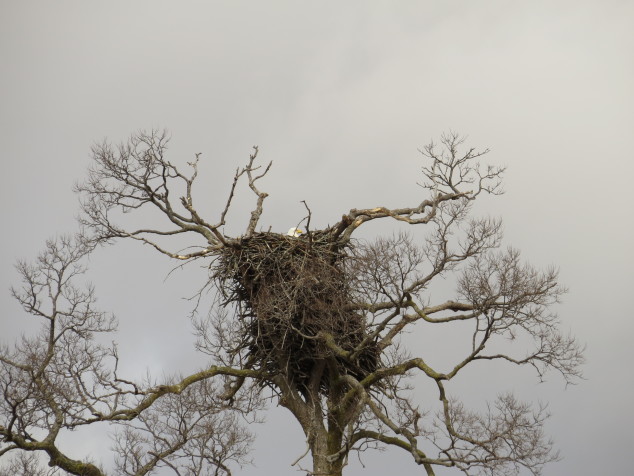
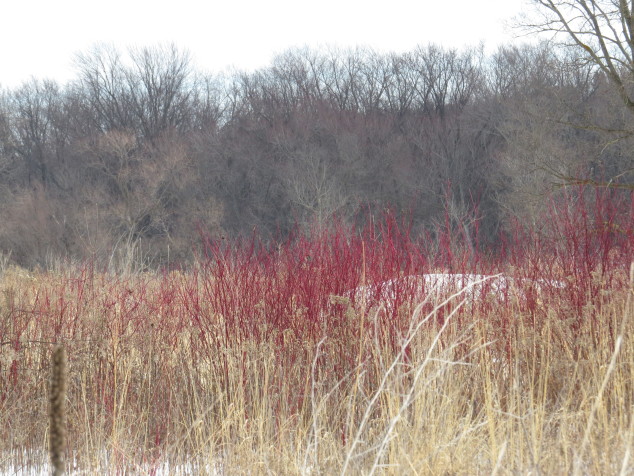
The trail around the eagle’s nest was winter bland until we saw bright red-twigged dogwood stems and fuzzy white flowers of pussy willows.
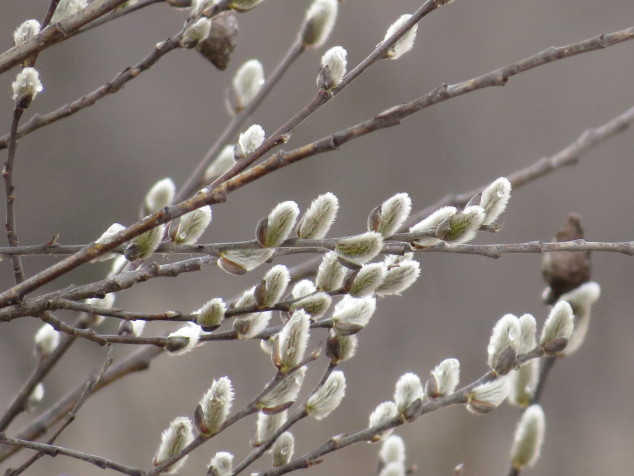
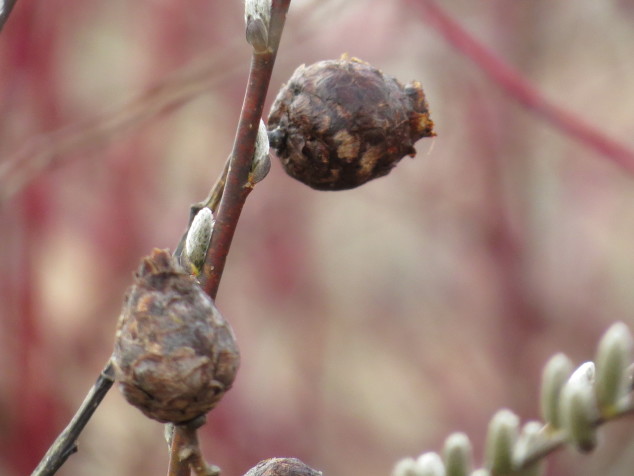
Along with the flowers of the large shrub-small tree pussy willow, there were numerous pine cone-looking objects at the end of branches. Willow Pine Cone Galls are formed when tiny fly-like gnats, called midge, lay their eggs in the swelling terminal buds. The larva secretes a substance that accelerates the growth of the would-be leaves into a mass of flattened scales that look like a pine cone. The larva produces its own anti-freeze, much like the Goldenrod Ball Gall larva, in order to survive the winter. The adult emerges from the gall in Spring.
Two days after Easter, I saw the first pair of returning bluebirds–such a lovely sign of Spring!
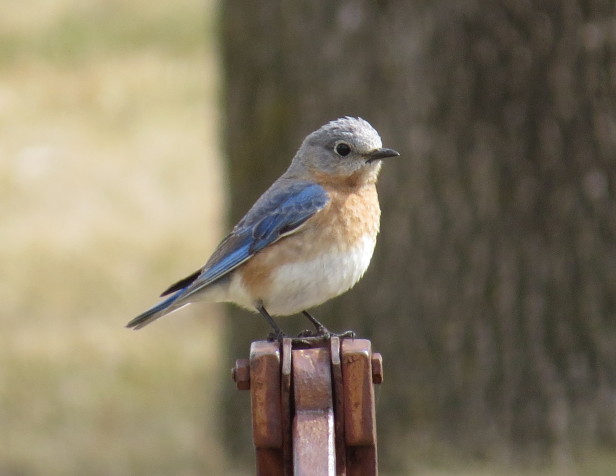
March is always a month of contrasts moving into Spring, and this year seemed to be all the more so. Record warmth and snowy mornings, winter bland and bright colors, nondescript skies and spectacular sunsets. And yet Spring makes its way regardless–Nature’s constant, gentle revival. My life this month seemed to mirror March–wonderful visits from family and difficult news, days of strength and days of weakness, calm gratitude and stormy unrest. And Life gently moves us forward–to learn from the galls, to see hope in new life, to appreciate a beautiful day and the flash of blue wings as Spring comes gently.
Monday marked the second anniversary of North Star Nature, and I wish to extend my gratitude and thanks to those of you who read and share my blog! A particular thank you for the thoughts, prayers, and comments after the death of my Dad–I very much appreciate your kindness.
Do You Believe in Miracles?
“Do you believe in MIRACLES?” was the cover and headline for the Sunday Parade magazine last weekend. It was the story of a Texas girl who had amazingly survived a 30-foot fall into a hollow cottonwood tree. Her head-first fall and subsequent hours inside the tree resulted in just some minor bumps and bruises and possible concussion. If that wasn’t amazing and relieving enough, her Mom noticed in the following days and weeks that her daughter’s serious digestive disorders, diagnosed four years earlier, had seemed to disappear! A Pew Research Center study found that 8 in 10 Americans believe in miracles, even more than half who are unaffiliated with any particular faith. Author Marianne Williamson and teacher of A Course in Miracles says, “People know there’s more going on in this life than just what the physical eyes can see.”
And yet, miracles are in front of our eyes wherever we look, if we really take the time to see.
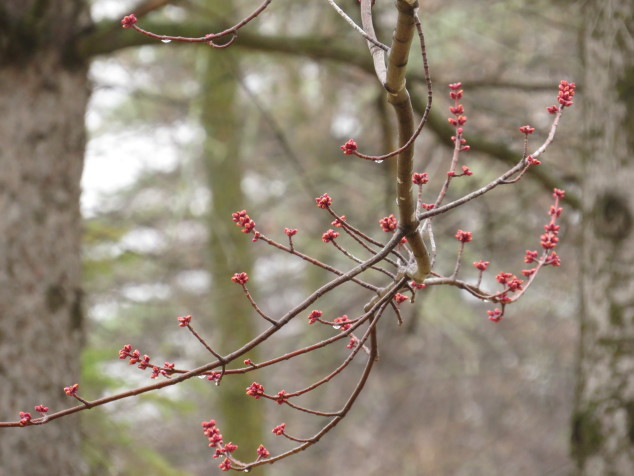
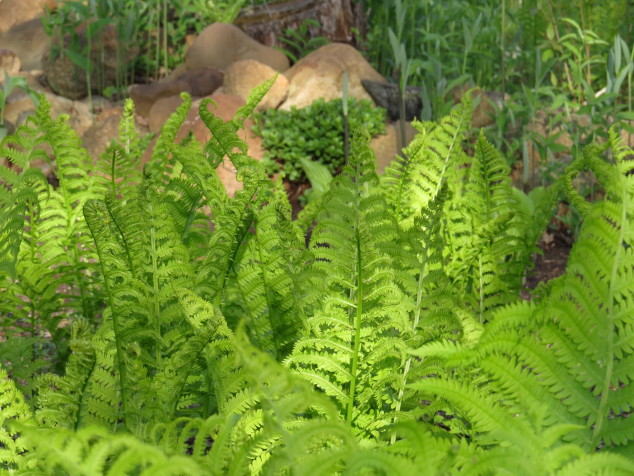
We are afforded this miracle every Spring as we leave the dormancy of Winter. In less than two months’ time, our fern garden will go from this…
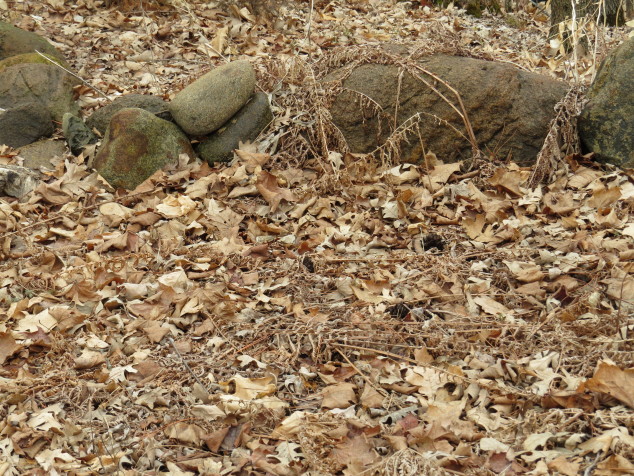
to this….
Purple raspberry canes will be producing raspberries in four months…
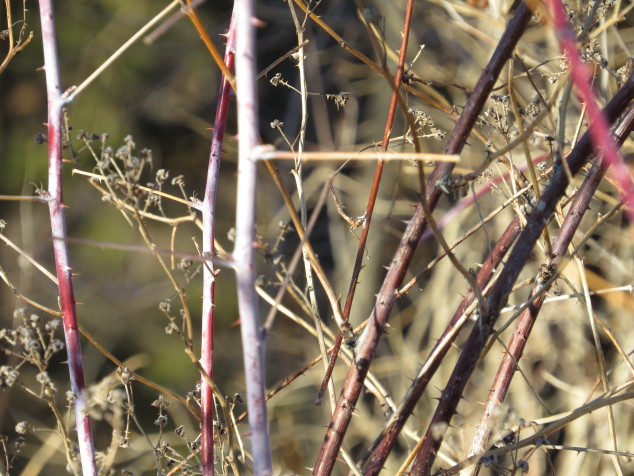
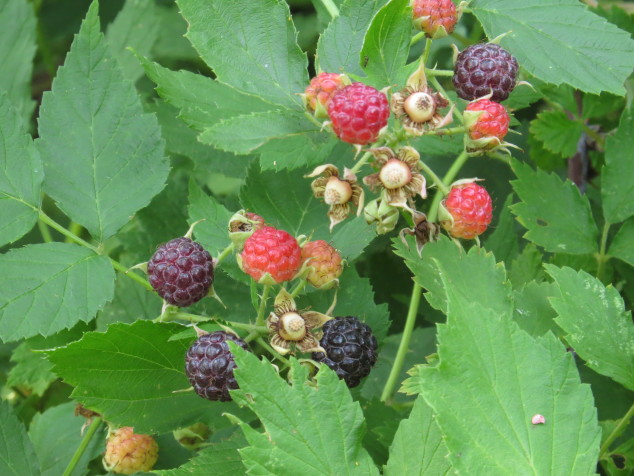
Hosta stalks in the snow will transform to huge green plants that flower at the peak of summer.
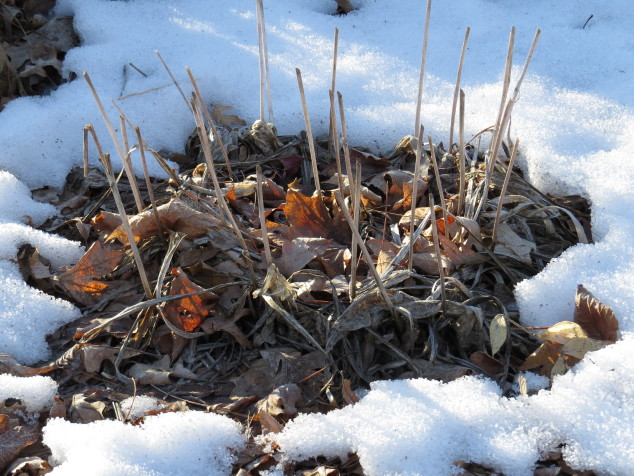
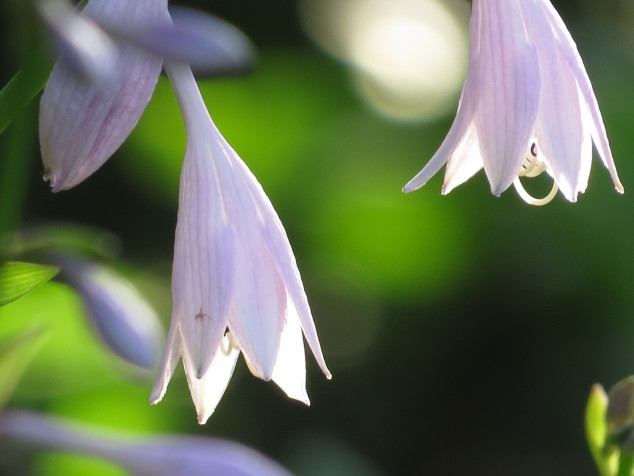
An empty nest may be re-used or re-built for a family of yellow warblers by the middle of summer…
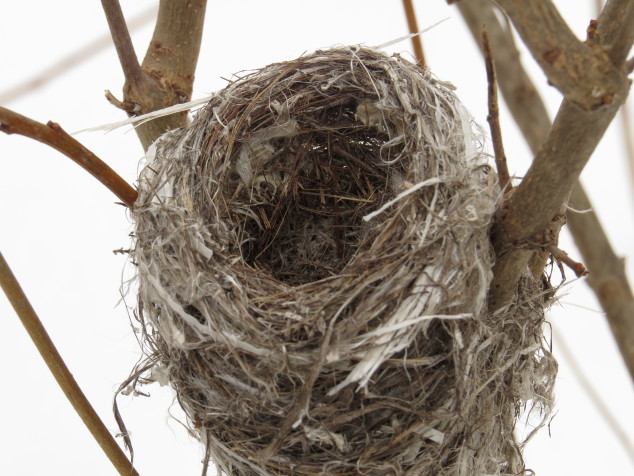
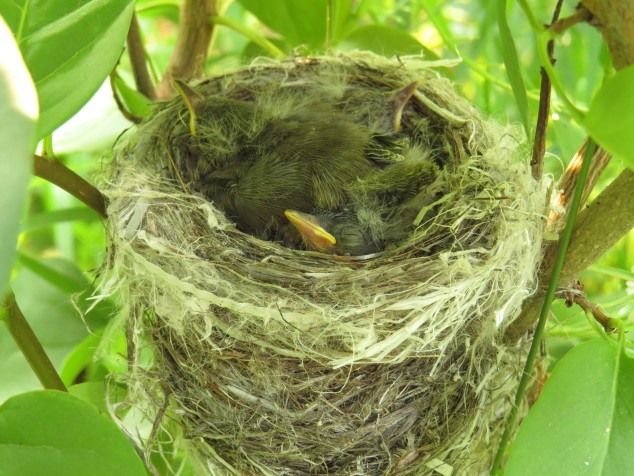
And all of this and so much more occurs without intervention of any kind!
Miracles do not, in fact, break the laws of Nature. —C. S. Lewis
Spring is a miracle! It is easy to see. Every aspect of Nature–in all seasons–is a miraculous occurrence. And in this busy, technical, seemingly money- and people-controlled world, Nature just does its own thing. It doesn’t need our help, or permission, or belief. The Texas Mom responds to naysayers who don’t believe her story, “I don’t feel like I have anything to prove. The proof is right there. We lived it.” So the question “Do you believe in miracles?” is rather a moot point. Miracles happen.
“Do you believe in Miracles?” in the March 13, 2016 Parade magazine by Katy Koontz
Gleanings from February–It’s All About that Food
What do black oil sunflower seeds and a bag of Ghirardelli 60% Cacao chocolate chips have in common? They are both small, dark, and yummy (to the respective species). Now, I might be stretching it to call chocolate ‘food’, especially in the sustenance sense, but nonetheless, it has been a part of my February and January…and December. Anybody else eat chocolate in a seemingly uncontrollable way when under stress?
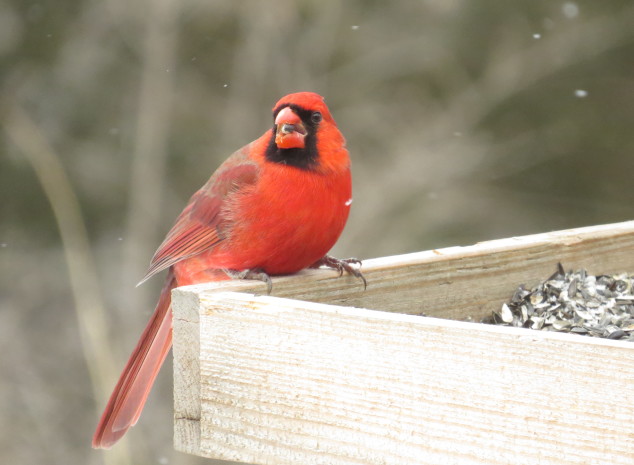
What a strange month February has been here in central Minnesota–it hasn’t been about the snow or the extremely cold temperatures this year. In fact, last Saturday was a record-breaking warm day with a high of 56 degrees! Needless to say, most of the snow has melted. But February has been all about that food for the hardy winter animals and birds who harmlessly flock to the feeders and who harmfully chow down on our trees and shrubs. The winter birds are the most beautiful to see as they come daily to the feeders for sustenance, taking a seed or two at a time.
The most amusing visitors to the feeders are the squirrels who take their mealtimes very seriously! This little red squirrel will sometimes eat at the feeder, but other times will fill his cheeks with seeds and high-tail it to his den in order to keep a stash nearby.
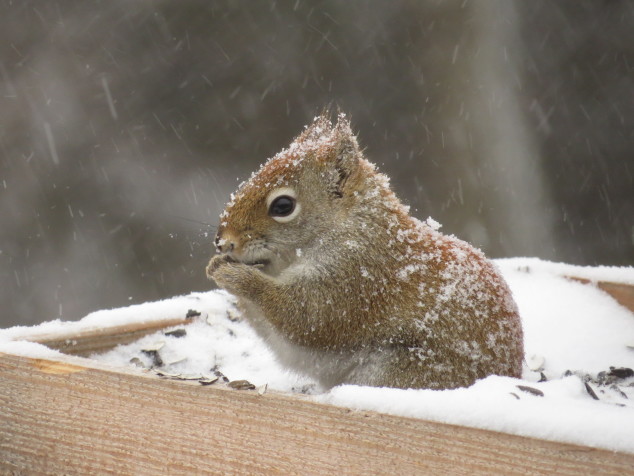
There is an abundance of gray squirrels, a few little red squirrels, and two black squirrels–one with a long tail, the other with a shortened ‘Squirrel Nutkin’ tail. These two are feisty and protective of ‘their’ feeders.
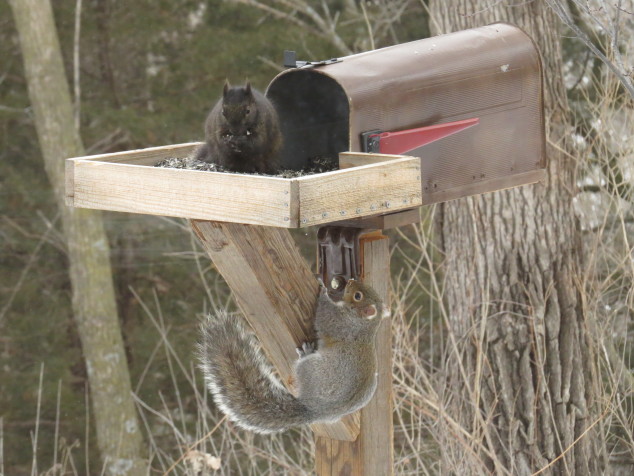
Whereas the birds are prudent with the abundance of a full feeder of black oil sunflower seeds, this guy is a little piggy, scooping up paws full of seeds and chowing down!
Our more nocturnal critters clean up the fallen seeds from the ground after the sun goes down–rabbits and foxes. Evidence of the rabbit’s activities can be seen in the light of day.
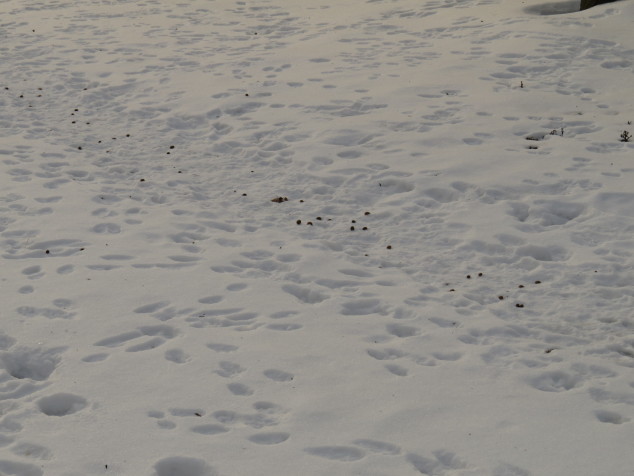
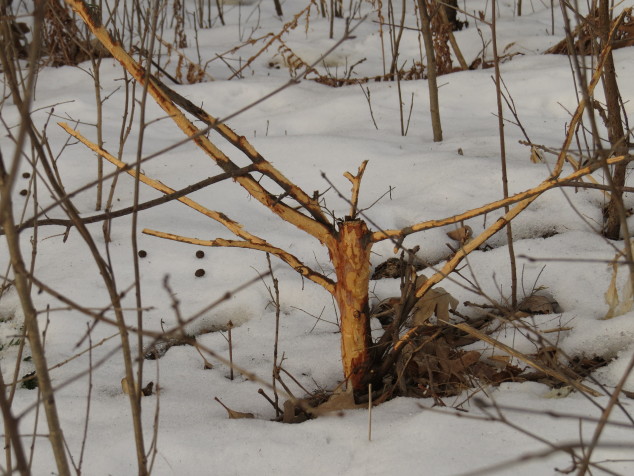
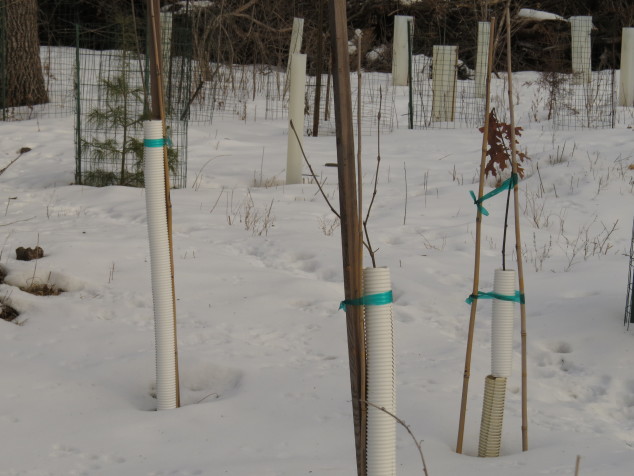
They also cause real damage to young trees and shrubs, as in the case of this young hemlock tree.
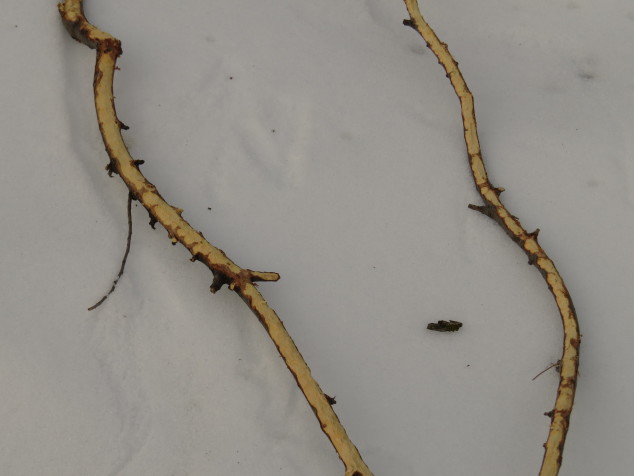
Rabbits or deer stripped the bark from some fallen branches.
While my horticulturist husband loves planting and growing new trees and shrubs, it is a necessity to protect them from the winter grazers.
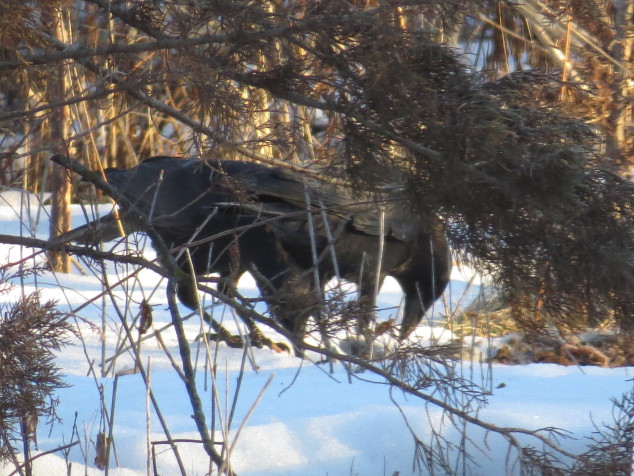
As in most food chains in Nature, the tables get turned, and a rabbit becomes a meal for the scavenger crows.
February is all about that food for the birds and animals in this northern climate. The mild temperatures and minimal snow have made it easier for the critters to find some kind of sustenance for survival this year, but they have still been hard on some of our unprotected plants.
Recovering from a death or grief of any kind can also make for strange months–times of sadness and despair, dreams that try to ‘organize’ the pain, and moments of lightness and laughter when the sun shines through the darkness. Diving into my stash of chocolate may not be the prudent way to ameliorate the pain and confusion of grief, but it may just be a necessary way to protect that part of me that doesn’t want to accept what happened. Until I do. And then, once again, I can eat chocolate like a cardinal instead of like the Squirrel Nutkin squirrel.
Walking Through Winter
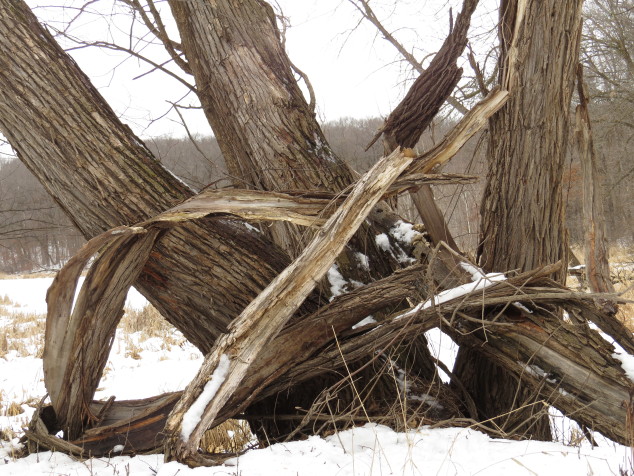
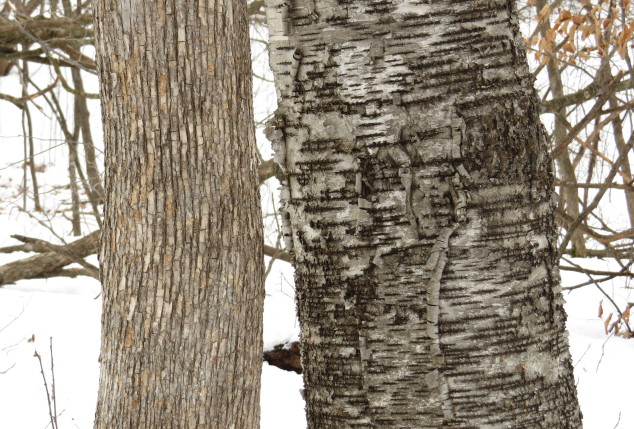
Winter can be a tough season, but like last year, this winter has had minimal snowfall and relatively mild temperatures. This has allowed us to hike the trails of nearby parks with comparative ease. A couple of weeks ago we ventured out to Wildwood County Park for a morning hike. The park has three and a half miles of cross-country ski trails, but the only other people we saw were walking their dogs. The snow was slick and wet since temperatures hovered above the freezing mark. Deer and other animal tracks made their own paths through the woods, crossing the hiking and skiing trails with frequency. The woods were mainly old growth maples and oaks with ironwood as the predominant understory tree. The vertical lines in the bark of an ironwood contrasted with the horizontal lines in an adjacent birch tree.
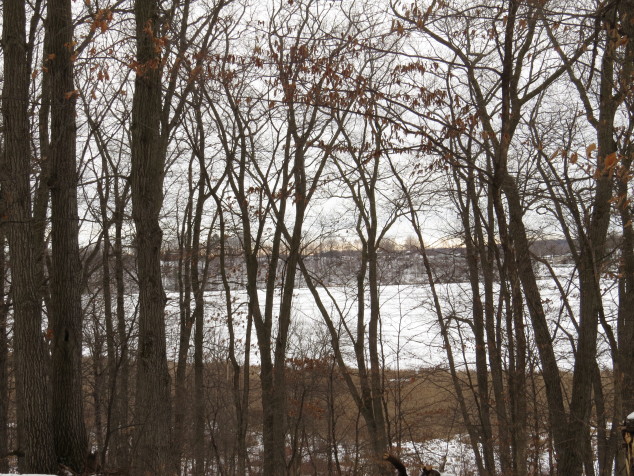
We saw the ice-covered Kraemer Lake through the trees…
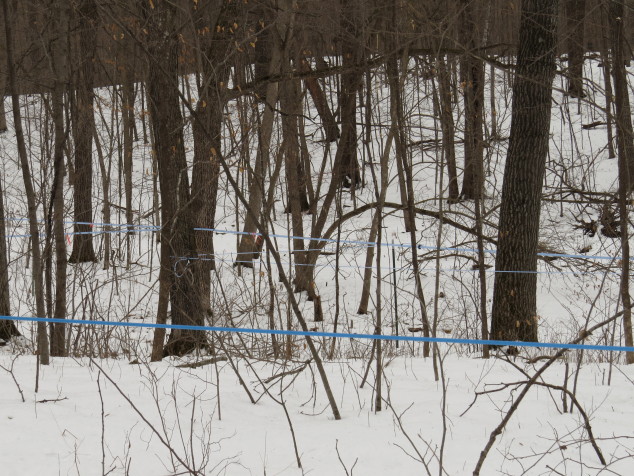
and bright blue sap lines from Wildwood Ranch that would soon be tapped into the towering maple trees to harvest the sap for making maple syrup.
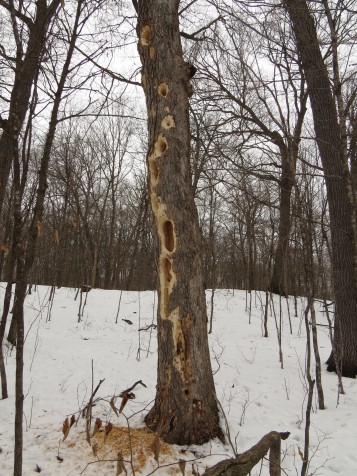
We saw evidence of a very busy woodpecker–most likely a pileated–with his recent drillings.
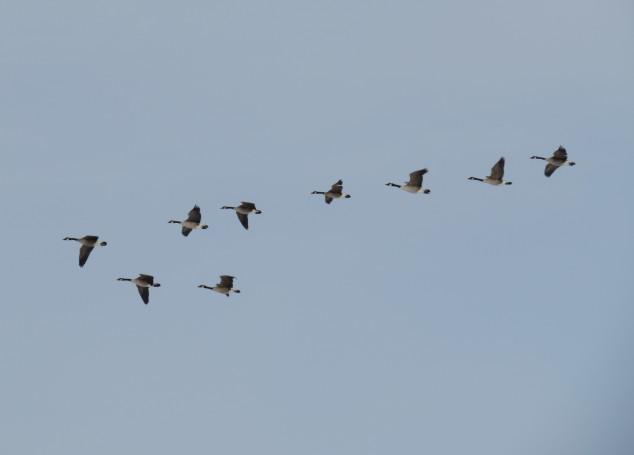
The next weekend we went to Eagle Park and Rockville County Park to hike and check on the eagles. Small flocks of Canadian geese and Trumpeter swans flew over us as we walked the trail.
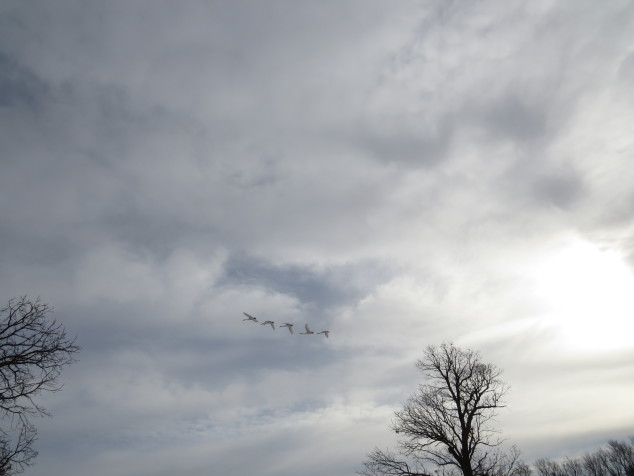
Then one of the eagles flew to their nest in the center of the park. Soon the mate glided in carrying a large stick to add to the already huge nest.
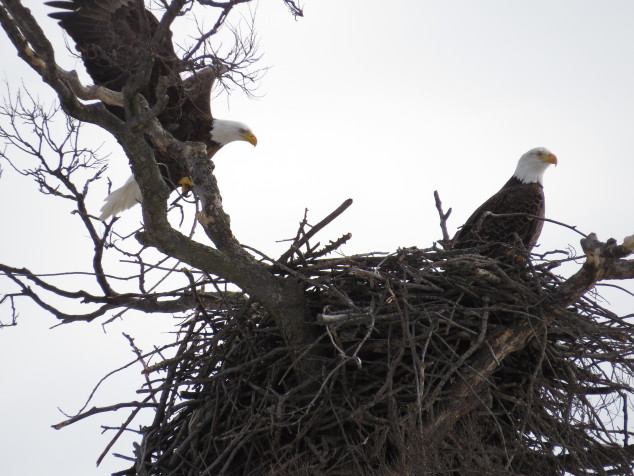
Both worked on getting the new branch in just the right place.
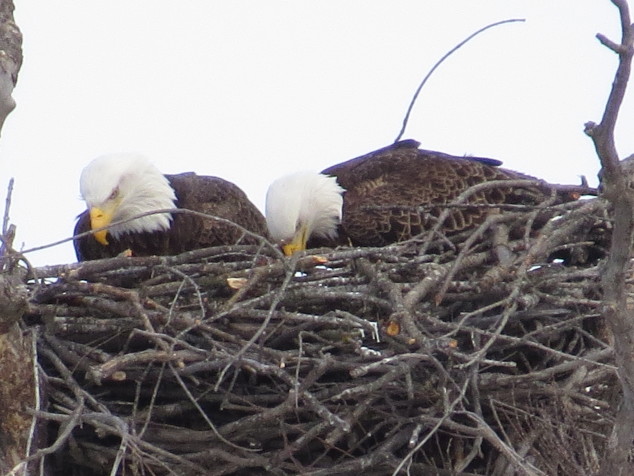
Later they hopped up to their perch above the nest and surveyed their territory. This pair didn’t raise any eaglets last year–I’m not sure if the eggs never hatched or if the young hatchlings died for some reason. But they are back this year, adding to their nest, getting ready for their next brood.
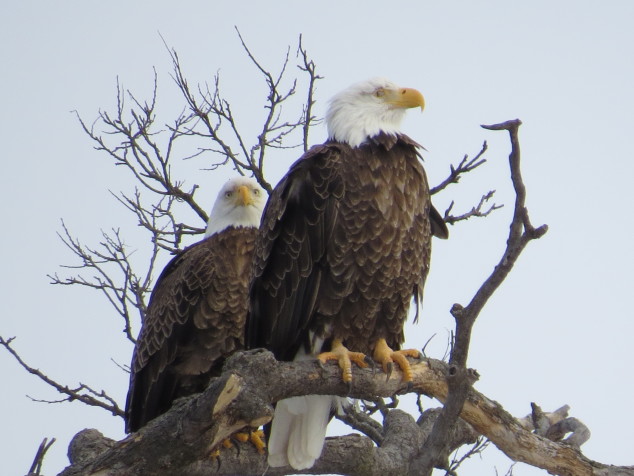
A mile or so away, the other nest of eagles who raised three eaglets last year, were also adding sticks to their nest in preparation for their next offspring.
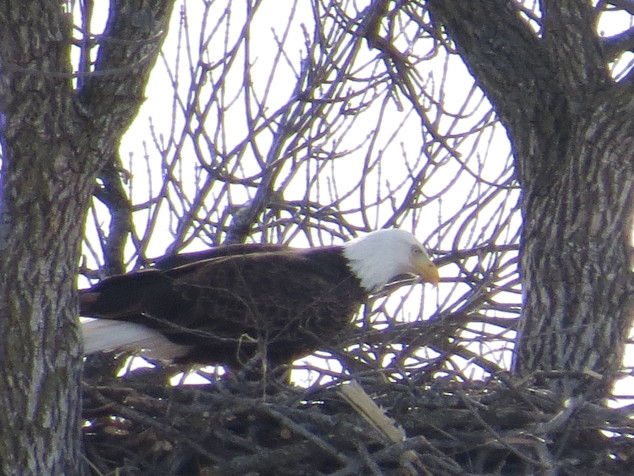
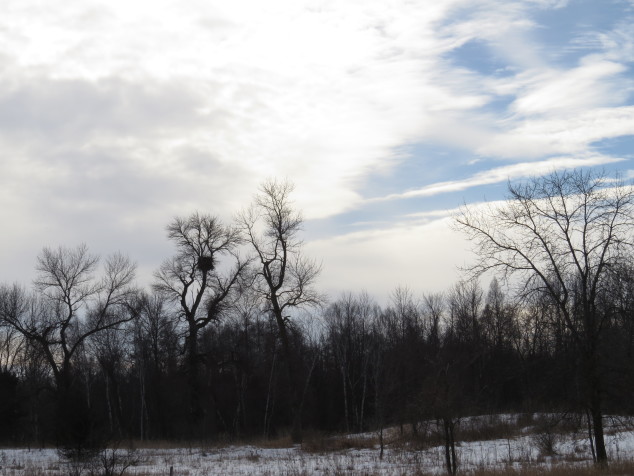
Winter can be a tough season. Weather-wise, this winter has been fairly easy, but in other ways, it has been hard on me: losing a parent to death, losing children in the ways we do as they leave the nest and make their own paths, and losing a little piece of ourselves as each of those things happen. And so, step by step, I am walking through winter, hiking through the heartache, and letting Nature and the Creator work to fill up the holes that were drilled into my heart. I will pick up another branch and add it to the already huge nest of a life I have built. I will look forward to the new creations of Spring, and soon I will be able to tap into the sweetness that life also brings to each of us.
Gleanings from December 2015 and January 2016
“All Nature speaks the voice of dissolution. The highway of history and of life is strewn with the wrecks that Time, the great despoiler, has made. We listen sorrowfully to the Autumn winds as they sigh through dismantled forests, but we know their breath will be soft and vernal in the Spring, and the dead flowers and withered foliage will blossom and bloom again. And if a man dies, shall he, too, not live again?” —Daniel Wolsey Voorhees
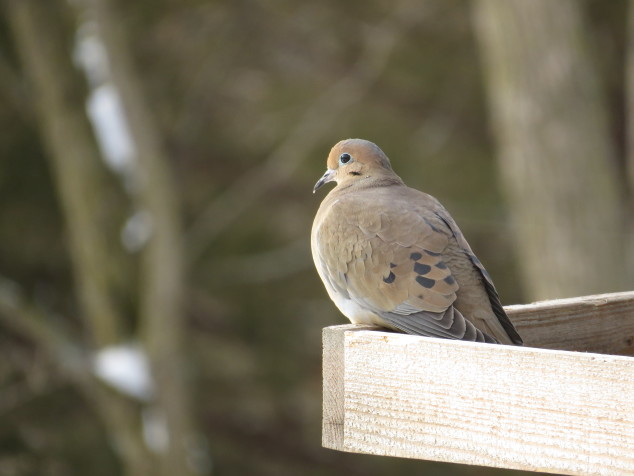
Time has been messing with my mind these last two months. With my Dad’s run at recovery after his pneumonia, the days seemed to go by quickly as we prepared and looked forward to his return home, but as things got worse again, Time slowed. With his death, it was as if Time wasn’t even recognizable anymore. Wait, was it only two days since he died?! I seemed to be in another realm where Time wasn’t numbered and predictable. Then Nature stepped in–the voice of resolution as well as dissolution, and day by day, the birds outside my window helped me settle down. I was surprised to see a mourning dove at the feeder one morning–I don’t usually see them in the middle of winter, and they most often browse on the ground for food. A mourning dove for my mourning.
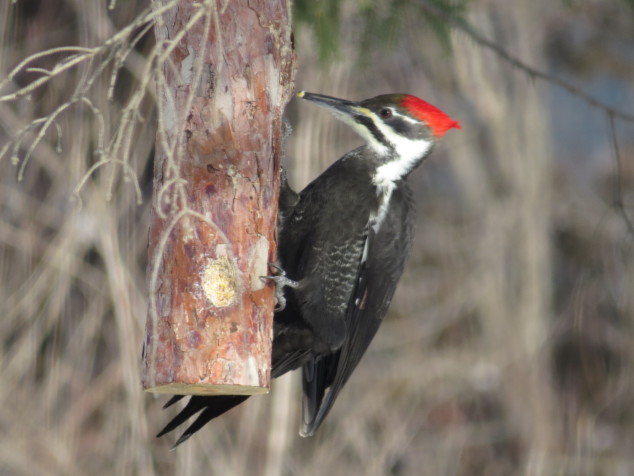
A pileated woodpecker’s long, strong beak made short work of the suet-stuffed log feeder.
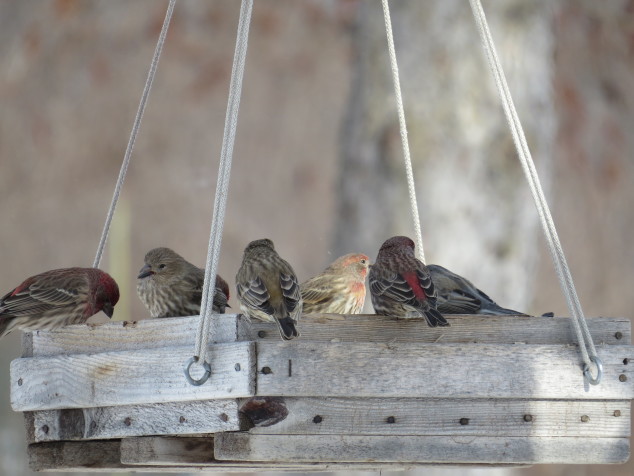
Purple finches gathered at the feeders in groups–a community of fine-feathered friends.
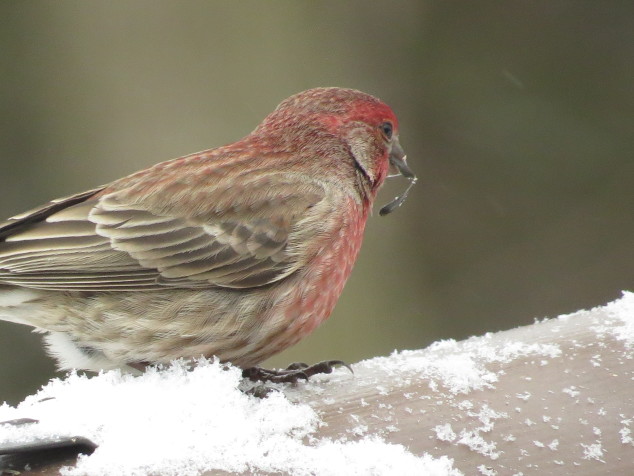
The male’s rosy-colored feathers looked like a richly tailored tweed suit.
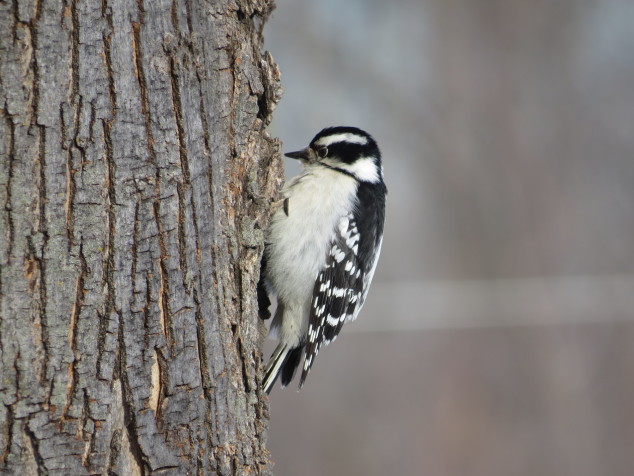
Carrying his sunflower seeds to the maple tree, a Downy woodpecker placed them in the grooves of bark to break open the hull to reach the nutritious kernel.
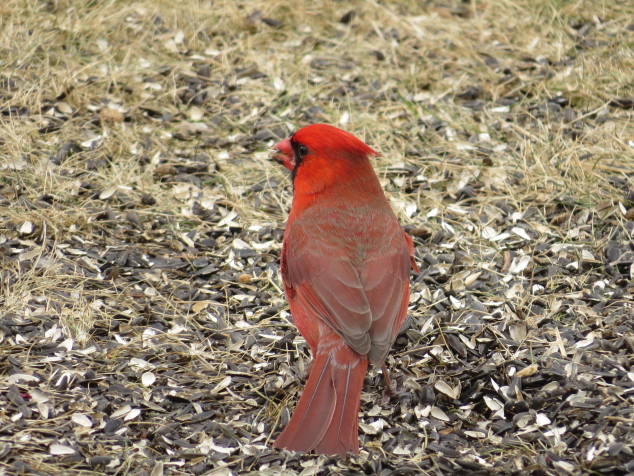
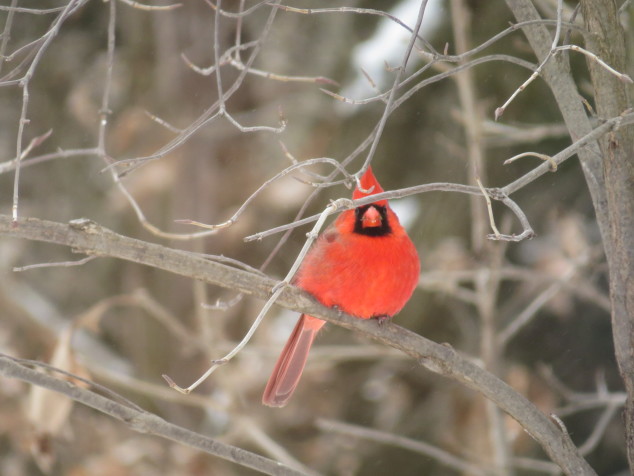
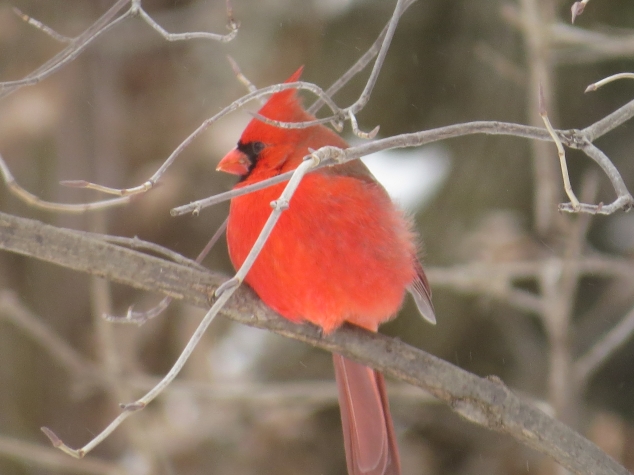
Flower-bright cardinals come to the feeder in late afternoon when the other birds are finished feeding for the day.
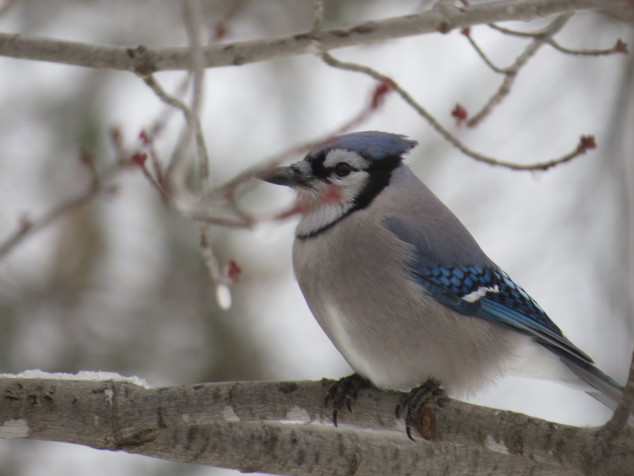
And the squawking loner bluejay feeds in the morning, scaring away black-capped chickadees and nuthatches that browse throughout the day.
Sunrise of another day, a month of days and more….
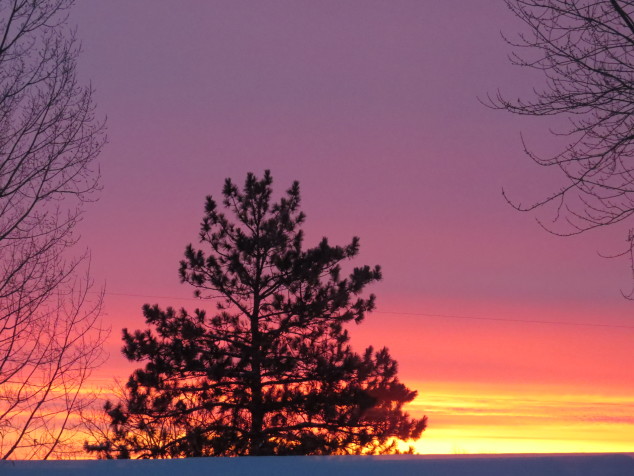
Mourning time is measured by sunrises and sunsets and by birds flying to the feeders in their tenacious purpose of nourishing themselves for another day. The dissolution of my earthly relationship with my Dad and the permanence of that takes time to integrate into my soul. Nature helps me sort out the grief, work out the pain, and measure the memories. Writer Paul Theroux declares, “Winter is a season of recovery and preparation.” I am looking forward to blooming again.
Prayer Without Words *
Saturday morning was crisp–in a single-digit-degree-Fahrenheit kind of way. The winter birds were flitting and diving to the feeders, then to the snowy ground that was polka-dotted with the fallen black oil sunflower seeds. Chris had an NPR show on the radio, and I drank my exquisite Ely Gold tea. I’m notoriously bad about understanding song lyrics–or knowing who the artists are, for that matter. The music of a particular song caught my attention–it felt emotional and a little haunting to me. Then the words ‘prayer without words’ registered through my morning thoughts, and I felt a connection to the past days and weeks since my Dad’s death. It hadn’t even been two weeks yet–why did it feel like it had been much longer than that?
I used that amazing thing called the internet and instantly found the lyrics to the song considerably titled Prayer Without Words by Mary Gauthier. In spite of my ears hearing lyrics about bird’s high notes and shooting stars, I realized that she wrote about a much darker place than a father’s death. With a tad bit of gratitude that my darkness was because of a natural death after eighty years of living, I still turned the phrase ‘prayer without words’ over and over in my mind.
Here are a few of my prayers without words from the last couple of weeks.
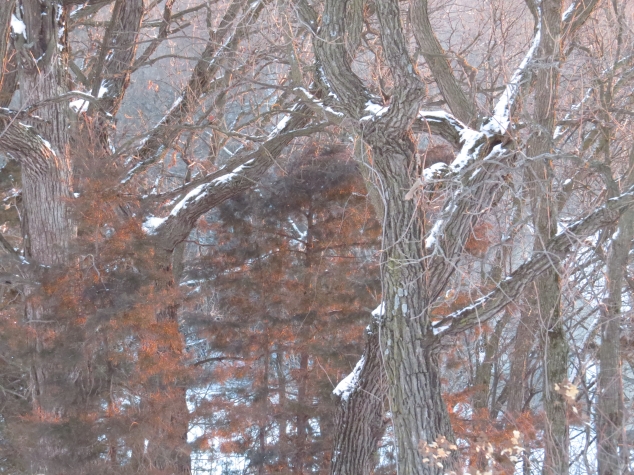
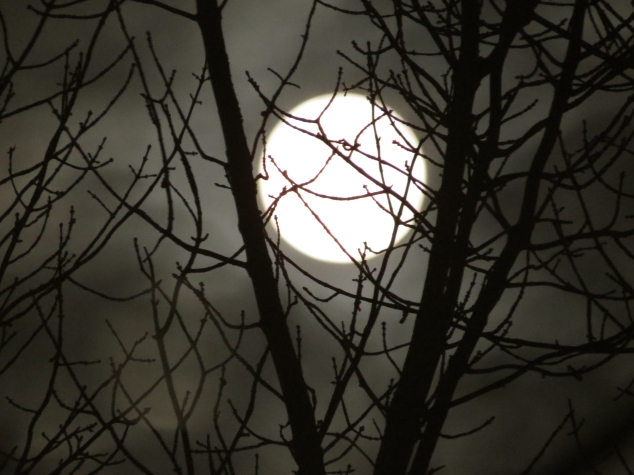
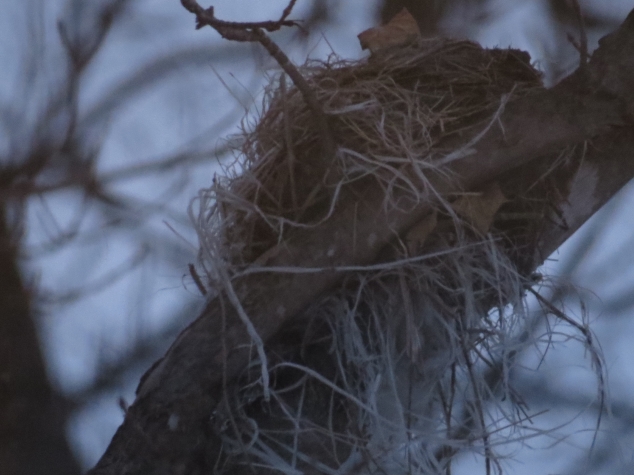
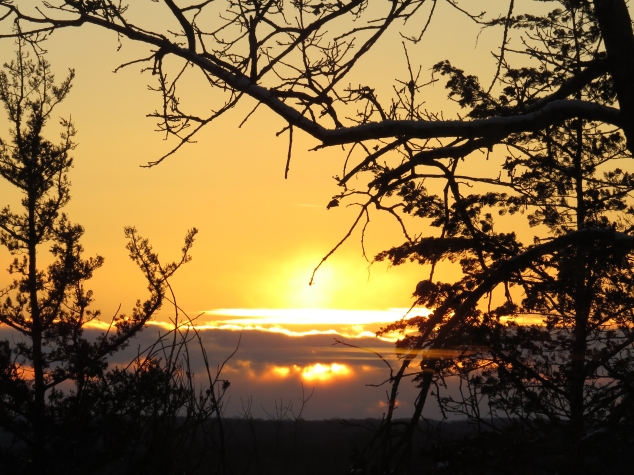
Nature is praying all the time without a single word. Thank you, Creator, for the warmth on a cold winter day. Thanks for the bronzed sunlight that illuminates us at day’s end. Thank you, O Great One, for Light that penetrates the darkness. Thanks for the home in which we live and raise our offspring. And thank you, Wise Emmanuel, for the endings in our lives that give rise to our new beginnings.
*Prayer Without Words by Mary Gauthier from her Mercy Now album
Wonder Will Be Yours
I remember staring with wonder at each of the tiny human beings we brought home from the hospital. I couldn’t get enough of looking into their eyes, holding their perfectly plump bodies with those tiny fingers and toes, and kissing their delightful cheeks while inhaling that ambrosial baby smell. Every good force of Nature and God was involved in bringing forth these new creations to occupy our family life for a time, and the awesomeness and privilege of that is not lost on me. Not even after all these years. Especially after all these years–when they have all gone on to living their own lives.
But still, when I see my cherished children, which is not often, I find myself staring at them, looking into their adult eyes, wanting to hold their hand or push back the hair from their forehead, and longing to kiss their cheeks. Their individual worlds are separate from ours now–the way of Nature–but the wonder is still there.
There are tiny, little worlds all around us. We catch glimpses of them from time to time and our understanding is expanded by information in books, nature films, and the encyclopedic internet. We can take a closer look at these tiny worlds at almost any time. Imagine the world of the honeybee–we see them working to gather nectar and pollen, but we don’t realize how much work goes on inside the hive. Sedum ‘Autumn Joy’ is an abundant source of nectar for honeybees at this time of year.
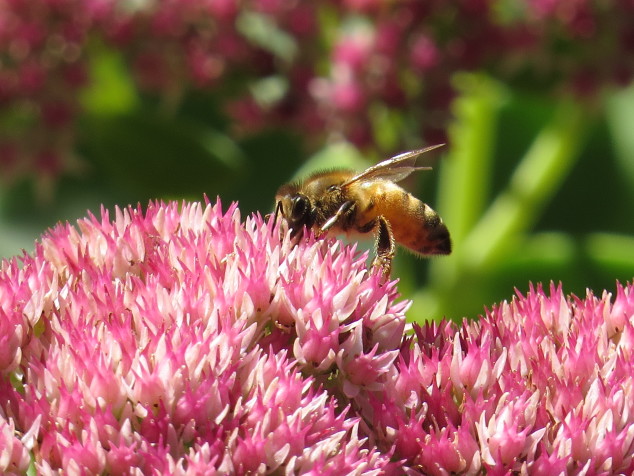
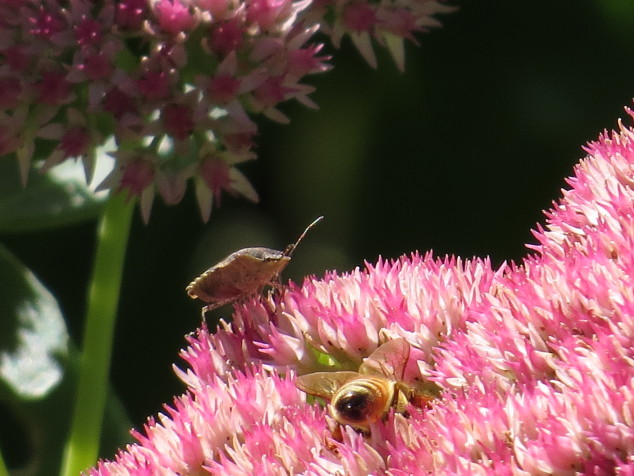
They share the joy with a pungent stink bug who raised his antennae in alarm when the honeybee flew near, but he determined that the bee was no threat to him. There was plenty of nectar to share.
Another little world lies hidden in a wild rosebush.
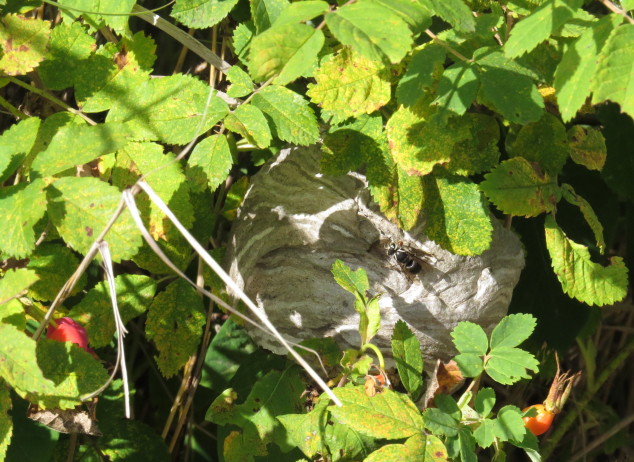
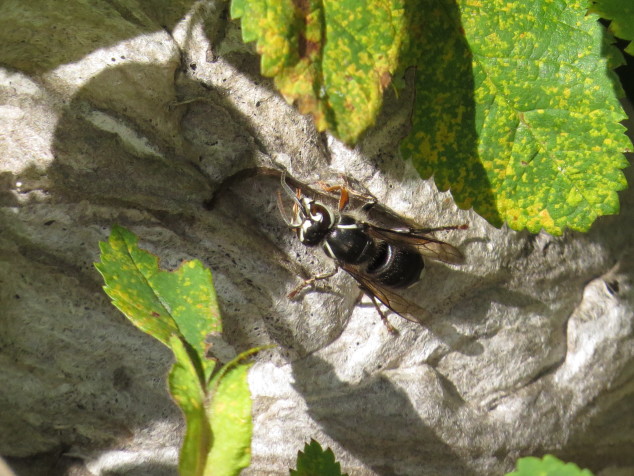
The bald-faced hornet, which is really a yellow jacket wasp, collects and chews wood, mixes the fibers with saliva to make pulp, and constructs a paper nest that houses comb-like nests of larvae and hundreds of worker bees.
Most everyone knows the life cycle of the Monarch butterfly. Milkweed is the host plant for the Monarch caterpillar that hatches from eggs deposited by the butterfly. The caterpillar eats milkweed until mature, then forms a hanging chrysalis.
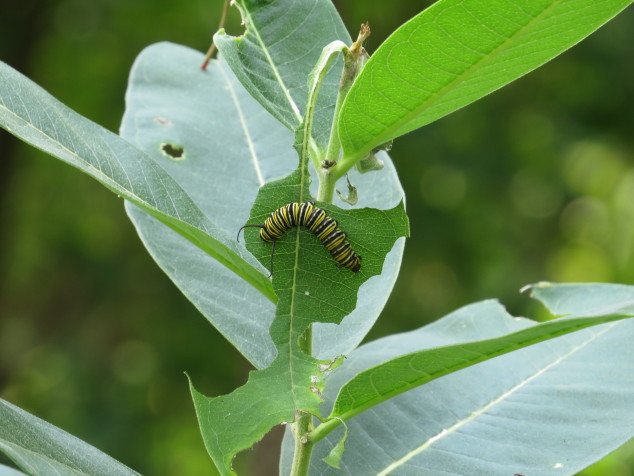
When the butterfly emerges from the chrysalis, he leaves the Milkweed world and flies into the vast, diverse Unknown full of dangers and delights. One of the delights is the formidable Joe Pye Weed that grows up to seven feet tall and produces huge mauve pink flower heads full of vanilla sweet nectar.
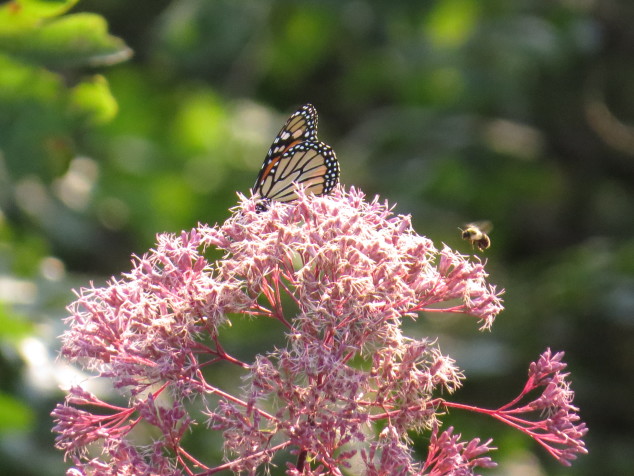 While watching the butterflies and bees swarm the Joe Pye Weed, I noticed a hummingbird at the nearby Summer Sweet bush. This small native shrub is another important source of nectar for butterflies and hummingbirds, and its fragrant, bottle-brush flowers will bloom in shade.
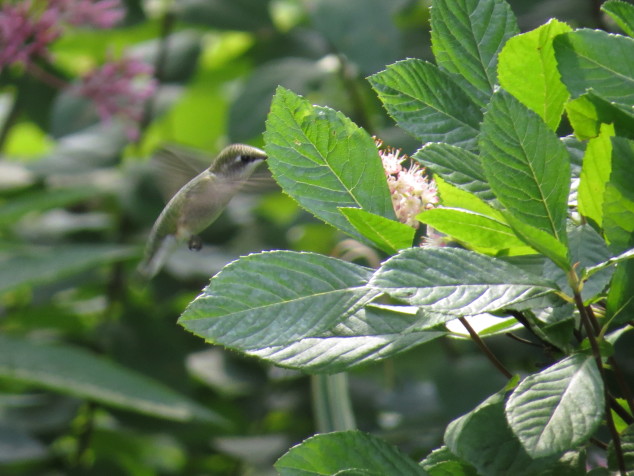
What a summer show! The enticing, sweet blossoms and the birds, bees, and butterflies!
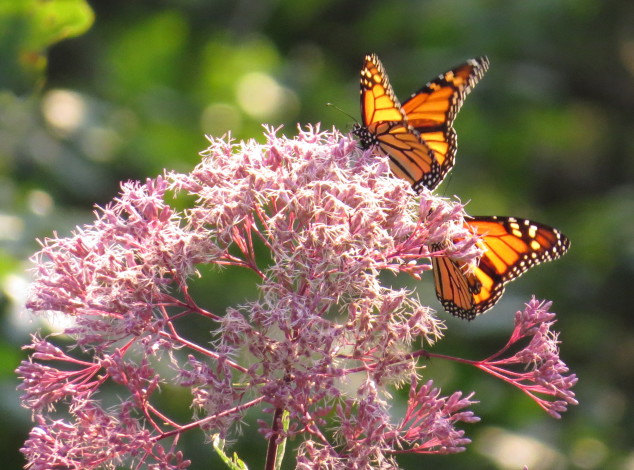
And then…Wonder! The Hummingbird flew over to the jeweled iridescence of the butterfly and hovered there!
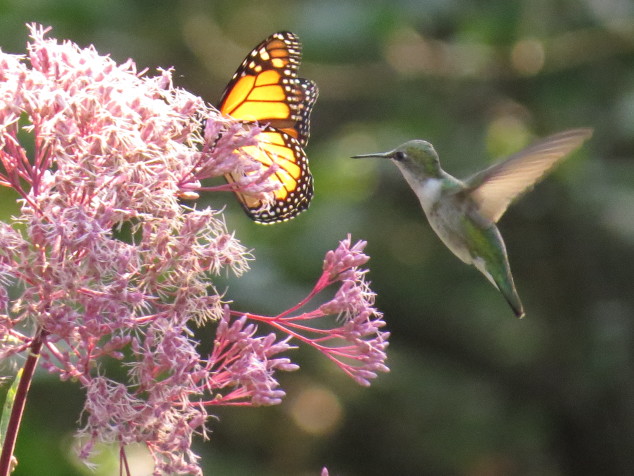 I am grateful and privileged to witness such a moment in the late summer world of Joe Pye. These tiny-world moments play out all around us, most of the time without our knowing. Take some time to notice the tiny world of some part of Nature and share the Autumn Joy!
I am no longer part of the daily world of my children, though daily they are in my thoughts, my whispered prayers, my silent sending of blessings upon their adult lives. I want to remind them, and all of you, that looking into another person’s eyes connects two souls, shares our tiny worlds, and reflects the face of God. Touching another person’s hand conveys interest and caring and does wonders for our physiology. Kissing a cheek bestows a gift to the one kissed and the giver alike. Let every good force of Nature and God inspire your life as you go through your life cycle and know that the nectar of love and joy is abundant–there’s enough for everybody! And Wonder will be yours.
Bluebird of Happiness
The BLUE-BIRD carries the sky on his back. –Henry David Thoreau
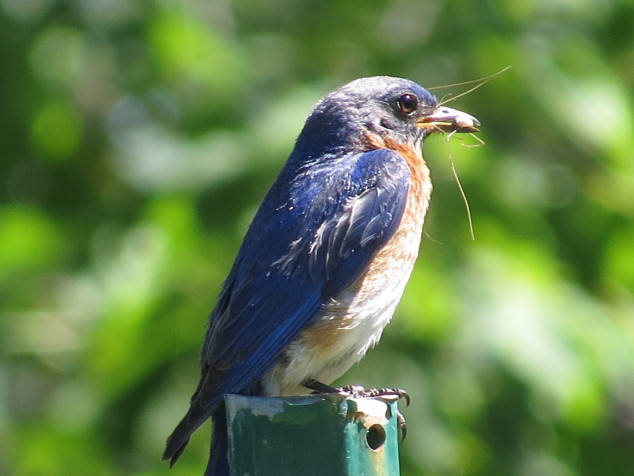
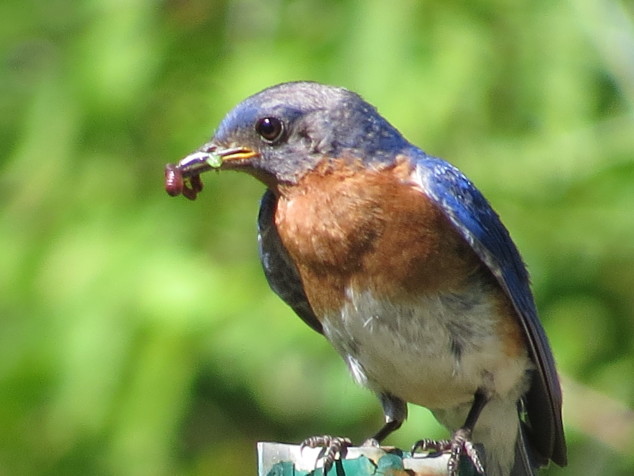
Flashes of blue can be seen in our yard at any time of the day. This is the first year a pair of Eastern Bluebirds has used one of our bluebird houses for their grassy nest. We have four houses placed around the yard, but the location has to be just right for bluebirds. The house wrens are not so picky so have usurped a number of the bluebird houses, even though they have their own petite abodes in the maple trees. Bluebirds can have more than one successful brood each year, so this one in mid-July may be their second brood.
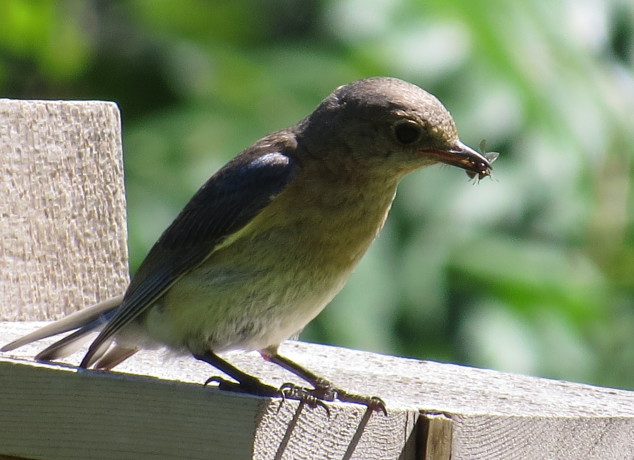
Both the brightly colored male and the more subdued female hunt for insects to feed their young. They perch high on electric lines, in trees, or on posts. They spy their prey from sixty or more feet away, then swoop to the ground to grab the unsuspecting insect and quickly fly back to their perch. Most of the time, the parents alight on their house or on a nearby post right before flying into the nest with the food.
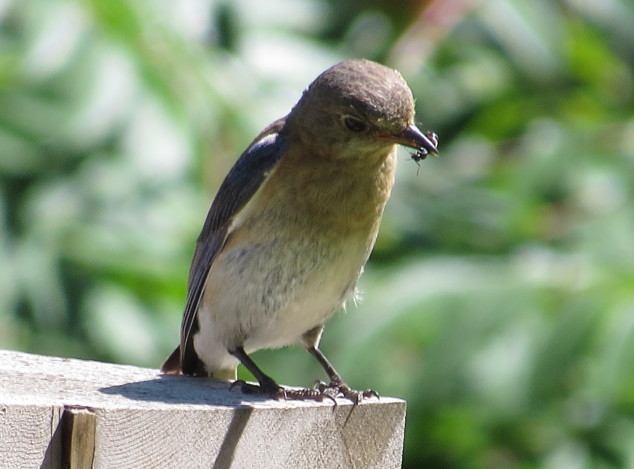
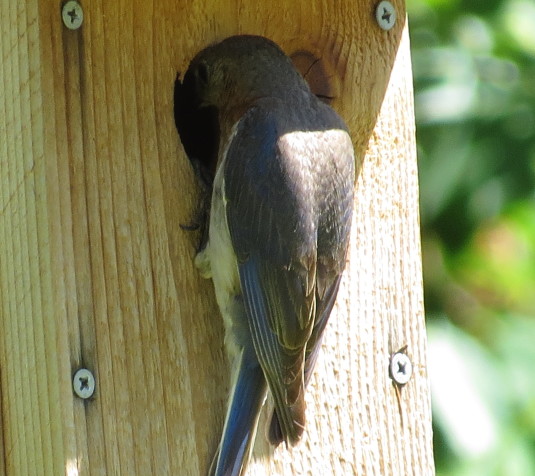
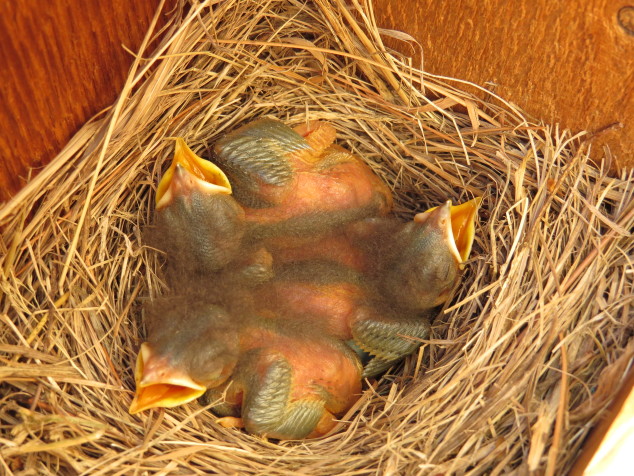
Countless insects of all sorts are delivered to the babies’ gaping mouths…
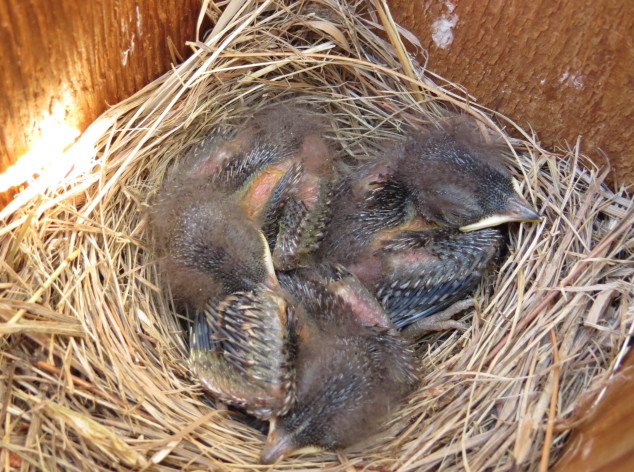
…and just three days later, they have opened their eyes and developed more feathers. Sixteen to twenty-one days after hatching, these helpless chicks will fly from the nest.
Bluebirds have long been a symbol of happiness, hope, and renewal. Legends, poems, plays, songs, and stories have been written about the inspiring bluebird. What is it about these beautiful little thrushes that have aroused such appeal and even have prompted a National Bluebird of Happiness Day on September 24th? They are a welcome harbinger of spring after a long, cold winter. Their brilliant azure color is uncommon in the natural world, so the flashes of blue are noticeable against the green. The population of bluebirds severely declined up to the late 1970’s due to loss of nesting habitat and nest competition from starlings and sparrows. The North American Bluebird Society was formed in 1978 to place bluebird nesting boxes across the country, and since then the bluebird population has recovered. Do we appreciate something even more once it was almost lost? Or is it the feeling of a blue-sky day, when the air is crisp and clear and the sun warm upon our faces, that is evoked when we look at the sky the bluebird carries on his back? When I see the flash of blue, I feel a deep happiness to have such beautiful birds living in our yard. When I see the parents working so hard to provide food for their babies, I feel hope that another generation will populate our natural world. And I carry that happiness and hope to you so that we may all experience soul-filling renewal. What do you carry on your back for the whole world to see?