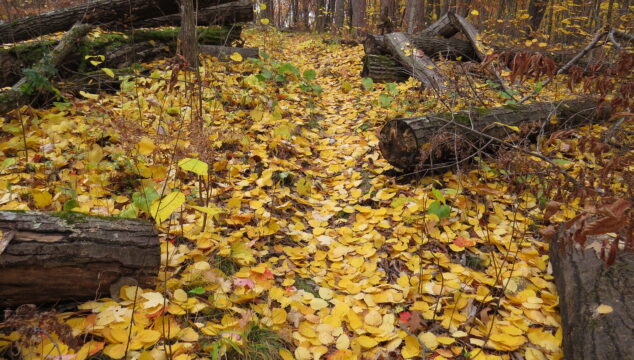
Come walk with me in the peak Autumn beauty of the Northwoods. To say that I love this time of year is an understatement. Most everyone can appreciate the colorful falling leaves---it reveals the 'true self' of a tree when its leaves are no longer producing chlorophyll. Their true colors are revealed, and there is something simple … [Read More...]
The Gift of a Paper Birch Tree
In all things of nature there is something of the marvelous. –Aristotle
One of the most marvelous trees in Nature is the Paper Birch. It thrives in colder-climate regions, is one of the first species to grow after a wildfire in these northern climates, provides food for moose, deer, birds, and porcupines, and the bark is an excellent fire-starter, even when wet, because of its high oil content. The leaves have been used for centuries by herbalists as a topical for skin problems as well as infusions for a wide array of internal problems.
These beautiful trees have been designated National Memorial Trees for Mothers with one planted at Arlington National Cemetery named the National Mothers’ Tree. We are fortunate to have one right outside our front door.
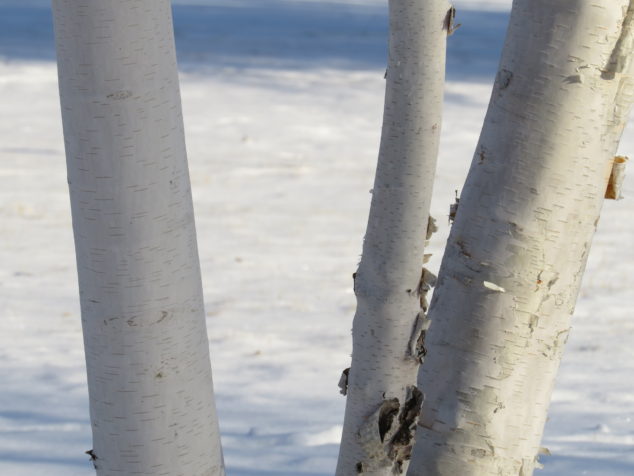
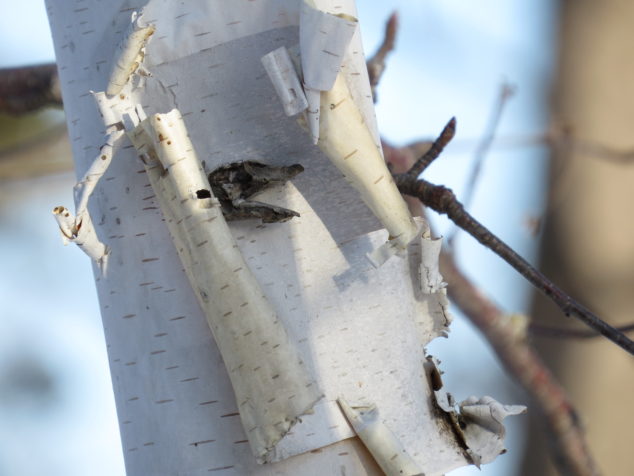
The shiny white bark has characteristic ‘dashes’ in light gray, and as the tree grows, the older bark peels off in large curls.
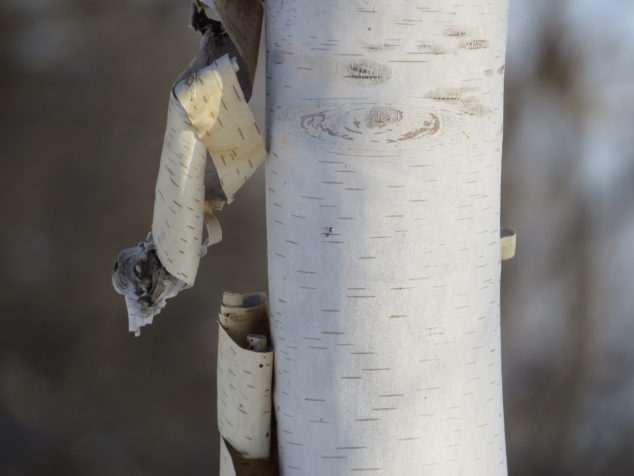
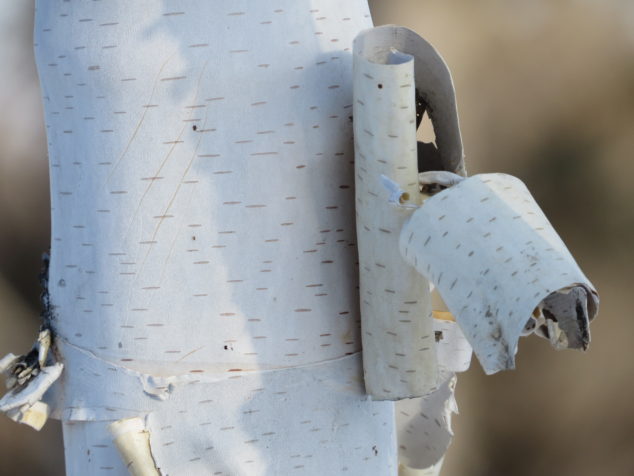
The curls of peeling bark get stuck on the knots where the branches grow and hang on until it gets worked loose.
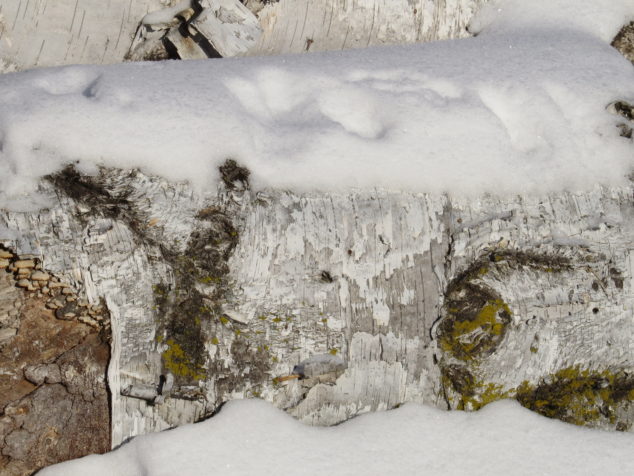
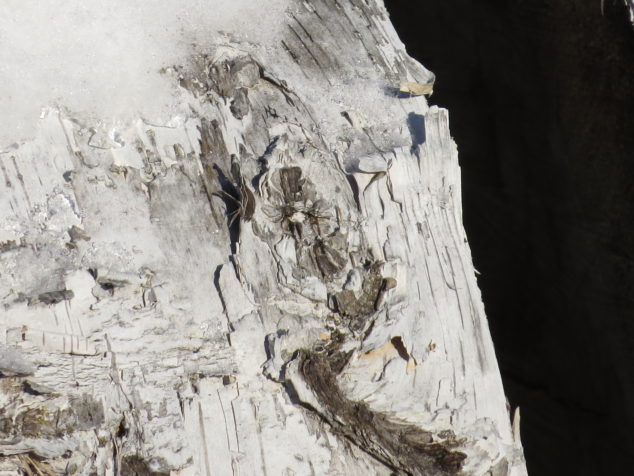
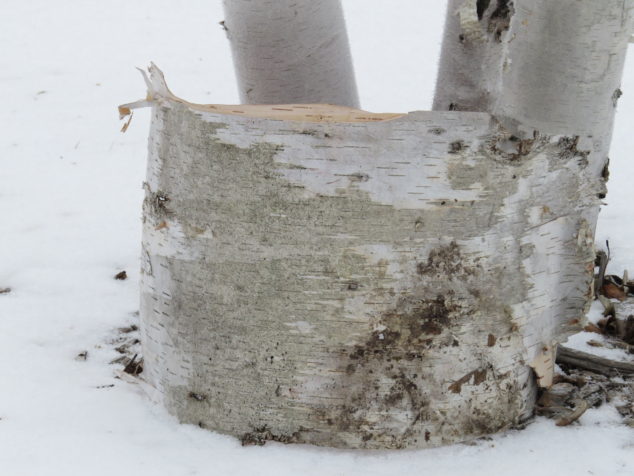
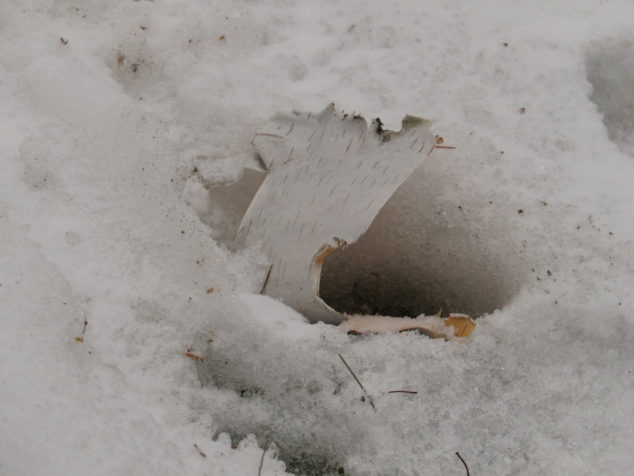
We also have a pile of logs from an old Birch that had to come down. The rotting process has begun. Often the inside wood will rot away leaving an empty shell of tough birch bark.
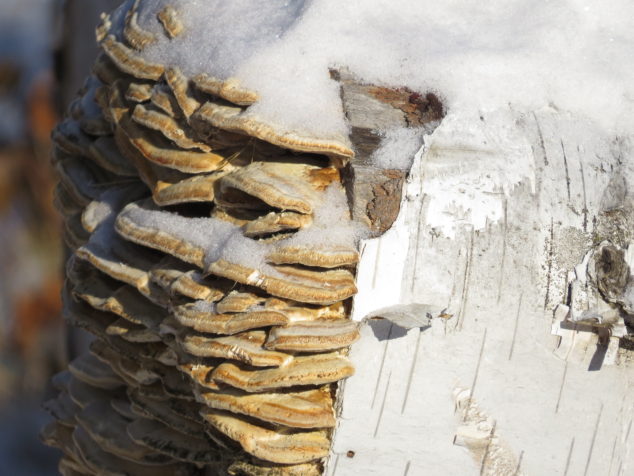
Fungi, like a stack of morning pancakes with frosty white syrup of snow, grows from one end of a log.
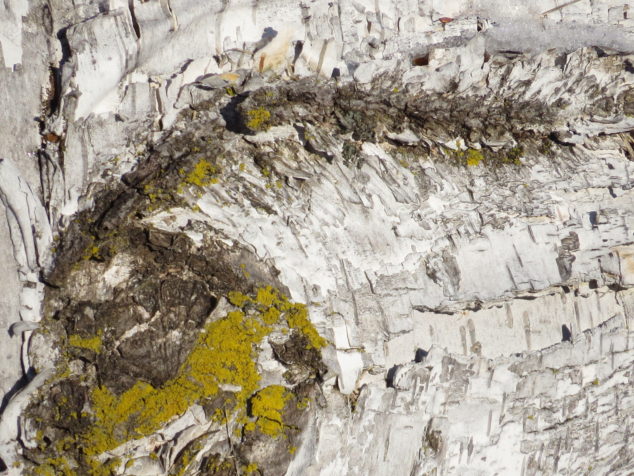
Colorful lichens decorate the ‘eye’ of the log where a branch was cut from the trunk.
There is something almost magical in the bark of a Paper Birch, with its strength, resiliency, and weather-proof properties.
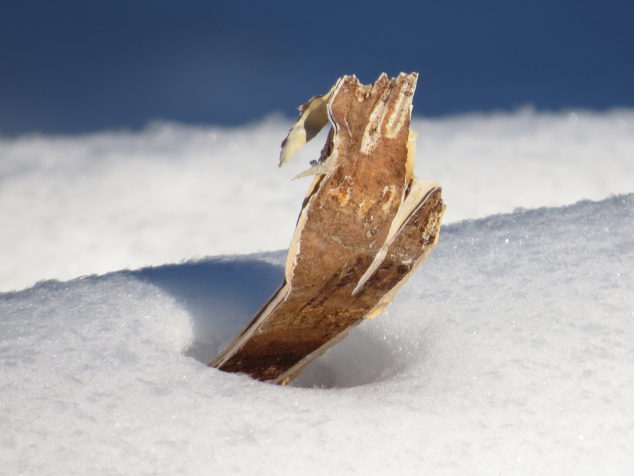
From downed trees, the bark can be peeled off in thick layers. The Native Americans used the bark for making containers and canoes, and for the shells of wigwams.
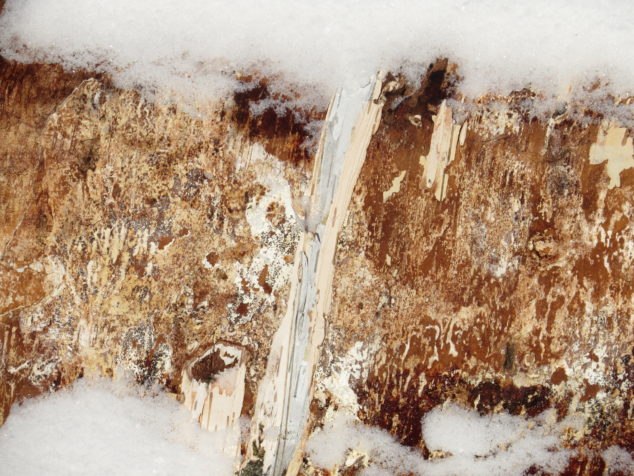
But in our household, Chris uses the bark to make ornaments for our Christmas tree and for gifts!
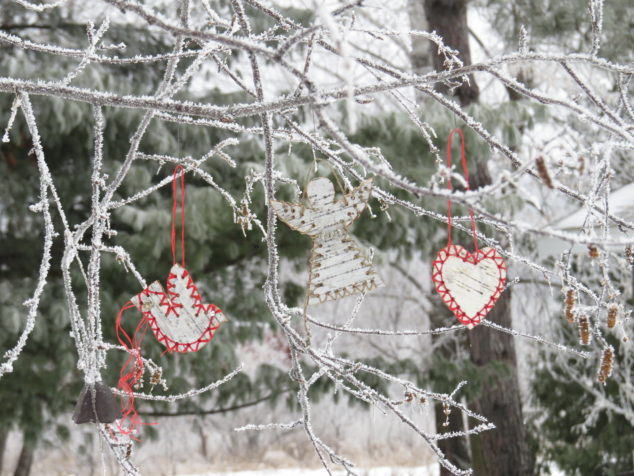

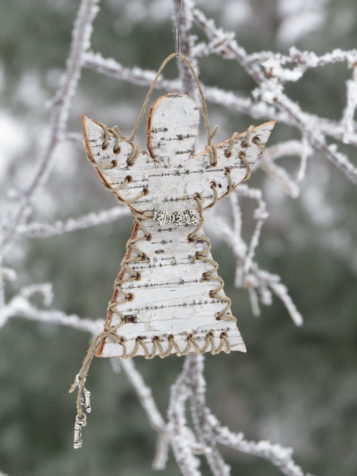
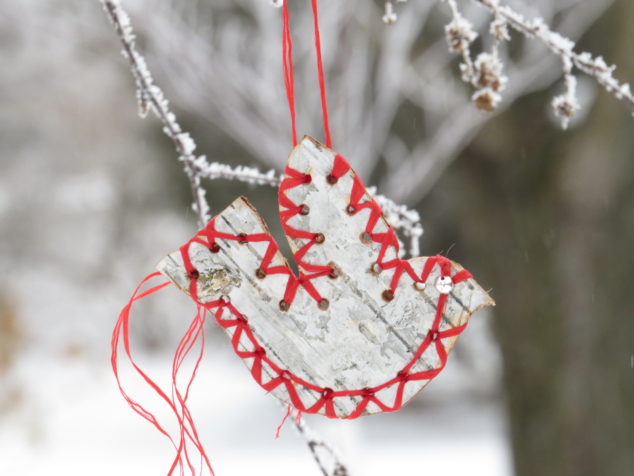
A marvelous tree—from beautiful live Mothers’ tree to downed logs to handmade gifts of Nature and Love. In this season of advent, the ‘old’ is peeling away in anticipation of what’s to come—we make room for the new. We may get hung up on knots of uncertainty, of doubts and fears, but whether we are ready or not, the Child is born to the Mother of God, the new year greets us, Joy is made available—do we embrace it? Life is a magical, miraculous gift, and we are the strong, resilient participants, the givers, the receivers, and the gifts themselves. From our household to yours, we wish you Love, Protection, and Peace!
Be Like the Birch Tree
All change is not growth, as all movement is not forward. –Ellen Glasgow
Yesterday I went back to school! Oh my gosh, do I love school! Sitting in the dim classroom with all the other students, getting the syllabus, seeing what’s on the agenda for the day, week, or semester, and meeting the new teacher or professor—it’s one of the best feelings! Actually, this time, my school was only for a one-day conference, but it was exciting, nonetheless, and represents something that is key to my life—learning and growing.
The Birch tree right outside our front door is growing, seemingly right before our eyes. Large and small swatches of white bark are peeling off the Paper Birch in horizontal strips.
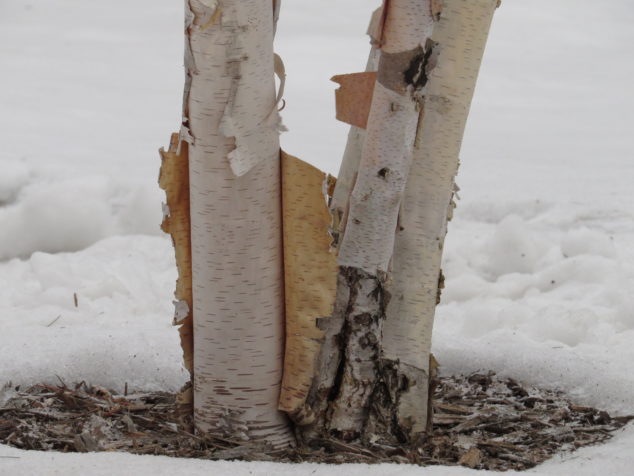
It seems to just be bursting out of its bark!
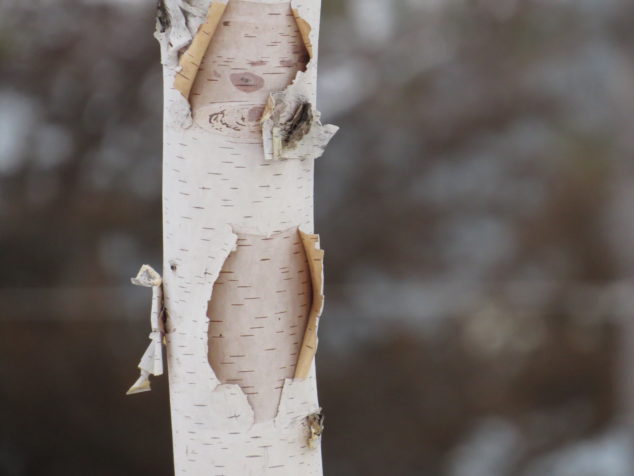
Betula papyrifera is a fairly fast growing tree that will add 13″-24″ each year and is one of a few trees that annually sheds its bark.
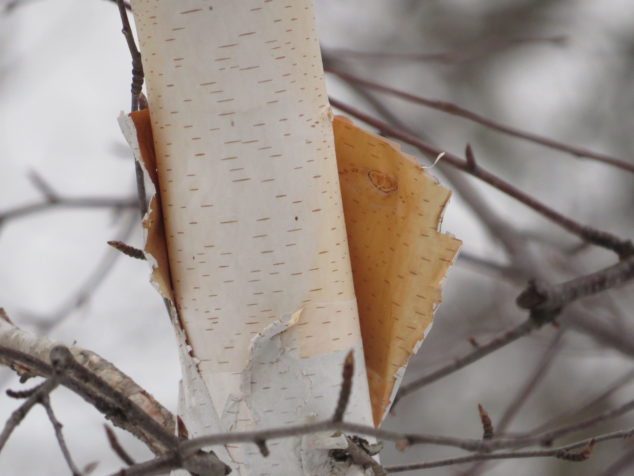
Young Paper Birch bark is darker in color and when older than five years, the white bark will appear.
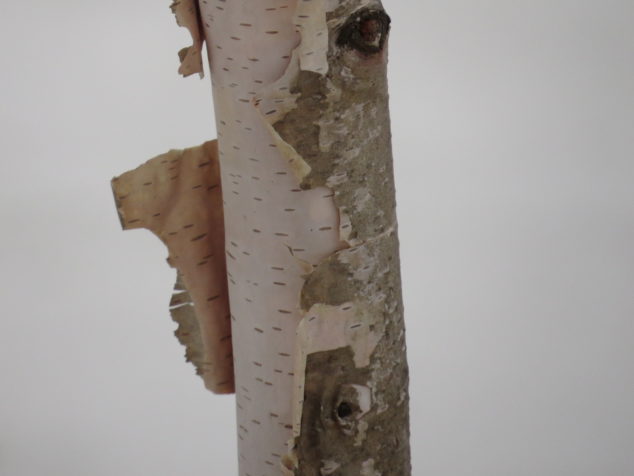
The Paper Birch is also called Canoe Birch, as the Native Americans and early fur trappers used the bark to make canoes, containers, and wigwams.
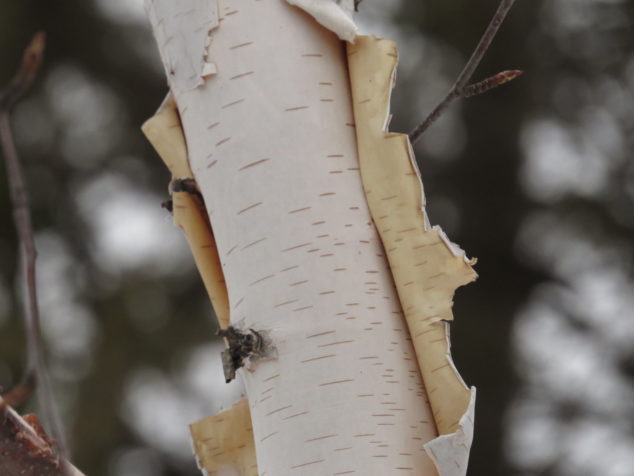
The bark has a high oil content making it an excellent fire starter even when wet and is what gives the bark its waterproof and weather resistant qualities.
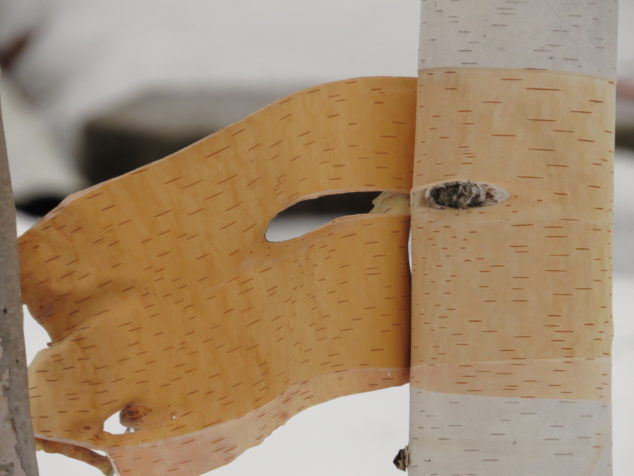
The discarded bark was also used as paper to send messages to people, and we have been the lucky recipients of a few birch bark postcards when our kids lived up in the Northwoods for the summers.
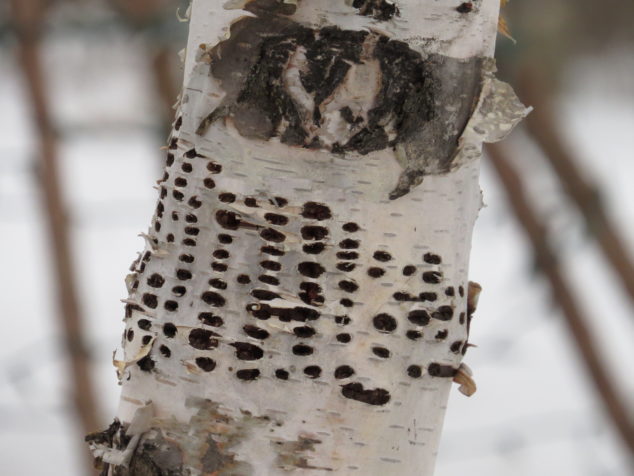
One of the three trunks of our Birch was drilled by a woodpecker last summer in neatly spaced rows. Often they drill for sap and insects it attracts, preferring soft bark and high sugar content, both of which the Birch tree has.
This truck’s growth is not as exuberant as the other two and is probably using its energy to combat the injury from the woodpeckers and/or insects.
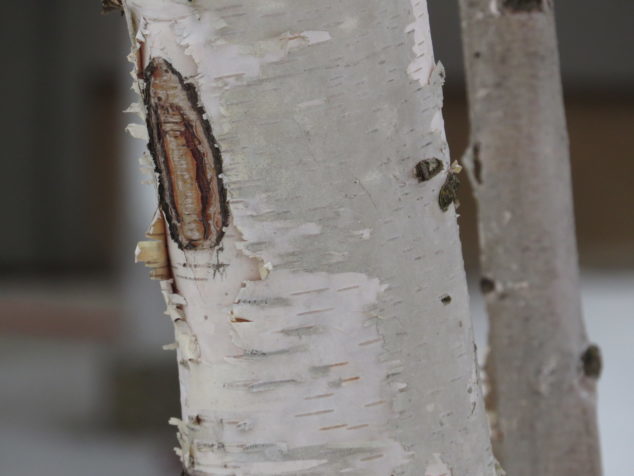
I am like the Birch tree with its burst of growth. Sometimes our growth comes when we choose it—like going back to school or taking a class to learn a new skill. Other times our growth happens from circumstances that present themselves to us—an opportunity for a new job or a trip to a different country. And then there are times of wounding—of injury or disease, of divorce or estrangement, of betrayal or abandonment—when our souls and hearts are drilled with holes, when it feels like our life-force is seeping out. It’s hard to believe that anything so devastating can lead to growth. At first, all our energy goes to stop the bleeding, to send out the immune cells that protect us from losing the battle when the first shots are fired. When stabilized, ever so slowly we begin to stitch together some new fabric, discarding the threads that no longer work and incorporating new ones that are stronger, more resilient and authentic. The winter of our discontent begins to wane in the face of the sun. Tiny shoots of new growth push up through the soil of darkness. Old beliefs peel away to reveal our smooth, authentic Self. The old bark has done its job, protecting us when we needed it, and then provides the kindling to ignite a new stage of growth. Be like the Birch tree!