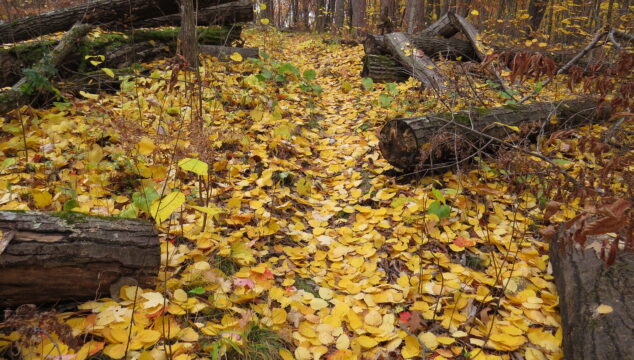
Come walk with me in the peak Autumn beauty of the Northwoods. To say that I love this time of year is an understatement. Most everyone can appreciate the colorful falling leaves---it reveals the 'true self' of a tree when its leaves are no longer producing chlorophyll. Their true colors are revealed, and there is something simple … [Read More...]
Hope and Renewal After the Fire
There have been more than a few times in my life when I felt like I was in a burning house—that feeling of helplessness, of betrayal, of feeling stuck in a room of flames. And even more times when I felt like I was sleepwalking, wandering too close to the fire without even knowing the danger. Perhaps that is life and what we are here to do—“to take what’s lost and broke and make it right.”*
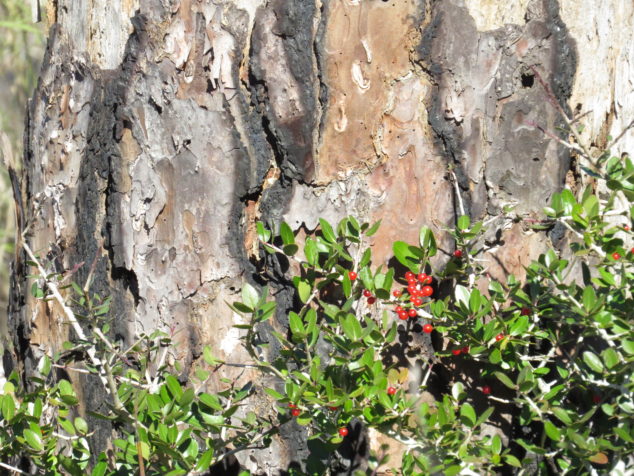
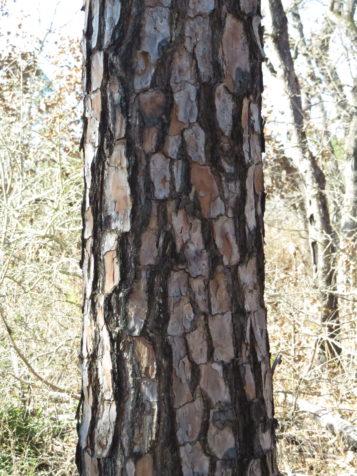
It was shocking to see the devastation from the Bastrop Complex Fire of 2011 at Bastrop State Park in Texas—I can’t imagine what it was like just after the fire. Yet, in the midst of the ruins from the fire were signs of resilience, new growth, and renewal. Cheery red yaupon berries nestled among shiny green leaves contrasted with the burnt black bark of a Loblolly Pine tree.
In one fertile area of our hike, the new Pines were swiftly growing under the tall ghost trees that hadn’t survived the fire and one that had. It was already looking ‘forest-like’ in this part of the park.
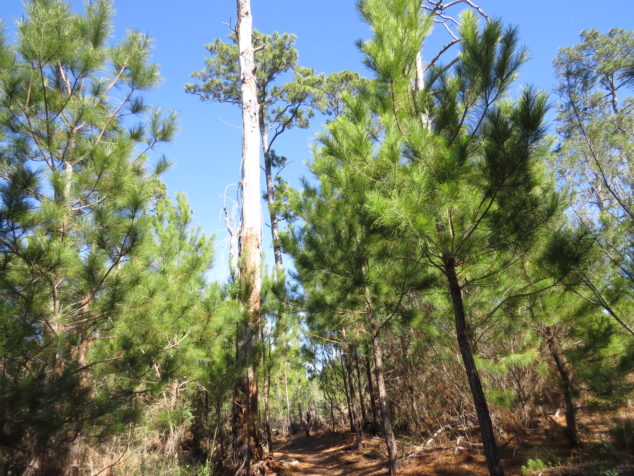
Along with the devastation was the hopeful new growth of Pines and Oaks.
The December day was warm and sunny, perfect for hikers and a little lizard crawling through the fallen leaves.
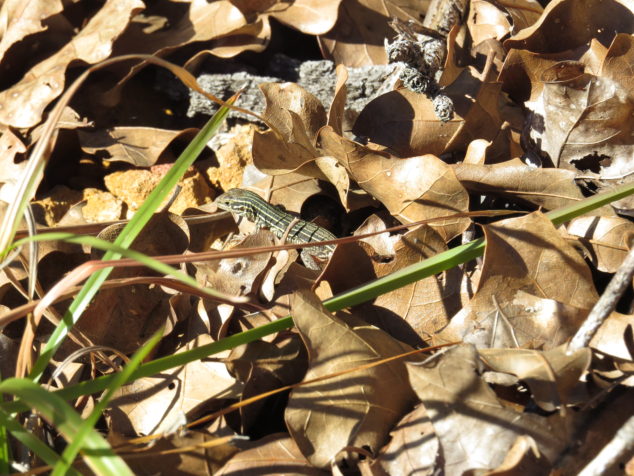
Replanting of the drought-hardy Loblolly Pines began in January 2013. Volunteers and contractors have planted two million pine seedlings since that time and will continue to plant in order to get a “mosaic of tree ages” as the forest re-grows.
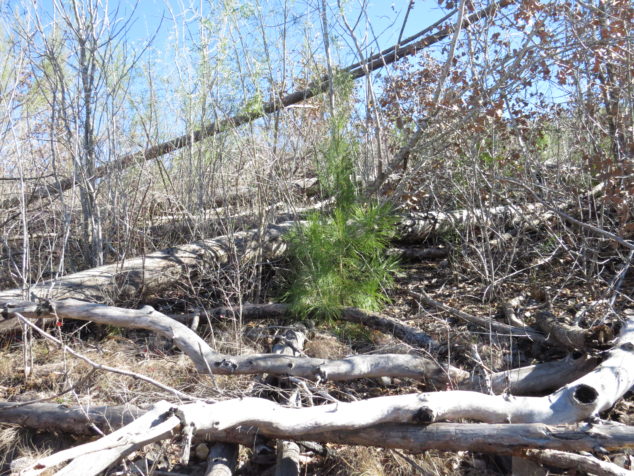
This bright, tight growth of young pines probably originated from the fallen cones (seeds) of these survivors. Often a threatened tree will produce an inordinate number of seeds to compensate for loss or potential loss of mature trees.
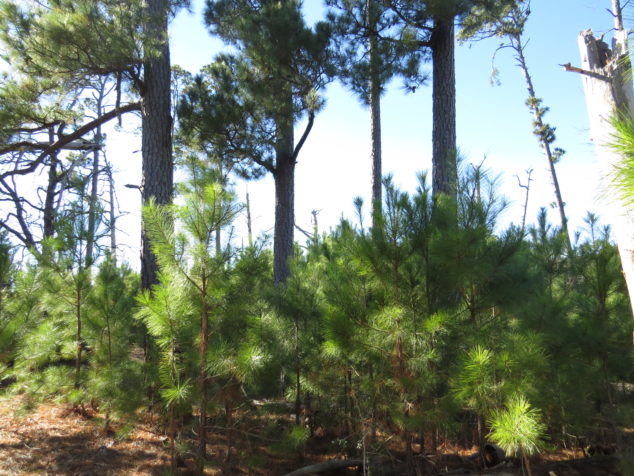
I admired these two survivors and wondered what had saved them from the mighty flames of the wildfire. How were they spared?
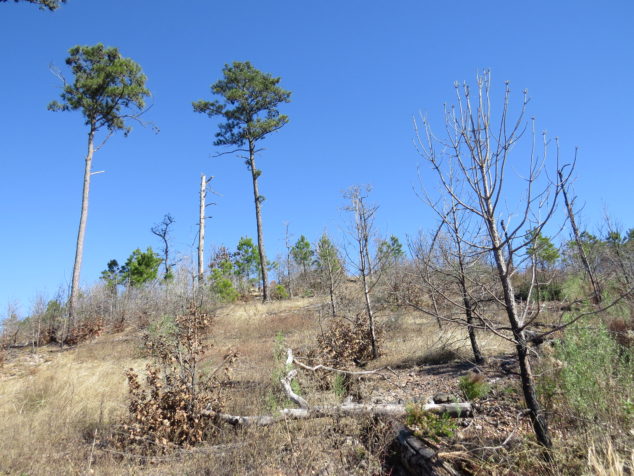
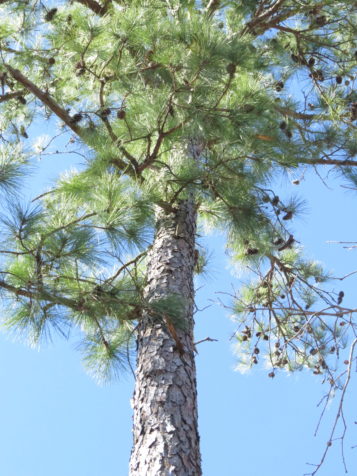
Another tall survivor obviously sustained damage, but had a crown full of healthy needles and seed-laden cones.
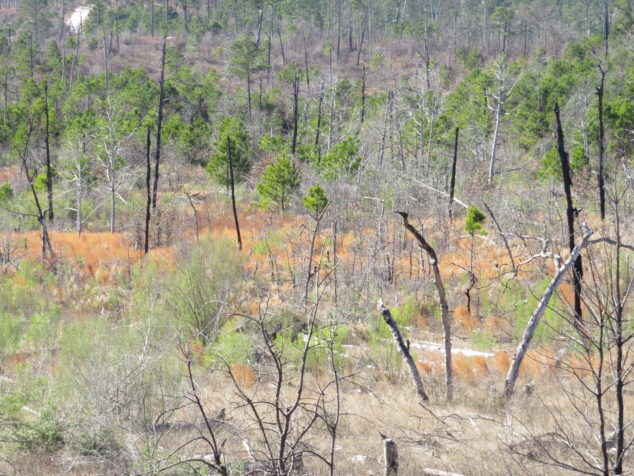
A striking visual in the flooded valley (four years after the wildfire) was the color of the winter grasses. One of the ongoing ways to curb erosion in the park after the fire was the application of a hydromulch—a slurry of straw, water, and native grass seed. Normally these grasses would not grow in the shade of a forest, but they will stabilize the soil while the trees and native understory grow to repopulate the forest.
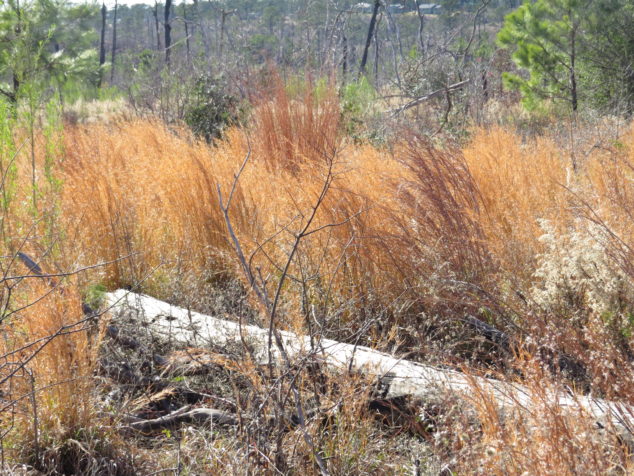
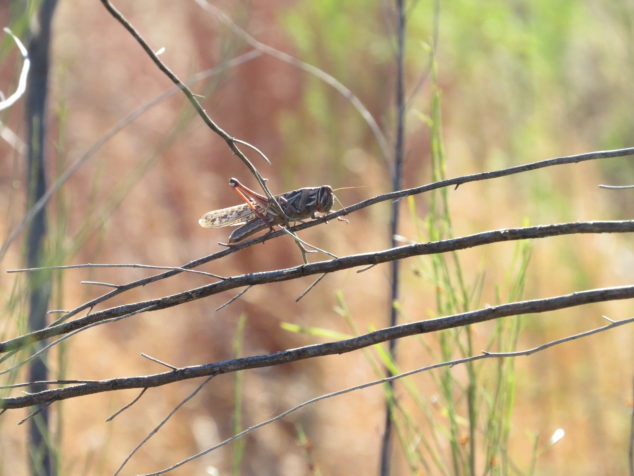
I caught a glimpse of a grasshopper in the grassy valley.
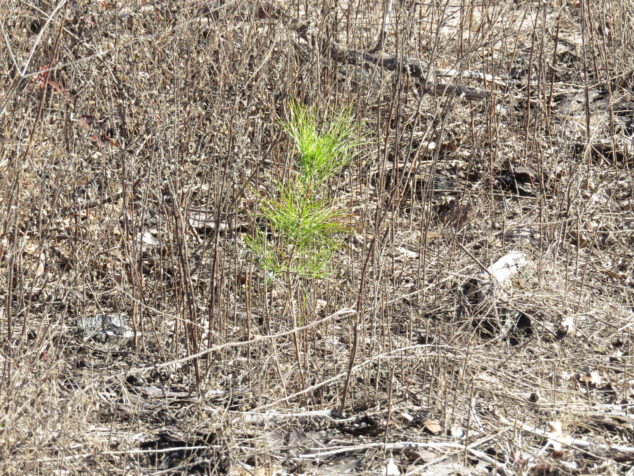
Even after the repeated devastation of fire and flood, pine seedlings were growing in the desolation.
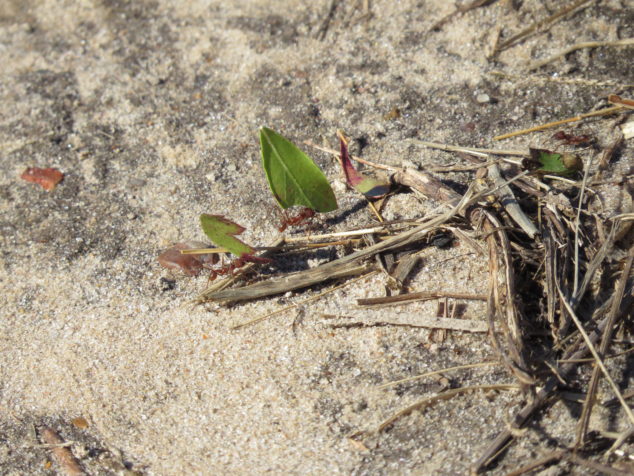
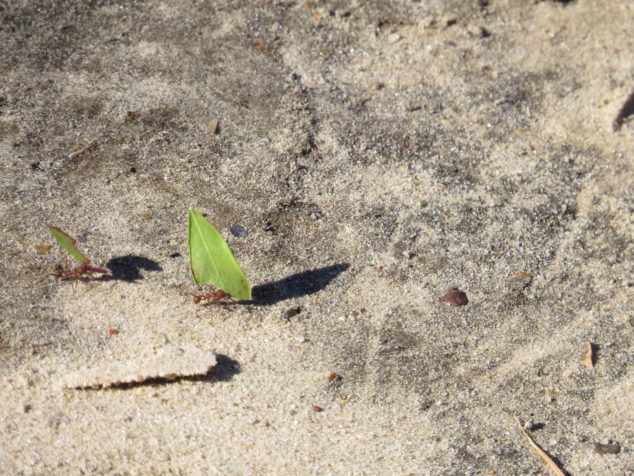
One of the most interesting things we saw on our hike—that could easily have been missed if I wasn’t looking down—was a trail of ants carrying yaupon leaves. The hiking trail was sandy and wide, so the line of green leaves, like sails on little red ships, readily stood out in the afternoon sun. These are Texas Leaf-cutting ants, native to East Texas. They collect plant material to bring back to their colony in order to build a fungi farm. This fungi is their only known source of food. Colonies house up to two million ants, so they can be extremely destructive to pine seedlings, citrus plants, agricultural crops, and landscape ornamentals. They can strip a small to medium tree overnight! The line of ants and leaves was as far as I could see on both sides of the trail.
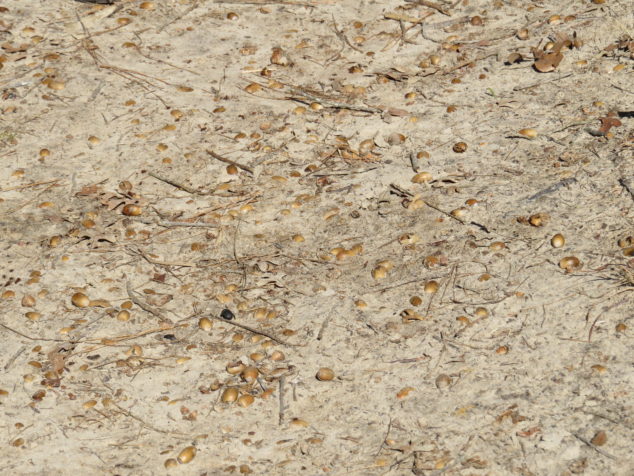
We hiked through an section of the park that was not so intensively damaged by the fire—many scorched trees were still alive. There were more Oak trees in this hillside area, and the path was strewn with acorns—food for the animals being re-established in the park and potential trees for the future.
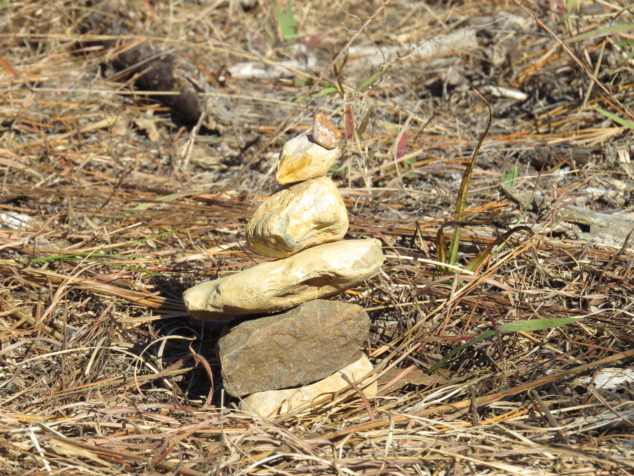
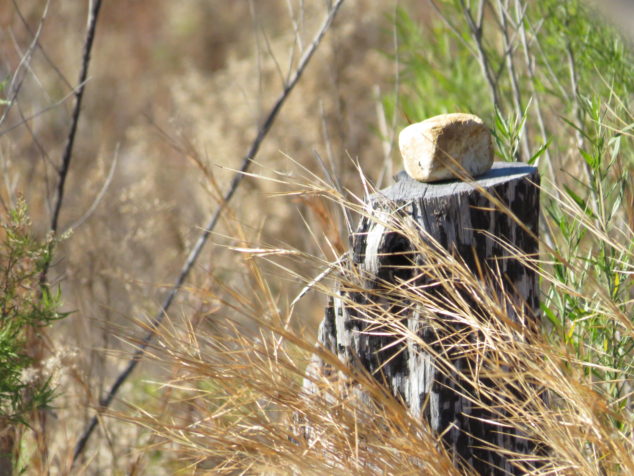
Someone had built a rock cairn along the trail. Many are used for ornamental purposes nowadays, but at one time, they were markers for navigation or memorial purposes. Many remote hiking trails rely on cairns to mark which way the hiker should go, and many indigenous, sacred sites are marked with cairns. Rock balancing art has its place, but many agree that it goes against the principle of Leave No Trace.
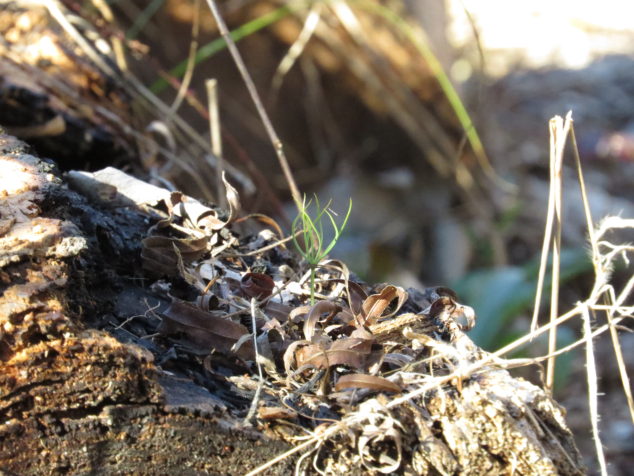
One of the loveliest signs of hope was a teeny tiny pine seedling growing in the debris of a fallen log. Nature is the master of re-birth.
In the burning houses of our lives, how do we take the lost parts, the broken parts, the parts that keep us up at night and make them right? How do we stop walking so close to the dangerous flames, even when it feels like the only thing we know how to do? The aftermath can be devastating. In the midst of the ruins, we are in shock, in disbelief. How in God’s name did this happen? In our disorientation, we may notice the survivors, the ones still standing. The survivors sustained damage, too, but for some reason they are more resilient, and they are the beacons of hope. It is the survivors and the empathetic helpers and the paid professionals who can work together to hold back the erosion of despair and plant the new seeds necessary for renewal. We need a helping hand while we re-group and gather our wits and our strength. We need cairns of caring people to honor what we have been through and show us the way to new growth and new life. Nature (and Nature in us) is the master of re-birth, and we (and Mother Nature) need a helping hand in the aftermath of devastation—that’s how we make it right.
*from ‘Burning House’ by Jeff Bhasker, Tyler Johnson, and Cameron Ochs
The Burning Houses of Our Lives
I was mindlessly mowing on the John Deere a couple summers ago, listening to subpar country music on the headphones, when a song came on that instantly caught my attention. It was haunting and beautiful, so unlike everything I had been listening to. The song was ‘Burning House,’ and the singer was Camaron Ochs, known simply as Cam. The song was written based on a dream she had had about a former boyfriend and how guilty she felt by the way she had treated him.
“I had a dream about a burning house/ you were stuck inside/ I couldn’t get you out/ I lay beside you and pulled you close/ And the two of us went up in smoke”
During our December trip to Texas, we hiked through Bastrop State Park which had gone up in smoke on September 4, 2011, after months of drought and excessive heat. It was the most destructive wildfire in state history, burning 32,400 acres, killing two people, and destroying 1,696 homes and businesses. Ninety-six percent of Bastrop State Park was affected by the wildfire with thirty percent being intensely burned.
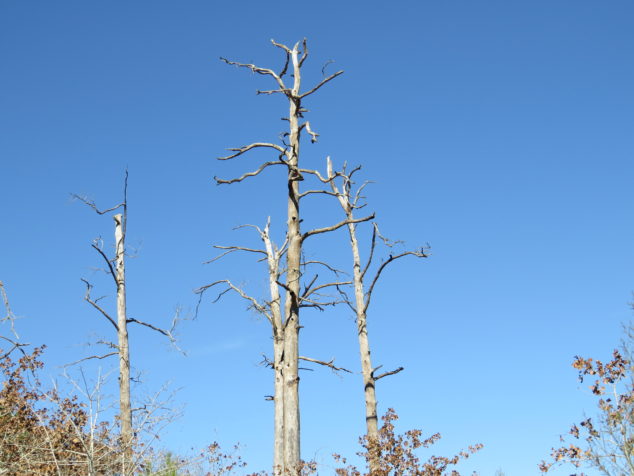
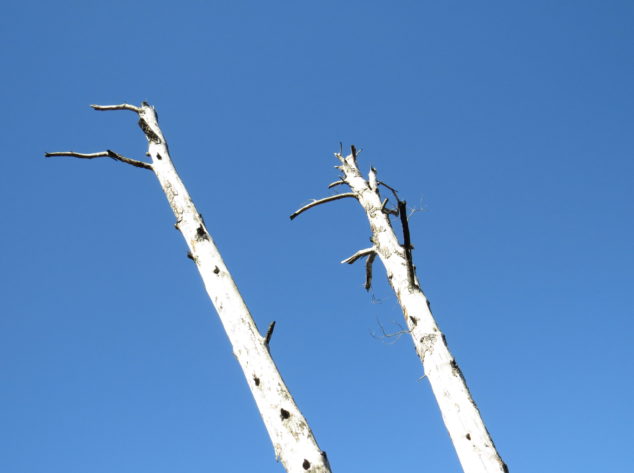
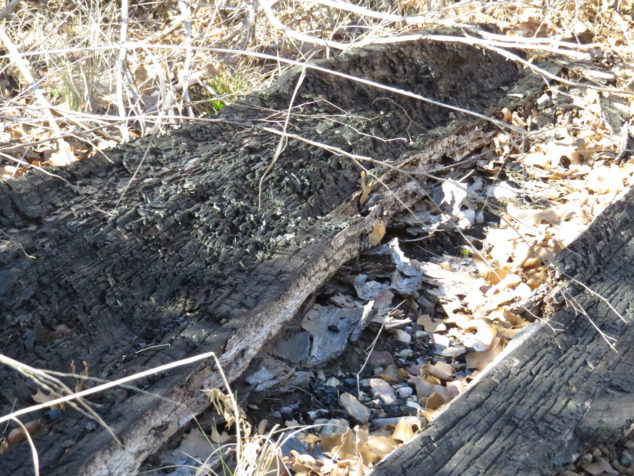
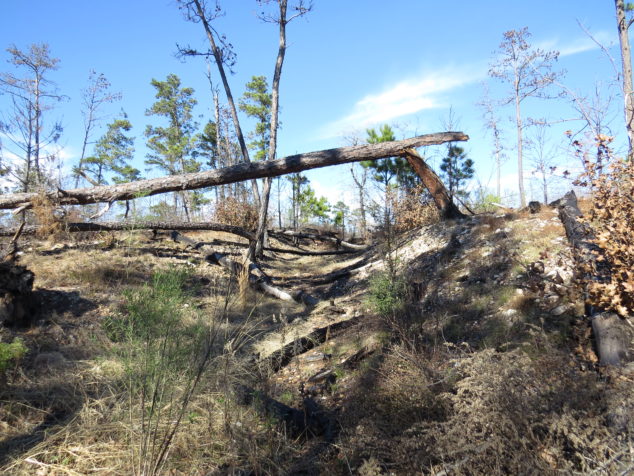
The Bastrop area is part of the Lost Pines ecosystem, the western most area of the United States where Loblolly Pines have grown for over 18,000 years. Seven years after the fire, the destruction was still so evident—the missing trees, the standing ‘ghost’ trees, the charred wood, and the fallen logs.
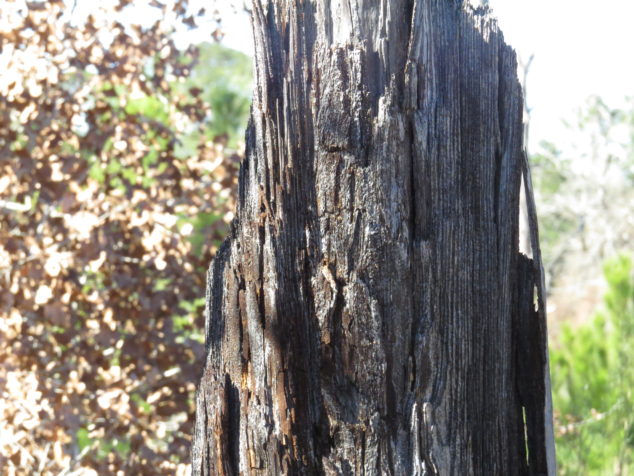
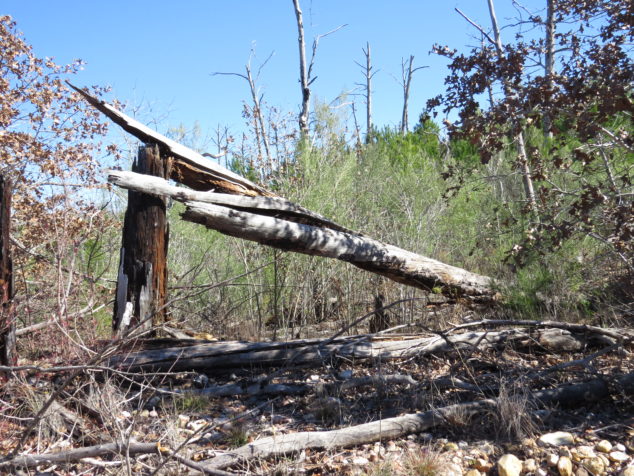
Fire kills trees in two ways: by destroying the cambium or living tissue layer that is under the protective bark or by consuming or damaging the needles, leaves, or buds. Ponderosa Pines and Western Larch are the most hardy trees when it comes to surviving a wildfire, which is dependent on the speed and intensity of the fire.
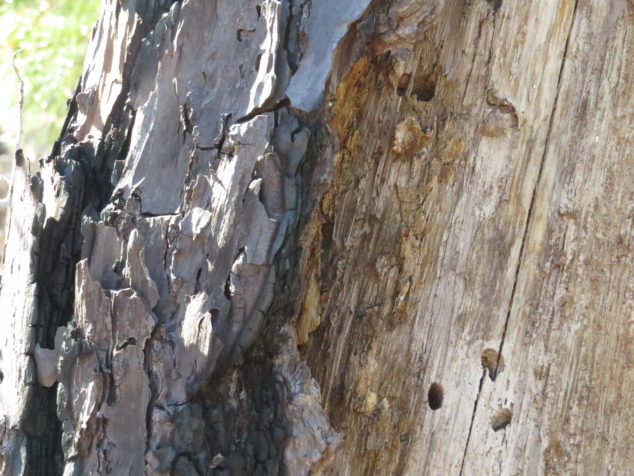
The 2011 Bastrop Complex Wildfire burned for 55 days.
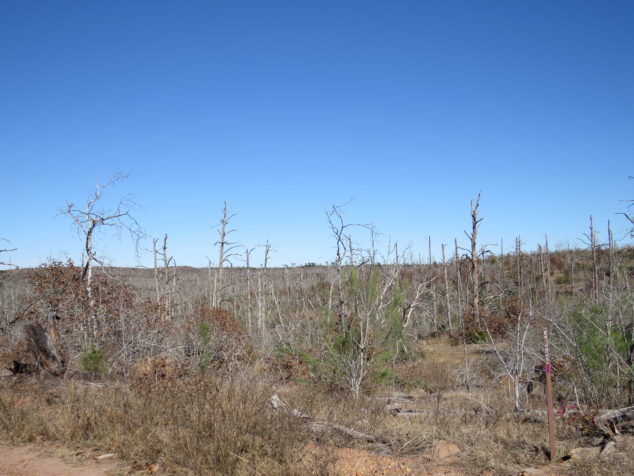
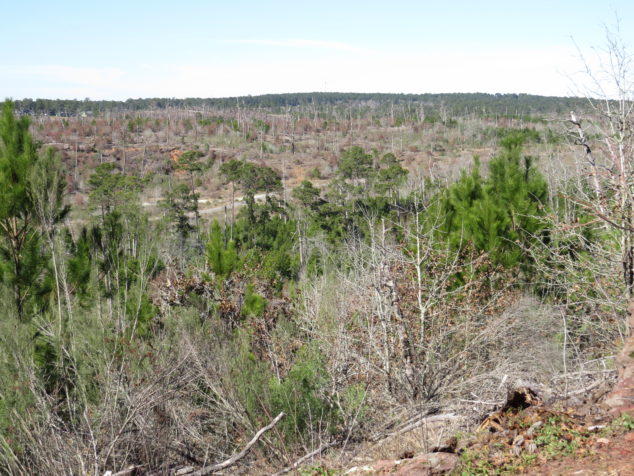
This photo shows the various levels of damage, and the ridge gives us a visual of what the area previously looked like before the fire.
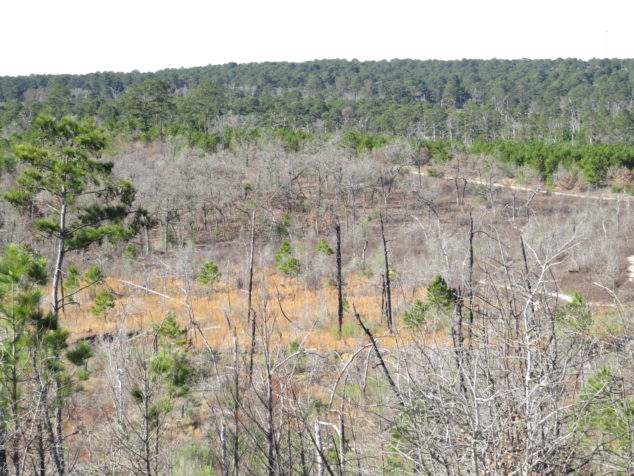
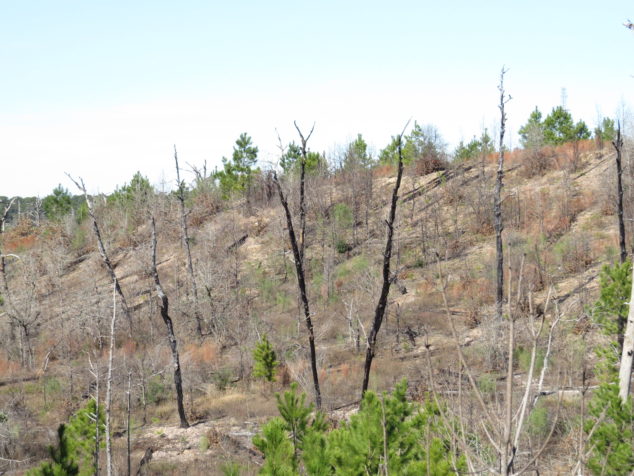
Another fire swept through the area in the fall of 2015—the Hidden Pines Fire. We drove through that smoke-filled air when we went to Austin for our daughter’s wedding that October. Eyeliner-black tree trunks define the destruction.
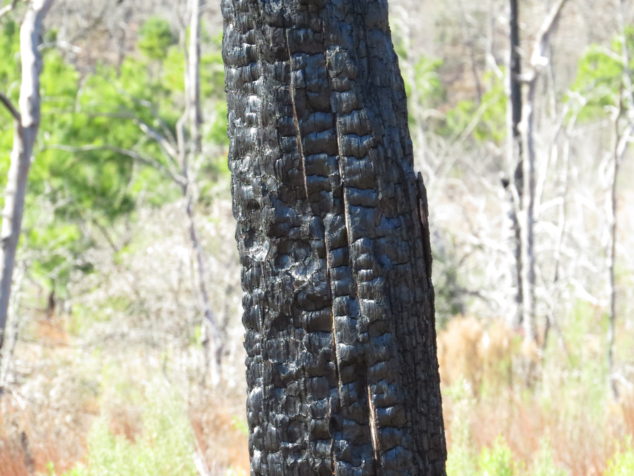
“I’ve been sleep walking/ Been wondering all night/ Trying to take what’s lost and broke/ And make it right”
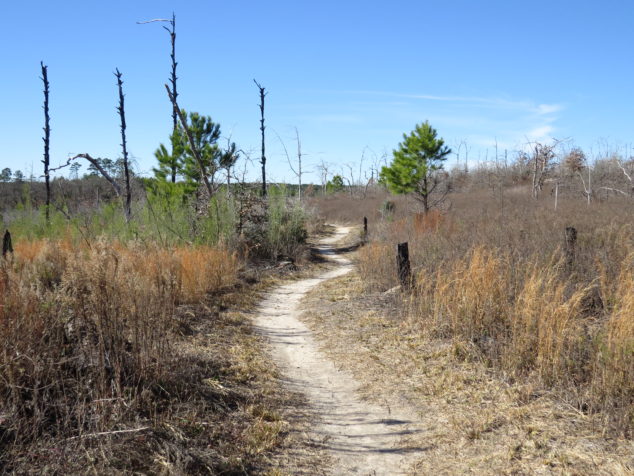
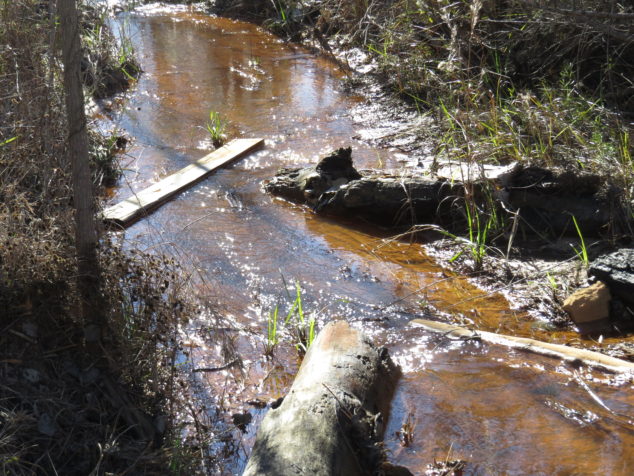
To add insult to injury, on Memorial Day, 2015, after excessive rains, a dam on a 10-acre lake in the park failed and flooded this low-lying area.
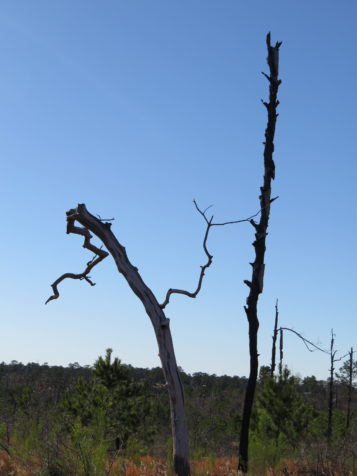
We saw burnt trees that had acted like a snow fence, causing the roaring flood waters to dump the rocks on the downside of the tree. (Erosion is an ongoing problem in the park as it tries to reestablish the lost forest.)
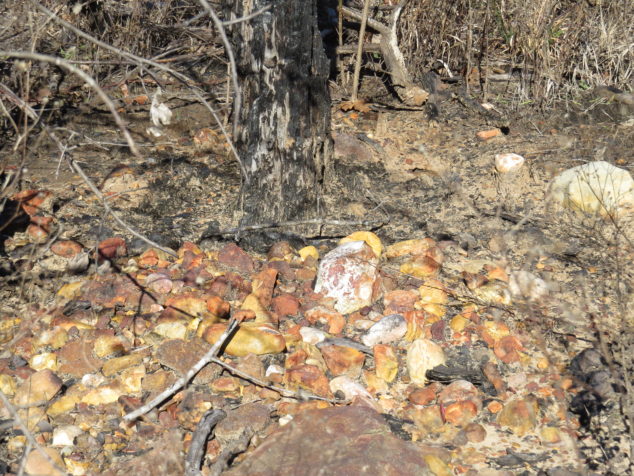
“Wish that we could go back in time/ I’d be the one you thought you’d find”
The Bastrop Fire of 2011 and the preceding drought was devastating for the park and surrounding community. Trees that had taken multiple decades to grow were gone in a flash of fire. Homes and businesses—gone. Like the wildfires in California and other places around the world. Hiking through the park on that warm December day was a bit haunting—the evidence of what once was stood stark against the blue sky, and the loss was a reality hard to grasp. Even after seven years. Just like the burning houses of our lives. We find ourselves, or put ourselves, in a place that is going up in flames—guilt licks at our ankles, confusion fuels the fire, indifference smothers the air from our lungs. “I’ve been sleepwalking/ Too close to the fire” Our protective bark is breached, and the fire gets to our living tissue and causes us pain and death of what once was. We wish we could go back in time, but everything has changed.
On Friday, sixteen-year-old Greta Thunberg spoke at the World Economic Forum in Davos, Switzerland about Climate Change. She said, “But I don’t want your hope….I want you to act as you would in a crisis. I want you to act as if the house is on fire, because it is.”
We’ve been sleepwalking—in the living emotional areas of our lives, in the political and financial arenas of the world, and in the very real existential crisis that we face with climate change. How do we take what’s lost and broke and make it right?