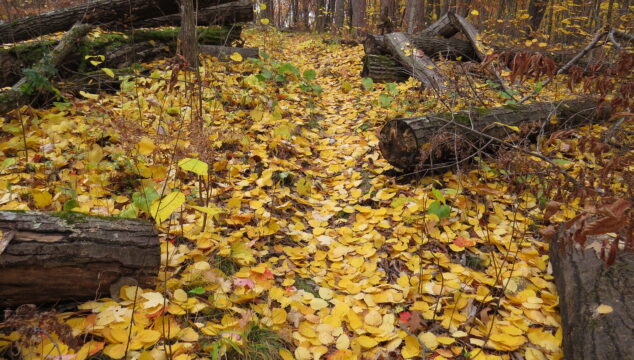
Come walk with me in the peak Autumn beauty of the Northwoods. To say that I love this time of year is an understatement. Most everyone can appreciate the colorful falling leaves---it reveals the 'true self' of a tree when its leaves are no longer producing chlorophyll. Their true colors are revealed, and there is something simple … [Read More...]
Labor of Love
What have you done in your life that has been a ‘labor of love?’ The phrase is defined as ‘productive work performed voluntarily without material reward or compensation,’ and it’s usually something you really enjoy doing. Childbirth is literally a labor of love (not high on the enjoyment list), as is parenting and grand-parenting. Coaching youth sports, caring for an elderly family member, volunteering for a food bank or the Red Cross, or making quilts for those in need are just a few examples of how a person engages in a ‘labor of love.’
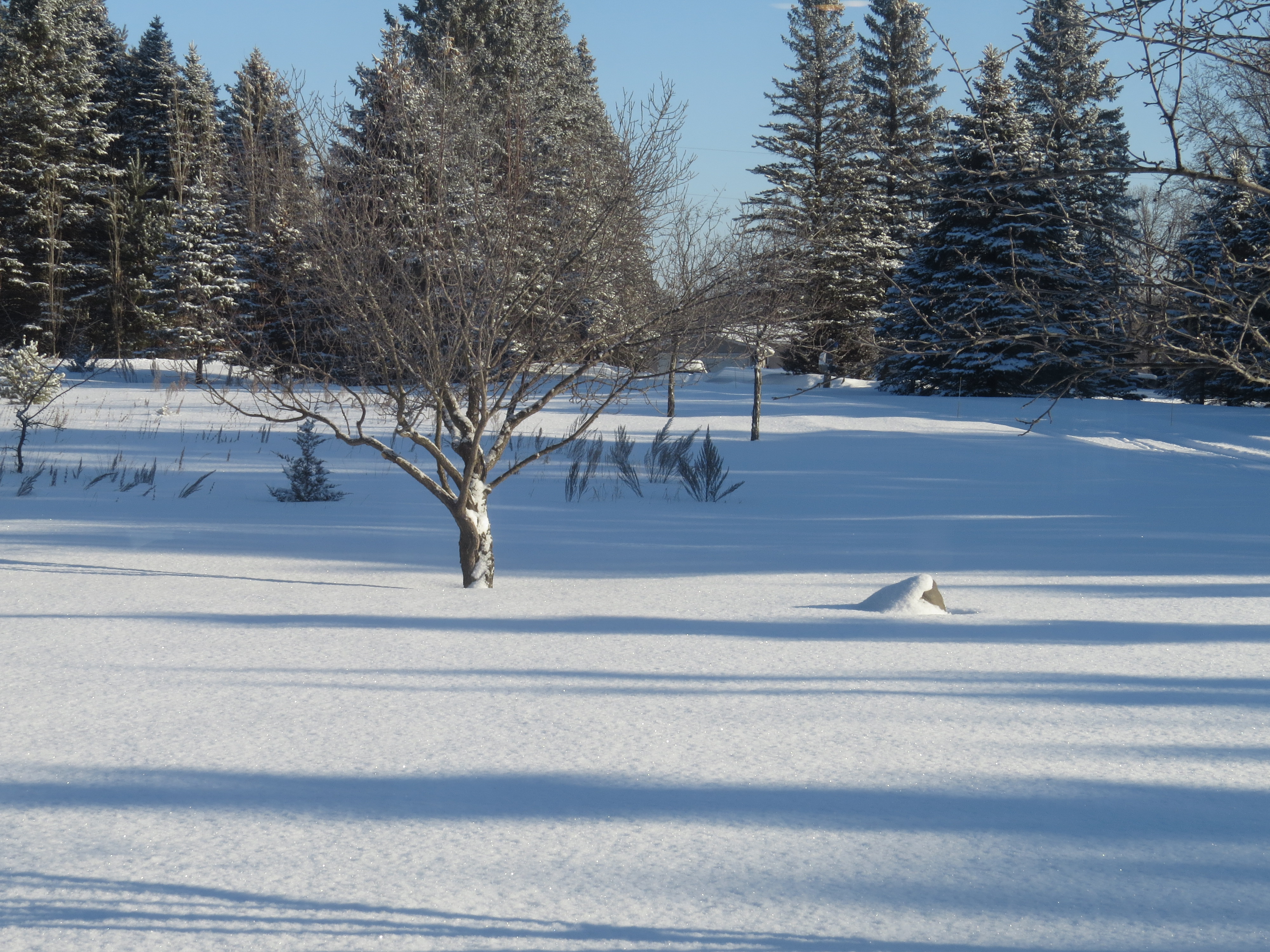
Although my last five posts have been from our very warm time in Texas over Christmas and New Years (with a couple more ‘warm’ posts to go), I want to let all the snow-starved people know that central Minnesota has been staying cold and snowy since before we left for Texas in the middle of December…
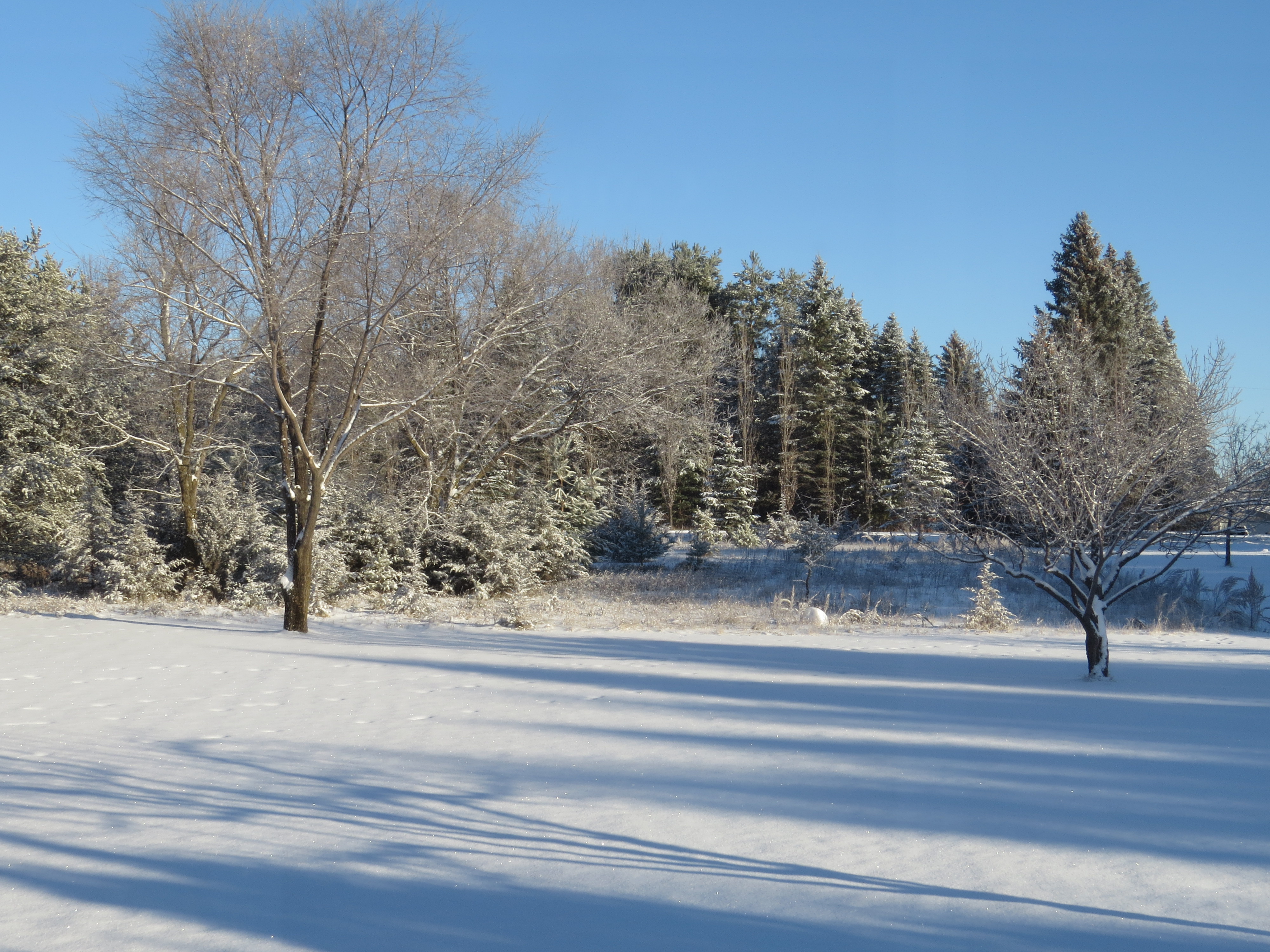
…until we got back in January…

…until now.
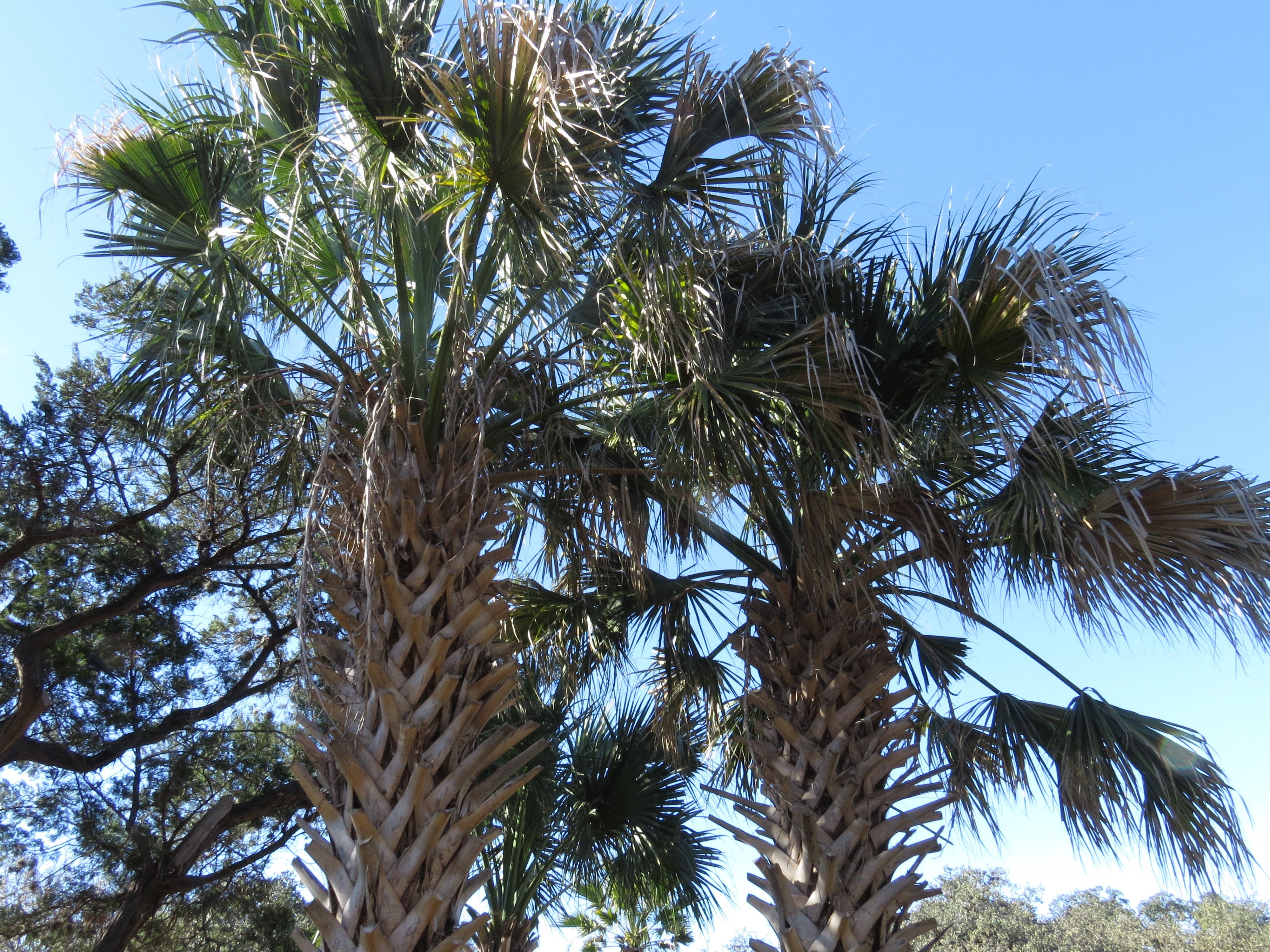
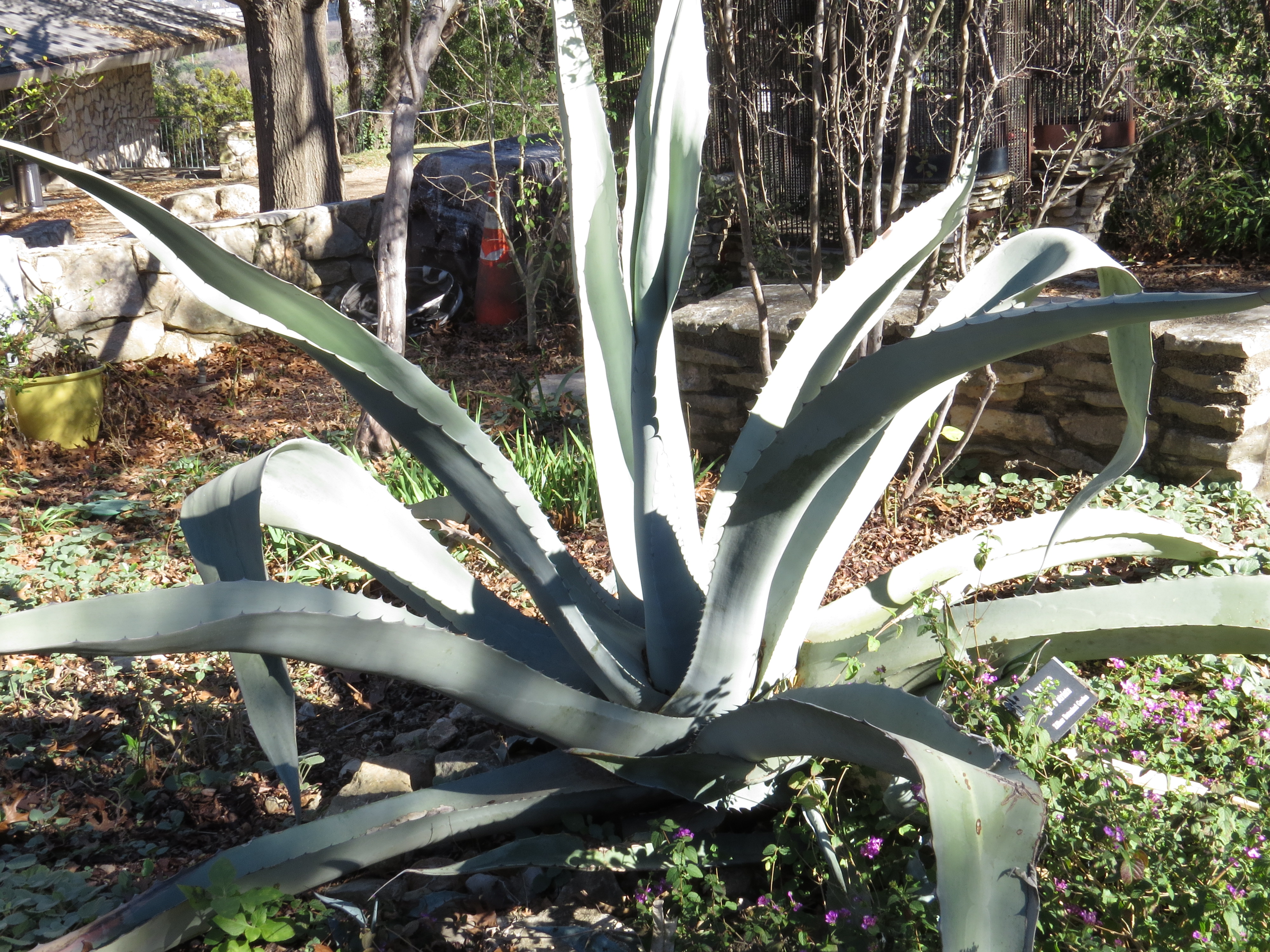
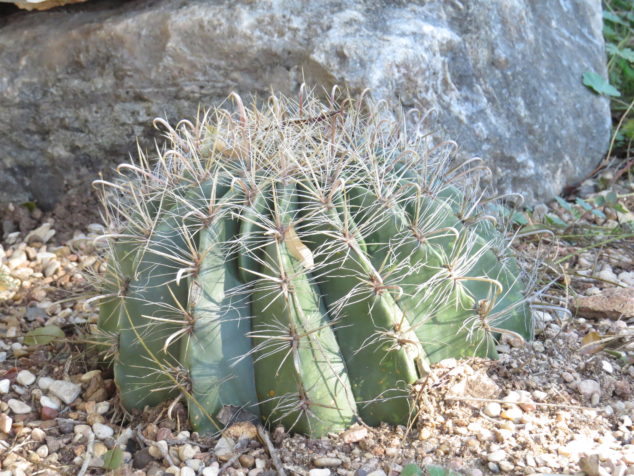
It makes the contrast of writing about palm trees, agave plants, and bamboo all the more stark as I look out the windows at deep snow and snuggle in my fleece. The Cactus and Succulent Garden is a part of Zilker Botanical Garden in Austin, and while a previous freezing night had the staff scrambling to cover blooming bedding plants, it was quite a wonder to be wandering through a botanical garden in January!
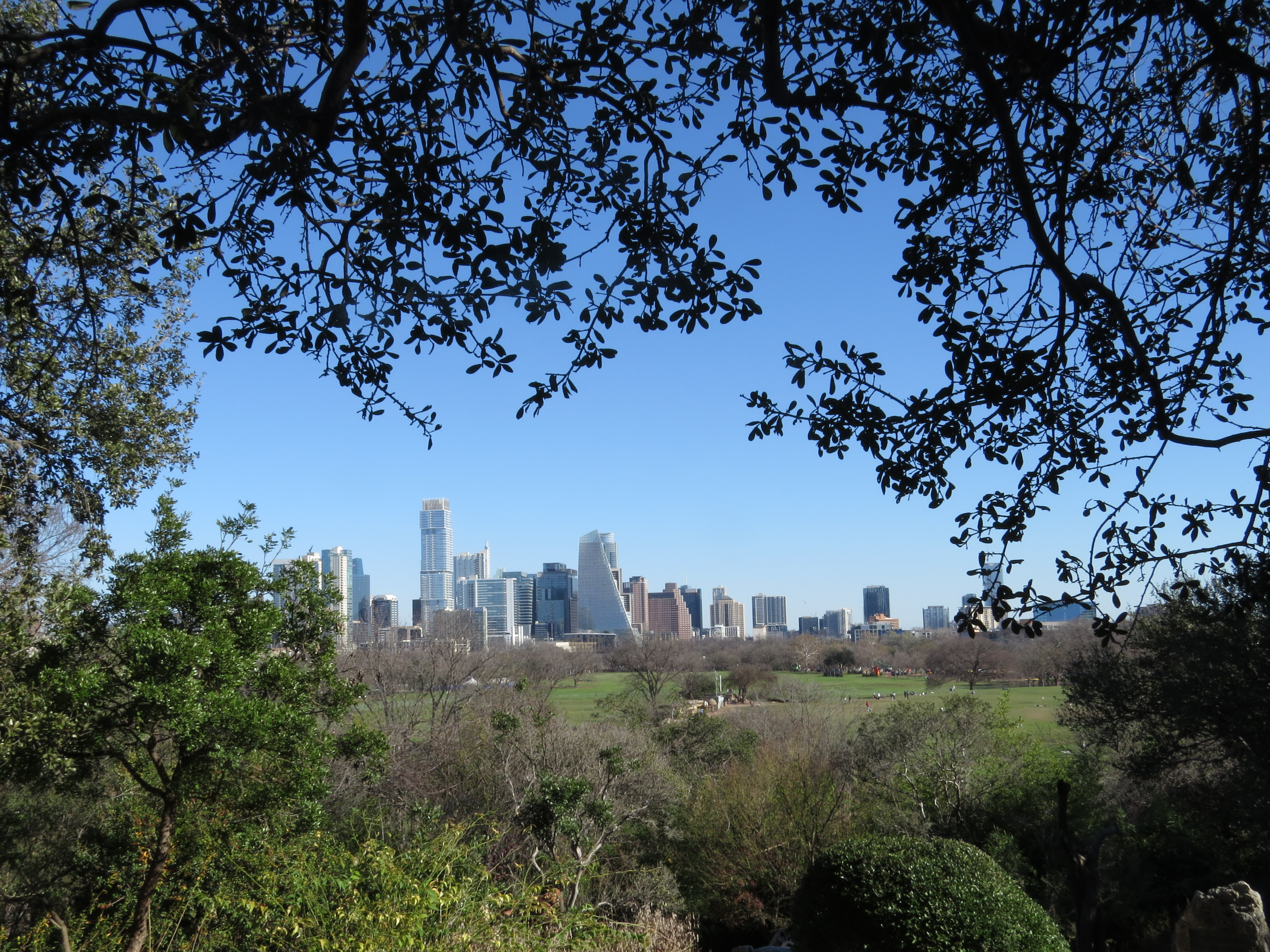
The most intriguing area was the Taniguchi Japanese Garden. It was built by Isamu Taniguchi when he was 70 years old on a three acre hillside in the relatively new public garden. He worked for eighteen months with no contract or salary—a true labor of love. The garden opened in 1970.
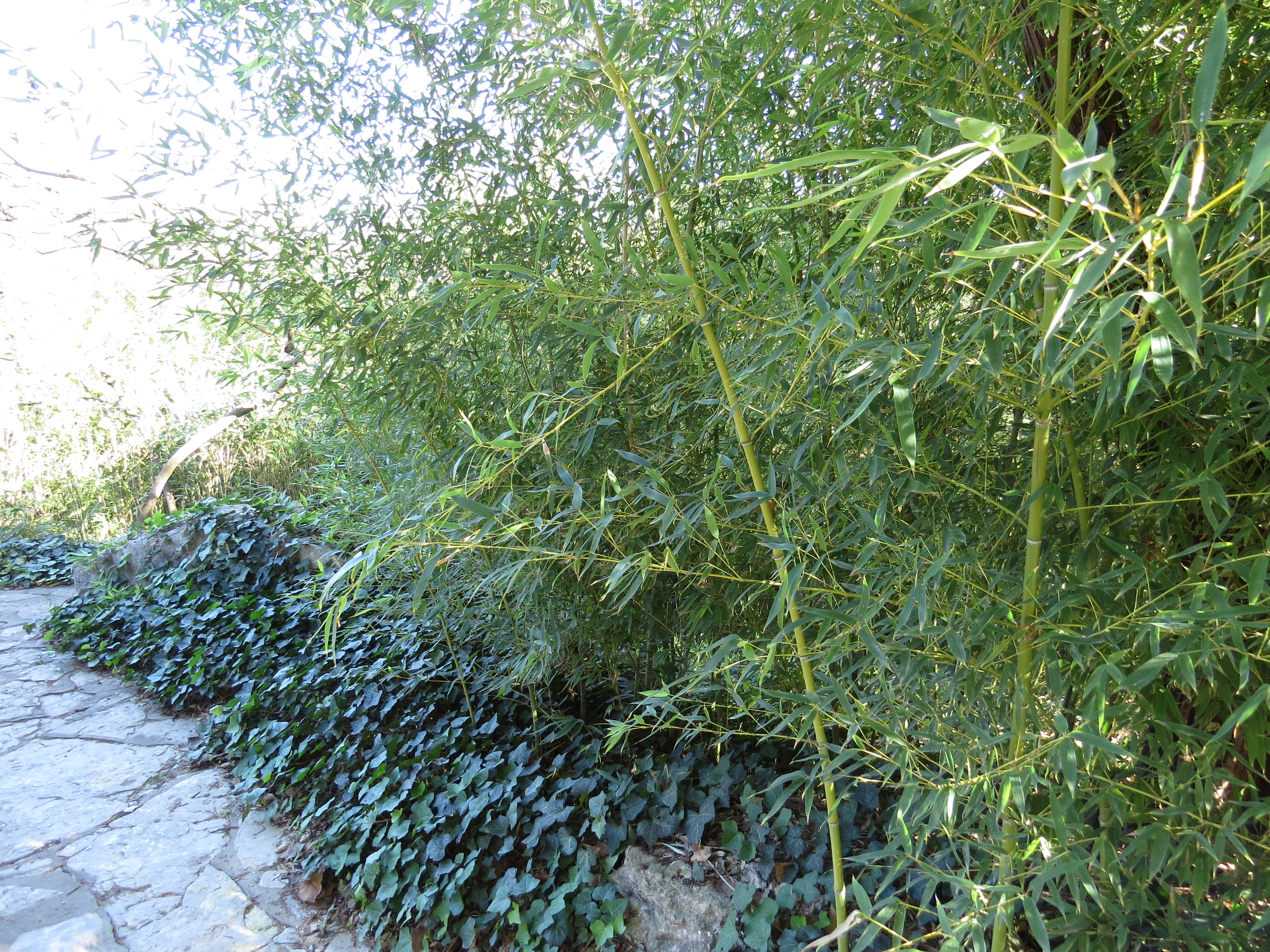
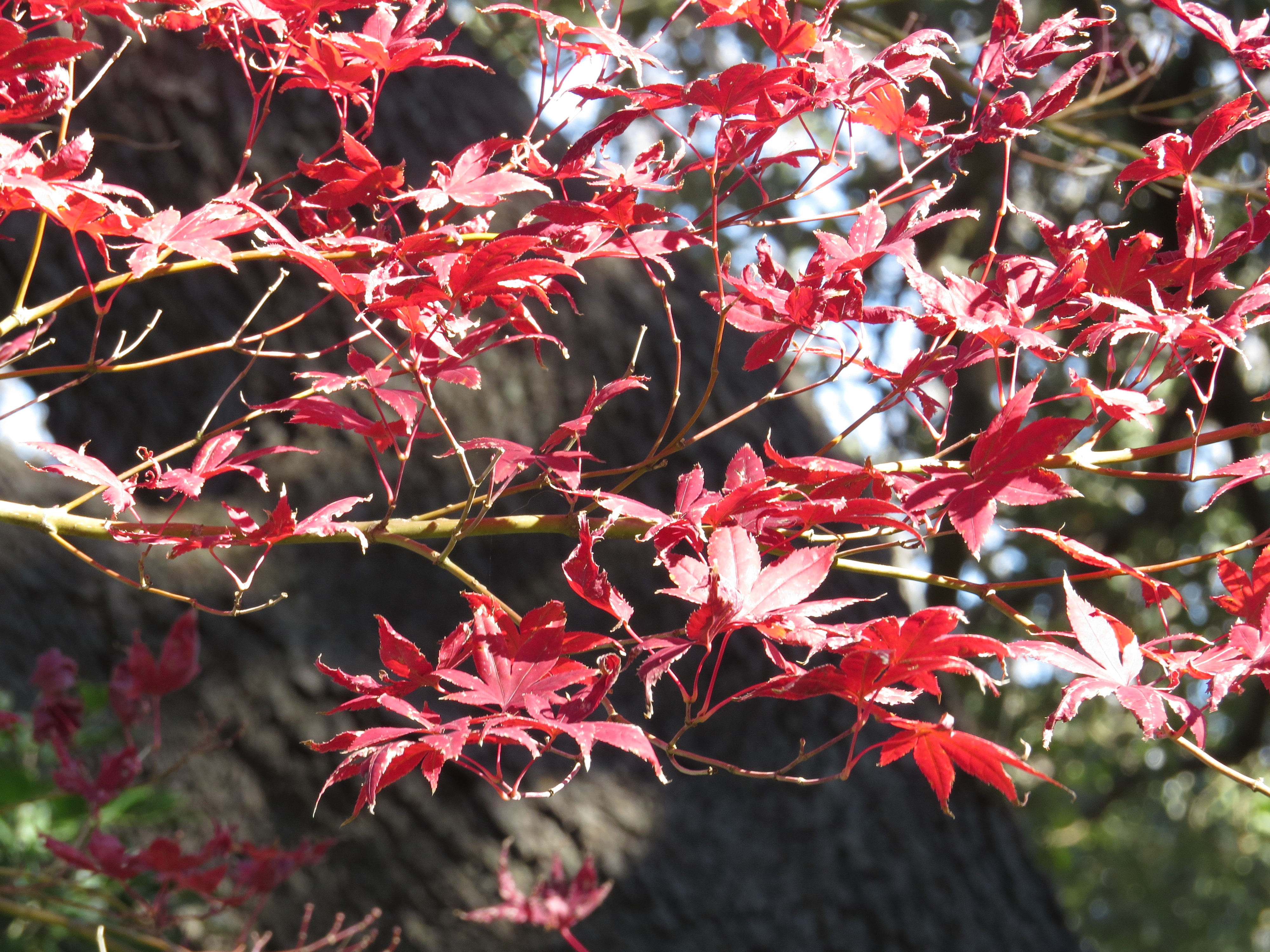
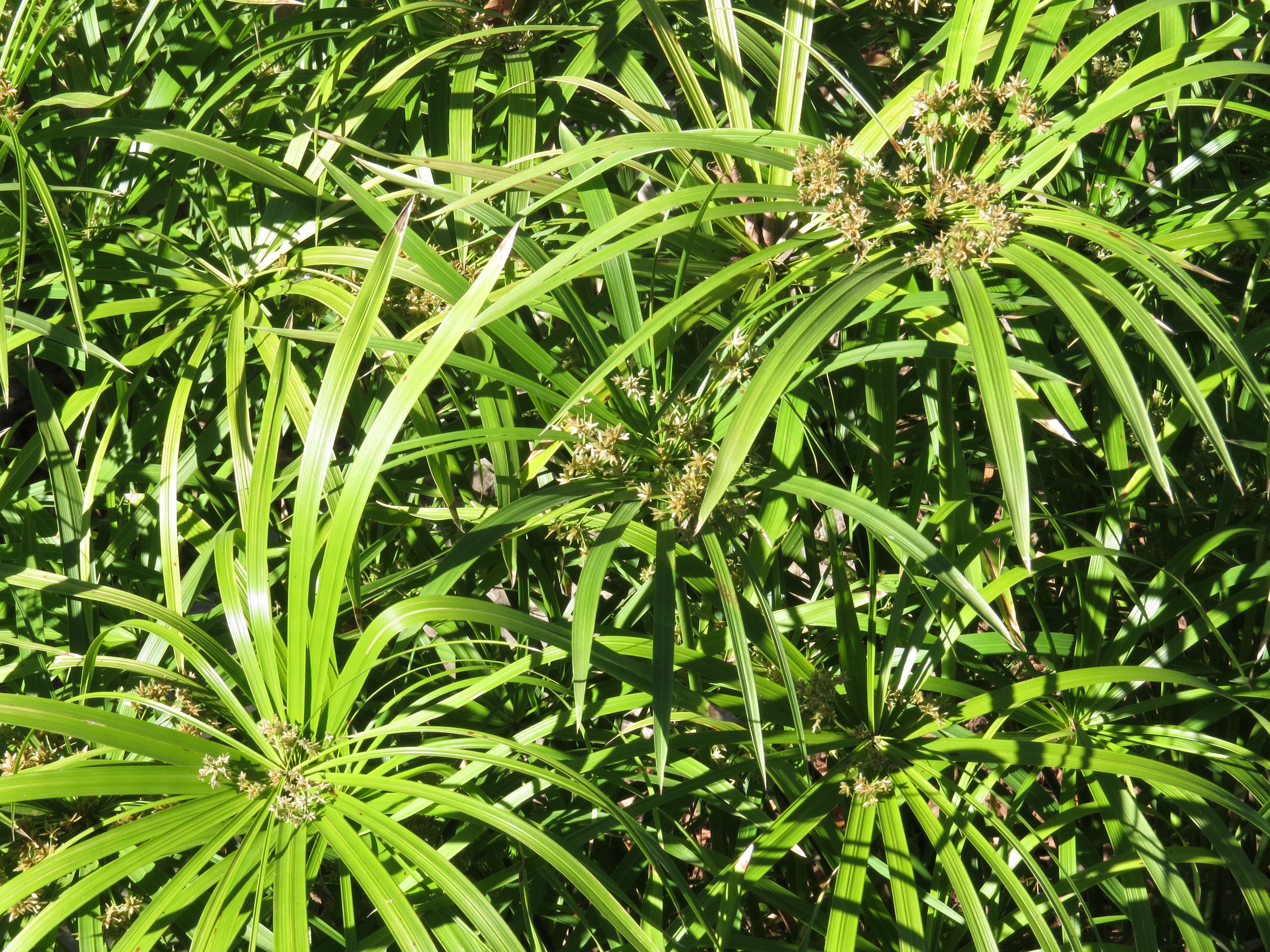
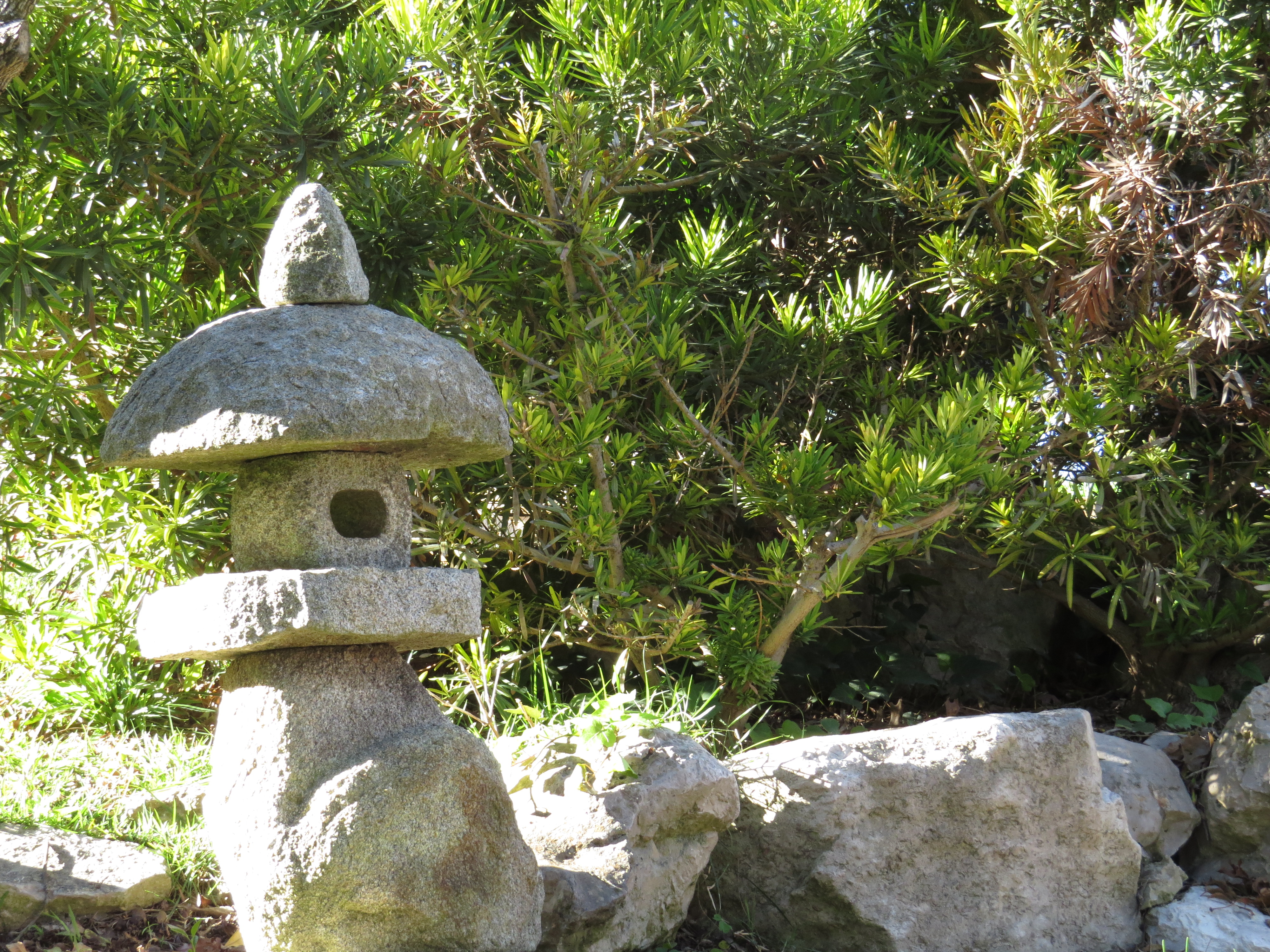
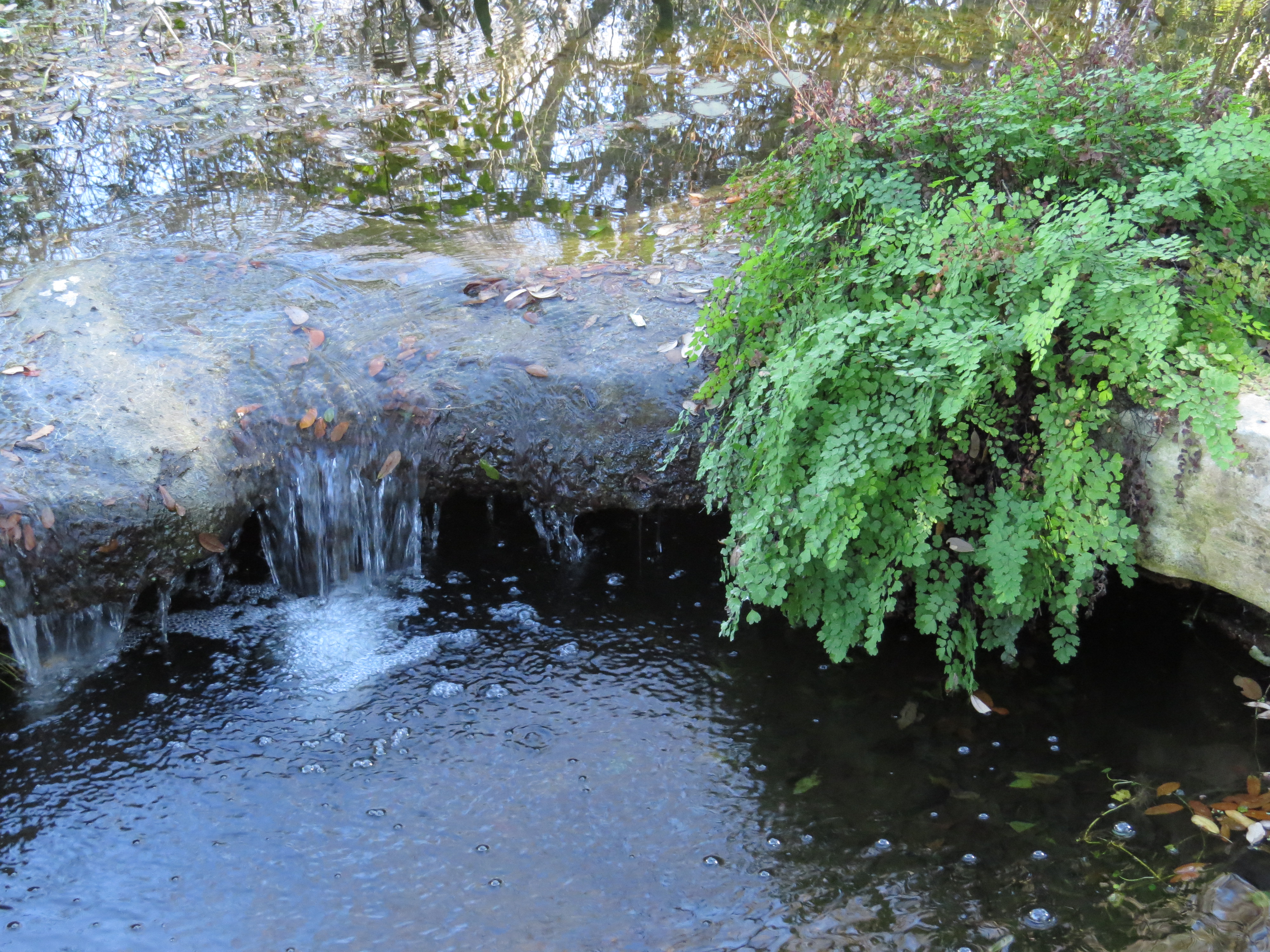
The three main components of a Japanese garden are water, rocks, and evergreen plants. While Western gardens are mostly constructed for visual appeal, Japanese gardens center around spiritual or philosophical ideas. Taniguchi wanted all who entered to feel peace, and that is coming from a person who experienced the upheaval of internment after the start of World War II. The garden contains a series of ponds with a connecting stream flowing through them, waterfalls, rock structures and sculptures, evergreen shrubs and plants, bridges, pathways, and pops of color from brilliant Japanese Maples.
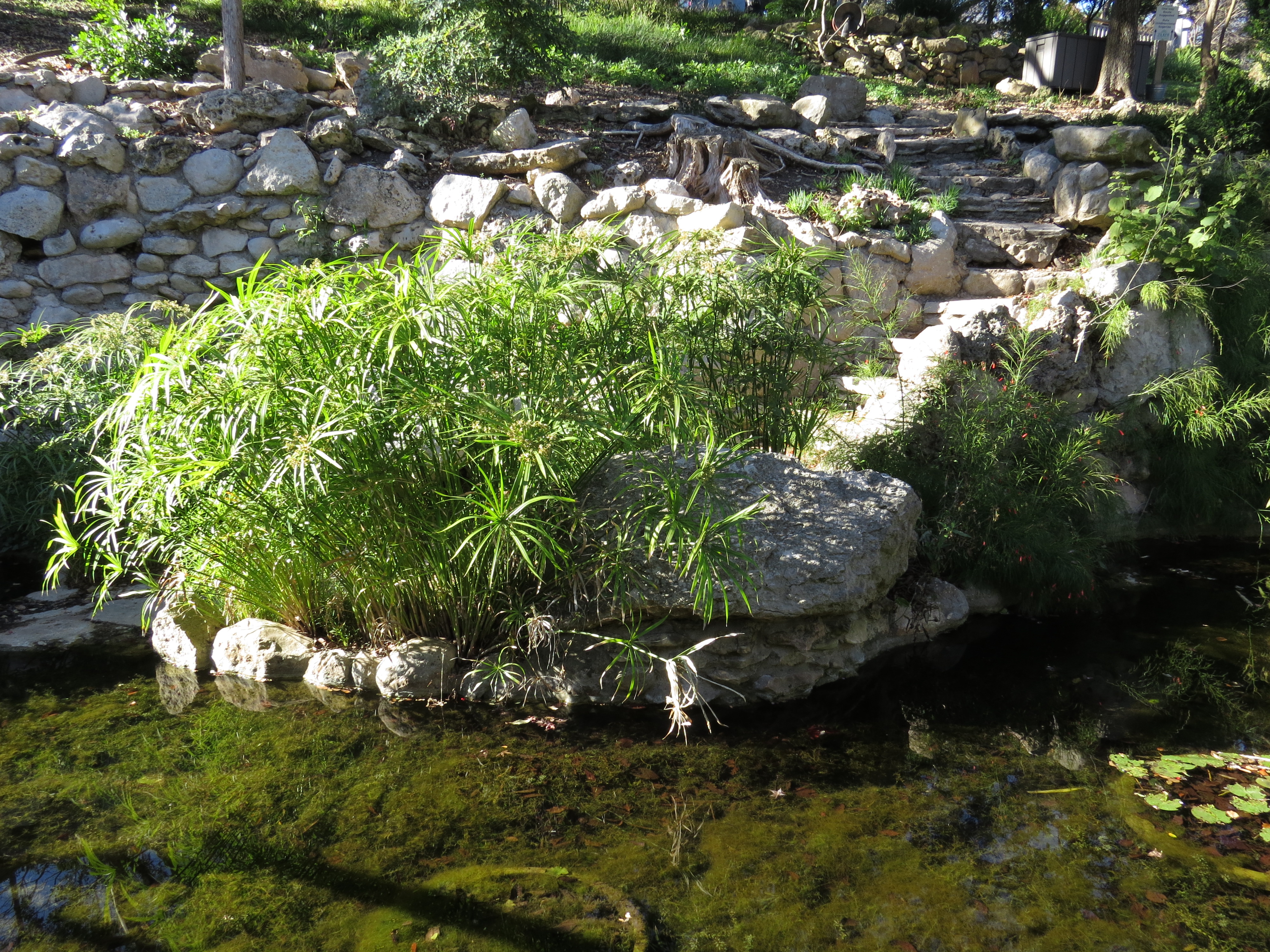
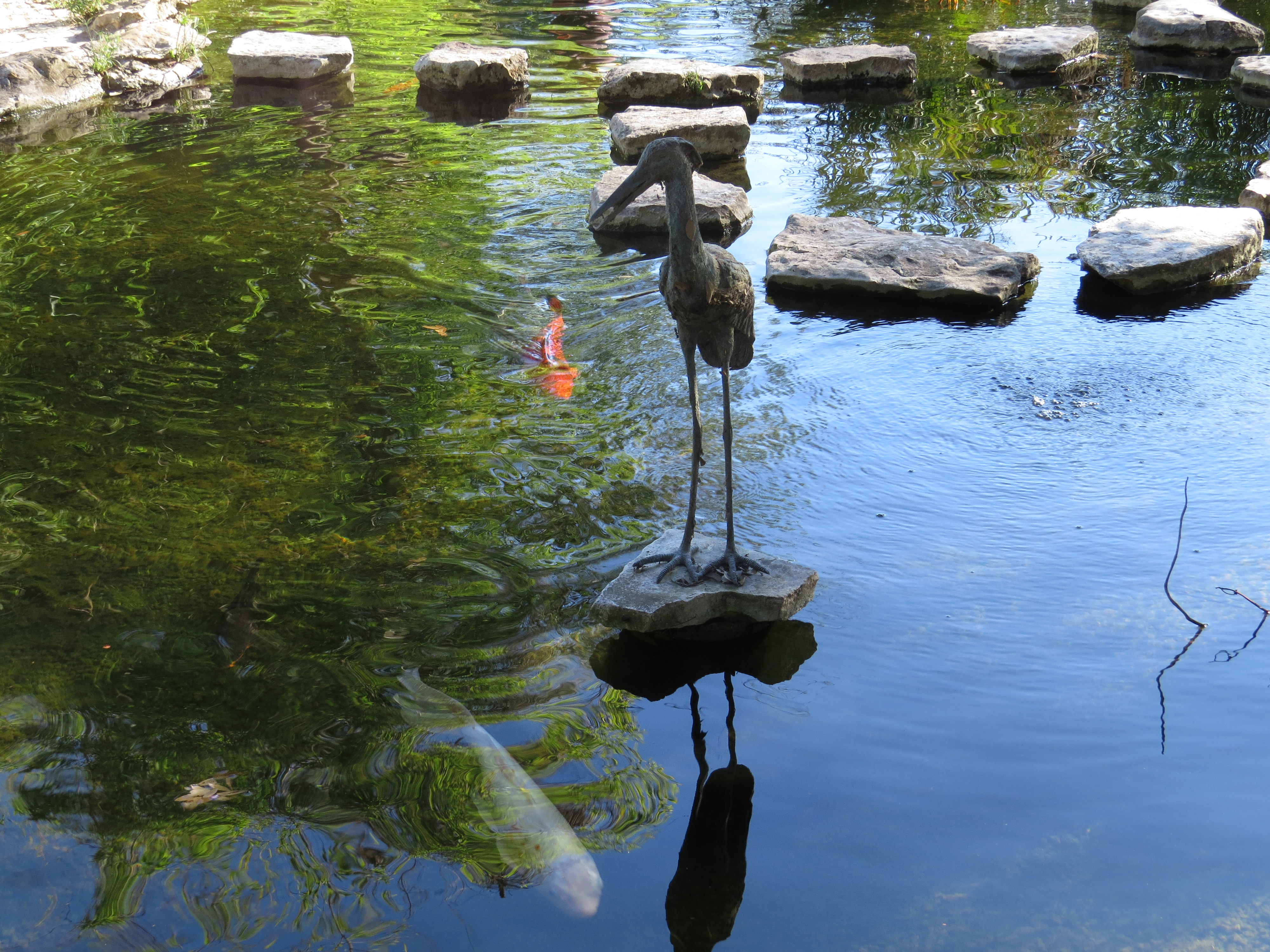
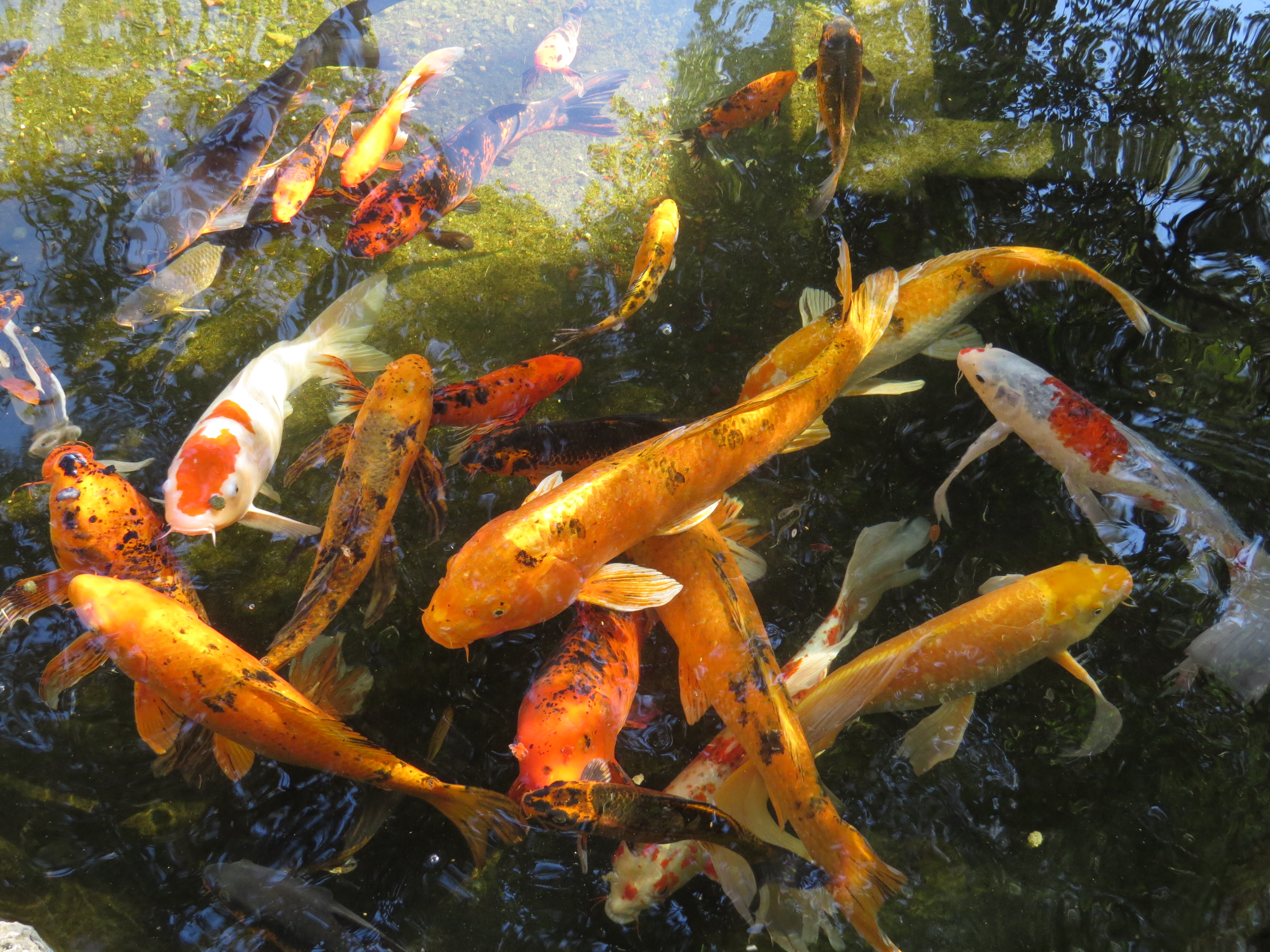
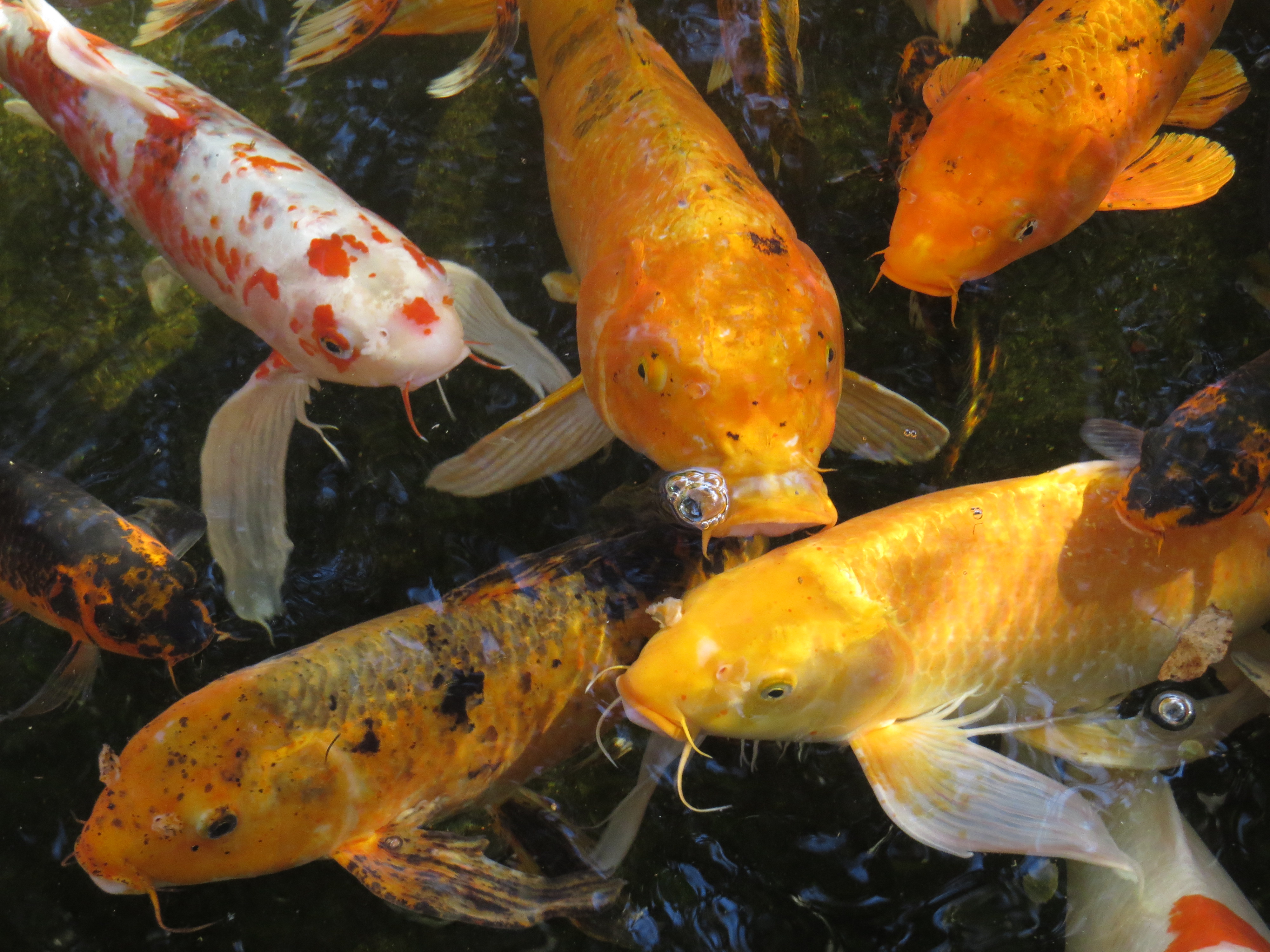
One pond, under the watchful eye of a heron sculpture, was the home of a school of colorful Koi fish. They were eager to see if we had any food for them.
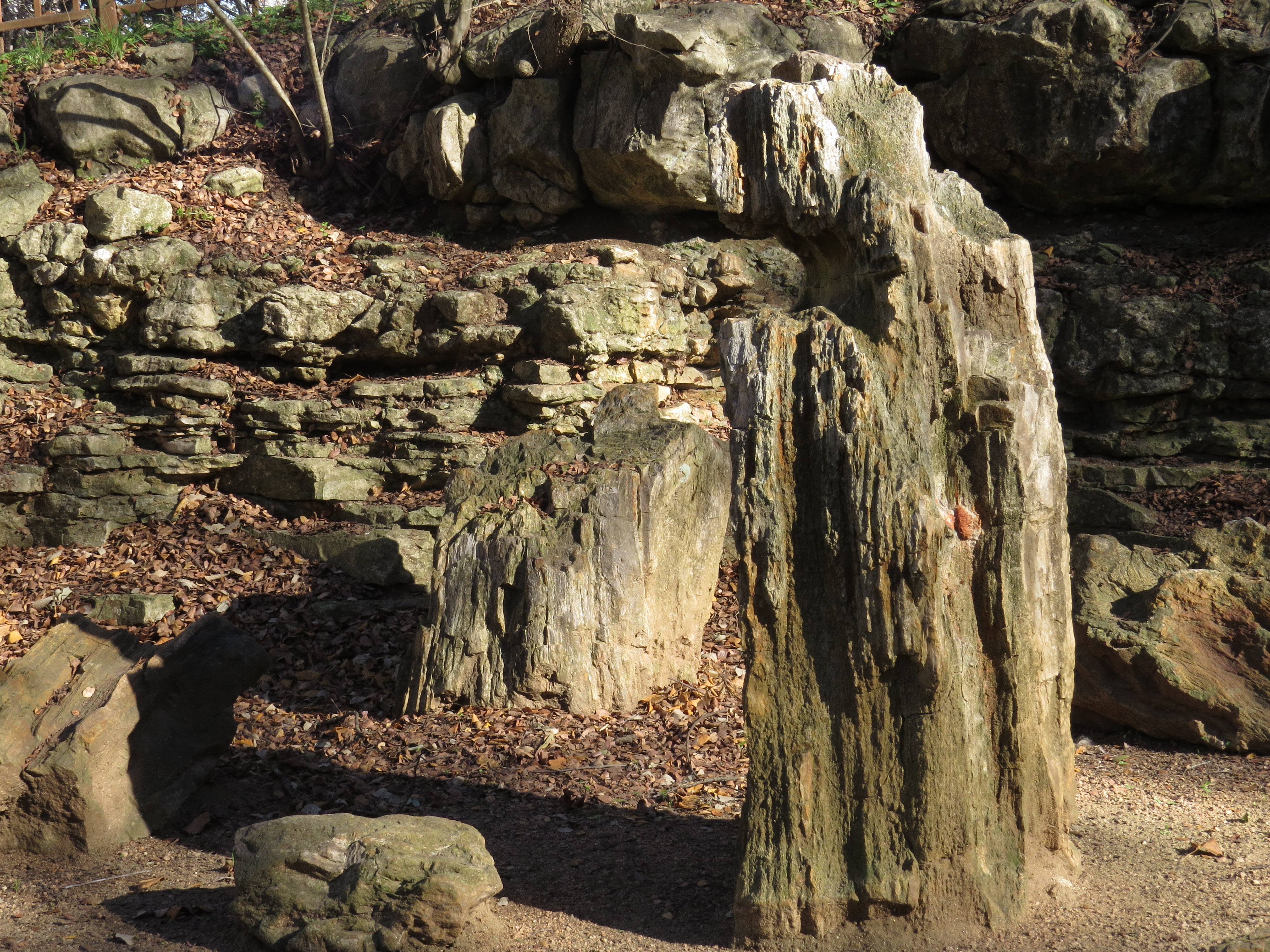
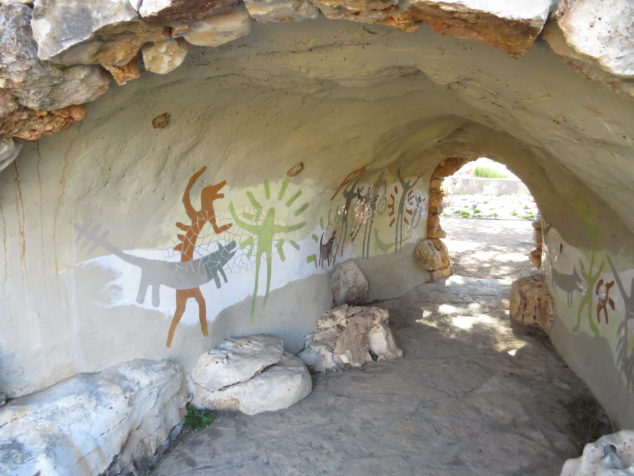
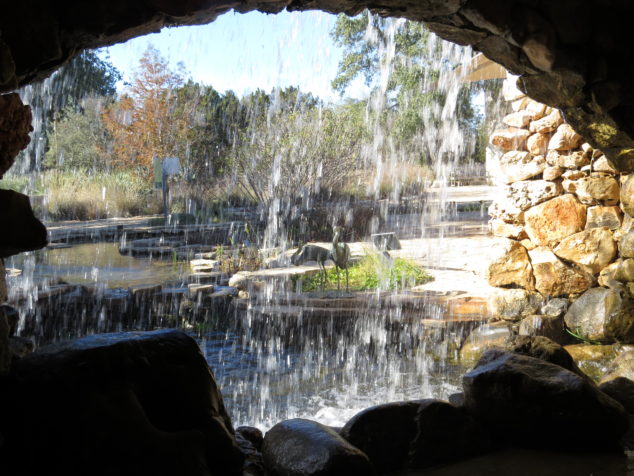
Another beautiful garden is the Hartman Prehistoric Garden. Petrified wood, Palmetto Palms, waterfalls, ancient Bald Cypress and Gingko trees, and an impressive dinosaur sculpture made for another-worldly experience.
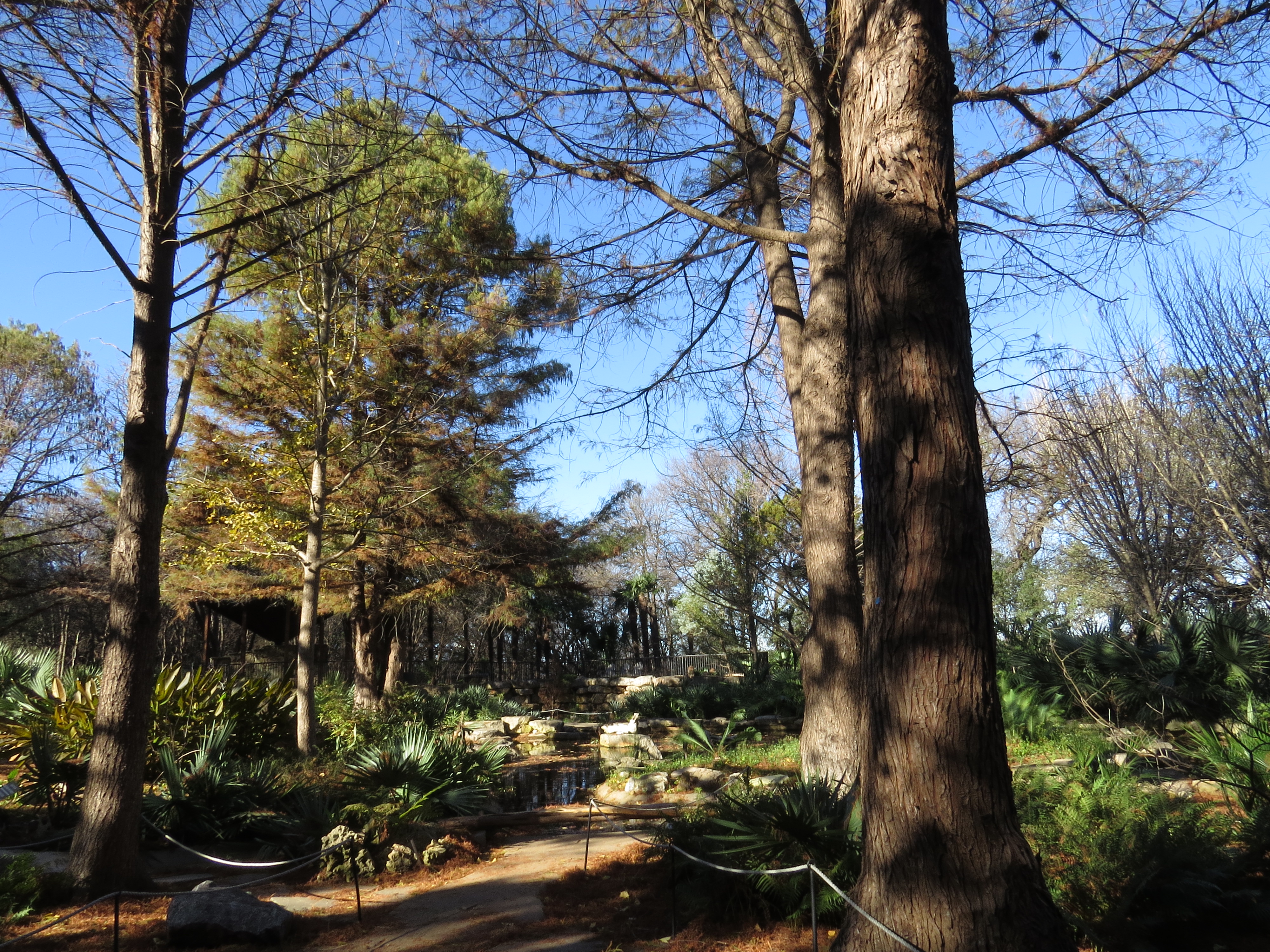
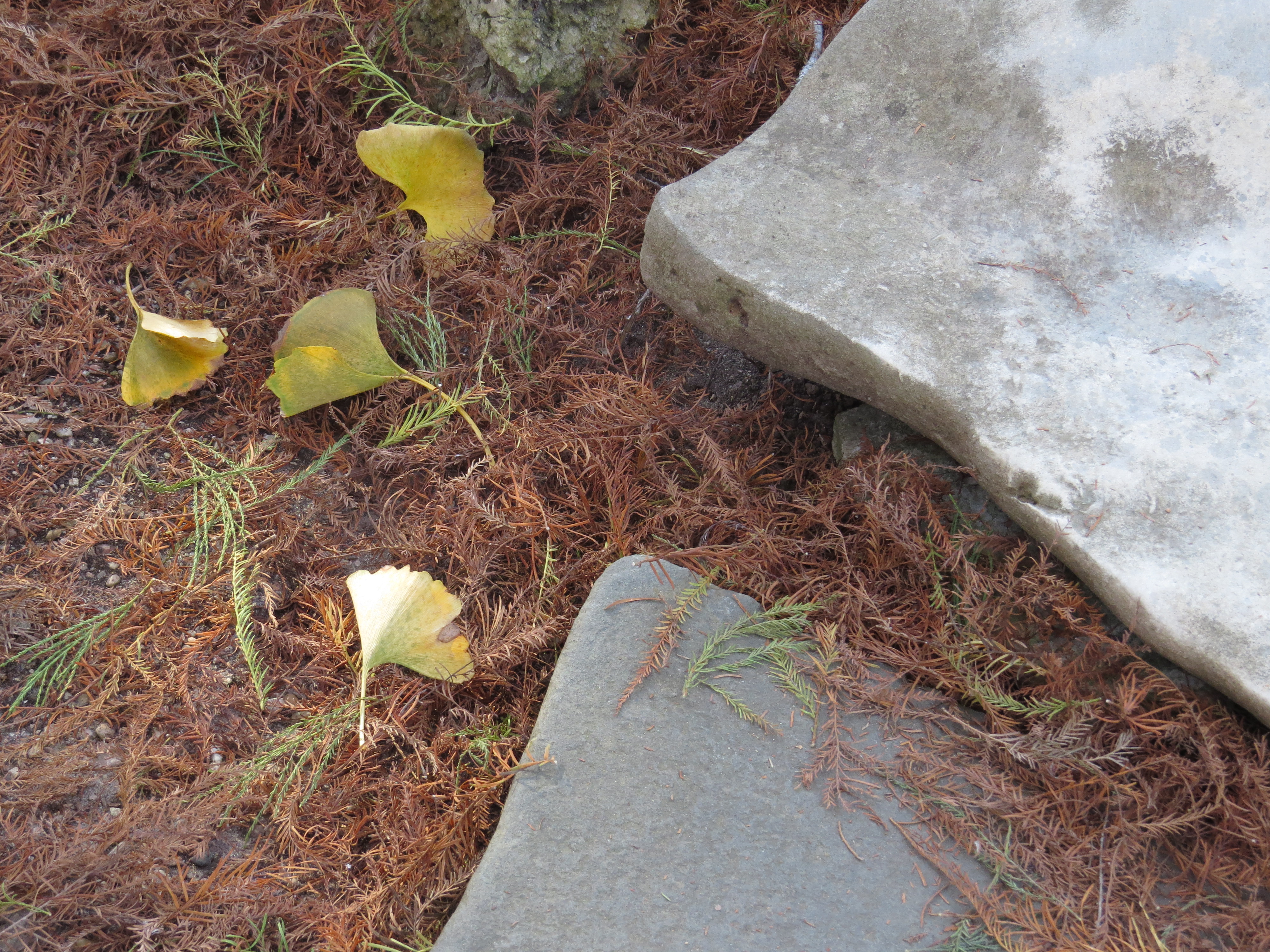
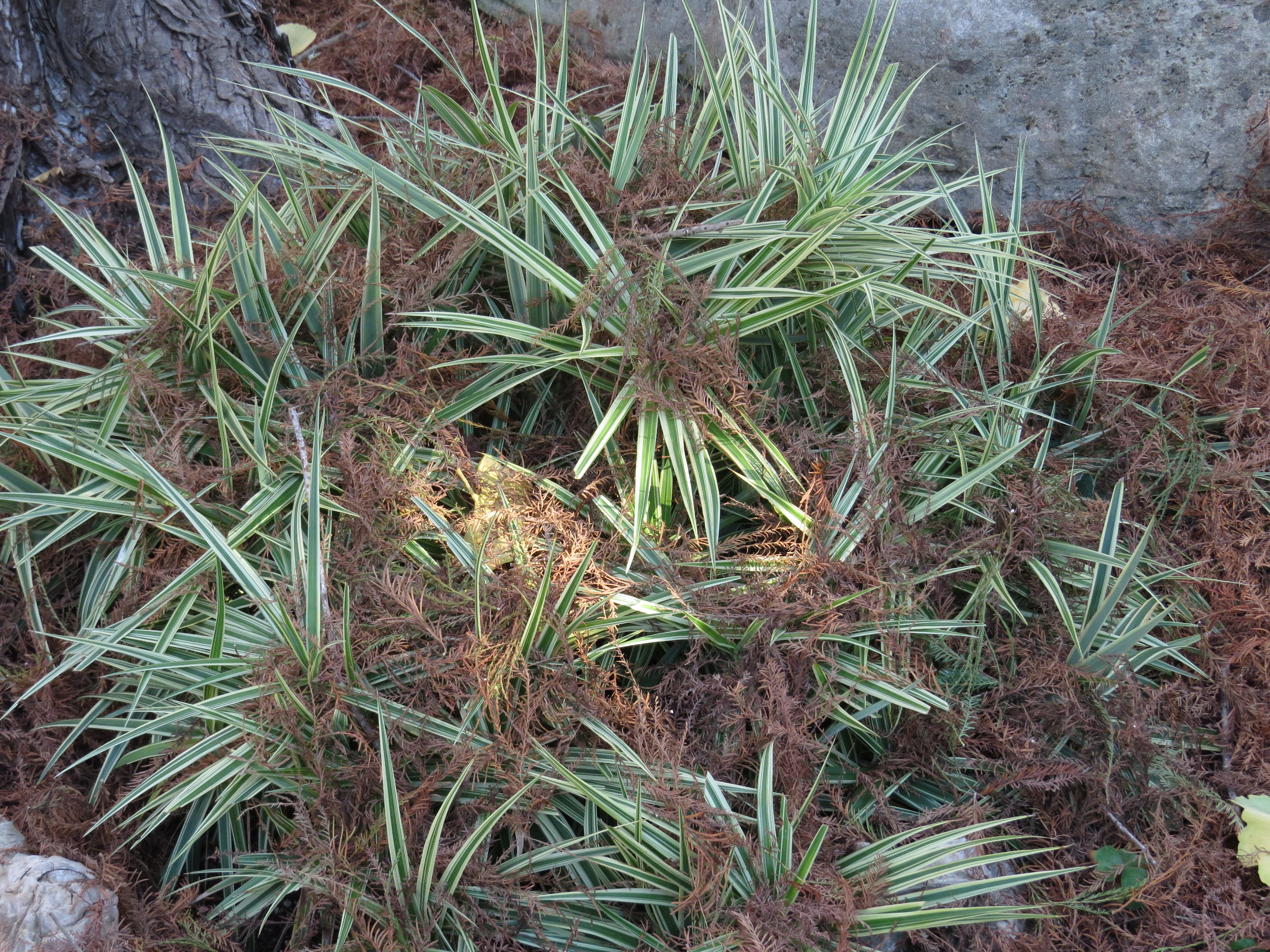
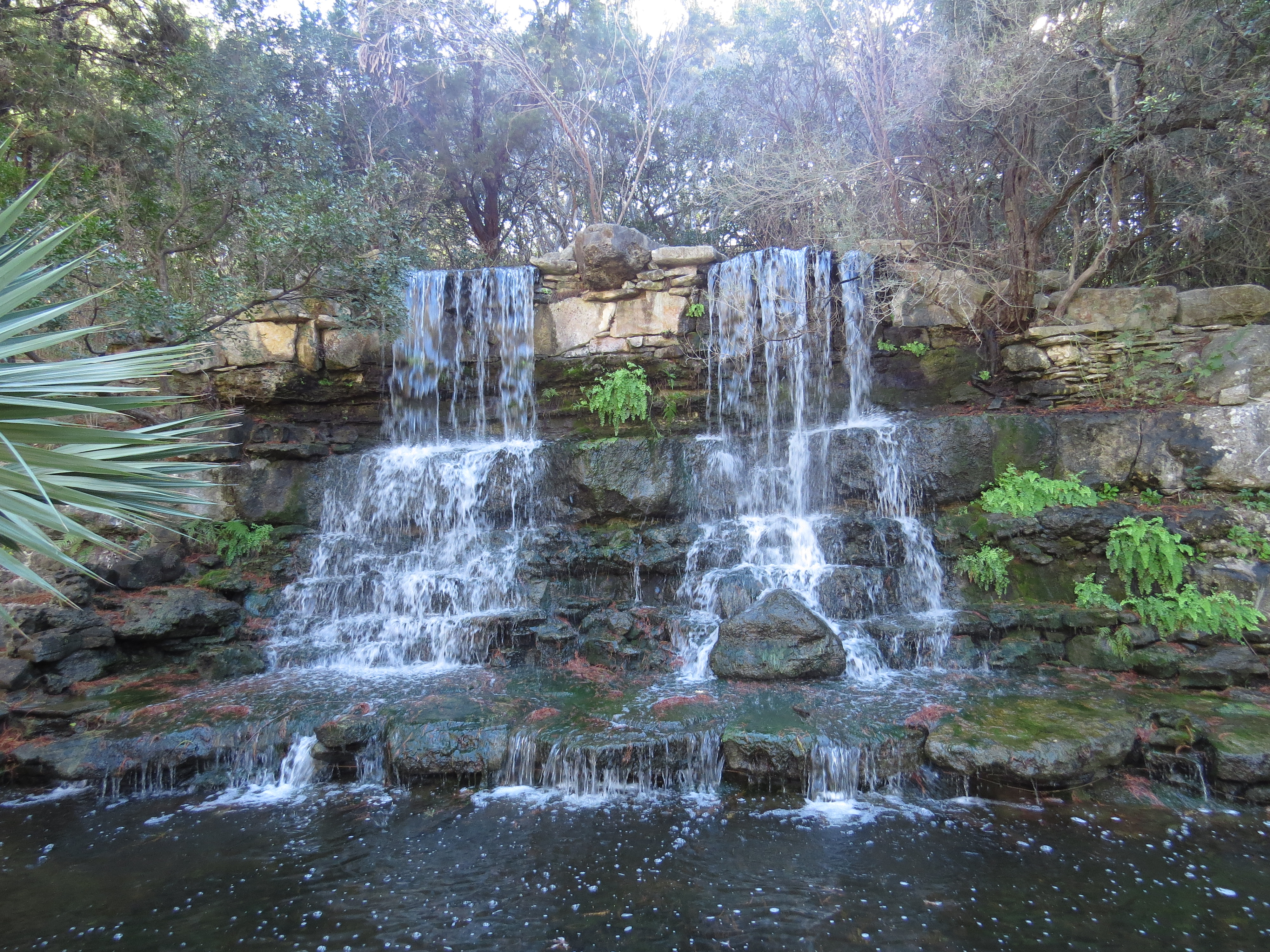
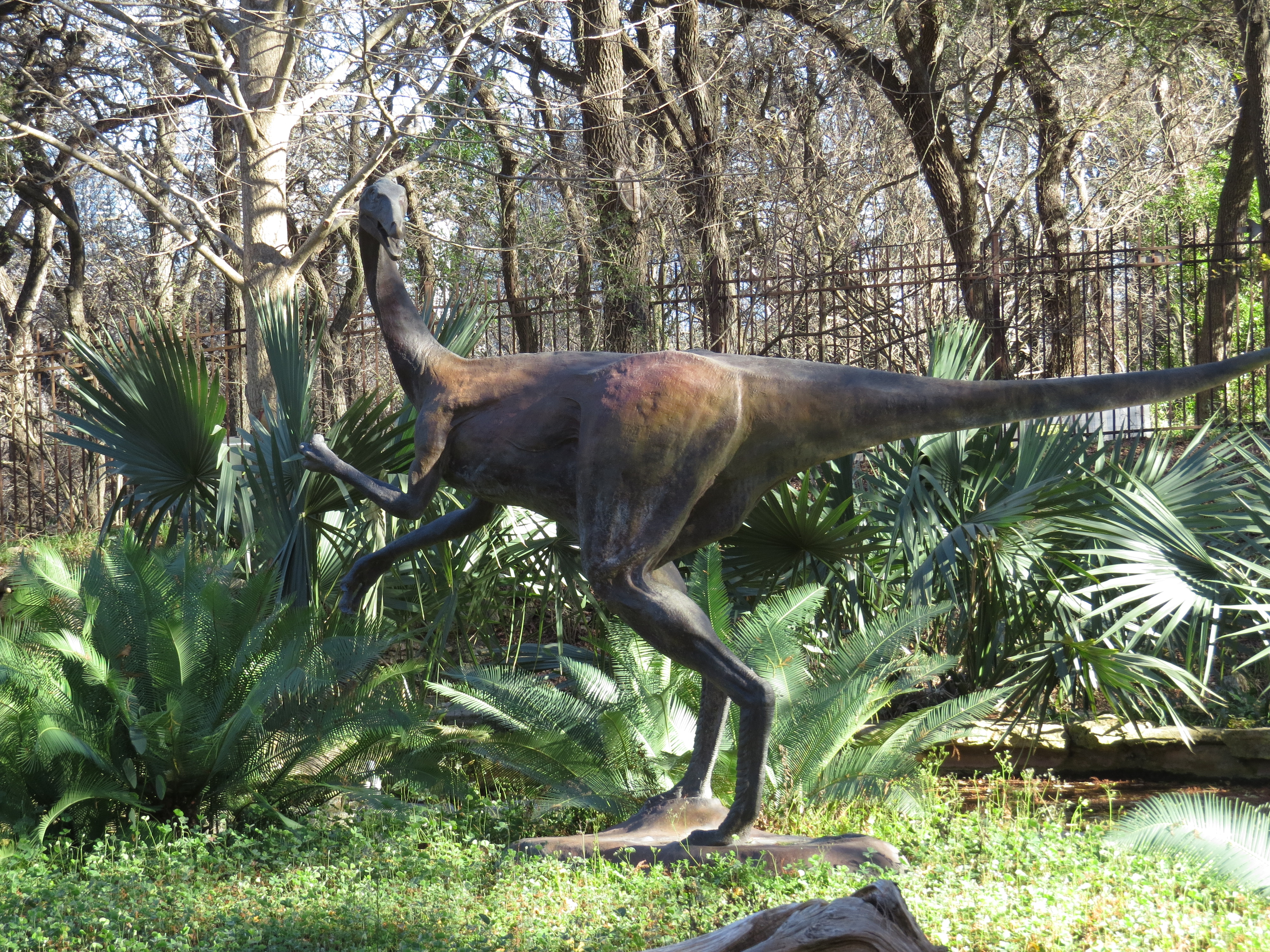
As a Northerner who loves snow and cold, it was an extraordinary time to spend those weeks in Texas where, most of the time, it was even warmer than their normally warm Winter weather. Walking through a botanical garden two days after the New Year was surreal and beautiful. Gardening is usually a labor of love, but designing and building a three acre garden after a lifetime of farming and the trauma of internment, puts Isamu Taniguchi in an elite group. It has become his legacy—an ongoing gift of peace to all who enter the Garden.
Refresh Your Soul
How did you welcome in the New Year last month? It was another pandemic year that the collective community of the world was glad to let go of to pursue high hopes for a better 2022. Austin, Texas held its 42nd annual Polar Bear Plunge on New Year’s Day…and we were there! Calling it a Polar Bear Plunge is a misnomer to me, coming from a state where they actually cut holes in the thick ice for people to plunge into truly frigid water! But that’s okay—it’s all relative. Austin’s Polar Bear Plunge is held at Barton Springs Municipal Pool, a natural, spring-fed pool with limestone walls, green grassy banks, and clear, turquoise water. The spring-fed water stays at a very respectable 68 to 70 degrees year round. On this New Year’s Day, the air temperature was in the 70’s (a common summer’s day temp in Minnesota) and hundreds, if not thousands of people were out jumping into the New Year and washing off the old.
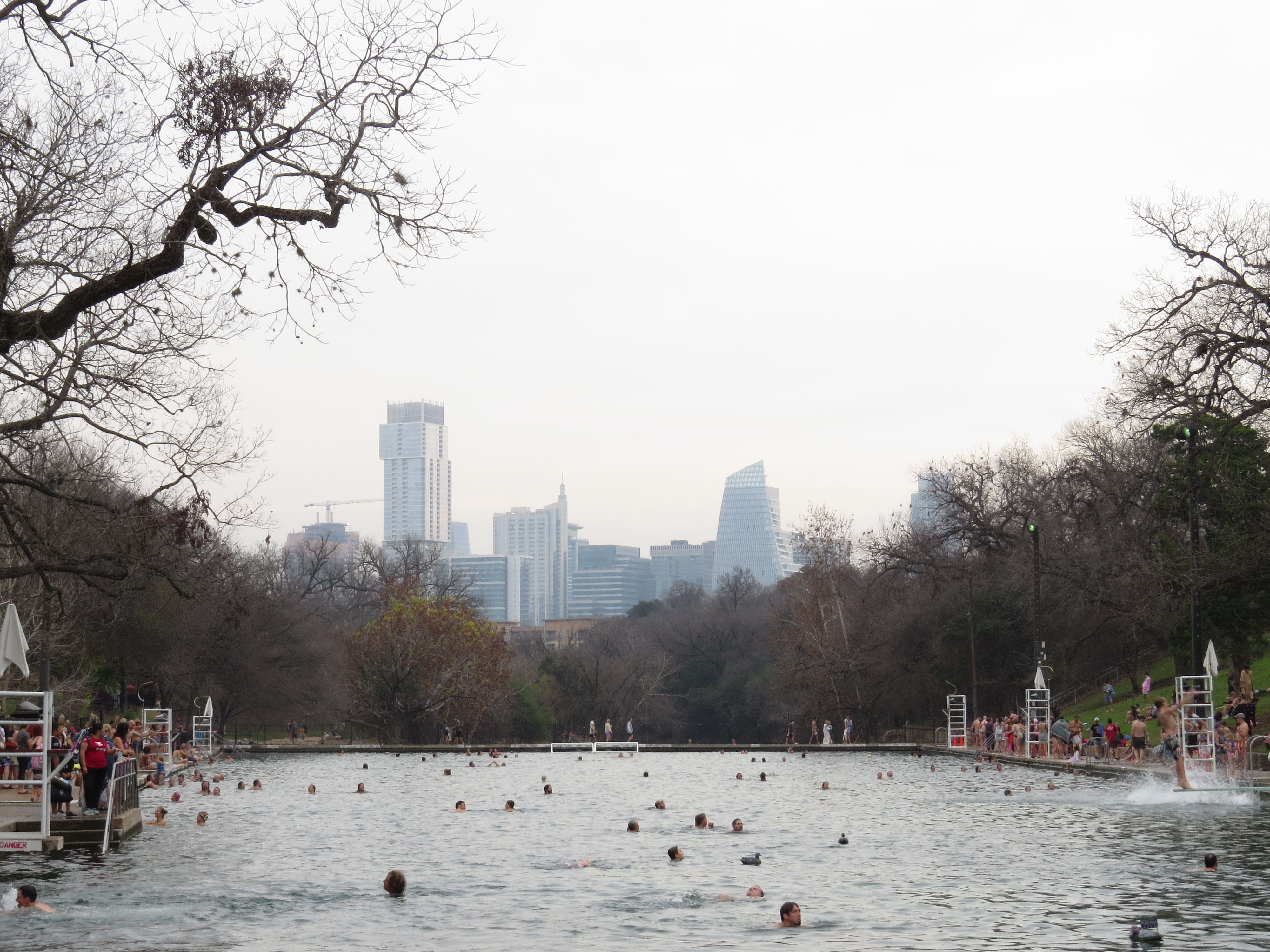
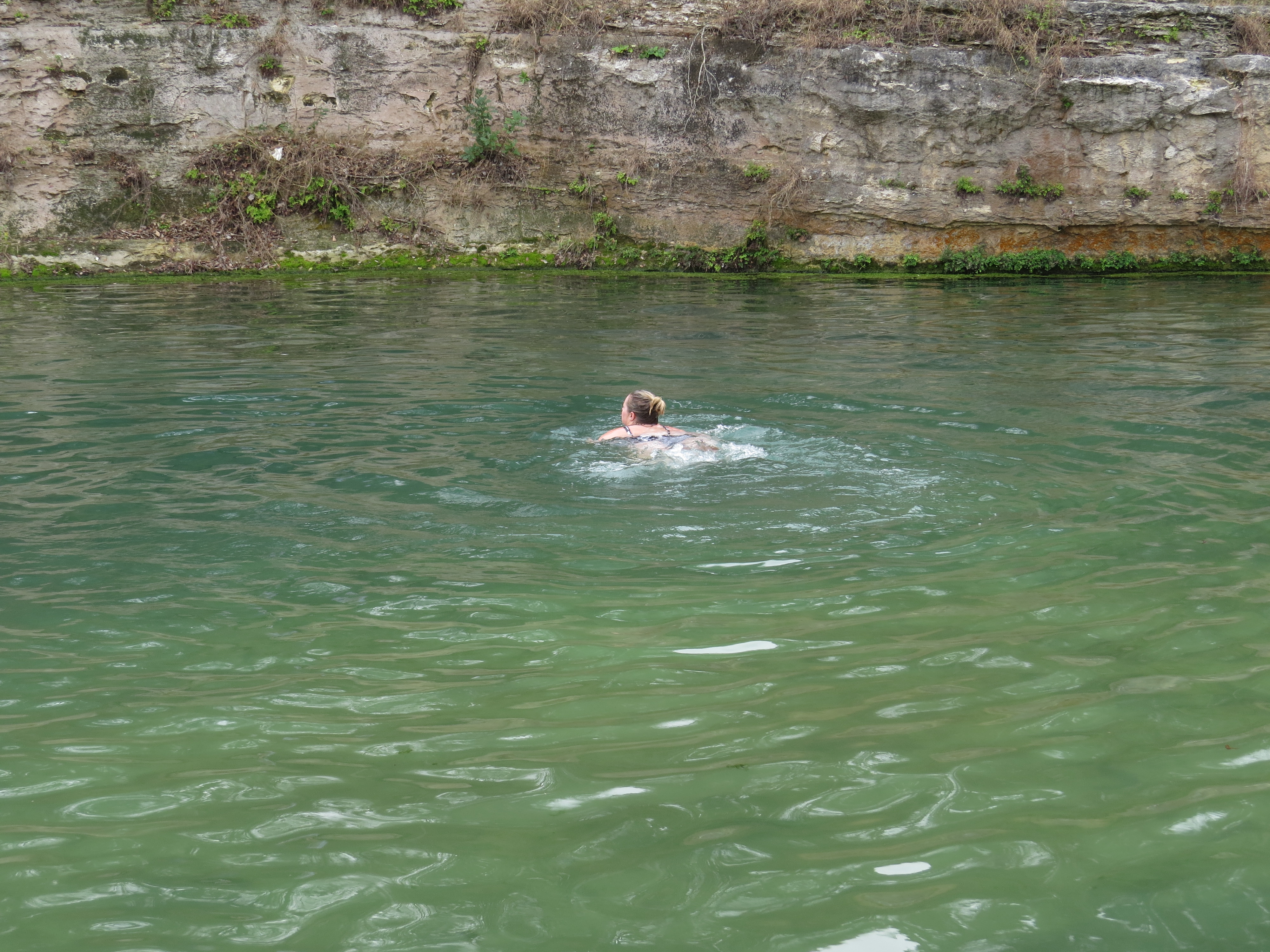
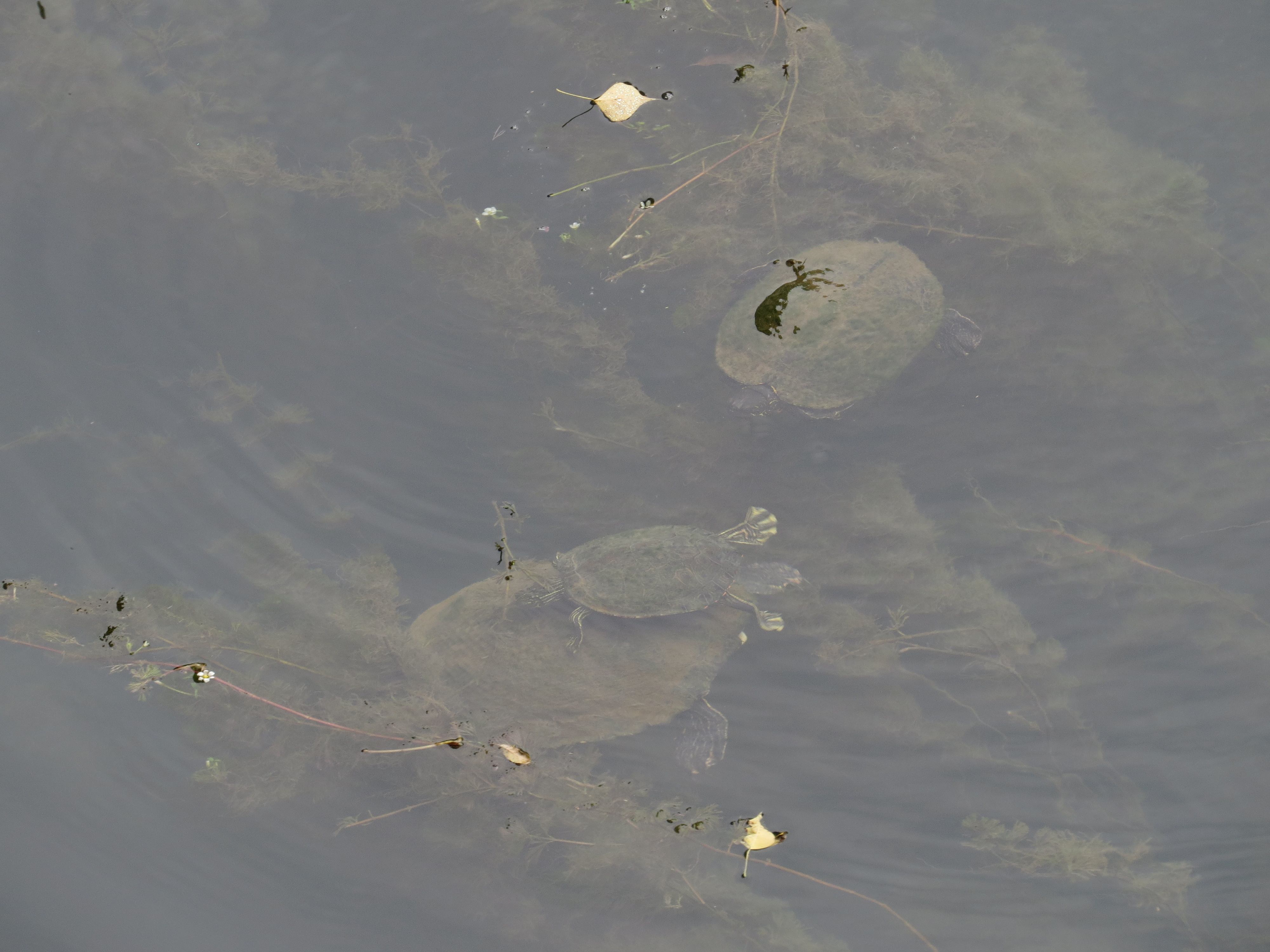
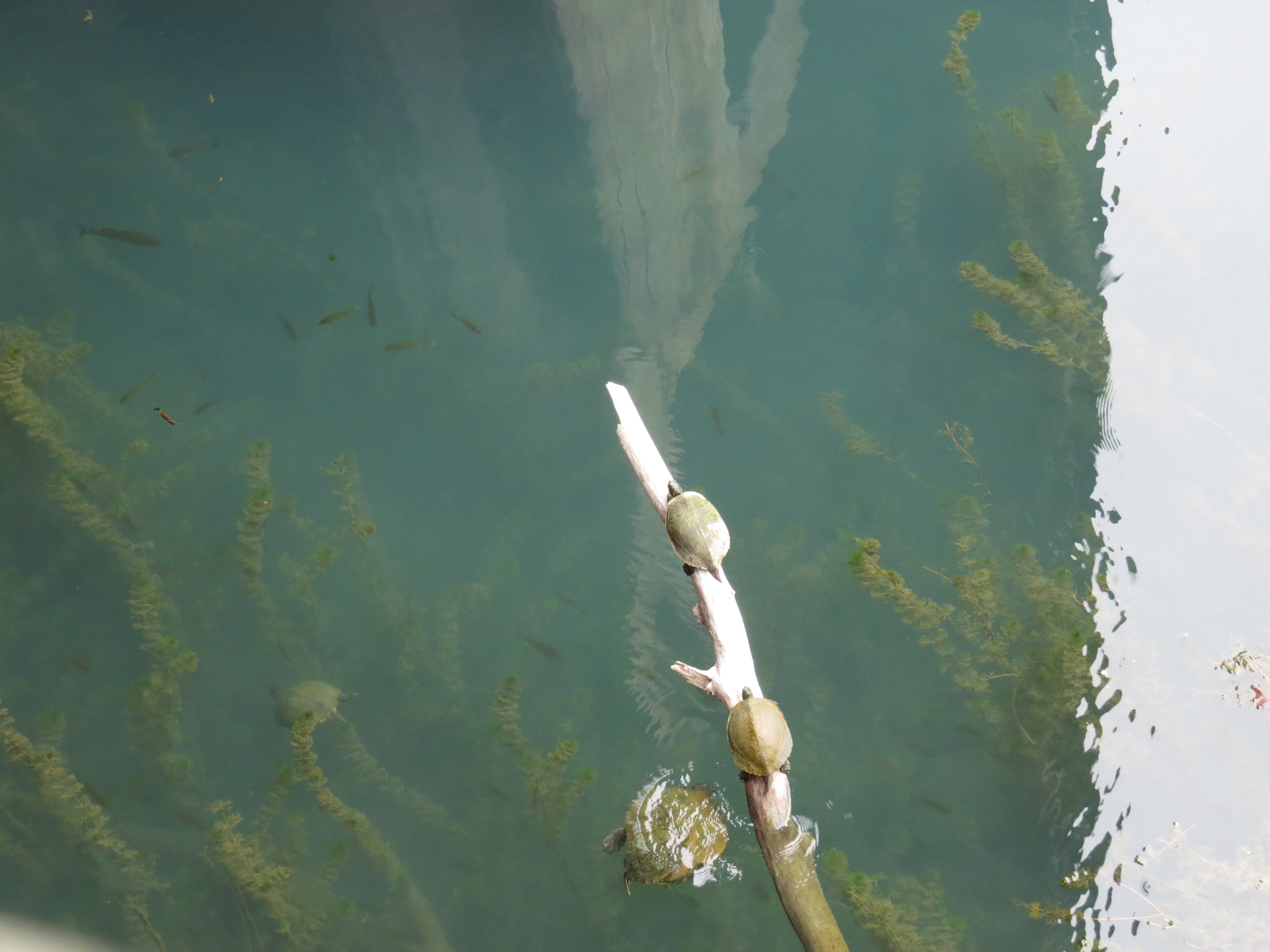
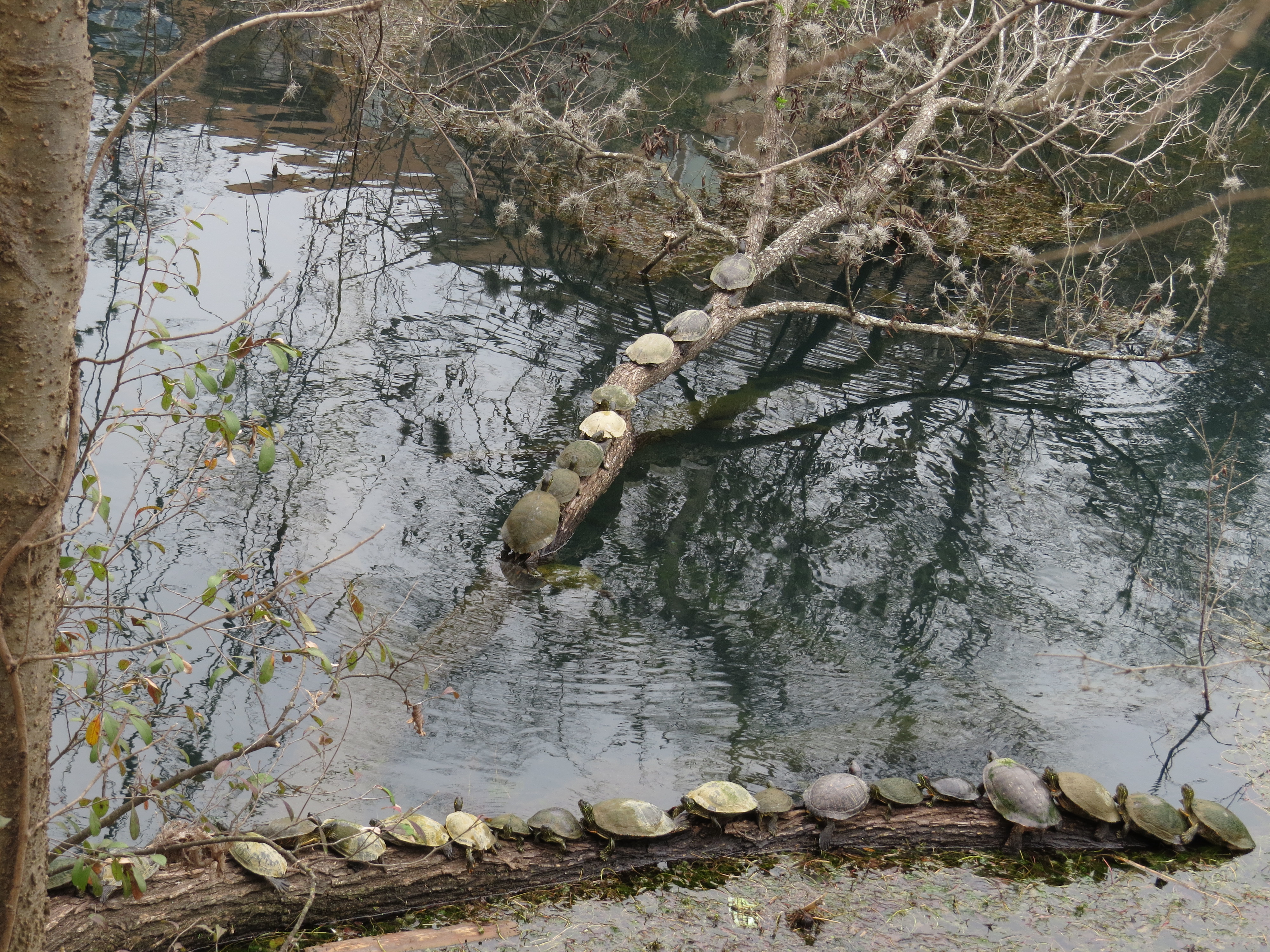
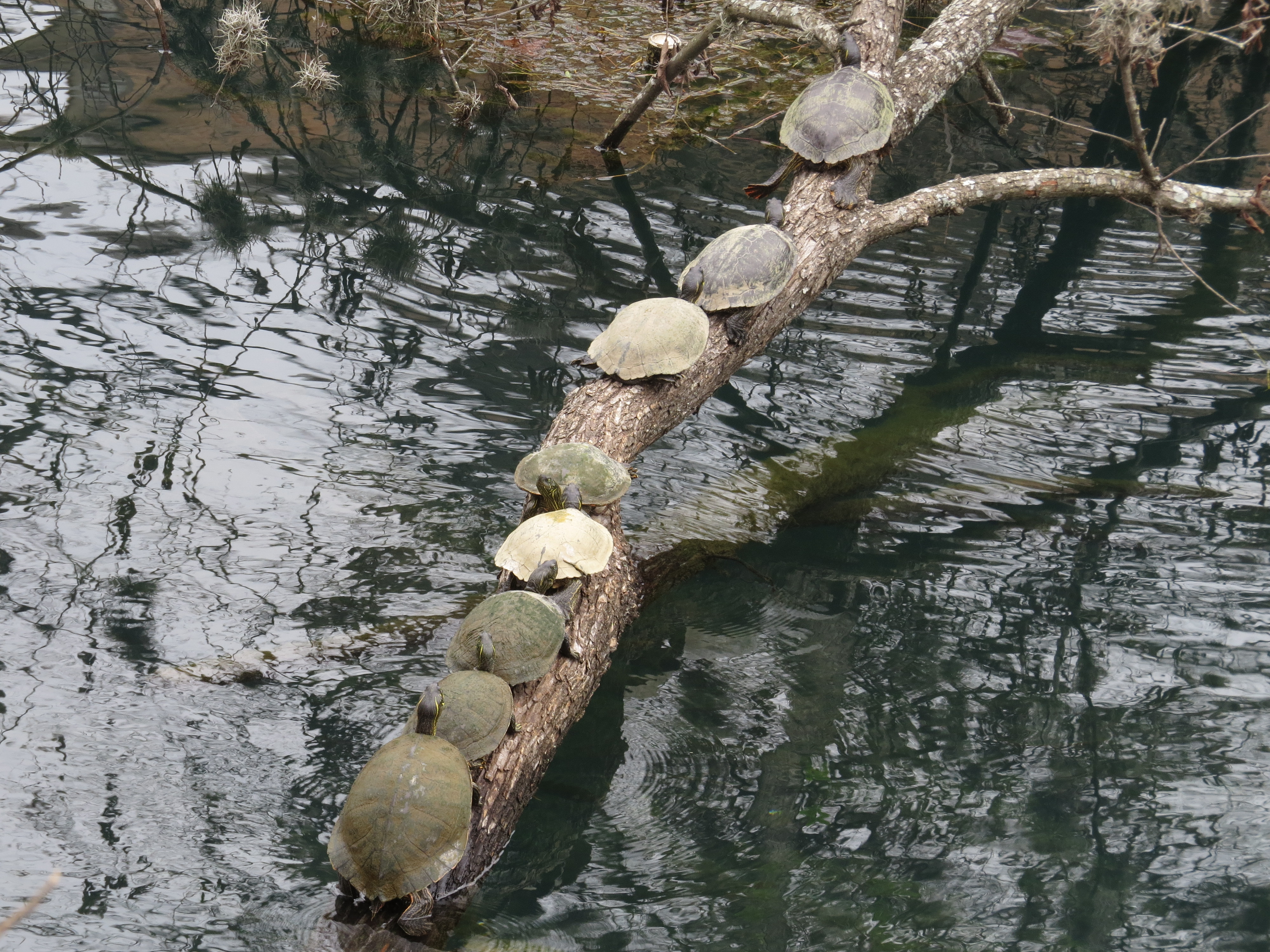
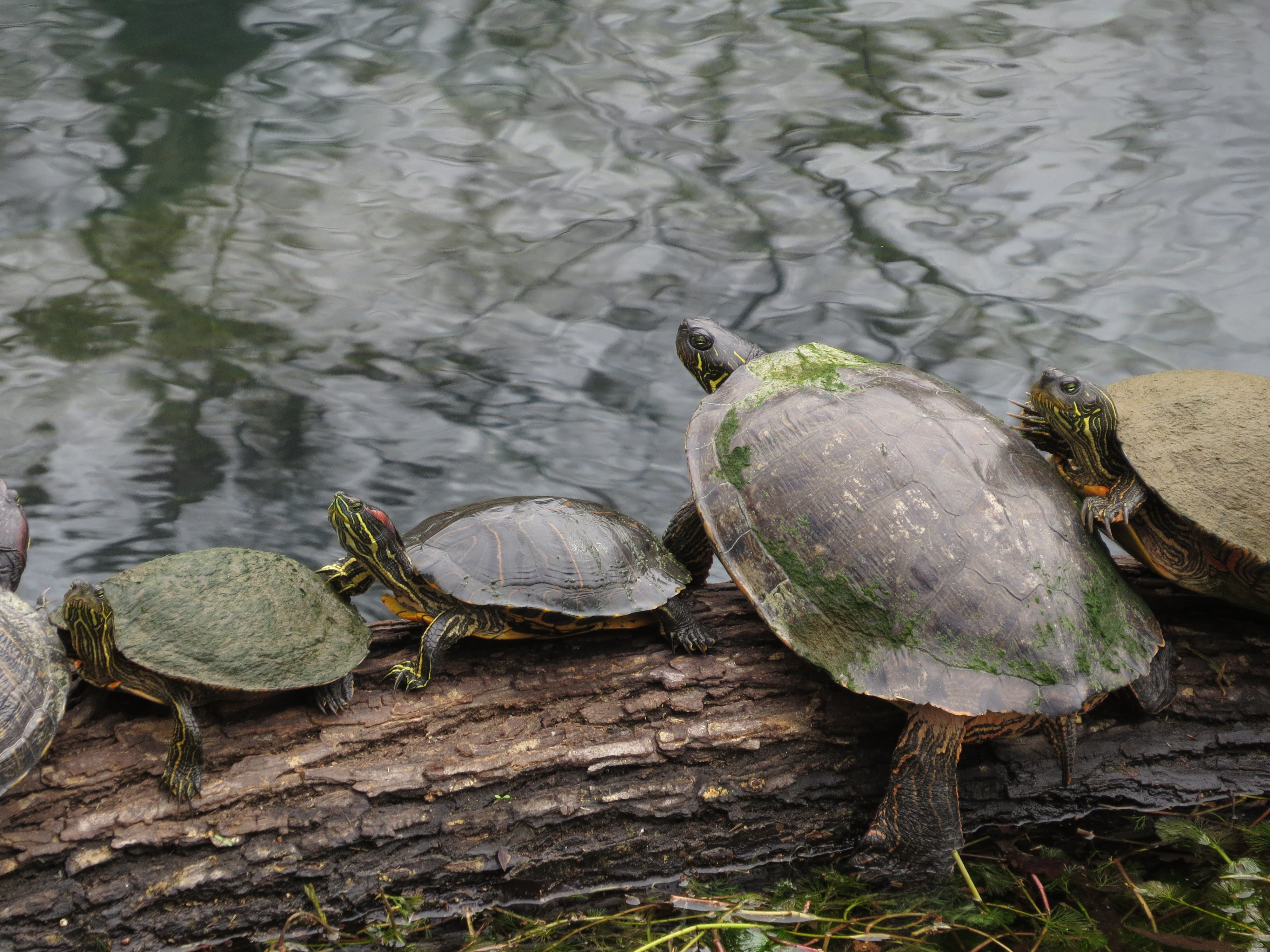
After my family swam and played in the tepid waters, we walked along the well-used trail that follows Barton Creek from the pool to Lady Bird Lake. There were people running, walking, strolling, biking, etc. on one side of us, and on the other side, creatures of all sorts were swimming, sunning, resting, and plunging into their new year also. Turtles were everywhere! A group of turtles is called a ‘bale’—we saw many bales of turtles!
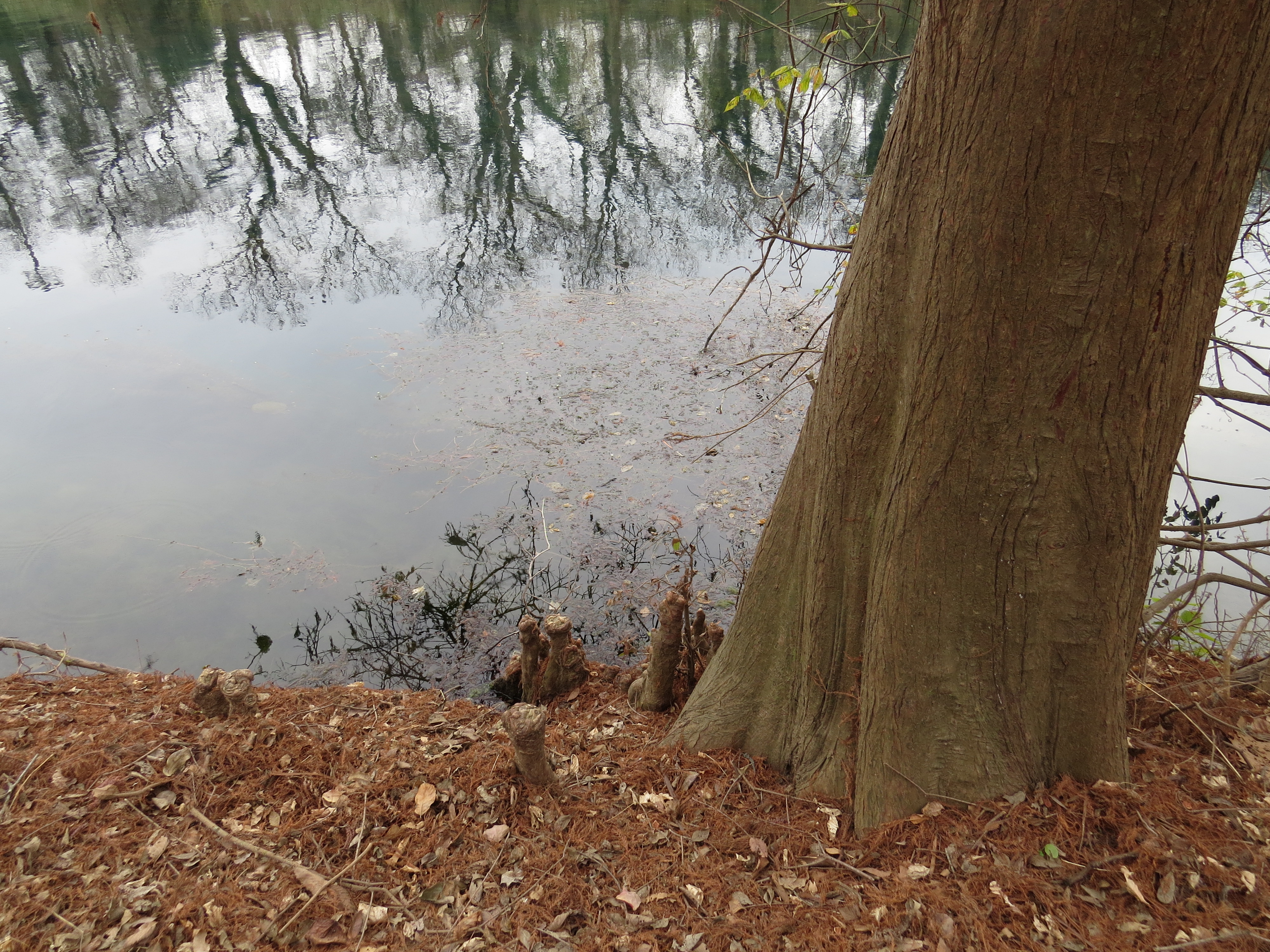
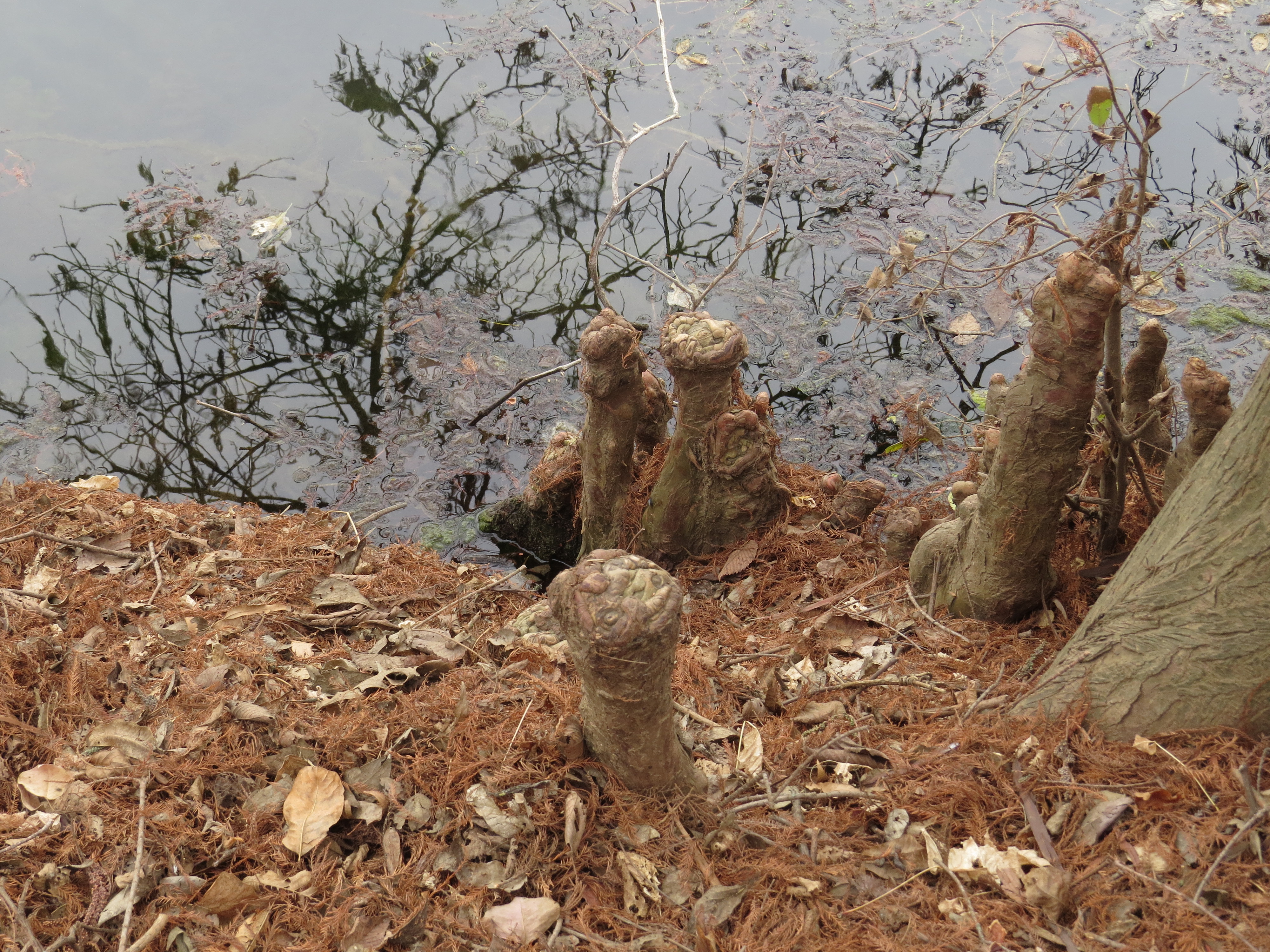
All along the Creek and Lady Bird Lake were huge Bald Cypress trees who love to have their feet in the water. The slow-growing, long-lived trees help prevent erosion along the banks during flash floods. The knobby protrusions at the base of the tree are called cypress ‘knees.’ They grow from horizontal roots and are theorized to transport air to the water-laden roots, along with anchoring the tree in its often precarious waterside position.
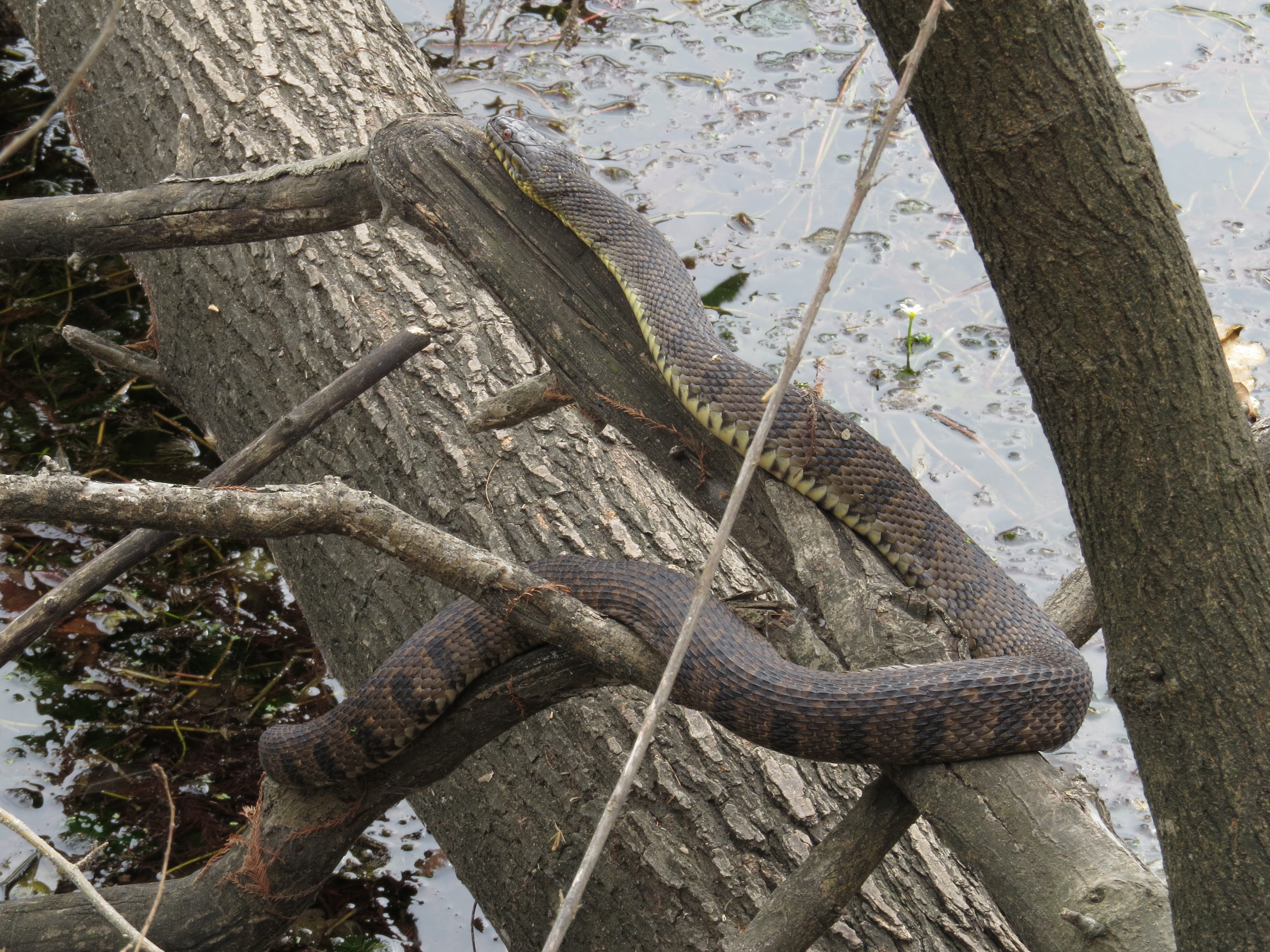
Aaron, our ever-vigilant snake guy, was the one to notice the big reptile lounging on a fallen tree branch. The Diamondback Watersnake is the largest nonvenomous water snake in North America. They like to lazily dine on fish and amphibians by dipping their heads into the water from their tree branch perches.
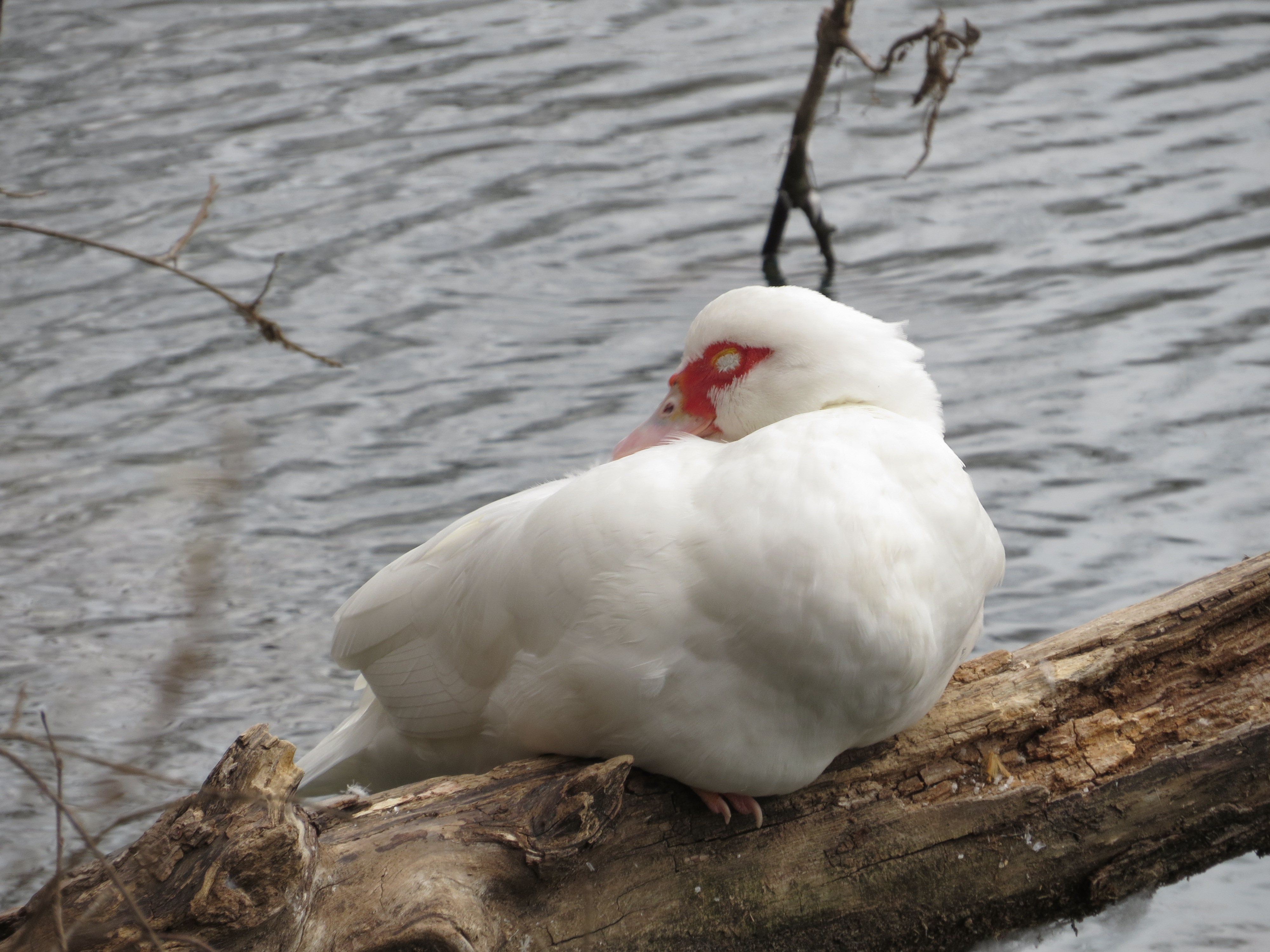
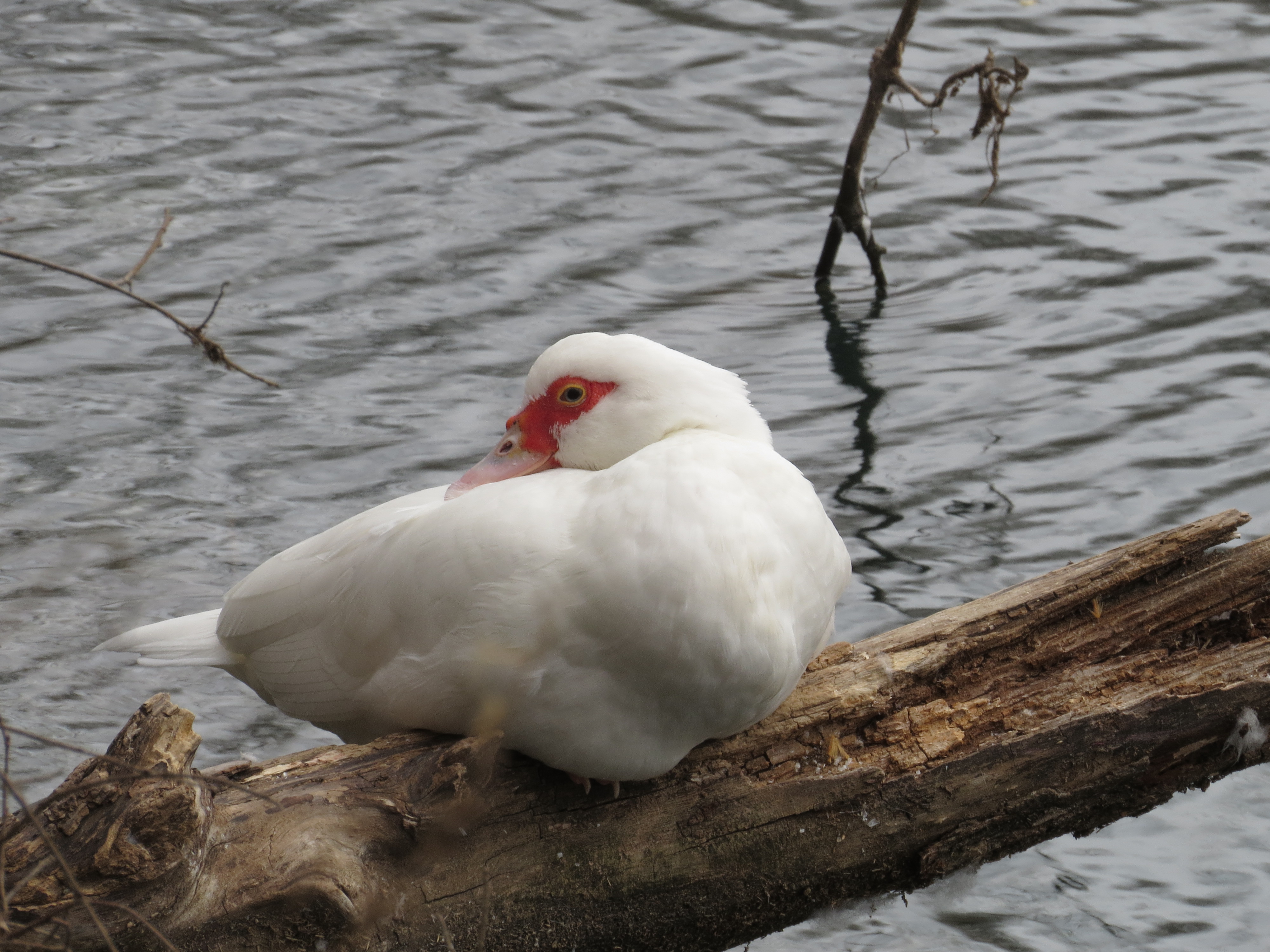
On another tree branch overhanging the water was a white Muscovy duck, a unique waterfowl originating in South America. They prefer to spend time in trees and less time swimming, compared to other ducks. They are more sensitive to cold than Mallard-related ducks, and they hiss instead of quack!
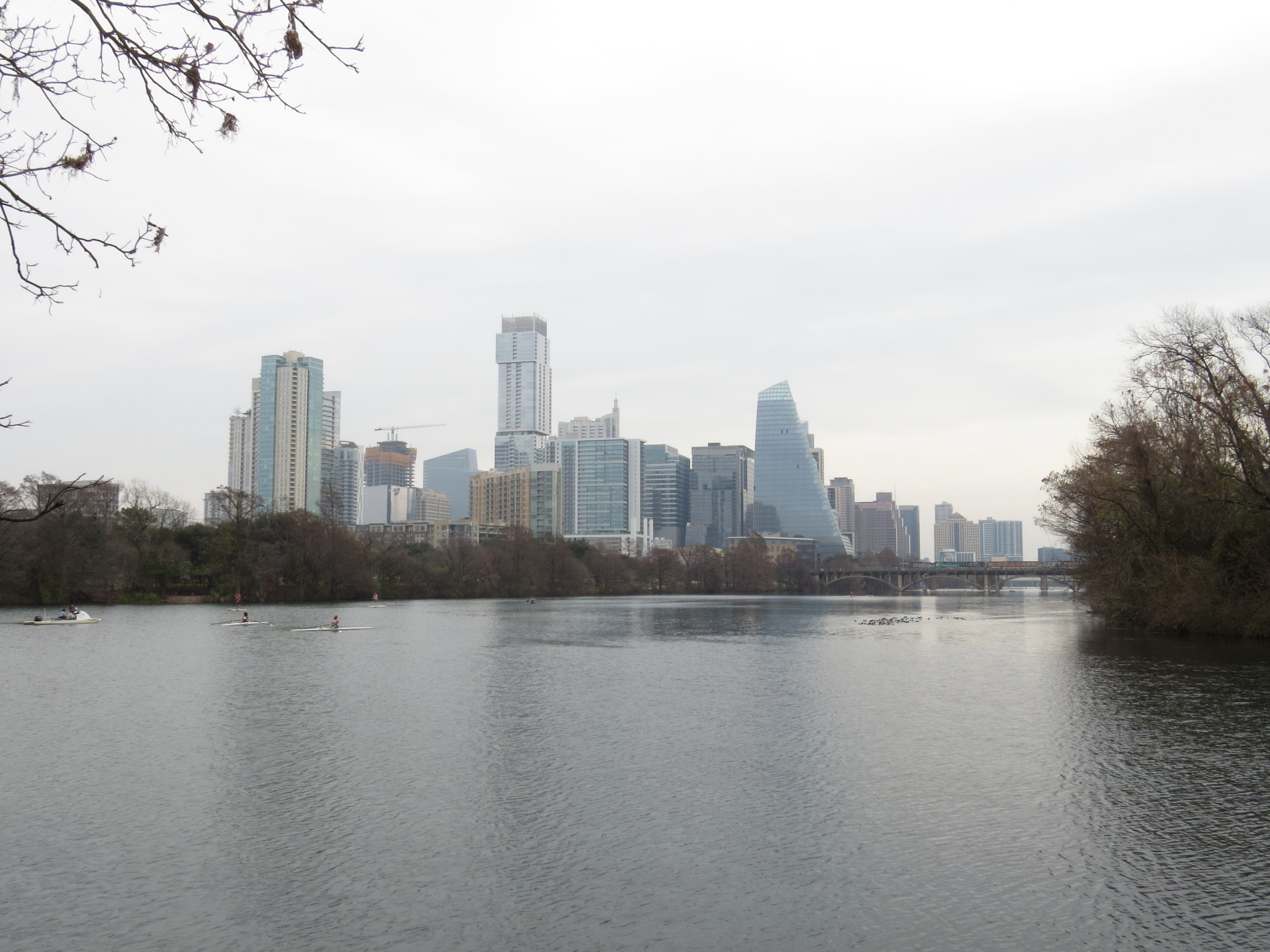
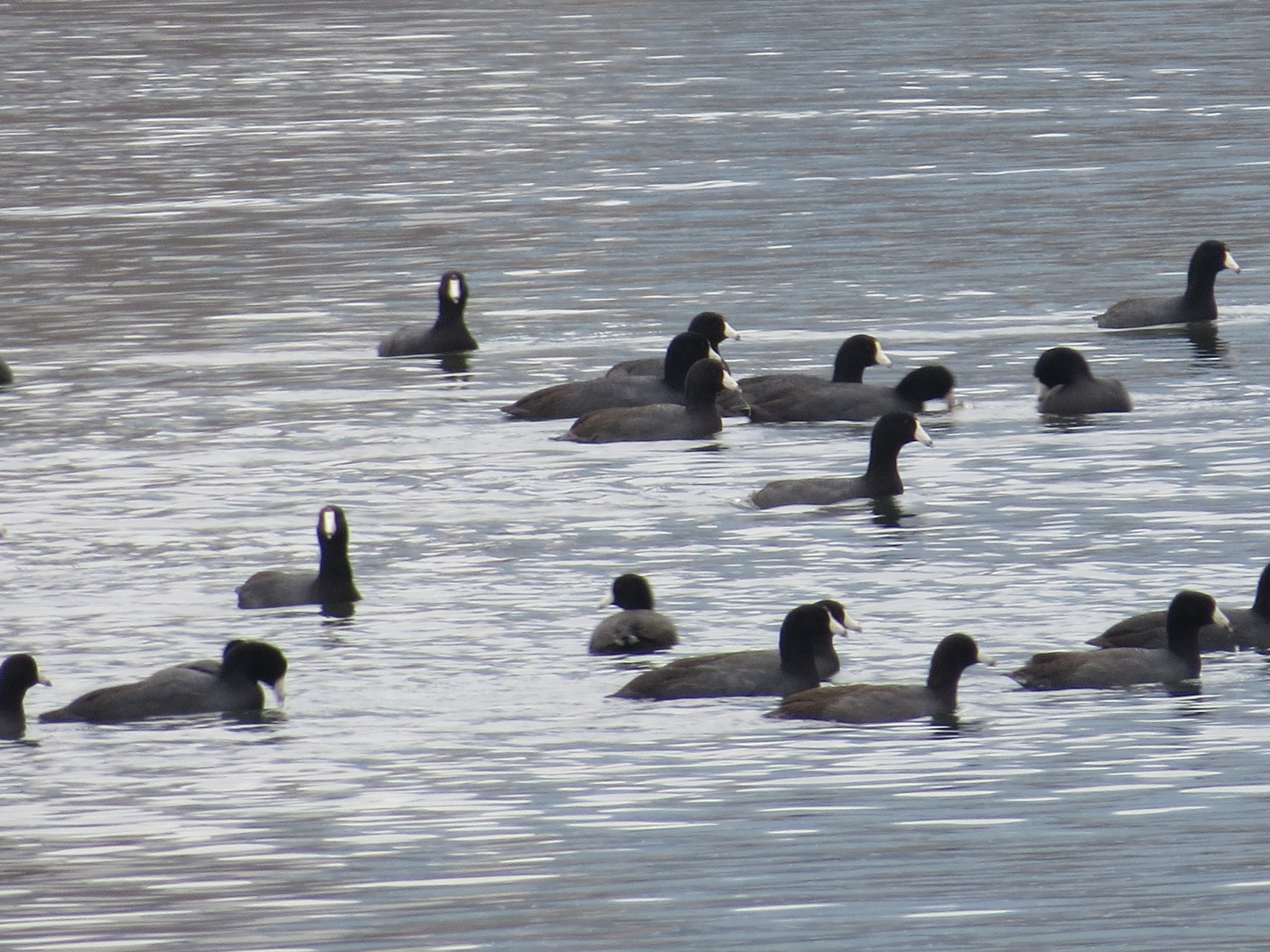
As Barton Creek merged into Lady Bird Lake, we saw many kayakers, paddleboarders, and rowers, along with a commotion of American Coots.
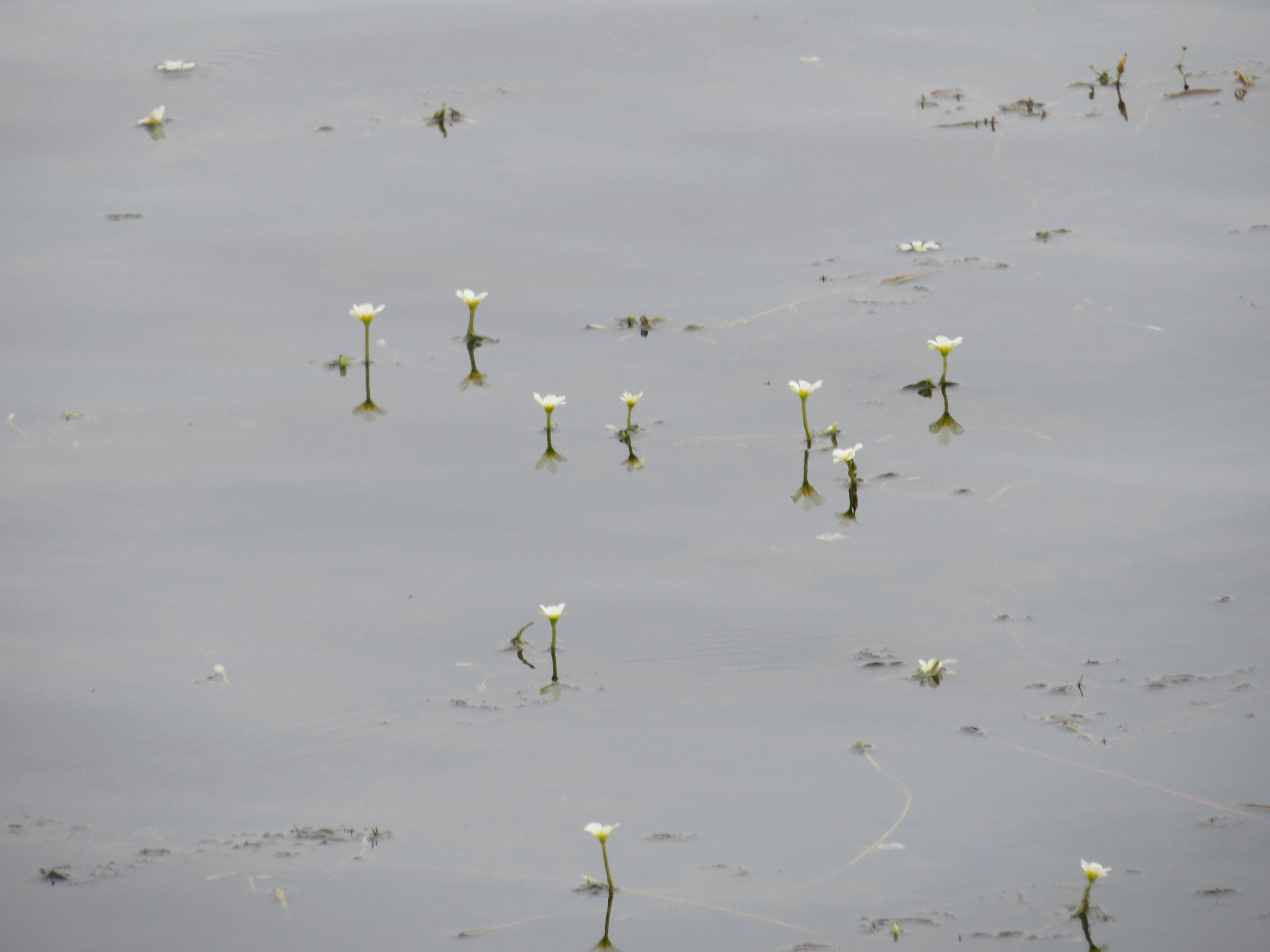
Blooming water plants floated on the Lake along with the humans in watercrafts and all sorts of waterfowl. A gorgeous, exquisitely-feathered Wood Duck greeted the New Year in his winter home.
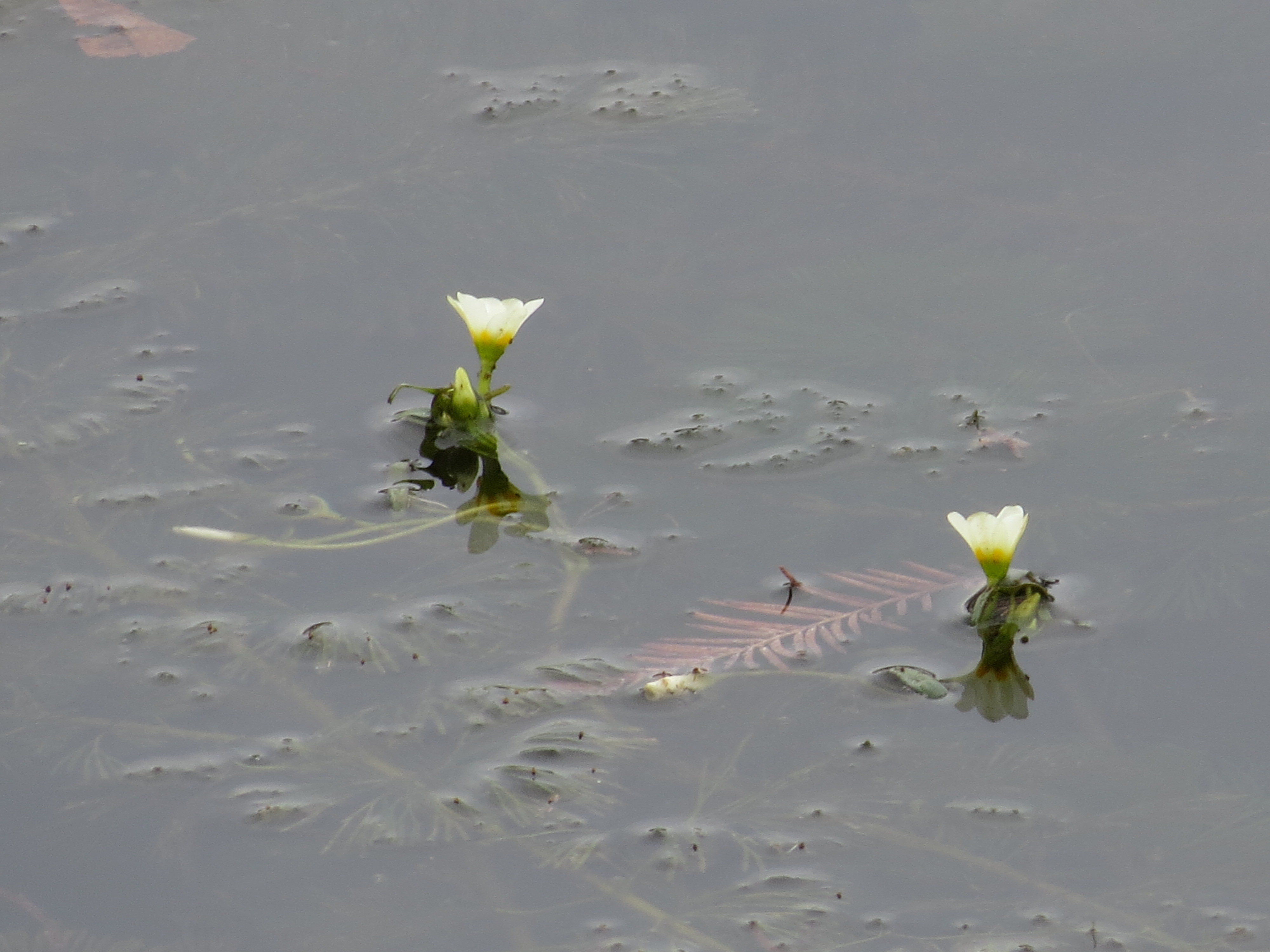
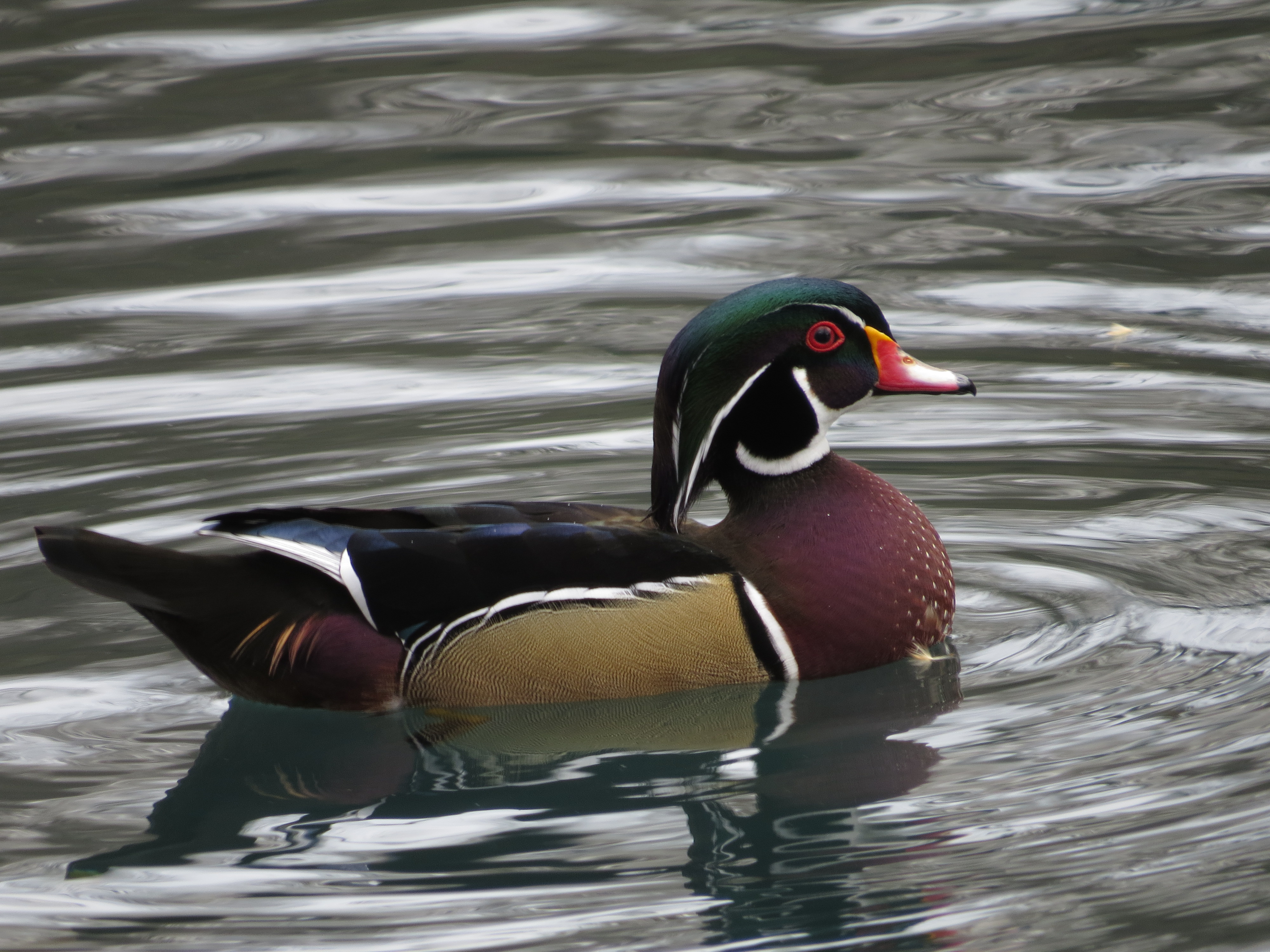
It is a legitimate human tendency to want to wash away an old year, especially ones that were as confounding as the previous two. We want to be done with the virus, the death, the masks, the rules, and the uncertainty. We want life to be ‘normal’ again. Yet, there is something to be said by having a hardship be the experience of everyone. It helps to level the playing field, because truth be told, large numbers of people experience disease, death, unfair rules, and ongoing uncertainty even in their ‘normal’ lives. There are always ideas, habits, and behaviors we need to let go of in our lives, and the New Year is a favored time to do so. We can pursue our high hopes with renewed vigor. Matt Curtis of the Friends of Barton Springs Pool Polar Bear Plunge said, “This is an exciting opportunity to refresh your soul in the waters of Austin.” Refresh your soul. Perhaps that is the anchor we need in our lives in order to navigate the difficult times and to reach for our dreams.
The Influencer and Her Dreams
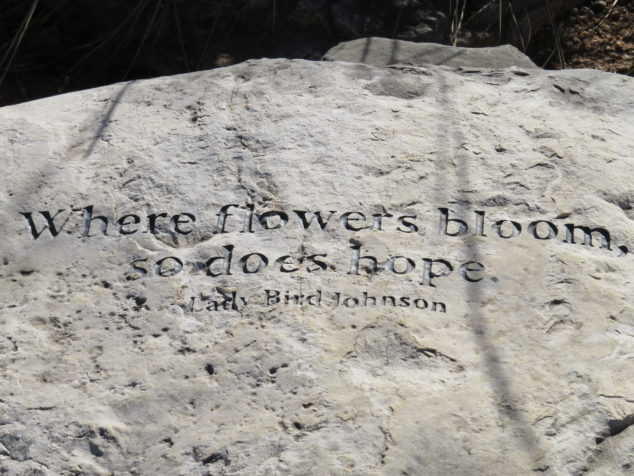
My special cause, the one that alerts my interest and quickens the pace of my life, is to preserve the wildflowers and native plants that define the regions of our land—to encourage and promote their use in appropriate areas, and thus help pass on to generations in waiting the quiet joys and satisfactions I have known since my childhood. –Lady Bird Johnson
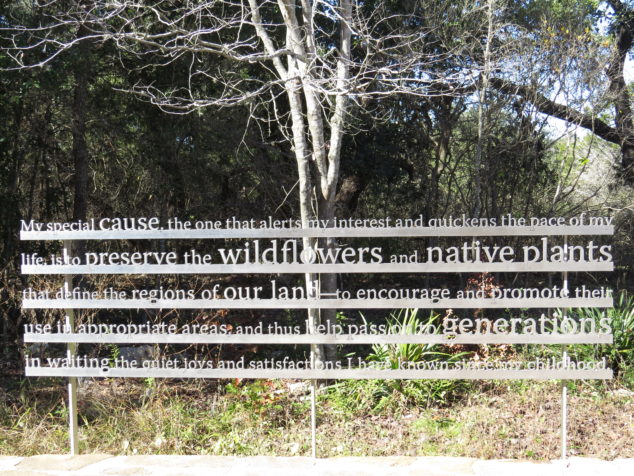
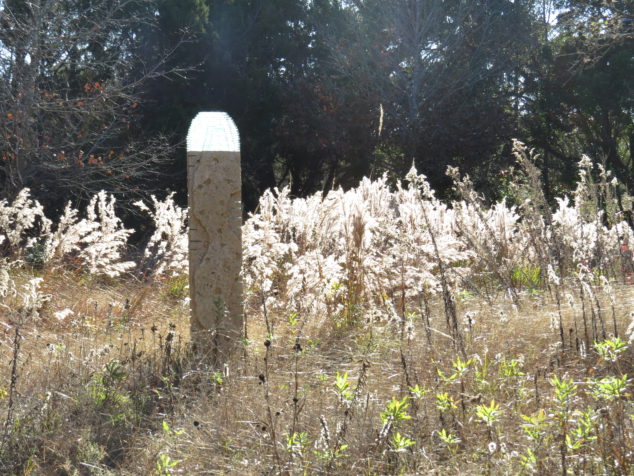
Lady Bird Johnson, wife of our 36th President Lyndon B. Johnson, along with actress Helen Hayes founded the National Wildflower Research Center in 1982 on 60 acres of land in East Austin, Texas. It moved to its present location in southwest Austin in 1995 and now includes 284 acres of native trees and plants, Texas architecture, a family garden dedicated to nature play for children, and thousands of species of insects, butterflies, birds, and mammals. It also has numerous art installations like this rock and glass sculpture glowing in the sunlight in front of luminous grasses.
The Wildflower Center has a rain collection system that is capable of storing 68,500 gallons of water! Rock pillars have an aqueduct on top to bring rainwater to the round cistern at the entrance.
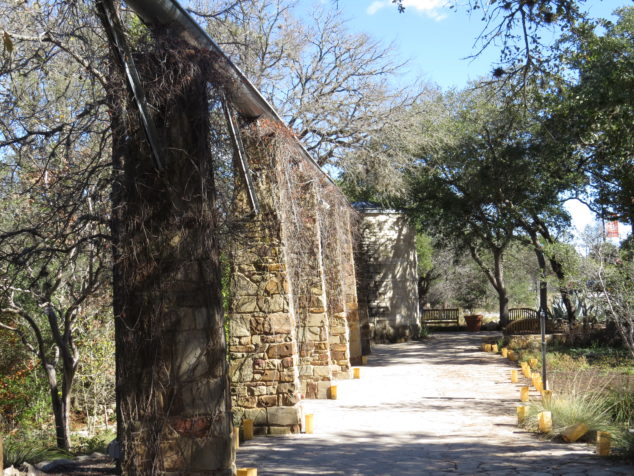
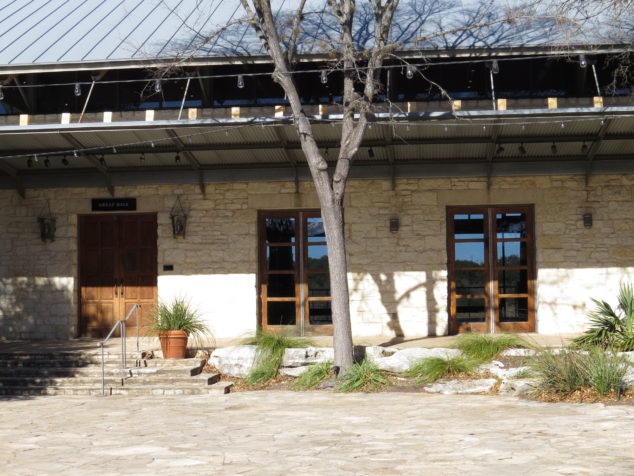
We climbed the Observation Tower, a brown sandstone landmark that offers spectacular views from the top, a seating area midway up with green roof, and is itself a 5,000-gallon rainwater cistern.
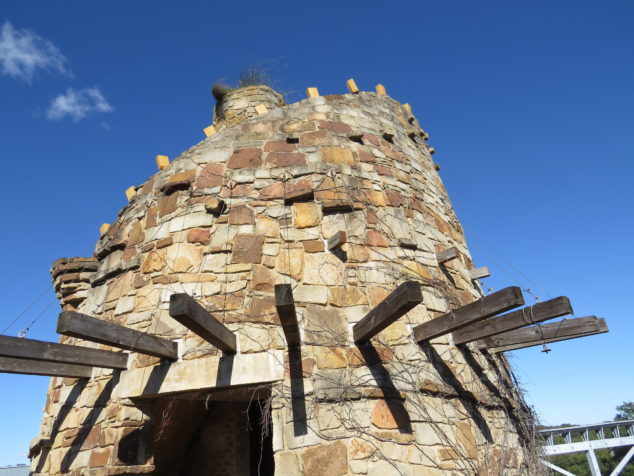
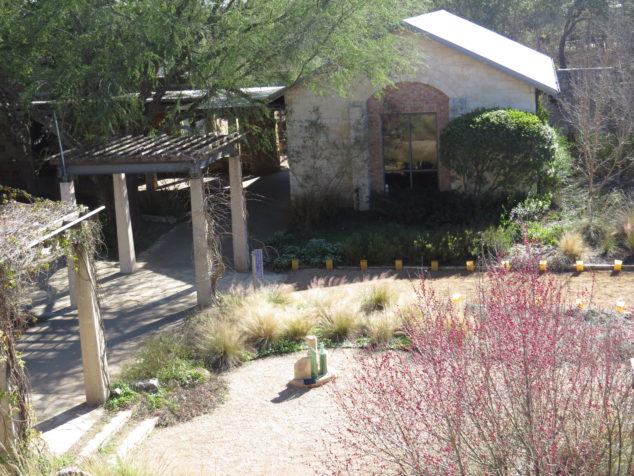
The Woodland Garden—and many other areas of the Center—was lined with luminaries for their winter light festival.
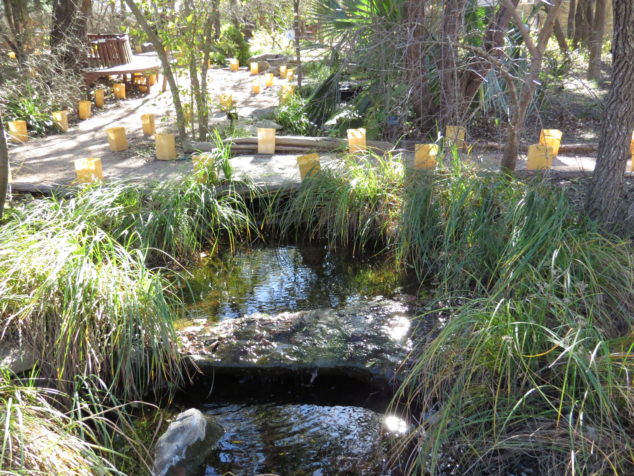
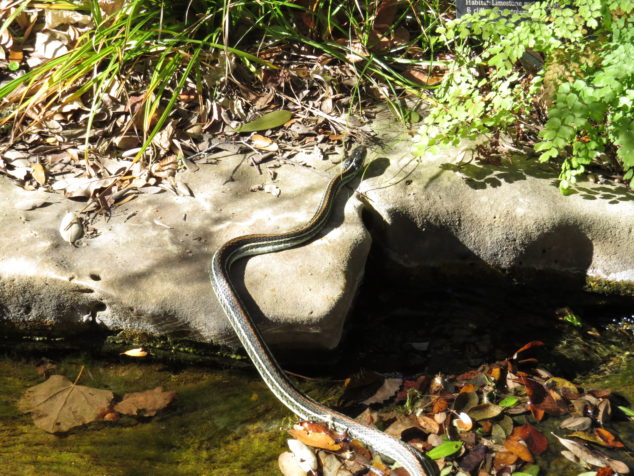
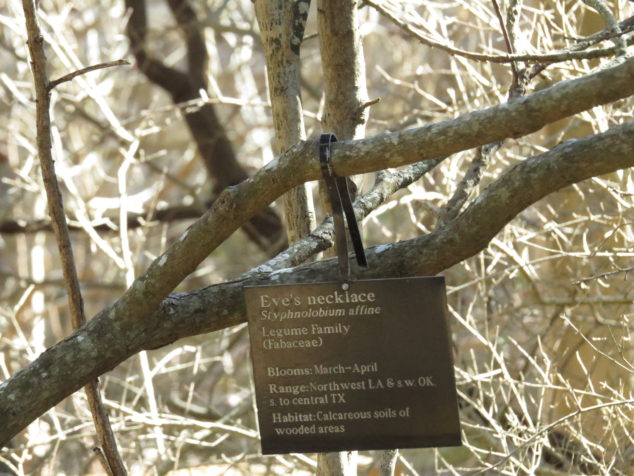
As we followed the stream, Emily noticed a snake slithering alongside of us. He crossed the stream to the other side, and then I noticed the name of the tree he crawled under: Eve’s Necklace, a small tree with compound leaves, clusters of pink pea-like flowers, and fruits of a slender string of shiny, black beads that contain the seeds.
The environment is where we all meet; where we all have a mutual interest; it is the one thing all of us share. It is not only a mirror of ourselves, but a focusing lens on what we can become. –Lady Bird Johnson
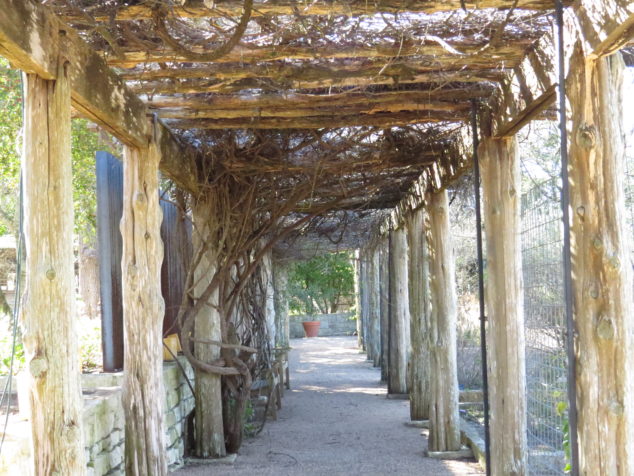
We marveled at all the structures and fences that were made from cedar posts and poles and at the trees and plants that were so unfamiliar to us. We came across some Texas versions of familiar species—Bushy Bluestem and Mexican Buckeye.
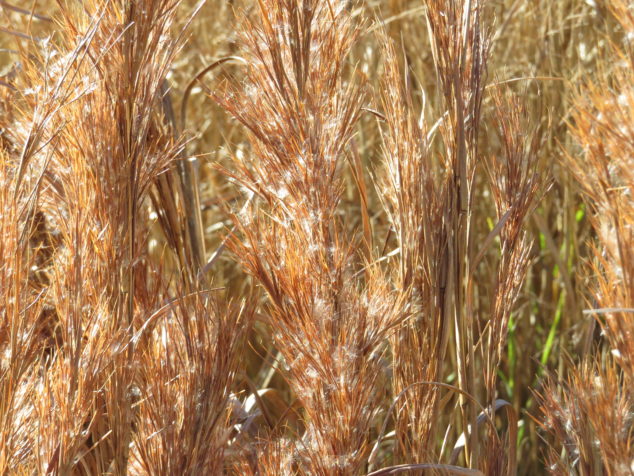
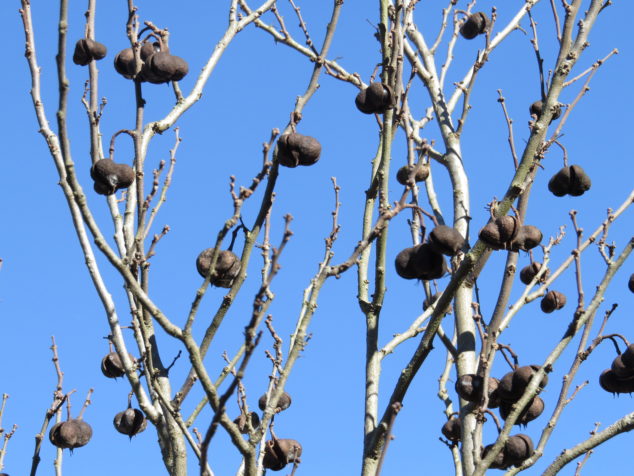
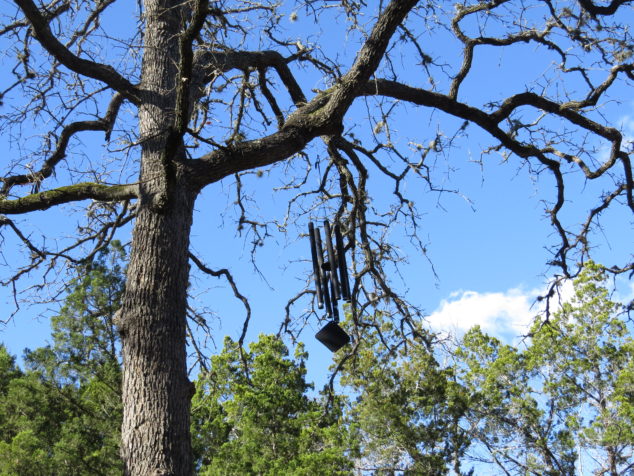
As we entered the Woodland Trail, we heard chimes long before we saw where the sound was coming from. It was a windy day, so the music in the woods was loud and boisterous! Three or four trees along the trail had the large wind chimes dangling from their bare branches.
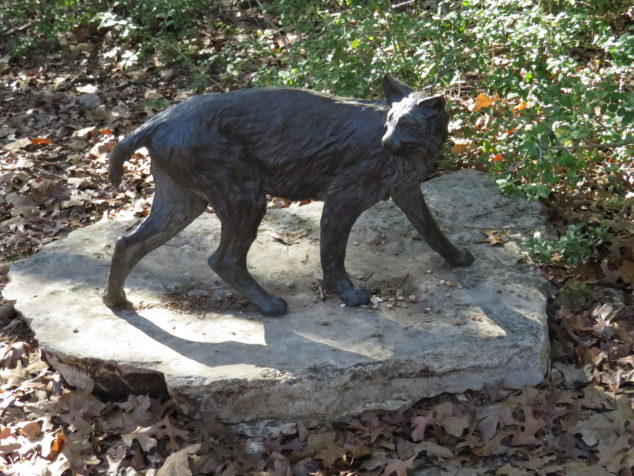
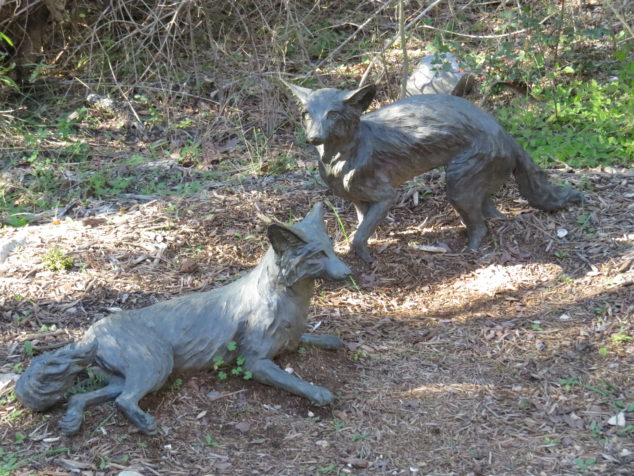
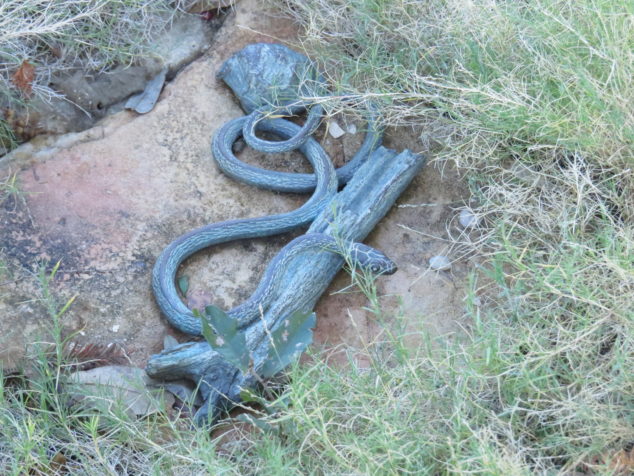
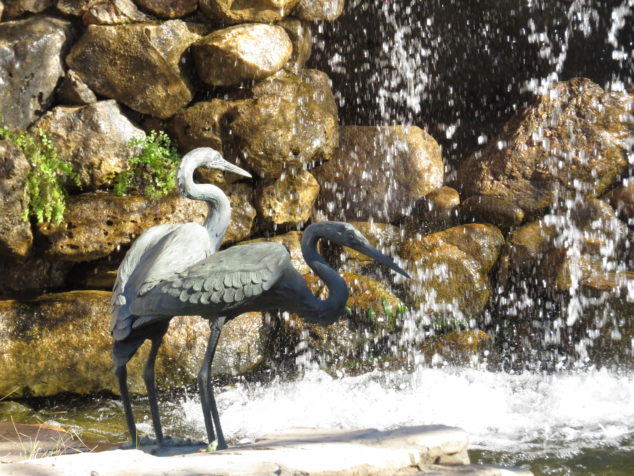
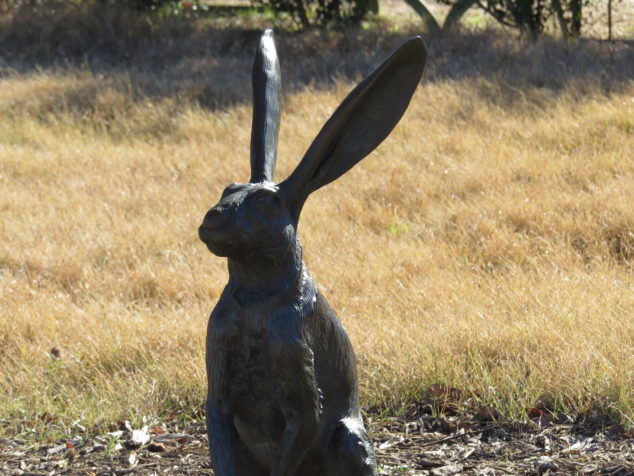
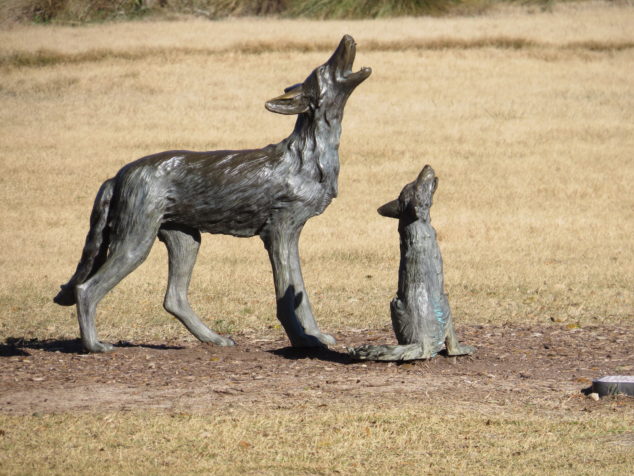
Sculptures of woodland creatures lined the trail, almost as surprising as if we had met a live one.
My heart found its home long ago in the beauty, mystery, order and disorder of the flowering earth. –Lady Bird Johnson
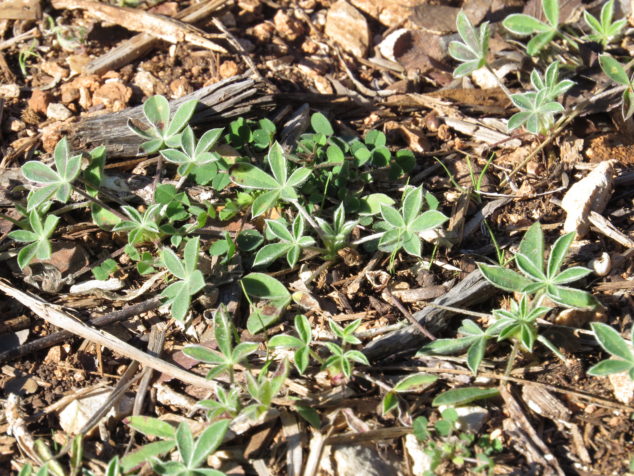
Lady Bird Johnson grew up in East Texas but was captivated by the fields of Bluebonnets she saw when she flew to Austin in 1930—and by the tall Texan named Lyndon Johnson. Seedling Bluebonnets grew all along the trail—what a spectacular sight they must be in the spring!
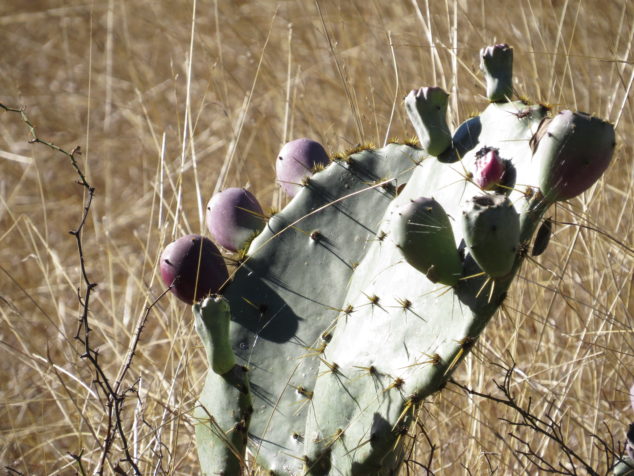
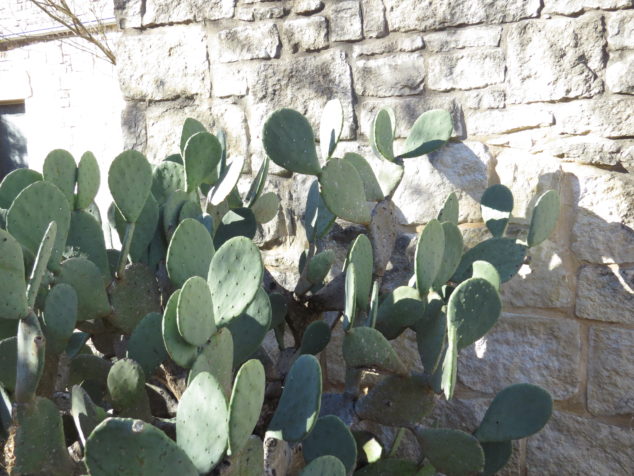
Prickly Pear cactus is everywhere in and around Austin—the wild, spiny kind with bulbous red fruits and the spineless, landscape varieties.
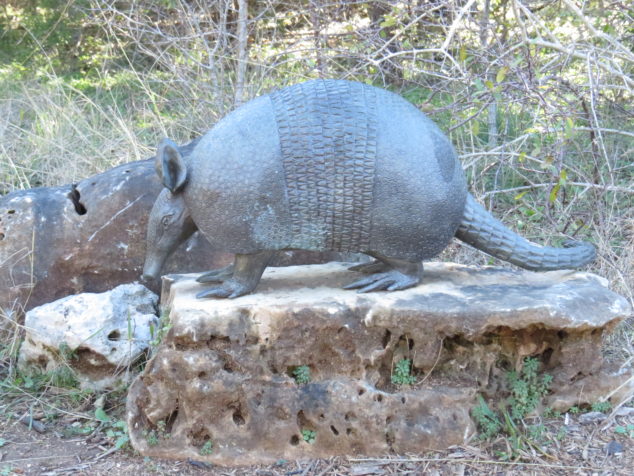
Hello, Armadillo! (Would love to see one ‘in person.’)
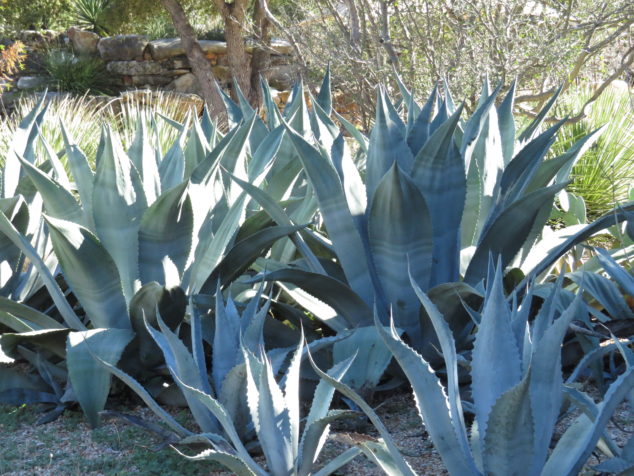
I loved the Century Plants!
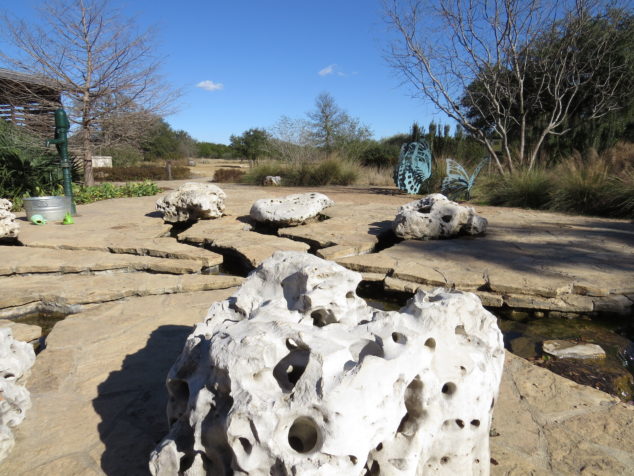
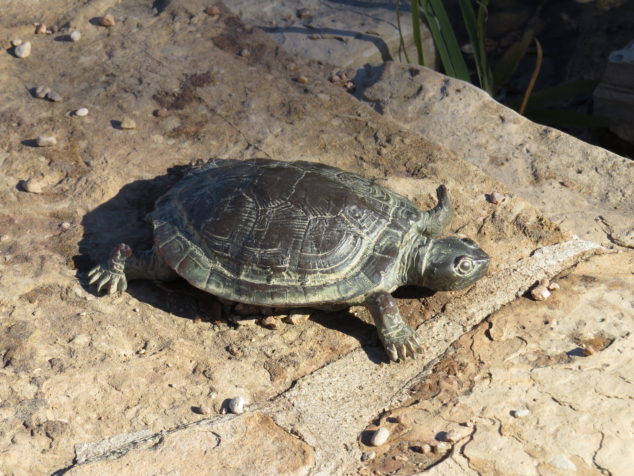
Dinosaur Creek flowed from a waterfall and pond to these tributaries.
Children are likely to live up to what you believe of them. –Lady Bird Johnson
The children’s nature play area was fun and adventurous—we didn’t see many children since it was a school day, so we explored by our adult selves.
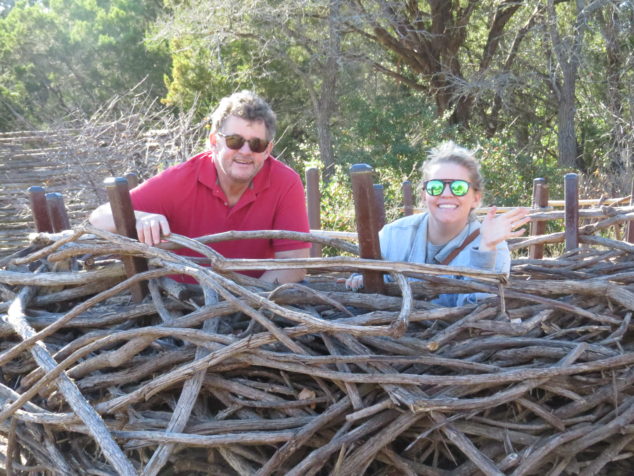
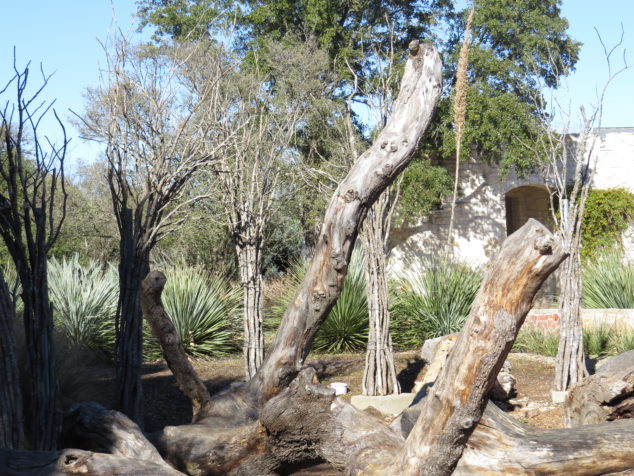
I first heard the word stumpery just this year when we watched a British garden show—apparently they are popular and originated in England. This stumpery at the Wildflower Center is for children to climb on.
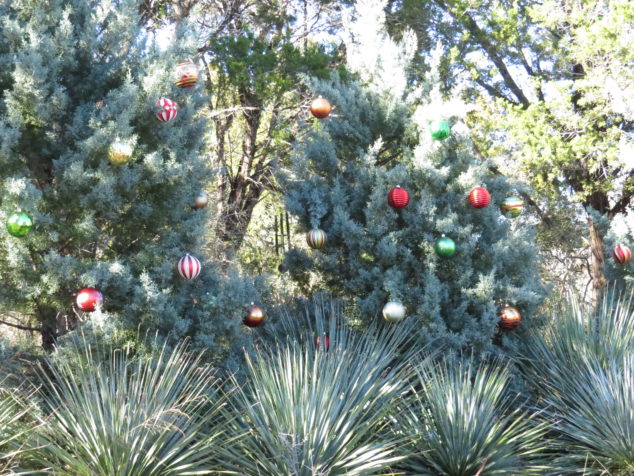
A line of Arizona Cypress trees were covered with colorful Christmas balls with a tree skirt of yuccas.
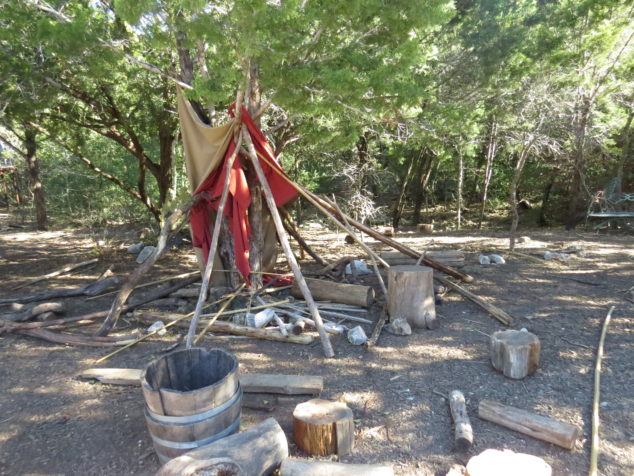
A rendezvous-like fort area was missing just one thing—the kids!
Beautification is far more than a matter of cosmetics. For me, it describes the whole effort to bring the natural world and the man-made world into harmony; to bring order, usefulness — delight — to our whole environment, and that of course only begins with trees and flowers and landscaping. –Lady Bird Johnson
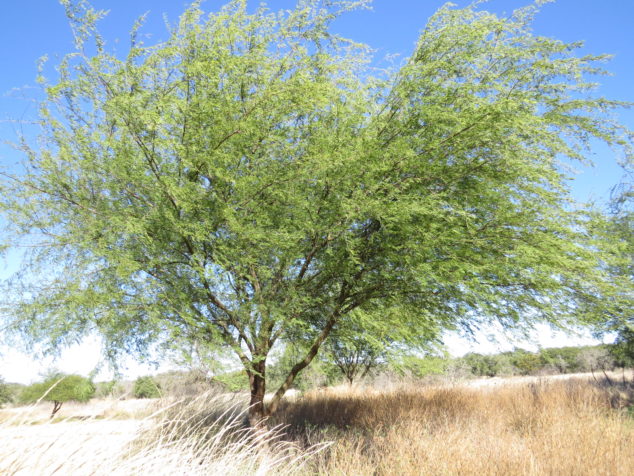
This beautiful little tree is called Huisache or Sweet Acacia. It’s often multi-stemmed, has feather-like leaves, fragrant bright orange flowers in spherical clusters, and small, brown seedpods. They categorize it as semi-evergreen, which is new to me. It was strange to come to Austin in December and see some of the trees still holding on to their green leaves while others had dropped their leaves.
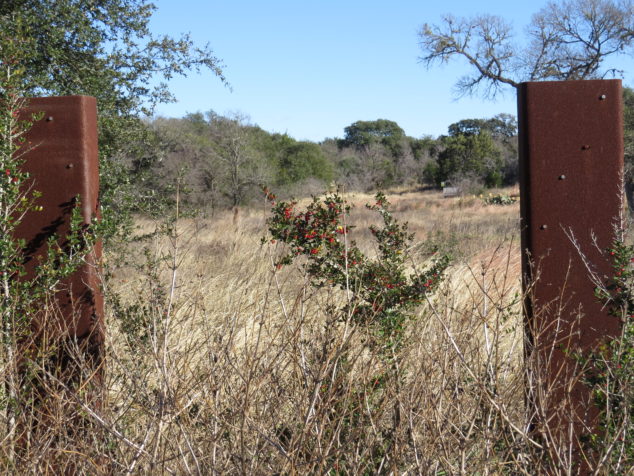
Two seasonally festive trees and shrubs with red berries dotted the landscape of the gardens—one, the Possumhaw tree and the other, Yaupon, shown below. Both are types of holly. The Yaupon shrub is evergreen, and the leaves were used by Native Americans as a drink in purging rituals, thus its name Ilex vomitoria. It is now known that the tea made from the leaves does not cause vomiting. Good thing! I have some in my cupboard! It is the only native North American plant that contains caffeine, and it is rich in polyphenols just like tea and coffee.
For the bounty of nature is also one of the deep needs of man. –Lady Bird Johnson
Long before Instagram there was a shy, young Texas girl who became a powerful influencer. Her dream and intention of conservation and beautification took her from Karnack, Texas, to Austin, to the White House, and back to Austin. She was the major influence for the 1965 Highway Beautification Act and many other environmental bills during her husband’s administration. She joined the President’s War on Poverty by founding Head Start with Sargent Shriver. She was the business owner of an Austin broadcasting company. She was a major influencer in the development of the Town Lake Trail in Austin, and urged The Nature Conservancy to buy Enchanted Rock so it would be preserved for all to see. She dreamed of a research center for conservation, native plants, and wildflowers and made it happen! The environment—the land, the people we surround ourselves with, the things we say and do—is where we all meet and greatly influences who and what we become. As Lady Bird said of children, so it is with all people—we are likely to live up (or down) to what is believed of us by leaders, influencers, authorities, and loved ones. Lady Bird Johnson’s website says of her: She was bold. She was compassionate. She was visionary. She was an adventurer. She was generous. She believed in the power of healthy landscapes to transform lives. #BELIKELADYBIRD
The Partnership of Art Between Kelly and Nature
The true work of art is but a shadow of the divine perfection. –Michelangelo
From Kansas City we flew to Austin, Texas, home to our first-born and her husband. It had been three years since we were there for their wedding, and we were all excited to do more exploring of this city and landscape that had captured their hearts. One bright, sunny morning we drove to the University of Texas campus where the Blanton Museum of Art stands in grand Texas style. Our destination was the recently completed standing work of art and architecture by Ellsworth Kelly, appropriately entitled ‘Austin.’ The artist gifted the design concept to the Blanton in 2015 before his death, and it was completed in 2018. Kelly was enamored by the architecture of cathedrals in Paris when stationed there in World War II. The structure is shaped like a cross, igloo-like with curved roof lines and brilliant white exterior.
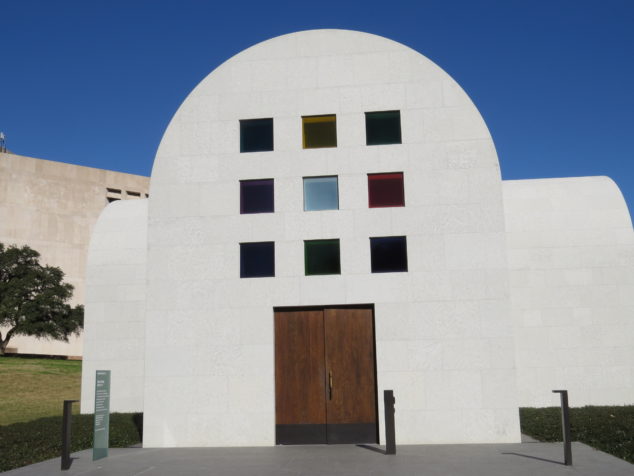
The south, east, and west sides of the building are adorned with colored glass windows—the ‘color grid’ at the entrance, ‘tumbling squares’ on the east face…
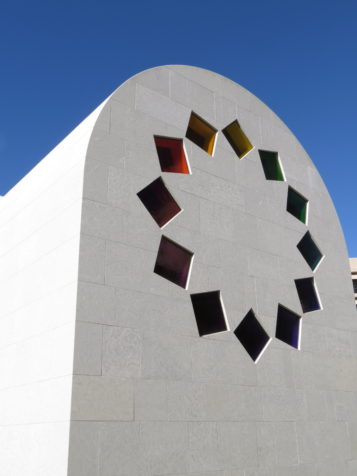
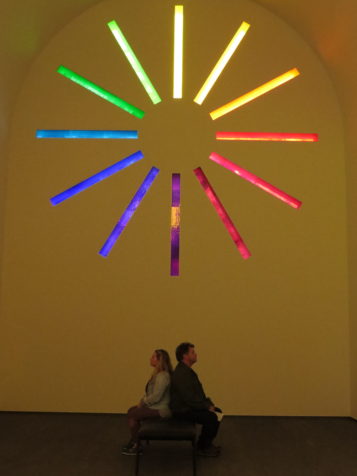
…and ‘starburst’ on the west.
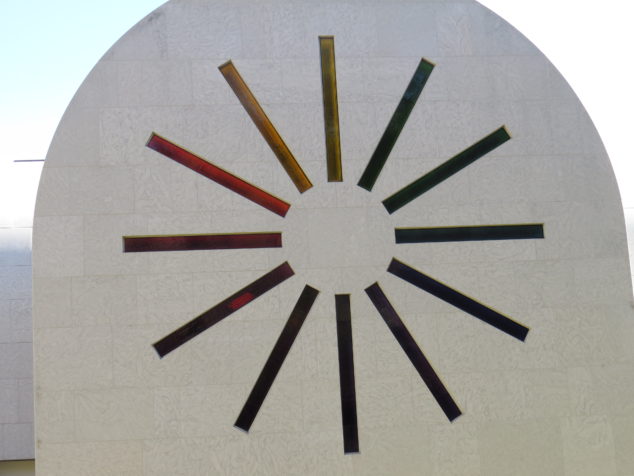
The shining white exterior is covered in 1,569 limestone panels from Alicante, Spain—each block a story and work of art in and of itself.

The entrance door is made from native Texas Live Oak, repurposed from some other life. I like how the metal handle is burnished from expectant hands reaching for entry.

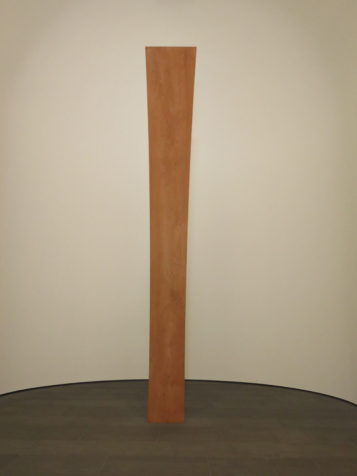
Once inside, I was shocked by how empty it was, though I don’t really know what I was expecting. Straight ahead was the fourth, north-facing arm of the cross, and nestled in the curve of that arm rose a totem made of Redwood logged in the nineteenth century and reclaimed from the bottom of a riverbed. New life and rich patina from a century-old, forgotten log of a beautiful Redwood tree!
The colored glass windows were made from handblown glass by Franz Mayer of Munich. The ‘color grid’ was a theme used by Ellsworth Kelly in much of his other art…
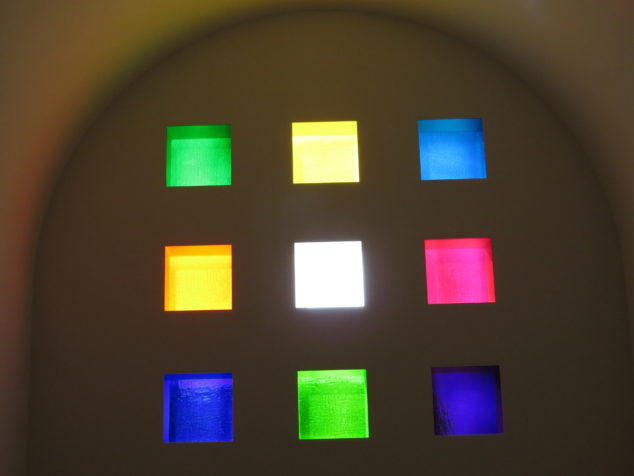
…as was the spectrum of colors used in the east and west windows, reminiscent of refracted light through a glass prism or millions of drops of water that creates a rainbow. The outside light directed the colors onto the interior ceiling and walls…

…and even reached over to its opposite window to reflect yellow on purple, blue on red, and pink on blue.

The ‘starburst’ was my favorite, here along with two of my favorite people.
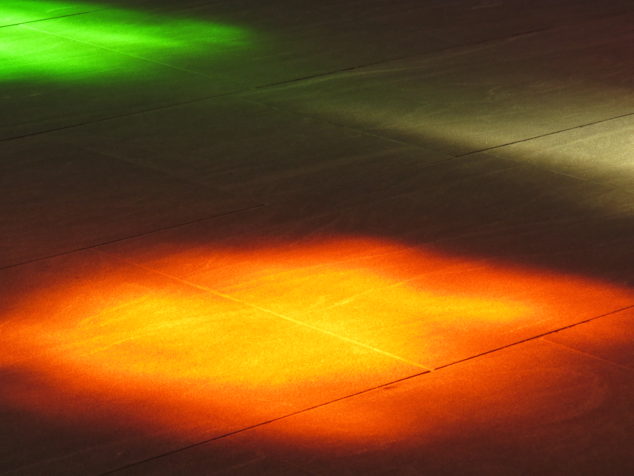
The real partnership of art between Kelly and Nature morphed into being when the sun shone directly through the ‘color grid’ windows onto the walls, onto the floor, and onto the black and white relief panels that line the walls. The panels are made from marble—the white marble sourced from Carrara, Italy where Michelangelo chose his stone and the black from a quarry in Belgium. Kelly, a life-long atheist, conceived the fourteen panels as abstract versions of the Catholic Stations of the Cross.
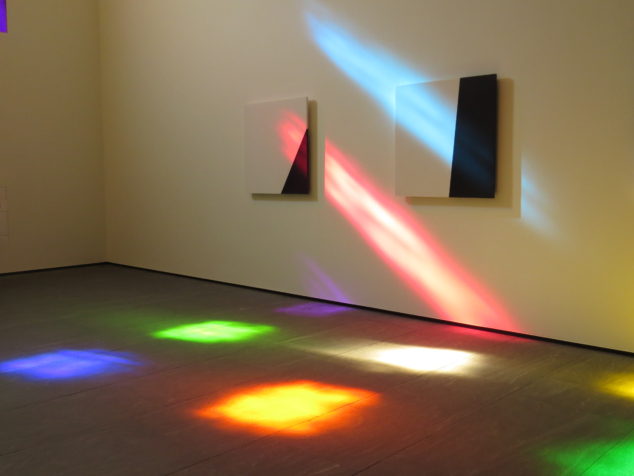
The black and white non-colors represent something basic and elemental and often oppositional, such as light and dark or good and evil.
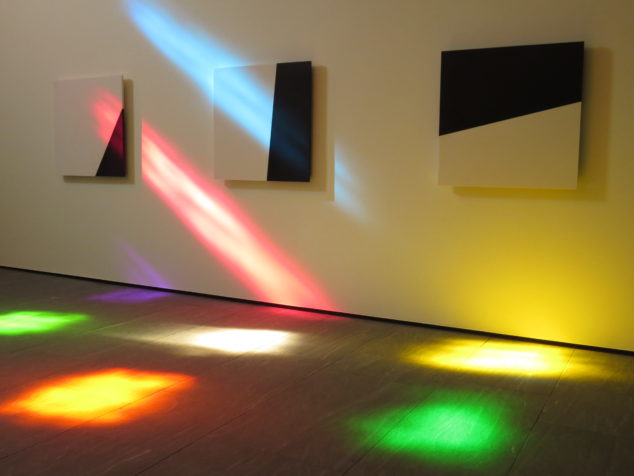
The floor of ‘Austin’ is black granite from the state of Georgia. The sun-shining colors illuminate the dark stone with a rich, almost neon effect. Whatever the time of day, the art, the picture of color on granite or marble, changes, morphs, and becomes new again.

Artists and Nature have been partnering for eons—from cave dwellers with pigments made from minerals, charcoal, and limestone mixed with spit or animal fats to Native people with dyes made from barks, leaves, and flowers to Michelangelo with his huge blocks of marble. (“I saw the angel in the marble and carved until I set him free.”) Nature has been the inspiration, the means, or the medium for practically every artist. Ellsworth Kelly’s ‘Austin’ displays the rocks, wood, and rainbow colors in a simple, naturally elegant, and compelling way. He envisioned his work of art as a site for joy and contemplation—the same qualities that Nature or a chapel offers to all of us. What happens to us when we immerse ourselves in art of some form or in Nature? What parts of ourselves do we consciously disown yet display in full sight through our art? I think art offers us a reflection of the rich patina of our lives, complete with the building blocks that have pieced us together—each a story and work of art, in and of itself. Each one of us is a refracted ray of light from divine perfection that shatters into some unique color, and together we partner to create a true work of art.